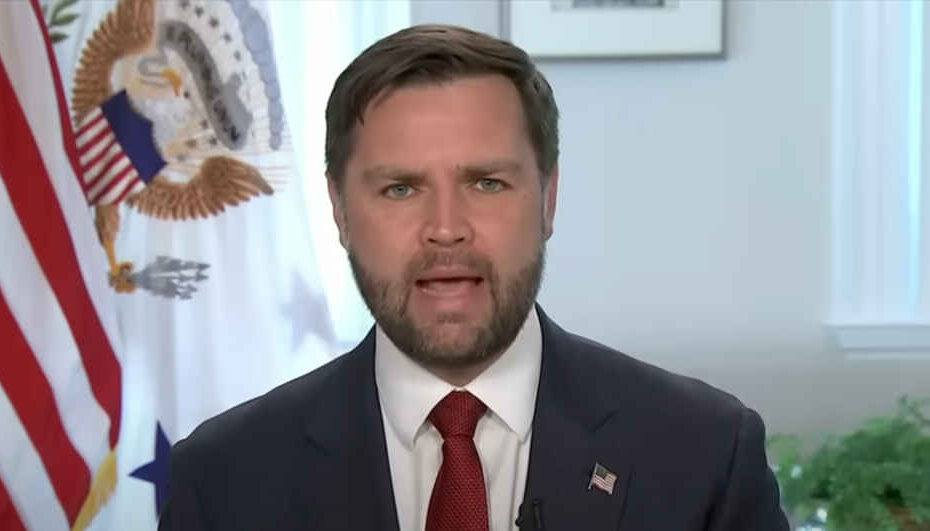
Read the full transcript of ABC News’ Jonathan Karl in conversation with Vice President JD Vance on “This Week” on ‘We’re Not At War With Iran’, June 22, 2025.
Opening: U.S. Military Action Against Iran
JONATHAN KARL: Earlier this morning, I spoke with Vice President J.D. Vance. Mr. Vice President, thank you for joining us. The big question, is the United States now at war with Iran?
JD VANCE: No, we’re not at war with Iran, Jon. We’re at war with Iran’s nuclear program. And I think the President took decisive action to destroy that program last night.
If I could step back a little bit. We have to give an incredible amount of gratitude to the troops who did an amazing thing last night. Think about this, Jon. They flew thousands of miles away, a 30 hour nonstop flight. They never touched down on the ground. And they dropped a 30,000 pound bomb on a target about the size of a washing machine.
No military in the world has the training, the skills and the equipment to do what these guys did last night. I know the President and I are both very proud of them. And I think what they did was accomplish a very core American national objective. Iran cannot have a nuclear weapons program. The President’s been very clear about this. And thanks to the bravery and competence and skill of our great pilots and everybody who supported this mission, we took a major step forward for that national objective last night.
Assessing the Mission’s Success
JONATHAN KARL: It certainly was a complex and overwhelming mission. 125 aircraft involved, we are told. Can you say definitively that Iran’s nuclear program has now been destroyed?
JD VANCE: Well, Jon, I don’t want to get into the sensitive intelligence here, but we know that we set the Iranian nuclear program back substantially last night. Whether it’s years or beyond that, we know it’s going to be a very long time before Iran can even build a nuclear weapon if they want to.
But I actually think that raises the most important question. The President talked about this last night. We want Iran to give up their nuclear weapons program peacefully. But there is no way that the United States is going to let Iran have a nuclear weapon. And so they really have to choose a pathway, Jon.
Are they going to go down the path of continued war, of funding terrorism, of seeking a nuclear weapon, or are they going to work with us to give up nuclear weapons permanently? If they’re willing to choose the smart path, they’re certainly going to find a willing partner in the United States to dismantle that nuclear weapons program. But if they decide they’re going to attack our troops, if they decide they’re going to continue to try to build a nuclear weapon, then we are going to respond to that with overwhelming force. So really what happens next is up to the Iranians.
Damage Assessment of Nuclear Facilities
JONATHAN KARL: So let me drill down on what was accomplished, because there’s a report this morning in the New York Times that Fordo, that deep underground enrichment facility, was severely damaged but not fully destroyed. But the President said last night the enrichment facilities have been completely and totally obliterated. Can we say that definitively or are we just not sure yet? I mean, have those facilities been obliterated?
JD VANCE: Well, Jon, severely damaged versus obliterated. I’m not exactly sure what the difference is. What we know—
JONATHAN KARL: Well, one—
JD VANCE: I mean program back substantially. And again, Jon, I don’t want to get into very sensitive intelligence about what we know, but I feel extremely confident and I can say to the American people with great confidence that they are much further away from a nuclear program today than they were 24 hours ago.
That was the objective of the mission, to destroy that Fordo nuclear site and of course do some damage to the other sites as well. But we feel very confident that the Fordo nuclear site was substantially set back and that was our goal.
Iran’s Uranium Stockpile
JONATHAN KARL: The UN’s atomic energy watchdog said that Iran had 900 pounds of highly enriched uranium. Do we know what has become of that? Was it destroyed in this attack?
JD VANCE: Yeah, Jon, we’re going to work in the coming weeks to ensure that we do something with that fuel. And that’s one of the things that we’re going to have conversations with the Iranians about.
But what we know, Jon, is they no longer have the capacity to turn that stockpile of highly enriched uranium to weapons grade uranium. And that was really the goal here. Uranium is not that difficult to come by, Jon. But enriching uranium up to the point of a nuclear weapon, that is what the President put a stop to last night.
Russian Response and International Reactions
JONATHAN KARL: This morning, the Russian reaction caught my eye. Dmitry Medvedev, of course, the former President, Prime Minister of Russia, now the Deputy Chairman of Russia’s Security Council, said the enrichment of nuclear material, and now we can say it outright, the future production of nuclear weapons will continue. A number of countries are ready to directly supply Iran with their own nuclear warheads. What do you make of that Russian response? And are they off base? I mean, they’re saying that the nuclear program in Iran is still well underway.
JD VANCE: Well, first of all, I think it’s a bizarre response, but I also don’t know that that guy speaks for President Putin or for the Russian government. One of the things that we’ve picked up, Jon, in our conversations with the Russians over the last few months, despite our many disagreements, of course, with the state of Russia, they’ve been very consistent that they don’t want Iran to get a nuclear weapon.
And this is what I think many commentators underappreciate about what the President did last night.
Iran having a nuclear weapon, nuclear proliferation in the Middle East is a disaster for pretty much everybody. It’s one of the few issues where Russia, China and the United States have broad agreement is that we don’t want to see a nuclear arms race in the Middle East.
So what the President did was very important. I’ll let President Putin speak to what the official Russian position on this is, but I feel very confident that both for Russia, for China, and most importantly, of course, for us, we don’t want Iran to have a nuclear weapon. And I think that that goal is going to continue to animate American policy for the next few years.
Timeline for Peace and Potential Retaliation
JONATHAN KARL: President Trump last night also threatened additional military action if Iran retaliates or if peace does not come quickly. How quickly are we talking about? Are we talking about days? Are we talking about weeks?
JD VANCE: Well, look, Jon, I’ll let the President make those determinations, actually, but we’re now going to have a serious conversation about how to get rid of Iran’s nuclear weapons program permanently, meaning they have to choose not to have a nuclear weapons program and they have to give this thing up.
Now, if you go back a little bit, Jon, what we have said consistently and repeatedly is they cannot have a nuclear weapon. We accomplished the goal of putting them back substantially last night. But there are two big things that the Iranians are going to have to choose from here.
Number one, do they attack American troops in the region? If they do, as the President said, you’re going to see overwhelming force from the Americans. If they continue to pursue a nuclear weapon, you’re also going to see overwhelming force from the American people.
So we’ve got really the ball in Iran’s court here. If they make smart decisions, I think they’re going to find us willing to work with them. If they continue to support terrorism, nuclear weapons programs, then they’re going to find overwhelming American force from the American military. That is really the choice before the Iranians, and that’s a choice only they can make.
JONATHAN KARL: So what retaliation are you expecting? I mean, I know what you’re hoping for, but they have vowed retaliation. What are you prepared for? What are you expecting from the Iranians?
JD VANCE: Well, it’s always hard to guess what the other side is going to do, but what we’re prepared for is if they attack us in a maximal direction. First of all, we have got maximum defensive posture. I think that we’re going to be able to defend as many of our people as possible. And of course, I’d encourage Americans to pray for our guys in the Middle East because, yes, they are under a significant amount of duress and a significant amount of threat right now.
But then, of course, Jon, if the Iranians attack us, they’re going to be met with overwhelming force. And I don’t think the President could be clearer about this. If you look at what we did yesterday, Jon, we did not attack the nation of Iran. We did not attack any civilian targets. We didn’t even attack military targets outside of the three nuclear weapons facilities that we thought were important to accomplish our goal of preventing Iran from having a nuclear weapon.
So how Iran responds, I think, is ultimately the ball is in their court. But if you look at what we did, it was very precise, very narrowly tailored to our objective. And if the Iranians decide to expand this, then that’s ultimately their decision, and the President of the United States will respond in kind.
Addressing Concerns About Another Middle East War
JONATHAN KARL: So you’re raising the real possibility that this is not the end of this conflict, but the beginning of this conflict, you know, US response to Iranian retaliation. There’s one thing the president has been really consistent about throughout his entire life in politics, and that is the idea of no more wars. Let me play you what he said on election night, and of course, at his inauguration.
“I’m not going to start a war. I’m going to stop wars. We will measure our success not only by the battles we win, but also by the wars that we end and perhaps most importantly, the wars we never get into.”
So let me ask you, what do you say to those, including some of the president’s strongest supporters, who were really worried this morning that the United States is now involved in yet another protracted war, conflict, whatever you want to call it, in the Middle East?
JD VANCE: Well, first of all, Jon, I think the President has been very clear that we are not interested in protracted conflicts in the Middle East. But there’s a question about how do you achieve peace? And we believe the way that you achieve peace is through strength.
We took a very narrow and limited approach to destroying the Iranian nuclear program, Jon. That’s what the President did. And I think that more than anything is going to ensure peaceful resolution in that region of the world. You can’t be weak. You can’t sit there and allow the Iranians to achieve a nuclear weapon, Jon, and expect that’s going to lead to peace. It would lead to absolutely disastrous military conflict all over the Middle East.
We don’t want that. Our Gulf Arab nation allies don’t want that. Israel doesn’t want that. And it’s one of the few issues, frankly, that unites the Arabians to the Israelis is none of them want the Iranians to get a nuclear weapon because they know that it would lead to the opposite of peace.
And so I’d say to people who are worried about a protracted military conflict is number one. The President more than anybody is worried about protracted military conflicts. That is not what we’re getting ourselves involved in. What we’re getting ourselves involved in is a very targeted effort to eliminate the Iranian nuclear program. That will continue to be the goal of American foreign policy. And it’s that goal that is going to motivate our action in the weeks and months to come.
Regime Change and Targeting Leadership
JONATHAN KARL: But this was, as we discussed, a complex and overwhelming military action last night. And the President is vowing something bigger if the Iranians respond by retaliating. He’s also raised the specter of targeting the Supreme Leader himself. As you know, earlier in the week he said he knew where the Ayatollah is hiding and that he would be an easy target. Has the US ruled out targeting the Supreme Leader in Iran? Is the US ruled out trying to achieve regime change?
JD VANCE: Well, first of all, we don’t want to achieve regime change. We want to achieve the end of the Iranian nuclear program, Jon. That’s America’s objective and that’s what the President has set us out to do.
The President, in the very tweet you mentioned, or the truth that you mentioned, Jon, said explicitly that he’s not trying to take out the Iranian Supreme Leader, he’s trying to take out their nuclear program. And of course, we took a major step forward with that last night.
And again, Jon, I think we have to back up and test some premises here. How do you achieve long term peace? How do you prevent spiraling Middle Eastern conflict? Is it through overwhelming military power targeted to an American objective, or is it by sort of walking yourself into these long term protracted military conflicts?
I think by choosing overwhelming force and overwhelming force tied to something that is important to the American people, that is the end of the Iranian nuclear program. We can achieve peace much more fully than if we sort of sit on our hands and hope that somehow if the Iranians get a nuclear weapon, they’re going to be more peaceful. That is a stupid approach and the President rejected it.
JONATHAN KARL: All right, Vice President J.D. Vance, thank you for joining us this morning.
JD VANCE: Thanks, Jon. Take care.
Related Posts