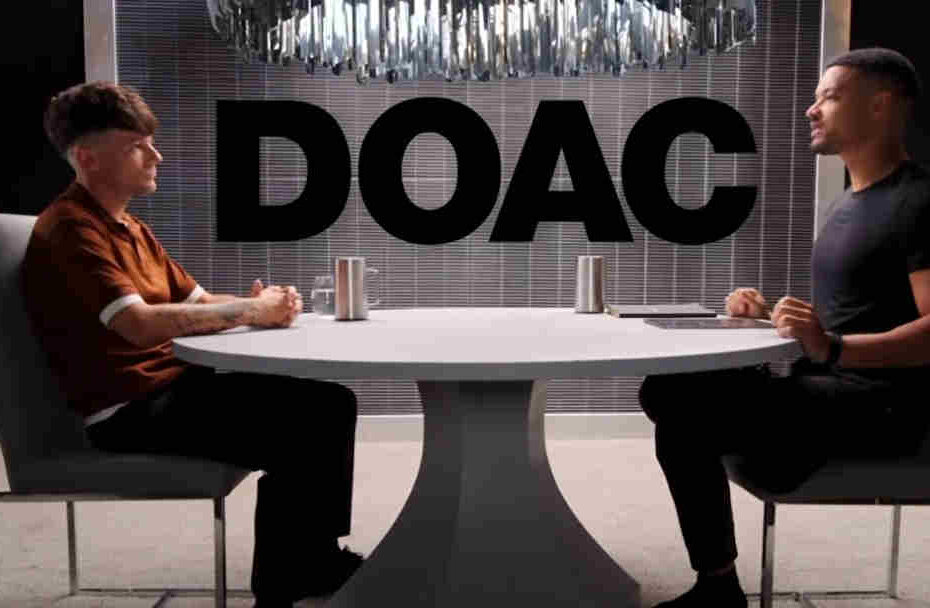
Read the full transcript of English singer-songwriter Louis Tomlinson’s interview on The Diary Of A CEO Podcast with host Steven Bartlett, Oct 9, 2025.
Early Life and Mother’s Influence
STEVEN BARTLETT: Louis, to understand you, what is the earliest context that I need?
LOUIS TOMLINSON: Something that played a massive role for me and my life was the fact that maybe for the first four or five years of my life it was just me and my mum. My first proper memories are just kind of having really nice and warm and really emotional conversations with my mum.
I think something that I’m kind of proud of is that I find it easy to be emotional and I kind of like talking about my feelings and I like getting into conversations with people about that. And that was definitely something that she instilled in me from a really young age and something that still definitely really helps me today, especially navigating through the life I have. Those kinds of things, being able to talk about your emotions and your feelings, are vitally important actually for the job that I do mentally.
STEVEN BARTLETT: So your father wasn’t around. Your biological father left soon after you were born?
LOUIS TOMLINSON: Yeah, it’s not really something I speak loads about, but I’m happy to. Yeah, he wasn’t involved in my life at all. I’ve met him three times ever.
STEVEN BARTLETT: So your mother played I guess several roles in your life?
LOUIS TOMLINSON: Yeah, my mum was always really good at that. I think she realized the fact that my dad wasn’t going to be around, that she had to play dad as well. And she had this kind of mischievous instinct in her and definitely kind of inspired some of that. Part of that was her being her, but part of that was also trying to play that kind of dad role, where you kind of lark about and are encouraged to do kind of silly things that aren’t going to hurt.
She was just the best woman definitely. And also just I feel so vitally lucky to be able to have her as my mentor because everything that I look to in friends and partners, they’re the kind of things that she embodied really.
Growing Up With Siblings
STEVEN BARTLETT: And you had siblings?
LOUIS TOMLINSON: Yeah, lots of them. So when I grew up, the bulk of my childhood there was seven of us living in a three bed house. I’ve got a little bit better at it, but the one thing I really have struggled with is being on my own. And the more I’ve thought about that as I’ve got a bit older, it’s because I just never had an opportunity to be.
When I was young, when you live in a house that’s three bedroom and there’s seven people living in it, you’re literally all living on top of each other. And I loved that. It was one of the best things that ever happened to me, being an older brother. It’s one of the definitions of my purpose, I would say. I just like to look after people, man. So being an older brother is a role I feel like I was always supposed to do. And then I think even as we move through life and a couple of things got more challenging, that role has become more prevalent. Definitely.
Staying Grounded
STEVEN BARTLETT: I was fortunate enough to speak to quite a few people that have known you over the years.
LOUIS TOMLINSON: That was cool. That was cool.
STEVEN BARTLETT: Yeah. And I was just listening to some of the recordings of those conversations. Nizam, your childhood best friend, Cal, who’s your photographer and videographer, and Lottie, who’s your younger sister, six years younger. And it’s interesting that one of the things they all came back to is that you really haven’t changed.
LOUIS TOMLINSON: I appreciate that.
STEVEN BARTLETT: Yeah, but that’s what they said. Your best friend from childhood said that’s one of the most remarkable things, that you’re still made out of the same stuff. And you’ve never turned around and thought you were anything more than you were back then when he knew you.
LOUIS TOMLINSON: And that’s one thing I love about him. As a friend, I’ve never said this to his face, but he’s a real guy. He’s never turned around to us and said, “Oh, I’m this big shot now,” or that ego has never played. And he’s never been embarrassed of us. He’s a real guy.
It’s at least 50% conscious, or at least it started out as that idea. Because I think when you enter a crazy situation, and One Direction being the pinnacle of that idea, there’s people around you that all of a sudden feel that used to feel really, really similar and all of a sudden they feel really different. I’m not talking about day to day conversation, but I’m talking about stuff that we can relate to, problems that I might have had that I might talk to them about. And I think that’s quite an alienating feeling.
So instead of just submitting, I’ve always, always resisted that. It’s been really important to me. And those kinds of things, hearing that and hearing other people say that about me, that does make me really proud because there’s definitely a lifestyle that can kind of sweep you away. But I think the other side of that, getting swept away, I don’t really like the idea of what that might look like.
And I think you need people around you that are going to tell you if you’re being a dick. Vitally important in this job, definitely. And those things, I think when you’re surrounded, like a lot of successful people are, when you’re surrounded only by success, it breeds a funny kind of narrative.
School Days and Early Setbacks
STEVEN BARTLETT: And you went to school in Doncaster? Hayfields.
LOUIS TOMLINSON: Yeah, Hayfields, where I did most of my time. And then I failed my A levels and then went somewhere else for a year.
STEVEN BARTLETT: You failed your A levels?
LOUIS TOMLINSON: I failed my A levels, yes. That was the first time I’d ever, ever got a real bollocking off my mum, a real, real dressing down. Because she was really, really fair, but there was something that she was kind of strict on with schoolwork. And I remember getting in the car and she said, “You fucked your life up.” And she never swore. She never swore. And I remember I got goosebumps thinking about it there. I remember thinking, maybe I need to do something with my life.
The X Factor Journey
STEVEN BARTLETT: At 15 years old, 15, 16 years old, you join a drama group. And I was watching actually just before you arrived, at 17 years old, you got the lead role in Grease. The foundations were set and you ultimately, at 18 years old, decide to go and audition.
LOUIS TOMLINSON: Yeah, that was the third time I auditioned for the X Factor, so every year previous to that, so that would have made me 16 when I first auditioned. There’s three producer auditions and then you get to see Simon, it’s the main one. And the first year, I didn’t get through any of them. The second year I got through the first round and then for a final time, I said to myself, well, I’m going to give this one more shot, because that was another thing at that age. It’s one thing saying you’re resilient, and I do think I am, but it’s a lot easier to be resilient at that age as well. Definitely.
STEVEN BARTLETT: It’s really surprising that someone would go to X Factor once, be rejected, essentially go again, not make it, and then go again without having their self esteem or their confidence knocked to the point where they go, “I’m not going to go through that again,” because every time you got to come home, you got to tell your friends and family it didn’t work out.
LOUIS TOMLINSON: Yeah, well, the first year, I can remember it being utterly crushing. I’d not really had real rejection at that point. I hadn’t really experienced that kind of thing.
The second time I went was even more challenging because I went with, well described as the hottest girl at school at the time. So she’s also a singer. We got talking months ago. Turns out she wants to audition for the X Factor as well. I’m like, well, let’s go together. Thinking this could be a smart little play. She goes before me and I think at this point I feel like I was still in the queue and she showed me that she got through to the next round. It was a gold ticket. I then didn’t get through.
And then because I was with her, I was traveling with her, we then got ushered into a room of say 200 people and every single person in the room had a yes. I remember that being really, really challenging. You’re just surrounded by people that are dreaming, they’re really, really excited about what does the next stage look like. And that created a bit more fire. I think it was, okay, how do I get on the right side of this next year? How do I be in this group of people next year?
Mother’s Support and Encouragement
STEVEN BARTLETT: Did your mum play a role in you going for that third year?
LOUIS TOMLINSON: I can’t remember specifically, but I would say if I would have had any level of doubt, 100%. The musical that you just referenced, that I did at school, I didn’t want to go to that audition. And she literally picked me up and drove me there. And I was so thankful that she did.
She was often very, very good at, pushy parents, that’s not good. She was never like that. She always had the right amount of force, because sometimes you need that as a kid and especially actually even as adults, in a situation where you’re second guessing something. As soon as someone goes, “Go on, you can do it, you’re okay.” So I think that definitely played a big role in that.
Even if I suggested that I wasn’t going to go to this audition throughout the year, she will have been giving me 100 different reasons to go. Not literally, but just from a confidence point of view. The way that she was talking to me, how she always just put me on this amazing pedestal, she made me feel like I could do anything, definitely. And I think that helps in those kinds of situations. Going for it for a third time, because my mum’s saying I can do it, so maybe I can.
The Audition Experience
STEVEN BARTLETT: So you deal with the audition where you’re singing “Make You Feel My Love.”
LOUIS TOMLINSON: That was boot camp. So that was the second part of the audition. My first audition was a song called “Hey There Delilah.” Did nothing for me sonically. Obviously now I can say this because I’ve got a bit more experience, but at the time you’re not thinking about any of these things. It was just, I like that song, I’ll sing that song. It was bad. It was really, really bad. And to the point where it still makes me deeply uncomfortable listening to or watching that audition.
The only thing I’d done was the school production of Grease, and that was to about 250 people over 2 nights. And that felt like a mountain of people. Cut to then your live TV audition at the MEN in Manchester and there’s 3,000 people in the audience. 3,000 people is a big gig for anyone to play. If you do 3,000 tickets, you’re doing really, really well. So it was the definition of being thrown at the deep end. And I think that’s part of what they want, but it’s not going to yield the best results from everyone. Some people it is, but I just remember feeling like a deer in the headlights.
Really, really shaky. Really, really just felt really, really uncomfortable. I just wanted the ground to swallow me up. I’d never been in a situation where, I was quite a confident young lad, so it wasn’t very often I’d even been out of my comfort zone like that and I just felt like a deer in the headlights. Definitely.
The Formation of One Direction
STEVEN BARTLETT: Am I right in thinking that they probably had the idea to construct a band much sooner than they let on?
LOUIS TOMLINSON: Knowing Simon, I will have had these conversations with him in the past, but can’t remember now. But knowing Simon, yeah, I think he will have had that in his mind for at least the year before.
STEVEN BARTLETT: He loves the boy band as well. He’s got a track record.
LOUIS TOMLINSON: Yeah, yeah. They make him a lot of money.
The Reality of Success
STEVEN BARTLETT: And so you come third on the X Factor as a band when you’re put together and then you signed at 19 years old to Simon Cowell’s Syco Music. And it’s crazy because when I think about you signing at 19 years old and I think about what happened in the preceding five or six years, I mean, it is crazy.
LOUIS TOMLINSON: It’s only now, outside of being in One Direction, that I actually have a little bit of a concept of what happened and even, you know, the craziness of it, because nobody has any context to it before it happens. So we definitely felt like things were going really, really well, but we also, there will have been part of us, especially in that first year, of just assuming this is what, you know, success looks like. You know, a successful artist does these things.
And the first moment that I remember distinctly, actually, that I realized that maybe this was bigger than, like, let’s say, like the average thing at the time. We got booked on a support gig with a Disney band called Big Time Rush. And before that tour show, our manager, but our, like, senior manager, the kind of guy you only see, you know, like six gigs a year. And that just happens to be Vegas and LA and all the best places in the world, you know.
And he sat down. It was like this dressing room. It was like, “Look, this is what you need to expect from a gig like this. Expect people to only know the singles. And even if they know the singles, you know, like, that’s a real win. They’re not going to know the words, the album tracks. It’s going to be a very, very different show to what you expected.”
So we’re all ready to go out fighting because we’d not really had that at that point. We’d have most things that we’d done we felt really confident doing. So, like, we were kind of going on the back four. And then I can remember when we walked out on stage, and I think we opened with something that wasn’t a single. And people were just locked in, like, massively locked in. And it was really, really loud in there.
And I think that was a moment where I remember again, I had this kind of side to me when I was younger, I was so excited to tell Richard, who was our manager at the time, I was so excited to tell him about how it actually went. Did you see it then? Because that was obviously not how it played out. And I remember feeling pretty smug about that.
But I think it was once I kind of got to bed that evening, I was kind of thinking, I don’t know, I wasn’t overly deep thinker at that point, but I was still thinking occasionally on a deep level. And I’m looking at this music manager and I’m thinking, like, this guy’s like uber experienced. Like, he’s been in this situation countless times. So if he was to predict it wrong, like, maybe he did. I’m like, well, maybe we, maybe something is happening.
Taking Care of Yourself
STEVEN BARTLETT: How do you take care of yourself amongst that? Because, you know, one of the things I’ve learned from doing this podcast is I’ve learned so much about the brain. I’ve learned so much about dopamine and sleep and circadian rhythms and all these things. And so when I fit that into the context of what your life was like at an age where these neuroscientists tell me that the male brain is still growing, it’s still forming itself, you’re putting this tremendous external pressure on it. You’re like shocking it every night.
I remember when I interviewed Liam, your former bandmate, him telling me that he would, like, he remembers walking out on stage and I think it was Dubai. There was like 100,000 people there and then thrown in. You probably remember the gig, like, thrown into the taxi, taken back to the hotel room and locked in there. And he was like, I remember him saying to me, “Stage, car, hotel, locked. Stage, car, hotel, locked.”
LOUIS TOMLINSON: I would say the way that we both handled it, me and Liam was quite different. I think that’s often why I kind of had a good relationship with Zayn from early on, because neither of us are kind of rule abiding and not in a way that’s like, utterly disruptive. It’s just we have our own ideas, you know, and that at least alleviated a little bit of the pressure, knowing that deep down, if I wanted to just go and do something, I would. I would genuinely just go and do it.
Whereas I think Liam and the other boys actually, to a degree, there was an element of a little bit of fear, I think, you know. And also Liam had, you know, worked so hard from the age of 14 to get there. Liam’s journey was a lot different to mine. I just felt like a happy go lucky guy, won the lottery, you know, like, whereas Liam was very, very precise and deliberate and he got there for all his hard work. So I think we also came from a slightly different point of view.
Another benefit that I had during that time and I still have is I’m not a dweller. Like, I’m an overthinker for sure. But I wouldn’t say like I’m a dweller, so I wouldn’t use this phrase with me very often. But like there were, there’s definitely an element of ignorance is bliss during that whole time.
Standing Up to the System
STEVEN BARTLETT: I find it so fascinating that you talk about this like this idea of you being having the minerals or the personality where you would push back against the system a little bit. Because when I spoke to your former cameraman and videographer, he said that you were the one in a group that stood up against the label. You’d be the one to turn around to the record label and say, “We need a day off.”
And it’s interesting again, because one of the things I learned from doing this podcast is this idea of learned helplessness and control and autonomy. Basically, TL DR is it says that people who feel like they have control have much better physiological health outcomes. They have less stress, they’re more insulated, better psychological states, less anxiety, less depression because they feel like they’re in control of the situation.
So there’s this crazy study that I was reading about when I was running my last book about these rats where they learn that they can’t do anything about the situation and they basically give up and they become submissive and they stop trying. And I think about this in the context of humans as well. And you’re, from what your videographer told me, Cam, you were clearly not that. You were clearly someone that would push against Simon Cowell’s record label as a young man.
LOUIS TOMLINSON: Yeah. And that’s something, I’ve had a few conversations, my friends, similar things about this and I’m not certain why that was like, inspired by. Because it’s brave, right, to stare someone who at the time, at least in pop, was one of the most successful people in the music industry and say, “No, you’ve got it wrong. Here’s me, an 18 year old with no experience telling you you’ve got it wrong.”
I think what gave me confidence in those ideas is even if it wasn’t a collective voice, even if it was just my voice delivering the message, it was always with collective intention. It would always be for the good of all of us making those decisions. Now on my own, they’re not quite as easy. There’s a lot of different kind of things at play. But where, and again, it kind of comes from that big brother kind of role. Again, I was the oldest in the band. It was kind of my role in the band, I think, to kind of do that. And I realized that by far I was the most opinionated in the band, definitely. So I think I wanted to use that for good and not just chatting shit about someone on Twitter or something.
Another important distinction about One Direction is this is not like, disrespectful to Ed. Like, I appreciate I was in a boy band. I know that, right? But, like, if there would be like one genre of music that I would think might be the most naff, it’s boy band, if you could call that a genre. So going into, at this point, going into One Direction, when I was 18, you know, growing up in the north of England, it’s like, it’s like real. It’s kind of like snobby musically. You know, there’s like, there’s like real music and then there’s boy bands, you know.
So having that kind of feeling going into it, it was that, that was why it was easy to kind of push against some of these old school ideas. Because they were the ideas that I didn’t, the reasons I didn’t like these bands is because they all looked the same and because they all felt very kind of PR pressed. You know, it was always a really interesting project for me to try and to look at One Direction and think, “Well, how could we make this a little cooler?”
I remember a real turning point in One Direction was when we put up the pre order for our first single, “What Makes You Beautiful.” I can’t remember the number, how much we sold that week, but we broke some record right at the pre order. And we got told this. We don’t release any music at this point. And I remember thinking, that’s fascinating because they don’t know what it’s going to sound like yet, but they’re invested.
That felt like power early on. And it also felt like that we could rewrite the rule book because people were invested in us as much, if not more than the music. I think that’s fair to say.
The Cost of Fame
STEVEN BARTLETT: Was there a part in the evolution and the journey of One Direction where you had that moment where you go, there’s elements of my life that I love that I no longer have access to because of this success?
LOUIS TOMLINSON: I would say that it’s more gradual than that, really. You know, you start to lose some of your own independence to a degree. And then I think also the age I was, right. So, like, I was 18 when I first joined the band. And I always say this. That year of my life before I auditioned for the X Factor, at least up to those 18 years was the best year of my life. You know, you’ve got independence. At that point, I was driving. You could go out. Like, it was just, it was so fascinating socially. There’s always something to do.
So to leave that behind was quite gutting, actually. That took me a second to get used to it first. Now I always felt incredibly grateful and really excited every time I was doing something with One Direction. But any kind of time for reflection, I was really, really missing home. Like me and Zayn would when we were younger. We had countless conversations of, like, you know, “Should we just pack it in? Should we just call it a day?”
STEVEN BARTLETT: Why?
LOUIS TOMLINSON: Because you, you feel alienated. You’ve got, you, you are living this lifestyle that, and there’s a million different reasons. Right. But like, that, the fame thing’s really difficult. And mostly for me it was about being alienated. And I can’t, like any of my life experience was now not so relevant to some of my friends, you know.
And I think that also I have this, I think this is part of growing up in a working class, working class town, but I have this, like, guilt for the success and money that I’ve earned as well. And I think that also is kind of part of the same thing. I think, I think for, it’s kind of like two different things. The fame thing, I’ll never, I’ll never be okay with, like, if I like, of course every artist says this, but if I could just do the music, you know, amazing. That would be amazing.
I suppose I could on a lower level, but I wouldn’t get the same rush that I do. I think it’s almost, yeah, it’s almost everything else that comes with that.
STEVEN BARTLETT: It’s interesting when someone says they felt isolated, which is something I’ve heard a lot from people who’ve had great public success where they’ve got a big fan base because we think of, like, isolation as not being around people. But I guess isolation in the context you describe it is more about connecting to people. Relatability.
LOUIS TOMLINSON: Yeah. But it’s also like, like the metaphor would be like, what’s that really famous crossing in Japan? If you took a drone shot and you pulled right out from that and you would just become a little dot amongst the noise, sometimes that’s kind of how it feels because also it’s not the real world, you know, even in the way that people perceive you, it’s not the real world. The first moment that One Direction got the first big pay packet was a merchandise deal that we got, and we always did really good merch.
STEVEN BARTLETT: How old were you?
The Weight of Early Success
LOUIS TOMLINSON: 19. That was the first kind of moment where I felt really, really excited. And so I rang my mom straight away, told her about it, like I always would, and she was really excited for me. And obviously, you know, this. She’s just proud. That’s it.
And then I remembered the feeling of, who else do I tell now? Because, like, do I call up Nizam and tell him? Well, he’ll be into that and he’ll be really proud of me, but bear in mind, he’s just seen me on the X Factor. And this is another thing I realized about people is they think if you’re successful, then everything is just, you know, successful. And that’s how it goes.
So I think, you know, if I had called him, he probably would have been really nice. But in his head, when he shrugged his shoulders, like, well, obviously, you know, things are going really well for you. So I think there’s definitely a lack of understanding there. Rightly so. There’s also a guilt, you know, especially at that age. People, like, life’s really, really expensive at that age. People are up to the rise in student loans.
It was only about two years ago that I put all the plaques up on my wall at home. And my awards, like, the Brit Awards and stuff that I got in the past from the band, they still annoy me, even now in my lounge, because, like, if I’m having a conversation with someone I don’t even really want, like, I don’t. I want to just be me. I don’t want to be that guy that won those awards.
Like, we can be and we can conversate like that, but truthfully, like, if someone, Nizam, came over to my house for a chat and a coffee, I would hate that the conversation might end up then gravitating to me or my success. It’s much more about just what those relationships and conversations look like in the real world. That’s what I’m craving, is that real normality.
All I want is to just be on an even playing field with everyone in any kind of conversation. I think that was the toughest thing to deal with, is just the lack of normality in every sense of the word.
Coping Mechanisms and Finding Balance
STEVEN BARTLETT: How do things like alcohol play into this? Because you’re living a crazy, crazy life where your dopamine and your brain is being tested in all different ways. I remember Liam saying to me, this is really when he started to have a problem with alcohol in the early years of the band. And I’ll never forget it, him talking to me about the mini bar in the room. One of the things I didn’t realize is, okay, you’ve just been out on stage in front of 100,000 people, then you’re back in a hotel room with a mini bar.
LOUIS TOMLINSON: I feel the pull from alcohol and I definitely drank quite a bit when I was in the band. But I think an important distinction post show would be I’d smoke my weed, I’d go back to my tour bus and I’d go and smoke my weed and Zayn would smoke with me too. I hope he doesn’t mind me saying that. I’m sure he won’t. And that was great.
And actually, you know, people do things for different reasons and that was my vice, that was my choice. Now the reason why that kind of suited my brain at that time was I’ve just had all this noise in my head. I’ve just had this crazy experience on stage and that’s the noise that you kind of need to quiet down sometimes.
So what we would do is we’d get back on the tour bus, we’d play Call of Duty Zombies, we’d smoke our weed and that’s all we’d think about and that’s all we do. And then we get into cliche stoner chats of deep conversation, probably UFOs, you know, all that kind of. And as daft as that might look and feel it again, it’s our normality, it’s creating the normality on tour. It’s a version of what our friends were doing back home as well.
But also it just, it was such a lovely way to kind of debrief from those moments away from the manicness. You’ve just got this kind of really subdued, nice environment. The juxtaposition actually felt quite nice.
Advice to His Younger Self
STEVEN BARTLETT: If you could go back to the day that you signed a contract with Syco, what is the advice that 33 year old Louis would give 18, 19 year old Louis?
LOUIS TOMLINSON: That is a really, really big question. I think I would just, I think I would say to be confident in the earlier years because the older I get, the more I realize most people in their earlier years of doing said thing are to a degree faking it. And I think for a long time I was just thinking, well, you know, I didn’t spend my life as a young lad thinking I was going to be a singer. So I’m playing catch up and all of those things.
And this, I’m also, there’s another thing I’m more than comfortable enough to say, I’m not the best singer in the world. I’m okay with that. Right. But there was definitely a time where those things were challenging as a young lad. And I think I would just cut myself a bit of slack as a young lad because it’s been a lot of my defiance and decision making that’s got me to where I’ve got and that should give me confidence.
So I think as a young lad, I really just felt like a deer in the headlights and I didn’t really have any kind of context what was going on. And I think when I’m talking about these things, I’m not talking about, no, we’re not going to do this Disney performance because I don’t think it looks good for One Direction. I’m talking about more introspective personal worth within the band or those kind of things. I really, really struggled with that as a young lad, big time. So I would say I would give myself a bit more credit there.
STEVEN BARTLETT: You really struggled with that?
Struggling with Self-Worth in the Band
LOUIS TOMLINSON: I found it really tough. So, as I said before, I was the kid who won the lottery. I sang my first audition for the X Factor. Didn’t feel like I did a good job, was really surprised that I got the three yeses. Now, that was maybe four months before the first auditions air. So I’ve told everyone at this point, obviously, I’m in a band, I’m on the X Factor and I have told everyone, anyone that will listen, everyone.
And actually neither me nor Niall got any TV time on our audition. So the irony is we get put in this band, but people have no idea. We are, there’s no context for the viewers to actually see this and actually really care. I felt like I was playing catch up from that moment in.
I remember it’s a real, typical X Factor thing. We went filming for the judges houses, which is the stage, you have the auditions, then boot camp, judges houses, the live shows, and we went filming for judges houses and I was already questioning. I wasn’t really singing at all. I’ve not had any individual thing to sing. It was all harmony stuff and I got stung by sea urchin. Right? Random story. My foot blew up like an elephant.
And we had to film all this. You know what X Factor is like, right? We had to film all this jeopardy. This is like how will the boys audition without Louis? It was awful. It was awful because there was no credibility to that statement. The boys could have auditioned straight away. At that point I was doing a lower harmony and I don’t, I would be shocked if anyone could even hear me in the mix at that point.
So that was really challenging where you know, I’m already starting to feel those things and then you get something like that that’s quite literal and they’re trying to sell this jeopardy. And I remember thinking, oh, it just, it really. I wanted to do more. I just didn’t know how to do that.
Again, there’s no context. I thought I was a good singer before I went on the X Factor. Then I get through the audition they put me through, I’m like, okay, well I must be alright then. They don’t show the TV audition. You’re like, oh, maybe that’s a personality thing or I don’t know, maybe it is my voice. There’s a lot of, especially as a young lad in this situation, there’s a lot of unanswered questions.
STEVEN BARTLETT: Did you ever ask those questions?
The Simon Cowell Dynamic
LOUIS TOMLINSON: Did I ever ask him why I was in that band? Now I would love to though. I would have loved to. But do you know why I wouldn’t, would never with him. Simon would probably, he would, Simon was always very brilliant at making me feel worthy in the band. But as you said before, I was often a voice between the band and the label. He was the label. Well, you put me on side and that’s a smart move, isn’t it?
One thing he would always do, Steven, is he would always say my name. Now when you’re a 19 year old lad and Simon Cowell says, “Do you know what the thing is about that idea, Louis?” You are empowered now. We like people using our names. Now imagine that Simon Cowell and you’re 19 years old, there is a spell that comes with that and there’s a power that comes with that. And I think for a long time I kind of fell for all those kind of ideas.
Now I think Simon again is an interesting person. He is a brilliant businessman. I learned a lot from him. I still deeply respect him and I was in awe of him as a young lad. I just loved to be around him. I loved to listen to him make decisions and all of that. And I thought he was definitely brilliant at that time. He just built me up on a pedestal to the point where I thought that it would actually have a real world meaning, not just a “thanks, darling” kind of vibe.
STEVEN BARTLETT: When did you realize that it didn’t?
LOUIS TOMLINSON: When I joined Syco on my own.
STEVEN BARTLETT: So this is after the band?
Loyalty and Solo Career Decisions
LOUIS TOMLINSON: Yeah, sorry. So the band split up and now I didn’t have my pick of record labels. It was never like that. But even if I had, I could have had 10 offers on the table. Let’s just assume they’re all the same money. I would have picked Simon always because, like, again, a little bit like the north of England, loyalty is a really important currency. It really is in these kind of, you know, working class places. It’s really, really vital.
And I think for me, it was, that always meant a lot to me. So I thought, well, if I’m, I’d heard that some of the other boys were thinking about going to other labels, which they were right to. And I found out I was the only one that was going to stay with him and that just motivated me more.
So all the other boys went and joined different record labels, some of them not even within labels that were in Sony, which Syco was part of. This is amazing for me, actually that all the boys have done that because, look how good this makes me look to Simon. I look really loyal and some of it was deliberate, but mostly that’s just how I am as a person. I would rather just keep the happy family, kind of. That suits me.
The Impact on Family
STEVEN BARTLETT: One of the things people don’t talk about is the impact that your success has on everyone else back here in Doncaster, including your mum. I spoke to your sister, Lottie. Well, my team did. And I was listening to the recordings and she said that it was especially hard for your mum because you leave home suddenly at 18 years old and from everything you’ve described, you are more than just a kid. You are in some respects a partner in raising the family and best mates as well, man.
LOUIS TOMLINSON: Yeah, definitely.
STEVEN BARTLETT: Did she ever speak to you about the impact it had on her, all of that?
The Impact on Family
LOUIS TOMLINSON: That’s something that I can remember really clearly. And she used to do the university analogy and she used to say, “I knew you were going to leave home at some point, but I had at least a time scale to that I could work towards in my head. Okay, you know, in three months time, he’s going to leave for uni and that’s it.”
One Direction never happened like that. You know, we… it all ran away with itself. So I think we felt like we all blinked and before we knew it, I was no longer living at home. So my mum had no time to even grieve the idea of… and just for context, I mentioned this in… I made a film and documentary. And it kind of sums up me and my mum’s relationship perfectly.
The first person I told when I lost my virginity was my mum. I was… as if I was turning like one of my lad mates. I was just… and I wasn’t telling her for any other reason other than to show off and be like, “Guess what happened to me?” We definitely had that kind of energy together. You know, we… I always, always saw her more as a best friend than anything else.
And especially because I was her first. She had me when she was 19. We spent the first few years together without a male role model. So it was a little deeper than your average, you know, son and mother situation. So I think it really hit my mum like a ton of bricks. If I had my time again, I would have been more present and aware of those kind of ideas.
And actually, here’s a story, actually, I’ve never told Daisy and Phoebe this. Daisy and Phoebe are two of my sisters who are identical twins and they’re about four or five years younger than Lottie, so they’re about 21 now. I could always tell them apart perfectly, but they look utterly identical, these two, especially when they were really young.
And I can remember the more time I spent at the band, the more time I spent away from home. I wasn’t confident enough to use their name to them, you know, it’ll be always like, “Oh, babe,” or something. That way I wouldn’t have to mention the name because I wasn’t certain who was who. These are two sisters that I spent my life with and grew up with, but I think it shows just how little I was at home.
And if my mum would come out to see me, which was great, but the kids were at school and stuff like that, so there was a long time for those… there’s five years we’re in the band, a long time spent not spending enough time with family and that. I would say that is… that was 85% the job and the situation and One Direction and stuff. And then 15% me too. I could definitely have done more.
But you know, when you live in a life like we did in One Direction, free time is so competitive and when you’re young you’re not smart enough to realize the value of this family.
Zayn’s Departure
STEVEN BARTLETT: Type and you were on an absolute rocket ship up until you sort of… we must be what sort of 23, 24 years old. When the band originally announces that it’s breaking apart in March that year, Zayn says he wants to leave to have a normal 22 year old life which shocked the world. How do you reflect on Zayn’s decision now? Because were you pissed off at the time that he was breaking things up or…
LOUIS TOMLINSON: I was really, I was… again it’s not something we’ve discussed enough yet but me and Zayn, I mean but again it comes back to loyalty for me and I just selfishly I’d wished he’d had a conversation with me first because me and Zayn, I’d like to think that he would say this too. I think he would.
There was times where… let’s put it like this is a good way of describing it. On the last tour that Zayn did we always said we would never be this band. The type of band that would have all their own individual dressing rooms. Well sometimes when you’ve got a lot of guests and stuff it can be challenging but we always said we wouldn’t be that band.
And in the last tour Zayn did, Harry had his own dressing room, Liam did, Niall did and me and Zayn shared. So I think I kind of… testament of the relationship so I felt a little bit hard done by. I felt like not… throw these boys under the bus but let me know but just a little bit I thought that we had a relationship where he could have had that conversation with me.
In reflection and he hasn’t told me this. We’ll see when I chat to him about it but I think if he told me I would have tried to tell him to stay and I think that’s probably one of the reasons why he didn’t because he knew I was always very opinionated.
STEVEN BARTLETT: So how did you find out that…
LOUIS TOMLINSON: Evening, the night before we found out everything was normal. We were in the hotel room, we were somewhere, I don’t know where, somewhere in the world maybe where weed isn’t legal but we were having a joint and everything was normal, you know and then I think he maybe left at 11. He was cool, wasn’t in a bad mood or anything like that, you know, “Good night, lad.”
And then next morning I woke up, we had a shoot with Coca Cola for some sponsor thing and we found out that he wasn’t coming. Now, I had this in me too, but Zayn was quite prolific for it. This wasn’t out the ordinary. If Zayn… I always rated him for it. If he didn’t want to do something, he literally wouldn’t do it. You name the thing, it doesn’t matter. He just… if it’s not right for him, then he won’t do it.
So I think, well, that’s probably why he left the band, you know, and that’s what I admire about him, because if I was in his same situation, I would have probably put six plasters on it just to hope that we can stay playing happy families, you know.
I want to know if he regrets it. Not in the way that his own personal success has been incredibly successful and he’s done really, really well. But he must miss it. He must do, because I know Zayn really well and Zayn has a bit of the kind of energy I do in such a way that sometimes this whole job can just be a little bit fussy. It’s just a bit fussy in general. You know, there’s just a lot going on.
Now when you’re in a band, you can share that wealth. It’s… you know, say… let’s say you’re setting an interview, you’re not enjoying. You just kind of shut up a little bit and let someone else pick up the pieces and they’ll do that role. We could share the things that we didn’t like to do as much. There must definitely be times that he misses the comfort of that, for sure.
But it’s kind of like the elephant in the room, to be honest. It’s not… I’ve met up with him a couple of times recently, but it’s not often something we’ll discuss. But there’ll be a time for that, for sure. I would like to have those conversations with them. But it crushed me, man. It absolutely crushed me. I was… I was devastated because it felt like, “Oh, is this the beginning of the end of the band?” But then also, I’m like… this is my best mate in the band at the time. So it was… I’d lost a friend and someone in the band.
Grieving the Band
STEVEN BARTLETT: Funny, you know, I’ve heard you say that you didn’t… you weren’t prepared for the success of One Direction, but you also weren’t prepared for the end of One Direction.
LOUIS TOMLINSON: Oh, no.
STEVEN BARTLETT: And you describe it as hitting you like a ton of bricks.
LOUIS TOMLINSON: Yeah, it was awful. It wasn’t until after the event that I realized that I actually computed all these feelings, but it was like I was straight grieving for it. That was grieving the band. I’m someone who unfortunately has a little bit of experience in grief and all, albeit it felt different, but it was a version of the same thing. It was something that I really wanted, that couldn’t have any more, I think.
Anything like that, you know… I’m a glass half full kind of guy. So I felt the wheels start to turn in motion, but you’re looking the other way. You’re like, “Nah, it’s fine. It’s not going to play out like that. It’s never going to come to that. Whatever.” And then we had a meeting one day and it did.
STEVEN BARTLETT: What happens in that meeting? What’s said? Is it Simon saying something? Is it the boys? Is it representatives?
The Final Meeting
LOUIS TOMLINSON: It was us boys, which was great. Always how it should be, obviously, but I think it almost might as well have been representatives. What’s really fascinating is those real serious moments. We wouldn’t have a lot of them in One Direction. We were just kind of going with the flow and really happy, you know, for each other and stuff like that.
But I think those kind of moments where you have to be selfish. It was an atmosphere that never really felt in the band. Because normally, like I said, we’re arms in arm. It’s all this camaraderie. And then all of a sudden you get someone thinking more independently and more for themselves, which, by the way, they have every right to, of course, but it just felt… the room felt cold that day. I can remember that in particular.
There was… it was… I’m trying to find the right metaphor for it, but it was… it was something where these are all the same faces that I’ve seen every single day. But I’d never quite felt an energy like that in the room. There was this emptiness. And I think probably because we knew. We all knew collectively where it was going, you know, and that’s probably some friction between those ideas.
The thing that really bothered me was… and this, again, is naive. Was so naive at the time, but I was adamant on having some kind of indication of… because it was… it was originally said as what’s that word we’ve used a million times. Hiatus.
STEVEN BARTLETT: Yeah.
LOUIS TOMLINSON: Which, by the way, is just such a cringy word. So it was originally pictures that. So I was thinking. I remember saying, “Well, if I’m going to try and do some stuff on my own…” And at this point, I didn’t even know what I was going to do. I was like, “It’d be good to know how long this break’s going to be for. So let’s speculate. A year? 2 years? 5 years? 10 years? 15 years?”
I never really got an answer to that question, which I understand now because truthfully, I don’t think the people or person involved was brave enough to answer that question. Deep down, I think they probably knew the reality, and that’s why it was tough.
STEVEN BARTLETT: And does Simon try and persuade you back into the band?
LOUIS TOMLINSON: Let me say that by this point. And I’d say Simon was aware of this, but maybe not quite so aware, because we’re a band after about two years of One Direction, nobody, absolutely nobody could tell us now. We wouldn’t… we were nice boys. We were never rude or anything like that. But so… if Simon… it just… we didn’t have that. He wasn’t… he might have had that relationship prior, back in the 90s when all that stuff was kind of prevalent.
But I think we’d always had our own kind of confidence. So he was never involved in those kind of decision makings. In fact, he was smart enough to realize that that would rub us up the wrong way. Makes sense.
STEVEN BARTLETT: And then it ends and your life goes from absolutely crazy to less crazy.
The Weight of Success and Finding New Measures
LOUIS TOMLINSON: Yeah, it’s something. It’s still something that I’m unpacking still, to be honest, and still trying to work out all of those kind of things. I remember something I spoke about before, but Julian Bonetta, who is a producer who worked on a lot of the One Direction stuff, we had a great relationship with him. Really cool guy.
We had this crazy night at, it was like some kind of Billboard Awards in Vegas. Julian, he pulled me aside and he said, and it was like, really? It’s funny because he’s not really like this heavy, but it’s a real heavy statement. He’d obviously had a few vodka red bulls or something. And he was like, “Where do we go from here now?”
By the way, the “we” upset me a little bit. It’s like, I understand that and we are all in this together. But that question is a hell of a lot deeper for me than it is you. I understand, I get it. But at the same time, you’re probably, and what he did end up doing is carrying on doing what he did. And I still don’t really know the answer to that question.
And I still, in fact, maybe I don’t think you can. I think a lot of people’s, not everyone’s, but most people’s natural trajectory of, let’s just call it success. I could make a pedantic argument for it not being specifically that, but, you know, they have a kind of linear journey that the older they get, the more successful that they get.
What was really strange was being 24 years old and realizing that the only way is down from it. Like there is no alternative reality where I at least keep up or supersede. No way. There was no chance of that. And that wasn’t, you know, it was very obvious. It was very obvious to anyone around it and still is something that is challenging, definitely. Because you’ve had a look behind the curtain, you know.
You know, now these, some of the things that maybe I had then that I don’t have now. I’m not overly pressed for like a, I don’t know, like a billboard for the album in LA or here in New York. Like, I don’t get those kind of opportunities anymore. Do I lose any sleep over it? No, no, not really.
But I think the feeling in general of I have to work really hard to be, to compete at the level I do. Like, that is just a fact. Like, I just got a number one record and the last record of Faith in the Future, never in a million years, never in a million years when I started my solo career did I ever think that I would be getting a number one record.
It’s a testament to my fans, testament to the record, the producers, etc. But I’ve always had to work on my own anyway. I’ve always felt like I’ve had to work really, really hard just to kind of keep my head above water.
Now the reality of that statement is, and I realized that, as I say out loud, my version of head out of water or head above water is very different to a lot of people because from 18 to 24, that whole landscape looks very, very different. And that’s why I’ve always found it quite unrealistic to not compare the two. I completely agree with that because they, you cannot compare them, the two being One Direction of my own solo career. But it’s something that you can’t ignore.
I do this, I do a cover, stupid of me to call it a cover. I realized how funny that is. When I do a One Direction song, I call it a cover, which is really ironic. But I do “Night Changes” on my tour show. And I can remember this one show in particular. I think it was like a 5,000 capacity room and I think maybe we’d done like 1,200 tickets, which, you know, is okay, that’s all right.
But when you’re singing “Night Changes” at a gig like that, when you can vividly and visually remember singing “Night Changes” like that at say, Wembley Stadium, and you’re literally singing, “Look how fast the night changes,” and you’re looking out to this sparse room, it’s like a brutal kind of poetry.
And that’s the point about it being unrealistic, is I could, I could be the most, and I am. I could be the most glass half full guy in the world, but life is going to constantly challenge me like that. Definitely. Because that was the pinnacle.
Redefining Success
STEVEN BARTLETT: Yeah, I am. Yeah. I mean, it’s very, very human. Obviously the example and scenario you’re talking about is one no one can understand, but it’s, the comparison is how we work. It’s how we understand the value of things. And as you say, going to the top of Mount Everest at 24 means that you’re always going to have some kind of sort of even unconscious comparison to everything thereafter. What do you do about that? Do you have to use a different yardstick of measurement? Do you?
LOUIS TOMLINSON: I try to. I try to.
STEVEN BARTLETT: These are words, aren’t they? Do you know what I mean?
LOUIS TOMLINSON: That’s it.
STEVEN BARTLETT: Being honest.
LOUIS TOMLINSON: And some days I live by it, some days I live by it. Definitely. I wrote something on my social media probably like four or five years ago now, but it was on Instagram, I think, and about my interpretation of the word success, because I’d spent a long time and I only knew through the lens of One Direction.
And I think that’s a constant battle, it’s a constant conversation with myself and honestly that I can measure my own success in a different way. It doesn’t have to be a numbers game, you know, in terms of like fulfillment, for example, and like, you know, going to do it like this latest record that I’ve just written, like, I feel really, really good about it.
There’s been an element of me kind of swimming against the tide a little bit to this point. It’s like that the feeling of fulfillment is like, that’s legit.
Brotherhood with Liam
STEVEN BARTLETT: Did you have conversations with your former bandmates about how they were coping with these?
LOUIS TOMLINSON: Yeah. Yeah.
STEVEN BARTLETT: Is it all different?
LOUIS TOMLINSON: To be honest, that would only happen, me and Liam, like, between the other boys. Like, not that it’s not emotional, because it is. And it’s definitely deeper than surface level, but it’s more, it’s more, I would struggle to text the other boys as much, me just. I would love to hang out with them in person like that.
But I just, there’s an element of it feeling it’s just all a bit small talk, you know, which is lovely and it’s nice and it’s nice to catch up about that. But me and Liam would always speak on a much more deep level because, and I like, he definitely he, I felt bad saying this because I feel arrogant, but I shouldn’t. I wanted to look after him, definitely Liam, like that. That was like a role I feel like I was there to play.
And he definitely, you know, often his, the way he would perceive certain parts of his life, I would be really inspired by. He was someone who, really brave at times, which, contrary to sometimes what he put out, but really, really brave. Like, he would ask anyone anything with a smile and, you know, he had a really good way about him like that.
I would say he was the closest to being my brother. Love him deeply. Could spend hours and hours and hours with him, but there was an element of always checking in and just making sure that he’s cool like that.
STEVEN BARTLETT: Did you worry about him?
LOUIS TOMLINSON: Always. Always, yeah. Because, because I knew he was a little misunderstood, but also, you know, interestingly, the record when, when you’re starting out as a solo artist, the parallels of people who know themselves made the best records, definitely.
So if you’re still unpacking all that information of who you are as a person, as an adult, which we all were post One Direction, it’s near impossible to point and go, “This is who I want to be as an artist.” Because essentially it’s just a metaphor for who you are as a person. At least that, you know, the best stuff is.
Liam would be someone who, candidly, I could say to him, really, honestly, like, “Bro, fuck it out. I miss being in the band” and we could have a really honest conversation like that. Whereas, and I don’t mean this in any kind of way, but if I’d said that to any of the boys, I’d be worried that they might think, “Oh, things aren’t going well in his solo life,” you know. Whereas Liam, I never had to worry about those things. It was like brothers like that.
STEVEN BARTLETT: He wore his heart on his sleeve, didn’t he? So Liam was Liam.
LOUIS TOMLINSON: Yeah, yeah, definitely. And I just, it’s really fresh that it’s a really, really cool way of living. Because we all say, even like I would like to say I wear my heart, my sleeve, but, you know, there’s still 10% of me. It’s guard in the right places. He’d certainly had his way of being. I like to.
STEVEN BARTLETT: I do like, as we were saying. And I do wonder if that made him slightly more susceptible to the pressures. Because sometimes, you know, if you can, if you can put on a second face. If you can.
Separating Work and Life
LOUIS TOMLINSON: Yeah. What’s helped me in this job and there’s no truer time that that kind of shows itself. It’s me as a parent is there is a real distinction. This is me. There is me at work and there is me not at work, basically.
So either being a parent or being a friend or a partner or whatever, that’s always helped me to have that kind of distinction of, you know, when I’m dad to Freddie, I’m full time dad and I’m not a singer, you know, and any of that world outside does not really matter. It’s not relevant to me as a father, which it isn’t.
Looking Back at the Beginning
STEVEN BARTLETT: I mean, these ones are all the band photos. I mean, it’s just fucking unbelievable. Like looking at some of the crowds in these images is insanity.
LOUIS TOMLINSON: Yeah. Oh, yeah. My mum took this picture. This was the first picture I’d ever taken of us. My mum took this.
STEVEN BARTLETT: You look super young.
LOUIS TOMLINSON: Yeah, yeah. That again. Yeah. Eight. So I was the oldest. Eighteen. Then you got the Harry, Liam and Niall, they were 16. Saying 17.
Memories and Relationships
STEVEN BARTLETT: And of course you’re.
LOUIS TOMLINSON: Yeah, I love that picture. I love that picture. It kind of really sums up mine and Liam’s relationship. I love it. I love it. He will have been telling me a joke that I didn’t think was hilarious at the time. So I’ll be giving him that kind of face. And then probably about an hour later I would have laughed to myself about it.
STEVEN BARTLETT: And I have these beautiful pictures of your beautiful mother.
LOUIS TOMLINSON: Oh yeah, they’re lovely. I love this one. I love this one. This is cute. Yeah, I got a very similar picture to this by my bedside table at home in my bedroom.
The Loss of His Mother
STEVEN BARTLETT: About a year after you leave One Direction, your mother passes away from leukemia. Thinking about the timing of all these events, thinking about the shockers being thrown into a very different life, one without the boy band around you. And then your mother getting leukemia, which if people don’t know is the 12th most common form of cancer. She passes away at age 42.
The timing of all these things is quite unthinkable to me because there’s so much transition in your life. I’m just terribly sorry. I’m just, you know, I appreciate you saying. I don’t really have anything else to say other than just understanding what she meant to you and the role she had in your life. I’m terribly sorry.
LOUIS TOMLINSON: You know, there was definitely, as you said, the time in. Look, obviously there’s no good time for anything like this, but I think the timing, that’s what created a bit of. It didn’t last too long. I want to say maybe six months, but of like true resentment for the world, like real resentment. Feeling really hard done by, you know, it’s the kind of one thing I remember about grief.
When you’re in the midst of it, you could stub your toe, right. And something like that is utterly unjust. Now that’s something you might have done. Say none of this ever happened. You stub your toe, it’d be annoying, but you just get over it. Little things like that I really, really struggled with when I was grieving.
So it’s things that should work a certain way that don’t. There’s a zip on my jacket that won’t quite go all the way up. Real micro, non important little things. But I think because of the weight of the stuff that had happened, there was just. Yeah, there was a moment in my life, as I said, for about six months, where it just felt like I couldn’t win. In fact, I could only lose.
So that’s where even just stubbing your toe, you’d be like another thing. Now, it sounds stupid to say, but once you met with these. When you’re met with that kind of mindset of feeling hard done by the smallest things definitely can amplify that.
STEVEN BARTLETT: When did you hear that she was sick?
The Phone Call
LOUIS TOMLINSON: I got friendly with a footballer called Jamie Vardy and he’d invited me to his wedding. So I was at the wedding and now it was like the party afterwards and it was like 10pm at this point. I’d already had quite a few Vodka, Red Bulls, which was not ideal for the weight of the conversation.
My mum called me. I was stood outside. It wouldn’t have been out in the ordinary for me mum to call me, so I wasn’t worried or anything like that. She called me most days, if not every day, and then she told me and, you know, what? It’s like anything like this in life when you hear something like that carries any kind of weight.
The first ten thoughts are either it can’t be true. Maybe she’s got it wrong, maybe the doctors have got it wrong. Just all these stages of denial before actually, you know, even embracing the thought. It wasn’t really. It wasn’t kind of really. I didn’t even feel like it was like a cry for help at the time. But that night I got absolutely battered. I got really, really drunk.
There’ll be nights where, you know, and this has been nights in the past where I’ll have a little bit too much to drink more from not knowing me limit, but in this kind of situation, it’s not something I’ve ever really used drink for, to be honest. But I just. That was. I felt the only way just to completely escape that moment at that night.
What I found really challenging during even that first conversation with her about it was I still wanted to inspire hope. I still wanted to, because she was really hopeful and she was like. So I was trying to have this genuine worry that any son would. But I also was trying to shield a bit of my mum from that.
I didn’t want her to, you know, feel like she’d upset me or, you know, even though obviously it wasn’t her choice. But I can remember that idea of really trying to. I would be real with my mom about how I was feeling, but there were times when I wouldn’t be because I wouldn’t want her to feel guilty.
STEVEN BARTLETT: So she told you over the phone that she’d had a diagnosis?
LOUIS TOMLINSON: Yes. Yeah, she told me that she had leukemia. My first answer was, I don’t know where. Again, this is just the definition of denial. My first answer, word for word, was, “Oh, that’s the good one to get there, right?” Meaning that has the most survival rate and bless her, she has to be like, “No, not really.”
STEVEN BARTLETT: And how long was it from that phone call till her passing?
LOUIS TOMLINSON: I have no idea. I could not. I want. My guess would be 18 months. I think it might have been quicker than that. The anniversary of her death. I get texts all the time and whenever the anniversary is and someone will say, “Thinking of you today.” And it’s only at that point that I know that that’s the day, because I just. It’s deleted from my brain.
The X Factor Performance
STEVEN BARTLETT: She passes because you don’t have a. Your biological father isn’t around. You’re very much at that point. You know, you’re the. In some respects, you’re the father of lots of siblings because you’re your big brother. You went out on stage three days after her death for an X Factor performance. From what I understand from Lottie, she very much pushed you to do that before she passed away and told you that you needed to do that performance.
LOUIS TOMLINSON: I’ll never forget the X Factor final performance that he did with Steve Aoki when my mum had only passed away a couple of days before, which I still can’t believe he even, you know, had the strength to do. But my mum was just so proud of him and especially him starting his solo career.
Even in her final days. She was like, “If I don’t make it, I still want you to do this performance.” And when she did pass, we were like, there’s no way. No one would have expected him to do it, but he wanted to do it for her. And I knew. I knew exactly what that was. I knew why she was telling me.
She was telling me because she would have hated something that she. Something that happened to her, affect my career and my life as a person. I would do it again for her. That’s. I don’t think I’ll ever have a more challenging time in my life than those three and a half minutes on stage.
I did it only for her. I didn’t. I didn’t. It’s not something I look back on and go, I’m really proud. I am proud that I did that, but that you almost say those kind of things when you want to do something right. I’m really proud that I did that. That wasn’t. It felt like it was taken out of my hands. I didn’t want her to have that guilt, but it was the last thing in the world I wanted to do. It was horrible.
And also the song alluded to. The song was called “Just Hold On.” It’s weird how empowering those moments are. I can sit here now and comfortably say that the chance now, obviously that could. But the chances of my life being as dark as it was in those three minutes alone. I would be desperately unlucky to ever be in a situation like that again.
Where it was where I was so young. I was in a situation where, as you said, all the time it was. And then I felt like I’d, you know, been encouraged to go on stage, but it wasn’t really something that I did that I wanted to do. It puts everything into perspective, you know, so nothing’s going to get as hard as that.
So I think it. There’s times where my job will weigh me down. Even today, you know, not today, but I mean, in this current head. And it’s just worth it helps me remember, it helps me put things into perspective that, you know, just because a radio station isn’t playing my single, you know, that that hurts 0.00001% and the same as something like that.
So I think because I was so challenged emotionally and I survived the experience, it’s given me a weird kind of confidence, to be honest, just knowing that life probably won’t get that dark again.
The Role of a Parent
STEVEN BARTLETT: You sometimes don’t realize that the role that your parents were playing until they’re not around, that they’re almost a sort of tectonic plate underneath everything. Was that a realization at that point?
LOUIS TOMLINSON: Big time. There was this true dependency on my mum that I did not realize until I’d got. Until I’d lost my mum. So I think there was definitely stuff that I’ve had to learn, like being on my own. And often she would inspire confidence.
You know, I’d say, I’m worried about this. I don’t want to go to this audition, or I don’t want to do this, or I’m worried about this song. And she always made me feel like I could do anything in the planet. And she’d actually make me feel stupid for even questioning the fact that I couldn’t do anything, you know. So I think there’s moments like that where you have to. You’ve almost had to relearn confidence like that.
STEVEN BARTLETT: And how does a young man grieve the loss of his mother at such a young age?
Processing Grief
LOUIS TOMLINSON: Everyone, obviously, everyone’s grief is completely individual. Something I found out more recently. Purpose was mine. Now this is again, not a luxury that everyone has in a situation like I found myself in. I grieved and I had moments where I was deeply, deeply upset. But these were fleeting moments because there was too much to do for my sisters, there was too much to do for my nan and granddad, there was too much to do for me family, where it gave me something to do.
It gave me a true purpose. It gave me a reason in the darkest days to get out of bed and confidently get out of bed, because I had. There was stuff that needed to be done. And at that time, my sisters were so, so, so young. I was so terrified of what kind of effect that would have on them, you know, growing up. And luckily they impress me every day. They’re amazing, amazing women.
My role felt like the strong one in that situation and someone who’s willing to give someone, you know, Daisy had called me and she’d be really upset, and by the end of the call, she can just see the glimpse of a glass half full. That was my job, you know, the grief became less relevant because of the need to look after everyone else.
Sometimes you get my. What advice would you give to people with grief? It’s just an impossible question to answer. Just because I’m still. I’m still feeling it. You could spend two weeks with me and you never knew me, and you never knew my life story. Never in a million years would you think so I don’t carry myself like that, that I’m not someone who’s down in the dumps like that. But it’s still there, you know, it will never go away.
STEVEN BARTLETT: What are the symptoms of it still being there?
LOUIS TOMLINSON: There is this air of, I suppose, air of unpredictable, this feeling of. And that’s sometimes where my positivity comes from too. Things could change tomorrow. So I suppose that is. And that kind of jeopardy and that kind of idea, that’s how I would interpret it. And because for any grief that I’ve experienced, it has been relatively quick. I haven’t really had a lot of time to compute these kind of ideas.
Anxiety and Worry
STEVEN BARTLETT: Does that create a certain anxiety with life and a certain worry for life that if the foundations are uncertain and bad news can arrive at any moment, one would, you know, that seems like the breeding ground of worry and anxiety. I actually wrote that down earlier because when we were speaking earlier, you said I wasn’t a worrier back then. When you’re talking about your childhood.
LOUIS TOMLINSON: Yeah, I didn’t used to be a worrier. Now I’m sure most people can say that. Right? Your worry levels, at least for most people, are. You have less worry when you’re younger. You know, you haven’t quite understood all your emotions yet, really.
STEVEN BARTLETT: Do you have anxiety? Do you struggle with it?
The Weight of Anxiety and Excitement
LOUIS TOMLINSON: It’s not. Yeah, I experience it all the time. Is it something that kind of controls me? No, you know, I’m sure you’ve heard about this. My vocal coach always used to say to me that the feeling of being anxious and excited are nearly identical in feeling, and that was something that always kind of stuck with me, really, because not always, but a lot of stuff that feels really good can be quite intimidating beforehand.
You know, there’s an anxiety that comes with doing something that is out of the ordinary. I suppose I can distinctly remember not so much now, but on the first tour, I would literally, before going out on stage, I’d literally… As futile and as ridiculous as it is, I’d think to myself, how do I run away from this? How could I literally run out the door and not do the gig?
So maybe that would be a version of anxiety, but it didn’t stop me getting up there and doing it. I suppose maybe there’s the difference.
The Loss of Felicity
STEVEN BARTLETT: A couple of years after the passing of your mother, you lose your younger sister, Felicity. And the circumstances of her death are deeply, deeply tragic. When I was speaking to several people in your life around you, they talked about how you had done so much since the passing of your mother to support your sisters, how you’d really taken on the role as being the, quote unquote, “head of the family,” is what they told me.
And the tragedy is deepened by the fact that she’s 18 years old at the time. Again, an unthinkable tragedy, first, for one person to go through in their life, but for you to go through two of these things in succession is… I mean, I don’t have the words.
LOUIS TOMLINSON: Yeah, that was what I was speaking about before. That moment of stubbing your toe and that kind of aggravating you. That was just that idea accentuated. I just couldn’t believe. I couldn’t believe how deeply unlucky we’ve been as a family.
I was just… now, you know, maybe it’s not overly uncommon. People that lose parents young and obviously struggle to deal with it. At the time, I felt angry at life and I felt angry mostly on behalf of my family. Now it wouldn’t be… obviously I would know that I was included in this idea, but I wouldn’t be thinking, what have I done to deserve this?
It was more, Daisy and Phoebe are so young. They’ve already had so… and Lottie as well, already had so much to deal with. Why this and why now? It just… it was. It did feel incredibly, incredibly unfair.
That’s something that’s interesting about grief, is just how different each thing feels because that definitely hit me in a different way. It was completely sudden and immediate. Again, one of the most challenging moments of my life.
The Night Everything Changed
So I sat in my house in London and everything was fine. I was a little bit worried. I’d been worried about Felicity for the months prior as I was worried about all my sisters. And I was just sat in my front room smoking a joint, not thinking about anything really. And then the doorbell rang at one in the morning or something or maybe midnight.
And I had this feeling come over me straight away. And I’m not really this kind of guy where I’m… and on another day, I might have been worried that the police were coming to grab my weed. But it wasn’t like that. I just had this thing come over me straight away. And I knew it was bad. I knew that… look, when someone rings your doorbell at that time, it’s not… it’s rarely good news.
And I saw… and then I opened the gates. I’ve got these gates. And I open the gates and I saw the police car and the policeman. And then they told me that she passed away. And I literally was like, okay, right. I can’t tell you why because it was… it was just… there was just… it was only me and my best friend and my ex-girlfriend at the time.
So it wasn’t like a pride thing of me being like, okay, I’m cool, fine. I just, I think I didn’t… I just… not only was I in denial at that moment, I just refused to even compute it. It was just like, okay, cool. Then I remember shutting the door and then I had to… I told the people I owned the house with. And obviously then they… then they start crying and obviously then I think your brain starts catching up with you.
The Burden on Those Around You
And something that was really, really tough for me at this moment in time. And this is a stupid thing to say because I know that he was more than willing to be there for me. But my best friend, who I was living with at the time, he was here today. I remember him saying, “I’m just so sorry.” And he was crying his eyes out. Just, “I’m just so sorry. I’m so sorry.”
I felt… I felt guilty that he felt like that. Just stupid. But… and so I’d said before about how this is, you know, me and my family are some of the characters in this story. But often what’s not spoken about in the name of grief is people like my best friend and the role that they have to play.
Now, these are not trained therapists. These are not people who’ve had any kind of reference of this kind of pain. And all you’re doing as a best friend there is actually demanding or just praying, hoping that they give you something in return that will not change the reality, but just, you know, be there for you or whatever. And nothing prepares you in life for those kind of situations.
That’s something that I will forever, forever, ever be in debt to him for. Because, yes, you know, this is an unfathomable, impossible situation for me and my family to have found ourselves in. But there are other people at play too, you know. And I can only imagine how hard that was. And he knew how hard it was for me and how I just lost my mom. And there are no words, right? I’m sure you’re just scrambling your brain trying to find the words and there isn’t.
The Protector Who Couldn’t Protect
Also, bear in mind everything that I’ve said before this, if I was to dumb my role down to one thing in life, I’d maybe say to look after people well, in the context of my sisters. The protector, right?
To lose my sister in the manner that we did, even though I knew that it wasn’t fair on myself… I felt utterly guilty. I felt powerless. And I felt like I’d let my sister and I’d let my mum down, really.
My mum said to me in that last couple of weeks of her life, she was like, “You better promise me you look after your sisters.” And I’m like, “Yeah, you know, of course, you know, I will.” And she was like, “But specifically Felicity, you know, she’s fragile.”
I felt like I’d failed at the time. That’s the truth. I know now that I didn’t. And if she was here now, she would say that you didn’t. But, yeah, it doesn’t change the feeling. And that’s, again, you know, that was… that’s always been the role I played in the family, so.
And all I was trying… all I was trying to do after my mum was just put me and my sisters and my grandparents in a bubble and just… let’s just… nothing’s going to get to us, you know? So that… that sounds like a really arrogant thing to say. I mean this more metaphorically, but it truly undermined me.
It undermined all the hope that I’d had, all this… all these kind of ideas that I was instilling post a life without our mom, it just kind of undermined all those ideas. It made it… it made it a lot more challenging for me to say them and feel them and believe them. But it’s the same with my sisters. So it just made everything obviously infinitely more difficult.
The only thing I’m thankful for is that my mum wasn’t around to see that, because that would have been horrible for her.
Understanding the Helplessness
STEVEN BARTLETT: But, you know, I actually learned this from being around… funny enough, being around Liam. When someone is struggling with their own demons per se, unless you’ve been around someone who’s really struggling, you probably don’t understand how helpless it often feels.
And in hindsight it’s… you know, someone that’s not been in a situation thinks, well, you just go over there and you sit with them and have dinner and then you fix it, you just stay. But actually, the reality of helping someone who’s struggling is they often do things in private and secretly.
You referenced you knew that Felicity was struggling with something. Was that the passing of your mother that she was struggling with or was it life generally?
Felicity’s Struggles
LOUIS TOMLINSON: I think it was a bit of both. I think obviously mum passing definitely amplified any of those things. But I think with Felicity, she was one of these people that she was uber intelligent from a young age. Really, really, really intelligent, which is ironic. So I’d say we’re a relatively smart family, but she was in her own league. Really, really intelligent woman.
And I think that brought its own social frustration for her. Definitely. You know, you hear these people that are intelligent from a young age. She would always have felt like she was on the outside looking in, but only because of her intellect really. And you know, that’s tough for kids when they’re younger. Definitely. It’s not something I can personally relate to, but I can imagine how that would be really alienating and tough.
Felicity was probably the most like my mum, so that… and that also carried its own weight because it felt… I’d say Felicity looked the most like my mum as well. Visually, I mean, she’s… yeah, yeah, yeah. It’s crazy.
STEVEN BARTLETT: You look like each other, to be honest.
LOUIS TOMLINSON: Yeah, we do. I used to get that when I was younger. People always used to say how much I look like my mum and as a young lad, that’s not really what you want to hear, but I’m really proud of it. Yeah, yeah. You can see how much I love her there. Bless you.
Refusing to Be Defined by Tragedy
See, I’ve alluded to some of this stuff in the past, not really ever spoke about it in depth like this. And part of the reason for that is… and this is the correct forum and it makes sense, but part of the reason for that is I can’t think of anything worse than being… what’s the word? When… if someone… if someone like this was talking to me about this and I had not experienced that, I feel really sorry for them.
Naturally, I don’t like that. I don’t like those feelings. I don’t like those ideas. I appreciate that it’s weighty and people should of course feel sorry. But I think the reason that I’m always quite selective of how… when I talk about it is because I cannot have that define me. I can’t. It’s not fair to my family. It’s not fair to Felicity. It’s not fair to my mum. I can’t.
And, you know, the problem is if we walked out of here and we just happened to get papped right in the article the Daily Mail print, every single time they will write about this stuff, you know. Every single time it could be me and you going to get coffee and then, you know, they do that thing where it’s a 20% new article and then they just fluff out the rest 80% with basically the narrative that they want to push.
But that’s something that I can’t escape. And I find that really frustrating because I’m not someone who is a glass half empty kind of guy. I don’t want those kind of feelings and emotions. I empathize and understand with the… with anyone hearing these stories, of course you’re going to… maybe you would feel bad for me, but I think my biggest worry in these kind of things is to not be defined by it.
And an example of that would be when I released a song called “Two of Us,” which was a song that was written essentially about my mum’s passing.
STEVEN BARTLETT: Yeah.
Navigating Grief and Media Boundaries
LOUIS TOMLINSON: And I didn’t realize by releasing that song how it would open the floodgates to have many people kind of put a lot of their trauma on me as well, which is okay. But also creating this thing where anyone just feels like they could ask anything then.
So I remember going on to BBC Breakfast News and it’s one of those things. It’s fucking early morning slot. Like not even the presenters want to be there. Never mind me at that time. I’m not good with early mornings anyway. So I’m going on to talk about Two of Us, the single.
Now we distinctly said, you know what it’s like. These are the things that are okay to mention and do not mention these things. Now, if I was going to go on and talk about what the song was about, then fair enough. That’s one thing. But I actually had a journalist at the time who asked me directly about those things, and I’d known that we’d said don’t.
Now it’s very different to be, like, sometimes on that list, we might have don’t speak about One Direction. This is not what I’ve got a problem with. But when someone’s had their own grief and you’re still then going to ask those kind of questions, I think I found that really, really troubling.
And I think what was interesting was I left the interview and I used to be good at this when I was a bit younger and took to Twitter and was like, never fucking working with the BBC again, blah, blah, blah, blah, blah. Then he came back at me, this journalist. He said, well, if you write a song about grief, expect to be asked about it.
And my instinctive reaction was, there’s somebody who hasn’t experienced grief. They couldn’t possibly have because if they had, they wouldn’t make such a horrible, horrible comment that just lacks all kind of empathy. So I think it’s those kind of moments where I’m quite guarded with this kind of information just because I think, as I said, I think a lot of people, if I never spoke about it, I don’t carry myself as someone that looks like they’re really hurt. At least I hope I don’t. I don’t think I do.
STEVEN BARTLETT: You know what I had. It sounds like a crazy thing for me to say, but I had no idea.
LOUIS TOMLINSON: Okay. Right. Yeah. Okay. Yeah.
STEVEN BARTLETT: So we met at Soccer Aid.
LOUIS TOMLINSON: Okay. Right.
STEVEN BARTLETT: I had—
LOUIS TOMLINSON: Oh, like that. Okay. That makes me feel good, actually.
STEVEN BARTLETT: You know, it’s just me being honest. I had no idea. I’m not someone that, I don’t really read newspapers. I don’t stay close to tabloid stuff. I had known Liam, but Liam hadn’t spoken to me about these things. I’d met you. We’d hung out for a couple of days at Soccer Aid. I had no idea.
LOUIS TOMLINSON: Yeah. Okay.
STEVEN BARTLETT: And it was only in researching your story and your background and understanding where you’ve come from and really what inspires a lot of the music and different things like that that I started to understand these things. So you’re certainly not someone that carries yourself with any particular identity really that one could discern other than just being a normal guy.
Remembering Liam Payne
And the other thing that connects us is it was Liam. And I think it would have been Liam’s birthday a couple of days ago. His birthday was three days off mine, so his 29th of August, I believe, mine’s a 26. And we both knew him a little bit. You knew him an awful lot. And he passed away while on holiday in Argentina. I mean, yeah, I just couldn’t believe it.
And you to him because he had told me he talked about you all the time through the pandemic. I know you were doing things together, doing sort of these sort of live shows and stuff. And he would talk about you as if you were his best friend in the band all the time. And I guess that’s you feel, you reciprocate that feeling with him.
LOUIS TOMLINSON: Right.
STEVEN BARTLETT: You were like the, especially thereafter the band, you know, definitely thereafter.
Early Dynamics in One Direction
LOUIS TOMLINSON: I’d say in the first couple of years. Me and Liam used to speak about this. We kind of butt heads a little bit. Like I said before, Liam had been working really, really hard since the age of 14 to get to where he was in One Direction. My journey wasn’t like that.
So there was definitely, you know, if I wanted to do something and I might be going out late at night and then Liam might say something online along the lines of, we’ve got a photo shoot at 9 o’clock in the morning tomorrow. We never saw eye to eye on those kind of things because I’m just like, well, I’ve got this amazing opportunity, so I’m still going to go out and party or whatever.
But I think Liam, he came from a very, very sensible point of view, but mostly because he had given so much more time and energy to it by that point. Like, as I said, like when, yes, it was my third audition, but really they weren’t too taxing, the moments of the rejection. I just got on with it and got through it and it was fine. The only time X Factor was relevant to me was the times when I was auditioning those days.
Whereas Liam, it became his life from 14 right up until 16. He’d sang at like West Brom Stadium before any of us had done anything. When I put my post up about him, and by the way, it’s so utterly challenging that there are just too many words and too many memories. You could, it could just be infinite. The post, you know, you got to, I really wanted him to be remembered the way that he should be remembered. But this, you know, I could just go on and talk all day about how amazing he was.
But I think we all looked up to him. If we, I don’t think I would have been brave enough to say at that age when I was in the band, I think I would have had too much pride. But we all looked up to him massively for the reasons that I just stated. He was vastly experienced before any of us had done anything.
He was also the safest pair of hands in every sense of the word. So, like, vocally, interview, music video, whatever it would be. He’d be working and doing it. He would always be the safest pair of hands where you maybe have me insane in the back, either smoking a joint or doing something stupid.
Liam would always, always have his eye on the ball, which, ironically created more space for the, you know, when you’ve got someone who’s willing to pick up the pieces and you’ve got young lads, young lads don’t reflect and go, oh, I can see he’s picking up a lot of the pieces. I’m going to do a bit more for it. Well, no, you just see that my role in the band might have been to be disruptive and have conversations with record labels or management or whoever, and that was for me to be disruptive and go against the grain.
Liam’s role was the opposite, but equally, if not more important to just keep everything going and be that safe pair of hands of keeping everything in check. That’s why from a very young age, he was called the dad spawn of the band, which I also don’t think will have done him loads of favors mentally either.
A Misunderstood Soul
STEVEN BARTLETT: He was wildly misunderstood.
LOUIS TOMLINSON: Big time, big time, man, big time.
STEVEN BARTLETT: And oftentimes people maliciously misunderstood him, which was hard. I don’t know how, I don’t know if I have the right words for this, but if you knew Liam Payne and then you went on the Internet and saw the way that he was described when certain moments in press and there was that interview he did in LA and things like that, yeah, you could only feel awful that he was so poorly misunderstood because he was often painted as being arrogant or whatever. But the reality of Liam is like, the opposite of whatever the word arrogant is. Pure is the word really?
LOUIS TOMLINSON: Yeah. Really nice way of describing him like that. And I don’t mean this in a remotely rude way or derogatory way, he had a bit of puppy dog energy about him. You know, he just, like, when you say pure there, that’s what it makes me feel like. He’s just the kind of guy that you might, you know, you might get a bit of banter wrong and it comes across a bit cutting and you see him go, oh. And you go, oh, fucking hell. Just such a, just really want it to be liked.
Now, we all do obviously, like that in all of us, but I think for Liam, it was vitally important. But also he missed out on some of the social life because from 14 to 16, he was actually working at that point. He was still at school and stuff, but his brain and his dreams and probably every night that he went to sleep, he was thinking about, how is he going to achieve what it is that he wants to achieve? So he definitely had a very different genius to all of us.
The Moment Everything Changed
STEVEN BARTLETT: Where were you when you found out?
LOUIS TOMLINSON: In the car in LA. And I just dropped, I’m pretty sure, again, my memory isn’t good at these moments of time, but I think I just dropped Freddie off at school, my son, and we were just about to pull back up home. Yeah. And, yeah, I think that’s how it went down.
It was actually, I found out through Niall. They told me. And then I, yeah, I think he said, Niall said something like all lines of if he’s in the news. And I knew as soon as he said that, kind of knew what it might meant, what he might have meant.
I had to say the feeling to, that had a felicity, you know. And I think anyone has this when they’re around someone who’s struggling. My 150% wasn’t nearly enough. And that’s where we, you know, it’s my own arrogance thinking that I could have helped, really, because it was so much deeper than what I could have done for him. He was definitely struggling at that time in his life.
And a lot of people said this and I really, it really resonated with me. It just, he never, if he could, if he could just see, just for five minutes, just live in your head or my head and see how we perceive him, he would be so shocked. He would be like, honestly. But like, even the fact that you two were friends, and I didn’t know about that until you mentioned it. Soccer Aid. Or maybe he mentioned it loosely. He would have loved that. He would have loved that.
He would, you would been someone definitely, definitely that he would have felt really proud to know, you know, and because you come from also a very credible space. And that’s something that was always, always really important to Liam. Business. Very, very important to Liam. So the fact that you saw him, that would have meant the world to him, definitely.
He just, he just, yeah, he very, very misunderstood. But I think also the fact that he was misunderstood is because he was, like I said before about all of our solo endeavors, when most bands or artists start out, they do a development stage for 6 months, 12 months, 18 months, 2 years. We had to do this development in the public eye post being in One Direction. Liam was still working so much out.
So the fact that he might have been a bit misunderstood, you can’t, you know, there’s some things that people definitely can be judged for, but in terms of him occasionally coming across like that, you can’t even judge people on looking because they just see what they see. But in reality, that’s just someone navigating almost in the way that if you went down to university and just people watch for two months, you would see some stuff that people that were struggling with some things and whatever or, you know, complete walking contradictions.
You’d see someone in the first year who said that they swear by this brand and they’ll never wear this brand, and the next year they’ll be wearing said brand. We, when we’re at that age, we’re all still just working it out. There’s so much room to be misunderstood because you don’t know yet, you know.
And I think that was a tough thing for all of us is working out. Who am I outside of Liam in One Direction, Louis in One Direction, who am I and what does that look like? And that question’s intimidating. Really, really intimidating.
STEVEN BARTLETT: You lose a friend there, but you also, in some respects, it marks, it’s grieving the band again, is it not? Is it not? You know what I mean?
The Impact of Loss on One Direction’s Future
LOUIS TOMLINSON: It definitely brought up feelings like that. Look, there’s now only three other people on the planet that can deeply understand my professional journey. Like, you never say never, right? But never. Like, I just can’t ever imagine. I’m not sure if it would be right to him. Like, say, sake of argument, 25 years time, it’s like a fucking Oasis thing. They offer us an arm and a leg and they’re like, come back and do this many shows. I don’t know.
Yeah, I think it just completely put a pin in all that. And the irony is there was no one campaigning for One Direction to get back together more than Liam. And, like, I would say I came in a close second, actually.
Liam’s Selfless Support
Like, definitely another important thing to mention about Liam, which I thought was incredible. There’s a time where I felt like me and Liam were professionally losing together. We were struggling to be solo artists and find true success, and we’re kind of struggling together. And then Liam had little moments where he had really successful singles and the stream really well, and he’d feel really good about that.
But at that time, nothing was really working for me in my job. So I was really proud of him. And I’d messaged him and stuff. And then not to the same weight, but kind of role reversed a little bit, and Liam’s stock was struggling a little bit more professionally. And I just started to understand the picture a little bit more, started doing more touring and stuff like that.
And, like, for example, when I made a documentary in a film about my life after One Direction, Liam came to the premiere. Now, I’ll just say this because I’m not going to mince my words, but none of the other boys would have done that. Fact. Boys out, the band, the lads in One Direction. Would I have even done that? I would like to sit here now and say, yeah, I think I would, but I don’t know, truthfully.
And the point being that me empathizing how I was a couple of years prior to that, Liam was sat in a cinema watching a film about how I had been successful in the last 12 months when he was struggling with his own things. And it’s something that I’m not sure I would have been brave enough to do. I’m not sure the other boys would have. And basically all that is to sum that up, is just utterly putting himself second.
There’s no way that that wouldn’t have had a certain kind of weight on him, because as you said, we’re all human and we naturally compare. So, you know, there might be things that were happening there that he was wanting. And I think just the fact that he turned up on that day and was there for me, and I just did the role reverse in my head and imagined that. I just imagined how challenging that could be. And it’s just a real testament to Liam, and he couldn’t have been more happy.
And it’s another great example, right, of where the Internet just, it’s just horrible place. At times he put up, and luckily I know someone with a screenshot because he deleted in the end. But he put up this beautiful post after my premiere for this documentary, like an essay. Stuff that he’s never said to me before was like the sweetest, nicest shit.
And then about two days later, he deleted it because the fans were just caning for it, just saying that he was, you know, bandwagon, kind of like, you know, what it’s like. It’s a very small percentage of people, but they make a lot of noise and sometimes it’ll push you to a point of even deleting a post. But that being an example of him just really putting himself second and really trying to say to the world how proud he was of me. And the end goal was more ridicule.
STEVEN BARTLETT: And the same happened right when he was in Argentina. He was there watching Niall perform. And there was lots of similar narrative around his appearance there.
LOUIS TOMLINSON: And all I would say in any regard like that, not just Liam, in any person like that, after you judge, because sometimes it’s human nature to judge, after you judge, just give those things just a little bit more thought. So take the tour thing, for example, and he’s at the tour show and people were making comments of how much he was loving the attention.
On the surface level, that’s someone who wants attention. If you just look a little bit deeper, that’s someone who’s just been in the biggest band in the world and wants those situations again, who hasn’t had those life situations again and craves for them. The reason also, Liam can be misunderstood is because he didn’t really operate with the filter, you know, so he would just feel something, say it, and there you go.
STEVEN BARTLETT: Is there anything else that you’ve been meaning to say?
LOUIS TOMLINSON: It’s a great provocative question that. Remember what we did, right? No, no, there is. Well, we should talk about Freddie for a second.
STEVEN BARTLETT: My little boy father hit.
Fatherhood and Freddie
LOUIS TOMLINSON: Yeah. Which is, again, something that happened to me. I was young. I was 24 when I had Freddie. Now, what a lot of people, the emotions that a lot of people go through when they’ve become a new parent. Some of those will be different for me because I’ve always been uber excited about it, even from being a young, young lad.
But also, truthfully, I felt utterly confident. I just felt like I was going to be a good dad. I really, really wanted to do that and to play that role. And he’s just, honestly, he is just the sweetest kid, man. He’s just so kind. Like, that’s what, honestly, I could well up thinking about it now, like, that’s what makes me feel deeply proud.
STEVEN BARTLETT: I mean, that’s what I did. Ask Lottie and a few others about him, and the quote that I got back is, “Louis is the most amazing dad. His little boy is the nicest, sweetest, most polite boy ever. And that’s obviously because of how Louis has brought him up. I tried to take a lot of advice and be more like him with my parenting,” and that came from Lottie. And I have multiple accounts of just how wonderful of a young, young man Freddie’s growing up to be.
LOUIS TOMLINSON: So that’s, he’s great, man. I tell you what, I’m at this age 33, few gray hairs on my head, starting to be a bit more aware of my age, feeling a little bit older. There’s nothing that makes you feel better than when I go pick him up from school. I am a young dad for that age group. I’m a young dad. So, yeah, it’s good for my ego as well.
The other things that can sometimes be challenging like that with Freddie is it took, it was like the elephant in the room for ages. Me talking about my life and specifically the fame, specifically those kind of things. Because I think to a kid, they just see it in the pure sense of a singer. You know, there’s someone who sings and that’s that.
But I think where it became inevitable that I’d have to have conversation with them, it’d be like, say we’re out, you know, at Target in America and someone stops me for a photo. Now, I’d like to say I’m pretty good with photos. I’ll do them eight times out of ten, whenever I’m with Freddie, there is a 1000% no chance. Like, that is just not happening. I don’t get enough time with them as it is always, always balancing my time between tour and going to see Freddie in the UK.
So, like, it’s just a flat no every single time. And after like the second or third time that had happened and I just played in my mind, I put him to bed that night and I was reliving it and I was thinking, he’s going to think I’m a dick. And that I was like, because I, you know, it’s really important that I push kindness on him and respect and seeing the good in people and all of that. And all of a sudden I was doing this thing that was really contrary to what I was kind of trying to teach.
So I did have to have a conversation with him about it. But again, you’re trying to explain algebra. As I said to you before, when I’m not at work, I would be more than happy to, like, nobody to ever recognize me when I’m not at work. When I’m at work, I’ll need it for the promo. Give me a bit of that. But when I’m not at work, I could go out my way to just never have any of that. Hood up. No one cough.
So when I’m picking up Freddie from school, I am certainly not some guy used to be in this band and this singer, not at all. I am there like everyone else, as a father or as a mother. It was last day term. Go to pick him up. I’m going to his class and I could just hear what sounded like karaoke. And I’m thinking of all days of me going to pick him up, they’re doing karaoke today.
And she had absolutely no problem asking me in front of everyone if I wanted to come to the front and do one of the songs. Now I’m there as a parent. And what’s really tough is in front of Freddie and all his friends, I have to quietly decline. Now, I don’t really like how that’s going to make Freddie feel. You know, those kind of situations are really tough like that, where now some people may well just grab the mic and just took the stage, you know, but there are moments like that that I think, I don’t think he’s going to truly understand until he gets a little bit older. He’s been to a couple of gigs and that definitely added some context to it all.
STEVEN BARTLETT: He came into you in California, didn’t he?
LOUIS TOMLINSON: Yeah, when he performed out. Yeah. That was amazing, man. That was so amazing.
STEVEN BARTLETT: I did something at 24 years old that has had a profound impact on my life. I set myself the challenge of posting every single day on my social media channels. And at the time, I was doing it to grow my following. But it had this profound impact on my life. And two remarkable things happened when I did that. I managed to learn faster because every single day I’m capturing what is happening to me and trying to distill it down into something that I can share with the world.
But more remarkably, it led me to building a following of many millions of people. And that’s the basis that I used to launch the Diary of a CEO. And that’s why I want to tell you about our sponsor today, Adobe Express. They are the platform that I use to make all the posts across my LinkedIn and across my Instagram. It’s a couple of clicks and you don’t need to be an expert. And that is why I love using it, because I’m not an expert in graphic design. It’s accessible to use for all of us, even if we don’t have the technical prowess to design great things. So if you want to start compounding both your reach and your knowledge, like I did at 24 years old, then head to Adobe Ly Stephen and get started with Adobe Express. That’s Adobe Ly Stephen.
I guess we should talk about the music.
LOUIS TOMLINSON: Yeah.
New Music and New Love
STEVEN BARTLETT: Which I’m very excited to talk about. So you’ve been working on this album and I think what’s the important context we’ve had is I’m curious to know how much everything we’ve talked about today and the season of life that you’ve arrived at. At 33, you’re now in love as well. Your girlfriend is set out there. From all the people I spoke to, you’re very smitten. I think your friend from back home described you as being whipped with that Nizam. Yeah, yeah.
LOUIS TOMLINSON: Sounds like him. That’s funny.
STEVEN BARTLETT: And you went Instagram official.
LOUIS TOMLINSON: Yeah, yeah. New territory for me, all that. Yeah. I’m learning on the job.
STEVEN BARTLETT: How does that all weave in to the music? And how is the music different this time around? Like, what are you thinking going into the studio?
Finding Purpose and Fulfillment
LOUIS TOMLINSON: You know, all those things are so relevant. They are like, you know, personal life and how happy you are and fulfilled and content. All of those things, of course, play into the record, definitely.
I think because of, you know, a lot of the conversation we’ve just had, there’s been a certain kind of weight. The music before now, like I said, I wrote that song about my mum called “Two of Us,” and there’s just a certain… I could imagine, you know, listening to my first record, like, I’d be pretty exhausted after listening to it, emotionally. It’s like, just put in a couple of nice, happy, fun songs, you know, but it wasn’t true to me at that time.
So, like, I think now, now I feel in a comfortable place to be, like, positive and, like, happy and confident, you know. That’s one thing I was thinking about with this record is like, my intention is just to maybe feel good. And that’s a really cliche and obvious thing to say, but I’m not sure some of my other music did that. It made you feel… it was honest, it was painful at times, but it didn’t feel that good.
So I think now I’ve got this almost like a new sense of life, a new sense of happiness and purpose and fulfillment, all of those things. But also it’s something I’ve… like, the older I get, the more hippie I can get on these kind of ideas. And if I would use an analogy, on the last two records, I had a very small palette of paint of the colors I was choosing from, and a lot of them were kind of darker colors.
Whereas on this record it feels like the palette is a lot deeper. There is a lot more to say, but there’s a lot more color on there as well. That makes me feel the good, because that… that I must feel good to make that record. You can’t fake shit like that. Or at least I can’t anyway.
STEVEN BARTLETT: And how much does love come into all of this?
LOUIS TOMLINSON: As I said, I’m like deeply, deeply romantic person. It’s also easy to be romantic when you’re a creative. You know, those two things are just… they’re tight. But I think for me, I really struggle to write in a fictional sense. I really, really struggle.
So, like, for me, I have to have been living it. I have to… it has to be literal. It has to be real to me. So if I wasn’t feeling so good, like right now, I wasn’t feeling so in love, the record probably would have a slightly different feel to it. Just because it… you know, I… things like that are in everything that I… we do, I would say.
Redefining Success
STEVEN BARTLETT: And what is success for you this time around? Like, what is… we talked about the comparison and this and that and all these other yardsticks we can use.
LOUIS TOMLINSON: And I tell you what success is. Success for me is actually successfully computing what the new idea of success is. So I know what my old idea is. But true success for me, and I’m not there yet, is getting to the point where I don’t just say, “This is my new version of success.” I mean it implicitly.
And it’s really… what’s really difficult is the music industry is an industry that is, A, a numbers game and B, competitive. Now you can pretend to have this different version of success and… and… and you can get there in the end. But the… the point being that, like, there are a million different tools in place to pull you to the other side.
STEVEN BARTLETT: Yeah.
LOUIS TOMLINSON: It genuinely shouldn’t matter where my album charts. Let’s just say that because of the UK, for example, where my album charts in the UK, it shouldn’t really matter that much to me, but it does. I’ve not quite got there yet.
And I think the irony is I just started to get there on the last record and the last record, obviously, high class problem. I get that. Went to number one. And then all of a sudden I’m like, obviously, I want it again now. So I started to have the answer for what the new thing of success looks like until I succeeded. I superseded my own idea of success. And then I’m like, oh, well, then the barriers just changed. And then you’re basically just playing the same game you were before.
The Journey to Happiness
STEVEN BARTLETT: Where are you in your journey of happiness? Like, if you had to plot… plot your… plot your life on a timeline of, like, you know…
LOUIS TOMLINSON: Oh, I like that because I really thought about that. Like, thought about it like this. It makes me feel good. It feels like I’m on the home straight.
STEVEN BARTLETT: Okay, nice. Beautiful.
LOUIS TOMLINSON: Like, I feel like, truthfully, like, obviously not what I would have told, like, my sisters, like, back in the day or my family or anything like that, but, like, it was more of a concept. The idea of me getting over this and being truly happy for a long time. It was like a concept as opposed to any kind of form of reality. It was like, oh, well, I’m sure, you know, logically that makes sense in my head, but will I ever get that? I don’t know.
I now feel worthy for the success that I’ve earned. And for a long time I just… I don’t know if I’d ever get there. And I would say this record, this… this album is the album that I was always… that I always deserved to make. It’s just I had to be brave enough to say, yes, I’m an artist. Yes, I’m a recording artist and I’m a touring artist, and I’m a songwriter.
And all these things that sometimes just felt a little bit cringe to say out loud, weirdly, and I think partly imposter syndrome maybe. But the picture that was forever quite blurry looks a little bit more sharp now.
The Power of the Fan Base
STEVEN BARTLETT: And, I mean, the fans are waiting.
LOUIS TOMLINSON: Yeah.
STEVEN BARTLETT: I mean, I saw the tweet you did the other day where you talked about the music and how confident you are and how you’re feeling about it, and the response underneath that post was just insane. Absolutely insane. The energy is there and people are extremely excited. You have an incredible fan base.
LOUIS TOMLINSON: Yeah. Honestly, I can never talk about this enough. And anyone listening to this now that doesn’t know me or my fans would just think that this is just another artist speaking another cliche about his fans. I’m telling you, this is what I call… it’s a co-dependency.
Like I… they do so much for me and I do, you know, hopefully stuff for them when I did the gigs and stuff. But like when I feel the energy on stage, this is not a “let me show you all what I can do.” This is a “look what we’ve done together,” you know.
And I really, really feel that the size of the venues that I’ll be playing on this next tour, these are things I never considered for myself and only made possible from the fan base being like really, really loyal, but also like real patient, real patient for me to just kind of, you know, work all these things out on the fly while they keep buying the record.
Entrepreneurial Ventures
STEVEN BARTLETT: The other thing that really surprised me that a lot of people didn’t know about is that you are also a pretty prolific entrepreneur in your own right. And you’ve… you founded a music festival called the Away from Home Festival, which was… which originally in London, but has expanded internationally around Spain, Italy, Mexico.
You got your clothing brand as well, 28. That’s what, 28 tattooed on your arm there, I believe, which is a streetwear brand. And that’s done tremendously well. The… the brand has sold four sold out drops worldwide and hosted some incredible events.
Well, I’m very excited. I’m very, very excited about your… your album. Very, very excited by… I’m… I guess. Do you have a name for your fan base yet? Everyone seems to have a name for their fans.
LOUIS TOMLINSON: Sure. That’s so funny because like the Tomlinson… I don’t know what’s it there must be though. I think… no, they call themselves the Louis. The Louis.
STEVEN BARTLETT: So I’m a Louis.
LOUIS TOMLINSON: So there we go. Just rolls off the tongue.
Closing Question: Prioritizing What Matters
STEVEN BARTLETT: We… we have a closing tradition on this podcast where they ask us a question. The next guest not knowing who they’re leaving it for. And the question left you… it’s a bit of a paragraph, but I’m going to give it my best shot.
If you are truly prioritizing the most important things in your life (for example, and we only have limited time and effort to give). If you are a high achiever and performer, have you prioritized the most important thing?
LOUIS TOMLINSON: No, no, I haven’t. I haven’t. But I would, I would, I would… that’s really tough one to answer. It requires some true, true honesty.
Those the things that really, really matter for a start. I spent a lot of my… a lot of my later teen years and early adult life in One Direction, so I didn’t… I didn’t re… I wasn’t really in the headspace for the ball to have dropped for how important certain things are when you’re younger.
It’s super literal, right? Like if I drink this alcohol and get really drunk and I feel good, then that’s good, right? Then you get a bit old and you realize, oh, maybe it’s not so good. So, like any of those kind of things, I suppose now I understand how important, you know, looking out for yourself is and mental health, but also, you know, I’ve always been a family guy, but I mean, actually deeply cherishing those moments as well.
So I definitely could have done that more as a young lad, but I think that’s probably the case of a lot of young people, that they probably reflect and think, well, I should have done that more as a… as a young person. But the truth is the ball hasn’t really dropped yet. You don’t realize how important those, all those little intricacies are because also when you’re young, everything’s so new.
So you just like, the allure is so much sexier on the other side. Oh, look, there’s a new thing here. New thing here, new thing here. Whereas I think it takes a bit of age and experience to look at those things to go, oh, actually, maybe I haven’t been spending my time correctly.
STEVEN BARTLETT: Yeah, I mean, you perfectly, you said it perfectly. And it really shook the… held the mirror up to me, to be honest, because I think, you know, you said you haven’t perfectly prioritized the most important things, but you’re certainly prioritizing the most than… more than most people, you know.
Because I hear about how much time, how much effort you put into making sure you spend time with Freddie, and your sister described you as always being family centric. And that’s a really, really beautiful thing.
Louis, thank you so much. I can’t be, can’t be more excited to listen to the album with all the context that we’ve described and also the understanding of where you’ve arrived at in your life now and how your perspective has developed and all that lived experience has poured into a beautifully uplifting, wonderful sound.
So thank you so much for the honor and the privilege of being able to have this conversation with you and just for being a really, on and off camera, just a really, really sound guy.
LOUIS TOMLINSON: Oh, nice one, man. I appreciate that. No, I really enjoyed it, man. I really… it flew by though. We’ve been talking some time. Yeah, it’s good, man.
STEVEN BARTLETT: Thank you so much.
Related Posts
- Peter McCormack Show: AI’s Five Kings and Their 8 Billion Tenants w/ Liberman’s (Transcript)
- TRIGGERnometry: w/ Sir Antony Beevor on Russian Mindset (Transcript)
- Transcript of John Kiriakou’s Interview: This Past Weekend #661
- PBD #812: w/ Mehdi Hasan – Iran War, Qatar/China DARK Money (Transcript)
- SRS #310: w/ Josh Duhamel – Survival Skills, Off-Grid Living, Billionaires Building Bunkers (Transcript)