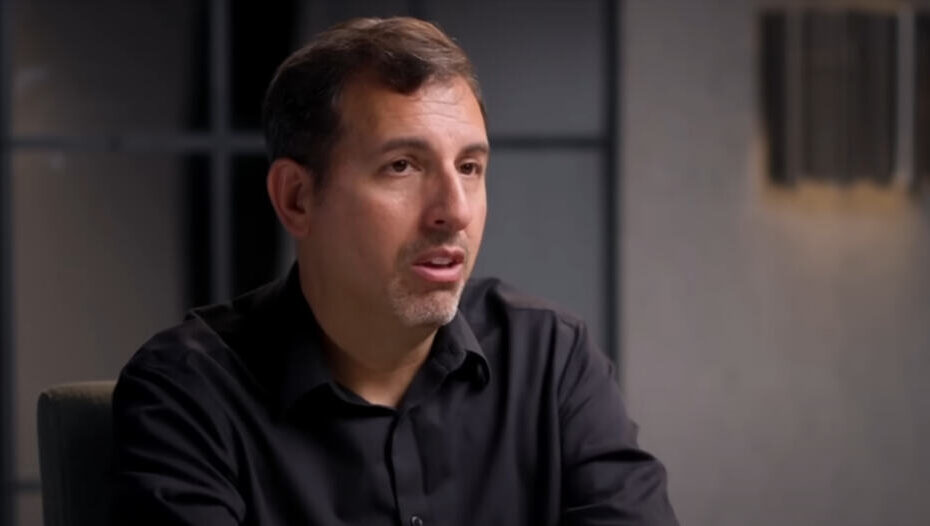
Read the full transcript of Vitamin D Expert Dr. Roger Seheult’s interview on The Diary Of A CEO with Steven Bartlett podcast titled ” Vitamin D Expert: The Fastest Way To Dementia & The Dangerous Lie You’ve Been Told About Sunlight!”, July 17, 2025.
Dr. Roger Seheult’s Mission and Background
STEVEN BARTLETT: Dr. Roger Seheult, with the work that you do, what is it that you’re aiming to accomplish outside of your clinical duties?
DR. ROGER SEHEULT: Maybe even part of that I would like to clearly explain very easily graspable tools that can be implemented to make people live their best life. And it’s specifically in terms of their health and their well being.
STEVEN BARTLETT: And as we dig down into health and wellbeing, because that’s quite a broad basket, what is it within health and wellbeing that you’ve spent your career, your life focusing on?
DR. ROGER SEHEULT: So I’m a board certified internal medicine specialist. Then I did an extra three years of training here in the United States on pulmonary and critical care. So I deal with all of the issues that are related to the lungs and the critical care aspect.
So if you are admitted to hospital and you’re critically ill, you go to the intensive care unit. I’m the doctor that you see. So I’m putting in the lines, putting them on vasopressors, intubating them. I worked in the clinic this morning.
The Eight Pillars of Health
STEVEN BARTLETT: And what are some of the unappreciated things that most people don’t think of? Because we think of don’t eat processed food and exercise. But are there things outside of that that you don’t think the average person appreciates enough?
DR. ROGER SEHEULT: Yes, absolutely.
STEVEN BARTLETT: What are those things?
DR. ROGER SEHEULT: So if we look at those things that extend life and are beneficial, we could put them into what I call eight pillars of health. If you can imagine, your life is a chain with a bunch of links, okay? And I’m talking medically. Each one of those links is an organ system. So your heart is a link, your lungs are a link, your liver is a link, your kidneys, et cetera, et cetera.
As you go through life, imagine those links starting to erode so that at some point in your life, you’re going to get some sort of a disease or a diagnosis that focuses on one organ system of your life. For many here in the United States and in the UK, it’s the heart. And as that link gets more eroded, we can see very clearly that this is going to be the link that’s going to break first. And therefore attention is paid to that link.
For many, that diagnosis comes with medications. So here’s one of the first truisms that I would say going forward: all medications have side effects. And what the aim is to do in modern medicine is to utilize the knowledge of those medicines and their effect on the human body so that we leverage the other links to protect that weakest link.
So I could go through a bunch of medications that I give all the time to patients in the intensive care unit where I’m focused on saving their life because I can clearly see which link is the weakest. But I’m doing it knowing that there’s side effects because I’m trying to save that link to save that life and I’m leveraging those other things.
For instance, somebody comes in with a stroke and they’ve lost weakness on the right side of their body or on the left side, whichever side. I can give them a medication immediately that will break up all of the clots in their body. It’s called TPA or TNK and it will restore blood flow to the brain and it will reverse many of their symptoms if they come in soon enough. We can do this.
What’s amazing is that that medication has an effect that can do that, but it also has a pretty significant side effect in that it could break up clots somewhere else and cause bleeding. So we have to be careful about what it is that we’re doing. Clearly there, what we’re doing is we’re saving one link at the expense of other links. But that’s what you have to do in an emergency situation.
But if after that I simply send that patient home without telling them why they had that stroke and what they need to do to prevent themselves from getting that stroke again, and what are the lifestyle factors that cause that to happen? I haven’t done my job.
So what are the interventions that we can do, hopefully early on in life so that we don’t have those links eroding, so that all of the links are strong and as we get older we can continue to strengthen all of the links. Here are the eight.
# Nutrition
So nutrition. That’s nutrition, basically. We know there are studies that have done that show that depending on what we put into our bodies as food can have a dramatic impact in terms of our well being. Okay, so that’s nutrition.
# Exercise
Exercise. As I was saying, exercise. Not only – I mean, drugs and things have side effects. Exercise have side benefits. So exercise obviously is going to make you more fit, it’s going to make you have better endurance. But did you know that it reduces stroke? Did you know that it improves well being? It reduces depression? There’s so many benefits. So all of these links are actually improving. There’s no leveraging here. Exercise is incredible.
# Water
Water. So this may sound obvious, right? Like you drink because you’re thirsty. Where I would like to go today is to talk a little bit about what the effect of water externally on your body can do.
STEVEN BARTLETT: And you’re talking there about like hot and cold usage.
DR.
STEVEN BARTLETT: In terms of showers, cold plunges, saunas, that kind of thing.
DR. ROGER SEHEULT: Exactly. And we’ll get into the actual evidence for this, we’ll get into it later.
STEVEN BARTLETT: But what is your immune system which changes your probability of diseases and stuff like that?
DR. ROGER SEHEULT: Correct. Absolutely. Especially in the acute setting. Especially so not only in the acute setting, but we also have pretty good data from Finland where they have more saunas than almost than people. Where they’ve actually done the research and shown with dose response curves that this is actually very beneficial. We won’t get into too much of that.
But what I want to focus a little bit more on because of my job in the intensive care unit and what we’re seeing right now with viruses and mutations and the innate immune system, why something like this may actually be very important as we look forward, interestingly as we look forward to future things, pandemics, we can look backward and see what we had done in the past. And we’ve got some really, actually really good information on that.
The Power of Sunlight: Beyond Vitamin D
Let’s go to sunlight. This is something that I’ve really become more and more involved with because of some of the benefits that this can do. A very big misconception that people have is that sunlight equals vitamin D and therefore if you take a vitamin D supplement you don’t need to go in the sun. This is really something that’s now being debunked.
Sunlight has far more benefits than just vitamin D. Not saying that vitamin D is not something that you want to supplement with. I supplement with vitamin D. I think there’s a benefit to supplementing with vitamin D, no question. But sunlight has so many important things and I really would like to spend the bulk or the lion’s share of the time talking about this because this is really important, this is amazing and it really made me think about sunlight.
# A Remarkable Recovery Story
So this is a story by a lady by the name of Amy Honmeyer. Her 15 year old boy was diagnosed with lymphoblastic leukemia. Went into the hospital, actually started chemotherapy.
STEVEN BARTLETT: For it, which is blood cancer.
DR. ROGER SEHEULT: It’s a blood cancer, yeah. And so the treatment for blood cancer is chemotherapy which he started. The side effect of chemotherapy is suppressing the immune system. And unfortunately he didn’t realize it but he developed, he didn’t realize it immediately, but he developed a fungus flesh eating infection in his lung and went into the hospital in June of 2024. This was in Minnesota tertiary care hospital.
And he got worse and got worse and got worse to the point where the only way that they could control this infection was to actually remove his left lung, which they did. So this is a 15 year old boy, he is without his left lung. He only has a right lung and he starts to decline even after that. They do a CT scan and it shows that now the infection has moved to his remaining right lung.
They have a family conference and as Amy is telling me this story, I could hear her choking up. She’s telling me this on the phone, she’s saying that he’s 15, he’s completely awake, he’s completely alert, he knows everything that’s going on around him. He’s on a ventilator, like a machine that they use for sleep apnea. It’s like a BiPAP machine that’s breathing for him. It’s not intubation, but it’s on his mouth.
And the doctors have done everything they possibly can and they say, “Look, he’s getting worse. We can’t take, obviously we can’t take the right lung out. We can’t put him on a heart lung machine because there’s no sort of destination to where he’s going. We recommend not intubating him and making what they call DNR, Do Not Resuscitate.”
So they’re like, wow, they were not expecting this coming. So they have a big conference, they call in help to like, how do you explain to a 15 year old boy that you’re dying and how is that going to feel? So they ask the doctors, “How much time does he have?” They say two days.
So in this situation, they ask this boy, “Okay, you’re going to die. What do you want to do with your life in the next two days? What do you want to do?” And surprisingly, he says, “I want to go outside. I just want to go outside.” This guy grew up probably on a farm or something and he spent his time outside. So he wants to go outside.
So you know how – I mean, I don’t know if you know this, but like if you’re a nurse or you’re a doctor and you’ve done everything you can and you’re just completely horrified at the fact that this 15 year old is going to die and he has one request, you’re going to move heaven and earth to fulfill that one request. And that’s exactly what they do.
They get this boy the hospital bed outside, he’s on a BiPAP machine the respiratory therapists have put together. So this guy is outside and they’re not putting him outside to get better, he’s just, this is his dying wish. They also used this thing called a firefly. It’s like a light device that they were using. I’ll be honest, I don’t know which did it.
STEVEN BARTLETT: The firefly. What’s that?
DR. ROGER SEHEULT: It’s a light device that gives off light at different wavelengths. And they would use that for about three times a day for five minutes.
This guy does not die after the first day. His white count starts to come down. That’s like a measure of the infection that’s going on in the lung. And by the way, they do a CT scan of his lung before this all starts. And it’s just the remaining lung on the right is just filled with infection. It’s horrible.
By the second day, the white count comes down even more. And by the way, they haven’t changed any of the other treatment he’s been in. By this point, he’s been in for six weeks. He has not seen the light of day. And he’s still getting the powerful antifungal medication, Amphotericin B and posiconazole. All of these things are really high powered drugs that just completely fight fungus. But it’s not working. He’s getting worse.
But now he’s out for the second day. The white count’s coming down, which is good. That’s a good sign. His oxygen requirement is coming down. That’s a good sign. He’s requiring less and less oxygen by the time he gets to day five. Okay, we’re already past two days. He’s off the BiPAP. He’s on regular just nasal cannula oxygen that you see people wearing on their nose.
The doctors are scratching their head. They’re like, “We should get a CT scan to see what’s going on.” So Amy tells me that they get a CT scan of this guy and they’re in the room and some even swear under their breath, like they’re completely amazed because on the CT scan, obviously the left lung is still gone, but the right lung, the disease is probably 60, 70% gone. And he’s still alive.
He goes home. There’s no sign of the disease after treatment. And she just communicated with me to tell me that he just got his make a wish thing for his cancer, he’s continuing treatment, and she just can’t believe that he was literally two days away from dying. They changed nothing. They changed none of his treatments. The only thing that they did was they took him outside and they were using this firefly before inside, but they were using it more consistently when he got outside.
Rethinking Hospital Design
STEVEN BARTLETT: Maybe hospitals should be outside.
DR. ROGER SEHEULT: This is exactly what – okay, so if you wanted to know what my drive was what it is my purpose that I’m doing right now. I’m working at three different hospitals, and I’m trying to work in each of those three different hospitals to try to get patients outside. The biggest barrier that we have is staff taking those patients outside. That’s the thing that’s the hardest.
But this is what we used to do, Steven. This is what we used when we built hospitals at the turn of the century. We had hospital rooms where beds could be taken out onto the veranda and people could get sunlight. I would love to see a time where we could go back to that type of effect.
There are studies that have been done. People in a two bedroom, if you’re the bed closer to the window, you get discharged from the hospital faster on average.
STEVEN BARTLETT: Really?
DR. ROGER SEHEULT: Yes.
STEVEN BARTLETT: I need to swap sides of the bed with my girlfriend. She’s on the sunny side.
DR. ROGER SEHEULT: There’s so much evidence for this. People who are in hospitals that have bigger windows, they give better surveys, and hospitals reimbursement is tied to the surveys that they get from patients. So it’s literally a win, win, win.
If hospitals started to, I believe, get patients outside and they’re already doing this, I don’t want to say that this isn’t happening. There are hospitals that have programs to get patients outside. I think we just ought to be doing it a lot more. Temperance.
STEVEN BARTLETT: Temperance, what does that mean?
DR. ROGER SEHEULT: It’s an old term, isn’t it? It really means moderation. And I would say in this sense, temperance really means to avoid toxins in the body. As somebody who is a pulmonologist.
STEVEN BARTLETT: What’s a pulmonologist?
The Role of a Pulmonologist and Avoiding Toxins
DR. ROGER SEHEULT: A pulmonologist is someone who takes care of the lungs. And so as a result of that, I see a lot of issues with lung cancer related to smoking. I see in the intensive care unit, people with liver failure as a result of alcohol abuse. I also see people on amphetamines.
Here in Southern California, where I reside and where I work, we have quite a bit of that. And temperance, if you want to live a long and wholesome life, there are some toxins that you want to avoid. And understanding that is really important. So this is something that if you stop some of those things that we’re talking about, all of those links are going to be improved.
Air seems kind of obvious early on. I used to think that what this meant was getting pure air with absolutely nothing in it except for just nitrogen and oxygen. That’s not true anymore. We now understand that for you to have the best type of air, it actually has to come with some things in it. Just like our gut has a microflora that you may have heard about, so too does the air that we breathe also must have that. And the best type of air that you can have is actually outside rest.
This is really interesting because we just mentioned that exercise was a pillar, but rest also is. How can rest and exercise at the same time be pillars of health? And it really comes down to knowing when to do what sleep, which is also part of rest. So we’re not just talking about a daily rest when you go to sleep.
And as a sleep physician, I can tell you quite a bit, we have lots of information about how long we should sleep, the quality of sleep, some of the diseases that prevent us from sleeping. Sleep is so important. I couldn’t over express it enough. Not just a daily rest, but I would also say, and venture out, we can talk more about this. A weekly rest.
STEVEN BARTLETT: A weekly rest.
DR. ROGER SEHEULT: A weekly rest.
STEVEN BARTLETT: What do you mean weekend?
DR. ROGER SEHEULT: Yeah, absolutely. How many times do we even on the weekend, do we put down our phone?
STEVEN BARTLETT: Never.
The Importance of Faith and Trust
DR. ROGER SEHEULT: Or we stop reading emails and we take the time out to do things that we would never be able to do. Finally trust. So this is something that really just can’t be ignored. And I’ll say this up front, that in the world of research and science, there is a silo of science and there is a silo of faith.
But what we can ignore is the growing body of evidence from the scientific world that’s peeking over and looking at faith, that people who have faith and people who have faith in God, whether that is their God in that particular denomination, are better apt and able to deal with stress and depression and anxiety. So this is something scientifically that has been shown.
Now, you may have noticed that I did these in a particular order. And if you go through them, you’ve got nutrition, you’ve got exercise, you’ve got water, you’ve got sunlight, you’ve got temperance, you have air, you have rest. And finally, you have trust. You put that together and it spells out “New Start.”
So interestingly, these particular topics are not copyrighted, but there is a university in Northern California called Weimore University that has actually put these together in that very pattern as called it “New Start.” They actually have a New Start program. And so this is something that is actually being used internationally.
STEVEN BARTLETT: So of these subjects that you just went through there for this New Start framework, where do you want to start?
DR. ROGER SEHEULT: I think actually sunlight is one of those things where I’m excited about all of those. But I think sunlight is really where we have. Let’s put it this way, it’s the lowest hanging fruit.
STEVEN BARTLETT: Okay, explain to me why sunlight is the place where your focus is at the moment.
Why Sunlight is the Lowest Hanging Fruit
DR. ROGER SEHEULT: It’s a long trip that has gotten me to that, and I think part of it goes through, right through Covid. So, as a critical care intensivist, when I heard that there was this virus that was coming, they all told us that it was going to be people with respiratory illnesses, which I was certainly comfortable with.
But that’s not what it turned out to be. We certainly saw people with respiratory illnesses, but what we saw in the intensive care unit, the people that were dying around me were people with obesity, people with heart disease, people with kidney disease, people with dementia, people with chronic diseases. And it made me think, why was that the case?
All of those things have one thing in common and many other things too, but specifically, they’re rooted in something called mitochondrial dysfunction. So let me unpack that for you. And this has to do with longevity. This has to do with aging. This is a huge topic that is now just emerging, and we’re now finding more about this.
So when I was in high school, biology. When I was in college, we all learned about this little organelle in all of our cells, except for red blood cells called the mitochondria. And I have to say it. What is the mitochondria? It’s the powerhouse of the cell, right? So it’s the thing that makes energy.
What we didn’t know at the time is that as we get older, the output from these batteries in our cells drops by about 70%. Can you imagine running your house on 70% less energy? How fundamentally that would change what happens in your house? Like, you could not run the laundry the same way you could not run the microwave and the laundry at the same time.
STEVEN BARTLETT: And what does that look like in terms of symptoms?
Mitochondrial Dysfunction and Disease
DR. ROGER SEHEULT: Excellent question. Because what it looks like is depending on the cell type that we’re talking about, that’s going to have the issue. So if we’re talking about the liver, the liver’s going to get more fatty. If we’re talking about the heart, the heart is going to become more congested. If we’re talking about the brain, it’s going to have more dementia.
And so what’s happening here is that as we get older, the batteries in our cells are not working the same way as they used to. Metabolism is slowing down. And so these are huge issues. And all of these diseases that I just talked about, all the ones that we saw in Covid, if you look in a lot of these diseases, they are rooted in mitochondrial dysfunction.
So the question is, why is that the case and what can we do about it? So there was a paper that came out in 2019 that fundamentally changed the way I saw this. It was written by Russell Ryder, who is the executive editor of Melatonin Research, he’s out of University of Texas, and Scott Zimmerman, who’s a light engineer.
And what they set forth was to show that basically sunlight is made up of so many different types of wavelengths. You’ve got ultraviolet on one end, which of course makes vitamin D. And it’s very beneficial. It’s the type of light from the sun that is very shortwave, but cannot penetrate very deeply.
Let me back up a little bit and explain. You pull up to a stop sign and somebody pulls up next to you and they’re playing the latest hip hop music. How does that sound to you in your car? It’s very boom. Boom, right?
STEVEN BARTLETT: Yeah. And muffled.
Understanding Light Wavelengths and Penetration
DR. ROGER SEHEULT: And muffled. And the reason why is because low wave frequency has the ability to travel very far. Go to the Grand Canyon and there’s a thunderstorm at the other end of it. What do you hear? It’s like a rumbling. And then as it gets closer, you hear the higher pitched sounds. This is a fundamental physics principle.
And so when the sun is shining, there’s very short wavelengths, ultraviolet B involved in vitamin D. But at the other end there’s this infrared light, which we’ll talk about, or red light. It’s very long wavelength and it can penetrate very, very deeply. That’s very important because what we’re talking about is a human body. And if the sun is going to have an effect on the human body, it’s got to be more than just the skin.
So that’s exactly what this paper showed, is that basically infrared light from the sun is able to penetrate probably up to about 8 centimeters, according to Scott Zimmerman in this article. And it fundamentally interacts with specifically the mitochondria. And what does it do to the mitochondria?
So let’s back up and talk about the mitochondria because this is central. The mitochondria to the cell is like the engine in your car. The engine produces locomotion that causes the wheels to spin, but in the process of doing, causes heat to surround the engine. And if you don’t deal with that heat, it will shut down the engine, it will make it more inefficient, and eventually it will shut it down.
So what do all internal combustion engines have, they have a cooling system, they have a radiator, they have an oil pan, they have a water pump. And that’s exactly what the cell has to have for the mitochondria. It’s not heat in the mitochondria. It’s called oxidative stress. And it’s specifically oxidative stress that causes destruction and destruction of the mitochondria and leads to these types of diseases.
So oxidative stress causes the mitochondria not to work well. This leads to diabetes. Oxidative stress makes the mitochondria not work so well. This leads to dementia. So this has already been laid out. This is not that controversial. The controversial part is what do we do about it?
Melatonin: The Cell’s Cooling System
So what these guys in this paper showed was that, and not just them, but reviewing the literature, is that the mitochondria makes its own cooling system. And that cooling system is melatonin. Now you might be thinking, “Wait a minute, melatonin, isn’t that the stuff that we take that our brain makes right before we go to sleep?” Yeah, it’s absolutely correct. That’s what happens.
The problem is, is that this is not melatonin that’s made in the brain. This is not melatonin that goes through the blood supply and goes through our blood and tells us it’s time to go to sleep. This is melatonin that’s made in the cell, in the mitochondria, and it’s a powerful antioxidant that basically prevents the oxidative stress from occurring.
What Scott Zimman and Russell Ryder showed and proposed in this was that basically the infrared radiation that’s coming in to the body is able to stimulate and upregulate melatonin and a number of other factors that keep the mitochondria cool and can actually the energy output of the mitochondria. So this was actually mind blowing to me.
And I’ll tell you why I resonated with this as a critical care physician, because there was two things that bothered me the most. Number one, SARS CoV2 virus, when it comes into the body, it interacts with something called the ACE2 receptor. You may have heard about the ACE2 receptor. This is where the virus actually latches on to the cell and gets internalized.
So what is this ACE2 receptor? Was this there for all of humanity just to be a receptor or does it actually have a role? It turns out it actually has a role. And mind blowingly, the ACE2 receptor is involved in mitigating oxidative stress. So in other words, it’s another part of the cell’s cooling system for the mitochondria.
What’s happening is that the virus, when it attaches to the cell, is basically eliminating that action. And so imagine you have a bunch of people with various different engines running at different temperatures. In other words, you’ve got some people with chronic disease, and we know their engines are running hot. We have other people who are completely healthy and they’re doing quite well. Their engines are nice and cool. They have no problems at all.
Now imagine Covid comes and SARS COV2 is infecting everybody. What that tendency is to do is because it’s knocking out everybody’s ACE2 receptor, which has the ability to cool down the engine. In other words, it’s causing everybody’s engine to run hot.
But in somebody. So in other words, picture is this way. You’re driving along in your car and your thermometer is there. And all of a sudden there’s this big hill that you have to climb called COVID 19. Who’s going to make it over that hill and who’s not going to make it over that hill?
The people that make it over the hill are those with great cooling engines whose temperatures are running great. The ones that don’t make it over that hill are the ones that have the thermometer on their engine running hot. Those are the ones that poop out at the top and can’t make it. And they’re the ones pulled over to the side of the road with the hood up and the steam coming out of the engine. Do you understand what I’m saying?
The Vitamin D Paradox During COVID-19
STEVEN BARTLETT: Of course, yeah.
DR. ROGER SEHEULT: So this makes perfect sense to me why I wasn’t seeing what they were predicting, which these respiratory patients coming into the ICU. Who was I seeing in the ICU? I was seeing people with dementia. As we talked about diabetes, kidney disease. These are the ones that were sick.
The other thing that really hit me and resonated with this was, and this was not even controversial. We knew early on in the pandemic that people who came into the hospital and had higher levels of vitamin D did really well. They didn’t die. They didn’t have the same chances of dying. People who had low vitamin D levels, they had much higher levels, chances of dying. So we would check these vitamin D levels.
And so think about this. You’re there at ground zero and you’re taking care of these patients, and you see this data over and over and over again that vitamin D is very predictive of who’s going to die, obviously. What are you going to do? Even though this is an associative study, that association doesn’t mean causation. You’re going to be giving people vitamin D and try to get those levels up. The problem is, is that we gave vitamin D and it really didn’t have much of an effect.
STEVEN BARTLETT: So you gave it in supplement tablet.
DR. ROGER SEHEULT: Yeah. People would come into the hospital like this. Exactly, exactly. Just like that. In fact, I was supplementing myself. I mean, what have you got to lose, right? I already took my vitamin D tablet this morning. It’s very hard to overdose, but it’s possible.
STEVEN BARTLETT: So you noticed that it was hard to treat people with vitamin D, but giving them a tablet didn’t really do much?
DR. ROGER SEHEULT: That’s correct.
STEVEN BARTLETT: Why?
The Real Factor: Infrared Light from the Sun
DR. ROGER SEHEULT: Well, this is what I believe is. The fact is we saw that people with high levels of vitamin D or normal levels of vitamin D did better than those that had low levels. I believe that that was a marker of something else. In other words, people who had higher levels of vitamin D meant that they were out in the sun more, they were outside more than those. The people that had very low vitamin D levels, the people with low vitamin D levels were telling me these are people that were not getting outside into the sun.
And so what’s the real factor here? What’s doing the heavy lifting? And I would propose, and Scott Zimmerman and Russell Ryder would propose, and I can tell you a number of other scientists that would agree with me on this, is that infrared radiation from the sun is causing an effect at the mitochondrial level in terms of oxidative stress, and that vitamin D was just the marker of who was getting the infrared light and who was not, who was going outside and who was not going outside.
So when the sun is shining, for the most part, you’re getting infrared light. You’re getting the entire biological spectrum from the sun, we can go to the longest wavelength, which is far infrared, all the way to the shortest wavelength, which is ultraviolet B. Okay. Which makes vitamin D. So in other words, when you are outside in a natural environment, you’re getting a very broad spectrum of light. And so because of that, if you’re getting infrared light, you’re also going to be making vitamin D. Yeah, you’re getting both.
Now, that can change. Because in the wintertime, when the sun is lower in the sky, especially, you know, in England, this is a special issue. At that latitude, when the sun is low in the sky, the light has to penetrate through obliquely through the atmosphere. And because of that shortwave radiation from the sun, like ultraviolet B does not make it very well. So there’s times of the year where you’re not getting enough ultraviolet B or maybe even no ultraviolet B from the sun.
STEVEN BARTLETT: Which makes the vitamin D.
DR. ROGER SEHEULT: Which makes the vitamin D, and that you’re going to be deficient. You need to supplement, however, during that same period of time when you’re not getting enough vitamin D because there’s no ultraviolet B radiation, that sun is low, but that’s. It’s still enough to allow that long wavelength penetrating infrared light to still come through.
Red Light Therapy Devices and Infrared Light
STEVEN BARTLETT: So is the long wave infrared light the type of thing that we see these gadgets doing?
DR. ROGER SEHEULT: Absolutely. And I would say, just to be specific is because you can see that as red light there. That’s not infrared light because you can see it. So infrared light technically is completely invisible.
STEVEN BARTLETT: But these do give out infrared light, but you just can’t see it.
DR. ROGER SEHEULT: Yeah, exactly. So it’s toward that red end of the spectrum. And people like Glenn Jeffrey out of UCL is actually doing research at 670 nanometers of red light and has shown in randomized controlled trials that that type of light right there at 670, the type that you can even see, actually does improve mitochondrial efficiency. He’s shown this in a number of randomized control trials. It improves eyesight. And you have to realize that the retina at the back of your eye is very rich in mitochondria. He’s shown this in terms of managing glucose and output from mitochondria.
And the reason why these things work so well is because what’s going on here is as you get older, your skin starts to become more saggy because the fibroblast, or the cells in your skin, they’re designed to make collagen. And collagen is the skeleton that makes your skin soft and subtle. Yeah.
STEVEN BARTLETT: Don’t mind me, please carry.
DR. ROGER SEHEULT: No, no. So this is exactly. My wife uses the same thing.
STEVEN BARTLETT: This is a bond charge one.
DR. ROGER SEHEULT: So what’s going on right now is that red light, which can penetrate very deeply down, is going into the skin, and it is activating the mitochondria in your fibroblast to produce more energy, which those cells need to deposit collagen. And so when you deposit collagen, that’s going to give the skin a more tight feel, because as you get older, that collagen deposition is going to get less and less and less.
STEVEN BARTLETT: So this is going to help keep me looking young.
DR. ROGER SEHEULT: That’s the whole point of it.
STEVEN BARTLETT: And you’re saying that the light in these penetrates what, 6 or 7 centimeters.
DR. ROGER SEHEULT: Or is it infrared? Does about 8 centimeters. This red light would be a little bit less because this light, obviously you can see it. So it is a little bit shorter wavelength. But yes, this light, the red light, can penetrate deeper than, for instance, yellow light or blue light. And it’s this light particularly that interacts with the mitochondria to increase that.
Systemic Effects of Red Light Therapy
STEVEN BARTLETT: So should we be putting this all over our body? Because, okay, it’s good for my skin, but if it’s penetrating deeper, presumably there’s other parts of my body that would benefit from that and other mitochondria.
DR. ROGER SEHEULT: It’s interesting you say that. The study that I’m referring to with Glenn Jeffrey out of University College London, he took young people in this study, he gave them a bunch of glucose, and everybody who gets a bunch of glucose should have a spike in their blood sugar. He randomized them on their backs to see what would happen when he shined red lights on their backs. And the people that got the red light had lower spikes. In other words, it seemed as though the mitochondria were metabolizing faster, which caused less of a spike of the glucose in their blood.
The way he confirmed that is looking for the byproducts of the mitochondrial metabolism, which is carbon dioxide. So when we breathe, when we metabolize, we’re breathing out carbon dioxide, which is the result of a mitochondrial metabolism. And in fact, in those people that had the light on, it showed a higher level of carbon dioxide in the exhaled breath.
The whole point of that is to get back to your question is whether we should be putting this all over your body. He was able to get that effect systemically with just putting the light on the back. That was a systemic ability. We don’t understand everything about the mitochondria, but what we do seem to understand is that they can communicate with each other and that you don’t need to have this all over the body to have systemic effects. In this particular case, though, if you want to have the skin here to be more younger looking, then it makes sense that this is where you need to have it. If you want to have a particular other part of your body to look younger, then, then perhaps that’s where the light needs to go.
The 15-Minute Switch
STEVEN BARTLETT: So interesting. How long did it take in those studies to see the effect of red light therapy like this?
DR. ROGER SEHEULT: Well, that’s a very good question. If you talk to Glenn Jeffrey, which I have, he noticed an improvement in 15 minutes.
STEVEN BARTLETT: 15.
DR. ROGER SEHEULT: He didn’t. 15 minutes.
STEVEN BARTLETT: What did he notice in 15 minutes.
DR. ROGER SEHEULT: He said he has studied the mitochondria in fruit flies and in mosquitoes and bees and in human beings. And it’s the same every time. He says after about 15 to 20 minutes of this type of light in that type of setting, there is a switch that turns on and you don’t need further stimulation. Further stimulation doesn’t do anything more. It’s a very bizarre thing. You would think that the more light that you gave, the more the effect would be. It’s not after about 15 minutes, there’s something that changes in the mitochondria.
There are certain theories about where this might be. This might be in the electron Transport Chain Complex 4. These are very technical things. There’s a lot of studies that are actually. There’s a number of groups that are actually looking at this. There’s a whole area of science called photobiomodulation, which is looking at this. But 15 minutes is really what it takes. So we’re not talking about a long period of time. This is really interesting.
COVID-19 and Infrared Light Therapy
So getting back to my experience in the intensive care unit, the vitamin D wasn’t working. These patients were dying. And it became clear to me that COVID was a metabolic issue for these patients. By the time I had realized this, I mean, the pandemic arguably is still going on because people are still becoming infected. But the rush to come into the hospital and the number of bodies that we were seeing circulating through the intensive care unit had dropped dramatically. And at that point, I was able to see that potentially infrared light may be very beneficial in these patients with COVID-19.
Now, there was a study in Brazil. They took COVID patients that were sick enough to be admitted to the hospital, but not too sick to be intubated in an intensive care unit. And they did something tremendous. They actually manufactured a jacket that they could put on patients. And on the inside of this jacket were these LED bulbs that gave off infrared radiation at exactly 940 nanometers. They put the jackets on and they randomly randomized the sign which jacket was turned on and which jacket was turned off.
It was blinded because the light coming from this jacket could not be seen by the human eye. It wasn’t even enough to produce enough heat. And so they did this on 30 subjects, and they randomized them. 15 did it all. 30 had the jackets on. 15 had it turned on. 15 did not have it turned on. And they watched them. What happens to these patients? Every single endpoint that they looked at was statistically significant.
STEVEN BARTLETT: What does that mean?
The Power of Light Therapy in COVID-19 Treatment
DR. ROGER SEHEULT: It means that the differences between these two groups could not have been from chance. There was a real difference. The group that had the jacket turned on had improvement in their oxygen saturation, could take breaths in more deeply and stronger, had improvements in their white blood cells, and not only that, had improvements in their heart rate, their respiratory rate. All of these statistically significant.
But the most important and mind blowing statistic was the length of stay in the hospital. So they had these jackets on for 15 minutes once a day for seven days. In the group that did not have the jacket turned on, their average length of stay was 12 days in the hospital. For those that had the jacket turned on, it was eight days. That was four day difference.
That’s tremendous when you realize that it cost thousands of dollars to hospitalize patients. It’s a huge amount. When you think about the fact that there are certain drugs that get FDA approved for influenza, for instance, by just cutting short the symptoms for 24 hours. This is not just 24 hours. People were discharged from the hospital four days faster.
When I saw that study, that was enough for me to convince me. Obviously it was 30 subjects, right? We should do a bigger study. We should do a couple hundred, right? That would be ideal to do. But the fact that with just 30 patients, they could show statistical significance, that was enough for me to say, every patient from now on, that I see that comes in with COVID-19, that’s hospitalized, that they’re asking me to go intubate, to bring to my ICU. These patients are going to get outside.
I don’t have that jacket that they made in Brazil. I don’t even know how I would make that jacket. They made it for the study. And it’s not commercially available. There’s no 940 nanometer lights, which is what they did in the study. But I do know this. I do know that sunlight has 940 nanometers in it. And if I could just take these patients outside, maybe they could improve.
A Real-World Application: Taking COVID Patients Outside
So I got my wish. I had a patient on the floor. He was on 35 liters a minute, 100% oxygen through a high flow, through his nose, barely saturating because he had COVID-19. And I was asked to go see him because he was potentially needing to be intubated or brought to the intensive care unit. I could not believe it because I had not seen one of these in months.
So I went down, walked into the room, opened the door. It was in isolation. I had a mask on, the whole nine yards. The room was completely dark. The blind was closed. His daughter was there. And the first words out of his mouth to me was, “Doc, how much time have I got?” I mean, it was a catastrophe. Like, there was no light, no circadian rhythm. This guy was depressed.
I immediately called my respiratory therapist, immediately called the charge nurse. We got everybody together, and I said, we need to get this guy outside. It was a bright and sunny day. How are we going to get this guy outside? 35 liters, 100%. My respiratory therapist, Kim, managed to put a couple of oxygen tanks together, and we were able to get this guy into a wheelchair. And we wheeled him outside.
And he told me this weeks later, but he says, “You know that first day that you got me outside in the sun?” Because we did this for, like, seven days in a row. He said, “That felt so good.” He, after just one day, dropped down from 35 liters to 15 liters. 15 liters of oxygen, and then down to 12, and then down to 8 the next day, and then down to 5. 5 days.
STEVEN BARTLETT: The amount of oxygen he was inhaling to keep him alive.
DR. ROGER SEHEULT: Correct. So in other words, we were titrating down the amount of oxygen that we had to give him to maintain a saturation in the 90s. In five days, he was discharged, home without oxygen.
Now, obviously, that’s an anecdote, right? That’s not a study. But I’m looking at the risks of getting people out in the sun for 15, 20 minutes. There’s not a lot of risk to that. And if there’s a benefit I thought it was worthwhile doing, we need to have larger randomized, controlled trials. But it got me down the road to looking to see what was it about sunlight that was affecting this change.
The Latitude Connection: How Geography Predicted COVID Surges
And you know what? There’s ample data. There was a study, actually, that was done in Europe where they said, okay, here’s COVID. COVID’s going up. When does COVID go up? Is it because of temperature that changes? Is it because of humidity? And the answers to both of those were no.
Do you know what predicted when countries were to have their first surge? In the autumn of 2020? There was a study that was actually done this. It was latitude. It started in Finland and then went down the entire continent. The last country in the autumn of 2020 to have a COVID surge was Greece. So as the sun is literally pulling down into the southern hemisphere, as the shadow starts to go over Europe, that’s when we start to see COVID surges one by one by one.
STEVEN BARTLETT: Is that because COVID and the sun aren’t friends. So if I, it makes it harder to spread because, you know, if I put COVID on this table and then I put sunlight on the table, the COVID is going to die.
DR. ROGER SEHEULT: Yeah, it’s possible. Although we now know that COVID probably doesn’t spread too much through contact. It’s more of an airborne thing. So there was a study that was done at a University of Edinburgh and they looked at this very question that we had talked about earlier about vitamin D.
They looked at the United States in the wintertime. So and they eliminated the southern part of the United States, because in the southern part of the United States you can actually get some vitamin D in the wintertime. So they just looked at the sort of the northern portion of the United States and they were able to show that the more sunlight there was in particular areas, the lower the mortality from COVID-19.
So they said, well, this is interesting. What about in England? So they did the exact same study in England. And sure enough, of course, they didn’t have to eliminate any part of England because the whole country doesn’t get any vitamin D in the way wintertime. What they showed was that again, certain parts of the country in England, as you know, get more sunlight than other parts. Well, those areas that got more sunlight had lower mortality from COVID-19.
Then they took the same, they predicated the same study, and they looked in Italy, exactly the same finding. And they published this and they said in their study, and this is what really amazed me, they said, “If this is causal,” they say, they said that this might actually show a possible public health intervention. The fact that it is completely independent of vitamin D means that there’s something else going on.
The Groundbreaking Swedish Study: Sun Exposure vs. Smoking
STEVEN BARTLETT: There was a study in 2011 in Sweden.
DR. ROGER SEHEULT: Yes.
STEVEN BARTLETT: Is that linked to this?
DR. ROGER SEHEULT: No, this is a completely different study. But that’s also a very important study. So the Swedish study is groundbreaking. This was a study where they asked 20 to 30,000 Swedish women about their habits in sunlight. And they divided these women into three categories. Those women that did not get a lot of sun, those that got a moderate amount of sun, and those that got a lot of sun.
And they followed them for 20 years and they kept a track of each one that died and what they died of. And when they were done with that, they were astonished because what they found was that the women who had spent the large amount of their time outside or spent the most amount of time outside had the least amount of mortality from cancer, from cardiovascular disease and non cardiovascular disease, and those that spent the least amount of time outside had the highest levels of that.
The magnitude difference between those two was so much that they were able to show that women who, in Sweden who spent the most amount of time outside and smoked had the same mortality as those women that did not spend as much time outside and did not smoke.
STEVEN BARTLETT: They were equal.
DR. ROGER SEHEULT: They were equal. In other words, being in that category of not spending much time outside in the sun was the same risk factor for death as smoking.
Establishing Causation vs. Association
STEVEN BARTLETT: How do they know it wasn’t linked to exercise? How are they able to establish causation cause? That’s a.
DR. ROGER SEHEULT: You’re absolutely. That’s an excellent question. So the difference here as you go up is this is an association study. Okay? So the question is, how can you get causation from association? You can’t. But if you look at the Bradford Hill criteria, there is a way that you can potentially make a strong argument for causation if there’s something called a dose response curve.
In other words, if you can show. You’re not just comparing two things, but you’re comparing three or more. If you can show that as you increase the variable, that there is a change in the outputs that is strongly suggestive of potentially causation. By the way, this is exactly what we did to show that smoking causes lung cancer. Obviously, we can’t do a randomized controlled trial here. You get to smoke, you don’t get to smoke. We’ll follow up in 20 years to see who has lung cancer.
This is exactly what we did. We showed that there was such a strong association with cancer risk with smoking that we were able to say through association that smoking causes lung cancer. By the way, Richard Weller, who’s a dermatologist in England, did just last year a very similar study as to the Swedish study, except it was ten times bigger. And he did it with both men and women. He found the same results. It was a UK Biobank study.
STEVEN BARTLETT: What did he discover?
DR. ROGER SEHEULT: He discovered that either from solariums or being outside, using solar radiation data, he was able to show both on their questionnaire and also where they lived, that the more light that they had, the lower their risk of mortality and cancer mortality. So the question was, does it increase melanoma?
The Melanoma Question: Weighing Risks and Benefits
STEVEN BARTLETT: What’s melanoma?
DR. ROGER SEHEULT: Melanoma is a skin cancer. So that’s the big risk. That’s the big risk that everybody’s concerned about. You go out into the sun and you’re going to get skin cancer. And he was able to show in that study, this was like 3, 400,000 people in this study, UK Biobank study, Richard Weller, he was able to show that there was no increased, there was no statistical increased risk of melanoma incidence, but there was a reduction in non skin cancer mortality.
Okay, so here’s the trade off. If you want to go out into the sun in England, the benefits are you’re going to have a reduction in non skin cancer mortality.
STEVEN BARTLETT: So everything other than skin cancer.
DR. ROGER SEHEULT: Correct. On the other hand, there’s no increase in melanoma incidence. So that caused him to write an op ed and publish it. And actually, you can look up this op ed. It’s a great op ed published in the Journal of Investigative Dermatology called “Time for a Rethink,” where he goes through the arguments and he’s actually shown.
And there’s been a number of changes that people are making around the globe. So public health organizations that are saying now, you know, before we have said that, you know, the sun is a deadly laser and you should avoid it at all costs. We may need to rethink that.
The Modern Sunlight Deficiency: Our 21st Century Scurvy
STEVEN BARTLETT: So are you telling me that essentially 15 minutes in the sun every day turns on a switch in my body that improves my mitochondrial function, which is going to impact a variety of different parts of my health? Is that essentially what you’re saying?
DR. ROGER SEHEULT: Essentially, yes. And we’re looking. And this is in an environment where we are spending less and less and less time to give you, to put it in perspective, if we were on a British ship 300 years ago and I came to you and I said, “Do you see this little yellow fruit? Just by eating a little bit of this yellow fruit, all of this disease that you’re seeing around you with your fellow shipmates is going to go away.” That would seem almost incredulous, right?
But that’s exactly the case. We are the scurvy of the 21st century is the lack of sunlight. Everything is inside. We avoid the outside. We avoid discomfort. We avoid high temperatures, we avoid low temperatures. We used to go out and play sports. We now are playing virtual sports on pads. We have windows that are specifically designed, especially here in Southern California, to eliminate infrared light. Because why infrared light comes in and it heats up.
One of the interesting things we didn’t mention this about infrared light is the way that we interact with infrared light. You can tell this on your own. You go outside and close your eyes, you can tell which side of your body the sun is on. And the reason is because that infrared light not only can penetrate through your body, it’s also penetrating through clothes very easily. And you can feel that that heat that you’re feeling is the infrared light going through the clothes, going through the skin and interacting with your heat receptors that are well below the surface. So all of this.
STEVEN BARTLETT: Alright guys, going to go get Steve.
DR. ROGER SEHEULT: The guest is here.
The Impact of Indoor Living on Our Health
STEVEN BARTLETT: How long does the average American spend indoors or the average Brit spend indoors?
DR. ROGER SEHEULT: Good question. They’re almost identical. I think the Brits spend a little bit more time outside than Americans. The last number for Americans was 93% and Brits is 92%.
STEVEN BARTLETT: Were we born to be outside?
DR. ROGER SEHEULT: I think so.
STEVEN BARTLETT: You’d think our ancestors probably spent a huge amount of time outside.
DR. ROGER SEHEULT: And if you think about when I say outside, that also brings into play a number of other of the new start letters that we haven’t talked about. Exercise, you’re much more likely to do good exercise outside, you’re much more likely to get air that’s the right type of air outside.
The other aspect about infrared light, briefly is that trees are highly reflective of infrared light. In other words, if you’re in an environment where there are trees present, you’re going to get much more of this beneficial infrared light than if you’re in a concrete jungle. So plants like this. In fact, the way that we measure the forestation of the Amazon is through satellite imaging that looks at infrared light because it reflects infrared light back.
So the best thing, best situation to be in is to be outside on a green. On a day where there’s lots of green trees. We’ve known for decades that people who live in green spaces do much better in terms of diabetes, do much better in terms of hypertension, mortality, all of these things.
STEVEN BARTLETT: Depression.
DR. ROGER SEHEULT: Depression, all of these things. And when you think about this, you bring up a point in terms of correlation. How do we know it’s not depression? We used to say, well, people who live in green spaces have more money, they have more access to things. Maybe that’s what we’re seeing.
The Green Heart Study: Proof of Nature’s Healing Power
I just have to tell you, this study, there was something called the Green Heart Study in South Louisville, Kentucky. They did an amazing thing. They took this four square mile area in South Louisville, Kentucky, urbanized area, and they measured everybody’s hscrp. What is hscrp? Highly sensitive C reactive protein. It’s a marker of inflammation and it’s been correlated to bad things like stroke and heart attack. So if you have high levels of CRP, that’s not good.
So they measured about 700 people. And then they did something extraordinary. They purchased 8,000 mature trees, dug holes, and planted 8,000 trees into four square mile area. And these are trees with leaves on them. Two years later they come back and they measure all 700 people in their study.
Repeat, the HRCRP dropped by 13 to 20%, which correlated to about a 10 to 15% reduction in strokes. These people didn’t change their socioeconomic status, they didn’t institute an exercise program. And so really it kind of shoots in the heart. The idea that the advantage that we see with green spaces has to do with something else that we’re not measuring.
I actually believe that we’ll talk about fresh air too. That things like these plants, but much bigger. This is kind of like a bonsai plant, but trees outside, they actually have a benefit. And what they represent, again is these things that don’t leverage the other parts of your body in terms of the chains that make all of the chains bigger. Because they’re having a benefit. But you can’t get the benefit of this if you’re inside a house.
Red Light Therapy: A Practical Solution
STEVEN BARTLETT: So what should we do about this in terms of what changes should I make in my life to capitalize on this? This brand here is called Boncharge. They do these, these red light devices. They do like red light saunas, blankets, masks. They’re actually a sponsor of mine because I started wearing this. And I think they found out I started wearing it because of my girlfriend.
DR. ROGER SEHEULT: Yeah.
STEVEN BARTLETT: She was wearing it every day. And I got curious. And so, as I always do, I’m always super skeptical.
DR. ROGER SEHEULT: Sure.
STEVEN BARTLETT: So I went online and started looking at some of the research and I was shocked. It made no intuitive sense to me that a red light mask or any red light device could have a profound, what I see as a profound impact on my health. Like, I didn’t believe it to start with. It was like woo woo stuff to me, but I couldn’t disprove it.
DR. ROGER SEHEULT: Right.
STEVEN BARTLETT: All the studies, many of which you’ve referenced, supported that it was having a profound impact. And as I’ve said on this podcast before, my girlfriend’s always right. She’s like always ahead of the curve and always right. So I started wearing her mask and now I have my own. From Boncharge.
DR. ROGER SEHEULT: Yeah.
STEVEN BARTLETT: Do you recommend these kinds of things?
DR. ROGER SEHEULT: I think it’s reasonable to do. I will say this. If you are getting enough infrared light from the sun, what we find in studies, not particularly with the mask, but we find in other things, is that these other areas don’t have as much efficacy. It’s almost to say if you’re on a ship with a bunch of people with scurvy and you already have a diet that’s rich in vegetables and fruits, eating an extra lemon is not going to be that beneficial.
STEVEN BARTLETT: So what do you do, like a.
DR. ROGER SEHEULT: Lot of doctors do? We have shifts that go from 7am to 7pm so you’re in the hospital, you’re not going to get outside. So at lunch, I try to get outside as much as I possibly can into the sun for my 15 minutes.
Dealing with Cloudy Weather
STEVEN BARTLETT: What if you live in a cloudy country?
DR. ROGER SEHEULT: So that’s a good point. Clouds, because they are water molecules, will absorb a lot of the infrared light. And the problem is that that’s exactly the type of light that you want to get. However, even on a cloudy day, being outside, you’re going to get more infrared light than if you were inside.
STEVEN BARTLETT: Okay, so I still get the light I need when it’s cloudy, but I just don’t get a lot.
DR. ROGER SEHEULT: Yes, exactly.
STEVEN BARTLETT: Is there anything I can do to get. If it’s super cloudy and I know I’m going to be indoors, what do I do then?
The Problem with Modern Lighting
DR. ROGER SEHEULT: Yeah. So the type of lights that we have inside, like these ones, like these. And actually, I think the UK and the United States are very similar in this regard, is that we really can’t get. The old incandescent bulbs were on LED or fluorescent.
And if you think about what they’ve done in terms of these bulbs, the old incandescent bulbs used to give you a very broad spectrum. So all the way from just near blue, all the way down into the infrared. The way that they’ve made the bulbs more efficient, they said, “Hey, let’s stop using energy to give off this light that we can’t see and give a very narrow spectrum of light that we can see.”
So think about what they’ve done. They have. For the first time in the history of humanity, we are now being exposed to light in a very narrow spectrum without anything else in the history of humankind. When we light a candle, when we would go outside into the sunlight, when we would have a kerosene lamp, we were getting full spectrum. In other words, we were never getting blue lights without red lights. Now we’re starting to get blue light without red light.
STEVEN BARTLETT: So do I change my bulbs?
DR. ROGER SEHEULT: It’s difficult to do that because you can’t pick up these incandescent bulbs. Which brings me to. I mean, at least in the United States, we have laws now that outlaw the regular selling of incandescent bulbs because of energy efficiency.
STEVEN BARTLETT: I’m on Google now, and I’ve typed in incandescent bulb.
DR. ROGER SEHEULT: So there’s something called a general service lamp, which is what? The type of bulbs that you could plug in. But if you decide that you want to get a bulb that you put into your microwave or a bulb that you would do into a type of chandelier that’s a special type of chandelier. Those are still available. You can still get incandescent bulbs for those.
STEVEN BARTLETT: What about these kinds of bulbs? Is that an incandescent bulb?
The Vision Study: Proof of Light’s Impact
DR. ROGER SEHEULT: That is an incandescent bulb, again, for these special type of lights, but I’m talking about the light like the good old fashioned, a 90, I think it’s called, light bulb that you just screw in. Those are the 120 watts. Those are getting more difficult. It’s harder to find. You can’t go down to your Home Depot and find them there.
So Glenn Jeffrey, and this is a preprint that he’s done, he actually took people that were working in this environment with LED bulbs. He’s actually, it’s not peer reviewed, it’s not published yet, but it’s a preprint, it’s available on the Internet. So I’m not speaking out of class. And what he did with 22 people is he switched out these LED bulbs and put in incandescent bulbs. And there was a 25% improvement in color differentiation in his study.
STEVEN BARTLETT: What does that mean?
DR. ROGER SEHEULT: They were able to distinguish colors 25% better than they were when they were exposed to LED LED. When I say LED bulbs, these are the bulbs that are high on the blue end.
So why would that be the retina, which is the back of your eye where the light is coming in? There’s these cones that are tremendously metabolically active. They’re constantly updating, sending neuro signals to the brain. And it’s the one tissue in your body with the most amount of mitochondria. And it’s because they have to supply a lot of energy.
As somebody gets older, that mitochondria is not producing the same amount of energy. And so the ability of the energy that those cones have to draw on to do their work is less. And so they’re not going to do the job as well. If you can perhaps increase the amount of output of energy from those mitochondria, you could improve the ability to visually perceive.
And Glenn Jeffrey’s done this study already where he, for just three minutes, 670 nanometer light, very similar to that mask in the eye, only in the morning, improved those people’s ability to visualize and actually see.
STEVEN BARTLETT: And what does that mean for the broader picture of our house?
The Impact of Sunlight on Different Body Systems
DR. ROGER SEHEULT: They would be able to distinguish colors better and actually improve their vision. That’s basically what it means. And so the question goes back to the first question that you had at the very beginning of the podcast, which is, what is the effect of low energy output from the mitochondria?
Well, it depends on what tissue the mitochondria is in. And so if it’s in the eye, then it’s going to be better visual perception. If it’s in the brain, it’s dementia. You see what I’m saying?
So what we start to see is we start to see that a myriad of different diseases are affected by the sun. I challenge anyone to do this. If you look at a publication in the United States, I’ve seen it where they map out the amount of deaths in a calendar day. Cardiac disease, respiratory disease, kidney disease, pneumonia, all sorts of diseases, infectious diseases, non-infectious diseases.
You will see a very clear pattern. The maximum amount of deaths every year occurs within a month after the shortest day of the year. So we’re talking December, January. We see the most amount of influenza deaths at that time. We see the most amount of cardiac deaths at that time. We see the most amount of kidney deaths at that time.
So you might ask, “Well, that’s because people get together at Christmas time and they spread the germs around more. And we have Thanksgiving in late November here in the United States. And that’s what’s going on.”
The problem is, if you look at Australia, which is on the other end. So when is their longest day of the year? Their longest day of the year is in December, and that’s when they have the least amount of deaths, despite the fact that they’re all getting together for Christmas in December. So that doesn’t fly. It’s exactly the opposite.
The most amount of deaths occur in Australia, in the Southern hemisphere in June to July. That’s their winter. And so what you see is deaths are correlated to the length of the day. This is the reason why whenever they have to, whenever they show you deaths in the year, they always have to seasonally adjust it.
STEVEN BARTLETT: And the length of the day is a proxy for the amount of sunlight.
DR. ROGER SEHEULT: Absolutely. You’re much more likely to get sunlight on the longest day of the year than the shortest day of the year. Especially when, and this is well known, there are some months, especially in people who are doing shift work, like 7am to 7pm. There’s literally like December and January. You will not see the sun because you are going off to work before the sun gets up and you’re coming home after the sun is long set, so you’re not able to see the sun. And so you could go literally weeks without seeing the sun at all.
Optimal Timing for Sun Exposure
STEVEN BARTLETT: Is there an optimal time of day to get sunlight?
DR. ROGER SEHEULT: Yes. So optimal time of day to get sunlight would be for those that are concerned about getting damage from ultraviolet radiation. As we talked about, when the sun is low in the sky, that’s going to be beneficial because the ultraviolet cannot penetrate obliquely through the atmosphere as well as long wavelength radiation. So when the sun is coming up.
STEVEN BARTLETT: So in the mornings, in the mornings.
DR. ROGER SEHEULT: And when the sun is going down in the evenings, that’s going to be the time where you’re going to get proportionally more infrared light and the least amount of ultraviolet light. Now, when the sun is directly overhead at noon, you’re going to be getting the most amount of infrared light at that time, but you’re also going to be getting a lot of ultraviolet radiation.
And so if you’re not someone that’s gone out into the sun a lot, you may want to avoid this period of time. Or as we talked about, put on a broad brimmed hat, put on clothes, I mean, more clothes, because as we said, ultraviolet light does not penetrate through clothes very well. But infrared light can.
STEVEN BARTLETT: Does it matter where the sun is hitting on my body?
DR. ROGER SEHEULT: Shouldn’t.
STEVEN BARTLETT: So if I go outside and I’m wearing a big hat, it’s obviously going to cover my eyes, my face, yes, but it’ll be hitting my legs.
Mitochondrial Effects vs. Circadian Rhythm
DR. ROGER SEHEULT: For the purposes that we’re talking about with the mitochondria, it will not matter. However, if we’re talking about circadian rhythm, if we’re talking about getting the circadian rhythm, that pathway is through the eyes. So you want to maximize light through the eyes.
So this type of a light is called a SAD light. So your question has to do with what part of the body does it need to touch or need to be touching? So for the effect of the mitochondria and the metabolic effects, it should not matter.
For this type of a light, though, what we’re looking at is circadian rhythm. And that’s a completely different system that we’re talking about. That’s not mitochondrial, that has to do with the internal clock that’s in your brain that is regulating when all of these things in your body happens.
And this light is about 10,000 lux. Lux is a way of measuring the brightness of light. And what studies have shown is that when you shine this type of a light into your eyes, it’s the way of adjusting your circadian rhythm.
If you have a clock and it’s not set to the right time, there’s a little thing at the back that you can pull out and you can change the time. That pulling out and changing the time about when things happen in your body is affected most by light. And light can actually shift it one way or the other, depending on when you’re shining that light.
If you’re shining the light in the morning time, and this is what a lot of people do, is they’ll use these, what they call SAD lights. SAD stands for Seasonal Affective Disorder. These lights, especially in the morning, have a way of not only setting your circadian rhythm and making sure it’s on track, but also reducing depression.
There’s a portion in your brain that receives light information. It’s called the perihabanular nucleus. It’s a long name, but it’s back there. And if it doesn’t get stimulated, it can cause depression. And so for people who live at high latitudes, further away, closer to the poles, where the sun is getting up very late in the morning and they’re already off at work inside, this can actually be very beneficial.
So what I would recommend doing, you can pick these up pretty cheaply on Amazon for about 20 bucks, but they should generally be about 11 to 16 inches from your face. And what people should be getting is about 3,000 lux hours. And what I mean by lux hours is you multiply the luxury times the amount of hours that you’re wearing it. So 3,000 is where you ought to be. Because this is 10,000 lux, you only have to look at it for about a third of an hour or 20 minutes, and that should be enough.
STEVEN BARTLETT: So is this a replacement for going outside?
DR. ROGER SEHEULT: It’s a replacement for going outside because of the fact that you’re living at a very high latitude and the sun is not up. And because of the job that you have, it’s going to have that effect. But realize that this will not replace the effect that the sun has on your mitochondria. This is only to affect the effect that lack of sunlight has on depression.
STEVEN BARTLETT: So what if I’m looking at the sun out of a window?
DR. ROGER SEHEULT: It depends on the window. So you’re not. Still, the window is going to be reducing the amount of luck. So I would not recommend, if you can. I would not recommend. I would not say that staying inside, looking out the window is the same as going outside. That’s number one. The other thing that you have to understand is a lot of these windows, especially if they’re modern windows, will be specifically designed to reduce infrared light.
Actionable Light Health Recommendations
STEVEN BARTLETT: I want you to give any information you have as it relates to light health that will improve my life, things that I can actionably do tomorrow. Obviously, one of them is that I’m going to go outside and make sure I get some sunlight, ideally in the morning.
DR. ROGER SEHEULT: Yes.
STEVEN BARTLETT: We talked about this SAD lamp for people especially that live in certain countries which have less sunlight.
DR. ROGER SEHEULT: Correct.
STEVEN BARTLETT: To set their circadian rhythm and to help with things like mental health. Is there anything else I should be thinking about or can do or change?
DR. ROGER SEHEULT: Yes. So just like we had in our mnemonic of New Start, rest and exercise, both at the same time, and yet they’re sort of like opposite of each other. It’s important to have darkness.
STEVEN BARTLETT: Okay.
DR. ROGER SEHEULT: It’s important to have darkness. And this is a real issue. This is one of the biggest issues is the fact there was a study that was published recently and the title was “Dark Days and Bright Nights,” and that correlated with increased mortality.
STEVEN BARTLETT: That’s how most of us live.
DR. ROGER SEHEULT: That’s the problem. We have dark days and we have bright nights. And what we really should be having is bright days and dark nights. So just as important as it is to have bright sunlight and getting outside in the middle of the day, we also need to start working on getting darker nights as well.
The Importance of Darkness at Night
STEVEN BARTLETT: And how do we do that?
DR. ROGER SEHEULT: Turning things off, getting these screens away from our eyes. These are really important because the screens have a lot of light and the light. What’s going on here? This is the reason why it’s important. There’s two reasons actually, is the light that’s going into our eyes is doing two things at night.
Number one, it is shutting down melatonin production from the pineal gland. And as we just talked about, melatonin is a very powerful antioxidant that’s very beneficial.
The second thing that it’s doing is it’s confusing your circadian rhythm. You see, your circadian rhythm is designed to see light as day. If your eyes are seeing light, your brain thinks it’s the day. So if it’s 10 o’clock at night and your eyes are seeing light, your circadian rhythm is saying, “I must have made a mistake. I thought it was 10 o’clock. It must not be 10 o’clock because, look, there is light.”
And so what it’s going to do is it’s going to adjust itself and delay everything because it’s saying, “Well, it can’t be 10 o’clock at night, it must be 6 o’clock.” And so therefore, when you would normally feel tired and sleepy at 10 o’clock at night, after a number of days of doing this, you’re not going to feel sleepy until one o’clock in the morning.
STEVEN BARTLETT: These devices we have, they spit out a lot of blue light, right?
DR. ROGER SEHEULT: Yes.
STEVEN BARTLETT: Is there a way to turn that off effectively?
DR. ROGER SEHEULT: Actually, a lot of these come with tied to the clock, where after a certain time of night, it will shift its spectrum to a more red spectrum, so it’s giving you less blue light. The problem is, is that while the sensor in your eyes are tuned more to blue light, it’s not just blue light. So really, the solution, the best solution is to turn off the light.
The next best solution is to have more of a red shift where, you know, put these glasses on at night. So these are blue blockers. They’re trying to eliminate blue, but I’m still getting light in.
STEVEN BARTLETT: And that’s enough light to shut down melatonin production even with those on?
DR. ROGER SEHEULT: Yeah, absolutely.
STEVEN BARTLETT: But you’re telling me these help.
DR. ROGER SEHEULT: They’re better than not turning off the light.
STEVEN BARTLETT: And you’re saying I still get light in because there’s light coming over the top.
DR. ROGER SEHEULT: Even that light there is still going to bleed. And it’s going to bleed into that part of the spectrum and cause melatonin to be shut down.
STEVEN BARTLETT: So it’s just the eyes, the sort of the barometer for correct what time of day it is.
DR. ROGER SEHEULT: Correct. And the problem is that even when you close your lids, light can still get through the lids.
Sleep Masks and Bedroom Environment
STEVEN BARTLETT: What do you think of these sleep masks?
DR. ROGER SEHEULT: I think they’re great in terms of the fact that we now know that closing your eyelids still can allow some light to go in. So if you’re sleeping in an environment where light is out of your control, if you’re living in the city and you can close your blinds but there’s still light that’s coming in, these things could actually be very beneficial. I don’t recommend nightlights in bedrooms.
STEVEN BARTLETT: You don’t recommend?
DR. ROGER SEHEULT: I do not. Even clock radios or air conditioners with LED displays on them. That’s just like total light pollution to your bedroom. Your bedroom should be as dark as possible.
STEVEN BARTLETT: What if I have those lamps that don’t have blue light in them? Cause I think my girlfriend’s put some of those by the bed.
DR. ROGER SEHEULT: Yeah.
STEVEN BARTLETT: Are they still not great?
Vitamin D Supplements and Their Effectiveness
DR. ROGER SEHEULT: Again, the best thing is no light. The second best thing is light with no blue light in it. And then the worst is blue light.
STEVEN BARTLETT: What about candlelight?
DR. ROGER SEHEULT: That’s interesting. There was a study that was done where they compared someone reading at night with a book with a light bulb shining on it versus the LED, like a Kindle or whatever. What they found was that there was a lot more light coming out of the Kindle than there was just reading the book with the lamp. And it delayed sleep onset.
STEVEN BARTLETT: Which delayed sleep onset?
DR. ROGER SEHEULT: The Kindle.
STEVEN BARTLETT: The Kindle, yeah.
DR. ROGER SEHEULT: It delayed sleep onset enough to actually shut down. Actually delay the circadian rhythm and shut down melatonin production. So the answer to your question is candlelight’s great. The only thing I’d be concerned about is just the fire risk.
STEVEN BARTLETT: Yeah. Because you fall asleep with that thing.
DR. ROGER SEHEULT: Exactly.
STEVEN BARTLETT: So the adjacent topic there was vitamin D, which we touched on a little bit. Do vitamin D supplements work?
DR. ROGER SEHEULT: Oh yeah, certainly they do work.
STEVEN BARTLETT: Oh, I’ve tested them.
DR. ROGER SEHEULT: Yeah. There’s a number of studies that have come out. Martineau actually published in the British Medical Journal. This was back before 2020. It was a meta analysis of randomized controlled trials showed that people who supplement every day with vitamin D had lower risks of acute chest syndrome.
The other one, there was a recent study that came out that showed that people who supplemented with 2,000 international units daily of vitamin D had a lower risk of all cause autoimmune conditions. We’re talking rheumatoid arthritis, Crohn’s disease, ulcerative colitis, you name it. That was a study that came out that we actually reviewed that on our MedCram channel.
STEVEN BARTLETT: Because I’ve heard before in the past that a lot of vitamin supplements we take don’t even get into our bloodstream and into our bodies.
DR. ROGER SEHEULT: Yeah. So vitamin D is very interesting. It is a supplement and it is a vitamin, but it’s also a hormone. It actually manipulates DNA production. So it is quite interesting. But these are well described randomized controlled trials.
So if you’re looking at the autoimmune condition, this was actually a study that was designed looking at cardiac disease. They actually had two arms, one with omega fatty acids and vitamin D. And they showed that in the vitamin D group there was a statistically reduction, statistically significant reduction in autoimmune conditions.
I supplement with vitamin D. Here’s the concern I have: if you are going to supplement with vitamin D, make sure that you get your levels checked.
STEVEN BARTLETT: Why?
DR. ROGER SEHEULT: The reason is because it is a fat soluble vitamin and it is possible to take too much.
STEVEN BARTLETT: What happens if you take too much?
DR. ROGER SEHEULT: It can affect calcium metabolism and you can have issues with calcium. Too high levels of calcium, it’s very rare, but it can happen. And I don’t mean to say that in a sense that I dissuade people from supplementing because I think supplementation can be good. But at some point you want to get a level checked to see where you are.
The other reason is because based on your body habitus, based on your skin color, because people who have darker skin, it’s harder for them to make their own Vitamin D, they need to be more time outside, especially if they’re at high latitudes.
STEVEN BARTLETT: So like me living in the UK.
DR. ROGER SEHEULT: Exactly.
STEVEN BARTLETT: I need to be outside more.
DR. ROGER SEHEULT: It’s going to be harder for you to make as much vitamin D as somebody who, for instance, if you were living at a lower latitude or if you had lighter skin.
How Vitamin D Functions in the Body
STEVEN BARTLETT: What is vitamin D doing in my body?
DR. ROGER SEHEULT: Oh, good question. Lots of things. So vitamin D, if you were to look at the structure of vitamin D, actually did research on this. Interestingly, in college, I used to make starting material for the graduate students.
It’s a lipid soluble molecule, and because it’s lipid soluble, it’s able to go right through into the nucleus and actually go onto the DNA and combine with proteins that actually affect the transcription of your DNA. So, in other words, depending on which cell type we’re talking about, it can cause a lot of interesting changes.
So it affects calcium metabolism. There’s vitamin D receptors on your immune system. So it affects your immune system, it affects calcium metabolism, a whole host of things.
STEVEN BARTLETT: My team did some research and found that approximately 1 billion people globally have a vitamin D deficiency.
DR. ROGER SEHEULT: That’s surprising.
STEVEN BARTLETT: And about 50% of the global population has insufficient levels of vitamin D.
DR. ROGER SEHEULT: So the issue is that as the world becomes more industrialized, as the world becomes more well off, they’re able to create dwellings and they’re able to air condition those dwellings. And we as human beings tend to avoid extremes. We don’t like things too hot, we don’t like things too cold.
Let’s face it, in our cars we have something called climate control. We can set the temperature and that’s what the temperature is going to be. There’s other implications which we can talk about in terms of hydrotherapy, perhaps, if we get to that. But the issue is we don’t like those extremes. We don’t like going out into the sun. And when we don’t do that, we suffer the consequences.
Alternative Sources of Vitamin D
STEVEN BARTLETT: Is there a way for me to get vitamin D without supplementation and without going into the sun?
DR. ROGER SEHEULT: Yes, it’s in certain foods as well. Mushrooms, for instance, certain types of fish, they have vitamin D in them as well.
STEVEN BARTLETT: This is a strange question, but do you think our body knows which foods we’re deficient in? And really, what I’m saying, there is. If I’m vitamin D deficient, do you think there’s a part of my body that knows that I need to eat mushrooms?
DR. ROGER SEHEULT: That’s a good question.
STEVEN BARTLETT: And that makes me hungry for mushrooms.
DR. ROGER SEHEULT: I don’t know about that particularly. I can say this though, in people who don’t get enough sleep, we tend to have a predilection to eating more carbohydrate rich foods. That one we do know. And this is the reason why many scientists believe that people who don’t get enough sleep tend to have food choices that tend to put weight on.
The Importance of Water and Temperature Regulation
STEVEN BARTLETT: Which one are you compelled to talk about next?
DR. ROGER SEHEULT: Water.
STEVEN BARTLETT: Water?
DR. ROGER SEHEULT: Yeah.
STEVEN BARTLETT: Okay, so tell me what you mean by water because people will think, yeah, I drink enough water.
DR. ROGER SEHEULT: Well, first of all, I don’t think we do drink enough water. But everyone talks about the internal use of water and it makes sense. But as I was talking about before, the external use of water can actually be very impressive. And it has to do with body temperature and it has to do with the immune system.
So we’ll talk about water, but let’s sort of set the framework for that conversation. Your immune system is broken up into two types. There’s the innate immune system and the adaptive. We’ve become very familiar with the adaptive immune system during COVID because all of the talk was about antibodies and antigens and the fact that SARS CoV2 was mutating and would the vaccines that made antibodies against them be still functional. All of that where we literally have a key with a keyhole that it fits into and turns the lock and these antibodies and they fit. That’s all the adaptive immune system.
It’s very important, but it completely eliminates or removes from discussion the innate immune system. The innate immune system is really the body’s first defense. And what’s happening there is, there’s these cells that are circulating, cells like monocytes and natural killer cells, and a number of other cells which scour the body, always looking for something that looks foreign to it. And it can tell based on the molecular patterns of these invaders that they’re not supposed to be there and they should be eaten up.
The major effector of this innate immune system is something called Interferon. Interferon is a very important molecule in the body and it is effective. It is so effective at preventing viral infections that just about every single viral infection that plagues the human body today has a defense mechanism against interferon. It is a prerequisite. There’s no self respecting virus that can think that it can infect the human body without dealing with the issue of interferon, period.
Think about Interferon as the security guard at the bank. And if you want to rob a bank, you’ve got to have a plan for how you’re going to deal with the security guard. Otherwise you’re not getting the money.
So there was actually an article that was published a couple years ago where they talked about this battle between interferon and emerging viruses and what viruses are doing to try to get around interferon.
You may recall that back in 2002 we had an outbreak of something called SARS, which especially was pretty bad in China, but also in Canada. The reason why we were able to secure that outbreak was because that everybody who came down with SARS developed a fever. And so it was easy to tell who those people were. And we were able to hospitalize and isolate them.
The issue with SARS CoV2 and indeed many infections like the common cold, is that you don’t necessarily get a fever. And fever is really important. And you’re like, what does this have to do with water? We’re going to talk about this. Interferon production goes up with temperature. And in fact the body’s fever mechanism is one of the ways that it tells the body that it needs to increase interferon to deal with the viral infection.
STEVEN BARTLETT: Is that why you feel hot?
The Science of Fever and Immune Response
DR. ROGER SEHEULT: You feel hot? You may actually feel cold. And the reason why you might feel cold and even have chills is because the way you feel is a product of what your temperature is and what your thermostat in your body is set to.
So if your body’s thermostat is saying, “Okay, here we are at 98.6, or I guess in terms of Celsius 37 degrees,” and you develop an infection, the body’s going to say, “Whoa, we have an infection and we need to increase the body temperature. We’re going from 37 degrees or 98.6 up to 38 degrees or 100.4.”
Because your actual body temperature is below where your body wants it to be, you’re going to feel cold, you’re going to shiver to try to increase that temperature. So you go up with that. Now once the fever is done and the infection is done and it comes down, you’re going to break a sweat. So that’s why when someone says, “Oh, he’s sweating,” that means the fever is breaking. That means your temperature is coming down.
So typically you’ll feel cold, you’ll feel like you’re shivering, you’ll want to get into bed and put the covers on. And that’s when your temperature goes up. And that’s for a reason. Because what happens when the temperature goes up in your body is that creates an environment where the virus can’t replicate very well.
All viruses really cannot replicate very well at high temperatures, including SARS-CoV-2. It’s also a signal to your body to produce more interferon. So there was a study that was published last year where they looked in mice, which by the way, have the same body temperature as we do. And they found that there were like five different regulatory proteins, all of which led to one endpoint. And that was to produce this thing called interferon.
All of them jumped in production when your body went from 37 degrees to 38 degrees. That’s basically right below a fever. So the take home point that I got from all of that was that we should not really be treating fevers unless they’re so high that there’s other complications that could occur, like racing heart rates or having seizures.
But we do this all the time. We treat fevers because it makes us feel bad. And we think that by treating the fever we’ll feel better. But what we’re actually doing is we’re cutting the legs out from our immune system because part of the immune system response is to generate a fever and the fever generates interferon.
Innate vs. Adaptive Immune Systems
Now I don’t want to overstate this, but let’s compare the innate immune system to the adaptive immune system. The adaptive immune system is pretty specific for a particular variant of a virus. And for a virus that mutates very rapidly, like SARS-CoV-2, the immunization may be very good in terms of binding, but if that virus mutates, that binding is going to be affected in some way. It may not affect hospitalization, but maybe in terms of preventing infection. Do you understand what I’m saying?
So the different variants, we had the alpha variant, then we had the delta variant, and then we had omicron, et cetera. Those are material changes for the adaptive immune system, for the innate immune system. For interferon, it doesn’t matter. Interferon is just as effective against alpha as it was for Delta as it would be for Omicron.
The Power of Heat Therapy
So let’s set this up again. Water. We said that water has a very high specific heat, which means that if I apply hot water onto the human body, it’s able to transfer heat. This is why people can get burned with boiling water. We don’t obviously want to burn anybody, but if we’re able to put them into a sauna, if we’re able to put them into a spa, if we’re able to use hot towels and apply it to the human body to heat up their body to cause a sweat, in other words, if we’re able to induce artificial fevers in patients who have these infections, there seems to be evidence that the interferon response will be better.
There was a study that was done looking at lymphocytes and taking them out of the human body and at different temperatures. Once it hit about 38, 39 degrees, there was off the charts tenfold increase in interferon, which is exactly what you would want to have.
Now, how do I know that interferon levels are so important in things like COVID-19? Well, there was a study that was done that showed that high levels of interferon correlated with more mild SARS-CoV-2 infections and that people that had low interferon levels had very severe COVID-19 infections.
STEVEN BARTLETT: So you’re suggesting that we should be in the sauna more often?
DR. ROGER SEHEULT: Yes, and it’s based on data that has been well documented in the Finnish sauna realm. So people who use sauna four, five, six, seven times a week are more likely to have less death from cardiovascular disease than people who use sauna once a week. And in Finland, once a week is kind of the standard.
Hot and Cold Therapy Benefits
STEVEN BARTLETT: And why do they say to do hot and cold therapy together?
DR. ROGER SEHEULT: So they would. I would argue that the reason why it has been argued to do this, and this goes back to a number of papers that have been written back over 100 years ago, is what you’re doing when you’re doing hot for a long period of time, let’s say 20 minutes in the sauna. And what you’re doing is you’re heating up the body. And the whole purpose of that is to increase the body temperature.
What the cold at the end does is it does two things. They believe the first thing that it does is it causes vasoconstriction. So you put a brief amount of cold onto the body, it’s going to cause vasoconstriction superficially, so that when you’re done, you’re not going to lose as much heat through those blood vessels. And so you’re going to keep the core body temperature higher for longer, which is exactly what you want to do.
The other thing that cold water does, again, is the vasoconstriction. It’s well known that when you take a cold shower, your blood vessels constrict. And when you look at a blood vessel on end in a person who’s living and circulating, there are a number of white blood cells that are latched on to the inside surface of that blood vessel. When that blood vessel contracts, a lot of those white blood cells that were stuck get kicked off into circulation, and they go off and they do whatever it is that they’re going to do. It’s called demargination.
So two things for cold, right at the end doesn’t have to be very long, maybe just a minute. It causes actually to keep your body temperature higher for longer, ironically. And number two, demargination.
The Benefits of Fresh Air and Nature
STEVEN BARTLETT: So that’s water. Which is the W of these. Which one do you want to pick next? Which one do you find most compelling?
DR. ROGER SEHEULT: Let’s talk about air real briefly. So we said that air is not just the lack of toxins, but actually benefits. So first of all, we want to have good oxygen. We want to get rid of carbon dioxide. Especially in buildings when there’s no ventilation, that’s not good. But there’s been actually a number of studies looking at plants and trees and the fact that they can give off things like phytoncides.
STEVEN BARTLETT: What’s that?
DR. ROGER SEHEULT: These are aromatic compounds that the tree actually gives off. And when we look to see the effect of these compounds on the human body, they’re actually very beneficial. They interact with our immune system and elevate our immune system, and it actually can make us more relaxed.
There’s a lot of data in the Japanese literature on this, in the what they call the Hinoki cypress forests, where they looked at these CEOs. There’s a podcast about CEOs. There’s these CEOs in Japan, and they took them from their jobs and basically took them up into the mountains of the Hinoki cypress and had them walk around, took blood tests, and they found that the natural killer cells, which are so important in terms of immunity, were not only increased in number, but they were also the enzymes within them that break down diseases or viruses was also increased.
So when they brought them back down to the city in Japan, they put them up in hotels and they infused some of these chemicals, these naturally produced phytoncides, they’re called, and they had almost exactly the same effects in these subjects.
STEVEN BARTLETT: So you think plants and being out in nature could actually be giving us much more than just clean air. It’s giving us chemicals which help us fight disease.
DR. ROGER SEHEULT: Absolutely. So, again, here’s this dichotomy. Inside versus outside. What do you get when you’re outside? We’ve already talked about exercise, we’ve already talked about sunlight, and now we’re adding to it fresh air. Not just the fact that you have low pollutants, which is certainly very important, but the fact that when you’re around green plants, when you’re around green trees, there could actually be a benefit. By the way, the benefit that they found lasted for about seven days. So just going out one day a week can actually have that benefit.
Carbon Dioxide and Indoor Air Quality
STEVEN BARTLETT: I think a lot about carbon dioxide, obviously, because I spend a lot of time sat in the studio recording, and this is our big LA studio. But in the UK, it started in a really small room and there wasn’t air conditioning. And obviously I sit here sometimes for several hours with a guest and we’re recycling CO2 at that point.
DR. ROGER SEHEULT: Yes.
STEVEN BARTLETT: And then I’ve read a couple of studies that showed the impact that would have on my cognitive performance.
DR. ROGER SEHEULT: It’s all true. We actually had, on our channel with MedCram, we had Dr. Joseph Allen out of the Harvard Public School of Health, and he showed us, I mean, he literally had the CO2 meter and just by cracking the window just a little bit, allowed carbon dioxide to escape and brought down those carbon dioxide levels. So very important. Absolutely.
STEVEN BARTLETT: And for people that work in offices or travel in hotel rooms or are inside a lot, what should they be thinking about? And how can they go about making sure that the air quality is optimal?
DR. ROGER SEHEULT: Well, the surrogate for that is carbon dioxide, as we mentioned. So cracking open a window, if they’re able to if there’s a door that they can open up safely without compromising security, these are all things that would be very beneficial, even rolling down the window in the car and maybe making sure that we’re taking that recirculation button off when we’re driving.
STEVEN BARTLETT: I’ve got friends that won’t stay in certain hotel rooms unless the window opens. Because, you know, in a lot of hotel rooms, especially that are high up, you can’t open the windows. And there’s also a bunch of devices that we, in our UK studio, which is smaller, we found on Amazon for, you know, not super expensive, that we just sometimes put on the floor in the studio just to see how we’re doing. I’ll link some of that stuff on screen if anyone’s interested in getting. Seeing what the CO2 levels are in whatever room you’re working in.
DR. ROGER SEHEULT: Yeah.
The Role of Faith and Trust in Health
STEVEN BARTLETT: What’s next on your list then, here?
DR. ROGER SEHEULT: Well, we’ve talked about, I mean, exercise, nutrition, temperance. These are things that a lot of people talk about. Not many people talk about trust.
STEVEN BARTLETT: When you say trust, you really mean religious faith.
DR. ROGER SEHEULT: Religious faith, something that would give you a way of dealing with stress and anxiety. That’s really where this comes down. And there’s been actually a number of studies that have looked at that. So, yeah, basically the Bible, or it doesn’t have to be the Bible as well. There’s other faith denominations that look into this as well. A number of studies that have looked at trust in God and how that relates to anxiety.
So a number of studies have shown that people who have a good faith and trust in a God that is, or in a religion that is supportive and not non-supportive, they have less anxiety, less depression, have a faith community that they can engage with and be supportive. And I think that the literature is. Whereas you have. The science behind that is not as strict as it would be for like a randomized placebo controlled trial. There’s a lot of associations that you have to say here that it certainly is one of those pillars that I believe helps with all of those links.
STEVEN BARTLETT: What do you think’s going on there? So you’re telling me that from what the literature’s saying, people who have a faith in a God.
DR. ROGER SEHEULT: Yes.
STEVEN BARTLETT: Are insulated from depression and anxiety in some interesting way.
The Role of Faith in Health and Healing
DR. ROGER SEHEULT: Yeah, that’s a question that a lot of people have tried to answer and they believe that it comes down to if you have a trust in a God that is looking out for you and is there on your side, then that type of relationship does lead – I shouldn’t say does lead to, because that implies causation. Let’s say it’s associated with a reduction in depression, a reduction in anxiety, particularly.
There are some studies that have been done, particularly in Christianity, where there was a study that was published, this is Krauss and out of, I believe, University of Texas, where he did a survey, and he asked people how they forgive, and he basically divided them to two different groups. There were people that would forgive conditionally and people that would forgive unconditionally.
Let me put it into practical terms. Someone does something to you and you say, “that’s okay, I forgive you.” The question is, would you forgive that? There are some people that would only forgive if that person came back and did some sort of act of contrition, like, “okay, I’ll forgive that person, they came back and apologized,” or “I’ll forgive that person, they came back and they did whatever it is,” that would be considered conditional forgiveness.
The other type is unconditional forgiveness. So in other words, someone does something to you, you don’t see them again, or they’ve never expressed any kind of being apologetic for what they did, they still get forgiven. So that’s unconditional forgiveness.
What they found in this study when they divided that is that the people that forgave unconditionally had less depression. They had less feelings of inadequacy, they had less anxiety regarding end of life. They had all of these. The people that forgave conditionally had more somatization of depression. So these were real medical things that they could actually diagnose with surveys and tests that are well validated. And what would decide between these two was how they forgave.
So they were puzzled by this. They said, “well, then what determines whether or not someone is going to forgive conditionally versus unconditionally?” So they looked at a bunch of factors, and none of them stood out except for one. And the odds ratio on this was like 2.5. And it boiled down to this one question: Do you believe that God has forgiven you?
That was the major thing. If somebody believed that the God that they had faith in had forgiven them, they were two and a half times more likely to forgive somebody unconditionally.
STEVEN BARTLETT: Which then meant.
DR. ROGER SEHEULT: Which then was associated with all of these other things being low, like less depression, less anxiety. So to me, that’s fascinating that in their minds, this is what’s actually happening.
And so there have been randomized control trials where they have – when people are doing therapy, like you say have you have anxiety? There is cognitive behavioral therapy that we can do for those people. But what has been shown in a randomized, placebo, controlled fashion is that if somebody is of a faith and you inject into that cognitive behavioral therapy aspects of that faith, the cognitive behavioral therapy is even more effective.
So I guess I should preface this by saying I don’t believe that any of this stuff should be placed on people without their permission. So I work in a healthcare environment, so do I go and pray for people who don’t believe? No. This is something that always has to be done, has to be asked permission.
The Health Benefits of Religious Belief
STEVEN BARTLETT: Do you think people who believe in God are healthier? Generally? All other factors, it would seem the.
DR. ROGER SEHEULT: Data would indicate that people who have a healthy relationship with their church, who have a healthy relationship in God, are associated with less disease.
STEVEN BARTLETT: Because from a causation point of view.
DR. ROGER SEHEULT: You could say, well, causation, yeah. So this is what we don’t.
STEVEN BARTLETT: They probably have more friends. They probably have.
DR. ROGER SEHEULT: So the question is whether or not people who are healthier and have more friends are more likely to be religious or is it the other way around? And sometimes it’s difficult to tell those things.
STEVEN BARTLETT: But I imagine there’s a great calming force that comes from believing in a higher power.
DR. ROGER SEHEULT: Absolutely. And the other thing that’s interesting about all of these new start stuff is when you look at other particular religions, how a lot of these things are actually incorporated in this. Like for instance, the Hindus are very famous for getting up in the morning and welcoming the sun. We just talked about the benefits of sunlight. We didn’t talk too much about nutrition. But fasting is an important part of that. And Muslims are obviously part of their religion is actually doing fasting during Ramadan.
STEVEN BARTLETT: Some religions have hot and cold practice as well, don’t they?
DR. ROGER SEHEULT: Yes. Yeah. At least through history. And on the flip side of that, I would say that it’s also shown that if you have an unhealthy relationship, if you believe in a God who is vindictive or who’s out to get you, or who’s going to do something to you unless you do something else, that has also been shown to be negatively impactful. So it depends on the relationship that you’ve got.
Witnessing Death and Dignity in Medicine
STEVEN BARTLETT: What do you see in your practice? Because you said something earlier that you’re often there at the end of people’s lives.
DR. ROGER SEHEULT: Yeah, unfortunately, sometimes I’m the last person they see and it’s – you start to realize that you cannot – I mean, that death is inevitable and all we do in medicine is delay the inevitable. So what we try to do, and I have a colleague who’s very philosophical about this, is we try to make sure that when these things happen, that they happen with dignity. And we celebrate the person’s life and making sure that it’s done in the way that they would want to have it done.
STEVEN BARTLETT: What do people say as they’re about to die?
DR. ROGER SEHEULT: People become very – it’s very different for different people, but they can become very circumspect. And I’ve seen such contrasts. People are ready to go. People feel like they’ve done what they’ve come to do, and they don’t want anything further to do. Like, we’re there to delay death. Right. We’re there to put them on a ventilator or to give them this medication.
And you would be surprised. People who look relatively healthy and something is happening that we could easily correct, they’re like, “no, I don’t want that. I choose not to have that.” And we have to respect, obviously what they choose. Obviously, we have to educate them to make sure that they’re making the right choice. But once they are given all the information, ultimately they’re the one that makes the decision.
STEVEN BARTLETT: So you see, people choose death when.
DR. ROGER SEHEULT: We can intervene in artificial ways. They would rather not have that. And they would choose death. Yes.
STEVEN BARTLETT: Are there any particular cases that changed you?
A Medical Miracle That Changed Everything
DR. ROGER SEHEULT: Yeah, yeah, there was a case that changed me, but not in the way that we’ve just been talking about, where it was horrible. This was actually a miracle. I’ve actually seen a miracle happen. And for me, it happened early in my training. So it made me think twice about being a prognosticating physician.
STEVEN BARTLETT: A prognosticating physician?
DR. ROGER SEHEULT: Yeah. Saying, “oh, you’re never going to walk again,” or “you’ve only got two years to live.” I must have missed that day in med school. I just didn’t show up that day.
This was a young guy. He had testicular cancer, and he went to the operation. The testicular cancer surgery was a success. Unfortunately, during the operation, something happened. He didn’t get enough oxygen to the brain, and he came out of the operation with anoxic injury of the brain.
This guy must have been in his 20s, and he had a young wife. And I had come onto the rotation as a resident, and we had attendings. And you have to realize in medicine, you have attendings above you. And what they say is just – that’s the word. That’s what happens.
And the ICU attendant, we were the ones that were sort of taking care of the patient, because he was on a ventilator. But there was the neurologist who looked at everything and says, “look, this guy is not waking up. He has severe anoxic brain injury. We’ve looked at the scans. This is what’s going to happen.”
And so every day we’d ran on this guy, and he was just – he was just a shaking mess. He was just there. He was just kind of shaking. His eyes were rolling. No response, nothing.
And every day, his wife would come in, young wife, and she – she just didn’t believe that this guy was going to be like this for the rest of his life. He was going to wake up eventually. And so she would be at his bedside, attending to him and making sure this, that, and the other, and even asking us to put some special concoction that she made at home into his tube feeding so that this could go and help him make him better.
And we would go along with her. But I was looking to my attendings, and they’re like, “she doesn’t understand what’s going on. She doesn’t understand that he’s never going to wake up.”
So this is what I’m seeing. One day she came in and she just had this smile on her face. She was just so at peace. And a smile. And they were Hispanic couples, so we had to ask a translator what was going on.
And she told us. She said, “I had a dream last night. I had a dream that he was going to come home.” And she was convinced, just absolutely happy, beaming. And we’re like, “man, this lady is crazy. She doesn’t understand what’s going on.”
Well, days went on, weeks went on. And one day – and where I was rounding, it’s just in this round nursing. The nursing station’s in the middle, and the doors to the rooms are all around in a periphery. And we were going around the circle, rounding on the patients, and I could look in, and I saw him, and he was kind of shaking, but he was kind of opening his eyes.
And I said, “he seems to be focusing a little bit. His eyes seem to be focusing a little bit more than they would be.” And he kind of – I just said – I just kind of put my hand up like this, and I just kind of – and sure enough, he put his hand up like this, shaking, and he put it back down again.
I’m like, “what, he waved at you?” “Yeah.” “What?” And I said, “look, so let’s go check this out again.”
Long story short, took months, but that guy walked out of that hospital six months later, he and his wife came back, walked onto the unit like there was nothing wrong with the guy. And he gave us a big basket of flowers to thank that unit for what they had done for him.
In my mind, I knew that for most of that staff, for most of that time, people were just going through the motions, keeping him alive because that’s what she wanted. Obviously, when there were signs that this guy was recovering, it was complete shift. People were amazed.
And so what that did to me in my career was it made me think twice, like, why did this guy get better now? He was 22. He was young. And typically, if something like that is going to happen, it’s going to happen in someone who’s very young, whose mind is plastic, who can survive that type of a situation. But it really – it was a miracle. I can’t say anything else. I mean, it’s not something that we would nor all of the experts said that this wasn’t going to happen, but it happened.
STEVEN BARTLETT: What do you think happened?
DR. ROGER SEHEULT: I think he had a loving wife who believed in him, and something happened outside of the physical and the mental, maybe the spiritual. I don’t know. It happens. It’s very rare. And when it does happen, it happens in young people.
That would be what the medical part of my brain would say, but the other part of my brain says, “you know what? I only know about 10%, maybe 5% of the world’s knowledge. No world’s knowledge. 1% of the world’s knowledge. Maybe I have 5 to 10% of all of the medical knowledge in this world. And I would say probably the explanation is somewhere in that other 80 to 90% that I just don’t know.”
I think what it taught me was that we have to be humble about what it is that we know. There’s things that we know we know, and there’s things that we don’t know that we don’t know.
Melatonin Supplements: Benefits and Cautions
STEVEN BARTLETT: We talked a little bit about this chemical earlier on. Melatonin. Yeah, I just wanted to close off because I had a question on it. A lot of people take melatonin supplements at nighttime to help them sleep.
DR. ROGER SEHEULT: Yes.
STEVEN BARTLETT: Good, bad, and different.
DR. ROGER SEHEULT: I think it’s good in certain situations. So if you’re having difficulty falling asleep, a little tiny dose of melatonin, no more than 5 milligrams, can be actually very beneficial.
If you’re wanting to shift your circadian rhythm back instead of it being pushed back, but you want it to be advanced forward. Melatonin can be very beneficial. It’s very beneficial for jet lag. It’s also beneficial for a few sleep diseases. But I would not recommend routinely, for no other reason, taking large doses of melatonin.
The Trade-offs of Melatonin
STEVEN BARTLETT: What’s the trade? You said earlier on that everything has side effects. And it impacts another part of it.
DR. ROGER SEHEULT: So taking high doses of melatonin can actually make you more irritable.
STEVEN BARTLETT: Irritable.
DR. ROGER SEHEULT: Irritable, yeah.
STEVEN BARTLETT: In what regard?
DR. ROGER SEHEULT: Just mentally irritable? Yeah.
STEVEN BARTLETT: What does that look like?
DR. ROGER SEHEULT: Things set you off more easily.
STEVEN BARTLETT: So like a mood disorder?
DR. ROGER SEHEULT: Yeah, absolutely.
STEVEN BARTLETT: Anything else with melatonin that you’re aware of?
DR. ROGER SEHEULT: Not that we have studies for. People have concerns that sometimes taking too much melatonin may actually affect the melatonin secretion from the pineal gland itself. I don’t have evidence of that as yet to see if that’s actually the case.
The Key to Longevity: Strengthening All Chains
STEVEN BARTLETT: Dr. Roger, is there anything else that we haven’t discussed that we should have discussed?
DR. ROGER SEHEULT: We’ve discussed a lot. I think putting it all together is, again, the links. And if we have those links, medications have their place, but the way that they work is by breaking down other parts of the chain to strengthen the weak chain.
That can have an effect, especially at the end of life, if you want to sustain life. But if you’re interested in longevity, if you’re interested in making and living the best life, then you want to strengthen all of those chains. And I believe the key to doing that is something called Newstart.
Scientific Evidence in Ancient Texts
STEVEN BARTLETT: We have a closing tradition on this podcast where the last guest leaves a question for the next guest, not knowing who they’re leaving it for. And the question that was left for you is what is the area of your focus that you are most dying to talk about, which you are almost never asked about?
DR. ROGER SEHEULT: This book, the Bible, which is my tradition, evidence for science in the Bible.
STEVEN BARTLETT: What do you mean?
DR. ROGER SEHEULT: What we’ve been talking about is the body and the health in the body. I like to put to the test some of the statements in the Bible to see if they work scientifically.
STEVEN BARTLETT: Like turning water into wine.
DR. ROGER SEHEULT: No. Well, potentially that’s a miracle. What I was referring to is this. And this is what I’ve actually done, and it’s actually quite interesting.
You know, Paul, who was one of the New Testament writers in the Bible, wrote to the Corinthians: “Don’t you understand that your body is the temple of the Holy Spirit?” I said, that’s a really interesting statement. How would he come to that conclusion? What does that mean, the temple of the Holy Spirit?
So the only temple at that time was the temple in Jerusalem, where they would have the sacrifices and things. So what I did was I went back and this is answering the question – I’m looking for evidence of scientific truth, probably unknowingly, by some of the writers in the Bible, to see whether or not there is truth. Does that make sense what I’m saying?
The Temple Pattern and Human Body Structure
So if you look, most of Exodus 25:30 is this painstakingly detailed description of the sanctuary that Moses built in the wilderness that he supposedly got from God. So here’s a great way to see whether or not this all fleshes out. Moses is saying, “Here’s the description of the pattern that I got for the temple.” And Paul is saying, “Your body is a temple.”
So here’s my hypothesis. If we look at the pattern in the temple, should it match the human body that they had no understanding of at the time that Paul wrote this? We didn’t know about cells until Van Leeuwenhoek in the 1600s. We didn’t know about the circulation of the heart until the 1600s with William Harvey.
Yet if you look in the human body, you have the blood system. You have blood circulating around in the vascular system. And then it goes into the interstitial fluid. And then the interstitial fluid then goes to the cell, which there’s a plasma membrane on the cell that you can’t penetrate through unless you actually have the proteins to go. And then it goes into the cell, which is a compartment with two compartments within it. You got the cell and the nucleus.
This is exactly the same structure that Moses was given in the wilderness. And by the way, Hindu temples are actually similarly designed. There’s sort of this three part situation.
The Parallel Structures
So you have this altar of sacrifice, which is where the blood is. That’s the blood in the human body. Next you move to the laver, which is this container full of water. And that’s the interstitial space. After you go from the blood into the interstitial space, any pharmacologist will know that this is exactly the pattern that you move to.
The next thing that comes is this structure that has a veil that you can’t penetrate through unless you go through it. That’s the cell because the structure is the building and it’s got a room within a room. And that’s exactly what the cell is. The cell is this nucleus surrounded by the cytoplasm.
Well, in this room that you go into at first, there’s pieces of furniture in there that are very similar to the types of organelles that you see in the cytoplasm of the cell. For instance, there’s this seven branch candlestick that’s in there, that’s burning olive oil and producing energy. That’s like beta oxidation producing energy. That’s exactly what you see in the mitochondria.
The Most Holy Place and DNA
But the final thing is you move into the nucleus and this temple has something called the most holy place, where there’s this altar of, where there’s this Ark of the Covenant. You’ve seen Indiana Jones, right? Yeah, and the first Raiders of the Lost Ark. There’s this ark and you open it up and this is where the two tablets of stone, the Ten Commandments, rested.
So in that area you have two tablets of stone written by the hand of God, the code of life. And according to Jewish and Christian belief that this is the law. And if you break the law, that’s how sin is. And the consequences of sin is disease and death.
Well, when we get to the nucleus of the human body, you have two strands of DNA. And on the strands of DNA is the code, the nucleotides of which is the code of life. If you manipulate that code, that leads to mutations which leads to disease and death. None of this was known until 1950 when they discovered DNA.
And yet, we have Paul, who’s making this jump and saying your body is the temple of the Holy Spirit. I just find that fascinating. Nobody ever asked me about that. But as soon as you ask that question, that’s the first thing that pops up.
Additional Biblical Scientific Insights
By the way, there’s so many other places in the scriptures where I see that alluded to. It’s fascinating. Paul talks about the body of Christ and how it’s one body, but it’s made up of parts. There’s the hand, the foot. He didn’t know about cells, but that’s exactly what the human body is.
The human body is one body made up of many parts. Van Leeuwenhoek didn’t discover that until the 1600s. We didn’t have cell theory until the 1800s. So this is, it’s interesting to me how statements are made in ancient texts which have scientific relevance far below the surface. I just find that interesting.
Closing Appreciation
STEVEN BARTLETT: Thank you so much and I hope to speak to you again very, very soon. And thank you for all the work you’re doing because you’ve made some of these difficult scientific subjects so unbelievably accessible. You have a real art for simplifying and simplifying in a way that means that millions of people, you’ve got millions of subscribers on your YouTube channel.
Millions of people can access this information, which is often confined within the walls of some academic study. So thank you for the work you’re doing because it’s going to, I’m sure it’s really had a profound impact on many, many millions of people’s lives and I’m sure my audience are deeply appreciative. So thank you so much, Roger. I appreciate you.
DR. ROGER SEHEULT: Thank you, Steven. Thank you for having me on and having this opportunity.
Related Posts
- Decoded Genius w/ Dr. Robert Lustig – Why Food Companies Want You to Stay Fat
- Mel Robbins Podcast: w/ Dr. Michael Eisenberg on Men’s Health (Transcript)
- Transcript: Harvard Scientist David Sinclair Interview: FO562 Raj Shamani
- Transcript: Diary Of A CEO Interview w/ Neuroscientist Andrew Huberman
- Mel Robbins Podcast: w/ Gut Specialist Dr. Rajsree Nambudripad (Transcript)