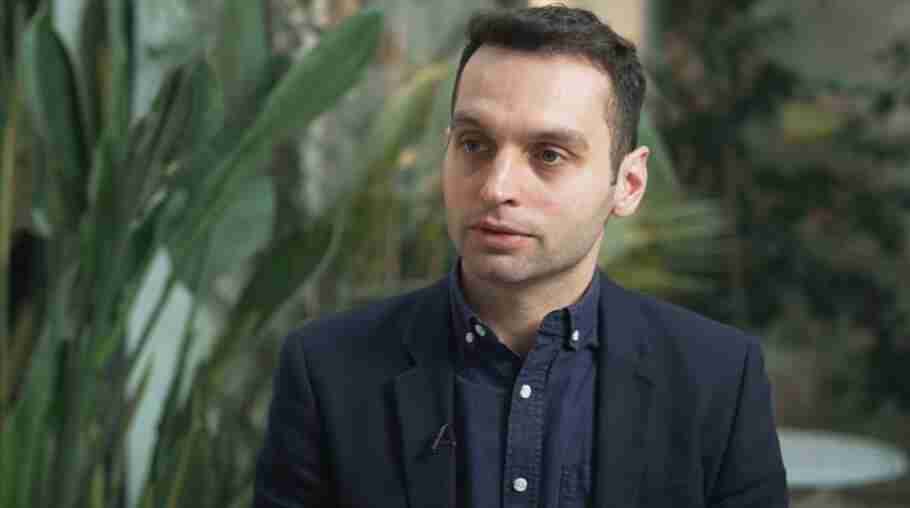
Read the full transcript of a conversation between former Deputy Prime Minister of Australia John Anderson and Konstantin Kisin on “The Western Reset: Immigration, Energy, and Cultural Confidence”, (Mar 13, 2025).
Listen to the audio version here:
TRANSCRIPT:
Reflections on Britain’s Political Landscape
[JOHN ANDERSON:] It’s great to see you again.
[KONSTANTIN KISIN:] Good to be back with you.
JOHN ANDERSON: Last time we were talking, the Labor government had just been elected here. You’d had the Conservatives suffering a major loss, a really big one, because they lost not just to the Labor Party, which actually didn’t get a lot of votes anyway, given that they were able to form government, but also to Nigel Farage’s Reform UK.
[JOHN ANDERSON:] I’d just be interested in opening up this discussion. How do you think it’s now going, about six, seven months in? It didn’t look like it had much of a honeymoon, and Britain seems to be not altogether a happy place at the moment.
[KONSTANTIN KISIN:] But when was it last time? I think a lot of people want to make this about the Labor Party. I think this is something that’s been going on for two decades now from both parties. I can’t sit here and be like, “Oh my God, the Labor Party are doing exactly what we all knew they would be doing.”
And by the way, a lot of people think that they’re really, really radical. I don’t think on a lot of things they are. In fact, on some things they’ve done good things. They’re about to tighten up the rules on people who come here illegally being allowed to become citizens. So they are doing some things as best they can.
But the overall situation, I think, is way bigger than either of those two parties. And it’s been going on for a long time. And I think that’s why you saw the election result that you saw. This idea that you were going to vote in a Labor government and things would change significantly—that was never the case.
Economic and Social Challenges
The economy is stagnating. Yes, of course, the Labor Party, it’s moved from the left position of X number of years ago when the idea was that you uplift the poor. Now you tear down the rich. Yes, that’s changed. And so they’re raising taxes on people in a punitive way.
For example, this VAT on school fees. I don’t know how closely you followed this. But it’s basically a way of punishing middle-class parents. Not the wealthy, but middle-class parents who are just scraping by to have their kids in private school. And they’re putting money aside and making sacrifices to achieve that. Because the super-rich, they don’t care about VAT on school fees. It’s a trivial amount of money to them.
So yes, the Labor Party is doing stuff like that. But overall, the big picture, the economy is still stagnant. Illegal immigration is still very high.
On all the other things, I saw this brilliant video by Douglas Murray, literally on the train here, in which he talked about the fact that a poll showed that 11% of young people in Britain would fight for their country. It said so in the poll. The Labor Party didn’t cause that. And the Conservative Party didn’t cause that. It’s a bigger thing that’s going on. And both of them are failing.
Western Cultural Confidence
[JOHN ANDERSON:] But that was the point of your book, really, in a way. You were saying, “Hey, come on. You’ve got so much going for you. Celebrate your freedoms. Don’t give up on your society. Believe in it. Be engaged.” But it’s not happening in the West very much yet.
[KONSTANTIN KISIN:] There is an exception. We’ll talk about America in a minute. There is an exception to that. Where you’ve got a great disruptor who will do a lot of disrupting.
[JOHN ANDERSON:] Several. Well, surrounded by other disruptors.
[KONSTANTIN KISIN:] I saw this speech by J.D. Vance that he gave to the AI Summit. Did you see this, John?
[JOHN ANDERSON:] No.
[KONSTANTIN KISIN:] Oh, it’s magnificent. And the details of the AI is a whole different thing. But when I watched that speech, I don’t really know much about J.D. Vance. It was just a first impression, almost. I’ve never met him or anything like that.
I just saw a guy who was re-articulating something that you’ve discussed so many times, where he did it very well, which is that increasing risk aversion is the central problem. The fact that we are afraid of words. The fact that we are afraid of strong expressions of sentiment. The fact that we don’t have convictions in public very much. The fact that we don’t say, actually, our countries are great. Our society is great.
That we don’t say, tens of thousands of people are risking their lives to get here, and yet the people who are here are saying, “Oh, this is the worst place in the world.” No, that doesn’t make sense, right?
Risk Aversion in Society
And the fact that we are fearful of all the different things when it comes to physical safety. You know, this is a funny example, but I was watching a guy who I watch play computer games. It’s a very sad thing to do. I’m sure you don’t spend a lot of time doing it.
[JOHN ANDERSON:] Not much, no.
[KONSTANTIN KISIN:] But he has more followers than both you and I on YouTube and other platforms, so he’s more successful, at least. Right? But he was talking about the fact that when he was a young man, I think he’s about my age, he won some kind of competition, and the winner, the prize that they got was the opportunity to smash up a CRT monitor with a hammer, right?
And I thought, that’s so true, right? Because there’s glass flying everywhere, it’s unsafe, whatever. So on every single thing, whether it’s expressions or behavior or anything, we’ve become very safetyist.
And he was talking about the fact that yes, we of course should be concerned about AI, but we have to look at this as something that also presents tremendous opportunities. And that’s what happens when people become obsessed with risk aversion. They become blind to opportunity and become blind to possibility. And that’s where we are, I think.
Britain’s Role in the World
[JOHN ANDERSON:] That seems particularly true, since you described it that way, of Britain today. It’s as though somehow, and don’t get me wrong, I don’t want to be sounding overly critical, I’m concerned. I want to see Britain thrive because of its history, because of out of that history, what it has to contribute to the world. It’s understanding of how the world works. I think it’s still needed at the table of nations, if you like, in a big way.
[KONSTANTIN KISIN:] You know, something you also really understand, John, sorry to interrupt, I’m very sorry, but I think it’s a really worthwhile point because I visited Australia last year and that’s one of the things that I took away from it, meeting people in Australia. The way you guys talk about Britain is the way I wish we talked about Britain.
[JOHN ANDERSON:] Elaborate.
Cultural Heritage and National Pride
[KONSTANTIN KISIN:] Well, you feel that it’s the mothership, right? And in the way that you have a reverence for your mother, you have a reverence for the mothership, the place from which you came, right? Culturally, ideologically, mentally, in some cases, physically, right? Whereas the people who live here don’t have that veneration nearly as much. And I think we should.
I think we’ve spent a very long time now being afraid to say something that we should say, which is the accusation that we are the most intolerant or places that are defined by racism and slavery and all of this other stuff. It’s not just false, it’s the exact inversion of the truth. It’s the exact inversion of the truth. It’s the exact opposite of the truth.
I debate these people all the time, right? I say to them, whether it’s TV or whatever, and I say to them, “Look, even behind closed doors, I will say this to people, you’re a black woman or you’re this or you’re that, where would you rather live than in Britain or Canada or America or Australia, New Zealand, like five countries?” I’m sure I’ve forgotten some. But it’s not many countries and they’re all Western countries, right?
So if you would rather live somewhere else, name me, is it China, is it Russia, is it Japan? Where are these beautiful places full of tolerance and all of this? We are the best at the very thing that we are being accused of being terrible at.
The West’s Historical Legacy
The same with slavery. Slavery existed in the entire world and then the West ended it. This country specifically, right?
JOHN ANDERSON: Voluntarily, without bloodshed. A lot of pain for the slaves, but without the bloodshed of the Civil War.
KONSTANTIN KISIN: That doesn’t mean that slavery is defendable, but that’s not what you have to defend. The accusation should be, why were you the first empire to end slavery if there’s an accusation to be made? If there’s an inquiry to be made? That’s the question we should be asking. Why was this country and its ideas a place where this novel realization that slavery is wrong, something that prior to that basically all human beings treated as kind of like, you know, part of life, right? Like you keep your dog in a kennel, you keep people you’ve conquered in war in bondage. That’s what everybody thought.
So this country then comes up with the idea that actually that’s wrong and it is then this country and other countries so heavily influenced by it, in Anglosphere in particular, that are the most accused. It doesn’t make any sense. And we’ve got to say this right now because this is the moment for the reason that you alluded to, that there is a cultural revolution happening and you either join it or you know which way the other path goes, right? The other path goes to stagnation, defeat, decline, etc.
[JOHN ANDERSON:] Well, that’s very important and you and I are both speaking at ARC here in London. That’s why we’re here. We’re saying decline is not inevitable.
[KONSTANTIN KISIN:] Yeah.
[JOHN ANDERSON:] But having said it’s not inevitable, it’s going to be our lot if we’re not prepared to be more realistic.
Realism vs. Idealism
[KONSTANTIN KISIN:] Absolutely. And that’s actually a point that needs to be made as well. But I think that… Look, it’s funny because I’m sure we’ll talk about Ukraine. The position that you and I probably don’t like on Ukraine is called the realist position and that may be more of what happens going forward.
But I do feel like the realist world view is making a comeback a little bit. This idea that, you know, it’s always a tension because idealism is important, right? We want people who are idealistic and we want people who are realistic and together they can pull each other towards a kind of common balance, right?
But I feel that the idealistic people have been in charge for the last 20 years at the very least to an extent that’s detrimental to the greater good. And so the return of a more realistic approach on balance will be great but it will have certain consequences as well where people are less willing to fight for certain ideals and are more like pragmatic about things. But pragmatism is also important and we just haven’t had enough of it.
We just haven’t. No pragmatic person would say, let’s take a bloke with a penis and stick him in a woman’s bathroom. There’s no pragmatism in that. I don’t know how clever it is. I’m not a theoretician. I haven’t studied gender science at university. I’m just saying a pragmatic person who had no education whatsoever would also know that that’s not a smart thing to do.
[JOHN ANDERSON:] Education and wisdom are not necessarily always acquainted.
[KONSTANTIN KISIN:] Exactly. And we’ve had a lot of rule by very educated people. I mention him in every interview that we do but I have to. This is what Thomas Sowell talks about. The blindness of the over-educated. The people who are so educated that they begin to invent new things just to invent new things. They’re a very important part of society but if they’re allowed to run everything it ends badly.
Australia’s Relationship with Britain
[JOHN ANDERSON:] Interesting. I must say just in relation to Australia that I think there is a general awareness of the incredible legacy that our British forebears gave us. We are independent. And scratch an Australian and they’ll say we’re a nation in our own right. Thanks mother and mum and dad but recognize we’re grown up now. I just have to throw that in for the Aussies. You would have picked that up as well.
So I would say that we are respectful of our parents if I can use that term of a British but very aware we’re our own family now. And that’s important because what is it that we appreciate? Well it’s democracy. It’s the rule of law. It’s in many ways the free enterprise model that has made Australia so very prosperous. Life in Australia is very good for people.
Well they are very unusual things globally and people don’t recognize how good they are and how many people have lived countless numbers of people have lifted out of poverty in our own societies but also more broadly globally and yet we want to invert everything as you say.
The Inversion of Truth
On the subject of inversion it strikes me that the worst inversion, the example of that we’ve seen of that recently is this extraordinary way in which the idea is caught on that Israel is committing genocide whilst we overlook the fact that it’s a misuse of the word anyway by no stretch of the imagination could you ever mount a credible case. Not even the ICC is arguing that and they’re very anti-Israel.
While we ignore the fact that Hamas and bodies like Hamas specifically have in their charters the object of obliterating the Jewish people in the Middle East that is genocidal. It’s a complete inversion and it’s a really interesting thing that our culture for all of our education is capable of that sort of revolution really.
[KONSTANTIN KISIN:] But it’s the same inversion that’s why it makes perfect sense. The inversion is exactly the same. The reason people hate Israel is not even anti-Semitism in a lot of cases. A lot of these people hate Israel because Israel is strong. And the surrounding countries in particular the Palestinians are weak. They’re less populous. They’re less militarily sophisticated. They’ve got less money. So they’re the underdog. They’re not democracies. They’re the underdog. They’re the underdog in these people’s heads and you have to hate the strong and you have to love and pity and try to promote and take the side of the weak. That’s their mindset.
[JOHN ANDERSON:] So they’re victim makers? Is that the argument?
[KONSTANTIN KISIN:] No, the argument is that it’s the same inversion that they do about us. They hate the West for being successful.
The Western Reset: Immigration, Energy, and Cultural Confidence
[JOHN ANDERSON:] Right.
KONSTANTIN KISIN: And they hate Israel for being successful. They choose to side with the Palestinians many of them.
[KONSTANTIN KISIN:] Not because they know anything about the conflict remotely. And I don’t claim to be the world’s greatest expert on the conflict either I should just say. I’m just saying the reason these people who know even less than I do about that conflict are so persuaded that one side is right and the other side is wrong is they have a simple way of measuring.
This is the whole neo-Marxist worldview. The oppressed are right and the oppressors are wrong. If you point your finger at someone and say that’s an oppressor that person becomes wrong. Or if you see that they are strong they must be an oppressor therefore they must be wrong. That doesn’t make any sense. The reason many people have this attitude to Israel and Palestine is exactly the same reason they hate the West.
They hate Israel for exactly the same reason. You see what I’m saying?
[JOHN ANDERSON:] Yeah I do. I see what you’re saying.
The irony or the horror in all of that of course is that any fair consideration of the Jewish people who after all there are only 15 million of them in a global population of 8 billion is that in fact they themselves have been maligned and mistreated and misunderstood more than probably any other people on earth. They’ve known what it is to be victims particularly in the Holocaust but not only the Holocaust down through the ages. And to be fair they don’t often play the victim card themselves.
[KONSTANTIN KISIN:] It’s not something I’ve even thought about in the context of Israel to be honest. When I look at Israel I don’t think about it—I know this will sound very strange—but I don’t think from a Jewish perspective or about the Jewish people or anything like that. I just look at what happened and what happened in response.
If you had two groups of people who were not Jews and Arabs or not Jews and Muslims were just you know green people and red people or green people and blue people or whatever and one side did what that side did on October 7th I think it would be very clear to me what the situation there is and what the response was likely to be. Right? This is the point I keep making over and over. I don’t even have a dog in the fight particularly.
I just if you stand back and look at what’s happening it’s quite clear what’s happened there. I watched it with my own eyes. I watched it when on October 8th there were people parading with Palestine flags in the streets of London.
Right? That is not people who want freedom—that’s people who celebrate terrorism. So whatever the backgrounds and the religions behind it is kind of irrelevant. That particular conflict is as simple as that to me.
Right? There is the side that celebrates terrorism and it celebrates killing civilians and it celebrates that and there is the side that doesn’t. Which one of those is right to me is pretty obvious.
The West’s Internal Conflict
[JOHN ANDERSON:] One of the alarming aspects of that is that of course those marches here in this country in Australia right around the world the protests on the university campuses and so forth there were many people there who would regard themselves as progressives—they’re not Islamic, they don’t have Arabic backgrounds, they are Westerners who hate the West and are making common cause with terrorists describing brutal activities by terrorists as resistance rather than barbarity. And so it highlights for us, it should be a real warning shot that there are a lot of people in our own midst who will make common cause with others who loathe us even though instinctively those two groupings don’t get on.
[KONSTANTIN KISIN:] Well no because they do get on because they both loathe us. Yes that’s the point. They get on beautifully because the people on the left who’ve been taught to hate their own society and the terrorists sympathizers—they all hate the West and they all hate the values that we have so why wouldn’t they make common cause? It makes perfect sense.
[JOHN ANDERSON:] In the short term.
[KONSTANTIN KISIN:] In the short term. Because many of those people who hate the West that are traveling at the moment would be seen by those terrorists as useful idiots.
[JOHN ANDERSON:] Oh yeah but of course but they never—the useful idiots are called useful idiots because they’re idiots.
[KONSTANTIN KISIN:] Because they’re idiots and they don’t see that or think about it because they’re more interested in the feelings that they have than the reality that they’re dealing with. So it’s another one of those inversions that you were talking about.
That’s what it is. Of course complete inversion but it’s quite logical which is why ultimately we have to say what I just said which is and what I’m planning to say at Ark. Our civilization is very special. It’s very very good compared to every other civilization available.
We’ve got to be—you know every human being is I think is a kind of, you know, ideally the right balance between pride and shame. There’s certain things that you have a pride about and pride is, you know, a sin in Christianity for a good reason but also we’re all should be able to be proud of certain things that we’ve done and feel like “oh I did that that was good.”
And also there’s shame. There’s things that I’ve done and you’ve done and every human being alive in human history has done that they’re ashamed of. It’s about having the right balance between the two.
I don’t want our society to be blind to its errors. I don’t want what, you know, increasingly is happening in Russia where you’re only allowed one version of history. No, I think our leaders from the past should be capable of being criticized.
I do. But that has to be factually based. It has to be based on the reality and balanced.
And what’s true for a human being is true for a society. We have to have the right balance and I think we have to teach our children and remind ourselves that we are right to be proud, pleased with, happy about, you know, have a sense of affinity for the place in which we live and the lineage from which we come whether that’s culturally or genetically or whatever. You know that’s fine.
Cultural Confidence and Pride
It’s good to be to have a sense of confidence. I remember it’s funny that this has to be explained—like I have lots of friends in Ukraine for example who if you say to them if you ask them about where they’re from they will tell you the city that they’re from and then they will tell you how proud they are to be from that city. They will say you know we have a philharmonic orchestra there and we have this beautiful church.
They speak about the place in which they live with a sense of pride. It’s not because they hate everyone else. They just have a passion for the place in which they live and inculcating that in ourselves and in our children I think is very important and in the way that that applies to your local town it should also apply to your country.
[JOHN ANDERSON:] Well because it was a fellow Russian it was Solzhenitsyn who had that famous line about the dividing line between good and evil. Not being between one human being and another. Not between black and white or man and woman or Catholic and Baptist or atheist or Hindu but somewhere across every human heart.
Then you’re making the obvious point societies are the same. We ought to learn from the things we’ve got wrong. The things that we’re ashamed of but we ought to take a right pride—it’s not a personal pride that puffs up me because I’m somehow clever that I come from a culture that did this or the other but it’s a pride that says these things are good they produce good outcomes for people and we set the slaves free whatever maybe never had them in the first place.
Incidentally I didn’t know this until recently it was the Old Testament Jews who were the first people who said slavery is wrong and didn’t keep slaves as I understand it. Coming back to the other point that you were making I think it’s really important to say this. People confuse being proud of being from a place with attempting to personalize it to yourself but I don’t look at it that way.
[KONSTANTIN KISIN:] I think at a cultural level in primitive human societies they discovered fire and then there were people whose job it was to keep the fire and to pass the skill of keeping the fire down to other people. That’s what our culture is. That’s what a culture and a civilization is.
It’s a set of ideas about how to live life and how to do things that we pass down to the next generation. Now if you think that fire is evil you are unlikely to pass down the process of making it and the fire itself to the next generation. So we can’t think fire’s hot but it’s not evil.
It has other properties. It’s useful for cooking. It’s useful for all sorts of other things.
So we’ve got to have a sensible balance and our civilization is worth passing on and the way to pass it on is to remind people that it’s worth passing on. I think that’s incredibly uncomplicated.
[JOHN ANDERSON:] But it’s not happening in the West?
[KONSTANTIN KISIN:] No.
[JOHN ANDERSON:] One of the reasons it’s not happening of course is that most of these histories begin with family history and so much of it is broken and shattered now which is extraordinary. And another reason is that our education system really fails appallingly in this and I actually think one of the problems we have with mental health for most young people is they’re not given a sense of place. They’re not given a sense of pride in the things that we’ve got right.
A sense of appreciation that we’re actually fortunate, we must be thankful for, that we stand on the shoulders of giants. We don’t want to be pygmies and have the next generation of kids cursing us for undermining and smashing even their inheritance. Well into all of this now we’ve got the most extraordinary disruptor.
Understanding Trump’s Appeal
Now we all know who we’re talking about. I admire the American people. The first thing I’d want to say is be careful before we rush to judgment.
If you don’t like Trump and there are a lot of people who don’t in the West because apart from anything else they didn’t see him coming because our media didn’t explain by and large what was really happening in a different democracy where people by and large do take their freedom seriously. I don’t think the American people made a flippant choice. I think we need to understand that to some extent, the very things we’ve been talking about, the American people, a lot of them were saying this great country is losing its way.
We’re being told we’re bad. We’re being told we’re no good. We’re not being well managed. Our living standards are going down, etc. etc. We’re not going to get a handle on it, so we’ll take a punt. We’ll go for somebody who will disrupt it and give us a chance to reset things.
[KONSTANTIN KISIN:] That’s very true and I think the reason that our media, as you say, don’t understand his appeal at all is that the way that we see Donald Trump is sort of through the prism of the like central London journalist who went to Oxbridge filter. And I’m not saying that’s a bad thing.
It’s a bad filter. It’s a filter that exists and has validity in certain contexts. But there’s also another filter which is like the American people. A normal American person. And those two people’s ideas about what the right president is, is not the same. It just isn’t.
Now, you know, they both think the other’s wrong. I’m just saying I don’t, you know, when we hear things in Europe or in Australia about Donald Trump, it’s always through the prism of he’s uncouth. He doesn’t speak in the way that a gentleman is supposed to speak.
And it’s true, he doesn’t. But nor do most Americans, actually. Americans speak in a more direct, in a more, in some ways, in a much more warm way, in a much more funny way. Americans speak in a different way. And Donald Trump is the way he is because he’s American. That’s a character in their world.
That doesn’t exist in our world. So we find them very strange for that reason. I think a lot of this, John, is just like people’s instinctive reaction against them.
Because if you look at his policies, there’s things that I disagree with him on, as you know. And we’ll find out how the Ukraine situation works out. But broadly speaking, I don’t look at what he’s doing in government now and think, oh my God, this is awful.
Quite the contrary. In terms of, you know, what Elon is doing with Doge is incredible. I want 10 Elons in Westminster.
And I think anyone in any Western country feels that the bureaucracy is way too bloated. And we’ve got to find out, do we really want to be sending, as in the case of the United States, $3 million to a rapper in Gaza to make anti-Semitic songs? That’s a waste of taxpayers’ money. Kanye West would have done it for free, right? What I’m saying is, like, slimming down government and getting rid of all this unaccountable crap is good, whether you’re right-wing or a left-wing person.
It’s just good, right? It’s a good thing to do. Now, within that, there will be things that are adversely affected, actually, in the balance of things we might want to keep. Well, then some of them will come back over time.
But right now is the time for a sprinkling. Is that fair? You know, we’ve had a long time building up all these NGOs and quangos and this person pays that person to do a study which they then cite on CNN and then before you know it, it’s on Wikipedia and suddenly the government’s paid this person 10 grand to create this opinion in the reality, right? While pretending that our money is being best spent, when none of us agree with this opinion. That’s not, I don’t want that.
The Western Reset: Immigration, Energy, and Cultural Confidence
[JOHN ANDERSON:] So, yes, I think some of the things that he’s doing, I think he’s using American power to advance. He’s trying to advance the interest of the American people. That’s what he’s trying to do.
[KONSTANTIN KISIN:] It’s quite a nice break from everybody else, don’t you think?
[JOHN ANDERSON:] Well, I think it’s extremely interesting and it’s incredibly important because we’re at a tipping point. That’s what we’re at. We’re all recognizing that a sense of declinism is setting in and we need to break that.
There’s no reason for us to go and decline. We don’t want to go and decline. We don’t want to lose our democracy. We don’t want to lose our freedoms. We want to restore our prosperity and I think that’s not just in the interest of countries like yours and mine. I actually think it’s in the interest of the world.
[KONSTANTIN KISIN:] Of course it is. In the end, when we talk about the liberal global order that’s prevailed since the 1940s, it’s prevailed because America has been strong enough to make sure it prevails.
[JOHN ANDERSON:] Absolutely.
Values and Global Leadership
[KONSTANTIN KISIN:] And believed in its values, even if you don’t like them. They believe in freedom of speech. Europeans believe in restricting people’s speech so that no one’s offended.
That’s at a governmental level, right? At the moment. That’s who you’re choosing between. If you’re choosing between America, the American administration believes in free speech and is prepared to accept sometimes very unpleasant costs that come with free speech. The Europeans want the opposite. That’s the choice.
And so this is a question of values.
[JOHN ANDERSON:] Well, that’s right. But there’s an even bigger choice that I’m alluding to and that is that if America loses its global dominance.
[KONSTANTIN KISIN:] Yeah. What will the new order, global order, look like? That’s what I’m saying. Our values are better than the values that would be in place of those values if we were not the strongest civilization.
So being strong has to be one of our values. It sort of makes sense, doesn’t it? And so, you know, this idea that we should walk around and sort of keep ourselves small and, you know, we have this weird thing. I know it’s a British thing.
Maybe this is a sign that I haven’t fully integrated. But we have a debate in this country every time the prime minister of the country goes to some global summit on a big plane. And everyone’s like, “Oh, no, he’s spending government money.”
I’m like, no. Xi Jinping arrives on a mega bus. This is a game. There’s a game being played here. And people will treat you depending on how powerful they perceive you to be. And human beings are very shallow.
And if you’ve got a big plane with the name of your country on it, people tend to respect that. Especially people who are not Western and don’t have this moronic ideology where the stronger you are or appear to be the worse you are as a human being. They don’t have that.
Xi Jinping doesn’t think like that, nor does Vladimir Putin, nor do most people in the world. I think you back me up on this, John.
[JOHN ANDERSON:] You’re right. You’re absolutely right. Having dealt with people in different governments around the world.
[KONSTANTIN KISIN:] Yep, that’s right.
[JOHN ANDERSON:] You know, we don’t want braggarts, but on the other hand, we don’t want our leaders to look like they’re not respected or respectable.
[KONSTANTIN KISIN:] No. On an international stage, I think of them kind of like our champion in a battle, right? Do you want somebody who is strong and capable in that role or do you want someone who’s not, as the Americans had at the last election? I think it was as basic a choice as that, frankly, right? Is someone who is, you know, strong and fully present and someone who isn’t. Why would you, why would, of course there were, but I’m just saying, at a country cultural level, that’s what I see. That policy is massive, of course it is, of course it is.
The American Election and Cultural Shift
[JOHN ANDERSON:] We’ll come to those in a moment, but just on the reason that I’m sort of going to interject and I don’t want to interrupt because that would be rude, but I think the American election has to be understood, too, as a giant rejection of much of what the democratic architecture, and frankly, until recent times, republican political architecture, has stood for.
There was a very interesting little comment. You probably read many of the comments after you’ve done a show with Francis.
[KONSTANTIN KISIN:] I read them. They’re very instructive. They’re usually nice, and that’s warming as well.
[JOHN ANDERSON:] But I did one with Victor Davis Hanson the day after the American election and it ran very strongly, and someone wrote in and said, “I’m a black man who voted for Trump. You ask why? When I was told to vote according to my skin color, I decided no. I’m a black man who voted for Trump. I’m a working man. I’ve got a wife and children, and I’m finding it tougher because the economy is not being well run. So I voted as a working man for my prosperity and for my country’s economic management.” I thought that was very powerful.
[KONSTANTIN KISIN:] Absolutely. Absolutely. Look, the economics really matters, and we’ll see how it plays out, because nobody can predict the future, but the reason people voted for Trump is they perceive him to be much better for business, and that’s from the working man that you’re talking about all the way up to CEOs of big banks, and it spans the entire range.
Nobody in the small business or big business world in America is thinking, “Oh, this is going to be terrible for us when Trump comes in.” No. They’re quite the opposite, right? So that’s part of his appeal, and America is a very business-focused culture, much more than we are.
You know, in Europe, we talk a lot about public services and, you know, the government bureaucracy and whatever. In America, people are very interested in business, normal people. How do you create a thing that makes you money? How do you advance? So, yeah, it makes sense that people would do that.
But he was saying something else, of course. He was with Martin Luther King. He was saying, “Hey, this color of my skin is not the issue.”
[JOHN ANDERSON:] Of course. I’m first and foremost a father, a husband, and a working man.
[KONSTANTIN KISIN:] Yeah. Well, look how bad things had to get before we could come back to that.
[JOHN ANDERSON:] Well, let’s hope it continues the trend. I say that as somebody who’s absolutely opposed to racism. I think racism is totally appalling. It’s partly why I find the rise of anti-Semitism the oldest racial prejudice of all. It’s so deeply offensive.
And I always admired Martin Luther King. Whatever his strengths and weaknesses were, for his insistence that skin color shouldn’t matter, now it seems, in the woke world, that you’re a racist, unless you refer to people as skin color.
Moving Beyond Identity Politics
[KONSTANTIN KISIN:] Yeah. I mean, I think that’s shifting. I think that’s shifting.
[JOHN ANDERSON:] Well, evidently, if he’s part of a trend, and we know a lot more black people voted for Trump this time around.
[KONSTANTIN KISIN:] I just think that argument is washed out now. I think that argument has been disproven. It just has. It’s been disproven by reality. You know, if you look at the voting patterns of people who are from not just black people, but other minority backgrounds, both in America and in Europe, the idea that one side of the political spectrum owns those people is just gone. I really do think it’s gone.
I think this silly idea, look, in practice, that might run for some time, but at an ideas level, I think that idea is fundamentally discredited. And I hear more and more people feeling very comfortable about saying that. People who were very reluctant to say it only five years ago.
In fact, people who might have argued with you in public about that very statement now kind of get it. I think we may have turned the corner on that. You know, the one thing that really struck me because we were in America at the time of the election was the non-reaction.
Do you remember 2016? The pussy hats, the protests, the this, the that. Look at this pathetic stuff now. No one cares. No one is paying attention to it. Even the mainstream media aren’t running article after article about it. You may dislike it. But this is what the American people wanted. That’s what they voted for. You might disagree with it, but that’s what they voted for. So shut up. And that’s kind of where we are with a lot of these things.
You know what I mean? So culturally, it’s just got to that point, I think, where we tried your way for a while. It doesn’t seem to work very well. We’re trying this way. And if you want to protest, you’ve just misunderstood the moment, I think.
The Challenge for Democrats
[JOHN ANDERSON:] Two questions fall out of that very quickly for me. America first.
[KONSTANTIN KISIN:] Yeah.
[JOHN ANDERSON:] This presumably presents the Democrat movement in America with a massive challenge.
[KONSTANTIN KISIN:] They’ve got a big problem. They know they’ve got a man problem for a start.
[JOHN ANDERSON:] Yeah.
[KONSTANTIN KISIN:] Because they took men down. They were part of the movement that basically got into this whole business of virtually describing, particularly if you’re white, men as toxic. I know that’s a broad generalization, but there’s obviously been a big reaction against that.
[JOHN ANDERSON:] They’ve got to recover those working class men in particular who were traditionally their supporters. So they’ve got to start talking the economics. At the same time, they’ve got to recognize this is a massive repudiation in America. We’ll come to other countries in a minute of the whole architecture, if I can put it that word again, of woke is the more.
[KONSTANTIN KISIN:] The entire Progressive project.
[JOHN ANDERSON:] The whole lot.
[KONSTANTIN KISIN:] The entire Progressive project is absolutely annihilated right now. In America. DEI. All this. You know.
See, the big companies were quick to move. Everybody was quick to move. Look at Mark Zuckerberg. During COVID, he was censoring everyone left, right and center. Now he’s pro free speech, you know.
One of the things I think we can all take away from this—it’s one of the reasons I am slightly optimistic—is just most people didn’t go to the polls. They didn’t go along with the stuff because they truly believed it; they just went along with it because it’s convenient. And we just have to offer them a choice out of that. And in America, things got so bad that they had a choice out of that because they weren’t prepared to put up with that anymore.
Let’s hope that we get to that stage here. I don’t know that we will. There are many good reasons why that won’t happen that I can see. But let’s hope that we do.
Global Impact of American Politics
[JOHN ANDERSON:] Well, that was my second question that arose out of the earlier one. To what extent do you think Trump’s election and the disruption that’s happening in America, and I use that word neutrally just to say it’s a great shake-up. To what extent do you think that might start to redefine politics here and in Europe?
[KONSTANTIN KISIN:] We’ll find out. I don’t know. By the way, the way you say you use the term disruptive makes me think that you think I’m being overly positive about Trump.
[JOHN ANDERSON:] No, no, no, no, no. It’s not an ambiguity at all. It’s my term.
[KONSTANTIN KISIN:] Yes. Just to say that I’m saying this. He was a very… He could see himself as a great disruptor.
[JOHN ANDERSON:] Yeah, yeah. Of course. That’s partly why people put him there.
[KONSTANTIN KISIN:] What I was about to say is exactly that. You don’t have to be a massively enthusiastic, fanatic, obsessed with Donald Trump and have his merchandise on your wall at home to think that what he’s doing now is better than what was being done before. Right? And so it’s not something that requires a deep love and affiliation with the entire thing.
You just go, what he’s doing is better, practically, pragmatically. On a practical level. Forget about the personalities. He’s just doing better things than were being done. Sorry, I’ve been rambling for so long, John, forgive me. I’ve forgotten the core of your question.
[JOHN ANDERSON:] Just the extent to which what’s happening in America will start to redefine politics elsewhere.
[KONSTANTIN KISIN:] Well, we’ll have to see because I think at a cultural level it’s definitely already happening. You know, in terms of the chatter, so to speak. The sort of things that people say now. The sort of things that they don’t say. The pronouns they’re removing from their email signatures. All of these other things.
[JOHN ANDERSON:] You’re seeing that here?
[KONSTANTIN KISIN:] Yeah, of course. Because the cultural movement is kind of, you know, on the one hand.
And on top of that, I also think, I actually think getting DEI out of government was less important than getting DEI out of government in order to get it out of corporations. To give corporations permission to stop it. Because what will then happen is these global corporations, well, if we’re not doing DEI in America, why would we be spending X million pounds in London? In our London headquarters to do, you know, gender, lesbian, whatever training. Why don’t we just make cars or whatever it is that we do, right?
So, I think that will bleed over in that way. But ultimately, I do think this cultural realignment will have to manifest itself politically in order to change the law, right? Because you have to change the law. It’s not enough to have good vibes. That’s clearly not, the good vibes aren’t working, such as they are.
So, that means that it has to manifest itself in some kind of vehicle for that sentiment to coalesce around. And in the UK, neither the Labour Party or the Conservative Party are that vehicle. The Lib Dems are that vehicle for a more leftist audience. And the reformers are that vehicle for the right side of that electorate. And we’ll see if they are up to that task.
[JOHN ANDERSON:] We’ll find out. Nobody knows.
[KONSTANTIN KISIN:] No, we don’t know. Nobody knows. We don’t.
The Western Reset: Immigration, Energy, and Cultural Confidence
[JOHN ANDERSON:] They have a lot of challenges that the Americans didn’t have. One of them is Donald Trump needed, how many people would a normal person be able to name out of the people that he surrounded himself with? I would say Donald Trump, Elon Musk, Tulsi Gabbard, RFK Jr., JD Vance. Maybe Vivek as well, right? That’s six people, including or not including him.
[KONSTANTIN KISIN:] That’s six people, find 200 candidates to win seats off their own back. Not because they’ve got the right rosette, but because people locally believe them that they would be better. Right? And the only way that’s going to happen, I think, is, first of all, they’re going to have to look very far and very hard to find these people.
And if they are lucky enough to find them, at that point, I think things would have to be absolutely terrible in the country. At which point, people would say, “Well, you know what? You don’t look like a politician. You don’t sound like a politician. You may not know what you’re doing, but what have we got to lose?” This is a sort of, the cancer’s so serious, we’ll try the novel unproven cancer cure. We’ll go with the experimental cure.
[JOHN ANDERSON:] Yeah. And that’s not because I think reforms have some great ideas, but it is a pretty new party with very few big names in it. They’re going to have to find those or manufacture those people over the next period.
And they’re going to have all sorts of battles internally. You know, you’re already starting to see it. Some people think the leader’s got too much power. Some people think he hasn’t got enough. And as things become more successful, tensions can rise.
[KONSTANTIN KISIN:] Yes. As I’m sure you know. And, you know, the discussions about who gets the credit and all of that.
[JOHN ANDERSON:] All of that. So we’ll find out. A couple of other things that I’d be interested in your views on.
Economic Growth and Cultural Differences
Drill, baby, drill. There’s a couple of things that fall out of that. One is the reality is that it’s likely that America now will pick up a lot of wind economically. It’ll start to move ahead strongly again. Its productivity almost alone, weak growth, but it’s growing. Most of the rest of us are experiencing declining productivity.
The decline in productivity in Australia is really serious. And that’s pushing living standards down.
[KONSTANTIN KISIN:] And America’s likely to go in the opposite direction. Notwithstanding their big debt. They work so hard in America.
[JOHN ANDERSON:] Oh, and he will lose the shackles. So it’s already happening. But that works in a country where people work really hard. When you take the shackles off people who never wanted to be shackled in the first place, you really get real growth. In Europe, we have to have a mind shift on that. We’ve become very comfortable.
[KONSTANTIN KISIN:] We like the shackles. We like the shackles. Because the absence of shackles comes with risk.
[JOHN ANDERSON:] Yeah. And we don’t like risk. Americans seem to revel in it.
[KONSTANTIN KISIN:] They do. And I’ve spoken about it with Americans and they’ll say, “Yeah, well we were the ones that got on a boat and left. Of course we’re more ambitious in that way and more risk taking. We’re willing to have a go.”
But we are of the same fabric, us and the Americans. And I think, this is one thing I’ve been thinking about a lot, John, and it’s interesting given our conversation about Australia and other former colonies of Britain.
I think we, and probably people of your heritage and your generation in particular think of it as a one way thing. You know, the mother ship, Britain gave the world and the Australians this and the Americans this foundation. I think we need to start thinking about this as a two way membrane.
[JOHN ANDERSON:] I agree with that. There’s a lot that we can learn from America. And their attitude to business, their attitude to self-reliance, their attitude to new ideas, trying things, a positive vision, willingness to take chances, you know, they’re a great country for a reason.
And I think part of it is that. And there’s no reason British people can’t be like that. There’s no reason Australians can’t be like that. We’re human beings too where we’re capable of adopting different attitudes depending on the moment. I think the attitude of feeling like we shouldn’t rely on ourselves, we need the government just to rescue us just in case, whatever. That doesn’t seem to me to be producing a successful society.
Government Regulation and Economic Freedom
[KONSTANTIN KISIN:] Well, there’s an interesting example of that right next to America. Under Trudeau, Canadian living standards or pay levels have slipped from 80% of America’s down to 70%. Now, those have been years when America has been a bit up and down itself.
Now it’ll take off. But there’s a classic example of what the restrictive hand of big government, big brother knows best, heavy regulations, ill thought through energy policies, those sorts of things that seem to go with progressive politics actually does. You have to unleash people who want to do things.
They’re not everybody in society, but what they do is they create jobs for everybody, and some of them will crash and burn too, but that’s part of the creative process of anything. But what we’re doing in this country instead from a tax perspective just means that no creative activity is really sustainable here in that way. You know, we could be leading on all sorts of things.
I mean, if you think about the fact that we still have two of the best universities in the world that really are capable of passing down great knowledge and training people to think in the most rigorous ways possible, right? When you think about how much cultural creativity and mixing there is here, the amount of money that there’s still here, there’s incredible opportunities. But if the government is going to come and take half of whatever you eventually make, what’s the point? It’s almost not worth having a go.
[JOHN ANDERSON:] Britain went there in the 50s and 60s.
[KONSTANTIN KISIN:] Yeah. And you had a flight of capital that wasn’t reversed really until the Thatcher years. The brain drain I see around me in Britain right now, it’s not as bad as what we saw in Moscow in the early 90s. But it’s like it was at the beginning. People are starting to leave – the people who can leave, which is very few people out of all the people that might consider it if they could. You know, the smart people, the driven people, the people whose business is portable, they’re not hanging around.
And we’ve lost more millionaires in any country in the world except China in the last few years.
[JOHN ANDERSON:] Where are they going?
[KONSTANTIN KISIN:] America, Dubai, you know. Now, look, there’ll always be people who want to live in Dubai and not even pay 10% tax. I’m not saying all of those people are leaving solely for that reason or that we can keep all of those people. There are some people who are just going to hop between countries or whatever.
But most people would much rather live in London than they would in Dubai. If London was a place where they could pay reasonable taxes, be free from crime, be free from their children being raped, be free from being ideologically indoctrinated in school, having clean streets, a place where all of these things… People will throw statistics at you and say, “Oh, the British crime survey says the blah, blah, blah.” That’s not what I hear from ordinary people.
There was a commentator on Twitter who’s, I think, a freelance guy. Somebody posted a tweet of his a year prior saying, “Oh, London is the safest city in the world.” And then a year later him being mugged. Like, you can tell me all you want about statistics. People do not feel safer in London at the moment.
I have a friend who, I told this story on Chris Williamson’s show. I have a friend who’s a very wealthy guy, left the country after he was leaving a restaurant. Three guys in balaclavas jumped out of a van, pushed his pregnant wife to the side, smashed him to the ground, took his watch off his wrist and rode off. Right? You think that happens in Dubai? I don’t imagine it does. I don’t want to imagine what happens to the people who try.
But you see what I’m saying? So that’s not an environment which attracts people who are going to build the big companies and create the businesses that are going to employ all the rest of us. We need those people here and we’re chasing them out instead.
Climate Change and Energy Policy
[JOHN ANDERSON:] Just to go back for a moment, the impact of the changing America on the rest of the world, the obvious other issue is climate change. It strikes me that the Paris Accord is in deep trouble if not dead.
The reality is that global consumption of all fossil fuels continues to rise strongly. That’s the reality. You’ve got a situation where China, Indonesia, India, America, you know four massive economies with big populations that do a lot of manufacturing, unlike your country and mine now, they’re not going to be held back.
And yet it’s almost sacrilege in your country and mine to question net zero by 2050. I think the pressures are going to be absolutely massive as our living standards decline relative to the Americans. The voters are going to say, this is too extreme. You’re switching things off before you’ve got substitutes. Am I misreading it?
[KONSTANTIN KISIN:] No, no, you’re absolutely right. However, this is the huge challenge for all of us here. This is the moment to try and explain to people because I don’t say this in any sort of condescending way at all. I just mean that a lot of people have not looked deeply into this issue and all they’ve heard is a one directional narrative, right?
What they hear is the climate’s burning, the planet’s about to die, we’ve got 12 good years left. If we do not reduce our emissions to zero right this very moment, everyone you know is going to die. And the planet will die and the seven plagues will descend upon us and all of this other stuff. That’s what they believe.
And more importantly, if you ask the average person how much they think net zero is going to cost, do you know what most of their answer would be? Most of them would be surprised there is a cost. We have not even begun to win this argument. We have not even touched the argument.
We’ve said, “Please don’t call me a climate skeptic. You don’t want to make my country poor.” It doesn’t make any sense. It does not make any sense to impoverish us to save the planet when that’s not going to save the planet.
If it did, I might be up for it. But it’s not. It’s not going to save the planet. For the reasons I’ve just outlined. Among other things, but also the other thing is Britain’s responsible for 2% of global carbon emissions. We could all slit our throats today. It wouldn’t change anything.
So why would we make our people poor instead of generating prosperity that breeds creativity that allows us to make the technological advancements that would actually save us from the problems that climate change could bring if we go too far with emissions? Why don’t we do that? Why don’t we think about what’s the cost, what’s the benefit, and try and act in a smart way about it? Why can’t we do that? Why does thinking that make you some kind of bad person?
On the contrary, I don’t want British pensioners to freeze because somebody in Downing Street decided that we must save the planet by reducing our carbon emissions from 2% to 1.98% by 2050. That doesn’t make any sense. That’s not to the benefit of the people of Britain. It’s not to the benefit of the next generation or anybody. It’s just a stupid thing to do. It’s just stupid. And we’re doing it for ideological reasons.
And that’s the argument we have to win. But we are not going to because the average person, and you can see it with politicians, politicians who hate net zero, politicians who say, I don’t want to talk about specific people, but there are many politicians who have made these arguments, especially behind closed doors, but also in public. You know, net zero is unaffordable.
You speak to them behind closed doors, they all know it’s a crock of shit. They all know. But they don’t want to say it because they’re like, “I don’t want to be talked about as a climate denier.”
I’m sorry. The false narrative on this issue has to be talked about. And the false narrative is not that human activity has no impact on the climate. The false narrative is the solution to climate change is poverty. No, it’s not. It’s just factually not. So can we please stop making ourselves poor in order to achieve nothing?
[JOHN ANDERSON:] But part of your argument, and I think it’s right, is people don’t understand that the loss of cheap, portable, reliable energy is going to massive impact on our prosperity, but it won’t be affecting a whole other heap of other countries that are ignoring it.
[KONSTANTIN KISIN:] Correct. They become more powerful.
[JOHN ANDERSON:] Correct. They become richer.
[KONSTANTIN KISIN:] Absolutely. In some cases, quite frankly, more threatening. Yeah. We’ve achieved nothing. That’s the logic of it. And when we don’t produce energy, the price of energy goes up, and then people like Vladimir Putin suddenly have more money. And when they have more money, what do they do? Right? So what do they do? Well, why would we not want to make energy cheap? Not least because that’s the very best thing for human beings ever.
Immigration and Energy Policy Challenges
[JOHN ANDERSON:] Almost all human progress, a lot of the technological progress is about being able to use more dense forms of energy over time. Right? I’m amazed. We still haven’t won recognition yet, though, that one of the greatest misinformation campaigns that’s out there is this widespread view that the wind and the sun don’t send a bill, therefore it’s the cheapest form of energy.
[KONSTANTIN KISIN:] Yet a simple examination of the countries that have the most expensive energy in the world shows you very, very quickly it’s the countries that have gone down the renewables-only road or tried to go down that road. The only ones that have had high penetrations of renewable energy that have been able to keep the costs down are those that have a lot of nuclear and/or hydro as well. The proof is in the eating.
Renewables turn out to be more expensive because you’ve got to back them up.
[JOHN ANDERSON:] Well, John, you’re a lot smarter and better educated on these matters. I mean, I don’t know.
[KONSTANTIN KISIN:] I’m just saying about that specific issue, if it so happens the wind energy is cheaper, let’s use wind energy. And if it’s not, let’s not. Let’s invest in things that are going to be cheaper than what we’re using now and cleaner at the same time. Let’s find the energy of tomorrow. Let’s build nuclear reactors. So a mix.
[JOHN ANDERSON:] Yeah. Or maybe not. Maybe there are forms of energy that are just not going to be…
[KONSTANTIN KISIN:] We’ll work out that this is not the best way to do things. Let’s try everything, sure, but then let’s look at the results. And it doesn’t seem to me like we have an abundance of cheap energy at the moment in this country.
I think energy prices in Britain are four times what they are in America. Now, it’s awfully difficult to run a business, particularly a manufacturing business, if you’re paying four times as much for the most basic input that you’re using in what you’re doing. It’s kind of difficult to run a normal company when your energy bill is four times as high. Whatever you do, it’s kind of hard to have a good standard of living.
See, this is the point really about America’s move. It will result in America surging economically while others are held back.
[JOHN ANDERSON:] Yeah. And I think that is a major challenge for policy makers. And part of the problem we’ve got ourselves into is that the public has not been really informed about the trade-offs.
[KONSTANTIN KISIN:] Well, when things go really bad, that’s when we’re going to have to tell them the truth. You’re very, very poor because you’re paying a lot more for your energy than you should be, and that’s because you’ve been sold a lie for ideological reasons, and now you’ve got to open your eyes.
[JOHN ANDERSON:] But you just touched on, you know, it’s not just people’s power bills. It’s the industries that employ them.
[KONSTANTIN KISIN:] Of course. It’s the industries that generate the wealth that goes into government coffers to pay for schools and for pensions. So there’s the opportunity cost that comes with unreliable… That’s even worse, by the way, than expensive power, unreliable power and expensive power.
[JOHN ANDERSON:] I think this is, what Trump has done on energy, I suspect, is an enormous challenge that other Western countries ignore at their peril.
Economic Prosperity and Social Stability
[KONSTANTIN KISIN:] Well, I don’t think they really have a choice, to be honest. Not least because, you know, one of the things that will happen as America makes energy cheaper is they’re just going to be able to do on AI what most other countries can’t do because of how much energy that stuff requires, and on every other business activity that requires a lot of energy.
So they’re going to pull ahead while we de-industrialize. And I know there are many people who are working very actively in America to re-industrialize America. They want to bring manufacturing back, and I’m not talking about politicians who say things. I’m talking about real people on the ground that are doing this. Austin Bishop is working on this. He’s going to be at ARK.
There are people who are looking at this very seriously, and that’s what we should be doing. We should be doing the same thing. And by the way, you know, people talk all the time about the cultural dimension and the riots that happened in Britain over the summer and all this other stuff.
You know what? I don’t know whether there would have been riots, even though the cause of those riots was very serious and awful. I still don’t think there would have been riots if all the people who were rioting had really good, well-paying jobs. I don’t know that that would have happened.
I suspect that if we had lots and lots of men in particular who don’t have economic opportunity having those opportunities to make not only a decent life but a better life for themselves, a better sense of optimism about the future, you’d see a much more cohesive and stable society because whatever other disagreements and whatever, when things are good everyone’s kind of, everyone’s slightly more pleasant to each other. It’s true in the family. It’s true in every situation, right? So prosperity is important, culturally too.
British Political Landscape
[JOHN ANDERSON:] I take the point. Coming back to England and as I mentioned at the beginning, since we last talked, we’ve now had a chance to see how the new government’s unfolding. My sense of it is that there’s an enormous frustration with the current government’s performance. The Conservatives haven’t had a chance to rebuild.
Nigel Farage’s UK Reform movement I understand has more grassroots members now than the other parties. In your wildest dreams, I mean might they have the numbers one day to form a government in this country? Is that a naive question?
[KONSTANTIN KISIN:] No, I don’t think it’s a naive question given that they’re leading in the polls. It might be naive only to the extent that we discussed earlier. They need 200 or 300 or however many MPs it’s going to take. And they don’t currently have, as far as I know, maybe I’m missing them, but I don’t see 200 people from the Reform Party who have the ability to be elected right now. Maybe I just haven’t seen them yet.
That said, I don’t see 400 Conservative potential and current MPs to do that either. So we don’t know. But it’s going to be a very long four years.
I don’t know that there’s a lot of frustration with the current Labour government. I think I made the point earlier. There’s a lot of frustration with the state of the country.
And this is why if you look at polling, people will say that Brexit was a bad idea on balance. I think it’s only like 30-something percent of people think Brexit was a good idea.
[JOHN ANDERSON:] Really? On reflection?
[KONSTANTIN KISIN:] Something like that. When polled now. But I don’t think that has anything… And I’m a Remain voter, by the way. But I don’t think that has anything to do with Brexit. I think it’s a referendum in their minds on the state of the country.
And what they’re saying is since Brexit, Britain has become worse. Doesn’t mean they attribute, well maybe they do, but the attribution may not be correct is what I’m saying. They may attribute that decline to Brexit. I don’t think it’s down to Brexit. I think it’s down to something else. Because that decline was happening before.
So if you had a constant decline and in the middle of something happened and it continued to decline, I don’t think that’s Brexit. And to say nothing of the fact that European countries aren’t doing any better than this either. So that would be a bit counterfactual to me as well.
I just think whether you’re a left-wing voter or right-wing voter, you don’t think the country is moving in the right direction right now. I think it’s a broader thing than a political party. So, you know, there are not many people in this country who think, you know, if we turf out, if we have an early election if such a thing is still possible and turf out the Labour Party, oh I’d love to get the Tories back in. No one is thinking that. No one is thinking that. I promise you.
The Conservative Party’s Challenges
So, as you say, the Conservative Party has to try and find its voice in this very difficult situation because I tell this story, I told it when we interviewed Kevin Badernot, the leader of the Conservatives. I was at an event shortly after the last election in which the Conservative Party was trounced and I said to a Conservative MP who was there, why do you think you lost the election? And he went, “Oh yeah, we lost to the Lib Dems.”
So, the Conservative Party is a party of two wings and there’s a wing of that party whose views are so irreconcilable with where the majority of the centre and the centre-right is politically. I don’t see how you get those people back. You know, it’s a very difficult job, I think.
And right now, the Conservative Party is in a very, very bad state which, I will say this without any hesitation, which they absolutely deserve and I feel no pity for them whatsoever.
Not only did they let down the country, they let down all of us, of all political stripes, who were promised certain things. You know, I never voted for the Conservative Party in my entire life until 2019 and the reason I voted for them in 2019 was that I thought that the clamour for undoing Brexit, which I voted against nonetheless, was so undemocratic and so wrong that I will vote for whoever promises to actually see it to its logical conclusion because if we can’t have a referendum that we then implement in this country, how are we going to govern ourselves? Right?
[JOHN ANDERSON:] I think you’re a little wise.
[KONSTANTIN KISIN:] For the reason that you say. Yeah, of course. But my point is also that I lent them my vote, like the people in the Red Wall lent them their vote. And what did they do with it?
And so a lot of people feel that whether they’re left or right or whatever, the people who are not going to be voting for the Conservatives to their dying day, a lot of people lent their vote to the Conservatives and they did not do the things that people wanted nor did they do the things that they promised. And that to me is a much bigger issue.
So they’re in a really bad way because of their own actions and nobody should take anything away from that. They really need to go away and think very, very hard about what kind of party they want to be. And that’s also true of other parties. Everyone’s going to have to think about what is it exactly that they’re offering people.
And I don’t think politicians in this country have quite caught on to the fact that we are not in a business as usual moment. We are in a populist moment. It’s just a fact of life. Whether you like it or not. And so you’re going to have to be pretty bold to get people’s attention right now. Whoever you are as a politician.
And so for the Conservatives that’s a challenge because they always have Nigel Farage who has no problems being bold. Whereas the Tories have to keep this coalition of people together who don’t even belong together anymore. Someone said to me the other day, people keep talking about a merger between the Tories and Reform. Why wouldn’t they merge with the Lib Dems when they’re so ideologically aligned?
That’s how a lot of people on the right of the Tory party or to the left of the Tory party now see the left side of the Tory party. And I’m sure the left side of the Tory party see Nigel Farage as an abomination and they wouldn’t touch him with a barge pole. How do you resolve that? It’s very difficult.
Immigration: A Central Issue
[JOHN ANDERSON:] Where does immigration fit into all of this?
[KONSTANTIN KISIN:] It’s central. Immigration is central to all of this. And the big debate we’re having in this country is about leaving the ECHR. Most people even who comment on it have no idea what that actually means. It’s a proxy for saying we have to stop the boats. That’s what people mean when they say we have to leave the ECHR. They feel that everything else has been tried and it’s just not happening. That’s what we have to do in order to end illegal immigration basically.
And that’s a huge part of the debate on the right. Even the Tories are not, you know, most Tories believe we should but a lot of them won’t say so publicly or will caveat it in various ways because they are trying to keep that other side in because the Conservative Party don’t want to have another falling out over Europe. They still think it’s about Europe because, no offense, but most of them are in their 60s or 70s or whatever.
They think it’s about that. This is not about Europe. This is not about Europe. This is about people who feel, oh my God, I am a liberal from the 90s. I am an immigrant myself. How are 55 or 60,000 people coming to this country illegally on a boat? How is that happening? That’s insane.
The year I came to Britain, 1996, 55,000 people came here legally and now we have more people than that coming illegally every year and we’re an island. We literally have water around us. People have to get on a boat to come here. How is it happening? It’s insanity and therefore people will conclude that it’s a result of a legal structure or whatever that’s causing this thing that should not be happening. No country can have illegal immigration at these levels. It’s absurd.
It’s just absurd and because that’s the position we’re in, we’re having this debate and immigration is the deciding issue for a lot of people. I was talking to somebody who is a Lib Dem the other day and he was talking about how illegal immigration is such a big problem and it’s also true for the Tories and for Reform and I think for Labour too. It’s very high on people’s list of concerns.
Immigration and Cultural Integration
[JOHN ANDERSON:] If you want to be elected at the next election, you’re going to have to be very, very clear about what you’re going to do and very robust on it. I’d be interested in your views on people’s concerns about immigration and if you like, whether there’s a hierarchy in there. How much of it’s economic, you know, pressure on our jobs, pressure on our infrastructure? How much of it’s we’re a small island and we haven’t got room and how much of it’s about further, if you like, cultural disruption and weakening of the society?
[KONSTANTIN KISIN:] I think a lot of it is all of those things. I think the cultural disruption thing is the thing that people feel strongest because I think we live in a very alienating time anyway. We spend so little time connecting with other human beings in the flesh.
We spend so much time online that the sense of community is naturally deteriorating anyway. Then increasingly people travel more and settle in countries that are different to the one that they come from quite often. People relocate a lot.
So maybe not countries but, you know, someone who grew up in the north of England might be living in London now. That used to be more rare. Now it’s very, very common.
People move much further away. So they’re distanced from family. They see each other more frequently and so the sense that, you know, it’s easier to form communities with people who are more like you culturally and in terms of values, right? So when you have a lot of cultural disruption, when the person who lives next door to you is not someone who you understand very well and it’s maybe a little bit more difficult to make that connection, then I think it’s natural that more and more and more of that happening is not something people particularly welcome.
It doesn’t mean that we can’t adjust to each other over time and get to know our neighbors of a different background. But I think there’s a sense that integration is only possible when the quantity is appropriate, when the number of people coming is manageable. It’s like food, you know.
You like food but you wouldn’t have three meals over the course of an hour because you can’t digest all of that. It’s the same with, I think, with people coming. I think immigration can be immensely beneficial to a country.
[JOHN ANDERSON:] Well, it certainly has been to Australia. Except to say this, that if you build it too quickly and if the people coming in don’t particularly share, and this is where multiculturalism can end up destroying culture for everyone, everyone, hang on to your core values because we think, I’m unashamedly saying you want to come here because our country is a great place because our core values have made it so.
[KONSTANTIN KISIN:] Exactly. Don’t undermine them.
[JOHN ANDERSON:] Absolutely. There’s this combination of those two things, isn’t there? I mean, that’s why I object very strongly, I’m afraid, to people coming here and saying we want Sharia law, for example.
[KONSTANTIN KISIN:] We don’t want Sharia law. We don’t. And it’s not just about that.
Sharia law is an extreme example and it’s much easier to point a finger at and say we don’t want people who want a theocratic government in this country. That’s not a hard thing to say. A much harder thing to say is we want the number of people coming to be such that they end up integrating into our society and becoming British as opposed to staying whatever it is that they were when they first came here.
And it doesn’t necessarily look like wanting Sharia law. It may be other practices or other things that are not compatible with our culture and they’re not just from that particular Midland community that you’re talking about. It could be all sorts of other ones.
We need the numbers to be manageable so that everybody can become British over time and dissolve in this pool that we have instead of becoming a chunk of something in a soup. It’s not quite the same thing. I really think people have a duty to integrate fully into culture and to make those racial and ethnic backgrounds irrelevant over time.
That’s what we should be aiming for. It’s to a large extent what they’re pursuing in America. They have a different history when it comes to the African-American population, it’s a little bit different.
But broadly speaking, that vision that everyone is American and everything else second, that’s what we need to have. It’s the only way that a multi-ethnic society can work when everybody wants to become part of that society. And anything that is a barrier to that is a problem for us.
Leadership and Media Evolution
[JOHN ANDERSON:] Just to round this out by way of finishing, I think we’d both agree that the tougher the times, the more effective leadership you need. Understandably, people feel the tougher things get, the more inadequate our leaders look. Are you optimistic that there will be a new breed of gutsy, determined, thought through, wise, if I can use that word, leaders for tomorrow? Can we find them? Can we encourage them?
[KONSTANTIN KISIN:] Well, I think we are encouraging them, actually. I think the fact that, you know, I called the American election the podcast election. Many other people did, too, because that was the breakthrough moment for podcasts.
It was the moment when politicians began to realize that if you want to talk to the people, you actually don’t have to do it through the medium of somebody who is battering you over the head while misrepresenting everything you say every three seconds, and you have to do that in a five-minute segment, 20 seconds of which will be clipped and used against you. The best way to reach people is by sitting down and having a conversation with somebody who is going to be fair.
Our interview with Kemi, for example, is far from friendly and, you know, promotion material for her. We asked her some pretty challenging questions on things that we really care about and think are important and our audience think are important, but it wasn’t to try and make her look bad. I want the leader of the Conservative Party and the leader of the Labour Party and the leader of every other party in this country to be incredible. That’s what I want and I want them all to be incredibly successful.
I want this Labour government to be amazing because I care about the country and the people, not political games. So you are going to have a media environment increasingly in which I hope we get to a position where the questions that are being asked are not being asked to look good in front of other journalists, which is increasingly what a lot of these people do, and the questions that are being asked are actually questions that are designed to produce understanding.
And if we can do that, then the people who can’t be bothered to be paid 65 grand a year to be smeared as the worst person on earth for one day saying something that was slightly off, maybe those people will step up and say, you know what, actually, in this media environment, someone like me, someone who thinks about things, someone who can articulate things over time, someone who’s humanly relatable, and talks like all people do instead of having some kind of Westminsterised thing where you meet a politician and you realize that actually there’s a lot more to the person than you see on TV because they never let it out, because they can’t, because they’re being badgered all the time.
I think that the media revolution will change the culture and politics as well, or at least it has the potential to do that. It’s then up to the politicians to realize the moment that we’re in and to say, actually, I’m going to say exactly what I think, and if people push back on me, I’m going to say, well, this is what happens when you tell the truth, look at all these idiots ganging up on me, I’m speaking the truth, you all know that I’m speaking the truth, and if you don’t agree with me, that’s fine, because I respect your right to have a different opinion, but this is what I actually believe, so I’m going to keep saying it, sorry. If we had politicians like that, we’d be a hell of a lot further, don’t you think?
[JOHN ANDERSON:] Well, I do, and I’ll just round it out by saying, I think you do a fantastic job with Trigonometry, I’m a great fan, and I think you’re doing a great public service.
[KONSTANTIN KISIN:] Well, thanks very much, John, it’s a pleasure to be with you again for the gazillionth time, I think we’re on episode 84 now, or something like that.
[JOHN ANDERSON:] I don’t know about that, but it’s up there, and I appreciate it.
Related Posts
- TRIGGERnometry: w/ Sir Antony Beevor on Russian Mindset (Transcript)
- Transcript of John Kiriakou’s Interview: This Past Weekend #661
- PBD #812: w/ Mehdi Hasan – Iran War, Qatar/China DARK Money (Transcript)
- SRS #310: w/ Josh Duhamel – Survival Skills, Off-Grid Living, Billionaires Building Bunkers (Transcript)
- Diary Of A CEO: w/ Mathematician John Lennox – June 4, 2026 (Transcript)