Share & Care!
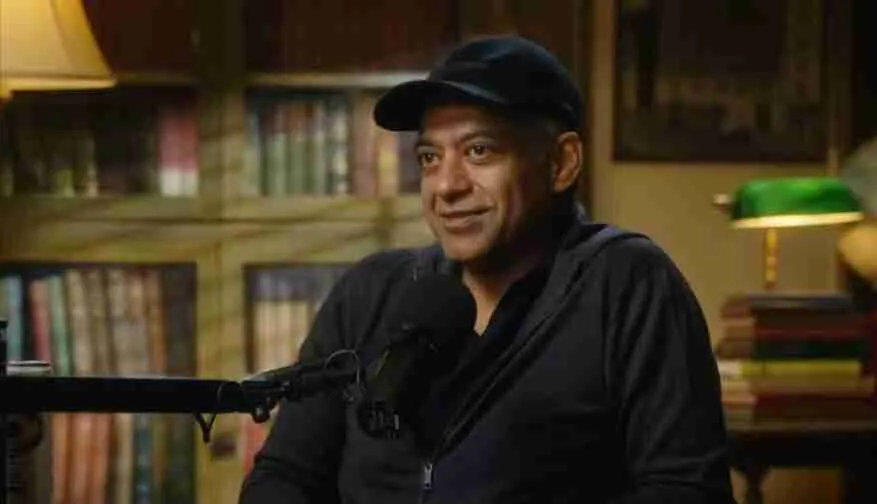
Read the full transcript of entrepreneur and investor Naval Ravikant’s interview on Modern Wisdom Podcast episode titled “44 Harsh Truths About Human Nature” [Mar 31, 2025]. Chris Williamson hosts the podcast.
TRANSCRIPT:
Happiness vs. Success
CHRIS WILLIAMSON: Happiness is being satisfied with what you have. Success comes from dissatisfaction. Is success worth it then?
NAVAL RAVIKANT: Oof. I’m not sure that statement is true anymore. I made that statement a long time ago, and a lot of these things are just notes to myself and they’re highly contextual. They come in the moment, they leave in the moment.
Happiness is a very complicated topic, but I always like the Socrates story where he goes into the marketplace and they show him all these luxuries and fineries and he says, “How many things there are in this world that I do not want,” and that’s a form of freedom, so not wanting something is as good as having it.
In the old story with Alexander and Diogenes, Alexander goes out and conquers the world and he meets Diogenes who’s living in a barrel. Diogenes says “Get out of the way, you’re blocking my sun,” and Alexander says “Oh how I wish I could be like Diogenes in the next life,” and Diogenes says, “I don’t wish to be Alexander.”
So there are two paths to happiness: one path is success, where you get what you want and satisfy your material needs. The other is like Diogenes, where you just don’t want it in the first place. I’m not sure which one is more valid, and it also depends what you define as success. If the end goal is happiness, then why not cut to the chase and just go straight for it?
Does Happiness Hinder Success?
Does being happy make you less successful? That is conventional wisdom, that may even be the practical earned experience of your reality. You find that when you’re happy you don’t want anything so you don’t get up and do anything.
On the other hand, you still got to do something. You’re an animal, you’re here to survive, you’re here to replicate, you’re driven, you’re motivated, you’re going to do something. You’re not just going to sit there all day. Some people do, maybe it’s in their nature, but I think most people still want to act, they want to live in the arena.
I found for myself as I’ve become happier—that’s a big word, but you know, more peaceful, more calm, more present, more satisfied with what I have—I still want to do things, I just want to do bigger things. I want to do things that are more pure, more aligned with what I think needs to be done and what I can uniquely do. So in that sense I think that being happier can actually make you more successful, but your definition of success will likely change along the way.
CHRIS WILLIAMSON: Is that a realization you think you could have gotten to had you not had some success in the first place?
NAVAL RAVIKANT: At least for me, I always wanted to take the path of material success first. I was not going to go be an ascetic and sit there and renounce everything. That just seems too unrealistic and too painful.
In the story of Buddha, he starts out as a prince and then he sees that it’s all kind of meaningless because you’re still going to get old and die, and then he goes into the woods looking for something more. I’ll take the happy route that involves material success. Thank you.
The Path to Freedom
CHRIS WILLIAMSON: I think it’s quicker in some ways. One of your insights is it’s far easier to achieve our material desires than it is to renounce them.
NAVAL RAVIKANT: It depends on the person, but I think you have to try that path. If you want something, go get it. I quipped that the reason to win the game is to be free of it, so you play the games, you win the games, and then hopefully, you get bored of the games.
You don’t want to just keep looping on the same game over and over, although a lot of these games are very enticing and have many levels that are relatively open-ended. Then you become free of the game, in the sense that you’re no longer trying to win it—you know you can win it—and either you move to a different game or you play the game for the sheer joy of it.
Suffering and Progress
CHRIS WILLIAMSON: Another one of yours: most of the gains in life come from suffering in the short term so you can get paid in the long term. That’s classic—winning the marshmallow test on a daily basis. But there’s an interesting challenge where I think people need to avoid becoming a suffering addict, sort of using suffering as the proxy for progress as opposed to the outcome of the suffering. Right?
NAVAL RAVIKANT: It’s like, I was in pain not eating the marshmallow. I was in pain doing this work. I have attached well-being and satisfaction to pain, not to what the pain gets me on the other side of it.
If you define pain as physical pain, then it’s a real thing, it happens, and you can’t ignore it, but that’s not what we mean by suffering. Suffering is mostly mental anguish and mental pain, and it just means you don’t want to do the task at hand.
If you are fine doing the task at hand then you wouldn’t be suffering, and then the question is what’s more effective: to suffer along the way or just to interpret it in a way that it’s not suffering? You hear from a lot of successful people, they look back and they say, “Oh the journey was the fun part.” That was actually the entertaining part and I should have enjoyed it more.
Learning from Your Past Self
There’s a little thought exercise I like to do which is, you can go back into your own life and try to put yourself in the exact position you were in five years ago, ten years ago, fifteen years ago, twenty years ago. You try to remember who you were with, what you were doing, what you were feeling, what were your emotions, what were your objectives, and really try to transport yourself back and see if there’s any advice you’d give yourself, anything you’d do differently.
Now you don’t have new information, don’t pretend you could have gone back and bought a stock or bought Bitcoin or whatever, but just knowing what you know now in terms of your temperament and a little bit of age-related experience, how would you have done things differently?
I think it’s a worthwhile exercise to do. For me, I would have done everything the same except I would have done it with less anger, less emotion, less internal suffering because that was optional. It wasn’t necessary.
CHRIS WILLIAMSON: And I would argue that someone who can do the job at least peacefully, but maybe happily, is going to be more effective than someone who has unnecessary emotional turmoil.
NAVAL RAVIKANT: Well, you end up with a series of miserable successes, right? The outcome may have been the same, but the entire experience of getting there…
The Journey Is All There Is
And the journey is not only the reward, the journey is the only thing there is. Even success, it’s human nature to bank it very quickly, right, because the normal loop that we run through is you sit around, you’re bored, then you want something, then when you want something you decide you’re not going to be happy until you get that thing, then you start your bout of suffering or anticipation while you strive to get that thing.
If you get that thing then you get used to it, and then you get bored again, then a few months later you want something else, and if you don’t get it then you’re unhappy for a bit, and then you get over it then you want something else. That’s the normal cycle. So whether you’re happy or unhappy at the end, it tends not to last.
Now I don’t want to be glib and say that there’s no point in making money or being successful. There absolutely is—money solves all your money problems, so it is good to have money.
That said, there are those stories, I don’t know if you’ve seen those studies, I don’t know how real these are, a lot of these psych studies don’t replicate, but it’s a fun little study that shows that people who break their back and people who win the lottery are back to their baseline happiness two years later.
CHRIS WILLIAMSON: Yep.
NAVAL RAVIKANT: Again, don’t know if that’s entirely true. I think money can buy you happiness if you earned it, because then along the way you have both pride and confidence in yourself, and you have a sense of accomplishment, and you set out to do something and you were right, so I’ll bet that lingers, and then as I said, it solves your money problems.
So I don’t want to be too glib about it, but I would say in general, this loop that we run through of desire, dopamine, fulfillment, unfulfillment—you have to enjoy the journey. The journey is all there is. Ninety-nine percent of your time is spent on the journey, so what kind of a journey is it if you’re not going to enjoy it?
Managing Desires
CHRIS WILLIAMSON: How do you shortcut that desire contract?
NAVAL RAVIKANT: You could focus, you could decide that I don’t want most things. I think we have a lot of unnecessary desires that we just pick up everywhere, have opinions on everything, judgments on everything, so I think just knowing that those are the source of unhappiness will make you be choosy about your desires.
And frankly if you want to be successful, you have to be choosy about your desires, you have to focus. You can’t be great at everything. You’re just going to waste your energy and waste your time.
Is Fame Worth It?
CHRIS WILLIAMSON: Is fame a worthwhile goal?
NAVAL RAVIKANT: It gets you invited to better parties. It gets you to better restaurants. Fame is this funny thing where a lot of people know you, but you don’t know them, and it does get you put on a pedestal. It can get you what you want at distance, so I wouldn’t say it’s worthless. Obviously people want it for a reason, it’s high status so it attracts the opposite sex, especially for men it attracts women.
That said, it is high cost. It means you have no privacy, you do have weirdos and lunatics, you do get hit up a lot for weird things, and you’re on a stage so you’re forced to perform. You’re forced to be consistent with your past proclamations and actions, and you’re going to have haters and all that nonsense.
But the fact that we do it, the fact that we all seem to want it means that it would be disingenuous to say, “Oh no, no, I’m famous, but you don’t want to be.” That said, I think fame, like anything else, is best produced as a byproduct of something potentially more worthwhile. Wanting to be famous and craving to be famous and being famous for being famous, these are sort of traps.
CHRIS WILLIAMSON: Fame bait.
NAVAL RAVIKANT: Yeah exactly, so it’s better that it’s earned fame. For example, earn respect in the tribe by doing things that are good for the tribe. Who are the most famous people in human history? They’re people who sort of transcended the self, the Buddhas and the Jesuses and the Mohammads of the world.
Who else is famous? The artists are famous—art lasts for a long time. The scientists are famous—they discover a thing. The conquerors are famous, presumably because they conquered for their tribe, was someone that they were fighting for.
So generally the higher up you rise by doing things for greater and greater groups of people, even though it may be considered tyrannical or negative, like Genghis Khan is famous, but to the Mongols he was doing good, to the rest of them not so much. The higher level you’re operating at, the more people you’re taking care of, the more you sort of earn respect and fame, and I think those are good reasons to be famous.
If fame is empty, if you’re famous just because your name showed up in a lot of places or your face showed up in a lot of places, then that’s a hollow fame and I think deep down you will know that and so it’ll be fragile and you’ll always be afraid of losing it and then you’ll be forced to perform.
So the kind of fame that pure actors and celebrities have, I wouldn’t want, but the kind of fame that’s earned because you did something useful, why dodge that?
Changing Your Mind
CHRIS WILLIAMSON: No, you can’t. There’s a challenge I think, especially if people make very loud public proclamations about things. You mentioned there about, you’re almost a hostage to the things that you used to say. Being able to update your opinions and change your mind looks very similar to the internet as hypocrisy does. The difference between me saying something in the past and saying something different now is perhaps I’ve learned, perhaps I’ve updated my beliefs.
NAVAL RAVIKANT: Right. But so few people do it in a legitimate way. I think that the grifter shill—you’d see this is the smoking gun that shows that he didn’t really believe that thing all along.
CHRIS WILLIAMSON: I went to a retreat in LA a couple of years ago, and there was a guy that I used to follow, a big business and productivity advice content creator, really successful, and he just totally stepped back from everything, went monk mode and focused on his business.
Living Authentically
CHRIS WILLIAMSON: I asked him why, and he said, “I started feeling like I had to live up to in private the things that I was saying in public.”
NAVAL RAVIKANT: Right. It’s what Emerson said, “Foolish consistency is the hobgoblin of little minds.” But essentially, look, all learning is error correction. Every knowledge creation system works through making guesses and correcting errors. So by definition, if you’re learning, you’re going to be wrong most of the time and you’ll be updating your priors.
For example, I did this Joe Rogan podcast, I don’t know, eight or nine years ago, and people will call out like the one thing that didn’t turn out to be correct. They just beat on it because it helps them in their mind raise their status a little bit – “I caught him in an error.”
If you catch someone in a blatant lie where they believe one thing and say another, that’s legit – that’s a character flaw. They shouldn’t be lying. But on the other hand, if they just made a guess at something and got it wrong, that’s different. Mostly it’s about the AI AGI thing, and I think I’m still right about that, but it’s a different story.
People who think we have achieved AGI just fail a Turing test from their side. It’s funny how people latch onto single proclamations, but the reality is all of us are dynamical systems. We’re always changing, always learning, always growing, and hopefully we’re correcting errors. But what you don’t want to be doing is lying in public because you’re trying to look good. I think people can smell that.
What this world really lacks right now is authenticity, because everybody wants something. They want to be seen as something, they want to be something that they’re not. So you catch a lot of people saying things that they don’t really believe, and I think people are very sensitive to that. Bullshit radars have become hypersensitized to try and work out whether or not this person means the thing that they’re saying.
CHRIS WILLIAMSON: Most of us are wrong most of the time, especially in any new endeavor. There’s a difference between being wrong and disingenuous though.
NAVAL RAVIKANT: Correct. Purposely wrong. Exactly.
I think that’s the big difference. If someone is wrong, no big deal, as long as they have a genuine reason for saying what they’re saying or believing what they’re believing. But if they are lying to elevate their status or their appearance or to live up to some expectation, that’s the mistake. And that’s a mistake not just for the listener, but a mistake for themselves, because then you’re going to get trapped in the hall of mirrors. You yourself are going to be consistent with your past proclamation, so if you’re lying to others, you’re going to be lying to yourself.
CHRIS WILLIAMSON: You’re puppeted by a person that you are not even.
NAVAL RAVIKANT: That’s right. It’s like, what was the line? You’re basically trying to impress people who don’t care about you. And they don’t like the real you, and if they saw the real you, they wouldn’t care. And the people who would like the real you don’t get to see the real you, so they pass you by.
You only want the respect of the very, very few people that you respect. Trying to demand respect from the masses is a fool’s errand.
Status Games vs. Wealth Creation
CHRIS WILLIAMSON: Satisfaction games, the allure of accruing, whether it’s fame, actual fame, or just the competition comparison trap, it’s always there. There’s a real draw of being swayed by social approval, but how should people learn to get less distracted by status games in that way?
NAVAL RAVIKANT: I think it just helps to see that status games don’t matter as much as they used to. In old society, let’s go back to hunter-gatherer times, there was no such thing as wealth – you just had what you could carry. There was no stored wealth, so wealth creation games didn’t exist. All that existed was status games. If you were high status, then you got what little was available first, but even back then you had to earn your status by taking care of the tribe.
Now we have wealth creation where you can actually create a product or a service. You can scale that product or service and you can provide abundance for a lot of people, and that’s not zero-sum, that’s a positive-sum game. I can be wealthy, you can be wealthy, we can create things together. And clearly since we are all collectively far, far wealthier than we were in hunter-gatherer times, wealth creation is positive.
But status is limited. There’s limited status to go around. It’s a ranking ladder, it’s a hierarchy, and so if one person rises in status, somebody else has to lower in status. Now you can have multiple kinds of status, so you can expand some kinds of status, but it’s not like wealth creation where it can go infinitely, where we can all be living in the stars and moon bases or Mars colonies.
Just realize the status games are inherently limited. They’re always combative. They always require direct combat, whereas wealth creation games can be just you creating products – you don’t have to fight anybody else.
Yes, in the marketplace your product has to succeed, but that’s not quite the same as invective against other people or being angry with other people or feeling pushed down or pushed up or having a beef with somebody. So I would argue that wealth creation games are both more pleasant, they’re positive-sum, and they actually have concrete material returns. If you have more money you can buy more things.
Show me where you can exchange your status at the bank.
CHRIS WILLIAMSON: Exactly, it’s vague and fuzzy.
NAVAL RAVIKANT: Now, you see people get rich, they have money, what do they want? They want status, so they go to Hollywood, start starring in movies, they donate to non-profits, they go to Cannes or Davos, and they start trying to trade the money for status.
People always want what they don’t have, and we are evolutionarily hardwired for status because as I said, wealth creation didn’t really exist until the agricultural revolution when you could store grain. Then the industrial revolution took it to another level and now the information age is taking it to yet another level.
There’s never been an easier time to make money. Yes, it’s still hard, but there’s never been an easier time to create wealth, because there’s so much leverage out there, there’s so much opportunity. You still have to go find it, it’s not easy, it’s not going to fall on your lap and you have to learn something and know something and do something interesting, but nevertheless it’s possible to many more people. A few hundred years ago you were born a serf, you were going to die a serf, there was almost no way out of that.
That’s changed, and so I would argue that you’re better off focusing on wealth games than status games. If you’re trying to build up, for example, your following on a social network and get famous and then get rich off of being famous, that’s a much harder path than getting rich first, and then going for your fame afterwards would be my advice.
CHRIS WILLIAMSON: A lot of people do that, as you said. It’s funny how people who have achieved such a level of wealth – you think why do you need the status, given that most people use status to then try and cash in to achieve wealth? If you’ve achieved “fuck you money” already, if you’re post-money or asset-heavy as it’s known, why are you trying to go in the other direction?
NAVAL RAVIKANT: As you said, because we’ve got an illustrious history biologically of wanting status, and wealth is kind of novel. It’s new. Wealth is something that you have to understand more intellectually. Yeah, there’s a physical component, more food, more survival, but to truly understand the effects and the powers and the abilities and limitations, and the advantages and disadvantages of wealth, you have to use your neocortex a lot more.
CHRIS WILLIAMSON: Does that mean the reason to play the game is to win the game and be done with it? Is it harder to win and to be done with for status than it is for wealth?
NAVAL RAVIKANT: That’s a good observation, I hadn’t thought that through, but you’re right. I think people will always want more status, but I think you can be satisfied at a certain level of wealth.
CHRIS WILLIAMSON: Well, you always have this sort of sense, and this is what leaderboards are.
NAVAL RAVIKANT: That’s right. And it is zero-sum.
CHRIS WILLIAMSON: And it is, I guess, you know, the Forbes richest people on the planet.
NAVAL RAVIKANT: Yeah. That one’s harder to climb the ladder on, but the fact that, for example, iTunes and YouTube can put you in competition against your contemporaries every single day, and make you go up and down and show you likes and comments and ratings subscribers…
CHRIS WILLIAMSON: Is how much you’re up. Exactly. They keep you running on that treadmill forever.
Jimmy Carr has this cool idea where he says trajectory is more important than position. So, if you are number one hundred and one in the world, but last year you were number two hundred, versus you’re number two in the world, but last year you were number one, there is this sense of the deceleration is very, very tangible.
NAVAL RAVIKANT: And again it goes back to evolution. Something that is bleeding eventually dies, unless you stop the bleeding, so you’re hardwired not to lose what you have. Because we evolved in conditions where we’re so close to just not surviving, you don’t want to give anything up. It’s hardwired into us to not give anything up.
CHRIS WILLIAMSON: So you grip tightly?
NAVAL RAVIKANT: That’s right.
The Importance of Self-Esteem
CHRIS WILLIAMSON: The worst outcome in the world is not having self-esteem. Why?
NAVAL RAVIKANT: It’s a tough one. I look at the people who don’t like themselves and that’s the toughest slot because they’re always wrestling with themselves. It’s hard enough to face the outside world, and no one’s going to like you more than you like yourself, so if you’re struggling with yourself then the outside world becomes an insurmountable challenge.
It’s hard to say why people have low self-esteem. It might be genetic, it might just be circumstantial. A lot of times I think it’s because they just weren’t unconditionally loved as a child and that sort of seeps in at a deep core level, but self-esteem issues can be the most limiting.
One interesting thought is that to some extent self-esteem is a reputation you have with yourself. You’re watching yourself at all times, you know what you’re doing and you have your own moral code. Everyone has a different moral code, but if you don’t live up to your own moral code, the same code that you hold others to, it will damage your self-esteem. So perhaps one way to build up your self-esteem is to live up to your own code – very rigorously have one and then live up to it.
Another way to raise your self-esteem might be to do things for others. If I look back on my life and what are the moments that I’m actually proud of, they’re very far and few between. It’s not that often and it’s not the things you would expect – it’s not the material success, it’s not having learned this thing or that. It’s when I made a sacrifice for somebody or something that I loved. That’s when I’m actually, ironically, most proud.
Now that’s through an explicit mental exercise, but I’ll bet you at some level I’m recording that implicitly. So that tells me that even if I am not being loved, the way to create love is to give love, to express love through sacrifice and through duty. And so I think doing things like that can build up your self-esteem really fast.
CHRIS WILLIAMSON: It’s interesting when you talk about sacrifice, because a lot of the time people say, “I sacrificed so much for my job.” It’s like, yeah, but that was you sacrificing something that you wanted less for something that you wanted more, as opposed to genuinely taking some sort of cost.
The Price of Integrity
CHRIS WILLIAMSON: And, yeah, I wonder whether if self-esteem is you adhering to your internal values, your actions aligning with your values, even when it’s difficult or perhaps even more so when it’s difficult. I wonder whether there is a price that people who are more introspective, high integrity pay because they think, well, you’ve got this heavier set of overheads that you need to pay in some way.
NAVAL RAVIKANT: Well, being ethical were profitable, everybody would do it, right? So, at some level it does involve a sacrifice, but that sacrifice can also be thought of as you’re thinking for the long term rather than the short term. For example, virtues are a set of beliefs that if everybody in society followed them as individuals, it would lead to win-win outcomes for everybody.
So if I am honest and you are honest, then we can do business more easily, we can interact more easily because we can trust each other. Even though there might be a few liars in the system, as long as there aren’t too many liars and too many cheaters, a high trust society where everybody’s honest is better off, and I think a lot of the virtues work this way.
If I don’t go around sleeping with your wife and you don’t sleep with mine, and if I don’t take all the food that’s at the table first and so on, then we all get along better and we can play win-win games.
Game Theory and Society
In game theory the most famous game is Prisoner’s Dilemma, but that’s all about everybody cheating and the Nash equilibrium, the stable equilibrium there is everybody cheats. The only way you can play a win-win game is if you have long term iterated moves, but that’s not actually the most common game played in society.
The most common game played is one called a stag hunt, where if we cooperate we can bring down a big stag and both have big dinners, but if we don’t cooperate then we have to go hunt like rabbits and we each have small dinners.
That game has two stable equilibriums – one could be where we’re both hunting the rabbit, and one could be where we’re hunting the stag. So the high trust society is a more virtuous society where I can trust you to come hunt the stag with me and show up on time and do the work and divide it up properly.
So you want to live in a system where everybody has their own set of virtues and follows them, and then we all win. But I would argue you don’t need to do that for sacrifice, you don’t need to do that for other people, you can do it just purely for yourself. You will have higher self-esteem, you will attract other high virtue people.
CHRIS WILLIAMSON: Would I go on a stag hunt with me?
NAVAL RAVIKANT: Correct. Yeah, that’s right. If you’re the kind of person who long term signals ethics and virtues, then you’ll attract other people who are ethical and virtuous, whereas if you are a shark, you will eventually find yourself swimming entirely amongst sharks and that’s an unpleasant existence.
This goes back to the equivalent of the marshmallow test. The marshmallow test does not replicate – it got hit hard in the replication crisis recently, but it is about trading off the short term for the long term. I think for a lot of these so-called virtues, there are long-term selfish reasons to be virtuous.
Self-Doubt and Confidence
CHRIS WILLIAMSON: Yeah. Did you deal with self-doubt in the past? Is that something that was a hurdle for you to overcome?
NAVAL RAVIKANT: Yes and no. I think I dealt with self-doubt in the sense that, “Oh, I don’t know what I’m doing, and I need to figure it out,” but I didn’t doubt myself in the way of “somebody else knows better than me for me” or that “I’m an idiot” or “I’m not worthwhile.”
I guess I had the benefit that I grew up with a lot of love. The people around me loved me unconditionally and so that just gave me a lot of confidence. Not the kind of confidence that would say I have the answer, but the kind of confidence that I will figure it out and I know what I want, or only I am a good arbiter of what I want.
CHRIS WILLIAMSON: Yeah, that level of self-belief I suppose allows you to determine what is it that matters to me, my self-esteem. Should I chase this thing or not? I can make a fair judgment on that as opposed to being so swayed. It’s such a good point about even if you think you’re not consciously logging the stuff that you’re doing, there is some part that’s in the back of your mind. Was it the daemon? Is that what the ancient Greeks or something used to talk about?
NAVAL RAVIKANT: Yeah. In computer science, there’s a concept of a daemon, which is a program that’s always running in the background. You can’t see it. But yeah, it probably comes from the ancient Greek daemon.
What you know that you don’t even know you know is far greater than what you know you know. You can’t even articulate most of the things you know. There are feelings you have that have no words for them. There are thoughts you have that are felt within the body or subconsciously that you never articulate to yourself.
You can’t articulate the rules of grammar, yet you exercise them effortlessly when you speak. So I would argue that your implicit knowledge and your knowledge that is unknown to yourself is far greater than the knowledge you can articulate and that you can communicate.
At some level you’re always watching yourself, that’s what your consciousness is, right? It’s the thing that’s watching everything, your mind, including your body. So if you want to have high self-esteem, then earn your own self-respect.
I have this idea, the internal golden rule. So the golden rule says treat others the way that you want to be treated. The internal golden rule says treat yourself like others should have treated you, and it was a repost to maybe people that didn’t grow up with unconditional love.
The Nature of Love
CHRIS WILLIAMSON: Yeah. On the love thing…
NAVAL RAVIKANT: One of the interesting things about love is you can try to remember the feeling of being loved. So go back to when someone was in love with you or someone did love you, and really remember that feeling, like really sit with it and try to recreate it within yourself.
Then go to the feeling of you loving someone and when you were in love. I’m not even talking about romantic love necessarily, so be a little careful there. I’m talking more about love for a sibling or a child or something like that, or a parent. Think about when you felt love towards someone or something, and now which is better?
I would argue that the feeling of being in love is actually more exhilarating than the feeling of being loved. Being loved is a little cloying, it’s a little too sweet, you kind of want to push the person away, it’s a little embarrassing, and you know that if that person is too much into it that you feel constrained.
On the other hand, the feeling of being in love is very expansive, it’s very open, it actually makes you a better version of yourself, it makes you want to be a better person. So you can create love anytime you want, it’s just that craving to receive it that’s the problem.
The Cost of Pride
CHRIS WILLIAMSON: The most expensive trait is pride. How come?
NAVAL RAVIKANT: Oh, that was a recent one. I tweeted that just because I think that pride is the enemy of learning. When I look at my friends and colleagues, the ones who are still stuck in the past and have grown the least are the ones who were the proudest because they sort of feel like they already had the answers and so they don’t want to correct themselves publicly.
This goes back to the fame conversation – you get locked into something you said, it made you famous, you’re known for that and now you want to pivot or change. So pride prevents you from saying “I’m wrong.”
CHRIS WILLIAMSON: What’s pride in this context here?
NAVAL RAVIKANT: It could be as simple as you’re trading stocks and then you don’t admit you were wrong, so you hang on to a lousy trade. It could be that you made a decision to marry someone or move somewhere or enter a profession, it doesn’t work out, and then you don’t admit that you were wrong, so you get stuck in it.
It’s mostly about getting trapped in local maxima, as opposed to going back down and climbing up the mountain again. And that’s why it’s an expensive trait, because you continue to need to repay it in one form or another.
CHRIS WILLIAMSON: Yeah, you’re just stuck at a suboptimal point. It’s going to cost you money, it’s going to cost you success.
NAVAL RAVIKANT: And time.
CHRIS WILLIAMSON: And time.
The Willingness to Start Over
NAVAL RAVIKANT: The great artists always have this ability to start over, whether it’s Paul Simon or Madonna or YouTube. I’m dating myself a little bit, but even the great entrepreneurs, they’re just always willing to start over.
I’m always struck by the Elon Musk story where he did PayPal as X.com originally, actually, was his financial institution that got merged into PayPal.
CHRIS WILLIAMSON: Well, it’s good that you’ve got the domain, you know what I mean?
NAVAL RAVIKANT: Yeah, exactly. I’ll park that, I’ll hold on to it. He’s been using it for quite a while, and he said something like along the lines of, “I made two hundred million dollars from the sale of PayPal, I put one hundred million dollars into SpaceX, eighty million dollars in Tesla, twenty million in Solar City, and I had to borrow money for rent.”
This guy is a perennial taker. He’s always willing to start over. He doesn’t have any pride about being seen as successful or being seen as a failure. He’s willing to put it all in.
CHRIS WILLIAMSON: Back himself again each time.
NAVAL RAVIKANT: Back himself again each time, but the key thing is he’s always willing to start over. Even now when he’s sort of made his new startup as USA. He’s basically trying to fix it like he would fix one of his startups.
I think that is a willingness to look like a fool, and that is a willingness to start over, and a lot of people just don’t have that. They become successful, they become rich, they become famous, and that’s it, they’re stuck. They don’t want to go back to zero, and creating anything great requires zero to one, and that means you go back to zero, and that’s really painful and hard to do.
Choosing Happiness
CHRIS WILLIAMSON: Talking about risk, something I’ve been thinking about a lot to do with you. Any moment when you’re not having a good time, when you’re not really happy, you’re not doing anyone any favors. I think lots of people have become unusually familiar with suffering silently in that sort of a way of not having a high bar for your expectation for quality of life.
NAVAL RAVIKANT: Yeah. A lot of it is just you’re memeing yourself into a bad outcome because you think that somehow suffering is glorious, or that it makes you a better person. My old quip was, “If you’re so smart, why aren’t you happy? Why can’t you figure that one out?”
The reality is you can be smart and happy, there are plenty of people in human history who are smart and happy, and I think it just starts with saying, “Yeah, you know what, I’m going to be happy.”
There was a guy that I met in Thailand a long time ago and he used to work for Tony Robbins. He had a great attitude, and we were sitting around and he said, “I realized one day that someone out there had to be the happiest person in the world, like that person just has to exist.” He said, “Why not me? I’ll take on that burden, I’ll be that guy.” I heard that and I thought, “Wow that’s pretty good, that’s a good frame,” but he knew how to reframe things.
I think a lot of happiness is just a choice in the sense that you make. First you just identify yourself as “actually I’m going to be a person that’s going to be happy, I’m going to figure it out,” and you just figure it out along the way.
You’re not going to lose your other predilections, you’re not going to lose your ambition or desire for success. I think a lot of people have this fear that “Oh if I’m happy then I won’t want to be successful.” No, you’ll just want to do things that are more aligned with the happy version of you and you’ll be successful at those things. Believe me, the happy version of you is not going to look back at the unhappy version and say, “Oh man, that guy was going to be more successful, I wish I was him.” You’re actually trying to be successful so you’ll be happy.
CHRIS WILLIAMSON: Oh, so do…
NAVAL RAVIKANT: That’s the whole point. You’ve gotten it backwards.
CHRIS WILLIAMSON: You unlocked one of my trap cards. One of my favorite insights is that we sacrifice the thing we want for the thing that’s supposed to get it. So we sacrifice happiness in order to be successful, so that when we’re finally sufficiently successful, we can actually be happy.
NAVAL RAVIKANT: And if you have some sort of simultaneous equation, and you just sort of stripped success off from both sides… Yeah, at least in my own life, I have not found there to be a trade off. If anything, I have found that the happier I get, the more I am going to do the things that I’m good at and aligned with and that will make me even happier, and so I actually end up more successful, not less.
CHRIS WILLIAMSON: The aligned with thing is interesting. I’m gonna try and put this across as delicately as I can.
The Freedom of Self-Prioritization
CHRIS WILLIAMSON: I would say from the bit of time that we’d spent together, you have a really interesting trait of holistic selfishness. You’re sort of prepared to put yourself first. You seem largely unfazed by saying or doing things that might result in other people feeling a little bit awkward if it’s truthful for you. It’s like unapologetically self prioritizing, I guess.
NAVAL RAVIKANT: Yeah, I think everybody is, maybe unapologetic is the part that’s relatively rare, but I think everybody puts themselves first. That’s just human nature. You’re here because you survive, you’re a separate organism.
CHRIS WILLIAMSON: Interesting. I’m maybe, but I know we like to virtue signal and pretend we’re doing it for each other. How many times does somebody say, “Yeah, of course, I’d love to come to the wedding.” They’re like, “I don’t want to be at the fucking wedding.”
NAVAL RAVIKANT: I don’t go to weddings.
CHRIS WILLIAMSON: But this is my point. Right. So I don’t think you’re necessarily right with that. I think that people don’t put themselves first. I sometimes think that they compromise what it is that they want in order to appease socially what’s in front of them.
NAVAL RAVIKANT: I just view it as everyone’s wasting their time on it. Don’t do something you don’t want to do. Why are you wasting your time? There’s so little time on this earth. Life goes fast, what is it, four thousand weeks that’s your lifespan? And yes, we hear that, but we don’t remember it, but I guess I’m keenly aware of how little time I have, so I’m just not going to waste it.
CHRIS WILLIAMSON: How have you got more comfortable at being the unapologetic self prioritizer?
NAVAL RAVIKANT: I’ve gotten utterly more and more ruthless on it, mainly it’s that I see or hear people’s freedom, and then that liberates me further. So I read a blog post by P. Marka, aka Marc Andreessen, where he said don’t keep a schedule, and I took that to heart, so I deleted my calendar and I don’t keep a schedule, I try to remember it all in my head, if I can’t remember it, I’m not going to add it.
CHRIS WILLIAMSON: I’m glad you got your own time.
NAVAL RAVIKANT: Yeah, exactly, I had to look things up at the last minute. But ironically, don’t even know if Mark himself follows that, but he made the correct point. I read a little story about Jack Dorsey doing all his business off his iPhone and iPad and not even going into a Mac, and I said, okay, I want to do that, so I’m going operate through text messaging and I put up my nasty email.
CHRIS WILLIAMSON: Does that feel like more freedom?
NAVAL RAVIKANT: It does, yeah, because you’re on the go, so I have a nasty email autoresponder that says I don’t check email and don’t text me either, right? If you need to find me, you’ll find me.
Obviously, some of this is a luxury of success, but some of these habits I adopted long before actually, the hostile email autoresponder started a long time ago. I used to own the domain, I let it go, dontdocoffee.com, I used to reply from that email just so people would get the point, but I stopped being rude about it, now I just ghost, I just disappear.
My wife knows not to ever book or schedule me for anything, I’m not expected to go to couples dinners, I’m not expected to go to birthdays, I’m not expected to go to weddings. If somebody tries to rope her into having me show up, she says he makes his own decisions, you gotta ask him directly.
Embracing Serendipity
CHRIS WILLIAMSON: What about vice versa? Well, you’re not killing serendipity in a way, are you?
NAVAL RAVIKANT: No. I’m freeing up all my time, so my entire life is serendipity. I get to interact with whoever I want, whenever I want, wherever I want, but I hear the invite, then make the decision.
CHRIS WILLIAMSON: Because if there’s fewer things incoming, you’re assuming that you know best for you.
NAVAL RAVIKANT: I don’t commit to anything in the future, so I’ll say, okay, if that thing is interesting, I’ll see if I can get in that day when I’m in the mood, but there’s nothing worse than something coming up that your past self committed you to, that your present self doesn’t want to do.
CHRIS WILLIAMSON: Goddamn it, positive.
NAVAL RAVIKANT: Yeah, and then it destroys your entire calendar. It destroys your day because there’s like, oh, this one hour slot which is sitting like a turd on my calendar that I have to schedule my whole day around. I can’t do anything twenty minutes before, twenty minutes afterwards.
Even for phone calls, if someone wants to do a phone call, say, okay, just text me when you’re free, I’ll text you when I’m free, we’ll just do it on the fly. It’s a much better way of living than this overly scheduled cal.com or iCal, whatever.
CHRIS WILLIAMSON: The over scheduled life is not worth living?
NAVAL RAVIKANT: It’s not. I think it’s a terrible way to live life. That’s not how we evolved, it’s not how we grew up, it’s not how we were as children hopefully, unless you have a helicopter parent or a tiger mom. Your natural order is freedom.
I had a friend who said to me once, “You know, I never want to have to be at a specific place at a specific time” and I was like, oh my god, that’s freedom. When I heard that, that changed my life right there.
CHRIS WILLIAMSON: You’re still alarm clock less?
NAVAL RAVIKANT: Yes, I’m alarm clock less. Today, I did set my alarm clock just so I wouldn’t miss this.
CHRIS WILLIAMSON: Very important, yeah.
NAVAL RAVIKANT: But just so you know, I set the alarm clock for 11am in case I was stricken with the flu, slept in. I was still not going to set my alarm clock for 8am or 9am, and sure enough, got up many hours before that. But it was sort of a backup emergency alarm. In fact, sometimes when there’s something that I need to do, I don’t want to look at a calendar, so I’ll just set an alarm for it.
CHRIS WILLIAMSON: Just sink a little bit more into that, like, that kind of “fuck you” energy, that self prioritizing energy, because I think people rationally love the idea of this. I’m going to do what only I want to do, even if they’ve got the level of freedom.
Freedom and Productivity
NAVAL RAVIKANT: It’s not “fuck you” energy in the sense that I think everyone should live their life that way to the greatest extent possible. Obviously we have our requirements around work and obligations that are genuinely important to us, but don’t fritter away your life on randomly scheduled things and things that aren’t important, don’t matter, and events and weddings and tedious dinners with tedious people that you don’t want to go to.
To the extent you can bring freedom into your life, optimize for that, you’ll actually be more productive. You won’t just be happier, more free, you will be more productive, because then you can focus on what is in front of you, whatever the biggest problem of that day.
When I wake up in the morning, the first four hours are when I have the most energy and that’s when I want to solve all the hard problems, and the next four hours are when I kind of want to do some more outdoorsy activities or I want to work out or maybe I can have some meetings, but I’ll try to do those last second based on whatever the day’s priorities demand. The last four hours I kind of want to wind down, I want to hang out with the kids, and I want to play games, or read a book or something like that.
So, having that flexibility and freedom is really important, so you can just put whatever is most needed into the slot at that moment. Instead if I have like a meeting at 2pm and then I have to get a thing and some emails done, I put that off till 6pm and I’m rushing, I’m not going to be productive.
CHRIS WILLIAMSON: You’re certainly not free.
NAVAL RAVIKANT: I’m definitely not free, but also another thing that I really believe is that inspiration is perishable. Act on it immediately. So when you’re inspired to do something, do that thing. If I’m inspired to write a blog post, I want to do it at that moment. If I’m inspired to send a tweet, I want to do it that moment. If I’m inspired to solve a problem, I want it that moment. If I’m inspired to read a book, I want to read it right then.
If I want to learn something, do it at the moment of curiosity, the moment the curiosity arrives, I go learn that thing immediately. I download the book, I get on Google, I get on ChatGPT, whatever, I will figure that thing out on the spot, and that’s when the learning happens. It doesn’t happen because I’ve scheduled time, because I’ve set an hour aside, because when that time arrives I might be in a different mood, I might just want to do something different.
So I think that spontaneity is really important, you’re going to learn best when you’re having fun, when you genuinely are enjoying the process, not when you’re forced to sit there and do it. How much do you remember from school? You know you were forced to learn geography, history, mathematics on this schedule at this time according to this person. Didn’t happen. All the stuff that sticks with you is what you learned when you wanted to, when you genuinely had the desire, and that freedom, that ability to act on something the moment you want to is so liberating that most of us go through our lives with very little tastes of that. If you live your entire life that way, that is a recipe for happiness.
CHRIS WILLIAMSON: It feels like efficiency that you have.
NAVAL RAVIKANT: Efficient also. You have the inspiration that is going to be the most frictionless time to ever do that particular task.
CHRIS WILLIAMSON: So I’ve had the inspiration to do that. I’ll put that off until a time when I no longer really want to do it quite so much. And while I do want to do that thing, I’ll do something else that I needed to do because it’s on the schedule. It does not work.
NAVAL RAVIKANT: Procrastination is because you don’t want to do that thing right now. You want to do something else. Go do that something else. I reject this frame that efficiency and productivity and success are counter to happiness and freedom. They actually go together.
The happier you are, the more you can sustain doing something, the more likely you’re going to do something that will in turn make you even happier and you’ll continue to do it and you’ll outwork everybody else. The more free you are, the better you can allocate your time, and the less you’re caught up in a web of obligations and commitments, and the more you can focus on the task at hand.
Finding Your Authentic Work
CHRIS WILLIAMSON: This is related to another insight of yours. The less you want something, the less you’re thinking about it, the less you’re obsessing over it, the more you’re going to do it in a natural way. The more you’re going to do it for yourself, you’re going to do it in a way that you’re good at, and you’re going to stick with it. The people around you will see the quality of your work is higher. But this seems like a difficult tension to navigate because an obsessive attention to detail is a competitive advantage of your work as well. So you have these two things sort of conflicting with each other.
NAVAL RAVIKANT: No one is gonna beat you at being you. Find what feels like play to you, but looks like work to others. So it looks like work to them, but to you it feels like play, it’s not work. So you’re gonna out compete them because you’re doing it effortlessly, you’re doing it for fun, they’re doing it for work, they’re doing it for some byproduct. To you, it’s art, it’s beauty, it’s joy, it’s flow, it’s fulfilling.
You must enjoy podcasting. If you didn’t, you wouldn’t be good at it. You wouldn’t have nine hundred episodes either. If you decided that the right way to get ahead in life was to go write books, nobody would have heard of you. Chris Williamson’s book would be a complete flop, that’s not who you are. You’re a podcaster. You enjoy talking to people, you enjoy interviewing them.
The more you do things that are natural to you, the less competition you have. You escape competition through authenticity by being your own self.
Productize Yourself
If I had to summarize how to be successful in life in two words, I would just say productize yourself. That’s it. Just figure out what it is that you naturally do that the world might want that you can scale up and turn into a product, and it’ll eventually be effortless for you. Yes, there’s always work required, but it won’t even feel like work to you, it’ll feel like play to you, and modern society gives us that opportunity.
Know, if you were two thousand years ago, you’re born on a farm, your choices are very limited, right, you’re going to do stuff on that farm. Now you can literally wake up and you can move to a different city, you can switch careers, you can switch jobs, you can change the people that you’re with, you know you can change so many things about who you are and who you’re with and what you’re doing that there is infinite opportunity out there for you, literally infinite.
So it’s much better to treat this like a search function to find the people who need you the most, to find the work that needs you the most, to find the place you’re best suited to be at, and it’s worthwhile to spend time in that exploration before diving into exploitation. The biggest mistake in a world with so many choices is premature commitment. If you prematurely commit to being a lawyer or a doctor and now you’ve got like five years invested into that, you might have just completely missed, you might just end up in the wrong profession, wrong place, the wrong people for thirty years of your life grinding away, and yes, the best time to figure that out was before, but the second best time is now, so just change it.
Say No By Default
And also presumably kill things that aren’t working very quickly. By default, you should kill everything, you know, if you can’t decide, the answer is no, and most things you just be saying no to. Part of my keeping my calendar free is just by default saying no to everything. Do I want to create a calendar just to add your event, right, or to add your need or your desire?
One of the other things about, know, early on in life you’re looking for opportunities, so you’re saying yes to everything, and that is a phase that you go through, that is the exploration phase. Later when you found the thing you want to work on, you’re in the exploitation phase, you have to say no to everything by default, and if you don’t say no to everything by default, if you have to even explicitly go out of your way to say no to something, that will take up time.
For example, know there are lot of people out there who are into hustle culture, and a big piece of hustle culture is like, well you’re not going get something if you don’t ask for it, so they’ll hustle people, they’ll always be sending you requests, messages. This is a famous person problem but I have it, and people are always asking me for things and I kind of squirm when I get these messages and I’m sure you get these two text messages, emails saying, “Hey Chris, my friend so and so should really be on your podcast” or “you should come to my event,” “you should write a forward for my book,” and you kind of squirm when you get this right, and you have to figure out how to say no.
One of the things I learned along the way is that if you wouldn’t ask somebody else to do it and then you get that request yourself, can just dismiss it, you don’t have to respond, you don’t even let it enter your brain. You have to be able to delete emails and text messages without flinching if you want to scale, and scaling is very important, scaling your time is really important. Every interruption will take you out of flow, so the only way you can remain in flow is if you get either very good at ignoring these things by default or closing yourself off like a hermit like our mutual friend Tim Ferriss does, or you just become emotionally capable of not registering these as something that causes turbulence inside of you.
CHRIS WILLIAMSON: That not registering it emotionally thing, is that fundamental? That’s so fundamental to so many things in life. Can we dig into that a little bit? Is it because again, I’ve only seen you as you. Right? I didn’t know you twenty years ago. I didn’t know you as a child. So I’ve only seen you with this holistic selfishness, the integrated self prioritization, whatever we—I don’t know what we called it.
NAVAL RAVIKANT: Selfish is fine. I’ll take selfish. I’m selfish. I’m a very selfish person. Don’t contact me.
CHRIS WILLIAMSON: That emotional reaction—whatever that is. Also get the sense too that maybe people have lived obligation life for so long that they actually kinda struggle to tap into what it is that they want. They’ve hidden their wants and their desires and their needs, they deprioritized themselves so much for so long. They go, what do I want, actually? What is it? Do I want to go to this thing or not? Because all I’ve done is be puppeted. Right? I’ve been marionetted by other people’s desires for so so so long. I can’t even tap into that anymore, and saying no feels like a war crime.
Observe Your Thoughts Objectively
NAVAL RAVIKANT: So I think it’s really good to be able to view your own mind and your own thoughts objectively, and that is the big benefit of meditation. It creates a small gap between your conscious observation self and your mind, and that lets you then look at your thoughts and evaluate them a little bit like you would a third party’s statements.
If you just take your mind to be you and they’re integrated in one and the same at all times and you’re reacting from the mind, then you’re not even going question things that come into your mind. Anything that comes in that creates your reaction will immediately create a reaction, but if you can observe your thoughts a little bit and not in some woo woo way, but you can even just do it through therapy, can do it through journaling, you can do it any way you’d like, you can just take long walks, don’t have to meditate and do lotus position, all that is unnecessary.
But if you can observe your own thoughts and view them a little objectively, then you can start being a little more choosy, a little more critical, and you can realize that there are no problems in the real world other than maybe things that inflict pain on your body. Everything else has to become a problem in your mind first. You have to view it and interpret it and create a narrative that it is a problem before it becomes the problem.
Then you realize that a lot of your emotional energy is spent on reacting to things that your mind is automatically saying are problems, and you don’t need all those problems. Do you really need that many problems in your life? Again I would say try to focus on just one overarching problem and then go solve that problem.
It’s like if you want to be successful, define success very concretely, focus on that and everything else, when it enters your mind it becomes a problem, whether it’s a judgment about the girl walking down the street or the car that just cut in front of you or whether it’s like you know this, your accountant did this stupid thing, like yes it’s going to trigger you but observe for a moment that like it’s triggering me, I’ve created a problem, do I really want to have this problem right now, do I want to spend the energy on this problem or do I want that going somewhere else?
And it doesn’t have to be that over, you don’t have to, the mind mud wrestling with itself is also a problem.
CHRIS WILLIAMSON: I have, my problems have got problems and I have a real problem about fixing my problems.
NAVAL RAVIKANT: Yeah, exactly, and so you just, you’re going to be much happier and much more focused, again I think happiness and focus and success can kind of complement each other. You’re going to have much more energy, just think about it as mental energy, you’re have much more mental energy to focus on the actual problems you want to solve if you don’t start unconsciously, subconsciously, reactively picking up problems everywhere. So before anything can be a problem that takes up your emotional energy, you have to accept it as a problem, you can be choosy about your problems, and I’m not saying I’m perfect in that regard, but I think I’m better than I used to be.
Choose Your Problems Wisely
Well, lots of people are addicted to solving problems, right, so much so that sometimes people create problems when we don’t have any, simply so that we can solve them. We have that going on, and then even worse is we take on problems that we can’t affect.
So, you know, another one of my little quips was, you know, a rational person can sort of find peace by cultivating indifference to things that are out of their control, and I’m as guilty as anybody of doomsurfing on X or social media and getting worked up about things that I can’t do anything about, right? Like do I want to be fighting those battles in my mind when I literally cannot do anything about it?
So if you find yourself looping on a problem like you’re watching the news too much and you’re getting caught up in a problem you can’t do anything about, you have to step away from that, and modern media is a delivery mechanism for mimetic viruses, and what’s happened now is you know, one hundred years ago, five hundred years ago, if something wasn’t happening in your immediate vicinity, you wouldn’t hear about it. It wouldn’t be a problem for you, but now every single one of the world’s problems has turned into a mimetic virus, which is going into the battlefield of the news and is trying to infect your mind in real time. Hyper speed.
So that, yeah, so that you become obsessed with the war in Ukraine, is really far away, or you get obsessed with climate change or you get obsessed with AI doom or you get obsessed with whatever, and there’s nothing as riveting as the old religion, the world is ending, the world is ending, pay attention, the world is ending.
CHRIS WILLIAMSON: Cassandra Complex at global scale.
NAVAL RAVIKANT: Cassandra Complex at global scale and I would argue that large percentages of population are essentially just infected with these mimetic viruses that have taken over their brain and are causing them to do incredible gyration about things that probably aren’t even true or are greatly exaggerated, but even to the extent they are true, are things that that person can do nothing about and they should put their own house in order first.
So you know another little line I have for myself is your family is broken but you’re going to fix the world, right? People are running out there to try and fix the world and their own lives are a—
CHRIS WILLIAMSON: Oh my god.
NAVAL RAVIKANT: Right, and I think it defies credibility if you can’t fix your own life first. I’m not going to take you seriously if you can’t fix your own life, like all these philosophers who you know seem like people you emulate and so smart or like these brilliant celebrities and they go off and commit suicide, well you just kind of invalidated your whole way of life. It’s like that line of in No Country for Old Men where the killer is waiting for the protagonist and protagonist shows up and the killer says, “Well you know if your set of rules brought you here, then what good are your rules?” Didn’t work.
I am self, I’m holistically selfish in that I want to be objectively successful in everything I set out to want.
CHRIS WILLIAMSON: Mhmm.
Don’t Settle for Mediocrity
NAVAL RAVIKANT: Yeah, and you have one life, don’t settle for mediocrity. Don’t settle for mediocrity, and I think the only, like, people debate intelligence for example, right? We talk about IQ tests and all that, but I think the only true test of intelligence is if you get what you want out of life, and there are two parts to that.
One is getting what you want, so you know how to get it, and the second is wanting the right things, knowing what to want in the first place. I could want to be a, you know, six foot eight basketball player, and I’m not going to get that, so it’s wanting the wrong thing.
CHRIS WILLIAMSON: That’s wanting something that you can’t get.
NAVAL RAVIKANT: That’s wanting something you can’t get. There’s also wanting something that you don’t want.
CHRIS WILLIAMSON: Yeah, wanting something that’s a booby prize.
NAVAL RAVIKANT: There are plenty of booby prizes out there too, right? I don’t know if that won, don’t know if won in about twenty or so. Yeah, prizes that are just not worth having, or that create their own problems. But if you’re not careful, you can end up in a place in life not only that you don’t want to be, but one that you didn’t even mean to get to.
Navigating Life’s Decisions
NAVAL RAVIKANT: That’s if you’re kind of proceeding unconsciously. And usually I think people end up there because they are going on autopilot with sort of societal expectations or other people’s expectations, or out of guilt or out of mimetic desire. Peter Thiel has this whole thing from Renee Gerard about how mimetic desires are desires picked up from other people, and some of those are automatically baked into society like go to law school, go to med school, go to business school. Or they might be from watching what your friends are doing and what the other monkeys are doing, or it might be what your parents’ expectations are.
Guilt is just society’s voice speaking in your head, socially programmed so you’ll be a good little monkey and do things that are good for the tribe. But I think the best outcomes come when you think it through for yourself and decide for yourself, and I don’t think people spend enough time deciding.
For example, we run on these four-year cycles. In Silicon Valley, you go join a startup, you vest your stock over four years, that’s the standard. In college, you go for four years, high school you go for four years. Some things take longer – you have children, they hit puberty nine years later, that’s like a nine-year cycle until that relationship changes. But we’re used to these fairly long cycles, multi-year cycles, in which we are committed to things. You go to law school, four or five year cycle. You go be a lawyer, forty year cycle.
These are very long cycles. The amount of time we spend deciding what to do and who to do it with is very short, very, very short. We spend three months deciding, one month deciding on a job where we’re going to be for ten years or five years. And because a lot of discovery is path dependent, where the next thing you find on the path is dependent on where you were on the previous path, you sort of start going down this vector that is a very long distance.
People decide frivolously which city to live in, and that’s going to decide who their friends are, what their jobs are, their opportunity, their weather, their food supply, their air supply, quality of life. It’s such an important decision but people spend so little time thinking it through. I would argue that if you’re making a four-year decision, spend a year thinking it through, like really thinking it through. Twenty-five percent of the time.
CHRIS WILLIAMSON: Yeah, exactly, there’s the secretary theorem. Don’t know if you know that one?
NAVAL RAVIKANT: Is that after you’ve done this many people, pick the best one of the next however many?
CHRIS WILLIAMSON: That’s right. Yeah.
NAVAL RAVIKANT: The secretary theorem is this computer science professor trying to figure out how much time he should spend interviewing secretaries and then how long to keep the secretary. So, let’s say he’s going to have a secretary for ten years, does he keep searching for one year, two years, three years, one month, two months, what is the optimal time?
And it turns out that the optimal time is somewhere around a third. About a third of the way through, you take the best person you’ve worked with and try to find someone that good or better. So by the time you’ve gone about a third of the way through, you have seen enough that you now have a sense of what the bar is, and then anybody who meets or exceeds that bar is good enough. This applies to dating, this applies to jobs and careers, this applies generally.
But the interesting thing about the secretary theorem is that it’s actually not time based. It’s not based on one third of the time, it’s iteration based.
CHRIS WILLIAMSON: The number of candidates. The number of shots you took on goal.
NAVAL RAVIKANT: That’s right. So, you want to have lots and lots of iterations.
CHRIS WILLIAMSON: So in that sense you need to bail out quickly, and you need to be decisive quickly.
NAVAL RAVIKANT: That’s right. You need to take opportunities quickly, and bail out quickly.
CHRIS WILLIAMSON: Like, if you go back and you look through failed relationships, probably the biggest regret will be staying in the relationship after your year was over.
NAVAL RAVIKANT: Exactly, you should have left sooner. The moment you knew it wasn’t going to work out, you should have moved on.
Iterations vs. Repetitions
So in that sense, I think Malcolm Gladwell popularized this idea of ten thousand hours to mastery. I would say it’s actually ten thousand iterations to mastery.
It’s not actually ten thousand, it’s some unknown number, but it’s about the number of iterations that drive the learning curve, and iteration is not repetition. Repetition is a different thing. Repeating is doing the same thing over and over. Iteration is modifying it with learning and then doing another version of it. So that’s error correction. So if you get ten thousand error corrections in anything, you will be an expert at it.
Overcoming Cynicism and Pessimism
CHRIS WILLIAMSON: Don’t partner with cynics and pessimists. You mentioned there about the people who’ve got a nightmare going on at home and are trying to fix the world, but a lot of the time that cynicism and pessimism we find in ourselves. We see the world whether it’s because we’ve imbibed what the news or the negative people around us have said, or it’s a bit more endogenous than that. It’s just sort of in us. It’s the way that we see the world. How can people avoid cynicism and pessimism within themselves?
NAVAL RAVIKANT: Cynicism and pessimism is a tough one. We’re naturally hardwired for it. Again, I go back to evolution, I’m sorry to keep harping on evolution, but within biology there’s very few good explanatory theories and theory of evolution by natural selection is probably the best one. So if you can’t explain something about life or psychology or human nature through evolution, then you probably don’t have a good theory for it.
I would say that pessimism is another one that comes out of this, which is in the natural environment, you’re hardwired to be pessimistic because let’s say that I see something rustling in the woods. If I move towards it and it turns out to be food and prey, then good, I get to eat one meal. But if it turns out to be a predator, I get eaten, and that’s the end of that. So we are hardwired to avoid ruin and just dying, so we are naturally hardwired to be pessimists.
But modern society is very different. Despite whatever problems you may have with modern society, it is far far safer than living in the jungle and just trying to survive, and the opportunities and the upside are non-linear.
For example, when you’re investing, if you short a stock, the most money you can make is 2x – if the stock goes to zero, you double your money. But if the stock is the next Nvidia and it goes 100x or 1000x, you make a lot of money. So upside through leverage is nearly unlimited.
Also in modern society because there’s so many different people you can interact with, if you go on a date and it fails, there are infinite more people to go on a date with. In a tribal system there might have been twenty people and you can’t even get through all of them. So modern society is far more forgiving of failure and you just have to neocortically realize and override that. You have to realize that you’re much more running a search function to find the thing that’ll work and then that one thing will pay off in massive compounding.
Once you find your mate for the rest of your life, you find your wife or your husband, then you can compound in that relationship. It’s okay if you had fifty failed dates in between. The same way once you find the one business you’re meant to plow into and it’ll compound returns, it’s okay if you had fifty small failed ventures or fifty small failed job interviews. The number of failures doesn’t matter, and so there’s no point in being a pessimist.
I would say you want to be skeptical about specific things. Every specific opportunity is probably a fail, but you want to be optimistic in the general.
CHRIS WILLIAMSON: How do you navigate that tension?
NAVAL RAVIKANT: I mean exactly as I said, I’m optimistic in the general that if something fails right now, then this is a little woo-woo, but it wasn’t meant to be, it was a learning experience, it was an iteration. As long as I learned something from it then it’s a win. If I didn’t learn from it then it’s a loss, but as long as you’re learning and you keep iterating fast and cutting your losses quickly, then when you find the right thing, you have to be optimistic and compound into it.
So you don’t want to jump into the first thing, you don’t want to marry the first person you date necessarily unless you got very lucky, but you want to investigate and explore very, very quickly until you find the match, and then you have to be willing to go all in. You have to be willing to move your chips to the center of the table, so both those approaches are required.
Beyond Labels and Identity
It’s a barbell strategy, it’s sort of black or white, and most people are sort of stuck in this gray bit, like “I’m half in, but I kind of don’t really know if I am.”
Also think like labels like pessimists, optimists, cynic, introvert, extrovert – these are very self-limiting. Humans are very dynamic. There are times when you feel like being introverted, there are times when you feel like being extroverted, there are contexts in which you’ll be pessimistic, are contexts in which you’ll be optimistic.
Leave all those labels alone. It’s better just to look at the problem at hand, look at reality the way it is, try to take yourself out of the equation in a sense. Like obviously you’re involved, but motivated reasoning is the worst kind of reasoning. You’re not going to find truth through highly motivated reasoning. You have to be objective, and objective means trying to take yourself out of it as much as possible or at least your personality out of it as much as possible.
To the extent you run with this thick identity and personality, it’s going to cloud your judgment, it’s going to try and lock you into the past. If you say “I’m a depressed person,” yeah, you’re going to be unhappy. That’s a way of locking yourself into your past. Even saying “I have trauma, I have PTSD” – yeah, you feel something, there are memories, there are flashes, there are occasional bad feelings, but don’t define yourself by it because then you’ll lock it into your identity and just going to loop on it.
It’s better to stay flexible because reality is always changing and you have to be able to adapt to it. Adaptation is also intelligence, adaptation is survival. Adaptation is kind of how you’re here. You’re here because you’re an adapter and your ancestors were adapters. So to adapt, you’ll see things clearly, and if you’re seeing them through your own identity, it’s going to cloud your judgment.
Defining Happiness
CHRIS WILLIAMSON: Moving on to sort of thinking about happiness, obviously, a topic of yours. It’s honestly the one that I feel least qualified to talk about. Is it like a guy that’s got long arms teaching you how to bench press, or a dude that’s really tall teaching you how to dead lift, someone that feels like they came from behind the eight ball?
NAVAL RAVIKANT: Yeah, it’s you’re asking a crazy person about their thoughts, so I just thought it through.
CHRIS WILLIAMSON: Is happiness still more about peace than it is about joy?
NAVAL RAVIKANT: It’s just one of those overloaded words that means different things to different people, so I’m not even sure we’re communicating the same language. But what is happiness? I think it’s just basically being okay with where you are. Not wanting.
The Nature of Happiness
NAVAL RAVIKANT: Not wanting things to be different than the way they are. Not having the sense that anything is missing in this moment. Needing something to change your current positive situation being contingent on an adjustment. I’m getting something from the outside world. Ironically, I think most people, if you were to ask them when they were happiest for a sustained period of time, not for a brief moment, because pleasure can override happiness and create kind of this illusion of happiness.
But if you ask people when they were happy for a sustained period of time, they were probably doing some variation of nothing.
CHRIS WILLIAMSON: That’s interesting, because in the chase is this sort of lack, this contingency, but then you get bored. If you just sit around all the time, you get bored, so you want adventure, you want surprise, like there’s the funny thought experiment of the bliss machine, which is suppose I could drill a hole in your head and put electrode in, and they did this with monkeys, and I can put a wire in there, and I can stimulate just the right part of your brain, and I can put you in bliss, and you would just be in bliss, would you would you want that?
NAVAL RAVIKANT: Might be nice. For how long?
CHRIS WILLIAMSON: Do it and I’ll tell you.
NAVAL RAVIKANT: Right. So most people will say, well I don’t want that, I want meaning, I don’t want just bliss, want meaning, and you’re like, okay, well I’ll put an electrode in there and I’ll give you meaning, how about that? And if you kind of run this thought experiment long enough, I think most people realize, actually, what I want is I want surprise. I want the world to surprise me, and I want to wrestle with it in ways that are somewhat predictable but somewhat not, and you kind of end up back where you started.
So, I don’t know if necessarily, for some people, pure happiness is the ultimate goal. They want to, you know, just be blissfully happy wherever they are, whenever they are, but I think other people, most people would say, well I’m here in this world, I’m here in this life, I don’t understand it or why, but I want to be engaged, I want to be surprised, I want to do things, I want to accomplish things, I want to want things and then get them. Right? That’s kind of the whole game that we’re all playing here.
The Value of Surprise
CHRIS WILLIAMSON: Surprise is a really interesting, the sort of unpredictability, I think total bro science here, but I’m pretty sure that that’s kind of how dopamine works, that things are a bit better than you expected. That within that it means that if you for the perennial insecure overachievers that cloy for control, that really want to be able to the schedule is perfectly done and we know the itinerary, we know where we’re going to be at this time, you’re, in some ways, I guess, reducing down the capacity for surprise because everything has become very contrived, prescribed, done in advance, laid out.
Your ability to be surprised actually diminishes.
NAVAL RAVIKANT: Yeah, if nothing worked out the way you expected, if it was all serendipity and you didn’t want that, you would just be a ball of anxiety. On the other hand, if everything worked out as you expected and wanted, you’d be so bored you might as well be dead. So there’s some, you know, the river of life kind of flows between these two banks and enjoy it.
Self-Reflection and Unhappiness
CHRIS WILLIAMSON: You say thinking about yourself is the source of all unhappiness, but presumably you need to work on yourself and your weaknesses as well. So some degree of reflection is important, and if thinking about yourself as a source of unhappiness, is this a price that you need to pay? I need to sort of reflect inward. I’m going to have to diminish this level of happiness for a little while, and then I can use this new level, I’ve got my brown belt on and I can go out into the world as a brown belt.
NAVAL RAVIKANT: What I’m specifically referring to that is, if you’re thinking about your personality and your ego and the character of you, and you’re obsessing over that, that’s where a lot of depression and unhappiness sort of lingers and gets cultivated. So thinking about woe is me, this happened to me, that happened to me, I have this personality, I have this issue, I deserve this, I didn’t get that, that’s you’re just strengthening a little beast in there that is insatiable, and that’s where I think a lot of unhappiness comes from.
CHRIS WILLIAMSON: What’s the beast?
NAVAL RAVIKANT: It’s the ego, but that word is so overused that I kind of hate to use the word, but it’s like a recurring collection of thoughts that are very self obsessed and will never be satisfied, and very concretized as well, so they’re not malleable, not particularly flexible. But you’re just adding to them by thinking about them all the time, you’re creating narratives and stories and identities, but that’s different from solving personal problems.
So if you encounter something, you learn from something, you’re reflecting upon the learning, then you can reflect upon it, absorb it and then just move on, but sitting there saying I’m Chris, I’m Naval, I deserve this, this happened to me, that person wronged me, this is who I am, this shouldn’t have happened, I need to go get revenge on this, I need to fix that or change this, I mean that I think is where a lot of mental illness is from.
So it depends if you are thinking about something to solve a problem and get it off your chest, and get it off your mind. If it leaves your mind clearer at the end of it, then I think it was worthwhile. If it leaves your mind busier at the end of it, then you’re probably going in wrong.
CHRIS WILLIAMSON: Is this a justification for detachment, cultivated ignorance, distraction?
NAVAL RAVIKANT: Detachment is not a goal, detachment is a byproduct. It’s just a byproduct of just realizing, you know, what matters and what doesn’t, and just for one moment on the self thing, I think everybody craves thinking about something more than themselves.
If you want to be happy to some extent, you have to forget about your personal problems, and one way to do that is take on other problems, bigger problems, and that could be a mission, that could be spirituality, that could be kids, it could be caring about the planet, although I think people take that a little far, and then they get kind of oppressive and tyrannical and supportive abstract concepts, but so these can be taken too far, just like religion, for example, just like anything in excess.
CHRIS WILLIAMSON: Yeah, anything in excess, right?
NAVAL RAVIKANT: But generally, the less you think about yourself, the more you can think about a mission, or about God, or about a child, or something like that.
CHRIS WILLIAMSON: So, I remember Vinny Himath, the founder of Loom, said, I am rich, and I have no idea to do what to do with my life, and you replied, God, kids, on mission, pick at least one.
NAVAL RAVIKANT: That’s right. Preferably all three. It’s very liberating.
Overthinking and Depression
NAVAL RAVIKANT: I think overthinking about yourself is probably the—it may not be the cause of depression, but it certainly doesn’t help.
CHRIS WILLIAMSON: Rumination.
NAVAL RAVIKANT: Yeah. I kind of had a self induced Stockholm Syndrome from this sort of a thing, because I like to think about stuff, and you provide yourself with an endless number of things to think about.
CHRIS WILLIAMSON: So you’re kind of the prisoner and the prison guard at the same time.
And I had Abigail Schrier on the show, she wrote this book called Bad Therapy, sort of pushing back against therapy culture for kids, specifically for kids, but there was a blast radius that covered pretty much everything, including kind of CBT, and I’m like, we’re getting perilously close to some really evidence based stuff here, but the more that I’ve thought about it, and the more that I’ve looked at the evidence, there is like basically a direct correlation between how much you think about yourself and how miserable you are.
NAVAL RAVIKANT: Therapy is great if it lets you vent and it solves the thing, and then a session later you’re done, you’re clear. But if you’re just looping on the same thing forever, then it’s actually the opposite. You’re bathing in it.
CHRIS WILLIAMSON: You’re indulging in it. Yeah. How have your “become happy” techniques developed over time?
Happiness Without Techniques
NAVAL RAVIKANT: Yeah. I used to have a lot of them. Now I kind of try not to have any because I think the techniques themselves are kind of a struggle. It’s sort of like bidding for status implies you’re low status, it reveals that you’re low status, so someone who’s basically trying to show off, comes across as low status, the same way someone who’s trying to be happy is sort of saying I’m unhappy and creating that frame, so it’s better just to not even think in terms of happiness.
CHRIS WILLIAMSON: Position yourself as being in lack in order to attain.
NAVAL RAVIKANT: Yeah. I don’t even think in terms of happiness, unhappiness anymore. I just kind of just do my thing.
CHRIS WILLIAMSON: Again, another question that’s similar to a bunch of them. Do you think you could have got there had you have not done the procedural systematic sort of step by step by step, this is what it is, and then come out the other side?
NAVAL RAVIKANT: I don’t think there are any formulas, I think it’s unique to each person. It’s like asking a successful person, how did you become successful? Each one of them will give you a different story, you can’t follow anyone else’s path, and most of them are even probably telling you some narratized version of it that isn’t quite true.
I mean, that’s something that I continually realize, especially as I get to spend more time around people that are successful, and you hear it’s very important to prioritize work life balance, right? That’s one of the most common things that people who have attained success say.
The Path to Success
NAVAL RAVIKANT: That’s not my experience. If you look at—you shouldn’t be asking somebody who is successful what they do to continue their success now. You should be asking them what did they do to attain their success when they are where you were.
And the people who are really extraordinarily successful didn’t sit around watching success porn. They just went and did it. They just had, they had such an overwhelming desire to be successful at the thing that they were doing that they just went and did that thing, they didn’t have time to study and learn and listen, and they just did it. It’s the overwhelming desire that’s the most important, and the focus that comes from that.
CHRIS WILLIAMSON: It’s a tweet of yours that was, people who are good at making wealth, or people who are good at attaining wealth don’t need to teach anybody else how to do it.
NAVAL RAVIKANT: Yeah, you don’t need mentors, you need action, that was one of them. Another one is, you know, the people who actually know how to make money don’t need to sell you a course on it.
CHRIS WILLIAMSON: There it is. Yeah, there’s lots of variations on it, but if you don’t, another one, if you don’t lie awake at night thinking about it, you don’t want it badly enough.
Sleep and Priorities
NAVAL RAVIKANT: Yeah, I think you’ve, I’ve heard you talk before about how sort of unclosed loops problems that you’re working on can cause you to be sleepless, and this—I’m not a good sleeper.
CHRIS WILLIAMSON: Tell me about that.
NAVAL RAVIKANT: Oh, I mean, my eight sleep hates me. It’s always hard to me. I failed at sleeping again. Brian Johnson thinks I’m going to die early. He’s probably right.
CHRIS WILLIAMSON: How much do you reckon you sleep at night? Do have any idea?
NAVAL RAVIKANT: Oh, it’s so random. Some nights I’ll sleep eight hours, some nights I’ll sleep four hours, but it’s literally just random.
CHRIS WILLIAMSON: Are you bothered about that? Are you trying to optimize? Are a sleep coach teaching you how to—
NAVAL RAVIKANT: I don’t flog myself over things. If I want to sleep, I’ll sleep. If I don’t want to sleep, don’t sleep. It’s not a—I don’t think I’m doing anything right or wrong.
CHRIS WILLIAMSON: You don’t label it good night, bad night?
NAVAL RAVIKANT: No. I work out every day because I think it gives me more energy and I’ve gotten into a good habit with it. Maybe I’ll do the same thing with sleep, maybe I’ll develop a good habit, but I’m not going to beat myself up over it. There’ll come a point where it’s important to me and when it’s important to me, I’ll just do it.
You know, most of, like for example, you look at people with addictions, right, overeating or smoking or whatever, they can kind of go through all the different methods, but it’s half hearted, and then one day they’re like, oh shit, I’ve got lung cancer, my dad has lung cancer, they drop it immediately. So I think a lot of change is more about desire and understanding than it is about forcing yourself or trying to domesticate yourself.
CHRIS WILLIAMSON: It’s efficiency again, I guess, you know, aligning the thing that you want to do with the way that you feel about what it is that you want to do.
NAVAL RAVIKANT: Yeah, it’s not getting caught up in a half desire or mimetic desire, it’s really just being aware of what it is that you actually want at this point in time, and when you want something, then you will act on it with maximal capability.
CHRIS WILLIAMSON: Mhmm. Mhmm.
NAVAL RAVIKANT: And that’s the time to act on it. In the meantime, just doing it because other people tell you you should do it or society tells you you should do it or you feel slightly guilty about it, these are half hearted efforts, and half hearted efforts don’t get you there.
CHRIS WILLIAMSON: As you get older, one thing that becomes harder to ignore is your testosterone levels.
Dealing with Anxiety and Stress
CHRIS WILLIAMSON: You mentioned anxiety before. “Imagine how effective you’d be if you weren’t anxious all the time” is one of yours, and anxiety is the emotion du jour of the twenty-first century. Lots of driven people are very anxious, very paranoid – that’s what’s caused them to be effective. It pays to be so attentive, detail-oriented, not letting things go, staying up at night thinking about it. That’s the paranoia coming in. What have you come to learn about anxiety and dealing with it?
NAVAL RAVIKANT: Anxiety and stress are interesting – they’re very related. Stress is when your mind is being pulled in two different directions at the same time. If you look at an iron beam, when it’s under stress, it’s because it’s being bent in two different directions. When your mind is under stress, it’s because it has two conflicting desires at once.
For example, you want to be liked but you also want to do something selfish, and you can’t reconcile the two, so you’re under stress. You want to do something for somebody else, but you want to do something for yourself. You don’t want to go to work but you want to make money – so you’re under stress.
One of the ways to get through stress is to acknowledge that you actually have two conflicting desires and either resolve it, pick one and be okay losing the other, or decide later. But at least just being aware of why you’re stressed can help alleviate a lot of stress.
Anxiety, I think, is sort of this pervasive unidentifiable stress where you’re just stressed out all the time and you’re not even sure why. You can’t even identify the underlying problem. The reason for that is because you have so many unresolved problems, unresolved stress points that have piled up in your life that you can no longer identify what the problems are. There’s this mountain of garbage in your mind with a little bit of it poking out the top like an iceberg – that’s anxiety. But underneath there’s a lot of unresolved things.
You need to go through very carefully every time you’re anxious and ask, “Why am I anxious this time?” If you don’t know why, sit and think about it. Write down what the possible causes could be. Meditate on it. Journal. Talk to a therapist. Talk to friends. See when that stress goes away. If you can identify, unravel, and resolve these issues, then I think that helps get rid of anxiety.
A lot of anxiety is piled up because we move through life too quickly, not observing our own reactions to things. We don’t resolve them. This goes counter to what I was saying earlier about not reflecting too much on things, but you reflect on the problems to observe them and solve them. You don’t reflect on them to feel better about yourself.
CHRIS WILLIAMSON: To indulge them.
NAVAL RAVIKANT: Well, if you’re doing it just to feel better about yourself, that could be strengthening your personality and your ego, and could be creating a more fragile personality.
One big anxiety resolver for me is ruminating on death. I think that’s a good one. You’re going to die. It’s all going to zero. You cannot take anything with you. I know this is trite, and I know we don’t spend enough time thinking about the big questions – we kind of give up on them when we’re very young.
A little child might ask the big questions like “Why are we here?”, “What’s the meaning of life?”, “What is this all about?”, “Is there Santa Claus?”, “Is there God?” But then as adults, we’re taught not to think about these things. We’ve given up on them. But I think the big questions are the big questions for good reasons, and if you can keep the idea in front of you at all times that you’re going to die and that everything goes literally to zero, what’s the distress about?
The Brevity of Life
CHRIS WILLIAMSON: For better or worse, life is very short. How should people deal with its briefness?
NAVAL RAVIKANT: Enjoy it. Make the best of it. You know, it’s even briefer than that. Each moment just disappears, it’s gone. There’s only a present moment, and it’s gone instantly.
So if you’re not there for it, if you’re stressed out, or you’re anxious, or you’re thinking about something else, you missed it. Any moment when you’re not in that moment, you are dead to that moment. You might as well be dead because your mind is off doing something else or living in some imagined reality that is just a very poor substitute for the actual reality.
One of my recent realizations was, what is wasted time? What is the waste of time? I don’t like to waste time, but what is wasted time? Everything is wasted time in a sense because nothing matters in the ultimate, but in each moment the thing matters. In each moment, what’s happening in front of you literally has all the meaning in the world, and so what matters is just being present for the thing.
If you’re doing something that you want to do and you’re fully there for it, there’s not wasted time. If you don’t want to do it and your mind is running away from it, and you’re reacting against it, and you’re wishing you were somewhere else, and you’re thinking about some other thing, or you’re anticipating some future thing or regretting some past thing or being fearful of something, then that’s wasted time.
That’s time that’s being wasted when you’re not actually present for the reality in front of you. So my definition of wasted time – yes, I do want some material things in life, and there are things that have more value than others within this life, but this life is very short and bounded. The true waste of time is time that you are not present for, when you are not there for it, when you are not doing the thing you want to do to the best of your capability such that you’re immersed in it.
If you’re not immersed in this moment, then you’re wasting your time.
CHRIS WILLIAMSON: People get worried about dying and no longer being here, but they don’t realize that so much of their life is spent not being here in any case.
NAVAL RAVIKANT: That’s right. But I think people crave being here for it, and when you’re here for it, you’re actually not thinking about yourself. You are more immersed in the thing, the moment, the task at hand.
CHRIS WILLIAMSON: We don’t want peace of mind, we want peace from our mind.
NAVAL RAVIKANT: That’s right. The mind is what kills each you alive if you let it, and there’s more to you than the mind.
Beyond the Mind
CHRIS WILLIAMSON: How so?
NAVAL RAVIKANT: Well, I mean, I don’t want to disassemble the body, so to speak, right, because…
CHRIS WILLIAMSON: Please go on.
NAVAL RAVIKANT: At the end of the day, everything arises within your consciousness. You’ve nowhere else to experience it.
That consciousness is relatively static in a sense that it’s been exactly the same from the moment you were born to the moment you die. Everything that you experience from your body, your mind to the world to everything is within that consciousness, and that thing, that base layer of being – and this is what the Buddhists will tell you – is the real thing.
Everything that comes and goes in the middle, including your mind, including your body is unreal, and trying to find stability in those transient things is your castle that you’re building on sand that’s going to crumble.
Life is going to play out the way it’s going to play out. There will be some good and some bad. Most of it is actually just up to your interpretation. You’re born, you have a set of sensory experiences, and then you die. How you choose to interpret those experiences is up to you, and different people interpret them in different ways.
CHRIS WILLIAMSON: It’s the old line about two people walking down the street, they’re having the exact same experience, one is happy, one is sad, right? It’s a narrative in their heads, it’s how they choose to interpret.
NAVAL RAVIKANT: So I think when I said that it was a long time ago, I was talking more about having positive interpretations and negative interpretations, but these days I think it’s better just not to have any interpretations. And to just allow things to be.
You’re still going to have interpretations. You can’t stop it, and nor should you try, but even that having an interpretation is just a thing you can leave alone.
Valuing Your Time
CHRIS WILLIAMSON: I really want to try and just dig in a little more to the best way to remind people that they should value their time, just how brief it is – that the time that you spend ruminating, being distracted, fears of the past, regrets…
NAVAL RAVIKANT: I don’t want to tell anybody how to live their life. I would just say that to the extent that you want to improve your quality of life, the easiest and best way to do that is to observe your own mind and your own thoughts and be a little more observant of yourself objectively. Then you’ll kind of realize your own loops and patterns. It takes time, it’s not overnight, it’s not instantaneous.
CHRIS WILLIAMSON: So you mean letting go is not a one-time event?
NAVAL RAVIKANT: Yeah, and letting go is not necessarily even the right answer. If you’re trying to be an enlightened being and you want to live like a god and everything’s going to be perfect and be a Buddha, sure you can let go, but I think in practice it’s actually quite hard to do.
I think you’re going to find a lot of fulfillment out of life by just doing what you want to do and genuinely exploring what it is that you want rather than doing what other people expect you to do or society expects you to do or what you might just think should be done by default. I think most older successful people will tell you that their life was best when they lived it unapologetically on their own terms.
CHRIS WILLIAMSON: Be selfish.
NAVAL RAVIKANT: Holistic selfishness.
CHRIS WILLIAMSON: There you go. Exactly. We can clip that little…
NAVAL RAVIKANT: I’m telling you about…
CHRIS WILLIAMSON: That’s really selfish.
NAVAL RAVIKANT: Yeah. And then we just keep running about it. Bad guy. Great.
Trusting Your Gut vs. Your Head
CHRIS WILLIAMSON: I had this insight, a question, I guess. How much do you think that we should trust the voice in our heads? Because half of wisdom suggests to rely on your sort of bottom-up intuition, and then half of it has to be sort of top-down rational as possible. How do you navigate the tension between head and gut in this way?
NAVAL RAVIKANT: I think the gut is what decides, the head is kind of what rationalizes it afterwards. The gut is the ultimate decision maker, and what is the gut? The gut is refined judgment, it’s taste, aggregated. It could be aggregated through evolution, in your genes and your DNA, or it could be aggregated through your experiences and what you’ve thought through.
The mind is good at solving new problems, new problems in the external world that have defined edges – beginnings and ends and objectives. What the mind is actually really bad at is making hard decisions. So when you have a hard decision to make, I find it’s better to ruminate on it, think through all the pros and cons, but then you sleep on it, you wait a couple of days, you wait until the gut answer appears with conviction and it feels right.
When you’re younger, it takes longer because you just don’t have as much experience, and when you’re older, it can happen much faster, which is why old people are more set in their ways as a consequence. They know what they want, they know what they don’t want.
So it takes time to develop your gut instinct and judgment, but once you’ve developed them, don’t trust anything else because you can’t go against your gut – it’ll bite you in the end.
Relationships and Personal Growth
CHRIS WILLIAMSON: Usually in relationships that failed you can look back and say, “Oh actually I knew it was going to fail because of this reason, but I kind of went ahead anyway because I wanted it to be this way, right? I wanted this person to be a different way than they are, or I wanted to get a different thing out of it than I thought I was going to, than I knew I was going to get, but I just wanted it.” So sometimes desire will override your judgment.
NAVAL RAVIKANT: Wistful thinking. It traps you into a pathway that just chews up time.
CHRIS WILLIAMSON: What’s that insight of yours?
NAVAL RAVIKANT: Think we can’t change ourselves, but we can; we think we can change other people, but we can’t.
CHRIS WILLIAMSON: Exactly.
NAVAL RAVIKANT: I think to add to that, you can’t change other people, you can change your reaction to them, you can change yourself, but other people only change through trauma or their own insight on their own schedule, and never in a way that you like.
CHRIS WILLIAMSON: Al Anon teaches that people do sometimes change, but rarely in relationships and never when they’re told to.
NAVAL RAVIKANT: Absolutely. The fastest way to alienate somebody is to tell them to change.
Learning Without Pressure
NAVAL RAVIKANT: In fact, the Dale Carnegie School of Public Speaking operates by getting you up there and realizing that the number one problem with public speaking is that people are very self-conscious. People who are practicing in the Dale Carnegie School of Public Speaking start speaking and the people in the audience are only allowed to compliment them, genuine compliments, not fake compliments, on things that they did well. You’re not allowed to criticize them on things that they did poorly and eventually they develop self confidence.
The same way, there’s the Michel Thomas School of Language Learning. What they do is you listen to a teacher talking to a student—they’re not teaching you, you’re not expected to remember or memorize anything—you just listen to a student stumbling over the language. It’s a better way to learn because you yourself don’t feel flustered or tested or graded. You’re not in your own head as much.
CHRIS WILLIAMSON: Correct, you’re not in your own head and you’re just observing. You might even be laughing at the student or agreeing with the teacher or sympathizing with the student, but because you are a passive observer you can be more objective about it. You aren’t threatened or fearful and you can learn better.
NAVAL RAVIKANT: Coming back to the original point of you can’t change people, if you do want to change someone’s behavior, I think the only effective way to do it is to compliment them when they do something you want.
CHRIS WILLIAMSON: Positive reinforcement.
NAVAL RAVIKANT: Yeah exactly, not to insult them or be negative or critical when they do something you don’t want. We can’t help it, it’s obviously in our nature to criticize and I do it as well, but it reminds me that when somebody does something praiseworthy, don’t forget to praise them. Definitely go out of your way, and it’ll be genuine—it has to be genuine, it can’t be fake. People want authenticity, but just don’t forget to praise people when they do something praiseworthy, and you’ll get more of that behavior.
Relationship Clarity
CHRIS WILLIAMSON: There was a really famous thread on Reddit about five questions to ask yourself if you’re uncertain about your relationship. One of the questions was, “Are you truly in love with your partner or just their potential or the idea of them?” That’s the “they show such great promise” thinking. They look at their ability for change and growth. They’re on the right path.
NAVAL RAVIKANT: The partner matching thing is so hard. When people come and ask me, “Should I be with this person?” Well, if you’re asking me, the answer is clearly no, right? Because you wouldn’t have to ask if you were with the right person. Or when you ask someone why they’re in a relationship with somebody and they start reading out his or her resume, that’s also a bad sign.
CHRIS WILLIAMSON: What do you mean?
NAVAL RAVIKANT: It’s like, “Oh, we have so much in common, we like to golf together.” That’s not a basis for a relationship. Or “Oh, you know, she’s a ballerina,” or “He went to Harvard.” These are resume items, not who the person actually is.
CHRIS WILLIAMSON: What’s a better answer?
NAVAL RAVIKANT: “I just love being with this person. I just trust them. I enjoy being around them. I love how capable he is. I love how kind she is. I love her spirit. I love his energy.”
The more materially and concretely definable the reasons are you’re together, the worse they are. The ineffable is actually where the true love lies.
Because real love is a form of unity, it’s a form of connection, it’s connecting spirit. My consciousness meets your consciousness. The underlying drive in love, in art, in science, in mysticism, is the desire for unity, it’s the desire for connection.
As Borges famously wrote, in every human there’s a sense that something infinite has been lost. There’s a God-shaped hole in you you’re trying to fill, and so we’re always trying to find that connection. Love is trying to find it in one other person and saying, “You’re male, I’m female,” or whatever your predilections are, and now we connect, now we form a whole, a connected whole.
In mysticism it’s about sitting down to meditate and feeling the whole. In science it’s like atoms bouncing is mechanics but that generates heat, so thermodynamics and motion or kinetics are one combined theory—that’s a whole. Electricity and magnetism are one thing, that’s the whole, creates that sense of awe.
In art, I feel an emotion, I create a piece of art around it, and then you see that painting, or you see the Sistine Chapel, or you read the poem and you feel that emotion, so again it’s creating unity, it’s creating connection. I think everybody craves that, and so when you really love somebody, it’s because you feel a sense of wholeness by being around them, and that sense of wholeness probably doesn’t have anything to do with what school they went to or what career they’re in.
Just tying that into “life is short”—if you’re faced with a difficult choice and you cannot decide, the answer is no. The reason is modern society is full of options.
Decision Making Principles
CHRIS WILLIAMSON: Knowing this rationally sounds great, but having the courage to commit to it in reality is a different task. Cutting your losses quickly in the big three—relationships, jobs, and locations—is hard. What would you say to someone who may cerebrally be able to agree with you?
NAVAL RAVIKANT: My cousin said this about me. He said, “What I really noticed about you is your ability to walk away from situations that are just not great enough for you, or not good enough for you.” And I think that is a characteristic that I have.
I will not accept second best outcomes in my life. Ultimately, you will end up wherever is acceptable to you. You will get out of life whatever is acceptable to you.
There are certain things to me that are very important where I will not settle for second best, but then there are a lot of other things I just don’t care about. If I spend all my time caring about those things, I don’t have the energy for the few things that matter.
In decision making, I have a few heuristics for myself. Other people can use their own, but mine are:
1. If you can’t decide, the answer is no. If you’re offered an opportunity, if you have a new thing that you’re saying yes or no to that is a change from where you’re starting, the answer is by default always no.
2. If you have two decisions, A or B, and both seem very equal, take the path that’s more painful in the short term, the one that’s going to be painful immediately, because your brain is always trying to avoid pain. Any pain that is imminent, it is going to treat as much larger than it actually is.
CHRIS WILLIAMSON: This is kind of like a decision making equivalent of a Taleb surgeon? The surgeon that doesn’t look as good because he’s more likely to be a good surgeon.
NAVAL RAVIKANT: Yeah, it’s similar in that appearances are deceiving because you’re avoiding conflict, you’re avoiding pain. So take the path that’s more painful in the short term because your brain has created this illusion that the short term pain is greater than the long term pain.
CHRIS WILLIAMSON: Because long term, you’ll commit your future self to all kinds of long term pain.
NAVAL RAVIKANT: Mañana, mañana. Exactly.
3. Take the choice that will leave you more equanimous in the long term—more mental peace in the long term. Whatever clears your mind more and will have you having less self-talk in the future, if you can model that out, that is probably the better route to go.
The Three Key Life Decisions
NAVAL RAVIKANT: I would focus decision making down on the three things that really matter, because everything else is downstream of these three decisions, especially early in life. Later in life you have different things to optimize for, but early in life you’re trying to figure out who you’re with, what you’re doing, and where you live.
I think on all three of those, you want to think pretty hard about it. People do some of these unconsciously. With who you’re with, very often it’s like, “We were in a relationship, we stumbled along, it felt okay, it had been enough time, so we got married.”
CHRIS WILLIAMSON: Not great reasons.
NAVAL RAVIKANT: Maybe not terrible reasons either. People who overthink these things sometimes don’t get the right answer, but maybe here, if you’re the kind of person that’s not going to settle for second best, you iterate on a closed timeframe, so you don’t run out the clock, and then you decide.
On what you do, you try a whole bunch of different things until you find the one that feels like play to you, looks like work to others, you can’t lose at it, get some leverage, try to find some practical application of it and go into that.
And then where you live is really important. I don’t think people spend enough time on that one. People pick cities randomly based on where they went to school, or where their family happened to be, or where their friend was, or they visited one weekend and really liked it.
You really want to think it through, because where you live really constrains and defines your opportunities. It’s going to determine your friend circle, your dating pool, your job opportunities, the food and air and water quality that you receive, your proximity to your family, which might be important as you get older and have kids. Very, very important decision.
Weather, quality of life, how much you stay inside or outside, how long you’ll live based on that—I think people choose that one probably more poorly than the other two. They put a lot less thought into that one.
CHRIS WILLIAMSON: In some ways, yeah, but also you’re so right, how many people fall backward into a relationship and before they know it, “We’re living together, we got a dog, we got a kid, we’re married.”
NAVAL RAVIKANT: Yeah, and then when you have kids, because that’s half of you and half of them running around, you’re never going to separate yourself from that. So once you have a child with somebody, then the most important thing in the world to you is half that other person, whether you like them or not.
Nature vs. Nurture
CHRIS WILLIAMSON: Jeffrey Miller had a tweet a long time ago that I always think about. He said, “Every parenting book in the world could be replaced with one book on behavioral genetics.”
NAVAL RAVIKANT: I am a big believer in genetics. I do think a lot of behavior is downstream of genetics, and I think we underplay that. We like to overplay nurture and underplay nature for societal reasons, but nature is a big deal. The temperament of the person you marry is probably going to be reflected in your child by default.
CHRIS WILLIAMSON: People should watch for a securely attached kid, pick a securely attached partner.
NAVAL RAVIKANT: Well, the secret to a happy relationship is two happy people, right? So I would say if you want to be happy, then be with a happy person. Don’t think you’re going to be with someone who’s unhappy and then make them happy down the road. Or if you’re okay with them being unhappy, but there are other things you like about them, that’s fine, but this goes back to conversation. Conversations are unhappiness with other things.
The Importance of Values in Relationships
CHRIS WILLIAMSON: Yeah, and actually, we talked a little bit about how people do connect successfully on spirit and those things, but that’s maybe a little too abstract. If you want to get a little more practical, could be based on values, and values are the set of things you won’t compromise on. Values are the tough decisions of, my parent got sick, do they move in with us or do we put them in nursing home? Do we give the children money or do we not? Do we move across the country to be closer to our family or do we stay put where we are?
Do we argue about politics? Do we care or do we not? Right? The values are way more important than checklist items, and I think if people were to align much more on their values, they would have much more successful relationships. The emotional pain of fearing change, I have this thing, the job, the location, the partner, I’m going to enter or not enter this thing, for the most part it’s leaving.
I think we have this sort of loss aversion that we really feel. Evolve loss aversion, it’s painful separating yourself in front of your friends. It’s embarrassing. And how would you advise people to get past themselves with that loss aversion, that fear of change?
Overcoming Fear of Change
NAVAL RAVIKANT: Oh my god. I’m going to… Yeah. It’s the hardest thing in the world, starting over. It’s back to the zero to one thing, it’s the mountain climbing thing, you’re not going to find your path to the top of the mountain in the first go around, sometimes you go up there, you get stuck and you come back down, and the difference between all the successful people and the ones who are not, is the ones who are successful want it so badly they’re willing to go back and start over, again and again, whether in their career, or in their relationships, or in anything else.
The more seriously you take yourself, the unhappier you’re going to be.
CHRIS WILLIAMSON: You learned how to take yourself less seriously?
NAVAL RAVIKANT: Well, fame doesn’t help on that one, because that is one of the traps of fame. People are always talking about you, they have a certain view of you, and you start believing that, and then you take yourself seriously, and then that limits your own actions. You can’t look like a fool anymore, you can’t do new things anymore. If tomorrow I announce I’m a breakdancer, right, that’s going to be met with a lot of scorn and ridicule.
CHRIS WILLIAMSON: I’d back you if you want to make that pivot.
NAVAL RAVIKANT: Yeah, the truth is if I want to be a breakdancer, I’d be breakdancing, but you know, like I’m starting a new company, zero to one again, from scratch, let’s do it, you know, one more time, and not just going and raising a big VC fund or retiring or what have you, but that’s because I want to build the product, I want to see it exist.
So I think that you constantly just have to force yourself, have to remind yourself. Look, deep down, you’re still the same Chris you were when you were nine years old. Deep down, you’re still a kid, you know, you’re still curious about the world, you still have a lot of the same predilections and desires at once, you’ve got a nice veneer on it.
But one of the nice things when you have kids is you realize how much closer they are to you in personality and knowledge and know how. Like I look at my son who’s eight and I just notice like wow he probably has sixty to eighty percent of my knowledge and development wisdom and he has a lot more freedom and he has a lot more spontaneity, in some ways he’s smarter, and there’s not a big gap here left to close. This kid’s going to be done very soon, caught up to me, and so to the extent that I think I know better or that I’m somewhere or that I’m someone, it’s just an illusion, it’s just a belief.
CHRIS WILLIAMSON: What’s the lineage between that and taking yourself too seriously?
NAVAL RAVIKANT: I shouldn’t take myself too seriously because there’s nothing here to take that seriously, and if I take myself too seriously then I’m going to get trapped, I’m going to circumscribe myself again into a limited set of behaviors and outcomes that keep me from being free, keep me from being spontaneous, keep me from being happy. So it just goes back to, you know, don’t think about yourself too much.
The Advice We Already Know
CHRIS WILLIAMSON: There’s a special type of pain in realizing that the advice that you need to hear right now is something that almost always you learned a long time ago, and that you’re basically sort of the same person you were as you were nine. You know, a lot of the time people ask questions like, what advice do wish that you would give yourself ten years ago? Right. People ask themselves that question.
Almost invariably, the advice that you would give yourself ten years ago is still the advice that you need to hear today.
NAVAL RAVIKANT: Absolutely, that’s why I did that exercise of thinking back, you know, ten years, twenty years, thirty years ago, what advice would I give myself, for me it’s just be less emotional. Don’t take everything so seriously. Do the same things, but do them without all the emotional turbulence, and so that’s the advice I’m giving myself going forward.
CHRIS WILLIAMSON: Yeah, yeah, yeah. It’s funny how we need that distance to be able to be a little bit more objective, to have a little bit more perspective, and it’s almost a little bit of a trick, right, because typically when you do that, say, would you tell a friend that was going through this? Right. And then you try and turn the advice to the friend around onto yourself, but you always think, I’m not the friend. You’re okay, you, ten years ago, there’s enough distance in that, you go, oh, I actually am still that person. There’s just a single line between that.
Understanding vs. Discipline
NAVAL RAVIKANT: Yeah, related to this story is I think understanding is way more important than discipline. Now, Jocko would have a fit, but you know, on physical things discipline is important. If I want to build a good body, got to work out on a regular basis, but on mental things, I think understanding is way more important.
Once you see the truth of something, you cannot unsee it. All of us have had experiences where we’ve seen a behavior in a person and then it just changes what we think about that person, we no longer want to be friends with them, or we deeply respect them if it was really good behavior that maybe was observed unintentionally.
So when we really do see something clearly, it changes our behavior immediately, and that is far more efficient than trying to change your behavior through repetition.
CHRIS WILLIAMSON: Could you give me an example?
NAVAL RAVIKANT: If you were, let’s say that you have a friend and then that person turns out to be a thief, you see that person stealing something, you’re done with them.
If you are, you know, the smoking lung cancer example is a good one, right, someone close to you, or anytime someone close to you dies, or you even hear about someone dying, you hear about someone, what’s the first thing you do? The first thing, assuming that you weren’t that close to them, obviously your closeness is different, but if you weren’t that close to them, but you know, you hear about someone in your extended social circle dying, you immediately start trying to distinguish yourself from them.
You know, “oh well how old is this person, were they a smoker, did they have an issue, do I have that issue?” Right, you immediately start comparing, and what you’re doing there is you’re sort of just trying to see if there’s an overlap here, but if you see the truth in something, if you’re like, “oh my god, this person was the same age as me and they died,” and that’s starting to happen at my age, where I’m starting to hear about extended circle people. Just reminds you, time is really short.
There’s a truth there, there’s a truth there that you cannot unsee. Or, for example, I think, you into bodybuilding or something back when? I don’t know.
CHRIS WILLIAMSON: Just like bro lifting stuff.
NAVAL RAVIKANT: Okay, bro lifting. Yeah. Right, but there probably was a point where you were being really agro in the gym and you injured yourself.
CHRIS WILLIAMSON: Many times.
NAVAL RAVIKANT: Right, and each one of those was a deep understanding of don’t go beyond this point, right? There was a truth there. So again, when you see these things in such a way that you can’t unsee them, that changes your behavior instantly, and I would argue that that introspection to find those truths is actually very useful.
CHRIS WILLIAMSON: Is that a justification for more experimentation, exploration, experience in life, so they’re trying to find serendipity because all of these experiences are going to teach you a inescapable lesson?
NAVAL RAVIKANT: You’re going to do what you’re going to do, I mean your level of exploration I think is sort of up to you, but life is always throwing truth back at you. It’s about whether you choose to see it, whether you choose to acknowledge it, even if it’s painful, truth is often painful, right? If it wasn’t, we’d all be seeing truth all the time, reality is always reflecting truth, that’s all it is.
CHRIS WILLIAMSON: Why would you not have accessed it already?
Wisdom Must Be Discovered Personally
NAVAL RAVIKANT: Exactly, you know, all the philosophy that’s out there, for example, it’s almost trite, like most people they look at philosophy like until they discover it for themselves, because wisdom is the set of things that cannot be transmitted. If they could be transmitted, you know, we’d read the same five philosophy books, it would all be done, we’d all be wise.
You have to learn it for yourself, it has to be rediscovered for yourself in your own context, you have to have specific experiences that then allow you to generalize and see the truth in those things in such a way that you’re not going to unsee them, but each person is going to see them in a different way. I can tell you that Socrates story, and it’s not going to resonate until there’s something that other people desire that you realize you yourself don’t want, and the moment that happens, then you’ll see the truth in the general statement.
Unteachable Lessons
CHRIS WILLIAMSON: I want to just read you a two minute essay that I wrote a couple of weeks ago. It’s called Unteachable Lessons.
I’ve been thinking about the special category of lesson, one which you cannot discover without experiencing it firsthand. There is a certain subset of advice that for some reason we all refuse to learn through instruction. These are unteachable lessons.
No matter how arduous or costly or effortful it is going to be for us to find out ourselves, we prefer to disregard the mountains of warnings from our elders, songs, literature, historical catastrophes, public scandals, and instead think some version of, “yeah, that might be true for them, but not for me.” We decide to learn the hard lessons the hard way over and over again.
Unfortunately, they all seem to be the big things too. It’s never new insights about how to put up level shelves or charmingly introduce yourself at a cocktail party. Instead, we spend most of our lives learning firsthand the most important lessons that the previous generations already warned us about.
Things like money won’t make you happy, fame won’t fix your self worth, you don’t love that pretty girl, she’s just hot and difficult to get, nothing is as important as you think it is when you’re thinking about it, you will regret working too much. Worrying is not improving your performance. All your fears are a waste of time. You should see your parents more. You’ll be fine after the breakup and be grateful that you did it. It’s perfectly okay to cut toxic people out of your life.
And even reading this list back, I’m rolling my eyes at how fucking trite it is. These are all basic bitch, obvious insights that everybody has heard before. But if they’re so basic, why does everyone so reliably fall prey to them throughout our lives? And if they’re so obvious, why do people who have recently become famous or wealthy or lost a parent or gone through a breakup start to proclaim these facts with the renewed grandiose ceremony of someone who’s just gone through religious revelation?
It’s also a very contentious list of points to say on the Internet. If you interview a billionaire who says that all of his money didn’t make him happy or a movie star who said that her fame felt like a prison, the Internet will tear them apart for being ungrateful and out of touch. So not only do we refuse to learn these lessons, we even refuse to hear the message from those warning us about them.
And even more than that, I think for every one of these, if I consider a bit deeper, I can recall a time, including right now, where I convinced myself that I am the exception to the rule, that my particular mental makeup or life situation or historical wounds or dreams for the future render me immune to these lessons being applicable. No. No. No. My inner landscape would be solved by skirting around the most well known wisdom of the ages. No. No. No. I can thread this needle properly. Watch me dance through the minefield and avoid all of the tripwires that everyone else kicks.
The Value of Unteachable Lessons
NAVAL RAVIKANT: And then you kick one, and you share a knowing look, the kind that can only occur between two people who’ve been hurt in the exact same way, and a voice in the back of your mind will say, I told you so. That’s unteachable lesson. It’s a good essay.
CHRIS WILLIAMSON: I think one of the reasons why these lessons are unteachable is because they’re too broad, they have to be applied in context. A number of the ones that you laid out contradict each other, like spend more time with your parents and don’t work so hard, but at the same time, you do want to be successful, right? I think a lot of these lessons come from down on high, from as you said, like the famous movie star or the billionaire saying, “Oh, you don’t need money to be happy,” it’s like, well okay then give it up.
NAVAL RAVIKANT: Right? So in reality I think many of these contradict each other. It’s like if you went to school and you just studied philosophy for four years, you would not know how to live life because you wouldn’t know which philosophical doctrine to apply in which circumstance. You have to actually live life, go through all of the issues to figure out what it is that you want, what’s the context in which some of these things apply and some of them don’t. Yes you want to visit your parents more often, but you don’t want to live with your parents and you don’t want necessarily see them every day or every weekend depending on the parent. You might not get along with one of them, so I think it is highly contextual.
That said, I would argue that once you figure it out for yourself, you can kind of carve these variations on these maxims that apply to you, and then you’ll have a specific experience that helps you remember it and actually execute on it.
CHRIS WILLIAMSON: And you can also phrase it in a way where it’s not trite anymore.
NAVAL RAVIKANT: It’s personal. So a lot of my maxims in those to self are carved in a way that they’re modernized. They’re saying something true, which might be trite if I didn’t say it in a new way or in an interesting way that is more relevant to me today.
CHRIS WILLIAMSON: There was a Nobel Prize winner who said something to the effect of “everything worth saying may have been said before, but given that nobody was listening, it must be said again.”
NAVAL RAVIKANT: Yeah, it has to be said again, it has to be recontextualized for the modern age. Things do change, technology changes things, culture changes, people change.
Wisdom vs. Appearing Wise
CHRIS WILLIAMSON: On that, I’ve heard you say, you talk about the difference between seeming wise and being wise, that you tried to appear smart as a kid.
NAVAL RAVIKANT: Still do.
CHRIS WILLIAMSON: Rote memorization, masquerading as insight and wisdom. I’d certainly feel that, you know, a lot of the show, for me, I think, has been, was and still is, a redemption arc from this decade of my life where I completely suppressed any intellectual curiosity. Like, okay, I’ll be a professional party boy for ten years, stand on the front door of a nightclub and give out VIP wristbands and have access to all of the pretty girls or the cool parties or whatever it might be.
NAVAL RAVIKANT: Seems like it worked out okay.
CHRIS WILLIAMSON: It did in some ways, but it was a good way to spend my twenties. But to sort of come back above water, two degrees, one of which was a master’s, and then this, like, just shut down any of that learning. I did that while I was at uni. While I was at uni, I was running the events. So it was actually a decade and a half.
I think there was a big redemption arc within this show, and I constantly have to kind of wipe the slime off me of this sense that I need to prove myself. That’s why it really resonates with me when you’re memorizing things that indicate that you don’t understand them, or that sort of rote memorization and regurgitation masquerading as wisdom, because people use fluency as a proxy for truthfulness and insights. They use the complexity of your language and your communication.
NAVAL RAVIKANT: Yeah, there’s a lot of jargon out there. I think it’s the mark of a charlatan to explain a simple thing in a complex way, and so when you see people using very complicated language to explain simple things, they’re either trying to impress you and obfuscate, or they don’t understand it themselves.
Authenticity vs. Performance
CHRIS WILLIAMSON: But there’s an allure in that though. This was one of the things I had to do when I went to therapy. I don’t think I’ve talked about this before. I needed to turn off “podcast Chris” when I stepped into therapy because most of the time that I spend one on one in a deep conversation that’s undistracted throughout the week, I’d trained myself over, you know, when I started doing it, seven hundred episodes now, nine hundred and whatever.
I knew what I could say to this therapist to just sort of veer off a little and create some nice story, put a bow on it, push it across the table, watch your eyes light up a little bit, like a little grin or a self-deprecating joke or whatever. I’m like, you’re not here. You’re performing. You’re doing the Chris Williamson thing with the sort of jazz hands.
NAVAL RAVIKANT: I have my own version. So you have podcast Chris. I have podcast guest Naval. Very often, I’ll think of something, I’ll have some, what I think is an insight, and I want to tweet it or write it down, but in my mind, I’m talking about it on a podcast. That’s kind of how my mind registers it, and for a while, I thought this was a bad thing, and I tried to eradicate podcast Naval, and then I just realized that’s just how it comes out, so I might as well just be okay with it.
Now, do you know the reason I’m on this podcast? I haven’t done a proper formal interview, straight up, top ten, twenty podcasts in a long time. Since Rogan, maybe?
CHRIS WILLIAMSON: Probably since Rogan. You went out at the top, right? That was the theory.
NAVAL RAVIKANT: Well, it’s still at the top. And then, you know, I’ve done some stuff with Tim Ferriss, a good friend, but that’s been more co-hosting. I haven’t been a guest. And then I did one or two random things where I just stumbled into a thing, but it wasn’t like this, and I reached out to you for this one.
I have lots of people reaching out to me for podcasts. I did not answer them. I reached out to you, and the reason is a really funny one. It’s because when I am playing Podcast Naval in my head, for some reason, you’re on the other side, and I don’t know why. I literally don’t know why. It’s not like I’ve even seen many of your podcasts. I think I’ve seen some snippets here and there, but for some reason, you were the guy in the podcast, in podcast Naval. And so I was like, oh, I might as well just do it. So I reached out to you.
CHRIS WILLIAMSON: I wonder if this will close that loop or further entrench it. I wonder if you’ve made it way worse now, and you’re just going to have—well, first off, it was a dream, and now it’s reality plus a dream.
NAVAL RAVIKANT: There are enough people that I turned down where I said I’m just not doing podcasts, that I feel bad about that. I gotta go back and do those podcasts, but I probably wear out my welcome. I have nothing new to talk about, so I don’t know what I’m going to say.
Conversations vs. Interviews
CHRIS WILLIAMSON: Well, I appreciate you. You’d said on Rogan, and this was something to kind of pay it back to you, I had a five-headed Mount Rushmore of guests before I started this show, and it was Jordan Peterson, Sam Harris, Alain de Botton from the School of Life, you, and Rogan, and that was my hydra of a Mount Rushmore.
And I knew someone had asked you at some point, maybe it was a tweet or something after Rogan, or maybe even said it on Rogan where you said, I don’t like to say the same thing twice, at least not in the same way. I don’t like sequels.
NAVAL RAVIKANT: Yeah. Yeah.
CHRIS WILLIAMSON: And I really, really respected that. You know, that was 2019. You said it was eight or nine years ago.
NAVAL RAVIKANT: I have a terrible memory. Yeah. You’re right. 2019, right before COVID.
CHRIS WILLIAMSON: And, I really appreciated that, because there is something in the content game you can continue to sort of—I’m sure I’ll have said many things today that the audience will have already heard. But, caring enough about having novel insights or at least having a new perspective on similar insights. In the space of six years since you were on Joe, the first thing I said to you today was, I’m not convinced I actually fully agree with that thing that I used to say, which is cool. Right? That’s you showing that the position that you put in the ground previously is not a tether. It’s not you being held to it anymore.
NAVAL RAVIKANT: I think the reason why I wanted to be on this is because for some reason I have the impression that you engage in conversations, and I like conversations. I don’t like interviews. This is why I was doing my last startup Air Chat, which was all about conversations, and conversations to me are more genuine. They’re more authentic. There’s a give and take, there’s a back and forth, there’s a genuine curiosity.
It’s not to say the other podcasters don’t do it, they absolutely do do it, but for some reason in my mind, I had you as the guy that I would actually have a conversation with, and sure enough, you just read me your essay, which I don’t think anybody else would really do, right? That implies there’s a give and take, there’s a genuine curiosity, and I think that’s useful, because then, certain inexplicit knowledge that I had will be surfaced for myself, and I think that’s helpful.
Finding Resonance in Others
CHRIS WILLIAMSON: Well, you’re seeing, to kind of break the fourth wall a bit, you’re seeing very much of some of the gateway drug insights that you had that you just don’t get to choose. I’m aware that you kind of have an anti-guru sentiment in you, like a very strong, like, don’t listen to me. I don’t know what I’m doing.
NAVAL RAVIKANT: Guru is a trap. Do not follow me. Do not bow to me. Do not do any of the other things to me.
CHRIS WILLIAMSON: But, if you see resonance in another person, and I think this is what we’re all trying to find. People can complain about the mountains of content creation that happens, and maybe rightly so. But if you’re able to find someone and you see in them a little bit of you, maybe not even much of you, but like, oh, that bit of them, their self-esteem or the way they look at relationships or what they want to do, the kind of life they want or the level of peace of mind that they want to have. If you find in somebody else a little bit of that, it’s kind of like what you’re saying before. You can no longer be unconvinced of that, and it steps in and becomes a part of you.
And, yeah, you’re maybe seeing reflected back to you some percolated, very meandering insight from however long ago. Maybe in five years time, you’ll be like, you know that thing that you said about the lessons and the blah blah blah? It’s cool. That’s like synthesis.
NAVAL RAVIKANT: The reason I spend a lot of time in San Francisco is because it’s a gravitational attractor for the smartest people in the world, and despite all of the many problems the city had, because it’s mismanaged beyond belief, it does just seem to pull in the young, smart, creative people. Not just the ones who are building technology, but they’re exploring every facet of life and they’re weird and sometimes it’s repulsive and it’s bizarre, but you talk to these people and you just see a very intelligent person coming at life in a completely different way.
Putting it to the combinatorics of human DNA which are uncountable, and giving you a weird perspective that can twist your mind around, and to do that you always have to be learning. You can’t be in a guru mentality. If I’m with somebody and they’re listening to every word I say and hanging on it, that’s not interesting for me, I’m not going to learn anything. I want people who are intelligent, who will say something back that is a little different, and I may not agree with it, but it’s going to leave a mark, it’s going leave an impression. It’s going to leave an impression to the extent that both that they are correct, and that I choose to listen, and I’ll choose to listen if I don’t view myself as higher status or smarter than them.
The Value of Authentic Relationships
NAVAL RAVIKANT: The flip side of that is I’m not really impressed by high status people. In fact, most of my friends who have gone on to become very famous or successful, the less I spend time with them. Partially because they get surrounded by an army of sycophants—it’s just hard to break through. And because I don’t want anything from them, I don’t like situations in which transactional relationships are implied.
That’s clearly a gift to people of that status, because the higher they climb up that hierarchy, the fewer people don’t want anything from them. So in that way, you want to be an even better friend. But they get surrounded by people who do want things from them and are so good at pretending they don’t, that it’s just not worth my time to try and break out from that group.
So, it does get lonely at the top, so to speak, but it’s also by choice, because it’s a champagne problem.
CHRIS WILLIAMSON: Yeah, you can be your own best friend too.
NAVAL RAVIKANT: I am my own best friend actually, so I really do enjoy spending time with myself. The smartest people aren’t interested in appearing smart and don’t care what you think. A lot of life is not giving a shit, but a lot of the best things in life come out of that.
CHRIS WILLIAMSON: Does this mean, sort of talking about that rote memorization masquerading as wisdom and insight thing, which I think perhaps podcasts like this will have contributed to? You hear someone like Alan Watts who’s like a painter with words—very simple, very sort of unpretentious—but if you’re intellectually curious, you only see the production of his thoughts. You don’t necessarily see the work that’s gone into the thoughts behind, so you confuse the presentation of them for the insight. Does that make sense?
NAVAL RAVIKANT: Of course, yeah. A lot of my stuff is more polished. One of the funny things right before this podcast was I thought, “Oh, maybe I should go back and read my old tweets just so I remember what I said and I can articulate it well.” Then I realized that’s just performance. I would just be memorizing my own stuff to perform.
CHRIS WILLIAMSON: That’s an extra special level of hell that you’ve descended into.
NAVAL RAVIKANT: Exactly, memorizing me to be more me.
CHRIS WILLIAMSON: Bingo.
NAVAL RAVIKANT: And I still live up to some expectations or some famous personality that I now have to become, some straight jacket that I have to put on. So, I’m having to live up to in private the things that I prefer. Pretty quickly I saw through that—it’s nonsense, and it also constrains my time and it’s just work.
CHRIS WILLIAMSON: I think that’s your meditation practice at work there, that mindfulness gap to be like, “Yeah. There’s that thing again.”
NAVAL RAVIKANT: Exactly, hello. It’s not about changing your thoughts, it’s not about fixing your thoughts, it’s not about changing yourself, it’s just about being observant of yourself so that whatever change needs to happen will happen. You trying to change yourself is very circular—the mind trying to change the mind. The mind doesn’t like wrestling with itself. I don’t think it gets you anywhere.
The Best Ways to Spend Wealth
CHRIS WILLIAMSON: You’ve spent a lot of time either creating wealth or thinking about how to create wealth. What have you learned are the best places to spend wealth?
NAVAL RAVIKANT: I actually think Elon had this one figured out, which is he plowed his own money back into his own businesses to go and do bigger and better things for humanity.
You could give it to nonprofits, but a lot of nonprofits are grifty, or it’s people who didn’t earn it trying to spend it, or they don’t have tight feedback loops on having a good effect. One of the things I want to do as an aside is I want to create a little school for young physicists, but that’s my nonprofit thing. I’ve actually underwritten media and some physics stuff. I don’t like to talk about my so-called philanthropy, because I think that makes it less real, that makes it more status oriented.
CHRIS WILLIAMSON: Like less philanthropic.
NAVAL RAVIKANT: Yeah, exactly. Then people look at how charitable my charity is, and people also come hunting for money, so there’s all that disease. I don’t believe in giving to schools—they have enough money. Ivy Leagues have enough money and they don’t know how to spend it.
I think the best use of money is creating a product for people that they voluntarily buy and they get value out of. In that sense, I think Steve Jobs and Elon and entrepreneurs like that have created a lot of value for the world. One of the things I can do is take my own money and invest it in myself to go and build the next great thing that I think needs to exist, and that’s basically what I’m doing right now. I’m doing a new business, I’m self-funding it, I’m applying a lot of money into it. I’m going to build something that I think is beautiful, that I want to see exist.
CHRIS WILLIAMSON: Have you spoken about this yet, or is it still dark?
NAVAL RAVIKANT: It’s so early. Maybe I’ll show it to you in a few months. Hopefully months, and I’m excited about it, and that’s a good use of money.
CHRIS WILLIAMSON: What about the worst places to spend wealth?
NAVAL RAVIKANT: What is the old line, if it flies, floats, fornicates?
CHRIS WILLIAMSON: Very nice way to change the final F. Very impressive.
NAVAL RAVIKANT: Oh, that’s the way I heard it.
CHRIS WILLIAMSON: I’m pretty sure it’s Felix Dennis who had that quote.
NAVAL RAVIKANT: Yeah, he said, “If it flies, floats, or fornicates, rent it.” I think the last one was a little too—it’s wrong. He didn’t have a family, didn’t have kids, so he missed the big one.
But yeah, there are lots of bad ways to spend money. I believe in investment, I don’t believe in consumption. You’re born with a short housing position, you close that out, you get yourself a nice house, get yourself some help to free up your time, so you’re not doing things that other people can do better. Treat people well—always overpay and expect the best, pay them like they’re the best and then expect the best.
Overall I think a good use of money is to take risks and build things and do things that other people can’t do, align it with your own unique talents so you can keep delivering to the world. I’m not going to sit idle, I’m not going to retire, that’s a waste of whatever time I have left on this earth. If I’m doing something I enjoy, then I’m already in perpetual retirement. Because work is just a set of things you have to do that you don’t want to do. So if you want to do it, it’s not work.
There are things that I want to do that don’t feel like work. I can put money behind them and I can use that to instantiate them into reality. I don’t want to say “make the world a better place” because that’s too trite, but it’s more just create a product that I am proud of that wouldn’t exist otherwise, that other people will get tremendous value from.
CHRIS WILLIAMSON: And it’s been enabled through wealth because you’re able to take a level of risk that you wouldn’t have been able to otherwise.
NAVAL RAVIKANT: Exactly, yeah. Wealth gives you freedom. It gives you freedom to explore more options, and in my case it gives me freedom to start businesses without having to ask other people for permission, or to warp my vision based on their desires to make a return, or how they think money should be made.
Beyond the “How to Get Rich” Thread
CHRIS WILLIAMSON: Is there anything that you’d add to the “How to Get Rich” thread? Is there anything where you thought, “If I could go in and edit and add one more…”
NAVAL RAVIKANT: Oh, there’s like ten thousand things. I could talk about that topic forever, to be honest. That thread was so short, and it was so limited, and it was so crafted in a sense, although I wrote it very spontaneously. It left so much on the cutting room floor that I could just talk about that topic for days, but it’s all contextual.
Business is very, very contextual. You have to look at the particular business and understand what’s being done and why it’s being done and how it’s being done, and then you can tear it apart or reassemble it properly. I like to think that that is actually where I have specific knowledge and expertise. My specific knowledge and expertise is not in happiness and not in philosophy. Yes, my life is very hacked to be very unique, but I don’t think that’s where my specific knowledge is.
My specific knowledge is in being able to analyze a business, especially a technology business, and take it apart at the seams and predict in advance what is likely to work and what is not likely to work—Clubhouse notwithstanding, because you’re still going to be wrong most of the time. It’s like playing the lottery, but you know one or two of the ticket numbers in advance. You only have to be right a few times or even just once to get the big score.
Peter Thiel started PayPal, but he made all his money on Facebook. Now he’s done more since then obviously, but that was the big winner. That’s true in any power law distribution—number one is going to return more than two through N put together, two will return more than three through N put together. You’re operating in a highly leveraged intellectual domain, so the outcomes are going to be non-linear.
I know a lot about the topic, but it’s highly contextual. It makes a lot more sense if there’s a specific business in front of me, a specific entrepreneur, and I can take that apart. There are certain companies where I’ll say, “This is not going to work because you the entrepreneur are doing this for the wrong reasons. You’re doing A so you can get to B—just go to B. Or you’re doing this to make money when really the person who’s doing this because they love the product is going to beat you. Or you’re raising money from the wrong people who are in it for the wrong reasons. Or your co-founder is not in it for the right reasons, or you don’t have the right kind of co-founder, or your vesting schedule is wrong, or you’re starting the business in the wrong place, or you’re approaching it from this angle instead of that angle.”
Of course I’ll be wrong too, but I’ve just seen a lot of data, I have my theories around it, and that’s where I feel very comfortable operating.
The problem is when I have to talk about how to create wealth—and “how to get rich” is a clickbait title deliberately—but when I talk about how to create wealth in the abstract, it’s very difficult. You have to just say the timeless stuff, you have to be right in almost every context, and so it really limits what you can say.
CHRIS WILLIAMSON: The lack of specificity makes it challenging.
NAVAL RAVIKANT: Correct. It’s back to philosophy, but when I can get specific about it, that’s when the real knowledge is becoming useful.
CHRIS WILLIAMSON: You could be like a wealth counselor for people.
NAVAL RAVIKANT: Yeah, part of the reason why I started doing podcasts—and this is ego at play, so I’ll admit it freely—when I was tweeting, I kind of pioneered philosophy Twitter, or a certain kind of practical philosophy Twitter. In one hundred and forty characters I would try to say something true in an interesting way that was insightful to me at the time.
But then that got copied, there’s thousands of us now—thousands of people spitting it out, ChatGPT trying to create these things all day long. Although I like to think that my stuff is incompressible—I’m saying it in the tightest way possible, which is kind of a little failed poetry background.
What I realized was if you truly have a deep understanding of something, then you can talk about it all day long. You can re-derive everything you need from that understanding, no memorization required. You can get it from first principles, and every piece of what you know is like a Lego block that just fits in and forms a steel frame—it’s solid, it’s locked in there. So on a podcast I can unload much more deeply about some of these topics.
The Value of Understanding Over Memorization
NAVAL RAVIKANT: So for example, we can talk about any business you like, but it has to be in context, it has to be real, it has to be an actual problem, then we can solve it. I’ll just really love that heuristic of if you’re having to memorize something, it’s because you don’t understand it.
CHRIS WILLIAMSON: You don’t understand it, that’s right.
NAVAL RAVIKANT: If you have to memorize something, it’s because you don’t understand it, and if you understand something, you don’t have to memorize it. Again, you know, just to sort of call out lot of what I tried to do, this redemption arc thing of if I sound smart, that’s like being smart.
ChatGPT has memorized the entire Internet. Good luck competing with that. You’re not going to beat the memorization. You’re not even going to beat the library of memorization. You’re going to beat any ten books in memorization, so memorization is not the thing. Understanding is the thing.
Being able to exercise judgment is the thing. Taste is the thing, and understanding judgment, taste, these come out of having real problems and then solving them and then finding the commonalities.
Philosophy and Universal Truths
What is philosophy? Everyone, you live long enough, you’ll be a philosopher. Philosophy is just when you find the hidden generalizable truths among the specific experiences that you’ve had in life, and then you know how to navigate future specific experiences based on some heuristics, and you create a philosophy around that.
Any subject pursued deeply enough will eventually lead to philosophy. Mastery in anything, literally anything, will lead you to being a philosopher. You just have to stick with it long enough and generalize the truths back out, and these are universal truths. It’s back to the unity and variety. You can find unity in anything if you go deep enough.
And that’s why the trite stuff unfortunately sort of keeps coming back around, you’re like, well look, this is cliche for kind of a reason. It’s cliche for reasons, but you know, sometimes you learn new things, sometimes you do figure out new things too, even in philosophy.
For example, science has advanced, as science has advanced, it’s actually expanded our boundaries of philosophy. When we used to think that the earth was the center of the universe, you would actually have a different philosophical outlook than when you think the universe is vast and we’re infinitesimally small. It will give you a different philosophical outlook, the same way if you think that nature is driven by angels and demons and gods versus if there are laws of physics that are computable and understandable, that will lead you to a different philosophical outlook.
If you think that knowledge is something that is passed down from above and through generations versus something that is created on the fly and then tested against reality, that will lead to a different philosophical outlook. If you think humans are created by God as opposed to humans evolved from some unicellular organism, yeah, still doesn’t solve the original problem, who created that, but at least it takes you further back.
Even sim theory is an attempt at reformulating philosophy based on what we know about computers, even though it kind of leads to a lot of the same conclusions as Creator, but it is at least philosophy that is informed by technology and by science. So philosophy can also evolve.
Moral philosophy evolves, right? There was a time when every culture practically that was a conquering culture practiced slavery, now almost all cultures abhor slavery, that’s moral philosophy having evolved.
There was even like, this sounds too ludicrous to be true, and I don’t know if it fully is true, but there were a fairly large group of doctors based on studies who believed until the 1980s that babies couldn’t feel pain, and so even to this day I think circumcision is done without anesthesia, because under the theory that very young children, babies don’t feel pain, and that’s ludicrous, and there was a study that came out in the 80s that said no no they do feel pain, it’s like oh yeah of course, right?
So people can be stuck in bad philosophical traps for a long period of time, so even philosophy can make progress, and as an example, one of the realizations that I had, and this is thanks to David Deutsch and my friend James Pearson also thinking it through a little bit, is that there are these timeless old questions that we run into where the answers seem like paradoxes, so we stop thinking about them.
Resolving Philosophical Paradoxes
So an example is free will, do you have free will, or does anything matter, is there a meaning to life? And we get stuck in them because for example, is there a meaning to life? Like yes, life has a meaning because you’re right here, you create your own meaning, this moment has all the meaning you could imagine, it’s all the meaning there is. On the other hand you’re going die, it all goes to zero, heat, death, the universe has no meaning, right? So which one is it?
Well the reason why it seems paradoxical is because you’re asking the question of a human here now at a certain scale and a certain time, and then you’re answering it from the viewpoint of the universe over infinite time, so you pull the trick, you switch the level at which you’re answering the question, and questions should be answered at the level at which they’re asked.
So if you ask the question, is there meaning? You Chris are asking that question. Yes, yes to Chris there is meaning, there’s meaning right here, this is a meaning, you can interpret any meaning you want onto it. Don’t ask the question as Chris and then answer it as God or as the universe. That’s the trick that you’re playing. That’s why it seems paradoxical.
The same way you can say, do I have free will? People debate free will all day long. The question is answered at the wrong frame, so they ask the question, do I as an individual have free will? Hell yeah, I have free will. My mind body system can’t predict what I’m going to do next. The universe is infinitely complex. I’m making a choice in my mind and I’m doing something. There’s my free will.
So answer at the level at which you were asked, of course I have free will because I feel like I have free will and I treat you like you have free will and you treat me like I have free will, we have free will. The problem then is you start trying to answer the question as if you’re the universe, you’re like, well on the universal scale, big bang particle collisions, no one makes any choices, you know, how could you be any different than what the universe wants you to be, and it’s all one block universe, so you don’t have free will.
Don’t answer the question at the level at which it wasn’t asked. So if God asked the question, is there free will? No, there is no free will. The universe asked the question, there is no free will, but if an individual asks the question right now, then yes there is free will.
So a lot of these paradoxes resolve themselves, philosophical paradoxes that people have been struggling with since the beginning of time, when you just realize they’re you’re answering them at a scale and time different than they were asked.
Changing Beliefs
CHRIS WILLIAMSON: Speaking of updating beliefs, is there anything that you changed your mind around recently? Very recently? I mean, all the time. But are you talking about, like, philosophical existential things, or like technological things?
NAVAL RAVIKANT: Yeah. Philosophical existential things, or anything that comes to mind, if there’s anything that’s front of mind where you go, yeah, that’s a pretty big OS update.
I’m less laissez faire than I used to be on a societal level, I think that culture and religion are good cooperating systems for humans, and so if you want to operate in a high trust society, you need to have sets of rules that people need to follow and obey, so they get along even if they’re, you know, one size fits all doesn’t work for everybody.
CHRIS WILLIAMSON: It’s moved up a little bit from libertarian?
NAVAL RAVIKANT: Yeah, I mean, pure libertarians get outcompeted and die. Why? They get overrun because they’re every man for himself.
CHRIS WILLIAMSON: They can’t coordinate.
NAVAL RAVIKANT: They can’t coordinate, exactly right. So, the coordination problems, like culture exists to solve fundamental coordination problems, religion solves coordination problems, ethnicity solves coordination problems historically, and when you break down those coordination systems too fast and don’t replace them with anything else, you get societal breakdown, so you can have very malfunctioning societies.
You know, go to Japan versus go to any western city and you can see the difference being a culture that’s working and a culture that’s not. So I think that that’s like a broader set of things that I’ve changed my mind on a fair bit. I used to be much more laissez faire on that stuff, let’s put it that way.
What else? I mean, on child raising, I’ve gotten a lot looser, you know, I’m still not like completely laissez faire, but I’m much more realized like kids are going to be kids and you kind of let them do their thing.
CHRIS WILLIAMSON: You’ve gone to- Debate with them. Is it Talib that has the ascending levels of like anarchism versus conservatism, is that his insight? Like, the local level, I’m this.
NAVAL RAVIKANT: That’s right. It seems like you’ve gone the other way. It’s like, at the child level, I’m an anarchist. At the societal level, I’m a conservative.
CHRIS WILLIAMSON: Yeah.
NAVAL RAVIKANT: No, he was quoting somebody else, some brothers, I forget which ones, but he was making the point eloquently as he often does, that at the family local level, he’s a communist. At the family level, you’re a communist. At maybe the extended family level, you’re a socialist. At the local level, you know, you’re kind of a Democrat and so on, until at the federal level you’re a libertarian.
You’ve done it the other way, you know, being a libertarian with the kids and you’re being a religious conservative at societal level. That’s a way of looking at it. Don’t know if the scale is that simple.
Thoughts on AI
What else do I change my mind on? I think the modern AI is really cool, I think it’s, but I think these are natural language computers. They’re starting to show evidence of kind of reasoning at some levels, but I don’t think they do creativity.
CHRIS WILLIAMSON: One of my favorite takes is from Dwarkash Patel, and he says, if you gave any human on the planet 0.00001 percent of the consumption that LLM has, any LLM, they would have come up with thousands of new ideas.
NAVAL RAVIKANT: Right. Give me one new idea. One fundamental new idea. Just being generated. Yeah, like I’m big into poetry, every poem ever written by an LM is garbage, I think even their fiction writing is terrible, even the new GPT-four zero five, with all due respect to Sam and crew, I think they’re terrible writers.
I find them really bad at summarizing, they’re really good at extrapolating, you know, paperwork, they’re very bad at actually distilling the essence of something and what’s important, they don’t have opinions or a point of view, but they’re still unbelievably powerful breakthroughs.
They solve search, they solve natural language computing, they make English a programming language, they solve driving, they solve simple coding and backup coding, they solve translation, they solve transcription, they are a fundamental breakthrough in computing, is a different way to program a computer rather than you explicitly speak its language and write the code and then run the data through it. You just run enough data through it until it figures out how to write the program, that’s huge, but are they AGI? Not yet, and I don’t see a direct path from here to there, maybe we’ll have to solve a few more problems before that happens, and I think ASI is a fantasy, don’t think there’s any such thing as artificial super intelligence, where it has some kind of intelligence that humans can’t fathom.
CHRIS WILLIAMSON: Okay. Yeah. It seems like, I don’t know, if you’re from the Bostrom camp or whatever.
NAVAL RAVIKANT: No. I’m not an AI doomer. I think that’s such a flawed line of reasoning.
CHRIS WILLIAMSON: But let’s say that, you know, you came out of the lesswrong.com, like, slate star codec world, and there was this sort of lineage from computers and AI gets more powerful, more powerful, more powerful, and then you end up AGI, ASI.
NAVAL RAVIKANT: ASI, yeah.
CHRIS WILLIAMSON: And it seems like LLMs have been this sort of orthogonal move from that, which are you saying you don’t believe they are a step on that?
NAVAL RAVIKANT: Yeah. I think it’s a different branch. I think Stephen Wolfram puts it better. It’s a different form of intelligence. It’s like if you see a jaguar in the jungle, it has a different form of intelligence, you’re like a plant has a form of intelligence, how it can like photosynthesize and grow, it’s a different form of intelligence.
And intelligence again, like love or like happiness, this overloaded word that means many things to many people, but by my definition, where, you know, the true test is you get what you want out of life, it doesn’t even have a life, it doesn’t even want anything, it’s different.
I do think it’s unbelievably useful, I’m glad that it exists. You don’t see it much yet in large scale production systems replacing humans because of the tendency to hallucinate, so you can’t put it into anything mission critical.
CHRIS WILLIAMSON: Confidently wrong one time out of ten.
NAVAL RAVIKANT: Correct. And it doesn’t even know when it’s wrong, and maybe they’ll get that one out of ten down to one out of a hundred, but you kind of always want human oversight for critical things. I always feel so bitter. I’m petty sometimes.
The Future of AI and Self-Driving Cars
NAVAL RAVIKANT: My less equanimous version of me is petty, and I always want to teach it a lesson if it gets something wrong. I’m anthropomorphizing it, but it doesn’t have a point of view. They are going to get a lot better, and they might get to the point where the error rates are so low that you can put them into certain bounded problems.
Self-driving will be solved completely because it’s a bounded problem. Cars don’t go off-road and drive through houses and stuff like that. The creative side of coding doesn’t go away. If anything, programmers get even more leveraged and more powerful, and rather than computing replacing programmers, programmers use AI to replace everybody else.
CHRIS WILLIAMSON: On Tesla versus Waymo, would you bet on software or hardware for self-driving?
NAVAL RAVIKANT: I think Tesla’s in the stronger longer-term position, but it’s hard to argue with what’s working right now and Waymo is working right now. I would not underestimate them because there’s a learning curve that you go through when you actually deploy something, and Waymo is way ahead in that regard.
Tesla’s camera-only approach, if it works, is superior—it’s much more scalable, and Tesla knows how to print cars. They can mass manufacture cars. But I think they’ll both be around, they’ll both be fine. It’s everybody else who doesn’t have a self-driving vehicle that’s screwed.
Declining Fertility Rates
CHRIS WILLIAMSON: You mentioned kids there, and you had a tweet that said, “I’m not convinced that declining fertility needs to be proactively fought.”
NAVAL RAVIKANT: Well, think back—thirty years ago, twenty years ago, everybody was saying overpopulation of the earth is going to be a problem, Malthusian ending, we’re going to have too many people. And all of a sudden we’re going to have too few people.
Part of it is just the doomerism meme is always alive and well. It just gets repackaged. We’re running out of oil, we have too much oil. The world is cooling, the world is warming. There’s always something to scream about—the world is ending, there’s no progress in technology, AI is going to blow up the world. People tend to overdo in both directions.
What is the actual fertility problem? People are having fewer kids because they’re choosing to have fewer kids. Women have gotten emancipation, independence in the workforce, they’re making more money. People don’t need kids as insurance policies. Maybe they’re living hedonistic lives—God bless them—they want to have more fun, they want to have fewer kids. I don’t see the act of choosing to have fewer kids as a problem.
Let’s move one level up. It’s because of retirees. A large percentage of the population is essentially retiring at the guaranteed age of sixty-five or seventy thanks to social security, and they need other people to pay for it. They need more workers, and if the workforce is shrinking, then you have a small number of people who are supporting a large number of retirees. In democracies, you can’t take pensions away—the voters vote you out—so this slowly strangles the economy.
So what do you do? You have a bunch of immigration, and then the whole culture changes. You end up in a low-trust society, and people start fighting over limited resources, and how do you control which immigrants come in, and how do you make sure that they’re good taxpayers after they’re in?
You end up in this trap where the low fertility rate is upstream of the downstream problems that are cultural and societal, but I’m not sure that you’re going to solve that by making people have more kids. How are you going to meme them into having more kids? I’m not even sure it’s necessarily a problem, because you have more resources now, you have less of a burden.
There’s a flip side where every kid is a lottery ticket for invention, so there’s some benefit to having more kids, but you can’t force it. I think it’ll work itself out. Scott Adams has this great law which he calls the Adams law of slow-moving disasters: when disasters are very slow-moving, like peak oil or global warming or population collapse, and everyone can see them coming, economics and society are forced to solve them, because enough individual people have incentives to go solve them.
I don’t know exactly how it gets solved, but I think it could get solved in various ways. Maybe people retire later, maybe AI and automation and robots take care of the older people, maybe we figure out how to have immigrants while still keeping a high-trust society, maybe we outsource more things, maybe we just have more land and housing to go around.
Believe me, if we were having too many kids, everybody would be complaining about how there’s no housing and there’s no land. So they’ll always find something to care about. I just don’t view this as something that any individual or government action is going to solve. I think economics and incentives over time will solve it, and I’m not even convinced it’s that big of a problem.
CHRIS WILLIAMSON: Is there anything that you do think—
NAVAL RAVIKANT: It may be self-correcting too. If there are too few kids in society, the returns to having kids literally might just go up. It might just be easier to have incentive to now have a child because there’s so few around. They’re going to get the best job opportunities, resources.
You could come at it from a pain side, which is you look at all of the other people around who don’t have kids. Let’s say that pensions completely drop off and the only way that old people are able to survive is if their children pay them some sort of stipends. Well, that’s a pretty good incentive.
I also think that people have been memed into thinking that kids make your life worse, and that’s pretty bad.
The Joy of Parenthood
CHRIS WILLIAMSON: What’s your experience been?
NAVAL RAVIKANT: Kids make your life better in every possible way. If you want an automatic built-in meaning to life, have kids.
I think there are these bad psych studies, like most psych studies unfortunately, that say that people are unhappy when they have kids. It’s because you’re catching them in the middle of changing a diaper and you’re saying, “Are you glad you had kids or not?” Or they don’t even say that, they say, “Are you happy or not?” And they say, “No, I’m not happy right now.”
But what they don’t realize is that person has found something more important than being happy in the moment—they found meaning, and the meaning comes from kids. If you ask parents, “Do you regret having kids?” I think it would be ninety-nine to one. It would be, “No, I don’t regret having kids. I love having kids. I’m so glad I had kids.” It’s incredibly rare to meet a parent that regretted having children.
CHRIS WILLIAMSON: It’s pretty good odds.
NAVAL RAVIKANT: It’s extremely good odds. I think a lot of people get late into life and then they can admit that they should have had kids, but it’s kind of late in the game.
A lot of times you see everybody who has a pet, and they’re pushing them around in a stroller. What is that? That’s a sublimated desire for children.
CHRIS WILLIAMSON: Malcolm Collins says that having a pet is to children as using porn is to sex. He basically thinks that it’s sort of a surrogate.
NAVAL RAVIKANT: It’s definitely in that direction. I like pets, I like animals, but I don’t like the idea of neutering or spaying something and then keeping it as a prisoner in the house and having to train it. I don’t want to be responsible for that.
Parenting Philosophy
CHRIS WILLIAMSON: Given that you’ve been thinking more about child-rearing, what do you hope that your kids learn from their childhood?
NAVAL RAVIKANT: They just be happy and do what they want. I don’t have particular goals in mind for them. I think that’s another route to unhappiness.
CHRIS WILLIAMSON: That’s different though, right, than learn versus goals. It’s not necessarily what do they want. What do you want them to want out of life? Like, you had that idea around your number one job as a parent is to provide unconditional love to your kids.
NAVAL RAVIKANT: Yeah. So I want my kids to feel unconditionally loved, and I want them to have high self-esteem as a consequence of that. But I don’t get to choose anything—all I get to choose is my output. I can output love, I can’t choose what they feel, I can’t choose how they behave, I can’t choose what they want, I can’t choose what they turn out to be.
CHRIS WILLIAMSON: And downstream from that, there should be freedom, there should be a degree of freedom that comes from the self-esteem, that comes from the unconditional love.
NAVAL RAVIKANT: Yeah, they should make their own mistakes and learn their own lessons and have their own desires and fulfill them as is appropriate. Like any parent, I wouldn’t want them to be hurt, wouldn’t want them to be unhappy, but I cannot control these things.
Parenting Practices and Science
CHRIS WILLIAMSON: You replied to my friend Rob Henderson, he was talking about how kids fall asleep more quickly when they’re being carried, and you said “cry it out and co-sleeping is dangerous. What’s IYI science?”
NAVAL RAVIKANT: IYI is from Nassim Taleb, it’s “intellectual yet idiot.” These are people who are over-educated, and they deny basic common sense. There’s a lot of that that goes on in child-rearing, thanks to really bad studies and bad public medical directives.
For example, a few parents—maybe they’re drunk or they’re high or they have other issues—and they roll over their kid when they’re sleeping, the kid suffocates, or they neglect their kid. Because of that they say, “Well, don’t co-sleep with your kids.”
Well, kids in every society through all of human history co-slept with their parents. Where else do you think they were sleeping? There weren’t houses with multiple rooms. We’ll put them in the other tent? It’s just nonsense. Co-sleeping has been around since the dawn of time.
So has feeding kids cow milk or goat milk when breast milk runs out or is not available. Yet we’re told formula with soy and corn syrup, which was invented recently, is somehow better than cow milk, and cow milk can be dangerous for your kids, and co-sleeping is dangerous for your kids, and cry it out is the right answer. All of that is nonsense.
It’s very clear that we raised children throughout human history without these interventions. To me, the idea that you’re going to let your kid cry it out—I get why that’s done for practical reasons, so that you can get some sleep and you can go to work in the morning—but the reality is when you let the kid cry it out, you’re letting the kid bawl until it finally gives up.
A kid left by itself to cry it out in the paleolithic wilderness is going to get eaten by a tiger. So this kid is starting off on the wrong foundation. The one I mentioned earlier about the idea that babies don’t feel pain—that’s ludicrous.
The Dangers of Intellectual Yet Idiot Beliefs
CHRIS WILLIAMSON: I’ve never heard that before, it’s such a wild idea.
NAVAL RAVIKANT: Yeah, I’m not saying that’s one hundred percent true. I read it on Twitter, and I did one level confirmation on it, but it’s so ludicrous that I should probably do two or three level confirmations before I talk about it. But there are definitely some people who believe that, enough that it was a thing in certain circles for a while.
I think we just go through these IYI beliefs, these intellectually yet idiot beliefs come from people who take a little bit of knowledge and extrapolate it too far. They think we know more than we know due to recent scientific studies, and these are junk science. These are low power studies on very certain contexts that then get over applied. Behavioral psychology is very guilty of this, but it’s true across a lot of science.
So even with science you have to be skeptical. You have to look very carefully at whether it applies in the right context, if it comes from good sources, if they ran enough high-powered studies, if it’s widely accepted.
There are a whole bunch of things you’re just not supposed to talk about. You can’t say anything negative about vaccines because God forbid, what if they don’t get the polio vaccine, right? And that’s part of the reason why the recent vaccine debate happened, because we’ve taken our worship for vaccines too far.
The same way there’s this whole SIDS thing, sudden infant death syndrome. It’s like, no, kids don’t suddenly mysteriously die. More likely there was neglect or there was a problem, and then whoever was the caretaker doesn’t want to admit to the problem or didn’t recognize the problem, but kids don’t just spontaneously die in the crib.
Parenting and Natural Instincts
NAVAL RAVIKANT: They talk about swaddling babies. You swaddle babies, basically tie them up, mummify them, so you constrict them so they don’t die of SIDS where they roll over and they can’t get back. I mean, it’s just all this craziness around child raising. It’s a real minefield.
You have these scared parents, they’re having a kid for the first time and they open a book and they start reading how to raise children, and I would argue that your natural instincts on what to do with your child are actually pretty good.
It’s funny when my wife and I had our first baby, I remember at the hospital, first one was a natural birth at the birthing center, we went home and it was like, “there you go, that’s it,” and we’re like, “what do we do?”
Where’s the instruction manual? You take them home, and then you relax and you realize, actually instincts are pretty good. If the kid cries, check to see if they’re clean, feed them, all that. Your basic instincts are actually very, very good, and kids’ instincts are actually very, very good. They know what they want and they want things for a reason.
CHRIS WILLIAMSON: And they can encourage you to give to them?
NAVAL RAVIKANT: Yes, it’s usually children are not deficient adults who can’t reason, and to some extent that’s true, but mostly it’s not true. Mostly they have very good reasons for what they want, and you as a parent mostly have communication problems with them. They can’t yet communicate to you, you can’t communicate to them.
So early on with my kids, I tried to focus on teaching them explanatory theories and of course having them memorize is just the most frivolous solution. I’ll give you a very simple example.
CHRIS WILLIAMSON: Okay.
NAVAL RAVIKANT: So, this is Twitter. And this is the “how to get rich without getting lucky” thread. So, first one.
Teaching Children to Think
NAVAL RAVIKANT: Well, a simple one is, you know, how does knowledge get created? If you follow the critical rationalism David Deutsch philosophy, then it’s by guessing and then by testing your guesses. So, whenever they ask me something like, “well, do you think that is?” I’ll say, “Well how would we figure out if that’s true?” So that’s a basic game you can play.
CHRIS WILLIAMSON: Involving them.
NAVAL RAVIKANT: Involving them, but another one is that a lot of the rules that you teach kids have to do with hygiene. You must brush your teeth, cover your mouth when you cough, clean up after yourself, don’t touch that, wash your hands after you do this, don’t eat food off the floor. But all of these are subsumed under the germ theory of disease.
So if you instead go on YouTube and show them videos of germs, or if you have them look under a microscope at anything, they’re like, “ah!” They can infer what’s going on. There’s creepy crawlies everywhere and I got to watch out for them.
The Red Queen Hypothesis and Pathogens
NAVAL RAVIKANT: Then you can talk about how, if you look at humans, our real enemy are pathogens. I think a lot of aging and disease are actually downstream of our competition with pathogens over time, to a point that people still don’t fully appreciate.
There’s a red queen hypothesis which is that we undergo sexual selection to mix up our genes, so every twenty years, every generation we mix up our genes. But if you look at how bacteria and viruses mutate through just random mutations, their mix-up rate on their genes and evolution rate is roughly the same as ours, even though they go through thousands of generations in those twenty years.
Because they’re not doing sexual selection, they’re doing asexual replication and mutation, their evolutionary rate is roughly equivalent to ours. So we’re in a red queen race where we’re both running at roughly the same speed using very different strategies.
A lot of how we’ve evolved is around pathogens. Our immune system is one of the most expensive things to run in the body, so much is about immune system optimization.
Junk DNA in bacteria and CRISPR was discovered because in bacteria their DNA is evolved to fight viruses. The way it does that is by taking viral DNA and snipping it up every time there’s a viral attack and storing it in their own DNA so they have a copy so they can recognize it next time it attacks.
Population Structure and Lifespan
NAVAL RAVIKANT: A lot of the population structure of species determines how long their lifespans are. If in a given species there’s a very high rate of infection, then the older members of the population are carrying diseases that will then infect the young, so it’s important for that species to get rid of the old faster. So the higher the disease rate in a given population, the less long-lived the entire population, so the older ones don’t infect the younger ones.
CHRIS WILLIAMSON: Oh that’s a hypothesis.
NAVAL RAVIKANT: It’s an interesting hypothesis. Homeostasis within the human body, how we’re always returning to a given level of things, that’s a fundamental part of our makeup – our temperature, pH, blood pressure and so on under homeostasis.
But if you engage in any kind of signaling, like you take a peptide for example, that’s a signaling molecule, you take a hormone externally, the body will counteract it. You take testosterone, the body will counteract it, it will down-regulate its own production very fast, and the body releases its own hormones in pulses rather than steady state.
Why Our Bodies Use Hormone Pulses
NAVAL RAVIKANT: Why is that? Well that’s because bacteria and viruses can infect your body and trick your body, they can take it over. Toxoplasmosis does this, rabies does this, they take over macroscopic structural bodies. Small bacteria and viruses would hack our bodies and literally take them over if we didn’t have defense mechanisms, and one of those defense mechanisms is homeostasis.
Anytime you see something getting out of whack, you immediately push back really hard on it because did I just get infected? Is something trying to take me over?
It’s also why hormones get released in pulses at night rather than in steady state low levels. Enemy bacteria can release toxins or the same signaling molecules in small quantities, but they can’t pulse, they can’t coordinate to pulse. Your body can coordinate to pulse as a macroscopic object, but microscopic objects can’t coordinate to create the same pulses.
CHRIS WILLIAMSON: Oh, that’s cool.
NAVAL RAVIKANT: So you know that it’s coming from you.
CHRIS WILLIAMSON: Is that why?
NAVAL RAVIKANT: Correct, you know it’s endogenous rather than exogenous.
CHRIS WILLIAMSON: I never knew that.
NAVAL RAVIKANT: And that’s why we resist a lot of exogenous treatments, a lot of our medical treatments don’t work.
Bacteria and Viruses as Our Natural Predators
NAVAL RAVIKANT: Anyway, there’s a bunch more I could go on, but you see this in cancers where a lot of bacteria show up. The Epstein-Barr virus shows up in a lot of cancers. Now it seems like the gut microbiome influences so many things.
Basically, bacteria and viruses are at the top of the food chain compared to us. We are top of the well-known food chain, but bacteria and viruses eat us, fungus eats us. These microscopic predators are our natural predators.
So a lot of aging, societal structure, hygiene, religious strictures against pork, circumcision, all of these things are designed to resist bacteria and viruses. So if you can teach children this philosophy at an early age, you shortcut all the debates.
CHRIS WILLIAMSON: How effective have you been at teaching that philosophy to children?
NAVAL RAVIKANT: That one I think I’ve been pretty effective, I’ve drilled that one at home. The one I haven’t quite gotten around to yet is evolution. I’m starting to do little bits of that, like we came from monkeys, what does that mean? Already got them thinking about some of the deeper questions.
Philosophical Questions for Children
NAVAL RAVIKANT: I did ask my young son, “can nothing exist?” I thought that was a fun question, so I like to throw a fun question.
CHRIS WILLIAMSON: How old is he now? Like four, three?
NAVAL RAVIKANT: No, no, he’s eight.
CHRIS WILLIAMSON: Oh, right.
NAVAL RAVIKANT: An eight-year-old and a six-year-old. I asked them both like, “can nothing exist?” And they had pretty good answers. Another one we played with the other day was like, “what is the matrix?”
CHRIS WILLIAMSON: Okay.
NAVAL RAVIKANT: You know, what is this? What is all this? I just find it entertaining. It’s just fun to talk about these questions with your kids.
I’m not saying that one is a good way of child raising. It’s not leading to any deeper learning.
CHRIS WILLIAMSON: Yeah.
NAVAL RAVIKANT: Other than maybe just have them start, or continue to question the basic structure of reality, and not move past it so quickly.
CHRIS WILLIAMSON: Also, take joy, you know, what’s the meta lesson that’s being taught there? Dad spends time asking questions to which there are not necessarily an answer, because there is something enjoyable in the process of learning and trying to decipher what’s happening.
NAVAL RAVIKANT: Possibly. Also, dad tries not too hard to teach people things. I don’t want to be didactic.
CHRIS WILLIAMSON: He helps them to arrive at…
NAVAL RAVIKANT: Yeah, correct. Dad is here to help you solve problems when you have problems, and you constantly have problems. So if you come to dad, dad can help explain to you how he would solve the problem, but most of the time they don’t want that. Most of the time they just want me to solve the problem.
CHRIS WILLIAMSON: Right, okay.
NAVAL RAVIKANT: So sometimes I just have to play dumb. It’s like, “why is my Wi-Fi not working on my computer?” I’m like, “I don’t know, did you try turning on that thing?”
CHRIS WILLIAMSON: Look, you’ve got like a rebellious sovereign child, sovereign as they may be, but sometimes they still need…
NAVAL RAVIKANT: Yeah. Dad to step in.
Preserving Agency in Children
NAVAL RAVIKANT: So in addition to feeling loved and having high self-esteem, I think the most important trait that would be nice to not rob them of is agency. I want them to preserve their agency. They’re born naturally agentic and willful, but a lot of child raising can beat that out of them by essentially domesticating them.
CHRIS WILLIAMSON: That’s right.
NAVAL RAVIKANT: And I would rather have wild animals and wolves than have well-trained dogs, because I’m not going to be around to take care of them.
CHRIS WILLIAMSON: Yeah, so they’re going to have to be able to look after themselves.
NAVAL RAVIKANT: Exactly. A friend of mine, Parsa on Air Chat, he had a great saying. He said he wants his children to be quick to learn and hard to kill. That was pretty good.
CHRIS WILLIAMSON: Yeah.
The Culture War
CHRIS WILLIAMSON: I remember you saying, just thinking about sort of future and culture and stuff like that, I remember you saying that the left had won the culture war, now they’re just driving around shooting the survivors. After the last six months of change that we’ve seen and sort of where we’re at at the moment, what do you think the future of the culture war looks like?
NAVAL RAVIKANT: It’s not over yet. They definitely won earlier rounds, they took over institutions. I think now it’s much more of a fair fight, where you have people like Elon supporting different forces.
Through history, historians will argue about this, but there’s the “great man of history” thing, where it’s like, oh you have the Einsteins, you have the Teslas, you have the Genghis Khans and the Caesars. They determine the flow of history.
And then there’s the other point of view that no, there are these massive forces at play – demographics and geography and so on, and then the particular great man doesn’t matter, they just come and go. Napoleon doesn’t matter, there would have been somebody else, the specific names are not important.
Because of the leftist turn that our institutions took in the last few decades, they now only subscribe to the great forces theory of history, not the great man theory of history. But I think now we’re seeing the two play out, where you’re seeing Trump and Elon and other individuals rising up and saying, “no, we resist.”
The Battle Between Collectivism and Individualism
NAVAL RAVIKANT: Yeah, that’s interesting. And I think that unfortunately, the battle between these collectivist forces versus individuals is as old as humanity itself, and it is fundamental to the species. We are not a completely individualistic species—no man is an island, a single person can’t do anything by themselves—but we’re also not a borg, we’re not a beehive, we’re not an ant colony, we’re not all just drones marching along. So which is it? We’re somewhere in the middle, and the human race is always kind of bouncing between the two.
We like strong leaders, we like to be led, we like to coordinate our forces and do things, but at the same time we’re also all individuals willing to break away and do our own thing. Everyone’s always fighting to be a leader, there’s always status games going on, so there’s a pendulum that’s always swinging back and forth. In modern economics, the way that manifests is between sort of Marxism and capitalism.
Marxism is like “from each according to his ability to each according to his needs.” We’re all equal, there’s a millennial project, we’re all going to be equal in the end. Don’t try and stand out, but do what’s good for everybody. There’s a religious aspect to it.
Then the capitalist individualist is like a libertarian—every man for himself. You each do what you want and it will work out for the greater good. That’s Adam Smith, the invisible hand of the market will feed you. The baker should bake and the butcher should butcher and the candlestick makers should make candlesticks, and it’ll all work out. Each person does their best and they trade.
So which is it? Which theory is correct? I think there’s always going to be a battle between the two.
The Modern Power of the Individual
NAVAL RAVIKANT: I think the interesting thing is what’s going on now—there’s a modern flavor to it which changes it. The modern flavor is that the individual is getting more powerful because they’re becoming more leveraged. Someone like an Elon Musk can have the leverage of tens of thousands of brilliant engineers and producers working for him. He can have factories of robots manufacturing things, he can have hundreds of billions of dollars of capital behind him, and he can project himself through media to hundreds of millions of people.
That is more power than any individual could have had historically, so the great men of history are becoming greater. That said, that same leverage is increasing the gap between the haves and have-nots. In the wealth game, more people are winning overall and the average is going up, but in the status game, there are essentially more losers—there are more invisible men and women who are getting nothing out of life and have no leverage, relatively speaking.
Objectively speaking, they might be better off—they still have phones and they still have TVs. It’s not that we’re absolute creatures. We’re relative creatures.
CHRIS WILLIAMSON: Correct.
NAVAL RAVIKANT: And so to the extent that we’re relative creatures, there are more losers than winners, and in a democracy, those people will outnumber the winners and they will vote the winners down.
CHRIS WILLIAMSON: Yep.
Power and Democracy
NAVAL RAVIKANT: And so that’s the battle that kind of goes on. The democracy has gotten very broad, and so one of my other quips is that it’s not the right to vote that gives you power, it’s power that gives you the right to vote. We’ve confused the two.
What happened was, voting started as a way for people who had power to divide up the power and not fight amongst themselves. The winners of the revolution, the winners of the war, the people in the House of Lords and the House of Commons—they divide up power amongst themselves and say, “Hey, we have all the money, we have the power, we are the knights, we have the swords, we have the warriors, we could kill everybody, but we don’t want to just fight each other all day long. We don’t have to be Game of Thrones forever, so we’re going to divide up power by voting amongst ourselves.”
But then as society goes on and becomes more and more peaceful, that franchise for voting gets spread. It gets spread to people who don’t have land, who don’t have power, who may not be able to inflict physical violence. Eventually you get to the point where everybody’s voting. Everybody’s voting for candy and fairies and all the free things in life. Then eventually people start voting to oppress each other—the fifty-one percent in any domain vote to suppress the forty-nine. Tyranny of the majority.
But not all of them are willing to back that up with physical power, and so you can end up in a situation where people who don’t have physical power are using the institutions of the state to control the people who do have physical power.
As a simple example, taking the United States—people who don’t have guns voting to disarm the people that do have guns. Well, if the people who do have guns get coordinated and care enough, you can’t do that.
The Foundation of Power
NAVAL RAVIKANT: I think eventually these societal structures are unstable. They break down because eventually the people who have the power say, “No, wait a minute, you don’t get to vote. You only got to vote because you had power, and now you don’t have power and you’re somehow trying to vote.”
All of nature, all of society, all of capitalism, all of human endeavors are underpinned by physical violence, and that is a very hard truth to swallow and hard to get away from.
Nature is red in tooth and claw. If you don’t fight, you don’t survive, you don’t live—you die. That’s true of everything alive today, and humans are no different. So giving up physical power and then thinking you can exercise political power fails, which is why every communist revolution, which is all about equality and kumbaya and brothers and sisters, ends up being run by a bunch of thugs. Because if you don’t have a way to divide up the wealth based on merit, then it’s always going to be based on power and influence. The thugs with the guns always win in the end.
So the question is just, can you keep the thugs with the guns paid and happy in a successful society where you’re allocating based on merit? Because if you can’t, then you do it based on power. I do think that this battle is not over, but that’s because it never stopped. It’s always been there from day one, it will continue.
Navigating News Saturation
CHRIS WILLIAMSON: Is it a battle to not care about the news in an age of news saturation? All of this stuff—headlines twenty-four hours a day stream directly into your consciousness through a device in your pocket. A lot of what we’ve spoken about today is freedom—freedom from having to think about things or care about things that you do not have control over or that you shouldn’t or that you don’t want to. Yet people are just submerged up to the bottom of their nostrils, basically drowning in worry. So is it a battle to sort of stay out of the news when you’re saturated in it?
NAVAL RAVIKANT: Yeah, I mean, as you’re saying, the human brain has not evolved to handle all the world’s emergencies breaking in real time, and you can’t care about everything, and you’ll go insane if you try. It doesn’t mean you shouldn’t care at all—there’s no “should.” If you want to care, go ahead and care.
I would just say that you’re probably better off only caring about things that are local, or things that you can affect. If you really care about something that’s in the news, then by all means care about it, but make a difference—go do something about it. Make sure that it’s your overwhelming desire and you don’t have five other desires at the same time.
Also, realize the consequences of it—you’re going to be unhappy until that thing gets fixed, and that thing will often be out of your control.
CHRIS WILLIAMSON: Yep, desire is a contract to be unhappy until you get what you want.
NAVAL RAVIKANT: Exactly. For the most part, that’s something that is in your life, it’s like, “until I lose the weight,” “until I get the job.” It can be outside too.
CHRIS WILLIAMSON: Yeah.
NAVAL RAVIKANT: If it’s “until the carbon dioxide parts per million are below this particular number,” that’s a tough one. Or all the people with Trump derangement syndrome—he’s living rent-free in their heads and driving them insane. I get it. There are politicians who have definitely driven me insane as well, but it comes at a very high cost, and it’s something that is out of your control that you cannot really influence, so it’s probably good to at least be conscious of it.
What Will Historians Study?
CHRIS WILLIAMSON: You mentioned historians before. One of my friends has a question. His equivalent of Peter Thiel’s question of “what is it that you believe that most people would disagree with?” His is, “what do you think is currently ignored by the media but will be studied by historians?”
NAVAL RAVIKANT: You’re asking me that question right now? What do I think is ignored by the media but will be studied by historians? Well, the media is only focused on very timely things, right, so it depends if you want to talk about timely or timeless.
As a simple example, if I just look at things that maybe in the next five or ten years are going to make a massive difference that people are not focused enough on—and I think within two years this will be obvious, so I’m not making a prediction. Predictions are tough.
CHRIS WILLIAMSON: And you’re going to have to eat it in a few years.
NAVAL RAVIKANT: Yeah, I’m going to eat this in a few years, so I’m probably wrong, but two things that I pay attention to that I don’t think a lot of people do pay attention to:
The State of Modern Medicine
NAVAL RAVIKANT: One is I think just how bad modern medicine is. I think people just put a lot more faith in modern medicine than is warranted. Like our best ideas for a lot of things are surgery, just cutting things out, treating things that are “extraneous”—like “oh you don’t really need a gallbladder, don’t really need an appendix, you don’t really need tonsils, all that’s surplus requirement.” That’s false. The human body is very efficient, all those things are needed.
I think the state of modern medicine is pretty bad. We don’t have many good explanatory theories in biology. We have germ theory of disease, we have evolution, we have cell theory, we have DNA genetics, morphogenesis, embryogenesis, and not much else. Everything else is rules of thumb, memorization—A affects B because it affects C and D, but we don’t understand the underlying explanation. It’s all just words pointing to words pointing to words.
Biology is still in a very sorry state, and because we are not allowed to take risks that might kill people, we just don’t experiment enough in biology. A lot of treatments are just outright banned by large regulatory bodies, so we just don’t have the innovation.
I think we’re still in the stone age when it comes to biology and we’ve got a long way to go, and I think people will look back aghast at this. I think this is Brian Johnson’s point—he’s like, “Let’s be extreme, let’s try to live forever. Let’s be more experimental, and I’ll start as N of one and start experimenting on myself.”
Even there I disagree with Brian on many things, like taking huge amounts of supplements. I think we just don’t know supplements outside of the natural context—like just eat liver, man. But that’s fine, and I wouldn’t be vegan either, but I really appreciate that he’s experimenting, he’s good-natured about it, he shares everything. We need more people like that.
So I think the state of biology—people will look back and say, “Wow, that was the dark ages.”
The Future of Warfare
NAVAL RAVIKANT: I think another thing that we’ll look back on is that we still continue to underestimate how important drones are going to be in warfare. The future of all warfare is drones. There will be nothing else on the battlefield, because I think of the end state of drones as autonomous bullets. Not even autonomous—they’re self-directed.
If that’s the future we’re headed towards, that’s just like—why would you have an armed force? There’s going to be no aircraft carriers, there’s going to be no tanks, there’s going to be no infantrymen, there’s just going to be autonomous bullets against your autonomous bullets. Whichever ones win, the other side just surrenders because it’s over. I think that’s the second piece of it.
The Rise of GLP-1 Medications
NAVAL RAVIKANT: I think a third piece that is going to be kind of unexpected is the GLP-1s, which I know you and I have privately discussed before. I think these are the most breakthrough drugs since antibiotics, they’re probably more important than statins, they’re sort of miracle drugs. The downsides and side effects are so minor compared to the upsides beyond just weight loss.
They also seem to be addiction breakers, they seem to lower many kinds of cancer, they almost metabolically reverse aging up to a certain point, and I think they’re going to bend the curve on healthcare costs.
The big question people are going to be asking over the next five years is why are Americans paying thousands of dollars a month for this when people overseas are getting them for free, or can order them from China for free.
If I were Bernie Sanders, the platform I would be running on is I would say, okay, we’re going to pay hundreds of billions of dollars to Novo and Eli Lilly, and we’re just going to make these free. There are hundreds of analogs of these things that work, these are not going to be limited to just the few that are being used today. Take one of them or two of them and make them free, and I think it’ll make a big difference.
As you and I were discussing earlier, this does bend a lot of people out of shape who got there the old fashioned way, and they want to see obesity as a moral failing on people’s parts. It lowers their status if the signal is less of a signal.
CHRIS WILLIAMSON: Yeah, so they’re incentivized to say, “Oh, well you don’t know the downsides, it’s irresponsible to suggest it’s going to cause cancer, have fun losing bone and muscle mass,” but none of that stuff is really true.
NAVAL RAVIKANT: The cancer stuff is actually beneficial. I know people who are taking these things for anti-aging reasons – they’re already fit but they just want to age better and have a stronger insulin metabolism.
There’s evidence now these things put off dementia, Alzheimer’s, colon cancer, cardiovascular disease – it’s insane. The list of benefits is insane.
There’s no free lunch, but this is a class of drugs that prevents you from taking other drugs into your body. It prevents you from taking too much sugar, many calories in an era of abundance, prevents you from smoking. There’s an organization called Casper that is now doing a study on heroin addictions and they’re showing that this can lower opioid overdoses and heroin addiction.
There’s a lot of overwhelming medical evidence coming out, and I think something like ten percent of the population might have tried these.
CHRIS WILLIAMSON: Yeah, that’s the number that I’ve seen. Massive.
NAVAL RAVIKANT: I think about fifty percent of the population say that they would like to try it. I think the body positivity movement is dead, and we always kind of knew it was a scam. I mean it’s dying very, very quickly.
I quipped like “you can never be too rich, too thin, or too clean,” and immediately a whole bunch of people went nonlinear in my mentions. “Do you mean too thin, and what about the hygiene hypothesis?” Obviously there’s always exceptions, but people want to be thin and fit, and people want to be clean, back to the pathogen discussion that we had.
I think overall that there’s going to be huge demand for these things, and our modern medical system is not built to supply these well. I don’t hold it against the pharma companies, I think they did their job by creating the thing, but I think next we need to step up and figure out how to make it broadly and cheaply available, as opposed to just milking it only for people with obesity who can get Medicare to sign off for it, or people paying out of pocket at very very high prices.
CHRIS WILLIAMSON: The benefits of societal distribution of the safer GLP-1s is so large that whichever politicians tackle that is going to be richly rewarded.
NAVAL RAVIKANT: Well, obesity is the number one source of malnutrition worldwide. There’s twice as many people that are obese than are starving, so about half a billion people are starving and a billion people are obese.
So many problems are downstream of that. Look at how much of the federal budget goes into dialysis because of kidney failure, and why is that? It’s because of diabetes. So many of the problems that we have in modern society are downstream of obesity.
You know this – fitness is so important. Yes, in some people these things cause muscle and bone loss, but not in the people who are eating high protein and working out hard, so they can be taken in a way that’s safer.
Some versions of these like liraglutide, the original one, they’ve been around for decades and the others have been around for about a decade. We already have, as you said, ten percent of the population taking them, so they’re already quite widely distributed.
CHRIS WILLIAMSON: A good sample size.
NAVAL RAVIKANT: Yeah, it’s a great sample size, what more do you need? If you have a bacterial infection that’s eating you, I don’t say “oh I have this antibiotic but it’s going to raise your blood pressure,” it’s like no, take the antibiotic.
If you’re going to kill yourself, I say take this antipsychotic and stay alive a little longer and solve it. I don’t say “oh it’s going to cause your heart rate to go up by three beats a minute.”
Similarly, if you’re poisoning yourself with toxins and overuse of substances that you shouldn’t be using – either heroin, alcohol, cigarettes, sugar or just sheer calories – take this GLP-1. They also improve digestion, you just have less food matter going through your stomach. Lower cancer risks across the board, there’s quite a few cancers that they lower. Cardiovascular benefits too.
I’ve been very surprised by the negative reception whenever you have a conversation about GLP-1s.
CHRIS WILLIAMSON: Indeed.
NAVAL RAVIKANT: Well think about how many sacred cows are being gored, right? All the people who are basically saying “you should work harder, you should be fit like I did.” It’s lowering their status.
Think about all the nutritionists and doctors and trainers who are now being put out of business in a way. It’s like why does the American military keep buying aircraft carriers in the age of drones? There’s an incentive bias, there’s very strong motivated reasoning, but it doesn’t matter. Ten percent of people are on it, everybody wants to be fit, it’s going to spread like wildfire.
Getting Past Your Past
CHRIS WILLIAMSON: I was just thinking as you were talking that when we think about health, a lot of people kind of get captured by the way that they were brought up, the habits that they had from their childhood, or what mom and dad did, or genetic predisposition. I think you have as many reasons as many people to sort of feel hard done by challenges that you had earlier on in your life. Is getting past your past a skill, of not being owned today by your history, sort of not having that victimhood mentality?
NAVAL RAVIKANT: Yeah. I did have a tough childhood, but I don’t think about it. I think there are a couple of things going on there. One is I did process it quite a bit, I thought about it, but I thought about it to get rid of it. I didn’t think about it to dwell on it, or to create an identity around it.
I wanted to be successful. I wanted more than anything else to rise past that, and so I couldn’t have that as a burden on me, so I had to get rid of it. So to the extent that I dealt with it, it was for the express purpose of getting rid of it, not to create an identity or story or to reflect upon it or to say “look at me, at what I’ve accomplished and look how great I am.”
I think at some point you wrestle with that thing and then you just realize you’re never going to untangle the whole thing. It’s a Gordian knot problem. Alexander found a tangled knot in India and it said, “the famous conqueror will come and will untie this knot, nobody else can untie the knot.” He took one look at it, pulled out his sword and just cut it.
At some point, you just have to cut your past. If your past is bothering you, you will eventually get tired of trying to untangle that knot and you will just drop it because you will realize life is short. The more you have, the more you want to accomplish in this life, actually the less time you have to unravel that thing.
I just wanted to actually get things done, so I had no time to deal with it, so I just cut it. It’s like a really bad relationship, but in this case, it’s a bad relationship with your own history, so you just drop it.
CHRIS WILLIAMSON: I think so much of what we’ve spoken about today is on the shortness of life, and the fact that every moment is precious. You had to take about, the most fundamental resource in your life is not time, it’s attention.
Attention: The Currency of Life
NAVAL RAVIKANT: That’s right. I used to think the currency of life is money, and yes money is important, and it does let you trade certain things for time, but it doesn’t really buy you time. Ask Warren Buffett how much time money can buy you, or Michael Bloomberg. They’re rich as Croesus, but they can’t buy more time, right, Brian Johnson notwithstanding.
So you can’t trade money for time. Money is not the real currency of life, and time itself doesn’t even mean that much because as we talked about before, a lot of time can be wasted because you’re not really present for it, you’re not paying attention.
So the real currency of life is attention, it’s what you choose to pay attention to and what you do about it. Back to the point about the news media, you can put your attention on the news, but that’s how you’re spending the real currency of life, so just be aware of that.
If you want to, that’s fine, there’s no right or wrong here. Maybe it is your destiny to pick something in the news, learn about that problem, adopt that problem and solve it, but just be careful because your attention is the only thing that you have.
CHRIS WILLIAMSON: And that can also be captured by your own past?
NAVAL RAVIKANT: Yes, you can fritter it away on anything you’d like.
The Advantage of Starting as a “Loser”
CHRIS WILLIAMSON: Is there an advantage to starting out as a loser?
NAVAL RAVIKANT: Absolutely, yeah. Because if you’re a loser, then you’ll want to be a winner, and then you’ll develop all the characteristics that’ll help you be a, quote unquote, “winner” in life.
That said, I wouldn’t sentence my kids to it. I don’t think you can artificially do that. It’s sort of like imagine that you were three hundred years ago, born a serf, and then somehow you managed to escape off the farm and you become a landowner and then eventually you become minor nobility and aristocrat. Are you going to put your kids back on the farm and say “you’re going be a serf again”?
I know they all like those stories. The kids themselves like those stories because it says, “I came from the school of hard knocks, my dad made me go shovel hay for a summer,” but it’s not real. You’re not going to trick them.
I think what you can do is cultivate an appreciation and gratitude for what you have, and the only way to do that is just evidence it yourself. Just show yourself how you spend money, how you respect it, what you do with it, how you take care of people, who you’re responsible for.
The more resources you have, the greater the tribe you can take care of, the more of the tribe you can take care of. When you have no resources, you’re struggling to take care of yourself, and at that point it’s good to be selfish because you can’t save somebody else if you can’t even save yourself.
CHRIS WILLIAMSON: Yes.
NAVAL RAVIKANT: So you take care of yourself and you become the best version of yourself, but there are too many men who are able, fit, and have some money who are doing nothing with their lives, just sitting at home doing nothing, just indulging in themselves, maybe they go on dates and they get DoorDash. I have no respect for that.
I think there’s nothing worse in society than a lazy man because he’s leaving his potential on the table. It’s bad for him.
So the next thing you do is you go and you have a family and you take care of your family. Then you take care of your extended family – your cousins, brothers, uncles, grandmothers, aunts, sisters, everybody that you can.
And then if you have more resources beyond that, then you go take care of your local tribe, you take care of your people, you start trying to do some good for the world. If you have more resources than that, you go take care of an even bigger tribe, and that’s how you earn both respect and self-confidence and you live up to your potential.
The Value of Giving Back
NAVAL RAVIKANT: So the more you have, the more is rightfully expected of you, and I think it’s a good compact with society when highly capable people express and flex that capability by giving more and more and by doing more and more. Society rewards them with the one thing they can’t get otherwise which is status, right? Society should give you status in exchange for it. They should say, “Okay you did a good job, you took care of more people than just yourself and just the people immediately around you.”
That’s what an alpha male to me is. An alpha male is not the one who gets to eat first, the alpha male eats last. The alpha male feeds everybody else first and then gets to eat last, and they do that out of their own self respect and pride, and society rewards them by calling them an alpha and giving them status.
CHRIS WILLIAMSON: I wonder whether some of the pushback that we’ve got against rich, wealthy, powerful people is disincentivizing. It is, like, who is it, Zuck who donated money in Zuckerberg General’s Hospital and then they wanted to pull his name off of it. I mean, that’s like-
NAVAL RAVIKANT: I didn’t see that, but that’s really-
CHRIS WILLIAMSON: Yeah, that kind of stuff backfires, right?
NAVAL RAVIKANT: You should reward people for doing-
CHRIS WILLIAMSON: Well, you were saying before, you don’t just need to, in fact, actually actively avoid castigating people if you want their behavior to change when they get something wrong, but reinforcing it when they get something right, it’s happening at a societal level as well.
NAVAL RAVIKANT: Correct, I mean like the guys who make a lot of money and go out and buy sports teams, I wouldn’t do that, right? But the one who goes out and builds a hospital, or builds a rocket to take people to the moon, you know, rescue some astronauts, you should be rewarding him for that.
Closing Thoughts
CHRIS WILLIAMSON: Naval, I really appreciate you. I hope that this has lived up to whatever weird daydreams you’ve been having. What have you got coming up? What can people expect from you over the next however long?
NAVAL RAVIKANT: Expect nothing.
CHRIS WILLIAMSON: That’s the most Naval way that we could have finished this. Dude, it’s been a long time coming. I really do appreciate you for being here today. But I do hope to deliver something.
NAVAL RAVIKANT: Oh, I think you have, so thank you. Thanks for having me.
CHRIS WILLIAMSON: Thank you too. Thanks for getting in my mind, and hopefully now you’re out.
NAVAL RAVIKANT: We’ll see. I mean, it might be even worse now. You’ve got the real memories to stick.
The reason to win the game is to be free of it. The reason to do podcast is to be done with it.
CHRIS WILLIAMSON: Alright.
Related Posts
- Transcript of Arthur C. Brooks Interview: Success, Family & Love – PBD Podcast #853
- Transcript of Kendall Jenner Interview: Jay Shetty Podcast
- Top Sites to Recharge Streaming App Diamonds
- Purebred Cats: Breeds, Traits and How to Choose the Right One
- Transcript: Dr. Jordan B. Peterson Interviews Megyn Kelly # EP 552