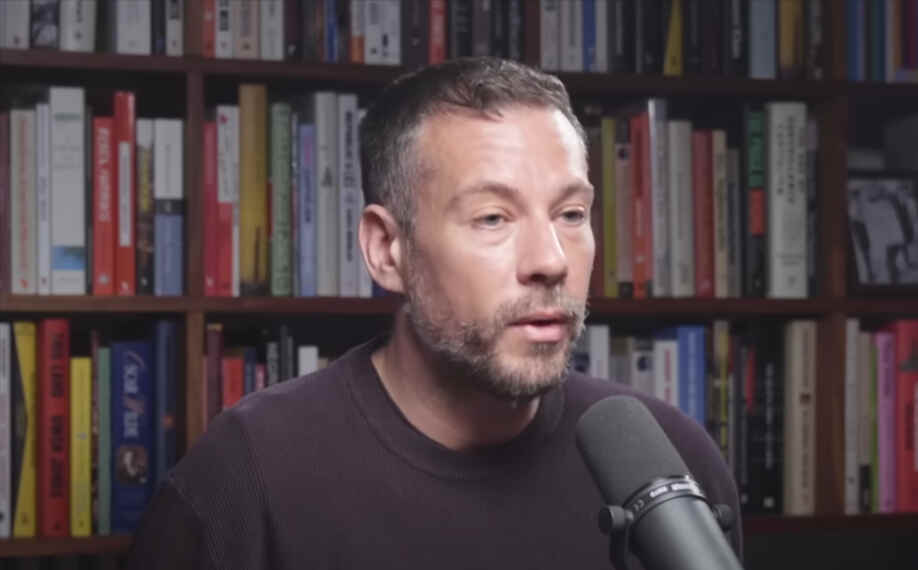
Read the full transcript of journalist and author Matt Kennard in conversation with host Aaron Bastani on Downstream podcast episode titled “How The Deep State Actually Works”, Premiered March 23, 2025.
Gaza as a Tripartite Genocide
MATT KENNARD: I think of the Gaza genocide as a tripartite genocide, which is the United States providing the majority of the arms, the majority of the intelligence coming from the British and Israel getting it done. Nearly half of all reconnaissance flights over Gaza, over 600 they found, were flown by the RAF, more than double Israel itself.
AARON BASTANI: Are we now in the territory of an actual serious conversation about potential arrest warrants for James Cleverly, David Lammy, John Healy, etc. Do you think, given precedents with regards to how the ICJ ICC conduct themselves, there is a credible case for those people getting arrest warrants?
MATT KENNARD: 100%.
Introduction
AARON BASTANI: The last several years have seen so much change when it comes to international relations and geopolitics, from Russia’s invasion of Ukraine to the war in Gaza and the election of Donald Trump. From military spending and claims about the need to rearm to aid and whether it’s needed at all, we’ve seen massive conversations ignited about some of the most fundamental ways we spend our money in relation to other countries, trade, aid, military spending and all the things in between.
I can’t think of a better guest to discuss all of that, plus the role of the deep state, than the person opposite me today. Matt Kennard. Welcome to Downstream.
MATT KENNARD: Good to be here.
AARON BASTANI: It’s great to have you back on.
MATT KENNARD: It’s good to be here, man. Third time? The first time was a couple of years ago. I think I did one last year as well.
AARON BASTANI: Yeah, you’re looking good. You got a tan.
MATT KENNARD: Yeah, I just been to Brazil. Can’t complain.
AARON BASTANI: What were you doing there, politics or…
MATT KENNARD: No, that was a holiday. The first holiday I’ve had non-work holiday for a long time, apart from with kids, but it wasn’t with kids, so yeah, it was good. It was weird. It’s weird not having to do anything.
AARON BASTANI: You weren’t covering, like Bolsonaro.
MATT KENNARD: There was a Bolsonaro protest when I was there, which was quite scary as well. It’s quite weird seeing a group of fascists by the beach in the blazing sun. And also there’s the quite startling thing about that was there was a lot of black people who were coming out to support Bolsonaro because he’s under house arrest at the moment. He’s been charged with plotting to assassinate Lula. So it’s a serious situation there.
But yeah, it was a very strange experience because if you go to a fascist march here, it’s all skinheads in some horrible little town, whereas there, it’s like you got your coconut, drinking your coconut milk and… bit different.
AARON BASTANI: They’re doing keepy uppies.
MATT KENNARD: Yeah, exactly.
AARON BASTANI: People, sunglasses.
MATT KENNARD: Yeah. Fascism doesn’t feel so scary, but obviously it is when you’re in that.
Trump’s USAID Cuts: A Welcome Dismantling of Empire
AARON BASTANI: So the last time we spoke, we talked really in depth about foreign aid. And that conversation has done so well. We wouldn’t invite people or anything. We didn’t think those conversations were really timely and relevant and would therefore get a ton of eyeballs. But I was actually surprised how well that conversation did. I mean, it’s going to get a million views in the end.
Since then, a lot has changed on the aid front. I’m going to read you some statistics. Since March in the United States, so early this month, 83% of US aid is being cut. The department is going from maybe 10,000 employees to as few in the future, in the near future, to 2 to 300. Approximately 5,200 of 6,200 U.S. aid contracts have been cut. Of course, that’s because of Trump being in the White House. Marco Rubio, Secretary of State, you’re somebody on the left. Do you agree with what Donald Trump is doing to USAID?
MATT KENNARD: Yes. I mean, I think the world’s a better place without USAID. And I think that’s palpable and obvious to anyone who knows the specifics of it, because look at some of the programs that USAID run. It’s come out over the years that they were funding subversion of the Cuban government. They tried to… USAID money was being used to set up a new Twitter or a kind of Twitter to try and stoke up unrest in Cuba and overthrow it.
Evo Morales in Bolivia, who we talked about last time, 2013, throughout USAID, he’s a Democratic socialist leader. Bolivia did much better without USAID. So basically, it’s interesting. I don’t agree with why he’s done it, but he’s done it for… he’s unwittingly dismantling a major part of the US empire. That’s what’s quite interesting about it.
The potency of liberal propaganda in Washington and the effectiveness of it has been so good that they have imbibed all the ideologies which justify USAID, which are mostly coming from the liberal sector. And you read in the New York Times and stuff. And that’s why Trump and Elon Musk are tweeting, “USAID is a haven for Marxists who are trying to spread Marxism around the world.” They genuinely think that, but that… And that’s what they’ve been told or they’ve been told by the New York Times. It’s about spreading all these wonderful benefits to the developing world. But that’s obviously not the case. If you know the reality, that’s not the case.
And I also, the other point about it is I think that Trump, his, whatever you say about him, and obviously I’m not a fan, he’s a monstrous figure, but he is a rupture with the blob, with the bipartisan consensus in Washington. Whatever you say that that’s just a fact. He is doing things that are really upsetting deep seated interests in Washington and including the corporate sector.
Because as we talked about last time as well, USAID is used as a tool for subversion around the world.
The Reality Behind Aid Propaganda
And I think that part of it is that the word aid has been so heavily propagandized. No one wants to be seen to be against aid because the conception of it is, okay, this is a budget transfer from the rich countries to the poor countries, governments. I think about 10% of aid goes directly to governments as budget support. The rest of it is given out to private contractors, to corporations, to financial houses. It’s a whole different thing when you see it on the ground.
And the other interesting thing is aid became a key part of the whole capitalist system. One of the amazing things that I saw when I was going around the world reporting on corporate projects is the amount of them that would have some aid involvement. And these are corporate projects, but definitely a majority. I’d say maybe 78%. If you looked into the finances, they’d have financing from the World Bank or the Regional Development Bank or some other financial institution. It’s a whole racket. And if you talk to people in the industry, they say, “Oh yeah, well, I got money from the IFC,” which is the private sector lending arm of the bank. It’s seen as a revenue stream.
So we should welcome that. And also we should say, okay, USAID, you could spend 100 years giving aid to a country and you could spend 100 years Oxfam there funding grassroots organizations and not have any impact compared to having one liberation leader in there for 10 years, which is what happened in Bolivia. Evo Morales came in in 2006, transformed the country. But the other parts of the US government and actually USAID itself work hard to destroy those leaders.
So what we should be focusing on is saying, okay, we want no US aid money because it’s not there for the reasons they tell us. And actually officials say that in public and have throughout. There was a quote from Brian Atwood who was then the administrator of U.S. aid in 1998. He said to Congress “the USAID budget is a bare boned attempt to realize U.S. foreign policy objectives.” He said that in Congress. So people know about it within the system, but it’s not well known about asylum.
So we should say we don’t want that money, we don’t need that money. The developing world doesn’t need that money. What we should do is focus on supporting leaders against the U.S. empire who are trying to overthrow leaders who are trying to actually bring the country back under sovereign rule and actually use the resources of their country for their people.
Eritrea kicked out US aid in 2005 and it’s obviously not a rich country but its development index and its different indices denoting public health and stuff like very, very similar to other countries which are receiving billions every year from USAID like Rwanda. So there’s no correlation between… And in fact I would say it’s actually if you gave a country long enough to escape this system, there’d be a correlation between it developing and not receiving USAID money like Bolivia, like Venezuela and others.
AARON BASTANI: I just want to take a quick break from this conversation to talk about the role of Navarro Media in the media landscape and how actually I think we’re doing pretty well at shifting the debate in so many ways. We started this project with an understanding that politics is downstream from media and that to change politics you have to change media first. The older I get, the more incontrovertible that is. If you want to shift politics in Britain and beyond, you’ve got to start with the media. Start with Novara Media. Help us continue to build this organization. Take the conversations we have to an even broader, bigger audience. Go to novaramedia.com/support the link is in the description below. 1 pound a month, 5 pound a month, 10 pound a month, 100 pound a month. I don’t mind, I don’t care if you get on board. Help us build a new media for different politics.
Vietnam’s Success Story and the HIV/AIDS Counter-Argument
Vietnam’s a really interesting one because I think if you look at Vietnam over the last 30 years. Its exports every year for about 30 years are going up by 15 to 20%. And I understand you’re starting from a very low base, but it’s just phenomenal to the extent that that country now has a domestic EV manufacturer. They’re making electric vehicles in Vietnam. Vietnamese technology, Vietnamese capital. They are massively amping up photovoltaic solar cells to generate renewable energy in that country. Lithium battery industry. Incredible. And like you say, USAID hasn’t played a particularly large role in that.
A counter argument would be though, Matt, look at the role of USAID in dealing with HIV, AIDS, particularly in Sub Saharan Africa. This is one particular program signed off by the Bush administration, Bush Jr. George W. Bush, which has saved approximately 20 million lives. Now you might say, well, that’s exceptional. That is not normally how USAID works. Nonetheless, it did work. So surely that’s an argument to say, well, you can and should keep some programs like that while getting rid of the things that you’re saying, but your position instead is get rid of the whole thing.
MATT KENNARD: Well, no, but that’s not an option we’ve been given. If someone said to me, you can keep the HIV programs, obviously, yeah, I would. Because, yes, I like to see money going towards stuff that’s going to have a positive health impact. But the point is that is a small part of the USAID budget and the vast majority is going towards corporations.
It’s also going towards special economic zones, which we talked about last time when I went to Haiti in 2010 after the earthquake. USAID was the main financer of the industrial parks which were being built to take advantage of the, basically the slave wage labor in Haiti, which was going to condemn Haiti to another generation or two of underdevelopment. So this is the US aid model. And yes, you can point to the fact that they were handing out some tents for the earthquake victims. Fine. But that’s not the program. That’s not what it’s about. That’s window dressing.
Rolling Aid Into Foreign Policy: A More Honest Approach
And it’s the same in the UK. Like, they’ve said that what he’s doing is off the charts crazy, right? Boris Johnson did the same thing here, and not in terms of the reduction in the budget, but he rolled the Ministry for International Development into the Foreign Office and it became the FCDO. Which is what… So Rubio is keeping 17% of USAID and making it under the State Department.
In my opinion, that’s a more honest way of presenting the aid budget because it’s… as the administrator for USAID said, it’s a “bare boned approach to realizing foreign policy goals.” Why don’t we be honest about it, roll it into the Foreign Office. This whole ideology and basically lies that they present to the society is not a good way to do it. If you’re going to do it, be honest about it. And now Keir Starmer is reducing it again from 0.5 to 0.3. But I mentioned this before when we talked, right. Why?
AARON BASTANI: Just to be clear, it was 0.7% of GDP, now it’s 0.5, it’s going down to 0.3%.
The Reality of Foreign Aid
MATT KENNARD: It was 0.7%, which was David Cameron’s promise in the coalition government while he was destroying British society and the poorest, eviscerating social programs and money for councils to support our most vulnerable people. Meanwhile he was saying we’re going to maintain 0.7%. That went down to 0.5% during COVID because they had to spend other money. It’s now going down to 0.3%. The point is, it’s like you say.
AARON BASTANI: Can I just ask, what’s the politics that drives that? I think the average punter watching this – left, very left wing, very right wing – most people would say it is insane that you’re putting a cap on two child benefit recipients. It’s insane that you’re tripling tuition fees and at the same time you’re safeguarding the amount of money that’s going overseas.
MATT KENNARD: Exactly. It makes no sense.
AARON BASTANI: So why did he do that?
MATT KENNARD: But it makes no sense if you believe the ideology which is represented in society, which is that aid is a transfer of wealth from our coffers to the poorest in the world to help them develop and to help them alleviate health and social problems. It’s not what it is. A large part of that 0.7% goes to corporations to enact their own capitalist endeavors in the developing world.
AARON BASTANI: So give me some examples post-2010 UK aid, what kinds of things was…
Corporate Subsidies Disguised as Aid
MATT KENNARD: Well, there was an example that I did a story on. This is a bit different but it involves corporations because the money goes to it. The UK government, the coalition government, assigned £100 million to promote poverty reduction in China. This is a country which, since 1980, in the 30 years from 1980, had the biggest poverty reduction program in human history – took 800 million people out of extreme poverty. Extreme poverty doesn’t exist in China anymore. And while they were doing austerity here, we were giving £100 million to China.
This is the stated goal, but that’s because that was not the real goal. What it is is basically a subsidy to corporations to go and find business in China. Because if you remember, the coalition government under Osborne and David Cameron were very, very pro-China. There was this intra-establishment beef over China where the business community wanted to take advantage of its rise, whereas the securocrats wanted to start a new cold war. The securocrats have now won out. But back then the business community was in.
So the David Cameron administration were like, “Well, let’s give loads of money to our corporations to go and invest in China and dress it up as a nice poverty reduction program,” which is just absurd. And I mean, there’s plenty of others like Bolsonaro’s Brazil. I did a story for Declassified about how we’d spent millions promoting oil and gas, British oil and gas companies in Brazil and trying to get Bolsonaro to privatize Petrobras. This was an aid program.
AARON BASTANI: An aid program to privatize Petrobras, one of the world’s largest petroleum…
MATT KENNARD: They saw an opportunity with Bolsonaro in that he was a fascist politically, but economically libertarian. He wanted to privatize everything. And they put all this money into this program to do that. There’s so many examples of it. We spent £750,000 on an anti-government coalition in Venezuela. Aid money.
Democracy Promotion as Political Tool
There’s a whole foundation here, like the National Endowment for Democracy, which is another body in the United States which is supposed to be about promoting democracy. We have our…
AARON BASTANI: Essentially a CIA front group, according to…
MATT KENNARD: Yeah, it is. I mean, according to some people. Well, we can go into it. It’s important to go into the history of that as well, because Trump has defunded that as well, which again, everyone should welcome. But we have one here called the Westminster Foundation for Democracy. Not many people know about it. Millions of pounds, 90% of its budget comes from the Foreign Office.
And it’s got programs all over the world, a huge one in Venezuela that we pay for. There’s not a single program in any of the Gulf dictatorships that we back or any of the regimes like the Sisi regime or the Jordanian regime, which we back – dictatorships that might need a little democracy promotion once in a while. And it’s just more and more evidence that this aid money, this development money is not going to do what it says. It’s going as a political tool.
Trump’s New Imperial Strategy
And this is what – I don’t think Trump’s trying to dismantle the US empire, but he’s sort of saying, “Look, we don’t need to manufacture consent for our empire in the same way anymore. Let’s just do it openly. Let’s go back to old school imperialism where we just say we’re going to annex Greenland or we’re going to annex the Panama Canal or we’re going to annex Canada.” He wants that type of imperialism.
So when you say, do you welcome it? I don’t welcome what’s coming and I don’t welcome the reasons he’s doing it. But I do think that it’s easier to fight the empire and easier to fight American imperialism, which we should all be concerned with because it’s the most powerful country in human history in terms of its military prowess. It’s much easier to do it if you don’t have to wade through this sea of ideology which manufactures consent for empire.
The mainstream media is soaked in everything I’ve just said. And in fact, the stories we did at Declassified about this stuff, you never see it in mainstream media, which is why everyone’s so surprised when you say this stuff and why people say… I was talking to my dad about it – he basically said the same question as you in a more accusatory fashion. He said, “What, you support Trump getting rid of USAID?” I was like, “Dad, it’s not like you think it is. It’s not this transfer of wealth. It’s not about what they’re telling you. This is New York Times propaganda. This is propaganda from the Democrat Party.”
Trump’s putting out propaganda saying it’s a haven for Marxists and they want to spread Marxism, but it’s not what it says on the tin. And when you get rid of all that, it’s much, much easier to fight. And in fact, we should cleave, as anti-imperialists, we can cleave the left and that sort of liberal wing onto our side now because it’s very, very hard for them to justify the system they’ve spent 70 years justifying now, because all the baubles are going. Trump’s getting rid of them and saying, “Let’s just use power in a much more raw fashion and without all the window dressing.”
I think that’s a good thing in terms of being able to fight it. It’s not a good thing in the short term in terms of the victims of that new type of imperialism. But we’re yet to see how that’s going to play out. But it’ll probably play out in places like Iran.
Two Interpretations of Trump’s Strategy
AARON BASTANI: We’ll talk about Iran in a minute. Basically what you’re saying is it makes the politics of everything far less obscure and just far more open. But you’ve got sort of two interpretations there which are slightly conflicting. I just want to pin you down on what you actually think.
So one read is that people like Trump and Musk have bought the idea that somehow aid is a liberal thing. It was never born as that. I agree with you there. But they’ve bought this idea that it’s like this left liberal thing and that’s why they want to get rid of it. But then you also say Trump wants to get rid of it because we’re moving into a new era of hard politics, soft power’s less important. And realistically, Trump is saying there are three world powers: Russia, China, the United States. We each have our zone of influence. I don’t really give two hoots about trying to export democracy, et cetera, et cetera, et cetera.
So which is it? They view USAID as this weird liberal Marxist thing which they just want to get rid of? Or actually there’s a far more intelligent, astute, analytical point, which is they realize we’ve moved into a new moment of imperialism and it requires different tools.
MATT KENNARD: Well, I think it’s a bit of both. I think that they do believe it, but I also feel like they just… The reason Trump’s doing it is not because he thinks that we don’t need… I mean, I said manufacturing consent – that’s part of it. Because they do fund a lot of media. That’s the other thing I should just mention while I’m on it.
Aid Money Funding Media Operations
When they announced the USAID cut, there was a Reporters Without Borders article which said “independent media in crisis globally.” And a lot of people who don’t know how aid works were like, “What do you mean? Why is an aid cut affecting independent media?” And then you read down the article and it says 9 out of 10 Ukrainian media outlets receive US aid money. 9 out of 10, 90%. People don’t… So aid money is being used as part of the information war.
I did a story for Declassified that British aid – this is aid money – was funding media in 20 countries around Russia.
AARON BASTANI: And you might argue, well, former Soviet republics…
MATT KENNARD: Yeah. And it was like £80 million over a five year period in 20 different countries.
AARON BASTANI: But you look at what’s happening to local media in this country…
The Information War and Aid as Geopolitical Control
MATT KENNARD: Exactly. And people on Twitter and other places, establishment types were saying, “Well this is an information war we have to fight it.” Okay, well if you’re honest about it, fine. But they don’t present it as an information war. Even the RSF article, the Reporters Without Borders article calls it “independent media.” And you’re sort of like, how independent is it if it’s receiving US Government money?
Do you think those like, how can you be receiving money from a government, from a government which is a belligerent in this conflict or at least a party to the conflict and call yourself independent? But that’s the beauty of the ideology. When we do it, it’s not information war, it’s just funding independent media because we believe in democracy and a free press. When the Russians do it, RT is propaganda and we’ll shut you down. RT is actually shut down in this country.
So there’s an aid that is used for this. The Conflict Security and Stability Fund, that CSSF, if you look into that body, which I don’t think exists anymore, I think it was got rid of as part of the FCDO creation. Millions, tens of millions being spent on media, on clearly information warfare projects against Russia and others too. And people said “aid.” And you’re like, yeah, I know what it is, it’s a geopolitical tool. It’s a slush fund to enact control. And as I said, there’s so many examples of it.
Peace Corps as Intelligence Asset
I was doing a story about, and it’s not just USAID. Do you know like the Peace Corps, which was created in 1961 by JFK at the same time as USAID was created. And Peace Corps is a volunteering program that Americans do where they’re sent to different countries to do it. There was a transcript of a conversation between Richard Nixon and Henry Kissinger in 1971 where they’re discussing Bolivia at that point, which was under a president called Juan Torres, who was like a left wing leader.
And they were basically saying “what should we do?” And Kissinger’s like, “Well, the ambassador down there has been a bit of a softie.” And then Nixon’s like, “Do we need a coup?” And he’s like, “We don’t know yet, but they’ve kicked out Peace Corps.” And then he says, “which is an asset.” So even back then they were using these organizations and they knew internally that that’s an asset. It’s an intelligence gathering asset or whatever it is. And it’s still the case now.
And that’s the other thing about USAID. It’s an intelligence gathering asset because, you know, the cover of a journalist is well known about. In media, sorry, in espionage is like, it’s brilliant. You can go around the world, you can talk to people and it’s the perfect cover. Aid workers, the same thing. Aid is a massive, is used as an asset for the security establishment to gather information, which is what USAID is used for a lot as well.
So there’s a whole tapestry of mechanisms of control, of which aid is a huge, huge part. And as you say, the water is muddied a bit by the fact that there are some good programs. Yes. Like especially disaster relief, HIV as well. But disaster relief, when there’s a natural disaster and they need basic things to keep people alive. Yes, that’s fine. But as I say, that’s a small, small part of it.
The Millennium Challenge Corporation
I’ll finish with this. Another very, very illustrative example and another institution that I hope Trump does close down is called the Millennium Challenge Corporation, the MCC. The MCC was started by George W. Bush, who was basically a bit similar to Trump. He was saying, “Look, aid is basically a business and we need to just get rid of all the propaganda about it and we need to create aid agency which is basically run like a business.”
So he created the Millennium Challenge Corporation. It didn’t have a head, it had a CEO. It was funded by the taxpayer. And what they did was they had compacts with countries where very, very explicitly they say, “If you want this aid money, you have to do this to your, you have to enact this policy,” whether it be like get rid of some tariff or lower the minimum wage. I don’t know what it is. There’s many, many of them. And the MCC operates all around the world.
And these compacts, it’s like structural adjustment that we all know about, you know, the structural adjustment programs from the IMF. When you’re in monetary difficulties, they’ll give you the liquidity, but it will be predicated on you doing certain things. But it wasn’t ever talked about in such overt ways. Whereas Bush, the MCC is like, “This is how you do it.”
And in fact, I went to Tanzania, I looked at an MCC project and talked to government officials and they took me to one. And this one was the MCC had given the money to build an electrical cable going from the coast of Tanzania to Zanzibar, which is this tourist destination. And I said to the officials, I was like, “Why are you doing this?” Like, I think something like 13% of rural Tanzania had access to electricity. I was like, “Shouldn’t they get it?”
And they’re like, “Well, no, because sometimes the electricity turns off when tourists are on holiday in Zanzibar and they have to use candles at night. So MCC said that they’d give us a new electrical cable if we did these things to our economy.” And obviously they took it. But that’s not what Tanzania needs.
AARON BASTANI: It’s also not what Western taxpayers think they’re paying for exactly.
Aid as Corporate Subsidy
MATT KENNARD: I’m telling you, it’s everywhere. And as I say, it was extremely shocking how many capitalist corporate endeavors in the developing world have an element of aid funding in them. And then it goes back to beginning after the Second World War. Even the Marshall Plan itself, the European Recovery Act, which was like $13 billion. What was that? Was that aid? I don’t think it, I mean, it was, but was that about helping Europe?
Partly to rebuild, but also it was to rectify what was called the dollar gap in that before the Second World War, the Europeans had enough money to buy American products. And when America came out of the Second World War, I think it was like it was just dwarfed the rest of the world. Half of global output was coming from America. And they needed markets to buy their goods. So they gave Europe this money to be able to buy their goods, to keep them open.
AARON BASTANI: Surely you’d accept that’s a little bit more benevolent than what’s going on with places like Sub Saharan Africa.
MATT KENNARD: Yeah, it makes more sense. It makes more sense because I don’t understand how there’s a justification for that. There’s, I can’t understand how there’s a justification for that. For the amount of public money, aid money that’s going into just raw capitalist endeavors where they’re basically either giving non commercial loans or actually investing in certain projects. They don’t need that. That’s not how capitalism is meant to work. It’s not meant to have a massive wing which is just subsidized by the taxpayer under the guise of helping development. It’s just, it’s bonkers. It is bonkers.
And trust me, if you talk to people in it, I’m talking about entrepreneurs, they know that this is a massive revenue stream that you can tap into. It’s known people, it’s like a massive goal of people to get an IFC loan or to get DFID funding. And we went to a conference in Liverpool in 2014, I think it’s called the Aid Expo. And people were coming on stage and saying “this is the great new frontier for corporations, we can tap into these billions of dollars.” They were saying it openly and they don’t see it as bad because as we talked about before, they say, “Well for countries to develop they need foreign direct investment. That’s the only way they’re going to develop.”
So in that context, public money going towards corporations who are investing in new markets they otherwise might not invest in is a good thing. It’s hocus pocus. It’s madness.
The UN and Elite Reproduction
AARON BASTANI: I think any sort of familiarity as well with a lot of these institutions, this world really opens up your eyes. So just to move for a moment to the UN, I know somebody whose parents work for a UN agency, okay. They’re quite well off, they do very well. They’ve got, you know, multiple nice homes. One of the goodies you get if you work for the UN is that they pay for your kids postgraduate education.
So this person can then go and do a Master’s in public administration at the LSE or maybe even do an MBA, I have no idea which. Obviously incredibly expensive and they’re already very wealthy and you’re basically reproducing, you’re paying for the investment costs of the global elite to reproduce itself and that’s through a body like the UN. I think they may even work for the development agency.
And you think this is ludicrous. This is ludicrous. There are people out there on $30,000, $35,000, struggling every day, barely able to feed their kids. Part of their taxes are going towards institutions, investments like this which allow very wealthy people to live very accommodating nice lives. And it’s one of those things where the more you read, the more you research actually the folk wisdom of people who, by the way, they might say bigoted things or they’re on the right or whatever they say “we need to look after our own first.” I don’t buy that argument, but there is a kernel of truth there when actually the point of these programs isn’t necessarily what you think it is.
The Missing Left Critique
MATT KENNARD: Exactly. And this is a very, very important point because the whole space is occupied by the right wing arguments because the left doesn’t make these arguments. So you don’t have a critique where you’re saying the UN shouldn’t pay six figure salaries to everyone and pay for the postgraduate education. But we do need multilateral institutions which are promoting peace and whatever it is that the UN is meant to promote. But that literally doesn’t exist. I think part of the reason this original conversation we did so well is because it’s not been aired at all. This whole space is occupied by the Daily Mail angle.
AARON BASTANI: Yeah.
MATT KENNARD: Which also is the Trump angle, which is that aid is this Marxist thing where we give money to the poorest and we should keep it for ourselves. And my argument would be like, I’m not against aid as an idea. I think there should be some equal, it’s like, I agree with taxing the rich more than the poor. I agree that there should be some mechanism for transferring wealth, especially as we’re, the trade relations and other things, we’re complicit with their poverty. But that’s not what it is.
So what we need is we don’t need to get rid of aid. We need to make aid what it says on the tin. We need to make aid about what they claim it is. And that argument’s never made. And that’s a problem. And again, as we talked about before, it’s a beautifully integrated whole because so many people do well out of this system that there’s no space for critics, because everyone’s doing, everyone’s getting their kids’ postgraduate degree paid for. Everyone’s, the Guardian journalists are getting their salaries paid by the Bill Gates Foundation. Where’s the space for a critique of this from the left? It doesn’t exist.
And we have to, which is why people are shocked when you say, “Well, I think Trump’s doing a good thing about this” because they’ve never heard the argument. Well, actually, aid is part of the tapestry of imperial control. And yes, how can we not welcome it being dismantled?
The National Endowment for Democracy
And as I mentioned, the National Endowment for Democracy as well, as you mentioned, it’s called an “overt CIA.” And actually it was conceived of as such because it was created in 1983 by Ronald Reagan, actually, in a speech in London he made in front of Margaret Thatcher where he said, “We need to reinvigorate the infrastructure of democracy.” But what it was about was that the 70s had been speckled with CIA scandals. And back then the press actually revealed stuff about the CIA in the United States in the New York Times and stuff. You’d read scandals.
And then there was a Church Committee in 1975, which is the most impactful congressional investigation to the CIA there’s ever been. And they revealed all this countless assassination attempts, poisonings, subversion, destabilization. So what they thought about in Washington, and you can read this in the planning documents for the National Endowment, they said “we need to stop this kind of subterfuge and this covert action and just go public.” And that’s what the National Endowment for Democracy is.
They give thousands of grants every year. The average is about $50,000. And it’s things like “fund freedom of expression in Venezuela” or “fund freedom of expression in Bolivia” or somewhere, you know, somewhere where the US is trying to destabilize.
AARON BASTANI: Not Saudi Arabia.
MATT KENNARD: No. And actually I looked into it because I did, it’s here as well. You know, it funded, it funds Index on Censorship. Here funded Open Democracy. Here funded funds to the tune of millions. Article 19, another organization. So hold on.
AARON BASTANI: But Open Democracy do great stuff.
MATT KENNARD: They do. So this is that. And actually that was in 2017-18 and they would…
The Deep State’s Media Influence Network
AARON BASTANI: And they do great stuff, which is often critical of the US security state.
MATT KENNARD: Yeah.
AARON BASTANI: And I say that because not many people do it in this country. So it’s very conspicuous when you see it.
MATT KENNARD: Yeah. And I did interview the editor at the time, and he was an editor when they accepted that money and he said that it had no impact on their editorial output and it was a small percentage, but it’s just a fact. I like Open Democracy as well. They’ve got some really great reporters. They’ve done really important investigations. But it’s just the fact that they were one of the media organizations. Finance Uncovered is another one that got hundreds of thousands from Index on Censorship.
AARON BASTANI: How much are we talking?
MATT KENNARD: Over 600,000 from 2016 to 2021.
AARON BASTANI: Wow.
AARON BASTANI: And of course, the head honcho at the Index on Censorship is a former Labour MP.
MATT KENNARD: She’s now left. But the former CEO was Ruth Smeeth.
AARON BASTANI: At that time she was the CEO. She’s now a Labour peer.
MATT KENNARD: She’s now a Labour peer. And also it was revealed in the WikiLeaks cables she was a “strictly protect” informant for the US embassy in London. That came out in one of the WikiLeaks cables.
AARON BASTANI: This is before 2011, right?
MATT KENNARD: Yes, it was when she first stood for parliament. I think it was in 2009. She was talking to a US embassy official and she was talking about whether Gordon Brown was going to call an election. And the information she gave to the US official which was in this cable said it hasn’t been reported in the media. And it said Ruth Smeeth – she’s now known as Ruth Anderson – it said “strictly protect” in brackets after. So that’s what they use for informants.
Plus her husband Michael Smith was a senior figure in the British American Project, which is another US project here, which was set up by the US embassy in the 80s when they were worried about the left drift within Michael Foot’s Labour.
The Ruth Smeeth Connection
AARON BASTANI: I just want to sit with this for one minute because I think our audience will be like, hold on a second. Let’s just put this all together. Ruth Smeeth was an advisor at the time to the Gordon Brown government. “Strictly protect” would indicate that she’s some kind of asset for the US security state. She then proceeds to become a Labour MP. She at some point leaves parliament. She goes to work for Index on Censorship where she’s a CEO. They receive money from the National Endowment of Democracy and today she’s a Labour peer. So she’s an unelected legislator for life in this country. I just think that’s really important just to show how this works.
MATT KENNARD: It gets more interesting. Index was founded in 1972 by Stephen Spender, who was the famous poet. A few years before, he quit as editor of Encounter magazine in the US because it was revealed in the papers that it was funded by the CIA. Now, he said he didn’t know that it was funded by the CIA, but he left. He founded Index on Censorship some years later with a huge grant from the Ford Foundation, which at the time was known to be a conduit for CIA money because this was still in the period where they were secretly covertly doing it.
There’s an amazing book where this whole infrastructure is laid out. It’s called “Who Paid the Piper” in the UK edition and it’s called “The Cultural Cold War” in the US edition. It’s by Frances Stonor Saunders, who’s at the Royal Society for Literature now, a fellow there. She basically just shows that we live in a Truman Show reality which is created by covert money. And this was the case in the Cold War. But she said to me, “The cultural Cold War never ended. It just got new targets.”
So this money’s going around to different places and what it creates – you realize things like abstract expressionism, the movement in art, was funded by the CIA. It was funded by the CIA because the CIA wanted to put the idea that we are the free West. Look at this compared to totalitarianism in Soviet Russia.
AARON BASTANI: What’s the book on that one? There’s that great book, isn’t there?
MATT KENNARD: That’s it. “Who Paid the Piper”? Yeah.
AARON BASTANI: I need to read it.
MATT KENNARD: It’s amazing.
AARON BASTANI: The idea of Jackson Pollock as a CIA asset.
MATT KENNARD: Exactly. And she said it’s very funny.
AARON BASTANI: It makes sense, by the way.
The Cultural Cold War Continues
MATT KENNARD: Exactly. And that’s just one example. You see that there was money – so many cultural things that we think were just spontaneous or became prominent just for natural reasons of being popular with the public, actually they were being pushed by covert forces because there was some interest in it. And as she says, this continues. She said with the National Endowment for Democracy, that’s the umbilical cord that goes from Washington to fight its informational operations around the world.
In the case of Index, it’s one example, but there’s plenty of others. Index is just one of the most obvious examples because as you just laid out, you’re like, “Wow, this is an organization working for the United States effectively.”
I’ll just add on USAID, right? One of the amazing things about USAID – and this was a story I broke on Twitter and it went bananas – was the second largest funder of BBC’s charitable arm, BBC Media Action. Now BBC Media Action trains thousands of journalists in dozens of countries around the world. And its second biggest funder has been USAID.
Do you think those journalists are being trained in any other type of journalism than journalism which is going to present the United States as a benevolent power and American exceptionalism as the reigning ideology? That’s how they manufacture consent for Empire. Plus it’s been done through our public broadcaster – madness.
So people were shocked by that and I was shocked by that when I read that. The BBC, after I got tweeted about by Elon Musk – not my tweet specifically, but someone who tweeted after me – the BBC had to release a statement saying, “Well, this is just our charitable arm and doesn’t have any impact on our training programs.” And it’s like, well, that might be technically true, but there’s no way that this whole ocean of money is not having impact on editorial output everywhere. Of course it is, otherwise they wouldn’t be spending it.
They’re not spending that money on nine out of ten media outlets in Ukraine because they believe in a free press in Ukraine. They’re doing it because they want to fight the information war with Russia, which you can argue they should be doing, or whatever. I’m not making a value judgment on that. The point is, it’s not what it says on the tin.
Manufacturing Consent Through Media
That’s what’s important – it’s about manufacturing consent. It’s about creating this Truman Show reality where we think we’re getting a spontaneous and natural discourse, when in fact the discourse is being driven by covert forces, aid agencies and intelligence agencies. It’s quite scary when you start looking into it.
And I have to say that’s why I think that book by Frances Stonor Saunders is one of the best I’ve ever read, because this stuff can go into conspiracy, tinfoil hat stuff quite easily. But her book is so rigorously written and beautifully written, actually. And she spent years – she said it almost sent her mad, the amount of archival research she had to do. But it’s all there in black and white.
And you can see that many things we assume happened spontaneously were actually driven by covert forces and the aid agencies and National Endowment for Democracy. But again, it goes back to what I was saying. None of this stuff is covered in the media either. None of it.
The National Endowment for Democracy, its presence in the UK, has never been written about in a single newspaper, ever. The fact that NED funded 600,000 worth of money to Index on Censorship, never been written. Ruth Smeeth, Ruth Anderson, now a “strictly protect” informant for the US Embassy, never been written. Not a single word has ever been written in a UK paper. Madness.
AARON BASTANI: I mean, if you raise Ruth Smeeth’s profile on social media, you’ll obviously be called names, obviously. And you do wonder, obviously, to what extent is that coordinated? I don’t think it has to be, actually. That’s the sad thing. People say this stuff for free.
So on that BBC point, you’ve got the BBC’s charitable wing receiving significant amounts of funding from a foreign government. I don’t think that should be happening under any circumstances. Any government, even if it’s money that’s well intended. I don’t care. Even if it’s a socialist government, I don’t care. But you get people defending it and I really do wonder where their brains are at. The whole point of the BBC, according to Lord Reith, was to inform, educate, entertain, and the idea that a foreign power could send money in our direction and that that somehow wouldn’t influence outcomes is nonsense.
The 51st State Psychology
MATT KENNARD: The interesting thing is it’s revealing of the status that the United States has in this country, which is that it’s assumed we are the 51st state. There is no one problematizing it in our psyches at all. If you said Russia was the second largest funder of the BBC charitable arm, people would be like, “What?” Or Mexico or Australia. But when it’s the United States, no one seems to care. It doesn’t register. And it’s quite interesting. It’s like a deeply ingrained psychology.
I came across a lot of this with Declassified because it was kind of like taking candy from a baby. The stories I was doing about US influence in this country, because it was all out there. All I had to do for the NED stuff was look through the Charity Commission’s accounts and tot it up. Why had no one done that? And it’s the same with the British American Project, which I did a lot of work on. Again, it’s all out there, but no one’s done the work.
And that’s because I think no one problematizes the US presence in this country. The 12,000 troops that we have permanently stationed here, the CIA and NSA presence that the NSA runs – our GCHQ Bude in Cornwall – none of it is ever problematized.
AARON BASTANI: When you say problematized, I think most people aren’t even aware that’s the case.
MATT KENNARD: No, exactly. People know there are US troops here. But I just did a story for Declassified about the 12,000 troops and I looked and that figure has never been written about in a UK paper. You would think that even on the right, it’s just interesting, isn’t it, that if you’re occupied by, or there’s a presence of a foreign military, the number might be interesting to a journalist. But it’s never been written about.
AARON BASTANI: How many again?
MATT KENNARD: Well over 12,000. That’s just the official numbers.
AARON BASTANI: You wonder – I mean, obviously the population of these islands was much bigger – but you wonder 2,000 years ago how many Roman legionaries were stationed here in the first century. I bet it wasn’t 12,000.
Intelligence Operations on British Soil
MATT KENNARD: Yeah. And that’s, as I say, the official numbers. So it doesn’t count Special Forces, which are off the radar. The intelligence one is much more terrifying, really, because as I say, the Snowden leaks in 2013 revealed that GCHQ Bude – GCHQ is the largest UK intelligence agency by quite some distance.
AARON BASTANI: It’s our NSA, right?
MATT KENNARD: Yes, exactly. It’s a surveillance organization and it’s based in Cheltenham, but it has a couple of recognized sites, ones that they admit to. One is in Bude in Cornwall, where all the transatlantic cables go to the United States. Snowden’s leaks in 2013 showed that half of the funding for that site comes from the NSA and that there are countless NSA personnel there. We don’t know how many personnel because the government won’t say.
So the whole of this US presence includes the CIA as well. RAF Croughton – they say there are a thousand CIA spies there. And RAF Croughton is where Harry Dunn was killed by Anne Sacoolas in that incident which became quite a big scandal and she was taken out of the country before there could be any justice for Harry Dunn.
AARON BASTANI: Well, she fled the country, I think.
The Deep State’s Media Control
MATT KENNARD: She was, and then no one knew what she was, but it seems like likely she was a CIA officer or they said the wife of a CIA officer, but she was probably CIA anyway. That was. The RAF Crown is a central part of CIA’s operation in Europe. A quarter of all military communication and intelligence communications that go back to United States and Europe go through RAF Crown. And again, none of this has ever been written about. There was the NSA funding GCHQ story in the Guardian actually, from the Snowden period.
AARON BASTANI: Would it be published now, do you think? That was under the old editor?
MATT KENNARD: I don’t think it would. I don’t think they’d do Snowden under Rusbridger. Since Alan Rusbridger left, has there been one kind of deep, deep state or security state investigation that has captured the public or at least got in? I don’t think there’s been one that’s not captured the public.
AARON BASTANI: I can’t think of one. Why? They’ve been intimidated.
The Guardian’s Transformation
MATT KENNARD: Well, we talked about this last time, so I don’t want to bore people, but yes, I think it was quite clear that after the Snowden Leaks particularly, but the WikiLeaks revelations of 2010 as well, and 2011, they were terrified of the Guardian’s willingness to actually do proper journalism about these secret institutions which are not meant to have any light shone on them by the media. They’re allowed to operate off the books. That’s why it’s called the secret state. And they are effectively completely secret.
The D Notice Committee meetings – D Notices, a meeting of journalists and security officials that meets every six months at the MOD and discuss what they can and can’t publish. The minutes from some of the meetings in that period came out and it showed that the Guardian basically was bought in house. They appointed Paul Johnson, who was the deputy editor of the Guardian.
AARON BASTANI: So it wasn’t previously going to those meetings and then it subsequently did.
MATT KENNARD: Yeah, I don’t want to repeat all this too much because I did talk about this last time, but he was appointed to the D Notice Committee itself in 2014 and then when he left in 2018, the security official said – this is all in a minute – said, “We thank Paul Johnson for re-establishing links with the Guardian.” So it was basically a massive program of dampening down on the Guardian and, yeah, none of the… I mean, we should go on to this because this has been revealed massively by Gaza as well.
AARON BASTANI: We’re talking about Gaza right now, don’t worry.
Gaza Coverage and Media Silence
MATT KENNARD: Yeah, so the Guardian has done basically zero investigations of the British role in Gaza. And once upon a time that wouldn’t have been the case. You would have been able to read really good investigative stuff on the British role in what is one of the worst crimes of the 21st century. And there’s been zilch, zero.
AARON BASTANI: You say the Guardian. I mean, back in the day, 50 years ago, you would have read it in the Daily Mirror.
MATT KENNARD: Yeah, exactly. And the Times even. Not even that long ago. So yeah, they’ve made… I mean, there’s obviously many theories about why what’s happened has happened, but it’s just the fact that we don’t have a mainstream media which has any kind of check on power that it used to have. It was never perfect. It’s always been a sort of rich man’s tool in the press, but it’s become completely devoid of any kind of critical analysis and investigation of deep state power.
They can do frothy stories, you can still do that. But you can’t do stuff that will actually make people question the deep, systematic mechanisms of control that we enforce internally and externally as well.
Repression of Alternative Journalists
Actually, if you look at the repression of journalists in this country over Gaza, it’s all alternative media journalists because they’re the ones that are revealing the information. Asa Winstanley of Electronic Intifada was raided by police in a dawn raid and they… I didn’t know this. You could do this in the United Kingdom, they raided his house, took all his electronic equipment and then didn’t even charge him with a crime. So it’s Kafkaesque. They don’t even need to tell you why they’re doing it.
AARON BASTANI: But they had… Did they have… They have to return it within a certain time frame, don’t they?
MATT KENNARD: I don’t… Well, I think he’s trying to maybe do a legal challenge to mean that they can’t look at it. But then just a month before that, Sarah Wilkinson, who’s an activist and journalist on Gaza, she had a… she was raided by the police. She was charged under the Terrorism Act, so that’s ongoing. She was bundled into a police van and interrogated for hours. They destroyed her house, tipped over the urn with her mom’s ashes and, yeah, crazy stuff.
AARON BASTANI: What police station was she taken to?
MATT KENNARD: I can’t remember. I don’t know where she lives. But the month before that, Richard Medhurst, another independent journalist who is on YouTube and Twitter and stuff, he was detained under the Terrorism Act and charged under the Terrorism Act in Heathrow when he arrived. He’s a British citizen.
AARON BASTANI: Well, that’s a really dangerous one, isn’t it, when you come in and out of countries because actually people on the border, they have really exceptional powers.
MATT KENNARD: Schedule 7, you can do it.
AARON BASTANI: Compared to domestic police, you’re kind of in a spot of bother with that.
The Memory Hole Effect
MATT KENNARD: Yeah, and they know that, which is why they use that. But the scary thing about Sarah Wilkinson, Richard Medhurst, Asa Winstanley – scary in itself. Scarier for me is that there’s never been a single word written in the UK mainstream newspaper about any of that. It’s completely off the radar.
So you realize, and that’s partly to do with what we’ve been talking about, in that the civil society is so infested with establishment money and US money that they’ve created an infrastructure of control, invisible but of control, where certain things aren’t said, certain things aren’t covered. And how can you have the police raiding journalists and never be in the Guardian? It’s crazy.
Just one more point is that you realize that the public realm in this country lies undefended because the people that are meant to… that we’re told, defend that public realm from oppressive power, which is journalists and civil society, they’re not there, or they’re not there. They won’t be there when we need them, if we ever need them. They’re there for the show, but they’re not there to actually do what their job is. Index on Censorship never mentioned it, you know.
AARON BASTANI: Well, I mean, that’s not a surprise. But I mean, for instance, I’m pretty sure Asa Winstanley is a member of the NUJ as one example. I’m pretty sure. I mean, did they not say anything?
MATT KENNARD: I think they did. I think the NUJ did. But there’s a lot of civil society that dropped the ball on that case. And also, just civil society is… yeah, scary part of it, but for me, the media is a scarier part of it because they’re journalists. So how can the media not publish a single word about it? They didn’t even publish smears, which basically took the government line, which is maybe what you’d expect the Sun to do or something. But it just disappeared. It’s disappeared. It goes into what George Orwell called the memory hole.
And if you read 1984, it’s quite sinister. It’s obviously a brilliant novel about how totalitarianism works, but it is a very effective way of brainwashing, is just to leave out and excise any information which is not conducive to power, which is how the media operates in this country.
The Corbyn Experience
AARON BASTANI: When things get really interesting is when they try to make you the butt of a joke. Which is what happened to Labour after 2018 with Corbyn. It went from saying he’s not serious about power, there was a real shift after the 2017 general election, right? He’s not serious about power, his policies, his principle over power. All these nonsense, meaningless, bullshit talking lines. And after 2018 there was clearly a shift where it’s “No, we’re going to make him a joke, make him a racist, right?” That’s what’s going to work.
And I think you’re right. A smear campaign is another really powerful one. I’ll never forget Matt, the week after 2017 general election. The week after the 2017 general election, this is when Novara was much smaller, much smaller. We didn’t have studios, we didn’t have much of a YouTube channel. We were tiny. We basically had a little bit of a social media footprint and we had a weekly radio show on Resonance FM, which is a London based community radio station.
The week after that general election where I said it was going to be a hung parliament, very few people were saying that. I said it was going to be a hung parliament and obviously there’s a hung parliament. We have our livestream does terrifically well. The day after I start being followed by loads of people who’ve subsequently blocked me or unfollowed me, people like Sebastian Payne at the FT, people because they thought, “Oh, these guys might be near power. I need to know what the hell’s going on.” Bit late, pal.
Anyway, a week later the Telegraph do a front page story, a front page story about something that one of us says off the cuff on Resonance FM, which is a London community radio station. And I thought these people are serious, they want to destroy us.
Personal Targeting and Dossiers
And I had a front row seat, and I can’t talk about everything but people being blocked from jobs, defamation campaigns, dossiers, dossiers handed… which I know about and I’m sure there’s much more to it than just that. There was a dossier handed out around me. I know that at the BBC I applied for another job at IPPR just as a part time thing. Obviously you’ve got the Labour Party with a left wing leadership that needs left wing policy. Dossier was handed around to all the trustees. The Archbishop of Canterbury is given a dossier, “This man cannot be employed by IPPR” and this is how these people operate.
And as you say, it means that we don’t get anything vaguely resembling the truth. That said, Declassified has played a major role in all this stuff. There is lots of stuff out there. Do you think that fills the gaps? Novara too, of course, we talked about all those stories at the time on our daily show.
MATT KENNARD: Yeah.
AARON BASTANI: Do you think that fills the gap or really does there have to be a concerted effort to make sure that outlets like the Guardian, ITV, et cetera, actually try and cover these stories properly? Or do you think that’s simply impossible? We have to rebuild it all?
The Alternative Media Revolution
MATT KENNARD: Yeah, I take the latter view. I think we have to rebuild it all because I think the system as it exists, the mainstream system has been so far co-opted. It’s not coming back and we shouldn’t make it our priority to bring it back because as you say, there’s so much exciting stuff happening in alternative media and we have the tools now to get our word out.
And the experience I had at Declassified was that you can create quite a lot of interest in stories and in information that the mainstream won’t cover if you go about it the right way, like use the different parts of alternative media, like Navarro, Double down news, whatever it is. There’s many, many outlets now you can go to to get the word out.
So we were doing a lot of stories about the British role in Gaza. And I wasn’t just doing the stories, which is what I might have done once in a while. I was taking these stories and doing videos for Double down or coming to talk to different outlets, to the Canary or whatever it was. And it had an impact, you know, like the stories I was doing about Cyprus caused a massive ruckus in Cyprus where there was major protests at the British base which was being used to supply and support the genocide in Gaza.
And the interesting thing, one of the major takeaways is that on all these stories they were covered by the mainstream press in the country, in the foreign country that it related to, but not here. So nothing’s ever been written about the stories we did at Declassified and continue to do.
AARON BASTANI: Has a single Declassified story ever been reported on by the Guardian?
MATT KENNARD: No, not that I think I’m aware of. It’s been reported on as if they’ve got like we did the story about depleted uranium shells being used, being sent by the British to be used by Ukraine, which got Putin to move tactical nukes into Belarus and that was obviously a global story, but it was kind…
AARON BASTANI: Of a declassified story originally.
MATT KENNARD: It was by Phil Miller.
AARON BASTANI: Yeah, a declassified scoop meant.
MATT KENNARD: Yeah, well, you know, Putin was going…
AARON BASTANI: To escalate nuclear tension.
The Marginalization Strategy
MATT KENNARD: Well, it was, again, it was an interesting one because it was one that was up on the government website. It was a parliamentary question that was asked by a lord where he said, “Are you sending depleted uranium shells which are used in Challenger 2 tanks which were given them?” They said yes. The MOD stayed on the website. Phil Miller, who’s now the editor of Declassified, wrote up a, I think it was like a 300, 400 word story. And by the afternoon, Putin was talking about in a press conference and saying we were going to move tactical nukes to Belarus in response.
But so again, the media covered that, but they didn’t reference the fact that it was a declassified UK story originally. But yeah, generally, no, but everywhere it’s happened everywhere, the countries that have been impacted by the stories and UK foreign policy that we’ve covered, it’s become a major deal.
Like in Bolivia when I did a huge investigation of the UK role in the 2019 coup there. There was, the ambassador got called in, it was on the front page of all the papers. There were protests and yeah, zero happened here. Venezuela, there was another scandal. We created scandals in Cyprus where as I say, the presidents on both sides of the border spoke about it. There were protests, zero coverage in the UK which surprised me, as I have to say, because you would think if the presidents are speaking about the UK media is going to have to respond, but they don’t.
But yeah, I talked about this before. It’s the major mechanism of control that they have is just to marginalize. It’s obviously preferable to living in a dictatorship where you get put in prison if you’re releasing information which is detrimental to the powers that be. But it’s still, it’s an obstacle because marginalization is very, very effective tool and we are obviously, I mean, part of the reason you were attacked, I imagine so vociferously is because you were close. Well, you were part of a movement which was close to power.
They, that’s when they start caring. If you’re just pissing in the wind on the sidelines and saying stuff that they don’t like, but it doesn’t, it’s read by, I don’t know, or watched by a million people, okay, they’re not going to like it, but they’re not going to really care if you start talking about actually someone close to you or close to you ideologically getting close to the levers of power or even with the levers of power, then. Okay, that’s a real problem.
I mean, you mentioned Corbyn. It really revealed the different pressure points in our society. Like within a week of him being elected leader in 2015, a serving general was briefing the Times newspaper and saying there’ll be a mutiny in the UK military if he’s elected Prime Minister. So that doesn’t sound like a democracy to me.
Fighting the Establishment
AARON BASTANI: True. But I do think a different person, if they were in Corbyn’s position, would have just said, “Who the hell is this man? He needs to resign by this afternoon.” Farage would have done that.
MATT KENNARD: Yeah, yeah, yeah.
AARON BASTANI: Said this man should not be in a job by 9 o’clock tomorrow.
MATT KENNARD: Yeah, but, yeah, but. Well, we don’t want to relitigate the whole. No, no, I appreciate it, but I don’t disagree with you politically.
AARON BASTANI: Those conflicts can actually be quite agreed.
MATT KENNARD: Well, and they were when the best parts of the whole Corbyn period were when they actually started talking in unashamed terms about the establishment. Like, I remember John McDonald had this contretemps with Richard Dearlove, the former MI6 guy on Sky News, where he’s just like, “What did you. What was your involvement in Iraq?” And everyone got behind him, you know, and then they kind of just dropped the ball and said, “Okay, well let’s just try and appease everyone.”
And it’s not the way to do it. You have to go. If you’re actually against the establishment, you have to go to Trumpian route. And I’m not saying in terms of policies obviously, but speak against the establishment. He does it. But yet that fills his cabinet with JP Morgan people and neocons like Marco Rubio. But he talks to talk and people love it. And that’s why he’s elected.
He won those elections, the first one and the second one without basically zero, no national newspaper and very, very few, even local newspapers backing him. He had right wing radio and stuff. But how do you do that? You have to speak against the establishment and they didn’t do it.
The Internet Election
AARON BASTANI: Well, that’s that. There’s two points I want to make. So the first is the general coming out against Corbyn like that, I think is a good thing because they think this and they’re having to say it precisely because that guy’s in that position. That’s a good thing you’re highlighting. You’re exposing these political tensions which actually undermine democracy. They subvert democracy. It’s good that they’re saying that. They’re briefing that. If you play it right then.
Secondly, on the media point, and Trump, and I do want to about Trump later on, we’ll talk about Gaza first, because it’s just a huge, huge story. You’ve played a massive role in exposing some awful stuff. But on the media side of things, I remember looking at the top five US podcasts the week before the presidential election, early November last year. The top five podcasts were basically all pro Trump, obviously Joe Rogan experience. I think Tucker Carlson was in the top three. You had the other dude, I forget his name, he’s a US comedian. Huge, huge podcast. And you look at them, I think number five was Candy Sons.
And then like you say, you look at the legacy media, particularly broadcast, MSNBC, CNN, basically every but Fox, totally different. And for me, it was probably the first Internet election. It was the first time where online non legacy media smashed legacy media. And I do wonder. Well, part of this is a thought in this country. I do wonder if that’s what happens in 2029 and not to the benefit of the Labour Party, I must say.
Gaza. Talk to me about RAF bases in Cyprus. How have they been used in Gaza and Yemen?
Cyprus: The Hidden British Empire
MATT KENNARD: Oh, well, let me go back. Start at the beginning, because there’s an important history in this, in that that really goes to show how the British Empire was never decommissioned after the Second World War, which is the fable we’re fed from a young age in this country.
Basically, Cyprus was a British colony until 1960, when it was given independence or it won independence, but it wasn’t given independence. What Britain did was it retained 3% of the island. So which is quite significant portions of land. And not only that, it retained 3% of the island, which are now called sovereign base areas. We still own them, but they also had retained sites which were different sites in the country which were just solo sites.
One of them is called RAF Trudos, which is the highest point in Cyprus, which is a massive NSA GCHQ surveillance station which spies on the whole of the Middle east and North Africa. But the sovereign base areas were kept and we still got them, their sovereign British territory.
From the start, the British basically were taking the piss with these new territories because basically the Treaty of Establishment of Cyprus said that they wouldn’t be used in any kind of way, which undermines Cypriot security and undermines Cypriot national administration. And obviously Archbishop Makarios III, who was the first democratic president of independent Cyprus. He was a kind of liberation leader in Cyprus. He fought the British, he was in exile and came back and won that election in 1960. He was a founder of the Non Aligned Movement which tried to chart a course between east and west during the Cold War.
And one of the. I found a top secret document from the Ministry of Defense at the archives in Kew Gardens which showed that Britain secretly turned Cyprus through these sovereign base areas during the Cold War into a major NATO asset, including hosting Vulcan nuclear capable Vulcan bombers there, which. And a massive spy station as well.
AARON BASTANI: So hold on, Vulcan bombers back in the day, these would be used to carry nuclear weapons like Little Boy used on Hiroshima rather than an ICBM.
MATT KENNARD: And there were other hints in the document. This was a top secret document because it had information about nuclear stuff. And that’s always the case. They were saying that things they were saying were suggesting that they were. The target would have been Russia, which you can assume anyway. But they were also saying we have to keep it quiet because they knew and this is their words. “It’s not consistent with Cyprus’s non aligned stance that we are turning these areas into huge NATO assets and making it a front in the Cold War.”
They also said if we are found out or if it becomes too unpopular, we’d have to go to Malta, which had also got independence from Britain. But they were saying they would never let us host this kind of stuff we’re hosting in Cyprus.
AARON BASTANI: Well, because Malta was in a similar vibe. Right. You had a socialist government there. Dominic Mintoff.
MATT KENNARD: Yeah.
AARON BASTANI: And I think as far as I’m aware, as recently as the Iraq War, Maltese dockers wouldn’t allow US Navy, Royal Navy ships bound to fight basically Saddam Hussein. They weren’t letting them dock in Valletta anyway.
Military Dictatorships in British Territory
MATT KENNARD: All right, sorry. So that’s just a bit of background, but it’s important. Yeah. Because not many people know this. Right. I didn’t really know much about Cyprus. I went there in 2022 and to these sovereign base areas. And the amazing thing about them as well is that they’re run as military dictatorships. So people live on them. There’s bases on them which are huge, like RAF Akrotiri which is the main air base, but obviously 3% of the island. So it’s, there’s huge swathes of territory where people live and stuff.
And it’s all executive and legislative power resides in one person who’s called the administrator, in kind of some Kafkaesque terminology. And that administrator is appointed by the Ministry of Defence in London, so it has complete control. But when you go there, you don’t know you’re going into British territory. It’s not. There’s no border and there’s no British flags.
Interestingly, like, they try and keep it on a very low level because the occupation in the north from 1974 when the Turks invaded, and they’ve never left in an occupation that’s not recognized by anyone in the world apart from the Turkish themselves, who, you might understand why they do that, but they don’t want to attract the eye of the Turkish occupation, because that’s a very live issue. And if you go to the border, there’s Turkish flags, huge ones, obnoxiously displayed over the mountains.
But so the British try and keep it very low level. But it’s basically the central node for the Anglo American Empire to militarily dominate the Middle East. And when I…
AARON BASTANI: The Eastern Mediterranean.
UK’s Strategic Role in the Eastern Mediterranean
MATT KENNARD: Yeah, eastern Mediterranean. So north you’ve got Turkey, east you’ve got Syria, Lebanon, south you’ve got Egypt. So they can. So this is again, the British Empire in terms of grand strategy. They retained basically this huge military and intelligence station in the eastern Mediterranean and they’ve obviously still got Gibraltar, which is the gateway to the Western Mediterranean.
So that whole. So we do have the choke points and pressure points of that whole region, which again, if you start looking into it, it’s quite surprising because even I thought, okay, Britain’s a bit part player in the imperial strategy, the US is the main player, which is true. Obviously the US has overwhelming power, but we play a very important role.
The Cyprus Connection to Gaza
And the Gaza kind of shows this because the other point about these bases is that there’s been a presence there by the United States for 50 years, since 1972 when it was admitted that there was some US presence for humanitarian reasons, but they never left. And the US and UK have kept secret the complexion and the size of the US presence at RAF Akrotiri, which is the western sovereign base area, and the Dhekelia, which is the eastern sovereign base area, which is the intelligence part, and which is occupied by the NSA as well.
But in one of the stories I did for Declassified at that point was I revealed for the first time that 129 US airmen are permanently stationed at RAF Akrotiri. Snowden’s leaks again showed the NSA were funding a large portion of the Dhekelia, which is the huge GCHQ station in the east and were occupying RAF Akrotiri as well.
So this is another very important function we provided for the Americans after the Second World War when they basically took on the mantle of world domination, is we said, “We’ve got all these overseas bases, which we still have, you know, like in Kenya, in Falklands, Cyprus, Nepal. You can use them as joint bases.” Now that’s explicit and official in places like Diego Garcia and the Indian Ocean. But it’s the case unofficially in all the other ones.
And all of them. Well, not. Maybe not all of them, but all the major ones like the US can use, like Cyprus. It’s not a US base. Yeah, but yet the NSA’s got probably hundreds of spies there. The Americans have got 129 airmen secretly, permanently deployed there. And they can use it however they want.
Because the other point is you can’t get any information about it. So if I sent a freedom. Well, RAF Akrotiri, you can’t get any information because the Freedom of Information act is blocked. Just you can’t use it because, like I said, it’s a military dictatorship. It’s run completely on secret lines.
But in the US bases in the UK, I can send them requests to get information about what UK troops are doing on it. I can’t send one about U.S. troops because they just say a blanket statement of “We don’t comment on allies movements or actions on our bases.” So they operate as black sites for the Americans, which is another service we provided to the Americans after the Second World War.
But anyway, so the US President, this is a long history, but it’s important. So the US has had this presence for 50 years, which is now revealed as this hundreds, 129 US airmen. Now it’s a 40 minute flight time from Gaza.
AARON BASTANI: So basically like here to Amsterdam or something.
MATT KENNARD: Yeah, it’s. And very, very easy. All over water as well. There’s no. You don’t need to. And Tel Aviv as well, obviously.
Military Transport Operations to Israel
So when the genocide began, soon after October 7th, I started looking at thinking, well, having been there the year before, I’m sure Cyprus, RAF Akrotiri. These sovereign base areas are being used to support Israel. And I asked the Ministry of Defense initially, like, “How many planes are going from Cyprus to Israel?” And they wouldn’t tell me.
And that’s when I began looking at flight tracker websites, which I’d never used before then, but now I know like the back of my hand because I’ve just been using them for so long now. But for some reason the flights were being put up and still are.
And what they were showing was there was nearly daily flights of huge C-17s and A400Ms. Which are huge military transport vehicles. They can carry 150 troops. Helicopters, Abrams tanks were going to Tel Aviv every day. By January, 48 had gone. So it was nearly every other day or maybe more than every other day.
Still to this day we don’t know what were on those flights because the UK government, when they had to defend it, and like I said, the mainstream media wasn’t covering it. So they never had to defend it to the mainstream media. That to us, they told us, “Well, medicinal supplies and moving ministers.” Now a couple of ministers are gone. That’s it. 48 massive military transport teams taking medicine. So we don’t know what were on those flights.
RAF Surveillance Operations Over Gaza
In December, they began spy flights daily over Gaza, which continued for over a year. And these are Shadow R1 airplanes which can do target acquisition for military strikes.
AARON BASTANI: So this is Royal Air Force or US Air Force?
MATT KENNARD: Royal Air Force. And so the UK announced that they were going to start doing them, but they didn’t say where they were going from or how long they were going to be in the air or how frequently. So I found that they were over Gaza for five hours every day and sometimes they were over Gaza for 10 hours. And one day there was even three flights and the information they were collecting over Gaza was going to Israel.
The government said that these flights were in support of Israel. Now they said it was all to do with hostage rescue, which is what they always say, but we don’t know what that means now we still don’t know what departments of the Israeli government that information has been handed to and we don’t even know what the intelligence collected is and what has been handed to the American, to the Israelis, because the UK government won’t talk about it at all, which is a very serious thing.
When you’re talking about a genocide case at the ICJ and an ICC arrest warrant out for the Prime Minister and the former Defense Minister and you’re talking about what seems like material support and intelligence support, which makes you a party to the conflict. And again, any media that actually was doing its job or just basic stuff, when you’ve got crimes of this severity and live legal cases against the government, government ministers and your government seems to be party or is clearly party to the conflict, you would thought would be some interest. Zero but.
British Intelligence Teams in Israel
And the other, the other part of it is that the UK and this came out in the New York Times again. It’s interesting, isn’t it? This came out in the New York Times. No UK paper comes covered it. No new UK paper has revealed anything. But last summer, the New York Times revealed, based on a leak from an Israeli official, that the UK had deployed a spy team inside Israel early on in the genocide to help with the bombing of Gaza.
And they sat in. This Israeli official told the New York Times, “The British are helping us collect information. We cannot. This is the quote we cannot collect on our own and it’s giving us quote value added.” Never been written about in the UK media.
So. So the intelligence support is huge. And in fact, I think of the Gaza genocide as a tripartite genocide, which is the United States providing the majority of the arms, 80%, the majority of the intelligence coming from the British and Israel getting it done.
Because there was a. Subsequent to the work we were doing, Al Jazeera did an investigation of the reconnaissance flights over Gaza. They found 47%, nearly half of all reconnaissance flights over Gaza, over 600 they found, were flown by the RAF, more than double Israel itself.
So this is incredible information that actually should be followed up on by legal institutions and the ministers that ordered that. And we’re talking about Defense Secretary Grant Shapps, Prime Minister Rishi Sunak, all this stuff continued under the Labour administration. So you talk about John Healey, Defense Secretary Prime Minister Keir Starmer should be investigated by the ICC.
Potential ICC Arrest Warrants for UK Officials
AARON BASTANI: This is my question for you. So are we now in the territory of an actual serious conversation about potential arrest warrants for James Cleverly, David Lammy, John Healey, et cetera?
MATT KENNARD: Yeah, well, we should be and we should.
AARON BASTANI: No, but this is the point. It’s not about a moral or emotional feeling of antipathy towards those people, because that’s subjective.
MATT KENNARD: Yeah, of course.
AARON BASTANI: Do you think given precedence with regards to how the ICJ ICC conduct themselves, there is a credible case for those people getting arrest warrants?
MATT KENNARD: 100%. I think if we. If they were doing their job, they would have to. Because if you look into the legality, if you’re an accomplice and you’re. If you hand intelligence to a country which is committing war crimes and you’ve got arrest warrants already out for the Prime Minister and the former Defense Minister, the people are handing them intelligence which is probably being used for targeting, need to be arrested as well. Surely that’s how it works.
You can’t. If I. If I. If you were going to commit a crime and I started giving you information about how you can do it, knowing what’s going on because all this information was cut, the war crime, the daily war crimes was, was out, then I would be, I’d be liable as well, and I should be liable.
The other point is I’m talking about stuff we’ve basically revealed. This is like a small outlet, declassified at that point. There’s three of us, four of us. Maybe any legal process with discovery would reveal. I think we’re still scratching the surface. As I say, there’s so many question marks about so much of this.
If the whole weight of legal, where you can subpoena documents and actually get truth about, especially the intelligence role because it’s is so secretive, then stuff will come out that I think would implicate these ministers in serious, serious war crimes and genocide.
SAS Deployment and Media Blackout
And there’s another part of it as well because I talked about the intelligence role. I talked about these huge military transport flights which we don’t know what were on them. The SAS, the Special Forces, which is an even more secretive part of the British state than the intelligence. There was an article in The Sun on October 27, so a couple of weeks after the bombing of Gaza started saying the SAS had deployed to RAF Akrotiri on Cyprus for “Gaza operations.”
October 28th, the D-Notice Committee, which we’ve talked about, sent out an advisory to the whole British media saying do not publish any more information about Special Forces and Gaza. Since that day, we don’t know what the SAS has been doing either in Israel, probably in an advisory role, but we don’t know. Or in Gaza itself could be.
And Jeremy Corbyn asked the question in Parliament saying “Is there. Is there. Have any UK personnel been on the ground in Gaza?” And the Defense Minister wouldn’t answer.
AARON BASTANI: So there’s a credible case, the SAS being in Gaza. Very credible.
MATT KENNARD: Well, I’d say a credible case that they’re definitely in. They’ve definitely been in Israel because they’re probably moved in some of those transport flights. That’s what I think, because the UK also deployed 500 extra troops to Cyprus secretly in that period as well. But that was actual troops, not SAS. But, but from what I know about the SAS is they often play an advisory role. So you send a team in and they, they advise on a ground. On the ground operation, probably because it was quite early on.
AARON BASTANI: But what could the SAS. But this is a question because obviously the, the Israelis have pretty well recognized Special Forces. They’ve got tremendous amounts of experience. Obviously they’ve been inflicting this stuff on Palestinian people for decades and decades. And decades. Realistically, what would the Brits be, and the SAS in particular, what would they be teaching the Israelis?
MATT KENNARD: Yeah, well, this is, it’s, it’s a question which can also apply to the RAF flights. You know, we talk about a tiny little strip of land that is under full operational control of the Israelis. And this is one of the most high tech militaries and intelligence systems in history. They know everything that’s going on in Gaza. Why do you need one of those flights?
AARON BASTANI: One of the world’s leading drone manufacturers is Israel.
MATT KENNARD: Exactly. So why do you need 47% of the reconnaissance flights? And I don’t quite know the answer to it. I think part of it is the Brits want to get involved at all times because we have this imperial hangover where we want to be seen as, as a, as a global player. So we instantly say, “Oh, we’ll send the flights on from Israel’s side.” It’s much better to be seen as an alliance, isn’t it? Because, and, and if you drag in the United States and drag in the British is, see, it’s seen more. It’s like coalition of the willing stuff in Iraq. You know, it’s that it’s much more. You look stronger if you’re part of, a, part of an alliance, especially if you’re committing the heinous crimes that they were. So I think that’s part of it.
But the SAS also have a special reputation, not for good reasons. Well, outside of Andy McNabb and stuff, they’ve got a reputation for brutality and knowing how to put down resistance movements around the world for decades and decades because of.
The Deep State’s Military-Industrial Complex
AARON BASTANI: So did the IDF. I mean, so did the IDF. They infiltrated Hezbollah to an extraordinary extent. They’ve clearly compromised massive parts of the Iranian state apparatus in so much as the Iranians have pulled back from the brink. So I just don’t understand.
MATT KENNARD: I don’t think they need it. Also, when you look at what they’re doing, right, they’re just carpet bombing. And they’ve been doing that for over a year. They’re not, it’s not strategic. It’s not that they basically failed in all their strategic goals. The hostages didn’t come back, or a few.
AARON BASTANI: Well, they’re arresting the families of the hostages because they’re saying, “Please stop bombing these places. We want our families back.”
MATT KENNARD: And they, I think they probably wanted to occupy or depopulate Gaza and that. That was impossible. So I, yeah, to answer your question, I think it’s not an operational need that the SAS and RAF provided. I think it’s more a cosmetic thing and part of the British wanting to be involved in everything.
It’s the same with Iraq. What did we need with the invasion of Iraq? We actually, we completely messed up southern Iraq to the point where it was embarrassing for the British. And Bush said, “Look, just we’ll take over.” And you go to Helmand province in Afghanistan, which was another complete mess. But that was literally what happened.
AARON BASTANI: Like you said, the easy job.
MATT KENNARD: Yeah, which it wasn’t. Which it wasn’t. Yeah, but we really messed up. And Americans came in and went harder than the British. But again, I think it is. We have a British establishment which is pickled and brought up in institutions which are from the time when we ruled the world. And they want to maintain that role.
And if we didn’t maintain that role, if we didn’t become involved in all the US imperial adventures, didn’t become involved in Israel’s attacks on Palestinians, we could be seen as like a bit part player, like an Italy or a Spain. You know, we still retain this kind of relevance in grand power politics because of our closeness to the United States and also Israel.
But anyway, we don’t know. So we don’t know what happened, what the SAS were doing there. And we don’t know what they’ve been doing for over a year. We don’t know if they’re still there. We don’t know if the spy team I mentioned, which was leaked to the New York Times, is still there. So this is crazy stuff.
When you’re talking about live legal cases, when you talk about ministers, which go on TV every day and they’ve never been asked the question by one journalist about any of it. How is that? And so to answer your question about should there be accountability? I think 100%, whether that will ever happen, I think is probably less than 1%, because these guys.
AARON BASTANI: Are going to probably be around for a long time, you know, 50, 60 years, some of them, maybe not 40 years.
The ICC and Western Impunity
MATT KENNARD: I’m cynical about. I mean, I was surprised that the ICC sent the arrest warrants out for Netanyahu and Gallant, to be honest with you. That’s the first time they’ve ever indicted a Western official, despite since it was created in early 2000s, Iraq happening, they never sent one out for Bush and Blair.
So the idea that they’d actually, I think they were under so much pressure because the Israelis were advertising their genocidal intent. They didn’t nice things up like Bush and Blair, they were basically Gallant went on TV and said, “We’re going to withdraw water, food and electricity from 2.3 million people.” He put them in a bit of a bind. So I think they were forced to do that.
I doubt that their traditional role as basically an enforcer of imperial control through prosecuting official enemies will change much and include people like Keir Starmer or David Lammy, although it should. And also, there’s no pressure because if you, you know, the one thing that the new government did, the Labor government, was they suspended 30 weapons licenses.
AARON BASTANI: Well, they did several things.
MATT KENNARD: Right.
AARON BASTANI: I mean, they did several things which the Israelis weren’t happy about.
MATT KENNARD: What were the other ones?
AARON BASTANI: There was talk about a commitment to recognizing a state of Palestine that’s being jettisoned. No one, no, no, I know. It’s never going to happen, and it’s not substantial. But within the context of a new government, it was something which really did piss off Netanyahu at the same time, like you said, the suspension of certain weapons sales.
But I think, actually look in the broader context of, and people forget this, three UK nationals were killed whilst being involved in some kind of aid mission in Gaza.
British Citizens Killed, Government Silent
MATT KENNARD: Well, interestingly you meant.
AARON BASTANI: But what happened? And like I said, we’re giving 47% of flights, reconnaissance flights, Royal Air Force, when three of our people were killed.
MATT KENNARD: Well, interestingly, Shadow R1 RAF spy plane was in the sky just before that attack. That which was a targeted assassination. And we requested through the Freedom of Information Act, the video of the information about what they collected on that day, and the Ministry of Defense refused to give it. So even with the British citizens, we take crazy. I know. And the family have spoken out about it.
AARON BASTANI: The British taxpayer is paying for those reconnaissance flights to be there, like it or not, is happening. And they’re not even going to divulge the data when British nationals are killed.
MATT KENNARD: And they’re feeding information to the people that killed them from the day it happened. It’s wild.
AARON BASTANI: And we need to pay more money for this, by the way. We need to increase defense spending so we can do more of this.
MATT KENNARD: Yeah, I remember Carl Hanson, who was the former editor of Tribune. He tweeted something the day after saying, “It’s good to know that if I’m killed by the Israelis, the UK government will take their side, not mine.”
AARON BASTANI: Of course they will.
MATT KENNARD: Yeah. But it’s quite insane. I tweeted early on in the genocide that if Israel invaded the UK I think that our political establishment would hem and haw about it but eventually would end up supporting it. That’s how insane it’s got. That’s how much Israeli control effectively is control of our political system.
There is. Is that our national security, our lives a lower down priority for our government than supporting Israel? I think that’s true.
AARON BASTANI: I mean look, if Novara sent people to the West Bank or to Lebanon to do journalism, I think there’ll be a genuine conversation about safety and it would be in regards to the IDF. And I genuinely think if there was some kind of accident with regards to and has happened to many journalists, to UK journalists which you could potentially read as a targeted assassination and you need a conversation about it.
Like with these three aid workers, the British government do nothing. They wouldn’t do anything. And these the people that you know, it says in your passport “His Britannic Majesty request and requires the bearer of this passport to be able to move without hindrance.” Well, except if it’s the IDF, in which case they can shoot you in the head and nothing’s going to happen.
The True Cost of “Defense” Spending
MATT KENNARD: Exactly. And that’s what. And also the institutions we’re putting billions of our taxpayers money into, you know like this is like when Keir Starmer says he’s going to raise defense spending to 3% of GDP eventually that’s where.
AARON BASTANI: He wants it by 2030.
MATT KENNARD: Right? Yeah, yeah, yeah. He’s. It’s all presented as we’re defending you against Putin mainly, but that would. That can change and when you start looking into it, in fact, no, that’s like they spent tens of millions on these RAF flights to support a genocide. Well, how did that.
AARON BASTANI: Well, presumably more.
MATT KENNARD: Well, there’s been some analysis.
AARON BASTANI: If you’ve got a spy plane in the air.
MATT KENNARD: Yeah.
AARON BASTANI: Seven hours. That’s not cheap.
MATT KENNARD: I think that there’s a group called Genocide Free Cyprus which sprouted up as a response to the stories that were coming out about the Cyprus’s role or the UK part of Cyprus’s role. They did an analysis where they found like 40 million. But I think they said at least they said this is very, very conservative. But this is based on. But it’s probably a lot more.
And then you talk about all the other elements of it, you know like the extra troops, the spy. Other spy planes that they were sending that we don’t, we can’t track on flight tracker websites, the boats, they deployed a whole load of navy assets to the Eastern Mediterranean early on October. Huge. I’d say like tens of millions. Like definitely. Oh well, 40 million. 40 million on the spy flights and yeah, you probably up to 100 million easily, I would say. But that’s just kind of back of an envelope figures. But the point is that could do.
AARON BASTANI: Imagine what that could do to like a medium sized city in this country. It could make you look very nice. But instead we’re pissing it up the wall.
BAE Systems and the Military-Industrial Complex
MATT KENNARD: But, but this is, it’s a huge, huge problem that we allow them to get away with calling it defense spending. You know, they used to call it the War Ministry before they called it the Ministry of Defense. It was a lot more honest because it’s not about. If you start looking into declassified documents and stuff, national security is actually a low priority compared to what they’re actually trying to do, which is project power militarily or in terms of corporate power.
And if you look at the increase that Starmer’s made in or since the announcement, I looked yesterday, BAE Systems, the flagship UK arms company, which is just dwarfs all the rest of them. Privatized by Margaret Thatcher in the 80s, its share price has jumped 28% since that announcement was made three weeks ago. And that’s because they know that 13 billion extra a year in defense spending or weapons spending, war spending is going. A lot of it will go directly into the coffers of BAE.
Shareholders know that, the market knows that, but the people don’t know that. They think that that’s. It’s kind of like the aid racket. It’s a massive. Because we don’t have publicly owned arms manufacturers, we used to, but that money goes straight to the private sector. And then obviously Eisenhower talked about this military industrial complex. The every incentive is to increase the military part of the economy because these companies have huge sway over the government.
Robin Cook in his memoir said “BAE have the keys to the back door of number 10.” BAE are hugely, hugely powerful in this country and are guiding policy. And what it means is we have a situation where we have a Labor government which is taking, what is it, 5 billion from disabled people. They reckon it’s going to cost 1.2 billion disabled people four to six grand a year. The cuts that they’re proposing, I think.
AARON BASTANI: There’s going to be a lot more personally that’s for now, I think even before the end of this year, they’re.
MATT KENNARD: Doing that while increasing weapons spending. 13 billion a year. It’s just crazy. And they’ll say, “Well, it’s because we need to rearm because of the threat of Putin.” That’s not true. I agree every country needs a defense, it needs an army. It needs to have some strategy for defending against invasions or whatever it might be. And there are especially cyber threats against this country from hostile actors. Yes, they should focus on that.
But the point is this is that policy is not being made rationally and it’s not being made in the way I just described. It’s being made because of the incentives the system and the political system has been given by the hugely powerful arms industry. It’s the same in the United States. You know, they spend $1 trillion a year on the Pentagon. One trillion. And they don’t need that. They got 800 bases around the world. They got these. Just the level of military control over that economy is bananas.
There’s a term for it. It’s called a stratocracy where it’s basically ruled by the military. And that’s what it’s become in the United States. It’s what they want to bring here. And we need to really completely upend the terminology and the ideologies which you use to justify it, because it’s an abomination when you’re taking money from disabled people who are some of the most vulnerable people in our society, and giving it to BAE shareholders effectively.
And BAE as a company is obscene and it’s obscene that a Labor government can do this. But an interesting part of the Gaza thing as well is it’s very, very revealing of how bipartisan foreign policy is in this country because we talk a lot about. And you talk about on Novara and the left talks about in general about how the Tories and Labor. There’s like a cigarette paper between them on domestic policy. But we thought that actually Labor seem to be worse now, but we thought they might be marginally better than the Tories on foreign policy. There’s continuity throughout the whole thing. Like when the.
AARON BASTANI: See, I thought it’d be the other way around. I thought it’d be complete continuity on foreign policy, but.
MATT KENNARD: Oh no, that’s what I’m saying.
AARON BASTANI: Yeah, right.
MATT KENNARD: And it’s always been like that. And most of it’s done in secret. And all the Gaza stuff I’ve talked about has been done in secret. And it continued directly from. What was it, July that they became in. There was literally no difference. In fact, US Special Forces flights from Rafat criteria to Israel increased under Starmer. That was a minor difference, but effectively there’s no difference.
It’s just one congealed whole blob policy making which is influenced, as I say, by the arms industry, these arms industry funded think tanks and it’s really pushing us into what could actually cause social collapse in this country. You can’t take that much money out of the benefit system without causing mass suffering.
Especially we’re talking about a society which has been hammered since 2010, hundreds of thousands of excess deaths because of austerity. The councils having some of their budgets cut by 50%. You can’t then impose another one when everyone’s been told for about 15 years that all we have to do is get the Tories out and it will all be all right.
There’s going to be. And then meanwhile you’re giving all the money to the arms industries. It’s a recipe for disaster and social collapse. And I predict that what will end in is Nigel Farage as Prime Minister, I think, because at the moment, the left are nowhere. We are literally nowhere.
The Labour Party is a monstrosity which is doing all this stuff. You have these five independent MPs who are doing good stuff. But in terms of an organized left, there’s nothing. The trade unions are captured in the same way that labor are captured.
That’s a huge problem because I think that’s the real way out of this for me, is that you have all this money that organized labor has, 30 million they give to labor a year. If they could stop, if they could get rid of that disaffiliate, defund the Labour Party and start something new, I think something could happen.
Because if you look at. I know everyone always says this, which is the left. Every time we try to create a left party outside of labor, it’s failed miserably, which is true. You’ve had left unity, plenty of other damp squibs. That’s not to criticize the people who have tried, because it’s worth trying.
But the point is, if you unleashed 30 million of spending, you could create a proper infrastructure. It wouldn’t be this inchoate, sort of messy, sort of trying to band together stuff. You’d have a lot of money. You could start employing people. You could create a machine.
And the unions basically now are paying through the nose to fund a party which is destroying the working class in this country and also undertaking a genocide. It’s a banana scenario.
Defense Spending and European Security
AARON BASTANI: So you just said a whole bunch of stuff there. There’s a lot to unpack. I want to just quickly start with defense. So I think you’re right. A country should defend itself. What we’ve done probably since the Second World War actually is about that projection of power as the sidekick to the United States.
There’s a reason why Europe, the continent of Europe has six aircraft carriers, Russia has zero.
MATT KENNARD: Right.
AARON BASTANI: Because Russia’s military procurement has been about hard headed foreign policy ambitions, like taking bits of Ukraine, starting cold wars in Georgia, maybe Lithuania, maybe Moldova. Whereas ours has been about projecting power and helping the United States. And that has meant a massive misallocation of resources.
Like I say, this country has two aircraft carriers. That’s as many aircraft carriers as China has. Really screwed up. Now, somebody who disagrees with you and I politically might be watching this and they’re really interested in military procurement. They might say, you’re right, that was catastrophic. Really fucking stupid. We shouldn’t be trying to project power. India, Indian Ocean, Pacific Ocean, none of our business.
They might even want to retreat from certain bases around the world. They might say, yeah, Diego Garcia, don’t care. But Russia as a revanchist power in Europe, which it is, justifies increasing defense spending from 2.3% of GDP to 3%. What would you say to that?
MATT KENNARD: What would I say to the argument that they’re increasing Russia.
AARON BASTANI: Russia has clearly built a very formidable war machine which just, we’re now getting to a point where European media is actually accepting that.
MATT KENNARD: Right.
AARON BASTANI: Russia has not had the best relations with Europe for much of the last 200 years. You can blame either side. You can go to Napoleon, you can go to Hitler, whatever that’s been the case. And so the counter argument is, particularly for the former great powers of Europe, particularly France and the UK they need to take a lead in ensuring European self defense even if NATO collapses tomorrow.
MATT KENNARD: Yeah, yeah.
AARON BASTANI: What do you make of that argument?
The Russia Threat Assessment
MATT KENNARD: Well, I don’t agree with the premise because I don’t think that Russia is a threat to the UK now to Europe. Well, it’s a threat to Ukraine and it has been a threat to Ukraine, but it’s not going to attack a NATO country.
If you look at the history of Ukraine, that was obviously it was an illegal invasion. You can’t just go in a country and annex Crimea in 2014. Now Donbas after the late invasion, but the prelude to that was a massive NATO expansion in Europe. When they promised that they wouldn’t at the end of the Cold War, James Baker promised Gorbachev, he said, “we won’t move one inch east.” And obviously, but I agree with all that.
AARON BASTANI: Yeah, but we are where we are now.
MATT KENNARD: Yeah, but my point is that’s. But I think that that leads up to Ukraine. So I don’t think that the idea which is pushed by the militarists is that because Russia invaded Ukraine, they’re going to then invade the United Kingdom if they get away with it.
AARON BASTANI: I don’t think they’re going to. By the way, just to be clear, I don’t support an increased defense.
MATT KENNARD: No, no, no, no.
AARON BASTANI: This is really important. I want to play devil’s advocate and in a meaningful sense, because I do think if I was Polish.
MATT KENNARD: Yeah.
AARON BASTANI: If I was Lithuanian, I’d be really. Well, I know these people. I would be very worried. Particularly Lithuanian. The Baltics and Poland. Well, particularly the Baltics, actually.
MATT KENNARD: If you’re in NATO, Poland’s got a lot to worry about. Article 5. No one’s like the I. This is why without the US he invaded Ukraine because he believed that they were being put on a path towards NATO membership, which is probably true.
AARON BASTANI: So you think Article 5 is meaningful without the U.S. yeah, yeah. I mean, but then necessary. Hold on. But then that necessarily requires the UK to spend more of its.
MATT KENNARD: Yeah, but again, I don’t think money on the withdrawal from NATO. I just don’t think that’s going to happen. That’s another like that. They’re presenting it now as we need to rearm because the US is potentially going to withdraw from NATO. He didn’t do it in the first term, although he said he was going to. I don’t think it’s going to happen.
It would completely upend the whole infrastructure of security arrangement that’s been around since the Second World War, since 1949.
AARON BASTANI: But there’s a deeper read, isn’t there? Which is that. And this is true. European leaders are saying, you know what? Fundamentally something shifted in American politics. Their electorate doesn’t want to fund the collective security of Europe anymore, which is true. And actually, they’ve got kind of got a point. In which case Europeans are going to have to spend slightly more on defense.
MATT KENNARD: But what do you think the Russians said when we invaded Iraq in 2003? Were we a threat then? What did that reveal? Because that was an illegal invasion.
AARON BASTANI: Imperialism. We were the junior partner in a war of imperialism, obviously.
MATT KENNARD: Exactly. But that’s what Ukraine. Ukraine is a war of imperialism by Russia. Right. So.
AARON BASTANI: Yeah, but the question is, does that go to the Baltics?
MATT KENNARD: Yeah, but I don’t think so. I think there’s no way a NATO article for any country in NATO is going to be messed with by Russia. I just don’t.
AARON BASTANI: Okay, so let’s do it speculatively. If the United States left NATO.
MATT KENNARD: Yeah.
AARON BASTANI: And then if the Canadians and the Europeans said, you know what, it doesn’t exist anymore, would you then say, you know what, that’s a set of circumstances in which Britain, France, probably Poland, Germany should spend more on defence spending. And again, to be clear, I don’t think we should spend more on defense spending.
MATT KENNARD: These are quite hypothetical discussions.
AARON BASTANI: It’s like, I think they’re quite plausible though.
Russia’s Economic and Military Capacity
MATT KENNARD: No, see, I don’t think it is plausible. I think that, I also think that if you look at what Putin’s done in Ukraine, he’s taken the Russian speaking regions basically, like the Donbass and the Crimea, like he’s not annexed any.
AARON BASTANI: If you look, they tried, they tried. They didn’t.
MATT KENNARD: They. Well, I think you’re probably right. They probably did want to go to Kiev. But my point is like, I just don’t see the threat of Putin in this. Russia’s, its economy is smaller than South Korea. It’s very Minnesota.
AARON BASTANI: That’s not true.
MATT KENNARD: It is. It is.
AARON BASTANI: By nominal GDP, its economy is tiny. But by PPP, which measures an economy’s ability to buy goods and services in its own currency. Domestically, it’s the fourth largest economy in the world. I know what you’re saying. Compared to Europe, it’s not powerful, but it’s a serious, it’s a middle power.
I would say Russia’s probably as strong as France. This is such a stupid school child way of doing it. Russia’s as powerful as Britain and France put together. You reckon with more hydrocarbons? Yeah. 150 million people, very impressive technology base, loads of energy resources, strong, highly nationalistic.
MATT KENNARD: So who’s a bigger threat, Putin or Xi Jinping?
AARON BASTANI: I don’t think Xi’s threat at all.
MATT KENNARD: But obviously the Americans and the Brits are pushing.
AARON BASTANI: Well, I think, I know, I think the China thing is complete bullshit, but I think, you know, you do have a live war in Europe which does ask questions about European collective security. If, and you don’t think that. And that’s a fair point.
NATO’s Future and Military Spending Justification
MATT KENNARD: If NATO’s had its day, it’s a big hypothetical. And number. I’m basically arguing it’s the same as the Second World War, the rise of Hitler and the invasion of Poland and stuff. You could make the argument, yes, we’re about to enter a world war. We need to arm up because we’re going to be invaded or there’s going to be like, the whole thing’s going to go to pot. I don’t think we’re anywhere near that area. So it’s too hypothetical to even talk about.
AARON BASTANI: Well, they’re two separate things.
MATT KENNARD: You’re basically saying, is military spending ever justified? And as I say, yes, if the goal is defense, if that’s the priority, yes. And obviously that will be variable depending on the threats that you face. Nazi Germany, a very example of a massive threat. I don’t put Putin’s threat anywhere near that.
I think that we are the threat to most of the world. He might be a threat to our little. To Eastern Europe, but I don’t think NATO is going to be disbanded. I don’t think he would touch any Article 5 country. It would just be madness.
And also, the other interesting thing about NATO is it is the United States. Like, it doesn’t. If you look at, I did some work on looking at NATO deployment in Afghanistan, for example, and they call it NATO, but it’s like 90% US troops. So it’s again, it’s this idea that it’s an alliance. And Trump’s kind of right in the sense that it’s mass, that the funding of it is massively, disproportionately put in by the United States.
AARON BASTANI: Quite.
MATT KENNARD: Yeah. And they. I don’t know. I don’t think he’s powerful. I don’t think he’s powerful enough to withdraw from NATO. I think that a lot like, he’s obviously going against the Blob prevailing wisdom, but that would be just such a huge punch in the gut to NATO then. I just don’t think it could happen.
Interestingly, NATO’s maritime command is in London. I don’t know if you knew that.
AARON BASTANI: I didn’t know that.
MATT KENNARD: Yeah. So the land commands in Turkey, air commands at Ramstein in Germany, and the Maritime Command, the whole of the NATO Maritime Command is on the metropolitan line in West London.
AARON BASTANI: Where is it?
The Deep State and Defense Infrastructure
MATT KENNARD: It’s called Northwood, so it must be. Maybe the place is called Northwood, but the base is called Northwood. We have, I think, 500 NATO troops in this country as well, over half American. So I just can’t see that infrastructure being dismantled. And I don’t think it would survive without the United States.
AARON BASTANI: Well, if you look at historical precedent, in 1938, nobody thought that Germany would overrun France in eight weeks. Literally nobody thought that. Not even the Germans thought that.
And I think on the one hand you’re right. We’re not going to a World War II situation. Obviously Germany is not Germany in the 1930s had the potential to be the world hegemon, right? You have the world’s best scientists, amazing technology base. You don’t have energy resources, incredible army.
Russia today has a lot going for it, I’ve already said that. It’s also really old. Lots of it doesn’t work. You have loads of deaths of despair. It’s not a successful country. You wouldn’t say it’s like Switzerland or something, right, in terms of a per capita relationship to success. So I think the situation is clearly very different to World War II.
At the same time, we’ve been really wrong about foreign affairs stuff in the past. And when you get things wrong, obviously there’s tremendous downside. You’re saying about defense. The UK as I understand it, can’t even actually defend its own waters in terms of the investment we put. And by the way, I think that’s because of bad procurement. I don’t think we should spend more money.
But I think 20% of the time, basically, where Russian ships have been intercepted in UK waters or around UK waters, it’s been by the United States because we have not got the capacity to do it. Now I’m not suggesting we should have the capacity to do it. Personally, I’d get rid of Trident. That’s a hell of a lot of money. I’d get rid of that. And I’d say, okay, well you want to defend this country, put some of it towards that. That’s my personal view. Stop building stupid aircraft carriers which don’t work.
But I think there probably is an interesting conversation about European security without the Americans. Because I have to say, as a European, I don’t want American empire overseeing European security. And that’s a really interesting question for socialists. Right? Because socialists in places like Vietnam, China have had to take revolutionary self defense really seriously anyway. And I’m not just in Europe, Europe’s not revolutionary policy. But these are important questions for left.
What Defense Really Means
MATT KENNARD: Yeah, I think another important part of the debate is when you talk about what does defense mean? Because when you’re talking about weapon systems, which are defensive, fine. But if you talk even the intelligence agencies, which is a large part of the defense budget by the way, MI6 is called a security service as an MI5. But I like to think of MI6 as an investment security service. They operate as the kind of secret arm of the British state to enforce corporate priorities.
And it’s come out. It’s very well known how close BP, for example, are to MI6, Iran, Russia. In fact, the interesting thing is they made a killing in Putin’s Russia. Did you know that? This is important in context of what you’re talking about. Putin was Russian intelligence came to London in 2000 and talked to MI6 and said, “Can you help us get Vladimir Putin elected?” Because this is when, after he took over from Boris Yeltsin, there was an election and MI6 was like, “Yeah, all right, we’ll do it.”
And they sent Tony Blair to St Petersburg to attend an opera with Putin. There’s pictures of it, famous picture. And it came out about the MI6 thing subsequently, because Richard Dillard revealed it in a speech and they said that we’re very sad about it. In 2003, he came to London, Putin, for the first state visit of a Russian premier since 1870. Four months later, maybe even weeks later, BP signed a deal to make them the biggest foreign investor in Russian history. And he was at war.
AARON BASTANI: What year was this?
MATT KENNARD: 2003. He was at war in Chechnya at that point. A brutal war that raged from 99 to 2009. Look at the I’ve looked at the archives. If you look at the articles at the time, people are just like, the relationship between Blair and Putin is unbelievably close. They visit each other repeatedly. This state visit. And basically he was the same guy then. He was a deep state guy.
Anna Politskoya, the famous investigative journalist, was killed in 2006. I read one of her articles, actually, about when she came to London in a period, and Blair was kind of famous in his period for supporting Putin even when he was destroying Chechnya in an absolutely brutal campaign. It was Grozny was declared the most destroyed city on earth by the UN. In a period she came to London, she saw him. She went to London press Club or something. She saw him at his table with Alistair Campbell. He was the Prime Minister at the time. Alistair Campbell was his spokesman.
She went up to him and said, “Can you just explain your support for Vladimir Putin? He’s doing xyz.” And Tony Blair said to her, “It’s my job as Prime Minister to like Mr. Putin.” And in that period, in the Chechnya war period, I looked at the archival export weapons licenses data. They increased weapons licenses to Russia in the period when they were smashing up Chechnya by 500%. The Blair government.
AARON BASTANI: So the second Chechen war was brutal.
MATT KENNARD: The first was brutal as well, in the 90s. But my point is he was a threat. He was the same guy, but when it was in our interest or our corporation’s interest. Because at this point BP was called Blair Petroleum because of how much he was going out to bat for it. That’s what the priority is.
So we need to understand, when we talk about defense, we’re talking about institutions which get given money to support private vested interests, often not our national security. That’s not the main goal of them. Look at the British Empire. The British taxpayer was paying huge sums for the infrastructure of the British Empire, for the ships, for the garrisons of troops in India and other places. Do you think that was there? The people in Britain saw any benefit from that? All the riches went back to a tiny elite in London. And that’s still the way that it works.
GCHQ, MI6, MI5, a lot of their work is about enshrining the interests of the corporate sector and enshrining the interests of the British establishment. And that’s why they’re so secretive. Not to protect us, but to protect them from us. So we need to realign all our I, as I say, we need to be very clear. Of course, defense, national security is important and we should be funding different institutions, different weapon systems which are defensive. But when you’re an imperial power, which Britain is, that’s not what the defense budget is. That needs to be understood. It’s a different thing entirely.
The Reality of Left Wing Leadership
AARON BASTANI: I agree with you entirely. And the point is, you spoke about the need for a new left party a few minutes ago, and I’m going to return to that in a second. You’re very, you’re a serious leftist. You’re serious, and by that I mean you’re engaging with serious questions of politics and power. If you had a left wing leader in this country, you would need some kind of state apparatus to ensure that that person is not shot by foreign security agencies. No, I’m being serious.
MATT KENNARD: I know. I’m laughing because I’m being serious. I’m laughing because the last left wing leader we had, who potentially could have been prime minister, we were more worried about them getting shot by the security services Jeremy Corbyn. So that’s yeah, if you had, I mean, look.
AARON BASTANI: At the Swedish PM Olaf Palmer in the 80s. Yeah, that is what would happen. Something like that would happen. Okay. If it wasn’t Corbyn, it would be somebody else. Or broadly speaking, in theory, these are questions that you have to engage with that.
MATT KENNARD: But they’re the enemy of our security in reality. Of course, often look at the pictures of the troops in Afghanistan shooting at Jeremy Corbyn’s.
AARON BASTANI: Of course. No, I agree with you.
MATT KENNARD: Those pictures get there. Why was it leaked? That was I think that was the general leak into the Times about the mutiny, which was obviously coordinated. I think that that was leaked on purpose because it was a message to Corbyn to say, “Look, we’ll do you.”
AARON BASTANI: But again, and I know we agree, you put out a political statement, you’re a member of the Privy Council, you can literally speak to the monarch. Right. And you say, “I’ve spoken to the Queen, I’ve relayed my comment.” I mean, that is fucking bad if you’re the British Army. Right? So, I mean, okay, so we agree. These are all important points.
I want to get to the point about the left party because this is really, really critical. These are serious questions of political power, which I think actually lots of the Anglophone left doesn’t engage with because it doesn’t actually take power seriously. Because left wing politics isn’t about power.
MATT KENNARD: Yeah.
AARON BASTANI: Which is just wild. If that’s the case, why bother? Go get into literature. Go watch anime, I don’t know, go get into classical music. Very pleasant things. Go for nice country walks. You know, this is not a pleasant world to be in. Unless you want to change things and actually get power, why bother? So what’s your analysis of why we need a new life party then?
The Need for a New Left Party
MATT KENNARD: Well, I’m looking at the landscape now and basically it’s something I think we all have to engage in because I do see parallels with the 1930s. Fascism is on the rise globally. I was just in Brazil. Bolsonaro is currently under house arrest for apparently allegedly plotting to murder Lula Mele in Argentina. Next door is a crazy I don’t even know what he is. Ideologically, it’s just a complete lunatic. But close to fascist Trump in the White House, the system is imploding and the people that are benefiting now are the far right and they’re organized reform. What was it? Founded a couple of years ago and is now leading some polls.
We need to do that on the left because I feel like we have a historic responsibility because if we don’t do it, the far right are going to benefit and will benefit and are benefiting. So and it has to coalesce around a vehicle because as you say, it’s no point just shouting into the ether or engaging in debates on Twitter or whatever. There has to be some vehicle around which we can organize. And I believe a leader.
I also, I am a believer that you need a leader to coalesce around who can who people are inspired by. I don’t like that idea philosophically because I like the idea of a more horizontal approach. But if you look, I’ve spent a lot of time in Latin America, if you look at the movements in Latin America where democratic socialist leaders have got into power, they have been often charismatic individuals that are kind of unique, like Eva Morales, Hugo Chavez, Lula Rafael Correa, amlo, Claudia Scheinbaum, now in Mexico. We need that.
AARON BASTANI: So who is it?
MATT KENNARD: You know what, when in the Corbyn period, I thought the best, best MP and best kind of figure to fill that role was Laura Pidcock. She’s now co director of Declassified UK, actually. But I don’t maybe we don’t know them. Like, look at Mick Lynch, right? This is a guy who’s brilliant communicator, but he became an instant celebrity overnight because people are crying out for someone who they can relate to, who’s saying stuff in a rational way about how the system works and how they’re getting effed over. They’re only getting that from Nigel Farage now.
So we need to promote and working class voices, especially, I think Mick Lynch, because of his history in RMT, because of his history working on the railways, he really resonated with people. And as I say, it’s scary because if we don’t provide them with those people, if we don’t provide them with the answers that are actually based in rational analysis, which is that there’s a 1% that’s rigged the whole system to make sure you live your life in poverty and struggling. You’re going to open it up to the Daily Mail to say it’s all the fault of the Muslims, or in Nazi Germany, it’s all the fault of the Jews. This is a playbook that’s been we’ve seen it throughout history, so I believe so we need to basically, I don’t think we know who it is yet, but they’ll be out there somewhere.
AARON BASTANI: You know, you’re talking about it in very messianic terms. You know, it’s a bit like Dune with Timothy Chalamet.
The Need for New Leadership and Political Infrastructure
MATT KENNARD: I know, and I don’t think. I don’t like it. Philosophy. But I just, it’s just my experience, you know, I’m reading a book now about the Third Reich and the rise of Hitler because. And apart from what I’m about to say, it is quite sinister, the parallels. Because between that period and what we’re seeing now, I’m not saying we’re going to get a Hitler figure, but something short of that.
But the author who was. It’s a very famous book. It’s called “The Rise and Fall of the Third Reich.” And he was an American journalist that was living in Nazi Germany in the 30s. So he saw the whole rise of it. And his argument is that it wouldn’t have happened without Hitler. Like the conditions were obviously there for someone like him to come along. But he was such a unique figure with such a force and this orator and stuff. He said that. His argument. I’m not saying he’s right or wrong because I don’t know enough about the situation.
But I do think that certain periods call for certain people and we need someone to coalesce, whether it be so. And I think that we need to be clear about this because another thing is a lot of the left party chatter I’m hearing is “we’ll have a leaderless party.” Who’s saying that sounds like 20 years out of date. Yeah, but this is what I mean. But, but, but philosophically I kind of like it. Right. This is what you’re saying. You don’t want to be messianic about it. You don’t. You want to have like. But we need, we do need someone to lead us.
And, and I mean, other people, like Zara Sultana is very good if we go to like you look at Evo Morales came from the unions as well. I don’t know. There’s a lot of union leaders that wouldn’t be good, but some like. I don’t know. I don’t know. But we need to get our act together, basically. I think we need to create the infrastructure and we need to.
I think this. The left in this country. I don’t know if you agree with this, but has been hamstrung for so many decades by what people call laborism, this belief that labor is the only vehicle that can change. And it’s beautiful. It’s perfect for the oligarchy. They love it. They want us to be.
AARON BASTANI: It’s falling apart now, right? Because. Because we’ve had 18 years, zero growth. And like you say, for most of that, people say, “just get the Tories out, it’d be fine.” But it’s literally not fine. We’re going to have to do something about it.
MATT KENNARD: Yeah. What about you? Would you do it?
The Challenge of Political Leadership vs. Media Work
AARON BASTANI: Would I do it? I would love to be part of a political movement which was headed up by a new political party. I would love to be part of that. Do I think right now, would I leave journalism to do politics? I think actually, I’m very lucky in a way, because. Because I can be a good bridge between people who are left wing and people who aren’t. And I think I’m viewed, as a result, as a relatively fair broker. Not by everybody. Some people hate my guts. I mean, a guy tried to thump me last year, two years ago.
But I’m a relatively fair broker. And I wonder, to what extent would that be lost when I’m speaking to Telegraph readers, GB news viewers or people that like Farage, when I speak to them, to what extent would I lose some of that if I was part of a big people. It’s called Project. I don’t know.
I agree with you. We need to have a cadre of people who are. Who are offering political, ideological leadership in society beyond the Labor Party. You’re already seeing that at the level of the media, Right? That’s already happening and that’s really impressive. But politics and media are very different games.
And I think one of the reasons why lots of things went so badly wrong with Corbynism. I’m not talking about Corbyn, I’m talking about the media side of it, including us, by the way, is that we were good at media, which meant we were bad at politics. So the Remain stuff, lots of people who are very good at media, very good at being able to sell a message, shut the bed when it comes to the second referendum stuff. Because actually, somebody like Corbyn is like, “look, I’ve been in this game 35 years. You have to be true to yourself.” That’s actually the correct position.
So I think. And the great thing for Farage is he’s all of that right, or Bernie, all of that. As somebody with 40 years of experience, tremendous campaigner, very good communicator, and I think the closest we’ve had in this country. I think Mick Lynch is a really. Is a really good example. I can’t think of many, though.
MATT KENNARD: Tony Benn, well, he had it all. Yeah, he was. And he nearly won the leadership election, but.
AARON BASTANI: So it’s not the Greens.
The Problem with Current Left-Wing Options
MATT KENNARD: I really Like Zack Polanski, who’s. Is he the deputy? Yeah, he’s great. I just think they’re just weak. Like they’re pro NATO. They’re not. And they’re not speaking. We need someone who speaks in strident terms. Because the center’s falling, as you say, it’s falling apart. No one. That. And that. And in that situation, people are going to go right or left.
The arguments that the left are providing are a bit more complicated and harder to. To get across. And the ones on the right are really easy to get across, which is why you see the obsession with Muslims and immigrants. Right. If. And also there’s vehicles for the right to go to. The Reform Party now exists. UKIP existed. Brexit Party existed. There is literally nowhere for someone on the left to go like the Workers Party. But I don’t even know if that still exists.
But you’re talking about people completely struggling and having absolutely nowhere to go. That’s why it’s such an important point to get this infrastructure in place. And as I say before, the real game changer and everyone needs to focus on this is, is the unions disaffiliating and defunding labor? Because the whole ecosystem works in a. In a very beautiful way for the oligarchy.
Because you have the organized labor, which is meant to be the one sort of liberatory force in our society which can take on the power of the corporate and state sector, is affiliated to a party which is a main, A main element of the oligarchy itself. And workers actually paying for their own oppression. It’s madness. 30 million a year is given by organized labor to organize labor, to labour.
AARON BASTANI: I mean, Unison is the country’s biggest union. I think a million members, mostly in the public sector. I mean, okay, NHS and education, they’re being protected, but local government’s going to get 7% cuts. There are people in the public sector, Unison employees, where, like you say, they’re literally subsidizing, being laid off or wage repression.
Breaking the Labour Party-Union Link
MATT KENNARD: It’s not even just their interest that is obviously the proximate concern. But you’re talking about destruction of the working class and the most vulnerable, which should be a concern of every trade unionist as well, because you’re paying into that as well.
And if we can break that, if we can break that link between organized labor and this party which was captured by the oligarchy a long, long time ago. And actually, yes, people might argue, “oh, well, but Corbyn showed that it’s not.” Look, who was the main people that destroyed Corbyn wasn’t the right, which obviously tried their best. The main people that destroyed him were the Labour Party itself. He would have won in 2017 if he hadn’t been fighting a guerrilla war against his own party for two years.
So it supports our notion that the Labour Party’s role is to absorb and neutralize the left. And that’s his role with it. For the British oligarchy and the service it provides to the British oligarchy has done for many decades. We need to untether our collective power, working class power, organized labor, union power from that institution and put those resources which are significant somewhere where they can actually do good and promote the interests of working people.
And I think that it’s happening. That’s the important thing. I think that people are seeing it because the last time I came on here and I was talking to Ash, I was like, “I think that people are going to see that there’s going to be an awakening because people being fed this ideology, this idea that Keir Starmer is going to make the Labour Party are going to make everything okay after the 14 disastrous years of the Tories.” And I think that’s been borne out. People are shocked that they are, I.
AARON BASTANI: I mean, Labour, I know people who are labor first members, which is their ideological allies of the Labour right, and they can’t believe what’s happening is mad.
Building Long-Term Alternative Infrastructure
MATT KENNARD: So that the important point is the discussion doesn’t end at that point. We don’t say, “oh, we’re shocked.” The important point was we move on and say, “well, look, there’s a theory behind this which is that this is the Labour Party’s role. It’s always going to be like this.” It’s not, it’s not the case of if you get someone, get Starmer out and get, I don’t know where street, well, obviously not him. But even if Rebecca Long Bailey, like they will destroy the chances of left leaders before they get into power, they’ll destroy them when they’re in power. So we need to start something bigger.
And you know, I think the reason that people get scared by it is because we talk about a long term project. This isn’t going to happen in a year or two. This is going to take decades. And it’s the same with media, though. It’s happened in media. Look at Navarro, look at declassified, look at double down. Like these are this. To create an alternative infrastructure outside the mainstream, outside the oligarchical institutions is a massive project. And there’s huge obstacles because that oligarchical system doesn’t want an alternative system, but we have to start that process because the right have started it already and they’re winning. Well, that.
AARON BASTANI: You know what I mean? That’s so true. It’s something we talk about a lot at Navarro Media, and obviously people have disagreements. Political. It’s a big organization, 25 people on payroll. You’re going to have all kinds of disagreements. But I think what helps us get through all of those and grow is that we recognize we’re in a 15, 20, 25 year. I don’t like military metaphors.
MATT KENNARD: War.
AARON BASTANI: We are. And I say war because you have tactical defeats, you have tactical retreats, you have victories, you have overwhelming victories, you have moments of, you know, stagnation. And. And that is really, really key. And it’s a really important mindset for people. And like you say, it’s not just going to be like a little trending hashtag.
And I do think, like the. The mental furniture and psychological sort of being that’s generated by social media really undermines that ability to say, “you know what? We’re going to think about 10, 15, 20s.” I want Navarro media and people when I say this, people. Some people think I’m mad. I want to vary to exist when I’m dead. Right. The Observer’s been around since, like the 1780s. You know, that. That is how people used to think. Why can’t we. Why can’t we continue to think like that?
The Complacency Problem in Progressive Institutions
And in terms of. In terms of the Labour Party and the trade unions, you know, I used to think that these people who are not very good at their jobs, you know, the head of TUC used to be Brendan Barber. And I didn’t know this at the time, but once he left his job, I found that he used to go for cooking lessons with Mervyn King, who at that time was the governor of the bank of England. I mean, that tells you everything, right? That is literally. Yeah, that’s it. That’s how it works. He’s now, of course, a lord. Brendan Barber.
And I used to think these people were like malicious ideological antisocialists. Some of them are in the trade union movement, for instance. Some of them are. Most of them are just really lazy and they have a really nice job and it pays really well, and they don’t have to work very hard and they can retire and that’s it. And. But. And actually, that’s a lot of progressive institutions out there.
MATT KENNARD: Yes.
AARON BASTANI: It just means you don’t have to do much to turn up. You don’t have to work very hard. I’ll never forget Matt. I went to work from, I worked at demos and the Young foundation as an intern, started my PhD and I went to work at one organization the day I, the day I turn up and obviously hot headed mid-20s the day I turn up the, the person who’s line managing me says “the great thing about the third sector is you can leave early, you can turn it like you can leave early.” And I’m thinking those at Goldman Sachs and Morgan Stanley at that time, they’re not thinking like that. And that’s why they run the world.
MATT KENNARD: Yeah, yeah.
AARON BASTANI: And we don’t.
MATT KENNARD: Yeah.
AARON BASTANI: And I think that explains a lot of inertia in places like the trade union movement for sure.
The Ecosystem of Co-optation
MATT KENNARD: And it’s an ecosystem that works for the people within it career wise financially and people don’t want to rock the boat. Sharon Graham at Unite so when she was elected the talk was she was a firebrand leftist that was going to take on the Labor Party if it did anti worker things and speak out on the issues of the day. She’s done nothing. And that’s partly because you get co opted. That’s how the system works. She slowly brings you in.
AARON BASTANI: Do you think she would say that? I mean she would probably say I’m doing loads of things actually at the everyday level of the trade union. You can’t see. I don’t know, I’m just trying to be.
MATT KENNARD: I’ll be totally honest with you. I think the biggest moral crisis of our time is the Gaza genocide. Our government is complicit and participating in it. Our government is run by the Labour Party. So any union funding. The Labor Party is funding genocide. So I’ve got zero tolerance for that. No one should have tolerance for that. Disaffiliate, defund and denounce the Labor Party. You cannot support an institution which is committing genocide against a besieged, entrapped 2.3 million people, half of whom are children. It’s disgusting. It’s not of a word for it.
AARON BASTANI: They’ve not even, I mean you can say you just said defund, disaffiliate, denounce. They’ve not done any of those. Right. And I got even denounced, which is quite easy actually.
MATT KENNARD: Well, I go to a lot of events these days about Gaza and they do have union officials speaking and they often give very good speeches denouncing arms sales or denouncing xyz. And I’m always, I never say it because I don’t want to be an asshole in a public meeting, but I’m always thinking your union is funding the party that is doing this because it is participation, as we’ve talked about before forward. It’s about giving intelligence to the people doing it. You’re participating. That’s disgraceful. That’s complete hypocrisy. That’s the definition of hypocrisy. And no one talks about it.
This is again, it’s just assumed or the two things are kept apart in people’s heads. But organized labor is complicit in the genocide in Gaza. And it’s not just that they’re now complicit in the destruction of the life of 1.2 million disabled people because they’re funding the party that is cutting personal independence payments. That even the Tories didn’t do that. Even the Tories didn’t do that. It’s disgusting. How have we got to the point where organized labor is funding that kind of stuff?
It’s an ecosystem that needs to be blown up completely and we need to start again. And that’s why we need to start the conversation. That’s the basic part of it. Because the oligarchy which loves this system because organized labor has been co opted and in a similar way to the Labour Party, even back in the 60s and 70s you’d have. The Labour Party would obviously talk about much more in a much more left wing rhetoric and have left wing policies. The unions did as well.
And then the 80s happened, Thatcher smashed the unions, the Labour Party became basically a Thatcherite party and the left is completely nowhere. That was one of my major takeaways from the Corbyn period. Was it was amazing. He was there but he was this lone figure. He was a completely lone figure. There was no infrastructure, there was no mainstream media, there was no Labor Party, there was no institution. The unions weren’t that he was just this lone figure in this morass of oligarchical institutions that were paying for his blood effectively.
The Collapse of Traditional Conservatism
AARON BASTANI: I like to think of it like Napoleon in Russia, you know. Yeah, yeah, yeah, you’re in Moscow, they’ve torched the place, you’ve got no supplies, you know, and you’re buggered basically, right? You’re completely cut off from.
MATT KENNARD: And look, the oligarchy and the establishment went so bananas that Simon Heffer, the Daily Mail columnist, went on LBC and said he wanted to reopen Auschwitz. You know, you’re talking about a man who’s the most important probably anti racist campaigner in parliament for his whole generation in terms of supporting the Jewish community, the Muslim community, the black community. And he’s been. Someone can say that on a daily map on the radio.
AARON BASTANI: But you know what that betokened to me, which is really interesting? The collapse of 20th century conservatism.
MATT KENNARD: Yeah.
AARON BASTANI: Because I went to a grammar school in Bournemouth. Right. And so you had lots of grammar school in Bournemouth. The people teaching there are about as right wing as it gets. And there was lots of dudes who did their national service and whatnot. One was a guy called Alan Petrie who was the head master there, there. And he loved me because I think I remember I knew that, you know, Colonel Montgomery, General Montgomery rather was in charge of the Desert Rats. I think I said something once in some. In some. And he was a math teacher but for some reason he asked that question. I got it right. He loved me. And he was former artillery. Artillery guy.
MATT KENNARD: Yeah.
AARON BASTANI: And they were, you know, these were Tories, these were monarchists. It wasn’t something that they could be persuaded about. It was who they are. Right. They wouldn’t dream of saying that. The leader of the Opposition, a member of the Privy Council. They wouldn’t dream of saying something like that.
MATT KENNARD: It wouldn’t.
AARON BASTANI: They’d be like, that’s just not. You don’t say that even if you think it’s in private. The idea of saying it publicly. And to me that just showed a complete disintegration and decay about what the British right is. And Peter Hitchens, interestingly enough, Peter Oborn would also agree. Peter Hitchens would say that, you know, and I think we have seen the death of something. Don’t. It’s not my politics, you know, I don’t agree with them on that much. But we’ve seen the death of a certain kind of political tenets in this country with Thatcherism, basically.
And Peter Hitchens puts it really nicely. He says we need a right which doesn’t just believe in exploiting their fellow man, which is basically what conservatism is. “How do I maximize exploitation of other fucking people?”
MATT KENNARD: Yeah, yeah, yeah.
AARON BASTANI: And you know what? Lots of other people don’t like that. And you can call it woke, you can call it whatever you like. I don’t like it.
The Implosion of the System
MATT KENNARD: Yeah, yeah, yeah, I agree. But I mean the same things happened to the left. So we don’t have a. I mean we don’t have a. Someone like Corbyn. Is that what, five, five or so left labor mps now, the Labour Party’s been completely defrocked from. It’s. It’s A, It’s a managerial century. I don’t even know what it is. I don’t think they have any politics, they’re just congealed machine politicians. It’s disgusting.
So. But I also think the reaction of the right is the disintegration of what you’re calling traditional conservatism is also a result of the implosion of the system because people don’t like the center right as well as they don’t like the center left or they don’t like centrist. They know nothing that’s telling them things can get gradually better. They’re like, the system is shit. Now tell me why. And the right is saying it’s immigrants, it’s the Mexican border, it’s the fact that globalists are trying to inundate your community with foreign people. And the left is saying. Well, I don’t even know what the left is saying because you never freaking hear it. Because it’s very.
AARON BASTANI: Gary Stevenson.
MATT KENNARD: Yes. Well, I don’t. Is he, Is he on the.
AARON BASTANI: He’s good on asset inequality. I think that’s obviously a left wing argument, right?
MATT KENNARD: Yes, yes. No.
AARON BASTANI: Anything else? I don’t even think he would say he’s on the left.
MATT KENNARD: Yeah, exactly. That’s what I mean. But I mean in terms of we, in terms of a political program, it’s. We’re nowhere. We’re literally nowhere. They smashed the Corbyn movement. I’m talking about this country specifically, but I think it goes for the States. What, the smash. The Corbyn movement, we have no vehicle to go into. The unions are co opted. The Labor Party’s a disgusting mess. We are literally nowhere. And there’s a. Yes, there’s some, a few alternative media places around where we can talk, but in terms of reaching the mainstream, Gary’s doing great work. But there’s been number one Sunday Times.
AARON BASTANI: Bestseller for six weeks.
MATT KENNARD: But it’s not a political program, is it? He’s not.
AARON BASTANI: I don’t know. I think, I think it’s interesting. That reformer leading the polls at the very same moment, a former trader banging on about asset inequality is in the 3 for 2 section at Waterstones. I do think they’re. I think that’s the same thing that’s driving both of those. Right?
MATT KENNARD: He. Yeah, but his book, for example, has a quote from Rory Stewart on the front cover who’s.
AARON BASTANI: Well, get those people to buy as well.
MATT KENNARD: Yeah, yeah, yeah, no, of course. But what I’m saying is it’s not a political it’s not a political. There’s no political program. He’s got, he’s got. I did policy prescriptions about what he’s talking about.
AARON BASTANI: So you think he should have a political program?
MATT KENNARD: No, I’m not saying. I’m just thinking he’s not that. No, he is who he is and he’s doing good work. But that’s a. I’m talking about someone who’s a potential leader who can. Of a party or some new vehicle. We don’t have that. We don’t have the vehicle for them to lead. That’s what I’m saying. We got Bill from scratch. We’re smashed.
The Ingredients Are There
AARON BASTANI: So you say that and I’m going to end on a positive note, I think. And I won’t end. You can end. You can come back if you like. But you’re saying we’re smashed and I agree with you. But at the same time, all the ingredients are there.
MATT KENNARD: Yeah, that’s true.
AARON BASTANI: That’s the crazy thing. Look at public opinion on things like public ownership. It’s there. You look, look at the growth of new media in the last 10 years. I mean, Matt, in December, I love blowing the trumpet of my colleagues here at Enviro Media. In December, our Instagram page got 30 million views in one month. Well done to our social team. But the point is, a, there’s a desire for that kind of stuff and B, that simply wasn’t there. Talking about Corbyn when he came in in 2015. There was literally nothing. There was nothing, nothing. And there’s a ton of stuff out there.
Now you’ve got some of the policy program and, and, and I’ll also add this. You know, I was in Waterstone the other day. No foils in Waterloo. And I saw Ash Saka Shan Fay again in the really popular book section, right. And I saw Gary Stevenson and I saw Grace Blakely. So I think something’s there. And that was also repeated to me by a German publisher. He said, “You’ve just got really. You’ve got really popular authors who are left wing and they’re critical of your center left party, the Labour Party.” He’s like, “We don’t really have that in Germany,” which I find really interesting. So all the ingredients are there. Matt, is there anything else you’d like to add? Where can our, our viewers and our listeners find you on social media, et cetera?
MATT KENNARD: You can find me on Twitter, which is my favorite of the social medias, I have to say. I joined Instagram quite recently and don’t really like it as much. I know it’s a whole different audience, but I’m on Twitter @KennardMat and I’d like to end just giving a little bit of support to your optimistic outlook as well, because it’s not good to end on a downer.
I think you’re totally right that the ingredients are there for something and things can happen fast. That’s the thing. It’s with Corbyn, it came out of nowhere. No one was expecting that. I can’t even remember what his odds were. 200 to 1 at the start. And that can happen again. And also the other point is I think they have unsuccessfully tried to put what was unleashed by Corbin back in a box. All that stuff’s still there, you know, that’s the reason that it’s less so now.
You have. I have noticed in recent times that they’re less obsessed. You remember with him, you remember even after he was stood down, there would be regular scandals where. And that was all about. They want to destroy any kind of hope that he might leave, that something could rise up again. And I don’t think they’ve done it. He’s still a very prominent figure. In fact, I always get criticized for talking about him too much still, because it’s “it’s gone now. We’ve got to move on.” Which I agree with. But it was an important moment in British political history.
But all the stuff that he unleashed. And I saw it when I joined the Labour Party for the first time. I went to meetings when I was living in Stoke Newington and I went to my first labor meeting and it was a. The Rose and Crown pub. And I remember going up and. And it was literally humming. It was loads of people. And I was speaking to the. I spoke to a few regulars and they were like, “This is the first time we’ve ever seen it like that.” There was such.
AARON BASTANI: Yeah.
MATT KENNARD: Enthusiasm. And then years of the anti-Semitism crisis. Everyone’s pointing fingers at each other and stuff like that. It ground it all down then. But that we can tap into that enthusiasm. It’s still there.
And things have got worse for people. So they’re looking for an even bigger answer to the questions they’ve got. And we need to. But we need to be there to provide them. And yeah, I hope we can. And I think we can.
AARON BASTANI: Matt Kennard. Been a pleasure talking to you, mate.
MATT KENNARD: You too, mate.
AARON BASTANI: We’ll get you on a fourth time, I’m sure. Six months or a year. Thanks for coming on Downstream.
MATT KENNARD: Thanks.
Related Posts
- Daniel Davis: Iran Reopens the Strait of Hormuz (Transcript)
- Tucker Carlson Show: w/ Russell Brand (Transcript)
- Transcript: Denmark and the Future of NATO: What Comes Next for Western Security? @ Today’s Battlegrounds
- Transcript: President Trump Remarks on Tax Week in Las Vegas – April 16, 2026
- Transcript: The Real Puppet Masters of America – Tulsi Gabbard @ Modern Wisdom