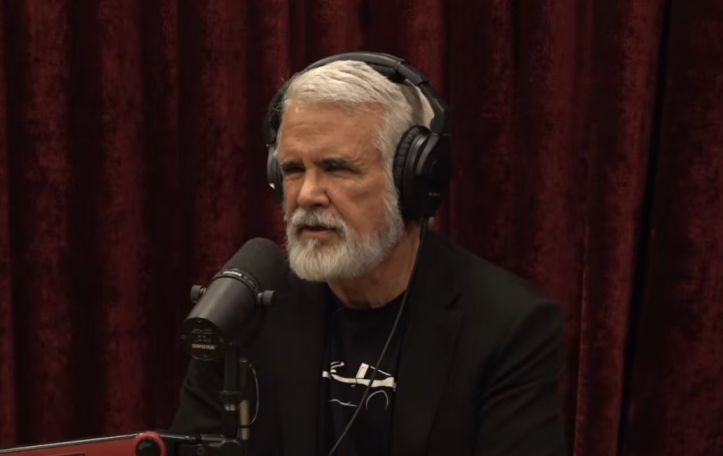
Editor’s Notes: In this episode of the Joe Rogan Experience #2454, Dr. Robert Malone returns nearly five years after his landmark first appearance to reflect on the evolution of COVID-19 discourse and the validation of early concerns regarding mRNA technology. The conversation delves into Malone’s personal experiences with vaccine adverse events, the mechanics of lipid nanoparticles, and the psychological concept of “mass formation” used to describe societal behavior during global crises. Moving beyond the pandemic, Rogan and Malone explore the future of biotechnology and the ethical implications of emerging tools like artificial wombs. This episode offers a provocative deep dive into the intersection of medicine, public policy, and the shifting landscape of scientific information. (Feb 13, 2026)
TRANSCRIPT:
The Return After Five Years
JOE ROGAN: Yep. We’re up. Okay. We were trying to figure out how long it’s been since you came here. It’s been somewhere in the neighborhood, close to five years.
DR. ROBERT MALONE: Yeah. A lot of water under the bridge.
JOE ROGAN: Your appearance on this show. Boy, did that create a lot of problems.
DR. ROBERT MALONE: Yeah, Yeah, I didn’t expect ever having me on again. I thought maybe Spotify was just going to say, hell, no.
JOE ROGAN: No, you were right. Like, this is a victory dance. Like, it turned out that all your warnings and all the things that you were saying about the problems turned out to be true.
DR. ROBERT MALONE: Well, thanks. I know you’ve said that on a few shows. Every time you do, somebody sends me a clip and sees, hey, Rogan said you did the right thing.
JOE ROGAN: What was it like for you? First of all, you know, they were trying to label you a quack and a kook, and you didn’t know what they were talking about. I don’t think it worked with everybody. I mean, it worked with people that weren’t paying attention, but anybody that really paid attention to your background said, no, this guy’s very credible. I mean, don’t you have, like, nine patents on mRNA vaccine technology?
DR. ROBERT MALONE: Yeah, on the mRNA? Yeah. And total of about 15, I think.
JOE ROGAN: Yeah. And you also took the vaccine and had a horrible adverse event, a series of them.
DR. ROBERT MALONE: Yeah.
JOE ROGAN: Yeah.
DR. ROBERT MALONE: That, at the time, it was so early. That was when the National Guard was still doing it, and that was Moderna. And I was embarrassed to have these experiences, and I was embarrassed when I got Covid in early 2020.
You know, looking back, there was so much fear, so much anger and anxiety and everything wrapped around all of this. And in retrospect, it was, you know, it was promoted, but it was also very organic. You know, it was, you know, looking back, being honest about it, it was a frightening time, what was happening.
And yeah, I, you know, I had those experiences. My doc, who was a cardiologist, was like, why were you so stupid to take this?
JOE ROGAN: Your doctor said that, too. In 2021.
DR. ROBERT MALONE: Yeah, she was 2020 or 20. What? It was 2021. 2021. Yeah. I was going to a kind of a cardiologist that had left traditional medical practice at UVA and the associated hospitals, and I was going to her for hormone replacement therapy and bioidentical hormone replacement therapy, and she was monitoring a lot of things.
And, yeah, that was her response. Why did you do this? Of course I’ve had that question a thousand times since. You know, why were you so stupid? You were the one that should have known. And so I have to answer that still. It kind of gets a little tiresome.
Early Concerns About mRNA Technology
JOE ROGAN: What was your perspective on the vaccine before you took it?
DR. ROBERT MALONE: To be honest, I was a little, I was amazed. I was amazed that the claims that the problems that I encountered when I had been working on it had been solved. I didn’t see how that could be the case, but I knew that a huge amount of money had been thrown at it. So it was possible.
JOE ROGAN: What were the problems?
DR. ROBERT MALONE: In my hands, it was inflammation, primarily. It was also, you know, the, it was absolutely not localizable. It was in the monkey models that we tested, it was incredibly inflammatory. It didn’t give long levels, long, prolonged levels of expression. It was hard to make.
It’s kind of, back then, it was almost a little bit of witchcraft you’d drop. I mean, for me as a graduate student, when I was doing that, it was incredibly scary because it was a couple thousand dollars worth of reagents in a little tiny tube. And, you know, back in the late 80s, that was real money. And it didn’t always work, the reaction. So, you know, it was a little bit of a wing and a prayer.
But then as I started working with animal models and with the different formulations, I could come up with a variety of different compounds and formulations that worked pretty well in cell culture, but not so well in animals. And I spent a lot of time trying to do that, optimize that.
And what I ended up with is just seeing that it, it really caused, you know, I’m sorry to use medical jargon, I’m, that’s kind of where I’m from. So that’s the language.
JOE ROGAN: No, it’s probably better.
DR. ROBERT MALONE: It caused a lot of inflammation, you know, white cell infiltrates, really aggressive white cell infiltrates in my hands in both mice and monkeys. And I’d abandoned it as something that just, you know, was useful in research, in particularly in cell culture. But I just didn’t see it maturing as a, as an efficient delivery strategy with low risk, you know, acceptable risk in animals.
And that also became the experience in at this company that I had first joined, where a lot of the original patents were filed.
This, now people call them lipid nanoplexes. Lots of fancy words around it. It was just positively charged fats of various types that were mixed that bind the DNA or the RNA and kind of spontaneously assemble. And a lot of work went into trying to improve that.
We did what we could in the 90s when I was at Davis to try advance that technology and develop new lipids. And we had a number of them get patented, and they were marketed by Promega and others, but could never solve the delivery in vivo.
But this group up in University of British Columbia that had been banging away at this kind of related liposome tech for years and years, even before, you know, I had known anything about it, were the ones that kind of came up with the magic sauce that is used essentially by both the Moderna and Pfizer products. And that’s the stuff that we’ve all been exposed to, those that have taken it.
The Localization Problem
JOE ROGAN: So when you were first experimenting, you said it couldn’t be localized, so meaning that in the injection site, it was supposed to be there, and then your body was supposed to produce antibodies because of the injection.
DR. ROBERT MALONE: Yeah. And it goes all over, but it…
JOE ROGAN: Went out all over the body.
DR. ROBERT MALONE: Yeah, it does.
JOE ROGAN: But the assertion, what they were telling you when you got the shot initially was that it was not going to leave the injection site.
DR. ROBERT MALONE: Yeah. And I, and I called my colleagues at University of British Columbia that I had known back in the day as I was grappling with whether or not to take the product, because I had to travel. And as you recall, back then, forget…
JOE ROGAN: International travel if you weren’t jabbed, even national travel.
DR. ROBERT MALONE: Yeah.
JOE ROGAN: You couldn’t get on an airplane, but…
DR. ROBERT MALONE: In Canada it was even worse. You couldn’t get on a train. Yeah. So, so I called Peter and had a chat with him and he said that they had solved the problems of the distribution, that now when you injected it, it would stay local, it would go to the draining lymph nodes, it was much more effective, and that they didn’t have those safety issues anymore. So that was one of the reasons why I decided to go ahead.
JOE ROGAN: Did you ask how they solved that problem?
DR. ROBERT MALONE: Yeah, yeah, I asked in detail because I knew some of the nature of the formulations. Again, I don’t want to get too technical, but what was claimed was that the incorporation of polyethylene glycol, so this is, you know, you would know that as antifreeze, but it’s in the liposome world, it’s long been known as a way to create what are known as stealth liposomes that circulate in your body for a long period of time and make it so that these particles don’t get inactivated by extracellular proteins and the liver and stuff like that.
And so he was using, the gentleman in particular named Peter Cullis, by the way, he’s the one that should have got the Nobel Prize for these products as far as I’m concerned and got slighted in the pick. But Peter Cullis said that he had, they had experimented with a lot of different structures of the fat particles, chemical structures.
So they came up with some that had these properties of staying localized and then built the formulations in ways that were similar to what I’d done with cholesterol and other things, but then also added these shorter polyethylene glycol molecules attached with a really short organic, you call it fat or gasoline like molecule that put the peg into the liposome particle but in a way that once it got into the body it would fall off.
And so this is, you know, some people have the sensation, as I did with my second jab of you know, you get it and then suddenly you feel tingling in the end of your fingers or things like that. That may be the peg, but it was those advances in the components because these are self assembling particles that were used that Peter and his group…
JOE ROGAN: Peter McCullough.
DR. ROBERT MALONE: No, Peter Cullis, P-I-E-T-E-R from UBC and his group built these products with this technology. And that was, they had it available their choice because they created companies for this. I mean a ton of money must have been made because they licensed it non exclusively to BioNTech and Moderna. And that’s still kind of the core tech that makes this particular category of products work.
JOE ROGAN: And so this was enough to convince you that they had solved that problem.
DR. ROBERT MALONE: Yeah, I took his word at it. I mean he’s an extremely experienced, knowledgeable liposome formulation expert, quite senior, he’s older than me by another decade at least and been doing this forever. And he asserted that he had solved the problems and I believed him.
I needed to travel internationally. And also there was this buzz going around at the time that if you had long Covid, which at the time, if you think back to then, there was a whole cloud over even using the words long Covid that the idea that you would have these long lasting effects from getting the infection was controversial and not really accepted, but partially promoted.
And there was a narrative that was in retrospect actively promoted that if you took the vaccines and if you had this symptom of this chronic malaise and loss of stamina, I mean, you’re a guy that’s, it’s important to you to be physically fit. For me, it’s been important to be physically fit all my life because I’ve always been a farmer and a carpenter and worked with my hands and my body. And I have farm chores. I still have farm chores every day.
And I couldn’t do them. I couldn’t walk up hills. I just had lost my stamina. I’d lost my pulmonary function. And it wasn’t getting better. And nobody knew anything about this, what was causing it, whether it was even real, but I was experiencing it.
There’s a whole cluster of people who say there’s no virus, and there’s certainly not any long Covid, but I experienced it. So it was promoted that if you took the jab and you had this symptom, then it would kick your immune system up, you get more of a response to the spike antigen, and that would allow you to clear these symptoms of long Covid. That turns out now we have data in just fairly recently that in fact, the opposite is true.
The Long Covid Experience
JOE ROGAN: So this idea of long Covid. So you got long Covid from the actual infection of COVID-19 for the job.
DR. ROBERT MALONE: Yeah, I got infected in late, very end of February 2020. I was in Boston at a conference on drug discovery, computational drug discovery, high throughput stuff, very high tech MIT, and staying in a little firehouse that had been converted to a hotel right across the street from the biotech company where the, that the initial Boston outbreak was associated with.
And I came home sick as a dog. I thought that I had influenza B because that was the, what the narrative was that was circulating at the time. And I was just, I remember laying in bed just feeling sick as hell, hard to breathe. And my wife came in. It’s just been on the TV. Covid is circulating right there in Boston where you were.
So, so that was, that was pretty early on, and it hit me pretty hard. So that would have been the Wuhan one variant. And then there was a couple of, of genetic changes that occurred apparently in Boston around that time.
JOE ROGAN: So how long did this affect you? This, this long Covid?
DR. ROBERT MALONE: No, I was, I was sick until I took the jab. You know, just not, not having stamina, just feeling…
JOE ROGAN: How many months was that?
DR. ROBERT MALONE: I, I never even thought about it. Many months.
JOE ROGAN: And did you try anything else to mitigate those symptoms?
The Call from Wuhan and Early COVID Response
DR. ROBERT MALONE: Yeah, I did. So my whole story, you know, there’s a whole bunch of what I did back then that never gets discussed, and that’s okay. But I, you know, the kickoff was that I got this call from Wuhan, I think it was from Wuhan, from this guy that used to be CIA named Michael Callahan, who I’d worked with in the past and had told me, he told me with the call that there was this virus in Wuhan, this coronavirus that looked like it was going to be serious, and I ought to pay attention to it and I ought to get a team wound up to try to address this.
So what I’d done, because this is coming off of what I did in Zika, I’m a vaccinologist at core, but developing a vaccine in the face of an outbreak historically has taken a decade. And it just isn’t a practical way to address an emergent infectious disease crisis. And I had become convinced that the best way to do that was through repurposed drugs.
So after I get this call, I put the team together, building on the technology that I’d been working with at USAMRID during Zika for rapid identification of repurposed drugs to address new crisis. And this time we’d really taken a computational approach. So I used some tech out of UC San Francisco to recreate one of the key proteins in SARS-CoV-2 based on the sequence that got published from Wuhan in January 11, I think, of 2020.
And we started doing what’s called computational docking of very, very large virtual libraries using Amazon AWS and high throughput parallel processing, and came up with a list of compounds and then kind of screen those against problems, adverse events, that kind of stuff. More coffee? Good. I would, thank you.
Self-Experimentation with Repurposed Drugs
And so I had this list. I had this list of compounds, and then I was sick as a dog. And you know what you get trained in if you do clinical research, is docs don’t experiment on themselves. That’s like breaking the rules. But I’m lying there so sick that I’m just like, what the hell? What do I got to lose? I’m probably going to die. You know, at that point, I’d spent a lot of time already looking into the virus and what it was causing and what people were saying it was causing.
JOE ROGAN: And how old were you at the time?
DR. ROBERT MALONE: See, I’m 66 now, so 60, 61, yeah.
JOE ROGAN: So you were in a high risk group.
DR. ROBERT MALONE: Yeah, for sure. And I was obese. I don’t know if you noticed, but I’ve dropped about 40 to 50 pounds since we last met. So I started taking some of those compounds and one of them was this drug that is normally taken for stomach acid called famotidine. And I got an immediate response with that.
And so I also tried ivermectin. That didn’t seem to make so much of an impact on me, but I experimented on myself. And the famotidine at higher doses now has been verified to be helpful. And it was one of the first things out of the box that people started taking even prophylactically before we knew about ivermectin and other things.
And then that went on. I mean there’s a whole thread here we could go on for an hour about what was done with the repurposed drugs. I was working closely with Defense Reduction Agency and I managed to capture a few hundred million dollars and direct that towards drug repurposing, adaptive clinical trials, et cetera.
The Ivermectin Controversy
And the thing that I zoomed in on through a collaboration with a doc up in Minnesota was the combination of famotidine, another anti-inflammatory called celecoxib. And then the thing that really kicked it in high gear was the forbidden horse medicine, ivermectin. And I managed to, working with DoD, got over $100 million, set up a contract, it got managed by SAIC and we were going to go after that using a very cutting edge clinical trial design.
And remember, this is the DoD, we submitted initial drug applications for using this combination of licensed drugs, well known licensed drugs. And the FDA just dug in again and again rejected the application. What they said was we were going to have to do cell culture tests to demonstrate the antiviral activity of ivermectin before they would allow us to proceed. And so in the end the DoD caved and they dropped the ivermectin component and proceeded with the famotidine and celecoxib, which showed some effect.
JOE ROGAN: Why were they so hesitant or what was the resistance?
DR. ROBERT MALONE: Your guess is as good as mine. I really, people think that I have visibility into the FDA and yeah, I’ve met with them and I have a background in regulatory affairs. But the policy decisions that were made during COVID and still to this day are perplexing.
JOE ROGAN: But particularly ivermectin.
DR. ROBERT MALONE: Oh, it was like a high sin. Yeah, they deployed, what do we want to call it, propaganda, psychological warfare, nudge everything, just like they did after you and I had our little discussion. It was stunning. I mean, after we had our chat, I don’t know if you remember, you asked me about, what is this about? Mass formation psychosis.
JOE ROGAN: Yeah.
DR. ROBERT MALONE: And I mean, the term “broke the Internet” is overused. It broke the Internet. The search results on Google went nuts.
JOE ROGAN: Well, because it perfectly described what was happening.
Mass Formation Psychosis
DR. ROBERT MALONE: Oh, and couldn’t be. It couldn’t possibly describe what was happening, even though every single person that heard it knew damn well it did. But it was forbidden. I mean, this was forbidden.
JOE ROGAN: Because people didn’t hear our first discussion. Please explain mass formation psychosis.
DR. ROBERT MALONE: So since then I’ve had a sh*tstorm come at me for using the term psychosis coupled with mass formation. You can’t, you know, the grief, you think you got a lot of grief from Spotify.
JOE ROGAN: Spotify was actually great. I had no grief from them. It was from Neil Young and Joni Mitchell and artists.
Mass Formation and Psychological Warfare
DR. ROBERT MALONE: So you probably then you probably don’t know the whole backstory. Okay, that’s, we should, that’s fun to dive into because it relates to the psychological warfare domain that now I’ve become a pseudo expert on just in trying to understand what the hell I experienced and what’s going on.
So Matthias Desmet, who’s a friend at University of Ghent in Belgium, who by the way, has been pretty well railroaded in his university now, not allowed to teach his own book on the psychological basis of totalitarianism. The mass formation hypothesis was the kind of core of that book that’s now published and widely regarded.
So Matthias is somebody who, as a PhD, a full professor, had long taught 20th century psychology work relating to totalitarianism and thought that goes back to Freud and beyond, really all the way back to Plato and the Allegory of the Cave. And in particular, there was a number of philosophers in the 20th century associated with trying to make sense of Nazi Germany and what had happened to the German people and really all over the world, but particularly relating to the Germans.
Matthias had been teaching this on a regular basis. And the way he tells the story, he had an epiphany one day that, oh my God, the thing that I’ve been teaching, I’m living. We’re experiencing it. We’re experiencing this process of the formation of masses and you could call it crowd psychology.
So mass formation, it’s kind of awkward. Or mass formation psychosis, which is what the term was that was used in the initial podcast that he gave out. So that’s why I use that term. But the attack was that it’s not in the Diagnostics and Statistical Manual for the American Psychiatric Association. So therefore it doesn’t exist.
The Psychology of Social Isolation
But the core of it is that when people become disassociated from society and from each other, they become extremely vulnerable to manipulation of a variety of different types. And a leader can come into that environment and offer, to simplify it, offer a solution to their pain. Because being isolated, socially isolated, is associated with pain.
We as human beings have a need to connect with others. It’s a fundamental aspect of being human. It’s what you do. I mean, you connect. That’s the essence of the Joe Rogan experience, I think.
So we need to connect with others. And in certain situations where people are threatened, and in particular in the modern era where we have all of these things that drive us into isolation, most notably our electronic tools, we become disassociated from our community. And when that happens, we have a strong need to become associated with community.
And a leader can come into that environment and basically say, I have the solution to your pain, your psychological pain. And what will happen is a strange phenomena where people will, rather than building social networks horizontally to those around them, they’ll attach to this strong leader and they’ll get fulfillment for that need to belong by this attachment to that leader and following the edicts of that leader.
Totalitarianism and Mass Formation
And this leads to this phenomena that gives rise, enables totalitarianism, but gives rise to this whole cluster of things that Matthias described. He uses the term mass formation in a way that’s kind of an odd artifact of translation, I guess, from the Dutch. It’s an easier way to think of it is a crowd formation.
And in his examination of the history of what happened in Nazi Germany, where things, people really went crazy. I mean, mothers were turning their children in. Children are being executed consequent to mother’s testimony, which is really strange when you think about it just in a fundamental way.
We had all of this Dear Leader kind of stuff, the linkage of the self and the soul to this central figure in deriving a sense of identity and belonging from that that went on. And there’s still people from that generation in Germany that are still caught up in a lot of that. That’s why the German laws.
And so that’s the short version. When we spoke before, I gave a much more technical, precise definition of Matthias’s core thesis. But this, once this happens, then people become very, very easily manipulated through propaganda and a variety of techniques that now I have a better comprehension of.
I mean, then I was still just trying to make sense, just like all of us, of what the heck was going on, what’s with this crazy. But now it’s kind of coalesced into an understanding of the fact that modern psychology has been weaponized. It’s been intentionally weaponized in the context of military activities in the domain that, one way to express it, the term is used, kind of term of art in military jargon is fifth generation warfare, or you could call it psychological warfare.
Fifth Generation Warfare
And what distinguishes the present from say, Sun Tzu and ancient propaganda has always been part of warfare in humans. But we haven’t had the digital world, we haven’t had modern psychology, we haven’t had nudge technology, we haven’t had all these tools that allow the control of information, thought, perception, feelings, emotions that have become commonplace.
And that is this suite of technology and capabilities that we saw deployed. In all of us were built in a kind of a structured way, largely by UK and US leadership in the intelligence community as a weapon of war to counter these successful insurgencies that we keep losing wars over. Vietnam being a notable example, all the way through Afghanistan.
And so that’s why it was built. But then that tech got deployed by governments against their own citizens. And this was really launched in large part in the United States by a presidential directive from Barack Obama. I’m not making this up. You can look it up.
And by the way, the presidential directive is still in place that established the nudge technology units in the United States. They were already operating in the UK and in the UK it’s quite advanced. When you look at UK politics right now and what’s going on there with all the censorship, everything, this is no joke.
We’re barreling right to that end point, same as Canada has. We’re just a little bit behind. And there we have the benefit of the First Amendment in a constitution and often on courts, but there they don’t have those obstacles.
The Erosion of Democracy
And the government believes in the UK that once they have won an election, it’s perfectly acceptable to deploy this modern psychology and information control technology on their own population. And I argue that once that Rubicon is crossed, the idea of democracy, because the tech is so powerful, becomes completely perverted.
And we got a good hard taste of that during COVID. What you and I experienced, what you experienced with ivermectin, what you experienced with just talking about your own experiences and the blowback that happened after we did that little hit, is a super powerful, clear case study in understanding this intersection of modern psychology, warfare technology and the digital world and algorithmic control of information.
The creation of digital avatars for all of us, the application now in present of artificial intelligence to custom craft messaging that gets fed into our digital domains on a regular basis in order to sell us whatever, but also to shape how we think and to control what information we get access to all the time.
Just to give an example, my wife, who does a lot of our research for our substack, was talking to me the other day. She just gave me a couple examples where stories that were in corporate media in the United States that weren’t listing certain key names or whatever. She said, I just go to the Hindustan Times. Hindustan Times is a great source for all the stuff that we’re not allowed to see here in the United States.
Information Control and Censorship
You’re now in an environment, in an information environment where you cannot rely on, but we all know that you can’t rely on corporate media. But the rules, the boundaries that are being set up about information are profound and they’re completely distorting our ability to process what’s happening around us.
Can I give you the example of what actually happened? You said in our example with the blowback in Spotify, this is documented by a report out from the House about COVID and what happened. And that report only carries just through to the early part of the vaccines. And then it stops.
For some reason, they didn’t really want to go down the road to the vaccines. They did talk a lot about the events around the, let’s say, lab leak hypothesis, which is allowed. You’re allowed in D.C. now to talk about that.
JOE ROGAN: Finally.
DR. ROBERT MALONE: Yeah, you’re still.
JOE ROGAN: Well, and it was about four years later, you were allowed.
The Coca-Cola Connection and Censorship Mechanisms
DR. ROBERT MALONE: Yeah, yeah, yeah. So what was documented was that the trail of events was that we had our discussion that triggered. And this is going to sound bizarre, but this is what’s documented that triggered Coca-Cola Corporation to complain to the Global Alliance for Responsible Media, which is created by the World Economic Forum, which is one of these global aggregators that controls advertising.
The Global Alliance for Responsible Media, which by the way, had a dust up with Elon Musk and lost, and they closed it down as a nonprofit. It still exists in other ways, but as a structure that could be sued by X, it disappeared when he stood up against it. But Global Alliance for Responsible Media had a socket with Google AdSense, by the way. So they control the advertising ecosystem, which kind of matters to Spotify.
So Coca-Cola complains to GARM, saying, this guy Rogan, you got to shut him down. You got to put pressure on Spotify. So Spotify gets the message from GARM that we’re threatening to pull your advertising. Now what happens between that and your experience? I don’t know. It’s not transparent to me, what you experienced.
We all remember the Laurel Canyon crowd saying they were going to pull their Cadillacs, which they didn’t actually own. That was another thing. And then they went after you with this mashup of inward historic events. There was clearly a concerted effort to take out Joe Rogan much more than to take out Robert Malone.
And so then the question comes, why the heck would Coca-Cola be the socket with the Global Alliance for Responsibility, one of the biggest advertisers in the world? Why would Coca-Cola give a hooey about what Joe Rogan said to Robert Malone on New Year’s Eve?
The CDC and Corporate Influence
DR. ROBERT MALONE: Coca-Cola is really tight with the CDC. Coca-Cola has funded buildings at the CDC. Coca-Cola funds the CDC Foundation, foundation for the CDC, as does Bill and Melinda Gates, has done all the major vaccine manufacturers, et cetera, et cetera. The appearance is, I can’t verify this, that CDC acted through its ally, Coca-Cola.
Why are they allies? What’s Coca-Cola got to do with CDC? The angle there is that Coca-Cola wanted the CDC to get WHO to not implement restrictions in messaging about sugar use. They didn’t want those messages. Remember, this is at the heart of the inverted food triangle. Now, the old food triangle was the product of sugar lobby. I mean, the sugar lobby is incredibly powerful because this stuff is addictive. I mean, it’s like having the cocaine lobby.
JOE ROGAN: Well, and, you know, that’s an interesting analogy because, of course, the history of Coca-Cola.
DR. ROBERT MALONE: But so sugar’s addictive. Coca-Cola didn’t want the CDC, wanted the CDC to influence public health policy, to avoid global positions on the risks associated with sugar intake because it would potentially hurt their market share. They’re a major globalized company.
So that little ecosystem that I just described illustrates what we’re dealing with here. And the many ways that all of this kind of influence and messaging and signaling happens in this kind of integrated, horizontally and vertically ecosystem that we live in right now.
And one of the things that came out of that, you’ll recall, was that you were asked, as I recall, you gave this, I’ve had a hostage video. I think that was a close to a hostage video from you back in the day when you were saying, this is what I’m going to do. It was like out on your porch or something.
I remember I was sitting around a campfire in Maui quite literally when somebody said, oh, did you just see this from Rogan? And matter of fact, I was sitting around Gavin de Becker’s campfire at that time. Somebody that you know.
And so the compromise was that there would be a little trailer put at the bottom of that episode. And by the way, you probably know that episode for a long time became very hard to find. It was basically blacklisted from the search engines, et cetera, et cetera.
Nudge Technology and Government Propaganda
DR. ROBERT MALONE: But it carries, and I think it still does, that little banner that says, you know, you should go to the CDC if you want the true, true about COVID. And you can still find that, those kinds of banners popping up all the time on YouTube. If you talk about vaccines or COVID vaccines, that will get, if you pass the filters, if YouTube will allow that to still be up because you didn’t say something, whatever it is, then you’ll get the little banner.
That banner is pushed out by the nudge units at the CDC. That is nudge technology. It is all around us all the time and it’s basically still public policy, consequent to the old Obama presidential directive that still hasn’t been rescinded.
I love President Trump. I think he’s doing amazing things. I think he’s amazingly brave. I just mentioned our friend Gavin de Becker referred to Trump the other day when I saw Gavin in Maui as a once in 500 year leader. And that’s not nothing coming from Gavin. And so I’m a big supporter.
But the president has still left in place this mechanism that exists that directs the federal government to use nudge technology and related, what I assert is psychological warfare technology on the American populace.
JOE ROGAN: Right. This is from back in, what was it, 2015 or something like that.
DR. ROBERT MALONE: Yeah, it’s quite early. And then you had his, you had Obama’s subsequent, like the notorious speech at Hoover at Stanford where he talks about, in order to preserve democracy, we’re going to have, basically says we’re going to have to have censorship. In order to preserve democracy or whatever.
JOE ROGAN: Democracy is this for people that don’t know what we’re talking about. We’re relating to the Smith-Mundt Act.
DR. ROBERT MALONE: The Smith-Mundt. Everybody focuses on Smith-Mundt. But as I examined Smith-Mundt and we did an essay on this in the Substack, you know, like three years ago, because that was the kind of the narrative that was coming out in, let’s say, our side of alternative media. And in my examination, Smith-Mundt’s impact is a lot more limited. It has to do with Voice of America and some other things.
The broad impact wasn’t quite, in my opinion, what was believed to be of enabling propaganda domestically. More specifically, there is a presidential directive that nudged technology, that established a nudge office, that nudge technology shall be used. What they call it.
JOE ROGAN: They don’t call it a nudge office.
DR. ROBERT MALONE: I don’t know. It’s got, they’ve gone through various iterations and I’m sorry, I don’t have the latest version. And it’s kind of become decentralized. It was called the Social and Behavioral Science Team. Wikipedia says that that was stopped in 2017, but continued under the Trump administration under, sorry, the General Services Administration’s Office of Evaluation Science. There we go.
JOE ROGAN: Yeah, boy.
DR. ROBERT MALONE: Yeah. Yeah. It’s, and it’s kind of become, it’s been, like I said, it’s been pushed out into a lot of the agencies. They don’t use that lexicon because then it’s easy to find them.
JOE ROGAN: Right.
DR. ROBERT MALONE: They use, there’s other euphemisms they use to describe those kinds of activities. But it’s become normalized. The weaponization of propaganda has become normalized.
The 2015 Executive Order
JOE ROGAN: There’s the wording from overall behavioral interventions or nudges like the ones implemented by OES, have been found to be effective in recent psychological. Researchers identified several policy areas of interest. Example, health care.
DR. ROBERT MALONE: There we go. 2015 is when it was implemented.
JOE ROGAN: So 2015 executive order. President Obama signs an executive order requiring federal agencies to incorporate behavioral insights into their evaluation efforts. That’s a nice way of saying use of propaganda on the American people.
DR. ROBERT MALONE: Yeah, yeah. Okay. And so this has kind of become, thank you so much for pulling that up. That’s super helpful. So this is, like I said, if I can illustrate. I was on a Great Britain News broadcast about four years ago at the time when they would, you know, there was a window of time where they would have me on, but it was sketchy and GB News was the only one that would do it.
But the rules were then that if you were going to have somebody that was speaking against the government narrative, then you had to have somebody representing the government’s interests in the same broadcast. So that’s implemented by basically the UK has an active censorship organization that controls news media.
And so I’m on with this guy, Great Britain News pinstripe bowtie, you know, it just reeks. And I’m talking about psychological warfare and the 77th Brigade, which is part of the British army, which is their psychological warfare unit. It’s very open that that’s the case, as is the existence of a civilian branch that they set up and paid people to do social media in opposition of counter narratives that the government didn’t approve of.
I mean, now they just under Starmer, they just censor you and send you to jail. No jury drops, cut out the middleman. But back then they were still kind of buying civilians.
And so I’m talking about this, and the guy says, yeah, but here in the UK, our belief is that if the government wins the election, they have the right to govern. And that right to govern includes our ability to use this type of technology. And we believe that it’s justified to do so.
The Jira Ticket System and Targeted Censorship
DR. ROBERT MALONE: And when that conversation happened, frankly, we hadn’t launched the book yet, PsyWar, which is our most recent publication. And it just kind of all coalesced in my mind that, oh my God, all these things Mattias’s teaching about mass formation. What I saw, what I experienced with you, what I experienced with the concerted attacks of the media.
And then subsequently it’s been validated by this congressional report that talks about, for instance, the Jira ticket system. Jira tickets are what? It’s a system that all the software companies use to track glitches and complaints and stuff like that. Well, the government had their own Jira ticket system set up to log information about activities of persons that they wanted to have censored and suppressed.
And they would build these Jira tickets with information. And so one of the things that’s out on the Congressional report was that I actually had a Jira ticket. I was surprised that this is the case, or not surprised in retrospect. And my personal sins were that I was listed as an anti-vaxxer and a conservative.
JOE ROGAN: Even though you’re a vaccinologist and a conservative. That’s interesting.
DR. ROBERT MALONE: And a conservative conservative. Yeah, exactly right. I mean, the stuff that’s coming out, that’s wild. It’s fascinating to query things like Grok, even Grok about certain subjects. And you will find where they have algorithmically built firewalls and you can approach them and detect them because it will act dumb, it’ll lock up seemingly. It won’t give you that answer, or it’ll talk around the issue, et cetera, et cetera.
You can identify these things that have been built in algorithmically. And of course, then we had all of the disclosures, the Zuckerberg, oh, I’m so sorry apology tour that happened to remember when basically he got outed by Congress and the rest of the tech bros. And of course, the thing that catalyzed all of that was that Elon decided to pony up a good chunk of change and buy.
JOE ROGAN: Buy Twitter, which I think is one of the most impactful decisions that any American citizen has ever made.
DR. ROBERT MALONE: Amazing.
JOE ROGAN: If he didn’t do that, I think we would be really screwed.
DR. ROBERT MALONE: How can you debate that?
JOE ROGAN: How can you debate it when you look at the Twitter files and you find out how much the government was involved in censoring accurate information from legitimate professors, esteemed researchers, anybody who didn’t go along with the official narrative.
Morning in America: Transparency and Hope
DR. ROBERT MALONE: It’s all coming out now in spades. And we’re dealing, now. The lovely thing about all of this, I mean, let’s try to, it is morning in America, in my opinion. I mean, a lot of people get very dark and there’s a darkness to the times, but there’s, you know, not to push the metaphor too far, but there is new light coming in.
And the fact that we can now see this and we recognize that you and I are of a similar generation. I mean, one of my earliest memories was the assassination of the President and all of the propaganda around that, the propaganda around Vietnam War. Ever since, we’ve just been swimming in information control that’s gotten increasingly sophisticated.
And fortunately, as Americans, we also kind of have become more and more immune to marketing and propaganda over time because we’ve been living with it, trying to discern what is real and what is false. Again, this is a core part of what you do for a living, I think, is just try to have conversations with people, get to the bottom of the bullsh*t.
But we’ve been swimming in it, and now we can see it. We can see the structures, the power of artificial intelligence and influence mapping and all the things that are going on in the Internet right now that are the cutting, cutting edge technology, they’re scary because they could be weaponized against us, but they’re also super cool because we can now see those relationships.
If you want an example of that, look at the threads that are coming out on X, illuminating the networks of affiliation associated with this latest Epstein file release. Just mind blowing.
JOE ROGAN: Mind blowing.
The Impact of Released Information
DR. ROBERT MALONE: And it is just like, we can sit here and complain, saying, oh, they didn’t release that. This is redacted. All that’s true. But still, the impact of that information, and we’re still getting to the bottom of it.
JOE ROGAN: It’s completely changed most people’s narrative of what happened. Like, we had this sort of vague understanding, you know, but when you see in the email, like, clear evidence that—
DR. ROBERT MALONE: They’re talking about children in pretty obscene ways, horrifying ways.
JOE ROGAN: So that was the thing that, like, even when I talked to Mike Benz about that, he was sort of incredulous about that. He’s like, I don’t think they would use children. It just doesn’t make any sense if they got caught. Just seems like, yeah, if we were—
DR. ROBERT MALONE: If Mike Benz was incredulous, that’s pretty big.
JOE ROGAN: Well, I just don’t think we really knew until we saw those files come out.
DR. ROBERT MALONE: Yeah.
JOE ROGAN: And then you go, oh, well, there’s no denying it now. My position has completely shifted. I thought there’s probably some really sick people that have an appetite for that, but I hadn’t seen any real evidence for it until these files. And now they’re like, oh, this is demonic. This is clearly demonic.
Understanding Evil Through Theological Language
DR. ROBERT MALONE: Okay, so thank you for saying that. I’m somebody who was raised a Christian and went to Bible school and that kind of stuff as a kid, and youth groups and then growing up in Central Coast California, let’s say veered in different ways. But the experiences that we’ve encountered over the last half a dozen years, it’s hard to come up with a language to express what we’re observing in the world other than the language of theology.
JOE ROGAN: Well, demonic by action. So whether or not demons exist, if they did exist, that is how they would behave. They would prey on children and torture children. And there was the one where there was a suggestion when a child was praying to Jesus that, like, there was a joke that someone should dress up like Jesus.
DR. ROBERT MALONE: I’m not watching this.
JOE ROGAN: Did you see that one?
DR. ROBERT MALONE: No, I’m not. I’m not watching this.
JOE ROGAN: I don’t even want to. People send it to me. And I go, okay, because I’m for the most part, off social media, but every now and then, someone will send me something that I have to look at. I’m like, oh, my God.
DR. ROBERT MALONE: Yeah.
JOE ROGAN: And these are emails back and forth. There’s one of them where Epstein says, “I enjoyed the torture video.” There’s these references to pizza, a lot of references to pizza that are 100% some kind of a code.
DR. ROBERT MALONE: Yeah.
JOE ROGAN: And then it brings you back to Pizzagate.
DR. ROBERT MALONE: Yeah.
JOE ROGAN: Which was widely dismissed. You know, everybody’s like, oh, this is a bunch of kooks. Here it is. She said she felt God’s presence next to her when she was in bed. She knows that Jesus watches over her and he helps her save. He helped save her life. And then he writes, “Whoops.” And then in response, Jeffrey Epstein says, “You should dress up as him when you see her.”
DR. ROBERT MALONE: It is dark.
JOE ROGAN: You should dress up like Jesus when you see her. What the f*?
DR. ROBERT MALONE: Well, look at the line.
JOE ROGAN: You’re talking about a little kid.
DR. ROBERT MALONE: Look at the line. Look at the line above it. How am I supposed to interpret “I’m coming trick”?
JOE ROGAN: The oh, Jesus, “I’m coming trick.”
Darkness in Leadership and the New World Order
DR. ROBERT MALONE: It’s just the whole thing. But so we see this darkness. It involves leaders in academe, in science, in industry, in politics.
JOE ROGAN: Yeah.
DR. ROBERT MALONE: And it just, you know, I remember a point in this arc of the last six years where a film crew came onto my farm and wanted to shoot some segments. And they were talking this. And frankly, I thought it was crazy talk. I kind of smiled and tried to be civil and nice, not contradict them about the New World Order.
And then along comes, then my wife one day says, “Hey, you ought to look at this book from Klaus Schwab. It’s called the New World Order.” Like what?
JOE ROGAN: I mean, he was just saying it out loud.
DR. ROBERT MALONE: Yeah.
JOE ROGAN: I mean, the World Economic Forum had those ads where they were saying, “You will own nothing and you will be happy.”
DR. ROBERT MALONE: Yeah. And it goes back to the current king of England was the guy that kind of launched that. He was the first one to be really talking about that. You can use your favorite AI and track it down yourself. I prefer not to use Google these days to try to find stuff.
But we see vertical after vertical after vertical after vertical, where information has been crafted and manipulated and these same tools of delegitimization, of promotion of these messages. That you are a conspiracy theorist or that you are controlled opposition is another favorite one. A lot of this was pioneered in the 60s by the FBI against the various protest movements. And you can go back and track that.
Okay. The narrative of being a collaborator surreptitiously is called bad jacketing. And it has its own whole language and protocols for how to do this to people, to divide movements. We’re in this, I mean, in a way, it’s kind of a glorious moment where we’re having a huge amount of social pressures coming together in this moment in time that you and I happen to live in.
How fantastic is that? To be at a point in time where there is so much change, there’s so much social interaction and pressure and competition between these different philosophies, and we’re swimming in it. As somebody who writes on a daily basis, these essays on Substack, because that’s how I make my living now, because I can’t do what I used to do.
It’s, you’re a kid in a candy shop. There’s so much corruption. There’s so much falsehood being promoted. There’s so much of this manipulation of reality. And so if you’re in the business of trying to help people to make sense out of that, which is kind of what I do now for a living. It’s, you know, I wake up every morning, people, I get the feedback. How do you come up with all these ideas? I’m like, how do you not? All you got to do is keep your eyes open.
JOE ROGAN: Yeah, it’s not hard to search anymore.
The Ivermectin Story Continues
DR. ROBERT MALONE: So you talked about ivermectin. I mean, the ivermectin story is still ongoing. There was an announcement the other day from HHS that they are launching new initiatives to investigate the use of ivermectin in cancer. And there was immediate blowback along the lines of, oncologists are outraged.
You know, the narrative is, Bobby, you know, not saying this explicitly, but basically Bobby Kennedy is at it once again, promoting falsehoods and conspiracy theories. And it’s going to, you know, we’re all going to die because scientists are going to investigate the use of ivermectin and other drugs.
JOE ROGAN: Why I wanted it. So this is the core question. And this is one of the things that puzzled me to no end. I understood that they were upset that I had gotten better without the use of the vaccine, that I was a popular person, that I was a famous person.
And I made a video about a canceled show. Dave Chappelle and I were supposed to do a show. And I made that video to let everybody know that I couldn’t do the show because I had Covid. I had no idea it was going to be even controversial. But I listed a bunch of things.
DR. ROBERT MALONE: That I took and the s* hit the fan.
JOE ROGAN: I talked about IV vitamins. I talked about monoclonal antibodies. I talked about, which were allowed, Prednisone. Yeah. All these things that I talked about, Z Pack, I talked about all these different things that I took. There was no mention of any of those things. There was only Ivermectin.
And that’s what really puzzled me. I was like, this is fascinating because I listed a bunch of different things, but there was no demonization of monoclonal antibodies. But they did make them much harder to get and eventually pulled them. I have a friend and his friend was in the hospital and they wouldn’t administer monoclonal antibodies. Once he got into the hospital, they wouldn’t allow him to have.
The Suppression of Alternative COVID Treatments
DR. ROBERT MALONE: What went on in the hospital is a whole other thing. But you mentioned, so the why, the only two threads that I can pull on at all is that Ivermectin is a miracle drug. I mean, Nobel Prize, right? We don’t understand completely how it works. In this case, it doesn’t seem to be working as an antiviral. It seems to be working as an immune stimulant, pro-inflammatory or pro-immune response in some way that’s subtle because it has this broad spectrum of activity against things that have an immune response component in controlling.
But it’s off patent, right? They don’t understand it. It’s off patent. And the response is as if it represents a significant threat to some business interests. It’s hard to discern that.
And you mentioned Z Pak, so that’s another fascinating one. And to say that it was only Ivermectin, Ivermectin was the most prominent, but they were actually effective in shutting down the Z Pak, the use of hydroxychloroquine. And hydroxychloroquine has a fascinating story.
When you mention Z Pak, you’re talking about Zev Zelenko. And Zev was the one that wrote the letter to the president saying, hey, here’s this data and this information about this drug that is off patent. We have a huge portfolio of experience in using it, millions and millions of doses. It’s safe in pregnancy. What’s not to like here?
And the story of that is a fascinating microcosm because it goes back to Ralph Baric. Ralph Baric had published that back years ago when, he’s kind of the guru of coronaviruses. And a good case can be made that he had his fingers all over the engineering of this particular virus. So he had published that this drug was effective against coronaviruses.
And Zev Zelenko, who’s passed away now, got engaged in trying to find some way to help his patients in New York with recovering from COVID and treating COVID. And he went back, did a deep dive into Baric’s work, pulled out this drug hydroxychloroquine that had been recommended, wrote to the President about it. He got clinical experience with it and, caveat, Mickey Willis is doing a bio on Zev now and I’m involved in that. So conflict of interest.
But he was the one that pulled it out, sent the letter to the president with his clinical experience. President tasked Peter Navarro with sourcing the drug. And Peter, economist, went to town. I remember the company I was working with, Alchem at the time, getting a call from Peter. Can you come up with some way to make more of this drug here domestically? We want to source it so we have enough doses for everybody.
And then I think it was Lancet published this paper that had totally made up data that trashed the drug, said that it’s toxic, doesn’t work, blah blah, blah, blah, blah. It was all fake. Okay? They pulled the paper when it became revealed that it was based on non-existent data, that it was more propaganda, published in one of the top medical journals in the United States. But by that time it was completely crushed.
So they didn’t have to go after Z Stack, they’d already killed Z Stack. Ivermectin though, that was a new threat. And one of the reasons why it was a threat was there was a meta-analysis that had been done at the Cochrane. So the Cochrane Institute in the UK is like the holy grail for analysis of drugs and biologics. And this process of meta-analysis, they kind of wrote the rules for how to do it.
And they had done an analysis that showed that Ivermectin was quite effective. And then something happened and there was some influence exerted. And suddenly that meta-analysis got quenched, it got squashed. There were two investigators that were involved in building that. One kind of went underground and got a big grant and carried on as an academic. The other one got so pissed off that she created this organization called the World Council for Health. That’s Tess Lawrie. And she really objected to what happened.
But Ivermectin, there was a signal there, there was a clear signal there, there was data supporting that signal. And then something happened to cause that meta-analysis to be restructured. And certain studies that were showing how effective it was to be thrown out. And then the suppression of the data coming out of India. You remember that, Uttar Pradesh? And I guess it had kind of, it’s like the cat was out of the bag and they had trouble putting it back in.
And so they just, my sense is they turned up the amplitude on the propaganda and the censorship in order to try to overcome this. And I’m pretty sure, remember who was it that held the original patent? Merck.
Now, I was involved as an observer on behalf of DTRA to the active trials that were going on under the Foundation for NIH, which is sponsored in a significant way by Merck and which is now headed up by the former head of Merck Vaccines, Julie Gerberding. Bobby can’t get her out. It’s the rules.
And they were running these clinical trials, including the clinical trial that essentially by tweaking the dosing, et cetera, made it so that they came up with a result suggesting that Ivermectin is not effective. There was a whole lot of manipulation in the why part.
Still, the best explanation I’ve heard is that it had a lot to do with the risk that if there was an effective countermeasure, then the utilization of the PREP Act and the emergency countermeasures process to enable fast tracking of these vaccines using this new technology would no longer be valid. Because those are the rules, is if there’s an existing countermeasure, then you can’t implement those clauses.
JOE ROGAN: So it’s all about emergency use authorization.
DR. ROBERT MALONE: I don’t know that that’s the case.
JOE ROGAN: It is the only thing that makes sense when you see how much profit they made.
DR. ROBERT MALONE: Which was enormous.
JOE ROGAN: Enormous. So it was effective. And all that propaganda, regardless of how much it exposed them and exposed their methods, they made hundreds of billions of dollars.
The Greatest Transfer of Wealth in Modern History
DR. ROBERT MALONE: Well, and that, the ugly part of all of this, I mean, people, the big, big picture, when I talk to people that are still kind of on the fence trying to make sense out of it, there’s still a lot of those folks out there. The thing that kind of gets into their brain is the greatest upward transfer of wealth in modern history occurred during COVID.
Yeah. It wasn’t just the vaccines. It was the whole enterprise with the lockdowns. All the what was done to small businesses, what was done to the economy, the stimulus packages. They’re still digging out of all that fraud, in retrospect, for average folks that are just trying to put food on the table and pay their rent to look at, in retrospect, what was quite literally done to them. The middle class was hollowed out on hyperspace speed. So, yeah, I’m still pissed off about this.
JOE ROGAN: Well, you should be. The thing is, not enough people are. And so many people let it go. And part of the reason why not enough people are pissed off about it is because they took the vaccine and they want to justify their decision. And you will talk to a lot of people that make this blanket claim, the vaccine saved millions of lives. And they’ll just say that’s the propaganda.
DR. ROBERT MALONE: Along with safe and effective. That was a promoted narrative. And that was, by the way, the rationale given by the Nobel Prize committee to award to Karikó and Weissman was that these products which they had, the thesis is they had been playing the central role. I disagree. I think Peter Cullis is the one that should have got it. If you’re going to give it, if you’re going to give it for these vaccines, it was Peter Cullis and his team at UBC that really was the enabling tech.
But be that as it may, the decisions made and the committee said basically, millions of lives have been saved and by giving this Nobel at this time, we hope that it will promote more people to accept this product. That was explicitly the logic given at the time and that reflects what was really a thrust vector.
The Global Perspective: Europe, Australia, and Beyond
Joe, I’ve, it’s, what a bizarre world since we met and so I’ve been sucked into, to call it the center right of Europe is a little bit of a misnomer because they’re all socialists as far as I’m concerned, Giorgia Meloni and everybody else. But compared to the far left, they’re labeled as neo-Nazis.
But I’ve been traveling to Europe, interacting with these people. You think it was bad for us? The European Union, the UK and the Canada were an order of magnitude worse. That we should be so grateful that we live in this country at this time and that we still have something like a functioning constitution with the First and Second Amendment. Look at the poor suckers in Australia and New Zealand. Remind yourself it could be a heck of a lot worse here. And it has been a heck of a lot worse in Europe.
I’ve got buddies in Romania in the leading alternative party, calling it center right. Let’s say that, recently, I think it was the vice president that came out and said specifically that that last election was stolen. It was in Romania. Georgescu they tried to put in jail. And the logic was that I think it was TikTok supporting his campaign had been sponsored by the Russians. It was the same game that they played against Trump of Russian collusion they played that same book in Romania successfully.
But in the European Union environment, under the European Council, they don’t, they ain’t got a constitution, and they can just step right in and throw you in jail, inactivate your candidacy, do whatever. If you represent a populist threat to the existing structure.
We talk about the deep state, but it doesn’t, yeah, it’s a problem here, but, and thank you, Mike Benz. I defer to him as a notable expert in that space, but it’s a lot worse in Europe and Australia and Canada and the UK.
And I think, we’re in a perilous time here in the United States where we have the midterm coming up, but people like Bobby are making progress. And these dissident physicians that have risked so many things. And I’m just one, people, I hear people saying, oh, Robert, Robert, they’ve been so mean to you. I’m like, come on, guys, you think they’ve been mean to me? Then look at what they did to Bobby. And then if, and then, look, I don’t have a nick out of my ear. Look at what they did to Trump.
What they did to me is just, I’m nobody compared to that. And they’re willing to deploy that kind of capability against me. Think about what’s really going on at the higher levels where the big games are being played. And at least we can see it now. At least we have, for those of us that have our eyes open, we have some ability to be aware.
But what I’ve spent the last two years mostly trying to convince people about, I hardly ever talk about RNA. I sit, oh, Joe, I got to give a caveat. Forgive me. The opinions I’m expressing here are my own and not those of the US Government, the CDC, or the ACIP. I said it. Okay.
But we’re in a moment where we’re seeing how the levers, the gears of how all this works. Give you an example. Tomorrow, Friday, February 13th, what could possibly go wrong? Hopefully my plane flight out of here works okay and they don’t have a drone attack or something, right?
So tomorrow, there’s a lawsuit filed on behalf of the American Academy of Pediatrics that seeks to shut down the Advisory Committee on Immunization Practices and the changes that Bobby has implemented there and force all of that to go back to the way things were when it was functionally controlled by the professional societies and particularly the American Academy of Pediatrics.
We talk about this propaganda and weaponization and lawfare and those things. And we talk about it as if it only happened in the last administration. It’s still ongoing all the time. And it is going to go big time if the House turns, which I think it probably will. I mean, there’s a good chance that they’ve already drawn up articles of impeachment against Secretary Kennedy. They’re talking about articles of impeachment against President Trump.
We’re about to go into another two years of stagnation and functional, what do we call it? We can’t call it civil war. By other means is where we’re heading right now.
But at this moment, I’m seeing major movement. Kennedy is doing great stuff. The President is doing great stuff. We’re seeing a transformation in America’s global reach, totally restructuring global politics. And on the health side, the Make America Healthy Again movement. There’s some pushback against that and a heck of a lot of propaganda being deployed against it.
Money, Power, and Control
JOE ROGAN: Well, it’s this old quote that seems sort of abstract for most people most of the time, but rings kind of true. But you’re finding it true more and more. Money is the root of all evil.
DR. ROBERT MALONE: Profound. Simple, but profound.
JOE ROGAN: Yeah, I mean, this is the COVID thing with Ivermectin and alternative medications, off label medications. Why? Money.
DR. ROBERT MALONE: I think it also has to do with control. Right. I think—
JOE ROGAN: Which means money.
DR. ROBERT MALONE: Fair enough.
JOE ROGAN: Access to money.
DR. ROBERT MALONE: Yeah. It’s money and power. Right. In my mind.
JOE ROGAN: But power—
DR. ROBERT MALONE: Yeah.
The Power of Independence
JOE ROGAN: They don’t want power without money. They want to benefit from that power.
DR. ROBERT MALONE: I believe for the likes of Larry Fink and Bill Gates, I mean, they can’t spend all that they have. It’s a marker. It’s like chips. You’re stacking up.
JOE ROGAN: Exactly right. They’re scoring in a video game.
DR. ROBERT MALONE: Yeah, and also captured by their past actions and constantly trying to obfuscate from all the things that they have done in the past.
JOE ROGAN: That could be like, if you just went into Bill Gates, his stuff that he did in Africa, giving children polio with that polio vaccine that was from the AP News, Africa and India.
DR. ROBERT MALONE: I mean, he’s kind of banned from India, so I don’t get it. I don’t get where these people live. I’m happy, you know, as far as I’m concerned, I could walk away from all this stuff. It’s just kind of a sense of obligation of what are you going to do when you’re 66. I have this opportunity to impact in a positive way on the world on my way out the door. Who wouldn’t take it?
Well, I guess a lot of people wouldn’t. But I don’t have a need to have power. I have, thank God for my Substack subscribers. I have all that I need. My wife is happy, my horses are fed, my farm is paid off and I have the luxury of doing good works. And that’s enough. I don’t get this global power thrust.
JOE ROGAN: And hunger, not what you do. That’s not your thing. But if you were a politician or you were some megalomaniacal billionaire sort of business character that just wants to dominate and was involved in a bunch of antitrust lawsuits in the past, that would be what?
DR. ROBERT MALONE: Not that we’re naming any names.
JOE ROGAN: Not that we’re naming any names that bribed off multimedia corporations to the tune of 300 plus million dollars so that they wouldn’t write bad stories about him or…
DR. ROBERT MALONE: Or owns, you know, functionally owns the World Health Organization.
JOE ROGAN: Right. And a giant chunk of American farmland for, was for a while trying to put that push that fake meat shit on everybody.
DR. ROBERT MALONE: Until that dropped off a cliff. Yeah. And yeah. So this, the business models aren’t working out so good for the globalists, are they?
JOE ROGAN: I think a lot of it is because of information that’s available now.
DR. ROBERT MALONE: Yeah.
The Collapse of Mainstream Media Trust
JOE ROGAN: And you can’t control like one of the things that did happen during COVID is these places like CNN, people stopped going to for information. They don’t believe them anymore. There’s just too much bullshit. And no one got in trouble for spreading that bullshit. There was no corrections, no redactions, no apologies and no acknowledgement.
People now more than ever in my lifetime mistrust mainstream media. And polls show that. That polls show that the trust of mainstream media is at an all time low. For good reason. They did it to themselves. They prostituted themselves out to the pharmaceutical drug companies. They had to say what they had to say on television. People knew what they were saying was incorrect and now no one trusts them.
DR. ROBERT MALONE: So to this thread, about four years ago I read a report from the Trusted News Initiative. You remember the TNI was launched by the BBC to counter Russian disinformation and then repurposed to counter vaccine disinformation. And I read this report about, I’d gone on your show, so I was a little bit of a fan. Forgive me.
And so I’m reading this report and they’re talking about threats to the industry because TNI is basically another trade organization. It’s another guild. It’s a global major media guild. And so they’re doing this internal analysis and reporting and they’re talking about the risk factors that they face. And they had a whole great big section on Joe Rogan. Joe Rogan represents, that was their threat. That was the major threat to their business model is you and what you represent, you as a metaphor for this new information economy.
And by God they called it right. And when I, again, this has been part of my journey when I realized what I was experiencing and what it meant to come on your show and have that event occur. Which, by the way, blew up my subscribers on Substack. Thank you so much. I still get a wave every year about in, in the month following. So January I get a big bump in revenue.
JOE ROGAN: Well, it blew up our subscribers on Spotify too. During the heat of it, we gained, in one month, we gained 2 million subscribers. What are we at now?
DR. ROBERT MALONE: I had, I had, oh yeah, please.
JOE ROGAN: What is this? What’s the Spotify subscribers? I never, I know YouTube is over 20, 20 million. What is Spotify at?
DR. ROBERT MALONE: So while he’s looking that up, I had this bizarre experience. You know, I’m just an old gray haired guy with a, with, you know, about to have my 47th wedding anniversary.
JOE ROGAN: Congratulations.
DR. ROBERT MALONE: Thank you. I’m proud of it. I would have 20 year olds come up in the street and fist bump me. I’m like, what the hell?
Young Men Seeking Authenticity
JOE ROGAN: Yeah, well, they don’t have a representative. I mean, they don’t see anyone.
DR. ROBERT MALONE: All males?
JOE ROGAN: Yes, males. Those males don’t have anybody in mainstream news that represents anything that resembles them. I mean, I know I’m much older than them, but I never went down this path of decay and weirdness that a lot of adult males go into corporate business and industry and they become something unrecognizable to these young men who have freedom in life and they’re being suppressed and they’re being told that they’re toxic.
DR. ROBERT MALONE: That was a singer right there.
JOE ROGAN: Yeah.
DR. ROBERT MALONE: Young men that have freedom in life.
JOE ROGAN: Yeah.
DR. ROBERT MALONE: And then they compromise themselves.
JOE ROGAN: They don’t want to be what their dad is, they don’t want to be what their uncle is. They don’t want to be these people that they work for. They’re like, what is this f*ing bullshit life? I don’t want that. I know I’m being lied to. I know the news is full of shit.
And I know that this one guy who is also a cage fighting commentator and a comedian and doesn’t have to lie. Like, I’m not being, I don’t have a boss, really. I mean, Spotify promotes the show. They put the show out. We’re in partnership with them, but there’s no one telling me what to do. Which is why you’re here right now. Because there’s no one. I don’t have a conversation with no one. I literally like reach out to my guy and say, hey, contact Mr. Malone and let’s get him back on.
DR. ROBERT MALONE: All I know is I got a message through X saying Joe Rogan, do you want to come on.
JOE ROGAN: That was actually me. That message is me. Which I rarely use those things, but I was trying to figure out how to contact you, so I reached out to you there and then I sent it to my guy and he takes care of it like, that’s it. There’s no one else. There’s no one involved in all that, which is, you could still be you.
That way, as soon as you get involved in enormous groups of humans and a board, you have to sit down at a table with other executives. You have to make decisions based on the profitability of the company and shareholders and stuff. I have none of that. It’s a skeleton crew.
Freedom Through Independence
DR. ROBERT MALONE: So as I look back, the question why were you able to do this, Malone? Why were you able to, you know, oh, you were so brave, Dr. Malone.
JOE ROGAN: Well, Robert Malone, that name became like a pejorative. It became like, oh, he had that Malone guy.
DR. ROBERT MALONE: Yeah, it’s all weaponized, but then on the other side, I tour, I do these rallies and stuff like this. And you know, my wife, it really makes my wife nervous. I, I’m middle aged, women come up to me and they want to have selfies and I get this, oh, Dr. Malone, you were so brave, you’re such a hero kind of stuff, which I frankly find a little embarrassing. I mean, it’s sweet, but yeah, there’s a lot of heroes.
Why was that? Yeah, yeah, the guys that, you know, defend the nation. Right. But why was I able to speak? I think a big part of it was I had no debt, I wasn’t beholden to anybody. And like you say, I’d been about a decade being a consultant, a free living consultant, and it had gotten under my skin. I’ve always been independent, you know, farmer, carpenter kind of stuff. And that’s, I guess, been part of my problem is I just don’t fit in in corporate life. I can’t suck up to people and it’s just not in me.
JOE ROGAN: Well, it’s a very unhealthy environment for anybody to get sucked into that bizarre group. Think it’s just good word.
DR. ROBERT MALONE: Yeah. So, yeah. So this decentralized subscriber base model. The epiphany was, and I’m being quite sincere, you know, it was one of those moments my wife and I looked at each other and we said, what the hell are we going to do now? Our consulting business is shot. Nobody wants to talk to me. I’ve been delegitimized. They say, I don’t know what I know I haven’t done what I’ve done. And this has been promoted by all the top liberal publications in the world.
JOE ROGAN: Yeah.
DR. ROBERT MALONE: And so I said, okay. Rogan built this thing day after day, week after week, for years. He just stayed on it and doing it. And we can do that too. We can bring that kind of work ethic into our world. Steve Kirsch had told me, you ought to get on Substack. And we went, we took it on seriously. We’ve published thousands of essays now almost every day, it’s, you know.
JOE ROGAN: You mean Substack?
DR. ROBERT MALONE: Substack. What did I say? Substack. I, Paul. Yeah, I apologize. And so we just work at it again and again and again, trying to put out content. And we’re shadow banned and small roomed on X in a serious way. You know, we got 1.3 million subscribers of which, you know, all the time I get feedback. I never see your stuff. Well, it’s algorithmic, whatever it is, you know, and you can ask Grok about Robert Malone and, you know, you get back, you know, I’m, I’m a controversial figure, but, you know, not whining.
And so we have, we have a lot of subscribers, but we just have this core paid subscribers and they send in their five bucks a month and it’s all we need. And it totally sets us free. We can talk about whatever we want. And yeah, now that I’m pseudo government employee, I’m a special government employee without pay. Boy, that’s like the worst of both worlds, because there’s, I have, the truth is I have guardrails that constrain me in a way that I didn’t used to be constrained for talking about some things, you know, I have to live in this world.
I interface with the secretary and with the deputy chief of staff and other people. And now I’m working with the State Department more. And so, you know, I have to, I have to be more mindful.
JOE ROGAN: What is your function? Like, what do you do over there.
DR. ROBERT MALONE: At State or…
JOE ROGAN: Yeah, both when you’re working for the government. Like how do they use your services?
The Role of Special Government Employee
DR. ROBERT MALONE: So the special government employee category is a designation from the executive branch. It’s the one that Elon had. I like to say I’m in the same category as Elon was, only without all the money. So he was a SGE without pay. I’m an SGE without pay and because I serve on the Advisory Committee on Immunization Practices of the CDC, which is this, they call it. It’s a FACA committee, Federal Advisory Committee, act that advises the director of the CDC. That’s its only job on vaccine policy.
So I’m the vice chair, which is largely honorary. What that means is that if the chair isn’t there, I draw the short straw and I have to chair those bloody meetings like the last one for hepatitis B birth dose, which was just a slugfest. Ugly. The worst meeting I’ve ever had to adjudicate my entire life.
But for the most part, I sit on these subcommittees. I sit on the COVID Working Group subcommittee. I’m not supposed to talk about the next meeting. I was told two days ago. So that’s one of my guardrails. But stay tuned for what is going to come down if the AAP lawsuit doesn’t prevail and we’re allowed to actually have the meeting. But so that’s that. I’m also the chair of the Influenza Working Group. Stay tuned for that.
And now I am so. And I, from time to time the secretary asked me to help him sort out some issue. You know, I’ll get a phone call. I once got a phone call on the Big Island. I did this recent series of rallies to try to, you know, to recap the whole reason why that we did that. First hit was to try to publicize the Stop the mandates rally in D.C. that was the subtext for that, as you recall, and I forgot to even mention it. We had to go back in to do another shoot for that. Remember, I’m still fighting that same battle of trying to stop these mandated vaccines.
So I’m sitting there in Hawaii, I’m going to another one of these rallies. I get a call out of the blue from one of Bobby’s people and they want some advice about a topic having to do with the decision he has to make about spending money on another biofense initiative. So I get that kind of stuff. He called me soon after he was confirmed to get my opinion about what was going on in the chicken industry and all the slaughter that was happening for bird flu. And I told him this doesn’t make sense. It’s not good policy. There’s no way you can get rid of bird flu doing this. It’s in the wild bird populations and this is just nonsensical what they’re doing.
JOE ROGAN: Why do you think they did that?
The Bird Flu Culling Policy
DR. ROBERT MALONE: Okay, so that’s interesting. Now we drive into a kind of public health and vaccinology. You’re asking the why? And it’s been a long standing policy.
JOE ROGAN: They killed millions of chickens, right?
DR. ROBERT MALONE: They do it every time.
JOE ROGAN: Every time there’s a bird flu.
DR. ROBERT MALONE: Yeah, it’s in any other outbreak. So right now in Spain, I just wrote an essay about this. It was maybe the biggest reveal on what’s going on in Spain right now. There’s a Spanish research lab that’s been collaborating with the USDA that is investigating swine fever virus and they’re actually doing gain of function research on swine fever virus. Swine fever virus. African swine fever virus kills pigs like crazy.
And already China has locked down and will not accept Spanish pork. And it is a lab leak. And there was a bunch of dead hogs last November around this facility. And now the Spanish and the European Union are blowing a circuit over this because it’s really compromised the Spanish pork industry.
So this kind of stuff, when this happens, the reaction is we just have to kill all of them. We have to kill all the potential carriers. And this has been the wisdom quote in this kind of agrarian animal husbandry world for a long time in the context in particular of factory farming.
So the logic is that if you were to vaccinate these birds with a leaky vaccine, which, you know, COVID was a leaky vaccine, Influenza is a leaky vaccine. If you give the birds a leaky vaccine, what you’ll get out of that variance is precisely vaccine resistant flu. And so we have no choice has been the logic but to exterminate, you know, like the ostriches in Canada. Remember that story? That was shocking.
Okay. There was no logic behind that. It’s become entrenched as policy, as kind of this reflexive knee jerk thing that if we have an outbreak, what we do is we kill because we can’t control the virus. And the things that we could do to control the virus aren’t really going to control it and it’s actually going to make things worse.
JOE ROGAN: Is there any logic to that?
DR. ROBERT MALONE: We can argue with the margins. We can argue with the margins, but when you got something that, if you had something that didn’t have a natural reservoir, then you can make the case that you could eliminate it in that geographic population and keep it from spreading outside. But when you have a natural reservoir.
JOE ROGAN: Explain that. Explain the natural reservoir.
Understanding Natural Reservoirs
DR. ROBERT MALONE: Okay. In the case of avian influenza, waterfowl and migratory birds are amazing vectors for carrying and propagating influenza. And influenza survives in water for a very long period of time. And so you’ve got ducks and geese traveling north to south all over every continent that are susceptible to infection by avian influenza. And all the other migratory birds, but in particular the waterfowl, galliforms. My wife would rat me on the head if I didn’t use the right term. So she’s an avian specialist.
So these birds carry the flu, and a number of them are relatively resistant. They’ve been subjected to avian influenza for centuries or millennia. And sometimes you’ll get a variant come out that’ll wipe out a whole bunch of birds. West Nile virus and crows is a great example. And now you have crow populations coming back that are resistant to West Nile. We haven’t gotten rid of West Nile. We’ve just bred more resistant birds. That’s kind of, you know, that’s Brett Weinstein space. Right. That’s evolution. It’s magical.
And so you, if you have a natural animal reservoir, like the ticks and lime and deer, what are you going to do? Exterminate all the deer? No, that’s not practical. Mao tried to exterminate the birds because of the thesis that they were eating up all the spare grain and compromising availability of food to the populace. Right. And what happened? Major ecological catastrophe. You can’t eliminate the birds. You can’t go and kill all the waterfowl. That would just be ecologically insane. But, you know, sometimes we do insane things.
And in the case of avian influenza, it’s there, it’s endemic. It’s in all that migratory waterfowl. They poop an amazing amount of influenza. It gets in the water supply. The water supply goes everywhere. They, you know, small birds are interacting with. I don’t know if you’ve ever been around a chicken barn or turkey barn. Okay, yeah, there’s chickens and then there’s commercial chicken production. Right.
So these operations are like petri dishes for bad stuff happening. And the only way you can interfere with that, and by the way, the Amish is starting to do it, is put something in the water supply. And what the Amish are using is a compound called hypochlorous acid. And it’s stopping these things and it’s stopping the E. Coli and a lot of other stuff.
But the US, that’s another problem is when you have the momentum of these large government agencies with their consensus about the way things are done. There’s a saying that the only time the FDA ever changes is if somebody in a key position retires or passes away. They kind of get entrenched in this is how we do things. We kill chickens. If we have avian influenza come out, we kill chicken barns.
Questioning Established Policies
And this is the beauty of Secretary Kennedy coming in, being kind of not invested in the way things are and the way we do things and being willing to ask the questions, does this really make sense? And that has been heresy. It’s obviously still heresy to do that, to ask those questions, to, you know, have the President say we need to restructure the vaccine schedule. Oh my God, the sky is falling. Kids are going to die left and right. There’s going to be death on the street because we ended the thimerosal in multi dose influenza vial. This kind of catastrophic thinking.
But Kennedy has, and the President have the courage to question these narratives, these long held standing beliefs. In the case of the bird flu, you know, he called me up, I said, Bobby, I don’t think this makes sense. I think that what we really need to do is we need to breed resistant chickens. And the way we breed resistant chickens. And by the way, we’ve written about this also in our substack there are in the domain of chicken cultivars, you have chickens, you know, there are people that are just freaks about chickens.
JOE ROGAN: Yeah.
DR. ROBERT MALONE: And all of these. But because of that we have this huge repository of different cultivars of chickens. You know, we could say they were all generated through gain of function research the old school way. And a number of those are relatively resistant to bird floods, flu. Well, in a logical world you would have Tysons and you know, maybe the government has to incentivize this. It shouldn’t have to. You would have Tysons in there saying, well guys, what we need is a bird flu resistant chicken. Let’s get on it. Okay.
And that is essentially the position that the Secretary took is, is this policy of just extremely aggressive mass culling is not producing the outcome that we want. It has never produced the outcome that we want. It will never eliminate bird flu because it has an endemic reservoir and we’ve got to think different.
And now that’s starting to percolate through the system. And there is more research into alternative strategies, including the possibility of various Prophylactic interventions in feed and in water. That’s, you know, and a lot of these chicken houses mist, as you’ll recall, they have the misters because they got to control the temperatures. So they are set up with misters. And that can also be a way to deliver things that are non toxic, like HOCL, that can knock out these viruses and influence and E. Coli and other things that cause reduced growth and loss of weight in chickens. Which is the metric that Tysons and those guys is food conversion. That’s the metric they all pray to.
You know, there’s different. We can think differently. And we have been locked into, you know, consensus that has emerged over decades based on old ways of thinking.
JOE ROGAN: And the same people are in charge, so they don’t want to change.
Working with the State Department
DR. ROBERT MALONE: And they kind of often kind of have these lineages where they’re passing power onto the people that they’ve mentored. So that’s my HHS world and then the State Department world is a new thing that’s come in. I’m starting to support the group under Secretary Rubio that’s responsible for the various treaties having to do with arms containment and in particular the Bioweapons Convention.
So this morning I got up early and you know, there was so honest to God, I don’t want to pump you up too much, I mean, you might get an ego or something. But so I say to the state, they say, Robert, we want you to go to Geneva to give this talk on the use of AI for monitoring bioweapons weapons threats. Because we have no way of monitoring compliance with the Bioweapons Convention right now. And it’s been a historic problem.
And the President has said that we’re going to, we think that we can apply artificial intelligence to this problem set of monitoring and verifying compliance with the Bioweapons Convention, which is heresy. It’s another one of these thinking outside of the box things.
So they say, we want you to go to Geneva and give this talk and be the keynote. And I say, and what’s the date? Oh, it’s February 12th. And I say, I don’t talk about this because it’s the general thing. You don’t tell people that you’re going to be on Rogan. You let Rogan say that when Rogan’s ready. And so I said, but that I’m scheduled for Rogan that day. And they’re like, oh, Rogan. Well, okay, absolutely. You got to go on that one. That’s way more important than going and speaking at the UN.
So the State Department thinks you’re more important than me talking about bioweapons. And they let me webex it. So that’s what happened this morning. And it is a. So I’m supporting that group now and maybe increasingly over time, and I don’t know where that goes.
JOE ROGAN: So you were talking about these pigs, that it’s a lab leak that’s giving these pigs.
DR. ROBERT MALONE: Yeah. In Spain.
JOE ROGAN: Is it another gain of function laboratory where they’re.
The Spanish Lab Leak
DR. ROBERT MALONE: So this is truly a breaking news thing. Our media is not covering it. And shocker. Yeah, it is being covered in Europe and particularly in Spain. This is a major economic threat because they’re, I think, the number two pork producer in the world. And, you know, in the hogs that are feeding on acorns, et cetera, that’s a big specialty market space.
JOE ROGAN: Yeah.
African Swine Fever Lab Leak in Spain
DR. ROBERT MALONE: So last November, this laboratory that is ostensibly working, this is, I mean, it’s Wuhan 2.0. Only the good news is that this is not swine flu. People get that confused. I’m not talking about swine flu. This is African swine fever. It’s been around for millennia. It’s never crossed into humans. It’s a very different virus. So just make sure we got that clear.
Okay, so this highly lethal African swine fever virus is a threat to the global pork industry. And so this laboratory in Spain is cooperating with the USDA to try to develop a new vaccine for African swine fever. And in doing so, that our government once again was unaware that this even existed. There’s a cooperative agreement between USDA and this laboratory to engage in, if you read, they don’t call it gain of function research. They call it building recombinant viruses and experimenting in different virus structures to allow them to better build a better vaccine. Exactly the same logic that was used in Wuhan.
Okay, now then, last November. So this is ongoing in this little laboratory. And what this relates to Joe, is the idea that is being promoted that for justice and equity and sharing, we need to enable there being distribution of highly infectious pathogens all over the world in separate laboratories so that we in the big bad west are not imposing and enabling our industries to prey on, name your emerging economy, by taking biologic resources from them, in other words, new viruses and using them to build stuff. We have to cooperate and they have to have access to these regions.
So the logic right now that’s in play and being promoted by the WHO is that we should have high pathogen repositories and research programs all over the world, decentralized in these emerging economy states. You know, Spain is not Germany, but so there’s a Spanish lab. USDA is cooperating with them. They’re going to build an African swine fever virus vaccine. They’re doing gain of function research. And then, and by the way, just like in Wuhan, there’s some construction going on related to that. And then suddenly, and it’s an area that is very dense in wild hogs.
Now somehow we got to get this through our brain, okay? You don’t put the facility in a place that’s proximal to the thing that might get infected. If you have a lab leak, I mean, that ought to be like rule number one stamped on everybody’s brain. You don’t do it. Like the Rocky Mountain labs make a lot of sense. If you’re going to be working with nasty stuff and you got to do it, put it somewhere obscure, not in Boston. Right?
So they’re doing it. They’re surrounded by dense wild hog population. And suddenly last November, people detect there is wild hogs dead all over around this facility. What could possibly have happened? So they start investigating. The police have been in, grab the records, grab the digital information, et cetera, because the entire Spanish pork industry is now compromised. Their major client, China, has already pulled their trade barriers. No more Spanish pork going into China.
I advocate that President Trump ought to drop the curtain right now. Because when I looked at the distribution of wild hogs, I mean, you’ve traveled enough, you know how important wild feral hogs are in the economy in Italy. The wild hogs are all over in Europe and this place in Catalonia is right near the French border. And then right on the other side a couple hundred miles is Italy. And the band of high density wild hogs spreads up through the mountains and then down into Italy.
And I think that if I was sitting in the White House right now, I think to protect, you know, both for the president, core constituency is ag. Voted for him, you know, three times. And he holds that near and dear. And I think that it’s good politics and it’s good public health, it’s good health, agricultural decision to raise the barriers now, until we can see that Europe has resolved the risk associated with this.
JOE ROGAN: How are they going to resolve that?
DR. ROBERT MALONE: So once again, wild hogs, this is…
JOE ROGAN: Not like it’s anything that’s contained.
DR. ROBERT MALONE: And to your point, I don’t know the answer. I mean, right now what they’re doing is they’re using drones to try to find, you know, how hard it is to hunt wild hog.
JOE ROGAN: Yeah, they hunt them out of helicopters here in Texas.
DR. ROBERT MALONE: Yeah. And the hogs are winning. It’s like the emu wars in Australia. Right.
JOE ROGAN: My friend Monty Franklin is from Australia actually has a joke about that. We fought a war with the emus and we lost.
DR. ROBERT MALONE: It’s true. We have emus on our farm. And they are weird animals, man. It’s like living with dinosaurs.
JOE ROGAN: But they’re dumb as s* too.
DR. ROBERT MALONE: They’re weird. My wife says they don’t have two brain cells to rub together.
JOE ROGAN: I talked to a lady who’s a falconer and she said the dumbest birds by far are emus. Second dumbest are owls.
DR. ROBERT MALONE: She says, oh, really? I didn’t know the owls. Isn’t that crazy? Yeah, I didn’t know that.
JOE ROGAN: I thought they were so smart. Give a hoot, don’t pollute. They’re always wearing a monocle. They’re always the wise professor.
Controlling Wild Hog Populations
DR. ROBERT MALONE: Well, right. It goes back to Athens, the symbol of learning owl. Very weird. Very weird. Yeah. So emus are weird, but the hogs, drones, I don’t know what they’re going to do. What they did to control in Europe. So the former assistant director general of the WHO, who I knew, this was her claim to fame, was she had led the development of rabies baits and they would bait with a rabies vaccine to try to control the incidence of rabies in particularly foxes was the problem throughout Europe.
And a lot of the foxes were crossing from the less developed part of the European Union into France, which was not acceptable. She was French. And so what they did is they developed these baits with a vaccine and they would distribute them out of helicopters. And there’s a whole science about how dense the baits have to be to get immunity against rabies in fox populations. Whole science around it. But they were successful. They controlled fox and wolf population, rabies in Europe, largely eradicated it through the use of baits distributed by helicopters.
JOE ROGAN: Do they have a vaccine for this?
DR. ROBERT MALONE: Don’t. That’s what they were supposed to be developing. That was the whole purpose they were…
JOE ROGAN: Supposed to be developing. But really what they were developing is more transmissible strain.
DR. ROBERT MALONE: Whatever. Yeah. In order to prove that they could. I don’t know. You know, it’s the same story over. Exactly. And how are we not going to see this as an increasing trend? And there’s the whole dark side that, you know, when I read my comments, maybe I shouldn’t sometimes, but I do.
JOE ROGAN: Don’t do it after this show.
DR. ROBERT MALONE: Yeah, so you know, you get the blowback. Well, this is all by intention because they’re building market for whatever it is that they want to market. Right. There’s one of the dark themes about COVID was that they wanted to promote the spread of COVID in order to sell the vaccines and blah blah, blah. So that’s the narrative. And so in this case, well, they want to spread African swine fever because somehow they’re going to profit from that while destroying their pork industry. But this is the armchair strategists on the Internet. But that…
JOE ROGAN: Has it gotten into the domestic pork market?
Risk Analysis and Gene Drive Technology
DR. ROBERT MALONE: Interesting question. Not to my knowledge yet. But I have this interesting colleague that I work with closely at the ACIP named Retsef Levy, who’s the chair of the COVID working group and is giving the pharmaceutical industry a run for their money right now. And it’s of course being vilified by the press, et cetera. And Retsef is a full professor at MIT and his core competence is risk analysis and mitigation.
And he reads my substack because we’re friends. He doesn’t subscribe, I’m pretty sure, but he reads it. And so we’re talking and he says, yeah, I read that thing that you put out about that virus. And he said, I wrote a proposal years ago about risk mitigation and the need to do something about that because of the ease by which it can enter the domestic pork population. So I infer from that that there is a whole body of science and logic about, and he said it’s very readily transmitted into commercial pork, which is why the Chinese have already dropped the curtain and said, no, we’re not going to allow any of that into China because of the risk, I mean, what we’re talking about.
So I wrote an essay about low risk, high impact events, which is what we’re talking about. Another example of a low risk, high impact event is gene drive technology that Gates is promoting to exterminate the mosquitoes, for example. You know, gene drive technology can be used to exterminate a species, particularly ones that have a high reproductive rate. And you know, it’s another one that is a CRISPR application.
But there’s a whole school of thought that gene drive tech should never be let out of the box into the environment because, you know, there are those that are actively promoting its use to eliminate bad stuff. And you know, we’re all for eliminating bad stuff, you know, organisms, insects, worms, flies, stuff. And yet, and we can do experiments where we say, oh, we’ll cultivate this kind of fly together with that kind of fly. And only these flies are going to have gene drive and we’re going to look for whether or not it gets over to these flies. If it doesn’t, then we can conclude that it’s unlikely.
But as Brett would tell you, we’re dealing with ecosystems here, really complex ecosystems and the risk environment. Now that I think grown ups have to acknowledge coming out of COVID, you know, the big lessons we can talk about these egregious things that we’ve all experienced that have been put on us. But the big picture is this thing came out and I’m convinced it was engineering. I believe the most likely hypothesis is not that it was intentionally released, I still think that’s a possibility, but that it was an unintentional release, an infection of a lab worker or something like that that let it get out. Because that’s what happens again and again in these facilities.
These low probability events can have extremely high impacts and as we’ve seen, global impacts. And we have to rethink how we’re managing risk, which is, as I mentioned, Retsef’s kind of core competence. And that logic runs up against this belief that, well, it hasn’t happened so far and I’m an expert and I have the right to play around in this sandbox that I’ve helped develop. I know more than you do. How can you tell me that I shouldn’t be doing that? You don’t have the right to tell me. I’m the expert in this space.
And to come into that environment and say, look guys, you’re playing around with stuff that could have a very high impact even though it hasn’t happened yet and you’ve got to rethink what is acceptable. And I think that we were talking a moment about the State Department and weapon control. We’re now in an environment where the speed of growth of the power of biotechnology is accelerating. It’s going exponential. Just like what we saw with semiconductors and our bioethics, our regulatory structures, our way of thinking about those risks is completely unable to keep up with the pace of the advance.
And that is creating a whole new threat scene, not to scare people. I mean, as I was thinking about coming on here, I was saying to myself, okay, Robert, just take a deep breath. It’s only Joe Rogan, he’s a human. And you want to stay positive and I don’t want to go dark and just scare people. But we’ve got to recognize that this is a different world now.
We have all of this digital tech and what it means and information control and suppression and manipulation psychologically, basically programming, customized programming through avatars and all of this power. But we also have in parallel this world of rapidly advancing biotechnology that is, you know, for the likes of Yuval Harari and those that are imagining a future of transhumanism, and all of that means we are moving very rapidly into a world that we can hardly even process.
Artificial Wombs and Transhumanism
And one of the big thrust vectors in Silicon Valley right now relating to reproductive rights has to do with the development of artificial wombs. You know, these wealthy, privileged people don’t want to carry their own babies. And I guess surrogates are too cumbersome or risky.
JOE ROGAN: So they’re really talking about…
DR. ROBERT MALONE: It’s not talking. It’s not talking. We’re going to run an essay about this soon. They already have a lamb that they have grown de novo in an artificial womb. We’re there. Okay. And these people see it as freeing. This is more women’s rights. You know, we don’t need to have the organic process of carrying a baby. And that’s a good thing. They believe, completely disregarding that there is a whole lot of subtle, complex interactions that occur between mother and fetus in the womb that gives rise to…
JOE ROGAN: Right. Who knows what kind of humans you’re going to develop with no interaction with the mother at all the entire nine months where they’re developing the exchange of hormones.
Artificial Wombs and Genetic Engineering
DR. ROBERT MALONE: But for the sake of convenience, we want to do that. Oh, God. Okay. And that. What? That, you know, zoom in on that. Okay. That has all kinds of implications. It has implications for organ transplantation. My friend Jan Yekelik. I don’t know if you know Jan, if you’ve ever had him on, you might want to sometime. Interesting character. He is the Washington bureau chief for this newspaper that is defamed all the time. Ridiculed Epoch Times, which I think is like the only print newspaper left in the United States that’s worth reading, that ascribes to classical journalism.
But he’s just come out with a book about organ harvesting in China and organ harvesting on demand, documenting that they are using live prisoners and keeping them in compounds and testing them for their genetic background and characteristics and then harvesting them when necessary to provide organs for transplantation, largely to Westerners because it is enormously profitable and also to leaders in the CCP. This is what all this brouhaha was about. The open mic event with Putin about we can use transplantation to let us live another hundred years. That. Remember that little clip?
So this. In a world in which we can have artificial wombs, we can grow our own clones to provide donor tissue, to provide an insurance policy, we are right at the doorstep of that.
JOE ROGAN: Okay, again, demonic. It sounds demonic. I mean, is a soul a real thing? Just because it can’t be quantified by science, you can’t measure it? I mean, the concept of the soul has existed. If that’s a real thing, who knows what you’re doing? Creating a human being from an artificial womb. Who knows what kind of processes are happening? We know that stress on the mother imparts all sorts of unwanted characteristics in children. We know that.
DR. ROBERT MALONE: We know like all kinds of interactions. The playing of music. That’s real.
JOE ROGAN: Yes.
DR. ROBERT MALONE: Okay.
JOE ROGAN: This soothing playing of music. Yeah.
DR. ROBERT MALONE: So that’s happening. That vector is proceeding. And once you have that, in a world of CRISPR, you can do genetic modification of a very small number of cells and then grow a fetus from that. Okay, so that opens the door to. Did you watch the movie Gattaca? Yeah, Gattaca. Absolutely. Recommended. If you want to understand our brave new world, the one that’s really coming at us and the ethical conundrums associated with that, watch Gattaca. And by the way, it has great production value too, doesn’t it?
JOE ROGAN: Well made, great movie.
DR. ROBERT MALONE: Great movie and totally underappreciated and terrifying.
JOE ROGAN: Yeah, that’s really what our future is.
DR. ROBERT MALONE: And the title, G A T T A C A refers to a DNA sequence. By the way, that’s why the name Gattaca. So watch the movie. You’ve already seen it. You get it. We are moving to that space where we have custom built humans now it’s being. What’s driving that convenience. Who doesn’t want to have a child that’s better than that’s like you, but better, stronger, bigger, smarter, better vision. Get rid of all the problems that I’ve got or you’ve got or whomever you know and in your, in your next offspring and all you got to do, because here’s another fun fact.
At bulk, whole genome sequencing is now about 300 bucks. Whole genome sequencing is the portal for selective engineering with CAS9 CRISPR systems. So we now. So we’re right on the threshold of that entire spectrum of capability of manipulating animals, life, fundamentals of life in every species and humans. And concurrently we have the incoming vector of robotics technology and modern computational advance. You know, we’re moving rapidly. You know, people say, oh, it’s going to be next month. We’re going to have general artificial intelligence. Well, they keep saying that month after month.
What do we got here? Video made about the artificial wombs. Yeah. I don’t know who made this. I was trying to figure out who made this. I don’t think the company. Oh, this? I’m not BSing. I mean, doesn’t this look like it’s something straight out of the Matrix 100? This is all 3D. Oh, my.
JOE ROGAN: Obviously, it’s not real, but. Oh, my God, this is terrifying.
DR. ROBERT MALONE: That this. This is a business model.
JOE ROGAN: Like, what is. What kind of psychology does this child have with no exposure to its mother? Hey, but for the nine months.
DR. ROBERT MALONE: For Mom. For mom, it’s a lot more convenient. And she can get the perfect baby that she wants. What’s not to like here?
JOE ROGAN: Joe’s a serial killer. Yeah.
DR. ROBERT MALONE: And you put it on SSRI.
Early Development and the Ted Kaczynski Case
JOE ROGAN: Well, this is the thing about. Do you know the story about Ted Kaczynski? One of the stories. Tell me the things that happened to him in the Netflix documentary. They go into this. He was very sick when he was a boy, when he was a baby. And they kept him in this nursery with no contact with human beings for a long time. For a long time. No one picked him up when he cried. He just sat in this crib with no contact with his mother. Nothing.
DR. ROBERT MALONE: Yeah.
JOE ROGAN: And he. From then on, I mean, his brother always described him as just like, off.
DR. ROBERT MALONE: Yeah, Just off. Yeah.
JOE ROGAN: He never had that.
DR. ROBERT MALONE: Early stage neural development is amazing and profound. By the way, this loops back to the vaccine story. When we’re doing all these jabs on these little tiny kids, like hepatitis B, birth dose. They are at a stage where this thing is just growing like crazy, and so is their liver and everything else.
JOE ROGAN: And you’re injecting toxic chemicals into their body.
DR. ROBERT MALONE: Which you really haven’t characterized well, and you’re stacking them. Yeah. And no one’s done the study, so.
JOE ROGAN: This is doing it for profit.
DR. ROBERT MALONE: This is another thing that the Secretary is adamant about and that the President has led on.
The Vaccine Business Model
JOE ROGAN: Well, having them exempt from any legal ramifications, the adverse side effects of vaccines. What they did during the Reagan administration is really. It gave them this free license. Yeah. Free license to just go crazy and jack up the vaccine schedule as high as they could justify. And then along with it, corresponding profits rise. That’s what’s f*ing scary.
DR. ROBERT MALONE: So if you want to go down that rabbit hole, it’s even worse. Once functionally because of how difficult it is to prove an endpoint and get a vaccine licensed. Once you get it licensed, you basically have a cash cow in perpetuity. And if you get it down on the pediatric schedule, in other words, you manage to jam it through the ACIP. Because the ACIP, the wisdom of Congress, is vested with the authority of authorizing the Vaccines for Children program acquisitions.
So if the. There’s no other program in the entire United States government that is outside of congressional oversight, the ACIP can decide that this vaccine needs to be purchased for the Vaccines for Children program. And historically, because the ACIP has been captured by pharma and by the CDC itself and by academia, those decisions, they never go backwards, right? And so you get the product down onto the VFC, the Vaccine for Children program, and the pediatric schedule, and then that triggers the indemnification clause that you’re talking about, which, by the way, is different from the one that kicked in with the COVID situation with the PREP Act. That’s even worse.
But what you end up with, Joe, is a situation where as the vaccine manufacturer, you now have no legal liability. You have guaranteed purchasing, distribution, and marketing. Because the CDC does all the propaganda. Vaccines are safe and effective. You must take this right? And then you end up with. And it’s. In many cases, it’s school district level. It’s not even state level. The states have the right to regulate the practice of medicine. The federal government doesn’t. That means the CDC can advise that this is the vaccine schedule.
And many states, because they don’t have the infrastructure to actually process what’s going on, they say, well, if the CDC advises it, then we’re going to mandate it, or school districts do. And so you end up in this situation where you, as the manufacturer, get your product on the market, you get it down into this special program, you got guaranteed purchase, guaranteed profit, full indemnification, marketing, purchase, distribution, all paid for by the taxpayer and no liability. It’s perfect as a business model. What’s not to like?
JOE ROGAN: It’s so scary how many people just go along with it, too.
DR. ROBERT MALONE: Oh, they don’t just go along with it. They are propagandized into believing it as.
JOE ROGAN: And promoting it. Because theology they’ve administered to. Exactly. I was going to say it’s religious dogma. They’ve administered it to their children. They believe in it wholeheartedly. And when someone says something like, vaccines don’t cause autism, the whole audience will applaud. And you’re like, how do you know? How do you know that well, you’re so confident that you’re applauding.
DR. ROBERT MALONE: Well, it’s. Because what I’ve heard. I’ve heard it so many times. Of course I believe it.
JOE ROGAN: That’s what’s twisted.
DR. ROBERT MALONE: It’s just. It’s just. Well, it illustrates the power of what we’re dealing with. And once you get it by thinking through the vaccine story, I mean, you’re ruined now, my friend, because once you get it about vaccines, then you see it everywhere.
Historical Context of Vaccines
JOE ROGAN: Well, I had Suzanne Humphries on who wrote that book Dissolving Illusions. And that book is a must read for anybody who wants to really understand the history of vaccines. Vaccines and what really happened in terms of the end of pandemics and the introduction of these vaccines. Like, what actually took place.
DR. ROBERT MALONE: Yes, yes. Oh, that, that. And, you know, there’s a whole thread of how prevalent lead was in the population in the powdered wigs and so many things that we had. And then when they got rid of the lead, that was concurrent with the onset of widespread vaccinations. And so the loss of life associated, or the improvement in loss of life and birth outcomes associated with getting the lead out of the population, well, that’s ascribed to the vaccines by the people that are busy marketing vaccines. And likewise CDT, all the work associated with water, sanitation and all of that. No, that’s all true.
The first time I. To credit where credit’s due, as a vaccinologist, the first time I really encountered that logic was Candace Owens had me on years ago, and she said, you know, we’ve done this deep dive, and we’ve looked at this thing, and these infectious diseases go down before the vaccines come up. And yet we’re told this narrative. And of course we’re told this narrative.
JOE ROGAN: Yeah, the polio one’s the nuttier one. Because when people are so concerned about polio and polio vaccines and we’ve cured polio, they’re going to bring back polio if they stop the vaccines. When I tell them, what percentage of polio do you think is asymptomatic? And that most people think, like, none.
DR. ROBERT MALONE: Right.
JOE ROGAN: It’s 95 to 99% of polio is asymptomatic. And then you find out through Suzanne Humphrey’s work that they were spraying DDT ubiquitously all over the country at the same time.
DR. ROBERT MALONE: Absolutely.
JOE ROGAN: And gives you the same exact symptoms of paralytic polio. And then subsequently, the actual first infections that started occurring in this country were occurring in rural areas where they spray DDT everywhere.
Modern Genetic Technology and Vaccine Risk Factors
DR. ROBERT MALONE: Yes. So one of, so there’s, if I can kind of throw another log in the fire on that narrative. One of the cool things that I’m getting to see from my perch at the ACIP is people working at the cutting edge of modern genetic technology, investigations about cause and effect and genomic effects.
And one of the things you talk about, this rare incidence of paralytic polio or myocarditis. Okay, myocarditis is rare with the vaccine, and yet it happens at a significant rate. It happens more in certain populations than other populations. This was heresy at first, and now they were forced to admit it and stay tuned later in February.
But there’s a group that had a big grant to look at genetic links associated with risk factors for this. And strangely, halfway through their program during the Biden administration, all their funding got caught, but they still made a lot of progress and they kind of limped along with volunteer stuff.
Modern, I mentioned the genome costs 300 bucks a genome. These guys have gone through, and they’ve identified seven genes that represent high risk factors for myocarditis after vaccination. Myocarditis after vaccination, by the way, was a major side effect associated with the smallpox vaccines or one of them. It’s been associated with vaccines for quite a while. We just kind of haven’t heard about it. And it’s particularly bad with these.
But one of the, you know, trying to continue my theme of it’s not all dark, right. One of the things that’s coming out is that if we commit to it and do the research like Team Kennedy is committed to doing, we may well be able to detect those people that the genetic characteristics of those people that might have been at higher risk for, say, paralytic polio or myocarditis. So that we can have genetic tests and you can have that test and determine whether you actually have that risk factor.
It looks like because of the dynamics of clinical research and epidemiology in infectious disease, that this kind of application of genetic diagnostic technology may give us whole new insights into those small populations that had those rare events. You know, we know the big picture in COVID and the COVID vaccination, post vaccination syndromes of the high risk individuals with obesity and elderly and basically people with a high inflammatory set point.
But now we’re getting down into some of the nuances. And I think that that’s, you know, I talked about some of the dark sides of biotechnology, but there’s some real, you know, bright sides that offer hope. And what will happen as that kind of starts to roll out is that manufacturers and academic surrogates and others are kind of not going to be able to continue to hide behind these narratives that they have promoted now for decades. Because the true true is going to come out. Is going to come out.
Is it going to come out during this administration? No. To do long term follow up studies are going to take a decade. That’s the unfortunate truth. And then we’re going to have a lot of grief around that. How come you haven’t already fill in the blank? But it’s going to happen. And that is another big plus of what’s going on right now, kind of behind the scenes at HHS.
Hopefully they get a chance to still do it after the midterm and they don’t get hogtied. But I’m optimistic that these narratives that have been promoted, these false narratives, we’re going to be able to break them through doing actual science if we’re allowed to do it. And this new technology is particularly with sequence analysis and identification of risk correlates. The intersection between sequence analysis and epidemiology is going to really open up new understandings about what’s going on in human disease. I’m absolutely convinced what we do about it is, that’s a whole other kettle of fish. I mean we can do the science until the cows come home. The public policy part is wicked hard.
JOE ROGAN: Yeah. But at least there’s some positive developments.
DR. ROBERT MALONE: Yeah. That’s what I want to say is bright light. There is all this dark stuff. Yeah. And we have to, we have to allow ourselves to see it. It’s, you see it and you get the reaction like you did. I don’t want to see that. That’s too much. It’s too overwhelming. It’s too scary. But we look away at our own risk and we have this tendency to say it’s all dark. We have these individuals I mentioned, Yuval Harari believing that man is God now we no longer need God. We have become gods. We have become as gods.
JOE ROGAN: Does he actually say that?
DR. ROBERT MALONE: Yes. Yeah.
JOE ROGAN: Really? Well, isn’t he talking sort of metaphorically about our technological potential?
DR. ROBERT MALONE: I don’t know. I don’t know how to, I don’t know how to discern the meaning.
JOE ROGAN: He’s a very demonized guy.
Transhumanism and Silicon Valley Culture
DR. ROBERT MALONE: He says a lot of dark stuff and I think so. You probably read the book. Did you interview the author of, of, yeah, the Sapiens? Do you read the author of Dark Aeon?
JOE ROGAN: No. No, I’ve never read that.
DR. ROBERT MALONE: So that’s, so that’s talking, this is talking more about kind of the Silicon Valley culture that’s pushing transhumanism and how integrally it’s become involved in this space. I mean, what I, I don’t have, I don’t pal around with Elon and not to say he is or, or whomever you want to talk about in that space. That’s not my pay grade, but my understanding and I read these things. Maybe that’s also propaganda that a lot of these people of, let’s say the Bill Gates cast and the younger ones associated with that are advocates for a world in which they are able to upload their avatar consciousness in a digital space and live forever.
JOE ROGAN: That’s Ray Kurzweil, right?
DR. ROBERT MALONE: That’s, I sounds like you know more. You’re the UAP guy here. Which by the way, is another fascinating domain that I’m learning more about.
JOE ROGAN: It’s bizarre. That’s a rabbit hole. You go down like, oh, this isn’t empty. This is not an empty rabbit hole. There’s a lot of money behind this. And it seems like there’s been a lot of black funding and…
DR. ROBERT MALONE: Business.
JOE ROGAN: Yeah, business. A lot of business. Defense contractors involved. Yeah, it seems like there’s some inventions that sort of emerged out of nowhere that supposedly are connected to back engineering programs.
UAPs and Advanced Physics
DR. ROBERT MALONE: So I’m now of the belief that there exists a capability that transcends physics as we know it, let’s say Einsteinian physics, and is more aligned with Hawking’s physics that we can’t, we don’t comprehend right now. And it has to do with extremely high energy systems.
And I, I having, I mean, I’ve had some of these guys because I’m now known worldwide as a nutcase, I guess, and conspiracy theorist. I’ve had him on my farm, you know, staying at our, in our guest house and shooting the bull, and me trying to understand their world and what they’re seeing and what they’ve experienced and observed and the information. And I’m, there’s a lot of different models for what the hell’s going on here. And maybe it’s all us, right? That’s one model. It’s all us secret technology. That’s one model for the, what do they call it, Tic Tacs.
I’m increasingly convinced by the logic that there is a physics beyond the physics that we know that is the physics of extremely high energy systems. And in high energy systems, a lot of the rules about motion and transportation and matter and the ability to cross between matter states that is repeatedly observed and reported by responsible people. Military folks that have of, you know, strong disincentives…
JOE ROGAN: Right.
DR. ROBERT MALONE: For saying this stuff. And yet still they’re saying, that’s what I saw. Okay.
JOE ROGAN: And trans medium devices that can fly and then go underwater as fast as they’re flying.
DR. ROBERT MALONE: And no ripples. Yeah. So I, one of the models of that is that this has to do with having some extremely high energy source in a very small package. And is that possible? We’re now moving into a new fusion world. Right. We’re talking about these microfusion reactors that are going to be powering our data centers all over the world, transforming the whole energy. Right.
I mean, there’s this logic in crossing over into the economics Bitcoin or kind of space. There’s this logic that it all comes down to energy. Energy is the one thing that fuels economic development and everything around us. And I’m not a physicist, but I listen and learn and it sounds to me like these microreactors and the technology that was involved strangely in this assassination. Remember that bizarre assassination in Boston that happened? There was two competing companies. Yeah. There’s something going on there that’s really transformational.
And if it matures, remember, Trump has invested in this in a big way that had to do with him kind of leveraging Truth Social in a strange way. Remember, if we emerge into a future within my lifetime probably of these micronukes as energy sources decentralized first driven by the tech bros, because they want to have their data centers. But then suddenly we have, as that matures and the patents come off, we have the ability to put power generation in very small packages wherever we want in the world.
Suddenly the entire landscape of economic activity and the future of humanity is transformed like that. That, and that’s just the beginning. If we push that technology, we may find ourselves in some space where we have the ability to produce extremely large amounts of energy in a very small package and use that, you know, of course it’ll be weaponized. Use that for a variety of things.
But I think the guys that are speculating about these phenomena being driven by the existence of almost point sources of unlimited energy functionally may make sense out of things that otherwise are really hard to wrap your head around.
JOE ROGAN: Well, we’re in for a very interesting future one way or another.
DR. ROBERT MALONE: Yes. And it doesn’t have to be dark and demonic. Hopefully not if we let these bastards have their way.
Artificial Womb Technology Clarification
JOE ROGAN: What is this? Jamie, make a small correction.
DR. ROBERT MALONE: That video I showed you apparently isn’t real. Not a real company. Made by a Berlin filmmaker in 2022. Went viral. I found it in a New York Post article that kind of said it was real.
JOE ROGAN: But there are plans to do something.
DR. ROBERT MALONE: I was going to say which is a little weirder. It says at the bottom, this is getting confused with a pregnancy robot that was announced in China in 2025. This though apparently also is not real.
JOE ROGAN: Also the pregnancy robot is not real.
DR. ROBERT MALONE: Yeah, it was. They named a scientist that was working on it. Not a real, it’s not a real person.
JOE ROGAN: Look at that. That’s…
DR. ROBERT MALONE: Yeah, but the company working, nonetheless, nonetheless, they are working on it. Yeah, I, we’re going to come out so, see if you can find the, since you’re so good at googling or whatever you’re doing, see if you can find the images of this artificial womb. And I believe it’s a lamb. Yeah, no, we’ve seen the lamb before. But I’m just saying that the people…
JOE ROGAN: Thing, the factory thing.
DR. ROBERT MALONE: Oh, well, that was obviously AI it wasn’t even a real company that was doing. It’s synthetic images. I don’t want to give off fake news. That’s all good. God forbid we might get banned.
Closing Thoughts
JOE ROGAN: Well, Robert, thank you so much for being here. I really appreciate it. And it was nice for you to come back and under less hostile terms in the world.
DR. ROBERT MALONE: Well, it wasn’t hostile then. Yeah, the world was.
JOE ROGAN: I think your message was a lot more hostile in its, the way it was received, you know, like you were received in a hostile way. I don’t think this one’s going to be hostile. I think pretty much everything that you said most people are aware of now and then the other things that you’re saying, they’re not far fetched at all. And I think there’s a lot more people that are more open to receiving information like that now than ever before. And some of it can be attributed to you.
DR. ROBERT MALONE: That’s kind, let’s say to the community. Yeah, sure. And of which I’m a vehicle. Have been at times. A lot of the stuff that I shared with you back then was the consequence of a community that I was embedded in of other physicians and scientists, many of whom were primary care practitioners. And I was attending weekly meetings with these people.
And I had frontline knowledge of what they were seeing and experiencing and I had frontline knowledge of the physicians that I was collaborating with at DTRA of what they were experiencing. I was never managing COVID patients except myself. But I knew what others were experiencing. And you gave me an opportunity to share their voice through me. And I thank you for that. It was a moment in time, and I think we did good. But, by God, they came at us.
JOE ROGAN: It was wild. Well, thank you, sir. Thank you very much. I really appreciate you being here. All right. Bye, everybody.
Related Posts
- Bondi, Baal, and the Dow @ The Tim Dillon Show #483 (Transcript)
- You’ve Been Lied To About Masculinity – Scott Galloway @ TRIGGERnometry (Transcript)
- Nicolai Petro: Europe at a Crossroads at Munich Security Conference (Transcript)
- Tucker Carlson: Epstein Files, NATO, Iran & China’s Rise (Transcript)
- Wes Huff’s Interview @Shawn Ryan Show SRS #279 (Transcript)