Share & Care!
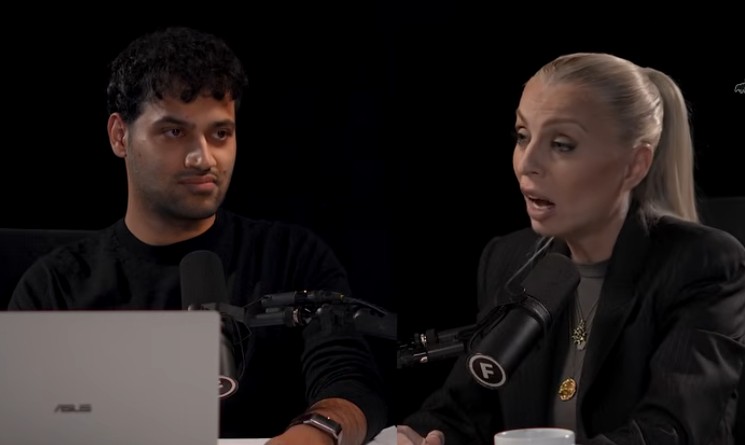
EDITOR’S NOTE: In this episode of the show, Raj Shamani sits down with Evy Poumpouras, a former U.S. Secret Service special agent, polygraph examiner, and interrogator who spent over a decade protecting U.S. presidents and investigating major crimes. Over the course of the conversation, Evy breaks down how to spot a lie, how the Secret Service trains and protects world leaders, and how she would interrogate some of history’s most notorious criminals, including Jeffrey Epstein, Pablo Escobar, Ted Bundy, and Osama bin Laden. She also opens up about surviving 9/11 and what it really takes to build resilience. This interview episode was premiered September 17, 2026.
TRANSCRIPT:
Introduction: From NYPD to the Secret Service
RAJ SHAMANI: (00:02:50 – 00:03:41) Someone’s watching you for the first time, okay? And they have no clue about what you do, what you have done. So why don’t you tell us what have you done, what do you do, and why they should watch our conversation for the next couple of hours?
EVY POUMPOURAS: (00:03:41 – 00:05:14) So my name is Evy Poumpouras. I started off in law enforcement in a career when I was very young. I actually started in the NYPD, which is New York City Police Department. Did very brief time there.
And then transitioned to the United States Secret Service, as a special agent and criminal investigator. And that agency, which some people don’t know, is what’s called a dual mission agency. They work investigations, so you work criminal cases and you also work protection.
So you protect the president of the United States, former presidents, ’cause they get protection for life, families, and then foreign heads of state. So if somebody, a head of state from India is coming to the US, or any other country visits the United States, they get protection because you do not want anybody getting assassinated on US soil. It’s bad business.
So you have these two things. So you work criminal cases. So in one week I could do a search warrant or an arrest warrant or an undercover assignment and at the same breath have a protection assignment or be sent overseas somewhere.
And then within that scope, in the agency, I did polygraph exams. Do they have those in India? They do them. So it was— I was a polygraph examiner here in the US. And here in the US, you use polygraphs for either criminal cases, or you can use them for hiring. If you wanted to be an agent in certain government positions, you have to take one and pass one.
RAJ SHAMANI: (00:05:14 – 00:05:15) Why?
EVY POUMPOURAS: (00:05:16 – 00:06:58) Well, why? Because a lot of people lie. So there’s a couple of things.
One is, if you’re going to be a US Secret Service special agent, it’s a very sensitive position. You have access to classified information, certain information. You’re also in the White House, you’re given a gun, and you’re standing next to some of the most powerful people in the world. So you have to make sure that that person is, one, not interested in infiltrating the organization, right? So that’s the first thing, terrorism, somebody infiltrating, a spy. That’s one.
The other thing is character for a job like that. You’re investigating crimes, you have access to sensitive information against sensitive people. They need to make sure that you’re of strong integrity and character. So if I grew up, and I spent my youth, or my early 20s, committing crimes, and maybe I never got caught, right? ‘Cause sometimes people would say— you would ask them, “Have you ever committed a crime?” And they would say, “Oh, I was never arrested.” That’s not what I asked you.
So you want to make sure that when you put people in a position of this kind of power, that they should be given that power. And I think I was reading the data, even in regular resumes, 75% of people lie or embellish their resumes. So how can you verify that info? And because, again, of the nature of that job, you give polygraphs. And I will tell you, Raj, I used to— I’ve taken them, and then I began to be the one who was trained to give them. I can’t tell you how many times, even in people who just wanted the job, that we would find things, and an applicant interview would sometimes turn into a criminal interview.
RAJ SHAMANI: (00:06:59 – 00:07:00) Give me an example.
EVY POUMPOURAS: (00:07:03 – 00:07:17) I had one scenario where the person applying for the job actually had— and I want to try to say this delicately— had video footage of children and pornography on their computer.
RAJ SHAMANI: (00:07:17 – 00:07:19) And he was applying for—
EVY POUMPOURAS: (00:07:19 – 00:07:26) he was applying for a position. So something like that would not have come up had it not been for the polygraph.
RAJ SHAMANI: (00:07:27 – 00:07:31) But how do you navigate and find out this stuff? What do you ask so that they—
EVY POUMPOURAS: (00:07:31 – 00:08:14) a lot of questions. When you do jobs like this— and it’s the same for the FBI, DEA, a lot of these organizations, CIA— it’s a multi-step process. So there’s different phases, and they give you the first phase, which sometimes is just, send your resume or fill in this form, then fill another form, then another form, and then come speak to this person.
Then do a panel interview where you speak to multiple agents. They ask you many questions. They put you in really tough scenarios, and they want to hear how you respond. A polygraph, written exams. So there’s a lot of phases. Each phase is meant to filter out people.
RAJ SHAMANI: (00:08:14 – 00:08:15) Hmm.
EVY POUMPOURAS: (00:08:15 – 00:09:14) Right. And it can take up to a year. I think for positions like this, and even a lot of companies, it’s good for organizations to really slow down and think about who they bring in, because once you bring a problem in, it’s a problem.
Even something like this— one person can really just collapse the whole system. And now you struggle working, it affects other people. And then compound that with sensitive information and guns and weapons and the people you’re protecting. It’s really, really important that you have people of the highest integrity when they come in, because once they’re in, people have to move and do things. You’re also out there making arrests, so you can’t— you yourself can’t be committing crimes or having committed crimes, and now you’re out there enforcing the law.
RAJ SHAMANI: (00:09:15 – 00:09:20) True. How do you even become a Secret Service agent?
EVY POUMPOURAS: (00:09:22 – 00:09:26) When you say how, tell me specifically what part you’re curious about.
RAJ SHAMANI: (00:09:27 – 00:09:35) I’m curious about, what is this position first? Is it out there open for everyone to just go apply and become a Secret Service agent?
EVY POUMPOURAS: (00:09:35 – 00:09:49) You can apply. You go to the website. Today it’s much easier. You go to a website— they’ll tell you, first of all, if they’re hiring. These agencies, they’ll tell you if they’re hiring. They have recruitment centers. You apply, you go to them. They don’t go looking for you.
RAJ SHAMANI: (00:09:49 – 00:09:49) Okay.
EVY POUMPOURAS: (00:09:49 – 00:10:02) Sometimes they’ll do job fairs. They’ll go to universities and they’ll try to recruit people. But more or less, I think sometimes in the movies they think they’re going to come knocking at your door and say, “Hey Raj, you seem super special.”
RAJ SHAMANI: (00:10:02 – 00:10:02) Yeah.
EVY POUMPOURAS: (00:10:03 – 00:10:35) They just have so many people typically that put in. I think one of the big factors or difficulties is finding people that can pass all the background checks, pass all that stuff. And sometimes it’s hard to find folks who have that level of clearance, or integrity— and not that, when you’re young you do sometimes things, or when you’re grown up you do things. So you just can’t have done too many of those inappropriate things, because that can impact you being hired.
RAJ SHAMANI: (00:10:35 – 00:10:39) So then you apply, and then you start the process.
EVY POUMPOURAS: (00:10:40 – 00:10:43) So look, what helped me— I was in the NYPD before already.
RAJ SHAMANI: (00:10:43 – 00:10:43) Yeah.
EVY POUMPOURAS: (00:10:43 – 00:11:39) So that shows, okay, this is a person who’s interested in law enforcement. Some people are in the military before, and that’s very powerful, to show, “Hey, I served my country.” A big thing is, why do you want to do that job? And when I would ask applicants, why do you want to be a Secret Service agent, I would get two different types of answers.
One was, “I want to serve something greater than myself.” And the other answer was, “Oh, I want to see if I can do this.” And it was usually the people that answered the first way that did the best, because you’re not doing it for you. You’re doing it for something bigger. If it’s just for you, when things get hard— because they will get hard, especially in the hiring process— you’re not going to have that stamina or ability to endure or go through the pain of getting through training. So it’s a multi-step process. You apply, and first, do they even consider you or not?
RAJ SHAMANI: (00:11:39 – 00:11:40) Mm-hmm.
EVY POUMPOURAS: (00:11:40 – 00:12:34) So you may never hear from anybody once you apply. If you hear, it’s usually, fill in some paperwork, and then they bring you in to take a written exam. There was a written exam you have to take that, when I took it, was very hard. I for sure thought I failed it.
And then if you pass that, then they invite you to the next step, and the next step. If you pass those steps, then they decide if they want to give you a— it’s called a conditional offer of employment. It doesn’t mean you’ve got the job. It now means you can go to training, and if you pass training, then we can give you the job. And then even if you pass training, and you get the job, then you’re put on some kind of probationary period, where they can fire you for anything. They can get rid of you, because even if you put people through training, you put all these mechanisms in place to make sure you hire the best person, which I’m sure you do as well.
RAJ SHAMANI: (00:12:35 – 00:12:35) Yeah.
EVY POUMPOURAS: (00:12:36 – 00:13:03) And then sometimes you don’t know until you know, until somebody is physically working with you all the time, seeing them do the job, and then you realize, this is a great fit, or this is really difficult. So what they do is, to make it easy to let people go— and I think a lot of law enforcement places do it, the NYPD did it too— is they do a probationary period where they can let you go much easier than if you were on for a longer period of time.
RAJ SHAMANI: (00:13:03 – 00:13:13) And what do they test in training? What’s the most brutal part of the training? Because you said, once they’re selected, not many people are able to get across the training period as well.
EVY POUMPOURAS: (00:13:14 – 00:15:03) Training, usually at that point, if you get accepted into training, they still can ask you to leave at any point. At that point, they have invested a lot of time, energy, and effort. And it’s a small group. It’s not like a military group where there’s hundreds— it’s usually a handful of folks. And at that point, they do try to— I don’t want to say help you, but they want to see you succeed, because they’ve invested all that time, energy, effort, and money.
But you do training in combat fighting. It’s driving— and not like fun driving. When I did training, it was one of the most stressful things because you can get disqualified at any point, and you’re doing tactical driving, driving with bulletproof vehicles, which is very hard. Looks cool on TV. Very difficult to do in real life, to do certain maneuvers with them.
A lot of testing, written exams. The law, ethics, policies, and procedures. So you have to really be kind of a master of all. And the other part of it is, I think probably what’s also hard is that your performance is out on display for everyone. There’s no privacy. So people know if you pass or fail, people know how well you shoot or don’t shoot.
For example, when you’re shooting at the range— again, sounds cool, it can be a stressful thing. At least it was for me, and I know it was for many agents, because you want to perform well. Because the person next to you, or even further down, they would write our scores in big black magic marker. They would score it. They didn’t pull you to the side and say, “Hey, let me tell you what you got, Evy, we need to do better.” No, they wrote your score out in big letters so everybody could see how well or how poorly you performed.
RAJ SHAMANI: (00:15:03 – 00:15:07) And why would they do so? Why would they want to publicize every result?
EVY POUMPOURAS: (00:15:07 – 00:15:16) It’s a competitive environment. And honestly, if you can’t take people seeing your weaknesses, you can’t be there. You have to be a very resilient person. It’s not a job where they’re going to hold your hand.
RAJ SHAMANI: (00:15:16 – 00:15:17) Hmm.
EVY POUMPOURAS: (00:15:17 – 00:16:06) And so if you’re a person who— I don’t mean it like overly sensitive, or things hurt your feelings— you can’t do that job, because it’s a very direct job. It’s like, “Hey, I need you to do this. I need you to fix this.” And you can’t have personalities where they’re easily affected or impacted, their feelings get hurt. I don’t mean it in a negative way, I just mean it will make the job very difficult to do. And especially when you deal with life and death, if you can’t deal with the embarrassment of performing badly and people seeing it, then you can’t do it. So it does make you also accountable, because now I know how well or not well you’re doing. And if I care about my reputation, then I’m going to work harder and perform better.
RAJ SHAMANI: (00:16:06 – 00:16:07) True.
EVY POUMPOURAS: (00:16:07 – 00:16:25) So it’s another thing too. Sometimes shame’s a big thing. It’s not a bad thing. I know sometimes people think shame’s bad. No, shame keeps you on your toes. Shame keeps you making better decisions. Guilt and shame, they serve their purpose.
RAJ SHAMANI: (00:16:25 – 00:16:34) Shame is one of the biggest motivators in the world anyway. A lot of people don’t mess up because of shame and embarrassment. Yes.
EVY POUMPOURAS: (00:16:35 – 00:17:41) And I think a lot of times in society today you hear, “I don’t want to feel”— how do you get rid of the shame? How do I get rid of these bad feelings? And I think it’s mislabeling them, and everything serves a purpose. Even guilt. Guilt is a good thing. If you feel guilt, it means you did something wrong that you should feel bad about. And when you feel bad about it, what does that mean? I will not do it again, or I will do better next time.
But if you take that guilt away, or that shame away, now you have no attachment. In fact, when you look at people who are sociopathic— they’re called antisocial personality disorders, people who commit really bad crimes, think of serial killers or people at that level— part of the reason that they’re able to do that is they feel no shame, they feel no guilt, they don’t feel bad. So they can do that. There’s a very low, if not zero, empathy. So those feelings— when people feel shame, embarrassment, guilt— they are good. I felt them all the time. I still feel them all the time as a human being. And they keep me steady, and they help me make better decisions.
RAJ SHAMANI: (00:17:41 – 00:17:45) Interesting. What’s the most unusual thing you were trained on?
EVY POUMPOURAS: (00:17:46 – 00:18:05) What’s the unusual thing that I did training in? I’m trying to think. I understood why we did it. I don’t know if it was unusual, but driving bulletproof cars— at first I thought it’d be easy. I was like, “Oh, this will be great.” It was very hard maneuvering the vehicles.
RAJ SHAMANI: (00:18:06 – 00:18:10) But why would they teach you? You were not a designated driver, right?
EVY POUMPOURAS: (00:18:10 – 00:19:25) Oh, I drove everybody. You know what the great thing with that job is? You do everything. You go from driving to standing here, because you’re driving protectees, individuals. So you need to know how to drive ballistic vehicles. And because of the weight of the cars, if you’re going very fast, they’re very hard to maneuver. So, ballistic cars sound cool, really difficult to navigate. At least for me, it was.
I’m trying to think what was surprising about training. I think what was surprising to me, because I had no military background— and I actually learned this in the NYPD, I didn’t realize how militarized it was. They’re called paramilitary, which means the training’s designed similar to the military. And I thought, “Oh, this is great, it’ll be like college.” And it was nothing like college. It was very hard. People are not there to hold your hand. NYPD, for example, is a class of 1,500 cadets. You’re nobody. You’re next, you’re nothing. And you learn that very quickly, and you learn to sink or swim. And I think that part is hard, not understanding.
RAJ SHAMANI: (00:19:25 – 00:19:27) What was hard about that training?
EVY POUMPOURAS: (00:19:27 – 00:19:28) What was NYPD?
RAJ SHAMANI: (00:19:28 – 00:19:28) Yeah.
EVY POUMPOURAS: (00:19:29 – 00:19:56) I think the first few months, especially the first month, their job is to just weed out the weak. They just weed people out by yelling. They’re yelling at you. They’re making you do push-ups for no reason. Somebody’s phone went off. I remember we were on the muster deck. They call it muster when they take attendance, they line everybody up. You’re standing there, you’re freezing. And I remember the muster deck was on a rooftop in the old academy.
RAJ SHAMANI: (00:19:57 – 00:19:57) Mm-hmm.
EVY POUMPOURAS: (00:19:57 – 00:20:31) In New York City. And it’s freezing, and you’re standing there. You can’t move, you can’t budge. And I remember once somebody’s phone went off, somebody all the way in the back, and you’re not supposed to let that happen. And then all of us had to do push-ups. Somebody does some small infraction, they find reasons to punish you. I think the best quality you can have for stuff like that is your ability to endure pain, both physical pain and probably emotional, psychological pain. If you can do that, you can kind of do anything.
New York City, Crime, and the Roots of Policing
RAJ SHAMANI: (00:20:33 – 00:21:00) I’ll come back to the Secret Service and a bunch of other things in the protection group, but because you were on the NYPD, I’m just curious to know— America is one of the most powerful countries in the world, probably the most powerful country in the world today. New York is the hub, and yet New York is getting more and more unsafe day by day. Why do you feel NYPD is not able to make New York safe?
EVY POUMPOURAS: (00:21:01 – 00:23:46) I actually taught criminal justice and criminology here in the United States for about 10 years. There are two dominant things that prevent crime. The one is, you’re going to get caught without a shadow of a doubt. If I know I’m going to get caught, and get caught fast, that’s one deterrent. And the other deterrent is, I’m going to be punished. These are the two most important factors. If you take one of these away, it increases people’s likelihood of committing crime. Usually also, people who commit crime tend to be a smaller group or network of folks that commit crime after crime after crime.
The other thing is, I think we’re also in a place where there’s a dislike for law enforcement. It’s a very negative view. When I started in the NYPD, it was before September 11th. Before then, people didn’t like law enforcement or police either. I remember we used to run by the highway here in New York City, it was called the FDR, and they’d have us running, and you could tell we were police recruits. And people would drive by doing 50, 60 miles an hour, and they would spit at us. They would curse at us. They would give us the middle finger. And I remember, because I was very young, I didn’t understand. I was like, “Why do they hate us so much? I’m becoming a police officer because I want to help.” But there’s high distrust in society.
And the ironic thing is, police was created— the first police department was created in London, the Metropolitan Police Force. It was in the 1800s, I can’t remember the exact date, but it was in the mid to late 1800s it was created. And the reason why police were created is because it was for people who did not have money. Private police existed— that meant people with money could get justice. So if somebody stole from me, I would pay for private police and they’d go get me my person.
So what political leaders realized at that time is, this isn’t right, because what about the rest of society? So that’s when they made police public. Police actually exist for people who don’t have money, who can’t afford security. So sometimes when I hear people criticize law enforcement, or want to defund the police and say no police, I don’t think they realize that it actually exists for people who don’t have the money to get justice, to get help. And that’s how it actually started.
One of— John Franchi, I’m going to give him a shout-out now, former CIA Chief of Station in the Middle East, I can’t say which country he was in— I asked him, “How do you destroy a country?” And he said he got a great answer once from a former member of the KGB, a Russian. And the man said, “The way you destroy a country is to kill it from within.”
RAJ SHAMANI: (00:23:48 – 00:23:49) And how do you kill it from within?
EVY POUMPOURAS: (00:23:50 – 00:24:14) Divisiveness. You break the unity. And if everybody’s fighting each other, which sadly it appears in the US, it looks like that— that’s a great way to bring a very powerful country down. You destroy it from within, because if you’re attacking a country from the outside, usually that country’s unified and they fight back.
RAJ SHAMANI: (00:24:14 – 00:24:14) Mm-hmm.
EVY POUMPOURAS: (00:24:14 – 00:25:06) It’s very powerful. But if I’m fighting you and my neighbor and this other person, there are, I think, outside entities and bad actors that are doing a great job of getting people to do a lot of infighting. And I think it’s really important for people to pause and say, “What I’m consuming, is it true? And is it the whole story, or is it 1% and I’m ignoring the 99%?” Because I do the news, I’m in media, which also has high distrust. So I’m always very careful as to what I say and share. But I know that every time I go on air, I am unfortunately discussing negative things about policing. It’s always, “What did they mess up? What did they not do? What are they doing bad here?” So if that’s all you hear and that’s all you see, that’s your truth and reality.
RAJ SHAMANI: (00:25:06 – 00:25:11) Who are the countries which are trying to destroy the United States from the inside?
EVY POUMPOURAS: (00:25:12 – 00:25:42) I would think a lot of powerful actors. It’s not China, Russia— it’s just the way it’s played. It’s become the new warfare. I’m not going to drop bombs. I’m going to put bots, or I’m going to put actors to help create conflict online and confuse your population. Why do you think some countries control the internet? Some countries really control the internet and what people are allowed to see and share and voice, because they want to control narratives.
RAJ SHAMANI: (00:25:42 – 00:25:42) Yeah.
EVY POUMPOURAS: (00:25:43 – 00:26:13) Because if I don’t control the narrative, then somebody can disrupt my country and my ability to govern that country. Many countries do that. They filter what can be said, and you could look at it as a bad thing, and yes, it’s got its negatives, but at the same time they’re like, “I’m trying to control the narrative because I want my people to believe what I want them to believe,” whether it’s good or not, it’s up for debate. But in the US, because anything goes, then anything goes.
RAJ SHAMANI: (00:26:13 – 00:26:13) Mm-hmm.
EVY POUMPOURAS: (00:26:13 – 00:26:45) And so you always have to understand, even if I do an interview like this, I’m very hyper-aware of everything I say, because I know there are bad actors that are going to watch this and they’re going to try to collect intelligence, “Oh, she’s going to talk about the U.S. Secret Service and the U.S. government, what can she say and what could I learn?” Because I’m a bad actor and I want to attack, create conflict. So it’s always running this balance of, you want to share information with people, and at the same time, I have to be hyper-aware of what I say when I open my mouth.
The Art of Influence and Reading People
RAJ SHAMANI: (00:26:45 – 00:26:51) Is there a way that you can make people tell you more things? Can you extract things out of them?
EVY POUMPOURAS: (00:26:52 – 00:27:05) Yes. I did that all the time when I was an examiner. There are some influence strategies you can use with people. For example, autonomy is one that’s a good influence strategy.
RAJ SHAMANI: (00:27:06 – 00:27:07) What do you mean by that?
EVY POUMPOURAS: (00:27:07 – 00:28:47) So autonomy is when I let you feel like you’re in control. I’m trying to think of a simple one. When I was doing my old job in law enforcement, and even now in media, a lot of people did not want to talk to me, because if you talked to me, there was a very good chance you might go to jail or prison. So what’s the benefit of talking to me?
But the way the law works in the United States, you cannot make somebody talk to you, even if they’re in custody, even if they’re arrested. They have the right to remain silent. They have Miranda rights. You don’t have to share information. You know that if you share information, it can be held against you.
So one of the things I would do to make people feel like they have control and authority, I would tell them, “You can leave at any time. You have a choice. There’s the door.” I would show them the door. I would even say, “Look, the door’s unlocked, you can walk out.” I would make sure that my chair, when I could, did not block the door, that they always felt they were free to go if they were not in custody, or free to stop speaking to me. So I gave them a choice. I was like, “Hey, just come and sit down. You don’t have to say anything. Let me do the talking. And at any point, if you want to walk out, you can walk out.” I just gave them a choice, so they don’t feel like I’m holding all the cards. But if I’m like, “No, sit down, and you’re going to talk to me, and you’re going to tell me this. If you don’t tell me this, you’re going to jail”— I’m taking away their autonomy. So when people feel the choice, “I can walk out anytime and she won’t stop me,” that’s autonomy. You feel better. You feel like, “I’m in charge.”
RAJ SHAMANI: (00:28:47 – 00:28:47) I’m in control.
EVY POUMPOURAS: (00:28:48 – 00:29:00) That’s a really good influence strategy. Other influence strategies are reciprocity. I do something for you, in hopes that either later on or immediately you’ll do something for me.
RAJ SHAMANI: (00:29:00 – 00:29:00) Hmm.
EVY POUMPOURAS: (00:29:01 – 00:29:07) People don’t like to feel— for some reason we’re wired, most of us, not to feel like we owe somebody something.
RAJ SHAMANI: (00:29:07 – 00:29:08) Yeah.
EVY POUMPOURAS: (00:29:08 – 00:30:08) So think about doors. When people hold doors— you ever walk through double doors, where it’s doors and then another set of doors, which some office buildings are like that. If somebody holds a door for you and you walk through, you’re like, “Oh, thank you.” And what do you immediately do? You’ll grab the next door to hold for them. That’s called reciprocity. So when you do things for people, you should do them for the niceness of doing things for people. However, there are some people who use it as an influence strategy. I’ll do something nice for you, in hopes that you will reciprocate and do something nice for me.
That’s influence. Especially— let’s say I’m going to do something nice for you, Raj, because maybe I want to get into the podcast business, and I don’t know anything about the podcast business, but you’re really good at it. So I’m going to do a lot of nice things that have nothing to do with podcasts for you. That way, later on, a month or two months later, I can come to you. “Hey Raj, I got a question for you, I want to launch a podcast, could you guide me or help me out?” And you’re going to say, “Sure, Evy,” because I did a lot of things for you before, nothing to do with the podcast space.
RAJ SHAMANI: (00:30:09 – 00:30:09) True.
EVY POUMPOURAS: (00:30:09 – 00:31:10) But I put money in the bank of Raj, and now I can come to Raj and withdraw. And you’re thinking, “Oh, she’s done so many nice things for me.” Now, you should do nice things for people, I think, within reason, because we should all help each other out. I’m not self-made. I had good people along the way that helped make me and get me to where I’m at. But you can also look at people and say, “This person maybe later on in life can give me guidance or support, let me give value to them.” So it’s a tricky slope, but then there are people who completely manipulate it. But that’s another influence strategy— reciprocity. And I’ll give you one more, authority. If people see me as an authority, they are more likely to say yes to me and not challenge me. So if you are able to carry yourself in such a way, or make somebody believe that you are the authority in that dynamic, that’s influence.
RAJ SHAMANI: (00:31:10 – 00:31:13) How do you make yourself an authority in the room?
EVY POUMPOURAS: (00:31:14 – 00:32:12) It can be the way I enter the room. It can be the way I speak and the way I dress. It can be the aura I put off. It could also be my voice. There was a study done in 2012 in the United States. They looked at politicians and wanted to see which politicians would win the election. They were trying to see patterns, and they found that the politicians who won the majority of the elections all had a deeper, stronger tone of voice. It’s called paralinguistics, because of the way they sounded when they spoke. They were deemed to have more authority— nothing to do with their competency or anything like that, just what they sound like when they spoke. So if I have a higher voice, I’m seen as less competent and less of an authority. “Hi, I’m Evy.” “Hi, I’m Evy.” I’m deemed as being more of an authority. So there are other little techniques and strategies that you use to make yourself appear, or not appear, as an authority, regardless of title or status.
RAJ SHAMANI: (00:32:13 – 00:32:16) So one strategy to appear authoritative was voice.
EVY POUMPOURAS: (00:32:17 – 00:32:18) It can be your voice.
RAJ SHAMANI: (00:32:18 – 00:32:18) Yes.
EVY POUMPOURAS: (00:32:18 – 00:32:20) Two, three more, can be dress.
RAJ SHAMANI: (00:32:21 – 00:32:21) Okay.
EVY POUMPOURAS: (00:32:21 – 00:32:41) So darker colors, which you’re wearing now, exude more authority. If I came in here wearing a bright yellow outfit, and I’m former U.S. Secret Service— even if I’m highly competent, just the appearance of what I’m wearing is going to take my authority away.
RAJ SHAMANI: (00:32:41 – 00:32:43) Some people are going to doubt that.
EVY POUMPOURAS: (00:32:43 – 00:33:45) People are going to doubt it, and I understand why. Here’s the thing, first impressions matter. It’s like 0.1 seconds to 2 or 3 seconds— it’s super fast. Once somebody has a negative impression of you, it’s extremely difficult to reverse. So how you show up, how you enter a room, what you wear, how you’re dressed, your movements, all of that— people within seconds decide how they see you. And if they make a negative impression of you, it is deeply difficult to undo. And it takes a lot of patience and a lot of time and a lot of work on your end, consistency, to change that.
That’s why it’s really important to always think about how you show up immediately. And with that, social media comes in, because it’s not just me showing up here. You’ve probably looked at my social media, you’ve looked at my posts, you look at what I write. That’s another thing people have to look at, because people are already making an impression of you before they even meet you.
Layers of Presidential Protection
RAJ SHAMANI: (00:33:45 – 00:34:22) Let’s get into details of security now. Because when the whole world is lying, you can’t trust anyone. Everyone, you see them as a threat, because there can be a possible threat from anywhere in the world, right? And you are responsible to be in a group to protect the most powerful person in the world, where probably the enemy line is like the whole world is your enemy. How do you design this? What are the layers? Because all we see is one guy in the center who is the president of the United States, and then we see a couple of bodyguards around them. How many layers does it go out?
EVY POUMPOURAS: (00:34:23 – 00:34:53) So it’s a lot of security layers, kind of like how you were saying you created layers around you for people who want access to you. It’s the same thing. You have to think of layers— first of all, there’s layers from the security side, and the people closest, in the center of the circle. They call that “shift.” Shift is like, you’re literally the bodyguard. This is the last line of defense. If something gets to the shift— if I’m standing next to the president and a shot’s fired and it hits us, or hits him— I’ve failed.
RAJ SHAMANI: (00:34:54 – 00:34:54) Okay.
EVY POUMPOURAS: (00:34:54 – 00:37:51) It should never come to that. But you have components that create circles of security around that person, layer upon layer. And the idea is, each of these circles is supposed to stop or intercept a threat at some point.
So, what are some examples that I can share? Something counter-sniper. If, let’s say right now we’re in New York City, high-rise buildings. If the president’s moving, arriving and departing somewhere, I’m not just securing the ground, I’m securing what’s up top. I’ve got all these high-rise buildings, so anybody— a sniper can embed themselves anywhere and take a shot. So that’s one layer of security I have to manage.
So you would put counter-snipers. Those are tactical teams, obviously on the side of the Secret Service or local law enforcement, who are supposed to take positions to look at literally every open window. And they would be on the radio, “Hey, I see an open window.” Just imagine how crazy that is when you’re moving the president, or someone like that, where you’re walking around and you’re literally hearing, “Open window on 13, at this building,” or “Open window here.” And then there would be a team that would go to each open window.
I remember once President Bush went to Argentina, and I was assigned to be the counter-sniper response. So the counter-snipers are looking at all the open windows and the ceilings in the area, and it was me and another person who were assigned to respond, because they can’t move, and they don’t want to shoot— if you have to see a threat to shoot, you have to see a threat. So I was part of the team that would respond to all these open windows.
I remember there was one that came in as a threat, and now we’re in a foreign country, mind you, Argentina, and there was a potential person on a rooftop, and the counter-sniper, all he could see was a lens. He couldn’t tell if it was a lens from a weapon or if it could have been binoculars. There’s no way to know, but he could see the light from the lens, or the reflection. So we’re running to respond to this, up all the flights of stairs, and you don’t know, and you’re hearing, “Hey, they’re moving closer,” and you’re hearing all this traffic, and you’re thinking, “Oh gosh, the president”— and it was President Bush at the time— “is moving.” And you get there, and it was this older man who had binoculars who was trying to watch. But we scared him half to death. He was like, “Oh my God, I’m sorry. Lo siento, lo siento.”
But those are layers of protection. So that’s one layer— you’re getting the counter-snipers. And I think I can share this to some degree. There are teams on the ground that are dressed like everybody else, and they’re just in the crowd, blending in the crowd. And usually those people, you put them where the crowd is, you put them where the protesters are, because I want to listen to what the protesters are talking about, because anywhere the president goes, you’re going to have protesters.
RAJ SHAMANI: (00:37:51 – 00:37:52) Hmm.
EVY POUMPOURAS: (00:37:52 – 00:40:03) There’s always going to be hate. So at least in the US, you have to allow them— it’s their First Amendment right to speak— but you want to put them in a place where they can feel heard, but where it’s safe. So we position them somewhere. You want to make sure you’ve got teams there, you’ve got the vehicles, which are highly tactical vehicles, ballistic vehicles.
And some people don’t know this, the most vulnerable a protectee is, is in movement— arrival, departure. When they’re in a physical location, like we are, I can control components. Outside is where you’re the weakest. Also, when the cars are moving— another concern was ambushes. I’m driving, and somebody puts an IED on the road. Boom. What do I do? So you always want to stay in motion. They used to say, “Get off the X.” You never want to be locked into a problem. I actually even use “get off the X” psychologically whenever I’m dealing with a problem and I feel stuck. I’m like, “I’m on the X, I’m on the X, get off the X.” But this was a tactical thing that would be done.
The other thing you would also do— you may not realize it, but it’s not just the Secret Service. The Secret Service is a small agency relative to other agencies. So you would go to local police departments. Right now we’re in New York City, so I would go to the NYPD and I would say, “I need uniforms, I need officers.” And they would scatter them throughout the city. And one of the things you would decide, too, is how many officers do you want in plain clothes that blend in, and how many do you want in uniform. You would want both.
Some people would say, “Oh, I don’t want any in uniform, I want them all in plainclothes, so the public doesn’t know.” Wrong. I want officers in uniform. Why? Because if I’m a bad actor and I see a uniform, what am I going to do? I’m going to turn around and go the other way. Sometimes just the presence of seeing that uniform there deters. Here in the United States, they will park police vehicles in certain locations, no police in them, but they’ll park them in certain locations where they think people speed. And people see the police car and they automatically slow down, even though there’s nobody in the car.
RAJ SHAMANI: (00:40:04 – 00:40:04) I didn’t know this.
EVY POUMPOURAS: (00:40:05 – 00:40:39) Yes. Visually seeing law enforcement is a deterrence. A lot of it is visual. Most people will see and they’ll turn around. Then you want to think of barricades, physical things you can do to secure a spot. I think I can share this one too— I never want to impede the ability of the service to do their job. But I had one assignment where the president— and this was President Barack Obama— he was going to speak in an open area.
RAJ SHAMANI: (00:40:39 – 00:40:39) Hmm.
EVY POUMPOURAS: (00:40:40 – 00:44:56) And near that open area, there was a highway. My concern was somebody driving by, a service road highway. My concern was somebody driving by and detonating their vehicle, and that blast hitting the stage, or the area where the president was.
The other thing— we keep talking about securing the president. I’m also responsible for those 10,000 people that are going to be there, because what you don’t realize is, he’s the threat, right? He’s the volatile thing. He’s the thing people want. But the people that are around, now they’re vulnerable. So I have to keep those people safe too. It’s not just this person and forget everybody else.
So I remember I was trying to figure out, how do I secure this roadway? I had line-of-sight issues, meaning people from the road could see through. There were trees and a forest, but they could still see through. So line of sight— I don’t want people seeing into my secure space, because I’m thinking weapons, snipers. The other thing I’m thinking is vehicles that could detonate. So I was like, how do I block this?
I start making phone calls to the locals in the area, meaning the city. And at first I called sanitation, the people that do the garbage, because here in the United States we’ve got heavy, big, thick garbage trucks. I said, “I need garbage trucks.” Because this was such a small area, they said, “We don’t have enough garbage trucks for you.” So then I called construction places, I said, “I need bulldozers.” I didn’t have enough.
So I said, “I know what I’m going to do.” I called schools. I called the superintendent for the schools in that area, and I said, “Do you have some yellow school buses I can borrow?” They said yes. And I said, “How many school buses can you give me?” So the district gave me all their yellow school buses, and I lined them up by the highway and by the tree line. So what did they do? They blocked my line of sight— that’s one. Two, they would deter a blast. If a blast came from the road, those school buses would absorb the impact of the blast. Now, if I had a second blast, it might be an issue, because you have to do the math on how much of an explosive, and how far that explosive can reach. You have to do blocks. There’s so many things that come into effect.
So I remember I lined the whole thing with yellow school buses. I got them all, had them lined up. I said, “Drop them off, I’ll call you when I’m done.” When we were done, I called them up, “Come pick up your school buses.” So when you do protection, you have to be very creative. You don’t think like a protector, you think like the assassin. “If I’m going to kill this person, how am I going to do it?” And I think of all the ways I would kill the person, and then I work in reverse and I build my plan.
The other thing is something very simple too— road closures, closing roads, because I want to control what’s in. You create clean space, which is space that’s been cleared, that’s secure, and then you lock it secure. And you keep everything dirty outside of it. So then you have magnetometers, for people who are coming to an event, which is always a variable you want to try to control.
So there’s so many layers you would do. Another thing we would do, and I think this is okay— for big events, let’s say the president’s going to speak at a stadium, with people, my concern would be not just explosives, but chemical, biological weapons, radiation. So we would have devices there that would assess whether there was any radioactivity, nuclear threats, bomb— that type of stuff, radioactive devices.
You have to think constantly, because the people that want to do this, that want to cause harm— and it’s funny, they probably don’t think they’re causing harm, they think they’re doing something good in the world. Usually people that do this stuff think, “I’m the good guy.” They justify what they’re doing, but you put all these mechanisms and layers in place to create a protective environment. So I’m knocking out one threat after another. The other thing to think about— you probably wouldn’t think about it— is fire. Not just for my person, but what about the people?
RAJ SHAMANI: (00:44:56 – 00:44:56) Mm-hmm.
EVY POUMPOURAS: (00:44:56 – 00:45:20) How am I going to get them all out of there? How am I going to save all those thousands of people, if there’s an explosion? So I would have to have medical teams on standby, not just for the person I’m protecting, but also for the crowd. So there’s so many things you have to think of, and layers that you put into place to offset. And you have to think, at the end of the day, I’m there to preserve human life. How do I do it?
RAJ SHAMANI: (00:45:21 – 00:45:23) But how do you do that on foreign land?
EVY POUMPOURAS: (00:45:24 – 00:45:25) You work with foreign countries.
RAJ SHAMANI: (00:45:25 – 00:45:35) So imagine, a US president has to go give a speech in China, or let’s say India or China, how would—
Foreign Trips, Diplomacy, and Trust
EVY POUMPOURAS: (00:45:35 – 00:47:39) I’ve been to Russia, not with the president, with other people we protect. And it’s a gamble, because you have to trust that other foreign country. With Russia, I went to put the security plan in place for the Secretary of the Treasury to go, because we protected the Secretary of the Treasury too. So I put my plan in place, I’m working with the State Department, the Russians are going to do this.
And then we show up, we roll up to the gates. “Hi, I’m here with the Secretary of the Treasury.” Now I’m the agent in charge of the whole thing, right? And they said, “Yes, come on in.” As the gates open, my person goes in, and the Russians close the gates on the rest of the team and lock us out. And I am— I don’t want to say I’m losing my mind, I’m losing my mind on the inside, but outside I’m keeping it together.
Those are examples of where foreign countries will mess with you, and they were absolutely messing with us. It was a terrible scenario to be put in, because the tactical element, which was our element, was locked out, and there was only a small contingency of protection with the Secretary of the Treasury. It was horrific. And then the Russians, to mess with us further, when it was time— I couldn’t get in, I was literally at the gates fighting with the Russians. I couldn’t get in, and I’m arguing with the State Department too, because at the time I’m like, “Where’s your muscle? How could you allow something like this to happen?”
When the meeting was done, they never let me in. They actually had my protectee leave through a different gate, gave them Russian security, and left us somewhere else. It was horrific. So that stuff absolutely does happen. Going overseas, especially with countries that either want to mess with you or are not friendly, you are sometimes at the mercy of that stuff. So you always want to be really careful. There were times where I would do protection plans in certain countries, and even though they were friendly, they were really difficult to deal with. I would make calls and say, “You can’t bring this person here.”
RAJ SHAMANI: (00:47:40 – 00:47:52) How does the process go? Let’s say, now you’re the person you’re trying to protect, that person has to land in another country— you go there in advance, how many days?
EVY POUMPOURAS: (00:47:52 – 00:47:55) So let’s say he’s going to— the president’s going to India, right?
RAJ SHAMANI: (00:47:55 – 00:47:55) Yeah, okay.
EVY POUMPOURAS: (00:47:55 – 00:48:49) If I’m going to India, which is a big country— let’s say he’s going to Mumbai. I’m going to send an agent and people out there probably a month in advance, to work with the Mumbai police, with the federal police in India, with the military in India. Whatever India is willing to give me, I’m going to work with them. Typically with India there’s high trust, right? Certain countries there’s more trust than with others, and I’m going to work with those locals.
At the same time, it’s funny, because you’re doing the protection, but you always have to worry about espionage too, with other countries. You want to disclose some of your security plan, but you can’t disclose all of it, because now a foreign country knows how you do protection. It’s such a weird dance. So you want to show and give, but at the same time you don’t want to show and give everything, because every country sends their version of the CIA to watch and listen and think, “Oh, this is how the Americans do it.”
RAJ SHAMANI: (00:48:49 – 00:48:49) Yeah, yeah.
EVY POUMPOURAS: (00:48:49 – 00:49:41) And sometimes they just want to copy what we do, because we do it well, and sometimes they want to know because they’re spying and collecting intelligence. The country you go to matters, who you work with matters. And the United States does typically a really good job of letting you know, “Hey, you’re going to this country, they play nice, or they don’t play nice, these are the things to be aware of.” Or, “This country has a police force that’s going to work with you, but there’s a lot of corruption with this police force. Be very, very careful, watch what you share, presume that they’re selling this information to somebody else.” So it becomes very difficult. Foreign trips are typically massive headaches. And then sometimes you’d go to countries that just want to mess with you because you’re America, and sometimes people have negative feelings towards America.
RAJ SHAMANI: (00:49:41 – 00:50:14) But don’t you think countries like India, or any large country all around the world, they would want to help you more? They would provide their best security, best stuff to protect your president, because if anything happens on that trip, it’s a bad reputation for the country. You’re correct— no other country would want to mess, because you don’t want to mess with even a small country. You don’t want to show the world that a president of another country came to your country and this is what happened.
EVY POUMPOURAS: (00:50:14 – 00:51:31) Well, it depends on the country. If you go to Iran, it’s a country you don’t want to go there, because you’re directly at war. Or Afghanistan, when we’re at war, they would actually sneak the president in, because you can’t trust— sometimes some governments, because there’s so much corruption, or sometimes infighting, you can’t even trust governments because they themselves don’t have a good handle on the country.
So keep that in mind. Not every country is India, where there’s some level of law and order and organization. Some countries are not. There’s a lot of infighting, civil unrest, problems where people don’t recognize who’s in charge. So keep that in mind: what country am I going to, is there a stable government, is that a government I can work with, is that government friendly? And sometimes even friendly— you asked, why would a maybe stable or friendly government not cooperate? I remember one country, I’m not going to say which one, it was in Africa. I was sent there a month out in advance to put a security plan in place for one of my protectees. And typically we want to bring, from the US, weapons and cars. I want my stuff, I don’t know how good your stuff is.
RAJ SHAMANI: (00:51:31 – 00:51:31) Yeah.
EVY POUMPOURAS: (00:51:32 – 00:52:27) I want my stuff. But this country was giving me a very hard time, saying, “You can only bring in”— I’m going to make the numbers up— “10 guns, not 50 guns.” I’m like, “Well, I want 50 guns, what am I going to do with 10 guns?” So there’s an argument there. And sometimes it would just be, “We’ll have our people.” And I’m like, “I don’t want your people, I want my people.” So that’s where the issue would come in, because in the United States, we train very differently. So there’s some countries where you’re like, nice country, but they’re not capable of protecting. Or some countries will say, “We’ll give you ballistic vehicles.” No. If you look at images of the president, any president going anywhere in the world, they are always in their own cars. You never, ever, ever use that host country’s cars. Look at any picture of any president of the United States, they are always in their cars. We fly the cars over.
RAJ SHAMANI: (00:52:28 – 00:52:28) Why?
EVY POUMPOURAS: (00:52:29 – 00:53:05) Because I know my cars are good— well, not my cars, the U.S. Secret Service’s cars. I know my cars are good. I know they can withstand a certain amount of bullets, a certain blast. I don’t know what your cars are like, what they’re designed for. Forget about even maybe there are bugs in there, meaning spy bugs to listen. Forget that. I know what my cars are capable of. Even magnetometers, the ones people walk through in certain scenarios and events— I don’t want your magnetometers, I want mine. I know what mine are capable of doing. I don’t know what yours are capable of doing. And that’s where trust comes in. You trust, but only so far— conditional trust.
RAJ SHAMANI: (00:53:05 – 00:53:05) Hmm.
EVY POUMPOURAS: (00:53:05 – 00:53:23) I trust my stuff works and works well. Yours, not so sure, and it’s not a risk I’m willing to take. So sometimes people’s feelings would get hurt in different countries. But when you’re dealing with life and death, and you’re dealing with the most targeted person in the world, you can’t negotiate certain things.
RAJ SHAMANI: (00:53:24 – 00:53:31) But is it like a full-time negotiation going on between two countries, when you want your person to visit there?
EVY POUMPOURAS: (00:53:31 – 00:53:37) Yes, you’re always negotiating. You have to do a good job, because the other thing is, you could really ruin diplomatic relations.
RAJ SHAMANI: (00:53:38 – 00:53:39) Why? How?
EVY POUMPOURAS: (00:53:40 – 00:54:21) Because if I’m not getting along with the government of that country— if I get sent to India, and let’s say India’s giving me a hard time— but the president of the United States is going to India to speak with the heads of state to encourage trade, or do something, and let’s say the relationship is a little rocky. If I come in and create problems, it always goes to the top. So now I’m creating a hostile environment. I have to work well and work nice. You’re a diplomat, I had a diplomatic passport. You represent your country. So, one, your behavior— are you behaving yourself when you’re in that country, you can’t act stupid. Number one. Number two is your professionalism.
RAJ SHAMANI: (00:54:21 – 00:54:21) Yeah.
EVY POUMPOURAS: (00:54:22 – 00:55:12) And what you do or say, you’re a representative of the US government, and you have to think every time you open your mouth, “Am I representing this government well?” Because the phone’s going to ring, and they’re going to say, “What are you doing? We’re going there to make nice, and you’re creating a hostile environment.” Although I’ll say this, the United States overall, and at least in my experience, we were always, when we would do it, very respectful and very good. We were told, “You play nice when you go overseas.” It was usually the other way around— I know everybody thinks America is the aggressor, but I will tell you, from my experience, we usually went in very much in good faith. And it was usually, maybe because of the reputation the US has, some countries would be very difficult to deal with. Some were just happy to have you, and they’d say, “We’ll give you whatever you need.” So it just ran the gamut.
RAJ SHAMANI: (00:55:13 – 00:55:25) But I’m still not able to understand why they would not allow you 50 guns and only allow you 10 guns. Is there a reason, or is it just a tactic, like, “Hey, we don’t succumb to every demand that you have”?
EVY POUMPOURAS: (00:55:25 – 00:56:16) So it’s a really good question, and here’s why. I’m going to flip it. Let’s say a country is going to come to the U.S., and they say, “We want to come to the U.S. and we want to bring 50 of our personnel, and they’re going to bring 50 guns.” The United States looks at this and says, “Your guys are coming in with guns, I don’t know what their training is, I don’t know their tactical training, the laws here are different— do I want that many guns in my country from a foreign country with foreign people?” So they do the same.
Now you can make the argument, I’m going to be American here, “We’re the United States, we have really good training, you can trust us when we go to another country.” But then when that country comes to the US, and we’re like, “I know you let us in with all these guns, but we’re not going to let you in with that many”— there’s always this barter system. “Okay, if you let me in with 50 guns, I’ll let you in with 40 guns.” A lot of times it’s that.
RAJ SHAMANI: (00:56:18 – 00:56:19) It’s just a power play.
EVY POUMPOURAS: (00:56:19 – 00:56:19) Yes.
RAJ SHAMANI: (00:56:20 – 00:56:20) That’s what I can hear.
EVY POUMPOURAS: (00:56:20 – 00:56:21) Of course. Yes.
Ballistic Vehicles
RAJ SHAMANI: (00:56:22 – 00:56:37) Now let’s come to the cars. You kept bringing this up again and again, that it’s very difficult to drive a ballistic vehicle. What’s the difference between a normal car and the car for the most protected person in the world?
EVY POUMPOURAS: (00:56:38 – 00:57:14) Basically, what’s the difference between a ballistic vehicle and a regular vehicle— ballistic vehicles usually have layers put in them, so that if there are bullets hitting them, they’re able to withstand the bullets. Ballistic glass, glass that could withstand bullets, so they’re essentially bulletproof. Tires too, because maybe I don’t shoot the car, but I shoot the tires. So you want to make sure the tires have Kevlar or something. Kevlar is what bulletproof vests are actually made of. It’s a fabric. People think ballistic vests are made out of steel or metal or something— they’re actually made out of fabric.
RAJ SHAMANI: (00:57:14 – 00:57:14) Okay.
EVY POUMPOURAS: (00:57:15 – 00:57:32) And that fabric, when you put it layer upon layer, it’s very strong. But here’s what’s interesting about Kevlar though— it can stop bullets, it can’t stop a knife. So you can actually shoot someone, and it’ll stop it, but if somebody goes to put a knife through certain ballistic vests, the knife will go through.
RAJ SHAMANI: (00:57:34 – 00:57:34) Oh yeah.
EVY POUMPOURAS: (00:57:35 – 00:59:29) So there are different types of bulletproof vests, different things. With the vehicles, they basically line them in such a way— they’ll get the cars, in the United States it’s usually Suburbans or Cadillacs, American cars. They get the vehicles, and then the US Secret Service has their own team that will take the vehicles and shield them in such a way where they can withstand firepower, where they could withstand explosives, or any other type of attack. That’s how it’s designed, and there are numerous cars like this.
Now, when you do this, the car becomes heavy. So now you have to make sure that the suspension of the car can hold all that weight— that’s a whole other thing. Because the chassis and suspension of a car are designed to hold 3,000 or 4,000 pounds, whatever it’s designed to hold. When you add ballistic protection on top of it, the car gets heavier. So now you may even have to change the framework of the car, the car may sit lower. There’s all these tactical things that go into place. So you have to drive them a certain way, you have to be careful when you drive them.
And again, because of the weight, when you speed with those cars and hit the brake, it slows down a lot slower. It’s harder to slow down. It’s kind of like driving a big truck— you know, when you see a small car versus a big truck driving, if they’re both going the same speed, the small car will stop faster. The bigger truck, because it’s carrying all that cargo, is more dangerous, it’s going to stop slower. And if it stops abruptly, the cargo can literally break the metal and come through. The ballistic vehicle is like that. So when you drive those cars, there’s special training, they teach you to drive those cars.
RAJ SHAMANI: (00:59:29 – 00:59:36) Is the car slower, because of all this weight? Can it only go up to like 60 miles per hour?
EVY POUMPOURAS: (00:59:37 – 00:59:44) It’s not slower, it’s just you have to drive it differently. And I can’t say how fast it goes or not.
RAJ SHAMANI: (00:59:44 – 00:59:50) Yeah, but just the physics doesn’t add up, right? It has to be slower because it’s—
EVY POUMPOURAS: (00:59:50 – 01:00:04) they make modifications to the car, all sorts of modifications, so that it can catch up to a certain speed. So they modify not just the exterior of the car, but everything, so many things within the car itself.
Interrogation and Reading a Lie
RAJ SHAMANI: (01:00:04 – 01:00:14) Another thing you used to do for the government was interrogation, right? How to interrogate in a nice way.
EVY POUMPOURAS: (01:00:15 – 01:00:57) So you have to be highly ethical when you do that stuff. Even with the polygraph, which is really— a polygraph’s like a laptop, a software system, and then you connect components to people. Now, the polygraph’s great, but if I’m not ethical, I can get you to fail it. So you have to be very ethical. And I was always— I understood the gravity of what we were doing, and I never wanted to have somebody else’s life on my hands. I didn’t want to be responsible for somebody spending the rest of their life in prison. No thank you, I need to sleep at night.
RAJ SHAMANI: (01:00:57 – 01:00:57) Yeah.
EVY POUMPOURAS: (01:00:58 – 01:02:49) It’s not just for them, but for myself. I would always be very careful. There’s a whole mathematical computation in how you do it, but I would always err— I would give people more often the benefit of the doubt. So that if you failed my polygraph, you deserved to fail it. Whereas often I would get people inconclusive, which means they didn’t pass, didn’t fail, and I’d spend a lot more time. But you might have some people, nope, they failed clearly.
And now, the polygraph itself— if you fail a polygraph, it’s not admissible in court. The court doesn’t care, at least here in the US. What they care about is what a person says. But where the polygraph would help is, sometimes you would have people, Raj, who are very good liars, very good liars. And they would be like, “Nope, swear to God, never did this,” blah blah blah. And there were times where even I’m like, “Man, I think I really want to believe this person, I really like him, I believe this guy, I want to believe in him.” I’m like, “All right, let’s just do the polygraph, it’ll be great.” And I’m thinking, “Yeah, they’re going to pass it.” I hook them up and they fail. And I remember one of the senior polygraph examiners, trainers, interrogators, said to me, “Always trust your charts.” Your charts are the data that you collect. It collects electrodermal activity, how much you sweat. It collects the blood pressure, flow of blood in the body. It collects a heart rate. It collects all sorts of stuff. That data lets you know what’s happening internally with that person. And if you feel threatened, your autonomic nervous system changes. When you feel any kind of threat, your autonomic nervous system peaks to protect you. Let’s say you’re walking, crossing the street, and a car goes to hit you.
RAJ SHAMANI: (01:02:49 – 01:02:49) Yeah.
EVY POUMPOURAS: (01:02:49 – 01:03:06) Right. You feel this influx of adrenaline. Everything changes, because your body’s arming you to prepare to fight, flee, or get hit by the car. When you lie, it’s the same thing. You fear getting caught in a lie. I want you to think about a time you lied, Raj.
RAJ SHAMANI: (01:03:06 – 01:03:06) Mm-hmm.
EVY POUMPOURAS: (01:03:06 – 01:03:08) And you’re like, “Man, I hope I don’t get caught.”
RAJ SHAMANI: (01:03:08 – 01:03:08) Yeah.
EVY POUMPOURAS: (01:03:08 – 01:03:22) Or you got caught. Think about the threat that you felt, because getting caught in a lie can hurt your reputation, it can hurt your business, it can hurt your integrity, it can hurt that relationship with that person.
RAJ SHAMANI: (01:03:23 – 01:03:23) Yeah.
EVY POUMPOURAS: (01:03:23 – 01:05:04) So getting caught in a lie causes a physical reaction. So the way the polygraph would work is, you get asked a series of questions, and the polygraph looks at how your autonomic nervous system— things you can’t control, you can’t control how much you sweat, you can’t control your heart rate, you can’t control your blood flow— how they react to certain questions.
Now you might say to me, “Yeah, but Evy, I’m taking a polygraph, I’m nervous, of course I’m going to be freaked out during this whole thing.” So that means every question I ask you, you’re freaked out. So your norm, or your baseline, is freaked out all the time. But I’m looking for when I get to that one question, you extra freak out. And I’m like, “Wait a minute, I know he’s freaked out the whole way here, but why, when I ask this one question about—” let’s say it’s a hiring polygraph. “Raj, have you ever done drugs?” I ask him this question, all the way to the top, we got an extra freak-out here. Why? That lets me know Raj has a problem with this question. Now maybe the problem is Raj did a lot of drugs, or maybe the problem is Raj didn’t do a lot of drugs, maybe Raj’s parent did a lot of drugs, or he has a friend who did drugs or sold drugs. And when he hears this question, it causes him to react. My job as a good examiner is to sit down and say, “Raj, talk to me about this question,” and now I need to figure out what it is. That’s how it works. But you don’t control these things. Even how much you sweat when you feel threatened, you sweat more. Do you know why we sweat more when we feel threatened?
RAJ SHAMANI: (01:05:04 – 01:05:04) No.
EVY POUMPOURAS: (01:05:05 – 01:05:15) Because your body is creating sweat so that when it thinks it’s being attacked, it’s helping you prepare to fight. When you grab a sweaty person, can you hold on to them?
RAJ SHAMANI: (01:05:16 – 01:05:17) She slips.
EVY POUMPOURAS: (01:05:17 – 01:05:25) Your body’s smart. Your body’s getting prepared, so when they grab you, they can’t hold on to you.
RAJ SHAMANI: (01:05:25 – 01:05:26) It’s evolutionary.
EVY POUMPOURAS: (01:05:27 – 01:05:51) The body is amazing. That’s why sometimes people say, “I have anxiety, I have panic.” I’m like, that’s good stuff to have. Don’t make it all go away, because your body’s protecting you. Being anxious or worrying, those are good, one, they’re good qualities to have as a human being, because it means you care— people who don’t care don’t have those reactions. And two, your body’s arming you to protect you from whatever’s happening to you in that moment.
RAJ SHAMANI: (01:05:51 – 01:05:58) But can you catch someone, can you catch a lie without the polygraph test, without something?
EVY POUMPOURAS: (01:05:58 – 01:05:58) Yes.
RAJ SHAMANI: (01:05:58 – 01:06:03) If you and I are talking, can you spot if I’m lying or not?
EVY POUMPOURAS: (01:06:04 – 01:06:05) Yes, if I want to. Yes.
RAJ SHAMANI: (01:06:05 – 01:06:07) Okay. How do you catch a lie?
EVY POUMPOURAS: (01:06:08 – 01:06:17) It depends on the person. Let’s just use your example. You have a baseline, right, of how you are. So for example, when you speak, your tone is always the same.
RAJ SHAMANI: (01:06:17 – 01:06:18) Yeah.
EVY POUMPOURAS: (01:06:18 – 01:07:55) You have a soft tone, a certain tone. But if I start talking to you, let’s say I ask you a question about something maybe with your family, and it’s a very sensitive issue— if I hear a shift in your tone, I’m going to think, “Raj has always been talking this way the whole time, why the shift in tone? Why did he just peak, or why did his voice just crack?” Or this whole conversation, Raj is answering questions, and the minute I ask him about his parents, he did this before he answered, he never did it before. All I do in that moment is I ask myself, why did he just do that? So the key here is, when you do that, then I have to pay attention that you did that, and I have to now ask you more questions about your parents. And maybe there’s nothing, maybe there’s something. Most people let that stuff go, and that’s the problem.
So here’s the thing— if I’m interviewing you, and the whole time we’re talking you’re doing “uh-huh, uh-huh, uh-huh,” then I’m like, “That’s what Raj does, he’s got something in his throat, he needs water.” That’s how you detect lies. I think where people get stuck is they think everybody who’s going to lie is going to scratch their nose. I hear crazy stuff like that all the time. Now look, if the whole time I’m talking to you, you’re sitting like this, which you’ve had your pen in your hand, your arm crossed, and I ask you something very personal that you don’t want to answer— and it could be either it’s just personal, you don’t want to answer it, or it’s a secret, or there’s something that makes you uncomfortable, you want to lie— if all of a sudden you do this, I’m going to notice it, because I’m going to say, “He didn’t do it before, why is he doing it now?” That’s how it works.
Undercover Work
RAJ SHAMANI: (01:07:55 – 01:08:10) One part of your job was catching the lie. The other part was, you’ve been a spy, you’ve been somebody who has lied to people, right? The Russian story I was listening to, like you lured a specific Russian— was that your story? Remember?
EVY POUMPOURAS: (01:08:10 – 01:08:11) Oh, the Russians?
RAJ SHAMANI: (01:08:11 – 01:08:12) Yeah, like you were—
EVY POUMPOURAS: (01:08:12 – 01:08:12) which one?
RAJ SHAMANI: (01:08:12 – 01:08:15) There’s the one story I was reading that—
EVY POUMPOURAS: (01:08:15 – 01:08:16) oh, when I would do undercover work?
RAJ SHAMANI: (01:08:16 – 01:08:29) Yes, undercover work. So you would live to lie, right? Undercover is kind of mixing up with people, trying to do the espionage work— being the spy. So you did that, so you lied for a living?
EVY POUMPOURAS: (01:08:30 – 01:08:32) I did, I did. I’m sorry, I did.
RAJ SHAMANI: (01:08:32 – 01:08:35) But for good. Your whole identity was a lie— you would become someone else.
EVY POUMPOURAS: (01:08:35 – 01:09:08) Yes. How to become a good— well, when I did undercover work, one of the things that helped me is because I did not look like an agent, so I felt very safe. I felt very safe and comfortable, and maybe confident, because I did not think anybody would suspect me of anything. So that was a big thing. If you feel safe, you’re not as nervous and scared. I remember once I pretended to be somebody who was being sex trafficked, and I had to pretend to be from another country.
RAJ SHAMANI: (01:09:08 – 01:09:09) Tell me about the story. Where was it?
EVY POUMPOURAS: (01:09:10 – 01:09:13) This was here actually in New York, and it was with an organized crime ring.
RAJ SHAMANI: (01:09:13 – 01:09:13) Mm-hmm.
EVY POUMPOURAS: (01:09:14 – 01:11:54) And sadly in New York there’s a lot of sex trafficking. Different countries do it. I had to pretend to be a girl from— I pretended to be from the Eastern Bloc, Europe over there. So I had to adopt an accent so I could sound like that. And what I was doing, I was trying to infiltrate an organized crime ring that was selling passports, real documents, real birth certificates, passports, originals to terrorists. This is actually really the case.
So you’ve got two crimes happening at the same time. In this scenario, I needed to catch this organized crime ring that was selling legitimate documents to people in the US who wanted to commit crime, and by proxy, other crime rings, other different things. So I came in as a person who’s being sex trafficked, and I said, “Look, I’m here, they took my documents, I want to get a cell phone.” I would lie, “You can’t do it once they take your documents here, you can’t do anything, you can’t even get a phone because they’re going to ask you for ID, I don’t have any ID, they took it all, I can’t do anything.”
That’s why it’s really horrible what they do to these young girls. They cripple them completely, and they are absolutely dependent on the people that have brought them here, and they can’t get out of it. They’ll tell you, “Oh, you’ll work it off,” or “You’ll get it back,” or they’ll give you some money and then you go back to your host country if they let you leave. So in this scenario, I was trying to catch someone who’s selling these documents, so I pretended to be sex trafficked so he could believe me. But it wasn’t my case— they were really looking at him as someone who was selling these documents all over the place to people.
So I had to make deals with him. I bought documents from him, gave him cash, he gave me documents, fake documents, fake name, fake this, but real passports and stuff. And then my job was to bring other girls to him to get paperwork. So that was an undercover job I did, and that was Albanian-Russian. I want to say he was Albanian, and it was an organized crime ring. What I had to do here is, because he was so hard to catch, I had to do numerous transactions. It was me, and we had some other girls who were law enforcement like me. We gathered enough on him, and then the case agent took it to what’s called a grand jury here in the US. They showed all the evidence, and then said— they did this in secret, because you don’t want the guy to know you’re doing this, because he’s going to flee. They did this in secret and said, “Look at everything, well, these transactions we’ve done, they’re undercover. Can you give us a—”
RAJ SHAMANI: (01:11:55 – 01:11:55) A warrant.
EVY POUMPOURAS: (01:11:55 – 01:12:59) Technically, it’s not a warrant, they give you an indictment. They indict the person, which is sort of like saying, “Yes, go arrest him.” So they give you that, and when you get an indictment, it’s locked in and you go get the person. The problem with arresting someone on the fly is, if you don’t have enough, the prosecutors can say, “I don’t have enough, you have to let them go.” So that’s why you want to collect as much as you can, that way it’s locked tight. And when you take it to a grand jury and get an indictment, you’re pretty solid— you’ve worked with the prosecutors, “Yeah, you got me this stuff, we’re going to give you an indictment, go get the person.”
So that’s with the sex trafficking. And it’s sad, because you would think New York City, NYPD, America, why do we have sex trafficking? And yet we do, because people take advantage of the visa system, they take advantage of how people come in. America’s great because you have all these freedoms and you allow for all these things, and when you allow for all these things, there’s a group of people that will abuse these systems.
RAJ SHAMANI: (01:12:59 – 01:13:00) But were you able to catch the guy?
EVY POUMPOURAS: (01:13:01 – 01:13:09) They caught the guy. Yes, they caught the guy. I didn’t, because I was the undercover, but they did catch the guy. Yes.
Interrogating the World’s Most Notorious Criminals
RAJ SHAMANI: (01:13:10 – 01:13:53) You’ve interrogated one of the top dreaded criminals in the world. You understand interrogation very well. You’ve extracted information out of people which has helped protect your country. You’re one of the top experts in the world right now, right? I want to understand, if you would have gotten in the room with a few people in the world, how would you have interrogated them to extract certain information out of them? So I’m going to bring one by one, okay? One is the highly spoken, controversial man right now, Jeffrey Epstein. If you were to interrogate him, how would you do that?
EVY POUMPOURAS: (01:13:53 – 01:14:52) So you’re looking at someone very wealthy, knows everybody. This guy knew presidents from all sorts of countries, princes. So you’re going to deal with somebody very confident, and probably very narcissistic. He’s probably extremely narcissistic and arrogant, because to do the stuff he did, right, he’s thinking, “I’m untouchable.” So you’re going to have that person in the room with him. You would need days with him— I’d say five days. I’d ask to sit and talk to him for five days, if he’s willing to meet with me. And let’s say he is.
The first few days, I would talk about anything but the case. “Tell me about yourself, how’d you grow up, how are you feeling Jeffrey, can I get you food, do you need anything, how is it in here?” I would just talk. I just want this guy talking, right, because this guy’s not going to be talking— this guy’s smart, he’s not going to talk. So I just want him talking, I need to build trust and build rapport. Here’s the thing, when you’re in law enforcement, remember how before we were talking about everybody hates police?
RAJ SHAMANI: (01:14:52 – 01:14:52) Yeah.
EVY POUMPOURAS: (01:14:52 – 01:15:41) What kind of trust do you think you’re going to have? Not zero, less than zero. So I need to build trust with this guy, and maybe I just talk to him about anything and everything, because I’m not expecting a confession from him. But what I would like to get from him is some information. I want to know how he did it, maybe I want to know who was involved. I’ve already got him, so I don’t need the confession from Epstein, because I actually have enough to convict him, right? But what I want from him— I want to know who he played with, who was on his island, how did he get the girls, what did he do, I want to know how he ran the business, who else is involved. Yes, I want to know how big this thing goes. That’s what I would want to know. You’ve already got this guy, so if you’ve got a lock-tight case on him, it’s like, “Talk to me about everybody else.” That’s what I want. And he might give you other people.
RAJ SHAMANI: (01:15:42 – 01:15:42) Why?
EVY POUMPOURAS: (01:15:42 – 01:16:28) To help himself. Maybe he gets not such a bad prison, maybe he gets a slightly better deal— again, it depends what you’re charging him with. So that’s what you would do with this guy. I would want to know who his circle of people are, who he brought to the island, who did what, because I thought I could get more, and I can get these people. One of the issues with the Jeffrey Epstein case that people are very upset and angry about is, they want to know, who else? He’s gone, he’s done, but it didn’t die with him, because all these other people were committing crimes with him, and they’re influential people, powerful people. Who are they? They want names. I would want names. That’s what Jeffrey might give me.
RAJ SHAMANI: (01:16:30 – 01:16:30) If you—
EVY POUMPOURAS: (01:16:30 – 01:16:37) if it helps Jeffrey. Yeah, if I built enough trust, I’m like, “Hey Jeffrey, if you give me names, let me see what I can do, I’ll talk to them.”
RAJ SHAMANI: (01:16:37 – 01:16:42) But what would you have to make him believe, for him to cooperate with other names?
EVY POUMPOURAS: (01:16:42 – 01:16:47) That it’s to his benefit, that something positive for him can come of it.
RAJ SHAMANI: (01:16:47 – 01:16:55) You can tell him that— because he knows that he’s going in, and he’s never coming out. So you already know, no matter what deal—
EVY POUMPOURAS: (01:16:55 – 01:16:58) because I don’t know what they would have charged him with yet.
RAJ SHAMANI: (01:16:58 – 01:17:03) I mean, with what we know, it’s never coming out.
EVY POUMPOURAS: (01:17:03 – 01:17:19) If he was a person— but you can make his stay a little bit better. It’s also what kind of prison or jail it’s going to be, right? Maybe it can be a prison that’s not so “prisony,” there are different types. So maybe you make his life a little bit easier.
RAJ SHAMANI: (01:17:19 – 01:17:21) What type of prisons are there?
EVY POUMPOURAS: (01:17:21 – 01:17:57) There’s jails, there’s prisons, and not maximum security but minimum security, so it’s a little bit easier— you have more movement. There’s different places they can house them. So maybe you tell them, “Look, I’ll put you in this minimum security prison, it’s a better lifestyle, your food’s better.” When you’re locked up, little things make a difference, because you have nothing. Or maybe he cares about something or someone in his life, and you say, “Hey, I’ll make sure this person is saved,” or taken care of. So there are things you can pull at, if he has something he cares about.
RAJ SHAMANI: (01:18:02 – 01:18:08) Got it. What would you do with Pablo Escobar? How would you interrogate him? Because these are going to be two different people.
EVY POUMPOURAS: (01:18:09 – 01:18:28) You know what’s interesting? This guy’s more lethal than Epstein, and here’s why. Who did Epstein prey upon? Young girls.
RAJ SHAMANI: (01:18:28 – 01:18:29) The young women, yeah.
EVY POUMPOURAS: (01:18:29 – 01:20:04) Epstein’s weak, because you could tell, based on who he preyed upon. He’s nothing, he might even cry in the room. Pablo Escobar, no, because who did he deal with? Other drug dealers, other dealers. He’s moving stuff, guns, weapons. He’s really serious, so this is another one that might not talk to you, another one that might actually choke you out in the room. So I’d want to make sure I’m safe, number one.
With him, I would want to know about his network— same thing, I already got you, I want to know about your network. Now him, if he has family that he cares about, that’s where you’re going to get him— his family, his loved ones, making sure they’re taken care of and safe. So you might get him there. You know what’s interesting with someone like this? They have family they care about, they give money back to society or the poor, they do other things. It’s like a weird dichotomy— “I’m dealing drugs, I’m killing people with my drugs, and I’ll kill you, but at the same time I take care of my community, I have my faith.” It’s almost like this dual person you’re dealing with. So I would approach the good part of him, not the drug dealer part. It’s called “chasing the good.” I would chase the good part of him. “You’re a good man, you have a family you care about, you try to do the right thing by people, you help the community, you donate money, you care.” That’s what you’re going to focus on with him. I want the good part of Pablo, not the bad part of Pablo. So same thing, someone like this, high-level criminal, you need a few days with him, you’re not going to get anything in a couple of hours.
RAJ SHAMANI: (01:20:04 – 01:20:09) You’re only going to talk about the good things so that he starts believing you also believe him.
EVY POUMPOURAS: (01:20:09 – 01:20:52) Because if I sit and pull out the good part of Raj, the good part of Raj is going to show up. If I sit and tell Raj what a terrible person he is and all the bad things he’s done, what part of Raj am I going to pull out? The bad part of Raj. And the bad part of Raj is going to show up. And even if I’m right, you’re going to have something called reactance— you’re going to be defensive, you’re going to fight me even if I’m right, because I’m hurting you, I’m knocking you down. So you have to preserve people’s dignity. With him too, a very smart person, a businessperson, so you want to talk to him a certain way and treat him with some respect. This guy’s going to be big on respect, by the way.
RAJ SHAMANI: (01:20:52 – 01:20:57) So you have to show him respect in the room, because he’s always been treated with respect.
EVY POUMPOURAS: (01:20:57 – 01:20:58) Exactly.
RAJ SHAMANI: (01:20:59 – 01:21:01) He wouldn’t like it if you showed him his place.
EVY POUMPOURAS: (01:21:01 – 01:21:20) Oh, and he’s going to look at me like I’m nothing. “I’m Pablo Escobar, who are you, some stupid little Secret Service agent? What do you think you’re going to get out of me?” So maybe in some ways he’d underestimate me. Also, I’m a woman, he might look at me like, “What’s she going to do?” So he might just talk to me about whatever. I don’t care, as long as he’s talking.
RAJ SHAMANI: (01:21:22 – 01:21:26) Because he would not talk in the first place at all, because his ego won’t allow him to talk to you.
EVY POUMPOURAS: (01:21:26 – 01:21:40) I think someone like this is smart, unless he gets something out of it. And let’s say you have his family, you apprehended his family, a spouse, children, or anything— you’re like, “I’ll make sure they’re taken care of if you do this.”
RAJ SHAMANI: (01:21:41 – 01:21:45) Well, what are you trying to get out of him? Because you’ve caught his network, you’ve gotten every—
EVY POUMPOURAS: (01:21:45 – 01:21:47) No, I got him, I don’t have his whole network.
RAJ SHAMANI: (01:21:48 – 01:21:50) You have it, but you caught him because—
EVY POUMPOURAS: (01:21:50 – 01:22:12) but maybe I want to get the number 2 Escobar, the number 3 Escobar, so nobody else jumps in. All these guys move when I bring the system down. Maybe he can tell me about the other dealers, the other cartels. There’s always something. That’s why you do interviews. Usually at this point, when you have someone like this, you don’t need the confession.
RAJ SHAMANI: (01:22:13 – 01:22:13) Hmm.
EVY POUMPOURAS: (01:22:14 – 01:22:23) A confession is nice, but most of the time, if it’s something like this, you don’t need it. Because if you’re going after somebody like this, you’ve got enough to lock them away, you don’t want to mess around.
RAJ SHAMANI: (01:22:24 – 01:22:24) Yeah.
EVY POUMPOURAS: (01:22:24 – 01:22:25) So that’s what I would do.
RAJ SHAMANI: (01:22:25 – 01:22:29) Let’s say you lock him up, you arrest him, and then you have to let him go.
EVY POUMPOURAS: (01:22:29 – 01:23:31) You want to make sure that when you arrest somebody, you don’t have to let them go, that the charges and the proof you have are tight enough to hold them. That’s one of the worst things that can happen when you arrest someone, and this was with my cases too. When I would work a case, I always would go to the US Attorney’s Office— that’s how it works here, the office that would prosecute. I’d say, “I’m investigating Pablo, this is what I have, can we get him?” And most often they’d say, “We can get him, but I don’t know if I can hold him. What I need you to do is go get me this, this, this, and this, you get me this, we’ve got a lock-tight case.” So you would go out and try to get the different things.
When I worked undercover, part of the reason I was doing the undercover stuff, or I was asked to do it, is they didn’t have enough. You want enough evidence on someone that you’ve got them, so that if they have a really good attorney, or they try to argue that they can’t get out of it, you want to make sure you get a guilty verdict if they go to trial. Because all this is for nothing if the guy’s found not guilty.
RAJ SHAMANI: (01:23:31 – 01:23:43) Fair. Let me change gears a little bit. Ted Bundy is different from all of them. How would you interrogate him? Because he’s not like any of them.
EVY POUMPOURAS: (01:23:46 – 01:23:52) No. With Ted Bundy, I would kind of talk to him about his life and his childhood.
RAJ SHAMANI: (01:23:52 – 01:23:54) What are you trying to get out of him?
EVY POUMPOURAS: (01:23:54 – 01:24:02) I would just want to talk, first. It’s always— these guys are all heavy hitters, so these are all full-day, multiple-day interviews. Let’s be clear on that.
RAJ SHAMANI: (01:24:02 – 01:24:03) Yeah, yeah.
EVY POUMPOURAS: (01:24:03 – 01:24:53) These guys are multiple-day interviews. You know what’s interesting with him? You might want to understand why he did it, because there’s no other network of people with him. These guys are different— he’s a sole actor. So with him, it would be, can you get the confession? I think it would also be, “What’s going on up here?” Because it’s a very unique situation, how he was targeting people, luring them in, killing people. You want to understand— this is more of understanding human behavior, kind of serial killer psychology, what prompts someone to get to this point. This would be more of a psychoanalysis. This actually wouldn’t be hard, assuming I don’t need a confession. If I need a confession, that’s tough.
RAJ SHAMANI: (01:24:54 – 01:24:54) Hmm.
EVY POUMPOURAS: (01:24:54 – 01:26:27) Because now I’m trying to get you to confess, and getting you to confess, and getting you to confess. But with him, this would be more of, “Why did you do what you did? Why did you target people? And can you prevent behavior like this in the future?” Someone like this doesn’t get there overnight. You don’t become a serial killer overnight.
I remember once, you asked me before about polygraphs, when I would do applicants. I remember I had one applicant who wanted to be a Secret Service agent, and he told me when he was growing up he would burn cats— he would set cats on fire. So I said, “All right, tell me how many cats?” And I always started high— a thousand, nine hundred, I gave some crazy numbers, in case it was a thousand or nine hundred. He said, “Maybe I’ve burned about a hundred cats growing up.” I said, “Tell me about why you would burn them.”
Now, why do I care about him burning cats? It’s wrong to hurt animals, but if you’re burning cats, what’s next? You start off maybe with kicking the cat, maybe declawing it, pulling it, hitting it. Then you burn it a little bit, then a little bit more, then another cat, another cat. That’s how these guys, serial killers, go. Next, and then next. Everything’s a slippery slope in life, Raj. If you don’t keep yourself in check, you can make anything okay, anything you want okay, if you want to. So he didn’t become Ted Bundy overnight, things happened to him over a period of time. He did this, and then this, and then this, and then this. Then you get to this place. So I would want to understand him.
RAJ SHAMANI: (01:26:27 – 01:26:39) But then, with these two guys, you’re trying to understand who else is involved. With him, you’re trying to understand how the cartel operates.
EVY POUMPOURAS: (01:26:39 – 01:27:07) I want to know how the cartel operates— their tunnels, how they bring the drugs over. Some of these guys use submarines, they buy submarines. It’s ingenious. They have tactical gear, military-grade gear. “Who gave you the gear? Is it the government?” There were times where I would go work in Central or South America, and with some countries they were like, “Be careful, because a lot of the police worked with the cartels.” You had to be really careful.
RAJ SHAMANI: (01:27:07 – 01:27:16) So with these guys, we know what you’re trying to get out of them. With Ted Bundy, why do you want to know about the childhood? What will be the outcome if you get to know?
EVY POUMPOURAS: (01:27:16 – 01:27:22) Can you prevent people like this from coming into the world?
RAJ SHAMANI: (01:27:22 – 01:27:24) Can you stop at a certain point in childhood where things start to change?
EVY POUMPOURAS: (01:27:24 – 01:28:15) Are there things you can do, are there signs you can see in other people? Think of mass shootings— we have them here in the US, random shootings. So what are some of the indicators to prevent that? This is more like understanding the human mind, the psychology of it. That’s really what you would get from this person. And you’d want to know how he lured people in. It was very simple, what he did, there’s no other intricate thing. It would be more about understanding him, and how people like him think and behave. I do the news, and whenever an incident happens, I’ll often be on air with someone saying, “Oh, another crazy person did this.” And I always think to myself, when you label somebody crazy, how does that help? How can you prevent stuff like this from happening? If everybody’s crazy, there’s nothing to do.
RAJ SHAMANI: (01:28:16 – 01:28:16) Hmm.
EVY POUMPOURAS: (01:28:16 – 01:29:19) We just label everybody crazy. But when you try to understand the human mind, what breaks people or causes people to get to this point, can you prevent it? Because crime’s not going to stop, Raj, but what can you do to minimize this stuff? Otherwise, we should just let everybody do whatever, and all we do is punish people. You want to be preemptive, not just reactive. Someone commits a crime, you throw handcuffs on them— are there things we can do to stop it before it happens? The US Secret Service has a National Threat Assessment Center, where they try to assess this, and they’ve actually worked with the Department of Education in the past, the school system here, to try to help them identify a school shooter before they do it. They looked at characteristics. So if you can figure out what characteristics exist among the Ted Bundys of the world, or serial killers, or people who do this stuff, you can help minimize or prevent it, or teach schools, systems, workplaces, or police to look for signals that maybe you can catch this stuff before it gets bad.
RAJ SHAMANI: (01:29:20 – 01:29:26) What signals did you read? Like, what signals did they find in guys who would turn into a mass shooter?
EVY POUMPOURAS: (01:29:27 – 01:29:31) Mass shooters— so there’s a couple of things you would see. One of them—
RAJ SHAMANI: (01:29:31 – 01:29:35) are there signs in a child that you can tell this person might become a psychopath?
EVY POUMPOURAS: (01:29:36 – 01:30:21) It’s behavior stuff. A couple of patterns you would see. One was, people who committed mass shootings tend to have something happen to them, like a life change— maybe a breakup with a girlfriend, a partner, or a spouse, something happened there. That’s one, you would see that. You would also see they had access to weapons— there was a weapon in the home, or they knew someone who gave them the weapon. There’s certain attributes. They typically communicated to someone at some point— at some point they’ve told somebody, “I’m going to do this,” whether as a joke or not. That’s another thing that would help spot the person in advance.
RAJ SHAMANI: (01:30:21 – 01:30:30) But these are such normal things, right? I’m not talking about access to a weapon, but having a breakup or telling your friends “I would do something like this.”
EVY POUMPOURAS: (01:30:30 – 01:30:42) But not everybody has the same internal fortitude that you have. Not everybody’s stable. There are people who are of weak mind and body.
RAJ SHAMANI: (01:30:42 – 01:30:56) I understand that, but how can you identify this as a pattern? Because you can see a hundred people going through a breakup, and a hundred people joking about, “Hey, I’m going to kill that person,” and sometimes it’s just jokes, and randomly people talking about it.
EVY POUMPOURAS: (01:30:56 – 01:31:50) Right. But the point is to pay attention, and maybe ask that student, “Come into the office, let me talk to you.” Or if that person works for you, “Come here,” so that you at least notify somebody. Maybe you can see that off behavior and tell somebody. And sometimes police can’t do anything, that’s another problem. Sometimes, if it’s an adult mass shooter, you may see that they’ve been interviewed by law enforcement before at some point. That’s also another possibility. So it just helps show certain indicators that you’ll see amongst these people. They’re not easy things to spot. But often too, they’re planning them, so who did they share the plans with? If they live with someone in the house, that person maybe can notice the behavior and say something.
RAJ SHAMANI: (01:31:51 – 01:31:51) Hmm.
EVY POUMPOURAS: (01:31:51 – 01:32:18) Most often the problem with these mass shootings is, people don’t notify anybody, or they don’t say, “I live with Ted, Ted’s been acting a little weird lately, can I talk to someone about it?” And until it’s too late— maybe if you put Ted on the radar and people are looking into Ted, maybe they can do something to intercept Ted’s behavior, so people don’t die.
RAJ SHAMANI: (01:32:19 – 01:32:22) It might stop at one or two, and not extend to hundreds.
EVY POUMPOURAS: (01:32:22 – 01:32:43) Exactly. So you’re looking at Ted, and Ted’s fine, but I want to make sure Ted doesn’t kill other people. What can I do to stop Ted from taking lives? You’re really just trying to preserve human life at the end. So if I can intercept it, get this mass shooter some help— Ted’s not a mass shooter, but if I can get the mass shooter some help, I can prevent it.
RAJ SHAMANI: (01:32:43 – 01:32:48) True. Here’s the last person I want to understand about. This one’s close to you.
EVY POUMPOURAS: (01:32:50 – 01:32:51) Ah, Osama bin Laden.
RAJ SHAMANI: (01:32:52 – 01:32:55) How would you interrogate him, and what will you try to find out from him?
EVY POUMPOURAS: (01:32:55 – 01:33:43) So I’ve interviewed terrorists. The one thing with Osama, you’re going to spend days— Osama’s going to love talking about himself and his cause and his organization. One of the reasons they think he did what he did was for significance, because he came from a big family, and I think he was kind of overlooked by some of his family members. So he wanted to stand out. There are theories that he was an insecure individual, and that’s why he did what he did. So with him, you’d want to tap into that— “Tell me about what you did, tell me about why you’re doing this.” He’s going to want to profess to you, “I did this for the greater good.” He thinks 9/11 was a good thing.
RAJ SHAMANI: (01:33:43 – 01:33:44) Yeah. That’s what he believes.
EVY POUMPOURAS: (01:33:44 – 01:33:53) Yeah. “Tell me why you believe that. Tell me why you feel this way.” He wants a platform to profess. Give it to him, sure, I’ll listen.
RAJ SHAMANI: (01:33:53 – 01:34:04) And what will you achieve out of that, when you give him a platform, and in an interrogation he’s going to say the same five things he’s been saying to the world? What are you going to achieve out of this?
EVY POUMPOURAS: (01:34:04 – 01:34:13) So when people talk, Raj, they leak information. Even though they think they’re not saying anything, they’re saying something.
RAJ SHAMANI: (01:34:14 – 01:34:16) So what are you looking for?
EVY POUMPOURAS: (01:34:16 – 01:34:55) I’m looking for names, places, locations. I’m looking for who they’re talking to. I’m looking for dates of when he was where. And he might think, “This is stupid stuff, I’ll tell her.” But maybe I have intelligence on something else, and I want to corroborate dates and times. Maybe I can link other attacks to him. Maybe I can figure out where he’s getting his guns from. Maybe I can figure out who’s next in command after him, who he’s working with, how big his network is, and what other countries it spans into. Maybe I can figure out where his money is coming from— who’s giving him money, he needs money to do this. I want to understand terrorism. This is terrorism.
RAJ SHAMANI: (01:34:56 – 01:34:59) And you can achieve that when you give him a platform to understand his cause.
EVY POUMPOURAS: (01:34:59 – 01:35:01) I’m his platform. “Tell me, tell me more, really?”
RAJ SHAMANI: (01:35:01 – 01:35:04) And make him believe that you understand the cause. That’s how.
EVY POUMPOURAS: (01:35:04 – 01:35:06) I do understand the cause. I don’t agree with the cause.
RAJ SHAMANI: (01:35:06 – 01:35:06) Yeah.
EVY POUMPOURAS: (01:35:07 – 01:35:08) I accept it. Here’s the difference.
RAJ SHAMANI: (01:35:08 – 01:35:15) But you’re going to make him believe that you understand the cause, and you’re trying to understand more, so that he starts believing you more and starts talking.
EVY POUMPOURAS: (01:35:15 – 01:35:57) But I want information. All these people, more or less, are giving me information either to prevent something happening in the future, so we can take the stuff. You have to learn from the people you arrest, you have to learn from criminals. None of these people are stupid— do you agree with me on that? They’re all smart people, they all figured out ways to circumvent things. I want to know, how did they pull this off, especially fraud? There were some people that would run really intelligent scams, and I’m thinking, how did this guy pull this off? And I’d sit in the room and say, “I have to tell you, I’ve worked a lot of criminal cases, I’m impressed, how did you do it?” And sometimes just that alone would get, “Oh, let me tell you,” because all these dudes are narcissists.
RAJ SHAMANI: (01:35:58 – 01:36:02) Oh, so the moment you tell them that you’re impressed—
EVY POUMPOURAS: (01:36:02 – 01:36:10) I’m impressed. Some, not all, but some of them, “I’m impressed, how did you do this?” “Oh, let me tell you how I did it.” “Please tell me.”
RAJ SHAMANI: (01:36:10 – 01:36:11) They get excited.
EVY POUMPOURAS: (01:36:11 – 01:36:11) Some do.
RAJ SHAMANI: (01:36:12 – 01:36:13) That’s a trick that you guys pull off.
EVY POUMPOURAS: (01:36:14 – 01:37:51) I don’t know if it’s a trick, actually, it’s true. I’m impressed, I don’t know how you did this, I would have never seen this coming. Would you ever have seen the idea of flying two commercial planes into the buildings? Where would you see that? The imagination that took to create— who thinks to do that? This guy did. And then, what other plans does he have in place? Because you’re assuming just because I caught him that there’s nothing else going down, right? Who are the assets, does he have spies, does he have people talking to other people? I want to know. So everything’s going to lead to somewhere, if you take the time to talk.
I’ll say this, one mistake that sometimes investigators, police, do— they think, “I got my guy, I’m going to tell him what a piece of garbage he is, and put him through the system, but I got my guy.” You don’t know what other victims this guy has. I would especially see this with child abuse cases, or child sexual abuse cases, or predators, guys like this. Let’s say I got Jeffrey, and I know he victimized one girl, but there’s probably— with child victims, there’s another 200 girls usually with these guys. But what police do is, “Oh, I caught the guy who did this to this person.” How do you know there’s no other victims? I want to catch the other victims this person’s had, and then link them to him. People who commit crime don’t often commit one crime. They have multiple victims, multiple plans, multiple attacks they’re doing.
RAJ SHAMANI: (01:37:52 – 01:37:54) Who would be the easiest to talk to, and the toughest?
EVY POUMPOURAS: (01:37:57 – 01:39:14) Him, I could talk to. He might be tough because he’s a dealer, a drug dealer, cartels. Osama might not be tough for a lot of people, but he might be tough for me, because I’m a woman, and I’m white. So I’m the lowest of the low for him, which is why I learned Arabic— because I did interviews overseas, and I knew I was going in at a deficit. I’m a woman, I’m white, I’m Christian, I’m American— I’ve got nothing going for me, less than zero.
So often I would actually go with a male partner, and even if my male partner was junior to me, I would let my male partner lead and I would be behind him. But I learned Arabic, because I have to find ways to connect with this person. And over time, it would almost always happen— they would start looking at me instead of my partner, and I would start talking, and I would throw in some Arabic, and they’d think, “Oh, she speaks.” I would listen and just have conversations.
You know what I didn’t do? I never brought up 9/11. I never said, “Hey, you know those two big buildings you knocked down, I was in them.” I never said that. I was there, but I never said that, because who did that make the interview about, if I did that? You. He doesn’t need to know that. I would never tell him, because now it’s personal.
RAJ SHAMANI: (01:39:16 – 01:39:17) And that would be the mistake.
EVY POUMPOURAS: (01:39:17 – 01:39:20) My goal is, where’s the next attack coming from?
RAJ SHAMANI: (01:39:20 – 01:39:27) Yeah. So, just last two questions on this. One was, who would be the toughest to talk to— you said Osama.
EVY POUMPOURAS: (01:39:27 – 01:40:14) I think he might be the toughest for me because I’m a white female blonde. Maybe people surprise you, you don’t know who people are, you don’t know what’s going on. But I think he might be the toughest. Because you know what too, he’s willing to die for what he believes in. He’s willing to die, because that’s what this is premised on— death. “I will die for my cause.” This is a deep, deep ideology, a deep belief.
Pablo, this was for himself, right? He’s abusing girls, dealing drugs, making money— he’s got psychopath issues. No one’s willing to die for him. Osama’s willing to die for what he believes in. This is a deep faith. This is harder.
RAJ SHAMANI: (01:40:15 – 01:40:25) And what’s one mistake you could make with each one of them— one mistake an interrogator could make which will just blow up the entire interrogation? You say something that isn’t true?
EVY POUMPOURAS: (01:40:25 – 01:40:27) You make an assumption.
RAJ SHAMANI: (01:40:27 – 01:40:37) Like, you said, with Osama, the moment you tell him something personal, that you were there in the building, it would just blow up everything, because you’ve made it personal.
EVY POUMPOURAS: (01:40:37 – 01:40:39) I would never bring up 9/11, my personal experience.
RAJ SHAMANI: (01:40:39 – 01:40:50) Never, never. So that’s the biggest mistake you can make with them— you make it about you. With these guys, what would be the mistake an interrogator could make which will blow up the entire interrogation?
EVY POUMPOURAS: (01:40:50 – 01:42:55) The one thing you don’t want to do is make them feel judged. If you’re like, “How could you do this, I can’t believe you sexually assaulted all those girls, you abused them, brought these girls in— who does that, what kind of sick person are you”— it’s game over. You have to leave your ego out of the room, and sometimes people can’t do that. No matter what he tells you, you have to accept it. You’re not agreeing, you’re accepting. And you also have to not show it on your face. If you show disgust on your face, Raj, he’s not going to talk to you, he’s going to filter what he says, he’s going to stop talking altogether.
Your goal is to get information, your goal is not to be the judge and jury. The goal is to be a neutral slate that they can each talk to. You have to bring the version of you that they need, for you to get information. It’s not about you. Most often people bring themselves, and you should not bring yourself. I don’t matter, the victims matter. So I need to find out what he was doing and how he did it, I also need to find out who else took part in this, because there has to be justice, because it’s the right thing for those victims. And you want to make sure— you’re assuming he’s the only guy doing this, how do you know there’s not another guy doing this who he knows about? I want to know who else they’re talking to.
If you know how to talk to people, they start to talk about other people, “Give me information, talk, talk, talk, talk.” Which is ironic, I hate to talk, I do it for a podcast, but in real life I don’t like to talk. I like to be quiet and listen, you learn more. So with all these people, the biggest mistake you can make is judge them and show it on your face. Anything in life, when people feel judged— it can be hard, especially in personal relationships— you want to look at someone and say, “What the hell are you thinking, what are you doing, are you crazy?” But the minute you do that, you lose them. I think personal relationships are harder. These guys, not so much, because I can detach.
The Worst Time to Be a World Leader
RAJ SHAMANI: (01:42:56 – 01:43:03) While we were doing the briefing, you said something very interesting, you said it’s the worst time to be a world leader. Why?
EVY POUMPOURAS: (01:43:05 – 01:48:32) I think— here’s the thing. Two things. When you meant to harm a world leader, like, for example, the President of the United States, if you wanted to harm him, or voice harm, there were only a couple of ways you could do it. You had to physically show up somewhere to harm him. You would have to write a letter, because people write letters. Or you would have to phone it in. So that level of contagion of hate was kind of isolated.
So now you move to social media, where everybody has a voice, everybody and anybody has a voice. You’ve given everybody a megaphone. And I do think, not everybody— I think we’ve shown as humanity, not responsible and accountable enough to have this. I mean this across the board, even some politicians, I read things, I’m like, “Why would you write such a thing? You’re a leader.” And this is across the board, one side versus another. It’s sometimes disappointing to see the things people write.
What happens is, think of it this way— you’re in a mob, an online mob. When you see hate here, hate here, hate here, these narratives are infectious. People now jump on this bandwagon. Half the time they don’t know if what they’re reading is true. Even having worked in government, I can’t tell you how many times people would come to me with their conspiracy theories, or tell me things that I knew factually were not true. Sometimes I couldn’t say anything, and I’m thinking, wow, whatever they read, they think is true.
So hate is infectious. If you keep reading, “This world leader is horrible, that world leader is horrible,” and people just write whatever, then it doesn’t just create more hate. What it does is, people think this world leader is a horrible person, and the world would be better if I got rid of them. So now they think that what they’re doing, if they try to cause harm, it’s justified. “I’m doing something good in the world, look at all these people writing all these hateful things, I’m going to get rid of this person.” And they don’t realize that human beings can justify and sell anything to themselves.
I did criminal polygraphs, crimes, and I would sit across people, and they would do some crimes— big, sometimes small— but no matter what crime it was, I think 99.9% of the time, they sold it to themselves. “I know I did this, but I did it because of X, Y, and Z.” You can justify anything, you can justify hurting another human being, whether emotionally or physically. If you want to sell it to yourself, you will.
I had one, a bank employee, someone who worked at the bank, and they were stealing money from the bank. Most fraud in banks, probably half of it, happens from within the bank. This person was stealing money, and I’m interviewing them, and I say, “Tell me about you taking that money.” After some time, the person finally says, “Yes, I took the money, but it’s not my fault, it’s their fault.” I said, “Please explain.” “Well, they left the money out, they didn’t secure it. When you get the bank’s money, it’s supposed to be secured in this location, they should have cameras, they should lock it up, but they didn’t do that. They left the money out, there were no cameras in the area, so clearly they don’t care about their customer’s money. If they cared, they’d lock it up, not leave it out. So it’s their fault I stole the money.” That’s how they justified it, that’s how they sold it to themselves. People do that consistently.
Now, when it comes back to threats, people can justify why they would want to hurt or harm a world leader, because there’s plenty of negative things to read. The other thing that’s becoming a problem, especially in this current environment, is people now post their threats. So if you’re doing protection, one of the things the Secret Service has to do is look at a threat and say, is this credible or not, and do I have the manpower to send someone to go talk to this person? Think about now, all the people writing hateful things, not just hateful, but “I want to kill,” or “I want to take out”— do I have enough people all over the country to send to interview this person? And if I interview this person, I have to make a decision, are they truly going to cause harm or not, are they a threat or not? Because there are times you think, “I don’t think there’s anything here,” but then that person goes and does something, and now you’re in trouble because you didn’t deem it a credible threat. It’s very hard.
So now you’re not just chasing missing people, people who write letters, or people who make calls. Now you have to go through all these social media feeds, work with the social media companies, and call up a platform and say, “Hey, this handle wrote this comment that they want to take out the president, can you please release to me who this handle is, where are they located, I need to go interview and find this person.” And is the platform going to give that to you? Because there are privacy issues. So it’s a horrible environment to be in.
Powerlessness, Pain, and Resilience
RAJ SHAMANI: (01:48:33 – 01:48:42) Well, here’s the last three questions which I ask every guest. One is, when have you felt the most powerless in your life?
EVY POUMPOURAS: (01:48:47 – 01:49:57) Probably, I think 9/11 was probably the day I felt very powerless, because I was at the World Trade Center, that’s where we worked, and you’re watching thousands of people die and you can’t do anything. Specifically, I remember I was standing by the Vesey Street, the West Side Highway, and that’s when both towers were on fire, and there were people you could see— they don’t show it now in the news, but you could see people in the hole, waving stuff, and there were a lot of people, a lot. You see them there, and they’re all the way up there, and you don’t know how to get to them. And they started jumping, they would just jump. And you’re literally watching people choose to jump rather than burn, and there’s nothing you can do. And you feel absolutely worthless, that human beings are dying and you can’t do anything other than watch them die. That was sad.
RAJ SHAMANI: (01:49:58 – 01:50:06) That’s worthless. How did you overcome that? Because that sight must have given you nightmares for months.
EVY POUMPOURAS: (01:50:08 – 01:51:28) You overcome it. One, I have this saying, “I’m not that special.” Anytime I begin to feel sad, because we’re all human, I always tell myself, I’m not that special, there’s somebody who’s got it worse than me, going through harder things than I am, and I’m not that special. Because when you think you’re special, you think your problems are special, you think your pain is special, you think your suffering is special. And I’m not.
The other thing is, there were a lot of people who lost more than I did on that day. So I always remind myself of that— I remind myself that I lived and others did not. And so I promised myself that if I would live through it, which I did, I would live a good life. When I say good life, I chased meaning over money— not that money’s bad, I believe in wealth, I think it’s a good thing. But I promised myself that if my time came again, because I was lucky, I wasn’t killed, I could have been. There was a moment where I probably should have died, and I did not. I promised myself, if I live through this, I’m going to live a meaningful life, so that when I go the next time, because next time’s going to come, I’m ready to go. So I chose to look at it as a blessing.
RAJ SHAMANI: (01:51:29 – 01:51:56) See, you’ve protected people, you’ve gathered information, you’ve interrogated people in your life, you’ve lied for a living— you’re a good liar, right? You’ve caught people lying, you’ve protected presidents, and you’ve served the country. You’ve done so many things to be successful at what you do. What is the cost that you personally paid?
EVY POUMPOURAS: (01:51:57 – 01:54:23) Pain. You’ve got to be good at taking pain. That’s it. If you’re good at eating dirt, if you’re good at the world and life being hard, you’re going to be fine. You’ll be successful. I don’t care how smart you are, how skilled you are, none of that matters. You must be resilient, you must have a pain tolerance.
You can sit and wallow in it— and I’m not saying that sometimes we’re not like, “Oh my God, I can’t believe this happened to me,” you can feel that, but you’re going to get stuck. Bad things happen to everybody all the time, it’s the people that keep moving. You have to keep moving. And also, when something terrible happens to you, it doesn’t mean it’s not terrible, but please don’t make it an excuse. “This bad thing happened to me, and that’s why I did this. This bad thing happened to me, and that’s why I’m stuck here.” It’s still a choice.
I say it not to make people feel bad, but to let you know, you can choose. Don’t let anybody make you think— and I think sometimes in an effort, sometimes the narrative becomes a little bit like, “This bad thing happened to you, that’s why you behave this way.” And then people think, “I am stuck here.” And it’s like, you’re not. So that’s where that victim thing comes in, “I’m a victim of this, this person did that.” I always, always, always— anything bad happens to me, or anything negative, I always ask myself, what role did I play in this? Because when I do that, I never blame anybody else. Even when people wrong me— we’re all going to get wronged— I always look at what I could have done differently. Because when I do that, I bring the power back to me, I’m in charge, I have the power to change my circumstance.
But when “this guy was a jerk to me,” or “that person talked about me,” or “this person did this bad thing to me,” “this person lied to me,” or “this person manipulated me”— I am powerless. So it’s two things. One is, be able to look at yourself and say, how am I responsible here, and what can I do differently, because that makes you powerful. It doesn’t mean you blame yourself, it means I have the ability to change this. And the two is, withstanding the bad stuff, if you can withstand the pain— it’s pain tolerance. Have great pain tolerance, you’ll be fine. But it’s people that don’t have good pain tolerance that just—
RAJ SHAMANI: (01:54:24 – 01:54:33) they become annihilated. But does that make you numb? Is the cost of surviving in your career becoming numb, not feeling pain at all?
EVY POUMPOURAS: (01:54:33 – 01:55:56) No, you’re resilient. You don’t not feel, you feel, and it just doesn’t crush you. It’s not that you don’t feel anything, you feel for everyone. I would feel for people I already arrested— there were people I felt bad for that I arrested. I couldn’t not arrest them, so I was kind to them, or respectful to them. I would make sure they ate, or fed them. Sometimes I would tell people, “I have to arrest you”— this was with nonviolent crimes— “Do you want me to show up at your house or your work, or do you want to show up to my office? I’ll give you a choice.” These were with people I knew I could track. So I would give people a choice, “Do you want to self-surrender?” It’s called self-surrender. “Do you want me to find you, what would you like?” I’m a human being, I don’t have to be a jerk in life.
I feel, I just— you can feel and still do it. People think, “Oh, I don’t want to feel bad.” I feel bad about many things, I feel shame about many things, I feel guilt about many things, I suffer like everybody else. I still experience it, but I keep moving. What do they say, “Progress, no matter how slow, is still progress.” It’s not about not feeling. That’s why sometimes people think, “I want to forget that this happened to me, I want to forget the pain.” Why? It’s— when you feel bad, it means you’re a good human being.
Closing
RAJ SHAMANI: (01:55:57 – 01:56:09) Agreed, agree. Well, thank you so much for coming here, spending time with us, and teaching us about so many things. Thank you.
EVY POUMPOURAS: (01:56:09 – 01:56:13) Good to meet you. This is— thank you for having me on.
RAJ SHAMANI: (01:56:13 – 01:56:18) At that time, you wouldn’t have seen the real India, right? You would be on duty—
EVY POUMPOURAS: (01:56:19 – 01:56:32) Yeah, I mean, you’re with that country. Sometimes, if you get some downtime, but again, you’re in that bubble, so you don’t get to really go too far. You have to stay with the group, in a sense.
RAJ SHAMANI: (01:56:32 – 01:56:39) Exactly. And then, I’m assuming, in every country it would be the same— the nice hotel everywhere is the same thing.
EVY POUMPOURAS: (01:56:40 – 01:57:24) You stay usually near them, or where they stay— which is obvious, and also for safety reasons too. Let me think about this, if I can share this. Bathrooms sometimes are used as “hard rooms”— rooms where you can tactically fight. So where you’re looking at a bathroom as a bathroom, I’m looking at it as, bathrooms are great places to stage a fight, to protect, because there’s one way in, one way out. So if I’m going to have my protectee, I’m going to put him in there, and that doorway is the only way in and out, and that’s going to be my fighting stance. So that might have been their hard room.
RAJ SHAMANI: (01:57:25 – 01:57:42) Thank you for watching this episode till the end. We would love to know what you liked or disliked about this episode, and which guests you would like to see on the show. Let us know in the comments. Your feedback helps us improve and make every episode a little better. I’ll see you next time. Until then, keep figuring out.
Related Posts
- Transcript: World’s First AI Actress Interview on Piers Morgan Show: ft. Tom Conti, Tom Bilyeu & Prof Jiang
- In Vivo Podcast: w/ Cathy Tie and Prof. Jiang on Editing Embryos (Transcript)
- DOAC AI Emergency Debate: ft. Ed Zitron, Andrew McAfee, Nate Soares & Roman Yampolskiy (Transcript)
- Transcript of Norman Finkelstein Interview: Tucker Carlson Show
- Transcript: Jess Elofson Interview on Forgotten Lessons of Human History – Tucker Carlson Show