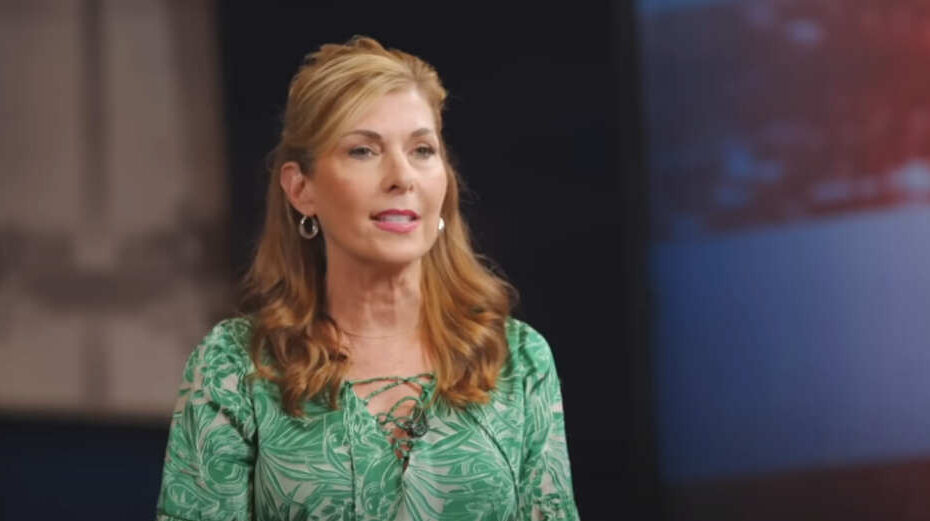
Read the full transcript of American Thought Leaders’ host Jan Jekielek’s interview with award-winning investigative journalist Sharyl Attkisson on “How Money Interests Influence the Newsroom”, Premiered August 3, 2025.
INTRODUCTION
JAN JEKIELEK: This is American Thought Leaders and I’m Jan Jekielek. Sharyl Attkisson, such a pleasure to have you back on American Thought Leaders.
SHARYL ATTKISSON: Good to be here.
JAN JEKIELEK: We interviewed about four years ago in October of 2020 and this was right at the moment that Twitter had decided to censor the Hunter Biden laptop story. And I got you to comment on that. I want to roll that tape to start us off because I think it’s a great place for our discussion.
SHARYL ATTKISSON: Absolutely. I mean, the notion that Twitter would claim to be an instant expert on a story they have no knowledge about, their experts can’t possibly even if they were to try to contradict some of the Hunter Biden story that was in the New York Post, they certainly have no more credibility than the New York Post, who presumably has been working on the story longer.
And neither do the one sided experts they may consult who would tell them that that story is not true. They weren’t in the room, they weren’t in a position to verify or not verify emails.
But you go back to the Russia Trump collusion story which turned out to be, as we all know, and even as Trump’s enemies working on the Mueller team acknowledged there was no evidence of any American working with Russia or colluding with Russia in 2016. And how many stories do we still have and do we have at the time forwarded uncritically by the press without counterpoints, without evidence, as they like to say, but they didn’t say it was without evidence, as if true.
Anonymous sources presenting false information presumed to be true, no counterpoints. I mean, this was the classic way that you cannot, as a journalist, legitimately cover a news story. And we did it for years.
Reflecting on Media Coverage Five Years Later
JAN JEKIELEK: So given everything we know now, almost five years on, what’s your reaction to what you just said?
SHARYL ATTKISSON: I think it was exactly right. And it was pretty easy to see. If you look at it as a continuum that began in the 2016 time period, 2015, really, with the election of President Trump in his first term, how the media and coverage evolved, the fact checks, the fake information during his first term, how that fired up during COVID and as we approach the second election for his second term, I think all that just fits in very nicely.
And unfortunately, although that all proved to be true, we haven’t really seen a reversal of those tactics. Maybe more public recognition that those are going on, but not a reversal by those who are trying to use them.
JAN JEKIELEK: Well, let’s talk about one thing that struck me about that, which is that we already knew five years ago, I mean, just a little shy of five years ago, that this Trump Russia collusion story was false. And we knew that broadly. Yet even as we speak, new documents are being declassified and unearthed.
SHARYL ATTKISSON: I think that there is probably valuable evidence to be found in the annals of all of the intelligence reviews and the information that we weren’t able to see in emails and so on. But the notion that this is some new discovery kind of strikes me as a little odd, because we were talking about this years ago.
I think it was well proven, with documentation we had at the time, almost contemporaneously, that the Russia, Russia, Russia thing was a hoax. We now have had the benefit of a conviction of an FBI official, the lack of prosecutions and charges against those who had been accused of Russia collusion. I don’t think anybody was charged with having illegal involvement with Russia. In the end, there were people charged for other things.
We know Carter Page, the Trump associate who was improperly wiretapped by the FBI multiple times on the basis, at least in part, of a falsified document from the FBI, was never charged with anything. And they were supposedly wiretapping him on the basis that he was most likely, they had to convince a judge, a Russian spy that was doing all of these evil things. Of course, he was never charged well.
JAN JEKIELEK: And he was actually a CIA asset. That was what the falsification was they said he wasn’t.
The Carter Page Wiretapping Case
SHARYL ATTKISSON: One of the things they hid, meaning the FBI, that they hid from the judge, who probably would have not allowed a wiretap in this circumstance, was that he had worked and turned evidence in the past for our government intel agencies and reminded them of that when they started to accuse him of these things and before the wiretaps became public. And yet in the wiretap application, this information was withheld and not provided.
He was probably the closest semi, legitimate looking wiretap they could get to President Trump because he could have communication with somebody who would communicate with Trump. And under the very loose rules the intelligence community allows itself to operate under, if they can’t wiretap Trump directly, which a judge probably would not have approved, they can wiretap someone close to him.
If they can get approval under the auspices of some Russia collusion, and then that entitles them to listen in on all the conversations that person has with people three hops away, meaning anyone who talks to him, they can listen to. Anyone who talks to those people, they can listen to, and anyone who talks to those people. So pretty much one wiretap is getting you access to a pretty big population of the United States when you play it out. And most certainly, President Trump would have been in that orbit.
The COVID Narrative
JAN JEKIELEK: So one thing also that strikes me, in your book “Slanted,” you talk about the narrative, and I’m going to get you to explain to me again what the narrative is as you looked at it back then.
SHARYL ATTKISSON: Well, I was becoming aware of the narratives during COVID but only with the benefit of hindsight have I feel like I’ve been able to piece together exactly what the narrative was supposed to be and who would be behind it. I had some thoughts and theories early on, and I wasn’t sure.
Again, I think in hindsight, we know there was a very strong pharmaceutical vaccine industry narrative that was driven through government and through media in a way that took hold like few things I’ve seen. And then, as you know, they enforced it with the heavy hand of censorship. So for those who weren’t going to buy it or who were going to question it, then censorship was the answer to controversialize them or make sure they couldn’t express themselves. Or that their words would not be shared and amplified on social media where so many people were going for their information.
Defining “The Narrative”
JAN JEKIELEK: So what is the narrative as we’re going to discuss it further today?
SHARYL ATTKISSON: Interesting question, because people might define it different ways. A narrative, I would say, is a story that an interest wants to get across, maybe to the exclusion of alternative or competing parts of the story. And people may have legitimate reasons to do that. And not all narratives certainly are bad.
But what we’ve seen, how it’s being used in the media and what I saw at CBS News when I first started to hear this word and apply it to what was happening to me, is that entities on the outside with vested interests, typically money interests, quite frankly, in enforcing or furthering certain narratives have ways to get under the tent in newsrooms and amid information platforms where they can put out narratives to the exclusion of everything else.
And too often we saw in recent years untrue narratives. A story about something that is not only just not complete or maybe pushing towards something that they’re advocating for, but is completely false in nature that you’re not entitled to question.
And you can sense a narrative. I like to say when you start to see that you’re looking at all different kinds of news coverage and information, but they tend to be starting to use the same words, the same information, taking the same viewpoints, ruling out opposing views rather than giving you opposing facts, which is what you should be able to weigh as a consumer of news. And they tend to be going to the same sources even when the sources have been proven wrong in the past. And I think those are all really good clues that you’re getting a narrative pushed by some powerful interest.
The Information Control Mechanism
JAN JEKIELEK: I call this thing the mechanism that achieves that, the megaphone. That’s just it appeared in my mind one day and I realized over time having multiple interviews with people who have been looking at these kinds of things, like Matt Taibbi, Mike Benz is another one that has helped me kind of formulate my thoughts.
But there’s a few elements. One is you need kind of a massive information push of that. Here’s what the story is supposed to be. And there’s so many other, so many different, let’s say outlets or so forth that are kind of pushing in exactly the same direction, almost the same talking points exactly. And in some cases, the second piece is you have to be able to. The censorship, as you mentioned, you have to be able to dial down the alternate viewpoints.
And this was something interesting. This is something that Mike has specified, right. If those alternate viewpoints that you have been an expert over many years at finding, finding that actually turn out to be true, the truth tends to bubble up to the top. But if you can exclude it, if you can have it just not appear right, then people just don’t even know what those things are.
And the third piece you just mentioned actually is basically sort of vilifying the people that are looking at those viewpoints. These are unspeakable things. This idea of malinformation we learned about, which is information that’s true but doesn’t fit the narrative. There’s actually a word for that.
The Transformation of Information Freedom
SHARYL ATTKISSON: I think that all the pieces of the puzzle had to fit together and have to fit together for the nefarious players to be successful at what they do. And you alluded to that. But when social media came out and when the Internet was first invented and commonly used, the promise was the opposite. We’d be able to get information that maybe not everybody on the news wanted us to have. We’d have freer access to things that we weren’t able to see before.
But I think the interests that are used to controlling the message quickly figured out they had to find a way to control that entity, meaning the Internet and social media. And they did. I don’t know if people remember because it’s now just so far in the distant past of our memories. Social media and the Internet was all about not censoring. It was all about freedom. This was going to be the way that we kept freedom as Americans and we. A whole new world was going to be opened up to us.
But that door has been slammed shut by those who lobbied to try to get these companies to curate and censor and fake fact check stuff that they don’t want people to see and prioritize what shows up in your searches. We are now in an overly managed information landscape that wasn’t even, I think, envisioned initially.
And then another part of that is the role that the media plays, because the media used to be, I thought we were the great equalizer, the news. We, those of us who work in it might expect that political figures wouldn’t always be honest about their goals and that corporate and other political interests might want to not give pure information because they’re trying to look out for their own interests.
But we in the press were supposed to be there so that we could hold their feet to the fire, provide other information, unearth facts they didn’t want you to know. And pretty soon though, we got swept into the system of narratives and propaganda, making us, I think today, not all of us, but making a great deal of the media little more than propaganda tools used as a tool to deliver the narrative unthinkingly in most cases and no longer playing that role that we used to play, sort of the watchdog and the independent arbiters.
JAN JEKIELEK: How much of the media ecosystem do you think today functions in that way?
The Media Landscape Transformation
SHARYL ATTKISSON: It would be hard for me to estimate because I’m not sort of an expert in new media and all the new things being developed. Among the traditional media, I would say that’s a large percentage that has been co-opted and transformed into what I would say is more of a tool not just to deliver narratives.
But have you noticed, I noticed this maybe about a decade ago. The major publications, the print publications on the national level and the networks, they’re reporting news for each other. Many times they’re reporting inside political baseball that fights with one another.
Maybe one political actor will say some inside baseball story in the Washington Post and pretty soon there’s a response from someone you never heard of or people out there never heard of. But they’re answering back in the New York Times and these are all billed as exclusives and very important stories that don’t matter at all to people who live outside of New York and Washington D.C. But that’s turning into a lot of our coverage today.
You know, the way the new model of the traditional media just looks nothing like what the old model was. Now there is a sizable new thing out there. We’re talking about Substack. We’re talking about people who aren’t, I would say maybe they’re quasi journalists, they’re doing some journalism, but it’s full of opinion. It may be somewhat partisan, but they’re unearthing good facts.
Many times I don’t know how big that is and I haven’t looked at data or research on how many people are relying on those sources instead of what we might call the traditional media. But I think more people are discovering and turning to the alternative sources.
But I learned some years ago that when you’re reporting today off the narrative, part of the strategy of those who don’t want you to know the facts that they want to hide is to label you a partisan, hoping that it peels off at least 50% of the audience. And it is somewhat effective.
If they can get people to see everything through a political lens, even when it’s not political, and then discount at least half the people, discount the thing they see as harmful to their agenda, then they’re ahead of the game. And I think that’s what’s happened. And I kind of accept that.
Audience Complicity in Propaganda
JAN JEKIELEK: You know, one of the things that I remember from that interview we did almost five years ago, and I actually will encourage our viewers to actually check that out. I’m going to link it in the comments, put it at the end of the show. Was that there is a kind of complicity also with the audience that you describe to this new manufactured ecosystem of propaganda.
Really, it’s not really news. Let’s call it what it is, right? Or narrative enforcement journalism, which is another term that I use, and perhaps I picked that up unknowingly from you back years ago from the word narrative. How does that work exactly? And how do we kind of escape that?
SHARYL ATTKISSON: In a way, I think we’ve been very susceptible to well organized and well researched propaganda messages from those who understand how to pluck our emotions and our intellect so that we think we’re making decisions ourselves that are in our own best interest when we’re not.
And one of the best examples of that is I remember when President Obama made an announcement shortly before the election, Carnegie Mellon, and he said something like, “We’re going to need to curate information in this wild, wild west media environment.” I had never heard that suggestion in my life before. Now it’s accepted. Everybody wants their news curated. I had never heard such a suggestion. I knew there must be a motive behind that because the president doesn’t make new ideas, you know, willy nilly, just off the top of his head.
And from that moment on, the fake news effort to undermine President Trump and his supporters initially and also later used for other purposes. And all the fake fact check groups that exploded and some new nonprofits that do this, that all was born in that very short time period.
And I remember thinking, well, the public’s not going to accept that. The public doesn’t want people to tell them what to think. And they don’t want third parties they can’t necessarily trust to curate their news and fact check when they don’t even have the facts themselves.
And yet this strategy was widely adopted by the public during that time period. Suddenly the public wanted their news fact checked, wanted their favorite news outlets to censor stuff that they didn’t think other people should see. You know, “That’s all good. Why are you showing that?” And that’s just been really a shocking change in sentiment on the part of the public. I never thought I would see.
I’ll call myself in. The general public are complicit in allowing this to happen. By not demanding that social media and the news not curate our information, we should be demanding that it be kept as open as possible. But for that, in my opinion, which is illegal, everything else we should be able to access.
And I think my answer to the question of what to do would be if you want to opt into a curating function and you trust those who are going to curate your information, by all means opt in. But I think there should be a default where you’re opted out or you’re not having your information curated. And many times in unseen ways that aren’t transparent.
Government Funding and the Censorship Industrial Complex
JAN JEKIELEK: Well, and it’s, I mean, at some level you kind of have to, because there’s so much information out there. Like, I know people that come to us because they know that, well, our content ages well, let’s say, right? And we’re a little bit careful, sometimes a little bit slower. But the other piece which we’ve discovered since, you know, since that time when we talked about “Slanted” is just how much actual, like government money went into kind of supporting this censorship industrial complex, as it’s been called. Right.
SHARYL ATTKISSON: I think this is one of the dangers that maybe our forefathers and some others who’ve argued for limited government have seen. One of the problems when government grows so large, their tentacles can be put into every aspect of our lives in ways that we often don’t know about with our money, by the way. So sort of tacitly, with our blessing, even if we’re not overtly giving it, and there’s hardly a way to think of to stop it, because every agency has the ability to reach out and do things that we can’t know about in real time to influence us.
It’d be hard to stop all of them at once, even if we wanted to try. The funding is there to do the things to accomplish the agendas they want. The government is so now intertwined and mixed in with the interests of money, interests that we don’t know about. So they’re doing the bidding or they’re consulting with them to make these decisions, to fund these goals, to put out the narratives or the propaganda. And it’s really hard to see there’s a benefit to us when government becomes so big and pervasive.
I will also say something as simple as when people didn’t think the government should mandate vaccines or COVID vaccinations, there was no way to get around it. Because once the government says, well, everyone who does business with the government or contracts with the government is beholden to the standard it’s gotten to be, that’s everybody.
Almost every university or college takes tax benefits or has something to do with the government. And in that way, the government can reach into private industry, which you would like to think would at least somehow be separate or protected from government, but it’s just not anymore because government’s grown so, so big.
The Path Forward to Straight Journalism
JAN JEKIELEK: Let’s roll a clip. When we talked about the COVID narrative, in 10 years, we might be past the point of no return. I don’t think you were meaning to be alarmist, but you’re saying things are heading in this direction where there just isn’t a lot of news anymore. And it seems to, I don’t know if you agree, it seems to be accelerating in that direction. What do you see? And this is a, you know, appears a bit, and I think in the conclusion of your book, but what do you see as the path forward to try to, you know, get back to straight up journalism, frankly, and let people make up their own minds?
SHARYL ATTKISSON: Well, I think people should definitely keep speaking about it. Don’t quiet down and just accept that this is the way it is. Fight and call it out when you see it. But I think the answer, there’s a lot of people working on this problem. And because in the general public, outside of Washington, D.C. and New York and outside of the newsrooms, the public wants regular old news again.
And I’ve asked a lot of questions of people over the years, even those who want to watch CNN and MSNBC for their left news and want to watch Fox News for their right news or CBS or whatever, CBS for their left, they still all say they would go to a place that was in the middle if there was a place, because they know they have to kind of discount the news they see depending on where they watch it.
You know, they know that if they see a certain thing well, you know, “I know where they’re coming from” and they want a place where they can go and kind of get the straight story and believe that they’re getting a factual representation. So there’s a market for it, I believe.
And a lot of people know this and a lot of news people are trying to figure out how to make the most of that and how to make it where these big tech platforms then don’t control what they’re doing. So on two fronts, there are news people that are trying to develop news sources that do that very thing. And secondly, there are technical people that are working on the problem of being able to distribute news and opinion outside the platforms controlled by the big tech companies in a way that they can’t deplatform you and take you, you know, take your opinions off and take certain scientific studies out.
So I think we’ll have a breakthrough because there’s smart people working on the problem. I’m not smart enough to know technically what form that’ll take, but I’d like to think we’ll go down that road.
The Danger of Information Control
One of the scariest things to me. Let’s look at the coronavirus example. Google announced that it had developed a partnership on the front end of this with the World Health Organization to make sure when people were searching under coronavirus early on that they would be directed to, you know, World Health Organization approved information and sites.
How dangerous is that? Especially when you consider that WHO admits it was wrong about so much. But by doing this, Google has cut us out of the equation of being able to say, “We know you guys are wrong. Medical experts are sometimes wrong and the government is sometimes wrong and certain experts.”
And then they’ve cut you out of being able to easily do your own research and find unconflicted information because they’re directing what you’ll see when you look for information. And again, by their own admission, we’re dead wrong about quite a few things that they put out. But that’s all we were allowed. That’s where we were being pointed to.
So imagine that. And that’s happening with other issues too, that they’re not disclosing on a massive scale where pretty much any information you try to access they get to control who you’re pointed to. And you will never find the scientific studies that say the other thing because they’ll have effectively buried them or made sure that they’re unseen.
COVID Policy Failures and Statistical Manipulation
JAN JEKIELEK: Having done hundreds of interviews now related to Covid, I’m convinced that so many things we got wrong to the point where even if you were to statistically, you know, sort of randomly make decisions. I think there was more decisions that were made that were wrong than would randomly have appeared if you just did. If you just made policy randomly. It’s a bizarre reality. And I think this whole situation with censorship and dialing up certain narratives, dialing down certain narratives, making certain ideas, you know, basically unthinkable, unspeakable, Lord Voldemort type things, the combination of that led to this really bizarre reality where we just did so many things wrong.
SHARYL ATTKISSON: Indeed. And I think, like you say, that was more by design than by accident, because the random nature would look a lot different if it was just something that happened naturally.
I point to, in my latest book, “Follow the Science,” I have a chapter of CDC mistakes, and I’m talking about data and statistical errors that they should never have made. This top health agency in the world and all of them that I could find happened on one side of the equation. To make Covid look more dangerous than it was, to make it look like it was worse for kids than it was and more dangerous. Or to make Covid vaccines look more necessary and effective and safer than they were.
We’re talking about statistical errors that go a thousand times wrong. Just some horribly bad math gone wrong that happened to go or be published at a time that was advantageous to the narrative of pushing the vaccines right before there would be a mistake saying Covid was very deadly for children, that wouldn’t be corrected at the time. And this was right before they decided to recommend Covid vaccines for children.
I don’t think those are coincidences because as you said, there are too many of them going one way. And let’s even assume in CDC’s case that they were all accidents, then that agency, on that alone needs to be overhauled from top to bottom. If they have scientists and researchers, they’re publishing, publishing so much bad information, making.
Policy Based on Narrative Instead of Facts
JAN JEKIELEK: Policy based on narrative instead of legitimate information. Just comment on that for me for a moment.
SHARYL ATTKISSON: When it comes to health, that’s the first thing that comes to mind. Our government has been guilty of making policy based on narratives that it wants to push, which ultimately I think are driven by money interests rather than by facts and statistics.
Someone pointed out to me the other day that the statements that appear on most of the government public health websites, such as CDC, are not peer reviewed, are not analyzed for factual accuracy. And there is so much misinformation on these sites, even as they may argue somebody else’s information shouldn’t be believed because there’s not enough science behind it. They’re making the biggest mistakes on their sites.
I like to point to the redefinition of the word “vaccine” that happened. I was able to trace overnight because you could tell by looking at the Wayback Machine, which I use, an Internet tool online, that the definition read very traditionally until a certain point in time, about the time they really wanted to dispel the criticism because the COVID vaccines weren’t working. People were still getting sick despite the promise that they wouldn’t. People were still transmitting Covid despite the promise that they wouldn’t early on.
And so the definition had to change, it seems to me, because it no longer meets the definition, what was published of a vaccine if it can’t prevent disease or prevent transmission. So overnight you can see one date it said one thing, and the next date, the definition of COVID now fits. COVID vaccine. This thing everybody’s taking, that doesn’t really work in terms of a traditional vaccine. It now says it just acts on the immunity. It’s very vague and general. It doesn’t say it has to prevent the disease. It doesn’t say it has to prevent transmission.
And I think about how the entire definition of something that’s existed for 200 years can be changed overnight by a person or a group, unseen to us, without so much as a public discussion, a debate or a vote. And think about that. That’s currently on CDC’s website.
Unprecedented Changes at HHS
JAN JEKIELEK: Let’s jump to what’s happened at HHS, because you’ve been covering health, starting at CBS for better part of 30 years, and you’ve been covering it well. And I’ve really appreciated your work greatly. How do you view what’s happening over there?
SHARYL ATTKISSON: I’ve not only been covering health issues, but government corruption, government bureaucracy, all kinds of political issues. And to me, I’ve never seen anything this big in terms of the reforms that are happening and being discussed among the government agencies. I know they’re not big enough for a lot of people. I know it’s too much for some people who didn’t want to see these kinds of changes. But any way you look at it, inside almost every major federal agency, there are these debates and discussions going on with people who are true believers somewhere in there in changing the broken systems that we’ve had that I think most of the public would agree have been broken for decades.
But we’ve kind of given up on the thought or the hope that there would be real reform. We just started to think we don’t have any hope that something’s going to change. It’s not always going to be pretty, but just what we’ve seen so far. I never thought I would see some of these types of changes in my lifetime.
We’re suddenly talking about the removal of artificial food dyes which have been linked to everything from cancer to ADHD and a whole lot of other chronic disorders that we’re all suffering from. There’s so many toxic exposures. The notion of fluoride coming out of the water, that’s something that scientists, you may hear the opposite. But the good science has said for many years is something that is supportive, that it should come out of the water for health and safety reasons. And there is a dispute going on between agencies right now about that. But it is coming out of the water and some states are acting on their own.
In the meantime, there is the safety of food being reformulated to get rid of some of the ultra processed chemicals that we know for a fact, test in animals and sometimes in people, is very harmful and yet have been ignored. As our chronic health disease epidemics have exploded in this country, suddenly those are being addressed.
And I would say there’s even been an influence of things that were untouchable topics on the news. Maybe the media still doesn’t get behind Robert F. Kennedy Jr.’s position on them, but they’re being discussed and they were in the realm of censorship. You couldn’t even speak of these things because they were falsely called conspiracy theories. Now they’re edging their way, I think because the public pressure as well as the administration change into the daily discussion on the news like I’ve never seen them.
I used to say when people ask me 20 years ago, “What are the most important news issues that you see in the future?” And it always came back to health things. It went from the autism epidemic to more broadly the chronic health disease epidemic happening in this country. I said that 15 years ago. That was almost never being addressed in any meaningful way where there would be action but for the chance to treat us with expensive treatments was almost never addressed by our political figures. It was not an election issue and the public was demanding it. So this is a big change that this is now all on the table.
The ACIP Overhaul
JAN JEKIELEK: A few months ago, I think most people had never heard of ACIP, for example. Maybe briefly tell me what that is. And it’s been basically completely replaced.
SHARYL ATTKISSON: The Advisory Committee on Immunization Practices, which is a committee that gives advice to the CDC on, for example, what vaccines should go on the recommended childhood vaccine schedule. It’s a very powerful position sometimes filled by conflicted people like most of the government advisory boards who make money from or have connections to the industries that are going to make money from their vaccines going on the schedule, which is a perpetual forever vaccine licensed for multibillion dollar blockbusters, if you can get a vaccine on the mandated childhood schedule.
So arguably this panel’s done a poor job for decades. I think many parents and many public observers think that they haven’t done a good job in understanding or even looking at the total impact of the vaccine schedules as it’s expanded from a few recommended vaccines to something like 72 doses for children today with no studies on the cumulative impact. So if you want to say that’s okay, let’s at least make that on the basis of good hard science so that you can assure parents this is a good risk for your child to take for the benefit that hasn’t been done.
They’ve made study decisions contrary to science. One of these advisory committees, and I’m trying to remember if it was ACIP that one or a similar one signed off on and put out false information that I flagged on the COVID vaccine, falsely claiming that the early studies showed COVID vaccine was effective for people who’d already had Covid. In other words, even if you’ve had Covid, get it as if the natural immunity didn’t matter. That was not said or found by the studies. Quite the opposite early on.
And yet this false information was being pushed out, signed off by all the committee members who either didn’t read the studies like I did or read it and signed the false information. Either way, that’s grounds to fire all of them, in my view. And CDC stood behind and refused to correct this information even though it was flagged by a member of Congress for a matter of weeks and weeks. And even when they were forced to correct it on the website. There’s a lot of false information on the government websites. They did the correction in such a way that it was hard to understand that they’d made a mistake. And it tended to sort of aim people toward the misinformation even after the correction.
So a clean sweep of these people who’ve been working in this corrupt system that puts out misinformation and disinformation I think is called for and a positive development. But obviously those who wanted the status quo and who think things have worked very well for them the past few decades, if not for the American public, they don’t like this clean sweep or this idea that all of these things are going to be reformed or that the childhood vaccination schedule is going to get an examination like it’s probably never had before for the first time under this administration.
Unprecedented Level of Change
JAN JEKIELEK: In the 30 years that you’ve been looking at government bureaucracy and health more broadly as a journalist, how common is this level of change?
SHARYL ATTKISSON: I’ve never seen anything like it. When change has been discussed, it’s very small. It’s within the realm of what the bureaucracy wants and accepts for you to talk about. Citizen petitions are filed to remove bad things from food. It’s coming from the bottom up instead of the top down. For some reason, those petitions languish for years. Suddenly there’s a pace of change and discussion that I’ve never seen before. And frankly, just putting these issues on the table, regardless of what gets done, we’ve already seen some action is something different that I just didn’t think I would see in my reporting career.
JAN JEKIELEK: What about the other agencies?
SHARYL ATTKISSON: Similar things seem to be happening in the big federal agencies. There are high expectations among those who supported President Trump that there would be reforms, of course, in the Education Department and EPA and all the big agencies. And I think to varying degrees, they are all trying. It’s my understanding that most of them are working within the framework of a continuing bureaucracy that does not want them to make big changes. And that’s always been a sticking point.
When President Trump during his first term came in, he had people very close to him that were intervening in his agenda that did not really want to accomplish it. Now it seems to me he’s got more people at the upper levels who are like minded. But there still remains within these government agencies the persistent bureaucracies that have existed for decades who don’t want these changes to happen. And they have a million ways to slow walk and to stop and to controversialize and to leak to try to make things not happen.
So that’s the thing they’re up against. But there are very determined people who have the experience of the first term to understand and see with clarity, more clarity, what’s going on. And I think they’re having better luck already with their agenda and will probably make more progress than certainly make more progress in the first term.
De-weaponization of Government
JAN JEKIELEK: One of the areas where I have noticed some very significant progress is just in this whole realm of what they call weaponization of government. This is something that’s been on my mind quite a bit. And even as some of the vestiges of that still exist, I think it…
SHARYL ATTKISSON: It will be hard for this administration to go into all the corners where government has funded the third parties, who fund the groups, who fund the people who start up the fact check groups, or who give money, government money, to organizations that ultimately, even if they don’t go directly, but fund the fake fact check groups, how to stop all of that, how to rein all of that in, and maybe a bigger job than it looks like on the surface.
But I think apparently, according to the FBI Director Patel and the number two, Bongino, they are working hard on the de-weaponization of the government, which is something I think most Americans saw as a problem. Particularly wherever you stand on President Trump, it’s hard to deny that the government was weaponized against him in ways that were false and dishonest because these things that were said or these efforts that were launched against him were proven to have been driven by political interests and false information. Some, in some cases, that’s undeniable. And I think that’s bad for everybody.
So there is an effort. I think it’s harder than, I don’t know, four years is enough to find it all and dig it out. But I’m sure they’re trying to make the progress they can.
The New York Times’ Outsized Role
JAN JEKIELEK: So in “Slanted,” I’m just remembering that in “Slanted” you dedicated a whole chapter to the New York Times. And I know the New York Times has published unfairly on you before. They play kind of an outsized role in the media ecosystem.
The New York Times’ Influence on National News Agenda
SHARYL ATTKISSON: They do. This is something I’m not sure any of us working in the national networks like I did fully understood. And it kind of bugged us. Even when the New York Times, I think, was a more honest player in the news industry, which is they kind of dictate the agenda for the day.
And so when you work at a network, you go in in the morning and your bosses have read the New York Times and the Washington Post, and they’re frequently sort of assigning you stories to follow up on out of the papers. You, as the reporter, hate that because you have good stories just like they had good stories and you want to do your own.
I typically won my battles, became an investigative reporter by digging up my own stories and not just trying to follow somebody else’s. But I used to learn when I would look into the New York Times, increasingly over time, when someone would say, “Look at this story. What is there?” I would follow up and find a lot of what they were reporting was based on my investigation afterwards, not true.
Somebody would tell me, they were misquoted. People would tell me that they were not included in the story because they didn’t have the right viewpoint. Facts were wrong. So I’ve learned this pretty early on, as journalists, you don’t just copy other newspaper reports. But yet the New York Times is treated, for some reason, almost universally like it’s the one that dictates the news of the day.
One example of that is, you know, when they publish something that’s on the front page, you will sometimes—it could just be a random story that they picked and investigated. And the reason it made the news that day isn’t because it made news that day. It’s because the New York Times reported on it that day. But then you can watch all the networks, some nights lead with that same story, as if organically, everybody decided that was also their story.
So when they decided to change their ethics and guidelines and rules in order to basically get Donald Trump. When Donald Trump announced he was running for president, the New York Times suspended its normal ethical guidelines to address what they said was a uniquely dangerous candidate, while everybody else followed suit. All the other media did the same thing. “Well, we don’t have to treat him the same way, and we don’t have to be fair. And we can use unnamed sources in ways we’re not normally allowed.”
I argued there’s never a more important time to stick by your reporting standards. You have those standards. So there’s somebody, for example, you don’t like is somebody you’re covering. You still treat that person fairly and you remain honest and accurate as a journalist. But here was the New York Times saying, “We’re going to relieve ourselves of the obligation to be a real journalist.” And that was quickly followed by editorials with people saying, “Bravo, thank you.” And other people changing their views too as to what they should have to report. And it’s really never gone back fully to what it used to be.
The Problem with Activist Journalism
JAN JEKIELEK: In our hiring process at Epoch Times, when we’re hiring young people who are straight out of J school and so forth, I’ve learned that they’re actually taught these days activist journalism. And that’s the part that is, I think, in a way, the most problematic.
SHARYL ATTKISSON: And there’s so many problems with that. First of all, who cares what you think? You’re a young journalist. Let’s talk about those. Just starting as I was just out of college, I may have thought I knew everything about something. I didn’t know anything about anything.
So the notion that your viewpoint, when you learn a little bit about something, is going to be the one that everybody now has to adopt and believe, and you’re going to carve out your story in such a way that only that viewpoint is processed. I think that’s just a huge disservice. You’re not an expert. Reporters aren’t experts in general in hardly anything. Now, maybe with the benefit of time and specialties, you become experts in some things, but most people aren’t. And it’s not up to you, in my view, to further your viewpoints or even your organization’s viewpoints and shove that down people’s throats.
Media Coverage of China and Economic Policy
JAN JEKIELEK: So I mentioned earlier, the biggest special interest was the Chinese Communist Party, and it still exercises an incredible amount of influence here. I don’t know how much you’ve thought about that.
SHARYL ATTKISSON: Well, I’ve looked at it from the economic viewpoint. As President Trump, I’m not an economic expert, but as he’s announced the tariffs, it’s been striking to me that the press has almost universally reported this as a bad thing, horrible for the economy, world’s going to fall in. I get friends and family months ago asking me, “Is all this horrible stuff going to happen?”
And I thought, well, it’s so interesting. For a couple of decades, I’ve been reporting with people on both sides of politics saying that we rely far too much on China for things like our critical medicines, for things like our computer chips, and that we needed to figure out ways to extricate ourselves from them, because now we’re not in much of a position to do anything about their lack of cooperation on COVID-19, or whatever it may be, because we rely on them so much.
So in comes President Trump with a plan to extricate ourselves to some degree from these dependencies on foreign countries, in some cases adversaries like China. And that’s never mentioned in the stories. And I looked at quite a few stories. I couldn’t find any in what people would call the mainstream media that said Trump is proposing these tariffs. This is to, in part, address the longstanding concern over the United States dependence on foreign adversaries for critical medicines and chips. Nothing like this.
So we’ve whined about that for decades. And now when there’s a plan to do something that could in part address that, a nod is not even given to that as the sort of the other side or an additional viewpoint and a story. And that just strikes me as, again, reporters feeding off each other, copying each other, no one doing their critical thinking and doing independent reporting that would add some more context to the tariffs.
Government Surveillance of Journalists
JAN JEKIELEK: For example, something that I remember and I think this was actually in your first book back in 2014. You know, you were actually one of the first journalists that we know was actually surveilled by the intelligence community or you know, someone or maybe get, maybe remind us of that. And where do things stand now?
SHARYL ATTKISSON: Before we knew, the government had subpoenaed secretly records of AP reporters before we knew they’d spied on James Rosen of Fox News. But during the same time period, I was reporting on controversies under the Obama administration and quite frankly, other controversies. So I didn’t know who would be spying on me if somebody was. I never suspected that was the case.
But intelligence sources, two in a row in the same time period came to me and said that the Obama administration was violating civil rights through surveillance in ways that most Americans would find shocking. Both of them used similar phrases and didn’t even know each other and suggested that I was probably being monitored. Sounded crazy because it just never occurred to me.
I won’t belabor the whole journey, but long story short, through a series of forensics exams, the first one being an intelligence community insider who was able to locate software that had been implanted in my computer. Intrusions that have been going on illegally at the hands of the government using government IP addresses and government proprietary software were found in my computer. In a long term monitoring effort, at least one, and perhaps more than one, I’ve since learned, the government is surveilling so many people, journalists, politicians, members of Congress and citizens, these operations are probably tripping over each other and crossing paths.
You know, in some instances, when I learned that the FBI was probably involved through the forensics and the FBI didn’t want to investigate and was withholding information from me, and when there was a concerted effort to try to controversialize the announcement by CBS that my computers had been remotely intruded upon, then I saw that there was a narrative being pushed forth by powerful people inside the government to make all this sound like it wasn’t true.
Fast forward all these years later. Since the government won’t hold itself accountable. I’ve been suing, but these are very hard cases. I thought, you have the forensic evidence, the government comes to you and apologizes, case closed. But no, you have to get to court, to a jury, and to do that, you have to get discovery. To get that, the court requires certain things. The burden is very high for someone like me spending over a million dollars to try to bring justice, which means they want you to know and have all the documents of who personally did it.
And ordered it when you couldn’t possibly have the information without discovery. But they won’t give you discovery till you bring them the information to justify the discovery. So this has gone in circles for over a decade. This is just sort of this never ending journey with the Department of Justice fighting and delaying every step of the way.
My last salvo was, I was hoping, under the second Trump administration, I wrote petitions to everybody I could think of that might have some control, asking them to acknowledge the forensics which are undeniable, and issue an apology, even if they don’t want to investigate at this late date. You could find out who was responsible, but at least issue an acknowledgement apology. I can’t get anywhere with that.
The reason this case to me is important is I certainly wasn’t the only one they were doing this to. And if somebody had taken care of business back when this came to light in the 2020 time period, maybe this wouldn’t have happened to other people that we know it happened to, whether it’s Donald Trump or both Democrats and Republicans in Congress who’ve been improperly surveilled by the intelligence community, or who knows who else it’s happening to today. But by never holding anybody accountable, I say we leave the door open for this to continue.
The Power of Propaganda and Narrative Control
JAN JEKIELEK: There’s a phenomenon that I struggle with. It’s probably the thing that most keeps me up at night, as they say. And it’s just that when this megaphone, as I call it, is activated, I mean, and people get locked into that mode, just irrespective of the evidence that’s provided, that would say, hey, this narrative was actually false definitively 15 times over in some cases, like with the Trump Russia collusion, we’re still talking about it, right? And there’s still people discovering, “Oh my God, really? How did that ever happen?” This is an important process.
SHARYL ATTKISSON: I try to look back and think when I became more of an independent thinker, because I know when I started out as a young journalist, I didn’t think about all of these things. And over the course of time, as I found myself provided false information by official entities which used to surprise me, or I learned that the truth was often different than what I had been led to believe by important people or studies or established sources. I became to be a very critical thinker, a skeptical thinker, but not to the exclusion of all the facts, but just understanding how things work.
And I try to put myself in that mindset because I think that’s where some people still are. Before my eyes were opened to the propaganda tools that are so effectively used against us. And we have to remember that the people furthering the narratives and propaganda, I believe, whether they’re in the intelligence communities or corporations and their expensive crisis management firms and PR strategy firms, this is well studied. I mean, this is well studied.
We know back World War II and before how to propagandize a population effectively, the words to use, the buzzwords, the arguments, how to pit people against each other. And now with social media and the Internet tools at their disposal, I know they’ve studied this and we can tell, we can see in the effects that they’ve studied how to influence the population so effectively that there remains a sizable portion of them, certainly not weak minded people necessarily, who are very entrenched in things that have been either proven wrong, can’t possibly be true, or refusing to consider various views and possibilities. And I think that’s just the power of propaganda. And I just think I underestimated how powerful those forces really can be.
Hope for the Future
JAN JEKIELEK: What is your hope for the future going forward in this current reality we’re in, whether you support Trump again or not?
SHARYL ATTKISSON: Again, I say the fact that he was elected against all the mainstream odds going against him because establishment Republicans didn’t like Trump, Democrats in many cases didn’t like Trump, the media didn’t like Trump, the people liked Trump, at least a lot of the people out there. And the fact that they could rise above all the propaganda and narratives that were telling them, “Do not choose this man,” even after he lost that second term and all that propaganda came out, but then comes back and people vote for him, that shows there is power among the people that’s not simply held by government and the narrative and the propagandists, that the people are still thinking out there on their own and not just buying into what they’re being fed.
So that’s been a positive thing. The election of Trump from that perspective is an unexpected thing that’s very positive from the censorship standpoint because he in essence defeated that.
JAN JEKIELEK: Walter Kern has said recently that he believes that the hand was so overplayed in 2020 and that whole time period, following around all sorts of issues, that that was the peak. I mean, in essence, I’m paraphrasing something here. Of course, a lot of people would like to believe that. What are your thoughts?
The COVID Period: When Influence Became Too Obvious
SHARYL ATTKISSON: I agree. So I argued that this influence was always happening in hidden ways, but it got to be so audacious during the COVID period that they really overstepped their bounds and became so obvious about what they were trying to do in a way that people didn’t like that they turned activists out of people that didn’t consider themselves activists, people that hadn’t been paying attention.
Suddenly something that was said, they woke up and went “what?” Or “that’s not true” or “I don’t believe that” or “why can’t I know this information that they’re censoring?” And they created a whole problem for themselves. People that became interested and involved who had previously just been happy to kind of accept the narrative.
So in some respects I think that backfired because they took too much when they had the chance, you know, to try to influence people.
Current Projects and Audience Hunger for Truth
JAN JEKIELEK: So what are you working on right now?
SHARYL ATTKISSON: More of the same. We have found on Full Measure where a third of our audience is Democrat, a third is Republican, a third is Independent. They are thirsty for the formerly censored information on all topics, in particular health. They want to know more about our food and our medicine. Things that the mainstream media they don’t feel has covered well or is covered in a one-sided fashion. That’s very popular for us.
And I’m continuing to work on government bureaucracy, corruption, politics and going around the world. I like finding all these similarities, trends that are happening as I’ve covered in Europe. Their illegal immigration is probably more of a crisis than ours was, believe it or not. But you don’t hear much about that. You can’t find much in the news if you look online because it’s being censored.
Global Populist Movements and Establishment Resistance
I just got back from El Salvador where the highly criticized president there who’s a little bit like Donald Trump in some ways has some say a 90% popularity because he’s gotten the decades of crime and gangs under control, expanding the prisons, arresting 80,000 gang members practically overnight and reforming this country. But the minority of the people that don’t like him, they feel about him like Trump’s detractors feel about him.
This is happening all over the world where so-called populists are being elected into office to make changes in the persistent bureaucracy that have not been good for the people. But then there’s an epic battle going on with the establishment and bureaucrats who do not want these, I would say populace or men of the people being going into office and shaking everything up.
JAN JEKIELEK: Well, Sharyl Attkisson, it’s such a pleasure to have had you on again.
SHARYL ATTKISSON: Thank you.
Related Posts
- President Trump on Operation Epic Fury Update (Transcript)
- President Trump Remarks on US, Israel Attacking Iran (Transcript)
- President Trump on Economy, Energy in Corpus Christi, TX (Transcript)
- Bulwark Podcast: w/ Susan Glasser on Trump’s State of the Union address (Transcript)
- Douglas Macgregor: US-Iran Diplomacy Fail (Transcript)