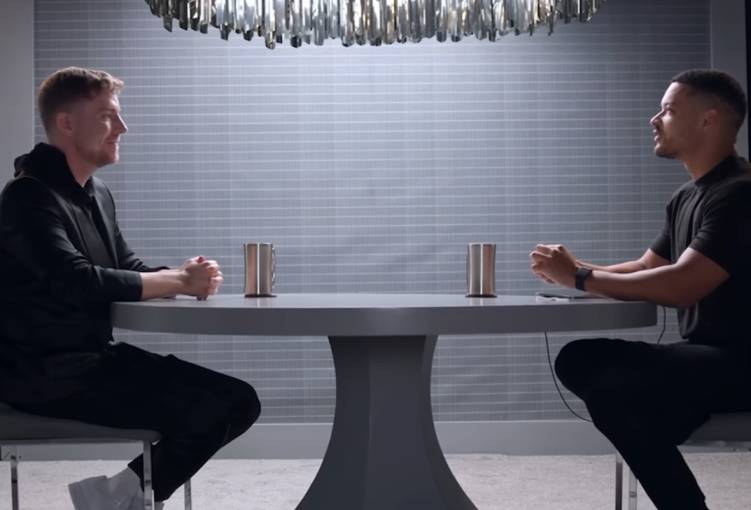
Here is the full transcript of YouTuber MrBeast’s interview on The Diary Of A CEO Podcast with host Steven Bartlett, February 20, 2025.
Brief Notes: In this raw and revealing episode of The Diary Of A CEO, Steven Bartlett sits down with Jimmy Donaldson, better known as MrBeast, to peel back the curtain on the world’s biggest YouTube empire. Jimmy opens up about the immense personal cost of his success, admitting to periods of deep unhappiness and the grueling reality of “living life on hard mode” while battling Crohn’s disease.
From losing tens of millions of dollars on his record-breaking Beast Games to his radical mission to eliminate child labor in the chocolate industry through Feastable, this conversation explores the singular obsession required to change the world. It is a masterclass in entrepreneurship, sacrifice, and what happens when a “confused child who felt like a freak” decides to never give up.
Introduction
STEVEN BARTLETT: Jimmy, we’ve really just only met, and you are already, to me, a bit of a Rubik’s Cube.
JIMMY DONALDSON: Okay.
STEVEN BARTLETT: In so many ways. And I’ve been trying to piece the pieces together to understand the uniqueness of you because you’re so unbelievably unique. We just drove over here in the car, and hearing you speak about the way that you view life, and speaking to you yesterday on the phone, I’ve interviewed hundreds and hundreds of people, and I’ve never, ever met someone who has the perspective on life that you have.
You are truly unique. What do I need to understand about your earliest years to understand who you are?
The Stubborn Kid Who Never Gave Up
JIMMY DONALDSON: Oh, boy. Yeah, my earliest years. I’m just stubborn, man. I just never give up. I mean, there was no world where I ever would have quit.
When I was 11, I just said, “I’m going to be a YouTuber. I’m going to die trying.” And I meant it. And there was like, even if no one still watches my videos to this day, I would still be going. And so people hate it, but I’m just the most competitive, stubborn person you’ll ever meet, and I just never give up.
STEVEN BARTLETT: And where did that come from?
JIMMY DONALDSON: I have no idea, to be honest. Honestly, it feels like it was just in my DNA and my bloodstream. My mom hated it growing up. We’d always argue and she has this thing where, once Jimmy sets his mind to something, he just never stops. And it would always piss her off because when it was YouTube and she wanted me to be studying or things like that, but I really don’t know. It’s just always been how I am.
And I think a lot of people have these weird tendencies, and they tend to try to unlearn them. I had phases in my life where I was like, “Am I too extreme?” People are very intimidated by me because I just am so obsessed with work, and I’m so all in. Is this unhealthy? Should I try to be more like a normal human?
Especially when I was a teenager, it’s a lot easier. It’s funny when you’re making lots of money, it’s admirable. It’s respectable. It’s like, “Look, those are traits we want.” But when you’re not successful, you know, you’re a lunatic when you have all these traits.
And so back then I’d occasionally be like, “Man, should I try to be more normal?” But I just could never do it anytime I tried to. I’ve mentioned this before, but one of the things that I have a memory of that really is burned in my brain is people, one time a high schooler told me when I was in middle school, “All you do is talk about YouTube. Do you know how to do anything else? You’re just a freak.”
And I tried to watch South Park, you know, because that’s what a lot of people in my school watched to fit in. And I just couldn’t. I was like, “This is such a waste of time. I could be working right now.” And I tried to do all these things to fit in. And I eventually just stopped talking because I just didn’t relate to anyone.
And people used to call me mute. One of my teachers literally asked if I was mute because that’s how little I spoke. Because no one in the school I went to was entrepreneurial or wanted to build businesses and I just didn’t want to do anything else.
And yeah, eventually I started to succeed, found other lunatics and now life’s great. But, you know, I like to tell this story when I’m on podcast because if you have a younger viewer who’s in that same spot, you’re not the problem. It’s your environment and you just got to put yourself in a better environment.
Growing Up in Financial Struggle
STEVEN BARTLETT: What about your parents? Mum and dad? You talk about your mother a lot.
JIMMY DONALDSON: Yeah, no, I didn’t get it from them.
STEVEN BARTLETT: What influence did they both have on you?
JIMMY DONALDSON: Well, I don’t really talk about my dad much. That’s, you know, a long story. Don’t need to get into it. But my mom, honestly, it wasn’t, it’s great now. Me and my mom have a phenomenal relationship, but on the come up, it was pretty rough because in 2008 they were over leveraged, so we literally went bankrupt.
And so they had properties that they used to get other properties, and then when everything collapsed, they lost basically everything. And so my mom was working two jobs and barely getting by. And so I didn’t see her that much because when I was coming home from school, she was doing her second job.
So it was a lot because she was the single mom raising us. She’s working all the time. I don’t talk about a lot of this. You know, I have Crohn’s disease, so I was very sick growing up. My brother also had issues as well. And so we’re not the healthiest kids in our teenage years. She’s just trying to get by and take care of us.
And then, you know, she comes home and she just has this brat that’s being annoying. And I want to be a YouTuber, and she’s just begging me. Sometimes she would literally cry and beg me to do homework. And, I mean, I was, I didn’t mean it in a mean way, but, I mean, I even one time I literally told her, “If you want my homework done so bad, well, you just do it, you know?” That’s what I told my mom.
I was just like, “I don’t care. I just want to be successful. I want to build businesses.” And so it was, bless her heart. Luckily, it worked out, so now I spoiled her. She’s great. She has her second home. Anything she could ever want, she has.
And so the first thing I did was start paying my mom, take care of her once I started making money, because she gave everything to me where I am, and I wouldn’t be where I am now. But it was like me and her spoke different languages when I was younger.
You know, she didn’t want me to end up like them, you know, and get screwed and not have much money. And the path I was going down was just basically like, “Oh, I’m going to be a homeless drug addict.” And her brain couldn’t compute the world I saw, and my brain couldn’t compute the world she saw. And it was constant friction.
STEVEN BARTLETT: Who was looking after you then if she was busy working and you were at home and your dad’s not around, who takes care of you?
JIMMY DONALDSON: I just, me and my brother, we’re just there. I was just making videos.
STEVEN BARTLETT: You’re making videos?
JIMMY DONALDSON: Yeah.
STEVEN BARTLETT: What age did that start, the videos?
JIMMY DONALDSON: I started at 11.
STEVEN BARTLETT: 11?
JIMMY DONALDSON: Yeah. So I’m 26 now. I can’t really remember life before YouTube. My earliest memories are basically when I started making videos.
The Father He Doesn’t Talk About
STEVEN BARTLETT: You said earlier you don’t talk about your dad much. You don’t have to tell me about it, but why don’t you talk about your father much?
JIMMY DONALDSON: Ah, don’t worry about it.
STEVEN BARTLETT: I know your mum has spoken about him before.
JIMMY DONALDSON: Yeah.
STEVEN BARTLETT: And it was a bit of a tumultuous relationship.
JIMMY DONALDSON: Yeah, exactly. They didn’t have the best relationship. I mean, that’s a topic for another day, honestly. Kind of a sour way to start it off. But yeah, my mom is great. I love my mom.
A Mother’s Tears and a Son’s Obsession
STEVEN BARTLETT: She used to cry asking you to do your homework.
JIMMY DONALDSON: A lot of things. She would cry because I wouldn’t put money away. When we started making money, she thought it was too risky. And I mean, the thing is, nothing she would say was unreasonable. Right. Looking back at it, she was perfectly reasonable in what she was doing. I’m just a deranged lunatic and was way too obsessed with building a business and way too all in.
It’s very cute. One time when we had, I don’t remember, some month we made like a hundred grand and I’m like, “Okay, perfect. Now I can spend a hundred grand this next month on videos.” And she took like five thousand of it and put it away for me in my own bank account without telling me. But in case, you know, I ever was over leveraged or went bankrupt like they did.
And I found out about it and she’s like, “Please don’t take this money. Just let me set aside anything. Stop spending everything on videos.” And I was like, “No, this is perfect. Now I can spend more. This is awesome. Thank you, mom.”
But to me, I don’t really feel risk. If anything, risk excites me and I have very high threshold for it. So, yeah, we just literally weren’t communicating the same language.
But I don’t remember what age it was. But eventually after I took enough risks and figured it out, my mom just said to me, “You know what? I’m going to trust you. I have faith.” And everything got so much better after that point when she stopped staying up all night worrying about me and worrying whether or not I was making the right decision.
When she was just like, “Jimmy, I trust you. I know this. You think about this all day. I’m going to just follow your lead.” And our relationship has been perfect ever since then.
The Confused Child Who Felt Like a Freak
STEVEN BARTLETT: If I’d asked 10 year old Jimmy, “How are you doing?” What would he have said?
JIMMY DONALDSON: 10? I don’t know. But if you asked me at 12 or 13, I probably would have been like, “F*. No one watches my videos. I just really want to be a YouTuber. I got to make this work.”
STEVEN BARTLETT: Why did you want to really be a YouTuber? Because kids say that. But the extent to which you said it and the focus that you had on that particular goal of being a YouTuber, because there’s many things you could have focused on. You could have been a video game player, whatever.
But YouTube is a particularly interesting thing because you’re on camera, people are seeing it. There’s a metric which decides how successful you are. Was there any element of the on camera part that was helping to solve for the feeling of isolation that you seem to have at that time?
JIMMY DONALDSON: No.
STEVEN BARTLETT: Community?
JIMMY DONALDSON: Yeah, I think it’s more to do with just, I found out that when I was at a young age, probably around 11, that there were YouTubers that are making hundreds of thousands of dollars a year. And I was just like, “Oh, that’s it.”
STEVEN BARTLETT: Money.
JIMMY DONALDSON: Yeah, of course, because back then we didn’t have money, and I really wanted to take care of my mom and just my family in general. So it was like everything. It was like, “This is what I love doing. I’ve never had as much joy doing something as I do this.” Plus, I could see a path where I could actually retire my mom, take care of her, pay her back for all the nights she works so long so we could live comfortably and things like that.
So it’s just kind of, the thing is, I’ve, one thing that irks me is when people try to put someone’s motivation into one little bucket. We’re very complex creatures and you have a girlfriend. I would never say, “Oh, you just like her because she’s pretty.” But you like her because she’s pretty. But you probably also like her because she’s smart. You probably also like her because she’s fun to be around, she likes similar shows, blah, blah.
You probably, if we sat here for 10 hours, you could probably give me a thousand reasons why you like your girlfriend. So it’s very annoying when people try to put why you like doing a certain job or building a certain business into one bucket. “Oh, you just do it because of money.”
What if I do it because I like money and I enjoy it, and it’s a way to do this, and it’s a way to communicate with people and community and these other things, you know what I mean? And I think that’s a common flaw we try to do. It’s not that simple.
The Relentless Focus That Confuses Everyone
STEVEN BARTLETT: I think a lot of people can’t understand someone being so relentlessly focused on something with the level of commitment and sustained commitment that you’ve shown.
JIMMY DONALDSON: Yeah.
STEVEN BARTLETT: And so.
The Power of Obsession
JIMMY DONALDSON: And I don’t know how I agree, because it’s very weird how I have extreme obsession to the point where I just think about stuff the same. For me, it’s much easier to think about something 16 hours a day for seven days straight than it is to gear shift constantly.
I’m really good at just obsessing over one thing more than anyone else on the planet. If I were to say what’s my superpower, it’s that I can just obsess endlessly about something, and I can just have the same thoughts over and over and over and over again. It’s very weird.
It wasn’t like it was work for me grinding YouTube for those 10 years or whatever, where no one was really watching it. It’s just kind of who I am.
STEVEN BARTLETT: It would have had to have been a deep obsession, because you were doing it when no one was really watching or paying attention or really when the platform was.
JIMMY DONALDSON: There was literally a day when I was 19 or 20 where I woke up, joined a Skype call with my friends, and we were reverse engineering why certain videos do well or whatever. And I remember that call being over 18 hours long.
And then I hung up, went to bed, woke back up the next day and instantly got back on the call and picked back. That was the level of hours we were putting in. I mean, I didn’t know anything besides just trying to make it happen.
STEVEN BARTLETT: Was there anything else that you showed that level of obsession to?
JIMMY DONALDSON: So at that age, no. From, I would say from 11 to 15, it was a mix of YouTube and baseball. But when I turned 15, I got Crohn’s, and I went from 190 pounds down to 139. I lost all muscle I had. And so I was like, all right, I’m not playing baseball in college anymore. So then I was like, f* it. It’s just all in on YouTube.
And then up until really Feastables, it was basically just YouTube versus whatever. I never thought I would find this kind of love for building. I thought it was specifically video making, but I have found over the last two or three years, just in general, I just enjoy entrepreneurship, and I’ve been really deeply loving getting obsessed with Feastables and other things.
And so which was very weird. When I first started a chocolate company, it was kind of a side thing, but the more I started work on it, I got a lot of the same highs I got when I was making videos, just in different ways. And so now I know way too much about the chocolate industry. It’s pretty crazy. I never imagined I would have put the thousands of hours I’ve poured into building Feastables.
And so I think just in general, I just really love solving consistent, complex, hard problems. I think that’s what gets me out of bed. And the harder the problems, the more exciting it is.
Living with Crohn’s Disease
STEVEN BARTLETT: Consistent, hard problems. I want to talk about that and also Feastables. But you mentioned Crohn’s disease there.
JIMMY DONALDSON: Yeah.
STEVEN BARTLETT: A lot of people don’t know what that is and the impact it has on someone’s life.
JIMMY DONALDSON: Are you aware of it?
STEVEN BARTLETT: I am, because I had a team member that had it. So in order to help support them at certain times when they had to leave and stuff like that, I got a little bit more aware of what it means and how it impacts you. But could you give me your perspective on that?
JIMMY DONALDSON: Yeah. So Crohn’s disease is when your immune system attacks itself. When I was 15, I just started going to the bathroom eight, nine, 10 times a day, not digesting any food, because my GI tract is literally just attacking itself. It’s very weird. Your immune system in your gut thinks your gut is a foreign invader, and so it just starts attacking itself.
If you’re just using the bathroom 10 times a day, not digesting food, that’s why you drop weight rapidly. And it hurts like crazy because it gets very inflamed, and it feels like someone’s stabbing you in the gut with a knife constantly when it’s really, really bad, which is what I had.
So I lost 50 pounds, which is crazy, because I was already relatively lanky, and we were just trying different medicine. And then eventually I’m on a pretty extreme medicine called Remicade, where you basically nuke your immune system, which is why my voice sounds a little off right now, because I just got the flu.
I got Covid six times. I got shingles. I get sick all the time because for me to have my GI tract stop attacking itself, we basically have to shut down my immune system. So I have a really weak immune system, so I just get sick all the time. I have random rashes and things like that.
So it was pretty brutal, to be honest. And then it randomly flares up sometimes and just makes you very sick, very tired. I just live life on hard mode, to be honest. If you wake up and you have energy, you’re already leaps and bounds ahead of me. It makes things way more difficult.
STEVEN BARTLETT: And so you still wake up with some days where you don’t have energy, of course, which is really hard to believe for someone who’s so productive for everybody looking on.
JIMMY DONALDSON: Yeah, you just got to really love what you do, I mean, and push through it. It’s pretty brutal because then you compound that with always being sick. And I mean, yeah, I just spent four days in a hospital in South Africa because I got the flu, and it just takes me a lot longer to recover from certain things.
So it’s brutal. And that’s where it’s like, if I didn’t work so much, I would spend more time researching Crohn’s because surely there’s a better way to stop it than just destroying my immune system. And ideally, I don’t do that deep into my 30s and 40s, so I see it as a little bit of a band aid.
But I’ve met with the top Crohn’s doctors in the world, and so far they’re like, this is just the answer, and you’re just lucky your gut isn’t attacking yourself. But I don’t know, I feel like the medicine they give people with Crohn’s, it’s kind of silly and there’s got to be a better way to treat it.
I mean, the ultimate solution is they just cut me open and cut out a large part of my GI tract and then there you go. But, you know, it’s…
STEVEN BARTLETT: I observed in the team member that I had that had Crohn’s just a bit of a mental rollercoaster as well, because there’s a certain unpredictability to it.
JIMMY DONALDSON: Exactly.
STEVEN BARTLETT: Which makes life…
JIMMY DONALDSON: Oh, it’s even worse when you’re filming because you got this huge multi million dollar set and 200 people waiting on you. And, you know, sometimes you don’t know if you’re going to have a flare, but you just got to go f* it and just down some caffeine and crank it out.
ADHD and Neurodivergence
STEVEN BARTLETT: I got diagnosed with ADHD.
JIMMY DONALDSON: You did?
STEVEN BARTLETT: Yeah, I got diagnosed with ADHD and it made me think a lot about myself and the way that I am. It’s not, I’m not the type of person to embody the label or think it really means much. I am just who I am. Have you, are you in any way neurodivergent?
JIMMY DONALDSON: I’ve been told, yeah, by a doctor. I have ADHD. I mean, I’m not surprised because I just sit and obsess over things constantly. But I think I’m happy with however my brain is wired. I don’t really care to change it.
I think one of my greatest superpowers is my obsession. And I think some people would view that as a weakness. But if you just think about solving problems three times more than everyone else, you’re bound to come up with different solutions.
Core Components of Success
STEVEN BARTLETT: That’s one of the things you mentioned earlier. You like solving hard problems consistently. When you think back over the last 10 years of your life and the success you’ve had solving some of these hard problems, if you were to break it down into some core components of that you’ve learned, one of them is obsession that you’ve said.
JIMMY DONALDSON: Yeah.
STEVEN BARTLETT: What are the others?
JIMMY DONALDSON: I mean, it’s all the typical stuff. You are obviously who you surround yourself with and luckily I just got around the right people in my later teenage years because I feed off the energy of the people around me. It’s so obvious. I start to talk like them, I become interested in the things they’re interested in. I mean, this is all obvious stuff I’m sure you’ve heard a billion times.
But, you know, just got to, I always have to be protective of the people I’m around because whatever they say is what I started thinking on and that’s what I started obsessing over.
And you know, one of the best things that happened with Feastables is I just reached out to all the fastest growing chocolate companies, all the fastest growing snack businesses and everything and just became friends with a lot of the founders. And, you know, that’s what would have probably taken me eight, nine years to solve. After 18 months, I was probably one of the top 10 people in the world when it comes to running a chocolate company and understanding it deeply just because it’s just cheat codes.
Sweating the Details
STEVEN BARTLETT: What about detail, sweating the small stuff? One of the things that I saw, I was reading this handbook that was leaked on the Internet and one of the things I saw throughout that was this real obsession with the 1%.
JIMMY DONALDSON: Yeah.
STEVEN BARTLETT: How do you feel about this, by the way? And all of that stuff.
JIMMY DONALDSON: I wrote that with some of my employees when I was probably 22. So there are some things that I read and I’m like, oh, wow, I was an idiot. But for the most part, most of it still stands the test of time, and I do think it’s very helpful. You know, it’s funny, a lot of CEOs have actually told me that they make their employees read this.
STEVEN BARTLETT: It went around all of our channels. We all read it.
JIMMY DONALDSON: Yeah. Which is funny because I’m like, damn, I should make an updated version of it so everyone. But, yeah, the thing is, the core crux of it is extreme ownership. And don’t make excuses.
I mean, I’m getting a lot of deja vu from when I was writing that. It was just a different time back then, too, because I had no idea what I was doing when I was 21, 22, and I just found that I was constantly teaching people the same things over and over again.
And it was always just like, take extreme ownership. Take accountability. Sure, I guess it was out of your control, but it could have been in your control if you just thought through it more, if you just really cared. And that’s what I was just trying to convey in it.
Nothing Is Impossible
STEVEN BARTLETT: And the other thing that comes through in this, but also all of your work is just this idea, something that I’ve learned from you, just from speaking to you on the phone yesterday, that nothing is impossible.
JIMMY DONALDSON: Yeah, exactly.
STEVEN BARTLETT: And watching Beast Games over the last couple of weeks, but also speaking to some of your team, there’s clearly this through line with everything that you do of what appears to me to be extreme ambition. And it doesn’t appear to be extreme ambition to you in the same way that it appears to be extreme ambition to me.
JIMMY DONALDSON: Yeah, I mean, it’s just, I mean, does physics allow it? Then yes, it’s possible. It just, is it, do we want to put the time in? I mean, I feel like people overcomplicate a lot of things and…
STEVEN BARTLETT: Is it something you’ve trained over time, or have you always thought that?
The Purple Cow Effect
JIMMY DONALDSON: I think I’ve just, it’s a good question. I’ve never, I don’t know why, but when people tell me I can’t do something, I don’t know where this came from. It makes me just want to do it more, to be honest. If you tell me I shouldn’t do something, that’s fine. But if you tell me I can’t, then everything in my body just wants to go, “F* you. I obviously can.” I just, I don’t know if I should, but I can.
The thing is, to go viral, you have to do something that’s never been done before. I’ve told this story before of, you know, if you’re driving down the road and you see a cow, who cares? It’s a cow. But if you’re driving down the road and you see a purple cow, you’ve never seen that before. And it’s something you weren’t expecting. You’re going to go, “Holy shit.” And you’re going to go tell your friends about it. You’re going to remember that. You’ll probably even think about it randomly once every couple of years. “Why the f* was there a purple cow?”
It’s the same thing. Just one was a little purple. And you can apply that same analogy to ideas. When you’re scrolling through social media to find a video to watch, there’s things that you know have been done before you’ve seen. It’s roughly similar to stuff before. You’re just going to scroll past it. You’ll never think about it again. Just like you’ll never think about a cow on the side of the road.
And then there are ideas that are like the purple cow idea, which is what I try to do, which are things that make you go, “What the f*? I’ve never seen that. I have to click this or I’m not going to be able to sleep tonight. Because, no way they did this, right?”
But those typically are very hard. And usually to get that purple cow effect, they’ve never been done before. And if something’s never been done before, there’s usually a reason, because it’s very f*ing hard. So you just kind of have to train yourself to not resent very difficult, complex, hard, original problems and actually run towards them because those are the ones that tend to have more of the purple cow effect where people have to watch it.
If your shit’s very exponential, it’s way easier to get 50 million views on one video than it is to get a million views on 50 videos, right? And because it goes exponentially and it’s pretty winner take all in the top videos, you just really have to lean into that purple cow effect. If that makes sense.
STEVEN BARTLETT: Makes perfect sense. If you were to distill, then say we were coming up with a new “How to Succeed in Mr. Beast’s Production” handbook. Now, what would be the top five? If I was applying for a job with you, what five characteristics would I need to demonstrate to be successful?
The Five Traits of Success
JIMMY DONALDSON: You got to be very coachable. Because whatever I teach you today is going to change, you know, a year or two from now. Always learning, always improving. Coachable.
A big thing for me is you got to see the value in working here. I really, I just, I don’t, this isn’t a job, this is a career. If you don’t realistically see a world where you’re working for me in 10 years, then it’s pretty hard for me to invest into you at the level I want. I don’t like training someone for six months. They work here for a year and then I lose them.
What I like is, I train someone for a year and then I get nine years of dividends on the back end where they crush at their job. And I’m constantly paying them more because they’re becoming more valuable with time. That is the eighth wonder of the world, is investing heavily in an employee. And then they stick around for a decade. You know what I mean?
Some of my top guys that I spent three or four years in the trenches with, training and working with, they’re so, Tyler, who writes a lot of my videos and directs them, I probably talk to him five, six hours a day, every day for around four years. And now, because I can’t spend, he spends 100% of his time writing the videos, directing the videos, obsessed over that, whereas I could theoretically, max, spend 5% of my time. So he’s going to naturally just shit on me on it, because he can spend way more time on it.
I have full faith in him, but the dividends that I get off of him after all those years of pouring all that time and effort into him, and now he knows exactly how I think, what I value, that I don’t even really have to communicate with him. Sometimes I can just show up to film and I just trust that it’s good, you know.
And I have a bunch of people across all my businesses like that. In a world where Tyler’s still working here 10 years from now, I mean, the amount of value out of someone like that is unfathomable. It is quite literally the eighth wonder of the world for a business. And that’s what I want.
But you only get those kinds of people if they see the value for working for you. And so they have to deeply believe, “The more valuable I become to this company, the more I’ll be rewarded.” And they actually want to dedicate their life to the business.
So that’s very important because if I really don’t get that vibe, then it’s not fair to both of us because I’m not going to invest in you like I should because I don’t think you’re going to be here in 10 years and then you’re going to feel that and it creates problems.
So coachable, sees the value. Obviously obsessed. I just don’t like working with mediocre people. I mean, I really just can’t stand it. It’s the fastest way to make me depressed is if I have to work with someone who’s just not all in and just loves what they do. It’s just a lot of stuff like that that I’m sure if you listen to a Steve Jobs interview or something that he talks about, it’s just the typical traits. Obsessed. Coachable. All in. Sees the value.
STEVEN BARTLETT: And what is the single worst trait?
The Danger of Mediocrity
JIMMY DONALDSON: Mediocrity. I mean, it’s just, because they’re not bad enough when you fire them, but not good. The problem is, I mean, and you see it in full effect. Great people just love working with great people. They do. And there’s something about being around great people that pulls some kind of animal out of you that just makes you want to do more and push more and believe things aren’t possible.
I don’t know, when you put me around a bunch of other successful entrepreneurs, I just turn into a different human. Then if you put me around, I don’t know, a bunch of people who are just running small businesses and don’t really care and don’t really have much ambition. I’m two completely different humans.
And you see that same thing in full effect. You put a bunch of A players around more A players, they just build off of each other. But you put two or three C players amongst a bunch of great people and they’ll start pulling them down, they’ll start making them not want to work as much and make work not as fun.
And so everyone knows, get rid of the C players, right. Obviously get rid of people who aren’t all in, blah, blah, blah. It’s the ones that are, they’re not an A player, but they’re not a C player. So it’s kind of hard because you still feed off the energy and if you get enough of them, it just drags the overall culture down. So those are the worst.
I mean, not everyone can be these world ending monsters that, you know, there are a lot of mundane things like, I mean the bookkeeper and accounting probably doesn’t have to be the best in the world. But you know, when it comes to the mission critical things like making videos and things like that, the great people got to be surrounded. That’s one of your number one jobs as leaders, just to make sure your great people are working with other great people.
Because that’s the number one reason why people leave jobs isn’t money. You know what I mean? It’s number four on the list. Don’t ask me to list them all. I don’t remember. I just know the number one thing is do they enjoy who they’re working with? And people will leave their job because they hate working with people way before they’ll ever leave because of money.
STEVEN BARTLETT: Have you ever been frustrated that the people you’ve hired don’t match your level of obsession?
JIMMY DONALDSON: No, because I just find the people that do.
STEVEN BARTLETT: Are there people that do?
JIMMY DONALDSON: Oh yeah, I have. There’s so many people in my business. I mean, obviously you have to take care of them, pay them well. They’re not the kind of people that just make the standard rate. But yeah, people like Tyler, Klitzner, Russ, and you know, even people on our editing team, I mean they’re putting in most weeks, same amount of hours as me, and they’re all in. See the vision. It’s hard to find those kinds of people. But you know, when you do, you got to treasure them and recognize that they’re unicorns.
STEVEN BARTLETT: And you have almost 500, roughly 500 people probably.
JIMMY DONALDSON: I think the production company, we’re around 300, Feastables was around 100 and then probably another 40, 50 scattered amongst everything else.
The Challenge of Scaling
STEVEN BARTLETT: Most founders that I speak to describe scaling headcounts as the kind of worst part of the job. More people, more problems, right?
JIMMY DONALDSON: Yeah, that’s an understatement. Yep.
STEVEN BARTLETT: Especially as someone like you who’s a creative at heart and who is very focused and obsessed on, I guess the show and producing, as you say often. “I want to produce the best videos we possibly can,” of course. And then all this other shit comes with it, which is HR, which every founder I speak to hates.
JIMMY DONALDSON: I mean, yeah, the worst part is I just have this very once in a, I just very rare opportunity where I have so much attention and so many people watch my content. And I wish I had, I just wish I had more experience building businesses. You know, I’m only 26 and this is my first real business of every employee milestone we hit. My first time hitting that, right?
When I hit 100 employees, that was my first time getting there. And this was my first time going from 100 to 200, 200 to 300. And with what I know now, I could have done it so much faster, obviously. And it’s just, you know, it’s a little brutal because scaling Feastables from 0 to 100 was way easier than doing my production company because I had been through the ringer before and I learned a bunch and I get better with time.
Honestly, the most annoying part is just ignorance, right? Because a lot of things, mistakes I make, I look back and I’m like, “Oh yeah, I probably should have brought in people with more experience working at a larger company earlier here. I waited a little too long here. I probably should.” And it’s just brutal because if I had known these things, I’d be way further along. But I mean, that’s just how you learn. Just got to make 10,000 mistakes.
STEVEN BARTLETT: Every founder says the same. Every founder I’ve spoke to says the same. They’re unknown unknowns.
The Cost of Success and Learning from Experience
JIMMY DONALDSON: Exactly. And it’s just like, so that’s where I mean, my big thing recently has just been trying to find people who have successfully scaled businesses and bring them into my organization and learn from them. Because I’m just so tired of being like, f*, I should have known better. But I didn’t because I’ve never done this before.
And so I’m trying to find a lot of great people who have been through it so they can kind of mentor me along the way so I make less mistakes, which has been really good. We brought in a new C-suite recently.
It’s always a hard balance because I try not to—in the past, I’ve, you know, decisions are kind of like pendulums and I have a problem where I’ll identify something and I’ll overcorrect the pendulum one way and I’m like, oh no, I should have just stopped in the middle.
And my overcorrection in the past was like, corporate people try to build too many systems and they kill innovation. And so I was very anti people with too much corporate experience because they’re going to just destroy all the creativity.
But you know, that’s why we’re making so many organizational f* ups because we don’t have anyone who’s actually built the business at this size. And so, you know, the pendulum was on the right and I swung it all the way to the left of no corporate.
And now I think we’re in the healthy medium where, you know, obviously the people in our C-suite and the leaders should have lots of experience managing people at this size and scale. But it’s just finding the right people who can do it and build systems in a way where it doesn’t crush creativity and they actually value the product over ease.
The Fear of Hiring at Scale
STEVEN BARTLETT: I’m on a TV show called Dragons Den in the UK and my stuff is significantly smaller. It’s like a percentage of your viewership. But even I am slightly terrified with hiring people because it’s quite clear to me that there’s a huge incentive for anyone that I work with to say that I did something bad. And in the early days of my first business, what happens is the journalists go to everyone that works there.
JIMMY DONALDSON: Yep.
STEVEN BARTLETT: And they ask them, what was he like? You have the same problem, you have the same conundrum where anyone has an incentive that works for you when they leave—so many different incentives to throw an arrow at you on the way out the door. How do you contend with this?
JIMMY DONALDSON: Yeah, I mean you hit it on the head. You know, I have four or five hundred people right now, but we’ve also worked with thousands of people in the past and so I think it’s just what comes with it.
But at the end of the day, you know, as long as what we’re doing is moral and ethical, like you said, they’re going to throw arrows. But you know, I’m just a problem solver. It’s like whenever I see the metaphorical arrow I just go, you know, what’s the problem? And if we did something wrong, how do we fix it? Or if it’s not an actual problem, it’s just rumors. I mean it is what it is.
And so yeah, I think it just comes with part of it. I mean it sucks and it’s unfortunate, but you also think, like, most people don’t like their jobs too. And so it’s not like this is even specific to our industry.
Like, you know, just go ask 100 random Americans of all the jobs they worked in their life, how many did they deeply enjoy and would they have nothing negative to say? So I think it’s just part of it, you know, it’s almost like a pastime for a lot of people just to trash talk their old jobs or whatever.
Dealing with Criticism
STEVEN BARTLETT: Has any of that stuff ever got to you? Any criticism?
JIMMY DONALDSON: Of course, yeah. I mean, all criticism all the time does. But I mean, the thing is, independent of that kind of stuff, it’s just like, I mean, we are averaging like 200 million views a video. You know, most of it unique viewers.
We’re talking like 2 plus percent, sometimes 3% of humans alive watch every piece of content I put out, you know, depending on how well the channel is doing. And so like, I mean, it’s like you could, I could upload a video and then 365 days later, you could grab 33 random humans anywhere on the planet.
Especially because we do dubs. You know, what’s even crazier is, you know, YouTube’s not in China, so that’s like 2 to 3% of humans alive, excluding China or China’s mixed in there. But if you just take people excluding China, it’d be more like 3 to 4%.
But you could just grab 33 random people on the planet and one of them on average would have seen that video because the views are so f*ing high.
So, yeah, I mean, there’s a lot of criticism that’s thrown at me. And the thing is, since our stuff is so global, sometimes it transcends culture and not everyone views everything and so everyone has different opinions and stuff like that, which is why it will drive you crazy at our scale if you try to make people happy.
Because even if 99% of people are deeply happy, which is an insane hit rate—like if you make a piece of content, 99% of people that watch it love it, that is wild. Which, that kind of stuff doesn’t happen. But in our case, if just 1% are unhappy, that’s 2 million people, which is more than anyone else even gets on video views on a video.
So which will feel like an insurmountable amount of criticism and feedback. And it’s very easy to trick your mind into thinking, damn, everyone hates me. Because you just, you know, focus on the 1% and the 99%.
So I just came to the point where, you know, I just have to have my own internal guidelines of, like, do I think what I’m doing is good? Do I think, you know, it’s moral, ethical? Do I believe in what I’m doing? If so, f* it. Like, I’m never going to be able to make everyone happy.
So I—and if you just let the whims of the Internet kind of decide what is okay and what’s acceptable, and when you’re being bad or good, then you don’t have a spine, you don’t have a backbone. You stand for nothing, and it will just destroy you mentally.
And so, I mean, I don’t know what age I was when I kind of got in that mindset, but I just was like, I’m going to decide, and I’m not going to let the Internet decide, you know, what is okay and what’s not.
And then ever since I got to that point, you know, people criticize me for something and I’m like, I don’t agree. Then I have, it’s easy for me to just go, oh, well, I don’t agree. Not going to make everyone happy. I believe what I’m doing is right and just move on.
The Brain Isn’t Designed for This
STEVEN BARTLETT: The brain isn’t designed for this, though.
JIMMY DONALDSON: No, it’s not.
STEVEN BARTLETT: This is what I’ve come to learn. So do the podcast. It goes well. It feels like at the start, everyone loves me.
JIMMY DONALDSON: Yeah.
STEVEN BARTLETT: And then I get further down the line and it feels like everyone f*ing hates me.
JIMMY DONALDSON: Yep.
STEVEN BARTLETT: Because you get attacked from—you can never do anything right.
JIMMY DONALDSON: Especially. I probably read messages, like comments or tweets or I probably in my lifetime read over 5,000 messages or comments or something telling me to kill myself. I mean, you know what I mean? You know, just like—and what would possess someone to tell you to leave a comment where it’s like, f*ing kill yourself, you know what I mean?
So agreed. Like, we were not meant to receive this kind of feedback from basically anyone, anywhere in the world. You know what I mean? Just all, you know, consistently day in and day out for, in my case now, over a decade.
STEVEN BARTLETT: Has it ever really got to you?
JIMMY DONALDSON: Oh, yeah, of course. I mean, it does all the time, or it used to all the time.
STEVEN BARTLETT: What does that mean in reality? If I’m a fly on a wall in one of those moments where you can recall it really getting to you?
Moments of Doubt
JIMMY DONALDSON: I mean, back in the day. But I wasn’t as confident in my ability to be successful and you know, when you’re probably 20 and you’re hiring all these people, you’re, you know, I have high risk tolerance, but I’m reinvesting every dollar I make. I, you know, I’m hiring my friends from school. I hired my mom.
Like, these people I really care about are depending on me. And then, you know, I upload a video that does bad, and then people, you know, I pour all my time and effort into it. But, you know, maybe it doesn’t come across as well. Like the, you know, some people might have interpreted it as lazy.
And you read a comment being like, “Wow, what a fing lazy—I thought you made great videos.” Or “This video sucked.” And you read that and the video is underperforming. And you’re like, f, maybe I am being too reckless.
And, you know, I mean, there’s definitely times where I would cry, you know, just because I would just be like, f, am I not doing this right? Or they don’t understand I put a lot of time into this or whatever. Why? You know, sometimes you’re like, f, does the algorithm hate me? Am I being suppressed? Or whatever. Back in the day.
STEVEN BARTLETT: When was the last time that happened? That feeling of—
JIMMY DONALDSON: Yeah, probably there was like a month, probably last year, where I felt a little bit of that just because, you know, just sometimes, occasionally the rumor and drama mill get spun up, but you just got to snap out of it.
And like I said, just go, do I believe in what I’m doing? Do I—it’s like, it’s hard because, you know, anytime I do anything good, it’s, you know, people are always like, they try to—we’re conditioned in America now. When someone does something good, there’s always some alternative motive.
And I’ve always been straightforward and just said, a world where I help people is just better than a world where I don’t. Like, I don’t try to come up with this crazy story of how, you know, someone helped me when I was younger and now I just want to give back and cry.
I’m just like, yeah, I can make viral videos. And I think a world where I do viral videos that help people are better than when I don’t, you know, just kind of. That’s my answer.
But it always does suck when people try to just—I don’t know. It’s funny, the more good you do, the more people think you’re secretly evil. And it’s like, why can’t I just help people? Because it’s fun, you know.
So occasionally those will get to me, and I’ll just be like, guys, you don’t even know me. And you would think sometimes you’d read, like, when I build wells in Africa or help blind people see or things like that. You’d read some of these things online. You would think I’m Hitler.
I mean, it’s crazy how people portray it. And I just—I don’t know. I wish people just understand. Like, in my opinion, a world where I help people is just more fun than a world where I don’t. And it’s really not that deep.
Impact on Those Around You
STEVEN BARTLETT: The people around you, how does it impact them?
JIMMY DONALDSON: Oh, how does the drama and that kind of stuff impact them? To be honest, in my case, I don’t think it hits them that hard because most things usually fall on me, and people want to go after me because I’m the guy that does good. The quote unquote philanthropist. So usually I’m the one that gets thrown under the bus quite a bit.
STEVEN BARTLETT: It’s funny because everyone that knows you, knows you.
JIMMY DONALDSON: Yeah.
STEVEN BARTLETT: Whether they’re really successful people or people that you work with, that I’ve spoken to, everybody that knows you, knows who you are. And it’s remarkable to me that someone who has done so much good in the world—I’ve looked at your philanthropy. I know what you’re doing with Feastables and things. The ethical sourcing of that.
When I see someone that’s done so much good in the world still be misunderstood, it almost makes me realize that I should never fight it.
The Cost of Helping Others
JIMMY DONALDSON: Yeah. I mean, the ironic part is the more I help people, the more shit I get, to be honest. It’s so funny because, you know, the same day I’ll drop a video where I’ll help a thousand blind people see, some other YouTuber will drop a video where they just bought a new mansion. And it’s like, everyone’s like, “Yes, you know, get that mansion. Good job.” And then they’ll be like, “F you for curing blind people, Jimmy. F you. You’re using them.”
And I’m like, “No, I just want to inspire people to do good.” I mean, I can buy a mansion if you really want me to. So it is funny. This is a weird sentence, but if you’re trying to be liked, I actually don’t recommend you help people. I actually think helping people will make the Internet like you less than if you just buy nice cars and do the typical influencer path.
It’s because they were just so conditioned in America to see it as a shield. And no one actually does good because they just find it fun, apparently. But, I mean, I don’t care. Like I said, it’s just more fun than if I didn’t. So, I mean, people can shit on me for helping people. It doesn’t bother me anymore. But I wouldn’t recommend you get into it if you want to be liked, because I think it’s negatively correlated now.
STEVEN BARTLETT: Interesting.
JIMMY DONALDSON: It is so fascinating. I swear to God, man. I could just do these $1 versus videos where I compare a $1 boat to a billion dollar boat and all these other things and not help people, and I would just get way less shit. And it’s so funny because no one bats an eye when I post that, but when I give hundreds of thousands of people in Africa clean drinking water, it’s like all hell breaks loose.
And guys, I’m just trying to bring attention to a cause. But the thing is, I’m just going to keep doing it. And I mean, I think in my case, most people have realized I’m not going to stop, so they’re just kind of over getting mad at me, and they’re just like, “All right, Jimmy’s just being Jimmy.”
STEVEN BARTLETT: I think when the wind blows as well, what it does is it helps you to really understand why you’re doing what you’re doing and understand yourself. And so when I’ve been attacked for the people I interview or whatever it might be, it’s actually made me refocus on what my principles are. Yeah, because you have to be really anchored to them.
JIMMY DONALDSON: Like I said, you have to know where your line is. And as long as you’re on the right side of your line, then it is what it is. People on Twitter can say whatever they want, and I think that’s the only way to really survive at this scale without going crazy is you have to determine where the line is.
A Week in the Life of MrBeast
STEVEN BARTLETT: Can you give me a window into the last seven days of your life? Just give me, paint me a picture.
JIMMY DONALDSON: Oh, yes, let me drink some water because of my flu. Well, I don’t know about the last seven days, but in general, we’re filming a video where we’re doing the, I’m visiting the five most deadliest places on Earth. So one of the places was a safari in South Africa. So I flew to South Africa to spend time in a cage surrounded by lions. Sick content. It was really good, which that was a bitch to get to.
And then I got the flu and so spent a couple of days in the hospital there. And then we were going to go to Snake Island to spend time there, then the World’s Deadliest Road, and then we have a couple other places, but that got postponed. So instead got out of the hospital, went to Florida, filmed with Aaron Judge, then I went to, or no, went to North Carolina.
We have this guy where I built a gym and I told him if he loses 100 pounds before he leaves the gym, it has a big red circle around it, I’ll give him a bunch of money. So I filmed with him, then worked on the coming up videos. That’s a lot. And then flew to Florida, filmed with Aaron Judge, flew here, just landed, filmed with the reunion that you were at with the contestants for Beast Games.
We’re doing this podcast. What time is it? Like 1:00 a.m.? Just off to 1:00 a.m. Yeah, 1:00 a.m., the latest podcast he’s ever done. Lightweight. I always do my podcast at 1:00 a.m. My last podcast before this is 4:00 a.m., a couple of weeks ago. And then we’re flying to San Fran to film with Steph.
STEVEN BARTLETT: Steph Curry.
JIMMY DONALDSON: Yes, Steph Curry. Then I think I’m going to Snake Island, then the Deadliest Road, and then I won’t, I’ll basically, I don’t think I’ll be home for another 16 days. So I’m just traveling around filming for the next 16 days and then, yeah, I guess then I’ll get home and then they’ll make me film at home.
The Struggle to Maintain Balance
STEVEN BARTLETT: How does everything else in your life fit into that? In terms of the gym? I know you’ve been working out.
JIMMY DONALDSON: It’s been brutal. It’s gone to shit the last couple of months. It’s really killing me, to be honest. It was so much easier when you’re, bro, if you don’t travel constantly, life is so easy when you just wake up in your own bed and waking up in your own bed and working 15 hours in your office or whatever. So easy compared to all this f*ing bullshit where I’m like, I don’t know the time zone I’m in. I don’t know what place I’m in, I don’t know where I’m going in two days.
It’s like, I mean, some days I’m going to bed at 10:00 a.m., other days I’m going to bed at 5:00 p.m. and it’s a mess. It’s really, and I used to put up with it and figure out how to do the training, but it’s just, I don’t know. I need to, truthfully, whatever’s a priority, you’ll get done. I just need to make it a priority again because I really do miss it.
It’s just, the hard part is putting Beast Games in the mix because I was already basically working every hour my eyes were awake. But then Beast Games is such a monster of a project and I have to maintain the same YouTube upload schedule. And then I do a lot on Feastables now and then I have a couple other businesses.
So I just, honestly, something had to give and sadly it was working out, but it’s f*ing stupid. So I need to reprioritize my life where I can get, I mean, it just only needs to be 45 minutes, five days a week. It doesn’t need to be hard. But the bigger problem is I’m just not sleeping like I used to because we got so much going on.
And so when I hit it hard in the gym and then I don’t get enough sleep, then that causes pretty extreme fatigue the next day. So it’s like I got to fix the sleep first before that. But yeah, it’s got a lot going on, to be honest. I’m dying. How are you feeling right now? Honestly? Fine. I’m jacked up on all that caffeine.
STEVEN BARTLETT: But I mean, just in this feast.
JIMMY DONALDSON: You know, the flu’s not helping. It’s making everything 30% harder. So, you know, it’s like life’s like a roller coaster. There are going to be moments where, right now I’m going to answer this negatively, but I don’t want someone to think that’s indicative of, oh, every time you ask me this, it’s going to be up.
But because of the flu and the lack of sleep, I mean, I’m struggling at the moment. Just a lot of grinding, a little happy because we just dropped the ending of Beast Games, so it’s a little bit of emotional high. But after this I’m probably going to go crash, be tired in the morning tomorrow, which I hate. But yeah, I would say I’m on the lower end. I could use a couple good days to bring the energy back up quick.
STEVEN BARTLETT: I want to talk about something we all need to take seriously, which is cybersecurity. Whether you’re a first time founder facing your very first audit or a seasoned professional who’s been through it all, staying compliant is getting more critical than ever and more complicated, I have to say. And that is where Vanta comes in, who is a sponsor of this podcast.
Vanta takes the pain out of security compliance, automating the tedious but essential process of proving your business is secure according to across over 35 frameworks like SOC 2, ISO 27001, centralize your workflows, answer security questions up to five times faster, and protect your business without losing focus on growth. And this is really a critical part of this.
A new IDC white paper found that companies using Vanta save over $535,000 a year and it pays for itself in just three months. For a limited time, my community gets $1,000 off Vanta at vanta.com/stephenson. That’s V-A-N-T-A dot com Stephen for $1,000 off.
Mental Health and the Price of Success
STEVEN BARTLETT: How do you think about mental health? I’ve heard you speak about your mental health before.
JIMMY DONALDSON: Well, the thing is, here’s the problem. If my mental health was a priority, I wouldn’t be as successful as I am. I mean that’s just a sad fact. I obviously never would have buried myself alive for seven days. Seven days of solitary, seven days on a desert island. Seven days, blah, blah, blah.
It’s like, you know, being consistently uncomfortable and being able to consistently suffer over long periods is arguably one of the deepest moats. There’s a reason no one makes videos like me. Not even close. Because no one wants to live the life I live. I mean there are, there are months where I’m, you know, I think there was one year I was flying 200 days. I was on a plane. I mean it was a f* fest.
But you know, to get these videos done, and I do everything and it’s like, you know, when I wake up tomorrow and I’m going to be pretty f*ing tired and feel like shit, I want to go, you know, something I always tell myself is how you feel right now is why no one else does what you want to do or does what you do. And if you push through this, that’s just even more of a reason why no one will ever be who you are.
And so it’s like, I think being able to push through unhappiness and do things you don’t want to do consistently year after year over the course of a decade is the ultimate advantage. I mean, I think we’ll hit a billion subscribers and I don’t think anyone will be anywhere near close because once you make a couple million dollars, why would you live the life I live?
Why would you not take weekends off? Why would you not just film locally, even if it means less views so you can be on the right time schedule? Why would you not prioritize your sanity and that kind of stuff? It makes no sense, but that’s why no one else does it.
STEVEN BARTLETT: You spoke to Colin and Samir, two guys that I met recently. They’re great, great, great guys. You said to them, “I’m miserable a lot of times. I have mental breakdowns every other week.”
Mental Breakdowns and the Cost of Success
JIMMY DONALDSON: Yeah, I know. I’ve gotten a little better. Mental breakdown sounds extreme. It’s more, I’m like, f, why am I doing this? This is so fing hard. Because it’s just a lot, man. You’re just going constantly.
It’s like, because what’s funny is, I think I said that years ago, but that was back when all I was really doing was YouTube. Now I run this chocolate company and we have the show and we have a couple other stuff. So I think the hardest part really is gear shifting.
And so I try to bucket these things correctly. Like, if I’m on set, you know, and I have a 15-hour film day, ideally, the things I’m doing in between filming are related to main channel because I’m in the frame of mind of that. And that’s one thing that’s really helped me not feel like my head’s going to explode.
Like, if I’m in Chicago at the Feastables office and we’re going through Feastables marketing, and then you come in and you go, “What do you think about this bit for this coming up main channel video?” then I have to shift my frame of mind. And that constant gear shifting, it’ll make my f*ing head hurt if I’m bouncing around too much.
And it’s also just very not core to who I am. I love obsessing over certain things and I find, you know, obsessing over things within a business isn’t like, switching back and forth between marketing and product in the same business is pretty easy. The long way of saying, one thing that’s helped with that is just really organizing my schedule in a way where it allows my natural state of mind to obsess over a certain business, finish that, then move on to the next one. Whereas before it used to be like 30 gear switches of the day. And that’s just miserable. It’s just not even fun, to be honest.
Would You Want to Be in My Head?
STEVEN BARTLETT: I heard Elon Musk, who I know, someone you spoke about quite often, also someone that I speak about quite often. I heard him say when he was on Joe Rogan that you wouldn’t want to be in my head. And I think Joe Rogan asked him if he was happy or something, and he doesn’t even consider the question to be important. Yeah, so two questions there. Do you think the average person would like to be in your head? And secondly, are you happy?
JIMMY DONALDSON: Well, no. The average person does not want to live the life I live or be in my head. They would be miserable because they’re just working all the time. And they would probably just ask themselves, “Why am I working all the time? Why don’t I do literally anything else?”
I mean, because they’re, I mean, obviously I’m not a robot. There are times where I’m like, f*, I really want to play the strategy board game. I want to do this thing. And I look at the schedule and I’m like, oh, maybe I could do that in four days.
And you know, the hard thing is, you really have to be delicate with the framing of your mind, because it’s very easy in moments like that to go, “F*, I’m like a zoo animal. I don’t have free will. I’m like a little robot to my businesses.”
And so you have to be very careful. And sometimes those emotions take over, and especially because I’m a very defiant kind of guy. And I’m like, but I really want to do this thing, but I can’t because I got to go film this video and I got to do this, and I got to speak at this conference and I got to do this networking thing and blah, blah.
And so, yeah, I think most people, when that feeling comes up of, “Am I just a f*ing animal? Do I have any free will?” they would probably get very depressed. But I’ve been able to work through those and just, I always try to, you know, your brain, you just, it’s, you just got to control your thoughts.
Be like, “Well, this is the life I chose. This is, you want success, you want to change the world. You want to do this. And this is the price you have to pay. You should actually see this as a good thing.” Because this is why, which is why I’m very diligent about how I frame things in my mind. This is why no one else will do what you will do. And this is a good thing. This is what you are feeling right now is your moat. It’s, you’re lucky it’s hard. Push through it and you’ll be happy you did, you know, and so that’s kind of how I try to view it.
But no, I don’t think most people would be happy living my life. They would be like, “Oh, let’s just grab a couple million dollars and be happy.”
STEVEN BARTLETT: Are you happy?
JIMMY DONALDSON: It depends what day you ask me. Right now I’m having a good time. Other, you know, when I had the flu in Africa, sitting in a cage of lions, f* no.
STEVEN BARTLETT: So what’s your baseline? How would you describe your base?
More Unhappy Than Happy
JIMMY DONALDSON: Probably this year, probably so far more unhappy than happy. And it’s just, they’re just things you got to do that just aren’t fun, you know?
But I think I really deeply enjoy working on Feastables and I’m trying to spend more of my time building it. The problem is it’s just, I, it’s just opportunity cost because I’m the only one who can be in front of the camera and film. And that’s what’s brutal, especially with Beast Games, is I’m just filming so much. It added so much shit to my yearly filming.
Doing this giant show on top of already having the largest YouTube channel when I was already filming some months, 25 days a month. So I’m just, that’s just the rough part is because it’s just all rests on my shoulders. And if I don’t film, there is no content. The channel just literally ceases if I stop filming.
And so, you know, I have found more and more that I’m finding more joy in entrepreneurial things and building businesses. And I do think I’d be happier if I could spend more time doing that, but it’s just weird because I could literally hire anyone in the world to do that, whereas I can’t hire anyone to replace me on camera.
The Temptation to Quit
STEVEN BARTLETT: I always wonder someone who is doing so well on a platform like YouTube where the algorithm’s always changing. So many YouTubers I speak to say that they get burnout eventually. They get creative burnout and they just delete their channel. You’ve seen a lot of it recently of the last couple of years where YouTubers hit 10 million and they just stop.
JIMMY DONALDSON: Yep.
STEVEN BARTLETT: Has that ever crossed your mind to stop?
JIMMY DONALDSON: Oh, of course. All the time.
STEVEN BARTLETT: Seriously?
JIMMY DONALDSON: Yeah. But I, I mean, I feel like that’s what half this podcast has been about, about how I don’t want to do things, but I push through and do it. I think they’re just reasonable humans. They, you know, a lot of them are chasing a goal of, “Oh, I just want this money so I can take care of these things.” You know, it could be noble things like retire my mom or just not have to worry about money. And then they go, “Well, why would I suffer now? I’m good.”
STEVEN BARTLETT: When was the closest you came to quitting?
JIMMY DONALDSON: Oh, I mean, probably countless times. I mean, when I was in solitary confinement for seven days. I mean, that was f*ing miserable. I mean, I did quit a video. I’ve quit a lot of videos.
STEVEN BARTLETT: No, I mean, as a…
JIMMY DONALDSON: I mean, I guess I never truly would have quit. I mean, my biggest thing would be I just would have quit for a week and been like, “F*, let me sleep nine hours a night.”
But we did a video where we spent seven days on a desert island. First time we filmed it on day two, I woke up on the beach and I had literally, I didn’t know sand fleas were a thing. I had like 700 bug bites up and down my legs, all over my body. I was sunburned. I was, a little bit of me was like, “Damn, am I going to die? This is crazy how much bug bites are everywhere.”
And my skin was so red and I couldn’t see straight. And so I ended up quitting on day two, which is brutal because you spend all this time and money and you have the crew out there and you flew out there and, you know, it’s opportunity cost. It’s like, that’s a seven-day window. We could have got a video and uploaded it and now we don’t.
Canceling a video like that is literally the worst thing that could happen from an opportunity cost perspective. And that was, you know, and you have moments like those and it’s like, “F. Is this even fun? F this shit.”
STEVEN BARTLETT: But what about YouTube as a whole? Because I feel like YouTube is like throwing coal into a train and you just have to keep throwing it in there. Once you started, you just can never stop throwing it.
JIMMY DONALDSON: Yeah. You’re running on a treadmill cranked up to the max, especially if you want to be a top tier creator like me. And it’s just, who can stay on the treadmill the longest because it never slows down. If anything, you’re making it faster. But no, I mean, I don’t think there’s ever unironically a time where I actually would have quit. It just, breaks probably would have been nice.
STEVEN BARTLETT: And when you think forward at that treadmill, can you see yourself doing it for the next two, three, four decades?
JIMMY DONALDSON: Oh, yeah, of course. I don’t have any intention of ever stopping.
Love and Partnership
STEVEN BARTLETT: Love, something that came into my life a couple of years ago. You announced, I think over Christmas time that you had proposed. I think it was Boxing Day or New Year’s Eve.
JIMMY DONALDSON: Yeah, it was on Christmas Day. Oh, Christmas Day, because her family was in town. So I proposed.
STEVEN BARTLETT: How does that fit into this craziness?
JIMMY DONALDSON: She’s literally, I, you could probably count on your hands the amount of people on the planet that actually would make a good partner for me. And she’s just, she’s just one of them. She really understands that work is what, you know, is what I live for, what keeps me going. And she supports me and she understands how important it is.
And the big thing is hanging out with Tia, my fiancée, is so frictionless. We play the same video games, we watch the same shows. We’re very interested in the same things. She loves learning, like I do. So, you know, it’s exciting to see what lecture she listened to online that day or whatever weird book she’s reading.
And she just, everything about being around her is very frictionless, which is great because obviously I don’t have much time at the house and so the last thing that I need is to come home from work and there be friction. And so we don’t, we don’t fight.
Sometimes I’m like, “Wow, this is like my best friend and she’s hot. This is great.” You know, and so it’s, it feels weird sometimes.
STEVEN BARTLETT: Anyone in a listening now that’s in a relationship, I guess the question they’d be thinking is, when do you spend time together?
JIMMY DONALDSON: Mostly at nights and that. But the beauty is she gears her schedule around mine. So she’ll work when I’m working and then she’ll just travel with me. And so honestly, a lot of it is on planes. A lot of it’s in car rides or, you know, an hour before bed or in the morning, that kind of stuff.
But it’s, because there are pockets of breaks on set and things like that. So it’s just, you know, having, it’s really hard to find someone who is intelligent, actually has their own hobbies, things going for them, independent, that’s also willing to mold their life around mine and not see it as a demeaning thing.
Because if she was just like, “Well, I have this thing going on and I have to prioritize my life,” I would never see her. But because she’s willing to, you know, mold her life around mine and my work schedule, that, that, you know, is everything. And it’s rare that someone’s willing to do that while, you know, being as, in my opinion, at least from what I’ve seen, as intelligent and independent as she is.
STEVEN BARTLETT: Parents always message me and say, “Steve, wait till you have kids.”
The Cost of Success and Future Plans
JIMMY DONALDSON: Oh, yeah, that’s the thing. Like, my lifestyle right now would not work for kids. So I want to wait. I want kids, but I want to wait as long as possible because if I’m going to have kids, I got to be a great dad.
Like, I really, really enjoy mentoring people. I love mentoring younger entrepreneurs and helping. I think I told the story on Joe Rogan. I helped one of my friends go from like 40k a month in revenue to 400k on YouTube. And I do kind of stuff like that all the time.
I just like, one of my other friends has a snack CPG brand and I helped him grow it to eight figures in revenue. Just for fun, I would just call him a couple times a month. And it’s like, there’s something so satisfying about helping other people succeed.
And so I would love to have a couple kids and just like, really mentor them into being badasses. But yeah, not anytime soon. Like, I would be so absent if we had kids. So just got to find that right time in the Venn diagram where I could actually be present in life.
STEVEN BARTLETT: And your business empire, I think, is much bigger than most people realize. I imagine probably the majority of people probably don’t really understand the context of business, so they don’t really get it. They might see you as a YouTuber or a creator, but from the research that I’ve done, you run a very, very large business.
JIMMY DONALDSON: Yeah, I mean, well, we do nine figures in Feastables. I mean, we can say that, yeah.
STEVEN BARTLETT: Nine figures in Feastables. So the business must be worth several billions of dollars overall.
JIMMY DONALDSON: I mean, you could do something like that. Yeah.
STEVEN BARTLETT: I’m not going to get you to try and hazard a guess, I’m sure you know, but I’m not going to ask you to predict that.
JIMMY DONALDSON: But the business would be worth a lot of money.
STEVEN BARTLETT: Are you a billionaire?
JIMMY DONALDSON: On paper, yeah. But, I mean, in my actual bank account, I’ve less than a million dollars.
STEVEN BARTLETT: So do you pay yourself at all?
JIMMY DONALDSON: A little bit. But I also have some assistance and things like that. So it’s like, I try to just pay myself what I spend personally a month just to stay even.
Money as Fuel
STEVEN BARTLETT: How do you think about money in all of this? Because most people in their lives are pursuing money so that they can chill out and retire, but you seem to be pursuing it purely for the sake of reinvesting it back into the system.
JIMMY DONALDSON: Money is fuel to grow a business.
STEVEN BARTLETT: And then you make money from the business and then to keep growing.
JIMMY DONALDSON: Yeah. And then you find a business that you enjoy that you know is better for Mother Nature or Earth or people, and there you go, you have a fulfilled life. That’s my theory. I just don’t, when I’m 70, I don’t want to look back and have regrets.
STEVEN BARTLETT: When is enough enough? Such a cliche question that I’m asked.
JIMMY DONALDSON: Enough, like, building the business? Never. I mean, I just want to keep, like, building a business is like a video game. It’s just fun.
Like, with Feastables right now, we’re the largest ethically sourced chocolate company in America. And it’s just fun to look at something that’s been done the same way for 100 years and go, “How do we just flip this on its head and f* up this industry?”
And how can we pay our farmers a living income, not use child labor, et cetera, et cetera. And so it’s like, I think if I was just doing mundane things like everyone else probably, I probably would be bored as f*. If I would just sold chocolate like everyone else made the same repetitive YouTube videos like everyone else, I probably would be like, “All right, give me out of this. I want to retire.”
But it’s not what we’re doing. Like, we’re changing industries, we’re impacting the world. This is the point of life, in my opinion.
STEVEN BARTLETT: You could do so much with the gazillion people that listen and watch your videos. You could start almost any business and it’d be successful. You could have almost any social impact and it be profound and save a gazillion people’s lives. Do you struggle with focus?
JIMMY DONALDSON: No. I mean, I do wonder sometimes, should we be doing more? But I’ve really found a good groove with Feastables. I’m very, I keep looking over there because there’s Feastables sitting over there.
I do feel like I’ve hit a good groove with that and the ethical sourcing on it. No, I mean, yeah, obviously I get a bajillion opportunities, but right now, this, like I think I said earlier, this is one of the few things in life that’s scratched the same itch as YouTube where building Feastables is equally as fun as making videos for me.
STEVEN BARTLETT: It is so delicious.
JIMMY DONALDSON: Thank you.
The Ethical Sourcing Mission
STEVEN BARTLETT: It’s so delicious. I’d really love to just spend a moment talking about the ethical sourcing piece because I don’t think that’s something I didn’t understand until I did some research on you. Why does that matter so much? And when you say ethical sourcing, what’s the difference between what you do and…
JIMMY DONALDSON: What normal chocolate, big chocolate in America? Well, the big thing is when I got into chocolate, I didn’t know any of these things. We used to source our cocoa from Peru, cacao, which ethical sourcing is not really an issue there.
But the problem is majority of the world’s cocoa comes from West Africa. And so as we got bigger, everyone’s like, “Hey, you need to switch your supply chain to West Africa.” I’m like, “Cool.”
And so then I started studying and reading up about it and I noticed that 46% of labor in West Africa on cocoa farms, it’s child labor. And I was like, “That’s not, that can’t be accurate.” And then I started digging deeper and deeper and I was like, “Holy shit.” It’s just almost half of labor is child labor.
And so I started talking to all the big chocolate companies, or not all of them, but as many as I could get a hold of. And I was like, “So what do you guys do about this whole child labor thing?” And they’re constantly just telling me like, “It is what it is. That’s how it’s always been.”
I was like, “Whoa, you guys make like a billion dollars a year in profit. You don’t see an issue with that being on the back of little kids?” And they’re like, “No.”
And then I had this crazy clip on kind of a documentary guy. I think you saw him, Jeff follows me around. Crazy clip where I’m meeting with, like, a big, I got to be as vague as possible because they’re going to murder me. Time back to him. But like, a big supplier, we’ll just leave it vague like that.
And I asked him. I was like, “So, do you have any way I can pay extra to not use child labor or anything like that or any options?” And they were just like, “No.”
And my literal documentary guy is filming. And I’m in this big boardroom, and I look at the camera. I’m like, “Holy, they just said that on camera.”
And so I did all this research, and it was just like, yeah, no, and especially in America, there’s some European chocolate brands that try, but in America, really, no one really cared. I mean, there’s plenty of options and plenty of time to fix it. Plenty of money to fix it.
So that just kind of honestly pissed me off. So then I just was like, “How do we solve this?” And so then it sent me down the rabbit hole. Everything points back to, the reason chocolate in America is so cheap is because they just don’t, not the reason, but one of the reasons. They just pay the farmer so little.
Like, farmers make less than a dollar a day. So because of that, they’re forced to use child labor because, I mean, they literally just don’t even have money to pay someone who’s not a child.
How many kids do you think are in child labor in West Africa just on cocoa farms?
STEVEN BARTLETT: You might have sold in that. 5,000.
JIMMY DONALDSON: No, it’s 1.5 million.
STEVEN BARTLETT: You’re joking.
JIMMY DONALDSON: Yeah, it’s over a million. It’s crazy.
So what we need to do is we need to, in my head, get to a billion dollars a year in revenue as fast as possible while being ethically sourced and being profitable. A big part of it is we have to be profitable while doing it, because then I can point and go, “Look, we achieve scale ethically, and we’re making money. It’s not that you can’t do it. You just don’t want to.”
And maybe, maybe we give them the benefit of a doubt. Maybe they just truly don’t know how to do it at scale. And maybe you’ll open their eyes and they’ll be like, “Oh, I guess it is possible.” And they’ll start to change the ways.
More than likely they won’t. But over time, I hope we can just shine a light on it using my platform and show the model works. And then, I don’t know. Something I would love to do in the long run is like, you know how there’s like the Fair Trade logo? Maybe I make my own version of it. I help other chocolate companies source their cacao ethically.
And I just educate people on, like, if it doesn’t have the symbol, it’s probably using child labor and something. There’s some way where I could play my cards over the next 10 years where we get over a million kids out of child labor on cocoa farms. And so I just got to connect the dots and figure out the correct way to do it.
Why It Matters
STEVEN BARTLETT: This might sound like a really obvious question, but it won’t be to everybody. Why did you care so much, bro?
JIMMY DONALDSON: I just, like, I’ve been on these farms. I don’t want to get rich on the back of little kids. I mean, it’s just kind of, I feel like it’s kind of obvious maybe to other people in chocolate, they don’t care. But the first thing when I heard about it was like, “Why? Why is this a thing?”
STEVEN BARTLETT: It reminds me of somewhat of again of Elon Musk and what his mission was with Tesla. He kind of knew that if he was able to prove that you can have fast, nice electric cars, then the rest of the industry could give up their excuses that it’s not possible.
JIMMY DONALDSON: Exactly.
STEVEN BARTLETT: What if someone comes along though, and they say, “Okay, Jimmy, we’ll give you 5 billion for Feastable.”
JIMMY DONALDSON: Hell no, I ain’t selling that shit.
STEVEN BARTLETT: You’re never selling it.
JIMMY DONALDSON: No, because the first thing they would do to up the margins is they just drop the ethical sourcing.
STEVEN BARTLETT: Have people come along and offered to buy your YouTube channel?
JIMMY DONALDSON: I mean, yeah, I’ve been offered a billion dollars here or crazy amounts of money there. You know what’s funny is Zuck got that famous billion dollar offer for Facebook and he said, what was it? He was like, “Why would I sell the social media platform? I would just take the money and start a new one. And I kind of like the one I have, so why don’t I just keep it?”
And every time I get, which I haven’t in a while, but back in the day, I used to jokingly poke around just to see what people would offer me, and I would get those offers, and then I would always just be like, “Yeah, I mean, I would just do the same thing I’m doing now, so I might as well just keep doing what I’m doing now.” The money wouldn’t really change anything.
STEVEN BARTLETT: Well done. And I don’t think you’ve yet to get the credit you deserve for the lengths you’ve gone to with Feastables. But I think it’s really important. I know you’re not doing it for credit at all. I know that you’re doing it to get the message out there so that the industry changes. But I think someone like you, with a platform that you have that’s able to produce chocolate that is f*ing delicious. They sent me a box of it about six months ago, and I thank you.
JIMMY DONALDSON: I ate so much.
STEVEN BARTLETT: The f*ing thing.
The Obsessive Details Behind Feastables
JIMMY DONALDSON: I’m thinking of updating. Yeah, I mean, if you hand them to me, like, hand me a couple bars, there’s a lot of stuff. The problem is, like, if you look at this and this, you know, from a distance, you can’t tell really the difference between the flavors. Like, this is dark sea salt. This is just dark chocolate.
So I’m about to update the wrappers where we’re going to put, like, colored tips here so you can tell the flavors from far away. I think that’s very important.
Another thing, too, that I… There’s just a… You made a mistake. You put these in front of me. Now, the other thing I want to… I want to… I’ve been experimenting, and the newer renders are looking good with putting, like, right here, “every bite helps get kids out of child labor,” putting that on the front.
And then I… I’m, you know, we’re messing around with different machinery. I feel like the images of the chocolate on the front could be a little higher quality. The back is pretty ass. I want to, you know, put some more messaging on the back of it.
There’s a lot that needs to be, like, the white tips here. It just makes it so obvious from far away what this flavor is, whereas all these blend in. And so, yeah, brutal. Got to fix it.
STEVEN BARTLETT: You talked about your friends calling you and asking you for business advice and you helping them drive their businesses up. But just watching you there pick apart your own business made me think that there’s a lot of entrepreneurs that watch our show that are early in their own businesses, and many of them will…
JIMMY DONALDSON: You’re going to fail. You’re going to fail a ton. I mean, when I first started chocolate, I mean, it was hilarious how bad I f*ed up.
Our original bars were, like, very thin. There’s a reason why, like, chocolate bars have these, like, break points here where they, like, break easily. I didn’t know that. And so mine was just one solid sheet of chocolate. But that’s almost like a piece of glass. Whereas if you drop it, it just shatters into, like, a bunch of little pieces.
And I also didn’t know that there’s a thing called a package engineer. And can you hand me a box of Feastables? My original chocolate box. When you pop these open and put it on a shelf, this… obviously the problem’s fixed. But if this was sitting on a shelf, when you grab this one, these would all slide forward and then they would fall out of the box or the box would fall off the shelf because of the weight, because there wasn’t a right balance at the bottom.
And the lips here, this… this didn’t used to be a thing. So these were open and there was just the bottom lip here.
STEVEN BARTLETT: Yeah.
JIMMY DONALDSON: And so they would fall out like that. And then the bars, because we didn’t have the natural break points, would shatter like glass.
STEVEN BARTLETT: Who noticed that?
The GoPro Investigation
JIMMY DONALDSON: Well, me. And the thing is, I… this is an old team in Feastables. I would tell them, like, there’s too many broken bars. When I go into Walmart, I’m seeing too many that are broken. They told me, like, “Ah, you’re worrying about this too much. It’s not that big of an issue. It happens to everyone.”
And I got to the point where it was just f*ing pissing me off because I hated, like, grabbing a bar off the ground or seeing on the shelf all these, like, shattered chocolate bars that I… I put… I paid people to put GoPros in like a… like a bag of Lay’s chips pointed at… because I couldn’t get… I tried to get Walmart to give me the security camera footage and they wouldn’t.
So I put hidden GoPros in a bunch of random Walmarts just to point it at the Feastables bars, just to see why are they f*ing breaking so much.
There’s so many shots of like, you know, like a mom grabbing a bar and then she’d be looking at it literally like this, and then you just see the boxes go, and she’d go… And it just falls off the shelf and then they just put it up and you know, some of the bars would be broken and it would just happen over and over and over again because we didn’t engineer the boxes correctly. They didn’t do anything wrong.
STEVEN BARTLETT: Do you know how atypical that is, what you’ve just said, that you put GoPros…
JIMMY DONALDSON: Yeah, people told me I was crazy. The amount of people who tried to tell me I was illegal, I was like, “Bro, I don’t f*ing care, I just need to know why my bars are breaking. Like, I’ll delete the footage.”
And so I… that and you know, I did a bunch of just data and actually so there’s a company called Acosta where you can pay people to go into Walmart. So then I… I started paying where every week I would send someone into every single Walmart in America to buy all the broken bars, fix up the boxes.
It’s pretty expensive. I think, you know, it’s like $100,000 just to send someone into every single Walmart to clean them up. $28 a pop times 5,000 Walmarts. And yeah, so I was sending people into Walmart to clean up the broken bars and that… but I was paying so much money, it was $100,000 a week just to send people in.
And then I was buying all these broken bars because I just really didn’t want people to go into a Walmart and to buy a broken Feastables bar. Like that is literally the worst, you know, consumer experience you can have.
And yeah, and then I learned what a package engineer is and I was like, “Holy shit, this is your full time job to make it where my boxes don’t f*ing fall over. Where have you been?”
The Obsession with Detail
STEVEN BARTLETT: But on the point that I was saying, your obsession with the detail of a product is completely atypical. If I was to compare this to a normal YouTuber and their e-commerce brand…
JIMMY DONALDSON: Oh, they wouldn’t give a f*. Yeah, I probably spent thousands of hours obsessing over this product. I mean, I know it doesn’t feel like it because it’s just chocolate, but yeah, I mean it’s a problem. From the ethical sourcing to every little thing about it. Like I don’t do anything half-ass.
STEVEN BARTLETT: And didn’t you drive to a ton of Walmarts, don’t you?
JIMMY DONALDSON: Oh, all the time. That’s what I do every day. Oh, we should go hit a Walmart. We didn’t even go… ah, he’s got a plane, he’s got to catch.
Yeah, it’s my favorite thing to do is like, sometimes I’ll spend all night in Walmart just scanning products and looking at the daily velocities and sales. It’s… it’s like I had a layover in DC, I live in North Carolina. Then I was like, “Wait a minute, I could just rent a car and hit like 30 Walmarts on the way home and just drive home.”
And so then I drove home from DC to North Carolina and visited every Walmart on the east coast in like the middle of America just to like go look at the chocolate aisle and see all the statistics and things like that.
STEVEN BARTLETT: I asked you earlier on, if you struggle…
JIMMY DONALDSON: I wish we could go visit a Walmart. You know how fun that would be? It’s like, I would love to educate you on the chocolate aisle.
STEVEN BARTLETT: Are Walmarts still open now?
JIMMY DONALDSON: No, you’re not.
STEVEN BARTLETT: Okay, we can do it another time.
JIMMY DONALDSON: Usually what I do is I just bang on the door and they let me in.
STEVEN BARTLETT: Of course, yeah, but what you’ve just said there, I feel like I’m getting at something here because 99.9999% of entrepreneurs that I know that just have one thing to do, just to run their business, don’t give that many f*s about the detail.
And you have a gazillion things to do. An Amazon show, which is like the highest viewed show of whatever, of all time or whatever. And you have this massive channel, you have your philanthropy, you have all of this stuff on TikTok, 100 gazillion followers here, a gazillion followers. The numbers are just unfathomable.
And you’re still driving to 31 Walmarts to check if your chocolate is breaking.
JIMMY DONALDSON: Yeah, well, and I go in the back when I’m there, if it’s not on the shelf and I’ll go scan it in and help the employees. And…
STEVEN BARTLETT: And is that… is that the difference?
First Principles Thinking
JIMMY DONALDSON: Well, you just got to know everything going on. It’s… I mean, it’s just first principles. Every… if, like I… I hate when someone in my business is like, tells me something that I don’t agree with, but I’m too ignorant to be able to challenge them because then it’s like, “Well, who am I to, you know, I guess I got to just take them on their word.”
But most people tend to take the easiest route or conform to the status quo. And I want to… if I want to lead real innovation and like change the industry, then I got to know every little facet of everything.
And so, I mean, at the end of the day, you know, the shelf is where people buy it. So I got to intricately know everything going on at the touch point of the consumer and, you know, how it gets there, how it’s being stored at these distribution centers and then the retailer and then on the shelf and what… what does it look like? What’s the experience and everything? Because all these little things add up.
STEVEN BARTLETT: Do you not feel like you spend your whole life fighting people to raise their standards to your standards because you don’t exist in the world of MrBeasts?
JIMMY DONALDSON: Well, that’s the thing I used to think, which I’ve said a couple of times, it was just content. But I’ve realized it’s just everything I do. Like, I just want to be the best at it.
And that’s… it’s weird, man, because you just look at this chocolate bar and you wouldn’t… you’d be like, “Who the f* cares?” But that’s the thing. It’s… it’s… What I’ve really enjoyed the last two years is I’ve gone as in depth on this as I have YouTube. And it’s been every bit as fun.
I mean, it’s very, very difficult and hard, especially the ethical sourcing. And like, I recently spent a week in West Africa and I… I went from the bean all the way to the bar and like, worked on the farm and followed the entire QC supply chain and everything.
And it’s not… it’s like, it’s equally as hard as my YouTube channel, but it’s also equally as fun. And I… that was just… that was a big eye opener for me because I never thought I would enjoy something as much as my YouTube channel.
And that’s what I was saying earlier. I’ve come to realize I deeply enjoy building businesses and solving hard, complex problems, even though I know this is just chocolate. But I get the complex thing from the ethical sourcing side just on a daily basis like that. That’s fun.
The Mothership: YouTube
STEVEN BARTLETT: We’d be Beast Games with this, with all the other things going on, your main channel, which is, I guess you probably still see as your baby to some degree. It’s like the mothership, right? Because it’s the source of it.
JIMMY DONALDSON: It’s what allows us to do everything. Like most people buying this aren’t buying it because of Beast Games.
STEVEN BARTLETT: Do you ever get paranoia when the views go down?
JIMMY DONALDSON: They haven’t gone down yet. They’ve gone up every year for 14 years.
STEVEN BARTLETT: But do you still get that? That… Do you still watch the video go live and look at the back end? You don’t?
JIMMY DONALDSON: No, I mean, because it’s like we… I don’t know, I just upload a video and then… and the next day I looked at the retention and the CTR and if we…
I just, you know… Well, what we do is we call them after action reports. So I get all the smartest people in my company, like, well, like we actually just did one. I wish I had it on me. But like, well, we… I have… I paid this guy to just do a very in-depth breakdown of like, “Here’s the retention chart. Here’s every time someone clicked away. Here’s where it was the flattest, here’s where it’s the worst.”
You know, we’ll take like… So if I upload a video that’s 20 minutes, we’ll take our last 10, 20-minute videos and we’ll go, you know, “The median retention on the last ten 20-minute videos was 10 minutes and 6 or 55 seconds is the median.”
So if the retention on this new video is 11 minutes or above, we did a good job. If it’s below that, then we did below average and blah, blah, blah. And he just does like a giant like presentation.
And so usually after two weeks, after we upload, we’ll look at that with all my top people and then we’ll just be like, “What’d we f* up? What’d we do well? Cool, move on.”
STEVEN BARTLETT: And has there ever been a moment in recent times where you go, “I think I need to spend more time on it again and get back in there and…”
The Cost of Mistakes and the Culture of Experimentation
JIMMY DONALDSON: Because all the time, you know, but a lot of that stems from insecurity. I mean, because the thing is, of course we had a video recently, “Every Minute Someone Is Eliminated,” and it didn’t perform the best, you know. And they’re like, our intro was a little repetitive, it was a little dark. We brought back losers from Beast Games to compete in a main channel video.
But the problem is some people thought it was Beast Games and like, “Oh, I’ve already seen this.” There’s just a lot of rookie mistakes there. And it’s very easy for me to get insecure and be like, “F*, this is why I need to be in the weeds.”
But the other day it’s like, it’s not like when I was calling all the shots, I was perfect either. So as long as, it’s like, as long as when people make mistakes, they learn from them. I have a saying that I tell people all the time. Whenever our new creatives f up, I’ll look at Tyler. I’ll go, “Tyler’s literally cost me tens of millions of dollars in bad decisions. This isn’t going to be the first time you f us out of a million dollars. As long as you learn from it, it’s fine.”
And so as long as, like, that’s where these after action reports are important. Because as long as we, when we mess up, we articulate why and it doesn’t happen again, then it’s just part of it. But yeah, I mean, if the same thing was happening over and over and over again, I’d be like, “F*, I need to step in.” But my guys are just good. They don’t make the same mistake twice.
STEVEN BARTLETT: Tell me about experimentation and testing, because people look to you as the real king of testing and experimentation. How central is this to the success of everything that you do?
JIMMY DONALDSON: Very much. And that’s the thing. That “Every Minute” video, it flopped, you know. And your highest chance of flopping is when you do something new, really, really new.
One of our bigger flops before that too is we did this video where it was like, “10 Minutes, This Room Will Explode.” We built this giant tower, had a guy start at the top. He had to make it. It was a real time shoot down, press a button. Yeah, it just didn’t perform that well. People didn’t really like it. It was kind of complicated.
And it’s like, you have to be careful because, you know, I want a culture where people feel comfortable experimenting and trying and feel fine failing. And so, you know, when that video failed or when the “Every Minute Someone’s Eliminated” video failed, I don’t go and yell at people or call them idiots or anything like that. I just am like, “What did we do wrong? All right, here’s all the facts. Just make sure it doesn’t happen again. Not going to be the first time you cost me a bunch of money. It’s all good.”
You know, I see this as investing in you guys, and let’s just learn from it.
STEVEN BARTLETT: I was going to say, because or else if there was a culture of that, then people would just make the same videos again. And a lot of you just turn out the same format.
JIMMY DONALDSON: I’m okay with my people failing. I’m okay with the video being 10 out of 10. As long as we actually took an honest, good try at it, you know. And as long as we failed because we made the wrong shot call, not because we were lazy, not because we didn’t put the effort in, et cetera. As long as it’s just like we made an educated decision to test something or try something and it just didn’t work, I’m cool with that.
We can do that all day. And they know that. And I don’t yell at people, you know, or get mad at them when they accidentally mess up like that.
Beast Games: The Biggest Competition Show in History
STEVEN BARTLETT: You’ve just concluded today the biggest competition show, I think, of all time. Well, it is of all time, but I think you’ve got 50 Guinness World Records.
JIMMY DONALDSON: Largest sets in history. Most world records in history. Largest cash prize in history. Most winners in history. Most contestants in history. Most cameras. Yeah.
STEVEN BARTLETT: And what, 50 Guinness World Records?
JIMMY DONALDSON: Yeah. That we know of. There’s probably way more.
STEVEN BARTLETT: But yeah, you said something on stage which I found quite interesting. You said, “I kind of feel a bit sad.”
JIMMY DONALDSON: Yeah, I know. Because every Thursday I got to look forward to seeing the Internet’s reaction to Beast Games. And now I’m going to wake up next Thursday and I don’t get to see what people think. It’s over.
STEVEN BARTLETT: They describe this in the Olympics as gold medal depression.
JIMMY DONALDSON: Really?
STEVEN BARTLETT: Yeah, they say, I think it’s, I might butcher these numbers, but 70% of people after the Olympics, even if they won a gold medal, experience depression afterwards because they’ve lost their North Star that was giving them meaning.
JIMMY DONALDSON: Yeah. No, I mean, I’m not, I guess I’m playfully sad, but I don’t, it’s fine. I have so much going on, I don’t even really get to think about that kind of stuff.
STEVEN BARTLETT: And you’re on to the next one.
JIMMY DONALDSON: Yeah. So we’ll, Amazon, let’s get season two in the books already. Come on, let’s sign a contract. Can’t really talk about it.
STEVEN BARTLETT: It is the most, me and Jack were talking about earlier on. It is the most incredible thing that I think I’ve seen on TV. And I just think, I just, I think I said to you on the phone the other day, I watch it knowing that unless you do another one, I will never see something on this magnitude.
The Infrastructure Behind Beast Games
JIMMY DONALDSON: No one wants to do something like that because it’s hard, man, at those sets. And the thing is the reason why a lot of reality TV doesn’t feel that way. And we could have obviously done much better storytelling and we will when we do future iterations. But at its crux, what people don’t see is to have a thousand cameras recording, the amount of infrastructure.
We broke a world record for most camera cables ran, the most miles of camera cables. And the millions of dollars we had to spend on storage and millions of dollars in the control room and the millions upon millions of dollars of hardware to edit it. And having to bring in Adobe to custom change the Adobe software where you could actually have that many multicams.
It’s the actual infrastructure to actually be able to do that is incredibly, incredibly difficult. And that’s why you usually what they’ll do is they’ll be like, “All right, here’s a one hour, if you’re filming a reality show, here’s a one hour window.” You know, they’ll send out story producers, they’ll put a camera on you. They’ll be like, “Yo, can you say this line? You’re kind of our villain. This is what we’re looking for.” They’ll kind of tell you what to say and then they’ll write the notes down and they’ll catalog it for the editors.
Whereas we’re just like, “F it. We’re going to be filming 24/7, all these cameras. You guys be yourselves. We’ll just capture it.” Because you don’t know when someone’s going to do something weird. You don’t know when someone’s going to whisper to someone and form an alliance. You don’t know. So you literally have to just be rolling and you need these to be acceptable angles. You need multiple, an A cam and a B cam and all this coverage, which creates a monumental fload of footage.
But that’s what allowed us, that was, I mean, amongst many things, that’s one of the biggest competitive advantages we had when filming Beast Games is we put in the effort to set up all this infrastructure. We could actually capture it and just tell the story how it is instead of having to use story producers to put words in people’s mouths.
But it’s a f*ing nightmare, man. I had over 150 people editing that. I mean, we’re combing through unfathomable amounts of footage and everything. And I mean, even things from the computer network and our local IT constantly crashing because there’s just so much footage there. And if I were to send all the Beast Games footage to just one editor, it would probably be like $300,000 in hard drives.
And you know, and if you have 150 editors, it’s just impossible. So you spend millions of dollars and you build a central server room. And so we have our own server racks and everything. And then you have them remote in there. But even then, just due to the sheer volume of footage, Adobe and everything was just constantly crashing.
And it’s like, it was a nightmare on the back end. But it’s great because that’s why we were able to tell what actually happened, why it feels different, because we were recording non stop 24/7.
The Real Cost of Beast Games
STEVEN BARTLETT: I was wondering as I was watching it, if Amazon are aware of the fact that you’re just going to give away some money like this, like when you flip the coin and it adds another 5 million.
JIMMY DONALDSON: But that didn’t affect them. I lost a ton of money filming the show. So that came out of my pocket.
STEVEN BARTLETT: Really?
JIMMY DONALDSON: Yeah, we spent way too much money on it. I lost tens of millions of dollars on that show.
STEVEN BARTLETT: Yeah, I’m an idiot because the headlines came out. It was like, “Amazon Give MrBeast 100 Million to Do…”
JIMMY DONALDSON: Yeah, show.
STEVEN BARTLETT: So I’m thinking, okay, I’m doing the math. I’m thinking, okay, so he spent 20 odd million on the prizes.
JIMMY DONALDSON: Yeah, we gave away.
STEVEN BARTLETT: So there must be 80 million left or something.
The Cost of Beast Games
JIMMY DONALDSON: I mean, so episode one, we spent over $15 million on those towers. Building them all. Like that was the most towers ever built. The most hydraulic press or whatever used. I mean, that set was f*ing crazy, man.
We had to build a thousand towers that were 10 feet tall, safety test them all, put like, get it where they actually work. We had to literally hardwire them all and build like our own software where we could drop people. We had to put up all the screens. I mean, that was, that was, that’s like arguably one of the largest sets ever built in history. That was just episode one.
And that’s just like the construction of the set. That’s not including, like you said, we gave away over $20 million. I think over $2 million was in episode one. And then episode two, we have the city, which that was a $14 million set build. And that was huge. I mean, because that was a real city that they were living in, you know, and then I, yeah, go. But just between the $2 million we gave away plus those two sets, I mean, already right there, you’re probably, you’re at over $50 million.
STEVEN BARTLETT: How much did the whole thing cost?
JIMMY DONALDSON: That I have been advised not to say because people would hear big number and be like, oh, well, I could have made a good show if I had that kind of money. But the thing is, they couldn’t because it’s money. Isn’t everything? Like building and managing it is, you know, infinitely harder.
STEVEN BARTLETT: But is it more than $100 million?
JIMMY DONALDSON: Yeah, of course.
STEVEN BARTLETT: Yeah, of course.
JIMMY DONALDSON: I mean, well, I just told you how we spent $50 million and that we’re only two episodes in.
STEVEN BARTLETT: So how out of pocket are you?
JIMMY DONALDSON: Tens of millions. Yeah. It was not a good financial decision to make these games. I lost money. I would have more money if I didn’t film it.
STEVEN BARTLETT: Any regrets?
JIMMY DONALDSON: No, no, it’s great. I mean, for me, I was, it was about making season one as good as possible. You know, I can’t let the YouTube community down because that, you know, creators don’t have a good rep when it comes to doing stuff on streaming platforms.
And you know, I’m getting 200 million views of video on average over the course of the first year. And I’m going to talk to these streaming platforms and they’re like, “We’ve been burned by creators before.” I’m like, “Bro, I’m not a TikToker that dances. I have a production company and I routinely make spectacles.”
And even me, these streaming platforms, they weren’t taking serious. I was like, “F*. Like if I fail, it’s over. Like, no one’s ever, no stream flowers ever going to touch a YouTuber ever again.” So my big thing was just making sure this crushed.
And you know, now the doors are opening up. I mean, I’m getting calls from creators left and right and they’re like, “Oh yeah, streaming platforms, they wouldn’t talk to me before. Now they’re coming.” Like I would try to get a meeting with them and they’re like, “No.” Now they’re like begging to like have meetings with them.
And I already know of two creators that have signed deals just on the back end success of these games and probably, I mean, hundreds of hundreds of millions of dollars is going to flow into creators pockets just because of these games in the next year.
Breaking Records on Amazon
STEVEN BARTLETT: Well, on Rotten Tomatoes, which is not an easy critic. No, you got, it was like 90% approval from fans, which is pretty unheard of on Rotten Tomatoes. I know, but also I hear through the grapevine that it is on track to become one of Amazon’s biggest shows of all time.
JIMMY DONALDSON: Yeah. The problem is I have to wait for them to do a press release.
STEVEN BARTLETT: Okay, yeah, well, I’m just talking.
JIMMY DONALDSON: I got you. I told him I’d be a good boy and not leak things.
STEVEN BARTLETT: So, but for a YouTuber quote unquote, YouTuber.
JIMMY DONALDSON: Yeah, well, they did release it as their number one unscripted show of all time. And then, yeah, I mean, the, it’s, I don’t think they’d mind me saying. It’s very, the show’s very evergreen.
Like, usually these shows get a lot of attention and kind of like teeter off, but ours is like, like over 700,000 new unique viewers are watching it every single day. Like, which is pretty crazy because if we maintain that, like, yeah, it’s going to shatter some pretty crazy records.
STEVEN BARTLETT: And what’s the upside for you to continue promoting it now that it’s done?
JIMMY DONALDSON: Because I put all this effort in, I want people to see it. Yeah, I don’t get paid to, like, all the promotion I’m doing now, I’m not getting paid for really. But I mean, but I mean, I guess the upside would be the better season one does, you know, the more money I get for season 2, 3, 4, 5, etc.
Looking Ten Years Ahead
STEVEN BARTLETT: If I sit here with you in 10 years time, Jimmy.
JIMMY DONALDSON: Yep.
STEVEN BARTLETT: And everything went to plan. You’re 36. At that age.
JIMMY DONALDSON: I already know what you’re going to ask. Yeah, I mean, I hate that kind of stuff because if you ask me, the problem is if you asked me this like five years ago, I never would have said anything about Feastables or a lot of the stuff I’m doing now. And so the honest answer is I don’t know.
I mean, I think in what I’m doing, you know, hopefully by then I have 2 billion subscribers on YouTube. You know, Beast Games is bigger than we ever imagined. Hopefully Feastables has gotten over a million kids out of child labor by then. And, you know, I probably will have two or three other businesses that I’m very passionate about that are hopefully crushing and, yeah, just, I don’t know.
And personally, maybe I’ll have a kid by then. I don’t know. I mean, only time will tell. It’s, it won’t be until I feel like I could actually have enough time to be a good dad. But I, I don’t even know, man. I don’t think about my personal life. I just thinking about winning and got to.
Childhood Photos
STEVEN BARTLETT: Build some photos that I found that I loved.
JIMMY DONALDSON: Oh, okay. Holy s*. Is this me or my brother?
STEVEN BARTLETT: This one as well.
JIMMY DONALDSON: Where’d you get these?
STEVEN BARTLETT: Internet.
JIMMY DONALDSON: These are on the Internet.
STEVEN BARTLETT: These are like the really iconic photos.
JIMMY DONALDSON: That I am really interested in. I don’t think I’ve ever seen this one.
STEVEN BARTLETT: Really?
JIMMY DONALDSON: Yeah, I don’t.
STEVEN BARTLETT: Do you recognize anything in that photo?
JIMMY DONALDSON: No, I don’t. I was just thinking, like, what house am I even in? I might be at a military base potentially, because when we were younger, both my parents were in the military, so they were traveling a lot. So this might just be, like some random house.
Interesting. I do recognize this. That, this photo in the background, I’m sure. Throw it up on screen. I think that was, yeah, that’s on the hallway beside her bathroom. I haven’t been to my mom’s house in so long. Interesting.
STEVEN BARTLETT: You do so much for children. But if you could whisper in that child’s ear something about, buy bitcoin.
JIMMY DONALDSON: What was it, like, two pennies back then? No, I know, because I wouldn’t want, I wouldn’t say anything if you gave me a microphone to talk to him, because the problem is I’d be, I’d be worried that it would change, you know, the outcome of how I became.
And, like, I’m very, even though I know earlier on I was probably sounded a little depressed because s*’s hard. But, you know, I’m, I am happy with the position I am in, and I would be worried that, you know, like, this is definitely a very confused child that’s not fitting in, that feels like a freak.
Not this young one. I don’t know what the he’s thinking, but this one right here probably is around the age where I was like, “I’m just a weirdo. I don’t fit in with anyone. Why does no one want to build businesses and succeed?”
But I think going through that journey was, was important. And it’s, yeah, just gives me a lot of conviction with things. So I probably, if I wasn’t allowed to say buy Bitcoin, I just wouldn’t say anything. What about.
STEVEN BARTLETT: To her?
A Message to His Mother
JIMMY DONALDSON: Yeah, to my mom, I would. I mean, this was. What’s funny is these are, these are two different photos of my mom. You have, like, this version of my mom. I don’t think there’s anything I could say that would. I mean, because she’s, she’s in the military, and they just beat, like, systems and order into your head, and she, this is probably right around the time where we lost everything.
And so this, you know, and she’s at a very low point in her life, and so I don’t think there’s anything I could say that ever would have, like, convinced her that her lunatic son is heading down the right path. And, you know, but, you know, you can see the difference here where it’s almost indicative where she’s smiling in this photo.
This is when I gave her a hundred grand. This after we made it. This is after we had the whole conversation where she finally is like, “Okay, I’ll trust you.” You know, there’s a, whatever 12, 13 years between these two photos is a very hard journey, especially when I stopped going to college and I got straight zeros.
And, I mean, she thought, “Oh, his life’s f*ing over. I just wasted 18 years of my life,” you know, so. Same thing. I don’t, I don’t, I don’t think there’s anything I could say that would have changed anything. If anything, I would have just gave her a heart attack.
STEVEN BARTLETT: Does she, do you tell her now what she means to you and how.
JIMMY DONALDSON: Yeah, yeah, you could have her. Yeah. And she’s, she’s very happy and like, yeah, we’re, we’re in a really good spot now. I love my mom. I mean, because obviously I wouldn’t be here without her, you know, I mean, if she didn’t work multiple jobs and do all the things she did to put me where I am.
I mean, even little things, like, you know, she would give me, like, some months, like, you know, $20, $30, and then I would take that money and use that to, like, buy stuff to, like, help make videos or, or whatever. And even just the fact that we had Internet, you know what I mean? And things like that, which, you know, I mean, pretty basic now. It wasn’t as common back then.
You used to get a phone call and you’re like, house Internet, I don’t know if you would go out. Yeah. And so, like, you know, it wasn’t the best position, but she gave me all the tools I needed to succeed. Not, you know, on purpose, but.
STEVEN BARTLETT: She must be so shocked.
The Cost of Success and a Mother’s Sacrifice
JIMMY DONALDSON: Well, she’s used to it now, but yeah. I mean, on the come up, I mean, it was… Yeah. I mean, imagine being her, you know. I mean, she used to… When I turned 16, like, she couldn’t afford to buy me a car. She couldn’t afford, like, the minivan we had. Like, it was a f*ing piece of shit. Like, needed a repair. She couldn’t afford it. Like, smoke was coming out the front of it. I mean, she was an absolute mess.
And then she comes home, and I’m just like, “I’m making YouTube videos, math homework, Mom.” And, you know, and she’s just like… I think she was making $40,000 a year because we didn’t talk about finances much when we were younger, but I remember I got a $40,000 brand deal, and then she told me, “That’s how much I make in a year.” And I was like, “Holy shit.” I didn’t at the time. I was like, “I thought you made way more than 40 grand a year.” And then I was like, “Why the f* are you working? Like, I’m getting paid this per video now on brand deals.”
And so, yeah, what an incredible woman. I know from everything she went through to now, she just needs to be happy. I try not to stress her out. She’s been through enough stress. Like her job is… I’ve been making her not make… I mean, she wants to do it, but like exercise routinely, do all the like system body health scans and you know, get on the vitamin grind and everything because, like, I’m not having kids anytime soon. But obviously when I do have kids, I really want her to be involved and she needs to be able to play with them and things like that.
So I’m like, you know, stress is going to kill you. You’re not allowed to be stressed. You need to do all these health protocols. You need to be like, because, you know, you might be in your 70s when I have kids. Like, you need to be able to move around, which means you might potentially be 80 when they’re like 14 or 15. Like, come on. Like, what you do now is indicative. Will represent how active you’ll be able to be in my kids’ lives. So like, and we do have these conversations in a playful way. So she’s taking her health very serious for the future.
STEVEN BARTLETT: You’re not a man that seems to have many fears, but that appears to be one of them. A fear that we both share.
JIMMY DONALDSON: Yeah, exactly. I mean, she’ll just never die. My mom’s going to live forever. It’ll be fine. Brian Johnson.
The Closing Tradition
STEVEN BARTLETT: We have a closing tradition on this podcast where the last guest leaves a question for the next guest, not knowing who they’re leaving it for.
JIMMY DONALDSON: Okay, do I get hit with the…
STEVEN BARTLETT: Question first or you get hit with a question first.
JIMMY DONALDSON: Okay.
STEVEN BARTLETT: Would you rather die with a sound body or a sound mind?
JIMMY DONALDSON: Sound body or sound mind? Ooh. I assume if I chose body then like, that would be like dementia or something on the mind. That’s hard. Die sound body or sound mind? I mean, what are you if you don’t have your mind? I would say mind, to be honest.
STEVEN BARTLETT: Amen.
JIMMY DONALDSON: Yeah.
STEVEN BARTLETT: Jimmy, thank you.
JIMMY DONALDSON: Do I get to write my question now?
A Heartfelt Thank You
STEVEN BARTLETT: You do. I want to say something to you, though. I have to give you a lot of credit because so many people like us, like our teams, we have stolen so much from you. We’ve stolen your principles, your mentality, and it’s made us be better creators, which has allowed us to live the lives that we get to live and do these things that we love the most.
And there’s always a cost, I think, to being different and to being weird. There’s an upside, but there’s also a really, really, really big cost. You pay that cost most when you’re younger and you have to fit into the system and you don’t get to choose who you hang around with and stuff. But then as an adult, as you said, we all then clap for the unique ones, the weird ones, and we steal from them and we aspire to be them and we learn from them.
And you have, in the very short amount of time that I’ve been speaking to you for like a week or something, have blown my mind open. I got to see the behind the scenes of Beast Games and my entire mind as I sat there on the sofa, I like, remember where I was sat when I saw the behind the scenes, just exploded. And you made me, in that moment, realize how much I’d limited myself as someone that considers themselves to be really ambitious. I’d limited myself.
And so I wanted to say thank you, because you’re not just doing that for me, you’re doing that for tens of millions, hundreds of millions of people, all at the same time. And you’re giving them the roadmap, but also a blueprint and the mentality and the belief that they too, don’t have to live the life that school or the system has told…
JIMMY DONALDSON: Them they have in the box. Agree?
STEVEN BARTLETT: Exactly. So thank you so much, honestly, because we need more people like you. And I’m your biggest fan.
JIMMY DONALDSON: Thank you.
STEVEN BARTLETT: I really, really appreciate you. Thank you.
JIMMY DONALDSON: All right, let’s see if we can break into a Walmart.
STEVEN BARTLETT: You’re so funny. Some of the most successful, fascinating and insightful people in the world have sat across from me at this table. And at the end of every conversation, I asked them to leave a question behind in the famous diary of a CEO. And it’s a question designed to spark the kind of conversations that matter most, the kind of conversations that can change your life.
We then take those questions and we put them on these cards. On every single card, you can see the person who left the question, the question they asked. And on the other side, if you scan that barcode, you can see who answered it next. Something I know a lot of you have wanted to know. And the only way to find out is by getting yourself some conversation cards, which you can play at home, with friends and family, at work, with colleagues, and also with total strangers on holiday. I’ll put a link to the conversation cards in the description below.
JIMMY DONALDSON: You can get yours at thediary.com.
Related Posts
- Colin and Samir Show: with MrBeast (Transcript)
- All-In Podcast: with Scott Bessent on Fed, Tariffs and 2026 Economic Vision (Transcript)
- WTF is Finance #Ep 2: Ray Dalio on Money, Bubbles, and Playing the Game (Transcript)
- Does The Wild West Of Crypto Still Exist?
- Transcript: Shopify’s Tobi Lütke on Shawn Ryan Show (SRS #261)