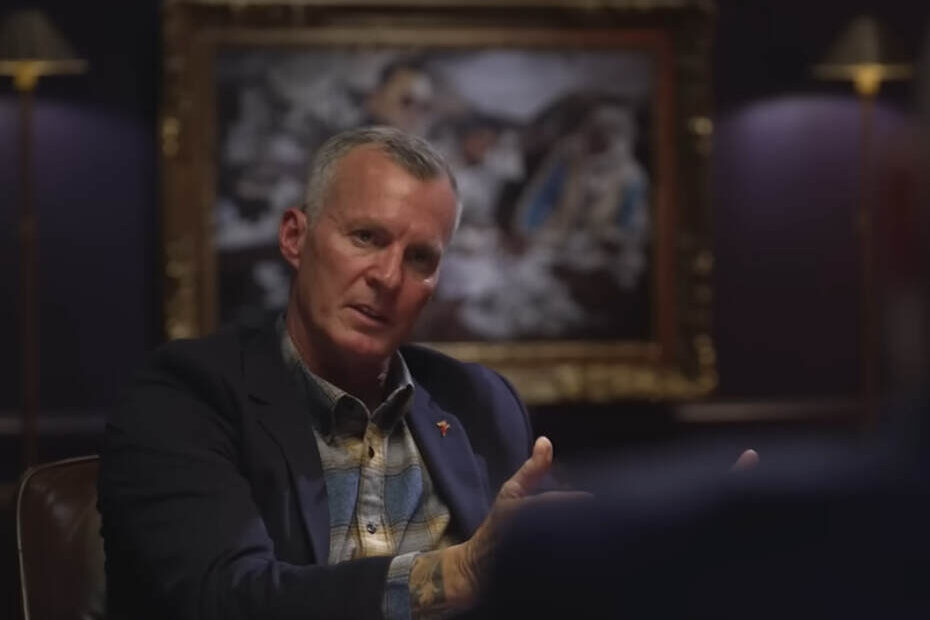
Here is the full transcript of Charlie Kirk’s head of security Brian Harpole’s interview on Shawn Ryan Show (SRS #254), on “Groundbreaking Evidence From Charlie Kirk’s Head of Security”, Premiered November 17, 2025.
Welcome to the Show
SHAWN RYAN: Brian Harpole, welcome to the show.
BRIAN HARPOLE: Pleasure, Shawn. Thank you for letting me be here.
SHAWN RYAN: Thank you for coming, man. So very heavy interview today. And so you were in charge of the security detail in the company when Charlie Kirk was assassinated exactly two months and one day ago.
BRIAN HARPOLE: Yes, sir.
SHAWN RYAN: And, you know, I’ve been really quiet about this matter because so many people are out there on it, and it just, it’s a real shame. But it just got to be so much that I just did not trust my own eyes, ears, what I was reading, what I was watching. And I think a lot of people have sensationalized this, and that is a real shame. And it makes it impossible to find the truth.
BRIAN HARPOLE: It is. And it’s not a word, but you said sensationalized. But it’s like advantage, right? Just to take advantage of it. It’s almost like sickening. And it has been. And really, that’s kind of what drove me to come here.
SHAWN RYAN: Well, Brian, I know you and your team are taking a lot of flack. And, you know, I just commend you for the courage to come out and talk today on the show. And I just want you to know, I mean, you know, I’m not a combative interviewer. I do have some tough questions that will be at the end. The questions that I’ve seen all throughout the Internet, questions that people have, questions that I have.
Some of them may seem a little absurd, but I think it is, I think it’s important to, you know, just address all the major ones, at least all the ones that are on my radar. And so I just once again, want to thank you for coming.
BRIAN HARPOLE: Nothing’s, if it’s, nothing’s out of bounds except for something that may be covered in the NDA that I did for a specific incident for them. And so if that’s true, I would just say that. But literally, that’s the big thing, is I’m sitting here, but the team is here, and that’s the big deal. And representing.
Setting the Stage
SHAWN RYAN: Now, I want to, and I also just want to say, you know, one, rest in peace to Charlie Kirk and God bless his family. And number two, I’ve lost friends, and I’m familiar with those type of scenarios. And I just want to say that I’m really sorry for what you and your guys are going through with losing your friend and also with everything that’s coming along with that.
So, but everybody starts off with an introduction here. Brian Harpole, a highly decorated law enforcement veteran who served as a police officer in Texas for 14 years. In 2008, you entered the private security world as operations manager for an elite Texas based security firm where you specialized in executive and personal protection.
Now you are a global private security contractor and trainer running your own company, Integrity Security Solutions, across five continents. A graduate of Columbia College, you earned a Master Peace Officer license from the state of Texas, along with graduating from the International Law Enforcement School of Police Supervision in South and Southern Methodist universities, Cape Intelligence Program.
Most importantly, you were on the stage with Charlie Kirk as the head of his contracted security detail on September 10th when he was assassinated. It’s been two months since his tragedy and there are a lot of unanswered questions and people are starving for some answers. I know a lot of people are going to be very interested in what you have to say today. But, you know, I want, I just kind of want to give it to you right now and give you the opportunity on why you’ve decided to come out.
BRIAN HARPOLE: You hit it. There’s so much out there, and there’s so much out there that’s not true. And I was talking to your staff earlier. I’m older, right. And I have guys on my team that, or our team that are younger. And if the truth doesn’t get out there, it could hurt their, you know, 20 more years of work. And that’s not fair.
And these are stellar individuals. These guys are stellar. And, you know, we’ve worked with just about every agency and police department across the nation and in the larger government, you know, FBI, Secret Service. And I got guys will come up to me and say, “Where did you get your guys? Where did you get these people?” And the only response I’ve ever been able to make sense is I just tell them and I prayed them in and they came in, you know, and our selection process is unique, unparalleled.
SHAWN RYAN: We’ll get into that. Yeah, I like that cross on your, on your jacket. You know, I thought it, I thought it’d be good to start this episode with a prayer.
BRIAN HARPOLE: Absolutely.
SHAWN RYAN: You okay with that?
BRIAN HARPOLE: It’s what we all should do. All right. Yeah.
Opening Prayer
SHAWN RYAN: It’s going to be super simple here. Jesus, I just want to thank you for having Brian here today. And we have just a couple of goals today with this interview and that we ask that you be here with us in this interview. And we just want to bring some answers to unanswered questions here today. And avenge Brian’s team of these accusations and conspiracies.
And we basically just want to clear the air and get rid of the confusion. And we hope this helps. And we also just want to pray for Charlie and his family, and we hope that this rise in political violence comes to an end real fast. Amen.
BRIAN HARPOLE: Amen.
SHAWN RYAN: My pleasure.
BRIAN HARPOLE: I believe in that power of prayer is unbelievable.
SHAWN RYAN: Me too.
BRIAN HARPOLE: I’ve received prayers from people from all over the world and text. And I would tell them they’re heard and felt, and they are. They are.
SHAWN RYAN: Good, man. Well, we got a couple of things to get through. And this seems like, I don’t even want to give this to you, but everybody gets one, so I got to do it.
BRIAN HARPOLE: What’s that?
SHAWN RYAN: But, oh, no, everybody gets a…
BRIAN HARPOLE: I was looking forward to it for a couple reasons. One, mom, fiancé loves this type of candy, and so I’ll definitely share it with her. And they’re known for that. And so I appreciate it. Thank you. Thank you very much.
SHAWN RYAN: You’re welcome. You’re welcome. And I have a Patreon account. It’s a subscription account. They’ve been with me since the very beginning when I started this in the attic of my house. And it’s turned into one hell of a community. And so one thing I do is I just offer them the opportunity to ask every guest a question. And so this is from Amber. What is your favorite memory with Charlie?
Favorite Memory of Charlie Kirk
BRIAN HARPOLE: It’s odd. It was recently and believe it or not, and it kind of made me feel like I was just hanging out with him instead of working. And we were in Japan and we had finished, I mean, it was like a backbreaking tour of South Korea. Went to the DMZ and then did a lot of stuff around there. And then we went to Japan, Tokyo. He did some speeches, and a couple of us went to a dinner afterwards.
And Charlie just loved Japan. And he was like, “Man, something.” We had a bet and we were playing a game that if we could find somebody in Japan taller than him. And so we were all on guard, looking, scanning. But then you got this secondary thing behind you like, you know, are you going to find some guy that’s as tall as this guy? Which is absolutely hard to do.
And then afterwards, we went to dinner and we were, he was just eating sushi, and we were laughing and having a good time. And it was a safe environment, so access was controlled. And it was just these goofy things, like you were sitting around a table in high school with a bunch of guys that you were cutting it up with.
And I just remember he was like, he really loved the sushi. And he was like, “Brian, you going to eat that?” And I was like, “No.” He just starts eating it off my plate and I’m like, “Yeah, yeah.” And it’s just like, man, this is, it was cool. You know, he had never been to Japan before and he got to see some of the really cool stuff there. And then he was just on a high about it. And so he was not Charlie Kirk. He was just a guy. And so it was a very cool experience.
SHAWN RYAN: That’s cool, man.
BRIAN HARPOLE: It was.
The Purpose of This Interview
SHAWN RYAN: That’s cool. Well, Brian, like I said in the interview, I want to really clear the air with a lot of things and it’s going to be some uncomfortable questions. But, you know, I’ve thought a lot about how I would do this interview and I think it is probably most similar to the Blackwater one that I’ve done.
And so one of the things, you know, I’d like to talk a little bit about your background, your company, the training that’s involved in your company, and then we’ll get into some actions and stuff. But, you know, I mean, this is just, this is just so wild.
I mean, we’ve heard it was a right wing nut, a left wing nut, Israel, a trans person, a trans person’s boyfriend. I mean, it in, and at the time, there were compelling arguments for every single one of those avenues, you know, and I think, you know, there’s a lot of people that don’t believe that this Tyler Robinson kid is the shooter.
But I just, you know, we’ll dissect all of this stuff as we go on. And then at the end, I want to ask what questions you have, you know, from somebody that was being there and somebody that had their hands, the first ones to have their hands in the wound. But so let’s, let’s start with, you know, let’s start with a little bit of your background in law enforcement and what qualified you to get into this type of work.
Law Enforcement Background
BRIAN HARPOLE: Yeah, I came from a law enforcement family and my dad was a cop for 47 years and he was a worker. He said he is still a worker, you know, and he was kind of like a role model for that. And so I was kind of hell bent when I was in my early 20s that that’s not what I was going to do. And then just kind of got gleaned into that, recruited into that, and did 14 years at that.
And kind of my area of specialty was I had the ability to go out and find bad guys. And that was kind of what I did. Whether it just, you know, seeing the physiological movements of people in crowds or even in cars and the way they walk. And so you notice that you recognize it and how you can look at the way they act when they see you or they’re trying not for you to see them.
And so you can couple that and use that to make contact conversation with people and you find a lot of bad guys. And so I kind of specialized in that and then also did emergency medicine. And so I had some really great mentors, like I said, my dad, a guy named Jerry Venom, Bill Waybourn, Keith Lane. Just phenomenal mentors in law enforcement that just kind of took me under their wing and, or slapped me when I needed it. And we all need it sometimes.
SHAWN RYAN: Have you ever exchanged gunfire?
BRIAN HARPOLE: I’ve been shot at and then shot guys a lot of the times with non lethal shotgun rounds.
SHAWN RYAN: You have. So you know what it’s like to be shot at.
BRIAN HARPOLE: Sure. You feel it. I mean, I was close enough one time. I remember a guy shot at me with a shotgun. And you don’t, I remember that kind of sounds weird, but you see, I remember seeing his hair puff up because the gun was so, the shotgun was so short.
SHAWN RYAN: Wow.
BRIAN HARPOLE: And so I remember seeing the plotting come over my head.
SHAWN RYAN: No kidding?
BRIAN HARPOLE: Yeah. And so I was like, “Ah, that means he missed,” you know, because wadding’s after the bullets and you know.
SHAWN RYAN: But man, I got shot at with a shotgun one time.
BRIAN HARPOLE: Yeah. In Yemen.
SHAWN RYAN: And I thought they were, I thought a kid was holding a sparkler towards me. Turns out it was a shotgun.
BRIAN HARPOLE: You feel it? This guy. This guy.
SHAWN RYAN: Luckily I was in an armored vehicle.
The Shooting Incident and Career Development
BRIAN HARPOLE: A little over 40 something feet away. And so, you know, you feel it, you feel the blast, right? And so grace of God, he missed. But that career, you know, I kind of, like I said, had some really good guidance starting with my dad all the way up to these other mentors.
And there was an expectation of work back then where you out-produced, you know, integrated work and you went out and found bad guys. And then when you did that, you kind of got a skill, developed a skill we called it. You know, you started sharpening your own sword.
And then that kind of helped me transition over into this field where it’s about prevention and seeing it before it happens. And so that was able to really help me in this field, go out and work, even in austere places. And I’ve done some work on the private security side that makes law enforcement, the most dangerous stuff I did in law enforcement pale in comparison. I mean, I work cameras inside of cartel houses in Juarez.
SHAWN RYAN: Wow.
BRIAN HARPOLE: Yeah. And we were looking where kids were being trafficked, and we act like we went in to shop for children. And we were capturing that footage. We got made inside.
SHAWN RYAN: And then that was as a civilian?
BRIAN HARPOLE: Yeah, yeah, yeah. Wow. And then I did same deal.
SHAWN RYAN: Well, can I hear more about that?
BRIAN HARPOLE: Sure, sure.
Undercover Operations in Cartel Territory
SHAWN RYAN: You were on a civilian contract to go into cartel homes?
BRIAN HARPOLE: Well, it was an NGO based out of Dallas that specializes in helping people that are trafficked. And we were in El Paso working during the surge of people coming over to document that. And I was providing security for the people that were reporting it.
And then I don’t know how they came on the intel, but inside of Mexico and Juarez, there was a hotel that they found out where the kids get warehoused. And so they were like, “This would be great footage.” And I was like, “This is horrible.” You know, and so we ended up going over and posed as shoppers, basically.
And the guy gave us a tour. And we went into this room that was about 50 feet long, but only probably 10 feet wide. And you can tell, like, it was just bed, bed, bed, bed, bed. And these guys were, I guess that’s where you go in and shop.
SHAWN RYAN: I don’t know.
BRIAN HARPOLE: But nobody was in there. There weren’t any children in there at the time. And then we went back downstairs, and we’re in the lobby and kind of talking to the guy behind the desk. And you can tell he’s like the, I guess, the front for it.
And I saw a guy look through the window from outside. And with his head, he counted us like that. And then he picked up the phone and he said that into the phone. And I told him, “Hey, man, we just got made.” So we ended up going out of more as a secondary exfil location. And we ended up having to go out in New Mexico instead of Texas. And so just got some great footage.
But then we did other ones where I went to Piedras Negras and wore a camera and showed how people would come back across. And I won’t say be harassed, but be screened. You have to pay a fee to leave Mexico. And then you get checked when you come to the border, the middle of it, and then you get interdicted. “Why were you there? What did you do? What did you eat?”
And then, so I’m getting interviewed, but at the same time, the camera crew was filming literally hundreds of people just walking across unabated. And so you got to see both of those at the same time. Wow. Yeah. And things like that, really good missions in South Africa, doing things same deal. And so there’s good work to be done.
SHAWN RYAN: So you got a lot of experience?
BRIAN HARPOLE: I mean, experiences. I have gotten experience through experiences. And I’ve had, it’s really a gift to luxury and I’m happy to have it.
Starting Integrity Security
SHAWN RYAN: How long have you had your company?
BRIAN HARPOLE: We started Integrity three years ago and we actually worked for another company prior to that with Charlie. And there was a, in 2022 is when we started it and started doing that. We worked for him for the other company prior to that and there’s some conjecture out there on the end.
SHAWN RYAN: For Charlie?
BRIAN HARPOLE: Yes, for Charlie and other accounts.
SHAWN RYAN: How long have you been working for Charlie?
BRIAN HARPOLE: Since I believe it’s 2018.
SHAWN RYAN: Since 2018.
BRIAN HARPOLE: 2018, yeah.
SHAWN RYAN: So it’s been seven years.
BRIAN HARPOLE: Seven years, almost eight years. Yeah. Wow. Yeah.
SHAWN RYAN: So when you started the company, was it, did you take the, the, this is it, the original detail that started in 2018?
BRIAN HARPOLE: Pretty much the same guys. Yeah.
SHAWN RYAN: Together for a long time.
BRIAN HARPOLE: Yeah. We’ve added obviously and lost a few, you know, not different company. We lost that company, lead or that company for reasons that we couldn’t stomach that were going on. But that’s why we started this company and that’s why we named it Integrity. You know, we named things and it’s a we company.
The Vetting Process
SHAWN RYAN: Tell me about the vetting process to get into your company. What is it? What does it take to become a security contractor for Integrity? What are you looking for?
BRIAN HARPOLE: Yeah, it’s weird for the industry. It’s kind of weird. We have a group of guys that are either from the original, we call them the OG guys. And so then we have the add-ons that have come in. And so if a guy wants to come to work for us, he has to get sponsored in by one of those people that are already here.
And so, you know, “I’d like to come to work for you.” And so somebody vouches for him. And then he comes to our training facility and we train. If you’re in town not working a detail, we train every Wednesday. And so it’s, you know, defensive tactics, emergency medicine techniques, you know, PSB techniques, firearms. And so that’s every Wednesday.
And so they come out and they train with us for an undescript amount of time. Some guys, it’s a month and a half, two months. Some guys it’s six, seven months. You know, there’s no timeline. And at the end of that time, the team gets together and they give them the thumbs up or thumbs down.
And then if they get the thumbs up, then they start the vetting process of, you know, what did you do? Are you a good dad? Are you a good person? Were you a good previous employee? You start just a normal vetting process after that.
SHAWN RYAN: So you go through all of the skills.
BRIAN HARPOLE: It’s not skills. We have guys that come to us that the skills are not what they need to be. But we as a team can collectively teach that. But what we can’t teach is if you’re not a jackass, can you work well with a team? Can you think of people besides yourself?
And sometimes that can’t be taught, sometimes it can. But those physical skills, the hard skills and the soft skills can be taught. And we have quite a collection of guys that do that, man.
The Team’s Credentials
SHAWN RYAN: You know, we have some statements from your guys here and I don’t know if you want me to read any names, but I…
BRIAN HARPOLE: They said they’re fine with it. It’s just first names.
SHAWN RYAN: I mean, here’s just, you know, Blake, combat proven Marine. Pierce, more talent than everyone else. I mean you have SEALs, world renowned Jiu Jitsu people, 22 years on SWAT, professional athletes with tactical careers. I mean, 22 years as a Navy SEAL, Marine and 30 year cop and SWAT commander. I mean, these guys know what the f* they’re doing. And they’re no stranger to dangerous work.
BRIAN HARPOLE: No, and they come in with that. But we have a saying that says, because they come in with that kind of pedigree and they’re vouched in based on that a lot of the time. But we have a saying that your past achievements or affiliation are not equal to your current capability.
So that’s why they still have to come show that they can do that stuff still. And still have the hard set, but still have the soft set.
SHAWN RYAN: Make sure your skills match your ego.
BRIAN HARPOLE: Right, right. And, or your resume. Yeah. And so it’s a, and that also builds cohesiveness. And I’ve never in my years as a cop, years as a cop, or until we started this group, even at the prior company, we didn’t have it. It was a weird relationship between the team and the guy who owned it. But this one, we got grown men when we finish training telling each other they love them. And then we leave.
SHAWN RYAN: Nice.
Ongoing Training Requirements
SHAWN RYAN: What is the ongoing training look like in Integrity?
BRIAN HARPOLE: It’s mandatory. I mean, the guys are required to do, our written policy, 40 hours a year and 20 of it has to be internally and 20 of it can be externally. Most of the guys, I did the averages and I sent in our training logs and we keep them electronically so that they’re not, they can see that they’re time date stamped with what we did and why we did it. And most guys get around 200. Some of the guys are getting 400 hours of training a year. Wow.
SHAWN RYAN: Yeah.
BRIAN HARPOLE: And it’s advanced level. It’s not sitting around like in cop days where you’re watching videos of, you know, how to get along better with people that don’t think like you. You know, it’s real things that are applicable to what we’re out there doing right now today and how we can raise to the next level.
And then it’s ongoing. There’s an expectation for it. And we’ve lost guys because they didn’t keep the hours. And I’d tell them, and they were good humans, I mean, good people that just timelines couldn’t line up or, you know, things going on at home. And so they had to get laid off or furloughed and told, “Hey, when you come back and start all over.” But the process started all over.
The Zero-Fail Mentality
SHAWN RYAN: I would like to, I mean, we had a little conversation before we jumped in on the interview and the way, and when you told me, you know, the process that you had developed, you know, to be vouched for, to work for Integrity, the actual training pipeline, the, you know, all the guys on the detail have to give a thumbs up or a thumbs down.
I mean, I think that’s a phenomenal way to hire for a security firm. On top of that, I mean, the ongoing training, I mean you had brought up medical when we were chatting upstairs, you brought up obviously firearms. I mean you even brought up etiquette classes that you would bring people on to the range and ask them what fork they’re going to use.
BRIAN HARPOLE: Yes.
SHAWN RYAN: So that, I mean, so you are very, very detail oriented.
BRIAN HARPOLE: You have to be. You’re in kind of a zero-fail. And you know, we see that now of work here is I used to tell guys that come in from the law enforcement side, it’s like, “Man, back when we were cops, if somebody got, something happened to them and they’re in your beat or 10 cars got stolen or, you know, 50 mailboxes got bashed, you went out and you’re just like, sorry,” and took the report and you went back to work, you got paid the same.
In this industry, something happens by no fault of your own even, and like that, you’re done, you know, with that client. And there are people in the woodwork that’ll come right back in and do it for cheaper probably. And so it has to be that mentality that we have to be that much better.
Every single time you step on a job, you have to, it’s, you know, people say that 110% rule. And I’m like, it is, it’s 110%, but it’s 110% of something that has to be the benefit, the big picture, not yourself. Everything, the whole job, the detail.
And you get guys together and you put them through that mess to get on the team and you’ve developed something that can’t be replicated. I mean, we vacation together, we Christmas party together.
SHAWN RYAN: It’s a brotherhood.
The Team’s Brotherhood and Commitment
BRIAN HARPOLE: It is, it is. And once you’ve made it through those steps and you’re on the team, you still have to put that kind of effort out. Once you put that effort out and shown even on jobs that you truly can think about everybody—the client, the team, the big picture, what we’re believing in—then the team gets together and they authorize him to get the tattoo. Then they get to get a tattoo and that, you know, Brothers in Christ for eternity.
SHAWN RYAN: Wow.
BRIAN HARPOLE: And so you guys are tight. Yeah, it’s what it should be.
SHAWN RYAN: You guys are tight.
Addressing Foreign Intelligence Allegations
SHAWN RYAN: When you’re screening your employees or the guys, I have to ask this question. I have to ask it, of course. Do any of your guys have any ties to any foreign intelligence agencies? More specifically Mossad?
BRIAN HARPOLE: No. And I’ve seen that and heard that. You know, I’ve been in 39 countries in this world and I’ve never been to Israel. I’m a firm Christian. I ask our guys, are you believers? We have no ties to Israel or Mossad or any other one. We’re Americans, period.
We believe in what we’re afforded to do here. We believe in our system. And to say that we’re Mossad or attached to any type of foreign entity, it’s one of those sits crap on its best day.
SHAWN RYAN: Do you have anybody on your team that you think could be tied to an extreme political party who is planning assassinations?
BRIAN HARPOLE: No one. We’re in each other’s business. Where they have the time for it, I wouldn’t know, but yeah.
SHAWN RYAN: You had mentioned some of these guys are on the road 250 days a year with Charlie.
BRIAN HARPOLE: Yeah. Just working. And it’s not just that. I mean, we do a team trip every year down to an undisclosed location. And some of the guys are there now. Some of the guys left yesterday after that job ended. I’ll be going down the night before. I mean, tomorrow.
So we know what each other does. We know their kids’ names and spouses. And if they’re doing it and they’re not, they wouldn’t have time for us not to notice. And the heart of these men that are going to pour this out, it’s like we all took an oath. I’ve taken an oath. Most of my guys have taken an oath.
And it’s different in the security industry. You know, you’re not taking an oath for your client, but you are taking an oath to each other. And so they wouldn’t do that to the client, but they really wouldn’t do it to me or to their coworker. And so that’s one of those things. It’s like now, if you know us, those allegations become even more idiotic.
SHAWN RYAN: Yeah.
BRIAN HARPOLE: And—
SHAWN RYAN: And you say this with 100% certainty.
BRIAN HARPOLE: To my death.
SHAWN RYAN: Roger that.
BRIAN HARPOLE: To my death.
Pre-Event Planning and Threat Assessment
SHAWN RYAN: Let’s move into the threat assessment and the pre-planning for the event.
BRIAN HARPOLE: Absolutely.
SHAWN RYAN: How many days prior were you guys there?
BRIAN HARPOLE: We generally, the permitting process and all that goes on behind the scenes. And then there’s questionnaires that are filled out that we used to. There was a lot of busy work. And then, you know, kind of like in the military, what you did, we create forms that, hey, let’s get this information up front.
And so that we have a duplication process so that we can confirm it. And so we started our first before that one, the 24th of the month prior. And so, and that was with the hard conversations meetings.
SHAWN RYAN: You started that on the 24th, right?
BRIAN HARPOLE: It was two weeks at least. No, it started before that with the intelligence gathering and all that. But the hard conversations, the sharing of information, the conference calls, the data sheets, and we put that in a timeline on an app so that this all goes up and every guy that’s on that job can see all the intel that comes in.
It’s a decentralized command model for the company, and so anybody can make command decisions for the betterment of the client or the team. And so everything goes on that app. And so when I get it, they get it. And whoever’s gathering that intel, it gets it. There’s no hold, there’s no power hold on it.
And so that first information came in on the 24th. And then the information share starts where we’re walking through, you know, everything that you need for a detail. The site plan, point of contacts, emergency fallback locations, hard rooms, arrival points, hospital, you name it, fire department, jurisdictional authorities, all that comes in on an intel sheet and gathered and then it’s in that quick reference app, so any guy can get it at any time they want to, and then we can share it out anytime.
We can add people into it, take people out of it. And so we found also that we utilize that format and it shows that we do. It can timestamp our due diligence also. And so that’s why we use that as opposed to just, you know, sharing it back and forth or doing it on a whippet pad. So we have that in real time. And so that starts then.
SHAWN RYAN: What kind of—I mean, at the beginning, when I was kind of looking into this before, before I realized I’m never going to find any answers. We’ve seen a lot of Charlie’s friends, people that are in the media, you know, come out and say Charlie had very specific concerns about Israel and that his opinions were changing about Israel and that he had expressed concerns about this to various media personalities.
You know, my question is, is the man that owns the company that’s in charge of his security detail, and you are the head guy on his security detail. Were there any concerns about that or any other organization, political party, foreign nation? Did he express any of those concerns to you?
Charlie’s Concerns and Threat Analysis
BRIAN HARPOLE: No. And Dan works for Turning Point as their security guy. And so Dan feeds down that to us to our contracted security, which is us, for integrity. And so nothing had ever come now from Dan, from Charlie, down to us, about that.
Now, at the same time, you got to look at the world we live in, and that’s a reality. It’s a reality that an organization, whether it be a hate group of any type, could want to hurt anybody, not necessarily Israel. But we look at mathematics, too, and there’s probabilities and possibilities, right?
And I look at the probabilities, the possibilities are infinite, and the probabilities are that it’s not. The probabilities are the people that want to hurt him or the people that are there screaming things at him in front of us half the time. And so we have to look at those probabilities in the mathematics. We look at the possibilities, too. And those possibilities, I’m sure, are out there, but we’ve never got any detail or intel to show that yet. We should look into this deeper.
SHAWN RYAN: I mean, it’s just, it is very interesting that if he was that concerned about foreign nations or opposite political affiliations, I mean, if he was that concerned, I don’t know why that wouldn’t have been disseminated down to the security detail. I mean, I have a security detail, and if I feel that there is a threat, even if it’s just a feeling. That’s the first people that I tell is like, security detail.
BRIAN HARPOLE: We looked at, you know, we look at all that, and you can go back and look at his speeches, and Charlie was an absolute supporter of Israel. And then he would say, and they would ask him why. And so, you know, we’re in those things and we’re listening, but at the same time, you’re looking, but you hear these things and you hear them over.
And I can remember him saying, you know, he was a supporter of it because one, a nation should be able to defend itself after they’ve been attacked. Two, Charlie was a devout Christian to the point that he gave his life for it. And he referenced this, and I heard him reference it, where those places that are our holy land are being taken away from us and not being able to visit, and that you can’t go there.
And so that protection of Israel was important to him in those holy sites, and he’d been there. And so he had talked about being there and how it changed his life. And so that’s why those sites in that area was important for him to protect. Now, how you can derive Israeli hitmen out of that, I have no idea.
But we have never received anything from the FBI, which they were pretty good about sharing information, Secret Service, because of the, you know, the Charlie circle. And we had never received anything from anybody that was credible that was saying that groups of that entity was a threat to him.
We received other threats all the time. They come in all the time. And so you got to look at them. Are they First Amendment or are they actual threats? And so, you know, First Amendment threats would come in and these people have disgusting. They’re like, “Charlie, I can’t wait till you come to”—you know, it was somewhere on the West Coast. I can’t remember what town it was, but “I can’t wait to come to this town so that I hope somebody shoots you in the head and we can pee in the hole.”
You know what? Yeah, yeah. It’s like, where do you get this kind of stuff? And so where do you, what are you benefiting from it? Right? And so am I going to spend an absorbent amount of time with a possibility that I don’t have any tangible intel on and haven’t received any, or am I going to put my eggs into this basket? That is a probability right here, you know, and so it’s probable these people are doing it with bomb threats, routinely physical, you know, threats to person.
And so you got to look at all these things and work those angles. And, you know, Dan did that meticulously, and he shared that information with us. And so if that came in, we got it. And we never got anything that—no Mossad or nothing. That was never. Not once did anybody.
Premonitions and Concerns
SHAWN RYAN: I mean, you know, I’ve interviewed a lot of warfighters. I’m a warfighter. A lot of times somebody on the team will have some type of a feeling or a premonition or, you know, hey, we shouldn’t be here right now, or something’s about to happen. I don’t have a good feeling about this. Did anybody here on your team or Charlie, anybody express any concerns about that day?
Coordination and Security Challenges at UVU
BRIAN HARPOLE: On that day, for us personally, when you walk in, we talk about workup, right? So we start the back workup, and then we’re a little different also, as far as our guys don’t just get to show up. The team goes out and we physically build all of our prevention model so they don’t show up and just see it. They physically build it, and we walk through it each other, and we make sure things are done right.
And so our guys are pulling bike racks and putting them together, and they’re putting tape up, and they’re looking at places all around the bubble that our area of responsibility is. And so, they’re looking around thinking, this is horrible. We’re at, it’s a beautiful amphitheater there at UVU. But, you’re a tactician. If you’re somewhere and you’re covered from an elevated position, from 180 degrees, it’s horrible. And that’s where we were.
But that’s come out. Why would they have it there? This is ignorance. It’s a security fail. And I’m like, well, one, that’s where they told us we had to have it. We weren’t optioned out anywhere else. There’s a permit you have to get. And the school says, nope, this is where you have to have it. We don’t get to argue with them. We don’t get to say no, but that’s it. This is where you put, this is where you have to do it.
And then secondarily, Charlie wasn’t ticketing. You didn’t have gates people, regular people showed up. And we had spoke to him about it before. He was like, “Man, this is getting dangerous.” And his response was, “I know.” And so it’s like, but if you ticket it and you make people jump through hoops to come in or pay or go through magnetometers and builds, then the people with opposing views don’t show up. And then there’s no conversation.
And when there’s no conversation, there’s more division. And his goal was to have less division through conversation. And so the easiest way to get that was to open it up. And so, and that’s not the first. I mean, UVU was an open air, but we did San Francisco, where we had a street takeover and people trying to climb over fences, and our primary and secondary exfil got compromised. And so it was bad.
SHAWN RYAN: Wow.
BRIAN HARPOLE: And so we’ve had New Mexico, where we had no law enforcement assistance. And that went not last year, year before. And we ended up physically just fighting our way out of there. And so it’s like, we get it, the risk. But his response and his mentality was that this is worth it. We’re making gains here.
SHAWN RYAN: In your coordination with UVU. I mean, did they offer any assistance? Anything at all?
BRIAN HARPOLE: Yeah.
SHAWN RYAN: Did you ask them of anything?
Lack of Drone Support and Law Enforcement Coordination
BRIAN HARPOLE: Absolutely. So we come in and we start looking at things immediately, like, where are our risks? What’s our risk assessment when we come in? That’s why we get there. That’s why we start doing the advance so early. We walk it, we build it ourselves. And so initially we have, I spent thousands of dollars on drones last year and went and got the guy’s license. But if the area lies in the Provo, Utah airspace, I can’t fly it. That’s a 107B. We can’t break the rules.
And then you had secondary restrictions, probably due to heavy foot traffic for the school. But I can’t go in and break the rules. There’s laws for a reason. And then, and so now the school could have flown drones, the PD, but they didn’t have them. Right. And then, and then. So, but Orem PD has a drone unit, active and professional. And that police department, I will tell you right now, is awesome. They are, they get it. They were there. They helped both on the soft side and the hard side.
And so I started asking questions like, you guys have a drone unit? Yeah, yeah, yeah, yeah. Good, good. Do you have an MOU or a mutual aid agreement with the school? And they’re like, yeah. I said, did they call you and ask for assistance? No. I’m like, why wouldn’t you call? And then so, that’s one. So just, I can’t go in and break the law. I can’t make my guys break the law. I can’t go in and do something that would jeopardize their…
SHAWN RYAN: Do you have any idea why they would say no? I mean, did they, was this malicious? Was this being malicious towards the ceremony?
BRIAN HARPOLE: I don’t know if you know the right one. I would say, did you ask, did you ask this awesome PD that would probably help you in a heartbeat. Did you have an MOU with, did you even ask them? And the answer was from them, we didn’t get asked. We didn’t get asked.
And then, so table the drones, which would been awesome. Absolutely. I believe in them, but I can’t break the law to do it. We’re out there not only protecting them physically, but I have to protect the reputation of the client also. And that’s a whole separate thing of protection. So the drones would have been awesome, but I can’t break the law. They could have used them. They chose not to.
And you got overwatch, snipers on roofs. I got guys that are qualified. That’s their career. But this is not a State Department job. I don’t have an ITAR. And this is not Iraq, this is Utah. I can’t go in and set up observation points with snipers. That’s against the law. I can’t break federal and state law to do what we need to accomplish. So that’s their job. Our job is the close protection bubble.
And there’s a saying on this. And there’s areas of responsibility. And we cut up the areas of responsibility in this, in this pre-meet or when we start doing the advance. All right, we’ve got this, you’ve got this. And so, they have that, that overwatch capability and they have an MOU for SWAT for that through Orem. Not utilized. Don’t know why. That’s a question for them to ask. Why didn’t you call? Why didn’t you ask for assistance?
Especially when this crowd grew and grew and grew. I mean, good police tactics. If you’re out and you have six guys that show up and all of a sudden this thing goes from 1,500 to 2,000 to 3,000 people. You go, hey, we need some help. Follow your pride or whatever it is. We need some help. I took 12 guys there. I had double the amount of people there that the PD had. And we’re only responsible for the first 30 meters and movement in and advancing and receiving and out. And we had 12 guys, they gave me six for the rest of the campus.
SHAWN RYAN: Geez.
BRIAN HARPOLE: Yeah, and so that’s not the question for me to say why didn’t they. That’s the question for them. And so there was that one, the site, man, it wasn’t up to us two drones. I can’t break the law to do something I want to do, otherwise I’d have showed up with an APC.
SHAWN RYAN: Well, with the drones, I mean, you were in coordination with local police department, correct?
Areas of Responsibility and Threat Assessment
BRIAN HARPOLE: No. The UVU has jurisdictional authority. It’s their campus. Orem is the outside city. They weren’t there because they hadn’t asked, they hadn’t been asked to come by and we can’t ask them to come. I can’t call Orem PD and say, man, send me 10 guys, I can’t do that, I don’t have the authority to do that or the budget.
And then, but the city, I mean the school PD has an MOU or mutual aid agreement with them. Why not just call them, say can you guys send us 10 guys over here for overwatch? All that. And I say that only because we had previously talked about areas of responsibility and then the areas of responsibility and I had a, and our guys all have not only an area of responsibility, but there’s a job in a job.
So you have your area and you have a job for that area. But then you also know the guy’s area and job next to you in case he goes down or something, you have to backfill him. And then we have the bubble around the protectee and mathematically 2,000 people are in front of you. Where’s mathematically the threat coming from?
SHAWN RYAN: The front.
BRIAN HARPOLE: Right. And so we’re looking for walk ups. People walk up, sitting down, a package walking away, displaying a firearm. Everything from throwing balloons full of piss to muriatic acid. We’ve had all kind of stuff thrown on us over the years. And so there’s a reason why those things are set up that way and there’s a reason why those guys that day were set up around there.
Every guy has a job, every guy has a detail, every guy knows the guy’s job next to him. And so we have that set and then we, other people have areas of responsibility. Well, the Monday before the event we were still working through the arrival and so we have concerns with rooftops. It’s, I mean we got a location that we’re not keen with. We know what our responsibility is, we know what our statutory authority is, we know that we can’t go up and set up our guys in sniper observer positions. It’s not going to be allowed.
Chief Long’s “I Got You Covered” Message
And so we have some correspondence with the chief of the school on that day, on Monday before Charlie was killed, and why this hasn’t come out and why he won’t stand up like a man and admit this, I don’t know. But he’s watching a bunch of men lose their careers and he’s okay with it.
On Monday, before this correspondence went to Chief Long. “Hello, Chief Long. We received this message today from the student group. There is a student roof access pretty close to where CK will be set up at the Utah Valley. The Sorensen center has a couple of staircases that go up to walkways on the roofs.”
He comes back and for edification, the Sorensen center was the building in front of the Lucy Center. And so he, and he comes back, he says, “You want access to the roof?” And came back and said, “I was told students have access above us. If this is true, it would be nice to either have it controlled access or allow one of my guys to be there as well, if possible.”
He comes back and his last correspondence was, “I got you covered.” What else am I to do when a command level, a person from an accredited police department says, I’ve got this area.
SHAWN RYAN: Jeez.
SHAWN RYAN: Have you been in con… Who was that?
BRIAN HARPOLE: That was the Chief of police for the UVU Police Department. We’ve called him, he’s never called us back.
SHAWN RYAN: Holy shit. Does he have a name?
BRIAN HARPOLE: Chief Long. Chief Long. And, and I didn’t know if it said Deputy in that or not because in, in the, in the correspondent or in his stuff on the website it says Deputy Chief Long, but we just called him Chief Long. So, so it’s like, yeah, I, I got guys that are 10 times more qualified than what he could have produced for us, probably.
SHAWN RYAN: So literally all they had to do is post anybody at that stairwell.
BRIAN HARPOLE: Stairwell.
SHAWN RYAN: Or put a drone up or, or let us, let you do your job.
BRIAN HARPOLE: Or let us, we, we, we, our, our team is built.
SHAWN RYAN: Would it be okay if we put that screenshot of that text…
BRIAN HARPOLE: Absolutely.
SHAWN RYAN: For everybody to see?
BRIAN HARPOLE: Absolutely. No, it’s real. Absolutely. And do a FOIA for his phone.
SHAWN RYAN: That’s a good idea.
BRIAN HARPOLE: Do a FOIA. Do a FOIA for his phone and have those records put out so everybody can see them. Do a FOIA for the communications for days leading up to it. Do it. And the truth’s like a lie. You set it free. And it’ll fight for itself.
SHAWN RYAN: One of my favorite sayings. Last question. Before we take a break, I just want to ask, were you understaffed or, or, I mean, was anybody sick?
BRIAN HARPOLE: Did you have what you needed? Yeah, we, we usually had been…
SHAWN RYAN: This is the same as every other event.
BRIAN HARPOLE: No, no, we upped it.
SHAWN RYAN: Yeah, you upped it.
Security Team Expansion and Preparation
BRIAN HARPOLE: Yeah, we upped it. We usually would run 8 to 9, depending on how many movements and how much movement inside. And so based on no articulable threat, but just the current world situation, prior to that day, we upped the manpower to 12, and then we had actually a 13th there that came in the drive party.
But yeah, we upped it based on nothing because it’s like, all right, we’re in a kind of a place where we don’t want to be. We’re expecting a big crowd. It’s the first one. We don’t want to get behind the eight ball.
We in security industry, it’s a prevention industry, not a response industry. It is a response industry, but it should be a prevention industry. So we’re there in the prevention model.
And so you can see if you pull the schematic up, the placement I put for our guys. And on that day, thank goodness we had them, because where the tent was that Charlie was under, there’s a giant walkway above it.
And when we were doing the walk that morning, one of the things that didn’t come out in our advance was there was giant rocks that they used for architectural design all around there. And so we’re seeing these rocks on the ground, and it’s like, oh, people can come by and pick up these rocks and then throw them down on us and throw them down on Charlie.
And so we did a temporary criminal trespass zone right above him on that bridge walkway so that people couldn’t come in it and throw rocks down on them. But the problem is that we had to get PD units in here to take that area of responsibility.
And we told them, hey, just like out there, we need you here to have oversight coverage. Because, one, it’s a tape line. It’s not a hard wall or anything. And so you need statutory authority under Utah law to say, hey, you can’t come in or you can be arrested.
And so the PD came and did that. And then we had one Scott that did a hellacious job on making sure they stayed there and did their job. And so, thank goodness, we brought extra people. And so we upped our manpower for that one.
Budget Realities in Security Operations
Due diligence was done. You know, it’s weird in the security industry, I get calls all the time and they’re like, hey, we want to run a security detail. And we want, you know, 10 guys, former SEALs and operators and SWAT guys. And we want up armoreds and this and this.
And I’m like, all right, here’s what it’s going to cost. And they’ll call back, all right, we want one guy and a Toyota Sienna, you know, and so budget’s a factor.
SHAWN RYAN: Yeah.
BRIAN HARPOLE: And we eat a lot of money every year based on, you know, hey, last minute, non approval people, but let’s bring them in just to save our asses. And that’s a regular thing.
And so we had people for our assignment and our assignment and our people’s assignment was carried out meticulously. I mean, you had Dan next to Charlie, and Dan’s only job is Exville.
And you can see when Charlie got shot, within two seconds, Dan had his hands on him to push him down to the ground. And then within, you break it down forensically. Like within five seconds, I was on top of Charlie.
And then you saw our team actually doing exactly, falling back on top of him and collapsing back on top of him. Not one radio comms came out. It’s unneeded. They all know their jobs.
SHAWN RYAN: Let’s take a quick break. When we come back, we’ll get into actions on. Okay, perfect.
BRIAN HARPOLE: Yeah.
Security Setup and Positioning
SHAWN RYAN: All right, Brian, we’re back from the break. We’re getting ready to cover timeline and security during the event actions on. And so could you walk me through the security setup for the event?
BRIAN HARPOLE: Sure.
SHAWN RYAN: Who’s placed where, what you guys are seeing?
BRIAN HARPOLE: Yeah, so we come in and we start. We look at setup in the mornings and like I said earlier, the guys are all part of it. So there’s intimate knowledge. Every guy has intimate knowledge of the setup.
So we come in, we do the placement or Charlie’s going to speak from. And that’s kind of like the ground zero. And then we build out from that.
And people in the security industry, you know, you have this thing called the concentric circle of security theory, right. And it doesn’t have to be a circle. It could be a line or a moving box or however you want to work it.
And you have zones and you have a permeable zone, a semi permeable zone and a non permeable zone. And so you can come in on the fly and set up these zones.
And then, and so we come in and we set this up. So Charlie’s tent was on that right in the middle. And then we start. So you want to start at the very back. And so we started with a non perfect permeable zone.
But it was one of those ones where it’s mainly visual and it’s just tape across this arrival section. And all it is is caution tape. But it’s just to keep good people good. That’s it. We know that.
And so, but it’s just to let people, the foot traffic out that we know people won’t come in there so that if somebody’s doing something bad, they stick out.
And then inside that zone, we place our vehicles and you can kind of see it on the aerial or you can see it when you see the footage. We put those vehicles behind Charlie’s where he’s speaking for a reason that day.
It’s called CPTED, Crime Prevention Through Environmental Design. A worry was that somebody would come down that same driveway and just run us, run him over from the back or run us, run people over. So you stack those vehicles so that the vehicles are being used kind of like big HESCOs or something.
SHAWN RYAN: Barricades.
Security Perimeter and Barricade Setup
BRIAN HARPOLE: Yeah, barricades. And so that people can’t get to them that way. And then we start doing, technically that’s semi-permeable. We still cover. It’s like, hey, people could walk through there, but they have to be knowns.
And then we went with hard bike racks. So hard bike racks then that come all the way across the back and they’re linked together. And so those bike racks keep people from coming in or out unless they’re vetted. And that’s where you would start the non-permeable zone.
And then we put a guy there and he physically is there to watch that. His job, that’s his area of responsibility, is he’s back cover. He’s making sure people aren’t coming up from behind us. He’s making sure that the right people can come in and out. They don’t have to be back there.
And we’re not talking about a large area. We’re talking an area that was maybe 100 feet across, maybe more. And then there was also a police officer back there. We didn’t request him to be there, but he showed up and so we’re like, hey, might as well utilize you. And so he just held the position on the far left side. And then you got where the tent is and then that’s kind of where to get into the meat and potatoes of it.
Evade and Escape Protocol
Because number one rule of protection detail work is evade and escape. It is, if we can evade or escape any threat without having to confront it, it’s a win. I told you that time about getting shot at with a shotgun. I was pissed because I didn’t get to shoot the guy back and went back to the PD and I’m throwing shit and whatever and my sergeant said, “Hey man, you won. You didn’t get shot at or you didn’t get shot, he’s in jail, you won.”
Well, that’s kind of the way you have to look at that stuff. Protection works like, hey, let’s evade and escape. And so things are set up that way.
And so you have where Charlie sits and then you have a guy right next to him and that person’s solely responsible for in times of need, pushing him, moving him, getting him out of that line of fire, or that, those actions, escaping, evading, throwing him into that exfil vehicle that’s parked right behind where we’re at.
Presidential-Style Barricade System
And then you’ll see we ran two double barricades and those barricades are presidential style barricades. They’re hooked in the same kind you see the Secret Service use and so we have an outer layer and that first layer is just to let everybody know, hey, you can’t cross this. And they’re physically, you know, keeps them from pushing over them. And if somebody comes over the top of them, you can see it just from the mere elevation change.
And then we create a secondary row of them with a gap in the middle of it. And that gap in the middle though, we didn’t like it. He liked that because that was able to show, hey, there’s nothing between us, right? There’s nothing between us. Let’s carry out this conversation.
But so I have two guys that are at that gap when they come up. And one of them is a measure of a man who has physical capabilities that are incredible. And then the one on the right side is a jujitsu guy, world renowned professor. And so their job is if somebody tries to press through that gap or get close to him, then they’re going to hold them up.
Response Team Positioning
And then just off their flanks are two other guys, Blake and Blake. And those guys’ sole job is to control access into that alley. And also if somebody tries to breach the integrity of those two guys, they’re there to apply violence so that they can hold that and we won’t weaken our stance.
So those jobs, a response to apply violence on those people that are trying to weaken our stance. And then they’re also access control into that little alley we’ve created. That alley creates a secondary gap but it also allows us to vet people, make sure, nope, you can’t bring packages in, no water bottles, you know, check for protrusions, all that.
So when they come through there and they’re the gatekeeper there, right. So on that one side he comes in, he makes sure and then they come down, they pass it off to the next guy and he comes up to the microphone and speaks and then when he’s done he goes out the other side and that guy makes sure he moves on. And then that guy Blake on the other side makes sure he goes all the way out.
And so those guys are dual-roled where they’re there. If these guys have problems, they’re going in to apply violence so that we don’t lose any integrity of our protection so we can facilitate escape. And then they’re also gatekeepers.
And then you get deeper in the crowd and there’s the guys that what they’re looking for is walk-ups. The guys that are walking up close.
SHAWN RYAN: They’re in the crowd.
BRIAN HARPOLE: They’re in the crowd, they’re working plain clothes. Yeah, they’re plain clothes. They’re working in the crowd and Rick’s over there. Rick’s job is to watch what’s going on here and in turn and apply and look at the line and you will, you look for things like military age males that aren’t having social contact with other people. Right.
You know, so they’re up there but there’s no looking around, there’s no talking. They got prey gaze on the guy who’s talking. No blinking. So there’s a hard prey gaze, no blinking or when you get closer to excessive blinking. And so that’s a good tell right there of a pre-incident indicator of violence. These guys are out there doing that. All of them are doing it in real time. And so, and you’re looking for that.
SHAWN RYAN: And how many of those guys are there?
Team Composition and Roles
BRIAN HARPOLE: We have in that, so far we’ve gone through 1, 2, 3, 4, 5, 6, 6. All right, and then, so then we got those guys out in the crowd. We got Scott working it over on the flank to make sure people from above are not throwing rocks down on people. Chris is over there with them.
You got Justin and Alex holding that hard line. You got response to violence guys right here. You got intel gather a guy out here and making sure there’s no walk-ups and, or people that would walk up and physically want to apply violence in close proximity.
And then you start getting, we had to rotate some guys because we had people coming in and exactly doing that. Started pushing up signs, started chanting, started creating distraction and making problems. So we pushed a couple guys over just to keep an eye on that.
And those are guys who are doing direct reporting. So they’re the ones that are saying, “Hey, it’s 14 of them.” Or “They’re just doing signs.” And so they’re giving us real intelligence in real time.
Experienced Personnel in the Field
And these are also the guys that work in the outfield. And these guys are out there for a reason. These are seasoned guys, these 30-year cops that have shown, not cops that are just in there checking boxes. These are guys that went to work every day and they’re like, “My job’s to catch bad guys. How do you catch bad guys? By doing work.”
They’re work finders. And so that’s why I put them out there because they know how to go out and find work. They’re not going to wait for work to come to them because it’s too late.
Then an example of that was before it’s even over with, I mean before it even started. We put those guys out in the crowd and they’re walking around presence patrol, gathering information. And we saw some guys that were standing up in one, not in the Sorensen Center, Lucy, but another area.
And it was a guy that was in his 40s that looked like he wasn’t, he obviously wasn’t a student or was too old to be a student. He had a backpack, no socialization, wasn’t talking to other people. And so we went up and do contact and conversation. “Hey, how’s it going? What’s going on? You know, what brought you here today?”
And then we did that several times. And then we turned all that information over to the FBI.
SHAWN RYAN: Is that the guy that was, is this the guy that stood up? Okay, we’ll get to that.
BRIAN HARPOLE: We’ll get to that. And so those guys are in real time out in the crowd because that’s our area of responsibility, reporting real time intel to us. So you got, you guys.
Zone Coverage and Scanning
SHAWN RYAN: If I were to, if I had a schematic of this, of the venue right now, which we’ll put one up. I mean, you have this entire venue broken into zones. Zones scanning different people. Scanning. Every zone’s covered from scanning.
Not only do you not have, not only do you not just have scanning, you also have actual plain clothes security professionals within the crowd.
BRIAN HARPOLE: We’re all dressed like, you know, we’re just wearing regular clothes. We’re not wearing suits and jam.
SHAWN RYAN: I guess I meant detached from the detail. Nobody really knows that they’re in the same.
BRIAN HARPOLE: They look it, they’re not, you know, they all have the look. Right. But they’re not college kids. They’re all tasked with an active responsibility for that area of responsibility. And then they overlap. So those areas, responsibility overlap. They don’t go 200 meters out.
Because there’s a saying that in these guys, I always talk to them about it. We train to it is you have your area of responsibility, but if you’re looking out all over this, you’re not going to see anything. You got to look at less so you can see more.
And so you pare down what you’re looking at and you pare down through that area of responsibility so you can see the things that are going on. And once that’s cleared, you move to the next one. But if you’re just looking out at the mountainside, all you’re going to see is the mountainside.
SHAWN RYAN: And the rooftops were supposed to be covered from the police drones.
BRIAN HARPOLE: PD said, I said I got you covered.
SHAWN RYAN: I’ve got you covered. And so that zone was dropped.
Command and Control Operations
BRIAN HARPOLE: Yes. And so that’s the assignment of our team. You know, personal security detail is just that, personal. Our mathematics are, there’s 3,000 people within 50 meters, right? And so we’re working that.
And then we also, then you have that, but then you also have the guys that are inside that bubble. And then I’m off to the right of it. In my area right there is command control. It’s, “Hey man, we’re looking a little weak over here.” Or guys reporting in. “I need assistance over here. Right. Can you see this? I can’t see that.”
And so we’re working in real time on comms for that and, or helping fill in a spot. Somebody gets out of hand, I don’t run over and jump on Blake and help Blake, because I know Blake’s a big boy and he can handle himself. I go back, fill in where Blake just left so that we’re not leaving something open to go address a threat, you know, and so unless it’s something catastrophic, obviously.
And then you saw the video where something catastrophic happens. There’s no chatter needed. There’s no talk to be needed. Every guy’s done that. We practice that.
Training and Preparedness
And there was a radio personality. I won’t even say his name because he’s not worth it. But he came out and he’s like, “Look at this. These guys are like a football team. You can tell they were zipping and zapping. You can tell they rehearsed this. You can tell they were staged. This was staged.”
And I’m like, they didn’t even hesitate. And he’s sitting there just cracking us because our guys didn’t run around like chickens with their head cut off. And I was like, yeah, we practiced.
SHAWN RYAN: That’s how it’s supposed to be.
BRIAN HARPOLE: That’s how when we train, we have iterations, whether it’s PT or medical or shooting. And the guy that finishes last, because everything’s a competition, because that breeds near perfection, the guy that finishes last, he has to get carried by the team to the next generation.
And how do we carry them? The same way we carry Charlie. So that’s been done literally hundreds of times. And so you don’t need to talk about what you need to do when you know what you need to do.
SHAWN RYAN: Was there anything strange, anything stand out, anything at all? Or did this just, you know, once you guys were in place, once the event started, Charlie was speaking, I mean, is there anything that seemed out of place at all?
The Arrival and Final Words
Well, we do the arrival, and we were supposed to do a meet and greet when he first arrived. That meet and greet was in a hard room, but the timeline was a little off. So he decided where they radioed to us, “Hey, meet and greet’s going to be off.” And so we’re going to run in and use the restroom real quick and then we’re going to go straight to the tent.
And so that was a call off, but that’s one of those things. It’s not abnormal and we’re used to that. But it doesn’t change the plan other than we’re going to a known, somebody’s going to receive him over there, everything’s clear, which it was. So we had a guy back by the restrooms to receive them.
I had the door to pop it open, he walks in, he goes, “Hey Brian, did you get any sleep?” Because we just got back from that South Korea, Japan. I said a little bit. And the last thing he ever said to me was “It’s going to be a good day.” He said, “Good.” I said a little bit. He said, “Good, it’s going to be a good day.”
And so we used the restroom and then we did a couple meet and greets with some kids that were student volunteers just right by that tape. And so we did a hard line to keep people from walking up and then we proceeded right to the tent.
And so he starts throwing out the hats, which is a thing of his. Guys are already in place at that time where comms were calling in, “Hey, walking up,” you know, 5 seconds, 10 seconds they come up, crowd reacts and then everybody goes to looking in their area. Responsibility for, you know, walk ups, guns, people throwing things, stuff like that. And that would be the area right in front of them.
Evacuation Routes and Hospital Protocols
SHAWN RYAN: And with the, just one more thing to cover the evacuation routes. I mean we had already covered. You guys have been there, you’d had a presence there for two weeks prior to the event. Do you have the routes to all the venues, more specifically the hospital? Do you have multiple routes to the hospital?
BRIAN HARPOLE: Yeah, so what we do on that one is, and we’re not there for two weeks, you know, but we start working there for two weeks and that all gets plugged in. Where are we going? And the one that we went to was the closest one, but it was a level three. Yeah, we knew that the next closest one was another seven minutes away. We’re going to the closest one and we beelined it to there. And I’ll get into how we got there and what we did on the way in a minute.
But yeah, all that’s plugged in. You know all that, it’s information and it’s known. And then we have a guy that even though that route’s pre done, even know that’s known, we have a guy in there that’s calling it out in real time on that right side. I mean he’s nav. And that nav is important, you know, because the guy’s driving’s driving. And we needed a Justin expert drove that day. Like, man, yeah, incredible.
And so, yeah, all that’s known beforehand. And so when people said, “Oh, you should have done an ambulance there,” it’s like, well one, I can’t make the city put an ambulance there. Now there is a Utah law that says for mass gatherings like that a Utah loss is that for mass gatherings a health officer needs to be assigned. I don’t assign them. The PD does, whoever does.
And then it says in that law, it says that they may determine where an ambulance is on standby. And I’m like, okay, well they did have standby UTV medical there, but I can’t make them make that right. And first rule of emergency medicine, when EMT goes, because I’ve done this, if you don’t walk into the room when you’re doing your skills portion and say, “Hey, is the scene safe?” They fail you and you’re done.
And so those medics that were around that buggy were nowhere to be found. Why? Because they’re taking cover like everybody else. And so, and the type of wound that we had, it’s not a wait till the ambulance gets there. Yeah, and I’ll talk about that and what that docs in and transport and all that. So all that was known and all that’s done in the workup.
Timeline of the Shooter’s Movement
SHAWN RYAN: So looking at hindsight here through the security footage, I mean it came out that, you know, the shooter went unnoticed at 11:50am in the grassy area, 12:02pm near the loose center. And then at 12:23pm when the shot was fired approximately 142 yards away. What was, you know, what was your immediate response?
BRIAN HARPOLE: I’ll address the shooter in the timeline first. It’s like, you know what I want to know? I want to know when he got on the roof. Because we’re shooters. It’s easy because we have a range and our guys do it as a sense of pride. Even though we know we work on all this other stuff more, the shooting we work on because it’s a sense of pride.
And then so you look at things like that in that shooting position, 3 meters to the right and 10 meters to the left, there was no shot. And so I want to know when that guy got on the roof.
SHAWN RYAN: Let’s put the visual of what that looks like on the screen right now.
BRIAN HARPOLE: We took that shot before, really, we always do. We sat down in the space and we take the shot and send it back to Charlie so that he can see what he’s going to see. And that’s a routine thing that we do.
SHAWN RYAN: A good idea. Yeah.
BRIAN HARPOLE: Mental preparation. Yeah.
SHAWN RYAN: So here’s a visual of what you guys were able to see.
The Loophole Position
BRIAN HARPOLE: Yep. And so here’s my question. And hopefully it’ll come out in timeline. All right. We’ve all seen the pictures of the guy when he came on through the staircase. It’s like, okay, there’s a difference between a guy walking up and getting on a roof and a guy walking up, getting on a roof. And did he run over to a known position?
What you’re doing there tactically is you’re working a loophole. You guys did that on a roof. You bang a hole through one side, you know, and then you step back and you put another hole and you shoot through that hole and that opportunity comes through. This is a big loophole. And so you tell me you just ran up onto a roof, pop yourself down in a position that was in a loophole.
SHAWN RYAN: Can you describe that loophole again real quick? Just now that we have the visual up so people can see it.
BRIAN HARPOLE: You get up on this Sorensen center. I mean, not Sorensen or Lucy center. That’s behind the Sorensen center. And so from where we’re sitting, where we’re standing, we can’t see it. One, it’s not our area responsibility. So that’s why we’re not looking there first. One, we’re looking at threats right in front of us. You see how many threats do you have in front of you right here? About 3,000.
SHAWN RYAN: 3,000.
BRIAN HARPOLE: Right. And so that’s what we’re looking at. And then it’s kind of like you could be in front of an 18,000 foot mountain and there’s a 36,000 foot mountain behind it. You’re not going to see it. And so we have to be cognizant of that. And then if he would have stopped just a little bit to the right, he wouldn’t have been able to see it because the source and center would have been in the way. I mean, you can.
SHAWN RYAN: It’s a very specific point. It’s not just, which is what I thought. I thought it was just climb on the roof and you’ve got the vantage point.
BRIAN HARPOLE: You’re telling me there’s enough blind luck that you ran up there, didn’t crawl, you didn’t, you didn’t get up. He didn’t get up there like the secondary guy that tried to shoot Trump where he was bugged down in the weeds for a while. This was a boom on boom run to boom. Take this shot and it’s like, did you get all that off?
SHAWN RYAN: It had to have been rehearsed to find that. To find that. Which I believe you said is basically a, what did you say? Seven foot, seven foot vantage point. Basically head.
BRIAN HARPOLE: Oh, I’d have to, it’s small. Whatever. It’s not big.
SHAWN RYAN: There’s the visual. Who gives a f*? It’s a small, small area.
BRIAN HARPOLE: It’s not something.
SHAWN RYAN: And then you would have to search for that. You would have to search for that vantage point if you didn’t know. So it would be great to see the footage. Maybe it’s out there of him running straight to the point or did he search around looking?
BRIAN HARPOLE: I want to know.
SHAWN RYAN: Do, do we have, be great if that chief of police would have put.
BRIAN HARPOLE: That f*ing drone up, we’d had it. Or I’d have flown that drone up his a if we could have had one. So those are questions I have, those are tactical questions. I mean we make our guys do that kind of stuff all the time. Yeah, no, you’re going to run 300 yards, you’re going to jump over this wall, you’re going to come home and you’re going to take this shot.
With ours is about 35 foot declination at 200 yards and you see guys that are even trained miss it every once in a while and people are like, “Oh, that’s an easy whip at 142.” I’m like, yeah, the shot itself. But you’re talking about old men that shoot stuff off sandbags. You and I both know under duress, accurate shots are different.
The Difficulty of the Shot
SHAWN RYAN: It’s not a 142 yards is not a difficult shot with a, with a, with a magnifying, not at all optic. It becomes more difficult when you’re winded, when you’re climbing, when you’re running, when.
BRIAN HARPOLE: You are nervous, visual noise all in.
SHAWN RYAN: Front of you when you’re wondering if anybody else is seeing you. I mean there’s a lot of induced stress and you know, and I just want to, you know, I mean we’re looking at this thing right now, this first person view of what it looked like from under the tent. And I mean, I don’t know how long he was in that gap for, but it didn’t sound like it was very long.
And you have 3,000 and other threats that you’re looking at. The rooftop supposedly being covered by the police. Maybe it would have been a good idea to make confirm that the police had the drones up. But, I mean, you are talking to the chief of police. You would think that he would have the.
BRIAN HARPOLE: We knew there were no drones, but then somebody earlier that day flew a drone up, correct? Yeah.
SHAWN RYAN: So actually you probably wouldn’t have confirmed because there are drones up.
BRIAN HARPOLE: We didn’t know where it came from. And we’re like, what’s the deal with this? Now it’s not uncommon for the audio, the video team to throw a drone up and then take a quick shot. And we’ve had that before. Now their drones are different because they use those little bitty ones. And so they’re not covered under the requirements.
And so it’s like, again, yeah, you’re right. We, we, do I need to call a grown man and say, “Hey, are you doing your job?” Do I need to do that? You shouldn’t. You know, this is, you know, you.
SHAWN RYAN: It’s especially a man in that position.
BRIAN HARPOLE: And it’s okay, man, I’m not a fan. But, you know, Bill Belichick won for a reason. He told his people, “Hey, do your job.” And hey, if you don’t want to do your job, that’s fine. Do the job you said you were going to do about that one. So that’s kind of where our guys are set up on there. And then I was to Charlie’s right.
Hand and Arm Signals
SHAWN RYAN: There were a lot of, there’s a lot of chatter on the Internet about hand and arm signals, you know, from the security team. There’s been concerns about it from my own personnel that work here. I’ve worked security details, done a lot of sniper work.
BRIAN HARPOLE: Did you ever use hand in arm signals?
SHAWN RYAN: I used hand in arm signals every single time on every detail, everywhere I went. And, you know, one of the rumors was, “Oh, you know, he’s got the ball cap. He did the ball cap wiggle. That’s, that’s the Marine Corps sniper.” I’ve done a lot of sniper operations. Nobody wears ball caps.
BRIAN HARPOLE: So you’re, so that was my lead question. You ever use hand signals? And it’s like, yes. Were your.
SHAWN RYAN: You had already established. I’m just, I’m going to cover for you.
BRIAN HARPOLE: Yeah.
SHAWN RYAN: Because that, this is a rumor that I just hate because that is what it takes. You can’t be on the radio all the time because you’re tying the net up. We had already established that you had other security professionals within the crowd that you’re trying to communicate with. And that’s how you do it. That is how you do it.
The Immediate Response
BRIAN HARPOLE:
Well, I’ll speak to this one. You’re using hand signals, or if you were to use hand signals, and those are an option, especially like under MBG or things like that one. Are those hand signals, normal ones that you would see during normal gesticulation? Are those definitive hand signals? They’re definitive so that they can’t be confused with a guy scratching his ass. And so that’s the first one.
The second one is that hand signal when a bubble team is there. We’re not using hand signals. Sniper details. Absolutely. Why? Because you can see that. Are we looking around at each other looking for hand signals? We’re looking at in the front, in our area of responsibility. If we needed to relay a message, then we would. Hey, right here on comms.
Or we’re notorious for, if I need to get somebody’s attention on the team, I’m not going to sit there and use a hand signal. If he’s in my line of sight, I’m just going to go like that. He’s going to look up and I’m going to go. And so if I looked up and did a hand signal on the team and did that or that, he’s going to look at me like, so what do you want me to do then? So for that, that’s not good communication. It has to be definitive. It has to be necessary.
SHAWN RYAN:
It could be an acknowledgment.
BRIAN HARPOLE:
I mean, yep, receive.
SHAWN RYAN:
Get me out of here.
BRIAN HARPOLE:
Yep, you’re right.
SHAWN RYAN:
Absolutely.
BRIAN HARPOLE:
Yeah. And what you’re doing there is deliberate. Yeah, these are deliberate, you know? Yeah. So no, we don’t use hand signals on that one. We didn’t use hand signals that day. We’ve never used hand signals other than the general ones here. Two people here. You know, none of that was done. None of that was done.
You know, you had Frank Turek and people messing with him because he adjusted his hat. It’s like, okay. And substantiate. All right, so he touched his hat. There were a line of people in the front and all the other people that also did all kind of things before that. It’s like everybody’s subject to that.
First Amendment and Public Opinion
I get it, man. I’m a shoe and I’m not a conspiracy theory guy. But I do believe that there are things out there, bigger than you and I, that are in operations. It’s a fact. I also am a huge believer in the First Amendment. And so these people that are out there saying all this, back up.
Why is the First Amendment so important? Because back in the day when our founding fathers said, men, why do we need this Amendment first? Because a voice is an arms for people that don’t have arms. That’s what it was for. It was a collective or a single voice could be powerful to a hierarchy of people that can’t be conquered with an arm.
So we have to have this voice, and we have to protect this voice at all costs. And they said, and they wanted us to have that, and that’s why they put it first. And it should be used as a shield. Well, nowadays with the media and now social media, that right has been used as a sword in the sword of public opinion.
It’s okay, well, let’s just put a bunch of lies out there and claim First Amendment and we can say whatever we want. It’s like, when’s that stop? And literally, whatever you want. You’ve seen some of the idiocy out there. Palm gun exploding, microphone, hand signals. It’s like you don’t even, it doesn’t even have to be true, and it doesn’t matter.
And so you’re just using that First Amendment as a sword and not a shield. And we got to step back at that and look at it. I was talking to you guys earlier, and I was like, at some point, you put those people in the Way Back machine. And the Way Back machine is you take them to 1985, and when people said something that was untrue about you or your family, and they said something bad about you that other people heard, you split their lip.
There’s a consequence, an immediate consequence. Not a consequence that comes through a lawsuit three and a half years later. An immediate consequence so that a level of respect is gained. And then also, hey, if you do this again, I’ll see you next time as well. At some point, some people need to be put in the Way Back machine.
SHAWN RYAN:
Mm, definitely not going to disagree with you on that one. So let’s talk about the immediate response. Let’s get back to that. Could you tell it was gunfire?
BRIAN HARPOLE:
Yes.
SHAWN RYAN:
How could you tell?
Recognizing the Gunfire
BRIAN HARPOLE:
I’ve been around gunfire my whole life. That’s the first one. And so, and there’s a different type of gunfire. Right. We were at Berkeley last night, and you heard somebody decided to pop off some bunch. And they were loud like six, seven M 80s at a time. And people started panicking and running. And one of my guys, look, I said, that’s not gunfire, it’s a different sound.
You have an attribution of sound and so you’re used to it and having a range and so you’re around it and you even get to like, well, that was a rifle, that was a pistol. That’s a big boy rifle, that’s subsonic. I mean, you can pid all those with your ear. I’m no sniper, but you’re out there hanging out with those guys and you get that sniper’s ear pretty quick because they say, hear that? That’s what that is.
And so I’ve got my back to Charlie about, I don’t know, less than 10 meters off to his right. And my area of responsibility just, we had a big, a lot of people coming up some staircases there and it was starting to fill in. And so I was watching that and I remember I heard the gunfire and then I don’t know if you’ve heard this, but I heard that bullet slap him.
And so you hear two sounds actually. And so you hear the actual shot and then you hear the bullet hit him in the neck like you hear it. And so in my head I had an attribution to that. Oh, I know what that is. And so I turned and when I turned, started running. That’s when Dan grabbed him. And I mean, this is a live fire event. It’s not everybody, everybody thinks in hindsight, well, this is a one shot assassination in our heads. There’s fire.
SHAWN RYAN:
You don’t know what that is.
BRIAN HARPOLE:
There’s fire. There’s more to come, right? And so Dan grabs Charlie and then…
SHAWN RYAN:
Who’s Dan?
BRIAN HARPOLE:
Dan was the guy standing right next to Charlie when he got shot on the stage. And then I was to the right of Dan, okay? And so he grabs him and then I turn and see him start to the ground. But then I’m just thinking gunfire and then he’s leading to the ground because I’m on his right. Well, he was shot right here in the left of his neck.
And so I jumped down on top of Charlie to cover him because where we’re at, it’s concealment at best. It’s a tabling with cloth on it. So it’s not hardcover. So, and guys, our guys are starting piling back in and they’re down, putting a human shield around him, but it’s still just concealment. It’s not cover. And so I initially dove down on top of him and just was on him almost face to face. And when I was doing that, I went down. I could see…
SHAWN RYAN:
See the wound.
Providing Emergency Care
BRIAN HARPOLE:
And so I immediately shoved my hand into the wound to stop the bleeding, just trying to find the pressure. And it was coming out still. And I’m on top of him, like, close. And it was still coming out enough that I guess it squirted through my fingers, and I could taste it on my lips. And so I was like, man, this is a bad wound, right?
And so I was just pushing that. And I don’t know at that time, I know when you look at the clock, I was on him within five seconds and had my hands in him. And then I don’t know when I put the first piece of medical on him, it was sometime after that, because I carry it right here. And that’s why you carry it on you. You got to have it there.
So, but then I remember pulling back away and thinking, damn, this is bad. Like, it’s coming out. And I don’t remember saying this, but the guys told me. And you can kind of see it on the video. I said, “prep the car.” And I just prep. And you see the two guys just take off. And that car’s prepped in position. But what I mean, doors are open the whole deal.
And so we’re doing pressure control there. And it’s a carotid artery, so you can’t put a tourniquet on it, obviously. And in my head, I’m like, you know, pack pressure parade, man. These are what you can do for that wound. But then, so I’m on top. And then I told the guys, we got exfil. We’re all out here in the open, we’re trying to give wound care, and we got to get off this X. All right?
And so, but I just said, we’re ex filling. And so we got up. I think it was like 15, 16 seconds from the time the shot happened to the time we were picking him.
SHAWN RYAN:
Up and heading 15 to 16 seconds.
BRIAN HARPOLE:
That’s what it was. Yeah. And so that’s fast. And this is horrible, but that is fast.
SHAWN RYAN:
To get an initial assessment. Plug a hole, pick him up, move them.
BRIAN HARPOLE:
Yeah. And so it’s, it’s just like, dang. And it’s some horrible realities of it, too. That, like, I told the guys this, and I haven’t. You, when I jumped down on him, he had doll’s eyes. And so I was like, man, these are wounds incompatible with life.
SHAWN RYAN:
You know. You want to take a break. Let’s take a break. You want a minute?
BRIAN HARPOLE:
Good it.
Processing the Trauma
BRIAN HARPOLE:
Yeah, yeah, yeah, fine. It’s, it’s mainly the, it’s going through your head, like I said. I was like, man, this, this is a bad wound. It’s, it’s not compatible with life. And that’s an old medical phrase that you use for reporting later.
SHAWN RYAN:
I mean, I hate to get graphic, but that’s…
BRIAN HARPOLE:
Yeah, no, no, that’s how you do it. Absolutely.
SHAWN RYAN: And I remember, yeah, the eye thump.
BRIAN HARPOLE: Yep.
SHAWN RYAN: And so there’s no movement after you thump the eye. That is, it’s done. Same, same.
BRIAN HARPOLE: And so at the time, I mean, I broke down just then, but I think some of my close friends had told me I didn’t weep a tear after that for like three weeks. You know, it’s like, hey, man. And I was like, yeah, there’s a time for that. You know, these guys, me, the guys I’m with, we’ve seen a lot of the effects of violence, messed up kids, guys that stick things into kids and just horrible people. Right. And you compartmentalize that junk, right, so that you can, you got a job to do.
And then sometimes those things, when you open that box, they come out, right? And that was one of them. So, you know, I’m sure it’s good for me at some point, but so we get back to that. And so I’m down on him and I don’t know if I, when it sprayed me in the face, it caused me to flinch back or what. But then sometime around then, I said, hey, prep the car. And you see two of the guys just take off towards the car.
And then Gibby and Rick and Dan and me, we, I said, that’s exfil now, you know, and so we get up in the timeline on, that’s like 15, 16 seconds, something like that. Where you can see we’re prepping. But the problem is direct pressure, right? So when you’re in a medical deal and you’ve been in, I’ve had these before on major accidents and GSW, when you show up on causes, you can’t give direct pressure and move right in exfil. And you can’t, you have to have counters, like giving CPR. You can’t give people CPR like that. You have to have something. So it’s like, hey, okay, well, let’s just get in the car.
SHAWN RYAN: You can’t.
BRIAN HARPOLE: Yeah, but then you can’t apply direct…
SHAWN RYAN: Pressure to move either because it’s the neck and there goes the airway.
BRIAN HARPOLE: Right?
SHAWN RYAN: And so it’s just a…
BRIAN HARPOLE: It’s…
SHAWN RYAN: It’s damn near the worst place.
The Exfil Decision
BRIAN HARPOLE: And then, and then you don’t give first aid when it’s raining on you still, right? Or this first shot, second shot, how many more is coming in? So, you know, and so I was, I was like, hey, let’s just call for exfil. So I called for exfil. And so they, let’s go. The guys had prepped the car, so we’re carrying. We trained officer down, I don’t know how many times, or, you know, person down.
And we were carrying. And you can see it on the video. Rick breaks off at the perfect time. He goes around to the other side, jumps in. We do the drag. Don’t try to shove the guy in. Half the team pushes in, the other half team drags from the other side. There’s no comms for that. Just knew. He knew that’s what we need to do. We’ve done that. He’s done that. We’ve got careers built on doing that real time and in training.
And so guys weren’t helping. Justin gets in. He knows his job to drive, you know, that’s his job. Dan jumps in. He knows he’s nav. And so we’re back there. Rick, we pull him across. Frank Turek, it just jumps in the back. And so he’s a known. So I was like, yep, it’s Frank, but I’m not going to fight him on it. Frank’s there because Frank’s hurting, you know, and it’s one of those things where you have dead kids on calls and you’re not supposed to at the crime scene be contaminated.
But I’m not going to deny a parent the ability to come in and say goodbye to their child. And Frank’s many times said that Charlie felt like he was his son. I’m not going to deny him that all this is running. And so we get in. Charlie was a big man, long. We kind of laugh about it now, but we get him in and, but the door’s not going to close. We know that. And I just said, go. And we didn’t even attempt to close it. I told Justin, go, go, go.
So he takes off. Dan’s already got the route done. We know that because we’ve done it. And so we take off in direct action. We get out onto the main road and we’re in a slick SUV, no light sirens. And so we’re breaking our own intersections, we’re cutting our own traffic, we’re doing everything ourselves. Justin’s driving. I mean, it’s, he’s a trained driver. I mean, that’s what our guys go to driving school for, just for that. It’s expensive, it costs a lot, but it’s a need. And it paid off because he drove like a champion.
Dan’s up in there calling out, right, lefts. This is next turn, 20 meters, you know, 200 meters left. So he knows exactly where he’s going. Rick and I are in the back. This is where it gets not funny, but you look back on it now. Rick pulls Charlie across and then I’m working off my kit. And you always, when you build a kit out like that, you build it to where the stuff you need the soonest or most important is on the outside, right? And so all the bleed control is right here in front. So I’m just working out of the, out of the kit right there.
And so I’m just, you know, packing pressure repack. It gets saturated. You don’t take it out. You just keep packing on top of it. The problem is we’re going down the road and Charlie’s so tall that his leg, his left leg is down in the door and the door won’t close. And so I’m on my knees with the door open with my butt hanging out of the side, and I’m on my knees doing the medical. And Justin’s driving. You know, we’re going 60, 80, 100. And Rick has me across the kit in my shirt so that I can use both hands to do the medical one.
SHAWN RYAN: And so you don’t fall out of the f*ing car.
BRIAN HARPOLE: So I don’t fall out. And I just look at him and I don’t need to say, you got me. He’s got me. I know he’s got me. Rick’s a brother. He’s got the tattoo. And so I was like, he’s got me. And so I just, I’m just working medical and Frank’s praying out loud, Rick’s praying out loud.
SHAWN RYAN: Does he have a pulse at this point?
BRIAN HARPOLE: So…
SHAWN RYAN: And there’s no way.
BRIAN HARPOLE: In a situation like that I’m not going to stop and take pulse.
SHAWN RYAN: I didn’t know if somebody else had one or no.
BRIAN HARPOLE: And so I have SpO2 monitor there. I’ve got all the stuff for it I could have put it on, but it’s irrelevant. It’s irrelevant to treating that wound. Right. And so I’ve got to stop that bleeding. That’s my primary thing. And so whether he had a, where he had a pulse, then it’s unknown. The body’s an amazing thing that can do things even when it’s technically, you know, destroyed.
And so my concern is bleed control. And so I’m just, Rick’s got me, Justin’s driving, world’s coming by. I’m working, putting. I end up putting about 36 feet of dressing in him and then four four by fours and then two hemostatic four by fours. Sheesh. And then just pressuring the whole time. So you’re adding pressure as much as you can get. Pressure, adding pressure.
And so we are heading to the hospital. You know, it’s a known we’re heading there, breaking intersections. We picked up a tail from PD somewhere along the way. And I know some audio came out about that and I think they thought it was a secondary person that had been shot, you know, but we didn’t know if it was an active shooter. You know, everybody that says, oh, you should have treated him there and not moved him, stop the bleed. And I’m like, well, yeah, I know. Same way. I was like, man, if it, no, that’s not medicine. Doesn’t happen on the X. You know, any, nothing happens. Somebody shoots at you, you get off the X. Right. And so, and we didn’t have cover.
SHAWN RYAN: We did just for anybody that’s listening. That is rule number one. Law enforcement, military, any security, anything get off the X?
BRIAN HARPOLE: Yeah.
SHAWN RYAN: And so rounds are coming in.
Arrival at the Hospital
BRIAN HARPOLE: Yeah. And so we get to the hospital. Actually, we make it to the hospital through the traffic. We got full wound, pack in, we get out and we carry in to the door. Once we make it into the door, we see a gurney on the left hand side. We put him on a gurney and then I wheel him into a room. I start giving the patient information to the staff there.
I end up getting on top of him and cutting the shirt that he had on off that white freedom shirt. And so I cut it off so they could get to him so that I didn’t articulate this to them, but I wanted to get that stuff off so they could put a defibrillator on him. And so, and then started talking about pushing drugs. And so I was back and forth with them on drugs and defibrillator.
And so then, you know, once you get that shirt cut off and moved out of the way, you know, there’s enough of medical professionals in there. And so I just want to get out of their way. And so I got out of their way and walked out of the room and stood outside the room and held guard on the outside door of the room so nobody else could come in there.
SHAWN RYAN: Covered in Charlie’s blood.
BRIAN HARPOLE: Yeah, it all over my face. My Rick and I had it all over our arms, and our, from about here down was just covered. And, yeah, and it was, yeah. I feel bad for the hospital staff because we showed up looking like that, and they didn’t know we were coming, even though we had called 911. But I don’t know what happened.
So we show up, and guys got blood all over their face. And carrying a guy with blood solid on my pants and shoes. And so then I just stood out there. And then finally, this lady and I feel horrible. She came up to me and she said, hey, come with me. And she took me in a room and physically washed my face and my hands and stuff. A nurse that was there at the hospital. So I was like, man, what humanity, man.
So it’s, there was a, you saw a lot of beautiful things. A lot of beautiful things. Rick was there. Same thing with him. He’s covered in it. And Justin’s there, and Dan was there. And everybody’s got this look of bewilderment, like, hey, you know. And so I told Justin, I said, check on the men and call your kid, because I was worried about him, because when we left, our guys went back into the crowd because they didn’t know because everybody was on the ground.
So those guys that were still there, they went back in the crowd searching for other victims. No kidding. Yeah, because they didn’t know because everybody’s just laying there frozen. And so once we got out of there, they went back in and started searching for other victims and people that had been shot. And so I didn’t know their status.
And it was horrible, compoundingly horrible. When I jumped down on top of Charlie, my phone came out of right here. And so of course, I just left it. I didn’t know it came out. So I get to the hospital and I don’t have the ability to call my children and tell them I’m okay or my parents or my fiance.
And when I travel abroad, any old CONUS job I do, I have a workup and all the numbers and everything, and I have it hidden and so I can call what CONUS job. And I mean, I can still remember numbers from when I was in high school with my friends, but just don’t remember numbers nowadays. And so I couldn’t call them. And so they’re at home just suffering because I can’t call them.
SHAWN RYAN: Yeah, man. So.
The Aftermath and Communication
BRIAN HARPOLE: I said, man, I can do better than that, you know? So finally got a hold of my ex-wife and then said, hey, from somebody else’s phone, I think via like Facebook Messenger or something. I can’t remember what it was, but it was like, hey, we’ll figure this out. And then said, hey, I’m going to call. Answer the phone.
And my daughter answered the phone and she had already gone to her house waiting to hear something. And so there’s always a concern in her voice, but I said, hey, I’m good, I’m fine. I’ll call you when I get a chance.
And so I started asking for check-ins for the guys who were still at the scene. Like, hey, everybody. Okay, read me in. We have other victims. What’s going on? And they got retested. That same chief of police came out, said, hey, y’all, hold this crime scene and help us look for other clues. And I’m like, that’s a no. But they did it.
And so they were back there and then they were just trying to figure things out. They were there for a while. Yeah, so it was chaotic. But you know, you find chaotic situations. You find ways to control it inside that situation. Right? And they did a good job at that.
The Autopsy Question
SHAWN RYAN: You know, there’s been a lot of rumors going around about there was no autopsy, none of that. Was there an autopsy?
BRIAN HARPOLE: There was. And I can speak to that personally. I can speak to that. The one for those people saying it. Do a FOIA. Do a FOIA to the medical examiner’s office to Utah County. Get off your lazy a and do a FOIA. They may not give you the autopsy information right now, but they’ll certainly tell you, yeah, there’s an autopsy. That’s the first one.
The second one was the OR doc. Well, your question earlier about a pulse. We’ll get back to that. And so they ended up working him in the room and they end up taking him to the OR. Because they got a pulse.
SHAWN RYAN: They did get a pulse.
BRIAN HARPOLE: They did get a pulse. But Charlie was a healthy man. He was very cognizant of his health and he was a strong guy.
SHAWN RYAN: They’ve had a pulse.
BRIAN HARPOLE: But how—
SHAWN RYAN: Hold on. How long had it been since the shot to the hospital?
BRIAN HARPOLE: I have no idea. But you can—
SHAWN RYAN: I mean, that is a jugular shot.
BRIAN HARPOLE: You can be dead. A central nervous system. You got a strong heart. Right. And that’s what the OR doc told me.
SHAWN RYAN: Okay.
BRIAN HARPOLE: He said that’s what it was and. Holy. Yeah. And so I have no way of. I’m not a doctor. I just know what he told me, you know, and so we go to that and I’m sorry, what was your question again?
SHAWN RYAN: We were talking about the autopsy.
BRIAN HARPOLE: Oh, the autopsy. And so once they came down and said he didn’t make it, and he talked about, he said if he had been shot in the OR, I wouldn’t have been able to save him. And I was like, I mean, he’s just kind of confirming things that already knew.
And so I don’t know how long, I don’t know what the timeline was, but I want to say I can’t remember who it was, but I knew, I was like, we’re not going to turn this into some JFK. And I specifically asked one of the doctors, I don’t know, I remember what she looked like, dark skinned, dark hair, probably 35, 40 years old. I said, how long until we can get an autopsy? And I remember her saying, a day, a day and a half. And I was like, oh.
And so, I mean, she’s the boss of that. That’s just information. And so I remember, I was like, man, that’s a long time. We need to get this autopsy done and done right so that there’s not some conspiracy. I mean, you’re starting to think forward of that.
And so I remember I was standing next to the chief of staff and the vice president called and the vice president asked him, what do you need? And then he looked at me and said, what do we need? And I said, we need an autopsy now.
So for these people that are saying there wasn’t one done, go away. It was done. It was done. Do it for you. Yeah. Get the report when it comes out. It was done. It was done. Yeah.
And the OR doc released statements regarding. And there has been statements regarding the bullet and the travel. Oh, there should have been a blowout and hesitate. There wasn’t. There wasn’t an exit one. There wasn’t one. I was checking for that in the ride. Yeah.
And so people are like, yes, it’s completely impossible. I was like, man, I’ve seen bullets do weirder things on people. And so all I know is what I saw. There wasn’t an exit wound.
And so I know there was an autopsy done one, because we requested it. They were there. And the second one was the local, so. And I believe it was the state police. They did the body transfer that night through the either ME’s office or funeral home to the ME that night and took them there.
So for them to say that somebody broke the rules or Turning Point didn’t follow the rules, that’s lies. It’s conjecture, and it’s lies. It’s all. That’s people. It’s when people look at themselves. Yeah, it happened.
Entry Wound vs. Exit Wound
SHAWN RYAN: Do you think that the entry wound looked like an exit wound?
BRIAN HARPOLE: No, it was an entry wound.
SHAWN RYAN: Why do you say that?
BRIAN HARPOLE: So one, there wasn’t an exit wound because I remember rolling his head over and cleaning it so I could see if there was an exit wound. And then I was having to open the wound up some to get more and pack it.
If you’ve ever done an exit wound, it’s not that hard. It’s a lot bigger, and so you can feel it when you’re. You know, the rule kind of dumb on that one is you don’t want to make it bigger, but you got to get. Keep packing it in there.
And so, yeah, I’ve heard and seen them all. Like, there was a guy that said, you know, that the mic blew up and it was a bomb.
The Explosive Microphone Theory
SHAWN RYAN: Yeah, we were. I was going to wait. Yeah, there is a guy online that is saying that the microphone may have had some type of explosive projectile inside of it.
BRIAN HARPOLE: So it wrapped around the neck and created a hole.
SHAWN RYAN: That’s the thing that I couldn’t. I just couldn’t wrap my head around either. Is the accuracy that would have to take place from an explosion to actually get you in the neck.
But then other people are saying that there was maybe. That maybe the explosion killed him. And then, in fact, there’s actually some camera footage that somebody has done some type of assessment on. But, I mean, you cut his shirt off, right? Did you see any burn marks? Any indication of any type of explosion?
BRIAN HARPOLE: Back it up even further than that. You’ve been around explosives and shaped explosives and stuff like that. It’s like what do you have when you have that? They had that down to like frames. Right. Where did, where was the flash? If that was an explosion, where was the flash? You have oxygen exchange to create the explosion. Where was the flash? Where was the char? It didn’t exist.
SHAWN RYAN: So do you know if his equipment is assessed before it’s put on?
BRIAN HARPOLE: Yeah, it’s actually held up there. That company that is a contract subcontracting company for them, they hold that all up there because you know, and they get there around it, almost guarding it because people will steal it. And so. And it’s inside the non-permeable zone.
SHAWN RYAN: Okay.
BRIAN HARPOLE: So nobody has access to it. It’s set up in there. Even the boxes are kept in there. And so it’s inside that and so it’s on them. And then you can see they walk up and actually pin it on him. So it, that system is integrated also. And again, that’s a reach. Go all the way back to where’s the explosion. You got frame by frame.
SHAWN RYAN: I’m, you know, when that theory came out, I mean I don’t think it’s necessarily out of the question. I mean we know about the pagers. Absolutely. You know, but you know, I mean the way I looked at it was he was wearing a loose fitting T-shirt that had a, I believe the road mic with the magnet, you know.
BRIAN HARPOLE: Strapped onto his shirt on the other side. Yeah, from the—
SHAWN RYAN: He’s moving around. And so that, you know, that microphone, if it was a projectile, it would have had to have been pointed at the exact same spot which would have been impossible to do with a loose shirt.
BRIAN HARPOLE: Right.
SHAWN RYAN: You know, and so, and then the, I mean the, there would have been an entry wound. It wouldn’t have gone to the other side of the neck, you know, but it, and then, you know, there was a. Oh well, it was a trigger man, you know, with a device to initiate the blast.
And it’s. But still though, I mean to have him moving around like this and his shirt, his loose shirt, to have a piece of weight while he’s moving around. I mean you just, you could not probability it would be a coincidence for it to actually happen the way that it did. Yeah, it would be a coincidence. It would not be. I don’t think he could chalk that up to skill.
Unless. Unless the explosion is what killed him. But what you’re saying, no. No flash, no blast, no char, no char, no burn.
BRIAN HARPOLE: Marks. No, no, no, that’s a real time.
SHAWN RYAN: Cut the shirt off, you would have seen it.
BRIAN HARPOLE: That’s a real time see too, you know, you’ve seen explosions.
SHAWN RYAN: I’ve seen a lot of explosions.
BRIAN HARPOLE: And so you have those attributions. Where’s the attribution to the explosion inside those frames. That doesn’t exist. Doesn’t exist. Don’t try to make something into nothing. Right.
And so I’m not saying that we shouldn’t look at things. By all means we should. I mean we look at people in press and history of the United States, how valuable they’ve been. And I applaud these guys that are out there humping and working. That one had the truth.
But don’t say you’re searching for the truth when you’re lying to get it. And that’s what’s happening because you’re not searching for the truth, you’re searching for clicks.
The Search for Truth
SHAWN RYAN: I think that the people posting these, I don’t know, you know, I mean, I have mixed feelings. I think some people are legitimately just trying to figure it out. I think that there are other people that are very obviously making a living off of sensationalizing this.
But I think we live in a time where people, including myself, don’t know where to find the truth. They don’t know who to believe. They are starting not to even believe their own eyes.
BRIAN HARPOLE: And do you blame them?
SHAWN RYAN: No, I don’t.
BRIAN HARPOLE: Not at all. Me neither.
SHAWN RYAN: I don’t. I have zero faith in any of these institutions.
The Importance of Truth-Telling
BRIAN HARPOLE: You think about this. There’s a guy out there and he has a company called Paramount Tactical. His name’s Gary. And Gary took an a whipping online because he went out there and said, and he did exactly what we’re talking about right now. And people whipped his a for telling the truth because he bucked the system.
He said, now look at this. And he broke it down from a professional standpoint because he has a background and a probability standpoint. And man. And I didn’t talk to him and he was like 95% right, even on the medical stuff. But then he took an a whipping online for it. And I sat and watched it from afar.
And it’s like, so people get chastised for telling the truth. And then you’ve got like you said, who do you believe? I mean, our media, they big, big poll, they polled our people in the United States. And how many of you believe the media in the sense that 70% of them don’t believe a word that comes out of the media’s mouth.
And I’m like, well, let’s look at this. If a baker makes bread every day and 70% of his product tastes like crap, how long is he going to be in business? And then why do we keep letting these people be in business? And then. So that’s the big media. You think that’s worse online. And then who’s to blame? The idiot that’s lying or the big Facebooks, Instagrams, and exes that are making money off them lie, and then they’re monetizing the lie, too.
It’s kind of like back in the day, you had the National Enquirer that made money offline. They sold the little cheap papers. All these guys are. And these things are our version of National Enquirer, and they’re monetizing that lie. But that’s like, man, guys, you’re losing the value of how important that is.
You could be the Watergate guy that breaks the truth, but you’re taking that away from people. It’s like, be the one that tells the truth. Be the paramount tactic. God that’s willing to take a whipping to tell the truth.
SHAWN RYAN: I think, you know, I’ve talked about this a lot recently, but, you know, I think. I think you have to be willing to poke holes in your own story. You can poke holes in everybody else’s story, and that’s fine, but you also have to be willing to poke holes in your own story.
BRIAN HARPOLE: Great way to put it.
SHAWN RYAN: You know, I should be poking holes in your own story. If you are really a truth seeker, you should be poking holes in your own story along with everybody else’s.
BRIAN HARPOLE: But where’s the oversight to do that?
SHAWN RYAN: It’s gone.
BRIAN HARPOLE: Put a couple guys in the Wayback Machine and you make it down quick.
SHAWN RYAN: That’s true. That’s true.
Addressing Internet Speculation
SHAWN RYAN: You know, you were. Something that I forgot to bring up with the hand and arm signal type stuff, is that it looked. You know, there was a lot of chatter on the Internet that you. You took. I believe it was a female that handed you some. Something.
BRIAN HARPOLE: Handed me something on camera.
SHAWN RYAN: Was. I believe it was you. Did anybody hand you anything?
BRIAN HARPOLE: No, no. The only. The only thing that, you know, I did. I remember before Charlie was shot in my area, I saw a little American flag on the ground and people were just walking around it like it was nothing. And I just walked over and picked it up and put it in my pocket and. And that’s the only thing that, you know, nothing.
There was some stuff about the guys that said that in The FBI called on that. Did you hand something off? And they were like, no, there wasn’t a handoff. There wasn’t a key. He exchanged. Gibby reached back here at one point and adjusted his radio because when he jumped over the table, you know, it partially came loose or something.
But. And I. And I asked all the guys, did you guys exchange anything? And like, no. And then you can break down the video, break it down to the point where do you. You’re saying that you saw their hands? What got exchanged? There’s nothing that got exchanged.
SHAWN RYAN: Is there a. Do we have that footage? Jeremy, could you pull that up real quick? Here it is.
BRIAN HARPOLE: That’s Chrissy. Those are mints.
SHAWN RYAN: That’s. That’s. She works there.
BRIAN HARPOLE: She works there.
SHAWN RYAN: Those are mints. Okay.
BRIAN HARPOLE: Yeah, put them in my pocket. She had. She walks around the hands. So she hands out. She’s an angel. She. She takes care of us. She makes sure that there’s. We’re hydrated. She buys the, you know, the stuff to put in the sodium electrolytes. Electrolytes to put in the drinks. She walks around, gives us mints, checks on us. Her husband angel does the same thing. And so. Yeah, that’s who that is. Yeah. Not uncommon. Yep.
The Audio Visual Team Member
SHAWN RYAN: There was a man on the team who, after he was shot, I believe he was on the security team, runs towards the vehicles, hangs out outside the vehicles and takes, I believe it was a TikTok selfie video. Do you know who this is? Can you pull this up, Jeremy?
BRIAN HARPOLE: Is it the one where he said Charlie just got shot? Yeah, yeah. He’s with the audio visual team. Yeah, it’s a company that they contract to shoot the footage. It’s also the one. He’s the guy that went up in.
SHAWN RYAN: In areas right here.
BRIAN HARPOLE: Yep. Yep. They just shot Charlie. They just shot Charlie. They just shot Charlie. They just shot Charlie. I couldn’t tell you. Yeah, he’s the one that. If you see him, he’s the one that’s running the cameras.
SHAWN RYAN: Okay.
BRIAN HARPOLE: Yeah, he. He’s the audio visual team guy just running the cameras. He’s also the one that they said that he was hiding footage or whatever, that he turned over all that footage to the FBI.
SHAWN RYAN: So.
BRIAN HARPOLE: He did.
SHAWN RYAN: So this is. This is also the guy that. Or was that a security guy? If you look after the event, somebody goes to the camera that was behind Charlie, pulls the camera down. Looks like he pulls the SD card out.
BRIAN HARPOLE: Same guy.
SHAWN RYAN: And that footage is in the hands of the FBI, correct? Wasn’t deleted, Wasn’t erased.
BRIAN HARPOLE: He, he, he actually works for the company called vi, and they do their contract AV video people. And he’s not a security guy. He works for the, the security and the. Vi, the video company.
SHAWN RYAN: Okay.
BRIAN HARPOLE: Yeah. And so I don’t, I don’t understand. And it’s not for me to try to understand that part, like the getting on the phone or that. I don’t understand that. And you see that a lot nowadays. Tragic things happen, shootouts and people pull their phones out instead of running. And so I don’t understand that. That’s for him to explain, not me.
I know he doesn’t work for us, but I also know from seeing some of the stuff that he’s the same guy that took down the cameras. And people are like, what’s going on here? You know, And I’m like, well, that’s a legitimate ask. That’s a legitimate.
SHAWN RYAN: I think that too. I don’t think that’s.
BRIAN HARPOLE: That’s a legitimate. I say, and where did that go? And he was interviewed and asked and answered. And FBI. And that was all turned over because I asked that question.
Internal Security Questions
SHAWN RYAN: These are the, these are the questions that are running rampant on the Internet, by the way. So here’s. I’m just going to do. No, no quick fire here. Did you see any signs of internal leaks or betrayals within TP USA or Secure or the security team that could have facilitated the attack?
BRIAN HARPOLE: No, No, I don’t. And here’s my deal. That’s our job, right? And so if, if they’re, if they have some stuff going on inside corporate headquarters that would be unknown to us anyway, and then we’re the contractor and security contractor, which is our team. And then so that direction comes from Dan, and then it comes to us.
And nothing, nothing that would make me believe that, hey, something’s afoot here. So sometimes I wish. No, not wish. It’s like, hey, if that was happened, that would be an easier attribution. But I would say this. Hey, if you’re going to make that claim, you better be able to back it up with the truth.
Because we’re talking about allegations that you’re making that people are conspiracy or part of a murder. We’re not talking about cheating in a video game or hand of cards. And so if, if somebody were to say one of my guys or an employee, hey, you were part of this murder and you helped conspire, then I would say, I need you to tell me why you said that right now, a definitive why not now? Not. It’s a possibility.
SHAWN RYAN: Yeah.
BRIAN HARPOLE: And if you do, let me hear it. But it better be the truth. And if it’s not, there’s consequence. Yeah. And so. And that’s what. That’s why there’s punishments for that, stuff like that. Well, do I have faith in the system? I’m seeing a lot of guilty people walk free because they had money. Right. And so I know the system is broken, but you’ve been around the world, man. Every time I come home from someplace bad, I’m like, dang, we got it good.
SHAWN RYAN: Yeah.
BRIAN HARPOLE: And so, no, I didn’t see anything to make it lead that that came from the inside. Oh, God.
The Security Footage Question
SHAWN RYAN: Why do you believe that the security footage has not been released publicly? Well, I mean, obviously FBI is in control of the.
BRIAN HARPOLE: And I’m. I’m. I’m. I’m with them on that.
SHAWN RYAN: You are?
BRIAN HARPOLE: Absolutely. Absolutely. I’m with them on that, man. That video footage or. Or really good video footage is. Is the truth. Or as close as we have. And so they came back with that gag order to the council, and. And so they can information share. Because the judge said there’s a volume of evidence. Right? A volume is what he said.
And I’m like, okay. Cause we want to protect his right to a fair trial, and we don’t want to taint a potential jury. Okay, I get that. But if. If is there not a balance of that? It’s like, I’m not asking you to produce the footage, but maybe give us something that we investigated this claim and then we found this, and make them put their name on that. I’m with them on that. Give us some information.
It’s like you go to public information officer school to be a cop, and they tell you, hey, don’t go out there and go, this happened. We’ll let you know when we figure it out. Because then you’re just like, well, are you capable? Do you know what you’re doing? Are you hiding something from us? Yeah.
So what do you do? You go out there, even if you can’t release the details of it, you go, hey, this happened. We heard this. And this is attribution that makes us lead to believe that it was a directed crime and not a random crime. So what you’re doing is you’re letting people. Okay, this is starting to make sense. Give us something. Yeah, give us something.
Institutional Trust and Transparency
SHAWN RYAN: I mean, this just comes from institutions hiding things.
BRIAN HARPOLE: And has it happened?
SHAWN RYAN: I mean, you know, maybe had they. I don’t know, released the Epstein files. Maybe there would be a little bit of trust in the institution.
BRIAN HARPOLE: Brother.
SHAWN RYAN: Unfortunately, I could go on for.
BRIAN HARPOLE: Yeah a long time about that. Needs to be released. Yeah. Charlie wanted it released. That’s not my opinion. Yeah. Watch the videos.
SHAWN RYAN: Yeah.
BRIAN HARPOLE: Release them. Yeah.
SHAWN RYAN: That wasn’t my point. Wasn’t. You know, I mean, I want him to release them too. My point wasn’t getting into it. I’m just saying this is. This is the. That causes distrust in the institutions.
BRIAN HARPOLE: All.
SHAWN RYAN: It’s worse and it gets worse and it gets worse. And if you want to rebuild the trust in the institutions, then you open up transparency and you stop hiding from the American people.
BRIAN HARPOLE: 100.
SHAWN RYAN: That’s how the. You do it. This isn’t rocket science. This isn’t brain surgery. This is just.
BRIAN HARPOLE: And here’s my response. Transparency.
SHAWN RYAN: That’s it.
The Aftermath and Ongoing Questions
BRIAN HARPOLE: I’ve got a team here that are done. And if you had opened that up, if you had opened that up at least a little bit, six, eight, nine weeks ago, these guys wouldn’t have suffered. We’ve been doxed. Our credit cards have been stolen. Our children’s and parents’ names have been released online. Wedding plans, home addresses, phone numbers.
It’s like throw us a bone. Don’t let us sit out here and suffer for you when all you got to do is produce something to quench the thirst of these people. And you’re right, you’re creating distrust. And you’re hiding behind, “Well, we have to make sure that we don’t taint a jury for this guy.”
You know, and I have questions about that too. And so I have questions about that. And we talked about that earlier. Where’s his call logs, his phone, his phone hits? Who’d he talked to two days, four days, eight days beforehand?
SHAWN RYAN: Why do you think that they tore up and paved over the crime scene so quickly?
The Crime Scene Cover-Up
BRIAN HARPOLE: I have asked that at least 10 times. And I said I don’t understand the exigency of why they did that. And here’s my question to that. March your ass up to the school. Have you march your ass up to the school or will you march your ass up to that school tomorrow and file a FOIA and say, “Hey, you’re a public institution. I want the request and the plans that were made to tear that up.”
And when those requests and plans happen, because that didn’t… You’re not going to request that, or you shouldn’t request that overnight and have that done. That had to probably go through a budget request, had to be approved. There should be a timeline and paperwork for that. You should be able to get that through FOIA. And so do it.
Make them, make them tell us why they tore that up before it was even cold. I want to know. Because it came back on us that we had some trap door and they’re covering up the trap door and we had a guy hiding in there.
SHAWN RYAN: Okay, that’s actually my next question. I didn’t hear about the… There was somebody hiding in the trap door?
BRIAN HARPOLE: The gun was hiding or something.
SHAWN RYAN: Or there was a trapdoor or something. Was there a trapdoor in a tunnel system?
BRIAN HARPOLE: No, there was not. No.
SHAWN RYAN: So school, why’d you tear it up?
BRIAN HARPOLE: Why did you tear it up? What was the exigency to tear up something that still people would… Did you not think that through? Like, “Hey, this might… We’re not going to put a hold on that. This might induce questions to us.”
And it didn’t. Nobody went back and asked questions to the school or said, “Hey, well we just do a FOIA and do some back digging on that.” That’s not protected under this evidentiary gag order. Now let’s just blame the security team because that’s the easy way. Go do the FOIA.
Ballistics and the Autopsy
SHAWN RYAN: You know, I mean, back to the exit wound thing, you know, I mean, because we’re talking about the tearing up of the crime scene and everybody’s wanting them to find the bullet. I mean, if the bullet hit any bone at all, there is no bullet, it’s just fragmentation.
BRIAN HARPOLE: Great point. And that was discussed already.
SHAWN RYAN: And if there… Yeah, there was no exit wound in the autopsy though, there should be. I mean if there was no exit wound, then there should be fragmentation of the bullet would have fragmented into who knows how many pieces.
BRIAN HARPOLE: The doctor, and again, this is not a non-disclosure violation, the doctor told us, came out there and told us. And then they also told chief of staff. So the bullet came in and hit the vertebra. So it came in and then tore up everything in the wound cavity. Hit the vertebra, crushed it, shattered it, turned, crushed the second one, turned, kept going down all the way. I think they said C6.
Holy shit. Yeah, it’s like, why not put that info out? Why not put it out? And then why wouldn’t they put that out then if it… Do me a favor, don’t make me do it. It’s not my job. And so then it got to here. And you’re exactly right. And then hit, I think, six and then fragged.
And so explanation 101. What are you hiding? Yeah, it’s like I’m sitting back here when people are saying, “We bombed him” or “There’s wound…” I’m like, “Hey, somebody from an official capacity would just release that.” I don’t see how that could jeopardize a fair trial for a guy. Or somebody called the doctor. Somebody just call him.
George Zen and Suspicious Connections
SHAWN RYAN: This guy, George Zen. Are you familiar with this guy?
BRIAN HARPOLE: Is he the one that said…
SHAWN RYAN: The performance immediately after the shooting? I believe he was saying that he had the shooter, who’s also a witness to 911, called to the bomb threat in Salt Lake City Marathon. I mean, he seems to show up at a lot of historic…
BRIAN HARPOLE: Historic, right. And then gets arrested and then later gets arrested for child porn after that. And so it was… That was a weird deal because that came to us at the hospital. Had to have somebody in custody. And I’m like, “Awesome.”
And then our guys helped hold that perimeter area while they were arresting him. And I want to say they held on to some gear or something. I’d have to double check with them. But they were there assisting the police for that because they’re still in there holding the crime scene.
And so how did this guy get there? And they did the search warrant on his house, and they released it. It’s like, “Hey, dump his phone and release that too. Dump the tower information and release that too.” I want to see who he was talking to two, three, four, five days beforehand. I want to see what towers hit. I want to see that. I want to know who is this guy? Why is he around all these things? All these things.
Questions About the Shooter
SHAWN RYAN: What questions do you have? You know, you had some good questions about Robinson.
BRIAN HARPOLE: Yeah, I want to know. I want to know who this kid is. I don’t want to know that he had something that feeds a narrative of hate and division, that his boyfriend was trans or whatever, and that they had text back and forth.
I want to know, it’s like, all right, where did he work? And then who were his co-workers? And did they interview his co-workers? And then I want to see his phone logs and the towers that had hit. I want to interview his friends and did he have any help? They said, “Oh, well, we have DNA on the rifle,” and I want all that information.
That’s a good tie right now. From a judicial standpoint, I can understand why they’re saying we don’t want to put all this information out because the judge said it maintained a potential jury because they’re going to seek the death penalty. And I’m not from a… From a book standpoint, I understand that, but you got a lot of people out there wondering, “Hey, did this guy do it by himself?”
And then you throw my wonder on there. It’s like, wow. So he just… The rooftop was clear, and then he jumped up on it, acquired a shooting position, took the shot. That shooting position was a loophole. If it had been five meters this way or this way, wouldn’t have happened.
And then can we go through his phone or his computer and find a Google Earth overhead that he was looking at it days, weeks, months before? Did he access that before? Because obviously it’s a problem because that’s how we came upon information that it’s easily accessed and how we gave it to the chief to say, “Hey, chief, you got this, right? I got you covered.”
So that’s information we need to know. I want to know about this kid. I want to know if somebody helped him. Is he a patsy? Did he… Was there a group of people?
SHAWN RYAN: What’s a patsy?
BRIAN HARPOLE: Is he taking the blame for other people? Or is he part… Is he a lone wolf? You know, but then we all thought Timothy McVeigh was a lone wolf, too, right? And then we come to find out, nah, people knew about it. He had assistance. Even if it was assistance of we knew you were going to do something, and then we didn’t say something.
So, yeah, I have questions to him. I have questions. And this is horrible, because I’m a father. I have questions to his father.
The Rifle Questions
SHAWN RYAN: Aren’t they saying that he took the rifle apart with a flathead screwdriver?
BRIAN HARPOLE: It’s a big one. I want to know. And it’s like, I know there’s footage out there, and I don’t know what to believe. And how it got down. It’s like, all right, how did the… I want to know that. How did the rifle get from the roof to where they found it? That’s a big one. How did the rifle get from the shooting position all the way back across to where they found it?
SHAWN RYAN: It was reassembled when they found it?
BRIAN HARPOLE: Correct. I don’t think that it ever was disassembled, because even think about it. I mean, pin break. Yeah, pull. It’s going to take a bit. That’s a bolt gun.
SHAWN RYAN: That’s what I’m getting at.
BRIAN HARPOLE: Right. It’s not going to happen.
SHAWN RYAN: It probably should have been a little bit more descriptive about that.
BRIAN HARPOLE: So I want to know about shooters. Yeah. You know, and there’s other things.
SHAWN RYAN: There’s other things.
BRIAN HARPOLE: Yeah, yeah. I look at that and then…
Defending the Innocent
BRIAN HARPOLE: I look at a lot of things that are going on at Turning Point, you know. And because I saw, man, I’ve seen people say that Erica was involved in it, his wife. I’ve done a lot of death notifications where I had to tell kids that their parents were dead or their parents that their kids were dead. And I know what pain looks and sounds like. I wake up screaming sometimes, thinking a kid’s face.
The words that came out of her mouth, and how they came out when she walked in that room and saw him. You don’t want to hear that. She’s a victim. That’s her husband. And now people without any proof are saying that she was a part of killing him. Come on, man.
And then not having anything to substantiate it with, that’s what makes me lose faith in people. And that we allow it and that platforms allow it, that it goes against everything that we are. And if we’re going to allow that, what else are we going to allow?
You hear that kind of pain come from somebody and see it. And I could only imagine the pain she’s feeling now by having to hear that people say that she was a part of it. Those are lies.
And so we have that organization. It’s got this huge power vacuum going on now. And I’m sure it’s affecting… It’s affected me. And so that’s an organization with a lot of great people in it, doing good things, you know.
Where do we draw the line to people making allegations of bad behavior? It’s a huge question. I mean, could you imagine… Think of this for a second. You lost friends, and could you imagine somebody reporting that one of your friends, his wife, was responsible for their death? What would you want to do to them?
Yeah, it’s like, man, this is… We’re better than this. We should be better than this. We’re not. And people are bitching about the leaders we have. And I was like, “Hey, we get the leaders we deserve.”
SHAWN RYAN: It’s a good point.
BRIAN HARPOLE: And we don’t deserve very much right now. On each side. On each side, both sides, we get the leaders we deserve. If we want to hold them accountable, we should hold ourselves accountable. Yeah.
Closing Thoughts
SHAWN RYAN: Are there any other questions you have?
BRIAN HARPOLE: No, I just… I mean, I appreciate you. You let me come on. When I got that phone call, I was like, wow. I mean, I’ve seen the people that have come here. And Don Graves, he sat here, right? Eddie Penny, Ben Carson, man, I don’t deserve this.
SHAWN RYAN: So it’s a lot of humility in this room, man.
BRIAN HARPOLE: Should be thankful for that.
SHAWN RYAN: You deserve to be here just like everybody else.
BRIAN HARPOLE: God bless you, brother. Thank you.
Related Posts
- Bondi, Baal, and the Dow @ The Tim Dillon Show #483 (Transcript)
- You’ve Been Lied To About Masculinity – Scott Galloway @ TRIGGERnometry (Transcript)
- Joe Rogan Podcast #2454: w/ Robert Malone (Transcript)
- Nicolai Petro: Europe at a Crossroads at Munich Security Conference (Transcript)
- Tucker Carlson: Epstein Files, NATO, Iran & China’s Rise (Transcript)