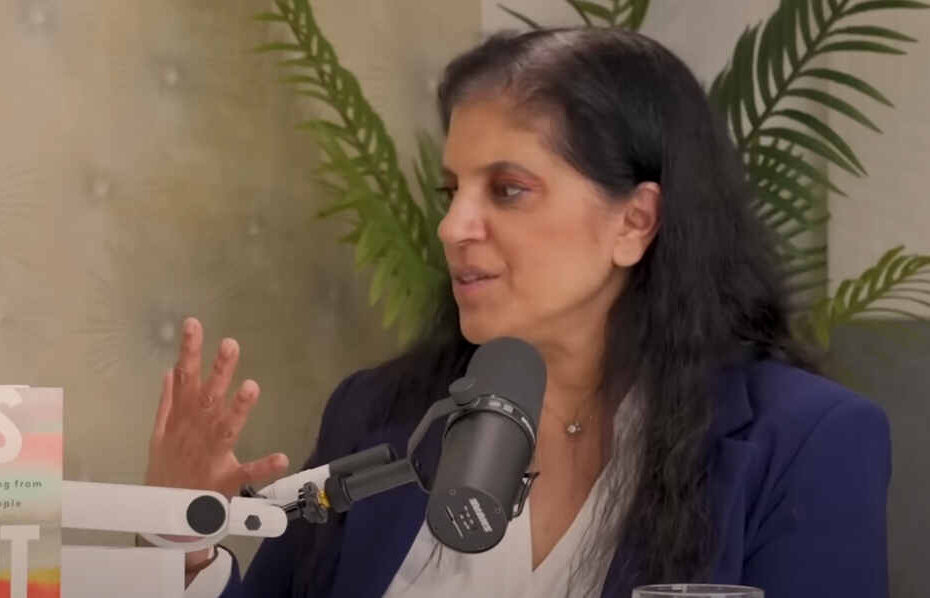
Read the full transcript of clinical psychologist Dr. Ramani Durvasula’s interview on The Dhru Purohit Show episode titled ” Toxic Signs You’re Dealing With A Narcissist Causing Trauma & Disease”, May 20, 2024.
The Shocking Connection Between Toxic Relationships and Longevity
DHRU PUROHIT: There’s something shocking that’s decreasing people’s lifespan that most people actually don’t know about. And it has a lot to do with the toxic people in their lives. We know from the longest study on happiness ever conducted by Harvard University that the happiest and longest living people have strong and supportive relationships.
You’re the world’s foremost expert in narcissism. You’ve shared that narcissistic and toxic people will literally take years off of our lives. Before we dive into the top signs of how to identify the narcissistic and toxic people around us, can you talk about why we should all care about this topic if we care about longevity?
DR. RAMANI DURVASULA: I think actually, exposure to toxic and narcissistic relationships may be the public health issue of our time. I really, really do. We talk about sleep. We talk about exercise and movement. We talk about diet. We talk about preventative health care.
But I am telling you now, and I would stake my reputation on this for the people I’ve worked with, and there are thousands at this point, hundreds of thousands who are navigating really toxic, difficult, invalidating, manipulative relationships. If you just lifted that thing out of their life, their health would improve almost instantaneously.
DHRU PUROHIT: Wow.
The Immediate Health Benefits of Removing Toxic Relationships
DR. RAMANI DURVASULA: I promise you that it would put years on their lives. Their health would improve. Their engagement in health behaviors would improve. Their sleep would improve. Their sense of meaning and purpose would improve. Every single predictor of health and wellness would skyrocket almost immediately.
I know that the surgeon general, for example, made a lot of his focus on loneliness, the loneliness epidemic. And while I agree with that, I think that’s a big issue. I still think it leaves this undiscussed area that I feel that the fields of medicine, psychiatry and mental health won’t take on, which is what is the toll of a toxic relationship. Nobody’s talking about it, but I can tell you now that the change.
And I can give you n of one research here, in that one case in particular, a woman was having to wear some kind of orthopedic device and was having a lot of trouble healing from an orthopedic surgery. And even the doctors were flummoxed. “Why is this going so badly? Why is this going so badly?” During the course of the recovery, it was taking years.
A narcissistic relationship was removed from her life. Inside of a week, that brace came off of her. She’s like, “It’s so…” And she said, “I didn’t put the two and two together.” She said, “It’s so weird. I’m feeling better.” And she’s like, “In five days, I think I could try this.” And she said it was like years of no movement and then there was movement.
The Physiological Impact of Chronic Interpersonal Stress
And think about it. When we think about what happens to a person under chronic stress, we see cortisol, we see other neurohormones being released, we see inflammatory issues, we see greater propensity for issues like depression, we see problems in the gut microbiome and deleterious effects on health there. We see dermatologic issues, we see cardiovascular issues when people are under stress.
And what we know is that interpersonal stress may be one of the most challenging kinds of stress. Because it’s often inescapable when it comes to narcissistic relationships. It really is. It’s narcissistic bosses when it’s a narcissistic marriage, narcissistic family members. And so I can’t put too fine a point on this when I say I think this is the public health issue of our time.
DHRU PUROHIT: That’s pretty mind blowing to hear it that way. And even before we hit record, we were chit chatting a little bit. You said that it’s literally taking years off of people’s lives.
The Cancer Connection and Medical Mysteries
DR. RAMANI DURVASULA: I am seeing people, I’ve seen multiple patients who didn’t really have the genetics for the cancers they got. And the course of the cancer was far more virulent than even their oncologists thought it would be. Over and over we see this.
I was talking with a team of rheumatologists in Egypt who said, “You know, we have two groups of patients, one group of patients that really, really improves on medication, and the other group, we just can’t get improvement.” And you know what the difference was? They did sort of a straw poll survey. They found that the people who were not improving under best practices regimens were the ones in toxic relationships.
All the stuff we know, medication, treatment, call it what you will, this is where western medicine hits the wall. Because we don’t ask about this, we don’t address this, or we think, “Ah, relationships are tough.” No, actually relationships aren’t tough. These relationships are tough.
The Autoimmune Connection and Healthcare Invalidation
And when you throw in there, let’s just put chronic health in there. Chronic health issues that a person might be having, a narcissistic person in that relationship is more likely to invalidate their experience. I notice much higher rates of autoimmune processes. Autoimmune illnesses, call them what you will in people who are in narcissistic relationships over and over and over again.
And not only are they invalidated by their partners and their families, often by the healthcare entire enterprise. So they’re constantly being gaslighted by systems. They’re often not helped. They’re often still having to do the vast majority of stuff in a household or around child rearing. They’re completely unsupported. There’s no one sort of supporting their adherence to healthcare regimens.
These are people who are chronically, chronically, not only swimming upstream, they’re swimming upstream while people are throwing rocks at them.
The Gender Disparity and Intersectional Factors
DHRU PUROHIT: On one hand, it’s taking years off of people’s lives, especially most likely disproportionately affecting women.
DR. RAMANI DURVASULA: It does disproportionately affect women. But I do want to say that not all narcissistic people are men. And I have worked with many, many men who are in narcissistic relationships came from narcissist families of origin. They’re experiencing the same negative health effects.
But there are more narcissistic men than women. And women have less power in society. So if they’re in one of these relationships, they may be on the wrong end of the stick in terms of having to manage caregiving duties, maybe not having the same kind of financial power. Stuff around family court can get really wonky. And then when you have intersectional factors, ethnic minority status plus gender plus lower social class or lower access to resources, then these relationships can get it all the more harmful.
The Medical and Therapeutic System’s Failure to Address This Crisis
DHRU PUROHIT: So on one side you have it’s taking years off of people’s lives, and on another side you have an entire sort of medical industrial complex and also a therapeutic industrial complex. Because you’re also talking about how a lot of therapists don’t have the courage or the lack of awareness. In fact, which one is it? Why is this going on? Is it lack of courage? Is the lack of training? Is it lack of awareness that people are not tackling this?
DR. RAMANI DURVASULA: I think it’s all of the above. I think that there’s a real resistance to this. I’m struck by the real resistance to this very simple education. Listen, I’m not telling you that I meet someone in 15 minutes and I’m like, “Oh, well, your wife’s a narcissist.” I listen to their story, I listen to the patterns.
It’s interesting I trained as a therapist in the 90s. We didn’t have the same kind of digital tools then as we do now. Many of my clients, patients will show me text messages, sequences of text messages, emails, play voicemails and things like that. It’s unmistakable. It’s very clear what they’re up against. And they’re not making it up because it couldn’t have made up an entire text sequence. So I’m seeing it right in front of me what these folks are up against.
The Couples Therapy Problem
And repeatedly, couples therapy is a great example. The couples therapist seems so invested in making the point, like, “What are both of you bringing in?” Well, let’s see. How about maybe one of them. One person is trying to play chess and one’s trying to play checkers. One person’s looking to fight, the other one’s looking to affiliate. One person wants power, dominance and control. The other one wants closeness. This is not a fair fight.
And so that kind of resistance. And in fact, I’ve had many, many patients come in, literally almost need to be deprogrammed from therapists who say, “Oh, don’t talk about that narcissism stuff. You have no right to call them that. Maybe it’s your problem, maybe you’re the one who’s to blame.” I mean, it’s a both sides. So it’s always a “it takes two to tango.” Not really. Not really. Not when one person is using actually what I would really call psychologically dirty tricks.
The Fundamental Mismatch in Relationship Goals
And when you have two people in a relationship and one person’s really invested in wanting to maintain attachment, connection, closeness, that they’re coming from a place of empathy and integrity and reciprocity, and the other person is coming from a place of power, domination, control, egocentricity, self centeredness, and will do anything to make sure that whole relationship’s about them. How is that person who’s holding a stance that is more empathic, that is more connected, they’re not having the same relationship.
And so short of people having paperwork that they put on a table when they enter a relationship and saying, “Hey, this is what I really want in a relationship,” which narcissistic people walk around thinking they’re empathic, warm, nice people. So then you have that triple confusion that these are… It’s not like the narcissistic person says, “Hey, you just met me and I’m a handful and I am not a nice person.” They think they’re good people, and so do a lot of people in the world. So it gets very confusing very quickly for people in this relationship.
The Proof is in the Recovery
And I will say this for all my days, what this is doing to people’s health, because I’ve seen what happens when we remove the narcissistic person. The person leaves the job, their health improves. And it’s not because they’re not working, it’s because they’re not… Or that. Or they go to a new workplace. That’s a better example. They go to a different department in the workplace, they go to a different, literally a different employer. They’re not working with someone like that and they’re thriving. Same person. The narcissistic people were removed.
They’ll say, “After about a month living in my own apartment without the narcissist around, my health improved. When I stopped talking with my family, my health improved significantly.” And I think of all my clients, and I have to be frank with you, we muddle through week over week. We talk about what’s happening with them. We put together, we put band aids on all the injustices they experience. But in my heart of hearts, I know if those relationships were not in their lives, they wouldn’t need me anymore.
Bringing Clarity to the Confusion
DHRU PUROHIT: Wow. You know, you mentioned an important word and it’s the reason that we brought you here. You mentioned the word confusion. There’s a lot of confusion around this topic. And I really see you as a voice of bringing people clarity, also a sense of like letting people know you’re not crazy. You know, literally the topic of the title of your book is “It’s Not You.”
DR. RAMANI DURVASULA: Right.
DHRU PUROHIT: Letting people know it’s not you. So part of that confusion is that at the very basics and at the foundation, many people actually don’t even know what is a narcissist.
Understanding Narcissistic Personality
DR. RAMANI DURVASULA: Correct? Yes. No, they don’t. And so let’s start there. Let’s start with basics. A narcissistic person is a person with a narcissistic personality disorder. They do not necessarily have a disorder. They do not necessarily have a personality disorder. Everyone’s got a personality. You’ve got one, I’ve got one, Everyone listening has got one. That doesn’t mean we have disorders. It means we have personalities. All human beings have got them.
And a narcissistic personality, it’s characterized by variable, low, shallow, transactional, empathy, entitlement, grandiosity, arrogance, self centeredness, sort of selfishness and egocentricity, very poor frustration tolerance. If things don’t go their way, they will react very, very angrily. There is a really thin skinned sensitivity and it cannot bear up against any form of criticism, any form of feedback. They tend to envy other people or think other people envy them.
Narcissistic people often view themselves as the victim. If things don’t go their way, it feels like the world’s unjustifiably coming after them. But if the same thing happened to someone else, they would not frame it that way. But I’d have to say, if we had to pick one strand that defines narcissism, it’s that entitlement.
Now, all of the stuff I’m talking about, the entitlement, the grandiosity, the arrogance, all of it, these are defenses. They’re grandiose defenses against a very core sense of insecurity and shame. That’s what’s percolating, it’s bubbling. It’s what’s under the earth’s crust. We don’t see that all the time, but it’s there.
So anything that activates that shame, they don’t get the promotion, they don’t get the sports car they want, their girlfriend breaks up with them, then we see that comes out as anger. Whereas other people, when they experience shame, might experience sadness, they might experience guilt. The narcissistic person turns that into anger. So these are very antagonistic relationships and the narcissistic person needs lots of supply.
They need. They have an excessive need for praise and admiration. So they’re going out there all the time getting it any way they can. Now, that means different things to different people. For some people, narcissistic supply is money. For some people, it’s power. For some people, it’s likes on social media. For some people, it’s status depends on the person. And so they’re going to go out and get that. And a lot often get that from other people. So that’s what a narcissist is.
The Narcissism Continuum
Narcissism is on a continuum. At the low end, it’s emotional immaturity, emotional stuntedness. It’s a, again, that constant selfish need for admiration and validation. Their relationships don’t go deep. I’d say at that low end of narcissism, it’s annoying. You certainly wouldn’t want to be raising kids with this person. You wouldn’t have wanted to be raised by this person. But to anyone else, it might be sort of annoying, maybe at times harmless.
Now, when you get to the far end of that continuum, to the severe end of narcissism, you’re talking about malignant, exploitative, severely manipulative, isolating coercive narcissism. Now we’re talking about something dangerous. Obviously that low and high end. The people in those relationships are having very different experiences.
There are also multiple subtypes of narcissism. And all this heterogeneity means that different people in different narcissistic relationships are sometimes having different experiences. But the core experience of a person in a narcissistic relationship is oftentimes confusion, self blame and rumination.
DHRU PUROHIT: You know, one of the mind blowing things that I first understood from watching your content on this topic, which was a light bulb moment for me, is I used to think that narcissism was more on the rare side. I actually would be even very careful about sort of even tossing the word around because I thought, oh, that person might be just going through their journey. But something I learned from you and your work is that, you know, there are no exact stats, but your estimate is at about 15% ish population.
DR. RAMANI DURVASULA: Yeah, 10 to 15. I would say 10 to 15. I think at 15 we’ve got all of it very low to very high. I think at 10 we’re probably 10% 1 in 10. We’re probably capturing people who are narcissistic enough that it causes damage in close relationships, causes damage in workplaces, it causes damage in family relationships.
How to Spot a Narcissist
DHRU PUROHIT: Well, before we go a little bit further, because that’s quite a higher number than I think a lot of people estimate. Even if they have somebody in their life that is they suspect to be a narcissist, that is causing them damage and taking them taking years off their life. One of the first questions when I was telling somebody I’m doing this interview and how excited I was, they were saying, how do you spot one? Do I know if this individual in my life is actually a narcissist? How do you spot somebody?
DR. RAMANI DURVASULA: It takes time. I think people want sort of the narcissism test. They want to be able to figure it out a few times after they meet someone. I’m going to be frank with you. Even a therapist, even a good shrink, it might take us eight to 12 weeks in a room with them. It doesn’t pop out immediately.
Especially because narcissistic people aren’t coming for therapy to get help with their narcissism. They’re often coming in because of something else that’s going on in their lives. So we’re not sort of looking for that right away. And so we ourselves as therapists almost have to pay attention to why don’t I look forward to seeing this client, what is it about that puts me on my back foot with this client? Why aren’t they getting better? You know, why is it that everything in their life seems to be going wrong every single time, right?
And I’ll always, you know, people will say, how do you know? Because anyone can come into therapy and say, there’s a narcissist in my life. And I said, what’s interesting is, is that the people who are really being harmed by narcissistic people, they don’t tend to come in and say, a narcissistic person’s harming me. They come in and say, I’m really confused and I’m upside down and I just can’t make sense of what’s happening.
A narcissistic person will come in almost right away and be punching out about being a victim. Everything’s against them, nothing’s working out for them. But there’s usually a stim, there’s a stimulus event that will bring them in. Got fired from a job, it’s optics therapy, they’re being sent for some, you got to get into therapy. It’s ultimatum therapy. Someone’s forcing them into therapy or it’s a co occurring condition. So they either have depression, addiction, something else is happening. And that other thing is what brought them into therapy and then will take us a while to sort of dig.
So that’s a therapist who’s literally got binoculars on the situation, staring at it. So what that means, and I have to say, a lot of folks in intimate relationships will say somewhere, it took them somewhere between one and two years to really spot the narcissism.
The Seductive Early Phase
They’ll say, because again, the early part of a narcissistic relationship is often very idealized, very seductive, fun and exciting. In fact, a lot of people will say this is the most interesting, compelling, exciting relationship. Because for that whole laundry list, I gave you low empathy, entitlement, grandiosity, arrogance, all that icky stuff. Narcissistic people are also very charming, compelling, confident, clever, and above all else, charismatic.
So you have these really charismatic, engaging people. People aren’t looking for the problems there. And when they do come up, people either blame themselves or say, oh, it’s just a bad day, everyone has off days and the excuses start to pile up.
Most clients I’ve worked with, it was usually somewhere between eight months and two years where they’re like, oh boy. And the problem between eight months and two years is you could be pretty deep in, you might have already moved in with each other, you might have gotten engaged, you might have gotten married, you might have a child on the way. Now you’re so. Because getting out of these relationships is no small tasks.
The Gradual Devaluation Process
And the other tricky piece of narcissistic relationships is they aren’t all bad days, right? So this is not you’re getting into a relationship where it’s love bombing and then it’s terrible. I always say it’s sort of a slow titration down. After the love bombing phase is done and the devaluation phase starts, it’s still about 90% good and 10% bad. Then it’s 80% good, 20% bad, 70, 30, 60, 40 at the 50, 50 point. Now we’re in a process we call trauma bonding.
That the confusion of the intermittent reinforcement. The good days and the bad days, the good days and the bad days. And in that structure, people don’t want the relationship to go away, they want it to improve. And they’re, “well, there are these good. How can we make it so it’s all good days, right?”
DHRU PUROHIT: It’s not all bad.
DR. RAMANI DURVASULA: So they start blaming themselves. The person in the relationship blames themselves. Maybe if I do this, maybe if I say it this way, maybe if I don’t say it this way, maybe if I try this, maybe if I keep the house perfectly clean, maybe if I make sure everyone’s happy at the holiday, maybe if I stay late every night at work, whatever it is, the person starts taking on more and more responsibility. Maybe if I’m quieter, maybe if I don’t complain.
By the time we get to 10% good, 90% bad, people are really stuck. But now they’re really trauma bonded. They can’t figure out what’s going on. This is where the confusion becomes a real issue and other challenges.
Narcissistic people tend to treat those closest to them. Spouses, children, maybe people who are sort of don’t have as much power them in the workplace as them in the workplace. What you’ll see is that they’ll treat them the worst. So the world is still seeing the charming, charismatic, compelling person. “You’re so lucky to be married to them. Oh my gosh, your father’s amazing.” And the person’s, “oh my gosh, it’s got to be me. It’s not you, it’s got to be me.” Because everyone thinks they’re great.
And so. And then people will also say they almost feel physiologically stuck to the narcissistic person because it is so confusing. And lots of folks will say, intellectually, I know this isn’t good for me at the this point. But physiologically, I’m struggling. I feel a sense of panic at the idea of getting out.
The Slot Machine Analogy
And it’s really kind of a slot machine sequence, because after a person’s put $500 into a slot machine, maybe they’ve won a hundred back, you still can’t get them to walk away. Why? Why don’t people walk away from slot machines?
DHRU PUROHIT: Because they are addicted.
DR. RAMANI DURVASULA: Addicted to what?
DHRU PUROHIT: They’re addicted to the unpredictability and that something good might come from.
DR. RAMANI DURVASULA: And what’s the good?
DHRU PUROHIT: And the good is a return payout, cash payout, big cash payout.
DR. RAMANI DURVASULA: Not just a cash payout. Not a $20. They’re holding up for the million dollars. They still think it’s going to come, right. 500 in, they’re starting to use their ATM card. Take the money out. That’s the psychological equivalent of giving up on yourself. Right. So I’m going to keep getting more money. I’m going to keep playing this. So people don’t want to walk away because they might hit the jackpot.
But there’s a second reason people don’t walk away from the slot machine. What is that? After they’ve been paying attention it for four hours, put hundreds of dollars in it, Maybe they want 100 bucks back. They’re 400 in the hole. Why don’t they walk away?
DHRU PUROHIT: I’ve put in too much to walk away.
DR. RAMANI DURVASULA: Okay.
DHRU PUROHIT: They don’t want to cut their losses. They’re afraid. Is that right?
DR. RAMANI DURVASULA: Kind of. But there’s something more. A lot of people don’t get this.
DHRU PUROHIT: Tell me, Tell me. Yes.
DR. RAMANI DURVASULA: They don’t want someone else to get it. Someone’s going to come to this machine, and they’re going to reap my investment.
DHRU PUROHIT: I’ve heard you share this before.
DR. RAMANI DURVASULA: This is fascinating.
DHRU PUROHIT: The idea that even in a relationship that you’ve put up with this person so long, you’ve made them better, Maybe even drag them to therapy or coaching or something, and maybe finally they’ll improve. But then somebody else will get the correct version of that.
Radical Acceptance and Healing
DR. RAMANI DURVASULA: And I tell them, I tell my client, there’s no jackpot. This machine is rigged. You’re never going to get more than maybe 25 bucks out of it. Right. And so those $25 payouts are working for you. And I’m. My point of view and my approach with clients, with anyone, is that this is the whole idea of healing is building up individuation and an autonomous self that makes their own choices.
And to that end, I Never tell anyone they have to leave. Not everyone can leave. Some people have minor children. There might be financial reasons, they say, cultural or religious reasons, they say stay. A sense of duty or obligation. Not everyone can leave every narcissistic relationship. So part of the work then is finding the workarounds. If you can’t find fully, get out. But more than anything, it’s radical acceptance of what this relationship is really about. And there will never be a jackpot.
DHRU PUROHIT: You know, taking that analogy of the casino, you know, what is the goal of casino? It’s to take all your money. The house always wins, right? The house always wins. Slot machines are rigged from the get go, including most games, except a little bit poker, but most games are going to be rigged. So the goal of a casino is to take your money. What is the goal of a narcissist?
The Casino Analogy: Society’s Role in Toxic Relationships
DR. RAMANI DURVASULA: So I’d say that in this year, in your analogy, the casino is society that is selling people a bad bill of goods on relationships. So much of why relationships work out is luck. I really believe that, you know, the bad luck of getting into like you’re young, you meet someone, you pick someone, you think they’re nice, they’re not nice, and then it’s hard to get out of the relationship, right. So that there’s a bit of luck.
So when people talk about how successful their marriages are, I often read into there’s a lot of luck and there’s a lot of luck in this one. And so, but that said that I do think the casino is society that’s selling people. Like there could be a jackpot. Keep trying, try harder. Stay, stay longer.
DHRU PUROHIT: Winners don’t quit.
DR. RAMANI DURVASULA: Winners don’t. Yeah, just keep going, make it work, keep going. And so people, that’s society giving people the message of stay in the casino. Right. And so what’s it. And what’s the slot machine trying? Slot machines just being the slot machine, right. It’s just taking your stuff. It’s taking and it’s taking and every so often it’s giving you a little bit and it’s taking and it’s giving a little bit.
You might wonder, does anyone ever get the jackpot? I’ve never met anyone who’s ever won a jackpot in a slot machine. I’m sure they’re out there, but they are unicorns, right? And they’re not normative.
And so I think that in this scenario, the narcissistic person exists to get validation and supply and they don’t care. I think it’s the not caring that’s hard for people to get through their head. Like the narcissist, narcissistic people person doesn’t really care that you’re hurt right now. If anything, they’re irritated that you’re hurt because now they have to deal with it. Or that’s leading them to feel some sense of shame. And then they’re going to yell at you and telling you you’re being too sensitive. “Don’t be ridiculous. I didn’t really say anything that bad. Big deal. You found a text on my phone, someone I work with,” and that’s how that plays out. They leave the other person feeling crazy.
Understanding the Narcissist’s Inner World
DHRU PUROHIT: There’s this idea in the work of Eckhart Tolle. He calls it the pain body. Have you ever heard of it?
DR. RAMANI DURVASULA: Is.
DHRU PUROHIT: Is that useful here in our understanding of what the motivation is of a narcissist? That you have this energy ball of somebody, the ego, the dark shadow side of them, that can only stay alive with constant sort of stimulation at the extremes. And so that a narcissist needs this negativity in their lives to keep them going, to keep their idea existing.
DR. RAMANI DURVASULA: It’s not negativity for them. They’re getting praise, they’re getting validation, they’re getting. They’re getting people telling them, great, they might be having sex with three different people. I’m not missing the negativity part for that.
DHRU PUROHIT: So a better way to ask it is that are narcissists happy?
DR. RAMANI DURVASULA: That’s a really tough question to answer. No. There’s a constant sense of unsettledness, and I was playing with you. I agree with the sense of a pained body with a dark right that I would rather not be a narcissist. I’d probably be a hell of a lot more successful if I was, but I’d rather not because there’s a constant yearning. It’s never enough for a narcissistic person. They can have the riches of the world at their feet. A devoted partner, beautiful, wonderful children, kind people they work with. And that’s not enough. It has to be the next thing, the next thing, the next thing. Like, it’s. It’s. It’s like this big consuming beast that is the narcissistic person’s psyche.
So there’s an unsettledness to them. I think narcissistic people can be happy in a moment. So a narcissistic person goes into a restaurant. They get to the restaurant and the host says, “Oh my gosh, you’re such a gorgeous couple. We are giving you the best table in the house because we want everyone to see you.” And then they send a bottle of champagne and the chef sends a free course. And the narcissistic person, they’re happy that night because they feel like they’re getting all this validation that they deserve and that on that for those moments when it’s all the stars are lining up, they’re happy.
However, I say that with an asterisk because underlying that is, well, the next time we come here, it’s not going to be like this. So there’s always that sense of it’s going to be taken away. I’m not going to stay at the top of this completely. I remember being at a celebrity event once. Many, many narcissistic people there. These people had more stuff than I could conceive of in 27 lifetimes. I’m looking at homes and the cars and the dresses and the hair and the jewels and there was an emptiness. I’m thinking, like, it’s never going to be enough for these people. Like they were in the midst of something so lavish that I remember saying, “I’ve got to sketch this onto my memory. Cause I’ll never be in something like this again.” And they were so blase about it. But there was an anxiety, a tension, and so they can’t be in that moment. I don’t know how much you know Dr. Keltner’s work out of Berkeley.
DHRU PUROHIT: I don’t know.
DR. RAMANI DURVASULA: This idea is amazing work. I love his work because it’s this idea on being awestruck, on this idea of awe as being a healing energy. And awe is not about the Grand Canyon. It could be a bumblebee sort of pollinating a. Pollinating a flower. And you see the little bits of yellow on its little dancing butt and it’s beautiful. I have hummingbirds that come to my house. And you just stare at them. You’re like, how is that. How is that color of the hummingbird’s throat even something in nature? And the narcissistic person can’t get there.
So they miss some of these really incredibly human experiences, right? Or if they’re there, they’re so focused on getting the selfie that they’re not even present with the awe inducing thing that’s in front of them. And so they’re missing out on a lot of the human experience. So I don’t actually think they’re happy. But I believe happiness is a subjective state. So at any given moment they might say, “I’m happy, everything’s going my way.”
The Origin Story: Understanding Narcissistic Wounds
DHRU PUROHIT: You know, we’re going to get into this whole bunch of topics, including how to protect ourself and what to do if you can’t leave. As you mentioned, there are some people that are in a situation, kids might be involved, could be a business partnership, whatever. It might be that some people have to long term, could be a family member that you have to be involved with in some way, but you’re trying to minimize your contact with them or your, you know, how deep your relationship goes.
But I think a big part of getting to that place, and we’ll get there, is first even understanding the motivation or the origin story of somebody who is a narcissist. So you mentioned something before. You mentioned that there are these wounds that drive and sort of settle this behavior. So do all narcissists have some original kind of either individual childhood wound or combination of wounds that led to who they are?
DR. RAMANI DURVASULA: I would say yeah. I mean, I do believe narcissism, narcissistic people are wounded people. The second path I’m about to tell you may not register as a wound initially, but it is. Many narcissistic people have a backstory characterized by adversity.
Now, to create an antagonistic personality like narcissism, you usually need a biological temperament in place. So every child, every baby comes into the world with a temperament. Which is why in one family, the mother will recall, parents will recall. “These were three very different babies,” right? But they are babies growing up, born to the same mother, born to the same parents, growing up in the same household, right? So that temperament matters.
And it’s temperaments that are more high demand, difficult to soothe, don’t regulate well, very attention seeking, very kind of almost very externalizing. Those are often the temperaments that provide the biological seed that may grow into narcissism. But you got to give it perfect growing conditions. All temperaments are shaped by the environment. So that temperamental style, if that up against a very invalidating environment characterized, like I said, by adversity, trauma, chaos, detached caregivers, disinterested caregivers, frustrated caregivers, other lapses in attachment, that’s one path of vulnerability to narcissism.
Now, keep in mind the vast majority of kids who grow up under those conditions don’t become narcissistic. But when you throw in that vulnerability, temper that temperament, it may up the odds.
Now, the other pathway by which people become narcissistic is the overvalued, the overindulged pathway. These are kids that are told they’re more special than any other kid. “You don’t have to wait in that line, we got it covered. We’ll get you into that school. We got it. We’ll take care of all of it.” The child learns or the child’s told they’re more special than any other child right now, again, the vast majority of kids raised that way, they end up with things like imposter syndrome, anxiety, failure to launch, all of that because they were told they’re so special. They ain’t that special. They go into the world and they see that they’re like everyone else, everyone is special, if you want to argue that. But if you have that difficult temperament and that’s being shaped that way, you could also give, you know, sort of give rise to a narcissist.
I’d argue those are both wounds, right? In one case you’re being viewed as a prop, as an accessory to the parent, so you’re one more tool of entitlement for them. In the other, you’re harmed by the adversity of your childhood. But I’d argue all of us carry core wounds. It’s rare is the person that hasn’t had those core wounded experiences. At least in my world it is. I’m sure they’re out there. But narcissism definitely is driven by core wounds.
And so again, this can be viewed compassionately. And I think what the challenge is is that for people in these relationships, I want to tell them, you can’t save this person. They’re an adult, they’re able to. Narcissistic people make more money, they’re more likely to be in leadership, they’re more successful at dating. Research shows that their judge should be more attractive. They’re doing fine in the world. So they can take responsibility for making all that money and getting all that validation. They can take responsibility for knowing how they go through the world.
Because narcissistic people also know how to turn that switch on and off. They know to be charming with the CEO on the golf course, but then they go home and scream at their wife. They know if they were, they would have screamed at the CEO, but they don’t. So they have the, they know how to behave. They just take that person, spouse, whomever for granted. So this isn’t a not knowing, this is calculated.
But ultimately people say, “Well, they do have the wound.” And I say, “Uh huh.” So I said, then I’m, I’m very paradoxical with clients. I’ll say, “So you’re then signing up to be the, the emotional punching bag for this person for the rest of their lives. Is that you’re sacrificing yourself to try to save them. Just say those words out loud so I know you’re clear on what you’re consenting to.” And people are, “Well, that’s not real,” I said, “But that’s what you’re doing.”
Why You Can’t Save a Narcissist
DHRU PUROHIT: You know, you shared something very powerful, which is a key distinction in your work and your approach to this topic of narcissism, which is that I heard somebody ask you, can a person stop being a narcissist? And you shared something very powerful. You said, is very rare. And you tell me if I got this right, is, is you’ve never seen a situation in your experience that somebody has all of a sudden stopped being the way they are. Now that doesn’t mean that people might not have a moment in therapy, have a couple of good days, be a little bit more mindful about how they’re apologizing about something. But this goes back to something you just shared, which is that you can’t save this person. Why is that so important for people to understand?
The Responsibility to Change
DR. RAMANI DURVASULA: Because you can’t take responsibility for that. I mean, again, I am paid to work with people in a mental health capacity. And I don’t think it’s my responsibility to save them either. I think the therapist’s responsibility is to give people tools to live better, to address their acute distress so that they can manage their emotions even when they’re not in that office with you. But it is no adult’s responsibility to save another adult, least of all an adult that is harming them.
And to take that responsibility on – that’s an impossible task because narcissism, like all antagonistic personality styles, is very rigid. It is not amenable to change. People with the healthier personality, the more flexible it is, the more there can be some modification.
So a person who might be a very agreeable, flexible person, but might need to work on some of their conscientiousness a bit, keep things a little tidier. They’ll be like, “Okay, yeah, I need to do this.” And they’ll say every so often I slip because I start getting distracted. But they will give it a try. Non-defensively, they’re like, “Okay, I’m going to have little labeled cabinets and I’m going to put my things away and I’m going to wake up a little earlier and I’m going to do my work.” And they’ll do it. They’ll say, “Oh, I messed up.” And then they’ll try again. That’s what a person with a flexible personality does.
Still, the personality brings us back to our baseline. That not very conscientious person is probably going to have a little bit of trouble with discipline all their lives, but will rise to the challenge if they have a healthier personality.
The narcissistic personality is like cement. It is so rigid. So they don’t think they need to change. If a person doesn’t think they need to change and they think everyone else is to blame, where is the buy-in here? What are they? What do they need to change? In fact, they’ll roll their eyes saying, “Oh my gosh, really? I have to listen to their feelings. Their feelings are dumb.” What am I supposed to do with that person? Nothing.
And so I think that people, though, again, we’re back to the casino. We keep selling people this bad story of you can love people better, you can figure that pathway out. No, you can’t. It’s their responsibility to do this. But I have watched people sacrifice entire lifetimes trying to.
Gaslighting and Future Faking
DHRU PUROHIT: One of the things on that topic of sacrificing that you often hear, I’ve even seen it on your YouTube comments, people saying, “Well, that person did tell me that they were going to change. That person said that they wanted to change.” And I brought it up a couple weeks later about that conversation and they denied that we even had that conversation.
DR. RAMANI DURVASULA: Yeah. So it’s gaslighting meets future faking. Welcome to narcissism.
Spotting Narcissistic Patterns
DHRU PUROHIT: You know, you shared something earlier when we were talking about this idea of how to spot a narcissist. And you said that even for somebody like you who – this is your life’s work and mission – is that it can take time because there are ways that people are externally and then you don’t really know how they truly are until you see them with their close relationships.
So for somebody who is listening today, are there any cues or signals that are there that are some things that they could be potentially pulling on? I’ll give an example. I’ve heard you say that often one of the things that narcissists do is that they play in this place of praise and blame. And there’s this old idea and quote and saying, I don’t know where it’s attributed to, but it’s that praise and blame are both the same. They’re both the same energy when you’re praising somebody and you’re building them up. It’s actually more about you in the way that you talk about it. It’s not like true gratitude and making it about the other person. And then there’s the other side, which is blame. You want to rip them down.
So you want to build the person up, you want to rip them down. Is that one example if somebody’s regularly doing this in your life – is that one sign that person is deeply in this pattern that we’re talking about?
DR. RAMANI DURVASULA: So you’re talking about the other person in the relationship or you’re talking about… I don’t think they’re going to praise. I don’t think they’re going to praise that much. I really, really don’t. I think that they’re going to blame and blame and blame and blame. The praise is only going to happen at the beginning of the relationship and/or if they need something from you. So they’re very calculated and narcissistic people are actually incredibly socially perceptive. They know how other people tick, so they’ll know what matters. And so the praise you’re talking about might be – it’s very transactional.
DHRU PUROHIT: I’m going to give them…
DR. RAMANI DURVASULA: I’m going to give them what they want. So that kind of tricks the other person who’s hearing what they want, getting what they want. “Oh, we’re going away for a couple of days,” or “they remembered my birthday,” or whatever it may be. Then that person’s getting something. It’s not even praise like “you’re so pretty,” but that could be. You’d be amazed at how often… I mean, you’d be amazed at how long one utterance like “you look beautiful tonight” buys a person another six months in a relationship with a narcissist. It’s pretty bad.
And so you hear whatever that praise is, you’ll relax, you’ll think, “Oh, I misjudged this relationship.” And then, boom, they will tear you back down. Narcissistic people put people on pedestals simply to knock them down. And the fall is a lot harder from up there. So they put you on a pedestal. You might want to look for your parachute real soon so you can at least soften that landing.
DHRU PUROHIT: That’s a great distinction that the praise that I was talking about – it’s really a transaction.
DR. RAMANI DURVASULA: It’s a transaction.
DHRU PUROHIT: It’s not a genuine gratitude or acknowledgment, which is something different. That’s real. That’s what people do when they care about each other, when they want to acknowledge something. This is really a transactional building you up to take you down.
DR. RAMANI DURVASULA: Correct. Correct.
Types of Narcissism
DHRU PUROHIT: You know, earlier in the conversation you mentioned that there are these archetypes and types of narcissism and I think it’s worthwhile to go through some of them. And you’ve outlined them in your book and written about it previously. Can you walk us through those?
DR. RAMANI DURVASULA: Yeah. So the most classical form of narcissism that we most often think about is grandiose narcissism. And the grandiose narcissistic person is – it’s almost like our armchair textbook definition. Arrogant, pretentious, preening, look at me. Status oriented, really cares about appearances.
Interestingly, of all the types of narcissism, grandiose narcissistic folks kind of have the best outcomes, believe it or not, because they’re not as victimized. As long as things are going generally the way the grandiose narcissist wants… I’m not saying it’s a healthy relationship. I mean, we’re talking about really like matters of what’s the best worst disease to get kind of thing here. So it’s really a matter of – the grandiose narcissistic person really cares about appearances. They’re very, very forward facing. So that’s the grandiose narcissist. And that typically, even in the DSM and other diagnostic spaces, that formulation of narcissism is what we’ve classically focused on.
However, especially in the last 10 years, there’s been more focus on what’s called vulnerable narcissism, which to me is probably the most important evolution in this conversation. The vulnerable narcissistic person is the one we often miss because they’re not quite as charming, charismatic, shiny, compelling. These are folks who are sullen, petulant, resentful, victimized, passive aggressive. They are angry at everyone in the world. They feel like everyone has gotten more than them. “Why me? Woe is me. Witch hunt. Everyone’s out to get me.”
And also vulnerable narcissistic people may be more sad, they may be very socially anxious. So to somebody looking from the outside in, they’ll actually say, “This person’s not narcissistic. They’re kind of not well put together actually.” And they often sort of pull for being rescued. So a lot of people will get caught up in trying to help them. “Let me give them an opportunity. Let me give them a couch to sleep on. Let me loan them some money. Let me help them.”
And then it becomes literally a vortex, a black hole to which you could just keep putting more and more and it’s never enough. And they sort of remain frozen in time and space, no matter how much resource, time, support, encouragement you give them. That’s the vulnerable narcissist.
Now grandiose and vulnerable narcissism are sort of like these complementary structures. If things start going wrong and wrong and wrong and wrong for the grandiose narcissist, they start looking like a vulnerable narcissist. Sullen, petulant, aggrieved, “everyone’s out to get me.” If things start going really right for the vulnerable narcissist, their grandiosity will pop out. So people are either more primarily grandiose or more vulnerable. But circumstances can kind of flip it and sort of make that other form of narcissism show up.
DHRU PUROHIT: Could I insert one thing there just to clarify? One of the things that I heard you share previously is that vulnerable narcissist – even though we talked about women being the brunt of most of the narcissistic behavior, the receiving end of it – you typically would find, when you do find a woman who’s a narcissist, it’s often more likely to be a vulnerable narcissist.
DR. RAMANI DURVASULA: Correct.
DHRU PUROHIT: Is that accurate?
DR. RAMANI DURVASULA: Yeah, absolutely. So vulnerable narcissism is pretty much equally distributed between genders. Grandiose narcissism is much more prevalent in men.
Malignant narcissism is where we’re talking about that more severe narcissism. We may still see some of the charm and the charisma, but we can also see a callousness at this point. There is a lot of vindictiveness in the malignant narcissist. There is the willingness to take advantage of people’s vulnerability, isolate another person. So the charm is really kind of short-lived and not nearly as shiny as it is with the grandiose narcissistic person.
Malignant narcissistic people will be very controlling. And the way that might even show up in an intimate relationship is they may be intently focused on someone else. “I want to spend all my time with you. Why do you want to spend time with your friends? Aren’t you into me?” They might do things like buy them a phone as a gift, which is a way they can track them.
I always tell young people, don’t ever accept a device or a phone as a gift from someone you’re in an intimate relationship with. It’s very dangerous. You maintain your own phone accounts and your own devices always until you are so certain that this is a safe relationship. But that seems like a generous gift you could get from someone. So it’s those kinds of things that a malignant narcissistic person would do.
Those relationships can get dangerous. And of all the forms of narcissistic relationships, physical violence and aggression – it’s going to be most likely to show up in a malignant narcissistic relationship and then secondarily in a vulnerable narcissistic relationship.
Communal Narcissism
Then we get to some interesting forms of narcissism, most pointedly, the communal narcissist. The communal narcissistic person is the – I call them sort of the “shirt off your back” narcissist. These are the people who seem generous. They seem like they’re humanitarian. They seem like they’re trying to save the world. They’re out there putting out their message, and that’s how they get their validation.
So someone will say, “Well, there’s probably no such thing as human altruism. Isn’t anyone trying to do good in the world trying to do it for some validation?” That’s usually not the primary motivation. And the reason we know this is if a communal narcissist isn’t getting lots of cheers and congratulations and “you’re so great” and “you’re the best,” they will get quite angry, and they will usually take that anger out on family members, again, those people in their inner circle.
So lots of people will look at even a celebrity seeming like a humanitarian. And then someday we’ll see the leaks of people saying, “Oh, my gosh, this was the most nightmarish thing I’ve ever worked on.” Or their families will say, “It was so hard because we couldn’t even get support. Everyone said our dad was the hometown hero and built a little league field, and yet we were all suffering with this really cruel person at home.” That’s the communal narcissist.
At the highest, most severe end of a communal narcissist, we’re seeing someone who looks more like a cult leader. At the more mild end of the communal narcissist, we’re looking at that kind of really cruel PTA mom who’s going to run everyone into the ground doing that.
DHRU PUROHIT: Because in their eyes, the ends justify the means.
Understanding Different Types of Narcissists
DR. RAMANI DURVASULA: But no, because in their eyes, they need to be validated. And this is a great way. This is a really, really great way to get validated. And so they, and social media really blew the communal narcissist kind of up. Because look at, “I’m rescuing, I’m rescuing the animals on the beach. You know, Tuesday is elephant rescue day.” And it’s like everything is something with them. And like, “Look at me, I’m so great, I’m rescuing the world.”
And they’ll often get to be quite judgmental of others. Like, “Well, have you done your volunteering this week?” And you’re thinking, lady, I’m not even able to get into bed before 10 o’clock. And like, “Well, I make time for other people.” So it’s all about them being validated. And look, I’ve had to run into some of those PTA mothers, very controlling, very invalidating, almost very cruel. And yet everything’s like, “I’m doing it for the kids.” I’m like doing what for the kids? Invalidating and destroying the souls of the other mothers. Seems like not a great way to do it.
The Self-Righteous Narcissist
Then we have the self-righteous narcissist. The self-righteous narcissist. Actually back in the day that was a personality style called the anancastic style. It’s like an obsessive compulsive style. Not like OCD obsessive compulsive, but like obsessive in terms of obsessive with regard to detail morality.
These are often people who are very workaholic, they are judgmental, they are very, very stingy with money. They’re punitive, they’re cold. They often live very, very, very rigidly, obsessively ordered lives, like everything just so. And if anyone messes with their schedule. So I mean, listen, if somebody wants to get up at four in the morning and drink goat milk with kale, you do you, you let me keep sleeping and don’t judge me for not.
But these are the folks who will shame other people. “Well, I live better than you. I am better than you.” And they’re the folks who will say if dinner’s at 6 and someone who’s got sick kids and is quickly trying to get there gets there at 6:15, they’ll say, “Well, dinner is at 6 and we have eaten.” And so it comes off as very moralistic and cold.
If you grew up with a self-righteous, narcissistic parent, it is a horribly cold, cruel, invalidating experience because a child feels like they’re constantly being judged. These are kids who will say, we were very anxious as kids because we have to do as kids, we have to do everything. They said the rooms, there’s like military, you know, bedrooms and the schedules were like that. And the dining table, the dinner table was such a frightened space.
So it’s a very, very cold, invalidating, like I said, moralistic, judgmental work. Above all, shaming anyone who’s had bad luck. The kind of thing like, “Well, if you’d saved your pennies, you wouldn’t be in the situation,” not accounting for, they’d lost their job and then they got very ill. There’s none of that. Like “if you’d lived your life like me, everything would be fine.” So there’s real lack of empathy and an entitlement in that style that comes out in a really self-righteous way.
DHRU PUROHIT: You know, it’s so helpful to hear you break them down because I can imagine that everybody listening is going to be thinking that there’s probably at least one person that they know and could even be somebody who raised them, correct?
DR. RAMANI DURVASULA: Very commonly.
DHRU PUROHIT: Very commonly, yeah. And with all of these across the board, I think the thing that is important to remind people is that often, because it takes many years, in the case of children, you don’t know that your parent is narcissistic. When you’re younger, if you were unfortunately raised by somebody like that. So many people who are listening today who are saying, okay, yeah, this feels like somebody that’s in my life. They also, regardless of what type it is, they have felt at some point in time that they were the cause or they were to blame. Where does that come from?
Why We Blame Ourselves in Narcissistic Relationships
DR. RAMANI DURVASULA: Right. So we as human beings are oriented towards attachment and connections. We need human relationships. And obviously that’s most pointed when we’re children. To survive, we need attachment. There’s no plan B, there’s no other parents we can find, so we got to make the people we’ve got in front of us work. That’s why children can endure horrific abuse and still try to remain connected to a parent, because that’s all we’ve got.
But as adults, that doesn’t go away. Our need for attachment persists. It’s a very central core part of being a healthy human being. That means that when we are in a close relationship and these kinds of invalidating, negating, manipulative patterns show up. Our first go to isn’t, I’m out of here. For many people it’s how can I make this work? How am I contributing to this? And the more we can internalize it within ourselves, internalize the blame in ourselves, the more we can do something about it.
So the child not only is told by the narcissistic parent, their needs are shamed, their emotions are shamed, their wants are shamed. The child is basically put in a position where they exist to serve the parent rather than the parent protecting them. There’s no psychological safety in these spaces. So the child has to become smaller and smaller and smaller. And exactly what the parent wants them to be, to be able to survive in those systems.
When that child goes into adulthood, guess what they’re going to keep doing in relationships? Be small and not show up in their whole self. Because they’re convinced if I do that I’m not going to be able to be close to someone. Right. And that’s a very felt sort of an experience.
So the child blames themselves. “I’m a bad kid. I’m not enough. I’m not smart enough. I’m not good. I’m not a good kid.” Basically, they internalize that. That becomes their identity, the identity of damage, the identity of shame, the identity of not being good enough. Because that’s, in essence, what the parent is implicitly communicating. That, again, dogs a person into adulthood.
But if we can take this on ourselves, we can remain attached, right? But if we see it in the other person, well, then that’s a call to action, to saying, this isn’t good for me. And then what? Then sort of axiomatically, it means we got to go. And so anything to take away that we got to go.
So we hold on to things like hope or what can I do? Or how can I fix this? Or almost not seeing it. There’s a dissociative quality when we’re in these relationships. There’s a phenomenon that Dr. Jennifer Fry calls betrayal blindness. We conveniently kind of don’t see these things that will get in the way of us maintaining an attachment.
Cognitive dissonance. We don’t like it when the pieces don’t fit. “This is my spouse. They’re really mean to me. How do I make the pieces fit? Maybe they just had a bad day. Maybe I’m not keeping the house clean enough.” Those things are all put together, and by the time it’s done, a person truly believes they’re the bad one.
And then you throw some gaslighting on top of that. And the gaslighting where the narcissistic person’s literally telling you not only you’re wrong, but there’s something wrong with you. You hear that enough, you believe it. And so then the person in the relationship feels as though there is something wrong with them. And without somebody explaining what’s going on, then they’re going to hold that on as an identity. And that’s magnified if they grew up with a narcissistic or invalidating parent.
The First Step: Awareness
DHRU PUROHIT: Wow. So for that person who’s listening, who might feel that they’re in that space, the person who’s internalized that blame, felt that they were maybe a big contributor or the biggest contributor to the reason that this narcissistic individual is acting the way they are is step one for them truly just first having awareness that this is even going on in the first place.
DR. RAMANI DURVASULA: So I think that what, what is. We’re in an era where we feel things in our body before we feel things in our mind. So people will say, “I am so wiped out after spending time with them. I’m just not feeling well.” Or once we give names, right? Yeah, you don’t feel psychologically safe, right? It’s starting to give name to what people are feeling.
But people will say, “Why am I dreading going, why am I procrastinating? Going to their house in a million different ways.” We’re telling ourselves, we don’t like this relationship, right? We dread the weekends instead of welcoming the weekends. Because on the weekends, I might mean you have to spend time with them, right?
So all of those things are happening, but people don’t quite understand it. Listen, I’m sure it’s the reason my YouTube channel has so many hits is that at three in the morning people are typing in. “My spouse has no empathy and is super selfish and yells at me a lot.” Bing. Dr. Ramani’s YouTube channel. I’m convinced of that because I don’t think people have a name for it. They’re just sort of, what is this?
DHRU PUROHIT: What is going on?
DR. RAMANI DURVASULA: What’s going on? And people, people also feel embarrassed and ashamed about taking that to their friends because they may not plan on leaving the relationship and they don’t want to sort of create bad buzz about their partner or their family member to people who are close to them.
Some people may get into therapy, but a lot of therapists don’t know what this is. So they might keep focusing on. And I think this is one of the big mistakes of therapy. The therapists often focus, “What’s happening for you? How do you feel? What’s your experience?” Girl, I don’t care about your experience. I need to talk to you about that mess you live with, that’s how I do therapy.
Moving Beyond Toxic Positivity
DHRU PUROHIT: Wow. You know, I can say, as somebody in my audience, you know, knows me, I can raise my hand and say, I’ve been there at one point in time in my life, probably a couple points in time in my life. And my story around that was not wanting to throw the word narcissist around because I thought it’s not spiritual or whatever else, you know, You’ve heard all this before. I’ve felt, you know what? This is a difficult personality. They have wounds that are driving them. I can see some of those wounds. I have to be stronger to manage that, which I know now isn’t true, but I’m sure you’ve heard that from people.
DR. RAMANI DURVASULA: Oh, and I’m sure many people listening to this still feel that way, because I think this is where the toxic positivity movement has done a lot of disservice to people in narcissistic relationships who said just that. “Well, they’re wounded, so I need to be better.” I’m like, no, they’re wounded. They need to. You. They need to take responsibility for their wounds.
No human being should ever be enlisted into the role of being another person’s punching bag or pacifier. That is not how life works. And so there’s. And the fact of the matter is, is that the narcissistic person will gobble the other person up alive. They don’t care.
I think it’s getting your head around that this person actually doesn’t care. They may even be like people say, “But they’re so smart. They’re so smart. How could they not care?” I’m like, why do you think smart and care have anything to do with each other? They are so smart, and they don’t care. That can be one sentence. And I think people struggle with that.
They’ll say, “They’re really good at this, or they’re such a good cook.” Good. They’re a good cook, and they don’t care. You can have this as one sentence. So people are coming up with these strange constructions.
But I hear you when you say that they do have wounds. And people. There are many, many, many. The vast majority of wounded people out there do the work. They go and they face those demons, painful as it is. And that is something that that narcissistic person could do. But again, it’s a choice not to. And that’s the hardest part of all of this.
But I also know that not everyone can walk away. This isn’t about walking away. That’s not the only path forward. It’s knowing what it is and knowing how to engage in it. So if somebody never listens to you, talks over you, has no empathy for you, has no interest in you, laughs and mocks you, laughs at you and mocks you when you share an emotion, tells you you’re ridiculous, and gaslights you, then that really should be a wake up call, that you shouldn’t be sharing anything with them.
You want to talk to them about the weather, do it. You want to talk to them about the Dodger game, fine. But don’t talk to them about anything else. I mean, it’s the equivalent of having a really precious antique in your home and giving it to someone who’s drunk and careless and is going to drop it on the ground.
The Framework for Minimal Engagement
DHRU PUROHIT: In fact, that’s one of the tips. Inside of your book is this idea of we all have some of those people in our lives and maybe it’s a boss, a co-worker, a parent, a parent who’s getting older and different forms of narcissism might come out. It could be anything, it could be a partner. And in those situations, one of your big things is don’t engage or engage as minimal as possible. You just kind of broke it down. But I think you have a framework for that, right?
DR. RAMANI DURVASULA: I say don’t go deep, don’t go deep end, don’t defend, don’t engage, don’t explain and don’t personalize what types of.
Navigating Relationships with Narcissistic Individuals
DHRU PUROHIT: Relationships in our life as an example. Because I’m sure there’s some relationship like that may not work with a spouse.
DR. RAMANI DURVASULA: True.
DHRU PUROHIT: Potentially it will.
DR. RAMANI DURVASULA: Absolutely. Because you’re not engaging, right? So when they say, “Why? Why don’t you ever take out the trash?” And you’re the one taking out the trash every single day, three times a day. Don’t defend yourself and say that they’re not, they’re looking for a fight. They’re not looking for a quantitative breakdown of the number of times you take out the trash. They’re not interested in the truth, they’re interested in bashing you.
So when they say, “Why don’t you take out the trash more often?” You’re like, “Okay.” And that’s your answer instead of saying, “But I take out the trash. I took the trash out three times yesterday. In fact, I know I took it out three times yesterday because it was raining.” No, you don’t explain.
So many people want to say, “But I want them to hear my point of view.” They’re not listening. They’re not listening. And sometimes people say, “But I want to defend myself.” I said, “If you want to, then do it. Then be prepared to be gaslighted, be prepared to be talked over, be prepared to be humiliated.”
So I’ll say, “Do whatever you want, but then you need to be prepared for what’s going to come back at you. And if you don’t want those things to happen to you, then don’t do it.”
And I think people get sad. They’re saying, “Are you telling me that all there’s really left to talk about with my spouse if I don’t want to fight with them is the weather and the change of season and that the freeway might be closed this weekend?” I’m like, “Yep.”
And they’ll say, “I feel really sad.” And I said, “Let’s compare it to what this relationship’s been.” And like, “Yeah, that’s been really sad too.”
So I think that this “don’t go deep” really shows the relationship for what it is. And there’s a lot of grief. This whole process is riddled with grief. People wanted these to be not just marriages that lasted, but marriages that were healthy and had depth that they will never have.
And so radical acceptance is, you can stay, but this is never going to be a deep, intimate, connected person who stands by your side on tough times relationship. It’s just not. So you better start building up the supports. Who will be your people when you do have your tough days, when you need that ride to a chemo appointment, when you need someone to talk to you, when you get scary medical news, when you’re going through a dark night of the soul after you retire, whatever it may be, it ain’t going to be the narcissist.
Understanding the Difference Between Bad Days and Narcissistic Behavior
DHRU PUROHIT: So that would be advice if I understand. That would be advice for somebody who’s in a situation where they say, “I can’t leave” or “I can’t leave right now.” And again, just to clarify, I know everybody understands this who’s made it this far in the conversation, which I’m sure is a lot of people, because you’re a big hit and your work is a big hit and it’s making a difference. All of us have bad moments, bad days. And we have to make sure that everybody understands this. That is not what we’re talking about.
DR. RAMANI DURVASULA: We’re not. And I really want to. Again, I want people to know that this isn’t a bad moment. We all have bad moments. We’re abrupt with a friend, we’re snippy with a family member. We are. We forget something that matters to someone. And then we’re like, probably within an hour or two, at least that same day, most of us will say, “What have I done? Like, that was so not okay.”
And you know what a healthy person does? We pick up the phone and say, “I am so sorry. That was not okay. I’m not even going to give you an explanation because it just wasn’t okay. And I hurt you and I’m so sorry. And I’m here, and you let me know how I can make this right. If there is a way to make it right.” And then you double down on being better in that relationship. That’s what most of us do when we screw up.
We don’t all the time, or it’ll be that one. Like I said, the one day everything’s falling down around us and we’re not our best selves, but we make amends. We take responsibility. Narcissistic people never take responsibility. They’ll say, “It’s your fault for not knowing I had a bad day.” You know, thinking, like, I’m supposed to read your mind. Okay. That a healthy person won’t do that.
So if we have a maybe we berate a receptionist at a medical office because we’ve been waiting for three hours and weren’t being given information. Sure. That’s not. That’s a really unpleasant circumstance. And we may be snappy that day, but we may also apologize and we may never do it again.
The key with something like narcissism, it’s consistently like this. So if somebody is in a relationship with someone and they have an argument and it’s inflammatory. One night. One night. And then there was an attempt to make amends, and there’s been growth and there’s been awareness. That’s not narcissism. And I think it’s that reparative restorative work. We don’t see that in narcissistic relationships.
DHRU PUROHIT: Yeah, this is something very different that we’re talking about here.
DR. RAMANI DURVASULA: Very different. Yeah.
The Reality of Staying vs. Leaving
DHRU PUROHIT: So to take it a little bit further, that was advice you had for somebody who might be in a situation. And I’ve had family members in this place that they said, “I can’t leave. I want the kids to get to college.” Yeah, that’s common thing. Very common. Often from a situation of a woman who’s in a relationship with somebody who might be. Who is extremely narcissistic in extreme situations. Abusive, physically abusive. Machiavellian, as you call it sometimes.
And they feel like “I have to manage because if I left, then I’m going to be in a situation where I can’t protect,” they might feel this way. I’m not saying it’s true or not true. “I can’t protect. Maybe children or whatever might be there.”
For the vast majority of people and the clients that you work with. And going back to the beginning part of the conversation, if somebody can leave, part of what I’m understanding that you’re helping them look at is that are you, if you decide to stay or if you’re in this in between stage of deciding to stay or deciding to go, it’s so important you understand, you realize all the goals, dreams and your health that you are going to be sacrificing if you choose to stay. Because as you mentioned, you’re not trying to push somebody to stay or leave. It’s more having the awareness of what are you giving up and sacrificing. Because you will be sacrificing a lot if you choose to stay.
DR. RAMANI DURVASULA: Yeah, but I also would caution people too, you will be sacrificing. But, but, but all is not lost. You can still heal. And one of the key pieces is that if you are going to stay in the relationship, you really, really need to develop your bench, as it were. You need to have your support.
And a lot of people say, “But it’s my husband’s supposed to take me to chemo.” I’m like, “You don’t live in that world.” And we’re going, “But your friend has been offering, I will take you and we’ll go and we’ll watch silly shows on my computer. Please go with that friend.” Like, there’s a sense of, “But that’s what someone else was supposed to do for me.”
That radical acceptance is, they’re not taking you to chemo. And if they do, they’re going to complain the whole time, which is the worst thing that could happen for you when you’re sitting in a chemo appointment.
So it is helping people see that you have to cultivate supports. You have to cultivate meaning and purpose. You have to cultivate an authentic sense of you separate from the narcissistic person. They’re like a tree that’s growing through the middle of your living room. You’re just going to have to arrange the furniture around it. That’s the staying part.
The Challenges of Leaving
If you leave, it ain’t no picnic either. If you leave a narcissistic relationship and they don’t want you to leave, be prepared for post separation abuse. That’s most common in intimate relationships. Listen, narcissistic people like to be in charge of the narrative. Right. They don’t like it when someone says, “I’m taking control in my own hands, I’m out of here.” That’s why narcissistic divorces are so financially punitive, even if the kids are into adulthood.
So it is. I tell folks, if you’re going to leave and you’re the one who wants to leave, and the narcissistic person doesn’t want you to leave, especially for financial purposes, you better have a heavy hand on your happy that. Because it’s going to blow away.
And this is why. I mean, this is one. I mean, I say this is a feminist, but I also say this is for women to always ensure they have some form of autonomous income stream, because otherwise they’re, they’re. I mean, people say, “Oh, come on, I’m signing this prenup. But if it didn’t work out, they’re not going to be. So they’re going to be that bad” and worse, they will have no problem finding out that you are living, don’t have anywhere to live, that you’re sofa surfing.
I’ve seen people like their narcissistic partner, when the partner left, said, “I will see to it that you never have a roof over your head.” And they succeeded at that. People who were stripped down to nothing, you’re going into their 60s and 70s with no health insurance, no stable place to live. They’ve been out of the workforce for a very long time, so it’s difficult to get hired. They’re qualifying for public benefits. It’s a nightmare scenario.
And if people think that it can’t happen to them, they are not keeping it real. Our divorce laws aren’t designed to protect people from narcissistic relationships. They’re just not. It’s not going to ever be accounted for in a legal system.
And so that piece of it is. Sometimes people will say, “You know what? Had I known it was this bad, I would have stayed and figured out the workarounds because I’m in a different kind of a nightmare now.” So it ain’t no picnic to leave.
And if you decide to leave a family system, some people will say, “I just wanted to stop speaking to my mother.” But in doing that, it set off sort of a domino effect where other members of the family said, “What’s wrong with you? You’re making our family look bad. What kind of person does this? Who does this? You only have one mother.”
And so now the person’s finding that they’re losing an entire family system that they actually do care about men like people in that system. So they recognize that the price of poker is that they’ve got to maintain that relationship with the mother. And that’s also a really sobering awareness as well.
Strategies for Creating Distance
DHRU PUROHIT: For those that feel like they, they can leave or at least put a heavy amount of distance between them and that narcissistic person in their life, what are some important things for that individual to know in terms of the best way to go about it? Let’s take, you know, we’ve talked about the situation of spouses. Let’s take a very common situation. A co worker, a boss, a friend that you used to get along with. But then maybe you had this realization on later on in life that, that it’s actually maybe a toxic friendship. Are there any important things that they should be keeping in mind?
The Reality of Narcissistic Relationships
DR. RAMANI DURVASULA: Yeah. So, I mean, a lot of people will often romanticize their narcissistic, collegial relationships, workplaces, friendships. And when I say to them, “Tell me what you like about this friend, really, tell me, what do you like about them?” They’ll be, “I don’t know, like it’s… I don’t know, like we’ve known each other a while.”
Okay, so that’s not something you like about them. That’s time served. Tell me something you like about them and they’ll have trouble and we’ll realize how much even friendships are kept together by nothing more than nostalgia or the creation we’ve made.
So really, when we stop and think of the people in our lives, do we stop and really think about what is it about this relationship? Friendship, collegial relationships, intimate relationship. And when the more narcissistic it is, the less likely you’re able to find something tangible reason you stay in this friendship. Right? That’s one thing.
But if you were to step out of one of these narcissistic workplace… Workplaces are sometimes a little bit easier because it’s unusual. Unless it’s like a small business, like it’s a business partnership or something like that, and then someone’s coming for someone else, that’s a lot more, that can get a lot more thorny. But if it’s sort of a workplace of, you know, medium, even small to medium business, people can often step away and then they’ll forget about you and you’ll sort of walk away. Sometimes people are hurt with the smear campaigns or the reputational damage. That can happen though, that can happen when we leave a friendship.
You know, I think that for folks it is that, that painful realization that you were actually doing most of the heavy lifting in the friendship, that you were the one listening to them all the time and they were never listening to you. And the first time you made the friendship be sort of accountable, that person crumbled on you, or the first time the balance changed in the relationship and you needed again to be seen or heard, the whole thing disappeared. And then you start to recognize that this thing was being held together with sort of duct tape and staples. It was never really a healthy friendship.
Processing the Grief of Toxic Relationships
And there’s grief around it. I always tell folks, you’ve got to build in that grief. People say, “Why should I feel grief about losing a toxic relationship?” So because for a time, whether it’s a placeholder or whatever it was, you’re in your body and in your mind, this relationship meant something to you, part of your identity. It’s gone. And now it’s gone. You’ve experienced a loss.
And while most people will say in the long term they were thrilled that this relationship’s gone in the short term, either it’s the stress of the post separation abuse, or it’s the sense of “I can’t get it right,” or “How come I couldn’t even keep that friendship going,” or “What’s wrong with me?” Or “They seem to have other friends. Is there something wrong with me? Because I… They’re able to get along with other people.” So it can really do a sort of a number on a person.
But by and large, most people 6-12 months out after they’re out of a narcissistic relationship will say, getting out of that relationship is the best thing that ever happened to me.
DHRU PUROHIT: You often hear people say, and I’ve felt this before with friendships that just… You grow out of that are like, it’s just incredibly toxic. It’s luckily, knock on wood is that it’s only happened with a couple people, is there’s this deep sense of feeling lightness.
DR. RAMANI DURVASULA: That’s a great way to put it. Yeah.
DHRU PUROHIT: Of drama in your life. And you’re like, you maybe even have this moment of just sitting or doing something or walking. You’re like, it’s just very peaceful right now, not having this individual as a persistent sort of wounded individual who’s taking their pain out or trying to take them… Trying to take their pain out on you.
The Oxygen-Sucking Effect of Narcissists
DR. RAMANI DURVASULA: It’s funny you say that. And I bet everyone listening to this and… And if I would say everyone listening to this join me in this experiment. So close your eyes and think about this. That there was a time in your life and I’m thinking of a specific case in mine, in my life, where there was a get together and the narcissistic person opted not to come. Okay, so think of a time when that happened, okay?
And I’m telling you, in my circumstance, it was astonishing to me. It was astonishing. I was very tense about this get together. I’m like, “Oh.” And I was already thinking through all the strategies. At the 11th hour, the person decided not to come. And one thing I’ve learned about narcissistic people, they want you to ooh and ah, “Please come, please come.” I ain’t playing that game. You said you don’t want to come. And I’ll say, “Okay, well, we’re leaving in 15 minutes and we’ll be back in X number of hours.” And they said, “Okay.”
I do not have words for you for how lovely this event was without them. It was like watching silk flow through the room. Everyone got along. Things moved at such a lovely pace. Nobody was tense. The difference was beyond palpable. It was like there was a neon sign saying, “Look how much better this is.”
I’m sure everyone listening to this can think of a time. They’re like, “Yeah, the narcissistic friend didn’t show up, or the narcissistic colleague didn’t come to the company retreat, or the narcissistic family member didn’t come to the reunion or the wedding.” And it was a categorically different experience. They left early, and everything lightened up.
And so when we see that difference, these are people who suck the oxygen out of the room, bring such a negativity. And that one time, it was a revelation. I always knew it. I knew if this person wasn’t here, it’d be better, but I’d never had the chance to try it out. Then when they didn’t come, I was like, “Oh, my gosh. This is totally, totally…” I’m like, “Oh, is this how this thing called air conditioning works?” It was completely different.
A Framework for Discernment
DHRU PUROHIT: Wow, that’s powerful. You know, we’ve done a few episodes of this topic of having the precautionary approach in your life when it comes to your wellness. There’s a lot of products that are made today that we just have to be a little bit mindful of, of putting toxic substances into our body. We may not know exactly how harmful they are, but we want to take a precautionary approach in that same way, you have a framework when it comes to individuals who are meeting people, living a big life.
You’re an author, you go on podcasts you hang out, you get invited to a lot of different things, and even just the average person who’s maybe not in that situation, you’re meeting new people, you’re meeting somebody at your kid’s school, you’re making new friends. You have this framework for helping people live a more precautionary, or as you say, a discerning… Having a discernment, discerning approach to who you let into your world.
DR. RAMANI DURVASULA: Correct.
DHRU PUROHIT: Can you talk about that and how your framework can help protect individuals from letting narcissistic people in in the first place?
The Power of Slowing Down
DR. RAMANI DURVASULA: Number one, slow down. Slow way down. Because again, body and mind are so interesting. They need a minute, right? They really need a minute for you to be with someone. Pay attention to that sense of psychological safety. In some ways, it’s also equally important for us to know how we feel in our bodies when we don’t feel safe. Right?
So for if we’re feeling that or we’re not feeling that… When we’re with somebody who is safe and comfortable and you’re having a conversation characterized by reciprocity, your body relaxes, you find yourself like, “Oh, I’m not… I’m not trying. I’m not being performative. I’m being myself” versus… It’s interesting, just… I recently had an encounter with someone. I did not feel comfortable. I did not… Even the way I was sitting, I was sitting almost hunched over. Physiologically, my body was almost putting itself in an uncomfortable position. My head hurt. At the end of the other circumstances is somebody I do not want to see again. I now know that, and that’s now on my list of people I don’t want to see again.
I very much learned to slow down. And after the event where I’d usually just rush into my car, sat in my event, I close my eyes, I breathe, I paid attention on my body feels. I’m like, “Okay, my head is killing me, my neck is killing me. My gut was killing me.” All of that was not comfortable. And I’m going to use this as a contrast. Right now, I’m enjoying this time with you. I feel very much in my body. I feel like this is a very mutual interaction. See what I’m saying? So when I recap, this felt like a very safe space to me. So we pay attention to that, number one.
Building Your Support Network
Number two, we have to have our good, safe people, right? Our sounding boards are people who, when we go to them and say, “I think I feel crazy,” you’ll say, “You’re not. You’re not crazy. Talk to me. And, well, I will listen to you.” You don’t need a lot. You don’t even need 50 people like that. If you even have one, two or three, you’re doing great. One of them might even be a therapist, but have sounding boards. That’s a huge piece to this sort of… This… This idea of being discerning of again, taking it slow, paying attention to your body, paying attention to what you’re telling yourself.
There was a time, this uncomfortable interaction I had, there was a time I would have thought, “Oh, Ramani, you’re not… You can’t get along with anyone. Or you, you know, you’re so unsophisticated or something like that.” I’m like, “No, I just didn’t feel right.” So part of that is giving yourself… You can’t gaslight yourself. And I think we gaslight ourselves all the time. We tell ourselves there’s something wrong with us, we did it wrong. We’re the ones who are damaged. Whatever it means may be instead of trusting ourselves.
And interestingly, it doesn’t have to be an indictment of the other person. I’m not saying this other person’s a “bad person.” For whatever reason, my body was not feeling comfortable in this person’s presence, whatever that means. And my body feels comfortable in a lot of people’s presences. So there was something in that dance that wasn’t working. I kind of knew what it was, but I paid attention to that.
The Importance of Writing Things Down
And so I’m a big fan of writing stuff, stuff down. I really think that we think we’re going to remember stuff and we don’t. And there’s something, and I’m talking writing it down, ideally with a pencil in your hand, not just in your phone, that sort of physiological experience of pen or pencil in hand on paper, that can often help us sort of register memories in a way that we’re also starting to trust ourselves more. But all of those things together do make us more discerning.
And I’m going to give you this example, too, and this has a lot of bearing on your podcast, which is when you think about the kinds of things you talk about, the things you’ve talked about with other guests, of how careful people are… You said, putting toxic substances in your mouth, don’t eat this, don’t eat something that’s, you know, unprocessed, or don’t eat super processed food. Don’t eat, don’t drink this, don’t smoke this, don’t do that, don’t, don’t, don’t don’t. Don’t. Right. So we spend a lot of time being super discerning about what we consume, what we put in our bodies.
If we brought that level of discernment to people, we’d be so much more healthy. So if you can sit in the market and say organic or grown here and spend all that time in your fancy grocery store figuring that out, then you owe yourself to spend the equal amount of effort in being discerning about the human beings you let close to you. It’s far more important.
DHRU PUROHIT: That’s powerful. I think that will change… Right. That right there will impact a lot of people because you are getting involved before something can become an issue much later on, you know, so going back to that lesson, it’s slowing down using the process of discernment, paying attention to the body. What do I feel in my body, maybe even journaling it, talking it out with somebody. You know what?
DR. RAMANI DURVASULA: It’s…
DHRU PUROHIT: I’m so excited about this potential business partnership, but I don’t know. I’m, always anxious around this person, or I feel… I feel invalidated when I leave. You know, talk out your feelings that are there. So that’s all part of the process of slowing down and actually processing. I’ve also heard you share a quote from Maya Angelou that some people know. And that quote is “When people show you who they are, believe them.”
DR. RAMANI DURVASULA: Yes.
DHRU PUROHIT: Is that something that we can also do, actually? When you’re meeting somebody for the first time and they’re telling you about how their entire life, everybody’s wronged them, and they’re playing the victim at every stage, Tell us how this quote can be useful for people.
The Power of Maya Angelou’s Wisdom
DR. RAMANI DURVASULA: That quote. I mean, again, it’s Maya Angelou’s genius. So, of course the quote is genius. “When people show you who they are, believe them.” What I love about that quote is she’s telling you to pay attention to what the person’s showing. It’s not an assumption on your part. It’s not a perception in your mind. They’re behaving in a certain way.
I’ve always loved this Maya Angelou quote because it is about weighing in on a person’s behavior. They’ve now done the thing, whether it’s lie to you, betray you, treat you with disregard, invalidated you. When they’re showing you that this is in their behavioral repertoire, sit up and pay attention. Because our best predictor of future behavior is past behavior.
So if someone, people say, “Well they lied to me twice. So I think they’ve learned and they’re not going to lie to me again.” I’m like, I hope you open up some betting on odds on this one because I’m taking that bet. They’re going to do this.
So basically what she’s saying in this quote is that behavior is consistent and when someone’s showing you who they are, don’t fall into the vat of our cognitive, dissonantly trauma bonded driven justifications and rationalizations. And explaining it away.
Believe doesn’t mean you have to run away from somebody. The first time you meet them, it might mean that you may not scramble to see them a second time. It might be you move again. That slowness is so important. Taking your time, continually listening to your body.
The Rule of Threes
In the book, I actually talk about something I had learned once in grad school. It’s the rule of threes, right? The first time something happens, it happens, whatever. The second time that same thing happens, it’s a coincidence. The third time it happens is a pattern.
That rule of threes helps sometimes people for people like that just happened three times, like it’s a pattern. I understand how at one time we don’t want to just sort of cut and run. That feels like a bit much, right? Even at two. But three, come on.
DHRU PUROHIT: Part of that could also include, especially in the early stages when people are dating and just know or even making friends with somebody. Somebody who’s maybe persistent about wanting to be friends with you is also seeing how they’re having this behavior, how they’re implementing this behavior with other people. How do they talk about their wife? How do they treat their wife, how do they treat the waiter, how they…
DR. RAMANI DURVASULA: Treat the people around them.
DHRU PUROHIT: If they’re talking shit about everybody.
DR. RAMANI DURVASULA: That’s right.
DHRU PUROHIT: You know, you’re next.
Watching How They Treat Others
DR. RAMANI DURVASULA: I love that you’re bringing that up. Watching how somebody treats the most vulnerable people around them can be revelatory, but you also have to be careful. It’s interesting. Sometimes narcissistic people will actually be unctuous with people in like, sort of like a person who is a server in a restaurant or a person valet parking their car and peel off the hundred dollar bills. Like because it’s an easy place to get validation. “Oh, you’re such a great guy,” right?
DHRU PUROHIT: It’s a performance, right?
DR. RAMANI DURVASULA: It’s performance. It’s a performance. So you’re looking at it in its sort of totality. You’re also looking at how you’ll see them and they’ll be smiling at someone like, “Hey, how you going? Yeah, you’re a great guy.” And then when they’re going like, “Ugh, I hate that person,” you’re like, “Woo, that was a quick switch.” And they’re going to, and I’ll tell you this, they’re going to do it to you.
DHRU PUROHIT: Wow.
DR. RAMANI DURVASULA: That I promise you.
The Charming Public Speaker
DHRU PUROHIT: You shared a very powerful story. I heard you on another podcast, and while I was previously taking notes, you shared the story how you were at a very big public speaking engagement or like a stage. I was imagining like almost like a TED stage or something, like a conference. And somebody went on stage and they were so incredibly charming and the audience was there and they got off stage. And that person, you had an interaction with them and all their charm that they put out there into the world that they gave to everybody. You felt that they were just looking right through you. They couldn’t even see you or be with you in that moment. They were literally just looking through you.
DR. RAMANI DURVASULA: And I think that is a, listen, what that tells me is, again, it’s not an indictment of that person, but is that someone I want to get close to? No. And that’s what we’re, because remember that, again, this is on a continuum. That person’s very wise, very smart. I’ll continue to read their books. Do I want to have dinner with them? Hell, no.
DHRU PUROHIT: Does that mean you can’t learn from them?
DR. RAMANI DURVASULA: I mean, I can.
DHRU PUROHIT: But have them in the right box.
DR. RAMANI DURVASULA: In the right box, exactly. And I think that’s what it is. We want people to be all things to us. It’s an interesting part of our celebrity culture. We want celebrities to be normal people that are like us. They’re not. They don’t wash dishes, they don’t do the normal. They don’t wait in lines, they don’t go through TSA. They’re not doing that stuff. They’re not like us.
So let’s stop trying to sort of, but I could be entertained by their songs and I can be completely be entranced by their performance. I don’t think I want them to be my friend.
Personal Health Improvements After Removing Toxic Relationships
DHRU PUROHIT: Such an important point. When we started off this podcast, we were talking about how our lives can radically improve when we remove these narcissistic individuals who are taking years off of it. And you gave a whole list of things on a health level that people could be going through that you’ve personally seen that when they remove the toxic relationship in their life, there’s been a big improvement.
You’ve done major surgery in your own life over the years. This could be, you know, quasi business colleagues or individuals that you’ve had to deal with. I’m also getting the impression that maybe some family members or people. From the content that you shared, what did you notice with your own health and happiness on a personal level when you either put the appropriate distance or removed those relationships?
DR. RAMANI DURVASULA: It improved precipitously. It improved precipitously. Don’t get me wrong, I do sometimes feel grief, which I can only characterize as a heaviness as a “this could have been different, but it’s not.”
But I’ll tell you something. I’d had the experience some time ago. Something really, really wonderful happened to me. Wonderful. It’s the kind of thing I would have wanted to scream from rooftops. But there’s someone close to me, and once upon a time I would have told this person and they would have been like, “What? Huh?” Like kind of a “who cares?” Or they would have made it about them.
This time I learned to not tell them. They still don’t have any idea. Even though everyone else in the world knows about it, they don’t. And others around me were like, “You’re not going to tell them?” And like, “Why? They’re not going to listen. This is so precious to me. This is so important to me. I’m so happy about it. Why would I take that precious part of me?”
The Liberation of Protecting What’s Sacred
It was like losing 60 pounds overnight. It was such a freeing feeling. People said, “Why don’t you feel grief that you couldn’t tell them?” I said, “Because I’ve already had my heart broken too many times.” So at this point, there was a, where healing takes you is that there was a caring for your child self, your spiritual self. And you don’t get to know this. And you know what you lose because this was a wonderful thing for me to share with you. And you were never shown. You never showed me to be a deserving recipient of hearing this kind of thing for me. So no more for you. And that was very, very liberating for me.
That discernment piece comes because it literally, I gave you that analogy. It’s like you have these precious things in your house that are worth a gazillion dollars. And you keep giving them to people who just throw them on the ground and smash them and render them valueless and that were meaningful to you. I’m like, I see my precious things on the shelf, and only very, very selected people get to participate in that.
I’m not taking them to people who would destroy these sacred parts of myself. So that, to me, has been incredibly freeing. And so I’m not wasting time, energy, and psychological bandwidth getting into the mud. Folks are like, “Aren’t you sad that they…” No, I’m not. I’m happy about the thing I did. I’m really happy about it. That’s my subjective experience. And those I trust and I feel safe with get to learn about it, too.
Other people might learn about it in a public forum, but I think that once you really understand how things work, you stop thinking that a band saw is a potato peeler. If you keep treating the band saw as a potato peeler, you’re going to get your fingers cut off.
The Connection Between Healing and Acceptance
DHRU PUROHIT: You shared two super important words that you go deep into in your book. You share the words healing, and you also shared acceptance and that there’s a relationship between the two of those that you just described there. But I just wanted to highlight it because those two things are deeply connected to each other. Is that correct?
DR. RAMANI DURVASULA: Yeah, absolutely. I mean, you don’t heal until you get to radical acceptance. And radical acceptance is, this is not going to change. This relationship is not. The jackpot’s not coming out of the slot machine. This relationship is not magically going to turn a corner. It’s not going to be “I’m just going to speak my truth and you’re going to get it.” There’s no magical couples therapist that’s going to turn this around. It’s not going to change that.
Now, acceptance doesn’t mean you’re okay with it. Acceptance doesn’t mean you’re signing off on it. You see it clearly. It is not going to change. It is not your fault. And when they do hurtful things, it’s still going to hurt. Some people say, “Well, I accepted. Why does this still hurt?” I’m like, because they’re saying something hurtful. That’s how that works.
Walking Through the Grief Corridor
And armed with that, you then walk through what I always say, a very long, dark corridor called grief. And that grief corridor often leaves people thinking, “Did I do this wrong? Because I feel absolutely terrible.” I said, “Just keep walking. I promise you the light’s going to come on just as you round that bend.” They come around that corner. And they say, “Okay, I worked this through again.”
It is a heaviness. People who go through this say, “I wish it had been different. I wish my parents had loved each other deeply. I wish I’d had a happier childhood. I wish I’d been able to give my kids a marriage, you know, happy marriage between their parents. I wish I had a different kind of a career.” We can have that wistfulness, but life hands us what it hands us.
And we see that no one lives a perfectly programmed life. And anyone who does, sadly, we’re just waiting for that other shoe to drop. It’s always going to drop. That’s the nature of life. And so that’s why I always say, whenever I’m at a party or anything, I’m always trying to find the people who’ve actually been through something, because they’re always the most interesting people. People are like, “My life’s great and everything’s great, and I love everyone.” I’m like, and then I’ll go find the people who suffer. And I’m like, “Come sit next to me.”
Finding Strength and Purpose Through Suffering
But that acceptance, that’s what starts the ball rolling. And it’s the hardest part of this process, because when a person finally gets their head around it, they just engage with all of this differently. And we all carry this heavy stuff. Through that heavy stuff, we can find meaning and purpose through the suffering.
Some people go on, they go back to school, they become therapists. Some people become coaches. Some people volunteer in domestic violence programs. Some people go back to school after being told they were dumb their entire lives. There’s a lot of amazing things people make art, but people take that pain, they take that suffering, and they take, above all else, the clarity.
Because I got to tell you, it’s like batting with weights on. You take the weights off the bat, and all of a sudden you’re bashing that. You’re bashing that thing over the back fence in the stadium. Because now a lot of people never had weights on their bat. But once you get the weights off that bat, you are just grand slam after grand slam. Because you just are. You have. There’s a strength in you, and you’re no longer wasting your time doing the heavy lift of the impossibility of trying to appease the unappeasable.
The Fear of Life Without the Narcissist
DHRU PUROHIT: Narcissist as part of that healing journey is part of this that people have a hard time imagining what their life would be like without this individual in it. And is that also part of this concept that you talked about earlier, which is the trauma bond that I’m actually cannot imagine how my life would be, how great it could be, or another side of it is I’m scared of who am I without this person?
DR. RAMANI DURVASULA: Yeah, I mean, absolutely. I think that idea of “I’m scared of who am I without this person?” is a big part of the trauma bonded process. Like how am I going to live without them? What if the next person gets a better version of them? What if I’m alone forever? There’s a lot of fears that come up. What are people going to think of me if I’m no longer in a relationship, I’m no longer talking to my family, I’m no longer in this career. There’s also a lot of shame based stuff. Right.
So that’s why going through therapy while a person navigates this space can be a tremendous help or being part of a support program or something like that where they understand that all of this feels very normal. But a lot of people feel because again, remember what narcissistic abuse is. It’s the person gets subjugated, they get defined by the narcissist. They don’t get to have a separate self, separate from the narcissist.
Healing is your individuated autonomous self finally emerging. Your preferences, your wants, your likes. I’m not saying you go do everything you want, but that you get to have that you get to say, “You know what? I happen to like, I don’t know, fresh tomatoes on my pizza. Could we have that on half the pizza?” And that you slowly have people in your life, they’ll say “Sure, of course we can.” Versus “What kind of dumb, stupid person has fresh tomatoes on their pizza?”
So before you know, these are when I say we’re doing the taking back of the self. This isn’t some big existential journey. Sometimes it’s figuring out what do you want on your pizza? How do you like the thermostat set? What time do you want to go to sleep? All of these things get taken away from people in narcissistic relationships who don’t get to have needs, who don’t get to have wants, who don’t get to have feelings, that you get to cry when tears come up. Some people apologize, you’re crying. This is a reflexive process. You’re feeling something, be with the feeling. So it’s a retraining of sorts.
From Victim to Survivor to Thriver
DHRU PUROHIT: One of the words that you talk about in your book that you help people understand that they are in this category and they need to be thinking about this word and potentially wearing this label is survivor. Why is that word so important to you and what should people understand about it?
DR. RAMANI DURVASULA: I don’t like the word victim. I think victim feels too passive to me. I think that the survivor is somebody who’s getting up and fighting the good fight every day, even if it’s scraping a survival. Remember survival. Survival is never graceful. Survival is messy. Survival is sleeping on the floor and eating unhealthy things and dirt under your eyes.
When you think of what survival is, I always say to people, imagine you’ve done 30 hours of flight somewhere, by the end of that, you’re like a candy bar is dinner and you’re wearing the same clothes for three days and you’re a mess. Right? Well, that’s like every day for a person in a narcissistic relationship.
So survival is strong, but it’s messy and we’re not our best selves. When you think about somebody who might be surviving and they don’t have enough to eat, right? Give me that example. Are you really thinking about long term financial planning or your aspirations? No. You’re like, “How am I going to get another meal in my belly?” That’s what survival is and that’s what the experience of while a person’s in a narcissistic relationship and doesn’t get it.
But I don’t consider them victims because they’re getting up every day and they’re doing the things many people in narcissistic relationships are parenting their children well and they’re getting them off to school and they’re getting themselves to work. And in fact, one way I know narcissistic people surviving in narcissistic relationships are an interesting group. They’re like, “Yeah, no, I’m fine at work, fine when I’m hanging with my kids. It’s just when I’m with the narcissist where I start crumbling,” right? So it’s very linked to that person. Whereas in depression, for example, we’d see it would generalize over all areas of life.
So there is that sense that it is, that’s what survival is. And then it’s really going, getting to be. I say it’s from experiencer to survivor to thriver. An experiencer kind of has no idea what they’re going through, right? The survivor is like, “Okay, I got to get through this. And I’m going to fight the good fight, but I still don’t fully know how to get through the.” The thriver has now started giving themselves permission to individuate. They’re not going deep anymore. They’re not getting into the mud. They no longer have hope that the narcissistic person will change. And that’s when we see a person starting to thrive.
The Complex Reality of Forgiveness
DHRU PUROHIT: You know, you have a really unique take on this word forgiveness. And when we started the conversation, we were talking about how society has kept the narcissist kind of thriving in some ways by maybe not having awareness of how bad the situation is in some situations, as you’ve shared, rewarding them in many instances, especially if they’re a charismatic type of person that’s out there. And also when somebody has been deeply wronged or has chosen to move on, there’s also the pressure for stepping into forgiveness. And I’d love for you to talk about forgiveness. And really from two standpoints, the pressure that people feel for forgiveness, but also the role that self forgiveness plays inside of this as part of the healing process.
DR. RAMANI DURVASULA: So the pressure to forgive is a pressure that many, if not most people in narcissistic relationships, there’s pressure to forgive by society as a whole. We sort of watch people get on the news and somebody’s killed three members of their family and they’ll say, “I forgive that person.” And I think a lot of us are like, “Really? What? Would I forgive them?”
Now, narcissistic relationships are interesting because they’re like a daily offense. Every day the problems of you get betrayed and re-betrayed, lied and relied to gaslighted and re-gaslighted forgiveness. When you look at the dictionary definition, it is to cease to feel resentment towards an offender. When people say, “I want to forgive,” do you no longer resent them? “No, I resent them a lot. They took my life away.” I said, “Then you’re not even really forgiving them.”
But forgiveness is this we kind of make it this really convenient, one size fits all band aid. “If you forgive, you’ll feel lighter.” I’m not so sure about that, that I think that forgiveness is a divine gift. And when done right, when forgiveness is the correct experience, you forgive and the other person takes that forgiveness and it’s a call to action. They do better, they change, they take responsibility. They may not get it perfect, but they take some responsibility. They don’t act entitled to it.
Narcissistic people feel entitled to forgiveness but we’re so programmed to forgive. We’re so taught it’s a virtue. It’s a virtue, it’s a virtue. But people literally feel like if I don’t forgive, then I’m a bad person, which isn’t true. And the research has shown that if you keep forgiving somebody who reoffends, it actually does psychological harm to you. So there’s no sort of magic eraser that forgiveness is.
Forgiveness is great if there’s change, but if you and forgiveness can even potentially work, if you’re having nothing further to do with the narcissist, you say to them, “We’re done. I’m not doing this anymore. You’ve got your wounds. I forgive you. But peace out. I’m out. Do not ever get in touch with me again.” The narcissistic person would say, “Well, then you don’t really forgive me because you don’t want to have anything to do.” They’re saying, “Oh, I forgive you plenty, and I’m out because this is not good for me.” Right?
We want our forgiveness to be a tidy Hallmark movie. We want it all, that everything comes back together and everything’s a happy ending. Not the case. So I often tell survivors, you can heal just fine if you don’t forgive. In fact, many people said my healing process became a lot smoother when I had permission to not forgive.
However, the pressure to forgive from family members, from other people in your network, from enablers, from pastors and rabbis and priests and imams and whoever, if someone’s interacting within a religious. “You must forgive.” Who? According to who? And some people never forgive. They say, “No, this person ruined my life. I am and I have been picking up the pieces ever since.” The person who has been taken out of their home and is marginally now no longer has a place to live and their kids were taken away from them. Why would that person forgive? Really? Why would what? What are you forgiving? “No problem. You ruined my life. I forgive you.” It’s a sucker bet. And I think it really devalues the painful process of the survivor.
Some people will say, 20 years later, “I was in a much better place. I guess I forgave them.” You know what? A lot more people tell me “I’m indifferent towards them. I don’t know that I forgive them, but I’m indifferent towards them. I don’t care if they live. I don’t care if they die. I just never want to hear from them again.” They say, “I’m not so sure I forgive them.”
DHRU PUROHIT: I don’t want to hear about them, I don’t want to hear about, I.
DR. RAMANI DURVASULA: Don’t think about them. I just want anything to do them.
The Importance of Self-Forgiveness
Now self forgiveness, that’s a much more important conversation. Many, many people blame themselves. They say, “This was my bad choice, this was my bad handling of the situation. I stayed too long, I kept my kids in this harmful relationship.” So there are all these things that people castigate themselves for, blame themselves for most people.
I’ve worked with a lot of clients who are 65, 70 and above and they said, “Nobody talked about this.” They said, “If this framework of narrative narcissism, if it existed, that exists now. If it existed 30 years ago, I would have gotten out 30 years ago. 30 years ago I still had the husband who was a pillar of the community and we lived in a nice home and I just thought marriages were hard. And I just kept putting on the good face and they said I would have gotten out 30 years ago.” You see what I’m saying?
So we’re just as, this is like all areas of mental health. We now know more about trauma than we knew 60 years ago. We know more about mental health than we knew on years ago. So we’re making progress. This is a relatively new awareness.
But the self forgiveness is you didn’t know, you just didn’t know what this was. And there was nobody who was teaching you. You were doing your best, you’re being a kind person, you’re trying to solve the problem. The things you were doing were admirable. You were just doing them with somebody who kept invalidating you, who kept harming you. And so that piece of it is helping people see that in a context, you did nothing wrong, someone harmed you and you were trying to stay alive. And we often have to make that, we have to repeat that message hundreds of times before it gets through to somebody to help them, to help them become more self compassionate.
Self-Compassion as the Foundation
DHRU PUROHIT: It seems that compassion and self compassion is such an important part of the journey that even well before somebody might leave or have put the final nail in the coffin in terms of putting distance or managing or sort of having somebody at arm’s length in a way that kind of works for them. It seems to be that self compassion and forgiveness is something that right after the awareness is up next, just that it’s needed so early because there’s always that voice that people have in their head that I caused this, that I was the person or I, you know, sure, maybe people might have had a tiny bit of part or things that they wish they didn’t do differently. But this is a very extreme and different situation. So we don’t practice the self forgiveness early on. We may not even get to the place where we sort of remove the relationship or have it at a place that it’s not impacting our life for.
Understanding Multiple Truths in Narcissistic Relationships
DR. RAMANI DURVASULA: The worse, but see it clearly and it is. It’s very, very hard to do that because I have to always remind folks, you’re not doing this in a vacuum. You’re surrounded by family members, you’re surrounded by enablers, you’re surrounded by feel good content and all this other stuff that leaves you wondering, “Am I the bad one?”
Like some people say I’m a terrible person for even thinking my parent is narcissistic. Like they’ll say that’s I’m like the dark, awful person for using this framework to think about someone, especially if their parent had a tough backstory, right?
And this is one thing I talk about in the book is this concept of multiple truths. More than one thing can be true at the same time. You may have a parent and your parent emotionally abused you, and your parent remains emotionally cruel and they’re very demanding and they never valued you and they had a tough backstory and they were abused by their own parents. All those things can be true at the same time.
And in order to create a coherent narrative about a situation, you have to be able to hold all those things in truth. Right? And it’s not that, “Oh, my parent’s a saint because they went through so much” and then leaving out all that bad stuff that happened or just making it about like, “I’m a bad person, I was a bad kid, that’s why this happened to me.”
The creation of a coherent narrative about what happened to you. I see what happened, I see what. And it wasn’t. But bringing it always to that absolutely crucial, important final point, it wasn’t okay that you can fully say, “I get my parent’s backstory and I understand what it was and I understand their struggles and the way they treated me was not okay.” That’s the creation of a narrative that helps people not recreate those cycles with future generations.
Breaking the Cycle of Harm
DHRU PUROHIT: Because that would literally be the worst expression of this. That somebody’s been so harmed by a narcissist that all those negative patterns that they’ve developed in their life, that they haven’t brought forgiveness and awareness and have the right support system, that those negative patterns now are impacting the next generation.
DR. RAMANI DURVASULA: Exactly.
DHRU PUROHIT: And we can all play a part in stopping that. And it starts with awareness. And this conversation has been the biggest part of that, I know there are thousands of people that are listening to this conversation today who feel like they finally are being heard and recognized by someone who’s giving them the truth about how to handle this. Not a sanitized version.
The Reality of Going Back
DR. RAMANI DURVASULA: No, there’s no sanitized version. And some people shift strategies. They’ll say, “I’m not going to have contact with them.” But then by not having contact for maybe even a couple years, they’ll say, “Okay, I feel stronger now.” And they go back in. They’ll say, “Oh, this has not changed at all, but I feel more strong in myself.”
And they’ll see as they bring their strong self back into those, for example, family systems, the family mocks them and laughs at them. And they’ll say, “Okay, there’s a reason I went no contact.” And they go back in.
I always call it going into the tiger’s cage that when you go. But you think like. And was I reading this wrong? Like, okay, you see that cage? That could either be a cat in there or that could be a tiger. If it’s a cat, go pet it. I’m a cat person. If it’s a tiger, it’s going to tear you apart. Take a walk in the cage. Let me know how that works out for you. They’re like, “Yep, I got torn apart. Thanks. Shouldn’t have done that.” No, I said you. I often tell people, yes, you should have. Sometimes we need the reminders.
Resources for Healing and Support
DHRU PUROHIT: The reality of life is that there are these zigs and zags that are there. Nothing is a perfect. Hey, I have learned about this topic in this conversation here, even with the world’s foremost authority. And I’m going to handle it appropriately.
So a big part of your work is creating resources in every sort of medium that are out there, including this book. Congratulations on being an agency. New York Times bestseller. That’s amazing. Can you talk about some of those resources that are available for people, especially those who need some guidance along the journey of shifting this not just for themselves, but for the family that they might be protecting or the individuals that might be protecting. What are some of those resources that you’ve created?
DR. RAMANI DURVASULA: So I have a healing program for people who are going through narcissistic healing from narcissistic relationships may still be in them. It’s a monthly program. If you go to my website, drromani.com you can see more information on that. It’s more of a deep dive. There’s a community platform of people who are going through this. There’s a monthly workshop. There’s a monthly Q&A session. There is guided meditations, general prompts. So it’s a real chance for somebody to get in there and really, you know, spend as long as they want in the program to see if it fits for them and get a lot of their questions answered.
I have a YouTube channel where I have daily contact. That’s content that comes out that’s free. You can go check with.
DHRU PUROHIT: You’ve been making videos for years, thousands of great content.
DR. RAMANI DURVASULA: So you’re going to find. You’re definitely. You’re probably going to find your topic there. I have three books on narcissism. The most recent one, “It’s Not You: Identifying and Healing from Narcissistic People,” is on healing. And it’s a great place to start if that’s what you want to focus on.
And very soon, probably by the time this comes out, already would be out. We have a new platform on Fireside and there we have more of an interactive community. People who, if you’re a member of our Fireside community, you have opportunities to engage directly with me or watch people engage directly with me. Watching people sort of narcissistic relationship situations kind of be broken down. There will be guests coming in. So we have that launching. So you just go to Fireside and look up Dr. Ramani or I think he called the Dr. Ramani network and you can see that and all the stuff we’re doing there.
And then, you know, again, follow me on Instagram and or all social media, Ramani and any events or anything like that we have coming up. Those will always be there for people to see so they can come and join. And whether they’re virtual or in person, we always have something going on. It seems like.
The Health Impact of Toxic Relationships
DHRU PUROHIT: Yes, well, that’s the part of you creating a group of resources with your incredible team. So many for people who are truly hurting and there’s not a lot of solutions that are out there for them. We’ll have the links for all those in the YouTube caption in the podcast note as well. Dr. Ramani, I want to thank you so much for the opportunity to be able to have this conversation.
DR. RAMANI DURVASULA: Oh, it’s my privilege and I’m so grateful to be on this because given what you talk about in terms of health and longevity, we often don’t think of toxic relationships as something that undercuts that. I can’t think of anything that undercuts it more.
So I’m really glad to be on a platform and to a community where this is what they. They’re tuning in for because having healthy reciprocal relationships where we are seen, felt, heard and witnessed might be the single most powerful health intervention we’ve got. And when we don’t have that and when we have quite the opposite people who are actively harming us that can really set us back. And I have seen some real tragic stories there so I honestly do believe whatever health behaviors you do you do you but this one thing, if you can clear the toxic stuff out of your social world it’s going to be a life changer.
DHRU PUROHIT: Mic drop thank you.
DR. RAMANI DURVASULA: Thank you so much.
DHRU PUROHIT: Thank you.
Related Posts
- On Purpose Podcast: with Priyanka Chopra Jonas (Transcript)
- TRIGGERnometry: w/ Freya India – How the Internet Ruins Young People (Transcript)
- Diary Of A CEO: w/ Divorce Lawyer James Sexton (Transcript)
- On Purpose Podcast: w/ Relationship Coach Matthew Hussey (Transcript)
- On Purpose Podcast: w/ Sabrina Zohar on Modern Dating (Transcript)