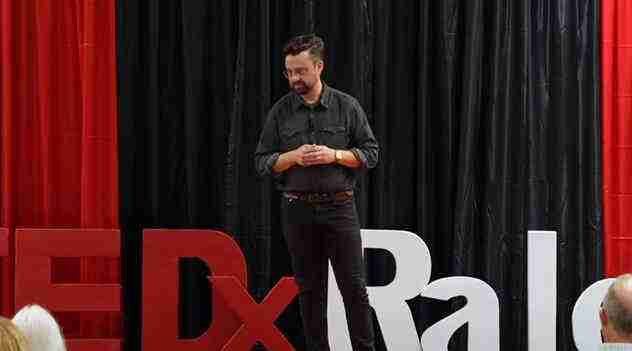
Read the full transcript of enterprise level logic consultant Benjamin Bode’s talk titled “Unlocking The Hidden Science of Reasoning” at TEDxRaleigh 2024 conference.
Listen to the audio version here:
TRANSCRIPT:
The Secret to Mental Enhancement
BENJAMIN BODE: Have you ever fantasized about doing something quick and easy to immediately upgrade your mind? Like, wave a magic wand – that would be nice, right? I think we all have, and this is reflected in the cognitive enhancement industry, which is big business. Just look at the products you can buy: prescription pills, stimulants, supplements packed full of exotic mushrooms, all promising to improve your mind.
So here’s the thing: there’s a better way, and you don’t even have to spend a penny. The problem with this better way is it’s a secret, which I get sounds improbable if it’s so great. So that’s where I want to begin the story now.
A Philosophy Class Surprise
It’s a secret. It was first revealed to me in a college course. It was actually my very first class in college. It was Intro to Philosophy, and as a philosophy major, I went in there super pumped, just giddy, ready to learn some big philosophical ideas from the masters like Plato and Nietzsche.
So I’m sitting at my little desk. The class begins, and the first thing the professor did was put a slide on the board that had about 20 math equations. That was a curveball. And then I learned that the math equations had names, so now I’m feeling more uncomfortable.
I’m looking around thinking, “Am I in the right class? The heck is this? Where’s Nietzsche?” I’m not joking.
Understanding Logic
I got up from my desk, double-checked the room number just to make sure I was where I was supposed to be. Well, I was where I was supposed to be. I was in a logic class. The reason why that slide initially confused me was because that was not how I grew up thinking about logic.
In hindsight, I know that back then I had a pretty fuzzy definition of what exactly logic is. And since then, I know with great confidence that just about everybody else has a similar fuzzy definition. So what about you? How do you define logic?
The People’s Definition vs. Technical Definition
I ask this question a lot. I do because I run a social media channel called “Framing Logic,” where I make videos on logic. And I know that a definition matters because it frames how we use the thing or don’t use the thing. And so running my channel, I was getting the impression that a lot of people had a fuzzy definition of logic.
So I wanted to confirm this. I did an informal survey of my subscribers. I asked them, “How do you define logic?” but tell me without looking it up, just off the top of your head. So I collected their answers, and I averaged it out.
And I came up with this definition. This is what I call the people’s definition of logic: “Logic is to think effectively with common sense.” It’s a fine answer. The only problem is it’s missing the most important part of logic, which you will find in the technical definition. Here is that now: “Logic is the science of correct reasoning.” I love these five words, “the science of correct reasoning.”
Logic as a Science
So here we have two definitions using logic in two different ways. From my survey, I found that only 10% of people saw logic as a science. Why is this? Well, I believe this is probably because logic is not meeting our expectations of what a science is supposed to look like.
I mean, it doesn’t take place in a lab, right? The thing is, logic has no looks. It is invisible. It is – you can’t hold it in your hand, that’s for sure. But logic is exactly what it needs to be in order to accomplish its specific goal of assessing reason. The problem I see is for that other 90% of people who don’t see logic as a science. This is an incredible missed opportunity. Okay? So that’s what I want to talk about today, how when we redefine logic, it’s an immediate upgrade to a pathway that is the best way to improve our mind.
Good Reasoning vs. Bad Reasoning
And as I talk about this, I’m going to give you three things that you can walk away with today to start using logic as a science. Before we talk about the science, though, let’s talk about reason. Let’s be clear, there is good reasoning and there is bad reasoning. Bad reasoning is making a rash decision. It’s getting overwhelmed by a complicated problem and then giving up. It is losing your temper in a discussion and then saying something personal.
Good reasoning is anticipating a problem before it happens. It’s effectively communicating your emotions. Good reasoning is making an investment into the future. Reason is what makes us human. It is. It is the most, easily the most important thing that we do.
Logic as a Tool
Logic as the science of reason becomes a very potent tool. I think of logic like fire. Fire can warm our house or it can burn it down. Logic can help us make sense of the world or it can be weaponized against us to deceive and manipulate.
The Three Ingredients of Logic
And that happens all the time. Okay, let’s learn some logic. If you’re going to make a science, you need three ingredients: you need a set of technical procedures, you need a body of knowledge, and you need a means of testing.
When we learn logic, we’re basically learning a new set of tools specifically made for logic, for reason. You wouldn’t want to build a cabinet without tools, so why should we reason without tools? All right, these tools, you can think of them as procedures, guides, checklists, things like that.
First Takeaway: Logic is Decisive
All right, here’s your first takeaway: Logic is decisive. I want to dispel of this idea that logic is wishy-washy, like it’s your opinion versus theirs.