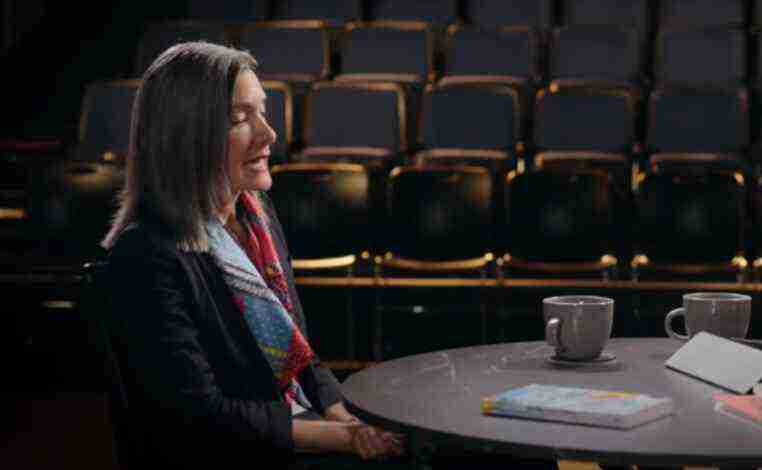
Read the full transcript of Psychoanalyst Erica Komisar’s interview on Dad Saves America podcast episode titled “Childhood Isn’t Supposed To Be Stressful. Here’s How Parents Can Help” with host John Papola. (Feb 23, 2024)
Listen to the audio version here:
TRANSCRIPT:
JOHN PAPOLA: Erica, welcome to Dad Saves America.
ERICA KOMISAR: Thank you for having me.
JOHN PAPOLA: I’ve had a lot of conversations with people that are working in the mental health space. And it’s because this show, in a lot of ways, is inspired by the challenges our kids are facing psychologically. And you are among many things a psychoanalyst. So I wanted to start with the question, what is that? What is a psychoanalyst? Is this Freud? Is it all about mommy and daddy issues?
ERICA KOMISAR: Well, a psychoanalyst is someone who thinks about not just the present, but also thinks about how the past influences the present. So, you know, we say if you don’t know where you come from, how can you know where you’re going? And so a lot of therapies today are very cognitively or behaviorally oriented. It’s very much on symptom relief and very much on the present. But you can’t really get under the issues unless you also understand them in context, and the context is also the past.
So the myth is that psychoanalysts focus on the past, and at least good ones don’t. Good ones help you understand the present by understanding the past and, therefore, helping you to get to a better future.
Cognitive Behavioral Therapy vs. Psychoanalysis
JOHN PAPOLA: I want to jump right into what I thought was an interesting thing when we met because we’ve had some folks on who are really practitioners of cognitive behavioral therapy and will say things like, this is the evidence-based proven treatment and that it is the most scientific thing we have for treating things like anxiety and depression and post-traumatic stress disorder. And you push back on that. So I want to hear what’s wrong with cognitive behavioral therapy.
ERICA KOMISAR: It’s not what’s wrong with it. It’s that its use is limited, meaning it was originally designed to help people with things like PTSD or OCD or if they had habits that they were trying to stop. It’s a very symptom-oriented relief. And, by the way, psychoanalysts do use cognitive behavioral therapy in small doses when necessary, at least, again, good ones. I do.
Meaning, I can work with a patient where I can also uncover what’s happened to them in the past. But if they need some symptom relief, can also do some mindfulness training or some breathing. CBT therapists don’t have the equipment or the training to go farther back in the past and help patients understand what is underneath those issues. So, it’s not what’s wrong with it. It has a limited use, but the problem is it’s being applied widely.
The best way I can describe the difference between depression and anxiety is that depression is a preoccupation with past losses. Anxiety is preoccupation with future losses that haven’t occurred and may never occur. What they have in common is loss.
So if you’re treating a patient who has anxiety, there’s always loss involved, and losses relate to the past. And so if you’re not dealing with the past at all, then you’re not really getting under the problem.
And so you might have some quick symptom relief, some immediate gratification, but it’s not sustainable. And a lot of the research is showing that people that go for CBT therapy, a lot of them get immediate relief, but it’s not sustainable. It basically believes that you can heal people’s anxiety and depression by just getting them to think about it differently. It’s using your cognitive skills to think your way out of what are emotional issues. And so what I always say is you can’t think away something that is an emotional issue.
You have to examine it on an emotional level.
JOHN PAPOLA: So we had a cognitive behavioral therapist, Doctor Ortiz, on the show, and he talked about how, you know, a big part of it is the experiential part, which is, let’s say, I’m afraid I think an example he uses, I’m afraid of being in elevators.
ERICA KOMISAR: Phobias. It’s very good for phobias.
JOHN PAPOLA: It’s like, okay. Here’s what we’re going to do. We’re just going to go to…
ERICA KOMISAR: Conditioning. Yes. Oh, yeah. Yeah. It’s very good for phobias. And does it have more sticking power for that? So think about the fact that if you break your leg skiing, you’ve had the experience of breaking your leg.
And so when you go to ski again, you’re scared that you’re going to break your leg again. And you can develop a phobia around, you know, breaking your leg skiing. And so what it does is it deconditions you. And that’s why it’s good for things like phobias, OCD, PTSD. What it’s not so good at is if the thing that you’re frightened of has nothing to do with an experience you’ve had, meaning I’m scared of elevators, but I’ve never had an incident in an elevator, that means it’s not about the elevator.
That means something is getting projected from the past. That’s a loss that has nothing to do with the elevator, but it’s getting projected onto the elevator. So if you get the person to not be afraid of elevators, you might as well just, it’s a little bit like what I call plowing snow in the winter. You push it from one place to another. And so now you don’t have a fear of the elevator, but you may have a fear of something else.
Evolution of Psychoanalysis
JOHN PAPOLA: And so psychotherapy and psychoanalytics, like, what… I think, you know, Sigmund Freud is probably the most famous name in psychology. Right? To what extent, is that work an extension of him? Where has it evolved past what he developed?
ERICA KOMISAR: Truth in advertising, I was trained as a Freudian, but I’m not a strict Freudian.
JOHN PAPOLA: Your conversations about your parents must be completely crazy.
ERICA KOMISAR: Yeah. Never a truer word was said. Freud was living in a time that there was a lot of sexual repression. And so people want to judge Freud in these modern times when they can’t really judge him because he lived in a different time. And in that time, people were very sexually repressed, and as a result, they developed what we call hysterical symptoms.
Lots of hysterical symptoms. Hysterical blindness. Women would lose their bodily functions, and he was dealing with repression on a very deep level that would cause somatic physical symptoms. Right? Today, we’ve moved away from that level of sexual repression.
So in his time, he was brilliant because in his time, he did cure a lot of those people. That electric shock therapy and drowning them in ice baths, almost, you know, the sleep therapy. You know, there were many crazy therapies that neurologists and psychiatrists were trying in those days. Right? But he actually cured people because he realized he made the connection between sexual repression and hysterical symptoms.
What we now are dealing with, because we don’t deal with that level of sexual repression, is we’re dealing with a whole set of different issues. You could say it’s evolved into what we call narcissistic disorders on a mass level.
And narcissistic disorders include depression, anxiety, addictions of all kinds, eating disorders, alcoholism, drug addiction, all kinds of addictions, narcissistic personality disorders. So it’s really evolved into something different. So we’re in a different time, in a different place in terms of the kinds of symptoms and illnesses that we’re seeing.
Understanding Narcissism
JOHN PAPOLA: It feels like we are in the age of narcissism. We’re in the, like, me, me, me age.
ERICA KOMISAR: We are.
JOHN PAPOLA: Well, what is narcissism? How about we start there?
ERICA KOMISAR: So there’s healthy narcissism and unhealthy narcissism. Healthy narcissism is I like myself. I love myself. Unhealthy narcissism is really a defense against neglect. You could say that there’s a difference between having narcissistic symptoms, which a lot of people do, and having a narcissistic personality disorder.
And the real difference is that narcissistic symptoms are really a response to neglect. When children are neglected or misunderstood so I always say to people when they come to see me that the majority of patients come into therapy not because their parents didn’t love them, but because their parents either neglected them emotionally or didn’t understand them. And so when you’re not understood, when you’re not reflected with your emotions, when your parents aren’t very psychological or can’t meet you on an emotional level, you come out of childhood feeling alone and neglected.
So the Greek myth of Narcissus, as you know, is the myth of Narcissus staring into a pool of water and staring at his own image and gets trapped in that image, he falls in love with himself because no one was in love with him, you know, and it’s why I write the books I do. I think parents are not necessarily understanding children.
They’re not necessarily in love with children anymore. They see children as burdens. They see children as obstacles to their independence, to their freedom, to their self-determination, to their successful careers. And narcissism and the depression that comes with narcissism is a defense against neglect. That is the most reductionistic way I can put it.
And so when a patient who shows signs of unhealthy narcissism or you say has a narcissistic personality disorder, which is nothing more than if you live with those signs and symptoms for many, many, many years, they become adhered to you. They become part of your person. Right? But if you catch it early enough, then narcissistic symptoms don’t necessarily turn into a personality disorder. If left totally with those symptoms for many years and alone with them, then it turns into a personality disorder.
Erica’s Journey into Psychoanalysis
JOHN PAPOLA: What brought not just you, but I guess maybe your sisters as well into this field and interested in the way the brain works and how to help people.
ERICA KOMISAR: Well, I’m sure I was unconsciously sort of influenced by my sister and my brother-in-law. But in truth, what got me into this field was, you know, Freud said, to be happy, you have to have love and meaningful and purposeful work. And I’ve like all twenty-something year olds, I was seeking my meaningful and purposeful work. And at the time, I was working at Calvin Klein Cosmetics writing copy for eternity and obsession perfume.
JOHN PAPOLA: So, just about the opposite of being a psychoanalyst.
ERICA KOMISAR: Yeah. That was far away as I can imagine. And I had lost my father when I was twenty from cancer, and I hadn’t grieved. And I was sitting in my therapist’s office, probably mourning a boyfriend that didn’t work out, but really mourning my father.
And suddenly realizing how happy it made me to sit in that chair, in that environment, with this woman who thoroughly, deeply understood and connected with me. And in that connection, it was healing. And it wasn’t what she said. It was the relationship itself because she didn’t say much. She was really a traditional Freudian analyst.
So it was more in the connection and in her knowing and in her wisdom and in her wise presence that I felt known. And in that moment, I knew I had found my future. And I left Calvin Klein Cosmetics. And I went to social work school and knowing I wanted to be a psychoanalyst, and went for a psychoanalytic training. So psychoanalysts don’t train in universities. We have our own separate academic institutions called psychoanalytic institutes.
Discussing “Chicken Little: The Sky Isn’t Falling”
JOHN PAPOLA: So tell me about your book, Chicken Little. Yeah. The new age of anxiety. So what is anxiety to you? What’s your definition?
ERICA KOMISAR: Well, as I said, anxiety is a preoccupation with loss in the future that may never happen. People think it’s very separate from depression. It’s really not. It has to do with loss.
Anxiety and Depression
ERICA KOMISAR: And if you’ve had past losses, you’re more likely to be worried about future losses. If you question it, you just have to look at psychiatrists. They’re always prescribing antidepressants for anxiety because it’s not different. It’s not really different. It’s in the same family.
It’s just how you deal with past losses as you project into the future.
JOHN PAPOLA: I spoke to another person that’s a psychologist and what she was saying was that, look. Look. Anxiety is an essential function emotionally of our survival mechanism. That, look, we worry about things because we need to worry about things in the future. It animates us to action. Do you think about it that same way?
ERICA KOMISAR: I’m going to correct that statement and say fear is an essential part of survival, not anxiety. Oh, interesting. Anxiety is intense fear. It’s disabling fear. Fear is quite useful. Caution and fear about things that are dangerous is how we’ve survived, for the millennia. But I wouldn’t say anxiety is part of natural human behavior. I would say fear is.
JOHN PAPOLA: If I line up the different conversations I’ve had, and I’m coming to these things as a layperson… You know, there’s a lot of overlap, but then there’s also these areas of difference. And I’m curious to what extent that is just reflective of, you know, different understandings of these things versus the words and their meanings can sometimes be hard.
ERICA KOMISAR: I think part of it’s semantic. I was going to say it may be part semantic because anxiety is such an overused word today. So I think what they’re really describing and for many youngsters, it is fear and not anxiety, but it gets diagnosed as anxiety. We’re overdiagnosing kids like crazy, but anxiety is a preoccupation with fear. Okay. Right? And so no.
If we’re seeing ghosts and shadows where there are none, that is not a survival instinct. We want to be cautious. We want to be aware, but if we’re projecting and seeing shadows everywhere where there are none and we’re preoccupied with it, then it makes us ill. So fear, if it’s appropriate, doesn’t make us ill. Anxiety can make us ill.
The Current State of Mental Health in Children
JOHN PAPOLA: Would you agree that what we’re facing with our kids is a generationally more magnified level of anxiety and depression? You know, it seems like this is absolutely the case, but I always like to check that because, you know, every generation thinks the kids are not alright. And I I don’t want to get trapped in a narrative.
ERICA KOMISAR: If you buy into statistics, then you just have to look at the statistics to see that it’s getting worse. And I think suicidality is, like, absolutely worse. Oh, so is depression and anxiety. I mean, the argument is always, are we just getting better at diagnosing it? Are we overdiagnosing it? And the answer is yes. It’s yes to all of them, including the fact that it’s getting worse.
JOHN PAPOLA: Okay. So it is getting worse. Is it getting worse to the degree that we say it’s getting worse?
ERICA KOMISAR: I mean, I’m not a statistician, but if we look at the statistics and I look at my practice and I look at my colleagues’ practice, yeah, I would say it’s getting worse. And we’re sitting here in 2023, which is now several years post COVID. So it’s easy to kind of say that the things the further away we get from 2020, 2021, feel like the more it will be blamed for everything that we’re experiencing in the present. But this is going on in 2019. My first book, Being There, came out in 2017, but I started working on that book thirteen years earlier. So, no, this has been around for a while. I think COVID exacerbated what was going on, but it didn’t cause it.
I mean, it didn’t cause it. It just woke us up, and it woke parents up. Did it increase suicidality? Yeah. It probably increased it. It exacerbated what was there, but it was already there.
Causes of Increased Anxiety and Depression in Children
JOHN PAPOLA: So what is causing this? What’s your hypothesis for this major generational change?
ERICA KOMISAR: I mean, think of it as a multivariable thing. Think of it as a puzzle because that’s what it is. If you ask that question to any clinician sitting in this chair and they reduce it to one thing, then I would say you should kick them out of this chair because that’s just it would be false. It’s multivariable. And I think there’s a lot of desire to want to reduce it because it is so very complicated.
I think if you look at it sequentially so that’s the way I like to look at the pieces. And there are bigger pieces and smaller pieces. But if you look at it sequentially, as Gabor Mate says, it’s how we’re raising our children. What I mean by that and what sort of he means by that is we raise our children with less understanding and more discipline, and we also raise our children projecting upon them that they’re older than they are at a very young age.
We want to believe that they’re born resilient. And because we are so narcissistic as adults for three generations now, and we do want our freedom, and we do want to be independent, and we do want to do our own thing, and we don’t really want to be bothered with caring for our own children, that we have convinced ourselves, and society helps to convince us, that the kids are just fine. You do whatever you want, and your kids will be just fine.
And they’re not fine because children need a great deal of physical and emotional presence from their parents, particularly their primary attachment figure, usually the mother, but sometimes it’s the father. And we’re not giving that to our children.
We are often putting them in daycare as early as six weeks of age or leaving them with a nanny or getting night nurses or, you know, believing that children are more of an obligation and a burden, and there’s nothing really interesting that’s happening in them in the first three years. And that drives me crazy because I’m a baby person, and I write books about it. So when I hear that and see that, it makes me crazy because there is so much going on in the first three years.
So we neglect our children, to be frank, in the first three years. We don’t find them very interesting. We find sitting on the floor playing with them boring.
JOHN PAPOLA: I loved playing with my baby boy. Yeah. He was like the most it was just like it was completely transformational when he was born.
ERICA KOMISAR: It is transformational. And you’re making some pretty big cultural statements that we aren’t paying attention to our kids. Back that up for me a little bit. For somebody who’s like…
JOHN PAPOLA: You’re making some pretty sweeping, social critiques here.
ERICA KOMISAR: Because we see an increase in attachment disorders. And attachment disorders have to do with how we raise our children in the first three years. The longitudinal studies show that when a child has an attachment disorder at twelve months, they have an attachment disorder twenty years later.
JOHN PAPOLA: What is an attachment disorder?
ERICA KOMISAR: An attachment disorder is when we don’t provide our children with the emotional security in the first three years that lays down the foundation for their mental health for life. That foundation, being there physically and emotionally to soothe them when they’re in distress from moment to moment is critical when you basically, you’re dealing with a neurologically and emotionally fragile infant who is terrified of the world. The world is a terrifying, overwhelming, scary place, and the only thing between that child and the abyss is that mother or father.
JOHN PAPOLA: You know, it is funny. Right? If you watch any Nash National Geographic thing, you’ll see the animal in the wild. The baby comes out and gets right on its legs and runs.
ERICA KOMISAR: That’s exactly right.
JOHN PAPOLA: And yet our kids come out like plants.
ERICA KOMISAR: They should be marsupial. Think about it that way, that in other parts of the world, mothers carry their babies on their body, first on the front, then on the back, but they make skin to skin contact with those babies for the first year until they can’t carry them any longer. And then they always have them with them wherever they go, whatever they do, when they’re working in the fields, if they’re working at the coop where they sell fruits and vegetables or in a store, their children are always with them.
So the idea is they’re always within reach of that child to soothe them when they’re in distress. And, yes, there are other members of the community that are there to play with them and entertain them and be with them. But when that child is in distress, they go back to their primary attachment object.
So you could think of it as it’s not just attaching to a baby, it’s also reassuring the attachment for the first three years. So the first year forms the attachment, the next two years reassure them of that attachment. And so we’re not doing that. We’re really not doing that in this country.
We’re not keeping our children close. We’re not taking enough time off. We don’t have a system in this country. This is the most uncivilized country in the world other than Papua New Guinea, the only country that doesn’t have a paid maternity leave, you know, for at least a year. And I don’t mean that mother shouldn’t work or father shouldn’t work.
JOHN PAPOLA: But that Well, this is the obvious question that comes out of this. Right? When my wife, gave birth, you know, we had some maternity leave and and a little bit of paternity leave, and then she went back to work for about six months. And then this was her choice. She said, Lauren, I can’t do I can’t do this.
ERICA KOMISAR: Yep.
JOHN PAPOLA: And so she left her career for for years, and that was her choice. But it’s a really hard pill for for people to swallow to to hear someone say, if you have a kid, that’s probably the best thing. Is that what you’re saying?
ERICA KOMISAR: I I am not the first person to say it. I mean I’m just the loudest right now. Nella B. Leech said it many years before me. She said, you know, anybody can have a child, but to care for a child? And she said, if you don’t want to care for your child, stop having children. And I’m not that harsh, but I would say that it’s not the having the children. It’s the caring for them, particularly in that first thousand days that is critical to forming that emotional security and that foundation for their mental health.
That doesn’t mean that if you’re there and you give them everything and they’re emotionally secure, that stuff’s not going to happen along the way. Because the reality is there’s going to be adversity that comes, but there’s a greater chance if you build in that security, if you build that foundation and that when the adversity comes, it doesn’t blow down the house.
Adolescence and Brain Development
JOHN PAPOLA: And what is the biggest diversity that’s probably going to hit those kids other than things that you can’t predict, like divorce or death of a parent or abuse or trauma. I mean, these are obvious things that are storms in a child’s life.
ERICA KOMISAR: Adolescence. Normal adolescence is the biggest adversity. So there’s two two critical periods of brain development, zero to three and adolescence, which is nine to twenty-five. We know that it starts earlier and ends later than we ever thought before.
JOHN PAPOLA: Nine to twenty-five?
ERICA KOMISAR: Nine to twenty-five. Preadolescence is nine to thirteen. Okay. Middle adolescence is fourteen to eighteen, and late adolescence is eighteen to twenty-five. And we know in that period, the part of the brain called the prefrontal cortex does not finish developing until twenty-five.
JOHN PAPOLA: I’ve heard this more recently. And my so one question is, has that always been true?
ERICA KOMISAR: Yes.
JOHN PAPOLA: Like, so this is not something that has, like, we’ve gotten a little more mush headed because we’re suspend we’re suspending adolescents because we’re wealthy. And so, oh, now you’re now you’re a kid till you’re twenty-six. Like, that’s not what’s going on here?
ERICA KOMISAR: This is brain development. We always knew it, but we couldn’t prove it until we had technology.
Brain Development and Technology
JOHN PAPOLA: And what’s the technology that’s made it provable?
ERICA KOMISAR: FMRIs, where you can actually see the activity of the brain, and you can see the development of the brain, and you can see that certain parts of the brain are discrepant in development in adolescence, meaning certain parts of the brain develop faster than other parts of the brain. And the part of the brain that really gives us emotional regulation and balance and helps us to deal with adversity and stress is the prefrontal cortex. And so that’s not fully developed till twenty-five.
And so in these two critical periods of development, you’d say the first three years is what we call neurogenesis, lots of cell growth. By three years old, eighty-five percent of a child’s right brain is developed. And the environment is critical to that development. So parents say to me, if I wasn’t there in the first three years, it’s all lost. And I say no. But a lot happened in those three years.
We know that the environment is critical then. And then in the second critical window, the second critical window is a pruning stage. So cell growth is as important as cell pruning. If you have too many cells, then you end up with a lot of problems. And so these are the two periods where parents play a terrific role in that development.
They help to architect the brain of their children just by their parenting styles, which is why I started doing this.
Years ago, I worked in clinics, and I did therapy with families and children. I worked in a clinic with very poor families in Brooklyn. And all the therapy I was doing didn’t seem to take. It was like throwing spaghetti against the wall, but it wouldn’t stick until I started doing parents’ psychoeducational parenting classes.
And suddenly, the combination of helping parents to understand well, understand what wasn’t given to them that they needed to give to their children in combination with the therapy, that parent guidance piece, helped the spaghetti to stick to the wall.
JOHN PAPOLA: How did you know that? How did you know it wasn’t sticking and then it started to stick?
ERICA KOMISAR: They stopped showing symptoms and signs of stress. So a lot of the disorders we see in children and adolescents are stress disorders.
ADHD and Stress Responses
ERICA KOMISAR: So if you think about ADHD, there was a whole movement to take the D off of ADHD because it’s not a disorder. It’s a stress response. It is the brain in fight or flight. It’s the flight part. So what we’re seeing in very young children is that we’re seeing increased aggressive behavior, which is the fight part, or we’re seeing increased distractibility.
Those are usually the first signs of trouble, either aggression in school or distractibility. And that’s the first time that parents hear from the teachers of the school there’s a problem. They’ll get a call from the school, and the school will say, your child is biting other kids. Your child is hitting or pushing other kids. Or they’ll hear your child is distracted and can’t sit still.
And so that is the fight or the flight. Call it a stress response. So instead of us as a society wanting to look at these children and saying, why is this child stressed? We just want to medicate them.
JOHN PAPOLA: Right.
ERICA KOMISAR: We just want to medicate them and shut down their pain and not see their pain. Because in the end, for parents, it works because they don’t have to look at themselves. The truth is that whenever a child has an issue, it is the parents that have the issue with rare exception.
JOHN PAPOLA: That’s hard to hear as a parent. Right? I mean, you know, it’s like I don’t want bad news. Like, I don’t want so so when my my my kids suffer from anxiety, it’s my fault. Is that what you’re saying?
ERICA KOMISAR: Is it about fault. It’s trying to understand the connections between things. Again, to understand the connections and to take responsibility is the only way you could help your child. There is no treating a child in therapy if you don’t treat the parents as well. Without parent guidance, child therapy does not work. And that’s because if you treat a child and you send them back into the same environment, it does nothing for that child. You must change the environment.
Genetics and Epigenetics
JOHN PAPOLA: What about genetics? I mean, I I understand that, we’re not we’re not born blank slates. I don’t know any parent that could possibly believe such a…
ERICA KOMISAR: We are not born blank slates. We come with a genetic predisposition, but the whole field of epigenetics. So my books integrate things like attachment research and epigenetics research. So for anybody who likes research, it’s research put into layman’s terms, both books. But epigenetics is basically the idea that we’re born with a certain genetic makeup, but then the environment plays a role in turning on those genes.
JOHN PAPOLA: So there was piece of research like default switches, basically?
ERICA KOMISAR: So there was a piece of research that came out. Without that piece of research, I couldn’t have written the first book. They found a gene for sensitivity to stress. There is no gene for depression and anxiety. No gene. There’s a gene for schizophrenia. There’s a gene for bipolar disorder. There’s no gene for depression and anxiety. But there is a gene for sensitivity to stress. It’s the short allele on the serotonin receptor. We need to be able to pick up serotonin in our brain to be happy, to feel joy, to feel balanced. Right?
Certain kids are born with a short allele, so they can’t pick up the serotonin. So the research found that when a child who’s born with that sensitivity and you know you have a sensitive child, and you certainly know if you have more than one child because you’ll say, oh, Jimmy was such a good baby. You know, never cried, was calm, was, you know, accepted the loving and the soothing. And then there was Bobby. And Bobby was from the moment he came out, he cried all the time. He was hard to soothe. He had eczema on his skin. He was…
JOHN PAPOLA: Right? He he…
ERICA KOMISAR: Yeah. Was very clean.
JOHN PAPOLA: So Bobby was more sensitive than Jimmy.
ERICA KOMISAR: Right? That genetic sensitivity, the research showed that when Bobby was given sensitive empathic nurturing and had the emotional and physical presence of his primary attachment figure in that first year, Bobby had as good a chance of developing as a healthy little boy as Jimmy did. But if Bobby, who was sensitive, was denied that sensitive empathic nurturing, then Bobby would go move towards mental health issues like depression, anxiety, and attentional deficit.
So we can see there is evidence to show that epigenetics plays a role. You can be born with a genetic temperament, but if the environment counters that, if it’s a sensitive, empathic, nurturing environment, it can actually even counter the genes you’re born with.
Advice for Parents
JOHN PAPOLA: This time period here, this this this first three years. Yeah. What do you what what do you say to the to the mother or the father who wants to do that and can? What should they do? Like, what is your advice to to to optimally provide that, create that attachment? What’s just the general guide?
ERICA KOMISAR: Well, I mean, the first thing I would say is if you came from a background where you received sensitive empathic nurturing, it will come more easily to you. But if you didn’t, if your mother and or father or whoever raised you, your grandmother, couldn’t provide that, sensitive, empathic, nurturing, then you need help. You can’t do it on your own.
So mothers will sit with babies who have had mothers themselves who left them very early or left to go back to work or didn’t spend that much time with them, weren’t that interested. I would say most mothers and fathers have a very hard time sitting on the floor and playing with their babies and engaging their babies and even soothing their babies when they’re in distress because it wasn’t given to them, and so it doesn’t necessarily come as naturally, and they get bored.
And so I wrote a piece, years ago in it was the Washington Post, how boredom is a sign of depression. It’s a sign of postpartum depression in mothers and depression in fathers. And so one of the things I would say is check-in with yourself. If you’re having trouble, you’ve committed to staying home with your child, but you’re having trouble, get help for yourself.
I mean, therapy with an adult an adult to adult therapy is what I call right brain to right brain connection, and it heals what you didn’t get when you were a child. So we can actually see also through technology and fMRIs how talk therapy, feelings oriented therapy, not cognitive behavioral therapy, heals the brain in a way that parts of the brain that weren’t active become active again.
JOHN PAPOLA: Wow. Yeah. So if I need help on this front, if I’m not feeling the physical connection… But I’ve chosen I want to do this, that makes a lot of sense. Yeah. What if look. I’ve got a career that I I am not prepared to step away from for three years. It will put this plan of my for my life to an end, and I will just resent my kids for doing that or whatever. Whatever reason there might be, but you’ve you’ve had a child, but you’re not prepared to stay home with them without passing judgment on that… What is your advice for how to do the best you can there, even if you can’t reach the ideal? If that if staying home’s the ideal, what’s what’s the best second best that we can offer for parents that aren’t in a in a position to do that?
ERICA KOMISAR: Well, also just it’s not a zero sum game. Staying home can be staying home some of the time and working part time too. So I want to separate that too and say that it…
JOHN PAPOLA: Yeah.
ERICA KOMISAR: So it’s a special stay home full time because you can’t afford to stay home full time or you’re a single mother, then staying home much of the time and prioritizing your child, but working part time, would be the next best thing. If that doesn’t work for you either for a variety of reasons, including the ones that you stated, the next best thing would be be what we call kinship bonds, meaning a grandmother, a mother, an aunt, a grandfather, someone who a father, someone who has a similar investment in your child emotionally and will be there forever. That would be the next best thing to being there.
If that doesn’t work, and problematically, we have moved away from our parents when we have children because we think it’s great to be independent when, in fact, no one ever raises children in other parts of the world alone. I mean, we raise children in multigenerational settings, and we generally, in other parts of the world, people stay in the same village, and they have support. They have family and extended family support.
Okay. Next, if that doesn’t work, is to hire a single surrogate caregiver who is not officious organizationally great, but is in fact wonderfully sensitive and nurturing and, empathic towards your child and loves to play with your child. Not a disciplinarian, but a sensitive empathic nurture.
If you can’t afford so I’m going down the line here. If you can’t afford that, then do what they do in California, which is share the care with another family or even two families. If you get two families together, you should share one caregiver. It’s the same price as day care. And now if you have three children, you have a three to one ratio, and they’re in a home setting. That is far better than you will ever get in a day care setting.
JOHN PAPOLA: You say they do that in California? Is is that just is that, like, something that’s informally emerged in California?
ERICA KOMISAR: It informally emerged, and I wish it would informally emerge in other parts of the country.
Issues with Modern Education
ERICA KOMISAR: It’s starting, but just the idea of sharing care. And if that doesn’t work, then those I mean, again, I really write articles about how day care is damaging to children because there are studies to show that the more hours a child spends in day care, the more likely that child is to have behavioral problems, learning problems, emotional regulation problems.
JOHN PAPOLA: How much is school broken from your perspective? That’s where I was going next. Because it seems to me like That’s another piece.
ERICA KOMISAR: Some of the things that, you know, we talk about that a lot in Mad Kids America. I’ve made a lot of choices for my own son. Education. So if we’re going to talk about little boys, then we’ve feminized little boys in making them sit in circle time at a very early age. Earlier and earlier.
Pre-K used to be not earlier. In my day, it was one year before kindergarten. Four. At four years old, you went to pre-K three days a week, three hours a day. Yeah.
That’s alright. And sometimes your mommy sat in the background and watched you play. So you could do what Margaret Mahler called, which is go do emotional refueling and go get a hug and then go back to play. Sort of like what you’re made. You sort of go off…
JOHN PAPOLA: Yeah.
ERICA KOMISAR: And then and then that circle actually grows. You sort of you first get there. You’re attached. Then you make a quick little run, and you come back.
JOHN PAPOLA: That’s right.
ERICA KOMISAR: And then you get a little further out. And then maybe by the end of the day, you’re not running back so much because you’re playing with friends. Gives you the courage to explore. But what’s happened is for economic and practical reasons, I would say for adult reasons, it’s gotten pushed back earlier and earlier. Parents want to go to work. They want to go to work full time. Some of them have to go to work full time. So it’s gotten pushed back. So preschool is really daycare. It’s not preschool.
And it starts as early as fourteen months. So at fourteen months, you’re putting a little boy who’s meant to be running around and toddling and knocking towers down and building and what we call build, destroy, build. Building towers, destroying…
JOHN PAPOLA: The most fun sequence I’ve ever…
ERICA KOMISAR: Yes. Build, destroy, build. And they’re meant to be roughhousing and and and learning about the world through physical exploration.
So instead, we feminize boys by making them sit like little girls in circle time, and even little girls can sit in circle time.
JOHN PAPOLA: How distinct is the boy versus the girl in in terms of these impulses? Because I know it’s not wholly separate. There’s an overlap. Right?
ERICA KOMISAR: Little boys who are between three and five years old have surges of testosterone, almost as much as in adolescence.
JOHN PAPOLA: Wow.
ERICA KOMISAR: And so they yes. And so they need to run and jump and push and and explore, and and they’re not getting to do that. Instead, they’re sitting quietly, and they’re going crazy.
So, basically, what we’re seeing is distractibility in a lot of these little boys is just stress because what we’re doing is by forcing a little boy who’s meant to be running and jumping and playing physically and learning about the world physically to sit quietly in circle time, the frustration tolerance is not there. Right? So we’re doing that to little boys, and we’re labeling them. And then if they can’t sit in circle time, the school calls parents and says, your child has ADHD. We’d like to medicate your child.
JOHN PAPOLA: Right.
ERICA KOMISAR: So does that suit the schools? Of course, it does. It suits the schools because they get a quiet, little, passive, sedated boy. Okay.
That’s a problem. The other problem is that we’re pushing cognitive learning, left brain learning, before social emotional learning. Play in the word kindergarten meant garden of children. That’s what it means. A garden of children is not sitting in circle time learning letters and numbers.
A garden of children is building towers, knocking them down, is doing imaginary play, is putting on princess clothes. It’s finger paint. It’s playing with Play-Doh and clay. It’s meant to be free play. And you learn through free play and imaginary play things like frustration tolerance, conflict resolution. You work through a lot of areas of conflict resolution through play. And so we’ve taken that away from children and replaced it with left brain.
So think of the analogy as it would be like left brain learning before social emotional learning or right brain learning is like putting your shoes on before your socks.
Gender Differences in Education
JOHN PAPOLA: So you talked about how boys are getting feminized, which is, for many, going to sound inflammatory.
ERICA KOMISAR: Wouldn’t be the first time I say something that was inflammatory.
JOHN PAPOLA: What’s happening for girls? Are girls… I mean, I I know this. We’ve had Warren Farrell on the show, who’s the author of the boy crisis, and he really led the way on pointing out that in every measurable statistic you have on on on boys and men, they’re not doing great. Not they’re not doing great with health, with wellness, with life expectancy, with criminality, with educational attainment, with employment. You know? Women are kicking our butts. But is there stuff about the school system that’s also bad for girls too, or is it pretty is it better suited to girls?
ERICA KOMISAR: It’s better suited to girls, but girls are struggling socially. Girls are cracking under the pressure to be perfect.
So girls are incredibly self-conscious. There’s a part of the brain called the amygdala, which is the stress regulating part of the brain. It’s a little almond shaped part of the brain, the oldest part of the brain. It lies very deep in the limbic system, and it’s meant to be very diminutive and not very active in the first three years, and then it’s meant to come online slowly. Because of all the stress that we’re imposing on kids to be high achieving and read and do math.
And so girls tend to be more perfectionistic than boys in general because their amygdalas are on fire. It’s the threat sensing part of the brain. They’re very aware and very self-conscious about judgment, Judgment of teachers, judgment of parents, wanting to be good. So, you know, all that stuff about the good little girl, that has to do actually with a gender difference. The idea that girls are very sensitive to wanting to be to conform, to wanting to be good, to wanting to be perfect.
And what we’ve done by making the educational environment so achievement oriented and perfectionistic is we have turned up the volume in their amygdala. So by the time they get to adolescence, they break down because they just can’t take it. It’s like a robot going, I gotta get an A. I gotta get an A. I gotta get an A, and they literally break down.
So girls are breaking down from the pressure, the academic pressure, because they feel this tremendous judgment on them.
Stages of Adolescence
JOHN PAPOLA: Well and this is a great transition into adolescence. So you had mentioned earlier three stages in adolescence. Let’s come back to that. Lay out for me what’s happening in adolescence. And you’re starting you’re saying adolescence is nine to twenty-five. So map it for me.
ERICA KOMISAR: Well, so early adolescence is is sort of monopolized by physical changes. Puberty has been pushed back in girls, meaning it starts earlier. Girls are going into puberty as early as nine.
JOHN PAPOLA: Is this dietary and environmental?
ERICA KOMISAR: There are a lot of theories about it. Some of them are about dietary, and environmental. There’s more body fat. Body fat has been related to puberty for years. I mean, we know that there’s a correlation between the amount of body fat and when you go into puberty. But…
JOHN PAPOLA: So being heavy so our obesity path has…
ERICA KOMISAR: Yeah. Has hastened puberty. Yes.
But there’s also other things. There’s environmental. There’s extra hormone mimickers. There’s lots of things in the environment that are probably pushing it up. It’s this time that historically, right, has, you know, Bar Mitzvah and Bat Mitzvah, rites of passage, confirmation if you’re Catholic. They all center right around this time, this thirteen twelve, thirteen years old.
So it’s so social changes. It’s a terribly conflict filled part of childhood. So for most people, they have horror stories. There is a few that that have what I call amnesia and don’t remember how horrible middle school was and middle adolescence.
But middle adolescence is, really social challenges is what what sort of monopolizes that period of time.
JOHN PAPOLA: So the early stage is the physical?
ERICA KOMISAR: Physical.
JOHN PAPOLA: And the middle, uh-huh, the middle is social. And is the middle high school?
ERICA KOMISAR: The middle is fourteen to eighteen. Okay. So roughly high school. Yeah. Roughly high school.
But it’s really figuring out where you fit in. Where do I fit in culturally? Where do I fit in in my gender and my sexuality? And it’s the beginning of experimenting sexually. So you’re moving from having best friends who are of the same gender to having, you know, boyfriends and girlfriends and experimenting sexually.
And it’s very present oriented. So think of early adolescence as a pull to the past. So there’s a feeling in early adolescence that you’re not sure if you want to be a big kid or if you still want to go back and be a little kid.
JOHN PAPOLA: I can almost remember, although I might be remembering the feelings of as a father more than myself, the pain of that transition. The, like, you feel the sense of loss. You know, sometimes it’s also your friends and the things you used to like to do that now you’re not liking them anymore, and yet you kind of wish you still did, but you don’t. There’s a bunch of weird stuff going on there.
ERICA KOMISAR: So much weird stuff. But by the time you get to middle school and into early high school, you’re shifting. Right? So you’re you’re present oriented, which is what makes it so painful. Interestingly, that present oriented stance of I’m in pain right now is very hard on children in terms of their mental health. Because if you think about it, as adults, when you have a hard day or even a hard week, you know that this time will come out next week. If it doesn’t come out tomorrow, it will come out next week.
JOHN PAPOLA: I’m still standing.
ERICA KOMISAR: Right. I’ve I’ve I’ve heard worse weeks than this.
JOHN PAPOLA: Right.
ERICA KOMISAR: So you have perspective. The part of the brain that gets perspective is the prefrontal cortex. So there’s no perspective. So if your best friend rejects you or the group of kids that you were hanging with has posted something on social media that you’re out and not in, it’s so devastating. You know? That’s where suicidality comes in.
There’s the greatest amount of suicidality is really in middle adolescence because it’s so present oriented that they don’t know that they’re going to feel better tomorrow. They don’t know that they can make other friends. They don’t know that life will go on. They feel that the pain that they’re feeling in the moment is the pain they will feel it forever, and so therefore, there’s no hope.
JOHN PAPOLA: What can I do as a parent to be the most helpful to my child’s healthy maturation in these two early phases?
Parenting Adolescents
ERICA KOMISAR: Well, I would say trust the process because what’s really happening, even though you can’t feel it, is it’s still emotional refueling. Even though they’re spending more time away, they’re still coming back to refuel. And the thing is if you are angry at them or reject them in kind because a lot of parents feel very rejected by their children. And so what they do is in kind, they reject their children. They say, well, if you’re not going to want to spend time I’m not saying you do this, of course.
JOHN PAPOLA: Oh, I’ve had this feeling. I’m going to throw up. I’ve… Yeah.
ERICA KOMISAR: So if you don’t want me, then I’m just going to go back to work more than full time. I’m going to travel more. I’m going to go out with my friends. I’m not going to be here and wait around for you to need me. It’s so painful.
JOHN PAPOLA: Get into a…
ERICA KOMISAR: It is painful, but they get into a very insecure state of feeling rejected. And so what ends up happening is that child needs the most secure in your boots parent to not take it personally, to understand that it is the same exploration that they did when they were toddlers.
What you said is they walk a small circle, then they walk a big circle, then they walk a bigger circle, but they always come back. Right? And so what parents can do is be sensitive, be empathic. Don’t give advice unless it’s asked for. Just be a really good listener and incredibly empathic. Don’t be judgmental, but be present.
What I say in this book about adolescence is that when the door opens in adolescence and I meant that as a literal thing and a figurative thing because anybody who has an adolescent knows that if they have a door, they shut the door, and they don’t want you coming in their room. But when they come out, and I mean it literally, they’re open to having a meal, to getting a drink, to sitting down for a few moments and chatting with you. And if you’re there, then they’ll share with you. If not, they go back into their cave, and they shut the door.
So parents think of parenting an adolescent on their terms. Well, I come home from work, and I’m ready to communicate with you, and I’m ready to relate to you, And I’m ready to give to you. And it’s a very narcissistic thing because your children still need you on their terms, not on your terms. And so this is the problem. Parents used to be around.
One parent, at least, used to be around. And I’m going to use an analogy, and I’m going to get, I know, screened up for this. I’m sure somewhere from someone who sees this. But, you know, in the old days, there used to be a mother or father that was home cooking, making cookies, whatever. A kid would come out, have a snack, sit at the table, talk to their mom for a few minutes.
It was emotional refueling. Moms aren’t home anymore. Dads aren’t home anymore. Kids are latchkey kids, particularly in high school because parents think, well, if they’re going to go out, I’m going to go out too. And so you end up with these kids who need to touch base with their touchstone.
Right? Who need the same emotional processing that they needed when they were toddlers. They just need it less often, and they need it in a different way, but they still need it. And because parents have left, they don’t have it. So the best thing that parents can do is be empathic, be sensitive, be nonjudgmental, but be there.
Helicopter Parenting
JOHN PAPOLA: The extent to which being there often takes the form of, you know, helicoptering and and and maybe being there. I don’t want to say being there too much. But I want to address that. I want to, yeah.
ERICA KOMISAR: It it’s an interesting thing because, you know, your book is about raising resilient adolescents. We’re the interplay between your the theme of our conversation which has been being there, being ready to catch them, and, going too far. So let’s talk about the term helicopter parenting, which is an overused term, but it’s really not a present parent.
It’s an anxious parent. And sometimes it’s an aggressive and intrusive parent. Yeah. Because the people yelling at the side of the little league game going on. So that’s not being there any more than being there.
I mean, in other words, if you’re not there there at all and you’re there intrusively, it can be experienced by children in the same way as you not being there.
But I have a theory. I’ll share my theory with you, is that we have reversed things. This is how I think about it because it’s a very complicated thing, what we’re talking about. It’s not simple, and it’s nuanced. So we have adultamorphized young children, and then we have turned slightly older children into infants. We’ve reversed it. We want to treat our infants as infants and be there. This.
And then we want to start incrementally letting our children explore. It’s not any different than when they’re little. If you go to nursery school or you go to the playground and you hover over them, that’s not being present. Being present is space. It’s giving them space.
It’s being there if they need you, if they’re in distress, smiling at them so they know that they can you have faith that they can play and that they’ll be okay. You know, the glass floor experiment. Years ago, there was an experiment where a mother was on one side of a glass floor with a big precipice underneath, a clear glass floor. The baby’s on the other side. If the mother looked at the baby with a smile and faith in that baby, the baby toddled over the glass floor, which is very scary glass floor.
Right? You know, objectively. But if the mother looked at the baby with anxiety, that baby broke down and cried and could not cross that floor. So the concept is being in the playground and looking at your child slightly from afar with some space and take a look, and it’s okay. You’re okay.
And even letting them fall down every once in a while. But when they do, you meet their distress. You go and comfort them and soothe them. That’s being present. Hovering over them is not being present.
So in a way, we treat them as little old men and old women when they’re little, and then we infantilize them when they’re older. We have to reverse it if we want to get this thing right, which is letting them have, as you say, circles of exploration is how they grow.
Late Adolescence (18-25)
JOHN PAPOLA: So let’s talk now about this next phase, which is graduating high school, but you’re still technically adolescent, I guess.
ERICA KOMISAR: Yep. You are.
JOHN PAPOLA: So this is the phase my son is entering into. He’s eighteen.
ERICA KOMISAR: Yep.
JOHN PAPOLA: And out into twenty-five. So that’s college. That’s the start of your career, maybe in that order or maybe one or the other. What is happening psychologically and and and neurologically in that phase? And then and then we can talk about what do we as parents do.
ERICA KOMISAR: Well, they’re breaking down when they leave home. And a lot of that…
JOHN PAPOLA: What does that mean when you say they’re breaking down?
ERICA KOMISAR: Oh, literally. They’re having mental breakdowns. They’re getting so depressed or anxious or suicidal.
JOHN PAPOLA: So you’re saying you’re you’re you’re describing what’s happening, not what should happen.
ERICA KOMISAR: Yes. That’s what’s happening. Not which definitely not what should happen, but it is what’s happening. They’ve come out of what didn’t used to be a stressful period, and I can just use myself. I’m almost sixty years old. And when I was in high school, it was not stressful.
I think I took the SAT once. I didn’t do great on it. Oh, well. I got into whatever college I got into. I had a bunch of B’s and B minuses. I think I even had a C on my report card. I played a lot.
JOHN PAPOLA: You could be like the Nathan Fielder opening sequence. I graduated from a school with pretty good grades. Pretty good grades.
ERICA KOMISAR: A minus B. I mean, you know, because high school was meant to be a time of balance. And I went to college, and I discovered my academic, you know, affinity when I got to college. And I even transferred to a better college. And so it wasn’t really a pressured experience.
I didn’t come from a pressured experience. I didn’t go into a pressured experience. I just had experiences. And that’s what it used to be. It’s not like that anymore because what we’ve done is, again, in treating young children as adults, we’ve pressured them at a very young age to be accomplished.
We’ve given them a sense of the future and their future selves before they’re ready to see their future selves. I wasn’t ready to look at my future self or worry about meaningful work when I was in high school. I couldn’t have dealt with the pressure, of taking exams five times to get perfect scores so I could get into the perfect school. We’re basically teaching them from a very young age that they have to have resumes. They have to have internships, and they have to have perfect scores and perfect grades where they’re not going to get into a good college.
They’re not going to get a good job. They’re not going to have a good life. I mean, this is parental anxiety.
JOHN PAPOLA: Yeah.
ERICA KOMISAR: And this is educational, institutional anxiety.
So we are causing our children’s anxiety. I go back to where is it coming from. It is not innate in these children. We are indoctrinating them into a system that is not working, and I don’t know when someone’s going to pull the plug on it.
JOHN PAPOLA: What do we understand right now about what is happening? What is what is happening not socially, as a diagnosis of our problems, but in their in naturally, like, in their brains from eighteen to twenty-five, and what what what does healthy look like?
ERICA KOMISAR: So remember I said that middle adolescence was very present oriented. Eighteen to twenty-five is when they start to be able to envision the future. But it’s just the beginning. It’s like just the beginning of being able to look into the future and say, maybe I could be a ballerina. Maybe I could be, you know, an accountant. Maybe I could be a fireman. Maybe, you know it’s just the beginning. But what we’re doing to them is we’re making them declare. Right?
You’re going to be a doctor. You’re going to get on a pre-med path. And their brains can’t cope with the stress. That’s what’s happening. We are imposing so much stress on their developing brains that they can’t take it.
You could call it short-circuiting is what’s happening to them. And so they’re turning to things like alcohol and drugs with it. That’s another piece of it. The potency of drugs is… I mean, THC levels in cannabis in my generation were two to four percent. So it wasn’t addictive. It wasn’t poisonous. It wasn’t you know, you didn’t have breakdowns from it. It didn’t induce psychopathy or whatever. Or depersonalization. So what’s happening is because they’re so stressed, they’re turning to drugs.
Drug Use and Mental Health
JOHN PAPOLA: That’s a kind of self medication, isn’t it?
ERICA KOMISAR: It is self medication. They’re turning to drugs even more than alcohol. Alcohol is also a problem, but drugs have become…
JOHN PAPOLA: Is that statistically true? I thought Gen Z was sort of down on all the sex, drugs, and rock and roll. That they were the boring generation.
ERICA KOMISAR: No. No. No. Drug use is up, and cannabis use is really up. And now that it’s being legalized, even more legitimized. But the idea is that cannabis use is responsible for a lot of the suicidality that we’re seeing. And when it’s not being advertised, but thirty-nine percent of the emergency room visits for mental health reasons are because of cannabis poisoning. Because of, because of either depersonalizations or a psychotic break.
And some of those psychotic breaks mean that they have to drop out of school. A lot of them mean that they are hospitalized, and they stay in hospitals for six months to two years. And we’re not talking about it. It’s really interesting that we’re not talking about it. And I think it’s counterculture to talk about depressurizing children.
It’s counterculture to talk about why are they using the drugs they’re using. Because they’re using it to self medicate because they’re stressed out of their minds.
JOHN PAPOLA: It’s so funny. One of the pressurizing factors of college now is it’s so damn expensive. Yeah. Unless you… I mean, unless you go to the in-state school, and even then, it’s like it can be pretty darn expensive.
ERICA KOMISAR: And they know it too. Remember, the adolescent brain is also incredibly binary. So if they’re not an absolute success in their minds and perfect, then they’re an absolute failure. There’s nothing in between.
And so, yes, the money also has to do with the pressure.
Advice for Parents
JOHN PAPOLA: So what’s your advice for the parent who’s come to this conversation? Their kid is eighteen. They’re thinking themselves, man, I did a lot of… I did a lot of this stuff that I shouldn’t have done, but I want to change. Yeah. Can I change now? Can I… what’s… so let’s start there?
ERICA KOMISAR: Live with life, there’s hope. Yeah. Yeah. I’ve done my best, but, clearly, my child is nervous. They’re super stressed out. I probably maybe I focused on success in these metrics too much, but I can change. Help me change.
Pull the plug. Pull the plug on the pressure, and be aware. Self awareness is the key. If you’re aware as a parent that your anxiety over your child being successful… I mean, again, remember that all of this, for the most part, comes from a very good place in parents because they love their children, and they want them to be successful. And they define success as getting into the best school and getting the best job and making the most money and having the most stuff and being self aware enough to redefine that with your children. Start to have talks.
Have good open communication and talk about what success means and talk about some of the mistakes you’ve made. And talk about even the mistakes in giving your child the impression that success was driven by good grades and excellence in academics and sports and that, actually, success is mental health. Success is balance. Success is happiness. Success is relationships.
That’s success. And in the end, the child who makes it for the long haul is the child who is, as you say, the one who’s more balanced and happier. And so redefining success as a parent and then reinforcing that. Really reinforcing it, but being aware that you can say the right thing, but underneath feel something different. So you have to get into alignment, your deep feelings with your words.
Because if you just say the right… I have a lot of parents that come to see me for parent guidance who say the right things, but deeply, they still feel terribly anxious about their child getting in getting the right scores, getting into the good school. And it takes a lot of, you know, metaphorically massaging their shoulders to get them to calm down so they can calm their children down.
JOHN PAPOLA: One of the things that I find interesting is that we have some narratives. We have these sort of heroic case studies in our culture that are pretty broadly understood. Bill Gates, Steve Jobs, Tom Hanks, you know, who they didn’t take the path that we’re stressed out about. They dropped out of school. They started a business in their garage. They, you know, took some windy… a lot of us as parents got B pluses at best and sort of took a windy road to the thing we’re at now. Why do you think we we we forget our own path and, like, switch to some sort of idealized path for our for our kids? You know, why why do you think that is?
I mean, I I know it’s just conjecture, but it seems like… I mean, I’m Gen X. Yeah. We’re the generation that’s pressurizing our kids to get in the harbor for no no good reason so we could go into debt like crazy people. Why?
ERICA KOMISAR: Well, I think the world has gotten to be a more competitive place. I do think that that pressured parents to feel that their children could only be successful in the old way, and we know that that’s not true. I mean, just take the idea of entrepreneurship. Take the idea that most kids are getting out of school and not wanting to work in corporations anymore. They’re not wanting to work for the man. They’re wanting to work for their own man or their own woman.
And so that’s already progress that they’re rebelling, but that’s assuming that they get through adolescence.
Entrepreneurship and Psychology
JOHN PAPOLA: I I spoke with, a woman that’s associate dean at FAU down in Florida. She runs a business school. Yeah. And we were talking about the the two psychological qualities that the research has found over and over are good predictors of entrepreneurship. And it’s an internal locus of control and then a growth mindset which is to say, I can change. I can grow. The world is not a fixed pie.
A lot of the things we’ve talked about in this conversation really undermine those two premises. So, you know, do you worry about that? Do you think that our our psychology is going to break our economics and break our our material progress?
ERICA KOMISAR: Well, it’s a little Darwinian, isn’t it? The kids who make it out the other side, and maybe I’m saying it too, the kids who make it out the other side of adolescence and are able to survive it. Because one of the things that we do as parents now, and this is a terrible kind of way to describe it, but we’re helping our children to survive adolescence. That’s what that’s what your role is. Because once they get through to twenty-five, there’s a greater chance that they’ll that they’ll survive.
Right? But until twenty-five, you’re really just you’re in the trenches with them, and you’re trying to get them to survive. And so it it sort of the idea that once they get to the other side, those are the those are the success stories. The problem is that a lot of them are sinking along the way. You know?
They’re not making it to the other side. So the sooner we can…
JOHN PAPOLA: And that can be not making it because they literally die or not making it because they become…
ERICA KOMISAR: They break down. They they drop out of college. A lot of kids are nonfunctional ones. So we pressured them so much to get into these good colleges. By the time they get into them, they’re broken. They’re like broken people. College isn’t the isn’t the end of something. It’s just the beginning. So it’s supposed to be a continuous line of learning and education and fun and growth and development.
Instead, they’re, like, racing to the end, and then there… there’s a wonderful story, by Tolstoy. I don’t know if you ever read the short story, but it’s a short story called “How Much Land is Enough.” If you ask me what the Russian translation of that title, I cannot tell you, but I think that’s the English translation. And it’s a story of a man who finds out that there’s a rich Russian man who’s giving away his land. The rules of it are that he can only… he has to walk the land for a whole day, and he has to be back by sundown, and then he can own all of that land.
And so this man goes, great. I’m going to get land. So he goes off and he starts walking. And he knows he should turn around, but he sees more beautiful land over there and over there and over there, and he says, I got to keep going just a little farther. I’ll just go a little farther.
And he keeps going. He keeps going. And then he sees the sun setting, and he turns around. He starts bolting. He runs back to the rich guy. He’s giving away the land, and he has a heart attack, and he drops dead right in front of the man. And the rich man is there bearing this poor poor schlub. He, the rich guy says, well, I guess he only needed six feet.
So what’s the moral to the story? We are forcing our kids to run. I would say we’re greedy for them, and we’re forcing them and stressing them out to get to the finish line, and they get there and they collapse. That’s what’s happening. So we have to stop forcing them into this collapsed state by pressuring them early. Right? We want to make it a continuous joyful line.
Education was meant to be as much about social development and personal development and growth as it was about getting A’s and getting a good job. It was a personal growth period.
Socioeconomic Factors
JOHN PAPOLA: Is this a story that exists alongside different stories, which is to say we’re here in New York City, super high per capita income place, being worried about getting this kid into a brand name university? It’s kind of a upper middle class worry. How many Americans are ex… are are going through what we’ve been talking about today?
ERICA KOMISAR: Do you… I don’t think based on the fact that I write books and I hear from people from all over the country, it’s not limited to New York. I wish it was, then we could just say it’s isolated here. But I think the idea is everybody’s aspirational, you know, from poor to middle class to upper middle class to wealthy. Aspiration is not just limited to the to the rich. It’s it’s actually right across this country.
And one would say that maybe people who are middle class and working class even have more aspirations for their children, put more pressure because they have a bigger crevasse to to jump over. So yeah. No. It’s not limited to New York.
Future Outlook
JOHN PAPOLA: What’s your general feeling about where where we’re headed directionally? Are you an optimist or a pessimist?
ERICA KOMISAR: Oh, I’m an optimist. I know it doesn’t sound when I’m talking about the stuff, but I’m optimistic. I’m optimistic in the sense that parents can change, therefore children can change. So I’m optimistic as long as people understand that that if you want your children to have the best chance of being emotionally healthy and mentally well, then you have to work on yourself as a parent.
You have to understand what that child needs. And I am optimistic it can change.
JOHN PAPOLA: I ask this of every, of every guest. You know? We’re talking about dad saves America and and what our role as dads and as parents. Yep. How it ripples out to the society at large and to the country. How do you think about your role in the work you do and the work you get try to get out there in the world in the American story?
ERICA KOMISAR: I think of my role as being an educator. I educate people about things they don’t know about or misunderstand about the irreducible needs of children. So I hope that is my legacy. But I also try to change policy. It’s very hard. Interestingly, I’m asked to consult in many other countries, but not in America because I think what I say is a very hard pill to swallow in America.
I hope to also be able to influence some policy. And, you know, maybe that’s for another discussion. There’s a lot of different policies that would be easy policies to change that are not hard pushes that could really impact children greatly.
JOHN PAPOLA: Well, Erica, thanks for being on Dad Saves America. This has been a really great conversation.
ERICA KOMISAR: Thank you. Thank you for having me. I enjoyed it.
Related Posts
- How Brave Parenting Helps You Raise Confident Kids: Kathryn Hecht (Transcript)
- What Kids Know About Motivation (And We Don’t): Betsy Blackard (Transcript)
- Transcript: We’re Not Having Enough Kids – It’s A Disaster: Stephen J. Shaw on TRIGGERnometry
- Pediatrician Dr. Bill Sears’ Interview on Lila Rose Show (Transcript)
- How Smartphones Are Wrecking Your Life: Jonathan Haidt (Transcript)