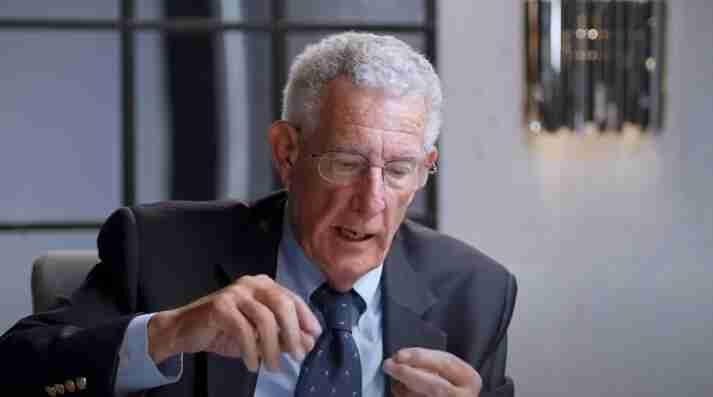
Here is the full transcript of Professor Dr Thomas Seyfried’s interview on The Diary Of A CEO Podcast episode titled “This Common Food Is Making Cancer Worse!”, Oct 7, 2024.
The interview starts here:
Introduction and Background
STEVEN BARTLETT: Professor Seyfried, if someone walks up to you on the street and they know nothing about science, they know nothing about medicine, and they asked you, what do you do and why do you do it? How would you respond?
DR THOMAS SEYFRIED: I’m a professor of biology at Boston College. In that role, I spend a lot of my time working with undergraduates and graduate students, training them to be scientifically literate in various aspects of biology. The research program that we have at the university is also focused on understanding how to manage cancer better, how it originates and how to prevent it.
The Global Cancer Crisis
STEVEN BARTLETT: How much of a problem is cancer globally? What are the sort of headline statistics on the macro view of cancer for someone that really doesn’t know?
DR THOMAS SEYFRIED: It’s getting worse. I know precisely what’s going on in this country because the American Cancer Society every year distributes the data on cancer. We have almost 2 million new cases diagnosed per year in the United States. And we have 1,700 people a day dying from cancer in the United States, which comes to about 70 people per hour.
When I went to China, I looked at some numbers there, and it was 8,000 people a day dying from cancer. Obviously, the population is so much larger, and I don’t know what it is in the U.K. We’d have to go to their cancer registries. But what we do know is that it’s supposed to be a lot worse by 2050 than it is today.
There seems to be no reduction in deaths or suffering for this disease. Right now, I would say it’s a global epidemic of cancer. It’s not getting better, it’s getting worse. More people are dying from it. There’s no major advance in reducing death rates.
When they come to know what I know about this disorder, and then they realize what we’ve been doing in a misdirected way, it will be recognized as the greatest tragedy in the history of medicine.
Types of Cancer
STEVEN BARTLETT: What types of cancer are people dying from? What are the most common types of cancer for men and women?
DR THOMAS SEYFRIED: It’s always been lung cancer, pretty much for men and women. Lung cancer has always been the number one. But we have pancreatic, breast cancer, colon cancer. These are all on the rise. Colon cancer’s on the rise. Pancreatic cancer is on the rise in this country. I can’t speak for other countries. They may vary slightly due to diet, lifestyle issues, but lung cancer has always been recognized as the number one cancer.
STEVEN BARTLETT: How many people in the United States then, based on the statistics, would develop cancer?
DR THOMAS SEYFRIED: It seems to increase every year. So it’s kind of a moving target. It doesn’t seem to go down. What I do know is the numbers of people that are dying each day. The American Cancer Society comes out with, I think it’s 612,000 people will die this year, 2024, from cancer. So divide it by 365 and it comes out to just about 1,700 people a day. Divide that number by 24 and you get about 70 people an hour.
When they say we’ve made major advances in cancer incidences – in the 1990s, they instituted the anti-smoking campaigns. Today, they say we have reduced cancer deaths by 31 or 32%. That sounds really impressive. What the American Cancer Society has done is take the number and say if we didn’t stop smoking in the 90s and everybody continued to smoke, the trajectory would be very high. Because we stopped smoking, we have 33% lower death than if we didn’t stop smoking.
But the trajectory is continuing to increase. Maybe not as steep as it would have been had we continued to smoke. So it was clearly prevention. It had nothing to do with treatment. More people would have died had they not stopped smoking.
Cancer as a Single Disease
STEVEN BARTLETT: What are the leading causes of death worldwide in terms of diseases? I hear that heart disease is number one.
DR THOMAS SEYFRIED: Heart disease is number one. Cancer is number two.
STEVEN BARTLETT: And there are many different types of cancer. There’s hundreds of different forms of cancer.
DR THOMAS SEYFRIED: If you look under the light microscope – this is how most cancers are diagnosed – you see a bunch of cells that are dysmorphic in the way they look. They all have genetic defects and all this kind of stuff, but they all have one thing in common: they depend on fermentation energy without oxygen.
So all cancers are a singular type of disease. It’s just that they happen in different tissues. But when you look at the underlying problem, they’re all very similar. They can’t live without fermentation, which means energy without oxygen. That’s the common pathophysiological problem in all cancers, whether it’s colon, brain, breast, bladder, skin, or lung. We’ve looked at all these cancers, and they’re all essentially using the same mechanism to grow out of control.
Understanding Fermentation in Cancer
STEVEN BARTLETT: So what is that fermentation you mentioned?
DR THOMAS SEYFRIED: Fermentation is energy without oxygen.
STEVEN BARTLETT: What does that mean?
DR THOMAS SEYFRIED: We breathe air and we exhale CO2 and water vapor, and those are the waste products of the food that we eat. Everything is broken down and combusted in our mitochondria of the cell. And the waste products are CO2 and water vapors.
But if you and I were to stop breathing for any particular time period, our bodies would fill up with lactic acid and succinic acid.
When we have that massive interruption of oxygen into our body, the cells fall back on ancient pathways to get energy without oxygen for a short period of time. That’s the sugar glucose, which is already in our bloodstream from the food we eat, and the amino acid glutamine, which is the highest level amino acid in our bloodstream. These two fuels are burned for energy without oxygen, these pathways upregulate and you can get ATP, which is energy to keep you alive for a short period of time.
But your bloodstream is filling up with waste products called lactic acid and succinic acid. Lactic acid comes from glucose, and succinic acid comes from glutamine. They build up, and that tells you you’re fermenting – you’re getting energy without oxygen because you’re not breathing.
Another way you can stop oxygenation in our bodies quickly is with the poison cyanide. If we were to take cyanide, we’d be both dead within a minute because our bodies are completely shut down of energy from oxygen.
Here’s the interesting thing about cancer cells – they can live in cyanide. Cyanide does not kill a tumor. Otto Warburg showed this a long time ago. When you look at cancer cells, even in the presence of oxygen, they’re throwing out lactic acid and succinic acid. What does that mean? That means the organelle inside the cell that generates energy is inefficient. And the cells are using an ancient fermentation.
The organisms that existed on our planet two and a half billion years ago were all fermenters. There was no oxygen in the atmosphere until the photosynthetic bacteria started making oxygen. There were living cells with no oxygen, and they were growing like crazy – unregulated growth. They would die as soon as the fermentable fuels were dissipated.
The cancer cell in our body is doing nothing more than falling back on these ancient fermentation pathways that become accelerated in the tumor cell. Because the efficiency of the energy coming from the mitochondria is now depleted. This happens in lung cancer, colon cancer – we’ve looked at all the major cancers, and we found these common defects in all of them. So they’re all very similar in their metabolism, though they’re very different in what they look like under the microscope and genetically. They’re all common in a dependency on this ancient pathway of energy metabolism.
The Warburg Discovery
STEVEN BARTLETT: Can you take me back? You mentioned a guy called Warburg there. Can you take me back on the journey that the scientific community, or at least you have been on, to arrive at the conclusion that the central causal factor of cancer lies in this shift in energy systems. Where did this understanding start in research?
DR THOMAS SEYFRIED: Well, it started with Otto Warburg, for sure, in the 1920s. I was like everybody else – I thought cancer was a genetic disease. I heard about Warburg but didn’t really know what he was talking about.
Linda Nebeling was a PhD nursing student at Case Western Reserve University in Ohio. She took these two little hopeless kids with brain cancer and gave them a ketogenic diet to lower blood sugar, and she was able to rescue these kids. One eventually died, the other one was lost to follow up. She said her strategy was based on what Otto Warburg had said about glucose and cancer.
So I said, “Who is this Warburg?” and went back to check out who he was and what he did. I was seeing similar things in mice with a drug that was lowering glucose, and we were shrinking tumor cells. We published one of the first papers linking how high your blood sugar is to how fast your tumor will grow in mice. Now this has been replicated in all human cancers: the higher your blood sugar, the faster the tumor grows. The lower the blood sugar, the slower the tumor grows. This is undeniable for all different human and mouse cancers.
Warburg had said this back in the 1920s. He was taking slices of all kinds of human and rodent tumors and noticed something really strange about these cancers: they take in less oxygen compared to the normal tissue from which they came. So they’re kind of oxygen-deprived. They were throwing out lactic acid waste product, and they were taking in much more glucose than normal cells.
Normal cells take in just a little bit of glucose and make tremendous energy from it. Cancer cells were taking in huge amounts of glucose but not fully metabolizing it to CO2 and water – instead dumping it out as lactic acid, which is a breakdown product of glucose not fully metabolized in the cell. He did this with all kinds of tissue. He was cutting humans, mice, rats, and seeing the same thing over and over again. He was saying the origin of cancer has to do with something in the ability of the mitochondrion, the organelle, to generate efficient energy from oxygen.
STEVEN BARTLETT: So the mitochondria is the part of the cell that creates energy.
DR THOMAS SEYFRIED: It’s the part of the cell that creates energy through oxidative phosphorylation, which is burning energy using oxygen.
STEVEN BARTLETT: Okay. So it’s like an engine.
The Mitochondria: The Cell’s Power Engine
DR THOMAS SEYFRIED: It’s an engine. A very highly efficient engine. This is an organelle. You have to realize we have the cell, and we have a nucleus that everybody knows about. This nucleus. And then we have all these little organelles in there. We have lysosomes, and we have the mitochondrion, which is like a spaghetti network inside the cell, they fuse. It’s actually a second living organism inside our cells.
STEVEN BARTLETT: And to simplify what they do, the mitochondria, they convert oxygen and glucose into energy.
DR THOMAS SEYFRIED: Yes. They combust energy. They take the foods that we eat, have carbon hydrogen bonds. And we break those down inside our mitochondria. And when we break those bonds down, we create a hydrogen gradient, and we dissipate that gradient through an impeller mechanism that generates energy like crazy. It’s unbelievable. Very efficient. Highly efficient. But the cancer cell has corruption in that system. But it doesn’t happen overnight. As Warburg said, if you break that system too acutely and too fast, the cell will die. So you have to have two things to get from oxidative phosphorylation to energy with minimal oxygen. Fermentation.
STEVEN BARTLETT: Just to keep it simple. From a normal cell to a cancerous cell.
DR THOMAS SEYFRIED: From a normal cell to a cancer cell doesn’t happen overnight. It’s a chronic damage to the ability of that organelle inside the cell to generate efficient energy. Okay, so all we have to know with cancer is that how are they growing so rapidly? Why are they going out of control? How come it’s so hard to kill them? Because as long as you have those fermentable fuels that drive this ancient fermentation pathway, they will continue to grow. They’re very hard to kill.
STEVEN BARTLETT: And the fermenting fuels are glucose and.
DR THOMAS SEYFRIED: And glutamine.
STEVEN BARTLETT: Glutamine.
DR THOMAS SEYFRIED: Yeah. Okay, so here, let’s. Let me tell you in a nutshell. Ready. Brace yourself. Are you ready?
STEVEN BARTLETT: I’m ready.
DR THOMAS SEYFRIED: Are you braced? Are you braced?
STEVEN BARTLETT: Sufficiently braced.
The Solution to Cancer Management
DR THOMAS SEYFRIED: He’s sufficiently braced. Okay. So a solution to the cancer problem to manage cancer without toxicity is to simultaneously restrict the two fuels that are needed to drive this dysregulated growth while transitioning the whole body off to a fuel that the tumor cells can’t use, which is fatty acids and ketone bodies. So when we take the cancer patients or the mice, we put them into a calorie restriction, lowering the blood sugar that I said is one half of the two fuels you can lower that down really, really low. And then we use specific drugs to target the glutamine. And together we can selectively restrict the two fuels while we transition the whole body over to ketones.
We as a species evolved to be in nutritional ketosis for the majority of our existence. As a species, like one and a half million years, for centuries and centuries, thousands and thousands of years, our species, you and our ancestors were always in a state of nutritional ketosis because there were very few carbohydrates in the environment for them to be consuming.
So the cancer cell, the body, you and I could, if we stopped eating and we took a low carbohydrate diet, just did water only fasting, we would get into nutritional ketosis. Where the normal cells, our brain, our kidneys, our heart, can be burning these ketone bodies because they have good mitochondria and they can burn these fuels effectively. The tumor cells have bad mitochondria. They can’t burn those fuels. They’re dependent on glucose and glutamine. We can replace glucose and glutamine with ketone bodies in the normal cells. So we selectively marginalize these tumor cells slowly, over time, they slowly start to die, the blood vessels disappear and the body comes in and dissolves them.
STEVEN BARTLETT: So for someone that has never heard the term keto before, ketosis or ketones in a simple way. What are ketones?
Understanding Ketones
DR THOMAS SEYFRIED: Ketones are water soluble breakdown products of fatty acids. They’re beta hydroxybutyrate, acetoacetate. These are small molecules that are water soluble. The liver throws them out like crazy. Kidney a little bit, but mostly liver.
So as I told you earlier, when we don’t eat, you get anxious. Mainly because our brains are addicted to glucose. That’s like cocaine and nicotine and whatever, you start getting all antsy. I haven’t eaten anything. So then once the body realizes you aren’t going to eat anything, we have to start mobilizing out of our fat resources. And the fats go into the bloodstream as triglycerides, which are three fatty acids attached to a glycerol backbone. They go to the liver, the liver chops them up and puts out these little water soluble ketone bodies.
The name ketone body is kind of a weird thing from biochemistry, but they’re called ketone bodies and they can supply the brain with energy, the heart with energy, and not only that, they’re a super fuel. It’s unbelievable that mitochondria burns these ketones. Remember I was talking about how energy efficient the mitochondria become when they burn ketones, they become even more energy efficient. It’s unbelievable how they don’t need as much oxygen to generate more energy. That’s why my colleagues called them super fuel, because you can get more energy bang for buck burning a ketone body than you can burning a pyruvate coming from glucose or even a fatty acid.
And the biochemistry for that is interesting. But the bottom line is when you transition away from these fuels to ketones. We don’t forget we evolved. Our ancestors were always in a state of ketosis. You get into that state by consuming very few carbohydrates and having a lot of energy. And this is the way our ancestors were.
STEVEN BARTLETT: So what can we learn from our ancestors about cancer? How prevalent was cancer? When we look back at our ancestors, if they were often in a state of ketosis?
Cancer in Traditional Societies
DR THOMAS SEYFRIED: Yeah. Well, it’s hard to determine from skeletal records, but I think we can look at modern people who live according to their traditional ways. Albert Schweitzer, the great humanitarian physician, went to Africa and looked at Africans that were living according to the traditional ways. He said one of the weirdest things. They don’t have cancer. Cancer was extremely rare in Africans, in Inuits living in the Arctic Circle. British, when they came looking at the health conditions of folks that lived in the Arctic Circle, cancer was not there. They had other things, but they didn’t have cancer. Aboriginal folks.
So it seems as though we can’t go back 50,000 years ago because we don’t have people to examine, but we have people to examine today. And that was one of the things. Schweitzer and several other physicians from Europe would go to Africa and they would look at some of these tribes that were traditional and they would say, whoa, what’s going on with these Africans? How come they don’t have cancer? But when modern diet, lifestyle entered into their societies. Cancer out of control.
STEVEN BARTLETT: What about our other primate cousins?
DR THOMAS SEYFRIED: Yeah, there’s never been a documented case of breast cancer in a female chimpanzee. And they’re 98% similar to us in gene and protein sequence. You know what’s going on with that? Monkeys, they don’t generally form cancer. They’re not eating what we eat.
Don’t forget, we did not evolve to eat pork pies and Dunkin’ Donuts jelly filled donuts and pizzas. We did not, our ancestors did not eat this. We were killing and eating animals. As I said, we ate everything that walked, crawled, flew or swam on this planet, became part of our diet. We did not have donuts on every corner, delicatessens on every corner.
We evolved over this period of time, just like our primate ancestors. The animals, chimps and gorillas and things that you see in the zoos are fed their natural diets as if they were living in their habitat, their natural habitat, whether it was in South America, Africa or wherever it was. We’re not throwing in jelly donuts every day and pizza pie into the chimpanzee pen.
And as a matter of fact, I even went to the zoo down here in Boston, Franklin Park Zoo, and also at the San Diego Zoo. I said, how come you guys don’t give these guys a big pizza for these animals? Oh, no, it would be animal cruelty. Their systems aren’t geared for this. Well, neither are we. We have an obesity epidemic. We have all these different chronic diseases. Why? We didn’t evolve to eat all this crap that we’re eating today.
So what I’ve told many people in these podcasts is that our food science and technology and our society’s technology has evolved so much faster than our biology.
Exercise and Cancer Prevention
STEVEN BARTLETT: Can you explain to me in simple terms the role that exercise is playing in staving off cancer?
DR THOMAS SEYFRIED: Well, exercise lowers blood sugar and also lowers glutamine. So the two fuels that are driving cancer. Now, we can’t completely remove glutamine by exercise, that’s for sure. But my late good friend George Cahill published some papers showing how exercise could actually lower glutamine availability. So it’s a little bit of a push. But you’re also, when you exercise, you’re burning and you’re not eating a lot of carbs. Your mitochondria, burning ketones and the oxygenation from all the exercise is keeping those mitochondria super healthy at their highest level of energy efficiency.
STEVEN BARTLETT: So exercise, you’re building muscle as well, aren’t you?
DR THOMAS SEYFRIED: Yeah, well, you can build muscle, but you’re certainly getting aerobic exercise. Oxygen is coming in and you’re burning ketones, which I already told you is a super fuel. So your body is super healthy. These bodies from the Paleolithic period, these men were jacked. There was no obesity in these people. They had tremendous energy. They’re not dying from the things that are killing us. They’re dying from injuries and infections.
The Gradual Development of Cancer
STEVEN BARTLETT: When you described this slow and gradual shift in the cell as it moves to this sort of ancient system. It sounded very gradual. So in my head I thought, okay, so does that mean that the cancer is a gradual process that is kind of building up in me or isn’t building up in me? Based on the lifestyle decisions I’m making and my environmental factors right now, I’m trying to say, does cancer start slowly, years before you find it?
DR THOMAS SEYFRIED: Yeah, it is a gradual process, but it can be impacted by several provocative agents from the microenvironment. Lack of exercise. Okay, so we’re not exercising nearly as much as our paleolithic ancestors, bar none. We have massive amounts of processed carbs in our diets. We have a lot of emotional stress, mental emotional stress that’s impacting negatively on our biology. We have lack of sleep.
When you put all of these impactful things together in one person, you can put yourself at risk for cancer. All of which will damage and reduce the efficiency of mitochondria and also the joy of living, having friends and friendships. And this kind of thing reduces stress in a lot of different ways. Makes people enjoy getting up and having a nice day rather than being depressed or these kinds of things. You put all this together and you put yourself in a diet and a lifestyle that puts you at risk for damage to oxidative phosphorylation and the transition from one form of energy to a fermentation energy.
STEVEN BARTLETT: And what I’m trying to understand is that a.
DR THOMAS SEYFRIED: It’s a gradual transition. You have to be able to do that. And how long does it take for a colon, a group of cells in a crypt of your colon, to transition from one stage to another? You have to be constantly under stress, those cells and that organ.
Now, why somebody gets colon cancer, another person gets breast cancer, another person gets bladder cancer, and some person gets a brain cancer and all these different kinds of cancers. Whatever happened, the process was causing a gradual disruption of oxidative phosphorylation, oxidative respiration, and a gradual transition to a fermentation.
Like in the brain, the neurons rarely, if ever, get cancer. But the glial cells that support neurons, they are usually the source of the origin of cancer in the brain for those kinds of cells. And you can look at different cells and less prone and why this guy get lung cancer from smoking cigarettes. This guy got bladder cancer from smoking cigarettes. How did it all start? It all started from a population of cells in one of those organs having a chronic interruption of oxidative energy, followed by an upregulation of this fermentation energy.
Causes of Mitochondrial Dysfunction
STEVEN BARTLETT: So really, we need to be thinking about all the things that have caused dysfunction in the mitochondria.
DR THOMAS SEYFRIED: Absolutely.
STEVEN BARTLETT: I want to get a list of the key things that are associated with causing this dysfunction.
DR THOMAS SEYFRIED: Okay. Carcinogens.
STEVEN BARTLETT: Okay, so carcinogens.
DR THOMAS SEYFRIED: Yeah. And, you know, there’s many. Asbestos. There’s all kinds of chemicals in the environment. You hear about this. There’s a whole list of carcinogens, and they put them on the labels on different chemicals. They say carcinogenic potential and whatever you have.
STEVEN BARTLETT: What are the types of things that are carcinogenic that most people don’t realize?
DR THOMAS SEYFRIED: Oh, well, now we’re talking about microplastics. We’re talking about.
Understanding the Causes of Cancer
STEVEN BARTLETT: Is that, in part what causes breast cancer? Because I always think about deodorant with breast cancer and the stuff that we’re kind of lathering onto our skin.
DR THOMAS SEYFRIED: Yeah, well, the one that was most interesting was the talcum powder one. How does talcum powder cause ovarian cancer? It’s taken up into the urogenital tract, and it forms a foci in a part of the ovarian tissue.
STEVEN BARTLETT: What’s a foci?
DR THOMAS SEYFRIED: A locus, like a collection of material. A foci is an area where, say, talcum materials would be accumulating, and that leads to an inflammatory area of the body. And our immune system comes in to see what’s going on. Our immune system is a healing machine, and they see something that’s not normal. Normally they would clean it up, but they throw cytokines and growth factors on there, leading to damage to mitochondria and dysregulated growth. And then you get this tumor that starts.
STEVEN BARTLETT: So if I get a talcum powder granule or whatever, and it goes into my body, my body then tries to attack it, to sort it out. And in doing so, it creates inflammation.
DR THOMAS SEYFRIED: Which leads to damage to mitochondria in a particular group of cells near that foci.
STEVEN BARTLETT: Okay. And this is applicable to, I guess, a lot of different nanoparticle particles.
DR THOMAS SEYFRIED: Yeah. And microplastics are this. Now they’re looking at this. But then we have chemical carcinogens, tetrahydrochloride. There’s all kinds of other things that can actually damage arsenics and these kinds of chemicals. Urethane, anything that could chronically damage a mitochondrion, forcing over time, forcing it to upregulate the fermentation energy without oxygen.
STEVEN BARTLETT: Isn’t this most things? I’m trying to figure out how to live my life.
DR THOMAS SEYFRIED: Yeah, well, that’s why it was called the oncogenic paradox. But you can avoid that. That’s why I’m saying if you can keep your mitochondria healthy, how? Exercise and reduce consumption of highly processed carbohydrates.
STEVEN BARTLETT: Do I need to be avoiding these microplastics as well?
DR THOMAS SEYFRIED: You know the problem with microplastics, they’re very ubiquitous. We’re not really sure. We’re just now becoming aware of it. Nobody really knew that before. Look it up. But it could cause small foci in different populations of cells. But, you know, it’s very hard to really chronically damage mitochondria. Mitochondria are tough organelles.
The problem is we chronically abuse them without realizing what we need to do to keep them healthy. So even if you are exposed to chemical carcinogens, even if you are exposed to all these things, but you’re keeping your body as healthy as you possibly can, you could possibly delay or even prevent the damage to the mitochondria, even though you are being exposed to this.
So it’s actually in your hands. You can actually reduce risk for cancer by knowing what keeps your mitochondria healthy. Vigorous exercise, fasting, water only fasting. You know, it’s very hard. But sometimes when we were putting mice on calorie restriction, it was hard to get them to get tumors. Their body was so healthy. This was shown years ago by a couple of scientists in mice, using mice that developed a lot of breast cancer. If you put them on a calorie restricted diet, the incidence was way, way down. So cancer is very preventable. It’s a very preventable disorder. It’s just that we’re doing everything we possibly can to induce it in our diet, lifestyle.
Cancer: Genetic Disease or Mitochondrial Dysfunction?
STEVEN BARTLETT: A lot of big institutions believe that cancer is a genetic problem. You believe otherwise.
DR THOMAS SEYFRIED: The evidence is striking. I mean, it’s not whether you believe it’s what the data tell us. Okay, so according to the somatic mutation theory of cancer, mutations in the nucleus lead to dysregulated cell growth. That’s the somatic mutation theory. In the mitochondrial metabolic theory, it’s a transition from oxidative phosphorylation to a fermentation metabolism. Inside the cell, the mutations are largely irrelevant.
What do you mean by that? When the mitochondria become defective, they throw out ROS, reactive oxygen species that are carcinogenic and mutagenic. What does that mean? Causing mutations. So a lot of the mutations that we see in the nucleus of the tumor cell, that is the subject of the somatic mutation theory, are downstream effects of the dysfunction of the mitochondria.
So the mitochondria is causing a downstream effect, which are mutations, which, according to the somatic mutation theory, are the cause of the dysregulated cell growth. Let me tell you why that’s absolutely untrue. There’s some cancer cells growing out of control, have no mutations and normally not discussed. Well, how can that be? That’s a challenge to the theory. If the theory says that all cancers have mutations, and you have some cancers that have no mutations and they’re growing out of control, that should say, oh, bell, ring one.
Then the somatic mutation people, people who think this said, “Oh, okay, we have a problem here. Not all mutations are the ones that cause the dysregulated growth, only some.” And we have a name for those some that’s called driver mutations. Now, it’s a nice term because some of those mutations are called passengers. They don’t really do anything. But the drivers are the ones that lead to the dysregulated cell growth. So we should be focusing our attention on these driver mutations.
New evidence from the recent scientific literature. Can you believe this? They’re taking tissue, normal tissues from patients, different organs and things like this from not patients, from normal people. No cancer, perfectly healthy like yourself here. We would take tissue from you and say, “Oh, my Christ, you got driver mutations in your esophagus and your different parts of your body.” You got driver mutations, but you don’t have a tumor. What’s going on with that? How do you explain that these driver mutations are causing dysregulated cell growth? When we have thousands of driver mutations that are there that are not causing dysregulated cell growth? That’s another problem.
The biggest devastating information against the somatic mutation theory is if you take the nucleus from a tumor cell, cleanly, take it out of the tumor cell, and you have another normal cell here. You take the nucleus out of the normal cell, and you put the tumor cell nucleus into that cytoplasm, you get regulated growth, no dysregulated growth. But if I have the normal cell and have a tumor cell, take the tumor nucleus out of there and take the normal nucleus and put it into the tumor cytoplasm, which contains defective mitochondria, you get dysregulated cell growth. This has been seen over and over and over again.
STEVEN BARTLETT: So just to summarize that if you take the tumor nucleus out of the cell and put it into a healthy cell, everything’s fine.
DR THOMAS SEYFRIED: Everything is fine.
STEVEN BARTLETT: But if you take healthy cell nucleus and put it into a tumor cell.
DR THOMAS SEYFRIED: You still have the same dysregulated cell growth.
STEVEN BARTLETT: So which means that it’s not the nucleus.
DR THOMAS SEYFRIED: Absolutely.
STEVEN BARTLETT: It’s something else.
DR THOMAS SEYFRIED: It’s something else. And that’s the mitochondria. And I told you then you have cancer cells with no mutations, and then you have driver mutations in normal cells that never become cancer. You put all those things together and you have to be a hopeless ideologue to think that cancer is a genetic disease. It’s a silent assumption in the field that cancer is genetic. Every textbook of biology, cell biology and cancer says it’s a genetic disease.
Resistance to Paradigm Shifts in Science
STEVEN BARTLETT: Why hasn’t people’s opinions changed despite the evidence that you present?
DR THOMAS SEYFRIED: It’s a very difficult thing. It goes back to when you have one theory replacing another theory. It’s called paradigm shifts. And all in history of science, paradigm shifts have been met with great, great resistance.
The clearest one was the Copernican revolution, when for 1,800 years, astronomers thought the Earth was immovable in the center of the solar system. For 1,800 years, this was Claudius Ptolemy, Aristotle, and the Bible. And all these said Earth is immovable, and the sun and the moon and the planets all revolve around the earth. Even Copernicus was working with these mathematical formulations as Kepler was being constantly confused until he said, what happens if we put the sun in the center of the solar system and consider the Earth as simply another planet that would revolve? All of a sudden, things started to make sense.
And Giordano Bruno, a theologian, was put to death for suggesting that Copernicus was right. There was a tremendous resistance on the part of the Roman Catholic church at that time. And this is the same thing that happened when Louis Pasteur said that germs rather than bad air are the cause of disease. And when Darwin Wallace’s theory of evolution came. It’s not special creation. It’s natural selection that can explain this.
These were massive paradigm changes in the history of science. And what we’re seeing today is the same thing. The mitochondria is the center of the problem with cancer, not the nucleus, the mitochondria. It’s a mitochondrial metabolic disease. And once you realize that, we’re going to drop these death rates massively in a very number of years, for sure.
STEVEN BARTLETT: So if we take two paths and if we realize that the mitochondria is the center of the dysfunction and ultimately disease in the cell, if we go down that path, what impact do you think that will have on the cancer statistics over the coming years?
DR THOMAS SEYFRIED: It’ll drop massively. I’m not going to say we’ll get rid of cancer completely, but here’s the thing. We may never get rid of it, but we can learn to live with it and keep it at bay if we know that it can’t survive without these two fuels. And you can do a diet and lifestyle that can restrict the availability of those two fuels and keep your mitochondria as healthy as you possibly can.
STEVEN BARTLETT: What if we don’t go down that path? What do you think then?
DR THOMAS SEYFRIED: You’re going to be right. One out of two people are going to be having cancer. Your statistics are going to be absolutely correct.
The Economics of Cancer Research
STEVEN BARTLETT: Is there anybody that you believe? Because, you know, when we talk about these subjects, often we think of, like, big pharma and the incentives and money and follow the money, you’ll figure out why people don’t want change. Is any of that sort of conspiratorial thinking correct, in your view?
DR THOMAS SEYFRIED: I don’t know if that’s conspiracy. I don’t like conspiracy terms. That’s absurd. I like what are the facts of what we’re looking at.
STEVEN BARTLETT: But do you see a resistance from big pharma to entertain this point of view?
DR THOMAS SEYFRIED: Or big food? What do you think? I mean, people in these industries, the hospital industry is making enormous amounts of money. They’re awarding – we get $7 billion a year for cancer research in the National Cancer Institute, awarding many grants to looking for gene mutations and all this kind of stuff. And we have drugs that are extremely expensive based on a somatic mutation theory of cancer that are basically not dropping the death rate.
As I said, while we’re talking here, we’re going to have 140 people dead from cancer. 1,700 people a day. It’s getting worse and worse. As you said, we’re always running for raising money for cancer research. Where’s all that money going? What are you doing with all that money? No accountability.
And then when you look at the scientific advisory committee of all these societies that you’re running for, they all publish papers on cancer as a genetic disease. It’s too hard for the field to accept at this point. It’s too traumatic at what I’m saying it’s too disruptive to a massive industry at this time. They will come to gradually adjust to what I’m saying. It’s just a matter of time because we cannot continue this trajectory. It’s immoral what we’re doing to some of these people.
STEVEN BARTLETT: I read a stat that said the global incidence of early onset cancer increased by roughly 80% between 1990 and 2019. That’s in the BMJ oncology. Early onset of cancer is basically patients under the age of 50. And when I think about this, you know, growing up in the UK, whenever there’s a fun run, a charity race, a marathon, whatever it might be, cancer research gets the money.
DR THOMAS SEYFRIED: Yeah.
STEVEN BARTLETT: And to hear that, you know, there’s been so much money invested in cancer research over the last couple of decades, but there’s been an increase of 80% in early onset cancer in the same period. For me, I’m like, this research doesn’t appear to be being very effective.
DR THOMAS SEYFRIED: Well, as I said, you got to find what people don’t do is they never ask, where does the research go? What kind of research? What are you doing? What is the research? It’s the theory that drives the impetus to do research.
STEVEN BARTLETT: Now, a lot of great stuff has been done on, you know, keeping people alive that suffer from cancers. Right. Because if you think about the probability of dying from a cancer, I’m assuming that has gone down.
The Effectiveness of Cancer Treatments
DR THOMAS SEYFRIED: Yeah, to some extent it has. You know, there’s two ways of looking at it. It’s called progression free survival and overall survival. These are the terminologies that are used in the clinical world of cancer, and they represent the approval of drugs through the Food and Drug Administration.
If you have a drug that improves progression free survival, it means it looks like the drug is working on the tumor. Because the tumor, you can see it, it gets bigger and bigger and more lethal. And if I see it not growing nearly as much, I say, wow, it’s slowing the traditional progression. That’s called progression free survival. And then you have overall survival.
So you have two ways to approve drugs, mostly for cancer. How does it work on progression free survival, and how does it work on overall survival? Well, they’ve stopped looking at overall survival. Now somebody’s going to argue and say the bottom line is mostly progression free. Which means that it looks like the tumor is being effectively managed, but patients live only a couple of months longer than they would have if they didn’t use this drug. So therefore it’s approved.
As opposed to overall survival, you’re only living two and a half extra months. The tumor looked like it was managed pretty well, but your overall survival is minimal. But you didn’t see the tumor growing, so we’re going to approve that drug. So a lot of the new drugs do a really good job at progression free survival, but they do a horrible job in keeping people alive much longer, which ultimately is what you want to do. You want overall survival.
Let me give you an example. Avastin Bevacizumab. This is an immoral drug that should never be used on people. It was blocked because it caused colon perforations in women with breast cancer. They still use it on brain cancer. In the tumor, you can see it with PET imaging, MRI and CAT scan. You give the patient Avastin, which is this anti-angiogenic drug. It’s supposed to stop the abnormal blood vessels. They think that the angiogenesis blood vessels is driving the dysregulated growth. It’s the fermentation that’s driving the dysregulated growth, by the way.
So all of a sudden you give the drug and the tumor kind of disappears. Patient gets all excited. The physician looks and says, look at that, look at that. Looks like you’re doing well. What the drug does is it causes the tumors to permeate your entire brain, just like spreading it through your whole brain. You don’t live any longer, but you had this progression free look at the tumor. So the patient gets excited because it looks like the tumor’s disappearing with this very expensive drug. But what it does is it almost guarantees that patient will not survive because you spread the tumor cells through the whole brain. So this is why I call it an immoral kind of thing.
STEVEN BARTLETT: But chemotherapy and sort of these radiation therapies, they have proven to keep people alive who otherwise would have died.
DR THOMAS SEYFRIED: In some cases it can. And that’s another thing we have to look at. I work heavily in brain tumors and glioblastomas. When you irradiate somebody’s brain who has one of these tumors, you free up massive amounts of glucose and glutamine in the microenvironment.
When we looked at survival curves for glioblastoma throughout the world, it’s so consistent how fast people will die. It’s like all the different hospitals have the same survival. What are they doing? Well, we do chemo, we do surgical debulking, temozolomide, and we give steroids which raise blood sugar. And we irradiate. Everybody’s dead. Not everybody, but five-year survival is very, very low. Ten-year survival is almost zero.
STEVEN BARTLETT: But if you got a breast cancer or if you got…
DR THOMAS SEYFRIED: This is brain cancer I’m talking about. Yes, if you have a circumscribed tumor, and it’s not anywhere else, you can come in with radiation or a surgical procedure and essentially cure that patient. But if you have any level of spread, that person now… And also if you’re taking a toxic poison into your body, like red devil doxorubicin, they call it red devil. Your pee turns red, everything turns red.
STEVEN BARTLETT: Is that chemotherapy?
The Problems with Conventional Cancer Treatments
DR THOMAS SEYFRIED: Yes, it’s a chemotherapy to kill a small group of cells or maybe a little bit of spread, but your hair falls out, your body gets brutalized by this. And then if you survive the cancer, and many people do—we have millions of cancer survivors on this planet—many folks in that group suffer from the adverse effects of being poisoned or irradiated or surgically mutilated. They have to change their whole life. And oftentimes the cancer comes back or they die from cardiovascular disease, or they die from secondary adverse effects of being brutalized with medieval approaches. Are you kidding me? What they’re doing to cancer patients.
When we do metabolic therapy, we shrink the tumor down for sure. Then the surgeon can come in and he sees it smaller, fewer blood vessels because of the metabolic therapy, and we can take out a greater amount of this and then we transition back to prevent this tumor from recurring. Metabolic therapy can be used to not only prevent the cancer, but can also be used to treat the cancer.
Now, most hospitals, suppose people say, well, I really want to do things to prevent cancer. Can I do standard of care before I have a tumor? What do you mean? You want to go into a major cancer clinic and have doxorubicin and radiation to your body just in the event that you might get cancer? This is absurd. But yet when you have cancer, that’s what they do to you. With metabolic therapy, you can use it as both a prevention and a treatment. It’s just that with the treatment, we bring in some more drugs to target the glutamine. We don’t do that on the prevention side.
STEVEN BARTLETT: I was just looking at some stats as you were speaking, around five-year survival rates of a variety of different cancers over time. And it does appear that survival rates of these cancers, from breast cancer to prostate cancer to lung cancer to leukemias, various melanomas, has improved since the 1970s. So the 1970s to the 1990s to 2000s, there’s been an improvement in the survival rate, which I guess is a credit to the research that’s been done. What you’re saying is that the treatments we have still today are horrific.
DR THOMAS SEYFRIED: Yeah. And the survivals are not that much greater. It’s not like you’re getting massively longer survivals.
STEVEN BARTLETT: Yeah, I mean, and I have to preface that these stats might not be right because this is AI we’re dealing with here. But there’s a 5%, for example, with breast cancer, between the 1990s and 2010.
DR THOMAS SEYFRIED: There’s just a 5% difference in overall survival.
STEVEN BARTLETT: In overall survival.
DR THOMAS SEYFRIED: Okay, so your overall survival is two and a half to three months greater.
STEVEN BARTLETT: I don’t actually have those stats.
DR THOMAS SEYFRIED: No, but that’s the evidence, the papers that we’re looking at.
Cancer Prevention and Lifestyle Factors
STEVEN BARTLETT: So how do we prevent this then? I’m 32 years old now, so I want to make sure that I live my life in such a way that I limit my chance of cancer. One of the things I always reflect on is the fact that many of the people that I know that have got cancer, breast cancer, or other forms of cancer appear to be remarkably healthy.
DR THOMAS SEYFRIED: Yeah, always at the beginning, not always, but many times the person comes in, “I just was diagnosed with cancer. I didn’t know I had it. I didn’t feel bad.” And then all of a sudden you get treated and they look like death warmed over.
STEVEN BARTLETT: But I’m saying, how can healthy people be getting cancer if there’s this sort of central…
DR THOMAS SEYFRIED: Well, because as I said, we’re seeing this, I’m getting more and more emails from young people in their 30s, late 20s, 30s, early 40s, with colon cancer, breast cancer, and all these kinds of things. But look at our diet and lifestyle situation today. Those things that I’m talking about—lack of exercise, a lot of stress, poor sleep, bad food. All of this kind of stuff impacting parts of our bodies.
STEVEN BARTLETT: So what do we do about it, though?
DR THOMAS SEYFRIED: Know about it and then…
STEVEN BARTLETT: And then what do we do?
DR THOMAS SEYFRIED: So that’s personal choice. I’m not here to take pizza and jelly doughnuts off the market for sure. Or breakfast. I love that stuff, too. But the question is, I don’t eat it every day, and I know if I do, it’ll kill me. So, yeah, skipping meals, water-only fasting occasionally. There’s a lot of things you can do to keep your mitochondria healthy.
STEVEN BARTLETT: Okay, so tell me what those things are.
DR THOMAS SEYFRIED: Exercise. You look like you’re a pretty healthy guy.
STEVEN BARTLETT: Yeah, I go to the gym.
DR THOMAS SEYFRIED: You don’t look morbidly obese to me.
STEVEN BARTLETT: Not yet.
DR THOMAS SEYFRIED: Not yet. Well, that’s important because you don’t ever want it.
STEVEN BARTLETT: We won’t be in America too long so…
DR THOMAS SEYFRIED: Yeah, well. And listen, it’s not just the United States. We were kind of like the first ones to plow that field. But it’s starting to spread everywhere. I think in China they have 200 million obese people now.
STEVEN BARTLETT: So should I be on a keto diet then?
The Glucose Ketone Index
DR THOMAS SEYFRIED: Here’s what we did. We developed the glucose ketone index calculator at Boston College. My students and I were trying to work with cancer patients, measuring blood sugar and ketones independently of each other. We had a ketone meter and we had a blood glucose meter. So we were monitoring ketones by itself and glucose by itself.
We worked with a very nice woman from America who lived in Nice, France, who since passed away from a brain stem tumor. It was very difficult. We kept her alive very long. But eventually she got into an argument over a handicapped parking spot with her neighbor upstairs, and her blood sugar went through the roof. She ran upstairs and she took her blood sugar and she says, “Oh, my God, the tumor’s going to grow.” I said, “What’s your ketones?” And she says, “Oh, it’s still two and a half millimolar.” Well, that’s still pretty high. Usually it’s very, very low.
So my students and I said, this is too traumatic to try to measure these two independently. Why don’t we make a singular number? Divide the glucose in millimolar in the blood by the ketone in millimolar in the blood. Now you get this number that’s much more stable. And it allows the cancer patient to know that if I keep this zone in 2.0 and below, my tumor cells aren’t going to be able to grow very fast.
I did this for brain cancer. Right now it’s being used for all cancers. And now it’s being used for guys like yourself who just want to stay healthy. Because what it is, essentially, is a quantitative determination if you’re in the Paleolithic zone or not. If I’m at 2.0, like my friend Dominic D’Agostino, he’s always down in these zones. He’s a Paleolithic man living in modern society.
STEVEN BARTLETT: What’s a Paleolithic man?
DR THOMAS SEYFRIED: That’s how our ancestors were during the Paleolithic period.
STEVEN BARTLETT: Okay. So he’s got the right balance of glucose and ketones in his blood?
DR THOMAS SEYFRIED: We did when we were hunting mammoths and buffaloes and these kinds of things when we were hunter-gatherers. In the thousands of years of our existence as a species. Tens of thousands of years. He is in that zone.
STEVEN BARTLETT: Is he in keto?
DR THOMAS SEYFRIED: Yeah. Well, that’s what the low GKI is. That means you’re at a level of keto. He doesn’t eat a lot of carbohydrates in his diet. He eats leafy vegetables and a lot of meat and this kind of thing, sparingly on fruits, like grapefruits.
We learned from the epilepsy field. Grapefruits provide a tremendous amount of vitamin C and do not spike glucose. That’s very interesting. So you can have certain fruits that can keep you in this metabolic zone. I call it the Paleolithic zone, which is the way we evolved when there was no cancer in our existence.
# Understanding the Glucose-Ketone Index (GKI)
STEVEN BARTLETT: When people hear that, they might start jumping on the Paleo diet. I don’t even know what they’re doing.
DR THOMAS SEYFRIED: Not a Paleo diet. It’s diets that are low in carbohydrates. Mediterranean diets. People say to me, what should I eat? Should I eat this and that? Normally, you would eat foods that have very low glycemic index, which means the speed with which glucose is released. Like a banana. Very high in glycemic index. You eat a banana, your blood sugar immediately spikes. Many fruits are like that. But you want foods that keep a low, steady GKI.
Now, I built that calculator for brain cancer patients initially. Then we realized it’s powerful for all cancers. We put the cancer patient in the low glucose ketone index, we get them down in there, then we come in with the glutamine targeting drugs to kind of polish off these tumors or put them in even a more dormant state.
But now we’re finding all these young kids like yourself, all these 30, 20 year olds, what’s your GKI? I mean, they’re out weightlifting and they’re looking at their numbers. They don’t have cancer. They’re just excited to see that they can get into this paleolithic zone by themselves. And that will prevent cancer because you can’t get cancer if your mitochondria are healthy. If you’re in a paleolithic zone where our ancestors rarely if ever got cancer, then you’re back in this zone. Oh, you mean to tell me I can’t eat this and I can’t eat that? What does it do to your GKI? Oh, it makes it go up. Well, don’t eat that.
The Dog Cancer Study
STEVEN BARTLETT: So you did a study on dogs, a dog with a tumor?
DR THOMAS SEYFRIED: Yes.
STEVEN BARTLETT: Can you tell me about that study?
DR THOMAS SEYFRIED: It was a woman who came to me and this is what I say, you don’t have to have a PhD in biochemistry to understand some of these things. This woman had no degree whatsoever. She just heard about what we did to these mice and she did the same thing to her dog. It was a pit bull and at age 7 years old, it had a big mast cell tumor on its lip.
She listened to my YouTube video over and over. She said to me, “I just kept listening.” She got some raw chicken. She says, “Dogs, wolves evolved to eat chickens.” So she got some chicken, chopped up the chicken, she cut the calories, she found some dog food calculator to determine how many calories the dog was getting. She cut the calories. The dog lost only 5% of its body weight. She got pollock fish oil, raw eggs and cut all the calories. Everything was all natural for this dog.
And all of a sudden we have the pictures. You can see them in the paper – big tumor on its lip. The veterinarian said, “This dog is going to die. To survive you have to give them chemo and radiation and surgery and all this kind of stuff. And it’s going to cost a lot of money. The dog’s going to have diarrhea.” She didn’t want any part of that. So she said, “Well, let’s just try this metabolic thing.”
She kept all the records and the pictures and what she did and how much she fed the dog and all this. So I was able to get all that information from her. Put my friend Lauren Nations, who is a veterinarian on the paper because I said, what biology guy at Boston College is telling you how to manage cancer in a dog? We got to have some veterinarian on here to validate. And he looked at the pictures and we looked at all the things. It disappeared.
The dog eventually died of heart disease at 15 and a half years of age. So when people say, “Well, did metabolic therapy cure cancer?” I say metabolic therapy is never considered a cure for cancer. It’s an effective non-toxic management for cancer. But in the case of that dog, it appeared to work, it appeared to cure the dog. But that’s the only one I’ll say cure. That dog died from old age, from a heart attack.
Pablo Kelly’s Remarkable Story
And we did it with a brain tumor guy, Pablo Kelly, who just passed away, unfortunately from a surgical complication. He had a major cerebral hemorrhage after his surgery from Devon, England. You know Devon, England?
STEVEN BARTLETT: That’s where I’m from.
DR THOMAS SEYFRIED: Are you from Devon?
STEVEN BARTLETT: Yeah.
DR THOMAS SEYFRIED: Oh, wow. Well, Pablo was there. He just passed away. We were talking to him the day before he passed away. Pablo Kelly. So he was from Devon, England, had a glioblastoma, which is the worst of the worst, and he’s all over your newspapers there in Devon. He was always sending me articles from England. “Man rejects standard of care.” So he had this glioblastoma and they…
STEVEN BARTLETT: Took the tissue out, which is brain cancer.
DR THOMAS SEYFRIED: Yeah, the worst of the brain cancers. They took the tumor out and they said, “Oh, it’s inoperable.” But if you do radiation and chemo, you might live nine, maybe 12 months at the most. Well, Pablo came from a family of “we don’t dabble in this kind of medicine. We’re more holistic kind of people.”
So he emailed me, this was in 2014, and said, “I want to try this metabolic thing.” So he rejected chemo and radiation and they said it wasn’t surgically capable of being completely removed. Anyway, so he did this. I gave him the information that I give to everybody. And this was way back before we knew a lot of what we now know. And I said, this poor guy, he’s another one. And they said, “You’re going to be dead.” They browbeat him, they tried to force him to put the radiation mask on. They hacked his beard off, all this kind of stuff. And he just jumped up. He said, “I can’t do this stuff.”
So he didn’t take any steroids, he didn’t take any radiation, he didn’t take any chemo. He just did the metabolic therapy and he’s on English television with all of his Paleo diet, which actually is a very low carbohydrate diet. He had the avocados there, he had the fish oil there. He had this different stuff.
Two and three years go by, he emails me and I’m thinking, “Jesus, Pablo, I thought you would have been dead. You’re still alive. What’s going on with that?” So he calls me up and he says, “You know, I went in for a CAT scan the other day. Doctors are still surprised that I’m alive. And they said this tumor is still there and it’s growing and they think they can cut it out now.” So he was three years on just metabolic approach. He didn’t take any glutamine inhibitors, which was really remarkable.
So anyway, he asked me, and I have physician friends that are radiologists that can look at it. We measured it when it was first diagnosed in 2014, and then we saw it did become a little bigger. And now the surgeon said, “I think I can get it. It looks more resectable here.” It was inoperable, now it becomes resectable. So he took it out. And Pablo recovered really well. And the surgeon says, “I think I got it all.”
Pablo is measuring his glucose ketone index with our ketone monitor. So I had every day, sometimes two and three measurements, five years of data on Pablo Kelly. Can you believe this? So anyway, Pablo thinks he’s cured because the surgeon got it all. All of a sudden, he goes back to his kind of weak ways, and you can see that his GKI goes up. And all of a sudden the tumor starts to show up again, puts the fear of God back into him, goes back on a more restricted condition.
Another three years goes by, and this time the tumor is growing slowly, very slow. Don’t forget, glioblastomas kill you very quickly with standard of care. At his age, if you can get two years, you’re doing really good. So anyway, now he’s three and he’s got six years out. And he says, “You know, it’s still back. I gotta go in.” So this is second debulking. First debulking, goes off, gets back on, another second debulking. Another three years goes by. He has a third debulking. Can you believe this?
STEVEN BARTLETT: The debulking.
DR THOMAS SEYFRIED: Debulking is cutting the tumor out. It’s the surgical removal of this tumor. But he’s never had radiation or chemo or any of the kinds of what we call standards of care. I talked to him a couple of weeks ago and he was doing really, really good. He had the third removal. And we were laughing with myself and Dr. Duryea and my associates. He says, “Yeah, can you imagine? I’ve had now three operations on a previously inoperable tumor.”
So we were saying, “Wow, they got that one wrong, didn’t they, Pablo?” And they kept wanting to irradiate him and do all this stuff, and he said, “No, no, going to keep doing this.” And so we were speaking to him and he’s now 10 years. The tumor was diagnosed in August 2014, and he passed away August 2024. They tried to go in and get the last bit of tumor out of his brain. He came out, we talked to him, a thumbs up, smiling, talking like crazy. Six hours later, cerebral hemorrhage, and he dies.
So he didn’t die from the cancer, he died from a surgical problem with the surgery. You talk about long-term survivors. You rarely survive two years with a glioblastoma. The fact that he was out 10 years and if he hadn’t had that last bit of surgery, the guy would have still been alive because he was talking like you and I are talking. This is a guy who has a terminal condition.
So I said to Pablo, “You could outlive me. We’re all terminal to some extent, right? All of us aren’t going to live forever.” He was a young guy. He was only 22 or 23 when he was diagnosed. He was in his 30s now when he passed away. Ten years. So he’s 33, 34 years old. And I said, “You know, I could be dead before you.” And we were laughing and we had a good time. And the next thing I know, I get an email from his wife. She said, “Pablo is brain dead.” I said, “What happened to this poor guy?” And it wasn’t the cancer.
So I don’t know how long he would have lived. But what I’m saying is, oh, he’s an anecdote. Well, listen, if I had a drug that did what metabolic therapy did, and I could get more people like Pablo, are you kidding me? It’d be running all over the world.
What Is Metabolic Therapy?
STEVEN BARTLETT: And when you say metabolic therapy, you mean the combination of the calorie restrictive ketogenic approach?
DR THOMAS SEYFRIED: Yes. Avoiding things that are going to kill you. The radiation is going to kill you. For many people, not all people. Everybody says we’re good. Well, listen, you can look at the data themselves, for crying out loud, and you can see how long you’re going to live. He didn’t do what they grab everybody in.
STEVEN BARTLETT: What did he do specifically?
DR THOMAS SEYFRIED: He didn’t take radiation or chemo and he brought his glucose ketone index down to the 2.0 zone and kept it low. And he took some supplements and a few things here and there, but he wasn’t really targeting the glutamine like we thought he would. Now certain parasite medications will be effective in targeting glutamine.
So we’re doing all non-toxic strategies to manage cancer. You don’t have to be brutalized by the system if you know what to do and how to do it. The problem is most of the poor oncologists never heard of what I’m talking about. The stuff I’m telling you right now. They never heard of it.
STEVEN BARTLETT: The risk is someone gets cancer that’s listening to this or someone has cancer that’s listening to this. I mean, statistically there’s a lot of people listening to this that have cancer right now. And they’re speaking to their doctor and their doctor is saying chemotherapy, radiation therapy, et cetera, et cetera.
DR THOMAS SEYFRIED: And glucose has nothing to do with tumor. Eat whatever you want.
STEVEN BARTLETT: Yeah. And so what do you say to those people who have just got a diagnosis and their doctors are saying, “Right, listen, this is pretty severe. We’re going to suggest that you take chemotherapy.”
DR THOMAS SEYFRIED: Yeah.
STEVEN BARTLETT: You’re not telling them not to take chemotherapy, are you?
Combining Therapies for Cancer Treatment
DR THOMAS SEYFRIED: I’m not telling them that. What we found is that when you are in nutritional ketosis with a glucose ketone index of 2.0 or below, my colleagues that we work with in Istanbul, Turkey, were able to show that chemotherapies at much lower dosages can be even more therapeutically powerful when you’re in nutritional ketosis. So you don’t have to get rid of a lot of these different procedures that we have today.
I’m just saying radiation for brain cancer. I’m not saying radiation for lung or some of the other cancers. Because if you can shrink those tumors down and make them very weak and vulnerable, a surgical procedure, a radiation procedure, even low dose chemo could come in. And even immunotherapy, if you took a big tumor and shrunk it down to a small nub, and it’s resistant to a lot of the things, they all have to share something in common for them to survive this path that might be an immunotherapy could come in because they’re going to target whatever all of them have together and you could possibly get rid of it that way.
STEVEN BARTLETT: I’m thinking of a friend of mine that has been diagnosed with brain cancer, brain tumor. And this is one of the most, you know, it’s a woman in her 40s or 50s trying to keep her anonymous as possible, who is just the most fit, athletic person that I know, eats amazingly well, is literally known for exercise. And I go, how is it possible that someone who I would probably say is fitter than I am, if you looked at their sort of metabolic health, has got a severe brain tumor.
DR THOMAS SEYFRIED: Well, they can stay healthy for… And I’m not saying everybody who has, and it depends on what kind of a tumor it is as well. Is it a glioblastoma, oligodendroglioma? There’s a lot of different kinds of tumors.
STEVEN BARTLETT: Well, I know that it’s not growing necessarily, but it’s big and it’s in the brain and they’re going to remove it for surgical operation.
DR THOMAS SEYFRIED: Well, if they can, what we always suggest for the brain cancer, if you do metabolic therapy up front, and I’ve had surgeons tell me this, you can shrink it down because it’s angry, it’s an angry thing. And you can see some slight invasion. If you can shrink that down so that it’s more circumscribed now the surgeon can look at it and go, oh my God.
We know many scientific publications. The more you can debulk, that’s called the removal of the tumor debulking, the longer the patient will survive. The evidence is massive to support that. But you know, with a lot of these brain tumors, you don’t get it all. And there’s always some little piece that remains. And when you irradiate, you explode the ability of the cells to ferment energy and it’s very hard to kill them. But if you can get the majority of it out and then transition the patient back into a metabolic state, keeping the pressure on those tumor cells, you can remain healthy.
Hyperbaric Oxygen Therapy and Ketosis
STEVEN BARTLETT: And when you found in mice is that when ketogenic diet was combined with hyperbaric oxygen therapy, the average survival time was increased by roughly 80%.
DR THOMAS SEYFRIED: Yeah, even more sometimes now. Okay, so why do we do hyperbaric oxygen? That’s the question. What’s going on with hyperbaric oxygen? Why is this like a good thing? It works best when the patient and the mouse is in nutritional ketosis.
Okay, so look, we have a tumor, we irradiate that tumor. How does the radiation kill the tumor cells? It hits oxygen, blows up and it causes a reactive ROS. And it’s like stepping on a landmine. It blows the tumor up. So cancer cells protect themselves, even though they make a lot of ROS. They’re this close to death anyway. But they have a very powerful antioxidant system. And interestingly enough, besides causing the dysregulated growth, the glucose and the glutamine also protect them to some extent from the ROS that they’re making. Can you believe this?
STEVEN BARTLETT: The ROS.
DR THOMAS SEYFRIED: ROS. Reactive oxygen species that are carcinogenic and mutagenic. So they destroy our proteins, lipids and nucleic acids. They’re disruptive molecules. So radiation will cause a ROS in the microenvironment. ROS that’ll blow up and kill cells. Normal and tumor cells.
But if you want to selectively kill tumor cells with ROS, not to cause your hair to fall out, your gums to bleed and all this crazy stuff, you take the patient, you put him in nutritional ketosis, and you say he’s got low GKI. Then you go into hyperbaric oxygen, which dissolves oxygen directly into your blood. Now, it’s better than just breathing 100% oxygen because you can actually dissolve oxygen in the bloodstream.
Then you’re taking away the two fuels that protect the tumor, and you’re giving it internal ROS, which kills the tumor internally only to the tumor cell, not to your surrounding tissues. So you’re killing, selectively killing tumor cells without collateral damage to the rest of your body. As a matter of fact, the rest of your cells are getting super healthy because they’re burning ketones and pure oxygen. Unbelievable.
STEVEN BARTLETT: How do we measure if our…
DR THOMAS SEYFRIED: Can you believe this? I can’t even believe I’m saying this stuff myself. You really got to know the biochemistry, and you have to know the physiology of your own body. And you have to understand evolutionary biology.
STEVEN BARTLETT: Most people just aren’t that intelligent, including me.
DR THOMAS SEYFRIED: It’s not intelligence.
STEVEN BARTLETT: Most people kind of want things, sort of simple principles that they can live by and implement.
DR THOMAS SEYFRIED: And also quick and easy.
STEVEN BARTLETT: Yeah, of course.
DR THOMAS SEYFRIED: Okay. They don’t want to do what I’m talking about. Or the other thing. Let me tell you one thing and remember it. If you do metabolic therapy, success rides heavily on your shoulders. You’re not sitting there like some pawn with someone poisoning and irradiating you. To make metabolic therapy work, you are the one doing the GKI. It’s your soul. You’re responsible for your existence on this planet. You’re going to put your precious soul in the hands of someone who has less of a knowledge about the problem than you might.
Genetic Predisposition to Cancer
STEVEN BARTLETT: Could you be predisposed genetically to cancer?
DR THOMAS SEYFRIED: Yeah, that’s where those germline mutations. But you can manage that.
STEVEN BARTLETT: People think, you know, my grandmother had breast cancer, my mother had breast cancer.
DR THOMAS SEYFRIED: So they live in a common environment too. It’s not like you’re… in order to prove that, you and all the siblings would have to be raised in a different environment, different countries, different lifestyles. And then see if you all got cancer at the same time under all these different conditions, that’s definitely genetic. That’s like Huntington’s disease, Tay Sachs disease or these kinds of things where they’ll manifest regardless of the environment.
Calorie Restriction and Fasting
STEVEN BARTLETT: So you’re saying to me that I should, as a 32 year old man, that’s cancer free, God willing. Thank God. Touchwood. I should calorie restrict myself to keep my mitochondria healthy and my metabolism healthy. Now, I should be in a sort of calorie restriction.
DR THOMAS SEYFRIED: I say it’s good to visit the state. Our paleolithic ancestors had no choice. There wasn’t a donut shop on every corner. There wasn’t pizzas. There weren’t the kinds of highly processed carbohydrate foods available to them.
STEVEN BARTLETT: So should I be fasting? Should I be doing keto?
DR THOMAS SEYFRIED: You know, I don’t want to tell you what you should or should not do. I’m not a physician here. I’m a scientist. I study what causes these things and I study how to manage them. You have to read what I’m saying and you have to come to your own decisions about how you want to conduct your life. I’ve given you information.
STEVEN BARTLETT: What’s your view on fasting?
DR THOMAS SEYFRIED: Fasting is a powerful way to get your body into nutritional ketosis. But it ain’t easy. Try doing it. You try doing it and see how easy it is. It ain’t easy, right? But that’s why we developed this procedure where if you go, rather than going cold turkey and say, oh, today I’m going to have a big… I’m going to eat as much as I can. And then tomorrow, okay, you can go the second, third day is when you start to really know what the hell is going on. And believe me, I’ve tried it. It ain’t easy. That’s why we developed a zero carb diet for 14 days. 10 to 14 days, just zero. Eat meat, fish, chicken, whatever you want. But just don’t eat any bread, pasta.
Measuring Ketosis
STEVEN BARTLETT: On keto. How do we get into that sort of ketosis state that people often talk about?
DR THOMAS SEYFRIED: Measure your glucose, ketone index.
STEVEN BARTLETT: How do I do that?
DR THOMAS SEYFRIED: With the keto mojo meter. You can buy it from Amazon.
STEVEN BARTLETT: Okay, you can buy.
DR THOMAS SEYFRIED: Now don’t forget, they get a free Libre meter now for the blood. They’re working on ketone blood meters, but it’s not there yet. Now, the Keto Mojo or some other keto meters where you prick your finger like a diabetic, you take a glucose strip and you put it on the blood and you put it into the machine. It tells you what your glucose is. Squeeze your finger a little bit more, take the ketone strip, touch it to the blood, put it in the meter, it gives you the ketone value. Push the button, GKI comes right up.
STEVEN BARTLETT: Okay, okay.
DR THOMAS SEYFRIED: Very simple. Everybody can buy it from Amazon. Get the meter, buy the consumables and then they can test it. This is what Pablo, this is what all the cancer patients, the ones who really want to get into metabolic ketosis.
STEVEN BARTLETT: I think I’ve tried keto before and I say think because I didn’t measure my keto levels. I was assuming I did.
DR THOMAS SEYFRIED: Yeah. No, it’s really… People say, well, I haven’t eaten, you know, I’m in keto. How do you know? Well, I blew into this thing and the bulb came out. I peed on a strip. It looked like it was ketosis. They are indirect measures. The most accurate is the blood measure.
STEVEN BARTLETT: So it’s hard to stay in that state for most people.
DR THOMAS SEYFRIED: Right.
STEVEN BARTLETT: This is one of the things that.
Evolution and Modern Food Environment
DR THOMAS SEYFRIED: Because the temptations in our society are so strong. I mean, Paleolithic man had no choice. That was his state. That’s all he knew for thousands and thousands, tens of thousands, hundreds of thousands of years. That’s all he knew. He didn’t say, I may go down to get a big jelly filled donut down at the end of the river there. No, there’s none of that. He had to live in that state.
Now we have so many temptations. All the things that we are biologically clear for. When you see obesity, that’s evolution in action. They are the descendants of our long ancestors that could hold on to energy so efficiently. We were an energy starved species for the majority of our existence on the planet. So anything we ate would be very little waste. We never pee out glucose. Glucose is converted to fat and we store energy as fat.
So those guys are energy efficient human beings. Now all of a sudden we find ourselves with everything. That’s evolution in action, man. You’re allowing to see how we can store energy so efficiently. Because our ancestors lived through such environmental forcing. We had famines, we had long treks. Our body could store energy so efficiently because it wasn’t. We had to store what little we could get from the environment.
STEVEN BARTLETT: Now we’ve got 300 million Americans in this food environment where when they walk out their front door, they see the Dunkin Donut. They can lie in bed and order a Dunkin Donut during 10 minutes.
DR THOMAS SEYFRIED: You don’t even have to get out of the car. They hand it through the window. Yeah. No energy. No energy expenditure.
STEVEN BARTLETT: So, you know, giving them misinformation might be fairly futile because the temptation…
The Importance of Biological Evolution and Discipline
DR THOMAS SEYFRIED: Okay, well that’s. I’m not here to tell people again, I’m not here to tell people what they should or should not do. I’m just here to explain, like, why do we have all these not mysteries? It’s all biological evolution. You understand? Biological evolution. Almost everything that I’m talking about makes perfect sense. And unfortunately, that’s not part of our scientific literacy anymore.
STEVEN BARTLETT: So we need what? Discipline.
DR THOMAS SEYFRIED: Discipline is important. Discipline is important. You know, every major religion had a point of fasting to be, whether you’re Islamic, Judaism or whatever, Catholicism, Hinduism, whatever. They always had some sort of fasting. Why you do fasting because you want to purify your body, you want to become closer to God, you want to feel in control, and that’s always part. And if you do it with prayer, it’s even better.
So there was a reason for doing all that. And people realized the ancients knew this kind of thing, but we don’t do that anymore. We don’t go 40 days without food like Jesus did in the deserts. But a human being, you could absolutely do that. I know because I can look at your weight, I can look at your size, and I can pretty much tell you how long you can go before you died.
And how do I know that? Because George Cahill, a good friend, late George Cahill, ran the Joslin Diabetes center, and he evaluated people that would just go water only, fasting until death and some of those constant maze prison camps and things. So he was able to know how much you could. How long you could go. Now, what about Angus Barberi went 377 days without food. George Cahill would fast some of these obese people for 250, 300 days.
STEVEN BARTLETT: What happens inside their body?
DR THOMAS SEYFRIED: They’re burning fat. So what happens is you burn fat. Okay. Liver stores. A lot of bones store the minerals that you can get minerals from your bones, you can get a lot of fat storage. Vitamins are stored in fat, a lot.
STEVEN BARTLETT: Of vitamin D. Outside of the weight loss, what’s going on? And you know, we said religious people used to fast to get closer to God, which seems to me to point to some sort of cognitive change.
The Cognitive Benefits of Ketones
DR THOMAS SEYFRIED: Yes. And that’s from burning ketones. When you burn ketones, I said in the brain. When your brain starts shifting to ketones, your energy, the bang for the buck. For each calorie that comes in from a ketone body increases the efficiency of oxidative phosphorylation.
STEVEN BARTLETT: So you’re more focused massively.
DR THOMAS SEYFRIED: And, you know, this is why our ancestors were the way that if you’re. If you are dependent on killing some animal for your survival and you are out on the hunt, you are focused. Because if you’re not focused, you’re going to starve to death. So every organ, sense organ in our body is super, is super jacked when you’re in these ketotic states.
So and these guys walking around with headphones, listening, you know all this, I mean this is like depriving ourselves of the natural ways of our ancestry. Don’t forget, we’re not just, you and I are not just here over the last, you know, 100, 300, 400 years. We are the descendants of members that are same as us, you know, hundreds of thousands of years ago. They just didn’t have the technology that we have today.
But if you could build a Paleolithic man from say 500,000 years ago and you gave him a bunch of donuts and told him, ah, he would die, he went to heaven. You mean to tell me I don’t have to go out and kill the elk anymore? They’re going to hand me the food right through the window? Of course he’s going to do that. You go in the cave and you throw a bunch of jelly filled donuts into a bunch of cavemen who’ve been chewing on the half eaten, eaten rat or something. You think they’re not going to eat those jelly donuts?
They have some chimpanzees live with a family down in Florida. I know some YouTube thing, the chimps, they’re eating the food with the family and then they give jelly sandwiches to the chimps banging on the table. You think they were going to go crazy, chimpanzees loving the jelly sandwiches.
Personal Advice on Cancer Prevention
STEVEN BARTLETT: Do you have kids?
DR THOMAS SEYFRIED: Yes.
STEVEN BARTLETT: What advice would you give to your children if they’re listening to this now about how to prevent their chance of getting sick from cancer or these other things?
DR THOMAS SEYFRIED: Well, they probably say, well, dad, how come you don’t do a lot of the things? First of all, I’m not telling. I told you, I don’t tell anybody what to do or how they do it. I’m just telling you the science behind why things work. Yeah, my children, my two sons, they’re all very, very successful. And they said if we ever got cancer, we would be doing your, we would be doing the metabolic therapy if we were to ever get cancer.
And I said, just keep, you know, exercise and do what you can, do the best you can in our environment. I mean, don’t get me wrong, I’m eating a jelly donut, I’m drinking beer, I’m drinking whiskey.
STEVEN BARTLETT: Why?
DR THOMAS SEYFRIED: Because I like it. But I’m not going to be doing it all the time. You know, it’s just. It’s just I’m not going to be saying, oh, I’m going to eat pizza, sure, but I’m not going to be not doing it. I do water. I do intermittent fasting. I don’t eat for 18, 20 hours at a time. I do a lot of exercise over at the university, the gym and the facilities that we have.
But I understand. And then if I were to get cancer, I would have to bite the bullet and do what I’m do what I know works. As much as it wouldn’t be pleasurable, but it would be certainly a better alternative than being irradiated and poisoned. I’m telling you that if that has.
STEVEN BARTLETT: Built your conviction to the point that you’re so convinced that the real issue is this sort of metabolic dysfunction, why aren’t you optimizing your life to be sort of metabolically perfect?
DR THOMAS SEYFRIED: Well, because I live in the same society you do.
STEVEN BARTLETT: Yeah.
DR THOMAS SEYFRIED: Okay. And fortunately, yes, our technology has improved significantly. You know, I’m not a monk. I’m not going to be in some monastery, you know, chanting something. I am a member of this society just as you are. And I enjoy the things that we have to offer us to make our lives a little bit more pleasurable. There’s nothing like sitting down over a nice meal and having a discussion with some wine and enjoying it. Enjoy the moment. But not to be locked into that kind of diet and lifestyle all the time puts you at risk.
Regulation and Personal Choice
STEVEN BARTLETT: There’s an election going on in the United States at the moment, Trump versus Kamala Harris. If you won the election and you became president of the United States and you had to introduce some regulations or some laws around food and all of these kinds of things, what would you do?
DR THOMAS SEYFRIED: Well, I think, you know, you’re talking about a food industry. You’re talking about a multidimensional economy. I would not. Again, you don’t want government to tell you what you should do. You should make the choices. But you have to recognize are there choices and what are these choices? Right now we’re not seeing or understanding how things harm people. If we have an obesity epidemic, and that would put you at risk for all these horrific chronic diseases, why do they not know that we actually some.
STEVEN BARTLETT: Regulation in the UK regarding smoking, so you can’t smoke inside anymore.
DR THOMAS SEYFRIED: But do you see your secondhand smoke can impact negatively the person sitting next to you. This obese person’s personal choice to be obese is not going to make you Obese or sick. So this is a different kind of a situation that has to come from internal to the person and they have to be concerned with their own health.
STEVEN BARTLETT: What about drugs, though? Like, cocaine is not legal, so why can’t they intervene to say you can’t have Dunkin Donuts? Because they’re both, you know, going to harm me in the drugs.
DR THOMAS SEYFRIED: I think you’d get a revolution if you can’t eat a Dunkin Donut. You are not gonna get a revolution if you can’t have. You try go down here in Brooklyn and take away all these donuts from people. You know, you’re going to see, they’re going to go, you know, it’s. It’s like, it’s personal choices. I like Dunkin Donuts. I mean, I like the coffee especially.
But you can go to a donut shop and get some of these crullers and jellyfills and honey dipped. Are you kidding me? These things are delicious. You ever get these blueberry muffins? They tremble when you eat some of this stuff. You know, it’s. And I’m not going to take that away from me. But if I want one, I’m not going to be, oh, every day I got to eat. No, I just don’t eat it on the weekend. I might get one and even sometimes two or three weeks, months go by before I’ll get one, you know. But when you get it, man, you enjoy it, you really love it.
Hope for the Future of Cancer Treatment
STEVEN BARTLETT: Are you hopeful?
DR THOMAS SEYFRIED: I am very hopeful. Because when the science comes, you can’t suppress the truth. It’s going to come out. The evidence, the scientific evidence is there. I’m documenting this scientific. And it’s based on the shoulders of Otto Warburg. Are you kidding me? I mean, this was a giant in the field of biochemistry. It’s not like I made this stuff up. I’m just extending what he has done to a new dimension and putting it into a practical application which he had never done. So it’s just an extension of the knowledge base over this time.
STEVEN BARTLETT: Why do you care so much?
DR THOMAS SEYFRIED: Why do I care so much? You know, I’m not in it for the money. You know what I’m in it for? I want to see the scientific principles substantiated. If you know that you can keep these people alive at a higher quality of life based on the knowledge of the science that’s doing that. That’s gratification, man. It’s gratification to know that these. Because you were right on understanding the mechanism of the problem.
And if you Say, you know, if we do it the way we’re writing a big treatment protocol as we speak, it’s under review, a really comprehensive treatment protocol, and we institute that in the clinic. And for glioblastoma patients and these advanced cancers, they’re not living a few extra months, they’re living several years longer. Why? Because you knew the science. What’s wrong with that? That’s gratification. You don’t have to make a billion dollars on that. All you have to know is that all those folks are living longer because you understood the science that was put into practical application.
What’s wrong? Our research is supported by philanthropy and private foundations. That money allows me to do these experiments to test what I’m testing on pre clinical models. And then we translate it back into the clinic directly and we see, like Pablo Kelly. He should have been done. He should have been done years and years ago. He lived all those years extra. He’s had a wife and he’s got kids. He didn’t have to have his sperm frozen. He didn’t have to have any of that stuff done. What’s wrong with that?
I’m seeing people that should have been dead a long time ago and they’re still alive. And they’re saying, I’m doing fine. I get calls from people, geez, I thought that guy would have been a goner. He’s still alive, he’s doing well. I said, that keeps me going because it tells me that we’re on the right path.
This is a solvable problem. This cancer. This cancer can be dropped significantly. It can take away the fear. People now put it on their shoulders. I know what to do, how to do it. I’m going to follow this. Will it work for everybody? No. But it will help a lot of people much more than what we have today. But it’s paradigm change, massive paradigm change. So they will come to know it’s just a matter of time. I don’t know how long it’s going to take, but I ain’t going anywhere. I’m continuing to do this. I’m going to get better and better results and we’re going to keep pushing. I publish these case reports in the scientific literature. Let the scientific field make their decision on the results from these papers.
STEVEN BARTLETT: And if you are to succeed, what happens?
DR THOMAS SEYFRIED: People improve. I’m not going to live forever, so. But I know that what I’ve done with following Otto Warburg and cleaning up the misconceptions and misunderstanding of why he was stalled when the field ran off Chasing genes. We got to bring it back on track. It’s a metabolic problem with metabolic solutions.
So that will help a lot of people, but it’s also going to change a lot of way people are thinking about this. But I can tell you they want to open clinics. I get calls from Asia, Africa, South America. They want to open clinics. People are being brutalized by a system that’s not working. Don’t forget, besides the terrible financial, physical toxicity, people are going bankrupt, their marriages are falling apart because they can’t pay for the expensive drugs on these cancer things. And they die and the bills are passed on to their love. This is immoral stuff.
Is There a Case Study That Broke Your Heart?
STEVEN BARTLETT: Is there a particular case study that’s broken your heart more than any others?
DR THOMAS SEYFRIED: Trudy Dupont, who originally let me… We built a glucose ketone index calculator on her. Pablo is still… We’re still devastated by Pablo’s loss because Pablo was a guy that I’ve known for 10 years, worked with him through and then all of a sudden he gets a cerebral hemorrhage. He was our poster child for how long you could live with a glioblastoma on metabolic therapy. But he didn’t die from the cancer.
There are some others that we wished they could have lived a little longer with the appropriate help. What I find is that sometimes within the family, there’s conflict. The guy says, “I really want to do what you’re doing, but my wife and kids say I’m foolish to do that.” So we’re still in a very early stage of this. We haven’t really worked it out into an effective standard yet. It will come.
The other members of the family get super healthy when they all work together and do it. Everybody says, “I never felt so healthy in my life.” Guy Tannenbaum had advanced prostate cancer. He wrote a book and he’s on the web. He had hypertension, high blood pressure, overweight, obesity, everything. And then he did several 18-day water-only fasts, and all these things went away. His diabetes went away, his hypertension, high blood pressure, and the cancer can’t be found.
So is he cured? I have no idea. But he’s managed. Yes, he’s managed and he’s healthier. So what’s wrong with that? Isn’t that ultimately what medicine wants to do? Keep people alive longer with a healthier quality of life? How many more do we need? They say, “Oh, that’s a fluke. That’s a fluke. That’s a fluke.” How many damn flukes do you need?
Advice for Cancer Patients
STEVEN BARTLETT: If there’s someone listening now, and I’m sure there’s going to be many thousands and tens of thousands of people listening that are currently battling cancer, have early stage diagnoses…
DR THOMAS SEYFRIED: I feel bad about this because people say, “Oh, I want to do metabolic therapy. Where can I go?” And they go to their local hospital and get slapped down. “There’s no evidence. Everything that should come out of my mouth has never been taught to me in medical school.”
STEVEN BARTLETT: So what do you say to those people?
DR THOMAS SEYFRIED: I say I’m sorry that the medical establishment has not come to recognize what I’m saying. And then I tell them, the change has to be coming from the people. It’s not going to come from the top medical schools. They are doing what they’re doing. The status quo is very profitable. The status quo is very effective for these people, but it’s not helping the cancer patients as well as it can.
And don’t forget, we’re not throwing out all this stuff. We’re just asking people to know how to use the tools we have in a better way. We don’t have to throw out immunotherapies, radiation. We don’t have to throw out toxic poisons. We just have to know better how to use them when the patient is in this new state, and the data will prove it.
But who’s going to do that? The doctor says, “I’d love to do this, but I’m going to lose my license if I do.” What’s going on with that? They wrote the standard of care as if it were granted, can’t be changed. No, that should be flexible when new evidence comes up.
“I don’t believe your evidence.” What number do you not believe? What piece of science do you not believe on this? “Well, I haven’t read it. You can’t be right when 99% of the world says it’s this way and you’re saying it’s something different.” That’s confirmation bias. You’re not looking at the numbers.
And then when they get cancer, they come to me, “Hey, what can you do for me?” But yes, it has to change. It will change because we’re on the momentum to move it. People are coming to know this. And once the change happens, it’s going to be a major, major change. And people are going to have to readjust.
Closing Thoughts
STEVEN BARTLETT: Thomas, we have a closing tradition on this podcast where the last guest leaves a question for the next guest, not knowing who they’re going to be leaving it for. And the question that’s been left for you is: imagine the end of your life. Your closest friends and family are at your funeral. What do you imagine or hope they say about you?
DR THOMAS SEYFRIED: He changed the course of cancer treatment for the world. That’s it.
STEVEN BARTLETT: Dr. Thomas Seyfried, that is exactly what you’re doing. And I think that’s extremely… I can’t even find a word that describes the profundity of such a mission because so many people are struggling with cancer as if it is this sort of opaque black box of a disease that strikes us at random and picks on people like roulette and debilitates their lives out of the blue.
Having more information out there about the root causes of these issues turns the lights on and allows us to go in search of better solutions to what has always been a really complex, hard to understand disease. Your work runs almost entirely, I believe, on philanthropic donations, right?
DR THOMAS SEYFRIED: That’s right.
STEVEN BARTLETT: So that’s people that make donations.
DR THOMAS SEYFRIED: To both my university, Boston College, which is a Jesuit university in Chestnut Hill, Massachusetts, and we follow the Jesuit philosophy of service to others, predominantly, and private foundations.
STEVEN BARTLETT: So if someone wants to make a donation, where do they go? Do they go to your website? I know there’s a donation button there.
DR THOMAS SEYFRIED: They go primarily to our university. On my university biology webpage, there’s a donation button. And Travis Christofferson’s Foundation for Metabolic Cancer Therapies, which is a 503 foundation. He supports our research through philanthropic donations to his foundation.
STEVEN BARTLETT: I would urge anyone that wants to support your mission to go to your university website. There’s a donation button there, which I saw earlier on. Click that button and they can make a donation.
DR THOMAS SEYFRIED: That’s right. And Travis Christofferson’s foundation, which is the Foundation for Cancer Metabolic Therapies. It’s a 503 foundation. When people email me, I send them the links to those. I cannot accept personally any money from anybody. I’m not here for that. So when people say, “I want to give you money,” I tell them no, you have to give it to the university to come through me through the appropriate channels to support my research through the university.
STEVEN BARTLETT: Dr. Thomas Seyfried, thank you so much for your time today. I’m hugely inspired and enlightened by everything we’ve discussed. And I think there’s a bunch of very straightforward, practical things I’ll be implementing in my life. Specifically buying one of those machines so that I can keep on my GKI index.
DR THOMAS SEYFRIED: Yeah, GKI.
STEVEN BARTLETT: GKI index.
DR THOMAS SEYFRIED: Yeah. Glucose Ketone Index. Well, listen, thank you very much for having me here because your programs and others alert people to know that there are alternatives, effective alternatives, and once the system changes, the outcomes will not be so bleak as we currently have them today.
Related Posts
- Mel Robbins Podcast: w/ Dr. Brennan Spiegel on Gravity Intolerance (Transcript)
- FO518 Raj Shamani: w/ Neuroscientist Vidita Vaidya – Billionaire Brain & Addictions (Transcript)
- The Forgotten 5,000-Year-Old Science of the Human Body w/ Dr. Vasant Lad (Transcript)
- Mel Robbins Podcast: w/ Dr. Tara Narula on Building Resilience (Transcript)
- How to Maintain Optimal Blood Glucose Levels – Dr. Michael Snyder (Transcript)