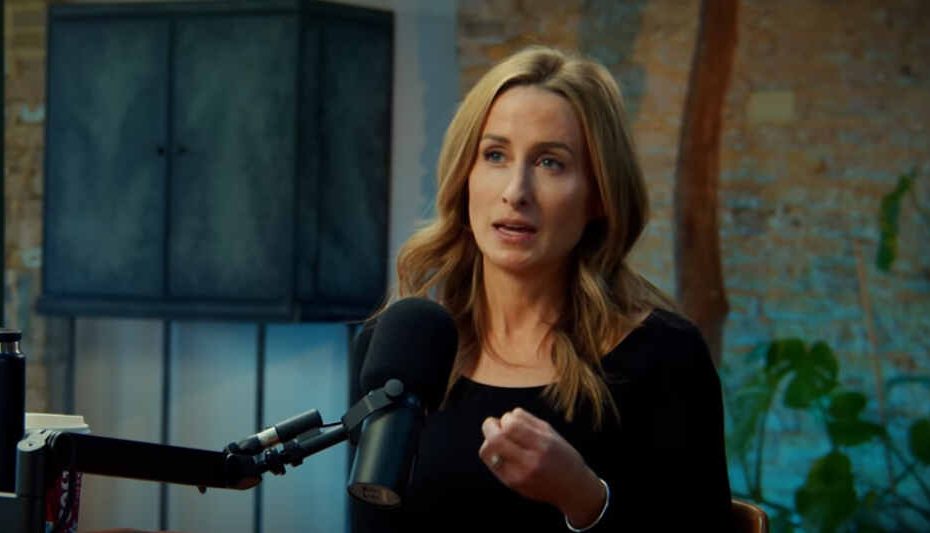
The following is the full transcript of clinical psychologist Dr Julie Smith’s interview on Modern Wisdom Podcast with Chris Williamson on “Anxiety & Overthinking Are Habits You Can Break”, March 3, 2025.
Understanding Emotions
CHRIS WILLIAMSON: Why are emotions so hard to understand for humans?
DR JULIE SMITH: Well, we’re going to start with big questions, Chris, in the deep end. Yeah, well, I guess I’ve made a bit of a career out of working with people on their emotions. And as a psychologist, you know, I was in the NHS 10 years and then worked in a very kind of small private practice. And I would say, you know, all of that work, however diverse it was in terms of what people were dealing with, mostly the common problem was there’s this feeling or set of feelings that I have and I don’t want to have them, and there’s these other feelings that I would like to have more of the time, but I’m not sure how to access them.
Nobody has this sort of manual for how to manage emotions and how to understand them. And we don’t even really have a great vocabulary for them. We’re quite limited in. You think about the sort of the diversity of the different, sort of minute feelings that you can have throughout the day that apply to different situations. It was slightly different. You know, if you say I feel joy one minute, joy in a certain scenario might feel quite different to joy in a different scenario. You know, the qualitative differences are there and you can feel that, but we don’t necessarily have the words to express it and we certainly don’t have the sort of models to understand it. And, you know, it’s only in recent years that people have even started to talk about them. So we’re in the early stages, but it’s, you know, exciting.
CHRIS WILLIAMSON: Are we doomed to fail in some regard there as humans, that we have this very rich inner experience which is very difficult to communicate, to measure, to understand, to export to somebody else. Hey, this is what I’m feeling. And then you have just this limited language which is constrained not only by the words, you know, but even by the language. You know, German has a ton of words that we don’t have in other languages. That almost unlocks your ability to understand emotions in that way. Are we fated to kind of always be scrabbling to try and understand emotions but never fully doing it?
DR JULIE SMITH: No, and I don’t think. I don’t think it’s necessarily sort of our failure or our limitation that emotions can’t be measured and quantified. I think it’s a limitation of the method, isn’t it, that why do we want to. We don’t have to do that in order to. You know, there was that real push actually, you know, in my career where we were asked to sort of, you know, measure things on scales and numbers and actually when you looked at how that would be applied in the room with someone, when you’re working with someone, it was sort of really, really limited and how helpful it could be, you know, if someone came back with some kind of mood diary in which they’d kind of added a scale of.
And you get this a lot on apps, don’t you? You know, rate how you feel today out of 10 and really doesn’t tell you much at all because you don’t feel it on a scale. You don’t feel a number. You have a set of feelings and that are kind of different and sometimes deep and sometimes complex and sometimes confusing. And it’s our sort of. Often it’s when people are trying to kind of sell something around mental health that they try to make it really simple, but it’s okay that it’s not, I think.
Dealing with Overthinking
CHRIS WILLIAMSON: What’s your advice for people who are overthinking everything?
DR JULIE SMITH: Well, I think this is actually a really popular subject online people. I think it’s something lots of people are dealing with. And, and that’s because I think the way that life is set up now, right, we’re all expected to do all the technology that we have, in theory, life should be really easy. It was all sold to us as if that will make life easier and you’ll have more time on your hands. And actually all that happened was we increased our expectation about how much we get done and how much we can handle.
And so what we’re dealing with in terms of mental load is so much more than what, you know, would have. And actually, you know, the way that life is set up now away from traditional roles where, you know, a man might go out to work and a woman would take care of the family, those things were separated, but now both people are trying to do both. Actually. You’re both taking on two full time jobs and so the mental load is there and, and so it makes sense that people are living at a higher level of stress all the time.
And when you’re, when your, your stress level, your arousal level is higher, you’re more vulnerable to overthinking. So a lot of people think I’m overthink because there’s something wrong with me or I’m just a worrier. And I always say to people, don’t label yourself as just a worrier because that gives you that sense that you can’t overturn it or you can’t do anything about it, which is wrong. You know, it’s a habit as much as anything else. But it’s also something that is more likely to happen when you’re already stressed.
So, you know, if someone came into the room with me and said, you know, I’m just overthinking everything, what shall I do?
So because that’s what you’re set up to do, right, it’s not a fault in your brain. Your brain’s doing a really good job. You’re probably giving your brain lots of sort of lots of signs rather that things aren’t okay. You know, you’re maybe your blood pressure’s high, maybe you’re on the go all day. And so your brain is getting those signals from in your body and from your surroundings that we’re not all, you know, not all is well here, that there’s a lot going on, we’ve got a lot to deal with, be alert, because something could be unpredictable here. We need, you know, so that’s your kind of state of readiness. So I think when you’re dealing with overthinking, it’s important not to just deal with overthinking, but to look at everything as a whole.
CHRIS WILLIAMSON: Yeah. I wonder whether there’s more opportunities for people to consider and ruminate about what’s going on in their life at the moment. Because most of the base needs for most people that are listening to this podcast are sorted. They know where they’re going to sleep tonight, they know where the food is going to come from, et cetera, et cetera. And oddly enough, an existential crisis, or, you know, worrying about emotions, thinking about thinking, is actually kind of a luxurious position to be in in order to be able to get to that stage.
I’m aware that for everybody that deals with it, including myself, it doesn’t feel luxurious at the time, but it’s probably an indication that the base of Maslow’s hierarchy of needs has probably been sorted and we’re then moving on to what’s next. But yeah, the threat detection thing, the fact that there is an infinite number of potential stressors out there and are biased towards looking at those ones, as opposed to something a little bit more calming, the calm stuff, that’s not salient I don’t need to worry about that, but I’ll worry about the thing that I think I need to worry about. So what about in the moment? Somebody’s in that sort of, they’re trapped in that cycle, that overthinking loop. I imagine this is something that your clients talk to you a lot about. What are interventions or what are the ways when you find yourself doing that, that you take yourself out of it as best you can.
Breaking the Overthinking Cycle
DR JULIE SMITH: Yeah. So if you’re worrying, I think there’s a lot of work that you would do around building awareness of what’s happening at the time. So we formulate, so we pretty much draw out the cycle on pen and paper, just, you know, we look at the scenario that comes before. So what tends to happen in the lead up to the overthinking and what’s the, you know, what the things that are contributing to that? And then what are the types of thoughts that you’re having?
And so you build this awareness that they are usually horror story thoughts. You know, it’s the worst case scenario that you can possibly come up with and you play it out in your mind over and over again and that ramps up your anxiety. And then when you feel those symptoms of anxiety, whatever they are for you, you then look, you know, become more vigilant and you become, you sort of look for more things that could go wrong. And so when you do that, when you look at the cycle, even though the minute details will change depending on what’s going on for you and what the situation is, the cycle will pretty much always be the same.
And so you get this sort of insight into the cycle that you’re going around in. And when you do that, I mean, in therapy, you do it in hindsight, right. So you go and you look at the week that’s just gone by and you say, this happened. And I was really worrying about that and that’s how I dealt with the worry. And often you’re looking at, you know, what you did in response to that feeling that then actually fed back into the cycle.
And when you see it on paper and you see that when you did something to get rid of that feeling, but then actually it brought you background, you can see that you are doing things that actually contribute to making it worse. And it has to be a kind of careful process of self discovery. But when you do it, you begin to get this awareness in the moment as it’s happening. So you start with it in hindsight, looking back, and then the more familiar you become with it, the more you start to, when you’re in it, go, oh, I know where I am.
CHRIS WILLIAMSON: I think that that’s that thing again that we thought about last time and now it’s happening. Yeah, that’s interesting. Using sort of retrospective assessment as a predictive tool. You go, hey, this thing happened before, maybe it’ll happen again. That pattern’s beginning to come up. So for me, when I’m underslept, if I’m underslept, my ability to sort of regulate just falls out of the window. So, okay, right. I’m tired there. I need to sort of adjust the sight on my scope to be like, am I actually that bothered about this or did I just get four hours sleep last night?
DR JULIE SMITH: Yeah, yeah.
Confronting Fear
CHRIS WILLIAMSON: What about fear as well? Because I think that this is kind of a two pronged challenge that people have a lot of fear, a lot of concern about making decisions about whether or not I’m doing the right thing. Very visceral emotion. How can people better deal with fear?
DR JULIE SMITH: Yes. Do you know, I actually rewrote the chapter on fear in this book? So over the summer I went through some health problems. I was diagnosed with cancer. And at that point I was about six weeks away from finishing the book. Yeah, no, yeah, I was six weeks away when I started going for tests. And then I was about two weeks away from handing the book in when I got my diagnosis. So I was so determined to finish the book. And at that point I was just reading it through and I read, just happened to read through the chapter on fear the day after. And I thought, this isn’t what I need to hear right now. This isn’t right.
CHRIS WILLIAMSON: What was wrong with it?
DR JULIE SMITH: Hit delete. So it was probably more gentle than I wanted, than I personally needed. And I think generally that can happen. You know, lots of people do need that approach. But at the time I got selfish with it and I thought, I need something a bit different to this. So I hit delete and I rewrote it for myself.
So it’s much more about, you know, in that moment. Okay, fear is here and it’s necessary and it’s information. It’s telling me that not all is well and I need to be alert and I need to think about how to work through this. And so I’m going to use that fear, but I’m not going to be the victim in this. I’m not going to be the. You know, there’s often people talk about cancer. There’s often this idea that that thing is attacking you and you’re victim to it and I just did not want to be in that place at all.
And so I wanted to kind of turn the tables. And so in the chapter I talk about this idea of choosing to be the predator instead of the prey. So sort of always being on the front foot and forward motion and looking at what’s my plan and what am I going to do next and taking action so that I didn’t feel, you know, because you can feel, you still feel fear when you’re on the front foot, but you’re using it. And that feels so fundamentally different to sitting in fear and just allowing it to implode.
Action as the Antidote to Anxiety
CHRIS WILLIAMSON: I had this realization toward the end of my 20s when I was trying to unpack three decades of not understanding myself. And I remember I wrote down “action is the antidote to anxiety.” And the reason for that was I became way less fearful about the future when I was moving myself toward it, when I didn’t feel passive, when I didn’t feel like I was being blown around by the wind.
There’s this interesting sort of coming back to center moment, I think, with a health scare or with fear in general, if it’s really visceral, if it’s emotional fear, if it’s serious. And it really does kind of remind you about this essence of yourself. At least I found that when I’m in a big period of ruminated stress, I actually feel oddly more myself than I do at other times. I think it sort of strips away a lot of the bravado and momentum and inertia that you’ve got going on, compensating mechanisms and the ways that you can kind of hide things when everything’s going well and then you kind of come back to center and you kind of remember what that is.
But action being an antidote to anxiety, I think. And it’s ruthless because the action is the exact thing that anxiety stops you from wanting to do. To be the very last thing I’m going to stay in bed. I don’t want to get up, I don’t want to be leaning in. I don’t want to be sort of taking charge of the situation.
DR JULIE SMITH: And a lot of it is being able to recognize urges and override them. So recognize that urge to go for safety and comfort and act opposite to it. And in the same way that you do in kind of more light hearted situations. So, I don’t know, exercise, you get to a point where your body’s sort of hurting a bit and you would rather stop, but you practice sort of overriding that urge.
That’s a big sort of skill set that is actually taught in certain therapies, acting opposite to urges. And you can do it in really small ways. So, you know, you might put a polo in your mouth and resist the urge to crunch it. You can do it in really light hearted, kind of simple ways. But then what you’re doing is you’re kind of practicing that mental muscle really to be able to recognize that in moments when you need it most and to be able to do it. So it’s not the first time you’re doing it.
CHRIS WILLIAMSON: The process, it’s a vicious cycle. You know, there’s periods where momentum seems to be working with you and then periods where it seems to be working against you. And I think what everybody wants is this sort of permanent upward spiral toward ever increasing capacity and ever increasing hope in ourselves. But there is a vicious sort of other side to that momentum too. And stepping in to kind of have a circuit breaker on that is something I think a lot more people need.
DR JULIE SMITH: Yeah. And I think people want to feel courageous and strong. And I think what we forget is that fear is a core component of that. You know, it’s a core ingredient of courage. You can’t really call yourself courageous if you didn’t do something that filled you with fear. So when you face things that scare the living daylights out of you and you do that with forward action and take a sort of commanding composure in the face of those really scary things, you start to feel that and you start to discover that what you thought were your limits was really kind of a smokescreen.
CHRIS WILLIAMSON: It’s different. You know, one of the taglines of CrossFit for a while was “get comfortable being uncomfortable.” And it was sexy or whatever, but I always felt a little bit hollow to me because the discomfort that people were getting comfortable with when doing a workout was something they’d elected to do. You chose to go to the gym. You already do this because you like to do it. Maybe you’ve pushed yourself beyond a limit that would be reasonable to even almost everybody, but still it’s sort of within your control.
DR JULIE SMITH: Yeah.
CHRIS WILLIAMSON: Cancer diagnosis is a degree of discomfort that you didn’t choose.
DR JULIE SMITH: Yeah.
CHRIS WILLIAMSON: So, reflecting, I guess, on the last year for yourself, what’s your advice to somebody who is going through a tough time with their health? Uncertainty, fear of the future, you know, this is the personal and the professional colliding for you, I suppose.
DR JULIE SMITH: Yeah.
CHRIS WILLIAMSON: What did you, what would you say to somebody?
Dealing with Health Uncertainty
DR JULIE SMITH: I think when uncertainty is, I mean, that’s the big thing about something like that. And it doesn’t happen as a sort of big dramatic moment where you suddenly know what the diagnosis is, you know what the plan is, you know what the risk is. It doesn’t really happen like that. It’s all in stages.
So there is this sort of big period of being really uncertain about everything and not knowing what to do with that and then not knowing who you can really share that with because you don’t want to scare the living daylights out of everybody else that you love. And so when there is such uncertainty in that way, the way that I dealt with it and would do again in the future is just narrow everything down, narrow your focus down. What’s the next move? What’s the next step? And let’s take that, get that bit done. Take action.
CHRIS WILLIAMSON: What would be an example of that.
DR JULIE SMITH: So actually, it was a really kind of strange experience where the day I got diagnosed, the day after, the consultant I was under was about to go on holiday for two weeks. And then we had a holiday booked for two weeks after that. And once he went, some more tests came back and the treatments or the recommendations were changed, but the team wouldn’t tell me what they were because that was his role to do that.
So I was sort of thinking, okay, they’re not going to tell me, so it must be something bad. Do I cancel my holiday? What do I do? And there’s all these uncertainties around what to do. And I could feel myself. I was sat there trying to edit the book, and it was just consuming me, and rightly so. My brain’s saying, hang on a minute, let’s sort this out. And I could feel that sort of sense of just being internal, not being able to affect anything or control anything and just waiting. I thought, I’m not doing this. There’s no way.
So my husband came home from work and we just started doing lots of research on surgeons and consultants. We’re lucky enough that we were in a position to go and pay to go and see someone. But I started asking medics I know for recommendations, found someone that was nearby, made those calls, got those appointments, and in the process of just doing that, nothing’s changed in theory, but I am moving forward and taking action. And it felt just fundamentally different. I wasn’t sitting there shaking and weeping. I was, okay, what’s the next call we can make? Who, how much does that cost? What can we do? Who can we see? And we did. And it actually helped the process. And I found someone to do the surgery for me and all that kind.
And it was really positive. But, yeah, I think sitting there like… And that’s where I got that feeling of the rabbit in headlights. I’m not going to sit here like a rabbit in headlights. I’m going to move forward and I’m going to do something. And you can’t, in every situation, not in every situation, you can do that. But I’m lucky enough that, touch wood, I was in that position where I could affect the outcome.
CHRIS WILLIAMSON: Trying to contribute to your own future again, it’s that action being the antidote to anxiety thing, I think, every time. Yeah, you don’t want to feel like life is buffeting you around and you’re at the mercy of it.
DR JULIE SMITH: Yeah.
CHRIS WILLIAMSON: You’re already feeling a little helpless.
DR JULIE SMITH: Yeah.
CHRIS WILLIAMSON: You’re already in a little bit of hell, you know, well, that it’s going to get worse. So, yeah, trying to step in.
DR JULIE SMITH: And I think it’s okay for that action not to be the solving of the thing as well. You know, people often say, oh, don’t sort of avoid things by getting busy with something else. But sometimes that’s necessary for improving the moment and not making it worse.
CHRIS WILLIAMSON: Well, there’s better and worse coping mechanisms. And if one of the coping mechanisms is I made myself feel better for half an hour today, I did a thing that gave me some respite. You know, it’s a very low resolution way to look at what you should or shouldn’t do. Like a random judgment that you’re making on it, which is, well, do you think that being sympathetically activated for 18 hours today is a good way to spend. What if you could get that down to 17 and a half? Okay, is that worthwhile? Are you saying that that’s a coping mechanism or is that maybe you actually giving your body a little tiny bit of respite? So, looking forward, what about looking back? How can people better understand their childhoods?
Understanding Your Childhood
DR JULIE SMITH: In terms of understanding your childhood, I think it really helps to do a lot of people doing that online with kind of bits of information that come up on videos and stuff like that. But I think if you want to do it in depth in a really constructive way, that’s truly going to help you and not send you into kind of resentment and bitterness about everything your parents got wrong, then it does help to do that with somebody else where you can look at it in a constructive way.
That’s actually going to help because there’s utility in going back and processing that and creating that sort of narrative, really a timeline of, okay, this happened and that influenced me in this way and this happened. That’s really useful. But sometimes if it’s not constructive, it just becomes a rant of everything that was done wrong for me and all the negative impact that’s had on my life.
And that’s quite dangerous in some ways because you can then get into that cycle of that sort of turmoil of resentment and feeling like a victim of it. Whereas when you do that constructively, for example, when you do that in therapy, it’ll be a fairly balanced view and it will kind of look at the things that you wouldn’t change and the things that you might do and how they’ve impacted you now.
If something that happened in your childhood got you stuck into a certain cycle of something that you do in your relationships today that you’d rather not, then you’re using that to break the cycle. Because you’re going to use that to say, okay, I know what I’m doing now. It’s because of something that happened earlier on and I’m going to choose to do something different. I’m going to break that cycle. So it can be really, really productive. But it has to be carefully done, I think.
Healing from Parental Mistakes
CHRIS WILLIAMSON: What about if, I mean, everybody’s parents will have made mistakes, some larger than others. How can people learn to get back to neutral with something that they can’t go back and change? There is no time machine to go and fix whatever it is they feel like they’ve inherited this version of themselves that their parents created. The pathologies, the thought patterns, the biases, the ways of seeing the world and themselves and the inner voice and all of that stuff. If our parents got it wrong and in the ways that our parents got it wrong, how can we become more at peace with that?
DR JULIE SMITH: I think in some ways a part of that work is understanding where your parents have come from and that they more than likely had their own complex childhoods in which they had their own damage that was done and cycles that they were stuck in. And probably, you know, they were sort of growing up in an era where there wasn’t that education around this kind of stuff and there wasn’t that insight. And so they would have been living out their own coping strategies with whatever they were dealing with.
So I think that’s part of it is understanding that doesn’t make it okay if your parents were, you know, horribly abusive. But it’s one way of understanding these cycles that people get stuck in and how damage can be caused, often without intention. But also there’s a degree of, you know, in that parent child relationship. Often we carry the parent child relationship into adulthood and, and we still behave like the child in that relationship.
CHRIS WILLIAMSON: Just what I was about to say.
DR JULIE SMITH: Yeah, in a sense that we give all the responsibility to our parents for making it a good relationship. And actually what you have now is an adult to adult relationship in which you get to like, you can’t change your parents. And actually often people assume that if I could just convince my parents and help them to see the damage that they did and get that apology that everything would be better and, you know, possibly.
But a lot of parents won’t necessarily have any more insight than they had when you were a child. And so I think we can’t sort of rest our idea of healing on that, on getting those apologies or getting their insight, because often they don’t have it. And often it’s about developing a relationship with our parents that they are capable of as well, so that we’re not expecting more of them than they’re actually able to give.
Breaking Generational Cycles
CHRIS WILLIAMSON: It’s interesting that we see the lineage between our parents did this, and therefore I am like that. How unfair. How could this be the case? You just go, just go back one generation, just move back by 25 years and you go, well, your grandparents were like that, which made your parent. How can you give yourself this excuse or this reason and not continue to roll? And then the great grandparents, the grandparents, you know, you go all the way back.
DR JULIE SMITH: Yeah.
CHRIS WILLIAMSON: So, yeah, it is odd. And I think that you’re right as well. Every generation thinks that it’s unique. And I get the sense that emotionally, maybe this has been the biggest change across one generation from sort of like boomer period to whatever ex millennial, Gen Z. Just that the opportunity for people to ruminate, the challenges that people have from an emotional stressor perspective, the information that you have to become aware of how much better things could be as well, which creates an ideal.
And then you sort of compare yourself to, oh, well, if only I could get rid of my anxious attachment, if only I could get rid of my fear of the future. If only I could get rid of my overthinking or my whatever it is which is now opened everybody up to think back more. But our parents don’t necessarily have that. They’re just sort of dealing with the physics of their system, the way that it was given to them, without necessarily realizing quite so much or quite so viscerally that, well, things could have been a different way.
It’s like, well, things just are the way they are. And you go, okay, so what do you want? Do you want to be largely unaware that things could have been different? And to understand the way that attachment styles and child rearing and behavioral genetics and et cetera, et cetera, work to influence the disposition you have as an adult? Or do you want to have it this way? Like, is ignorance bliss?
Because for me personally, I would much sooner be able to contribute a little bit, to have the pain of the realization that there’s something which is in my hands and that there are ways that this can be changed, but be educated on this and actually be able to make some sort of an impact as opposed to just being at the mercy of it.
Finding Balance in Perspective
DR JULIE SMITH: Yeah, absolutely. And I think what we have to be really careful of, and you kind of see a lot of online is this sort of resentment and bitterness. This sort of one sided, this negative thing was done. You know, parents are the bad guys, I’m the victim of the bad guys. And now it’s awful.
And to a degree, in the most severe scenarios where things are just awful, that’s almost separate from what we’re talking about here where you can have a fairly sort of normal child and there were things that negatively affected you, but there would also have been a lot that positively affected you.
And so I think one way of creating sort of antidote to just feeling bitterness and resentment towards your parents is to nurture some gratitude around what was good. Okay, these were the things about your childhood that weren’t ideal, but what would be the things that you would repeat when you become a parent yourself? What were the things that you value about your childhood that you think helped you become the person that you are or that helped you feel secure?
So your parents might have been emotionally neglectful and not spent lots of time with you, but actually maybe they held down a really difficult job and endured that so that you could have food on the table every night. And maybe your mum was at home every day when you got home from school with a warm dinner and had that kind of dutiful sense of loving you.
And so there will be new ways of turning something and looking at it in a slightly different way that helps you to shift the feeling and not just sit in that resentment of “I’ve survived despite my parents” rather than because of them.
Accepting Trade-Offs
CHRIS WILLIAMSON: Are you familiar with the Thomas Sowell quote? There are no solutions, only trade offs.
DR JULIE SMITH: I am now.
CHRIS WILLIAMSON: Okay, so this year it feels like that’s been the quote of the year for me. And a lot of the time what it means is trying to optimize absolutely everything and railing against things that are shortcomings is a surefire route to misery because you’re not going to be able to get everything to be perfect. And in many situations something is positive and something is negative and the negative thing has probably come along for the ride as the dark side of the positive thing.
DR JULIE SMITH: Yeah.
CHRIS WILLIAMSON: And I think that it’s the same with the parents. It’s so right. You know, dad wasn’t there for me sufficiently emotionally. I imagine that’s a big sort of millennial complaint about boomer parents. You know, dad was sort of this classic still blue collar guy. And you go, yeah, well, he was at work like 10 hours a day, five days a week for 18 years to raise you and before that and for brothers and sisters and all the rest of the stuff.
And you go, okay, so there are no solutions. There’s only trade offs. You had this level of security or maybe there’s somebody else who says “Dad was there for me a lot of the time, but we really struggled with money.” And again, it’s a trade-off.
It came to me because I started, I made a big pivot with my diet and that improved a ton of energy problems that I was having. But I was finding myself waking up at 3:30 or 4 in the morning every single day for a week. And the first day I thought, oh, this is just a transition thing. Then the second day I thought, oh no, this has become a habit. And then by the third day I was railing against it.
So I woke up and I was like, God, why is this the case? How come I’m waking up at this time? This is so annoying. I’m going to be tired tomorrow, et cetera. And that Thomas Sowell quote floated into my head: “There are no solutions, only trade offs.” I thought, right, okay, would you be happy to get up at 3:30 in the morning if it meant that your mood and your cognition throughout the day was better than it had been over the last couple of months? Like, yes, what are you complaining about then?
What you’re complaining about is, why can’t I have the entire world exactly the way that I want? It’s like, no, would that be beautiful? Yes. Is it in anyone’s world realistic? Absolutely not. And the same thing I think when we look at our parents is a nice perspective.
DR JULIE SMITH: Yeah, absolutely. And there’s always something to be grateful for and something to feel a bit annoyed about or miserable about. And I think it’s a really important life skill to just have that clarity that you can choose, you don’t have to be stuck in one perspective. You know, we’re all human, we all find ourselves in those moments.
When I talk about that health scare stuff that I went through in the summer, and I talk about being the predator, not the prey and all that – that doesn’t mean every moment I was feeling that. That was a response to those dark moments where you feel “oh my, what’s going to happen to me?” Those dark moments.
So it’s only human to find yourself in those. But just by having that awareness and knowing that it’s a choice gives you that opportunity to step back from it, put it at arm’s length, see it for what it is, and then you get to choose. But having those moments of difficulty or the moments when you’re not doing that – like you say, the dark moments in the morning when you’re thinking, “oh, why am I doing this?” – it’s okay to have those moments, doesn’t mean you’re failing. But then you had that process of, hang on a minute, I remember that quote. Now I get to choose. And you just learn from all of those experiences.
CHRIS WILLIAMSON: I imagine that a lot of parents, I’m not one yet, but I imagine a lot of parents have the reverse problem, which is that they’re terrified of getting it wrong for their kids as they’re raising them or shortly after they’ve raised them. What is your advice there?
Navigating Parental Guilt
DR JULIE SMITH: It is part and parcel of the whole experience, and you feel it for a woman. As a woman, you feel that from the moment you know you’re pregnant and suddenly everything you do is about somebody else. And so you feel guilt no matter what you do, really. And with feelings of guilt, it’s important to listen to it as well.
I mean, there’s kind of, you know, there’s stuff online about sort of parent guilt and how, you know, you shouldn’t feel it or you should ignore it and do what’s good for you and that’s fine. You know, there are moments, you know, that might be in the context of taking a break because it’s difficult to do that and take time for yourself. And that’s when you acknowledge that guilt and you take it with you because you know this is the right thing to do.
And there are other times when it’s important to listen to that guilt more deeply and go, well, am I feeling that because I’m not living in line with my values as a parent. And so I don’t know if I feel guilty about coming here. So coming to London for a couple of days, doing some interviews, there’s a sense of, I don’t want to leave you guys. And my children got upset, which they didn’t, but if they did, I would feel that sort of, oh, why am I leaving?
And that’s at the point where I have to get that clarity of the situation where I’m doing this because it benefits the family. Like the payoffs thing, right? Your dad’s at work all day, that kind of thing. They’re difficult decisions. And by having your values really clear in your mind about why you’re doing something, it’s easier to not make the guilt go away. You just, you’re willing to take it with you. So you get it in your backpack and you take it with you because you know you’re doing the right thing.
And because sometimes that feeling is not based on something that’s warranted. You know, sometimes it’s, if you’re a people pleaser or something because of how things were set up in your childhood, you’ll probably feel guilty all the time when you feel like you might have upset someone, and that’s not necessarily warranted. That’s a pattern.
So sometimes, you know, if we engage in sort of emotional reasoning, right, which is that bias of I feel it, therefore it’s true, that can get us into all sorts of trouble. So if because I feel guilt, that means I’m a terrible parent, then I’m going to have a terrible time.
CHRIS WILLIAMSON: That’s interesting.
DR JULIE SMITH: Yeah. So if you feel the guilt and you don’t recognize it as a normal part of being a parent, then you’re likely to just think that you’re failing all the time.
CHRIS WILLIAMSON: So it’s not just the sensation, it’s the story that you tell yourself. And you happen to be defaulting to a very particular story, which is because I’m a bad parent. I mean, look, the only thing I can contribute is sort of a bit of an evolutionary lens, but I imagine that mothers especially, but also fathers, have a pretty easy to activate guilt response to kids. Why? Well, because the parents that didn’t feel guilty when they left their kids, their kids died. And we’ve selected for the most neurotic, overbearing, caring parents that we can think of and that those are your ancestors.
DR JULIE SMITH: Yeah.
CHRIS WILLIAMSON: Okay, so this is going to arise. You leave. Like, you know, I’m sure that even just dad going to work, mum going to work on a morning, normal day at work, kid is sad, you go, okay, I understand that in order to put food on table to keep tiny child alive, I have to go to work. Do I feel guilty about that? Well, kind of, no.
But then if it’s something that seems more elective, then it feels like, yeah, that is because it’s, I don’t know, less justified in some way or, you know, more opulent, more chosen. So you go, okay, well, I just need to work out. Is this in line with something, like you said, principles, the life setup? Am I doing something that makes the world a better place that my kids can grow up in? Is this something that they’re going to be proud of? Is this something that affords us a different type of lifestyle? Is this something that they would want me to do if they were in 20 years time, would they want to look back and say, do you know what it is? I’m really glad that you actually went and did that. But in the moment you’ve got a crying child and you feel like a piece of shit because you’re leaving and.
Finding Balance as a Parent
DR JULIE SMITH: It is important to listen to anyway, isn’t it? Because like I say, even if you’ve got the values and you know it’s there, it might be an indication that, you know, I do feel guilty, so maybe I need to just redress the balance a little bit.
I think people talk about balance as if you find this perfect spot and then you just don’t move. And that’s the perfect way to live. And it really isn’t that. You know, if you see someone on a balancing beam or a tightrope, they’re always doing this. They’re always moving slightly from side to side and readjusting, readjusting. Notice when you’re going off too far, readjust. And particularly for, you know, as a working parent, I find that’s constant. If you can listen to those feelings when they happen, it can be information, it’s, you know, do I need to just spend some more time with them?
CHRIS WILLIAMSON: Maybe I’ve spent a bit too much time on the book this week. Yeah.
DR JULIE SMITH: Do I need to, you know, block out the weekend?
CHRIS WILLIAMSON: I suppose as well, an uncomfortable realization to. Look, look at me, bro. Science and parenting, bro. Parenting from the sidelines over here. But I imagine as well that you, there should also be a question that parents ask where they say, well, are my kids maybe too sensitive? Are they, are they too unfamiliar with me being away from them? Are they unable to regulate even a small amount of time away, which is unrealistic and is making them fragile in a way?
Maybe I need to step in on the other side. Maybe they need, we need to do a little bit of training. I need to sort of bring them into land a little bit. I need to calm them down. I need to say, hey, this is what’s going to happen. I’m going to be away for 15 minutes, I’ve got to go to the shop, I’ve got to go and do whatever. So yeah, they’re all signals and I guess it’s a good learning experience and if you deny them, then the opportunity to learn is just out the window.
DR JULIE SMITH: Yeah, yeah, absolutely. And it’s all about opportunities to learn, isn’t it? And like you say, if a child has been used to having you there, you know, that sort of post lockdown kind of experience for lots of parents actually where, you know, everyone had been at home for many months, it was really difficult for young children to then transition out nursery or go to school or, you know.
CHRIS WILLIAMSON: I wonder what we’ll see in a decade’s time from an attachment perspective, from a lifestyle perspective, from a psychological makeup perspective. You know, we may find out that kids are largely so robust that a two year period during their formative years didn’t make that much of a difference. Or maybe it’d be really great, or maybe we’re really terrible and time will tell. You mentioned before about people pleasing. This is something that over the last year or so I’ve realized that maybe a pathology I’m more familiar with than I realized. What have you come to learn about people pleasing? People pleasers, where it comes from.
Understanding People Pleasing
DR JULIE SMITH: Yeah. So, you know, often, often it makes sense. You know, often these things feel confusing until you hear someone’s story and then it makes complete sense. I’ve had so many of these moments with people in the room where, you know, they come in and think, you’re just not going to understand this. This is just bizarre and complex and I don’t get it. And then you spend a decent amount of time going through someone’s story and then you get to this lovely point where you kind of say to each other, of course, of course it is this way. How could it not be, given everything that’s happened?
And you know, there isn’t sort of one story or one scenario that always leads to people pleasing. There are lots of different ones. But I think it’s important to distinguish that people pleasing isn’t being a nice person. It’s so much more than that. It’s being absolutely vigilant to how other people feel and placing that as your absolute priority over and above your own well being, your own health, anything. So, you know, it’s just terrifying the thought of displeasing someone else or experiencing their disapproval or they’re not liking you or rejecting you.
And so, you know, I’ve seen people who live in turmoil trying to please everybody around them and keep them pleased, which is not sustainable. And so it creates chaos where, you know, you’re constantly chasing your tail and it gives other people a lot of power over you so you can end up in relationships that are sort of exploitive or just not healthy for you. And yeah, so I think it’s one of those things that’s sort of banded around and it’s something that a lot of us kind of do in bits and bobs, kind of like, yeah, sometimes I’m like that, or in certain situations I’m like that. And some people spend their lives really, really struggling with it.
CHRIS WILLIAMSON: The desire for us to take something we do a little bit and turn it into a label that describes our entire personality is quite strong. The pathologization of sort of normal emotions in that way. Which is odd, right, because both me and you are fans of sort of emotionally informed therapy and people understanding their emotions. I also think it’s very interesting. I think it’s one of the most interesting things that you can do.
And yet I imagine that you have a similar problem to me as the overuse of therapy speak online to describe like this person wasn’t mean to me, they were narcissistic or they caused me trauma. You know, I’m not sad, I’m depressed and sort of the straying over into you crossed a boundary that’s, that’s one of my bound. Etc. Etc. So people a lot of the time will say yes to things when they mean to say no or they want to say no. They want to become firmer at being able to disappoint those around them. How can they become better at that?
DR JULIE SMITH: I think it’s one of the most important skills that anyone will ever learn actually because you’re, you put yourself at risk if you, if you can’t say no when you need to or you can’t hold boundaries and there’s that people pleasing tendency.
So if everything is about everybody else and what they want from you and that’s where it’s not the same as being a nice person. So you know, if everybody else’s needs and wishes and desires come first and you don’t have the ability to put a stop to that when it doesn’t fit, then you’ll end up doing things that you regret and don’t fit with your values or that don’t feel like you’re being a nice person. But it’s because somebody else has more power over your behavior than you do.
So I think assertiveness skills are a big part of what’s taught in therapy actually. You know, teaching people to manage difficult people and people who perhaps have more power in a relationship. It kind of sounds easy to be able to say no and it’s not because it’s always packed out with lots of emotion and the complex dynamics between two people and so it can be really difficult but it’s absolutely learnable.
And so that’s where it’s important to remember that even if you’ve had a habit for life of putting everybody else first and being the “I don’t mind, I’m fine, whatever you think” type person that you can begin to change. But it’s often about learning specific skills and where do you start?
CHRIS WILLIAMSON: What are the skills?
Dealing with Assertiveness and Boundaries
DR JULIE SMITH: So a lot of it is practice in light hearted ways. You know, we talked about acting opposite to urges, using polos and situations that aren’t necessarily the most emotive or difficult for you. You kind of grade situations. You could even make a list to be fair. Make a list of different situations where it’s difficult to be assertive or state your own needs, take the easiest one and start with that. Practice, have a go, then come back and see how it went, what went well.
I was working with someone on developing assertiveness skills in the workplace – going home on time or taking holiday, those sorts of things. We started with something that felt the easiest and then assessed it. The anticipatory anxiety about it was much worse than the actual awkward moment of saying what they needed to say. Their reaction wasn’t as bad as expected. All that fear and discomfort died down as soon as the moment was over. They got what they needed and the situation improved, without living in resentment.
When you start small, you get these small victories that give you momentum and drive to move forward to the next challenge. But you can’t expect to suddenly go, “right from now on, I’m going to be boundaried and assertive and strong” overnight. It’s just not going to happen. You have to do these things gradually and start with the easiest thing – something that almost feels a bit silly. Then you get that little easy victory and move on to the next one, which is a little bit more difficult, and so on.
CHRIS WILLIAMSON: That anticipatory anxiety thing is so funny because you’re right. Your ability to turn a future situation into a nightmare is significantly better than it almost ever is in reality. And the stupid thing is that all of the nightmares that you genuinely encounter in the real world are ones that you probably didn’t see coming. So I have this unbelievable ability to predict things that aren’t problems and not predict things that are going to be massive issues.
As a slowly rehabilitating people pleaser, that’s a way that I found to be better as well – to learn to make demands of other people, to not subjugate my needs or believe that I don’t have needs, or think that it’s noble to put somebody else ahead of me. It’s a sort of odd emotional puritanism where you think if I feel bad but someone else feels good, net net, that means it’s good. What if you could both feel good but you just need to make a demand?
DR JULIE SMITH: Yeah, so true. Often when you feel like you’re being a nice person because you’re making them feel good, actually sometimes what you’re doing is just appeasing them. You’re just scared of their emotional reaction or their disapproval. It’s motivated by fear of what their reaction might be rather than your own values around what should happen in a situation.
The Virtue of Choice vs. Compulsion
CHRIS WILLIAMSON: It’s also not very trustworthy if somebody can’t trust you. And you know, you hinted at if you don’t have any choice, it’s not particularly virtuous. You don’t even feel good about doing the virtuous thing because you didn’t have any other option – you didn’t choose to be nice to this person, you simply couldn’t be bad.
I wrote about this this week actually. A few months ago, a friend and I had a well-meaning debate, but I was worried that I’d upset him. So I rang him afterward and said, “Hey man, I just wanted to check in and make sure that you’re alright.” He said, “Yeah, of course, it was totally fine.”
Then he heard me start to chastise myself: “See, this is my people pleasing nature coming out.” He stopped me: “Hang on a second. The reason I love you as a friend is because you decided to put me first. Even in this neutral situation, the fact that you reached out and cared.” He said, “Be careful pathologizing something which is actually a really virtuous part of who you are.”
So doing the thing was good. It’s a part of my nature that my friends are glad I have. But by being compelled to do it as opposed to choosing to do it, that does kind of diminish some of the virtue behind it. So am I supposed to purposefully try and get rid of that trait, briefly make myself a worse friend, to then relearn it again consciously so I can finally get back to where I started? That seems unnecessarily effortful.
This line between virtue from compulsions and virtue from choices, and this odd sense that we need to deprogram… If it’s hard to do, does that make it more virtuous? Would you rather be somebody that’s mean and you have to work hard to be good? Would that make you a better person? The human desire to minimize our good points is robust, to say the least.
DR JULIE SMITH: Yeah, and like you say, it’s all about the choice. You clearly have an awareness of it now. So if you found yourself in a situation where it was really detrimental to you and you knew you should say something different, but you said something else because of that people pleasing tendency, you’d be in a better position to choose something different because you have that awareness.
That’s the key, isn’t it? It’s okay to have that as a trait and tendency because if you’re aware of it, then when it becomes troublesome, you stand a chance at doing something different. It doesn’t mean you have to eradicate everything and start with a clean slate. A lot of stuff now is about pathologizing everything as if it’s something wrong with us. Actually, those tendencies can also be really lovable parts of us and things that other people appreciate about us or that we appreciate about ourselves. They just don’t always work in every context.
Dealing with Passive Aggressive People
CHRIS WILLIAMSON: What’s your advice for dealing with passive aggressive people?
DR JULIE SMITH: Oh, with passive aggressive behavior, I think it’s one of those things that you feel very subtly and you start to question yourself. That’s one of the key signs – something will happen, maybe a compliment that feels more like an insult. On the surface everything seems friendly, but you come away feeling like you’re not sure if they really liked you or you feel wounded in some way. Or maybe you’re being subtly excluded.
That sort of behavior is inviting you to become… especially if someone is being passive aggressive by taking on the role of a victim in a situation, they’re inviting you to come in as a perpetrator. Passive aggressive behavior is really difficult to pinpoint exactly what it was.
CHRIS WILLIAMSON: The culpable deniability is the entire reason for the passive aggression.
DR JULIE SMITH: So someone could, let’s say something great’s happened in your life, you’ve been really successful. One of your friends has a problem with that and starts ignoring you or trying to exclude you. But as soon as you pick up on that and say, “Are we alright?” then all is denied. “Everything’s fine. I’ve just been busy.”
You’re stuck in this place where I can’t really address it because they will deny it, yet I feel terrible and don’t feel connected to this person anymore. I feel like they maybe don’t like me or something’s going on. The trouble is, the more you get sucked into joining the circus and playing the game, the more you lose.
So a lot of it is about watching and learning. If someone reveals themselves to you that they’re not okay with you in a certain way, or that friendship is now conditional on you making yourself smaller or not doing certain things, then all you can do is learn from that and make your own decisions about whether that’s a friendship for you or whether it’s something the friendship can overcome. It might be a blip, but it might also be something bigger.
CHRIS WILLIAMSON: Yeah, I am intimately familiar with passive aggression. It never really points at the thing that someone’s trying to say. It’s this shadow sentence that gestures in the direction of it whilst also being able to be completely denied. It’s quite a cowardly form of communication. I’m aware that it’s a coping mechanism – there’s lots of reasons people do it – but it’s a very cowardly form of communication because it doesn’t ever actually say the thing that you mean. It just points in the direction and then gets mad at you if you don’t realize it.
Neil Strauss says “unspoken expectations are premeditated resentments.” And I think that’s passive aggression in a nutshell.
For me, there are two broad approaches. The first one is to call it out as gently as possible: “Look, hey, it feels like something has happened. I’m not really sure what it is, but I don’t like this lingering sense of something unspoken. Help me understand what’s going on. This is an open forum. I’m not going to judge you, just let me know.”
As long as you deploy it in the right way, that’s an open door policy. That’s an olive branch for somebody to go, “Okay, it’s safe. You know what it is? You said this thing the other week and it’s just got to me and I haven’t been able to stop thinking about it.” And you can say, “Awesome, water under the bridge.” Then round it out by saying, “Hey, if this ever happens again, if anything even remotely close to this happens, just call it out. Just say it to me straight away.”
DR JULIE SMITH: Is that what happened for you in your situation?
Dealing with Passive Aggressive People
CHRIS WILLIAMSON: I mean, I’d like to say illustrious career of dealing with passive aggressive people, but that’s at least my current working theory of one of the better ways to deal with it. And the second side of it is, look like if you’ve put that forward and this person’s sort of behaving this way, I think going, okay, I trust what you’re saying, but it still feels like there’s something lingering there. And reliably now, those situations, those people just got phased out of my life. So I’m like, hey man, I overthink enough. I don’t need to be overthinking about your thinking as well. I’ve got enough of my own thinking to overthink about.
DR JULIE SMITH: Yeah, and there’s a big decision to make, isn’t there? When someone is behaving in that way towards you and, you know, friendships are valuable, so it’s important not to make that decision impulsively, but to, like you say, do that over time. So, you know, someone might make a mistake because they’re having a hard time and that might change and get better after a while or it might not.
And so with that sort of watch and learn approach, take it in. Adjust the amount that you trust someone. So adjust how much you share with them, adjust how much you trust them to know certain information or whatever so that you can kind of not so that you’re always guarded, but so that you’re just protecting yourself. If this person is reading themselves not to have your best interests at heart and then gradually come to a decision about whether this friendship is really for you or not, whether it really adds to your life or if actually takes away from your life. But yeah, I think sometimes that decision has to come just carefully and considered so that you’re not sort of impulsively pushing someone out and then later realizing there might have been an explanation for.
Relationship Attachment Styles
CHRIS WILLIAMSON: Seems like, I think talking about relationships, intimate relationships, there’s sort of two broad buckets of challenges early on in relationships. One being you loving somebody who doesn’t feel the same and the other being somebody loving you but you sort of struggling to let them get in close. The sort of anxious versus avoidant, I suppose, the push versus the pull. What’s your advice for these two buckets of people?
DR JULIE SMITH: Yeah, so I mean, it’s quite common actually, this sort of avoidant person getting into a relationship with an anxiously attached person. So if you’re sort of anxiously attached, you might always be worried about what that other person feels. And you will want more affection from them and more reassurance that they still love you. And that’s based on those early attachments.
Whereas the avoidant person, they still need love and they still need that reassurance, but they’re not going to ask you for it. And when things get too sort of intimate, then that will fill them with some sort of uncomfortable feelings, maybe fear, and they will kind of shut that down. Doesn’t mean they don’t need love from the other person. They still benefit from connection. They just find it really difficult to reach out for it and to sit in that sort of exposed state, that vulnerable state of being close to someone or being intimate with someone.
So I think what you’re doing when you’re working with couples who are in that kind of relationship, the risk is that the relationship ends because the avoidant person becomes so overwhelmed by the anxious person who keeps trying, keeps trying, keeps trying that they push back or become sort of rejecting. And then that’s too much for that anxious person. And in the end they say, I can’t do any more of this, and they move on.
And so what you’re aiming for in that scenario is to—and it’s important to—I know you said at the beginning there about, you know, someone who doesn’t love you back. This is the kind of scenario where these people do love each other. They just have different styles of attachment. And so what you’re aiming for is awareness of each person’s cycle, own sort of cycle or pattern of dealing with people in the relationship so that they have some level of appreciation and a degree of patience for the other person and what they’re experiencing.
But for both of those to aim for a more secure attachment style. So to edge towards somewhere in the middle which involves compromise from both people. So it involves the person who’s more avoidant building up their tolerance for intimacy and closeness and for the anxious person to build up their resilience for uncertainty and the tendency to kind of seek reassurance, calming that. So it involves both people kind of working to fit together and it’s absolutely possible. You know, there are lots of couples with those sorts of styles that work really well.
Unrequited Love
CHRIS WILLIAMSON: What about the person that doesn’t love you back? I guess we’re one step before the relationship here. You know, pining, pandering, cloying for somebody who just. You want them and they don’t want you.
DR JULIE SMITH: Yeah, I think, you know, there are just probably thousands and thousands of books written on that kind of scenario, that sort of unrequited love and things. And I think when we’re talking about the people pleasing side, some people will have that tendency to stay in relationships in which the other person has no affection for them because of the fear of being alone and being rejected.
And I think you make better decisions about those kind of relationships if you work on having your own back. So it’s much less scary the idea of leaving someone or being rejected by someone if you know that you will look after yourself and do the best by yourself and you’re much more resilient to any of that and you’re much less likely to put up with someone who doesn’t love you back and treats you poorly if you have your own back and you’re looking after yourself. So having that kind of good relationship with the self where you come first helps you to be able to deal with.
The Balance of Independence and Vulnerability
CHRIS WILLIAMSON: Isn’t it strange? We’ve got this sort of odd balance when we get into relationships with people. Before we met them, we were self sufficient, human, perfectly fine. Most people maybe in many ways preferable to being in a relationship. And then you decide to let this other person into your life and you think, right, okay, well I know that in order to fully love this person, in order to integrate them into my lifestyle, I need to not just sort of continue to do the independent thing that I was doing with the window dressing of like some companionship every so often, but they actually infuse themselves into it.
I begin to take heed of what they say. I care about their opinions. There is a bit of them in me. And if that leaves, there is this void there and you’re sort of trying to create this balancing act and then as things get more and more you think, well, maybe even their opinion of me is more important than my opinion of me. And I am so concerned about what, whether they’re okay, that I can’t be okay without that. And if they were to leave, I don’t even know what would be left.
But in order to have, in order for you to hold onto the initial type of sort of ruthless independence that you had before, it feels like you wouldn’t ever really fully be able to let that person integrate into your life. So yeah, this sort of delicate balance between you are okay. You can back yourself. You are not a fragile little mouse. And also if you want to experience everything that there is to enjoy in a relationship, you need to allow yourself, you need to open up that side of yourself in order to be potentially hurt. It’s not a simple balance.
DR JULIE SMITH: Yeah. And it’s a risk, but it’s a risk that’s worth it because we do a lot better in relationships than we do outside of them. And there is so much to gain from that risk that makes it worth it. But you do make yourself vulnerable going into relationship, don’t you?
And so when you’re kind of at stage where you’re not sure whether the relationship is going to end like you say, when people have been so into a relationship and sacrificed so much of themselves that it’s become all about the other person, ending that relationship then can be this process of rebuilding. You don’t know what your preferences are because you’ve spent so many years prioritising somebody else’s and but it’s absolutely possible to do that and to rediscover yourself and your own preferences and the things that you like to do or that your own goals and your own values. But it takes a bit of work.
Better Disagreements in Relationships
CHRIS WILLIAMSON: I suppose a lot of the time the sort of disagreements, I guess, before the relationship breaks down, the kind of arguments that people have. I had Ben Shapiro on the show recently who’s a good debater, and he mentioned that he has to remind himself that being loved by his wife is more important than winning an argument. Because a lot of the time, regardless of whether he’s in the right or in the wrong, he’s very well trained. It’s like saying, I got into a fist fight and I’m an MMA fighter.
He has a very particular set of skills. Humans hate being so wrong so much. I think that we can become myopic about this sort of stuff, that we just don’t want to lose the argument to our partner, even if we might be in the wrong, even if the outcome results in us being more miserable or things being more sad. What’s your advice for better disagreements and for sort of letting go of this need to win arguments?
DR JULIE SMITH: It’s interesting, isn’t it? Because when you’re in the moment and you’re angry with someone, it feels as if the best feeling is going to be when you prove that you’re right and you come out on top. And you’re the only person that thinks you look good when you win. And actually, if you’re in a loving relationship with someone and you prove yourself right and you feel like you’ve won the argument, what the other person then feels is probably a bit crushed and a bit disappointed in you for being so ruthless with them.
And so it’s so important. And I think you learn this over time. The longer that you’re in relationships, you learn how to argue in a way that leads to reconnection. And the aim is no longer to work out who’s winning and whether the relationship is going to continue. The aim is to resolve it in a way that doesn’t hurt either of you too much. And arguments that focus on reconnection and repair, as opposed to winner and loser lead to much, much stronger relationships in which you can argue and still trust each other.
Setting the Tone in Relationships
CHRIS WILLIAMSON: I always had this thing in my mind. This is early bro science for me. This is like early 20s bro science stuff where I noticed that the tone that was set at the very beginning of a relationship that I would get into very much sort of determined expectations down the line. During the first three months where everything’s amazing, the expectations coming down the line are established. If you spend four nights a week together because you’re besotted and you can’t think about anything except for them, but really where you want to bring this relationship into land is you probably see each other two nights a week or whatever.
The change, the pivot that then gets made or there’s a particular demeanor that you have in the beginning. Maybe you’re more aloof, you’re playing it more cool, or maybe you’re more lovey dovey or whatever it might be – that tone setting in the beginning is highly determinant of what is expected down the line.
But I get the sense that with disagreement, with attachment style, with regulation, co-regulation, with the way that you make up after you’ve argued, setting the tone for that as early as possible is maybe even more important. My current working theory is that most relationships live and die not on how happy you guys are together, but how well you disagree. Because insufficient happiness may be a reason for a relationship to break up, but what’s more likely is too much disagreement, too much unhappiness.
The sort of direct communication – “I hate when X happened, I felt Y. I’m sure it wasn’t your fault. I’m sure that you didn’t mean to make me feel that way. But I don’t want to lie to you” – almost treating the relationship like a third person and being like, “look, we have this thing which is the way that we’re enmeshed together and I want to do things that allow that to flourish as much as possible.”
DR JULIE SMITH: Yeah, and also it’s okay for it not to be perfect at the beginning. I’ve been with my husband for like 20 years and we don’t argue in the same way that we did when we first got together.
CHRIS WILLIAMSON: You learn to argue.
DR JULIE SMITH: You learn to, yeah, your relationship evolves. As long as you’re always doing your best to try and improve on yourself and what you bring to the relationship and making adjustments when things don’t work well, then what you have is this amazing flourishing, strengthening thing over time. Whereas I think if you base your choice about whether you continue a relationship on how you are going right now, as if that’s the only way it can ever happen, then you might end a relationship that could have improved or got better. So it’s all about learning from each experience, isn’t it? And then trying to do better if you feel like you’ve not really brought your best.
Dealing with a Critical Inner Voice
CHRIS WILLIAMSON: Getting onto the individual, what’s your advice to people that have got a critical inner voice?
DR JULIE SMITH: In my years of doing therapy with people, I’ve come across so many people who are highly self-critical, painfully so, and yet hold onto it for dear life because they think that’s their source of drive and motivation and productivity and achievement. They’ll defend it like it’s doing something for them until they learn that actually it’s probably doing damage or it’s holding them back.
I always like talking to people about the idea that we all want to do well in life. We want to be at our best. But if you take that idea and you take, I don’t know, an elite athlete – there is no elite athlete out there that chooses not to have a coach or support around them to do their best. They recognize that’s helpful, but they also don’t choose their high school bully to come and coach them or come along to competitions with them. They’ll choose someone that they trust, someone that is honest with them but delivers that honesty with respect and someone who genuinely wants them to be at their best and achieve.
If you take that idea of a sports coach and everything that they have to embody to be decent at that job to get the most out of someone, why wouldn’t you want to also do that for yourself in your own head? The difference between that high school bully sound or the abusive parent or whoever that voice is in your mind – that is never going to get the kind of outcome that you would get from a really good coach or someone who genuinely wants the best for you.
CHRIS WILLIAMSON: It’s a great realization. It’s a really lovely realization. I would certainly put myself into the category of person who believed that his castigating inner voice was encouraging his performance for a long time. I’ve at least now realized it’s probably not helping, certainly not making me better. But then there’s an even more difficult question, which is, okay, it’s not even useful and it’s still there. You’ve got this lifetime of habit of that just being the default that you go to.
I remember during CrossFit workouts when my heart rate was really high, during that extreme stress, this sort of weird texture would appear in my mind. And it was always critical voices. I’ve had it a couple of other times when I’m under periods of extreme stress – the less gracious parts of my inner monologue come up. It certainly got infinitely better, but there’s still work to be done.
DR JULIE SMITH: Did it help you at the time to perform?
CHRIS WILLIAMSON: Yeah, I think so. In my experience, most high performers are not driven by a perfectly balanced desire to enact their logos and actualize themselves. They are looking for validation from the world. They are looking for acceptance in a way that they never got it as a child. They’re looking to prove the chip on their shoulder or the bullies wrong.
A lot of people are driven by running away from something they fear, not running towards something that they want. And it allows people to create very impressive lives, but in the only way that everybody else can judge it, which is outwardly.
I know this is one of your pet obsessions too – the price that successful people pay to be the person that you admire. You speak to a lot of people that are very successful and you look at the price that they pay and you go, I don’t know if this is worth it. You have this cathedral of accolades and success and reputation and other people admiring you, but look at what you’ve had to do to get there.
I’m currently trying to work out what would this be like if it was more fun? What would this be like if I sacrificed maybe 2% or 5% of the gripping and the control in the real world to maybe unlock 50% more enjoyment internally? I’ve made a ton of progress. So for the people who’ve got an endemic, critical inner voice, I think certainly there is at least a little bit that can be done to deprogram that.
DR JULIE SMITH: Yeah. And I think a lot of people get the impression that if you’re not sort of verbally hammering yourself that the alternative is some kind of airy fairy “you’re lovely as you are” that you just can’t believe in and just feels ick – and there’s a lot in between, isn’t there?
When I talked about the Fear chapter and that inner voice that I needed when I was going through all my health stuff in the summer, I needed a hard voice. “We are not victims here. We are being strong here. We are doing this.” It was very powerful. What wasn’t there was the contempt, the digging at yourself.
What stops a lot of people from trying to challenge how they speak to themselves is that they think the airy fairy self-indulgence is the only alternative. And it’s not. Actually self-compassion has to be honest all the time. And if you’re not living in line with your own values or you’re not making yourself proud, you have to be honest with yourself about that, but in a way that’s also respectful and that doesn’t make you recoil in shame and then unable to learn from it. So there’s this whole spectrum and variability and choice about what that tone is like.
CHRIS WILLIAMSON: I think as well, it’s very much a horses for courses thing. Maybe at the beginning of your journey, if you’re 450 pounds, you’re getting towards the stage where you just need to use whatever you can. And if shame is the most salient tool that can get you from there down to a more healthy body weight, or if you’re on the verge of a drug addiction, you just get whatever fuel you can grab hold of most easily.
But after a while you have to think, “I’ve got myself into some degree of momentum here. Is the tool that got me here the one that’s going to get me there?” Have I worked this hard to achieve all of these things, to still call myself a piece of shit if I fall short? Like a guy with a hammer, you only have one mode of inner monologue – “I’m never going to be gentle with myself. I’m never going to be caring, I’m never going to be reassuring, I’m never going to be supportive. I’m just going to work myself into submission.”
DR JULIE SMITH: And those sorts of responses are often going to increase the urges to escape and avoid, which aren’t going to lead to success anyway. Even if you feel like shame or fear has worked to get you set on a better path, it’s not sustainable because it’s more likely to lead to the need to use those escape methods later on. So it’s recognizing that even if it’s been useful, it’s really helpful to find other resources as well.
CHRIS WILLIAMSON: Is this similar to the approach that you have for dealing with self doubt?
Understanding Self-Doubt
DR JULIE SMITH: Yeah, I think with self doubt, a lot of the stuff online is a sort of like, you know, just don’t do it. Just believe in yourself and, and again, honesty has to be part of that. So with self doubt, sometimes it’s useful to listen to it because some of it’s valid and warranted, you know.
So if you’re really doubting your ability to perform, I don’t know, in an exam because you haven’t studied, then you want to listen to that self doubt, but in a constructive way. So it’s like, why am I feeling this? Okay, I haven’t studied. Let’s book in a load of study time and let’s make it happen.
So there are certain, you know, you don’t want this sort of like happy-tappy “I’m never going to be honest with myself. I’m just going to be happy with myself all the time.” It’s okay to feel these things. All of those emotions that we can feel, including the negative ones, they are information and we get to choose what we do with that.
You have to choose to listen to it first off. And when you’re listening to it, you kind of have to ask yourself, is this warranted and is it a fair reflection of reality and is it in proportion to reality as well? So, you know, some people will have self doubt because that’s a really useful natural thing to do and it reflects a need in the situation and other people will just chronically doubt themselves all the time. And sometimes that’s more of a pattern that’s developed that doesn’t always reflect reality. You know, it’s a learning experience that has happened possibly earlier on in life.
CHRIS WILLIAMSON: All of this is made significantly harder when you’re overwhelmed and emotionally activated though, I guess, which is, you know, to kind of bring it full circle. I suppose. All of the things that we’re talking about in the cold, harsh light of a podcast studio sound achievable, rational, within reach, but you’re just swimming in emotions. This thing happens. I’m overwhelmed. There’s too much going on. What is a way that people can kind of come back to center when we’ve got these, is that we maybe even understand the tactic. I should be more supportive with myself. There’s that inner voice thing again. But you’re just. All you can feel is just this activation.
DR JULIE SMITH: Yeah, and that’s why I wrote the book, actually, this idea that when you’re in it, when you’re in the storm, what you don’t need to hear is someone saying, well, maybe you should have learned to meditate six months ago.
CHRIS WILLIAMSON: You’d be all right now.
Finding Clarity in Emotional Storms
DR JULIE SMITH: Right. What you need then is you need someone to kind of, you know, grab you by the shoulders, look you in the eye and say, okay, I know a way through this. Follow me. Here’s what you need to focus your attention on, and here’s the next step you need to take. And we’re going to take that together.
And, you know, it’s really difficult when you have a flood of emotion because of whatever situation you’re in. It’s difficult to work out which way is up, let alone what step you need to take. There are these moments of your brain is sending you lots of information in the form of emotion in its attempt to apply meaning to what’s happening and to work out what’s happening and what you need to do next.
So in that moment, you know, the best thing for our nervous systems is each other and is someone else. And so I always say, I think I said in the introduction, actually, you know, the inner world is a bit like a sauna. There is benefits to being there, but only if you don’t stay too long. And so if you’re struggling, reach out to somebody else, another human being that you trust for connection. And that will be the most helpful thing to you.
If you have someone in your life like that, but not everybody has that. But also even the people that have it, sometimes that person isn’t with them all the time or in the moments that they most need it. And so that’s what this was really about, is about kind of talking to someone in the moment and say, okay, right, we’re in this situation. It is what it is. Here’s how we deal with this moment. Find some calm, find some clarity, and then work out which way we get through this. Because the only way is through it. As soon as you numb all that emotion, well, that’s all information for you. So if you numb it, you’re not going to be able to use it. But it’s just not easy to kind of work out in the moment because life is complex and it throws stuff at us.
Dealing with Emotions vs. Numbing Them
CHRIS WILLIAMSON: I realized that the sort of numbing of emotions, the fleeing from them, there are better and worse ways to do it. It’s trite, you know, people just say, well, it’s better to be addicted to the gym than it is to be addicted to fentanyl. And you go like, yeah, obviously. But one of the more sort of not insidious, but certainly subtle ways that people do that was meditation or breath work or, you know, what people would typically consider to be very healthy, very embodied solutions to this.
So an emotion arises inside of you, and if you’re good at meditation, you notice it, you release and allow it. Right, okay, brilliant. You still don’t know anything about that emotion. You haven’t sat with where that’s come from. And that’s just going to continue coming up now. Are there times when you need to just let it go? Yes, absolutely. But if this thing’s going to keep on happening, it is permanently putting some sort of band aid over the top of this. And again and again and again and again. Again you go, after a while you need to kind of admit, I just need to just need to sit and investigate where this comes from.
DR JULIE SMITH: Yeah. And some people are able to do that individually and kind of sit with it and listen to it and be with it. And other people need support to do that because it feels dangerous. You know, it only feels comforting if your body feels a safe place to be. So for some people, that’s not the case and it’s terrifying and leads to all sorts of unhealthy strategies.
So that’s when it can be really helpful to do that with someone else who can kind of guide you through listening to that. And then when things get too much, kind of pulling back a bit and coming in again. And, you know, these things can be done really carefully and piece by piece and by teaching some of the skills to begin with to cope with how distressing that can really be.
You know, some people have a lot in the past that they’ve been really successful at numbing and covering up. And so the minute you ask someone to take a look at that, well, there is a reason they’ve been numbing that for a long time. And so well, because it’s really painful and it’s really scary. So, you know, no therapist worth their salt would ask you to sort of do that without first teaching you the skills to be able to cope with how distressing that could be.
CHRIS WILLIAMSON: Dr. Julie Smith, ladies and gentlemen. Julie, I appreciate you. I think the book’s great. Why should people go? I want to keep up to date with everything you’re doing.
DR JULIE SMITH: I’m on Instagram and YouTube and all the platforms just as Dr. Julie. But yeah, the book’s available everywhere, I think.
CHRIS WILLIAMSON: Thank you. I appreciate you. Thank you. Thank you very much for tuning in. If you enjoyed that episode, you will love my full length two hour long conversation on an LED video wall with Dr. K. Just here. Go on, press it.
Related Posts
- On Purpose: w/ Coral Santoro on #1 Framework Successful People Are Using (Transcript)
- Michael Smoak’s Interview on Modern Wisdom (Transcript)
- How I Set Myself Free: Keke Palmer (Transcript)
- FO512 Raj Shamani: w/ Chris Williamson on Champion Mentality (Transcript)
- Mel Robbins Podcast: w/ Behavioral Scientist Dr. Leslie K. John (Transcript)