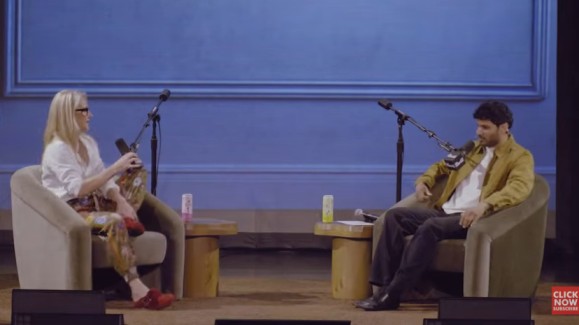
Here is the full transcript of American author Mel Robbins’ interview on On Purpose Podcast with host Jay Shetty, January 14, 2026.
In this powerful live taping of the Jay Shetty Podcast, bestselling author Mel Robbins joins Jay to deconstruct the “shocking lie” of self-improvement and reveal why people-pleasing is actually a sophisticated form of manipulation. Robbins offers a transformative masterclass on silencing your inner critic, explaining how modern technology has biologically rewired us to judge ourselves at unsustainable rates.
The conversation dives deep into the “Let Them” theory for handling toxic relationships, the secret to turning jealousy into a strategic roadmap for success, and why you must stop waiting for an “idealized version” of yourself to start living. From personal stories of overcoming $800,000 in debt to the boring “reps” required to build a business, Robbins provides an unfiltered guide to authentic self-acceptance in early 2026.
Introduction
JAY SHETTY: I’m so excited to be here tonight at the Wang Theatre in Boston with one of my dearest, dearest friends. Truly. And I want to dive straight in, Mel, because you’ve got so much insight, so much wisdom on this that I’ve been fortunate enough to benefit from in our friendship.
But I want to start by asking you, what do you think people are most worried about when it comes to what others think about them?
MEL ROBBINS: Well, I brought notes because I know Jay asks very tough questions. I think that the thing that we’re most worried about is just that people aren’t going to like you, that they’re going to misunderstand you. That’s the thing that we’re the most worried about.
Because if you didn’t care whether or not people liked you, if you didn’t care about whether or not people misunderstood you or your intentions, you would just go about your life however the heck you wanted to, right?
And so, truly, if you stop and think, think about one person in your life, that’s the person whose opinion you worry about the most. Imagine if you could go about your life and not care if they like you or not. Not care if they don’t understand you or not.
And sometimes people be like, well, it’s my boss. Okay? There’s a lot of bosses out there. If the one that you’re working for doesn’t like you, there’s nothing you can do about it. But you can always leave the job.
And so I think that is what’s at the heart of it. That we are so desperate to be liked and understood and loved by others that we live in fear that it’s not going to happen. And in doing so, we basically live a life where we don’t really like ourselves.
JAY SHETTY: So well said. So well said. I mean, I think what you’re getting at there is so powerful because it’s almost like we don’t even know what we’re capable of, what we’re worthy of, what we’re able to do. Because we’ve constantly lived with that inner critic inside of us.
There’s the outer critic and the inner critic. Tell me about how we can learn to quiet that inner critic. Because sometimes it is your boss, sometimes it is your partner, sometimes it is your mom, but there’s that inner critic inside of you that’s stifling you even more.
MEL ROBBINS: Okay, I got to ask you a question first. Should I look at you or everybody out here? I don’t know where to look, because normally when Jay and I are talking and recording a podcast, we don’t see you guys. So it’s so cool to have you here, for real. Thank you for showing up.
JAY SHETTY: And I think we can look at them. I want to be with all of you.
Why Self-Criticism Has Skyrocketed in the Modern Age
MEL ROBBINS: Okay, great. Because I feel a little distracted, I’m ignoring you while I’m trying to look at Jay. And I want you to like me, for God’s sakes. Even though we’re going to talk about how we have to stop worrying about that.
Okay, so the question is about self-criticism. So there’s a lot to unpack here. And the first thing to understand is that there are two factors that truly amp up self-criticism. This is not from me. This is from some of the same experts that you have brought on to On Purpose.
The more stressed out that you are, the more the self-criticism dials up. There’s some relationship between you being in kind of fight or flight and your inability to be kinder and more present and compassionate with yourself. So that’s number one. If you’re experiencing an uptick right now because you feel stressed and overwhelmed, that’s to be expected.
Second thing, and this is going to blow your f*ing mind. Okay. Self-criticism. This is crazy. Okay, I’m going to try to unpack this because I literally just talked to a psychiatrist today at Harvard Medical School who does all this research on body image, and everybody is critical of themselves.
Self-criticism has really gone through the roof because check this out. We were never supposed to see ourselves. No, no, no, no, no. Really? Really. Hang with me for a minute here.
JAY SHETTY: Yeah.
MEL ROBBINS: Let’s just go back one or two human beings. Mirrors back then had all that acid stuff on it, so you couldn’t even see yourself. There were no glass buildings, so you didn’t see your reflection. If you saw yourself, it was in the Charles River, and it was kind of moving.
And so we are not neurologically, physiologically, emotionally designed to actually see ourselves. And we are designed, Jay, to connect with other people.
And so if you’re looking at other people, in a nanosecond, your brain immediately goes into this judgy mode because you’re judging. Okay, is this a person whose energy I vibe with and I kind of want to connect with this person? Or is this a person whose energy’s off, so I kind of want to move away from them?
And so what’s happened, because of Zoom, because of FaceTime, because of selfies, because of all the videos that we take of ourselves, we are seeing ourselves at rates that our brains can’t compute.
And so that same mechanism where your brain looks at other people and sizes people up—is this the person I want to connect with? Is this not?—you’re doing to yourself.
And then you add on top of it, Jay, the fact that you’re also in unprecedented levels. You guys, we have access to what everybody else is doing, which is just more input.
The Real You vs. The Idealized Self
And so what does this create? This creates a scenario for all of us where we are all self-critical and we live at a moment of time where you have the real you, the person you are right now, the person you are. I don’t know what size your waist is, how tall, how short, whether or not you have an acne breakout, whether your hair is frizzy. You are who you are.
But then we all have this idealized self that we think we should be. And because we’re so used to kind of looking at ourselves and assessing ourselves, and our brain’s not wired to really be even thinking about how you look or thinking about what you’re doing in comparison to other people. You’ve turned that against yourself.
It’s just so sad because we live, you know, and there’s this kind of real thin line that you and I can unpack between improving your life and squeezing as much as you can out of this life that you have, really, truly allowing yourself to be happier, allowing yourself to have more fun and relentlessly doing it because you think there’s something wrong with you. Do you see the difference?
JAY SHETTY: Wow. Yeah.
The Four Steps to Overcoming Self-Criticism
MEL ROBBINS: And so when it comes to self-criticism, everybody, and this is something that we all deal with, it’s really important. There’s actually four steps that she goes by. Dr. Ashe, Dr. Ash says there’s four steps.
Number one, you got to recognize that the self-criticism is a function of culture. We live in a world where you see yourself all the time, which makes you more critical of self than generations before us, period. So it’s not your fault. You’re not broken.
I actually think you are perfectly, imperfectly beautiful. I do. And even though there are things about yourself that you would like to improve or change, we’re going to talk about how to do that while you’re actually still kind and accepting of yourself. That’s the thing to do here.
And so, number one, you’re not the problem. The culture’s the problem.
And another fun fact, you know, if you have a smartphone, it is defaulted to show you a mirror image. You want to know why? Because your brain can’t actually process what you look like to another human being. Kid you not.
If you go into your phone and change the setting on your smartphone to have the camera actually reflect the way that people see you versus what you see back in a mirror, your brain will be like, “What is that? What is that? I’m not used to seeing that. I’m used to seeing this reflected image.”
And so, number one, you’re not the problem. You are perfectly, imperfectly beautiful as you are, period.
Number two, in order to move your life forward in self-criticism, you actually have to look backwards. This is super important, everybody, because you were not born hating yourself. You were not born thinking you’re ugly or stupid or dumb or any of that stuff.
And I know that you’ve had Dr. Paul Conti from Stanford on. I know that you’ve had a lot of the amazing experts that talk about how somebody else taught you to hate on yourself. That’s what happened.
And the experts basically say that it typically happens between the ages of 12 and 18 because once you hit 12, your parents are basically freaks and you don’t want anything to do with them. And the social priority in terms of development is I got to bond with my friends. So now it becomes a real priority to actually be connected to people your age.
Here’s the problem. This comes from Dr. Judith Joseph, Columbia University. Her research shows that if you’re kind of in that age range and a kid’s like, “You’re fat, you’re ugly, what’s up with that acne? You know, you’re a little short,” or you walk into a school where the only person with brown skin and you’re among a sea of other white kids and people are picking on you, or you just don’t feel like you belong. That sort of experience to your brain feels like physical pain.
JAY SHETTY: Yes.
MEL ROBBINS: And so you were not born beating yourself up. Somebody taught you to. And that’s an important thing to understand.
And if you, every one of you can probably kind of close your eyes and think back to, when did I think I was ugly? When did I start telling myself I wasn’t smart enough? When did I think my height was a problem? Or my complexion? Or the freckles? Or the meat wings that I call them. You know, my things that no matter how f*ing—what are these tricep things I do? It does. It’s not working. I don’t care how much creatine crap I eat and the supplements I’m popping. Not working.
Jay, you got to go backward before you can go forward, because it’s important for you to truly get. You’re not born doing this. You were taught to. And here’s the good news. If somebody taught you to beat yourself up, you can unlearn it. You can unlearn it. Yeah, right.
JAY SHETTY: You can.
MEL ROBBINS: So then the third thing, and you guys are not going to like this either, because it sounds cheeseball, right? A lot of the great advice out there is like, oh, God, eye roll. Seriously, do I have to meditate again? Sorry, Jay.
This comes from Dr. Ash. She’s been in the Harvard Medical School system for 20 years. In a clinical practice, you have to come up with what’s called a meaningful mantra. It’s just something that you can say to yourself that’s kind. And this is where I’m going to go to my notes, because we have some. I’ve got some notes here.
So Dr. Ethan Cross from University of Michigan, his recommendation, and he’s an expert on negative self-talk and criticism, is talk to yourself like a friend. Meaning use your name. Use your name. And it sounds kind of weird, but if I am kind of feeling negative about something, instead of going, “Well, you know, I always screw things up,” you say, “Mel, you don’t always screw things up.” And when you say your name, it sort of snaps you out of that loop of criticizing yourself. Huge, huge.
Second thing that you can do, Dr. Jim Doty, he’s a neuroscientist and a neurosurgeon from Stanford who studies manifesting. And if you really want to start to practice a new way of talking to yourself, because again, you can program your mind to think different things than what these idiots from your past taught you to say to yourself.
And so, number one, you want to write down what you want to say. And it could just be something as like, “I’m doing the best I can. I deserve encouragement. I’m going to do my best to be kinder to myself.” You can just write down stuff like that. Then you read it, then you say it out loud, and then you close your eyes.
And it’s important to be calm in order for the coding to take hold. According to Dr. Doty, you just visualize yourself literally acting like that. And these are ways that you can, once you recognize you’re not the problem, the culture is. Second piece is, you weren’t born doing this. Somebody taught you, so we’re going to unlearn it. Third is I’m actually going to take time because it matters how I talk to myself.
Like, if I followed you around when I was in a really bad mood, like I do with Chris, I don’t know if Rodney does this with you, but I’m like, following around like a shadow. “Why is this happening? Why is that happening? You know you really screwed that up.” I don’t do that anymore. I used to do that. Not proud to say that, but if you followed yourself around, “I’m not good enough. Things never work out for me. It’s never going to happen. I’m so stupid.” Like, no wonder you don’t feel great. No wonder you’re not motivated.
So you got to actually train yourself to say different things. You have to. And because you’ve been doing this for decades, do not expect it to take one week. Don’t be like, “Okay, I said that thing that Mel and Jay said, it’s not working.” Okay? You got to give it time.
Stop Waiting to Live Your Life
And the final thing, and this is the piece of advice everybody hates from Dr. Ash, which is, you have to stop waiting to live your life. If you are self-critical. Seriously, this is so important. Think about this. If you’re the kind of person that’s like, “Okay, I’m going to lose some weight before I go to a gym. I’m going to clear up my acne before I go on a date. Let me just put on a pound of makeup and a 73-step morning facial routine before I’ll be in the photo.”
All of the things you’re waiting to do, whether it’s go to the beach or it’s put yourself out there, or it’s speak up more at work, or it’s being in the front of the photo instead of the back of the photo. All of those things you’re waiting to do until you either look a certain way or have achieved a certain thing, or you’ve made a certain amount of money. All of those things that you’re waiting on, the days that you wait, you are saying to yourself, “I am not good enough for my own standards to live the life that I deserve.”
Just stop and really think about that. Jay’s not stopping you from doing it. I’m not stopping. Nobody in this room is stopping you from doing anything. You are holding yourself back from truly enjoying all that your life has to offer you now because you believe at some future date there’s an idealized version of you that will be ready or more deserving of the things that are available to you now.
Stop it. Stop it. You prove it’s true. You prove the self-criticism wrong when you’re like, “All right, I got weight to lose. That’s the point of the gym. So I’m going to go in and I’m going to do it now because I deserve to take care of myself, regardless of how I may be feeling about where I’m at in my life.” That’s how you do it. I know it’s a long-winded answer.
JAY SHETTY: I’m sorry, guys. Mel’s not playing around. That was a masterclass.
MEL ROBBINS: No, I’m not.
JAY SHETTY: Wow. We’ve already had a masterclass from you. Mel, let’s—
MEL ROBBINS: Okay, we’re done. See you guys.
The Power of Not Seeing Your Reflection
JAY SHETTY: There’s so much to unpack in what you said. And I want to start with the first point you made. Because what was really interesting is during my three years in the monastery, I actually experienced what it felt like to not see my reflection unless I was on the streets and out of the monastery.
MEL ROBBINS: Really?
JAY SHETTY: Because in the monastery, there are no mirrors.
MEL ROBBINS: Well, they don’t want you to see what your head looks like.
JAY SHETTY: They don’t want you to see what you look like with a shaved head. Trust me, it’s not pretty, but it’s true. You don’t see your reflection because that’s seen as a way of becoming self-obsessed through the teachings of humility and detachment.
And I realized what that felt like that when I left three years later, I hadn’t thought about my physical self. And here’s something really interesting about having done that for that long. You actually start to realize how much more there is to you than just your physical self. You actually get to explore your mental and emotional capacity and ability and potential. Because you’re not bound by just thinking, “This is all I am.”
MEL ROBBINS: Dude, can we just stop and cover on that for a minute? Like, for real. We are so obsessed with the physical that I don’t even know that I’ve considered that probably 99% of my experience of life for probably the first 55 years of my life was all the physical. What do you look like? What do you feel like? What do I got out there? What can people measure? What are the things that are around me? What’s the fit? What’s the outfit? What’s the makeup? What’s the hairstyle, what’s all that stuff?
And there’s a whole actual life that is inside of you that is waiting to open up. And we’ve all been so distracted by the crap on the outside that we’ve forgotten what it feels like and what’s possible when you truly tap into the thing that’s deeper than the skin and the hair and the face and everything that you’re complaining about.
JAY SHETTY: Yeah. There’s an inner universe that we haven’t begun to explore. And that’s why I love what you shared. It resonated so strongly with me because as Mel was saying, we’ve all been on that Zoom screen and we’re not even looking at the other people. Right. You’re just staring in the bottom corner and everyone’s staring in their bottom corner. And so no one’s looking at the slide deck that everyone’s pretending to talk about. And all of a sudden we’re distracted again from that very physical sense.
And one thing you were saying that really resonated with me, that I think a lot of us do this because we get lost in this feeling of trying to shape shift and trying to mold and then people please. So when we get lost in that loop, we’re now trying to manipulate and maneuver ourselves. We’re trying to self-correct and self-fix and self-critique in order to be a somewhat not even good enough for ourselves, hoping that someone else is going to say we’re good enough.
What does someone do in the audience right now who knows that they’re just constantly trying to people please? They’re constantly trying to self-correct, self-critique to be good for someone else. What’s a barrier or a habit or a boundary that they should start with in order to break this cycle to interrupt this pattern?
People Pleasing Is Actually Manipulation
MEL ROBBINS: Okay, so there’s two things I want to say about this. We got a bunch of people. Are there people pleasers in here? Nobody wants to raise their hand.
JAY SHETTY: Like, not me.
MEL ROBBINS: Okay, great.
JAY SHETTY: But they’re trying to please you, so they’re going to—
MEL ROBBINS: Okay, great. Raise your hand. Damn it. This changed my life because I used to wear the people-pleasing badge like an honor. “Well, I’m a people pleaser. I’ll lay down in front of a truck to help somebody.” The first thing I want you to do is I want you to understand that people pleasing is actually manipulation.
JAY SHETTY: Whoa.
MEL ROBBINS: Right? Because people pleaser sounds like, “Oh, I’m weak, I’m tough.” Like, “I’m a people pleaser.” No, you’re a manipulator. And I own this, this is going to snap you out of this. Because we kind of soften into the label and then we pretend we’re weak. No, you’re manipulating people so they like you. This is a strategy.
Thank you. Thank you for receiving that. But doesn’t it feel like a little screwed up and empowering when you’re like, “Oh, wait a minute, I’m not some pushover. I actually want people to like me. So I am willing to manipulate them by staying silent or doing things I don’t want to do or not expressing my boundaries because I, at all costs just want people to like me.”
There is nothing soft and weak about that at all. And when you look at it that way and you see it for what it is, it is a strategy to manipulate other people into liking you. That’s what it is.
JAY SHETTY: Wow.
The Manipulation Behind People-Pleasing
MEL ROBBINS: And for me, that kind of wake up call, because that word, people pleaser, it kind of feels like trying to hug an octopus, you know, like you can’t quite get your arms around it. It’s very loose. But when I was like, whoa, wait a minute. I learned this as a behavior to achieve something. There’s nothing weak about that at all.
So that’s number one. I invite you to just play around with that because you can then go, oh, there I go again. I’m doing that thing where I’m not telling the truth, or I’m saying yes when I meant no, or I’m just not bringing this up because I’d rather they like me and I want to manipulate the situation. That’s the kind of person that I am.
And so that’s number one. Number two is it creeps up on you. So it’s so sneaky because it works. If you’re a person that just wants everybody to like you, you’re a big yes person. And then of course, you’re angry at everybody for you saying yes, right? You know, you’ll take care of everybody else and then bitch about the fact that you have no time for yourself. But here’s the thing, you don’t see it yet.
And so there was this incredible person that came on. I want to get her name right. It was Dr. Lakshman. She’s an expert on boundaries. And she said the darndest thing. She said, “Here’s how you can start to get ahold of this because you don’t realize how sneaky it is. You have to create a pause.” Think about creating a little bit of a space between you and the world.
And I’m going to give you an example. Let’s say you’re a teacher or you’re a nurse, or you have a job where you’re like, go, go, go, go, go, go, go. And it’s one of those jobs where you almost never even have time to go to the bathroom. You literally do not eat lunch when you’re hungry. You couldn’t possibly take a quick break because then you’re going to get in trouble. Everybody needs you.
This is another thing with people pleasing. It’s how you feel important because if you’re needed, then it gives you a sense of purpose. We’re on the On Purpose Podcast. One of the things that she said, which is kind of sneaky, is the best way to start to separate yourself from this strategy, Jay, is to pay attention to what your body needs.
Do you need to go to the bathroom? Do you need to eat something right now? Do you need to step away from your computer and just take a 10 minute walk outside and notice how often when you’re thirsty or you got to go to the bathroom or you know, you’re sitting in class, you’re kind of hungry, but I don’t want to make a sound, you know, and pull this thing out of my bag or I don’t want to get up in the middle of this meeting and excuse myself because I want people to like me and respect me.
Start to notice where you have no actual separation from the world around you and your need to just push yourself through it and be liked by everybody and not make any waves and not do this and make sure that nothing that is your need creates somebody having an opinion about you.
And so eat when you’re hungry at work, take a break and go to the bathroom when you realize you need to instead of holding it because you don’t want to leave the meeting or you don’t want to get out of class. If you are burnt out and overwhelmed, go up to your manager and say, “I need a 10 minute break.”
And what you’re going to notice is how often you’re unwilling to take care of your own basic needs because you’re worried about what people are going to think if you do. And so that is a way to just start to separate yourself. Because when you’re a manipulator like that, like I used to be, it is so in your DNA. It’s like you’ll order a cup of coffee and they’ll get it wrong. You’ll be like, “Oh, no, no, you don’t need to fix it. I ordered the chai, but I’ll take the espresso, triple shot thing. No problem, no problem. I got it. I’m easy.” Okay.
JAY SHETTY: Yeah.
MEL ROBBINS: And then you walk out and you’re like, “Damn it. They always get it wrong in there.”
Your Body Always Knows What It Needs
JAY SHETTY: Do you know why I love that? I absolutely love that, Mel. Because it’s so interesting how our bodies always know what they need. Right? You don’t have to think about becoming hungry. Your body just tells you. You don’t have to think about being thirsty. Your body tells you. You don’t need to think about sleep. Your body tells you when it’s tired.
And it’s so interesting why we struggle today. I’m realizing this literally by talking to you right now. We struggle with sleep today. We struggle with eating today. We struggle with all of these things today because of what you just said and because we’ve ignored the body.
MEL ROBBINS: Yes.
JAY SHETTY: And we’re trying to figure it all out in our mind when the body’s been telling us and guiding us all along. So this lack of alignment that we have between the mind and the body, where the body’s saying, “Do this, do this, do this,” and the mind saying, “I can’t, I can’t, I can’t. Because so and so will say that. So and so will think that.” That lack of alignment is what makes it so hard to go to sleep when you want to.
MEL ROBBINS: Correct. How many of us stay awake and we’re like, “Okay, I’ll watch another episode with you” when you don’t want to.
JAY SHETTY: Or in my case, Radhi falls asleep just when we figured out what we were going to watch.
MEL ROBBINS: Yes.
JAY SHETTY: And now I’m sitting there going, “Oh, now I have to wait for you to watch this tomorrow.”
MEL ROBBINS: No, you don’t. No, you don’t.
JAY SHETTY: I end up doing that.
MEL ROBBINS: But this is really important because it sounds like a dumb suggestion, but it makes a lot of sense because how on earth are you going to be able to start putting yourself first and drawing bigger boundaries? “No, I’m not coming home for the holidays. No, I am not going to take that weekend shift. Even though you need help at work, I have plans.”
If you can’t start to pay attention to the basic needs because you want to please your partner and make sure they’re not upset with you in the morning, so you’re going to sit up late even though you don’t want to, then you’re never going to be able to draw bigger boundaries when it feels like the stakes are even higher.
And so what I love about this pause is it’s a way to start to interrupt your own behavior so you can notice how insidious it is. How it’s everywhere, that you literally will trip over yourself and stomp on your own head. As long as people aren’t mad at you or they’re not disappointed, or you’re not going to get in trouble, or they’re still going to like you. And then it’s just exhausting. And so I loved that advice.
JAY SHETTY: Yeah, it’s great advice.
MEL ROBBINS: It’s hard to do.
Winning Outside, Losing Inside
JAY SHETTY: As I’m listening to you, I’m just thinking about this and thinking if I’m even lucky enough to make someone not mad at me, even if I’m lucky enough to pull that off, I’m probably going to go to bed mad at myself. And even if I’m lucky enough to convince someone to like me, I’m probably going to go to bed disliking myself.
And if someone convinced me to say yes when I wanted to say no, I’m going to go to bed feeling like I betrayed myself. And so it’s a really fascinating feeling that we have where we’re trying to win in the outside world, being okay to lose in the inside world. And that inside world is what we live in all day. That’s what we’re actually seeing through, living through, breathing through.
MEL ROBBINS: It’s the…
JAY SHETTY: The lens that everything happens through. I’m like, when I look at your journey, Mel, and I love the year you’re having. I love… I just want to give Mel her flowers because she’s just phenomenal. I’ve known Mel, I think me and Mel have known each other now for like, I’d say like seven years, maybe even a bit longer.
MEL ROBBINS: Yes.
JAY SHETTY: And Mel works so hard. She has been crushing for so many years. She has put in work and time and energy and effort for years. And I’m saying that as a friend, as an admirer, as a colleague, I have seen this human only want to help people for years and years and years and help millions of people.
And when I look at the transformations you’ve had, from being a lawyer, to being a talk show host, to becoming one of the biggest public speakers in the country and the world, to go on to write multiple best selling books, to go on to have the number one podcast in the world, to go on to just conquer all of these different fields.
MEL ROBBINS: Who are you talking about? I’m as surprised as you are, Jay.
The Courage to Pivot
JAY SHETTY: I’m not surprised. What I’m saying is, what I love about you is that whether there has been external validation or not in different levels, in all of these years, you have kept going, you’ve kept pivoting, and you’ve kept giving. That to me is the sign that you’re fueled by something deeper. And I know that.
And the question I have for you is you’ve pivoted so many times in your career, and I’m assuming that there are people out there in this audience today who are jamming this pivot right now. I’m trying to build my side hustle. I want to quit my job. I want to build this passion. I really want to continue my job. But I want to start writing. I want to blog, I want to launch a podcast. Right?
There’s people who have so many visions and dreams. How did you get the courage to let go and move on multiple times when it’s so hard to let go of something that feels certain, stable and safe? How did you choose uncertainty and unsafety when we all crave safety?
MEL ROBBINS: I think courage is the wrong word. I would use the word desperation. No, I mean it. I mean it, you guys. I don’t know what it is about my personality, but I have negative energy that propels me forward. I’m being dead serious, you guys, because courage sounds like this big thing. And I know there’s no courage without fear, but the truth is, I hated my life when I was a lawyer.
I mean, I would literally take the commuter rail in. It felt like a death sentence. And then you march from South Station up to High Street and then you get in the elevator. And I would contemplate, why is there no floor 13? Oh, I know, because this is an unlucky building. And then I would get in there, and I would literally do the bare minimum, Jay, because I hated my life.
And at some point, you will get to a point where you go, my life doesn’t work for me. It might have worked last year, but it’s not working now. And you will tolerate that, and you’ll tolerate it for years. Some of you will tolerate it for decades. And there’s a certain amount of negative energy required in me in order to organize enough of what they call the intrinsic drive to get over your own excuses and fears and BS and actually do the thing.
And so, to me, every pivot you guys was either because I had to put gas in the tank and food on the table. I got fired from three different jobs. I mean, it sounds fancy to say I was a talk show host, but the show sucked. It got canceled. And I don’t care. I don’t have a problem saying it. I tried it. I won because I tried.
And at some point, you’re going to understand something. You’re either going to spend your life watching other people do the things you want to do, and then you’re going to end up on your deathbed and go, wow, I really blew it. I didn’t push myself through all of those fears and those excuses when I could have. I really regret how I spent the time that I had.
So you’re either going to spend your life watching other people do the things that you want to do and then spend a lot of time making up excuses. Well, they’re this or they’re that. And it may be true. There are people in this world that have unfair advantages. There are people that are starting at a different starting line than you are. There are people that are handed a lot of money. There are people that aren’t.
But you got to, at some point, wake up and realize you got what you got. That’s what you got. The cards that have been dealt to you are the ones that you have to play. And so you can waste your life and your time bitching about where you’re at and being jealous of your friends, which I did for decades, or you will get to a point where you are so sick of yourself and you’re sick of being miserable that you actually do something, because the cost of staying where you are is so much more painful than moving toward the thing you’ve been avoiding.
And so, for me, whether the organizing principle, Jay, was I got bills to pay or recognizing nobody is coming to fix this. And I can either blame this all on my husband or wish, you know, he was in finance. I have this funny story where, you know, I see a friend’s kitchen, right? I don’t know. Have you guys ever had that experience in life? Jay, I don’t know if you have, but have you ever had that experience where people in your life that you’re doing life with, all of a sudden, it’s like they move to the next town or a nicer building, and you’re like, how do they have this much money?
And then you go to their house, right? And they open up the door and you’re happy for your friend. Like you are. They’ve worked hard. They deserve this. And they give you the glass of wine or the Juni. And you have that expression, and you’re like. And you’re trying to be really nice. And you’re gripping the can so much, it’s going to start to spill.
And as they give you the tour, Jay, it’s like one Restoration Hardware display after the other. And then they show you the kitchen, and you’re like, she’s got white cabinets. That’s my Pinterest board.
JAY SHETTY: White cabinet.
MEL ROBBINS: And then if you’re an immature, negative, people-pleasing manipulator like I am, Jay, and you have no idea how to process your emotions like a mature adult, the second you get in the car, you turn to your spouse like I did, and you’re like, why couldn’t you be in finance? Why do you care about people? You know?
And poor Chris. Poor Chris literally is like a turtle in the car. He’s like, I don’t know why I’m not in finance. It would have made life easier. And so, you know, for years, I would see what other people had, and I would be jealous. And the cool thing about jealousy, like, let’s just talk about the cool thing about jealousy.
JAY SHETTY: Yeah.
MEL ROBBINS: You can’t be jealous of something you don’t want. Just think about that. You can’t be jealous of something you don’t want.
JAY SHETTY: There’s a lot of things you wouldn’t be jealous about.
MEL ROBBINS: Yeah, I’m not jealous of anybody that lives in the fanciest penthouse in Dubai. I don’t want to live there. No offense to Dubai. It’s fantastic. That’s wonderful for you. That does not make me jealous. White kitchen cabinets with the marble counters on it. That’s what I got.
But so there’s something in that, the pull of it. And what I’m going to tell you is jealousy is you blocking what’s meant for you with your insecurity. Jealousy comes up because it’s a messenger, and it’s trying to get your attention. While you’ve been sitting there wasting hours and hours and hours on Pinterest and blaming everything on your parents and the person you’re dating or married, you could have gotten to work and just figured out how to create what you wanted.
I spent years thinking that my happiness and our finances was Chris’s responsibility.
JAY SHETTY: Wow.
Jealousy as a Roadmap to What You Want
MEL ROBBINS: If there’s things that I want in my life, I’m capable of paying for them. I’m capable of getting clear about what I want. And then just go to ChatGPT and be like, this is what I’d like. I got a year. What do I do every day for 30 minutes? And honest to God, ChatGPT is going to spit out a plan for you, and then you’re going to be like, well, I don’t that. It’s not going to work for me. That would work for Jay, but it’s not going to work for me. And then you’re not going to do it.
And so I just got to the point at so many times, why did I start a podcast? Because I was jealous of one of my close friends, Jay Shetty. I swear to God, I literally be like, that mother. Honest to God, him and his meditation shit. He started it before I could. Damn. Oh, Jay, I’m so happy for you with your podcast.
And then you got to say, well, what’s underneath the jealousy? There’s something that my friend is doing and he’s leading the way. And if I can get my negative ass out of the way, I can actually see that there’s something that he’s doing that’s inspiring me. He’s not taking anything from me. He’s giving something to me.
Everybody, yes, everybody in your life that you are jealous of is giving you something. You know, I think about life, Jay, as we’re all on this giant walk together, that’s what we’re doing. And there are going to be times in your life where you’re ahead of other people, because your example can help other people. Our friend Ed Mylett says that you’re best equipped to help the person you used to be.
If you’ve ever had a kid that has had learning disabilities and you’ve had to go through the IEP process, you are on a walk with the entire world. And that experience equips you to help somebody who has not gone through that. And then there are going to be times where you’re behind and everybody in this room could teach you something if you’re willing to go through your life with open arms and an open mind and even see the things that you’re jealous of.
And why am I out on tour? Because he went on one. I’m just such a copycat. It’s unbelievable. Damn, I’m jealous. Jay’s going on tour. Okay, that’s a sign. There’s something that he’s doing. Oh, I know what it is. He’s actually with the people that listen to the podcast. I want that because I miss you guys. I’m alone in my garage in Vermont, for crying out loud. I need people. I need people, Jay.
JAY SHETTY: Oh, Mel.
MEL ROBBINS: I mean, I need another drink. Can I have yours?
JAY SHETTY: Yeah, of course. There you go.
MEL ROBBINS: Since I spilled mine.
JAY SHETTY: You didn’t.
MEL ROBBINS: I would have thrown it at you.
JAY SHETTY: I’m not sure you spilled it as much as you destroyed it, but the person you’re jealous of is not taking anything from you, but is giving something to you. I want everyone to write that down. Mel just said that. Write it down. That is the single best advice I’ve ever heard in my entire life on overcoming jealousy and envy.
MEL ROBBINS: Really?
JAY SHETTY: That is not. Because you constantly think someone’s taking up your space, taking up your opportunities, taking up every single access point, taking up the network. You think that. And because you think that, you think there’s no space left for you, so you think there’s only a finite number of seats. And so if someone else is taking all those seats, then there’s no seat for me. That is the single best advice. Give Mel a round of applause for that insane single best advice.
MEL ROBBINS: Well, all I’m going to say, Jay, is if you could text that to me, because being menopausal, I will forget that the second that I leave.
JAY SHETTY: And everyone else will tag us. Everyone else will tag us and put it up, Mel, because you’ve been on the podcast, I think, two or three times. This might be the third or fourth. We’re not going to do the final five with you. Before we take some questions, I want to do a new game that we invented for the stage, and you get to be involved as well. It’s called Vibe Check. And there are these two paddles I’m going to give you. One says “it’s a vibe,” and the other one says “not a vibe.”
MEL ROBBINS: Okay.
JAY SHETTY: I’m going to ask you guys what you think first. Then Mel’s going to tell us the truth. So I want to hear you say, do your best rendition. You can do better than that. Brilliant. I love it. I’m going to hand these to Mel.
Vibe Check Game
MEL ROBBINS: Okay. I want to make sure I understand this because I want you to like me. Right.
JAY SHETTY: I’m going to read.
MEL ROBBINS: This means no. It’s not in. Yeah, and this means it’s in.
JAY SHETTY: Correct.
MEL ROBBINS: Oh, red, green. Okay, I get it. Now, for those who don’t understand the word.
JAY SHETTY: I’m going to read you different scenarios, and we’re going to get the audience’s reactions first. Then we’re going to get Mel’s reaction, then her explanation of her reaction.
MEL ROBBINS: Great.
JAY SHETTY: All right, so the first one. Your friend really wants to go to an event where they won’t know anyone, but you’ve had a really stressful week at work and are drained. So you say no. Is it a vibe or is it not a vibe? Say “it’s a vibe” if it’s a vibe. For those who it’s not a vibe. Oh, all right. There’s a lot of. Over to Mel. I’ll read it again. Your friend really wants you to go to an event where they won’t know anyone, but you had a really stressful week at work and are drained, so you say no.
MEL ROBBINS: Well, if they want to go to an event where they don’t know anybody, then I better not show up. Otherwise they’d know somebody.
JAY SHETTY: Good answer, Mel. I like that. That’s awesome. All right, this time I’ll ask you to make noise. You decline a project at work because you don’t feel confident you can handle it, even though it could have been a big career move. Is it a vibe? Make some noise. It’s not a vibe. It’s not a vibe. Yes, Mel.
MEL ROBBINS: Yeah, definitely not a vibe. We got successful people in the audience tonight. You know, you say yes to that kind of thing. You do, you do.
JAY SHETTY: Oh, this one’s going to be interesting. You’re dating someone who treats you well but doesn’t challenge you emotionally or intellectually. You stay in the relationship because they really take care of you. Is it a vibe? It’s not a vibe, Mel. Oh, all right. Exclaim, Mel, you’re saying it is. They said it’s not.
MEL ROBBINS: Well, you know, I think it depends on what you value. Like, literally, you can have a therapist that challenges you emotionally. I actually, you know, I say that. I’ve said to our kids that, you know, I think about the person that you’re going to create a life with as your home base.
And so for me, peace is what I prioritize. So if you have somebody that takes care of you, but they’re not like challenging you emotionally, I don’t think the person that you’re with has to be 100% of everything. And, you know, like, if you are, that’s different than saying you’re with somebody who just is like the walking dead.
But what I heard in that question is like this thing that happens in relationships where you constantly think, is there somebody better out there? And you’re searching for this sort of Frankenstein version of a human being where you take a little bit of this and a little bit of that and a little bit of this, and you forget that if you got 80% of the things that actually matter, you’re with somebody who’s loyal, who’s kind to you, who cares about you, who is interested in learning.
But, you know, anybody can develop skills and becoming more self aware, that’s a skill. Becoming more like emotionally aware, that’s a skill. And so I think, you know, one of the big things, especially as a mom that I keep saying to my kids is we get so obsessed about the shiny stuff on the outside like we’ve been talking about, that we actually don’t give enough value to the things that matter over the long haul.
JAY SHETTY: Yes.
MEL ROBBINS: Because having been with Chris for 30 years, I’ve hated the man at times. And it’s about whether or not you’re with somebody, that when you come home, you’re going to exhale. That when you’re going through a hard time, you know that they’re going to be there for you and that you’re going to be there for them.
That this is a person that may not have it all, because none of us do, but it’s a person that’s willing to grow with you and to try. And so to me, I think that that’s what I heard in that.
JAY SHETTY: I love it. Great answer. Great answer. All right, last one. You guys having fun? Awesome. All right, last one. Last one before we take some questions.
Okay. You have a close friend who always dates people who are bad for them. You can relate, right? All right. You’ve said things in the past and they haven’t listened. You see them making a major mistake again, but you decide not to say anything this time. Is it a vibe? It’s a vibe. They’re saying it’s a vibe to not say anything this time.
I’ll read it again. You have a close friend who always dates people who are bad for them. You’ve said things in the past and they haven’t listened. You see them making a major mistake again, but you decide not to say anything this time. Oh, just agreeing again.
The “Let Me” Side of “Let Them”
MEL ROBBINS: Well, I’ll tell you why. I’ll tell you why. Because “let them” doesn’t mean them. Like, everybody loves that. Let them, let them, let them, let them. But there’s the “let me” part.
And the reason why they didn’t listen is because you criticized them and you were judgmental and you thought you knew better. And so you, just like I have done in my life, made this mistake by thinking I know better. I actually pushed somebody away from me and right into the arms of that person.
And so I wouldn’t say what I had said in the past. But I might say you don’t seem like yourself. I might say, have you thought about whether or not you’re happy? Because I want you to be happy. And if you’re happy in this, I actually want you to bring this person around.
And what’s going to happen is by doing that, not judging, you’re now stirring up tension. They’re not an idiot. People know when they’re with somebody who treats them like crap. But when we judge and we think we know better now, we are piling on judgment, which makes them feel more trapped and ashamed because they know.
And so you taking an approach that is more of the “let me” side of this, that’s like, let me be more compassionate. Let me just say I want you to be happy and you don’t seem happy and just, I’m here. And if us all going out to dinner together is going to, like, bring you closer, I would love to go out to dinner with you and this person.
And then they’re going to have to sit with that. But that’s how you keep somebody closer and you make it safe for them to come to you when things get hard and when they’re going to leave. Because also, if this is somebody that has been doing this over and over, it’s a pattern.
And this is something that they’re going to keep repeating and it’s going to take time for them to see that they’re worthy. And so the worst thing you could do is push them toward the other person by being judgmental. You want to keep them very close, particularly if you’re worried about them.
Live Q&A Session
JAY SHETTY: Beautiful. Mel. Mel, I love the disagreement in the room, but coming to a nice, wholesome agreement. We wanted to make this night special. The fact that you’ve come out for a live taping of the recording. I wanted to make sure that we get you involved.
And so now Mel’s kindly agreed to. Mel and I would love to take your questions. I’m going to have Taylor from my team coming around. She has a microphone. If you have a real, genuine, burning question that you’d wanted to ask Mel, this is your opportunity.
MEL ROBBINS: That’s going to make Jay blush.
JAY SHETTY: Raise your hand and Taylor will come and find you. This is Taylor, everyone. Make some noise for Taylor in the brown blazer. Be nice to her, otherwise she won’t pick you.
MEL ROBBINS: Hi, everybody. You guys are so good looking.
JAY SHETTY: Please stand up. When you ask your question, tell us your name. Hey, man, how’s it going? Fantastic. Ladies and gentlemen, such an honor. Such an honor to be here with Mel and Jay. Oh, my God. Danny Wadhwani, born and raised in Ghana, West Africa. Indian by origin. Being in Boston for 20 years now.
MEL ROBBINS: Amazing.
JAY SHETTY: Here’s my question for you. In all that you’ve shared, in all that you’ve become, when you are envisioning the better Mel, the Mel you’ve envisioned, or the highest, truest version of Mel, where do you go to to tap into that source of power, courage and reinforcement to push that Mel forward or to capture where that Mel is trying to go?
Because we all have moments where we want to be somewhere, or we think we can get there, but we are doubting and so much is going on around us where we cannot silence the noise. There must be a source of power or a source of people or a source of something that people like you and Jay tap into to say, I can absolutely f*ing do this. I’m going to go from on purpose to Judy to everyone. I love it. Thank you, man. Great question. Thank you.
MEL ROBBINS: Great question.
JAY SHETTY: Great first question.
MEL ROBBINS: Cool. Mel, you want me to take it first?
JAY SHETTY: Yeah. Highest Mel, he said okay.
MEL ROBBINS: Oh, that’s right.
JAY SHETTY: Okay.
MEL ROBBINS: Well, I was going to see how you were going to answer.
JAY SHETTY: Whatever you want.
Cultivating Faith in Yourself
MEL ROBBINS: So I guess I want to approach this two ways. Because what you’re actually talking about is cultivating a sense of faith in your ability to make things turn out without knowing whether or not they do.
And so there is this thing that I say to myself when it feels like things are not happening fast enough, or, oh, there’s another job I just got fired from, or, oh, there’s another bill. Like all those moments in my life where it’s funny, you can define what you want, but oftentimes you get it, but it’s just not how you thought you would.
And so I cultivated this kind of saying for myself, where I would literally say to myself, “I refuse to believe that this is how it ends.”
JAY SHETTY: I love that.
MEL ROBBINS: That I believe that this moment, no matter how sucky it is, is preparing me for something in the future that I do not know is going to happen. And the reason why I know that this works is because each and every one of you, you can sit in this moment with Jay and me and everybody here right now, and if you look back on your life, you can see how everything that happened, good or bad, I’m not saying you deserve any of the bad things, but you can see how everything that happened led you here right now.
That every day, every experience, right, is just a brick in the path of life. And if that is true, which it is, then it is also true that where you are in this moment is also a brick on that same path, and it is leading you somewhere. And I choose to believe that that somewhere that it’s leading is way bigger and more amazing and cooler than you could possibly imagine.
Now, it may be 17 years before you look back on this moment and say, that’s why that happened. Because, you know, when I invented the five second rule, counting five, four, three, two, one to get out of bed when we were $800,000 in debt, it was 19 miles from here, February 2008, Tuesday morning, one decision changed my life. I had no idea in that moment that that little countdown thing would be the brick that would lead me all the way here.
I’ll share another story. I, for years, would watch people that wrote books and had podcasts and all this stuff be asked to be interviewed by Oprah Winfrey. And I would always sit there going, why am I not getting asked? And then I would say to myself, one of these days, it’s going to happen. One of these days, if it hasn’t happened yet. Here’s another one. It’s because it’s not meant to happen now.
And so when Jay acknowledged me for all the crazy stuff that’s been going on this year, it occurred to me, oh, that’s why it didn’t happen then, because I was being held for a different moment. You are being held for a different moment and cultivating that faith in yourself that you have the capacity to keep going, that there are lessons that you still need, that there is some bigger possibility in the future that is waiting for you, which is why it’s not happening now.
And there’s that famous, I think, I don’t know if it was Jay Z that said it but literally, the genius thing that both Jay and I have done is we just don’t quit. We don’t quit. And I do think you have to outlast yourself because you’re the one who’s going to quit. You’re not against Jay or me. It’s you against you.
And so when I think of the, I can’t remember the word that you used to describe, like, the version of me, the version of me that I think about is somebody who reminds herself all the time, no matter what’s going on now, I choose to believe this is in service of something that I can’t even imagine that’s going to happen. And I trust that at some point I’ll know. And my job now is not to doubt. It is to just keep going.
JAY SHETTY: We all want to feel better, to have more energy and more focus throughout the day. That’s why I co-founded Joonie, a sparkling adaptogenic drink made with powerful ingredients like ashwagandha and lion’s mane. It’s designed to boost your mood, support your focus, and give you natural energy, all without a crash. Get your daily mood boost with Juni at Whole Foods Market or head to drinkjuni.com to find a store near you.
I remember one of my monk teachers used to say to me, if there’s something you desire and it hasn’t manifested yet, it’s because of three things. One is the universe and God saying, not right now. The second is not like this. And the third is, I’ve got something better planned.
MEL ROBBINS: I like that one.
Building a Business from Passion
JAY SHETTY: And I have seen that in my own life. And I think that’s what Mel’s saying. And that’s what made me think that. I always used to believe that my imagination was big and beautiful, only to realize that the universe and God’s imagination was far, far greater than anything I could imagine for myself.
And it’s that trust in that moment when you think your imagination is better than God’s and the universe is. It’s in that moment when you’re not getting it that you have to live. What Mel’s saying in that, “I refuse to believe it ends like this.” I love that statement and another one that I love for myself that I’ve always said. And it comes back to the same advice that Mel was giving earlier.
We all need mantras to keep us going. Mine has always been, “This only makes the story better.” Every time I get rejected, I’ve just collected something that makes the story better when I get to tell it. And when I tell my story in 5, 10, 15 years time, this moment just made that story better because everyone I respect and everyone I look up to has had that same story.
If you’re failing, you’re having the same story as the person who’s successful. If you’re losing, you’re having the same story as the person who’s winning now. If you’re losing right now, you’re having the same story as the person who wins in 10 years. That’s what they did, too. They didn’t win their first championship. They didn’t win their first league. It didn’t work that way.
And so “this only makes the story better.” This only makes the story better. So good, that helps. Taylor, where are you, Taylor? Taylor’s over there. Who are you handing the mic to? Hello, what’s your name?
MEL ROBBINS: Hello, my name is Tara from Boston.
JAY SHETTY: Tara, so nice to meet you. Thanks for being here.
Letting Go of Guilt and Finding Compassion
MEL ROBBINS: Thank you so much. You have been part of my life for many years. You have no idea. So thank you. I have a question that’s for both of you. How can you let go of guilt or compassion from those who have caused you the most pain? Feeling bad or wanting to help the people that have hurt you?
I’m going to be very honest because that’s just who I am. I think a lot of my family, unfortunately, has hurt me in ways. So I’m just trying to find, as I get older, how do I let go of that guilt? I want to give him compassion, but then I’m like, ooh.
Well, I think you have to ask yourself, how is the way that you’re doing it now helping you? Is it working? I have, I don’t know. I don’t really know.
This is the only thing that has helped me, and I relate to the question. And I don’t know anything about your background, so I don’t want to presume anything, but you are not responsible for what was done to you, but you are responsible for what you do next.
And I choose to believe that human beings, basically, families. Well, first of all, families teach you how to love people you hate. That’s why they have families. Second, we’ve had expert after expert, both Jay and I come on. And ironically, we dropped an episode today about emotionally immature parents.
People can only give you what they have to give. This does not excuse abuse. This does not mean that you didn’t deserve to have family or past experiences where you felt seen and taken care of and loved for who you are and supported. But for me, really being able to separate myself from the hurt that was caused and look through it with steely, cold eyes and basically go, if it wasn’t given to your parents, they can’t give it to you.
And I have chosen to stop punishing people who did the best that they could with the situation they were in, the trauma that they had, their own life experiences, because I don’t like carrying around that judgment and hate. I don’t like constantly living in the past. It is so much easier and freeing to basically look through the eyes of compassion and say, “I deserved more. And I see fully you were not equipped to give me what I deserve.”
And as long as I hold judgment over what happened, I am still in the past. I am still suffering. There was this analogy. I think it’s TD Jakes and Oprah Winfrey. And I believe the context is that he was counseling her about her relationship with her mother.
And he basically said, in life, there are people who have a quarter cup capacity. That’s what they got. They got a quarter cup of love and attention and patience to give. And then there are those of us, probably most of us in the room, that have a gallon need.
If somebody only has a quarter cup to give you and they have poured all of that into a person who has a gallon need, we will not feel satiated, seen, or taken care of, ever. There’s this massive mismatch, and no amount of judgment, no amount of anything is going to change the fact that they are who they are. This is what happened. But you get to choose what happens next.
And for me, learning to say this person is who they are, let them be who they are. Now I get to choose. How much time do I put into this, how much energy do I want to look and see and understand what they went through so that I feel more compassion? And it’s not as personal as it feels.
It’s a tricky thing to do, and it’s a lifelong process because they’re going to continue to trigger the hell out of you because they are who they are. But you get to choose how much time and energy you put into it. You get to choose what kind of relationship you want to create or not with the people that hurt you in the past. And that’s where your power is.
JAY SHETTY: Tara. I’ll just say I love everything Mel said. And the only thing I’ll add is if you want to feel compassion for anyone that hurt you, it starts with first being compassionate to yourself and allowing yourself the opportunity to feel angry, to feel betrayed, to feel hurt.
Then you’ll rise to maybe wanting to feel distant, maybe not wanting to be involved. And then maybe one day you’ll desire to feel compassionate, truly, in a deep way. Compassion’s at the top of the ladder. It’s not the first step. And when you want to feel it on day one, it almost stops you from taking the first step on the ladder.
So the first step on the ladder is anger. You’re on the first step. And the fifth step is, I don’t want anything to do with them. And then the tenth step is, I see why they treated me that way. I get it.
MEL ROBBINS: And then you’re free.
JAY SHETTY: Thanks, Tara. Thank you. All right, Taylor, who you picking next? Hey, tell us your name.
Turning Hobbies into Businesses
MEL ROBBINS: Hi, I’m Andrea Giancantari and I’m a co-founder of the Whiny Guinea. And I want to understand how you took hobbies and turned them into businesses to drive your message forward.
JAY SHETTY: It’s a great question. You want me to go first, Mel?
MEL ROBBINS: Sure, because I want to know all your secrets so I can copy.
JAY SHETTY: The reason why I love that question is because, at least for me, I never believed this would ever be my livelihood. When I left the monastery and I knew I just wanted to spread the wisdom I’d learned, I was happy and satisfied doing it on evenings and weekends.
So I would put together events of five to 10 people. If they’d show up in the heart of London and talk to five to 10 people, I’ll do it for free. There was no social media, there was no video, nothing was recorded. There was no content because I just got to do what I was passionate about.
And when I started to do that with no pressure, by the way, when I did that, there was no pressure because I didn’t need a thousand people in the audience. I didn’t need a million views, I didn’t need 100,000 followers. I could just be present.
I then felt to myself, well, I want to share this with more people. Maybe I should put a video out. Maybe that will reach more people again. That was the last thing I wanted to do at the time. But I’ll tell you a bit about my story in the second half.
And so I put that out and then what happened is I got to a point in my life where I had 200 million views on my videos. But I was four months away from being broke and I had this really interesting reflection. I thought, wait a minute, I’m trying to teach the world abundance and I’m trying to help the world live their purpose and their passion. But I don’t know if I can even do this for longer than the next three months, because I can’t even put food on the table through it.
MEL ROBBINS: Jay, it’s not courage at all, is it, everybody? He’s got a problem. He’s got a problem to solve.
JAY SHETTY: And so I realized what I had to do, first of all. But the reason is when you start with thinking you want to build a business, it’s really hard because that’s where you don’t get to fail. You don’t get to try, you don’t get to choose, you don’t get to play, because there’s too much pressure.
Then when the pressure piles up and you think about it, you look at the first thing for me was how can I serve people best? And what are they truly looking for from me? Right? How do I serve people best? What’s the impact that I can have? That’s the greatest. And what do they truly want from me? That’s different.
And that’s how we started the Genius Community, which was my membership app that we launched seven years ago now. And it became the pillar because what people wanted, they were watching these videos, but they were like, “Jay, we want weekly access to you. We want to hear your ideas. We want to hear your insights. We would almost feel like we’re getting workshop from you every single week.”
And so for seven years, every single week, I gave a private workshop to a group of people who subscribed to Genius. That’s how it started for me. And so what I’m saying to you is it starts as a passion. It starts as a hobby. And then you figure out what you can do for people that they truly want from you and that you can serve them differently with. And then you build around that.
You don’t just go, oh, I’m going to try and build this random thing. And I think this is what people want. And this, because what ends up happening is you waste time, money, and energy. You take a moment, take a beat to listen to the people you’re serving and ask them, speak to them, connect with them.
I always say to people, if you’ve got 100 followers, they can share so much with you about why they love you and why they follow you. You don’t need to wait. Like Mel was saying earlier, you don’t need to wait till you have a million followers to launch a business. You could have a hundred followers that creates an amazing business for you because you deeply understand their need.
You serve them and you take care of them, and I think the people that get to take care of millions of people who started off as people who took care of five, and that’s where it all begins. And so take care of whoever’s there connecting and resonating right now, and let it flow.
The Power of Being a Student First
MEL ROBBINS: I would add one other thing, because it sounds like you kind of know what you want to do. So I think the mistake that everybody makes, especially in today’s world, because we live in the most amazing time, you guys, you can legally stalk people. There is somebody doing this business somewhere, and they have shared the formula.
Spend a year being a student of it. You better believe a year before I started this podcast, I was all up in Jay’s grill. I was watching everything this man was doing. That’s why I’m like, two episodes a week. Jay’s doing two episodes a week. I’m doing, like, all the people that are at the top are doing a daily episode. They’re doing two episodes. The formula is there, and now there’s going to be a problem.
So give yourself a year to be a student of what you want to be, a master of search for formulas. What are people doing that are succeeding? Jay’s right. Listen to the people that are there and what’s missing.
And here’s going to be the problem. You’re going to literally be like, “Well, then I’m copying Jay. Then I’m doing it like them.” Dude, you’re going to make it your own because you’re your own person. But everybody in the history of time basically kind of does the same thing. There are no new ideas, for crying out loud.
And so you’re literally going to go, “But they’re doing it this way, and I got to make it my way. And it’s got to be special, and it’s got to have a logo, and it’s got to do all this.” And so then you’re going to avoid doing what are called the reps, the boring, tedious, annoying things that successful people do in the dark. It gets you no credit and no money, but that actually builds the business.
Doing the Work in the Dark
And so if you want to turn a hobby into a business, be a student. First, search for the formulas. Then take another year to actually show up every day and put your money where your mouth is and do it broke and do it in the dark while nobody cares and is paying attention. And then pay attention to the 10 people that have shown up because they’re your people.
And if you do that, within two years, you will be shocked at what you can create. Shocked.
JAY SHETTY: I love it. Oh, my gosh. Everyone, I want you to know we have got a whole second half in store for you. I’m going to be guiding you through some interactives. We’ve got a meditation, but Mel has to jump on a flight. She’s got a show in New York. So I want you to give it up for my friend Mel Robbins.
MEL ROBBINS: Get on your flight. Your whoa’s like I’m knocking over Jay. I love you. I love you.
JAY SHETTY: Amazing.
MEL ROBBINS: I love you guys.
JAY SHETTY: Give it up for Mel, everyone.
MEL ROBBINS: Love it. Don’t go anywhere. The best part’s coming next with Jay. All right, I love you best. Bye, guys. Love you all. Bye, guys.
JAY SHETTY: Have the best break. I’ll see you in a few moments. Back here to meditate. To grow, to change. Have a great moment. I’ll see you in the second half. Take care, everyone.
Finding Meaning Beyond Achievement
JAY SHETTY: You set a goal today, you achieve it in six months, and then by the time it happens, it’s almost a relief. There’s no sense of meaning and purpose. You sort of expected it and you would have been disappointed if it didn’t happen.
Related Posts
- How Elon Achieves the Impossible w/ Eric Jorgenson (Transcript)
- Michael Singer: How to Let Go of Everything That’s Hurting You (Transcript)
- Dr. Gabor Maté: Link Between Your Childhood and Why You’re Addicted to Approval (Transcript)
- Bialik’s Breakdown: w/ Holistic Psychologist Dr. Nicole LePera (Transcript)
- RiseGuide: Cancel vs Unsubscribe vs Delete (What Each One Does)