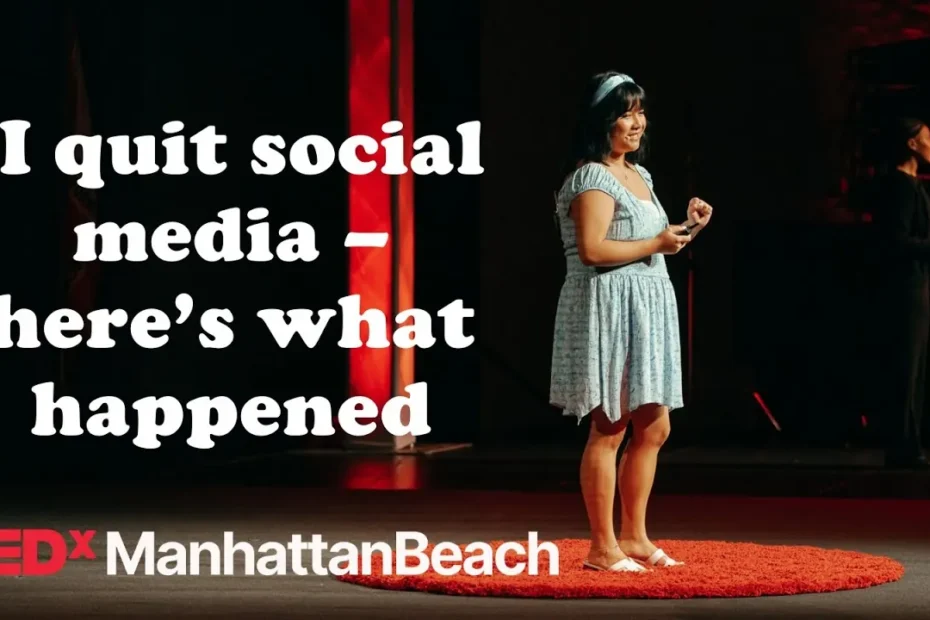
Editor’s Notes: In this compelling TEDx talk, Gabriela Nguyen shares her transformative journey of quitting social media and switching to a simple “dumb phone” after years of being “chronically online”. She discusses the concept of “lifestyle abstinence,” explaining how these digital products are intentionally designed to profit from our attention and negative emotions. Nguyen provides a roadmap for building a more peaceful and focused life by changing our physical, digital, and social environments to prioritize real-world connections over digital platforms. (February 11, 2026)
TRANSCRIPT:
From COVID-19th Birthday to Chronically Online
GABRIELA NGUYEN:
In my freshman year of college, I was gearing up for my first big unruly college birthday party. I was excited to turn 19 with my new friends. That was until the pandemic hit, and then we all got locked in quarantine. So what was supposed to be my big 19th birthday bash became my COVID-19th Zoom party. And yes, as you can imagine, it felt more like an all-staff meeting than a celebration of adolescence.
Looking back, I appreciated how technology helped me celebrate such an important day in my life with my friends, when at the time I didn’t have a better option. But it was rare for me at this time to use technology in such a clearly beneficial way.
A Decade of Being Chronically Online
I made my first social media account when I was 10 years old, and for over 10 years after that, I was what people call chronically online. I would watch mind-numbing content for hours a day. I would fixate so much on how I presented online, everything I posted made me feel like I was on a stage. I formed parasocial relationships with influencers, I chose screen time over family time, and I just became unnecessarily worried about world events that I couldn’t change, making me feel powerless, trapped.
I couldn’t even read a good book because I’d always have to keep picking up my phone every couple of minutes. And I would always, always have my phone clutched in my hand to do literally anything, even things that didn’t require a phone, like taking out the trash. I would interrupt family dinners and conversations with friends to check my phone. I was just like a couple of the audience members who I’ve been watching scroll on their phones since I got up here.
But none of these things were earth-shattering. I didn’t develop an eating disorder from Instagram or get horribly cyber-bullied. And slowly, and it took me years, I realized that my phone and the apps on it were dominating my life. And day by day, I just started to like myself less and less, until I realized that I needed to make a change.
The Intentional Design Behind Social Media
What I wish I knew about smartphones and social media was that my problems with them were not due to a personal deficiency, but rather how these products are intentionally designed because they make a profit off of our attention and negative emotion.
Choosing Abstinence From Addictive Technology
So by May of 2023, I had deleted all of my social media accounts. Instagram, Snapchat, TikTok, gone. I switched out my iPhone for this. I’ve committed to building a life outside of addictive technology. And I call this lifestyle abstinence.
After adopting an abstinent lifestyle, I was waking up refreshed because I was sleeping deeper and longer. I also used to be one of those people who thought I was naturally distractible. And I realized without addictive technology, focus is a skill, and I could learn it. Without a constant onslaught of information, my mind became more peaceful.
I also realized that the despair and hopelessness that I thought was just part of being a teenager was coming from the fire hose of content that I was feeding myself. I realized that my grand role in making the world a better place was found in the everyday interactions that I was neglecting and the friendships that I was letting wither.
But let me be very clear that adopting abstinence didn’t suddenly give my life meaning, but it gave me the building blocks in order to create a life of meaning, one that’s centered around being a good daughter, sister, friend. The desire to engage with flesh and blood people, not platforms. And simply the time in my day in order to do all these things.
A Widespread and Worsening Crisis
Unfortunately, I’m not alone in my struggles. This issue of addictive technology is widespread. It’s getting worse. It’s getting younger. A 2023 Gallup poll of American teenagers found that they spend, on average, 4.8 hours per day on social media. This includes popular services like YouTube and TikTok and is equivalent to nearly a full-time job of just social media.
The Real Cost of Social Media Addiction
GABRIELA NGUYEN: And yes, times seven, because in this job you don’t get any days off. The Peer Research Center conducted a survey of American teenagers ages 13 to 17 and found that 45% of them feel they spend too much time on social media. This number was closer to a third just three years ago.
The problem is that we do not realize, or rather, we do not truly accept that our everyday technologies are designed to be addictive. And so we’ve just resigned to this notion that superficial connections, fractured focus, sort of feeling like everything’s kind of going to hell, just the modern tax of life.
But I’ve wondered if there’s a more peaceful and fulfilling way to live without having to run off into the woods. But I discovered that abstinence can do just that. Because abstinence is more than just saying no to addictive technology. It’s saying yes to a new life without it.
Making Addictive Technology Obsolete
As a society, we must stop trying to escape from addictive technology with screen time hacks that don’t work. The sustainable solution is that we render these platforms powerless by the way that we go about our lives.