Share & Care!
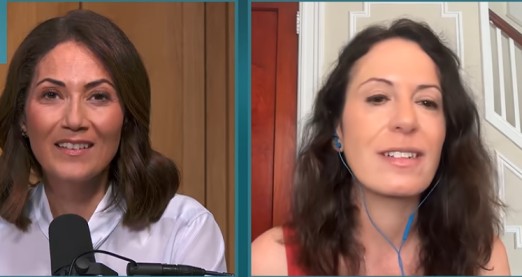
EDITOR’S NOTE: In this wide-ranging conversation, veteran New York Times journalist Maggie Haberman — co-author, with Jonathan Swan, of Regime Change: Inside the Imperial Presidency of Donald Trump — joins host Mishal Husain on The Mishal Husain Show to offer an unparalleled inside look at Donald Trump’s second term. Drawing on decades of reporting on Trump, Haberman traces his political rise from the tabloid pages of New York to the Oval Office, and examines the tight inner circle now running the White House as the midterm elections approach. This interview episode was premiered September 18, 2026.
TRANSCRIPT:
Introduction
MISHAL HUSAIN (00:00:43 – 00:02:46): From Bloomberg Weekend, this is The Mishal Husain Show. It is pretty clear by now that this Trump White House in the second term is run by a much tighter, more loyal group of people than the first time around. Notwithstanding the odd departure, overall, the core team that came back with Donald Trump that is delivering his core plan has remained pretty much intact.
And if there’s one reporter who has really been able to burrow inside the inner workings of that team and the president himself, who’s covered Donald Trump since long before he ever ran for office, it’s Maggie Haberman of The New York Times. To give you an idea of just how embedded in this world she has been, back in 2016, she had nearly 600 bylines in the paper, and since then she has written many stories and 2 books, most recently co-authored with Jonathan Swan, Regime Change: Inside the Imperial Presidency of Donald Trump.
Maggie’s work is widely respected. Personally, I marvel not only at her sourcing but also the volume and the quality of her output. And now, with the midterms just 6 weeks away, I wanted her to take us inside the Trump White House right now, to bring us right up to date with the atmosphere, the attitude of the president himself to the fact that the Iran war is not going according to plan, to get a sense of election strategy, what the next 2 years of this presidency might look like. What’s the president thinking? What is he doing day by day, even minute by minute?
So here is that conversation. As ever, Bloomberg subscribers can read my notes on this episode. That’s the case with all our episodes. You’ll find a link in our show notes. And with that, on to Maggie herself, who joined us from her home. Hello, Maggie.
MAGGIE HABERMAN (00:02:46 – 00:02:46): Hi there.
Regime Change and the Book’s Origins
MISHAL HUSAIN (00:02:47 – 00:02:56): I want to obviously congratulate you on Regime Change, but also tell you and show you how much use it has been to me. Can you see all the Post-its?
MAGGIE HABERMAN (00:02:56 – 00:03:01): Wow. I sure can. That’s fabulous. We love to see that. Thank you.
MISHAL HUSAIN (00:03:01 – 00:03:15): So it’s been a— it’s been a resource as well as a read for me, particularly because we had Tucker Carlson on the show a few weeks ago. So all of that was particularly useful. So thank you for your work in more ways than one, essentially.
MAGGIE HABERMAN (00:03:15 – 00:03:20): Well, thank you. I’m glad that it provided a— it was of utility.
Covering Trump Before the Presidency
MISHAL HUSAIN (00:03:21 – 00:03:45): Most definitely. I’ve been thinking about how many reporters have observed Donald Trump for as long as you have. And I realize that for you, the story goes back considerably before the 2016 election when you were working in New York. This is before your New York Times days. Tell me about that period and how you saw him, way back before he ran for president.
MAGGIE HABERMAN (00:03:46 – 00:06:03): So I started my career at the New York Post just slightly over 30 years ago to the month as a clerk. And Trump was— I’m trying to think of how to describe this. He was almost etched into the fabric of the place by then. The New York Post had been rebought and saved by Rupert Murdoch. The paper would have folded without him. But Trump was somebody who people liked reading about. By then, it was very clear that he was an overleveraged businessman. He had had his near-complete personal financial crash of the early 1990s. His marriage had broken up to Ivana Trump. He had married Marla Maples, and then they divorced. He liked being seen as a playboy. He was somebody who was always available for a quote. He would often provide his own background information to Page Six, the gossip page, as a source close to Trump. And he was often the source. So he was just around.
And then in the 2000s, much of my time after the September 11th terrorist attacks was covering rebuilding at the Trade Center site for the first few years. He had no connection to the site. He did go down near the site in the day after, 2 days after. He had no role, though, in the recovery. He did propose, I think it was twice, rebuilding the original Twin Towers as they were, which was not in the cards, and they had already moved on with planning. He was very critical of the design.
And then in 2010, he decided that he wanted to become more involved in national politics. I had just started at Politico that year, and I had a blog about New York, and he was hosting a fundraiser for the Republican Governors Association. And I think that was October. And that was the avatar that he was getting more serious, or I should say the warning sign that he was getting more serious about national politics. Flirted with running before many times. But in 2011, he did make moves that one would make if they were running. He had a number of conversations.
MISHAL HUSAIN (00:06:04 – 00:06:08): Amplifying the lie about Barack Obama not being born in the United States.
MAGGIE HABERMAN (00:06:08 – 00:06:15): Correct. Correct. But so that’s my arc of watching him. And it’s been a while.
The 2011 Political Flirtation
MISHAL HUSAIN (00:06:15 – 00:06:34): I’m interested that you did take this move towards running for office in 2011 seriously, given that he was an overleveraged businessman whose ideas like rebuilding the Twin Towers weren’t taken seriously. Why did you take him at his word at that point, even though that was not the year he ran for president in the end?
MAGGIE HABERMAN (00:06:35 – 00:07:41): It wasn’t, but I could see from my trip to New Hampshire following him— putting aside the press conference that he did about Obama’s birth certificate in an airport hangar— but he went to a diner, he walked around. I can’t remember which town it was. It’s in whatever story I wrote. There was true interest in him that went somewhat beyond celebrity, and the reaction that he got— he gave his first real speech at the Conservative Political Action Conference, and he was incredibly well received. And that was where he gave this speech that he could have given it at any point in the last 15 years, frankly, except for actually the last year where he’s been much more pro-war. But he talked about China, he talked about the US losing its edge. There was this sense of sort of national injury that in the post-fiscal collapse US had a lot of appeal to a lot of voters. And I just— I can’t really actually explain it other than the fact that he was able to punch through in a way that clearly the operative class was taking more seriously than I had expected.
MISHAL HUSAIN (00:07:41 – 00:07:45): But massively helped by the fact people knew him from TV by this time.
MAGGIE HABERMAN (00:07:45 – 00:07:45): No question.
MISHAL HUSAIN (00:07:46 – 00:07:53): The Apprentice has been running for many, many years. But I think you’re saying there was more than that. He did have some kind of touch beyond that.
MAGGIE HABERMAN (00:07:54 – 00:08:40): I am saying that definitely the celebrity played a role, and definitely the fact that The Apprentice, which was not a real representation of his business or his business acumen— it was a reality show— but it gave people the ability to see him in this high-backed leather chair looking leaderly. They could envision it in a way that I think they might not have been able to otherwise. It certainly introduced him to people’s homes in a different way, but there was a receptiveness to him on a political level that went beyond just the “hey, can you give me an autograph, sir” that I was struck by.
And then, as you correctly say, he pulled back and he re-upped with The Apprentice. And it was right after the White House Correspondents Association dinner where President Obama—
MISHAL HUSAIN (00:08:40 – 00:08:42): Oh, the notorious one. Yeah, roasted him.
MAGGIE HABERMAN (00:08:42 – 00:08:49): Correct. Yes. And while this current President Trump will continue to claim that he loved it, he did not love it. So.
Trump’s Approval Ratings and the Iran War
MISHAL HUSAIN (00:08:50 – 00:09:22): So I know, Maggie, in this conversation we’re bound to go back and forth in time a bit, but I kind of want to go right up to the present day because here we are talking 6 weeks away from the midterms. That popular touch that he had at that point, what if anything has changed in recent months? In Regime Change, you chart the run-up and the early period of the Iran War. His approval ratings are very low, the war’s not going as planned, voters have concerns that he doesn’t seem to be responding to. So has he lost some of that?
MAGGIE HABERMAN (00:09:22 – 00:10:33): That’s the question that we’re all wrestling with right now, that if he goes out on the campaign trail, as his advisors have been promising he’s just on the verge of doing for most of this year, and it hasn’t quite come to pass that way, if he does consistently go out to a number of different states, that is what we are going to be testing.
But so far, he seems more interested in talking about the credit he is being denied, in his view, media coverage that he wishes that he could get, and a list of grievances that go back a while. Now, we’ll see whether he is able to gin up enough fear among voters. And you are seeing a really expansive amount of Islamophobia across the party right now. And that does actually relate to 2011, too. But that may be enough, because it is not a presidential election, because it is much more state and candidate-based.
But, yes, the main concern, and his own advisors know this, is the amount of monetizing of the presidency is on a scale we have never seen. Which is not to say there is no president that has ever made money after or had a family member who is controversial. This is just something fundamentally different.
MISHAL HUSAIN (00:10:33 – 00:10:37): We keep being told by the White House it’s all very transparent, it’s done without his knowledge.
The “Unreality Bubble” Inside the White House
MAGGIE HABERMAN (00:10:38 – 00:11:27): And it may be. Look, to your question about whether he still has that touch, one of the things that Jonathan and I, my co-author, write about in Regime Change, and you know this because you’ve read it, is just how cloistered he has been in this White House. And there are some reasons for it. There are legitimate security concerns. There are ways to deal with it, though. And he is surrounded by such a small group of advisers. The decisions that are made in this government are made by a handful of people in the Oval Office with him. And if the rest of the government is not in the room, they can often have no idea what’s happening.
And he gets this positive feedback loop from Natalie Harp, his ever-present aide, who’s been called the “human printer” by her colleagues, by people who call him supportively. It’s hard to break through that unreality bubble with him. And again, this is why being out on the campaign trail will be a big test.
MISHAL HUSAIN (00:11:27 – 00:11:30): 6 people running the administration. So—
MAGGIE HABERMAN (00:11:31 – 00:11:32): Give or take, but yes.
The Inner Circle
MISHAL HUSAIN (00:11:32 – 00:11:40): So hang on. Take us through them. Stephen Miller, Susie Wiles, Natalie Harp. Are you saying the woman who sits in the corner is—
MAGGIE HABERMAN (00:11:41 – 00:12:44): No, Natalie Harp is not a decision maker. Okay, so who are the others? She is a direct influencer, to put it sort of gently, in terms of her constant printout of information to him. Susie Wiles, Stephen Miller, John Ratcliffe, the CIA director, Pete Hegseth, the Secretary of Defense/War, Dan Caine, Chairman of the Joint Chiefs of Staff, Marco Rubio. And depending on the issue, you can have Scott Bessent there or Chris Wright there, the Energy Secretary and Treasury Secretary.
But just to that point, and as we write in the book, in the meetings in the lead-up to the first strike on Iran from the US on February 28th, Bessent and Wright, the 2 people who are going to have to manage the biggest global energy shock in history, and that is what has happened, they weren’t even in the room. They were not in these meetings up until the final moment because this White House was so afraid of leaks. Information is a commodity that a huge premium is put on, and secrecy.
MISHAL HUSAIN (00:12:44 – 00:12:46): You didn’t put J.D. Vance in that very close group.
MAGGIE HABERMAN (00:12:47 – 00:12:49): I should put J.D. Vance in there. I apologize.
MISHAL HUSAIN (00:12:49 – 00:12:56): Well, I wondered if anything has changed between him and the president because of J.D. Vance voicing his opposition to the Iran War to the president.
J.D. Vance, Marco Rubio, and the 2028 Race
MAGGIE HABERMAN (00:12:57 – 00:13:54): One of the things that we showed in the book is how Vance was the only one early on in these lead-up meetings about Iran who was actively against it. In front of others with the president. Now, there might have been one-offs where other people told the president they didn’t think this was a great idea, but Vance put some capital on the line and it cost him with the president. The president got very irritated with him.
I also just want to point out that it’s to your question, I think they’re in a perfectly fine place. That does not mean the president’s going to rush to endorse J.D. Vance or to get involved in the 2028 race. I’d be shocked if he does anytime soon. But it’s not actually helpful to Pence to have the headlines out there about how he opposed Trump. His whole political life rests on Trump being behind him, to your question. But that is where they were. Ask me in a month where they might be.
MISHAL HUSAIN (00:13:55 – 00:14:06): Yeah. Well, because obviously the key thing is whether what’s happened in the last few months might pivot him further towards Marco Rubio being the chosen successor rather than J.D. Vance.
MAGGIE HABERMAN (00:14:06 – 00:14:35): Yeah, and look, in terms of Rubio, just to be clear, Jonathan and I have no reporting suggesting that Rubio is actively looking at a candidacy. Now, he could scale up pretty fast. There are things he can’t do as the Secretary of State. He would really have to step away. I don’t know what the constituency is in this party for Marco Rubio. He’s very popular with neoconservatives, with some Republican donors, and with some West Wing staffers. But J.D. Vance is actually much more representative of where GOP is right now.
Sources Inside a Closed White House
MISHAL HUSAIN (00:14:36 – 00:14:59): One of the many things that’s fascinated me about the book and your reporting with Jonathan Swan and on your own is the fact that in this much tighter White House, exactly the kind of circle you’re describing, very different to the first term, you still have your sources. There are still people who tell you things. I mean, you must see how curious that sounds.
MAGGIE HABERMAN (00:15:01 – 00:16:14): I know. I mean, I certainly understand the question. Look, to be clear, just a couple things can be true at once. This book was the hardest work that either Jonathan or I have ever done, in part because it is such a closed circle, as you were saying, in part because this information environment is so difficult. It’s don’t trust and then try to verify it, and then anything you can’t verify goes to the side. That should seem pretty obvious in reporting, except that we have to make sure that every single account, all corners of every single account line up. If there was a 5% of doubt in anything that we had, it went aside.
And you will notice that there really haven’t been denials. Maybe there’s been the broad denials from the president, it’s all fake, et cetera, et cetera. But there have not been individual denials from people in this book. And I think that’s a testament to the reporting. Jonathan and I have both covered his world for a really long time. And so there are some advantages to being old in the news business, that’s one of them. There aren’t many these days, but that is one. But look, I’m sure there are people who are upset about the book, and that might make certain aspects of our jobs harder, but we’re still going to do them.
MISHAL HUSAIN (00:16:14 – 00:16:31): But the people in this circle who are talking to you, are there motives that they’re wrestling with internal politics, and that’s why they want to talk to you? Because the way that President Trump talks about you publicly — and I’m sorry to repeat this, but including calling you “maggot” rather than Maggie —
MAGGIE HABERMAN (00:16:31 – 00:16:34): Oh, I don’t care, it’s fine. I’ve heard it before. It’s really okay.
MISHAL HUSAIN (00:16:34 – 00:16:41): I mean, I sort of would imagine that anyone close to him would be terrified of going anywhere near you.
MAGGIE HABERMAN (00:16:41 – 00:18:10): So without getting into sourcing and who we speak to, people tend to have their own reasons for talking to reporters, and I don’t think there’s any exception to that in this current government. Sometimes it’s because people know the reporters, sometimes it’s because people are sort of working something else out in their own head and are just talking.
I would say that in this government, and unlike Trump 1.0, where you had a lot of people who were sort of using a huge array of reporters as almost therapists — they would talk and, “What do you make of this? Why is he doing this?” — because he didn’t know most of his government and vice versa when he came to Washington. This time, this is a group of people who actively want to see him succeed. They believe in him. And they’re generally quite proud of what they’ve accomplished, both in terms of coming back — it is a historic win in 2024. I don’t mean by the margins. I don’t mean by his vote count. I don’t mean that he had a majority of the popular vote. But what I do mean is the country elected a convicted felon who had been indicted repeatedly, who — there is not a single person in this country who has not heard some aspect of Trump’s character or his business past or his behavior. And he was elected more decisively than before. And they are proud of that. And frankly, most of them don’t see much wrong with how they’re conducting a lot of their most controversial behaviors.
Mar-a-Lago, January 6th, and the 2020 Election
MISHAL HUSAIN (00:18:10 – 00:18:23): Well, in 2021, I think even he didn’t think he had a political future when you went to see him for that series of interviews at Mar-a-Lago in the wake of January 6th. And I think at one point you were talking about the future and he’s like, “What do you mean 2024?”
MAGGIE HABERMAN (00:18:24 – 00:18:58): Well, it was actually — I looked at that answer slightly differently. It was I wanted to talk about the future and he just wanted to talk about the election that had just happened. I don’t think that it was so much that he didn’t think he had a future. I think he was so stuck on proving, “quote unquote,” that he really won in 2020, that that was where his focus was more than anything. And he really did believe, or at least appeared to believe, he had a real chance of getting reinstated that year in 2021 because Mike Lindell, the MyPillow CEO, kept telling him he could.
Looking Beyond the Midterms
MISHAL HUSAIN (00:18:59 – 00:19:09): Maggie, then let’s look beyond the midterms. Let’s say the Democrats do manage to take the Senate as well as the House. Let me ask first of all whether you — how likely you think that is.
MAGGIE HABERMAN (00:19:09 – 00:19:37): I always hate making predictions because I’m often wrong, and then I’m on tape being wrong. If the climate is today, I can see a scenario where the Democrats win plus 2, maybe plus 3 Senate seats. There are such individual races in the Senate, it’s a little different. The House, it is hard to see the Republicans holding. It’s just the margin is the question.
MISHAL HUSAIN (00:19:37 – 00:19:55): So I just wonder what you think the next 2 years will be like if the Democrats are in a position where they’re chairing committees and they can send out the subpoenas and at least try and compel people to come and testify. What do you think that’s going to be like for the administration?
MAGGIE HABERMAN (00:19:55 – 00:20:41): So normally when we get to this point in a lame duck presidency, I can see what will happen after the midterms just with some level of reliability. But I look past this November and it’s a black hole because we’ve seen administrations not respond to subpoenas before, not just this one but others. I don’t know what it looks like when potentially an entire government slow walks or just ignores subpoenas. And I have every expectation that they will try to delay as much as possible if they engage at all.
I think that you will see a lot of subpoenas sent to people outside the White House, but I think those subpoenas will get slow-walked too. And I also think that Democrats can’t decide exactly what targets they want to go at right now, and that is a struggle they’re having.
MISHAL HUSAIN (00:20:42 – 00:20:49): So explain why you say that, why you’re not sure about the Democrats, as in then you’re not sure how they would use that power if they had it.
MAGGIE HABERMAN (00:20:50 – 00:21:53): I think they are not sure how they’re going to use that power if they have it. And to be clear, there is a debate right now about whether to try to impeach him again. It would be a 3rd time. There is a real lack of appetite for that at the highest levels of the Democratic leadership because they’re concerned that the voters are just going to sort of roll their eyes and think this has been done before. The chances that Trump gets removed from office are pretty low, even if they get a conviction. And it wouldn’t be a 2/3 majority almost certainly in the Senate.
There’s a lot of voter anger at government broadly. Many voters feel as if the majority changes and nothing changes for them, and their cost of living is very, very high. Trump — and we say this in the book, we wrote this in the book, reported it — Trump has promised any number of people, who he has said that he’s going to pardon, anyone who’s come within a certain radius of the Oval Office. He changes the footage depending on who he’s talking to. He’s been saying that over a year. I expect that will happen. Most people are counting on their pardons.
MISHAL HUSAIN (00:21:53 – 00:22:11): It would be quite something to, take the House and the Senate and to have these powers, the congressional powers, and then not use them — the Democrats, I mean — against the man you’ve told the electorate you are the opposite of, and that’s why they should vote you in.
MAGGIE HABERMAN (00:22:11 – 00:22:32): And this is sort of the been the problem for Democrats for the last 10 years, is that it’s sort of heads Trump wins, tails they lose, right? Because it’s completely clear which way they want to go. I think some of them genuinely believe what they say about Trump. I think some of them think that the messaging goes too far, but it just depends on who you talk to.
Confidence Man, Regime Change, and the Legacy of Trump
MISHAL HUSAIN (00:22:32 – 00:22:54): The subtitle of your first book, Confidence Man, is The Making of Donald Trump and the Breaking of America. Do you think that by the time he leaves office, he will have changed America? And I’m thinking primarily of what we’re describing, the way that government works, this pattern that — the use of executive orders or the mass use of pardons again?
MAGGIE HABERMAN (00:22:55 – 00:24:26): I don’t think that we are likely to see another Donald Trump anytime soon, if ever again, because he is sui generis for a lot of reasons, including the celebrity we were talking about. But this is also the reason that the title Regime Change exists for Jonathan and my book. We were describing and witnessing a form of regime change in our own country. It’s not about Iran. We thought of this title long before the Venezuela raid to capture Maduro earlier this year in Caracas.
This is a fundamental reimagining of the US presidency. It has shown that the post-World War II order won’t stand. I don’t know why any future president in this country would have the trust of European leaders, Democrat or Republican, frankly, certainly Republican, because I think they’ll assume that it’s from the same party of Trump, unless it’s somebody who completely disavows that was Trump, and that’s not going to be a Republican anytime soon.
What you’re asking is essentially what levels of pushing the limits does a future president agree to pull back on? Biden actually did on a lot of them, almost all, in fact. And his party was frustrated with him. They want to see a fighter. Expansions of executive power have occurred before, and there have been corrections, obviously, after Nixon in particular. The imperial presidency is a term that was coined in 1973. But it’s going to really require a heave of different branches of government to try to institute more formal change for a system that is primarily norms and not laws. So we’ll see.
Trump, the Iran War, and Frustration Behind the Scenes
MISHAL HUSAIN (00:24:26 – 00:24:50): We should go back to the Iran War, which you chart in such detail, those days in the run-up, including Netanyahu’s visit to the Situation Room. But I want to ask you what you’re gauging about how bothered Donald Trump is that the war hasn’t gone according to plan. Is he ignoring the news? Is he frustrated? I mean, he can’t be happy with where things are.
MAGGIE HABERMAN (00:24:51 – 00:25:37): No, he’s frustrated. He will be very clear with people privately how frustrated he is. He just wants this to end. And it obviously has not gone how he hoped it would. And frankly, every path that they were hoping would get them out has failed. Led to some other constraint. He’s definitely frustrated that the war is not over. He thought this was going to be a quick war because he had a feeling, because Venezuela had gone quickly, because he thought the Iran regime was a paper tiger based on how they had behaved around the 12-Day War.
When we speak to people inside the administration, what we hear is they just want to see gas go below $4 and change, which is where it is now and the record prices it’s setting. By Election Day, and they’ll figure out the rest after that.
Trump’s Approval Ratings and the Midterms
MISHAL HUSAIN (00:25:37 – 00:25:46): So he is briefed on all these things. It’s not that he’s in a bubble where he’s only on Truth Social and he’s only watching the markets. He does know about these realities.
MAGGIE HABERMAN (00:25:47 – 00:26:15): The unreality bubble doesn’t mean that he’s not aware of actual reality. It just means that he is sticking to his version of reality. But he is briefed. He is told. Now, do people like giving him bad news in this government? Not at all. They didn’t in the first one either. And there were always these sort of tricks around how certain pieces of information would be conveyed, especially when they were what Trump would call negative. But he is briefed on how this is going. He does know what the truth is.
MISHAL HUSAIN (00:26:16 – 00:26:17): Does he know how bad his approval ratings are?
MAGGIE HABERMAN (00:26:18 – 00:26:24): Absolutely. But again, that’s another reality is what you make it, as he projects, right?
MISHAL HUSAIN (00:26:25 – 00:26:34): But if he knows, then again, I’m wondering why he’s not going all out on the campaign trail? I mean, I know he’s not on the ballot, but how—
MAGGIE HABERMAN (00:26:35 – 00:26:39): Well, that is why. That is why. I mean, you just answered your own question. That is why.
MISHAL HUSAIN (00:26:39 – 00:26:42): But how Republicans do is going to reflect on him.
MAGGIE HABERMAN (00:26:42 – 00:27:37): He doesn’t see it that way. And it’s interesting because there was a reason for that for a long time where he would poll somewhat better than the generic Republican brand. I don’t think that’s the case now.
But he said something last year about how he was either proud or honored that Republicans don’t do as well when he’s not on the ballot. He has set up this distance from his own party. And again, going back to that celebrity piece that we’ve talked about, by a lot of voters, he is viewed as separate from the Republican Party and the brand, or the worst of it, “quote unquote,” in terms of how it polls.
He said something— Laura Ingraham from Fox asked him at that midterms convention in Dallas last week, are you going to campaign harder than you ever have before? And he just said no. And he made clear that he’s not running. He doesn’t see these as his races. She kept presenting him with exactly what you just said, and he just does not see it that way.
Trump’s War Chest and Campaign Spending
MISHAL HUSAIN (00:27:37 – 00:27:45): Is he even spending much money from that war chest on these candidates? Is that money going out to his favored candidates?
MAGGIE HABERMAN (00:27:46 – 00:28:07): It is. It is now, actually. It took a long time, and that was to the frustration of a lot of candidates and people in his party. But there is actually a sizable amount of money going out now. We’ll see where it ends up and how much of a difference it makes at this stage. I do think there is an argument to be made that some of the races might shift with this late spending. We’ll see.
Trump and Domestic Issues: AI and Voter Anger
MISHAL HUSAIN (00:28:07 – 00:28:35): Okay. Away from Iran, I’m wondering whether he is engaged at all in other domestic issues beyond— I don’t mean inflation, but look at something like AI, where it feels like even before the latest warnings that AI could be existential for us. There’s a lot of voter anger about data centers, especially where they’ve pushed up electricity prices for people. He seems unmoved by that. He’s been asked about it and it doesn’t seem to register.
MAGGIE HABERMAN (00:28:35 – 00:29:11): I think even more than not registering, I mean, he’s made comments that would have been fatal for a politician before about this, that people want to stay poor if they don’t want this. Everybody should want this. It goes to the out-of-touch thing that we were talking about.
Look, the president believes his own instincts are better than any other data that people give him and any other information. It’s why he went into Iran. He told Tucker Carlson— again, we have this in the book— it’s going to be okay because it always is. And in his mind, it always is for him. It’s just not always okay for other people. But it certainly is not okay right now. But we’ll see.
Trump’s Denial on Iran
MISHAL HUSAIN (00:29:11 – 00:29:21): Well, that’s it. That’s it. So do you think that that realization on Iran will come to him at some point? Or is it that when it doesn’t go his way, there’s just a sort of denial attitude?
MAGGIE HABERMAN (00:29:21 – 00:29:52): I think there is a denial. First of all, I don’t think he’s ever going to admit that Iran did not work out the way he wanted it to. And he has this sort of rubric of, “can’t have a nuclear weapon, can’t have a nuclear weapon,” which is what he has said over and over again. He has never made a compelling case to the American public about why this war was necessary right now. We’ll see if that ever happens. No, he can’t just cut and run from this, which I think is what he would love to be able to do. But there is no way right now. But he’ll never admit that it did not go the way he wanted.
Inside the Oval Office: The Final Interview for Regime Change
MISHAL HUSAIN (00:29:52 – 00:30:03): Regime Change ends with the moment you and Jonathan go and see him in the White House for the final interview for the book. And the Iran War, I think, has been running for more than 2 weeks at that point.
MAGGIE HABERMAN (00:30:04 – 00:30:04): Yeah, 17 days.
MISHAL HUSAIN (00:30:04 – 00:30:12): 17 days. And he has pictures of trees — maples — that he’s looking at at that moment when you come in?
MAGGIE HABERMAN (00:30:12 – 00:32:32): It was an interesting moment because Jonathan and I had not been in the Oval Office this term before then, before the gildification of it, the goldification of it. And it really is overwhelming when you walk in.
And so, he came in from this door that’s to his left if he’s sitting at the Resolute Desk, which connects to his dining room, private dining room. And you would’ve thought that there would be maps of the Middle East or briefing books or something related to it on the desk. And no, he went over the desk and there were trees, maple trees. “I’m picking trees for the White House. I pick good trees.” Okay. And then after that, he showed us some mockups of the ballroom. “These are columns that are supposed to be evocative of Athens, and these are supposed to be evocative of Rome. And how does the width relate to the Supreme Court columns?” And that was a while. That was the first several minutes. The war really was sort of the furthest thing from his mind.
But the second question that we asked was about presidential power, because he had been — and we knew this — telling people that he was the most powerful US president that there had ever been. And we wanted to see what he would say to us if we put that question to him, and we did.
What happened was he directed Natalie Harp to — he says, “Very interesting. Natalie, go get the pages from the historian.” And she comes back with this 2-page document. We each get a copy. The president gets a copy. And the supposition from what he said was a historian was that Donald Trump is the most powerful person who’s ever walked the planet. And then it goes on to list what he describes as the top 10: Hitler, Mao, Stalin, Napoleon, Alexander the Great, the Caesars, Tamerlane, William the Conqueror, Attila the Hun. I mean, this was the list.
And he wasn’t looking at this from a moral plane. It was that they had power and he has more, and that he’s willing to use it. And that’s what he wanted us to take from this. And because he has the reach of modern technology and the US military, but he is also willing to do things other people are not. And that is certainly true.
Now, this was not a historian. It was somebody who had been a volunteer caddy for Gary Player, the golfer. He’s a history buff, but anyway. But it really was, hyperbole aside, the premise of our book, which is that he is — and to your question — remaking the way the US presidency exists. We’ll see if anybody else wants to use the power that way. I doubt they will, but we’ll see.
The “Imperial Presidency” and What It Means
MISHAL HUSAIN (00:32:32 – 00:32:43): So actually, judging by that, your subtitle, Inside the Imperial Presidency of Donald Trump, which — when we think about democracy, “imperial” doesn’t have good vibes, but I guess to him it probably does.
MAGGIE HABERMAN (00:32:46 – 00:33:13): Well, he is not somebody who has spent a whole lot of time concerned with human rights or civil rights, or small-d democracy. He likes the idea of doing things fast, and by fiat. And that’s part of why pardons are an action that he loves. They are quick and unilateral, and the recipient owes him. So, no, I don’t think “imperial” bothers him especially. It bothers people around him, but it doesn’t bother him.
What Has Surprised Maggie Haberman Most
MISHAL HUSAIN (00:33:13 – 00:33:23): What has surprised you, Maggie, let’s say, in this year, or even since the start of this presidency? What are the moments which you really — when someone told you, were just jaw-dropping?
MAGGIE HABERMAN (00:33:25 – 00:33:58): I don’t even know how to answer that. I think what I didn’t envision, in all seriousness, was the de facto co-presidency of Elon Musk, because that really did stymie the administration for the first several months. And I think we make that clear in the book. DOGE just was a failure. It just didn’t work. The fact that the GOP Congress has acted like an arm of the executive branch has been pretty shocking, in a way I’ve never seen before in my lifetime. That is the difference.
Elon Musk, DOGE, and Democratic Subpoena Power
MISHAL HUSAIN (00:33:59 – 00:34:26): I talked to Elon Musk for quite a long interview on a stage when he was still running DOGE, actually, but not long before he decided that he’d had enough. And I think he really didn’t like being asked questions about how that was going because it probably was, I hazard a guess, harder than he imagined it was going to be to make a difference there. Do you think that the Democrats, if they get subpoena powers, might subpoena people like him, like Elon Musk?
MAGGIE HABERMAN (00:34:26 – 00:35:17): Oh, 100%. I mean, people have privately told me that that’s what they plan to do. Again, what they say they plan to do and what they will do can sometimes be different, but I do think that they will.
I think the question becomes what they think they can accomplish doing this within a short amount of time. Because remember, part of why the investigation into what happened on January 6th, 2021, and Trump’s efforts to stay in power — part of why it went the way it did. The House committee actually really got a ton of information, but it was not a perfect investigation, in part because they knew they only had 2 years and the House was likely to flip.
So I think you’re going to have potentially the same thing here, and I think that might impact what they do and who they look at. But I do think that Musk and DOGE are going to be topics.
The Personal Toll of Covering Trump
MISHAL HUSAIN (00:35:18 – 00:35:31): Can I bring it back to you, Maggie, before we let you go? And that is to ask what work like this takes out of you. I’ve heard both you and Jonathan say that this book has taken everything out of you.
MAGGIE HABERMAN (00:35:31 – 00:35:32): It nearly killed us.
MISHAL HUSAIN (00:35:32 – 00:35:43): Yeah. He said, no more books. Which would be a shame. But for you, when the phone rings, you have to take it. I know you’ve got a husband and 3 children. I’ve seen your acknowledgments.
MAGGIE HABERMAN (00:35:43 – 00:35:45): So does he. So does Jonathan.
MISHAL HUSAIN (00:35:45 – 00:35:46): Can you carry on at this pace?
MAGGIE HABERMAN (00:35:47 – 00:36:46): Yeah, I mean, sure, I’m 52. I’ve been doing this. I’m turning 53 in a few weeks. I’ve done this pace for a very long time. There’s a bit of wear and tear on the bike at this point, but I can’t run quite as hard as I used to.
I also just — the thing that has sort of — that’s been interesting as a parent of older children and this one soon-to-be adult child, a little legal-to-drink child I should say, is their needs are very different. And actually more expansive at this age. So that’s been my moderating force. But I just have one speed, and that’s both good and bad.
So, that said, I will say this, this term does not have the same level of constant pedal, in part because he’s not on Twitter, X, anymore, and his Truth Social feed exists in something of a void. And it’s mostly him posting memes at this point, and AI slop instead of declarations. That helps.
MISHAL HUSAIN (00:36:47 – 00:36:52): So it’s a good reality check that you’re saying it’s actually a little bit — in some ways it’s calmer than it was before.
MAGGIE HABERMAN (00:36:52 – 00:37:00): Correct. It’s more intense, but it is calmer separately. So yes, I follow you.
MISHAL HUSAIN (00:37:01 – 00:37:04): Are you a political junkie? Do you love it? You just get a kick out of this?
Maggie Haberman: 00:37:06 – 00:38:16 No, well, kick is the wrong word. I mean, I am a massive consumer of political news and how politics impacts the country, but because it’s how it impacts people, not as a game.
I think that Twitter/X/social media have been among the worst things that happened to journalism collectively. On the one hand, elevated voices who were often not able to be heard in newsrooms, but also just all of us, and I take full responsibility for this on my own front, just did things on Twitter or social media we just never should be having conversations about because we’re not sitting in a newsroom.
I raise that to just say that I think that a lot of people have come away thinking reporters think this is all a game, and I think some reporters do think it’s a game. I don’t. My definitional experience as a reporter was 9/11, and I was 6 blocks from or so from the second tower when it fell. And had to run up Sixth Avenue. And as I said, spent several years covering rebuilding.
And I think that this country and the world, but this country, have gone through a series of national traumas ever since. And so I don’t get a kick out of it. It’s just what I know how to do.
Mishal Husain: 00:38:16 – 00:38:25 Maggie Haberman, we’ll let you go to make the next set of calls or take the next set of calls, whoever they’re going to be from. Thank you. Thank you very much for talking to us. Take care.
Maggie Haberman: 00:38:26 – 00:38:27 Of course. Thanks for having me.
Related Posts
- Transcript: President Trump Remarks on Healthcare, Sep. 18, 2026
- Transcript: Jonathan Swan’s Dive into Trump’s Reality: The Weekly Show
- Transcript: President Trump Remarks in Dublin, Ireland – Sep 12, 2026
- Transcript: President Trump Remarks at the Republican Midterm Convention – Sept 9, 2026
- Transcript: President Trump Signs Executive Orders, Sep. 4, 2026