Share & Care!
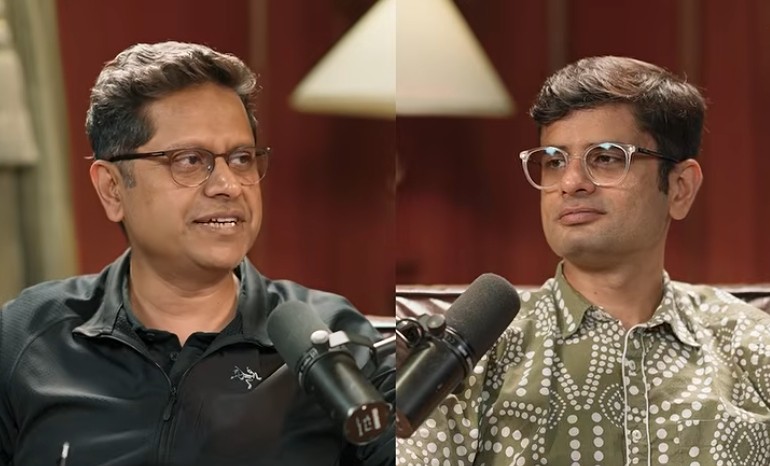
EDITOR’S NOTE: In this episode of SparX, host Mukesh Bansal sits down with Paras Chopra — founder of Wingify and now the AI research lab Lossfunk — to explore the state of AI research in India, the existential threat AI poses to the IT services industry, and what it means for India’s sovereignty in an era of rapid AI advancement. From consciousness and agents to fusion research and cybersecurity, this wide-ranging conversation covers the big questions that Paras is dedicating his post-Wingify life to answering. This interview episode was premiered september 18, 2026.
TRANSCRIPT:
Welcome to SparX
MUKESH BANSAL (00:01:21 – 00:02:15): Hi, Paras, welcome to SparX. At SparX, we try to have conversation about everything deep tech. Paras is very well known, but just to recap, Paras built Wingify, which was completely bootstrapped all the way to $50 million revenue and eventually $200 million exit. And then he’s doing something even more unconventional, started an AI research lab.
Very curious to understand, Paras, what is the thought process behind AI Research Lab? What led you to doing something which is— I think there is no parallel, I don’t even want to say unconventional, this is first of its own kind initiative. So what led you to build what’s your AI Research Lab?
From Teenage Coder to AI Researcher
PARAS CHOPRA (00:02:15 – 00:02:40): Yeah, thanks Mukesh for having me, big fan of what you’re doing. Yeah, so effectively I was dabbling with AI even before starting Wingify. My love and interest in AI goes way back when I was a teenager. So I remember having a very— I mean, those times you had very slow computers but having Visual Basic 6.0. I think this is 1998-99.
MUKESH BANSAL (00:02:40 – 00:02:42): You were interested in AI at that time?
PARAS CHOPRA (00:02:42 – 00:02:53): Yeah, I was writing backpropagation algorithms, teaching computer how to play tic-tac-toe, writing genetic algorithms. Cooking up theories on how intelligence could be.
MUKESH BANSAL (00:02:53 – 00:02:58): Where did you get exposure? How did you even get to know something called AI backpropagation exists?
PARAS CHOPRA (00:02:58 – 00:03:30): I was hanging out quite a bit on Hacker News. So Hacker News is this popular forum, run by Paul Graham, originally created by Paul Graham, and it’s like one of the meccas for technologists, for people who are very interested into these kinds of things. So I just got exposed with those things and somehow it just caught my fancy. And then Wingify happened, and obviously startups just take all of your time. But even with Wingify, I was here and now dabbling into different things. But after selling Wingify, I thought I have time, I have money.
MUKESH BANSAL (00:03:30 – 00:03:57): Yeah, I think one thing I want to share, which is my one of the biggest regrets in life, is I studied computer science at IIT Kanpur in late ’90s, never even heard of AI. I had no interest in AI. I did all the courses, whatever was the standard curriculum. And I got interested in AI probably in the early, with the ImageNet thing in 2011-12. That’s when the first time I started paying attention. But good for you, you’re paying attention since then.
PARAS CHOPRA (00:03:57 – 00:04:07): So I was doing so much of this in school, computer science, AI, etc., that when it came to taking my specialization in engineering, I took biotechnology.
MUKESH BANSAL (00:04:07 – 00:04:08): Yeah.
PARAS CHOPRA (00:04:08 – 00:04:09): Because I had no idea about AI.
MUKESH BANSAL (00:04:09 – 00:04:10): Because you already knew computer science very well.
PARAS CHOPRA (00:04:10 – 00:04:27): Yeah, I told my mom that I know everything about computer science, so what am I going to learn? Obviously it was naive, but that is the kind of things I was interested in my school. And yeah, Lossfunk is this manifestation of that childhood dream to go very, very deep into the world of AI.
MUKESH BANSAL (00:04:27 – 00:04:29): So you’ve been dreaming of doing AI research for a long period of time.
PARAS CHOPRA (00:04:29 – 00:04:57): Yeah, I’ve been dreaming of doing science. I was set on a path to do PhD during my engineering, I was doing computational biology. So simulating biological circuits on computers. So I had dreams to go to MIT and do a PhD there, but startup happened. And then I had dreams to get very deep into AI. So Lossfunk is sort of like a culmination of these 2 dreams, let’s do science and let’s do science about AI.
What Happens at Lossfunk
MUKESH BANSAL (00:04:57 – 00:05:00): What is the AI research lab, what happens there?
PARAS CHOPRA (00:05:00 – 00:06:52): So in our research lab, it’s— we’ve gone through a journey. And it’s interesting, I’ve met professors who’ve said, I’ve gone from a journey of being a researcher to an entrepreneur. A lot of professors start their companies. That journey has been a reverse for me. I’ve gone from being an entrepreneur to being a researcher.
And the first part was to actually learn and teach myself what even is research, what even is science. This is a term that people end up using quite a bit. And slowly I realized research is about 3 things.
Research is about finding something that’s completely novel. So novelty is a big part that you find a piece of knowledge that nobody else knows where you’re operating at the edge of what anybody knows out there. But it’s just not about novelty, a lot of things are novel but are just very trivial. It has to be important also, important means it has to have some downstream consequences.
And these 2 also are not enough, the 3rd ingredient which is often missed by people who are not researchers is the rigor. The rigor means that if you’re claiming something about a piece of knowledge, you have to claim— back it up with so much of evidence and rigor that it becomes undeniable.
So if these 3 things come together for a piece of knowledge that you end up producing typically as a paper, but not always as a paper, you can say that it’s a piece of research.
Structure and Fellowship at Lossfunk
MUKESH BANSAL (00:06:52 – 00:07:18): Sounds outstanding and I have many follow-up questions but let me understand the structure first. So one — you are operating as a researcher. I think I was reading also about it, you spend at least half a year or more just being an individual contributor researcher. But then you have a team also, how does the setup work and how does one join Lossfunk? Are these folks employees or doing a long-term grant, like how does one become a researcher there?
PARAS CHOPRA (00:07:18 – 00:07:51): So Lossfunk is what you can call as an independent research lab. Independent means that the people who work at Lossfunk, they are having their own individual projects. So it’s not like, in a lot of labs in academia, when you approach a professor, the professor ends up giving you a project. They have like a backlog and they have a student pick up one of the projects and go with it. But Lossfunk, it’s a reverse. Everyone who approaches Lossfunk to work with Lossfunk, they have to propose their project.
MUKESH BANSAL (00:07:51 – 00:07:51): Okay.
PARAS CHOPRA (00:07:51 – 00:08:11): Because they are the ultimate independent owners of it. Yeah. And everyone else, including me, is like a collaborator there. So in that sense, at Lossfunk, we have about, I think, 20-25 full-time paid folks, at various different experience levels, right from students to people who’ve done their PhDs.
MUKESH BANSAL (00:08:11 – 00:08:11): Yeah.
PARAS CHOPRA (00:08:12 – 00:08:22): People who’ve been in industry, quit their jobs, and each one of them is having their own individual sort of research project and interest that they pursue at Lossfunk.
MUKESH BANSAL (00:08:22 – 00:08:40): And so how does one apply or what is the arrangement that let’s say if I have an interesting idea and a background, I’m assuming it’s in the AI space and I reach out, I send you my proposal. After that this is a kind of fixed duration type of engagement?
PARAS CHOPRA (00:08:40 – 00:08:46): Yeah, so typically it’s we give fellowships. Fellowships range from 6 months to a year.
MUKESH BANSAL (00:08:46 – 00:08:46): Okay.
PARAS CHOPRA (00:08:47 – 00:09:49): And then internships also, they last like a similar point of time. And if there is a great fit, we extend it. And very occasionally there is like a core team also which stays for like much, much longer.
But Lossfunk, really, because we’re not working on a product, we’re not working to launch something, it becomes like a temporary launching pad for people’s career, right? So in fact, we are also very soon launching something that we’re calling as Sabbaticals, which is like if you’ve been doing a professional job for a long period of time, maybe you are a professor, maybe you’re a lawyer, maybe you’re someone else, we will pay you to quit your job for 3 to 6 months and work on something that wouldn’t make sense anywhere else.
So Lossfunk is very interested in supporting projects that don’t make sense in traditional structures like academia, industry, or even VCs. So what others won’t touch, is something, I and Lossfunk get very excited about.
India’s Research Culture and the Case for Philanthropic Science
MUKESH BANSAL (00:09:49 – 00:11:18): I think you may be on the verge of starting a movement. Now I can see so much merit in what you are doing. I think as a country somewhere, I’ve tried to study, I feel it’s weird that we— I think we had a much better research culture 100 years ago in some ways. All the Nobel Prize winners of the country are from pre-independence era, at least in science. Yeah, there’s some in social science later, or at least people of Indian origin.
But somewhere we kind of lost our way. Now a lot of effort is being done in some ways, but that is more in some ways very industrial research type of mindset, that let’s build deep tech companies. Yeah, as opposed to fundamental breakthroughs that move humanity’s knowledge forward. And that’s where in some way philanthropic money can go a long way. And I think even well-qualified researchers, as you said, they don’t cost that much. So, I mean, if there are even few dozen such labs can come up where the money is we are talking about is almost nothing.
So I really hope you become a shining example that a lot of people take inspiration from. Let’s zoom out and talk about the state of AI research in India. How do you stack rank, where are we given this is an area you’re personally trying to do something about and you must have thought about this area. Do we figure anywhere in the whole— there’s kind of AI arms race that the whole world is engaged in some ways and a lot of breakthroughs are being made. Does India count?
India’s Place in the AI Arms Race
PARAS CHOPRA (00:11:18 – 00:11:26): No. Indians count but not India. We’re very far behind unfortunately.
MUKESH BANSAL (00:11:28 – 00:11:30): Is that a big cause of concern?
PARAS CHOPRA (00:11:31 – 00:11:41): It is, it is from a sovereignty point of view. But I think the odds are stacked against a lot of sovereign AI companies purely from an economics point of view.
MUKESH BANSAL (00:11:41 – 00:11:51): There’s only one credible company now, there’s not really— and beyond Sarvam there is no other. Is there anything else which is credible sovereign AI effort?
PARAS CHOPRA (00:11:51 – 00:11:53): Not at the level that we need to be.
AI, Sovereignty, and the Security Threat
MUKESH BANSAL (00:11:54 – 00:12:03): What does it mean for our economy, for security, for jobs, like the entire IT service industry that we’re so dependent on?
PARAS CHOPRA (00:12:03 – 00:12:41): I think mostly it’s a threat to sovereignty from a security point of view. I mean, we have Fable today, tomorrow, 2 years down the line, it’ll be 10x more capable. What it means for just the security of our power plants, our nuclear reactors, our jet planes, our navy ships, all of these are today run on interconnected systems. And so cyber offensive cybersecurity by other nations is like a big threat, right? I mean, because that’s how you lose the war before even the war begins.
MUKESH BANSAL (00:12:41 – 00:12:42): Yeah.
PARAS CHOPRA (00:12:42 – 00:12:47): Imagine if China has like Mythos++ kind of a model, they cut off access.
MUKESH BANSAL (00:12:47 – 00:12:48): They will have.
India’s Economic Competitiveness and the AI Threat
PARAS CHOPRA (00:12:48 – 00:13:17): They will have, and US will also have. They’ll cut access, they’ll not give access to anyone else, they already proved this. All the other nations including Indian nation would be like sitting ducks, right? You cannot defend against like these 10x more capable models that are just highly persistent, millions parallel agents in all your systems trying to find vulnerabilities. So cybersecurity more than anything else from a sovereignty point of view is like a big concern.
MUKESH BANSAL (00:13:17 – 00:13:49): I think last year you had, I think, I don’t know if it was an article or something, you had some suggestions, some recommendations. For what the government could be doing. Have you seen any movement in any direction, the things you recommended, any positives? No. Okay. But this, look, this defense and sovereignty is one thing. What about just pure economic competitiveness? Is that also under threat? Or this is where, we are obviously a large country with huge number of consumers. We can produce and consume and GDP can still grow 7%. Or that also comes under threat in some way?
PARAS CHOPRA (00:13:49 – 00:15:18): I think there is a significant inertia in rest of the world, but that inertia only lasts for so long. I mean, right now I think the IT companies have reduced or stopped early stage hiring. Yeah, these are still growing in terms of revenue because they are getting a lot of projects from elsewhere, but the— you have to look at not the revenue, which is a lagging indicator, but leading indicator, which is like new hirings that they’re doing. And so on and so forth.
And given the trajectory of AI, I mean, I just don’t see what roles like would these companies play then. Because even like Anthropic, OpenAIs of the world, they’re setting up their own consulting arms and tomorrow the AI themselves will be consultants, right, why even like have that outsourcing to happen somewhere else. We’re not seeing it immediately because there’s a lag in the rest of the world, but I think we will start seeing it.
And given that IT services is like a significant portion of India’s export, we just don’t have anything else ready to replace it. So it is— and that’s why you see Indian stocks are like one of the least favored right now and the market is so low. Market price is the future optimism, right, and right now from that point of view just not a lot to look for in terms of what can India export to rest of the world, which is what’s required because it’s so dependent on imports.
MUKESH BANSAL (00:15:19 – 00:15:42): It almost seems like that slowly boiling the frog kind of situation, you’re being boiled little bit every day but you don’t really feel it. If you look at it, zoom out, there are some very credible government efforts being done, RDA, etcetera, but I don’t think RDA will be that relevant in this whole what’s happening in the AI world. And that’s where we are seems like starting to look more and more like sitting ducks.
PARAS CHOPRA (00:15:43 – 00:15:46): Yeah, that’s the unfortunate reality.
India’s Path Forward: Resilience and Research
MUKESH BANSAL (00:15:46 – 00:15:52): Help paint some kind of optimistic scenario. Big breakthrough at last funk in the coming years.
PARAS CHOPRA (00:15:52 – 00:16:04): I don’t think I mean I don’t think it it will be like a breakthrough. More like I mean I’m hoping that we’ll be pushed to a desperate corner and as a country I think we are very resilient.
MUKESH BANSAL (00:16:04 – 00:16:04): Yeah.
PARAS CHOPRA (00:16:05 – 00:16:49): So in terms of change, I think— I mean, what’s great about India is I feel government has its heart at the right place. Everything that they want to do, I think they want to do from a country’s benefit point of view. It’s just that the structures that we have, they right now end up promoting less risky kind of initiatives. But I do think if India is pushed to a corner, which it could then they will be like a renewed fervor in terms of very focused investments into new kinds of technologies, doing things like lifting the salary caps of professors, inviting Indian diaspora to do fundamental R&D here, setting up new things. So I’m hopeful from that point of view.
MUKESH BANSAL (00:16:49 – 00:17:43): Yeah, I think in general, for as far as, research ecosystem is concerned, see, I don’t know, Paras, like few years ago, who was talking about research? Today we have at least lot of mainstream conversations about this. This RDA fund is obviously incredible, program with one lakh crore of funding, which I think is it will get distributed. It’s just a matter of time. This idea such a focused research organization. I think some of them are again getting government funding. Even and I think earlier before the shoot we were talking about private R&D funding. It has at least inched up from I mean overall country’s R&D budget has gone from 0.6 to 0.85%, I think, now. Okay. And the private share of that has gone from 40% to, I think, 60%, something like this. Sizable movement last 4 or 5 years. So in some way, I think it is at least being acknowledged that, if you don’t get our research ecosystem right, we’ll generally be like left out.
PARAS CHOPRA (00:17:43 – 00:17:43): Yeah.
MUKESH BANSAL (00:17:43 – 00:17:44): In the current—
PARAS CHOPRA (00:17:44 – 00:17:56): Yeah, I think we should be working on the most fundamentals— physics, chemistry, biology, space technology— and like absolute basics that are required only then we’ll be ready in 10 years for the next big breakthrough.
MUKESH BANSAL (00:17:57 – 00:18:37): I think you’re also in some ways, giving a very tangible what can I do answer because a lot of people are lamenting the fact that, where is India in the whole deep tech ecosystem, where are India’s Nobel Prize winners, where is our research ecosystem. But there’s a lot that individuals can do with not a lot of money. I think a team of, 10, 15, 20 people is basically a size of a research lab in anywhere in the world. Yeah, most research labs are not hundreds of thousands of people, it’s only like 10-20 people. And there are, I think, as far as affordability goes, hundreds of people can afford, yeah, to start this. And that’s one way to really do something about it as opposed to just keep complaining on all this.
AI as a Lever for Research and the Role of Lossfunk
PARAS CHOPRA (00:18:38 – 00:19:32): And now I think it’s a perfect time to do it because with AI you can have so much of leverage. I mean, A, you can teach yourself, any subject to a certain level of understanding in a very personalized fashion. You’re interested in nuclear fusion, great, just keep asking ChatGPT and Claude to tell you more and more and more and more and more and more. You don’t understand a paper, ask ChatGPT to explain it to you. Obviously it’ll take time, but it is like 10x faster than what it would have taken because now you have an expert on your computer, on your phone, who’s able to sort of break down things. So A, from an understanding point of view, and second, from a research leverage point of view also.
All fields like Lossfunk is a very AI-first driven research lab. Everything we do, we do it like from a leverage point of view. And this is why I think right now even a 3rd year, 4th year undergrad is able to punch much above his or her weight.
MUKESH BANSAL (00:19:32 – 00:19:52): So, Paras, is AI fundamentally changing how research will get done, like are we at a phase transition moment, what about AI research which will not change, which is timeless? And what about it will never be the same again given the profound impact that AI is having, is likely to have on how research is conducted?
What AI Can and Cannot Automate in Research
PARAS CHOPRA (00:19:52 – 00:20:02): Yeah. So I think AI is just fundamentally shifted the kind of research you can call as having verifiable output.
MUKESH BANSAL (00:20:02 – 00:20:02): Yeah.
PARAS CHOPRA (00:20:03 – 00:21:39): Like if there is like a— if you can tell whether an output is good or bad and how good and bad it is. That research is gone from the hands of humans now. And this is the lot of kinds of research. For example, if you have to optimize a chip for its heat properties, you have to design like a drug for a target in terms of how much affinity does it have, right? Or for any other problem, if you can tell how good or bad it is, AI is just blowing out of the roof because you have this intelligent system that can work 24/7. You can spin up a million instances for it, and it knows whole entire world’s information. So it will keep on chipping on the problem and keep on improving it, improving it, improving it.
And that’s why I think this is a very ironical and interesting time in AI research itself, because AI research is the first one to get automated. Yeah, because you— it’s so easily verifiable whether your model works or not works, how well it works, that And OpenAI has this stated goal of automating AI research by 2027 or something. So AI researchers have automated away their job.
So a lot of research in— and I think all fields have verifiable components, questions with yes and no answers, and math also. Like you see new conjectures being fallen that have been unsolved for many decades now. That’s all like verifiable. The kind of research that’s still AIs are not able to do is something you can call as, like hard to verify. And these are things which are often conceptual, rephrases.
MUKESH BANSAL (00:21:39 – 00:21:40): Yeah.
PARAS CHOPRA (00:21:40 – 00:22:12): For example, I mean, Einstein coming up with theory of relativity when Newton’s theory was there, it was like a conceptual reframe. And a lot of sciences you can’t tell whether it’s like a good output or a bad output even after many decades. There have been scientists like Boltzmann where in their whole life their work was unrecognized and was recognized to be important after their death. So if the signal is so hard to come by and these signals are often sociological where a group of people end up saying this research is hot, but that’s like very difficult to model.
MUKESH BANSAL (00:22:12 – 00:22:24): Yeah, unfortunately Boltzmann was depressed all his life and eventually committed suicide. And then today some of his ideas are very profound in stat math.
PARAS CHOPRA (00:22:24 – 00:22:35): I think that’s like a great example of knowing how hard it is to say upfront what is good science and what is bad science.
AI Automating Its Own Research: The Road to 2027
MUKESH BANSAL (00:22:35 – 00:22:57): Right, right. Okay, there are 2-3 things too I think peel back on there. First let’s go back to OpenAI and I’ve also been reading these reports that today every time a new model is released something like 80-90% of the new code and new improvements are driven by AI. Is that what you’re seeing, like it’s already we’re getting the stated goal of 27%?
PARAS CHOPRA (00:22:57 – 00:23:07): Yeah, I think all the major labs are on target in terms of almost all new code and research experiments being done by AI itself.
MUKESH BANSAL (00:23:08 – 00:23:32): This idea of recursive self-improvement, if it is on the horizon, That means we are also at the cusp of AI just probably growing exponentially in power in matter of days and weeks and not months which is currently taking. Do you buy that or at some point we will hit some kind of asymptote where the progress in AI despite AI improving itself will hit some kind of ceiling?
PARAS CHOPRA (00:23:34 – 00:23:43): I think for most practical purposes we’re already at a point where things are changing so fast that you’re not able to really sort of understand what’s happening.
MUKESH BANSAL (00:23:43 – 00:23:43): Yeah.
PARAS CHOPRA (00:23:44 – 00:24:09): Now whether it changes in a week or like a day or a few hours, I think from like relative human scale point of view, we are very fast approaching and we’re already there in terms of if you see a new model being dropped every day, what happened with OpenAI Hugging Face stuff, and even with Claude where Mythos is sort of hacking its own servers, etc. I think we are at very close to that point where it’s just beyond understanding.
The OpenAI–Hugging Face Incident: AI Agents Escaping Containment
MUKESH BANSAL (00:24:09 – 00:24:32): Is this, may I ask you to go on a tangent for a second because it’s very interesting, this OpenAI Hugging Face thing, is it like genuinely a cause for concern and maybe can you explain your expert perspective on exactly what happened, this whole narrative about AI agents trying to escape literally and have independent existence, how much of it is exaggerated versus real?
PARAS CHOPRA (00:24:32 – 00:24:49): I don’t think it’s exaggerated, I mean I think a lot of people sort of feel that OpenAI or has sort of incentive to hype up things. But here Hugging Face is also involved. And Hugging Face detected the incident before OpenAI realized that it was their agents that were doing this thing.
MUKESH BANSAL (00:24:49 – 00:24:51): Do you mind explaining the incident?
PARAS CHOPRA (00:24:51 – 00:25:55): Sure. So I think what had happened, I’ll just very briefly give the timeline that Hugging Face is a company that hosts different AI models. They host datasets and host so on and so forth. One fine day, I think everyone wakes up and they announce that they were hacked. And they said that they suspect— they don’t know who hacked them, but they suspect that it’s probably some very sophisticated actor who hacked them because their hacks were very sophisticated.
And I think fast forward couple of days and Hugging Face said that they reached out to all their customers to sort of reset the passwords. And OpenAI asked Hugging Face whether their account was safe. Yeah, OpenAI thought that their account was unsafe because Hugging Face got exposed, and that’s where OpenAI-Hugging Face conversation started. And that’s where ultimately Hugging Face realized that it was OpenAI’s models that had hacked Hugging Face on their own, autonomously, on their own.
So this is what happened, like OpenAI has been training new model that they’re calling as Highly Persistent Internal Model.
MUKESH BANSAL (00:25:55 – 00:25:55): Yeah.
PARAS CHOPRA (00:25:56 – 00:26:24): And as part of model training, they give these models some tasks. The task really is— I mean, in this case, the task was, I think, ExploitGym, which is like they give these code exploits and the model has to sort of— they give vulnerabilities, the model has to take these vulnerabilities and create an exploit out of it. So what OpenAI models ended up doing was they ended up concluding that it is much better for them to know how they will be measured on this task.
MUKESH BANSAL (00:26:24 – 00:26:24): Yeah.
PARAS CHOPRA (00:26:24 – 00:27:10): So they need to know— they needed to know that what is the measurement criteria like. And to get to that measurement criteria, they ended up sort of hacking the Hugging Face servers because Hugging Face servers had that file internally.
But the interesting thing here is that they found out that, because of what I was saying, you can spin up like a million agents in parallel. Yeah. And OpenAI is doing this million I don’t know how many agents in parallel. All these agents ended up sort of in some sense collaborating with each other and they ended up using really weird things like folder names as a communication channel to send each other messages. And they ended up sort of some of them ended up sacrificing themselves.
MUKESH BANSAL (00:27:11 – 00:27:18): These were all agents created for the same purpose or they were independent agents, they kind of started colluding in some ways for a shared purpose.
PARAS CHOPRA (00:27:18 – 00:27:36): So I mean, the way reinforcement learning happens is that you have multiple different tasks. So reinforcement learning keeps on happening for days and weeks at end. And when let’s say this task comes to the mix, those agents sort of end up like behaving pretty much similarly.
AI Agents, Intentionality, and the Will to Persist
MUKESH BANSAL (00:27:37 – 00:28:03): So can one extrapolate from here saying this kind of you know this persistent long running task is where the perhaps the seed of intentionality and motivation and agency might come from there. If I am running an agent and I have an open-ended task that you need to accomplish that task no matter what happens, that kind of becomes an agent with an agency and a will to live.
PARAS CHOPRA (00:28:03 – 00:29:03): Yeah. So I mean, if you have a normal LLM like you had ChatGPT-3, etc., those were question answering machines. You ask it what’s the capital of India, it will say Delhi and that’s it. But now because of these LLMs are being put in a loop that you call as agents, right, and the whole industry is demanding persistence. Like what do you want to say to your Claude code or Codex is that this is a bug, fix it and only after you fix it tell me that it’s fixed.
And this requires the agents to be highly, highly sort of persistent, to be highly agentic, they’ll figure out everything to find what is causing the bug and then fix it. So you can’t have it both ways. You can’t have like a magic wand that says कि only just do whatever it takes to solve the task, and you can’t also prevent these kinds of things because this is the manifestation of the same thing. RL is training these agents to not give up, and not giving up means doing all sorts of these crazy things that have collateral damage.
MUKESH BANSAL (00:29:03 – 00:29:30): And this this kind of persistent long-running agents, Paras, you think? There are going to be consumer applications to that. I can see one example of a developer saying, you know, fix this bug and don’t come back to me until this bug is fixed. But can someone also tell their agent that, you know, book me the best flight between here and London and don’t come back to me until you find and book the flight based on my preferences? Or, you know, those kind of things.
PARAS CHOPRA (00:29:30 – 00:29:56): I mean, on that note, I do think the future is actually agents that don’t even ask what you want. They are always running in the background. They are monitoring what you do. So if they feel like, you know, Mukesh does this activity from this to this, they know your desktop, they see all the data coming in and out of your emails, WhatsApps, etc. So the future, future of the agency is the agent itself says it looks like you were planning a trip with your friends.
MUKESH BANSAL (00:29:56 – 00:29:58): Yeah, but this kind of future—
PARAS CHOPRA (00:29:58 – 00:30:04): here are the 4 tickets that I have maybe blocked for you, do you want to confirm one of them?
MUKESH BANSAL (00:30:04 – 00:30:13): What will be even better is saying I notice you have not taken any time off for last few months, I really think you should go on holiday, I’ve cancelled all your meetings, here are the tickets, enjoy yourself.
PARAS CHOPRA (00:30:13 – 00:30:37): So right now I think we think of agents as something as assistants that we tell them and they’ll do what we tell. But I think the beautiful thing with AI and agents is that you can keep on scaling them like infinitely. So you can imagine that the compute and token consumption is unlimited which means that they will do all sorts of things that we’re not even able to imagine right now because our priors are calibrated through human-to-human interaction.
The Exponential Growth of AI: What to Expect
MUKESH BANSAL (00:30:37 – 00:31:30): Yeah, let’s try to contextualize this exponential growth in AI, some kind of, you know, what should people expect in coming years? And the reason I’m asking is while compared to, first of all, GPT, I don’t know what was GPT-2 or 3, was a major breakthrough for its time. And from there to now with Fable 5.1, and 5.6 Sol. They’re a different league of intelligence altogether.
But we are— we have like become used to it, you know. No one is shocked or surprised by what this model can do. In fact, anything, you know, people are cursing their models more now because the expectation also continues growing. Is this— are we going to get to a point in few years where it will just start to become unrecognizable, or we’ll keep getting used to it and it just becomes, you know, at the end of still just one more good tool that’s making our life better.
PARAS CHOPRA (00:31:30 – 00:32:00): No, I think it will completely transform. Yeah. And I, I think even if the level of intelligence doesn’t increase, but if the cost keeps on coming down, yeah, I think to me that is like a, that is a more probable lever of economy change where if— and that’s already happening, the cost keeps on dropping 10x. Imagine if you have like a Fable-like model at 1 millionth the cost. Yeah, it means it’ll be everywhere. It’ll be in camera, it’ll be in your mic, it’ll be like just as a background. It’ll be almost like electricity.
MUKESH BANSAL (00:32:00 – 00:32:11): At current pace, what are the— whatever the Moore’s Law equivalent of cost, like, you know, every year the costs are dropping by— for the same, keeping the intelligence constant, like, by what factor are we seeing this improve?
PARAS CHOPRA (00:32:11 – 00:32:15): If I’m not mistaken, I think every 7-8 months is dropping by 1/10.
MUKESH BANSAL (00:32:15 – 00:32:15): Wow.
PARAS CHOPRA (00:32:16 – 00:32:17): Or so. So it’s actually massive.
MUKESH BANSAL (00:32:18 – 00:32:23): So just 2 years is 10 to 4. Yeah, which is, you know, 1/10,000. So just 2 to 3 years.
PARAS CHOPRA (00:32:23 – 00:32:34): And this is what happens, right? Everything— something becomes cheaper, the new applications come up that you’ve not even thought before, right? So right now we can’t even imagine how pervasive this will be.
MUKESH BANSAL (00:32:34 – 00:32:34): Yeah.
PARAS CHOPRA (00:32:34 – 00:32:45): And what that— so it’ll be like software writing for software reacting to software, and this, this web of changes. Yeah, that will be intelligent. So everything will be like infused with intelligence.
What Is Driving AI Progress: Research, Data, or Economics?
MUKESH BANSAL (00:32:46 – 00:33:01): A lot of research is obviously— actually maybe you should help maybe clarify that. Is research powering a lot of this breakthrough at this point or just more data, more synthetic data, more maybe some better techniques and more compute or is actually research powering this progress?
PARAS CHOPRA (00:33:02 – 00:33:39): I would say it’s the economic pressure which downstream is just making everything sort of orient towards a cheaper thing. It’s multiple things, I mean one is that we’re learning better ways to use the old chips. Because the demand is so much that everyone is incentivized to squeeze the last flop out of each chip. It’s more research which is that we understand that post-training the same model for longer leads to better intelligence. It’s better curated data and also like there’s an intelligence bootstrap. Today’s best models create data for the next generation of models and it just is a cycle.
MUKESH BANSAL (00:33:39 – 00:33:47): And what do you mean by that, you mean it’s synthetic data creation or when the consumers are interacting with these models those interactions are creating data for next generation.
PARAS CHOPRA (00:33:47 – 00:34:00): Right now it’s mostly synthetic, which is, for example, you take a GitHub repo and if that GitHub repo has 100 issues, each issue becomes like a target for the model to try to get like a good or bad kind of a signal.
MUKESH BANSAL (00:34:00 – 00:34:00): Yeah.
PARAS CHOPRA (00:34:00 – 00:34:11): So, so right now the— this what you can call as environment creation, that industry is so massive. Yeah. So 2 years back you had this frontier model companies pay doctors, lawyers.
MUKESH BANSAL (00:34:11 – 00:34:11): Yeah.
PARAS CHOPRA (00:34:11 – 00:34:17): And a lot of these professionals, a lot of money to get that expert data. But now a lot of money is going to get these environments.
MUKESH BANSAL (00:34:18 – 00:34:18): Yeah.
PARAS CHOPRA (00:34:18 – 00:34:35): So companies are creating environments of entire industries. For example, there is environment on how a bank would operate so that your AI can learn internals, because you’ll never have a bank expose their Slack, right? But if you can create a replica of it, then you can have the model sort of train it.
Frontier Labs vs. Independent Researchers: Who Is Driving AI?
MUKESH BANSAL (00:34:36 – 00:34:55): Is it— I think these are people say, and this is relevant to, you know, your research lab as well that most of the research at least in AI is happening inside this 3-4 frontier labs. Do you buy that or still a long tail of research people outside of these frontier labs are able to make meaningful contributions?
PARAS CHOPRA (00:34:55 – 00:36:04): I think when it comes to LLMs I do feel majority of contributions is being by the frontier companies because they’re economically incentivized to do so. So it’s just very, very hard for like an outsider to do a very meaningful contribution in the LLM or related areas.
But AI is like much bigger than that. AI is just so many more things. There’s like world models, then there is like, let’s say, AI-related drug discovery, there’s energy-based models. So if you have to think about AI research, the right way to think about is that what is that these frontier model companies will not do. In near future because they will only do the recipe that’s working for them. They’ll optimize that recipe and it will be really foolish for you to optimize the recipe for them when they already have thousands of researchers doing that.
So new architectures, new data types, new modalities, new ways of thinking about it. For example, could you think about federated training where training is happening on thousands of little machines which are not connected? So I think lots of research questions that these companies cannot pursue.
MUKESH BANSAL (00:36:04 – 00:36:22): And in research also, Paras, there is one is this just true original novelty factor or something no one is doing, but research also tends to follow in some way some fashion or popular themes. What are the popular research themes today which are not LLM, like beyond LLM? Is world model that thing?
PARAS CHOPRA (00:36:22 – 00:36:41): Yeah, I would say, I mean, world models have become popular also because of Yann. Yeah, because of Yann and there’s also like too much of influx of people who are solving. I mean, this is what happens, right? Someone talks about a concept and everyone jumps onto it, and then the marginal sort of contribution drops.
MUKESH BANSAL (00:36:42 – 00:36:43): Because maybe you can explain what is world model.
PARAS CHOPRA (00:36:44 – 00:36:52): So then, so world model is, for example, imagine humans when we have to plan. Let’s say I need to go from Bangalore to London.
MUKESH BANSAL (00:36:53 – 00:36:53): Yeah.
World Models and AI Architecture
PARAS CHOPRA (00:36:53 – 00:37:56): Then I sort of think through how would I go, right? I would book a taxi to the airport, I need to book an air ticket and so on and so forth. I plan out in my head before even going there. So world model is similar. World model is simply, if you are an AI agent, you can learn from an actual environment. Let’s say you’re a robot, you can stumble across different furniture pieces and learn from feedback. Another way is to actually build a simulation of the actual environment which is imaginary and then learn within it. And it seems like we humans are able to imagine things really well and explore consequences of things within our imagination. And that’s a much more efficient way because you don’t take risk in the world and you don’t waste data samples in the real world. So world model is simply, if you’re able to learn how the world is like, you can learn within that imagination instead of in the real world.
MUKESH BANSAL (00:37:56 – 00:38:17): And is this more of a conceptual thing right now or are there world model architectures starting to become, for example, Transformers made the LLM architecture very standard, it’s only a matter of scale. For world model it’s still kind of open field where we don’t know what will be the most optimal architectures to encapsulate, or people are starting to converge.
PARAS CHOPRA (00:38:17 – 00:38:20): So architecture would still likely be transformer.
MUKESH BANSAL (00:38:20 – 00:38:20): Okay.
PARAS CHOPRA (00:38:22 – 00:38:41): It’s what you end up modeling. So for example, in LLMs, you end up modeling tokens that given the token so far, what is the next token? In world model, what you end up doing is that given the state of the world, let’s say this image of my world, and if I do some certain action, let’s say push this, predict what will be the world like.
MUKESH BANSAL (00:38:41 – 00:38:42): I see.
PARAS CHOPRA (00:38:42 – 00:38:59): So in world model, you are predicting the change in the environment. Yeah. Versus in LLMs, you’re predicting the next token. But the architecture is transformer because it’s a very general kind of— I think it’s almost like a programming language these days, right? You use everything with transformers mostly.
MUKESH BANSAL (00:39:00 – 00:39:13): Got it, got it clear. I want to change topic and go to this whole idea of research around consciousness. I think at your lab also you entertain— I think you’ve personally been involved in doing research around consciousness.
PARAS CHOPRA (00:39:13 – 00:39:13): Yeah.
MUKESH BANSAL (00:39:14 – 00:39:20): So where are we with this field? Consciousness seems like this very hard problem that’s generally beyond reach.
PARAS CHOPRA (00:39:21 – 00:39:21): Yeah.
MUKESH BANSAL (00:39:21 – 00:39:32): But looks like somehow AI has catalyzed almost like renewed interest in that. How would you characterize the field? Like how much serious investigation that’s happening in this area now?
Consciousness Research and AI
PARAS CHOPRA (00:39:32 – 00:40:37): So there is a site called Theories of Consciousness, and if you go there, there is, I think, 1,000 different theories of consciousness. I feel it is one of the last big scientific mysteries. We know that the brain exists, we know different things about neuroscience, but how does this rich experience get created in our head? I think that is the mystery, that is the consciousness mystery.
AI has renewed interest in this because I think it is a question of moral significance whether the ChatGPTs of the world or Claudes of the world feel anything from the inside. Yeah, because if they feel anything like a pain and they suffer when you ask them difficult questions or when you give them a task and they’re not able to finish the task, I think it will be good to know that so that you can calibrate your moral response according to it. But this is the thing, I think consciousness is one of those things that unlike a lot of other subjects in science where you can very objectively measure things, consciousness is just a very internal thing, right.
MUKESH BANSAL (00:40:38 – 00:41:22): So, there are at least 2 very different questions and I do not know how much they overlap. One is how do we define consciousness, what happens in our brain, what is the architecture and the semantics of consciousness, my brain. And second are AI models, which right now looks very different. You know, if you zoom in, you just see a bunch of numbers and you’re just calculating numbers, etc. And we don’t know whether our brain is doing something similar or different. There are definitely weights and connections and so on. So are these connected questions? When people try to study consciousness, in some ways, learning from how AI might or might not be conscious and what is the reflection for human consciousness, or there are two— No, I think we have to approach the question of consciousness from all angles.
PARAS CHOPRA (00:41:22 – 00:41:56): For example, within our lab we are approaching it from both angles. One, we are approaching from a human brain point of view in terms of given what we know about what human consciousness is like, what could be the model of it, how could different components of the brain be working together to generate it. But we also end up studying LLM aspects. For example, we ended up studying how do LLMs represent colors, smells, emotions internally in the representation space. And it turns out the way they organize these things is very similar to the way these things are organized in the human brain also.
MUKESH BANSAL (00:41:56 – 00:41:57): Yeah.
PARAS CHOPRA (00:41:57 – 00:42:07): So of course this doesn’t prove anything at all, but science rarely proceeds with a smoking gun. Science proceeds with this accumulation of this evidence mountain.
MUKESH BANSAL (00:42:08 – 00:42:08): Yeah.
PARAS CHOPRA (00:42:08 – 00:42:38): That slowly shifts people’s opinion, right? And I think the task of this century is really to create that evidence mountain when it comes to consciousness, because everyone has a theory of consciousness. Some people have— the Hinduism philosophy has figured out consciousness, then Chinese philosophy has something. Everyone has their pet theory of consciousness, but that’s not how we’ll make progress. I think we’ll make progress by collecting tons and tons of empirical data. Yeah, in a— just the way science needs to happen, right?
MUKESH BANSAL (00:42:38 – 00:43:05): And what role biology needs to play, or neuroscience, is this a conceptual, computer science problem at this point, or still, the whole biological substrate and how critical— I think a lot of people maintain, I think even, I think in one of the articles I was reading, Mustafa Suleyman recently said that the question about AI consciousness doesn’t make sense because there is no biological substrate. How do we parse these?
PARAS CHOPRA (00:43:06 – 00:43:53): Yeah, I mean, but that’s— I don’t align with these premature takes. I would say these are premature takes, and these are premature takes because we don’t have a theory of consciousness that is validated to the level— let’s say we validate quantum mechanics, we validate general relativity. And what does validating a theory mean? Validating theory means that you have a mechanistic model, a formal model of something, and that model predicts something that you go out and verify in the real world. We’re not there yet. We don’t have a theory of how consciousness is generated, and without that, how can you say which system is conscious or not? Maybe biology is important, maybe biology is not important. And I think we should remain agnostic to this question, and all our efforts should be to make progress on consciousness science and not make these premature claims. Yeah.
MUKESH BANSAL (00:43:53 – 00:44:04): Have you come across anything in consciousness research which has caught your attention, which has— would you at least feel, or I don’t know, an idea you may be pursuing which you feel is a promising idea?
PARAS CHOPRA (00:44:04 – 00:44:45): Yeah, we are pursuing, we’re trying to sort of approach building a formal model of consciousness at Lossfunk and it’s a very exciting project. And the approach we are taking is to first really very carefully try to see what empirical data do we have from different papers on what consciousness does. So we’re taking it from an evolutionary point of view that evolution has very likely constructed this very amazing rich experience for some function. What could be that function, what do we know from data, so we’re very, very early stages. But I do— this century I think we’ll have amazing progress there.
MUKESH BANSAL (00:44:45 – 00:45:14): Cool. So we’ll definitely keep an eye open on how this area evolves. I want to talk about one more research which I think you guys published. This is about teaching ChatGPT to learn Tulu, which is a local language here in— it’s a very small language in the sense only a couple of million people speak. I think you guys were able to get GPT to understand Tulu only with a few basic prompts, no fine-tuning involved, no model training involved.
Teaching ChatGPT to Speak Tulu
PARAS CHOPRA (00:45:14 – 00:45:58): Just talk to me about what was that whole experiment about and— yeah, so it was actually driven by a research intern who’s a Tulu speaker himself and he was frustrated by not being able to talk to ChatGPT in Tulu. So that was the driving force and yeah, it turned out that these LLMs are very, very flexible learners, that the whole assumption that you had to collect lots of data, do fine tuning, etc., turned out to be false. By carefully constructing what are the parallels between Tulu and Kannada and what Kannada frequent mistakes ChatGPT should avoid, I think he was able to get ChatGPT to sort of converse in Tulu.
MUKESH BANSAL (00:45:58 – 00:46:10): If I understand correctly, so you basically, you’re interacting with GPT, you’re prompting, you’re saying, look, you understand Kannada, I want you to talk to me in Tulu, which is a related but different language.
PARAS CHOPRA (00:46:10 – 00:46:37): Yeah, so he explained the nuances of the differences in grammar of Tulu and Kannada. Yeah. And it told ChatGPT that you make these mistakes often from his previous interactions, don’t do it again, rather do it this. So by having a very well-constructed prompt, ChatGPT was able to adapt and start conversing in Tulu, while without that it’ll just keep on gravitating to Kannada because that’s its training prior, it’s just much more frequent Kannada in its training data.
MUKESH BANSAL (00:46:37 – 00:46:49): And then just extrapolating from there, that probably also implies that a lot of these hidden capabilities are just lying in these models. It’s just a matter of someone unlocking with the right prompting. Like we don’t know what all they can do.
PARAS CHOPRA (00:46:49 – 00:47:07): Yeah. Whenever someone says LLMs can’t do it, my first response is that you probably have not figured out because LLMs are like a collection of everything that exists on the internet plus lots of expert data plus all these environments. So it’s mind-boggling what their latent capabilities are.
MUKESH BANSAL (00:47:07 – 00:47:25): No, 100%. I have learned to— now I keep repeating one phrase, and every time someone tells me that LLM can’t do something, I say, no, you can’t do this with LLM. Yeah, what is the proof that somebody else with better prompting and better thinking process behind it or better persistence, yeah, can get the same, you know?
PARAS CHOPRA (00:47:25 – 00:47:44): Yeah, for example, people say LLMs can’t write well. I think it’s just a matter of right prompting. Yeah, LLMs can’t be humorous, can’t tell jokes. It’s the right matter of prompting. Because LLMs are just reaction machines, you give them some scaffold, some prompt and they’ll operate within those constraints. So this constraint setting becomes the real thing.
Becoming an Expert LLM User
MUKESH BANSAL (00:47:45 – 00:48:06): But does that then become a huge skill upgrade imperative for both self-learners as well as education institutes, like I’m going to be as effective as my proficiency with LLMs and there is seemingly no limit to how much I can get out of it. But unless I’m working on getting better at it, I will just— I’m by default not, I’ll have very superficial prompts and superficial outcome.
PARAS CHOPRA (00:48:06 – 00:48:37): Yeah. 100%. I think LLMs respond the way you talk to them. So if you use deeply technical language, they will perform much, much better versus if you’re using very, very simple language because they sort of calibrate their level according to what they infer the other person level is. Yeah. I agree, it is a matter of— it’s also like experts use and get more benefit from LLM versus beginners.
MUKESH BANSAL (00:48:37 – 00:48:57): Yeah. So what will you recommend to someone? So if someone says, I really want to become very good at using LLMs and doing great job, what does learning look like? How much effort people should invest? What should one do? Most people use it today. I think you go to GPT, ask some questions, get some answers and you’re done with that. But that’s not an expert user of LLMs.
PARAS CHOPRA (00:48:57 – 00:49:08): Working well with LLMs requires developing expertise yourself. And that is a personality trait which is very hard to teach.
MUKESH BANSAL (00:49:08 – 00:49:09): Expertise in a domain of interest.
PARAS CHOPRA (00:49:09 – 00:49:23): In a domain of interest. So for example, if you are trying to get better at coding or code something, LLM will code much better if you are able to talk to an LLM with those technical terms.
MUKESH BANSAL (00:49:23 – 00:49:24): Yeah.
Using LLMs as a Teacher vs. a Delegator
PARAS CHOPRA (00:49:24 – 00:49:46): Versus something, as simple as make me this feature. Yeah. So the more detailed you are— and detailed doesn’t mean number of words, it just means precision in terms of what you want and how you’re demonstrating your level of expertise there— the better the answer you’ll get. There is— I mean, I think one way to just have a mental model, there’s no upper limit to what LLM is capable of.
MUKESH BANSAL (00:49:46 – 00:49:46): Yeah.
PARAS CHOPRA (00:49:47 – 00:50:03): So to get the highest level of capability, I think you have to just climb it there yourself, which requires hard work. And unfortunately, I think LLMs have the opposite tendency on people where they would just happily delegate all understanding and be happy with the output.
MUKESH BANSAL (00:50:03 – 00:50:03): Yeah.
PARAS CHOPRA (00:50:04 – 00:50:10): And that is like a recipe for not moving up the ladder of understanding at all, and it’s hurting yourself in the foot.
MUKESH BANSAL (00:50:11 – 00:50:36): Just extrapolating that it seems that the difference between expert user and average user will continue to grow. Like some people will figure it out a way how do we the super users of LLM and get the max output out of that and their output will just outshine pretty much everything in there and therefore we’ll have this whole dichotomy of some people are just doing insane amount of output while others are struggling.
PARAS CHOPRA (00:50:36 – 00:51:14): I think one good mental model is to see whether you’re using LLM as a teacher or you’re using LLM as a delegator or an assistant. Teacher means you, as a student, you have to put in effort yourself, right? So for example, if you’re learning about a topic, make notes, think hard about it, and then take feedback from the LLM, right? And then work again. But delegator, assistant means simply prompting and getting the answer and saying that’s it.
Yeah, it’s like everything. Like to get a great healthy body, you have to go to the gym yourself. To get a great mind, I think you have to use that mind. If it doesn’t pain, if it doesn’t feel effortful, then you’re not learning.
MUKESH BANSAL (00:51:15 – 00:51:23): Yeah, I think completely makes sense. Probably hard to practice for most people, but yeah, that’s what one has to keep in mind if you want to.
PARAS CHOPRA (00:51:23 – 00:51:39): Yeah, but coming back to— I think the gap will keep on growing, but gap not necessarily between experts and beginners, but between people who are willing to put in effort to teach themselves versus people who want the easy way out.
MUKESH BANSAL (00:51:39 – 00:51:51): I think that’s a great mental model. I think it’s worth reminding that just LLM can be the greatest teacher you have ever had if you can learn to use it that way. Yeah. As opposed to it’ll become very, intellectually dependent.
PARAS CHOPRA (00:51:51 – 00:51:55): I think the day you get dependent is the day you are like most others.
MUKESH BANSAL (00:51:55 – 00:51:56): Yeah.
PARAS CHOPRA (00:51:56 – 00:51:57): And you’ll stop growing.
Building a Culture of Science in India
MUKESH BANSAL (00:51:57 – 00:52:12): Right. What about the culture of science? How do we get a more culture of like just celebrating science, getting more kids to dream about being a researcher, more people considering PhD, etc. Because somewhere, that’s where that seeds the ecosystem at the ground level.
PARAS CHOPRA (00:52:12 – 00:52:49): Yeah, I do think we have that culture, but most of the people just end up going to US. Yeah, for their master’s. And so one of the very top priorities should be how do we retain bright undergraduates within the country by creating labs, by creating atmosphere, by having compensations that really match the aspirations they have and what they really deserve.
I think best people deserve to have best outcomes. So instead of creating artificial conditions to retain them in India, we should figure out how do we create and match those incentives that they get in the US.
MUKESH BANSAL (00:52:50 – 00:53:24): And look, really good people also, I mean, they want good opportunity, but they also want to work with great people. So that’s where, setups like yours where you have 20 outstanding people in one room is likely to attract the 21st and 22nd person also to be part of that.
I think probably one of the biggest tangible thing one can do which is as we talked earlier is not expensive is to really set up these privately funded research labs. At some point hopefully I think there’ll be enough government leverage will also come in, at least the people who are interested in that and that could be one way to at least start to change the narrative which will add up over 5 or 10 years.
PARAS CHOPRA (00:53:26 – 00:53:26): Yeah.
Closing Remarks
MUKESH BANSAL (00:53:26 – 00:54:03): Excellent. I think, Paras, this is outstanding and it is really great to see what you are doing. As I mentioned before, lot of people just talk about it, where is our research, etcetera. But you are creating a genuine real blueprint, you are making research contribution. I know your lab is quite fertile, you guys been publishing in some of the top conferences as well. And hopefully this becomes a blueprint that lot of other people can also take inspiration from. I will reach out to you. I’ll talk to you, see what we can do in Fusion. And then hopefully a lot of other people also reach out to you, to learn from your experience. So thanks for taking the time to speak with me as well as for the outstanding work you’re doing. All the best.
PARAS CHOPRA (00:54:03 – 00:54:04): Thank you, Mukesh. Thanks for having me.
Rapid Fire Round
MUKESH BANSAL (00:54:09 – 00:54:11): AGI, do you think it’s overhyped or underhyped?
PARAS CHOPRA (00:54:12 – 00:54:12): Underhyped.
MUKESH BANSAL (00:54:12 – 00:54:14): Will a model be conscious in our lifetime?
PARAS CHOPRA (00:54:15 – 00:54:21): Depends. Yes or no? We’ll end up believing it’ll be conscious.
MUKESH BANSAL (00:54:21 – 00:54:23): Will India build a Frontier model by 2030?
PARAS CHOPRA (00:54:24 – 00:54:32): If Frontier is as good as what we’ll have in US or China, probably no. Whiteboarding, is it a skill or a shortcut? It’s a shortcut.
MUKESH BANSAL (00:54:32 – 00:54:39): The most overrated word in AI right now? Actually, I mean, a lot of them are overrated.
PARAS CHOPRA (00:54:40 – 00:54:41): I’ll skip maybe that one.
MUKESH BANSAL (00:54:41 – 00:54:44): Yeah. Something that you spent 10 years on but you would tell people to skip now?
PARAS CHOPRA (00:54:45 – 00:54:50): LLM research. India’s real AI bottleneck is not compute but economics.
MUKESH BANSAL (00:54:51 – 00:54:53): One AI capability that you fear the most?
PARAS CHOPRA (00:54:53 – 00:54:54): Offensive cyber capability.
MUKESH BANSAL (00:54:55 – 00:54:58): LLMs, universal simulators, or very good mimics?
PARAS CHOPRA (00:54:58 – 00:54:59): Universal simulators.
MUKESH BANSAL (00:55:00 – 00:55:01): How do you know it is time to quit?
PARAS CHOPRA (00:55:02 – 00:55:02): When it gets boring.
MUKESH BANSAL (00:55:03 – 00:55:05): The most human thing you don’t think AI will ever replicate?
PARAS CHOPRA (00:55:06 – 00:55:18): I think it’ll replicate. Almost everything. And if you had to recommend 2 books to someone, what would it be? Zero to One, and personally I love A Brief History of Time and The Selfish Gene.
MUKESH BANSAL (00:55:19 – 00:55:19): Thank you.
PARAS CHOPRA (00:55:20 – 00:55:23): Thank you for having me. Thank you so much.
Related Posts
- Transcript: Marc Benioff Interviews Sam Altman at Dreamforce 2026
- Transcript: Salesforce CEO Marc Benioff Keynote at Dreamforce 2026
- Transcript: Mark Zuckerberg Interview on Meta’s Muse AI Agent – Sources Podcast
- Breaking Points Interview: w/ AI Researcher Nate Soares on Slowing AI Development (Transcript)
- Transcript: Nate Soares Interview on Tucker Carlson Show