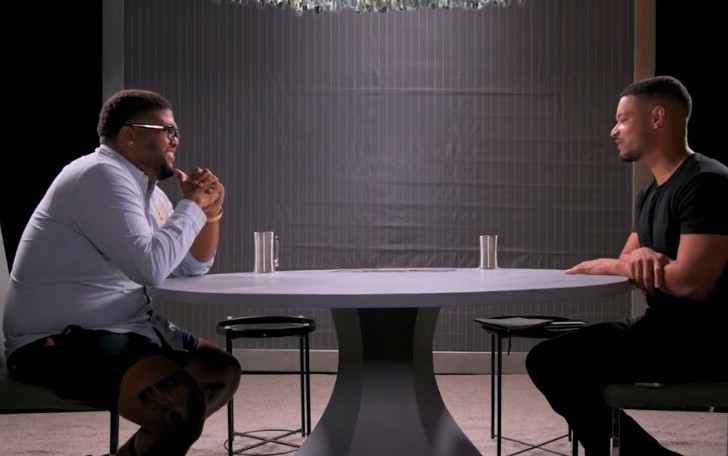
EDITOR’S NOTE: Comedian and actor Druski sits down with Steven Bartlett on The Diary of a CEO to trace his path from a chaotic Atlanta-area childhood to becoming one of comedy’s fastest-rising stars. He opens up about his father’s brutal lessons, his brother’s schizophrenia diagnosis, the depression that hit him in college, and the armed robbery that finally pushed him to bet everything on himself. Along the way, he talks about being rejected by Netflix and Amazon, the Drake phone call that changed his life, and why he still isn’t satisfied. This interview episode was premiered September 24, 2026.
TRANSCRIPT:
Childhood Photos and Early Freedom
STEVEN BARTLETT: (00:01:46 – 00:02:39) Druski, I really believe that to understand somebody, somebody who is an anomaly — and you very much are an anomaly — you first have to sort of understand their earliest context. And I went through all of these old photos of you as a young boy to try and build some of that context in my own head. What is it that most people might not know about that earliest context that’s most informative to sort of who you are today? What remains?
DRUSKI: (00:02:40 – 00:02:59) I still literally feel like this little boy in all these pictures. I see these moments, and it reminds me of how free I was able to be as a kid. And I wanted to be so much. And my mom and my grandparents, they always supported me being just open and free and having this — What is that right there?
STEVEN BARTLETT: (00:02:59 – 00:03:01) That one’s your dad and your brother?
DRUSKI: (00:03:01 – 00:03:13) Oh, yeah, yeah, yeah. My dad and my brother right here, for sure. Even looking at these pictures, I had to stop — I had no idea around this time who I was going to become. This is dope. How did you get these pictures, by the way? Where did you find all this? Did my mom send you these?
STEVEN BARTLETT: (00:03:16 – 00:03:30) I was looking through some of the videos that your parents recorded of you at that time, and you’ve got —
VIDEO CLIP:
MOM: (00:03:32 – 00:03:37) Now, do you have any more questions about me? About your teacher and how you’re doing in school.
DRUSKI: : (00:03:37 – 00:03:38) Oh, great. Well, I was just focusing on my hair.
VIDEO CLIP ENDS
DRUSKI: (00:03:39 – 00:04:09) That’s me in character right there. That’s literally in character. So she would put on these camcorders to let me be free. So that was my outlet to be able to do these characters and be myself. Yeah, I have multiple videos. I know you probably got more. There’s one of me in a diaper rapping. That’s another crazy one.
DRUSKI: (00:04:14 – 00:04:55) Yeah, that’s my cousin Bree.
STEVEN BARTLETT: Oh my God, where did you come up with those bars?
DRUSKI: That’s the beginning of Coulda Been Records, right? Those are the moments — we used to put on these performances for my family, and I’m just grateful that we were able to be ourselves, and I was able to be supported somewhere, because you do get confused in these settings, so to say. You look like you have something to say to that.
Comedy as a Tool
STEVEN BARTLETT: (00:04:56 – 00:05:27) I’ve interviewed a lot of comedians, and one of the things that I tend to find is that comedy is some sort of tool. And when I spoke to Jimmy Carr or some of these other comedians that I’ve interviewed, they’re always able to sort of understand in that early context how they were using that tool to often solve a problem that they had in that context. I remember Jimmy saying to me, “You often think of comedians as being depressed, but actually for him it was a case of comedy was a way to help his mum who was depressed. It was how he saw her smile.” Was comedy for you at that age a tool?
DRUSKI: (00:05:27 – 00:06:07) Very much so. And I speak about my dad because he was one of those tough guys to deal with around that time. He wanted us to figure it out early. My dad was the lead person of pushing that narrative. My mom somewhat would do it, but she would always try to tell him, relax, he’s still a kid. At the time, I’m like 8, 9 years old. And my dad’s like, “What do you want to do? Figure it out. You’re either going to go to jail, you find a craft, or you’re going to end up in a warehouse or something. You gotta figure out whatever you’re going to do. Or you go to the military, get your ass blown off.” And that was the only 2 options.
STEVEN BARTLETT: (00:06:10 – 00:06:11) He said get your ass blown off.
A Father’s Tough Lessons
DRUSKI: (00:06:11 – 00:09:08) Yes. So imagine me at like 8, 9 years old. Those are my 3 options: school, find a trade, or you go to the military and get your ass blown off, because we’re going back to war. He was always talking about, “We’re going back to war. We’re going back to war.” And I’m like, what the f***? Are we going to war? So, early on, he pushed that he wanted me to figure it out. And he had great lessons, but his teaching skills was very tough and physical, you know? He’s old school. I’m sure you heard it before. So he has a short — immediately, he asks — he used to ask these rhetorical questions all the time. He’ll be like, “Go get me a Phillips screwdriver.” And I’ll go get a regular screwdriver. He’s like, “This is not a Phillips screwdriver.” Bam! Upside the head.
Then my brother goes — he tells him, “I want you to go get me a Phillips screwdriver.” My brother goes and gets a hammer or something.
So, I wouldn’t say that my comedy necessarily came from that, but it definitely came from a healing, wanting to make our situation better at home. It’s not like we don’t come from a broke home — I ain’t going to say we wasn’t a broken — we were a broken home. We weren’t a broke home. My dad was an airline pilot for United Airlines for entirely my whole younger life. My mom worked for the CDC. Very two good jobs. My mom was always home. My dad would travel in and out. But I think what I wanted to do in my personality as a kid was always to make the family smile, no matter through all this stuff that we’re going through and these teachings being too far sometimes. Or maybe this ass whooping was too much. The ass whooping went too far, because I don’t gotta — I’m not going to get into details on here, but we had some ass whoopings in the house that went too far. But yeah, I think I feel like my comedy comes from that place of I never tend to punch down. I like to find the funny, but also the good side of funny, and not look at the negative for my type of comedy. I can find a negative situation and bring the funny out of it for both sides, me and the other person.
STEVEN BARTLETT: (00:09:09 – 00:09:14) So I guess as a child, very perceptive children, you’re on edge a little bit then.
DRUSKI: (00:09:14 – 00:09:15) For sure.
STEVEN BARTLETT: (00:09:15 – 00:09:23) And it’s funny because I remember sitting with Gabor Maté and him telling me how kids that have an early context where they have to be a little bit more aware —
DRUSKI: (00:09:23 – 00:09:23) Yeah.
STEVEN BARTLETT: (00:09:24 – 00:09:27) They often become very good at observation.
DRUSKI: (00:09:27 – 00:09:28) Yes.
STEVEN BARTLETT: (00:09:28 – 00:09:31) And they become good therapists. They become the most empathetic.
DRUSKI: (00:09:31 – 00:09:32) Yes.
STEVEN BARTLETT: (00:09:32 – 00:09:43) They also sometimes have struggles with mental health, because being hypervigilant or being aware comes at a cost. It’s not free. For all the upsides, there’s always a downside. Does any of that resonate?
His Brother’s Diagnosis
DRUSKI: (00:09:43 – 00:11:12) 1,000%, man. And I think, sadly, in my brother’s case, that went a negative direction. He was diagnosed with schizophrenia and bipolar disorder as we continued to go through puberty and got older. Whereas for me, I’ve — I might’ve found a coping mechanism with comedy, and maybe he never found that coping mechanism from that trauma. And I feel like trauma can sometimes give you the good route or the negative route. And I feel like a lot of that going on in our house early on may have played a role in him being diagnosed with that. And yeah, that’s the sad side of the story.
But even with him, I think early on, I would always try to make him laugh, because I knew we were in a f***ed-up situation. One time, I watched my brother get beat for wetting the bed, and it was the simplest thing, and I couldn’t understand. I was like, why is he getting beat this bad? It was very far. Not the normal belt type thing. It was very, very far. So I would always try to step in either after or during these moments to try to be a coping mechanism for him, or maybe it’s my mom, and he’s arguing with her, and they’re getting physical as well. So I would always try to be the funny guy, maybe at the dinner after, or maybe after the next day goes by, and I’m trying to lift everybody’s vibe up.
STEVEN BARTLETT: (00:11:13 – 00:11:14) So you watched your mother get hit as well?
DRUSKI: (00:11:14 – 00:12:13) For sure. For sure. Not physically hit, but I’ve seen different things, like the choking and pushing her out the door and then locking the door. And then I gotta go and be the one staring at her and she’s like, “Open it.” And he’s like, “You better not open that door.” And I’m in between a rock and a hard place trying to figure out, do I open this door for my mom, or is he going to come? So it was a lot of different situations of trying to figure it out at a very young age. And it started so young that some things are kind of blurry for me, but I do know that my comedy comes from that time. Comforting type of space. I can read a room and sense any type of danger. I can read a room and sense any type of happiness, sadness, anything in any situation. Somebody could be mentally ill. Somebody can be physically hurt. Somebody could be anything. And I always have been a good judge of character as well. So I feel like that has helped me in my career for sure.
Learning to Read a Room
STEVEN BARTLETT: (00:12:14 – 00:12:29) There’s 2 things I wanted to add to that. Part of the reason I noticed this — obviously I’ve sat here 700 times or something doing these interviews — and you’re one of the first people to stop mid-conversation as you were speaking and say, “You look like you had something to say there, Steve,” because you were looking at my face.
DRUSKI: (00:12:29 – 00:12:29) Yeah, I can read.
STEVEN BARTLETT: (00:12:30 – 00:12:53) People don’t usually do that. So it’s funny because I meet some people who are much more aware of me. Some people there are just talking and they’re giving their answers to my questions, and then there’s this other very rare group of people, often comedians, who I almost feel like I’m speaking to them even when I’m just sat here thinking, because they’re hyper-aware in that sense, for sure. And you just did that to me, so I thought, oh, he is super, super aware, which kind of correlates to everything you were saying.
DRUSKI: (00:12:53 – 00:12:54) For sure, for sure.
STEVEN BARTLETT: (00:12:54 – 00:12:55) But it always comes at a cost.
DRUSKI: (00:12:56 – 00:12:57) Yes, I agree.
STEVEN BARTLETT: (00:12:57 – 00:13:14) All gifts do. I sat with, I think it was Michael Jordan’s trainer, who also then trained Kobe, and he said to me, “Our dark sides are linked to our light side.” So the things people clap for are inherently linked to the things that we then struggle with. That’s true for yourself, I’m presuming?
Forgiving His Father
DRUSKI: (00:13:14 – 00:16:46) Very true. And I think through life I’ve learned that not all teachers have the best way of teaching, which I speak on his lessons. He had many lessons that were really good and on the positive side of life, where I had to eventually come to sources and just tell myself, wow, I cannot look for more success and look for the light at the end of the tunnel without forgiving any and everything in my past. And that came with having to forgive my father in my head and also to him face to face, like, “It’s all — we just let it all go.” And I think that helped me continue to move forward and not have any grudges. Grudges can really hold a lot of weight on you.
Maybe his mother was abusive to him, or his upbringing was in a different type of area in the world, whereas Northeast D.C. is a very trauma neighborhood that’s a very negative place to grow up in. And he’s from the project buildings of that. But yeah, I think the lessons he had were very good. He always talked about not half-assing anything. If you’re going to do something, do it all the way. If you’re going to mop the floor, don’t just do this side of it, do it like this. If you’re going to clean the dishes, do all the dishes. Don’t half-ass, rinse it, and then put it in there. But his lessons would be over the top. He’s going to break the dishes if you do it. He’s going to throw it up in the air and watch it crash on the ground. And then he’s yelling to the highest he could yell.
It’s just so — there used to be a lot, you know? And I think, people talk about you like, “How can I be broken if I’ve already been broken at an early age?” And I kind of feel that way. Like, people be like, “Oh, it’s not too much of a burden on you and your career.” I’m like, how could I be broken if I feel like I’ve already gone to my furthest extent. I can only continue to push myself to higher levels because I feel like I’ve gone through everything that could be the worst possible situation, at least in my brain.
But yeah, he had very good lessons and always had quotes and sayings on things. It’s confusing because at an early age, I had no idea. “It only takes one whoa, s*** I really f***ed this up to negate 10 attaboys.” I have no idea. Still to this day, I get confused. But I understood — let me tell you when I understood that. I understood that as life went on, and I started to notice a lot of my friends that I grew up with, in the area I grew up in, were going to jail, or falsely being accused of things, or ended up being dead or shot in the streets. We’ve seen a lot of that stuff, because I come from a neighborhood that’s a suburb, but it also had a mixture of the real Atlanta in there as well.
So these things were very confusing to me early on. But as I continued to grow in life, every single lesson that he had taught me, and that he had told and talked about and constantly, over and over again, spoke on, it started to come back to me in my later years of life. And I began to grow an appreciation for it, after I forgave him for all these past trauma situations and everything that happened.
STEVEN BARTLETT: (00:16:46 – 00:16:49) And when you say forgive, do you have a good relationship with him now?
DRUSKI: (00:16:50 – 00:17:25) Yes. Very, very good, for sure. And I think you just — in anything in life, you have to move on from things and continue to push. I think you can never grow to do great things without looking back and being like, okay, I have to close the door on this. I cannot hold this grudge. Because if you hold a grudge, you gotta think about what a grudge is. A grudge is on you as a burden. That’s a burden to everything. It’s not just physical, it’s a mental thing that can really rot people’s brain out. But I’m sure you probably know.
STEVEN BARTLETT: (00:17:25 – 00:17:32) Of course. A lot of people think of forgiveness as letting them win or justification.
DRUSKI: (00:17:32 – 00:17:48) Or they feel like a loser, because, “Oh, I’m not going to forgive them for that. I’m never — I’m going to hold that grudge to the death.” It’s like, yo, you’re not helping yourself. That’s actually a you thing. That has nothing to do with them or what they did. If you hold on to that, that’s a forever thing for you.
Fear of Intimacy
STEVEN BARTLETT: (00:17:48 – 00:18:21) And one of the things that will give you is great resilience, I imagine. You talked about it there — you said, “How can anything break me when I’ve already been broken to the fullest extent?” Again, with that comes a set of issues you contend with as an adult. I experienced it myself, which is — if my parents were quite — there wasn’t a lot of love between them. So one of the lessons I inherited was that relationships look like this, and this isn’t necessarily a great thing that I want. So I swerved relationships at every opportunity I was presented. I’d pursue people, and then the minute they turned to me and said, “You want to be in a relationship?” I was like, too much.
DRUSKI: (00:18:22 – 00:18:31) Yeah, I was like, too much. Yeah, I’ve seen this before. Yeah, this is — I’m getting away from this now. I know where this goes. I know what you mean. I deal with that as well, for sure. I know exactly what you mean.
STEVEN BARTLETT: (00:18:31 – 00:18:34) You’ve experienced that yourself as well?
DRUSKI: (00:18:35 – 00:19:38) Yes. I feel like I continuously have grown a relationship with women in a way where I feel like I almost get scared with getting too close, kind of like how you explain, because maybe I haven’t seen the successful home of 2 parents or 2 people in a relationship. Maybe I haven’t seen it with my own 2 eyes to work. And I feel like that kind of does hinder me a little bit, because it does come in between when I feel these feelings for this girl and I almost jump back immediately as soon as I’m like, nah, I don’t trust it because I know what this comes with. And they’re like, “What do you mean? We didn’t even get a chance to fully—” And I don’t know. It’s a natural mind thing that happens to me. And I still, to this day, I have no idea. If you want to be my doctor for this, go ahead.
STEVEN BARTLETT: (00:19:38 – 00:19:38) No, no, I’m just hypothesizing.
DRUSKI: (00:19:39 – 00:19:49) But I have no idea why. I feel like that has something to do with it. Maybe I haven’t seen it in a way that’s healthy, and that might be the reason why. But that’s a question that I need answered.
STEVEN BARTLETT: (00:19:50 – 00:19:54) If I spoke to someone that you were in a relationship with and I said to them, “Is Druski affectionate?”
DRUSKI: (00:19:56 – 00:19:57) You laughing?
STEVEN BARTLETT: (00:19:57 – 00:20:01) You know the answer. You just don’t want to say it.
DRUSKI: (00:20:01 – 00:20:26) No, no, no. I feel like they would tell you that I am until I’m not. And I eventually just pull out. I pull back. I almost feel once I get too close, I can’t trust it. It’s almost like a magnet when you reverse it on the other side. It’s like when it comes too close, it starts to repel itself. That’s how I feel when it comes to me getting more and more closer with a female.
STEVEN BARTLETT: (00:20:26 – 00:20:31) That makes sense. I think that’s what I experienced up until I was about 27 years old.
DRUSKI: (00:20:31 – 00:20:32) But I’m 31 still.
STEVEN BARTLETT: (00:20:33 – 00:20:35) Yeah, it ain’t that far.
DRUSKI: (00:20:35 – 00:20:42) Find a wife. You have to find a wife. You have to find a wife. No, it’ll happen. It’ll happen.
STEVEN BARTLETT: (00:20:42 – 00:20:46) Does it matter increasingly as you become more successful? Do you think more about it as you go further?
Trust and Fame
DRUSKI: (00:20:46 – 00:21:15) Yeah, it’s just hard to trust after you become — I think when you’re kind of successful at the beginning, it’s not hard to trust. You’re just like, yo, she likes me for me, but also she can still like me for the celebrity I am. It’s kind of 50/50. But as you become more and more successful, you have this doubt in your mind, like, this could absolutely be her in love with just Druski and not Drew at all.
STEVEN BARTLETT: (00:21:16 – 00:21:18) Is that just a convenient excuse for the whole avoidant —
DRUSKI: (00:21:18 – 00:21:35) No, no, no. I’m serious. I promise. It’s a question in every superstar’s mind. I guarantee you, even when they are with somebody fully, they still have a question in the back of their mind. Does this person just love the superstar of me?
STEVEN BARTLETT: (00:21:35 – 00:21:36) That’s so interesting.
DRUSKI: (00:21:37 – 00:22:38) And it does bother somebody who is super successful, because you see all these people will scream and chase you, and you have a show or maybe a meet and greet, and you see how people react to you, or you go on the street, and you almost want to believe that this person that you’re dating also is genuine, like how these fans are. Maybe she just loves me for me. Not kind of like how the fans just love me for that. You want her to believe that this is the same type of real thing. But it’s hard to believe after you see all of this stuff. “You only know me for that. You didn’t meet me when I was just at home, living with my mom, broke on the sofa. You didn’t see the real side of who I actually am. You see the new personality.” It’s tough. It’s tough out here, man. Coulda been love. Coulda been love. Damn.
Dropping Out of College
STEVEN BARTLETT: (00:22:38 – 00:22:45) So you go off to college and you last, was it 2 semesters before you dropped out?
DRUSKI: (00:22:45 – 00:26:49) Yeah. No, I started at a school that was in Gwinnett County where I grew up. So I spent like a year and then another half of a semester there. And I got enough credits to transfer, because I was like, okay, I gotta get out of here. I know my life is bigger than this. And also at the time, I wasn’t thinking, oh, I want to be a superstar. I was just thinking I wanted a real college experience. I wanted to go to a 4-year college. I didn’t have the grades to do it in high school and go straight there. I want to find a way to do it in college.
So I think when I went to Georgia Southern as the school following that, I just wanted to find the college ecosystem — what’s the vibe here? Let’s party. Let’s do this. And I didn’t find that as soon as I got there. It’s almost like I didn’t get the immediate, “This is college,” like I thought I would get after I got there. And I went into a deep depression, because I had 2 guys that I knew went to the school from — you know somebody from your county, of course. And I was like, oh, okay, I’ll link up with him. He’ll be a great friend to be along with on this ride of whatever this new school is.
And I would try to link up with them, and for some reason, it always was a hassle for me to link up with them. They always would be like, “Oh, we always gotta pick you up. You don’t have a car.” And I’m like, no, I’ll get an Uber to y’all. “Well, if you don’t have any money to get into the game, there’s no point in coming because we can’t pay for you.” Or, “I want to come to the party with y’all.” “Well, you have the same shoes that you hoop in. Why would we bring you?” They would always have jokes about — maybe I felt like I wasn’t deserving enough to be around them, so to say.
And I felt like almost, for the first time in my life, very depressed. And that kind of bothered me, because I started to just not even go to classes anymore at this new school. I was just staying in my dorm room. So I stopped going to classes for like the whole second semester of being at that school. No classes. Sat in my room. And would just sit and think. I’m calling my friends back at home. They’re not doing nothing, so I kind of didn’t want to go home, because I’m like, damn, they’re not doing s***. I’m not going to go back. But also, what am I doing here? I’m not doing anything here either. What is my purpose in life?
The Depression That Changed Everything
So sitting in there and being depressed and sad and looking at myself in the mirror, I started to figure out — I’m like, damn, what do I really want to do in life? Does any of this really make sense? I’m here for sports journalism, but do I want — I know I want to be on TV. I took sports journalism to be maybe an ESPN sportscaster just to get my face on TV. I didn’t know. I was like, maybe I want to do that. It sounds cool. But as I continued to do more soul searching, so to say, just sitting in the room and thinking about what I want to do, I would sit and watch Steve Harvey interviews on, “What is it you want to do in your life? Jump off a mountaintop and take a risk.”
I would watch all these videos of everything, of people I looked up to — Kevin Hart. And I started to figure out, okay, what’s my purpose? These are the people I look up to, but what exactly do I want to do? And as I continued to do more searching, I started to figure out, okay, wow, I think all the people I look up to are all comedic legends. I’m watching Will Ferrell stuff, Chris Farley. These are guys that I find as my heroes. I think since I’ve always been the funny guy in every classroom, everything I’ve done, sports — I get kicked off the football team for being funny. All this stuff is because I am a comedian. And it was almost like I’m an — I felt like an idiot, because I’m like, damn, I’m sitting over here in college. That is my purpose. This is it. I feel more connected to them than I’ve ever felt to anything I’ve ever felt in my life.
STEVEN BARTLETT: (00:26:49 – 00:26:50) Why?
Discovering His Purpose
DRUSKI: (00:26:51 – 00:27:56) The things they would say in a Kevin Hart interview, the things he would say in a Steve Harvey interview, the things Will Ferrell would say, or Chris Farley would say, or Jim Carrey — I felt more attached to it because they also felt a need and a purpose to become a hero of comedy. I don’t know, it sounds dumb, because when you tell your parents, “Oh, I want to be a comedian,” they’re like, “Oh, you’re basically a clown, I guess?” And you’ll go start doing stand-up rooms, and maybe you make it, maybe you don’t. It sounds kind of silly telling people or your hometown friends, “Oh, I’m going to be a comedian.”
But as I continued to do more and more research on everything I wanted to do, I started to figure out, okay, this is my purpose. And it always has been. And I see these videos of me as a kid. I’m remembering memories of all this stuff early on. This is it. And that’s when I just had, like, an epiphany. That was a big change for me in my career — well, not even my career, at the beginning processes.
STEVEN BARTLETT: (00:27:56 – 00:28:12) When you say I was depressed, that word can mean lots of things to lots of people. What does it mean in your definition in that moment of your life? If I was a fly on the wall, or just in the room, but also if I was inside your head at that time — what would I hear and what would I see if I was a fly on the wall?
DRUSKI: (00:28:13 – 00:29:44) I think you would just see me in there confused, man. I would sit in my room for hours. I would sit there and play 2K. I would sit there and play music for hours and not — I wasn’t really doing anything. I had no friends at that school. I would walk to the corner store. My mom would send me like $20. I’ll buy as much as I could get to be able to stay in the room and not go out and socialize with all these people at this huge school. I would get as much food as I could get at the time to go back and just be in the room.
And that’s when I knew — I was like, yo, I’m really in a state I’ve never been in in my life. Imagine, I’m used to being at a high school where I was known as the class clown. Anybody in my family knows me to be the guy that brings the warmth to the room and makes everybody laugh, and he’s always bringing good energy — to now I’m sitting here almost hiding away from society and very dark on myself. I’m very hard on myself about everything that I want to do. And it took a while for me to understand what it was. I think me going on YouTube and trying to research successful people, I started to line up the people that I found inspiring, and every single one of them were all comedians. I felt more attached to every single one of them than I’ve ever felt attached to anybody else in my life.
STEVEN BARTLETT: (00:29:45 – 00:29:58) It’s funny, because through your childhood you were a comedian, clearly, from all the videos that I’ve seen. And people think of comedians as giving — you make us laugh. But obviously you get something from that too.
DRUSKI: (00:29:58 – 00:29:59) Sure.
STEVEN BARTLETT: (00:29:59 – 00:30:02) And then suddenly you’re in this room, and you’re no longer getting that thing.
DRUSKI: (00:30:02 – 00:30:03) Yeah.
STEVEN BARTLETT: (00:30:03 – 00:30:03) Whatever it is.
DRUSKI: (00:30:04 – 00:30:04) For sure.
STEVEN BARTLETT: (00:30:05 – 00:30:05) What is that thing?
DRUSKI: (00:30:06 – 00:30:50) I knew that was a thing early on when I was a kid. I would have these conversations with myself at home after elementary, of, did I make the class laugh today? And why does that feel so good to me to brag about, or I would ask other students, “Who’s the funniest to you in this class? Who’s the funniest in our grade?” And I would really ask them. I was like, why do you feel like he’s funny? Why is Mikey funnier than me? Tell me why. And it was almost like a competition in my head that nobody knew about, but it was in me. I felt like it meant something if they told me, “Oh, of course, you’re the funniest guy in our grade.”
STEVEN BARTLETT: (00:30:50 – 00:30:51) Duh. And how would that make you feel?
DRUSKI: (00:30:52 – 00:31:04) That made me feel successful. It felt like I won the Mark Twain Award of the school. That is like the Oscar for me at a young age, if somebody told me, oh my God, you’re the funniest at this school.
STEVEN BARTLETT: (00:31:04 – 00:31:14) I think it’s interesting, often, that your nature was clearly you were a comedian, but that’s not a career that kids are taught about. They’re taught about, like you said, like your dad said, go get your ass blown off and all these other things.
DRUSKI: (00:31:15 – 00:31:17) But they’d find a trade. Find a trade, yeah.
STEVEN BARTLETT: (00:31:17 – 00:31:32) But until you’re given a word for it sometimes, you don’t have that epiphany. I thought that about being an entrepreneur. I didn’t know it was a thing until I was 19 and I was already doing it. And then I heard the word and someone gave it meaning and was like, oh, that’s a thing you can do as a job.
DRUSKI: (00:31:32 – 00:31:32) Yeah.
STEVEN BARTLETT: (00:31:32 – 00:31:36) And then suddenly, mind expansion.
DRUSKI: (00:31:36 – 00:31:36) Yeah.
His Mother’s Influence
DRUSKI: (00:31:36 – 00:33:32) You know what it was? I knew, I always knew that comedy was a thing. I didn’t know that I wanted to do it as bad as I was doing it — I was always watching it. My mom would show us In Living Color, movies like What About Bob? early on. My dad would always have The Chappelle Show on, and I would try to sneak and watch that, because that was very much rated R. In a kid’s mind, they’d be like, “Oh, you can’t watch this stuff. Get upstairs.” And I would still try to sneak behind the stairs and look, like, oh my God, that’s so funny. And I would try to say these jokes back at school that I hear in the show — Dave Chappelle saying, or Blank Man, like the guy in a wheelchair from In Living Color that ended up becoming a movie called Blank Man.
But the fact of the matter is that it was always in front of me, and I always was a big fan of comedy. I just didn’t know that my mom, sort of say, was influencing — and I say my mom, because she would always put this stuff in front of us, because she wanted the best for us. She was always the seesaw to level everything out. If something bad happens with my dad, my mom was always there to level it out. She was the one that would come in and tell him, “David, that’s too much.” And sometimes he would bark at her and be like, “Get the f*** out of here. These boys are going to end up being men. They need to learn this now.” But she always had quotes or good things she would always say, like, “Just continue to believe in yourself.” My mom was always a big believer in anything becoming big. So I gotta give her a lot for that.
Steve Harvey’s Lessons
STEVEN BARTLETT: (00:35:55 – 00:36:04) So, you went off to university, you discovered these great comedians. You discovered Steve Harvey, who’s an American comedian and TV host, stand-up comic as well.
DRUSKI: (00:35:55 – 00:35:56) One of the kings of comedy.
STEVEN BARTLETT: (00:35:56 – 00:35:58) One of your idols in comedy?
DRUSKI: (00:35:58 – 00:35:59) Yeah, for sure. Hell yeah.
STEVEN BARTLETT: (00:35:59 – 00:36:04) What was it that he said in particular that you recall that really sort of pushed you forward in that moment?
DRUSKI: (00:36:05 – 00:37:03) I remember he had a video that talked about just taking a risk and just jumping. And he spoke on just take the leap of faith and just jump. Stop overthinking everything. Nothing happens without taking this risk. And I knew he continued to say something in these videos, “If you believe there’s something more to your life, there is. If you have that vision that keeps popping up in your head, that means it very much so is in your life.” And I just kept hearing him say that, and I played the video back. Played the video back again, played the video back. I’m like, damn, what the hell? That means there is something — because I kept feeling that feeling I kept having. I’m like, there’s more to my life than what it is right now. And I knew it. In the back of my head, I was like, I know it, I know it, I know it. There’s more to this than what I feel. It’s in the back of my head. And that’s what resonated with me from the video that I watched on him. That was life-changing.
STEVEN BARTLETT: (00:37:04 – 00:37:04) I spoke to Steve.
DRUSKI: (00:37:05 – 00:37:08) Oh man, what are you about to show me, man?
STEVEN BARTLETT: (00:37:09 – 00:37:12) He wanted to send you a little video message as well.
A Video Message From Steve Harvey
VIDEO CLIP BEGINS:
STEVE HARVEY: (00:37:13 – 00:37:54) Hey, what’s happening, Druski? Hey, look, man, I heard they was doing something for you, so I wanted to jump on here, man, and just give you some big ups, man. Let you know, man, I’ve been watching you for a while from a distance, man. We’ve only spoken once, but look, man, I think you’re special. You got a gift, man. You’re really, really special. And with that specialness, man, comes some responsibility. And so just be careful, man. Remember everything your mama and your grandmama told you, because you’re going to need all of that, because you’re killing the game. And once you start killing the game, it’s like chess, man. We’re out here playing chess. The object is to kill the king. Sad but true. Keep your faith, brother. Stay funny, man. If you need me, call Unc.
VIDEO CLIP ENDS.
DRUSKI: (00:37:54 – 00:38:23) I got you. This is crazy. That is nuts, bro. That is amazing, man. And that really is a full circle moment, even hearing him say that. And wow, man, somebody that definitely I looked up to, him amongst the other kings of comedy as well, is like, wow, man, that’s deep. That’s deep.
Telling His Mother He Was Dropping Out
STEVEN BARTLETT: (00:38:23 – 00:38:30) What happens from there? You go from being in that room, you’re watching these Steve Harvey videos. Presumably, you gotta call your mom, and you gotta tell your mom that you’re dropping out.
DRUSKI: (00:38:31 – 00:38:42) Yeah. She wasn’t happy about that. I remember she cried, and she hung up on me. And she was like, “This is just so dumb. What are you talking about?”
STEVEN BARTLETT: (00:38:42 – 00:38:43) What did you say to her?
DRUSKI: (00:38:44 – 00:41:41) I couldn’t get any words out. She hung up. But I remember seeing her crying on the FaceTime after. I just wanted to tell her what my vision was on — because, you know, you say, “I’m dropping out,” but then, of course, you have a rebuttal. “I have a great idea.” And she hung up immediately. So then I called my friend. He came and grabbed me from the school in the middle of the night. I was like 4 hours away from Atlanta, Georgia. I’m deep down in southern Georgia. And we drove all the way back.
And when I got there, of course, she let me in the house and — I think it was just a confusing time because I’m also not making any money. So she’s like, “Now what? What are you going to do?” And I had this big plan, and I told her what I was going to do. I’m like, “I’m going to be a comedian. I’m going to be on TV. I promise you, in a year, I’m going to make sure I’m on TV.” And if I’m not, I told her this wild story of, “I’m going to kill myself.” I said, if I don’t become a comedian and I don’t become a famous comedian on TV, I’mma kill myself. And she’s like, “Don’t say stuff like that. That is so dumb. I want you to go hard for whatever you’re doing, but why do you feel like it has to be comedy?” And I was like, this is something that — and I continued to break down everything. I’m like, this is what I’ve always wanted to be.
And it’s almost like you have this great idea, but nobody sees the vision. So then I went to my grandparents. I told them the same vision that I had. They lived down the street from her. And they were like, “This is so — what are you talking about? Go back to school, get your education, and then you do all that other stuff.” Because they had the old-school mindset of — they probably seen people that didn’t go to school, and they seen people that did go to school. People that did go to school get a job. People that didn’t go to school became maybe crackheads in their era, I don’t know, or became failures in life. So they never really saw the good side of what is.
And I was like, the 0.1% of people, maybe even less than 0.1% of people that are able to accomplish that after dropping out is very unlikely. So immediately when I told my grandparents, they were like, “Oh no, no, no, no, no. We know what’s going to happen. You gonna drop out. You gonna be calling us asking for money. Don’t be calling our house and pulling up and you gonna be doing drugs.” And I’m like, “Guys, listen, I’m not going to be doing that.” They’re like, “No, no, no, no. You know, your grandparents, Black grandparents, they don’t give a s***. Don’t be coming over here and bothering us. We know what’s about to happen. You gonna be a crackhead.”
And I’m like, listen guys, I have a plan. And essentially I didn’t do it immediately. I started trying to work at Red Lobster. And then I worked at LongHorns and I worked at Outback Steakhouse and McDonald’s. I started to work jobs because it was like a quick money thing. And then I fell victim to being in Atlanta, where I was doing illegal stuff. And now I’m seeing myself go into this whirlwind of, damn, I came home to do this?
STEVEN BARTLETT: (00:41:42 – 00:41:43) Drug dealing?
DRUSKI: (00:41:43 – 00:41:46) No, no, not drug dealing.
STEVEN BARTLETT: (00:41:46 – 00:41:48) You said illegal stuff.
DRUSKI: (00:41:48 – 00:42:20) No, in Atlanta, there’s like a — it’s like a scamming circle where a lot of people fall victim to. It’s like you can do quick, easy scams with banks or doing card scams, just stuff like that. And I never was a bad guy. I just felt like that was an easier way to do it while I’m trying to pursue this stuff. But I felt like the karma of this stuff was weighing on me. It’s like, oh, I’m going to try to pursue comedy while doing this. And it never worked out. I didn’t even pursue it. I just was —
STEVEN BARTLETT: (00:42:21 – 00:42:21) Flirting with it.
The Robbery That Changed Everything
DRUSKI: (00:42:21 – 00:43:55) I was going back and forth. Yeah, I just continued to flirt back and forth with the idea of it. And then it was the moment that we got arm robbed, where I had an out-of-body feeling of, wow, I came home to be in this predicament where I have a gun to my head now. And now it’s like, how did I even get here? So, let me rewind back. That was the last moment I said, “Okay, if I’m going to do anything, I’m going to become a comedian, or die trying.” That’s it. I have no other outlet.
Now I know — once I saw the barrel of that gun being pointed at me and my friend at the time, it was a bad scamming situation gone left. That was the moment I noticed, okay, if I survive this, I am going to turn my life around. And I’m not going to go to a job. I’m not going to go back to my mom’s house and try to say, “Oh, I’m doing this, that.” I’m going to lock in, actually do it. And from there on, I went home, I wrote all these goals down on a sheet of paper.
And my mom, she was kind of in the mix of what happened a little bit too. She had heard, because she saw me walking around the house being stressed out. I told her what was going on. And I wrote down all these goals because she would always say, “You can’t do anything without writing things down.” Ever since I was a kid, she was like, “You should write that down. If you want to remember something, write it down, write it down.”
Writing Down His Goals
STEVEN BARTLETT: (00:43:55 – 00:43:56) Do you remember what the goals were?
DRUSKI: (00:43:57 – 00:44:07) The first one I ever wrote was, “Don’t have a plan B. Your plan A will work. No plan B. Your plan A will work.” The second one I wrote was about —
STEVEN BARTLETT: (00:44:08 – 00:44:10) Was there about hosting a tour on there?
DRUSKI: (00:44:11 – 00:44:13) Yeah, yeah. Hosting a tour was definitely on there.
STEVEN BARTLETT: (00:44:14 – 00:44:16) Hosting an awards evening?
DRUSKI: (00:44:17 – 00:44:30) Yeah. Both of those was on there. I wrote down being a comedian. I wrote down amongst a lot of other things. How do you know that? What is it on there? How do you know that? That was on there. I haven’t sent y’all production the brief.
STEVEN BARTLETT: (00:44:31 – 00:44:36) We got this scamming thing we do where we can scam. Star in a major movie?
DRUSKI: (00:44:37 – 00:44:40) For sure. All that is down there, man.
STEVEN BARTLETT: (00:44:40 – 00:44:42) And you were 23 at the time, roughly?
DRUSKI: (00:44:42 – 00:44:43) Yes, 23.
STEVEN BARTLETT: (00:44:43 – 00:44:46) So, what’s happened then? So, you left college at what age?
DRUSKI: (00:44:46 – 00:44:49) I left college around 21, 22.
STEVEN BARTLETT: (00:44:49 – 00:44:50) Okay, so that’s —
DRUSKI: (00:44:50 – 00:44:52) In between 21 and 22, I left college.
STEVEN BARTLETT: (00:44:52 – 00:44:53) So, it’s a year or two at home with your mom?
DRUSKI: (00:44:53 – 00:45:06) A year and a half, I’ll probably say a full year has been at home before all that transpired. Tried the jobs and tried the legal stuff that didn’t work. And now I’m here and I start to actually do the things that I wrote down.
STEVEN BARTLETT: (00:45:06 – 00:45:08) What does that mean specifically?
Everything Falls Apart Before It Gets Good
DRUSKI: (00:45:08 – 00:48:43) I think the first thing that happened after I wrote these goals down, everything was taken away. It felt like everything dropped out before it got good. Everything. I wrote down these goals, wrote the date on there. Boom, I’m doing it. I was like, all right, now I’m locked in. This is it. I’m all in. I have no other option. There’s no other plan B, nothing. Immediately my car gets repossessed. I’m like, yo, what the f***? Now I can’t travel and do nothing.
So it’s funny, because it’s like, as soon as you want to pursue all these things, everything has to come out. And you’re — it’s confusing because most people never get a chance to see the real side of success, because they quit at that moment, that breaking point of everything falling out of your life. They’re like, “Oh my God, I done prayed for all this stuff. I done wrote everything down. I got this mood board. I got everything.” And then I’d lose this and, ah, see, it don’t work. But I knew, I’m like, I’m going to keep going. I’m not going to stop here.
I actually made that a content piece. I recorded my car getting repossessed and people were like, “Yo, what the hell are you posting this for?” I was like, well, there it is. There she goes. But really I was sad as hell. I was like, damn, I got nothing. But I feared nothing, because I’m like, I have nothing left. I’m sitting here in a room. No mattress. I’m laying on the floor. I’m using my little sister’s blanket that she had as a blanket on the ground. I don’t have any dressers in here. You know, when you go to college, your mom gives away all your stuff. She sells it or she puts it in some warehouse. So I didn’t have none of my stuff. I just was laying on the floor and I was like, hell, I had my car, but now that’s gone. So what else could I lose? My back’s against the wall. I’m going to continue to keep pursuing, making videos. Boom, boom, boom, boom, boom.
And that’s what I did. I continued to boom, boom, boom, boom, boom. I wasn’t going to stop. And I was using my mom’s house as essentially a movie set. I started to flip the couch upside down. I wanted to do a surveillance camera at the top left side of the room to make it look like I’m on First 48. I’m interviewing myself on a First 48 episode. Boom, that’s one of the skits. I have another skit where I’m using this jacket that my mom had in the closet, and I’m putting that on. I’m acting like a news reporter. Fox 5 in the backyard. And I’m putting the phone cropped up on the trash can outside in the backyard.
And my mom used to come home, she’d be like, “What the f*** are you doing?” She used to see the house in shambles. But I gotta give it to her, because she stuck through it with me. I would always give her these updates — “I have 10K followers now. I have 15K followers.” She’s like, “Okay, so what does that mean? Did you make any money?” I’m like, “No, but I have people watching.” And I was like, “Oh, I got 100K followers.” “Did you make any money yet?” “No, but people are watching.”
And I continuously just kept giving these updates as eventually I started to make money through promotion. I would promote people’s music and their videos and throw it on my story. And I would do a full day of promotion. It would make me a couple hundred dollars maybe. And that would be enough to maybe go out that night. Or it just wasn’t anything real fulfilling. Or I would help my mom with groceries. I would try to do things to make money, but it wasn’t really making any real money at the time. And then I continued to keep building. So, yeah, those early moments really shaped a lot for me.
The First Video He Ever Posted
STEVEN BARTLETT: (00:48:44 – 00:48:50) I mean, I’ve got a video here as well that I found. You can explain what this one is to me.
DRUSKI: (00:48:50 – 00:49:13) Man, yeah, man. You know what the f*** going on, man? Counting me out. I ain’t never been at the game. That was fresh off of scamming right there. Fresh off of scamming. Shot me up, shot me up. So when I got these papers, shot me up. Got his ice on, shot me up. Yeah, they know I’m going up like this now. That was actually my first video I ever posted on socials.
STEVEN BARTLETT: (00:49:14 – 00:49:15) Ever?
DRUSKI: (00:49:16 – 00:50:18) First video ever. That’s when Instagram first started the whole 15-second video post thing. Vine was doing it for like 6 seconds, and I was never on that. And I came around, and it was like 15 seconds on Instagram you could post a video. And my friend Chauncey, and now he’s like my lead comedic writer, he was like, “Bro, just go. Just post it.” And I was like, it’s kind of silly. I’m just acting like I had — those are like $1 bills, bro. I was acting like I had f***ing ones. And he was like, “Just post it.”
And I think that got like maybe 80 comments, 60 or 70 comments, something like that. It was like hometown people. And they were just like, “Oh my God, this is so funny. We see what you’re doing. That’s dope. Hopefully you do more.” People were just supporting it. I was like, all right, well, I’m more creative than this. And I started to kind of continuously become more and more creative, because I was like, all right, I did that, but that’s silly stuff. I know what I’m capable of. But yeah, that was the very first video I ever threw up.
Manifesting Meek Mill
STEVEN BARTLETT: (00:50:18 – 00:50:22) This one I found really interesting. I’m just going to play it first. Meek Mill’s performed for us.
DRUSKI: (00:50:22 – 00:50:33) Yes, bro, I’m telling you. Meek Mill’s my — when I dapped him, I said, “Let me be on your level one day.” I told him, I said, “I’m going to be on your level one day.”
STEVEN BARTLETT: (00:50:33 – 00:50:39) You’re saying in that video that you’re going to be on Meek Mill’s level someday and that you dapped him up and told him that?
DRUSKI: (00:50:40 – 00:51:57) I lied about that. I did not dap him up and tell him that. I saw him at a party and I was so influenced, I shouted it over somebody, like, “Yo, Meek, I’m a big fan, man. I’m going to be on your level someday.” I didn’t shake his hand. I was just chatting. But in our county, we have almost what you would call like a hood legend, Lou Williams. He went to the same high school I went to. He made it to the NBA, played amongst a bunch of teams, 6th Man. You probably know him — Drake did a song about Lou Will. “Ballin’ outta South Gwinnett like Lou Will.”
So, he was almost like the hero to us. He would throw these parties, which were essentially like — have all these celebrities come to Gwinnett County. And at the time, Gwinnett County’s not on the map. It’s not a known thing. We’re just a suburb outside of Atlanta. And he would have these celebrities come to these parties, and we would be able to go because we’re locals in Gwinnett. So you would see all these celebrities, and I was like, wow. I would look at Lou Will’s house. He’s currently in the NBA. And I’m like, wow, this is insane.
And Meek Mill came one night, and I said I told him that, but I just shouted it. And he had a bunch of security with him. They didn’t even let us over there. But yeah, I was — you could tell I was — man, I was —
STEVEN BARTLETT: (00:51:57 – 00:51:59) It’s a kid manifesting in some way.
DRUSKI: (00:51:59 – 00:52:28) Yeah, manifestation. And there was no stutter in my speech right there. I definitely felt that way about everything I was doing. And I probably have said a lot of things around that time that probably weren’t recorded, where I was very much trying to pursue greatness. I’ve always been a big fan of pursuing greatness my entire life. I never wanted to just be good. I always wanted to be great. So, yeah, that just shows right there. I’m surprised one of my friends still had that clip. He sent it to me, and I posted it.
“I’m Either Going to Be Great, or…”
STEVEN BARTLETT: (00:52:29 – 00:52:49) The thing I find interesting generally is, in that situation, look at that context. You’re in your mother’s house. You’re using the front room and a blanket as both your bed and also your sort of creative studio. Objectively, in that situation, the odds are stacked against you. But in your head you’re thinking, I’m either going to be great, or in your words, I’m going to kill myself.
DRUSKI: (00:52:50 – 00:52:52) Yeah, it was a little far.
STEVEN BARTLETT: (00:52:52 – 00:52:52) A little far?
DRUSKI: (00:52:53 – 00:52:53) A little far.
STEVEN BARTLETT: (00:52:53 – 00:52:56) When you said that, what did you actually mean? What did you mean?
DRUSKI: (00:52:57 – 00:52:58) I felt like I —
STEVEN BARTLETT: (00:52:58 – 00:52:59) You meant it.
DRUSKI: (00:52:59 – 00:54:03) I was so — I was chasing being great. And that might’ve been far-fetched for me to say something as wild as that, but that’s honestly how I felt. I was going to make it happen, or I was going to perceive myself as a failure. I didn’t see anything different. I saw nothing else but a green light down this tunnel. I saw nothing. I knew in the back of my mind what I was capable of. I already knew. I felt like my entire life I knew, but I just didn’t put the pieces together.
But when I told my mom that, I knew. I said, “Okay, I have committed to something that I know there is no possible in or out. I’m going to do this or die trying.” Truthfully. I feel like I’m either going to do this or I’m not, and I’m going to make it happen. So I knew I wasn’t going to kill myself. Essentially, I knew I’m not going to kill myself.
STEVEN BARTLETT: (00:54:03 – 00:54:04) Because you believed.
DRUSKI: (00:54:04 – 00:54:57) Because I believed I’m going to do it. But if I don’t, I’m out of here. Sounds crazy, but it’s true, man. That’s how much belief I had in myself, and that’s how I felt with my back against the wall. I really did want to do it that bad. And still, I do feel the same about achieving greatness. I don’t tend to like things that are just good. And people are like, “Oh my God, I became rich. I’m good, man. I’m going on vacation.” I don’t do any vacationing. I find it soothing to be in a chaos situation of work and juggling multiple projects at once. That is what I want to do. This is what I got into it for. So, that’s my full goal.
What It Takes to Be Successful
STEVEN BARTLETT: (00:54:58 – 00:55:30) And when you look back on that season of life where you first moved home with your mom, as a 31-year-old now, what has it taught you about what it takes to be successful broadly? Again, remove luck from the equation. Let’s remove some people getting fortunate with lottery tickets, whatever else. But generally, what has it taught you about what it takes to be successful in the pursuit of a goal like that, where, to be honest, not many people ever make any money? The odds of you being successful as a comedian — defined as being able to provide for yourself and a family — it’s crazy odds.
DRUSKI: (00:55:30 – 00:57:24) But the thing is, most people don’t really want to be great. Most people just say it because it sounds good. I would be around a lot of guys and be like, “Yo, let’s do it, let’s wake up in the morning, let’s—” and they would just fall out. Everybody eventually just goes away. Everybody that said they were going to do it, they do it one day. They’re not showing up the third or the second day. Nobody shows up continuously for the work. And once I noticed there’s a small amount of people that are showing up for the actual work of anything, it just showed me that, okay, I’m in a lane of this of my own. I’m pursuing something that most people say, but they’re not really trying to pursue.
Everybody wants to be number one. You want to be the top of the list. Everybody wants to be the top of the list. But nobody really wants to do the work. Nobody’s obsessed with it continuously, every day and night, having dreams about it. Nobody’s sitting and editing with their editors 18-plus hours of just sitting looking at clips. Nobody’s going and doing tours while trying to continuously film a TV show, Coulda Been Love, in the middle of that tour. Nobody’s trying to also shoot a movie. Right now, we’re shooting with Universal, The Catch, with Emma Stone and Chris Pine, while also still trying to fulfill my social media presence. I’m trying to juggle all these things in one because I want to be great. I don’t want to just do it and be like, okay, I’ma take some time off and just — no, I really want to be number one.
I’m not really falling victim to juggling — being okay with being cool with number 2 or 3. And I joke about it all the time, because one of my favorite movies is Talladega Nights. And Ricky Bobby said, “If you ain’t first, you’re last.” Me and my family joke about it all the time. We laugh about it. But I kind of took that vision seriously, because that’s really how I live my life. And that’s really how I feel, because what else could be other than wanting to be number 1?
STEVEN BARTLETT: (00:57:24 – 00:57:25) What happens when you become number 1?
DRUSKI: (00:57:26 – 00:57:45) You still gotta keep pushing, them out just because somebody’s chasing. There’s somebody coming. Somebody’s on the way. So, I feel like the journey never ends because you’re always continuously chasing. If it’s not the people before you, it’s trying to continue to set the bar high for the people behind you.
STEVEN BARTLETT: (00:57:45 – 00:57:45) Yeah.
Defining Greatness
DRUSKI: (00:57:46 – 00:57:46) So —
STEVEN BARTLETT: (00:57:47 – 00:57:55) And what does being great mean in your definition of the word? Because you stated that the goal is to be great. How would you know you’ve become great?
DRUSKI: (00:57:55 – 00:58:49) I think being great has a lot of different meanings. It doesn’t have a money value or a certain touring value. I think just being great in all ways just comes down to how far you’re willing to set the bar. There’s always people before you that have done great things. You got Eddie Murphy that has set the bar f***ing way up here. Then you got Kevin Hart that’s f***ing damn near where Eddie’s at, and he looks very healthy. He looks like he might take it further than Eddie. Who knows? I don’t know. But there’s always somebody gaining on that right behind the greats before you. It’s the same with Kobe, Jordan, LeBron. Somebody’s going to continuously keep setting the bar higher. So it’s like we’re all trying to just leave a legacy, so to say. I think that’s what we’re all trying to do.
STEVEN BARTLETT: (00:58:49 – 00:58:51) And you want to be in that conversation.
DRUSKI: (00:58:51 – 00:59:08) You want to be in that conversation. When it’s all said and done, I would love to be in that conversation. It’s not saying I want to be surpassed, and we all want to surpass great things. We all do. But just to be in that conversation and to be remembered and to leave a legacy, that’s what matters.
The Long, Lonely Years
STEVEN BARTLETT: (00:59:09 – 01:00:05) One of the things that I’ve observed with people that go in the pursuit of greatness and achieve it is they have a different level of patience, and they have a longer time horizon. Because with Eddie, with Kevin, it takes a lot of lonely years, decades sometimes. I sat here with the greatest illusionist in the world, and he told me that he spent 10 years doing card tricks on restaurant tables. And you go, what a crazy f***ing thing to do. Or like this other — even Jimmy Carr said to me, he dropped out of his great job, I believe it was in marketing, and spent 5, 6 years getting paid absolutely nothing, just cracking jokes in pubs and stuff. And you’re like, what sane person would think would take that trade? When I zoom back into where you were in your mother’s house, how long was it? From that, from university, from college, to the moment where you go, actually, this might be able to pay my way so I can move out — how long was that period of time?
DRUSKI: (01:00:06 – 01:00:35) Years, man. Honestly, years. We’re talking like years of seeing nothing. And I think people don’t see that. People see with social media, there’s a bunch of quick reaction to things and people are like, “Oh my God, this person. Oh, they went viral for that. Oh my God. Now what can I do with this?” People are always worried about, “Oh, I’m going to take this thing. I did this video or I did that. And now I’m trying, I’m going to go get a team.” It’s like, what are you doing? You don’t need a f***ing team. Keep grinding. Do it again.
STEVEN BARTLETT: (01:00:35 – 01:00:35) Do it again, man.
DRUSKI: (01:00:35 – 01:01:59) And when you’re trying to be great, you never get a chance to celebrate the things that you have done. You almost don’t feel in the moment, because you’re looking for the — what’s the next thing? And I kind of give credit of that, because I do the same thing. I do it all the time. We did the BET Awards, and the next day I was already flying to go shoot my TV show, Collect and Praise, with Mike Epps that we just shot. I had somebody in the congregation ask why I’m wearing Christian Dior and Christian Louboutins, “‘Cause I’m a Christian, and I walk in the blood of Jesus! Give him some praise! Give him some praise!”
Immediately, the next day, we almost — I didn’t even get a chance to take it in. I’m like, oh my God, I just did the BET Awards, something I always wanted to do in my life. Boom, I’m on a plane. I’m at the next thing. Immediately after I do Collect and Praise, we shot that for 2 weeks, back to back. Boom, on a plane the next day after the final day of that. We’re all clapping and everything. On a plane. Next day, we’re shooting The Catch with Emma Stone and Chris Pine. The next day. So, it’s like you never really get a chance to take a lot of these things in, because you’re continuously progressing, progressing, progressing.
And my mom would always — I feel like she influenced me to be like that, because I would come home from school all the time and be like, “Oh, I got a B on this test.” She’s like, “Oh, you could have done better.” Or I’d be like, “All right, I did this at school. They told me I was—” “Oh, come on, Drew.”
STEVEN BARTLETT: (01:01:59 – 01:01:59) You could have done better.
DRUSKI: (01:02:00 – 01:02:08) Could have done better on that. Not like it’s not enough, but it’s like, you always can do better. Even if you got an A on this, why didn’t you get an A+?
STEVEN BARTLETT: (01:02:08 – 01:02:10) Do you want to be a dad yourself?
DRUSKI: (01:02:10 – 01:02:11) Yeah, yeah, for sure.
STEVEN BARTLETT: (01:02:11 – 01:02:13) Of course. Where’s that going to fit in this crazy life?
DRUSKI: (01:02:14 – 01:04:15) We have no idea. We got to find a wife first, bro. I’m trying to find love first, bro. I have no idea. No, but I think both of my parents, they both did that same thing, like I would bring my dad math equations, and him being a pilot, he would break it down in crazy ways. I would say, “Oh, this is division. Could you help me with this?” And he’ll take 40 minutes to be like, “Oh, you answered it, but you could have done the long division this way. Okay, let me tell you, MX times BX squared. And you could get this answer reversed. Let’s reverse this answer. If you get this, you get it multiple different ways.” So I’d be like, what the hell, bro? I just brought you a simple division equation. Why did you make it long division and then go into MX times BX squared?
But these are my parents, though. They’re always looking for the greater thing. Always. No matter what it was, even if it was academics, you could have done better, or you could have gotten it a different way, or there’s other routes to get to it. It was almost never a correct answer in my household, because there’s different ways you could find an answer to anything. So imagine what that does to my mind — damn, I’ve gotta find a way. And not just in one way, I gotta find it in multiple different ways.
So, when I do my type of comedy, I never sit on doing one thing. If I do one thing that’s amazing, I’ll come back and hit another situation, or I’ll hit another situation. I’m going to be funny in this way too. I’m not just going to be funny in this way. I can also be funny at a live show. I can also be funny in a sketch version. I can also be funny in a movie. I can also be funny on a TV show. I can also be funny in a commercial. You see a T-Mobile commercial, you see Druski’s face on it, with Zoe Saldaña and Jeff Bridges. Why the f*** is Druski on here with Zoe Saldaña and Jeff Bridges? I don’t know. But it works. It’s the comedic relief of this commercial. But I feel like my life has gone in that direction because of these upbringings, of these teachings that both of my parents had set for us.
The Moment His Mom Was Right
STEVEN BARTLETT: (01:05:36 – 01:05:41) Was there a first check or first opportunity that you really wanted to tell your mom about, because this was kind of proof that you were right? Or was there a moment at all?
DRUSKI: (01:05:36 – 01:05:40) I think… You’re saying like a big check moment?
STEVEN BARTLETT: (01:05:40 – 01:05:45) You know, like one of those moments an opportunity comes in and you can’t wait to tell your mom because suddenly you were right.
DRUSKI: (01:05:45 – 01:06:43) She should have trusted you. Yeah, well, I had one moment. This might have been 2022, kind of after COVID died down. I was gaining a little bit more traction everywhere, and I told her that a celebrity had posted me, and I was so excited. I was like, “Oh my God, a celebrity posted me!” And she was like, “Oh my God. So what happens now? Did they tag you in it? Do people follow you?” I was like, “No, they didn’t tag me. They just posted the video.” She’s like, “Is there opportunity? Are you going to shoot a video? Are you doing anything with them?” I was like, “Nah, nah, nah. They just reposted my video.” And she’s like, “Now what?” And I’m like, “Well, I’m back to square one.” And she’s like, “Yeah.”
My parents were big on breaking things down. So you never really feel fulfilled with anything, because you are always trying to figure out — okay, this opportunity’s great, but what’s next?
STEVEN BARTLETT: (01:06:43 – 01:06:45) Do you feel fulfilled with your work now?
DRUSKI: (01:06:45 – 01:06:59) No, not yet. Too young. It’s just too much more to go, man. Way too much. Look what Jim Carrey did. Look at Eddie Murphy, man. Look what Chris Farley has achieved. Adam Sandler, man. These guys are f***ing —
STEVEN BARTLETT: (01:07:00 – 01:07:01) Are you happy, though?
DRUSKI: (01:07:01 – 01:07:07) I’m very happy. I’m very happy. But fulfilled? No. I have so much more.
STEVEN BARTLETT: (01:07:07 – 01:07:10) Is it not possible to be fulfilled and also to be in pursuit?
DRUSKI: (01:07:11 – 01:07:13) Is there a way, you’re saying, to be both?
STEVEN BARTLETT: (01:07:13 – 01:07:15) Yeah, like to be fulfilled with —
DRUSKI: (01:07:15 – 01:07:19) Your hunger has to always continue to live. Anybody that’s pursuing greatness —
STEVEN BARTLETT: (01:07:19 – 01:07:21) You’re looking at me like, nice try, man.
DRUSKI: (01:07:21 – 01:07:30) Nice try. But anybody that is pursuing greatness will never tell you that the hunger has stopped. It has to continuously keep going. There’s no way. No way, man.
The Drake Phone Call That Changed Everything
STEVEN BARTLETT: (01:07:30 – 01:07:39) So, closing off on this period of your life where you’re still at your mom’s house, when did that change? What was the moment where you were like, sure, I can leave now?
DRUSKI: (01:07:39 – 01:09:10) Well, I had all my clothes stacked in the living room, because people started to send me so many merch clothes. You know, when you become, at the time, like everybody’s an influencer, they would send influencers all types of loads of clothes. They want you to wear it in your next video or whatever you’re doing. So I had all these clothes stacked up in her dining room area. I wouldn’t even say living room. It was like the dining room in the front of the house.
And I started to kind of make some money to where I was like, all right, maybe I need to find an apartment. Now that I have some type of money, I can actually get out of here. But I think me crowding up that dining room, I started to notice, okay, now I can kind of live on my own. But it wasn’t until I started to actually — the thing that changed my life at the time was Drake calling for the Laugh Now, Cry Later music video. Everything shifted after that. Because brands started to take me seriously. It wasn’t no more sending free merch and, “Oh, you get this,” or, “We’ll bring you out to this event, and we just want your appearance, and you can get in free.” Now it’s transactional with everything.
Once I was seen on a higher level with — you know, Drake is — I think at the time it was Lil Durk, and we had Marshawn Lynch, Kevin Durant, Odell Beckham Jr., all in this video alongside with me. And me being the comedic relief in this video, which was called Laugh Now, Cry Later, this meant a lot more than just another music video.
STEVEN BARTLETT: (01:09:10 – 01:09:13) Where were you when you found that out, that he had called?
DRUSKI: (01:09:13 – 01:09:41) No, he just was a big fan of a lot of the stuff I was posting during that early time. But it wasn’t until then — no real money was coming in. No money at all. But that shifted everything, because brands started to see me in a broader light. And they started to see me as an actual star, so to say, instead of just another amongst all these other guys who are doing comedic things, you know?
STEVEN BARTLETT: (01:09:42 – 01:09:44) But were you speaking to him directly on DMs or something?
DRUSKI: (01:09:44 – 01:10:47) Yeah, it was just all through DM at the time, up until I met him. But yeah, all that was very just short back and forth, laughing at this video, laugh at that video, find this funny, find that funny. And then we had a long conversation. And once he told me that I would be starring in that music video, and that was just about leading this generation of comedy and just what I am to the world at the time. And then I’m hearing his words. I’m like, yo, maybe this dude’s just gassing me up. This is wild to hear from somebody who is, in my eyes, a full-blown superstar, megastar. But yeah, it could — that’s one of those things. It’s just like, could never repay him, man. That was — to take a chance on me at the time, just doing silly stuff of what I thought was great, but at the time it was so — looking back, I’ve had great stuff, but it’s so minimal to what I do now. I can’t believe he took a chance on me in that circumstance. But it shifted everything.
STEVEN BARTLETT: (01:10:48 – 01:10:49) It shifted everything almost immediately.
DRUSKI: (01:10:50 – 01:11:03) Almost immediately, yeah. I think it was almost more of a seriousness that people took me more than just showing up for things. The transactional conversation started to go into play.
Relationships Over Everything
STEVEN BARTLETT: (01:11:03 – 01:11:17) When you look back on your arc, and you hear about other people’s journeys and arcs, what else have you learned about, again, what it takes? There’s the obsession, there’s the dedication, there’s the hours. What about the business part? How do you climb ladders? Is it people? Is it knowing a guy?
DRUSKI: (01:11:18 – 01:11:31) It’s all relationships. Even in the biggest buildings, majority of it is relationships. Of course, your talent weighs a lot, but relationships are very much key.
STEVEN BARTLETT: (01:11:32 – 01:11:35) What does that mean for someone that has no idea what goes on in these buildings?
DRUSKI: (01:11:36 – 01:12:45) Relationship is key, because these people want to know that you are a good person to be around. They want to know if — “You’re going to be starring in my T-Mobile commercial. We want to have dinner with you. We want to see what type of person you are.” They want to make sure you’re not a guy that’s going to go out and do nothing wild after we trust you with this. “You’re going to be all over TV. We trust you with these things. We sign you to a Nike deal. You’re in a T-Mobile deal.” These people, it’s all about relationship. Who you know, how you treat people.
They like to sense what type of person you are in a separate environment from who you are as the celebrity Druski. People tend to want to meet who the real you is before we present you to our world. We want to see who you are as a person. So I feel like a lot of my upbringing was around this broad horizon of different ethnicities, different genders, of everybody. We had Indian people, Mexican, white, Black, African, Jamaican, everything you could ever think in Gwinnett County. So, that type of stuff shaped me to be able to go in these rooms with these bigger brands and be able to talk to anybody.
STEVEN BARTLETT: (01:12:45 – 01:12:55) I’m cool with everybody. Did you have to learn something to do that? Did you have to mature or learn a skill of, coming from where you come from, to be in a room with these big brands and these people in suits in corporate America?
DRUSKI: (01:12:56 – 01:13:58) Nah, man. It’s funny, because I always have been a people person. Anytime I would, as a kid, go into a grocery store with my mom, if I saw a kid’s parent that plays with me on the football team, I saw his parents walking around, I would go up and talk to his dad and make him laugh and joke. “Hey man, give me a cigarette, man. Let me get a cigarette. You better go outside and smoke a poke, man.” And just jokingly talking as if I’m not 10 years old.
But I think that is a big part of what I’ve learned about the industry in general. It’s more about relationships and how you treat people, and how this interview goes, or how this dinner is with this guy who may not know nothing about you. He may not know your background, nothing. Are you able to have a one-on-one conversation with him and have him trust you in whatever goes down, whatever you’re talking about? Are you a good person? And I think it comes down to that regardless of anything you do.
STEVEN BARTLETT: (01:13:59 – 01:14:00) Yeah.
Never Punching Down
STEVEN BARTLETT: (01:14:01 – 01:14:45) It’s interesting, because when you’re dealing with corporate America and you’re dealing with these big brands, and you mentioned T-Mobile and all these other brands, you’ve got this off-camera Drew guy who meets them for the dinner, but then you’ve got Druski on camera. And Druski on camera, part of your comedy is you really push the boat out. You say the part out loud that most people wouldn’t say. What is your decision framework there — because there’s this term, you know, I worked in advertising for a long time, there’s this term brand safety, which means, is this person sufficiently sanitized enough that we can trust this person with the brand? But then on the other hand, the thing that people love about you is you say the part that other people don’t say. You point at it. What’s your risk equation when you’re thinking about content? What’s the framework you use to decide whether this is okay or if it’s not okay?
DRUSKI: (01:14:45 – 01:15:44) For sure. No, that’s a great question. I think the way I look at all of this stuff, and people ask me that all the time in person whenever I see them, is that I’ve never punched down with any jokes that I ever — any jokes I ever do always come from a good-hearted place. Even if I’m doing auditions, a skit that I do, anything, you can never show me something that I’ve done that was, “Oh, that’s punching down,” or, “That wasn’t inclusive of the other person that might have been in that situation,” or, “He doesn’t touch on this because of that,” or, “He doesn’t do that.” I always come from a lighthearted place and a good-hearted place of my comedy. I never was the guy to be — because you do have it. You have those guys out there, like a Sacha Baron Cohen, that has the dark humor of things. And maybe he might have upset some people, and it might come from a bad place. I don’t know. I’ve never met the guy. I don’t know. But I come from a good place with majority of all my humor.
STEVEN BARTLETT: (01:15:45 – 01:15:47) I’ve just got this mental flash of you doing this.
DRUSKI: (01:15:51 – 01:16:20) But even then, comes from a good place, didn’t touch on anything, because in the same tone, I’m not a political guy. I’m not a guy that’s going out here trying to portray this like I know anything about anything. I am just the guy here for laughs, comedian. I don’t care for none of that serious stuff. People ask me all these deep questions, I’m like, yo, I don’t look at anything like that. I think I’m just being me. I never was trying to get into no deep side of politics.
Politics and Staying Consistent
STEVEN BARTLETT: (01:16:22 – 01:16:34) You are consistent. That’s why I went through — I was going through all of your skits, and I was thinking, he’s consistent with your values and what — you’re not aiming at anyone in particular. You’re just pointing out the funny thing in the room.
DRUSKI: (01:16:34 – 01:17:25) And never punching down. That’s a big one. People can never show me anything where it’s like, “Okay, he’s punching down at this. This is coming from a bad place.” It’s always me genuinely just speaking on what’s funny or mannerisms, or things that I see people do where I’m people watching, or exposing things to the world that we see that we don’t notice that we see. And it has nothing to do with the political side or the race side and all that stuff. It’s just stuff that’s going on in real life that we see.
Sometimes comedians have a way of showing the viewers something that they don’t notice that they see. It could be in the back of your brain, and you can bring it to life and be like, wow, I might’ve saw that 15 years ago, but that’s funny because I remember seeing that. You bring these things to life. This is what a great comedic actor does.
STEVEN BARTLETT: (01:17:26 – 01:17:38) I think it’s probably — there’s probably something in the fact that if both sides at some point are angry at you or shouting at you for doing something, at least that means that you’re not politically affiliated necessarily, because you’re finding funny things that —
DRUSKI: (01:17:38 – 01:17:45) I don’t even know what the f***. I don’t even touch on none of that political or religion or none of that stuff.
STEVEN BARTLETT: (01:17:45 – 01:17:51) But that means that you’re just finding things funny everywhere versus just finding them funny over there or just finding them funny over there.
DRUSKI: (01:17:51 – 01:18:04) I agree. I think I just, I’ve never had the want to do that. And some people, you have these late night shows that talk about that type of stuff, or these guys that that’s their spiel. That’s not my spiel.
STEVEN BARTLETT: (01:18:04 – 01:18:05) Same with podcasters.
DRUSKI: (01:18:05 – 01:18:18) I don’t necessarily believe in that. They touch on that stuff. And I feel like with you, you never get too in-depth with any of that. You let them talk, and you just ask whatever you’re going to ask, and it just happens how it’s going to happen.
STEVEN BARTLETT: (01:18:18 – 01:18:29) And I’ll sit with Michelle Obama, or J.D. Vance, or Ivanka Trump, or Kamala Harris. I’ve sat with all of them. I’ll sit with all of them, and I’ll ask the questions I’m curious about. And I think it’s possible just to be curious, you know? So —
DRUSKI: (01:18:29 – 01:18:30) I agree.
The Trump Comment
STEVEN BARTLETT: (01:18:30 – 01:18:36) Sounded like Trump did ask Erika Kirk to sue you, though. You must be — this is crazy.
DRUSKI: (01:18:36 – 01:18:38) I don’t know if that’s true, though. I don’t know.
STEVEN BARTLETT: (01:18:38 – 01:18:55) Well, it looks like it. It looks like it. I read it and I thought, that can’t be — there’s no way that’s true. There’s no way that’s true. Here we go. In March, you released the video of how conservative white women in America act, and it did hundreds and hundreds and hundreds of millions of views. I think I watched it 20, 20 times.
DRUSKI: (01:18:55 – 01:18:56) Insane, man. Insane.
STEVEN BARTLETT: (01:18:57 – 01:19:10) And then in April, exactly one week later, Trump made the comment to Erika Kirk that she should sue him — he didn’t say who, but I’m just saying that is —
DRUSKI: (01:19:10 – 01:19:12) Who knows? I don’t know if he was talking about me.
STEVEN BARTLETT: (01:19:12 – 01:19:15) Who was he talking about? He wasn’t talking about me.
DRUSKI: (01:19:16 – 01:19:28) To this day, I have no idea, but people sent me that video. I just didn’t know if it was pertaining towards me. It’s crazy. Just left it alone. I have no idea. I don’t know. I don’t know.
STEVEN BARTLETT: (01:19:28 – 01:19:29) That’s crazy though.
DRUSKI: (01:19:29 – 01:19:30) Yeah.
STEVEN BARTLETT: (01:19:30 – 01:19:35) But even in a weird way, it does speak to the impact that your work is —
DRUSKI: (01:19:35 – 01:19:47) If he was talking — I don’t know if he was though. You hope he was. I’m not looking to get sued by nobody. I’m not looking forward to that. No, no, man. No, for sure enough.
STEVEN BARTLETT: (01:19:48 – 01:19:49) Is it a compliment in a weird way?
DRUSKI: (01:19:50 – 01:20:03) Not necessarily. I don’t think I would look into getting sued by anybody. We have too much stuff that we’re pursuing right now to be looking forward to that. No, not at all.
STEVEN BARTLETT: (01:20:04 – 01:20:04) That’s crazy.
DRUSKI: (01:20:06 – 01:20:10) Hey, I love how you’re like, that’s crazy.
STEVEN BARTLETT: (01:20:11 – 01:20:25) No, but that is crazy thinking about it. I’m thinking about you in that room with your sister’s blanket, and then I just had this mental — then Trump’s like, “Sue him,” in the White House, which is just — that’s crazy.
DRUSKI: (01:20:26 – 01:20:26) I don’t know, man.
STEVEN BARTLETT: (01:20:26 – 01:20:27) Kind of inspiring in a weird way.
DRUSKI: (01:20:27 – 01:20:30) No, but I don’t think that was towards me. You’re saying that was towards —
STEVEN BARTLETT: (01:20:30 – 01:20:55) I think it was. Well, we’ll never know until someone asks him. But I mean, since then it’s been an unbelievable career. You’ve really managed to do something that very few people who start out making content on the internet are able to do, which is traverse multiple industries and mediums. I feel like I’ve seen you everywhere, from commercials. Did you do the Super Bowl?
The Super Bowl and Jim Carrey’s Proposal
DRUSKI: (01:20:55 – 01:20:56) Yeah, we did a Super Bowl commercial.
STEVEN BARTLETT: (01:20:56 – 01:20:57) You did the Super Bowl?
DRUSKI: (01:20:57 – 01:21:02) Last year it was Dunkin’ Donuts Super Bowl commercial. This year it was T-Mobile with the Backstreet Boys.
STEVEN BARTLETT: (01:21:02 – 01:21:03) The Dunkin’ Donuts commercial.
DRUSKI: (01:21:04 – 01:21:04) Yeah.
STEVEN BARTLETT: (01:21:05 – 01:21:08) I heard this crazy story that they accidentally sent you Jim Carrey’s money.
DRUSKI: (01:21:08 – 01:21:22) Jim Carrey’s — no, they didn’t send the money. They sent an email showing how much he would be getting paid for that hour, or the 2 hours that he was there. Insane. And they weren’t supposed to. They were actually mad that I even spoke on that, but —
STEVEN BARTLETT: (01:21:22 – 01:21:25) He didn’t even show up. He didn’t even accept the job?
DRUSKI: (01:21:25 – 01:22:11) No, I don’t think he ever said yes to it, but they accidentally sent it to me, assuming that it was, I guess, Jim Carrey’s management. They sent it to my management, and I think they accidentally sent the proposal, which was supposed to be for him. And they might have sent my proposal to him, but his proposal to me — I can only imagine if he saw the amount I was getting. That’s probably why he didn’t do this. He probably saw my — Jim Carrey saw the proposal, how much I was getting paid for this. I don’t know. I don’t know. But, yeah, no, it was an insane amount of money. And I was like, wow, that gives me a lot of inspiration to become on that level one day.
STEVEN BARTLETT: (01:22:11 – 01:22:14) People are saying it was in the region of $5 million.
DRUSKI: (01:22:14 – 01:22:15) It’s around that.
STEVEN BARTLETT: (01:22:15 – 01:22:21) For 2 hours of shooting. And they sent you that figure, so you got to see what he was being paid for 2 hours.
DRUSKI: (01:22:21 – 01:22:25) I think he didn’t see mine, because that would’ve been probably embarrassing.
STEVEN BARTLETT: (01:22:25 – 01:22:29) So that’s $2.5 million an hour to shoot a commercial, and he said no.
DRUSKI: (01:22:29 – 01:22:32) He said no. So imagine what he wants.
STEVEN BARTLETT: (01:22:33 – 01:22:34) I’m not sure if it’s money.
DRUSKI: (01:22:34 – 01:23:14) Yeah. And that is something I look up to him about. He’s one of those guys that doesn’t look at a money sign and just say yes to it. He’s one of those guys that genuinely cares about his craft and his legacy. He still hasn’t done a Grinch 2 yet. I know they’re shooting it right now, but up to this date, they didn’t — until last week, they didn’t announce that they were shooting Grinch 2. So how much money was he wanting before? Or was it even about money? Or did he just not want to do another one? You never know. I don’t know. But I feel like he’s very specific about everything that he does. Have you ever seen Fire Marshal Bill from In Living Color?
STEVEN BARTLETT: (01:23:15 – 01:23:15) No.
DRUSKI: (01:23:15 – 01:23:33) Oh my God, you have no idea. You haven’t seen anything. That’s damn near the beginning of the character of Grinch. Fire Marshal Bill is like the teaser of what the Grinch became. And the mask, it has a twist of the mask in there too. He was like the only white person on In Living Color at the time.
STEVEN BARTLETT: (01:23:34 – 01:23:34) He’s a —
DRUSKI: (01:23:34 – 01:23:35) But just check it out.
STEVEN BARTLETT: (01:23:35 – 01:23:39) He’s very philosophical.
DRUSKI: (01:23:39 – 01:23:39) For sure.
STEVEN BARTLETT: (01:23:40 – 01:23:41) Wise.
DRUSKI: (01:23:41 – 01:23:42) Yeah, he’s very wise, man.
STEVEN BARTLETT: (01:23:42 – 01:23:43) Have you met him?
DRUSKI: (01:23:43 – 01:23:52) Never met him. One day. That’s another guy that’s on my list that I would love to meet, man. Love, love, love to meet.
Getting Rejected by Netflix and Amazon
STEVEN BARTLETT: (01:23:52 – 01:24:17) Part of the game that we often don’t speak about as well with people like yourself is just the rejection along the way. Because your story could quite easily be portrayed as this sort of bump in the road here, college, a couple issues here, this situation happens, Drake calls after you’ve spent a long time on your own posting and compounding, and then off to the races. Happy ending. But there’s still rejection along the way. I was reading that you were rejected by both Netflix and Amazon.
DRUSKI: (01:24:19 – 01:24:19) Yeah. Early on.
STEVEN BARTLETT: (01:24:20 – 01:24:22) What was the proposal you made to them? And what was that?
DRUSKI: (01:24:23 – 01:25:46) I think it was multiple. It wasn’t just one time. Years and years of proposals, and I had different FX proposals that we were supposed to get a show with FX. It was a no. We were supposed to do a movie with Amazon. It was a no. We were supposed to do multiple different projects with Netflix. No, no, no, no, no, no, no, no, no. And we just never gave up.
And I eventually said, if I’m getting money from these companies and they’re paying me, instead of going and buying a car or another house or maybe nice jewelry and all this stuff, I’m going to invest in myself. And I decided to just go — all these show ideas that I had, I’m going to do it on YouTube and spend my own money to invest into it. And that is essentially what I did. And I think that’s brought to you Coulda Been Auditions, that’s brought to you Coulda Been Love, Coulda Been House, Coulda Been Daddy, amongst other things like you’ve seen, and the Druski Universe, taking it to another level with all the sketches and the production I’ve done and the millions of dollars I’ve spent and all these things — I started to just believe in myself and not turn around and try to come back and try to do the same proposal again in a better way. I’m going to just bet on myself.
STEVEN BARTLETT: (01:25:46 – 01:25:47) And then they came around?
Believing in Yourself Before Anyone Else Does
DRUSKI: (01:25:48 – 01:25:58) Now it’s a whole different story. Now they want to purchase these shows that we’ve made and do more in the future. So now it’s a bidding war.
STEVEN BARTLETT: (01:26:00 – 01:26:01) What is the lesson there?
DRUSKI: (01:26:01 – 01:27:13) The lesson there is just believe in yourself, man. Before anybody sees the vision, you have to see it. If you don’t see the vision yourself, you’re almost doing yourself a disservice. It has to start with you. And I think most people don’t understand what they have in front of them. Everybody’s like, “Oh, I’m waiting on the big movie. I’m waiting on my big movie break. Once I do it, I’m going to do this. Once they give me an opportunity.” I’m waiting on my opportunity. “I’m going to just keep going until they give me.” You don’t even believe in yourself, man. “All that money you got last year from this and that and all these things — you didn’t put not one dime into your content. You still shooting the same shit with the same phone, and that’s cool. Some people are cool with that. You don’t need much.” Not saying you need the big productions I have, and you don’t.
But are you really doubling down and betting on yourself if you’re not investing in your own stuff? And that was a conversation I had to have with myself. And I was like, damn, I’m going to show them not by coming back and doubling back. I’m going to show them by doing it myself and having them want what I did in reverse. And maybe they don’t want that. Maybe they’ll see what I was capable of doing and then want to do other things.
The Gap Between You and Your Heroes
STEVEN BARTLETT: (01:27:13 – 01:27:36) But along the way, you’re going to have to have a lot of smart people who by their job title or their status or their LinkedIn bio evidently know much more than you do, telling you that you’re wrong, telling you that idea is not a good one. And that is something that I guess you have to conceptualize in your head — how do I deal with that? This smart person at insert streaming platform is telling me no, but I think yes.
DRUSKI: (01:27:36 – 01:28:26) Plenty of people have told me no, man, even down to the dudes that I was telling you that were making fun of me at the college, saying, “Oh, you don’t even have shoes to go out with us. Why would we pick you up?” I told those guys on the second-to-last week I kind of was going to classes that I was going to try to pursue comedy. And they were like, “Bro, come on, man. Yo, you’re funny, bro, but you ain’t that funny. Think about what you’re going up against. You’re going up against Kevin Hart or the kings of comedy, Bernie Mac and all these guys. Think about it, bro. What they doing, that’s big.” To that day, I’ll never forget that conversation, because it was like a little side conversation with them. Maybe it was like, “Oh, whatever.” They probably might not even remember that conversation. It was just like a whatever conversation to them.
STEVEN BARTLETT: (01:28:27 – 01:28:32) Were they right when they said, by the way, Drew, those legends are up there, and you’re down here?
DRUSKI: (01:28:32 – 01:28:47) Not a shot. They weren’t right? Not at all. I believed even then, I could already see it happening. I had visions of it already being in front of me before I even got a chance to actually do it.
STEVEN BARTLETT: (01:28:48 – 01:28:55) I guess also what I’m saying is, they could have been theoretically right that there was a long gap. It’s not to say you couldn’t close it.
DRUSKI: (01:28:56 – 01:29:09) No, it’s not to say I couldn’t close it. I agree. But what they were saying is almost as if it wasn’t even possible. Yeah. Okay. The way they put it was almost like, “Come on, man.” That’s so wild to think.
STEVEN BARTLETT: (01:29:10 – 01:29:35) Do you know why I say this? It’s because there’s so many kids right now that are looking at you, or they’re looking at, I don’t know, insert sports athlete or insert podcaster, and they’re going — they’re looking up at a mountaintop and they’re going, objectively, that person is better than me. They have the skills, they have the mannerisms, they have the body language down. The gap is so big that I won’t even bother. And that’s kind of what I’m pointing at — did you ever feel, did you ever know the gap was big?
The Steps, Not the Mountain
DRUSKI: (01:29:36 – 01:31:34) I never looked at it like it was a big gap. I always felt — I’m going to tell you the problem with looking at it like it’s a big gap. Once you process your brain of thinking, this is so far unattainable, the journey becomes not even — you’re not even thinking these steps could happen. There has to be steps. So, from me seeing that those guys are great, they’ve all done amazing things, and I look up to all of them. But I know it’s achievable. I had steps in place that I knew, and nobody else could see these steps up to this level of trying to be great. Nobody else sees that. You’re the only person that is able to see these small steps. So once I started to see the small steps, I’m like, I’m only going up a ladder. I’m not getting closer. I know that this is a far maybe thing, but I’m not looking at it like that, because every small thing, I feel like I’m gaining in on it.
I was focused on the small steps. I never — if you focus on the far goal, no, you’ll never achieve anything, man. I’m saying it’s funny, but it’s the truth. Let’s say you’re like, “Oh, I’m going to win an Oscar,” and you just started as an actor. Yes, you can say I want to win an Oscar, but what are the small steps you’re going to do before achieving it? What are all these stairs all the way to where the f*** this Oscar is at? If you don’t look at all these stairs, bro — it’s like looking at a mountain without the ladder. You gotta find a way to climb this. If you don’t have no steps or no ladder or nothing, you don’t have no way to get to it. I agree with what he is saying in a way, but not really. It’s like, I’m going to build my own steps to get in there, because he’s saying don’t even bother. Yeah, he’s saying don’t even bother. That is so far out. “Come on, man, you’re funny, but you ain’t—” These dudes is like — he’s looking at them like they’re like a god. This is — don’t look at yourself like that. That’s — as if they didn’t come from the same thing.
STEVEN BARTLETT: (01:31:35 – 01:31:40) Because those gods, those people you’re looking up to, when they were 19, 20, they probably weren’t —
DRUSKI: (01:31:40 – 01:31:43) You believe that they just were always destined.
STEVEN BARTLETT: (01:31:43 – 01:31:43) Exactly.
DRUSKI: (01:31:43 – 01:32:01) You’re not thinking that. You see them in this light of, oh my gosh, this is that guy, but you don’t see the process. Once you break down what every single great person has done, you start to see they all took these steps. Nothing just was an overnight thing.
STEVEN BARTLETT: (01:32:01 – 01:32:21) I do ask myself though, because through that journey up the ladder, sane people — it goes back to what I was saying earlier, sane people wouldn’t bother, because there’s always up the ladder naysayers, and there’s easier money at Red Lobster. There’s easier money at this call center over here selling this. You can scam them over here. There’s other things going on. And —
Choosing Purpose Over Quick Money
DRUSKI: (01:32:21 – 01:33:53) There’s easy money everywhere too. That’s a thing that most people don’t recognize. Some people glorify money more than they glorify the actual pursuit of the greatness. Most people will go and grab the money because the money’s good, and they will dilute the whole brand and wash it away before it was ever even able to start. I’ve had opportunities, people like, “Oh, come and do my music video, do this.” And when I was on the way up and I kept thinking, I was like, damn, if I do all these random music videos — yeah, he got a couple thousand dollars for me, he’s a drug dealer, he got a couple thousand. I go grab this, but I’m thinking about my image. I’m like, damn, this dude’s music sucks. If I’m doing this for a quick $2,000 and I’m on the way, I’m on the way, I see where my greatness is going. But if I grab this quick money, this might kind of take me off of my pivot.
I want to only do special things. I don’t look at the money right now and I only focus on the main goal. And that’s what I started to change my way of thinking, because at first I was grabbing all the money. I’m promoting everybody’s music or video and all this stuff. I was like, “Oh yeah, I’m promoting your merch and all this.” Then I started to see, I’m like, damn, I’m creating these great things, and I’m giving these looks to all these other things and not myself. This is not where I envisioned myself to be at. I want to not care about all this. I want to put all this in the back of my mind. I’m not even thinking about money. I’m thinking about where I’m going.
Getting Healthy
STEVEN BARTLETT: (01:33:53 – 01:33:57) I was going to say, you look very healthy.
DRUSKI: (01:33:59 – 01:33:59) Mm.
STEVEN BARTLETT: (01:33:59 – 01:34:04) Look like you’ve been drinking water. No, but you look like you’ve been hitting the gym or lifting weights or something.
DRUSKI: (01:34:04 – 01:34:54) Nah, man, I just — I had to start eating kind of right too. I started to care about what I was putting into my body and not just not caring. I always will continue to be a heavyset guy. I want to be one of the heavyset legends of all time, but you ain’t got to be the biggest dude in the business. I was like, okay, I’m going to be a healthy, heavyset guy. And once I set my mind on that, I was like, all right, that’s what I’m going to do. I’m going to be a healthy, heavyset dude, because I understand what my image is. I know that’s what I want it to be. And I’ve always looked up to all the great legends that were heavyset dudes, like Chris Farley, Cedric the Entertainer, Jack Black. These are guys that are heavyset guys I look up to. So, I never didn’t want to be that. I just knew — I was like, all right, both things can be true.
STEVEN BARTLETT: (01:34:54 – 01:34:59) When did you think this?
DRUSKI: (01:34:59 – 01:35:29) I think, like, a year ago. It was just like, all right, every decision doesn’t just got to be drinking every night, and every decision don’t got to be just gorging yourself with food just because you got money now. It’s like, okay, you can eat these things and still go hoop at the gym with your boys. Both things can be true. And that’s why I was like, okay, a good balance is a healthy lifestyle. I just wanted to have a good balance with each. So I’m at a weight where I feel like, all right, I’m comfortable. I’m good, I’m good.
STEVEN BARTLETT: (01:35:29 – 01:35:29) You’re looking good.
DRUSKI: (01:35:29 – 01:35:41) Thank you, man. Appreciate that.
The Next Five Years
STEVEN BARTLETT: (01:35:29 – 01:35:41) What is next for you in your world? What are the big goals, the big aims? You’re on set shooting a movie. If we sit down in 5 years’ time, and it’s been a great 5 years since we last spoke, what happened?
DRUSKI: (01:35:41 – 01:37:07) I became a superstar. That is my full pursuit right now. Now you see — you don’t see the blonde hair. You don’t see the long beard. You don’t see the Druski that you once saw. “Oh, the social media guy.” You see the superstar Druski and what he has evolved to become. That is what my next 5-year goal is, and continuously past that. My next 30-year goal is to be the number one comedian of my generation and be the face of comedy for the next 30 years, how Eddie Murphy did, or how Kevin Hart did, or the list could go on. Will Ferrell and all these guys that I look up to. I want to have a run like that.
My thing is not just doing one thing for one era. I like to watch people and how they evolve and how they have done different things over their career. When you see Eddie go from the raw stuff into the movies where he’s alongside one of the biggest white actors of that time, and he leaves SNL, and then he goes and does family movies and all this, and then he does Harlem Nights with Eddie Murphy, Richard Pryor, and he does Life with Martin Lawrence, and they team up, and you see good comedians — I would want to do that same type of stuff for my generation. I want to team up with all the big comedic people of this time. I want to be the face of this generation for comedy.
STEVEN BARTLETT: (01:37:09 – 01:37:21) Have you learned to talk big? Because a lot of people don’t have the guts to say, “I want to be a superstar. I want to be the number one in my generation.” Have you learned to talk like that? Is it a useful way of talking, or have you always spoken like that?
DRUSKI: (01:37:22 – 01:37:34) I’ve always spoke that way. Always. Even from early on days, I always wanted to be more than just good. And I know I say that a lot, but that is a true thing.
STEVEN BARTLETT: (01:37:34 – 01:37:38) I’ve got the video from you 10 years ago, and you’re saying, “I’m going to be on the same level as me now.”
DRUSKI: (01:37:38 – 01:38:53) No, I know. 10 years ago, me now. But see, yeah, yeah, yeah. But at the time, the bar was set lower than what I have the bar set at now. One of the things that I always wanted to do, I wanted to continue to evolve. So, certain things that I’ve said then, I’ve noticed that I’ve grown since then, and I want to break the chains of that. I want to continue to evolve and become this newer person. I want to do the Jamie Foxx, doing the Ray biopic, and you get an Oscar for that, oh my God, that’s amazing. But then turn around and do Django, which is a mixture of comedy and real acting, and then turn around and do a funny comedy movie. So it’s like, that’s the type of evolving I’m looking to do in my career, where I can continue to just keep transcending.
And I didn’t learn to talk that way. That is something that was taught to me from my upbringing, just being confident in myself and just knowing who you are. And that might have been because my mom was recording me from 3, 4, 5, 6, 7 years old and continuously on, and always trying to have home videos of me dancing and making my family laugh and all this crazy stuff. But yeah, these are things that I built confidence over time to become this person.
A Message to His Younger Self
STEVEN BARTLETT: (01:38:54 – 01:39:05) And if you could rewind the clock and say a couple of words to this Druski on his — in that college dorm room on his own, no friends, what does that guy need to hear?
DRUSKI: (01:39:06 – 01:40:36) I would say to believe in yourself more than you have ever believed in your entire life. You can be iconic. You are great. You are one of one. And to stay consistent, even when the road looks rough and you cannot see the hole at the end of the tunnel, because that’s something that most people usually jump off the railroad for. They can’t see the outcome. Once it gets kind of blurry and it’s foggy and the nos are like — like I said, my car got repossessed — most people quit. That’s the point most people quit. Their girl cheats on them or something bad happens when you sat on your knees and you prayed all night and you prayed, “Oh my God, God, please give me this, I’m looking for this, I want this to happen for me.” Then boom, God starts to shift things.
Things start to shift, and people are like, “Oh my God, I asked him for this.” Yeah, it’s because he put you through the trial. You didn’t even get through the trials and the tribulations yet. He started to remove things from your life as soon as you asked for it, and now you’re questioning why it happened. This is what you essentially wanted. This is what you asked for. And most people, they get off the track before it even starts. They can’t see the outcome, so they get worried and they just jump off. That’s what I would tell myself, man. Stay to it.
Knowing When to Quit
STEVEN BARTLETT: (01:40:36 – 01:40:54) Stick to it. There’s an interesting point here, which is, a lot of us, we talk about never quitting, but sometimes you do have to quit, right? Because you quit college. I’ve quit college. And there’s this weird thing, because there’s certain things, certain things —
DRUSKI: (01:40:55 – 01:41:23) Rappers, if you out there and you still rapping past 30, quit. Get the f*** off that mic and get the hell out that studio. Quit that. So you’re right, sometimes you do. Get the f*** out of that studio, man. I agree. To some sort is true. Yes. Yes. And that’s a hell of a way to wrap the entire conversation.
Sitting in Silence
STEVEN BARTLETT: (01:41:23 – 01:42:40) But it’s interesting, because I think everything’s nuanced. And when you’ve got a passion, of course you pursue it, and especially when there’s evidence. But I wonder in your industry, because there’s going to be a lot of people who are pursuing comedy who might not have — and this is always the balancing act. I think, you know, I started a podcast and it went well, so I’ve got a little bit of survivorship bias in a way. The advice I might give to young podcasters is just like, well, just start it in your kitchen and then put it in and then just keep at it for 6 years and then — yeah. But there might have been some advantages that I’m not aware of.
In your case, I go, I looked at you at 6 years old, you were funny. Yeah, you’re funny at 6. Yeah, I wasn’t funny at 6. So if I tried to be you, I objectively would have at least had a harder time, if not total failure. So there’s almost this weird self-awareness component of knowing thyself. Because I might stay in the studio past 50, if you know what I’m saying. Because people like me and you, we survived, we got there. So we look back down and just go, you know, consistency is the number one thing. But somewhere in there, there’s an element of self-awareness. And you must get it all the time. You must have people roll up to you and just start cracking jokes.
DRUSKI: (01:42:40 – 01:44:31) Yeah, you have to have a good fake laugh, I will say. Holy s***. Because it does get bad. People just want to come up to you and say random stuff. But no, I do agree with you. You have to have a sense of awareness, and your judgment has to be on point, because it’s not just about staying consistent, it’s about knowing the feeling of this is the thing. So it took me some time with that. It did take me time.
But I think most people aren’t — they’re not okay with sitting down in silence and figuring it out. Most people will say, “I’m so confused. I can’t figure out what I want to do. I don’t know what I want to do. I have all these great things I want to do. I want to do everything.” But they don’t never put their phone down. They don’t never try to sit with theirself and figure things out. Nobody tries to remove themselves from all the stuff. That same person will tell you that, go get high or get drunk, or go and leave and go talk to somebody else. And maybe it hurts for them to do that. And that’s the thing that people won’t sit with themselves and do.
But that is one of the main things that shifted my entire life — sitting down in silence and figuring out what is it that I want to do. You go through everything you grew up loving to do. You go through everything that you want to pursue and you figure it out through all that. But until you sit in silence and sit with yourself as the true you — not the you that’s high, not the you that’s drunk, not the you that just wants to go to a friend and talk shit and go back and forth about, “Oh, we want to do all this stuff.” No, you got to sit with yourself and figure this out. Most people don’t want to do that. And that’s cool. But that is the key to figuring it out. By far.
Who Druski Would Want to Be
STEVEN BARTLETT: (01:44:32 – 01:44:47) Druski, we have a closing tradition where the last guest leaves a question for the next, not knowing who they’re leaving it for. And the question left for you: if you could make it happen, who would you most want to be like in your next life?
DRUSKI: (01:44:49 – 01:45:47) Oh, man. That’s currently alive? Doesn’t say anything. Michael Jackson. Why? He’s arguably the most iconic individual of all time. He achieved real greatness — of all aspects of perfecting a craft. He figured out a way to do it all. He had gangsters dancing in his music video. He changed his persona. He continued to evolve with his career. He went from the kid artist — most people can’t go from the kid to the real one and still have success. They can’t do that. Most people can never do that, bro. He created a whole new entity, a whole new person, and you forgot that he was the Jackson 5 kid. This is a whole new guy. I would say it would have to be him, for sure.
STEVEN BARTLETT: (01:45:47 – 01:45:51) I watched your skit pretending to be a star. Oh, Joe Jackson.
DRUSKI: (01:45:52 – 01:45:57) Life in the 1960s where you could get away with just about anything.
STEVEN BARTLETT: (01:45:57 – 01:45:58) How was school, Jackie?
DRUSKI: (01:45:58 – 01:45:59) It was good.
STEVEN BARTLETT: (01:45:59 – 01:46:01) I finally started passing my classes again.
DRUSKI: (01:46:01 – 01:46:34) Jackie got a girlfriend. Ain’t y’all worried about selling records? Calm down, Joseph, you’re scaring the boys. Talking about hit records. Who done made a hit record in this house? I’m tired of dancing. You want me to take this belt off? Fix your face, Michael, before I fix it for you. Joe, can we get ice cream after this? Yeah, that was some aspects of Joe Jackson that my dad had. Some personality. Oh s***.
STEVEN BARTLETT: (01:46:34 – 01:46:36) Yeah. Oh damn. Yeah, for real.
DRUSKI: (01:46:36 – 01:46:41) It wasn’t hard to rip that belt off, man. I’ve seen it before. Yeah, hell yeah.
What’s Next
STEVEN BARTLETT: (01:46:41 – 01:46:44) What can people look forward to from you? Where should we point them? What are you working on? What’s your next big project?
DRUSKI: (01:46:45 – 01:47:42) Next big project, the Collect and Praise show that’s coming out in November. Me and Mike Epps. It’s a show about mega pastors. I did a mega pastor skit that was huge. And this show is a huge comedic semi-scripted TV show that’ll be coming to Netflix and YouTube. So it is between both of us, and it is honestly one of the biggest culture-shifting shows of all time, bro. This stuff is going to be amazing. So that’s a big one that’s coming. The Catch with Emma Stone and Chris Pine, that’s coming out in May of 2027. That’s a while out. And then just more of Druski. You’re also just going to see me everywhere. TV commercials, movies that we’re doing ourselves. We just got a movie picked up by Netflix. I can’t speak on what it’s called. And yeah, amongst so many other things, man, I’m trying to achieve greatness, so…
Closing
STEVEN BARTLETT: (01:47:42 – 01:48:21) It’s super inspiring for so many reasons. It’s inspiring because you’re so young, but it’s also inspiring because you’re so willing to vocalize your focus on being truly great. And I think that asks of everybody listening, how can we be greater? And also considering where you’ve come from and the turbulent childhood you had, and the odds were very much stacked against you for numbers of reasons, for you to pass your way through that and climb to the very top of your industry, with much more room to continue to grow in the 60, 70 years you have probably left on this planet, is going to be unbelievable to watch. And you’re a good human being, which I respect tremendously. So we’re all going to be cheering for you. And thank you so much for being here. It’s been an honor to meet you, man.
DRUSKI: (01:48:21 – 01:48:24) I’m a big fan of your show. You do really well with everything.
Related Posts
- Transcript of Alanis Morissette Interview: Anger, Attachment, & Postpartum – Call Her Daddy
- Transcript: Dolly Parton Interview on Dumb Blonde Podcast
- Transcript of Dolly Parton Interview: Khloé In Wonder Land Ep. 23
- Short Videos on Hanimax: A New Way to Enjoy Animated Stories
- Transcript of Jimmy Carr Interview on Modern Wisdom Podcast