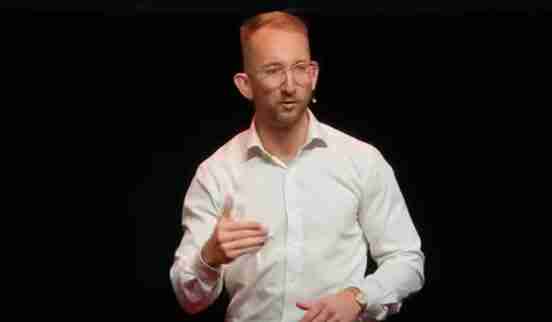
Read the full transcript of education consultant Paul Matthews’ talk titled “AI in Schools: Cheater or Tutor?” at TEDxHobart 2024 conference.
Listen to the audio version here:
TRANSCRIPT:
Introduction: Meet Jess
I want to introduce you to Jess, a Year 9 student from right here in Hobart. Now, Jess is a lovely girl, but unfortunately she really struggles at school. You see, Jess struggles with the basics, things like reading and writing, maths. She gets a report card home every year, and on it, it says she’s approaching the standard, but in reality, Jess is falling further and further behind with each passing year.
She really struggles to do her classwork. She hates putting up her hand all the time and asking for help, and, well, because her teacher’s got 28 other students in the room, Jess is slipping between the cracks. Now, friends, the thing about Jess’ situation is that it’s entirely preventable. Jess is struggling right now, but we could actually get her to be a high achiever before the year’s out.
The Ideal Solution and Its Challenges
The research shows us that all we really need for Jess is one-on-one, full-time support. That’s all we need. Jess needs a tutor. So if we were able to put our wallets together, our heads together, maybe we launch a crowdfunding campaign, we can get the $80,000 necessary to get Jess a full-time tutor, and that’s going to change the shape of her education, even her life, forever.
The only catch with that plan is that in Tasmania, Jess’ struggles, struggling with the basics, well, they’re actually really common. So if we zoom out from the person and we look at the whole problem, actually, we don’t need to raise $80,000. We need to raise 80,000 lots of $80,000, and I actually, I don’t fancy our chances of raising $6.4 billion in our crowdfunding campaign. So while a one-on-one tutor, full-time support for each of our Tasmanian students, while it would reverse the fortunes of our struggling education system, it’s unfortunately just not possible.
It just can’t be done. But what I’m here to tell you today, friends, is that in a world infused with artificial intelligence, we can get many of those same benefits for our students right now, and today I’m going to show you how.
Introducing Paul Matthews
So my name is Paul Matthews, and I’m passionate about helping students, teachers, and school communities not just survive, but thrive in a world infused with artificial intelligence. So education is in my DNA.
I’m a third-generation teacher, and now I help students, teachers, and school communities thrive in an AI world, and I do that as a speaker. I do that as a consultant, and I do that as CEO of MyTeacherAid, a tech company aimed at bringing user-friendly AI and putting it in the hands of every teacher. So as you can see, I’m really sold on the possibilities of AI in education. Perhaps as you come here, though, you’re not sold.
Perhaps you’re a bit of an AI skeptic. Maybe you’re even a tech skeptic in general. You’re not always looking up the reviews of the latest phones. You’re not buying the newest watches.
Maybe, although you don’t publicize it too widely, you think you’ll get through your life just fine without a smart fridge. If that’s you, I want to tell you that even you, friend, even you should be excited about artificial intelligence and education, and here’s the key idea. I want you to grab this. You should be excited about AI and education because the impact is much more exciting than the tech.
The impact is more exciting than the tech. The technology, things like large language models and machine learning, neural networks, if you don’t go in for that sort of thing, that’s fine. Don’t worry about that because I know what does get you excited, seeing Jess and the tens of thousands of Tasmanian students like her succeed at school. See, friends, if you get excited at seeing Tasmanian students get better grades, have more fun at school and foster a love of lifelong learning, then let me tell you, you should be excited about artificial intelligence and education.
The Two-Sigma Problem
So let me show you one of the key pieces of research that undergirds my optimism for AI and education. So the idea that we could take a struggling student and help turn them into a high achiever, that’s not just a nice-sounding idea. It’s actually based on one of the seminal pieces of educational research to come out of the 20th century. Now, in 1984, Professor Benjamin Bloom, he published a paper called “The Two-Sigma Problem.”
Now, in this paper, he set out to find how effective different kinds of teaching was. So he compared a conventional class with people who were tutored one-on-one. Now, a conventional class is what I had. It’s probably what you had.
It’s where there’s one teacher and 20 or 30 students. And what did Benjamin Bloom find when he compared his conventional class to one-on-one tutored students? Well, this is what he found. And you can see it on the graph right there.
That normally distributed bell curve, that was the conventional class. It’s exactly what you’d expect to see. But you can see the curve that’s pushed up to the higher end of the scale, that’s the performance of the tutored students. As you can see, the tutored students, it made an eye-watering difference for them.
Let me give you two pieces of data to put legs on that. First of all, if you’re at the average tutored student, just dead average, middle of the cohort, you fell above 98% of the conventional class. That’s an eye-watering difference. Second of all, students who were tutored one-on-one on a standardized test, they performed two standard deviations higher than the conventional class.
So as you can see here, one-on-one tutoring, it makes an eye-watering, life-changing, two standard deviation difference in a student’s life.
Now for those of you who have got your maths hat on, you’ll know that a standard deviation in the maths literature is called a sigma. It’s called a sigma. And that’s why this paper was entitled “The Two Sigma Problem.”
Two standard deviation increase in learning, two sigma. But the real question here is, why was it called the two sigma problem? What’s the big problem with getting people so much learning? Well friends, the problem is we just can’t get those eye-watering, life-changing, two standard deviation differences for all our students.
We just don’t have the resources. So unfortunately for Jess and the tens of thousands of Tasmanian students like her, the hypothetical benefits of that kind of approach, well they remain just that, hypothetical. That’s a two sigma problem. But what I’m here to tell you today, friends, is that in a world infused with artificial intelligence, the two sigma problem has become a two sigma possibility.
AI: A New Possibility for Education
We can use artificial intelligence right now to put students in a more tailored, personalized, feedback-rich environment than ever before. Of course, when AI first came out, or at least when it hit the mainstream in November 2022, the dominant narrative was that students would use it to cheat. I wonder if you heard that one. I certainly, I was in a school at the time, educators were running around, lighting their hair on fire.
This is the end of education. This is the death of learning, they said. And because of that knee-jerk fear response, well people just didn’t see that actually AI might be exactly what we need for our tired teachers and our struggling students. See, people just didn’t pick up on the fact that maybe we could use this new technology to put our students in a more tailored, personalized, feedback-rich environment than ever before possible.
Of course AI could be bad. Of course it could be used poorly. But it could also be fantastic. It could also be just what we need.
And that’s why I’m working as hard as I can to make sure AI is a benefit and a blessing to our students and our teachers. So today, friends, I want to give you three simple strategies that we can put into place right now that will have a huge impact on Jess and the tens of thousands of Tasmanian students like her. Now the interesting thing you’ll note about these strategies is they’re not brand new ideas, they’re not big innovations. They’re actually things teachers have been doing for a really long time.
They’re things that I did in my classroom before AI. It’s a little bit of a window into my vision for artificial intelligence in education. It’s not about brand new ideas, it’s about doing the basics better with AI. Doing the things that we know work more often for more of our students.
And that’s exactly what you’re going to see in these three simple strategies. Now you know when you engage with AI and you ask it to do something for you, that’s called a prompt. Now I’ve written up prompts for these three simple strategies that will have a huge impact. They didn’t fit on my slides, so you’ll note on my last slide I’ve actually got a QR code there.
What I want you to do when that comes up, if you’re able to scan that, that’ll be on the last slide. You’ll be able to download my eBook that contains a simple framework for how you can use AI as well as the prompts for these three simple strategies. So let’s dive in now and have a look at some simple strategies that will have a huge impact for Jess and the tens of thousands of Tasmania students like her.
The first one is text differentiation. Now that’s a big phrase, but what it means is the teacher adjusting the readability of a text, maybe reducing the length or the complexity for people in the class who don’t read so well. That’s text differentiation. Because you see friends, in Jess’s year nine class, there are people reading at a grade nine level and that’s good. There are some people who are reading at a grade seven level, some at a grade five level, some at a grade three level.
So if a teacher’s handing everyone the same worksheet and asking them to read it, that’s what I like to call the spray and pray approach. You’re just spraying out the same resource to everyone and you’re just praying they can read it. In a world infused with AI, we can do a lot better for our learners right now. It really is as simple as a teacher taking the text that they’re going to read in class, you plug that into an AI tool like ChatGPT or MyTeacherAid and you say, can you please reduce the length and complexity of this?
So they bump it down from a grade nine level to a grade seven level. Say, can you please reduce the length and complexity further? Bumps it down to a grade five level. Please reduce this to six simple dot points.
You’ve got your grade three version right there. It has never been easier to make sure every learner in our classroom can read what we’re asking them to read. That’s a simple strategy but friends, it will have a huge impact. It’s not a brand new idea, it’s just doing the basics better with AI.
2. Retrieval Practice
The second strategy that we can put in place that will have a huge impact is called retrieval practice. Let me unpack what that means. We used to think that teaching a student was all about what you could put in their head. It’s like stuffing a sleeping bag into a sack, just got to put that knowledge in there.
What we’re realizing now is it’s not so much about what you can put in, although that’s really important, it’s also really important to draw it out as well, sort of draw that knowledge out of the student’s head and that process of drawing it out, that’s called retrieval practice. See, much like a student needs to practice an instrument or a sport, they actually need to practice their knowledge as well. Now, teachers have always used a really simple quiz. For this we use a quiz, so you read something and you get quizzed on it, great way to practice your knowledge.
We just don’t do it that often because, well, those quizzes take a long time to create. What we can do now, using AI, we can allow students to practice their knowledge without the huge time penalty on the teachers. It really is as simple as taking the text that you’re reading or the transcript of the YouTube video that you’re looking at, you plug it into an AI tool like ChatGPT or MyTeacherAid and you say, please create me four multiple choice questions, four short answer questions, four fill-in-the-blank questions, and you’ve got it right there. So we can get our students practicing their knowledge but it’s not costing our teachers their evenings, weekends and holidays.
You see, it’s a simple strategy but it will have a huge impact. It’s not a brand new idea, it’s just doing the basics better with AI.
3. AI-Assisted Feedback
The third simple strategy that will have a huge impact is training students to get feedback on their work from artificial intelligence. Feedback is crucial for anyone who’s trying to learn anything and it’s a really clear advantage of a one-on-one tutor over a conventional class, isn’t it?
One-on-one tutoring, it just allows way more space and time for critique or course correction or encouragement. As a teacher in a conventional classroom for many years, I know there are going to be some days, maybe even some weeks or months where students don’t get that tailored, personalized feedback from us. We can train students so that instead of using AI to do their work for them, they can use it to help them with their work. So instead of saying, write my essay please, they can say, well here is my essay, can you please grade it?
Please give me some feedback about logical coherence and structure and vocab. Now if you’re a teacher out there, it’s worth saying this, this is not about replacing the teachers, absolutely not. Teachers cannot be replaced. I always say to teachers whenever I’m speaking to them, AI is not here to take your job, it’s here to help you do a better job.
The fact of the matter is our students need feedback, we’re limited to being at one place at one time and we can put students in that tailored, personalized feedback rich environment using AI. So those are three simple strategies that we could do tomorrow and it would have a huge impact on Jess and the tens of thousands of Tasmanian students like her.
Implementing AI in Education: What We Need to Do
But if AI is going to be a benefit and a blessing to us, we need to approach it carefully. It’s not the sort of thing we’re going to get right by accident.
Here are two things we have to do:
First of all, teachers need training and they need time off. They need high quality professional development and they need time to be able to learn how to use these tools. You see, AI is the biggest disruption education has ever seen.
It’s bigger than the printing press, it’s bigger than COVID. We can’t expect educators to try and wrap their head around this off the side of their desk. So AI can’t just be another thing on the long list of things teachers are trying to get done in their spare time. We need to give them training and time off to learn how to use these tools.
Second of all, we have to train our students to use AI. We absolutely have to. The reason for that is when it comes to AI use in students, it’s not a matter of if, it’s a matter of how. It’s not if they’ll use it, of course they’ll use it.
They’re already using it. I see it every single day. AI is everywhere. We can’t expect to ban it.
That horse is bolted. Or as I say to my students, that toothpaste is out of the tube. It’s out there. It can’t be put back in.
It’s not a question of if they’ll use it, it’s a question of how. Will they use it in a way that hurts their education or helps their education? It’s that same idea that’s the title of my talk, AI cheater or tutor? Will it be a benefit or will it be harmful?
Instead of doing the work for them, we can train students to use AI to get feedback on their work and help them in their learning. So those are two things we have to do if we’re going to get it right. Teachers need time off in training. We have to show our students how to use it well.
Conclusion: The Ripple Effect of AI in Education
So friends, that’s my vision for AI in education. It’s not about brand new ideas. It’s about doing the basics better with AI. It’s about simple strategies that will have a huge impact on Jess and the tens of thousands of Tasmanian students like her.
You know that today we’re talking about ripple effects. Let me tell you something that you probably already know. Education is the meta ripple effect. It is a ripple effect that sits above every single other ripple effect because of course it starts in the classroom but it works its way out into every single facet of society.
And let me tell you this. If we can use AI to do the basics of education better, do the things that we know work more often for more students, if we can employ these simple strategies that will have a huge impact, we’re going to see one of the most powerful and exciting ripple effects throughout our state, our nation and the world. Thank you.