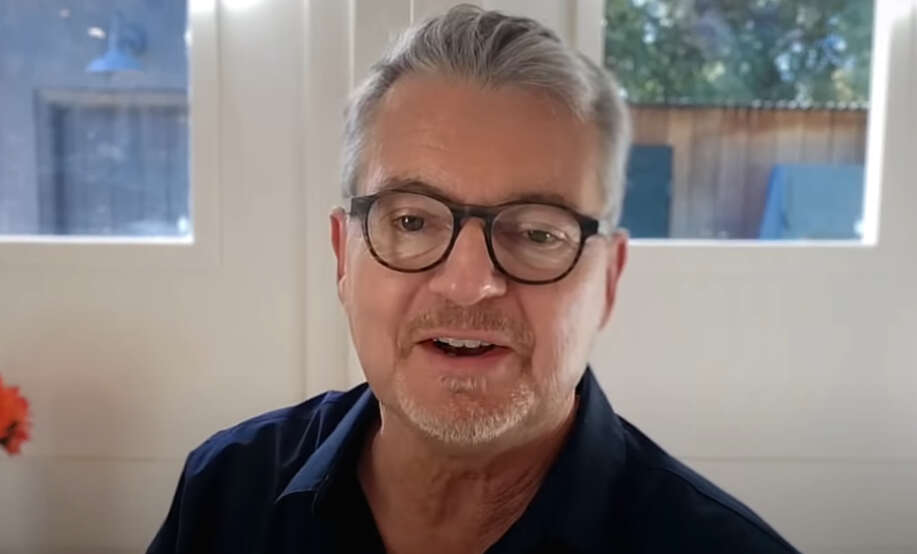
Read the full transcript of family and sleep medicine dentist Dr. Mark Burhenne’s interview on The Primal Podcast with host Rina Ahluwalia on “Fix The Microbiome: #1 Oral Care Routine To Fix Your Mouth & Disease”, November 17, 2024.
Introduction to the Oral Microbiome
RINA AHLUWALIA: This episode features Dr. Mark Burhenne and we’re talking about a topic I’ve never discussed on this health podcast, the oral microbiome. Now, what happens in your mouth is closely connected to disease in your whole body. And by the end of the episode, you’ll understand the things that you need to remove to fix your oral health and your overall health.
Now, this information is not what you’re going to hear from Big Food or Big Pharma. So if you’re learning from and enjoying these episodes, please hit the subscribe button because the simple act of subscribing will help share this message to millions more people that need to hear the truth. And now for the interview with Dr. Mark Burhenne. Dr. B, welcome.
DR. MARK BURHENNE: Thank you. Glad to be here.
RINA AHLUWALIA: Most of us have heard that excellent health starts with a healthy gut or a diverse gut microbiome. But this is not exactly true, because our mouth or the oral microbiome is actually your body’s first defense system against good and bad bacteria and also controls inflammation in the entire body. But nobody talks about this.
So in this episode, Dr. B is going to share his 40 years of clinical experience and talk about the mouth or the oral microbiome, how that’s closely linked to high blood pressure, heart disease, even Alzheimer’s disease. We’re going to talk about the perfect oral care routine that is completely free, and also how xylitol can actually protect you against chronic inflammation.
So, Dr. B, my first question. When we think about the mouth, it appears to be very separate from the heart and the brain. So as a functional dentist, why should somebody even care about what’s happening in the mouth?
The Mouth-Body Connection: Why Separation is Harmful
DR. MARK BURHENNE: Well, you took the words right out of my mouth. The mouth is part of the body. Unfortunately, organized medicine, organized dentistry, we’ve separated. That actually happened in the US in 1839. And since then, we’ve been treating and working and researching on kind of in parallel universes.
It’s very frustrating as a dentist. I would think it’s very frustrating as a physician because there’s a lot of… I mean, when they see the number one or one of the major admissions in emergency rooms in the US is toothache, a tooth abscess, and the physicians don’t know what to do. They just prescribe antibiotics and hope that patient goes away and vice versa.
I mean, there are a lot of things that dentists are working on now, like sleep. And we can recognize sleep apnea well before a physician can. So that crossover now is occurring. It’s what I call a connective tissue or an increase in growth of connective tissue between the two professions.
But why is the mouth, and why has the mouth been treated as a separate part of the body? It’s almost like it doesn’t exist. It’s just an opening. And everything past the opening is the gut or the throat or the nasal passages. And unfortunately, that has hampered patient outcomes by thinking that way.
The doctor passes it on to the dentist. The dentist is considered just to be like a carpenter. They’re fixing hard tissue issues, like enamel issues, holes in teeth, and it really goes beyond that. So there’s that little bit of a black hole in the disease, the metabolic disease of gum disease, the number one disease in the world, which is tooth decay. Who’s addressing that?
And because it’s not being addressed in a medical standpoint, in an overall global, systemic, functional way, then it’s really not being addressed properly and it’s like a black hole and everyone’s practicing around it. And the irony is that black hole is causing systemic disease. Alzheimer’s, pancreatic cancer, breast cancer, obviously cardiovascular disease, diabetes. There’s a two way street between diabetes and gum disease, kind of a two way effect.
It’s unfortunate that it’s been this way. Hopefully it’s changing. Obviously the insurance products are separate as well. There’s medical insurance for example. When I retired a few years ago, I’m 65 now and I’m on Medicare, wonderful product by the way. But there’s no dental care.
And I noticed this in my patients when they retired their dental, their oral health went straight down the tubes. These are patients that had great dental insurance through Google, Apple. This is where I was practicing in the Silicon Valley and I literally watched someone get early stages of Alzheimer’s within five years. And obviously I could see the gum disease. The patient wasn’t coming in for regular care.
And gum disease, very simply, the P. Gingivalis bug in the mouth is elevated. It crosses over every second that chronic inflammation is there, it crosses over into the bloodstream, gets across the blood brain barrier and makes the brain, stimulates the brain to lay down amyloid plaque as a reaction to this infection. So separating the mouth from the body has caused a lot of harm and death.
Zero-Cost Solutions for Oral Health
RINA AHLUWALIA: Absolutely. I think that many people think, “Oh great, that’s something else that I have to think of.” But this is zero cost. It’s not going to cost you anything to make these changes because it’s more about subtracting things and not adding things.
I want to talk about those inflammatory conditions that are connected to poor oral health. But first I want people to understand the mouth and the oral microbiome, because this is some fancy terms, the oral microbiome that they need to understand. Can you explain as a functional dentist something that you used to see every single day, the mouth and the oral microbiome. What is that?
Understanding the Oral Microbiome
DR.
And obviously all the dental care products out there, and still to this day, unfortunately, are designed around the concept of knocking down the bacteria in the mouth. So around the year 2000, and this is around when the gut microbiome became discussed more and was appreciated more, then we started understanding that what we were doing all this time knocking or looking at the mouth as a place of infection, that in fact we were doing the wrong thing.
So what is the oral microbiome? It really should be… Again, here’s this division between medicine and dentistry. It really is a part of the gut microbiome. It’s the beginning, it’s the entry, it’s the transitional element. It’s what sets the tone. It seeds the gut microbiome. It is integrated to the gut microbiome.
And if you think about it, the mouth is the beginning of the gut. That’s where digestion starts. We actually start digesting food in our mouth and not just by chewing. We pre digest the food by chewing. And then there are in saliva and it depends on which gland it comes out of. There’s a parotid gland, different glands produce different types of saliva that break down like carbohydrates or proteins.
And that gets pre digest, it goes down into the stomach and then it gets hit by acid and then into the duodenum. And so that’s the way the mouth needs to be looked at. It’s not an opening and that’s it. It is part of the gut.
The Specialized Nature of Oral Bacteria
And so the oral microbiome is very similar to the gut microbiome except that based on location and the amount of oxygen or lack of oxygen, it’s more about oxygen in the mouth. But there are areas where there is no oxygen, like the gut. It’s a different type of population of bugs.
And we see this throughout the body. I mean, your biome in your armpit, your biome in your nasal passages, vaginal biomes, gut microbiomes, urethral biomes. There’s a biome of the brain. All of these biomes are very specialized. It’s a group of bugs that are actually helping us fighting off infection, producing ingredients that we need.
For example, the gut microbiome produces serotonin, which is important for mental health. In the mouth, these bugs are fighting off viruses, bacteria that are coming in. So it’s part of our immune system. It’s also helping remineralize and fix teeth. It’s also helping the oral mucosa, which is like the lining of the gut. It’s very thin, it can be very permeable. It can ulcerate very quickly, just like the gut, although it’s slightly more upstream.
And it’s also exposed to a lot of things like tortilla chips, sharp corners of a tortilla chip, a crust of a sourdough bread, fluids that are very acidic beverages. So the location’s different. Essentially, the concept’s the same.
There is a biome in the mouth that is doing a lot of work for us. And there are micro niches of the biome. I consider the nasal biome to be part of what dentists should be looking at and working on. It connects to the oral microbiome via breathing and other mechanisms.
The Critical Role of Oral Bacteria
But these bugs are either our savior or the reason why we have chronic disease or even just acute episodes of disease, like an ulceration, a canker sore, a cold sore, bleeding in the mouth. And then, of course, the chronic aspect comes in, and that is you have gum disease for 10, 20, 30, 40, even the rest of your life. And most of us do have gum disease in the US it’s quite prevalent.
So bunch of bugs, they’re not human DNA, it’s a foreign DNA. And boy, do we need them. This is something. And there are more of them than they are of us. But without them, we are dead in the water. So we need to cultivate that oral microbiome. And of course, it helps the gut microbiome and other biomes as well.
Controlling vs. Destroying Oral Bacteria
RINA AHLUWALIA: So it’s a bunch of bugs. And people are probably thinking, “Bugs. Why do I have bugs in my gut and bugs in my mouth and bugs under my armpit?” So it’s important to understand that we don’t need to destroy bugs. We need to control them so that we want them to flourish. So the things that are helping us and then avoiding things that are harming us, and that goes to something that we’re going to talk about things that are killing the bugs every single day, which is part of the oral routine that people are doing every single day.
But I want to ask a question. Is there a bug that controls pneumonia, a bug that controls cavities? And we also mentioned earlier a bug in your mouth that controls whether you’re going to get Alzheimer’s.
The Oral Microbiome’s Role in Disease
DR. MARK BURHENNE: Absolutely. And it’s not the bug itself necessarily. And by the way, all the bugs you mentioned have names. Smutans for caries for cavities, P. Gingivalis for Alzheimer’s, the pneumonia bug for. They’re all there, they are all present in a healthy person. There are yeast cells, the bug that causes ulcers in the stomach, live in the mouth.
But if they are properly regulated, self regulated, and you use the word control, and there are times when we have to control our oral microbiome and that’s usually a last ditch effort with very strong agents like antibiotics or strong mouthwashes. That’s a resetting of the oral microbiome.
But just by feeding the oral microbiome and the gut microbiome, the proper building blocks, it can control itself. It actually, what I use the word, it modulates itself. So all of these bugs are present. There are specific bugs. There’s a bug that we find in the joints of rheumatic arthritic patients. The P. Gingivalis bug is found in the brain. There are bugs that are found in blood clots in the arteries from the mouth.
And you know, with all the DNA testing and technology we have, we can track where all these bugs come from. And I think it’s really surprised a lot of researchers how many of these oral bugs are found in chronic disease. And I would say 7 out of 10 major chronic diseases have an oral component to it.
So those bugs are there, that shouldn’t terrify anyone because the body can take care of itself if it’s allowed to modulate and control. There’s that word again, these populations of bugs. So the good bugs and the bad bugs do live well together, given the chance, and then there is no chance of that infection occurring.
But if you have gum disease and you have this chronic bleeding in the mouth and when you floss, you see a little blood coming off the floss, or when you spit out in the sink, you’re spitting pink, we call it in dentistry, that’s not a good thing. And, but most of us are. Even if you have gingivitis, and I mean, if our arms were doing that, you know, if we were washing ourselves in the shower and we saw blood, we would be very concerned. It’s essentially the same thing.
So. But by allowing the oral microbiome and the gut microbiome to do its job properly and by feeding it correctly, none of this occurs. The body is able to maintain the effect of the presence of these bugs. And by the way, these bugs have other functions. The smutan bug has a function. It’s not there just to cause decay.
So. But when it becomes overpopulated, and if you feed it a lot of crackers, a lot of, you know, carbohydrates, refined foods, then that bug becomes dominant, and then the other bugs lose the ability to modulate smutans. And the smutans produces a lot of acid. It consumes, let’s say we’re talking about a cracker or a piece of bread. It consumes that. And its excretion, it’s a byproduct of metabolism. It’s excrement is a very low pH product, and that’s what demineralizes teeth.
So you take that away, then the smutan bugs won’t overpopulate, and then the other bugs can control that. So all the. It’s more complicated than we know currently. We. I think we’re at the stage now where we’ve identified these biomes, but we really haven’t identified the exact mechanism and how complex and how they’re all modulating each other. That’s the. And maybe AI will fix that. It’s very complicated.
Seven Chronic Diseases Linked to Oral Health
RINA AHLUWALIA: Okay. I want to try to, I guess, understand this level of inflammation that occurs from a dysbiosis, as you mentioned, around the oral microbiome. Fancy words. But that means that your bugs are not regulated properly. So you mentioned 7 out of 10 chronic diseases that people face worldwide is associated and closely linked to your mouth and your oral health. What are those seven chronic diseases?
DR. MARK BURHENNE: Oh, cardiovascular disease is probably number one. That’s the number one killer in the world. Definitely an oral component to that. And most people that have cardiovascular disease have gum disease. Very high prevalence of some inflammation in the mouth.
In fact, a lot of cardiologists are now treating heart disease, and they are communicating with their dentist or with a periodontist. And they’re trying to get that under control because it elevates CRP, which is a measure of inflammation, and it has effects on, you know, white blood counts and the. And even clotting. It increases clotting.
So Alzheimer’s is on the list. Certain cancers, a lot of oral cancers, but breast cancer and pancreatic cancer. There is some research. Any kind of endothelial dysfunction, that would be a disease. Disease of the cell, of the lining of the cardiovascular system, blood vessels. What else? Rheumatoid arthritis. I mentioned that. And the list goes on from there.
I mean, it’s pick a disease, name a disease. And I could probably come up with a mechanism of how a bug from the oral microbiome is involved in some way. And sometimes it’s an indirect, obviously diabetes. I forgot to mention that. That’s a big one.
But it’s either a direct effect. In other words, the bug gets to that organ and infects it. Sepsis, obviously, but there are a lot of indirect effects. In other words, what oral inflammation does is it fans the flames of inflammation and it brings up everything else. So it tells the body, “oh, I’m on fire.” The immune system is overactive. It can also cause autoimmune diseases.
So it’s a big player. You would think we would talk more about this connection given the effect it has. But unfortunately, oral care, again, it has a separate care system, it has separate practitioners, it has a separate dental insurance product. It’s unfortunate that it’s not intertwined and connected with overall health.
The Heart-Mouth Connection
RINA AHLUWALIA: Absolutely. And that’s why we’re going to talk about this, because nobody talks about it. I want to center on heart disease, high blood pressure. How does poor oral health or a poor oral microbiome affect the heart? What is the pathway?
DR. MARK BURHENNE: It’s a great question. So there are many pathways. The direct pathway that I mentioned earlier is that a bacterium can literally leak through the gums from the oral microbiome, from the oral cavity, it will leak through the gums. I can explain that mechanism if you want, but it literally travels through an area that typically it wouldn’t be able to if there was no inflammation there. And it would get directly into the bloodstream, by the way.
The bloodstream I don’t know if this is a good analogy for your listeners, but you know what a radiator is in a car, right? It brings a lot of fluid right to the front of the car and a lot of air passes over it. That’s kind of what the gums are. The bloodstream is right up against it in a very small and medium sized blood vessels. And the minute that starts bleeding, obviously that’s a problem.
But if something leaks into the gum, it is automatically right away into the bloodstream. I mean, we’re talking about less than millimeters. I mean, we’re talking about tenths of millimeters. And so I think a lot of people don’t get that because they think, well, the bloodstream is like a blood vessel way over here. No, the gums. And if you look at it correctly, there’s certain lights and I mean, if you Google that, you’ll see the bloodstream is. It’s almost like the kidney. It’s one of the most complex, most concentrated tissues that have capillary beds in it. And it’s right at the forefront.
It’s amazing that the gums do as well as they do because we can cut ourselves, we can bite into things. I mean, it’s a very sensitive tissue, but it does remarkably well. But when it’s chronically inflamed, things can pass across that barrier. So you’re looking at immediate and a very short distance of these bugs getting into the bloodstream.
Once they get into the bloodstream, the body freaks out because it’s really a foreign invader. When it sees a bug from the mouth, it knows that it’s not supposed to be there. So you get this chronic inflammation. You also get an infection of the lining of the endothelial cells. These are the cells that line the blood vessels. Those become inflamed. It’s found in plaque.
There are some studies that indicate that it actually promotes plaque accumulation on the lining of the arteries. I mean, plaque. This is where you get into the whole carnivore thing. If you eat a lot of saturated fats, that’s bad for you. No, that’s not. If your LDL levels are elevated, that’s not necessarily bad. But what is bad is the type of cholesterol, and then also is the lining of the blood vessel grabbing that fat and holding onto it. And that’s what oral infections, bugs from the mouth, can actually promote and can make the plaque accumulation worse. That elevates the blood pressure.
Of course, there are. There’s another indirect effect. Oh, you can also get infections of the heart. And this is actually one of the first things you learn in dental school. If there’s. There’s sometimes a lot of tissue in the heart that doesn’t have a good blood supply to it. It’s a congenital thing. And when a bug from the mouth settles on that tissue, it can become inflamed and you can actually die from an infection of the heart. And you’re told that in dental school. And sometimes you premedicate with an antibiotic given if you have that condition, like a congenital heart murmur. But so that’s more of a direct effect, and we’re seeing less and less of that.
But here’s an indirect effect. There are bugs on the back of the tongue. And when I say oral microbiome, it’s bacterium, viruses, protozoa, yeast cells, like fungi, eggs. It’s quite a group. I mean, it’s very diverse. And the diversity is a good thing. Up to a point. And then there’s the lack of diversity, which we have promoted with disinfecting the mouth.
But here’s the indirect effect that everyone’s talking about now. Finally, because these are old studies, the study where mouthwash knocks down the oral microbiome, especially the oral microbiome that’s on the back of the tongue, and these are bugs, again, a micro niche of the oral microbiome that actually help break down nitrites into nitrates, into nitrites and then into nitric oxide, which is amazing for the cardiovascular system. Basically, it causes dilation, it brings down blood pressure.
And by simply using an over the counter mouthwash, which we’ve been, the profession’s been recommending since the late 1800s, Listerine and alcohol and soaps and detergents and even pesticides, you’re killing those bugs. And then as you get older, you’re not able to make nitric oxide from other sources in the body. And by age 40, pretty much the sole source of that, production of this miracle gas that allows all the blood to get to all parts of the body, diffusion, relaxation of the blood vessels, it does other things as well, it helps build muscle, but that that is prevented and that that process is cut off and, and that literally shortens your life.
So production of nitric oxide via the oral microbiome, stay away from mouthwashes that prohibit that. And then even scraping your tongue, there are studies now that. So the studies on mouthwash are 20 years old and we’re just beginning to discuss this now, which is unfortunate, but scraping your tongue, there are now studies out, recent studies in the last five years that get rid of the mouthwash and then scrape your tongue. That helps kind of seed that area so that those bacteria can do their job properly, assuming they’re getting the nitrates and the proper food. You got to feed those guys.
Then by scraping the tongue, you can literally lower your blood pressure as well. So right there, simple thing, as you said, by taking something away, which is free in this case because you don’t need to use mouthwash, and then buying a tongue scraper which will last you forever, a metal tongue scraper literally will last forever. They’re metal, stainless steel or copper. And then you just scrape your tongue. You’re lowering your blood pressure just by doing that.
The Brain-Mouth Connection
RINA AHLUWALIA: Absolutely. And we’re going to talk more about these specific solutions, both in terms of the oral care routine, but also dietary measures, you know, carnivore ketogenic stuff. So the mechanism by which the oral microbiome affects the heart is through the bacteria which can go from your gums into your endothelial cells, which is a lining of the blood vessels and can cause inflammation interacting with the plaque on the arteries. Making that worse, plaque gets more in the arteries, clogs the arteries, kind of clog the arteries and increases the blood pressure.
The second mechanism is reducing nitric oxide. I did an episode with Dr. Nathan Brown about nitric oxide. Miracle molecule. Miracle. Absolutely. Absolutely. But that’s important to note that nitric oxide is connected to your oral microbiome or your mouth, and it is connected to what you use in terms of mouthwash and maybe toothpaste, which we’ll talk about, and also the foods that we eat.
So that is the connection with the heart. I want to move on with the connection with the brain because people care mostly about heart and brain, Alzheimer’s and heart disease. Can you explain the connection between the oral microbiome, bugs, bacteria in the mouth, and how that would cause or correlate with Alzheimer’s disease?
The Connection Between Oral Health and Brain Disease
DR. MARK BURHENNE: Absolutely. So, again, this is a lot of recent research. A lot of it came out of UCSF here in San Francisco. And it’s a specific bug. And again, when I say a specific bug, that’s the most likely bug to do it. It’s a combination of many bugs, and by the lack of certain bugs, that allows that specific bug to do its harm.
So in this case, the villain we like to villainize is the P. Gingivalis bug. And again, this is a bug that we all have in our mouths. But when that becomes quite prolific, which leads to gum disease, that crosses through that barrier. Very, very. It’s a mucosal barrier, much like the lining of the gut. It can even pass through the oral mucosa, like through the cheek. And there are a few other ways it can pass through, but so it gets into the bloodstream.
And remember, if you have gum disease, you are continually seeding your bloodstream with this bug. And for example, and I’ve read this in a study in a clean situation, one bug penetrating the oral mucosa, it’s in the brain 10 minutes later, given a specific, you know, perfect study. Right. But obviously it’s in process, and it’s happening all the time. That’s how quickly it is. It’s not days or months or years.
And then it crosses the blood brain barrier. And when the brain sees it and there are other compounds involved, it’s not the P. Gingivalis bug. It’s something called the gingipan, which is a protein that’s caused by this infection. And when the brain sees that, it literally enlarges, it becomes inflamed, the brain can expand and it can contract.
In fact, when you sleep at night, the brain is shrinking. And when during the day, it, as it uses energy, and when it uses energy, it’s producing a lot of toxins, so waste products. So the brain’s used to doing that. But so the brain literally has an inflammatory reaction.
And one of the things the brain does in the presence of this gingipan substance product, which is from the mouth directly, it lays down amyloid plaque. And everyone pretty much knows what amyloid plaque is. For many, many decades, that was the cause. In other words, when they saw that on a brain scan, that was the cause for Alzheimer’s. It turns out that’s just a symptom or a manifestation of something way more complicated, which should be no surprise.
And, but, so we’re seeing now studies that are indicating that one bug from the mouth can be a causative agent because it’s always there, it’s chronic and it takes time. So it would just be the brain reacting to this bug and it’s trying to do its best. But over time, the neurons break down and you get all the symptoms of Alzheimer’s. And it’s a very slow, gradual process. But if you have any bleeding of your gums, you are hastening that process by quite a bit. And we need more research on this. Certainly.
RINA AHLUWALIA: Absolutely. I did an interview with Dr. Ray Dorsey, so he’s an expert in Parkinson’s disease. Similar pathology that Parkinson’s does not start from the substantia nigra, it is outside of the brain. So all these things that we think about starting the brain, like Alzheimer’s, Parkinson’s disease, they don’t start. It’s fascinating. That’s why I want to talk to you about these bugs. Right. How did you get interested in all this stuff? Because if we see a dentist, they’re probably going to put fluoride in our mouth and call it a day. So how did you get such an expert in the oral microbiome?
Dr. Burhenne’s Journey to Functional Dentistry
DR. MARK BURHENNE: That’s a great question. It’s many, many factors. Obviously there wasn’t one tipping point or aha moment. Of course, I think it started when I was 17 years old or it was. I mean, I was a total. And this was before I was in dental school, I had no degree. I was actually taking art classes in college, architecture and Chinese landscape painting and enjoying myself with all that.
But I was always kind of a healthcare nerd. I was taking supplements. I think my dad was a physician. My mom was a little bit of a homeopathic kind of mom. You know, brewer’s yeast and dandelion stems in our salads. And this was all in San Francisco, so growing up, so. And then I started taking some food science and then I started doing pre dent, pre dental, which obviously goes right to biochemistry and organic chem and all of that.
But I was literally reading books on proper agricultural practices and regenerative practices. I was reading books on supplements, on longevity when I was 17 years old. So. But that. That really didn’t give me any idea. There was no talk about the gut microbiome. So I think I kind of had something in place already. I was questioning fluoride at that age. Who knows why? We had really no data.
And. And I. It wasn’t for me, it wasn’t a conspiracy theory, which is. Which it was back then, if you were against fluoride, it was, you know, a communist plot or, you know, something like that. So it was political in nature.
So then came dental school. And of course I adored my education. It was fascinating. It was a whole new world. No mention the oral microbiome, no mention of small airways, sleep and all these things I got into later. But really, to be fair, there is no room in the curriculum for that. You want to come out as a safe clinician. And so. But I was exposed to all of that and I started pushing back on a lot of it.
Like, why are we taking out wisdom teeth? These are solid teeth. Well, it’s because our jaws weren’t fully formed, but that wasn’t being talked about. It was because they were lying on their side, they were impacted, and they would lead to an infection later on in life. And that is true. But there was really no discussion of. And I didn’t use these terms back then, but of the root cause. What is the big picture we have? But again, I was questioning everything.
Then I became a dentist and I practiced for almost 40 years. And about I started eliminating as soon as I came out of dental school. I eliminated metal fillings because we had alternatives. And to me, you know, and I knew that a metal filling, half of it was mercury, and I knew that that was a neurotoxin, but everyone was saying it was safe and once it hardened in the mouth, it was fine. Obviously we knew that. We now know that that’s not correct. So. So I started making some changes.
But I think the functional moment came when I realized that I had sleep apnea and I was in my 40s I was very thin, very healthy. I was doing seven day mountaineering trips. I wasn’t really napping, but I had no idea that I had sleep apnea. And so, and then I, to make this story much shorter, I realized that this is something that dentists can really take charge of. And again, we’re not allowed to diagnose it, but we can certainly screen for it and we are part of the treatment process.
And that’s when I really started changing my continuing education. Every year you have to get 50 hours. I was getting 200 hours and a lot of it became sleep. And then I realized that there’s a lot in the mouth. That was the exciting part when, and this was before the oral microbiome that so much is happening in the mouth that is affecting the rest of the body.
And that I think again, it wasn’t one moment, but realizing that that was the case. And then looking back to my education and looking to my colleagues and realizing that we weren’t thinking that way, we weren’t treating patients that way. It was drill and fill and bill.
So then I really, I got it. I mean, I started changing and then came the oral microbiome. That solved a lot of issues for me. It’s like, why are all my patients getting cavities? Obviously I knew it was diet related, but now we have mechanisms of which foods cause these problems. So it was a very slow, gradual process. But I think back to being and reading and questioning back when I was 17, which I have no idea where that came from. I think that kind of was the seed. And then came a professional curriculum and the two just didn’t quite merge as well as I think they, you know, well, they have now. But they, they conflicted. There was a lot of conflict.
RINA AHLUWALIA: I wanted to ask you. So as a functional dentist, people, when they think about, well, how do I know that my mouth is healthy? You would have seen a lot of problems or signs that somebody doesn’t have a good mouth or an oral microbiome, I’d like to talk about that so that people can understand, right? My oral microbiome is crap. I need to fix it. Otherwise I’m going to get Alzheimer’s and maybe heart disease. So let’s talk about bad breath.
Signs of an Unhealthy Oral Microbiome
DR. MARK BURHENNE: So bad breath literally is a sign that your oral microbiome is dysbiotic. It’s easy. I mean, if you. And there’s a hygienist now on TikTok, and I applaud her, she went viral because she told everyone to smell your floss after you floss. And actually, that is a brilliant idea. And as a dentist, I could smell disease. I know some endodontists that when they were doing root canals, they could literally identify the infection, that the bug that caused the infection inside of the tooth by smell.
The good news is now we have testing. We have oral microbiome testing. It’s rather new. It’s only been out for two years. I mean, the right form that is testing for every single bug. And they’re about. We used to say 700 species, and that was just last year. Now it’s 800 different species. So we can test for all 800 species.
And so we have an MRNA broad. It’s not a broad spectrum. It’s a metagenomic shotgun approach. In other words, it’s testing for everything. And it hasn’t been that long that we’ve had that, a good test for the gut as well. So for 80, $90, you can get your oral microbiome tested.
And so what you said, how do you know? And I don’t want to get Alzheimer’s, that’s the way to go. I mean, I wouldn’t trust, and this is going to sound terrible, but I wouldn’t trust your dentist or your hygienist because we look at indirect factors. We’ve been trained to look at the texture, the stippling or the smoothness and the color of the gum tissue. That’s not very scientific, but that’s all we had.
So now we have testing. I would just go out and get tested. If you’re bleeding, if you have a little bit of gingivitis, if your dentist isn’t having this discussion with you about the oral microbiome, about why your breath smells bad, poorly or bad or stinky, dead fruit smell, whatever, decaying fruit smell, and that could be more than just a dysbiosis of the oral microbiome. It could be food getting caught in between your teeth. Then you can literally get this test. Anyone can get this test, at least in the US, I think Canada as well now. But get your oral microbiome tested and the results get sent to you, the box gets sent to you. You spit into it. It’s wonderful.
So. So there are a lot of other indicators. We’ve talked about bleeding. Obviously, if you’re getting cavities every few years or every six months, that’s not normal. Our ancestors didn’t get cavities. I mean, once in a blue moon, maybe, but usually their teeth would crack or wear out. You know, they were grinding, milling their grain with stone and the particles of stone would come off. There was a lot of violence in those days, fractured jaws and. And accidents, of course, but very little decay, very little crowding of the teeth, big jaws, big airways.
I mean, we’re so different from our ancestors, and it shows mostly in the lower face and the size of the airway and where the teeth end up. So if you have crowded teeth, if you have cavities, if you have bad breath, for example, if you’re getting a lot of canker sores, even if you have a very mild version of gum disease, which is called gingivitis, and you see a little blood occasionally, that is absolutely not normal, that means you do have an issue with your oral microbiome. And it all comes back to the.
The Impact of Gum Recession and Chronic Inflammation
RINA AHLUWALIA: Oral microbiome and then a periodontal disease as well. So if the gums recede, that’s also obviously chronic inflammation, right?
DR. MARK BURHENNE: That is the result of the body trying to deal with chronic inflammation. The free margin, or the edge of the tissue, which is where most of the inflammation occurs. Because the tissue is so thin, it’s knife edged. That blood supply is inherently, because it’s such a small piece of tissue, is tiny. It’s the equivalent of the blood vessels, the size of the blood vessels in the kidney, which are tiny.
And when the blood pressure is elevated or if there’s a lot of chronic inflammation, those blood vessels rupture, that tissue necrosis. And of course necrotic tissue, the body eats it away. It could be macrophages, it can just be falling off of that tissue over time. And that’s what gum recession is.
And a lot of people are like, “Oh, I’m just getting old.” You know that expression, “I’m long in the tooth”? That likely is some form of chronic inflammation in your mouth. And that would be also a dysbiotic oral microbiome due to oral care products you’re using, not eating the right foods.
There are cases of gum recession with trauma. Eating a piece of sourdough bread and it scrapes the gum tissue. There are some congenital issues. There’s a frenum pole, little piece of tissue that can pull on it. Severe grinding, which is related to sleep disorder, breathing can cause gum recession. But the major cause of gum recession is gum disease. And again, that’s a metabolic disease that I think 69% of us over the age of 40 have that disease.
Flossing as an Early Warning System
RINA AHLUWALIA: Wow, I’m scared to open my mouth because maybe you’re going to think, “Oh, Rina’s gums.”
DR. MARK BURHENNE: Yeah, well, I mean, it’s something worth looking at always. And that’s the great thing about flossing. If you floss every day, you’re massaging that area. I mean, there are lymph channels in the gum tissue. There are even lymph channels in tooth structure.
And a lot of people think flossing and brushing for that matter. And you should be brushing the gums as well. Right at the margin between the gums and teeth. You’re massaging those lymph channels, you’re detoxifying that tissue. And of course you’re thinning the biofilm and helping the oral microbiome reset and do its job properly.
But again, if you’re eating the wrong diet, all of this won’t help. And if your dentist is shaming you, for example, if you come in, you’ve got a cavity and you’ve got a little bleeding, the most common answer from your dentist or hygienist is that you’re not flossing enough. And that’s really unfair because it’s more than just that. In fact, it’s way more than that. And I just mentioned a few of them.
So flossing is great because it’s an early detector, it’s an early warning system. So when you floss, your gums should not be tender. And if they are tender in one area, which a lot of people have certain areas where that are tender, that’s an area where the ligament is migrating downwards and that’s where there’s some inflammation and that’s where you’ll get your bleeding point.
At that part of the process or the game, it can be reversed and it can be addressed. But if that goes on for too long, then you get gum recession and you get permanent injury to the gums and you get tooth sensitivity. And so flossing is an early warning system. And if you see blood on your floss and it doesn’t smell good, find a dentist or a hygienist that will address that and get your oral microbiome tested.
The Problem with Mouthwash
RINA AHLUWALIA: Okay, let’s talk about things that kill the oral microbiome and probably the other biomes in the body as well. Mouthwash. So you don’t want to kill bad bacteria because that’s what Listerine says.
DR. MARK BURHENNE: Yep. Anything with alcohol in it, high essential oils or high levels of essential oils. Listerine was made by the soap detergent industry. It literally, that formula came off the back of a covered wagon. A snake oil salesman, they just loaded it up with what they had in those days and that was a distilled essential oil.
And we knew that those things would, they were in soaps, they would clean by disinfection, but also emulsification. They were surfactants and that would break apart things on your skin. They would break apart biofilms. That’s what they do in your washing machine.
So the question is that are those ingredients useful in the mouth? And I think this is the frustrating, off camera, we were talking about how frustrated it is to be a health care practitioner sometimes. The profession has been promoting this snake oil salesman, covered wagon product, soap, detergent, pesticide, alcohol based product. And we and the industry and the profession is still behind it on a daily basis. They recommend that you do that on a daily basis.
What you’re doing is you’re knocking down, you’re killing your oral microbiome. And actually you are not preventing disease, you are actually promoting disease. Because then that P. Gingivalis bug or that S. Mutans bug that we talked about that causes all these different things, not only in the mouth but in the body, become more prevalent. And then they start wandering. And when they start wandering, you have some serious systemic issues.
So we’ve been promoting a disease process, a product that actually causes not just oral disease, but systemic disease. So mouthwash you don’t need. You could rinse with salt water. Just the swishing motion of a neutral pH water would be fine, but it’s not as effective as oil pulling, for example.
But brushing and flossing are mechanical. They actually are the backbone of good oral hygiene, especially if you’re eating a western diet. I mean, now if you’re eating hamburger meat, I mean, I eat a lot of meat sticks. I live here in Napa Valley. They’re all handmade and they tell you where the animal came from. And I mean, that’s a diet that you literally wouldn’t have to brush or floss.
The Ancestral Diet Connection
Yeah, well, I mean, I’m not recommending a pure carnivore diet, but I’m just saying our ancestors, I mean, every once in a while they’d see a pomegranate tree or they would see a fig tree, right. But most of the time it was just dried meats. And then later they learned how to cook it and that we got a little bit more nutrition from that. We were chewers. I mean, our teeth are designed around chewing meat, not vegetables.
That’s changing now, unfortunately, because we have a soft diet. So we evolved into a species. Even after fire came along and we could cook meat, we had to do a lot of chewing to get our nutrients and most of the time it was meat. So there are diets out there where you wouldn’t have to floss and brush. Unfortunately, most of us are not on that diet.
And the reason we brush and floss is because we’re eating a junk food diet, a western diet. So that’s something to think about. It’s the same for the rest of the body. The carnivore diet works great with diabetes. It works great with cancer, for example. There are many things that it can modulate or prevent. And it’s the same thing. I mean, the diseases in the mouth are very similar to the diseases throughout the body. They’re metabolic in nature. I mean, yeah, it’s very frustrating. But I’m not telling people not to floss because I would first have to look at your diet.
The Toothpaste Problem
RINA AHLUWALIA: Absolutely. That’s why we call the podcast the Primal Podcast, because it’s getting back to our primal ancestry ways. You know, a ketogenic carnivore. It’s all these labels, but really it’s just eating real food, primarily meat. I want to ask you about toothpaste. Why should we not use Colgate, for example, or Crest? Why is that not good?
DR. MARK BURHENNE: Right. And you know, the list is bigger than that, of course, but those are great examples because those are the number one selling toothpaste. And by the way, that’s a huge industry, and that is a billion dollar industry. And they can put a tube onto the shelves, packaged, and includes all the marketing for about 35, 40 cents, and they’re selling it for 4, 5, 6 dollars. I mean, this is an industry that nobody wants to mess with.
Unfortunately, it is causing a dysbiosis of the oral microbiome. I will just say it right up front. And so whoever’s using these products, like mouthwash and these and the toothpaste have a different mechanism. It’s more of an emulsification breakdown of lipid layers. All the cell walls have fat in them, lipid. And if you take an emulsifier, you can see this under a microscope. It literally breaks apart the cell wall. The cell wall opens and all the contents of the cell spill out.
And that’s not the way you want a cell to die because that’s called apoptosis, I think. And you really want a macrophage or the body to eat that cell. That’s a better way of getting rid of the toxins. So, but that’s a little bit of a rabbit hole there.
So the toothpaste also, for example, triclosan, which was in our hand soap for a long time. That’s been outlawed in California. Thank goodness. There are microbeads and toothpaste. That’s a piece of plastic, but it’s bigger than microplastics. Just for luck, those would get caught in between your gums and cause inflammation.
What else? The surfactants. Sodium lauryl sulfate. And by the way, I could tell you to look for SLS in toothpaste. Don’t use a toothpaste with SLS in it. Unfortunately, there are 50 or 60 different other names for a surfactant like SLS. It’s very difficult to. I think we have a list on our website, but it continually changes. It’s like going BPA free. You go to the next BPA Free product and then it has something else in it that eventually you can’t be using.
So it’s very difficult. But try and use a toothpaste without surfactants and emulsifiers. It’s a soapy, bubbly, foaming kind of agent. It’s really there to make large batches of toothpaste and to make a lot of profit. And it’s not good for your oral microbiome. Although it’s certainly not the worst thing. It’s not as bad as triclosan.
We also have essential oils. Essential oils are distilled down from plant oils and plant products. And I’m not going to say that all essential oils are bad, but essential oils in the mouth are not good. And I’ve seen over the years a lot of burns and thinning of the oral mucosa and dysbiotic oral microbiomes due to even homeopathic toothpastes that are very high in cinnamon oil or eucalyptus oil and those kind of things. And to the point where people get burned.
There was an influencer on the east coast, a very well known influencer, a friend of mine, and he was using a homeopathic toothpaste and he couldn’t speak, he couldn’t get on Instagram for two weeks because of this toothpaste. And again, they never tell you how much is in there.
So there are a lot of things that should not be in toothpaste. Be very careful what you. Toothpaste is not an innocuous product. It can potentially cause decay and affect the nitrate to nitrite converting that NOS synthase pathway producing mechanism of producing nitric oxide. It can also affect that as well as does mouthwash. So mouthwash is much stronger perhaps, but don’t underestimate the effect of a poorly made toothpaste.
So definitely, I mean, I would rather have patients not use Colgate or Crest or, you know, there are several others. I would just rather have them floss and brush. I mean, not using the toothpaste is safer than actually using it. You’re going to be much healthier.
Now there are some toothpaste that I recommend and full disclosure, I manufacture a toothpaste that has no surfactants, no essential oils. It has a remineralizing product in it. All the things that I think are necessary and there are a lot of other good toothpastes out there that do the same.
But if you’re. And I think the reason I say that is because a lot of people will say, “Well Dr. Burhenne, your toothpaste and all these other boutique brands cost 12 to $20. And I can get, I can go to Costco and buy six tubes of Colgate for I don’t know how much.” I haven’t bought it in 30, 40 years. I wouldn’t be able to tell you, but, I mean, it’s quite a bit cheaper.
But I would tell you that it’s safer not to use toothpaste, just floss and brush, use an electric toothbrush, change the toothbrush head often, floss daily and you’ll be much better off. Your breath will smell better. I mean, mouthwash actually makes your breath smell worse. Now, for the first 10 minutes, you smell minty and all that.
And then obviously I’m a big fan of xylitol. I know we’ll talk about that, but I would rather have you floss, brush and chew on xylitol if you have no other option or you can’t find a good toothpaste that is safe. And that’s how bad Colgate and Crest and there are other products. GlaxoSmithKline. And I’ve spoken to these companies, I’ve had roundtable discussions with them in the last 15 years. They’re looking. They do buy small toothpaste companies, but right now they’re very happy with fluoride.
Fluoride is antibacterial. We talk about the effects of fluoride on the brain, the developing brain, but fluoride in the mouth literally knocks down the oral microbiome. It also knocks down the gut microbiome. It’s another effector of the gut microbiome.
The Critical pH Factor and Acidic Beverages
RINA AHLUWALIA: That was the next thing I was going to say, fluoride. So we should avoid fluoride because there is that link with fluoride and dementia and Alzheimer’s, because it can travel through the blood brain barrier and enter the brain.
I want to ask about foods because we mentioned some products that we shouldn’t be using. The mouthwash, be careful of your toothpaste, fluoride in toothpaste and even fluoride in water. But acidic drinks. So coffee and tea. Can you explain? Because I think everyone drinks coffee and tea.
So the acidity in the mouth, you want to control the pH and there’s something called the critical pH. Can we explain that? And then when you drink coffee, tea all the time, why is that dissolving your enamel of the teeth, the tooth.
DR. MARK BURHENNE: Great question. And again, this is something that’s very prevalent, doesn’t get discussed very often. I’m glad you mentioned critical pH. Not many people know about that.
But let’s talk first about pH in the mouth. So there are a lot of people out there that you’ve heard say that you have to drink a high pH water because it’s better for the pH of your blood. That’s hogwash. The body has its own pH regulation system as it does in the mouth, which I’ll get to in a minute. And it can regulate its own pH, blood pH on its own.
I think the drinking a acidic beverage and back to that example, I mean, you can eat oranges and the pH of your blood will not become acidic. I mean, so I wouldn’t, I’m not going to go down that path. I mean that’s not where we’re going in the mouth.
The in the oral story is contact of a low pH product onto a tooth structure has an effect and it is pH, but it’s not pH of the saliva necessarily. It’s not pH of your blood. And the body and the mouth does regulate the physical in the mouth of the saliva, but sometimes it is. Well, often in today’s world it is overcome.
So if you’re, let’s say. So my typical patient in the Silicon Valley was like a Google or Apple patient. And they were sitting in a cubicle. They had all this free access to wonderful snack food and drinks. And so they were sipping, you know, anything from a iced tea unsweetened to a Mountain Dew beverage, which is very low on the. Or even a diet cola. Diet Coca Cola.
Those pHs reach 1.8, 2.4. I mean, that’s an acid that will literally dissolve this tabletop here or cause a burn of the skin. And people are, here’s the problem. They’re not just guzzling it. If they had to do it, I would prefer they do that. They’re sitting there programming and making phone calls and they’re sipping.
That coffee is not as bad, I would say iced tea. I drink a lot of iced tea. I drink four of those until 11 o’clock and I brew it myself. And it’s a green tea and for me it’s a delicious drink, but it also helps prevent Alzheimer’s and has other benefits in the mouth. It helps you lose weight, for example. But, and I’m not too worried about the pH, but I do measure the pH of all my beverages and I’m sipping on Pellegrino right now, which is about a 7.0 on pH.
But so I wouldn’t worry too much on the pH of a beverage, unless you are sipping it. A lot of us will sip wine for a whole evening. But if you’re eating a lot of fatty food and. Or you’re doing what the Europeans do and they drink water after they drink the wine, they have their bubbly water there. These are moments I’m not too concerned about.
I am concerned about the sodas and people that are sitting there and that’s all they’re doing. And there isn’t time for the saliva to buffer that. So saliva will return back to its pH of 7.0. But if you’re sipping or snacking on crackers, for example, and nothing else, or washing them down with the soda, you’re in trouble.
Understanding Demineralization and Remineralization
The acid, the pH of the mouth is so low that you’re dissolving, you’re literally dissolving calcium from the outer structure of the tooth. That’s just, I mean, that’s how chemistry works. I mean, you can. An acid will break down a calcium structure.
Now, the body has a mechanism to replace that calcium, and that’s where critical pH comes in. So we’ve identified what that critical level of physical or point of pH is. And it’s different for dentin and it’s different for enamel. It’s lower for enamel because enamel is a harder structure and dentin is only partially calcified. It’s softer, so it has a higher pH, at which point it starts demineralizing. It starts losing these little ions of calcium.
And again, all bone and tooth is, is just this globular structure of covalently bonded electric electronegatively, or it’s an electronic. It’s an electric attraction of calcium, phosphorus, water, hydroxyl groups, magnesium, boron, all these minerals are bonded together. The acid comes in and breaks down those bonds. And then the calcium starts leaving the outer layer. And the longer the acid is there, the deeper it gets.
So it’s not. In dentistry, it’s more about the frequency of exposure and not the amount of exposure. So again, there’s that example of if you’re going to have your Diet Coke, drop it down quickly. You know, if you can guzzle it or whatever that term is waterfall it. Right, of course, that, you know, you’re not tasting it, but if you’re there sipping it all day or even for an hour, the pH in the mouth is too low, too long and you’re losing tooth structure and you’re below the critical pH.
So the critical pH for enamel is, I think it’s 4.8. So a lot of things Even like not Pellegrino Perrier water will drop below that. I mean, there are a lot of things that you wouldn’t think drop you below that critical pH of where enamel starts dissolving.
So but the minute you bring it back up past the critical pH, back to 7.0, which is the neutral state of the mouth, then remineralization occurs, but only for a small window, because once you’re at a neutral phase, the remineralization stops. So there’s that little window there as you pass through it where demineralization and remineralization will occur. You’re literally losing and gaining tooth structure. And we have something called the Stefan curve in dentistry that plots all that.
This gets way too complicated for the viewer. So all they have to know is if you have to have that Diet Coke, have it with a piece of chicken breast or chew xylitol gum immediately afterwards because that brings you that pH back up and it helps the remineralization.
I don’t want you to brush though, because the pH was so low. You’ve got this little slurry of dissolved calcium on top of the tooth that if you were to brush, you’re literally scraping off that layer. You’re not allowing it to recombine or rejoin the tooth. And that’s why we always recommend depend.
Now if you eat a hamburger without a bunch of, you know, with an onion, grilled onion on top of it and maybe some mustard, you wouldn’t have to worry about any of this. But if you ate a typical meal, you would definitely have to worry about all of this.
Direct vs. Indirect Acid Attacks
And then there’s another. So that is the acid and pH direct contact from the food itself or the beverage. Mostly the beverage. But then there is the indirect acid attack. And that is when you eat, and I like to pick on goldfish. But any kind of refined, refined flour snack with a little, you know, hydrogenated oils in it or something, it doesn’t matter. Even a potato chip.
By eating that, the bacteria A, you’re boosting the levels of strep mutan, which is the cavity causing bug. But the excrement, the, of that metabolic process of those bugs eating that product, you fed them the perfect meal and they can excrete a lot of acid that lowers the pH in the mouth as well. And that’s kind of the indirect acid attack.
So it’s not necessarily the pH of the food itself, but it’s the pH lowering ability of that food. Because the bacteria in the oral microbiome are able to consume it. And that’s the problem with refined foods. Refined foods are doing that. Again, that hamburger with a, you know, sautéed onion and whatever that, that has no direct pH. The bacteria can’t break it down. So there’s no low pH moment or acid attack.
Ketogenic and Carnivore Diets for Oral Health
RINA AHLUWALIA: That was my next one. Carbohydrates and sugar. So I think we know the mechanism by which eating processed foods, sugars can affect the gum, the mouth and also the teeth. So then conversely, if someone is doing a ketogenic diet or a carnivore diet, would that kind of prevent you from getting cavities or gum disease and help the mouth and the oral microbiome?
DR. MARK BURHENNE: So a lot of people will ask on Instagram and in interviews. And again, I’m not a nutritionist, but it’s pretty clear, it’s pretty simple. And nutritionists would agree with me, the ones that know about what happens to food in the mouth.
And so my easy answer is Paleo, carnivore, ketogenic. Because we know that that diet has a very specific result when it comes, metabolically speaking. And in the mouth it’s the same thing. I mean, a high glycemic food obviously is not good for, you know, our way of dealing with glucose and in our bloodstream and that blood spike and that glucose spike in the blood. But remember, in the mouth it has the same effect. Those bacteria see a high glycemic food and they go to town and they produce a lot of acid, which leads to decay and even gum disease.
So the easy answer is to eat high fiber foods. Eat foods that are high in K2. K2 has another benefit in dentistry in terms of the remineralization process. A and D3, obviously. But if you’re low in D3 and you’re not supplementing and you’re not getting it with your food, I mean, there’s so many factors at play here. You can floss all day long if you want, but if you’re not eating properly, you’re going to have some issues. And then that’s when your dentist shames you. But they don’t tell you that there are other factors at play.
So that’s the again, I love the Paleo diet. To me, that’s perfect. I haven’t had a since I became fat adapted. And I give Mark Sisson full credit for this. He changed our lives. We became fat adapted. We ate a high fat protein diet. We could fast for days. I just had my colonoscopy, I stopped eating for three days. Before I started using the materials that help flush you out, I mean, I’m able to do that. And that is because we’re not. We’re burning fat. You know what fat adapted is, right? I mean, we’re burning fat and we’re able, our body is able to burn fat.
That’s how we want our mouth to be. I mean, we want our mouth to be in our brains to be burning fat, not carbohydrates. Everything along the lines of ketogenic diet, carnivore diet, or a hybrid diet, therefore a paleo diet. It works wonderful for the mouth, it solves problems, it can cure gum disease, it reverses decay. You’ll never get a cavity again if you’re doing it right.
But the minute you start, you know, sipping on a Diet Coke again or eating something with sweets in it, maybe you can get away with it. But if you’re doing it on a daily basis, you’re right back to where you were. Oral microbiome dysbiosis, oral disease, which leads to systemic involvement.
High-Fat Foods as pH Buffers
RINA AHLUWALIA: Okay, I want to talk about some solutions, but going back to the foods, I heard from somebody else that after you have an acidic meal, let’s just say that you have some acid or acidic meals or even a drink if you have a bite of something high fat. So a bite of cheese, a bit of bacon, even avocado, let’s not make it strict carnivore. That is going to help neutralize the pH levels and then help with your oral microbiome. Can you help me understand if that is a good strategy?
DR. MARK BURHENNE: It’s a great strategy and especially with cheese, and we’ve had data on that. There was stuff at the, maybe at around late 1990s, turn of the century that was talking about how cheese consumption of cheese is a great way to prevent decay. It was really just a buffer for the acids. Cheese makes a great buffer.
But any high fat diet, I mean, you listen. I mean, I love listening to the glucose goddess and how she can eat something before a high glycemic food and then compare that to reversing that. I mean, the Europeans, they eat their salads and their breads or they don’t even eat bread. Well, if they do, it’s after the meal is over. They eat it with a little charcuterie or something. But they’ve had their protein first. So it’s the same thing in the mouth. Absolutely.
One of my favorite snacks is a ball of buffalo mozzarella. But from the buffalo, not from a cow. I mean, I just, I just pull it out. You know, it’s wet. You kind of dry it off a little bit. And then I just take it out and walk around with it like an apple. I mean, that is an amazing meal for the mouth. It’s got the right form of casein if you’re allergic to or lactose intolerant. And it’s wonderful for building bones and remineralizing teeth.
And cheese is kind of having its moment. People for a long time were saying cheese was bad. I’ve always believed in cheese. If it was well done, if it was sheep or goat, or if it was the right. I mean, like milk and those kind of products from a cow that is being fed hormones is obviously not what I’m talking about. So.
The Nitric Oxide Connection and Bacon
RINA AHLUWALIA: Okay, next question for you. Again, same line of thought. So if nitrates, which get converted to nitrites, which get produced or increase nitric oxide, help lower inflammation, lower blood pressure, and improve your oral microbiome. That’s connected.
Now, I want to ask you about bacon. I know it’s a small solution. Again, going back to good foods that people can eat in abundance that they feel. Yes, because bacon has been so demonized. Same with butter, same with cheese. You know, these foods that go high and low in fashion. This is good, this is bad. So do you think that bacon can help your oral health?
DR. MARK BURHENNE: Boy? Well, my first reaction is, yes, I eat bacon. Can it directly aid in oral health? Now, again, I live in Napa, and our source for bacon is amazing. And then you can get different types of bacon. And so I’m a big fan of bacon, especially in salads and with other meats, and rolling it with like a fish or something. It’s a great. It adds flavor to everything. And it’s also a great snack. So. And with eggs. Oh, my God.
So I’m trying to think. I mean, overall, there’s something wrong with bacon. Bacon is a good food directly in the mouth. See the back to those bacteria that are responsible for that NOS synthase pathway to produce nitric oxide, those bugs feed are fed better by certain vegetables, like beets, for example, and arugula. I love arugula. I love the tricolore salads that the Italians make, which is with endive, which is great for the gut microbiome.
I’ll put some dried walnuts in there, a lot of olive oil. I’ll put it into a ziploc bag, add a little frise, get it all nice and marinated, let it sit in the refrigerator for a while. And then I’ll add some gorgonzola cheese or some very thin strips of aged provolone. Again, all properly made, small batch products. And I mean, that is what feeds the bacteria on the back of the tongue more so than bacon. But I’m not against bacon. I think bacon’s wonderful.
RINA AHLUWALIA: Can I just clarify something? Because I speak to a lot of different experts, so I know my audience. They’re going to say, “Oh, my God, Dr. B said beets. That is oxalates and oxalate dumping.” So can I provide a clarification?
Everything. For me personally, the reason I follow a carnivore diet is for my gut health and also for my mental health. And many people follow different diets for many different reasons. You do a paleo primal ish diet because it works for you. But I just wanted to highlight that if you don’t do well with beets, don’t eat it. This is just Dr. B’s recommendation of maybe how you can increase nitric oxide. But also there are nitric oxide to increase it. It doesn’t specifically come from foods. It comes from what you avoid. That’s the biggest thing, because you have to increase an ear. So I just want to. But I just want to ask you about bacon, because I always love bacon.
DR. MARK BURHENNE: Bacon’s wonderful. It’s amazing. And I also try and stay away from vegetables with lectins in them as well. And then beans, I’m not a big fan of. But, you know, some people will marinate their beans for three days and they seem to do well with that.
But yeah, beets are. I mean, you’ll see that in nitric oxide supplements. So maybe take it that way instead of the beet itself, because it is high in oxalates, like spinach. I’m not a fan of spinach, that’s for sure.
The Perfect Oral Care Routine
RINA AHLUWALIA: I want to talk now about the perfect oral routine. So that has a bit of components to it. Because you did another podcast, I was like, whoa, there is so much to it. Let’s go step by step. People can do as much as they want. So let’s talk about brushing. So you say focus on what you eat more than brushing your teeth.
DR. MARK BURHENNE: If one side of the equation is perfect, you wouldn’t have to brush. So there’s kind of a scale there. And so it depends on really what you eat. If you’re eating very well, you could literally brush without toothpaste and maybe floss a little bit once a day.
That is for. I have a lot of patients that do that I’ve never seen any inflammation, any morphological changes to their gum. I’ve never seen decay. They either have no restorations at all or the restorations they have last forever because that’s where bugs like to get in and get up underneath fillings and crowns. I mean, they’ve changed their lifestyle.
So brushing is something, it’s a necessary evil. It’s a result of our wonderful modern diet and way of making food. And I mean, it’s very unfortunate but our ancestors, I mean you, there are no toothbrushes in our history. There are sticks and chewing sticks and you know, there’s some examples of floss, but it was more to get something out, a piece of meat or something. But that this is all something we’ve invented in the last hundred years or needed for the last hundred years.
RINA AHLUWALIA: That’s why I think about when I follow a meat based and animal based diet, why do we need to brush? So if we are brushing, how do we brush our teeth?
Proper Brushing Technique
DR. MARK BURHENNE: Assuming you’re not a carnivore and you are eating a lot of carbs, even good carbs, I hate to demonize them, but you know, I’m very conscious of carbs and I do eat carbs, but as I’m eating them I’m like, “Okay, should I take my berberine now or what’s it going to do to my blood sugar levels?” And you know, it’s kind of that thinking.
But so brushing is, as I said earlier, it’s a form of massage. You’re massaging lymphatic channels, you’re massaging the gums for better blood flow and you are thinning and breaking apart, disorganizing. The biofilm, which we used to call, which we used to refer to as plaque, and plaque has this terrible connotation. It was terrible. And the hygienist and the dentist would get in there, they would scrape your teeth and they would polish down and you had that feeling of nothing on your teeth. Right.
Well, that lasted 30, 40, 50 minutes. The biofilm comes back and that biofilm is needed. So we’re not anti biofilm in dentistry anymore. We shouldn’t be. The biofilm is important. The biofilm is there for a reason. Any inanimate object in the body has to be covered by a biofilm. That’s how we protect it. So, but it’s the quality of the biofilm.
So if it’s very thick and furry and dysbiotic and all the wrong bacteria are in that layer, it’s a protease proteoglycan layer. It will actually dull your teeth and make them look less shiny and less white. It will yellow your teeth. That has to be disrupted. And the more you feed that with the wrong foods, the more you have to brush.
So brushing should be. Aim for the gum line. I’m trying to keep this simple. There are lots of videos online. There’s the bass technique. But aim for the gum line with the softest toothbrush you can buy and replace it every three to four weeks. Nylon bristles become very abrasive. They break down. And also, I hate to say this, but little pieces are breaking off. You’re ingesting microplastics.
So the, you know, if you can maybe oil pull. If you have a good diet, you can oil pull a little bit and then just floss. We have silk floss, so there are no microplastics in that. I have that on our store. It’s another company radius on the east coast here in the U.S. wonderful product.
But nylon bristles are problematic and they do wear. And people brush like this and that back and forth is a cutting motion. And it literally gouges the base of the tooth, especially as we get gum recession. And then you get sensitive teeth. And then you have to either get those areas filled or you have to use very strong remineralizing toothpaste to desensitize those teeth.
So it’s the motion. It’s a circular vibratory motion. And aim for the gum. Aim for the gum. And if you’re getting the free edge of the gum, you’re also getting that crucial part of the tooth. You can brush the tops of the teeth.
I have no problems with electric toothbrushes, except that those heads don’t last as long as you think. I see people when I go to the guest bathroom, I see the bristles sideways and worn, and I’m like, “Oh, dear.” They are causing a lot of damage. Teeth are the hardest substance in the body, but they’re not as durable as you would think. They do wear nylon bristles, especially on an electric motor, on a sonic motor can cause a lot of wear, especially on dentin on the root surface.
Electric Toothbrush Maintenance
RINA AHLUWALIA: So how often for an electric toothbrush? How often should we change the head?
DR. MARK BURHENNE: I would say every three to four weeks. That’s what I do. I buy them in bulk and I push very gently because I don’t want to wear the bristle. I don’t want a lot of piece of plastic breaking off of my mouth. And then I have a toothbrush that tells me, if I’m pushing too hard, a little light goes off at the tip of the handle. It’s a pressure indicator. And most of them don’t do a good job.
You know, there’s a wonderful product out there. I could give you the link and I recommend that everyone try it at least once. It’s not a good everyday toothbrush. It’s just a simple plastic toothbrush, but it has a clutch mechanism on it. And when you pick it up, that clutch mechanism is designed to break. You can reset it. It’s just like a little thing that gives and it’s designed to break at a very specific kind of force.
When I picked that up, someone told me about it. I ordered it, I said, “Oh, this is going to be great.” I picked it up. The minute I used it, the clutch kept breaking. I was brushing too hard, even though I thought I was brushing very gently. And I think people need to experience that. I would say 99% of us over brush.
I mean, it’s like cleaning the floors or cleaning the grout in between the tile or the sink and the countertop. I mean, we tend to overdo it and that is the worst thing for our teeth. Also for the gums, you can cause gum recession that way. So it’s really pick up a Sonicare toothbrush and just very gently. It’s almost like a feather touch. I also tell people to use their non dominant hand. Maybe that’s better. So I would tell people, you’re over brushing.
RINA AHLUWALIA: You see, I told you that you’re going to tell us things that are really different to what we hear. So circular motions, very, very soft, soft brush. Replace the brush head every three to four weeks. Oh, my goodness. I do not do that.
Proper Toothbrush Technique and Replacement
DR. MARK BURHENNE: It’s an expensive thing, but buy them in bulk and I would say at the end of the month, replace it. You’ll be doing yourself a favor.
Brush very gently and hold that toothbrush – I don’t have one with me, but you know, no grips like this. It’s more like that. Hold your toothbrush like that and let the motor do the job and you’re bouncing off the teeth. You can rotate a little bit, you can push a little bit. If that light comes on at the base of the handle, that’s all you need.
You’re not trying to remove the pellicle or the biofilm or the plaque layer. It’s going to come back in 10, 20 minutes. All you’re doing is disrupting it so that the bacteria can get reorganized. Then hopefully you’re adding a remineralizing agent like nano hydroxyapatite. There’s not much else you need in toothpaste other than maybe xylitol and that’s it. But no essential oils. Don’t take anything down, don’t nuke anything in the mouth, and certainly don’t over brush or brush too hard.
Brushing Frequency Based on Diet
Over brushing implies that you’re brushing too often. It would be brushing too hard and I would recommend brushing twice a day. Now if you’re eating junk food – let’s say you’re eating at Burger King at lunch and you eat oatmeal in the morning, even if it’s steel cut, and then you come home and you eat a hamburger or some pasta – you should be brushing after every single meal and every snack. But you have to wait 30 minutes because your teeth are dissolving. Then you should be chewing xylitol after every one of those moments so at least you can bring the pH up and prevent the loss of more enamel.
That’s what you should be doing for the majority of us, probably a good portion of the population.
Morning and Evening Routine
So I brush in the morning first thing, and a lot of people think that it’s a little counterintuitive, but that’s when my biofilm is at its thickest. Even though I’ve mouth taped and my mouth is not very dry because we stopped salivating at night, that’s when the biofilm thickens a little bit. These are bacteria, they grow. If there’s no external movement or saliva flow bathing the surface, they’re going to start growing and hopefully they’re growing correctly. But that’s when I think you need to thin the biofilm.
So I would scrape your tongue and brush in the morning, sometimes with toothpaste, sometimes not. I have sensitive teeth, so sometimes I will use a toothpaste because I need that remineralizing agent.
Sometimes I don’t like to brush before bed, especially if you’re using a toothpaste. A lot of these toothpastes burn with that essential oil of spearmint and mint. By the way, that is a neural stimulant, any essential oil like that. They use that in the older forms of medicine, Ayurvedic medicine and all that. If they wanted to stimulate someone, they would have you breathe in some essential oils. That’s the last thing you want before you go to bed.
So I typically will brush after dinner and sometimes without toothpaste. But it depends on what I ate and that would be within 30 minutes of the meal. But xylitol gum, I think that fixes a lot of things. If you’re on the go and you’re eating poorly, even if you’re not, just have that in your pocket.
RINA AHLUWALIA: Okay, let’s talk about toothpaste because you mentioned nano hydroxyapatite. Can you explain just briefly what that is? Your brand is fantastic. Not trying to plug your brand, not everybody has to buy Dr. B’s brand, but it is fantastic. I know that you mentioned that these toothpastes do run a little bit more expensive, but we have to understand what these chemicals are doing in our body, which you highlighted earlier. So again, can you explain nano hydroxyapatite, what that is, why we need it and maybe one or two brands to buy?
Understanding Nano Hydroxyapatite
DR. MARK BURHENNE: Absolutely. So great question. It’s kind of the question of the day. There’s a real war going on out there. So fluoride is being phased out, although not as quickly as we would like. Obviously the profession and end users want a remineralizing agent. Well, this has been sitting underneath our nose for a long time.
Hydroxyapatite, not the nanoform, but hydroxyapatite is the structure of the enamel, of enamel and dentin. It’s a little globular. It’s that calcium with phosphate hydroxyl group combination. They all stick together because they’re attracted to each other. Electrically speaking, it’s a bonding, electrical bonding. That’s how the body makes calcified tissue, that’s how it makes bones. So that is the actual ingredient.
Now what doesn’t get talked about is if you measure that natural form of hydroxyapatite in the tooth, it is already a nanostructure. It’s around 40 to 60 nanometers. Nano is a four letter word in a lot of areas. Nano titanium, nano silver, nano zinc – I would stay away from all of those things. They’re not digestible products. I wouldn’t want nano gold for example, that’s been in use in certain aspects of healthcare. These are products that the body can never get rid of. Instead it walls it off, it covers it with tissue and who knows what happens to it.
But this is nanocalcium. It’s already in the tooth in a nano form, and it is the building block of a tooth structure. If it is lost, it dissolves into calcium. This product can get into the bloodstream, obviously just like anything else. But at that point, it’s a supplement, it’s calcium. We need every cellular process regulated by calcium, minerals, magnesium, all of these things.
Development and Safety of Nano Hydroxyapatite
NASA developed a synthetic version of nano, and this was for their astronauts in zero G and loss of bone density and all that. Then they sold the rights to a Japanese company and that was in the 50s, I think. So nano hydroxyapatite is an ingredient in toothpaste that is also in your teeth. So it’s biomimetic, it’s found in nature and it’s been in use by the Japanese, by a toothpaste company called Apogard, which is a good toothpaste. It’s hard to get here. It has surfactants in it, it has emulsifiers, but it’s much better than Colgate or Crest.
The problem is that there are a lot of people out there, including dentists, that are saying no nano products. The good news is that if you use the right form of nano hydroxyapatite, which we do obviously in our toothpaste Fig, there’s one version that has been approved by the EU by a scientific committee called the SCCS. After six or seven years of looking at all these nano products in cosmetic products only, which toothpaste falls under unfortunately – it should be more than that because you’re ingesting it – it’s deemed safe in that version because they know the particle size and they know that it’s not coated and all of that.
The Controversy and Benefits
So there’s a lot of – it’s a war out there on toothpaste. The people that like fluoride are saying, “Oh, nano hydroxyapatite toothpaste crosses the blood brain barrier and lodges in your tissues.” Well, that’s what nano titanium does, but not nano hydroxyapatite. In fact, it’s found in your teeth. When you’re grinding your teeth and you’re losing tooth structure and you’re swallowing that, you’re swallowing nano hydroxyapatite.
It is a wonderful remineralizing agent. It is already in your teeth. It’s already in your saliva as it breaks down. As you demineralize a tooth, you’re pulling nano hydroxyapatite out and it’s in solution in saliva. If you are getting a lot of cavities, you want your saliva to be doped with a high concentration of nano hydroxyapatite so that when that remineralizing moment comes below critical pH, you’ve got a boatload of these particles that can be reintegrated into your tooth structure and reverse decay.
So it’s a miracle product. It’s been around for a long time. There shouldn’t be the controversy that there is. I use it, my kids use it. It’s safe for kids. Kids using fluoridated toothpaste and swallowing it – their IQs are dropping by 4 to 7 points. Inflammation of the brain, it affects the mitochondria of your brain, a fetus, even a fetus. If you’re pregnant as a mom and you’re drinking fluoridated water, your baby’s brain is being harmed by that fluoride. So obviously nano hydroxyapatite is the way to go.
Recommended Brands
Now you can buy toothpaste without any remineralizing agents. The brands I used to recommend, obviously I recommend my own now. But Boka, I have to give them credit. They were the first to mass market here in the US a boutique brand with nano hydroxyapatite in it. They use the Nanoxam formula, which we do out of Portugal, the one that is the only version that is approved to have certification for safety and efficacy.
RiseWell makes a good product. I’m not crazy about taste, but some people swear by their taste. Reputable brand. Dentists are behind it. I like it when dentists are behind the brands. It’s typically a little bit better.
Then there are a lot of brands out there that are just outright lying on concentration and they’re sourcing a nano hydroxyapatite that’s low quality, it’s got different sized chunks. We’ve scanned all of this with scanning electron microscopes. We’ve actually just completed a study at the University of Texas comparing all these brands to our brand. Some of the brands that make these outrageous claims are on the bottom on that study.
There are also tablets. I would be careful of tablets. I don’t think the uptake of the calcium mineral is as good. It’s not as available because it clumps, it aggregates. You really want it in solution, properly dissolved and held in solution until it gets to your saliva, where it’s held in solution very well. So that when that tooth is bare, naked and it’s missing a few of those little nano hydroxyapatite molecules, compounds can pull from it. It’s pulling like minded, similar biomimetic material and making itself stronger. So it’s a lot of controversy, but it’s here to stay. And it’s growing very quickly, which I’m very excited about.
RINA AHLUWALIA: So I think that if people don’t follow a carnivore diet, maybe you probably have to brush. You can have that remineralization agent, which is nano hydroxyapatite. So again I’m going to link all of the toothpaste that you mentioned, the good ones, including your brand, Fig. It’s going to be in the Primal Lab. So usually I have a section where we go into detail about this episode. Lots of infographics and information, plus links for the guest speaker, which includes you. So that if somebody wants to invest in this, then they can do that. I want to ask you about flossing before you brush. I always floss after I brush. That’s a problem.
Proper Order: Floss Before Brushing
DR. MARK BURHENNE: Yeah, it is. It’s a great question. I think we can all agree on the answers. Most of us agree in the profession. If you’re using a remineralizing agent and there’s something in your toothpaste that you want the teeth to take up, it would be nano hydroxyapatite. Ideally, you really want to break apart the biofilm. There are little bridges of biofilm. There’s food getting caught in the embrasures sometimes in between teeth. That remineralizing agent will not be available to those areas if you don’t break that apart by flossing first.
So my favorite flosser is a floss stick. It’s a rechargeable little battery. It vibrates. It’s called the Slate flosser. I’ll give you the link for that. Use that first and then use an electric toothbrush or a manual toothbrush with a nano hydroxyapatite based toothpaste. That is the best way to rebuild your teeth.
The Importance of Tongue Scraping
RINA AHLUWALIA: So why should we tongue scrape?
DR. MARK BURHENNE: Because if you don’t, you’re going to suffer. You’re going to – it’s going to affect your life in so many different ways. You’re going to have bad breath, it’s going to affect your social life. It’s going to affect many things. Everything from erections and that’s for women as well, to blood, cardiovascular health, longevity of organs, blood flow to the peripheral blood supplies in the body, eye health, brain health, immune function.
When the next COVID comes, make sure your nitric oxide levels are high. It’s amazing what that happens. It helps lung health as well. Inflammation of the lung, the lining of the lung, which is a big issue during the COVID era. It has so many – it’s really the fountain of youth. It’s what Ponce de León was looking for. Remember, he was looking for the fountain of youth in Florida. He was sailing from Spain. It’s really a fountain of nitric oxide.
The problem is that it’s a short lived gas. When you produce it, it survives for like a quarter of a second or a millisecond. So absolutely, you got to scrape your tongue. That is one of the best ways to get the nitric oxide production up. Of course you have to eat well. You have to really have the right oral microbiome to produce that wonderful elixir of youth and health.
RINA AHLUWALIA: Okay. Is the step of tongue scraping after flossing, brushing and then tongue scraping?
Optimal Timing for Tongue Scraping
DR. MARK BURHENNE: I’m not too worried about the order of tongue scraping. I tend to go right to tongue scraping first. I don’t know why. If you were to tongue scrape after you brush, I’m not too worried about that. I mean, you’re not remineralizing your tongue. Some would argue that it’s good to have a clean tongue before you brush and floss. I wouldn’t worry. Don’t complicate your regimen unnecessarily.
But I would floss first, brush and then tongue scrape whenever you want. It doesn’t even have to be at the time that you’re brushing and flossing. I think ideally the best time to tongue scrape is right before bed. Because whatever you have on the back of your tongue, it could be that bullion soup that you had with onions in it. And it could be something that gets caught. I mean, the tongue is like a shag carpet. A lot of stuff gets caught in there.
You don’t want that stuff sitting there. When you get these low saliva moments as you’re sleeping, saliva flow drops and your mouth gets dry, especially if you’re mouth breathing. And so make sure your tongue is as clean as possible because the next morning when you wake up, your biome will be that much better for it and you’ll be able to produce a little nitric oxide at night perhaps as well. So which also helps with sleep.
The Benefits of Xylitol Gum
RINA AHLUWALIA: Wonderful. Okay. I also want to ask about the xylitol gum. So how does xylitol – so we’re not talking about the sweetener in eating xylitol, we’re talking about xylitol gum. So can you explain how that helps with protecting or fixing chronic inflammation? And the gum and the mouth?
DR. MARK BURHENNE: So it’s a sugar, but it’s a non digestible sugar and it has been around for a long time. There’s allulose, there’s erythritol. Thank you for saying it’s not about ingestion because xylitol and erythritol have recently been featured in a study which was actually poorly done, but at the end of that study, it refers to only ingested xylitol or erythritol.
So xylitol is amazing. It does not attack, it does not kill the SM10 bug. It disables it. So the bug numbers are the same. This is very light. This is the easy version to digest. Xylitol will look well when it comes into contact with the SMU10 bug. It deactivates it and prevents it from digesting and producing a lot of acid. Also, its ability to stick to two surfaces, but it doesn’t kill the bug. So it’s very selective in what it does. So it’s not nuking the mouth. It also tastes great in toothpaste. It has some other functions as well.
Unfortunately, there are not many. There’s one dentist that poo poo xylitol, unfortunately. And yes, there are some GMO versions of xylitol, but our toothpaste and many, many other toothpastes use a non GMO version of xylitol. And by the way, the xylitol made from birch trees is not sustainable. You’re killing a lot of trees just for the bark. I wouldn’t recommend that. Synthetic xylitol is amazing if it’s properly made.
Finding a Functional Dentist
RINA AHLUWALIA: Okay. I think that has been the most comprehensive oral care routine. How we can prevent gum disease, but also chronic inflammation, because they’re all connected. Dr. B, you are absolutely incredible. I’m sure that people want to get an appointment with you, but you’re retired. So if people want to find a functional dentist or somebody that understands the oral microbiome, how can they do that?
DR. MARK BURHENNE: You know, it’s a hard thing to do. And that’s, you know, after educating people online for 10 years about functional dentistry. My daughter and I, we realized we had created a little bit of a problem because they kept saying, “We got the message, we love it. But when I go to my dentist, they’re like,” you know, either they get shamed or the patient gets shamed, or it’s like, “I don’t know what you’re talking about.”
So we created a directory. So we do have a directory on our website. It’s free. You can search by zip code and location and city. It’s worldwide. It’s a small directory. I think we have about 250 dentists on it. That has worked out very well. We get a lot of great feedback on that, including from the dentist. I just had lunch with someone on the directory and I asked her about it and she said, “Oh, my God, that’s our one of our biggest referral basis.”
And I mean, it’s not perfect, but seek out someone that speaks to you about the oral microbiome, that is aware of everything that we talked about today, that does kind of talk about all the nuances that starts off upstream, root cause, you know, “Why are you here? Why are you here with that big hole in your tooth? I can fix it and you always need a good clinician, but let’s prevent it from occurring again.”
I think that’s where a lot of frustration with our patient comes from. They keep going back to the dentist for the same thing over and over, and the money just piles up. And then the time in the chair and the pain that goes along with it and the discomfort, it’s really unnecessary if you think about it. And the profession needs to do a better job.
The Fluoride Controversy
We need to stop relying on things like fluoride. The Cochrane Group, they’re known for big systemic reviews and overviews of all the studies. They just updated their review on fluoride and they just said, basically, there’s no benefit to fluoride in the water. And, you know, why are we even bothering? And now if there’s a threat to the brain of children developing, of the developing brain, why are we even including this?
So despite that, the ADA, the American Dental Association, the Dental Pediatric Association, they’re all digging their heels in. They say fluoride is good. It’s not. All the study is against them. All the studies and the research supports that there’s no benefit to ingesting fluoride, and there’s certainly a lot of harm.
RINA AHLUWALIA: Yes, and it’s so interesting. There’s conflicting arguments around fluoride still, it’s harmful. But some people are saying maybe it’s beneficial. But I think that if people follow your advice outlining this. Oh, did you want to say something about that?
DR. MARK BURHENNE: No. I agree with you. It’s so hard to undo 75 years of dogma. I mean, it’s the same thing with the demonization of fat and meat. Right? It’s the same thing. And that now we know that was a big mistake. And it was based on that one study and that one doctor, that MD from Harvard that was going around saying, “Oh no.” And of course he was on the payroll of big food. He was saying, “Oh no, cholesterol is bad, it’s bad for heart disease, eat these carbs.” It’s the same thing. It happens in so many different areas of healthcare, but certainly in the food chain and the water that we drink.
Closing Thoughts
RINA AHLUWALIA: Absolutely. Well, Dr. B, thank you so much. Everything I’m going to link in the Primal Lab. So everything that you have in terms of products, all the information from this episode is going to be linked there. I just want to say thank you again and again and again because you’ve opened my eyes to tongue scraping, the type of toothpaste I should be using. I got to replace my brush head every three to four weeks. Never did that. I’m sure that so many people are going to gain incredible insights from this episode. Thank you so much and I’m sure we’re going to see you very soon.
DR. MARK BURHENNE: And thank you for featuring oral health. It’s important. Thanks.
RINA AHLUWALIA: Thank you for joining me today on this episode with Dr. Mark Burhenne. If you want to improve your oral health, you can find the full show notes including all the links to oral care routine products in the Primal Labs. That’s going to include fluoride free toothpaste, the toothbrush that you need to use, and other oral care alternatives that is chemical free. All you have to do is go to the description of this video, click on the Primal Labs that’s going to open up and you’ll see all the information there.
Now, if you’re learning from and enjoying these free episodes, please hit the subscribe button. That is an excellent zero cost way to support this free health podcast. You can also find me on other social media accounts. I’m on Instagram and on Twitter under the name of the Primal Podcast.
Now, if you love this episode, you’ll love another episode I did with Dr. Nathan Bryan, who is an expert in nitric oxide. Nitric oxide is a naturally occurring molecule in the body that helps reduce blood pressure and overall inflammation. Dr. Bryan will talk about the ways that we are reducing our nitric oxide through everyday things like over the counter medications and antacids. He’ll also talk about the six ways that you can naturally increase your nitric oxide, and bacon is one of them. Thank you for your interest in root cause healing, and I’ll see you next week.
Related Posts
- Mel Robbins Podcast: w/ Dermatologist Dr. Shereen Idriss (Transcript)
- Diary Of A CEO: w/ Glucose Goddess Jessie Inchauspé (Transcript)
- How Microplastics Are Ruining Your Health And What You Can Do About It – Dr. Rhonda Patrick (Transcript)
- Diary Of A CEO Podcast: Jonathan Haidt & Dr Aditi Nerurkar on Global ‘Brain Rot’ Crisis (Transcript)
- Diary Of A CEO: w/ Sleep Expert Dr. Michael Breus (Transcript)