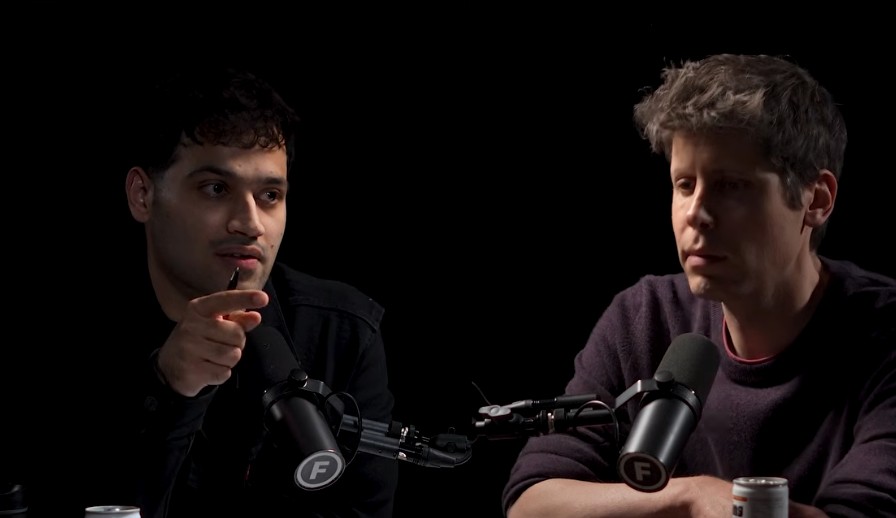
In this episode of Figuring Out (FO583), Raj Shamani sits down with OpenAI CEO Sam Altman to explore not just AI, but the human being building it: his insecurities, fears, and the way he thinks and makes decisions. Altman opens up about growing up as a nerdy kid, why he has no equity in OpenAI, the big bet on compute after GPT-4, launching ChatGPT against everyone’s advice, the race to superintelligence, and the personal cost of shaping the most important technology of our time. Read the full transcript below.
Who Is Sam Altman?
RAJ SHAMANI: (00:02:02 – 00:03:45) Today’s episode with Sam Altman is not about AI, is not about technology, is about a human being who’s building that technology. What are his insecurities? What are his fears?
How does he think as a friend, as a father, as someone who’s trying to build one of the most important things which will shape humanity? How does he notice patterns and find the non-obvious things to work on to build something incredible in the future? That’s what we’ve tried to understand.
I hope by the end of the podcast you get to extract some lessons from his mind and implement in your life to make your life better. Watch this episode and let me know in the comments how did you find it. Enjoy the show. Welcome on the show.
SAM ALTMAN: (00:03:45 – 00:03:45) Thanks for having me.
RAJ SHAMANI: (00:03:45 – 00:03:48) Sam Altman, welcome on Figuring Out. It’s an honor.
SAM ALTMAN: (00:03:48 – 00:03:49) I really appreciate you doing this.
RAJ SHAMANI: (00:03:50 – 00:03:59) If someone’s watching you for the first time and they have no clue who you are and how would you explain them who you are in next 60 seconds?
SAM ALTMAN: (00:04:00 – 00:04:21) I’m a tech fan, a curious person about the world and a believer that AI is going to be this thing that touches all of our lives, hopefully in mostly super positive ways. I’m a dad. I really love my kids. That’s what I would say.
Growing Up as a Nerdy Kid
RAJ SHAMANI: (00:04:22 – 00:04:27) But do you ever think about certain things that this is how you’re going to think or say or speak about?
SAM ALTMAN: (00:04:31 – 00:04:37) I do just kind of try to naturally talk about what’s on my mind or what I’m interested in.
RAJ SHAMANI: (00:04:38 – 00:04:43) Okay. And were you like this since you were a kid? Always thinking about what interesting to say next?
SAM ALTMAN: (00:04:43 – 00:04:49) I think I was like that as a kid. I think I just always followed what I was curious about.
RAJ SHAMANI: (00:04:50 – 00:04:54) And do you, as a kid, did you ever feel inferior to someone?
SAM ALTMAN: (00:04:55 – 00:05:09) All the time. I mean, I’m sure most kids do, but I was a very nerdy kid. I wasn’t good at sports and I grew up at a time when that was very much the cool thing.
RAJ SHAMANI: (00:05:10 – 00:05:13) Same. Yeah, I was not good at sports either.
SAM ALTMAN: (00:05:13 – 00:05:24) And it was the cool thing. Yeah. So yeah, total. I was not— I always had a lot of friends and I connected well with people, but I was never a cool kid.
RAJ SHAMANI: (00:05:24 – 00:05:25) Okay. Did that bother you?
SAM ALTMAN: (00:05:28 – 00:05:57) Sort of. I mean, I don’t think it bothered me like it bothers some people, but yeah, I think all kids want to be popular and cool. And I think it’s very painful as a kid to not feel in the inner circle or whatever.
RAJ SHAMANI: (00:05:58 – 00:06:04) You said it didn’t bother you as it would to some people. What do you mean by that?
SAM ALTMAN: (00:06:04 – 00:06:04) Well, I—
RAJ SHAMANI: (00:06:04 – 00:06:06) What’s the distinction? What did you think about?
SAM ALTMAN: (00:06:06 – 00:06:27) I’ve talked to other people who are like, “Ah, the defining characteristic of my childhood was that I was a nerd and not cool and I hated that.” And I was a nerd and not cool and it slightly bothered me. But I had my computer and I had my little core set of friends and I had a wonderful childhood and I think I was very happy.
RAJ SHAMANI: (00:06:27 – 00:06:39) Okay, so here’s what I want to do. I want to talk more about your brain, how you think, how you actually make decisions and what you think about certain things because I think that’s really fascinating to me. Okay, great. Underexplored?
SAM ALTMAN: (00:06:39 – 00:06:43) I think it’s really hard to talk about yourself this way, but I’ll try my best.
RAJ SHAMANI: (00:06:43 – 00:06:53) Yeah, maybe just the kind of things you— because you’ve said a couple of things in a lot of your interviews here and there, and I don’t know why people didn’t just go deep down on that alley.
SAM ALTMAN: (00:06:53 – 00:06:54) Let’s do it.
Why India Is Optimistic and the US Is Skeptical About AI
RAJ SHAMANI: (00:06:54 – 00:07:04) That’s something I want to do. When I talk to somebody in the US, a random person, they’re slightly pessimistic about AI. And when I talk to people in India, they’re very optimistic about it.
SAM ALTMAN: (00:07:04 – 00:07:05) It’s an incredible difference.
RAJ SHAMANI: (00:07:05 – 00:07:06) Why do you think it’s so different?
SAM ALTMAN: (00:07:09 – 00:07:20) Well, first of all, India is our biggest market in the world by ChatGPT users and growing very quickly. And there’s incredible builder energy of people using it.
RAJ SHAMANI: (00:07:20 – 00:07:20) It’s bigger than US?
SAM ALTMAN: (00:07:21 – 00:08:04) Yeah. More ChatGPT users in India than the US. And I mean, people are just using it in incredible ways to build companies or I just heard about some Indian kid that needed to do some fundraising for his school and had never done fundraising before and was able to get the full stack of it done with a set of our tools and it was awesome.
So I think it’s a country that has, there’s just a lot of adoption, it’s growing very quickly.
RAJ SHAMANI: (00:08:04 – 00:08:09) But why? What do you make out of it? Why is there this difference?
SAM ALTMAN: (00:08:15 – 00:08:30) One thing that many people have observed is that countries that are developing faster and where the economy is growing faster and there’s more of a need for products and services and there’s just huge undersupply, are more welcoming of AI than more developed economies. So I’m sure that’s part of it. Interesting.
RAJ SHAMANI: (00:08:30 – 00:09:02) And the other thing, when I read about you, right, and I read about you in US and I read about you in India, this sentiment of being pessimistic and optimist, it also reflects about you. And that’s the most fascinating thing that you are this person who started this most remarkable technological revolution here of our age.
You were the first guy. You don’t even own equity in your own company. And yet all of a sudden you became the bad guy. How? Why?
SAM ALTMAN: (00:09:07 – 00:09:29) Well, I think the US has great skepticism of people in power and in particular of the just enormous power that the tech industry holds. But I would say this is probably a good thing in some ways. It does feel to me like it’s gone a little far.
The Biggest Misunderstanding: No Equity in OpenAI
RAJ SHAMANI: (00:09:30 – 00:09:34) Interesting. What do you think is the biggest misunderstanding about you in the world?
SAM ALTMAN: (00:09:37 – 00:10:03) Well, I mean, you touched on one of them, but I think not having equity in OpenAI has been a mistake. Did it for what I thought were good reasons. I think it’s just been hugely confusing to people.
It’s kind of interesting, right? Because if an artist works super hard on their art project or a sports star practices super hard and doesn’t make a ton of money from it, no one has a problem with that. That’s kind of understood. And this is my equivalent of that. But yeah, it’s been—
RAJ SHAMANI: (00:10:03 – 00:10:11) Why is it misunderstood? What do people not like? What do they not get about it?
SAM ALTMAN: (00:10:12 – 00:10:18) I think it’s just very outside of the norm of why people assume that people start companies or work as business people.
RAJ SHAMANI: (00:10:19 – 00:10:19) True.
SAM ALTMAN: (00:10:19 – 00:10:22) It’s just weird. And people don’t like weird. It’s absolutely weird. People don’t like weird.
RAJ SHAMANI: (00:10:23 – 00:10:24) It’s weird to me as well.
SAM ALTMAN: (00:10:24 – 00:10:29) Yeah. And then you’re like, “Well, why is he really doing it? Is it about…” yeah.
RAJ SHAMANI: (00:10:29 – 00:10:30) And why are you doing it?
SAM ALTMAN: (00:10:31 – 00:10:42) I think this is the most interesting work and kind of the most important and useful thing I can imagine doing. It’s incredibly interesting. It’s incredibly exciting to get to do. I mean, what a quest.
Short-Term Low Status vs. Long-Term High Status
RAJ SHAMANI: (00:10:44 – 00:11:30) True. But it’s a rabbit hole we’ll just keep going into because I don’t understand this at all, just like a lot of other people. But I really respect what you do. So, thank you. Okay.
One of the things you said, it takes— I’ll read it exactly as it is that “you should trade being short-term low status for being long-term high status, which most people seem unwilling to do. So as long as you’re right, being misunderstood by most people is a strength, not weakness.”
I find it fascinating. But the question is, before the outcome is clear, how do you know that this is being misunderstood and this not being wrong?
SAM ALTMAN: (00:11:31 – 00:12:29) Well, I mean, the hard part is you don’t really know. You can have a high degree of conviction. You can have an increasing degree of conviction as you get more evidence, which I think is the right thing to go for, but you don’t know for sure. That’s part of the excitement that you don’t know for sure.
But when we first started OpenAI, it was an extremely low-status thing to do. We knew it’d be valuable if we could get it to work, but almost no one took us seriously. It was like, “Okay, AGI, maybe 100 years from now, maybe never. You’re a bunch of kids and you don’t have the polished academics and whatever.” Very, very negative.
We had a reason to make the bet, and as we figured more things out, we had a reason to be more confident, but it’s still kind of amazing it all worked. So I think it was a good expected value bet, to take, but it was far, far, far from certain.
RAJ SHAMANI: (00:12:30 – 00:12:37) But what were the signals that was making you very certain that this might work? There’s something that I want to do. Yeah.
SAM ALTMAN: (00:12:38 – 00:13:57) I kind of think all of us get a small number of great insights over our lives that we apply again and again in new ways. And one of them for me was the sort of surprising properties of scale.
I noticed this in companies, countries, cities, individual people’s careers, lots of pieces of technology that networks like Y Combinator, which was the thing I was doing before, that when you really scale up something that’s working at small scale, you often see big superlinear returns to doing it at a bigger scale.
And because like anybody else, I’m a pattern matcher whether I mean to do it or not, once we saw that neural networks were working at all and they were getting better with scale, I was very interested and I had a strong intuition that we should try to scale them up a lot more.
Now, this was before we knew how precisely we could predict properties with scale. This was years before we had the scaling laws, but we had this observation approximately that if you made a neural network bigger, it could do more impressive things. And this had first led to the AlexNet result and then many more things after.
RAJ SHAMANI: (00:13:58 – 00:14:05) But then these were the signals probably a lot of people must be seeing, right? What was preventing them to build on it?
SAM ALTMAN: (00:14:06 – 00:15:25) I find this one of the most confusing things I have ever observed in my career. Why in 2015, 2016, and then even by 2018 to 2021, why other people were looking at the same data and not saying, “This is crazy, we have to invest much more in this.”
It seemed so obvious to me and everybody else in the building, I mean, maybe almost we felt delusional because we’re like, “How can people not see this?” I think there was something about it almost felt too easy. It almost felt too unfathomable.
You’d look at the mistakes that these neural networks were making and you would say, “There’s no way that something so dumb can just fix all of its problems by scaling it up.” It seemed like all these smart people were saying, “You have to have symbolic representations or you have to do this, or I can give you this very good reason.” I remember someone articulating why our approach was never going to work and it sounded so convincing.
RAJ SHAMANI: (00:15:26 – 00:15:26) What was it?
SAM ALTMAN: (00:15:27 – 00:16:26) It went something like, “All right, what these models are doing is they are learning to predict from what’s in their training set what’s likely to come next. But that means they’re never going to be able to make new knowledge because they can only model what’s in their training set.”
And that sounds very reasonable. Maybe you can show a model a million math problems and it can learn how to do those math problems, but you didn’t show it a new thing that wasn’t yet proven because it wasn’t yet known. And so it wasn’t going to be able to do that.
And obviously now we know that’s ridiculous, but at the time it sounded very compelling. And the thing that it was missing is that what these models are learning is not, I mean, it also is, but the important thing they’re learning is not these specific math problems, but the general purpose ability of reasoning. And that that can expand into new things.
The Big Bet on Compute After GPT-4
RAJ SHAMANI: (00:16:26 – 00:16:41) So take me to a specific decision when you were doing all of this and other people were telling you that, “Hey, this might never work out.” Take me to one consequential decision that you took with 50% certainty and 50% delusion.
SAM ALTMAN: (00:16:43 – 00:18:04) After we finished training GPT-4, this was about, I think it was August of 2022. And we finished it about 7 or 8 months before we released it to the world, something like that. But we were sitting on it and we were looking at it and we knew it was extraordinary, but I don’t— it took us a little while to realize just the new avenues of research this was going to open up and how quickly the models were likely to improve post-GPT-4 and that we could do what became the chain of thought work and the reasoning models.
And we then decided we were going to go make a very big bet on compute because we saw that we could continue to scale models and that the value of these models would be really important, but it was new. And the rest of the world wasn’t there yet. They hadn’t even seen GPT-4. They had not internalized what we thought it could do.
And so we decided we would bet the company on buying up a lot of compute. And that felt very crazy to people, but we had enough conviction that we were probably right because we were able to use this model and we had internalized the scaling properties.
RAJ SHAMANI: (00:18:05 – 00:18:07) And what was the other option you had?
SAM ALTMAN: (00:18:08 – 00:18:13) A much less ambitious bet on compute and a slower rate of scaling.
RAJ SHAMANI: (00:18:15 – 00:18:21) And do you think if any amount of other information you would’ve gotten at that point, you would’ve changed the decision?
SAM ALTMAN: (00:18:23 – 00:18:32) I think if the model were even a little bit less smart, if GPT-4 had come out at the GPT-3.8 scale, we would not have had the conviction to do such a big bet.
Avoiding Yes-Men and Going Against Advice
RAJ SHAMANI: (00:18:34 – 00:18:40) When you talk to other people, do they tell you that you’re delusional sometimes, even today?
SAM ALTMAN: (00:18:41 – 00:18:43) Yes, but I think I should probably get more of that.
RAJ SHAMANI: (00:18:44 – 00:18:44) Why?
SAM ALTMAN: (00:18:45 – 00:18:56) Well, I think one way that a lot of people in roles like mine have had things go wrong is they get surrounded by too many yes-men. And you really, you need the pushback.
RAJ SHAMANI: (00:18:57 – 00:19:00) But how do you make sure that today you are not surrounded with yes-men?
SAM ALTMAN: (00:19:06 – 00:19:34) Having your old friends around is very helpful. Having people that you’ve worked with for 10+ years is very useful. And then really cultivating a culture where you reward people for pushing back hard when you’re wrong and making that easy to do, I think is also important. But it takes active care. The more times that you’ve been right and the more sort of power in the world you have, I think the harder this is to get.
RAJ SHAMANI: (00:19:34 – 00:19:58) See, here’s the confusion as a founder. So when you have all old friends, really smart people, the mentors that you think about, you have them around you and they’re telling you that, “Hey, this is wrong and you’re thinking in the wrong direction.” How do you then convince them or probably just go against them? And how do you know that going against them is the right thing today? Because I’m sure this happens.
SAM ALTMAN: (00:20:02 – 00:20:52) The number of times that I do something against everyone else’s advice is very small. It happens, but it’s rare. And I have met a lot of people, not a lot, I’ve met some people in founders in particular, who take the most pride in doing something when everyone else tells them it’s wrong. And my own belief is you should only do that very grudgingly.
If you surround yourself by smart people, you should mostly listen to them. And if you decide that even though none of them think what you’re doing is the right thing to do and you’re going to do it anyway, you should view that as an expensive, unlikely to be right kind of high stakes thing. And you really want to have conviction on that.
The Best Time in History to Build
RAJ SHAMANI: (00:20:53 – 00:21:05) And talking about smart people and other founders, what do you think, what stops them? They’re intelligent, clearly intelligent. What stops them to build such extraordinary things like you’ve done?
SAM ALTMAN: (00:21:07 – 00:21:54) Well, I think AI happens only once. So I think we got lucky or did a good job or whatever on problem selection. But I think a lot of people build extraordinary things. The number, the rate of great companies being created right now, I have never seen it be so high worldwide. I think this is certainly the best time I’ve ever seen.
I believe it is probably the best time in history to be able to build something, to make a new company, to make a new technology, to make a new kind of creative project. We have just gotten this unbelievable gift, and I think it’s incredible what people are doing right now. So I think we’re going to see a lot of very extraordinary things, companies and otherwise, get built.
RAJ SHAMANI: (00:21:54 – 00:22:14) So now that everyone’s building company and there’s so many things happening, the action is happening, some founders watching this right now and is thinking that things that are obvious to me because of AI and technology, is not obvious to a lot of people. How can that person judge that it’s the right thing to do and it’s not being misunderstood?
SAM ALTMAN: (00:22:18 – 00:24:07) I mean, this is kind of what you get paid to do as a founder, right? This is where if you are starting the most ambitious company you could start, you’ll certainly be misunderstood. Now there’s many other companies that are obviously good ideas and you can still succeed. Big time at those. But if the ideas are obvious, a lot of other ambitious people are going to start them too.
So when we started OpenAI in 2015, I think you could count on one hand the number of AGI labs that were being started that year. I mean, maybe you could count it on much less than one hand. Maybe it was only OpenAI that year, I’m not sure. And yet there were probably 10,000 photo sharing companies.
Most people thought starting a photo sharing company was a better idea, but the problem is there were 10,000 others and also Instagram had a big network effect and whatever else. So I think picking things that you have a reason to believe are more valuable than they seem, even if they’re unlikely to work, so valuable if they work that the expected value is good. You have a real advantage when you find something like that.
When you understand a technology or a piece of science or something about the world before other people do, there’s some instinct, which I understand, to say, “Ah, there’s all these smart people and I don’t want them to call me dumb. So they don’t get it and they’re going to talk me out of it.”
But I think there’s another instinct which I encourage people to cultivate, which is if you really understand something and it’s not just wishful thinking, but you can articulate why it’s a good bet, you should cherish those moments. That’s awesome. As a builder, that’s when you should be the most excited.
How to Find Non-Consensus Bets: Asking Good Questions
RAJ SHAMANI: (00:24:07 – 00:24:11) How do you decide that? How do you find a non-consensus bet?
SAM ALTMAN: (00:24:14 – 00:25:02) Good question. My own experience of this was, this was one thing that just no one ever taught me. And very little of my experience in school was figuring out what questions to ask. You figure out how to answer other people’s questions. And then at some point, I think when you become a PhD student or whatever, you get to start asking more questions and then eventually do more and more of that.
But I think we should focus much more on teaching very young people to figure out what questions to ask and what things are interesting to explore that we don’t already know. And I think getting good at that skill was the best way that I figured out the sort of non-consensus bets to take.
RAJ SHAMANI: (00:25:03 – 00:25:05) Just figuring out how to ask good questions.
SAM ALTMAN: (00:25:05 – 00:25:06) Figuring out how to ask good questions.
RAJ SHAMANI: (00:25:06 – 00:25:07) Can you learn that?
SAM ALTMAN: (00:25:09 – 00:25:20) I think so. Yeah. I mean, like all of these things, maybe not everybody’s going to have equal aptitude for everything, but I think this is one that a lot of people seem to be able to learn.
RAJ SHAMANI: (00:25:21 – 00:25:31) There’s, I forget which culture, which country has this rule where the kid, when he comes back from school, the mother asks the kid that, “What’s the question that you asked today?”
SAM ALTMAN: (00:25:31 – 00:25:31) Really?
RAJ SHAMANI: (00:25:32 – 00:25:32) Yeah.
SAM ALTMAN: (00:25:33 – 00:25:35) Do you know what culture? That’s very interesting. You know what culture?
RAJ SHAMANI: (00:25:35 – 00:25:46) I think it’s Israel or something. Someone in Israel. I’m not sure, but there is some culture where mothers just ask the kids, they don’t ask about the highlight, they ask about the, “What’s one question that you asked today?”
SAM ALTMAN: (00:25:47 – 00:25:47) That’s cool.
RAJ SHAMANI: (00:25:48 – 00:25:49) Is that a good habit that we should—
SAM ALTMAN: (00:25:49 – 00:25:53) I’m going to start that with my kids. I’ll report back in 15 years or something.
RAJ SHAMANI: (00:25:53 – 00:26:04) But how do you know that it’s not wishful thinking? Is there a sign? Is there something that you can pin down to and be like, “Okay, if these are the signals in the thinking that I’m, the way I’m thinking, probably this makes sense”?
SAM ALTMAN: (00:26:04 – 00:27:13) Yeah. I mean, one thing is, can you explain it to an optimistic, enthusiastic, but kind of mentally disciplined, smart friend? And can you update them about why it might be a good bet?
So I remember when we were starting OpenAI, the default was strongly skeptical, but I would talk to people and I would say, “Here is the evidence. Here’s what we’ve seen. Here’s why this might work. Here’s why it’d be huge if it worked. And here’s why this is an approach that we think has legs.” And then, if we can make superintelligence, it was kind of obvious why that would be valuable to make.
And not every time, but enough of the time when we talked to somebody who was a smart person, but a non-expert, they would say, “Okay, that seems, you can, that updated me. That seems like it’s worth doing.” Now, if we had convinced everybody, it probably would’ve been too obvious. But if we had not been able to convince anyone at all, I would’ve been more skeptical.
RAJ SHAMANI: (00:27:14 – 00:27:15) Interesting.
SAM ALTMAN: (00:27:15 – 00:27:26) Now, as I’m saying that out loud, I’m thinking of there must be historical examples of where someone was not able to convince anyone and they were still right. So at some point you got to just trust your own instincts here.
Launching ChatGPT Against Everyone’s Advice
RAJ SHAMANI: (00:27:27 – 00:27:32) Was there any point ever in your life where nobody else was convinced, but just you?
SAM ALTMAN: (00:27:34 – 00:27:40) I mean, there have been small decisions where I was like, “OpenAI is going to do this thing,” and none of the rest of the leadership team wanted to.
RAJ SHAMANI: (00:27:41 – 00:27:42) Give me an example.
SAM ALTMAN: (00:27:48 – 00:27:55) Launching ChatGPT was kind of an example of that. Not that people didn’t want to launch a chatbot, but most people thought it was too early and not good enough.
RAJ SHAMANI: (00:27:58 – 00:28:04) Interesting. And what made you go against all of them and be like, “Hey, let’s just launch it”? The YC ground?
SAM ALTMAN: (00:28:04 – 00:28:07) I think it was the YC experience.
RAJ SHAMANI: (00:28:08 – 00:28:08) Really?
SAM ALTMAN: (00:28:08 – 00:29:23) I think so. I had spent so long drilling it into founders that “if you’re not a little embarrassed of your first version, you’re waiting too long to launch” because what you need is feedback.
Another thing that I had, because we had this internal version, and it’s actually a good insight. The retention was terrible of their internal version. I think it was 5% or something of the first version of ChatGPT people would use and keep using. Now, there’s a bunch of reasons why it was bad data in the first place. We had better models, we had other interfaces.
But many people would look at that and say, “You can’t launch a product with 5% retention. That’s terrible.” And normally that’s true, but then you would talk to those 5% of users and some of them really loved it.
And there’s this other YC learning, which is the more important thing for an initial project is a small number of people that really love something, not a lot of people that like it a little bit. And so although the retention numbers of the kind of internal ChatGPT prototype were very low, the people who liked it really used it a lot and really liked it. And I thought that was a very good sign.
RAJ SHAMANI: (00:29:24 – 00:29:35) And the first thing, you said 2 different things, right? The first was being embarrassed. If you’re not embarrassed about your first product, then you’re too late, right? Are you okay with being embarrassed even today?
SAM ALTMAN: (00:29:39 – 00:29:39) Yes.
RAJ SHAMANI: (00:29:39 – 00:29:42) You’re okay with being misunderstood and you’re okay with being embarrassed?
SAM ALTMAN: (00:29:42 – 00:29:52) Yeah, I mean, look, I want us to put out great products, but I’m happy for us to put out some early sketches to get feedback and learn, and not all of them will work.
RAJ SHAMANI: (00:29:52 – 00:29:54) But nothing changes with the scale of your company now?
SAM ALTMAN: (00:29:55 – 00:29:56) Oh no, many things change.
RAJ SHAMANI: (00:29:56 – 00:29:59) Because there are enough users and enough people to trust you for so long.
SAM ALTMAN: (00:29:59 – 00:30:16) I mean, things that we put out to the entire ChatGPT user base have to have a high threshold. And also now that companies, I mean, this is getting close to critical infrastructure. Companies are really reliant on this. And so for enterprise products we ship, there’s a very, very high bar.
RAJ SHAMANI: (00:30:17 – 00:30:19) Okay, so now things have changed. Now you’re not—
SAM ALTMAN: (00:30:19 – 00:30:34) But then we can still experiment with other, I think hopefully you’ll see us experiment with many new products, some of which will really delight you and make it into the core experience and some of which people will look at and say, “It seems cool in theory, but it doesn’t really fit for me.”
RAJ SHAMANI: (00:30:34 – 00:30:40) Interesting. And the other thing was we were talking about being misunderstood. Do you think you’re still being misunderstood today?
SAM ALTMAN: (00:30:43 – 00:31:04) I think at this point, most of the world looks at AI and says, “Okay, I believe this thing is going to happen.” Now, clearly it’s not all popular. And I think our vision for the world and what we hope for, how people will use this tool, this technology, is still not very well understood. But I think people at least understand AI is happening.
Bending Reality and Why People Don’t Take the Moonshot
RAJ SHAMANI: (00:31:04 – 00:31:35) Okay. Interesting. Let’s come back to you trying to do something extraordinary, right? And you taking bets on other people as well. And we were talking about YC, right?
There’s another quote which you have only written. I’m paraphrasing and it’s something like you have your will to bend reality or your will to bend the world. The percentage of that particular thing is really high. Most people don’t even try. Something like that you said. Do you remember?
SAM ALTMAN: (00:31:35 – 00:31:37) I remember something like this, yeah.
RAJ SHAMANI: (00:31:37 – 00:31:40) Most people don’t even try. I think it’s more like bending the reality.
SAM ALTMAN: (00:31:41 – 00:31:46) You can do it much more than you think. Or people can do it much more than they think, and most people don’t try enough, something like that.
RAJ SHAMANI: (00:31:46 – 00:31:49) Yeah. And why do you think people don’t take the moonshot?
SAM ALTMAN: (00:31:51 – 00:32:29) I have a bunch of theories on this, but many of them boil down to, people want to stay part of the herd and it’s more comfortable to not do something unusual and maybe fail or maybe look wrong or maybe look dumb.
And there’s a real, it’s easy to point to the evolutionary biology reasons of why this would be true. You don’t want to get kicked out of the tribe or whatever. But I think people have really strong pressures to not do that kind of stuff.
RAJ SHAMANI: (00:32:31 – 00:32:33) Just because of the way society is built?
SAM ALTMAN: (00:32:35 – 00:32:47) I mean, even more than that, I think society is built the way it is because of evolutionary pressure. And I think that’s probably in very deep for most of us.
RAJ SHAMANI: (00:32:47 – 00:32:54) And what was there in you which helped you bend this will or the world according to your will?
SAM ALTMAN: (00:33:02 – 00:33:21) I think a lot of tech people, I’ve always just had, which would be a negative in many other contexts, a little bit less of whatever that internal pressure to stay on the track and do the same thing as other people. And I kind of think that’s probably mostly a genetic thing.
RAJ SHAMANI: (00:33:24 – 00:33:27) Just genetic? You don’t think there’s any other thing that you’ve built?
SAM ALTMAN: (00:33:27 – 00:33:52) No, I’m sure there’s other things too, but you can find all these studies about how people that are slightly autistic tend to have, are more likely to sort of invent new science or just get obsessed with one idea and work super hard in the lab against all the odds for it.
RAJ SHAMANI: (00:33:53 – 00:33:55) Yeah. And what was the will-bending moment for you?
SAM ALTMAN: (00:33:58 – 00:34:06) I mean, probably starting OpenAI. Hopefully. It’s too early to say, but I think that’ll probably be the most important thing I ever did.
The Biggest Worry: Superintelligence and Concentration of Power
RAJ SHAMANI: (00:34:06 – 00:34:07) Do you worry about it?
SAM ALTMAN: (00:34:09 – 00:34:09) About AI?
RAJ SHAMANI: (00:34:09 – 00:34:11) Yeah. About OpenAI.
SAM ALTMAN: (00:34:11 – 00:34:13) Yeah, of course.
RAJ SHAMANI: (00:34:14 – 00:34:15) What’s your biggest worry?
SAM ALTMAN: (00:34:21 – 00:34:45) I mean, we are going to do something that, or we have done something, we will continue to do something that is going to be an extraordinary force in society. I believe it can be a force for good, but, and it will be a force for good on net, great good. But it’s very high stakes and we have a lot of responsibility. True.
RAJ SHAMANI: (00:34:45 – 00:34:52) Do you know, this takes me to the point where you wrote an essay which was in the beginning about SMI.
SAM ALTMAN: (00:34:53 – 00:34:53) Yeah.
RAJ SHAMANI: (00:34:54 – 00:35:07) Right? And after that essay, during that May, you wrote to Elon about it and you said something that it would be good if someone else apart from Google started it.
SAM ALTMAN: (00:35:07 – 00:35:07) Yeah.
RAJ SHAMANI: (00:35:07 – 00:35:21) Right? So you said that the biggest threat for continued human existence, the biggest threat is going to be SMI, right? Why do you think that if you started, it makes less of a threat?
SAM ALTMAN: (00:35:22 – 00:36:28) Well, I believe in pluralism. I don’t think only us having it is good either. I think there are 2 kind of cartoonish ways this goes really wrong. One is that there’s a loss of control to AI, and we intentionally or accidentally cede control of the future to systems that are unbelievably more capable than we are, and we can’t get it back.
And the other is one person or company or country gets way too powerful relative to everybody else. I think that’s very unstable. I think it’s actually much better for the world for there to be multiple AI efforts with slightly different approaches that are competing with each other and putting it out in different ways.
And we talked earlier about the dislike of powerful people. I also have this dislike of too intense power concentration. I think that’s not what works. So, and hopefully we don’t do that.
RAJ SHAMANI: (00:36:29 – 00:36:36) So is that what you were thinking when you started it as well? That someone with all the means in the world should not get this power today?
SAM ALTMAN: (00:36:36 – 00:36:39) Well, at least there shouldn’t be one. You want, I think, many efforts.
OpenAI’s Unfair Advantage and Sam Altman’s Super Advantage
RAJ SHAMANI: (00:36:40 – 00:36:54) Okay. And let’s say now there are too many, right? There are 4 or 5 large companies. They have all the capital in the world. They have the great talent. They have all sorts of technology research. They all are working at it. What’s your unfair advantage in this?
SAM ALTMAN: (00:36:57 – 00:37:31) I think we have the most users and the best stack from chips to data centers to models to other things that come around that to put abundant intelligence into people’s hands. I think we have the best brand and the values that people who are going to use this technology want. We want everybody else to succeed. And I think people can feel that from us. We don’t want to be the one company to rule everybody. This goes back to our founding.
RAJ SHAMANI: (00:37:31 – 00:37:34) No, I was talking about what makes you the Sam Altman.
SAM ALTMAN: (00:37:34 – 00:37:35) Oh, me personally?
RAJ SHAMANI: (00:37:35 – 00:37:36) What do you think is your super advantage?
SAM ALTMAN: (00:37:44 – 00:38:03) Well, I’ve been doing it the longest. I mean, I guess it’s not true. I guess Demis has been doing it longer than me. I think I have a big advantage of just having had a lot of time to watch this development all the way through. And not just for the intuitions about how to run the company, but connections throughout the whole ecosystem. They really helped there.
Why 700 Employees Backed Him and What Makes OpenAI’s Culture Special
RAJ SHAMANI: (00:38:04 – 00:38:21) Interesting. But you must be doing something right. You said, not sure about how to run the company, but you’re doing something right about the company because when you were fired, there were 700 people who threatened to resign. What do you think you did right as a founder that 700 people, almost the entire company is ready to back you?
SAM ALTMAN: (00:38:24 – 00:39:17) I don’t think it’s any one thing, but, and I don’t think it’s even mostly about me. I mean, maybe the thing that I did is I got to pick the leadership team and sort of set up how we, what we run at and how we work.
But I think the thing that we have done most right is we’ve just built an extraordinary collection of people really motivated by the same mission with a very healthy culture for the right combination of being sure and high conviction where we need to be that and being open-minded and exploratory everywhere else. And that is a special culture.
I think someday when the history books get written on OpenAI, the thing that I hope they talk about the most is our rediscovery of the kind of culture that makes a great research lab and why that had gone missing for so long.
RAJ SHAMANI: (00:39:17 – 00:39:25) And what can people learn from the culture that you’ve built here? If someone is a young founder who’s trying to build something like this?
SAM ALTMAN: (00:39:27 – 00:40:36) One thing is having very high convictions, extreme clarity on what you are setting out to do. And even if what you set out to do, maybe even more so if what you set out to do sounds crazy to most people, the fact that you are willing to take that approach, to talk and think that way, is very appealing to some set of people.
And so when we started, we said, “We’re going to try to build AGI, and this is the direction that we’re going to push in to try to get there. But the main thing is that we have a bet on AGI, and if our initial direction turns out to be wrong, we’ll change.”
There were not many other efforts in the world that were still willing to say they were trying to build AGI. I think even DeepMind at that point had stopped saying they were trying to do it. And so although most people thought we were crazy and didn’t want to be associated with us, we were effectively able to concentrate all of the really talented people that also believed in this. And as I’ve looked at some of the other kind of great science and innovation projects in recent history, many of them have had that in common.
RAJ SHAMANI: (00:40:38 – 00:40:47) Interesting. So you just pick up incredibly far-fetched big problem and be very clear about it that you’re going at it. That’s how you build a great culture company?
SAM ALTMAN: (00:40:47 – 00:41:25) Maybe far-fetched is not what I would pick, but pick a problem that is— point at something that some really talented people really want to work on, be very clear and focused that that’s what you’re trying to do.
And don’t hedge, don’t kind of give other people a reason to, don’t let the fact that you’re, some people are going to call you crazy or stupid or worse, try to convince you to not, to mince your words. And then you can get a very high conviction set of people together pointed at something really important.
The AI Drama: Why Everyone Is Building Their Own Thing
RAJ SHAMANI: (00:41:27 – 00:41:54) But then you consolidated, you attracted all this talent in the world, right? And then they started leaving, a few of them. And you call this AI drama, the Shakespearean, right? So let’s say Mira left, Ilya left, Dario started something else, Elon.
They all are also building something of their own. They also don’t get along. Everybody’s building their own thing. What is the disagreement about? You guys were the first ones to start it. Now everybody’s building their own thing.
SAM ALTMAN: (00:42:02 – 00:42:10) I think there is something that happens in many people’s brains where they only trust themselves to build this because the stakes feel so high.
RAJ SHAMANI: (00:42:11 – 00:42:27) Interesting. But it’s— and is that because of the approach or it’s just the— Or do you feel the concentration of power in someone else’s hand? They worry about that, or they worry about the way that someone’s going?
SAM ALTMAN: (00:42:27 – 00:42:45) I think they go together. I think it’s somehow, “His approach is bad, and so I can’t let power get concentrated in his hands.” Something like that.
RAJ SHAMANI: (00:42:46 – 00:42:47) It’s approach and trust.
SAM ALTMAN: (00:42:47 – 00:42:47) Yeah.
How Sam Altman Has Changed
RAJ SHAMANI: (00:42:47 – 00:42:54) Rather than that. And you have gone through all of that. Have you changed as a person with all of this now? Because you’ve— you’re young. You’ve—
SAM ALTMAN: (00:42:54 – 00:42:56) Not that young anymore.
RAJ SHAMANI: (00:42:56 – 00:43:07) Yeah, but you’ve gone through people suing you, you starting something crazy, people dropping out. There’s government trying to find out so many things about you.
SAM ALTMAN: (00:43:07 – 00:43:53) There’s no way that anyone was going to get to build superintelligence and not have a crazy life. So I’m kind of not that surprised. And I remember early on, I kind of didn’t think about it in any serious way when we started OpenAI.
But then once it became more clear to me that it was really going to work, I remember thinking very clearly, “Man, my life is going to get very crazy. And that sucks.” But I think I’m kind of well wired for it. I can deal with a lot of insanity whipping around me.
RAJ SHAMANI: (00:43:53 – 00:43:53) Why do you say so?
SAM ALTMAN: (00:43:55 – 00:43:56) I mean, it seems like I can.
RAJ SHAMANI: (00:43:58 – 00:44:01) And you were sure about it since you started the company?
SAM ALTMAN: (00:44:02 – 00:44:04) That I was sure I’d be okay for dealing with it?
RAJ SHAMANI: (00:44:04 – 00:44:04) Yeah.
SAM ALTMAN: (00:44:04 – 00:44:17) No. No, again, when we first started, I somehow, even if I intellectually realized that this would happen, if we were really successful, I didn’t emotionally sit with it until later.
RAJ SHAMANI: (00:44:17 – 00:44:21) Do you get nervous usually? You don’t get nervous, right? I was reading somewhere.
SAM ALTMAN: (00:44:23 – 00:44:30) I mean, I have gotten nervous before. But now stuff has just gotten so crazy. I felt like my activation energy was very high.
RAJ SHAMANI: (00:44:31 – 00:44:33) But now, do you get nervous at all or no?
SAM ALTMAN: (00:44:34 – 00:44:39) Yes, it’s just rare. The threshold for it is high.
RAJ SHAMANI: (00:44:39 – 00:44:44) Nice. So tell me more. When do you get nervous and when do you not? It’s a good thing.
SAM ALTMAN: (00:44:44 – 00:45:13) The last time I remember it was when we were about to announce the Navier-Stokes result. I was just like, “This is such a crazy— I mean, this is the real deal.” This is some of the hardest things that are harder than something that people have been able to do, and AI is now doing it. And I was just like, “This feels like a crazy moment.” And I was definitely nervous about that one. That was probably the last really kind of heart-pounding thing.
RAJ SHAMANI: (00:45:14 – 00:45:16) And do you do anything to get back to normal? Is there some—
SAM ALTMAN: (00:45:17 – 00:45:28) I used to meditate a lot. A couple hours a day for a while, and now I don’t. But if I do get nervous, I can quickly drop back into it.
RAJ SHAMANI: (00:45:28 – 00:45:33) Quickly get back, just like this, or do you have some ritual or some breathwork or something that you do?
SAM ALTMAN: (00:45:36 – 00:45:39) No, I can just sit and close my eyes and get to a meditative state pretty fast still.
RAJ SHAMANI: (00:45:40 – 00:45:41) In minutes or seconds?
SAM ALTMAN: (00:45:43 – 00:45:45) A lot of seconds, but not nice.
RAJ SHAMANI: (00:45:46 – 00:45:53) Yeah. Nice. Interesting. So what version of you has died? Who were you when you started and who have you become?
SAM ALTMAN: (00:45:53 – 00:46:19) I was much more carefree. When we started OpenAI, I had a very easy life at the time. I had a lot of hobbies. I was free on a random Tuesday night for dinner on short notice with my friends probably. Now I’m incredibly precisely scheduled and I have not gotten to do anything spontaneous in a long time. And that’s very sad.
RAJ SHAMANI: (00:46:19 – 00:46:26) And what was that one moment where you were like, “Okay, now I can’t be carefree anymore”? Where you got this realization?
SAM ALTMAN: (00:46:29 – 00:47:07) Another version of this is people ask, “What do you really miss about your old life?” And the last time someone asked me that, the thing that I realized I really miss is going to sit in a coffee shop on a Saturday afternoon with a nice big cup of coffee and my laptop and just watching the world do its thing and catching up slowly on email, but mostly just scrolling the internet.
And I have not gotten to do that in years. And I don’t know why that was the thing to really jump out at me as the thing I missed, but I do miss that.
RAJ SHAMANI: (00:47:09 – 00:47:12) Interesting. And you can’t do that anymore?
SAM ALTMAN: (00:47:13 – 00:47:21) I mean, I could do it, but there would be 2 security guys sitting at the tables next to me and I would not just be an anonymous person in the world.
Moats, Monopolies and Judging Founders
RAJ SHAMANI: (00:47:24 – 00:47:40) Right. Okay. Coming back to the startup and the people that we were talking about and we missed that YC thread, right? In YC, you wrote that you used to ask people how this could become monopoly one day. Why you used to ask this question to startups?
SAM ALTMAN: (00:47:42 – 00:47:56) I think we would usually say, “What’s the moat going to be or what’s the competitive advantage going to be?” But these are all words that mean the same thing, which is, how do you not have all profit margins get competed to zero.
RAJ SHAMANI: (00:47:56 – 00:48:09) But is that an important question to ask when you talk about building a moat in a way that it ends up becoming a monopoly from day one? Because when you start a startup, you don’t know.
SAM ALTMAN: (00:48:09 – 00:48:18) I don’t think it’s the most important question. No, I was going to say, I think it’s not as important as other questions that we ask. It’s not the first—
RAJ SHAMANI: (00:48:18 – 00:48:19) The only question.
SAM ALTMAN: (00:48:19 – 00:48:30) Not even the first few questions. I’d always start with just, “What is the product? Why do users need it? How are you going to get more users?” So it’s an element of strategy, but I don’t think it’s, it’s definitely not the most important one.
RAJ SHAMANI: (00:48:31 – 00:48:35) Okay. But is it an important one after, let’s say company gets to a certain amount of scale then?
SAM ALTMAN: (00:48:35 – 00:48:47) Yeah. I mean, I think some version of the, “What is your long-term competitive advantage going to be?” is an important question, but not a top, it’s not the most important question.
RAJ SHAMANI: (00:48:48 – 00:49:07) And so on. And then if, so you used to meet thousands of companies, right? And you have had an incredible investing career as well. So you chose these companies like Reddit, Stripe, a bunch of them. Can you tell after meeting a founder in 30, 40 minutes that this person will be able to build a company or no?
SAM ALTMAN: (00:49:08 – 00:49:10) Not perfectly, but yeah, I mean, I think you can have a pretty strong intuition.
RAJ SHAMANI: (00:49:11 – 00:49:15) What is that? Tell me, what do you see? What do you understand? What pattern do you see?
SAM ALTMAN: (00:49:26 – 00:50:24) One of— there’s many obvious things that I could say, so I’ll try to say the ones that I think don’t get talked about as much. If they’re a clear communicator and they can really explain things well and it’s easy to follow, this is a huge thing that I look for.
If I leave the meeting convinced that I want to work with them. That’s a huge thing I look for because a big part of the job of an early-stage founder is to be an evangelist in all these different ways with other founders, with customers, with people they’re trying to hire, with investors. So that’s something that I look for.
If they can come up with new ideas quickly, and improve on ideas quickly, that’s a thing that I look for. If they seem to have interesting, new, well-reasoned thoughts on the world I haven’t heard before, that’s a big one. Things like that.
RAJ SHAMANI: (00:50:24 – 00:50:32) Interesting. But even after all of this, there’s one thing that a lot of entrepreneurs talk about is pain-enduring capacity. Can you judge that?
SAM ALTMAN: (00:50:34 – 00:50:51) I think that’s hard to judge directly in a 30-minute meeting. You can ask people, and I used to do this sometimes, stuff in their life history that points that out. But I think it’s hard to tell that internal to the conversation. You have to rely on stories they tell.
RAJ SHAMANI: (00:50:53 – 00:51:02) It’s just, and can you judge someone’s lying or true or is telling you truth when they tell you some story about they’ve endured certain amount of pain?
SAM ALTMAN: (00:51:02 – 00:51:06) This is what I mean. I think this is hard to, yeah.
RAJ SHAMANI: (00:51:06 – 00:51:14) And what’s about you? What do you think is in you that what amount of pain you can endure that 99% of the people will not?
SAM ALTMAN: (00:51:17 – 00:51:27) I don’t think this is my biggest advantage relative to some other founders I’ve seen, but I am really willing to stick with something I believe in and just keep going.
RAJ SHAMANI: (00:51:28 – 00:51:29) And who’s the other founder that came in your head?
SAM ALTMAN: (00:51:30 – 00:51:31) I didn’t have a particular—
RAJ SHAMANI: (00:51:31 – 00:51:38) Okay, you just said it just like that. But do you know anyone who has really good pain enduring capacity and they can just be at it?
SAM ALTMAN: (00:51:42 – 00:51:54) I don’t have one specific name ready to go here, but yeah, I was definitely impressed by many YC founders over the years who would just grind it out without much signal of success and with very little in the way of resources.
No Single Formula for a Great Founder
RAJ SHAMANI: (00:51:54 – 00:52:05) And is there a pattern between all of them? Stripe, Reddit, apart from them being good communicators?
SAM ALTMAN: (00:52:07 – 00:52:28) I mean, I think there are all of these things that are traits that many founders share, but there’s very few that I would say are absolutes that exist across everybody. One of the great lessons of YC is how many different ways and how many different kinds of founders can be very successful.
RAJ SHAMANI: (00:52:34 – 00:52:36) But what pattern do you see in them? Because this is just—
SAM ALTMAN: (00:52:37 – 00:53:50) Well, I mean, again, I think there are these things you can say that you got to be driven and smart and a good communicator, and you have to have an idea you’re really willing to commit yourself to, and you have to— Yeah, I think we could make this a long list of founder’s traits, and I think we could make a long list of good business traits.
But one of the interesting observations, and I think why sort of existence proof for how many different ways there are to succeed is if you took the top 10 YC companies and said, “Okay, all 10 of these people are great founders, clearly. All 10 of these are great companies, also clearly. I’m going to scramble which founder runs which or which CEO runs which company.” It would be a disaster.
And I think there’s many things that one can take away from that observation. But one of them is that there’s many different ways to be successful as a founder, and there’s not a single pattern that works in every case for every company.
RAJ SHAMANI: (00:53:51 – 00:53:58) Is there a way that, or a single pattern that can be disaster, which is common? Let’s say if there’s no formula for a great founder.
SAM ALTMAN: (00:53:58 – 00:54:23) Oh, there’s many things that are a disaster. Lack of drive, lack of focus, lack of clarity, lack of vision, lack of ability to solve hard problems repeatedly with a smile on your face. All of these things are anti-patterns that, yeah. So there are many things that are almost certain to predict failure, but there’s also, that part’s easier. A lot of ways, different ways to succeed.
Can Ambition Be Taught?
RAJ SHAMANI: (00:54:23 – 00:54:25) You said the first thing is lack of drive.
SAM ALTMAN: (00:54:25 – 00:54:26) Yeah.
RAJ SHAMANI: (00:54:26 – 00:54:31) It’s ambition. A lot of people talk about, can you train somebody or can you teach somebody to be more ambitious?
SAM ALTMAN: (00:54:31 – 00:54:55) Yes, I think you can. This was one of my most pleasant surprises of YC. And I think part of why YC adds much more value to the world than people realize is that there are some things that maybe you can’t train, but you can teach people to become more ambitious. Not everybody. It’s hard to predict who you’ll be able to, but it can definitely happen.
RAJ SHAMANI: (00:54:55 – 00:54:55) How?
SAM ALTMAN: (00:54:56 – 00:55:14) How do you teach it? I found that the most successful thing was, one, combination of a peer group going through the same thing, and two, getting people to go through successive challenges at increasing difficulty and realizing that they can do more than they think, get better instincts, and keep going.
RAJ SHAMANI: (00:55:16 – 00:55:22) And did you become ambitious like this when you were in the same peer group as myself? I think so. Or you were ambitious from before?
SAM ALTMAN: (00:55:23 – 00:55:24) No, I think I got much more ambitious.
RAJ SHAMANI: (00:55:26 – 00:55:32) And do you think that the ambition comes from confidence that everyone else around me is ambitious, or does it come from insecurity?
SAM ALTMAN: (00:55:34 – 00:55:55) Paul Graham used to say that there was something about the pressure of Demo Day coming up and people not wanting to fail. And I think that’s kind of, that’s a version of insecurity. But I think much more it comes from, there’s excitement and there’s a positive force of being around these people doing these amazing things. And you’re like, “Well, we all entered this together, and if they can do it, so can I.”
RAJ SHAMANI: (00:55:56 – 00:55:57) So for you, it’s more confidence?
SAM ALTMAN: (00:55:57 – 00:56:12) I think so. And I really think that people, if you keep getting slightly bigger, slightly bigger, slightly bigger challenges and keep excelling at them, you really do build a lot of successive confidence in learning that way.
RAJ SHAMANI: (00:56:14 – 00:56:21) Interesting. Is it only the peer circle or the group that makes you like this?
SAM ALTMAN: (00:56:23 – 00:56:23) What do you mean?
RAJ SHAMANI: (00:56:24 – 00:56:27) Is it only that other ambitious people actually give you these things?
SAM ALTMAN: (00:56:28 – 00:56:42) No, I think you can get it lots of ways, but I think we are as people hardwired to learn from the people around us. There’s that famous quote, which is, “You’re going to become the average of your 5 best friends, so you better pick those 5 people really well.”
RAJ SHAMANI: (00:56:42 – 00:56:43) You believe in it?
SAM ALTMAN: (00:56:43 – 00:56:46) Not quite, but there’s some truth to it, obviously.
Listen to Less Advice
RAJ SHAMANI: (00:56:48 – 00:56:50) What’s the worst advice you’ve gotten as a founder?
SAM ALTMAN: (00:56:50 – 00:56:58) I mean, almost all the advice is terrible. I don’t know how to pick the worst thing, but I would say that my meta advice to founders is listen to less advice.
RAJ SHAMANI: (00:56:59 – 00:56:59) Listen to less advice.
SAM ALTMAN: (00:57:00 – 00:57:00) Listen to less advice.
RAJ SHAMANI: (00:57:01 – 00:57:09) Do you sometimes go home at some point and be like, “Hey, all this advice was maybe right and maybe I’m wrong”?
SAM ALTMAN: (00:57:09 – 00:58:02) I think YC could probably distill 5 to 10 very important, highly confident pieces of general advice from all of the incredible wealth of experience. And I think you should listen to those 5 or 10 things.
I think the slogan of YC or the motto, whatever, “Make something people want” is the, that is the single commandment of startup advice to the degree there is one thing for early stage startups. And then there’s another list of things that are almost as important, but you’re not going to become a great founder by listening to the 800th podcast of advice about how to start a startup.
You got to just do it and figure it out on your own. And a lot of the advice that you need is so specific to your case that beyond the axiomatic truths, there’s not that much more to learn from one more podcast.
RAJ SHAMANI: (00:58:02 – 00:58:08) Interesting. And, but you wrote an essay, 13 Rules, to become successful?
SAM ALTMAN: (00:58:08 – 00:58:16) Oh, I remember that I wrote that. I don’t remember what they were, and I bet I could do a better version now. I bet I could do a shorter version now. Okay.
RAJ SHAMANI: (00:58:16 – 00:58:18) So instead of 13, what would be?
SAM ALTMAN: (00:58:18 – 00:59:08) I think this point about compounding, the one I had first in there, I think this is probably underestimated. A lot of people, I think, don’t drive themselves to continued forward progress. The joke of this is, “Sure, you have 20 years of experience, but you have 20 times the same 1 year of experience.”
And the thing that I think is so cool about a career is you can build on each successive phase, but you have to continue to push yourself and you have to keep doing uncomfortable, non-obvious new things. And a lot of people fall off that very early in their careers. And so staying on the compounding exponential curve is empirically not what most people do. And I think that’s a very good, not obvious piece of advice.
Questioning Everything and the Pace of AI Progress
RAJ SHAMANI: (00:59:08 – 00:59:10) What’s the most uncomfortable thing that you do these days?
SAM ALTMAN: (00:59:15 – 00:59:32) I mean, kind of most of the stuff now feels new again. Figuring out how we’re going to navigate this current debate about pacing progress. Feels like a very difficult thing to get right and pretty important and just hard and new.
RAJ SHAMANI: (00:59:33 – 00:59:37) And what do you do to make sure that you get it right? Is there something that—
SAM ALTMAN: (00:59:37 – 00:59:45) A lot of time thinking and talking to people and trying to get more data and more new ideas into the mix.
RAJ SHAMANI: (00:59:46 – 00:59:51) Do you ever go home sometimes and be like, “Maybe I’m wrong about this”?
SAM ALTMAN: (00:59:51 – 01:00:20) Yeah, of course. And I think it’d be disastrous if I didn’t. We talk about conviction and self-belief and all of that. I think what some people take that to mean is don’t introspect, just be sure in what you’re going to be sure and don’t question it.
I try to question everything all the time. I still try to act consistently and with conviction until I find a reason to change my mind. But I think this is really important.
RAJ SHAMANI: (01:00:21 – 01:00:23) Give me an example. How do you do it?
SAM ALTMAN: (01:00:23 – 01:00:42) My process often is just to keep thinking about the same question from every different angle, throwing out a bunch of bad ideas, trying to break them apart or find problems with them in my own head, then going to other people, taking more input, trying a different version of it out, adapting it again. I think it’s an iterative process like that.
RAJ SHAMANI: (01:00:43 – 01:00:50) Give me an example of this. Let’s say, what’s your current big problem? And then you’re just questioning from different angles and then you go to someone.
SAM ALTMAN: (01:00:50 – 01:01:29) Well, I think that one that I just gave, this question of how do we think about the pace of progress as we enter this RSI era and how do we avoid these 2 ways that things could go wrong either way from a loss of control incident or a concentration of power incident and what is the right governance mechanism?
How do we think about how smart an AI system should be allowed to be relative to a person? How quickly can that improve? How do we think about the questions around security and monitoring and alignment? And where can we afford to take risks and not?
RAJ SHAMANI: (01:01:29 – 01:01:39) And does that change when you’re at home? Because when you’re at home and you see your kids and you see your family and you see, okay, maybe I think from a different lens.
SAM ALTMAN: (01:01:40 – 01:02:18) I am a big— I mean, when I’m with my kids, I try to just hang out with my kids and be the best dad I can be, and I try not to get myself distracted thinking about other stuff. But I have noticed a big difference on the weekend mornings when I’m working at home versus in the office.
And I am a real believer, for me at least, that finding some sort of rhythm where you can intensely be with people and working very interactively, and then have real chunks of time where you can shut out the world and just think and work on your own. That back and forth rhythm is super important to my particular style.
RAJ SHAMANI: (01:02:18 – 01:02:21) You can do that easily or you have to learn hard way?
SAM ALTMAN: (01:02:21 – 01:02:25) Yeah, that’s just what works for me. It’s very natural and easy.
RAJ SHAMANI: (01:02:25 – 01:02:27) It’s just shutting down and shut—
SAM ALTMAN: (01:02:27 – 01:02:44) Just shutting down. It’s just a very different way of working. When I’m working in my office at home, it’s a very solo style of work. And if I only did that, it would be a disaster. But if I didn’t have that and only was constantly in meetings at the office, that also wouldn’t work for me. So I need that back and forth.
Raising Kids in an AI-Powered World
RAJ SHAMANI: (01:02:45 – 01:03:09) Interesting. And when I asked you about the family, what I meant was, because you said this is the biggest fear that you have, that it could go either way, do you feel that when you’re gone and you’re not there to guide or protect your kids or family. Would you be very comfortable your kids growing up in the world, AI-powered world, which you are helping create today?
SAM ALTMAN: (01:03:11 – 01:03:38) Yeah, I think it, I mean, as I said earlier, there’s all these ways it could go wrong. And so I don’t know what the future’s going to look like, but I am comfortable that I have enormous trust in people to figure out how to adapt and thrive and make society better for all of us. And yeah, I think the world will most likely keep getting much better.
Building AI That Discovers New Science
RAJ SHAMANI: (01:03:38 – 01:03:46) Perfect. Well, here’s the last 2 questions that I ask everybody. What’s the most extraordinary thing you want to build next?
SAM ALTMAN: (01:03:47 – 01:04:46) Oh man. The thing that immediately came to mind is I am extremely excited to see how far we can push AI to discover new science. Math, the math results were quite amazing to me, and it really made me think that we are closer to this milestone than I expected us to be.
But a machine that can help us understand the world better, discover the deepest insights in physics, figure out new medical treatments, new source of energy, things that I think we can’t even imagine, but that better scientific understanding will enable. I am extremely excited for us to go build that machine.
I have always been struck by how much of the world getting better is better scientific understanding. And the fact that I think we can now really have AI accelerate that is going to be transformative for humanity.
RAJ SHAMANI: (01:04:46 – 01:04:47) And that’s something that you want to build?
SAM ALTMAN: (01:04:48 – 01:04:48) Yeah.
The Cost of Becoming Sam Altman
RAJ SHAMANI: (01:04:49 – 01:04:58) And what’s the cost of becoming Sam Altman, becoming this person who’s probably shaping the most important technology of mankind?
SAM ALTMAN: (01:05:08 – 01:05:57) It’s hard to answer that because subjectively it’s just, this is my life now. I gave you the trivial example earlier of I can’t go work in a coffee shop on the weekends.
But I feel so incredibly lucky to get to do all this that although it’s tiring and stressful and a lot of people’s anxiety gets projected onto me and there’s all of these just sort of life trade-offs. This is all I know now. Everything else is this distant memory of this past thing. So I don’t have this real suffering, “Oh, it’s so horrible what’s happened to me” mindset about it.
RAJ SHAMANI: (01:05:58 – 01:06:01) Fair, fair. Well, thank you so much.
SAM ALTMAN: (01:06:01 – 01:06:02) Thank you very much for having me on.
RAJ SHAMANI: (01:06:02 – 01:06:13) Thank you so much. It was really good. I hope we get to do this many more times. Me too. At some point we’ll just deep dive and do a much longer version of it. But thank you so much for doing this.
SAM ALTMAN: (01:06:13 – 01:06:14) Thank you.
RAJ SHAMANI: (01:06:14 – 01:06:16) Thanks for having me. Thank you.
Behind the Scenes
SAM ALTMAN: (01:06:16 – 01:06:18) I appreciate it. Hi, how’s it going?
RAJ SHAMANI: (01:06:18 – 01:06:20) Very good. Hi, I’m Raj. Nice to meet you.
SAM ALTMAN: (01:06:20 – 01:06:22) Thank you so much for doing this. Nice to meet you too.
RAJ SHAMANI: (01:06:22 – 01:06:22) Thank you so much.
SAM ALTMAN: (01:06:22 – 01:06:23) How are you doing this?
RAJ SHAMANI: (01:06:23 – 01:06:25) What do you think? How are you?
SAM ALTMAN: (01:06:26 – 01:06:26) This is cool.
RAJ SHAMANI: (01:06:26 – 01:06:28) I’m good. You like the setup?
SAM ALTMAN: (01:06:28 – 01:06:37) I’ve never seen it set up like this before. I do like the setup. No, I’m good. It’s an extraordinary time in terms of just all of the model progress. How are you doing?
RAJ SHAMANI: (01:06:37 – 01:06:49) Good. I’m pretty good at this point. A little nervous, but I think I’ll get through. I would love if you would try this. Yeah, of course. It’s great.
SAM ALTMAN: (01:06:55 – 01:06:56) Tastes good.
RAJ SHAMANI: (01:06:56 – 01:06:57) Perfect.
SAM ALTMAN: (01:06:57 – 01:07:05) What’s the most important of the mushrooms? What is it? Lion’s mane? And yeah, I feel good.
RAJ SHAMANI: (01:07:06 – 01:07:06) You feel good?
SAM ALTMAN: (01:07:06 – 01:07:06) Yeah.
RAJ SHAMANI: (01:07:07 – 01:07:51) Oh, amazing. We send you a lot of love. Thank you so much for watching this episode till the end.