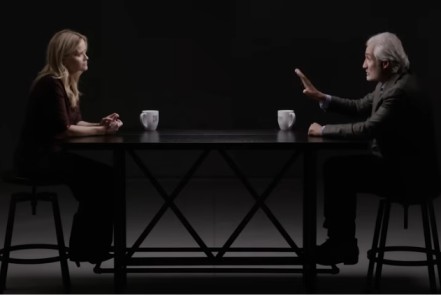
Read the full transcript of actress and producer Reese Witherspoon’s interview on The Founder Mindset, May 6, 2026.
Editor’s Note: From Hollywood icon to industry-changing founder, Reese Witherspoon has rewritten the rules of who gets to own and tell the stories that shape our culture. In this episode of The Founder Mindset, she joins Reza Satchu at Harvard Business School to share how financial insecurity, a contrarian streak, and a deep sense of responsibility to women—especially her daughter—pushed her to build Hello Sunshine into a movement as much as a media company. If you care about purpose-driven entrepreneurship, owning your work, and turning frustration with the status quo into tangible impact, this conversation offers a masterclass in ambition, empathy, and radical commitment.
Introduction
REZA SATCHU: Every year at Harvard Business School, hundreds of students compete to gain entrance into my class, one of the most popular courses on campus, The Founder Mindset. For those who make the cut, I take them on a journey, challenging them to take risks, make commitments, and most importantly, learn judgment. One of the most popular aspects of the course are the guests we bring in, outstanding entrepreneurs who’ve had a truly profound impact on the world. Now I’m sharing my conversations with some of these founders on our show. I’m Reza Satchu, and this is The Founder Mindset.
UNIDENTIFIED SPEAKER: What does it take to be a founder? From one of Hollywood’s biggest stars to one of its most influential founders, Reese Witherspoon built her company, Hello Sunshine, to change who gets to own stories and who gets to tell them. With a new blueprint for modern storytelling, Hello Sunshine turned projects like Little Fires Everywhere and The Morning Show into global hits, transforming the entire industry.
Welcome and Early Life
REZA SATCHU: Reese Witherspoon, welcome. It’s terrific to have you here.
REESE WITHERSPOON: Thank you, Reza.
REZA SATCHU: You know what? Let’s look back. Okay. If you’re up to it, what I’d love to do is sort of look back from the beginning of Reese Witherspoon, because I’ve got a theory that these founder journeys, especially one like yours, is a real hero’s journey, but it comes from childhood experiences and it influences us both in the best possible way and sometimes in the worst possible way.
If I think about Reese Witherspoon, what I think about is tremendous warmth and tremendous ambition. Okay? Those are two unusual things to have together. So where did that come from in your childhood?
REESE WITHERSPOON: Well, I think I went to all-girls high school, so I was always learning about female leadership and seeing it in action, learning about the ways that we just weren’t succeeding in large numbers in leadership positions in many different parts of the world. So I saw this big problem as a young person.
There’s not enough women in public office. There’s not enough women in leadership roles in big tech. There’s not enough women in leadership roles across any business. Women don’t own businesses.
REZA SATCHU: Did you at that point in time feel like you might be able to solve this problem? No. Okay. So it was just, you saw the problem, it upset you.
REESE WITHERSPOON: Yeah, but I just accepted that was status quo. Women were never going to be in positions of power in the entertainment business, in hospital structures where my parents worked. It just wasn’t going to happen.
I grew up with a really amazing mother who was a nurse on the weekends and then during the week she taught nursing at the state university. But we had some real financial disasters in my teenage years.
REZA SATCHU: It was volatile.
REESE WITHERSPOON: Yeah, with some spending issues that my dad had. And we went to some pretty bad places with the family finances. And I was kind of brought in to help a little bit when I was 16 or 17.
REZA SATCHU: So how did that feel?
REESE WITHERSPOON: Well, there wasn’t a feeling about it. It just was. So I always had this idea that no one’s coming to save me. I didn’t have a financial safety net. My parents were loving and kind, but they didn’t have the means to send me to college. I knew I was going to have to do it on my own, and if I didn’t succeed, there wasn’t anybody coming to save me.
So when I ended up going to Stanford, about a year in, I realized I couldn’t pay the tuition. It was costing, I remember it was $33,000 a year.
Dropping Out of Stanford
REZA SATCHU: I mean, first of all, congratulations getting into Stanford. Thanks. And that’s pretty damn good. Thanks. So this decision to drop out, was that a hard decision?
REESE WITHERSPOON: Well, it was an either or. So I had to make this decision of, I had friends who were going into student debt and accumulating all this debt at an early age. And then on the other hand, I had movies that would pay me. I think people try to paint my dropout story like I’m some sort of wunderkind that had some great business, but it was literally just—
REZA SATCHU: You couldn’t pay for it.
REESE WITHERSPOON: I couldn’t afford tuition. And I could start a career that— I wasn’t sure I wanted to be in the movie business. I thought I was going to be a doctor.
REZA SATCHU: How’d your parents feel about you being in the movie business?
REESE WITHERSPOON: They thought it was a terrible idea. My mother was like, “That’s a hobby.”
REZA SATCHU: That’s not a career. The odds were so against you. I mean, it wasn’t— it was reasonably rational for her wanting to stop.
REESE WITHERSPOON: The likelihood of someone making it is ridiculous. Less than 1%.
REZA SATCHU: Yeah.
REESE WITHERSPOON: So I’m a very pragmatic person.
I just was solving issue by issue. So at first I just had the tuition issue and then I started really getting some momentum in my acting career. And then I had to make a decision. Was I going to go back to college or just keep on the career path? And I stayed with it because it started to kindle and become a real— I started getting really great jobs.
Early Career and Personality
REZA SATCHU: What was it early on do you think you had that enabled you to be successful so quickly as an actress?
REESE WITHERSPOON: I think I didn’t understand that— a really great piece of my childhood was my parents were both in the military and they were both in the medical field.
REZA SATCHU: Oh, interesting.
REESE WITHERSPOON: So there was this feeling of you get up and you do the job and you do it in service of other people. So I always thought about myself as a team player and a reliable team player.
REZA SATCHU: So that sounds very different than most people who go into acting.
REESE WITHERSPOON: Yeah, I didn’t have this big dream of expressing myself. And I love storytelling and I loved creating characters. And I was silly. I was like a silly, funny kid. I always made everybody laugh.
I was also very contrary. If everybody in my class was wearing red, I was wearing black. I liked to stick out and I also liked to challenge norms. I didn’t like systems. And as soon as I discovered where I sat in a system, I was annoyed and irritated with myself and I would break out of that system, whether that was a friend group or even at college, Stanford. I started the film society. There was nobody making films at Stanford.
REZA SATCHU: I mean, that’s very interesting behavior because obviously that is probably highly correlated with some of your actions in the future. But totally. I mean, what was it that was leading to this kind of behavior?
REESE WITHERSPOON: I don’t know. I think it’s just my personality. I like to be contrary. It’s not my favorite part of my personality, but sometimes it helps.
REZA SATCHU: Yeah. Where has it helped most?
Identifying the Problem in Hollywood
REESE WITHERSPOON: When I looked at my business, when I was 34 years old, I’d worked inside of my business for 20 years and I started seeing these systemic problems and getting really bothered by them in a way that never bothered me before. But we went through a really particularly bad period of time, like 2011, the scripts and parts for women were abysmal. Really demeaning.
REZA SATCHU: So talk to me about that. Give me examples of what you saw.
REESE WITHERSPOON: Well, the script that kind of started it all was this project that had this man at the center of it, and two women were just vying for his affection. And it was filled with gross jokes and scatological humor and poop jokes and boob jokes. And I called my agent and I said, “I’m not auditioning for this and I don’t even want to.” You have no interest. “I have no interest.” And she said, “Every actress in Hollywood wants these two parts.” And I thought, that’s what we’re fighting for?
REZA SATCHU: And that’s because there was nothing else.
REESE WITHERSPOON: So you’ve got to remember there were 7 studios. Each studio made about 20 movies a year. And this is what happened. I started going on a listening tour because I had worked at every studio. So I went around to every studio head and I said, “How many movies are you developing right now that have a female lead?” Every single one of them said, “We don’t have anything.” One of them said, “We did have it, but we already made one movie with a woman at the center of it, and we can’t make two this year.”
Remarkable. And at first I got mad, and then I was like, wait, this is a huge white space.
REZA SATCHU: So why do they— I mean, we obviously see this all the time where incumbents miss things, obvious things. But this just seems so ludicrously obvious in some ways. Why did they miss this? What was the inertia that led to this kind of behavior?
REESE WITHERSPOON: It’s a whole lot of stuff happened in our business when the DVD market stopped, right? That was about a third of the revenue that a lot of the studios were taking in, maybe a third or 40%.
REZA SATCHU: So pretty dramatic number.
REESE WITHERSPOON: Pretty dramatic. So they had to really maximize for biggest profit. So they started going into superhero land. I’m sure everybody remembers the 2010s were superhero time. That did not include stories about women. Stories that center women are usually romantic comedies, family dramas, a thriller, but they’re usually in the $30 to $40 million price range, sometimes up to $60 million. Well, that’s immediately what they cut off of their development slate.
And I thought, okay, well, what if I come in with independent financing and provide them solutions? And develop it myself with known IP and vetted filmmakers and just present the package.
REZA SATCHU: Yeah, it’s remarkable.
REESE WITHERSPOON: I’m solving an issue, but they didn’t care because it wasn’t their problem to solve.
REZA SATCHU: Yes. Well, they were quite happy with the way things were going in some sense.
REESE WITHERSPOON: I think they just had to keep up with corporate mandates.
The Decision to Found Hello Sunshine
REZA SATCHU: Well, you know, Reese, I say this all the time, which is that every founder that goes out and creates a business, runs into this obstacle. I’ll call it the refusal of the call, which is everyone else says there are others who have more resources than you do that could do this. Okay? There are others that are there that have more information, more resources. In your case, you’re doing just fine as an actress. There’s lots of other people who missed this and didn’t do it. So why is it your job to do this?
And so my question is, what was it about this? Because it’s hard what you had to do. And we’ll talk about some of the difficult times. But creating Hello Sunshine was a really difficult and risky thing for you to do.
REESE WITHERSPOON: Well, I think every founder will agree with this. There was something inside of me that could not let it go. It nagged at me. It kept me up at night. I would talk about it at every dinner party. I bored my mother with it. Every one of my friends, every one of my colleagues, I was like, “Can you believe this? Can you believe this?” And I realized I was admiring a problem. But I wasn’t providing a solution.
REZA SATCHU: Right, right.
REESE WITHERSPOON: And it’s not enough to just admire a problem.
REZA SATCHU: And at what point did you realize that you were the person to solve that problem? Because that’s a big difference, right? To go from admiring it to saying, you know what, I’m the one to solve it. And it wasn’t exactly a small problem.
REESE WITHERSPOON: No, it was a massive problem.
REZA SATCHU: How would you define the problem?
REESE WITHERSPOON: Well, I thought even if I could just chip away at it just incrementally, even if I just make one movie a year, maybe I’ll scale to 2. Maybe then I can get to a TV show plus 2 movies. I’m at least part of the solution.
And then when I started getting real traction, I did the first books I optioned were Wild and Gone Girl, which both went to number 1 on the New York Times bestseller list, nonfiction and fiction. And so then I tried—
REZA SATCHU: This was at Pacific Standard.
REESE WITHERSPOON: This was at Pacific Standard.
REZA SATCHU: Pacific Standard, right.
REESE WITHERSPOON: And we turned them into movies, me and my producing partner Bruna, and we got 3 Oscar nominations and over $600 million in the box office. And then we did Big Little Lies with Nicole Kidman. We co-produced it.
REZA SATCHU: And first of all, what a run.
REESE WITHERSPOON: I mean, it was such a good run.
REZA SATCHU: Incredible run.
The Economics of Storytelling and the Hello Sunshine Vision
REESE WITHERSPOON: Yeah. And it really cemented the idea that we had great taste in books. We were the book people. But that said, I was only working for producer fees. I had 4 employees and I was only breaking even. I couldn’t—
REZA SATCHU: So with that sort of a track record, you can barely pay your employees.
REESE WITHERSPOON: I could barely pay my employees what I considered a good wage plus benefits and the overhead of the space. The overhead was eating me alive and I was just break even. And I was like, that’s not a real business.
REZA SATCHU: Right. So it strikes me you had 2 things going on. One is you had, at the highest level, this deep desire to have impact. To actually make the world a better place by creating more sensible roles for women. But at the same time, you saw this economic opportunity too.
REESE WITHERSPOON: Mm-hmm. I didn’t care about the money first. The purpose was more important to me than the money. So artists historically in the movie system don’t own anything.
REZA SATCHU: Right.
REESE WITHERSPOON: They give it to studios, and studios own it, and they sell it again and again. And each window, they make money.
REZA SATCHU: Right. So artists basically make money on a transactional basis.
REESE WITHERSPOON: But there’s a few artists that make a tiny—
REZA SATCHU: Right. But there are very few that have transitioned to a place where they’re actually getting long-term equity value.
REESE WITHERSPOON: Correct.
REZA SATCHU: Right. But you’re thinking, I’m working in an industry where I’m creating a lot of value.
REESE WITHERSPOON: Right.
REZA SATCHU: And getting a very small share of it.
REESE WITHERSPOON: Yeah. I can’t keep the lights on and 4 employees. There’s something wrong.
REZA SATCHU: In many ways, the status quo for you was pretty good. Meaning, for most people who weren’t as driven by purpose as you are, would’ve said, you know what, this is pretty good. And frankly, all the other actors or actresses that were making this kind of money were like, I’ll just keep going. I won’t challenge the system. Tell me, what was at stake for you if it didn’t work?
REESE WITHERSPOON: Can I be really honest? It was my daughter.
REZA SATCHU: Yeah.
REESE WITHERSPOON: I saw a world where my daughter was watching television shows that really made women look terrible. Overly sexualized or desperate for a man’s attention, or competition shows that really value how you look instead of the content of your character. And I realized if I felt like that, as a mom of a 13-year-old girl, I’m sure lots of people feel that way. I mean, you have two daughters.
REZA SATCHU: I do.
REESE WITHERSPOON: Yeah. This kind of stuff that you see is not the kind of women you want them to be.
REZA SATCHU: Right.
REESE WITHERSPOON: So if I wasn’t creating aspirational content, who was going to do it? And why not me? I had the support and I had the goodwill.
REZA SATCHU: It’s a beautiful thing.
REESE WITHERSPOON: It was. And I had self-funded for a long time. I was getting tired of self-funding because I was exhausted. I was like, oh my God. So I went and pitched investors and I got 2 investors. And that’s all I ever got before we sold.
REZA SATCHU: You know what, I’m still thinking about your comment and what’s so beautiful about it is that in your daughter, you saw your ability to have the impact that you wanted to have. Meaning you saw that if you could impact your daughter, clearly this would lead to much broader impact.
The Power of Media and the Founder Superpower
REESE WITHERSPOON: Media is so important. The movies I grew up watching and the women I grew up watching had values, they had integrity, they had work ethic. When people knocked them down, they got back up. I’m thinking, Goldie Hawn in Private Benjamin, or Holly Hunter in Broadcast News, or Sigourney Weaver in Aliens. Women had agency and integrity. And I wasn’t seeing that. And I thought, if I’m one of the most hired actresses in Hollywood and I’m not addressing this issue, come on. Right. Come on.
REZA SATCHU: Right.
REESE WITHERSPOON: And a lot of people are— I don’t mean to say this to diminish my colleagues. They are working on it. I just thought— I was an early adopter of social media and I saw the opportunity to storytell on those platforms as well.
REZA SATCHU: So if someone said to you— and this is going to be hard for you because I don’t think you like answering questions like this— I feel like every founder has a superpower. There’s something about them that feels special. Now there are lots of things that are potentially not special, but if I asked you what your founder superpower is, because you had to effectively sell a new vision of what the world looks like. And others had to buy into that vision. You mentioned investors, but also your employees had to leave high-paying jobs and come and buy into your vision. So what was the Reese Witherspoon founder superpower?
REESE WITHERSPOON: I want to be thoughtful about it. I think it’s two things. I have extreme empathy, so I think about how the work will affect the world. I’ve had women come up to me, and I know I’m sitting at Harvard and this isn’t necessarily about Harvard, but Legally Blonde had such a tremendous impact on young people.
REZA SATCHU: I am sure the Harvard application team is sick of hearing about Legally Blonde, to give you a sense of the impact.
REESE WITHERSPOON: Yes, exactly. Because I’ve had hundreds of women from different countries. I’m talking about women from China, Africa, India, all parts of Europe, not to mention America, every state of America, come up to me and say, “I applied to law school because of Elle Woods.”
And when you think about how important movies are to people, they’re formative. They’re formative for young men too. It matters how we watch. Art is the way we process the human condition — war, famine, love, divorce, breakups, having a new baby, everything. We can imagine a movie where we’ve seen something like that happen. So it’s an extremely powerful medium.
And I will say another superpower that I have is ambition. I truly am very much in the spirit of Elle Woods. I’m like, what, like it’s hard? I’m not afraid of hard work. I’ll work harder than anybody. I’ll stay up later and I’ll wake up earlier and I’ll do more work and more homework because I care. I just care.
REZA SATCHU: So to you, there’s a tremendously high correlation between effort and result.
REESE WITHERSPOON: Yes. And it doesn’t mean you’re always going to have a great result, but you’ll never be able to say you didn’t try really hard. So if I give everything 100%— and I have to fight my perfectionist tendencies because I want to show up perfect all the time.
Embracing Failure and Operating in the Gap
REZA SATCHU: So let’s talk a little bit about that, because if you have ambition, what that means is you’re comfortable with failure. Because invariably with ambition, you’re trying things that are hard. And so by definition, there will be things that you fail at.
REESE WITHERSPOON: Yeah, I love it.
REZA SATCHU: Okay.
REESE WITHERSPOON: I love failure.
REZA SATCHU: So tell me— this is remarkable because most people are so scared of failure.
REESE WITHERSPOON: Well, it sucks.
REZA SATCHU: Yeah. So why do you want to be in an arena where you could fail?
REESE WITHERSPOON: First of all, you’re probably in an arena with somebody who’s better than you. So you’re in the right arena.
REZA SATCHU: Yes. I love that.
REESE WITHERSPOON: Correct. That’s good.
REZA SATCHU: That’s some good learning there.
REESE WITHERSPOON: So now I’m challenging myself — I want to be better than or just as good as. And I love showing up against a worthy opponent. And a movie that did better than my movie, I want to know why. And then I get this great piece of analysis. I never go, “Ugh, poor me.” I go, “Why? Let’s talk about it. Oh wait, you’re totally right. I missed that. That was tone deaf. I shouldn’t have done that.”
REZA SATCHU: So give me an example of a time when you felt incredible discomfort — a moment where you pushed things way ahead of potentially your capabilities. I have this point where you want your confidence to be in excess of your capabilities because in that gap lies your judgment. Now, your confidence can’t be too great because that’s arrogance. But you have to be able to trust your judgment, and there’s a gap there. And I’m curious, because you strike me as someone who does operate in that gap, where it’s not clear what’s going to happen. You’ve got some volatility, but you’re comfortable with it because you know there’s opportunity there too.
REESE WITHERSPOON: Oh, okay. I have one.
REZA SATCHU: Yeah, totally.
REESE WITHERSPOON: Early days of Hello Sunshine, we had a different leadership team and they had this idea that I was going to do an unscripted show with strangers. And so we went and shot 2 episodes of this television show where I went on vacation with strangers. It was awful.
REZA SATCHU: Oh no, really?
REESE WITHERSPOON: I think the kids would say cringe.
REZA SATCHU: Yeah, right.
REESE WITHERSPOON: So cringe.
REZA SATCHU: Because you could imagine it could have been pretty good. It depends who you were matched up with. It was bad.
REESE WITHERSPOON: It was so bad. And I said, throw it in the can. Throw it in the garbage.
REZA SATCHU: Yeah. So what did you learn from that?
REESE WITHERSPOON: We spent money on it. I was like, I’m sorry, it’s terrible. And we pivoted to something that was more authentic to me. So instead, I said, I want to do a show where I call 8 women I admire, and I’m going to go to their place of work, and I’m going to interview them, and they’re going to show me their world. And so that actually felt like a whole success.
REZA SATCHU: But it’s what you did. Perhaps that wouldn’t have happened hadn’t you done the stranger thing first.
REESE WITHERSPOON: Oh, yeah. I had to do that.
REZA SATCHU: Yeah, to actually learn from it and say, this is where I want to go.
REESE WITHERSPOON: I mean, as I think about it, I went out to Times—
REZA SATCHU: Who were these people?
REESE WITHERSPOON: I don’t even know. They were lovely people. I didn’t know what to say to them. They didn’t know what to say to me. It was a complete mismatch. And then when I found the right format, I was like, this makes sense. Felt like comfortable shoes. I’m in my element asking women about their lives. And I was curious and they were curious and I get to shine the light on them.
Building a Movement, Not Just a Brand
REZA SATCHU: So I have a question about the brand you’ve built. Someone mentioned, and I thought this was a very interesting comment, that when they think of the Reese Witherspoon brand, they think of a movement.
REESE WITHERSPOON: Oh yeah.
REZA SATCHU: Which is a very interesting way to define a brand. People define brands in different ways. Movement’s a very interesting word. I have an impression of what that means, but I’m very curious what you think that means and whether you’d agree with that and whether that’s something you strive for.
REESE WITHERSPOON: I had never heard that before. It made sense to me in terms of a collective group of people moving toward one idea. So I love that.
REZA SATCHU: Yeah. And what idea would you want them moving towards?
REESE WITHERSPOON: This idea that women are 50% of the population, we should be 50% of the stories, and those stories should be reflective of real women’s lives. And I want to see diversity, I want to see complexity, I want to see adversity, I want to see socioeconomic struggle, because that’s the real human experience.
REZA SATCHU: Right. So do you think you’ve moved the ball on that front?
REESE WITHERSPOON: I actually do. I’m enormously proud of what my team has accomplished. I have a best-in-class team. They work so hard. And we also have fun while we do it.
Equity, Partnership, and the Founder Journey
REZA SATCHU: I mean, it’s remarkable because when you look at Hello Sunshine, you made a bunch of decisions. The initial decisions founders make ultimately instill the culture through those decisions. And so one decision you made was you were very generous with equity around your team. Many founders won’t do that because it’s just diluting themselves. So what was the rationale for doing that?
REESE WITHERSPOON: I wanted them to feel ownership in the company. I wanted them to feel like it was their company. And I wanted them to be rewarded for leaving their comfortable corporate jobs. In the upside, they would win quite a bit. I think one of my passions is storytelling. My other passion is to help women make more money.
REZA SATCHU: Yeah, yeah.
REESE WITHERSPOON: Because you can’t really empower women if you’re not making them money.
REZA SATCHU: Right. You know what’s interesting about that, and part of what’s an amazing part of Hello Sunshine is, in many ways, not only did you make the women on your team money, but you also created a business that sold for a very large number. And so you’ve set an example of a female founder that has built something of real significance, and that will inspire many others because it’s possible. They see that it’s actually possible.
REESE WITHERSPOON: I hope so. I hope that people out here listening to this podcast will think, “I’m going to have the next Hello Sunshine.” I really hope they do. Because it is possible.
REZA SATCHU: Yeah, it is possible. And so the advice you would give to female founders in particular?
REESE WITHERSPOON: Partnership is really important. Make sure that you understand the gaps in your own knowledge and fill those gaps with people who are better than you.
REZA SATCHU: And did you do that?
REESE WITHERSPOON: Absolutely. My team is filled with people who can do things that I don’t even understand.
REZA SATCHU: Give me examples of two or three things.
REESE WITHERSPOON: The finance piece is not my core competency. I’m really good at story developing and working with filmmakers, and I’m really good at connecting with creators and creating community, but the back-end production piece is not what I’m good at. And I would also say partnership is really important and asking questions, not being afraid to say, “Hey, I don’t know what you’re talking about. Can you just stop and explain it to me?” Because things can go really fast.
REZA SATCHU: See, it’s remarkable because even things like that, once you as a leader start doing that, you give permission to everyone else in the firm to do that as well.
REESE WITHERSPOON: Yeah. And then there’s much more clarity across the whole organization.
From Actress to Community Builder
REZA SATCHU: Reese, if I look at you, you’ve gone from actress, producer, founder, thought leader, brand. Where do you see yourself? There are so many different ways to see you. Which one resonates most with you personally?
REESE WITHERSPOON: I would say right now, community builder and storyteller. I like bridging the gaps for women. I’m watching AI transform every industry before our eyes. So I go to a lot of conferences and I gather a lot of intel, and I really hope that I can help bridge that gap for women because I do think there’s an inherent fear of what’s about to happen in terms of job loss and redundancy. But I do think other industries are going to pop up around it and we have to be ready.
REZA SATCHU: Do you see AI as — I mean, you could argue it’s a massive threat. You could also argue potentially there’s a massive opportunity. Where are you on this?
REESE WITHERSPOON: I think it’s both. It is a threat to existing institutions and the ways that we have done things. But it’s also a massive opportunity that’s going to emerge and we just don’t know what it is yet. But there’ll be entire industries that pop up around it.
Navigating the Roller Coaster of Entrepreneurship
REZA SATCHU: So many people watching want to enter into this founder journey, or some are in it. And of course, you and I both know it’s a roller coaster.
REESE WITHERSPOON: The business that I thought we were starting, Reza, was a newsletter. I thought Hello Sunshine was going to be a newsletter.
REZA SATCHU: Yeah, it’s a little more complicated than that.
REESE WITHERSPOON: We’re going to make movies and television and then have a newsletter, get affiliate fees or something.
REZA SATCHU: Talk about some of the anxious, painful moments. What got you through these moments of crisis? Inevitable crisis, frankly.
REESE WITHERSPOON: I had a lot of anxiety. In 2018, I was making three television shows at once. And I don’t know if people understand this, but each television show takes six months to make. So they were stacked on top of each other. I remember two weeks of my life. I was on Morning Show, Big Little Lies, and Little Fires Everywhere. So in the morning I’d go be dressed as Riley Jackson, change my clothes, run to another soundstage — Madeline Martha Mackenzie in Big Little Lies — and then go to a night shoot with Kerry Washington on Little Fires Everywhere.
REZA SATCHU: But mentally, that must be very difficult too, because you’re three characters a day.
REESE WITHERSPOON: Yeah. I just wanted to lay down sideways and melt into the earth. I just cried and cried and cried.
REZA SATCHU: Right.
REESE WITHERSPOON: And I had done it to myself.
REZA SATCHU: Yes. You had made these decisions.
REESE WITHERSPOON: I had no one to blame. But it all worked out. And you can do really, really, really hard things.
REZA SATCHU: So what you learned is, when you commit to something, you discover what you’re capable of.
REESE WITHERSPOON: That’s right. And I love what you say about radical commitment because when you said it to me the first time, I was like, “Oh, that’s me.”
The Power of Radical Commitment
REZA SATCHU: Reese, I remember when we met and we had that bonding experience around the commitment. And I said to you, I’m thinking about doing this podcast, but I said, I don’t think I have what it takes. We were in the car and you said, “Watch this, Reza, start talking and you film me.” That was the start of this misadventure, just so you know. So you’re responsible for —
REESE WITHERSPOON: And I cold-called on you.
REZA SATCHU: You did cold-call.
REESE WITHERSPOON: And I said, “Why do you want to start a podcast?”
REZA SATCHU: Yes, correct.
REESE WITHERSPOON: And you did.
REZA SATCHU: It was like reverse feedback on me. It was not very nice.
REESE WITHERSPOON: And you go, “Send it to me. Send it to me.”
REZA SATCHU: Exactly. Okay, so let’s talk about commitment, because to me, you embody commitment. And the reason commitment is so important is because I think what you realized was, “I can’t possibly achieve this outsized impact unless I dedicate myself fully to this.” The outsized impact being changing the way society looks at women. I mean, that’s a ridiculous vision. It’s delusional. Well, it’s an amazing vision.
REESE WITHERSPOON: But I didn’t think about eating the whole elephant. I just thought about eating the toe.
REZA SATCHU: Well, I know you. You start with the toe and then you know —
REESE WITHERSPOON: And then I was like —
REZA SATCHU: That tastes pretty good. I think I can do a little bit more. What did you learn that you were capable of through committing?
REESE WITHERSPOON: First of all, I didn’t go to business school, so I learned that I was able to merge onto the founder highway not knowing a lot of fundamental jargon. I didn’t know a lot of what the benchmarks should have been. I didn’t understand how to forecast. So I had really great partners in Sarah Harden and Seth Rodsky helping me to understand that part of it.
REZA SATCHU: But even that — the judgment to decide who to partner with and the judgment to actually say, “I need these skills and these are the right people to do it,” is a terrific thing. The other piece I say about commitment, I’m curious whether you’d agree with this, is yes, no question you learn what you’re capable of when you commit to something. But the other thing that happens — I call it magic. Magic happens when you commit, which is suddenly, precisely because of your commitment, others commit to you. You get your first customer, you get your first — because precisely because they see what you’re trading and they see the fear and the ambition in your eyes. Did you have moments like that?
REESE WITHERSPOON: A thing I used to always say to my kids when they were little — you know that horrible feeling when you’re a parent of little toddlers and you’re in a parking lot and there’s just cars zooming past everywhere and you have to get to the front of the grocery store and you just say, “Come on,” and they want to wander around. I used to always say to them, “Walk with purpose in the direction you’re going.” And my kids will repeat it back to me all the time.
REZA SATCHU: They’ve heard it once or twice.
REESE WITHERSPOON: Yeah. But “walk with purpose in the direction you’re going” became this mantra when we started the business because it was like, walk with purpose towards this mission-driven company and this idea, and people who are like-minded will start to walk with you. And they’re leading then their teams.
REZA SATCHU: Yes.
REESE WITHERSPOON: And it was always so clear what we were trying to walk towards. So I would say for founders out there, just be really clear. What are your goals? What is your intention? And I have to say my team was really strong because of this — the impact piece of our mission. They felt like they were changing their industry. And they did.
Committing to the Next Chapter
REZA SATCHU: No, they sure did. They absolutely did. On the theme of commitment, as a final thought — what are you, Reese Witherspoon, interested in committing to in the future?
REESE WITHERSPOON: I love that you’re doing so much with young entrepreneurs.
REZA SATCHU: Well, you’ve got to join me anytime. I mean, you’re doing it as well.
REESE WITHERSPOON: Well, I can come and be here and give you so much support and tell my story anytime you want. I think it’s really important that we encourage young people to take big entrepreneurial leaps and also give them the support they need — the mental health support, the institutional knowledge support, the financial support — because there are going to be so many problems to solve in this new world order. And it is a mindset, like you talk about. And it’s not all win.
REZA SATCHU: Yes.
REESE WITHERSPOON: But it’s a really fun journey to be on.
REZA SATCHU: It is a great journey, and it’s defined really by learning. This journey is all about learning with the hope that through that learning you will have that impact that you want to have. You’ve done it so beautifully, in that you sort of imagined what this world could look like and you’re well on your way to pulling that together. For that, I’m very thankful.
REESE WITHERSPOON: Thank you, Reza.
REZA SATCHU: You did great.
REESE WITHERSPOON: You did great.
REZA SATCHU: You’ve been listening to The Founder Mindset with Reza Satchu.
Related Posts