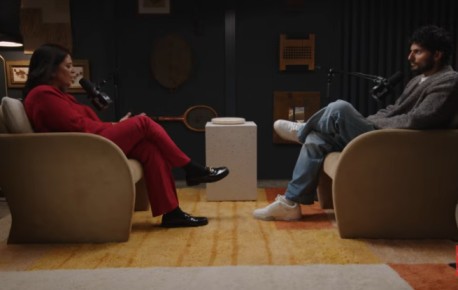
Read the full transcript of American clinical psychologist Dr. Ramani Durvasula’s interview on On Purpose Podcast, June 15, 2026.
Editor’s Note: Right now, more people than ever are quietly wondering if cutting off contact with a family member is an act of self-protection or an unforgivable mistake. In this powerful conversation, Jay Shetty and clinical psychologist Dr. Ramani Durvasula break down what “no contact” really means, why it’s almost always a last resort, and how years of failed repair, gaslighting, and self-abandonment can finally push someone to walk away. If you’ve felt guilt, shame, or confusion about stepping back from a parent, sibling, or relative—or you’re trying to understand someone who has—this episode offers language, clarity, and compassion without minimizing the grief that comes with choosing your own peace.
Welcome and Introduction
JAY SHETTY: Hey everyone, welcome back to On Purpose, the place you come to become happier, healthier, and more healed. Today’s guest is one of your favorites, someone that you always want back, someone that always gets millions and millions of downloads and views whenever she’s on the show. It’s my friend and incredible thought leader, Dr. Ramani Durvasula, a clinical psychologist and one of the most trusted voices in the world on narcissistic relationships, whose work has reached millions of people searching for clarity and validation.
Right now, more people than ever are asking a painful question: Should I go no contact with my family? Nearly 1 in 4 adults report being estranged from a family member. What used to be unthinkable is now a global conversation, and often a deeply lonely one. But how do you know when distance is healthy and when it’s something you’ll regret? If you’ve ever felt guilt, grief, or confusion about stepping back from someone you love, this conversation will change how you think about it. Please welcome to On Purpose, Dr. Ramani.
DR. RAMANI DURVASULA: Thank you, Jay.
JAY SHETTY: It’s always wonderful to have you back.
DR. RAMANI DURVASULA: It’s lovely to see you.
JAY SHETTY: I learned so much from you. You make everything clear. Thank you. I leave these conversations feeling I have so much to share with people. You joined me on tour last year, which I was so grateful for. But really, this conversation has truly taken over culture in such an interesting way.
DR. RAMANI DURVASULA: It has.
JAY SHETTY: And I wanted to just start off as I always do with you, because I think you do this so brilliantly. Can you please define what no contact means?
Defining No Contact
DR. RAMANI DURVASULA: It’s just what it sounds like. It’s no more contact. It’s no more digital contact. It’s no more in-person contact. You’re not taking that person’s calls. You’re not showing up to where they are. It’s almost like the death of a relationship even while the people are living.
JAY SHETTY: That’s an interesting way of thinking about it. Because I think no contact, it feels like, okay, I’m not going to call them, I’m not going to talk. But when you think about what you just said, that carries so much more weight, that definition.
I read in the national survey from Cornell University’s Family Estrangement and Reconciliation Project, they found that 27% of US adults reported being estranged from one or more family members. 27%. That’s huge. So cutting off family used to be unthinkable. Now it feels like it’s everywhere. What changed? We’re talking about a third of Americans.
Why No Contact Is on the Rise
DR. RAMANI DURVASULA: I think what’s challenging is that this concept of no contact is really heterogeneous. It’s not just one thing. And because it’s not one thing, that 27% number is made up of a really mixed up pot of people.
First of all, I would say that you’re absolutely right, Jay. There was a time this would never happen. And I think there are still a lot of cultures and parts of the world where it’s still unthinkable. You cannot do this. More people are talking about things that were once deemed shameful, the sort of cultural and societal control of “you can’t do this.” And people are saying, yes, I can. I think there’s more information, there’s more content, conversations like this.
That said, I really have to say that this remains a huge shaming issue out there. When we hear someone is estranged from a family member, most people’s mind will go to, “What’s wrong with you? What’s wrong with your family?” It’s immediately a very pathologized kind of a take on it.
But the problem is that no contact happens for such different reasons. In some cases, no contact is happening literally because a person says, “There’s no safety here. I’m fully abandoning myself to remain in relationship with this person,” or even feeling like there’s potential harm. Even if it’s not literal harm, it’s not that somebody’s going to come and hit you, but this psychological sense of vigilance, or that “here we go again.”
And for a classical example, I’ll give you somebody who was abused as a child, physically, sexually abused, and the family system minimizes it, perhaps even denies it, which means as a child that person wasn’t protected. And now as an adult, their attitude is, “You are still trying to wipe out a part of my history that I’m trying to integrate so I can heal.”
So that’s the point at which some people — a dear friend of mine, Kimberly Shannon Murphy, has been very outspoken about this, about her own story of family abuse. And she said, “The more I realized I hit that wall where in order for me to heal the rest of the way, I had to end contact with people whose presence was harming me.”
That’s one piece. Now, Jay, there’s a group of people that go no contact because it’s punitive. “I’ll show you, you’re never going to hear from me again.” So let’s say, I don’t know, we’re siblings, and you won’t loan me money or do something I want you to do.
JAY SHETTY: That’s different.
DR. RAMANI DURVASULA: That’s different. But that’s going to be represented in those numbers.
JAY SHETTY: Right.
DR. RAMANI DURVASULA: You see what I’m saying? So there’s this heterogeneity. And I can say as a psychologist who’s worked with many clients who have either gone no contact, or I work with them as they grappled with this issue — nobody makes this decision lightly. Those punishment people do. They’re like, “Forget it. You won’t do what I want? No contact.” But for the people who are doing it for reasons of safety, protection, healing, so that they no longer have to abandon themselves, they will work this through for years and years and years, feeling guilty, feeling disloyal, feeling like bad people, wondering what’s wrong with them. And that will churn and churn.
Oftentimes there’s a moment — I’m not going to bring too many details with it because I’m trying to protect some of the people involved — but I’m recently actually now actively going through a no contact family situation. And it is something that had played out for such a long time in a family system. And it’s like the child part of me is like, “Something’s not right.” And then the adult part of me is like, “Nah, I can turn away.” It wasn’t a person I had contact with. Then I was having more. I’m like, “Wait a minute, I know more about this. It doesn’t feel cool.” Then the terrible thing happened. I was like, “No, this would be a cancellation of myself in the name of culturally trying to maintain a relationship.”
So that evolution — I’m telling you, for me, that was a 40-year process. This is not a decision that’s made lightly. And I think what we’re doing, the injustice we’re doing here, is assuming that someone who’s gone no contact has made this decision capriciously or frivolously.
No Contact as a Last Resort
JAY SHETTY: A lot of the people you speak to, are they going no contact as a first immediate action, or is it a last resort?
DR. RAMANI DURVASULA: They are like, “I’ve tried everything. One more.” And then there’s more of the denial, more of the gaslighting, more of the manipulation, more of the disrespect. Call it what you will.
But there’s this moment — and it’s not just in the no contact, but I think no contact is a manifestation — when you become acutely, actively, and consciously aware that you are actually slicing off massive parts of your authentic self to maintain a relationship, and on top of that, have become hypervigilant. In essence, it is just a full self-abandonment. You become aware of that. You’re now choosing between self-loathing or self-protection.
And the problem is, in the words of the great Gabor Maté, “There’s no pain-free path, folks.” There isn’t one. Because if you choose this path of “I am not going to have anything to do with this person anymore, it doesn’t feel safe, it doesn’t feel healthy,” family members, people from the world at large, people in your community are going to say, “Oh, come now, there must be a way. They’re your family. You only have one family. You only have one, whatever — fill in the blank — parent, aunt, uncle, cousin.” That’s the pushback that comes.
So you could imagine the amount of resistance people who are engaging in no contact protectively are going through. For them to still make that decision, to cut out a sense of belonging, which is a primary human need — it’s not that punitive “you’re not doing what I want, I’m going to cut you off.” That again is much more punitive, petulant, tantrum-y. It’s an entirely different experience. They’re not the same.
JAY SHETTY: It’s so hard because, as you were mentioning, no path feels great and it’s hard either way. Because you either stay connected to this person who causes you pain, causes you hurt, causes you stress, and then you’re dealing with all of that — or you disconnect from them and go no contact, but then you feel guilt, and then you feel shame from the outside world and you feel bad.
I mean, this is not even no contact. I have a friend who’s moving country and they were telling their friends, and the first thing their friend said to them is, “What about your parents?” And they’re not even no contact. They love their parents. They’re going to see their parents. They enjoy spending time with their parents. They’re just moving country for work. And even me, I live away from my parents for work and for the life I’m building, and people are always like, “Yeah, what about that?”
And so I’m like, I can’t imagine if someone actually said, “Actually, I’m not talking to my parents anymore,” how much shame and guilt that comes with. I guess what we’re saying is, when someone goes no contact for the right reasons, you’ve got to recognize just how deep that must have been for them.
The Weight of the Decision and the Failure of Repair
DR. RAMANI DURVASULA: It’s very deep. And I think that the challenge has become, Jay, especially at the end of 2025 — maybe someone had put a book out, I don’t even know what — but there was a lot of conversation in the public sphere about no contact. But a lot of it was about, “This is terrible. All estrangement can be worked through.”
Because what this becomes a conversation about, Jay, is a bigger issue called repair — the repair of a rupture in a relationship. And it’s not always easy to repair a rupture, but it’s the only way forward. If ruptures cannot be repaired, the relationship slowly dies. That’s what happens. It becomes untenably unsafe.
So the person who ultimately goes no contact in these unsafe situations has likely tried to repair several times. They’ll even say, “Can you see what you did to hurt me? Can you see?” They’re literally putting out a PowerPoint. “I’m giving you the roadmap here for this apology.” And the other person either doesn’t get it, gives an anemic apology, or will give the weak apology and turn around and do the thing again. It’s the doing the thing again that is so horrifying. Because if someone says sorry and then does it again, that’s not safe. You’ve just shown me you can do a thing that’s harmful or unsafe, and no matter what, you’re going to likely do it again.
So that becomes the core of what this is. Or the denial of another human being’s experience. Families might feel uncomfortable because something uncomfortable happened — for example, abuse in the system — and nobody wants to sit around and talk about that. But usually the survivor of these experiences simply wants to hear, “That happened. We are so sorry.” And maybe even acknowledging, “We didn’t protect you sufficiently.” That’s oftentimes all a person wants. We know we can’t turn back time, we can’t go back and fix it, but the acknowledgement of our pain, bearing witness to someone’s pain — that is what people want. And there’s a chance of moving forward.
But what I really, really am struggling with is the rhetoric, which is that we put the light of shame and blame on the person who’s making the decision to say, “This is not safe. This is not healthy. This is taking a toll on me. I’m stepping back.” Instead of focusing on the person or people whose behavior was the catalyst for this choice. Once again, we are putting the focus on the person who was harmed as being the problem.
JAY SHETTY: What are the most common reasons you see people that you work with, and that you’ve come across through research, that go no contact?
Why People Choose No Contact
DR. RAMANI DURVASULA: I think the most common ones are, like I said, denial of childhood experiences of abuse. And with that denial, that can lead to a second reason, which is now people are sometimes saying, I’m actually concerned for my kids. Nobody’s even willing to step up and acknowledge this happened, and they’re expecting my children to be in the presence of an unsafe person. So those can often be a catalyst.
Another piece is repeated attempts at repair. You keep trying to say, please don’t do it again. They do it again. Please don’t say that again. They say it again. They’ll even say, I’m sorry, and then they’ll do it again. So there’s no way to get it fixed.
Sometimes it’s what I call sort of the scorched earth piece. The thing that’s done cannot be undone. Now, it could be something like they’re intoxicated and they put your kids in the car with them and they drive. They leave the kids unsupervised in a dangerous situation. It’s usually a case of irresponsibility or something that ended up putting people at risk or harm, or actually something terrible happens. That can be a catalyst for no contact.
Maybe it’s not the kind of physical sexual abuse, but it’s even like a lifetime criticism, devaluing — year over year, it’s going to be the same comments about your weight, about your career. It’s just a never-ending negating, abusive, harmful cycle. That can be a case.
Now we’re living in interesting times where there’s a tremendous amount of political polarization, and there are people who are saying, what you voted for has hurt the people I love most dearly in life. That’s actually leading to some no contact as well. And it can be sometimes multiple of those. In some cases it can be very, very unique to the situation.
I always say it’s like a slice in the fabric of trust that slices the fabric of safety. Both of those things are happening and we don’t always think of it as feeling unsafe because we’re often not in acute danger. But when people go through this, they’ll say, I feel sick when I have to see this person. I feel sick after I talk to this person. I feel anxious. Literally sick. People say, I get rashes. Their autoimmune symptomatology may flare up. They get gastrointestinal issues, terrible headaches. My body falls apart at this contact.
So there’s sometimes even that awareness. And then it was interesting, I just was talking to a woman on our own network and she was talking about going no contact with her own mother. What happened was she felt a relief like she’d never felt in her life. She said, I don’t have to go through this again. And she said it was not easy. It was a nightmare to make the choice and then a lifting of this horrible weight.
So not everyone feels relief. A lot of people feel the guilt and the shame. But those are the kinds of catalysts to why people make this choice. And it’s usually not one thing. It’s many, many things that can culminate in that one big bad thing. So you can point to an event, but I promise you, everyone who says, I went no contact after X happened, might tell me everything that happened before X. It was never just about X. That was the proverbial straw.
How Do We Know If Someone Has the Ability to Change?
JAY SHETTY: According to psychology, how do we know if someone has the ability to change?
DR. RAMANI DURVASULA: Human beings are fallible creatures. We make mistakes. We make mistakes in relationships all the time, in marriages, in friendships, with siblings, with parents. It’s never the mistake, it’s always the repair, right? The ability to be vulnerable, to have the conversation.
If you look at Esther Perel’s work, Esther’s work is interesting. Whenever I have conversations with her, I’m always talking about narcissistic cheaters and Esther’s talking about the larger world of infidelity. But Esther has so many examples of people who, even after a huge breach of trust like infidelity, can repair the relationship when there’s authentic accountability.
And I do really believe that repair has a real anatomy to it. There’s the person who did the harmful thing who takes accountability — bonus points if it’s spontaneous accountability — but takes accountability, recognizes it, bears witness to the pain of the other, offers an apology not based on how they’re inconvenienced about it, but: “I am so sorry. I can see this hurt you. You’re suffering, and I’m so sorry I was a part of that.”
But then the ringer of ringers is they change their behavior. And then that’s when we say, “I am so sorry. Let me collect myself because this wasn’t okay.” Now, they can’t keep doing that. They can’t keep slipping and saying sorry, slipping and saying sorry. But some time may go by and then they’ll make the mistake again — accountability. And that’s the back and forth dance.
That’s how you know: all the things I just said — accountability, apology, bearing witness — but above all, behavior change. That’s it. That’s how you know someone can do it.
And I’m sure you’ve been in relationships where there’s been repair. I’ve been in relationships where there’s repair. And what’s amazing is when there’s repair, the relationship gets stronger. It actually goes to a much deeper place because now you’ve shown that even when something scary happens, you’re protected because someone’s saying, I didn’t do right and I will try to do right. Every harmed person out there would’ve loved to have heard that. But that’s how we know — it’s the actual manifestation of the behavior. It’s not because someone says they’re going to. Sadly, that’s time.
Navigating the Decision to Go No Contact
JAY SHETTY: Totally agree. Let’s say someone’s listening right now and thinking, I want to go no contact. I’ve been thinking about it. I’ve tried everything. I’ve tried therapy on myself. I tried to encourage the other person to go to therapy. They weren’t up for it. I tried to raise what they were accountable for. They maybe took accountability, but they didn’t really change their behavior. They continued to act the same way. I’ve never felt like they’ve really understood or acknowledged what they’ve done.
So they’re feeling all of that. But then at the same time, they go, I can never go no contact. It’s my mom or my dad that did so much for me. I know they weren’t perfect, but we start to justify and fill in the gaps and we start to make excuses sometimes, or we start to maybe even have very valid points, but there’s still a part of us that goes, I don’t want to see them because I can’t. If someone’s in that position, how would you encourage them to think about and reflect on that?
DR. RAMANI DURVASULA: There’s different ways to think about this, even in the narcissism world. And I talk about disengagement strategies and we talk about yellow rock and gray rock and low contact and all of that. For a person to really assess that they’re even thinking, I want to go no contact — what I want to know more than anything is, what’s your why? What’s driving this?
Some people say, I get sick every time I see them. I get hurt every time I see them. I literally don’t feel safe in my body when I’m with them. I’m not even myself. It’s an out-of-body experience. I’m concerned for my kids when I’m with them. Pay attention to your why. If your why is, I want them to feel as bad as I have, that is going to often be a less healthy reason, and it can leave the person who’s gone no contact more likely to experience regret.
But I would say to folks, this is the number one rule of no contact: I personally think never tell the other person you’re going no contact, because it becomes a lot of clanging bells and it feels like a tactic at that point.
In many cases, no contact is a gradual stepping back anyhow. It’s pretty rare for a person to see someone every single day until Friday and then on Saturday go no contact with them, right? It tends to be successive approximations. What might happen is that you’re spending less time with them. And there may be a sweet spot where you say, I am not voluntarily going to show up, but if it’s something like, I’m not going to miss my cousin’s wedding because they’re going to be there — so some people will kind of try to clear out that kind of territory.
Some people will do the form of low contact where they say, if I see them, it’s going to be polite conversation. I’m not going to tell them what’s going on in my life. I’m not going to engage them in any significant way. I’m not going to sleep in their home. I’m not going to have a meal with them. So some of it may actually look like that. But I would tell people, experiment with different strategies, see what can work for you.
Because the cultural piece is huge, Jay. A lot of people will say, this is just not what we do in my culture. And it’s true — this is no longer just about no contact with me and a member of my family, whomever it may be, parent, sibling, whomever it is. I am now kind of wobbling this whole family system. And I’m very fond of pointing out that some people will say, I go no contact with person A, I don’t get to see person B, who’s actually really beloved to me. So now you’re all of a sudden finding yourself in these triangulations.
So I’ll tell people, figure out the successive approximations and what helps you feel safer. Because sometimes through agency, a person will say, I know I’m going to my cousin’s wedding to see my cousin get married, but I may very well leave before the dinner because I think that’s when things are going to kind of get hot. And I’m going to let my cousin know, you mean so much to me. I want to see your wedding. I want to see that moment you’re getting married, but I think that the dinner may be too much. I think we can communicate to other stakeholders.
What I also remind people is no contact may not always be forever. This is a big one for people, because I view no contact as a time of healing — a time when this person who leaves you feeling unsafe in your body and self-abandoning and all of that, you’ve removed that stimulus for a while. You can do a lot of the hard work of healing, really get back in your body, really explore your sense of self, your authentic self, connect in other healthy relationships.
Armed with that, when circumstances line up that you may have to be in contact with that person again, you’re in a much different position to do so — much more from a place of agency. I’m not going to stay all evening. I’m not going to get into those topics. If they start poking, I’m going to give myself permission to leave. I’m then probably not going to feel as triggered too.
So I think the decision really comes from what is driving you, and things can always be rolled back if they don’t feel right, and nobody needs to know about it.
The Reality of No Contact and Estrangement
JAY SHETTY: That’s a really interesting take of not announcing it, and I couldn’t agree with you more. I think sometimes we want to put in the big announcement and that almost feels like the why isn’t that strong. And actually, you’re right that the more natural way of doing it is I used to see them every week. Now I see them every month, and now I see them every quarter, and now I don’t see them maybe once a year, if that.
I think we also underestimate, and I can speak about this from experience, that I found when I’ve been in this position, I didn’t do this as a technique, but even though I did not speak to this one person for around 2 years, when I then did talk to them again, I found that the relationship was so much more respectful from their side because they realized there were real consequences to that behavior. And that’s something I never realized before. I always felt being a loving, compassionate, empathetic person would be the thing to help them change.
When I realized that no contact, even though I didn’t use it as a technique to change them, I did it to protect myself, that changed their relationship with me because they now realized. And initially when I stopped talking to them, their reaction was like, well, why did you stop talking to me? What’s going on? And my response was, because I don’t want to be treated that way anymore. And they said, well, what do you mean? Like, we have these conversations, then tomorrow we forget about it and move on. And I was like, oh, okay, that’s how you think the rules go. And I was like, well, to me, I don’t want to tolerate that anymore.
We didn’t talk for 2 years. And then all of a sudden, now when we connect, which isn’t very often either, but now when we do, they know it can never get to that level because there’s real consequences to that.
DR. RAMANI DURVASULA: And that doesn’t always happen though, Jay. Sometimes people will go no contact for the protective, really healing reasons. And if they are in the wake of the person again, the person will say, “How dare you?” Or, “I can’t believe you abandoned me.” Or, “Do you not know everything I did for you? How can you be so ungrateful?”
In some ways I tell folks, they’ll say, “Can you believe this?” And I said, “Yes. And if anything, you just got a huge piece of data.” And it is a piece of data that confirms that that decision, what you observed, what you experienced, what you saw — what I saw here — was absolutely accurate.
I mean, I think all of us doubt ourselves. We’re like, maybe I’m not seeing this right. Maybe I’m overblowing this. That’s why in my book, in It’s Not You, I call it going into the tiger’s cage. I’m like, go back in the tiger’s cage, see how that works out for you. If it’s not that big a deal, it’s a little kitty cat, pet it and have a great time. But if it’s a tiger, it’s going to slash you up again. And so if it does, you’re getting some good data there that you did see this right. And if anything, it really makes you a greater steward of your own intuition and your own body — how you communicate within yourself.
You saw this. For 100 reasons outside of you, it felt uncomfortable. Like I said, I’m sharing my own experience. Mercifully, it’s not my parents. I found my way. I may have lost my mom, as I’ve told you, and I found my way, my clunky way with my dad. So fine there. But in this other relationship, for a long time, I saw it and I saw it and I saw it. But when it came to the ultimate thing, I thought, I was right all along. And then ironically, just in the last few days, I was speaking with another family member who then gave another piece of evidence. And I was like, I was really right. Then I’m walking around pumped up like, oh, aren’t I so intuitively smart? It wasn’t at all ego. It was actually soothing. Like, you read this right and it’s okay to keep yourself safe.
But it is so hard, Jay, when the pressure of the world is family is great and estrangement is bad. And I shudder to think how much human potential we’ve lost by people who couldn’t give themselves, for a variety of reasons, the permission to detach from a harmful relationship — and just remain separated from themselves and silencing themselves because they felt that pressure to keep engaging with something that didn’t feel safe. That’s the real tragedy of this.
Familiar Pain vs. Unfamiliar Pain
JAY SHETTY: I agree with you, and I think though that it’s those of us who have that empathy and have that compassion and have that loving nature that find it the hardest to do.
Because you think you’re being ungrateful, but every time you engage with them, you always come back wounded, right? So it’s like you think you’re being ungrateful, so you’re like, no, I’ve got to be grateful with this family member, this parent, whatever it may be. So I’m going to stay connected. But then every time you’re around them, you come back crying, wounded, hurt, upset, whatever it may be. Physically ill. And then you recover for a few days and you think, oh no, I was just overreacting. It was a cat — and now go back to the tiger’s cage, as you beautifully put.
So many of us keep going back to that because it’s, in Thich Nhat Hanh’s words, it’s better to have familiar pain than unfamiliar pain. And so we’d rather have that familiar experience and stay close to someone who’s bad for us than have the unfamiliar pain of, I don’t know what life looks like if I don’t talk to them. How does someone figure that out and actually have the courage to say, no, I need to do what’s right for me?
DR. RAMANI DURVASULA: This is where Gabor’s words so ring for me, is that there’s no path free of pain. I think people do believe, Jay, one of these paths is more pain-free or easy. I said they’re both really, really difficult. And familiar pain is tough. We talk about stuff like the trauma bond and all of that. That’s familiar pain. We know how to navigate familiar pain, right? We know where the hazards are. We know exactly what to look for. And it’s terrible, but we know how to navigate it. The unfamiliar pain — well, that’s terrifying.
But what people don’t always realize, the pain of not abandoning, not silencing, not suppressing yourself — why would those things be painful? Because my gosh, your true self, that’s some dangerous stuff. You’ve been told, “How dare you?” — “How dare you?” is very much a connective tissue in a toxic relationship.
Now though, what’s happening is a person is living more in congruity with who they are, what they’re about. They’re connecting with healthier people. And there are some people out there who don’t have healthy ties in their life, which is painful, very painful. But I want you to contrast what the time with this person you’re thinking of going no contact with, and contrast that to spending time with someone who is attuned and it’s mutual and it’s reciprocal and it’s safe. And people say they’re categorically different experiences, right? And why is that? Well, can you show up as your real self? Of course I can. I can be me. I don’t feel judged. I don’t feel shame.
Sometimes just seeing that contrast — but then when people are talking about the obligations, the familiar pain, as it were — it’s also understanding where those are, how they’re acting really as tools of social control. But above all else, the point I make is these paths both hurt. Only one of them though does carry the dividend that you will actually get to live as your authentic self, which is going to improve your health just like that.
Recognizing Safety for the First Time
JAY SHETTY: There’s such a sense of sometimes if you’ve never experienced safety, you don’t even know what it feels like. And I think sometimes when you find a safe new relationship, whether it’s a partner, a friend, a roommate, whatever it may be, and then you all of a sudden go, oh, wait a minute, this is what safety feels like. And now you have the realization that what you had before was unsafe. And that’s when you come to the decision that, oh, I need to go no contact because now I experience what a relationship should look like. And I didn’t know that before.
DR. RAMANI DURVASULA: And what gets so challenging is, unfortunately, like I said, people talk too much, right? The people will then go to the no-contact person or system and said, I now saw this. This is what healthy feels like. You know what they always hear? “Those people are just saying what you want to hear. We are your family. We tell you the truth. You don’t like to hear the truth, but we tell you that truth. They’re not going to tell you that.”
That’s nothing, nothing. They get into this divide of now the people who are harming them are saying, “Even that’s not real.” That’s a gaslight. But there is this sense, “We’re telling you the truth. The truth is painful. We’re not going to trick you. We don’t want you to go out in the world and look foolish.”
So for people to get themselves out of those places, the fact that they’re even entertaining ending contact for some period of time, if not forever — to me, that’s a quantum leap in healing because they’re even entertaining the possibility that there’s an option other than this abusive mess that this relationship is.
Holding Your Ground Without Over-Explaining
JAY SHETTY: You’re never announcing your no contact. You’re not telling the other person. You’re doing it yourself. Naturally, you might find that person reaching out, and that person might start saying things like, why are you ignoring me? Why are you avoiding me? Why haven’t you come over for a while? And I feel like that’s a weak point for someone. How does that person hold their ground without getting into explaining and getting lost?
The Challenge of Going No Contact
DR. RAMANI DURVASULA: It’s so challenging, Jay, because if the person really doesn’t respond, the person reaching in saying, “Hey, why aren’t you responding?” — this, that, and the other. The person who has chosen to end contact will be accused of ghosting that person. And we view ghosting actually as avoidance. And I do want to put in this point about avoidance.
Something I’m hearing in sort of the pushback on people who make the choice to go no contact, people who are estranged from their families — it keeps getting framed as avoidance. Is there a subset of cases where it is about avoidance? Sure. Like I said, that 27% is a mucky number, if you will. There are people who are saying, “I don’t want to have an uncomfortable conversation, so I’m just going to do this.” But in many, many people who are going no contact to feel safe, they’ve attempted to have the uncomfortable conversation dozens and dozens of times.
And remember, the people who are the harmers, who are uncomfortable, unsafe, whatever they are — they’re likely not aware, or they’ve come up with a blame-shifted, “this isn’t my problem, it’s your problem” thing. But they feel entitled to access to this person who’s kind of drifting away. If they completely block contact, they will be called ghosting, to which I say, then let them say you’re ghosting. But I understand that’s hard. People are saying, “I don’t want to be characterized like that because that’s not who I am. I wouldn’t do this in another relationship where this is not happening.”
Whatever you say to that person is not going to work. Some people will say, “Okay, I didn’t want to announce it, but I am going to say to them, this is not healthy for me. This is not safe for me.”
Personally, I have an example I’d gone through quite some time ago, and it was more in the friendship realm. There was nothing that could be said without it escalating into something actually quite terrifying, and it had to end. That person then went on to terrible things to many, many people I thought respected me — what we call a smear campaign. So you had to tolerate that.
So if you didn’t communicate the way that person wanted, and it always ended up in the same place, you have to reconcile radical acceptance that if you attempt to say, “This has not felt safe, I don’t feel like I can be myself” — “Oh, psychobabble. Does your therapist tell you this?” — you’re going to come up against that wall. So you have to be girded against that. Maybe seeing that one more time, like, “This is why I went no contact.” And you’ll push to that. “I’m simply not responding to this anymore.”
And I don’t like when people say, “I wish you well,” because we don’t always wish people well. And I think we pay karmically for all of that hypocrisy. You don’t even have to say, “I wish you well,” because I’m thinking of some of the people I’ve gone no contact with — I don’t wish them well. I don’t wish them ill, but I don’t wish them well. So I tell people, don’t say, “I wish you well,” because you’re putting something out there in the cosmos that just isn’t vibing the right way. You might just say, “Listen, I can’t do this anymore.” Now you have put a punctuation mark on it. You’re saying, “I’m exiting stage left. I’m out of the scene at this point.”
The Smear Campaign and the Hero’s Journey
At that point, I will bet you any amount of money, Jay Shetty, that that person you’ve gone no contact with is going to paint a terrible picture of you to the world. I almost view it as like a hero’s journey — all these bridges and fires you have to cross. There’s going to be a smear campaign. There’s going to be the same old accusations. Yes, these are the terrible crumbling bridges you have to cross. And all of this was exactly what you were afraid of. No pain-free path. This path is every bit as painful as we knew it was going to be. So this should be confirmation — you knew it would be, but now you are no longer in contact with someone because it would forever be this mess.
There was something I had read where a person was taking a stance about how, “Oh, people are being too easy about no contact. We’re not giving people a chance.” And they were giving the example of somebody who has really problematic political views and makes you feel really uncomfortable, but then said, “Oh, but they make great dessert, so you can still have contact with them and focus on the dessert.” What? This person might be saying terrible, bigoted, or awful or hurtful things that have respect to your child or to someone dear to you or what you do for a living. And just because they can make a hell of an apple pie — to keep this kind of mythology of family going — I don’t buy that.
I think it’s, again, almost an existing societal construct that family means self-abandonment. And I don’t think it needs to be that. I do think that people can, again, experiment with no contact — that’s how I’ve always put it with the clients and patients I work with. And I’ve never seen anyone come to this decision easily. Every single person will say grief, grief, grief, grief, grief, regret, grief, grief, grief, shame, grief, grief, guilt, grief, guilt, grief — and then peace. But my God, it was a hell of a path to get there.
And even still, they’ll say, “I’ll see families — a person with their parent, a person with their friend, a person with whomever — and I’ll look at that with envy because I don’t have that.” These are not easy decisions. But those punishers — sure, I guess it’s a little easier for them, whatever their journey is. And yes, there are people where it’s avoidance. Those are great candidates for therapy to figure out, because people who are in that avoidance mode are very scared. They’re scared to make any move. And in a way, it makes sense because every move is going to be painful.
JAY SHETTY: It’s almost like if you choose no contact, it’s grief, regret, guilt, shame. And if you choose to stay connected, it’s pain, stress, pressure, fear.
DR. RAMANI DURVASULA: But it’s also, Jay, societal belonging. “Oh, look at you. Oh, wow. It looks like you guys had a great trip together. What a great picture of all of you together. Oh, our family’s great.” And you’re now living this lie. I think that eats you up, but that societal validation — that’s a hell of a bomb.
JAY SHETTY: Yeah, it goes a long way. It’s almost like that societal validation covers over some of those cracks, and that’s why we stay in those places that do so much damage to us.
DR. RAMANI DURVASULA: The shame now is carried internally, versus externally. “Okay, I have nowhere to go on Thanksgiving, and I don’t have really a family anymore.” And the world is wondering, “I wonder why they don’t talk to their family, because their family seems to be getting together, but they’re not.” You have to endure all of that. That’s also an external shame too, but the staying in it — that’s the internal shame. And that internal shame will eat you up alive.
Expanding the Radius of Compassion
JAY SHETTY: Whenever I have conversations like these and I get to sit with yourself, who sits with people and works through these challenges with them, and I get a glimpse into what people struggle with and what’s in their mind, it just expands your radius of compassion. It just makes me go, “Oh my gosh, people are dealing with so much.”
When you have a family member who says, “I don’t want to come to something,” usually everyone in the family is just thinking, “What’s wrong with them? Why are they being difficult? What’s the big deal? We’re just all getting together.” And it’s like, you don’t recognize that there’s something that obviously has struck this person. And whether you think it’s big or small, it’s valuable to them. And it feels like the person who did the thing gets away with it and never is reprimanded or made accountable. And then everyone else who’s kind of an innocent bystander is actually pointing fingers at the person who’s been wronged and going, “Come on, stop being difficult. It’s just a family dinner.”
Conversations like this help because — and I hope everyone’s getting what I’m saying — if you’re not one of those people who’s doing the no contact or doing the harming, and you’re kind of in the middle of just hearing your family go through stuff, be that curious, supportive person who goes, “Hey, what’s up? Why don’t you want to come?” Because that person just never had that. They’ve had people either tell them to get over it or move on, or “Hey, it’s just a family dinner.”
DR. RAMANI DURVASULA: As I said, Jay, the challenge is that there’s sort of two different ways this happens — maybe even three, if you count the people who are just avoidant, the people who are punitive, and then of course, the people who’ve gone through this really anguishing path. They’ll say, “I desperately wanted this to work out. Every child wants nothing more than for their parents to be their heroes.” And they will turn themselves upside down and inside out and craft false narratives to turn the people in their lives into heroes, because that’s how children survive. But when the children are harmed in those spaces or not protected in those spaces, those narratives dog them into adulthood.
And sometimes this is it. And I think we should be having a much, much more nuanced, balanced conversation about what no contact is, because right now there’s sort of what’s considered the societal right way. Not all families are good. They really aren’t. Many families are harmful. And I wish we lived in that candy-coated world where all families were safe. They sure as hell are not. And many people listening to this will say, “No, they’re not.”
And the complicated process someone goes through — ultimately, for me as a psychologist, I can’t tell someone to go no contact. It’s a decision they make for themselves. And at best, as therapists, we hold their hand. Good therapy is when a person is making a choice for themselves, as uncomfortable as it is. Ultimately, the parent can’t swim for the child. The child has to swim themselves. The child has to ride the bike themselves. The client has to feel that they’ve made this decision themselves, as terrified as they are, and live it.
And I’m going to tell you now — in my practice, granted I focus on a unique area of the narcissistic relationship — the vast majority of people I’ve seen make no contact decisions from a place of harm reduction, safety, protection, all of that.
Thinking About No Contact — Forever vs. For Now
JAY SHETTY: It has ended up quite well for them. If they’re thinking about no contact, would you encourage them to think about a timeframe rather than forever?
DR. RAMANI DURVASULA: When people use the word “forever,” I always know I’m dealing with someone very anxious, because it’s a catastrophizing term. I don’t know what the hell “forever” is. So I’m saying, let’s take the word “forever” out of our vocabulary. For the foreseeable future, you are not going to have contact with this person. And you can see a sense of lightening there — because “forever” feels so big. But for now, you’re not going back and forth, you’re not responding.
And there is often a going into the devices and blocking the capacity. I know in my case, when I tried to go no contact, then other family members were getting in there trying to contact me on behalf of that person. Then I had to go and block. And then I came to find out that you could contact me on my computer when I thought I’d blocked your number on my phone. That’s a glitch. And then it’s the emails. And then you start realizing, “Wow, there’s a lot of ways to contact me.” You have to meander. Sometimes people will send you a letter by mail. You become much more discerning on which phone numbers you pick up. It can feel like an onslaught for a while.
And many people with whom you go no contact, especially if entitlement is a big pattern — they feel entitled to you. They feel entitled to an explanation. And there’s a part of me that even when I’m hearing a client say it, I’m thinking how interesting — they want an explanation that they couldn’t figure this out.
When Someone Goes No Contact With You
I have to tell you, Jay — and this is not a frequent circumstance I’ve seen, but it does happen, and I really feel for people who are going through this. They will say, “Somebody went no contact with me and I have no idea why they did it. Literally, I have no idea. One day they just dropped out of my life.”
I have a situation like that in my own life where someone went no contact with me, and we had one last weird conversation where literally it was, “You are never to get in touch with me again. How could you have done this? I told you not to do the thing I did.”
JAY SHETTY: They said it to you?
DR. RAMANI DURVASULA: Yeah. I can literally tell you I was on the 10 freeway. It’s so clear to me because it was such a destabilizing conversation. And I never heard from them again. It’s what is now 2026 — it was at least 2014. And this was a person I was tight with. I will go to my grave not knowing what exactly happened. I have no doubt that this person has a very clearly constructed sense.
JAY SHETTY: But that doesn’t make you a narcissist.
When Someone Cuts You Off
DR. RAMANI DURVASULA: Yeah. No, I don’t think I’m a— that’s up for debate, I’m sure by some people, maybe by her even. Yeah.
JAY SHETTY: Interesting, right? Like, it’s like, how do you know whether the story you’re crafting about someone is true or not? Because it’s true in your head.
DR. RAMANI DURVASULA: I’ll be frank with you, Jay. If for this person, if they felt my life feels safer, better, stronger without Ramani in it, then I say go with God. To me, the only win I think in the world is that people feel safe in their bodies, in their psyches, in their souls, and they can express themselves.
The thing I’ll never understand is what I did, right? I have a hint of it, but it seemed like a strange thing to be upset about. And I knew there was other things happening in this person’s life. Sadly, subsequently, I came to find out that this person’s life had fallen apart in many ways. So they might’ve had some sort of, I don’t know, some other issues going on. But I also don’t think I can be so superior and say, oh, maybe she had a breakdown. Maybe I did do something that offended her. I don’t understand it, which probably makes her think I’m an even worse person.
So I have no doubt many people have had the experience of someone just cutting them out. And I think that’s muddied this conversation because there’s people out there, you and I are both saying here, we’ve had someone just poof disappear and feel very absolutely justified in their reason for not being in touch with us. People hear this conversation, they say, “No, people don’t just get to disappear from our lives.” And I’m like, “Well, apparently they do.”
And then we have to reckon with what that meant and maybe look inward. And it did for me personally, I have to say, I looked inward quite a bit and say, “What do I need to monitor about myself?” I kind of understood what the person was saying, but I also kind of didn’t. So I don’t think I was changed substantially as a person, but it was always a bit of a head-scratcher, and it will always be a head-scratcher.
When Do You Know It’s Time to Cut Off a Toxic Family Member?
JAY SHETTY: When do you know it’s time to cut off a toxic family member?
DR. RAMANI DURVASULA: I think it’s different for everyone, Jay. I don’t know that there’s a moment of knowing. I will say, in my particular case, there was an episode that happened. An event. A thing happened that was so reprehensible. But very frankly, if that reprehensible thing had happened without the context that led up to it, I wouldn’t have gone no contact. So it wasn’t the one event, it was the accumulation. And this event kind of cemented that all those data points up till then was in fact the thing. All the times I tried to say, maybe not, maybe not, maybe not, maybe not. Oh, definitely.
It may be an event that was preceded by a lot of other proximate events that felt this way. It may be that you literally feel like you’re getting sick. I would also say, Jay, people have to pay attention to what I call the natural experiment. And the natural experiment happens when something intervenes and we don’t have contact with them. Who knows why? Life goes on, and one day you lift your head and you say, “I haven’t talked to them for 6 months, and that was actually— this has been really nice.” And you notice the difference in your life.
I’ll even give you a small example. It was a holiday of some kind. I don’t know, Thanksgiving, Christmas, something like this. And the very, very problematic person in the family system was being a little bit petulant and tantrum-y and decided not to come to the main event. It was like a dinner or something. And some of the family members were sad. They’re like, no, no, you should come. And another family member who had ultimately been the person responsible, I think, for getting them or narrowing, said, “They said they don’t want to come, and let’s honor that wish.” And they said, “No problem. Okay, you don’t have to come.”
They all got together. The group that got together had the most magnificent time. Two of them noticed, they’re like, “This is amazing.” And they noticed it was simply that person not being present. It didn’t necessarily lead to no contact, but my point about the natural experiment is sometimes the world comes together to create a circumstance. And you see the— wow, when they weren’t at the wedding, it was so much easier. When they weren’t at the dinner, it was so much easier. When I didn’t have to include them in the decision, it went like clockwork.
You see the differences when this person isn’t around, but also by being apart from them, you might say, “It’s funny, I don’t feel exhausted when I wake up anymore. My stomach isn’t hurting me. I’m not getting migraines as much.” You may literally have changes in your physiology as this stress goes away. You might find that you’re sharper at work.
But I don’t know that there’s ever a moment. I think that there is often an episode that makes you say, “Oh, hell no.” It’s really only people who are more manipulative and petulant and really immature that would end it over one episode.
Here’s the rub though. Here’s the problem. Let’s say the big event happens and that’s when you say, “I’m not going to be in contact with them anymore.” Everyone around you thinks it’s just the one event. They don’t realize it was a trajectory of stuff. They’ll say, “Oh, come on now, you’re going to go no contact with someone over one thing?” And they’re not able to hear that, no, it actually was about 1,500 things. But this was the— it’s like the closet rod. I always use that analogy. There’s one last piece of clothing you put on that closet rod and it all collapses. It’s not because that was a heavy piece of clothing. It was just the last piece that that rod could hold.
JAY SHETTY: That is the way to think about it. And when I think about it in my life, it’s always been that way. And I liked your almost stepladder of maybe not, maybe not, maybe not, okay, definitely. Like, that’s the kind of thought process that a rational human being goes through. It’s like, no, I don’t think it is. No, I’m giving them grace. No. And then it’s like, oh no, okay, I get it now.
What do you say to the people that say, but they’re your family?
“But They’re Your Family”
DR. RAMANI DURVASULA: This is a challenging question because it’s culture. I’m South Asian from a very traditional Indian family. I work with a lot of South Asian clients. I work with a lot of Middle Eastern clients, a lot of Latino clients, where family is like family — it’s capital F, it’s a blood thicker than water construct.
We’ve hit it from different directions, one of which is it’s really luck who your family is. This idea that somehow this group of people — imagine you get on an airplane flight, like, oh, those people are supposed to be your best friends. It’s luck that you walked on that one, you bought that ticket and not the other. No, these are people I’m going to be with the next 5 hours and then bye, I’m not going to see you again. And it is a bit of luck, and some people have bad luck. It’s sort of a random sequence.
But the issue of family, I think more than anything, it’s to hold space for that, to not say, “Oh, who cares if they’re your family?” They are your family, and this construct matters. For some people, it’s a core value. For other people, it’s been an organizing element for them. For many people, it’s the idea that if you’re not part of a family system, you’re actually deeply unsafe. And so if you’re unsafe without a family system, and if your family system is unsafe, again, you’re sort of in this damned if you do, damned if you don’t kind of catch-22.
So it’s to hold space, empathy, awareness that family does matter, making this decision all the more difficult. And then it’s paying attention to how are you feeling when you’re not with them? I never hold a no-contact agenda for any human being on the planet. I really don’t. I’m like, you are going to get there or never get there, on your own time. When that pressure gets lifted for a person, it opens up a lot more decision-making because then they can say, yes, this is family, and yes, this is harmful.
But the very first time a person’s able to look at another human being, family member or not, and recognize that I don’t feel safe with them — meaning I don’t feel like I can show up as myself, I have to be walking on eggshells around them, I am happy when they’re gone, I’m relieved when they’re gone — once you actually have that, say those words to yourself, maybe not to anyone else, it opens up something different in you because now you’re willing to acknowledge that. You’re caring for yourself by acknowledging something doesn’t feel good.
Because I think that if we go too quickly with like, oh my gosh, they’re right there, they’re my family, we’re going too quickly. It’s just sitting with this doesn’t feel good. That’s step one. And then you’re going to give yourself permission to feel that. And then over time, you will recognize that yes, they are family and they’re unsafe. More than one thing can be true at the same time. And how to navigate why there are all these things true at the same time — how do you make a decision that works for you?
And it can be a stop-start. You go out of contact for a little while, you find that too difficult. You have children, you want them to meet some members of the family, you’re back in contact again. And it kind of, again, there can be an ebb and flow to it.
Soul Distancing: A Spiritual Form of No Contact
DR. RAMANI DURVASULA: But it’s a very, very complicated conversation. For many people in many parts of the world, no contact is simply not an option. And so I always say that you can then — it’s a concept I wrote about in the book too called soul distancing — that your physical body can be present and you can nod politely and you can talk about the weather and you can say what a nice dress you have, but that most important part of yourself, you don’t have to abandon it. You can actually be a really protective custodian.
How are you doing? What’s new with you? Not much. Yeah, I get up, I go to work. Everything’s fine. You can really do that. All the while being consciously aware of like, oh, you don’t get to look into this. This isn’t safe. So you can find those ways to navigate.
But this only works, only works if you take care of yourself, which means you prepare yourself ahead of time, you give yourself rest after time, you maintain healthy connected spaces in your life, you have meaningful and purposeful activities in your life. You have to give yourself permission to live a whole life if you are going to keep participating in those spaces.
I view it as almost like a spiritual form of no contact. Like, you don’t get to be with all of me. And I think that can be one way people can navigate these family spaces. But for those who really did feel physically violated in their family spaces, that may not be enough.
And sometimes it’s the— that person who goes no contact is the first person who breaks an intergenerational cycle too. They may be the most powerful warrior in that system who says enough is enough. And that may sometimes be, for example, I’ve seen this in family systems where people came out about their sexuality, about gender, and they faced a lot of pushback. And they’re like, “You would rather I do not live in accordance with who I am?”
And that process of coming out is where people will lose people. And then that concept of chosen family, which the LGBTQ community — that was their term — where so many people came out and were rejected and hurt and abandoned. And so I think that there’s something to listen to there. Sometimes at those moments, a person who goes through that saying, this is who I am, and they’re told, oh well, we’re not going to love you — that’s another process we can watch from, and many people painfully having to go no contact at those times too.
JAY SHETTY: Yeah, I was going to ask you, what do you do if you can’t go no contact? And you answered some of the options there because I always talk to people — I love the soul distancing idea — and I often talk to people about the idea that for every one person in your life that is like that, if you can’t get away from them, make sure there are 3 other people that are people you do open your soul to, that you can open your heart to, that you can be authentic with. Because yes, I appreciate that there may be a family member that you can’t do that around, but you can choose 3 other people, friends who become family, that you allow yourself to be yourself around.
No Contact vs. Other Relationship Dynamics
DR. RAMANI DURVASULA: And that outweighs that, that 3-to-1 ratio kind of helps with the pressure of that one. And it’s challenging, because if you look at all the great trauma writers out there, Judith Herman, Gabor, all of them, trauma that happens in relationship can only be healed in relationship. And whether that relationship is therapy, whether that relationship is trusted friends, this is not a walk you can walk alone. People have to become safe again. And that’s one of the challenges of having to remain in contact with someone harmful. People remain unsafe. So you do need counterweights to that.
And it is hard because once a person’s been through harm, through a family, through people who should have loved them, been trusted. What gets lost is discernment. It’s a sense of nobody can be trusted, or I don’t know how to trust people, and above all else, I can’t trust myself. And that can make it hard to build healthy social contexts outside of a system where you’re feeling compelled that maybe I should go no contact, but I can’t.
And I really think though, part of this is because we shame people who go no contact instead of really hearing their story and often how painful it is. And even, yes, sometimes it’s a mystery and understanding that sometimes, yes, it’s punitive, negative, but to understand the backstory on it so then we can think about it more clearly.
JAY SHETTY: Yeah, I wanted to ask you a couple of quick segments on what no contact is and what it isn’t. So what’s the difference between no contact and having a fallout?
DR. RAMANI DURVASULA: Having a fallout might be that they go for a little while not talking to each other because they did have a big conflict, and it’s almost like they need to reregulate, they need to reintegrate. But there’s an understanding that you will come back together when cooler heads prevail. Whereas no contact tends to be something that’s coming more from one person generally. Again, the kind of protective no contact I’m talking about, it’s definitely something where it’s somebody who’s been through, is trying to protect themself. It’s usually a very one person in a relationship. The other person may not be experiencing that need at all. It’s really the person being harmed. Whereas a fallout is usually a product of a conflict where people are trying to regulate and find a way to talk about it. That feels different to me.
JAY SHETTY: What’s the difference between going no contact and silent treatment?
The Silent Treatment as Aggression
DR. RAMANI DURVASULA: Ah, so the silent, oh, the almighty silent treatment. Silent treatment is aggression. We don’t think of it that way, but it really is. Some people argue that people do the silent treatment because they’re so overwhelmed by an interpersonal situation that they shut down. That’s not how I understand the silent treatment. Silent treatment is typically a tactic. You’re not doing what I want, I’m not going to talk to you.
I mean, as far as like, you could be at dinner with a group and say, “Could you ask Jay to pass the sugar to me?” You know, it’s that — I am not going to, you are not going to get a response from me. It’s manipulative. Because what it typically does, especially in things like family systems, is it results in the win for the silent treatment person is the other person breaks and often may even apologize just to keep the communication happening. In silent treatment, the person’s often still very present in your life. If they’re in the same house or in the same office or coming to the same things, they’re just not talking to you.
JAY SHETTY: Yeah, that makes a lot of sense. And what’s the difference between no contact and then not talking to someone, using it as leverage? Or is that the same?
DR. RAMANI DURVASULA: I think that’s like the silent treatment. Yes. There’s something coercive about it. And many people will say, especially when their parents use the silent treatment, young people will say when they were a child, their mother or their father would use no contact and they would say, “I wish they screamed because at least they were looking at me.”
And they would share these heartbreaking stories of how they would leave their parents notes saying, “I will do anything you ask. I’ll do anything you ask.” What is the parent doing? They’re literally shaping this child to be fully subjugated. The child is so terrified of the abandonment of silent treatment, and many people experience the silent treatment as an abandonment, that we almost get trained to capitulate to a harmful person who realizes the powerful quality of that weaponry and other people don’t notice it.
When someone’s screaming at someone, we know that’s not all right. But someone’s silent treatment, again, with kids, it is a devastating approach because the child feels so abandoned, which brings up so much terror for them.
Boundaries and the Ability to Repair
JAY SHETTY: Are we getting better at setting boundaries or are we losing our ability to repair relationships?
DR. RAMANI DURVASULA: We’re getting worse at our ability to repair. Boundaries is a complicated conversation to me because of especially the space I work in. When you try to set a boundary, for example, in a narcissistic relationship, it’s like self-harm at that point. You’re almost — I always say to people, when you try to set a boundary with a narcissistic person, you’ve actually just harmed yourself because you’ve told them what upsets you. So you’ve given them the playbook. Do this and now I’m really going to get upset.
JAY SHETTY: Don’t do that. That’s so dangerous.
DR. RAMANI DURVASULA: To me, boundary setting is a very internal process. Once you understand how these relationships work, to understand how much time you can endure this for, what are your no-fly zones? If this comes up or they do this, then that’s my sign to sort of disengage, step back, and exit. Because there’s really no way to healthfully communicate about this, especially with someone who’s trying to bait you.
But I have to say in the same breath, we are also not that good at repair. I think there’s a lot of ego in the world right now. I’ve got to make my point. I’ve got to be right. I think platforms like social media haven’t helped. People want to be right. And I also think part of it — this is one of my personal Dr. Ramani theories, I don’t know if it’s true, but I’m going to stick with it — is that the world’s so litigious, especially in the United States. Everyone’s afraid of being sued, so you don’t want to admit you did anything wrong. If you admit, well then, you see? So that seeps into the groundwater of interpersonal relationships. Admit nothing. That puts you on your back foot. You lose your power. As soon as you bring the word power into a relationship, it’s no longer about love. That’s it. You’ve lost the love part of it. Love and power don’t get to go in the same sentence.
I think that because of this need to be right, the challenges with accountability, and people feeling, when people have even been hurt, they want to get power — that’s how they feel safe again. So all of those things mean that we are really bad at repair because the first part of repair is to be accountable, and people aren’t good at being accountable. And some people are afraid if they are accountable, they’ll be rejected. So there are so many other dynamics kind of woven in there that I think we’re terrible at repair.
And when we can do it, it’s actually profoundly, profoundly powerful. And I’m saying I screwed up with a friend back in the summer when I was going through the worst time of my life. I had no right to speak like that. I am so sorry. And the other part of repair we were talking about before, you can’t make excuses. So I could have easily said, I did this because of this, this, and this. You may get to that at some point, but that can’t be part of the apology. “I’m so sorry I spoke to you in a way that you did not deserve. I am so sorry I hurt you.” And I haven’t done it since. So in that way, that repair has worked for us. And she said — she was smart enough to say, “You’re going through the worst time of your life. I don’t expect you to be graceful.”
So you see, it’s a dance. Both players have to be in it. That’s a healthy relationship. But healthy relationships have ruptures. We repaired, and now it’s even — now we can trust each other even more, is the point. So I think the issue is we just don’t learn. I think actually little kids are better at repair than anyone. They’re in school and they’re taught like, “You can’t just take the chalk from him and you have to say, I did take the chalk roughly.” And then the child will parrot the teacher. Somewhere around puberty, we lose it and then it floats into ego.
JAY SHETTY: I think the biggest mistake we make in relationships is we think we can cut someone off, but the real reason is because we don’t want to have a difficult conversation. Sometimes. So we don’t want to have the tough conversation. And I’m not talking about all the established reasons we’ve talked about, and we know that people don’t do no contact in a flippant way, but sometimes we’ve chosen not to repair because we just don’t want to have a difficult —
DR. RAMANI DURVASULA: — and there’s the avoidance. That’s that avoidance piece. And I think that’s why that avoidance piece is often overlaid on the no contact conversation, because that is the case. I think they’re two different issues. But I do think that in some cases, people say, this is so uncomfortable for me, I’m willing to lose this relationship than to feel this uncomfortable. And that’s a tragedy because then you’re missing the bounty of human experience.
But listen, I can understand it though, for people who grew up in spaces where conflict was downright dangerous, people were brandishing firearms or yelling or screaming, or there’s domestic violence. I can easily understand where that avoidance comes from. And then that becomes really deep-seated trauma-informed work on what conflict isn’t always terrifying, but to de-braid that from how the body hurts from it, it takes a minute.
Grief, Regret, and the Decision to Go No Contact
JAY SHETTY: Yeah. Have you ever experienced people who’ve gone no contact and then experienced a lot of grief and regret?
DR. RAMANI DURVASULA: People who go no contact, especially if there’s not a lot of clanging and yelling and “I’m never going to — I’m not talking to you anymore.” So there’s no clear demarcation point. Most cases I’m not hearing this. I’m not hearing people 6 months in saying — in fact, they’re saying, “I feel good. I’m relieved. I’m really relieved.”
More what I’ve heard, Jay, is people have gone no contact and someone gets sick or is dying. And their bigger question is, I don’t get a second chance at this. Am I going to regret not making an attempt at a goodbye? No one can answer that question for you, but you’re right. You do only have one crack at this.
And in those cases, some people have rolled up to check in and say their goodbyes, and the person who was dying was just as ornery and mean as ever. And you know what people said? They said, “I wasn’t upset. In many ways, I listened to my heart. I showed up, and it only confirmed the decision I made for the last 20 years.”
In some cases, there is a moment, there’s a connective moment. I think that’s pretty rare, that there’s, “I’m so sorry for everything I did.” People want the deathbed confession. It’s pretty rare in these cases. Sometimes people go expecting nothing, but to say, I can’t do this again, so at least let me show up. But by and large, once people get through that initial, can I, I can — by the time people really make the protective no contact decision, they have been harmed so many ways that it is a relief.
How to Repair a Relationship After Being Cut Off
JAY SHETTY: It’s a relief. Flipping the roles, if you are the person who’s been cut off and you genuinely want to repair the relationship and now recognize that you’ve made mistakes, what’s the right way to go about it?
DR. RAMANI DURVASULA: We can’t attach our actions to outcomes, meaning that you may say, I really want to let them know I see everything I did, and do it all the right ways. Don’t excuse, don’t defend yourself, do it right. Take accountability, figure out a way to get it to that person, whatever that may be. And then that’s it. It’s almost like you’ve put something — you’ve thrown a feather to the universe and you just don’t know where it’s going to land.
You definitely don’t want to be insistent. You don’t want to feel entitled to a response. You don’t want to keep attempting to reach the person through different ways and haranguing them. That’s just going to re-perpetuate the whole problem that there was initially. But you can find that way to get the communication out there and see how it lands.
And you know what? Then this is the hardest thing that can happen as part of the human experience. A person may receive that, they may even feel at peace from hearing that, and they may never tell you. You have to keep it real that maybe all you’ve done is tried to put that repair in the world, and maybe the net result of that is you’ve relieved something in someone else, but you may not ever be privy to that.
JAY SHETTY: Is forgiveness always —
DR. RAMANI DURVASULA: No.
The Truth About Forgiveness
Dr. Ramani Durvasula: You know how I feel about that. Hell no. And I’m so tired of this fetishization of forgiveness. There’s a voluminous psychological literature, spiritual literature that shows it’s good. But then there’s all those studies on the shelf that people don’t always pull off that show that when forgiveness is repeatedly offered in situations where the harmful behavior is repeated, the forgiver actually experiences negative psychological consequences.
I think the challenge with forgiveness is people do it from a place of fear. When they do it from a place of being shamed, you’ll see in spiritual communities all the time, “What is wrong with you? You’re dark-hearted. How dare you don’t forgive? It will lighten you.” Maybe it will and maybe it won’t.
I have seen people heal brilliantly without forgiving, and if anything, they’d feel like forgiving this person feels like one more form of self-abandonment. Because the fact is, Jay, in many cases of trauma, abuse, relational trauma, what happened has changed the person being harmed, their emotional DNA forever. It is a heavy burden that has to be carried that affects how a person trusts the world, how they go into future relationships, how they even trust themselves. It’s a f*ing legacy that a person carries their whole lives. That may not always be forgivable. And forgiving someone is not going to press the accelerator on healing.
Some people will say, “I don’t even know that I ever forgave them. I’m now indifferent to the whole thing. I’ve done my work. I’m in a different place. Forgive? Maybe, maybe not.”
And I think one of the challenges is — I’ve had this debate with people, they say, “I think you and I are talking about forgiveness, but we’re not using the same word.” One of the dictionary definitions of forgiveness is to cease to feel resentment. I don’t know how many people who forgive actually have ceased to feel resentment. I don’t. I can think of a handful of relationships in my life where the wronging changed me forever. Changed me forever. I go through the world differently. I don’t forgive that. I resent that. I resent how I still sometimes have to go through the world, feel unsafe in the world. No. And I’m healing just fine.
And I’ve seen countless clients who have said that moment of you and some other authors saying we don’t need to forgive was an absolute pivot point. Because what happens when you make it forgiveness, all your damn work is going into forgiving a perpetrator instead of doing the healing work inside yourself. You get there, don’t get there, you can heal if you forgive, you can heal if you don’t forgive. But if it’s performative and it’s being done in the name of self-abandonment, it is going to set you back.
Gratitude, Forgiveness, and Spiritual Pressure
Jay Shetty: When it all comes down to, “Forgive them and move on and heal” — like you said, it can feel too early, it can feel too forced, it can feel too holier-than-thou. I talk about it all the time with some things I’ve been wronged with.
I was recently in India with my spiritual teacher, and I was speaking before he was speaking to a group of people, and I quoted him in something I’d learned from him, and then he very expertly referenced it but then redefined it on stage without making me feel bad about myself, which is very sweet of him. He’s so learned, he’s mid-70s, and he’s been a monk for like 50 years or something, so has more wisdom than I could ever even try to gather, but also has this beautiful way of helping me in the moment.
So I always thought that spiritual gratitude was this idea that you had to be grateful for everything that happened to you. And I always struggled with that idea because I couldn’t, and I would try, and I really pushed myself, and I would do this spiritual work, and I’d be like, “I can’t be grateful for that. That doesn’t make any sense.” I would wonder why I would struggle with it. And sometimes you can beat yourself up spiritually about it. You can feel like you’re not good enough in the community, whatever it may be.
He said, “You don’t have to be grateful for everything that happened to you. You can only be grateful for what you have left after what happened to you.” And that slight adjustment has changed my heart. I’m like, “Of course that makes sense. Yes. I can be grateful for the fact that after that happened to me, I’m still alive. I’m breathing. I’ve got this, I’ve got that.” I don’t have to be grateful for the experience of the event.
Dr. Ramani Durvasula: Correct.
Jay Shetty: I know it sounds like common sense when you say it, but to me it was a remarkable — and I’d only learned this 3 months ago, and it’s like a light bulb moment. I was like, “Oh wow, I’ve just been trying to walk down the wrong road.”
And that’s how I feel about forgiveness. Forgiveness is this idea of, like, you at one point will feel so much love for this person, and you’re completely — and I’m not sure that — well, I’ve never seen it. I would love — it’s a beautiful idea. It’s a beautiful concept, but I’ve never seen it as love. Maybe someone even gets to the point of neutrality, maybe. But love for that person? That’s God-level stuff. And we are mere mortals, right?
Dr. Ramani Durvasula: And I think the challenge — and I’ve seen this with people, people who are survivors of domestic assault, sexual assault, emotional abuse — no, absolutely not. Because you know why? They need to encode within themselves that all of what that person was, is harmful. Because that’s how we as human beings can be safer, but still be able to find safety in other human beings. When I tell you what a razor’s edge that is to balance on — this is why trauma healing is so challenging.
But finding love in harmful experiences — no. Yes, love for yourself that you are so strong that you could get up and get out of bed the next morning. That’s what I tell my clients. I’m like, “You got out of bed today — go you.”
Jay Shetty: Yeah, yeah, exactly.
Real-Life Scenarios: No Contact, Family Pressure, and Financial Manipulation
Jay Shetty: Dr. Ramani, I want to end with some real-life scenarios that we got sent in, so we’re going to get your reactions to these.
A parent says, “I have no idea why my child stopped talking to me even though there were years of conflict.” Why do some parents genuinely believe this, and what should the child do if the parent really has no idea why they went no contact? The person asking this is the one who’s gone no contact — they’re asking why some parents genuinely believe this and what should the child do if the parent really has no idea why they go no contact.
Dr. Ramani Durvasula: So remember what I was saying before — there are people out there who say, “I genuinely don’t know,” and I think in some cases they genuinely do. And I think in other versions, it’s not that they genuinely can’t, they generally won’t. They won’t see what it is, right? And whether they think that their simple apology should have been fine, or they should be forgiven all their transgressions, whatever it may be.
The challenge for an adult child — and I’m assuming this is an adult child — the temptation is to sit down and lay out a reckoning of everything this parent did wrong. It’s going to get absolutely nowhere.
And I think that in a situation like that, where it’s very clear the transgressions are many and discernible, the fact that they can’t see it is probably a contributor to why you’ve gone no contact. Because people can mess up, as I’ve been saying, and say, “That was not cool.” If the parent had said, “I am so sorry we are no contact and I fully understand how years of da-da-da-da-da have resulted in this. I’d really like to redouble my efforts to make change in these spaces because I miss you” — that’s a different conversation. But this parent’s like, “I don’t get this.” If they don’t get this, you ain’t going to be the one to turn on the lights.
Jay Shetty: Well said. Really helpful to just know where you’re likely to stand. Okay. Someone goes no contact with one parent and suddenly siblings, aunts, even grandparents start pressuring them to fix it. How should someone handle that kind of family backlash?
Dr. Ramani Durvasula: This is a tough one because it’s very difficult to isolate and go no contact with just one family member, especially if the family system is relatively closely linked. Within that group of grandmothers and aunts and siblings and all of that, even that group is heterogeneous. Some of those folks are safer and maybe more psychologically aware than others.
If there’s even one person in that group you feel you could actually have a safe conversation with — without it becoming a laundry list, but rather saying, “After years of this and this, I don’t feel safe. And I have found that I just can’t do it anymore” — maybe give a sprinkling of reasons. “This was not a decision I came to easily. I did all the things we’ve talked about. So please understand where I’m coming from with this. And I’m the first to understand how difficult and inconvenient this is for everyone. I love you dearly. I didn’t want that, but I also can’t do this.”
Hopefully there’s one person. Here’s where we go — there’s no pain-free path. There’s going to be no version of this where everyone in the family signs off on it. It just doesn’t happen that way. So if you could have that one person who bears witness and gets it, even if it’s still chaotic, you might feel a little less like you’re losing your mind and at least feel heard.
But I think that pressure — you have to have a few stock answers like, “I hear you, I love you, and I understand why this is hard for you, but please also understand why this would be hard for me. I can’t do this, but I thank you for reaching out and I get it and I know this is hard.” You can give an empathic response. The thing I would discourage people from doing is turning this into a battle every time.
When Money Is Used as a Weapon
Jay Shetty: Okay, well said. All right, this one. A client says, “My parent was emotionally harmful, but they also paid for my school and helped me financially.” How should they decide if they should go no contact?
Dr. Ramani Durvasula: Okay, money don’t buy emotional indulgences, folks. They don’t. And many, many unhealthy family systems will say, “We paid for school, we helped you with rent, we bought you a car.” So they’re putting a dollar value on it. It’s like, apparently if you spend $100,000, that buys you 20 years of abuse, 15 years of gaslighting. No.
I think that transactional model is something that — yes, more than one thing can be true at the same time. They did pay your tuition and their behavior is psychologically unhealthy and doing harm to you. Both those things are true and you don’t owe them anything.
Listen, Jay, I’ve been doing this work long enough that I have seen parents, when their kids go no contact, send their kids a bill — itemized, pages and pages of invoices. “This is what this cost, this is what that cost, this is what the health insurance that we paid for you cost.” One case, it was a person — I don’t even know what they did to anger their parents, but they were distancing themselves. And it came from a lawyer’s office in a very itemized way. All of it was broken down — tuition costs, the health insurance they had to carry when they were a kid, every little thing detailed, and help they’d given them for a down payment, whatever. And there was the bill. And they said, “You can work with our attorney’s office on a low-interest payment plan.”
I mean, it was unenforceable, as you could imagine. But can you imagine? So I think it is important to understand that more than one thing can be true. To be a parent is to have financial responsibility. They paid for those things and they’re harmful. It is not a transaction.
Jay Shetty: Have you experienced the opposite in your office where kids are somewhat taking advantage of their parents?
Dr. Ramani Durvasula: Absolutely. And here’s when I see it — especially in an emerging adult who has narcissistic patterns and feels owed something. So what they’ll say is, “My parents were terrible.” And maybe the parents weren’t great, and they say, “They’re going to pay for it.” So they’ll willingly take financial advantage. When the parents offer them stuff, they’ll take it, because at least that feels like reparation to them.
Jay Shetty: Because then they’ll do the opposite of what you just said.
Navigating No Contact: Final Questions
DR. RAMANI DURVASULA: Which is an incredibly unhealthy psychological dynamic because it’s not going to address the wound. But if it is, and listen, some people might do it from a place of deep, deep hurt of saying, “I need to get something out of this. At least if I have some money so I can secure a safe place to stay, I’ll feel more whole.” But they often don’t feel more whole. If anything, they’ll say, “Okay, at least I have a place to live, but it still came at this cost.” And if anything, it keeps that trauma bonded sense of, “Well, now I owe them because I took their money.”
JAY SHETTY: Someone goes no contact, then finds out their parent is sick or dying. How do you decide whether breaking no contact is worth it?
DR. RAMANI DURVASULA: This is a decision you’re largely making for yourself because unless you’re some magical physician, you’re not going to probably change the course of things for them. And I tell people, whatever decision you make, have realistic expectations. You’re probably not going to have some cinematic moment of forgiveness. You may very well get a moment of anger. You could potentially get a moment of indifference. You may have a moment of tremendous guilt and grief of, “How has it come to this?”
It’s always going to be unpleasant. There is no right answer, but there’s really a short term to do what needs to be done. And I don’t know that there is a right answer. For some people say, “I ended contact with this parent a long time ago. We’ve not been in each other’s lives. This feels performative to me. They’re going to pass. They could have easily passed without me knowing it.” And in some cases people say, “I’m going to go because I still have to live a life after this. And yes, it would’ve taken a different path, but they say to be my whole self, I at least want to say goodbye as imperfect as this was.”
I just tell people, it’s very hard to do things free of expectations, but the less you’re going in with a narrative and a sense that, “What if it goes this way? What if it—” it’s going to go the way it goes. But the idea that you’re going to get some kind, like I said, deathbed confession working through is probably quite unlikely. And to be very clear on what your motivations are going in, because again, there is no right answer, no pain-free path.
When a Narcissistic Parent Suddenly Changes
JAY SHETTY: Okay, two more, last two. After months of silence, a narcissistic parent suddenly becomes loving, generous, and attentive. How can you tell if it’s worth to let them back in? How would you encourage someone to stay strong in their boundary or think about that in general?
DR. RAMANI DURVASULA: Yeah, I think that in a case like that is get away from the idea of games playing and get more into what feels right and safe to you. Because again, you know what the game’s going to be. If you say no, “Oh my gosh, I’m being so nice to you. Nothing’s ever enough for you.” If you say yes, you might get pulled back into the system.
That’s why I’m saying any period of no contact should be a time of healing. Because if they do come back and you’ve done your work, and then they are nicey-nice and you’re having realistic expectations about it, and then that nicey-nice starts descending into manipulative, manipulative, you’re able to say, “Here we go again. And I can disengage again.” Because I think the challenge with trauma bonded relationships is like all the lights go on immediately and we’re right back into that really stuck, self-blaming, self-abandoning space.
But if we can say, “I’m going to show up here as my whole self, I know that they can’t handle hearing anything about me, so I won’t. They’re going to be nicey nicey, I’ll keep it superficial.” And some people might, exactly what Izzy said, sometimes no contact can go into this sort of new wave of the relationship, which is much more superficial, sort of cordial with zero expectations. And you kind of get in and you get out. It’s sort of like a meet and greet at that point. And that might be your parents might just like the optics of saying, “Look, I got together with my kid,” and you then might have come to a more reconciled place of it.
I just want people to get away from the whole magic kind of Hallmark moment that it’s all going to be perfect and work its way out. The fairy tale is not likely to happen. You wouldn’t have gone no contact for no reason. That happened for a reason.
Weddings, New Babies, and Narcissistic Parents
JAY SHETTY: Okay, final one. Someone who’s no contact feels pressure to invite a narcissistic parent to a wedding or let them see a new baby. What should actually guide that decision?
DR. RAMANI DURVASULA: What feels safe to you? How do you want to preserve that day? How do you want to preserve this moment? How do you want to move forward? Because it’s your day, it’s your wedding day, it’s your baby, these are your moments.
And there may be— what gets complicated is, for example, there’s a sibling who’s— or a grandparent who desperately wants this person at the wedding. And you’re very fond of the sibling, you’re very fond of that grandparent. A wedding’s two people. I think there’s a meaningful conversation that should happen between the two people getting married. The baby has two parents. That should be a meaningful conversation between those two people, the key stakeholders in this entire experience. So that’s why I keep bringing it back to the sense of safety and authenticity.
Some people will say, “I hope I never get married again, so I may want this person here, but I have to be realistic about what this looks like. I don’t want them to have a role in this day.” So it might be, “I don’t want them involved in any of the ceremony, real stuff, but they can come.” Other people say, “Absolutely not. This would cast too long a shadow. It’s a no.”
But I do think people need someone to walk them through this. This is where therapy becomes crucial, that a therapist has no skin in the game. That’s where it’s— friends may have their opinions and family members, but a therapist, they just want you to have the healthiest version of that day. And I think that this is where having that professional guidance with enough time leading up to it. So once again, you’re not abandoning you to make this family system work on what is a very, very important time for you.
And if you do decide, “Oh, I’m going to have them there,” to maintain the radical acceptance, the realistic awareness, the realistic expectations, that’s a very personal choice. But if it doesn’t feel safe, no is a complete sentence.
Closing Thoughts
JAY SHETTY: Dr. Ramani, thank you for being so clear, for being so vulnerable, for holding this space for such a difficult conversation. It really is such a difficult, challenging conversation that it’s pulling at people’s heartstrings. It’s playing with people’s emotions. It’s affecting their mental state, their physical state. This is such a conversation that has so much gravitas to it in your life and where it will go.
Thank you for creating such a wonderful space for us to learn and be curious and think about it. I feel like I’ve gained so much understanding for myself, but also for the people that are struggling in between this decision, or maybe you’ve made it and you are questioning it. I really hope that this becomes an episode that people send to their family members, their friends who are struggling with these things. And I hope that Dr. Ramani’s work continues to guide you through.
You can find Dr. Ramani all across social media, every platform. We’ll put all the links to her books in the caption as well. Dr. Ramani, thank you so much.
DR. RAMANI DURVASULA: Thank you so much for having me. Such a joy and really grateful to learn so much from you. Thank you.
JAY SHETTY: If you enjoyed this conversation, you’ll love my episode with the world’s leading relationship therapist, Esther Perel, where we talk about why your ego is ruining your relationships and how to date more effectively.
DR. RAMANI DURVASULA: I think we need to differentiate. Are you looking for chemistry for a love story? Or are you looking for chemistry for a life story?
Related Posts
- Transcript: Dr. Jordan B. Peterson Interviews Megyn Kelly # EP 552
- Mel Robbins Podcast: Dr. Leanne ten Brinke Interview (Transcript)
- Arthur Brooks on Happiness: Triggernometry Interview (Transcript)
- Transcript: The Real Reason You Never Feel Present Anymore – Michael Pollan
- Transcript: Victor Glover Interview at ARC 2026