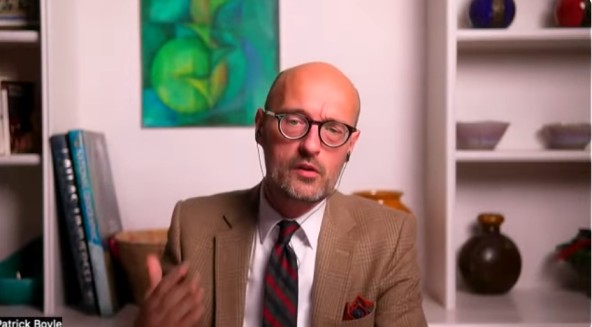
Editor’s Notes: Is YouTube quietly punishing creators who dig into the Jeffrey Epstein files—and what does that reveal about power, censorship, and our broken information ecosystem? In this episode of Hidden Forces, Demetri Kofinas sits down with hedge fund manager–turned–YouTuber Patrick Boyle to unpack how his channel got demonetized after covering Epstein, why the official story about Epstein’s money and co-conspirators doesn’t add up, and how algorithmic “gatekeepers” are reshaping which truths the public ever gets to see. (Jan 15, 2026)
TRANSCRIPT:
DEMETRI KOFINAS: Patrick Boyle, welcome back to Hidden Forces.
PATRICK BOYLE: Thank you. It’s great to be back on.
DEMETRI KOFINAS: Do you remember when you were last on the show? You’ve been on the show once.
PATRICK BOYLE: I would say it’s probably—gosh, you know what? I think it’s two years ago because it was right before we met at one of the Genius dinners in London, and I’ve been at two of those and one in Miami now, so it’s actually longer ago than it feels like, I guess.
DEMETRI KOFINAS: Yeah. The Miami one was actually just recently, so we got to hang out, which was so much fun. I found a new venue to go to in Miami, actually, which I’ll have to send to you afterwards. It’s amazing. I don’t know how I didn’t come across it. I think I was so focused on doing the dinner in South Beach that I curtailed my list of available menus, and I missed this incredible one that’s just, like, literally almost right next to it.
PATRICK BOYLE: Oh, wow.
DEMETRI KOFINAS: So, yeah, you and I talk. We’re friends now. We’ve become friends, man. It’s great. I first discovered you because you’re so popular online. You have over a million subscribers to your YouTube channel. Some of your videos have millions of views. Like, they consistently get in the hundreds and hundreds of thousands.
And actually, the reason that I brought you on today was because of a video that you published recently, which I watched. You also have a podcast feed that goes out.
PATRICK BOYLE: Yeah, it’s sort of the same thing. Just—yeah, just on podcast.
DEMETRI KOFINAS: But, like, video is where—even though, you know, I’m primarily an audio program, video is where it’s at. And so, like, the vast majority of your audience must be on YouTube. And so much of what you do, also, beyond the fact that it’s intelligent and smart, you have a finance channel, and your show is called Patrick Boyle on Finance.
But also, you’ve got this amazing aesthetic. I mean, you have such a great sense of brand appeal and knowing how to sort of sell that aesthetic. But your most recent podcast or the one that I heard, actually, I think you just published another one, but it was about how your channel got demonetized.
And this was, from what I understand, the second time it happened around the subject that we’re going to talk about today, which is Jeffrey Epstein. So actually, it’s an opportunity to talk about both. One, what happened to your YouTube channel? The demonetization, what that can tell us about how modern media works on the Internet, the incentives that drive it, free speech, censorship, all that stuff.
And then a conversation about Jeffrey Epstein, which is something that I’m trying to recall. If I’ve ever—I don’t think I’ve ever devoted a single episode to Jeffrey Epstein. Perhaps I have. I haven’t. I have to say, I must confess I’ve been largely disinterested in the story.
And that isn’t a reflection of its significance. It’s probably a reflection of the fact that the media cycle has been so—I’ve been so exhausted by the amount of coverage that it’s gotten that I felt I had nothing to contribute. And the last thing I want to do is be another voice in the wind, you know, talking about Jeffrey Epstein as if I know something.
But you’ve actually spent a lot of time covering the subject. Our mutual acquaintance, your friend, my acquaintance, who’s been on my podcast, Coffeezilla, AKA Stephen Dyson, has been all over this story, as he has been on many other stories like it, and so has Ryan Grimm, who is associated with Breaking Points and also has his own journalistic outlet that’s done very, very well.
So let’s actually take it from the top here. How do you want to start this? Do you want to start this with what happened to your YouTube channel?
The Demonetization Story
PATRICK BOYLE: Yeah. So run through that. And to be clear, you know, I’m not sort of a big conspiracy theorist around this, but it’s a—you know, I’ve had my YouTube channel now. I’ve been uploading, I think, since 2019. I think I’ve got close to 500 videos up on the platform.
The early ones were educational and then it moved more in the direction that it’s in now, which is sort of to look at news type events, but from a finance perspective and try and sort of explain—you know, I guess one other thing. I teach finance at two universities in London. That’s sort of my main thing.
And I just sort of—I remember early on there were just lots of financial topics that I felt weren’t very well explained in media. And I thought, oh, I can explain the sort of detail of this. And so I’ve put up, like I said, four or five hundred videos at this point and never had any problems with YouTube simply because, you know, I don’t really use bad language on my channel.
I don’t cover controversial topics, or at least, what can I say, like really ugly topics. There’s nothing. My channel doesn’t overlap a lot with the Paul brothers, for example.
DEMETRI KOFINAS: News, newsworthy and by default can be politically controversial as a result of that.
PATRICK BOYLE: Yeah, but they’re not to be controversial.
One of the things that interested me is just I read all of this news and people say, ah, he’s getting money here, he’s getting money there. And it sort of seemed—well, I’ve worked in the finance industry, so I have a bit of an idea, like when I look at his career trajectory, when I look at sort of what he was paid to do, I sort of know what these things cost.
And it doesn’t relate to the massive wealth that Epstein had. I mean, I think it was you who pointed it out to me. You know, when we hear about his private jet, we kind of think of a normal private jet and instead his was like a full on jumbo jet, you know, I mean, I think it’s like, you know, if it was kitted out with seats, it would hold some like two, three hundred people.
I mean, it was, you know, he owned multiple islands and his wealth seemed to kind of appear out of nowhere. You know, he worked, I think four or five years at Bear Stearns, then went out on his own and rather quickly was sort of hugely wealthy.
And so the first video I put up was just sort of on where did that money likely come from. And you know, you can look into, kind of people get offended when I say conspiracy theories, but everything is a theory until it’s proven. That doesn’t mean it’s untrue, but it’s a theory.
And there were a lot of people who sort of said, well, he must be a foreign agent of some sort. You know, people were saying like an Israeli agent. And that’s kind of a fine argument to make except that it doesn’t really add up in terms of you don’t need to make a guy a billionaire to do a bit of spying in the United States, you know, and you don’t.
And even the idea, you know, that a guy would sort of entrap people to behave in a, you know, terrible manner and videotape it and then use it as leverage against them, it doesn’t really hold up that well in that, you know, he would also have entrapped himself.
Like if you, you can’t sort of turn someone into the authorities for being, you know, a pedophile. And they say, well, how do you know about this? And you go, well, it’s interesting, but I’ve wired my entire house with cameras and invite teenage girls by, and it’s like, oh, well, maybe we should investigate you too.
So, you know, a lot of the stories didn’t hold up. The foreign agent story might have sort of held a little bit of water. But one of the things that kind of really spiked my curiosity was, you know, all of these guys, like Kash Patel and Dan Bongino, you know, they were all, you know, they really ran on this idea that they were going to, like, first day in office, they were going to expose the Epstein files.
And then they turned up in office, and after a few weeks, you know, I think Kash appeared on the Joe Rogan podcast. Yeah. You know, I looked at the files. There’s nothing there. Not nothing bad. You know, there was—it was a conspiracy of one. There was just one man.
DEMETRI KOFINAS: And he said the same thing in a congressional hearing.
PATRICK BOYLE: Yeah. It’s kind of a wild thing. And so, you know, the question then, you know, you could ask, like, maybe, I think if he was a foreign spy, you know, you might come out and say he was a foreign spy, or if you felt he was leveraging certain people, you could say that.
But because also, these guys aren’t tied to the people who would likely have been leveraged, other than possibly the guy at the top. But—and actually, even Donald Trump, like, Donald Trump wasn’t that important when he was involved with Epstein. Right. Like, he was just sort of a casino operator and a playboy in New York. I don’t think the Apprentice had even started. Right. And so—
DEMETRI KOFINAS: Right. Because their relationship goes back to the—
PATRICK BOYLE: Back to the 90s, back to the 80s. Back to the 80s, yeah. Like, it goes back quite a while. And—but the thing is, you could argue maybe they turned up and they were told, guys, you have to keep quiet about this because he worked for us. That’s an argument why they would suddenly go dead quiet.
But anyway, I made a video just about how a guy might get that wealthy. There’s some very bizarre stuff, like Wexner from Victoria’s Secret paying massive amounts of money. The top private equity guys paying massive amounts of money and saying it’s for tax advice.
And it’s like, tax advice. Doesn’t that—and why would Jeffrey Epstein be such a tax expert when, I don’t know, you can go to a top law firm and for 50 grand, have a real tax expert. You know, you don’t pay hundreds of millions. So, you know, that have been a—
DEMETRI KOFINAS: Euphemism for money laundering of some sort.
Following the Money
PATRICK BOYLE: Well, you know, this is where we’re getting is like kind of, you know, we’re moving into more interesting things, like, was he laundering money? Was he an arms dealer? What? You know, and I didn’t—in my video, I tend not to sort of put forth my opinions that much. I just sort of say, this is what we know based on what he did and whatever.
We also know that the US Government knows where his money came from, and they know what he was up to. Right, because they have the investigatory powers of the FBI, which they deployed in the past. And we’ve now learned that they’ve gathered over a million documents. Now they’re even saying maybe 2 million so that they have access to his tax records.
You can’t move large sums of money anywhere in the world, and particularly through the United States, without the US Government tracking it. So they do know everything, but they’re being very careful not to say what it is.
And so that’s kind of what’s interesting. And I’m not going to make up—you know, we could all sit here all day making up theories of where his money came from, but what we know is that he had an awful lot of money, an awful lot of connections, and for some reason, the US Government, as it passes through different administrations, they never want to say much about Jeffrey Epstein.
That’s kind of what we know. So I made a video about that. Then when the Epstein book came out, I had had, like a big hit with the first video, so I did another one. And I just went through the Epstein book because it was being reported on, but there were a lot of people—
DEMETRI KOFINAS: When you say the Epstein book, you mean the—
PATRICK BOYLE: Quote, black book, the birthday book? No, no, the birthday book that came out, you know, because if you remember, there was sort of the doodle by Donald Trump that he didn’t draw, but it sure looks like he did. And a bunch of other things. There was a note from Bill Clinton, and then all of these people from the financial industry and from academia and whatever.
And so once again, I went through the book. I forget, it was massive. It was a couple of hundred pages long, and looked up the names of everyone involved and what they said and what was inappropriate or not. And once again, it was a rather disgusting book.
The one takeaway from it was it was clear that almost everyone in there knew kind of what a scumbag Jeffrey Epstein was. And it was these sort of jokes, you know, that people would make, we’ll say, with a guy they’d gone to a strip club with or something like that, and go, haha, do you remember when you did that thing? You know, but, you know, it is—
DEMETRI KOFINAS: Notable and interesting to me how juvenile so many of these people in positions of power are in their private lives. It’s kind of shocking.
PATRICK BOYLE: It is, it is. And like, there was even, you know, I kind of had a bit of fun with—there was a Harvard professor who gave him a tit print, you know, like, where, you know, a breast had been put in—
The Demonetization Begins
PATRICK BOYLE: No, no, it was. I forget what the guy did. He was an economics professor at Harvard. He’s now dead. But, you know, I guess he had probably gone to a stripper or something like that and had her, you know, dip in paint and then smear it on a canvas and presented that to Epstein. And, you know, in the video, I joked that we don’t know that it was a woman’s breast, rather fat man himself. So there’s a chance that it was him, you know.
But anyhow, you know, I made a video about that that just said who the people are and what they had said in the books and kind of what was weird or not about it. And there were some people there, some big names that had written in the birthday book, and they sort of wrote, “Hi, Jeffrey, Happy birthday.” Like, they didn’t write anything too crazy. And then there were some really inappropriate ones.
But that one went up on YouTube and it got massive, massive hits on day one because, you know, the Epstein book was kind of a hot topic at the time, the birthday book. And the whole channel went like, the funny thing is, on YouTube, what I noticed was that I was getting tons of views. And, you know, it’s kind of exciting when you’re getting way more views than you normally do and then suddenly no views. And I thought, well, what’s gone wrong? Why am I getting no views? And the whole channel had been demonetized.
And when the funny thing with YouTube is that they kind of push your videos more when they’re making money than when they’re not, because when you’re not making money, YouTube isn’t either. Now, I quickly got on, you know, the little chat app thing with the representative of YouTube, and, you know, they did a little analysis and they said, “Oh, well, it was actually a mistake. Let’s turn that back on.”
So the whole channel then relit, except for that one video, the one about Epstein. And I sort of said to them, you know, “Can you explain why that one is down?” And they said, “No, we don’t really know. It’s just—and, you know, it’s been reviewed by the AI and it’s inappropriate.” And I said, “Well, can it be reviewed by a person?” And they said, you know, ten minutes later, “It’s been reviewed by a person and it’s inappropriate.” And so I kind of thought, well, that’s a bit weird.
Where Are All the Humans?
DEMETRI KOFINAS: Now, can we just stay here a minute? I don’t want you to lose your thread here, Patrick, but I have a question about this specific point, because this is one of the aspects of your story that I find so troubling and in some sense relatable. This is something that I talked about in an article I published in a newsletter that I published not long ago called “Where Are All the Humans?”
And it’s that someone that a human—first of all, it’s the sense of sort of impenetrability of the system, that you’re sort of like you feel like you’re just getting caught up in this giant force of nature that is YouTube and the algorithm and everything else. And so one that just feels very scary that you just can’t get a human on the phone, so to speak. A person to review this. Just let me just speak to a person. I’ll explain it all. It’ll all make sense, you know.
PATRICK BOYLE: Yeah.
DEMETRI KOFINAS: And then someone supposedly reviews it and they still tell you that it’s inappropriate.
PATRICK BOYLE: And I’m just curious why is kind of the wild bit as well.
DEMETRI KOFINAS: Right. So I’m just curious before you proceed, because I don’t want to forget to ask you this. What is your interpretation in that situation? First of all, feel free to, you know, expound on what it actually feels like to be in a situation like this because your livelihood is attached to this review. This is no joke. I mean, if they want to shut you down, they can shut you down with that one.
PATRICK BOYLE: I wasn’t overly upset because I sort of—I don’t know, there’s a version of the world where it just is a bit of a mistake. And I sort of thought, you know, maybe there’s someone out there who’s been sexually assaulted. And for example, I made a joke about the titprint thing, and maybe there’s people out there and they say, “Well, you can’t make jokes about ugly things.” And I thought, maybe that’s a rule. We’ll kind of keep going.
But then it happened a second time. I put up another video a couple of weeks ago, and that one, in fact, in that one, I kind of joked that there was a risk of demonetization because the prior would have been demonetized. And within hours, exact same thing. This time, it wasn’t the whole channel. It was just a video. But that video was, at the time, the biggest thing I’d ever put on YouTube. I got a million views in a day. I’ve never gotten a million views in a day. Like, I think my biggest video before that might have gotten like 700,000 views in a day. Right. So this was looking huge.
DEMETRI KOFINAS: You’ve had plenty of videos that if—I think you’ve had well over twenty videos that are in the millions of views.
PATRICK BOYLE: But it’s saying in twenty-four hours, right? Twenty-four hours. It’s kind of crazy. And so that one, once again, kind of, you know, they kind of killed it, got shut down. I made a community post telling my audience what had happened. And there’s slightly a bit of a Streisand effect there where, you know, people were sharing it, they were viewing it, they were kind of sharing it on Twitter and things like that. So I got more views.
But essentially it was kind of about Donald Trump and that one, once again, similar sort of thing. And they wouldn’t tell me why it had been removed. And I had been, I think, reasonably careful not to—you know, I even—I named that video because I thought, you know, you wouldn’t want someone to stumble across it and find, you know, that sort of, you presented it one way and it was another way.
So the title of the video was “The Epstein Files Are Worse Than You Think.” You know, so no one is going to sort of—someone who doesn’t want to hear about the horrors of Epstein is going to click on that. And once again, I was careful not to get into any sort of horrific content.
The Censorship Within the Files
And I just went through the censor because actually, that video was actually all just about the censorship. Right? Because that was the interesting thing is that they had been forced. Congress voted after much deliberation and much back and forth fighting that everything had to be released. And the only thing that could be redacted was the names of victims. Right.
And so then they firstly released 1% of the files that they claimed to have. And in fact, they did it in two batches. Day one was like a batch of, you know, innocuous documents, plus a bunch of photos of Bill Clinton with Epstein. No mention of Donald Trump, who was a very good friend of his for fifteen years.
Then the next day, well, hilariously, Stephen of Coffeezilla learned that the documents were up online, but they just hadn’t released them. So amusingly, they put them all up online, but they released the Bill Clinton ones early and held the rest back. The rest came out. There was lots of crazy stuff in there.
And it’s worth noting when you go through this that there are all sorts of crazy allegations in there that we don’t know if they’re true or not. Because that’s the nature of FBI files, right? If someone accuses someone of something that goes in the file, it doesn’t mean that it’s true. It hasn’t been proven. But there were some rather horrific accusations in there.
But really, what was more shocking, like we’ll say Ghislaine Maxwell, her grand jury testimony entirely blanked out. Like every page was blank. And it’s like, well, is every page just her listing off victims’ names? Because the only thing you were supposed to pull was the victims’ names.
And you know, there were bizarre things, like there were phone messages where people left them, you know, those 1990s style phone pads. And it would say, “This person called and this is their message.” And it would show the date, the time, whatever. And the message would be, “I have women” or “I have young girls for Jeffrey” or something like that. I forget.
DEMETRI KOFINAS: This is actually a notorious example is the one with Prince Andrew and Ghislaine Maxwell, who are—he’s asking for a quote, “inappropriate friend.”
PATRICK BOYLE: Well, no, that one at least got released. But there were these printed, you know, physical things like where I guess a secretary at Epstein’s firm answered the phone and wrote down, “I have young girls for Jeffrey.” And the name of the person who made the phone call was blanked out. And it’s like, well, you’re protecting a perpetrator there. You’re not protecting a victim. And that is specifically breaching the rules.
DEMETRI KOFINAS: Were any of those blanked out in a way that we were able to uncover the names after?
Improper Redactions and Missing Documents
PATRICK BOYLE: No. So interestingly, there were some documents that were really badly redacted. And I think the reason for that, there were a lot of people saying that it was because they hadn’t paid for the proper version of Adobe Acrobat, and so they didn’t redact it. But actually, I think what happened was a lot of the documents that were redacted in the Virgin Islands weren’t redacted properly. And people worked out that if you just copied and pasted the document into like a text editor, you could see everything.
But once again, what was in there? It was like stuff about lawyers, it was about, you know, Epstein’s estate. Like, I think a lot of that stuff in the Virgin Islands was about the lawyers who were organizing his estate and so on. And there was plenty of inappropriate stuff in there, but no mention of victims. Right. So it, once again, it was redacted financial information and legal information that the law said they weren’t supposed to redact.
Then there were kind of weird ones. Like there was an image of a desk drawer with a photo of Epstein and Trump in it that was released. And then a few hours later, they pulled it off of the site. And once again, like, who are, you know, the Department of Justice is supposed to be independent, right? Like, historically, we’ve always taught the FBI and the DOJ, you know, work for the people. They don’t, you know, they’re not like the protectors of the president. But anyhow, that thing got pulled and there was a huge, you know, uproar and it got re-released.
There was a document, one of them. And you know, to be clear, I think that, you know, there’s probably plenty of stories about Bill Clinton, I don’t know, but you know, he seems to have spent a lot of time with Epstein. But there was a document released. It was a photograph of Bill Clinton with Michael Jackson and then a bunch of children with their—oh, and Diana Ross, I think, and a bunch of children with their faces blanked out as if they were victims.
And then it turned out that that was just a photo. It was from like a charity do. It was already available, it had been in newspapers, it was available online. And the children were Michael Jackson and what’s her name, Diana Ross’s kids. And so the argument there is, you know, once again, it could be an accident and maybe an FBI agent going a bit fast and just blanked out all kids’ faces. But that one was very much pushed as like, “Look, here it is, you know, Bill Clinton and a man who was suspected of all sorts of wrongdoing with a bunch of children with blanked out faces.” You know, very weird.
And there was one other thing that was very weird was that because the files were sort of searchable, but if you typed in “Trump” and hit search, it would say no hits, like he’s not in the files at all. While if you put in “Trump” and then hit your space bar and did search, you’d find, you know, hundreds of references to him. And so once again, you know, was that a quirk? Like is there a problem with the search engine thing they used or did they prevent—and we don’t know the answer to, like, I’m not saying I know the answer.
But my video was about the fact that the files had been released, that they had probably been inappropriately redacted. The biggest scandal of the files was actually an FBI document. On the day that Epstein was arrested, there was an email that went around to various FBI offices saying, like, “We need to pick up the ten other co-conspirators.” Right.
And, you know, Kash Patel sat there in Congress and he said there were no one man. You know, like, it makes us wonder why Ghislaine’s even in prison if it was just one man. But anyhow, one man. And then there’s an FBI document saying that, at least back then, back in—what would that have been? 2019 or so? I’m not sure the date.
DEMETRI KOFINAS: I think it was 2019. And it was—I think it was late in the year too, was it not?
The Epstein Files: Redactions and Cover-Ups
PATRICK BOYLE: Yeah. And there were at the time 10 co-defendants, one of them based in Ohio. And, you know, a person who is suspected of wrongdoing, who sent an awful lot of money to Jeffrey Epstein, also happens to live in Ohio. People can guess who that is. And so once again, all those names, some of them were left in. Ghislaine’s name was in there, one or two other people, but there’s about seven names blanked out.
And so once again, are they victims or are they—you know, the—I believe the way the law was worded, it sort of said that no public people will be protected. Like, it’s sort of everything out in the open. Only victims are—you know, we’re not trying to protect politicians or public figures from embarrassment. Yet the documents are heavily, heavily redacted. As I said, only 1% of the million documents has been released. And it would appear that suspects or potential perpetrators’ names are being blacked out.
So that was what the video was about. And that one, it really surprised me to have it claimed to be inappropriate, because I don’t feel it’s inappropriate. There was probably nothing in that video that isn’t in our conversation right now.
Demonetization and Media Power
DEMETRI KOFINAS: So again, there are two parallel stories here that I’d like to unpack. One is the demonetization—understanding it, what it can tell us about how modern media works. The power of large platforms to both suppress speech and also to incentivize different types of speech as a result of the fact that certain types of speech is commercially viable and other forms are not.
And then the Epstein story. I want to ask a few more questions about the Epstein story here. First of all, I just looked at the date he was arrested in 2019, but that happened earlier than I remembered. It looks like he died—
PATRICK BOYLE: Yeah, I think he died in August. Yeah.
DEMETRI KOFINAS: And it’s interesting because that was right before COVID, the COVID pandemic, began to emerge in China and the news media began to cover that at the expense of the Epstein story. It’s shocking, actually. I somehow have it in my head that this happened during the pandemic, and even the pandemic would have been like five years ago. This is more than five years ago. It’s like, you know, almost, I guess, five plus years ago.
It’s amazing that we still haven’t gotten answers. I’m not shocked that there are efforts by the administration to cover up any trace of the President’s association with Epstein, irrespective of what the nature and extent of that association was. I’m not surprised. I mean, I feel like anyone in a position of power would try to cover their tracks there. What I’m more surprised with is the extent to which this is being covered up.
The Administration’s Broken Promises
PATRICK BOYLE: Well, that’s even what brought it back. Because as you said, in 2019, you know, COVID hit a few months later, and the world kind of became a bit of a meme where people said Epstein didn’t kill himself or whatever, or, you know, people would accuse Hillary Clinton of it and things like that, but the world had moved on.
But this administration, or at least a lot of these figures, really ran on that they were going to expose the deep state, and the JFK files were going to come out. The Epstein files, all this information was going to come out, and then suddenly they clammed up. And obviously this is what drew the attention, was that when you say you’re going to release everything and remember they had a bunch of influencers in the White House where they handed them a bunch of documents that were already in the public sphere, and it sort of seemed so ridiculous and so over the top.
And then when you add in the fact that the sitting President has, you know, spent years, as it would appear, very good friends with Epstein, you know, it raises the question, like, you know, and who knows? As I said, there may be a hundred good reasons, or at least good for, I’ll say, intelligence services or whatever to want to cover stuff up. Maybe there’s important data in there, but it’s rather, you know, it’s sort of almost a perfect conspiracy theory, isn’t it? To have these guys say they’re going to release it and then like really obviously backpedal in a frankly embarrassing manner.
What Does This Tell Us About Power?
DEMETRI KOFINAS: So I’m trying to think about what the most useful way is to talk about the story and not sort of get caught in this endless loop of either venting and frustration about our inability to get clarity or speculating about things that are unknowable. But in sort of the vein of speculation, I am curious. The one question that comes up for me, the meta question, the deeper sort of three-dimensional question, is what does this tell us about the nature of power, how it operates, how the world works really versus how we think it works?
Because here we have what is obviously a conspiracy, both a conspiracy—the act itself was a conspiracy, an ongoing conspiracy. The network and the cover-up is a conspiracy. And yet we can’t seem to get—there seems to be an institutional breakdown in moving forward any kind of prosecutions.
I mean here we were just talking about this yesterday. Jay Powell, we’re recording this on Monday, January 12th. Jay Powell recently announced that he was being, what’s the technical term?
PATRICK BOYLE: Criminal investigation.
DEMETRI KOFINAS: There’s an ongoing criminal investigation. Jay Powell recently let us know there’s an ongoing criminal investigation into him and his role in refurbishing or renovating the Federal Reserve building. So the DOJ has no problem sending subpoenas to the Fed. But the only subpoenas that have showed up for this DOJ as a result of Epstein are subpoenas that were served to it to release documents.
PATRICK BOYLE: Yeah.
DEMETRI KOFINAS: And so I’m curious from your standpoint. You know, both of us to varying degrees have brushed shoulders with people that are, you know, make more money, have more power than us in various venues. Though I’m in no way someone that exists in those echelons of power. But I’m just curious, like what is your best hypothesis or what is your best framework that explains how someone like this can operate in this manner for so many years and that when he dies suspiciously in prison and there are all these fumbling releases like the video footage and all that, all this stuff and the Congress can demand that, you know, documents are released, they’re released, but they’re not released according to code.
Like what actually explains both from an institutional standpoint how the government works that we don’t understand that shows up also, I think, in the example of the UAP conspiracy. And then also like, how—in a deeper sense, like, what are the power networks? Like, what are we looking at here?
The Two-Tier Justice System
PATRICK BOYLE: That was my big takeaway in kind of the two demonetized videos. My real takeaway is that the reason the Epstein story matters and the reason people care about it, and you know, there’s people who are angry about it and might even wonder why they’re angry about it, but it comes down to this idea—a two-tier justice system. That’s what people are upset about, right?
Because if you get pulled over for speeding in your car, there’s no dodging the justice system. But this guy who very clearly was involved in all sorts of things, he was involved in Ponzi schemes. There was a very good New York Times piece that dug into where his wealth came from. And he had a long history of just ripping people off. He was involved in Ponzi schemes. He was fired from—everyone kind of wants to look at the sexual issues, but everything Jeffrey Epstein did was bad. Like, he ripped off his friends, he broke laws at will. There was nothing decent about the man.
But, you know, when you look into the finances, a lot of the wealth just came from ripping off people. And he seemed to have a really good instinct as to who to keep on side and who to screw over, you know, because there were certain people that he really cultivated, like Dershowitz, who got him into the halls of power. I believe it was Dershowitz who managed to—or was it—what’s his name? The other guy at Harvard, Larry Summers is one of those guys that got him introduced, you know, into the White House, meeting Bill Clinton multiple times. And, you know, that Clinton connection really worked for him.
But the thing is, he seemed to know who to burn and who to look after. And I think what really upsets people, and I think everyone, you know, we can instinctively see this in the world, that there are people who get away with all sorts of things, and there are people that don’t. And it often relates to who you know, it relates to, you know, you having the right lawyer, the right friend who can kind of suggest that the investigators turn a blind eye to you, and then other people go down for next to nothing.
Like even when, you know, one of the things that has enraged people and I think is the root of many of the issues we have in society today is the credit crunch, like the financial crisis of 2007-2008. And in all of that, the only person they found to blame was some fellow junior at Goldman Sachs who got in a bit of trouble over that. Everyone else had a good excuse for what went wrong. It’s all bad luck and whatever, massive bailouts and so on, such that, you know, the wealthy get to walk away with everything. You know, maybe they lose a year’s worth of bonus, and everyone else sees their home crater in value, their credit ratings fall and so on.
I think that is at the root of the Epstein scandal. It’s not really about—I mean, it is, of course, about the sexual assaults and the sort of salacious stories, but it’s really about the huge unfairness where sort of regular people get treated very differently to the people at the peaks of these power structures.
The Les Wexner Connection
DEMETRI KOFINAS: So I remember a story coming out very early on that Epstein had obtained power of attorney over Les Wexner’s estate. And one of the theories, and I don’t know what the evidence for this was, what it was based on, one of the theories was that he had a sexual relationship with Wexner, that Wexner was a closeted homosexual, that Epstein maybe wasn’t even gay, but was just somebody that could sort of use his sexuality for whatever diabolical purpose he had engineered.
And so he developed a sexual relationship with Wexner. He used that to then blackmail him into giving him control of his estate and then also funneling hundreds of millions of dollars. I remember reading somewhere—
PATRICK BOYLE: Yeah, the sums were massive. Yeah. And even that was essentially, like, Manhattan. Like, all this stuff was just handed over to him from Wexner, I believe.
DEMETRI KOFINAS: And that was described essentially as the seed capital that got him going. Is that your interpretation?
PATRICK BOYLE: Well, you know, I don’t know. Once again, we don’t know. Like, you know, there’s all sorts of theories about what brought these guys together. The thing that doesn’t hold water to me is when people say that he was blackmailing all of these guys. Like, if someone’s blackmailing you, you’re not really going to their parties. You’re not, you know, writing funny stories in their birthday book and things like that.
Like, excuse me, but I don’t really buy the story that these people were being blackmailed by Epstein. Like, they may have been paying him for services that they felt were worth these massive sums of money, but I don’t believe he was giving them tax advice. In fact, there was a great story, one of the recent documents that was released, it described Epstein accompanying someone along on a business deal. I forget somewhere in the Middle East, this was before Ghislaine got involved and they commented on him turning up for meetings like, you know, badly dressed, like inappropriately dressed to business meeting in like sweatpants or something and appearing disinterested and not understanding the financial terms.
Like this is not a guy you give power of attorney to, to give you tax advice. A guy who turns up in sweatpants and is falling asleep in financial meetings, you know.
DEMETRI KOFINAS: Yeah, that’s the thing that, I mean, I feel like, I wish I knew people who were like, who are quote “elites” on this level so I could talk to them and ask them what they think is going on here. Because I feel like I’m missing, personally speaking, I’m missing some really important piece of this puzzle. But I agree about the blackmailing. Actually a great analogy for me is how we used to think about, or a lot of people think about interrogation. You know, I remember after 9/11 there was a show called 24. Do you remember that? With Jack—
PATRICK BOYLE: Yes. Yeah, I only watched bits of it, but yeah, it was a huge hit.
The Limits of Torture and Blackmail as Intelligence Tools
It’s a huge hit in the U.S. In fact, it had already been planned and was supposed to air right after 9/11 or that, like literally like the week after or something. And they held it off for a bit because it was too on the nose. But there were lots of these scenes of Jack Bauer interrogating terrorists who were on their way to conduct some kind of attack and he had to torture them in order to find out the information he needed.
And upon further scrutiny, for anyone who’s dug a bit deeper into this and listened to interviews of interrogators, it seems almost universally the case that torturing somebody or threatening them with physical violence is not the most effective way to get them to give you both information and more importantly, accurate information.
And so I feel like the same thing, the same principle in my view holds when it comes to extracting information in this context. So is the best way of doing this basically running a blackmail network where people are going to find out one way or the other? I mean, even if you’re able to silence somebody from speaking publicly, you’re not going to be able to silence them from speaking to other people. It’s going to get out that you’re running a blackmail network, number one.
And is that really the most effective way of getting people to do things for you? By getting them compromised? It seems to me it’s just the fact that he was the spoke on a wheel that encompassed some of the most powerful people in the world and he was spending lots of time with them, doing them lots of favors, and in so doing he was in a position to learn a lot of things over time. And that made him a very important conduit and middleman for the intelligence community.
But then I’m left with the next question, which is again, I think speaks to my ignorance, which is, but how is that worth—how does that explain the accumulation of this amount of money and this amount of power? That doesn’t quite track. So then you sort of ask, well, like, was there a larger role he was playing for again the intelligence communities where he was a go between?
We know that Ghislaine Maxwell’s father was a go between for intelligence. And a lot of these powerful people, basically, they intersect. So I’m curious, like, how do you think about that part of the story?
PATRICK BOYLE: Well, I guess that’s really the whole puzzle and, you know, that’s often the way I do my videos is I don’t really want to tell people my opinion because my, you know, everyone has an opinion. That doesn’t make it valid. But I think a lot of the really simple explanations of Epstein don’t hold up. That was really almost the point I was making is the simple explanations don’t hold up.
The fact that there’s a requirement to release this data and they refuse to and they blank out certain things. And of course everyone wants to focus on the pedophilia and the sex crimes and this stuff. But there’s, the thing is, I think there’s much more because, you know, there just has to be more. Like, I don’t think like a high profile pedophile—you know, he’s not like in the UK there was this scandal with Jimmy Savile years ago, a TV presenter. And you know, when it broke, it broke because there’s no need to hide this.
I guess to me the takeaway is that there’s something bigger to hide than just, you know, that Jeffrey Epstein was a really horribly behaved man who did, who committed all sorts of crimes, you know.
The Scandal That Won’t Go Away
DEMETRI KOFINAS: So you don’t think, do you think that this is kind of it where we’re not going to get—because I should also say that again, in speaking to the institutional breakdown, the only real pressure for information comes when the public is outraged and as long as the news cycle turns to something else, like Venezuela or ICE raids or something else, people just are not going to have the attention span.
So even though this has been the single biggest scandal of the President’s entire time in office, both between the first and second terms, at the end of the day, there’s only so much attention to go around and so much caring to go around. And while it’s true that he has lost supporters and it’s true that he’s also alienated some very important people with political cachet, like Marjorie Taylor Greene among Republicans, it’s not clear that it’s really going to make much of a difference.
PATRICK BOYLE: At the end of the day, I think this scandal will never go away. It’ll outlive Donald Trump. You know, like, it may not in any way bring down any of the people in office at the moment, but it’s such a, you know, the way the JFK assassination was almost like kind of a perfect conspiracy as well. Like in that, you know, all these crazy events happen and there’s bits of videotape that appear and whatever, and people can spend forever putting things together.
And even if tomorrow, if they released a very clear explanation of what happened, people would go, “Nah, not buying it.” And I think that’s how Epstein will be. I think that this is the cover up, like the extremes that they went to. The number of people implicated, the positions that they were in, the fact that Epstein was first reported to the FBI for sexual, for basically pedophile type behaviors in 1996, you know, where a girl explained that he had taken photographs of her two underage sisters and was selling them. Like that was the accusation. Selling them to his friends.
This is, you know, that they’ve known about that aspect of his behavior for 30 years now. He also was involved, as I said before that in Ponzi schemes in all sorts of stuff. He did some really weird stuff. Like apparently when he worked at Bear Stearns, he managed to do quite well because he was dating the CEO’s daughter. So he was involved in a number of scandals that he didn’t get in trouble for because no one wanted to upset them.
DEMETRI KOFINAS: This man was remarkably talented in exploiting human beings. I mean, this guy is really something else.
PATRICK BOYLE: But then he, you know, was involved in Ponzi schemes. His partner in the Ponzi scheme went to prison. He didn’t, you know, they tried to buy Pan Am. Like, I mean, crazy stuff, right? And this whole thing, like Epstein has somehow dodged every bullet. It’s like the Matrix, you know?
And so is this a scandal that will go away? I don’t think so. Like, you know, people might stop talking for what we talk about Venezuela while we talk about Jay Powell. But the truth is that, like, I think at this point, almost if they came clean with everything, people would go, “Well, they’ve told us that, but what are they really hiding?”
DEMETRI KOFINAS: Of course. Of course. Yeah. I mean, I don’t know. I don’t expect ever to get much clarity, though. I don’t think it’s impossible for me or you personally or other people to eventually put some further important pieces of the puzzle together. Not so much about—not so much to help us understand the details of what happened in this particular case, but to understand how this can be possible, you know, fleshing out, in other words, our global model of power.
Competence and Incompetence in the Cover-Up
PATRICK BOYLE: Because there’s this mix of kind of competence and incompetence in that they’ve done a good job of not releasing the files, but they’ve done an even better job of making it look awful. You know, like the meeting, you know, when Trump’s attorney goes to meet with Ghislaine and like a week later they upgrade her such that I think the head guy at the prison is like, sending her emails and stuff for her.
Like, it’s a wild thing. Like, wouldn’t you say to Ghislaine, “Look, thanks for keeping quiet. Let’s wait six months till things die down, and then we’ll put you in a cushy prison.” Like, you don’t do it the next day. It’s just—it’s so—it’s both competent and incompetent.
YouTube Demonetization and the New Media Landscape
DEMETRI KOFINAS: Yeah. So let’s switch back to the other parallel story thread, which is the demonetization of your YouTube channel. I don’t know that you really dug into this much. I think you made the point that you’re not really big into conspiracies that explain this. And, you know, other people that are content creators who have done videos on Epstein that maybe are far worse, and their channels haven’t been demonetized.
What can you tell us? Because, again, you have got such a huge presence, man. I mean, you’re talking—I mean, having over a million subscribers on your YouTube channel, where your individual videos consistently get—I mean, the lowest I’ve seen is like 405,000 per video. The upper echelon is in the millions. That’s way more than what CNN or Fox’s videos get online and probably more than any of their broadcasts get. I mean, I don’t even know who watches cable news anymore.
So you are in a position today that broadcast anchors were at, you know, years ago. What do we need to understand from you? And reflecting on this, yourself, acknowledging, of course, that you never worked in broadcast television, so you didn’t work in legacy media, but you’re on the vanguard of the new media ecosystem, the way that it’s being organized, which is how people are learning about stuff, right? You’re at the forefront of this. You’re at the tip of the spear.
What can you tell us about how this world is organizing itself? The sort of incentives that drive it, the power of the platform. So what—flesh in from—give us more information here to understand.
Algorithmic Censorship and the Reach Problem
PATRICK BOYLE: Like, it’s a funny thing because I have to tell you, there’s no one more surprised by this than me. You go out to the store and you buy yourself a camera and a microphone and you film in, initially, the spare room of my house or in the office. I can’t explain how homemade some of my videos are. Like, when I’m teaching in London, I just use a room at the university and prop up a tripod and make a video, and it has this kind of huge reach, which is sort of amazing to me.
But the thing I took away is interesting from this is that I’m sort of lucky. As you said, I get sort of huge reach with most of my videos. So in a funny way, if one of them that looked like it would be a big hit isn’t, it’s not that big a deal. But I think it’s more the message it sends. And then the question is, are they intending or is YouTube intending to send a message, or is it just bad luck?
Like, it’s sort of funny to me, the two videos on one topic, I get dinged for nothing else. And I think if you’re much smaller, let’s say you’re a small YouTube channel, you’ve got 5,000, 10,000 subscribers, and you’re trying to grow a channel. If you keep getting dinged on videos about certain topics, like if you’re criticizing a political figure or something like that, and it’s getting shut down on you, you’re going to adjust your content to avoid that.
And there’s even a term they use. I kind of learned about this called “algo speak,” where younger people making content will use certain words. Like, they won’t use the word “dead.” They’ll say “unalive,” because they’re afraid that that’ll trigger the algo that demonetizes or shuts them down. And it’s a weird thing to worry about, like an algorithmic, invisible AI censor who you can’t really negotiate with. Like, you can’t call up and say, “Hey, guys, I think you got it wrong. There’s nothing that crazy in there.” It’s a bit of a “computer says no” problem.
And I think that’s more the issue that I focus in on. Do we live in a world of kind of algorithmic censorship? Like, as I said, it might just be bad luck the two videos on the same topic got shut down. But it does worry me that we’ve already seen all the big dinners at the White House and things like that, where all the tech elites are sitting around.
Matt Levine, the financial columnist, he often jokes that the most important thing in power dynamics are seating charts. Who sits next to the key guy? And you can kind of see, did Zuckerberg get a better seat than Bezos or whatever. But these guys are jockeying for position. They are hoping to win the favor of the administration.
The Influence of Tech Elites and Crypto Money
And so you do worry in recent years, really, I would never have thought about this in the past, but I feel that even if you look at how quiet politicians have been over the last year, like the Republican Party, have nothing to say about any sort of crazy scandals or whatever, they keep quiet. Similarly, the Democrats, they might as well send all the Congress people home. They’re doing nothing. They have nothing to say.
The reason for that is quite possibly that they’re afraid that the Silicon Valley elites and the crypto people who did an awful lot of funding of the last election. And just to be clear, I’m not taking a right versus left thing, that these people funded both Democrats and Republicans, based on their attitudes towards the things they cared about, in particular, crypto. Right?
And there were certain politicians and they learned that if you said the wrong thing about crypto, you were done. They would spend a fortune. They put up campaign videos that in no way talked about crypto because the public don’t care that much about that. And they’d instead say, “Oh, he was involved in this law that did this or whatever.”
And I think all of these guys are afraid that the President has Elon Musk’s ear and a few other people’s ears and this huge amount of capital can be deployed to shut them down. And then the question is, are they shutting down voices that sort of say uncomfortable things? And I hope that that’s not true, but I worry that it could be true.
DEMETRI KOFINAS: It is true. We know that’s true. When you say they’re shutting down, I mean, maybe I misunderstood who they are, but there’s so much self-censorship that—
PATRICK BOYLE: Yeah, well, even the Hunter Biden laptop. And on a bigger scale as well. Even like Joe Rogan getting—I forget he got banned from some things during COVID. And, but the idea was, we were all told by the new people in power that it was just the old group who did that. They’re all free speech advocates, but they don’t necessarily seem like free speech advocates.
The Amplification Problem
DEMETRI KOFINAS: They’re not free. Well, they’re not. But okay, so also, that’s such a stupid—the way that that was described by the quote “free speech bros” was so disingenuous. And also probably a derivative of genuine ignorance around how speech as a concept operates on the Internet. Separating from whether or not private platforms are legally binded in the same way that the government is. But in spirit, I certainly agree with that sentiment that you should be able to ideally express yourself as freely as possible.
But the idea that somehow Twitter under the Stanford Internet Observatory was muzzling people. Whereas the way that everyone, as if like the information and the voices that go out on social media just go out in the same way that they do when you go—
PATRICK BOYLE: Yeah, that’s sort of the big algorithmic question, isn’t it? Because we’re in a world where people don’t even—you and I. Do people hear about us through their friends or do they hear about us through an algorithm that just sort of says, “You’ve listened to this podcast. You might like Hidden Forces”? And Twitter and all of these, Instagram, Twitter, all of these tech products definitely work on this sort of algorithmic reach thing where if the—and I have benefited from that. Right? Like, I mean, you know how a million viewers don’t come from people just saying, “Hey, you have to tune into this thing.” It comes from—
DEMETRI KOFINAS: You appeal to something, the algorithm. But let me just say this, Patrick, because I don’t want to forget it. My point is that the focus has been on the censorship component, but as much of that focus, more of it should be on the amplification, because it isn’t—again, there isn’t some objective measure of reach. And then either you reach what you’re objectively able to do or someone stops you issue.
It is, everything is controlled. Everything is amplified or suppressed, monetized or demonetized. And also the context through which you experience something also matters. And so we have a piss poor, fully polluted information environment controlled by private corporations.
And because we’re in a phase in the cycle where we are going through a dismantling of institutions and a collapse in institutional trust, there is no vehicle through which people feel that they can actually effectuate positive change for the public good. And so we’re kind of stuck in this vortex.
But people will argue, “Well, the situation was as bad or worse when we had centralized media.” Maybe, maybe not. I don’t know that I’m prepared to make that argument or particularly care. What I think is relevant here is that we have a very bad information environment that could be fixed in some significant ways without political bias, but no one’s willing to.
A Proposal for Platform Portability
And a great example is you could just mandate that all social media, everyone who has an account on social media, should have the ability to migrate their social media graph onto a different platform and that essentially to create conditions whereby competing platforms that prioritize or incentivize or monetize in different ways that may ultimately generate better quality information can have an opportunity to excel.
Because I think about this so often, man, like you and me and my audience and millions of other people in this country. And sure, tens of millions, if not hundreds of millions of people all over the world would love to have a central platform like a Twitter that is built to—that is optimized for quality. Now, that is a subjective term. Like, we can sit and debate what that is, but that would be incredible.
PATRICK BOYLE: So if you think like an aggregated version of that, where we’ll say, for example, if you loved being on Twitter and I loved being on a different platform, people could have a viewing—because this is sort of—people at home probably don’t know this, but this is kind of how podcasts work, in that you and I upload our podcast to some sort of podcasting platform that then sends it out to Spotify and Apple and all the other ones.
There’s probably 20 things you can listen on, like Amazon speakers and whatever. But podcasting does work that way to a reasonable extent. YouTube, there’s just really one YouTube, and there’s not really much competition to that. There’s people who’ve had startups that sort of claim to be, but they have no reach. You’ll be on there and you’ll have five viewers.
And then things like microblogging, which I guess is what they used to call Twitter. That thing, I think is just gone, because I think Twitter has become ghastly. Like, I no longer go on Twitter. It’s just awful. All of the other ones are weird as well, because people have sort of separated out into their own bubbles. And I don’t necessarily want a feed of just one political point.
The Death of Twitter as a News Source
It’s funny. I even got on Twitter when I worked in markets, and the day I saw the use of Twitter was when the Fukushima earthquake and nuclear meltdown happened in Japan. And I saw that the news was coming out faster on Twitter. You could question whether it was accurate or not, but it was really coming fast. And there was—it was a lot slower on Bloomberg and on the television.
Today, that’s no longer the case. Like, if you want quick information on, we’ll say, what’s happening in Iran or whatever, you log into Twitter, you’ll just see Elon Musk tweeting about trans people or something like that. You know what I mean? Like, there’s just sort of—
DEMETRI KOFINAS: There are some accounts that share—
PATRICK BOYLE: There are sort of. But in terms of, like, to use it as a news feed, it’s no longer a newsfeed because certain voices are amplified and others not. Like, when it was new, you could just sort of put in a topic and you would see just this feed of information. That’s gone.
The Future of Independent Media and Information Networks
And I think, you know, I think there’s something important that has been killed in this process. Because while I understand the argument that the last 40 years or whatever or 50 years or the post World War II period of centralized media was either an exception or was certainly not the only way in which we understood the world over the course of thousands of years, there is something, I feel that is necessary at the scale at which we operate in these models of nation states and international institutions.
There’s something necessary around having an objective view of what’s going on. Understanding, of course, that objectivity is simply a consensus view. It’s really the consensus. What is the consensus? And there is no consensus and there’s no way to obtain the consensus.
And that makes it very difficult for me, as someone that works in media, is trying to educate myself in part around the subject of current affairs and what’s going on in the world. It’s difficult for me to know, you know, where to grab the tail of the cat. I don’t quite know what I’m looking at or what perspective I should be interested in.
And that has a downstream, a very profound downstream impact on politics, on the mechanisms of governance and the ability to forge consensus, political consensus. And I feel like we are caught in this trap. And until we address this aspect of it, I don’t quite know how we’re expected to operate as a functioning democracy. And I don’t think we can. So I don’t know where that leads us.
But I wanted to say just this before giving you the floor here to end it, Patrick, which is that I probably told you this, I’m sure I’ve told you this in various contexts and in different ways. I do believe that those of us who have the right intentions, we don’t necessarily get it right every time, but certainly don’t. I don’t. But I think we have to stick together. I really do. We have to.
And I don’t know, you know, if that means that there will be opportunities to build, to work together to create new information networks, platforms. I don’t know what it looks like, but I take note of the people who are doing good work, are coming from a good place. It’s very hard to do that and be as successful as you have. Or as our mutual acquaintance Stephen Findeisen, who—unbelievable. I mean, that guy has thrown himself into covering grifts and frauds and pumps and dumps and scams and this and that.
And his channel is literally, you know, world famous. I mean, he’s managed to combine both the entertainment component and the informational component. But I think, you know, I just, I keep, I make a note of these people. I try to befriend them. I try to bring them into my network to get to know them, to get to meet them. Because I think over time, like, something positive has to come out of this in order for us.
PATRICK BOYLE: Yeah, yeah, I think there are people out there that are, you know, just trying to do their best. They’re trying to take the information, understand it, explain it well, without any sort of, you know, evil overlay. You know, it’s kind of, you know, because it’s funny. Like sometimes, you know, you’ll—I’ll put up a video and you’ll get some angry person who disagrees with me.
And just to be clear, like, people disagree with me all the time and I’m wrong all the time. I don’t claim I’m right, but I do try to explain things as I best understand them. But people will say, “Who’s paying you for this?” And, you know, I guess in the world there are people. But I don’t think you could do this successfully and sort of be paid to follow a narrative.
You and I have talked about this in the past, but the thing is, your audience would notice, like, they’d notice inconsistencies in what you say. They’d notice you dodging questions on certain topics or whatever. And I think, you know, I think to do this sort of thing well, and to attract an audience that sort of trusts and likes you, you have to just be really honest.
You have to, you know, explain the information as you found it. You have to also say that you may be wrong, that this is how you understand it, because we are of course wrong all the time, or even the information that we feed our opinions with can be wrong if we have been fed, you know, incorrect information and so on.
But I think the real thing is just to do your best to provide—like, I guess I just think if I find something interesting, my audience will find something interesting. And then I dig and I learn and I analyze the situation until I come up with something that’s interesting to me, that I hope other people will find interesting.
The Challenge of Supporting Emerging Voices
DEMETRI KOFINAS: You know, one of the things that concerns me is a derivative of something you highlighted during the course of our conversation, which is that younger people who are coming up now who are interested in getting into this business, and when I say this business, I specifically mean the business of informing people, not creating, you know, influencer type experiences. Those people are going to have a very difficult time breaking through if they’re trying, if their objective is to provide quality, factually accurate information.
And so that also makes me, you know, feel like the big challenge is how do we find those people? Because there, you know, there are guys like you and me, and we’re going to be doing this hopefully for a long time, but there are other people I know who are, who I hold in high esteem, who are older than I am. They’re not going to be doing it indefinitely.
At some point they’re going to drop off because they’re tired, they’ve been successful enough, they don’t need to keep doing it. I think, for example, of my friend Grant Williams. He and I do this—we co-host this show called The Hundred Year Pivot, which is a series that runs on both of our podcasts. And there’s no way that Grant needs to do this. And at some point he’s going to decide, “I don’t want to do this anymore,” whether that’s today, tomorrow, 10 years from now, whenever.
And so I do worry about those of us who got in early enough, you know, if we just keep exiting down the line, but the conditions are not such that we can identify those younger people. And so, you know, to the extent that we can locate those individuals and try to support them, I think that’s also important.
PATRICK BOYLE: But that’s a great thing about your podcast in particular, is that you find interesting people and you bring them on. And to a certain extent, you know, those people will be introduced to a new audience and even, let’s say they might be very big amongst their cohort, and you bring them on your channel and a new group of people who have, you know, maybe more serious interests or whatever are interested in them.
And I think, you know, there is growth through that, like that. And it’s sort of a duty, I think, when you have a bigger channel or a bigger podcast to sort of help other people along. And actually, that’s one of the things I’ve really enjoyed about being on YouTube is, in fact, that people seem to help each other out.
Like when I worked in financial markets, you know, if you found something really useful and smart, you would kind of—the smart thing to do is, of course, to keep quiet about it because, you know, these things usually aren’t that scalable. Right. If you’ve got a good trading strategy, shut up and trade it until it stops working.
Well, interestingly, I think in this sort of media landscape, in this sort of new, I don’t know, YouTube, Spotify, podcasting world, there’s no cost to sort of helping great people out. And these great people help you out too, and everyone kind of rises together, which I think is good.
DEMETRI KOFINAS: Yeah, that’s the right attitude to have. I certainly—one of the greatest benefits of being in a position of having a program that’s large enough to get a seat at the table is that you do get to expand your network, and you get to meet a lot of interesting people, and that’s really been rewarding.
I think, though, you know, just to put a cap on this, the point I’m making about helping people who are younger. I think part of the challenge is that in this world of the gig economy where I don’t, you know, so I don’t run a news desk, you know, I don’t run a newspaper, I don’t run a TV network where I can hire young people, they can get through the door. They can use the resources of my firm to begin to develop their craft.
They have to show up on my radar because they were able to get big enough to actually, you know, show up. And to get big enough to show up, you have to play by the rules. And to play by the rules, it means you’ve got to prioritize certain things that almost always make it very difficult for you to create the kind of quality content that I’m going to follow.
It used to be a lot easier to do that during the transition from the old system to this thing. That’s what really happened. You and I—yeah, you know, we—I remember, I mean, I got my start in radio in 2010, 2011, and then I quickly got on television, but that was when RT was disrupting the cable business and I could actually, you know, had an opportunity to create my own TV show and use YouTube as a way to accelerate that, you know, the content getting out there.
Twitter was there. When I started the podcast in 2017, we were still in that transition, you know, start with the blogosphere in the early 2000s. So, like—but in that phase, in that transition phase between old and new media, there are opportunities to break through without having necessarily to wed yourself to the incentives of the platform in the same way that is the case today.
So anyway, that’s just—those are, I think, an example of what I often think about as a content creator. Even though I cover a lot of different stories on the show, I’m thinking about how is media itself evolving as a platform for educating people? Because I feel like that’s a really important battleground for determining the kind of future we’re going to end up having.
YouTube as an Educational Platform
PATRICK BOYLE: Yeah, yeah. No, it’s actually, it’s funny because I even originally I always thought of YouTube as kind of an educational platform. Like when I realized that YouTube was cool was when back in, around, I don’t know, the first year or two of YouTube, I came across a guy called Justin Sandercoe who was teaching guitar lessons on YouTube.
And I was, you know, working long hours at a bank, and I wanted to learn the guitar, and I thought, “Well, this is great.” I went out and bought a guitar and started learning how to play. And I kind of love the—what’s great about this type of platform is that you can create content that sort of might find an audience that, you know, no one has to pay you a huge amount of money. They kind of watch an ad or two and, you know, somehow that accumulates enough funds to make it worthwhile for people to create, you know, some of the content that goes on YouTube now.
Like, it’s beyond—in fact, I find it funny once in a while. A while back, I was making a video about the 1987 crash, and I pulled some old TV footage, you know, of TV channels talking about the crash as it happened. And I was shocked by, like, how bad the cameras were, how bad the audio was, how the editing, like these awful crossfades and whatever.
And you kind of think, “Wow, like, it’s moved in such a way that, like, someone in their bedroom can make better content than an entire TV channel with, you know, writers and producers and, you know, teleprompters.” All the stuff, you know, that it’s kind of—it is sort of amazing that people, you know, can work this stuff out nowadays.
DEMETRI KOFINAS: Yeah, it’s amazing. Patrick, tell us again what the name of your channel is, what your Twitter account is, which you said you don’t really use. You use actually Bluesky, but I don’t know what degree you’re actually—
PATRICK BOYLE: You know, to be honest, I’m not big on any many of these platforms. I’ve sort of taken a place so that people can sort of fraudulently impersonate me. My big thing is YouTube. And it’s just—the channel is called Patrick Boyle, B-O-Y-L-E.
And then all of my content also goes up on the podcasting platform in both video and audio format. So if you just like listening, you know, go on Spotify or iTunes, what’s it called, Apple Podcasts or whatever the various platforms are.
DEMETRI KOFINAS: You should follow. It’s super, dude. It’s super impressive. I mean, your stuff is so well produced. It’s so—it’s such—it’s so well written. It’s just very impressive. It’s obviously, I don’t do monologues. I do—I almost have never done—done a few monologues. Sometimes everything is interview. So it’s not comparable, but it is truly remarkable, and I highly recommend it.
And it’s smart, too. I remember I was speaking with Kevin Muir about this. Some people will know Kevin Muir. He’s also a podcaster, and he has a Substack, and he’s a trader. And he said to me when he met you at one of our dinners, and he was shocked that you—first of all, he was shocked that you were there because he had—he apparently had watched your stuff. He just assumed that you were just kind of like a TV personality and that you didn’t know anything.
Did you know this? Did he tell you this? That you didn’t know anything about finance? He assumed that you didn’t know anything because he couldn’t imagine that someone could be this successful and actually also have been a guy that started a hedge fund and sold the hedge fund and worked in finance.
And so, like, I think it—and I feel the same way. Like, I just—you know, when I met you, even though I thought your channel was amazing, like, I was like, I can’t believe this guy is as smart as he actually is. So kudos to you, man, and I cannot recommend your stuff enough. Thank you so much for coming on the podcast again, Patrick.
PATRICK BOYLE: Thanks.
Related Posts
- Transcript: World’s First AI Actress Interview on Piers Morgan Show: ft. Tom Conti, Tom Bilyeu & Prof Jiang
- In Vivo Podcast: w/ Cathy Tie and Prof. Jiang on Editing Embryos (Transcript)
- Transcript of Evy Poumpouras Interview: Read People, Spot Lies & More – FO563 Raj Shamani
- DOAC AI Emergency Debate: ft. Ed Zitron, Andrew McAfee, Nate Soares & Roman Yampolskiy (Transcript)
- Transcript of Norman Finkelstein Interview: Tucker Carlson Show