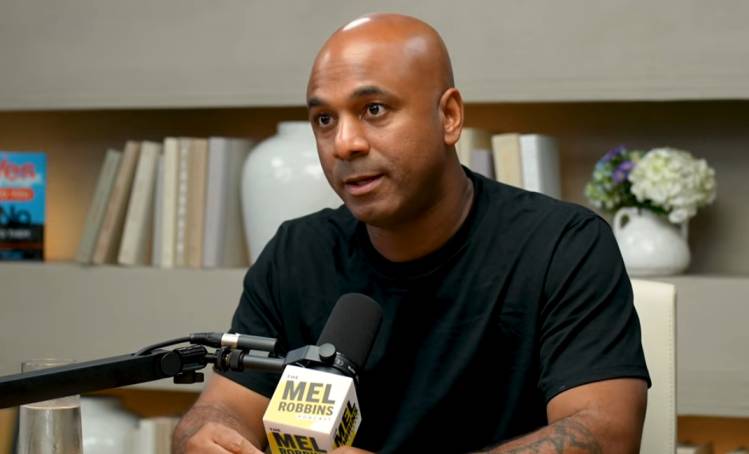
Here is the full transcript of Wallo’s (Wallace Peeples) interview on The Mel Robbins Podcast, December 4, 2025.
Brief Notes: Mel Robbins sits down with viral powerhouse Wallo (Wallace Peeples) for an unfiltered, high-intensity conversation about getting “mentally free” and finally becoming the person you know you are meant to be. After spending 20+ years in prison, Wallo explains how he turned his cell into “Princeton,” using TV commercials, books, and mentors like Anthony Bourdain to study marketing, performance, and human potential instead of wasting time.
He breaks down why most people on the outside are “more incarcerated” than inmates—trapped by fear, other people’s opinions, and the need to fit in—and shows you how to hit the inner “f*** it button,” say yes to yourself, and let go of anything that doesn’t support your future. If you feel stuck, people-pleasing, or scared to make a big change, this episode is a wake-up call to stop negotiating with your dreams and start performing like your life depends on it—because it does.
Introduction: A Wake-Up Call You Need to Hear
MEL ROBBINS: I got to tell you something. When Wallo starts going, you better keep your hand on the recording dial because holy cow, it’s like part sermon, part halftime coach. Your team is down. The coach is mad, he’s yelling at you, and he’s telling you the truth.
And this is the truth you need to hear, because the fact is, you’re the one in your own way. And so I don’t want to be hearing from you any lagging in your case, because this is a conversation for adults. And sometimes adults need to hear words that are a little harsh because that’s what it’s going to take for you to wake up.
All right, I’ve warned you. And here’s another warning. Don’t even bother listening to this if you don’t want to hear the truth. Don’t listen to this if you’re not interested in motivation. You still here?
Good. So am I. Let’s go. So without further ado, please help me welcome the remarkable Wallo to the Mel Robbins podcast.
WALLACE PEEPLES: Thank you for having me. Thank you, thank you, thank you. I’m happy to be here.
MEL ROBBINS: Thank you for jumping on a plane. I have been a huge fan of yours for a long time. I am so excited to be in the room with you. I’m excited for the person who has made the time to be here with us, to be able to be inspired by and learn from you. And I can’t wait to dig into your story.
But I wanted to start by asking you this. If you think about everything that you’re about to share from your life story, from your experience, from the impact that you’re making with millions of people, what do you think is going to change about my life? If I take everything to heart and I apply it to the way that I live my life moving forward, what’s going to change?
Stop Making Problems for Yourself
WALLACE PEEPLES: You’re going to stop caring about things that don’t matter. And you’re going to stop making problems for yourself. That’s the most important thing. Stop making problems for yourself. Nobody make problems for us. We make problems for ourself.
If you don’t like me, right? Or if I’m talking to the viewer, if somebody don’t like you, that’s none of your business, number one. Number two, what they say about you, that’s none of your business. That’s their business. They own them thoughts. They own everything that they say. That’s they got ownership of that.
But what we do is we make problems when we get into their business. You minding their business now? “Oh, I don’t like Mel. Mel is not this. Mel fake this. You don’t really help nobody, Mel.” Why are you worrying about their business? Mel, mind your business. That’s not yours. That belong to them. The thoughts belong to them.
Stop giving power to other people. Words, ideas, thoughts, feelings. Feelings. Why do they like—a lot of times, Mel, a lot of people don’t dislike you. They don’t even hate you. Some people just want to hug you and they don’t know how to get your attention. So that’s what it really be about.
And some people just like, “Mel got it going on. How can I get close to Mel? I DM Mel a thousand times. Mel don’t even answer her DM. She ain’t got time for that. She running.” I’m just—but that’s the reality of it.
But I think if you got to really be able to cut on that f it button—the it bucket, the fing button, the it button. We it like what they think like. As long as you living in that world of area, you’re not going to live.
Listen, I look at this like this. You—guess what? If nobody told you, you’re going to die. But guess what? Caskets don’t have no bunk beds. It’s going to be you by yourself. Why are you worrying about everybody else?
MEL ROBBINS: Did you just say caskets don’t have bunk beds?
Caskets Don’t Have Bunk Beds
WALLACE PEEPLES: Yeah, they ain’t got no bunk beds. Ain’t no bunk beds in caskets. Like what you wearing. You got to go by yourself. When it’s time to leave this place, you’re going to be—when the music is playing, this is going to be you. It’s not about nobody else.
Like, we got to get out of here. Mel, do you know one day, do you know one day they’re going to be reading your book? They’re going to be reading my book and they’re going to be like, “Yo,” they’re going to be looking at old videos of us. We going to be well off and going.
That’s why while you here—and I tell people the moves I make is secure the future, the futures of the family members I won’t be living to meet. The moves I make will secure the futures of the family members I won’t be living.
You too? You too. You just here to strengthen your last name up. So it’s like, listen, we got to go. Mel, we going to—listen, listen. We going to the party, Mel. You see that party that be going in the graveyard? We going to be there.
MEL ROBBINS: Well, let me ask you a question. Why are you motivated by making a better future for the relatives you haven’t even met yet?
WALLACE PEEPLES: Because that’s our job.
MEL ROBBINS: Why is it your job?
WALLACE PEEPLES: Because everybody—listen, the reality is everybody’s just not going to be Mel and Wallo. They not. Everybody in our bloodline is not going to be like us. Some people just going to want to just get up every day and just get a regular job. It’s not everybody job to push, encourage, want more for other people. That’s just not it.
So why if we here, why not take on the responsibility to say, “You know what, there’s going to be some people that I’m not going to meet that’s going to have my bloodline that I want to look out for.”
MEL ROBBINS: Are you motivated by that because your family didn’t look out for you?
Family and Community
WALLACE PEEPLES: No, it wasn’t about that. My family always looked out for me even when they couldn’t look out for me. See, back in the day, we didn’t have nothing, but we had everything because we had each other. That was the community that I come from. Yeah, my thing is like this, man. You got to understand it.
MEL ROBBINS: Yeah.
WALLACE PEEPLES: You got money, Mel.
MEL ROBBINS: I do now.
WALLACE PEEPLES: You can’t spend it all. Somebody going to take that money when you—when you—when you get up out of here, somebody going to run through some money of yours. They going to run through it so quick, they’re going to do so many things to that money. So it’s like, why not do things to help people when you out of here?
MEL ROBBINS: That’s true.
WALLACE PEEPLES: Because you can’t take it all with you.
MEL ROBBINS: No, I’ve never seen a hearse pulling a U-Haul.
WALLACE PEEPLES: No. No, I never seen a bank teller in the graveyard either. You don’t see no bank tellers in the graveyard. I never seen Chase. Out of every funeral I went to, I never seen Chase in the graveyard. I never seen PNC. I never seen Bank of America, Wells Fargo, none of that s*’s there.
So it’s like—only thing you see is the dash. The most important part of the graveyard is the dashes on tombstone. And you trying to figure out what did they do, what was a part of that.
MEL ROBBINS: What do you want on your tombstone?
WALLACE PEEPLES: I just listen, listen. My tombstone, I don’t want—I don’t want speakers on there. I want the music to be playing. Because I’m going to be dancing. Because I left it all up here. I’m not going to be crying, I’m not going to be complaining.
In the graveyard. Every time I go to the graveyard, you be hearing people. A lot of people. Some side you see, they be music playing, they happy. Some side they’d be crying because they ain’t do what they wanted to do. And they left it up here.
MEL ROBBINS: So true. So true. You’re 46?
WALLACE PEEPLES: Yeah, I’m 46.
Growing Up in Philadelphia
MEL ROBBINS: So I read that you spent more than half of those 46 years either in juvie or in prison.
WALLACE PEEPLES: Yeah.
MEL ROBBINS: Tell me a little bit about that. What happened?
WALLACE PEEPLES: So what happened is grew up, great family, rest in peace to my brother Steve. My mom, Jackie. Extraordinary woman. You know, that’s where I got a lot of my crazy stuff from. My grandma. I’m loving strong woman, the strongest person I know. My brother Jalal. I grew up. My pop, Wallace Roundtree, my step pop Hip. I had some great people around me growing up. Great family, different sides. My grandma Aura, rest in peace.
Grew up in the streets of Philadelphia, inner cities of America. I wanted to be down. And because when I grew up and where I grew up at in the ghetto, the only person that got the most attention was the person that was still in the American dream. The drug dealer or the criminal, because he had the fancy cars, he had the jewelry. He dealt with the most beautifulest woman in the neighborhood. So it’s like the movie.
So as me sitting on the step as a kid, when I see the car pull up, the nice music blasting out the Mercedes Benz, the jewelry, and I’m like, I’m sitting there, Mel. And I’m like, “Hold up. You mean to tell me, I noticed Ms. Johnson, Ms. Brown and Ms. Green, the older ladies, they spoke to that guy getting out of business. They ain’t speak to Mr. Carl walking down the street as a plumber.”
I said, “I got to go out there and steal the American dream.” That’s the only—people like America only respect the successful criminals. They love them. That’s why so many movies made about them.
So I’m sitting there, I’m like, “Yo, I got to be down.” I was smart enough to know right from wrong. My grandmom, she taught me a lot. But I got into the crime life because I wanted things that I wasn’t willing to work for because I’m a kid.
June 30th of 1990, I get arrested for armed robbery. Philadelphia. I get—and I’ll never forget when Nanny came in. Shout out to Nanny. She’s 91 now. She’s—she’s like 91, but she moved around like she 31. She sent my Uncle Tommy to come get me. The next week, I got locked up again for armed robbery. I kept getting locked up, so I wound up spending five years in juvenile.
June 30, 1990, I was 11 for like seven days, something like that. I wound up, kept going back. They sentenced me that year to a year, and I wound up spending five years in juvenile, in and out. So by the time I turned 17, I got locked up for two armed robberies, two firearm violations, got sentenced to a total of 19 and a half to 52 years in prison. They certified me as an adult. They said, “No, you’re not a kid no more. You’re good with crime. You know how to do crime.”
The Grandmothers Knew
MEL ROBBINS: How mad were your grandmothers and your mom at you? Because you just kept getting in trouble. Because I can tell. I can just feel their energy right now. They were just like, “Come on.”
WALLACE PEEPLES: They was mad. And my grandma used to always say, “You going to get it. You’re going to realize one day.” Because you know what’s crazy? Your grandma older, you saying to yourself, “She don’t know what’s going on out here.” But she do.
MEL ROBBINS: Of course she does.
WALLACE PEEPLES: She always tell me, “You don’t understand, baby. Why you the only one that always go to jail. You always go to jail.” And I remember one of my homeboys, his mom was saying, “Y’all can’t do—y’all can’t do wrong wrong. Y’all need to start doing right right.” It didn’t hit me till later on in life when I was sitting in prison doing time.
MEL ROBBINS: And what does that mean?
WALLACE PEEPLES: What you mean?
MEL ROBBINS: What you’re all doing wrong wrong. You got to do right.
WALLACE PEEPLES: Wrong. Basically, y’all don’t know how to be criminals.
MEL ROBBINS: Oh. Because you keep getting arrested.
The Power of Wanting to Be Down
WALLACE PEEPLES: Yeah, y’all can’t do wrong. I mean, y’all can’t do wrong, right? Y’all might as well do right, basically. So it was like, y’all can’t even do wrong. Y’all don’t even know how to do wrong. You know what I mean? So it was like, y’all really not good criminals. You always get caught. Most criminals do. So we really not that good.
And you don’t think about that. But being you wasn’t cool. See, what’s the name? Had a song out back in the day, but we heard it. We might have danced to it, but it wasn’t that cool. It was a nice song. You probably hear it on the TV, you probably hear it on radio. Huey Lewis and the News had a song, “It’s Hip to Be Square.” But you don’t think about that. You’re not thinking about that. It’s being outweighed by all the other music that you’re hearing.
When Revenge of the Nerds come out, you don’t even think. You don’t even understand about today. You don’t know technology going to come. So everything was based on being cool, right? Dangerous.
Mel, let’s be honest, Mel. You was in school, y’all didn’t want the nerds. Y’all wanted the cool guys.
MEL ROBBINS: Of course I wanted the jocks. I wanted the guy to come with his caliber.
WALLACE PEEPLES: Y’all wanted the fine. You didn’t want that. Nobody want that. Nobody want the good guy. Everybody loved the bad guy. They love Scarface. They love Al Pacino. You got to think about that. America loved the successful criminal. They love the bad guy.
The Prison Industrial Complex
So think about it. When you talk about institutions, when you talk about juvenile facilities, juvenile facilities, prisons is a business. And I need to ask you out there, to everybody that understand about businesses, what business do you know that don’t want their customers to come back? What businesses do you know that don’t want reoccurring customers?
So if I change it up, you’re never going to be my customer anymore. So how do I make money? Like, so now the counselors is out. The psychs that work at the place is out. Probation officers is out. Just imagine that we fix this system and everything is fixed. No parole officers, no probation officers. We don’t need a court clerk, we don’t need stenographers in the court. We don’t need a lot of judges. We don’t need a district attorney. We don’t need a lot of these people. So I didn’t understand until later on.
Arriving at the Big House
So then when I get sentenced and it’s time for me to go to prison, I was scared to death. I was scared to death. I get sentenced. I get up to the big house. There’s a big wall. It’s called Graterford Prison. They open that gate. The gate closed behind us. I’m shackled up. I got shackles running from a belt around my waist. The shackles right here. I’m cuffed and it’s going to my feet, to my chains, on my feet.
The main thing that I’m thinking about when I go to prison, I’m looking at the TV and you just see all this stuff, but you never think it’s going to be you. Nobody think it’s going to be their turn to go into prison when they are part of the life of crime. Everybody think they smarter than the system. So it was just crazy for me.
They give us our box, we get our stuff. We had to walk up and we had to go through the general population where the big yard was at to get to the hole in death row and where they had you locked in because we was juveniles. As we walked through that hallway, I seen some of the biggest muscular human beings I ever seen in my life. I couldn’t believe it. They coming out of the yard, their shirts off. I’m like, I can—please don’t put me in this hell with him. I don’t know what. I don’t know. I’m just like, please.
But they wound up taking the cell hole. And the other younger guy that was with me, I never forget as I covered my head with the pillow in that cell because we shared the cell because we was both minors. I heard him cry as I was crying at night and wishing I was home and wishing I had another chance. And it just was different. But that started my role and my journey being in prison. And it just got real after that. It kept it continuous, continued to get real.
The Mirror Moment
But what happened was—and I was in the cell, was hot, summertime, no air conditioning, none of that. And I got up to splash my face, but when I got up to splash my face, it was like the devil was dancing in the cell because it was so hot in there. Walls were sweating.
And I just looked in the mirror and I said, “D*mn, you in here doing all this time for being somebody you not.” The power of wanting to be down with a bunch of people that really don’t care about you can destroy your life. It can mess your life up.
Even if it’s not about crime, it could be about, “I just want to be down with these people in college because they supposed to be the in crowd.” Or “I just want to be down with these people because they do business.” Or “I just want to be down.” It could mess you up because what it do is it remove you from you. And now you got to be somebody else to be accepted by some other human beings that breathe like you, got 24 hours like you, that drink the same water you drink. You, me. So once I realized that, it was crazy.
MEL ROBBINS: I want to go back to that moment where you’re looking in the mirror and you’re reflecting on the fact that you’re doing all this time in prison for being someone you’re not. And I’d love to have you talk to the person that’s having this epiphany as they’re listening to you and they’re thinking, “Well, I am where I am because I’ve been being someone I’m not.”
A Message to Those Living a Lie
WALLACE PEEPLES: You. I’m talking to you. You right there. You. You ain’t tired yet? You out there being somebody that you’re not. And guess what? You just keep losing. You don’t feel right. You know you’re not where you want to be because you don’t feel right. But you choose to take this path because you wanted to be accepted by a bunch of people that don’t even accept they self.
Because if they accepted they self, they wouldn’t put pressure on you to be with them. Why do they need you to be around? Why do they need you to change who you are? Think about it.
But think about this journey you going on and say to yourself, “Hold up. This might not be for me. This might not be my ideas. This might not really be what I want to do, but the crowd is telling me I should do this. The crowd is telling me this is what’s cool. The crowd is telling me this is what accepted.”
When you going to say f the crowd and start accepting you? When you going to cut the f it button on and say what they think? Huh? What you scared for? Huh? What you waiting for? Like, you think time is on your side? Time is not on your side.
The only thing you got on your side is the decision to let go of everything that’s not supportive to you, everything that’s forcing you to change who you are in order to be a part of this idea of what’s right and what’s wrong. Man, come on. It’s let go, get free. Be you. Love you. Respect yourself enough to choose you. Say yes to you and no to them.
Oh, yeah, that’s the new book coming out, too. My new book.
MEL ROBBINS: And buy it while you’re at it.
WALLACE PEEPLES: Yes, buy it. Yeah.
From Prison to Princeton
MEL ROBBINS: You know, one of the things that I love about you is that your story proves that all of the excuses you have, “I don’t have this, I don’t have that.” I mean, you’re in a fricking prison cell, for God’s sakes. You still have years on your sentence, and you made a decision that you were going to be you. And you had this incredible way that you thought about being in jail after that moment. Can you explain that breakthrough to us?
WALLACE PEEPLES: I used to tell people, “I’m not in jail. I’m in Yale. I’m not in prison. I’m in Princeton. I’m not in the state pen. I’m in Penn State.” Right?
MEL ROBBINS: What does that mean?
WALLACE PEEPLES: That mean that I’m not just sitting around in here. I’m in here educate myself. It’s not their job to educate me. It’s their job to house me. And at this time, what’s so crazy about it? My mind was clicking so much because in the state prisons of Pennsylvania, you could buy a TV off commissary, where though you get some certain TV channels, cable channels, whatever you pay for it all.
My cellmates, they used to always say, “Why do you always turn the TV?” Because I’m turning the TV all the time.
MEL ROBBINS: You mean flipping channels?
WALLACE PEEPLES: Yeah.
MEL ROBBINS: Okay.
The Power of Commercials and Marketing Education
WALLACE PEEPLES: He’s like, something. Come on. I was addicted to commercials. I was addicted to advertising and marketing because I always say, hold up, man. Big Mac never looked like that when I went in McDonald’s. It’s be sloppy. You don’t be like that. Something ain’t right.
Then I realized oh, they outsourced that to advertising agencies. I start learning about marketing. Damn. Why is when they got the car commercial, they got a black person doing it. Latino person doing the age approved based off the channel. You. Oh, what is marketing?
Oh, I ran into a book called “Damn Good Advice” by George Lois. Oh, reading all these Gorilla Market, I’m start learning about marketing. I start learning about advertisement. I’m learning about, oh, they paying all this money for that. So now I’m start. I’m thinking more, I’m thinking, I’m just looking at that, I’m looking at that.
Finding a Mentor in Anthony Bourdain
And then one day as I’m changing the channel, I come across this guy, right? One of my mentors, right? When I come across a skinny guy, man, skinny white guy, right? And I’m like, what’s, what’s going on? I look he here the next day here. He just always eating food. His name was Anthony Bourdain, my mentor.
So when I see him, I’m like, hold up. Anthony Bourdain taught me in his cell that the world is your playground. Go play. He taught me that the world is bigger than your neighborhood. He taught me that wallow, they’re waiting for you. Go out there and connect with your people. It’s people, places and things that’s waiting for your arrival with a sign on it.
When I seen Anthony Bourdain, “Parts Unknown,” “No Reservations” to “Layover,” I was like, this guy used to get. He got his life together. He was a cook in New York City. He a New York Times bestseller life. He didn’t let hard times beat him up. And his name, Anthony Bourdain. I watched every show religiously. I never stopped watching him because Anthony Bourdain, he gave me a passport while I was sitting in the cell. He used to talk to me through the TV show.
And I was like, damn. Because this will happen when you come from where I come from. If you’re not willing to be exposed to other cultures and other ideas, sometimes you’ll miss out on a mentor like Anthony Bourdain based upon his color of his skin or the different. We work so hard to find so much, so many differences in ourself when it’s so easy to find something that. Something that connect us.
He connected us because he was a teacher and he was able to say he connected with me because it was like I didn’t know that I was looking for him and I found him. In life, the greatest moments is going to happen when you’re not prepared for them, when you’re not looking for him.
The World Is Waiting for You
Ant came through. I used to call him Ant. Ant came through. And he just, like smoking a cigarette, drinking the hot tea, eating the craziest stuff. It was like, wallow. Go out there and live. It’s waiting for you. Was waiting for me. I ain’t give up. I could have overdo. I ain’t give up in New York City. I ain’t give up and ain’t give up. I ain’t give up.
And what he did, he showed me that I’m going to get out and I’m going to create what Anthony Bourdain created. But I’m going to show people that’s where I’m from. So as I’m looking at Anthony, I’m reading books, stuff on George Lewis, I’m reading all this type of stuff. And I’m in there in this university mode.
And that was the whole thing. I’m not in prison, I’m in Princeton. I felt as though, like. Because I felt as though the information that I could learn here, I could go out there and make as money, make as much money as somebody that’s in Ivy League right now. But the only thing different, I had to pay with my life. I ain’t got to. I ain’t going to owe him no back money. I ain’t going to owe them no loans. I ain’t got to repay that. I just got to get out here and perform. I got to get out here and do my thing.
You Only Get Paid for Your Performance
See, you only get paid for your performance in this life. Performance is when you get up every day and you put your energy into something. You only get paid for your performance. So when you go, if you got a 9 to 5, you getting paid for your performance. If you got a business, you getting paid for what you put into there. You got to perform.
And the more you perform, the better it get. If you’re athlete, you go out there and you score more and more points, you won’t get bigger, bigger deal. So it’s about, you only get paid for your performance in life. Nobody is coming to save you. Nobody’s waiting for you. Nobody ain’t falling out the sky for you. Based off of, oh, I know you, you my friend. Oh, we went to the same college. Oh, we from the same neighborhood. Nobody give a f* about that. Everybody trying to win. So perform and win. And if you don’t do that, you’re done.
MEL ROBBINS: You have also said that people. There are more people mentally incarcerated in the free world than in prison. Talk to me about that, because I love this university mode and People use all kinds of fricking excuses to not improve themselves, to not educate themselves, to not learn new skills, to not seek out other mentors. And I think you’re right that there’s more people incarcerated mentally in the free world than in prison. But what does that mean to you? And how do you get yourself into university mode?
WALLACE PEEPLES: Because you know what happened?
MEL ROBBINS: Tell me.
Mental Incarceration in the Free World
WALLACE PEEPLES: When people used to come to prison, they fresh off the streets. I used to interrogate them. I used to interrogate them about what life is on the streets in the free world, because I had it. I never wanted to be the person that was stuck. A lot of people when your family member go to prison, they’re stuck in the time that they was incarcerated. So I didn’t want to be stuck there.
So in order for me not to be stuck there, everybody that would come to prison, I would interrogate them. Sometime I would have. I would have a CO on the block. The ones that was, you know, all right, I had them keep my cell as a transit cell. So somebody come and they not being in there for long for like a week or two. Then I get somebody else. Because I used to love to stay up, ask people questions about the free world.
So this kid told me about Google in the yard. So we walk in the yard, he said, he has this thing called Google, man, I can find anything about anybody. I said, yeah, that’s decent. He said, I could find stuff out about you. I looked at him, I said, man, you think I’m stupid? I’ve been in jail, but I’m not dumb. You get. I ain’t been. I ain’t even on the planet Earth no more. How you going to find. I’m in here? Nobody know nothing about me.
So I typed my name in here, Wildfield. I’m like. All this stuff popped up. I dropped the phone. I’m like, damn, the feds on me, the CIA, they watching me. I didn’t know what was going on because I never seen nothing like this. Yeah, I’ve been in prison all this time. This 2013, 12, something like that. I don’t even know.
The Birth of Wallo267
So I’m like, once I got there, I set up the social media, and that’s where the 267 come from. Wallo. 267. 267 was my prison number. DG 267. And when I go to set up the Instagram, somebody had wallo. So I had to add the 267, even though that’s the Philly zip code. But it also was my number. I mean, it’s Philly, airy, cool. But whatever the case may be, when I went on social media and I started seeing people in life, I’m like, hold up.
Everybody was locked into an idea what they think they should be based off of somebody else. And I was just seeing different cities. I just seen a bunch of people doing the same thing. And I’m like, it wasn’t like that when I was growing up. Now, if you going to school in Boston, you ain’t know what they was doing. And in Duke, if you went to Boston College, you ain’t know what they was doing in Duke, you ain’t know because we didn’t have no social media to connect it.
So now we living in a world where everybody emulating everybody, everybody got the same hairstyle, they wearing, the same clothes they wear. Nobody like, like, you got to think about it, some of these big people, they would have never got this stuff. They would have never had this influencer back in the day. Because if you ain’t get on Oprah, Oprah or MTV, nobody knew about you.
MEL ROBBINS: Correct.
WALLACE PEEPLES: So now I’m like, hold up. Don’t nobody got no independent thought no more? So I’m like, oh, there’s more people out there in prison. It’s going to be easy out there. There’s more people incarcerated than it is incarcerated because everybody out there walking around with a. They walking around with a cell around their brain.
MEL ROBBINS: And how would you describe that to somebody who doesn’t realize that they’re in a cell in their brain because they’re afraid.
The Cell Around Your Brain
WALLACE PEEPLES: The reason I say they’re in a cell because they’re afraid to go out there and do what they want to do. So they Even in a cell based off. You’re in a cell based off of worrying about people opinions, worrying about how people think of you. So now you can’t move. You can’t move.
You’re in a cell where you just. I’m just going to follow what they doing. I don’t want to have my own thoughts. I’m a part of this group that I don’t even know why I’m a part of this group, but I think it’s okay to be a part of this group. And I might only be a part of this group because where I was raised, who my parents are, the influence they gave me, I don’t even know why I’m here.
MEL ROBBINS: It’s true.
WALLACE PEEPLES: You know how many people that just like, hold up, I’m a part of this. I’m a Part of this. And they will argue with you about why you’re so wrong about being a part of something. And you like, I don’t even. You. You can’t even tell me why you’re a part of what you was you arguing with somebody else and telling them that they wrong and they ain’t part of this over there.
Think about that. People is just a part of something based because somebody told them to be a part of something or just because their mom was a part of something, their dad was a part of something, or people in their community was a part of something. They don’t even know why it’s true.
MEL ROBBINS: And then people get to a point in their life and exactly what you said happens. You start to say, I don’t really like my life. I don’t like how I feel. Why am I doing this? Why am an accountant? How did I end up in jail? Like, what is. Why did I marry this person?
Using the Mirror for Truth, Not Vanity
WALLACE PEEPLES: This is the issue. And I realized this is what happened. We don’t value the most important thing in every human being life. We use it for the wrong things. We use it for vanity. We use it for… The most important thing in your life will always tell you the truth. Even if you duck, it will always be real for you, will always show you who you truly are.
Is the mirror. Not your friend, not somebody’s show. The mirror would never lie to you. Because when you look in that mirror, you see who you is when nobody else is around, when nobody else is looking. When you get up out the bed and your hair not done, you not got that shave, your breath stinking or whatever it is. And you go and you go to splash water on your face. Even before that you go to use the bathroom and you walk by that mirror and you see yourself. You got all the answers there. You just keep running away from it.
You’re scared to be you. You’re scared to be the raw truth is there in that mirror. That’s the raw truth. But you use it for vanity. And you know what’s crazy about the mirror? A lot of times when you go to the mirror, a lot of y’all be getting pimped by people. Future perceptions of you really be getting pimp.
Because when you go to the mirror in the morning, you know what you use it for? Use it for dumb stuff. You go to the mirror, especially if you got the big mirror in your living room or where you getting dressed at. You put all your stuff when you’re looking at it and you say to yourself, “Oh, I don’t like this.” It’s not that you don’t like this. You don’t think the people at work is going to like it. You don’t think the place that you’re going to is going to like it. The wedding, the party, whatever. You don’t think it’s not even about you no more.
See, you using a mirror in the wrong way. You supposed to be using the mirror to empower yourself and have real conversations with yourself and really look at who you truly are. But you don’t use the mirror for that. You use the mirror for vanity. Use the mirror to keep punching yourself back. When you going to use the mirror to lift yourself up? When you going to use the mirror to get… You get forward, huh? When you’re going to stop being a scaredy cat? When you going to grow up?
Guess what? Time is not on your side. One day you better realize that. Take advantage of the mirror.
MEL ROBBINS: How do I do that? Like I really mean this. I don’t mean this like a cliche question, because being honest with yourself can be a very difficult thing to do.
WALLACE PEEPLES: Yeah.
MEL ROBBINS: So many people sit in the wrong relationship for years. They stay in a job that makes them miserable. They keep making choices that are the easier choice now, but it makes your life harder. Whether that’s drinking too much or spending money that you don’t have, or spending time with people that really aren’t your people and bring you down.
How do you have that moment of honesty? Because it didn’t happen immediately for you. There was so much shit that went down in your life and so much pain that you had to experience to get to a point where you’re like, “I’m just done with this shit. I got to this unhappy place by being someone I’m not. And I need to change.”
So how can I use the mirror not for vanity, but to truly cause that kind of moment of truth that you need to have in order to change your life for the better?
The “F* Them” Button
WALLACE PEEPLES: Mel, look at me. I’m talking to you personally, okay? You know how you say, “Let them, f* them”?
MEL ROBBINS: Okay?
WALLACE PEEPLES: You got to be… You got to be violent with it. And when I say violent in the inside, this violence got to take place not to anybody else, okay? But you got to be ruthless within to say, “You know what? I’m tired of you taking advantage of me. I’m tired of you being in my life.”
A lot of people is out here sleeping with the enemy. The biggest hater is somebody that’s laying next to them. The biggest hater is one of their friends, their biggest hater is one of their parents. Their biggest hater is one of the… one of the siblings. You got to be balanced about it. Let them. Them. Them say it, Mel.
MEL ROBBINS: Them say it loud and bell them.
WALLACE PEEPLES: On account of three you’re going to say it together. One, two, three. Them. You got to be like that. We not going to be here forever, Mel. We got to leave. And until you embrace the reality that you got to leave, you’re going to keep catering to somebody else for their benefit.
Mel, you got it all. You got money, you got this, you got that. But somewhere in your life you got to cut that f*ing button. Home Mel. Even Mel got to do that. Melly Mel. Come on. Melly Mel.
MEL ROBBINS: That’s what my friends call me in high school.
WALLACE PEEPLES: You got to do it, Melly Mel. You got to be able to…
MEL ROBBINS: Even you, yes. Actually. The more you actually say it, the more successful and free you become. Because you realize you have been a prisoner to other people’s opinions. You’ve been a prisoner to making things easier for everybody else. You’ve been a prisoner to the easy decisions because you didn’t want to make the hard one.
And that freedom comes when you are able to… to truly choose the harder path. Be honest with yourself first. That shit’s not working. And the main thing that’s not working is you and the decisions that you’re making.
WALLACE PEEPLES: And, and, and the bottom line…
MEL ROBBINS: And stop blaming everybody else. Like that’s the other thing.
WALLACE PEEPLES: The bottom line is you got to really do the big thing. And you got to say f* them. You got to like, like… Because it can’t be if you keep… Because this what it is. Yeah. You keep negotiating with yourself and renegotiation with yourself. You’re supposed to cut them off two years ago. They been told you that they do not deal with you. They do not support you. They do not value…
Nobody Cares What You’re Doing
MEL ROBBINS: You know what’s even more interesting? You know what’s even more interesting about this Wallo and why this is so important is that nine times out of ten, the “f* them” that you have to say is really more about your own resistance and bullshit that you’re making up in your mind about what you think other people are going to think if you do the thing.
Like it’s even like before… It’s one thing if somebody treats you poorly. That’s pretty obvious when it’s happening. But you treat yourself so poorly because let’s say you want to start a YouTube channel or you want to go into real estate or you want to go back to nursing school. Most people hold themselves back not because of what other people are actually saying. But because of what you’re saying yourself. “Well, I can’t go into real estate because my friend will think I copied them.”
WALLACE PEEPLES: Let me tell you something. The reality is don’t nobody give a f about what you’re doing. Don’t nobody really… Like, nobody gives a f. Like, don’t know… Like, everybody keep thinking that that is so important that every… Oh, man. Nobody gives a f* about what you’re doing. Like, they don’t care as much as you think they care.
Like, a lot of stuff is a mind game. A lot of this shit be mine. And we be battling in our mind, and we be like, “Hold up, are they… I got to go this way because they going to say this. I got to do this because they going to say this. I got to wear this because they going to say this. I got, man, what they think.”
At the end of the day, you got to be willing to have people mad at you. But that’s why you got to say yes to you and no to them.
MEL ROBBINS: Yes.
WALLACE PEEPLES: The discipline of saying no and the freedom that follows. Get that book. But listen, at the end of the day, you got to get my book. It’s coming. Listen, at the end of the day, that’s why I created “Yes to You.” Because it’s like everybody’s saying, like, we live in this world. Whereas, though, if you say yes, you’re the hero. If you say no, you create a victim.
Like, we live in this manipulative world today. Everybody is using words. “Oh, I’m a victim. This ain’t go right. This ain’t go right.” Listen, we all play a part. If you f me over today, Mel, and I allow you to f me over, I like being fed over. That’s it. That’s dual accountability, right? I got to be like, we both accountable, right? You said f me. You don’t f*…
MEL ROBBINS: I think if it happens once, that’s once. If it happens a second time, it…
WALLACE PEEPLES: Always happened a second time. Because people keep holding on to yesterday. Tomorrow is going to be better than yesterday when you say yes to you and no to them. But if not, you won’t keep reliving in it. It always happened a second time.
MEL ROBBINS: Well, that’s the test. That’s… That’s… That’s the universe and God, seeing if you’re paying attention.
WALLACE PEEPLES: It always happened a third time. People is too comfortable with being comfortable. You got to be uncomfortable. And really, the win out here, you got to be… Listen, every… Every… All the winners that we see, nobody see them up all night doing research. Nobody see them in the gym working out. Shooting a thousand shots in the gym. Nobody see it’s uncomfortable, your body hurt, you ache, you tired, you sweating. Like that’s what life is about. But as long as you keep saying yes to them, you’re saying no to you.
The Power of Clarity
MEL ROBBINS: I want to ask you a question because I feel like people change because of one of two reasons. One is pain. That’s always the source for me. And the second is clarity. But clarity often comes from these deep moments of pain.
When you were about to be released from prison after being in prison for two decades, you had this video where you said that you had $1,000 saved up from the various jobs you worked in prison, from money that your family sent you. And you were so clear about what you were going to do when you got released.
Can you share that? Because I want to unpack the power of that intention and the power of being clear. Because I feel like one of the things that really gets in people’s way is they don’t even… They’re not even clear about what they want. And you were so clear that I could tell in the video. I’m like, “This guy’s going to do this.” So tell that story and then tell me about the power of being clear about who you are and what you’re out to do.
WALLACE PEEPLES: See, when I came home from prison, number one, the first day, it was time for me to get out, I was scared.
MEL ROBBINS: You were scared.
WALLACE PEEPLES: The scariest day of prison was the day that they let me go. And I’m going tell you why before I get to where I’m going. Because I never was who I told my family that I was ready to be. I never was that person before the person that I said I became. There was no temptation to show that I was that person. I was that person of the mind. But I wasn’t that potion off of lived experience in action yet.
So I was scared walking out because I’m like, “Wow. I got to deal with temptation once I got out there, smelled the air, breathing. Oh, man.”
When I did that video, I said, in nanny middle room, shout out to nanny. When I put that money on the bed. It seemed like yesterday when I did that video, I wasn’t out of prison that many days. I was so clear in knowing if you ever seen that video, you know what I’m talking about, she might put it in here. Have you ever seen that video? You can see it. I knew I spoke with conviction, and I’m clear about everything because… You ready to know why I was so clear, Mel?
MEL ROBBINS: Yes, I am.
Who’s Going to Stop You?
WALLACE PEEPLES: Who the f* is going to stop me? Ain’t nobody worrying about me. Ain’t nobody worrying about you. Nobody is going to get in your way. Don’t nobody care. Who is going to stop you from materializing your dreams?
And guess what? And guess what, Mel?
MEL ROBBINS: Tell me.
WALLACE PEEPLES: Americans be taking playing games with what they got. I said I’m going to destroy them out here. They out here playing games. They don’t even know where they live at. I said I am going to destroy them like I’m an immigrant. Like I just got here. I’m going to destroy them. Nobody is going to stop me.
Do you know how easy it is to set a business up? Do you know how easy it is to get a trademark? Do you know how easy it is to do these things? Do you know how easy it is to open up a bank account? Do you know how easy it is to get a passport? Do you know how easy it is to get a real ID? Do you know how easy that is? Nobody blocks you from doing them.
So you mean to tell me, hold up. I could go on one of these sites and I could set up my whole business. I could just walk in the bank with two pieces of paper and say here’s my ID and they can open up an account. I get a card. I get a mirror. I could go on social media and promote my products for free. Like, I’m sure somebody’s going to stop me. I’m sure somebody’s going to say no, you’re not Wallo. You can’t come home from prison and start—who is going to? Don’t nobody care. Can’t nobody stop me. Nobody is going to get in your way.
MEL ROBBINS: Can you please tell that to the—
You Are Your Biggest Enemy
WALLACE PEEPLES: Nobody is going to get in your way but you. Because what happened is this: you’ll be going to do your thing, right? You’ll be going to do your thing and this will happen. You jump right in front of yourself and say, “You ain’t going nowhere. You ain’t going to be great. Nah. You can’t do it.”
You’re your biggest hater. You always talk yourself out of ideas. Soon as you say here it is, I put the idea down. I want to do it. No, you’re not. You sit back down.
MEL ROBBINS: I’m sorry, it’s so f*ing true.
WALLACE PEEPLES: You sit back down. You do all this research you got. Listen, we’re walking around with computers in our pockets. When I grew up, I didn’t know nobody in the neighborhood that had a f*ing computer, man. You only see that when you go downtown and you go into one of them buildings and the computer was big as this table.
Back then, you’re walking around with a computer in your pocket. You mean to tell me you can ask a phone anything? Back in the day, we had to go to the library to figure out something and some books that we had. First we had to find a book of the information we was looking for and hope they told us what we was looking for.
Nobody’s going to stop you but you. Now, let me ask you a question. When are you going to stop being the biggest enemy in your life? You’re your biggest enemy. Nobody cares. Nobody’s going to stop you.
So what? They’re going to talk about you. So what? They’re going to laugh at you. What does that mean? Haters is your marketing team. Let them work. Haters is your marketing team. Let them work. They tell people about you. You know how many haters that get you followers from laughing at you or sending your stuff around to their friends? “Look at this clown. Look at this.”
They did that to me. They laughed at me. So what? They was laughing at me because I was different. I was laughing at them because they all the same. What makes you cool? Look at it. Look at what’s going on. The smart, fearless people is out here destroying the people that say, “I’m going to sit here, I don’t care.”
Now I’m staying on the camera. I’m going to build my app. They’re running stuff. When you going to start running your life? Because you don’t even run your life.
The Real Prison Is in Your Mind
MEL ROBBINS: You know what came to mind as you were saying that? Is that here you are free and you’re building wealth and you’re doing your thing.
WALLACE PEEPLES: Easy.
MEL ROBBINS: And you are just doing your thing. And the people who are in prison are the ones that are calling you names and hating on you. But the haters are helping you build your wealth.
WALLACE PEEPLES: But listen, you know—
MEL ROBBINS: You know what I’m saying? Like in the prison of their mind.
WALLACE PEEPLES: Yes.
MEL ROBBINS: Because think about how incarcerated you are if you spend any of your time and energy tearing people down online.
WALLACE PEEPLES: Yeah.
MEL ROBBINS: When you could take that time and energy and actually put it into educating yourself or building something that you want and getting out of your own way. You talk a lot about energy, how important it is to protect it. Talk about energy.
Protecting Your Energy
WALLACE PEEPLES: Energy is very important, right? You got different levels of energy. You got positive energy, you got negative energy, then you just got floating energy. Energy that you don’t know what the f*’s going on. You don’t know what you want to do. Energy.
MEL ROBBINS: I think there’s a lot of people with that.
WALLACE PEEPLES: Yeah, yeah. But because a lot of times, like, the reality is it’s sad. And the sad truth is some people just don’t got the energy to change. Change is uncomfortable because you got to cut that switch on and you got to be willing to be talked about.
I did a post and I said on the post, I said, “Strangers make you rich.” Strangers make you rich. Stop worrying about the people that you know. Stop worrying about the people you went to school with. Stop worrying about the people that you went to college with. Strangers make you rich.
Strangers made Bon Jovi rich. Made Guns N’ Roses rich. Michael Jackson rich. Michael Jordan. Just think if only people that was Michael Jordan fans was the 15, 20 people, 30 people, 100 people we know—that’s not enough.
Stop worrying about, “Oh, they don’t support me. They’re not with me.” Shut up. Strangers make you rich. When you go to Mel’s show, people you never knew, they didn’t go to college with you, Mel. They don’t know you. They didn’t—they wasn’t your childhood friends, Mel.
MEL ROBBINS: Nope.
WALLACE PEEPLES: No, no, no, no, no. Everybody that Mel’s talking about, let them—them people that don’t matter. The people that support it and understand the mindset shift, they matter.
We spend too much time worrying about the people that’s not supporting or the people that’s not there that we forget to say, I want to give a shout out right now on Mel, Melly Mel’s show to everybody that ever supported Wallo267. I’m talking about everybody that reposted me, that liked it, even the people that talk bad about me.
At the end of the day, if you want—if you talk about wealth, you’re talking about getting—you got to have that right energy and you got to have the energy. You got to have the energy to put yourself in position before you get in position. I was a millionaire before I was a millionaire. Let me tell you something.
MEL ROBBINS: What does that mean? You were a millionaire before you were a millionaire?
Living the Life Before You Have It
WALLACE PEEPLES: I was a millionaire before I was a millionaire. And I was preparing for my bank account. I was preparing for everything to come. Because let me tell you something. Now I’m living in Philadelphia. I’m living in nanny’s middle room, right? So I’m living in the middle room.
I used to get on the subway. I had my backpack on. Or sometime I walked from Brewerytown and Allegheny all the way to downtown Center City, Philadelphia, whatever. It depends on. I got my earphones on. I’m listening to Sanford, you know, I’m jamming. I’m singing to myself. I’m laughing.
People thought I was crazy because I used to dance all through the streets. Sometimes I throw Bruce Springsteen on, “Streets of Philadelphia.” Come on. He’s singing. I’m walking through the streets. I feel like I’m in the movie, but I feel like Bruce. I’m like, “Bruce.” I’m like, “Yeah, the Boss is singing to me.” He’s singing. He’s my—listen, you know how when you—every time I come out the house sometime, like a couple times a week, I had “Streets of Philadelphia” playing by the Boss.
And I’m like, “Yeah, he’s doing my theme music.” It’s like I come out—you’re not like superheroes?
MEL ROBBINS: Yes.
WALLACE PEEPLES: It’s like “Streets”—
MEL ROBBINS: Everyone needs a walking—
WALLACE PEEPLES: I’m like, “Yeah.” So I go downtown, right? And I’m telling you, you got to be bold. I was cocky with my imagination. And I’m going to tell you about how me going to prison from 17 to 37, it fortified my imagination. So I came back out with imagination like I was 17.
But let me tell you about my imagination. I used to go downtown Philadelphia, the Four Seasons, one of the best hotels in the city, right? I go down there, right? I go to the bar, right? “Just give me a hot tea,” and it’s a to-go cup with lemon and honey. Because I’m like, it’s on the top floor. I can overlook the city. I’m the man, right?
Now you got to know you’re the man and you got to listen. You got to know that you’re him. You got to know that you’re her before you become there, before you arrive. So I go to get my hot tea, right? After there, I leave. I go see one of these luxury condos downtown. I’ll go look at—because once I realize that hold up, I could go check out an apartment, luxury condo. I could go drive, test drive a car. And I ain’t got to have no money in my account like that. Oh, it’s on.
So I’m just preparing myself for the lifestyle I’m going to live. Like, I’m preparing myself. So I go in there and I never forget. I put my backpack down, I go in the condo. “Yeah, I’ll be still sitting back. So what do you think I should put here? Should I put my painting on the wall? Should I put my art here? Should I put the couch there?”
They’re like, “Yeah, see, what I would do is—” And I’m just like, “Yeah.” And I’m taking my time. I’m not in no rush because I’m filling it in.
MEL ROBBINS: Yes.
WALLACE PEEPLES: I’m like, “I would like to see the—let me see the rooftop.” Go on the rooftop. Smell the air. Overlook the city. It’s nice. “Y’all got a Jacuzzi in there? Pool.” Okay, let me check that out. Oh, yeah.
I go to the dealership. BMW, Benz, whatever. I’d be like, “Test drive.” “Yeah, you like?” “Yeah, let me test drive that.” I’m talking—I want to test drive the most expensive car. Get in that, drive, seatbelt on. “Yo, hook the Bluetooth up because I need to play my music,” throw my theme music on. Coming through. Window down, hand hanging. I’m like, “It’s nice. I could get used to this.”
He’s like, “What you thinking about it?” I said, “I’m thinking, man. Let me go a couple more blocks.” Then they’re on their phone, they don’t even care. I’m just prepping. I’m getting ready, right? I’m getting ready for the life that’s waiting. That’s coming.
Yes. You got to be ready for the life. You got to live inside the life that you want before you get to life. And you got to live inside it right here. See, what happened with me, that was different than people out here. When I went to prison, 17 to 37, my imagination was fortified. I didn’t have to deal with the real life issues that tear you down and beat down your imagination.
Having—getting married, divorce, heartbreak, getting lost, losing the job. So when I came out, I believe I could fly.
Fortifying Your Imagination
MEL ROBBINS: Well, I also want to unpack one other thing that you were doing, which I think is really important because it’s available to anybody. You were doing it in a prison for 20 years, which is when you were fortifying your imagination. And it began with the story of Anthony Bourdain.
WALLACE PEEPLES: Yes.
The Power of Visualization and Preparation
MEL ROBBINS: You allowed yourself to imagine a world where you were traveling to all those places. You weren’t just a person watching Anthony Bourdain doing it. You, in your imagination, taught yourself how to live that before you did.
And in imagining it, visualizing yourself there, I believe you were training your mind to believe that it was possible for you, because your mind doesn’t know the difference between what’s actually real versus the things that you allow yourself to imagine.
And what’s so beautiful about the way you just described—I went up to the Four Seasons, I ordered my tea like Anthony Bourdain, I enjoyed it, I smelled it—you’re now pulling in your five senses, which then make your brain imprint on all of this experience.
Now your brain is like, yes, this is where I belong. I do belong at the Four Seasons having a cup of tea. I do belong in an apartment that feels like this.
And that is an example. And the story’s amazing. Like, the detail of the arm hanging out the window down. And the themes are, no kidding, you weren’t. But that is actually how you do it. You invoke your senses, and you don’t just watch what people are doing. You step into the scene.
And you’ve become a master at that, because you did do what you said you were going to do in that video. You did turn the thousand dollars in cash into millions.
WALLACE PEEPLES: I turned it up, yes.
MEL ROBBINS: So what happened after doing all that and preparing for—like, how else did you prepare yourself?
Building a Marketing Empire, One Free Commercial at a Time
WALLACE PEEPLES: See, I used to always—like, I used to always—just when I walked the streets of Philadelphia, right? Because I was doing these videos right when I first got out. I used to do these marketing videos because I felt as though I was a marketer, right? I felt as though I was an ad agency by myself.
So I would go to people’s business. I’d be like, damn, I go to Mel’s. I go to Mel Steak Shop. I’d be like, “Mel, how you doing?” She’s like, “Hey, what’s going on?” I’m like, “My name is Wallo. I want to do a commercial for you.”
You’re like, “What? What type of commercial you want to do?”
“Well, Mel, you got a steak shop. You know, I mean, I want to just let people know about your steak shop.”
She’d be like, “What you mean?”
I’d be like, “Mel, do you understand that there’s so many people living their everyday life that people 15 blocks away might don’t even know you’re here. What I need you to do is I need you to make a real nice steak. Mel, when you make this steak, I want it to be dripping the onions. I want to look like—I wanted to look great. And I want you to stand right by me and just—only thing I’m going to give you. I mean, we’re going to do this minute video, but I’m going to get you to say something at the end. But I got you.”
And this is how it would go: “What’s up, everybody on Wallo 267. I’m right here at Mel Steaks. Let me tell you something. If you want to get a steak, I’m talking about—Mel’s is the place to eat the steak I’m talking about. This is a different type of steak. This steak right here, I had your tongue break dance. I’m talking be doing moves you didn’t even know your tongue could do.
This is the best steak in the city. I’m telling you. We got the peppers, it got the onions. You might don’t like peppers and onions, so it won’t be on there. Well, you want American cheese? You want whiz cheese? What type of cheese you want?
I’m telling you, these steaks is a different type of steaks. You’re going to tell somebody about these steaks. You’re going to run home about these steaks. You might even go run in the Maritime after you eat this steak. This is the type of steak. Hey, Mel, tell them what type of steaks you got. Tell them what you got going on.”
MEL ROBBINS: Yes.
WALLACE PEEPLES: So then I leave. Next week, you’ll call me, be like, “Wallo, thank you so much. You can eat here at any time you want,” because I’m coming to do it free. See, I had to get my proof of concept.
MEL ROBBINS: Yes.
WALLACE PEEPLES: So I do a bunch of places free to get my proof of concept. And then what you do is somebody will call you, hit you on social media, and they’re like, “Yo, you might know, I got a friend, he got a laundromat, Wallo, he want to pay you,” right?
So I’m like, “Oh, man.” So—because the first time, the first time that I really got paid for a commercial is when my cousin Gil called me. Gil called me. He’s like, “Yo, man, somebody want to pay you $300?”
I said, “Man, I do them joints for free.”
He said, “You did enough for free, man. What you talking about, Gil? Like, you did enough for free. They got 300.”
I’m like, “Damn, oh, yeah, you right.” So I would have got it. And then it started. I said, charging, but whatever.
But it was like, I knew that people need to advertise and I knew that everybody don’t see everything, so I became that dude. And I just filled my page up with examples. Like, people don’t understand whatever you doing—go get examples. I’m talking about some of the most valuable stuff you could do is free.
When I did my first TED Talk, it was this girl named Nicole Purvey that I knew from Philadelphia and she put me down with the guy named Jacori, right? Jakari Jacori. I don’t want to say his name wrong.
MEL ROBBINS: He’d be—well, I don’t know, who cares?
WALLACE PEEPLES: Yeah, whatever. But, but whatever him.
MEL ROBBINS: No, I’m just—
WALLACE PEEPLES: Yeah, don’t do that. So they was like, she called me and at this time I’m charged with what’s name. So they called me by the TED Talk, TEDx in Atlanta. I’m like, “TEDx. I don’t even know who Ted is. I’m like, who the f* is Ted? Well, I don’t know nobody named Theodore Ted. I don’t know him. I know Theodore Roosevelt, but I don’t know no Ted X or TED Talk. I don’t know none of that.”
So I’m like, “All right, bet.” I said, “All right.” I said, “What y’all want? I said, how much they charge? I mean, how much they paying me? You know, what’s their budget?” I mean, I started asking them because I’m getting more professional now. Of course I got my one sheet, I got my—I got everything, right? Pay me 50,000 here, pay for my flight. Oh, I’m getting all this stuff, right?
So what happened is she was like, “No, Wallo ain’t paying you nothing. But what he can do is he gets your hotel.”
So I’m like, I’m like, “Nicole, you sure I should do?”
She’s like, “Wallo, I’m telling you, this is big.” A lot of people—I don’t know nothing about Ted, right? I’m like, she like—
So I go down there and this was for free. And the TED Talk that I did, I got two TED Talks. I got three. I may got three. I got TEDxs, I got “I Forgive My Brother’s Killer.” That was my first TED Talk. I spoke about me forgiving my brother’s killer. And then the second one was “F* It Button” and I forget it through.
But when I went down there and I did that, that was one of the most powerful things that I did. I forgave my brother’s killer. Because to this day, it wasn’t about the money I made. The impact was more powerful than the money I made from people booking me and all that. Because I had people in airports, restaurants, they get up and say, “Man, I really needed to see that video.”
The Journey to Forgiveness
MEL ROBBINS: Talk to me about forgiveness. How did you forgive the person who killed your brother?
WALLACE PEEPLES: Because it was an unbelievable pain that somebody shot my brother. He ran down the street. My grandma Nanny opened the door, he fell in Nanny’s arms. She was like, “What happened?” He died in Nanny’s arms in the childhood house we grew up in, in the doorway.
It was so painful when it happened because I’m in a cell and I’m watching it on the news. Like, I’m watching like somebody was shot. And I’m in—because I’m in—I’m outside affiliate the prison. I’m like, “That looked like Nanny’s house.” And I’m like, “Damn.”
Couple days later, my mom bring his kids up, right? My niece and my nephew. So—and when I seen them and I seen the energy that they had as kids and just like, so excited to see me and just so like, I’m like, “Damn.”
So much going through my mind. I’m like, and when I say forgive, I mean be willing to live for somebody in the right way and utilize this as motivation to get up to make sure that these babies is all right. To make sure—my mommy, because he was the oldest, it was him than me second.
So I’m like, I got a big responsibility now. So I think the greatest thing that I was able to do based off of my environment, because I come from an environment where revenge is God, get back is God. But I said to myself, you’re not going to be my God. My God is a different guy. And my God forgive.
One thing that I realized is that everybody want forgiveness, but who is willing to forgive?
MEL ROBBINS: Yeah.
WALLACE PEEPLES: And it wasn’t about no ego and none of that. Because I got to always think with logic. As I got older and I’m like, what is the logical—what I’m going to do? Go out there, try to do something to somebody and somebody do something to me or—and they lose me or they lose them and I’m back like—
So it was the—I—the whole thing was just to sit back and I had time, still had years ago in prison where I was like, I got to figure out a way to turn the cycle of violence around in my community and show by example of what forgiveness look like and what living for somebody look like.
Because if the cycle, the cycle of crime, the cycle of murder is too normalized where I come from, but it’s normalized based off of ego. Where I come from, a lot of people die based off of ego, based off of words, based off of emotions.
And I said, I didn’t want that to be me and I wanted to be example, not for—it wasn’t a natural thought of wanting to be example for other people. But I was just like, I got to be example to my family and I got to be example to these kids that they got a man that they could count on. Because my brother wasn’t able to fulfill that because his life was taken.
So it was like that there had me more like, “Okay.” And I had to share that. And what’s so funny, he said, “You only got like 18 minutes.” I’m like, “All right, cool.” Because nobody else is going to share that. I didn’t want to—once I seen what a TEDx is. And I said, “Oh, man, I got this.”
MEL ROBBINS: How do you forgive, though?
WALLACE PEEPLES: You forgive?
MEL ROBBINS: How did you actually get to the point where you no longer carry that anger with you? Like that you’re freed from it? Like, what does forgiveness even mean to you?
WALLACE PEEPLES: Forgiveness to me personally, yeah. If my condolence to anybody out there that lost somebody. Right. Anybody out there. If you lost somebody through violence, my condolence to you. And I can only—I could—I know the feeling. So I know what you go through.
For me personally, forgiveness helped me breathe because I wanted to celebrate my brother. I celebrate my brother by living for him, being happy and like knowing who he was and having the memory of him and not holding on to this dark part of this pain and his anger of the person that did something to my brother.
So that was the—it like when I got there to my back, the straight—I didn’t have to—I was able to breathe. It was like, “Damn.” I got—it was like, I’m not carrying that around with me.
It wasn’t that be it—it takes a lot of energy to carry anger around for somebody to—whereas though the anger can supersede the love and the memories that you have for your loved ones because it’s so much to carry. You carry—and it could be unbearable.
So now you’re—you’re—in a way—and I—and I’m not saying that anybody have to choose this route, but in a way, you’re neglecting the memories, preserving the memories and, and—and just the life of your family member that was lost.
So it was like—it’s just like—it’s real. It’s just like—it just is a lot. But I was willing to get to that part of my life and that was one of the most therapeutic things I ever did.
MEL ROBBINS: Did you ever tell the person that killed your brother that you forgive him?
WALLACE PEEPLES: No. He out there. He know. It never was like to—it wasn’t about him. It was about my family and me. You know what I’m saying?
MEL ROBBINS: Yeah, I do.
WALLACE PEEPLES: It wasn’t even about that. But if I seen him, I’d say that it wouldn’t—it wouldn’t even be nothing.
MEL ROBBINS: Do you want to see him?
The Power of Forgiveness
WALLACE PEEPLES: Look, I don’t know you. We never met, but Stephen Keith Peoples, that’s my brother. And I don’t know, I’m not here to judge you. I don’t know the circumstances. I don’t know what took place. I don’t know what transpired at night on Lippincott Street. I don’t really know. And I’m not even here to judge you. I’m not here to try to… I don’t know what happened. I don’t know why it happened. I wish it didn’t happen.
But I know a decision was made by you, and you took away somebody. Like, you took away somebody that was a good, good dude, as we know. You took away a brother, a father, a son, a grandson, a cousin, a friend, a neighbor. You took away somebody that I found myself talking to or planning to talk to in my days before. I remember that he ain’t here no more. Right?
May Tyrina Muxin, they can’t talk to their dad. My mom can’t talk to us. Nanny can’t talk to his son, her grandson. So it’s like, I wish it didn’t happen, but it happened. But let me tell you something. I don’t know what you could learn or how, but I heard you learn from this experience, and I hope you never do it again.
I’m not God. I can’t judge you, and I just wish it didn’t happen, but it happened. But know that I don’t feel no type of way to, like, want to do none of harm to you or want something done to you or what. That’s not my job. I’m not the decision maker. God is. I don’t make no decisions.
But I just want to let you know, if you looking at this, if you didn’t see, but I’m pretty sure you’ve seen it because I talk about it so much: I forgive you, man. And I don’t forgive you just to say it. I forgive you in a way whereas though that was the greatest thing that I did personally, for me and for my family, because you took Steve away from me, from us. But you motivated the f* out of me to be something that I never even knew that I can be.
So there’s a gift and a curse in this whole situation. But I would rather have Steve here right now with me and be doing whatever I’m doing. But I just want to say that I forgive you, and I hope wherever you at in life, you ain’t do this again, and you learn from it.
MEL ROBBINS: What’s so beautiful about… your brother sounds like an amazing guy, man.
WALLACE PEEPLES: He was crazy, man.
MEL ROBBINS: The best people are.
WALLACE PEEPLES: Steve didn’t give a f. And that’s where I got it from. He was this little short guy, but he had the biggest heart. And he was just like… this dude was funny. He was crazy. He was just like the things he would say in the house, the things he would say to people, like, he really didn’t give a f. And I’m talking about in a way where as though he just lived.
MEL ROBBINS: Well, here’s what I got from what I just experienced with you: that when you forgive, you actually create the space for your brother to live on in you. And so his life gets bigger.
And when you hold on to something horrible like that and you allow the hate and the darkness to take hold, you not only shrink the life of the person that you lost, but you also shrink your own life. And you could feel it. You could feel both the pain that you feel and the love that you have, but you could also feel the freedom. So thank you.
WALLACE PEEPLES: Thank you.
The Most Important Action You Can Take
MEL ROBBINS: If the person who’s been with us takes one thing from your remarkable life and all of the wisdom and truth that you’ve shared today, and they take one action, what do you think the most important thing for them to do is?
WALLACE PEEPLES: Let me see that book. “Yes to You and No to Them.” You see where you at? This you, this you up here. You see where they at? The discipline of saying no and the freedom that follows yes to you.
We live in this world whereas though everybody is looking for somebody to come and save them, everybody’s looking for a reason to be upset with somebody when they don’t get their way is not perfect. But for so long you continuously choose others and you say yes to others, but you say no to you.
When did you want to start saying yes to you and no to them? It’s not about them no more. It’s about you. You got to start choosing you and letting them go in order to grow, in order to glow, in order to go. That’s what this is about.
It’s not about when you… when you think about life, it’s not even about like trying to appease nobody no more. How old is we, man? Like, what the f*? Like we living in a world whereas though even a person at 18 and 19, they know, but like we got too much information. Like, you know better. You got… listen. Yes to you, no to them. That’s it.
The people that be in your life, you… you ever notice how your mom say no, but you can deal with it? The people that really love you could deal with it. The people that really love you can deal with it. Your mom and dad been telling you no, like… and you can deal.
The people that really love you, the people that really deal with you, the people that really value you, they cool with it. They ain’t got no problem with it. They don’t have no problem with it. The people that really love you is going to stay and the people that don’t is going to go. You don’t want them in your life anyway. You already know why they was there.
So what? What are we talking about? Like, what is we really talking about? You got to think about that. What is we talking about? And another thing: them, them, them. Capital F. What we talking about? You know? That’s all she said.
Let me tell you something. Everybody out there, come here, you. Everybody home that’s watching this, the Mel… Melly male universe. Everybody out there. I’m going to tell y’all a secret. Mel really said “them, them.” That’s what Mel said.
MEL ROBBINS: And you also said me, because I’m the one in my own way. Me.
WALLACE PEEPLES: Yeah, Mel, you, Mel. You in your own way, Mel.
MEL ROBBINS: That’s right.
WALLACE PEEPLES: You got to say it a little louder, Mel. Can you say it louder, Mel?
MEL ROBBINS: Louder, Mel.
WALLACE PEEPLES: Mel. Mel. I’m in my own way. Wow. Two, six, seven.
MEL ROBBINS: God damn it. I’m always in my f*ing way.
WALLACE PEEPLES: Always. Listen, Mel. Y’all looking at Mel. She got all this going on. She walk on stage whole time she backstage, overthinking: is my hair… Shut up, man. Stay. Not worrying about your hair. You tell me your glasses is perfect. She back there: “Oh, my God. Is this what?”
No, let it go. Let the go. Them be told we’ll be doing well. You worry about the wrong man. You creating problems for yourself, Mel. And that’s what it… that’s the whole thing. Like, you got to say yes to you, no to them, man. Them, man.
Stop worrying. Listen. Stop worrying about them and worrying about you. Start loving you. Start… matter of fact, before you love, you got to start liking you. Then you got to start loving you. Then you got to know, listen: I ain’t got it all figured out, but I’m going to figure it out one day. And that’s enough.
MEL ROBBINS: And if we keep following and listening to you, we’re going to figure it out faster.
WALLACE PEEPLES: Listen, man. Listen.
MEL ROBBINS: Two, six, seven, listen.
WALLACE PEEPLES: Definitely listen. But I’m going to say something to people.
MEL ROBBINS: Yeah.
A Message to America
WALLACE PEEPLES: And this is from my chest. I don’t know where you are right now, but if you living in America, I just want to say something very important to you. Very important.
Don’t let nobody turn you into somebody that you’re not. Don’t let no ignorance, don’t let no hatred, don’t let nobody idea that you’re less than, that you’re not worthy, that you’re not special start interfering with your thought process and start having you doubting who you are.
You’re special. Everybody on this planet was made different. Everybody is a different person, different. It’s cool to have different outlooks on like… and let me tell you something, it’s cool that we ain’t got to agree. But one thing: we need each other in order for this world to work and for it to be a better place.
No matter your color, no matter your sexual identity, no matter where you come… that’s not what’s important. It’s when humans connect, great things happen all the time. We’re stronger together. We always got to continue to be an example for the world. The way we be example is be great. Come together and do great things.
A lot of times some people might not see that. But we got to think above. We got to move above. We got to live above the stuff that divide us, you know?
MEL ROBBINS: Wallow267, when they say don’t ever meet the people that you admire, don’t meet your heroes, they weren’t talking about you because you are extraordinary. I have been so excited to meet you. I am so proud of you and I’m so grateful that you’re in the world doing what you’re doing. So keep doing it, please.
WALLACE PEEPLES: Thank you. I appreciate you for having me.
MEL ROBBINS: Mel, let me ask you: so what are your parting words?
Parting Words and What’s Next
WALLACE PEEPLES: My parting words is… I thought I’d see a lot of parting words. But the parting words is: new book coming out. Mel Rob. Right. We’re going to shorten our name. We know we… the new book. Her name will be Melly Mel. Wallow267. Them. The new book coming out. The tour is coming all around the world. It’s going to be crazy.
The middle finger is going to be the T-shirt and the hat. You got to choose you over choosing. It’s going to be crazy. Mel. You just got to live. Listen. We taking Mel back to our college days when she was Melly Mel. We going to show you the other side of the game. That’s the bell. We going to reach the other side of the game. See, we wiling out. We not… come on man. That’s what we doing. Be on the lookout, man.
MEL ROBBINS: Oh my God. I love you, man.
WALLACE PEEPLES: I love you too, Mel. Like Mel, we only got one shot. We living once. Let’s live, man. Let’s live like we… come on, man. You didn’t listen. Do your thing, man. Have fun. Go to a party, man. Go dance to some people. Party. You’ll know. Go crash a wedding. Do something. It like… damn, man. We not going to be here forever. Is we doing now?
MEL ROBBINS: Wasting time. That’s what we’re doing. But not no more.
WALLACE PEEPLES: Not me. S*. You out of here?
MEL ROBBINS: Oh, my God. We’re out of here. I cannot wait to see what you do with this conversation. And the truth. The truth that you are the one that’s in your own way. The truth that you are going to… like, what are we doing? Why are you worried about what Susie in accounting says? Sorry, Susie. Like, why are you worried about what your friends from high school? Stop.
Let yourself live. Let yourself be the person that you know that you are. There is nothing holding you back except for you. And if Wallow can do this from a prison cell, you can do this from wherever you are right now.
And know that Wallow and I are going to be here every step of the way to encourage you to keep moving forward, to keep saying yes to yourself. And I want to say thank you. Thank you for spending time listening to this. Thank you for sharing this with everybody that you know. It is such an important conversation. It’s such an important amount of truth for you to accept in your life and to apply to your life.
But in case no one else tells you this today, I wanted to be sure to tell you, as your friend, that I love you and I believe in you, and I believe in your ability to create a better life. And if you don’t believe that now, after listening to Wallow, I’ll tell you what: go back and listen again.
Alrighty. I’ll be waiting for you in the very next episode. I will welcome you in the moment you hit play. I’ll see you there.
And thank you for being here with me on YouTube. This was insane. I bet you’re going to go back and watch this one again. Also, make sure you share this. I want everybody in the world to experience the magic and the force that is Wallow.
And I know you’re thinking, okay, what should I watch next? First, I’m going to tell you, please hit subscribe. If that button is lit up, hit subscribe. It’s a way you can support me and my team, and it’s how we support you in bringing you unbelievable people that inspire you and motivate you and empower you like you just got today. So thanks for doing that.
Alrighty. The next video you’re going to want to watch is this one. You’re going to absolutely love it, and I’ll welcome you in the moment you hit play.
Related Posts
- Simon Sinek’s Interview on #FO476 Raj Shamani (Transcript)
- Raj Shamani # FO475: with Dr Joe Dispenza (Transcript)
- “It Took Me 50+ Years To Realize What I’ll Tell You In 69 Minutes” – Tony Robbins (Transcript)
- On Purpose: w/ Shelby Sapp on #1 Sales Tactic (Transcript)
- A Practical Guide to Taking Control of Your Life: Cate Hall (Transcript)