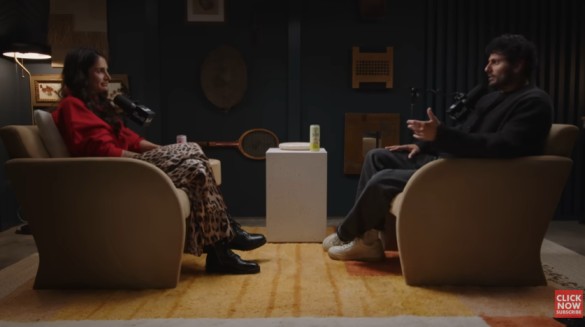
Editor’s Notes: In this episode of the Jay Shetty Podcast, Jay sits down with relationship expert Sabrina Zohar to break down the complexities of modern dating and the importance of intentionality. They explore why “effort equals interest” and how to navigate the confusion of digital communication by focusing on how a person actually makes you feel secure and seen. By shifting the focus from external validation back to yourself, this conversation provides a roadmap for setting healthy boundaries and finding a partner who truly aligns with your values. (Feb 9, 2026)
TRANSCRIPT:
The Modern Dating Dilemma: They Love Me, They Love Me Not
JAY SHETTY: I think the challenge today, or at least what I feel people struggling with, is almost like the old challenge of sitting there with a flower and going, “they love me, they love me not. They love me, they love me not.” And I don’t know when that was invented, but I feel like we’re ruminating, we’re overthinking, we’re procrastinating. How do you know if someone’s actually into you?
SABRINA ZOHAR: It’s so funny. Thank you for reminding me about the flower. Because as you said, I was like, oh, my childhood. I think what we’re really looking for, for me, I’m big on “effort equals interest.” And I think we’re getting in a time where that effort is starting to get muddied. We’re looking at it as, are they texting me every day? Are they contacting me? And we’re looking at these dopamine hits as opposed to actually connecting with people.
And so I think, for me, are you feeling safe, seen and secure with this person? Now, that might not happen after one date, but is this somebody that is reciprocal? Are they intentional? Are they consistent? Are they showing up for you? And that doesn’t just mean that they don’t text you for a day, but are they making plans? Are they actually progressing the relationship?
And I think for me, I’ll be honest, I have ADHD, so my cadence, my speech, I’m totally different, the way that my brain works. So I might show up differently and be super keen on somebody, whereas my partner is super avoidant, and he’s not into the texting. And his way of showing up is, “I’m going to spend time with you.”
And so I think it’s really important when we’re actually trying to assess if somebody likes you. I want to see, one, how does your nervous system feel? Are we constantly in this hyper, hypoarousal, hyperarousal? Are we high? Are we low? But I really think it goes back to the old school way of doing it. Can you have an open conversation with them? And at the end of the day, can you just ask them, “Hey, how are you feeling about this? And what are your intentions with where we’re going?”
I know it sounds like, oh, we all want a trick, and we all want something that we can look at. But I found really, most people are pretty apt to having a conversation if we approach it in the right way.
Why We Chase People Who Don’t Want Us
JAY SHETTY: Yeah. And I think you’re right. I think the challenge is that a lot of us still believe that love has to be earned and love has to be won. And so we love the idea of chasing and pursuing someone. And they become more attractive the more they avoid us and they become more exciting, the more elusive they are.
And them not messaging back for three days almost makes us think, they must be really busy and cool and interesting. And so I’ve really got to work harder, but only for us to feel let down, because all of those were just signs that “I’m not into you.”
So why is it that we chase people who are disinterested or showing disconnect, not doing all the things you just said? They’re not consistent. They don’t make you feel safe. They actually make you feel insecure because you’re constantly wondering whether they like you or not. Why do we keep chasing them and what should we do instead?
SABRINA ZOHAR: The number one question I ask is if you’re chasing somebody, if you’re going into the ruminating and the spiraling, I want you to check in with, how old do you feel? And where did I learn this from? Because those are the two questions, two things in general that changed my life.
Now, why do we do it? It’s interesting because when we ask why questions, and not that we’re not going to answer it, but ourselves, “Why don’t they like me? Why don’t they? Why aren’t they into me?” That’s intellectualizing. And when we’re intellectualizing, that’s our way of saying, if I can understand it intellectually, I don’t have to feel it.
And for a lot of us, at least me, I grew up in a very chaotic household. I grew up with no safety, really. There wasn’t a presence of joy or love. And so for me, it felt familiar. My nervous system understands, oh, you’re not into me, similar to my dad. Then let me make you. Let me earn it.
And then there’s the term repetition compulsion. Have you heard of it?
JAY SHETTY: No, I’ve not, actually.
SABRINA ZOHAR: Yeah, so repetition compulsion is a Freudian term. And essentially what it means is you’re going to date the parts of you that haven’t been healed.
JAY SHETTY: Say that again. That’s so good.
Repetition Compulsion: Dating Your Unhealed Parts
SABRINA ZOHAR: Yeah. So repetition compulsion means you’re going to date the parts of you that haven’t been healed. So for me, I had a narcissistic father. Every man I dated was incredibly narcissistic. Why? Because my nervous system’s homeostasis was, “you need to earn it. You’re not enough. There’s something wrong with you.”
That gets wired into us before words can even be said out of our mouths. That is wired in based on how your caregivers attuned to your needs, how are they showing up for you?
Maybe you had a parent that was really busy and they just didn’t make eye contact with you. And so now you feel that I need to get somebody and oftentimes we’re self-abandoning. Because if I can get you to like me, well then my dad was wrong and everybody in the past was wrong. But what happens then? It reaffirms my core beliefs. “See, I knew there was something wrong with me. That person doesn’t want me. I couldn’t change them.”
That’s where I ask when I start to chase somebody, how old do I feel? Do I feel like a kid? Do I feel like, man, I feel like I’m 7 years old talking to my dad. So then we’re not actually present. We’re not in this present moment. We’re not coming from the adult. We’re coming from the little wounded kid that just needs to be seen, heard, loved and understood.
Then what I would say is I start to look and say, what are my choices? If you can’t access your choice, then that means we need to regulate. And so this is something that actually blew my mind. My friend’s a brilliant neuroscientist. His name is Dr. Chris Lee. And he taught me “your state determines your story, determines your strategy.”
JAY SHETTY: Tell me about what that state means.
Your State Determines Your Story
SABRINA ZOHAR: So the state being, what is your nervous system state? Are you regulated? Meaning I can access my prefrontal cortex. I can access choice. Right now I feel safe. Both of us are here, but if somebody came in with a knife, we would get dysregulated. You might bolt, I might freeze. Our nervous system will change.
JAY SHETTY: Yeah. I would just leave you, right?
SABRINA ZOHAR: Yeah, that would be it. I’d be hiding. But everybody handles it differently. You might fight. Everybody is going to come out depending on what feels safe in the moment. But oftentimes the problem is that there’s no tiger, there’s no threat. It’s just our nervous system is perceiving it because our brain wants to save space.
And if our brain says it’s easier for me to go, “this always happens,” then I don’t have to turn my prefrontal cortex on and access that place of choice. So when we look at your state, think about it. If I’m super dysregulated, my state is going to determine the story. “I’m not safe. I need this person to answer me, there’s something wrong with me. I’m not good enough.” Which will then determine my strategy. “I’ll text them again. I’ll get them to like me.”
As opposed to, I need to learn to sit in the discomfort. I have to allow myself. Because when we can sit in the discomfort and expand our window of tolerance, which essentially means how long we can stay in our ventral state versus going up and down. When you expand your window of tolerance, you can handle more things. Then it’s not as scary.
The person that doesn’t call you, it’s, that’s okay. Maybe they’re going through something. I don’t need to make it about me. But oftentimes the reason we go after these emotionally unavailable people is because they’re familiar. They’re familiar, they’re safe. And it’s a baseline. Because if that’s all you’ve known, then that’s all you’re going to do. You can’t do better until you know better.
JAY SHETTY: Do you take private clients?
SABRINA ZOHAR: Sure do.
JAY SHETTY: There’s so many people I want to introduce you to now. I’m so excited that you’re here. I couldn’t agree with you more. And that’s sat so deeply and resonates so strongly for me right now. As you’re saying it. Is there such a thing as immediate red flags? Are there things that people can say and do that you consider to be immediate red flags?
Immediate Red Flags to Watch For
SABRINA ZOHAR: A hundred percent. I have a few that come to mind. The first one is my favorite question to ask on a first date is “how did your last relationship end and what did it teach you about yourself?” I don’t care about your ex. I really could give a shit. What I care about is what did you learn from it? Are you growth minded? Do you take accountability and ownership?
For instance, the biggest thing that narcissists will say is “all my exes are crazy.” Okay, well, if all of your exes are crazy, what’s your accountability in it? Do you have any empathy for their experience? That off the bat shows us, no, thank you.
Another thing that I always suggest to run is when somebody tries to say “you deserve better.” Because when someone says “you deserve better,” what they’re saying is, “I’m not going to become the version of what you need me to be so you should find somebody else.”
We also want to look, what happens when you say no? “That doesn’t work for me.” Do they respect your boundaries? Are they pushing back? I’ve had that. When I dated, if somebody said “I want to go out at 10 o’clock,” I would say “Oh no, I go to bed by 9:30. I apologize. That doesn’t work for me. Why don’t we do six?”
“Oh wow. What? Is there something wrong? Is your babysitter not going to let you?” Unmatch immediately because you didn’t respect what I had to say. So then what are we leading towards? If off the bat you’re making fun of me for setting a boundary.
So I think what’s important is we’re so focused on “are they choosing me, are they going to pick me” that we end up self-abandoning and say “my wants, needs and desires don’t matter, I need you to like me.” And so we then overlook all the red flags of, well, are they showing? Are they holding any space for you? Do they use I statements or do they blame you for everything?
These are the little things that we overlook. And not because there’s anything wrong with us, but because maybe we weren’t taught any better. And I know I wasn’t. I used to think grandiosity and the charm, butterflies, those are my favorite thing until I found out butterflies are actually your nervous system’s way of telling you that you might need to run because if that person wasn’t as attractive, you probably wouldn’t be as interested.
Chemistry vs. Red Flags: Finding the Balance
JAY SHETTY: That’s exactly what I find. We’re willing to tolerate so much poor treatment because we find someone attractive, interesting or fascinating in whatever way, whether it’s their mind, their body, their face, their charm, and someone who doesn’t have those features that we subjectively are attracted to. Even if they did all the other things, we just pushed them away.
But again, it comes back down to what you’re saying that those butterflies that we trust as a sign of excitement and chemistry and desire are usually a sign of “please, you’re feeling all this, but don’t ignore all of this.” And the natural thing is it just hijacks that mindset and it takes away all of the sense that we have.
And we’ve all had that feeling, right? You meet someone and you’re so enthralled and impressed by them that you completely ignored all of these things. How do we feel a sense of spark in chemistry with someone but not forget our head?
The Fallacy of High Highs and Low Lows
SABRINA ZOHAR: So that really goes back to that regulating because here’s the fallacy that I think a lot of people may not understand about a healthy and secure relationship. If you’re having high highs and low lows, then that is inherently not healthy and secure. Because what we have is intermittent reinforcement. Are they giving me a little? Okay, I’m waiting, waiting, waiting. Oh, I come crashing down. Then they give me a little, we’re high, low, high, low.
A healthy and secure relationship, for me at least, was a lot less exciting. It was, oh, when I communicate with you, you validate what I just said. So I don’t have to argue with you. I don’t have to prove my worth. And for a lot of us, that can feel really scary.
I know the first time I set a boundary, I was terrified. I was so scared. I’m like, he’s going to leave me. He’s not going to like me. He’s going to think I’m too much. And that was how I thought of myself. And that’s what I was projecting onto him. Now, did people in the past do that? A hundred percent. But I have met my fair share. I’m a heterosexual woman, so I’m going to speak in those norms where I’ve gone on dates with men that are…
I’ll tell you a story. I had a date that was written in the stars, right? I remember I was sweating sitting next to this guy. People were like, you guys have been together for years now. It’s our first date, and we’re together for five hours, and we make out at the bar. It’s a whole thing. And I was supposed to see him again. Didn’t end up seeing each other. Years later, this was an on and off, on and off thing. And he kept getting girlfriend and on and off.
Years later, I’m at an appointment. I didn’t want to give it away by saying where I was. Years later, I’m at an appointment, I’m telling the girl this story, and all of a sudden she stops and goes, “What was his name?” And I said his name, and she turned white, and she started shaking, and she’s like, “That’s my narcissistic ex who literally ruined me.” And she was hyperventilating, and I had to hold her, and I was like, oh, my God, I’m so sorry.
And she was like, “He was abusive. He was doing all of these things to me. I finally got out. You’re so lucky you didn’t go down that road.” And in the moment, she was right, because I completely overlooked the fact that he lied to me a bunch of times. He never took accountability. He was constantly deflecting. There was zero depth. He didn’t want to have the conversations.
Now, that’s different than “if he wanted, he would.” That’s not what I’m talking about. He didn’t have the capacity. And so I think what we’re looking for is, when you’re with somebody, I don’t want you to focus on how do they feel about me. I really don’t care.
Focus on How You Feel
I want you to focus on how do I feel in my body when I’m with this person? Do I feel secure? Do I feel confident that I can say what I need? Or am I scared that everything I say, I don’t know how they’re going to react. You can be excited, but my mama has said to me, anytime you’re excited, you need to add something at the end of the sentence: “For now.”
And everything was, I had a great date for now. I really liked this guy for now. Because what it allows us to do is be in the present moment for now. I really like this. But I’m not projecting on the future. I’m not putting that. I’m only safe if I have this person.
Because when we put someone on a pedestal, we’re saying they’re above us. I have to have them. But really what we’re looking for is two equals, right? I give 80% one day, maybe you give 80%. And we’re balancing and we’re going back and forth.
But the presence of safety in a healthy and secure relationship actually means that it’s going to be a lot less up and down and it’s going to be a lot more consistent. And for people like me that grew up in chaos, that felt really scary because I didn’t understand it.
JAY SHETTY: Yeah. What about someone… I’ve heard this a lot lately, and that’s what I’m asking you from people I’m coaching and working with. What happens when someone shows you all the right things for four to six weeks? So they text back, they’re consistent. They show up when they say they will.
And then all of a sudden, after six weeks of spending nearly every other day together or seeing each other multiple times a week, they change. Now they’re inconsistent. Now they message back after three days. Now they don’t have time to see you. Something’s come up in their life, and then you’re waiting around only for three months in, they go, “Yeah, this is not working out.”
That comes as such a shock to people now. Love bombing is one version, but that often feels like it’s one person just trying to win you and show you and kind of give you this perception that they love you. But this is more like, no, we’re just both being adults, we’re connecting. There seems to be regulation, there seems to be consistency. I’m seeing all the good signs, but then two months in, you’re a totally different person. How have you seen people deal with that in a good way or in a healthy way?
The Danger of Intensity
SABRINA ZOHAR: It’s jarring, right? I would never discredit anyone’s experience that when you think everything is good. But even you said something in the beginning that was really important. If they spend every other day together, it’s like, that’s intensity. And that’s the thing. And that’s why it can feel really scary.
Because there’s a lot of people depending on the attachment style that they have, where they go and they operate from feelings minus fear. And so for some people, they’ll go in 100% of, I feel really good now. I feel really good now. Because they’re not taking a minute to say, hey, is this actually what I want? What does this person have? Are there qualities?
For a lot of people, they might enter it in excitement. Look, they’re there, I’m here. And we’re excited. We’re excited, we’re excited. And then the novelty wears off because the person is consistent, because they’re not playing games, they’re not being activated in the same way. And that’s usually when you’ll start to see the pull away.
For me, that’s why I’m a big proponent of going slow. Going slow isn’t an excuse for bad behavior. Going slow just means you’re not expediting the stages of the relationship quicker than they need to be. And so what that could even look like is saying, I, sorry, I have plans this week. I can only see you once or twice because I’m maintaining my life. You haven’t earned a place in my life yet.
And I see that a lot of the times. And I used to be her. I would meet a guy. I saw this terrible dating advice. She said, “Always have your dates on Thursday because if it goes well, you can make plans for Saturday.” And I said, oh, absolutely not. No, ma’am, because then I’m too accessible. Then what I’m telling this person is, I have nothing going on. What do you want to do?
And instead, they’re in addition to my life, not instead of. And so if I’m welcoming you into my life, you have to earn that place into my life. And so I would say this. If it’s happened, the best thing to do is one, not take it personally because we have to ask, how could it be you?
Now if you can remove yourself and say, yikes, okay, I text them 300 times yesterday. I called them a bunch, I started accusing them. Great, if you can be self aware enough to remove yourself and understand it. But a lot of the times we have to say what’s the story and the narrative that you’ve created about the situation? Because that’s usually what’s hurting more.
It’s less about, of course. But if you knew this person for a month and a half, do you really know anything about them or is it the idea of them, the scarcity mindset? I might never meet anybody else. They were the best I’ve met. I haven’t met anyone like this. So then we’re already putting them in a place that they haven’t earned.
Because if they were so amazing, then they would have stuck around and instead of thinking about what if, we have to look at what is. And what is is that this person didn’t show up in the ways that I need. That doesn’t work for me.
JAY SHETTY: Yeah, I can’t wait to send that to so many people to listen to because sadly, it seems to be the reality. And I agree with you completely that it’s all about that regulation. Because when we like something, we want to fall in love and we want it to be real and we want to speed it up and we want to spend every night with that person because that’s what the movie showed us and that’s what the music talked about. And that’s what we believed was love.
Not only to realize that you are just making your access weaker, you’re giving away all of yourself with not even knowing whether this person deserves it or has the values for it or has the character for it. And you can see in hindsight, but then you go make the same mistake. Because we all just want to be wanted so bad. We all want to be needed so bad. We want to be loved so bad that we’re willing to give away our energy, our presence, our body freely. Because it just feels so good to be wanted.
Who Do You Want to Be Wanted By?
SABRINA ZOHAR: Of course, who doesn’t want to be wanted? But here’s my question. Who do you want to be wanted by? Them or you? More often than not, when we’re, I need them. I need them. Your littles aren’t scared that they’re going to leave you. Your littles are scared that you’re going to leave them because that’s what’s always happened to them.
If growing up, even for me, my experience was my father was very abusive to us and he was not father of the year by any means. And so for me it was please come back for me, please come back for me. And I didn’t realize that in my dating life I was doing to her what my dad did to me. I was doing to her and saying, you don’t matter to me. Go away, you’re too much.
So if I’m shaming and blaming myself, how am I going to grow? If I show myself compassion, I can actually do that. And I understand the need and desire to be wanted. But if we… My mom again will say, if you got to love yourself more than the need to be loved by other people. It’s not that I can’t love you if you don’t love yourself. That’s a fallacy. Plenty of people can love you if you don’t love yourself.
But if I need you in my life versus want you in my life, it’s going to be very dangerous. And I found that out when my dog passed away. I used to joke when he was alive, I’d be like, oh, he’s never going to die. Oh, he’s never going to die. And then he did and it happened within 10 days. And it was the hardest thing I’ve ever experienced. And I lost everything in that moment.
And that’s when I realized I can’t be so beholden to an external because I lost myself. I was a shell of a human. But I started my career at that same time and I made that promise to myself. I will never… And so even in my partnership now, I love my partner. I think he is one of the most amazing people I’ve met.
But I also know that if today we decided it wasn’t going to work, I’d move on with my life. Not because I don’t love him and not because I don’t think that we could have a beautiful life together. But I also know that my life goes on and I can’t be holding on to somebody else hoping that they’re going to validate and choose me for me to live that life.
JAY SHETTY: I’m so sorry for your loss. What was your dog’s name?
SABRINA ZOHAR: His name was Clem. I’ve got him. He was my best friend and he was my object permanence. He was with me for 10 years and he saw every heartbreak. He saw everything. And I think at the end of the day, what he taught me was that there are things in people that can love you for who you are.
I know I’m a big personality. I know I talk fast and I have a different cadence and I come out of the bat, and I know that a lot of people might not like that, but if I hate that about myself, how am I going to be with someone that loves that about me? Because I’m constantly going to be trying to change that.
JAY SHETTY: Yeah.
SABRINA ZOHAR: And so my dog really taught me this really unconditional love and what that means. And he also taught me that I don’t need to be for everybody. And that’s okay.
JAY SHETTY: Yeah. Well said. Beautiful lessons. I feel like right now everyone is exhausted with dating apps. Setting up dates, figuring out who’s going to pay for it, where you’re going to meet. Where do you start if you’re exhausted with dating but you want to find love?
The Exhaustion of Modern Dating
SABRINA ZOHAR: I think what’s really important is we have to look at what’s exhausting us. I used to get exhausted from dating because I was putting so much pressure. I would match with a guy and me checking my phone like every three seconds. Where are they? Had they answered me? Because what was I saying? They’re going to make my life better. This is what I’m waiting for. This is what it is. And if I’m, again, if I’m not focused on what is right now, then I’m thinking of all of these other things it could be.
And so I would say if you’re tired from dating, then we have to start taking a break where they need. And that just means, again, let’s talk about state story strategy. If your state is burnout and exhaustion and you are just completely done, then your story is going to be, there’s no one for me. I’m so tired. I’m never going to meet anybody. I want this to be done. So what’s your strategy going to be? You’re going to constantly go after the wrong people. You’ll hold on to people because you’re scared to let them.
And I think, here’s the thing. What I’ve learned and why people are so tired of dating is because they haven’t learned to grieve. Because when you hold on to everything and you haven’t learned how to grieve the ending of things, it’s going to be very difficult for you to move on and go to the next and go to the next. Because the reality is my partner always says, think of the stupidest person you know. And remember that the population is about 49% stupider. Right? Like, there are a lot of duds. There’s amazing people out there. But that’s what dating is.
And dating is that you go out and you see not just, are you choosing me? But do I choose you? Do you work with my life? But I can’t do that unless I learn to grief. And so I think a lot of the fatigue we need to look at and say, where is that coming from? And then ask, what are my choices? Do I have to engage in that? No. I met my partner on an app. You don’t have to meet your partner on an app. But if your answer is, I don’t want to do dating apps, are you okay getting rejected in person? Are you okay going up to someone and saying, I love that sweater. And they go, I have a girlfriend. No worries. Thank you so much was asking for that, my brother. But thank you for telling me. Right. You’ve got to be okay and be really grounded in yourself.
The Dopamine Trap of Dating Apps
And apps are easier because you’re, and so I think it’s the expectations that we have and we have to remember apps are a dopamine addiction loop, and so is your cell phone. That’s why I’m a big fan of don’t text a lot. Because what happens when you meet somebody and you start texting a ton? You’re creating a dopamine addiction loop. And so your brain is going, I need more. I need more. I need more. Because it’s trying to baseline. And then when you’re stressed, all of your neurotransmitters are being depleted. And then here we are where you’re a hot mess because the person didn’t text you back in 20 minutes.
And so I think the exhaustion and fatigue really comes from what are we thinking that these people are going to give to us? And then, how can I live that life now so that when I meet someone, I say, I’m allowing you in my life because you’re not going to mess with what I have. And that’s how it was when I met my partner. I was a shell of a human. I lost Clem, my company. I was supposed to be in Shark Tank, and it didn’t work. It was a whole thing.
But I remember thinking in my head, I can’t afford to lose myself. And so when I met him, I said, hey. I looked him in the eyes. I’ll be honest with you. I slept with my partner on the first date. And I looked him in the eyes when we left after we went to dinner, and I said, I had a really great time with you, and if this is all it was, thank you so much. I really needed tonight. But if not, and you’re going to call me again, don’t waste my time. You better call me, because you’re intentional.
And he was like, he thought that was so sexy. He was like, man. And he said it. You weren’t afraid to lose me. He was like, you were more afraid to lose yourself. And that made it very sexy because he knew that me wanting him in my life wasn’t me trying to hold on to him. I was choosing him.
JAY SHETTY: I love that energy. That’s so cool.
SABRINA ZOHAR: It’s a different energy.
JAY SHETTY: Yeah.
SABRINA ZOHAR: And that’s, I think, and I’ll be honest. I didn’t wake up like this. I used to be so, I created my career because I was so anxious, I couldn’t sit still. I would, oh, my God, Jay, you didn’t want to know. In my heyday, I would text a guy and say, like, I would text him, hey, do you want to hang out? 20 minutes would go by. I didn’t hear back. I’d be like, okay, guess not. And then I’d get a text from him like, hey, I actually did want to hang out with you, but not anymore. And it’s like, they’re right. They’re right because they could pick up on I need you. And nobody wants to feel that when you just met somebody. It’s a very overwhelming feeling. I don’t care what your attachment style is.
The Struggle Between Who You Are and Who You Want to Be
JAY SHETTY: Yeah, but I think that’s the challenge, right? That we are scared of being ourselves. Because ourselves is that right now where our natural gut reaction is to message someone, hey, do you want to hang out? Hey, are you sure you don’t want to hang out? Like, you know, and that’s who we are. Because we are coming from a place of insecurity and not feeling safe, as you said earlier, from our past wounds. And so being ourself doesn’t help either, because being, and so then we block being ourselves.
So we say, oh, you know what? I’m going to be mature. I’m going to send one message, and I’m going to wait. But the real you is stressing over the fact that you want to send another message. And so how do you live between those two worlds? Between wanting to become your higher, more evolved, emotionally intelligent self? But really, you’re stuck being insecure, confused, and chaotic.
SABRINA ZOHAR: So that’s the only thing I’ll challenge you on is who says that to you are.
JAY SHETTY: Who says that?
SABRINA ZOHAR: Who says that’s who you are? Right.
JAY SHETTY: I mean, not who you are at the core, but who you are right now. That’s your base level.
SABRINA ZOHAR: Yeah, totally. Then I would go back and say, where did I learn that from? Because I, if we’re, if we’re going to date from lack and we’re going to date from I’m insecure, I don’t believe in myself, it’s going to be really difficult to let someone love you in the ways that you deserve, because the reality is, and you know this, you’re married, your partner’s going to trigger you, you are going to be triggered. Your partner is going to piss you off, they’re going to say things and you’re like, oh, no, but you don’t, because you care about this person and you love them. But part of being a human is triggered.
And so I think what I see, especially with a lot of people when we have that insecurity is for me, I would say, okay, is that who you are? Is that what you were taught? Because if that’s what I was taught, then that means that who I authentically am, I authentically am someone who has a lot of light, who’s excited, who’s passionate, who’s gregarious, who’s vivacious, who’s a big personality. I’m not insecure, I’m not those things. But I do identify as that and I think that’s very human.
So I would say what we want to start to do is look at, I would never suggest somebody date if they’re in such a place of lack. I would not. It’s the same as anything else. Like, I wouldn’t suggest somebody go and run a marathon if they’ve never gotten off the couch. It’s like we want to move in steps because like New Year’s resolutions, your nervous system is going to go, I can’t do this. Way too overwhelming. So we want to go smaller and have bite sized kind of steps.
Creating Space Between Stimulus and Response
And so maybe that means that if you want to be the really evolved person that only sends one text and you are hell in a hand basket, then maybe that means that we put one minute, one minute. Because what we’re trying to do is we’re trying to take the stimulus and put space between reaction and response. And so maybe that’s it. For one day you say, okay, I waited the minute and then I sent the text. But then the next day maybe it’s, you waited two minutes, you waited three minutes.
What we have to look at is what are my choices? Sure, we can keep showing up in those ways or we can say, wait a minute, I need to regulate my nervous system. I need to break this loop. I need to go for a walk. I need to get myself back into a place where I can access choice. Then I can decide if I want to text this person. We can have all those tools, but then we have to look and say, but am I identifying with something? Right?
I’m sure you hear this all the time. I am anxious, attachment. No, no, no, you’re not. That. You have that. I am not ADHD. I have ADHD. If I self identify and I fuse with the parts, it’s going to be very difficult for me to see myself in any other light. And so I think if we have insecurities, we’re all human. I do. I think every day there’s something wrong with me because I’m a person.
But what I do is I then stop and say, what did my little need to hear? What did little Sabrina need to hear when she said, oh, this must be why there’s something wrong with me? She needed someone to come and say, no, that has nothing to do with them. I think you’re amazing. I think you’re really cool and I’d like to hear what you want because we haven’t. We have to hold the space in a way that we weren’t held when we were there. That’s how we’ll start to be able to build through the insecurities, date from a more regulated space. But without that, we’re putting makeup on a pig. Right? They’re like, oh, send him this text to get this. It’s like, like I’ve gotten inappropriate photos. It does not work. You know, like, I’ve gotten my fair share where I’m like, that’s not what I expected. Because you can’t manipulate and control other people. You can only control yourself.
JAY SHETTY: Yeah, I don’t love that advice. I don’t think it works.
SABRINA ZOHAR: It doesn’t.
JAY SHETTY: And, and it’s just gamified and it’s, it’s not you. And it’s a technique and it, it’s a strategy that ends up, you know, it’s like strategies of like business and projects, not for people. And, you know, when it comes to people, you want to be able to, to be authentic, be yourself and connect with someone on a real perspective rather than having some perfect AI script out your perfect text message.
The Danger of Pretending to Be Someone You’re Not
SABRINA ZOHAR: We’ve gotten a few profiles where I look and I’m like, that was ChatGPT that wrote it. And I actually had a client once and he, I would talk to him and I was saying, you know, what if they said this and he was writing it and taking the exact. So he had all this depth on his profile and then he would say, I don’t understand. Why am I not getting, why are these girls not wanting to meet me? I said, can I see the match like I see the conversations? Hey, you look pretty. And then one girl even said, but your profile was so deep. What is this?
JAY SHETTY: Yeah.
SABRINA ZOHAR: And I was like, you can’t pretend. For how long are you going to pretend for? That’s going to be really exhausting. That’s going to lead you to burnout versus you’re right, people aren’t going to like me. And that’s okay because I have to be. My mom has always said, you can please some of the people all the time, but you can’t please all the people all the time. And you’ve got to be okay to disappoint people with who you are.
The Foundation of Dating: Setting Non-Negotiables
SABRINA ZOHAR: For me, my number one non-negotiable was you have to be done with your ex. I am so tired of hearing, “Oh, my ex wants to get back together, I’m not over my ex.” It’s like, then please don’t get back into the dating world. If you don’t feel like you can be present with somebody else, it’s okay that you might still be hurting, but then please don’t go back out there.
I think for me, I want to see, are you growth minded? My partner always asked questions and the one question he asked was, “What is something you changed your mind about recently and what prompted the change?” I want to see, are you rigid? Are you flexible? We want to start to understand that what happens when I say no? What happens when I set a boundary? How do they treat waiters? I want to see somebody when they’re dysregulated because then I want to see, did you just yell at that person because he didn’t get your car at the time that you want? No, thank you. I have no interest in this.
And so what we’re trying to look and see is that first of all, does this person treat other people well? Is it somewhere where I can feel comfortable? Are they using “I” statements or are they saying, “You never call me, you never do this?” Okay, so we’re using “all” and “never.” Those are not really fair terms.
But I think when we’re talking about a solid foundation, that’s where going slow comes into play. Because what we’re doing is we’re saying, every single time I see you, it’s first date just to see if I want to have a second, second just to see if I want to have a third. But oftentimes we go on a first date and say Prince Charming.
The Disney Myth and Building Trust
And the thing is, Disney lied to us because Disney told us what happened happily ever after. They didn’t tell us, did Prince Eric have a drinking problem? Did Beauty and the Beast, did Belle not get out of the house again? Was she dealing with that? We don’t know what comes after it. We just see happily ever after.
And so what we’re really looking for is, what does that look like to you? And I think for me, I was so focused on, but if you like me, I like me. Instead of saying, no, I actually don’t enjoy that. And holding the space to say, I don’t like that. And if you don’t either, that’s okay.
But I think the solid foundation comes when you can have a space where you can trust. And that includes hard conversations. Because I think a lot of people, and I’m sure I’m curious if you hear this as well, I hear it every day of “I don’t want to be too much. I don’t want to push them away. If I ask that they’re going to think I’m too much.”
Then good. Go find less. If you think I’m too much, I’d encourage you to go find less, because that doesn’t make me too much. What that means is that I want to see if you are okay for me. And that’s why I’m big on, if somebody says something that hurts you, “Hey, can I share something with you? What’s going on? I really didn’t love the way you said that. It really made me feel small. I felt very dismissed and discredited moving forward. Can we have a different way of saying it?”
If your partner says, “Absolutely. Thank you so much for telling me,” great. Move on. Go into, you passed. Go collect 200. But if you can’t even have the rupture, the regulate and then the repair, you’re not going to be able to move forward with these people.
Don’t Trauma Dump, Build Trust Gradually
And so I think from the beginning, that’s why I told my partner that after first date I could have left and gone, play it cool. Oh, my God, don’t say anything. What did I have to lose? I hit myself. And that was way too high of a price.
And so I’m a big fan of don’t trauma dump. God, please don’t trauma dump on a first date. Please, please. We don’t need to start talking about how your father hit you when you’re a kid. Your date does not need to know that. We have to be really cognizant that we don’t know who these people are and we don’t know what information they could take and put in their back pocket and use against us.
Trust is conditional. I give you a little. I see what you do with it. I give you more.
JAY SHETTY: Yeah, absolutely.
SABRINA ZOHAR: That’s the foundation I want people to build, which is I trust myself because no matter what, I have my back. And if you don’t, that’s okay. I do, because I’ll speak. My voice now needs to be heard and it never was. And I think that’s part of the foundations is having your non-negotiables mean I’m not playing small anymore. This doesn’t mean I need to overreact, but I’m not going to play small.
The Skill of Self-Advocacy
JAY SHETTY: One of your greatest skills, Sabrina, as I’m hearing you talk about this, is your ability to advocate for yourself. And that’s what you’re encouraging people to do, is to actually be advocate for yourself. Your beliefs, your thoughts, your values. And I think that’s a skill that no one really has or is trained in. In that there’s nowhere in life that teaches you to advocate for yourself.
School never taught you that. Your parents rarely tell you that. And when you’re young, you just ask for stuff. You’re not advocating. You’re saying, “Oh, I want this for Christmas or I want this for whatever.” But you’re not advocating. You’re not presenting an argument or sharing a value because you’ve been treated a certain way. And we struggle to do it at work. People struggle to do it with their colleagues, their bosses, their managers, everyone.
So as I’m listening to you, I’m like, okay, advocating for ourselves is one of the biggest skills. And I remember talking about foundations for dating or being clear and advocating. I remember when me and Radhi first started dating, one of the first things I said to her was I was like, “I’m not the kind of guy that wants to go to the cinema on the weekend and then go to a furniture store and then like, that’s just not who I am.”
And I’m the kind of guy who has a purpose and this is what I do on my weekends and this is my priority. And I just want you to know that that’s not because I think this is less than, this is just who I am. And I just wanted her to be clear on what she was getting involved in.
Where I was like, “Hey, if there’s a clash between something that’s a family event of yours or me,” and at the time I was doing like five person events in London. I was like, “If I’ve got an event, I’m always going to prioritize my event because I’m doing that on my weekends. And it’s really big for me. But if it’s something that you really want me to come to, then it’s a conversation. But more likely than not, I’m going to advocate for wanting to go to this thing.”
And I did that not to be douchey or to be self-righteous or to be better. I did it because that’s just who I am. And luckily Radhi at the time would be like, “Yeah, I totally get that. And by the way, if you want me to be at that and I have this, I’m probably going to go to this because as much as I want to support you, this is a priority for me.”
And our relationship has continued to be that way up until this point. And to me I’ve just seen it as a great strength that I was able to advocate and she was able to advocate for herself.
Now had I not advocated for myself, and I think often what we do is we try to advocate for what the other person should do. So, “Hey, when I do this, can you come and join me?” Rather than like, “This is a priority for me and I’m going to make it a priority for myself.”
Teach us the skill of advocating for ourselves because most of us just want to let it go because we don’t want to be too much or crazy.
SABRINA ZOHAR: I think where it started from is a memory that comes very vividly when I was a kid. My dad, like I had mentioned, was not a very kind man at times. And my sister and I got into a fight and I ran into my room and I remember he said, “Open the door, I promise you I’m not going to hit you.” And I said, “No, you are.”
And I remember I had a little suitcase. And I only know this because I had to go back and see her. And I kept asking myself, where did I learn that I couldn’t speak up? And it was because I said, “Dad, do you promise?” And I opened the door, and he punched me in the face, and I was bleeding everywhere. And he left. And he left us for three weeks.
And I remember my brother on the couch saying, “How am I going to be the man of the house? I’m only 14,” and I was 7. And so I knew in that moment, you’re not safe. And I also learned in that moment is you can’t speak up. You got to keep your mouth shut, girl, because if you open it up, you’re going to have this again. You almost lost your father for your family. And I carried that with me.
And it wasn’t until I started to do the work where I said, where did I learn that from? And I went back, and I literally opened the door for her, and I told him, “Get out of my face.” And I spoke to my father as the version now. And I took her and I said, “We’re out of here. You don’t have to live here anymore.” And I have done that every single day.
Because whether she be in the attic, whether she be back in that room, it doesn’t matter where she is. For anybody that’s listening, you might not have that journey. You might have it be something completely different. But if you want to advocate for yourself, you got to learn where you learned that that wasn’t safe. And I have to give myself permission to advocate for myself.
And then what I also have to do is, no, people are going to not be okay with that. We have to remember if you’ve never set boundaries, and then all of a sudden, you start setting boundaries with someone and they push back. Well, yeah, because they benefited from the version of you that didn’t have any. And so now when you start to show up differently, you’re going to have to grieve that people are going to leave.
But then what you also do is you get to choose who gets to come into your life. Because what you did with Radia was beautiful. Hey, here’s where I’m at. And she says, okay, here’s where I’m at. And you’re both going, that works for me. And you’re making a choice because you’re both able to make choices. And that’s the problem is when we think I don’t have a choice. Well, they didn’t call me. I don’t know what to do. You’re not old, waiting for your mom or dad to let you out of that room. You get to choose.
Now, that took a lot of work that took a lot of tears, that took meditation, that took me years of having to really sit and say, I’m okay with this. And I would be lying to you if I said that I wake up every morning like that. I have to advocate for myself online. You know the Internet as well as I do. It’s a terrible place to be. And when I get trolls or attacked, I’m the one that has to say, I don’t appreciate this. Get out of my ecosystem. Because if I don’t stand for something, I fall for everything. And if I don’t have my own back, who is going to?
And I learned that the hard way in childhood when no one had my back, when who was there? And so now really the way to start to advocate for yourself is to understand where did I learn that I couldn’t? And to reparent that version of us, to be able to even close your eyes, hand on your stomach, hand on your belly, and just say, I feel like I’m six right now. And that’s okay, that Sabrina’s really scared, but I want her to know that she has me and that dad’s no longer here and I got rid of him.
Now, that didn’t make it magically okay, but what I did was I showed myself compassion and I was able to close the loop in my brain that it’s safe for me to do that. And then I deal with what comes up. And so I think if you want to advocate for yourself, we have to learn where you learned that that wasn’t safe. And then we have to go back even into meditation therapy. It doesn’t matter where you could do this however you want. I do it with clients. We all do it in different ways, but we have to be able to go back to those parts and tell those versions it wasn’t you.
Because what happens, I don’t know if you’re familiar with egocentric age. And so essentially what that’s saying in psychology is from 0 to 7 to 10, depending on the school thought, is that we are narcissistic as children. You have to be. That’s how you learn. Like, oh, I fell. Okay, I could get back up. But we attune to our caregivers. And so during that phase, if at 6 years old, your father keeps leaving, of course you’re going, oh, it’s me. Oh, there must be something wrong.
Because if you didn’t have an adult to come and say, “Hey, they’re unstable, this isn’t you, you didn’t do anything wrong. Their way of dealing with this doesn’t mean anything about you.” Who had those parents? Right? Very few of us. Then that’s where we create these core beliefs. And then the core beliefs become our stories, and then they become our cognitive distances. And then that’s how we start to move through the world.
And so it really starts with, where did I learn this from? And then what did I need then that I have to give myself now? And that was me having a voice and being okay that my voice is going to hurt people, but it’s also going to help people.
JAY SHETTY: Thank you for sharing that difficult example. I hope that helps a lot of people because just hearing how connected they are and of course, how traumatic and difficult that moment is, but at the same time, how much resilience it brings and how much strength it brings in this moment now, because of your actions then and because of your ability then, and I hope that gives everyone else permission to really do that work.
Doing the work isn’t all the fancy buzzwords, and it’s what you just shared so openly. And I’m so grateful for your vulnerability because I really believe you’re giving everyone who’s listening permission to do that same work before we just walk into another relationship and walk into another situation where we don’t advocate for ourselves. Two years go by, we know we’ve been suppressing, advocating for ourselves, and then that person leaves us because we never advocated and we never said what we wanted, and then they left anyway.
The Fear of Being Alone
SABRINA ZOHAR: I would argue to anybody that’s scared, right? What if they leave me? Or what if I’m alone? It’s like, but aren’t you already? Aren’t you already alone? If I’ve been in relationships where I couldn’t be my authentic self and I would cry myself to sleep because I felt more trapped in my own body, right? I couldn’t be myself. I couldn’t be authentic.
And I think the biggest thing that I learned along the way was that it’s really important to thank your little. Because I am so grateful that my little Sab learned these coping mechanisms. I’m not grateful she had to, but I’m grateful she did because she did keep me safe. I’m here right now. I’m alive, I’m breathing, I’m well. And that’s thanks to her.
And I think a lot of us look at as like, I want to get rid of that part. I don’t want to look at them. That’s what got me into trouble. But the more we resist that, the more it’s going to persist, and then they’re going to keep coming out and saying, “Hey, remember me? I’m still hurting.” So if we can turn to those parts. And that’s really why a lot of people don’t want to do the work. It’s really painful. It’s hard to look back and say, oh, wow, yeah, that’s what I went through.
And I look at photos of little me. That’s like a great way to reconnect with your little. And I cry every time I see it because I can’t fathom why anybody would hurt her. But what I do know is I’m not going to hurt her ever again. And I’m not going to let anyone get next to her. And that includes anyone I date. That includes relationships, that includes colleagues. That includes everything in my life. And I know that if I do and something happens, I’m the adult and I have my back and I will protect her in a way that no one did.
JAY SHETTY: That’s so powerful. I love hearing that. So thankful to hear your strength and courage through all. It’s really inspiring. And I hope, I really hope everyone who’s listening and watching right now, we know it’s tough to do the work, and it’s heartbreaking sometimes to do the work, but breaking it open is far more likely to create a breakthrough right now than avoiding it. What are the signs of an emotionally unavailable person?
Signs of Emotional Unavailability
SABRINA ZOHAR: Somebody who’s emotionally unavailable is going to consistently buoy conversations back to shallow. So it noticed that you’re like, interesting. I can’t seem to have any depth with them. They just keep bringing it back to that. That’s the first thing with an emotionally unavailable person. The second thing, they shy away from any conversations of commitment. If you even ask, like, do you want to do something on Saturday? They really struggle. They struggle to let you in. And so that’s where we say everything is shallow.
There’s a lot of like. And so really what I see is like, one of my friends is dating a guy, and it’s so classic, right? They’ll hook up, they have a great night. She won’t hear from him for days. And the minute she brings anything up to him, it’s just, got to go, can’t talk about this. Sorry, I don’t want to do that. I’m uncomfortable now.
A lot of people would look and say, well, if he wanted to, he would. He must just not want her bad enough. But what we have to look at is capacity. Because in our brain, want and do are two different parts of our brain. So I can want a lot of things. I want to be a millionaire. I’m not. Is that because I don’t want it bad enough? No, there’s other things along the way.
But somebody that’s emotionally unavailable, what we have to look and say is it doesn’t mean that they’re a bad person, but what that means is that they can only meet you as deeply as they’ve met themselves. And if that person is saying, emotions are scary, I don’t want to be vulnerable. That makes me uncomfortable. Then how do you think they’re going to hold your space? How do you think they’re going to be able to show up?
Because a lot of people look and say, oh, come on, it’s just a relationship. Why won’t you commit to me? Well, what comes with commitment? Commitment comes with having to be accountable to somebody else’s emotions and feelings. You were both it. You’re married, I’m in a relationship. You know, being committed to somebody is more than just you go to the movies or you go to the park together. That’s holding space, that’s learning to regulate, that’s learning to coexist with somebody else. And if somebody’s not in that space.
My partner, he lost his sister three years ago before we met. She took her own life, unfortunately. And he really struggled for that year to open up to anybody because he was in so much pain. Now, is that because he didn’t want to? Absolutely not. But he was emotionally unavailable because he couldn’t hold the capacity for his own emotions. How is he going to hold it for anybody else? That’s why they’re shallow and they don’t really go deep because it feels very scary.
And for a lot of people that are emotionally unavailable, it doesn’t really matter. The attachment style. Here’s the thing that people hate. A lot of people like to say that the avoidance are the emotionally unavailable. And while they might be, so are the anxious. Anxious people are also emotionally unavailable because they’re not actually understanding what’s coming up for them. They’re focused on the other person. So when we outsource, then we’re, are we being in touch with our own emotions? Are we able to say, I feel this and this is how this impacted me? For most people, they can’t.
And so I think what we have to look at is, is there a discomfort with depth, with emotionality and with going there? That’s the first step that you’re going to tell. And my suggestion would be, please don’t try to change them. That is something that that person will do when they’re ready and they have the capacity to do it. But you coming into their life isn’t going to be what changes it. And that’s the reality.
Understanding Capacity vs. Ability in Relationships
JAY SHETTY: And I think that’s almost what upsets us more sometimes because we go through, wait, they have the potential for it. They just don’t have the capacity for me. So I’m going to be the one to open up that capacity. Or if they really like me, they’ll get that capacity and it annoys us more.
So it’s frustrating because when someone just, when we believe that someone just isn’t that person, it’s okay. But when we believe they are that person, they have the ability, but they don’t have the capacity. Right?
If someone doesn’t have the ability to be empathetic or understanding, we’re like, okay, they don’t have the ability. But when you’re like, it’s a capacity issue, like, oh, that if they love me enough, they’ll have it, what do you do then?
SABRINA ZOHAR: You accept it that they might not. And that’s the reality. If there’s somebody that’s growth minded and says, like, my partner and I, we’re in therapy because he is a thousand percent in of, like, I want to work through this. I don’t want to be emotionally unavailable. I don’t want to be avoidant. He’s like, I want to be secure. I want to show up for you as the man you deserve.
I didn’t change. I didn’t make him do that. I told him from the beginning, if you don’t let me in, I can’t continue doing this. And I set boundaries. And that’s what’s important is if you meet somebody and they’re saying, like, I had one guy and he said, oh, you know, I’m emotionally unavailable. And I said, yeah, so get out of my house. I was done with him. Done.
Because every time I’d go and say, hey, I need to hold you accountable. You said you were going to do this and you didn’t. God, don’t you have your own life? Why are you deflecting this onto me? You’re not taking accountability for what you did.
Now I could have sat and said, maybe one day, maybe one day. I’m not betting on potential because my dad never changed. So it makes me think these people will. Didn’t matter how much I loved my father. Didn’t matter how much I showed up for him, it didn’t matter how much my mother didn’t matter what she did for him, it didn’t change who he was because that’s not how this works.
And so I would say if you’re dating somebody emotionally unavailable who is growth minded and saying, I’m willing to do the work. Chef’s kiss. All right, continue on and see if they have the capacity and they might not. That’s a very real reality. They could do all this work and you can still say, but I need more.
But oftentimes it’s not that I need more than you, I need more of you. And that’s a really big discerning distinction because if I need more than you, I’m shit out of luck. But if I need more of you, we have something that we can work with if they’re willing to do the same.
You Can’t Love Someone Into Change
JAY SHETTY: So good. Yeah, I love that. You can’t love someone into change. You can only love them as they change. And I think that’s the mix up where we think, if I love this person enough, they will change. No, they won’t. They will stay exactly the same. You can only love them as they decide to change if they want to.
And chances are if they’re not showing you. And by the way, most people are telling us the truth. Oh yeah, most people are already saying like, you know what I’m like, you know, I’m not ready for a relationship, you know, you know, I don’t really think that way. You know, I’m not into this. People already telling us, but we ignore it.
We just don’t want to believe them because we secretly are wishing, wanting, waiting, hoping that something will miraculously. Or we think we see a spark of it within them. We think we see a glimpse of it within them because they show it to us once every 90 days, right? And we hold on to that once every 90 days ago. But that’s who they really are.
SABRINA ZOHAR: It’s like situation chips, right? When anybody people are in situationships, it’s like, so which one are you out of the bunch? Are you the one with commitment issues or you’re the one that does that’s insecure because, well, how do we get into that dynamic? How do we get into the emotionally unavailable dynamic with people?
Because we’re not taking up space because one person is saying, I’m going to play the cool guy or girl, I’m not going to have any needs, I’ll be the two dimensional. And that’s why the nice guy and the nice girl finish last because that’s all they have for me.
I find it so sexy when someone tells me no and not in the, just to say it. I find it really sexy if I say I really want this and they, oh, I actually don’t.
JAY SHETTY: Right.
SABRINA ZOHAR: And you’re like, tell me more. Like, what don’t you love about it? What was your experience? How did that land on you? Versus is whatever you like, I like. And that’s just not really a place that you want to be.
But I think when we were talking emotionally unavailable, to your point, people are pretty honest. And I think I’ll say this. I used to date the emotionally unavailable people because that was my baseline. I knew how to keep myself safe. I knew how to perform. I knew how to try to be the fixer. I knew how to project onto them all the things that I wanted them to be. And that’s why my mama would say, what if? Or what is right? What are we looking at here?
Now that I’m in a healthy relationship, I got to say, you know, when someone’s into you, when they like you, this person is going to call you, they’re going to have conversations. If you come to them with something, they work with you through it. Because it’s not about like, I’m not a fan of the don’t go to bed angry. Go to bed angry with a plan to talk in the morning because we need to have the rupture, but regulate to have the repair.
And I find that with the emotionally unavailable and then with the other dynamic, because if you’re secure, you don’t entertain emotionally unavailable because you know you deserve more. And if you don’t demand it, who’s going to versus if you’re insecure and you’re like, this is all I can get. There’s nothing else. And you’re convincing yourself and you’re translating crumbs into a meal when you deserve the entire loaf, not just a morsel of what they’re giving.
And like you said, you can’t love someone into changing. And that’s the reality. Love isn’t enough. I wish. Oh, boy, I wish. I wish. All we had to do was just love somebody. But if that were the case, my mother would have changed my father. She did everything. She literally would have morphed herself into a pretzel. And he still said, you’re not baked enough for me.
Because when someone just doesn’t have that, nothing I do will change that except walking away, because that’s for me. And I’m not a fan of walk away no matter what. I think we’re in a time where everything is, I don’t like this, so leave. I don’t like that. You say this, I’m going to go. You don’t say what I want, so I’m going to leave. No, no, no. That’s just rigidity.
But what I am saying is if I’m not seeing progress and if I’m not seeing that this person has any kind of depth that we can get there, I’m not going to continue to waste my time. It didn’t work in childhood, it’s not going to work now.
The Importance of Mutual Accountability
JAY SHETTY: Yeah. And an awareness themselves without your help and you as well, I think. I think that’s what you’re really seeing as well. That isn’t rigidity, is, oh, I’m willing to change too. I can see my part in this. I can see my little trauma, big trauma coming through. I can see my past coming through, and I see how that triggers that person.
But then I also see, I think that’s where we’re missing, where both people have to hold their hands up and go, I’m accountable. I remember I came from a relationship with my mom where my birthdays were really important. And I looked forward to that because my mom always made my birthday feel really valuable.
And when I met my wife, which I only discovered afterwards, was in her family, birthdays were not important. It was always about quality time, no matter what day it was. So we come from two totally different worlds. And this sounds like a really basic thing, but they’re so hardwired.
And so when it was my birthday and she wouldn’t make a big deal out of it, I would see that as, you don’t love me. And her take was like, but we spend so much quality time together all the time. Why would I have to make a big deal on your birthday? And it sounds like, again, it sounds so insignificant.
But it took two things. One was me recognizing that the only reason, going back to your example, the only reason that I think my birthday is important because that’s how my mom loved me, it’s not because I came up with that, or I really think birthdays are that important.
And at the same time, for her to realize that maybe she’s never thought about whether her birthdays are important or not, and maybe if her partner wants it, then maybe there’s some truth in that, but she’s just accepting the world she comes from.
And I think we often end up in a relationship with someone else only continuing to live in a world that someone else made for us.
SABRINA ZOHAR: Right?
JAY SHETTY: And so now you’re in a new world, living in your old world, designed by a parent or a friend or a sibling or a caretaker who you didn’t even question what world they were building for you. And you’re still holding onto it because it feels so familiar.
The Power of Vulnerability in Relationships
SABRINA ZOHAR: Your lived experience isn’t everyone else’s. Right? And that’s what you’re saying. And it’s funny. Birthdays mean a lot to me for the exact opposite. Because no one made them important for me. My mom was the only thing. God I remember. This is just to show you how little things can add up.
I was nine. And this was when my dad, he would not buy us anything. He used money as a means of control. And so he would have his girlfriends that he had, and they would come and go, oh, your dad didn’t buy you this. And I would just cry, being like, no, my father won’t give me anything to go buy at school. So, no, he didn’t buy me that.
And my mom saved up money and she took me to Ross and she said, you can buy anything you want. And I remember going through the aisles and picking all these things. And then she was behind me putting things back because she knew she couldn’t afford it. But she never let me know that.
And so when we got to the register and she bought me a pink dress I really wanted. And I remember when we left, she said, just don’t tell your siblings I bought this for you. And I didn’t understand it at the time. And now I understand what she had to go through to save up money for two months. Every time my dad would give her a couple, she would put it in her pocket because she knew I deserved something that day.
And she took me to Ross. She spent $20 on a dress. But that made me feel like a million bucks. And so when I met my partner and I would say, these means a lot to me when he dismissed it, that was triggering for me.
And to your point, how is he going to know? I don’t expect him to read my mind. I don’t need him to just anticipate my needs. There’s no one on the planet that’s going to do that. Not even yourself. But when I communicated that and then we talked about it. Now every year, he makes sure it’s special for me even though he doesn’t care about it.
But that’s part of that, is that I can meet and you can meet, meet and we go and we talk and we converse and we share. But what’s the real root of that is being vulnerable. And people are scared to be vulnerable. Because if I’m vulnerable with you, you could reject me. And if you reject me, that’s the same wound I’m running away from.
But that’s the key to a beautiful and healthy relationship, is you have to have the vulnerability to be able to say, well, this means something to me. And can I tell you why? Because how would he know if I didn’t share the story of my mom, why this means so much to me? Or to your point, if you didn’t tell Radia about your mom. She would have no idea. And just think, why is he being so dramatic?
But it’s a beautiful way to let someone into your life, and that’s emotional availability, is when somebody wants you to understand where they’re coming from. That’s them trying to welcome you in their life. Boundaries and communication don’t keep them out. They’re actually trying to keep you in their life. And we have to be able to read that and understand other people’s lived experience.
JAY SHETTY: I’m so thankful that you’ve done so much work, because I’m just listening to you going, wow. Like, there’s so much depth in everything you’re saying, and I can see now that it comes from such a deep, lived experience. And also not letting that become your paintbrush for the future, but almost washing the paintbrush before you start painting, that’s kind of like the feeling.
It’s like if you only paint with the paintbrush that is your past, you only have those colors to paint with, and then it’s limited. And when I’m listening to you and thinking about my own experience as well, I’m thinking, yeah, we’re just washing that paintbrush off, choosing the colors you want to choose.
SABRINA ZOHAR: You guys wouldn’t. I would imagine you would not be this far in your marriage if that didn’t come with tons of conversations, hard conversations. I’ve had conversations with Ryan where I’m like, is this it? Like, are we. Did we get to the end of the road and you’re. No, no, we didn’t keep going. But it’s necessary because for me, if we’re not growing and evolving, what’s the point? What is the point? What’s the point of both of us having a podcast if we’re not helping people grow?
You can change, you can evolve, but God damn, you got to do some work. And you have got to commit. What’s the difference between me, you and anybody that’s listening? The choices we make. That is the only difference. I came from nothing. You came from. We both come from nothing. No one has a silver spoon in their hand. Okay, now go off in the world. But the choices we make are what’s going to change that.
And you can either have the life you want or you can live the life you have. You get to choose. And it is a choice. It’s the same with. I can’t move on from them. They’re the love of my life. I don’t know how. No, you’re choosing to stay stuck, own that and then you can do. Because when you take radical accountability of your life, and I had to do that now, I’m not saying you take accountability of everything that happens in your life, right? If someone treats you poorly, it’s not about, oh, there’s something wrong with me.
But it’s about saying, but what did I allow? Because you start to look. I want you to look at anybody that’s listening. Look at your friends, look at your family, look at your partners, look at everyone in your life. And if you don’t like any of them, that starts and stops with you because you’re allowing them in your life. They didn’t force their way in there. And now you get to choose who stays.
Right Person, Wrong Time?
JAY SHETTY: And it starts then. That’s a great reflection. Everyone can do that right now and get really, really clear on that. Do you, Sabrina, do you believe in right person, wrong time?
SABRINA ZOHAR: I don’t. I think what makes someone right is that they’re in your life at the right time. Because for me, I believe that there are people in your life that maybe you met them at a time that didn’t work for you. But I don’t believe in holding on to people just because of timing.
Now, I think timing is incredibly important. I think timing and proximity mean way more than love. Because if I’m not at the right place at the right time, it’s going to be hard. But I don’t believe in holding on to people. If they’re right for you, they’ll come back organically and naturally, but you don’t need to hold onto it. And I think when we say that, we grip on and say, but that’s the person for me. And then you miss out on all the doors that are opening because you’re staring at the window that’s closed.
JAY SHETTY: I’m with you on that. I don’t challenge you either. I just think, like, you can meet someone that you like a lot at the wrong time, but that isn’t that. That’s the definition of they’re not the right person. And so it’s not that you won’t meet someone who’s amazing or you’re in a bad point in your life, or the opposite, where you’re in a great point in your life ready for the most amazing person, and they’re not ready. And that doesn’t make them the right person.
And like you said, it doesn’t mean they can’t be the right person one day. But, yeah, it isn’t the thing right now. But I think sometimes we tell these things to ourselves because they make us feel special and better.
SABRINA ZOHAR: And we love bumper sticker slogans. Our brain loves them. That’s why if they like you, you know, if not, you’ll be confused. Confused? No, dating’s really confusing. I don’t know who said that. Right. Dating is really weird. There’s a lot of confusion. If he wanted to, he would. We already went over that same right person, wrong time.
Because what happens is when you chalk people up to 140 characters or less, you just slap a bumper sticker and call it a day. But we are such nuanced creatures. We are so complex. We can’t be chalked up to just a saying, because then that’s insinuating all of us are the same. And I’m fairly certain a lot of us are different.
JAY SHETTY: Yeah.
SABRINA ZOHAR: And so I think what makes somebody the right. If I met Ryan, when his sister passed, we would never have been together. Now, that doesn’t mean that in the past, I’m sure you and I have gone on probably dates that are not your wife, not your partner, that you’re like, man, that was amazing. That doesn’t discredit the connection that you have, and that doesn’t mean that your partner is not. It’s a different connection.
And we have to be okay to know that you’re right if this person’s not for me. And not to mention what makes us want them even more, is that usually they don’t want us, because that is going to go into. I have to prove it. Let me earn it. I can get them. And we go right back into the wounds instead of saying, thank you so much. I’m going to move on with my life. When I did, I held onto a guy. I met my partner four months later after I let him go. Because I said right person, wrong time. You’re just not for me. I’m glad I didn’t.
Texting Etiquette in Dating
JAY SHETTY: Yeah. Talking about dating being confusing, I want to talk about texting in dating because this is. You’re a pro at this. It’s my thing, the techniques to seduce people or get people, but the reality of being really clear about it. So texting etiquette when dating, I have a few questions for you. To me, if you’ve only been out with someone one time, is it okay to ghost?
SABRINA ZOHAR: It’s not my favorite thing to ghost, but I would say we have to depersonalize it. If you’ve been out with this person once, nobody owes anything. Now, I know people are going to scream and say, but it’s your time and it’s this. I would love it if you tell somebody, hey, I’m not interested. But I’ve seen the other side of the coin. I’ve seen people lose their marbles. I’ve seen people attack.
I’ve had men show up at my house because they somehow figured out where I lived, and were upset that I didn’t want to see them again. So I would say this. It would be nice if you said that you don’t want to see somebody, but if it doesn’t happen, don’t take it personal. Welcome to dating.
JAY SHETTY: Okay. They tell you they don’t like texting during the day because they’re busy at work, but you still get anxious when you don’t hear from them. How does someone push through that?
SABRINA ZOHAR: Oh, that’s our nervous system. That has nothing to do with them. That person clearly communicated. They told you they don’t want to text. They let you know that they have a life and they’re doing other things and not everybody. I am so tired of the saying, we all have our phone in our hands. It takes 10 seconds. First of all, it’s never just one text. Second of all, that requires bandwidth.
I could be on social media, scrolling and watching dog videos, which I love to do all day, and I have 25 text messages. I don’t have the bandwidth. I will deal with you later. That’s not. And that doesn’t mean that I’m not interested in you. That doesn’t mean I don’t like you. But what happens is we go into black and white thinking, if they do this, it’s good. If they do this, it’s bad. And what we’re trying to do is understand in the gray.
I think if you’re getting anxious because somebody hasn’t text you back, we need to look at the state and the story that you’re in as opposed to that they’re the problem because how else are they showing up?
JAY SHETTY: Great take. Okay, I like this one. You’re always the one starting the conversation. Is that a sign you care more or just different communication styles?
SABRINA ZOHAR: That might be a sign that you’re not giving them space to step in. I’ve seen that often. Now, if you give the space and you don’t hear from this person, you have your answer right there. You were carrying this along. But oftentimes, I’ve had plenty of men contact me and say, this girl texts me every single morning. I don’t even get a chance to reach out to her.
Distance creates desire. It’s okay to let that go for a day. And if you can’t sit still, that’s what we need to work on, not the texting etiquette.
JAY SHETTY: Someone says they’re a bad texter. Does someone’s texting behavior actually indicate their interest in you?
SABRINA ZOHAR: To a certain extent, I think. If we see what. Where it starts to show is when they come in at a hundred. My mom always says, where else are you going to go when they come in texting every day, calling you all the time, super, super, super, super communicative. And then you get the crickets and the go. Well, then, yes, there’s a shift in behavior. Something is up.
But intrinsically, instinctually. Is their texting behavior a gauge of their interest? Absolutely not. My partner texts me every other day just to confirm plans. We or hey, hope you have a great day. Talk to you later. We did not engage. We’re three years later, and here we are. I don’t need to text him every day because we have a beautiful relationship. So we need to start to look at what else is there. And if all you have is texting, you don’t have a relationship.
JAY SHETTY: Yeah, My wife never messages me back, does she? Till this day. I have to call her. She’s a cool person. If I call her, she’ll pick up immediately.
SABRINA ZOHAR: Same with Ryan.
JAY SHETTY: She’s happy to talk. If I text her, I’ll be waiting for hours and hours and hours. And I’m just aware of that at this point. And she’s like, yeah, just call me. She goes, I’ll pick up the phone. If I see your name, I’ll pick up the phone. But if you’re messaging me, she’s the same. She’s like, and it was so funny. She sent me a screenshot of some conversation she was having the other day, and I said, it’s the 733 unread messages for me.
Like, I was like, I just noticed that at the top. And I was cracking up and she was cracking up. But it’s just. It’s just. Yeah, it’s like that’s how she likes to go. And she’s told me that many times now. I like texting because I don’t have time for a call. So I’m the one trying to do that same. But then I’m like, but no, she’s taught me how to get through to it. And she does. She picks up every single time I call her. No matter where she is, what time it is, wherever it is, she’ll pick up.
SABRINA ZOHAR: Yeah.
JAY SHETTY: And it’s. Yeah. So I can agree.
SABRINA ZOHAR: Where we have the issue is the story and the narrative that’s being created. Right. Otherwise, there’s no issue. But we’ve put. Texting is a dopamine addiction fuel the same as a slot machine. We are waiting. So dopamine is released in anticipation of not when you get the reward. That’s why waiting for the text. Where is it? Where is it? Where is it? And we’re like feening for a fix because that’s a drug versus then when you get it, you get the serotonin bump.
But then you need more because then there’s another text and they wait it and we start to get hypervigilant. They put 10 seconds. What? They put a period. They didn’t put a smiley face. We try to decode. And at the end of the day, we’re disconnecting. We’re not actually connecting because like you said, pick up the phone and have a conversation. And if the person goes, what are you talking about? I’m literally on the subway, dude, I couldn’t text you. I created a narrative that’s on me versus, hey, thanks for calling. Actually, there is something I’d like to talk to you about. And you’re like, okay, yeah, I said something.
Understanding Communication in Relationships
JAY SHETTY: Yeah, absolutely. And we observe it wrong. I think sometimes, and I talked about, by the way, this works with colleagues in teams too. Sometimes I’m going through an email exchange with someone, and I’m like, I just pick up the phone and just close it. I promise you will get done so much quicker.
And I’ve realized that with not just with other people on my team, where I’m like, and I’m like this sometimes, I don’t like making big decisions over a text message because I feel like it’s over committing without context. And so I’d rather pick up the phone and say, hey, these are the three things I’m thinking about. What are you thinking? Oh, these are three things I’m thinking, okay, let’s make this decision together. And it feels more real when, whereas saying yes or no on a text just feels like high pressure to me because I feel like I’m not giving any context of whether I want to do that or not.
SABRINA ZOHAR: Text has no tone. We create. So especially in dating, well, if we’re going to even talk, you don’t know this person. You match with them on an app. You are creating their tonality. You are creating how they say it, what they say. And oftentimes we do that and how we would do it.
So if someone texts you, like he asked how my day is versus the guy just sent out an automated text to 30 women that morning. And we create this whole fantasy versus words on a screen. And then we wonder why we’re so upset.
JAY SHETTY: Yeah. Yeah, that was so good. Definitely. All right, now I’ve got some scenario based questions. So if someone says they don’t want anything serious but keep treating you like a partner, what’s really going on?
When Actions Don’t Match Words
SABRINA ZOHAR: That’s why I hate “actions speak louder than words.” That’s the epitome that they don’t. Because what that person is saying is, I told you I don’t want a relationship. You’re still giving me access, so I’m going to take what I have. You have to tell them that you’re not willing to allow that, otherwise they will keep taking it. Why wouldn’t they?
JAY SHETTY: Well said. I like it. All right, you’ve been in countless situationships, none lasting longer than a couple months, and have yet to move into a serious, committed relationship. What could be happening?
SABRINA ZOHAR: You’re not using your voice. If you’re in countless situationships and you’re acknowledging that you’re in situationships, you’re not communicating. Because what is a situationship? It’s a relationship without boundaries, without clear communication, and without asking for your needs to be met. Start asking for your needs to be met. Start taking up space, and then you’ll start to see your relationships change.
JAY SHETTY: Okay, you went on a date that felt amazing. Everything aligned. They said, let’s do this again soon. And then silence. What’s going on there?
The Reality of Dating Uncertainty
SABRINA ZOHAR: It’s entirely possible that in the moment they did like you, and then they went home and went, actually, that’s not the one. You know, and I really just say it as if I haven’t done it. I’ve done that. I’ve been out on the date going, this person’s great. Then you go home going, wait a minute. Did he actually say what I thought he said? Or, no, I actually don’t really like this. And you just decide that’s why we’re dating.
And I think what I’m seeing now really big is that we want certainty. I need to know that before I’ve gone out with you that you want to date me. You want to be in a relationship, you want to get married. Because we don’t trust ourselves. If you trust yourself that no matter what, you’ll be okay. You’ll ask the right questions, you’ll vet them properly, and you’ll decide if this works for you. That’s what we need to focus on.
JAY SHETTY: Got it. Okay. You went on a date with someone who is perfect on paper, but there’s zero spark. Is there such a thing as the spark? And should you give it another chance?
SABRINA ZOHAR: I would have to argue and say, what are you looking for? Because if you’re chasing a feeling, you can’t be surprised when you don’t find it. When you’re chasing something that is just momentary, then you’re left with a human after. And so if they’re perfect on paper, then I think what we need to look and say is, what are you actually looking for? And what is it that, because that’s a cognitive dissonance. I say, I want this, and then these are the people that I date. There’s a disconnect.
So then I would say, well, then you’re chasing a feeling. Because the spark, as we spoke about earlier, is usually your nervous system trying to tell you to run and sending blood to your phalanges so you could get out of there. But they’re attractive. If you don’t have the spark, that doesn’t mean it’s bad. What I would look at is, are you interested in topics that they talk about? Do you like what they have to say? Are you intrigued and interested in talking to them? If that’s the answer, doesn’t matter about the spark. You don’t like the person, and that’s the differential.
JAY SHETTY: They keep saying, “I’m just not good at relationships.” Should you take that as honesty or a red flag?
SABRINA ZOHAR: Both. It is an honest red flag. If somebody is openly telling you, I’m not good at relationships, my next question would be, what does that mean? And I would say, no, thank you, because I am.
Creating Safe Spaces in Relationships
JAY SHETTY: It’s so interesting as well that I feel like I think we all want to feel safe, but it’s also making space for others to feel safe enough to be themselves.
SABRINA ZOHAR: Exactly.
JAY SHETTY: And a lot of the time I think in the guise of trying to keep ourselves safe, we actually make the other person feel very unsafe because we’re like, I don’t like it when someone does this, I don’t like it when someone does that. I don’t enjoy this, I don’t want this. And then that person goes, okay, well I’m not going to do any of those things now because if I tell you that then you’re going to, because you haven’t given me the opportunity for us to get to know each other, to even deal with that level of space.
Does that make sense? It’s like, I don’t even have the space to tell you that I’m struggling with X, Y and Z because you’ve just told me that you want someone who’s already done the work, who already does therapy, who’s healed, who’s this. And someone’s like, well, I was about to tell you that I’m dealing with this challenge over here and I’m in therapy for it or I’ve been seeking a therapist or, and now they’re just scared to tell you and they’re like, yep, okay, cool. Got it.
SABRINA ZOHAR: Oh, I see it all the time of like, I want a healed person. No more unhealed. Who, first of all, who is ever healed? I know that is a journey for life. If this is it for me, this is boring, right? Like if this is it, if I reached my peak, that’s it. Right. Like I’d love more.
But we have to stop looking at myopically of either healed or unhealed. We are looking for growth minded because if somebody is saying, I want to do the work, I want to invest, I just need help. Great, then we can support each other through that. But if somebody isn’t going to at least take a couple of accountability and ownership of their part in the dynamic, it’s a moot point.
JAY SHETTY: Yeah. Okay, a few more scenarios.
SABRINA ZOHAR: Let’s go.
Having “The Talk”
JAY SHETTY: You’re in the gray area. Not officially dating, but not casual either. How do you have the “what are we” conversation?
SABRINA ZOHAR: You don’t ask somebody what it is that you are. You tell them what you want, you see if it aligns. So if you’re in the gray area, you say, hey, I’d love to share something with you. I don’t know what’s happening here. I really like you. I’d love to delete the apps and just focus on you, but I wanted to see, how are you feeling about that? Most people won’t do that because they’re scared of the answer, but if you genuinely want to know, you got to ask.
JAY SHETTY: I love the idea of everything in life, of going into it with clearly what you want from it. And then it’s so easy to figure out where the other person lands, whereas you’re like, hey, let’s kind of figure out where this is going and what you want. And they’re like, yeah, well, what are you thinking? Like, I like the way it is right now. And your point’s like, oh, well, I don’t. But then you don’t know what to offer and what to say, and then you get sucked and go, oh, I like it too.
SABRINA ZOHAR: I’ll go with the flow.
JAY SHETTY: Yeah, it works for me. It’s in every area of life.
SABRINA ZOHAR: Yeah. Go with the flow is the worst dating advice.
JAY SHETTY: Yes.
SABRINA ZOHAR: Where’s the flow going? Is there an end game? Like, do we have snacks on the way? Like, where are we going? Because there is no end game. And so I need clarity, not the fluidity. Because when people say they’re going with the flow, what they’re really saying is, I’m not going to commit.
When They Move On Quickly
JAY SHETTY: Yeah, okay, you were dating someone. This has happened to too many people I know. You were dating someone who said they weren’t ready, and six months later, they’re in a full relationship with someone else. How do you stop internalizing that “I wasn’t enough”?
SABRINA ZOHAR: Well, that’s projection. Because then what’s happening is we’re putting our core beliefs. What we have to look and say is, maybe they found a partner that was better suited for them. Maybe that person didn’t trigger their nervous system. Maybe that person was a safer experience. Maybe you were really like their dad growing up, and that just made them and rubbed them the wrong way. Maybe you guys had completely opposing political beliefs.
What we have to do is we have to look and say, what are the facts? Because if I say I wasn’t enough, I’m not good enough, I could all but guarantee if I talked to the other person, they would say, oh, this has nothing to do with that. It’s X, Y and Z. So what I do is, what are the facts to back this thought up? And if I don’t have any, okay, then where did I learn this from? Because if it’s my insecurity that’s what’s really coming up, it has nothing to do with them.
JAY SHETTY: Yeah, your state, story, strategy piece applies to all of this because we start going. So even if we look for the facts, and most people can’t think of facts because the hard part about relationships is that everything’s so subjective. So you just go to, oh, maybe if I didn’t ask for so much, maybe if I wasn’t always needing so much, maybe if I didn’t always, then they’d still be here.
And what you’re really just saying is I’m not comfortable with what my actual needs are. Because you asked for them in the past, because you believed you deserved them, and now you’re questioning whether you deserve them again. And so it’s coming from a place of you feeling you don’t deserve those things when the reality is even if you got back with them, you’d still want those things in three months time.
SABRINA ZOHAR: Nothing changed.
JAY SHETTY: Even if you got them back. Nothing changed.
SABRINA ZOHAR: Nothing changed. But it’s really important when we’re talking about this. That’s why it’s like if you’re scared to ask for your needs to be met and have this conversation, then what we’re seeing is that person probably doesn’t have the bandwidth to begin with. And maybe they do and they just haven’t had the conversation with them. But if we’re going to look back and say they have something I don’t, well, then all we’re doing is we’re projecting our insecurities. So that has nothing to do with the person. It has everything to do with the story that you created about why they didn’t want you. The good news is you can control that.
Bandwidth vs. Love
JAY SHETTY: Yeah, yeah. You’ve brought up bandwidth so many times in this conversation and capacity. And I think it’s such an interesting point because our black and white thinking goes to, if they don’t want to do this for me, that means they don’t love me enough or don’t care about me enough. And what you’re saying is someone could care or could love or could have certain feelings, but they may not have the bandwidth, whether that’s emotional capacity or time or energy or whatever it may be.
But our mind goes to, well, no, that’s a sign that you don’t love me. Because the right person would have the bandwidth, which in effect is true. The right person will have the bandwidth.
The Nuance of Healing and Emotional Capacity
SABRINA ZOHAR: The right person will for sure, but it doesn’t mean that they don’t care about you. And that’s the nuance. I think what I really learned, what healing was. Healing doesn’t mean you get rid of the emotions. Healing doesn’t mean that you just never feel sad or anxious or anything. What it means is that you learn to live with it.
You expand that window of tolerance so you have the capacity to handle it. So it’s not every single time there’s an inconvenience you’re getting. Either you’re freaking out or you’re crying or you’re shutting down. It’s like, okay, well then we don’t have the emotional capacity to be able to hold things.
But that’s also part of holding two conflicting thoughts. I can miss someone and also know they’re not right for me. I can think you’re amazing and also say, this isn’t the right relationship for me. I can say that you’re limited and also say, but I think that we can make it through. If we can hold the two conflicting thoughts, then what we’re actually doing is we’re turning our prefrontal cortex on.
And oftentimes in dating, when we go from X equals Y equals Z, that’s because your brain is trying to actually close the loop by a shortcut. And it’s like, I love neuroscience. I think it’s fascinating. The more we repeat something, the deeper those neural pathways become.
And I found out something fascinating. It takes 300 repetitions for your body to remember a move. So I need to do squats 300 times for my body to go, okay, this is what I have to do. It takes 3,000 repetitions to create a new neural pathway that you would go down organically.
JAY SHETTY: Wow, I didn’t know that.
SABRINA ZOHAR: That’s a lot.
JAY SHETTY: That’s cool.
SABRINA ZOHAR: So let this be 2,999 left to go of I deserve. I’m worthy. I believe in myself, even if you don’t. But we got to start somewhere by creating these new neural pathways to be able to hold that space and capacity. Otherwise, you’re just going to keep going. This means this and that. Myopic black and white. The other fun fact I learned.
JAY SHETTY: That’s so good.
Understanding Your Brain’s Response to Triggers
SABRINA ZOHAR: I love neuroscience. The other fun fact I learned is when we get triggered or dysregulated, your amygdala takes about 10 milliseconds to turn on. It’s almost an instant. Your prefrontal cortex takes 10 times longer. So 235 milliseconds to turn on into the seconds.
That’s why people will go straight to they don’t like me, they don’t want me, they don’t do this. To your point, for us to turn the prefrontal cortex on and go, what are my facts? Can I challenge this? That requires a lot of work. So most people go, no energy save. This happened. This means this. Your brain is a predictive machine. It wants to keep you safe. It’s not trying to help you grow. We have to rank this the end at system.
JAY SHETTY: Yeah. Wow, I love those. I’ve never had either of those. And that’s so helpful and only a need to practice more repetition. And it’s interesting you said that. You said you need 3,000 neural repetitions. And I was thinking 3,000 means if you did something once a day per year, that would take 10 years to change it.
And that’s why it makes sense that so many real changes take so much longer than like 30 days and 90 days. And it’s like, unless you were saying it to yourself a thousand times a day, which is unlikely.
SABRINA ZOHAR: And it’s unlikely you’ll believe it because your nervous system’s like, you’re gaslighting me. That’s not real. So we have to push through that. Like it’s very uncomfortable doing the work. That’s why most people don’t want to do it. But if you’re here because you are, just know that there are other people that are. But you don’t need to have the bandwidth and capacity if somebody isn’t.
When Someone Avoids Conflict
JAY SHETTY: Yeah, yeah. All right, last scenario before we do a little rapid fire. So the last scenario is you’re dating someone who avoids conflict or shuts down when things get tough. How do you determine whether that’s workable or a long term incompatibility?
SABRINA ZOHAR: It’s having the conversation with them of what are they going to do about it. That’s the reality. Because if somebody is consistently shutting down, they don’t have that. There’s the rupture, but there’s no repair. Well, then we have to say, and first of all, and see, do they take accountability of that? Are they trying to do anything about that? Or are they saying, well, that’s who I am and this is it.
Because you can absolutely work through that. Maybe they didn’t, maybe they learned it in childhood that confrontation means that they’re bad and so they shut down. And maybe that means that they need to go to therapy. They need to understand what came up for them. They have to learn how to be present.
I think what we need to learn is we have to look and see if I show up as me, how are they showing up as them? And does that work for me? Because for a lot of people, they’re used to being abandoned. They’re used to having people go, well, you don’t do what I want, and I’m out.
But maybe they’re not used to someone that says, well, I’m here by your side and if you’re willing to do the work, I’ll walk the journey with you. And I think that’s a really beautiful place to be in growth and expansion. But two people have to be doing that. And if one person is going to gaslight, deflect, shut down, walk out, do this and go, well, I’m not going to talk about it. I don’t know what you’re hoping is going to change.
JAY SHETTY: Yeah. It’s so interesting how we just forget the word mutual. Like it exists for a reason. It’s like all good relationships are mutual. We have mutual understanding. We have mutual respect. We have mutual awareness. The word mutual makes everything so simple.
And whenever I’m trying to figure out whether I should invest in a relationship with someone or engage with it or where we stand, it’s just whether it’s mutual or not. And that over time is much more evident. Clearly. It may not be in the beginning for sure, but over time, you get really clear on whether there’s a mutual level of desire to invest and connect and build.
The Importance of Grief and Letting Go
SABRINA ZOHAR: That’s why as you do the work, your circle gets smaller, because you start to realize you’re here because I benefit. You’re here because you need something. You’re here because you’re bored. You’re here for whatever the reasons are. And that’s why grief is so large.
Because if I don’t grieve the ending of things, then I’m not going to be able to also create new. If we just constantly try to hold on to somebody all of our lives and say, I’m only okay if I have them, you’re never going to actually be able to grow anything else because you’re keeping just that plot of land.
And even if the flowers are dying, I always use the example. If a house burns down, you can’t rebuild it with the ashes. You have to be the phoenix that rises and rebuild it with something more solid and more concrete. And it’s okay to let it come crashing down. You get to choose Sabrina.
Rapid Fire: Dating Clichés Debunked
JAY SHETTY: We’re going to end with this rapid fire. So these have to be answered in one sentence maximum. These are a list of some popular clichés, some of which you’ve mentioned already, but we’ll do them again. Some of them. And so I want your first response and take to these. Do you believe if he wanted to he would?
SABRINA ZOHAR: God, I hate that saying. It is myopic. It is not understanding human relationships and it is keeping people single longer than they need to be. Want and do are two different parts of the brain instead of projecting onto them. Because I’ll say this, if you wanted to, you would move on and you’re not. So it takes two.
JAY SHETTY: Okay, second cliché. So do you agree with there’s no good men out there.
SABRINA ZOHAR: That is the Salience Network at play and the Salience Network. If I went outside and looked for a green car, all I’m going to see is that if you don’t believe that there are good men, then I could say there’s also not good women or not good. There are amazing people. But if you’re not finding them, then we need to start to change the state, the story and the strategy so that you can have different people enter your life and you can allow different people in your life.
JAY SHETTY: Agree 100% agree. The frequency illusion is one of my favorite ideas and how the brain works and it’s fascinating to me how we think it’s positive and negative thinking and it’s just noticing. It’s just the ability to notice.
And if you only think there’s bad men out there, you will notice every bad guy out there and you will forget because your brain has selective attention and can only focus on a few things at the same time. And it will ignore the person who opened the door. It will ignore the person who said thank you. It’ll ignore the person who smiled because you’re focused on all the bad guys out there or bad people. Okay, agree or disagree. When you know, you know.
SABRINA ZOHAR: Effy, I will disagree. And the only reason I say that is I think for some people a hundred percent when they know and for other people it’s a bit longer of a journey because some people need time to open up and it might take a minute for you to be able to explore that.
But I think when you know that you don’t want that, please listen to that. When you know that you do, please listen to it. But I don’t necessarily think everyone has the same journey.
JAY SHETTY: Agree or disagree. Once a cheater, always a cheater.
SABRINA ZOHAR: Completely disagree. I think people can grow and evolve. I think once a cheater, if you don’t take accountability, you will continue to cheat because we need to understand what led you to do that to begin with.
JAY SHETTY: Yeah. And I think so much of that is also you as the individual. Like, if you believe that someone’s a cheater and will always be a cheater and you can’t get over that, then that relationship naturally won’t work. And you’re fully entitled to that because you’ve been through it and you’ve been through the pain and the hurt.
And so you don’t need to lie to yourself. I think that’s the problem where that’s where that becomes a challenge, where you start saying to yourself, that’s how I really feel. Like, I don’t think I’ll ever trust this person again. But I think the right thing to do is give them another chance. And then that gets complicated.
SABRINA ZOHAR: If you’re going to give somebody another chance after they cheated on you, you have got to make the commitment that you’re going to move on because it’s not fair to hold it over their head every time they do something. You don’t believe them. You’re checking their phone, you’re seeing where their location is. If you don’t have trust in your relationship, and that’s okay, if they broke that trust, you don’t have to give it back.
JAY SHETTY: 100%.
SABRINA ZOHAR: But if you’re making the choice to stay in the commitment, then please make the choice together that you’re staying in the commitment.
JAY SHETTY: Yeah. And I think that’s the challenge for that person because you’re so conflicted 100%. It’s so hard to go through infidelity because you’re thinking, well, I do love them and I do believe them, and I know who they are. And then at the same time, there’s this massive lack of loyalty and a breaking of your trust and everything else that comes with it. It’s hard to recommit. But, yes, you’re right. If you are going to then go all in. Agree or disagree? Men are intimidated by strong women.
SABRINA ZOHAR: I will disagree. I think there are some men that are. And then there are men like my partner that find strong women to be sexy because he was raised by them. So I think we need to stop keeping it as if everybody is one thing and start to understand that one person’s lived experience is not everybody else’s.
JAY SHETTY: Okay, couple more. Agree or disagree. If it’s not a hell yes, it’s a no.
SABRINA ZOHAR: Again, I disagree. Because it’s back to it has to be good or this. I’ll be honest. It took me six months to be a yes with my partner, and he was a hell yes month one. It’s okay to take time. What I will say is, if it doesn’t get to a hell yes, then please take it as a no.
JAY SHETTY: Okay. Agree or disagree. You’ll meet someone when you stop looking.
SABRINA ZOHAR: That I actually will agree. And here’s what I mean by that.
JAY SHETTY: Interesting. I didn’t think you were going to go there. All right.
Releasing Control and Finding Connection
SABRINA ZOHAR: No, no. Let me tell you why. The reason I think it’ll happen, it’s not when it happens when you least expect it, it happens when you release control to the outcome and you surrender. That’s when I believe it will.
When you least expect it is kind of saying, oh, I was at the grocery store and there they were. I don’t think it’s that accidental, but I do believe that when you release control to the outcome and you show up saying, well, if this works out, cool, and if not, not, you have a higher propensity for it to work out because you’re not trying to make something it’s not.
And that’s, to me, the biggest difference. When I see people, one person that’s moved on after a breakup and the other one’s stuck on it, it’s because the person that’s moved on has acknowledged what it was and they’re not trying to create something it wasn’t, versus the other person that’s holding onto this fantasy and narrative that very clearly didn’t exist.
So I think there’s nuance to it. But I do believe that when you release control and say, hey, if I’m going to go out and if it doesn’t work out, that’s okay. That more than when you least expect it, because then that means you’re not being intentional and you’re not putting in the energy.
JAY SHETTY: That’s a great recalibration, because I was going to challenge you on that. I’m not sure about that, Sabrina, but your recalibration is effective, and I agree with that version of it.
SABRINA ZOHAR: The nuance.
JAY SHETTY: Yeah, the nuance. The nuance works because, yeah, when I hear you’ll meet someone when you stop looking, I’m like, all right, well, if you stop looking, then you’re never going to meet someone. But your point of, let me actually go out there, be myself, not put pressure on this, allow it to be what it is, that potentially is going to be better for you and reveal more of that person and yourself.
SABRINA ZOHAR: Especially when you go out. Like, I remember my days. You go out to a bar, club. What am I, 20? You go out to something and the whole place, you’re turning every stone. Are they single? Are they single? Are they single? That’s the pressure that we got to release. So the least expect it, you know what I’m saying?
But it’s more about if I can go out and just enjoy and be present. You never know who you’ll meet, and it might not be obvious. It could be I met you, who has a cousin who has a brother who’s single, and somehow we connected. Or you posted a friend and that person. That’s what happened to my friend. Her friend posted a guy saying he’s single and they have been together for two years. It happens when we release that control and we say, I’m showing up for me and I’m excited to see who else is here.
Should Love Feel Effortless?
JAY SHETTY: Yes. All right, last one. Agree or disagree? It should feel effortless with the right person.
SABRINA ZOHAR: Wildly disagree. And what I stand is this. It shouldn’t be a fight, but what doesn’t take work? That’s like saying starting a business should be effortless and just flow. You have so many issues.
What I want to see is, is there a flow and are we going somewhere as opposed to it should be effortless. And I think what happens is we lie to people by telling them the relationships should be easy and there should be no issues. Relationships are not easy. They take a lot of work, but they’re also rewarding.
And I look at it as a bank account. Am I in the green? Great, keep going. If I’m in the red, my needs aren’t met, I’m constantly depleted, this isn’t going anywhere. Well, then that’s the issue. It’s not that it should be easy.
Coming Home to Yourself
JAY SHETTY: Sabrina, is there anything that I didn’t ask you that you wish I did, or anything that you wanted to share that I didn’t give you an opportunity to?
SABRINA ZOHAR: No. I think you did a pretty dang good job. I think just at the end of the day, for anybody that’s listening, the main message here is not that you’re never going to find anybody or that you’re never going to be happy or it’s going to take all of this work, but it’s really about when you come back home to yourself. Then you can show up differently.
And the world needs more light. And we have so many people, everyone’s trying to dim somebody else’s or turn someone else’s on. But I need to make sure that my light is shining as bright as it can so that I can welcome everybody in, so that they also feel seen.
And I really hope that people could do that, to step into their power, to know who they are and how amazing they are as a human being and that anybody would be lucky to have the opportunity with them. And if you don’t believe that, go back to square one and let’s work on where you learned that from.
JAY SHETTY: Sabrina, I’m going to personally send this episode to so many people. I usually put out on Instagram and YouTube and social media, but there’s very few times where I’m like, this is the episode I’m going to be sending to so many people in my life.
Because I think you’re spot on with so many of these things. I feel like you speak to in a way that really goes to the root of what people are really struggling with and what’s beneath all of this. And I genuinely, genuinely, genuinely appreciate your own vulnerability with your own story and background because I do believe that people have avoided that or their memory has protected them from some of those things, not realizing how much it’s tripping them up today. And you going there gives them permission to go there.
And so everyone who’s been listening and watching, whether you’re walking your dog, whether you’re cooking, whether you’re driving to or from work, please share this episode with a friend who’s struggling with dating, who’s maybe just been broken up with, or maybe he’s just trying to figure out this confusing landscape and share on TikTok and Instagram what resonated with you. Tag both me and Sabrina, we’d love to see what really connected with you. I love knowing what each and every one of you take away from these episodes.
And if you don’t already follow Sabrina, make sure you follow her across social media. I’ll be tagging her on all my platforms. Thank you for listening and watching. Sabrina, thank you so much for all your insight, wisdom and work and I can’t wait to have you back on the show.
SABRINA ZOHAR: Thank you, Jay. Likewise.
JAY SHETTY: Yeah, thank you.
Related Posts
- Diary Of A CEO: w/ Divorce Lawyer James Sexton (Transcript)
- On Purpose Podcast: w/ Relationship Coach Matthew Hussey (Transcript)
- Mel Robbins Podcast: w/ Terry Real on Transforming Modern Relationships (Transcript)
- Modern Wisdom: w/ Macken Murphy on Female Attraction (Transcript)
- How to Make 2026 the Best Year: 6 Questions to Ask Yourself – Mel Robbins (Transcript)