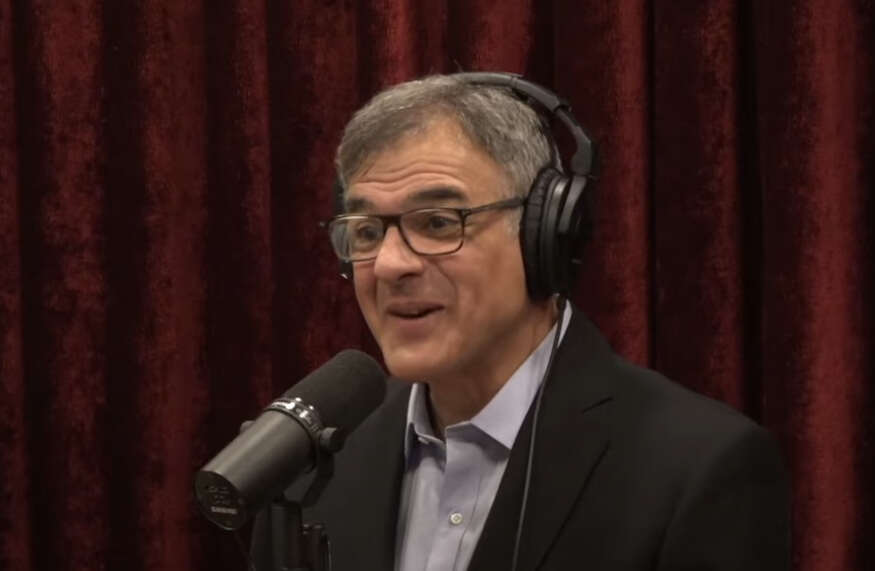
Read the full transcript of former CIA counter-terrorism officer John Kiriakou’s interview on The Joe Rogan Experience #2392, Oct 10, 2025.
Replacing Mike Baker in Athens
JOE ROGAN: You were saying you replaced Mike Baker?
JOHN KIRIAKOU: Yeah. Mike’s a great guy. He was a good officer. He was. He doesn’t really talk about his work a lot. Maybe it’s because a lot of years have passed, but he was the real deal.
I replaced him in Athens, and he had done a lot of preliminary legwork in Athens. Athens was a tough place at the time. The American government spent more money on security in Athens than they spent anywhere else in the world, including Beirut.
Why? It was a combination of two things. There were two indigenous Greek groups that were exceedingly dangerous. One was called Revolutionary Organization 17 November. They had killed the CIA station chief, two US defense attaches—just bad guys all around. The other was called Popular Revolutionary Struggle.
And then on top of that, you had Abu Nidal, the Libyans, the PFLP, the PFLP-GC, the DFLP. Everybody was there because there was this informal agreement between the Greek government of Andreas Papandreou at the time and these terrorist groups that if you don’t kill Greeks, we’ll leave you alone.
JOE ROGAN: Oh, boy.
JOHN KIRIAKOU: Yeah. But killing Americans wasn’t part of the deal. So it was every man for himself.
JOE ROGAN: Wow, your story is pretty nuts, man.
JOHN KIRIAKOU: Yes.
The Path to Prison for Exposing Torture
JOE ROGAN: And your story of getting in trouble and eventually going to prison for something that was what they were doing. What you reported on was completely illegal and you were completely honest about it. And it was essentially about the U.S. torture program.
JOHN KIRIAKOU: Right.
JOE ROGAN: Tell us how this all started. Like, how long had you been involved in the CIA?
JOHN KIRIAKOU: Oh, by then, I had been in the CIA—well, by the time I got to Pakistan as the head of counterterrorism operations after 9/11, I’d been in the CIA almost 13 years, and I was responsible for all counterterrorism operations in the country.
Al Qaeda was running out of Afghanistan into Pakistan because we were bombing the daylights out of them. And so my job was to find them and grab them and then just hold them or send them to trial—was the original idea.
And we were planning at the time for our first big name capture. Right. Bin Laden, Ayman al-Zawahiri. We had killed Mohammed Atef. He was the head of what they called military affairs for Al Qaeda. We killed him at Tora Bora, but then there was Abu Zubaydah, and then there was this unknown person that we later learned was Khalid Sheikh Mohammed.
So we were looking for any of these four or five people, and then there were others—those responsible for the embassy bombings in Africa, the USS Cole bombing.
So it just so happened that in February of 2002, we got a lead on Abu Zubaydah and we captured him. It took us six weeks to track him down. And we were close a couple of times. Close where? We would bust down the door and there’s like an uneaten, like half-eaten sandwich on the counter, a cigarette still burning. Sometimes we were a day or two behind him, but he knew we were looking and he knew we were close.
So we finally got him. And then the question is, what do you want to do with him? And they told me, hang on to him, we’re going to send out a plane and we’ll take it from there. So they did. And I wasn’t cleared to know what they were going to do with him. Just like the guys on the plane weren’t cleared to know who it was we had captured and why they were taking this guy where they were taking him.
Need to Know Basis
JOE ROGAN: But is that all just need to know?
JOHN KIRIAKOU: Yeah, it’s all need to know. In fact, when I got onto the plane, three FBI agents and I picked him up on this gurney and carried him onto the plane. We had to stand him up and maneuver him onto the plane. Then we laid him across the luggage rack at the back and tied him down.
And one of the guys on the plane, he was dressed completely in black with a black hood on. And he says, “John.” And I said, “Who are you?” And he lifts up his mask and he’s an old boss of mine. And I said, “Hey, what are you doing here?” He said, “Oh, I came to take your prisoner.” I said, “Where are you taking him?” And he said, “I can’t tell you. You don’t have a need to know.”
And I said, “No, that’s cool.” He said, “Who is he anyway?” I said, “Oh, dude, I’m sorry, you don’t have a need to know.” He says, “Yeah, fair enough, fair enough.” Okay, safe travels.
And then, you know, your job is to take him from point A to point B, not to become his friend and get his family story, just like my job is to catch him and hand him over the next guy. And it’s none of my business where he’s going.
Introduction to Enhanced Interrogation Techniques
So when I got back to headquarters in May of that year, I was just standing in the sandwich line at the CIA cafeteria, and one of the senior guys from the counterterrorism center came up to me very casually and he said, “Oh, hey, I’m glad I ran into you. I meant to ask you, do you want to be certified in the use of enhanced interrogation techniques?”
And I had never heard that term before. This is May of 2002. I said, “Enhanced interrogation techniques. What’s that mean?” And he goes, “We’re going to start getting rough with these guys like that.” I said, “What’s that mean?”
So he describes these 10 techniques.
I walked out of the cafeteria, I went up to the seventh floor, which is the executive floor, and there was a very, very senior officer up there for whom I had worked 10 years earlier in the Middle East. Knocked on his door, no appointment or anything, and I said, “Hey, I need some advice. I was just asked if I wanted to be trained in these enhanced interrogation techniques. What do you think of that?”
And he said, “First of all, let’s call a spade a spade.” He said, “This is a torture program. They can use whatever euphemism they want, but this is a torture program, and torture is a slippery slope.” He said, “You know how these guys are. Somebody’s going to be a cowboy, they’re going to go overboard, and they’re going to kill a prisoner. And when that happens, there’s going to be a congressional investigation. Then there’s going to be a Justice Department investigation, and somebody’s going to go to prison. Do you want to go to prison?”
I said, “No, I don’t want to go to prison.” As it turned out, I was the only person who went to go to prison. But I said, “No, I don’t want to go to prison.”
I went back downstairs, I said, “Listen, I have a moral and ethical problem with this. I think it’s illegal, and I don’t want any part of it.”
Consequences of Standing Up
The funny thing is, I had just captured Abu Zubaydah, who we believed was the number three in Al Qaeda, and I got passed over for promotion. And the reason I got passed over, they said, was because I turned down the training. The head of the counterterrorism center said in my promotion panel that I had displayed a shocking lack of commitment to counterterrorism.
And then the guy who had given me the advice saw that my name wasn’t on the promotion list, and he promoted me out of cycle. So I realized then I was up against something that was going to be tough.
And then there was a psychiatrist at the Agency whom I had known for years. We are in the same men’s group. We went to the same church, and he happens to be both a brigadier general in the Army and a CIA psychiatrist. And he said to me one day, “Buddy, you know, they call you the human rights guy behind your back.” And I said, “Yeah, I don’t care.” And he said, “You know that’s not a compliment, right?”
And I said, “Steve, they’re wrong about this and I’m right about it.” I said, “I’m comfortable with the decision that I made.” And I just left it at that. I didn’t realize, though, how much I had pissed them off until later on.
JOE ROGAN: So all you had done, essentially, was stand up for your beliefs, your morals, your ethics, and the law. And you said, I don’t want to participate in anything that I know to be illegal.
JOHN KIRIAKOU: That was the start. Listen, I—
JOE ROGAN: But you’re standing out against the group.
JOHN KIRIAKOU: Yes, and I was the only one. I’m almost ashamed to tell you that they asked 14 of us if we wanted to be trained in the enhanced interrogation techniques. I was the only one who said no.
JOE ROGAN: Now, this doesn’t necessarily mean that you would have to use them. You were just going to be trained in them.
JOHN KIRIAKOU: No, no, they were to use.
JOE ROGAN: But you would be required to use these techniques. So if you were not trained in them, then what would happen? Would that preclude you from ever being involved in any sort of questioning? Interrogation?
JOHN KIRIAKOU: Yes. Which is funny for a couple of reasons. Number one, there was no such thing at the time as an interrogation class. Right? The FBI has deep, years-long interrogation classes. We never had to interrogate anybody.
And in fact, when we started capturing prisoners in Pakistan in January of 2002, I’m like, “Well, what do you want me to ask him?” I cabled headquarters—we caught this guy. What do you want me to ask him? “Oh, you’ll figure it out. Just go with it.” I’m like, “Okay.”
So I was working with the Pakistani intelligence service, and I said, “Listen, I’m usually the good cop. Do you want to be the bad cop?” And he’s like, “Yeah, I’ll be the bad cop.” So we bring the prisoner out. We’re sitting there looking at him. I said, “What’s your name?” He’s like, “Screw you.” The Pakistani whacks him across the face.
So I say, again, “What’s your name? Listen, buddy, just give me your name. My friend here, he’s not in a very good mood. He’s not a very nice guy. Just tell me what your name is. Come on.” And then they tell you their name.
JOE ROGAN: Standard.
JOHN KIRIAKOU: Yeah.
The Details of Enhanced Interrogation
JOE ROGAN: So what exactly did you know—what enhanced interrogation techniques they were going to implement?
JOHN KIRIAKOU: Oh, yeah. That day in the cafeteria, my colleague explained it in great detail. And a lot of these techniques are not torture. Right. If I grab you by the lapels and say, “Doggone you, answer my questions.” That’s not torture.
Or the first one was called the belly slap, or the attention slap was another way they called it—where I smack you in the belly, makes a cracking sound, maybe it leaves a handprint. It’s a little bit embarrassing. That’s not torture.
But then it graduated quickly to things like waterboarding, which everybody knows about. But there were techniques that were, in my view, that were worse than waterboarding. Like, for example, there was the cold cell. So they strip you naked, they chain you to an eye bolt in the ceiling so you can’t lay or kneel or sit or anything. You can’t get comfortable in any way. And they chill the cell to 50 degrees Fahrenheit. And then every hour, somebody comes in and throws a bucket of ice water on you.
But we killed people with that technique. The Justice Department never said we could kill people. And when we would kill—
JOE ROGAN: How many people died with that?
JOHN KIRIAKOU: At least two with that technique.
JOE ROGAN: Just from hypothermia?
JOHN KIRIAKOU: From hypothermia.
JOE ROGAN: And there wasn’t a protocol in place to stop them from dying?
JOHN KIRIAKOU: No, there was later, but in those early days, no. Later, we always had a doctor on scene. Like, for example, with Abu Zubaydah, his heart actually stopped during a waterboarding session, and the doctor revived him just so he could be tortured more. It’s like, you know, didn’t the Germans do that? Come on now. Now we’re doing it. That’s not cool.
JOE ROGAN: Is there any other way that, like, I know that MK Ultra experimented with a lot of drugs and a lot of different techniques involved in whether it was trying to find the truth out of people or getting people to commit acts. Did they ever implement something where they would give someone something?
MK Ultra and Drug Experimentation
JOHN KIRIAKOU: That’s a good question. The short answer is yes. Not in the very beginning, but they were working with things like truth serum and different drugs like relaxation drugs, gabapentin, you know, stuff like that to sort of get you to open up.
But remember, too, that the Agency got in such trouble in 75 and 76 before the Church Committee and the Pike Committee about MK Ultra, that as soon as Senator Church said, “don’t destroy the documents,” the director went right back to headquarters and ordered them to destroy everything. And so only about 20% of the MK Ultra documents still exist.
So we don’t really know exactly what it was that was learned in that program. Like what worked and what didn’t work. We hear these stories about dosing the fog laden air of San Francisco just to see if everybody gets sick. We’ve all read the stories about this bakery in France where apparently we dosed the bread and everybody in the village went nuts. But we don’t really have fulsome documentation that we could have used operationally while interrogating prisoners.
JOE ROGAN: So just to avoid prosecution, they figured out a way. Yeah, that’s crazy. And so then whatever they did learn is lost.
JOHN KIRIAKOU: Yeah, it’s lost.
JOE ROGAN: If there was something, whether it’s MDMA or LSD or whatever they give people.
JOHN KIRIAKOU: They worked with LSD for 20 years. At least. At least 20 years. You know, there was an operation, it was a sub operation of MK Ultra where they rented a safe house in San Francisco. They recruited a bunch of hookers and had them go out and pick up Johns, bring them back to the safe house where they thought they were going to get laid, dose them with LSD and then interrogate them and try to get them to give up their deepest secrets.
JOE ROGAN: It’s like Midnight Climax.
JOHN KIRIAKOU: Yeah, Midnight Climax, exactly. Nobody’s agreed to do this. You haven’t informed them properly. These are American citizens. You can’t just take people off the streets and force LSD down their throat.
JOE ROGAN: Well, they were running the Haight Ashbury Free Clinic until right after a month after “Chaos” by Tom O’Neill came out.
JOHN KIRIAKOU: You’re exactly right.
JOE ROGAN: My wife’s mom went there. She was a hippie in San Francisco. She went to the Haight Ashbury Free Clinic. It was run by the CIA, which is so crazy. And it’s totally connected to Manson. The Manson.
JOHN KIRIAKOU: Oh yeah, Manson. Exactly, exactly. Manson was a part of it as well.
JOE ROGAN: It’s so nuts. And they wouldn’t have even known about that until they found the stash of documents that connected it all together.
JOHN KIRIAKOU: Just think of what’s been destroyed, right. What we could have learned.
JOE ROGAN: Exactly. We only know a small fraction of what was done. So is it a case of just, they’re not elected, they’re put into power. Presidents come and go, and over the course of their career, 20 years plus, they just have so much power and so much ability to get things done that they just bypass the law.
The Deep State and Unelected Power
JOHN KIRIAKOU: I think that is, that’s the whole story right there in a nutshell. When I was there, I remember being shocked by some of the old timers who had been there for as long as 40 or 42 years. There was one in particular. He was the national intelligence officer for warning. So he was the one that was supposed to say, you know, “I’m worried about what Libya is going to look like 10 years from now.” And then somebody writes a paper about it.
He had been there for 42 years. He had to get a waiver from the director because he had aged out. Well, these guys make no secret of their belief that they can outweigh pretty much any president. Presidents come and go and these guys are there forever. And so if the president wants them to do something that they don’t want to do, they just slow roll it, just wait until he leaves and that’s the end of it.
You know, that’s why I say, I’ve said this in interviews a lot. There is a deep state. You don’t have to call it the deep state if you don’t want to. You can call it the state, you can call it the federal bureaucracy, you can call it whatever you want. The fact is it exists and it’s unelected and it’s generally unaccountable to anybody. And they just wait for the president to leave if they don’t want to do what he wants.
JOE ROGAN: So you find out about this torture program, you won’t participate. So that puts you on the outs. And when do you know that this is going to be like a significant problem in your career?
JOHN KIRIAKOU: You know, honestly, I didn’t know until well after I left the agency. You know, once I turned this down and I got this out of cycle promotion for the Abu Zubaydah operation, I was named executive assistant to the CIA’s deputy director for operations. And in that position, you have access to literally everything that the CIA is doing around the world.
And so I’m reading these cables coming back from the secret site and people are saying like, “whoa, I didn’t sign up for this. Nobody said we’re going to torture people. I quit.” And then they come home. Or there was a secretary who fainted once when she happened to be in the room while Abu Zubaydah was being tortured. And she curtailed her assignment. That means she sends a cable to headquarters saying, “I’m coming home, I’m not doing this anymore.”
That is a career ending decision to curtail an assignment. And I remember thinking, so I’m not the only one who thinks this is illegal. Certainly somebody’s going to come out and say something and nobody did.
Torture Techniques and Their Brutality
JOE ROGAN: Like, what are the techniques that they were using that were like causing her to faint?
JOHN KIRIAKOU: The big ones were waterboarding, the cold cell and sleep deprivation. Sleep deprivation doesn’t sound like any big deal. And when that finally leaked, Don Rumsfeld, who was the Secretary of Defense at the time, made a statement that still kind of sticks in my mind. He said, “there is no such thing as sleep deprivation.” He said, “I have a stand up desk in my office. I don’t even have a chair in my office. And sometimes I’ll work 24 hours and then into the next day, 36 hours.”
But that’s not what we’re talking about here. We know from the American Psychological Association that people begin to lose their minds at day seven with no sleep and they begin to die. Their organs begin to shut down at day nine. But the CIA was authorized to keep people awake for 12 days. And that was another thing that caused prisoners to just die. They would have heart failure.
You know how they keep them awake? You chain them to that eye bolt in the ceiling. Again, you have these industrial strength lights on them 24 hours a day. And like death metal 24 hours on volume 11 and they just can’t sleep because if they collapse, they’ll pull their arms out of their sockets. They’re chained to that eyebolt.
Jeez, it was bad. And then when people would die, they would just dig a hole next to the interrogation building, put them in the hole, cover it up, and then bring the next guy in.
JOE ROGAN: No report, no nothing.
JOHN KIRIAKOU: Nothing. There was one guy they reported on, and headquarters wrote back and said, “just put him on ice until we can figure out what to do.” And they literally just put him in a bathtub and filled it with ice. And then just decided a couple days later, he started to turn. We should probably bury this guy.
JOE ROGAN: Wow.
JOHN KIRIAKOU: Yeah, it was ugly. And the justice department never said anything about that. They’re like, “oh, listen, you know, you can do these techniques, and if you kill him, just bury him out back.” Nah, that wasn’t the approved operation.
JOE ROGAN: Was any of it effective? Like, was there any actionable information?
The FBI’s Effective Interrogation Methods
JOHN KIRIAKOU: That’s the worst part of this. No, none of it was effective. You know, I say this all the time, Joe. It’s like a kick in my gut to have to compliment the FBI. But if there’s one thing that the FBI is really good at, it’s interrogations. They’ve been doing interrogations effectively since the Nuremberg trials in 45 and 46. These guys know what they’re doing.
And so with Abu Zubaydah as an example, we captured Abu Zubaydah. And normally overseas, the CIA has primacy. Domestically, the FBI has primacy. But 9/11 was still an open criminal investigation. And so we sent Abu Zubaydah out to the secret site, and the FBI took over. The CIA was furious about this.
But there was an FBI agent by the name of Ali Soufan who did exactly as he was trained to do. And he began to engage Abu Zubaydah in a conversation. And Abu Zubaydah just gave him the silent treatment. For weeks. This went on for weeks. But you go in, you offer him a cup of coffee, you offer him an orange. If he’s cooperative, you let him write a letter to his mother, you know, whatever.
And finally, he opened up and he gave us actionable intelligence that saved American lives. And I’ll give you two examples. Number one, we had no idea what the Al Qaeda wiring diagram looked like. We knew it was bin Laden and Zawahiri, and then we just didn’t know what the organization was like, how it was built.
So he explained to us how each one of these cells all around the world was stovepiped, compartmentalized. So cell A had no idea what cell B was doing. And Ali said, “as an example, if you want to do an operation in, let’s say, Dusseldorf, how would you do that?”
And Abu Zubaydah said, “well, there’s this guy Mohammed, and here’s his phone number. Mohammed lives in Dusseldorf, and he has a cousin Abdullah, and Abdullah has access to weapons. And here’s Abdullah’s email. And then Abdullah’s got a friend, Rashid. They meet at the coffee shop, and Rashid has access to explosives.”
And then we’re able to call the Germans and say, “hey, listen, you have a serious problem in Dusseldorf, and here’s what you need to do.” And then they kicked down the door and they grabbed these guys. That saved lives.
The Bojinka Plot
The other thing that he told us, and he laughed, actually, because Ali didn’t know what the heck he was talking about. He was talking about Mukhtar, a guy using the nom de guerre Mukhtar. We knew from our own files that there was this guy out there who called himself Mukhtar, who was a very bad guy.
In 1996, he had initiated something called the Bojinka operation. It was supposed to be carried out in the Philippines, and the idea was to hijack as many as fourteen 747s and then fly them into buildings all up and down the west coast of the United States.
It just so happened that one day, Mukhtar working on his plan, his diabolical terrorism plan, he went out to have lunch. And when he went out to have lunch, the cleaning lady came in to clean the apartment, and she sees all this stuff laid out, and she said, “that looks like a terrorist attack being planned.” She calls the cops.
The cops come and say, “ooh, this looks like a terrorist attack. We better call the Philippine intelligence service.” They come and look at it, and somebody says, “we should probably call the CIA on this.” And so we confiscated everything, and Bojinka was disrupted.
That’s crazy. It’s crazy. A cleaning lady, you never know. You just never know.
JOE ROGAN: It’s crazy that he would leave the
JOHN KIRIAKOU: Plants just laying around thinking nobody’s going to come. Nobody’s going to see it. And then he ran off. So we knew there was this guy out there planning this big thing, and his name was Mukhtar. Abu Zubaydah laughed at us and said, “You don’t know who Mukhtar is?” And Ali said, no. And Abu Zubaydah said, “His name is Khalid Shaykh Mohammed.”
That’s the first time we ever heard that name. We didn’t have any documents in any files that were about any guy named Khalid Sheikh Mohammed. But that was the very first time we were able to piece it all together. And it was thanks to Abu Zubaydah, in turn thanks to Ali Soufan’s treating Abu Zubaydah with respect.
But on August 1, 2002, George Tenet went to the White House. And he asked the President, for reasons that have never been made clear, he asked the President to turn over primacy to the CIA. He did that. And the CIA director, Robert Mueller, to his credit, he knew exactly what was going to come. Not only withdrew FBI personnel from the secret site, he withdrew FBI personnel from the country that the secret site was in.
And within 12 hours, the CIA began to torture Abu Zubaydah. He went completely silent and remained silent. And then the FBI went back to the President and said, “Look, the CIA is screwing this up. We were getting all this intelligence from this guy. Now he won’t say anything and we’re putting him in a coffin.”
And we heard he had this irrational fear of bugs. So we pour a box of cockroaches on him in the coffin and close up the coffin, and we would open it up every couple days to change his diaper and give him food. And he went nuts.
And so finally the White House turns everything back over to the FBI. It takes Ali months to get him to talk again. And then he starts talking again. And he’s given us more and more information about Al Qaeda operations in Malaysia and Australia operations and what’s going on in Canada and how Al Qaeda is able to move across borders between Europe and Asia. And then the CIA comes back in again and starts torturing him again and screwed it all up.
JOE ROGAN: Now why would they do that? I don’t understand. If you’re getting information, why would they decide to ramp it up and torture him?
The Motivation Behind Torture
JOHN KIRIAKOU: I think for a couple of reasons. I think we should never underestimate the motivating factor of a desire for revenge. Right? This was the worst intelligence failure in the history of the country. 3,000 people died because we hadn’t done our jobs. So that was one thing.
The other thing is the CIA had entered into an agreement with these two contract psychologists, James Mitchell and Bruce Jessen, in October of 2001. And they said, “Hey, we’ve reverse engineered the military’s SERE program. And we think this would be an effective but harsh interrogation technique.” And so we were chomping at the bit at the agency to try this thing out.
Without using the word torture. We paid those guys $108 million to say, “Oh, we think you should torture people. Here are the torture techniques. Just let us know when you want us to start.” $108 million for that. And so we thought, well, we’ve already spent the money and we really do want revenge on these guys, so what the hell, let’s just go for it. I think that’s what it was.
JOE ROGAN: Wow. So how did you get in trouble?
Speaking Out About Torture
JOHN KIRIAKOU: I waited for somebody to say something about torture and nobody did. And then I got divorced. My kids moved with my ex-wife to Ohio and they were little, they needed their dad. So I decided I’m going to leave the agency, go into the private sector so I can see my boys on the weekends. And still I waited for somebody to say something and nobody did.
Now I wish that I could tell you that I stood up and I took a stand and that wasn’t it at all. I got a call in December of 2007. So now I’m out of the agency three and a half years. I got a call from Brian Ross at ABC News and he said that he had a source who said I had tortured Abu Zubaydah. I said that was absolutely false. I was the only person who was kind to Abu Zubaydah. I said I’ve never laid a hand on Abu Zubaydah or any other prisoner. And he said, “Well, you’re welcome to come on the show and defend yourself.”
Well, I had never spoken to a reporter before. I didn’t know that was a reporter’s trick. So I said I’ll think about it. In the meantime, President Bush, I remember it being a Monday, President Bush gives a press conference and the International Committee of the Red Cross had said in a paper that the CIA was torturing prisoners. Human Rights Watch said CIA is torturing prisoners. And Amnesty International said CIA is torturing prisoners.
So a reporter says, “Look, all these international human rights organizations are saying that the CIA is torturing its prisoners. What’s your response to that?” And the president looks right in the camera and he goes, “We do not torture,” like that. And I said to my wife who was a senior CIA officer, I said, “He is a bald-faced liar. He’s looking the American people right in the eye and he’s lying to us.” And she said, “Are you surprised?”
Well then on Wednesday, two days later, he gets another, a similar question. And he said that there is no torture. I knew he was lying. And then another two days later, it’s Friday and he’s walking from the south portico of the White House to the helicopter to go to Camp David for the weekend. And a reporter shouts another question about torture. And this time he stops and he turns and he says, “Well, if there is torture, it’s because of a rogue CIA officer.”
And I said to my wife, “Brian Ross’s source is at the White House and they’re going to pin this on me.” So I called Brian Ross and I said, “I’ll give you your interview.” And I decided in the…
JOE ROGAN: Why did you think they were going to pin it on you? Because they were calling you the human rights guy. You were going to be a patsy.
JOHN KIRIAKOU: And I was not willing to assume that that would happen.
JOE ROGAN: Yeah, because that’s just your experience with the organization.
JOHN KIRIAKOU: Oh, yeah. They’re going to leave somebody out to dry to protect themselves. So I called Brian Ross, I said, “I’ll give you your interview.” And I decided that whatever he was going to ask me, and he never told me in advance what he was going to ask me, I was just going to tell the truth.
And so he met me at the ABC News studios on DeSales Street in Washington. And I said three things in that interview that changed the course of the rest of my life. I said that the CIA was torturing its prisoners. I said that torture was official U.S. government policy. It was not the result of any rogue officer. And I said that the policy had been personally approved by the President himself.
The Legal Retaliation
And then, as you can imagine, within 24 hours, the CIA files what’s called a crimes report against me, with the FBI saying that I had revealed classified information. The FBI then investigates me from December of ’07 to December of ’08. And then they send my attorney a letter called the declination letter, declining to prosecute. They said that they had completed their investigation, that the information was already out there because of Amnesty International, Human Rights Watch, and the Red Cross. But most importantly, torture is a crime, and it is illegal to classify a crime for the purpose of keeping it from the American people. So no charges.
My wife and I went out to celebrate that night. We went to dinner. Three, four weeks later, Barack Obama becomes president, and he names John Brennan, at first CIA director, but the liberals went crazy because Brennan was one of the fathers of the torture program. Everybody seems to forget that now, and we can get into that if you want, but he then names Brennan the deputy national security adviser for counterterrorism.
Brennan immediately sends a memo to Eric Holder, the new Attorney General, and says, talking about me, “Charge him with espionage.” And Holder writes back, we got these memos in discovery when I went to trial. Holder writes back and says, “My people don’t think he committed espionage.” And then Brennan writes back and says, “Charge him anyway and make him defend himself.”
So they charged me with five felonies, three counts of espionage. They waited until I went bankrupt, and then they dropped the espionage charges.
JOE ROGAN: Oh, God, that’s so gross.
JOHN KIRIAKOU: That’s Washington.
JOE ROGAN: It’s just so hard to believe that the United States of America government works like that. I believe it. I believe it. It’s hard to swallow.
JOHN KIRIAKOU: There’s a book by Harvey Silverglate, who’s a professor of law at Harvard University. The book is called “Three Felonies a Day.” And he says that we are so over-regulated, so over-criminalized in this country that the average American on the average day going about his or her normal daily business, commits three felonies every single day. So if they want to get you, they’re going to get you. And there’s nothing you can do to protect yourself.
JOE ROGAN: So what was Brennan’s beef with you? Was it just because of the fact that you did that interview, or was there underlying tension?
John Brennan’s Rise Through the CIA
JOHN KIRIAKOU: We were never pals. I’ve known John Brennan for 35 years. We never really cared for each other. To tell you the truth, I thought the guy was in over his head intellectually.
When I first started there, he was a deputy group chief. He was a GS-15 nobody journeyman. You know, first line, second line manager. No big deal. There are hundreds of them. And he worked for this really wonderful woman, a great intellect named Martha Kessler.
And Martha was so highly respected. She had written this book. I still remember the title called “Fragile Mosaic of Power.” And when you got hired, you got her book and you had to read the book because this is what we do. This is the perfect example of what we do.
So he was her deputy. One day he went to her and he said, “Martha, you know, I’ve been your deputy for X number of years. I think I’m ready for promotion into the Senior Intelligence Service.” And Martha said, and I just talked to her daughter a couple of weeks ago about this, Martha said, “Not only will you never be a member of the Senior Intelligence Service, I don’t even want you working for me anymore. You’re fired.”
Well, you’re not really fired. At the CIA, if you’re fired, that means you have six weeks to walk the halls and find another job. If you can’t find another job in six weeks, then they escort you to your car, they take your badge, and you know, so long. Good luck.
Well, the normal job turnover is in the summertime. This is the week before Christmas, 1993 or ’94. I can’t recall now. And there are no jobs open at Christmas. So he finally finds one job. It is in the PDB staff, the President’s Daily Brief. And it is as a morning briefer, giving the President’s Daily Brief briefing to the lowest ranking person entitled to a PDB briefing.
So that’s the National Security Council’s director for intelligence programs, who happened to be this guy named George Tenet. And so they immediately hit it off. Two alpha dogs, cigar smoking, hard drinking. There used to be a kiosk right at the corner of 17th and Pennsylvania Avenue adjacent to the White House that sold cigars.
Tenet had had a heart attack, and he wasn’t supposed to smoke, and his wife would yell at him. So after the briefing, they’d walk out to the kiosk and buy cigars and just stand there and laugh and talk about chasing women or whatever. Totally hit it off.
Then Tenet becomes the deputy director of the CIA. So he brings Brennan back with him and makes him Martha Kessler’s boss, deputy director of the office that Martha’s working in. He calls Martha Kessler in and says, “Now you’re fired.” And so she just elected to retire.
Brennan’s Operational Experience
Well, he ended up being identified by Tenet as the guy. This is my guy. This guy is going places. He needs operational experience because he’s been an analyst and an analytic manager all these years. I’m going to make him the station chief in Riyadh, Saudi Arabia.
He’s an analyst. He’s never served overseas before, never recruited a spy, ever. It wasn’t his job. Now all of a sudden, he’s the station chief in one of the most important stations in the world. So he does that for a long time, by the way, during which he approves the visas for the 9/11 hijackers.
And then he comes back as the deputy executive director of the whole CIA. So it’s director, deputy director, executive director, and then the deputy directors for operations, intelligence, science, technology, administration. And they’re dotted lines. So he’s now one of the five most senior people in the entire CIA.
He does that for a couple of years and then becomes the executive director. By the time I get promoted to be the morning briefer for the director and executive assistant, I’m throwing all these stupid terms out, executive assistant to the deputy director for operations. I’m meeting with Brennan every single day.
So we’re doing the Iraq war, we’re doing terrorism and al Qaeda and all this stuff. He didn’t like me, and I didn’t like him. And then when I became the “human rights guy,” that just kind of sealed it for me. But I didn’t care because I didn’t respect him anyhow.
I will say that Jim Pavitt, the deputy director for operations, legendary officer and a really great guy, he hated Brennan more than I did. And he used to mock Brennan because Brennan at the time was telling everybody, “I want to head my own agency. I want to head my own agency.”
And they finally put him in charge of this thing that was temporarily called the TTIC, the Transnational Terrorism Information Center. It later became the National Counterterrorism Center. And they sort of shunted him off there. And it was a nothing analytic organization. Not even in the headquarters building. It was out in one of the outlying buildings. And then he kind of went away.
The Obama Campaign Connection
But where he really did right for himself is in 2007 there was this wave of retirements. We’re enough now beyond 9/11 that people can begin to retire. So this huge wave of senior level retirements in ’07. And then once these guys retired, half of them went to the McCain campaign and half of them went to the Hillary Clinton campaign.
And John Brennan was literally the only one who went to the Obama campaign. And he saved himself.
JOE ROGAN: So how did you wind up going to prison?
Life in Prison
Well, as soon as Barack Obama became president, John Brennan decided he was going to have my head. And so he asked Holder to have the FBI grab me. And I’ll tell you what, they knew they didn’t have a case.
So there’s a little bit of background. From 2009 to the end of 2011, I was the senior investigator on the Senate Foreign Relations Committee, working for John Kerry. It was a terrible job. Kerry said, oh, I want you to do this and do that, and we’re going to investigate this and investigate that. And then he would kill all the investigations because he wanted to be Secretary of State and he didn’t want to piss anybody at the White House off.
So I can’t talk about how Afghanistan produces 93% of the world’s heroin. And all of it is because the CIA said they could. I can’t talk about the Dashti Lale massacre where 2,000 Taliban soldiers were suffocated to death in container trucks because the CIA didn’t punch holes for them to breathe in the containers. Can’t talk about any of that stuff because you want to be the Secretary of State.
The Japanese Diplomat Incident
So I left in 2011, and right before I left, I got a call from a Japanese diplomat. And this is one of the things that I loved about that job is this constant engagement with foreign diplomats. Who’s doing what and what do you think about Israel? What do you think about China, what do you think about what’s going on in the world? Mexico or Cuba or whatever?
And I get a call from this Japanese diplomat, and he invites me to lunch. I said, great. We meet at a place on Capitol Hill. And I remember that lunch very well. I remember we talked about Israeli elections, we talked about Turkish elections, and we talked about the Arab Israeli peace process.
And at the end of the lunch, he says to me, and I should add, his English was so bad that we had to do the lunch in Arabic. So he said, what’s next for you? And I said, well, I think I’m going to resign soon. I promised Senator Kerry I’d give him two years. It’s been two and a half. I have five kids, and I really need to make some money and put my kids through college.
And he goes, oh, no, don’t do that. If you give me information, I can give you money. And I said, what the fuck is wrong with you? Do you have any idea how many times I’ve made that pitch? Shame on you, cold pitching me like that.
And I got up indignantly and I walked out and I walked, and I mean directly without stopping, to the office of the Senate security officer. And I knocked on the door. I went in, I said, hey, I was just pitched by a foreign intelligence officer. And he goes, was it that damn Russian again? And I said, no, it was Japanese. He goes, Japanese? I said, I know, right?
He goes, well, no, sometimes they poke around looking for trade information. I said, this didn’t have anything to do with trade information, I don’t think. I don’t know. We didn’t even get that far. He said, okay, do me a favor. He said, I’ve got a standalone computer here that’s not connected to the Internet. Write it up as a memo, and I’m going to courier it over to the FBI.
So I sat there and I wrote the whole thing blow by blow. The next day, he calls me and he says, two FBI agents are going to come up and talk to you. And I said, okay. So they come up, I recount the whole lunch, and they said, all right, here’s what we want you to do. We want you to call him back, invite him to lunch, and then try to get him to tell you exactly what information he wants and how much he’s willing to pay for it.
And I said, because I’m a patriot, I said, you want me to wear a wire? And they said, no, we’re going to be at the next table. We’re going to listen to everything. I said, but he only speaks Arabic. That’s okay. We got a guy who speaks Arabic. Don’t worry. I said, all right.
So I call him, I invite him to lunch. We go to lunch, do the whole thing. But before the lunch, right before the lunch, they called and they said, operation came up. Just write us another memo. Do the lunch and write us another memo. I said, fine. So I write another memo. They asked me to do it a third time, a fourth time, and a fifth time.
The fifth time, he says to me, I have great news. He said, I got my dream job. I’ve been promoted, and I’m going to be the deputy ambassador in Cairo. And I said, congratulations. I shook his hand, never saw him again. So I’ve written all this to the FBI.
The FBI Investigation Turns Against Me
One day in January of 2012. So I’ve been out of the Senate for about nine months, the FBI calls, and I look at my cell phone. It says, Federal Bureau of Investigation. I was like, I wonder what that’s all about? So I answer, and they said, hey, you remember that thing you helped us out with a year ago? And I said, yeah. And they said, we’ve got a similar situation and we need your help.
And again, because I’m a patriot, I said, anything for the FBI. I kick myself now for saying it. I said, anything for the FBI. What do you want me to do? They said, come down to the Washington field office Thursday morning at 10. I said, done.
I go down there the next Thursday, and they’re waiting for me at the entrance, which I thought was odd. And we go up to a conference room, and they said, we’re both cleared. SI TK Gamma. And then there were two compartments above top secret that I was cleared for, that they said they were cleared for. So if the conversation necessitated it, we could go into that area.
So they said, well, before we start, just wanted to ask, you just read your book. It was great. I loved it. Hey, what about this that you said in your book? And I was like, yeah, okay. Yeah, it was a cool story. What about this other thing? Yeah, I had fun. I said, it was kind of hard. It took me nine months to write the book, 22 months to get it cleared. Oh, yeah, you got cleared? Yeah, of course I got it cleared. 22 months it took me to get it cleared. I’m thinking, what an odd question.
Then they start asking me about something called the Sam Adams Project. And I said, I’m sorry, I don’t know what that means. And then the bad cop of the two says, we know you’ve been giving information to the Guantanamo defense attorneys. I said, what are you talking about? And then I said, wait a minute. Are you investigating me? And they said, yeah, and we’re raiding your house right now as we speak.
And I said, thank God. I said, I want to speak to my attorney right now. That was the only reason that they didn’t arrest me. And one of the things that I learned, and this became painfully evident when they started arresting January 6th people, was the FBI in Washington likes to make its arrests on Thursdays because there are no federal arraignments on Friday.
So you’re in the D.C. jail Thursday night, Friday night, Saturday night, Sunday night, getting the shit beaten out of you. And then they arraign you on Monday. And then you want to make a deal just so you don’t ever have to go inside that prison again. But because I asked to see my attorney, they let me go.
So I called the attorney as soon as I got out of the office. Actually, when I was walking out, one of them went over to, I didn’t know it at the time, but it was Peter Strzok. And Peter Strzok says, tell me he implicated himself. And the guy said, not really. No. We have to let him go. And so I grabbed my cell phone and I left.
Facing Espionage Charges
Went to the attorney’s office. They had already called my attorney and said they were charging me with espionage. I hadn’t committed espionage. They knew I hadn’t committed espionage. And in fact, since then, I’m fast forwarding a lot. Three FBI agents have reached out to me. Well, two to my attorneys. One reached out to me directly to apologize, saying that this came from the top. They thought it was a BS case. They were sorry they were involved, but there was nothing they could do.
One guy reached out to me through eBay, of all things, to try to cover up the trail. He’s like, listen, I’ve been losing sleep over this for the last 13 years. I just wanted to tell you how sorry I am. Blah, blah, blah. It’s like, well, I hope you feel better. My whole life fell apart, but I’m glad you got that off your chest.
So it became a matter of just survival after that. You have to take it seriously. I was facing 45 years in prison. And then when the Justice Department made a request for a proffer meeting, the proffer meeting is, they’ll give you a little idea of what they have against you, and then they make an offer. You can take it or leave it.
And they offered me 45 years. And I said, I’m not doing 45 minutes. I didn’t do anything wrong. And this woman, she became deputy attorney general for the criminal division under Biden. She said, “Take this deal, Mr. Kiriakou, and you may live to meet your grandchildren.”
Oh, my God. Oh, it was. I went home that night, and I went home. I’m ashamed to even say it. That night we put the kids to bed, and my wife and I were watching TV, and she said, come on, let’s go to bed. I said, I can’t sleep. There’s no way I’m going to be able to sleep. And she said, no, come on, let’s go to bed. She knew I was going to go down into the garage, turn the car on and just lay across the back seat. And she said, no, come on, you need to try to get some sleep. She saved me that night.
The Plea Bargain
But 45 years. And so they waited 10 months before they were even willing to engage in a conversation. And then they offered 10 years on a Monday. On Wednesday they offered eight, and on Friday, they offered five. My lead attorney was this legendary guy named Plato Kacheris. And Plato said, you know, I’ve been a criminal defense attorney in this city for 52 years, and this is the first time I’ve ever seen them come down in time.
He said, usually they offer you 10, you say, no, the next offer is 15, then the next offer is 20. I said, why are they coming down in time? He said, because they have a shit case and they know it’s shit, and that’s why we’re going to go to trial and we’re going to win this thing. I said, great.
Well, they stayed at five, and then they came back and they said, three and a half. And I said, I’m going to trial, I’m going to win this thing. Turned out at the time, my best friend, his wife had an uncle who was O.J. Simpson’s jury consultant, and she called him for me and she said, hey, my friend John, he’s in this situation. He’s like, yeah, I read about this in the papers. He could use your help.
He came up, didn’t charge me a cent. He came up to Washington. We got him a security clearance, which was another thing. We asked for a security clearance. And then the Justice Department called and said, the White House said, Kiriakou’s attorneys have enough security clearances. And I said, who at the White House said, we have enough security clearances? Well, they had to tell us that it was John Brennan.
No more attorneys for Kiriakou, Fisher cut bait. We’re like, it’s not up to John Brennan to decide if I have enough attorneys. They have an unlimited number of attorneys, an unlimited budget. As it turned out, they spent $6 million to put me in prison. Was society really better off spending $6 million to put me in a low security prison for 23 months?
So in the end, they said, best and final offer, 30 months. You do 23. Well, I was only the second American who had ever been charged with this crime of violating the Intelligence Identities Protection Act of 1982. The only other person that was charged with it was a woman named Sharon Scranage. She was a CIA secretary in Ghana in the 80s and she was having an affair with a member of Ghana’s intelligence service.
And in the course of pillow talk, she revealed the names of all of the CIA officers in the station and the names of the sources they were running. And so the Ghanaians executed these guys. She got nine months in prison. Nine months. And they offer me 45 years for blowing the whistle on the torture program.
The Decision to Take the Deal
So my wife and I stayed up all night. Literally all night. And because Sharon Scranage had taken a plea, there was literally no case law. So what we found, we found several things. We found several articles from the Harvard Law Review saying this law is unconstitutional, it violates the First Amendment and it is prior restraint. Right? It tells you in advance. You can’t say X, Y and Z, but because there was no case law, you couldn’t challenge it in court.
And I said, well, can’t we just appeal? Appeal the charge and maybe, all the way up to the Supreme Court? And they said, yeah, we can do that post conviction. And then you’re going to be 45 years waiting and hoping that the Supreme Court does the right thing. We can’t do that.
So I decided by 6am I’m going to turn it down. I believed in my heart I hadn’t done anything right. This was political. It was a vendetta by John Brennan and Obama by all accounts. I had friends, of course, who were still working at the agency and working at the White House. And they said that Obama had this Nixonian obsession with national security leaks. And it’s because that came from Brennan.
Obama was a senator for two years. He didn’t have any experience doing anything. So he did what John Brennan told him to do. And Brennan said, you got to crack down on these leaks. They do nothing but embarrass us.
So I decided I’m going to turn it down. 6:00am I send an email to my attorneys. I had 11 attorneys. I was paying half of them, five of them. And then one of them writes back and says, put on a pot of coffee, we’ll be at the house by seven.
So they come to my house. The four main ones came to the house. Plato was the first one in. Now imagine this 80 year old, 6 foot 2, 280 pound mean old man. He comes in and I said, good morning, Plato. And he said, “You stupid son of a bitch, take the deal.” Like that.
I said, take the deal? You’re the one that told me not to take the deal. You’re the one who told me we’re going to go to trial and win this thing. And he says, I only told you that to keep your spirits up. And then the second one, his partner, Bob Trout, a sweet gentleman, a southern gentleman, he says, if you were my own brother, I would beg you to take this deal. And I’m like, now what do I do?
And then the third, who is the guy? Mark McDougall, one of the best attorneys I’ve ever encountered in my life and the one that I liked and respected the most out of all of them. I liked all of them and respected all of them, but I felt a connection to this guy. He pulls me aside, he was a little bit angry and he said, you know what your problem is? Your problem is you think this is about justice. And it’s not about justice, it’s about mitigating damage. Take the deal.
And I looked at my wife, she’s just like, what are we going to do? So I took the deal and I got two and a half years in prison. And they made me do every single day of it.
Sentencing and Prison Assignment
In fact, we went to sentencing and this was in the Eastern District of Virginia, the Espionage Court. And the reason why we didn’t go to trial in the end was that the O.J. Simpson jury consultant said, if we were in any other district in America, I would say, let’s go for it. We’re going to win this thing. But the Eastern District of Virginia, your entire jury is going to be people from the CIA, from the FBI, from DoD, from intelligence community contractors. He said, buddy, you don’t have a prayer. Take the deal.
Yeah, it was bad. So it’s sentencing.
Prison Life
JOE ROGAN: And so what kind of prison were you in?
JOHN KIRIAKOU: I was in FCI, the Federal Correctional Institution at Loretto, Pennsylvania, which is a low security prison, but it’s called a low medium, and then there’s a high medium. So this was a low medium. It took me five days to get access to a phone. And I called Mark McDougall, the attorney that I liked so much, and I said, “Mark, they put me in the actual prison with the pedophiles and the mafia dons and the drug kingpins. I said, what do I do?”
He says, “Oh, my God.” Well, he said, “We could file a motion, but it’ll be two years before we get a hearing. And you’ll be home by then.” He said, “Buddy, I’m sorry. You’re going to have to tough it out.” And so that’s what I did.
JOE ROGAN: Wow. So you have this long career working for the government. They put you away. And what is it like for you to feel so betrayed and to get out? And what do you do when you get out?
Life After Prison
JOHN KIRIAKOU: I was, frankly, very angry when I got out. I didn’t realize how angry I was. Like, people would mention it to me, like, “Maybe you should talk to somebody. Maybe you should think about a pharmaceutical option.” And I was like, “Why? There’s nothing wrong with me.” You know, I’m ready to fight and march and raise my fist against the Obama administration. And so I was wrong. Of course I was. I was so angry that it wasn’t even healthy for the people around me.
But I’ll tell you, Joe, the hardest thing is you think you can just step back into your life again, and you’ll never be able to step back into your life. So I thought, “Okay, well, I’m highly educated. I have a bachelor’s degree in Middle Eastern studies. I have a master’s degree in Legislative Policy Analysis. I finished my PhD classwork in international affairs.” I got rejected by McDonald’s, by Safeway, by Target, by Uber. “We don’t hire felons.” I mean, I couldn’t get a job anywhere.
JOE ROGAN: And you’re broke.
JOHN KIRIAKOU: And I was broke. Bankrupt.
JOE ROGAN: So you couldn’t even get a job driving for Uber?
JOHN KIRIAKOU: Uber turned me down. Yeah. It’s crazy. It’s crazy. But you know what, though?
JOE ROGAN: What did you do?
Finding Vindication
JOHN KIRIAKOU: Well, I was confident that I was right and they were wrong. And my wife, unfortunately, she’s now my ex-wife, but she gave me some of the best advice anybody ever gave me. She said, “You have to keep telling your side of the story, because eventually they’re going to move on to their next victim. And if you keep talking, your side of the story is going to be the side of record, and eventually the truth is going to come out.”
And sure enough, six weeks before I was released from prison, I called her. I was allowed to call her every other day for 15 minutes. So I called her and I said, “How was your day?” And she said, “It was great.” And I said, “Really great. Why was it so great?” And she said, “Because the Senate torture report was released today, and it proved that everything you said was true.”
And I said, “That is great.” And she said, “John McCain stood up on the floor of the Senate and said, ‘If it weren’t for John Kiriakou, the American people would never have had any idea what the CIA was doing in their name.'”
And so when I got home, God bless him, one of the first calls I received was from John McCain’s chief of staff. And he said, “Senator McCain says welcome home. And he wants to know what he can do to be helpful.” And I said, “Oh, my God.” I said, “Tell him, I said, thank you.” I said, “I liked McCain very much from when I was working on Kerry’s staff. Kerry was a little jealous of McCain. And McCain would go out of his way to shake my hand and say hi.”
Kerry said to me one time, “Why don’t you two get a room or something?” And I said, “No.” I said, “We have this connection over torture. I said, McCain takes me seriously and I take him seriously.”
The Fight for His Pension
And so when I spoke to McCain, I said, “These damn Obama people, they confiscated my pension and I’m going to have to work until the day I die. They drove me into bankruptcy and took my pension.” So he came up with this idea. It was a great idea to write an amendment. My attorney wrote this amendment to the National Defense Authorization Act of 2016.
And it said that every American convicted of violating the Intelligence Identities Protection Act between October 1 and October 31, 2012, shall hereby have his pension reinstated. So, of course, I’m the only person in the world that that refers to. So he said, “Nobody reads these 1,500 page bills. We’re going to slip it in there.” And he said, “I’m going to be on the conference committee. We’ll get it taken care of.”
And then he got sick. He got a brain tumor and he wasn’t named to the conference committee. And so they pulled it back out again, and then he died. And so here I am ten years later. The only way that this can be made right is with a presidential pardon. And that’s what I’ve been working on for years now.
JOE ROGAN: So what did you do for money?
Making a Living
JOHN KIRIAKOU: I was offered a job at a small think tank in Washington called the Institute for Policy Studies. And they said, “We’ll give you an office, but you’re going to have to raise your own salary.” And so it was just like constant GoFundMe. I did that for a year. I made $20,000 for the year. And I said, “I can’t do this. It’s untenable.”
And so I just decided, “Look, no company is going to hire me, right? I can’t go back into government again, and so I’m going to have to work for myself.” So I had already written my first book, made number five on the New York Times bestsellers list. My second book, I wrote longhand from prison. I ended up winning two literary awards for that book. I won the PEN First Amendment Award, which along with the PEN Faulkner, the Pulitzer, and the Edgar Allan Poe is one of the big four. And then I won the Forward Reviews Memoir of the Year.
That year I thought, “I’m going to keep writing books.” I started writing a column that ended up being syndicated through the Consortium for Independent Journalism. So it’s like 200 small town papers around the country and, you know, a little bit here, a little bit there, consulting.
And then the Greek government, I happen to be Greek American. My grandparents all came from the island of Rhodes. As soon as I was arrested, like within a day, the Greek ambassador called me and he said, “What can we do to be helpful?” And I said, “You can give me citizenship.” And man, like that, I got Greek citizenship.
And so as soon as I got out of prison, the Greek government hired me to help them write a new whistleblower protection law. And then they passed it quickly. The parliament passed it into law and then the European Union adopted it. So I went to Brussels and I testified there and then they repackaged it. Now it’s the law of the land in all of the European Union.
And then people in the states began taking me more seriously. I started doing some paid speaking gigs. I got hired as an adjunct professor at a couple of different universities. And then, you know, after a while, you can make an okay living. I’m still going to have to work until the day I die because I have literally nothing saved. It all went to the attorneys and, you know, hope for the best.
Political Realignment
I will say that I was a third generation Democrat. I left the Democratic Party ages ago. John Brennan and Barack Obama’s actions convinced me that I had done the right thing. And now I have found common cause with populist Republicans. You know, you don’t have to agree on every issue, right? You don’t have to like everybody and everything that they believe in and everything they stand for.
But I’ve struck up a great friendship, for example, with Tucker Carlson, sweetest guy in the world and a great supporter of mine and Judge Napolitano. It’s a love fest every time the two of us get together. And I realized that, you know, this thing, this political system we have, it’s antiquated, it doesn’t work. You have to engage with the individual.
Like, I never thought that I would be agreeing with Marjorie Taylor Greene on some of these civil liberties issues, right? Or Thomas Massie or Bernie Sanders, for that matter. But I’ve realized that I’ve got to stand up for what’s right, not what the DNC happens to think what’s right, or some politician that I used to think I had respect for thinks is right.
A couple of nights before I left for prison, the director, the former director of the CIA’s Counterterrorism Center, who later became the Deputy Director for Operations and was very close to Brennan. He was the DDO when Brennan was the director of the CIA. He tweeted at me and he said, “Don’t drop the soap,” with a laughing emoji.
I gave myself a couple hours to cool off, and then I texted back and I said, “Jose, I’m on the right side of history, and you are not.” And that gave me such peace. I knew I could go to prison, survive this just fine, and come out and still make an impact, and, you know, knock on wood, that’s how it’s worked out.
First Days in Prison
It’s ugly, you know, and you get to prison. One of my attorneys said, “Hey, I’ve collected a list of 600 emails, email addresses from people who want to know how you’re doing. Once you get there, once you get comfortable, just send me a letter and I’ll send it around to these people.” I said, “Okay, great.” It took me, you don’t realize it, but you’re in shock for the first week or two. And then I started settling into the routine, and it was kind of, I mean, it was pretty screwed up.
That first day, 20 minutes after the cop warned me about people coming into my room unannounced, these two guys just walk in, boldly just walk in. I jump up, I put my fists up. I go, “What do you want?” One of them has a swastika on his neck. It took up his entire neck. It came up onto his face. The other one had “Fuck You” tattooed on his eyelids.
So I go, “What do you want?” And the swastika guy says, “You the new guy?” I said, “Yeah, so?” And he says, “You a fag?” I said, “No, I’m not a fag.” He said, “You a rat?” I said, “No, I didn’t have anybody else in my case. I’m not a rat.” He says, “You a chomo?” I go, “I don’t know what that word means.” He goes, “Chomo. Child molester.” I said, “No, I’m not a child molester.” And he goes, “Okay, you could sit with the Aryans in the cafeteria.” And I was like, “Oh, I guess I’m with the Aryans now. Grand.” Yeah.
Finding Protection with the Italians
And then the guy across the hall from me was the boss of the Bonanno family. And one day he said to me, I would get the New York Times and he would get the New York Post and we would trade at the end of each day. He asked me, “Let me ask you something.” He says, “Why you sit with those Nazi retards in the cafeteria?” I said, “I don’t know, Pete. My first day here, they told me to sit with them.” He goes, “From today you’re with the Italians.” And I said, “Awesome.”
And they became my closest friends. I mean, I got a book out of it. They were absolutely wonderful, honorable, honest, fun. The smallest so-called gang in the prison, but the one that commanded the most respect. And once word was out that I was with the Italians, it was hands off.
And it was thanks to one guy, shout out to Mark Lanzalotti. Mark was from Philly. And he saw in the New York Times I was going to be assigned to that prison on a Sunday. I was assigned on Thursday. And he took it upon himself to go to every one of the Italians to say, “There’s a CIA guy coming here. He’s not an FBI agent. The FBI are cops and rats. The CIA protected us from the Muslims.” And they’re like, “Oh, okay.” And so it was, you know, welcome, no problems.
JOE ROGAN: God, it has to be insanely stressful.
Life in Federal Prison
JOHN KIRIAKOU: It was like living in the Twilight Zone. The stress will kill you. It’s incredible. You see people break down all the time. They just lose it. And it’s not like you’re going to be taken out to some medical unit someplace. You go to solitary and you can live or die down in there.
So I was telling you, I waited about six weeks before I was comfortable enough to write a letter. So I very arrogantly called it “Letter from Loretto” because I had such respect for Martin Luther King’s “Letter from Birmingham Jail.”
And so I said two things in this. I mean, I talked about the food and I talked about the Italians, but I said two things. I said there was this one guard who was really abusive. She was absolutely horrible. You know that phrase, “rode hard and put away wet”? That was this woman, all tatted out from the neck down. And just a nasty, mean, old, awful, awful person.
So I was walking through the hall one day and she said, “Hey, are you that motherfucker whose name I can’t pronounce at mail call?” And I go, “Kiriakou, just like it’s spelled.” She goes, “How about if I call you fuck face?” Like that. So I said, “Classy,” and I walked away.
Somebody later told me they’re not allowed to talk to us that way. That’s a violation of code 11.8 subsection B, whatever. So I wrote it in the letter and I was just like, you know, life in prison. What am I going to do? This woman swears at me, there’s nothing I can do.
The Setup Attempt
JOHN KIRIAKOU: The other thing was more important. I had been there three days and one of my cellmates was an Australian arsonist. And he said, “Let me walk you around and introduce you to the guys.” I said, “Okay.”
We go to this other housing unit and there’s a little tiny guy there who didn’t speak any English. And he said, “This is Ahmed or something. He’s from Iraq.” And I said, “It’s very nice to meet you.” And he says, “I’m from Iraq.” I said, “Yeah, great, you’re from Iraq. I was in Iraq. It’s very nice to meet you.”
Turns out he was there on a terrorism charge. He was the imam of some mosque in New York and somebody was trying to sell a Stinger missile to somebody. And he translated the document, the bill of sale, and he got wrapped up in this terrorism case.
So I get called into the lieutenant’s office the next day. And usually if you’re being called into the lieutenant’s office, you’re going straight to solitary. So I hear my name, “Kiriakou, lieutenant’s office, immediately.” Always with “immediately.” And they know you can’t do it immediately because all the doors are locked.
So I wait for a 10 minute move period. The bells ring and I go to the lieutenant’s office. I said, “You wanted to see me?” And they have this guy’s picture on a computer screen. “You know this guy?” I said, “I don’t know him. I met him yesterday.” “What did you say to him?” I said, “I said, nice to meet you.” “What did he say to you?” “He said, nice to meet you too.”
“Oh, yeah? Well, after you walked out, he called a number in Pakistan and they told him to kill you.” I said, “Get the fuck out of here. I could kill this guy with my thumb.” “No, no, don’t do that. We’ve been looking for a reason to transfer him out.” I’m like, “Okay.”
So every time I see this guy, I give him the stink eye, right? And then he gives me the stink eye back. But then the more I thought about it, the more I thought, that doesn’t make any sense. He’s Kurdish. He only speaks Arabic and Kurdish. Why would he call a number in Pakistan when they don’t speak Arabic in Pakistan? That just didn’t make sense.
So I saw him in the yard and I went up to him and he got kind of scared, like he was going to try to defend himself. And I had 6 inches and 100 pounds on this guy. So I said, “Wait a minute. I just want to ask you a question. Did the cops say anything to you about me?” And he said, “Yeah.” I said, “What did they say to you?”
And he said, “They told me that after we met, you called a number in Washington and they told you to kill me.” And I said, “Oh, they did, did they?”
Going Public
JOHN KIRIAKOU: So I went back to the law library and I looked this up, and this was a class D felony. It was conspiring to commit violence in a federal facility. It’s punishable by up to five years in prison. So I wrote it in my letter and I sent it to my attorney, and I didn’t give it a second thought.
I didn’t know my attorney was friends with Arianna Huffington, who then put it on Huffington Post with this banner headline, millions of hits. The next thing I know, Jake Tapper drives to the prison to interview me. And it’s everywhere from CNN to Playboy to the Economist and Time magazine, when Time magazine was a thing. And NPR’s calling the prison to interview me.
And the next thing I know, I’m called to the warden’s office. Well, that’s in an off limits part of the facility. So the warden calls me in. He’s like, “I’m going to send you to solitary right now.”
And I thought, you know, is now the time to be humble before the warden or should I stake my claim? And I said, “Warden, with all due respect, I’ve gone nose to nose with Al Qaeda, with Hezbollah, with the Iranians, and you want me to be afraid of you? Give me some credit.”
He said, “Yeah, well, see what you say when you’ve spent some time in solitary.” I said, “I’ve lived in Yemen, in Pakistan. I’m not afraid of your Loretto, Pennsylvania solitary. Besides,” I said, “go ahead and send me to solitary. CNN’s going to be waiting for you next to your car in the parking lot.” And I just looked at him. I never went to solitary, not for a minute.
JOE ROGAN: Jeez. So they’re just trying to set you guys up.
JOHN KIRIAKOU: Mm.
JOE ROGAN: Trying to get you guys at each other’s throat and hopefully one of you’ll do something.
JOHN KIRIAKOU: They did it one other time. One of my attorneys…
JOE ROGAN: Do you know who orchestrated that?
JOHN KIRIAKOU: No.
JOE ROGAN: Do you think it was the warden himself?
JOHN KIRIAKOU: No, I don’t think he was smart enough. I don’t think he cared enough. It had to come from the agency.
JOE ROGAN: Oh, my God.
The Taliban Spokesman Incident
JOHN KIRIAKOU: There was one other incident, too. I lived in the same block of cells with an Afghan American pharmacist who had an oxy problem. Nice guy. And he came up to me one day and he said, “Hey, the spokesman for the Taliban is here now and he wants to meet you.” I said, “The spokesman for the Taliban?” I said, “Are you talking about that case in New Jersey?” And he said, “Yeah.”
I said, “I don’t have anything to say to the spokesman of the Taliban. I don’t want to meet him.” And he said, “Oh, okay, I’ll tell him.”
So I’m out in the yard one day, and my attorney had warned me, “They’re upset at the shortness of your sentence, so be very careful. They’re going to try to set you up and add years on.”
So I’m out in the yard, and here comes this guy with a beard down to his waist, and he’s got his hand out to shake my hand, and I put my hands up so as not to touch him. And I look just past him and there’s a guard in the woods outside the thing with a long distance camera lens. And he’s going, click, click, click, click, click, click, click, click, click, click, click.
And I said, “Don’t you even think about touching me.” And he said, “Oh, come on, man. Come on. We have a lot in common.” I said, “We have nothing in common. I spent half my career trying to kill people like you. I said, get away from me. Don’t touch me, or you’re going to end up unconscious on the ground.”
And he walked away, and then he got transferred out. And I said, “Isn’t it interesting that the spokesman for the Taliban was sent to our prison and was only here for four days? Isn’t that interesting?” And then they just gave up.
JOE ROGAN: Wow. This kind of stuff is so hard to believe.
JOHN KIRIAKOU: It’s America. You don’t want to believe this is not America.
JOE ROGAN: You want to believe we’re the good guys.
JOHN KIRIAKOU: Yeah.
JOE ROGAN: And you want to believe that we would never turn on our own like that over something that’s just…
JOHN KIRIAKOU: Yeah, but they do.
The Ineffectiveness of Torture
JOE ROGAN: But the crazy thing is, it’s like the CIA torture program wasn’t even effective.
JOHN KIRIAKOU: No, that’s the thing. It wasn’t even effective. But you know what, though, Joe? When these guys die and they’ve started to die, in their obituaries, it’s going to say that they were among the creators of the CIA’s torture program, and so they have a vested interest in repeating this lie over and over and over again that it was the right thing to do.
JOE ROGAN: What I don’t understand is, wouldn’t they want to be effective?
JOHN KIRIAKOU: You would think that’s if they were clear headed. Yes.
JOE ROGAN: That’s the only thing that makes the least sense to me. Idealistically, I like to think of the people that are in charge of the CIA of having a very important role in national security. And if you’re in a position where you have a very important role in national security, it’s imperative to do what is most effective. And if torture is not most effective…
JOHN KIRIAKOU: Then don’t do it.
JOE ROGAN: Then you would abandon torture and use those coercion tactics that the other guy was using.
JOHN KIRIAKOU: Yeah, that’s right. And in fact, they ended up abandoning the torture program. Mitchell and Jessen took their $108 million and they retired to Florida. And then subsequent CIA directors following George Tenet said, “Yeah, you know, this didn’t work, we’re not going to do it anymore.”
JOE ROGAN: God.
JOHN KIRIAKOU: I mean, I have to laugh. Just because it’s so nuts. What else can you do?
JOE ROGAN: It’s beyond nuts. It’s disgusting. And it’s just amazing that they could get away with that.
JOHN KIRIAKOU: Yeah. And they have. Nobody’s been prosecuted. Nobody.
The Pardon Effort
JOE ROGAN: Does Trump know about all this stuff?
JOHN KIRIAKOU: About my stuff?
JOE ROGAN: Yeah. Have you ever, I don’t know, get a pardon out of him?
JOHN KIRIAKOU: I’ve tried. Let me rephrase. I am trying. So I have a letter that Ronald Reagan’s former deputy attorney general generously wrote asking the President to pardon me. Tucker Carlson signed it. Judge Napolitano signed it. Doug Deason, who’s a friend of the President, signed it. Sid Miller, who’s here in Texas has signed it, and the president’s former U.S. attorney in Utah has signed it.
And then I sent it to Ed Martin, the U.S. pardon attorney. And then other people have said, “Oh, I would assign that.” So we have a second letter. Dr. Phil has agreed to sign it. There are a couple of other people, high level people. Ken Higian, who is the head of the President’s transition team, has signed it. And there are a couple of others.
We had really good news yesterday from CIA Director John Ratcliffe, and he said that the CIA has no objection if the President were to pardon me. That’s a big deal.
JOE ROGAN: That’s great news.
JOHN KIRIAKOU: We have also a nice one sentence statement from Tulsi Gabbard saying that she has no objection to a pardon. So I don’t know, man. I’m hoping for the best. You know what they say in business school, hope is not a strategy. But I genuinely don’t know what else to do.
JOE ROGAN: Now you’re doing all these conversations. You did the conversation with Tucker, you did his show, you’re now doing my show. You’ve done a bunch of other shows. Do you have any concern that in exposing more of what has been done to you, that it somehow limits your possibility of being pardoned because you’re exposing so many people that may still be working there?
JOHN KIRIAKOU: I’m told that all of my detractors are either dead or retired. A friend of mine from the CIA called me the other day to say something very funny, that she was sitting in a mandatory security briefing and she said one of the slides was just a picture of me and it said “the insider threat” underneath.
And she said everybody started to boo and the instructor said, “Why? Why are you booing?” And one of the guys said, “He’s not an insider threat, he’s a whistleblower.” And she said, in the next running of the class, my picture was removed. So I won. I won. And John Brennan lost. That’s really what it’s come down to.
JOE ROGAN: It’s so hard to hear these stories.
JOHN KIRIAKOU: It’s terrible.
JOE ROGAN: It’s so hard to imagine that the government could be so disgusting.
The Cost of Federal Prosecution
JOHN KIRIAKOU: Oh, my God. I wouldn’t wish this on my worst enemy. Truly, I wouldn’t wish it on anybody. And think of it this way, also at the working level, these FBI agents don’t get promoted by not arresting you.
JOE ROGAN: Right.
JOHN KIRIAKOU: The assistant U.S. attorneys don’t get promoted by not prosecuting you or by giving you a short sentence. They all see themselves as having the corner office at the law firm someday or running for Congress or for governor, and they’re going to make that career on your back.
JOE ROGAN: That’s the problem, right? Because there’s a lot of cases where people are setting people up. I was talking to a friend of mine about this one case where there was a, I’m sure you remember it. There was a 19 year old, I think he was probably at the very least, intellectually challenged guy. And they tricked him into, they radicalized him, gave him a fake bomb, gave him a cell phone.
JOHN KIRIAKOU: Do you know the story? I know exactly what you’re talking about.
JOE ROGAN: And then swept in and got him. And he wasn’t planning on doing anything. They talked him into doing the whole thing. He wasn’t a bright person. And they got an arrest because of that. So it adds to their career.
JOHN KIRIAKOU: That’s it.
JOE ROGAN: When I was having a conversation about this, we brought up the governor that they were planning on kidnapping.
JOHN KIRIAKOU: Yeah.
JOE ROGAN: Governor Whitmer, Michigan. And that 12 of the 14 people were working with the FBI, which is just…
FBI Entrapment Cases
JOHN KIRIAKOU: Listen, there are well documented cases where the FBI infiltrates a group and they go to a meeting, and literally everybody in the meeting is an FBI agent. What is that? Is this a joke? This is what the American taxpayers’ money goes for. Have you heard of the Route 82 bridge plot in Cleveland?
JOE ROGAN: No.
JOHN KIRIAKOU: There are three morons sitting in a bar getting drunk.
JOE ROGAN: Oh, I did hear about this.
JOHN KIRIAKOU: The other guy comes in, “Hey, you know what we should do? It would be so much fun. Blow up the Route 82 bridge. I have some explosives.” These guys are drunk. They’re like, “Yeah, let’s do Route 82 bridge.” Well, the guy with the explosives is an FBI informant. He set them all up. And they got like 20, 18 and 15 years in prison. It was the FBI’s idea, not their idea. They’re just sitting in a bar drinking.
JOE ROGAN: Well, how about January 6th?
JOHN KIRIAKOU: How about January 6th? This is…
January 6th and Agent Provocateurs
JOE ROGAN: I was trying to explain to Jim Gaffigan one day. Jim Gaffigan was talking about what they did in January 6th. I go, do you understand that there were paid people that were working for the federal government? There were employees of the federal government that were on that lawn trying to convince people to go in. And he was very incredulous. He did not believe it. And I said, there are agent provocateurs that are, that is their job, to try to get you to do something illegal.
JOHN KIRIAKOU: Exactly. So they can build their careers by making these arrests.
JOE ROGAN: Not just that, but demonize the president, the former president to a much larger extent. To charge him with insurrection, to say that he was plotting to overthrow the government.
JOHN KIRIAKOU: Yeah. And as it turns out, the only one who was actually plotting to overthrow the government was John Brennan.
JOE ROGAN: How was he plotting to overthrow the government?
JOHN KIRIAKOU: In 2015 and 2016 with Russiagate.
JOE ROGAN: Oh, right, right.
The Steele Dossier and Russiagate
JOHN KIRIAKOU: I remember talking to CIA friends of mine saying, they taught us in training that you’ve got to follow the evidence, and there’s no evidence that any of this happened. I worked with Christopher Steele on an operation in London 25 years ago, 26 years ago. There was this fundamental misunderstanding of what an operations officer was supposed to do.
An operations officer goes out and collects intelligence and then sends it back and that’s it. Then it’s up to the analyst to decide, this is great, this is crap, this is not true, this is partially true, whatever. So he goes out there, talks to whatever low level terrible sources he happened to have, writes all this nonsense down, sends it back and they’re like, “Look what Donald Trump did. He hired prostitutes to pee on Barack Obama’s bed.”
No, he didn’t. One guy made this up and Christopher Steele wrote it and sent it back. That doesn’t make it fact.
JOE ROGAN: Wasn’t it funded by the Hillary Clinton campaign?
JOHN KIRIAKOU: It sure was. Yes, it was. Yeah.
JOE ROGAN: Which is equally wild.
Disproportionate Sentencing
JOHN KIRIAKOU: You made another point. I wanted to address these January 6th people. Let’s say that some of them did do whatever, broke the window or went into the building unauthorized. Okay. Then that’s deserving of a smack on the hand and a strongly worded letter and maybe a thousand dollar fine. Don’t do that again.
Thirty years in prison? Again, is society really better off by locking all these people up and spending millions and millions of dollars of the taxpayers’ money to do it? Of course not.
JOE ROGAN: No, of course not. But it also just divides us even further.
JOHN KIRIAKOU: It does.
JOE ROGAN: And it also very much distorted the narrative with people like Jim Gaffigan, who’s a friend of mine, who’s a very left leaning comedian. And he had it in his mind that these people went and they all… They also have this thing where they say a cop was murdered.
JOHN KIRIAKOU: Right.
JOE ROGAN: That’s not true. I hate that they say it over and over again. That’s not true. One cop died after the fact of a heart attack. You could say maybe it was because of the stress of January 6th. Perhaps.
JOHN KIRIAKOU: Maybe. Maybe not.
JOE ROGAN: Maybe not.
JOHN KIRIAKOU: Maybe he shouldn’t have been a cop.
JOE ROGAN: Yeah.
JOHN KIRIAKOU: I mean, if you can… He had significant health problems.
JOE ROGAN: Right. That’s not normal to just die of a heart attack because of a very stressful day. But that’s it. This idea that they killed cops, that narrative keeps coming out. It was an insurrection. They murdered cops. They broke into the White House. They were looking for Nancy Pelosi. They were going to kill her.
Okay, are you sure? Because there’s a lot of this story that’s bullshit. Now it turns out at one point in time they were saying it was 20 FBI agents. Now the latest number is 270.
JOHN KIRIAKOU: That’s right.
JOE ROGAN: Yeah.
JOHN KIRIAKOU: That’s huge.
FBI Presence on January 6th
JOE ROGAN: That’s a lot of people. It’s a lot of people that are encouraging people to break in. And there’s many instances of these suspected people that are on camera, a lot of them wearing face masks. There’s one of them where a guy’s removing the broken glass from the window and encouraging people to go in, and another guy gets in his face and goes, “Do not do that.” And then he pushes that guy. “Fuck you.” And the other guy backs off.
How is that not being investigated as a serious crime? That is a serious, it’s a violation of what you’re supposed to be doing in the first place. If the FBI was on that lawn, I would hope what they would be doing is informing people, entering into this building is a felony. Breaking these windows, getting into this building is, you do not want to do this.
If you want to peacefully protest, do that. But I’m telling you, this will fuck with you for the rest of your life and most likely ruin it.
JOHN KIRIAKOU: I think you’re 100% right.
JOE ROGAN: That’s what I would hope from law enforcement. I wouldn’t hope that they would be…
JOHN KIRIAKOU: Trying to set people up and from a civil society.
JOE ROGAN: Right.
JOHN KIRIAKOU: Do we want to set people up to go to prison? We want to wreck families and wreck people’s lives. Why would we want to do that? Why?
JOE ROGAN: Also, was there, did they turn down the idea of bringing in the National Guard?
JOHN KIRIAKOU: You know, I really don’t understand. It appears, yes, it appears that that’s exactly what happened.
JOE ROGAN: Also significantly deterred people from committing these crimes.
JOHN KIRIAKOU: That’s right.
JOE ROGAN: That they were encouraged to do.
JOHN KIRIAKOU: I’ll tell you, if I was at a demonstration and all of a sudden the National Guard showed up, I’d say, “Ah, this isn’t for me.”
JOE ROGAN: And I think most people would do that as well.
JOHN KIRIAKOU: You’re right.
The Weaponization of the Legal System
JOE ROGAN: It’s crazy. It’s just so gross that our legal system gets used against political opponents in that way, in such a devious and just a sinister way.
JOHN KIRIAKOU: Harry Truman once famously said, “If you want a friend in Washington, get a dog.”
JOE ROGAN: Yeah, yeah. God, what a gross business. It’s just sad because I also am a patriot. And I want to think of us as better than that.
JOHN KIRIAKOU: Yeah, we’re the good guys.
JOE ROGAN: And I don’t think it’s necessarily the fault of these individuals. I think the system really sucks. And I think you work for that system. And just like all these Congress people that wind up insider trading, everybody else is doing it. It’s the culture. You get wrapped up in it.
Just like bad cops, you get assigned to a precinct that’s filled with corrupt cops, and you have to do things to stay with them. They’re your blood brothers, and you’re all in this together, and so you wind up doing some criminal activities that you think are just, everybody does it, is what we do.
JOHN KIRIAKOU: Yep.
JOE ROGAN: And you’re an FBI agent. “Well, we got to set this guy up.” “Okay, let’s set him up. This is what we do. Hey, if he doesn’t do it, he’s not committing a crime. We got nothing on him. Okay.” And then you just convince him to do it, and he’s a fucking idiot. And so he does it, and he hits that cell phone, and now you’re arresting him, and he’s like, “What?”
JOHN KIRIAKOU: Yeah.
JOE ROGAN: And he’s so dumb, he barely knows what happened.
JOHN KIRIAKOU: And the chances are he can’t afford a decent attorney or he’s not notorious enough and newsworthy enough to get A-list attorneys volunteering pro bono. So he’s stuck with a public defender that’s going to spend eight hours on the case, and he’s going to get screwed in the end.
The Power of Narrative
JOE ROGAN: And there’s also the narrative that’s very difficult to shake. So if you get accused of some sort of a heinous crime, the narrative for most people that are casual viewers of that story is that you’re a terrorist.
JOHN KIRIAKOU: Yeah.
JOE ROGAN: Or you’re a guy who’s going to kidnap the governor, or you’re a guy who’s an insurrectionist who’s trying to overthrow the government. And then you watch the footage that they wouldn’t release during the trials, and you see them getting a guided tour. The guided tour through, the security guards are walking them into the Senate. What the fuck? What is this?
And why is no one outraged? And why is it only one side that’s outraged? God, if I was a Democrat congressman or a senator or if I was any sort of a politician on the other side, I’d be like, do you know how disgusting this is?
JOHN KIRIAKOU: This is…
JOE ROGAN: You’re using this to go after Donald Trump, of all things, instead of just better political opposition.
JOHN KIRIAKOU: Exactly. And the media are to blame in part, as well.
The Failure of Corporate Media
JOE ROGAN: Well, they’re bought and paid for.
JOHN KIRIAKOU: Absolutely.
JOE ROGAN: I mean, 100%. The media in this country is a complete and total failure. The only thing that’s real media in this country are independent journalists.
JOHN KIRIAKOU: That’s right.
JOE ROGAN: And those are mostly people who worked for large media corporations and either were fired or had to leave because their own ethics and morals, and eventually branched out on their own. And now they’re in grave danger.
JOHN KIRIAKOU: Yeah.
JOE ROGAN: They’re worried about being prosecuted or set up.
JOHN KIRIAKOU: I couldn’t agree more.
JOE ROGAN: Killed. Yeah. It’s super sketchy because that’s, we like to think of ourselves as better. This is the shining example for the rest of the world. This is the experiment in self government, that the whole world follows this lead. And when you see that not just tolerated, but standard.
JOHN KIRIAKOU: Yeah, it hurts. It really does. I was raised in a family like you were, where I was taught that this was the greatest country on earth, bar none.
JOE ROGAN: I still think it is.
JOHN KIRIAKOU: And I do too. And that’s why we have to weed out the likes of John Brennan.
JOE ROGAN: God. But it seems like there’s a lot of people like that that are deeply rooted.
JOHN KIRIAKOU: Yes, indeed.
The Deep State and Presidential Power
JOE ROGAN: And this is what you were talking about too, that presidents come and go, but those people, that’s the real power. You know, this term, the deep state. A lot of people that, you know, there’s a lot of people that don’t like to entertain any kind of conspiracies because they think it’s like a fool’s journey. But you’re really foolish if you don’t believe in conspiracies.
JOHN KIRIAKOU: Yeah.
JOE ROGAN: Because just how many of them have to be proven true before you go, maybe I should reassess my position on these things?
JOHN KIRIAKOU: 62 years after the JFK assassination and we’re still learning new information.
JOE ROGAN: Yeah.
JOHN KIRIAKOU: Information that’s been kept from us and still being kept.
JOE ROGAN: There’s still a lot of it. I mean, they were supposed to. That was one of the more disappointing things about this administration. Like immediately right off the jump, we’re supposed to get all the CIA files, all the JFK files. We’re supposed to know exactly what happened to him. We know very little. Very little new information has been released that illuminates any aspects of that case.
JOHN KIRIAKOU: Yeah, it’s a shame.
JOE ROGAN: Yeah, it’s terrible because most likely at least some part of our government was involved in assassinating the president. And no one went to jail. Nothing happened. And in fact, people succeeded and thrived after that.
JOHN KIRIAKOU: Sad truth. Yeah, that’s exactly what happened.
JOE ROGAN: I mean, it goes back. There’s so many cases, like I’ve had conversations with people that like, they don’t want to be fools, right? So that’s a lot of the people that don’t want to believe in conspiracies. Like, most of it can be explained away by incompetence or coincidence and this and that. Like, that’s not even true. It’s not even most of it.
JOHN KIRIAKOU: It’s…
JOE ROGAN: Some things can be explained. Some things.
CIA Surveillance of American Citizens
JOHN KIRIAKOU: I had a friend at the Agency. He was one of my first bosses, and he had started out in this internship program that the agency had. He had to be working on a master’s degree. But anyway, his first assignment was in the Counter Intelligence center, which at the time was being run by James Angleton.
And on his first day, the secretary walked him around and, you know, “this is what we do over here, and this is what we do over there.” And there was this entire wall of file folders. And she said, “whatever you do, don’t look in those folders. You’re not cleared for that.”
Well, he said, well, of course, the very first minute that he’s left alone, he runs and looks in the folders. And he said, every single one of those folders was on an American citizen. And the CIA is forbidden by law from spying on Americans.
JOE ROGAN: Oh, God.
JOHN KIRIAKOU: Yeah.
Obama Administration and Whistleblowers
JOE ROGAN: The crazy thing, too, in a lot of people’s eyes, is the difference between what they thought of, what the narrative is of the Obama administration in terms of whistleblowers and what the hope was. You know, it was hope and change, right?
JOHN KIRIAKOU: Oh, hope and change. And, you know, the statistic. The Espionage Act was written in 1917 to combat German saboteurs during the First World War. Between 1917 and 2009, three Americans were charged with espionage for speaking to the media. Under Barack Obama, eight people were charged with espionage for speaking to the media. So he was the enemy of whistleblowers.
JOE ROGAN: Not only that. That was part of his campaign. Part of his campaign was protection of whistleblowers. In fact, it was in the Hope and Change website.
The Dasht-i-Leili Massacre
JOHN KIRIAKOU: Yeah, well, look at the Dasht-i-Leili massacre that I mentioned earlier. It was part of his campaign to open an investigation of Dasht-i-Leili. What happened was at Dasht-i-Leili, Afghanistan, on November 30 and December 1, 2001, 2,000 Taliban soldiers gave up on mass, right?
And the Northern Alliance called us and said, “what do we do with all these guys? We don’t have room for them.” So we told them, “put them in trucks, take them out to the desert and just hold them there until we can divide them up and send them to smaller jails all around the country. And if we have to, we can send some to Pakistan.”
But there were no air holes in the containers. There was no food, there was no water. And of the 2,000, 14 survived. And one of the 14 said that when they opened the trucks in the desert, the bodies fell out like sardines from a can.
So Barack Obama said in 2008, if he’s elected president, he’s going to investigate this massacre and get to the bottom of it. And then there was nothing. So I said to John Kerry, I said, “listen, this is part of the Obama campaign. Let me go to Afghanistan and investigate this thing.”
And so I went, and there are still bones just sticking out of the sand. There are clothes that have just been laying there in the desert all these years. All the bodies are still there, what’s left of them, really.
JOE ROGAN: Yeah, it’s grisly.
JOHN KIRIAKOU: So I come back and I get a call from a kind of a prominent human rights activist, and he said he wanted to see me, but it had to be private. So we went to Johns Hopkins University. There was a classroom that wasn’t being used. We met there, and he said, “listen, I have a witness who was 12 years old at the time, and he was hiding behind a rock, and he saw what happened when they opened the trucks and the bodies fell out.”
I said, “okay.” And he said, “but what’s new is, he says that there were two men there wearing blue jeans and black T-shirts, and they were speaking English.” I said, “okay, that’s all I need.”
So I wrote a letter to the agency, and I asked, you know, for clarification, were any CIA personnel on site at the box up or at the location where the trucks were opened? And I had it auto penned. John Kerry, Chairman.
Six weeks later, a colleague comes into my office, and he says, “hey, you got a response from the agency to your letter?” I said, “I didn’t see any response from the agency. I just checked my mail an hour ago.” And he said, “they classified it top secret. It’s down in the vault.”
I said, “top secret? Well, what did it say?” And he says, “it says, go fuck yourself.” I said, “great. That’s how they want to play it.”
So I went to Kerry, and Kerry says, “you know, we’re stirring up a hornet’s nest here, and I think we should just let this fade into history.” I was like, again? Because you want so badly to be Secretary of State? Again?
JOE ROGAN: God, what a gross business.
JOHN KIRIAKOU: It’s awful, hideous.
Watching From the Outside
JOE ROGAN: What is it like for you on the outside now, watching what’s going on in the world?
JOHN KIRIAKOU: There are some places that I’m optimistic about, and actually, there are some developments that may look ugly on the surface, that I’m optimistic about. First of all, this ceasefire we’re recording this on, I guess today’s Thursday, but the ceasefire that was announced this morning, this is huge. Huge.
And I think this is not a victory for the Israelis. I think that it makes Donald Trump stronger and Benjamin Netanyahu weaker. Netanyahu’s decision to bomb Qatar was too much, just too much. It served, it could have served to embarrass the president. What it ended up doing is it weakened Netanyahu’s position. So that’s a victory for the White House as far as I’m concerned.
JOE ROGAN: Can I stop you real quick?
JOHN KIRIAKOU: Yeah.
JOE ROGAN: The correct pronunciation. How did you say it?
JOHN KIRIAKOU: Qatar.
JOE ROGAN: You said Qatar.
JOHN KIRIAKOU: It’s qa. It’s back here.
JOE ROGAN: It’s called a Qaf, but so I’ve heard Qatar. Yeah, it’s not Qatar, but you’re saying it like a G.
JOHN KIRIAKOU: They use a G sound. Other Arabs would call it Qatar with like a K, but in the Gulf dialect, it’s way down here. Qatar.
JOE ROGAN: Qatar, okay.
Prospects for Peace with Iran
JOHN KIRIAKOU: The other thing is Iran, man. I follow Iran more closely than anybody I know. You remember, you’re a little bit younger than I am, but not much. When we were kids, we had a terrible relationship with China, and Richard Nixon was the most anti-China person that could possibly have been elected president.
Yet it was Nixon that went to China and made peace with the Chinese and opened diplomatic relations. And call me crazy, but I think that if there’s going to be peace with Iran, Donald Trump’s going to make that peace with Iran. It may not be in the form of a trip to Tehran, but I could see a trip to Riyadh and have a meeting brokered by Mohammed bin Salman, and maybe we can come to some sort of an agreement on issue number one or issue number two.
JOE ROGAN: Well, it seems to be a part of what he wants to accomplish in these four years is that he wants to go down as having made significant change in the world in a positive direction.
JOHN KIRIAKOU: And we’re seeing it whether people want to admit it or not.
JOE ROGAN: That’s part of the problem because of narratives.
JOHN KIRIAKOU: That’s it. You know, peace between India and Pakistan doesn’t fit in the Democratic Party’s narrative that Donald Trump is a warmonger. He’s not a warmonger. Ask the Africans that he’s weighed in for. And we have peace in Sub-Saharan Africa now. Or this agreement today between Hamas and the Israelis. You know, I think this is the first of several new developments that’s going to lead to the end of this conflict.
Netanyahu’s Political Position
JOE ROGAN: What is your take on Netanyahu’s position? Because if war is over, Netanyahu will no longer be running Israel. Is that correct?
JOHN KIRIAKOU: Eventually. Netanyahu has a vested interest in making sure that this war lasts as long as possible because remember, he’s still under indictment for corruption.
Also, one thing that most Americans don’t understand is the Israeli political system is such that it is literally impossible for any party to win a working majority in the Knesset, right? There are just too many parties and too many individual interests. So you’ve got, you know, a dozen parties represented.
Benjamin Netanyahu has never won more than 27% of the vote.
JOE ROGAN: Wow.
JOHN KIRIAKOU: He’s very unpopular. It’s just that he’s the least unpopular of the unpopular politicians. And it’s a crazy way to run a country. One of the things that the Greeks did, because the Greeks had the same problem. There’s just too many parties, right? So you win 20% and you become the Prime Minister. 20%. Nobody wants you.
JOE ROGAN: Right.
JOHN KIRIAKOU: So what they did is they raised the threshold to which you have to meet to win election to the parliament from 3% to 5%. So that narrows it down to like six or seven parties. But then the party that comes in first, first past the poll, gets an extra 50 seats. Then you don’t have to go into any coalition governments with anybody and you can run the country for four years or five years, whatever it happens to be.
That’s what the Israelis need to do. But Netanyahu, longest serving Prime Minister in Israeli history, wildly unpopular. And it’s funny because he used to be considered a right-wing extremist and now he’s the moderate of the government, really.
The likes of Itamar Ben-Gvir and Smotrich and these other guys who have come in from the right, they were attacking him to the point where he had to bring their parties into this coalition government just to get him to shut up. I mean, these are people that have felony convictions for anti-Arab hate crimes. And now they’re, you know, Minister of National Security, Minister of Finance with responsibility for the West Bank.
JOE ROGAN: What’s that? Wow.
JOHN KIRIAKOU: It’s a terrible, untenable position.
JOE ROGAN: Haven’t they decided to go ahead and prosecute him even while he’s in office?
JOHN KIRIAKOU: Yeah, there’s an ongoing dispute that the Israeli Supreme Court has weighed in on a number of times. So the Minister of Justice is appointed, of course, by the Prime Minister, but the Supreme Court is independent of the Prime Minister and the Minister of Justice.
So the Minister of Justice says, you can’t prosecute him while he’s Prime Minister. And the Supreme Court says, oh yes you can, and orders the court then to continue the case.
So if the case is going to be continued, Netanyahu’s only viable strategy is delaying tactics. Appeal after appeal after appeal. You submit motions on little technical issues, maybe you get them to focus on Mrs. Netanyahu, who’s also under indictment, and you just delay it as long as you can.
But the best argument that he has is I can’t focus on my own defense because I have a war to prosecute. If there’s peace, then he’s going to have to go on trial. Wow.
JOE ROGAN: Which incentivizes him to stay at war. Which is so crazy.
JOHN KIRIAKOU: Isn’t it though? Strange situation.
JOE ROGAN: Well, a lot of people aren’t aware that there was hundreds of thousands of people protesting in the streets before October 7th.
JOHN KIRIAKOU: Oh, you’re exactly right. In fact, in August we saw the biggest protests in Israeli history, demanding that Netanyahu resign. And it was all because of corruption.
JOE ROGAN: And what is the specific corruption that he’s being accused of?
JOHN KIRIAKOU: You know, it’s changed over the years. Some of it had to do with business, others had to do. Other accusations had to do with him trying to essentially sell positions in the government.
But I read the accusations when they first came out. They weren’t strong, they’re defensible. So I don’t know why he doesn’t just grab the bull by the horns and go for it. Wow.
The Greater Threat from China
JOE ROGAN: So out of all the issues that we face internationally, do you think that the Israel, Palestine is the most significant one?
JOHN KIRIAKOU: I don’t actually. I think the threat is greater from China. The Chinese are incredibly patient. There was a joke in the Onion the other day. It was a bunch of Chinese guys just sitting around a table and it said the Chinese government sits and waits for the United States to self destruct or continue its self destruction or something like that.
It’s because they know that they can outweigh us. You know, we have convinced ourselves over the decades that we have to be all around the world protecting the weak and those without a voice and being the peacemaker. You know, we have 190 bases in 144 countries. We have to do all that.
And the Chinese say, yeah, yeah, you have to go ahead, spend all your money on that stuff. In the meantime, we’re going to have 350 mile an hour trains and the best highways in the world and the best schools and the best hospitals and the nicest airports.
And then all of our extra money, we’re going to essentially bribe foreign countries to do things that we want them to do. So it’s a lesson that I think we haven’t learned as a country, that there are other ways of winning hearts and minds.
JOE ROGAN: Well, it’s also they’re actively engaged in making sure that people are arguing online, which is fascinating.
JOHN KIRIAKOU: You know, they’re very good at these kinds of behind the scenes, quasi spy-like surreptitious actions. They actively promote us arguing, fighting, disagreeing. They promote these societal disruptions that we’re all so worried about.
And, you know, we blame the Russians all the time, and certainly the Russians do this kind of thing too. But it’s the Chinese that have really perfected it. And I think that most Americans don’t realize how much we should be worried about that and trying to counter it.
Social Media Manipulation and Echo Chambers
JOE ROGAN: Well, what could be done to counter it? Because a lot of it is what’s going on in social media is echo chambers. People exist in these echo chambers. They’re completely addicted to their smartphones. They’re on the algorithm all day long. They’re checking things and getting ramped up by things.
And they’re being told various narratives, whatever it is. And there was a story recently about China getting caught using ChatGPT for various different services where they were using bots. So they had done it automated through ChatGPT.
JOHN KIRIAKOU: Brad Parscale is doing it right now on behalf of the Israelis. He recently won a $6 million contract to train ChatGPT to be more pro Israel. It was in Reason magazine a couple of days ago.
JOE ROGAN: We also have the recent purchase of TikTok.
JOHN KIRIAKOU: Absolutely a lot going on, which I think could be very helpful for us. One of the things that we’re bad at is identifying bots and controlling bots once they’ve been identified.
I’ll give you an example. I write columns all the time and have my own little podcast. And I said that I was optimistic that a deal seemed to be at hand, you know, between Israel and the Gaza Palestinians. And then immediately I started getting attacked.
And it was by obviously anonymous writers. I can’t imagine that these writers are human beings. They had to be bots. One called me virulently anti-Semitic because I said this deal that it appears the President has negotiated was a good idea, so I’m virulently anti-Semitic.
And then they built on that. And by the end of it, and nobody else was commenting, but by the end of it they said that I was morbidly obese and ugly and stupid too.
JOE ROGAN: What the fuck does that sound Chinese? Morbidly obese, ugly and stupid too. You don’t even look a little fat.
JOHN KIRIAKOU: No, no, I’m 6’1″, 190. I feel like I’m okay.
JOE ROGAN: You look great. That’s so funny. It’s kind of hilarious though. But if you just say things enough, people are going to believe it that it’s effective and at least it moves a narrative into a certain direction.
The Unreliability of ChatGPT
JOHN KIRIAKOU: You know, and ChatGPT and these other chatbots are very easy to influence. When ChatGPT first came out, just for fun, I said, “Who is John Kiriakou?” And it said, “John Kiriakou is a former CIA officer, blew the whistle in the torture program, etc. John Kiriakou graduated from the University of Maryland and earned a master’s degree in peace studies from the University of Bruges in Belgium.”
I don’t even know where the University of Maryland is located specifically. I know it’s called College Park. I don’t know how to get there. Never been to the University of Maryland. I didn’t know there was a university in Bruges, let alone one that gave me a degree in peace studies.
So I said “John Kiriakou graduated from George Washington University with degrees in this and that.” And it says “You are incorrect.” And I said, “No, you are incorrect.” And then it says, “No, you are incorrect.” And then I just gave up.
JOE ROGAN: Why didn’t you just say I’m actually John Kiriakou, you fucking idiot?
JOHN KIRIAKOU: I was afraid it was going to do what it was going to do.
JOE ROGAN: But I mean, did you ask it where are you getting your information from?
JOHN KIRIAKOU: No, but it pulls from literally everywhere.
JOE ROGAN: Right? So there’s a narrative out there somehow or another that there’s universities that you never attended, right?
JOHN KIRIAKOU: Yeah. Yeah. And then, you know, if you make somebody angry, you can be just deleted from ChatGPT. A friend of mine, Pulitzer Prize nominated political cartoonist Ted Rall, he did the same thing. “Who is Ted Rall?”
Well, Ted Rall, we know is 15 years at the Los Angeles Times as an award-winning editorial cartoonist. It says “There is no such person as Ted Rall.” So I wonder who he pissed off.
JOE ROGAN: Have you tried subsequently?
JOHN KIRIAKOU: No.
JOE ROGAN: See what Perplexity says?
JOHN KIRIAKOU: Okay.
JOE ROGAN: That’s what we use. That’s one of our sponsors. Let’s see “Who is John Kiriakou?” Let’s see if they get it wrong too. Because if that’s the case, that means somebody probably planted this incorrect information out there into it, which is, how and why? What would be the purpose of doing that? Especially something that’s not even derogatory. It’s just…
JOHN KIRIAKOU: It’s just factually incorrect.
JOE ROGAN: Yeah. About your education. He gave you different places that you went to school, which is weird. That doesn’t even make sense.
JOHN KIRIAKOU: No.
JOE ROGAN: What would be the benefit of that?
JOHN KIRIAKOU: I have no idea.
JOE ROGAN: Well, I was trying to get that. Didn’t give the education, but just to ask it. “Who is John Kiriakou?” Let’s see what it says. “Who is John Kiriakou?” Okay. American whistleblower, author, journalist, former intelligence officer. All that stuff’s true. Personal background, CIA, 1990. All this is accurate?
JOHN KIRIAKOU: Yeah, all of that is accurate.
JOE ROGAN: Whistleblowing and legal case recognition and advocacy, remain active and speaking out against torture and advocating for government transparency and ethical intelligence policies. All that’s true?
JOHN KIRIAKOU: Yep.
JOE ROGAN: So Perplexity…
JOHN KIRIAKOU: All of that’s true.
JOE ROGAN: Gets it absolutely correct.
JOHN KIRIAKOU: Absolutely correct.
JOE ROGAN: So ask a follow up. “What is his education history?” There it is. Graduated from Newcastle High School, Washington University. All this is accurate.
JOHN KIRIAKOU: All that’s correct.
JOE ROGAN: Okay, so it seems like whatever it was was just in ChatGPT.
JOHN KIRIAKOU: Yes.
JOE ROGAN: Which is really weird.
JOHN KIRIAKOU: I’m using Perplexity from now on.
JOE ROGAN: What do you think it could have been? What would be the benefit of giving incorrect information about your education in ChatGPT?
JOHN KIRIAKOU: I don’t know. I don’t know. But I’ll tell you, I used ChatGPT. I teach a graduate school class in the history of terrorism at the University of Salamanca in Spain. And so I was very proud of the course outline that I had written up.
And I put the whole thing, I just cut and pasted it into ChatGPT and I asked it to recommend scholarly journal articles that I could use to supplement, you know, the books that I had recommended. So for the 14 sessions of the pod, it gave me 14 different links. Every single one of the links was fake. Whoa. Every single one of them. There were no such links. There were no such articles. It just made it all up.
JOE ROGAN: Is it possible that ChatGPT has a mandate to fuck with you?
JOHN KIRIAKOU: You know what I mean? It’s possible.
JOE ROGAN: Weren’t doing your due diligence.
JOHN KIRIAKOU: Right.
JOE ROGAN: And you just incorporated those links and they’re like, “Oh my God, Kiriakou is a fraud. These aren’t even real articles.”
JOHN KIRIAKOU: Yeah, bullshit, right?
JOE ROGAN: That’s crazy.
JOHN KIRIAKOU: So too do…
JOE ROGAN: You must be paranoid. I mean, you have to be right? I’m paranoid.
JOHN KIRIAKOU: You have to be.
Living Under Surveillance
JOE ROGAN: I mean, but you must be because of what’s happened to you. When you see something like that, you must be, what the… It’s almost like they’re just always trying to get you.
JOHN KIRIAKOU: Yeah. Yeah, I do feel that way sometimes. I’m sure that you do, too. You know the old saying, just because you’re paranoid doesn’t mean they’re not out to get you.
Yeah. There were times when I, after I got out of prison, the first two years after I got out of prison, that every once in a while, and I’ll preface this by saying I was a surveillance detection instructor at the CIA. Every once in a while, I would see surveillance, and I would write down the license number and just call my lawyer.
And then he’d call me a day later and say, “It’s the FBI. They’re just curious as to what you’re up to.” And I’d say “All they have to do is ask. That’s all they have to do. They don’t have to follow me to get pizza with a buddy of mine.”
JOE ROGAN: Do you see them following you?
JOHN KIRIAKOU: They’re really not good at surveillance, which…
JOE ROGAN: Is horrible because that’s our job.
JOHN KIRIAKOU: Right?
JOE ROGAN: God, John, you’ve been through quite an odyssey.
JOHN KIRIAKOU: It’s awful. It really is awful. I’m serious when I say I wouldn’t wish it on anybody. It’s a horrible thing.
JOE ROGAN: But it’s also awful because you’ve done so much good for your country.
JOHN KIRIAKOU: I’ve tried.
JOE ROGAN: That’s what’s crazy. And that’s, look, I criticize intelligence agencies and everybody else who are doing wrong things, but I think they’re important. Very important.
JOHN KIRIAKOU: I do, too.
The Need for Intelligence Agencies
JOE ROGAN: When people say we need to dismantle the CIA and dismantle. Like, what are you talking about? You know, like Mike Baker. I’ve had long conversations with him about threats overseas. Like, if you talk to someone who’s actually worked in the field, they will give you an understanding of all the bad things that are happening in the world that we have to keep tabs on. Like, don’t say we should not pay attention. That is fucking crazy talk. You just don’t want a corrupt CIA.
JOHN KIRIAKOU: That’s right. That’s it. That’s the bottom line right there. We don’t want a corrupt CIA. We don’t want a politicized CIA.
JOE ROGAN: Politicized, yes.
JOHN KIRIAKOU: I’ll give you another example. Yesterday, just yesterday, the deputy director of the CIA, Ellis, named himself the acting General Counsel. And people were like, oh, my God. I woke up and I see these podcasts. Oh, my God. Ellis has taken over the CIA.
So I do a little bit of research, and by the end of it, I was like, yeah, I would have done the same thing if I were Ellis. He’s qualified. Right. He’s had all the relative jobs. NSA, ODNI, CIA, House Intelligence Committee. He’s done all these jobs. He wants the Office of the General Counsel to do what it’s told to do to further the mission of the CIA, and they refused to do it, and so he took over. You can’t criticize that.
JOE ROGAN: Yeah, that seems like if he’s a just man, that seems like a good response. But I don’t know. I don’t know enough about that world to comment on, honestly.
JOHN KIRIAKOU: But getting back to your point and Mike Baker’s point, you know, and I’m out of the CIA, so I don’t know as much as I used to know on a daily basis. But Americans get only just a little tidbit of what’s happening in the world. Like, we don’t read about these emerging threats, for example.
We’ll never know about some kind of counterterrorism operation that succeeded, you know, and that saved Americans from a terrorist attack. We’ll just never know, because that’s the nature of intelligence. You’re not supposed to know.
JOE ROGAN: Right.
JOHN KIRIAKOU: You know, the likes of Timothy Weiner will write a book about failures, but the successes have to remain secret.
JOE ROGAN: Wow.
Life After Prison and Public Service
JOE ROGAN: What is it like having been a public servant, having worked for the government and having done all these things that are so critical and important for national security, and then to have that machine turn on you, do your time in prison and come out. And now being someone who talks about it all.
JOHN KIRIAKOU: Yeah, it was hard at first, Joe. I won’t lie to you. I felt really alone in the world. And then a couple of days after my arrest, I got an email from a retired deputy director of the CIA, a guy that I had worked for at the very start of my career.
And he said, I saved this as a kind of a souvenir. He said, “You’ve chosen a difficult path. I only wish that I had had the guts to do it myself.” Whoa. And that made it. That changed my entire outlook on what I was facing, that I actually wasn’t alone.
And most of my CIA friends, like the people who were truly friends of mine at the CIA, are still friends of mine today. They had to be discreet about it for a little while, but they never walked away from me.
JOE ROGAN: Well, that’s great.
JOHN KIRIAKOU: Mm hmm.
JOE ROGAN: John, you’re a strong man.
JOHN KIRIAKOU: Yeah.
JOE ROGAN: You know, how you’ve gone through all this, come out on the other side as a person who comments on the state of the intelligence agencies.
JOHN KIRIAKOU: You know, I’ll add too that the election of Donald Trump, in kind of an odd way, freed me up to be more vocal because the Obama people and the Biden people were far, far more willing to say that is speech that we don’t like that needs to be prosecuted.
And with Donald Trump, and I don’t know if he even meant to do this or not, it’s like so much more is out there and in the public realm, the public domain.
JOE ROGAN: Why do you think that is?
JOHN KIRIAKOU: You know, I think at the end of the day, that’s populism. It’s just a different way of looking at government. It’s funny because under populism, the feeling is very strong that they work for us and they answer to us.
And with these mainstream administrations, whether it’s Obama, Biden, George W. Bush, it’s like, well, the wise men are running the government, so we need to sit by quietly and let them do their important work.
JOE ROGAN: And that’s how things like the Patriot Act get snuck in.
JOHN KIRIAKOU: Exactly right. That’s a great point. Yes.
Government Propaganda and the NDAA
JOE ROGAN: And the NDAA. We’re not going to use that, right? We won’t use that on. Don’t worry.
JOHN KIRIAKOU: You know, when I was on the Senate Foreign Relations Committee staff, the Obama administration passed the NDAA in 2015, where they legalized propagandization of the American people.
JOE ROGAN: Right.
JOHN KIRIAKOU: This came out of the most innocuous issue. We had this propaganda station, radio and television called Radio TV Marti, and it was beamed at Cuba. Right. The only thing the Cubans really care about watching from us is baseball. So we would broadcast a lot of baseball games, but the way it was being broadcast from Florida, there was this little strip of land on the Gulf coast in southern Florida where they could pick it up, but only with DISH Network, I think, is what it was.
Well, that’s illegal because it’s a propaganda station and Americans can’t watch American propaganda. And so rather than not broadcast it anymore or move the satellite or whatever, they decided, we’ll change the law to make it easier and more legal to propagandize the American people.
So now the government can produce any propaganda that it wants and foist it on the American people. It’s like, thank you, Barack Obama. Now I don’t even know if the news that I’m reading is real or not. Thank you.
JOE ROGAN: That is so insane. That is so insane that that’s the origin of it. Wow.
JOHN KIRIAKOU: Yeah. Lazy bastards.
JOE ROGAN: Well, lazy. And also just taking advantage of an opportunity, because this is an opportunity to push something through that could be beneficial if you want to push propaganda on the American people. And up until now, it’s been illegal.
JOHN KIRIAKOU: That’s right.
JOE ROGAN: Has there ever been any talk of turning that back?
JOHN KIRIAKOU: No. A lot of people believe that after Ed Snowden’s revelations, it would be turned back even if it were just, you know, one part at a time. And that’s just never happened.
JOE ROGAN: No. No.
JOHN KIRIAKOU: Where’s the outrage now?
JOE ROGAN: Where is the outrage? And he’s got to hide in Russia.
JOHN KIRIAKOU: Mm. Yep.
JOE ROGAN: Crazy.
JOHN KIRIAKOU: Depressing.
JOE ROGAN: Do you think it could possibly push further in that direction?
JOHN KIRIAKOU: Oh, I think that, first of all, 100% yes. I think that it’s natural that it would push further. It’s up to us to push back, and I don’t think the American people have their act together enough.
JOE ROGAN: Well, we’re too divided.
JOHN KIRIAKOU: Yeah, that’s part of it. We really are.
JOE ROGAN: But something like the NDAA should be a nonpartisan issue. Everyone should be looking at that and going, this is crazy. Something like using propaganda against American citizens, like, what’s the pros and what’s the cons? I want two columns.
I want you to write down all the things that are going to be negatively affected by propaganda on American citizens, all the ways they could be used corruptly, and then all the positives we’re going to get out of it. Oh, we can lie to Cuba. Fuck you. That’s not enough.
JOHN KIRIAKOU: No, it’s not enough. I went to Cuba last year because they translated my first two books into Spanish and put them in the National Library of Cuba. And they had this ceremony during the International Book Something or other for a bunch of American authors. So I went, and before I went, my editor at Consortium News said, do me a favor.
He said, ever since I was a little kid, I’ve been an avid radio listener. He said, tune in after sunset when the signals are stronger. Tune in to American radio stations and tell me if the Cubans are jamming them or if you can hear stations. I said, that’s a great idea.
So I had a radio there in my hotel room, and I got too many American stations, Miami and Fort Myers, and anything you want to hear in Cuba from the United States, you can hear. They don’t jam anything. And it’s baseball, baseball, baseball. They want to hear every baseball game.
We don’t need Radio TV Marti, you know. I get a kick out of the Washington Post. Just clobbers Kari Lake all the time. Every time she testifies on Capitol Hill about the Voice of America, they’re like, no, we need Voice of America. We need to spend another $50 million to. Why?
We don’t need to propagandize them. First of all, have you ever heard of this thing called the Internet? Right. Because that’s where almost everybody gets their information. You want to propagandize people, do it on the Internet, not on some AM radio station that you’re beaming off into space in the middle of the night.
JOE ROGAN: They must be doing that anyway. They must be using.
JOHN KIRIAKOU: I should hope so. I should hope so.
AI, Bots, and the Future
JOE ROGAN: I mean, these bots that we’re worried about from China, a bunch of them have to also be from America. I would assume some agency.
JOHN KIRIAKOU: Yeah.
JOE ROGAN: Which is just like. And then as AI gets more and more powerful, it’s the race. Like, who’s in charge of that?
JOHN KIRIAKOU: Yeah.
JOE ROGAN: Like, how does that go? And what happens when everything gets automated? And what happens when everyone gets on universal basic income and relying entirely on the government?
JOHN KIRIAKOU: Right. Yeah, good point.
JOE ROGAN: And this is maybe a decade away.
JOHN KIRIAKOU: It’s coming.
The Russia-Ukraine Conflict
JOE ROGAN: Yeah. Is there anything else you’re concerned about before we wrap this up that you want to talk about?
JOHN KIRIAKOU: I’m less concerned about the Russians. I think the president has played this right. He tried to kind of force the two sides together. He got pushed back. He did what he could. We just have to wait until they slug it out, and then when it looks like one’s going down, then we can step in and try to negotiate something. But what are you going to do?
JOE ROGAN: Is that really the only solution at this point?
JOHN KIRIAKOU: You know, I have a lot of friends who are professors of Russian studies, Soviet studies, all this stuff, and they all say the same thing, that the Russians are winning, the Ukrainians are losing. So the policy decision is, do we really want to jump in on the side of the Ukrainians, or do we want to let diplomacy, let diplomats do what they’re paid to do?
And I always say, sure. We used to make fun of the Bush administration when I was at the agency, because we had never seen an administration work so hard to not speak to our enemies. Right. We weren’t allowed to talk to the Russians or the Chinese or the North Koreans or the Iraqis or the Iranians or the Cubans, the Venezuelans. Like, my God, who do we talk to?
We’re not going to accomplish anything diplomatically if we just talk to the British and the French and the Germans. So keeping the lines of communication open I think are very important to settling this.
I think eventually what everybody predicted at the very beginning of the hostilities is going to be the final result and that is that the Ukrainians are going to lose territory and the Russians are going to have to agree to probably fast track membership into the European Union for Ukraine and not NATO membership, but major non-NATO ally status, the same status that we have for Australia and Japan and Bahrain and Saudi Arabia and the Emirates and Ukraine. I think that’s how it’s going to end up.
JOE ROGAN: I just can’t imagine why they would want to keep it going. I mean, at this point they’re.
JOHN KIRIAKOU: What I’m told is that Putin is under great pressure from his military establishment that the Russian people don’t necessarily want this to continue as much as the Russian military leadership does. That’s what these professors are telling me.
JOE ROGAN: And why do they want to continue it?
Russia’s View on Ukraine
JOHN KIRIAKOU: Because they want to destroy Ukraine. They want to take Kiev, they want it to collapse. There are a lot of Russians who don’t believe that Ukraine is a legitimate country. Even Crimea, Crimea was Russian until 1953. Khrushchev gave it to the Ukrainians as a gift and then the Russians took it back in 14.
JOE ROGAN: And so they feel the same way about Kyiv. It’s just so horrible to see like 60 year old men getting conscripted.
JOHN KIRIAKOU: Oh, right off the street.
JOE ROGAN: Yeah. Kidnapped. Just sent right to the front of the line. Right to the wood chipper.
JOHN KIRIAKOU: Yeah, it’s just terrible.
JOE ROGAN: And we don’t even know the real numbers. Casualties?
JOHN KIRIAKOU: No, we don’t. It’s got to be huge for the Ukrainians at least.
JOE ROGAN: So you’re not concerned about that? You think that’s going to work itself out?
JOHN KIRIAKOU: As tragic as it is, I think it’s going to burn itself out eventually. I’m very worried that the Israelis are going to attack Iran again. I’m worried that the Israelis aren’t going to respect the deal that appears to be in process in Gaza or the West Bank.
I mean, we’re not talking about the West Bank where just two weeks ago a Christian village ceased to exist because settlers from New Jersey took all their houses.
JOE ROGAN: From New Jersey?
Israeli Settlements and Greater Israel
JOHN KIRIAKOU: Yeah, there are a lot of synagogues in New York, New Jersey, Toronto that have these things called real estate seminars where you can put your name on a list and then they call you and say, “Hey, house just opened up over here in this Arab village that’s not Arab anymore. Come and take your house.”
And two weeks ago, the village that the Israelis cleared out was one of the last remaining Christian villages. Drives me crazy.
JOE ROGAN: So what do you think their overall strategy is? They eventually want to just take over all Palestine?
JOHN KIRIAKOU: Oh, I think we should believe the Israelis when they tell us that they believe in Greater Israel, which includes the West Bank, the Gaza Strip, the southern quarter of Lebanon, a strip in southwestern Syria. And I mean, the map that Netanyahu had at the UN the other day included the Sinai Peninsula, for heaven’s sake. What’s that all about?
They took the Sinai in the 67 war and gave it back after the Camp David accords. So this, yeah, I’m worried about Israel.
AIPAC’s Influence on American Politics
JOE ROGAN: Are you worried about Israel’s influence on American politics? Because that’s one of the things that’s coming to light over the last couple years since the invasion, where people are paying more and more attention to Israel and then also seeing what happens when you criticize Israel.
JOHN KIRIAKOU: They are very quick to primary elected officials who criticize Israel, and usually they’ll win those primaries. AIPAC is very well funded. It is very, very well organized. It’s the gold standard of lobbying organizations.
I’ve never understood why AIPAC doesn’t have to register as a foreign agent with the Justice Department when everybody else does. Why is AIPAC special that it doesn’t have to register?
Back in 2008, I guess it was, I won a very small contract to write, it was like six op-eds for the Abu Dhabi Chamber of Commerce. And it was because I was going to write op-eds that supported American business in Abu Dhabi, right? So I had to go on fara.gov, it’s the Foreign Agents Registration Act, and there’s a form there.
And I said, “Yeah, I took, I won this contract. It was like 30 grand to write these six op-eds. And the source of the income is the Abu Dhabi Chamber of Commerce. And here’s my name and my address, my phone number.” Enter. Done. I registered.
So if you’re doing something, anything, on behalf of a foreign government, you have to register, except if you’re AIPAC. And I just don’t understand that.
JOE ROGAN: That seems so insane. And whenever you see, like, just dozens of senators and congresspeople going over to Israel.
All-Expenses-Paid Trips to Israel
JOHN KIRIAKOU: Oh, man. My very first week in the Senate Foreign Relations Committee staff, these lobbyists came in and we had, it was a parade of lobbyists all the time. Every day they’re coming in asking for something.
So these two guys came in. Could not have been any friendlier. “Hi, welcome to Capitol Hill.” I said, “Oh, thanks. It’s not my first go round. I’ve worked on Capitol Hill before.”
“Well, we wanted to welcome you with an all expenses paid trip to the Holy Land.” I said, “Thanks, no, I can pay for my own vacations, but I appreciate it.”
“Oh, nonsense. We’ll take you to all the Christian holy sites.”
“Thank you. I’ve been. I don’t want to go.”
And some of my colleagues went for their all expenses paid trip to the Holy Land courtesy of AIPAC. I was like, “Yeah, no, thank you. Not interested.”
JOE ROGAN: Yeah, and that’s just the beginning of it. That’s nothing compared to helping out your campaigns.
Israeli Intelligence Operations
JOHN KIRIAKOU: Well, I’ll tell you, I tell this story a lot, but I think it’s appropriate here. I had been at the Agency for two and a half months, maybe two, about two and a half months. And I was told to give my very first liaison briefing. So this is going to be the Israeli Mossad and Shin Bet. And I was going to be one of about eight analysts, and I was the most junior, so I would go last.
Well, we don’t allow the Israelis into CIA headquarters. We used to, but every time they would come, they’d say, “Hey, we brought gifts. Here’s a gift for you.” And it’s all packed full of listening devices and batteries.
JOE ROGAN: Every one of them.
JOHN KIRIAKOU: Every one of them. And we’d say, “You guys, you can’t come back here every single time and try to bug our conference rooms.”
JOE ROGAN: What’d they say?
JOHN KIRIAKOU: “Oh, sorry, we’re not sure how that happened.” So we’re like, “Yeah, you can’t come in here anymore.” So we rent an office where we meet the Israelis off campus.
JOE ROGAN: Wow.
JOHN KIRIAKOU: Yeah, because you just can’t trust them. So that is so crazy. We go to this briefing and it’s just two people. It’s a woman who was the Mossad officer and an older guy who was the Shin Bet officer. So because we were all overt, we were giving our true names.
And first, the senior political officer gives her briefing, and then the econ guy and the military guy and the oil guy. And finally comes around to me. So I said, “My name is John Kiriakou and I’m going to brief you on Saddam Hussein’s current psychology.”
And the Shin Bet guy goes like this. He goes, “Spell your name.” So I spell it, he writes it down, and he’s looking at me over his glasses, and he goes, “You are Jewish.”
And I said, “I am not recruitable. Don’t even think about trying to recruit me.”
Afterwards, I was furious. I went back to the office. My boss said, “How did it go?” I said, “That son of a gun Shin Bet guy tried to recruit me.” Everybody started laughing. I said, “Why is that so funny?” And he said, “They’ve done that to every single one of us. It’s like they can’t help themselves.”
JOE ROGAN: It’s crazy how effective it is, though.
JOHN KIRIAKOU: Oh, yeah, look at Jonathan Pollard now. He’s running for the Knesset. Bastard.
JOE ROGAN: It’s just crazy how much influence one country has.
JOHN KIRIAKOU: Yeah, it really is.
JOE ROGAN: On a much bigger country.
JOHN KIRIAKOU: Much bigger. And they have such a tiny population.
JOE ROGAN: What is it, like, 9 million people?
JOHN KIRIAKOU: Yeah.
JOE ROGAN: Pretty gangster. It’s pretty gangster.
JOHN KIRIAKOU: Kudos to them.
JOE ROGAN: It’s like Chicago taking over the world.
JOHN KIRIAKOU: That’s right. And saying we’re going to do things our way.
JOE ROGAN: Not even Chicago. Chicago might have more people.
JOHN KIRIAKOU: Wow.
JOE ROGAN: Well, listen, John, I really appreciate your time and thank you and thank you for your story.
JOHN KIRIAKOU: Thank you so much for having me. This was a real treat.
JOE ROGAN: It’s a horrible thing that they did to you, but I’m so glad you’re out so we can get your insight.
JOHN KIRIAKOU: Thank you very much.
JOE ROGAN: Appreciate you very much.
JOHN KIRIAKOU: Pleasure. Thanks.
JOE ROGAN: All mine.
JOHN KIRIAKOU: Bye, everybody.
Related Posts
- Larry Johnson: Trump’s Colossal Mistake (Transcript)
- Jeffrey Sachs: US & Israel Attack Iran – War Is Spreading Across the Region (Transcript)
- Diary Of A CEO: w/ Security Expert Gavin de Becker (Transcript)
- Is AI Hiding Its Full Power? w/ Geoffrey Hinton (Transcript)
- U.S. & Israel Strike Iran – What Happens Next? w/ Dr. Roy Casagranda (Transcript)