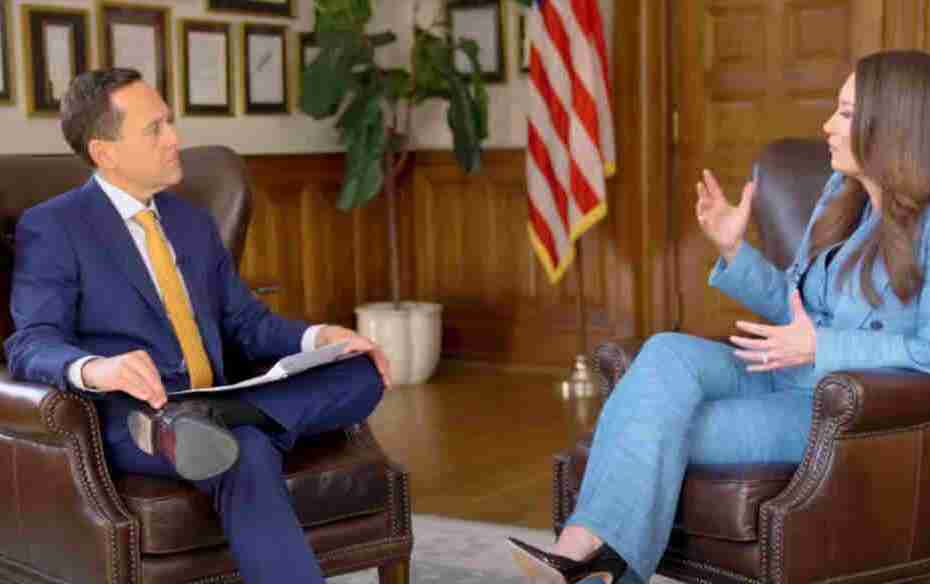
Here is the full transcript of US Secretary of Agriculture Brooke Rollins’ interview on All-In Podcast, May 3, 2025.
Listen to the audio version here:
Introduction
DAVID FRIEDBERG: I’m here in Washington, D.C. at the U.S. Department of Agriculture to interview the 33rd Secretary of Agriculture, Brooke Rollins. We just had an amazing conversation talking about Brooke’s background, the work she’s doing at the USDA, the impact USDA is having, food stamps, the sentiment of the American farmer, tariff and trade and everything in between. Really amazing conversation. Thank you to Secretary Rollins for allowing me here today. I hope you’ll enjoy the conversation.
Congrats on your first hundred days.
BROOKE ROLLINS: First hundred days? Yesterday was the hundredth day of President Trump. I’m 70 days.
DAVID FRIEDBERG: Right.
BROOKE ROLLINS: But for President Trump, yesterday. Today we celebrated together at the Cabinet meeting, and I’m going back over to the White House right after we finish to do more celebrating.
The USDA’s History and Importance
DAVID FRIEDBERG: Great. Well, we appreciate it. The USDA is an incredible agency. It was founded under Abraham Lincoln. I believe it was established under Lincoln. When I was talking to your staff, I think 60% of American workforce was in agriculture at the time.
BROOKE ROLLINS: That’s right.
DAVID FRIEDBERG: And it’s a really critical agency for American prosperity and has been really important for food security and for the interests of America around the world. As a trade partner, the largest ag exporter in the world. The agency is incredible in terms of the scale. 29 sub agencies, over 100,000 employees, 4,500 locations, and an over $200 billion annual budget. So really an incredible department to oversee. But before we get into the USDA and talk a little bit about some of the work you’re doing and have been doing. Maybe we can talk a little bit about your background. Did you grow up on a farm? How did you get into agriculture?
Brooke Rollins’ Agricultural Background
BROOKE ROLLINS: So yes, I grew up in a really small town in Texas. We were not farmers or ranchers per se in Texas. I grew up on a small farm. We raised animals, we baled hay. But my family, my mom’s side of the family, my grandmother, they had a big row crop farm in Minnesota. So I spent every summer on that farm. Corn, wheat, soy, pretty much everything you could consider and think of.
So that was my row crop experience, which has actually been very, very helpful because coming from Texas and being more of a cattle raiser and being in cattle more, which is what I’m in in Texas, it’s really great to have sort of both sides of the house and I’m very appreciative of that. But yes, grew up in a very small town. We didn’t have much. I was raised by a single mom. But we did have the land. And on that land we raised our animals, we baled our hay. I barrel raced every Friday night. I grew up in 4H and FFA, went to Texas A&M on an agriculture scholarship, studied soil science and meats and feeds and feeding, and really dove way into agriculture knowing I would go to law school.
I really had a heart for understanding policy and the people, but thought I would really stay in ag for the rest of my life. And obviously sometimes the path diverts and changes, but even over the 20 years since I last worked 100% in agriculture, which was for Rick Perry when he was first governor, then quickly moved into all the policy. But I’ve always stayed very much in touch and involved in ag and always really worked in ag policy, but as part of a much broader portfolio until this job.
The USDA’s Mission and Evolution
But no, listen, the USDA is the people’s department. That was what President Lincoln’s vision was. The American founding had four key agencies, of course, the Attorney General, Justice, State and Defense, which was the Department of War at the time. And that was really the beginning of our country with those four. Interior was added a couple decades later and then Agriculture.
That was sort of the cadence of building a new government and creating some sort of self-governing structure where you want the power to remain with the people. But certainly as America moved from a frontier republic into, as we know, the world’s greatest economic superpower, certainly you needed some kind of governing structure. And so Abraham Lincoln in the 1860s believed sincerely that the majority of Americans then were rural, they were agriculture related and that they needed representation here in Washington.
So the People’s Department was formed and this building was built in the early 1900s, 1920s, and here we are today. Now, through the years, as you mentioned, it has grown and grown and grown. I do believe it became a bit of a catch-all in some ways. You know, we run the food stamp program, the SNAP program, the Supplemental Nutrition Program. We run the forests. Of course, Forest Service is under USDA. So that’s tens of thousands of firefighters as an example.
And of course, all of the farming and agriculture related, from rural development loans to farm loans to crop insurance, and then moving all of the economic relief that sometimes is often needed. I am still getting my arms around, two months in, exactly everything that we’re working on here. But in President Trump’s greatest vision and in his bold leadership, one of my top priorities is how we realign the USDA around its original purpose, which was serving the people and especially the farmers and ranchers. So really looking forward to continuing that work.
Experience in the First Trump Administration
DAVID FRIEDBERG: But you were in the first Trump administration.
BROOKE ROLLINS: I was in the first Trump administration.
DAVID FRIEDBERG: How did you end up in Trump one?
Brooke Rollins’ Path to Public Service
BROOKE ROLLINS: Well, that is a really crazy long story. My heart is in public policy. I first thought I may end up at seminary and be a pastor or youth pastor. And that was really where I felt very called after college, but then realized that if I lean into public policy, and I didn’t know what that meant, I didn’t even know what a think tank was, but that I could perhaps change more and help more people going that route than if I just worked at a church.
And so I really kind of got excited about that idea. And I was a big firm litigator for a couple of years after law school, did a clerkship, a federal clerkship for a judge in Dallas in the Northern District, and then got a call from Rick Perry, also another big time Texas Aggie. Ag major from an ag background, a rural town. And he’d just become governor.
In Texas, George W. Bush had just become president. They had the whole hanging chad. You know, when you think the election integrity issues are new to today. They are not new to today. This goes way back. But Rick Perry became governor. He was lieutenant governor. And he called me and I was sitting billing my every six minutes, the billable hour for this big law firm in Dallas. Loved the firm, didn’t love the work.
And he said, why don’t you come join my new team down here in Austin. I was 28 years old. I’d only been out of law school for a couple of years. And he made me his deputy general counsel. Sort of shocking to everybody, but I’d known him, I met him when I was 15 as a Future Farmer of America. And he believed in me. And so that was really how the pivot happened.
As I was trying to figure out what was next, I really leaned into public policy. And I found in the governor’s office, it was a great experience. I only did it for two years at the very beginning of his administration, Rick Perry’s, that you could make such a difference. But what I realized was that there was no one at that moment in Texas governance that was lobbying for freedom and for liberty and for God and for family. That all of those people that would come see me every day wanted something. Even in Texas looking for a specific law or wanting a little bit more taxpayer money. And I wasn’t even 30 yet, so I was sort of new to all of it. But I was put in a pretty highly responsible area. And it was so instructive to me.
Transition to the Texas Public Policy Foundation
So anyway, long story short, I ended up planning to sort of step away from any sort of official work. And my husband and I were ready to start a family. And I was going to do that for 20 years and then perhaps think about reentering the workforce again, having no idea what that even meant.
But I got a call from Wendy Graham, who was then Senator Phil Graham’s wife, chair of this organization I had never heard of called the Texas Public Policy Foundation and only had a couple of employees based in San Antonio. I was the governor’s policy director at the time. I went from being deputy general counsel to taking on all of policy for Rick Perry. And she said, would you like to come do this? I didn’t have any kids at the time. I thought, well, you know, I could do it for a year or two. And I didn’t even know what a think tank was.
But I did know that based on my experience in Rick Perry’s office, I’m not an academic, I’m an AG major from Texas A&M. But that if there were significant efforts to build a policy apparatus, I couldn’t have articulated this 20 years ago, but I can now into what my instinct was if there were a significant policy apparatus or apparatuses that were strategic and intentional and that didn’t have clients that weren’t paid to advocate for certain things. We only advocated for what was right, that it could change everything in Texas, Everything.
I’d just been the policy director. I had no one telling me what the right thing to do was. I just had the industry and lobby in my ear. And so I thought, well, yeah, let me go do this Texas public policy thing for a year or two and that’ll be fun, and then I’ll really step away once my kids start coming, hopefully.
And I looked up 15 years later with four kids, Luke, Jake, Anna and Lily. I was doing the flexible work before it was a thing. My board at TPPF was wonderful. Went from two employees to about 120, became, I believe, the most effective public policy organization in the country. Moved Texas because I had been in the sausage making. So I knew wasn’t again an academic, which at the time most think tanks were run by. But I understood innately how to stop bad things and how to move good things, and that was really the bottom line and how to hire really, really good people.
Joining the Trump Administration
So I got a call from Jared Kushner, whom I had never met. I had been on the president candidate Donald Trump’s economic team got a call when he was running against Hillary Clinton. Would you help us just build out our economic tax plan, deregulation plan, et cetera. And I said, of course, but I run a nonpartisan think tank and I’m always happy to help because obviously, I think we thought Donald Trump was going to be more conservative than Hillary, but no one really knew, right? He’d been a Democrat very early, not very long ago.
And I said, but yes, if anyone calls and helps, I want them to understand the Texas model, what we did and cutting taxes and deregulating and the job growth that happened and how it helped poor people the most. Going back to my original idea of going to seminary. And so he won. I was on that economic team. I was not interested in coming to D.C. or the White House. I told the team that. They said, what would you like to do? You were on the team when a lot of people weren’t. And I said, no, no, no, I’m going to stay in Texas and help.
Then I got a call from my now very good friend, but then at the time, didn’t know him, Jared Kushner, who said, whatever you’re doing, this is about six months into term, year one of Term one. What is that thing y’all are doing in Texas? You know, criminal justice reform, deregulation, tax cuts. I mean, whatever. All of the great things you’ve done, that’s sort of. Can you come just talk to me about how you did it?
And so I flew up to D.C. and flew up again and flew up again, and he started saying, we really need you in the White House. We want you to build something very similar to what you built in Texas. A relentless, super strategic, very intentional policy apparatus that can move things. And I said, no. And then I said no again, and then I said no again. And then my family and I finally said yes. And so that’s how I ended up in the last White House.
DAVID FRIEDBERG: And that transitioned into this term. Obviously, you’ve kept in touch with the president.
Brooke Rollins on Building the America First Policy Institute
BROOKE ROLLINS: Well, it’s much bigger and more interesting story than that, I think. So the final year of Term one, I took it upon myself. I sort of anointed myself as the person that would ensure that when President Trump won the second term on November 3rd of 2020, that we would be ready, unlike we were not in the first term.
And so I spent the year with Larry Kudlow, who ran the National Economic Council, Robert O’Brien, who ran National Security Council. And I was domestic policy at that point, and really drove an effort to put together an agenda in the teams that would be ready for that second term.
And so when that didn’t happen and, you know, everyone else was discouraged, no one would hire Trump people. It was a very dark time. January 6th happened in November of 2020. I realized that what I had been blessed to build in Texas, what the Trump first White House asked me to help do within the West Wing, that that’s what I needed to do on the national scale.
Never thinking for a second at that moment that President Trump was going to run again, but the whole idea that we had just had four incredible years, that we had a team of people in the Cabinet, Trump won senior staff, Trump won. That finally not only knew how to talk about conservative issues, but knew how to govern from a free market, America first perspective. And that couldn’t be lost.
If we lost that team, if we lost that thinking, if we lost that know how, I didn’t know if we’d ever get it back. And the Democrats are really good, the left is really good at government. We, our side is really good at raising families and building business. And so this happens every time that we’re put into government. We have a team of people that have the best intentions, but we lose years because we don’t know how to run a bureaucracy, how to deconstruct it and how to reconstruct it.
DAVID FRIEDBERG: And so what I was in the timeframe.
BROOKE ROLLINS: Exactly, because that’s it. It’s the time frame. So we launched the America First Policy Institute quietly in early February of 21, publicly in April, almost exactly four years ago today. In April of 21, I had nine former Trump cabinet members from Trump, 50 former White House senior staff. Many were volunteers at the beginning. Eventually I could raise enough money to get everyone on payroll.
But when the President won in November, AFPI and then our sister C4, we launched America First Works. It was a $90 million operation in just a couple of years and I think fundamentally transformed the landscape. Part of it, not all, was getting ready for a second America first term, whether that was Donald Trump or whomever. And part of that was having 300 executive orders drafted, having 196 agency plans ready.
And we did it all very quietly. No, we didn’t talk about it in the press. No one really knew what was happening. So that then translated to seven of our team are now on the Cabinet. Dozens and dozens and dozens are in the White House and along with our other partners that in those dark days of early 21, you know, from Stephen Miller, there are just so many of us that were kind of in solidarity in those early days, not knowing that we would be back, but if given the opportunity, we would answer the call again.
The First 100 Days as Agriculture Secretary
DAVID FRIEDBERG: So now you’re in the Cabinet, you’re running the Department of Agriculture. It’s been 70 some odd days, 100 days for the President. How have the first hundred days gone? What have been kind of the highlights for you in starting this term out?
BROOKE ROLLINS: Everyone says, are you exhausted? And it’s a seven day a week, 20 hours a day. And for me there are days where I’m tired of me. I think I got here to D.C. I was doing tours all day yesterday with Secretary Kennedy. The day before I was in Ohio. I think that’s right, yes. Two days before that I was in North Dakota. Then I’m back here. It’s literally a 5am to midnight, seven days a week effort.
But it’s just such a gift. I mean, who gets to do this? And at an inflection point in our country’s history, this is, I feel like this is 1776 all over again. And I think about never ever to compare myself to, you know, the founding fathers. But those guys were farmers and teachers and businessmen before they declared independence from the greatest power the world had ever known. And that was Great Britain and the King.
And so in many ways, I feel like our cabinet and this president has God’s hand and that that’s what we are called for as well. So while certainly we’re working very hard and the Hundred days has been extremely fast paced, I think that’s why you see the joy in the work is because we’re ready for it.
Reforming the Department of Agriculture
DAVID FRIEDBERG: Some of the secretaries in the cabinet have talked about the need to deconstruct, tear down, rebuild, or in some cases completely dismantle the department that they’re overseeing. What’s your kind of mandate with agriculture? Is there a reform needed in agriculture like others have declared for their departments? Does it need to be rebuilt from the ground up? Does it need to be rethought or does agriculture work well and in the best interest of America? What’s your general kind of take and your general mandate on the Department of Ag?
BROOKE ROLLINS: Yeah, well, and I think when you say, you know, does agriculture work well, I think you mean USDA. So the fact that we have an agency with 100 plus thousand employees, the largest budget item is food stamps, the SNAP program. There are so many different divisions and contracts. I mean, we are just getting started.
We’ve already canceled almost $6 billion, $100,000, $200,000 at a time. That’s a significant amount of contracts that we’re canceling. We are reducing in force to make sure that we are as efficient, as effective and as flexible as possible. There is no doubt that USDA absolutely needs a realignment, a reconstruction and a significant reorganization. So that’s what we are working through right now.
The idea that USDA should be, you know, we’ve got other programs and those are important, like food stamps, although they need significant reform. But this agency should be about farmers and ranchers all day, every day, and our ag producers. And how do we talking about the industry now. An industry that every year we lose more family farms. Every year things get outsourced to other countries, including China and Brazil.
Every year it gets harder and harder for most of our farmers to make a living where they can support their family, pass their fourth, fifth and sixth generation farmer ranch onto the next their sons or daughters. It’s getting harder and harder. It’s also getting harder and harder for new Americans, men or women, to get into the business of farming. It’s almost impossible. There’s not enough opportunity for capital to inject, to buy a new tractor, to buy the land, to figure out how to become part of this great historical legacy profession in American history.
So we’ve got a lot of things here at the department we need to really, really be refocused on. And we are. But also there’s some massive policy questions that we’ve got to think through. And then the kind of the final big priority is these farmers don’t want all these checks. I mean, they take them. It’s the way they stay in the black and the way they keep farming. It’s a national security issue because we lose more farms, we buy more food from overseas. That’s not good for the country for a lot of reasons.
But at the same time, they would like to be able to sell their product at a profit and not have to worry about the government at the end of the day. So these are all big policy questions that hopefully we expand markets. The President’s realigning the entire world economy right now, putting America first. All of those things combined, I believe, will lead us into a new era of prosperity where we can hopefully solve for most of that.
Addressing the SNAP Program and Nutrition Issues
DAVID FRIEDBERG: I think they’re all really good targets, obviously tactically challenging. But can we start with SNAP real quick? Because it’s 70% of your budget. It is $123 billion a year. So just to create some context, 13% of Americans are on the food stamp. The SNAP program at $123 billion a year, that’s roughly call it 2% of America’s federal budget is going towards the food stamp program. And one key kind of policy point that’s come up lately is that roughly 10% or $15 billion a year is spent on soda.
BROOKE ROLLINS: Yeah.
DAVID FRIEDBERG: And 75% of the population on SNAP are clinically obese. And there’s a real health concern about the SNAP program continuing to fuel a health crisis in America. What have you and in partnership with Secretary Kennedy, talked about with regards to addressing the health challenges that arise from the way the SNAP program operates today?
BROOKE ROLLINS: Yeah, that’s been a pretty big priority of ours. And within the first hour of being sworn in on February 13, 50 letters went out to all 50 governors in the country. And in those letters we talked about SNAP and Innovation and send me your waivers because the way the program works, it moves through the states.
And I love that anyway, like why would the federal government be telling everyone what to do? We want in the founders best vision of the 10th Amendment to allow the states to build those programs. But within that was why are taxpayer dollars, billions of taxpayer dollars being spent on sugary drinks and junk food to go into our supplemental Nutrition program for our food insecure populations, our lower income populations, when to your point, the backside is an obesity and chronic disease epidemic unlike any developed country in the history of the world has ever seen.
74% of our adolescents, our teenagers would not pass the military readiness test of our United States military right now today, 75%. So again, talk about national security, talk about all of the things. This is a massive, massive challenge facing America.
And in the first administration and you know, healthcare was under my portfolio in domestic policy. As conservatives we’ve long talked about how do we make America healthy again. But very much from a numbers perspective, right? The cost to the healthcare system at the back end of this, it’s not just the taxpayers funding it at the front end with the junk food and the sugary drinks and the diabetes, I mean just, it’s really stunning what’s happened just in the last couple of decades.
But then on the back end, the cost to our health care system and treating those chronic diseases, it’s going to bankrupt our country. It’s almost bankrupting all the states right now through Medicaid. So how do we solve for that? And you know, enter Bobby Kennedy. And Bobby and I don’t agree on everything, but we do agree on most things.
The opportunity, I was just with him yesterday, touring some farms and talking about nutrition and agriculture all day. The opportunity for the agriculture lead and the health lead to work daily, hand in hand to solve this together. You can’t solve this through government regulation, you just can’t. But you solve it through nutrition, through empowering your farmers, through getting good food into these programs versus the ultra processed, et cetera, et cetera. We’ve all heard Bobby use these points and he couldn’t be more right.
And listen, it’s again, talk about realigning the world economy with the President’s vision of tariffs. It’s also realigning how we look at food, how we as a federal government. To your point, on SNAP and other food programs, we have 13 nutrition programs. Listen to this number. This is going to astound you in America today through USDA. This is not all the other agencies. This is just here at USDA, we spend $370 million a day on nutrition programs. So not just SNAP, but food banks and all of the other ones. That’s just USDA. That is a stunning number. We’ve got to do better, and so that’s a big part of it. So Secretary Kennedy and I are on this. We are so aligned. We’ve got the Dietary Guidelines, we’re doing right now.
DAVID FRIEDBERG: What shows up in D.C. as you guys try and make this move, because there’s a lot of money to just to paint the picture, about a quarter of a percent of federal spending is going towards buying soda. Okay. So I’m assuming that there’s some interests that show up that are like, we don’t want that to go away. Is there any anecdote you can paint for how D.C. works and how the political machine typically works that you can help folks hear and understand what is, what happens as you guys try and make these sorts of reforms? Who shows up and what do they try and do?
USDA Secretary Brooke Rollins on Food Policy and Government Reform
BROOKE ROLLINS: Well, I will talk about it. I will also say that those that represent those industries, they are good people who are raising their families. And I do believe their talking point is freedom. Why should someone at the bottom of the socioeconomic level ladder not be able to buy the same things you and I could buy? Of course, my answer is, well, we’re not using taxpayer dollars, so that’s a big difference. And we’re not paying for it on the back end. But I understand where they would potentially be coming from.
But the amount of money that is at stake is reflected in the amount of lobbyists that are out and about and certainly very much a part of the Washington D.C. establishment. But it goes directly to why as difficult and as challenging as these policy issues are for all of us in President Trump’s cabinet, reflecting today on the 100th day celebration, also so different because none of us are of Washington. That was true in the first term. And that’s why I felt so freed. I could just do what was right. He just said, go do what’s right.
But in the first term, we didn’t really know yet how to do it, what we were doing and who was on our side. That four year pause in between term one and term two, it was the greatest gift. I mean, not only could we plan, but we also fully understood who is in it to save the country, what it was that we needed to do to get this done.
And for me, this is so black and white. And I’ve told everyone this. I don’t need to listen and have 57 meetings with lobbyists representing the industry. This is black and white. Taxpayer dollars be spent on sugary drinks and junk food that’s making our kids sick. Absolutely not. Does that mean we shut them down? Does that mean. No, of course not. But it just means we realign and we spend the dollars where they need to be spent. We reform, and hopefully we make America healthy again.
DAVID FRIEDBERG: I think this is one of the most important points about this administration, is without having all the political insiders in the administration, there’s no political leverage that can be applied.
BROOKE ROLLINS: There’s none.
DAVID FRIEDBERG: And you can have a true, objective, first principle point of view on policy, which seems to not have been the case for a very long time in the United States. Going back to the point about the founding fathers and that era of America, these were folks who ran farms, who ran businesses. They came and provided their time as civil servants for a period, and then they left and went back to private service.
BROOKE ROLLINS: That’s right.
DAVID FRIEDBERG: And that government did not have the sort of political careermanship that I think allows lobbying and lobbyists to have the leverage that they have.
BROOKE ROLLINS: That’s right.
DAVID FRIEDBERG: In government today. Exactly right.
BROOKE ROLLINS: On both. On both sides. This is. I’m not.
DAVID FRIEDBERG: It’s not a party thing.
The Problem of Government Expansion
BROOKE ROLLINS: It’s not. It’s just. It is an entire industry that has been built around. This is the problem when the government gets too big. I mean, this is world history. Greece, Rome, Spain, France, Great Britain, Netherlands, every great world power has buckled under the weight of a government that hands out the largesse. Right. That everyone’s got their hand in the pot and they buckle. And that’s how they lose their place in the world.
DAVID FRIEDBERG: Right.
BROOKE ROLLINS: And that is what. Listen, I sincerely believe that without Donald Trump coming down that escalator. And Listen, there were 17 guys and one girl, I think, running that, you know, in 15 when he did that, I was not the smart one that said, oh, there’s the game changer. That that’s him. I was like, oh, I love that person. And I’ve known him forever. And they’re going to be so great. It’s going to be Donald Trump.
But at that moment in American history, without that human being who is literally willing to swing for the fences every single day, 100 times a day for the American people, who owes no lobbyist, not one thing. We were all hired with the idea that we owe, not industry, not lobbyists, one thing. Now we need to listen to their concerns. But every day, all day, we’re called to do what’s right. And I don’t know that that’s ever happened, at least in my lifetime in governance and federal governance.
DAVID FRIEDBERG: So I want to talk about the irony of running the USDA with your policy background. This is an organization that administers programs like SNAP, the Federal Crop Insurance Program, the Direct Payments program to farmers, Commodity Price Support, where the federal government, the USDA, is buying commodities to keep prices high. And coming from a free market background, coming from a maximizing liberties background, small government background, wasteful government spending needs to be eliminated background. How do you reconcile the irony of running this department, and how do you think about where you want to take this department with that background over time?
America First and Food Security
BROOKE ROLLINS: Yeah, it’s a great. You’re the first person to really dig down on this that I’ve talked to since I took the job. And it’s an extremely insightful and thoughtful question that you raised, because that’s 100% true. My entire background is how to get government out of people’s lives and how to get government, quote, handouts out of the private sector. And how do we, you know, downsize significantly, everything that the government stands for and how do we let the markets work?
I think two things. First, I have become an absolute avid believer President Trump’s vision on putting America first. For years, you know, I was well, the cheaper goods from China are good for everybody and they allow those at the bottom of the economic ladder to have a better quality of life. And this is the market at work.
Now that I’ve seen it in the first term, but especially as the agriculture secretary realizing how poorly our products are treated on the world stage, the tariff, it just is. It’s stunning to me that we let this go on for so long, the way Argentina treats our beef, the way China treats the way Brazil treats our corn, I mean, the way the UK treats our pork. And that’s just in my world, I haven’t even really studied the automakers and others.
There is no doubt that that realignment has to happen for America to continue to thrive and lead on the world stage for another 250 years. That’s the first thing. So really realigning my thinking after deep study and deep thought in his approach of America first, not free markets for the sake of free markets, but fair markets for the sake of America.
DAVID FRIEDBERG: Get parity first.
BROOKE ROLLINS: Right. With the goal of freer markets eventually. The second thing I will say, and more on the USDA side is food security is national security. We have already lost tens of thousands of family farms in the last decade. If we continue on that trajectory, America will not be able to feed ourselves. The minute you become unable to feed yourself is the minute you lose all power on the world stage. The minute you have to rely on China or Brazil or Argentina to feed your people, you’re done.
And what has happened over the last number of years is China’s been buying up a lot of our farmland in America. A lot of our major meat packers, et cetera, are now owned by foreign ownership. And, you know, it’s not all. I’m not going to cast aspersions on everybody, but at the end of the day, we have to make sure that our agriculture industry is here in this country, that we are feeding ourselves and that we’re relying on ourselves.
And so all of the programs that you just outlined are part of that effort. We lose our farmers and our ranchers. We lose America. Not just the diligence and the hard work and the discipline and what that righteous, I believe the most righteous of all professions means. The beginning of our country was fought by farmers, but also we lose it from a national security perspective. And when that happens, we lose everything.
The State of American Farming
DAVID FRIEDBERG: Let’s talk about farming and the Farmer. Today, there’s 2 million Americans that work directly in agriculture across, I believe, 1.8 million legal farms in the United States. China historically has bought $36 billion a year of American agricultural product. America is the largest ag exporter in the world. So our farmers are deeply dependent on trade.
BROOKE ROLLINS: That’s right.
DAVID FRIEDBERG: And in California today, farmers have declared there’s a 20% labor shortage. Meanwhile, there’s a massive effort to address illegal immigration in the United States. And I want to just hear, like, what’s your view on the ground? You visited, I think you said, 15 states since you’ve been in office, hundreds of farmers. What’s the state of mind of the American farmer today? What are they feeling? What are they worried about?
BROOKE ROLLINS: The first three things on that. The first is that they are almost to a farmer, they are so supportive of President Trump even understanding that this current, again, trade renegotiation, it hurts. And they’re not going to be able to survive that long. But they know that the president has their back. So that’s been really encouraging to me.
Now, I have made a huge effort to get out into the country to meet the farmers, to continue to shake hands and say, we’re with you. But in the long run, this is going to be so good for our agriculture industry. This renegotiation, these opening up markets. Under Joe Biden, we lost $50 billion in trade. We went from a zero dollar trade deficit with Trump one to a $50 billion trade deficit with Biden and that’s $50 billion almost directly out of our farmers pockets.
So, you know, the short term, but that the President is with them. But secondly, to your point, there are tremendous headwinds, whether it is the trade renegotiation, whether it is, you know, row crops especially being in the thinnest margins they’ve ever had in their lifetimes. And then we export so many of those row crops. That’s almost a double whammy.
The President’s vision of a, you know, basically a disruptive restructure of the American economy includes the shipbuilding. And so for again, a lot of the exporters that need that extra fee on top of that is just one more. And again, Jamison, Greer and the team has been great. They’ve been solving for that and ensuring that ag is at the table and that every day and every decision they’re making, they’re doing that.
But I think ultimately, and this has been a big part of what I’ve been talking to the farmers about is ensuring that we’re opening up those new markets. And whether it’s India or Japan or South Korea or Brazil or Peru or the UK, I am going to all of those countries in the next few months. And this is just me on behalf of agriculture. This isn’t our trade crew, our commerce Secretary. I mean, it’s just me.
But I feel so bullish on the idea that if we are, we’re on Trump time, we deploy Trump time, which is going as fast as you can, as far as you can for as long as you can around the world. We’re going to open up so many new markets for our farmers. And then we solve for the labor issue which you brought up, which is a really big issue now. I think sometimes the Californians tend to inflate that because.
DAVID FRIEDBERG: What are you trying to say?
BROOKE ROLLINS: Yeah, I know they think a little bit differently.
DAVID FRIEDBERG: I hear it in Florida too.
BROOKE ROLLINS: Yeah, well, and there’s no doubt, I’ll.
DAVID FRIEDBERG: I’ll give you one statistic from a large strawberry farmer. I work in strawberry as well as other crops. But the farmer mentioned that he did an analysis. He thinks that since pre-Covid days, the total labor cost in the strawberry industry has grown from 700 million a year to 2 billion a year.
BROOKE ROLLINS: Wow.
DAVID FRIEDBERG: And that really hurt margins. And so it’s really hard to net a profit, particularly in specialty crops, not row crops where everything’s automated, but specialty crops where you’re dependent on labor. Doing work in the field.
BROOKE ROLLINS: That’s right.
DAVID FRIEDBERG: Harvesting product to be able to keep up with the lack of labor. And of late, there’s been a lot of an exodus of immigrants out of that might qualify under the visa program.
Labor Challenges for American Farmers
BROOKE ROLLINS: And I’ll put a little note, a little cross the T on what you just said, and that is, I’m a Texan. And our South Texas, the citrus farmers down there, think about in Mexico, for some of them, half a mile away, they can see it right across the border now through the wall, they can see it. And it’s $2 an hour. Those farmers are paying $2 an hour over there. You come across on our side and with everything that we’re required to do and pay and it’s 20 to $23 an hour. How do you compete? You’re growing the same crops. You can’t.
And so that’s what we really have to focus on. Our dairy farmers, you know, the visa programs don’t work for them. It’s not a seasonal deal. Those cows have to be milked 365 days a year. They can’t find people to milk the cows.
So the president, not in today’s cabinet meeting, but in the last one a couple weeks ago, brought this up himself and he said, and he and I talked about it in the first term, we’ve talked about it since then. He understands that there is a massive labor challenge for our farmers and our ranchers, especially our farmers in this country, but our ranchers as well. And he himself said, you know, that those who are not here legally, they need to go back, they need to self deport, but that we will ensure that there’s some sort of program in place that will help make sure that our farmers on this side have the labor that they need.
Now, the details of that are being worked out. I can’t really talk much about it, but the fact that the president himself is focused on that should give our farmers some, some a lot of encouragement that help. Help literally, figuratively and metaphorically is on the way.
DAVID FRIEDBERG: Got it. I think that’s a key thing for farmers to hear. They, you know, from what I hear from folks in the industry, it’s something that they want to make sure is acknowledged and addressed. Agriculture is such an interesting market. There’s such an alignment with some of these conservative values that you and this administration espouse. But then there’s such an important role that government actually plays.
Government’s Role in Agriculture
BROOKE ROLLINS: That is. At this point you couldn’t. It’s, you know, I love Elon and love Doge and they’ve been such a good partner in helping us get rid of the $500,000 grant to study transgender menstruation cycles in men. And you know, the, what the mice are going to do with under blah, blah, the craziness. He’s been wonderful.
But agriculture in many ways is different. You can’t come in here and gut the crop insurance program. You will lose thousands of farmers and guess who swoops in and picks up their land in their operation? The Chinese. You just can’t do it.
Now. My goal and my fervent prayer is that in four years from now, we will have moved, we will have opened up the markets, we’ll have reached this new era of prosperity for our farmers and our ranchers. And in so doing, this should be the goal of every government program that we’re able to roll a lot of that back and out and that we don’t need it as much.
DAVID FRIEDBERG: So the budget can come down over time.
BROOKE ROLLINS: Exactly.
DAVID FRIEDBERG: Yes.
BROOKE ROLLINS: That’s the goal. The same with the food stamps. I mean, talk about 80% of the USDA budget is food stamps. Our goal needs to be moving people into a work, you know, a life of work filled with dignity, where they don’t need those programs anymore versus the last administration trying to get as many people into those programs as possible. Our goal is to move them off of programs because they have a good, well paying job and they don’t need that anymore.
DAVID FRIEDBERG: No one wants a handout.
BROOKE ROLLINS: Exactly. No one wants a handout. I think that’s what a lot of, a lot of people don’t understand. So effectuating on that is really important.
The Role of DOGE in Government Reform
DAVID FRIEDBERG: Yeah. And I guess maybe you can share a little bit of the anecdotes. What’s it been like with the Doge representatives that have come into the Department of Ag? Are they embedded? Are they long term? Do you believe that DOGE plays as an forget Elon?
BROOKE ROLLINS: Yeah.
DAVID FRIEDBERG: But as a department or whatever it is, ad hoc department, does it play a long term role in continuously improving and identifying opportunities for cost savings?
BROOKE ROLLINS: Thousand percent. And it’s like all my dreams have come true. You know, I’ll never forget when the president came down the escalator in 2015 and he was talking about for every one new regulation, we’re going to get rid of two and I thought, are you kidding me? For the first time, are we making deregulation fun and sexy? Like, I’ve been talking about this in Texas and no one want to talk about it. Right. Even Republicans, like, oh, you know, we can never get rid of once government’s there, we just have to make it better.
And Donald Trump 10 years ago started talking about it, made it a thing. The first year of Trump won for every one new regulation 22 went. The next year it was 17. The next year 13, I think. And then by the end, because it got a little bit harder to find them. But still, when 2 to 1, our average was like 10 to 1 in the first Trump administration.
Well, then you add on Elon Musk and his team of geniuses who normally would never even think about being in government. Not that they wouldn’t want to, but they wouldn’t even begin to know how you combine that with this idea that we’re returning power to the people, we’re downsizing government. We are not in charge. We’re not here for the people to serve us like some monarchy. We’re here to serve the people.
And that’s a fundamental shift in the way we’re thinking in the federal government. And then to add Elon on. So actually, right after our cabinet meeting, maybe right before, a couple hours ago, I guess the news reports were saying, oh, he’s headed back to, you know, do his business. I pulled him aside and I said, I hope this isn’t true. This country needs you and your team forever. And to see now the states begin to add their own doges. This is how we save America. This is how we protect the country.
DAVID FRIEDBERG: Hopefully that becomes the institution, it becomes institutionalized.
BROOKE ROLLINS: Exactly. And, and hopefully we make it so powerful and get the people so involved that even the Democrats can’t roll it back, that this is the long term.
The Farm Bill Negotiation
DAVID FRIEDBERG: Plan for the country, for your department. There’s a big farm bill negotiation that comes up. I’ve been in D.C. a couple of times for farm bills. I’ll give an anecdote, go in, I have a conversation with someone on a committee or in an office, and they’re like, well, we can get this thing, but we got to go give the other guys this thing. And it clearly becomes this bill that today I think is rated at a trillion five over whatever the budgeting period is. It’s one of the largest bills we pass.
And the SNAP program is in it. So it serves the House of Representatives interests and then all the farm programs are in it. So it serves the Senate interests, because the Senate is heavily influenced by rural states, by agriculture. And so it’s become this behemoth bill. And how do you view. Are you going to play a role in. And how do you view this kind of horse trading that needs to go on to ultimately reduce government inefficiency, spending on things that don’t necessarily make sense as we get into this farm bill negotiation in the next couple of months?
BROOKE ROLLINS: Well, I am encouraged that the Biden team couldn’t get it done. I mean, they worked and it’s important. I know a lot of people are hating it, and they should, because it does become a Christmas tree of sorts. But the reference prices, which is what our farmers are paid on, have not been changed since the last farm bill, which was at the beginning of Trump 1.
So Debbie Stabenow, who’s now gone, was the lead Democrat in the Senate. The Senate was leading. Of course, Joe Biden wasn’t. That team was sort of mia. We’ve got a different team on the ground now. And one of the very first conversations I had with Amy Klobuchar, who took Debbie Stabenow’s place as the lead Democrat, of course, now we’re running the Senate. It’s a little bit different, is how do we get this done?
But realizing that the SNAP program, which is what the Democrats are always trying to put more money into, that grew 40% under the Joe Biden term. 40%. The program that was already this gigantic, you know, huge amounts of waste and fraud and abuse, it’s now even more. And they did that on purpose. Right. They knew it would be hard for us to roll that back.
I’m underscoring your point that this is not going to be easy, that the farmer part of the farm bill is 15% 1 5. The food stamp part of the farm bill is 85%. So I have been thinking about this already, having conversations and strategy sessions on both sides of the aisle, frankly. We’ve got to get this done for our farmers. And even, you know, Senator Klobuchar’s credit and other Senate Democrats on the Ag Committee, they care as much about the farmer in their states as I believe most of the Republicans do. It’s that ag is the number one industry in almost every state.
And so trying to find that middle ground, but ensuring that we’re bringing real reform to the SNAP program, but that we’re, most importantly supporting our farmers and our ranchers will continue to be the driver, as in all things. I think Donald Trump is the game changer here, and I think he’s going to help us get this done.
Innovation in Agriculture
DAVID FRIEDBERG: So I want to talk about one last point before we wrap, which is on innovation. Generally speaking in food there’s been a large amount and how it relates to protecting farmers interests. There’s been a lot of investment in cellular agriculture, using cells to make milk or eggs or cheese or fish or chicken, you know, using biotechnologies.
And DeSantis went on stage with a couple of ranchers from Florida and they passed a law banning the sale or production of cellular agriculture cellular products in the state. And there are two other states that have passed laws, others that are considering it. Now there’s a conversation about some folks at the house also doing it.
And the general statement, well, there’s already a regulatory framework for making sure it’s safe for consumers, making sure it’s healthy, et cetera. Some people might not like it, but I go back to my free market principles. Why not let consumers choose? As long as it’s safe, as long as it’s appropriately regulated, shouldn’t it be made available rather than protecting the interests? Otherwise you end up looking like Europe. And Europe has stifled innovation in agriculture for decades and as a result they have fallen way behind America. And it’s an opportunity for America to sustain its innovative advantage. Have you spent any time on this topic and do you have a point of view?
BROOKE ROLLINS: Well, let me say this, I have not dug into this yet the amount that I need to. But having said that, I do believe that the innovation and the drive for better should never be stifled. And I sincerely believe that there is hopefully room for everyone, especially as this emerging market is happening.
And I also believe that at the end of the day, the American consumer, when most of them when having to decide between real American beef and something that’s not that they’re going to choose the real American beef. So I, at least in my nominal knowledge at this point, without digging in, I just believe so strongly in our ranchers and our farmers and what they produce and what it means to the average American family. I’m the mom of four and how I feed my family. But I don’t think we ever want to get in the way of stifling innovation, especially as it relates to something that could eventually be such a game changer.
DAVID FRIEDBERG: Well Brooke, I really appreciate all the time you’ve given us given me today. It’s really great to spend this hour with you. Thank you. And congrats on the role, congrats on the progress and I really look forward forward to seeing the work you’re going to be doing over the years ahead.
BROOKE ROLLINS: Thank you. It’s an honor to do it. Thank you.
DAVID FRIEDBERG: Thank you.
Related Posts
- Transcript: President Trump Addresses the 81st Session UN General Assembly
- Maggie Haberman: Trump’s ‘Unreality Bubble’ Meets the Midterms (Transcript)
- Transcript: President Trump Remarks on Healthcare, Sep. 18, 2026
- Transcript: Jonathan Swan’s Dive into Trump’s Reality: The Weekly Show
- Transcript: President Trump Remarks in Dublin, Ireland – Sep 12, 2026