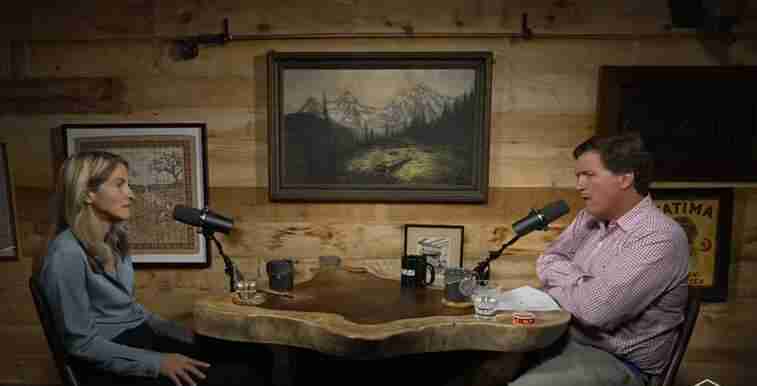
Read the full transcript of Head and Neck Surgeon Dr. Mary Talley Bowden’s interview on The Tucker Carlson Show episode titled “How Vaccines Got Politicized and the Medical Industry Lost All Credibility”, premiered April 2, 2025.
The interview starts here:
The COVID Treatment Controversy
TUCKER CARLSON: So thank you for coming. Here’s my question to you. You were one of the people who was right about COVID and certainly more right than the US Public health authorities and the global public health authorities. And I’m just going to summarize in two sentences what I think your position was. So you’re a physician in private practice in Texas, and you’re vaccinated, by the way.
DR. MARY TALLEY BOWDEN: No.
TUCKER CARLSON: You were not. Oh, you’re not vaccinated.
DR. MARY TALLEY BOWDEN: I almost did.
TUCKER CARLSON: God bless you. But at first, you, like, have no real reason to think that this is all completely backward. But then you treat COVID patients, thousands, I think, and you start to realize that the therapies that the US Government is recommending are not working, that the vaccines are not working as advertised at all. And you start saying something about it and offering alternatives to it which are badly needed in the middle of this moment. And you’re attacked, really attacked. Your livelihood, your professional credentials are attacked. And then time passes now four years, and it becomes really clear that once again, you were more right than the US Public health authorities. I think that’s just demonstrable. I think the science proves that.
So here’s my question after a long preamble. Have you been rewarded for it? Has the AMA given you the Physician of the Year award? No, I’m serious. Has anybody said we were wrong in attacking you and you deserve credit for your foresight and bravery?
Still Fighting for Medical Freedom
DR. MARY TALLEY BOWDEN: No. And, I mean, I’m still fighting to keep my license. I mean, I still have the Texas Medical Board coming after me for something that happened right now.
TUCKER CARLSON: You’re fighting.
DR. MARY TALLEY BOWDEN: Oh, yeah. Oh, yeah. I have a hearing coming up, end of April, and I was trying to save somebody’s life. It was a sheriff’s deputy. This is a man that has served for 29 years trying to protect and save the public. Father of six. And he contracted COVID. And this was in the fall of 2021. And that was the third and the largest surge of the pandemic. That’s when this was following the rollout of the COVID shots. So this was eight months following the rollout of COVID shots, and they clearly weren’t working. And this man, he got sick. He tried to get ivermectin. He couldn’t find a doctor willing to prescribe it. He ended up in the hospital, and he went downhill like so many people did. And his wife, the hospital was talking hospice. They were giving up. They said, we tried everything.
TUCKER CARLSON: Come on. How old was this man?
DR. MARY TALLEY BOWDEN: He was late 50s, early 60s, not elderly. And he was a big guy, but he had no comorbidities. He had no other medical problems. And so we saw this, though, with so many people. If you didn’t get early treatment, the second week of illness, people would start really getting bad. This massive inflammatory response would kick in. It almost always happened on day eight. It was very weird. It was very predictable. And the primary care doctors just shut their doors to these people. They said, “Oh, this is just a virus. We’ll let it run its course and then go to the emergency room if you can’t breathe.”
The Medical Dogma Problem
TUCKER CARLSON: Can I ask you a question? Why would primary care physicians, whose duty it is to treat patients, and they must have known by this point that day eight is the critical day. Why would they not treat these people?
DR. MARY TALLEY BOWDEN: Because there’s a dogma that we are taught in medical school and in our training that you don’t treat a virus, that you let a virus run its course, because there’s this big fear about antibiotic resistance. So they don’t want people over prescribing antibiotics. And so the assumption if somebody comes to you with an upper respiratory tract infection and they’re three, four days, five days in, and they don’t test positive for strep, you basically say, “Oh, you’ve got a virus, and we’ll just wait and see what happens.”
Well, that was just catastrophic. I learned so much. I had that mindset prior to the pandemic, but it just didn’t sit well with me when people were coming in and really struggling to just do nothing. And so initially I tried hydroxychloroquine, but as soon as President Trump came out and said how great it was, the Texas State Board of Pharmacy, they literally shut it down. Like, they prohibited doctors from prescribing hydroxychloroquine.
So I put it on the back burner, and I just did my best. I did breathing treatments, steroids. I did antibiotics for secondary infection. But initially, I didn’t really have a lot of demand for people coming in needing treatment. I was doing a lot of testing, and that sort of got me recognized in town because I had a saliva test that didn’t require a swab up the nose. I was able to get the results back very quickly.
You might remember, initially, LabCorp was the only lab in the country that had the test, and they became inundated, and it was taking two weeks to get the test results back. So we had a saliva test, and people could just give a cup, and they could sit in their car and spit in it, and then we’d have the results back the next day. So that’s where it all started.
The Monoclonal Antibody Success
And then monoclonal antibodies came about, and those worked great.
TUCKER CARLSON: When in 2021 was that? Remember?
The Government Campaign Against Alternative Treatments
DR. MARY TALLEY BOWDEN: So the summer of 2021. Well, so we’ll start in the spring of 2021. So this is following the rollout of the COVID shots. The government is upset because people are not buying it. People are not getting them. There’s very low uptake, very low interest. There’s suspicion of these shots.
So in March, they started their PR campaign. The government, they went after Ivermectin. The FDA put something on their website about, you can’t use Ivermectin for COVID. Biden doled out $11.5 billion to groups around the country. Initially, it started with 275. It went up to 17,000 influencers, church groups, sports leagues, all sorts of people just funneling out taxpayer money to go after doctors like myself that were spreading “misinformation” and to push people to get these COVID shots.
So Houston Methodist Hospital, and that’s where I had privileges, they were the first hospital in the country to mandate the shots. And this was April 1, 2021. And this was the exact day that Biden announced COVID-19 Community Corps, that multi-billion dollar propaganda effort. I think it was very purposeful. I think the mandates started in Houston for a reason. I think that they knew if they could get away with the mandates in Texas, they could get away with them anywhere.
TUCKER CARLSON: Where was your governor in this?
DR. MARY TALLEY BOWDEN: He was, you know, he…
TUCKER CARLSON: A Republican governor.
DR. MARY TALLEY BOWDEN: Yeah, he was a little slow to act. I mean, he was on board with Methodists. In fact, I have the CEO of Methodist, Dr. Marc Boom on camera saying that Governor Abbott wanted them to get a shot in every arm. That’s according to the CEO of Methodist. But, you know, he did come through eventually, but this is early on.
Discovering the Truth About Breakthrough Cases
So then that summer started having all these breakthrough cases, and I was seeing it because I was testing people. So I started to track people by their vaccination status, and I saw that the vaccinated outnumbered the unvaccinated, and they were just as sick, if not sicker. So I brought this to the attention of Houston Methodist.
TUCKER CARLSON: Were these your patients?
DR. MARY TALLEY BOWDEN: You’re talking about people that were coming to my office to get tested.
TUCKER CARLSON: Why wasn’t every doctor doing this?
DR. MARY TALLEY BOWDEN: Well, we can get to that. Because, I mean, I’m independent, so it allowed me to do things that other doctors can’t do. But I was actually collaborating with Methodists. I was sharing my data with them because I had so many. I mean, basically, all I saw was COVID for a few years, and we were trying to get the data published, so we had a good relationship.
So I reached out, I said, “Hey, are you seeing what I’m seeing? Like these all these breakthrough cases?” At the same time, I had all these people coming to me very distraught about the mandates. And, you know, because we were ahead of the time. Right. This was before the rest of the country was mandating the shots. But in Houston, a lot of people at Houston Methodist, they employ about 30,000 people, were very distraught over these mandates, and then I see that they’re not working. At that time, I wasn’t seeing the injuries. And at that time, I was just very vocal against the mandates.
So in August, late August of 2021, FDA put out the infamous horse tweet. And that’s the attractive healthcare worker nuzzling the horse and says, “Seriously, y’all, you’re not a horse, you’re not a cow. Stop it.” Tweet went viral. That’s when Joe Rogan got smeared for taking Ivermectin. And then right after that, Biden mandated the shots, and they took away monoclonal antibodies. So it was all very orchestrated.
TUCKER CARLSON: But monoclonal antibodies, I’ve never heard anybody say that they weren’t helpful.
DR. MARY TALLEY BOWDEN: Right. But if you have monoclonal antibodies available as an option, people are going to do that rather than get the shot. So that’s why, in my opinion, that’s why they took away the monoclonal antibodies, which were working. They worked great.
TUCKER CARLSON: So this is, like, the most evil thing that’s ever happened in the United States.
DR. MARY TALLEY BOWDEN: Yeah, in my opinion, definitely.
The Hospital’s Response
TUCKER CARLSON: I’m sorry to keep interjecting. It’s just, even though I live this, it’s just so stunning to hear it recounted as crisply as you are recounting it. So, okay, so they take away monoclonal antibodies. They mandate the shot. You’re sharing your data with the hospital at which you have privileges. What are they saying?
DR. MARY TALLEY BOWDEN: So their response was one sentence, and it said, “Well, we think the shots are there to lessen the severity.” Well, interestingly enough, they’ve never shared their data, their hospital data, and being the first in the country to mandate the shots, you know, they’re sitting on an enormous amount of data. And if the shots had been effective in preventing transmission or lowering the severity, then they should have shared that. They would have shared that. They would have been screaming that from the rooftops. It fits their agenda. But they’ve been very quiet about that.
So I had all these patients coming to me very distraught. I had one patient come to me and tell me that her urologist at Houston Methodist called her and said, “You’re going to need to find a new urologist if you don’t get the COVID shots.” And she had a history of bladder cancer, so she was very upset, and she was calling me to try to find a new doctor.
TUCKER CARLSON: The urologist said, I won’t treat you.
DR. MARY TALLEY BOWDEN: Well, he said that the department was talking, having discussions about not treating patients that were unvaccinated.
TUCKER CARLSON: He didn’t say the Texas Health Department?
DR. MARY TALLEY BOWDEN: No, this is at Houston Methodist.
TUCKER CARLSON: Oh, the Department of Urology.
DR. MARY TALLEY BOWDEN: Yes. That’s what he told this patient.
TUCKER CARLSON: Doesn’t he have a moral obligation to treat his patients?
DR. MARY TALLEY BOWDEN: Yeah, well, we saw all sorts of moral issues during the pandemic. So that happened. And then on the exact same day, I got a notice from a surgery center where I operate that I’d have to get the COVID shot to continue operating. And then on the same day, I got a notice from this hospital where I was trying to help the sheriff’s deputy. They had a court order to give me emergency temporary privileges so that I could give him ivermectin. The wife sued, and she was, you know, last ditch effort. Let a dying man try Ivermectin.
TUCKER CARLSON: The sheriff’s deputy, father of six.
The Battle for Ivermectin Treatment
DR. MARY TALLEY BOWDEN: Yes. I testified. She asked me to testify. I testified. Senator Bob Hall testified. We won. And the court ordered the hospital to give me emergency temporary privileges. I was to either personally give the Ivermectin to him or have a nurse do it because they thought it was too dangerous for one of their own staff to treat a patient with Ivermectin, which is insane.
I got a notice that they were going to deny my privileges, even though I had never been sued for malpractice and had a spotless record. They made me get letters of recommendation. They made me submit my surgical case logs. They fought tooth and nail to make the whole process as difficult as they could. The lawyers ended up having to go back to the judge to fight with them over just giving me privileges.
Whereas, at that time there was a shortage. They needed doctors to work in the hospitals. Under other circumstances, if I had just shown up and said, “Hey, I want to help out in the ICU,” they would have granted me privileges the same day. There wouldn’t have been any kind of letters of recommendation or surgery requirements.
TUCKER CARLSON: Can I ask, were you pretty confident this man was going to die without treatment?
DR. MARY TALLEY BOWDEN: This is interesting. The lawyers doing this case, Ralph Lorigo and Beth Parlato, handled 189 cases around the country in similar situations where spouses were suing hospitals to try to get their loved ones Ivermectin as a last-ditch effort to save their lives.
In half of those cases, they won. And in the cases where they won, all but three patients died. In the cases where they lost, all the patients died. It’s really amazing that the judges’ political party matched the outcome of the trial. The Republican judges were the ones that ruled in favor of the plaintiff, and the Democrat judges were the ones that ruled against the plaintiff.
TUCKER CARLSON: You’re making my heart beat fast hearing this. So what happened in this specific case?
Hospital Obstruction and Patient Outcome
DR. MARY TALLEY BOWDEN: There was a lot of back and forth. It was very confusing and happening very quickly with his life on the line. The lawyers told me, “You have the green light, we’re going to go ahead, we can go. It’s all good. Everything’s cleared.”
So I sent the nurse to the hospital, and she was greeted by the police and the hospital administrator and turned away. He never was allowed to get the Ivermectin. They appealed and managed to get a stay on the order. Then on appeal, they lost.
Luckily, the wife was able to go into the hospital every day, which was unusual. Most spouses didn’t get to do that. This was at Texas Huguely Hospital in Fort Worth. She applied Ivermectin to him topically every day without the hospital knowing. The hospital tied up his feeding tube because they didn’t want her sneaking anything in. They put towels and rubber bands around it so nothing could be snuck in.
TUCKER CARLSON: These people are evil.
DR. MARY TALLEY BOWDEN: They fought tooth and nail to keep him from just trying a very safe medication, which I believe should be over the counter. Then they turned me into the medical board over it, and I’m still fighting those charges.
The patient did survive, but he spent six months in the hospital. He lost half of his body weight. He never was able to make a full recovery. And then, unfortunately, he did pass away.
TUCKER CARLSON: That’s very upsetting to hear. I thought I was done being upset by Covid. You just brought me back. It’s such a stain on this country.
DR. MARY TALLEY BOWDEN: It’s a stain on the medical profession.
TUCKER CARLSON: Just that people didn’t storm the hospitals. Your father, your husband, your children dying alone. People should have showed up with guns and said, “Get out of my way, this is my loved one, and I’m going to be with him when he dies.”
DR. MARY TALLEY BOWDEN: Exactly.
Medical Board Charges
TUCKER CARLSON: So your crime is recommending a therapy for Covid. That’s a crime, or am I missing something?
DR. MARY TALLEY BOWDEN: Well, the technicality is that I didn’t have hospital privileges when I sent the nurse to the hospital, but this was following a legal decision.
TUCKER CARLSON: But she never got in.
DR. MARY TALLEY BOWDEN: She never got in. And I was following the guidance of the lawyers.
TUCKER CARLSON: So your nurse made it to the threshold of a hospital, therefore, you should lose your medical license.
DR. MARY TALLEY BOWDEN: I don’t think they’re trying to take my license. I think they just want to fine me and mark my record. I could have settled a long time ago.
You have something called an informal settlement conference. It’s behind closed doors, there are no witnesses, and you don’t really get to interact much. They offered to make it go away if I paid them $5,000 and took eight hours of CME (continuing medical education) and retook the jurisprudence exam. All doctors in Texas have to take a medical legal exam, which I’ve already taken and passed, but they wanted me to take it again. I just said no, I’m not caving to this.
It’s been three and a half years. There have been multiple continuances. They haven’t been able to find an expert witness to testify against me. The first one got sick with cancer. The second one, I think, just chickened out. And the third one, it turns out that the entire time—he was the former medical director of the Texas Medical Board—the last 12 years he’s been working for Planned Parenthood.
TUCKER CARLSON: Wait, what? What is his day job?
DR. MARY TALLEY BOWDEN: He’s a lab director for Planned Parenthood.
TUCKER CARLSON: What does a lab director at Planned Parenthood do?
DR. MARY TALLEY BOWDEN: I don’t know.
TUCKER CARLSON: Sell fetal tissue to vaccine companies?
DR. MARY TALLEY BOWDEN: Yeah, probably.
TUCKER CARLSON: And he’s on the medical board.
DR. MARY TALLEY BOWDEN: He was the medical director of the medical board.
TUCKER CARLSON: And he works at Planned Parenthood.
DR. MARY TALLEY BOWDEN: Exactly.
TUCKER CARLSON: This is not Vermont. This is Texas.
DR. MARY TALLEY BOWDEN: Exactly. Texas is not what people think.
Questioning the Medical Board’s Actions
TUCKER CARLSON: Do you see any potentially legitimate justification for hounding you for four years?
DR. MARY TALLEY BOWDEN: The medical board’s job is to protect the public from dangerous doctors. We get a monthly email blasting all the crimes that doctors have done, and it’s pretty bad—sex offenders and other serious issues.
That’s their role. I don’t think I’m dangerous. I was trying to save a life. I stepped on the toes of a hospital. That was my crime—a multibillion-dollar hospital, Advent Hospital. And that’s what happened with Methodist. I stepped on their toes and they just weren’t going to have that.
TUCKER CARLSON: Could you ever just call the CEO of the hospital and the medical director and say, “This is really crazy. I’m not profiting from this Ivermectin. There’s no profit margin in it. I just think this therapy works. I’ve seen it, and I’m trying to help. Won’t you back off?”
DR. MARY TALLEY BOWDEN: At the time this was going down, it was a legal battle. I felt like I couldn’t step outside what the lawyers were telling me to do.
TUCKER CARLSON: How much money do these hospitals take from the Biden administration?
DR. MARY TALLEY BOWDEN: I don’t know for sure, but I know that Houston Methodist Hospital has $13 billion in assets. That was actually a couple years ago. It’s probably more now. They have locations all over Houston. They don’t pay property taxes. They’re nonprofit.
TUCKER CARLSON: Do you think we should get rid of nonprofit status, period?
DR. MARY TALLEY BOWDEN: Yes.
A Doctor Who Fought Back
TUCKER CARLSON: Was there any hospital in Houston that was willing to be reasonable or was not taking orders?
DR. MARY TALLEY BOWDEN: Yes, there was. Dr. Joe Varon, a pulmonologist and critical care doctor who is now the head of Independent Medical Alliance. He and I would have patients calling us from all over the country saying, “Help get me out of this hospital.” He would accept transfers from all over the country. People would be life-flighted from ICUs in places like Maine and taken down to Houston, and he would care for them.
This hospital, UMMC, allowed him to use Ivermectin. There was a whole protocol called the MATH+ protocol, started by FLCCC, which is now Independent Medical Alliance. It included high-dose steroids, high-dose Ivermectin, high-dose vitamin C, breathing treatments—all these very basic, not dangerous things that weren’t being done elsewhere. He saved a lot of lives. He worked crazy hours—I think he worked over two and a half years straight without even a break. I was fortunate to have him as an ally.
TUCKER CARLSON: What a man. Good for him. So you’re clearly a data person. Do we have the final outcome? How did those patients do versus patients who were intubated in some Biden-controlled hospital?
The Efficacy of Ivermectin
DR. MARY TALLEY BOWDEN: Well, if you look at, there’s a great website that compiles all the ivermectin data just by itself. And there we have 105 studies showing the efficacy of ivermectin. And it varied depending on the actual patient, as it should. And you wouldn’t always just use ivermectin.
So in my more severe patients I would use a combination of ivermectin, hydroxychloroquine, azithromycin. During that second week I would do higher dose steroids if necessary, I would do breathing treatments. So it’s hard to isolate saying okay, well it’s just ivermectin.
But when you look on this compilation of studies, I mean even in the late stages they showed that ivermectin could decrease mortality by 40%. It’s most effective if you actually take it as prevention. So people taking it twice a week do the best, and then the people that start day one or two or three, they’re the next best.
TUCKER CARLSON: But so we, I mean, that’s established. We know that.
DR. MARY TALLEY BOWDEN: Well, it depends on who you ask. But yes, there is plenty of data supporting that.
TUCKER CARLSON: So why isn’t that like the official CDC protocol for Covid?
DR. MARY TALLEY BOWDEN: Well, you know, it would help myself and other doctors who. I mean, I’m not the only doctor going through this with the medical board. But if they could make it a countermeasure, then it’s protected under the PREP act, and then it makes all these issues that we’re having with medical boards essentially go away.
TUCKER CARLSON: Is there anybody who has counter data numbers showing the opposite, that people taking ivermectin, like, die more?
DR. MARY TALLEY BOWDEN: Well, I wouldn’t say that they’d say it doesn’t work or it’s not. But the studies that are all establishment in the big journals, they’re either… Either they didn’t give the ivermectin soon enough or they gave too low of a dose, or the study was sponsored by somebody that has financial interest and seen it not work.
So there are studies countering that, but if you look at… There’s just an abundance of data showing it works and it’s super safe. So I was a little bit nervous before I started using it because of all the media that’s only for horses and that sort of thing. So I dug into it and I did.
Safety Profile of Ivermectin
TUCKER CARLSON: What does it help? Horses. I know we kept hearing it was a horse dewormer. Is it effective?
DR. MARY TALLEY BOWDEN: Yes, for their parasite issues. But. So I looked at the study where Merck submitted to the FDA. It’s on their website. Anybody can find it. And you get toxicity data, and there’s something called the LD50, which stands for Lethal Dose 50. It’s a benchmark number that’s used to gauge how toxic a medication is. So the higher the number, the lower the toxicity.
And in Covid, we were using higher doses of ivermectin than what you use to treat a parasite. So I wanted to make sure these higher doses were okay. Well, if you look at the LD50 of ivermectin, it’s anywhere from 11 to 82 times what we’re giving for Covid. So we are far under that threshold.
And then I did a literature search and I tried to find accidental, intentional overdoses from ivermectin, and I couldn’t find anything. And I checked recently and there was one study showing some issues, and then it was a little bit muddy. Like, was this really ivermectin? But if you look at Tylenol, I mean, there’s thousands of papers showing toxicity from Tylenol, so it is.
TUCKER CARLSON: I know someone who has, you know, advanced liver disease from it.
DR. MARY TALLEY BOWDEN: Really? Wow.
TUCKER CARLSON: Yeah. Well, that’s the thing. Thousands of people die every year, right? Yeah. So Propofol used every day in hospitals. When you screw that up by a tiny bit, you’re dead.
DR. MARY TALLEY BOWDEN: Yeah.
TUCKER CARLSON: Correct.
DR. MARY TALLEY BOWDEN: Right. Well, yeah, yeah. I haven’t seen it, but sure killed Michael Jackson. Yep.
TUCKER CARLSON: Right. But I’m just saying, like, hospitals work with incredibly dangerous drugs every day.
DR. MARY TALLEY BOWDEN: Right, right.
TUCKER CARLSON: I’m sure you do.
DR. MARY TALLEY BOWDEN: Yeah. Yeah.
TUCKER CARLSON: What are the side effects of it?
DR. MARY TALLEY BOWDEN: I tell people I have a harder time with antibiotics in terms of side effects. Like, if I’m going to get a call back in, my office is usually about an antibiotic problem. Not ivermectin. But you can get some GI issues, diarrhea, and then you can get blurry vision. But the blurry vision goes away when you stop taking it. And it’s not like, oh, I can’t read. It’s more like, oh, something’s a little off. Not, you know, that’s it. That’s it.
TUCKER CARLSON: So I guess what you’re saying without saying it is that there’s really no compelling medical reason to call the cops if your nurse shows up with ivermectin.
DR. MARY TALLEY BOWDEN: Exactly.
TUCKER CARLSON: So that’s, like, purely political.
DR. MARY TALLEY BOWDEN: Right.
The Politicization of Medicine
TUCKER CARLSON: How did your business get your profession get so politicized?
DR. MARY TALLEY BOWDEN: Yeah, it’s awful.
TUCKER CARLSON: Did you know that before all of this?
DR. MARY TALLEY BOWDEN: No. And I remember Methodist came after me very vocally. And I had a press conference outside my office as a… I’m not standing… I’m not putting up with this. And I said, you know, politics has no business in health care. And at the time, I really believed it. I was not political at all prior to this.
TUCKER CARLSON: Really.
DR. MARY TALLEY BOWDEN: I shied away from politics. I really didn’t like it, and I thought it was too divisive. And here… And here I am.
TUCKER CARLSON: But no, I think that’s such a wonderful and very American. You have children?
DR. MARY TALLEY BOWDEN: Yeah.
TUCKER CARLSON: That’s like a sweet kind of… That’s how you should feel. That’s how you should feel. I’m married to someone who feels that way. I don’t like people arguing. That’s great. We have important things to do. Yeah. No, I’m not making fun of you at all. I love that.
DR. MARY TALLEY BOWDEN: But now I feel like there’s no other choice. Right. You just have to. You have to get involved. So.
TUCKER CARLSON: So you were not politically aware at all before this started? And were you aware that your business, that medicine was so politicized? Had you noticed it at all?
DR. MARY TALLEY BOWDEN: No. It’s interesting that I went and looked at the data for Texas because Texas has been infiltrated by people from all over the country.
TUCKER CARLSON: I’m aware.
DR. MARY TALLEY BOWDEN: Yeah. 33% population. Yeah, it is. And you look at health care professionals, what they donated, like, to political parties, and 10 years ago, they primarily donated to Republicans, and now they primarily donate to Democrats. The whole profession has shifted.
TUCKER CARLSON: I have a theory for why, but you’re the doctor, so you tell me what you think the cause of that is.
The Corporate Takeover of Medicine
DR. MARY TALLEY BOWDEN: Well, I think medicine in general. I mean, the corporate practice become the corporate practice in medicine. It’s become centralized. It’s, you know, only 1% of doctors are not employed.
TUCKER CARLSON: I’m one of those, but not employed.
DR. MARY TALLEY BOWDEN: Like, so 77% of doctors are employed by a hospital, 20% are employed by private equity or insurance company, and 2% are employed by the government, and only 1% are like myself. Where.
TUCKER CARLSON: So your choice is like your corporate douche overlords, private equity or insurance companies if it’s like, hilarious, like a joke, or the government. Right, right. And you’re in the 1% that has your own business.
DR. MARY TALLEY BOWDEN: Yep.
TUCKER CARLSON: Maybe that’s the answer right there.
DR. MARY TALLEY BOWDEN: Well, I think it is. I mean, we have to. Doctors need to regain their power. They’ve lost all their power, and they have no power. They have no power.
TUCKER CARLSON: They’re just like little worker bees getting ordered around.
DR. MARY TALLEY BOWDEN: I designed, so when I got out of residency, I worked in a traditional practice and I started doing.
TUCKER CARLSON: Can you tell us, doing what?
DR. MARY TALLEY BOWDEN: Just ear, nose, and throat and sleep medicine. And it was small, but it was easy. And. But I was always bothered by the stranglehold that the insurance companies had over my ability to treat my patients. So, like, one easy example is ear, nose, and throat doctor. We do an endoscopic exam of a nose. It takes about an extra 10 minutes. Not really a big deal.
TUCKER CARLSON: Doesn’t sound that fun, though. For the patient.
DR. MARY TALLEY BOWDEN: It’s really not bad. You numb it up first with spray. There’s no shots. But if I did that and I marked the code on the sheet, on the receipt, the patient might get some gigantic bill. $400 for doing this little simple procedure, which as an ENT, is pretty essential. It’s part of our, you know, makes us different from the primary care doctor. We’re able to look in there.
So it always stressed me out in the back of my mind like I’m going to do this and is the patient going to get some big bill? Right. I hated it. So when I, you know, I took time off cause I had four boys in five years and.
TUCKER CARLSON: Four boys.
DR. MARY TALLEY BOWDEN: Yes, yes.
TUCKER CARLSON: What’s that like?
Creating an Independent Medical Practice
DR. MARY TALLEY BOWDEN: It was chaotic. Yes. I wasn’t sure I was going to go back. I started off, I’m just going to take a year off and that led to seven years off. I wasn’t sure I was even going to go back to medicine but as I got older just kept nagging at me.
So I decided to go back. But I said I was going to do it on my own terms. So I called myself third party free. I don’t contract with insurance companies, I don’t contract with hospitals and I don’t contract with the government. And the only people I work for are my patients.
TUCKER CARLSON: And so they just like give you a credit card when they come in, that’s it?
DR. MARY TALLEY BOWDEN: Yes, but they, and they can file a receipt, they can file a claim to their insurance company and yeah, it’s very transparent. Everybody knows how much everything costs and it’s actually, you know, there’s so many people that have very high deductible insurance now that they’re basically cash patients unless something catastrophic happens.
And if you go to a traditional doctor’s practice, half the time they don’t even know what to charge you for a cash patient because they’re just so entrenched with the insurance industry. But there is a growing movement of doctors like myself and I’m a specialist so it’s a little unusual.
But there’s something called direct primary care. And direct primary care is like affordable concierge care. So you’re paying cash but it’s. The cost is typical, like a gym membership. So it’s not super high. You get a lot more access to your doctor, you got a lot more time, probably more quality. They’re not always like minded in terms of COVID and to me that’s a litmus test for your doctor.
But it’s a better way of doing it. You get much more access, higher quality care, more time and you save your insurance for the catastrophic care. That’s what we do for our cars and use your HSA so health savings account, if you can get one of those and the government could expand those and make those more available for people. Because right now it’s sort of limited based on your employment, employer. But if you can pay out of pocket for your basics then you are likely to have a better experience.
TUCKER CARLSON: I think it’s And. But it also frees the doctor to think independently.
DR. MARY TALLEY BOWDEN: Right.
TUCKER CARLSON: And to think on behalf of patients. Why didn’t you get the COVID shot?
DR. MARY TALLEY BOWDEN: Almost got it. I. In my mind, I thought, okay, just saying. I don’t think it’s going to work. But I didn’t think it was going to hurt people. I just thought. I just don’t think it’s going to work.
TUCKER CARLSON: Why? Why did you think that?
DR. MARY TALLEY BOWDEN: Because I trusted. I trusted. Yeah. I really had never given the FDA, CDC, HHS a thought. I really hadn’t. They weren’t on my radar. I just sort of assumed that everything was fine.
TUCKER CARLSON: Well, but because you assumed that, it’s. It’s interesting that you didn’t think the shot would work.
Dr. Bowden’s Vaccine Hesitancy
DR. MARY TALLEY BOWDEN: Right. Well, I mean, it’s just because of the speed. I thought, well, how are they going to get this together so quickly that it’s going to work? I also looked at the study, and I looked at how they conducted the study, and I didn’t like how they did that. So the people, the test subjects, were not routinely tested. They were just tested if the doctor felt like they needed to be tested, which seemed a little too muddy to me. So I had a hesitation on that regard, too.
And then I showed up. But, you know, I had this looming deadline because I had privileges at Houston Methodist, and you had to sign an attestation, and the attestation said that you either got the shot or you intended to get the shot. So I just woke up on a Saturday morning. I’m like, I’ll just do it. Let’s just get it over with. I went to the grocery store and I stood in line where everybody should get their medical care. Right.
TUCKER CARLSON: Go to the grocery store.
DR. MARY TALLEY BOWDEN: Right. And the line was long, and I got impatient, and I was like, I’m going to leave. I’ll come back another time. And I never came back.
TUCKER CARLSON: Why?
DR. MARY TALLEY BOWDEN: Why didn’t I go back?
TUCKER CARLSON: Yeah, I mean, that’s just. It’s a big deal. You’ve got privileges of this hospital. You know, you treat patients, but this is part of your business. You’re getting paid, and you’re a doctor, so you kind of have to get the shot. Like, we’re all on board. Everyone’s doing this. And they really were mad at doctors who didn’t take it, because that’s. And nurses, because that’s such statement.
DR. MARY TALLEY BOWDEN: Well, I mean, here’s how I justified it in my mind. I never set foot in that hospital. I had privileges there just as an emergency situation. So it wasn’t like, okay, let’s say I got Covid because I didn’t get the shot. And then I’m going around the hospital infecting everybody. I wasn’t in the hospital. I also knew that early treatment worked, so I knew that, you know, this shot was not necessary because I was seeing.
TUCKER CARLSON: I know, but there’s so much pressure on everybody, particularly on physicians at that point, to do it. If you don’t do it, it’s a big hassle. You knew that it was going to be a hassle. And so just like, I don’t know, the tide is moving really briskly in one direction, and you decide to swim against it. That’s more than just, like, a casual decision. That’s a serious decision. And I’m just trying to get to the heart of why you made it, because you’re clearly a thoughtful person who doesn’t, like, do random things. You’re a doctor. You don’t just do random things. One day, it’s like, what was it? Was it instinct?
DR. MARY TALLEY BOWDEN: I think it was more. Yeah, instinct. And everything was so busy during that time. I mean, I couldn’t think straight. I mean, we were just slammed. And I just remember thinking, I’m just going to go get this over with and just knock this off my list. And then when it didn’t happen, I thought, well, this is a sign, you know, I’m not going back. So it may just be instinct or Providence. Providence.
TUCKER CARLSON: Okay. So, I mean, that decision changed your life, of course, because it puts you on the other side from everyone else.
DR. MARY TALLEY BOWDEN: Yeah.
Success with Early Treatment
TUCKER CARLSON: How did your patients do with COVID? Everybody.
DR. MARY TALLEY BOWDEN: So I used to give out my cell phone to everybody, especially, you know, the sick ones. Everybody that got early treatment survived. I even had some really, really sick people come in in the second and third week. So second, third week is when the inflammatory cascades set in and people get really sick.
I had a man come in with oxygen saturation in the 60s, and he was not a healthy guy. He had a history of a heart attack. He had a history of throat cancer. He was a veteran. And he basically said, I’m not going to the hospital, because normally, if somebody walked to my office like that, I’d call the ambulance and say, hey. But I had to allow him to potentially die in my office, which was very scary, but. And I had a handful of people like this. He wasn’t bad.
TUCKER CARLSON: He sounds like he’s on the brink.
DR. MARY TALLEY BOWDEN: Yeah, no, he was bad. But I had nurses that could do IVs, so we gave him high dose steroids and IV. We gave him antibiotics, breathing treatments, high dose IV, vitamin C. We gave him high dose ivermectin and we brought him in every day as an outpatient because I didn’t have a hospital bed in my office. And he survived. And I had a lot like that.
So it was very gratifying. I learned a lot. I mean, I learned that just because somebody’s oxygen saturation is low, they don’t need to be immediately put on a ventilator, which is the dogma that we came into the pandemic with.
TUCKER CARLSON: But I think that dogma has changed, or at least I’m not in medicine, of course. But for normal people there is this sense that, like, stay away from ventilators. Do you think that’s a fair feeling?
DR. MARY TALLEY BOWDEN: Yeah, I mean, I can see why doctors did it.
TUCKER CARLSON: Of course, I get it.
DR. MARY TALLEY BOWDEN: Because, you know, if somebody’s struggling to breathe, that’s a really scary, distressful feeling for a patient.
TUCKER CARLSON: Yes.
DR. MARY TALLEY BOWDEN: When you can’t get enough oxygen, it’s horrible. So I can understand. But I guess what I don’t understand is why they didn’t do more to keep him off the ventilator. It’s bizarre to me. I mean, they gave him steroids, so they gave him very small doses of steroids. I mean, why didn’t they just throw the kitchen sink at these people and they just got stuck in these protocols and just basically allowed people to die.
Hospital Trust Issues
TUCKER CARLSON: We’re always looking for cool companies that make products that make you feel better. And that’s how we ran into Bond Charge. Bond Charge offers a wide range of products that improve your physical condition, help you sleep better, perform better and center your mind, recover faster, maintain energy, etc. Etc. They make blue light glasses, red light therapy, a lot of different products like this, and they help you address the trials of modern life effortlessly and naturally. Now, one of the things they make is a sauna we could go on and be boring about. Sauna. Take one every single day. Bon Charge makes a sleek infrared sauna blanket. It’s got a similar effect to a finished sauna, but without the intense heat. It’s an easy and comfortable 30 minute session you can enjoy while relaxing with your family, talking to people, reading. And it leaves you feeling refreshed and slightly euphoric, but in a good, healthy way. It’s a great addition to your wellness routine. You may even drop a few pounds doing it. Bon Charge ships worldwide. Bon Charge B O N C H A R G E offers free shipping and allows for easy returns and exchanges so go to bondcharge.com tucker. Use the coupon code tucker to save 15%.
So you said you didn’t want to go to the hospital. I live in a obviously tiny world, like we all do, but I don’t know anybody who, in my world who wants to go to the hospital. I know a lot of people who have resolved. I’m never going to the hospital. And they really, you know, I’ve seen it. Very sick people. I’m not going. What do you think of that attitude?
DR. MARY TALLEY BOWDEN: Yeah, I realized I’ve been in the hospital seven times, and I know, well.
TUCKER CARLSON: Childbirth as a physician.
DR. MARY TALLEY BOWDEN: Oh, well, childbirth as a patient. As a patient. And one of them, I was really sick. I mean, I had pneumonia and sepsis. And I’m very grateful to the people who helped me. And this is from the flu. And I had gotten a flu shot, by the way.
But now, like you said, I mean, everybody is terrified to go to the hospital. I mean, the hospital used to be the place you go, of course, the safe place. That’s where you go. Saved my life. And now people are terrified to go to the hospital. And so, you know, our current administration needs. If they don’t do anything, that’s a big problem, because the trust has just been destroyed.
TUCKER CARLSON: Do you see that with your patients?
DR. MARY TALLEY BOWDEN: Oh, yeah. That’s the most common question I get is where should I go if I need to go to the hospital? And I don’t have a great answer for them. You know, your best bet is just keep yourself healthy. I mean, the biggest thing people can do is keep themselves healthy. Manage your diet, manage your stress, get enough sleep, exercise, get enough sun, and just stay out of the hospital. But keeping your weight under control is probably number one.
TUCKER CARLSON: Is it really? Why?
DR. MARY TALLEY BOWDEN: Because you gain weight, you’re more susceptible to infection, you’re more susceptible to heart disease, you’re more susceptible to cancer. And those are the big three.
Health and Diet Discussion
TUCKER CARLSON: And you have to buy new clothes, which is unacceptable. Yeah, you don’t want to buy new clothes. Right.
DR. MARY TALLEY BOWDEN: Well, but, you know, if you lose weight, you have to put. I’ve. So I did Carnivore for six months, and I had to buy a whole new wardrobe.
TUCKER CARLSON: I’m speaking as a man. You can’t buy new clothes.
DR. MARY TALLEY BOWDEN: You can’t?
TUCKER CARLSON: No. Why not? It’s against the rules.
DR. MARY TALLEY BOWDEN: Oh. Oh.
TUCKER CARLSON: Can’t find new clothes. That’s what keeps me in line. Just. Sorry.
DR. MARY TALLEY BOWDEN: Really?
TUCKER CARLSON: It worked that well?
DR. MARY TALLEY BOWDEN: I weigh now what I weighed in high school. I never thought I’d get to that point. I did it for six months. And, you know, it’s not for everybody, but I will say it’s a lot safer than Ozempic and Mounjaro. And it’s very simple. I mean, you basically eliminate all carbohydrates from your diet, and you just eat meat and fat, cheese. Yeah. And you snack on bacon. I mean, it’s crazy. And you’re like, shedding pounds. It’s boring, but it’s simple. You don’t count calories. You don’t get hungry. I mean, you do go through the sugar withdrawal. Sugar’s very addictive. You think so?
TUCKER CARLSON: But what do you think of fasting?
DR. MARY TALLEY BOWDEN: Yeah, I tried the intermittent fasting did not work for me. I’ve heard that for women it’s not as effective. I worry that it slows down metabolism, but, you know, I have never tried it, and I know people swear by it.
Hospital Concerns and Patient Rights
TUCKER CARLSON: So you don’t have a good answer on the hospital question. I noticed.
DR. MARY TALLEY BOWDEN: Oh, oh, how to. How to fix that?
TUCKER CARLSON: No, like, what do you do if you get sick? Like, your answer was don’t get sick.
DR. MARY TALLEY BOWDEN: Well, if you have to go to the hospital, be prepared. Have somebody with you. Have your. There is a patient bill of rights. You have rights in the hospital. Make sure you know those rights.
TUCKER CARLSON: I haven’t noticed them.
DR. MARY TALLEY BOWDEN: Yeah, they don’t. They don’t advertise them.
TUCKER CARLSON: Why do doctors patronize patients?
DR. MARY TALLEY BOWDEN: Oh, yeah. So that. That’s a big. And it’s empty.
TUCKER CARLSON: What is that? Treating them like children?
DR. MARY TALLEY BOWDEN: Well, When I started 20, 23 years ago, patients didn’t have a lot of access to information, not like they have now. So we were in charge. We were definitely in charge because we had the information. And patients, really, unless they had textbooks, they didn’t have it because it wasn’t. We didn’t have online information.
And now my patients are well informed. And so every conversation I have with a patient, I know that they have been researching and they have a lot of information at their disposal. And I think a lot of doctors don’t like that. I embrace it because, I mean, I learned from my patients. And if a patient finds something, I will dig into it because I don’t have time to dig into all of everything. Right. And you see weird things, and I like it.
But I think that doctors don’t like that. It’s a power thing. And, I mean, it can be frustrating. On the flip side, if you feel like you really know what’s going on and you’re challenged by something somebody’s read on the Internet that can be frustrating, but it’s. The doctors just don’t. It’s a power thing and an ego thing, mostly.
TUCKER CARLSON: That was my suspicion. So what did you end up thinking of? The shot, The COVID shot.
Vaccine Safety Concerns and Medical Observations
DR. MARY TALLEY BOWDEN: It’s horrible. It needs to be pulled off the market. Should have been pulled off the market a long time ago. I looked at my patients in the two years following the rollout of the COVID shots, and 7% of my new patients were coming to see me for severe injuries. I’ve never seen anything like it with any other product on the market. If this were an antibiotic and you were seeing all these side effects, it would have been yanked off a long time ago.
Normally, the FDA will put a black box warning on a medication if there have been five deaths, and they will pull it off the market if there have been 50. Well, according to VAERS, which is Vaccine Adverse Event Reporting System, and it’s vastly underreported, which I have seen firsthand.
TUCKER CARLSON: But it’s been in place for 50 years or something. I mean, it’s longitudinal, so we can see the response to all these different medications. Right.
DR. MARY TALLEY BOWDEN: According to VAERS, there have been 38,000 deaths from these COVID shots. So under normal circumstances, the FDA would have pulled it, but instead they’ve doubled down. They put the shots on the childhood vaccine schedule. All babies are expected to get three COVID shots by the time they’re nine months old. The shots are still under EUA status for this age group. So under 12, they’re not even fully approved by the FDA, and yet they’re on the vaccine schedule. And according to the CDC, 9 million American children have gotten the latest version of these COVID shots.
TUCKER CARLSON: Still.
DR. MARY TALLEY BOWDEN: Yes. Yes. 9 million—12%. The concern I have with these kids. So we know myocarditis—
TUCKER CARLSON: This is going on right now.
DR. MARY TALLEY BOWDEN: Yes.
TUCKER CARLSON: I think we voted against this.
DR. MARY TALLEY BOWDEN: Yeah.
TUCKER CARLSON: Correct.
DR. MARY TALLEY BOWDEN: I don’t know.
TUCKER CARLSON: You’re very diplomatic, but I’m just stunned to learn that that’s happening right now.
DR. MARY TALLEY BOWDEN: Yeah.
TUCKER CARLSON: Could this be shut down?
DR. MARY TALLEY BOWDEN: It should have been shut down a long time ago.
TUCKER CARLSON: 9 million babies have had COVID shots.
DR. MARY TALLEY BOWDEN: Yeah. Well, children. Children, minors.
TUCKER CARLSON: Is it compulsory?
DR. MARY TALLEY BOWDEN: It’s still compulsory in some states, yes. In some businesses. Not in Texas. So Texas actually passed a law outlawing mandates for COVID shots. But I actually reached out to people on Twitter yesterday and they said all these people say, yeah, still requiring shots for jobs or a nursing program or even transplants.
TUCKER CARLSON: So we’re going to let you die unless you get this shot. How could we fix that?
DR. MARY TALLEY BOWDEN: Well, the shots need to be pulled off the market immediately.
TUCKER CARLSON: Who could do that?
DR. MARY TALLEY BOWDEN: Who could do that? The FDA. Okay, so Marty McCarry, he could do that. And then we need accountability. I mean, we need—we can’t sweep this under the rug because we will never restore that trust. And that’s the key thing, is if nothing happens, it’s just a festering wound and the trust will never come back.
TUCKER CARLSON: Are there any indications that this is coming soon?
DR. MARY TALLEY BOWDEN: I mean, I’m not privy to conversations in the government.
TUCKER CARLSON: I think you probably follow this as closely as anybody. There’s so much going on. So I’m going to just plead ignorance on that basis. There’s like a lot.
DR. MARY TALLEY BOWDEN: Yeah.
Regulatory Oversight and Public Health Priorities
TUCKER CARLSON: Multiple wars and the economy and, you know, there’s just a lot to distract you from this question. But I think it’s a really important question. But you are focused on it. Have you seen any sign at all that these products, which according to the self-reporting system, VAERS have killed 38,000 people, that they’re going to be pulled off the market?
DR. MARY TALLEY BOWDEN: I have not. I mean, it seems to me that HHS, their focus now has shifted or—I don’t know, their focus is on food and food quality and improving that. And I haven’t heard a word about COVID or the COVID shots.
TUCKER CARLSON: Really not.
DR. MARY TALLEY BOWDEN: I mean, maybe I’ve missed something, but that’s—I mean, I’m just reading what you’re reading.
TUCKER CARLSON: Food is like smoking and I love bad food and I love smoking. I don’t smoke anymore, but I loved it. And I’ll just say that everyone hate me for it, but it’s just true. That’s why people do it, because they love it. And I love pizza. I don’t think I ever smoked a cigarette. I don’t think I’ve ever eaten a slice of pizza without knowing it was bad for me.
DR. MARY TALLEY BOWDEN: Yeah, exactly. It’s common sense.
TUCKER CARLSON: It is common sense. I mean, I do think, like, we shouldn’t allow food stamps or SNAP to be used for Coca-Cola. Okay. Obviously there are changes you can make for sure. But like, you know when you’re eating garbage? That’s why we call it garbage. I’m 55. They called it that in 1975. They’d be like, oh, junk food. You know what junk food is, right? It’s the delicious stuff. So, like, I’m not—I mean, I think it’s important. I do think eating right is important. And I try—not going to eat any freaking vegetables, though. But whatever. But, like, the COVID stuff seemed—the shot seems like an imminent threat.
DR. MARY TALLEY BOWDEN: Yes. And my concern, giving it to babies, because myocarditis—
TUCKER CARLSON: You’re positive that’s actually happening? Babies are getting this?
DR. MARY TALLEY BOWDEN: Oh, yeah. Oh, yeah. Definitely. You can find it on the CDC.
TUCKER CARLSON: I trust you. It’s freaking me out. I didn’t know that.
DR. MARY TALLEY BOWDEN: Yeah. That’s why we can’t let this just go away. Babies—so myocarditis. We know there’s an increased risk of myocarditis in teenage boys who take these shots. We don’t know what that risk is for nonverbal babies because the symptom is chest pain. So a baby—the baby could be getting myocarditis, and we have no idea. Myocarditis can leave a scar on the heart, and then years later, the heart is permanently damaged.
TUCKER CARLSON: You’re playing lacrosse and you drop.
DR. MARY TALLEY BOWDEN: Right. And that’s my big concern. These babies could be getting myocarditis, and we have no idea.
Long-term Health Concerns
TUCKER CARLSON: Do you believe that those shots are responsible for permanent immune system damage?
DR. MARY TALLEY BOWDEN: I think—well, what I have been looking at is spike protein antibody levels. So when you get a vaccine, you can—traditionally, we call them titers. So, like people who get hepatitis B vaccine, you can look at the titers, the antibody levels, and see if you have protection. We do that in the hospital a lot. So they want to make sure if you work in the hospital, if you get stuck by a needle, you’re not going to get hepatitis B.
So I’ve started looking at these spike protein antibody levels, and it’s alarming because the people—I can tell immediately if somebody had the shot in the vaccinated. These antibody levels are—I did an average last night, 13,000, and the unvaccinated average is 1,000. So there’s huge discrepancy.
TUCKER CARLSON: And this is years after the shot.
DR. MARY TALLEY BOWDEN: Yeah, years after. And these people, most of these people have gotten two, maybe three. Nobody’s gotten more than that. And none of these people have been sick recently with COVID. So it’s very alarming to me. It suggests—I mean, we don’t know, but it suggests that spike protein is still active and still replicating, possibly in the body.
I mean, the mRNA in these shots is not mRNA, it’s a synthetic mRNA, and it was made to avoid degradation, so it’s made to stay in the body. That was the purpose of it, of modifying it. So when I see these levels like this, it really concerns me that we have an issue with this ongoing spike protein in the body.
TUCKER CARLSON: What are the consequences of that, do you think?
DR. MARY TALLEY BOWDEN: Well, I think cancer is a big concern. I think immune dysfunction.
TUCKER CARLSON: How would that affect cancer?
DR. MARY TALLEY BOWDEN: Well, the spike protein is oncogenic. Soon-Shiong talked about that. So viruses can be oncogenic. It appears that the spike protein, the mRNA shots have SV, which is an oncogenic virus. There’s something called frame shifting. So when the mRNA is in production, is integrating that it can produce new proteins just by little mistakes that happen. So these new proteins, we don’t know what they are, but they could cause autoimmune disease and possibly cancer as well.
There’s just a lot of unknowns. I mean we don’t even—we need a test to detect spike protein. All we have now is an antibody test. We really need a lot more, we need an antidote. I mean I am struggling because I have all these injured people and I usually start with ivermectin and ivermectin helps, it binds the spike protein and it’s anti-inflammatory.
But we’re really limited and we need a solution. So we need the NIH to really dig into this and help these injured patients because they’re very challenging and we’re sort of just experimenting because we don’t know and they’re not helping, I would say. I mean I’ve tried a lot of things and the thing that works the best is ivermectin, but it’s slow going. I usually put people on for a long period of time before saying, okay, this is not going to work. And it’s just hard because we need the NIH to step up and help us.
Clinical Observations of Vaccine Injuries
TUCKER CARLSON: So, one of the primary, uh, platforms we use for distribution is YouTube, which, in general, has been great, actually, if I’m being honest. A lot less censorship than I got in any television job I ever had. So, we’re really grateful to YouTube. I never thought I’d say that. But the one area where we get censored by YouTube is when we talk about COVID shots, and, which I think is really interesting. Um, so, this will probably be censored on YouTube. But I just want to ask you, but you’re a physician, a clinical physician. You’re treating people, thousands of people, um, and so I feel like I have to ask you this. Tell us about the injuries you are seeing.
DR. MARY TALLEY BOWDEN: So I don’t get the sudden collapse, myocarditis, stroke sort of situation, because I’m outpatient.
TUCKER CARLSON: The soccer players.
DR. MARY TALLEY BOWDEN: Right. I see—it varies, but I’ve seen some very strange rashes that don’t go away with steroids and antihistamines and have actually, like, rashes, like bumpy, red, splotchy. I mean, I had this poor kid, 15 years old. It was all over his face, all over his body. And he responded so well to ivermectin. That was a great case.
TUCKER CARLSON: So are you sure that was vaccinated?
DR. MARY TALLEY BOWDEN: Yeah, it came on, right? I mean, he had no prior history. Came on.
TUCKER CARLSON: He’s 15.
DR. MARY TALLEY BOWDEN: He’s 15. It came on right after the COVID shots. I see POTS. So POTS is when the blood pressure drops suddenly or goes up real high suddenly for no clear trigger. And your pulse may be erratic as well. That’s been a big thing with the COVID patients. That’s very difficult to fix. I’ve seen a lot of neurological—
TUCKER CARLSON: Can I ask about what does POTS stand for?
DR. MARY TALLEY BOWDEN: Postural Orthostatic Temporal Hypertension. Postural orthostatic syncope.
TUCKER CARLSON: I don’t understand a single word of that. I probably shouldn’t have asked you, but what are its effects?
DR. MARY TALLEY BOWDEN: So you feel faint. So you may be standing there and your blood pressure drops or your pulse goes up way high and you feel like you’re having a panic attack, that sort of thing. So it’s symptomatic changes in your blood pressure that occur without any kind of trigger.
TUCKER CARLSON: What? I mean, that sounds like it could be dangerous.
Neurological Symptoms and Vaccine Injuries
DR. MARY TALLEY BOWDEN: Yeah, and it’s very hard to treat. I see a lot of that. I’ve seen neurological tremors.
TUCKER CARLSON: Oh, come on.
DR. MARY TALLEY BOWDEN: Oh, yeah, yeah.
TUCKER CARLSON: No, no tremors.
DR. MARY TALLEY BOWDEN: I saw a patient a little bit older than me, CEO of a company. He came in and he gave me his business card, and he said, “Hi, I’m so and so.” And he gave me his other card. And he said, “And this is the biggest mistake I’ve ever made in my life.” He gave me his vaccine card. Very difficult to treat. I mean, we’ve gotten a little bit of improvement, but just a lot of fatigue, hand tremors, whole body.
TUCKER CARLSON: No way.
DR. MARY TALLEY BOWDEN: Yeah.
TUCKER CARLSON: Even when he sleeps? That’s got to affect every part of your life.
DR. MARY TALLEY BOWDEN: A lot of these patients say they feel a lot of burning, like pins and needles when they sleep, which is typical with neuropathy.
TUCKER CARLSON: That sounds like a life destroyer.
DR. MARY TALLEY BOWDEN: Yeah, it’s bad. And they don’t just… It’s not like giving them an antibiotic, and a week later they’re better. These are chronic conditions, and the government’s not helping.
So, you know, Brianne Dressen of React 19. React 19 is an organization started to help the injured from the COVID shots. The head of that organization was involved in the AstraZeneca trial. She volunteered to be a guinea pig and she got injured. Government just came out and said they’re not going to help her. They’re not going to give her any kind of financial reimbursement.
TUCKER CARLSON: When?
DR. MARY TALLEY BOWDEN: Maybe a week or two ago.
TUCKER CARLSON: I don’t understand. Like, we didn’t vote for this at all.
DR. MARY TALLEY BOWDEN: Right.
TUCKER CARLSON: Well, I mean, the government was in her case. She was part of the clinical trials, you said.
DR. MARY TALLEY BOWDEN: Right.
TUCKER CARLSON: But everybody else, not including me, and you took it because we were subject of, like, the biggest propaganda campaign in American history. So we’re forced by the government to take it.
DR. MARY TALLEY BOWDEN: Right.
TUCKER CARLSON: By the way, why aren’t the companies paying these people?
DR. MARY TALLEY BOWDEN: Companies have no liability risk with these products. And the PREP act even further protects them.
TUCKER CARLSON: When is the PREP act passed?
DR. MARY TALLEY BOWDEN: It does not expire until 2029.
TUCKER CARLSON: And so under the PREP act, they’re even more shielded.
Legal Protection and Whistleblowers
DR. MARY TALLEY BOWDEN: Anything that happens, anything that’s designated as a countermeasure is protected. So anything that happens in the hospitals, anything that happens from these shots, it’s all protected from liability.
There is one really monumental lawsuit going on that could change that. Brook Jackson is a whistleblower for Pfizer, and she was involved in the research. She was at the clinical trial sites, she was the manager, and she was seeing all sorts of issues with the way they were conducting the trial. And she brought that to the company’s attention, she brought that to the FDA’s attention, and she was fired.
So she has been in this gigantic legal battle against Pfizer for a long time now. I think we’re going on four years. And unfortunately, during Biden, the DOJ stepped in and basically said, “No, you can’t sue Pfizer.” It’s crazy.
TUCKER CARLSON: You can’t sue Pfizer. Oh, of course you can’t sue Pfizer.
DR. MARY TALLEY BOWDEN: The DOJ stuck up for Pfizer, which is not usually how that works.
TUCKER CARLSON: I’m surprised he didn’t arrest her for complaining.
DR. MARY TALLEY BOWDEN: Exactly.
TUCKER CARLSON: This has got to be making you pretty radical.
DR. MARY TALLEY BOWDEN: It doesn’t seem very radical to me. Seems like common sense.
TUCKER CARLSON: Yeah, you don’t seem like a radical person, but this makes me feel radical. So neurological symptoms, and you’re pretty convinced those are also from the shot?
DR. MARY TALLEY BOWDEN: Well, you look at, okay, what was their past history? Did they have any issues? Were they otherwise healthy? And then when did these things start happening and the timeline? And then the other thing is, they typically go to other doctors and they get the million dollar workup and they can’t find anything to explain it. And the doctors are baffled. They put them on psychiatric medications.
TUCKER CARLSON: Not really.
DR. MARY TALLEY BOWDEN: Oh, yeah. I saw one patient on a sleeping pill, a benzodiazepine and an antidepressant SSRI.
TUCKER CARLSON: Why do we have so many mass shooters in this country? I don’t know. It’s baffling. That’s shocking. So they used to… I mean, in just American culture, they used to make fun of 19th century medical cures for hysteria. You know, it was always like the Victorian medical cures. And one would have a problem, they’d be like, “Here’s a giant vibrator.” Or, you know what I mean? Like, literally, they made that like, “It’s all in your head, honey. Calm down.” And that was like a trope.
DR. MARY TALLEY BOWDEN: Yeah.
TUCKER CARLSON: And I was hardly a feminist, but I was kind of sympathetic to that. Like, don’t just dismiss people. Tell them they’re hysterical. Right, but that’s what you’re describing.
Underreporting of Vaccine Injuries
DR. MARY TALLEY BOWDEN: Yes. They don’t get reported to VAERS. I’ve had to report every single patient that came to see me for an injury. I was the one. Even though they’d seen multiple other doctors, it was me that had to report it to VAERS. So I know it’s underreported.
TUCKER CARLSON: VAERS is one of those things. I love the idea of VAERS. And I remember reading the VAERS report in 2021 when I worked on television and just going on one night and reading it, like, here’s what’s been reported from this compound that people are being forced to take. And, man, I got so attacked by the Atlantic magazine and everybody. It’s like, no, this is a federal reporting system.
DR. MARY TALLEY BOWDEN: Right.
TUCKER CARLSON: And that was kind of the last I ever heard of VAERS. Like, no one ever mentions it. Like, what’s the point of having it if it’s irrelevant?
DR. MARY TALLEY BOWDEN: Yeah. It’s not subtle. If you look on there, you don’t have to have a degree in statistics to understand what’s going on. I mean, it’s like nothing’s happening, and then whoosh. It’s especially not subtle.
TUCKER CARLSON: It was in place during the rollout of a bunch of other vaccines. Right. Like, going a long way back. So it’s like, you know, measles, rubella, COVID.
DR. MARY TALLEY BOWDEN: Exactly Right.
TUCKER CARLSON: I don’t have any degree, and I could understand that. So do you ever hear federal officials make reference to VAERS?
DR. MARY TALLEY BOWDEN: Not to my knowledge. I mean, I could have missed that, but no.
TUCKER CARLSON: So the idea with VAERS seems to be that people are complaining again, they need to shut up.
DR. MARY TALLEY BOWDEN: Apparently, it’s one more thing being swept under the rug.
Long-term Concerns
TUCKER CARLSON: Okay, so you’ve told a much sadder story than I expected to hear. Are you concerned that because the technology in these shots was brand new, never deployed before, at scale anyway. Is that correct?
DR. MARY TALLEY BOWDEN: Right.
TUCKER CARLSON: And the trials for these drugs were like, I think we can say it’s fair to say a joke, that there are consequences that haven’t manifest yet.
DR. MARY TALLEY BOWDEN: Yeah, it’s hard to get up to date cancer numbers, but I’m hearing all sorts of things.
TUCKER CARLSON: Why is it hard to get up to date cancer numbers?
DR. MARY TALLEY BOWDEN: That’s a good question.
TUCKER CARLSON: We’re in the middle of a cancer moonshot, doctor.
DR. MARY TALLEY BOWDEN: Right. There’s probably people that have access to that data, but publicly it’s hard. So I have to rely. I don’t see a ton of cancer in my practice, but I do have friends at MD Anderson, and they said they’ve never seen anything like it. The young people coming in with very advanced tumors. I think that’s what we have to be worried about now.
TUCKER CARLSON: Can I ask. You’ve made reference, like, five times to numbers and the difficulty in getting numbers. I don’t understand why. I mean, I understand why the identity of patients is shielded by federal law. That seems reasonable to me for privacy reasons. But, you know, just the fact that someone has this or that disease with no identifying markers connected like that, seems like it should be public information. How is that not? Why is there so much secrecy around medical data?
DR. MARY TALLEY BOWDEN: Yeah, the data itself, it could be. There could be an agenda behind it. It could just be a total inefficiency of the bureaucracy. It’s hard to say, but, yeah, it’d be nice if we could have more data.
TUCKER CARLSON: Well, isn’t that essential to science?
DR. MARY TALLEY BOWDEN: Yeah, it is, but, you know, it’s complicated in some degrees to get it all out there, but transparency would be… Even aside from the cancer numbers. I mean, like I said with COVID there are all these hospitals that had so much data at their disposal and didn’t share it. It’d be nice to see Houston Methodist come out and share their data with us, since they were the first, they led the way with the mandates. It’d be nice to see how successful that effort was for their employees and for their patients.
TUCKER CARLSON: Can a lawsuit force that?
DR. MARY TALLEY BOWDEN: I actually sued them to get that data.
TUCKER CARLSON: Man, you work ferocious.
DR. MARY TALLEY BOWDEN: I lost.
TUCKER CARLSON: On what grounds?
DR. MARY TALLEY BOWDEN: I don’t know. It was just political grounds, I think. I sued to get their financial data because as a nonprofit, they are supposed to give it to you if somebody from the public wants to know. But this is what they get in…
TUCKER CARLSON: Exchange for not paying property taxes.
DR. MARY TALLEY BOWDEN: Right, right. But there was some technicality. I don’t understand really why we lost, but we did. We even appealed, and we lost on appeal.
Looking Forward
TUCKER CARLSON: Do you think that COVID, clearly there’s been no reckoning. You’ve not been recognized for your bravery and prescience. You called it, and you should be rewarded for that. You haven’t been, likely never will be.
So there’s so much about it. The shots are still being given to babies. That’s my takeaway from this conversation. There’s no effort to pull the stuff from the market. 38,000 deaths later, there’s no recourse. The average person can’t afford to hire lawyers, and you can’t sue the companies that make these products. And you can’t sue the government officials that force you to take these products. Like, everything about it is just pure Orwell.
So that’s the downside. And it’s like crushing, actually, to hear all of this from you. Didn’t expect to hear this. What are the upsides? Like, people are more aware. Do you see medicine in the United States getting better now that people are paying attention, know what’s up?
DR. MARY TALLEY BOWDEN: I think people are feeling more empowered, which is how they should be. I mean, they’re not listening to the government for their health care decisions anymore. I think people have learned from that mistake. And, you know, I haven’t lost all hope. I’m grateful. You know, there was a time where I couldn’t even… I was banned from Twitter. I don’t know if you were, but, you know, free speech is coming back.
TUCKER CARLSON: I wouldn’t… I mean, they couldn’t ban me from Twitter, so they didn’t. But they could ban much more informed people. Plus, how am I a threat? I’m just some random talk show host with an opinion. The people they want to ban are the people who are telling the informed truth to physicians who are treating thousands of COVID patients. Like, you’re the threat, not me. You’re like, “I’m a doctor. I’m a reasonable person. I’m not political. Here’s what I’m learning.” They have to ban you.
DR. MARY TALLEY BOWDEN: Right? Well, and, you know, we’re making progress. I’m grateful to you for having me on here, because this is old news to most people. And, you know, we just need to keep speaking out. We just need to keep… I mean, my foot is on the pedal, you know, even though there is no pandemic anymore, but we must just keep pounding away at this.
TUCKER CARLSON: Well, it sounds like indications suggest… I mean, I don’t want to overstate anything, but it feels like the consequences are still rippling. And I don’t know why there’s not an organized effort to find out. You know, are cancer rates spiking? We eliminated cigarette smoking, which was supposedly the main driver of cancer. I was there for all that. They beat me into quitting, which is fine. You know, smoking’s bad. I got it. But, like, cancer went up. So, like, at some point, I’d say, stop. You told me this. The opposite happened. Let’s talk about why.
The Debate on Vaccine Safety and Medical Industry Credibility
DR. MARY TALLEY BOWDEN: Right.
TUCKER CARLSON: I’m not attacking you, but I demand an answer, and I don’t know why. How hard is that to get some statistician at NIH or wherever, HHS to tell me what’s happening with cancer rates and pediatric cancer rates especially?
DR. MARY TALLEY BOWDEN: It’s like crazy town, I think. The money is there for the treatment, not for the cause. There’s lots of money. It’s just going towards treatment.
TUCKER CARLSON: That doesn’t make any sense. How can you recommend treatment without knowing its effect? You can’t make any wise decision without all the facts, as we say.
DR. MARY TALLEY BOWDEN: Right, but this is not, I mean, this is financially driven. So if you’re in it to make money, you’re going to go after the treatment, not the cause.
TUCKER CARLSON: Very cynical about medical care, investing a lot. Would you have gone into this if you had known?
DR. MARY TALLEY BOWDEN: Yeah, I mean, I’m sorry not to—
TUCKER CARLSON: Get you to reevaluate your life.
DR. MARY TALLEY BOWDEN: I know it’s been very difficult, but it’s been impactful and you know, in some ways I’m glad it happened. It’s been very educational and, you know, I have hope that it will change. It may take another generation, but Covid should be the wake up call. The seeds were there before COVID but Covid brought it all out there and hopefully we could actually learn from it and change course.
Personal Experience with Vaccines
TUCKER CARLSON: You said you got a flu shot and then you wound up in the hospital with pneumonia and sepsis. I’m certain not to laugh at your illness, but you got a flu shot. I’ve never had a flu shot because I’m lazy. But you clearly believe you wouldn’t have got it. You’re a doctor, you wouldn’t have got it unless you thought it was efficacious. You got one. Has what you’ve seen over the past five years changed your view of other vaccine courses?
DR. MARY TALLEY BOWDEN: Yeah, I mean, what I’ve realized is I made a lot of assumptions about vaccines. It was, you know, the gospel according to vaccines. When I was in training, there was no questioning, it was just accepted fact. They were safe and effective. And Covid made me realize that. Well, hold on, maybe let’s see how they were tested. And they have not been tested like other products on the market. So they don’t have placebo controlled trials, any of them? No, not like the other products on the market. And they don’t have liability protection.
TUCKER CARLSON: They don’t have liability exposure.
DR. MARY TALLEY BOWDEN: Yeah, sorry. Yes. So the companies are not motivated. There’s no repercussion if something goes wrong. And there’s no reason to spend a lot of money to ensure that it’s safe. So now, you know, I have questions about all of them. Now I will say I’m not seeing the carnage from the flu shot that I’ve seen with the COVID shot. I think there’s a different degree of danger there, but it does make me question it all. And if you look at the flu shot, in fact, it has never been shown to decrease hospitalization or death in people that get the flu shot. And it actually makes you more susceptible to other viruses and you can treat it.
TUCKER CARLSON: I had a child who was badly injured by the flu vaccine.
DR. MARY TALLEY BOWDEN: Oh, wow.
Rethinking Vaccine Safety
TUCKER CARLSON: And for me, that was one of the drivers in not… I mean, when it happened was almost 20 years ago. I had no idea that… I never thought that vaccines could hurt anybody. Never even entered my mind. I thought they were, like, one of the great miracles of science. I was so proud that we developed the polio vaccine, which I’m not against, but I didn’t know that they had potential downsides. And that’s one of the reasons I was, like, a little slow to want to… But anyway, what would you do? So it sounds like you’re not, like, against vaccines, but from what you just said, the system around vaccines does not put patient safety at the forefront of concern.
DR. MARY TALLEY BOWDEN: Right.
TUCKER CARLSON: So how would you change that?
DR. MARY TALLEY BOWDEN: Well, remove their liability protection. Require them go through the—
TUCKER CARLSON: Do you have liability protection?
DR. MARY TALLEY BOWDEN: Do I? Yeah. No. No, I don’t, actually.
TUCKER CARLSON: I don’t either. You know, we need that.
DR. MARY TALLEY BOWDEN: Yeah, it’d be nice. You just can’t sue me.
TUCKER CARLSON: I’m such a good person. What I do is so important to the common will that you literally can’t sue me.
DR. MARY TALLEY BOWDEN: Exactly. That would be great.
TUCKER CARLSON: Sorry. Excuse me.
DR. MARY TALLEY BOWDEN: Yeah, so, I mean, just make them go through the process any other product has to go through. It’s not very complicated.
TUCKER CARLSON: So that’s the first thing you do?
DR. MARY TALLEY BOWDEN: Yeah.
TUCKER CARLSON: Why isn’t that happening?
DR. MARY TALLEY BOWDEN: Apparently when this… It was in 1986, when Reagan put the act in place. I guess there were two companies that almost got just decimated financially because of all the kickback. The lawsuits.
TUCKER CARLSON: That should have been a warning sign.
DR. MARY TALLEY BOWDEN: Yeah.
TUCKER CARLSON: I mean, I obviously hate lawyers. I’ve never sued anybody. I don’t think I ever will. I really hate lawyers quite as much as doctors, but in that range. Okay, so I’m against lawsuits, too. I get it. I totally get it. Some of the tort awards are insane and all of that stuff, but I also think it’s fair if someone keeps getting sued for the same thing. Like, if I get a sexual harassment suit for political reasons, I get eight of them.
DR. MARY TALLEY BOWDEN: Right.
TUCKER CARLSON: Like, maybe I’m groping people. Right?
DR. MARY TALLEY BOWDEN: Yeah, that’s fair.
TUCKER CARLSON: As an empiricist, you agree with that?
DR. MARY TALLEY BOWDEN: Yes, I am on board with that.
Looking Forward
TUCKER CARLSON: So, last question. What are you going to do now that this is all over? Like, how are you, other than treating patients, how are you, as a formally politically disengaged person, spending your time?
DR. MARY TALLEY BOWDEN: I try to get away from it all as much as I can, and that’s what I would advise anybody is just find something, a hobby that gets you away from things and get outside as much as you can. I probably, you know, I’m probably going to slow down my practice a little bit just to give myself some breathing room. And I still have four boys in high school, so. But I will continue to speak out. And I may do a podcast. I don’t know what I’m going to do. But the fight’s not over.
TUCKER CARLSON: Thank you, Doctor. I really appreciate it. That was great.
Related Posts
- Decoded Genius w/ Dr. Robert Lustig – Why Food Companies Want You to Stay Fat
- Mel Robbins Podcast: w/ Dr. Michael Eisenberg on Men’s Health (Transcript)
- Transcript: Harvard Scientist David Sinclair Interview: FO562 Raj Shamani
- Transcript: Diary Of A CEO Interview w/ Neuroscientist Andrew Huberman
- Mel Robbins Podcast: w/ Gut Specialist Dr. Rajsree Nambudripad (Transcript)