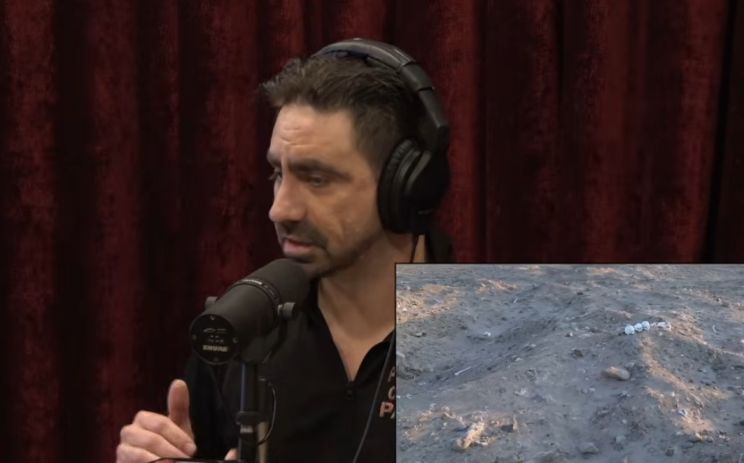
Editor’s Notes: In this episode of the Joe Rogan Experience #2449, Joe Rogan sits down with Raul Bilecky, the creator behind the “Pillars of the Past” YouTube channel, to explore the mysteries of ancient civilizations. The conversation delves into Bilecky’s fascinating work in Peru, where he has documented undocumented megalithic sites and the tragic, widespread looting of historical ruins. Together, they discuss the friction between heterodox archaeology and academic gatekeeping, while also touching on intriguing formations like the Sage Wall and the Rockwall in Texas. It is a deep dive into the hidden history of our world and the challenges of preserving it for future generations. (Feb 5, 2026)
TRANSCRIPT:
Meeting Raul Bilecky
JOE ROGAN: Raul.
RAUL BILECKY: Joe.
JOE ROGAN: Very nice to meet you, brother.
RAUL BILECKY: It’s so good to be here.
JOE ROGAN: I have enjoyed your content tremendously online. And I really got into a video this morning that I was watching where you found this megalithic site that was undocumented in Peru. It’s incredible that they still have these ancient sites that for whatever reason, it seems like the money that they get gets stolen. Like the money that is supposed to be allocated towards documenting these things and registering these things. People just say, “f* it, I’m going to pocket it.”
RAUL BILECKY: And it happens a lot more than you think.
The Tragedy of Looting
JOE ROGAN: I just, hard to believe, man. Some of the stuff that you document is very heartbreaking. Like one of them was when you flew a drone over these ancient ruins and you showed the amount of places that have been looted.
RAUL BILECKY: Oh, yeah.
JOE ROGAN: And it’s just all of it. It’s just pop. You see these holes. And when I first saw that, I’m like, what is he showing me? And then you’re like, these are all spots where someone has dug in and looted. And most of it has been done in this area of Peru over the last 20 years.
RAUL BILECKY: Over the last 20 years.
JOE ROGAN: So from 2006 to 2026 more, I would have.
RAUL BILECKY: The biggest amount of looting happened. It’s actually died down some, but the end of the 20th, so 1980s to 2000s, I would say that’s when it really took off. And you can tell from the trash that’s left there, like cigarettes that were only produced in the 80s, soda bottles that were only produced in the 90s.
JOE ROGAN: How nice of them to steal the artifacts and leave trash.
RAUL BILECKY: They’ve become landfills of human remains. This place you’re talking about is, I mean, it’s eight full kilometers of just, it looks like the moon. Every single location has been looted. And I was like, I got to go up there and see what this looks like.
JOE ROGAN: And so pull up to the microphone a little bit more there. So looting, what are they at that point in time? I mean, these are hundreds, thousands of years old, these sites. So what are they finding?
RAUL BILECKY: Well, a lot of the mummies that I’ve, because I found mummies that have been torn apart, literally. Like the cotton that they’re wrapped in, the textiles that they’re wrapped in. I mean, it’s just they’ve been scavenged.
JOE ROGAN: Are they looking for jewels or for some sort of?
RAUL BILECKY: Metallurgy on the person themselves. The unfortunate thing is, I mean, all you’ll see is you’ll just see these bones littered across the landscape with broken pieces of pottery.
JOE ROGAN: That was also disturbing. How much bones you see everywhere. So this is a bone right there. These are all human bones that you just find scattered.
RAUL BILECKY: That’s all cotton. And what we’re about to see here is an actual mummy that’s been torn apart.
JOE ROGAN: This is, it’s so sad that there’s no protection.
RAUL BILECKY: Nobody’s going out there, man. Nobody except for the looters.
The Scale of Peru’s Archaeological Sites
JOE ROGAN: But I know very little about Peru other than, obviously, the Nazca lines, the mummies, all these different things. The mystery of the place. Showing that, please. Oh, it’s over.
RAUL BILECKY: But there’s a couple burial drone shots.
JOE ROGAN: But it’s just.
RAUL BILECKY: You go to the top.
JOE ROGAN: How big is Peru? I don’t even know geographically how large it is.
RAUL BILECKY: I mean, Peru is huge. I mean, it takes up. This is another, this is a different looted site. So this is all, all of this is in the Paracas Nazca ecoregion.
JOE ROGAN: These skulls are just sitting there.
RAUL BILECKY: So the looters will oftentimes leave, I don’t know, set them up in this fashion. There isn’t a site I’ve gone to where I haven’t seen something set up like this in the end. But so I pull out to show the scale of it. I mean, every little piece of white you see is some part of a human. Wow. It’s tragic, man.
JOE ROGAN: Just so much history lost. And so does this stuff wind up in private collections? Do museums ever get it? Like, what happens to that stuff?
RAUL BILECKY: I don’t think museums get it at all. It’s private buyers. I actually met a, the term is a grave robber. I actually met one in Miraflores in Lima proper, at one of the Artesinales, where they’re selling ancient goods. Well, some of them have real things that they go out and they loot. And I mean that, this is one of the things I’ve been thinking about, like, for the future. Like what can be done about this?
Because the government, nobody from the government’s going out there. And so these things end up in private collections. Textiles, humans, pottery, things that you would see in museums.
The Mystery of Peru’s Ancient Civilizations
JOE ROGAN: It seems like just the ancient civilization of Peru is a massive mystery. It seems like there are a lot of uncovered stories in that area Peru.
RAUL BILECKY: Is a hot spot.
JOE ROGAN: And it doesn’t seem like there’s an incredible amount of research being done other than by independent people.
RAUL BILECKY: They, I mean, so, Joe, there’s just so much in Peru. I mean, you throw a stone and you’re finding an ancient archaeological site. I mean, they’re doing, whenever they do construction, they end up coming across structures or bones. I mean, this last expedition, I went all over the country, and there is no lack of archaeological sites.
So the money, and I just, the money it would take to fund research on all these places is just extreme. It’s extreme. I think there’s a lot of history that goes missed because of what’s currently happening. But a lot of times, a lot of the research is focused on what’s going to bring tourism, right?
JOE ROGAN: Like Machu Picchu, things along those lines, which is also insane. Phenomenal, just incredible. Like, that place is like, what? Why? How? Why’d you build it up here? F*ing nuts. A good friend of mine just actually went, just recently took his family up to Machu Picchu, and he’s like, it doesn’t even make any sense, man.
The Seashells at Machu Picchu
RAUL BILECKY: Dude, Machu Picchu is what started. So my family’s from Peru, and so I would grow up going there. And I have this old, back when you were filming with cameras, with like a videotape, there’s footage of me finding seashells at Machu Picchu when I was like, when I was like 10 years old. Back then, you could go wherever you wanted. You didn’t have to stay on a path. And so I, I don’t know.
JOE ROGAN: And for people that don’t know, Machu Picchu is like, what, 12,000 above sea level?
RAUL BILECKY: Yeah. And so I’m a kid, and I mean, I still have the footage, the grainy footage. And I’m showing my dad on the cam, like, “Dad, dad, look, I found seashells.” I saw them inside of, they were like glinting in the mud in the wall. And so I took them out and that’s what started this whole process for me. I was just like that, it blew my mind that there were seashells way up there.
And so I studied about Earth cataclysms and ancient history and when sea levels were different. And that just, that is a moment that started kind of this whole path for me.
JOE ROGAN: How old were you at the time?
RAUL BILECKY: 10 or 12.
JOE ROGAN: Wow. Wow. How many times you’ve been there since?
RAUL BILECKY: Well, growing up, we used to go every year and a half or so. And that’s continued into my adulthood. It’s only been recently, the past two years that I’ve been doing what I’ve been doing, which is like hardcore solo expeditions.
Dating Ancient Sites
JOE ROGAN: And so when you look at a site like Machu Picchu or any of these ancient sites, what is the timeline that conventional archaeologists attribute?
RAUL BILECKY: I mean, they attribute it to the Inca, which, late 1400s, early 1500s, I think. The Inca were conquered by the Spanish in 1530, I think. And so most of that megalithic architecture they attribute to the Inca. However, there’s evidence that there’s a site, Jamie, if you could pull up, it’s called Vinyake. This place is, there’s megalithic architecture with precision that goes down 50 feet under this mountain. It’s a, check this out.
JOE ROGAN: Whoa. This is crazy.
RAUL BILECKY: So I believe they filled in the top to, in modern times, but this mortar at the top, and very soon there’s going to be a guy who shows us a ma.
JOE ROGAN: Wow. And so you see very different construction, very different construction from the bottom to the top. But that’s how it always is, right? The most complex stuff.
RAUL BILECKY: So that’s showing that this architecture here, it goes down 50 feet into this mountain.
JOE ROGAN: And what do they think this was?
The Vinyake Complex
RAUL BILECKY: So this complex is all attributed to the Wari. It’s attributed to the culture that came right before the Inca, which doesn’t make much sense to me because what you see on the surface, that’s Wari construction.
JOE ROGAN: Which is small stones.
RAUL BILECKY: Right.
JOE ROGAN: And what are they held together with? Mud. Mortar.
RAUL BILECKY: Mud as mortar. And but then, so this site has only been 4% excavated. 4%. It’s underneath all of it is that type of architecture, which is crazy.
JOE ROGAN: So you have mud and mortar with very small stones. Then underneath it, you have precision cut megalithic stones.
RAUL BILECKY: Yeah.
JOE ROGAN: And how big are these stones and where are they supposedly coming from?
RAUL BILECKY: That, so here’s a funny story. So this place, if you look, you can find it on Google Maps. It’s, they call it the El Complejo de Wari. So the Wari complex. But if you go back to the Spanish chronicles, Pedro Cieza de León, when he was in Tiwanaku. So Tiwanaku, where Puma Punku is in Bolivia, when they asked the natives, “Who built this?” They say, “We don’t know. It was built before us from the people from the lake, the same people who built Vinyake.” That’s what the natives said.
That place Vinyake is 800 to 1,000 kilometers from Tiwanaku. So, and it’s the same construction. So it makes sense kind of what they’re saying. The people who built Tiwanaku also built this place. But before they knew, before they knew that they didn’t witness it. It was just there when they got there is what the locals said.
Ancient Mysteries Across the Americas
JOE ROGAN: Well, that’s a lot of stuff, right. That’s part of the weirdness of South America.
RAUL BILECKY: Yeah.
JOE ROGAN: And even Mexico, right. Yeah, it’s, that’s the weirdness of the Aztec structures. I didn’t know that until pretty recently that the Aztecs labeled like Tenochtitlan, “the place where the gods were born.”
RAUL BILECKY: I didn’t know that.
JOE ROGAN: Yeah, they don’t attribute that to themselves. They found it when they cleared the area.
RAUL BILECKY: I mean, you think about it, I’ve still to this day, I was up in Lake Titicaca and I mean there’s structures all over the place, but you’re like, where were these people living? And because there’s no remnants of cities or towns and the reason is, is because in modern times people have recommissioned the blocks and started and use them for their farms and their homes.
That you have a good location, a place of reverence, a place you’re going to build the next, the next culture is going to build on it. And I think that’s happened a lot in a lot of places.
JOE ROGAN: Yeah, well, everywhere, right. I mean that’s Lebanon too. That’s Baalbek. It’s, it seems to be the case that those, yeah. Those immense stones where the Romans built on top of them. But the Roman documentation is pretty precise. They documented everything. They never talked about these enormous thousand ton stones that are 7 meters up in the air.
RAUL BILECKY: Now we’re just going to put them in the base of our structure.
JOE ROGAN: Yeah, like what? They didn’t even talk about them. They talked about these beautiful structures that are on top of that are clearly Roman, but the stuff underneath it just defies logic. And some of the stones that were never moved and put into place, that were cut and quarried but just never moved. 1,600 tons. How.
RAUL BILECKY: And things you can’t replicate.
JOE ROGAN: Nowadays, that’s what’s crazy. It’s like with modern machinery we can’t do it.
RAUL BILECKY: I mean, I’ve always, when I started this path, you know, Fingerprints of the Gods was one of the first books I picked up. My dad had it in his library. And that just set me off on a course. The inability to be able to… I don’t know, I don’t buy the mainstream. It feels a little bit lazy. The responses that the mainstream kind of gives to some of this stuff as opposed to just saying, “I don’t know,” it’s purposely ignorant.
JOE ROGAN: It’s more than lazy, because if it was just lazy, I mean they’ve been confronted by all this other alternative archaeology evidence and all these other people that have explored these things and shown. And there was always the conventional wisdom that there was no society back then that was capable of doing this. So they had to attribute it to more recent societies until Göbekli Tepe. Then you’re like, okay, you guys need to shut the f* up.
RAUL BILECKY: I mean there’s a power in admitting like, if we’re looking for the truth here, then it’s like, okay, we got this evidence that disrupts this that we thought before. All right, just say that. You know what I mean? Just say it.
JOE ROGAN: Right?
RAUL BILECKY: Just say it.
JOE ROGAN: It’s fascinating that they can’t because they are like every other form of academia. They are just like, I mean, you might as well be talking to a gender studies teacher. Just like they don’t want to look at reality. They just want their narrative and they want to be the gatekeepers of information and then they just want to push that narrative forward and they’re so mean.
RAUL BILECKY: Dude, I only started recently being on X within the past year and I’m just like, the cattiness of it all, man.
JOE ROGAN: Well, it just exposes them, exposes their personality and they’re just not the type of people that I want to talk to about anything, especially not. You’re not the gatekeeper. If you’re a 41 year old person, you’re not the gatekeeper of ancient history. You can’t be. There’s too much. There’s too much all over the world. It doesn’t make sense. None of it makes sense.
And that’s, I think, why they’re so terrified of people like Filippo Biondi and the scans underneath the pyramids. Because if he’s right, and it appears he is, over 200 different independent scans and they all say the exact same thing. If he’s right, you guys are f*ed. Because you have to, you’re going to eventually have to say we’re wrong.
RAUL BILECKY: You have a moment here where you can choose which direction to go. Pretty soon that moment’s going to be lost. But it’s like this is what the evidence is presented and like you said, verified over 200 different studies. It’s like, all right, we might be wrong.
JOE ROGAN: They’re still digging their heels in and they’re just discrediting themselves, which is fascinating. It’s really interesting. It’s really interesting to watch these assholes just flounder.
RAUL BILECKY: Well, and it makes me think, you know, what’s the reason behind it? Is it pride? Is it ego? Is it because you wrote some books on it that you need to keep selling? Is it because it’s in textbooks that universities use? I mean, there’s a lot of layers to it.
JOE ROGAN: It’s all the above. But you can tell just by the way they communicate online. A lot of it is ego. A lot of it is ego and just really bad personalities. You know, these people that are accustomed to never being questioned, accustomed to being in the hierarchy of academia where, you know, you have these tenured professors and then they have the people that are coming up under them and they all follow the same sort of rigid structure. And so any heterodox thinkers, anybody who comes in from outside the box just gets shit all over.
The Value of Fresh Perspectives
RAUL BILECKY: Yeah, there’s no open mindedness. I don’t know if this is like a parable or something, but I don’t know, some story where there’s a truck going into a tunnel and it gets stuck and it’s backing up traffic and nobody can get through. Everybody’s trying to figure out what the hell, how to get this truck through. And just, you know, some farmer walks up and he’s just like, “Take the air out the tires” and problem solved.
And so the inability to let other people come in with thoughts and opinions, it just, it really, I think it’s a real detriment to the study of these things because in my approach to some of the places I’ve gone, I think it is that, yes, we have research, yes, there is a level of understanding at a lot of these places what happened. But it’s also that going into with a fresh set of eyes.
You know, sometimes, I mean, I get so locked in my work, sometimes I can’t see outside of it. You know, sometimes it takes another party to come in and all of a sudden your mind is blown in a completely different direction. I don’t see that level of openness to things on the side of a lot of the mainstream academia when it comes to this stuff.
JOE ROGAN: Well, people have to really understand that the whole concept of being mainstream academia is only a few hundred years old. And that’s what’s weird. It’s like, so these very recent structures, these very recent establishments want to be the gatekeepers of information of a vast swath of the world. I mean, it’s not possible. It’s not possible that you know everything.
RAUL BILECKY: It’s not. I was thinking about that.
JOE ROGAN: You know a lot. They know a lot about things they have discovered. They do. They know a lot about Mesopotamia, they know a lot about Iraq. All the amazing stuff that they find. There’s some stuff they very accurately dated. But it doesn’t explain things that you can’t explain. And they want to try to just fit it. Yeah, that’s what’s goofy.
RAUL BILECKY: Yeah, that’s, I mean, look, if the puzzle piece doesn’t fit, stop trying to force it.
Ground Penetrating Radar Discoveries
JOE ROGAN: Well, it’s also, it’s like more gigantic, spectacular pieces and you’re like, those aren’t important. I mean, Ben Van Kerkwyk with this most recent discoveries where they’re using the ground penetrating radar to find the labyrinths and this 40 meter long metallic object that’s inside of an atrium down there. Like, what is that thing?
RAUL BILECKY: Yeah. I hope it’s something. If whatever, if they go looking and I hope they do. And this is the other thing. It’s like, let’s start putting money towards this like now, you know, like, figure this out. I don’t know why I thought this. I think it might be a meteorite. If it’s some sort of like metallic thing 40 meter long.
JOE ROGAN: I know, I know that’s a f*ing civilization ender.
RAUL BILECKY: But imagine the next civilization coming across that thing and hearing the stories. It’s like, shit, let’s worship this. Let’s revere it somehow and put it in an atrium. It’s just my thought.
JOE ROGAN: Yeah, exactly. Right, exactly.
RAUL BILECKY: Like there’s this one 40 meters.
JOE ROGAN: Yeah. There’s a meteorite at Mecca that they all go to touch. Which is kind of crazy. Right. But completely makes sense. Right. Something comes from the sky, it lands, causes chaos and then you worship it.
RAUL BILECKY: I mean that also wasn’t one of like King Tut’s knives was made instead of a meteorite or something. So they were finding these things. 40 meter one is pretty big though.
JOE ROGAN: I know, but tic tac shaped, that’s…
RAUL BILECKY: That’s the other thing. I’m like, so when it comes, I’m just like, let’s go, let’s go.
Bob Lazar and Archaeological Digs
JOE ROGAN: Well, you know, that’s part of the Bob Lazar lore. I remember Bob Lazar said that when he was told that at least one of these things came from an archaeological dig. Like what, what, what do you mean? He’s like, that’s what they were telling me. I don’t know. But they told me that one of them was from an archaeological dig. So these things are really old, dude.
RAUL BILECKY: And his accuracy was something with the element 115, something like that.
JOE ROGAN: From 1989 when element 115 wasn’t even discovered until the 2000s.
RAUL BILECKY: I mean, that’s why when he… Forget who I was talking to outside. But we were talking about, I think it’s talking to Jamie about that, about Bob Lazar talking about some of these things coming from an archeological site. Yeah, go find it. You know what I mean?
JOE ROGAN: Well, that’s where it gets really weird. Where it gets really weird is these mummies.
RAUL BILECKY: Oh, we’re going to go into the mummies.
JOE ROGAN: Eric Burleson representative talking about how he’s asked the White House to give DoD the power to let them go see this stuff, including that buried UFO. Reportedly an object that is not in this country, that is so large it cannot be moved, that they’ve built an entire building around it. And I think that…
RAUL BILECKY: I think either Greer or another individual has actually mentioned this site, but I’m not going to mention it because it is a classified location.
JOE ROGAN: But there is a really apparent. There’s reported a really large object, and that’s one of the locations that I’m requesting to get to. It’s going to involve a lot to get to make that happen. But that may be the final destination. Like, that makes me want to run for president because that’s all I would care about. The economy would be in shambles. I’d be like, show me the UFOs.
Presidential Access to Classified Information
RAUL BILECKY: Do you think, do you think they do it because, because I’ve heard that, like, they kill me. I mean, it’s on that need to know basis where they’re keeping stuff from presidents. You know, he got too close.
JOE ROGAN: I don’t think that’s what they killed Kennedy for, but I think there’s a bunch of things.
RAUL BILECKY: But I know there’s a whole lot of layers.
JOE ROGAN: Yeah, but the UFO people love to think that it’s UFOs is why they killed Kennedy. But they think everything’s UFOs.
RAUL BILECKY: It is.
JOE ROGAN: It definitely seems like I don’t know about the evidence, you know, because it’s just stories. And that’s the problem is that a lot of this stuff, and this is how I feel when a lot of people come on the podcast and talk to me, you know, supposed whistleblowers. Some of them, I think are legitimate, and some of them, I think are disinformation specialists. I think they’re designed to muddy up the water.
And this is, you know, what they’re saying is designed to muddy up the water. And that’s what they’re trying to do. They’re trying to make a lot of this stuff look silly and push certain narratives and just create confusion. And I think a lot of it is probably some black budget weird science stuff that we have. But then it begs the question, where’d you get that?
Is that really like the Diana Pasulka work where she’s talking about, essentially these things are donations and that we’re supposed to like, take these things and try to figure it out. And then you look at some of the creation of some different inventions that happened very quickly after Roswell.
RAUL BILECKY: Our civilization just, I mean, just been on a boom.
JOE ROGAN: Ever since, weird stuff like the fiber optic stuff and transistors, just the history of the creation of the transistor and the people that were involved in it seems awful fishy.
The Nazca Mummies Debate
RAUL BILECKY: I mean, I try to stick with what I evidence that I can make out tangibly. And it just gets so murky. Like you said, it just all of this gets so murky that I don’t know how the truth would even land, you know?
JOE ROGAN: Well, the truth would have to land if there was an overall comprehensive effort by all of the world governments. And there would have to be some sort of unity in this and some sort of like a recognition that this is really important for the entire human population to understand our past.
And if this is nonsense, let’s find out that it’s nonsense. And if this is real, this changes everything. And when you look at just look at the vastness of the cosmos, it’s not outside of the realm of possibility. This stuff either came from somewhere else or was here because they were here. That there was an advanced civilization here.
Whether it’s our civilization or whatever the hell those mummies are. The tridactyl mummies, are we. That stuff’s pretty good.
RAUL BILECKY: We can talk about that. Because I went, I did a deep dive with my friend Will, and there is too much amok going on with these things for me to objectively say that they are what people are claiming them to be. There’s just there’s too much wrong with this bit, with the picture, right?
JOE ROGAN: Well, first of all, a lot of them are fake.
RAUL BILECKY: Yeah, for sure.
JOE ROGAN: Oh, yeah, a lot of them. People have seemingly created with a bunch of different animal bones and human bones and human bones and pieced them together. But then there’s the weird ones, you know, there’s the weird ones that are mummified and they’re in the fetal position, and you see a structure that doesn’t exist in the human body, but it’s complete with tendons and ligaments, and some of them have eggs inside of them.
Following the Money Trail
RAUL BILECKY: Joe, I’m telling you, man, I look, I want to believe. I think it is much closer to than it is all of them. I think what we’re dealing with here are real human beings from the past. They are ancient that have been put together.
Will, from Incredible History, has done some amazing work with some amazing specialists. I mean, people at the top of their field on this stuff, looking at the X-rays and the DICOM files and calling out cuts, calling out incisions that were made, calling out why things don’t make sense.
For me, the reason I put out my last video on the Nazca mummies is because there’s this whole other narrative too of where the money is, who’s making money off of these things. And I think that…
JOE ROGAN: Is there money being made off those little mummies? Please. You got something?
RAUL BILECKY: Yeah. So I remember, I forget who you’re talking to. It might have been Jesse Michaels. But I remember you saying, you know, these are one of the greatest art projects if they were fake. Right. Well, if you just scroll to the right here, this is what the…
JOE ROGAN: That’s a goofy one.
RAUL BILECKY: Yeah, but that’s what the Guaquero is selling. He sent that to me personally. The guy selling these things, these goofy…
JOE ROGAN: You can’t see it.
RAUL BILECKY: There’s a folder on there that has the pictures in the. These are the photos.
JOE ROGAN: But what is the one that is the female that’s in the…
RAUL BILECKY: Maria.
JOE ROGAN: Is that what they’re called?
RAUL BILECKY: Maria is one of them. I mean, so Will had on Dr. William Morrison and Dr. Proctor, Dr. Wilson. I mean, like people in the top of their field analyzing these things. And this is…
JOE ROGAN: This looks fake as f*.
RAUL BILECKY: Yeah, yeah. Everybody, you can get this for $15,000. This has come, this comes directly from the Guaquero finding these things, by the way. Yeah, I did it like a little undercover thing, trying to see what I could lure out of him.
JOE ROGAN: This is not particularly compelling to me, but…
RAUL BILECKY: But it’s in the same, it’s in the same class, coming from the same place. Supposedly the same group of people are providing these things to the. Yeah, this is in, this is in the ICA Museum. This is where they’re Montserrat.
JOE ROGAN: Is that what the…
RAUL BILECKY: Montserrat.
JOE ROGAN: Yeah, Montserrat. So these are like, again, these are not that compelling to me.
The Pattern of Deception
RAUL BILECKY: The small ones? No, the big one. So the big ones, though are, gosh, they keep coming out with new specimens. There’s a new one, Antonio, who’s a teenage boy, except for his feet. His feet have arthritis in them, which indicates that they put the foot bones of another specimen on this thing.
Now what these doctors have done, look, and here’s the thing. I mean, I wanted to be clear. I would love nothing more than Peru to be the hotspot of some new species. I don’t think we’re alone. I don’t think we’ve identified every species. But also, I’m not putting my money on these things coming out as authentic.
I think they have been used with authentic bones, which is why they’re getting the dates. I think that, dude, I did a deep dive on this.
JOE ROGAN: Please go. No, feel free. Tell me what you found out.
RAUL BILECKY: I initially wasn’t going to make the video I did, but after spending days staying up doing this research, I just, I couldn’t not do it. And I found like, I’ve been watched the whole Gaia series on this stuff and I found myself getting entranced by the like maybe, maybe. And then…
JOE ROGAN: Right.
RAUL BILECKY: And then also watching. The whole reason of putting this stuff out there is like, look, make your own decision, but don’t just take in the fantasy, take in the other possibilities too and just have all the information before you make your decision.
JOE ROGAN: Well, clearly we know some of them are fake. Clearly. You know, even people like me who want so desperately to believe. And it’s also the corresponding artwork from the past, the three toed, three fingered artwork, which is weird.
RAUL BILECKY: That is, that is weird. And I saw some of those geoglyphs down there in the middle of nowhere. You know, these. And so, and then the whole thing with, you know, the, with James Fox and the Brazil incident. Yeah, that thing, you know, the three fingered thing is a weird thing in history with these bones.
I mean, I’m going to have to point you to some of the videos that these specialists have come out analyzing the files. But where the money is is exactly what’s happening now. It’s, we have this possibility. We’re going to make a show about it. We’re going to put out this new thing. We’re going to, it goes, it goes deep, Joe.
The same doctors, the same specialists that are verifying currently the Nazca mummies have been on the same team for the past 20 years verifying other species and specimens that they’ve alien hybrids and the same people. Literally my whole video I’m just like, this is what he said in 2007. This is what he said about this fake thing in 2012. This is what he said about the fake thing in 2017. And I put it back to back. So it’s the same narrative, same people. It’s the same people, the same narrative.
JOE ROGAN: And so you think that the construction has just gotten more sophisticated?
RAUL BILECKY: 100%. 100%. They learn.
JOE ROGAN: What is that?
RAUL BILECKY: The major one, Maria and Montserrat.
Examining the Evidence
JOE ROGAN: Well, look at, let’s find Montserrat and see, see the Jesse Michael stuff. Because he went down there, looked at them, and they did scans on the bodies. And…
RAUL BILECKY: And then if I have a link to, I think it’s Dr. Morrison talking about Montserrat’s feet. The X-rays of his feet and pointing out that’s, that’s on the spreadsheet.
JOE ROGAN: Well, let’s see that. I’d like to see that. So do you think that these are recent creations of old bones? Is that what it is?
RAUL BILECKY: That’s what I think.
JOE ROGAN: Okay. And how do you think they did it? Is there any speculation?
RAUL BILECKY: I think that. So there…
JOE ROGAN: So here’s the. What’s that? Jimmy just asked a question. I cut him off. Oh. How did you think they did it? How do you think they did it?
RAUL BILECKY: Well, I think that they, I think they’ve gotten very good with taxidermy.
JOE ROGAN: Right. Like, because we’ve seen that before where you take an owl and you attach it to an iguana.
RAUL BILECKY: In fact, in the research I did, there was this, dude, there was this demon fairy thing in 2017, if you want to pull up my video.
JOE ROGAN: Let’s start with this. Let’s start with this. We’ll get to the demon fairy thing soon.
RAUL BILECKY: Talk to me. This is wild.
VIDEO CLIP BEGINS:
UNIDENTIFIED SPEAKER: So meta. Okay. This is from a surface scan that was available, and I went in and just kind of removed some of the fuzziness so that I could highlight the bones. And one of the things, again, that you notice is that the joints have a lot of spacing between them. These are not joints that are in contact, so they’re dislocated.
Now, the main part here, the central area where the cuneiforms are in the cuboid, those articulate with five metatarsals. Normally, the way these are lettered, A would go with the big toe and E would go with the little toe. And again, just like in Maria, those are missing, but the joints are not lined up properly.
The shapes of the joints don’t go with the matching bone on the cuneiforms of the cuboid. That’s exactly what I was seeing in CT. So none of the articulations of the metatarsal junction really made any sense. And some of the bones didn’t even meet an articular surface at all.
So that jumped out to me immediately. Because then my first question goes to how would that even be a functional footage?
VIDEO CLIP ENDS:
JOE ROGAN: So Montserrat…
RAUL BILECKY: That’s, so that’s…
JOE ROGAN: Why does Montserrat have tendons? Click on that. Keep it going a little bit where…
RAUL BILECKY: I thought I saw the razor resection, because people were talking about there still being tendons and stuff intact.
VIDEO CLIP BEGINS:
UNIDENTIFIED SPEAKER: And I would agree that some of those metatarsals are, as Dr. Proctor pointed out, in the correct position, but then some are just missing. So if you wanted to elevate the illusion, one of the ways you could do that would be by performing a raise resection.
And essentially that’s a function conserving surgery where if you’ve had damage to your metacarpals or your metatarsals, they’ll remove that metacarpal or metatarsal and kind of rearrange your fingers or your toes and the remaining metacarpals to keep your limb functioning.
VIDEO CLIP ENDS:
The Evolution of the Hoax
RAUL BILECKY: So her feet, Montserrat’s feet were just a little bit different, where I think they might have used more complex procedure like that versus Maria, where her feet just looked more like arts and crafts to my eye. So, and that’s the, so Maria came up.
If these things are hoaxes, there is also, if we’re just going with that angle, there’s a clear evolution of the work that goes into them behind the scenes. Like that one came out after the first one. The first one got called out on a whole bunch of things. All of a sudden, the next iteration doesn’t. The same issues.
JOE ROGAN: Oh, right. They’re correcting.
RAUL BILECKY: Yeah. And so, and that, and that’s actually, I forget. There’s an archaeologist on X. He said that’s very common in the world of fake antiquities. Like, they learn once they get called out on something, they’ll figure out how to make the pottery better or something like that.
JOE ROGAN: Is there a lot of money in this stuff?
RAUL BILECKY: Yeah, I mean, apparently.
JOE ROGAN: Where’s the money coming from? How does it…
RAUL BILECKY: For me, it’s not even in, it’s not in the sale. The most money coming from this is not in the sale of these things. It’s in the shows that come from it. It’s in the series, it’s in the subscriptions to get to the next season where they’re going to tell finally reveal the truth about. There’s a lot of money being made in the background with. And that’s part of the deep dive I went on, like following the money.
The Nazca Mummies Investigation
JOE ROGAN: So who do you think is making them? Do you have a theory?
RAUL BILECKY: I believe that there’s actually—it was in my video and one of Will’s videos. There was a grave robber, a whistleblower grave robber who was part of this team. And he shares how he was getting stuff for Mario, like the main guy. There’s got to be a team of specialists working on this stuff. And I mean, money went into making these things because money’s going to come from it.
JOE ROGAN: I mean, that seems like a lot of money, though. You would think that that would kind of fall apart. I would think that it is falling apart, but it is. But I would say, like, someone would rat somebody out. These are unscrupulous people.
RAUL BILECKY: So that’s part of the reason I also decided to make this video. And a lot of the pushback on this stuff is like, oh, you don’t trust, you know, Latin American doctors or anything? No, it’s not that. It’s the Latin American doctors from Peru and journalists from—they’re afraid to talk about this stuff because things can get violent down there surrounding this topic. Article from 2012 about a mummy being stolen. And it goes on to talk about—there’s a, right, the bottom.
JOE ROGAN: The ICA Mafia.
RAUL BILECKY: There’s a mafia, the ICA mafia. And in fact, the guy Mario who—
JOE ROGAN: There you go. Officials have warned about the existence of a mafia dedicated to the trade with links throughout Southern America and Europe. And at the time is $18 million a year in stolen archaeological artifacts Peru estimated was being taken out of the country. So this is all going to like wealthy people in other countries that want to have these artifacts in their homes.
RAUL BILECKY: Yeah. And so I’ve seen the text messages with some of the American buyers.
JOE ROGAN: Really?
RAUL BILECKY: Yeah.
JOE ROGAN: So these guys are just like, come on into my den. I’ll show you a mummy.
RAUL BILECKY: What I’m talking about specifically was tapestries. And it was actually the guy I met in the Artisanalis in Miraflores. And he showed me video. He was very open with me. He showed me videos of—because the buyers want to see provenance. The buyers want to see them pulling the artifacts out of the ground.
JOE ROGAN: Right. So they just bury them and then they just—
RAUL BILECKY: Well, no, I mean, that sells the stuff.
JOE ROGAN: Mummy crowdfunder leaves archaeologists fuming. So there’s a guy in London that’s selling this stuff. So Victor Wind Museum in London. Cabinet dedicated to dead people. And they were trying to get a mummy from Peru. Wow.
RAUL BILECKY: So it’s—
The Mystery of Elongated Skulls
JOE ROGAN: What do you think is going on with the skulls? The elongated skulls?
RAUL BILECKY: If you—Jamie, I have a—I think that it’s one I found.
JOE ROGAN: You found that one?
RAUL BILECKY: Oh, yeah. That’s one of three I’ve come across.
JOE ROGAN: Now, supposedly there’s a difference in the way the skull—you know, when you’re a child, what is it called?
RAUL BILECKY: The sutures? Yeah, yeah. I found some without the—every elongated skull that I’ve—the three I’ve come across all had the sagittal, all had that suture like—
JOE ROGAN: A normal human does.
RAUL BILECKY: Like a normal human.
JOE ROGAN: So these would be from pressing boards on the child’s head when they’re in development. Binding.
RAUL BILECKY: But then the question is, why would you do that? And I mean, I err on the side of—you don’t just come up with that. You’re trying to imitate something.
JOE ROGAN: Right.
RAUL BILECKY: You know, and so that’s—and then you see it in Egypt and the hieroglyphs and stuff. So I do think like there is, you know, there’s—we’ve labeled things other species with just a bone fragment. You know, I’m like, there’s deserts of these things. And I think that if the right study went to them, you might have a separate species if you put the money towards studying this stuff. Because it’s all out there, man.
JOE ROGAN: Like a separate branch of the human species.
RAUL BILECKY: Possibly.
JOE ROGAN: Right. Which makes sense. I mean, they’re finding separate branches all the time.
RAUL BILECKY: All the time.
JOE ROGAN: The Denisovans, you know, all these different ones that they found within the last 20 years. And there could be something with a larger head, an elongated head.
RAUL BILECKY: Yep. And that’s the—I don’t know enough about osteo whatever to go in depth about it. But it—I mean, either you had whole cultures just doing this, or there’s too many of them for it to have just been kind of some elitist practice, I think.
JOE ROGAN: And a bizarre practice at that. Why would you want to do that to your kid’s head when clearly it’s probably not been done to your head? At least the first people. Like, what were you trying to imitate there?
Trepanation and Brain Chemistry
RAUL BILECKY: I forget who told me this. There is some—I think Will told me this. There’s some woman who did this practice on herself. Like actually trepanated her own head.
JOE ROGAN: Yeah, well, we’ve talked about trepanation when we had that woman on who did it to herself.
RAUL BILECKY: Okay, well, yeah. Wait, so you had her on?
JOE ROGAN: Yeah, well, a woman who did—what was her name again? The psychedelic lady. She’s—I believe she passed, didn’t she, recently. Really fascinating woman. Amanda Fielding. She died recently, right?
RAUL BILECKY: Yeah, so—
JOE ROGAN: But she did self trepidation.
RAUL BILECKY: She did self trepidation, but that’s not—
JOE ROGAN: Elongation of the skull?
RAUL BILECKY: No, but if there’s an idea that what that trepanation might have done in the ancient days, they did it to release the evil spirits if somebody was afflicted with some sort of psychosis or something. But, and I forget if it was Amanda, something happens in with your brain waves when the brain is exposed or something, like there’s some sort of—I don’t know the—
JOE ROGAN: Do you find that out without doing it?
RAUL BILECKY: But if the skull is elongated, I don’t know if it gives extra space to it. I forget who told me this. It changes the chemical structure of the brain. That like kind of like a DMT experience, you’re open to more things. And so an idea is that if you elongated it and had that extra space in the skull for the brain to have more oxygen, I guess maybe it affects your brain chemistry.
JOE ROGAN: I don’t know, just pure speculation. But one of the things about some of these skulls they found is that the volume is larger than a human brain. So how would you do that? Just by stretching it out with boards? I mean, it would seem like you have the same volume, you’re just changing the shape of it, right?
RAUL BILECKY: Yeah, but there are some, like you said, that have more volume, that would appear to have more volume.
JOE ROGAN: And have there been no studies on these weird ones, the ones that don’t have those sagittal lines that correspond with human veins? Because some of them don’t.
RAUL BILECKY: French studies.
JOE ROGAN: That’s the problem.
RAUL BILECKY: That is the problem.
JOE ROGAN: What are we looking at? Are we looking at an animal head that they’ve kind of shoved onto human features and glued things together?
RAUL BILECKY: Oh, with the mummies.
JOE ROGAN: I mean, some of these skulls.
RAUL BILECKY: Well, I mean, some of, like the one you just saw, I mean, they’re there, they’re just out in the desert. I don’t know why funding hasn’t been—
JOE ROGAN: And you found them just sitting there and you just leave them there?
RAUL BILECKY: Yeah, I put a pin on—I mean, eventually one day I would like to, I don’t know, form some sort of relationship with the Ministry of Culture. Because the thing is, nobody’s going out there. And I specifically went to places this last expedition that I went the first year just to see what happened a year later, and those places were looted even more. The things I had found and come across and documented, like an elongated skull, wasn’t there anymore. So these things are being taken and sold.
JOE ROGAN: Makes you wonder how much of it was there in the past.
RAUL BILECKY: I mean, I don’t like that 8 kilometers of looting, it was all bones and textile and pottery, and I mean, just eight full kilometers. And—
JOE ROGAN: So it’s a kilometer graveyard.
RAUL BILECKY: Yeah. Yeah.
The Chongos Skull Discovery
JOE ROGAN: When I’m looking up trepanation—oh, that’s a weird one. This elongated skull is coming up. Apparently, this one is in Oklahoma Museum of some kind. That’s the one that looks like it’s had surgery on it. And there’s some sort of a metal implant. But it’s come up in that context. This one’s coming up too. But what they’re saying is that the metal implant is used after trepanation’s been done to sort of patch the bone sometimes.
RAUL BILECKY: That has been documented as happening.
JOE ROGAN: What kind of metal are they using on your head? Well, that’s the weird thing, too, because that metal has come up in the skull scans on, like, monster out. I don’t know which one in particular had it, but they’re saying it’s got metal that wasn’t available, you know. What’s that one in the lower left hand corner? That one looks crazy.
RAUL BILECKY: Oh, that’s the Chongos skull.
JOE ROGAN: What’s that? Okay, so that one that’s in the chunk—
RAUL BILECKY: Yeah, that’s—this is—
JOE ROGAN: It’s in Paracas. I mean, that’s—click on that.
RAUL BILECKY: It’s very close to where I found the one I showed you from my footage.
JOE ROGAN: Okay. That skull looks nuts. So that doesn’t look like a human skull at all.
RAUL BILECKY: No, that one is—
JOE ROGAN: Look at the lines on that one. That’s crazy.
RAUL BILECKY: Yeah.
JOE ROGAN: That doesn’t seem like it has any of the normal lines that a human skull has.
RAUL BILECKY: That museum, unfortunately, is closed now, so you can’t go see it. I tried to.
JOE ROGAN: Well, where is it?
RAUL BILECKY: It was in par—they—the Ministry of Culture shut down that museum.
JOE ROGAN: Oh. The collection often exceptionally elongated skulls found in Paracas, particularly around the village of Chongos near Pisco. Dating to around 700 BCE to 200 CE. His skulls exhibit severe artificial cranial deformation, practice used by elite Paracas culture members to signify status. Huh.
RAUL BILECKY: That is the one we just saw in that museum is the largest one.
JOE ROGAN: But it’s weirdly large. Can you find some more images of that one?
RAUL BILECKY: I’m trying to find—
JOE ROGAN: Find some other stuff that’s not three years old or older. Oh, it’s okay. We’ll just see the images of it.
RAUL BILECKY: It might be hard for that one since the museum closed.
JOE ROGAN: Right. But there’s images.
RAUL BILECKY: Yeah.
JOE ROGAN: So that looks like it’s a lot more volume than a human head. The one on the far left. Just the one? Yeah. Either one. The one below it like that. Just the image alone of that. How do you get a normal human head to be that large without some sort of—it looks like you stuffed a balloon into someone’s eyeball and kept pumping it up, you know, while they’re a baby. Like, what the hell is that? That’s so much bigger than a normal human skull.
RAUL BILECKY: And then you think if it—you know, with the skull binding practice, I mean, are you—is there going to be some form of mental difficulties with that human being now?
JOE ROGAN: If it’s a human being or expanded capacity?
RAUL BILECKY: Yeah, yeah.
JOE ROGAN: Because this is like—so the cranial capacity is 25% more than a normal skull. It weighs 50% or 60% more than a normal skull. Also, the eye sockets are larger and the jaw is larger and more compact. God, that looks like a different kind of human.
RAUL BILECKY: So there’s—
JOE ROGAN: There are—
The Mystery of Elongated Skulls
RAUL BILECKY: And when you go to these museums, there’s all sorts of—
JOE ROGAN: What’s that one up there? The one to the right of your cursor? What the f* is that?
RAUL BILECKY: Is that real?
JOE ROGAN: That’s why I didn’t want to go, whoa. A bunch of fake too. That’s what I was trying to—is that fake?
RAUL BILECKY: I’ve seen that one before.
JOE ROGAN: I don’t—taking me to Facebook is already a big red flag.
RAUL BILECKY: Yeah, I know. Facebook is a hub of fake, man. They can’t escape it.
JOE ROGAN: It’s the same picture. So a lot of them are probably AI generated. But that one, that’s 25% larger than a normal human skull and larger eyes. The eye sockets are f*ing huge. That’s also weird. It’s just like—that’s the problem with all this looting that’s been going on for so many years.
It’s like there might have been some evidence of a different kind of human that lived with these people. And I mean, imagine if we find out that that different kind of human was what populated that area. And they were the people that built Sacsayhuamán.
RAUL BILECKY: And because Paracas is the highest concentration of the ones that have been found. But you find them up in the Cuzco region too. There’s a video I have. I think it’s Chisniri. C-H-I-S-I-N—
JOE ROGAN: Can I ask you, what is the conventional explanation for the larger capacity of the skull and then the larger eyeballs, the eye sockets?
RAUL BILECKY: I don’t know that there is a conventional explanation other than it seems like—
JOE ROGAN: You would have to explain that. Like if that’s not something different, Homo sapien human being like you or me, what is that? That seems—that’s a different thing.
RAUL BILECKY: Right? You would think, right?
JOE ROGAN: Like if you look at a Neanderthal skull and you look—mine’s pretty close to one. But if you look at a Neanderthal skull and a normal human skull, you can clearly see the Denisovans, you clearly see the difference. Homo juliensis, you see the difference. That’s different, man.
RAUL BILECKY: It’s different. And some of this, some of the stuff in their jaws and with the set of teeth, there’s differences. I mean, I haven’t done a deep dive into it personally, but there are a multitude of differences that have been highlighted.
The Challenge of Fossil Preservation
JOE ROGAN: And for people that are skeptical, one thing that you have to recognize is that it’s really hard to make a fossil. Fossils, I mean, most things that die and have died forever do not become fossils. They get consumed by the earth like a normal thing would. That’s why you don’t find—
RAUL BILECKY: I mean, yeah. And I mean if you’re talking about going back 10,000 years, that’s why you’re not seeing much evidence of stuff. I mean, it’s been so long. These things are preserved because they’re at most typically at most 2,000-ish years in that region old.
They’re preserved so well because of the climate there, which is—I mean, when you’re going these barrels, you still see the hair of people. It hasn’t disintegrated. Like it’s there.
JOE ROGAN: God, it’s so creepy.
RAUL BILECKY: Dude, I have some creepy photos for you, man. Like, I don’t know, you might want to put a disclaimer out before people—
JOE ROGAN: Know on this show. You don’t need a disclaimer. Quick question. I found a video of a guy with an elongated skull. He’s talking about these and showing it. I’m just—size of reference to his hand. Does the skull seem small? It does. Unless he’s got some giant basketball player—
RAUL BILECKY: That’s kind of the size of the one I showed you earlier. It was smaller than you would think.
JOE ROGAN: But a lot of the people there back then were very small. Right. They didn’t have access to a lot of protein. Like I went to Chichen Itza and one of the weirder things is how small the people are there. How small the Mayan people. I’m short already and I was a giant compared to these people. It was really weird.
RAUL BILECKY: It’s typically the same.
RAUL BILECKY: In Peru until when the Spanish came.
JOE ROGAN: And then the interbreeding.
RAUL BILECKY: Then interbreeding. Yeah, but if you go, Jamie, if you just open up the photos remains folder, this is the stuff you see. I mean, there’s still skin on some of these things, which is why—
Disturbing Discoveries at Burial Sites
JOE ROGAN: Whoa, that’s creepy. And how old is that hand?
RAUL BILECKY: Probably—I mean, at this burial site, based on the artifacts I was seeing, it’s Paracas or Nazca.
JOE ROGAN: So go back one, Jamie, please. Look at the cloth next to it, too. So what is that piece of cloth you think? It’s like it’s braided in the bottom and then the—
RAUL BILECKY: I didn’t see a hole in the middle, so I don’t think it was. And it’s too fancy for a sling, I think. So I’m not 100% sure.
JOE ROGAN: Unless it’s a fancy sling. Like something—
RAUL BILECKY: It could be. Yeah.
JOE ROGAN: Bows and arrows, fancy guns.
RAUL BILECKY: True, true.
JOE ROGAN: Look at the hand, man. That’s so crazy.
RAUL BILECKY: But so—and what you see to the right of it is like, what kind of looks like burlap is—I mean, that’s what the mummies were wrapped in. They were stuffed with cotton or put in the fetal position, wrapped with textile, then cotton and more textile and ropes and—and that’s some of the cotton and wrapping that the grave robbers had torn apart trying to find gold and jewels and things like that.
JOE ROGAN: Yeah, and what’s unfortunate is some of the most beautiful pottery there too. It’s just completely destroyed.
RAUL BILECKY: Wow.
JOE ROGAN: Whoa. Look at all those bones. This is—you found this?
RAUL BILECKY: Yeah.
JOE ROGAN: God, that’s got to be creepy. Just seeing all those dead people’s bones and rope.
RAUL BILECKY: It affects you, man. It definitely does.
JOE ROGAN: And what’s the time period of this?
RAUL BILECKY: This is 2,000 years. That picture actually isn’t from Nazca. That was another—I have a video of this to show you. This place.
JOE ROGAN: There’s just so much weirdness about Peru. Just the Nazca lines alone. Like what were they doing? Why were you making artwork you can only see from space? That’s crazy. Oh, look at the hair.
RAUL BILECKY: That’s nuts.
JOE ROGAN: Oh, normal sized skull though.
RAUL BILECKY: Actually that one, I don’t have the pictures in that folder but I measured it. It’s incredibly bulbous. It’s much more bulbous than a normal skull.
JOE ROGAN: So you’re just getting a side view of it.
RAUL BILECKY: Yeah. And I put the tape measurer there next to it.
JOE ROGAN: That’s crazy. You see the skin?
RAUL BILECKY: Yeah, isn’t it?
JOE ROGAN: The skin and the hair on the skull. Oh God, that’s creepy.
RAUL BILECKY: It’s—
JOE ROGAN: Why?
RAUL BILECKY: Yeah, man. I mean, you know, I thought that I had gotten—this is another thing that’s been set up.
JOE ROGAN: And you think the grave robbers do this?
Paying Respect to the Land
RAUL BILECKY: You know there were some places where I found things set up like this with little candy, little modern candies. And what that is is it’s a tradition called Pago la Tierra, paying the land. And so whoever left the candy I don’t think was a grave robber, was probably a local and it was a way of giving back to the land, giving back to the ancestors.
I started doing that with, you know, if I had a soda bottle or something. You pour out some Coca-Cola, pay the land for walking, for walking to it and documenting this stuff. It was a nice little practice. But so I would say that like 2,000-ish years old. Just to circle back.
So some of these things, this is all on the surface. I don’t go digging. That’s not right. It’s not on me. But the grave robbers do. And that’s where they’re finding these things intact. They’re finding these things intact where you can put them into a CT scanner and it’s going to show the whole insides.
The Need for Scientific Study
JOE ROGAN: Has any—have any paleontologists or archaeologists brought these skulls and brought them for examination to try to find out if there’s intact DNA that can be studied?
RAUL BILECKY: They’re supposed to be doing DNA tests on six of the specimens. But if you watch my video you’ll see each time they’ve done DNA tests on all the hoaxes that they’ve been a part of before. I imagine the results are going to be the same.
JOE ROGAN: Yeah, but I don’t mean the hoaxes. I mean the elongated skulls with large eye sockets, things along those lines.
RAUL BILECKY: You know, there is a lot of the bureaucracy of how to go about doing anything with the Ministry of Culture in Peru. It’s so disjointed. You can’t get things done. You just can’t get—I know Brian Forrester for decades was trying to get some sort of official path to do DNA studies on these things.
And so, I mean, I’m hoping with the work that I’m doing with Pillars of the Past that some of those boundaries can be broken where we can actually get permission to study these things. Because it’s Peru’s patrimony, you can’t just go in there. And that makes sense. And it costs money to do those things too. And you have to do it in the above board way. And so it’s kind of waiting for the okay from them.
JOE ROGAN: Well, it seems like at the very least the most bizarre elongated skulls should be studied more closely. It shouldn’t just be like, oh, it’s in a museum. Look at the head. Big, huh? Weird eyes.
RAUL BILECKY: Let’s move on.
JOE ROGAN: Look at this bowl. It’s broken. But you know, pretty interesting. Let’s move on. Like, no, what the f* is going on?
RAUL BILECKY: Put some money, figure it out.
JOE ROGAN: Because if it turns out that there was a totally different branch of the human species, it’s huge.
DNA Testing Results and Migration Theories
RAUL BILECKY: It’s huge. I don’t know the accuracy of this.
JOE ROGAN: That’s why I’m hesitant to even bring it up. But as you’re asking about that, that video I pulled up is this guy said that they tested 12 or 18 skulls.
RAUL BILECKY: That’s Forrester.
JOE ROGAN: And some of them came back as Native American. I’m trying to—I’m reading the closed captioning, but some of them did not.
RAUL BILECKY: Some of them came back from the Black Sea area, the Caspian Sea, Black Sea area.
JOE ROGAN: From 2,000 to 3,000 years ago.
RAUL BILECKY: Which there have been skulls found out in those areas too.
JOE ROGAN: Wow. And Caspian Sea as in the Caucasus Mountains. Whoa. So that’s very intriguing. What I can also share with you is what I believe was the migrational pattern, because these people, like some indigenous people of the Caspian area and Black Sea area were and are dark red haired and also very light skin and green eyes.
RAUL BILECKY: And this seems to correspond as well with the elongated skulls.
JOE ROGAN: So I believe they do have red hair. 3,000 years ago, the ancestors of the Paracas decided to leave the area because they were being invaded by someone and so they traveled south through Iraq and Iran to the Persian Gulf. And there they wound up sailing eastwards and eventually found their way to the coast of Peru.
RAUL BILECKY: They’re different.
JOE ROGAN: Speculation.
RAUL BILECKY: Yeah, so that’s the thing with theories like this. I’m like, let’s put some effort to peer review this stuff. You know, like, let’s do the studies that are needed, have multiple universities test these things, come up with the standard set of results.
Ancient Peru: A Cradle of Civilization
JOE ROGAN: And then, I mean, so what is missing funding, interest? It seems like this is in terms of really doing a comprehensive study of archaeological sites. Peru seems like the least studied. Is that accurate?
RAUL BILECKY: Halfway, I would say only because, look, there’s a part of me that also feels for the Ministry of Culture in a way where there’s so many sites in Peru that to have eyes everywhere to protect it, to have teams excavating things every—
JOE ROGAN: I mean, isn’t that alone kind of crazy how many sites there are in Peru? And the fact that also you have Sacsayhuamán, you have the Nazca Lines, you have all this weirdness in this one part of the world, like—
RAUL BILECKY: Why you have the oldest stone pyramids in the Americas, pyramids that predate the pyramids of Giza by a thousand years.
JOE ROGAN: What do they look like?
RAUL BILECKY: If you look up Caral, they are—dude, I’ve done a whole thesis on this. I plan to write a—I don’t think I’ll ever get a peer reviewed, but I plan to write a paper about my theories on some of the stuff I found. So Caral was this area on the coast. It’s C-A-R-A-L. And these pyramids had—Graham Hancock’s been looking into this stuff too, this sunken circular plaza. So they’re just—this is a—whoa.
JOE ROGAN: This predates Giza. Well, what we think is the date of Giza, the Great Pyramid, the conventional date.
RAUL BILECKY: Right.
JOE ROGAN: Right.
The Norte Chico Culture and Sunken Plazas
RAUL BILECKY: So, all right, let’s see if I can condense this. This site has, I don’t know, eight of these pyramids. They’re actually all throughout the valley and four valleys around it. The earliest one in a separate valley close to this dates back to 4000 BCE. It has the remnants of a sunken circular—the main thing that’s to keep note of is that sunken circular plaza, because it’s a feature that you not only see there in those four valleys, but you also see it 200 kilometers north of Peru.
JOE ROGAN: And what’s the conventional explanation for these sunken circular plazas?
RAUL BILECKY: Ritual spaces. Some people say collecting water, some people say the acoustics are different. Here’s the interesting thing about this site—was discovered in the 1940s. Nobody did anything about it. The archaeology—this is what you’ll—this is what happens in Peru in the from the 1900, early 1900s to 1940s, archaeologists and historians were going up and down the coast finding stuff. I mean, just finding stuff.
And they would write it down, they’d put it on the map. That’s why the Ministry of Culture has it on their archaeological database. They pick through it what they could, put stuff in museums and just move on. That site Caral predated any ceramics. I mean, this was a pre-ceramic culture. So there was no artifacts to find. So they just moved on.
It wasn’t until Dr. Ruth Shady in the 80s and 90s actually put research in and figured out, hey, this is older than everything else we found. Because they just overlooked it. There were no artifacts. They were just like, we’re going to move on.
JOE ROGAN: When you say no artifacts, that seems weird to me because why would you make these immense structures and not have a bowl to put rice in? Right.
RAUL BILECKY: They—a lot of animal skins and the weaving. So these cultures, what they found is—so that’s a little further inland. They had a sister site on the coast. And so what they would do, the only agriculture they would grow was cotton. That cotton they would trade with the people on the coast so they could make nets and fish with it. The fish they would bring back, they would give back to those people who made the cotton for them. So it was this weird interplay.
And the other unique thing about this time period is there was no evidence of warfare for a thousand years. Nobody was fighting each other. It was very—just everybody. No weapons, no anything like that.
JOE ROGAN: No weapons.
RAUL BILECKY: No weapons for a thousand years.
JOE ROGAN: That seems insane. Is that just no evidence of weapons?
RAUL BILECKY: That’s currently no evidence of weapons.
JOE ROGAN: Right, but maybe someone stole the weapons.
RAUL BILECKY: That’s—
JOE ROGAN: That’s possible because, I mean, you’re talking about a place that’s been looted ad nauseam. Right?
RAUL BILECKY: That’s true. I mean, they put in a lot of work though, excavating, especially that site Caral.
JOE ROGAN: So you feel like somewhere they would find some sort of an axe head or—
RAUL BILECKY: The only artifacts of major note are some of those carvings that we saw and then bone flutes with carvings on them and the nets, the fishing nets. And my whole theory is this was a pocket. It’s called the Norte Chico culture, is a little pocket of these four valleys. And I went all over them, documenting these pyramids. They don’t look like pyramids anymore. They look like mounds, they’re so old.
But there’s another place 200 kilometers north in the Casma Valley. And what they have found is underneath the structures that are currently exposed, they found deeper layers of temples with that sunken plaza in this whole other location. And those are dating to the same time. So I firmly believe that what we, what archaeologists currently say is the oldest culture, I believe it went the whole coast of Peru. I mean, this was a cradle of civilization. I mean, hands down, cradle of civilization.
JOE ROGAN: 6,000 years ago.
RAUL BILECKY: 6,000 years ago.
JOE ROGAN: So, which is right around the time we think the cradle of civilization happened in Sumeria.
RAUL BILECKY: Wow.
The Mystery of Khipus: A Lost Language
RAUL BILECKY: And so the hard thing about it is you have some carvings in adobe that’s been preserved in some of these places. So there’s some sort of iconography, but there’s no writing like the Sumerian. The whole thing about Peru is there was no writing system that we know of. There is a theory, and I believe this—I believe the khipus, the rope strings with knots. Yeah. I believe that was a language.
But the Spanish burnt as—as soon as the Spanish came over, they burned as many as those things as they could find and they killed the people who could read them. So we don’t, we won’t ever know.
JOE ROGAN: Oh, God. Spaniards. How dare you.
RAUL BILECKY: But there’s evidence that they would—they took some of the Incas to the Spanish court. And so there’s—and Inca in the Spanish court in front of the queen or king reading off of these khipus, reading stories, telling the court and—
JOE ROGAN: From knots on strings.
RAUL BILECKY: From knots on strings.
JOE ROGAN: And that understanding of that stuff is lost there.
RAUL BILECKY: It’s lost. Currently, I think for the last few years there’s been some studies being done in Harvard trying to use AI to figure out what these—I mean, how many of these are left over.
JOE ROGAN: Can we see some images of them?
RAUL BILECKY: I think 500 to 1,000. I mean, that’s it. I mean, the Spanish went on a mission to burn all these things because—
JOE ROGAN: They were trying to convert them to Spanish and get them to speak the language and become Catholic.
RAUL BILECKY: Pretty much. Yeah.
JOE ROGAN: Yeah.
RAUL BILECKY: And so much history is lost because of it.
JOE ROGAN: Yeah.
RAUL BILECKY: So it’s—but what’s interesting is at that oldest place at Caral, they found a khipu. They found one of these knotted strings. And it wasn’t a fishing net. It was what looked to be a khipu. And so if you have that tradition going back 6,000 years, I mean, that’s—there’s a lot of—
JOE ROGAN: This picture from 1994. This is what it looked like then. It doesn’t look like anything.
RAUL BILECKY: See that on the right, those pits?
JOE ROGAN: Yeah.
RAUL BILECKY: That’s looting pits and—wow. That’s what it looks like from above here. I was looking at a map. Oh. So they had to dig it up. This is the map from above. It’s a pretty big area. Why is ancient history so d* fascinating?
Exploring Undocumented Sites
RAUL BILECKY: If you go on my spreadsheet, there’s a place called Era de—
JOE ROGAN: What is it?
RAUL BILECKY: Looking at my notes here, Sunken Plaza, Era de Pando. It’s a link to my YouTube. So this, what we’re about to see is right across the valley from Caral. So all throughout that valley are these sites from that Norte Chico culture. And I’m right there on top of this pyramid. And just the drone footage is epic, man.
JOE ROGAN: Wow.
RAUL BILECKY: So I went on—I went on a mission looking for these places. That’s it.
JOE ROGAN: The thing about this that is so compelling but also so unsatisfying is that a lot of these stories, you’re never going to get the full answer.
RAUL BILECKY: No.
JOE ROGAN: You’re never going to get the full history. It’s just the mystery will never be satisfied. You’re always going to be hungry, you know, which is—is that for a person like yourself that studies these places and has dedicated so much time to it, is that in any way frustrating or does it add to the appeal?
RAUL BILECKY: Both.
JOE ROGAN: Well, I got a 6,000 year old question. There’s no one there with you at all? It looks like.
RAUL BILECKY: No, not—
JOE ROGAN: So no one can stop you from taking—
RAUL BILECKY: No, I—digging.
JOE ROGAN: Look at that.
RAUL BILECKY: I mean, if you get—if you got caught. Yeah. This is just—I actually spoke to—there was an archaeologist who told me to go to that place. And so I went and I just—I was the only one there. Wow. So this is—my whole thing was I identified most of these places through Google Earth first. They’re not labeled. These places aren’t labeled at all.
JOE ROGAN: That’s crazy. So these aren’t documented places.
RAUL BILECKY: This—this is—
JOE ROGAN: So this one place right here is—
RAUL BILECKY: It’s not on Google Earth though. It’s not on Google Maps. You won’t see any marker of it. But I was able to do some digging because of the guy who took me through the site. I meet this random guy, Luis. Luis is amazing. He’s a farmer right here. I freaked him out. He thought I was coming to rob him because he gets robbed off, apparently.
JOE ROGAN: Oh boy.
RAUL BILECKY: But he walked me through the site and he—this one. Okay, if you pause it, that right there on the bottom right is another one of those temples with the sunken plaza, except that one has monoliths.
JOE ROGAN: Oh, looks like Stonehenge.
The Stone Circle Discovery
RAUL BILECKY: Exactly. And nobody’s done a study on astro—I don’t know that stuff. But I can almost guarantee that there is some sort of astronomical alignment. So what happened was archaeologists did come back, did come here in the 90s, I think, and it didn’t look like Caral. They weren’t going to be able to restore it, so they just kept it as a, you know, to find dating on these things. And it’s from the same culture. It’s just a couple valleys over.
JOE ROGAN: Do you have any footage of the monoliths?
RAUL BILECKY: Yeah, yeah, they’ll come up. If you fast forward through it, it’s going to be back—back closer to where? Yeah.
JOE ROGAN: We walk up to it.
RAUL BILECKY: There you go.
JOE ROGAN: Interesting. So some sort of a stone circle of monolith.
RAUL BILECKY: I put it through—
JOE ROGAN: AI. Fairly small monoliths though, right?
RAUL BILECKY: I mean, some of them are, are, have been buried and removed.
JOE ROGAN: Oh, so someone’s got them in their house somewhere.
RAUL BILECKY: Some of them, yeah.
JOE ROGAN: How much of that is a problem with archaeology? I know that that was a giant issue with Egyptian artifacts. A lot of wealthy people in other countries would just get it imported to their den and have a big fancy party.
RAUL BILECKY: It still happens. I will have to say that the—and I mean, I’ve seen it with my own eyes. Looting I’ve never come across like somebody in the field doing them would be free. Yeah, because they’ll kill you, dude. You’re out in the middle of nowhere.
JOE ROGAN: And if they get caught, they’re in deep s*, so they would want to get rid of you.
The Looting and Destruction of Archaeological Sites
RAUL BILECKY: And I mean, what a. I know for a fact the way some of these get out of the country is some of these juaqueros have people on the inside who write them certificates and things like that that say it’s an authentic piece that has been owned by the family for this long so they can get it out of the country to whoever they’re selling it to. That’s how it works.
What’s a bigger problem, though, recently, after talking to several archaeologists and witnessing it myself, is agriculture. Agriculture they actually went to. I went to a couple sites that I found this by mistake looking on Google Earth. So I would find a site. And I would roll the satellite date back because sometimes different seasons give you better imagery. Like, holy hell. What exists now is a quarter of what existed 10 years ago.
And now all you see is like plantations planted. I mean, they have literally paved over the archaeological site to plan, dude. And that is, it’s become one of the bigger missions of the channel in eventuality because, dude, you don’t know. This site could have aligned with. That site could have aligned with. You have no idea. And there’s no documentation of it. There’s no documentation because nobody’s going out there. These places are far away.
You know, but here, here’s another peculiar thing. This last expedition, so I found one of these sites and I’m on camera and I’m ready to go in. Like, guns ablazing, like, how dare you do this? How dare you erase this? And I get there and I mean, it’s crumbled stones, crumbled walls, and it’s just this woman on her farm. And so I start talking to her. This wasn’t corporate. This woman has in fact, did in fact write to the Ministry of Culture to say, hey, I’m expanding my farm. They didn’t get back to her, so she did it. She, you know, paved over or created plots on half the archaeological site.
So it becomes a. I don’t know what, I don’t know what the right solution is because I feel for this woman. She’s actually, she’s not. This isn’t corporate.
JOE ROGAN: This is surviving.
RAUL BILECKY: She’s just surviving the corporate stuff. Like, pisses me off and I’ll go hard on them and, and I do in some of my videos. But she, and she tried to do the right thing by reaching out to the Ministry of Culture. But what’s she supposed to do? Wait 10 years to get a response? And then I don’t know how you empower these people because from where I sit is at least if you could document it, then you’d have a record of it. You know, that’s, that’s what I’m trying to do when I go out there. Create 3D models and put it. Put pins on a map or something like that, you know, so it’s, it’s a tricky situation to try to figure out.
The Purulen Pyramids: A Forgotten Wonder
JOE ROGAN: What’s the most compelling site in Peru for you?
RAUL BILECKY: I wanted to show you this. If you, if you look in, in my video footage, Purulen pyramids, P U R U L E N this site, I think it is much more deserving of future study. It’s a site that has 16 platform pyramids.
JOE ROGAN: Wow. And what does this site date to?
RAUL BILECKY: So when I didn’t this. Half my half my role here is like I’ll go out and find these places. And then on the back end, when I make these videos, I go hard on the research. Like I spend too much pyramids. Purulen. That’s just so you can have a sense of scale.
JOE ROGAN: Thank God for drones, huh?
RAUL BILECKY: 100%.
JOE ROGAN: Okay, so that’s a platform. So that is the remains.
RAUL BILECKY: That’s. Dude. And that. So right back. If you look in, back in the horizon, that’s the coast. So this is right on the ocean. Which means this has been inundated for millennia by tsunamis. And it looks like it. It really does, right?
JOE ROGAN: Yeah, it looks like it’s completely washed over. Look at how the sand.
RAUL BILECKY: Yep.
JOE ROGAN: Is formed.
RAUL BILECKY: And it’s. So I. I kept that in there. That’s the wind. The wind is so I like I messed up my first drone flying it here. But check this out. I keep this in. So you could just. There’s another one. Wow. Oh, it gets better, man.
JOE ROGAN: That seems like a riverbed. It completely seems like water’s washed right over this whole area. I bet if you look at it from far above, it’s even more evident.
RAUL BILECKY: Yeah.
JOE ROGAN: Look at that. Wow.
RAUL BILECKY: And they’re all the same. Have. They all have the same shape.
JOE ROGAN: And what’s the conventional explanation for this?
RAUL BILECKY: There was one study done on this and it was a brief survey in 1970. And this guy. Yeah, yeah, that’s it. However, the archaeologist who did that survey. There’s another one there. The archaeologist who did this survey has been quoted in the past 30 years saying he always wanted to come back here and do more research. He just never did. It’s not an easy place to get to. But what they dated it at is even in that report, that 1970 survey, he’s saying 1800 BCE, but likely. Look at that.
JOE ROGAN: Wow.
RAUL BILECKY: Wow. Here’s something unique if you pause it real quick. All right, so I looked on Google Earth and those toward the top center, you see those two block looking things? All right, so I was like the. I thought they were megalithic. They’re not. All of these, all of these pyramids are carved out of the bedrock. Are carved out of the bedrock.
And the only place that there were looting pits are behind those two stones at the top in that little alcove of the mountains. That was the only place. So I went there and there’s bones there. So that’s where people were buried. And I’m like, why are they burying people here? And I stand right in the middle and it’s facing 89 degree, almost perfect. East, west, that little gap. So like that, that’s where they were burying their elite people.
JOE ROGAN: So where the sun would rise in the summer solstice.
RAUL BILECKY: Yeah.
JOE ROGAN: Now how old is this site supposed to be?
RAUL BILECKY: So they said in that report, he says 1800, they found one piece of pottery. That’s documented. They found one.
JOE ROGAN: And so this is from the 1970 study?
RAUL BILECKY: Yeah, and so they’re saying 1800 BCE. That’s right around when pottery started. But in that report, he says it’s likely older as well. He thinks it’s older, it needs more study. But that was it. That was the only thing that was put out there. I mean, this is. There’s 16 pyramids here. And if you look in my drone footage, you’ll see it looks like there’s another thing here, another thing there.
JOE ROGAN: So it’s in the neighborhood of 4,000 years old, but possibly older. Correct.
RAUL BILECKY: And I think it is. I would stake everything on it being found to be much older. Pre ceramic. Pre pottery.
The Pre-Ceramic Mystery
JOE ROGAN: The pre ceramic thing is nuts. All right, so like, here’s the thing. What are they using for utensils? What are they using for plates? Like, what are they using to put their food on? And then if it is pre ceramic, what kind of tools do they have? And how are they carving?
RAUL BILECKY: How are they building these.
JOE ROGAN: This out of the bedrock? I mean, imagine the amount of effort it would take for a human being banging a rock against another rock to try to do that and then to make it flat. Are these things level? Have they there?
RAUL BILECKY: I mean, this is the only modern. Most of my footage is the only modern media what in existence of some of these sites.
JOE ROGAN: That’s crazy.
RAUL BILECKY: It’s just you of that site.
JOE ROGAN: Imagine if you didn’t exist. Imagine if you weren’t exposed to that as a 10 year old.
RAUL BILECKY: Yeah, I mean, that’s.
JOE ROGAN: This is just going to sit there for like another thousand years before somebody else.
RAUL BILECKY: Figures it out or it gets paved over. God, that’s why I’m doing it, man. God, it’s so weird.
JOE ROGAN: But how weird is that?
RAUL BILECKY: How weird is.
JOE ROGAN: It’s just you, Raul. What kind of f*ing. What kind of weight on your shoulders is there? That this one. Fascinating sight. You’re the only guy that’s got video of this modern video. That’s crazy.
RAUL BILECKY: Thanks for having me on.
JOE ROGAN: You’re getting kind of choked up about it.
RAUL BILECKY: Yeah, man. I mean, it’s a lot of work, you know, and it’s just. It’s something in me that.
JOE ROGAN: Well, it’s obviously very compelling to everyone that. That really pays attention to is this. The.
RAUL BILECKY: That’s when you look on the. The satellite.
JOE ROGAN: And again, this is the thing. This is not. Like they put some rocks in place, they carved these things out of the bedrock, and they’re f*ing huge. That’s what’s so crazy about it.
RAUL BILECKY: I just. I had to. I mean, getting there was like, what.
JOE ROGAN: Are we looking at, man? Like, that’s the thing. Like, what are we looking at? And why in Peru? And what happened to this area where they had so much. So much sophisticated, complex construction that was absolutely abandoned and there’s almost nothing left?
Cycles of Civilization and Natural Disasters
RAUL BILECKY: So they. Over the course of history, what they’ve found is that especially people like to build on the coast. And there’s just up and down the coast to Peru, there’s so much. But then a major, massive El Nino would happen, and that just floods everything. And so people are like, oh, we got to. We got to go up into the mountains. So they start going further into the valleys.
Peru’s so unique. You have the coast, and then the Andes just start. You know, they just start going up until you get to, you know, the. Before you start getting into the Amazon, you got to cross the whole Andes. And so for several hundred years, they would live further up the valley, and then they would come back and repopulate on the coast and build on top of the sites that used to be there. And then it would happen again, and they would go back.
And so there’s this whole cycle of. There’s some places where you. You will find that direct. It’s very hard to find megalithic stuff, though, like this stuff you’re finding in Cusco, for example, on the coast. You don’t really find that. You don’t really find that type of architecture on the coast. You didn’t have that building material. You didn’t have stones like that.
And so it’s my belief that some of these places existed further back than we think. Like this place here on the coast. The erosion and the. The wind and the water that must have affected it. I can only. I have footage from. What we just saw was drone footage from this year. I didn’t get much drone footage the year before. I could already see how much has been covered in one year, in one year from. From having gone there again. And. And it’s just. Imagine over millions of thousands of years.
JOE ROGAN: How crazy if you had to just take a wild guess with no one holding you to this at all. How old do you think we’re talking about here?
RAUL BILECKY: I think there’s. I go back pre cataclysm, the Young Andreas. There’s evidence on, like, Huaca Prieta that there was this mound that was carved out of the bedrock that Tom Dillahay and his team excavated, and that, academically accepted, dates back to 12,500 BCE. And so there were. There were people living on the coast at that time on.
JOE ROGAN: So this mound, what does that look like?
RAUL BILECKY: There’s a. It looks just like a. This is an interesting site. That’s it.
JOE ROGAN: What am I looking at here?
RAUL BILECKY: That mound. That’s.
JOE ROGAN: That’s not a natural mound.
RAUL BILECKY: No, it started off as natural. And so what they. What they found was they would use their refuse and. And so they would put trash on top of the mound and then cap it with, like, adobe mud. So it would become strong, it would become a platform, and then they would build on top of it.
JOE ROGAN: So it’s a trash mound.
RAUL BILECKY: Part of it.
JOE ROGAN: How weird.
RAUL BILECKY: That wasn’t an uncommon thing.
JOE ROGAN: And that’s more than 15,000 years old. And what is that? They have writing from there?
RAUL BILECKY: No.
JOE ROGAN: What’s that? Cloth.
RAUL BILECKY: That’s hard to see. Cloth. Fishing nets.
JOE ROGAN: Oh, I see.
Ancient Cotton and Circular Plazas
RAUL BILECKY: It’s one of the oldest pieces of cotton. So you ask how they were carrying things and all that with the cotton, but the cotton was coming from further inland. It wasn’t coming from them. So even back then they were. So here’s the kicker, and this is part of the paper I’m thinking I’m writing.
There’s evidence at that place, Huaca Prieta, of a sunken circular plaza, and that predates all the ones we saw by, and even by 2,000 more years. I think this is where that tradition started. I think that’s where it started far earlier than anybody accepts or knows.
JOE ROGAN: Now, here’s the weird one. Like, how do those people get there?
RAUL BILECKY: Dude, you know, I’ve thought about this. I mean, look, if you.
JOE ROGAN: Right. If you’re building these structures 6,000 years ago, 11,000 years ago, 15,000 years ago, when’d you get there?
RAUL BILECKY: When did you get there? And there’s, yeah, there’s the plaza. So, I mean, I don’t think it takes much. I think if you’re living on the coast or, I don’t know, by any sort of water and you see a piece of wood floating on it, you’re like, huh, all right, well, then a thousand years go by and you have at that point, put some pieces of wood together to make a flotation device. You’re able to navigate. I just don’t see it not happening, you know, eventually.
JOE ROGAN: Right.
RAUL BILECKY: Right.
JOE ROGAN: Especially with crazy people.
RAUL BILECKY: Right.
JOE ROGAN: I mean, someone’s got the courage to just sail out there and hope you have enough water on you or you’re.
RAUL BILECKY: Or you’re fishing and you get stuck. You get stuck and there’s a storm and it’s like, whoop, right? And you could never make it back. You know, but I think that’s happened in multiple places. I don’t think that civilization is born and created without that sense of exploration, but also that natural ingenuity. I mean, storms happen. You see a log floating in the ocean. Well, I can use that to go get, catch more fish.
JOE ROGAN: Yeah.
RAUL BILECKY: All of a sudden you’re seafaring.
The Mystery of Ancient Timelines
JOE ROGAN: Boy, it just, when you see stuff like this that’s that old, that’s 15,000 years old, you go, okay, well this is all that’s left from 15,000 years ago. What’s left from 30,000 years ago? Because it’s like double that. Right now you look at 15, there’s almost nothing. It’s like, God, it’s so little. But you get it. But if you went another 15 before that, are we talking, what is that?
RAUL BILECKY: And that’s why I’m with the stuff Ben is doing with the SAR tech. I’m just hoping that that can be affordable and applied in multiple areas to find things that are buried underground. One thing that I have always been curious about, why there hasn’t been more research. And until I looked into it, all these places were on the coast of Peru. Well, sea levels were lower at one point. And so what’s right off the coast of Peru?
JOE ROGAN: Right.
RAUL BILECKY: You know, and there haven’t been many, if any, studies on that. I’m like, why? Apparently the Humboldt current makes it very difficult to, this is what I read. Because I was like, why hasn’t anybody studied this? Apparently the Humboldt current makes it very difficult to do research out there where it becomes very expensive for the equipment you need and things like that. But I guarantee that you’ll find some stuff off the coast.
JOE ROGAN: Yeah, it just makes sense.
RAUL BILECKY: Yeah, yeah.
JOE ROGAN: Especially to find that. I mean, especially, we know that sea levels were far lower. Especially if that really is 15,000 years ago. We definitely know that sea levels were lower then.
RAUL BILECKY: Yeah. It wasn’t like this. It’s crazy too man, because Tom Dillehay got, I mean, he got so much from the academic community for his research down in Monte Verde. And this site, which is interesting how consistent it is.
JOE ROGAN: It’s still going on today the same way.
RAUL BILECKY: And.
JOE ROGAN: And they’re always wrong.
RAUL BILECKY: Right. It’s like you would think you might want to have an open, just leave some room.
Academic Gatekeeping and New Technology
JOE ROGAN: The young archaeologists are, I think there’s a lot of young archaeologists that have grown up with the Internet and they’re really paying attention to this stuff and they’re realizing. And also when you’re young and you grow up with the Internet, you realize gatekeepers of information are a real problem and they always have been. And they’re wrong about so many things. I mean, they’re wrong about virtually everything. The official narrative of almost everything has holes in it.
RAUL BILECKY: Dude, I’m like something you said earlier too, like this age of study and exploration and radiocarbon, it’s not that old. Right. We’ve only been doing this type of research for 100 years with some of the new advancements. You don’t think something else is going to come along that might knock that out? You don’t want to leave room for that?
JOE ROGAN: Right.
RAUL BILECKY: It’s kind of dickish.
JOE ROGAN: It’s very dickish. But, you know, no need to focus on the dicks. But that’s why things like Filippo Biondi’s work is so devastating to the narrative. Because this new technology, and if it shows that it’s accurate and it is accurate on things that we know exist, that’s where it gets really crazy.
Especially when they looked 1.2 kilometers through a mountain to find the particle collider underneath and got the exact dimensions and a map of this particle collider. Wild, right? So they know that it’s accurate. And then, so what are those pillars? What are these 20 meter in diameter? What are these things?
RAUL BILECKY: And why would you not want to divest all the money you can possibly do to figure that out?
JOE ROGAN: I think it’ll happen. And I think one of the reasons why it’s going to happen is because of the Internet is because the, just the pressure and the amount of interest. And also think about Egypt, right? Egypt. A large portion of their economy is wrapped around the tourism.
RAUL BILECKY: Yeah.
JOE ROGAN: Because the tourism in Egypt is phenomenal because it’s one of the most incredible sites in the world. Wouldn’t you want it to be even more incredible? Like, what’s more incredible than some unknown mystery of spectacular proportion? Something that goes a kilometer deep under the pyramids and they don’t know what it is. Like, this is nuts.
Also, these, those shafts that go down that are filled with debris now that they can clear out, and it leads to what at least this data shows tunnels and caverns and all this, that’s underneath there. Like, what is that?
RAUL BILECKY: That’s, I, I mean, and I think Ben has done phenomenal work putting.
JOE ROGAN: Oh, he’s incredible. I love that guy.
RAUL BILECKY: The history and the story and the accounts of being in these labyrinths.
JOE ROGAN: And he’s another guy that got into this because of the Internet, you know, I mean, he had a real career in tech. He’s like, okay, I’m going to throw this out to be a YouTuber.
Documenting Before It’s Gone
RAUL BILECKY: I was, who was, I forget who I was speaking to, but I mean, my goal is to document as much as possible before it’s not there to document. And I, I mean, it’s crazy to be on here and my channel is, I still feel like it’s in its infancy.
JOE ROGAN: Well, I only found out about it a while. I mean, I want to say four months ago, five months ago, something like that. You know, I started seeing some of your stuff online, I think on X, and I started looking at it on YouTube and I was like, yo, this guy’s going deep. How did you fund all this stuff? I mean, how do you have the money to go and do these things?
RAUL BILECKY: I went broke the first expedition. This was a total field of dreams. If you build it, I’ll see what happens. And fortunately, I mean, people saw the work I had been doing up until that point. There were some GoFundMe donations, which was amazing. The fact that, I mean, just thank anybody out there. Just thank you.
The people who believe in what I’m doing, that’s what fills me up the most too. The encouragement and the support from people I don’t know, you know, and, well, the content you.
JOE ROGAN: Provide, though, is so fascinating and it’s so interesting to people like myself and other people that are really interested in it. It’s just a matter of getting you exposure. So the content is so amazing. It’s just a matter of people have to find out about it. And then, I mean, YouTube’s a great, the algorithm on YouTube is so good because it’ll recommend. I’ll watch one of your videos and it’ll recommend something else interesting, you know, and then keep going on and on and on.
RAUL BILECKY: Well, and so I came back from that first expedition, I was there. The first expedition was 23 days. I had two terabytes of footage. And it’s funny, that footage lasted me a year and a half until this expedition now. And I was out on this last expedition for 42 days all over the country.
And I mean, the video you were talking about when we first started talking, that is the only, there’s no drone footage of that site ever. There is one Facebook post with pictures, and that’s it. And I was like, I have to document this, you know? And so much from the last expedition is like that. It’s the only media that you’ll see of it.
JOE ROGAN: The fact that these pyramids carved into the bedrock, that you’re the only one that has media, that is just absolutely insane. What are we looking at here? I’m just digging around the area.
RAUL BILECKY: Oh, yeah.
The Lady of Cao and Ancient Cultures
JOE ROGAN: This is a mummy lady Cao they found in 2006. They call her that. She might have been the first female ruler of the area. The Cleopatra of South America. These are pictures of her tattoos.
RAUL BILECKY: Oh.
JOE ROGAN: What.
RAUL BILECKY: So actually, what’s interesting is it is being, there’s a lot of evidence to say that some of these early cultures were matriarchal, because they’re finding a lot of the tombs of these queens right there on the coast.
JOE ROGAN: The sorcerer. Yes. That this one pyramid in this area called El Brujo, where Huaca Prieta is. Yep. They found this dope totem. Whoa.
RAUL BILECKY: And so what’s in, and so I believe this was the, I think Moche El Brujo. There are these paintings are on the wall.
JOE ROGAN: Wow.
RAUL BILECKY: Yeah. I have a video on.
JOE ROGAN: That’s cool too, because you see paint, so you realize that these things were very colorful.
RAUL BILECKY: Oh, yeah.
JOE ROGAN: Prisoners. And that this is a recreation of what it would have looked like then. Those are prisoners.
RAUL BILECKY: Yeah.
JOE ROGAN: So the actual thing I thought was cool here. Why are they painting their prisoners? That’s weird.
RAUL BILECKY: I mean, everything was painted, though.
JOE ROGAN: This was, I mean, why are they making depictions of their prisoners? You know, I mean, not that they painted it different colors, which is kind of cool, but it’s interesting. How old is this supposed to be? Anywhere from 3,000. That’s was a very interesting part. 3,000 BC is what they say it goes back to, but they say it wasn’t developed until modern day, like 200 to 600 A.D., which is, it’s 3,600 years of nothing.
RAUL BILECKY: So it was, I believe it was the Moche 1990.
JOE ROGAN: This one was found and a Peruvian banker is the guy. It says it’s philanthropically minded. I can’t say it right. And the Huacheros are the ones who told him about it.
RAUL BILECKY: And so that’s, a lot of these places have been found because of Huaquero is being reported. All of a sudden there’s an influx in a little village of silver or something like that. And then somebody tells the authorities, they figure out where they’re going to dig. I mean, there’s a good book on it. It’s the Lord of Sipan, where archaeologists literally had to stand guard.
The townspeople weren’t happy that when the archaeologists got involved and the townspeople were coming to get the gold and coming to get the silver, and so there’s a whole book about it. I don’t know why nobody’s made a movie on.
JOE ROGAN: Makes sense though, right? Because it’s life changing. If they can find hundreds of thousands of dollars worth of gold and silver in the ground. F* these archaeologists.
The Larco Herrera Museum and Archaeological Preservation
RAUL BILECKY: Well, and some of the earliest. A lot of this stuff you’ll see in the museums, like the Larco Herrera Museum. And a lot of this stuff, a lot of the pottery is preserved because you had these big plantation owners, these big technocrats, and their workers in the field would constantly be finding this artwork and these wakas. And so they were like, you know what? I’ll give you $2 every time you bring me one. And now we have the Larco Herrera Museum full of this stuff.
So, and there’s, I was talking to Dr. Ed Barnhart about this. There’s also so much in Peru that the people finding these things, they aren’t. Maybe nowadays they’re making a lot on stuff, but for the past couple decades, there’s just, there was just so much you’re getting $3 for. If you’re a Peruvian worker in the field moving this thing up the ladder, you’re getting $3 for a little piece of pottery.
JOE ROGAN: How long have you been doing this for?
RAUL BILECKY: I mean, what. I’ve been with the channel two years.
JOE ROGAN: That’s it.
RAUL BILECKY: Two years. Yeah.
JOE ROGAN: And what were you doing before that?
RAUL BILECKY: A video editor.
JOE ROGAN: And so you just said, you know what? I’m going to just take a leap of faith.
RAUL BILECKY: My contract, my, I had a contract position. And it ended. I was posting these things I was finding on Google Earth. And I was saying, like, I think this is something. This is why I came up with this whole methodology. And people were like, you’re full of shit. And I was like, you know what, let’s see. And I went and 100% accuracy. Every single place I saw on Google Earth that did not have a label was an archaeological site. Every single one I went to in that first expedition I went to 90 in 23 days.
JOE ROGAN: Yeah, nine.
RAUL BILECKY: That was the first expedition. I was there for 42 days this time. Like I’ve got five terabytes worth of video footage of things nobody’s seen. That’s crazy.
JOE ROGAN: But just, I mean imagine again what if you didn’t do this? That’s what’s nuts. That’s what’s nuts. Like we would be completely ignorant about this stuff.
RAUL BILECKY: Yeah, yeah.
JOE ROGAN: That just makes you wonder like what was like, like those stone pyramids carved in the bedrock, the only footage of it, what was that culture? What were they doing?
The Mystery of the Bedrock Pyramids
RAUL BILECKY: And, and all I have to go off of is what this, what made me happy is like. And I have it on, on the video if I’m talking to the camera. Like I think this, I think that, I think this card of. And that survey verified every little thing that I. Which was pretty cool because I’m not academically trained to analyze these things but I have the experience. And so it was kind of neat that every bullet point was verified by that survey.
The feeling I got going to that place, that place in particular, I don’t think they’re going to find pottery there. I don’t think they’re going to, I think it was pre-ceramic but I also think, think there weren’t houses there. Weren’t there? There might be, you know, if you go digging or do some lidar. I think it was a place of pilgrimage. That’s just my personal, I have nothing to back that up. That’s what I felt though, kind of pilgrimage. It kind of intuit like when I was walking there.
I don’t know man. Peru is weird for the, the energy in Peru is different and, and so. I, I, I want to say spiritual because I don’t have a different word for it. It’s just, you’re just in tune with, with something. I mean maybe it’s just the nature, maybe but I mean I, I feel, I feel different down there and especially going in these far out places and when you get to some of these sites like you, you, you feel a little different.
And so just kind of the intuitive impression I got was I wonder if people were coming here as some sort of pilgrimage because I mean there aren’t houses there. There’s no evidence of people living there. So I.
JOE ROGAN: But is that because of time?
RAUL BILECKY: That’s very, it’s very possible.
JOE ROGAN: That’s the problem when you’re seeing something, that’s the amount of work that would take to carve something out of bedrock. Like those pyramids. And how many of those pyramids did you find?
RAUL BILECKY: There were like 16 of them.
JOE ROGAN: 16, okay. They’re huge. Huge. They’re carved out of the ground, out of rock. With what?
RAUL BILECKY: Dude? Here’s the interesting thing in that survey. I didn’t know this and I tried to pinpoint the location that main pyramid I was on. There’s a black and white photo from 1970 where they found a carved out room in that pyramid structure. In that main pyramid, there’s a. And it looks like a room. It’s been human carved out. So there’s chambers in some of these things. Why aren’t we studying it?
JOE ROGAN: Right.
RAUL BILECKY: Why haven’t we gone back? And also how, like what are you using to cut?
JOE ROGAN: Right? Like what kind of tools do you have? And 6,000 years, like what, what, what tools were available?
RAUL BILECKY: It’s so close to the ocean, you might not ever know because a tsunami comes in, it’s taking it right back out.
JOE ROGAN: Right, right. And if it’s metal, it’s gone anyway.
RAUL BILECKY: It’s gone. Same with, same with, I think also like, I think that little alcove where all the burials were, I think that got preserved because it was behind this mountain. I think if there was any civilization there prior that might have been living there, all the bones that were there on, they’re gone, right. They got taken back out, of course.
JOE ROGAN: And probably all the structures, any houses, if they had wooden houses or on.
RAUL BILECKY: Top of the land.
JOE ROGAN: Yeah. Gone. Nothing left.
RAUL BILECKY: And so all you’re left is with this strong. Who knows if those things were bigger too, you know?
JOE ROGAN: Right, right. Who knows what was on top of those things, right?
RAUL BILECKY: Exactly.
JOE ROGAN: This nuts, man.
RAUL BILECKY: The thing that gave it away on that side in particular is when you look aerially, every single one of those pyramid structures is facing north, northeast. Every single one. And that’s for the sunrise on the solstice.
JOE ROGAN: Right.
RAUL BILECKY: And I was like, this is, this is man made. This is man made. And then there’s still people on the comments who are like, that’s, oh, that’s just a mountain. And I’m like, dude, what more do you want?
JOE ROGAN: Like, they think that those things were just. Oh yeah, they don’t think those things are man made. Yeah, they’re the same shape.
RAUL BILECKY: Yeah, I know.
JOE ROGAN: The same shape, the same size. They’re all pointing in the same direction. Shut the f* up.
RAUL BILECKY: I’ve learned not to fight it.
JOE ROGAN: Just like, you know, you’re going to believe.
RAUL BILECKY: What you want anyway, you know what I mean? So it’s the history.
A Species with Amnesia
JOE ROGAN: I mean, Graham Hancock has the greatest phrase that we are a species with amnesia. And I think it’s true. And I think it all points back to not just the younger Dryas impact, but probably several other impacts. You know, my friend John Reeves, he lives in Alaska and he runs the boneyard.
RAUL BILECKY: Yeah, yeah.
JOE ROGAN: John just sent me some photos of a new site that they have that’s under all these other sites, like, deep under all these other sites where they’re finding not just bone, but charred bone, like an entire area of, like, burnt tusks, burnt bones covered. And he thinks there was another impact.
RAUL BILECKY: An impact.
JOE ROGAN: And, you know, just. I mean, he’s just making a rough estimation because the, what, some of the sites that he found, it’s somewhere around 10,000 years ago due to, like, you know, doing the examination of the cores. And he thinks it’s 20,000 years ago. So he thinks this is probably a normal thing that has happened all throughout the history of the Earth is the Earth gets pelted, you know, every 10,000, every 20,000, whatever.
RAUL BILECKY: I mean, get hit. And that speaks to the, the myths and the legends and the Dryas and the Yugas. And I mean, every civilization has its version of, you know, this is the fifth epoch or the fourth epoch. You know, this is. The first one was fire. The last one was, you know, water. There’s always several cataclysms.
JOE ROGAN: The Yuga stuff is nuts, too, because it just seems like, like it’s so accurate. And we are in Kali Yuga right now, which is the Age of Deception. And, like, what’s more confusing, that’s what it’s called, right? Isn’t it called the Age of Deception? Find out what. So what’s more like, if you thought that it was all falling apart before it gets rebuilt, let’s. Like, that’s now. Like, this place is f*ing crazy every day. The news is nuts.
I’ve gone on a social media hiatus over the last few days, and I feel so good. And I, I decided two days ago I’m not going back. I’m like, I’m not going back. I’ll go back to post things. I’m never reading it anymore. I’ll find my news. People send me enough stuff as it is. My friends send me things. I don’t have to click on them. But I know what’s going on. What craziness is happening? You just feel better when you don’t do it.
The Toxicity of Social Media
RAUL BILECKY: I’ve been sucked into the NASCA mummies thing. Sucked me into the back and forth on X. And it’s so toxic, man. So, so toxic. And, and it’s like, at the end of the day, people are going, people, look, you can have all the evidence saying this one thing, and everybody agrees. You’re going to have this group that is like, well, no, for this reason. And then, and it’s the same thing on the other side too. And so it’s just this, this social media is this we. What I’m, what I’m saying is it’s just this weird loop of confirmation, but bias and.
JOE ROGAN: And bitchiness and anger and arguments and infighting and attacks, and I just think that it’s altering the collective psychological foundation of our society.
RAUL BILECKY: I agree with you.
JOE ROGAN: And that’s what’s weird, and that’s what makes sense. When you see, like, crazy protests and crazy people online, it’s like everyone’s getting. There’s something that’s happening to them. Well, what’s this one thing that exists with everybody? It’s social media use.
RAUL BILECKY: Yep. And, and I think. I don’t know. It’s, it’s, it’s hard. I tried to stay away, and then I found myself, like, last week after I made, like, these videos just, just for the social media sphere as an example. Like, I was getting pulled into it. I felt myself as somebody who has not engaged that much. I was like, something has shifted, you know? And like, I was ready to get defensive and take things personally. And I’m like, this is an attack back. An attack back. And I was like, this is just continuing the cycle, and I don’t want that. I don’t want that in my life. I don’t need any of that.
So I just stopped, you know? And, but the level of defensiveness, the level of attacks, the level of. And it’s not even at some points, it’s not even just taking things personally. The attacks are personal sometimes. So it’s like, what are you supposed to do other than not engage?
JOE ROGAN: Yeah, you can engage. I say post and ghost. That’s my strategy. I like it. That’s my strategy. And then, even then, I’m telling people to stay off of it, so they’re not even going to read my stuff, like, listening to me. But that’s okay. It’s okay. It’s like, you find out enough. You find out about the important things and find out about shows that you enjoy. And then you subscribe, and then when new episodes come out, you’re like, ooh, yeah, yeah. And so that’s what I’ve been doing.
And it’s, it’s all much healthier way, like, the one thing that doesn’t. And Jelly Roll was telling me this, like, you know, he got off also. He, he had no phone for like 18 months. No phone at all.
RAUL BILECKY: Wow.
JOE ROGAN: It was crazy.
RAUL BILECKY: Yeah.
JOE ROGAN: Like, I’d contact him through his guy that was running his social media.
RAUL BILECKY: Sounds like a healthy choice.
JOE ROGAN: Tell Jelly I love him. Tell him I said, what’s up? And then recently he got a phone, like, over the last few months and only uses YouTube. He’s like, my YouTube. He goes, I learn things, I get interested in things. And that’s how I feel too. Like, I really enjoy YouTube. I, there’s so much interesting content on YouTube about everything. I mean, it’s just like we’re living in.
The Importance of Documentation
RAUL BILECKY: I mean, this is an incredible age where I feel fortunate for what I’m doing that there’s an audience for it, and there’s a platform that can allow that to happen, have some reach, because some stuff deserves the reach.
JOE ROGAN: Well, what you’re doing is very important. It’s very important. Just the fact that you are the first guy to get media of those structures, that’s crazy, man. I mean, it’s really kind of crazy. You’re a video editor. Two years ago, you decided to do this. You’re the first guy who’s documenting these things. And then we’re showing millions of people right now kind of nuts.
Like, how few people know that there was some kind of a complex society that understood the equinoxes, pointing their structure toward it, and not just building them with mud and bricks, but carving it out of the bedrock in a similar shape over and over and over again. And that’s just what you found. Like, imagine how much hasn’t been found, dude.
RAUL BILECKY: You just look at the aerial stuff and I mean, Joe, I can’t. This just, that’s just the tip of the iceberg, man, of the content that I mean, I’m going to places in the middle of the desert and seeing an adobe wall peek out at this one little section. And then I put the drone in the air and you can see the outline of this whole structure. Just a little bump in the sand.
JOE ROGAN: And no one even knows it’s there.
RAUL BILECKY: No one even knows it’s there.
JOE ROGAN: What happened? All those people. That’s what’s nice, dude.
RAUL BILECKY: That’s the, that’s the, like when I say cradle of civilization, I mean, this was, I don’t know, whatever’s bigger than a cradle.
The Cradle of Civilization
JOE ROGAN: That’s what makes sense. Right? Because if you think about the ice age and if all this stuff is pre ice age or during the ice age, that area is not covered in ice. And it’s one of the few areas around the equator that’s not up. And there’s one of the few areas where people can thrive.
So it really makes sense that that would be the area where civilization would not just thrive, but reach very high levels of sophistication where they’re able to carve into the bedrock these massive pyramid structures.
RAUL BILECKY: There’s interesting evidence that I forgot I was watching. It was on like Discovery or Nat Geo or something. But there’s evidence in like the Atacama Desert. I mean, they’re finding another dark trafficking, illegal trafficking web is like the sale of fossils. Because they’re finding whales in the Atacama Desert.
JOE ROGAN: And brings me to, I was waiting to find a good point for this. They found that they were using whale vertebrae as stools. So they found this giant, dude, I want those for my bar.
RAUL BILECKY: Dude, that’s awesome.
JOE ROGAN: In 2023, they found what could be dubbed the most heaviest or the heaviest animal ever.
RAUL BILECKY: But whoa. I’ve been in touch with that guy’s nephew.
Ancient Whale Discoveries
JOE ROGAN: Colossal blue whale found outside of Peru. Each vertebrae weighs 220 pounds. Yeah, the whole thing with the ones they found, 200 tons. And so like, as you were just saying, if they’re not buried under tons of ice, then these people could in theory have found, you know, lots of these giant, holy s*.
RAUL BILECKY: In the desert.
JOE ROGAN: Yeah.
RAUL BILECKY: Something else I’m stumbling across.
JOE ROGAN: I didn’t get into it. Blue whale poop has apparently got some, something interesting to it. What’s the deal with blue whale poop? That’s why I didn’t really get into. How do you go on these deep dives in the middle of a podcast? Jamie, you’re a wizard, dude. You start seeing stuff like the, whoa, having a poop.
RAUL BILECKY: Neon green.
JOE ROGAN: I’m just imagining these giant 200 ton poops. Poops. And then what? You could, I don’t know. It’s red. Oh, God. What are these people doing with poop? They also think that they could have been eating in a different way. They just sweeping up shrimp and s from the ocean. Right. I’m just like picturing what this looked like, you know, in the year zero where there’s a bunch of giant whale bones all over the coast and who knows what other octopus or whatever the f else.
Fossil Trafficking in the Desert
RAUL BILECKY: What happens to that poop when it fossilizes, you know? But no, they’re finding that. I mean, there’s a dark web of trafficking for looking for stuff in the Atacama desert where there were all these prehistoric animal bones. Are they found dinosaurs and stuff?
JOE ROGAN: And again, it’s, is it just wealthy people that want it for their homes? Is that what it is?
RAUL BILECKY: This stuff I’ve seen, it’s, I mean, really, that guy and a few other people just kind of going out there illegally looking for stuff, but.
JOE ROGAN: It has to be valuable for them to be.
RAUL BILECKY: Oh, yeah.
JOE ROGAN: So who’s buying it?
RAUL BILECKY: Wealthy oligarchs?
JOE ROGAN: Where are these people? I never met one of them that has some stuff like that. I want to go over someone’s house. Like, hey, you want to see some?
RAUL BILECKY: You got a whole museum right there.
JOE ROGAN: Like, that’s probably how you wind up on a list.
Discovering Undocumented Temples
RAUL BILECKY: But, I mean, that’s, there’s still, there’s still so much out there. And, I mean, if I just, like, some of the structures I was talking about, like, you literally see a whole adobe wall. You see a whole temple complex. You see the remnants of a circular plaza. I mean, there’s another, if you go to the undocumented temple on this, on the spreadsheet, this is undocumented. No Ministry of Culture sign. It’s not on the Ministry of Culture’s database of archaeological.
JOE ROGAN: How’d you find it?
RAUL BILECKY: Using Google Earth. Wow. And so here’s the thing. All right, so circling back, we had that Norte Chico culture with the sunken plazas way down here. Here we have this.
JOE ROGAN: Go ahead.
RAUL BILECKY: So that, well, that’s, that’s what I saw on Google Earth.
JOE ROGAN: No, go ahead, continue.
RAUL BILECKY: So, so you have the Caral Supe culture down here, and then you have the, they found that sunken plaza underneath archaeological sites in Casma way up here. So you have these two different, and they’re saying they were separate cultures. I think they were the same.
JOE ROGAN: How far apart are they?
RAUL BILECKY: 200 kilometers or miles. I forget. So what? I was like, I was like, well, is there a connection between these two? So I looked in the valleys in between, and I found this with a sunken, a temple with a sunken circular plaza.
JOE ROGAN: So you just have them found it on Google Earth.
RAUL BILECKY: Yeah. And then, and then I went and I needed help from one of the guys in the field to point and that this. A lot of the people in these pueblos, like, they’ll know every now and then you’ll get lucky. And someone knows the history. Every now and then, more often than not, it’s, yeah, there’s some ruins right over there. And that’s it. That’s the extent. That’s the extent of their knowledge.
And so that, that was one of these occasions where the guy was like, if you just go this way and that way. And because I was looking for it, I was, I had a pin on my map, but I was getting lost. So I go and I find this place and lo and behold, it’s a sunken circular plaza, temple structure. I go up on top, there’s pottery there. You can see where the, where the huaqueros have dug things out. There’s walls and it’s just unexcavated. Nobody surveyed it. There’s no documentation of it. It’s just there. Wow.
JOE ROGAN: Can I see it?
Exploring the Site
RAUL BILECKY: So that’s what I saw.
JOE ROGAN: This is what you saw on Google Earth?
RAUL BILECKY: Yeah.
JOE ROGAN: Okay. And so you’re just looking in between these two areas.
RAUL BILECKY: Oh, and it’s also facing north, northeast too. That also told me that it was probably something.
JOE ROGAN: Okay. And then you see this? This.
RAUL BILECKY: Yeah, that’s right next to it.
JOE ROGAN: And then you went. And then I went, what are you renting a car? How the f* are you doing this?
RAUL BILECKY: Yeah, what happens?
JOE ROGAN: You bring these cars back?
RAUL BILECKY: Yeah, I have some pictures of driving out in the desert bed.
JOE ROGAN: Like.
RAUL BILECKY: Like.
JOE ROGAN: Okay, so this guy’s helping you. Is this a guy, a local?
RAUL BILECKY: Yeah, he was just working in the field there.
JOE ROGAN: Okay, so these are the fields. And he tells you where this stuff is. So all the locals know where this stuff is.
RAUL BILECKY: And then pretty soon I start walking up to it.
JOE ROGAN: And this is completely undocumented.
RAUL BILECKY: And it’s, you can see the plaza there. It’s all rubble. So something happened and some, some earthquake or. So I’m walking up to the top of it and then.
JOE ROGAN: So right now it just looks like rubble. It doesn’t even look like it was.
RAUL BILECKY: A building right from the ground, at least in half. So many places. I’m like standing right in the middle of the, right in the middle of a site. I don’t even know until I put the drone in the air. I think it’s coming up here. You’ll see a.
JOE ROGAN: Say.
RAUL BILECKY: Should come up here shortly. There you go. Okay, so clearly underneath all of that is rooms, right?
JOE ROGAN: So you see the bricks, a piece.
RAUL BILECKY: Of pottery, some of the huaqueros took out. But that was, that was evidence to me that, so underneath this whole thing are walls and chambers and rooms.
JOE ROGAN: And you just found this on Google.
RAUL BILECKY: Earth, and it’s the same style as that Caral Supe culture, the early one from, you know, 3,000 to 4,000 years ago.
The Scale of Undiscovered Sites
JOE ROGAN: It’s just so hard to believe that this is unexplored and not just that undocumented. And that you just find it on Google. Thank God for shout out to Google Earth. You know, Google Earth deserves some props.
RAUL BILECKY: I mean, seriously. Yeah. Amazing.
JOE ROGAN: I mean, who would have ever thought?
RAUL BILECKY: People asked if I use, like, advanced satellite stuff, and I’ve only used Google Earth so far.
JOE ROGAN: Look at this. Clearly some sort of a civilization was there that just got obliterated.
RAUL BILECKY: So this was weird. I, I don’t know. Like, like it was just a cactus in the middle of it all. It was very strange. I don’t, I still don’t know what to make of that.
JOE ROGAN: They can grow anywhere. That’s what’s weird about. But it is weird. There’s only one.
RAUL BILECKY: Yeah. In the middle of it.
JOE ROGAN: Yeah. But.
RAUL BILECKY: So there’s pottery there. And I was wondering if it was the sand. There was one more cactus, like, directly aligned with it.
JOE ROGAN: Other San Pedro cactus down there.
RAUL BILECKY: Yeah.
JOE ROGAN: So these people were probably doing something, something with the old psychedelic cactus.
RAUL BILECKY: I’ve got a place to show you.
JOE ROGAN: Because San Pedro cactus is where you get mescaline, right?
RAUL BILECKY: Yes.
JOE ROGAN: Yeah. Makes sense that if they have these temples and they have, if there’s a pilgrimage, there’s probably some sort of a psychedelic ritual involved. Look at this, man. What does it feel like to just find something that no one even knew existed like this? It’s got to be a trip.
The Reality of Archaeological Destruction
RAUL BILECKY: Like, thank God I was right. They spent 14 hours getting to this place. Like, thank God there was something. But there have been times, too, where I’ll get there. And it’s the satellite. Google Earth has it updated itself, and there’s a plantation planted over some of it, you know, and it’s like, do.
JOE ROGAN: You ask people, like, what used to be here?
RAUL BILECKY: If there’s people around? I mean, sometimes, like I said, it’s, it’s, you can tell. You can kind of tell when it’s corporate. The infrastructure in the area is different, but, but that’s the other thing. There’s, there’s nobody monitoring this. I, and I was like, what’s the solution? Do you pay somebody to call the Ministry of Culture when somebody’s coming in with bulldozers leveling things?
JOE ROGAN: And what would they even do? Probably the people with the bulldozers just pay them off.
Underground Structures and Ancient Rituals
RAUL BILECKY: Either pay them off or… Dude, at that Caral site, Ruth Shady, the archaeologist, she was shot by land traffickers. The archaeologist responsible for… Land traffickers were trying to take over the site and she was shot.
JOE ROGAN: She was killed?
RAUL BILECKY: She wasn’t killed. She was shot. And I mean, as recent as a few years ago, it’s like we’re still not getting protections from them. They sent us one security guard to patrol the perimeter. These land traffickers, man… And it’s for agriculture. It’s for agriculture. It’s not for looting. Looting is a happy byproduct for them. It’s for the agriculture.
JOE ROGAN: Squatters issued death threats to archaeologists discovered oldest city in America.
RAUL BILECKY: The oldest city in the Americas, and you’re getting one rent-a-cop. Wow.
JOE ROGAN: They called the site’s lawyers and said that if he continued to protect me, they would kill him along with me and bury us five meters below the ground. And she’s 73. They killed our dog as a warning. Oh, God.
RAUL BILECKY: They actually… When I think it was, there was… Because when they excavate, they do it in seasons and stuff. And there was one season where land traffickers had started building on part of the site in the off season from digging. So they had to deal with all of that. I mean, it’s crazy. It’s like the Wild West, man. Wow.
JOE ROGAN: Any other sites to show us that are…
RAUL BILECKY: Yeah, I mean, dude, there’s…
JOE ROGAN: I know.
Chavín de Huántar: Ancient Underground Complex
RAUL BILECKY: If you look at Chavín, it’s on the… Just on the media hard drive. So we’re talking about underground structures and hallucinogens and stuff like that. This place, Chavín. So now this is a known archaeological site.
JOE ROGAN: And how old is this place?
RAUL BILECKY: I think 2,000 BC. Right around zero.
JOE ROGAN: Look how far down it goes. How deep does it go? This is nuts, right?
RAUL BILECKY: And this is just one part of it.
JOE ROGAN: Whoa. And this is 2,000 years old at least.
RAUL BILECKY: At least. So they won’t let you film in the other section. It kind of looks like this.
JOE ROGAN: But why won’t they let you film there?
RAUL BILECKY: Because there’s something called the Lanzón monolith. And if you look that up, Jamie, L-A-N-Z-O-N Monolith. So…
JOE ROGAN: So…
RAUL BILECKY: That’s it. So they won’t let you film in there because too many people go in there and take pictures and the flash, supposedly. So they just… Yeah, the flash, dude. But when I went in there, the security guard was right behind me the whole time. He knew I was going to try to take a picture.
JOE ROGAN: Yeah, but you can take a picture with no flash now, especially with the new iPhones and Samsung phones. You could take some really high resolution photos.
RAUL BILECKY: The guard said not enough people know how to turn it off on their phone.
JOE ROGAN: Oh boy.
RAUL BILECKY: So… But when you walk… Flash, is it up?
JOE ROGAN: That seems crazy. That seems like voodoo, doesn’t it? It could do it. The paint and stuff. Come on. There’s no paint on that thing.
RAUL BILECKY: And it’s behind a piece of Plexiglas too.
JOE ROGAN: That sounds like they’re just control freaks. Make a reason for sure.
RAUL BILECKY: Just to tell people, right? So… Okay, so here’s the whole thing about this place. You saw how deep we went underground, right? It’s in a comparable place with these hallways and… And Joe, I, completely stone cold sober.
JOE ROGAN: That’s what it looks like.
RAUL BILECKY: As soon as I walked in underground, something hits you. So it’s… The air is different. So I… Dude, I don’t know. I don’t know how to describe it. It’s…
JOE ROGAN: And how’d you feel?
RAUL BILECKY: Lighter and a little messed up in the head, man.
JOE ROGAN: Really?
RAUL BILECKY: Yeah.
JOE ROGAN: Do you think there’s a lack of oxygen?
RAUL BILECKY: It’s possible.
JOE ROGAN: Because it seems like you’re deep, deep, deep underground. Probably limited oxygen because you get these caverns and holes to the top.
RAUL BILECKY: I mean, I honestly, I wonder if it’s built on some sort of… I don’t like the Greek sacred energy or Delphi with the gases or something like that.
JOE ROGAN: I don’t know, getting gassed in there.
RAUL BILECKY: All I know is that when you… When you go in, show me that…
JOE ROGAN: That totem again, that monolith.
The Lanzón Monolith and Ritual Practices
RAUL BILECKY: What they found is they found evidence of rituals happening there, like plates with hallucinogenic plants or substances. So people were going down there to do these rituals. And dude, this space, I mean, if you’re going to go on a trip, that’s the place to do it, right? It’s just, you’re in the enclosed space. The acoustics are so weird. It’s… It’s trippy, man.
JOE ROGAN: What is that image on that thing? It’s a jaguar.
RAUL BILECKY: There’s a whole bunch of imagery here that’s like the fanged… So for a while they thought this culture, the Chavín culture, was responsible for the onset of religion in Peru. They called it the mother culture for decades. And you see this fanged deity, Dr. Barnhart talks about it a lot. This jaguar-looking deity, they thought it came from there, but there’s actually places that I went to where you see it on the coast for older.
So it actually kind of flips that whole… It’s not the mother culture, but their influence and their reach was extreme throughout the Andean world. So they were responsible for… That’s when religion took an iconography, got a major influx right after Chavín culture. They had it before, but not like this. So that’s what’s on that statue.
JOE ROGAN: Wow.
RAUL BILECKY: Yeah.
JOE ROGAN: And it’s just so ridiculous. They won’t let you take a picture because of the flash. That’s so… Somebody should talk to them, go, hey, man, shut the f* up. That flash doesn’t do anything. Devotees would be led into the maze of pitch black tunnels, eventually coming face to face with the sculpture. The worshipers’ disorientation, in addition to the hallucinogenic effects of the San Pedro cactus they were given before entering, only heightened the visual and psychological impact of the sculpture.
RAUL BILECKY: I mean, that’s…
JOE ROGAN: God, people are weird. They must have had it lit up with fire. Some f*ing sweet…
RAUL BILECKY: Yeah, dude. It was… Just going in there, stone cold sober and feeling affected. I can only imagine what it was like being on San Pedro.
Sacsayhuamán: The Megalithic Mystery
JOE ROGAN: Is that the weirdest place that you’ve been to in Peru? Sacsayhuamán seems to me to be the most bizarre because just the size of the stone.
RAUL BILECKY: Oh, yeah. I mean, how…
JOE ROGAN: I mean, how… What are you guys doing? How’d you do this? How’d you figure out to make them interlocking in a way that if there’s a seismic impact, they stay put?
RAUL BILECKY: How and how’d you get them there? How do they look like marshmallow? I mean, why are they…
JOE ROGAN: Looks like they’re melted.
RAUL BILECKY: I’ve gone on some deep dives. It’s funny on that.
JOE ROGAN: Yeah, look at that, man. The big ones on the bottom, like, how… It’s the style of them, too, which is so different. Where as you said, it looks like marshmallows, like they’re melted into place. Almost like… Look at that one big one in the center. What the hell is that? How big is that?
RAUL BILECKY: I forget, but they go up to 200 tons, I think.
JOE ROGAN: That’s got to be bigger than 200 tons, don’t you think?
RAUL BILECKY: Probably.
JOE ROGAN: Look how small those people are. And those people in the foreground. Get those people right up next to that thing. They’d be tiny. Well, maybe it is 200. I don’t know. But either way… But that one up there, you know…
RAUL BILECKY: How rounded these things are.
JOE ROGAN: Yeah.
RAUL BILECKY: You can’t get a piece of paper. The only way they’ve been dislodged is because of earthquakes. I mean, it’s…
JOE ROGAN: Bro, look at the size of that and look at the way they interlock.
RAUL BILECKY: You can tell when you get up close, there’s… There is this reddish residue. Oh, there’s so much. You can see there’s often reddish residue.
JOE ROGAN: So they were painted at one point in time?
The Stone-Softening Theory
RAUL BILECKY: No, I think it was clay. In the Spanish, the indigenous people will tell you that. And actually, Percy Fawcett wrote about it in his journals too. Like this bird that would take a leaf, a red leaf, and peck it into the rock. And after a little bit of time, it would create a hole in the rock. Like it would help kind of melt the stone. Actually, the guy from the video, that unregistered megalithic site, told me the same story.
JOE ROGAN: Okay, I know what you’re talking about. There’s a specific type of plant that has an acid to it.
RAUL BILECKY: An acid. And I’ve started to… I like Dr. Barnhart’s theory. And there’s also a paper on it, a peer-reviewed paper by Helmut Tributsch where he talks about, look, if you mix… If you mix pyrite from the offshoot of one of these Incan mines with this plantish material, you can create an acid that will slightly deform the structure.
JOE ROGAN: So maybe you would set the stones in place that way. Secrets of softened stone. The lost techniques of the Inca from Facebook. So you know it’s true.
RAUL BILECKY: No, no, no. But George Lira was… I did a whole… Some of my early videos, man, are like research papers. I went on a deep dive with all this. And the Spanish chroniclers talk about seeing gold in between some of the stones. But this guy also, Helmut Tributsch who wrote the paper, says, what if it wasn’t gold? What if it was pyrite fusing the stones, helping to fuse the stones together with this paste?
JOE ROGAN: Look what it says there. It says the technique to carve and shape the stones remains a mystery. According to legends, the gods would have gifted the Incas two magical plants, coca… So coca leaves, which allowed them to withstand pain and physical exhaustion. And another plant that allowed them to soften stones, softened stones.
RAUL BILECKY: But you see that red residue?
JOE ROGAN: That also makes sense. They have… They did so much work. They’re all coked up making these dope pyramids.
RAUL BILECKY: When I was a kid, this morning…
JOE ROGAN: Picture I clicked on, but that didn’t pop up. Oh, that can’t be real.
RAUL BILECKY: No, that’s… I’ve seen that. That’s an artistic creation. If you pull up… Do you want to stay on Cusco or go to one other place?
JOE ROGAN: It’s up to you, dog. Whatever you want to do.
The Tunnel Systems of Cusco
RAUL BILECKY: Let’s go to Tunnels Cusco. Dude, this whole part of the Andes. Yeah, it’s… There’s tunnels everywhere, man. It’s not just what they’re doing.
JOE ROGAN: So you’re climbing down into this tunnel. Now, is this a naturally formed…
RAUL BILECKY: Some of it.
JOE ROGAN: Some of it. Okay.
RAUL BILECKY: On the way out, you’ll see when I’m going in, there’s steps. Those were actual steps that were built. But these things, dude, you can’t get to the end. You can’t find… There are stories where kids get lost in these things and never found.
JOE ROGAN: Oh, f*. So again, these look like natural caves, right?
RAUL BILECKY: Some of them have been carved out.
JOE ROGAN: So it’s a combination.
RAUL BILECKY: It’s a combination.
JOE ROGAN: So probably there was some natural caves and then they started carving things.
RAUL BILECKY: Well, the whole thing, the whole thing about it was…
JOE ROGAN: This gets weird. So this is the steps?
RAUL BILECKY: Yeah, coming up on the right. I mean, it just keeps going on.
JOE ROGAN: Oh, I’m not going in there.
RAUL BILECKY: There’s the step. There’s the steps.
JOE ROGAN: Jamie can imagine you and me outside the door going, oh…
RAUL BILECKY: That’s how my Cusco guide was, man. He was just filming me.
JOE ROGAN: Yeah, you, bro. I’m not going in there.
RAUL BILECKY: I was like, I’ll go in.
JOE ROGAN: There’s probably demons in there. That’s like that movie. What’s that movie? The Descent.
RAUL BILECKY: The Descent, dude, that’s like the great. Dude, I love that movie.
JOE ROGAN: Great.
RAUL BILECKY: I watched it a while ago. I was like, 2005. That’s wild.
JOE ROGAN: That’s old movie. Yeah, they did a Descent too. It’s not as good.
RAUL BILECKY: Yeah, this is the.
JOE ROGAN: Okay, it’s not the best, but this is Descent one was awesome.
RAUL BILECKY: Yeah. One of the best horror flicks I’ve.
JOE ROGAN: Yeah. And there’s another one. Huh? This is that hole.
RAUL BILECKY: Did you go in there?
JOE ROGAN: Please tell me.
RAUL BILECKY: Oh, of course I did, Joe. Of course.
JOE ROGAN: With your Pillars of the Past shirt on. Oh, my God, dude, I don’t even think I would fit in that hole.
RAUL BILECKY: I got a little scared because coming out wasn’t easy.
JOE ROGAN: I was just reading about this guy who died in one of those holes. A guy was a cave crawler and he got stuck trying to get out. He got in head first and then could not get out and just was just stuck. Died there, dude. Like that, like that scream because his chest was compressed. Oh, God.
RAUL BILECKY: Yeah. I mean, there’s some stuff I’ve done.
JOE ROGAN: I’m not going to do it like this, you know, and just couldn’t. There’s no way to get back out.
RAUL BILECKY: It’s terrifying. Oh, that’s terrifying.
JOE ROGAN: You know how that never happens? You don’t go in there. You never dive in a cave. You never dive in a cave.
RAUL BILECKY: Take that into consideration, man.
Exploring Chisnery: Tombs and Ancient Burial Sites
JOE ROGAN: All right, before we wrap this up, anything else you want to show us?
RAUL BILECKY: All right, one more site. Chisnery the C H I S. Which one?
JOE ROGAN: There’s four videos.
RAUL BILECKY: Let’s just do the drone footage. And then inside. Tombs. So this place is, I had no idea places like this. It’s just me and my guide. He’s, dude, the people I met on this, it’s just by happenstance. He’s the president of the community there, the little Campesino. And took twelve hours out of his day to walk me through this place.
JOE ROGAN: That’s cool. That’s another build it and they will come thing. Right?
RAUL BILECKY: It really is.
JOE ROGAN: You just go out there and you’ll find the right people. Or they kill your dog.
RAUL BILECKY: Yeah. Okay. So this, this like I, I. Oh.
JOE ROGAN: The paint’s still on it.
RAUL BILECKY: It’s actually not paint. It’s, it’s, it’s mud. It’s different colored mud. That’s what he said. So now we’re going to go now in that, in that next video, we’re going to.
JOE ROGAN: Whoa. Skulls. The sky people. Do you know?
RAUL BILECKY: No, it. The Chachapoyas. The Chachapoyas were much further north. You see that long. You see that skull, right?
JOE ROGAN: Yeah.
RAUL BILECKY: This is in the Cusco region. Wow.
JOE ROGAN: What the. Dude.
RAUL BILECKY: Yeah, man.
JOE ROGAN: Why all these dead people in that hole? Whoa. What’s going on in there?
RAUL BILECKY: These were the, where they would bury their deceased.
JOE ROGAN: They just chuck them in a hole.
RAUL BILECKY: No, no, they were, they weren’t like that. They were.
JOE ROGAN: So this is all just.
RAUL BILECKY: This is looting. This is all looting.
JOE ROGAN: That rope and skulls are everywhere. This is crazy.
RAUL BILECKY: It’s wild.
JOE ROGAN: It’s like a horror movie. This is like the beginning of horror movie before it gets dark out, right? The guys, these archaeologists. It’s probably you. You’re out there in the movie, you’d bring a girl with. You have to leave this place before the sun goes down. A hundred thousand percent, bro. You’re going to hear voices, you’re going to hear dead languages.
RAUL BILECKY: No camping in the. No camping in the valley.
JOE ROGAN: You have to be a gangster to take a nap in there. Ghost hunters should definitely go there. Oh, yeah. I’ll get Sam and Colby to go down there. I bet they won’t do it. That’s real ghost.
RAUL BILECKY: This is all from looting. Wow.
JOE ROGAN: So they just dug these people up? Stole whatever. Yeah. That’s a spine. Yeah. F*, man. God, there’s so many bones.
RAUL BILECKY: It’s crazy, man.
Wrapping Up: The Importance of Independent Research
JOE ROGAN: That’s nuts. Well, Raul, I’m happy. I’m so happy that you made that decision a couple years ago to just follow this passion. And the content that you put out is really incredible. And the fact you’ve been able to find these sites that are heretofore undocumented, it’s really amazing, man. It’s amazing. I’m happy you’re doing it, and I really enjoyed having you on. And for everybody who wants to watch, it’s Pillars of the past. It’s on YouTube. Do you put videos up on X as well?
RAUL BILECKY: I do. I have started putting videos up on X and my website’s going to be up and running soon. It’s going to be a place if you find places and want to put it on a map, and if Jamie wants to comment on it, then he can comment on the pin you put. I’m trying to build something because people send me stuff all the time.
JOE ROGAN: Right. Have some sort of a thriving community of people that are interested in the same thing.
RAUL BILECKY: Absolutely.
JOE ROGAN: Well, there’s an interest for this stuff. Now. I really credit Graham Hancock, I think, because he was the real pioneer of this when people just thought he was a loon. I remember people would make fun of me for reading his book in the late 90s. They make fun of me. Like, what are you reading this bullshit from? Why don’t you go to a real history class? That’s no fun. No, this is fun. This is fun. It’s fun to think that we don’t know what happened, but that something happened.
RAUL BILECKY: And Graham puts in the work. I mean, I mean, just look at the citation section he puts in the work. Of course.
JOE ROGAN: Yeah, he’s an amazing human, you know, which is why they have to lie to discredit him. But, you know, when he put that material out, and then I think the Netflix show really started opening up the gates to people exploring this stuff more and just being fascinated by. And then seeking out content like yours. And, you know, and there’s, we’re really fortunate now. There’s quite a few really good shows that are on YouTube that document this kind of stuff. And it’s, these are real mysteries. There’s real mysteries when it comes to human history. And in my, to me, it’s one of the most fascinating things. I love it. So thank you so much for doing what you do and get out there again and let’s come back and do another one of these.
RAUL BILECKY: I would be happy to. And just a few plugs. I’ll be speaking at it because of all this, which is just amazing. I still feel like everything’s in its infancy. So I’m humbled by the opportunities that keep presenting themselves. But like the Quest for Ancient Civilizations conference in Sedona and then it’s actually.
JOE ROGAN: Going to be in Sedona.
RAUL BILECKY: It’s going to be here in Austin.
JOE ROGAN: Too, in two kooky places.
RAUL BILECKY: ACL Live, I think is.
JOE ROGAN: Oh, nice.
RAUL BILECKY: Yeah.
JOE ROGAN: Okay.
RAUL BILECKY: It’s an amazing venue. That’s going to be in October. And then I’m doing a tour with Mike Collins from Wandering Wolf in the Yucatan and with Hugh Newman. We’re doing a.
The Sage Wall Debate
JOE ROGAN: Let me ask you about that. What do you think about that sage wall? Because he’s the guy that goes over the sage. You think it’s a natural formation?
RAUL BILECKY: I think it’s more likely. More like. The way I operate is I tend to remain skeptical. I would like multiple pieces of evidence.
JOE ROGAN: There’s also similar things nearby that aren’t as spectacular that are natural, right?
RAUL BILECKY: I believe so, yes.
JOE ROGAN: There’s something about the geology of the area.
RAUL BILECKY: And I found places like that in Peru as well. I mean, I’m waiting for. They’ve done lidar studies of that stuff. For me just to have one wall. I personally need more than, more than just that. And I mean, I found some stuff like that in Peru and I’m very hesitant to say this is megalithic architecture.
JOE ROGAN: It needs more study for people that are interested in. Just to let you know, there’s a lot of AI images on online and when you go to look for the sage wall, sometimes you’re confronted with ones like, oh, my God, that for sure is man made. But then it’s not a real image. Someone’s created an image or doctored the image to make it look a little bit more man made.
RAUL BILECKY: I will say. I mean, Mike Collins has done a ton of work on it. So if you want to, like see the original footage, it’s on his channel.
JOE ROGAN: Very, very interesting foot. I mean, I go back and forth.
RAUL BILECKY: Yeah.
JOE ROGAN: I mean, that’s depending upon how old it is. So that’s the thing. Like we’re talking about something that’s 30,000 years old. Maybe that’s all that’s left.
RAUL BILECKY: I forget. He was saying they found that it goes a lot deeper than it. Right. Something like that. So it’s like for me, more interesting, which makes it more interesting. And I’m just, I like keep driving, like, let’s see. Keep figuring it out.
The Rockwall Mystery in Texas
JOE ROGAN: Texas too. That I haven’t found a good answer for.
RAUL BILECKY: Yeah, I’ve heard of that. Yeah.
JOE ROGAN: 200 to 400,000 year old wall, I think 1925 claim that and probably just got people to pay attention and come visit. But that I don’t, I don’t have a good answer that I’ve come across on what it is or how old it is. Go to that one below to the right of your cursor. Right here. To the right of it. Right there. Yeah. Look at that. Huh. I will say though, that could be natural formation. They.
RAUL BILECKY: I mean, the Earth. The earth does a lot of weird things. Yeah.
JOE ROGAN: You know, that’s not, that’s not convincing to me. No. Can I put it back up again now? I. But I’m, I’m aware of it. I’m just like, I’m looking at that extraterrestrial. Shut the f* up. Extraterrestrials do a way better job. They might have built the pyramids. They didn’t build this out of here. It was shitty.
RAUL BILECKY: Cobblestones. Yeah.
JOE ROGAN: Yeah. Got non union guys came in, I’ll do the job for cheap.
RAUL BILECKY: Well, they, they got their laser beams like.
JOE ROGAN: All right. Oh, wait a minute. That looks real. I think that’s the guy found when they found it. Oh, that looks like a wall. But this also. I’ve seen four versions of this picture and one’s in color.
RAUL BILECKY: It’s so hard nowadays to like. You got to put in some work to find the truth.
JOE ROGAN: Yeah, that was. That’s. That is weird. But that doesn’t look real. That looks like it’s just the strata. Well, but it’s not consistent all the way to. What the f* do I know again, I don’t even know what we’re looking at. Who knows?
RAUL BILECKY: Yeah, that’s. That’s here in Texas, right?
JOE ROGAN: Yes.
RAUL BILECKY: Yeah.
JOE ROGAN: Yeah. Maybe we’ll go one day. Pillars of the past. YouTube. Awesome. Thank you. Really appreciate you there was a lot of fun today. I really enjoyed it.
RAUL BILECKY: Appreciate it.
JOE ROGAN: All right, bye, everybody.
Related Posts
- Transcript: World’s First AI Actress Interview on Piers Morgan Show: ft. Tom Conti, Tom Bilyeu & Prof Jiang
- In Vivo Podcast: w/ Cathy Tie and Prof. Jiang on Editing Embryos (Transcript)
- Transcript of Evy Poumpouras Interview: Read People, Spot Lies & More – FO563 Raj Shamani
- DOAC AI Emergency Debate: ft. Ed Zitron, Andrew McAfee, Nate Soares & Roman Yampolskiy (Transcript)
- Transcript of Norman Finkelstein Interview: Tucker Carlson Show