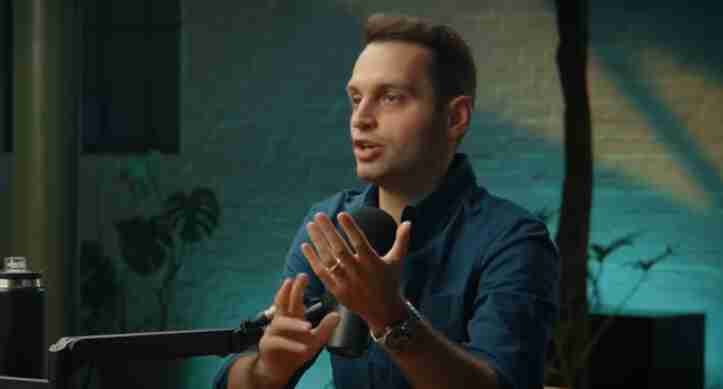
Read the full transcript of podcaster Konstantin Kisin’s interview on Modern Wisdom Podcast with Chris Williamson on “The Political Earthquake That No One Is Ready For”, Jan 6, 2025.
The interview starts here:
Are You Right Wing?
CHRIS WILLIAMSON: So are you right wing?
KONSTANTIN KISIN: No, I’m still not right wing. I think you’re referring to an article and a video I did with the title “Fine, Call Me Right Wing.” It’s basically just me saying I’m tired of defending myself against this allegation. Still not right wing. But if it’s really important for people to frame me in that way, that’s fine, they can do it.
CHRIS WILLIAMSON: Why is “right wing” a disparaging mark?
KONSTANTIN KISIN: I think the political realm in which we operate has a certain framing. Deep down, if people are honest, the caricature of the left is that they’re wrong but well-meaning, and of the right is that they’re factually more correct, but evil.
CHRIS WILLIAMSON: Callous.
KONSTANTIN KISIN: Callous and evil and cruel and nasty. And so even if you’re right, you’re still wrong. Morally wrong. And I think that’s why that’s what I noticed.
Because my journey into all of this world was like, “Hey, guys, maybe free speech is quite important.” “Oh, right wing.” I was like, what? And then I just gradually discovered that thinking you should be allowed to speak freely makes you right wing, which when I was in my early 20s was shocking. George Carlin and Bill Hicks were my heroes when I was growing up – these great comedians who were getting arrested, like George Carlin for routines like “The Seven Words You Can’t Say on TV.”
So that flipped without me realizing it happened. It was a left wing thing or maybe a universal thing, and then it became a right wing thing. Then thinking your country’s not all bad became right wing. And we can go down the list of all of those things. I think it’s basically what a lot of people call you if what they want to do is discredit the things that you’re saying because they don’t actually have a counterargument.
CHRIS WILLIAMSON: And we can’t really be fully aware of somebody’s intentions. So castigating, lambasting the moral foundation that it’s based on and saying, “Oh, it’s coming from a place of judgment or impoliteness or uncouthness or callousness” or whatever is kind of easy slime to throw at someone maybe.
Intentions vs. Results
KONSTANTIN KISIN: And it makes people question people’s motives, and a lot of people find people’s motives more interesting than the result of the things that they’re advocating. So if you go and try to create this beautiful utopia in which everyone’s equal and you end up killing 50 million people in the process – well, “that wasn’t real communism.” You were well-intentioned, but you didn’t quite live up to the ideals of this great philosophy.
Whereas if you actually do things that work, but you have the wrong intentions or you’re a bad person, then people don’t seem as interested in that. I find that quite interesting because I was in Hungary earlier this year and they have a very right wing government under Viktor Orban. One of the things I found out is they were very keen to deal with abortion in some way. They wanted to reduce the number of abortions in Hungary, but they looked around the world and realized that abortion as a political issue doesn’t work. It’s an issue that actually loses votes for the right.
So what they’ve been doing, as you probably know, is pursuing very pro-family policies more generally. Have X number of kids, you get this tax break.
CHRIS WILLIAMSON: If you have three kids, the woman never pays income tax again for the rest of her life.
KONSTANTIN KISIN: Exactly. And what they’ve found is without actually legislating much about abortion, they’ve reduced the number of abortions by half simply by pursuing policies that make families more appealing for people to have.
CHRIS WILLIAMSON: Isn’t that interesting – creating a positive vision for the thing you want as opposed to a negative vision against the thing you don’t want.
KONSTANTIN KISIN: Exactly.
Positive vs. Negative Political Visions
CHRIS WILLIAMSON: That seems a very upside-down sort of world. We’ve just come out of the US presidential election campaign. And in that, the most effective political ad of the last few decades was “We are not that.” It was mostly about “We are not that.” Donald Trump is for you, but the entire thing was “Kamala Harris is doing this, trans surgeries for undocumented immigrants, et cetera. We are not that.”
They identify the binding together of an in-group over the mutual othering of an out-group. And I understand that it’s effective. It’s maybe even more salient to humans to go like, “Well, that’s a threat. That’s something that’s not right, something to avoid.” Maybe it even does bind us together more effectively. But it doesn’t feel like a particularly hopeful view for the world. And I wonder if that can be adjusted a little bit and we can have a little bit more upward vision as opposed to backward defensiveness against other things.
KONSTANTIN KISIN: Well, I think if you look at the two campaigns that we just saw, I actually thought that – you know, we went to the rally in Manhattan. We were kind of there in a “let’s see what’s going on here” capacity, rather than joining in with the salutes.
I would say, actually, if you dig down into the core of the Trump campaign, its message is actually very positive. The “Make America Great Again” thing, and what we saw at the rally too – it was really about people who love their country and wanted it to be successful. That’s what I saw there.
When I looked at the Harris campaign, or the way that she conducted interviews or responded to challenging questions, that was all entirely pivoting to how evil and wrong and bad Trump is.
But actually, I did come away from the rally, to my great surprise, very relieved that Trump did win and very hopeful for the world as a result, which is not a position I thought I would be in before the election. But I think going to that rally really changed my mind about a lot of this.
Things That Sound Good vs. Things That Work
CHRIS WILLIAMSON: You introduced me a long time ago, not introduced me to Thomas Sowell, but certainly kind of repopularized some of those ideas. And one of the ones I wanted to bring up is something I heard you say recently: “We’ve replaced things that work with things that sound good.” This sort of optimizing for optics over outcomes. Dig into that a little bit more for me. Why is that a salient quote in the modern world?
KONSTANTIN KISIN: Well, Thomas Sowell’s quote about that is that’s the history of the modern West of the last 30 or 40 years. And I think it’s universally true. I mean, we’re sitting here in London, for example, where the mantra is “diversity is our strength.” And the more it’s evident that has flaws in it, the more we double down on the statement.
So a lot of this is sloganeering versus reality. And I think it’s really been amplified by social media to a great extent because things that are not possible in the real world are possible online. Online you’re an avatar which can change its sex, it can change everything about it. You can be effectively whoever you want to be.
CHRIS WILLIAMSON: Online you make statements that are never stress tested.
KONSTANTIN KISIN: They’re tested only by whether they get likes or they don’t get likes. And you see this on the left and the right. There are things both the far left and the far right will say that are absolutely not in any way related to the truth, but they are very appealing to people’s feelings.
The reality is the truth is very unpopular and always has been because the truth is messy, unpleasant, complicated. The truth probably doesn’t agree with you on a lot of things just necessarily because it’s not going to fit exactly to the worldview that you have. So it’s very unpleasant. And it’s much easier to engage in sloganeering for yourself as well as for society.
The Complexity of Truth
CHRIS WILLIAMSON: There’s a H.L. Mencken quote, something about simple answers to complex problems are often wrong. It would be nice if we could constrain down a lot of the issues that we’re seeing to something that kind of wrangles the chaos into order. But the chasing for simplicity, to me just a lot of the time seems to be retrofitting a new problem to an old solution that you’ve had for a long time. “Everything is because of…” And this again happens on both sides.
KONSTANTIN KISIN: Yeah. And I think usually the easiest telltale sign of working out that someone’s full of nonsense is if they have a simple single explanation for all the problems that they identify. And they’re not willing to recognize the trade-offs in these situations.
In answer to your question, why is this happening even more so now? I just think we live in a world where we’re much more governed by emotion and feeling than we are by hard reality. I’m reading Churchill’s diaries of World War II right now and it’s funny to the extent to which the stuff that he clearly takes for granted in describing things would now be completely abhorrent to our sensibilities.
For example, one thing I actually didn’t know was the evacuation of the British Expeditionary Force from Dunkirk. People would have seen the movie – that was only possible because there was a unit at Calais, which is further south of Dunkirk, which was basically ordered to stand to the death. So we were like, “We’re going to sacrifice all these people. They’re going to die so we can save these people.”
CHRIS WILLIAMSON: And they did.
KONSTANTIN KISIN: And they did.
CHRIS WILLIAMSON: Wow. Do you know how many people died?
KONSTANTIN KISIN: I don’t know. But they fought almost to the death. Then they pulled out the commanding officer. They gave him a direct order, “You have to get on this boat and leave and leave your men behind because we’re going to need you later.” And then they allowed the small remnants of the British unit to surrender.
If you look at the way we talk about many conflicts that are happening at the moment, there is no recognition that casualties are part of conflict. This has now become completely abnormal to our way of thinking. And so there are lots of things in which we’ve moved on to this illusory world that exists in our heads in which everything is supposed to be perfect. Therefore, if it’s not perfect, it’s someone else’s fault.
CHRIS WILLIAMSON: That’s the “There are no solutions, only trade-offs” insight from Sowell again. Why is this need or compulsion for perfection or hatred of small flaws? What’s the driving force or dynamic behind that, do you think?
Here’s my pet theory: If we can predict the weather in Venezuela tomorrow, if we have been able to get planes to fly in the sky and put a man on the moon, why is it that I need to encounter traffic? Why is it that civilians need to be caught in a crossfire during war? Why is it that we can’t fully control a global pandemic? It seems like we have mastery in so many areas and yet not in all, which gives us a disproportionate impression of our ability of mastery over everything. That’s my bro science.
The Era of Mass Customization
KONSTANTIN KISIN: I totally agree with that. I think that is really it. And then if you drill down a little bit further into that, one other thing that’s worth adding is that we’re living through the era of mass customization. We have been for some time, especially if you live in America.
What I mean by that is if you go to a drinks machine or a vending machine in the U.S., you can have, first of all, eight choices. You can have Fanta and then you can have each one of them in like eight different flavors. You can have lemon Fanta or orange Fanta or raspberry, all of that. So not only do we control most of the things around us, we get to choose exactly how we want it.
You can, at your fingertips, access a hundred thousand pairs of different shoes that you could buy. Same with T-shirts. Everything that we now consume, we have a level of choice that’s completely unprecedented, which gives us an illusion of really high levels of control over everything.
It’s not just that we’ve really gotten on top of infant mortality and all of these other things. Not only that, you can design your baby, you can have your baby exactly the way you want or you will be able to very soon. So in many ways we are masters of our environment. So why can’t we deal with this or with this or with that?
And look, it’s a noble and worthy thought. It just can’t be taken to extremes when the reality is telling you this isn’t working.
How Social Media Changed Politics
And also I think part of the other reason is, as I say, social media fundamentally changed the way politics is conducted in a profound way that I don’t think anyone’s aware of, especially if they’re on the younger side of things.
Because I remember a few months ago, maybe a year ago, I was bored in the evening sitting around and I was on YouTube and this debate popped up between two people most of your audience have never heard of. William Hague, who was the leader of the Conservative Party in the UK at the time, or the deputy leader perhaps, and John Prescott, who was the deputy leader of the Labour Party at the time.
John Prescott was this blue collar, working class guy, couldn’t put a proper sentence together to save his life. And William Hague, who actually is also working class, but he went to a grammar school. So he had this very posh, well-spoken accent and it was the ultimate clash.
But what happened was because there was no social media, they were not pandering to that. They were not trying to pander to their work. They were in the room together. And the way that whole standoff debate was conducted is William Hague would make fun of John Prescott for not being able to talk, basically. The late John Prescott, I should say.
But John Prescott, to his great credit, he didn’t feel like, “Oh, I’m going to get offended here. And then I can get 10,000 retweets and talk about working class people and the snobbery.” He was like, “Well, on this side of the House we may get the words wrong, but we get the judgment right.”
In other words, it was a fight conducted on a kind of gentlemanly understanding that there are certain things that we don’t do, like a boxing match, you don’t punch the other guy in the balls. And politics to a larger extent, until first the 24-hour news cycle and then the social media environment was really conducted in a somewhat different way.
I’m not saying it was not nasty occasionally or there wasn’t that going on, but the incentive structure was different and incentives are everything. The incentive structure now is to do whatever it is that gets you the most attention. That is not necessarily the thing that gets the most constructive progress being made outcomes at all.
And that’s one of the fascinating things. If you meet a lot of politicians, as I now do, you see them in an environment outside of the House of Commons or outside of Congress or whatever. They are not nearly as antagonistic towards each other as they pretend online.
CHRIS WILLIAMSON: So they’re tuning that up in order to garner support, to get attention.
KONSTANTIN KISIN: “Look at how I owned the libs or the right or whatever,” you know, you can insert your own keeping.
CHRIS WILLIAMSON: I suppose from an individual perspective without how it impacts the other side. “Look at how passionately I fought for…”
KONSTANTIN KISIN: “Our own cause and look how much of a victim I am,” which is increasingly a thing that’s adopted across the political spectrum.
CHRIS WILLIAMSON: Yeah, I read this great article by Gwinda a couple of months ago called “The Rise of Neo-Toddlerism.” You read this?
KONSTANTIN KISIN: I haven’t.
The Rise of Neo-Toddlerism
CHRIS WILLIAMSON: So I mean, it’s kind of contained in the name that he talks about modern social campaigns being like adult toddlers. He says if every time that a toddler threw a tantrum they got front page news and a ton of attention online, they would continue to do it, you know, even if a lot of the time they’re being criticized.
I don’t know many people that supported throwing soup over a Van Gogh painting, but they definitely generated a lot of headlines and attention is kind of akin to, “Well, something’s going on. Like they’re paying attention to me, maybe this could be good. This could end up to people paying more care to the problem that I think is very salient.”
And I kind of get the sense that our inability to distinguish good attention from bad attention and just be able to like attention at all cost in an attention economy is always positive for the most part, unless it’s like unbelievably negative comments that you’re getting back. For the most part, people are just kind of like, “Yay, my side, boo the other side.”
So yeah, I think it reinforces focus on garnering drama, using drama to garner attention pretty much at all costs. And I think that’s why a lot of the time politics to me, especially in the UK, I listen to the debates that are going on. I just think like, what are you talking about? What is this discussion? It’s nothing. It’s nothing. There’s no substance to it.
There doesn’t seem to be anything that’s like a hardcore deliverable. It’s always surface level issues. It’s never actually getting to the root of anything. There’s never any sort of definable, concrete, falsifiable statements, claims, demands that are being made. Even if it’s not you that’s in power or, I don’t know, it’s just rhetoric. A lot of it is rhetoric.
KONSTANTIN KISIN: It is.
[Advertisement section removed]
Trump Victory
CHRIS WILLIAMSON: Do you think that a Trump victory can inspire a broader movement across the world? I think places like the US and Argentina have got their mojo back a little bit, at least it feels like that they’ve kind of got confidence back. Is that just the post-coital glow of an election victory or is there something more going on?
KONSTANTIN KISIN: Well, what’s interesting to me was that we were in the US before the election, during the election and after the election, and on the day of the election, we flew from Austin in Texas to LA and all the people that we know in Austin were like, “What are you doing? You’re going to LA for the riots, for when Trump wins, you know there’s going to be…”
And when we got to LA and we were there on the night of the election and then we were there for a week after, literally like there was nothing, nobody. There was no reaction of any kind. And I think that was because the scale of the victory was very, very important. It’s like nobody can pretend that America didn’t vote in this direction anymore. It wasn’t Russia collusion, it wasn’t blah, blah, blah. It was like Americans looked at this and went, on balance, we prefer this. I thought that was very important.
As for whether that has a chance to spread, well, look, America is the place where we all download our memes, right. So I always think of the example of during the summer of BLM when we had protesters in this country in London, in front of police officers saying, “Hands up, don’t shoot,” in front of cops that don’t carry guns. Like that’s not a real thing. You’ve just downloaded the meme. And you’re misapplying it here about something that really doesn’t affect British people in anything like the same way.
And I think that possibility’s there, I hope it’s there. And by the way, I’m not someone who thinks that the Trump presidency is nailed on to be a positive thing for the world. It’s not guaranteed, it’s an opportunity. And it really fundamentally depends on whether he’s able to govern and deliver the things that he promised to the American people.
One of the fascinating things as well, and this is actually something Francis, my co-host on Trigonometry, pointed out, is if you look at the lineup of the Trump campaign, the people at the very top of that are all Democrats, former Democrats – Trump, Elon, Vivek, Tulsi, RFK – they’re all former Democrats. And so what you’re looking at is not this super right-wing coalition, actually. It was really a broad movement that won people over on the promise of a number of things: improving the economy, cutting government waste, closing the border, dealing with illegal immigration and sorting out the geopolitical situation.
None of those things are particularly right-wing, actually. And he stayed away on the campaign trail from a lot of the more controversial issues, like abortion, for example. He was actually very centrist about that.
Now, if he can deliver on those things, if he can close the border and deal with illegal immigration, if America’s economy is booming, and if Elon and Vivek take an ax to the government bureaucracy and it’s still standing and able to function in the same way that X is still standing after he fired 80% of the people, I don’t see how that doesn’t inspire people around the world. I don’t see it.
Because if you look at all of the Western world, I would say there are two problems. They’re not unrelated entirely, but they’re very big problems in their own right. It’s the demographic issue and the government debt issue. Almost every country in the Western world, there are some exceptions, is running close to 100% of GDP levels of debt. We are so indebted, we actually, I don’t think there is a way to solve that problem without growing your way out of it. You just can’t inflict that much pain on the public and survive electorally.
CHRIS WILLIAMSON: There would be so many restrictions placed that there would be social unrest to the point where the country gets destroyed.
KONSTANTIN KISIN: Well, look at what happened in the UK. The Conservatives came in and said, we need austerity. They cut the government expenditure. I don’t remember what the number was, but I think it was like 1% or something. And everyone said “The Tories are killing people.” So how do you cut it?
CHRIS WILLIAMSON: You know, I mean, we just saw this in France, right?
Economic Growth and Energy Policy
KONSTANTIN KISIN: Right, yeah. So the only way to probably deal with it at this point, if you can deal with it, is to grow your way out of it. The UK economy on a per capita basis is smaller now than it was in 2007. People in this country are poorer per head of population than they were before the financial crisis. We still haven’t recovered.
The only reason our economy’s actually growing—I use inverted commas for people who are listening—is that we import lots of people who don’t increase our income per head because they’re low wage people. But the politicians can say, “Well, our economy’s grown” because, look, we’ve added this person who earns 12 grand a year or something.
If Trump can actually unleash the talents and ingenuity of the American people and allow them to start businesses to grow the economy—real growth of the economy—which I suspect he will, because all you really have to do is make energy cheap and then the economy will grow.
This is what people don’t understand about net zero and all of this other nonsense that we’ve got going on here—energy is included in the price of everything. Electricity prices are way higher than most other countries. I think they’re four times the ones in America.
CHRIS WILLIAMSON: So you tweet that.
KONSTANTIN KISIN: Yeah, it’s beyond Lombok’s tweet that I retweeted. So basically, when you make energy more expensive, you make everything more expensive. That’s why all manufacturing, everything needs energy. Everything needs energy. So GDP is energy transformed, is the line.
So if Trump’s policy of drill, baby, drill means that energy in America is cheaper, that alone will make a big difference. Then you add to that cutting of government regulation and waste. If that can happen, then you put those two things together and you’ve got real economic growth. Amazing.
You close the border. I’m not talking about mass deportations or any of that, because none of that I don’t think is realistic or is going to happen. And you already see people close to the administration rolling all of that back. Actually, I heard an interview on Winston Marshall’s show with the head of the Heritage Foundation saying, “Well, you know, we’re going to be able to get rid of 100,000 criminal illegal aliens, but everyone else is going to be voluntary” or something and just going, okay, so we’re talking more realistically now.
But if you close the border, which is a big problem in all of the Western world, as we know—illegal immigration on a large scale that nobody voted for—if you do that, you destroy DEI and all of this woke crap in the institutions. Who wouldn’t sign up for that when they’re given the option?
The First Podcast Administration
So it can inspire that sort of renaissance or revival in the Western world. And I hope that it does if he’s able to govern properly, and I hope that he does that. And one of the things that I really hope the Trump administration is able to do is not make the mistakes they had to perhaps make the first time, which was to actually consider the opinion of the mainstream media as important.
What this election really showed that we just had, this was the first podcast election. Everyone’s talked about this to death. But what I think that means is that this could be the first podcast administration.
CHRIS WILLIAMSON: God.
KONSTANTIN KISIN: Well, I’m not saying that’s universally positive, by the way, but what I’m saying is if the New York Times writes yet another piece about how Trump is Hitler for improving relations between Israel and Saudi Arabia or something, right, he doesn’t actually have to give a shit. He could just govern. He’s got the mandate. He’s not going to run for another term. He’s got the Congress, he’s got the Senate, he’s got the judiciary, he’s got everything under his control. If he could just resist the natural inclination to go after people who go after him.
CHRIS WILLIAMSON: After him in the same way as you wouldn’t necessarily go after an independent student newspaper that said it too, because it’s such small fry, low impact that it’s probably not worthy of a response.
KONSTANTIN KISIN: We shouldn’t overdo it. We shouldn’t overpraise ourselves. The New York Times has a huge audience.
CHRIS WILLIAMSON: Of course, but if it’s from reputation, perhaps, or relevance to the people that you care about. I remember this is funny. I don’t use TikTok, but clips and stuff get repurposed onto that. And I think I checked it after I hadn’t been on the desktop thing for like six weeks and it turned out that five weeks ago I’d been involved in some brouhaha on some video.
And I remember looking at it and going, huh, how silly. Like, you know, this platform that I don’t use had a bit of drama around something that I said that I still stand by. Like, isn’t that silly? And I don’t care about the potential impact and what people said because it’s in a domain that I don’t really care about.
KONSTANTIN KISIN: Yes.
CHRIS WILLIAMSON: But then obviously the next step is, well, why do you care about what YouTube says or what Instagram says, or what people reply to your newsletter say? What people on Twitter say? I’m aware it’s a basic insight, but it sort of opened my eyes a little bit. And I wonder whether it’s the same if legacy media has derogated its credibility so much that now most people just think “I don’t really care about what you say.” Yeah, maybe it gets a lot of circulation, maybe even gets a lot of clicks, but it’s kind of the media equivalent of the Boy who Cried Wolf.
Media Credibility and Governance
KONSTANTIN KISIN: It is. I again, I try to caution people against being too convinced of this, because the New York Times, I don’t know the exact numbers, but I think has like 10 million paying subscribers. Paying subscribers. Right. So there’s clearly a lot of people in America who read the New York Times and think it’s good and believe it.
The point I’m making about Trump is, I think it’s fair to say—I don’t think I’m going out on a limb here to say that the New York Times doesn’t like Donald Trump. I think it’s fair to say that CNN and MSNBC do not like Donald Trump. Right? So why would he care that they have said the same thing they’ve said about him 10,000 times already?
Instead of just governing, he’s got the mandate, he’s got everything he needs to actually govern. Just ignore those people. Just ignore them and govern and do the things. When I say ignore them, I don’t mean do crazy things just because you’ve got all the power now. I mean deliver the things you promised to the American people.
And that was the thing that irritated me about his first presidency—you can dislike Donald Trump, you can dislike the policies that he advocates, but if he’s been elected, it is his duty to implement the policies that he ran for because that’s what people voted on. And you are now criticizing him for doing that. That doesn’t make any sense to me.
In the same way, like if Keir Starmer in this country, who’s a left wing leader, implements the policies on which he was elected, I don’t know what they are, because he didn’t articulate any during the campaign, but if that were to happen, then I’d be like, well, I can’t complain. I can say I don’t like these policies, but I can’t criticize him for doing it, because that’s what people elected him to do.
So my point with Trump, just to finish the answer to your question, is if he can govern well and deliver the things that he promised, which is a strong economy, closure of the border, dealing with the woke agenda, etc., I don’t see how that wouldn’t be inspirational.
UK vs US Political Systems
However, there are two factors that I would say that make me less optimistic about the UK in particular than the US. We can download the meme, but we have a parliamentary system which means that, you know, Donald Trump really, he had to win primaries as one man and then he could build his team after that. And none of them had to get elected. Elon Musk, Vivek, Tulsi, RFK—they didn’t have to get elected with him.
CHRIS WILLIAMSON: Right?
KONSTANTIN KISIN: In this country, you know, the closest thing we have to Trump is Nigel Farage. Nigel Farage has a party, which has five MPs and has a lot of the popular vote in this country. But in order to win, you know, there’s 650 seats in the House of Commons, you’re probably going to need 300 plus seats to actually win outright. That means you have to have 300 people who get elected in the local area as the local MP. So that means you kind of need 300 little Nigel Farages, if that’s the metaphor. That’s very difficult.
The other thing is, for all the talk about the American election being the podcast election, I don’t know that the podcasting breakdown in this country is necessarily favorable to the center-right or the center.
CHRIS WILLIAMSON: Well, who do we know in this country? Boris went on Steven’s show.
KONSTANTIN KISIN: Yeah, but Steven isn’t a political operator. Diary of a CEO.
CHRIS WILLIAMSON: Correct.
KONSTANTIN KISIN: Yeah.
CHRIS WILLIAMSON: Who else have we seen? You had the lady that did that budget and was briefly PM Liz Truss. You had Liz Truss.
KONSTANTIN KISIN: Yeah, we had her on and we had Suella Braverman on.
CHRIS WILLIAMSON: Yep. I mean, except for you guys. I imagine James O’Brien probably has some people on every so often.
KONSTANTIN KISIN: Well, there’s a couple that you’re missing.
CHRIS WILLIAMSON: Rory.
UK Political Podcasting Landscape
KONSTANTIN KISIN: So Rory Stuart and Alastair Campbell. We’ve had Rory on the show. I like Rory as a person. I don’t know if you followed their coverage pre-election.
CHRIS WILLIAMSON: I followed it with great interest. Yeah.
KONSTANTIN KISIN: Yeah. So they were—and again, this is not an attack on them as individuals—but they were wrong about everything. Not only were they wrong about everything, they massively doubled down after being wrong about everything.
So in the days before the election, Rory Stewart was saying, “Well, you know, these polls showing that it’s neck and neck, they’re completely wrong. People are afraid to say the truth, which is that Kamala is going to smash this.” And on the night of the election, when he was clearly proven completely wrong, he was like, “Well, I was wrong on the facts, but I was not wrong to be optimistic” or whatever it was.
These people have no idea what’s going on in reality in America. They were just completely wrong. They are probably the most popular podcast when it comes to politics in this country.
CHRIS WILLIAMSON: I think it’s Goal Hanger that does the network that’s a part of. I think in the top 10 for the Americans listening, the top 10 podcasts on Apple podcasts, which skews a little bit older in the UK, Rory Stewart is in maybe two or three of them regularly. And Goal Hanger has maybe four or five from that one network.
KONSTANTIN KISIN: And again, I like Rory as a person. He’s a lovely man.
CHRIS WILLIAMSON: He’s been on the show. I found him very pleasant.
KONSTANTIN KISIN: He’s been on our show and we’re happy to have him back. And I’d happily have Alistair back. Although I rate him less, but I’d happily have Alistair on.
My point, though, is that quite a lot of people in Britain are living in this imaginary world which is reinforced for them by people that they instinctively lean towards. And they’re not as aware as you are because you live in the US or as I am because I get a chance to travel there of actually what’s going on.
And I only realized this, you know, this year, because this year is the—I’ve been to America loads of times before, but this year was the year that I actually went to, like, real America. I’ve been in Utah and, you know, Oklahoma City.
CHRIS WILLIAMSON: That’s real America.
Understanding America Through Travel
KONSTANTIN KISIN: And Tulsa and El Paso in Texas and Fort Worth and Sugar Land and all these other places, as well as your DCs and your New Yorks and Nashvilles and all of that. I really had a chance. Colorado, I was in, and I traveled around it. So I got a chance to actually meet real American human beings.
And I realized that the reason that people in the West, in Western Europe, don’t understand what’s happening in America is because they’ve never been there. So if you are a BBC journalist, what is America to you? Well, America is what people like you, that is the media elite, tell you that it is. Right?
And then if you go to America, you go to New York, D.C. or LA, these are all places that are massively Democrat. They’re super dominated. I think Washington, D.C. voted like 92% for Kamala Harris in this election. Something like that. So you end up in these places that are not representative of the country.
My point is they spend a lot of time among people and in places whose views are not representative of the country. And so when you are a British citizen watching the news, you’re really watching people who are deeply embedded into an echo chamber, whose echo chamber also tells them that their opinions are the virtuous ones to have. And so that, to me, it’s therefore not surprising that you even have prominent Tories in this country who were saying they’re pro Kamala.
What If Trump Fails to Deliver?
CHRIS WILLIAMSON: Very difficult to stress test that. You mentioned sort of Trump has the opportunity, very clear set of objectives. Also, I can’t even remember what it is. The House, the Senate, the popular vote, the blah, blah. The money, the technology, the talent. What happens if Trump fails to deliver change?
KONSTANTIN KISIN: That’s an interesting question. I think all of the things that many of us have been saying about the decline of the West are going to come back 100 times. Because what you then see is there’s literally no way out.
CHRIS WILLIAMSON: It’s unfixable.
KONSTANTIN KISIN: There’s no way out. There’s no way out. So the reason I think a lot of people were relieved, as I was, was at least in this election, that Trump won. The feeling for me was, well, at least there’s choice.
Like in the UK, you don’t have choice on the issues that I care about, which is our country being prosperous, immigration being beneficial to the country. I’m pro lots and lots of immigration. As an immigrant, if it’s beneficial to the country, I’m against even small levels of immigration that are detrimental to the country. And I’m completely against illegal immigration for that reason. And as you know, the woke stuff grinds my gears.
So on all of that stuff, we don’t have a choice in this country. We haven’t had a choice for 14 years. The conservative government that’s just left is virtually indistinguishable from the Labour Party that’s just come in to the point where the Labour leader is attacking the Conservatives for their failure on mass immigration. And everyone’s going, he’s got a point. I mean, he’s going to make it worse, but he’s got a point.
So in America at least, the feeling was, well, okay, they actually have choice. They can choose. If you don’t want this continued slide into managed decline, you can vote for something else, pivot. If you vote for that something else and you don’t actually end up having that choice, then you’re in deep trouble. And as you probably know, in the fringes of right wing discourse, the Curtis Yarvins of the world.
CHRIS WILLIAMSON: Not super familiar. I’ve met Curtis, but I’m not super familiar with that.
Democracy Without Real Choice
KONSTANTIN KISIN: He’s an interesting guy, but it’s not even about him specifically. There are a lot of people who up until this point were increasing in profile because they were saying something that I don’t necessarily agree with, but I see the logic of. And that is, what good is democracy if you can’t vote for the things that you want? If you can’t vote your way out of this, is that democracy or is that a fake democracy?
And therefore, if it’s a fake democracy, then you’re not living in a place of choice. You’re living in a place where there’s a tyrannical authoritarian structure that’s telling you you must have net zero, you must have woke, you must have.
CHRIS WILLIAMSON: It’s just got a much more sophisticated delivery mechanism that makes you feel like you’re playing the game.
KONSTANTIN KISIN: You’re living in the matrix, right? You are being given this soma, whatever you want to call it. You’re being given this drug that makes you feel like you’re living in something.
CHRIS WILLIAMSON: On a piece of ballot paper.
KONSTANTIN KISIN: Yes. But actually you’re living in hell in which you’re stuck with the things that you hate. And even if the majority of you get together and vote against this, it will still happen.
CHRIS WILLIAMSON: The same outcome occurs.
KONSTANTIN KISIN: So their argument is democracy is not working. Why don’t we look at alternatives? And alternatives are, that’s why that explains the fascination that, as I say, fringes of the right increasingly have with the Putins of the world. Because it’s like, well, this is like a strong man who actually fixed his country, and if Trump fails, I don’t see why those voices wouldn’t get louder.
CHRIS WILLIAMSON: That’s very interesting.
KONSTANTIN KISIN: I can’t see a logical reason why that wouldn’t be the case, do you?
The Stakes of Trump’s Presidency
CHRIS WILLIAMSON: No, I mean, you can continue to sort of play the game. I’m sure that people that don’t like Trump would say, yeah, but that’s. He was inefficient, he was unable to do this thing. It’s because the policies were pointing in the wrong direction. We can fix it through a different pathway, etc.
But given that there was a majority of people that voted for him, it not being disheartening and disenchanting to the democratic process, especially with all of the power of the smartest guy in the world, the companies and the rockets and the dance moves on stage and stuff. What else did you want? But yeah, I’m fascinated by that question. What happens in four years time if change hasn’t been delivered?
KONSTANTIN KISIN: You can’t fix it when you’ve got the Senate, the Congress, the popular vote, the tech bro oligarchs. David Sacks, you’ve got a lot of the new media on your side, which is so powerful now in America. You’ve got literally everything you could possibly have. You as president are independently wealthy, it’s your last term, you don’t have to pander to anybody.
CHRIS WILLIAMSON: A good successor sat in the same organization already.
KONSTANTIN KISIN: If you can’t fix it, then, well, how do you fix it? That would be the question a lot of people ask in that situation. So Trump must not fail, because if he does, that in many ways was the last chance that the West had of turning things around.
What If Trump Succeeds?
CHRIS WILLIAMSON: What happens if it goes well? You mentioned about Trump has the opportunity to hard reset the Western world.
KONSTANTIN KISIN: I think if he does well, if the economy grows rapidly and sustainably, if he closes the border and deals with illegal immigration and crime, if he ends DEI and all of this neo racism in the institutions, if he makes energy cheap, if he ends the foreign conflicts that he promised to end, I think that is undeniable proof that what that movement offers is better than what we had. That’s why people voted for him the way that they did.
And that means that will give massive inspiration to people around the world, especially the Western world. I think that’s undeniably the case.
CHRIS WILLIAMSON: Do you think it would give inspiration to the UK?
KONSTANTIN KISIN: I think it will. That does not mean, for the reasons that we already discussed, that that will necessarily result in a political victory, but that will give inspiration to people around the world for sure.
Right Wing Snowflakes
CHRIS WILLIAMSON: Something that I was, I actually thought about this. I was in Brisbane on the day of the election, so I was moving seamlessly from my workout playlist to the Daily Wire livestream. Like just switching between, it’s one in the afternoon or something on Wednesday for me, as I’m watching results come in slowly.
As it became increasingly likely that it seemed like a Republican victory was afoot, I actually thought about you and your position, your particular distaste for right wing snowflakes. And I wondered being on the outside for the last four years or so allows you to have this sort of anarchistic, rebellious, sort of sexy problem identifying, but not needing to be solution proposing sort of group. I wondered whether you thought there’s an opportunity for that right wing snowflakeism energy to appear more or less now that that side is in power. I wondered if you considered that.
KONSTANTIN KISIN: Yeah, I think actually what Trump’s election will do, and I really realized this, particularly when we went to the Trump rally in Madison Square Garden, is I think if he’s successful in particular, it has the power to entirely deflate that fringe of the right that has very much like the Woke left in the way that it operates. The cancel culture, the identity politics, the grievance mongering.
Trump, one of the things that those people are obsessed about is Israel and Jews. And Trump is the most philo-Semitic president the United States has had for decades. So he doesn’t need them. And I don’t think he’s ever really particularly.
CHRIS WILLIAMSON: Isn’t it interesting that on October 7th he was with Ben?
KONSTANTIN KISIN: Was he?
CHRIS WILLIAMSON: Yes. I didn’t know that. I can’t remember where they went, Ben and him, some sort of ceremony type memorial thing. And I remember thinking at the time, like, I see a lot of loud voices on Twitter that have a problem, a big problem on the right, from the right. He’s like Fuentes adjacent sort of type people. And I thought, holy. Like that might have damaged part of the campaign, maybe that’s lost a significant number of votes.
KONSTANTIN KISIN: Yeah. And that’s what happened when I went to the rally in Madison Square Garden because full of Jews, full of Israel flags, and every time anyone mentioned Israel or like, I mean, one guy was on stage and just went, “we are going to crush jihad.” And everyone was just loving it.
So I think one of the reasons I actually talk less about that fringe of the right now, even though I just find them intellectually very irritating, because they’re not very bright, is that I don’t think they’re relevant truthfully. And so I don’t really talk about it too much. James Lindsay’s trolling them and I enjoy that and I like trolling these idiots.
But generally speaking, what I saw in America was they have no purchase in the Trump movement whatsoever. And if Trump is successful, these people will become utterly irrelevant. And by the way, quite a lot of those people, you know, I don’t know if you remember the Lauren Chen situation, but there was the revelation that some of these people were being funded from Russia. And when you see this, some of these people, like a week before the election saying, “Trump’s not my guy,” or whatever, you go, are all those likes on Twitter really organic?
CHRIS WILLIAMSON: Everyone’s had these.
KONSTANTIN KISIN: Are they really? Because I don’t see this reflected in real life. I think when it comes to social media, our reality is being distorted in a hundred different ways. And one of them is undoubtedly foreign operations. Undoubtedly.
The Political Earthquake That No One Is Ready For
CHRIS WILLIAMSON: Yeah. In other news…
[Advertisement content removed]
CHRIS WILLIAMSON: So okay, the opposite side of this. It’s almost kind of done to death, but I wonder if there’s something novel to talk about here around Trump’s victory being a death blow for overreaching progressivism and stuff like that. We’ve been saying in one form or another “peak woke” was summer of 2020 or whatever it might be.
I have this idea that you have this sort of conceptual inertia that maybe even if things on the Internet have moved on, if these ideas have caught hold in the real world, there’s this momentum, this big juggernaut, this lumbering behemoth, which is like boomers and my parents.
I had this idea that a news story hasn’t reached full mainstream significance when it’s on the front page of the New York Times or when it trends on Twitter, but when your dad messages you about it on Facebook messenger – like that’s when you know. It’s happened two or three times I think over the last few years. One being Rogan’s CNN debacle during COVID where he messaged me and said “I see your friend Mr. Rogan is in the news again.” I’m like wow, like that’s hit a 60-year-old northeast of the UK father.
And then mid-22 where he messaged and said “that Andrew Tate’s a nasty piece of work, isn’t he?” I was like, Tate, you have reached full mainstream significance because my dad is talking about you.
But all of that together to say there are many worlds that you inhabit and if you’re an agile, online X user, power user type thing, I think you have a skewed perspective of how sort of nimbly things are moving along. So how have you come to sort of conceptualize this and the trajectory of the sort of progressive obligations?
The Geography of Woke Culture
KONSTANTIN KISIN: Well, I think the geography is very important here. So I don’t think in the UK or Australia or in Canada we’ve remotely reached peak woke because DEI and all of this other stuff is so deeply embedded in the institutions and in politics.
Look at London. London is run by a guy who’s painted the crossings rainbow colors and the police rainbow and all of this stuff. Right. And I know these are trivial things, but they’re symbolic of very strong underlying things where people are being hired or fired based on their demographic characteristics and so on.
In the U.S., yes, Trump and people like Chris Rufo and Elon and Vivek, they have an opportunity to absolutely dismantle from the ground up all of these ideological introductions that have occurred over the last 10 years.
CHRIS WILLIAMSON: Even if structurally they can’t get into Yale or into Harvard or into Netflix or whatever. Yes, they can go a little bit.
KONSTANTIN KISIN: More upstream from that, but most of this stuff is in government. So if you can strip affirmative action hiring from the government institutions, then everything else will naturally follow. The corporations never wanted to be woke. They just felt they had to.
CHRIS WILLIAMSON: Yeah, that’s interesting. Incentives as opposed to, like, ideology.
KONSTANTIN KISIN: Yeah. And, you know, the Jaguars of this world, they’re not going to benefit from what’s coming. So I think that there’s a big opportunity for reset in America. But even so, it’s like you’ve got the virus and it’s infected you and you are still sick, but you have the potential to start recovering. That’s kind of how I see it in the rest of the Western world. I think woke is going to run and run for a long time.
CHRIS WILLIAMSON: Given that you’re downstream, hopefully from the US though, if that is.
KONSTANTIN KISIN: But I really don’t. Until the political leadership changes, I don’t see how it changes. Because even if you know, you could tell me, “well, look, Gen Z men are not woke.” Great. What are they ruling? What are they deciding? Who gives a shit what they think? You know what I mean? Other than me and you.
So the political power to change the things that are embedded in institutions, that’s what this is about. That’s why Trump has a chance to reset it in the US. Then hopefully it’s inspirational to the rest of us.
The State of the UK
CHRIS WILLIAMSON: What’s your assessment on the state of the UK at the moment?
KONSTANTIN KISIN: At the moment, I think it’s fucked. I really do. You know, I love this country, I really do, but at the moment I feel like… Have you ever heard that Mickey Flanagan joke about going to Brighton?
So Mickey Flanagan’s a very famous, very successful British comedian and I remember he did a show in Brighton and he talked about the contrast between London, the big city, and Brighton, the seaside town. He went, “you know, you get on the train in London, you’re really stressed and it’s full, it’s packed, it’s uncomfortable. And then you get off at the station in Brighton, you smell the sea air and you can feel the ambition just draining out of you.”
It’s kind of how I feel about the UK, and the reason I’d say that is that all the bright and talented people that I know are leaving. Anyone who can is leaving. All the rich people are leaving. This country has lost more millionaires than any other country except China. Now, if you compare the populations, that tells you something. So we’re losing the people who have created the jobs, who are creating the jobs and who are going to create the jobs.
And one of the reasons is they look at the environment that we’re operating in. We’ve talked about high energy prices, but this government has decided that the people who it needs to tax are the businesses, basically, particularly the smaller side businesses, which is where so much creativity really happens.
And then there’s all sorts of other things about infrastructure, housing, demographics that are going on. You know, we talk about net immigration figures and what no one really talks about is the fact that what we’re actually doing is we’re chasing out all the people who create wealth and have wealth, who pay the taxes, and we’re replacing them with people coming in towards the bottom of the jobs market at best, if they’re actually working at all. And so your net immigration figure of 900,000, that includes you having lost some of your best people and replaced them with people who are not contributing.
CHRIS WILLIAMSON: That’s very interesting. Yeah. Net doesn’t account for the cohorts that have gone and the cohorts that have come in and it’s probably not like, for, like.
KONSTANTIN KISIN: Yeah. And so everyone I know who actually had a successful business that’s portable, they’re moving to Dubai, they’re moving to America. They’re moving to all sorts of other places because. And what they say is very simple: “Well, look, I want my kids to go to a school where they’re not taught that they’re trans. I want to pay reasonable taxes, which in some places is like 0%. I want clean, safe streets, which you do not have.”
I don’t go on the Tube very much these days. And I’m not in London that often, actually. And I went on the Tube the other day during daytime, it was like kind of five, six o’clock and there was kids running absolutely rampant all over, jumping over barriers, not paying, pushing each other on the escalators, smashing the stop button, like really causing genuine nuisance. And I watched the staff watch them jump over barriers and do nothing.
CHRIS WILLIAMSON: Got some data. Recent data reveals a 56% increase in tube crime with thefts up by 83% and robberies doubling in 2023-24.
Rising Crime and Broken Windows
KONSTANTIN KISIN: And this extends more broadly. I saw the Labour government’s talking about, you know, they’re going to reduce crime. Well, street crime is up very significantly and one of the reasons it’s up is that it’s not really being dealt with by the police.
I had my car broken into a few years ago, window smashed. There was a CCTV camera right above it. I called the police. You can’t call. I had to email the police because they don’t answer the phone unless it’s like someone’s been misgendered or something, you know, and they emailed me back saying, “we’ve investigated, we can’t find anything.” Right under the CCTV camera. “Here’s your crime reference number.”
There was a viral video that you probably would have seen of a guy who deliberately left a bike on the street with a geolocator in.
CHRIS WILLIAMSON: Directly outside of Scotland Yard.
KONSTANTIN KISIN: Yeah, it got nicked. They tracked it down to the house where it was being stored. They gave the police the information and the police said, “we’ve looked into it, here’s your crime reference number, we can’t do anything.”
CHRIS WILLIAMSON: And then once the video caught sufficient fire, they got an email back from the police saying, “we’ve reopened your case.” Great news.
KONSTANTIN KISIN: Exactly. Now, by the way, I don’t want this to come across as if I’m criticizing police officers because I know police officers and I know that a lot of them really are working very, very hard, but the priorities and the resources they have set from above don’t seem to manifest themselves in this kind of low level crime being addressed.
Now you might say, well, you know, there’s some kids not paying for the tube, who cares? Well, actually, the Broken Windows theory is entirely correct. If you are observing people engage in low level criminal behavior, it makes people feel much less safe about the overall experience because they know that, well, if they’re not going to enforce this, what reason do I have to think that if my phone gets stolen…
CHRIS WILLIAMSON: The subtext is that more serious things also won’t be looked at with care.
KONSTANTIN KISIN: And they aren’t. And they aren’t. I know people who’ve left because of single incidents. I know a really wealthy guy who left the UK because he was walking out of a restaurant in Mayfair with a nice watch on his wrist and his pregnant wife. Three guys jumped out of a van with balaclavas on, smashed him to the floor, punched him a few times, pushed his pregnant wife aside, got the watch off him, got back in the van. Police don’t give a shit. No real investigation, nothing.
CHRIS WILLIAMSON: Why, why are these crimes in the UK? Why is this sort of social fabric disintegrating like that?
KONSTANTIN KISIN: I think it’s partly because the economy isn’t growing and so there’s not a lot of money to be put into policing. And when you think that net zero is the way to prosperity, that is driving up energy prices because you want to feel green or whatever, you want to reduce Britain’s contribution to global climate change from 2% to 1%. That’s the great ambition. Well then you’re not going to have money. And when you don’t have money, you can’t pay police officers. And when you don’t have police officers, people engage in crime.
CHRIS WILLIAMSON: I mean, this is just to add additional context for the northerner in the room. This is in London.
KONSTANTIN KISIN: Yeah.
The Forgotten North: Understanding Britain’s Economic Divide
CHRIS WILLIAMSON: I think the UK has the sixth biggest economy in the world. I heard this really phenomenal explanation, which is the UK is not the sixth biggest economy in the world. The UK is a very poor country attached to a very rich city. London has the sixth biggest economy in the world. No one cares about Newcastle. No one cares about Carlisle or Wrexham, except for Ryan Reynolds. Manchester, a little bit. Like a tiny, teeny, tiny little bit. Birmingham, a teeny tiny little bit. Everywhere else can go and get lost. Like anything basically north of Birmingham can just fall off a map.
You know, I wrote this thing after the riots that occurred a few months ago. I read it, yeah. If you can remember that. I basically, my thesis was I saw some videos of my old hometown, Middlesbrough, and there were street marches these people hadn’t joined. It looked like they were maybe walking to the place where the main march was going to go on. But it’s kind of classic sort of British loutish behavior. These people weren’t carrying slogans, they weren’t chanting anything. It didn’t seem like they were there for a particular purpose.
And there were houses that looked like they’d been recently built. A classic working class British street, you know, terrace, terrace, terrace, terrace, terrace all the way along. This is a house that had those pieces of stickers still on the windows that looked like they were sort of freshly created. You see one of the people pick up a big brick, just throw it through the window of this house that doesn’t have anybody in. It’s not like it’s the house of an immigrant or the house of an enemy or the house of somebody from the other political party.
And it’s very difficult to describe this to somebody that didn’t spend half of their life, 18 years in a northern working class town at a state primary, state secondary, state sixth form college. That was me. I spent 13 years in full time education right around these people. I know these people, I know the way that they feel and it’s this ambient malevolence. They’re disgruntled, they’re unhappy, they feel stuck and they don’t know why and they’re mean, they’re mean about it.
And the synopsis I came up with was that immigration wasn’t the reason. It was the excuse for this kind of antisocial behavior. And we don’t remember ASBOs. I haven’t heard ASBOs in ages. Antisocial behavior order for the Americans. And it was the youths on street corners that would sort of push and jumble granny as she tries to go to the corner shop to get milk and stuff like that. They’d be issued with an antisocial behavior order which meant they sort of couldn’t leave the house and they shouldn’t go to certain areas. It’s kind of like a weird sort of curfew type thing.
And that culture in the UK and I’m sure it’s everywhere. I’m sure that working class towns and all the rest of it, people don’t necessarily have much in way of upward mobility. They don’t have much to distract them. Maybe they’re a little bit despondent. Maybe they haven’t had the right role models. Fatherless homes all of these things I understand. But that culture in the UK is so self defeating because it is a gravitational well that keeps people stuck to the floor as much as possible. That this is as good as things are going to be. And the best use of your agency and self authorship is to break things, not to build things. And I know that intimately.
Well, this ambient malevolence, it’s like the air before a thunderstorm starts. And that was what I saw in that video really got to me. It’s the first time that I’ve seen something on the Internet that really got to me and that really got to me. So.
Jobs, Purpose, and the Loss of Dignity
KONSTANTIN KISIN: Yeah, well, I know what you mean and I think the answer to that, and I know I keep banging on about Net Zero in this conversation, but the answer to that is to scrap Net Zero. Because what those people need is meaning and purpose. And for the vast majority of working class men, the primary source of meaning and purpose is going to be a job. And when you have a job that is a meaningful job, that you’re making something, you’re building something, that you’re making good money, that you’re providing for your family, that you feel like you have upward mobility.
And upward mobility doesn’t have to look like “I grew up in Newcastle and then I started a YouTube channel, now I live in Austin, Texas.” Upward mobility might be, you know, I made 30 grand a year for 10 years and now I’m making 35. And now I’ve got a promotion at work and now I own a home. I own a home. Right. Most people really don’t need very much to be happy, to be honest. And it’s a tragedy that in most of the Western world and especially in the UK, the thing that we used to consider like the American dream. The American dream is you arrive with nothing but the shirt on your back and your kids go to university, you have a house, maybe a small business, you pass it on to them and their children are better off, really better off.
Well, if those people that you’re talking about where I agree with you, there’s that underlying malevolence. And it’s not malevolence, it’s anger really. It’s frustration. It’s frustration and anger. And what is that anger about? Well, the anger is about the feeling that you are not going to be able to do the things that you thought you would. And what are they? Well, you get a job, you get a house, you have some kids, they’re going to be slightly better off than you, you’re going to have dignity, you’re going to have community, you’re going to be respected, meaning, mastery.
Right now, if you have a society which has effectively said, we are going to do a green accounting trick, we’re going to take your jobs, we’re going to put them in India, we’re going to put them in China, where they’re going to make the same steel or the same cars or the same whatever that you used to make, they’re going to do it dirtier. Of course they are, because it’s a much less developed country. And then we’re going to import that steel and we’re going to import those cars back into the UK so we can pretend that we’re green. Well, you combine that with this person no longer having a job and our economy, as I said, we’re poorer now than we were in 2007. What did you expect?
CHRIS WILLIAMSON: Disgruntled. There’s this feeling, there was always this feeling, but I could never put my finger on it, of kind of being forgotten. In the northeast of the UK, it was like on the outside, a little bit, even within a community, on the outside of culture, even little things like the way that you were represented in media, like a story about Newcastle that hit the national press was like a whimsical cottage industry piece or something like that. I said I was going to show you this.
Britain’s Place in the Modern World
KONSTANTIN KISIN: Can we do one more thing on just that?
CHRIS WILLIAMSON: Absolutely.
KONSTANTIN KISIN: So one of the things that we’ve talked about in the UK is like, well, we need to build infrastructure, we need to build transport links. And it’s like, why do you need a better train line to nowhere? And so what you really have to do is you have to. And that’s why, you know, I was talking to Mary Harrington, who I know you’re a fan of too, at our Christmas party, actually, and she was saying something I really have been thinking about as well, which is, I think if we are in the Offering Solutions space, the solution for the UK is to accept the reality. That’s always the first bit of the solution, is to accept the reality that, you know, a slogan of Make Britain Great Again isn’t going to work, because we’re not going to. We’re not going to recolonize India. Do you know what I mean? We’re not going to rebuild the British Empire.
What I think we could do, if we really wanted to, but this would require both a political and a cultural shift on a level that would be extremely significant, would be to recognize that over the 20th century, Britain went from being the center of Western civilization to being the provincial part of it. We’re on the periphery now. The center of Western civilization after World War II, during World War II, I would say shifted from Britain to America. We are now effectively the European outpost of American civilization.
CHRIS WILLIAMSON: It’s a great point.
KONSTANTIN KISIN: That’s what we are now. What does that mean? Well, what that means is we have to lean in to that. That means we have to download the right memes from America instead of downloading the “hands up, don’t shoot” meme. What we should be downloading is, okay, we want economic growth memes. How do you do that? Well, you’re going to have to make energy cheap, slash regulation, et cetera. You’re going to have to do the right trade deals with that world.
That means all sorts of other things that we borrow from them and apply to ourselves as opposed to thinking that we know best, we clearly don’t, otherwise our society wouldn’t be as screwed up as it is. And part of that is you’re going to have to give people in deprived parts of the country work and you’re going to have to find ways of employing them and actually creating things that are of value.
And that means, yes, we in the UK may end up paying more for some of the things that they make, but that money is going to go to your neighbor instead of a perfectly nice guy in India doing the same job. But if we want our society to hold cohesively together some of the extremes of the globalization process, that is the reason why those people in Newcastle are angry and malevolent, mean and nasty. We’re going to have to find ways to actually give them jobs and employment. And that means not chasing out the people who are job creators. And that means not pricing them out of the country by making business impossible.
Individual vs. Structural Solutions
CHRIS WILLIAMSON: I think those of us in Podcastistan maybe over index on what nice words and inspirational memes can do. I’m not convinced you can self-development mantra your way out of structural problems. You can’t, you know, it’s all well and good trying to give people some upward aiming sense of hope and all the rest of it, but when there’s really sort of structural problems, the physics of the system that these people are sort of involved in is very difficult. I’m not convinced that reframing, you just need to sort of think more positively or do whatever like that’s…
KONSTANTIN KISIN: Well, they’re both true in the sense that if you are teenager in Newcastle listening to this conversation, the world is your oyster.
CHRIS WILLIAMSON: Correct.
KONSTANTIN KISIN: Look at Chris, right? Look at Chris. Look at other people who inspire you. You have the opportunity, you have access to the global economy with the Internet and everything. You can make it, you can do that, but at a structural level, at the level of society. Not everyone who went to your school had the ability to become Chris Williamson. A lot of them just needed to have a great job in the local factory.
CHRIS WILLIAMSON: Factory.
KONSTANTIN KISIN: That would have been the right solution.
The Political Earthquake That No One Is Ready For
CHRIS WILLIAMSON: I had this idea, so my housemate said for the first time in his life his sister had a baby recently and he held this kid. And for the first time he realized why men went to war more for their family. Because it was the first like new blood relative maybe that he’d ever held something like that.
And we came up with this idea and I think that it’s true that kind of relates to declining birth rates, that there’s a mimetic sense to motherhood like a mimetic desire for motherhood. If there’s fewer mothers, it begets less people being mothers around you, which makes you less likely to see the beauty of motherhood, which makes you less likely to want to be a mother.
And the same thing goes for sort of this situation that he had. And I wonder whether there’s something similar with this talent exit. You know, the most agentic people, the most self-authoring people, the ones who would break the mold, that would push back against the tall poppy syndrome you are losing ever more of. There is a dearth of precisely the countervailing force that you want to the worst parts of some of British culture, the bottom up stuff, not the top down stuff. And it seems like a recursive cycle.
And I appreciate that I have perhaps contributed to that. After 15 years of coaching maybe a thousand 18 to 25 year olds in a desperate attempt to try and move culture, I’m like, pull the ripcord. Like, I’m going to go somewhere else.
Anyway, I was going to show you this video. So this is a TikTok of an American guy who spent six months in the UK in London. And he’s describing his experience. I’ve cut a little bit into this, but he’s basically said his grandparents were British. He sees himself a little bit as British. And this isn’t meant to be as a dig at British people. So we’ll have a watch of this.
“The people there don’t seem like they’re having fun. They seem like they’re constantly trying to escape misery. They seem like their work is just so depressing and that the joke is that everything is depressing and bad and like that’s the entire sense of humor. It’s like, this all sucks, let’s just make jokes about it.
The class system is so obvious and weird. Like there are just upper class people, lower class people, and you’re just born into it. And the accents, you can tell based on people’s accents. And that’s weird. In America, it’s pretty much like you have to give it to us or to America that you just earn your way. And I know there’s lots of, you know, people, you get born into things, you’re lucky. But if you get rich, if you move up in your class, you’re just able to.
In England, it’s like you’re never going to really be upper class. If you’re born lower class, they’ll always know that you’re not. Because it’s about culture, it’s not just about money. It’s about like the way you act and there’s a lot of inner or inter class like anger and weird feelings.
And also I just want to say there’s a lot of anger in the culture. I was at a lot of games, soccer games, Premier league games, things like that. And the fans are so angry. Like it’s not like America where people get mad or whatever and you know, but it’s like normal. It’s like they’re a little mad in England. They’re like so pissed the whole time. They’re just looking for reasons to let their anger out. And there’s so much anger, there’s so much swearing. There’ll be a six year old just yelling the C word. It’s like, what the hell? What’s going on here? It’s like borderline. I’m looking around thinking like, this is uncivilized.”
British Culture and Society
KONSTANTIN KISIN: Six year old yelling the C word. That’s what makes Britain great. Make Britain great again. No, he’s bang on, man. He’s bang on. Look, I do think part of it is the weather, to be honest.
CHRIS WILLIAMSON: Honest? Dude, it’s huge. It’s a huge, massive influence. You know what it’s like, you come out to Austin, Texas. When was the first time you came out this year? February, something like. February, March, maybe March time.
KONSTANTIN KISIN: I actually don’t like the weather in Austin, to be honest.
CHRIS WILLIAMSON: March is fine.
KONSTANTIN KISIN: March is fine. Yeah.
CHRIS WILLIAMSON: Well, you only came in March and then you came back in October.
KONSTANTIN KISIN: Yeah. Between November and March, the weather in Austin is fine.
CHRIS WILLIAMSON: Beautiful.
KONSTANTIN KISIN: But if you go, if you spend a week in LA and you just look around, oh, I can see why these people have happy. Because the weather is really nice. I think that’s part of it.
CHRIS WILLIAMSON: But that is the country. Okay. Unless we’re going to get to the stage where we can terraform the ozone layer above the UK, this isn’t going to change. So what do you need to do? Compensate?
KONSTANTIN KISIN: Yes, exactly. You have to compensate for it. And the compensation for it is like if you go to central London, the nice parts of it, it’s a beautiful place. It’s a beautiful place. And when on those three days a year when Britain is sunny, it’s the most beautiful country in the world, you know, but what you have to do is make the other things in this country so good that it trumps. It trumps that. And that means people have to have a better quality of life than they otherwise do.
CHRIS WILLIAMSON: Correct.
KONSTANTIN KISIN: And that means they have to be able to afford a home. That means they have to be able to raise their kids and all the rest of it. You know, I was very persuaded by a book by a guy called Desmond Morris called “The Human Zoo,” in which he talked about the fact that essentially all the problems that we see in modern human society are exactly the problems you get if you put animals into those exact conditions.
So in the zoo, the animals that are there, they have much less space than they need. They may be surrounded by other animals that they don’t necessarily want to be surrounded by and all sorts of other things. And they have the exact same outcomes in terms of interpersonal violence, mental health, failure to reproduce, and on and on and on.
So partly this is just a problem of the fact that we have a very, very broken housing market which prices people out of it. And you know, the houses here are very small, so most people end up flat sharing in central London or whatever, living four to a flat. Well, you’re going to expect those people to be happy. Are you going to expect them to have kids?
CHRIS WILLIAMSON: All that’s personal space.
KONSTANTIN KISIN: That’s personal space and then all of the other things that build on top of it. So you have to have a fundamental shift in the way that this country operates. And in order for that to happen, maybe we need to hit that alcoholics rock bottom.
Politics and Immigration
CHRIS WILLIAMSON: You mentioned it earlier on. What do you make of Starmer’s recent comments on immigration?
KONSTANTIN KISIN: Well, he’s saying the Tories failed, which we all know is true, but I don’t think he’s going to make things any better. So I think this situation is going to continue the way it’s been going. Because as I say, we know this from having people like Suella on our show who basically said, you know, the reason I, as Home Secretary, the person in charge could not reduce immigration was not actually the thing that most other people are saying, which is the Civil Service doesn’t let you. Although I’m sure parts of that are true.
So it’s that our own government didn’t want to happen. And the reason is they know that if we reduce mass immigration, we are going to have a problem with the economy because the headline figure will be, well, we’re no longer growing by the amazing figure of 0.7%. We’re actually not growing. We’re going to have to be honest with the British people about that.
So, yeah, I think that until people are prepared to be very honest, that’s not going to happen. This is why I use the metaphor of hitting rock bottom. That’s, as you well know, that’s when you actually confront the reality of where you are.
CHRIS WILLIAMSON: Have you had you reached out to Dominic Cummings?
KONSTANTIN KISIN: Yeah, he’s coming on the show soon.
CHRIS WILLIAMSON: Unreal. I mean the most recent episode that I saw him, I can’t remember who the podcast was, but he was talking about how curated and fabricated a lot of the press, governmental sort of press opportunities are. People sort of walk down and they get the photo outside of 10 Downing Street and they go and this is very, very important. And there’s a script that’s followed. It’s like fake meetings, everything. There’s very much a House of Cards style optics management thing.
Who’s talking about how basically most of the MPs consider that all they’re doing is looking for their feature within the newspaper for that particular week. That’s considered a win, not impact on the country, not doing good things for the electorate.
And it’s even more scary in the UK because in America you kind of think about the sort of vanity. And I’m aware that that’s just a stereotype. In the UK you would think, well, no one even cares. Evidently you do within the small bubble of Whitehall or Westminster or wherever it is that you are.
But yeah, this over concern and maybe this is fed into by the British predisposition, that obsession with class, with what is my place within society. How can I ensure that I maintain. How’s my optics management thing going on in image control.
We are not attracting the best talent. Any talent that does get there is being perverted by bizarre incentives. And any change that does need to be made is curtailed by a combination of those two things. By the fact that there’s nobody competent around you to deploy it. And anybody that is competent is distracted by other things.
In the same way as Americans rail against the fact that whatever percentage, some absurd percentage of time is spent doing fundraising, like more than 50% of the time is spent doing fundraising, I would guess something not too dissimilar happens in the UK, but around this image management going to the right meetings.
And Rory Stewart said this, Rory Stewart’s book said this too. He described in exquisite detail the smell of these people. So it’s sort of like stale beer and cheap cologne covered over with cheap cologne. And I don’t know, these are people that are running the country that me and you have spent most of our lives in.
The Political Earthquake That No One Is Ready For
KONSTANTIN KISIN: This is the thing that a lot of people will say in response to this, which is, you know, those that do remember the seventies. I don’t remember the seventies. I wasn’t born. Neither were you. But what they will tell you is the reason Thatcher ended up being so popular is she came in at a time when literally the dead weren’t being buried and rubbish was piling up in the streets, or shortly after that. And she created a country full of aspiration and drive and a willingness to do business and cut regulation and all of this other stuff.
And this is why we talk about, you know, the Trump victory has the potential, but as we’ve been discussing, there’s a long, long way to go and a lot of things need to get turned around. My view on it is that it’s my duty as someone who’s an immigrant to this country, to whom this country has given a lot. It’s given the opportunity to be who I am, to give it my best shot in terms with the tiny amount of influence that I have, to do everything that I can. But I’m not wedded to the idea of going down with the ship.
And this is the point I would make about. There’s a lot of sneering about this idea of the talented and the wealthy and the successful leaving. Oh, these are mercenary people. We didn’t want them anyway.
A lot of them really aren’t mercenary at all. A lot of them would have much rather stayed in the UK. A lot of them would have much rather had their business in the UK. A lot of them would have much rather created jobs in the UK than in Dubai or in Texas or somewhere else. A lot of them would love to be here. But the problem is the only people who do end up staying are people who are either too rich to care. In other words, they don’t mind paying 50% tax because they’ve got so much money. They’ve got their children in a nice school or whatever. They’re protected from most of the crap that the rest of us have to deal with. And so they just enjoy going from the club in Mayfair to the house in wherever, and they have a great life and there’s no reason for them to leave.
And then everyone else who can’t physically leave because they just don’t have the opportunity to do that. But the slice of people in the middle, a lot of them really don’t want to leave. I don’t want to leave the UK. I really like it here.
CHRIS WILLIAMSON: What do you think you’re going to do?
KONSTANTIN KISIN: I’m going to wait and see. But the point I’m making to you is people who are, by the fortune of the opportunities they have, not wedded to this country but not rich enough or successful enough to be able to cope with what’s happening. Liminal space of that space of people are not mercenary at all. They are just being forced out. And if I am one of them, I will hate and regret that. But I’m not going to stay forever in a country that I think is declining and going into degradation. Why would I?
And particularly as a father, my wife and I, you know, I’m 40 something years old by the end of my, you know, I will live out my life in this country comfortably. Even if the crime and the whatever continues to go. I’ll be able to afford to live in a part of the country or move further out from the big cities or whatever. That I can live the next 40 or 50 years without really things being terrible. But why would I condemn my children to that when I have the opportunity to offer them a better life?
And that’s really the question that people will be asking. And the people who run our country and the people who make these decisions have to ask themselves what are they offering to the next generation that’s going to make them want to be here as opposed to seeing this country, like many other countries have been seen in the past as the sinking ship from which you want to escape? What are you doing to prevent that? That’s the question.
The State of Legacy Media
CHRIS WILLIAMSON: Give me your assessment of the state of legacy media at the moment. Maybe the post mortem, post election, the level of credibility. I think MSNBC’s ratings recently collapsed to its lowest since July 19, 2004. 38,000 total viewers in the 24 to 54 age group. 30 year age bracket.
KONSTANTIN KISIN: Look, there’s a lot of. I have an article in my substack which is also a video called the Real reason the mainstream media is Dying. And I think there’s actually a lot of economic and other drivers of this. People in our space like to go, oh, they’ve been discredited. Well, actually, if you apply the same standards to new media, most of the new media is equally discreditable.
CHRIS WILLIAMSON: Correct. It’s not exactly showering itself in glory.
KONSTANTIN KISIN: No. And it’s, you know, the amount of fact checking that happens, which is held.
CHRIS WILLIAMSON: To way less rigorous standards.
KONSTANTIN KISIN: Right. That’s basically all the difference is it’s like people on a podcast who will have some crazy guy on who’s talking completely.
CHRIS WILLIAMSON: What did you expect? It’s just, you know, it’s me, we’re.
KONSTANTIN KISIN: Just shooting the shit, right. Have a bigger audience than MSNBC or CNN who then. Then go look at how they got this tiny fact wrong. So there’s a lot of this going on, I think. Agreed.
But the real reason is that I think the real shift is less about that actually. And I think a lot of it is to do with the economics of how media works. What is happening, if you think about what a news channel is or a newspaper is, it’s basically they are buying individual creators, packaging them together and offering it to people as a package. You no longer need to. Algorithms exist and you are able to curate your own stuff.
And it also doesn’t really make financial sense for the content creators. Nobody could put you on TV now. And it’s not because you think TV is discredited is because they don’t have the audience to offer you or the money to offer you or whatever because it makes more sense for you to cut out the middleman and go straight to your audience. The same for me with my substack. It’s the same for me with trigonometry on YouTube.
So what’s happening is the mainstream institutions are simply losing the ability to maintain the top talent. And over time you will see that mass customization that we talked about with drinks applied to content as well. And probably, you know, the next big thing is going to be some sort of thing on your phone which curates on an algorithm basis all the content that you like from different platforms as opposed to being like, hey, I’m going on YouTube and I’m seeing this. If you had a thing on an app on your phone that went well, here’s the newspaper article you really want to read, the substack from whoever, the video from whoever, et cetera.
CHRIS WILLIAMSON: Couple of tweets that are.
KONSTANTIN KISIN: Yeah, exactly. So the economics of the whole thing are changing and there’s just a lot more competition now, so people have way more choice. And so you can go to wherever your particular preferences are being pandered to in the best possible way and you can get exactly the information or outrage or whatever. And you know, as I say, for better or worse, you’re going to get exactly what you want.
The Future of Social Media
CHRIS WILLIAMSON: What’s your thoughts on this? I guess bifurcating trifocating of social media networks. A lot of liberal type people leaving X over the last month or so. Some going to blue sky, some just swearing off of this altogether. The Guardian made a hefty exit note. I wonder whether they’ll be back at some point. What are the implications of not only people being within their own echo chambers on the same platform, but being within their own echo chambers now that are entire universes apart?
KONSTANTIN KISIN: Yeah, I don’t think that’s really happened in the sense that people think it’s happened. I think what’s happened is a lot of people have made loud exits. I don’t think that the vast majority of those left wing people have left X. Some have. They post more on Instagram now or whatever. But broadly speaking, nobody wants to be on the third best social media platform. The network effect is very real.
And so I don’t think we’re actually going to split off into our own political commentary websites because the interaction is quite valuable with different sites. But we will see how that evolves. I mean, one of the things I am hopeful with X is that I was incredibly grateful to Elon for buying it and for the changes that he’s made. But I do think there’s more work to do. Things that he himself identified when he took over, like dealing with the bot issue and it has become a bit of a cesspool.
CHRIS WILLIAMSON: The shitposting is real.
KONSTANTIN KISIN: Yeah. And so do you think Trump would.
CHRIS WILLIAMSON: Have got in if Elon hadn’t bought X?
KONSTANTIN KISIN: Nobody knows. I suspect not, but maybe he would have done. I don’t think anybody really knows. I think Elon’s support and X was a big factor. Cool thought experiment, but I just, I really hope that over time what happens is Elon continues to improve X and there are improvements that could be made and certainly finding a way, like, I don’t need to see the N word in every reply thread. Do you know what I mean? Do you see what I’m saying? Like that. That would be quite nice. And I’m sure there’s ways of dealing with that.
CHRIS WILLIAMSON: Yeah.
KONSTANTIN KISIN: You know, Eric Weinstein, when we had him on, we had a kind of back and forth and I sort of accused him of not having solutions. And I don’t have solutions exactly. But I think the problem Jordan Peterson put his finger on a long time ago is that online anonymity causes a lot of issues. Online anonymity is also extremely valuable, but there’s got to be some way of finding some kind of solutions.
CHRIS WILLIAMSON: Only trade offs, right? Yeah. What was it that he once said? Anonymity online has driven the proximate price of being a prick down to zero.
KONSTANTIN KISIN: And so my point is, I’m not a snowflake who’s triggered by some unpleasant word in the thing. I just recognize that if we’re going to have a public square where the most retarded person ever shouting the most offensive word that he can think of the loudest is probably not conducive to a healthy discussion.
CHRIS WILLIAMSON: And also, is it an enjoyable environment to be in when you go onto social media? You know, everybody’s seen this, whether it was Tristan Harris or the litany of limbic hijack techniques that we’ve seen, from intermittent schedule rewards to designs being taken from gambling and casinos and stuff, all of that stuff, even if that is all happening, at least trying to restrict down to make it an enjoyable experience.
If you’re going to hack my fundamental psychology to get me addicted to this app, at least have the thing that I’m addicted to, the content that I’m addicted to be something that once I finish up, I go. So I went to this Spotify event in LA a couple of weeks ago. They announced this new Create a Partner Program thing. And I went there and I got to sit down with Alex Nordstrom, who’s president, and he told me Roman Wassenmuller as well, who’s like the head of podcasting, told me the same thing.
He said, we want the hour that people spend on Spotify every day, no matter what it is. But they’re specifically talking about podcasting. We want that to be the best hour of their day, that they spend on their screens, that they look back at it and they have no regrets and they think that made my life better when we leave. And I don’t know how many other apps, membership services and sites and stuff like that can say the same thing.
KONSTANTIN KISIN: How much do they pay you to say that?
The Impact of Social Media Platforms
CHRIS WILLIAMSON: Nothing yet. But I think it’s genuinely true. When I reflect on my own experience, when I reflect on my own use of these sorts of platforms, I can’t always say the same thing for YouTube. I need to be more disciplined on YouTube. It’s like a tool that can be used for good or evil on YouTube. And then as we get more toward Instagram, it sort of skews a little bit darker. The five times a year that I go into TikTok, I’m like, oh my God, it’s a potent fuel. Substack, I would say for me is even more reliably better. Oh, Substack’s amazing hours spent than on Spotify. But more effortful.
KONSTANTIN KISIN: Yes, you have to read.
CHRIS WILLIAMSON: Exactly, exactly. Even if I listen, you know, your voiceovers and stuff like that. But yeah, I really, really hope that that energy can be a little bit more infused and I’m aware that that is going to damage time on site, that’s going to reduce interaction, that’s going to reduce engagement, that’s going to make companies less profitable in some ways or whatever. But I wonder whether the post-content clarity that people have after they’ve spent a bit of time on something can end up winning over outrage triggering porn at all costs.
And that makes sense to me around like does every other reply. There is a lot of shit posting on X now because it’s like the shiny new toy where people can say pretty much whatever they want. And it’s not a superbly enjoyable experience as much of the time as I would like it to be. It should be able to be easily fixed, shouldn’t it? I would hope so.
I think that if you can curate your algorithm in a manner where you can say, hey, I want to step in. I’m not limiting free speech at all. That’s not the sort of stuff I want to see. I don’t see music from very many jazz bands on Spotify. The YouTube algorithm tends to show me stuff for the most part, that I actually agree with. YouTube doesn’t outrage upon you all that much with opposing point of view. Now maybe that’s echo chambery. And obviously lots of content creators that you like may find something not that you agree with, but something they disagree with, which you will also disagree with.
But I get the sense that there could be more work to be done. That being said, I follow 101 people on Twitter, which is a very good way to just constrain down reality to the point where most of what you see is fine. But I’m aware that that’s a…
KONSTANTIN KISIN: And you can mute people who are rude or whatever, or block them even.
CHRIS WILLIAMSON: That the muting and the blocking thing. Elon, like announced an update to that relatively recently, I think.
KONSTANTIN KISIN: Yeah, the blocking thing. People you’ve blocked still see your stuff.
CHRIS WILLIAMSON: Hmm.
KONSTANTIN KISIN: Yeah.
CHRIS WILLIAMSON: Odd. I don’t know. I think it would be good. You tweeted about something actually that I missed. I’ve been largely offline for the last month, so I check in briefly, see what’s going on, and then leave again. You tweeted about people removing pronouns from their X bio. What have I missed here? Is that a thing? Is that a trend that’s going on?
Social Movements and Cultural Shifts
KONSTANTIN KISIN: Yeah, after the election, a lot of people—AOC did it among other people. And you know what I said about that is they were sheep when they put them in their bios and they’re sheep now when they’re removing them. And I think that’s true.
The point I was trying to make is not that I don’t welcome people doing that. The point I was trying to make is that a lot of people make decisions not on the basis of what they think is right or true or moral or whatever, but on the basis of what other people are doing.
And it’s an important thing to keep in mind when we talk about a lot of these social movements because they’re really driven by a very small number of people who seem to have currency or power in that environment. And that’s a kind of reassuring thing in many ways about the possibility of change.
You know, we talked about the UK and how stuck it feels at the moment. Well, all it takes is a significant number of high status people to have a different perspective, and that perspective then becomes the dominant one, as we saw in America with the Trump election. But yeah, there is a readjustment happening in response to the landslide that Trump managed to secure.
CHRIS WILLIAMSON: Yeah, I mean, we saw this. I think my favorite examples of this are how quickly the word “politically correct” became sort of impossible to use unironically. And then the word “woke,” the feedback mechanism on “woke” was what felt like to me within six months that it was a word nobody used. A word that certain people used in an unironic way almost immediately alchemized into a word that could not be used unironically. And now there needs to be something else, “socially aware” or whatever. I’m not sure what it is.
And that’s one of the situations I always question a little bit, the power of ridicule for creating social change. I think part of that is just that the UK’s tried to sort of take the piss out of many problems without much profit or success. But that is one of those examples where you think it was a word that people didn’t like and very quickly had pushback against it and was here and gone before you even knew it. You know what I mean?
KONSTANTIN KISIN: Yeah, yeah. Well, that can happen, especially when the underlying concepts are as ridiculous as they are. And it was, you’re right, it was very funny because you literally had people writing articles in the Guardian about why they’re woke and then like six months later saying, “Oh, well, these right wing people are calling us woke.”
Societies Don’t Last Forever
CHRIS WILLIAMSON: You had this interesting perspective about a lesson that societies don’t last forever. Societies and cultures and empires providing additional perspective when thinking about cultural issues. Obviously something pretty salient to you given where you were born. What is that additional perspective or insight or what’s the lesson that should be taken away from that?
KONSTANTIN KISIN: I can’t remember who said this, but there’s this very famous line that things that can’t last forever won’t. If something can’t go on forever, it won’t. And so when we look at the direction of Western society over the last 10, 15 years, we talked about it in the UK, we’ve talked about it in Europe and to some extent in the United States. Unless Trump really is able to turn it around.
If you run very high levels of debt, if you have high levels of crime, if you have high levels of illegal and legal immigration that fundamentally change the values and culture of a country. If you refuse to prioritize the citizens of your own country and say, we want to take care of our people, if you refuse to pursue economic growth at the cost of other things, which that’s what you have to do because everything is trade off. So if you want more economic growth, you might have less climate obsession or whatever.
If you have a situation where young people can’t advance, as we’ve talked about, if we have a situation where large communities of people don’t have access to meaningful work, on and on and on. If that goes on for a period of time. I know from my Soviet experience that societies don’t always last forever. And then if you actually look at history, you know that no society lasted forever ever.
So when things are bad and continually so and keep getting worse, and this is maintained over a period of time, and on top of that, you’re told actually this is the right way to go, it’s not unreasonable in that situation to say, well, if we carry on going in this direction, this is going to end badly.
Now, at the same time, people like me who make this point often get accused of scaremongering, whatever, you know, and it’s true. Like, I remember in the 90s when I was talking to my dad about my job prospects, he was like, look, definitely don’t be a lawyer, because on current trends, by the year 2000, everyone in the world is going to be a lawyer. Now, surprise, surprise, not everyone in the world is a lawyer. And so societies do change track over time and people change track over time.
But it’s the job, I feel, of people like me who’ve had that experience of knowing that society doesn’t last forever, to remind people that it’s like all our civilization is like a big Jenga block, but you can pull some out and it will stay standing. But if you pull all of the core bits out, it is actually capable of collapse. This isn’t guaranteed to last forever.
CHRIS WILLIAMSON: It’s one of those people that takes their relationship, their significant other for granted over and over again, and they don’t do the things that need to keep the relationship on track. And then one day the relationship breaks down.
KONSTANTIN KISIN: Yeah.
CHRIS WILLIAMSON: And that person leaves them.
KONSTANTIN KISIN: And I get it. You know, the vast majority of Western citizens are, historically speaking, very passive, very unwilling to revolt, very unwilling to engage in violence, very unwilling to overthrow the government, very comfortable by comparative standards to previous centuries ago, where it’s literally like, well, I could die tomorrow of disease and hunger, starvation, because you’re not looking after me. Or I could try and overthrow you. What do I really have to lose? Most people in the West are not like that. And so the people in charge are very insulated and protected.
CHRIS WILLIAMSON: There’s a level of comfort that sedates the populace from doing that.
The Risk of Social Unrest
KONSTANTIN KISIN: Yes, I get it. But you got to recognize that, and that can change over time. And I would really like us not to push as far as we possibly can to find out where that line is, where you piss people off enough. Do you see what I mean? Why don’t we just like, is that…
CHRIS WILLIAMSON: A risk, do you think?
KONSTANTIN KISIN: Not right now, but it was in the summer in this country. We had riots in this country from people who, as you rightly say, the media and other people, tried to call them far right. I thought the vast majority of them were not even remotely political at all.
CHRIS WILLIAMSON: Correct.
KONSTANTIN KISIN: So what does that tell you? It tells you that there’s a significant body of the population who are very, very, very frustrated.
CHRIS WILLIAMSON: There’s some kindling. Yeah.
KONSTANTIN KISIN: The kindling is undoubtedly there. And by the way, not just among those people, you saw from the Muslim community, the feeling that, like, well, we got to go and tool up and be in the streets to defend ourselves. Now you have those two forces rising at once. It’s not a good outcome.
And so, no, I don’t know if you saw my conversation with this journalist about Elon Musk. It’s a recorded conversation with him trying to interrogate me about why I agree with Elon, that Civil war, it’s a video on our channel. It’s done in crazy numbers because it shows you all the sleazy old school approaches.
CHRIS WILLIAMSON: Was it for your channel or for somebody else?
KONSTANTIN KISIN: For our channel.
CHRIS WILLIAMSON: Who was it?
KONSTANTIN KISIN: It’s like “NBC Journalist versus Constantine Kisin about Elon Musk” or something like that. And he tries to catch me out and it really doesn’t end well for him. But the broader point is, Elon said, looking at the riots in the UK, the logical conclusion of this or something like that is civil war. And I think he’s right. That doesn’t mean that I think we’re there now. It doesn’t mean that I think we’re…
CHRIS WILLIAMSON: Guaranteed to get there and that we can’t intervene.
KONSTANTIN KISIN: And it certainly doesn’t mean that we can’t intervene. I think the reason that Elon and I are both saying this is a possibility is we’d like it not to happen. But for it not to happen, things have to be improved. And my invitation to the people who have the ability to change things to the extent that they do is to recognize that, yes, we’re not there right now, but you carry this on for another 20 years, you have no idea what the situation is going to be.
CHRIS WILLIAMSON: It’s strange that that sort of rhetoric is sometimes interpreted as a threat. It’s like, I’m not… This isn’t me saying that this is an outcome that I’m looking for. But just like head in sand, this isn’t an option. This isn’t going to happen. You’re being overblown. I don’t know, man, you’re right.
The Political Earthquake That No One Is Ready For
# Western Values and Civilization
KONSTANTIN KISIN: But it happens in everything. You know, I actually know personally somebody whose mother went to the hospital because she had diabetes and the doctor said if you keep up the diet that you have, you will die and have very serious complications as a result of your diabetes because you are obese. And that person who’s my friend’s relative reported the doctor for being offensive or whatever.
This is what people often do. It’s like if you say if you only eat ice cream, you’re actually going to get fat and be unhealthy, people sort of blame you for telling them that truth. And this is the same thing. It’s like nobody who’s predicting that we’re heading in the wrong direction wants us to be heading in the wrong direction. On the contrary. But you get blamed for warning about the things that end up happening. And it doesn’t make any sense to me.
So I just want to be clear, I want the West to be prosperous, successful. I want it absolutely unashamedly to be the dominant civilization in the world. I don’t want any of this multipolar bollocks. Our civilization is the best civilization on the planet. Its values, such as they were classically, not a lot of all this other rainbow nonsense are the right values. They’re the best values human beings have ever come up with. Freedom in every form. Liberty. The capitalist model, which has areas that need managing carefully, but broadly speaking is about unleashing the talents of human beings and rewarding them for cooperation.
All of these other things that we’ve developed over time, they are the best values. I’m not saying we have to go and impose them on anybody else. In fact, that’s not how freedom works. People have to buy into it. And so, I’m not into going and bombing Iraq into democracy, bombing Afghanistan into freedom, because clearly it doesn’t work.
But our civilization is the best. Our civilization needs to be strong, confident, prosperous and united. And that is very far from where we are. And that’s the goal I’d like us to be working with. So when I say we’re heading in the wrong direction, what I mean is let’s head in this direction instead.
# Fatherhood and Personal Growth
CHRIS WILLIAMSON: I’m interested in how your worldview’s changed since becoming a dad. You know, somebody that spends a good bit of time sort of thinking about this stuff. How am I positioned within society, within culture, with broad perspective on different cultures, different backgrounds, the directions that things can go in the time that you spend professionally doing this stuff. But then you have a very visceral experience, which is mini me in the world. What have you learned? Has much changed? Have you been surprised by anything?
KONSTANTIN KISIN: First of all, it changes you in a way that isn’t conscious first and foremost. So I remember literally like a week after finding out that my wife was pregnant, I was driving into the studio, someone cut in front of me, and I later realized I hadn’t reacted in the way that I used to react. In the past, I would have been like, “What are you doing?” And I was just like, “You know what? I’ve got somewhere to be. I haven’t got time for this.” So it changes you in that way.
It’s a very humbling experience for a number of reasons. One of them is my firm belief is that you can never be happy until you’ve forgiven your parents. I don’t think it’s possible. I don’t think a human being can be happy until they’ve forgiven their parents. Forgiven isn’t the same as condone or accept that what they did was right in every way. You just can’t be happy and fulfilled until you’ve let go of the resentments that everyone has towards their parents. One way or another, everybody has them. Even the people who had the best childhood, there was still something imperfect about it.
One of the things that really helps with that I found is that you’ve got the mini me, as you say, and you suddenly recognize, “Oh, wait, I am doing the best with the resources that I have, and I’m not perfect.” And then I look back at my parents, and my parents had me when my mother had been 18 for four days. My dad was 20. I was an accident. They were two deeply impoverished students in Moscow in the Soviet Union in the 1980s. There were no books about raising kids. There was no Internet. There was no “Can I Google this? Can I Google that?”
My mom tells the story to this day of how one day when I was a toddler, she came home and discovered me as a toddler—maybe she was in the other room or something—and I had this triangular pack of milk that I was glugging, this carton of milk that we had in the Soviet Union, drinking it. And she was horrified because she was using that milk to make the porridge or whatever. And that was the only milk that we could afford that day.
So when I look at that versus the opportunity I have with my son and compare, it gives me a lot more compassion for them and the way that they were versus the way that I am now.
CHRIS WILLIAMSON: So you found in some ways, reflection, healing of your own childhood in fatherhood.
KONSTANTIN KISIN: Yeah. Now, to be honest with you, having a child isn’t going to solve all those problems, but it’s certainly a helpful factor in understanding the context of that. And it’s just very humbling in understanding your own imperfections, recognizing that you don’t always behave in the best way and then actually taking action to remedy that and realizing this. I’ve gone to the next level now. I have to be at the next level. I have to be better. I have to deal with the issues that I still haven’t dealt with that I didn’t realize I had.
So on a personal development perspective, amazing. Then it connects you fundamentally with the past and the future in a way that nothing else does. It connects you with the past in the sense that you recognize that you are just passing on some things that happened for centuries before you got here. And also that you are the custodian of the future and that your child is going to be the custodian of the future too.
To that extent, it makes me think much more inclusively about the country that I live in. It makes me want to contribute more, to be a more positive influence in the world, to improve the society that I live in, or as we talked about earlier, to find one that matches my values and creates the opportunities I want for my children going forward. So it makes me really care about the place that I live in, because I know that I will be living here even after I’m dead.
It also puts a lot of strain on the relationship you have with your wife because you’ve suddenly got less time together, more things are difficult, and so that means you have to go to the next level as a couple. You really have to up your game together.
# Personal Development and Parenting
CHRIS WILLIAMSON: I’m interested—people might not know this, but you’ve done quite a bit of emotional work, courses, so on and so forth that we’ve spoken about. Two elements that I’m interested in: whether or not your inner work, emotional personal development side stuff, you think that contributed to you maybe being a bit more robust as a parent, and also your time in business, building up the business, like, operationally effective as a person managing spinning plates, having to deploy orders, that kind of logistical competence.
KONSTANTIN KISIN: And the management of human beings too, right. I heard this great thing from Warren Buffett about three things that you need in people that you employ. It was integrity, intelligence and energy. And he was like, people think that the worst you could possibly have is someone who’s low integrity, low energy and low intelligence. And he’s like, that is not true. The worst thing you can have is someone who’s high energy, high intelligence, low integrity.
CHRIS WILLIAMSON: Yeah. Working incredibly hard at making things worse.
KONSTANTIN KISIN: Or stealing company money or whatever it is. But anyway, yeah, of course, Jordan said this to me, actually. I remember talking about this and he asked me about what difference running Triggernometry had made. And I talked about managing people and he was like, “Oh, yeah. Running a business is like fatherhood by primary proxy,” which I think to some extent it is. Hopefully your employees are not bawling their eyes out and soiling their pants every two hours, but nonetheless…
CHRIS WILLIAMSON: Depends how many episodes we try to do in a day.
KONSTANTIN KISIN: But yeah, of course you’re more prepared. The one thing I say to everybody who asks me this is like, whatever it is that you know is lacking in your skill set, get it sorted before you become a parent. Like, if you don’t know how to ride a bike, learn to ride a bike before you become a parent. If you don’t know how to drive a car, learn how to drive. If you don’t know how to manage your emotions, learn to do that before you become a parent.
CHRIS WILLIAMSON: What was the thing? Or was there anything that in retrospect, potential Father Constantine, you’d have been like, “Hey, man, you’ve got nine months. That’s a good area that you could focus on so you don’t need to do it once he’s arrived.”
KONSTANTIN KISIN: The most important thing is I think it’s a mistake most people make. My wife and I definitely made it. Which is once the child is born, you totally forget about your relationship and you’re just like, “How do we actually keep this baby alive?” And you don’t go out on dates and you don’t spend time together with each other.
CHRIS WILLIAMSON: The romance can suffer.
KONSTANTIN KISIN: It’s not just romance, it’s the connection. It’s fundamentally the connection. And so there’s a danger that you become business partners who are dealing with a difficult problem, as opposed to a couple who like each other and then the baby is kind of there. And so there was definitely a period where we didn’t do enough of that.
So now we’re having a day every week making sure that we’re spending time together, having lots of conversations, lots of flowers, all of that. Just really making sure that the relationship is first, the parenting is second in the sense that you can’t really be a good parent if your relationship is not working, obviously. So that’s definitely very important.
And then, I believe that all performance in every area ultimately comes down to how psychologically aligned you are with who you want to be. Whatever psychological issues you have, they are going to be the thing that affects whether you’re a good boss or not, whether you’re a good dad or not, whether you’re a good husband or not, all of those things.
So that feeling of continually working on yourself. I’m reading a book now that somebody in LA gave me about how to be a good husband. The next one is how to raise boys. That’s where my focus is now—how do you improve in those areas? And one of the reasons I’m so obsessed with that is the impact is the greatest. A two-year-old really takes on the lessons of whatever it is that you’re teaching.
CHRIS WILLIAMSON: Sponge-like.
KONSTANTIN KISIN: Yeah, but perhaps irreversibly so. So you really want to make sure that you’re at your best. You can’t squeeze the crap out of the sponge again. So you want to make sure that you’re at your best.
CHRIS WILLIAMSON: Is that a motivating force for you already? Somebody who, like maybe lots of the people that are listening who don’t yet have kids, upward aiming, self-authoring, agency, intentionality, all of those things. And then you think, oh, you know, the RPM limiter is already bouncing off the top. And then you realize that there’s five more gears that you could step into from an obsession, intensity, intentionality standpoint, now that you’re doing something for somebody else.
Balancing Success and Personal Life
KONSTANTIN KISIN: Yeah, it’s interesting. I don’t mean to be picky with the metaphor, but it’s not like there’s five more gears vertically. It’s not like there’s a sixth and the seventh and an eighth gear. It’s more like when you are one of the driven people like us, and you’re obsessed with your work and you love what you do and blah, blah, blah, it can be tempting to just go, well, there’s this other area of life, which is personal relationships, where it’s like, well, as long as I’m making enough money and being successful out here, I don’t really need to worry too much about that.
I fundamentally don’t believe that. Which is why, you know, in some ways, I really admire people who don’t have an amazing woman by their side, as I’ve been lucky to have, who are still able to be successful. Because I know that for me, there’s no way that would have happened.
So I really needed to be pulled back into, like, as the success of our channel has happened and everything else, I’ve really had to be dragged back into. Okay, this is the time to go back to the thing you did 10, 15 years ago, where you go, okay, the relationship isn’t exactly how I want it. Let’s focus on this. Let’s work on this.
And so I find life as like those five bars that you’re trying to balance at the same time. And as this one goes up, this one is slipping, and whatever. So I’m just trying to raise all of them at the same time as much as I can. And that means, you know, I look at you travel around the world way more than I could possibly do, and doing things that I might not be able to do. And like, I’m spending that time with my son. To me, that’s a worthwhile trade off. And then you’ll get to that stage at some point where you’ll be, I can’t wait.
CHRIS WILLIAMSON: And, you know, my friend a few years ago in Austin said to me, successful guy, big business, besotted, smitten with his new partner. And they’re starting to talk about engagements and kids and all the rest of this stuff. And he said, I realized I spent most of my 20s and half of my 30s making myself into the person I wanted to be as a father.
And I saw how, like a beautiful way to alchemize all of the stuff you do. Because there is a kind of sterile isolation to doing things just for yourself. Even if they’re grand, even if they are you and acting your logos forward, you know, actualizing your purpose and stuff. And they can still give you meaning.
But there is, especially if you’ve got to some degree of success. Which is maybe why people that reach success struggled even more so because they realized that success wasn’t filling the hole that they thought it would do.
And there is a little bit of me that thinks, well, how great if you kind of get to. You get to benefit twice from this thing. You did all of this work because you wanted to fix yourself. And maybe the reason you wanted to fix yourself was to become successful so you could be validated and have social recognition and stuff like that. Maybe that’s not like the most superbly virtuous alignment, but it sort of put you in the right direction.
And then later on you realize that all of that work has this additional second benefit that somebody who wasn’t obsessed to do that, regardless of what the motivation was, you now have this beautiful foundation that you can then pay forward. And I know, I think, like, that’s a really lovely type of alchemy.
The True Value of Success
KONSTANTIN KISIN: I think, well, it’s, you know, that quote, I’ll butcher it. But what does it profit a man to gain the world and lose his soul or something like that? And the way I look at success is what does it profit you to have millions in the bank if the people around you are miserable or don’t exist, you know, the fulfillment you get from family is incomparable.
Now, if you’re living in a bedsit and struggling to pay the bills, it puts so much strain on your life that it’s very difficult to enjoy. And some people, you know, are saints and are able to actually enjoy that in difficult circumstances. You know, people always go, well, money can’t buy you happiness. It can make it a lot easier to be happy. That’s for sure.
CHRIS WILLIAMSON: Poverty can make you miserable.
KONSTANTIN KISIN: Yes. And all money is, is a tool. So if you use that tool to solve problems that get in the way of your happiness, it can make you happy.
CHRIS WILLIAMSON: My friend George talks about people that say, money doesn’t buy you happiness. Never met P. Diddy’s neighbors. You buy this expensive house.
KONSTANTIN KISIN: Exactly.
CHRIS WILLIAMSON: You realize it’s next to P. Diddy. You spend a tiny bit more money. Now you have earplugs that is very much how you deploy it.
KONSTANTIN KISIN: Yes. And so I think success for, especially for a man is a great thing to pursue. And one of the reasons is that if you want to be more successful, you’re going to have to be better.
CHRIS WILLIAMSON: You have to work on yourself.
KONSTANTIN KISIN: You have to get better as a human being. Hopefully, not everybody does. But once you’ve got that success and you are making good money and you are, you know, whatever. Something Jordan said to me when we were on tour together, he said the best place to store excess resources is in your reputation.
CHRIS WILLIAMSON: That’s interesting. What’s that mean to you?
KONSTANTIN KISIN: What it means is once you’re doing well, the best thing that you can possibly do with the extra resources that you have is to help other people, is to make opportunities for other people, is to be somebody to other people. Benefit from knowing is to be good to your family too, in some respects.
So the resources that you have, whether it’s money or connections or whatever, are really best deployed into other people around you because that’s how you’re going to have the best possible life. And I think that’s fundamentally true. It gives me way more joy to buy my wife something than to spend that money on myself.
CHRIS WILLIAMSON: Correct.
KONSTANTIN KISIN: And the same for, you know, seeing my son’s eyes light up when something happens that we now can afford that we couldn’t before.
Trading Time for Money
CHRIS WILLIAMSON: Think about this, you know, I imagine as the recovering workaholic, or maybe still recovering workaholic you may be, and I almost certainly will have to be that I’m not recovering.
KONSTANTIN KISIN: I love work, I will always love work.
CHRIS WILLIAMSON: But think about it this way. There’s this lovely insight from James Clear where he says that if you’re already at a level of material comfort, trading quality of life for more money is a bad deal. And the level of success, the level of material comfort, so on and so forth.
One of the best gifts that you can give, which is totally non obvious, is to say I’m going to leave additional revenue on the table or I’m going to leave additional life experiences, travel the world less, do fewer live events, which all of this stuff, you could do more in order to do that.
And how much does son’s eyes light up from new toy truck versus from daddy being at home for an additional five hours a week. And that’s one of those sort of hidden metrics. It’s never going to appear on a balance sheet somewhere. Not objectively, but very much is something that you need to dedicate a good bit of time to.
KONSTANTIN KISIN: Yes. And I remember I had a very interesting conversation with Bill Ackman. It was a private one, but I don’t imagine he would mind. He probably has talked about this elsewhere in public. Him and I were just having lunch and he. His wife, who’s amazing, amazing in her own right. Nary Artemis.
CHRIS WILLIAMSON: Oh, yeah. She’s like a super genius, like ex-model PhD, like interstellar person. Right.
KONSTANTIN KISIN: She’s incredible. Lovely human being, just wonderful. They both are great people, actually. But Bill was saying to me, Bill is one of the most successful investors in the history of capitalism. And he showed me a graph where there was like a massive dip in the company valuation and then it just goes massively back up.
And he went right at the bottom. And he said, this is when we got together. And he said, this is not an accident. He said, when your personal life is good, you inevitably succeed in everything else because it’s the foundation from which you operate.
And so that happiness and joy that he has from being married to a woman he’s clearly just passionate and passionately in love with, who’s great for him, he says that that is a big part of his business success. And I have no doubt that that’s true.
You know, when the foundation of everything that you’re doing is strong, it’s so much easier to do everything else. It’s probably you. I mean, I’m hardly an expert on bodybuilding, but I imagine if you’ve got a weak core and you do lots of really heavy lifting, it’s probably not that good for you. Right? And so to me, family and the relationships you have with the people around you are really that core that you build everything else.
Closing Thoughts
CHRIS WILLIAMSON: Very interesting. Konstantin Kisin, ladies and gentlemen, dudes, I appreciate the heck out of you. I always love having the chat. Where should people go? They want to keep up to date with everything you’re doing.
KONSTANTIN KISIN: My substack, konstantinkisin.com and Trigonometry, the YouTube channel and podcast.
CHRIS WILLIAMSON: Highly recommended. Also, I think that you have done a great job of writing a book and selling it by the sentence. We do the article, then you get early access on that, that’s monetized. Then that gets put into a spoken script that people can watch on the YouTube. Then that’ll get.
KONSTANTIN KISIN: Everyone’s copying that now. Have you noticed?
CHRIS WILLIAMSON: I have somewhat. It is a price that you’re going to pay for finding anything.
KONSTANTIN KISIN: Oh, I love it. I love it. This is one of the things that people get upset in our space about, like stealing ideas. And I’m like, they’re not stealing. They are proof of concepting what I’ve done precisely correct. That’s great. I want more great people to be doing exactly the thing that. And this is. I was not always like this. This is one of the things I’ve learned.
CHRIS WILLIAMSON: And actually, the person I’ve learned positive sum equanimity.
KONSTANTIN KISIN: The person I’ve learned that from is Rogan, undoubtedly, because he’s like, you should have a podcast. You should have a podcast. Everyone gets a podcast. Whereas most people mentality when they’re ahead of everybody, everybody else is like, titan, stay out. Shut it down. And Joe’s like, there’s enough in this place.
CHRIS WILLIAMSON: More for everybody.
KONSTANTIN KISIN: There’s more for everybody. And that let’s grow the pie instead of obsess about how we divide the pie.
CHRIS WILLIAMSON: It’s a much nicer way to operate as well.
KONSTANTIN KISIN: It’s the best. It’s the best.
CHRIS WILLIAMSON: It’s awesome, man. I really think that the stuff that you’re putting out, this sort of position that you guys have carved for yourselves is super interesting and long may continue.
KONSTANTIN KISIN: Well, I appreciate you as well, man, and you’ve had amazing success this year. So congratulations. You’re going to cut this out like last time. Last time I said, well done, congratulations, and you cut it out of the episode. Don’t do it again.
CHRIS WILLIAMSON: Okay? Dean, did you listen to that? Stop it. All right. Appreciate you, man.
KONSTANTIN KISIN: Until next time, brother. Appreciate it.
CHRIS WILLIAMSON: Hello, everybody. Thank you very much for tuning in. If you enjoyed that episode with Constantin, my full length conversation with the one and only Dr. Jordan Peterson is waiting for you right here.
Related Posts
- Scott Ritter: Full-Scale War as Iran Attacks All U.S. Targets (Transcript)
- Seyed M. Marandi: Israel & U.S. Launch Surprise Attack on Iran (Transcript)
- Joe Rogan Podcast: #2461 w/ Robert F. Kennedy, Jr. (Transcript)
- Tucker Carlson Show: w/ Catherine Fitts on Control Grid, Banks’ Role in War (Transcript)
- Megyn Kelly Show: w/ Tucker Carlson on Epstein, Iran, America’s Gender Divide (Transcript)