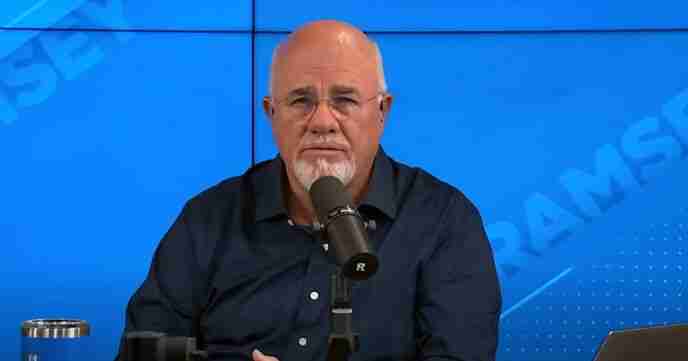
Here is the full transcript of personal finance expert Dave Ramsey’s interview on Modern Wisdom Podcast with Chris Williamson, episode titled “Why Smart People Make Stupid Money Decisions”, April 24, 2025.
The interview starts here:
Dr. John DeLoney: A Rising Star
CHRIS WILLIAMSON: Let’s talk about both of our favorite topics. Dr. John Delony.
DAVE RAMSEY: And it’s his favorite topic.
CHRIS WILLIAMSON: It is. Oh, man, I am.
DAVE RAMSEY: What a star, though. I mean, he is blown up. He is brilliant. He’s quick, and he’s helping a lot of people. We’re real proud of him.
CHRIS WILLIAMSON: I have no idea how. I wasn’t familiar with him until relatively recently. I guess the Internet’s a big place.
DAVE RAMSEY: Right? Right.
CHRIS WILLIAMSON: And. But he’s great.
DAVE RAMSEY: He’s.
CHRIS WILLIAMSON: He came out to see me here in Austin. We immediately had that “Did we just become best friends?” moment. And, yeah, he’s phenomenal. His insights are great. He seems to have—I’m going to put this—he’s got kind of a Ramsey signature to him in a way. Quite firm, I would say, sometimes bordering on scary. Moderately intimidating, but also sort of warm and sort of feels like he’s doing it like a particularly brash uncle that needs to give you the sort of kick in the ass that you needed.
DAVE RAMSEY: Yeah. That loves you. But I’ll tell you the truth, and that’s what we all try to do around Ramsey and portray both of those things. A, we love you, and B, that means we have to tell you the truth for your own good because we care about you and we want you to win. And continuing to do that horrible thing to yourself is silly.
And so whatever it is, whether it’s John or any of the rest of us, but John certainly has fallen into that fold. And he is brilliant. He’s very articulate. I mean, I’m in the third meeting with him, and we’re talking about interviewing and talking about turning him into a Ramsey personality. And he’s so quick on the draw. I went, you can do this. All we have to do is put you on with a microphone and start answering questions. He didn’t even know what it was. And I’m like, look, I’ve done talk radio for 30 years. You draw fire and reholster before the bullet hits them. I mean, it’s quick. And so he’s really, really good. And he does care deeply.
The Ramsey Empire
CHRIS WILLIAMSON: How do you describe what you do? Let’s say that someone meets you and they’re not familiar with you. You’re at a cocktail party or you’re at a gathering of some kind. David, tell me about what you do for work. How do you coalesce the myriad of different things that you’ve got going on.
DAVE RAMSEY: You know, these days? I would just tell them, you know, I’m the CEO of Ramsey Solutions, and we put on a bunch of podcasts and a bunch of curriculum and have a bunch of best-selling books and you know, YouTube and all that stuff. And I’m one of the people that does all that as well as be the CEO. So it’s kind of like that.
But I mean it’s, there’s 1,100 of us in the building and there’s 500 people doing tech all day long, so. And I’ve never written a line of code in my life, so that’s freaking intimidating. But that’s all part of the picture. But I don’t, you know, I don’t want to try to one up somebody at a cocktail party. But yeah, elevator pitch if you will. That would be it, I guess.
CHRIS WILLIAMSON: Is that where you’ve imagined that you might end up when you just started doing little talk radio, coaching people speeches in a bad suit, as you said?
DAVE RAMSEY: Yeah. I think what I did realize because I’ve been entrepreneurial my whole life and I did see the size of the need and getting people out of debt is not exactly a niche market. I mean, it’s massive. We always laugh and say, me and Jenny Craig got a big job, right. And so it’s massive, it’s everybody, right. And so I saw the size of it.
What I didn’t know when I was 32 years old and opened the first little 800 square foot office and so forth, I didn’t have any idea how much work it was going to be and I didn’t have any idea how much I was going to have to learn. And of course the rate of change in the marketplace because in those days there wasn’t Internet, you know, and so talk radio, AM talk radio, and we were on FM talk radio when it first came out as well, and then on satellite on XM and Sirius when they launched those satellites as two separate companies originally and later combined.
So we’re just dabbling in the front edges of whatever was going on in the marketplace and trying to get to all these people. But to scale the thing, man, I look back 35 years, I had no idea how much work it was going to be and that I would need 1,100 people in a building to do it. I just thought, you know, a lot of people need help, I’ll go help them.
Success Without Ruthlessness
CHRIS WILLIAMSON: Do you think that people need to be ruthless to become successful? Is that true in your experience?
DAVE RAMSEY: I would have to define ruthless carefully. If I did that. They have to be passionate, they have to be enthusiastic. Do they have to slit other people’s throat to become successful? If that’s ruthless, no, you don’t. As a matter of fact, my experience is quite the contrary.
The more people I help, even people that are in the same space we’re in, and the more times I can assist somebody, a young person in one of these content spaces, and they come around Ramsey, and we’ll show them what to do, show them what we’re doing.
I’m really not going to go out of business because somebody launches, somebody in their 20s or 30s launches a very successful YouTube, financial, whatever, and there’s a bunch of them, there’s several really sharp people doing that stuff right now, you included, of course. And so, yeah, anything we can do to help. I don’t have to cut their throat to win, but I do have to bring it. I’ve got to drive the ball hard into the end zone. It doesn’t show up there by itself. So that part of ruthless, yeah, I would go with. But not the taking down of others part.
CHRIS WILLIAMSON: A positive sum mindset is a good idea in business, in your opinion.
DAVE RAMSEY: That’s the only thing that works. Because, you know, I’ve made a decision early in our career that other people in our space that we disagreed with—I could talk about the ideas all day long and not even mention the person. There’s no reason.
So, like, the very first book I had come out, Financial Peace, it hit the New York Times, and there was another little book that week or that month that was coming along, and it was this lady and I’d never heard of. Nobody ever heard of her, but she was running behind us. And I’m kind of looking over my shoulder going, I’m a brand new guy and I got somebody chasing me from behind right here. And then all of a sudden, Suze Orman goes on Oprah and, oh, she just exploded. And she zoomed past us so much, all we got was her dust.
And Suze and I have both helped a lot of people. And she and I don’t agree on a lot of things, but I don’t speak ill of her ever. And because I actually don’t think ill of her too. But again, there’s odds and ends within the financial spectrum we might disagree with, but there’s no reason for me to trash Suze Orman in order to build myself up, that’s just not necessary. So we just decided, yeah, positive sum game is the way to go. And you know what, it’s worked out really well.
CHRIS WILLIAMSON: I think people can tell. You know, it seems to me that anybody that’s been in business for a sufficiently long time and hasn’t realized that if you start to screw people over, eventually it comes back to get you. I don’t know whether it’s comic retribution, I don’t know whether it’s. You’re just rolling the dice interpersonally in the same way so many times that eventually somebody cotton’s on and it’s the wrong place at the wrong time with the wrong person. But people get what they deserve in business.
DAVE RAMSEY: And sometimes it works out positively. I mean, I can think of two guys in the radio business that in the early days hated our show and just trashed us in the marketplace. They said, we’ll never put you on one of our radio stations. You’re just awful and you’re country fried and it’s not entertaining. And you know, they would just insult us and we would go to these conventions and we would say, oh, so and so stay away from him. He’s like angry about the whole thing.
And then, you know, they work for big corporations, they get fired and they’re out there doing consulting and both of them ended up working for us before it was over. And so obviously they came around and didn’t work for us while hating us. But over the years I wore them down is what it amounted to. And then when they were left vulnerable and we could use the influence that they had by helping us get on some other radio stations and they had actually had a true change of heart. Not because I gave them a check, but it was fun. It was kind of fun to look back and went, wow, that worked out pretty well.
CHRIS WILLIAMSON: Dave Ramsey killed me with kindness. Who’d have thought it? Yeah.
Education and Entrepreneurship
CHRIS WILLIAMSON: So one of the current trends or two of the current trends that I see that are very popular amongst some of my friends, but a lot of the Internet, one is that college or university in the UK is a waste of time, that any sort of formal education doesn’t give you that much of an advantage, that it’s kind of a net negative. And the second one being that given that you can work from anywhere remotely, that most people can solo entrepreneur their way to some degree of independent ownership of what it is that they do, that a 9 to 5 is quite often derogated in one form or another. What’s your thoughts on the usefulness of formal education for people who are thinking, hey, I want to be successful, I want to feel secure, I want to be able to build a life that’s good for me. And then what do you make of the nine to fives? If a sucker is, you should always go and work for yourself.
DAVE RAMSEY: Higher ed has made a mess of itself. It did two things that has completely damaged it to the point that the pendulum is swinging all the way over to where you’re talking about. Used to be everyone needed a college degree, now no one needs a college degree. It swung. And part of that’s just higher ed has just been stupid.
The two things that they did was, number one, they drove people deeply in debt. They could never get an ROI on that degree. I mean the amount that they’re charging and facilitating trillions of dollars of student loan debt now with an S. Trillions. Wow. You know, they just screwed people over by overcharging.
The second thing that’s kind of a subset of that or a sister to that is they presented people with ridiculous degree fields that absolutely have no chance of having any utilitarian value in the marketplace. So we always laugh and say you get a degree in left-handed puppetry and you go $200,000 in debt to do it. Well, both are useless. I mean, it’s just silly. Or German polka history, you know, what are you going to do with that? Be a barista? I mean this is just dumb.
And so, but higher ed presented that as a valid use of those dollars, a valid use of studying, a valid use of your brain cells to actually get a degree in something absolutely asinine. And so that has caused people to throw the whole baby out with the bathwater and say, okay, well, an accounting degree is of no value. Well, that’s dumb. Of course an accounting degree is of value. You would learn how to do accounting, and therefore you could be a CPA. Hello.
And so if you want to get a law degree, if you’re going to be a lawyer, you’re going to—you know, I hope my doctor actually studies before he cuts me. You know, I mean, so this idea that all academia needs to be thrown out is also ridiculous.
So we just tell people, get a good buy on your education and study something useful. So don’t pay 10x what you need to do to get a marketing degree. Go to the—you’re in Austin, go to the University of Texas, right? Which is a great school. It’s not that stinking expensive. It’s an in-state school and it’s probably $12,000-$14,000 a year tuition. Or you can go over to some crazy thing that’s got a brand name on it, and pay $80,000 a year for basically the same degree. Well, that’s dumb. Don’t do that. And then study something that’s useful. So I’m big on education.
Top Students vs. Top Universities
CHRIS WILLIAMSON: Just on that point there. I learned from Scott Galloway that students who leave their university in the top quintile get the best jobs regardless of which university they go to. So basically what you should be trying to do is track the university level. Also you should be thinking about how expensive this is going to be. But if you are a pretty smart kid, going to a university where you’re going to be one of the smartest in the class is a really good idea. Going to a university where you’re going to be 30th percentile, 40th percentile down, that actually is less predictive of you coming out and getting a better job. So I thought that was another interesting point.
DAVE RAMSEY: I’ll add to that. The job you get when you’re 22 coming out of undergrad is irrelevant. What matters is what happened 10 years later. Where are you when you’re 32?
The difference between two students of where they are when they’re 22 and 32 – you start them at 22, they start the exact same career field, they come from the same university and they end up in two dramatically different places. Translation: The degree didn’t cause it. The individual did. The hustle, the perseverance, the scrappiness, the grit. I will not be denied. That version of ruthless. It’s not throat cutting – I’m going to put the ball in the end zone. That’s the secret sauce, not your degree.
Degrees don’t make people successful. They put tools in the belts of people that were going to be successful anyway. So I use my statistics class that I took 40 years ago almost every week running Ramsey. I actually look at the data coming in. I use the accounting classes I took to get a business degree at the University of Tennessee 40 years ago almost every week here. Those are tools in my belt. Did those things cause Dave Ramsey? No. They didn’t cause this. They’re just something that was a good saw, a good hammer to do the work with.
What we need to teach people is how to scrap and how to have grit and how to get up, leave the cave, kill something and drag it home. But then give them a good weapon to kill something and drag it home with. That’s what education’s for.
Where you go to school – there is not a single piece of data anywhere that says where you went to school is correlated with success. As a matter of fact, 76% of the CEOs of the top 500, the S&P 500 publicly traded companies are public school graduates. They didn’t go to Harvard or Yale. 76%.
So it has to do with the individual. We teach kids, “Hey, go be somebody and get some tools.” But don’t go, “Oh, I’ve got a degree.” I had some guy come into my office a few years ago working for us. He’s like, “I got more degrees than a thermometer.” And he’s like, “Well, people pay out here. They pay $100,000 more than you’re paying for this.” And I’m like, “Dude, you work for a small business. We don’t respect degrees. What we respect is effort and what we respect is results. And so your raise here is effective when you are.”
Entrepreneurship vs. Employment
CHRIS WILLIAMSON: What about working for a business versus building your own?
DAVE RAMSEY: I’ve been working for myself just about my whole life, so I’m a huge advocate of starting and running your own thing. I love that. And I love this huge upheaval of entrepreneurism and “start something” and side hustle and all of that because of the ease of access into the marketplace with the digital tools we have now.
The 20-somethings, the Gen Z’s and the millennials, they’re the most entrepreneurial generations I’ve ever seen. I’m a classic boomer, but I’ve got a ton of the Gen Z’s – probably 500-600 of them working on my team. And they are an incredible generation. They’re very entrepreneurial, they’re very passionate, they’re very mission driven. They question everything, which is what it takes to win in business.
They question, “Why do we do this?” They don’t just assume. Boomers just assumed that somebody knew what they were doing. Gen Z doesn’t assume that because they grew up with a magic wand in their hand – they could push a button and stuff showed up on their doorstep. So they don’t assume that anybody knows what they’re doing, which is awesome.
So I’m big on entrepreneurship. But should everyone be in business for themselves? No. I meet plenty of people that, the way they’re wired, their personality, the way they look at stuff – they’ll do great in an organization. You can be part of an organization and be very entrepreneurial and be a key part of that and bring all those same skills without being a solopreneur with your iPhone in your mother’s basement. You don’t have to do that in order to be entrepreneurial and be successful. You can take those same passions and skills into the marketplace if you find the right organization. I like to think our building’s full of them because I don’t really want people here that are just doing a job.
Gen Z’s Financial Approach
CHRIS WILLIAMSON: Do Gen Z and millennials face a uniquely different financial landscape than boomers or Gen X did?
DAVE RAMSEY: They’re much more serious. The Gen Z’s that are… I gotta qualify that. There’s two types of Gen Z. There’s no middle ground.
CHRIS WILLIAMSON: And I thought you might bring this up.
DAVE RAMSEY: Yeah, taking calls on the Ramsey show, we get a Gen Z on the air – they’ve studied all our stuff. They know our steps, they know exactly what to do. And they’re just calling in for some clarification on the nuance because they’re already on the bike riding. They’re going because they’re very serious minded, very focused, the ones that are.
They’re going to have unbelievable wealth as a result because A) they’re starting early and B) they’ve got this singular focus. They’re not distracted by everything shiny. Where like boomers, you think about the movies in the 80s and stuff – “Greed is good,” Gordon Gekko and all that. Boomers were about acquisition and flash and the big car and the Rolex. These kids don’t give a crap. They want to get it done and they want to stack some cash, the ones that are on it.
They’re very easy to teach because you’re not having to light them on fire. They’re already on fire. You just got to point them at something and then pull the trigger. It’s a lot easier than lighting wet wood. So I have a huge respect for them. I enjoy working with them and I like arguing with them because they bring some good arguments since they question everything. “Why you say that, Ramsey? Who you think you are? I don’t care if 20 million people listen to you every day. I’m 19 years old and I’m going to question that you have any sense at all, Ramsey.” And that’s fun and it makes good radio too.
Traits of Financially Successful People
CHRIS WILLIAMSON: You mentioned before some of the predictive traits that somebody coming out of university or a young adult would have. If you were to design a successful human, somebody that’s going to go on to become wealthy, independent, be able to forge the sort of life from a financial perspective and from a commercial perspective that most people want to, what would be the traits that you would give them? What would be the sort of things that you would bless them with?
DAVE RAMSEY: Well, that’s a beautiful question. I’d have to think on that for about a week. Off the cuff, which is probably not a great answer, but that’s the only option we’ve got here…
When I made my first fortune, I was a millionaire before I was 26. And then I lost everything in the next two and a half years. That guy is no longer here. I not only went broke, I was broken. And so the arrogant little twerp got the snot beat out of him is what it amounts to. I’m still very confident, but I was very me-centered – Jaguars and Rolexes and so on. And I didn’t get joy from that even before I went broke.
The joy I’ve gotten in the following 30 years serving others, helping others has far exceeded any acquisition of anything or any number on the net worth balance sheet. So the first thing I would tell them to do is learn how to serve, to be other-centered instead of self-centered. There’s greater joy in it. You’re very attractive, the marketplace will eat it up, and the money will come as a byproduct. But if you make money the target, it doesn’t come as a byproduct.
CHRIS WILLIAMSON: What does that look like structurally or tactically? How do you implement that?
The Value of Service in Business
DAVE RAMSEY: Well, what I’m asked to think about, if you take a macro version of you going into a real fine dining establishment. My wife and I had a nice dinner the other night with incredible service and the guy brought over the sommelier and we picked out an incredible bottle of wine. He talked us through these James Beard chef’s selections. The whole thing—we left there, that guy was part of our family. He served us. We didn’t learn about him or his kids. We didn’t want to hear about his goals in life. We didn’t have a chat about whatever. We got food and wine and he took care of us. And you know what we did? We left a mammoth tip to say thank you.
My friend Rabbi Daniel Lapin says that when you serve your customers well, they give you certificates of appreciation with presidents’ faces on them. And Blanchard says that profit is the applause your customers give you after you did a good show, not before. And so profit comes when you serve. You can’t beat money away. If you love people in mass, and the more of them you love and the more of them you help with their lives and with their dreams, money will stack. You have a basement full of money. It’s crazy. It just comes at you. You can’t keep it away.
But I was the opposite in my early days. That’s why I brought that up. I was trying to get money. And the byproduct was I got none. And I didn’t get happiness either. And I didn’t get joy and I wasn’t fulfilled and I got some stuff. But if you get enough stuff, it’s just stuff. And he with the most toys when he dies is dead, you know. So what is it? And so this existential crisis, if you will. And so this serving of others would be the first thing and be other-centered and let profit take care of itself.
The Importance of Work Ethic
The second thing I would add if we were going to put ingredients into this individual is somehow I would install work ethic with seven doses of grit and perseverance. I had one guy come in here and he said, “I’m burnt out.” And I said, “Dude, that’s impossible. You were never on fire.”
I mean, you want to work as little as I can possibly work and make as much as I can possibly make. That’s not how it works. You reap what you sow. If you put a little bit of corn in the ground, you get a little bit of corn. If you put a lot of corn in the ground, you get a lot of corn. It’s a simple thing.
And so when in doubt, get up and go do something. When you’re scared, go do something. When you’re mad, go do something. When you’re happy, go do something. Just be doing something. Be out there kicking it and moving it around. Trying something new. Falling on your face, failing forward. Get it, get it, get it, get it, get it. And there’s no substitute for that one.
I’m not suggesting you be a workaholic—when you get home, turn it all off. Be there with your spouse, be there with your kid, pet the dog, that’s fine. But while you’re at work, work. People sit at work and look at Facebook and they’re not in the SEO business. They’re just playing some stupid game on their phone. What in the world? Do your work, man. I mean, work on your work.
If you work in a carpentry crew and everybody else is swinging a hammer and you’re sitting around checking your phone, somebody will throw something at you. So act like that, get after it. And so you got to have that penchant for action and grit and perseverance that falls under the heading of work ethic.
Setting Vision and Goals
And then I would add this next thing: where there is no vision, the people perish. So start looking down the road. Where are we going? Where are we going with this? And start setting some short-term goals and then the long-term goals that cause those long-term goals to appear.
In other words, if you said “I want to lose weight,” okay, great. I want to lose how much? 30 pounds. When? 90 days. Okay, that’s a long-term sort of goal. And you go, okay, so what are the short-term goals to do that? Well, there’s exercise every day that includes aerobic movement. There’s water intake and cut out the gluten and the sugar. It’s not rocket science. You don’t need Oprah to tell you how to do this. Everyone knows what to do. But now you’ve got to do the daily habits, the daily goals that cause the long-term goal to hit.
If you want to make $100,000 a year, what is that? It’s $8,333 a month. How many things do you need to sell? What do you got to do to do that? And start breaking that down into daily activities that are going to take me to that annual income goal. If I want to make a million dollars a year, how many of these books do I need to sell? What have I got to do? And you can break it out. It’s simple sixth-grade math.
And then you break it down into a daily activity that creates that goal. So this vision out to the future that drives the daily work ethic and gives you inspiration and hope that as I push this through. Okay, man, we’re ahead of schedule. We’re ahead of schedule. We’re ahead of my daily goal in the last 10 days. I’m at 12-day mark. Good. All right, boom, we’re on. And so I can keep going. I may get there even faster than I thought.
And you just keep laying it out that way. And goals, when they’re done right and they’re yours and you own them and the math is put with them, they’re very motivating. It’s vision with work clothes on.
CHRIS WILLIAMSON: I think the point on how hard people work—there is a unique category of hell where somebody complains about results that they didn’t get from work that they didn’t put in.
DAVE RAMSEY: Yeah.
CHRIS WILLIAMSON: And I mean, it’s cause and effect. You’re seeing cause and effect happen right in front of you and there’s not really anything that can be said there. You mentioned, I guess you alluded during your first phase, Ramsey 1.0, I guess pre-bankruptcy, that was getting the shit kicked out of you and then turning that around realizing, “Oh, wow, I wasn’t as smart as I thought. This was difficult.”
And then you also said that grit, determination, some kind of resilience is one of the traits that you would like to give to somebody. I’d be interested to know how much hope you had during that moment while you were during the real financial strife. Because in retrospect, it’s very easy to weave a narrative together of “this is why I needed to learn this thing.” And look in the grand arc of my life, I have come into land with much more insight and wisdom. And I can see that for what it was. This was somebody that was too flash, that was over-leveraged, that was using debt in a way that wasn’t efficient and I paid the price.
But in my experience during that process, it doesn’t feel like that at all. There’s no grander purpose to this thing. You’re just wallowing in uncertainty and fear and confusion and self-doubt and criticism. So I just want to kind of get a sense, let’s say that somebody—hopefully not bankruptcy for an amount of a million dollars—but somebody’s going through a bit of a rough time and you’re like, “Look, this is a way to try and reframe that difficulty right now psychologically so that you can start to see things with a little bit more equanimity.” I wonder how much you were capable of doing that at the time and how much this is you retrospectively realizing that it was good for you.
Finding Hope in the Darkest Times
DAVE RAMSEY: It ebbed and flowed at the time. I distinctly remember standing in the shower sobbing with it so hot in my face, I could barely stand there because I did not know what to do. I was so scared I couldn’t breathe. And I have a wife and a brand new baby and a toddler and the poor woman thought she married Sir Galahad and turns out it was goober. And I stand there feeling like a complete abject failure.
Our water and our electricity to our home with two babies got cut off. I mean, it was unbelievable. So yeah, like I said, I not only went broke, it broke me, but I was so scared I couldn’t breathe. And then I’d walk out in the sunshine and find some little deal, find some little thing and go live the next day. Little vitamin D and go to church and pastor would be inspiring. I’d have a good moment in prayer where I felt like God was talking to me. “You’re going to be okay.”
I distinctly remember we filed bankruptcy on September 23rd of 1988. I was 28 years old. I’m 64 now, but I can remember like it was this morning. In August, about 30 days before we filed, I couldn’t sleep and I got up at 4 o’clock in the morning. The kids are asleep, Sharon’s asleep. And I was sitting in my little recliner and I had some books stacked there that I was reading. I had a Bible sitting there and I was just crying. I was scared.
And I thought, “Okay, God, you’re going to have to help me because I don’t know how to do this.” And I randomly opened my Bible and it fell open and I just started looking down the page and there was Romans 5 and it says, “Rejoice in your tribulations.” And I looked up at heaven and I said, “I don’t think so.”
CHRIS WILLIAMSON: Wow.
DAVE RAMSEY: “Because tribulations create perseverance and perseverance, character and character, hope.” And so I don’t know how much closer you can get from hearing a message from God than something like that. That hasn’t happened to me very often in my 40 years of being a Christian. But sometimes you get those chill bump experiences and you go, “Oh, that was my heavenly father going, ‘Yeah, it’s tough, but you’re going somewhere with this. Hang on, kid, you’re going to get there.'”
And he put his arm around me and I got up and I went to work that day. Thirty days later, I filed bankruptcy. So I was at the bottom. That was the end of the valley. Right there is where that was. But “rejoice in your tribulations, because tribulations produce perseverance and perseverance, character. And character, hope.” And hope is a gift of the Holy Spirit. And so I needed some hope, and I needed to see that this was going somewhere to your point.
And so, again, it ebbed and flowed. Twenty minutes before that, I’m a basket case. Right after that, I’m strengthened and ready to go for at least a little while longer. And that’s happened to me throughout my life. Even running Ramsey, we’ll have a massive success on something, and then there’s a massive failure. And I’m looking up going, “You’ve got to be kidding.” When does this get easy? And it doesn’t. And so I have a weird prayer life.
CHRIS WILLIAMSON: It’s a very antagonistic relationship with God that you’ve got. It seems passive aggressive sometimes.
DAVE RAMSEY: It’s not. He’s not scared of me. I’m okay. But I’m just a real dude. And that’s the way it was. And so whether it was a spiritual thing like that or whether it was a friend coming alongside, I distinctly remember about two years after the bottom, we were starting to teach some of this stuff, and there were three people that cared.
And a buddy of mine, I was sitting with him at one of those bad buffets, like a Golden Corral type place or something. I was whining about how hard my life was and how bad it had been and how horrible the last four years had been and all this. And he’s like, “You know, do you want some cheese with that wine, dude? Really? I mean, you got enough lemons? You should probably make some lemonade.” And he goes, “You need to take these experiences and use them to help other people and then you’re probably going to get healed yourself in the process.”
And that’s kind of where it went. But again, there were days where I didn’t know what to do. And then there were days I felt fortified, lifted up by a friend or by a spiritual encounter or by whatever. And so it was an ebb and flow. But did I look in the moment and look out 20 years and go, “Oh, God’s going to use this for my good?” No, not even close.
The Reality of Comeback Stories
CHRIS WILLIAMSON: No, you railed and you were mad and you were sad. I think it’s just, I have this sense that we have a skewed perspective of the trajectory of people coming back from rock bottom or from pullbacks they’ve had in life and errors and failures. Because most people see those stories portrayed through movies and the Rocky montage is three and a half minutes.
DAVE RAMSEY: Right.
CHRIS WILLIAMSON: But in reality it can be five or ten years. Yeah, exactly. And you’re looking around going, what is going on? Like, how is this? It isn’t the way it’s supposed to be.
DAVE RAMSEY: I didn’t sign up for this story. Correct.
CHRIS WILLIAMSON: And the self belief of the protagonist rarely wavers. Sure, they’re going to meet some hero’s journey challenges. There’s going to be little setbacks. The bad guy comes out before the fight’s ready to start and wrecks his ankle or whatever it is. His coach gets put into a coma and he needs to be able to do the competition without him or whatever it might be. But the self belief never wavers.
And I think in my experience that’s not the way that personal growth and that life trajectory goes at all. That you are going to swim in a lot of self doubt and uncertainty and there’s not even the promise of any glory at the end. And that makes the whole thing feel scary because you go, maybe I’m just applying all of this effort and I’m going to end up at an even more broken place in the future.
The Splat, Not the Bounce
DAVE RAMSEY: And you know that false narrative that you just bounce back. I remember when I came out with the first book, I was being interviewed on some Today show or something like that. And the guy goes, “So you lost everything in your 20s and now you’re teaching people financial peace. How did you bounce back?” And I remember it just hit me like that was stupid. And I said, “Dude, when you fall that far, you don’t really bounce. It’s more of a splat.” And he just looked at me. That wasn’t the answer that fit the narrative you’re talking about.
The thing I would say, though, is if someone’s watching you and I right now talk about this, and they go, “Yeah, I’m in the soup.” People do react two different ways to being in the soup. We all have the fear and then the momentary courage or the momentary hope followed by another injury, followed by another betrayal, followed by another momentary hope. We all have that.
Then the choice you have to make, the individual has to make while we’re in that—and I made that choice semi-consciously—was, you can choose: “All right, I’m going to quit. I’m going to adopt the victim language, and I’m just going to sit down because I quit.” And those are the people that never recover from their divorce. They never recover from their business loss.
Or you can say, “I don’t know what I’m doing. I’m so lost. I don’t know what to do. But I do know I’m going to take the next step. The next step. I’m going to take the next. I’m going to do the next right thing that’s in front of me and the next right thing that’s in front of me.” And it might even not be the right thing, but I’m going to do the next thing. And sitting is not an option. I’m going to keep walking.
So keep walking if you’re in this. And the old country song, you know, if you’re going through hell, keep going. But I meet people that—and they call on the show. It’s like a lady called the other day, and she’s talking about her divorce like it happened 20 minutes ago. And I’m like, “How long ago were you divorced?” “40 years.” I’m like, “Honey, you’re still living emotionally back in that thing.” The language she was using was fresh, and she’s still sitting there mad at him. And he’s gone and gotten two other wives since then. Move on.
But it’s real easy to quit in that. And it’s not a quitter thing. It’s just this natural reaction. I’m going to get up one more time, even though I don’t feel like it, and walk out into the sun, get a little vitamin D, get a little prayer, meet with my buddy and let him make fun of me. And then I’m going to get after it again. One more time. One more time, right?
Action as the Antidote to Anxiety
CHRIS WILLIAMSON: I remember toward the end of my 20s, I was really trying to sort of work out some of the predictors for when I felt better and when I felt worse, when I was in the soup, as you would say. And I remember I wrote it: Action is the antidote to anxiety, that you really don’t fear the future when you’re moving yourself toward it.
And it’s a vicious spiral, because the very thing that’s hardest to do when you are struggling is precisely the thing that would make you feel better. Right. Your motivation is at its lowest. You don’t want to get out of bed, you don’t want to go to work. You don’t want to think of a new idea. You don’t want to apply effort to something or pick up the bar or not eat the comfort food or whatever it is, stick to your routine.
But then when you start to roll that boulder a little bit, it accumulates an awful lot of momentum, which is exactly how you see people get unbelievable outcomes. Like this seems superhuman. How does this person get so much done in a day? How are they so successful? How are they so balanced, all the rest of it? Well, they are on the positive side of the same momentum that is currently kicking your ass.
The Momentum Theorem
DAVE RAMSEY: Exactly. We developed a little theorem around here to talk to our team about this, called the momentum theorem. Focused intensity over time multiplied by God equals unstoppable momentum. And one of the things we talk about in the little book I did on it was just this idea that when you have negative momentum, you are better than you look. When you have positive momentum, you are not as good as you look.
CHRIS WILLIAMSON: That’s great.
DAVE RAMSEY: That’s really important. So don’t believe the lie either way. And so if you’ve got positive momentum, you are harvesting crops that were planted yesterday, not this morning. They were planted a year ago. Put them in the ground. And today I’m getting this fruit, and everybody thinks I’m a genius, but it was actually a year ago I was a genius.
Or you got crops going in the ground. There’s nothing coming out of the ground yet. And you’re planting, you’re planting, you’re planting. Nobody can see you, nobody knows you’re there, you’re anonymous. But you’re a lot better than you look because wait till this rain and the sun comes. There’s going to be a crop in the spring, and suddenly you’re going to be that genius. So that’s how that works.
I remember talking about going through this stuff, this idea of walking, continuing to walk. Something you brought up. I love that. We were snow skiing the other day in Telluride and I’m a mediocre snow skier for a 65-year-old dude, right? But I like to go down the hill and go fast. I enjoy it.
So I’m skiing with my kids, like 40 and 30 years old, and they haul butt. I mean, they go. And so the old man’s trying to keep up and he’s huffing and puffing. So we jumped off a lift. We were running cruiser blues, you know, good and double blues, that kind of stuff. We had a black every now and then, but they were cruisers, they were groomed.
So we jumped off it. And there’s this one run on Telluride that when you get to the top of it on black, it’s a groomed black and it’s unbelievably steep. You can see downtown Telluride and it looks like you’re going to fall into Main Street. When you fall, I mean, it’s right there. It looks like a toy box and there’s nothing between you and Main Street. It’s just air. It’s that steep. It’s unbelievable.
And I pulled up on top of that thing and I looked at one of the kids, you know, the 30-year-olds, and they went, “That’s steep.” And I went, “Yeah. And if I stand here about three more heartbeats, I’m going to walk back because I’m getting really scared. So I got to go or the fear is going to take me over.”
And I thought, you know what? That’s what I’ve done half my life. You got to go or the fear is going to take me over. Because if I stood there, my heart rate was going. This was just the other day. I was scared. It’s like I was scared, but I thought, you know what, I can do this stupid thing. I can ski it. I know I can ski it. But if I stand here and think about it, the fear is going to kill me.
The Trap of Overthinking
CHRIS WILLIAMSON: There’s a—I want to give it a better term than cultivated stupidity. Conscious ignorance, maybe you could say, or tactical ignorance around things that—yeah, a lot of the time there is a period where you’re supposed to plan, where you’re supposed to reflect and ruminate and sort of think about stuff. But that can be a trap as well.
And I think that a lot of people who like to listen to shows like yours and like mine, they’ll be thinking about their thoughts, they’ll be thinking about themselves, they’ll be strategizing. But there is just a time for straight action without having to ruminate too much.
DAVE RAMSEY: Yeah, you can get paralysis of the analysis. Yeah.
CHRIS WILLIAMSON: What are some of the biggest psychological errors that people make when it comes to thinking about wealth and business building? What are the traps that people fall into?
The Anti-Success Movement
DAVE RAMSEY: You know, one of the ones I’ve been working on a lot with our Entreleadership clients, which we coach about 10,000 small businesses under the brand Entreleadership that this book is in. As a matter of fact, it’s in that same brand. And then of course we work with people on the financial side.
I did the book “Baby Steps Millionaires” and it’s number one again, teaching people, you know, here’s what these millionaires look like. We did a huge study on millionaires. Here’s what they really look like.
And so in both of those cases, I’m spending time with the wealthy or I’m spending time with a successful small business person. In either case, I’m appalled at how much damage the anti-success movement has done to their psyche. I’m appalled that they actually, too many of them, they’re very successful on almost every front. But when I look at them and say, “You haven’t done anything wrong, you did everything right is why you’re successful. You are not a moral reprobate for becoming wealthy or becoming successful. Quite the opposite. I’m proud of you. You have done good stuff. My son, my daughter.”
And I’m amazed at somebody that’s got a $5 million net worth. And I look at them and say that and their body language changes, their shoulders go back, their head comes up because this communist, negative, anti-wealth, anti-success stuff that is floating around has had an impact on them and impacted their spirit. The hope stealers, I call them, has stolen a lot of these people’s pride, their hope.
And I’ve started getting quite frankly pretty angry about these people that are spreading this negative thing about successful people. Because I got to tell you man, I know a lot of billionaires, not just millionaires, and the percentage of wealthy people that are bad people is lower than the percentage of the population.
Now there are bad people among them, but they did not get there by doing something wrong. By and large, they got there by doing more right than anybody else did. They served more chicken, they served more pizza, they served more business help, they served more something than you did. Shut up.
And man, but it’s amazing to me to sit with a guy who’s got a 15 or 20 million dollar net worth and a guy like me, from a redneck, a hillbilly can look at him and go, “Dude, I’m proud of you, you did good.” And he goes, “You know, I did.” But nobody says that to him. Everybody says, “You’re a dog, you’re an idiot, you’re a crook, you must have done something wrong. Eat the rich.” And all this stupid “1 percenters” and Occupy Wall Street language and all that garbage that’s out there and it’s having an impact on success is now getting a bad name, and it didn’t used to have a bad name in America.
CHRIS WILLIAMSON: Where do you think that’s come from?
DAVE RAMSEY: Communist college professors.
CHRIS WILLIAMSON: Okay, but if that’s—surely those communist college professors, were they in tenure when the people that you’re speaking to were going through college?
The Myth of Equal Wealth
DAVE RAMSEY: Yeah, they’ve always been there. I mean, honestly, truthfully, there are very few people that believe that communism is a better system than capitalism. Unless they’re on a college campus. You can’t find them, you can’t even find them in communist countries that think it’s better than capitalism. There’s nothing more capitalistic than a good communist. Right. Honestly.
But this idea of equal wealth for unequal effort and call that fair, that’s not fair. Guy works 60 hours, he should make more money. Guy works six hours, that’s not fair. You make the same money and you work, that’s not fair. My kids used to say growing up, “Well daddy, that’s not fair.” I’m like, “Fair is where the tilt-a-whirl and the cotton candy is, kid. You know, you want some fair, go get some.”
CHRIS WILLIAMSON: Yeah, I’m very grateful that where I’m from, the northeast of the UK, it’s spit and sawdust, blue collar stuff. There was no heirs and graces. And in some ways for the British people that are listening and the Australians and maybe some of the Canadians and maybe the working class Americans as well, that has some pains because if you try and stray from the beaten path, a lot of the time that’s looked down on, that’s not exactly supported. You don’t, you’re kind of in a role model desert. A lot of the time there’s not people.
DAVE RAMSEY: I was having dinner with some Aussies and they said, tall Poppy syndrome.
CHRIS WILLIAMSON: Correct.
DAVE RAMSEY: And I said, well, that’s not an Aussie thing, that’s an Aristotle thing. But okay. Yeah, still it’s a little older.
CHRIS WILLIAMSON: It’s a little older than Australia is.
DAVE RAMSEY: Yeah, but still it’s, you know that Poppy that you can’t stick your head up. You must be cut down.
CHRIS WILLIAMSON: Yes.
DAVE RAMSEY: And in envy and jealousy.
Learning from Negative Examples
CHRIS WILLIAMSON: Yeah, exactly. I really didn’t like that. But one of the things that it gave me was people like the sort of person I didn’t want to be like. And avoiding pitfalls are almost as important as expediting successes. So, okay, I don’t want his relationship with his wife. I don’t want the way that he drinks his problems away. I don’t want the fact that he seems to be using gambling as his get out of jail free card for all of the problems that he’s got, etc.
DAVE RAMSEY: Etc. Etc. And it’s not working. Your ideal, your value set is not working. The fruit is not there. And you look at that and go, okay, I don’t want to do that.
CHRIS WILLIAMSON: Correct. But one of the things that it does give you is no airs or graces or expectations, no sense of entitlement. Precisely correct. There’s zero entitlement. What myth of martyrdom are you going to have? You weren’t promised anything.
And I think, I wonder whether the anti-wealth movement in America is kind of like a bastard love child of the American dream from the 60s that if you give people blue sky vision, white picket fence, this is the sort of world that you can get. It doesn’t really matter where you started. You can ascend into the middle class and maybe even above. That’s a big hope.
And if you get to the stage where the world doesn’t deliver the thing to you that you expected or that you hoped, even if by pretty much all metrics, Gen Z and millennials, financially, even adjusted for inflation, are in a pretty good spot. Intergenerational competition theory. They compared themselves to where their parents were at their same age, their ability to access things like housing, and their level of comparison across the Internet. Even if they are wealthy, they don’t feel that wealthy comparatively.
And that means, well, maybe there’s something wrong with the world. Maybe this is unfair in some sort of way. Maybe the system is broken. Maybe work actually isn’t the solution to these problems. Maybe I shouldn’t be resilient. Maybe the system is the issue as opposed to the meritocracy or my efforts that I’ve put in or the way that I’ve approached things.
Controlling the Controllables
DAVE RAMSEY: Yeah, I get the disenfranchised feeling. I understand that I’ve been there myself. We were just talking about that. But the, you know, the mean old banks took Dave down, right? The mean old IRS took Dave down. The president changed the tax law and it affected the real estate business in the 80s big time. Shut down the entire S&L industry because of that. And so I was a victim. I was a victim. I was a victim of all these things.
And yet I was the one signed up for the trip. No one made me sign those documents. No one made me sign those mortgages. No one made me do any of it. It was an act of my free stupid will. And so I had to kind of get through that.
So if you’re going to stand and scream at the machine, 40 years later, where are you? Still standing there screaming at the machine. And you’ve had 40 years of substandard life. So it just doesn’t work for me. It’s impractical to me, the philosophy. That philosophy is I’m going to be a victim. I’m going to scream about this. I deserve better. The system is broken.
You can yell about all that if you want, but you’re not controlling any of the controllables. Your only option to have a higher quality life is to control the controllables. And is there racism? Yes. Is there sexism? Yes. Are people less likely to believe a guy that is bald than a guy who has a great head of hair? Yes. There’s baldism. And so there’s all kinds of things that can hold you back that are unfair. But I can’t fix that. Since I choose not to have a hairpiece, I can’t fix that. So I’ve got to do it anyway.
I can stand and yell about how unfair it is that people in the radio business thought because I was broadcasting from Nashville I must not be wearing shoes and being in a double wide. Because they had ignorant stereotypes of Southern hillbillies. Right. And that because they’d watched the Beverly Hillbillies when they were a child and thought that was real. And so, you know, ignorance is what all prejudice is based in.
And so are those things real? As I grew a 640 station network, did I get unfairly characterized as not being smart because I had a Southern accent? Oh, like every day. And I can yell about that, but I don’t think I’m going to change the stereotype of some Yankee in Cleveland, Ohio. The only thing I can do is go, you know, outlast him and then he ends up working for me later.
CHRIS WILLIAMSON: Getting onto the principles of business. How do you come to think about people building a business that they’re going to love?
The Five Stages of Business Growth
DAVE RAMSEY: What we started figuring out as we looked at our history and the things that we had been through was that there was actually a cadence, there was actually a rhythm to it. And there was some leveling up as we went along. We started trying to quantify how that happened and what the levels were. Then we started looking at how this applies beyond just the Ramsey story.
The Ramsey Solutions growing from a card table in my living room to a $300 million operation today isn’t unique. Whether I’m talking to a heating and air guy with 40 trucks, a veterinarian with 30 employees in a huge large and small animal operation, or a successful dentist – these small business people we coach all the time follow similar patterns.
What are we seeing as we walk with them over a decade? What is holding them back? Where are they? We started identifying and trying to put words to the framework that we were seeing naturally.
We wanted to do this because we had the experience with the Total Money Makeover book, which is like 12 million copies sold now, that giving someone a clear path caused them to take action. If I do this, then I’m going to do this, then I’m going to do this. It gave them the next thing to do, and they would take action versus sitting and getting paralysis of the analysis.
A clear path gives people hope. If I know what roads I’m taking to get to Florida, I can step down on the accelerator because I’ve got a plan. But if I don’t know where I’m going, it’s hard to be enthusiastic about it.
That’s what started this whole thing. We built what we called the Entree Leadership System, which is just the clear path for small businesses. The first piece of it that the book is based on is the five stages of a business – particularly small businesses. We work with customers where 98% have 200 or fewer team members. These are the quintessential small businesses that create 54% of the gross domestic product in America today. Over half of the economy in America is small business. They are literally mathematically the backbone of the economy.
Stage 1: The Treadmill Operator
The first stage, as we talked about earlier in the conversation, is the treadmill operator, the solopreneur. You set up a table, turn on a computer, swing a hammer, turn a wrench – whatever it is you’re going to do.
The treadmill operator stage is exciting because you’re jazzed up, you’re living the dream, you’re working your butt off, and it’s starting to work and makes you smile. I’m not working for the man. I’ve got control of my destiny. It’s just a blast.
But you are running your legs off because you are the sole producer of revenue and the sole producer of the product. You not only have to make the widget and deliver it, but then you have to collect the money for making and delivering it. If you don’t come to work one day, nothing happens. If you don’t come to work for a week because you’re on vacation, revenue goes down because no one else is producing revenue. You’re on a treadmill.
At this stage, I would come home from work and flop down on the couch and my wife would go, “What’d you do today?” And I’d have no idea, but I did a lot of it and I was exhausted. Just run, run, run. I was working 16-hour days getting this thing off the ground. She had two little kids at home. This was three or four years after going broke. She was basically a single mom, but we were going to get financial peace – we were going to get this going.
How do you level up out of that? By time management, for one thing. You have to start working on your business, not just in your business. You have to time block some of your hours and say, “I’ve got to take care of accounting, I’ve got to take care of some SEO, I’ve got to take care of stuff that’s not just directly related to production of revenue and collection of revenue.”
This is also when you hire your first people so that you’ve got someone else to lift the bales with you. You’re not the only one lifting the bales. You get your first person, your second person in there. You’re building delegation, you’re starting to build time management, and that levels you up.
Stage 2: The Pathfinder
Then you go up to what we call the Pathfinder. Typically, the Pathfinder has eight or ten people. Everybody’s working their butt off and going in about 92 directions – it’s like herding cats, trying to nail jello to a tree. We’re all working hard, we’re all having fun. It’s a great adventure. We’re tired together.
There’s not a lot of planning, not a lot of role clarity. The communication is drive-by communication. We’d just say, “Hey man, I’m heading out the door, go get something.” We’re just moving. But you start making a little money and the whole thing’s not on your back.
You can start leveling up out of that by starting to put mission and vision in place, starting to get some role clarity. “Look, this is your job. You have to get that done before you work on this other thing.” You start to have key result areas, some KPIs, you start measuring some things, and then you’ll level up.
Stage 3: The Trailblazer
You’ll go to Trailblazer. Trailblazer is fun. It’s the middle one, and this is when you actually think you’re going to make it. We’re getting there and we actually think we’re going to bust through this thing. There’s a lot happening, but there’s almost no planning. A lot of it is, “Thank God it’s Friday, oh God, it’s Monday,” and you’re just go, go, go again.
But you don’t have good systems, you don’t have good processes at this stage. At Ramsey, we were killing so many trees because we had stuff on paper. We had 73 spreadsheets trying to tie them together to create a P&L. The accounting system was terrible. And this is Dave freaking Ramsey! But we had all these different business units all kind of running their own thing, and then we’re trying to get them all to talk to the mothership. It was awful – very disorganized, very chaotic.
So you start really putting in place something entrepreneurs hate, which is some governance. You say, “All right, this is the process. We’re all going to adhere to that because otherwise we’re going to kill each other. This is the system, and we’re going to do away with the other systems. You can’t have 73 types of software. This is the one we’re using.”
People get mad and say, “Oh, you’re becoming corporate America now.” No, I’m just trying to keep from going crazy. You keep doing that stuff and then you’ll level up.
Stage 4: The Peak Performer
You’ll hit the best one of all, which is Peak Performer. This is the best of the five. You’ve got a well-oiled machine, you’re bailing cash, you are making profit like you never thought you’d make in your life. Things are working, you start to look good, people start to want to interview you because you’re so smart. You’re able to attract talent because this thing’s shiny and working with good systems and processes.
We’ve got good strategic thought. When I was at the Trailblazer stage, I couldn’t spell “strategic.” Everything was tactical. But I hired some MBAs accidentally because I was trying to get some talent on the team. I don’t have an MBA, but 100% of MBA programs teach strategic thought.
These guys started showing me the importance of getting above the problem – seeing a 30,000-foot view. Quit running into the wall, Dave. If you turn right and then turn left, you can walk around it and burn less calories. But you have to get above it to see the way around the wall. Slow down a little bit, get above it and develop a good map to Florida.
I always laugh and say these wonderful people taught me strategic thought, and I taught them how to work.
There’s only one negative thing about Peak Performer: you can start to believe you’re great and slow down and quit iterating and quit breaking it before it’s broken. Those are huge mistakes.
The trick at Peak Performer is to shock the monkey. Get the cattle prod out, turn the fruit basket over, have emergency meetings, mess with people, mess with the thing. We cannot rest here. We’re not as good as we look. We’ve got big-time momentum, but we’re not as good as we look. And we’re not going to fall for this lack of humility, this hubris that Jim Collins talks about in “How the Mighty Fall.” This is where they fall – they get hubris in the Peak Performer stage.
If you can just stay dialed up there, a lot of companies spend two decades in the Peak Performer stage, never move out of it, and just bail money.
Stage 5: The Legacy Stage
The last stage is the Legacy Stage, and that’s where Ramsey is at. That’s where you start to think about how this goes on generationally. What happens at the end of the founder’s life or the end of the founder’s career? How are we going to exit? Are we selling out? Are we bringing in joint venture capital? Are we going to do an IPO? Are we going to hand this to the next generation of family? What are we doing?
You have to start planning and working on a good 15-year succession plan. It takes a good 15 years to build and execute a solid succession plan. People that do it in 15 days fail because you just toss the keys out as you grab your chest and fall back into the grave.
That doesn’t work because the customers don’t know what’s going on, the vendors don’t know what’s going on, the team doesn’t know what’s going on. And the old man that started it is now 80 and there seems to be no plan. It’s hard to attract and keep talent who wants to work for that because when he dies, it’s going to fold up like a Walmart tent.
We started working on ours 16 years ago at Ramsey. We’re deep into it and it’s troubling emotionally, but it’s the noble and the right and the wise thing to do at the Legacy Stage.
Those are the five stages in a quick rundown, machine gun style. That’s what the book’s about. And then there are six drivers that run you through those things. We talked about one of them a lot – the personal driver. The problem with my business is the guy in my mirror. The solution to my business is the guy in my mirror. That’s the first of the six drivers, and so that’s the framework that becomes the clear path that gives you hope. I can level up at each one of these things, and it’s going to get a little easier, and then something else is going to get a little harder because it’s at scale now.
CHRIS WILLIAMSON: What are your principles and process for finding and hiring good staff? It seems like that’s very important to move people beyond each level and something that probably a lot of solopreneurs get stuck on.
Hiring and Retaining Talent in Small Business
DAVE RAMSEY: It’s the number one pain point in small businesses is hiring and keeping and firing talent. Because small business people love their people, they’re family, by the nature of the fact that it is a small business. I know them. They’re not a Social Security number that I can cut to get stock price up. This is somebody I sit and have lunch with. I know their dog’s name, I know their kid’s name, and so this is a process to lead these folks in that kind of a setting and to hire them and attract them.
What you’ve got to do is continually look for not only people that have talent, but people that are on fire for what you’re doing, and we call them crusaders at our place and that align with your core values. It’s more important that they align with your core values and that they’re enthusiastic than it is that they have talent. Because if you bring in a talented player onto a football team and he disrupts the locker room, he takes more from the team than he adds. He could be a Hall of Famer and still hurt the team more than he helps the team on the field. Because nobody wants to block for the guy. He’s a butt, you know, and that’s what happens in a business as well.
We made the mistake in business, like we did with education, of saying, oh, if you have a piece of paper, that’s your qualification. You’ve got the talent, you got the certification, you’ve got the degree. Who cares if you’re a jerk? Who cares if you sleep around on your wife? Who cares if you’re doing cocaine? As long as you do your job and you got the degree, then that’s all we care about. And that’s a huge mistake. You cannot build a quality culture, a productive culture, a safe place for people to work with those kinds of people in the room.
Every time we let crazy in our building accidentally, we find out what door they use and we put a lock on it. Because crazy will shut the place down. You burn all your calories dealing with their drama instead of getting your work done. And it’s like, “I wish I just didn’t have team members. I wish I had just me. It’d be a lot easier.” Well, yeah, because sometimes I feel like I’m running a beauty parlor. It’s just ridiculous. But that’s how small business people feel about it and how I have felt at times.
So we just became militant about not letting the wrong people in the building. Yeah, you got to have talent, but that’s secondary. You’ve got to be aligned. You gotta be ready to go. And that’s why I’ve got the quality of Gen Zers that I have. That’s why I told you I got five or six hundred of them that are Gen Z and they’re fabulous. They’ll charge the gates of hell with a water pistol. And don’t you mess with Ramsey, because they’re part of Ramsey. They’ll take you down.
CHRIS WILLIAMSON: How do you assess, how do you find, assess and motivate people to have that level of passion and buy in?
DAVE RAMSEY: I don’t motivate them. You can’t motivate people. I hire motivated people.
CHRIS WILLIAMSON: Do you need to incentivize them appropriately?
DAVE RAMSEY: Yeah. And it’s not necessarily money, it’s culture. Give them a place to work that’s real. Give them something to work on that is changing people’s lives that does have meaning. Give them the ability to participate in meaning in that kind of stuff and plug into that and they’ll tell you. They’ll tell you up front. That’s the other thing about Gen Z. And millennials, too. They’re just brutally honest. They’re like, “I’m just looking for a job.” You don’t fit in here. We don’t have anybody works at J-O-B. Everybody here is on the team to put the ball in the end zone, man. This is like a passionate thing and you’re going to stand out like a sore thumb if you’re mailing it in around here.
Building Culture in a Physical Workplace
CHRIS WILLIAMSON: Does the importance of building culture in that sort of a way lend an advantage to businesses like yours that have a single spot where everybody works? I don’t know whether you have anyone that does work remotely. I imagine there must be some contractors somewhere that have to contribute to tech stuff and servers and things. But I imagine that level of motivation, that level of culture building, that level of buy in is significantly harder if you’ve got a team that’s distributed around the world and never sees each other.
DAVE RAMSEY: I would suspect it is. I’ve never run anything like that. I don’t know. But I think your observation is probably correct. It’s one of the many reasons that we work at work. We don’t have any team members that are on our payroll that work anywhere except in this building and there’s 1,100 of them. But we do have some contractors and vendors of different kinds. Obviously they don’t work for me. They work for themselves somewhere. I don’t know where they work. It’s not my job to keep up with them.
But the people inside the building – because so much is transferred with body language and tone. So much quality of communication is. And so when I’m sitting in a meeting, we can have a really constructive argument, a good fight about a bad idea or a good idea now and not kill the players. It’s two guys in the huddle going, “No, don’t run the ball over there, they’ve been catching us every day over there. Let’s go up the B hole instead of the A hole.”
You’re just arguing about the play being called, not the competency or the dignity or the quality of the player. That’s not what you fix in the huddle. But we get in the room, we do everything so collaborative and we have a healthy level of conflict continuously around here. And the longer you’ve been here and the higher in leadership you are, the more dramatic some of that conflict is to where an outsider visiting that room might be really confused as to what they were observing.
They might not understand how much trust and love and respect is actually in that room that allows you to talk like that. We get at it, but it’s all an act of love because we’re all trying to get the same thing done. And you can argue with me and go, “Hey, that’s a stupid idea.” Just like I can tell you the same thing and go, “But I’m not going to call you stupid.” That’s different than saying a stupid idea.
CHRIS WILLIAMSON: And navigating that through a Slack channel as opposed to person to person is very different. Talking about money problems, we’ve touched tactically on a lot of different things today. Do you think that money problems are existential problems in disguise? Is there something deeper going on? That it’s an outgrowth of somebody’s self image, some spiritual issue that they’ve got going on, some existential problem? Or does it all just come down to tactics?
Money Problems as Symptoms of Deeper Issues
DAVE RAMSEY: No, it’s 100% what you’re talking about. You’re exactly right. There was a guy on Christian radio when I first started named Larry Burkett. He’s since passed away, but he used to say, “Money problems are not the problem, they’re the symptom.” There’s something else going on. They’re the symptom of some extreme thing going on or some minor thing going on.
Could it be greed that’s the problem? And then that’s going to lead you to do what I did, build a house of cards and it’ll fall in on you. Could it be immaturity? Could it be I’m trying to prop up a self image? Could it be a cocaine addiction? You know, we’ve had the honor of walking with a whole lot of people into their sobriety over the years in a lot of different kinds of addictions. And 100% of addicts have financial trouble eventually. 100%. There’s no exception. It shows up in the money always. But that’s the extreme.
The money problems could be from a marriage problem. So the symptom is not really the fact that we can’t get along. And so we’re doing revenge spending with our spouse or we’re hiding stuff. Financial infidelity. And we got six credit cards my husband doesn’t know about or my wife doesn’t know about, that kind of stuff. All of that is symptomatic of a broken relationship. It’s not the problem, it’s the symptom.
That’s one of the reasons the Ramsey show, over all these 35 years, from talk radio to podcast to YouTube now has been so popular. It’s so compelling to watch and listen to because you’re not really getting the financial question. You’re really getting these people’s lives, which are compelling. I mean, it’s sometimes like watching a train wreck, and sometimes it’s like watching a victory dance. They just won the Super Bowl. A debt free scream, right? And so this is a personal visceral victory. And that’s what’s compelling about the show. It’s not that we showed somebody how to do a Roth IRA.
CHRIS WILLIAMSON: It’s personal growth masquerading as a way to make wealth. It’s somebody changing their life. It’s just that finance is their particular current bug bear. For some other person, it might be their body weight. For some other person, it might be their marital status. For some other person, it might be their friendship circle or the place that they live or whatever. And this is the vehicle for personal growth.
DAVE RAMSEY: Dysfunctional family origin. Where they grew up. They just grew up in a toxic situation, raised by wolves, and they don’t know how to do it. And so, “Hey, I understand. I grew up in this neighborhood. It gave me that mindset. I grew up in that neighborhood. It gave me that mindset.” And so all of that is in the gumbo. And you stir it and you stir it and you put the spices in and you keep stirring and you can make some good gumbo, but it takes a minute to get there.
Why Smart People Make Bad Money Decisions
CHRIS WILLIAMSON: Dave, your analogies, the stuff of legend. Nailing jello to a tree. It’s like a Walmart tent that needs folding up. As a Brit, we just do not have this level of color when it comes to the analogies that we use. You’ve mentioned before, money is 80% behavior and 20% sort of head knowledge. Why then is it so hard for people to change their financial behavior even when they know what to do? If money is mostly behavior as opposed to knowledge, why do smart people go broke? Why do people struggle to change if they’ve got the tactics in front of them?
DAVE RAMSEY: As soon as they believe that it’s going to work, they change. And as soon as they believe deeply, they change dramatically and scare all of their parents.
CHRIS WILLIAMSON: Is that hope? Believe as in “I can do this thing” as opposed to believe in the strategy?
DAVE RAMSEY: I think if I plant this corn this way, I’ve never done it before, I’m actually going to get corn. So I’m going to plant the corn. The debt snowball – I’m going to list my debt, smallest to largest, pay minimum payments on everything but the little one. Attack the little one. It’s not mathematically correct. Well, actually, technically it is. But what about the highest interest rate? Shouldn’t we pay that off first? No, you need a win.
You need to get the locus of control straight. You need to get a sense of agency, a sense of, “I can control the controllables. I am actually driving this bus. I am not a victim of the culture. I can actually control and I can actually pay this stupid car.”
You pay off a little $500 credit card, you go, “Okay, that’s one down. Maybe let’s try it again.” And then you pay off a $1,500 dollar debt, and then boom, you knock out a $3,500 motorcycle payment. And the more the proof is in there, the more they get fired up, the deeper they sacrifice, the faster they go.
The probability of completion there is much higher than the probability of completion of paying off the highest interest rate first, because it might take three years before you get a win. And so when you factor in probability of completion, the debt snowball is mathematically superior to doing it the other way. But nobody puts probability of completion in the mix.
CHRIS WILLIAMSON: It’s psychologically superior.
DAVE RAMSEY: Right. And people actually do it. They don’t do the other one. That’s the difference.
The Importance of Narrative Over Statistics
CHRIS WILLIAMSON: Look, I’ve had a number of conversations. Richard Dawkins was one of the people that I had this conversation with. And I tried to explain to him why trying to force people, either out of faith or into whatever worldview it is that he wanted through raw, what he would consider rationality is fundamentally uncompelling. Because what you’re telling people to do is to deny the thing that’s most real to them, which is story, narrative, persona, legend, archetype, and rely on the thing which is most unreal to them, which is statistic probability. We have no sense of that. And I think that you have. I really appreciate the first I learned about your debt snowball. You’re right mathematically. In raw spreadsheet terms, mathematically suboptimal. But as soon as you fold the complexity of a human and our motivation system into it, it makes way more sense.
DAVE RAMSEY: And again, probability of completion as a result. And so that’s what it is. That’s why the seven baby steps. That’s why the clear path. That’s why we went back to that same motivation on the business outline we just did was we’re still trying to show, okay, I’m a treadmill operator now. When I level up on my time management, I get my first team member. I get to move to the next level. Oh, this is working. This is working. I’m going to work a system. I see a believable system, and I’m going to plug into it.
If you go to the gym and you run for two hours on a treadmill, and you change your diet and eat sawdust and crappy food, crappy tasting food because it’s healthy or whatever. And then you gain weight, you will quit. You would only do those punishing activities. Unless you’re a masochist. You would only do punishing activities in order to win. No discipline seems pleasant at the time, but it yields a harvest of righteousness.
CHRIS WILLIAMSON: Yeah, things are going to be hard, but you can do hard things the hard way or hard things the easy way.
DAVE RAMSEY: Deloney says choose your hard.
Why People Self-Sabotage Their Wealth
CHRIS WILLIAMSON: Yeah, he does. Among many other things. What about people who sort of self-sabotage their wealth once they achieve it, you know, somebody’s finally reached something approximating escape velocity and stuff’s comfortable. What have you found from all of the people that you’ve spoken to? Your studies? Why do people end up tumbling back down?
DAVE RAMSEY: Most of the time it’s because they believe wealth is morally reprehensible. It’s a cognitive dissonance to engage in something you believe to be wrong. It’s not sustainable. Humans won’t continually engage in things over a long period of time in things they morally believe to be wrong, even if it’s profitable. And so if you have bought into the wealth is evil or the wealthy are bad people or crooks or whatever, and then you become one. How do I handle this dissonance in my brain, this disconnect in my brain? Well, I have to self-sabotage is what ends up happening.
And they’ll even do stuff like sometimes I’ll see wealthy people. And we all know the names that say, well, I’m not leaving my children any wealth. What that says is that I did something wrong and I wouldn’t do that to my kids. Wealth is evil, so why would I put it with my children? And that’s usually where that comes from. It’s the same thing. It falls in that same bucket.
And so I guess there could be other psychological things. We’d have to ask Deloney or somebody with a PhD in counseling. But in my mind, pop psychology, there’s probably a sense of I’m not worthy. That might be a secondary reason of I don’t feel like I earned this. Because everyone has a sense of a turtle in a fence post when you get there. If you see a turtle on a fence post, we know two things. One is it’s a curious sight, and two is he didn’t get there by himself.
And so you have that sense of I didn’t get here by myself and I must, you know, and so I owe some kind of debt to society. And because I’m not personally confident or worthy. Now, if you get there with a healthy self-image, you say, I had a lot of help, I had some good folks help me. I got a few breaks, I had God blessing me. I’m not completely responsible, but I’m also partially responsible because I’m actually the one that did this stuff. And so you don’t take 100% credit, but you don’t try to cast off and take no credit. That’s a good, healthy mental state when you get there. And those people don’t self-sabotage. But if you feel like you did something wrong or you feel like I owe a debt back to society because the society gave this to me, I didn’t do anything, I’m unworthy of this, then you have to somehow disband the thing.
Social Media’s Impact on Our Perception of Wealth
CHRIS WILLIAMSON: Is it interesting we went from greed is good to wealth is bad in some circles. What an arc. What do you think about how social media distorts our understanding of wealth and success and what we should have by a certain age?
DAVE RAMSEY: It’s a serious problem. In the old days, there was a book out called Affluenza and they could track the amount of television you watched. In other words, the advertisements that you consumed, the more hours of television you watched, the more credit card debt you had and the more overspending you did. Today, you can take that with an exponential factor into social media.
CHRIS WILLIAMSON: Much more powerful.
DAVE RAMSEY: Yeah, it’s much more powerful. It’s much more. The influencer role, so to speak, is not as commercial, it’s not as in your face. It’s much more subtle. And the influence that it has of people putting their highlight reels of their life on Instagram. No one puts crappy stuff about their life on Instagram. Right. We always. Real children don’t look like those kids. I mean, really, seriously. I mean, where did you get those Stepford children? And my children were never that clean all at once. How did you pull that off?
You know, you’re looking at these pictures going, who are these people? And I mean, no one ever says, oh, my husband just got me a 1994 Honda Accord and we’re debt free. Hashtag blessed. You know, no one does that, right? And so, but so it’s all this highlight reel. It’s not real. And it’s interesting to me, the word that we use for it is it’s virtual, which literally means not real. And yet we treat it in our psyche as if it’s real.
And so then we get this idea that, oh, well, because of Chip and Joanna, everyone can fix a house up. No, honey, you hurt your hand with that hammer. Not everybody can fix the house up. You’re going to cut your finger off of that saw. Do not do that. So not everyone needs to be touching these power tools. But it’s a facade. I mean, it’s not real. It’s like walking through a Hollywood set and you walk through the front door of a house and there’s nothing back there. It’s not real. And that’s the problem with it is it’s peddling a lie. And then your psyche knows that, your intellect knows that, but your psyche buys it anyway. And then based on that, I hit, you know, put stuff in the cart and hit submit.
The Cost of Living Crisis: Spending or Earning?
CHRIS WILLIAMSON: Going back to some of the trends that we’ve seen both on social media and also I think some of the anti-wealth or money negative perspectives of sort of the modern world. The classic middle management position that takes up a big chunk of people who are helping, you know, some medium sized business. The average American working an average job. Do you think that that middle management position, the average one now earns enough is the cost of living crisis, a spending crisis or an earning crisis?
DAVE RAMSEY: It’s probably both. But the solution is to understand when people look at that and frame something up the way we’re talking about there, it’s not an accurate portrayal of life because all we’re doing is taking a snapshot in the moment. And if you’d taken a snapshot of me right before I filed bankruptcy, right after I filed bankruptcy, I mean, and said, okay, we’re going to analyze the economy based on the macro economy, based on where Dave sits right now. I mean, he’s a college graduate, he’s a father of two, he’s 28 years old and look at where he is. That snapshot was, would give you zero hope.
But snapshots aren’t how life works. Life is a film strip. It’s a series of snapshots strung together. And next frame, something’s different, better or worse, the next frame, something’s different, better or worse, the next frame. And so the film keeps running. And so that guy in middle management is not there for 40 years. He didn’t get there and stay exactly in that place and never move. That average American doesn’t stay there, they move around. I mean, the average person now has 14 positions before they retire. So he’s not going to be there. We know that.
And here’s the thing, I’ll run some numbers. Sometimes I’ll say, okay, if you saved 15% of your household income, and you had an average household income of $70,000. And you rent it out, and you did that for 14, 15, 20 years, whatever, you’d have $7 million in your 401k. Okay? You just run the compound interest out on the average household income, saving 15% of their income. It’s easily north of $5 million. And I’m like, But that is based on the fact that over that 15 years, a guy never got a raise. So he started at average and for 15 years never got a raise, which by definition is a loser. How do you start at average and not go up at all? You know, I mean, by definition.
So this is not how humans work. They go down, they go up, they go down, they go up. And. But there’s an overall trajectory of up. Very few Americans in their career making less than they made at the beginning of their career. You take a 35 or a 40 year career path and you go, okay, in and out of jobs, in and out of careers, maybe change complete directions. But at the end, at the apex of my life, when I’m at my maximum earning potential, am I making less than I did when I was 22 years old and I just got out of school? No. Almost zero. You can’t find them.
I mean, now you could have the exception, be a medical problem, you could have all these other things. But I’m talking about just in general terms, that’s a fairly easy set of assumptions. So bottom line is, if you’re in your 20s and houses are too expensive because interest rates are 6% and your wages haven’t kept up with what the Boomer curve was, which are all accurate mathematical statements, you’ll be okay. Because when you’re 30, it’s going to be different. It’s going to be different. Rates will be up or they’ll be down, house prices will be up, your income is going to change.
And I don’t know what the average income is going to change, but your income is going to change 100%, your income’s going to change. And can you outpace, can you personally outpace the fact that wages haven’t kept up? Well, I did and you did so, and John Deloney did, and other people do, and we do it all the time. So go do that. That’s your thing.
CHRIS WILLIAMSON: Are you familiar with a guy called Gary Stevenson? It’s Gary’s Economics on YouTube.
DAVE RAMSEY: I’m sorry, I don’t keep up with things the way I should.
CHRIS WILLIAMSON: I’m going to send it over. Once we’re done, I’d love for you to have a look at this guy, British guy, he was a trader, I want to say for Goldman. I can’t remember where he was, but he was one of the top traders for a while at Goldman and is now campaigning from a very aggressive left-leaning perspective in the UK for super high taxes on high net worth individuals.
And he’s talking, he’s talking like 20 million to 50 million and above. He’s particularly trying to target billionaires, non-domiciled people that are able to come and not pay tax on their global stuff. But he is on fire in the UK. Every video that he puts up on his YouTube channel is a million to 2 million plays. Every debate that he does, he’s on BBC News channel, falls news night, he’s on BBC Question Time.
And I’d be very interested, I would be fascinated to try and work out a way to get you and him to have a sit down and have a discussion to see what America versus the UK. Because a lot of people in the UK now have this perspective. I think it’s an outgrowth of pain, it’s an outgrowth of expectations not necessarily being met. Cost of living is very bad there. Lots of unemployment, especially among people under the age of 25, which you may have seen. And then a very different sort of message coming from the other side of the pond. But I’ll send you some stuff to have a look at. I think you’d be very fascinated to see what’s going on in the UK at the moment.
Capitalism vs. Socialism Debate
DAVE RAMSEY: Sure, it sounds like a quintessential argument just between capitalism and socialism. I mean John Maynard Keynes was British obviously and Keynesian economics came in with FDR and was arguably, some people say one of the things that turned America around out of the Great Depression was government spending and taxing the rich to do that. And so the Keynesian economic mentality has now invaded all of the American colleges as well. I was taught it as fact as opposed to Adam Smith free market capitalism being fact. But I had good critical thinking skills and so I’ve gone past that. I think John Maynard Keynes was a moron and so I really have no use.
CHRIS WILLIAMSON: Okay, so you’re saying that he’s saying that the British don’t have an illustrious history of providing you with…
DAVE RAMSEY: Well, not that guy. I mean, for all I know Adam Smith might have been British. I don’t know. But the father of capitalism… it’s not about Brits, that’s not the issue for me. I don’t have a problem at all with that. But it’s just a matter of – do we believe that government-run, government-maintained lifestyles give us the answer?
The truth of the matter is that probably in America today, the little man, the guy starting from nothing, has a better chance of building wealth because of the freedoms and the ease of access to the markets, the ease of access to information. If he has drive or she has drive and has two brain cells to rub together, you probably have a better chance of becoming wealthy in America today, starting from nothing, than in any place, at any time in history. And it wasn’t because we took it from someone else and gave it to you. It’s because you have access to go get it. That’s the difference in the mentality. It sounds like I don’t know this guy at all you’re talking about, so I’d be interested to look at it. Yeah, it’ll be fun.
Closing Remarks
CHRIS WILLIAMSON: Dave Ramsey, ladies and gentlemen. Dave, you’re awesome. I knew that I was going to enjoy today, but you exceeded my expectations.
DAVE RAMSEY: You too, brother. I’ve heard big things about you guys. You’re blowing up. I’m so proud of you all. Anything we can do to help you, let us know.
CHRIS WILLIAMSON: Well, I think John has demanded that we do dinner at some point soon in Nashville. So perhaps I’ll… I mean, it’s only two hours from Austin, so I’ll jump on a plane and I’ll see you guys soon.
DAVE RAMSEY: I demand to be included.
CHRIS WILLIAMSON: Uh huh.
DAVE RAMSEY: Uh huh.
CHRIS WILLIAMSON: New book. Tell everyone where they can get your new book.
DAVE RAMSEY: Oh, anywhere. It’s “Build a Business You Love.” And you can get it at ramseysolutions.com but it’s in all the bookstores, Amazon, wherever you want it. It’s everywhere.
CHRIS WILLIAMSON: Heck yeah. Dave, I really appreciate you. Thank you, man.
DAVE RAMSEY: Thank you, man. It was a lot of fun. Thanks.
CHRIS WILLIAMSON: Do you think that your algorithm on YouTube is a bit of a God, able to know things about you that you don’t know about yourself? Well, the YouTube gods have selected this episode specifically for you, bespoke. So go and check it out.
Related Posts
- Transcript: The Other Side of the Bitcoin – Crypto & Corruption w/ Ben McKenzie
- Tokenized Gold vs The Bitcoin Standard: Peter Schiff vs Saifedean Ammous (Transcript)
- Mel Robbins Podcast: w/ Shark Tank star Barbara Corcoran (Transcript)
- The SILENT Financial Collapse Nobody Sees Coming: Lyn Alden (Transcript)
- Is Another 1929 Crash Coming? w/ CNBC’s Andrew Ross Sorkin (Transcript)