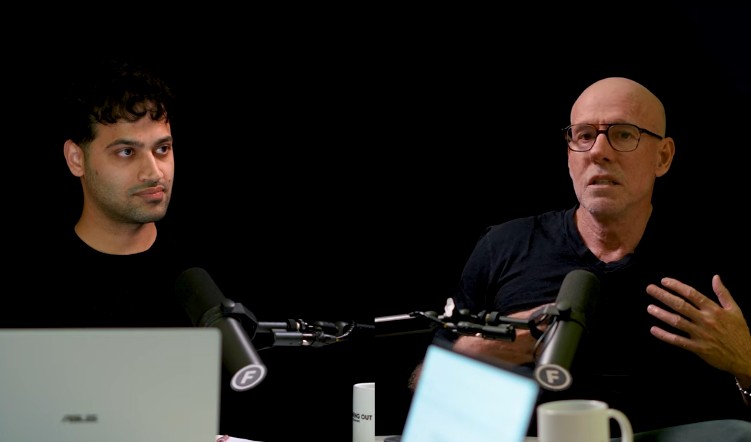
In this episode of Figuring Out with Raj Shamani, NYU Stern professor and bestselling author Scott Galloway explains why the middle class is “an accident of history,” how the incumbents are hoarding wealth and opportunity at the expense of young people, and why social media comparison is fueling the most anxious generation in history. He also shares his views on risk-taking, building relationships, the best cities to create wealth, AI and jobs, market corrections, storytelling, resilience, his SCAFA framework for anxiety, and the personal cost of his success. This interview was premiered on October 3, 2026. Read the full transcript of this fascinating interview below:
The Biggest Lie in the Economy Today
RAJ SHAMANI: (00:02:09 – 00:02:52) I was watching a few of your podcasts, right? I saw a bunch of things, and you love contrarian insights, which I absolutely found insightful and amazing. What’s the biggest lie that you see in economy today?
SCOTT GALLOWAY: (00:02:53 – 00:04:17) The biggest lie? That the middle class is a naturally occurring organism. That if the argument from free marketers and people on the right is that if we just let the market do its thing, the middle class will thrive. And I don’t think that’s true. The middle class is an accident of history. It typically doesn’t exist.
Usually in almost every economy throughout history, a small group of blessed, fortunate, hardworking, talented people aggregate a lot of power and wealth, and they use that power and wealth to slowly but surely weaponize government and get people in power to pass legislation or laws that help them aggregate more and more power. And if you let that run unchecked, ultimately the middle class begins to shrink and there’s a transfer of wealth from everybody to the top 10%.
So loosely speaking, in the last 20 or 30 years, we’ve had a $50 trillion transfer of wealth from the bottom 90 to the top 10, unless you redistribute income into the middle class, unless you tax, have a progressive tax structure and provide opportunity and subsidies and tax breaks and infrastructure investments for the middle class, it will die. It’s not— it’s an accident. It requires distinct funding. It doesn’t just naturally occur. I think that’s the biggest lie.
RAJ SHAMANI: (00:04:17 – 00:04:30) But why does every economy, every president, every government all around the world, they say that middle class is rising, middle class will become the next big thing, and that’s what we should bet on, right? Why is that a sentiment then?
SCOTT GALLOWAY: (00:04:31 – 00:05:32) Well, it’s true in some nations. And if you look at the countries that have aggregated the most power and influence over the last 30 or 40 years, there’s one litmus test, and that is how many people are they adding into the middle class? So arguably the greatest— one of the greatest victories for humanity is China adding half a billion people into the middle class, lifting 500 million people out of poverty. Now, there’s a lot to not like about the CCP, but that’s arguably the biggest accomplishment in humanity.
India is now adding a ton of people into the middle class. And who are the 2 most ascendant countries? China and India. So adding people to the middle class who create a tax base, a healthy society. They fund the military. They feel good about their nation. They create political stability. They create loving, secure homes that raise children that are good citizens. The middle class is— it requires investment, but it is the gift or it is the basis for a productive, healthy society.
Can a Middle-Class Person Still Become Rich?
RAJ SHAMANI: (00:05:33 – 00:05:38) But then can a middle-class person become really rich in today’s economy?
SCOTT GALLOWAY: (00:05:38 – 00:09:11) Can a middle— yeah, there’s still— so I mean, the reality is if you look at income mobility, 11% of Americans go from the bottom fifth to the top fifth, 1 in 10. That hasn’t gone up or down much in the last 30 or 40 years. So the reality is there is still income mobility.
The difficult thing is, is that you can correctly say to a middle-class person or a young person, “You have no right to be disgruntled. Your life is better than the wealthiest person on the planet 100 years ago, and your life is better than a very rich person’s 50 years ago.” There’s some truth to that. The problem is that’s not how the human brain works. The human brain is a function of relative comparison.
And that is, if I see these people aggregating the wealth of a small nation-state and I see people and I’m reminded 110 times a day that if I’m not partying in Ibiza or I don’t have a boyfriend with ripped abs, that I’m failing, then you are anxious and unhappy. And when you see all of this incredible wealth being aggregated, and then you layer in the fact that these people aren’t paying what Bernie Sanders would call their “fair share,” and in many instances, the most famous of them don’t appear to be that empathetic to the struggles of the middle class, it creates resentment and anxiety.
So there are real economic issues, but what speedballs it and makes people really upset is that every day they feel as if they’re failing if they haven’t made millions selling Ethereum or they’re not partying with Black Coffee in Mykonos. And they see the 0.1% life as something that should be normalized for everybody.
So there’s a trend among young men called looksmaxxing where they’re getting jaw implants and lengthening their legs because the algorithm is telling them this is what the 0.1% looks like and what you should look like. Women have been dealing with this for 15 years since social went on mobile. And that’s now their standard. Their standard isn’t their friends at high school.
And also there’s just some economic realities. In the United States, 40% of US households have medical or dental debt. A huge swath of American households can’t afford to pay out of pocket when their daughter has a root canal. And then they see all of this unbelievable wealth being aggregated. So, A, they are having a difficult time. Inflation, wages have not kept pace. Was that true? Wages have— wages as a percent of GDP have remained flat. Corporate profits are at an all-time high. So the difference between the two is trillions of dollars of shareholder value, and these people aren’t sharing in it.
So even when you can say to them, with Netflix and Novocaine, you are better off than the richest person 100 years ago, that doesn’t work. All they see is massive wealth creation they’re not participating in. So it’s one, they’re not doing as well. The average person under the age of 40 is 24% less wealthy in the US than they were 40 years ago. The average 70-year-old is 72% wealthier.
Incumbents vs. Entrants
The conflict or the tension isn’t between rich and poor or young and old. It’s between the incumbents and the entrants. I own a house. Do you have a college degree?
RAJ SHAMANI: (00:09:12 – 00:09:12) No.
SCOTT GALLOWAY: (00:09:12 – 00:10:15) Okay, I have a college degree. I’m an incumbent. I have a college degree and I own a house. The moment I own a house or a college degree, I do 2 things. I try to stop the issuance of new housing permits because the lower the supply of new houses, the more my house goes up in value. I purposely advocate for the dean and chancellor of my university to lower the admissions rates such that the value of my degree goes up.
The result is there’s an incredible aggregation of power and wealth to the incumbents, people my age, at the expense of the entrants. So a college degree and a house have become almost out of reach for your generation. The assets I own, stocks, have wildly appreciated. And every time they go down, we use debt to artificially prop them up. So, what we have is this rejectionist, what I call LVMH strategy, where the incumbents are hoarding opportunity and wealth. And young people have figured this out and they correctly resent it.
Why Young People Feel Like They’re Failing
RAJ SHAMANI: (00:10:16 – 00:10:43) So, here’s a question on this, that this feeling of anxiousness, this feeling of that I’m failing already in my life, which a lot of young people have, is it because of young people’s own insecurities and their human nature, or is it because the system has actually made it a point to make more young people feel insecure so that they start spending more money on trying to looksmax and whatever they try to do?
SCOTT GALLOWAY: (00:10:44 – 00:14:14) I think it’s all of that. I think there’s a variety of things. First and foremost, I think that mental health is very strongly correlated to isolation. So 40% of the pubs and clubs in the UK have closed since COVID. People aren’t going to church as much. Remote work— they’re not going into work as much. Remote schooling. So young people aren’t around each other as much. The number of high school students that see their friends every day has been cut in half over the last 20 years. Interaction with others is really healthy.
And so you have big tech, which is now 40% of the S&P by market value, trying every day a billion times a second to figure out a way to get you to spend one more second on this and one less second with friends and with family and pursuing friendships or romantic relationships. This creates anxiety. This creates health. More anxiety, more health. And there’s an economic incentive to move you more towards digital platforms promising you a frictionless form of life. And the result is men ages 20 to 30 in the US are now spending less time outdoors than prison inmates.
So I would say the number one cause is isolation at the hands of an addictive technology that keeps you on screen, further sequestering you from the most important thing in your life, and that is relationships. You’re also reminded every day that you may not be doing well on your phone. Again, that’s that mimetic or comparative or relative.
I think there’s also real issues in the economy that make young people feel less happy about their lives, a lot of pressure to achieve a level of success. If you’re on Instagram, it feels like everyone’s rich and hot but you. Everyone’s so hot, everyone’s so rich. “I’m neither of those things. What am I doing wrong?”
And then different things attack different people’s self-esteem. With young men, there’s less obvious paths to the middle class. That really attacks their self-esteem because men are still largely evaluated in society and their own self-esteem based on their economic viability. So when there’s fewer paths to the middle class, it attacks their self-esteem. And they also need and benefit more from relationships than actually women do. Women are better at maintaining a social fabric than men. So they become isolated, less economic opportunity, don’t develop the skills for friendships, romantic relationships, or work relationships, and they kind of go on this downward spiral.
With women, especially teen girls, Instagram has been an absolute weapon of anxiety. The entire high school cafeteria is following them around everywhere and judging them. And the pressure, just as your brain is getting wired and you’re most insecure, you have the high school cafeteria following you around. There’s no safe place from judgment, from shame.
And actually, we don’t like to talk about this, but boys bully physically and verbally. Girls bully relationally. They’re actually much more calculated in terms of their attacks. And we’ve put a nuclear weapon in their hands with social media. Some of the things that teenage girls do to each other on social media is very strategic, very calculated, and incredibly vicious.
RAJ SHAMANI: (00:14:14 – 00:14:15) Give me an example.
SCOTT GALLOWAY: (00:14:16 – 00:16:32) Oh, spreading rumors about somebody. They say something stupid online and all of their friends in the cool group weigh in and really shame that person. Whereas men, boys typically start yelling at each other, maybe come to blows or scream at each other, and then it’s over. So they’re not as calculating, they’re not as thoughtful, they’re not as meticulous.
And this is all happening in a period where your brain is being wired. You’re especially sensitive, you’re especially self-conscious. Maybe you don’t feel like you can really speak to your parents about these things. So, and then if you go online and you start saying, “I’m depressed,” the algorithms will pick up to it, up on it, and begin serving you a lot of content sort of normalizing depression, normalizing eating disorders.
So they’re up against a, what I would call a real enemy in the form of big tech with no regulation. There’s no reason anyone under the age of 16 should be on any social media platform. We should absolutely— there’s no reason to have phones in schools. So there’s a lack of regulation around a technology our instincts haven’t caught up to yet.
The Impact of Single-Parent Homes on Boys
And also more single-parent homes in the US than anywhere in the world. And there’s evidence that shows that boys really are hurt when there’s a lack of a male role model. And that is when a boy loses a male role model through death, divorce, or abandonment, at that moment, he becomes more likely to be incarcerated than graduate from college.
What’s interesting, Raj, is that girls in single-parent homes have similar outcomes as dual-parent homes. Same rates of college attendance, similar rates of self-harm, a little bit more promiscuous because they’re looking for male attention in the wrong areas, but largely the same outcomes. So what it ends up is that while boys are physically stronger, they’re emotionally and neurologically much weaker than girls, and they really need male mentorship. And without it, they kind of come off the tracks.
So there are a variety of economic, sociological, and even biological issues that have resulted in what is the most anxious and depressed generation, young generation in history. Only 1 in 4 young people feel good or extremely good about the US. 3 in 4 people my age feel good or extremely good about the US.
RAJ SHAMANI: (00:16:34 – 00:16:41) Wow. And you feel largely it’s because there’s constant comparison because of big tech.
SCOTT GALLOWAY: (00:16:42 – 00:16:49) Well, yeah, constant. 105 times a day I get a notification that I’m failing. That’s what it’s like. That’s what it’s like to be a young person.
Inspiration vs. Comparison: The Problem With Wealth Porn
RAJ SHAMANI: (00:16:50 – 00:17:10) But tell me, isn’t it— here’s just a question— that if you are constantly comparing yourself with someone who’s doing much better in your life, yeah, right, and you look at that person, similar age, similar background, similar country, and you feel like, “Oh, he’s just like me,” or “she’s just like me, and is winning in life.”
SCOTT GALLOWAY: (00:17:10 – 00:17:10) Yep.
RAJ SHAMANI: (00:17:11 – 00:17:20) Doesn’t that make me more ambitious that I can have that too? Because now there are possibilities. It’s— the game is not rigged. Someone my age just did it.
SCOTT GALLOWAY: (00:17:22 – 00:18:04) So that’s the argument from creators that their content inspires people. And I think there is part of it as an inspiration, but I think a lot of it results in unrealistic expectations that ultimately end in disappointment and anxiety. I think comparing yourself to other people’s— other people is— can be motivating. I think online it’s become a source of incredible disappointment and anxiety for young people. I mean, so something I actively do, I don’t ever take pictures of myself or post me at the World Cup or something like that. I hate wealth porn. And people—
RAJ SHAMANI: (00:18:04 – 00:18:05) Wealth porn—
SCOTT GALLOWAY: (00:18:05 – 00:18:43) People basically what you’re seeing online is someone’s fake version of their life and shoving their wealth and their success and their beauty in other people’s faces. Filters, pictures of their feet at the Aman Resort in Greece or whatever. And everybody is creating a totally unrealistic, irrational, aspirational vision of their life. And I think unfortunately, young people start to think that’s the bar, that’s the standard. And, I think over the medium and the long term, it makes them feel— it can make them feel like they’re failing.
RAJ SHAMANI: (00:18:45 – 00:19:13) See, there can be 2 situations, right? Just the way you explained right now. When I look at you that you have a house and let’s say a post from you at the age of 30, you bought your house or whatever, whatever. You are this globally successful writer. You are at the World Cup. When I look at that, I get inspired that I want to do it. Right? Versus there are a lot of people who see this as failure that, “Oh, you’re doing it and my life is shit because I’m not able to do it.”
SCOTT GALLOWAY: (00:19:13 – 00:19:13) Right.
RAJ SHAMANI: (00:19:14 – 00:19:21) What’s the difference between somebody who’s getting inspired versus somebody who’s feeling like shit? Because they’re essentially 2 same people looking at the same thing.
America’s Optimism and the Myth of Meritocracy
SCOTT GALLOWAY: (00:19:21 – 00:22:26) So America’s superpower is its optimism. People make crazy investments thinking they’ll work out. People leave their company, safe company, and start new companies with crazy ideas. So we’re optimistic. We take a lot of risks. That is kind of the secret sauce of our economy and our success.
The downside to that level of optimism is everybody believes they will someday be in the 1%. And the reason why we continue to tolerate a tax policy that transfers money from the bottom 99 to the top 1%— that’s not even accurate, transfers money from the bottom 99.9 to the top 0.1%— is that the bottom 99 believes someday they have a shot of being in the top 1%. But the problem is, and I can prove to you mathematically, 99% of us will not be in the 1%.
So when you’re young and full of vigor and you see podcasts and you’re inspired, some people like yourself figure it out, take risks, and it pays off. And you can point to people as an inspiration. Most people are good people who are talented, not remarkably talented, have decent luck, not great luck. And they do fine, but not great. And so the bar is so high now for what success looks like. And you’re taught online that if you just keep at it and any—
Here’s the problem. This is the dilemma with a quote unquote “meritocracy.” When you tell people that anyone can do anything, that anyone can be— we tell kids from the age of 0 to 22, “You can do anything you want.” Yeah, that’s bullshit. A lot of it’s luck. A lot of it is your parents’ wealth. A lot of it is when and where and who— where you’re born and things you can’t control: your sexual orientation, the color of your skin, the parents you’re born to. But when you tell people you can be anything, what you’re also telling them is if you aren’t successful, it’s your fault. And that attacks a person’s self-esteem.
When they’re not. There’s just— when I survey my business school students, within 5 years, 70 to 80% of them expect to be in the top 1% income earners. Now granted, that’s an ambitious group of people, be highly credentialed, but they’re setting themselves up. I don’t say they’re setting themselves up for failure, but the expectations are enormous, right? Your happiness isn’t a function of what you have. Your happiness is a function of what you have and what you expect.
So the expectations in a digital economy with wealth being thrown in your face every day, this notion of meritocracy that anyone can make it, all these success stories of people who came from nothing, but they kept at it and then they became, and then now they’re on a Gulfstream. That has created, that has normalized totally irrational outcomes. And it makes the people who aren’t able to achieve those irrational, super, super fringe case outcomes, it makes them feel bad about themselves.
RAJ SHAMANI: (00:22:26 – 00:22:34) But isn’t that good that you have these incredible examples?
SCOTT GALLOWAY: (00:22:34 – 00:22:35) Mm-hmm.
RAJ SHAMANI: (00:22:35 – 00:22:42) Which is somewhat responsible for spreading optimism in the world. Yeah.
Pulling Up the Ladder: College Costs, Student Debt, and Bailouts
SCOTT GALLOWAY: (00:22:42 – 00:28:21) So having aspirational figures is good, but if you can’t— if being a big part of becoming Warren Buffett or Elon Musk, Oprah, or Elon Musk is the ability to get a degree from Omaha State or McGill, wherever Elon Musk went to college, and every year it gets more and more expensive to go, and maybe you’re not cut out for college and you have to borrow a ton of money and you drop out of college but you still have that debt and it’s put a real strain on your family. Or when you can’t even dream of moving to London or New York ’cause it’s so expensive. Or you maybe find a romantic partner and you want to save for a house, but a new house in London or a small starter house in San Francisco is $2 million. And you think, “I will never be able to save it down.”
So all of the things that kind of signal commitment and success and ability to move up the income ladder feel as if they’re getting out of reach for young people. And I think that’s incredibly discouraging.
When I went to UCLA, the admissions rate was 74%. 3 out of 4 people who applied got in. I was the 26% that didn’t get in, but I appealed and I got in. My total tuition for 5 years of undergrad and 2 years of graduate school was $7,000. Total tuition all 7 years. Right? I think the total tuition now for an in-state student would be about $180,000. And even more than that is not even the cost, it’s the accessibility. Remember the 74% admissions rate? At UCLA, the admissions rate this year will be 8%.
So you work your whole life, you’re good, you’re a kid, you’ve studied hard, you’ve done well, you’ve sacrificed fun on weekends, and you get rejected from everywhere. And maybe you get into a good college, not a great college, but the good college has the great college price tag. Your parents are middle class, they can’t afford— NYU is $100,000 a year tuition and board. So you might have to borrow $100,000, $200,000, $300,000. So you start life with debt.
And by the way, if you want evidence that we’re screwing young people in America, one of the great things about America is bankruptcy laws. You make a series of bad decisions or you get unlucky, you can declare bankruptcy and you wipe out your debt and they can take everything from you, but you have a clean start. You have a clean start. That’s what I think. That’s a wonderful thing about America. We don’t have debtors’ prisons, right? They used to be people in prison who couldn’t pay their debts.
But there’s certain— there’s a small number of forms of debt that are not dischargeable in bankruptcy. You can’t get rid of them. And one of those things is student debt. What debt should be the most forgiving? Maybe the debt that young people took on trying to better themselves. But no, we’ve decided that debt— so you end up with hundreds of thousands of kids who start their life with debt. They’re told they can do anything. They’re told go to college. And then every day they see everyone’s doing great. Maybe they don’t graduate from college and they’re told, “Oh, you can make money trading online.” And then they found out it was a scam and that more people have lost money investing in crypto the last 3 years than have made money.
So I just think we’re setting young people up the path to— I feel like the ladder that we’re constantly trying to pull the ladder up. And I think young people see it happening and are justifiably really upset about it. So yeah, I’d like to think I inspire you. I’d like to think you inspire younger people. So I think it’s a double-edged sword. And I think that the balance has totally swung to unreasonable expectations and my generation stealing opportunities that I had from a younger generation to maintain my wealth.
Right? When COVID happened, the markets crashed, right? I’m sorry, when 2008 came, the Great Financial Recession, the markets crashed. We bailed out the banks, but we let stocks crash. I bought— I was coming into my prime income earning years in my 30s, so I took the little money I had and I bought Apple, Amazon, and Netflix for $8, $10, and $12 a share. They’re now somewhere between $200 and $300 a share.
Then COVID happens. The market should have crashed. It crashed for about 6 weeks, but then the government came in and flushed trillions of dollars into the economy on young people’s credit card. We never taxed— we never— when the economy came back, we didn’t say, “Okay, we got to pay it back, big taxation.” We put it in the form of debt, which is basically a tax on future generations, young people, to prop up asset classes.
So what we’ve decided to do is that whenever my wealth is threatened, we’re going to take your credit card and we’re going to bail me out. Because when you bail out the owner of a small business who’s a baby boomer, all you’re doing is robbing opportunity from the young person who wants to buy that restaurant for pennies on the dollar. Disruption and tumult and exogenous events are meant to be a natural part of the cycle to transfer wealth back from capital to labor to young people. It’s a natural part of the cycle. And what we’ve decided to do is interrupt the cycle and borrow money against the future earnings of young people to maintain the wealth of these people.
RAJ SHAMANI: (00:28:23 – 00:29:23) Do you know, this is a fascinating point that you just made, that old people, the system is designed in a way that people with money are stealing money from the future earners of the society, right? But the earlier example that you gave, that when there was a crash happened, you bought Apple, Netflix, Amazon, whatever, at $8, $10, $12, and you made it. I see this more as an inspiration rather than anything else, because I, somewhere in some small city of some part of the world, I started with probably nothing.
And then I looked at people like you and thought, “Hey, you know what, he started writing, he started teaching, and then he got his opportunity. Even when this is— the entire system was corrupt and crashed. Still, he survived. So he knows something. I need to learn that, and I’ll make it big in my life as well.” So I see all of this as a big inspiration rather than— and I think it’s a good thing. I don’t think it’s a bad thing at all.
SCOTT GALLOWAY: (00:29:24 – 00:29:36) I think it helps if you’re remarkably talented and lucky. I’m not suggesting that people can’t get inspiration and shouldn’t have aspirations, because until I had that, I would have never been—
RAJ SHAMANI: (00:29:37 – 00:29:52) I would have never even tried to do something in my life. I would have just accepted my reality and probably had gone out to some community small business, and probably would have gotten a job at $200 a month.
SCOTT GALLOWAY: (00:29:53 – 00:31:07) Well, so an example of that. So first off, having a globally connected world where you can be inspired by people from all over the world, that’s a healthy thing. There’s a very positive impact of that. So for example, when I applied to college, I was either going to UCLA or I wasn’t going to college. I couldn’t even go to— now if you’re a talented kid from the inner city who’s poor, Harvard will find you. Yeah, they recruited in these tiny neighborhoods. Now that’s a wonderful thing. So there’s absolutely a positive side to this inspiration and getting to see people.
What I would argue, though, is there’s a dark side to it, and that is Harvard only lets in 4% of its applicants despite having a $53 billion endowment. So I think inspiration and aspiration is fantastic. But shouldn’t we increase the likelihood that people will get to reach their aspirations with more freshman classes at universities, trying to figure out a way to lower the cost for young people? Trying to lower the anxiety levels of new families as they’re forming through things like universal childcare or universal healthcare. In other words, let’s maintain the aspirations, but let’s try and make the path to the realization a little smoother for young people.
Are Young People Becoming More Pessimistic?
RAJ SHAMANI: (00:31:07 – 00:31:19) True. Do you think when we see both of these things, the entire economy, there’s inspiration and the system is designed in a way where only few people can win, not everybody can win?
SCOTT GALLOWAY: (00:31:19 – 00:31:20) Yeah.
RAJ SHAMANI: (00:31:20 – 00:31:28) When this is the reality today, because of this, do you see people becoming more optimist or pessimist? Oh, young people.
SCOTT GALLOWAY: (00:31:28 – 00:33:27) America, young people are becoming much more pessimistic. I mean, much more anxious, depressed, and not feel good about the future. I mean, I’ll give you an example. AI is technically the future. AI is technology of the future. Three-quarters of people in China feel good about AI. Only one quarter of people in the US feel good about AI. So if you were to say what represents the future in technology, it would probably be AI. But people have a feeling that all AI is going to mean for me is my electricity rates are going to go up and some people are going to get really rich and I’m not going to be— I’m not going to be one of them.
So I think it’s important that we have winners and losers. I think it’s important we have billionaires. The question is, should those billionaires be paying a tax rate to reinvest back in the things that help people have a shot? And I think America unfortunately has become about trying to identify the 0.01% and turn them into billionaires.
Whereas I think the attitude used to be when I was growing up, how do we give as many people as possible a chance to be a millionaire? How do we create a tax system and a middle class and job opportunities and inexpensive accessible education such that a good person who works relatively hard, maybe not freakishly talented, maybe not comfortable taking freakish risks, but maybe over their lifetime can save a million dollars, have a nice home, be a good citizen, coach Little League, go to church. Now it’s like, “No, you need to be Mark Zuckerberg, and if you’re not, you failed.”
So I think that there’s I think we have a society that’s become, the feeling is not only winner take all, but everyone should be that winner. And I think we’ve attacked the self-esteem of young people through a lack of opportunity and again, unrealistic compar— comparisons.
Luck, Birthplace, and the Things That Weren’t Your Fault
RAJ SHAMANI: (00:33:28 – 00:33:32) But when you look at that winner, which is top 0.1%, right?
SCOTT GALLOWAY: (00:33:32 – 00:33:33) Right.
RAJ SHAMANI: (00:33:34 – 00:33:48) Do you feel that today, yeah, a young person can still make that in America by pure meritocracy, or is there some, let’s say, a referral system going on?
SCOTT GALLOWAY: (00:33:49 – 00:34:00) The most important indicator of your success is not your grit or your character or your talent. It’s when and where you’re born, or who you know. Pardon?
RAJ SHAMANI: (00:34:00 – 00:34:01) Or who you know or not.
SCOTT GALLOWAY: (00:34:01 – 00:38:45) Well, that’s sort of who you know is a function of when and where you’re born. So the smartest thing I ever did was to be born in California in the ’60s, because what that meant was I got free accessible education at world-class universities, UCLA and Berkeley. It means when I came of professional age in the ’90s, the internet was booming and I’d come out of Berkeley accidentally. So I got to raise— I raised probably, I don’t know, couple hundred million dollars by the time I was 34.
If I’d been born in Montreal, if I’d been born in Bangalore, if I’d been born in Seoul— I’m a talented guy— I don’t think that would have happened. So this— and being born also a white heterosexual male, there were no gay people raising tens of millions of dollars in the ’90s that, as far as I knew, there were no women. I mean, they just weren’t doing it. So who I was— all these things that I had no participation in. Right?
So again, there’s always going to be a well-publicized story of the kid from a small village in India who makes it out, gets here, and they’re inspiring stories. 20% of the NASDAQ by market capitalization, the CEOs are not just immigrants, they’re Indian immigrants. Those are really inspiring stories. Again, I can prove those people are 0.01 percenters, also very lucky. And I can prove to us mathematically that 9,999 of us are not in the 0.001%. The question is, for the 0.01%, should— do they have an obligation in terms of tax rates to help fund that ladder up? I think that’s the argument.
So we’ve spent the last 40 years obsessing over how to create wealth. I think we’re going to spend the next 10 years discussing what are the obligations of wealth and your aspirations. And what we need to be careful, and I’m doing a little of this now, you don’t want to demonize success. You don’t want to say people are bad just ’cause they’re successful. But I do think it’s gotten out of control where our idolatry of the dollar and money washing over Washington has made it such that the 0.1% are quite frankly hoarding wealth and opportunity at the expense of the bottom 99%.
And one of the wonderful things about America was we always invested in the future. I’m wealthy because of DARPA. That is a government program to create a post-apocalypse communications network that ultimately became the internet. That’s what made me wealthy. That was a technology financed by middle-class households trying to protect against a nuclear attack from Russia. Maybe the second reason I’m wealthy is because of GPS, and that is smartphone and GPS satellite technology that was funded again by middle-class households. Again, military— they wanted to have guidance systems for missiles. But all of these huge investments through taxation, and quite frankly progressive taxation, created an infrastructure and opportunities for entrepreneurs like myself to become wealthy. And then the University of California, again, access.
So I think everyone has an obligation if they’re successful to reverse engineer their success to the things that were not their fault. I’m not humble. I’m a fucking monster. I’m remarkably talented. I’m hardworking. I’m smart. That gets me— I’m a 1%er in terms of talent. That puts me in a room with 75 million other people. My life is much better than the top 75 million people on this planet.
So the question is, what were the things that were not my fault? Being born in California, state-sponsored education, progressive tax rates. I had assisted lunch. I had Pell Grants to help me in college. My mother accessed family planning. If we’d had an unwanted pregnancy, it would have put us in poverty. I had immigrants build my companies.
So I think it’s important to look at all those things that weren’t your fault that are large— are key components of your success, and then ensure that you invest in and support and pay back around those things. And I think young people and a lot of people are worried that the 0.1% is very good at crediting their grit and their character for their success and then blaming the markets for their failures or regulation, but not acknowledging just how much of their success is not their fault.
What Separates the Winners: Risk Appetite and Grit
RAJ SHAMANI: (00:38:46 – 00:39:28) But isn’t it also true that in California at the same time, there must be a million other people who were just as who were just in a situation similar to yours, right? Then only you won, for— or maybe let’s say 20 other people won, right? What was the difference? Was it meritocracy? Was it because you were talented? Was— because I’m just making a point that if all of the people who were born in California who went to Berkeley were lucky, yeah, then why specifically you? Is it because the people you knew, or is it because you were talented, or is it because mindset? I don’t know. What is that?
SCOTT GALLOWAY: (00:39:28 – 00:40:52) Well, you’re trying to reverse engineer success, and a lot of people— there’s a lot of books on this that say the primary driver of individual— so there’s 2 things. There’s your individual performance, and then there’s the atmosphere, which you can’t control, like the weather, right? If you’re kicking a football and you have a 40-mile-an-hour tailwind, the ball’s going to go a lot farther. You can’t control the wind. It’s either in your face or behind you. You have no control over it. I had gale-force winds behind me being born who I was when I was born. So that is a huge component of my success.
At the same time, I’m a great kicker. I’m a great kicker. But whether the ball went 30 yards or 80 yards was, or okay, 60 or 80 yards are things outside of my control. Now, when you talk about the individual, what makes a great kicker, what makes them most likely to be successful? It’s a couple of things. It’s their risk appetite and it’s their grit.
Some people, most people, when kids come to my office hours at school and say, “I’m going to go to work for JPMorgan for 3 years, but then I’m going to start a business,” I’m like, “No, you’re not.” If you wanted to start a business, you probably wouldn’t even be in business school. You would have started a business because the fact that they want to go to work for JPMorgan for 2 or 3 years so they can get credentials means they don’t have the risk appetite to be an entrepreneur. The primary attribute of entrepreneurs is they’re too stupid to know they’re going to fail. No new business makes any sense. What you’re doing here made no sense.
RAJ SHAMANI: (00:40:53 – 00:40:53) Yeah.
SCOTT GALLOWAY: (00:40:53 – 00:44:20) When you started it, it made no sense. I mean, I don’t know your parents, but I doubt they said, “Yeah, you should start a podcast.” No, they didn’t. So you have to be kind of crazy. And that’s something I think you’re kind of born with. And that’s why young people tend to be the entrepreneurs that start these amazing companies, cuz they made no sense and they were too stupid to know they were going to fail.
That’s true of art too. Most amazing artists and singers did it when they were 18 and 19 when no one was telling them, “You can’t sing the way,” or “That’s weird,” or “Don’t do that.” So they do these breakthrough crazy things and then they hit 30 or 40 and they start getting more risk avoidant and they have kids and they don’t want to embarrass their kids or they think about what music should be and they start— their genius just goes away. Anyways, young people have this incredible risk appetite.
So one, it’s risk. Two, they say it’s grit. I’ve started 9 companies. I’m optimistically 3, 4, and 2. The majority of my businesses have either not worked well or been total disasters. And I look back on all of them and I can’t say, “Oh, this was a great idea, this wasn’t.” The primary means or distinction of success was when I started the company.
I found when I start a company in a recession, people were cheap, office space was cheap, you could start a company inexpensively. And then when you come out of a recession, people are looking for new ideas. When I started a company in a boom time, everything’s expensive, hard to get good people ’cause they’re working at Google making a ton of money. You get the curse of cheap capital. You can raise money on a bad idea. All the companies I started in good times didn’t work. All the companies I started in bad times actually ended up doing well.
Storytelling, Being Social, and Having Internal Advocates
But in terms of personal attributes, which makes you a great kicker, it’s usually your risk appetite and your grit. The other component on top of that— well, 2 components— your ability to tell a story. Your ability to communicate and convince people to come to work for you, your ability to raise capital, how compelling you are, and also how social you are, your ability to establish strong relationships, your ability to convince people you’re a good person and they want you to win. You want to be put in a room of opportunities even when you’re not in that room.
So when young people are looking for a job, what I tell them is I’m like, “Go out and drink, go out and drink every night.” Now, what do I mean by that? I don’t mean go out and get shitty drunk. I mean go out and be social. Go out and meet people and catch up with friends. “Oh, you work at Salesforce? Do they have any openings? I’m looking for a sales job,” right? Keep your eyes open. “I’m thinking about starting a company that delivers or that sells promotional items with logos on them.” “Oh, we’re doing a conference and we need hats.” Can I put it— You want to know as many people as possible. And while you’re young and you’re social, I think that’s the key.
Google, when they put out a job opening, within 20 minutes they get 200 CVs, right? And they shut it down. They bring in the 20 or 30 most qualified of those CVs. 70% of the time, the person who ultimately gets the offer had an internal advocate.
RAJ SHAMANI: (00:44:20 – 00:44:21) Reference.
SCOTT GALLOWAY: (00:44:21 – 00:45:49) They had a friend. More than just a reference, they had a friend. They had someone who was willing to track down the person making the decision, find out they were in Building C in the campus, swing by their office and say, “Oh, hi, I work in keywords in strategy for Waymo.” “Oh, hi, how are you, Raj? Good to see you.” “This guy Bob who’s applying, I know him. He’s great. You can trust me. He’s great. I work here.” “How do you know him?” “I’ve known him this way. This is attributes. He’s great.” There’s nothing like that. Nothing like that.
So the key is how do you have as many friends and champions in as many places as possible? So typically people have a tendency to think that billionaires are bad people. Generally speaking, they’re not. Generally speaking, they’re good people. They have a lot of allies. They have a lot of people who want them to win that think, “I like Raj, I want him to win.” So when I hear of an opportunity, I’m like, “Oh, you think of Raj.”
So, I mean, a bit of a word salad there. Grit, risk aggressiveness, a lot of luck. There’s just no getting around it. Who and where you are born is the most important signal around where you end up in life. And then the things I would layer on top of that are your ability to tell a good story that’s compelling and how social you are. How many relationships, how many rooms will you be put in of opportunity without being in those rooms?
Can You Learn to Be a Risk-Taker?
RAJ SHAMANI: (00:45:50 – 00:46:03) You said a bunch of words and I’m fascinated. Let’s go one by one. Sure. And almost everything, right? First, so risk capital, charisma, social, and one other people wanting you to win, right? I’m just going to divide into 4 parts, right?
SCOTT GALLOWAY: (00:46:04 – 00:46:06) So, well, social and wanting you people to win the same thing.
RAJ SHAMANI: (00:46:07 – 00:46:07) Okay.
SCOTT GALLOWAY: (00:46:07 – 00:46:09) Yeah. The other one I said was grit.
RAJ SHAMANI: (00:46:10 – 00:46:13) So let’s say risk. We start with risk.
SCOTT GALLOWAY: (00:46:13 – 00:46:14) Yeah. Okay.
RAJ SHAMANI: (00:46:15 – 00:46:17) You said a lot of people are born with risk-taking abilities.
SCOTT GALLOWAY: (00:46:18 – 00:46:18) Yeah.
RAJ SHAMANI: (00:46:19 – 00:46:57) Can you become a risk-taker even if you’re not born with it? Right. I can think about my example and you, when you were telling your story that every time you start a company, well, there was a crash, it worked. Something similar has happened with me as well. When everything is going great in my life, even right now, I still am experimenting with 20 things, and probably out of them, 19 are failing. And I’m putting my reputation and my life on risk, right? Because I think I’m wired like that, to keep taking risk and keep failing. And I don’t care about failing because I know that out of those 100 things, 2 will work out very well, and it’ll just be it, right?
SCOTT GALLOWAY: (00:46:57 – 00:51:21) I agree. So is risk something you can learn? The way I would describe it is any sport. A great tennis player to be really top has to be born with natural abilities, but also practice every day. So I don’t know if it’s 49. This is the classic argument across every attribute. How much of it is nature? How much of it are you born with? And how much of it is nurture, the environment you grow up in? I’ll say it’s 49-51, but I don’t know which one is 51 and which one is 49.
America is so successful. The growth has just been so unbelievable. And yet the UK is a very similar culture. When I moved to London, super easy, same approach to life here for the most part. I mean, some subtle differences, but I said, if I were to describe the difference and why Americans are so successful relative to their UK peers, it’s because what I say is to a London audience, “You’re the ones that stayed.”
My parents got on a steamship at the age of 19 and 21 with almost no money and crawled across the Atlantic. And then when they got off the steamship, there were union people with loud megaphones saying, “Go home, no jobs here.” Think about that. You don’t have any money, you crawl across the Atlantic and there’s people screaming at you, “Go home, no jobs here.” But they were risk-takers. And I think I inherited that risk.
And then the people— it even goes domestically or more powerful geographically. The people who decided to leave the East Coast and migrate west and potentially get caught in the Rockies in a snowstorm and have to eat their nephew, those were the riskiest of the risk-takers. And what are the most successful companies in the world that have market capitalizations greater than the entire public markets of Germany and Spain? They’re all on the West Coast. What happened here? Not risk-takers? Risk-takers? The riskiest of the risk-takers.
So the first I would argue is an appetite for risk. And I think in the US, we have a lot of risk-taking DNA. The people who first came there took a lot of risks. Now, there was a group of people who were brought against their will. That’s an entirely different story, another podcast. And also the people who came here, if you’re willing to risk bodily harm and come to America illegally, to a certain extent, you’re a risk taker. I mean, we don’t talk about the upside of illegal immigration. Those people take a lot of risks. So anyways, my point is we have attracted more risk DNA than any society in history.
And also, our system is set up to sort of encourage risk, because if you’re in Germany and you take auto shop in the 11th grade, you don’t need to go to college. You can make €70,000 or €80,000 going to work for Volkswagen or Daimler-Benz. You can get a decent apartment. You can go to a beer garden where there’s trampoline. You can have a decent life. And if things don’t work out for you, there’s a social safety net. So the upside seems somewhat limited and the downside isn’t as great, which creates a lack of risk-taking. “Why do I need to start a company? I have a nice life.” Whereas in the US, the downside is greater and the upside is much greater. So I think that encourages more risk-taking than in Europe.
So I think a lot of it comes down to just how risk— there’s $5 million in risk capital for every startup in the US. There’s $1 million in Europe. Even capital is riskier. There’s one of the things that’s so different about the US is that if your company’s scaling, it’s doing well, you can raise $100 million for that company. And it might be a great idea, but it’s still a huge risk. It is very hard to raise that kind of capital in Europe. Anthropic, if it had started 5 years ago, if it was in Europe, it’d be one of the 4 most valuable companies. So I think a lot of this comes down to risk DNA, which we’ve aggregated an incredible amount in the US.
Take More Risks Offline, Less on a Screen
RAJ SHAMANI: (00:51:22 – 00:51:25) How can someone who’s watching this become a risk taker?
SCOTT GALLOWAY: (00:51:27 – 00:55:35) Well, what I would say is I think a lot about young men, and I would say more generally, just basic advice around risk-taking is take less risk on a screen. Don’t be mean or provocative or say stupid, aggressive things online. Don’t bet. Don’t gamble. In my opinion, buying crypto, trading stocks— people get very risk-aggressive on a screen.
What I would suggest is take more risks offline. Talk to a buddy about maybe starting a business and see if you can do it. Approach a strange woman and ask her out for coffee. Try and establish friendships with people you think are more impressive than you. Show up to a job you’re not qualified for and apply for a job. Take more risks offline and less risk online.
People are paying— playing— are allocating way too much risk capital on a screen. They’re saying very provocative, aggressive things. They’re taking real risks with their reputation online. They’re betting on the World Cup. They’re betting on their day trading. They’re taking all sorts of risks online. And yet they don’t want to go out with friends and approach a strange woman. That’s too much risk.
So generally speaking, my advice to young people, more risk aggressiveness offline. Bet your time. Start a business with somebody. “We have a crazy idea for business. We’re going to risk a lot, our time, some money, public embarrassment.” That’s a risk, right? Saying mean things about people, being on Robinhood or Coinbase or trading crypto online, those are just stupid risks.
Build a Kitchen Cabinet of Advisors
So I don’t know if you can tell someone to take more risks. What I would suggest is when you’re in the company of other people and you have what I call a kitchen cabinet, who advise you. It’s very hard to read the label from inside of the bottle. I don’t make any important decision now without talking to 2 or 3 people.
When I was your age, I used to think that leadership and masculinity was make a quick assessment of the situation and then make a decision. And what I didn’t realize is that everyone makes bad decisions. The key is to recognize maybe it’s a bad decision and know when to step back. Stepping back from the wrong direction is a step in the right direction. But I thought it was my job to convince everyone I was right. I was more interested in being right than doing the right thing.
And now what I do is any big decision— financial, personal, professional— I call at least 3 people. I describe the situation in very raw, unfiltered description, and then I ask for their advice. And almost always they look at it and helped me understand it in a way I didn’t before. And young people usually don’t do that because to really describe issues is embarrassing. “I’m thinking about starting a podcast, but I don’t have any money.” “I’m thinking about breaking up with my girlfriend, but I’m worried I’m not going to ever meet anybody again.” “I want to move out of my parents’ house, but I’m worried about my—” These are embarrassing things. But talking to people, “I’m worried about leaving my job and starting a business,” right? Whatever it might be, right?
But other people who can say, well, ask good questions, smart people, and say, “Oh, you shouldn’t do that. This is why I wouldn’t do it. It’s a bad idea. You’re not thinking it through.” Or “You’re too worried about this. This isn’t that big a deal.” So I think that one of the best pieces of advice for what I’ll call taking good risks or basically taking good decisions is establishing a kitchen cabinet of people.
And it’s easier than you think, ’cause people love to hear themselves talk. And when you ask someone for their advice, you’re complimenting them. You’re saying, “I think you’re really smart.” So generally speaking, I don’t think it’s that hard to kind of pull together what I call this kitchen cabinet of people. I was too stupid to do that. I thought asking people for help meant that I wasn’t the smartest person in the room.
How to Get People to Vouch for You
RAJ SHAMANI: (00:55:37 – 00:55:55) The second point was about social. And I love the line where you said, if you want to win, you should have a lot of people who want you to win, right? You should have a lot of people who should refer you, who should vouch for you. How do you get a lot of people vouch for yourself?
SCOTT GALLOWAY: (00:55:56 – 00:58:25) Well, the first is, I mean, one, to be good at what you do, you create a reputation. 2, be social. Make friends, ask people out, go to things, have a tendency to say yes to invitations. “Oh, some people invited me to dinner or they’re doing something. I’d rather stay home and watch Netflix.” Yes, get out of the house.
And then the third thing is try and build as large a ledger of debts as possible. What do I mean by that? Always be on the lookout for how you can help somebody else. Always. You hear about a job, you hear about an opportunity, you go somewhere great, whatever it might be. “Quick note, in the UK there’s a program to help fund entrepreneurs. Have you looked into this? Here’s the link. I looked into it. It’s working for me,” right?
Other podcasters. “I found that if you tag the videos in this, do you see thumbnails? My YouTube viewership’s up 10%.” Reach out to everybody you know is a podcaster and say, “FYI, this has been really helpful to us.” You hear about someone who’s hiring. “Hey, I heard you’re looking for a job. Did you hear so-and-so’s hiring?”
The opportunity to help somebody is a gift. And because at some— the wonderful thing about young people is they generally become more powerful and influential as they get older, but what they’re going to remember is the people who helped them when they weren’t powerful. True, right? So the opportunity— whenever you see something good or an opportunity anywhere, if you can’t seize it, you should think about who else can seize it.
So it just helps to be very good. It helps to be very social. Make a lot of contacts with people, establish emotional friendships. And then 3, every opportunity to help somebody else is like an investment. All those TikToks that if you invest $5 a day or $10 a day from the age of 18, you’re a millionaire by the time you’re my age— it’s the same way making investments in relationships. A little investment in helping someone out, in 10, 20, 30 years, that person is in a position of power and they remember that small gesture you made to them when they weren’t powerful. That compounds just like investments.
The Best Cities for a 22-Year-Old to Build Wealth
RAJ SHAMANI: (00:58:26 – 00:58:34) Pick top 3 cities where a young person should be in today’s world to accumulate maximum amount of wealth, because place makes a lot of difference.
SCOTT GALLOWAY: (00:58:34 – 00:58:39) 100%. I would say get to the biggest city in your nation, but talk about the world.
RAJ SHAMANI: (00:58:39 – 00:58:42) Just top 3 cities you would pick if you were 22 today.
SCOTT GALLOWAY: (00:58:43 – 00:58:47) New York, San Francisco, and New York. I just think there’s nothing—
RAJ SHAMANI: (00:58:48 – 00:58:50) Look, San Francisco, New York, and—
SCOTT GALLOWAY: (00:58:50 – 01:00:47) I was joking. New York. I think New York. I don’t think there’s anything like the experience and opportunities you’re going to get in New York. And it’s really hard, it’s really expensive, but the crush of people bouncing off each other creates opportunities. I think there’s still— my guess is some of the bigger cities in Asia probably offer a lot of opportunity. Some of the bigger cities in the Gulf offer a huge opportunity.
I’m speaking personally. I’ve been molesting the earth for 35 years. I spend half my year in other cities. I’ve probably spent at least 90 days in 17 of the 20 super cities around the world, whether it’s Shanghai or Seoul, wherever it is. My reductive analysis is the following. The US is the best place to make money. Europe is the best place to spend it. So if you’re in the making money part of your life, I still don’t think there’s anything like the US. A lot of people would argue it’s now the Gulf because of the amount of money, and I don’t feel as knowledgeable, but I want to acknowledge a lot of smart people are moving to the Gulf.
But I would say in terms of— and again, immigration comes into this. Can you get into the US? But if you can figure out a way to get— you can be good in the US and make more money than if you’re great in Europe. And by the way, you can be good in London and make more money than if you’re great in Liverpool. I don’t buy the small fish in a big pond thing. Get to a big pond as soon as possible because the competition is more intense, there’s more people, it’s more social, it’s a better place to find a mate. It’s a better place to raise money. It’s a better place to meet co-founders. It’s also much harder. When you play on an NFL team, when you go back, you’re the best player on the team. So even typically most people don’t survive long in New York.
RAJ SHAMANI: (01:00:47 – 01:00:47) Yeah.
SCOTT GALLOWAY: (01:00:47 – 01:01:54) Because once you have kids, it’s just too expensive. But you are training with the Yankees. You are training with PSG that your game— if you can survive 2, 5, 10 years in New York, your game is strong.
A lot of people would say there’s a lot of opportunity in India right now, but I don’t feel as knowledgeable about it. My having spent the majority of my life working in the West, I don’t think there’s anything like— if you’re just an economic animal as I was, I don’t think there’s anything like the wealth creation opportunities in the Bay Area because of tech and the entrepreneurial attitude, and New York just because of the level of intensity and competition. And by the way, I lived in San Francisco 10 years, didn’t enjoy it. But the wealth creation opportunities there are immense.
But the key lesson is get to one of 20 super cities. If you type into Google, “What are the 20 super cities?” 2/3 of all economic growth is going to happen in those 20 super cities. In sum, just get to the largest city in your region. That’s where the wealth is created.
RAJ SHAMANI: (01:01:55 – 01:02:07) So there are 3 levels to it if I want to summarize it. So first is get to the biggest city of your nation. That’s the first thing you should do. Then the second is if you can afford that, then go to the top 20 cities of the world.
SCOTT GALLOWAY: (01:02:07 – 01:02:08) That’s right.
RAJ SHAMANI: (01:02:08 – 01:02:21) If you can afford that, then go to the top 2 cities in the world, which is probably New York and San Francisco. Of course. And but that’s what the economics says also, right? US is 70% market of the world.
SCOTT GALLOWAY: (01:02:21 – 01:02:21) Yeah.
RAJ SHAMANI: (01:02:21 – 01:02:29) So it just makes a lot of sense for anyone to be building something in the US just purely from the basis of economic opportunities.
SCOTT GALLOWAY: (01:02:29 – 01:02:46) I just look at my— let’s say I had the same relative blessings born in Munich, born in Seoul, born in Los Angeles. I picked the right city to be born in. I think I still would’ve been successful, but I wouldn’t have had that success.
RAJ SHAMANI: (01:02:47 – 01:02:47) Mm-hmm.
SCOTT GALLOWAY: (01:02:48 – 01:03:16) So if you’re— you want to get to the— it’s like what I say is, when I was younger, I used to surf, and I learned how to surf in Hawaii, and the waves are perfectly shaped. And I thought, “I’m good at this.” And then I tried surfing California, where the waves are not as elegant, and I realized I don’t know how to surf. You want to go where the waves are perfect, or the better. It’s like if you— are you a skier?
RAJ SHAMANI: (01:03:16 – 01:03:17) I’ve done skiing. Yeah, I know.
SCOTT GALLOWAY: (01:03:17 – 01:03:19) So you know how when it’s fresh powder?
RAJ SHAMANI: (01:03:19 – 01:03:20) Yeah.
SCOTT GALLOWAY: (01:03:20 – 01:03:43) And you’re like, “I’m a great skier.” And then you ski on ice and you’re like, “I don’t know how to ski.” You want to get where the powder’s good or the waves are perfect. And that’s the 20 super cities. It’s more motivating. It’s so expensive that you never want to be at home, which is good. You’re out a lot and you’re just going to bump into more people. I also think it’s a better place to meet a mate because there’s just more people bumping into each other.
Is the American Dream Still Alive?
RAJ SHAMANI: (01:03:43 – 01:03:58) Do you think if you want to make it big, really big, right, you still need to go to America? That American dream is still the most fascinating thing in the world because that’s where you make it big, truly big.
SCOTT GALLOWAY: (01:03:59 – 01:04:02) No, you can still make it big anywhere. There’s just the probability is greater in the US.
RAJ SHAMANI: (01:04:02 – 01:04:02) Yes.
SCOTT GALLOWAY: (01:04:03 – 01:05:17) I mean, you might get lucky. I mean, for example, a lot of people are making it big in Dubai. I think a lot of people will find a lot of economic growth in Asia. I would say, where do you have contacts? Where do you want to live? Where does your industry sort of fit? But again, it’s just probability. There’ll be really talented people in Napoli who make a really good living and figure out the biggest business in Napoli, whatever. But you just want to be in a place where, quite frankly, being a 7 on a scale of 1 to 10 gives you a life better than being a 7 anywhere else. And I have found so far that that’s the US.
If you don’t grow, you’re trying to take something from someone else. I mean, growth kind of solves all problems. And while the US isn’t growing remarkably well, it’s growing. That’s why the Gulf is so exciting, that the Gulf is growing. But again, I have a bias because it’s where I grew up. And there’s probably examples of other places in the world that are growing. Places surprise you, right? Yeah, they grow faster than you think. I remember when Ireland was growing really fast. You just never know.
Optimism About AI: China, India vs. America
RAJ SHAMANI: (01:05:18 – 01:05:36) You said 3 out of 4 people in China are excited about AI. They’re optimistic. Same is in India. 3 out of 4 people in India, most than 76% people in India, are excited and optimist about AI. And in America, 1 out of 4 people are just excited, 3 out of 4 are pessimist about it.
SCOTT GALLOWAY: (01:05:36 – 01:05:36) Yeah.
RAJ SHAMANI: (01:05:37 – 01:05:49) Does that give higher chance and higher probability to someone sitting in China and India to go to America and create wealth because we are more optimistic? So our brain will start working for more opportunities then.
SCOTT GALLOWAY: (01:05:52 – 01:06:01) I don’t think it comes down to whether they’re optimistic about AI. I just think it comes down to their risk appetite, whether they really want to get to the US and if they’re willing to take a risk or not. I don’t think it— I don’t think—
RAJ SHAMANI: (01:06:01 – 01:06:16) But when you go there and you are optimist about everything, how the economy is growing and opportunities which are coming your way, versus somebody who’s exactly your age living in America and is pessimist about the world. Don’t you think an optimist guy has higher probability of winning?
SCOTT GALLOWAY: (01:06:17 – 01:07:40) Yeah, I think that’s probably true, but keep in mind there are still a lot of people very optimistic about AI in terms of investing their human and financial capital in the US. If you want to be in AI, my sense is you want to be in China or the US right now. If you really think you have talent and understanding or want to desperately be in AI, I mean, Nvidia is worth more than every publicly traded company in Germany and Spain right now. I mean, think about that. Yeah, add up every public company in Germany and Spain and Nvidia is worth more.
So if you want to be in AI, if you really want to be in AI, what I would suggest is get to a cool Alibaba or Anthropic or a small startup. I mean, there are thousands. About half the billboards in the Bay Area are related to AI. That’s how big AI is right now in the Bay Area. So if you were saying, “I just want to be in AI,” I would say don’t even get to the US. There might be some pockets in China, but it’s a pretty concentrated industry right now. I mean, there’s Mistral in France, but most people say it doesn’t have nearly the IP. But I don’t know, I think generally Americans are an optimistic people. They’re just very negative on AI because I think it’s seen as a symbol of wealth inequality.
Will AI Create or Destroy Jobs?
RAJ SHAMANI: (01:07:40 – 01:07:43) Do you think AI is going to create more wealth or erode more wealth?
SCOTT GALLOWAY: (01:07:45 – 01:07:48) Oh, I’m an AI optimist. I think it’s going to create more jobs than it destroys.
RAJ SHAMANI: (01:07:48 – 01:07:59) So why everybody’s saying that people are going to lose and wealth is going to go away, people are just going to be out of their jobs because— and we’ll need universal basic income, right?
SCOTT GALLOWAY: (01:08:00 – 01:10:45) I think it’s a fundraising tool by the companies themselves in order to— storytelling narrative play in order to justify these valuations. These technologies have to be transformative and create shareholder value. There’s 2 ways to create shareholder value: increase revenues or decrease costs. There isn’t a lot of AI moisturizer out there. This table doesn’t appear to be from AI. I mean, there’s some AI here, but not a lot.
So how do you justify a trillion-dollar valuation at Anthropic and OpenAI? You say, “Well, if you use our tools, you’ll need 3 people, not 5.” So the labor destruction narrative was something preached by the people trying to raise money for AI companies. And so far there’s no evidence of it.
Yeah, unemployment rates— I said a year ago, I had a No Mercy / No Malice post called “Apocalypse No,” and that is the job apocalypse that is supposedly coming. I don’t think it’s going to happen. There’ll be a dip. The question is, how severe is the dip? But with every technological breakthrough, it’s the same pattern. There’s some job destruction.
When automation hit the auto industry, everyone thought, “Detroit is over, the Midwest is over, it’ll be all robots, we won’t need humans to make cars.” And there was some short-term job loss on the factory. But we didn’t envision heated seats or car stereos or self-driving. And now there are more people employed in the global automobile industry than there was before automation.
So I don’t see any reason why AI isn’t similar to every other technology. And that is, in the short run, there’ll be some job destruction, but then those profits will result in shareholder value, which will be reinvested into new ideas. But if you’re an entrepreneur and you have some technical skills or business skills, you can now start a business on $10,000 that may have cost you 20 years ago $10 million with AI. I mean, the opportunities for new businesses, if you start playing with AI, I think it’s almost impossible not to start thinking of new ideas.
So what have we seen? If you didn’t know AI was here and you were just looking at the Bureau of Labor Statistics, you wouldn’t know AI is here. Something’s happening in the economy, you would see no evidence of it. Unemployment’s at 4.5% in the US. Youth unemployment has spiked a little bit, and there has been an increase in unemployment among new college grads. I think that’s a natural part of the cycle. But what we also see is that new business permits are at an all-time high. Hmm. “Oh, but we don’t talk about AI.” Well, AI clearly has something to do with that.
RAJ SHAMANI: (01:10:45 – 01:10:46) Yeah.
The Bias to Catastrophize: Always Ask “What Could Go Right?”
SCOTT GALLOWAY: (01:10:46 – 01:13:55) So why are more people starting more new businesses than ever before? And at the same time, we don’t see this job apocalypse. And the problem is, is that if you think of yourself as a thought leader or someone who talks about these issues, there’s a bias. And the bias is to catastrophize. Because if you just look at the data around our economy and you just went where the data and history tells you, this would be every talk I’ve given: “Every day things get just a little bit better.” No one’s going to pay me to show up and say that.
So what is more interesting and makes you sound smarter is to talk about an 80% destruction in jobs. And what does the world look like? Is it idiocracy or is it we all get to pursue purpose and we know we’ll have robots doing everything? That’s a kind of an interesting, scary, “Let’s pay this person a lot of money to come speak at our annual conference in the summer.” So that bias amongst intellectuals or thought leaders or authors is to catastrophize.
And so what you constantly have to ask yourself, especially for someone like me who is a glass half empty kind of guy, you always have to ask yourself, especially in investing, “What could go right?” Because the people who have asked themselves what could go right have been more successful than the people who have said what could go wrong. You need to have pessimists. Optimists invented the plane, but pessimists invented seatbelts. You need both. But the optimists have absolutely beaten the crap out of the pessimists from a stock market standpoint. The people who’ve said, “Oh no, the stock market’s going to go up.” Yeah, there’s problems in the economy.
But I mean, I sold all my stocks the first time Trump was elected in 2016, and I sold all my stocks. And so I immediately had a capital gain, and I had to pay 23— actually 35% on all my gains. And then 6 months later, the market was up, so I bought back in. I literally destroyed probably 40% of my net worth having an emotional reaction. “The market’s going to crash.” Well, what could go right? What could go right? Maybe the market just sees him as pro-business and stocks keep going up.
And the economy cares less about politics than we do. It’s kind of a machine that grinds on. It doesn’t know who’s president. I mean, there’s some impact, but loosely speaking, if you surveyed America right now and said, “Who’s president?” Most people didn’t have ICE show up to their neighbors. Most people, maybe they got a tax cut, maybe they didn’t, but most people wouldn’t know. The economy usually just is like, “I’m just going to keep grinding on.” So having an emotional reaction or catastrophizing comes very easy to people who write or intellectuals or thought leaders. And I think you constantly have to ask yourself, “What could go right?”
Is a Market Correction Coming? Why Diversification Is Your Kevlar
RAJ SHAMANI: (01:13:56 – 01:13:58) Interesting. Do you think the big collapse is coming?
SCOTT GALLOWAY: (01:13:59 – 01:14:01) I think we’re going to have a serious markdown in valuations.
RAJ SHAMANI: (01:14:01 – 01:14:03) Slowly it just keeps eroding.
SCOTT GALLOWAY: (01:14:04 – 01:16:17) I don’t know what the cadence of it is. I don’t think it’s going to be a collapse, but when I look at the valuations of these companies and things like the Case-Shiller Price Equity Index and things like that, it seems to me that just a rational argument is we’re due for what I’d call a pretty severe correction. Markets are cyclical. They get cheap, they get expensive. Yeah, they’re very expensive right now. But when guys like me say the market is expensive, it usually means it’s going to go up more first. So it’s very hard to time the market.
So the question is, is the market overvalued? Yeah, I believe so. And if you look at the 10 most valuable companies in the world, they’ve all had 12-month periods where they’ve been down between 40% and 90%. Amazon was down 93% between ’99 and 2001. Meta was down 72% in 2022. So it’s just logical these companies would have a significant period of volatility and go down a great deal. But trying to time that is nearly impossible.
So what’s the advice? The advice is always be in the market. I think it’s very hard to time the market. Very hard. So always be in the market. But if you’re like me and you believe that the markets are overvalued, your Kevlar is diversification. And that is, I invest now in European companies. I invest in non-tech because I’m, by virtue of my podcast and I started an AI adoption company, I’m very invested in technology. I mean, technically, one of my podcasts is basically a technology podcast, Pivot. So I’m sort of very invested in tech. I’m very invested in America. The majority of my net worth is in American real estate. So what I need to do to protect is invest in a British aerospace company, invest in an Asian technology company. Diversification is your protection.
But if you think you can time the market— Warren Buffett’s been— has like a third of a trillion dollars in cash. But he’s had it for several years and he’s missed out on enormous gains.
RAJ SHAMANI: (01:16:17 – 01:16:17) Yeah.
SCOTT GALLOWAY: (01:16:18 – 01:17:41) Because the market looked crazy overvalued 2 years ago. So he went all the cash. Bad move. True. So it’s very hard to predict the markets. I think the advice to anybody I would say is diversify, low-cost index funds, and more diversification as you get older. You can go all in on something. My guess is the majority of your human and financial capital is going into this. The way you get successful or wealthy as a young person is concentrated risk. Yeah, you go all in on something. The way you stay wealthy is through diversification.
And what I didn’t learn when I was your age is I got lucky and had a couple hits and I made a lot of money, but then I doubled down on my next thing. What I should have done was taken 80% of it and put it in boring stuff, totally diversified, because when 2000 happened, I was wiped out. And I still didn’t learn. Still went back into all technology, levered up, aggressive bets, making money, things are great. ’08, broke again. And so when I got lucky again and sold my company in 2017, I said, “Nah, I’m done.” And I started diversifying like crazy. And I’ve probably missed some upside, but I can sleep much better at night. I’ve been rich 3 times. What does that mean? It means I’ve gone broke twice. Right? Much less anxiety to become economically secure once and then be smarter than I was and start diversifying.
How to Become a Great Storyteller
RAJ SHAMANI: (01:17:42 – 01:18:01) True. Here’s the last part, because a lot of things that we spoke about is about telling a story, which actually makes the overvalued markets, right? You have to be really charismatic to convince a lot of people to come work for you. Yeah. And convince a lot of people to come invest in you, right? Yeah. That’s how the valuations go up.
SCOTT GALLOWAY: (01:18:01 – 01:18:01) Yep.
RAJ SHAMANI: (01:18:01 – 01:18:11) And that was one of the pieces which you said, if you’re young and you want to attract a lot of money in your life and you want to win, you need to be charismatic and convincing.
SCOTT GALLOWAY: (01:18:11 – 01:18:11) Yeah.
RAJ SHAMANI: (01:18:11 – 01:18:14) How can somebody be charismatic and convincing?
SCOTT GALLOWAY: (01:18:14 – 01:18:23) It’s hard to tell someone to be charismatic. What I would say is communication and storytelling are the core competence. If I could give my sons anything, it would be the ability to be a good storyteller.
RAJ SHAMANI: (01:18:23 – 01:18:23) How?
SCOTT GALLOWAY: (01:18:24 – 01:18:29) I think it starts with learning how to write well. I think if you can write well—
RAJ SHAMANI: (01:18:30 – 01:18:30) Even today?
SCOTT GALLOWAY: (01:18:31 – 01:23:22) Yeah. The ability to write well, I think, is the cornerstone of communication. I mean, Jeff Bezos demands memos on every big decision. It just forces you to think through issues. It forces you to think about data. It forces you to think about construction of your argument. Writing is really difficult. I bet less than 2%, maybe 1% of the population can write well.
I was a consultant for a strategy consultant. I mean, I had 120 people working with me. But what I would do as the head of the firm is the CEO would call me and say, “I have an important investor letter. Can you write it?” These guys just didn’t know how to write. And the written word is so powerful. And then if you can write well, you can articulate or form thoughts well. I think that’s where it starts.
And then there’s a variety of mediums. There’s podcasts, there’s speaking in front of large groups, there’s one-on-one, there’s TikTok, there’s creator economy, there’s videos, there’s Twitter, there’s Threads, there’s posts on LinkedIn. There are so many channels to start communicating. You need to get at least competent in storytelling. Some people just aren’t very good. They don’t like talking, but you have to be at a minimum competent.
When you read Jeff Bezos’ 1997 letter to shareholders, you read the letter and you’re like, “Take my money.” Yeah, it’s overvalued. Makes no sense. “Take my money.” When Alex Karp does an earnings call walking around his office livestream going, Palantir overvalued, “take my money.” You just do like, “I don’t like him. I don’t like what he’s saying. He’s much smarter than me. I’m going to invest.” He has that rizz, right? Not everyone’s going to be able to do that. But at a minimum, you have to be able to stand up in front of a small group of people and make your points, whether that’s practice, Toastmasters, whatever it is.
Building a Social Media Following
But I think it starts with writing, and then you need to find a medium. It might be Twitter, it might be YouTube, it might be TikTok, and commit to putting out a certain amount of content every week and building a platform. Because unfortunately, if you want to be in your business or my business, the media business, a big component of it is your social media following.
So I write books. My advances have gone up almost in lockstep with my social following. That is, they know I have enough of a background to know I will write a competent book. But the reason they’re willing to give me a big advance is they look at my followers and go, “He’s going to sell. He could put out crap and he’ll sell a certain amount because he has a big following.” So unfortunately, you’re at a young age, you want to start figuring out how to tell stories and then find a medium and build a following.
One of the things, the first assignment in my class at NYU is I say, “Pick a medium. It can be anything, LinkedIn, Twitter, whatever it is,” right? “But by the end of the class, you have to be in the top 10%.” So the top 10% on, say, Threads might be 17,000 followers. I’ll say, “All right, within 10 weeks you got to get to 17,000.” And by the way, I don’t like saying that. Every time I’m on social media, I want to shower. I don’t enjoy it. Yeah, I find it performative, mean, coarse. It’s just incredibly important now. So start writing and then pick a medium and challenge yourself to build that asset base.
The Myth of Work-Life Balance
Interesting. The problem with a lot of young, or the myth of young people is the myth of balance. If you want to be— look, I’m not saying this is the right way, but if you want to be really successful, you don’t want to be in the top 10%, you want to be in the top 0.1%, or that’s your ambition. By the way, that’s not all people. A lot of people just want to move to a low-cost neighborhood, have a nice partner, go to church, coach Little League, make a good living. They want to work to live. They don’t want to live to work. Guys like you live to work. You’re very ambitious.
For those people who are very ambitious, give up on the myth of balance. There’s no such thing. Anyone I know, unless they were smart enough to be born to rich parents, has spent 20 or 30 years doing pretty much nothing else but working from the age of 24 to kind of 50, for a quarter century, I did nothing but work. I don’t remember my kids as little kids, and I’m embarrassed by that. It cost me my hair, it cost me my first marriage, and it was worth it because now I have a ton of balance.
RAJ SHAMANI: (01:23:22 – 01:23:22) Yeah.
SCOTT GALLOWAY: (01:23:23 – 01:24:32) So when you’re young, what I would say is you have to have an honest conversation. Where do you want to be on the spectrum in terms of economic security and influence? And recognize it comes at a cost. And when people in the conflict in my kids, when I say my kids, my students, the majority of them expect to be in the top 1% within 5 years. And then they’ll say in their priorities, balance. I’m like, “No, there’s no balance.”
If you think about the most successful companies in the world, whether it’s Goldman Sachs or YouTube or Anthropic, basically they don’t say this out loud, but basically the agreement is the following: “We own your ass. You’re not going to kayak on weekends. You’re not going to have stable relationships. You’re not going to be in great shape. You’re not going to have mental health breaks. You’re going to work your ass off here.” Yeah. Now, if you’re willing to do that and you’re reasonably talented, by the time you’re 30, you’re going to be making more money than your parents ever did. And by the way, there are millions of young people who will sign up for that.
RAJ SHAMANI: (01:24:33 – 01:24:33) True.
SCOTT GALLOWAY: (01:24:33 – 01:24:57) And there are a lot of people who won’t. So, but at least be honest with yourself. “I have to have balance.” Okay, then move to fucking St. Louis. You can’t live in Brooklyn. You can’t afford a $5,000 one-bedroom and have balance at 25. I mean, there’s probably some people that are such geniuses they can do that. Beyoncé works her ass off.
RAJ SHAMANI: (01:24:58 – 01:24:58) True.
SCOTT GALLOWAY: (01:24:58 – 01:25:08) I mean, so just decide where you want to be on the spectrum and be honest about the trade-offs, and then you pick where you want to be on the curve.
Resilience: The Secret Is Rejection
RAJ SHAMANI: (01:25:09 – 01:25:16) True. I believe in this. I believe that cost of ambition is missing out on privileges of life.
SCOTT GALLOWAY: (01:25:16 – 01:25:36) Oh yeah, it’s huge sacrifices. Yeah. Huge toll on you personally. But also we talked a little bit. One of the words I should have used was resilience. Most successful people from the outside, people think their life was like this. What it was was like this.
RAJ SHAMANI: (01:25:36 – 01:25:37) Always.
SCOTT GALLOWAY: (01:25:37 – 01:27:54) And the key is not here. The key is here. What happens here? I have a lot of friends who were very successful in their 20s and 30s, and then they hit a speed bump. They get fired. They start a hedge fund that doesn’t go well, and they can’t recover. They’re stuck. They keep waiting for the bigger opportunity. They wallow in their self-pity, or it impacts their relationships. The key is, do these people not lose their sense of enthusiasm, right?
People will say, “What’s the secret to your success?” Secret to my success is rejection. I don’t know, in the US we have what’s called student body elections. We have 10th grade president, 11th grade president, 12th grade, and then student body president. I ran for 10th grade president, lost. I ran for 11th grade president, lost. I ran for 12th grade president, lost. And the thing I’m most proud of is, based on my track record, I decided to run for student body president, where I went on to lose. And I was disappointed. I was upset for about 24 hours, and then I was back running for something else.
That’s the key. The key is, can you get beaned in the face and then shake it off, mourn for a little bit, and then step right back to the plate knowing you might get beaned in the face again? And most people don’t have that resilience. Most people, if they have the public failure of a company— I started an e-commerce incubator that was out of business in 8 months. I had the best investors, media. Within 6 months, yeah, very embarrassing, very embarrassing articles about, “Internet entrepreneur flames out,” right? Very embarrassing.
But here’s the thing, no one cares. Yeah, people aren’t thinking about you as much as you are. They don’t care. They go, “Oh, Scott failed,” or “Raj’s podcast didn’t work out.” And then they go back to thinking about themselves. So it’s the ability to mourn and move on is key cuz very few people have a straight line up. The only thing I can promise you is a certain amount of success and a certain amount of failure. And the only way you get to success is by getting through the failures without losing your sense of enthusiasm.
Scott Galloway’s Most Anxious Moment
RAJ SHAMANI: (01:27:54 – 01:27:56) When were you most anxious in your life?
SCOTT GALLOWAY: (01:27:57 – 01:30:06) When I had kids. Because when I was your age, I thought, “Well, I can sleep on a couch.” I got through my junior year of college eating ramen and Top Ramen and bananas. I was spending $70 a month. I mean, literally, I was spending no money. I was fine. It was just me. I didn’t need money. I used to cut out these coupons and go eat steak and Malibu chicken at this terrible restaurant called the Sizzler, and it was $4.99 for all you can eat. So I would go at 2 and eat lunch and wait 2 hours in the restaurant and then eat again. I did, but that was just me.
When I had kids, it’s like, “Oh no, it’s no longer just me. I have to take care of this thing.” And unfortunately, my son, my oldest, had the poor judgment to come marching out on my girlfriend in ’08, right after the financial crash, and I was broke. And so I felt a sense of anxiety and shame that I had not only screwed up for me, I can handle that. I’m talented, I work hard, I can always make a living. But I felt like I’d already screwed up for this kid. I already had these weird feelings that I’d failed as a f— I mean, this is embarrassing.
You’re supposed to have bright lights and angels singing in the happiest moment of your life with your baby. All I felt was shame. I’m like, “Oh my God, I failed this kid.” That was my first sensation when my first son came along was, “I’ve already failed this kid.” ‘Cause I take my professional success, it’s my identity. It’s a bit pathetic, but that’s where I’ve gotten the majority of my self-worth. I now get it through other things. But before I had kids, that was my entire professional identity.
So all of a sudden, God really does reach into your soul and flip a switch. And all of a sudden, for the first time, you care about something else more than you care about yourself. So it was not only the anxiety of having my own personal failure, I can handle that, but feeling as if I failed this kid who I’m responsible for, that made me incredibly anxious.
The SCAFA Framework for Anxiety and Depression
RAJ SHAMANI: (01:30:07 – 01:30:18) And when you feel anxious and powerless today, how do you get back power over your life now? Because I’m sure you must have seen so many anxious moments after that.
SCOTT GALLOWAY: (01:30:19 – 01:33:06) Yeah, I try to. Well, one, I do struggle sometimes with anxiety and depression and anger. I have a system for getting out of it, and I call it SCAFA, S-C-A-F-A.
So S is sweat. I try to work out a lot. I find that it resets my brain and makes me feel better about myself. Just exercise. And when I get depressed or anxious, I find I don’t want to exercise, but I find it’s really important.
C, clean. I try and eat really clean, less sodium, less eating out, just trying to eat clean.
A, abstinence. Abstinence from alcohol, it enhances my life. But when I feel myself getting depressed or really going into a dark place, I just cut the substances out.
B, I’m sorry, F, SCAFA. And then F, family. I find hanging out with my boys is very restorative to me because they’re so demanding and such jerks that I can’t think about myself. They take my mind, they demand that I’m focused on them, which is good when you’re depressed. You have less time to think about why you’re upset, you’re focused on them.
And then A for me is affection. And that is, I’ll tell my boys I’m not feeling great and they know what to do. They’ll throw my— and we’ll watch football game. My oldest is something really nice for me. We watched World Cup, Sweden versus France last night. He just kind of naturally throws his legs on mine when we’re on the couch. I let the dogs up on the couch and I let them lay on me. I think we’re mammals. And for me, human touch is really restorative for me.
So if I do all of those things, it helps arrest the downward spiral. But what I would suggest is that people ask themselves that same question and see what works for them and what kind of stops the downward spiral. ‘Cause it may be different things. Also, I just think in general, being around other people. I think isolation can really expedite the downward spiral, having too much time to be in your own head. And then some people really benefit from therapy. I think it’s individual.
Those are the things I’ve, as soon as I feel myself getting angry and I can tell when I’m getting down, I start thinking about really dark imagery. I start thinking about the Holocaust and I start role-playing confrontations with people I don’t even know. I have these triggers, these signals like, “Oh no, I’m going to a dark place.” And so I immediately try and stop it by doing those things and get back to a good place.
RAJ SHAMANI: (01:33:06 – 01:33:16) But I love this SCAFA framework. I think it’s really interesting and there are tools, maybe not all, but there are few if somebody is able to do, I think it will help a lot.
SCOTT GALLOWAY: (01:33:16 – 01:33:17) I hope so.
The Cost of Becoming Scott Galloway
RAJ SHAMANI: (01:33:17 – 01:33:25) Yeah, SCAFA, I like it. So here’s the last question. Which is, what cost did you pay to become Scott Galloway?
SCOTT GALLOWAY: (01:33:29 – 01:34:32) Well, it cost me a decent amount of life, like you said it. There were a lot of things I could have done that would have been a lot of fun in my 20s and 30s that I didn’t do. I took vacations with clients. I didn’t take vacations with friends. I was working all the time. I could have been a better husband to my first wife.
Something I wish I’d done— I wish I’d been kinder. I was never mean, but I saw my employees and relationships as transactions where I wanted to get— when an employee got off the elevator in one of my companies when I was young, there was 2 bubbles: how much I’m paying them, how much value they’re adding. The moment this bubble got bigger than this one, they got a warning and then they were out. My friends, “Am I getting more from this friendship than I’m giving?” My girlfriends, “Am I getting more out of it than I’m—” Everything was a capitalist mindset. I want an ROI on everything.
RAJ SHAMANI: (01:34:32 – 01:34:33) Transaction.
SCOTT GALLOWAY: (01:34:33 – 01:36:36) 100%. And what you recognize as you get older, now when I have a company, I like to think, I always say we like to hire 2 or 3 people that are 2 bad decisions away from living in their car. That’s okay. Overpay people. If you’re in a position like I am now to overpay people— I’m doing a lot of virtue signaling— overpay them. That’s great. My goal is to pay people 50% more than market because now I can, and it makes me feel good.
I don’t take abuse, but I want to be a better friend than they are. I want people to look back and think, “There’s no way I could be as good a friend to him as he was to me,” right? I want my partner to think, “I couldn’t have had a nicer life with anybody else.” I want my kids to think, “There is no way I will ever be able to pay back my father. No way. Impossible.” No matter how nice the home is we put them in, there’s no way we can ever pay them back. That’s winning. And when you’re younger, you think winning is getting more from other people than you get.
So I wish I’d had more of an investment mindset when I was young and trying, striving so hard to be successful. You naturally go to this transactional mindset where quite frankly, you’re just not that kind and you miss the shooting match. The way you feel masculine, the way you feel successful is you’re successful, but you share a disproportionate amount of that success. That feels really good. That’s success.
And I was way too transactional with my relationships when I was younger, and I think it just cost me an opportunity to enjoy myself more, have better relationships, be more mentally healthy, feel better about myself. Yeah, I regret that. I should have approached life from more of a generosity mindset versus a transactional mindset. I think I really screwed up there.
Lessons From Indian Family Culture
RAJ SHAMANI: (01:36:37 – 01:37:40) I really appreciate this answer. Thank you for sharing it with me. But a good thing is a lot of Indian family-borns will relate with me. Because you’re born in an Indian family, from day one, you learn investing in relationships and you see it as compounding, not transactions. So I think that has worked in my favor. Even I’m, just like you, super ambitious, doing a lot of things at the same time, but I don’t see anything as transaction because I think my parents and people around me— I’ve seen them when I was growing up just investing in relationships and just being there for people— that overall in life compounded.
So it has become my value system. And that is really helping me. So it never even occurred to me that, “Okay, you know what, I should do this because I’m going to get this from this person.” And we just naturally go out and keep helping and helping and helping without expecting anything in return. And I think it has a lot to do with Indian traditional family system.
SCOTT GALLOWAY: (01:37:41 – 01:39:22) The thing I took from the Indian culture— this is just a side note— the biggest impact— well, one, I’m at a business school, my best friends are all Indian. I mean, the quality of the people, of the immigrants from India in academia, literally the smartest people at the business school have multi-consonant last names, Damodaran, Sundaram. Yeah, I mean, we have this wonderful import from India in terms of academics.
But the weird thing I took from Indian culture was when I— and this is one of the biggest regrets I had with my oldest. He used to come into our bedroom when he was a baby and he wanted to sleep with us. And we’d read in some stupid journal you’re not supposed to let your kids sleep with you, so we would walk him back to his room. And I hated it. It was so painful. And he used to show up with a basket of cars like an offering, like, “If you let me sleep with you guys, I’ll give you this basket of cars in the morning.” And we’d say no.
And then I read that a big feature of Indian culture is co-sleeping. And I said, “They get it, we don’t.” And from the age of 1.5 or 2, I let Alec, our oldest— we put him in his own bed at night. If he gets up in the middle of the night, we walk him back once because he was sleepwalking. But in the morning, we let him come in and sleep with us. And it was one of the best things I ever did as an adult, one of the best things I ever did as a grown man, was co-sleeping with my kids. And one of the biggest mistakes I made was not letting our oldest co-sleep with us when he was really young. Anyways, an odd thing. That’s what I took from Indian culture.
RAJ SHAMANI: (01:39:22 – 01:39:38) It’s a good thing. It’s not weird at all. But thank you so much for spending time with me. I know you’re short on time. I believe this will reach a lot of people and get you the kind of results which probably is worth spending time in. So that we could keep doing this more often.
SCOTT GALLOWAY: (01:39:39 – 01:39:41) I hope so. Congratulations on your success, Raj.
RAJ SHAMANI: (01:39:41 – 01:39:42) Thank you so much.
SCOTT GALLOWAY: (01:39:42 – 01:39:42) Thank you.
RAJ SHAMANI: (01:39:42 – 01:40:01) It means a lot. Thank you. Thank you for watching this episode till the end. We would love to know what you liked or disliked about this episode and which guests you would like to see on the show. Let us know in the comments. Your feedback helps us improve and make every episode a little better. I’ll see you next time. Until then, keep figuring out.
Related Posts
- Transcript of Rupert Spira Interview: Mayim Bialik’s Breakdown
- Transcript of Shawn Ryan Interview on Diary Of A CEO Podcast
- Transcript of IVF Pioneer Robert Winston Interview on TRIGGERnometry
- Transcript: Mike Glover Interview on Doomsday Prepping – Tucker Carlson Show
- Transcript of Richard Werner: Greatest Fraud In Human History – Peter McCormack Show