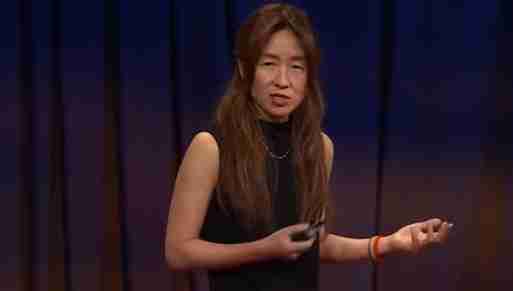
Here is the full transcript and summary of Yejin Choi’s talk titled “Why AI Is Incredibly Smart and Shockingly Stupid” at TED conference.
In this TED talk, computer scientist Yejin Choi speaks about the incredible intelligence of large-scale language models, as well as their limitations, such as small mistakes and concerns about safety and sustainability. She argues that the development of common sense is vital in ensuring ethical decision-making and that blindly scaling up AI models and training them with raw web data is not effective due to misinformation and societal biases.
Listen to the audio version here:
TRANSCRIPT:
So I’m excited to share a few spicy thoughts on artificial intelligence. But first, let’s get philosophical by starting with this quote by Voltaire, an 18th century Enlightenment philosopher, who said, “Common sense is not so common.”
Turns out this quote couldn’t be more relevant to artificial intelligence today. Despite that, AI is an undeniably powerful tool, beating the world-class “Go” champion, acing college admission tests and even passing the bar exam.
I’m a computer scientist of 20 years, and I work on artificial intelligence. I am here to demystify AI. So AI today is like a Goliath. It is literally very, very large. It is speculated that the recent ones are trained on tens of thousands of GPUs and a trillion words. Such extreme-scale AI models, often referred to as “large language models,” appear to demonstrate sparks of AGI, artificial general intelligence.
Except when it makes small, silly mistakes, which it often does. Many believe that whatever mistakes AI makes today can be easily fixed with brute force, bigger scale and more resources.
What possibly could go wrong? So there are three immediate challenges we face already at the societal level. First, extreme-scale AI models are so expensive to train, and only a few tech companies can afford to do so. So we already see the concentration of power.
But what’s worse for AI safety, we are now at the mercy of those few tech companies because researchers in the larger community do not have the means to truly inspect and dissect these models. And let’s not forget their massive carbon footprint and the environmental impact. And then there are these additional intellectual questions.
Can AI, without robust common sense, be truly safe for humanity? And is brute-force scale really the only way and even the correct way to teach AI? So I’m often asked these days whether it’s even feasible to do any meaningful research without extreme-scale compute. And I work at a university and nonprofit research institute, so I cannot afford a massive GPU farm to create enormous language models.
Nevertheless, I believe that there’s so much we need to do and can do to make AI sustainable and humanistic.
Know Your Enemy
We need to make AI smaller, to democratize it. And we need to make AI safer by teaching human norms and values. Perhaps we can draw an analogy from “David and Goliath,” here, Goliath being the extreme-scale language models, and seek inspiration from an old-time classic, “The Art of War,” which tells us, in my interpretation, know your enemy, choose your battles, and innovate your weapons.
Let’s start with the first, know your enemy, which means we need to evaluate AI with scrutiny. AI is passing the bar exam. Does that mean that AI is robust at common sense? You might assume so, but you never know.
So suppose I left five clothes to dry out in the sun, and it took them five hours to dry completely. How long would it take to dry 30 clothes? GPT-4, the newest, greatest AI system says 30 hours. Not good.
A different one. I have 12-liter jug and six-liter jug, and I want to measure six liters. How do I do it? Just use the six liter jug, right? GPT-4 spits out some very elaborate nonsense. Step one, fill the six-liter jug, step two, pour the water from six to 12-liter jug, step three, fill the six-liter jug again, step four, very carefully, pour the water from six to 12-liter jug. And finally, you have six liters of water in the six-liter jug that should be empty by now.
OK, one more. Would I get a flat tire by bicycling over a bridge that is suspended over nails, screws, and broken glass? Yes, highly likely, GPT-4 says, presumably because it cannot correctly reason that if a bridge is suspended over the broken nails and broken glass, then the surface of the bridge doesn’t touch the sharp objects directly.
OK, so how would you feel about an AI lawyer that aced the bar exam yet randomly fails at such basic common sense? AI today is unbelievably intelligent and then shockingly stupid. It is an unavoidable side effect of teaching AI through brute-force scale.
Some scale optimists might say, “Don’t worry about this. All of these can be easily fixed by adding similar examples as yet more training data for AI.” But the real question is this. Why should we even do that? You are able to get the correct answers right away without having to train yourself with similar examples.
Choose Your Battles
Children do not even read a trillion words to acquire such a basic level of common sense. So this observation leads us to the next wisdom, choose your battles. So what fundamental questions should we ask right now and tackle today in order to overcome this status quo with extreme-scale AI?
I’ll say common sense is among the top priorities. So common sense has been a long-standing challenge in AI. To explain why, let me draw an analogy to dark matter. So only five percent of the universe is normal matter that you can see and interact with, and the remaining 95 percent is dark matter and dark energy.
Dark matter is completely invisible, but scientists speculate that it’s there because it influences the visible world, even including the trajectory of light.
So for language, the normal matter is the visible text, and the dark matter is the unspoken rules about how the world works, including naive physics and folk psychology, which influence the way people use and interpret language.
So why is this common sense even important? Well, in a famous thought experiment proposed by Nick Bostrom, AI was asked to produce and maximize the paper clips. And that AI decided to kill humans to utilize them as additional resources, to turn you into paper clips. Because AI didn’t have the basic human understanding about human values.
Now, writing a better objective and equation that explicitly states: “Do not kill humans” will not work either because AI might go ahead and kill all the trees, thinking that’s a perfectly OK thing to do.
Common Sense
And in fact, there are endless other things that AI obviously shouldn’t do while maximizing paper clips, including: “Don’t spread the fake news,” “Don’t steal,” “Don’t lie,” which are all part of our common sense understanding about how the world works.
However, the AI field for decades has considered common sense as a nearly impossible challenge. So much so that when my students and colleagues and I started working on it several years ago, we were very much discouraged. We’ve been told that it’s a research topic of ’70s and ’80s; shouldn’t work on it because it will never work; in fact, don’t even say the word to be taken seriously.
Now fast forward to this year, I’m hearing: “Don’t work on it because ChatGPT has almost solved it.” And: “Just scale things up and magic will arise, and nothing else matters.” So my position is that giving true common sense human-like robots common sense to AI, is still moonshot. And you don’t reach to the Moon by making the tallest building in the world one inch taller at a time.
Extreme-scale AI models do acquire an ever-more increasing amount of commonsense knowledge, I’ll give you that. But remember, they still stumble on such trivial problems that even children can do.
So AI today is awfully inefficient. And what if there is an alternative path or path yet to be found? Innovation. A path that can build on the advancements of the deep neural networks, but without going so extreme with the scale.
So this leads us to our final wisdom: innovate your weapons. In the modern-day AI context, that means innovate your data and algorithms. OK, so there are, roughly speaking, three types of data that modern AI is trained on: raw web data, crafted examples custom developed for AI training, and then human judgments, also known as human feedback on AI performance.
If the AI is only trained on the first type, raw web data, which is freely available, it’s not good because this data is loaded with racism and sexism and misinformation. So no matter how much of it you use, garbage in and garbage out. So the newest, greatest AI systems are now powered with the second and third types of data that are crafted and judged by human workers.
It’s analogous to writing specialized textbooks for AI to study from and then hiring human tutors to give constant feedback to AI. These are proprietary data, by and large, speculated to cost tens of millions of dollars. We don’t know what’s in this, but it should be open and publicly available so that we can inspect and ensure diverse norms and values.
So for this reason, my teams at UW and AI2 have been working on commonsense knowledge graphs as well as moral norm repositories to teach AI basic commonsense norms and morals. Our data is fully open so that anybody can inspect the content and make corrections as needed because transparency is the key for such an important research topic.
Learning Algorithms
Now let’s think about learning algorithms. No matter how amazing large language models are, by design they may not be the best suited to serve as reliable knowledge models. And these language models do acquire a vast amount of knowledge, but they do so as a byproduct as opposed to direct learning objective.
Resulting in unwanted side effects such as hallucinated effects and lack of common sense. Now, in contrast, human learning is never about predicting which word comes next, but it’s really about making sense of the world and learning how the world works. Maybe AI should be taught that way as well.
So as a quest toward more direct commonsense knowledge acquisition, my team has been investigating potential new algorithms, including symbolic knowledge distillation that can take a very large language model as shown here. That I couldn’t fit into the screen because it’s too large, and crunch that down to much smaller commonsense models using deep neural networks.
And in doing so, we also generate, algorithmically, human-inspectable, symbolic, commonsense knowledge representation, so that people can inspect and make corrections and even use it to train other neural commonsense models.
More broadly, we have been tackling this seemingly impossible giant puzzle of common sense, ranging from physical, social and visual common sense to theory of minds, norms and morals. Each individual piece may seem quirky and incomplete, but when you step back, it’s almost as if these pieces weave together into a tapestry that we call human experience and common sense.
We’re now entering a new era in which AI is almost like a new intellectual species, teaching AI Common Sense with unique strengths and weaknesses compared to humans. In order to make this powerful AI sustainable and humanistic, we need to teach AI common sense, norms and values. Thank you.
QUESTION AND ANSWER SESSION
Chris Anderson: Look at that. Yejin, please stay one sec. This is so interesting, this idea of common sense. We obviously all really want this from whatever’s coming. But help me understand. Like, so we’ve had this model of a child learning. How does a child gain common sense apart from the accumulation of more input and some, you know, human feedback? What else is there?
Yejin Choi: So fundamentally, there are several things missing, but one of them is, for example, the ability to make hypothesis and make experiments, interact with the world and develop this hypothesis. We abstract away the concepts about how the world works, and then that’s how we truly learn, as opposed to today’s language model. Some of them is really not there quite yet.
Chris Anderson: You use the analogy that we can’t get to the Moon by extending a building a foot at a time. But the experience that most of us have had of these language models is not a foot at a time. It’s like, the sort of, breathtaking acceleration. Are you sure that given the pace at which those things are going, each next level seems to be bringing with it what feels kind of like wisdom and knowledge.
Yejin Choi: I totally agree that it’s remarkable how much this scaling things up really enhances the performance across the board. So there’s real learning happening due to the scale of the compute and data.
However, there’s a quality of learning that is still not quite there. And the thing is, we don’t yet know whether we can fully get there or not just by scaling things up. And if we cannot, then there’s this question of what else? And then even if we could, do we like this idea of having very, very extreme-scale AI models that only a few can create and own?
Chris Anderson: I mean, if OpenAI said, you know, “We’re interested in your work, we would like you to help improve our model,” can you see any way of combining what you’re doing with what they have built?
Yejin Choi: Certainly what I envision will need to build on the advancements of deep neural networks. And it might be that there’s some scale Goldilocks Zone, such that — I’m not imagining that the smaller is the better either, by the way. It’s likely that there’s right amount of scale, but beyond that, the winning recipe might be something else. So some synthesis of ideas will be critical here.
Chris Anderson: Yejin Choi, thank you so much for your talk.
SUMMARY OF THIS TALK:
Yejin Choi’s talk, “Why AI Is Incredibly Smart and Shockingly Stupid,” emphasizes the dichotomy between artificial intelligence’s impressive capabilities and its often surprising shortcomings in basic reasoning. Here are the key takeaways from her talk:
AI’s Power and Limitations: Despite AI’s achievements like beating the “Go” champion or acing tests, Choi highlights its tendency to make simple errors, questioning the brute-force approach to AI development. AI’s lack of robust common sense raises concerns about its reliability and safety.
Societal and Environmental Impact: The development of extreme-scale AI models is not only expensive, concentrating power in a few tech companies, but also has a significant environmental impact due to their massive carbon footprint. This centralization also hinders broader research community access to these models for inspection and improvement.
The Necessity of Common Sense in AI: Choi stresses the importance of instilling AI with common sense, likening its absence to a lack of understanding of basic human values and norms. She compares common sense in AI to dark matter in the universe – invisible yet influential. She argues that AI, like humans, should not just predict the next word but understand how the world works.
Scaling Is Not the Sole Solution: Contrary to the popular belief that scaling up AI would solve its issues, Choi argues that AI’s problems with common sense won’t be fixed simply by increasing the size of models. She points out that children acquire basic common sense without needing to process a trillion words.
Innovative Approaches to AI Development: Choi advocates for innovation in AI beyond just scaling. She suggests focusing on different types of training data and developing new learning algorithms. She emphasizes the need for AI models to be trained on data crafted and judged by humans to avoid biases and misinformation.
Democratizing AI: She proposes making AI smaller and more accessible to democratize the technology. This involves teaching AI human norms and values to make it safer.
The Importance of Transparency and Openness: Choi highlights the significance of transparency in AI research. She discusses her work on commonsense knowledge graphs and moral norm repositories, advocating for these resources to be openly available for public inspection and correction.
Symbolic Knowledge Distillation: Her team is working on new algorithms that distill large language models into smaller, more manageable commonsense models. These models are designed for human inspection and correction, aiming to create a more accurate and reliable representation of commonsense knowledge.
AI as a New Intellectual Species: Choi concludes by envisioning AI as an “intellectual species” with unique strengths and weaknesses. To harness its power responsibly, it’s crucial to imbue AI with human common sense, norms, and values.
Choi’s talk presents a balanced view of AI’s potential and pitfalls, urging a thoughtful and innovative approach to AI development that prioritizes humanistic values and common sense.