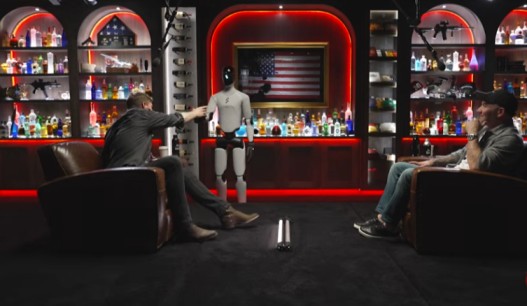
Editor’s Notes: In this episode of the Shawn Ryan Show, SRS #292, entrepreneur Brett Adcock joins the program for an in-depth conversation about the rapidly evolving world of robotics and AI. As the founder and CEO of Figure AI, Adcock shares his vision for general-purpose humanoid robots and discusses the technical and ethical challenges of bringing these machines into our daily lives. From his early days in central Illinois to founding multi-billion dollar companies like Archer Aviation, Adcock details his journey of “bending the world” through innovation. The interview also touches on the future of productivity, the importance of human-centric AI, and the relentless drive required to build world-changing technology. (March 30, 2026)
TRANSCRIPT:
Introduction
SHAWN RYAN: Brett Adcock, welcome to the show.
BRETT ADCOCK: Thanks for having me on.
SHAWN RYAN: I’ve been looking forward to this for a long time. The robotics guy.
BRETT ADCOCK: Yeah.
SHAWN RYAN: Let me give you an intro here real quick before we get started. Brett Adcock, a serial entrepreneur and founder and CEO of Figure AI, building general purpose humanoid robots for labor automation. Founded Vettery, an AI driven talent marketplace which was acquired for approximately $100 million. Co-founder of Archer Aviation, developing electric vertical takeoff and landing EVTOL aircraft. Founded Cover, an AI security company using NASA Jet Propulsion Laboratory technology to detect concealed weapons in K through 12 schools. That’s amazing.
In late 2025, you launched Hark, a new AI lab, self funded with $100 million to build what you call human centric AI. You’ve raised billions in venture capital and Time named you one of the 100 most influential people in AI in 2024. Married and a father of three children. And before we get too far into it, we always start off with a gift.
BRETT ADCOCK: Thank you.
SHAWN RYAN: He didn’t give you any tips on that, did he?
BRETT ADCOCK: All right, I gotta hit one.
SHAWN RYAN: What do you think?
BRETT ADCOCK: They’re great.
SHAWN RYAN: You can leave this guy here if you want to.
BRETT ADCOCK: This guy. This guy’s staying.
SHAWN RYAN: That is the coolest thing I’ve ever seen as far as giving somebody a gift on the show. That was awesome.
BRETT ADCOCK: Yeah, that was awesome. I got you another gift. Something you keep here, put on the shelves. Thank you. Yeah.
SHAWN RYAN: No way.
BRETT ADCOCK: Yeah. Little robot.
SHAWN RYAN: That is awesome. Thank you.
BRETT ADCOCK: Yeah, no problem.
SHAWN RYAN: Very cool. Well, Brett, we got a lot to talk about here. So how many companies are you running now?
Brett Adcock’s Ventures and Sleepless Nights
BRETT ADCOCK: I’m not sleeping. I got too many. Too many. Just kids and work and just…
SHAWN RYAN: Yeah, that thing is amazing.
BRETT ADCOCK: Never sleeping anymore.
SHAWN RYAN: I’ll bet, I’ll bet.
BRETT ADCOCK: Yeah. What’d you think of the robot?
SHAWN RYAN: I think it’s incredible. I can’t wait to talk more about it. So a couple things. Just one more thing to knock out here before we get into it.
I got a Patreon account, it’s a subscription account and it’s quite the community. And they’re honestly the reason that I get to sit here. So they get the opportunity to ask every single guest a question. This is from Stephen Casey:
“In today’s marketplace, we find that AI platforms can sometimes invent answers rather than admitting to a lack of information. Combining this in the physical realm of robotic action seems to multiply the downside effects exponentially. What safeguards are in place that we can put our trust in to prevent the potential for downstream harm to humans as a result of bad programming or computing errors?”
Safety in Humanoid Robotics
BRETT ADCOCK: Yeah, we don’t want the Terminator popping out here. We definitely don’t want that. I think one thing to say is, like, four years ago when we started the company, there was no path for humanoid robots to make it into people’s homes in the next 10 years. There was no good story. You had big hydraulic humanoids out there. They were all hand coded to do certain tasks.
What you really need is a cheaper electric humanoid that you can basically use neural nets with — basically an AI first strategy. None of that existed. I think we’re thankful now, looking back, that it feels like we somehow pulled 10 years of the future forward. We have electric humanoids that are reasonably priced, that can do useful human work with neural nets. And it’s just an incredible place to be in, getting those questions — which is, how do we make this work now at scale in a safe way? Because that’s the spot we want to be in. Not trying to make this work for 20 years.
SHAWN RYAN: Yeah.
BRETT ADCOCK: I think it’s a very tough problem. We have to get the product cheap enough, we have to make enough of them, we have to make the performance work in very complicated things — like walk around a house and do dishes, laundry, very complex things. Small kids can’t do this. It takes adults to do this level of work, and we need all that done in a mechanical system that doesn’t have any humans around for most of it, that does it autonomously without making any mistakes. And then, as your fan mentioned, we have to do it safely over time. It’s just an incredibly complex problem.
For us, we have a safety strategy both intrinsically — we want the robot hardware and the robots around humans to just be safe at all times — and separately, there’s a bunch of semantic safety and other things that we have either put in place or are putting in place now to make the robot work safely in the environment. You have a candle at home, you don’t want the robot to accidentally knock it over.
I think the direct answer is there’s still a lot of work to get this thing to a point where we trust it to be autonomous next to my kids all day long in my house. That’s the kind of trust you need for one in your house. We’ve had many robots throughout my house in testing for the last year or so, and near my kids in some aspects, but we’re always monitoring it.
SHAWN RYAN: What are your kids like?
BRETT ADCOCK: They just kind of treat it as normal now.
SHAWN RYAN: Do they try to talk to them?
BRETT ADCOCK: Yeah, talk to it. They want to go jump on it and touch it and do kid things. They want to go touch it and talk to it and be around it. And we’re still at the stage where I don’t feel comfortable enough to just let loose and say, here’s a robot, my kids are there, and feel okay. We’re not there yet. I think we will be in the next several years.
SHAWN RYAN: What’s the longest they’ve been around any one particular robot?
BRETT ADCOCK: We’ve had a robot in my house for maybe a couple of months, doing work on and off — daily, sometimes every other day. The kids are at school or sometimes at home, so they weren’t always around whenever the robots were running, but a lot of times. That was just our home robot.
SHAWN RYAN: Do they get attached to them?
BRETT ADCOCK: They give emotional names to the robot, and yeah, they love it. It’s actually a question we’re asking in the office — if you have a robot in the home and it’s got some character to it, a little wear and tear, do you want to keep that robot or do you want a new one?
SHAWN RYAN: That’s what I’m wondering. What’s the emotional attachment? I think kids are the perfect…
BRETT ADCOCK: My kids wanted it there.
SHAWN RYAN: “We’re not getting rid of this guy.”
BRETT ADCOCK: Yeah, it’s got a little banged up here and there, has a tear here, and they just loved it.
SHAWN RYAN: That is wild, man. Yeah, that is wild.
BRETT ADCOCK: Honestly, in our lifetime, we will be fortunate enough for every human to have a humanoid — almost like a phone or a car.
Is AI in a Bubble?
SHAWN RYAN: Wow. Yeah. We were talking — I mean, just some of the stuff that you just mentioned, the complexity of the problem that you’re solving here. All these little problems, like knocking over a boiling pot of water — I never would have thought of that. Just thinking about something that happens every day, and then you think of all the things that happen every day in a regular household, and it’s like problem city, man.
BRETT ADCOCK: It’s like a fun house of problems. There’s just problems everywhere. Hardware problems, AI problems, problems scaling and commercializing and getting the system reliable, manufacturing problems. We have a problem fun house. If you want to come by campus and check it out.
SHAWN RYAN: I’ll bet you do. Well, some people say AI is in an economic bubble. And as of this recording, Polymarket says there’s going to be an 18% chance that the AI bubble will burst by December 31, 2026. What do you think about that? Is AI in a bubble?
BRETT ADCOCK: I think you’ll see some of the most transformative events in technology happen over the next 36 months that we’ve ever seen — ever.
SHAWN RYAN: I don’t feel like we’re in a bubble here. I feel like we’re very much…
BRETT ADCOCK: We’re scratching the surface. I’m watching AI in a human body do human work — and it’s early. We don’t have thousands of robots yet. We have hundreds now, but we need millions of robots to make an impact. That’s just going to take some time and it’s going to be crazy cool.
So we’re just at the start line of that happening — how do we get AI out into the physical world at scale? That will for sure work and it’ll go really far in our lifetimes.
And then separately, we have AI now that can use computers like humans and can think. I showed you a little bit of that here before the show. That will manifest to a point where, both in the physical and digital world, you basically have these little mini humans that can do human-like work — they can think and use computers and use machines.
And that’s going to lead to such a productivity increase. We measure GDP per capita per human, but if you’re able to make millions, billions, tens of billions of synthetic humans — in the case of the digital world, maybe trillions — that’ll lead to the greatest increase in productivity we’ve ever seen in our lifetime, and ultimately reduce goods and service prices to unprecedented levels. Like a true age of abundance.
SHAWN RYAN: Wow. What do you think humans will be doing?
The Future of Human Work and AI Assistance
BRETT ADCOCK: I hope I don’t have to — I woke up today, I was loading the dishwasher, getting my kids breakfast, just busy work. My kids are sitting there and I’m doing work. I wish I was just free from that. And then throughout my day I’m trying to call the car service, trying to get on my flight, coming here, ordering lunch — all this stuff I’m doing all day that I don’t want to do. I want to be fully free from that burden.
SHAWN RYAN: I get it.
BRETT ADCOCK: I want to be clear-headed. I want my AI to run a little Brett Adcock operating system and run my life — all these things I have in my head about what to order, pay a tax bill, do this meeting, go back and do an engineering stand-up. I want all that stuff to be in my operating system, like a human in a box.
The AI-Powered Future of Daily Life
SHAWN RYAN: So you’re basically saying the way this is going to turn out is your brain. I’m going to butcher this. You’re basically exporting your brain and all the tasks that are going on in your brain. You’re disseminating it to, to robots and
BRETT ADCOCK: they’re going to delegate all this out.
SHAWN RYAN: That’s amazing.
BRETT ADCOCK: That’s like we’ll, we’ll do that in like 24 months. Like we’ll have all this stuff so good that you’ll like, you won’t like go order food anymore. Like book stuff, like do a lot of work behind a computer, like physical stuff in the world of like doing laundry and dishes and just the legwork. Yeah, I don’t like. No. Does anybody want to do that? Like I don’t want to do it.
SHAWN RYAN: I don’t.
BRETT ADCOCK: Yeah, yeah. So like you clear all that for my life, like I gotta spend time with my kids, like enjoy life, like kind of be like, I guess like clear headed, do stuff I really love. Like I love working but I don’t like doing all this busy work. Yeah, it’s just like not, it’s just like manual like, just like labor I’m doing behind computers or like in the physical world and just like I want to delegate that out to my AI to do and fully automate it out.
SHAWN RYAN: I def. I don’t know why I’ve never thought about that. I’ve, I’ve never thought about it. Like I’ve always looked at it as fear. I’ve always been like, oh, they’re going to take everything over.
BRETT ADCOCK: It’s a compression algorithm. Like we’re basically running a large scale compression. So like I think the way I look at it now is we basically had built like synthetic human intelligence that can use computers and machines. So like I’m going to delegate out all this busy work on both my digital life and physical life to like to robots and they’ll just do all of it.
But it’s good. I mean like there’s like we have AI systems now in our lab at Hark that can use computers like a human can. It can talk to you. Like I just made a phone call to ours right before we started and talked about my schedule and how to ask for things and ask it for things and have it do things.
SHAWN RYAN: Yeah, you had a chicken salad ordered, delivered to your office.
BRETT ADCOCK: Yeah, exactly, exactly. But nothing besides a single like “hey, make this order” and you can spin up computers to do that virtually. And then physically like I’ll have all this work done by my robotics, both in the commercial workforce in the billions like manufacturing and health care and construction. And every human at some point will have a humanoid just to do all that busy work for you. And not only that but like something to come home to that you can talk to that like will know you.
SHAWN RYAN: Wild.
BRETT ADCOCK: Yeah, it’s like the, yeah, it’s going to happen now which is like really going to be fun.
Brett Adcock’s Early Life and Background
SHAWN RYAN: Well, I would like to do a little bit of a life story on you if that’s. Does that sound good to you?
BRETT ADCOCK: Yeah, let’s do it.
SHAWN RYAN: Where’d you grow up?
BRETT ADCOCK: Central Illinois.
SHAWN RYAN: Central Illinois?
BRETT ADCOCK: Yeah. Like a small town, like 700 people.
SHAWN RYAN: 700 people? Wow, that’s even smaller than where I grew up.
BRETT ADCOCK: Yeah. Where’d you grow up?
SHAWN RYAN: I grew up in small town, Chillicothe, Missouri.
BRETT ADCOCK: How small?
SHAWN RYAN: About 8,000 people at the time.
BRETT ADCOCK: Yeah, we didn’t have. We didn’t have anything. 700 people, man.
SHAWN RYAN: What were you into?
BRETT ADCOCK: Yeah, so like, kids, sports, computers. Like, I got into computers really early, did a bunch of sports. I grew up on a farm, so it was corn and soybeans. My family was third generation of this, so.
SHAWN RYAN: No kidding?
BRETT ADCOCK: Yeah. Yeah.
SHAWN RYAN: So third generation, three generations of farmers.
BRETT ADCOCK: Three generation agriculture. Farming.
SHAWN RYAN: And then we switch over to.
BRETT ADCOCK: Yeah, yeah, we’re doing like humanoid robots now and AI systems. But yeah, I got really interested in computers, like, really young. Started a bunch of like startups in like, high school and college.
SHAWN RYAN: But what kind of startups?
BRETT ADCOCK: You know, at first, just like mostly things on the web, like, selling things. Did a bunch of like different types of like products I was selling on the Internet throughout like high school and college. Small, like drop shipping, retail electronics, like all kinds of things. Legion marketing and just fun stuff. It was like nothing serious, just like playing around the Internet trying to make some money.
I didn’t grow up with money, so it was like the Internet was a way to like, maybe make some money. Like, it was really fun. I loved like the ability to go out and create things and kind of control my destiny. So it’s just something I attached to really early on.
SHAWN RYAN: Right on, right on. Do you have brothers and sisters?
BRETT ADCOCK: I have a brother, yeah.
SHAWN RYAN: Well, I mean, what is he, a farmer?
BRETT ADCOCK: Colby? No, he actually runs an AI defense company called Scout. They’re basically building autonomy and like AI models for defense in the military.
SHAWN RYAN: So you guys both got into AI?
BRETT ADCOCK: We both got into AI. We live like a block away from each other today. Like, serious. Yeah, we grew up together, really close, went to the same college. We’re like different ages, a couple years apart. And then we were in New York for about 15 years together and then he just moved out to California. We lived literally a block away. See him almost every weekend. He has a startup like basically 10 minutes away from mine. And he’s doing great, man.
SHAWN RYAN: What do your parents think when you’re coming home with what you guys are involved in and what you’re creating? This is such a wild. You know what I mean? From farmer to this.
BRETT ADCOCK: Honestly, like, I think one thing my parents both drilled into, I think both of us, like really early was like, farming is like very entrepreneurial. Like, my dad ran his own business. Like, you kind of have to go out there and put the work in or you’re not going to get paid. So early on, he’s like, “Listen, if you want to control your destiny and if you want to make money and like, be able to actually do what you really want in life, you need to like run your own business.”
And that was like beat into our heads growing up. Like, at some point you need to probably get out of here, get out of farming. It’s not doing well and you need to start something on your own. And so just kind of by default, I was like, “Okay, this is what I’m going to go do,” since I was a kid.
SHAWN RYAN: Yeah, but you got some proud parents, man.
BRETT ADCOCK: Yeah, parents are great. Yeah, they’re like, “What the hell’s going on here? What are you doing?” But I’ve been doing pretty crazy stuff for a while now, so I think it’s gotten to a point where it’s like, even at Archer, we’re building like 6,000 pound electric aircraft, and before that, doing Internet startup stuff. But it’s kind of been, working on crazier stuff now for a little over a decade.
SHAWN RYAN: Were you rebuilding stuff as a kid too?
BRETT ADCOCK: Yeah, constantly building stuff.
SHAWN RYAN: What kind of stuff?
BRETT ADCOCK: Stuff on the farm, building stuff in software and Internet. Just like, I just love building stuff all day. I’m like big into science and mathematics. Like, I’m more of a visual learner too. Like, I like building stuff and seeing it and touching things.
And even like, honestly doing Internet for like, I did work in the Internet and software for like 10 years. I just like, always sat there every day, like, wishing I was working on hardware, stuff I could like touch with my hands. Like growing up was like, I was rebuilding computers or just like on the farm and building stuff. I always like envied things that you can go touch and build.
SHAWN RYAN: Wow.
BRETT ADCOCK: Basically like atoms, man.
From University to Building Vettery
SHAWN RYAN: So where’d you go to school?
BRETT ADCOCK: I went to University of Florida.
SHAWN RYAN: University of Florida?
BRETT ADCOCK: Yep.
SHAWN RYAN: Where do you go from there?
BRETT ADCOCK: So after school, I moved to New York and I started working on software startups. And during college I was working on basically a bunch of like small Internet things. And then kind of like shortly after college, I started a company called Vettery. And the goal was to basically build like a. I got really kind of going through college is like, you gotta look for a job. You had to go find something full time and got caught up in like the whole interviewing process of like looking for jobs. I just thought it was so broken, like applying for jobs and like never hearing back. And like you have to go through headhunters and then it basically became like a somewhat of this like boys club of like trying to figure out where you went to school. And then like certain people knew other folks of like how to get in. And it was just like not very much a meritocracy. And I just thought the whole process was extremely broken.
And so I started Vettery. We were basically an AI recruiting marketplace. So the goal was like, if we can get all the world’s talent and hiring on one platform, understand their needs really well, can we make matches at scale like without any humans involved? And like the headhunting industry is like hundreds of billions of dollars a year.
SHAWN RYAN: I won’t, I won’t even. I won’t use it.
BRETT ADCOCK: No. Like, I know.
SHAWN RYAN: I just, I keep hearing everybody gets ripped off.
BRETT ADCOCK: Ripped off. It’s so expensive. Like pay like $50,000 a hire. It’s like insane.
SHAWN RYAN: And then they’ll coax the guy out that they just brought to you and have them go to another job.
BRETT ADCOCK: Yeah, like the Fortune as well. So they get paid a commission.
SHAWN RYAN: So. Veteran veterans Connector.
From Vettery to Archer Aviation: Building a Flying Car Company
BRETT ADCOCK: Yeah, connector. Well, funny enough, we ended up selling to the world’s largest recruiting company that does staffing. But let’s leave that for a minute. We basically started in 2012 and the goal was, how do we put a lot of job seekers and a lot of employers on a platform, understand their preferences and match them at scale? How do we use algorithms? At the time we were like, let’s use AI. But it was basically, how do we use a lot of algorithms to figure out what people want and then make matches? So you can just push of a button, connect the right folks and then make placements. And then we ended up charging. Most of our revenue came from subscriptions from big companies, like big banks or startups or tech companies, basically looking for talent. We started just in tech in the US. At one point we had about a little under 20 or so cities globally that we were operating in.
SHAWN RYAN: Wow.
BRETT ADCOCK: But most of it was tech talent, tech spaces, at that point.
SHAWN RYAN: How long ago was this?
BRETT ADCOCK: Started in 2012 and then ended up selling the business in 2017 or 2018. So about five, six years.
SHAWN RYAN: Right on.
BRETT ADCOCK: Yeah.
SHAWN RYAN: Then where do we go?
BRETT ADCOCK: Okay, so Vettery was a really tough one. I basically went fully all in with the business. Went into debt. At one point in 2015 the business was having a tough time, and then things ended up going really well. The business completely hockey sticked in growth when we got all the things figured out. And then we ended up getting approached by the world’s largest recruiting company — the same groups you and I are talking about. The same groups were trying to take out our business, and they were like, “We want to acquire the company.”
At the time I was completely dead broke and had put everything into the business. It was almost seven years in. We were excited about an acquisition a year before that — $10 million from one of the big tech companies. And they came in at $110 million. It was a good time for me. I felt like the business was doing well, I learned a lot, and I was kind of ready for my next chapter. So we ended up selling that business to the Adecco Group. They’re the world’s largest recruiting company.
SHAWN RYAN: But you didn’t even have it for sale. They just approached you.
The Birth of Archer Aviation
BRETT ADCOCK: Yeah, we didn’t hire a bank or anything. At the time we were doing, I don’t know, 20, 30,000 interview requests a week — no humans involved. Think about how many humans it would take to do 20 or 30,000 interview requests and then manage all those processes. The growth was just unbelievable.
There’s something better than having a human jam you into roles. If you can get all the world’s talent and all the world’s companies looking, you can really create an amazing environment where you can get people to the right jobs. Right now it’s not like that. It’s a really black box — both finding talent and looking for a job. It’s just a terrible experience. So that clicked. The world’s largest recruiting company came in and said, “We’ve got to buy this thing.” And yeah, they did.
I sold the business and it was great. It was a good time for me. I really wanted to do something much bigger. So I took about a year — from the time I got the term sheet to when we actually sold and closed. It’s a long process. You have to go through tons of docs, then you announce the deal, then you actually close the deal, then it went into escrow, then it finally hit my account. It’s one of those processes.
I wanted to go work on something really important and hard. There were a couple of industries I had been interested in — robotics, aviation, and some areas of security — basically since college. I spent a lot of time trying to figure out if I was going to work on school shootings, like basically a 10x solution. I was like, “Man, there’s got to be something to do here.” And secondly, I really wanted to work on flying cars. Having watched lots of sci-fi as a kid, I was like, “Man, I really want to go work on that.”
There was a near-term problem of helping with security in schools K through 12, mostly in the US, and then there was flying cars. I ended up making the decision to work on flying cars. So in 2018, shortly after the sale of Vettery, I started Archer Aviation.
Basically, the story here is you can build an electric aircraft that can take off like a helicopter. If you take off like a helicopter, you don’t need to place airports outside of cities — you can place them inside of cities. Think about how a helicopter can take off from a building, a helipad, or an airport. If you can take off vertically, you can basically nestle the aircraft inside of cities.
Half the world lives in cities today. By the middle of the century it’ll be like 70% of the world, and you just can’t get around — it’s gridlocked everywhere in major cities. It just sucks to go 20, 30 miles. It takes like an hour in most cases. So basically you can design an aircraft that can take off vertically and then fly like an airplane, so you can get a lot of distance. And you can rearchitecture the whole aircraft to be fully electric. The reason you want to do that is for cost and safety. You can make it a lot less expensive, and you can put a lot fewer parts in the aircraft, which is also good for safety.
So basically you can build an electric flying car that you can move around. Instead of calling an Uber or driving — which might take you an hour in LA, SF, or New York — you can fly there in 10 minutes. If we can pull everybody together in a kind of Uber pool style business model, you can do it for as cheap as an Uber.
But the problem was I didn’t know anything about how to build electric aircraft.
SHAWN RYAN: I know you just sold your business for $110 million, but where do you get the confidence to go, “I’m going to build vertical takeoff and landing flying cars now”?
Learning to Build Electric Aircraft from Scratch
BRETT ADCOCK: I didn’t wake up to this world knowing how to build software. I learned how to do that, how to run engineering, and how to run the company — a lot through trial and error. I just felt like I could learn it.
I started in industrial and systems engineering at University of Florida and then ran engineering and ran the company at Vettery. So I basically hit the books. I tried to learn as much as possible about three subject areas. First was electrification, which at the time electric vehicles were really doing well. Second was vertical takeoff and landing — vertical lift — which is like traditional rotorcraft or helicopters. And the third is winged aircraft, like airplanes. You really need wings.
So I basically had my basement downstairs at home filled with every possible book on these subjects you could imagine, and started reading as much as I possibly could. This was during the year transition as I was moving out of Vettery into Archer.
I also found a small community of folks that were hosting on-site, either half-week or week-long courses on these subjects — sometimes sponsored by NASA or by colleges — on rotorcraft, electric propulsion, or winged aircraft aerodynamics. I would go to these and try to learn as much as possible.
It got to the point where I was completely obsessed with this algorithm I was building on electric aircraft sizing — how would you actually build an electric aircraft?
What’s interesting is that in rotorcraft, you basically want to create the most efficient lifting device possible. You need as much rotor disc area — in terms of surface area — as you possibly can. That’s why helicopter rotors are so large. That reduces power and gets you up off the ground.
In electric aircraft, the problem you’re starting with is you have about 1/30 of the energy in a battery pack compared to kerosene.
SHAWN RYAN: Wow.
BRETT ADCOCK: So you’re off the bat with 1/30 less range or 1/30 less energy. Power becomes the dominating factor of how to basically build electric aircraft. How do you get power down as much as possible? You really want a lot of disc area. A lot of disc area is good for power, but it’s also bad because you have no redundancy in the system. You have one rotor blade — if it doesn’t go well, you go down.
With electrification, you can basically build much smaller rotors and go fully electric. The reason you can’t do that with traditional turbofans or engines is it gets too inefficient at these sizes. You can’t build 12 propellers on a helicopter — the efficiency just drops to nothing. But with electrification, you can size down electric motors to small sizes and they’re still 90% efficient. A small electric motor on the table or a big one the size of your chair — same efficiency. When you do that, you create a lot of redundancy across the system. So you can build an aircraft with 12 electric motors.
SHAWN RYAN: So the rotors are underneath?
From EVTOL to Archer Aviation
BRETT ADCOCK: The problem here is you can design it however you want. You could put a bunch of rotors along the wings. You can put them laterally across the fuselage. You can make one big one. You can make 30 small ones. So how do you design it? That’s the problem I hit in 2018 — how do you actually do this?
It basically was like a crazy man trying to design this algorithm — what is the ideal aircraft design? And then how do I go build it?
So I was actually at a Hyatt Regency hotel in Atlanta in 2018. I was on an electric propulsion week-long design course and an aerodynamics course for winged aircraft. And I met a guy there who was basically in the engineering department at University of Florida. He was doing his PhD in aerospace. I asked him what he was doing there and he said, “I’m from University of Florida.” I was like, “Oh, I went to school there as well.” I was like, “What are you doing here?” He’s like, “Oh, I want to go do a career in EVTOL aircraft.” It’s called electric vertical takeoff and landing. A helicopter is a VTOL and you put a little E in front, so we’re electric now.
He asked me what I was doing there. I was like, “I’m starting a company to do this and I need to figure out how to go build these things.” And he’s like, “Well listen, my professor runs a small drone lab. He’s got a full building, he’s got 12 PhDs. Why don’t you come down and meet him and see if you can start building aircraft with him.”
So I flew down that weekend to go meet his professor who runs all of basically mechanical engineering and aerospace. Long story short, I ended up taking over his lab and me and him and his team started building aircraft in 2018 and 2019 down at University of Florida. I temporarily moved down there with my daughter at the time and my wife, living in Gainesville, Florida. It was great.
We ended up building — I ended up funding a lab right off of Archer Road, a new lab, because we needed more space. We ended up calling the business Archer Aviation, as that is the main road down at University of Florida. And I spent the next year, year and a half basically modeling and building electric EVTOL aircraft.
SHAWN RYAN: Holy.
BRETT ADCOCK: Yeah. And it was a great time in my life. The problem is there was no intersection of folks that knew electric, knew rotorcraft, or knew airplanes. There was no Venn diagram of overlap.
SHAWN RYAN: Gotcha.
BRETT ADCOCK: So there was nobody in the world that understood how all this stuff works. So I had to go from scratch, learn it from first principles, and then ended up moving the company out to California basically a few years into the business. Things took off from there. We built bigger aircraft. I took the company public within three years of starting it. We’re a $6 billion publicly traded company today. We’ve designed basically four or five generations of aircraft at Archer.
It was hard. It really set me up well for doing Figure and Cover and the rest of the stuff we can talk about later. But it was hard. Even going public was probably one of the hardest experiences of my life.
Going Public: The SPAC Process and the Lawsuit
SHAWN RYAN: Really? Why is that?
BRETT ADCOCK: We went public through a SPAC process. SPACs at the time, like four or five years ago, were all the rage.
SHAWN RYAN: Okay.
BRETT ADCOCK: It was a special purpose acquisition company. So it was basically companies that were going public through a merger, like a reverse merger. It was hard because in 2018, 2019, coming off of software, I had never done hardware before. So A, it was hard to raise capital. And B, there was nobody funding deep tech electric vertical takeoff and landing companies. The big venture capital groups were not funding SpaceX or Tesla or Rivian. None of these were getting funded by traditional investors. They weren’t raising money from the named investors we all know about now.
SHAWN RYAN: Oh, shit. Are they always behind like that?
BRETT ADCOCK: The mandate for most of these VCs in the Bay Area or Silicon Valley is not to do hardware. And if they do hardware, they don’t do deep tech. They don’t do rockets and autonomous vehicles. I don’t think there’s a single top VC in the US that’s invested in a humanoid company. As of six months ago, nothing like this. They just don’t do this stuff.
So I ended up going all in. I had just made $110 million — just sold the company for $110 million. I made a lot of money personally, and ended up going all in on Archer through the IPO, through going public. I put basically all the money in — I bought a house and the rest of the money went all into it. And it was a stressful period.
So we went public through this SPAC. The reason it was tough is we got to a point where we just couldn’t raise enough money privately. It was either raise $100 million privately at some valuation of $300, $400, or $500 million, or go public and raise a billion dollars.
SHAWN RYAN: Wow.
BRETT ADCOCK: And we ended up going public and raising a billion dollars.
SHAWN RYAN: Wow. You’ve got a huge appetite for risk.
BRETT ADCOCK: And we got sued during it.
SHAWN RYAN: Oh really?
BRETT ADCOCK: Yeah, we got sued by basically Boeing and a big startup that was founded by Larry Page, the Google founder.
SHAWN RYAN: And that’s got to be intimidating.
BRETT ADCOCK: Yeah, it was. I woke up to a front page New York Times article about it. It was crazy. The backstory is — Larry Page started a company in the Bay Area about 10 years ago called Kitty Hawk, and they did great work over about 10 years in electric VTOL aircraft. I ended up taking basically the core 10 to 15 folks that were there — they all came over to Archer within the first two years. And they retaliated by just trying to harass us while we were going public. It was just a crazy story.
We ended up going public, got a billion dollars on the balance sheet, and we just started building aircraft and started building the service — thinking about the app, how you’re going to check in, how you’re going to build places like real estate to fly into. And then there was the engineering work we had to do around designing it. It’s basically a flying robot. You have battery systems, electric motors, sensors, embedded software, and control systems.
Basically, like the robot you saw this morning — it’s a flying, 6,000-pound, 4-passenger, piloted robot. It has 24 degrees of freedom on the system — wing flaps. We tilt the front, the leading edge, six motors 90 degrees for basically vertical takeoff, and then go into forward flight. And then all the propellers, the fan blades, have variable pitch propellers. So it’s a highly over-actuated system that needs really good software. No human can fly it basically without really good control software.
Air Taxis, Autonomous Vehicles, and the Road Ahead
SHAWN RYAN: What altitude is it flying?
BRETT ADCOCK: About a few thousand feet. About 2,000 to 3,000 feet above ground level.
SHAWN RYAN: And that’s what it would normally be?
BRETT ADCOCK: Yeah, traditional helicopters fly at these levels.
SHAWN RYAN: What I think about — I think a lot about Tesla and all the EV vehicles that are coming out. The government just seems so far behind on AI. You just brought up gridlock and all the cities. I’ve always wondered — when are we going to go full EV? I know there’s a lot of pushback about that from an overreach standpoint. But if you just think about the traffic in the cities and if you have the AI processing all this — even without air vehicles, I feel like a lot of that would go away, because the AI will route you the quickest.
BRETT ADCOCK: Yeah.
SHAWN RYAN: And take all the traffic patterns into account and it would just flow.
BRETT ADCOCK: Yeah.
SHAWN RYAN: A lot easier. But there’s all this government regulation.
BRETT ADCOCK: I think it’s also hard because if you look at the number of installed cars in the world — about a billion and a half or so installed cars — we make about 80 million or so cars a year in the world. It takes on the order of about 20 years to replace all the cars. So even if all the cars were electric and autonomous today, and autonomous cars have autonomous hardware in them, it’s not like you can just go out and retrofit all the cars in the world right now. It’s a hard problem.
SHAWN RYAN: Well, if you look at Tesla, for example — it can self-drive. It can come get you. But when you’re driving, if you take your eyes off the road, it wakes you up. You have to come back. It seems like it’s inviting more error into the road by doing that, in my opinion.
BRETT ADCOCK: Yeah, it could be more dangerous. We’re just in this transitory state right now where in about five years, everything will be fully autonomous and trusted and fine, and you won’t have to do that. We’re in this chapter in the book for the technology roadmap where we’re living through it and it’s a little messy. It’s not quite straightforward and we don’t quite know where it’s headed next.
But where it’s headed is that at some point in five-plus years, when our kids grow up, they’re never going to have to think about this. It’s just going to be autonomous from the start. It’s going to be, by default, native.
SHAWN RYAN: Yeah.
BRETT ADCOCK: And it’ll be trusted and easy and safe. We’re just living through this period right now, which is a weird thing. But if we close our eyes long enough, you’ll have this autonomy and electrification everywhere.
SHAWN RYAN: How long do you think it’ll be?
BRETT ADCOCK: I live in the Bay Area. You can take Waymos now. I can take Waymo everywhere. It’s unbelievable.
SHAWN RYAN: All over there?
BRETT ADCOCK: They’re everywhere. I’m in South Bay, but they were in the city for a while and now they’re in Palo Alto, Menlo Park, San Jose — all over the place. They’re really great. My wife and I go to dinner on the weekends and we take Waymo. It’s so fun.
SHAWN RYAN: Oh, shit.
The Future of Urban Air Travel
BRETT ADCOCK: It sounds so basic. You take away the motor, it’s fine. It’s awesome, man. It’s great. It’s like the car drives itself, so human-like, and it’s such a great experience, not having a human there, to be frank. I order so many Ubers and stuff in common. The car smells or it’s dirty or whatever else, and it’s just like, this is easy. It’s really cool.
Technology is in the early chapters, but it’s all here. We’re going to have autonomy at scale, everywhere. It’s just going to take some time to roll that out. It’s the time it takes to get the technology mature enough where they can run enough cities, enough places. And then it’s the time it takes to get the install base of autonomous hardware and software in all these places. That’s going to take some time too. We just can’t snap our fingers. We just don’t have enough install base of autonomous vehicles in the world.
Tesla’s got like 10 million cars on the road, and maybe there’s thousands or so of Waymos, but you have over a billion cars on the planet. So you need to make a large fraction of that all autonomous. This isn’t going to happen in a year or two. It’s going to take some time.
SHAWN RYAN: When are we going to see your vehicles?
BRETT ADCOCK: The aircraft? We have them now. We fly every week in California. The challenging part with Archer is that we are governed by the federal airspace. So to fly passengers and charge money, we have to have basically a type certification from the FAA. That process moves at the speed of the post office. And the FAA is not incentivized to put anything in the air unless they know for sure it’s going to be really safe.
The safety standard for us that we want to certify to is 1 times 10 to the minus 9 in terms of hours of reliability before a catastrophic event. So that’s one in a billion hours. That is the standard when we fly. It’s like one of the safest forms of transportation we take. And it’s because of those standards, governed by the FAA, which is great. That’s the bar you need to be at, and that’s the bar you need to hit, especially taking passengers over cities with aircraft overhead. You need to be at those levels.
That’s the long pole in the tent for us. And wherever you go, if you go to Europe, it’s EASA, or CAA in China, wherever you’re going to go, there are federal mandates to get basically an aircraft to take passengers. So we’re in the middle of FAA certification now. We hope to be certified as soon as possible, basically. But it’s not something you can just put a date on the calendar for. You have to work through a very long and slow process with the FAA to get through this. And then we’re also dual tracking that against a couple of different entities globally now to make sure we can get certified and get in there.
But it’ll happen, man. The aircraft — we’re in this chapter where flying cars, electric aircraft, it’s early. It’s earlier than AVs or EVs, autonomous vehicles, electric vehicles. But it’ll happen. It’ll happen in our lifetime. We’ll be taking these things around.
SHAWN RYAN: Well, what do you envision? Let’s fast forward 20, 30 years. What does it look like? Do we have roads? Do those get ripped up? What does the sky look like? What does everyday life look like?
The Three-Dimensional Future of Cities
BRETT ADCOCK: The really important thing to understand about the airspace is it’s three dimensional, and the roads are not — they’re 2D. We built cities now, and houses and restaurants all around these places. There’s nowhere to go. There are no more roads to build in these cities. So you’re left with no choice.
And then humanity is moving to cities. We have this secular trend where we all want to live in cities. Right now it’s like half the world lives in cities. It’ll be like 70% by 2050. We’re all moving to cities. The roads can’t grow anymore, and we’re constantly moving around, going to work or going to restaurants. It’s getting worse and worse. The arteries are hardening. It’s some of the worst time to spend on a road in traffic. It’s so soul sucking. It’s just the worst time to lose.
So the good news about the air is it’s three dimensional. You can stack basically an infinite amount of roads in the air.
SHAWN RYAN: Different altitudes.
BRETT ADCOCK: Yes, at different altitudes and even laterally. So you can basically build little tunnels in the sky, stack them, and put orders of magnitude more things in the air than you can on the road. It’s the same for below ground with tunnels. So the future of travel in cities is below ground in tunnels and above ground in the sky — the Boring Company, exactly. Just dig tunnels and it’s great.
The only problem with tunnels is with the node system on the ground. With what we call vertiports — basically real estate for flying cars — let’s say you had 10 different vertiports inside of a city, places to take off and land from. You can travel between any one of those routes, which opens up exponentially more places to go to. I can go to any node on the system at any time.
SHAWN RYAN: So hold on, you’re saying in order to take off and land you’ll have to go to specific locations. You won’t be able to do it from your home.
BRETT ADCOCK: Yeah, you’re not going to take off and land from your home.
SHAWN RYAN: Okay.
BRETT ADCOCK: Just because of acoustics in the neighborhood — it’s going to be too loud. You need a decent amount of infrastructure for that, for charging and for passengers and cleaning and checking in and stuff like that. They’ll be in your neighborhood and you’ll Waymo there or walk or take a bike, and then you’ll get on these and they will go to any node on the network.
You can’t do that with tunnels. Tunnels have to go from A to B. You can’t jump to another tunnel downstream. You can do that with the sky. You can basically jump to any node on the network. It’s exponentially more routes. You can do it with less real estate. And then you can stack orders of magnitude more traffic and humans in the sky.
So my vision is that for most trips that you’re traveling over 20 minutes, all of that will move to the sky. And not only that, but you’ll have cities being transitioned to a point where you can live well outside of cities and get to cities really fast. The reason we live in cities is because we’re working there and we have friends there. It’s like, I want to go to dinner with somebody, I want to see my buddies, I want to go to work, go to the mall. Everything’s there and that’s what we want. We’re social creatures. We want to be next to other humans.
But now that you can fly at 150 miles an hour in the air with no traffic, point to point — no stop signs, no construction, no things jumping out in front of you — you’re going straight from A to B in most cases. You’re removing 10 or 20% of the distance just by going point to point. And then you have nothing stopping you going 150 miles an hour most of the way there. You can live far outside of cities and get down to city center in under 30 minutes.
SHAWN RYAN: So will these be personally owned, or will this be like an Uber service?
BRETT ADCOCK: It’ll be like an Uber service. To get the cost down, you’ll basically just pay per trip. You’ll pull up an app and say, “I want to go downtown.” It’s whatever, it’s 40 bucks, and I’ll be there in under 30 minutes. You’ll say, “Great, I want to be there at that time.” You’ll hit a button, it’ll be on demand. You’ll ride your bike over or walk, you’ll get in one, it’ll leave in seven minutes, and then you’re basically flying right down to town.
SHAWN RYAN: Holy. And you’re saying this will be in every neighborhood. This will be very accessible to everybody.
BRETT ADCOCK: Yeah, that’s the design. Electrification allows you to reduce the cost and the safety burden of all this.
SHAWN RYAN: Wow.
BRETT ADCOCK: A normal helicopter could have like 100 to 200 safety critical components where any one component gives out and the helicopter can go down. An electric aircraft has none of that. You can lose a motor, you can lose a battery pack on board and still fly safe. And so just from a safety standpoint, from a part count, from a cost, from an acoustic signature — helicopters are loud and very noisy — it’s just a much better technology for this.
SHAWN RYAN: Have you been in one yet?
BRETT ADCOCK: I haven’t flown inside of ours yet. I’ve been inside of our aircraft and we have professional test pilots at the company.
SHAWN RYAN: Test pilots.
BRETT ADCOCK: Yeah, test pilots. They do this as their career. They’re unbelievable. A lot from the military, a lot from the big aerospace groups, and they’re just professionals.
SHAWN RYAN: What do they think?
BRETT ADCOCK: “I love it, man. This is the future of aviation. Everything’s going electric.”
SHAWN RYAN: And it’s so crazy.
BRETT ADCOCK: Yeah, it’s crazy. It works. It’s crazy it works. And we’re in the right time period to make this happen. The good thing about Archer now is we’ve demonstrated the hard part. The hard part is making sure you’re in the right decade. You don’t want to go do this and find out it’s a 2040 event and you can’t get it done. It’s just a waste of time.
So the good news for Archer is we’re in a sweet spot here where this is going to happen. Aircraft now work. We’re certifying now with the government bodies like the FAA to make it happen. We have a good balance sheet with cash. The team’s great. And so it’s just, get certified and get this thing going.
SHAWN RYAN: Damn. You’re really changing the world.
BRETT ADCOCK: Well, we’re the start of it, but hopeful to make this thing work.
SHAWN RYAN: Where are we going next?
BRETT ADCOCK: Humanoids.
SHAWN RYAN: Yes, let’s do it.
BRETT ADCOCK: Yeah.
SHAWN RYAN: How did this idea start?
The Vision Behind Figure AI: Building a General-Purpose Humanoid Robot
BRETT ADCOCK: Yeah, so I spent five or six years working on pretty crazy robotics work at Archer. And the ultimate meta problem in the robotic space is, can you build a general purpose machine to do everything in the world, much of what humans can do in the world?
I have this big belief that we are a weird biological species. We have these weird hands and arms and legs and certain height and sensors. And then we ended up building this world around us so we can interact with it. I mean, if we get dropped into Mars today, we’re going to build coffee cups that we can hold, and stairs and doors, and we’re going to build this stuff again. It’s like the human operating system. We’re building things we can use and operate in, that makes life easy for us. And we built it around the form factor that we are, meaning if we looked differently, the world would look different. Our espresso machine would look different. We might not even like espresso or caffeine in this case.
So we built this whole world around us. The holy grail for robotics is, can you basically build a general purpose machine that can do what humans can? Which for me is a humanoid robot. And a humanoid robot is just a robot that has a human form. So it has legs so it can walk upstairs and walk over uneven terrain, or step over things on the ground and bend down, which legs are important for, or reach up. It has arms and hands so it can manipulate objects and do things like grab stuff, open these gummies, fold laundry, and do real work. And we have the right sensors so we can see the world and understand what to go do, and use our biological neural net to figure out how to reason.
Having worked on aircraft for five or six years, I thought it was pretty possible to go build an electric humanoid robot. And electric is important for cost, it’s important for safety, and it’s important because the performance will be much greater. At the time, even one of the best humanoid robots was probably the Boston Dynamics Atlas. It had a hydraulic system. It was really heavy and big and high torque and very leaky — the oil was everywhere. And it also didn’t run very long. It maybe ran for 20 minutes on a single charge. So you needed to radically transform the hardware.
The Engineering Challenge: Degrees of Freedom and AI Control
And then you needed to figure out a way to build an AI brain. The humanoid is so complex — it has about 40 degrees of freedom. And degrees of freedom is like a joint. So an elbow is a degree of freedom. A shoulder has three, a ball and socket has three, like pitch and roll. Our robot has about 40 degrees of freedom in it. Each degree of freedom is a motor that can spin 360 degrees.
So if you want to look at how many positions the body could be in at any given time — this is a position, this is a position, keep moving — the amount of states, mathematically, is 360 degrees to the power of 40 actuators. So there are more states in the robot than atoms in the universe. There are more positions the body can be in.
SHAWN RYAN: No shit.
BRETT ADCOCK: By far. It’s a much greater number. I’ve done the math a few times. Very confident in this, even though it sounds ridiculous.
So you just can’t code your way out of this problem. How are you supposed to write code? How is a human supposed to write C or code to tell the robot at any given timestamp what to go do? If I want to grab this, I need to move my whole upper body and maybe lean over, and I’m moving my fingertips and my hand, my wrist and hand get in position to grab this. It’s an intractable problem for code.
SHAWN RYAN: I’m going to butcher this, but it’s updating the foot 200 times a second.
BRETT ADCOCK: Yeah. Our controller is running for balance. Our whole controller — so we have a main computer — is processing what to tell all the joints to do, maybe more than 200 times a second, to make sure we can just balance and then do the task. It could be reaching over and grabbing this, or balancing. If we run that too slow, we just don’t have enough feedback, and we just fall over.
We have to fully balance. It’s dynamic, so if you generally power it off mid-run, it’s going to fall down. It’s not like a four-legged dog or quadruped robot where at any given point it’s usually statically stable. So it makes it very difficult, because even to move your hand, I’m moving my pelvis and my whole body, my torso is moving, my head’s moving. All of it becomes very complicated. It’s not just “move my hand,” it’s “move my whole body to get my hand in the right spot.”
So every joint — all those 40 joints — have basically position encoders. So we know exactly what position the motor is at, or even in the case of the knee. And we have force sensing, torque sensing on board. We have the ability to detect all the forces that the knee is seeing. It could be really high when it’s walking, or it could be powered off and have no forces on the leg.
All of that feedback is being sent to the main computer, and then we’re telling all the joints what to do over 200 times a second. Some of the other feedback is happening at 5 or 6 kilohertz. So the force feedback is happening 5,000 to 6,000 times a second to the motor control on board. And we do the motor control — the brain for all the motors — locally at the motor level, because it needs to happen so fast. That’s being fed back to a main computer that runs control software, which tells the whole body what to go do at every timestamp to keep balance.
Starting Figure AI: Self-Funding and Building from Scratch
BRETT ADCOCK: Getting back to your original question — my bet, when we were about three and a half years old at Figure, was that this was possible now. I started the company in 2022, and my view was that this would work, not over 10 or 20 years. So I basically started on this endeavor to rebuild from the ground up humanoid robots and AI software, to try to see if we could make this work.
At the time, there was no good precedent. There was no AI that had ever worked on a humanoid robot in history. There was no electric humanoid hardware that was remotely good enough to show it would work. And there were no hands. There was none of this stuff.
SHAWN RYAN: Wow.
BRETT ADCOCK: So I actually had a lot of trouble early on even getting people excited about this, because they were like, “What the hell are you doing?” So I ended up having to basically self-fund a lot of it. In the first year, I self-funded all of it.
SHAWN RYAN: No kidding.
BRETT ADCOCK: Yeah. And it was a lot. We got the business to a million a month of burn in month four. But I knew what to do. We built a 40-person team as fast as possible. I knew how to spin up hardware and software.
The key characteristics of robotics are electric motors, battery systems, control software, embedded systems, and sensors. And even within electric motors, we build actuators — they have a rotor and stator, a gearbox, sensors, electronics, wiring, connectors, and multiple sensors inside. Firmware lives on the microcontroller inside the motor control side, and then we have thermal characteristics. It’s hot. And then you have to make that work at very high speeds and high torques.
The Motor Problem: Why Humanoid Robotics Is So Hard
Motors don’t like working when they’re not moving. Motors hate not moving. Motors want to run at highway speeds. Whether it’s a generator, an appliance in your home, or an electric car, they want to run at highway speeds. They’re designed to run at full RPMs. That’s when they’re the most efficient.
SHAWN RYAN: Okay.
BRETT ADCOCK: When motors are stuck and not moving, but holding power and holding forces, it’s a really bad point of the torque speed curve. So they’re not built well for this. And humanoids use them that way all the time. When we’re standing, we’re not moving, but we’re holding forces. When we’re holding something out — like handing me the gummies — it’s not moving, but it’s holding forces. It’s just a really hard engineering problem. And that’s just one little aspect under the hardware umbrella, just motors.
So we have whole teams in those areas — just in that one little area — doing rotor design, electromagnetics design, stator design, gearbox design, sensor design, motor control design. All of this inside dedicated teams. It was an enormous lift just to get the team members there to do it.
From Inception to Walking Robot in Under 12 Months
BRETT ADCOCK: We spun up a team to operate really quickly. And now, looking back, I think we’ve raised about $2 billion or so. It’s a much different story now. We ended up building Figure 1, which is our first generation robot, and had it walking in under 12 months.
SHAWN RYAN: From inception to — wow.
BRETT ADCOCK: Yeah. We incorporated the company in 2022, and our goal was, can we get a robot walking by itself in under 12 months? And we did it. We did it with about two days left in the year. At the time, it was probably the fastest time in history for anybody to do this.
And then from there, we continued to build the capabilities. We built Generation 2 — Figure 2, which is that guy right there — our second generation robot.
The Keurig Demo: Proving Neural Networks on a Humanoid
BRETT ADCOCK: One thing we did while designing Gen 2, I think it was around 2023, is we did a demonstration where we basically wanted to put a K-Cup inside a Keurig and run it. It was a pretty simple task — nothing crazy. We had a Keurig machine, a coffee cup, and a K-Cup. We had to go grab the K-Cup, open the Keurig, put it in, close it, run it, and make coffee.
It sounds simple, but for a humanoid robot to do that is extremely hard. And we wanted to do all of that with just neural networks.
SHAWN RYAN: It sounds simple, but simple tasks for kids — give it to a four-year-old.
BRETT ADCOCK: Yeah, exactly.
SHAWN RYAN: I mean, the dexterity on the hands of that thing, just to hand you the bag of gummy bears.
BRETT ADCOCK: Yeah, yeah, yeah. And then, can you do it with neural nets on board?
SHAWN RYAN: It’s crazy.
From BMW Factory Floor to 24/7 Autonomous Shifts
BRETT ADCOCK: Can you not code your way out of it? Can you take in camera pixels and then output trajectories for the motors through a neural network? No code. And we did that in 2023 on Figure 1. And it was probably the most significant demonstration we’ve done in four years now, almost four years, where we were like, internally, “How do we get neural nets to run on a humanoid?” I don’t know. I think it’s probably one of the first examples in the world to ever have shown that. And this was like, game on.
This is like, let’s go build really good humanoid hardware. Let’s make it cheap and really reliable. Let’s make sure it can do what humans can from a hardware perspective. Meaning you want to look at like a phone where you can just add new apps to it, like the Do Laundry app. And the hardware doesn’t need to change in the same exact hardware. Like humans don’t need new hardware to be able to go off and learn how to do a new skill in the physical world.
So you want to build the humanoid hardware so it can do everything basically a human can, or as much as possible. And then you want to go all in on neural networks because you just can’t code your way out of this problem. And that was the first moment in 2023. We’re like, “Hot damn, this is going to really work. This is going to be humanoid robots.” Hardware gets good and then you’re basically going to be — this is going to be a data play to train neural networks to run on humanoid hardware and do what humans do.
And then we launched Figure 2, we did a lot more work. We started unveiling Helix, which is our neural network stack internally that we do here. And now we’ve designed Figure 3, which is our third generation robot you have here, which is like the best humanoid hardware in the world by far. And we’re now running robots that — I watched it the other day — unload dishes and fold laundry. We had Figure 2s at BMW last year that worked six months, every single day.
SHAWN RYAN: Every single day.
BRETT ADCOCK: Every single day. It worked a 10-hour shift every day for six months. And it was just the first time for us getting robots out to the real world, doing real stuff. It’s fun doing demos at the office and showing it can really work. But the real level boss is: how do we get robots out and do clients fire us? Do they love it? Does it work?
And the goals we have for clients is hard because we have to do human work. So we get human KPIs in terms of speed and performance. Humans, in the case of manufacturing, you might mess up every once in a while, but you refix it, so you’re not messing up every single time. You’re pretty fast. In most cases the humans are there, not quitting or not showing up to work. But sometimes that does happen. So it’s a hard bar to go hit and we have to wake up every day and be able to do that.
And so we had robots in the manufacturing line. They basically have a body shop that builds X3s and X5s. And in January of 2025 we started building our first BMW X3s on the line. And I bought the first four that did that. They’re on my campus now, one at my house. And they didn’t build obviously the whole car — there’s a ton of parts — but we did part of the whole process.
SHAWN RYAN: And what’s BMW’s feedback?
Inside BMW’s Manufacturing Line
BRETT ADCOCK: They’re great. I mean, BMW — if you go into a car manufacturing company, they’re like the best roboticists in the world. There’s robots everywhere. There’s like these giant 12-foot Kuka manufacturing robot arms on the floor. They’re bolted to the ground, they’re massive. These things are carrying car chassis around like they’re kids’ toys. The cars are so big and so heavy a human can’t hold it and pass it around. So you basically have machines that are building the car and then moving the car. The whole body shop line is almost automated end to end.
There’s humans involved, but the car is being built by machines. There’s machines everywhere. There’s special end effectors on every machine. They’re switching these things out basically in real time — grabbing a big end effector. The end effector is something that is grabbing a part. These end effectors are the size of my chair. They’re switching them out in one or two seconds. They’re doing it really fast. And then they’re basically building a car with this.
There’s robots everywhere. BMW — it’s been a privilege to see how much automation has gone into automotive. It’s unbelievable. These machines kind of make what we’re doing sometimes look like little toys.
SHAWN RYAN: No kidding.
BRETT ADCOCK: Or we’re doing something very complicated. But the car manufacturing is just no joke.
SHAWN RYAN: So what specifically were the Figure robots doing?
BRETT ADCOCK: There’s a body shop line that’s basically building the rear header — it’s like the back plate. The body shop basically builds the car by putting sheet metal together, welding them onto the chassis, and then building the car around that — putting the seats in, bolting them down, putting the car doors in, wiring them up, the harnessing.
And we were in the body shop line helping basically attach the rear header — basically putting the rear header on this fixture. So we basically take a piece of sheet metal and put it on this fixture, and we do that over and over again for a full 10-hour shift. There are three different parts on those — three parts go on, this thing rotates, and this big giant Kuka robot arm goes and spot welds it, switches out to another effector, then grabs it and puts it down the line. So these facilities are being fed these parts into the machine, and we were a piece of that.
And the goal was just: can we run robots every day? Are we going to get our ass handed to us? Is it going to be easy? Is it going to be hard? And I think it was in the middle. We got the robot to a great spot where running every day was great.
I think the biggest learning lesson we took away was — I really cared about whether we could clone it times a thousand, times ten thousand, without any issues scaling. That was the part for me. Does it completely sh the bed, meaning we need to rework our plan and go back to the office? Does it do it incredibly well and you can just copy-paste this thing everywhere in the world? How did it work?
And the biggest learning lesson we got was that the robot that started the first day at the start of six months and the robot that ended the shift that day was the same. Even though we had multiple robots in operation every day, we had the same robot that did the start and the finish.
SHAWN RYAN: Wow.
Rebuilding the Stack: From Code to Neural Networks
BRETT ADCOCK: And it was cool. Same robot ended six months later. And this was a thing where the worry was that humanoid robots couldn’t last a month, couldn’t last a week in these kinds of environments — wear and tear, running 40 degrees of freedom motors every single day. Can they operate really well? I think from a hardware perspective, it did an A job. I think from a software perspective, we did a B, B-plus job. And that’s mostly because of the architecture decisions I made — about half the stack we had traditional code and heuristics in.
So the controller to walk was done by code. The walking you saw today we had back then was done in code.
SHAWN RYAN: Okay.
BRETT ADCOCK: The rest of it, we had a bunch of other stuff done by neural nets — some of the perception stacks, some of how to move parts around, everything else. And this was a year and a half or so ago when we were first launching. And I was like, “Man, the biggest problems we’re having is the coding parts get stuck.” The robot either doesn’t see something right on the part and misses. The object detector doesn’t really understand what’s going on. The controller, when it gets out of bounds of what it’s ever seen before — like, you have carpet in here now and it’s really squishy. The robot was doing fine, which is great, but I think our old controller would not do well. You have really shaggy carpet here and it’s harder for a robot to walk around.
So even though it did well every day, we had a really difficult time seeing that scale to lots of robots. So we went back to the office — this is about a year and a half ago — and said we need to basically refactor everything into a neural network.
And I think we just announced Helix 2 two or three months ago, end of last year. It’s basically entirely down the stack, including the controllers, all neural net now. There’s no code left really on the robot. Some code in certain pieces, but mostly almost all of it is a neural net at this point. We removed the need for almost over 100,000 lines of code when we launched Helix 2.
And so what you saw today was just a robot that we can now put back in the factory — in these places — that will run only on neural net. And I think we’re running these robots right now, getting ready for deployment to customers, and they’re running incredibly well. We have robots running basically now in 24/7 shifts without stopping, without any faults, for days and days. We just had a record time this past week on the robot running until we saw a fault — almost basically a whole week.
They can run for about four or five hours, and when they need to charge, another robot knows that, steps in behind the robot, and gets ready for work. The robot backs off, the other robot swaps into the spot, and in the next 10 seconds is doing work again. So we can run that now in 24/7 shifts where they’re talking to each other, all autonomous. No humans needed — you can go to bed, whatever. And they’re running night shifts all day and all night. We do it across multiple use cases now at the office in 24/7 shifts. And we’re just running them hard.
SHAWN RYAN: What kind of stuff are they doing at your office?
24/7 Operations at Figure AI’s Office
BRETT ADCOCK: We do a few things. We have a logistics use case that we run in 24/7 shifts constantly. We really like it. It’s done with the neural net — it’s moving packages around and it’s a really good use case. I want to run it for months and have failures, and we still see failures right now. Most of it’s in software — the robot gets to some spot where it feels unsafe, doesn’t know what to do, and it’ll stop for a little bit. The robot’s not on the line for a couple minutes, we call out a failure, and we’re not happy with it.
We also have robots that are greeters and visitor bots that walk around the office all day, 24/7. So if you’re in the office, getting lunch, walking around, interviewing with us — you see robots everywhere. And those are running 24/7 shifts, all day, all night, weekends, Christmas day, whatever. We run them.
SHAWN RYAN: Greeters.
BRETT ADCOCK: Yeah, they basically —
SHAWN RYAN: How do they greet you?
BRETT ADCOCK: Come talk to you.
SHAWN RYAN: They’ll just come talk to you?
Robot Capabilities and the Future of Humanoid Robots in Homes
BRETT ADCOCK: Yeah, they’ll come talk to you. You can go talk to it and ask it for things. Where we really wanted to go, the end state for us is it’s going to replace somebody like meeting the candidates that are interviewing there, taking them to the conference room, getting them water, coffee, all of that end to end and whole experience.
Right now they’re walking in the office. At nighttime they’re walking the office everywhere. And it’s a good stress test for us because these are neural nets that are running for navigation or planning or manipulation or whatever it would look like. And it’s hard. This is a new thing. It’s not like these things have been around for decades and we understand that they’re really mature. They’re not. So we really stress test them like crazy by running them all the time.
SHAWN RYAN: What’s the conversations you’ve had with a robot?
Deep Memory and Personalization
BRETT ADCOCK: We’ve been really working on deep memory because I think one thing I really don’t like is these conversational AIs you talk to that don’t know anything about you. It’s like there’s not much to talk about. It’s like, “What’s the weather?” You ask things about Wikipedia or something. On the way to work, it just kind of feels really stupid to me. So we’ve been working a lot on deep memory.
SHAWN RYAN: It will actually get to know you.
BRETT ADCOCK: Oh, yeah. It needs to know who you are. Like, who am I talking to, Shawn or Brett? And then based on Shawn, do you have the permissions to tell the robot to go do something or not? If you’re visiting, you might be able to get coffee or water, but if you want to have it go do something new, it won’t do it.
SHAWN RYAN: I’ve not even thought of that either.
Permissions, Authentication, and Security
BRETT ADCOCK: Yeah. What are the permissioning systems and authentications of the robots? Like, robots in my house — my kids are going to be like, “Hey, give me ice cream every 10 minutes.” And you can’t have the robot doing that. You get home from work and the kids are just, you know, through pints of ice cream and the robots are just getting whatever they need. It’d just be chaos. So we’re going to — what is it?
SHAWN RYAN: Voice recognition.
BRETT ADCOCK: Yeah, you have to do voice for something. But voice isn’t enough. If you think about it like an extreme example — you want to go order food, or spend money, or send a wire — voice recognition won’t be enough. You’ll have to do a higher level of authentication.
SHAWN RYAN: How would you do that?
BRETT ADCOCK: Facial recognition.
SHAWN RYAN: Okay.
BRETT ADCOCK: And then perhaps even fingerprint scanning, it’s possible too. But facial is what you really want to do. So those systems are not all robust enough right now. We’re working through them and the goal is to get it super robust.
But you want to have conversations with the robot. You want to ask it to go do things. You really want the main modality to be speech with robots. You want to just say, “Hey, go make me food,” or, “When I’m gone today, do the laundry after you unload the dishwasher,” or, “Do laundry in my kids’ room today.” Or text it. Language is super important. So we spend a lot of time on speech.
SHAWN RYAN: You can text it too.
5G Connectivity and Remote Commands
BRETT ADCOCK: Yeah. Every robot we have has 5G by default on board. We actually run 5G by default now. So every robot off the line has 5G enabled. We have a T-Mobile 5G — T-Mobile’s an investor of ours — and every robot has an eSIM card for T-Mobile 5G. So it comes with a line. We use 5G for all the main network. If our systems want to tell the robot what to do or command it to do something, we do it through 5G. And so yeah, you can text it.
SHAWN RYAN: So you could be at work and say, “Hey, go get the pizza out of the freezer, put it in the oven. 425 degrees, 15 minutes.”
BRETT ADCOCK: Yeah, we can’t do that right now. But that’s the goal — we got to get there. We got to get to a point where that is certainly possible. And you want that to happen. You want to be like, “I’m at work, when the groceries come, make sure you put them inside and put them in the fridge.” Or it would even know that.
SHAWN RYAN: Go check the mail, have it on the counter when I get home, feed the dog, everything.
BRETT ADCOCK: Watch the dog, make sure the dog’s okay. Yeah.
SHAWN RYAN: Holy. So it’s a nanny, housekeeper, gardener.
BRETT ADCOCK: It’s the Jetsons.
SHAWN RYAN: All of it.
Physical Labor Becoming Optional
BRETT ADCOCK: Yeah, it’s going to be all of it. All this physical labor we do today, I think will be optional in the future. You might like gardening, you might like mowing the lawn. If you don’t want to mow the lawn, don’t mow the lawn. All this will be a choice.
SHAWN RYAN: And you said it’s going to download apps for different —
The Software Layer: Downloading New Capabilities
BRETT ADCOCK: You want to think about the software layer. What’s so powerful about a humanoid is you don’t want to go out and change hardware. Whenever we have a new app on your phone, you just download it and it can do new things. It’s got your bank account now, you can do bank account stuff. You download a calculator, you can do calculator stuff.
You really want to treat the hardware like this — similar to a phone — where you don’t have to change the hardware for new capabilities. You want it to learn how to do complex towel folding, or unloading the dishwasher, making coffee on a Keurig, walking the dog. It’s almost like the Matrix, where you get plugged into a system that uploads neural net weights into the robot where it can learn new things.
So that’s what we do now. If we can’t do package logistics well, we get data for package logistics, we train our Helix neural net for a week, and then we load it to the robot. The same robot that was folding towels the week before can now sit there 24/7 and do logistics work and package work.
SHAWN RYAN: Wow.
BRETT ADCOCK: Nothing changes.
SHAWN RYAN: Where’s this going to go first?
Commercial Deployment Before Home Use
BRETT ADCOCK: Businesses first. The engineering complexity that we have to ship is proportional to the variability that we see on site. The variability at homes is extremely high. My home is chaos — kids are just dismantling the house in real time. There’s food, snacks, toys. It’s just chaos.
And then if we go to your house and my house, we probably have different appliances, different toasters, different microwaves — all a little different everywhere we go. So the home is just this environment with tons of entropy, tons of variability, a wide distribution of tasks. It’s the ultimate challenge for robotics. It’s the hardest, most variable thing we’ve got going.
In the workforce, you have this work cell that you’re doing. If you’re doing manufacturing logistics, you have this area you’re doing work in. You can basically write down on a piece of paper how to do every step. In the home, you can’t do that. I can’t write down on a piece of paper how I can interact with your house — I haven’t even seen it.
With the next assembly line or the next conveyor system, I kind of know what to do. I get the package, I flip it down, and I need to do it every three seconds. You have a good understanding of what to go do. So it just makes it easier.
The analogy would be like highway driving for autonomous vehicles — that happened sooner because the variability is lower than in a city. So it’ll happen first at scale in industrial settings.
The industrial environment also has a good thing where you have your own work area, so the safety concerns are not as high. The hardest thing in the home — once you figure out how to get performance there, meaning the robot is capable of doing everything in the home — the longest pull from there is going to be safety. Like, do you and I feel safe having this here with our kids? That is going to be the hardest challenge by far, and that’s going to take some time. There’s some trust that needs to build. There’s a track record that needs to be built. There’s system safety engineering that needs to be done extremely well.
And then in the home, you can charge like 10x more in the commercial market than you can in the home. The home needs to be like $500 a month — your car lease level.
SHAWN RYAN: You think those will be around $500 a month?
Market Size and Commercial Opportunity
BRETT ADCOCK: Yeah, I think it’ll be around that order of magnitude. And then the commercial workforce, you can charge like 10 times more. The commercial market for humanoids — I mean, half of GDP is human labor, maybe a little under half. So it’s like 3 billion humans in the workforce contributing to like 40-something percent of GDP.
SHAWN RYAN: Wow.
BRETT ADCOCK: So the largest market in the world is sitting in the commercial workforce.
SHAWN RYAN: Wow.
BRETT ADCOCK: You have that, plus the variability is lower, plus you can charge 10 times more. For investors, it’s like, “Dude, why would you ever do home robotics? Why would you ever spend time over here when you can just go over here and build a $20 trillion company?”
And my answer for that is just, I want robots in the home. So I don’t really care. We got to make that work.
Timeline: Every Home Having a Humanoid
SHAWN RYAN: I mean, you’re saying in 10 years every home will have a humanoid?
BRETT ADCOCK: Every home in 10 years — but we will have, pretty close. In 10 years, you have two long poles. You have a long pole with manufacturing enough volume, and then you have a long pole where you can actually technically do the work fully end to end.
My belief is that the hardest thing in the stack is not manufacturing it. The hardest hill right now is: can you put a robot into your home today and do the five hours of work you need without ever seeing your home before? The first group to do that, I think, will become the largest company in the world. And you can do that with maybe 100 robots.
SHAWN RYAN: No.
BRETT ADCOCK: Yeah. I think you can solve general purpose humanoid robotics with maybe hundreds or low thousands of robots. Maybe 100.
SHAWN RYAN: How so —
The Figure 03 Robot: Capabilities and the Road Ahead
BRETT ADCOCK: At this point, the issue we have. So we can go into my home today and we can do little pockets of work. We can do like, I can unload the full dishwasher. I can, once laundry’s in the basket, I can take it, walk it, and fill up the washer and run it. And we can do pockets of work. We can take the laundry, put it on my bed, and we can fold it all. And so we’re doing like little spots of it and it’s pretty good.
But there’s a lot more spots to go fill for long horizon work. We have to be extremely robust to maybe different types of clothes or different types of, I don’t wash my jeans, like that type of thing. And all these different variability that you might see, and we haven’t been able to, as of today. That’s the hill we got to go solve. That hill looks really hard.
SHAWN RYAN: So how, let’s say, let’s fast forward 10 years. I’m getting one of these guys. I put them in the home. How does it, do I train it? Do I personally train it? Hey, when you’re emptying the dishwasher, the cups go here, the plates go here, the silverware goes here, the forks go here. When you’re doing the laundry, I want these ones washed cold, I want these ones washed hot. This is where they go. This is where the jeans drawer is. This is where I hang my shirt. Is that how it works?
BRETT ADCOCK: Yeah. You’ll get a robot in a box. You open it up, robot gets out. It’ll start talking to you. It’ll ask to show you the house. It’ll say, “Can you walk me through your home?” And it’ll follow you around and you will tell it all that, like you would. Let’s say you’ll see a friend staying for two weeks at your house that needed to cook and use your stuff, wanted to wash clothes and stay in one of your rooms. You’d walk that person around and you’d be like, “Hey, man, this is recycling here. This is where trash is at. Here’s where you get water. The trash goes out every Monday. We do blankets on the couch, but we want them in the cabinet when they’re done. We want these folded and put over here.”
All these things you have in your home that are important, just like you would walking a human around for the first time. That’s what you’ll do. And the robot will semantically understand, will remember all of this, and it will learn based on what you want, your preferences, what to go do.
SHAWN RYAN: So it’s just like training a human being.
BRETT ADCOCK: This is not 10 years away. We’ll do this really soon. I think in the next, I mean, I’m hoping this year we could drop a robot in your home and do a good amount of stuff. We’ll see. I mean, this is like solving the holy grail of robotics. This is like solving for a good general purpose humanoid robot. Maybe we don’t solve it this year, maybe we solve it next year. Maybe we don’t solve it next year. But it’s 2025. We’re close. We feel like we’re in the red zone. We feel like we know the architecture, we have the hardware, we know how to get the data. We put the data in, the robot does it.
We need to learn how to generalize. We need to move deeper into pre-training. We know the directions we need to go ahead to solve this, and we’re seeing a lot of positive transfer. We’re seeing internally what we think is the right direction to make this work.
Safety, Trust, and Putting Robots Around Kids
SHAWN RYAN: When you were talking about trust in the robot with your kids, what are your concerns? I haven’t thought about this.
BRETT ADCOCK: There are real challenges. At Archer, I always said I’ll never feel safe, I’ll never feel comfortable recommending people to fly an Archer and letting people fly an Archer, until I would fly an Archer aircraft with my kids. That’s the level of safety we need to get to. It’s a really high bar. That’s what you want though, right, to take an aircraft like that around.
So I think the same thing for Figure. It will be safe, to me, when I feel comfortable putting the robot around my kids. I have a one year old, a four year old, and a seven year old. I have young kids. They want to jump on everything. And the robot needs to be extremely safe there. So that’s another hurdle. It’s like getting to general purposeness, getting safety worked out, and then making enough of them. Those are the equations. We have a good plan on what to go do here, but now it’s execution that we got to go do to show it works.
SHAWN RYAN: Right on, right on. You want to take a walk around this thing?
BRETT ADCOCK: Yeah, let’s do it.
Up Close with the Figure 03: A Walkthrough
BRETT ADCOCK: All right, this is our Figure 03 humanoid robot. We actually unveiled it last year. It’s about 130 pounds, five foot six. And we basically designed it to do most things, a lot of things humans do. 130, 135 pounds. Yeah, fold laundry, do dishes, do manufacturing, logistics.
A few things here that we made improvements on. This is our third time basically running through three generations of robots. We reduced the weight and mass. We made the robot skinnier, but with the same strength and speeds. We upgraded the sensors on the robot. It basically sees through cameras. We have our fifth generation hands on board that have a camera, tactile sensors, and basically improved grip. We also have more compute on board for running our Helix neural network. We also spent a lot of time on basically making the robot more safe. They all have a squishy layer of foam on them.
SHAWN RYAN: So if somebody pushed it over, fell over, what’s the durability of these?
BRETT ADCOCK: It depends how hard you push it. But for the most part, the robot can fall, get back up, and just continue to do work. It depends how you fall. Sometimes we break necks, sometimes it’s fine.
All right, turn around. Another thing too is the robot is almost all fully soft wrapped. One thing we can do here is we can make clothes for the robot, which we do for both our customers and internally. The clothes can be put on by any person. We can basically unzip it, take clothes off, put clothes back on. We don’t need tools to do so.
SHAWN RYAN: Can we see what’s in there?
BRETT ADCOCK: Yeah, basically it’s the torso.
SHAWN RYAN: Oh, you can’t see any of the internals.
BRETT ADCOCK: They’re all inside the structure. So inside of here, we have basically a battery, GPUs, computer, power distribution. Basically the brains and all the energy are in the torso. And then the robot has basically 40 joints, all electric motors, and those motors have basically tons of sensors on them for balancing and doing work. All right, turn around. All right, we can walk with it for a minute.
SHAWN RYAN: All right, let’s do it.
BRETT ADCOCK: All this walking and all the robot movements are done through a neural net. There’s no code helping us do this. What do you think? You going to get one?
SHAWN RYAN: Awesome.
BRETT ADCOCK: You want one?
SHAWN RYAN: What’s that?
BRETT ADCOCK: You want one of these?
SHAWN RYAN: I want a couple of them.
BRETT ADCOCK: A couple of them. Okay, great.
SHAWN RYAN: Dude. Whoa.
SHAWN RYAN: Can it run?
BRETT ADCOCK: Let’s see how fast it can go. We have running mode. I don’t know if we’re on the running mode, but let’s go as fast as we can. We do run with the robots outside.
SHAWN RYAN: Really?
BRETT ADCOCK: On campus. Yeah. I think this also looks cool, right? High tops on.
SHAWN RYAN: Looks awesome. And you said there’s cameras in the hands?
BRETT ADCOCK: Yeah, cameras in the palms, right here in the palm. So we can see the fingertips when it’s grabbing objects. And then every single fingertip has a tactile sensor inside. So we can basically feel touch forces as we’re grabbing objects.
SHAWN RYAN: Can it shake my hand?
BRETT ADCOCK: I don’t know. Maybe.
SHAWN RYAN: And it squeezed my hand.
BRETT ADCOCK: There you go. There you go.
SHAWN RYAN: Will it crush my hand?
BRETT ADCOCK: No, it’s not going to crush your hand, dude.
SHAWN RYAN: That’s pretty sturdy. Yeah, I can’t move it.
BRETT ADCOCK: We can pick up 40 pound boxes off the floor and we can also fold a T-shirt.
SHAWN RYAN: That is wild. Yeah. Is this the power button?
BRETT ADCOCK: Yeah. Don’t push that.
SHAWN RYAN: Okay.
BRETT ADCOCK: We had somebody in the office one day who was like, “I feel like I need to push this.” I’m like, it’s literally going to turn off if you push the button.
SHAWN RYAN: And how long does it hold the charge?
BRETT ADCOCK: It depends on what we do, but anywhere from four to five hours.
SHAWN RYAN: How long does it take to charge?
BRETT ADCOCK: It takes about an hour to charge. We can do about four or five hours on a charge. Humans take breaks during the day to eat and do other stuff, and we’ll sub another robot in during the meantime.
SHAWN RYAN: Wow.
BRETT ADCOCK: Yeah. We actually charge here inductively through the feet. The feet have basically charging pads the robot steps onto, and we charge wirelessly. We can basically charge in one hour through that whole process. Just by standing. So in case the robot has a task where it needs to stand a lot.
SHAWN RYAN: It just stands on a mat.
BRETT ADCOCK: Charges on the mat. We designed it in house.
SHAWN RYAN: Like an iPhone charger.
Manufacturing, Customers, and the Road to a Million Robots
BRETT ADCOCK: It’s like an iPhone charger. Yeah. And I can charge about a kilowatt per foot. It’s about 2 kilowatts it can charge.
SHAWN RYAN: When is this going to be available to consumer market?
BRETT ADCOCK: As soon as we make it work really well. So I can send it to my house. And my kids don’t ask for ice cream every single day. And yeah, so we’re working really hard. We’ve been testing and testing my home fairly recently, and we’ll be shipping these robots out to commercial customers here really shortly.
SHAWN RYAN: Can I ask who the commercial customers are?
BRETT ADCOCK: Yeah, we have. We work with BMW. We work with one of the largest logistics companies in the world. I work with Brookfield. They’re like one of the largest real estate companies in the world. They have a giant portfolio of companies. And then we have like two more customers we’ll be announcing in the next like 60 days.
SHAWN RYAN: Congratulations.
BRETT ADCOCK: Yeah, thanks.
SHAWN RYAN: That’s amazing.
BRETT ADCOCK: So we’re trying to ship as many as possible we can this year.
SHAWN RYAN: Wow.
BRETT ADCOCK: We also make these on site next door at Baku. It’s our production manufacturing facility. And we make about one every kind of like 90 minutes or so.
SHAWN RYAN: You can make one of these in 90 minutes?
BRETT ADCOCK: Yeah, when we run the line. Lines are running about every 90 minutes. We make one, and that’ll greatly increase even the next several months here.
SHAWN RYAN: Wow. At full capacity, what do you think?
BRETT ADCOCK: Our facility there can do maybe upwards of like 40 to 50,000 a year at full capacity. But we need to design for much higher. We want to get to like a million units — a million units a year — within this decade.
SHAWN RYAN: A million units a year?
BRETT ADCOCK: Yeah, for sure. I mean, you sell over a billion phones a year easy. So I think it’s going to be like a robot for every human. So you’ll need like a cell phone style manufacturing. Yeah.
Push Recovery Demo
SHAWN RYAN: So I can push this?
BRETT ADCOCK: Oh, yeah. It has push recovery. Give it a little push. I mean, a little harder than that might be nice.
SHAWN RYAN: Harder?
BRETT ADCOCK: Harder.
SHAWN RYAN: Dude. What? Yeah, it’s better balance than I do.
BRETT ADCOCK: Yeah, same.
SHAWN RYAN: Dude. That’s crazy.
BRETT ADCOCK: Yeah.
SHAWN RYAN: This is three and a half years we had.
BRETT ADCOCK: We had this walking in three years since I started the company. It was crazy. Basically the week of year three, we were walking this thing at the office. The thing is, this is like — we’re going to go through like this whole iPhone lineup where it’s, you know, iPhone 1, iPhone 2, iPhone 3. It just gets better and better. And I think humanoids will take like more radical steps between those. Every year, we’re roughly building a new robot every year, we’ll just get dramatically better than this.
SHAWN RYAN: Damn.
BRETT ADCOCK: Yeah. Our step up from here, even to the future robots, will be, I think, perhaps the most dramatic step up we ever make.
SHAWN RYAN: Wild. You want to take some pictures with us?
BRETT ADCOCK: Let’s do it.
SHAWN RYAN: Dude, that is insane.
BRETT ADCOCK: What do you think?
SHAWN RYAN: Awesome.
BRETT ADCOCK: I want one. You want one? Yeah. Let’s get you one, man. Wow.
The Hands: Four Years of Engineering
SHAWN RYAN: So that — in the same way that you said the hands can sense three grams of pressure.
BRETT ADCOCK: Yeah. We basically have fingers. We have tactile sensors on every fingertip, and they’re really sensitive. And we have a camera in the hand that can detect when the fingertips are in contact with some surface — could be like something we’re touching. And then within there, every joint can also feel, sensing and track the position of every part of the hand.
So the hands are really good. Honestly, we’re working on hands for close to four years. It’s probably one of the hardest engineering problems we have on the hardware side. And we have our next generation hand that we kind of teased a couple weeks ago that has basically full — I think it’s full human level dexterity with this hand.
SHAWN RYAN: Are you serious?
BRETT ADCOCK: It’s got as many joints on the hand as a human hand has. There’s still a lot of work to go do, but it’s now a huge step up from where we actually even currently are. And the hand now can fold laundry. And you know, you think it’ll hit —
SHAWN RYAN: — a point where it can outperform a human. More dexterity in a hand than a human.
BRETT ADCOCK: I know.
SHAWN RYAN: Better balance, faster, stronger.
BRETT ADCOCK: We already have better balance than a human. The robot on one leg could balance better than a human can. Humans have a lot of degrees of freedom. We have a few hundred degrees of freedom. Our hands are very dexterous. I would say if we can do close to human dexterity in terms of that, that’d be a huge win. You’d have robots everywhere.
And then we’re going to still have a lot of trouble getting to full human range of motion. Like small things — like you reach inside of a washer and you kind of move your head as you’re getting in. Or sometimes people get down to the ground and kind of get in the washer to grab some of the backers. We do a lot of crazy stuff.
SHAWN RYAN: Yeah, that is.
BRETT ADCOCK: And even like a 12 year old can do like most things in a house. They can jump up on countertops and all kinds of crazy stuff. Humans are tough, but I think very soon we’ll get to pretty close to most of what humans can.
The OpenAI Relationship: Why Figure Parted Ways
SHAWN RYAN: You had a pretty close relationship with OpenAI, correct?
BRETT ADCOCK: Yeah, they led my — so Sam and OpenAI led my Series B. Co-led my Series B with Microsoft. That was a few years ago now. So we raised about a little under $700 million in our Series B, our second round of funding, and they joined my board.
We ended up spending basically a year with them working on — well, I’ll give you the background. The goal was to try to advance AI models for humanoid robots together. They have some great folks that have worked on LLMs and chatbots and things, and at the time we still had — but we had a full AI team internally. So we were basically working weekly, daily on how do we advance state of the art language models for robotics.
I ended up parting ways with them a year later. But listen, they’re a great team. The senior leadership and everybody there, Sam included, were great to interact with.
The issue for us was that nobody had ever put advanced language models into these systems and made it work. We have to produce action output of the robot, and it’s a very different thing than next token prediction for language models. We ended up finding that the team we had in place — my team lead, the folks we have here, all from Google DeepMind or top AI programs — they’re really good. The team we now have is over 50 on the AI or Helix team.
Internally, we just found that the team we had was running circles around them every day. We had a hard time getting them in the office. In robotics, you have to run the robot, see how it does. Like if you want to run a new AI experiment or do some ablations and evals, you need to run the robot at the end of the day and see how it does. Sim is one thing — you can get certain results running simulations and looking at loss curves — but at the end of the day, we need to see how the robot does.
And we just had a hard time advancing stuff together as a team. The strategy we had internally and the team we had were just complete superstars. They’re the best robot learning folks on the planet, here at Figure.
It got to a point where I got a call one day saying, “Hey, we’ve been watching your progress. It’s unbelievable. And we’re thinking about doing robotics work internally.” And I was just like, this is over. Like, just get out of here. We’re teaching you how to do robot learning. You’re seeing our progress.
We had Sam and a couple of co-founders on site at one point, right before this, and they saw it and they were like, “Wow, this is amazing.” It was doing this neural network on table, and they were just like, “Jesus, this is amazing.” And they were still at a point where they wanted to continue to work together after this. And I was like, there’s no way we’re going to teach you how to do this stuff anymore.
Also, we just got no value out of the whole relationship, or very little. I mean, listen, it was helpful having them lead the round. There was some good brand association there, but beyond that, there wasn’t much. So we decided to chart our own territory. We’re going to do AI ourselves here.
It also became, to be frank, really hard to recruit. I have to spend a lot of my time hiring on the AI team. We’d bring candidates in and they’d be like, “Oh, you guys do the robot and OpenAI does the models.” And I’m like, no, not really. We have a whole AI team internally. We do model development here ourselves. We’re advancing everything ourselves. But that just wasn’t the perception from the outside. Hiring was not great.
And there was information passing back that I think wasn’t really helpful for us long term if we’re going to be competitors. So I decided specifically to split ways. But they have a great team. I think they’re doing robotics now internally.
SHAWN RYAN: Sounds like it.
Figure AI’s Progress and Future Goals
BRETT ADCOCK: Yeah, exactly. I got a call saying, partly feedback I heard was like, we’ve made so much progress at Figure. And they’ve seen that. OpenAI started out as a robotics program. They were trying to solve AGI through the first three, four years. They were just all in on robots. If you Google “OpenAI Robotics,” it’s like old 2016, 2017, 2018, 2019. Maybe 2019, 2020, something like that. They end up pivoting into large language models, maybe 2021, something like this. But they were in robotics from, I think, 2016, 2017, for many years, maybe three or four years, trying to solve AGI through robotics.
There’s this other thing — we don’t need to get into it — but it’s unclear if you need an embodiment or not. At the time, it was unclear whether you need an embodiment to truly get to above peak human intelligence. And they had a hard time in there. But part of their thesis was to get back into robotics at some point. And I think we just accelerated that here at Figure.
To be somewhat humbled about it — I think we made like five to ten years of progress in three, four years. It just felt like this should have taken ten years. Even right now, it feels like we’re not even four years old yet. Four years old into May or something like that. I couldn’t believe when we started the company three and a half years ago, we’d be at a point where you can get a humanoid robot even here doing the stuff it’s doing here, but let alone the real stuff it’s doing now — 24/7 commercial work in the home, neural net driven, and we can make them every 90 minutes when our lines are up. It’s just crazy. So yeah, we parted ways.
SHAWN RYAN: I don’t think there are too many people in the world that can say they fired the biggest AI company on earth. That’s a ballsy move, but it makes perfect sense. And again, just congratulations on everything. That’s just crazy. It’s very surreal for me to unveil some of that. I know we didn’t unveil this, but it’s the first podcast it’s ever been on.
BRETT ADCOCK: Dude, Shawn, I have not taken a robot to a podcast. I get asked every week to do this. This is the first time. I love your show and want to get him here in Tennessee. It’s the first time the bot’s been out to something like this.
SHAWN RYAN: Thank you. It’s really cool to be able to do this — once in a lifetime opportunity type stuff. Thank you.
BRETT ADCOCK: No problem.
Military Applications
SHAWN RYAN: What about military application?
BRETT ADCOCK: We’ve decided not to do military stuff today. Not to say the robots won’t be good in military or helpful — my belief right now is it’s just too difficult to do both. Ship into the home, ship to top Fortune 100 companies in the US, and then also militarize robots. I think it’s just too hard under one umbrella.
I think there’s a huge opportunity to save lives and help on the military side. But it becomes very complex. Unlike a car — if a car became sentient, you can walk in your house, walk upstairs, go in your room, and it’s not going to come chase you. A robot will just walk right up your stairs and open your door. The humanoid robot is a very different technology. We’ve got to be very careful with it.
So because of that and some other things, we’ve drawn a line to say we want to stick with the consumer market, commercial market, and go hard in the paint with that. I think there are and will be incredible opportunities for companies to go into the military. To be frank, these robots would be great there. Some of the most dangerous missions are like going to close quarters in houses, and that stuff is extremely dangerous. Humanoids would be great at that — opening doors and making sure the house is cleared. You know what I mean?
SHAWN RYAN: I could see it for a whole ton of stuff. Not even just going on target, but sentries, gate guards, roving patrols — all of it. Armed security. It’s wow.
BRETT ADCOCK: You kind of have somewhat of a tradable asset too. You can basically make them relatively cheap, make a lot of them, and just put them out to work.
SHAWN RYAN: Do you think you’ll get into it in the future?
BRETT ADCOCK: I don’t know. As of now, no. But there’s a part of the story here where you could make this obviously really safe for humans. There is a whole part of the story where it just becomes — to be frank — when we sell to commercial customers, even homes, it’s not like selling a robot arm on a stand. These commercial customers need CEO approval. We can’t get them through without the CEO of these major companies coming to see the robots and saying, “We’re going to announce this relationship with Figure and we’re going to announce humanoid robots in our facilities.” It’s a very —
SHAWN RYAN: — if you watch this, I’ll make that announcement. Yeah, I think it’s awesome.
BRETT ADCOCK: It’s awesome. But it is just a very complex process, and then that makes it that much harder if we have any military side of things.
Public Perception and Job Displacement
SHAWN RYAN: Why do you think they’re hesitant? Is it replacement of human jobs? I mean, Jack Dorsey just let go of what, 10,000 people? Almost half of his personnel because of AI.
BRETT ADCOCK: Yeah.
SHAWN RYAN: And his stock went up because of it.
BRETT ADCOCK: I think it’s probably because the robot is human-like and can do human-like work. So I think it’s just scary — the idea that something can do what humans can. You have similar fears around digital AI and how that will manifest in the future. I think that’s a real thing. The robots can do human-like work and will continue every year to do more and more human-like work. We just want to be very careful about how we position this, what we do, and how we communicate it.
What’s Next for Figure
SHAWN RYAN: What’s next for the robots?
BRETT ADCOCK: We want to solve general robotics at Figure. We think of ourselves truly as the frontier of this robotics AI lab that needs to build common sense reasoning in a robot that can be put in every home. How do we drop it into your home — a robot that’s never been there before — and you can just communicate with it and get it to start doing work? That’s the problem we want to solve here.
If you solve it, you can ship billions and millions of robots. There’s also a business where if you don’t want to solve that, you can definitely ship robots in the commercial workforce, in the military as you mentioned. There is a path to build a business doing that. But the biggest business in the world is if you solve general purpose robotics — where just through speech and talking to the robot, it feels like you have a human in a bodysuit that can understand you, nod, and go off and do things autonomously after tasks. That’s the problem we want to solve at Figure.
It’s like an AI lab problem at this point. We talk a lot about how we’re trying to give AI a body here at Figure. We have this embodiment, and we need to put really sophisticated AI into it to be able to command it. That’s the biggest problem we’re trying to solve. If you’re with me in the office every day, I am working that down with no sleep, basically, as hard as I possibly can. It’s a very, very difficult problem at this point. It’s largely constrained by getting the appropriate data into the network at scale. I think if we could snap our fingers and get a pile of data that we really needed into the Helix Stack, I think we would solve general robotics right now.
SHAWN RYAN: Wow. What should I be asking you that I haven’t asked yet about Figure?
BRETT ADCOCK: There’s a lot of stuff going on with China and manufacturing, a few other things. But I think, to summarize — if I was watching this and wasn’t following the story — the one thing I would want to convey is that we are so close to making this happen now. People can come online and watch our stuff, but when people come to the office and experience it, see the robots, and talk to them — some of the stuff you’re doing here today — it’s just a full emotional experience that is really hard to convey.
SHAWN RYAN: It’s just crazy. It feels like we’re living in the future.
BRETT ADCOCK: It just feels like we’re living in the future. It’s crazy. It’s working. We now have line of sight to making this happen, which is exciting. Super exciting. I think it’s going to be super transformative for the world. What we’re going to try to do over the next year or two is try to get this out further at scale and get everybody to feel this more and more. You feel it when you come to our office and you feel it when you’re next to the robots. But we’re in such early innings that it’s hard for the whole world to really feel this yet.
Robot-to-Robot Communication
SHAWN RYAN: Do the robots interact with each other?
BRETT ADCOCK: Yeah.
SHAWN RYAN: What does that look like right now?
BRETT ADCOCK: They communicate with each other when they need to. We have robots running these 24/7 shifts. When a robot gets down to a low state of charge — let’s say it’s at 10% — we’ll dock it before it hits 1%. The other robot will get ready to sub in. It will walk over and sit right behind it. When the robot is ready and knows the other is there, it will back away, and the new robot will go in to do operations and work. That other robot will then go over and start charging.
If any of those robots have any problems — hardware or software — they will go to basically the hospital in our office. They’ll go to a certain place when they know they’re going to the hospital. We have another robot coming in to the main dock to start subbing in and getting ready to go. All this communication is happening robot to robot, and it’s unbelievable.
The robots are getting really robust. A year or two ago, there would be certain motors that you would lose communications with — hardware failures, software failures, whatever. Let’s say it’s the knee. You lose your knee, you can’t stand anymore, you fall. Today, that doesn’t happen. We can lose a knee, hold its position. We lose full comms of the knee, we can stiffen the joint, and we can limp off.
SHAWN RYAN: Holy —
The Future of Humanoid Robots & U.S. Manufacturing
BRETT ADCOCK: Yeah, actually I’ll post some of this next week publicly. It’s like, holy. So we can lose a lower body motor and it literally limps off stage. Like off the main line. It’s headed to the hospital. It’ll limp all the way there. While it’s limping there, another group from the healthy part of the hospital will then come in and re-sub it in from the dock while the other one undocks. While it just lost its knee to go in and do work. All that’s happening through robot communication levels. You can be literally asleep while this is happening. We run them 24/7. It could be at 3 in the morning and it will happen. It’s insane.
This is happening right now. I saw this in the last few months. This is not even the future stuff. Future stuff is going to be robots building robots. We’re designing robots. We will have robots building robots here. And then they will go out and they will just do autonomous work, and they will charge themselves. They will go do work. You’ll speak to them sometimes, sometimes you won’t need to. And they’ll just do work and they’ll just be everywhere.
I say this again, but I think we’ll walk out — it’ll happen first in probably the Bay Area. We’re based in the Bay and a lot of companies are in there for robotics, but I think you’ll go to the Bay Area at some point and you’ll see more humanoids than humans in the next 10 years for sure.
SHAWN RYAN: That is — I can’t even imagine what that’s going to be like.
BRETT ADCOCK: It’d be weird.
Will Manufacturing Come Back to the U.S.?
SHAWN RYAN: Do you think that they will bring — do you think manufacturing will come back to the U.S.?
BRETT ADCOCK: We’re going to bring it back because of this. My view is we don’t want to bring back manufacturing that’s already overseas. We don’t want to make shoes, make toys, things like that. I don’t think we want to, I don’t think we have the will to do this. I don’t think we have the know-how to do this as well as some of the Asian manufacturing groups.
When I’m overseas, I’ve walked a lot of the high volume consumer electronics lines and stuff. Some of the most impressive things I’ve ever seen in my life. You walk these lines and they’re just shipping electronics like crazy, and they have every line — they have this box of automation inside of it. A little tiny robot inside of there that’s moving some phone enclosure or something like that.
SHAWN RYAN: Oh good.
BRETT ADCOCK: And it’s doing it through an automated way and moving it around a little conveyor, and it’s moving to the next station. Maybe a human’s doing something and it’s going down the line, it’s going to the next station. There’s a robotic system in there, completely customized and different from what you just saw. And they have lines and lines, floors and floors of this, and then buildings and buildings, and you’re like, “Holy sh*t.” Each one of those boxes is like a Figure-style complexity and they have hundreds of them.
SHAWN RYAN: Wow.
BRETT ADCOCK: And they need to run them at high rate. It’s just unbelievable actually. It’s not trivial. It’s very complex and they’ve been doing it for several decades almost, these lines. So I think one is, I don’t think that stuff we want to move back. I think we want to move back the high end robotic stuff that’s going to be super transformative for us in the future.
SHAWN RYAN: All the futuristic stuff.
BRETT ADCOCK: Yeah, we want to bring back flying cars. I want to bring back humanoid robots. The stuff that’s highly dynamic, very intelligent systems — the next generation, manufacturing 2.0 stuff.
SHAWN RYAN: Gotcha.
BRETT ADCOCK: So we’re doing that right now in California on our campus. We have a fairly large campus in the Bay Area and we manufacture right now every 90 minutes or so. That will continue to spin up. And we’ll put more investment here into U.S. manufacturing for the future. So we’re going to design humanoids here.
SHAWN RYAN: So these are all — these are all manufactured —
BRETT ADCOCK: Manufactured in California.
SHAWN RYAN: Right on, man.
The Manufacturing Process: Robots Checking Robots
BRETT ADCOCK: Yeah, man. They walk off the lines. It’s like — 90 days ago we were making a little bit, but now there are like seven robots that are all doing end-of-line checkout by themselves for about an hour and a half. They do their own burn-ins, all OEOL checks. So they’re self-looking at each other, self-calibrating. They’re doing burpees and other sh*t to make sure they’re okay.
If they fail, they go into a triage place. We understand why they fail. That shouldn’t happen. We should always fix that and it should not fail again. How do we fix the manufacturing process so the next one doesn’t come down and ever have that failure? And now we’ve gotten that process really dialed in. We still have issues, but it’s fairly dialed in.
And so the robots come out, do a couple-hour check, and then when they’re done, they just walk over. At some point we’d love for them to get inside their own box and another one to get it ready to go and put it on a pallet and we can just start shipping them out.
SHAWN RYAN: So it will get in its own box for sure, and another one will throw it on the pallet and ship it out.
BRETT ADCOCK: For sure. Yeah. That’s not hard things though — these are like — that’s not, you know what I mean?
SHAWN RYAN: Yeah, it’s just interesting.
BRETT ADCOCK: I don’t know. Just like, it comes off —
SHAWN RYAN: The line, gets in its own box, gets loaded on by another robot and then shipped off.
The Real Challenge: Compliant Materials
BRETT ADCOCK: The scary thing for me is those are very rigid body things — cardboard, moving boxes, maybe using machines and stuff. Those are easy. The scary stuff a couple years ago was laundry that literally moves. It’s literally never in the same spot. When you touch it, it’s actually moving. Or we do these packages on a manufacturing conveyor system where you grab it and it’s literally moving while it’s moving because the conveyor is moving down, and then the packages are squishing each other. And then the package itself is moving because it’s plastic when you’re grabbing it.
Those are the hard things — compliant things that are really difficult for robotics because they’re not stationary when you touch them.
SHAWN RYAN: Yeah.
BRETT ADCOCK: So those are things that we’re like, “Man, that’s going to be really tough.” To fold laundry with code has been impossible. The reason you haven’t seen package logistics and stuff automated is because these bags are just hard. They’re compliant, they’re just tough. You can’t model them.
SHAWN RYAN: Yeah.
Neural Networks: The Breakthrough
BRETT ADCOCK: And now we put it all in a neural net and they basically instantly worked. We have a logistics customer we’re working with. They have soft packages and we signed them. They were like, “We want you to move these packages on the conveyor system.” We’ve put videos out about it and stuff.
The first month we signed them, Inga, who runs accounts, was like, “We need to do this for them or they’re going to be really unhappy.” And I was like, “Damn.” That’s a compliant material that is moving while you’re touching it. Some of them you touch and there’s something hard inside. Some of them are squishy. There are tons of them moving. Every three seconds we’ve got to find the barcode, put it down, and put it in the middle of the conveyor — every three seconds, a package. I was like, it was 50/50 whether it works. And it’s got to be with a neural net.
We got a bunch of data, trained the policy, and right away it worked. And I was like, “Holy sh*t.” It worked really good. And for some reason, the neural nets do extremely well under those high variability environments that are extremely diverse. They can learn the representations extremely well across a wider distribution. And they just love it. Folding T-shirts, towels, packages — no problem.
SHAWN RYAN: Wow.
BRETT ADCOCK: Stuff that would have you replanning very fast as these things are all moving — it’s doing that in real time. It just works. Deep learning just works on humanoid hardware.
Saving Kids in Schools
SHAWN RYAN: Crazy stuff. Let’s talk about your venture to save kids in schools. Ready to move on to that?
BRETT ADCOCK: Let’s do it.
SHAWN RYAN: I love this. Yes. Yes. Can you give us the synopsis?
Cover: Terahertz Technology for School Safety
BRETT ADCOCK: Yeah. So back when I sold Vettery, I got — I mentioned I got obsessed about a few different areas of working on. I always want to work on flying cars, but the macro environment turned extremely poor for school shootings. Like, it went from, you know, it’s really hard to track. We went from like 30 to 40 events per year in the US to like 300. And that was over like a span of 10 years. And it’s also really hard to understand why — that’s like another thing that we could spend time on. But there’s just like a 10x, mostly in the US. You didn’t really see this a lot internationally.
We started looking at it. I basically started reading a bunch of research reports and other things, and I stumbled upon this technology — basically terahertz radar. Sometimes also called millimeter wave technology, where it’s basically high frequency radio RF. It’s like radio frequencies, but basically very high frequency, like in the 2-300, 400 GHz range. It’s basically like, you know, when you’re at an airport and you go in there and you hold your hands up and the systems scan you like a couple feet away — they can see anything you have, like a knife, gun, vape, pin, whatever.
I read a research report that showed — my goal is, if you want to put this in schools, you can’t scare the kids. So, sorry, back up. My view on schools is, if you want to solve it, you have to solve it from a perception perspective. Meaning you have to see if people have — you have to understand if people have guns on them or not. You can change — there’s a regulation side some people chase, which we’re not chasing. And then there’s — how do we actually know if people have guns on them? Because if you know a kid has a gun on them, you can go take it away.
The majority of all school shootings are unplanned. Most of them — almost all of them — are some kid bringing a gun in habitually. It’s like their uncle’s gun and they bring it into school every day for like three months. They get in a fight at recess and they shoot — sometimes shoot somebody. And that is the majority of all gun events. The ones where you see a planned event on CNN where somebody’s coming in with a machine gun or automatic weapon — that happens like one or two times a year. It’s on the front page of the news. The majority of all the cases, like 90-something percent, is all happening from unplanned folks bringing in guns all the time and then shooting. So basically what you can do is you can stop all those. The planned ones are very difficult and maybe impossible to stop. But the 90-something percent of all other shootings you can actually avoid — you can prevent them by knowing if somebody has a gun on them.
You can do it the old fashioned way, which is like metal detectors and all this other stuff. But that’s just not how I want my kids growing up. So basically the reason why I got obsessed with terahertz imaging is you could basically do this at a larger offset — 10, 20, 30 meters away. You can do it at a high frame rate and you basically get back a point cloud. You basically get back an image. It’s like a three dimensional camera image almost, but it’s done in radio frequency. You could look at it almost like an optical image.
And the reason that’s interesting is because if it’s basically people bringing guns in habitually and you can scan them at entrances — you’re always coming in through a few doors at a school. Schools also have all procedures now for this stuff. You basically can do offset scanning at five or ten meters away. You can scan people as they’re walking in passively, just walking in, don’t need to stop anybody. Most guns that are brought into schools are either in your pocket, waistband, or backpack. That’s most of all guns being brought in there. And you can basically find them. And if you know that, you can basically stop it.
SHAWN RYAN: Will it find a gun in a backpack?
BRETT ADCOCK: Yeah.
SHAWN RYAN: No shit.
BRETT ADCOCK: Yeah, so it’s amazing.
SHAWN RYAN: It’ll find a concealed weapon anywhere.
BRETT ADCOCK: There’s, you know — yes, it’s —
SHAWN RYAN: There’s printing in a backpack.
The Origin Story: NASA Jet Propulsion Lab
BRETT ADCOCK: Yes, you can find them in backpacks. You can find them in waistbands and pockets. So the story is — I found this research report done by a few guys who were at NASA Jet Propulsion Lab. I write these two guys and they said, “Sure, we’d love to have you over.” I get over there and they tell me the whole backstory. They’re like, “Listen, we developed this technology for standoff distance detection for the Iraq and Afghanistan war. It was funded by the US government. We worked on it for 10 years. And when the war stopped, funding dropped to zero. We were done. We didn’t work on it anymore.”
And I’m like, “Oh, that sucks.” And then I’m like, “Okay, well, I guess keep me posted if this thing ever works out.” And then towards the end they’re like, “Oh, you want to go see it?” I’m like, “What do you mean, see it?” They’re like, “It’s in the basement. It’s done. We did it.” And this is in 2017, 2018. I was like, “Oh yeah, let’s walk down.”
Walked into the basement. There’s like this tarp over this machine. Took a tarp off. They had a mannequin sitting there with a gun underneath a shirt, like three or four meters away. They turned this machine on — it was built like 10 years ago, had like a computer tower inside of it, and a little screen next to it. He started this machine, and they basically moved over to the screen, and the screen showed, as clear as day, a photo — you can see the exact gun. You could see it in 3D. You could see it in 2D. You could see it in power. There’s a bunch of other ways to look at the data, but it’s just crystal clear.
And I was like, “What happened here?” They said, “We basically got to the end of this program and we don’t have any more funding, so it’s done.”
I basically made the decision — long story short, I ended up chasing Archer. At the time I went and built Archer. And at the time, this was a big endeavor for me, going from software to deep tech hardware. So I basically decided to put Cover on hold and chase Archer.
Spinning the Technology Out and Building Cover
And then about two years ago, somebody came to my office — one of my investors — and was like, “Hey, I’m looking at trying to solve school shootings. I was just back from LA, and I’m trying to solve it with CCTVs, like security cameras.” He’s like, “The problem is you can’t — you won’t know until a gun goes off. You won’t brandish a gun, you won’t pull the gun up until you’re trying to shoot it. So it’s just way too late.”
I told him the story about how I went down this path, and he kind of looked me dead in the eyes. He’s like, “I have kids and you have kids. You have a fiduciary duty to go build this.” And it was right when my daughter was also applying for first grade, and we were worried about it at schools. Just looking at the fence and just like, anybody can go in. So I was like, “Shit, I’ve got to go do this.”
I end up spinning the technology out of Jet Propulsion Lab at Caltech. I own it and started Cover two years ago. The OG team that built it is with me now.
SHAWN RYAN: No way.
BRETT ADCOCK: We put an office in Pasadena — that’s the main office, right next to JPL. And we’ve been working on this now for two years. I’ve been self-funding the whole thing. We have a prototype that already works from last year, and we’ll have a full scale prototype out — I hope by summer — in our lab. And then hopefully, if all goes well, by end of year we’re beta testing in schools.
SHAWN RYAN: Wow.
BRETT ADCOCK: And we’ll put them at the Figure campus first even.
SHAWN RYAN: Wow.
BRETT ADCOCK: This is an AI play — this is an optical play. Can you see it? Can you detect it? Now, there are 130,000 K through 12 schools in the US. There are like 60 or 80 million K through 12 students. It’s huge. And it’s not just schools — it’s stadiums and airports everywhere.
SHAWN RYAN: Hospitals, airports, malls, any venue you can — movie theaters.
Bringing Down the Cost
BRETT ADCOCK: I had my last baby a year ago. Just like anybody can walk into the hospital — it’s just, they don’t check you in. It’s just scary. And so anyway, we’re getting close here and the technologies we designed are incredible. We designed all of it — we redesigned the whole system I saw seven years ago last year. But it was just too expensive. The systems we were using — certain parts on it were like $50,000 to $60,000. So we moved all of that into a chip, and we spent the last year and a half doing that work.
Those chips are in our office now and working. Those chips are like $7 instead of $50,000. There are only a few groups in the world that can make and design them. We co-designed them, worked on the design with them, made them, fabricated them, and we have them now in our office. They work. We use many different — we use a lot of chips, but they’re really cheap, and that’s important. K-12 schools will have a large budget and we need to be able to get the cost down and make it affordable for every school.
SHAWN RYAN: That’s what I was going to ask. I mean, how are you going to get this into schools? A lot of schools won’t — they won’t even hire security guards.
BRETT ADCOCK: Yeah, there are big budgets both at the federal and municipal level. A lot of money is going into schools. Schools are getting subsidized to put in a lot of stuff.
SHAWN RYAN: Good.
BRETT ADCOCK: They’re putting in CCTVs, cameras, ballistic chalkboards, all kinds of stuff in the schools. There’s a lot of cash there. The schools also spend a decent amount per student. And I think we get the cost down to a reasonable amount per student that both public and private schools can afford. But we could have already had our systems beta testing in some schools by now if we didn’t pivot. A year and a half ago, we spent last year trying to decrease the bill of materials — the cost — by 90%.
SHAWN RYAN: Wow.
BRETT ADCOCK: It’s just that’s needed to go big and make this really work. I think we’ll —
Integrating Additional Security Features
SHAWN RYAN: Are you going to put anything else into it? Any other — like, here’s an example. When I think of this, would there be a way to maybe do facial recognition — who’s enrolled here, who’s not? Just for example, like the shooter that happened up at Nashville a couple years ago, the Covenant School — went to school there, but not at the time. And so if they would have had some type of facial recognition on top of what you had, that’s —
BRETT ADCOCK: Yeah.
SHAWN RYAN: Like, this person doesn’t go here. This person hasn’t gotten this —
School Safety Technology: Cover and Weapon Detection
BRETT ADCOCK: Yep, 100%. We’ll have cameras, maybe even some audio, like mics. Cameras will be really huge. You can really do a lot with just RGB cameras and understand what’s really going on. You’ll also get a lot of semantic understanding because guns are hidden somewhere. They’re concealed. People are not walking in with handguns and shotguns into school. They’re in a waistband, in a pocket, in a backpack.
We can be really thoughtful about if somebody clearly doesn’t have anything in their pockets when they’re walking in, but they have a backpack — we can be thoughtful about that. We probably need to scan a backpack. We maybe need to spend more time getting higher frame rate on this area. And then, as you mentioned, a lot of understanding about, is this person supposed to be here or not? Is this a weird time for somebody to be leaving and walking back into the school? So there’s just a lot of semantic grounding we can put in the models to really help understand if there’s threats or not.
The schools are set up really well to do random locker checks now. It’s just like, we don’t know what’s happening. We actually think now that there’s perhaps tens of thousands of guns that are being brought into schools in the US across 130,000 schools every year. What we’re finding now is a very, very small percentage of them are found. And then from there, what we’re also finding is actually a similar small percentage are actually being reported, because if you report a student that has a gun, they’re going to juvie.
So we’re also finding that a large percentage of guns are even found, and then of that, we think a large percentage are not even reported because it could wreck this kid’s life, which is unclear what we should do here. That’s terrible. But we think there’s maybe tens of thousands, maybe hundreds of thousands of guns that are being brought into schools every year.
SHAWN RYAN: Wow.
BRETT ADCOCK: We’re finding you’re reporting thousands and you’re seeing hundreds of shootings. So our view is that we think it’s actually happening — as a percentage it’s low, but as an absolute number, it’s quite high.
So I’m excited about this in some way. I write a prediction every end of every year for what will happen in the spaces I’m in, which is flying cars, robotics, AI, and weapon detection. I did a post in December — here’s what I think on these four areas. And overwhelmingly, the most support I got publicly was just for Cover. I think it just hits in a really good way with a lot of folks, maybe especially parents. So everybody’s worried — we’re homeschooling.
SHAWN RYAN: Because of this. That’s a big reason why we’re homeschooling.
BRETT ADCOCK: Yeah, I hear you. My wife and I, when we think about where we put our kids and stuff, it’s just something we talk about every time too. It’s probably a low occurrence rate, but if it did happen, it’s just like, you can’t recover from that.
SHAWN RYAN: I mean, every school I go to, I’m like, man, you guys gotta — this just happened down the road.
BRETT ADCOCK: I had a good buddy whose house was broken into. He’s got a family and stuff. It was about six months ago. And he just told me when I was talking to him last — he said, “The sense of security we have now in our home is just something we’ll never get back.” And I just didn’t know what that felt like. Feeling like we were secure before, but we lost it now. And now we definitely see it and feel it, and we’re just never going to be able to get it back.
I’ve had some close people I know that have been involved around this stuff, and it’s just terrible. So my agenda here is — I think it can be prevented. I don’t know if you’re going to prevent all of them, but I think you can prevent a lot of them. And even if there’s no real security there at all right now, even if you have security, there’s also a deterrent effect — like, “S*, I gotta bring a gun in here, but now there’s sophisticated AI in all these schools that can catch it.” You have that at TSA when you go to pre-check. It’s a deterrent.
But we can also find it. We can see underneath through backpacks and stuff. It happens at specialized radio frequencies — around 200 or 300 gigahertz, and around 600 gigahertz. In between those bands, there are either FCC rules that prevent you from doing it, or there’s atmospheric attenuation, meaning sometimes there’s enough moisture in the atmosphere at certain radio frequencies that the radio frequencies don’t perform well. They perform well at these certain radio frequencies for the imaging stuff we do, so it’s actually quite a hard technical feat.
One of the reasons I didn’t do it and did Archer instead is because I thought the Cover stuff was actually harder than doing flying cars.
SHAWN RYAN: No kidding.
BRETT ADCOCK: I actually think it still is. It seems pretty obvious — like it’s what airports have, but do it 10 times harder. And you look at Archer, like, man, that looks really complicated. But Cover is just a super niche area. The folks working in this space are doing work in weather and space — they’re not doing this for shootings and security. There’s no industry for this.
Luckily, we have the world’s best terahertz experts at Cover working every day on this, and they’re really passionate. They’re probably not getting paid enough, and they’re just super passionate about solving this problem.
I think the through line for Cover is — I think it’ll work. I think we’ll be able to demonstrate it hopefully by end of this year. We’ll have it at Figure campus first, and then we’ll put it in schools, hopefully on the west coast, maybe one or two, and we’ll see how it goes. There’s a lot of stuff we need to get right — how do we market this? What do we tell the students? What do we tell parents?
But if it goes well and we’re getting low false positives, what we really want to do is make sure we don’t freak the kids out. We don’t want to think it’s a gun when it’s a crayon box. That’d be terrible. So that’s really an AI problem. We basically want to make sure we have low false positives across the whole stack. That’s a really hard problem to solve, especially when you can be partially occluded on certain areas of the person or the weapon, and we need to know — is what we see real or not?
And funny enough, if you come to our lab, we have guns everywhere — they’re all bricked, you can’t actually shoot them. But all day we try to figure out how to put guns on humans or mannequins, and we try to figure out how to detect them.
SHAWN RYAN: So how does it work? Is it shooting a frequency and then detecting the response when it hits something solid?
How the Terahertz Detection Technology Works
BRETT ADCOCK: That’s exactly what it’s doing. It’s basically shooting down a radio frequency — it’s electromagnetic, like a little waveform that goes out, very similar to how your Wi-Fi works in your home, or 5G. Same type of concept, just at a different radio frequency level. Think about your Wi-Fi, and then scale the radio frequency level up maybe 50 to 100 times. We operate at much higher frequencies, like 300 gigahertz.
Basically, it shoots out, the waveform comes back, and we review it. We look at how long it took to come back, and we use beamforming and a couple of other techniques to figure out what happened. It’s the same as traditional radar technology — it shoots out, comes back, it’s not ionizing, it won’t hurt you. It’s perfectly fine to be around, like your Wi-Fi.
We can get both a 2D image of what’s happening and a 3D point cloud. The 3D point cloud is what’s really important. So if you have a weapon on you — say in your pocket, or on your chest — we will start getting signals back from the top surface of the gun before we get your chest signals back. In the case of your chest, you have a lot of water in your skin and it’ll somewhat attenuate there. So we’ll get back an image and reconstruct it really fast into a three-dimensional point cloud, almost like a camera image.
From there you can visually see what’s really happening. In the case of a gun, you can see the gun, you can see the trigger in some cases. Sometimes it might just be the handle or the side of a gun, but you can see it through materials — backpacks, clothing, a jacket. Most guns are in the waistband, pockets, or backpacks, which makes sense. You’re not wearing it around your neck outside your shirt. So that’s where most weapons are entering schools.
We have probably one of the best data scientists in the world who is obsessed with school shootings. He puts up the best school shooting analytics — he does it daily, he’s done it for five years. He’s working with us through this. And we’ve done so much work on how students enter schools, how they exit, emergency responses, what solutions are on campus now, where guns are found, what type of guns and weapons are there. There were, I think, around 200 stabbings last year.
SHAWN RYAN: 200?
BRETT ADCOCK: Yeah. It’s so high and so dangerous. We’re trying to detect knives, vape pens — whatever it is, whether it’s metallic or not, it doesn’t matter what the object is. Different metallics will actually come back to the radar system a little bit differently, so you can sometimes tell if there’s a metallic signature coming from the material.
But the technology is really kind of straightforward in the sense that it’s RF — radio frequency — technology. You get back an image, and we can use that image to build a neural network to look at it and say, “What is this thing? What time of day is it? Who is this human? Is this a dangerous threat or not?” We need to do a really good job of making sure we’re accurate in those readings. If we’re not, we’re going to cause havoc.
But a lot of times we could basically start saving lives. On average, there’s more than one shooting every single day — there are over 300 or more shootings roughly a year if you look back at the last couple of years. Roughly every day there’s a school shooting in the US. That’s just at K through 12, not colleges — looking at 130,000 K through 12 schools in the US.
SHAWN RYAN: You think this will be out in a couple years?
Introducing Hark: Brett’s New AI Lab
BRETT ADCOCK: Yeah, I think we’ll get it out in a couple years. We have a team working day and night on this. I’ll probably increase funding into it this year significantly and we’ll take a bigger push in headcount.
Right now, all things are focused on: can we get the first full system in a really stable spot that works? And we’ve had to do a lot to increase the field of view because schools are, you know, several meters wide, multiple doors, sometimes double doors to get in. We need to scan all of that all the way through. So it’s like a natural aperture that students are walking into, which is good. You’re not walking inside of a building through a brick wall. You have to walk into a door entrance. And we’re trying to, yeah, basically we’re trying to get that fully complete this year.
SHAWN RYAN: Man, that is solid work. Yeah, real solid work. Let’s talk about Hark.
BRETT ADCOCK: Let’s do it.
SHAWN RYAN: Ready?
BRETT ADCOCK: Okay. So I think my pitch here is I’ve been working on one of the hardest AI problems. I think humanoid AI is one of the hardest AI technologies on the planet. It’s just an incredibly difficult problem that my team and I have been working through day and night for the last four years.
So it’s like, okay, we want to go build a crazy sci-fi future with flying cars, AI, humanoids. And then on my other half of my life I’m using an AI chatbot like a frontier lab like Gemini or ChatGPT. And it’s so stupid. It doesn’t know me at all, doesn’t remember anything I’m saying. Can’t see what I’m doing. It can’t use tools very well. Uses the Internet really poorly. Can’t even order me a sandwich if I needed one right now.
And it doesn’t feel very futuristic. It felt futuristic three years ago, but not anymore. It’s just not very good. It feels like I’m in an incognito window searching Google. That’s all I can do. Does it have access to my accounts? Doesn’t know any of this stuff.
Meanwhile, I think for me, I’ve just been sitting here for three years thinking like we’re going to get Jarvis out of this, from Iron Man. We’re going to get something crazy out of AI. It’s going to move to a point where it can listen and speak naturally like a human. It can see the world. It can use tools like a browser and terminal. It can do real work for you and help you. It’ll know you really well and will know everything you’re ever doing, all your stuff, and be really personal to you.
We don’t have anything like that now. I’ve got this stupid chatbot that doesn’t remember the last thing I said to it. And so I decided, like I said, there are two things here that are extremely broken.
One, on the AI side, we have a lot of gaps to get to extremely personalized AI intelligence. There’s just a lot of missed opportunity over the last few years. A lot of gaps there.
The second thing is we’re interacting with these AI systems through old, pre-AI computers. You’re bringing up your phone or your Mac or your computer. They’re all designed like 20 years ago. It’s a really old interface. The chatbot’s an old interface. It’s the wrong interface to AGI. You’re not going to get to Jarvis with those. So we have to go rebuild all the hardware from scratch.
SHAWN RYAN: Holy —
BRETT ADCOCK: Yeah. And I don’t see anybody doing it. I’ve been sitting here for like a year and a half being like, somebody’s going to do this really well, and I can’t wait for it. And nobody’s doing it. I mean, look at Apple. What are they doing?
So I started a new lab last summer called Hark, and it’s an AI lab. And we’re going to basically design what comes after the iPhone for AI. And we’re going to design new models that are extremely multimodal, that can solve this.
SHAWN RYAN: No shit.
BRETT ADCOCK: Yeah. And we have some of the world’s best AI folks of all time. And we have the lead designer from the iPhone, Abadur, on the team. I mean, he designed iPhone 15, 16, 17.
SHAWN RYAN: So this is going to wind up being a device. Is it going to be a device?
BRETT ADCOCK: A family of devices. Yeah. And this will go really far. It’ll replace your phone and computer and you’ll have native AI systems that are always on, always thinking, always understanding, always there to help, doing stuff in the background.
We’ll have near perfect memory. We’ll know everything about your life and what you like and don’t like, and be able to even act as a coach and say, “Hey, you said you’d do this over 90 days and you’re not doing it.” It’ll hold you accountable.
Yeah, we have hardware in our lab. We work on AI models now. The stuff is crazy cool. And yeah, I think we’ll probably come out of stealth by the time this thing airs here. Between you and me.
SHAWN RYAN: Holy —
BRETT ADCOCK: And I’m self-funding it right now.
SHAWN RYAN: You’re still funding this one too?
BRETT ADCOCK: Yeah, I’m still funding it right now. And yeah, the team’s great, man. I think it’s going to be a massive opportunity and I see the frontier labs heading in a really great place for them, but a very different place than where we’re headed.
What Excites Brett Most
SHAWN RYAN: What are you most excited about?
BRETT ADCOCK: I just want to wake up to a world that I’m excited and inspired by. I love doing this stuff. I could have retired like 10, 12, 15 years ago. I just want to work on cool, crazy things. And I’m just excited for a world of flying cars and humanoid robots and helping prevent school shootings and Jarvis.
SHAWN RYAN: I mean, how do you keep it all together?
BRETT ADCOCK: I don’t — you’re innovating. You just —
SHAWN RYAN: Four major things.
BRETT ADCOCK: The trick is just to not sleep and always work.
SHAWN RYAN: I’m good at that.
BRETT ADCOCK: You get me. That’s how you do it. Super simple.
No, I mean, to be honest, I’ve had to make some tons of personal sacrifices. Like, 10 years ago I would have had a part of my life dedicated to golf trips and doing the annual college trip with my friends and stuff. I don’t do that anymore. I have my family and I have my companies and that’s all I do.
I do a few podcasts a year, not much. I’m excited to come here because I love your show and get the story out too. You’re great at it. And so I just protect my time and go all in on these things.
My kids and my work kids, you know what I mean? These are like babies that need constant care and attention. So I have this family and I go all in on it and I do everything else less well. I’m like a shitty college friend, you know what I mean? I’m just not going to spend half a day with you on Saturday if you’re in town and I haven’t seen you in 10 years. Which is unfortunate. I wish. But I care about these things more. I care about doing this stuff really well, and I’m really happy at it.
I’m happy with family and happy with things going well at work. And to be frank, I was born and raised on a farm, man, and I get to work on this cool sh every day. And I’ve got billions behind it, going for it. Great teams that work their asses off, teams that came with me, and it’s great. I’m fired up to come in every day and work to try to make this thing happen. And I hope these things all work, but I don’t know. These are also hard businesses.
SHAWN RYAN: It’s pretty incredible. I mean, a farm boy from a town of 700 people, now building flying cars, keeping kids safe, and Hark. I mean —
BRETT ADCOCK: Yeah.
SHAWN RYAN: The American dream is still very much alive and well. That’s cool to see.
BRETT ADCOCK: It’s cool. I feel just internally grateful to have had a shot to do this. Young entrepreneur Brett, 20 years ago, would have been like, “No way you get a shot to go do this stuff.”
And it’s great. I just — yeah, I feel like I’m at peak career and my team with me is like peak team, peak resources. The stuff I’m working on, I feel like is very important for the world, which is also great. I didn’t — you know, doing veterans, there was a part of me saying, “Is this the thing I want to spend my whole life doing?” And I have that here, which is great. These are the things I want to spend all my time on for the next 20, 30, 40 years.
So it’s good. I just don’t want to screw it up now. Make them work.
The Real Threat: Obedient Machines
SHAWN RYAN: We’re doing a pretty damn good job, I think. All right, we’re wrapping up the interview. I got a hot question to ask you. Ready?
BRETT ADCOCK: Let’s do it.
SHAWN RYAN: For decades, movies taught us to fear robots becoming self-aware and turning on people. But in the real world, we still don’t have public evidence of conscious machines. What we do have are real cases of robots harming people — from Robert Williams being killed by a Ford industrial robot in 1979, to the viral 2025 Unitree H1 malfunction that showed how violently a humanoid system can lose control. Plus long-standing research warnings that robots in homes can create privacy and security vulnerabilities, and an ongoing global debate over autonomous weapons.
So is the bigger threat not conscious machines at all, but obedient machines that can still malfunction, be hacked, surveilled through, remotely controlled, or turned into tools of intimidation, assassination, or state power?
BRETT ADCOCK: I don’t know how that person gets up and goes outside every day through that. Scary. So I think the future, it can be like molded and morphed and it’s what we want to do with our time. If we want a future full of robotic systems that can help us out and free us of our time and things like this, we’re going to will our way to make that happen.
I’m a pretty optimistic person. I feel that having millions and then billions of humanoid robots on the planet is just going to be such a magical and important thing for the world. Are we going to have bumps along the way? For sure. Are they going to hurt somebody at some point? I think that’s bound to happen at some point with enough scale. But I think the spirit here for humanity to get this done is here. And I think it’s going to be one of the most important technologies of our lifetime.
I think in some way this AI stuff, where we’re generating AI systems that can be embodied and can use computers, it’s going to be one of the most transformative technologies we’ve ever been through. We’re building synthetic humans at scale. And it’s both scary, but also — I’m very excited about that future.
So I think my view here is, yes, there’s a lot of really difficult things that could go wrong that perhaps maybe will go wrong. But I think we need this just like we need cars, and just like we need airplanes and things. I think these are important technologies that really move society forward. So anyway, I happen to believe that this is extremely important, will save lives, and I think will increase prosperity across all of human civilization. And I think I’m excited to be working on it, but I think there is a lot of truth to what — like I said, it’s going to be a really hard road.
SHAWN RYAN: Yeah. I mean, it’s just an incredible advancement. And I know there’s a lot of fear around AI. I have a lot of fear around AI, but we’re going to go through it one way or another. And I do think things are going to be a lot better on the other side of that.
BRETT ADCOCK: You’re not stopping it now. Exactly. It’s go time. It’s going to happen for sure. And I think it’s going to be fine. I use AI every day. It’s fine. It’s like nothing. It’s a chatbot. I think there are different paths to go down from here that could be good or bad. I think my bet is on a high probability of really great. There’s obviously always a path it could not go well, but being conscious of that and basically doing everything possible to steer it in the right direction is what we have to do at this point. This is not something we can turn off, like turning off the Internet.
You’re going to stop people from trying to build systems that make us more productive and do more work? I don’t think that’s happening. So all we can do is basically do it the right way, that has the best positive effect on the world.
Advice for Future Founders
SHAWN RYAN: Yeah. You know, another thing that comes to my mind is when we’re talking about people interacting with the humanoids — people are going to look to them for advice, relationship advice. I think there’s a lot of important things people are going to be talking to this thing about. Certain people. And I think that’s a big fear of a lot of folks. It’s already happening with ChatGPT and Claude and all these other things anyway. But who are they getting advice from before that? I think you know what I mean. It’s the caliber of person.
BRETT ADCOCK: Yeah, totally. You spend time with — yeah, yeah.
SHAWN RYAN: Last question. What advice do you have for future founders?
BRETT ADCOCK: I have a few things that I wish I could pass down to young Brett, like 20 years ago.
I think one is just go, just start building. I feel like a lot of folks get too caught up in thinking it’s going to be hard, it might not work. You can just — it’s so easy to start a company these days. So many great tools. Just go learn. There’s never been a situation where I haven’t done something and then learned a bunch and then reset from that feedback. It’s like little stairs I’m climbing over and over throughout time. And if I just wouldn’t have started and wouldn’t have moved, I wouldn’t have learned this information. So it’s a lot of information coming in recursively, self-improving and getting better over time. This could be simple things like hiring and doing accounting, or running an engineering team, or trying to ship a product, or getting feedback from customers. It’s like a sports player — you’re getting better with more practice.
So I think the most important thing is just go.
I also think the thing I learned a lot in my lifetime is that what you work on is really a defining moment for founders — in any industry, tech, non-tech, or whatever. You’re generally going to go and try to have this kid that needs a lot of attention. And then at some point you just can’t abandon this thing and you’ve got to keep spending more time with it. It needs a lot, and it’s constantly working on the problems with it. So it’s not the fun things — you’re working on all the hard things. It’s like this problem funnel I have where I work on the hardest, most pernicious problems at the company. So you’ve got to really love it. And it’s not like you can be there for a year or two. You have to be there for sometimes a really long time. And even if you’re successful, and even if you sell your company or go public, you’re getting your stock locked up or vesting out over many periods of time — you’ve got to be in it for quite a while.
I find that for me, the things I work on are probably the most important decisions I could be making. And that’s happening at a micro level inside the companies — what I work on week to week, month to month. But it’s happening at a macro level too, like where do I spend my time? I’m 39 right now. Where do I spend my time as 39-year-old Brett? And where did 20-year-old Brett and 25-year-old Brett spend their time as an entrepreneur?
I generally have this philosophy that harder things are easier. Meaning there’s a non-linear effect for starting companies that are easier versus harder. Starting something that could be 100 times higher in outcome is generally not 100 times harder. So doing Figure is not 100 times harder than doing another robot company. It’s probably three times harder, maybe five times harder. But the total addressable market and opportunity is probably millions of times bigger than another robot on an assembly line moving back and forth.
So I think there’s this non-linear effect to decision making that is extremely important. Harder things that have larger outcomes are usually easier to recruit the best talent in the world for, which gives you a better lift to build a better product and a better team. That better team and better product, and maybe even a bigger industry because it’s harder, will give you more capital at your disposal to make the right investments — into the right equipment, people, personnel, marketing — to basically make you more successful. And then you’re generally working inside of bigger addressable markets, bigger TAMs, that potential acquirers or public markets or other folks really want to see and that have a disproportionate outcome. Investors want high risk-reward, and even people — they want to go in and if it works, they want 100x or 1000x. They don’t want a 2x. And generally in venture, 90 to 95% of people fail. So if it works, you really want to hit a grand slam.
So I think my philosophy is: choose wisely what you work on, young entrepreneurs. Try to be as ambitious as possible. There’s capital for that, and there are humans who want to work on really crazy stuff. We have them at my companies, and they’re incredible. You met some of them today. My design lead and a bunch of other folks here are just unbelievable at what they do — the best in the world at what they do. But they want to come here. They want to try to do something that’s never been done before. They don’t want to go off and design the next car or do the next AI product everybody else is doing. They want to be here doing something revolutionary. So I think that’s something people don’t stress enough.
And I think the last thing is there’s no rulebook for this, which is really unfair. There are a lot of people out there that will teach, “Here’s what to do,” and they’re generally coming from folks that haven’t done it before. The signal-to-noise ratio out there is just so low — you get a lot of noise in the market about what to do and what success means for building a team, or hiring engineers, or executing on product. It’s very difficult, and very few people in the world know how to do it really well consistently.
So I’ve found over time it’s been really hard for me to get the right advice. It’s been a lonely path. And for folks out there that are on that path — it’s lonely. But I believe in you. You can do it. I’ve never had somebody for 20 years I could call and just ask, “What should I do in this situation?” I never had it, and I wish I had. But there’s no book. There’s nobody to call. And I think that makes it really hard. But it’s possible. You can just go do these things and it works.
So for the folks out there that really want it — and it filters out everybody who doesn’t really want it, and you can tell the folks that want it — if I talk to people and they say, “Well, this is hard, that’s hard,” I’m like, you just don’t want it. You shouldn’t be doing this. You’re going to get completely wiped out. It’s the Great Filter. It’s the folks that — you went through BUD/S — it’s the Great Filter. 95% of everybody will fail, and you’ll devote your life into it, and your time, and maybe all your money and your brand, and you’ll be embarrassed, and you’ll fail. Most will fail.
And it’s only for the folks that say, “I will do whatever it takes to make sure I make this happen. There is no failure.” Those are the folks that do well here. And you can bend the world, and you basically can mold the future to how you want it if you try hard enough. And the goal at the end of the day is just to not die. If you don’t quit, you won’t die.
So anyway, I think — listen, I’ve been playing this now for 20 years. Still playing it. I feel like I’m in the early innings of my career now. I want to go ship these systems at scale. I haven’t done that yet. We’re in early days, anyone.
SHAWN RYAN: Wow.
BRETT ADCOCK: And so, for everybody out there that’s in that — I just think it’s — I believe in you. You can do it.
SHAWN RYAN: It’s great advice, man.
BRETT ADCOCK: Cool.
SHAWN RYAN: Well, Brett, fascinating interview. Love everything you’re doing, man. Incredible stuff, huge advancements.
BRETT ADCOCK: Shawn, I’m a huge fan of you and just everything you do. Having me here and going through all this has just been great. Thanks for having me.
SHAWN RYAN: Thank you. It’s been an honor.
BRETT ADCOCK: Cheers.
Related Posts
- Full Transcript: Zanny Minton Beddoes Interviews Elon Musk
- Transcript of Daniel Kokotajlo Interview: Diary Of A CEO Podcast
- Transcript: Why a Social Media Ban Won’t Save Teens – Candice Odgers
- Transcript of Elon Musk Interview: SXSW Live – March 9, 2013
- Digital Afterlife: Who Owns Your Data When You’re Gone? – Suresh Sankaran Srinivasan (Transcript)