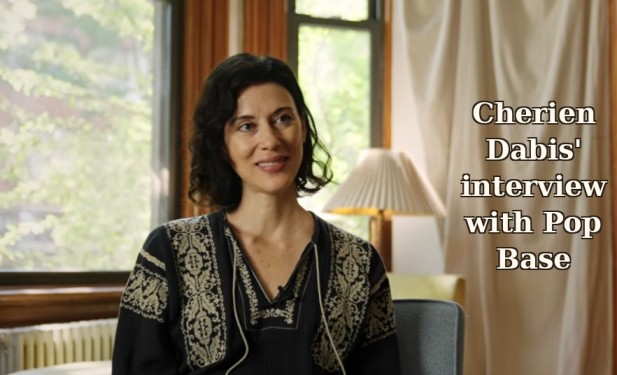
The following is the full transcript of director Cherien Dabis’ interview with Pop Base, July 30, 2026.
Editor’s Notes: In this exclusive Pop Base interview, Palestinian director and actress Cherien Dabis opens up about her multigenerational drama All That’s Left Of You, a powerful film spanning seven decades that follows a teenager whose life—and his family’s—is forever altered by a moment of violence during a First Intifada protest in the Occupied West Bank. Drawing deeply from her own family’s experiences under occupation, Dabis shares the personal inspirations, casting choices, and creative challenges behind the story. Now streaming on Watermelon+, the film offers a poignant exploration of Palestinian history, resilience, and identity.
Introduction
INTERVIEWER: Hi, Cherien. Thank you for meeting with Pop Base to chat about your latest film, All That’s Left of You.
CHERIEN DABIS: Thank you for having me.
The Opening Scene and the First Intifada
INTERVIEWER: The film opens during the First Intifada, following Noor and his friend at a critical moment in the story before circling back through decades of family history. Why did that opening feel like the right entry point into the story rather than starting at — I wanted to start with an iconic image.
CHERIEN DABIS: I wanted to start with an image that we have seen for decades, certainly one that I grew up seeing on the news all the time in the 1980s during the First Intifada. And that’s the image of Palestinians protesting. Because I felt growing up — I’m Palestinian American. I was the first in my family born in the US. Raised in mostly a small town in Ohio but returning to Palestine and Jordan, and so maintaining really strong roots over there.
But I grew up in a place where I was keenly aware that people didn’t know who we were. They didn’t know why we were protesting. They didn’t know what we were fighting for. They had no idea what happened to us. And so I wanted to take this image — for me, I knew that I had this film. I knew that I was ready to start developing my kind of Nakba epic that I’d always wanted to make. The moment that I found that image, because for me, the image is the way into the film.
And the entire film is really unpacking the story of this image, the story of a Palestinian teenager at a protest, willing to put himself in harm’s way. How often have we seen this? Palestinian kids standing in front of tanks, or going up against the Israeli army. I wanted to tell the story of who that teenager is, of how his family wound up in the refugee camp, because I don’t even think people understand that very often these images are coming from places like refugee camps that are being invaded by the Israeli army.
I wanted to tell the story of how Palestinians became refugees through this image of this teenager at a protest in the opening. And I felt that it was really a way — I wanted to create a really energetic opening. I wanted the audience to lean in. I wanted to kind of start in the middle of the chaos and then go back in time and tell the story of how we arrived at that moment. So that was always kind of the idea. And for me, telling the story of that image was in so many ways my way in — okay, here I’m telling the story of Palestine through 3 generations of this one family.
Hanan’s Voice, Testimony, and the Fourth Wall
INTERVIEWER: Early in the film, there’s this moment where Hanan, who’s now older, speaks directly to the audience and breaks the fourth wall. And she says, “I’m here to tell you who my son is.” And because you’re both directing and performing that role, that moment — because it’s early on — it blurs the lines of narration. How did you think of the relationship between Hanan’s voice, your own voice, and the act of testimony?
CHERIEN DABIS: It’s really funny because at the beginning I was like, oh, I don’t have that much in common with this character. My life — I didn’t grow up in Palestine. I didn’t grow up under occupation, though I certainly did experience it. I visited it. I saw my dad harassed and humiliated at borders and checkpoints. But I felt a little bit like an imposter. Like, who am I to play this part and jump into this role? And then I realized I’m looking for more than just life experience.
In many ways, I felt that her experience was in my blood, that I had lived it, that I had felt it so deeply, and that I shared some deeper things in common with her — like a kind of spiritual outlook, a need to heal the family, the lineage of her family, and a real kind of nurturing, grounded, mothering kind of energy that I wanted to explore.
So it was interesting to put myself in that, and definitely there were moments where the lines were blurred as I was kind of directing and acting at the same time, where it felt in many ways in this part very natural to be directing and acting because of who this character is in this story. Whereas in some other films, it might not feel as natural. You’re never kind of jumping out and being the narrator and having that bigger picture as the actor. But in this case, this character did have that.
But of course, there were moments where I had to forget all of that and just really be in the perspective of this character and forget everything else. And so that was tremendously challenging, just jumping from this kind of — I’m directing this thing and I know everything that’s going to happen — to I am now in tremendous pain as a mother grieving what has happened to my son, terrified that he’s not going to survive.
And it makes you tremendously vulnerable as a director, as you can imagine, to be exploring the depths of that type of trauma and grief while you’re also the boss and in charge, telling everyone what I want and what to do.
And so yeah, there were definitely days where I was like, I think Hanan is directing today. I just need to stay in the character, so Cherien’s just not going to be here. Yeah, it was an interesting, very challenging experience.
Personal Family Experience and Palestinian Identity
INTERVIEWER: Can you tell us a bit more about how your personal family experience inspired you in this way? Like you just mentioned your father — watching your father go through the checkpoints, similar to how Hanan also witnesses the men in her family experiencing life under occupation, the closeness to Jaffa through memory more than through experience. Can you talk more about that?
CHERIEN DABIS: Yeah, it’s so interesting because I was really struck by and somewhat inspired by the different generations of my own family, because when I thought about my own trauma, I thought, well, how did I come to experience Palestine so viscerally when my experience of going there is so limited?
And I did spend summers there. We went in and out of checkpoints and we were held at borders for 12 hours and strip searched. And my father screaming at the soldiers — moments where I thought they were going to kill him. And I had these dramatic experiences that are nothing compared to what Palestinians experience. Palestinians who live under occupation daily, but they were windows into the experience, really visceral things that formed who I am and helped me understand what it means to be Palestinian.
And I was always just kind of observing this. I think one of the things about being a third culture kid, like kind of first-generation American, is that you sort of take on this perspective of the observer. You don’t quite fit in anywhere — you don’t really belong anywhere, you don’t feel like you belong anywhere, but you kind of fit in. So for me, it was always like I was the American in the Arab world and I was the Arab in the US.
And what that did was it sort of lent itself to this feeling of observing the different cultures. The American was always observing the Arab family and culture and going like, oh, that’s really funny what you just did. Americans would never do that. Just always observing and commenting and almost taking on this journalistic perspective of my own experience and my own family.
And so one of the things I observed was that the different generations just reacted to everything very differently and that our identities were formed in relationship not only to what was happening in Palestine, but in relationship or in opposition to each other. And so this type of relationship — or sort of identity formation in relationship to a parent — is what ultimately was the initial theme of the film that I wanted to really explore.
Casting the Bakri Family
INTERVIEWER: Speaking of the 3 generations, casting Mohammad Bakri, Saleh Bakri, and Adam Bakri creates this extraordinary sense of continuity across generations of Palestinian manhood and memory. What did that family dynamic bring into the film that another casting process might not have?
CHERIEN DABIS: It was such a dream to be able to cast from one family, and specifically, obviously, the Bakri family. They’re the only acting family dynasty in Palestine. So literally, it was like, I have to cast the Bakri family. They have to be available and they have to say yes. And it was really something I was thinking about as I was writing because I was writing this film and I was like, how on earth am I going to pull this off?
You meet Salim when he’s 6, you see him again in his 30s, you see him again in his 40s, and then you meet him in his late life — 70s, 80s, or however old he looks at the end of the film. And I’m like, how am I going to approach the casting of this film? And so they were really in my mind from the moment that I started conceiving of this film and developing it and writing it. I thought, I just have to get the Bakri family for this.
I hadn’t worked with them yet, though I had met Mohammad and Saleh, and I think I’d even met Adam by that point. I didn’t know how many actors were in the family, by the way. When I thought about casting from the Bakri family, I didn’t realize I had a whole casting pool. Mohammad has 6 children, I believe, and 5 of them are actors. They’re all actors. So it’s quite incredible that that was even an option for me.
And if you’ve got the right actors, you’ve just taken a little load off. And that’s really how I felt by being able to work with 3 generations of this one family. It was like they’re just bringing so much of their own life experience and relationship history with each other to these scenes, and it’s enriching the material so much. I just was so tremendously grateful and feel incredibly fortunate that I got to work with them.
Space, Movement, and the Palestinian Condition
INTERVIEWER: The geography of the film and its spatial boundaries keeps changing. It shrinks, it expands from pre-1948 Jaffa to the refugee camp in Nablus. It moves between checkpoints, borders, and eventually arrives at the mobility that comes with foreign passports, which is a much larger world. How did you think about space and movement as expressions of the Palestinian condition?
CHERIEN DABIS: Well, it’s so interesting because space is such a part of our experience, our story. The fact that our homeland was taken from us, that the space continues to shrink and shrink and shrink and shrink, and we continue to be corralled into smaller and smaller alleyways and camps. And it’s sort of shocking when you go to Palestine.
And I remember visiting the Balata refugee camp in Nablus. There are alleyways that are so narrow you cannot walk through them. You have to turn to the side to fit. And there’s literally a building here and a building here. And people walk through these buildings like this is normal. The camps in Palestine have had to build up because they can’t expand. So they look like villages now because there’s mid-rises, there’s decently tall buildings in these camps now with no ability to expand outward, only upward.
The way that refugee camps evolved is fascinating to me. We went from — Palestinians, I heard Nakba stories of people who fled from their village and then slept on the land for a year. There weren’t tents. It’s not like people came in with tents right away. It took time for the Red Cross to come in. It took time for UNRWA. UNRWA didn’t even form until 1952. All of this was meant to be temporary.
And so for me, space was a big part of the story — how much space people have. And I wanted to communicate that through the lenses as well. Wide lens, long lens, very claustrophobic in the 1970s — when they land in the refugee camp after we were in this beautiful, gorgeous, spacious villa in Jaffa where they had orange groves, and we were in wide shots taking a look at the land. I wanted to feel that space shrink. I wanted to feel the family become a bit claustrophobic and isolated.
And then I wanted to kind of show that experience of how and why so many Palestinians end up leaving, and the irony of having to leave your homeland in order to have access to your full homeland — having to get foreign citizenship in order to return to the place of your birth. Which is something my dad experienced, having been expelled from Palestine in 1967, separated from his family, unable to return unless it was through the permission of the Israeli army and only when he was able to get a foreign passport. This is all such a huge part of the Palestinian condition.
CHERIEN DABIS: For me, it was just like I wanted to— in some ways, I put everything into the film. Like, there’s so much about the Palestinian experience that is in this film, and that is, I think, by design. In some ways, it was like I have this opportunity because I’m telling the story of this entire family and 3 generations of it, I have this opportunity to really show what so many Palestinians have been through. And that was, that was really my aim.
The Weight of Bureaucracy: Pacing as Political Statement
INTERVIEWER: Even though the film spans decades, there are parts of it that seem to intentionally drag. You linger on bureaucratic processes, permits, checkpoints, waiting rooms, paperwork, and the logistics surrounding death. And the movement. Why was it important for you to preserve that duration on screen instead of compressing it or skipping it? How did you determine the pacing?
CHERIEN DABIS: I wanted people to feel the agony of the bureaucratic hell that Palestinians experience. Really, that’s it. I wanted people to be livid that we’re waiting for a permit to transport our son from a hospital in the West Bank to a hospital in Israel proper to get him life-saving medical care.
I think that the bureaucracy, it’s a form of violence. It’s another form of violence under occupation that Palestinians experience. And so I wanted these moments to breathe. I wanted them to really play out in order for the audience to really understand emotionally. It’s one thing to understand, like, you read about it, you hear about it, the news is never going to be emotional. It’s never going to— certainly not for Palestinians anyway. We are numbers and statistics, and we die, we’re not killed. Everything’s passive, right?
I just feel like it’s so rare to be put in the emotional experience of what it is to survive like decades of political violence. And so I wanted people to really feel what Palestinians endure. And so even with that scene where the Israeli soldiers stop the father and son in the 1970s part of the film, that humiliation scene, it’s a long scene. I wanted— again, I wanted the twists and turns, I wanted the tension, I wanted to take time because otherwise why do it? You can’t gloss over that. It’s not a detail. It’s not a detail. It’s a story point.
It’s a massive obstacle for our characters, and the world needs to understand that there are these different kinds of violence under occupation that this family endures. And I needed to show the whole scope of it because people aren’t familiar with this type of apartheid. This is medical apartheid. And so I had to show it in a way and really spell it out without being expositional, but really show what this family has to go through so they can see the medical apartheid of this situation.
Filming Under Fire: Displacement and the Making of the Film
INTERVIEWER: You mentioned earlier that the film was shot after October 2023, after Israel’s war on Gaza began and the genocide unfolded. And you had to relocate to other locations in Jordan, Cyprus, maybe Greece. How did the experience of displacement in that way reshape the filmmaking process?
CHERIEN DABIS: Oh my God, making this film was like— the film lived what most Palestinians live, let’s put it that way. We prepped the entire thing in Palestine. I was working with a giant crew on the ground there for like 5 months. We were 2 weeks away from shooting when October 7th just brought everything to a screeching halt. And suddenly we found ourselves in the center of this insanity.
We were based mostly in Ramallah at that time, but kind of going back and forth between Jaffa and Ramallah a lot. We were planning to shoot all over the country, by the way. So not just 3 different cities in the West Bank, but also within historic Palestine in Haifa, Jaffa. And within days, security tightened in the West Bank. Villages were being sealed off. Checkpoints were closing. Things felt very, very tense very quickly. We were hearing fighter jets. My foreign crew who had just arrived the week before and were very excited to be there, were not so excited anymore. They wanted to go home, understandably. Their families were very worried. And so we started evacuating people, and from that point, it was— we were in a total crisis.
I mean, we made this film in a state of financial and logistic crisis. We ended up going to Cyprus— we had always planned to shoot a very small percentage of the film there. So in my mind, I was like, all right, let’s pivot, go to Cyprus, we’ll shoot that part first, and then surely this madness will end and we’ll return to Palestine. And so again, the movie lived what every Palestinian lives, which is waiting to return. When will this madness end? Will we be able to go back? And yes, we were displaced and trying to figure it all out.
We ended up prepping Cyprus and shot there. And as we were shooting, it became apparent, like, okay, this is escalating and escalating, and we are now making a movie about the Nakba as we’re watching a bigger, more devastating Nakba unfold, and something that is now escalating into genocide. And this is becoming the topic on everyone’s mind, all over the world. It just felt like the protests and everything that was happening. And so I kind of at that point thought, rather than wait indefinitely to return to Palestine and shoot, I think it’s more important now to get this movie out into the world sooner rather than later.
So that was the moment that I decided to pivot to Jordan. And thankfully, I had a team of really supportive producers who were like, we’ll do whatever you want to do. Which was also a lot of pressure because I was like, okay, I have to decide what we’re going to do and I have no idea what to do. But it became clear to me that I wanted to continue making the film and that going to Jordan was the right thing to do.
And so we got in touch with the Royal Film Commission there. I brought on a line producer, Rula Nasser, who’s amazing, and we very quickly prepped Jordan. I mean, we had to start everything all over again. We had to find every location again. I had to recast a lot of the roles. Thankfully not the main roles except for the little boy who plays young Nur. I had previously cast someone in Palestine whose family pulled him out of the film because they were afraid of letting their kid participate in a Nakba movie. They were afraid of what type of retribution they might experience as Palestinians living within Israel proper.
It was really nerve-wracking because every time you get into production, you get into a flow, and it takes time to get into that flow. And then when you stop, you fear that you’re not going to find that flow again, or that something might shift with a different crew. It might be a different chemistry, and you don’t know if you’re going to find the magic again.
And so it was really a very strange— oh my God, like, even just thinking about shooting in Palestine alone, the challenges of shooting under occupation, I don’t think that they can be underestimated. I don’t think that they can be overstated. For example, you have to get 3 different permits for certain areas of shooting. You have to go to the Palestinian police, you have to go to the Palestinian Authority, and you have to go to the Israeli army. I mean, there’s so many— you have to figure out who has jurisdiction over this piece of land right here? How many people have jurisdiction over it? So therefore, how many bodies, how many bureaucracies, how much paperwork do we need to fill out to get a permit to shoot right here? It is literally like a filmmaking nightmare. It is every producer’s worst nightmare. And after doing all of that work, we had to abandon it and start over.
And so we ended up shooting where we were in Jordan, which was a half an hour from the border. We could see Palestine from where we were shooting. And so that was— I mean, it’s the same land. It was all one, it was all one Bilad al-Sham. And yeah, some of the logistics— like, we had a whole— when we prepped in Palestine, we amassed a giant warehouse of beautifully curated and crafted props and set dressing from all of the different time periods, right? And this was like a large warehouse. We had shelves, like just rows of shelves of all the different telephones from the 1970s and the radios from 1948. And then we had amazing craftspeople who were crafting like donkey carts and all of these different things that were used during the Nakba.
But the props— it’s a hilarious story, and by hilarious I mean devastating, because we put those props on a truck. So my Palestinian crew, after we all evacuated, my Palestinian crew was left behind, put those props on a truck for us. And that truck was sent to Jordan, was sent for the border. For 3 weeks, that truck drove to the border from Ramallah to the border trying to get into Jordan, and for 3 weeks it was turned away. That truck was never allowed into Jordan, and at the last minute, my crew had to scramble to re-find every last prop.
This is the kind of thing that is just like— I mean, honestly, if you can make a movie under these conditions, you can do anything because you’re kind of part diplomat, part politician, part leader, part— I don’t know— insane person. Like, you feel like you’re running a marathon. You’re an athlete. Physically, it’s so taxing on your body. I definitely emerged from this experience going, all right, what do I want to do next? Like, the sky’s the limit. I can do whatever I want.
Hollywood and Palestinian Stories: A Genuine Shift or a Narrow Window?
INTERVIEWER: Mark Ruffalo and Javier Bardem joined the film as executive producers after the festival run. For decades, Hollywood mostly avoided Palestinian stories. Do you feel like the industry is genuinely changing for the better, or is this a narrow window that closes the moment Palestinians stop being the cause of the season?
Hollywood, Gatekeepers, and the Future of Palestinian Cinema
CHERIEN DABIS: Oh God, I have so many feelings about this. Where do I start? I really at one point wanted to believe that things were changing. And let’s put it this way, people are changing, but people like Javier and Mark have spoken out for a decade or longer, so they’re not changing. They’ve always been vocal. And their courage has allowed other people to speak up because they are just so committed to the truth. They’re so committed to speaking the truth, and they don’t care about the consequences because the consequences of not speaking the truth are far worse for them because they have a conscience. They have a sense of what’s right and wrong, and they have a moral conscience.
So I think that more and more people are speaking up, and that’s— for me, there’s hope in that. That’s amazing. And through that, I have found a lot of amazing allies in actors, in creators, in directors. I guess when you say Hollywood and the industry, what I think of is the gatekeepers, because those are the people who really determine whether our stories are seen or not, whether our stories get told or not.
Now, Palestinian filmmakers, we are finding ways to tell our stories regardless of the gatekeepers. But the gatekeepers are still there determining whether the film gets picked up, how many theaters it goes in, if it goes in any at all. And historically, Hollywood gatekeepers have not picked up Palestinian films ever, ever. It’s not happened. So these major distributors and streamers have never picked up a Palestinian film.
Is that changing? No, that’s the simple answer. No, people are still incredibly cowardly. I can’t tell you how many times I heard the most amazing passes on this film, like how many times I heard, “We love the film, it’s so beautiful, it’s so emotional, but we’re afraid of the subject matter.” There was a time where I don’t even know if I would have felt something for you. Like, do I feel compassion for that person who’s afraid of the subject matter? I’m sorry, get with the f*ing program. There’s a genocide happening.
And the good news is Hollywood is shrinking and it’s becoming less and less relevant. World cinema is way more important than it’s ever been. People are looking towards European cinema, they’re looking to different parts of the world. I think Hollywood is going to be really rendered a thing of the past quite soon, and so therefore these gatekeepers— how much longer are they going to have this power?
I think there’s a young generation that’s going to come in and just change everything. Young people know where it’s at. They’re not taking any bullshit. And I’m in awe. I think it’s an amazing time. I mean, in some ways it’s not an amazing time to be a young person because you were handed a world that’s literally imploding. But it’s amazing from the point of view of people just speaking truth in a way that I certainly never saw when I was growing up.
I think it’s interesting because so many millions of people have spoken up, and so many people have come out of the woodwork, and that is amazing. We’re paying a horrific price, but that is the one thing that I feel like so many of us Palestinians are holding onto— more than ever before, Palestine is on people’s minds and people are willing to, people are finally really speaking out. And some people are really putting their livelihoods on the line to speak out. And that— I don’t even know what to— that makes my heart— I just feel like my heart’s going to burst with love for those people. I’m so grateful to them because they have made it safer and safer for us to do what we do.
INTERVIEWER: That’s beautiful. Thank you. Well, thank you.
CHERIEN DABIS: Thank you.
INTERVIEWER: Thank you so much.
CHERIEN DABIS: Yeah, thank you. That was great.
INTERVIEWER: I could do a few more hours, but I would give you a break.
CHERIEN DABIS: Oh my gosh, no, I’m sure you’re tired of hearing me babble.
INTERVIEWER: Not at all. And try to find my words.
Related Posts