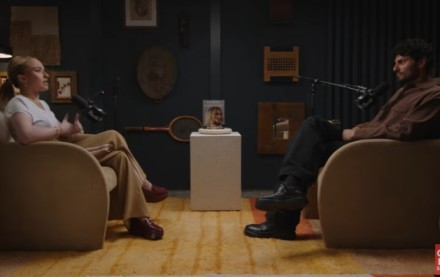
Read the full transcript of actress Hayden Panettiere’s interview on On Purpose Podcast, May 11, 2026.
Editor’s Notes: In this deeply moving episode, actress Hayden Panettiere shares her raw and honest journey through the intense pressures of Hollywood fame and the complexities of her personal struggles. She opens up about her private battles with addiction and the emotional toll of navigating a high-profile custody situation while under the constant scrutiny of the public eye. By reflecting on her path to recovery and healing, Panettiere provides a powerful perspective on resilience and the courage required to reclaim one’s narrative. This conversation offers a vulnerable and insightful look at the human experience behind the celebrity persona.
Welcome and Introduction
JAY SHETTY: Hey everyone, welcome back to On Purpose, the place you come to become happier, healthier, and more healed. Today’s guest is one of those stories that I believe allows so many of us to understand more deeply, to expand our compassion, to recognize the value of what we all go through behind the scenes when you actually live a very public life, a life that we think we know, but we know very, very little about.
Today I am joined by Hayden Panettiere, an actress so many of us grew up watching, whose career spanned more than 3 decades. From one of my favorites, Remember the Titans, to becoming a global star on Heroes and earning 2 Golden Globe nominations for her role on Nashville. Now, for the first time, Hayden is sitting down to share her story in her own words in her powerful new memoir that I got to read beforehand, This Is Me: A Reckoning. Please welcome to On Purpose Hayden Panettiere. Hayden, welcome to the show. Thank you for being here.
HAYDEN PANETTIERE: It’s an honor to be here.
Growing Up in the Spotlight
JAY SHETTY: I want to start by just saying that when I read the book, I can’t imagine how challenging, difficult, and vulnerable you had to be to even begin to capture the amount of life that you’ve lived in these 36 years. And I just want to acknowledge the courage and strength that I saw in it when I was reading it. And I was so looking forward to our conversation today because I really wanted to learn about the human behind these words, but also behind the headlines and the news that we’ve seen.
I wanted to start off by asking you, what’s a childhood memory that you have that you feel defines who you are today?
HAYDEN PANETTIERE: God, got a laundry list I can think of off the top of my head, but really defines who I am. I think I’ve been really impacted by the people that I’ve gotten to work with, and especially when I was at very sensitive ages. When I think back to Remember the Titans, as you said, at 10 years old, that experience, that whole experience, everyone on set, and playing that character of Cheryl that felt so similar to who I was naturally as a person, I felt like that really shaped me, really shaped my perspective of the industry, made me feel like, now I know what kind of actor I want to be. I want to be generous and I want to be there for people, but this can also be fun.
JAY SHETTY: Yeah, absolutely. I wanted to read from your book, if that’s all right.
HAYDEN PANETTIERE: Yeah, of course.
JAY SHETTY: You say in the book that “from a very young age, I lost the chance to have a normal childhood, friends, relationships, and my privacy, because instead of fighting it, I leaned into the talent I was somehow blessed with.” And I wanted to ask you, what do you think a normal childhood looked like and how was yours different from that?
HAYDEN PANETTIERE: Well, to me, a normal childhood looked like extracurricular activities. It looked like going to school, being in school all day long, having a social life in connection with your peers, going home, doing homework, having playdates, having friends over, having those kind of experiences.
And even though I did get some of that, because I had to live that life and had to be removed from it all the time, whether it was to go to auditions or to go to work, I constantly was missing out on the social aspect of what was going on. I mean, I was trying to be friends with them, but when you miss out, and then you sit down, you really have nothing to talk about because I only had my experience and what I did yesterday, which was I was on set or I was in the city doing an audition. And that wasn’t something that I could expect anyone around me to understand.
So I feel like I got a taste of what a normal childhood would be. I was on swim team, and I did do gymnastics. And occasionally I got invited to a birthday party, but a lot of the times I was left out. So it didn’t feel like I had a normal childhood, normal upbringing. But to me it was, yeah, just being able to be a kid.
JAY SHETTY: Yeah. Did you recognize that then?
HAYDEN PANETTIERE: I did. I remember school was very tricky for me because here I was trying to fit into two different worlds, and I was dealing with this massive world which is the industry and dealing with big emotions, like what you feel after rejection or not getting a role, or a ridiculous amount of praise, an unhealthy amount of praise that you get at too young of an age. And then I had the world that I was desperately trying to fit into as well, that I was supposed to fit into, that it should have been easy to fit into. And I couldn’t fit into that either.
JAY SHETTY: Yeah, it’s hard when you’re caught in between two different worlds and you somehow, as a very young child, have to somehow make it look seamless and move through these worlds, taking emotions from this one into that and that one into this.
HAYDEN PANETTIERE: And you don’t want anyone to see you sweat either. You want to be cool, calm, and collected because being overly emotional around people that age doesn’t go over well. And it doesn’t go over well with adults either. So you have to bottle up all of these emotions.
JAY SHETTY: Yeah. It almost feels like when you’re with your kids your age, you’re just trying to fit in and be cool, but you’re dealing with these emotions you’re carrying over. And then when you’re with the adults, you’re trying to make sure everyone’s happy and everything’s going okay.
HAYDEN PANETTIERE: Yeah, I feel like the first time I really felt like I didn’t fit in was actually when I was in kindergarten, and it was brought on by the teacher not liking me. The opinions of the teachers and the way that the adults saw me was rubbing off on the kids. And I can only imagine what the kids’ parents were saying about their children going to school with an actress at home.
But yeah, I was bullied first by a teacher in kindergarten, and then it graduated to first grade, which was the first time I heard anyone raise their hand and say, “Why does Hayden get to miss school and we don’t?” And that was the first time I felt like, oh, it bothers them what I do.
And then middle school, which is treacherous for anybody, but especially as a female, girls are just really hard on each other. And it wouldn’t help when the teacher would roll in a screen and say, hey, we’re going to watch a movie during class. And everyone would get excited and then they’d pop in Remember the Titans. And there I was trying to fit in and just trying to find a seat next to somebody who wasn’t rolling their eyes and huffing and puffing about having to sit next to me. I was just trying to blend. And then they were popping that on and I was just like, is this even legal? Like, can you do this to a kid? Is this child abuse?
Being Bullied by Teachers
JAY SHETTY: Yeah. Was it ever clear what the reason the teacher who bullied you was, or did they ever have any interactions with your family?
HAYDEN PANETTIERE: No, I mean, first of all, kindergarten is way too young to really have done anything wrong. I remember the first time she ever bullied me was the very first day of kindergarten, and we were coloring. They had the crayons in these wet wipe boxes, and they said, wrap it up, everybody close the boxes. And being kids, it became a little bit of a race of who’s going to close it first. And I went to close one and another girl went to close it at the same time and it went on her finger. And I apologized profusely, felt horrible about it.
And I remember her best friend walked up and said, “Yeah, but we have to tell on you.” And my heart sank and I didn’t know how it was going to go. And they walked up to the teacher and told her. And I looked at her and I said, it was an accident. And she looked right at me and she said, “Oh, it doesn’t look like an accident to me.”
And I mean, at such a young age for that to stick with me, all of these years later. Not all of my teachers were like that. There were teachers that were super supportive, but there was a substitute teacher who came and she would call me the big cheese in front of everyone. And she said, “What, you think because you’re an actress, you’re the big cheese?” And that’s so not who I was, and so not who I wanted to be. So quite the experience trying to fit in, disappointed in people. I really just wanted to fit in. I wanted to be normal.
JAY SHETTY: Like every kid does.
HAYDEN PANETTIERE: Like every kid.
JAY SHETTY: Yeah, like all of us do. And as someone, by the way you described it, I had a very normal childhood and it’s hard enough as it is, even when it’s normal. And so when something’s making you stand out or someone’s pointing things out, especially as kids when we don’t have a clue what’s going on, and all the other kids in your class who wouldn’t really understand how to make context of this, you need an adult to kind of make sense of it.
The Habit of Changing Yourself to Fit In
HAYDEN PANETTIERE: Yeah. And a lot of it, I felt like it came out of left field. One of the things I’m sure you read in the book is that I kept the notes that were passed to me in school, the nasty notes, and I kept them in my binder and I kept them under my bed. And I think it was because I wanted desperately to understand what they were seeing in me. And it started the habit of changing who I was to make others happy, to make them like me.
And I thought if I could understand where they were coming from or what they saw or what they didn’t like, that I could — maybe it was the actress in me and having been directed all my life — that I could change my performance a little bit and it would make them accept me.
The Pressure of Providing for Family
JAY SHETTY: Yeah. You’ve also talked about having the pressure to support and provide for your family as well, right? Did you always know that that was your responsibility even then? Like when you’re talking about this idea of performing, making sure everyone else is okay, I wonder how much of it was something you had to do at home as well.
HAYDEN PANETTIERE: I want to make it clear that my father was a lieutenant in the fire department and he had businesses. I wasn’t supporting the family, but I do remember being very young and my mom trying to explain to me that this corporation she set up paid for the cars, the lease on the cars, and the cell phone bills because it was a tax write-off.
And I remember that role reversal being incredibly uncomfortable for me. Where I was, on one hand, still a kid and I was listening to my parents and had to do everything that they told me I could and could not do. But at the same time, I was working hard and making money, and this money was going towards things that I wasn’t privy to.
My dad would kick my butt if I made people think that I supported the whole family. But then when I got older, my mom bought an apartment for me when I was 16 and my whole family lived in it. So again, it was just that very strange, uncomfortable feeling of the role reversal, and desperately wanting to still feel like the kid and still feel like I had parents to lean on.
Even when I was a kid, I was scared of the dark and I would make my dad lay down next to me, and if his head ever went below mine, I would freak out and make him sit up further so I could — because I wanted to feel like the kid. That has kind of continued on in my life, just wanting to know that if I found myself in a terrible position, that I could call somebody to help me. I could rely on somebody. I wasn’t the only person. I wasn’t the person that everybody else was relying on, and therefore nobody was there for me.
The Weight of a Mother’s Approval
JAY SHETTY: Yeah, I mean, and so natural, right? To want that and to seek that is so real and so natural, especially as a young child and kid. And then of course, with everything else that you’re taking on, there’s nothing about that that feels anything but what every child deserves and what every child wants and, you know, deeply is looking for.
But I know in the book you also write about how there’s this sense of what you were just saying about collecting all these notes and not wanting to almost let the kids down and become who they need you to be. It feels like that kind of became your relationship with your mom as well, where you didn’t want to disappoint her.
HAYDEN PANETTIERE: Oh my gosh, that was my entire relationship with her. She was my boss. That’s how I saw her. Even though she was the most supportive person when I, you know, did what I was supposed to do and did it well and was the one cheering me on, it did feel like that was what I had to do to get her love. And that was, you know, a tough pill to swallow.
I never— everything was business. Everything was business-focused. And I mean, I started at 8 months old. I can’t even remember a time where she wasn’t a momager, you know, where everything didn’t revolve around business. And there were periods of time as I got older where we spent a lot of time traveling and on the road together, and I was the only person there. So I became the confidant and the assistant and the therapist and the shoulder to cry on and everything but her child.
JAY SHETTY: Have you ever had the opportunity to tell her that and to have that conversation with her?
HAYDEN PANETTIERE: When I was 19, I finally got the courage to split from her, business-wise, because I desperately wanted a relationship with her, desperately wanted her to just be my mom. And so she came into my trailer during lunch when we were filming Heroes, and I said to her, “I don’t want us to work together anymore. I just want you to be my mom.”
And I remember being hopeful, but there was that part of me who knew her too well. But I also wasn’t expecting the reaction that I got, which was, “You owe me.” And that’s all she said. And she walked out. And part of me was like, “Oh, I’m relieved that it was short, like, ripped the Band-Aid off.” But then it was like this dark looming cloud, you know, over my head going, “What does she mean by I owe her?” What form of payment is she expecting?
And it was disappointing to find out that it was money and that she didn’t pursue a real relationship with me as just a mother-daughter. Like once the business aspect was removed, I was hoping that if I remove this, then there will be no reason for her to be anything other than my mom. And the fact that it seemed like she didn’t want to have, didn’t care to have that relationship with me was a tough pill to swallow.
JAY SHETTY: As a child, I’m sure you were also, even as a teenager, you’re still dealing with the guilt of like, how do I have this conversation with my mom? Because I’m guessing there was a part of you that was of course grateful, and of course, like, you know, but at the same time I hear your intention loud and clear, which is, I just want you to be my mom.
HAYDEN PANETTIERE: Yeah.
JAY SHETTY: And I don’t want you to play another role in my life. And then to not get that other role, even when that part’s taken care of it. Yeah. Do you still not connect or talk today?
A Relationship Lost to Business
HAYDEN PANETTIERE: At the moment, no, there is not a relationship between her and I. Sadly, I’ve gone through periods of time where we just haven’t spoken at all. It seemed to me there was kind of like no reason. She had no reason to call, and the only reason why she would reach out was when something was needed. It wasn’t just to say, you know, “Hi,” or “How are you?” or “Let’s grab a bite” or anything like that.
It’s been a really tough road, and no matter how many times that door has been slammed in my face, I’ve desperately seeked her approval for my entire life. You know, she was the person after every take that I looked to. I wouldn’t look to the director or the producers or anybody else. The only person that existed and the only person whose opinion mattered to me was hers. So after every take, no matter what I was doing, I would find her. And I’m sure I made, you know, the directors feel like, hey, because I would run right past them straight to mom and I had to make sure that she was happy with it and I wasn’t in trouble, because if I didn’t do it right, I was in trouble. It was not a good reaction.
But I mean, I’ve lived to please her, and even though, as you said, I’m incredibly grateful. She’s— and I’ve never had a conversation with her as to why she stopped acting and decided to focus her entire life on creating a career for me. And whether it was just that she felt like I was good at it, which is why she kept me in it, or she wanted to live vicariously, or if she wanted to create a potentially successful future for me. I haven’t gotten a chance to really talk with her about that.
But I’m very grateful for everything that I have. But it was just very confusing because I never asked for it. And that was the thing. There were times where things would get overwhelming, and I could tell they would get overwhelming for her. And she’s a big personality. And I also felt very guilty about us having to spend so much time away from my father and her having to spend so much time away from her son, my little brother who was growing up, and that it was because of me. It was because of what I was doing. And it was my fault.
And I remember her actually turning to me one night and saying, “You’re the reason why I’m missing my son growing up.” And, you know, that was a punch in the gut. But as grateful as I was, I wanted to say to her, “But I didn’t ask you to take me on auditions. I wasn’t even old enough to, you know, proceed to understand anything but good, bad, hot, cold, diaper change, food, you know, that kind of stuff.” So there were really high emotions. I loved what I did and I had great experiences, but at the same time, I was like, I didn’t beg you to give me your life, to sacrifice all of this so that I could have this career.
JAY SHETTY: Yeah, it wasn’t your dream. It wasn’t your choice.
HAYDEN PANETTIERE: And I don’t know if it would’ve been eventually. Sure.
JAY SHETTY: Yeah.
HAYDEN PANETTIERE: You know, I wondered that all the time.
The Identity Crisis of a Child Actor
JAY SHETTY: Talk to me about that because even earlier when I read the excerpt from the book, you talk about this idea of acting being a talent that you just leaned into because it was a gift that you were given, and then you leaned into it. It’s almost like you never got the opportunity to discover who you would have been.
HAYDEN PANETTIERE: I remember being about, I would say, around probably 12 years old and having a total identity crisis. I mean, I was standing in my room, and I had been auditioning and acting for years, and I was sitting there going, “Who am I? Which part am I?” Because I can be all of these different characters, and I can find all these parts in me, and I can become, you know, and I can bring out my fiercer side, or I can be more gentle, whatever the character called for. And they all felt like parts of me. But who the heck was I? Like, just without this, who would I be without this?
So I was very aware of it, and I was very aware that it was going to have an impact on me when I was older, and I was very worried about that. I didn’t talk to anybody about it ever. I didn’t think anybody would ever have an answer to it. But I was like, this is going to screw you up as an adult. It’s going to rear its ugly head, and you’re not going to be able to make the connection between why a certain behavior— why am I behaving like this as an adult? It’s going to be very difficult to find the connection to the childhood experience that caused that.
JAY SHETTY: It’s a lot to take on so young and hard to process. And yeah, hard to know where it goes and how it moves forward with you in your life. It sounds like you were being reflective of this almost all the way. It doesn’t feel like something that you’ve only done recently. It feels like at every stage, whether it was 12 or 19 when you finally made the decision. Did you ever start to feel a sense of choice and agency and effect?
Finding the Courage to Break Free
HAYDEN PANETTIERE: I’d grown up in a household where, you know, as much as I love the chaos of my family, there was a lot of headbutting going on. So when I was 18 and Heroes was on and we had all as a family moved out to LA and we were living under the same roof in a condo with dogs and cats and just, we were in each other. We went from living all in a big house to living in very tight quarters. But as soon as I was 18, I went to my mom and I said, I want to move out. And I knew I needed to move out for my own mental and emotional health. I would say 18 was when I finally felt courageous enough to communicate that and to, you know, start my own life.
JAY SHETTY: Yeah. Did that come with a sense of like confidence and kind of enthusiasm that you had that, or was it almost like a necessity of like, I just need to do this to survive?
HAYDEN PANETTIERE: Yeah, no, it was both. The idea was terrifying because I’m a true pack animal. Like I need people around me. It’s arguably the biggest impact on me mentally, emotionally, spiritually, which leads to physically. Yes, it was survival. It was definitely survival. It was necessity. It was, I need to get myself out of here.
And I carried a lot of guilt with me leaving my little brother behind in what I could no longer tolerate. And I was terrified to live alone. I didn’t want to be lonely. I wanted people around me. I was still scared of the dark and didn’t want to not have anybody to, you know, lay down next to me until I went to sleep to make sure that I was safe. So it was exciting, but at the same time, I would say it was more so necessity.
A Betrayal of Trust
JAY SHETTY: Yeah. I mean, you know, as I was reading your book and learning more and more about you, it was almost like my empathy for you just grew every time. And I mean in your strength, for your strength in these situations, not as a sense of pity or feeling sorry for you, but seeing just how strong you had to be in so many different situations.
And this, when I got to this part, when you write about this in the book, you write about a moment in your career where a friend of yours takes you onto a boat. You are led to a room which has an older man in it and then basically told to perform sexual acts and, you know.
HAYDEN PANETTIERE: Oh yeah.
JAY SHETTY: And when I read that, I’m like, oh gosh, like not only have you felt like you’ve had a really unsupported upbringing? You’re now with a friend in the industry and then ending up in a situation like this. Could you talk to me about what that moment does to your psyche when you’re that—
Betrayal and Trust
HAYDEN PANETTIERE: I mean, the fact that I was 18, even though I’d lived such a huge life and I thought I was oh so mature at 18, scientifically, our frontal lobes don’t develop until we’re, what, 20, 26, 25, 26. So even though I felt like I could make healthy decisions, safe decisions, I wasn’t capable of being fully aware of what was going on around me. And it wasn’t until I found myself in predicaments that I realized my perspective completely shifted and I realized that I was in danger.
But by the time I’d realized I was in danger, I was quite literally out to sea. And that moment shook me and was shocking. I was quite literally put, walked down and I had been having a great time. There was no hints of anything like that happening. So it took me by surprise.
And it was somebody led by somebody that I had grown to trust and see as a protector and somebody who had my back. And to be walked down, you know, down the stairs. It was presented as though it was like a surprise and it was this very small room and she physically put me in the bed next to this undressed man who was very famous and had his hands like this — like this was just, you know, an average day for him. This is something that happens all the time.
And I waited for her to leave and I — that lion in me, that fire in me, my hair stood on end and I became ferocious. I was like, “This is not happening.” But I had nowhere to hide and I bolted and I hid wherever I could think of to hide on a boat. On a boat. There was no jumping off and swimming away. And I realized that there was nobody who was going to be empathetic to my situation, that this was nothing new to them.
JAY SHETTY: I mean, that sounds — it’s such a horrifying event to go through and to be put in that position at 18 years old.
HAYDEN PANETTIERE: And disappointing when somebody lets you down like that. And I’d been let down so much before, and when you really find somebody that you trust, you hold on to them for dear life, and you feel so lucky. So to be betrayed like that, it’s just an awful feeling.
Learning to Trust Again
JAY SHETTY: How do you decide who you trust now?
HAYDEN PANETTIERE: It doesn’t seem like I’ve done much of a very good job. I don’t think I’ve gotten much better at choosing, on one hand, because there are certain people with negative energy, and that are just not good people, who have been drawn to me for whatever reason, and who I’ve not seen clearly immediately. It took me a while. They really were able to pull the wool over my eyes, which I didn’t expect of myself, having had all the life experience that I have and having had things like that already happen to me.
You would think it would have been a learning experience and I would have made sure that it never happened again. And unfortunately that was not the case.
But that being said, on the other hand, I have had amazing people in my life. My dad has been a huge support system for me since I was a kid. He was the safe space and there’s a lot of me in him. He is the person that kept me grounded and made me — the good in me. I got my big, big heart from him. But I have throughout the years been fortunate enough to meet just incredible people. And I do have a group of friends that are incredible people, incredibly loyal, and are genuinely, genuinely good. So there are just a few that have snuck in here and there.
JAY SHETTY: Yeah, and I got to meet some of them today. Your best friend is with you and others who are wonderful people, and great to see you surrounded by them. And I was sharing this with you as we were speaking before, that sometimes I feel that a lot of good people beat themselves up for attracting negative people around them. And the truth is, I don’t think you attract negative people. I think when you get so big and large in your work and your career and you’re exposed to so many people, you just come across more negative people because you’re exposed to more. If you’re only exposed to your town or your community or whatever, maybe you’ll come across a couple of people. But when you start getting exposed to a bigger industry and a bigger world —
HAYDEN PANETTIERE: Right. But exposed is one thing, but then it’s hard for me not to beat myself up over letting them get past my defenses, letting them get close to me, and for how long.
It’s really important for me to choose the people who are around me wisely. And I have an incredible team of people who are not just great at what they do, but who have become dear, dear friends and confidants and protectors. And I haven’t always had that. And they’re not afraid to tell me the truth either, and that’s a hugely important thing for me.
But it’s hard to not beat myself up for certain people having access to my life that should never have had access, should never have been a part of my life for many, many, many reasons.
Pills, Pressure, and People-Pleasing
JAY SHETTY: Yeah, I feel like when you’re young as well, from having spoken to quite a lot of young talent in the industry, it’s almost like you’re hoping that the adults around you are making good choices. And you talk about in the book how you were actually given pills before a red carpet to make you feel more confident and how that planted the seeds for so many other things that came in the future. And again, you’re coming to a point where you’re hoping the people around you, especially when you’re young, to help you make better decisions, especially when you start as young as you did.
HAYDEN PANETTIERE: Yeah. And the person who handed me those pills, I had already developed a very tight relationship and a great bond with them. So when it happened, I didn’t see it as anything inappropriate or negative. I trusted this person, and part of their job was to always protect me. And so I was so used to following the directions of the people that I respected, the people that I worked with. If they told me to jump, I jumped. If they told me to wear this, I wore that.
I trusted them more than I ever trusted myself. I wasn’t raised to trust myself, except for my instincts as an actor. That was instilled in me. But as a person, it was a completely different story.
Landing Heroes and the Price of Fame
JAY SHETTY: And at the same time, you’re getting these huge wins. You become one of the most well-known, popular young actors when you land Heroes, and it’s this huge moment. And from the outside, it just looks like an incredible accomplishment. What’s going through your heart and mind when that happens? What are you experiencing?
HAYDEN PANETTIERE: The success meant that my mom was going to be happy with me, so that was hugely important. It also meant that I fit in. That I was —
JAY SHETTY: You found your place.
HAYDEN PANETTIERE: Yes. I found my place. I was finally — somebody accepted me and I was part of something that involved other people and they became my crew, my group of friends. I finally felt like I fit in somewhere and I finally felt like, “My gosh, I made it.”
I remember the first time I walked out of my apartment and paparazzi — I was about 16 years old. And I had imagined, getting to the place in my career where I would get paparazzi’d. And I was thinking, am I going to do like one of those, like, “No, don’t take a picture of me” — like it’s going to be one of those perfectly beautiful shots. And it was just sheer terror.
JAY SHETTY: When you actually —
HAYDEN PANETTIERE: When it actually happened, I heard this clicking and I looked up and I remember it feeling like I was looking down the barrel of a gun. It was a guy sitting in his car with his window rolled down. And I was walking my dogs and I was horrified because I was like, “Oh my gosh, that’s not the look that I expected to have.” That picture is of me looking terrified, absolutely terrified. That’s not the shot you first want.
JAY SHETTY: Yeah, definitely.
HAYDEN PANETTIERE: But that’s what happened. You can plan all you want and God laughs.
JAY SHETTY: Yeah, definitely. I mean, but you talked about this — this idea of how your life became used to living for applause, like having to get the applause from your mom and then the community and then of course paparazzi. It’s like you kind of see that trend.
The Paparazzi Problem
HAYDEN PANETTIERE: Oh yeah. And then it grows. And it grew and it grew, and it went from something that was kind of cool to something that was incredibly dangerous and incredibly invasive. And not just for me, but for the people around me. It felt like I wasn’t safe. The people around me were being affected by it.
I was very protective of my little brother, fiercely protective of the people I love, period. And especially back then when I was 16 years old, it was a whole different ballgame. The paparazzi situation crossed lines that still blow my mind today — things that were legal. They were able to do the things, the way that they would box you in while you were driving.
I remember coming out of a store once and it was, one person saw me in and suddenly it was over 100 outside and they kicked me. I just felt this kick on the back of my leg and when I turned around they had a camera in my face and I realized that they were trying to get a reaction out of me.
I remember a very, very famous, successful publicist sat me down when I was young, when Heroes was about to change my life permanently, and he knew this. He sat me down and had a whole conversation with me about how to handle paparazzi and how to keep your expressions kind of boring, if you will.
But the lengths that people will go to get that shot, and the things that they would say to me at such a young age, were appalling. They were truly just mind-blowing and shocking. It was wildly dangerous. And I was like, “Why? Especially after Princess Diana, how has this not changed? How has nobody stepped in and stopped this? This is crazy.”
JAY SHETTY: How did you cope? What did you do? How did you deal with all of that? Because that just seems overwhelming.
Escaping the Paparazzi
HAYDEN PANETTIERE: There was nothing to do. You feel completely helpless. Powerless, helpless. I would get in the car and I drove like a bat at a H-E double hockey sticks. I became a NASCAR driver and knock on wood, thank God, nothing, nobody ever got hurt.
But there was one time I was out trying to outrun them in a rental car and I was going so fast down the street that I had to make a quick right turn. I hit my brakes and instead of the car stopping, it just went for the slide directly into traffic. I was able to turn into traffic just in time, in the nick of time. I felt like somebody was watching over me and protecting me at that point.
And sometimes I just had to go home afterwards. I went out with a plan to do something, and it wasn’t safe, and I didn’t feel like dealing with them all day long. So I just went home and would go, “Ha, you didn’t get your shot, but I also didn’t get to do what I wanted.”
When I was living on my own, I remember having to call taxis — at the time we didn’t have Uber or anything — up to my house. And I would have to lie down in the back seat, like almost on the floor, so that the paparazzi that were waiting in the street couldn’t see that I was in the car. Or have a friend pick me up and I would have to hide under yoga mats and things like that.
I also didn’t realize, like, we’d go to somewhere like The Grove, or somewhere on Rodeo — how many people were paid money to do this, to be a celebrity spotter. And you think you’ve fooled them and you got out of there, and it just takes one person — the wrong person to see you — and there goes your day.
Meeting Wladimir
JAY SHETTY: Well, I believe it was around the same time, in the book you talk about meeting Vlad for the first time when you’re doing the show. When you reflect back on it now and meeting him, what version of you were you then?
HAYDEN PANETTIERE: When I met him, I was 19. I liked myself back then, actually. When I think back on it, I felt like I held my own. I found a lot of joy in life. I was a really happy person. I hadn’t lost people I loved or been through anything that had negatively shaped me. So I was in a really good mental spot, a healthy mental spot when I met him. I was full of piss and vinegar, as my mom would say.
JAY SHETTY: And did it move fast? Were you — was it just instantly you both knew that there was something there at the time?
HAYDEN PANETTIERE: He was not my type at first. I mean, he was like looking at a Greek statue. That’s what it was like being in his presence. I just studied his face. He looked chiseled out of stone, out of marble. And he was so big. His features, just everything about him was so fierce. And I was so small, but the personality that came out of him was surprisingly gentle and kind and made me very curious.
But I had just gone through a breakup with a co-star that I was still working with, so I wasn’t really in the headspace of fully moving past that breakup yet. So it took another year. It was when I was 20 years old that Vlad and I actually connected and started dating.
We were supposed to meet up once when I was still 19. I was at the Super Bowl. I was supposed to call him and I never did. And there he was, the heavyweight champion of the world — apparently he was very pissed off that he was waiting around for my phone call. He was like, “Who does this girl think she is? Does she know who I am?” He’s not a cocky person, but I remember his reaction to that being very, very funny.
JAY SHETTY: That’s fair. That’s fair. That’s fair.
HAYDEN PANETTIERE: Yeah.
JAY SHETTY: As the heavyweight champion of the world.
HAYDEN PANETTIERE: Yeah. So it took a year. I met him, we kept in touch, and then my first fight — I brought my little brother to his brother’s fight for my little brother’s birthday. So it was a very special time. And then Vlad and I stayed in touch and then started a relationship.
Living It Twice: Nashville and Real Life
JAY SHETTY: The part in your book that I found — something that I was totally unaware of — I’m going to read from it here. While you were on Nashville, you obviously become a mother. And it was this idea that Nashville was almost writing based on your life and writing around you. You talk about the storylines for your character, Juliet Barnes, and how unnaturally they mirrored what you were going through in your personal life. And you write this specifically:
“I was suffering from debilitating anxiety and an addiction I couldn’t shake, and I had to live through it twice. First at home as Hayden, and then in front of millions as Juliet.”
And that really struck me because I think we all watch TV and film and we don’t really — it’s almost like we believe you are that character anyway.
HAYDEN PANETTIERE: Absolutely.
JAY SHETTY: And you don’t really ever know what the real character is until you — you can in an interview, but if you don’t see that, if you only see someone for 3 minutes on a late-night show or a morning show or whatever, you have no real sense of who they are beyond, “Oh, well, Aidan and Julia, that’s who she is,” right?
HAYDEN PANETTIERE: On TV, in what they see, you see in the news, and what you look like — you see headlines and news gossip and all that kind of stuff.
JAY SHETTY: You see the TV show and then you see pictures. You’re absolutely right. And that’s all you get. And this is why I really appreciate just how — I just want to acknowledge, and for anyone who’s going to read this book — you get to see someone who’s lived through a lot of hardship, but has this ability to reflect and introspect about what’s happening.
And when you put it that way, I didn’t realize Hayden’s going through this. She’s living through the reality. I want to talk to you about the anxiety that you’re experiencing. And then at the same time, you’re living it twice because now you’re having to act it out at work, and they’re writing around you being pregnant to have the show continue. And then after that as well. So talk to me about where the debilitating anxiety was coming from and what it felt like to live it twice.
HAYDEN PANETTIERE: It felt like it never ended. I didn’t know where Juliet began and Hayden ended. In the beginning, when I first started doing Nashville, I thought, “Well, it’s just a coincidence that our lives have so many similarities. It must be.” And then as the years went on, the episodes went on, and everything kept starting to match up — who Juliet Barnes was dating, to being an alcoholic, to postpartum depression, to losing her child, basically abandoning her child. Then it was like, “Okay, you guys are just mirroring my life.”
We wouldn’t get the episodes very far ahead of time. So to go to them and say, “Hey, you’ve got to change this and that,” wasn’t anything I was used to doing. I was just used to doing my job and making it work. But it felt like the day never ended. We would shoot 10 months out of the year, and 12 to 20-hour days.
I never thought I was a method actor. I’ve worked with method actors who, when they play a role, they never jump in and out of the character — they are the character for the entirety of the filming process. Shooting something for 6 years, 10 months out of the year, that’s not what you want to do. But it was unavoidable because it was my life. I couldn’t come up for air from it. There was no break from it. And here I was playing this very deeply emotional, dark character.
We had so much alike, but we were different as people. Even during breaks on set, I didn’t even realize that I was becoming her constantly. And I wasn’t, therefore, taking care of myself — able to take care of myself mentally and decompress and process what was going on in my life. Nor did I want to talk about it, because I had just spent all day acting it out and crying. I just felt like I was constantly holding my breath and I couldn’t get away from it.
And you’re in a contract. I became desperate, and that’s why I turned to substances — because of the anxiety I started having, the panic attacks I started having. I used to have nerves a lot and I had stage fright since I was a kid. But those good nerves that keep you on your toes at some point turned into genuine anxiety that made me incapable of functioning properly or thinking clearly, and would make me physically shake.
So I was self-medicating and looking for relief at the bottom of a bottle, and it was the only thing that worked. I needed to numb. I needed to self-numb. I needed my brain to take a trip and go on a vacation. I needed it to not think about all these ugly things for just a little while. And I didn’t find myself able to do that without the help of a drink.
Postpartum Depression
JAY SHETTY: Explain to me the complexity of — and I ask this from the perspective of having so many friends who’ve gone through postpartum depression.
HAYDEN PANETTIERE: Mm-hmm.
JAY SHETTY: And it just not being talked about enough.
HAYDEN PANETTIERE: Yeah.
JAY SHETTY: Whether it be even initially when it happened — I remember speaking to a lot of my male friends and them not understanding what their partner was going through, only then to realize that we were just unaware of the amount of women that go through postpartum depression. Talk to me about the complexity of the emotion of having your baby girl and the emotions that come with that as being a mother, and then the postpartum depression that follows that.
Postpartum Depression and the Struggle to Be Heard
HAYDEN PANETTIERE: From a young age, I always dreamt of becoming a mom. It was something that I always knew that I would be, always wanted to be. And I had all these ideas in my head of the kind of mother that I was going to be. I was going to have cameras in every room, and I was going to capture this and that, and I was going to get them into all these different extracurricular activities, and made sure that they spoke different languages. I had this beautiful plan in my head, and then I had my daughter, and I knew something was just terribly, terribly wrong.
There’s a lot of stigma around postpartum, and there’s a lot of misunderstanding. It’s on a spectrum, it’s on a scale. And unfortunately, I never felt any hostility or negativity towards my child, thankfully. But I wasn’t connecting with her the way that I knew I should be, and I was full of stress and anxiety all the time. What I was doing to suppress those emotions was not normal and it was not healthy. I was miserable. I was in tears all the time.
Even though the alcohol helped my nervous system calm down, it is a depressant. So over time, it made things worse, not better. In a moment or two, it might feel and give you the illusion that it’s making things better, but ultimately it backfires and it becomes a disaster.
Vlad was incredibly supportive even though he had no idea what was going on. And I had no idea what was going on either, because I had never been around anybody who had ever experienced postpartum depression before. I’d never heard it spoken about. My mom, the females in my life, nobody ever said anything about it. All of their stories were of these beautiful, positive moments of joy and love.
I always say expectation leads to disappointment, but in this way, I had expectations and they were good and they were positive, and life was going to be great. And at about 4 months old, I finally went to Vlad and I said, “I need help. I can’t live like this anymore. Something is terribly wrong.” And he said, “Okay, let’s get you some help.”
I went to a facility during the hiatus of the show, so it was kept private. But I was there for alcoholism. They were treating me for alcoholism and nobody ever said anything about postpartum depression there. So I felt unfixable. I felt like there was no way out of it. And I was trying to process the idea that maybe I was going to be depressed like this for the rest of my life, and this was just the new normal. That was terrifying.
I had this gorgeous, sweet angel child, healthy. I was so lucky and blessed, and I was just a mess. There was nothing that I could do to fix it properly. It felt like there was nobody around who understood, because there was so much stigma around it and because it’s so misunderstood. It took me probably about 10 months to really realize what it was that was going on, of me researching and figuring it out myself.
JAY SHETTY: Wow. You had to do it yourself. Because I know also you talk about how when you finally did talk about it, you even lost an endorsement deal.
Losing Neutrogena: The Cost of Speaking Out
HAYDEN PANETTIERE: Yep. Neutrogena I was with for 10 years. They have morals clauses, which had a huge impact in my life, because I was a teenager and I had all the paparazzi around me catching all of these gory moments — every moment, every cigarette that I smoked, or bad outfit, or, “Oh, she’s looking chunky in a bathing suit,” “Oh, she has a fat vagina.” I mean, I went through all of that. They were there for everything.
Neutrogena was a huge part of my life. I had the morals clauses. They caught absolutely everything. And of all the things that they would fire me over, this was the last thing that I thought they would ever fire me over.
When I actually went out onto stage — it was Live with Kelly and Michael — I had no intention of, or planned to talk about postpartum depression. It just came up and I was just being honest. And never for a second did I think that anyone, or care that anyone would have a bad reaction to it. It was my truth.
So when I got that call that Neutrogena wanted to fire me over that, my representative at the time said, “That’s illegal. You can’t do that.” And even though she saved the day that year, I knew that that was going to be it — that I was not going to be invited back the next year. And I had worked with these people for 10 years, and I remember not hearing a word from anybody. Not a “great working with you for 10 years,” not a “hope you’re okay,” not a “wish you well.”
I remember that really breaking my heart. I wouldn’t change it for the world. I wouldn’t take it back. But of all the things that I had been caught doing, that being the thing where they drew the line — and it was immoral — was shocking to me.
It made me realize and understand exactly what people thought of women who experience postpartum depression and how misunderstood it is, how much stigma there is around it. I mean, we’re already in pain. One of the worst possible things in the world to happen to a woman is already happening to her. The last thing we need is the icing on the cake — feeling so judged and in such a negative way.
JAY SHETTY: What do you want people to know about postpartum depression that you think they miss?
HAYDEN PANETTIERE: That it’s real.
JAY SHETTY: Mm.
HAYDEN PANETTIERE: That it’s not something we make up. It’s not something we want. It’s not that we’ve lost our marbles, and it’s not something that we want to go through. And we’re not lying when we tell you something’s wrong, and we’re in tears for absolutely no reason. We don’t have control over this, and this would be the last thing that we would ever want to experience or go through.
We want to be with our children, our brand new child, and be filled with joy and feel like the luckiest person in the world, and capture every moment. For anyone to think otherwise is just misinformed. I just think people need to know a lot more about it, need to understand.
The Long Road Through Addiction and Recovery
JAY SHETTY: Did the facility you visited help you with the alcoholism, or what finally actually helped with that?
HAYDEN PANETTIERE: I struggled with that for years. It was an on and off battle for a really long time, and getting out of that depression was really difficult. And the fact that I didn’t have the time to really focus on healing myself and fixing myself, figuring out how to navigate this and get back to my old self — because I was on Nashville, and we were shooting so much.
At one point, I did have to say to the show, “I have to go get treatment. You’re going to have to write me out of the script,” which upset a lot of people and made me feel awful, because I’d always prided myself on being a professional. But it was incredibly important for me to get my head screwed on straight, or I was just going to go off the deep end. I felt myself sinking further and further and further into this dark hole that I just could not climb out of.
JAY SHETTY: When I was reading the book, it just felt like the challenges just get tougher and tougher and tougher as you go through it. And they also seem, again, just as your career in the beginning stages was almost not a choice, all of these things also feel that way — where it’s kind of like just happening to you. Because it’s not a choice to bring these things on.
HAYDEN PANETTIERE: No, no.
JAY SHETTY: They’re coming off, of course, postpartum depression and everything else that’s happening through that. And also not having these conversations. Today, millions of people will listen to this conversation and be able to have a better understanding of what that means and what that looks like. And today the conversation around these things is growing. It’s still not where it needs to be yet. And sadly, there are still terrible headlines and terrible gossip and terrible stories made up about people. But these conversations are beginning to happen, and you go, okay, well, hopefully the next person doesn’t have to go through the fact of not knowing where to go for help, or be seen as, “Oh, just get over it,” or “Move on,” or “There’s something wrong with you,” or whatever the ridiculous things we all hear in those scenarios.
The Custody of Her Daughter
I think it was around this same time that you talk about in the book where the custody of your daughter shifts over to Vlad and to Ukraine, I believe, as well. And I feel like that was especially talked about terribly, where there are so many speculations and so many opinions and so many assumptions on why that’s happening. Could you tell us what was really happening?
Motherhood, Grief, and Co-Parenting
HAYDEN PANETTIERE: I mean, the idea that anybody would think that I would just give away my child and be okay with it is heartbreaking. Couldn’t be further from the truth. You know, as you said, I was struggling with mental health and anxiety and the postpartum and having to act my way through it and just feeling like I completely lost myself.
And I think a misconception is that I have been in the past forced into treatment when in fact I have been the one who sought it out, who was saying, “I desperately need help. I know this is going to look terrible, but I cannot live like this anymore.” And even though Vlad didn’t understand it, the people around me didn’t know what was going on. I didn’t know what was going on. They were supportive. I went to go get help. They didn’t know what was going on. And so it became this horrible cycle for years of battling depression and anxiety and alcoholism and substance abuse, and me just trying to find my way back, my way out of this darkness. I would have done anything and tried anything.
But it wasn’t until Kaya was 2 years old, about 2, 2 and a half years old, that Vlad decided that he thought it would be best for her to live in Europe. And when that first happened, I did not have a good reaction to it. I went like mother lion. I would have burnt the world down for my child. So that was incredibly difficult. The fact that my child wasn’t going to be with me all day, every day — I mean, you can’t put words to it. It’s just a really intense layer of feelings, really, like layered together.
But I realized that she had been traveling back and forth for so many years because I was working on the show and because Vlad had to prepare for fights and is a businessman in his own right. She had to go back and forth between the US and Europe. And sometimes we would go together, and sometimes she would go with the nanny. So she had spent a lot of time over there. She had family, she had friends, she had extracurricular activities. She had a really — she already had a beautiful life and she understood the languages and was starting to speak them.
So by the time I finally got healthy, I felt like it would’ve been unfair of me, and selfish of me, to try to pull her away from this life that she had been created — that she was living an incredible life. She’s an incredible little girl, so happy, and speaks 5 languages and rides horses and knows that she’s got 2 parents that love her. And I know in my heart that she feels supported.
I have an incredible relationship with her. I travel as much as I can. I see her. I spend a lot of time on FaceTime with her, and we talk about really deep things. So we have a really intense, incredible bond, and I’m very grateful for that. And I know that she knows that she has two parents who would do anything in the world to make sure that she is happy and healthy mentally, emotionally, physically, spiritually. And she in no way feels abandoned. That’s something that I’ve made sure to stay on top of and be very aware of.
And I think it’s also good to lead by example as a parent. She gets to watch — she didn’t just get born with one parent in the limelight who is famous and powerful. She was born with two, and two on completely separate continents, and in their own ways. But she’s very proud of watching her mom and dad kick butt and do what they do. She’s our biggest fan. I think it makes her feel like she can accomplish anything. You can just see that she is good, and she is solid, and she feels that. She feels loved because of the way that she’s able to love herself.
And so to watch, as a parent, your 11-year-old already have this beautiful ability to love other people and love themselves — you just can’t ask for more than that. So I think there’s been a very common misconception that I just gave up my child, when that could not be farther from the truth. So I hope people that are watching this, I hope it’s a little clearer, and I hope it becomes clearer in the book.
JAY SHETTY: Yeah, I think when they read the book as well, you see so much of the context that I think we miss in everything else. And there’s this really powerful line in the book that you share where you say you grieve not being — this was at that time — you grieve not being the mother you thought you’d be. And I wanted to ask you, how do you hold that grief without letting it define the mother you are today?
HAYDEN PANETTIERE: The grief has definitely gotten the best of me many times, many, many, many times, but it’s transformed from grief. It was grief in the beginning, but because of the relationship that I do have with her and how things ultimately played out, I’m incredibly grateful. She has an incredible father, an incredible family. And I no longer — even though it’s not what I wanted to happen, and it’s not what I hoped motherhood was going to be or what it would look like — I’m so lucky that it turned out the way it did and that she is safe and a wonderful, well-rounded person, that we have the bond that we have, which is something that I was terrified wasn’t going to happen when she was taken away, that I was going to have to fight really hard to have any sort of relationship with her. And it ended up in a lot of ways being a blessing.
I will always want her here. I always miss her. I always want her to be — and to have my arms wrapped around her. I want her, but that’s just not the way life is right at this moment. But I do believe that there will be a day where she is an adult and she’s able to make her own decisions and go wherever she wants. And I have faith that she is going to come to me and that we’re going to have an incredible relationship and bond and friendship that a lot of parents don’t get to have with kids.
JAY SHETTY: Thank you for sharing that. It’s always incredible how things don’t turn out the way we expect them to, and yet it seems like you found a way to work at it and work on yourself and try to make the shifts and changes you need to, whether it was with the alcoholism, whether it was getting yourself up out of spaces that you didn’t want to be in to try and be the person —
HAYDEN PANETTIERE: That’s the only option to me.
JAY SHETTY: That’s the —
HAYDEN PANETTIERE: — is you keep getting — no matter how many times you fall, you keep getting up and dust yourself off. And you keep going. It’s what you do with these failures or falling on your face. It’s what you do after that really counts. It’s how you handle that that really counts and matters. And I’ll never stop fighting to be good.
Co-Parenting and the Promise They Made
JAY SHETTY: Yeah. I mean, you were mentioning to me that you have a strong relationship with Vlad, which helps this situation.
HAYDEN PANETTIERE: Yeah. Vlad and I are very close. We, all three of us talk all the time. He travels a lot when he’s in Europe too. So sometimes we have a three-way FaceTime going on. And sometimes it’s the two of them and me. But yeah, he’s been incredibly supportive. She’s known her great-grandparents. They’ve been a part of her life. I’ve lost my grampy and my papa, but they were able to know her, which was really important to me. And she still has my nonna and my grandma. She calls nonna Super Nonna. Super Nonna. And she is super. Yeah, we have a great, great relationship.
And Vlad and I are still best friends. There’s not many people who know me in this world as well as he does. And I know that we still have an incredible amount of love for each other. And most importantly, we have an incredible amount of respect for each other.
We made promises that — something that I unfortunately grew up with was hearing a lot of negative talk from my mother about my father, and that had a really negative impact on me. It hurt to constantly hear the person that you love be put down. So we made a promise to each other that we would never say anything negative about one another to our daughter. And both of us have stuck to that promise. And we talk each other up to our daughter and talk positively about each other. And I check in with her and make sure she’s being respectful and that she loves her dad and that she knows he is a hero and one of the bravest people I know, and she loves both of us to death.
JAY SHETTY: Yeah, I mean, I feel like it’s an intention we all have to kind of repeat the good things our parents did well and try to not repeat the things that maybe they didn’t do so well. And it’s almost like we’re always trying to be — I think those of us who are trying to be on the path of awareness —
HAYDEN PANETTIERE: Evolve.
JAY SHETTY: Yeah, yeah, evolve and just say, hey, I’m going to make other mistakes. We all are because we’re human, but going to try and do my best in this capacity. I feel like —
HAYDEN PANETTIERE: Absolutely.
Surviving an Abusive Relationship
JAY SHETTY: Something we were talking about earlier about repeating patterns and people that we attract into our life. And you talked about this and you were mentioning it to me earlier. You talked about surviving your abusive relationship with your ex.
HAYDEN PANETTIERE: Yes.
JAY SHETTY: And I just wanted to ask you about it, because like I said before, every time you go further in the book and deeper in the book, I can tell that you know your truth and you know who you are. And as you said earlier in our conversation today, you were like, but I don’t know if I’m always good at knowing or trusting my gut or following through on it.
HAYDEN PANETTIERE: Yeah.
JAY SHETTY: Why do you think that is?
HAYDEN PANETTIERE: I feel like I’ve let myself down so many times and let other people down so many times. I mean, I worked so hard to create this incredible life and career, and I basically burnt it all to the ground, essentially, and had to start climbing up that mountain. And it happened more than once, and having to try to get out of my own way was the most difficult part of it. It was almost like I would self-implode and just destroy something good that I had going on before anybody else got a chance to. It was like instead of setting myself up for failure, I knew it was going to fail, so I was going to just — it might as well happen sooner rather than later. And it made me stop trusting myself.
I mean, I wasn’t even raised to trust myself, as I said before. My instincts, aside from my instincts as an actor, as a human being, I was not taught to really trust myself. I was taught to trust the people around me. It’s been a really long road and a really hard road and a really stressful road trying to get back to that trust I had at one point when I was younger in myself, and knowing how important it is that you listen to yourself, that you listen to your gut. Every time that I have not listened to my gut, I have always regretted it. I found myself in a terrible position.
The abuse, the fact that I allowed this person not only into my life but for how long I put up with it — this is a topic that I’ve been journaling a lot about, trying to organize my thoughts and my feelings. And I did journal last night, and for the first time I really feel like I was able to put into words what has been going on for the past decade of my life in regards to the abuse. And I was actually going to ask if I could read it because I think it’s really important. This topic is really important for me to word properly, word well, and so that the people listening really understand what I’m saying.
JAY SHETTY: Please, yeah.
Breaking Free from the Cycle of Abuse
HAYDEN PANETTIERE: It took me a long time to finally see the situation clearly. I’ve had to do a lot of soul searching and therapy around this topic because allowing somebody to get away with harming me was so unlike me. The more I thought about it and analyzed it, the more connections I made between the abuse I was allowing to transpire and the abuse I’ve gone through in my past.
They say that you end up marrying one of your parents, and no, I’m not married, but I found a very, very interesting connection between this abusive behavior and my mother’s abusive behavior. Even though they would both shake their heads and say I was crazy to think there was anything similar about the two of them, there definitely was.
I realized that I was more afraid of being alone than being abused. And in order to be around that kind of behavior, it took me dulling my senses and numbing myself with substances in order to silence that rational voice in my head that was telling me exactly what was going on and the many reasons why I needed to get myself out of this toxic relationship and as far away from this person as possible.
Somehow, every time I found the strength to get away from my abusers, they would always find their way back into my life one way or another. It was like being on a hamster wheel in this endless dizzying cycle. And the craziest part, and the hardest part, was to understand was that the physical abuse would come out of left field, but it was always when he was drinking, same as my mom. We could be dancing and joking, then a switch would flip and suddenly it was on. Something would snap, and it was like watching a predator suddenly smell blood. I was dealing with this Dr. Jekyll, Mr. Hyde situation.
I tried to fight back in every way that I could think of. I took every approach from standing my ground to attempting to calm the situation to running and hiding from it until he sobered up. Then once he was sober, that good part of him would be back and he would see the damage he had done, and he was devastated and apologetic, and it seemed so honest and genuine that I was torn. I thought back to everything I’ve done wrong in the past and the forgiveness I shown. So I think a part of me felt an obligation to be just as forgiving. I desperately wanted to make him a better person. I wanted to fix him.
I’m a really strong person at my core, and anyone who knows me was shocked that I would ever allow anything like this to happen. I have this bright, powerful light in me that comes on, but then it would dim around that kind of intense conflict. I found myself trying to be smaller and weaker just to avoid a battle because there’s no reasoning with the unreasonable, and as strong as I am, I couldn’t physically stand up to a grown man.
I know I have a big heart and I always try to see the good in people, so much so that it’s been to my detriment at times. The worst part was that by allowing the cycle to continue, it hurt the people I love who came to my rescue, and I cannot allow that to continue to happen. In order to finally get off the hamster wheel and put an end to the cycle of abuse with him and with other toxic people in my life, I had to remind myself how strong I am. I had to envision the life I want for myself, and most importantly, I had to take accountability for enabling unforgivable behavior.
JAY SHETTY: Thank you for sharing that from your journal. Very, very personal, and appreciate you letting us in that deeply as you do in the book and in what happened in the last couple of nights, I believe.
HAYDEN PANETTIERE: Thank you for letting me share. I feel like, I mean, that’s the first time I’ve shared that, so I’m feeling the weight — this weight come off my shoulders at this moment.
JAY SHETTY: How does it feel to say it out loud?
HAYDEN PANETTIERE: You know when you feel so much pressure on your chest, and that anxiety and nerves, and then you’re relieved by something like that? It feels like an elephant stepped off my chest. I feel overwhelmed in a positive way. I feel like I finally did it, and I got to do it in my own words. In this moment, I feel more trust in myself than I have in years. So I got a little bit of me back just now.
Reclaiming Her Story
JAY SHETTY: That’s so beautiful to hear. I mean, it’s — you just said now that in your own words, and I feel that — I feel like this entire book is a reclaiming of who you are.
HAYDEN PANETTIERE: Yeah, one step at a time, one step at a time. But it’s been a 10-year dilemma and trauma after trauma and just to be able to explain it at all. I never thought that I would be able to put it into words.
JAY SHETTY: You said in there that you — and I think a lot of us, we tolerate abuse because we’d rather do that than be alone. And I think when you look back on that, you can beat yourself up to say, why didn’t I leave earlier? And as you were saying, like, I’m stronger than that, why wouldn’t I stand up for myself? And at the same time, there has to be a sense of compassion for oneself to say you’re just doing the best you could in that moment, coming from a good place. Talk to me about that.
HAYDEN PANETTIERE: That was one thing that made it all the more confusing to me, because I knew throughout — I’ve known throughout the whole thing that I wasn’t doing anything to deserve it. And that’s why I say in that part, talk about how it came out of left field. It didn’t take me saying anything wrong. It didn’t take me doing anything wrong. It didn’t take mistakes or jealousy — there was no catalyst. And suddenly I would be being dragged by the hair and it was like, what just happened? What did I do? And what can I do to make it go back to, you know, 2 seconds ago? Like, what’s going on?
And as I say, you can’t reason with the unreasonable. It was like the person that you love just disappeared. I would look in his eyes and they would be very shaken, and then it was terrifying, terrifying. And I’ve always been interested in psychology. So trying to understand what was going on, I mean, I was going through the DSM in my head and trying to figure out, is it schizophrenia? Is it paranoid? Like, what in the heck is going on? Because it was only when alcohol was involved, but no amount of alcohol could ever make me capable of doing something like that, especially over and over and over and over and over and over again.
JAY SHETTY: I’m so sorry you had to go through that.
HAYDEN PANETTIERE: It was like, I don’t know, maybe it was my ego. Like, he was in my ring and I felt like I was not going to let him win the battle. And what would be winning to me would be fixing him, being able to fix him and make him better because I saw some good in there and wanted to bring that to the surface. But I had no control over that. And some people don’t want to change and you just have to accept that. Accept that, as disappointing as it is.
JAY SHETTY: Again, I think you’re being hard on yourself. There’s — sure, there’s, you know, all of — and by the way, we’re all people pleasers, we’re all control freaks — we all have all of that in us because of how we’ve all been raised. And there’s a sense that we all want to fix people and make people better. And of course we’re working on these things, but we all share this. And it should never lead to that.
HAYDEN PANETTIERE: No, no.
JAY SHETTY: It should.
HAYDEN PANETTIERE: I know, and the fact it still baffles me that it ever went there, that I ever allowed it to, that I ever stuck around for it. I mean, it’s just so unlike me, but I think a huge part of it is that being alone piece. I had just finished Nashville when I met him, I had just moved back to LA, and I was lonely. Nobody was present in the beginning. The person that I fell in love with was great. So the Mr. did not show up until I was already in love with the Dr. Jekyll.
The Shame of Staying Silent
JAY SHETTY: Were you able to talk to anyone? Did you feel you could reach out to anyone, or did it just feel so unsafe?
HAYDEN PANETTIERE: I felt embarrassed, humiliated, I felt ashamed. I wanted to keep my friends and the people that I loved as far away from the situation as humanly possible because there was no understanding it. It wasn’t rational. It didn’t make sense, and I wanted to protect them from feeling the need to protect me. I just knew there was no explaining it without getting the reaction of, “What are you doing? What are you thinking?” And I would go, “I genuinely don’t know. I don’t know what in me is putting up with this, is allowing this to happen. I really don’t.”
And as I said before, there was never for a moment did I think that I deserved it or that it was okay at all. That was never, never a thing. I mean, I use the term forgiveness very lightly because as hard as I tried to forgive, I’m unable to do that. You don’t forgive and forget those kinds of things. And it’s not just the physical abuse, but it’s also the emotional abuse that leaves the deepest scars. The bruises might fade, but you’re left with these incredibly deep emotional scars from gaslighting. Gaslighting and being made to feel like it’s your fault.
And I think I was caught at that very perfect time where I was incredibly vulnerable and incredibly weak. He preyed on that, on my vulnerability.
JAY SHETTY: What did it take to finally get out? Like, what does that take? Because I feel so many people stay there. How long were you tolerating this for?
HAYDEN PANETTIERE: Well, at one point I thought I had gotten out of it and gotten away from it, but it’s like we talked about before — abusers, they weave themselves like weeds into your life and there’s always something that they left behind. There’s always something that they have to come back for. There’s always something that they find. Going to keep that connection, keep you on the hook, keep that connection with you no matter where you go, that they will always find you and find an in, find a way to slither back into your life.
So I went from really wanting to keep my loved ones away from it to — that’s it. I’ve snapped. You don’t pull out a gun and wave it around. You only pull it out — this is it.
JAY SHETTY: Yes, metaphor. I got it.
HAYDEN PANETTIERE: But you don’t wave it around. You only pull it out if you’re going to pull that trigger. And I finally decided that I needed to pull the trigger and I called in the heavy hitters and the people that were going to protect me and make sure that he had no way back in, that this was going to be a done deal finally.
I always hoped that this was going to happen one day. And as I said, I thought that I really had done it and I was capable of doing it by myself. But I needed an incredible amount of support and backup in order to make sure that there was no way for him to find his way back in.
JAY SHETTY: What did it take for you to take that step? Like, what had to happen for you to say enough is enough?
Letting Go and Moving Forward
HAYDEN PANETTIERE: And finding out that the good that I was holding on to that I thought I saw in him was not real, that it was realizing all of the lies. I mean, you got to be really good to pull the wool over my eyes, and that he was. But once I knew that that good was not real, that good, that kid’s good side of him, the big heart that I saw, was just made up and was just acting, just really good acting, then I had the ability to let go and let myself off the hook, that I didn’t have to care anymore and that I didn’t have to feel guilty anymore about parting from him.
Whatever struggles he goes through are his, and they’re no longer mine to clean up, and I don’t have to worry about it anymore. I’ve released myself.
JAY SHETTY: What you just said there is so real and so true, and I honestly honor your vulnerability and clarity because it’s what you just said, this idea of accepting that that person’s good isn’t real, because that’s the thing that keeps finding their way back and keeps appealing to someone who wants to help and solve and fix. And it’s just believing, “Oh no, but there is, there’s that, there is that.” And you keep thinking it’s real, even if it’s small and you don’t see it that often. But then when you finally accept, “Oh no, it’s not real,” it’s actually the reason that they keep getting away with this behavior.
HAYDEN PANETTIERE: And it’s heartbreaking to find out that it wasn’t real. I mean, I remember finding texts that he’d been having relationships and this and that. And one of the things that I thought was great about him is how loyal a person he was. And when I realized how long that had been a farce, I was like, somebody ripped off the rose-colored glasses and I see clearly now. I see clearly now. And there’s nothing left to, as you said, hang on to. There’s nothing to keep me there or invested or forgiving in any way.
The Legal Battles
JAY SHETTY: Yeah. And when you say heavy hitters, you mean the FBI had to get involved, right? Like had to get to that level, or not really?
HAYDEN PANETTIERE: Oh, no, he went to jail. Yeah, yeah, he went to jail. And they did have to get involved. But he managed to weasel his way back in even after that for a little bit. So had to get out again. It was like this period of time of like back and forth battle. And I mean, as I said, I thought I had gotten away from him for this big period of time. And then for certain reasons, I won’t go into the gory details of exactly what happened. But don’t believe just what you see in a picture. There’s so much more going on, so much more going on. Truth is stranger than fiction. It truly, truly is. Like, you can’t write this stuff. You can’t make this up.
The Rumor Mill and Public Scrutiny
JAY SHETTY: I was reading the book and thinking about all the headlines that you’ve had to live through and the conversation and the gossip and everything that comes with it. And then you did this People interview, I think it was like a year ago or something as well. And then again, the rumor mill begins about questioning your sobriety and how you’re talking and everything. And then we learn actually it’s because you’re grieving and going through so much more behind the scenes.
And I keep thinking, when will we finally stop assuming that we know what’s going on in someone’s life, or we know exactly why they are the way they are, or who they are? And when will we allow them the opportunity to tell us? Because it’s a real human with a real brain, with a real mind, with real well-being, with real emotions. And yes, no matter how successful someone is or whatever it may be, hearing things about you that are untrue are just so, at the core, just unsettling for any of us. And we know what that feels like at school. We know what that feels like in a family.
HAYDEN PANETTIERE: And when somebody says something, it’s like there’s no changing people’s minds. It doesn’t matter really what you say. When I was younger, my father was accused of hitting my mother. And even though I knew the real story — sorry, when you say something like that about somebody, there’s no convincing anybody that that’s not the truth and that didn’t happen. There are just certain things that people go, “Eh, I’m not buying it. I saw it for myself.” When you’re like, if you saw the big picture, you would go, “Aha!”
JAY SHETTY: “Oh, now it makes sense.” It’s like watching 30 seconds of a movie and deciding who the bad guy is and the good guy is and why they’re in that scenario. And then you’re like, all right, well, if you watch the whole movie — you walk in halfway into the theater and it doesn’t make any sense.
And I just really feel like This Is Me, this book does that for people who want to understand what the picture really looks like. And you sadly — I mean, you’ve talked about him throughout — you sadly lost your brother 3 years ago and you describe him in the book as “the heartbreak of my life, always right there in the center of who I am.” I wanted to ask you, how did losing him change the way you see all of this? Because it feels like the hardest one, even though everything we’ve talked about is extremely heavy and hard.
Losing Her Brother
HAYDEN PANETTIERE: Oh yeah. There was nothing in my life that feels like losing my other half, like the other half that was born to be my yin to my yang. And we were so close, and especially being the older sibling whose job it is to protect them and keep them safe.
JAY SHETTY: Safe.
HAYDEN PANETTIERE: And not being able to is — I mean, heartbreaking doesn’t even begin to cover it. I would need a dictionary to go through all the words for all the feelings that go through your mind. I mean, I collapsed and it’s stayed with me. I know time is generally the best healer, but it’s been 3 years and every year it’s changed. The heartbreak has changed, but losing him and realizing how much of life I was going to have to go through alone and without him — when I always saw him as being there, the day that my parents are not here anymore, I’m going to have to do alone.
And the fact that he’s not here to be a part of my daughter’s life, and there are so many times I want to call him all the time — he was my best friend. When he first died, I just remember screaming, “I don’t want to live in a world where he doesn’t exist.” So I’ve unfortunately had to. But he seems so alive in my head still. He was such a big, big personality.
No matter what, he was just one of those people I never thought anything could take him down or take him away. He was so good too, and it makes you so angry to see that there are bad people thriving in this world, and then someone so good is just taken from you. Why? It’s not fair. It doesn’t make sense.
That’s something I just don’t think I’ll ever get over. It’ll just evolve. Luckily, he was an amazing artist and I have some of his paintings, and that keeps part of him alive for me. He left beautiful things behind. And I feel him with me. I know that he’s protecting me from where he is and was needed elsewhere, but I wish they would send him back to me.
JAY SHETTY: I’m so sorry for your loss, and hearing about him from you and reading more in the book about your relationship — it’s so special to have an amazing sibling relationship even when you grew up in a home where things were maybe a bit more complex.
HAYDEN PANETTIERE: Yeah.
JAY SHETTY: That becomes kind of like your—
HAYDEN PANETTIERE: Yeah, he was my rock. We were the only two. He was the only other person who fully understood everything about me. I mean, we grew up in the same position, seeing the same things. We joked about the same things. We laughed about the same things. We cried about the same things. If we weren’t 5 years apart, you would think we were twins, personality-wise. So to lose somebody who understands you on that level — yeah.
And feeling like I failed to keep him safe was really hard. Of all the people that should have understood him and been there and been able to protect him, it should have been me. And I did try, and I was shaking the people around me going, “Wake up to what’s going on. This is serious.” His struggle with addiction was serious. And I mean, I remember before he was 18, begging my parents to send him to military school before he was capable of making decisions for himself — that they needed to do this for his safety, and he needed to be disciplined.
And as much as I loved his free-spiritedness — is that a word? Spiritedness? Yes. He was such a deep and emotional person. He was so beautiful. I think about the way that I’m able to forgive, and how I’m the first person to see someone struggle, and I will be the first person there. He was me times 100. It was just too much. I think it was too much to be him. It was overwhelming. The way he thought was overwhelming. The way he felt was overwhelming. So he had to numb too. I get it, and I just wish I could have done something differently.
Being Kind to Yourself
JAY SHETTY: Yeah, it’s hard when you love people and see them do that, and you have a deeper understanding of it because you’ve been there yourself and know what that can look like and feel like. But again, it’s too much pressure for you too. You have a big heart and you care a lot, but be kinder to yourself because you can’t solve and save and fix everything and everyone. It’s a lot.
HAYDEN PANETTIERE: I feel like that’s something that they need to teach in school to children — how to be kind to yourself. Teach them about negative self-talk because that’s something that we’re all guilty of. And it’s horrible what it does to us. What we’ve found out scientifically that it does to us and our energy and the way we think. You have to see the physical, emotional, and mental effects it has on us.
I feel it’s really important for people to understand that even though it might be something small in their minds, it’s a big deal to talk to yourself like that. When people ask, would you talk to a friend the way you talk to yourself? And most of the time people say no, right?
JAY SHETTY: Yeah. And the pressure we put on ourselves to solve everything and fix everything and be there for everyone all the time — it’s a wonderful intention and a desire, but it’s impossible to live up to for anyone.
HAYDEN PANETTIERE: Oh yeah. Absolutely agreed.
JAY SHETTY: No matter how much you care and love someone, it’s impossible. But I’m so sorry for your loss. It’s one of those things that never goes away, but you get to, like you said beautifully, he’s still living with you and you still feel him and still feel him protecting you from wherever he is. That’s a really beautiful approach to grief.
I can’t imagine how much it took to write this book. We’re only talking about specific events that we’re diving into and there’s so much more inside when people read it and learn so much more about everything we are talking about. But I can’t imagine just how much excavating it took. And then, to add to it all, you write about in the book how you had a stalker — and through the isolation, and I’m just like, it just keeps getting better. How does that feel to be going through grief, to be isolated, and then be dealing with that on top of everything that you’ve shared today?
Facing Fear and Finding a New Chapter
HAYDEN PANETTIERE: I was— they have that saying, “When it rains, it pours.” I feel that all the time. We go through periods of times where things are great, and then everything will go wrong all at once. And I don’t know if it’s Mercury in retrograde or the something in the air, like what is going on to make all of these things happen all at once.
But the experience with him, the man who stalked me, was terrifying. And this man was not just a stalker who was a big fan. He was genuinely mentally unwell and leaving message after message about how he was going to bring his katana sword and decapitate. He was— I had to actually cancel speaking engagements that I had because he was flying and he was waiting for me there.
Now I’ve had stalkers before in the past who were all talk, right? And no action. And you go, after a while you go, okay, they’re not really going to do, this is somebody who just has the time to sit here and do this. But then there are those that you realize are incredibly dangerous and they mean what they say. And the FBI and Secret Service had to get involved. And I mean, I thank them both, all of them from the bottom of my heart for getting him and for putting him away.
He did just recently get out, so I’ve— that’s terrible, you know. I’m feeling all these different emotions going on. Having X— I like the way you say it— X give, I had just renovated my life and written this book and put it all out there, very emotional topics. Then to deal with something like this on top of it, and knowing that he just got out of jail recently, is scary.
The whole experience was just— to deal with somebody that’s that unhinged is terrifying. It goes back to that you can’t reason with the unreasonable, and you have no idea what they’re capable of. When you don’t know what somebody is capable of— I mean, we’ve all seen people do things that we could never imagine them being capable of doing. And to feel like you’re sitting in limbo and you have no idea if they’re going to show. The stories that we’ve heard in the past of people showing up and just boom, you’re done. You’re gone. To deal with somebody like that, that is one of the most terrifying feelings in the world.
JAY SHETTY: Yeah, can’t even begin to imagine. I’m happy that you’re—
HAYDEN PANETTIERE: It was the icing, the icing on the cake. It was very, very thick.
JAY SHETTY: I’m happy that you’re protected and that you’re taking the right precautions and measures because you’re absolutely right. And just glad that you have the right people around you to see you through this. There’s only one last thing I wanted to say and ask you, which is, when you came in here— and I want to point this out because we’ve had a, you’ve had to revisit for this conversation to talk about the book. We’ve revisited so many hard and dark moments in your life.
HAYDEN PANETTIERE: Mm-hmm.
The Light at the End of the Journey
JAY SHETTY: But when you came in today, you had this big smile on your face. You greeted me with a really warm embrace. You were so kind. When we walked over here, we were having wonderful conversations and you were telling me just about this next chapter of your life and how excited you are to attract goodness into your life and attract love into your life. And I could see in your eyes, and you are this light, as you said, as yourself in your journal.
And I want people to know that I felt that and saw that when you came in, because we’ve revisited the past that is tough and is talked about in your book, This Is Me. But when you write a book like this, it almost feels like the end of a chapter and the beginning of a new one as well. You kind of put all of this together and you share it. And I wanted to ask you that, what would you want to call the chapter of this that you’re entering into now, that you walked in with today, that I got to experience?
HAYDEN PANETTIERE: I don’t know yet. It was one of the hardest parts of this too, was figuring out what to call it. I felt like I couldn’t come up with a name until I was already, until I was done with the process of the book. Sometimes people do it in the middle of the experience. Sometimes people do it— they need a title before they start the process of writing. And I felt like I had to wait till the end.
So I mean, I would have to— I feel like to come up with something good, I would have to see where the book went, see where my life is going to go, because I finally feel like I have shaken off all of this darkness and this negativity. And that means I’ve closed one door and another door is opened, and I can feel it opened and I can feel all the possibility, all the possibilities, all the exciting possibilities. I feel like I have a lot more life to live.
JAY SHETTY: Absolutely. I think you’re one of the toughest and most vulnerable and bravest people who sat in that chair. And I really notice and acknowledge just how much work you’ve had to do to even be sitting here right now to share your story with this much grace and courage. So thank you for trusting me. Thank you for being here. And I’m really looking forward for people to read this book, and I hope it reaches the people who really need it right now. People who may be caught in cycles that you found yourself in can break out, that it can protect others who are in the early stages of careers like yours.
HAYDEN PANETTIERE: I pray. I just wanted to help people. I want what I have gotten through to be for a reason, to have happened, everything to have happened for a reason. And for that reason to be to help people, to help people go through whatever it is, whatever challenges they’re facing, and to know that it’s possible. It can be done.
JAY SHETTY: Yeah. Thank you, Hayden.
HAYDEN PANETTIERE: Thank you.
JAY SHETTY: Can I give you a hug?
HAYDEN PANETTIERE: Of course.
JAY SHETTY: If you love this episode, you’ll really enjoy my episode with Selena Gomez on befriending your inner critic and how to speak to yourself with more compassion.
Related Posts
- How to Create a Deck That Truly Suits Your Clash Royale Playstyle
- Call Her Daddy: w/ Olivia Wilde on Dating, Double Standards (Transcript)
- Actor Robert De Niro’s Speech at First Amendment Rally (Transcript)
- Transcript: Actress Jane Fonda’s Fiery Speech at First Amendment Event
- StarTalk: w/ Steven Spielberg & David Koepp on Disclosure Day (Transcript)