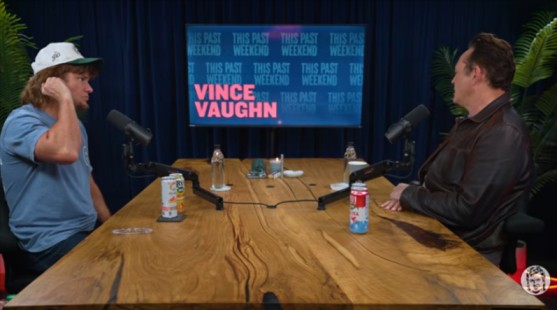
Editor’s Notes: In this episode of This Past Weekend, Theo Von welcomes legendary actor and comedian Vince Vaughn for a candid and wide-ranging conversation. The duo dives into stories from Vince’s early life in Illinois and his rise to fame with classics like Wedding Crashers and Swingers, while also discussing his latest project, the Hulu film Mike & Nick & Nick & Alice. They explore everything from shared memories of college football at LSU to the intricacies of parenting styles and the “intangible” qualities of winning athletes. It’s a hilarious and insightful look at the life and career of one of Hollywood’s most beloved figures. (Mar 24, 2026)
TRANSCRIPT:
Introduction
THEO VON: Austin, Texas. I’ll be doing a show there April 1st that’s coming up soon at ACL live at the Moody Theater and just prepping my material for my Netflix taping. And so be grateful to be down there, to be one of the last times to see the Return of the Rat Tour. Tickets are on sale now at theovon.com — T-O-U-R — if you can make it. Thank you for your support.
Today’s guest is an actor. He’s known for just being that figure, that humor man. Wedding Crashers, Swingers, Dodgeball, Rudy, and the list goes on. His new movie, Mike and Nick and Nick and Alice, is on Hulu this Friday, March 27th. I had a great time with today’s guest, Mr. Vince Vaughn.
Real Estate and Money
VINCE VAUGHN: Oh. So do you have a place there?
THEO VON: Yeah.
VINCE VAUGHN: Cool.
THEO VON: I’ve actually been thinking about moving recently.
VINCE VAUGHN: That’s cool.
THEO VON: I know. I’m kind of excited. I’m kind of scared.
VINCE VAUGHN: I’m always scared.
THEO VON: You are?
VINCE VAUGHN: Well, when you make a new purchase.
THEO VON: Yeah. I don’t like to spend any money on anything. I just like to kind of keep it somewhere.
VINCE VAUGHN: Well, you also think till the devil takes it or whatever.
THEO VON: Yeah. Right. You also feel. Sometimes I think, like this is, you kind of know what you have and how that works. And now how does this change your spending and what you’re doing? Because you always feel like, well, gosh, what happens if it goes away?
THEO VON: Yeah. One of my friends said something to me the other day about buying a house. He goes, “Well, you could invest it in the stock market or you could invest it in a home.” He’s like, “You can’t live in the stock market.” And that was kind of interesting to me because I was like, “Oh, yeah. Well, at least if you put your money into a home, then if it’s going up, you’re living in it while you have it.”
VINCE VAUGHN: That’s right. I mean, there’s ways to look at it. I kind of looked at it because I was never educated on any of it. So as I made money, I started to figure it out more. But I started to look at stuff like what makes me money every month and then what costs you money every month.
And so a house is kind of both, because you have your property taxes — yeah, especially here — and you also have your mortgage, if you do, and the stuff that goes with it. But it can go up in value as well. So I started buying rental properties that I could rent out for that reason because it was tangible and I could make money every month off it.
The market — I never studied it, but I guess if you do the S&P. I never spent my energy on that. But a house, I’m like, “This neighborhood’s nice. I think it’s going up. Okay, I’ll buy something here.”
THEO VON: Like, trusting your instincts about that. Yeah.
VINCE VAUGHN: Because you’re more exposed to it.
THEO VON: Yeah. That’s where you’re driving through it or something. You’re seeing things.
VINCE VAUGHN: Yeah. Like, the old thing was like, “This neighborhood’s not this. These neighborhoods are good now. This one’s not. Okay, I’ll buy there.” Do you know what I mean?
THEO VON: Oh, yeah. Yeah.
VINCE VAUGHN: But then you got to balance it with what you enjoy in your life. You want to be happy where you’re at.
THEO VON: You want to get something.
Hiding Money as a Kid
VINCE VAUGHN: I don’t know. I always ha—
THEO VON: Like, I never really want to invest in myself. I’m just a saver. I remember I would save my money. I would bury my money in the yard. I was that kind of kid. I would go to people’s homes and hide—
VINCE VAUGHN: Pirate. You got a treasure map.
THEO VON: I’m not even joking. They had these Crown Royal bags when I was a kid. The purple one with the gold.
VINCE VAUGHN: I remember those.
THEO VON: And I would put my money in there, and I would hide it in different places. I would hide it at friends’ houses who had better security in their homes.
VINCE VAUGHN: Did they know?
THEO VON: No, they had no idea. I would hide it there. Dude, we would steal people’s silverware. We went to their house. We were doing these little things we’d seen on, like, Home Alone, Mrs. Jones.
VINCE VAUGHN: Dude, if it’s not silver, later for sure. Go to the pawn shop and arguing with somebody.
THEO VON: “It’s sterling silver.”
VINCE VAUGHN: Did you ever go try to dig it up and couldn’t find it?
THEO VON: Oh, no. I always knew exactly where it was.
VINCE VAUGHN: Where it was.
THEO VON: I would check on it. That kind of stuff. I was a big burier — burying stuff to make sure that it was okay. My grandparents had a basement growing up.
Basement Horror Stories
VINCE VAUGHN: And the scary.
THEO VON: Yeah. Did you have a basement or no?
VINCE VAUGHN: I did at one time. Everyone left the house. I was home by myself. I thought, “I’m going to watch a horror movie in the basement,” because that was double scary. And I turned off all the lights in the house because I really wanted the experience.
I wasn’t good at watching horror. I would get pressured and do it and play it cool. But then I was f*ing terrified. My imagination was too strong. And I remember I turned this thing on and I was watching — it was The Evil Dead. You ever see The Evil Dead?
And I was like, “That’s f*ing it.” I got to a point where I had enough and so I got up to run to get the lights, but I hit a pole and I went down. And then your mind’s really playing tricks, like, “This is it. It’s coming in.” But I kind of crawled, got my lights on, turned off the movie. I turned on every light in the house.
But yeah, basements are a magical place because they can be a place of discovery too. I mean, good and bad happens in a basement.
THEO VON: Oh yeah. Well, I think they had like those cellar doors. Because I never put it together for the first few times I was at my grandparents — it was just a basement. And then there were these outside weird doors that — and then like the cellar—
VINCE VAUGHN: Like you had that little light come in and you knew you were underground. Like, the outside had a little hole area.
THEO VON: Well, they had — did y’all have some of those?
VINCE VAUGHN: Yeah. Hell yes.
THEO VON: Yeah, so those — the fact that those doors would open up and go down in that little staircase. My grandparents had a garden. They lived in Illinois, and so they had a garden outside of Peoria. Just a small town out there.
VINCE VAUGHN: Yeah.
THEO VON: So.
VINCE VAUGHN: Yeah, from the area.
THEO VON: You’re from the area.
Growing Up in the Midwest
VINCE VAUGHN: Well, I grew up — my family originally was, Virginia on my dad’s side, and then Kentucky, but ended up in Ohio. And then my dad was a salesman, so we ended up in Illinois. Yeah.
THEO VON: Oh, nice. What did he sell?
VINCE VAUGHN: Toys. Super cool. Yeah.
THEO VON: You just had toys around the house a lot.
VINCE VAUGHN: Yeah, he had a lot of toys. He’d give me like samples and stuff. So, yeah, samples were the best if your parent was ahead. Right?
THEO VON: Well, I mean, you had a bunch of something. I don’t know. It was weird. Like, I had one friend, his dad sold Oakley sunglasses. So he would have like three pairs of Oakleys. What kind of toys did y’all have just kind of milling around?
VINCE VAUGHN: He became a manufacturer’s rep. He was the first to go to college in his family. His dad had like a 100-acre farm and would work in a steel mill. But my dad was the first to go to college, so they kind of moved us to better schools. That was their thing. We kept moving to get to better schools, but we weren’t prepared for that because I didn’t know what a tutor was. No one had a tutor.
So we moved to an area that was more academic and exposed to stuff, which was good. But he sold like — I love that — I don’t think he sold this, he might — but I love that Evel Knievel stunt cycle when I was a kid. But he sold like Teenage Mutant Ninja Turtles and like — oh yeah, that was fun. And then he had like these little — like those kind of bathtubs. I guess it was in the toy section, but not bathtubs. Swimming pools. But it was just a big plastic circle. Remember those outdoor ones?
THEO VON: Yeah. Were they hard ones or the soft ones?
VINCE VAUGHN: No, they were just like these—
THEO VON: The rigid ones.
VINCE VAUGHN: Yeah, but they would just be in the backyard in the summer because no one had a pool. And then he sold Galoob Toys. Whatever they sold. Yeah.
Evel Knievel and Childhood Toys
THEO VON: Pull up that stunt cycle for me, can you?
VINCE VAUGHN: Evel Knievel. Did you ever have that?
THEO VON: I don’t think so.
VINCE VAUGHN: Dude, that was so cool. You’d pull the thing and then it would take off.
THEO VON: Oh, that thing.
VINCE VAUGHN: That thing was dope, dude. He was jumping and never making it. You would watch Wide World of Sports. They say he’s going to jump Snake Canyon. And then he would crash and he couldn’t move.
THEO VON: Well, I read somewhere the daredevil back then—
VINCE VAUGHN: Daredevils were popular.
THEO VON: Oh, they had — yeah. Well, that was a crazy thing. Yeah. Look at this. There you go. There’s a commercial for it.
VINCE VAUGHN: Yeah. So dope.
THEO VON: And it never did — it did on the commercial, dude.
VINCE VAUGHN: No, bro.
THEO VON: It never — nothing ever—
VINCE VAUGHN: Nothing ever did. Remember when they were first coming out with that flight? It never did what was — you know what I mean? And I wasn’t good enough to — I always needed an uncle or someone to put it together. I wasn’t good at putting stuff together. Were you?
THEO VON: No. I would take it all out and I’d get furious or whatever.
VINCE VAUGHN: Tom Sawyer. I’d get someone that could do it. Help me.
THEO VON: Oh, I see. So you were an extortionist. Wow.
VINCE VAUGHN: I was just — I do certain things for them or could help. But I needed help with this. I knew my limitations, Theo.
THEO VON: I’m trying to think of what we had. We had Rambo.
VINCE VAUGHN: Rambo was dope. I played with toys till I was older. I love toys.
THEO VON: Yeah, yeah. I’m trying to think of what toys we had. Oh, the wrestling figures was huge when I was a kid.
VINCE VAUGHN: Super huge. I played with Smurfs too. Did you ever play with Smurfs?
THEO VON: We would watch Smurfs, but collectibles.
VINCE VAUGHN: The Smurfs, yes. Looking back, the collectibles — well, they had like those little Smurfs you’d buy. But looking back, I don’t think the Smurfs age as well.
THEO VON: They didn’t do it. Yeah, Gargamel was just weird.
VINCE VAUGHN: I think he got a little one — Lady Smurfette.
THEO VON: They only had one going down and there was so — yeah, there was sort of a bring-up with Smurfette. She was kind of — she was cute, but she didn’t have enough—
VINCE VAUGHN: She had a girl-next-door going—
THEO VON: She didn’t have enough body on her.
VINCE VAUGHN: No, no, no. None of them did.
THEO VON: Yeah, you’re right. That’s a good point. But what was Gargamel doing there? Remember they had.
VINCE VAUGHN: It was just a bad guy. Yeah, but it seemed bad guy more than that though, to me.
VINCE VAUGHN: I’ve seen it. They say that there’s like a whole dark kind of thing behind it. There’s some stuff with Smurfs being really bad.
THEO VON: Oh, really?
VINCE VAUGHN: I think so. Yeah.
THEO VON: There’s some like a conspiracy.
VINCE VAUGHN: Yeah, yeah, yeah.
THEO VON: Well, there’s all those. Disney had the secret in the movies. Remember that whole thing? Yeah.
VINCE VAUGHN: And they did, by the way.
THEO VON: Did they.
VINCE VAUGHN: I think that you could find those images looked at. Did you ever smoke cigarettes?
THEO VON: Oh, yeah.
VINCE VAUGHN: Remember Camel? They have that weird stuff on the Camel cigarette. It looks like a guy, I think, who’s naked or something. Right.
THEO VON: I don’t know.
VINCE VAUGHN: Put up those Camel cigarettes. Remember you could make out the outline of a guy on.
THEO VON: With a wiener.
VINCE VAUGHN: I think so. I think if you look at it hard enough, you look at anything, you’ll see a little bit of.
THEO VON: I feel like, you know what I’m saying? If you mill around a gas station. Did you spend 40 minutes at a gas station? You’ll see somebody’s cock looking for.
VINCE VAUGHN: Let’s see. Look at old boy. Look at his hands are on his hips like this. Same here. Let me see. That looks like. Yeah, right there. Look at the plan to stay. Yes.
THEO VON: That ain’t.
VINCE VAUGHN: I’m telling you, that’s something.
THEO VON: That’s a guy with a dude. Just.
VINCE VAUGHN: I think that’s just a dude standing up.
THEO VON: No, dude, there’s a picture of a guy smoking, like, any. I mean, I’ll tell you this, though. If that were like 15, 20 years ago, then, yes, we would all think that.
VINCE VAUGHN: Now this here, too, like Pop Rocks and Coca Cola. Make your stomach blow up and all that.
THEO VON: Yeah. Or they’ll kill a B. Sean or whatever if you give them to him. Totally.
Pre-Internet Rumors and Urban Legends
VINCE VAUGHN: Oh, yeah. That was bored. We didn’t have the Internet. We were making up. We were hearing like, Rod Stewart had to get a stomach pumped. And were you hearing all that?
THEO VON: Oh, yeah. And they said Richard Gere was, like, working for a. Like.
VINCE VAUGHN: Like had a hamster. Yeah, I don’t think that’s true. I don’t want to discourage nobody, but I think this was the stuff going around.
THEO VON: Yeah, but that was a great room.
VINCE VAUGHN: It was Camel cigarettes. Had some f*ing naked dude on it. That’s what was in the news.
THEO VON: That’s a.
VINCE VAUGHN: That was the news, baby.
Imagination and Inner Life
THEO VON: That’s crazy. I do miss when they had more imagination, though. Even, like, you’re saying that was something interesting. You said, like, when you were in the basement, your imagination, if it was big, it could be a blessing and a curse because it could really create the darkness too.
VINCE VAUGHN: Big imagination is both. But yes, I think you have. If you have a great inner life, would you talk to yourself a lot?
THEO VON: Oh, yeah. Be harrowing. I’ll be like, “You’re a piece of.”
VINCE VAUGHN: I know. Sometimes. Good.
THEO VON: Yeah, occasionally. Sometimes like, “Merry Christmas.”
VINCE VAUGHN: I remember. That’s so good. I remember one time leaving a situation with older kids and not loving the exchange. And I was kind of walking my bike back. I was kind of talking out loud and playing different sides of the conversation.
And there was one of the boys that happened to leave at the same time, and he was behind me, really hearing me kind of have this conversation. And I kind of. So then I kept talking, but steering it with a different kind of point of view to kind of hide the fact that I was just working out out loud. Like, I kind of saw him, but I made it. I kept going, but steering it in a place where I felt more comfortable with what I was saying.
THEO VON: Like, you were like, just making up things that made sense that would have made it justifiable to him.
VINCE VAUGHN: Yeah. Or not seem as nuts.
Childhood Bike Ride Stories
THEO VON: Oh, dude. One time me and my friend, we got in a fight or something in a ditch, and with some other kids, and then we were riding our bikes, leaving. I think we got. The fight was pretty even, but we kind of went to, like, high five like that. And our hands got kind of stuck together while we were riding our bikes. So it just looked like two dudes just, like, holding hands up in the air.
VINCE VAUGHN: And proud of it.
THEO VON: Yeah, bro, but it’s.
VINCE VAUGHN: Everyone should see this.
THEO VON: It seemed like we’re like a couple Harvey Milk fans just, like, leaving a speech triumphant. Yes. If we seemed a little too trial like. And I still. Our hands got locked and we were riding our bikes with the other hand, just holding our bikes up, both riding the same way so we couldn’t let them go. So I’m sure these dudes, they look like. Oh, these dudes are a couple of really.
VINCE VAUGHN: You were really wanting to not damage the friendship over the fight.
THEO VON: Yeah.
VINCE VAUGHN: So you were overly connecting and making up for the fight.
THEO VON: Well, the kids we had fall were down the street.
VINCE VAUGHN: Oh, so you guys were celebrating how you did?
THEO VON: We were kind of celebrating. Well, I don’t think we did that great. But I think we just went to do a high five.
VINCE VAUGHN: You were in it together. No one ran.
THEO VON: Right. Our hands got locked, so I’m sure they looked and they’re like, “Oh, we just beat up these two gay kids,” probably. And I’m not saying that, but that could have been what they said.
VINCE VAUGHN: You don’t know what they were thinking. You’re just saying it was.
THEO VON: I know what they were thinking, and that’s probably what it was. Yeah, dude, I’m super nostalgic.
VINCE VAUGHN: Yeah, I try to. I can be. But you got to move on too. I think it’s good to reflect on that. I think it’s good to be where you’re at. Yeah. Both.
Mutual Friends and New Orleans Connections
THEO VON: When you were in college, did you, like, live in the dorms or anything?
VINCE VAUGHN: I never went to. Oh, you didn’t at all, did you?
THEO VON: Oh, yeah, I went to LSU. I went to.
VINCE VAUGHN: Oh. I got a lot of friends who went there.
THEO VON: Oh, I know Hugh. Dude, I met you with you before.
VINCE VAUGHN: He was my guy.
THEO VON: Is he still alive? Yeah. Good.
VINCE VAUGHN: Hayden’s the greatest.
THEO VON: Yeah.
VINCE VAUGHN: I go down and watch the games. I’ll go watch LSU with him. I always have fun going to those games. Yeah.
THEO VON: Maybe that’s where I’ve seen you.
VINCE VAUGHN: Yeah, it could have been. He’s a great guy.
THEO VON: Hugh. Hugh knows everybody.
VINCE VAUGHN: Oh, he’s the. He knows everybody.
THEO VON: He’s like the glue of New Orleans, probably. And the Better Than Ezra guys. Those guys are great.
VINCE VAUGHN: I know those dudes. Yeah.
THEO VON: Yeah. Kevin Griffin. I see him a lot. He has a big festival over there in the Pilgrimage music festival that he helped start.
VINCE VAUGHN: Yeah. Hayden was friends with all those guys, too.
THEO VON: Oh, dude, you met Drew Brees.
VINCE VAUGHN: Yeah, he’s a terrific guy.
THEO VON: Oh, wow.
VINCE VAUGHN: Yeah. Because he was friends with. I got to meet a lot of those guys. Hayden is, obviously, friends with a lot of the Saints and stuff too. And Mickey Loomis and those guys.
THEO VON: He was friends with all my ex-girlfriends somehow, which is interesting. But he was the best looking guy.
VINCE VAUGHN: Yeah, he was.
THEO VON: I mean, he was a good looking guy.
VINCE VAUGHN: He makes friends with. Yeah, he does. Good.
THEO VON: Yeah.
VINCE VAUGHN: Yeah. Look, I don’t know if they’re just friends. I’m not.
THEO VON: I’m insinuating.
VINCE VAUGHN: I think it’s all groovy. I don’t think there’s any strings. But I’m just saying it may not have just stayed. Like. They might not just been sitting down playing canasta with each other. They may not just be hooking up and playing rummy Q. I know. Might be some. There might be some connections going on.
THEO VON: Yeah, I’m sure he was just like. Yeah. I mean, he was just. Everybody knew him.
VINCE VAUGHN: I just texted with him yesterday.
THEO VON: Are you really?
VINCE VAUGHN: He’s a good guy.
THEO VON: So you guys keep in touch a decent amount?
VINCE VAUGHN: I do, yeah. Yeah, yeah, yeah.
THEO VON: It’s. Well, it’s just so fun down there.
VINCE VAUGHN: It is fun down there.
THEO VON: I was supposed to.
VINCE VAUGHN: Did you think about going. When you left here, did you think about going there?
THEO VON: Oh, going back to Louisiana. It’s a little too slow down there sometimes, you know. And I.
Life on the Road
VINCE VAUGHN: How much did stand up weigh on. Were you relocated to the ability to get up?
THEO VON: That’s a good question. It didn’t. I was doing like a tour. So at that point, most of my sets, I was like going out of town and doing like four nights and then coming back, like, to like we go out. So most. I wasn’t getting up and practicing as much as I was just doing a tour.
VINCE VAUGHN: So you would go take out on a tour material that you hadn’t workshopped at all.
THEO VON: Oh, that I had. But it was like this tour and touring up, going for like three years because we kept finding more markets to go play. So we’d play like smaller and smaller.
VINCE VAUGHN: So you were changing material slightly, but you kind of had your base and you just hitting areas you hadn’t hit. Gotcha.
THEO VON: And it was growing. I was performing like four nights a week, but I was just on. It was like in venues and like, as opposed to just doing practice sets.
VINCE VAUGHN: How does that get as you get older, the road that way, that kind of longevity. Is it something you’re still excited about or does it become more of a job?
THEO VON: It definitely becomes more of a job. And you have to take more breaks. I didn’t realize it, you know, because you want.
VINCE VAUGHN: You got to fill up your tank.
THEO VON: Well, yeah, yeah, you got to fill up your tank.
VINCE VAUGHN: Recreate. Recreation. Recreate.
THEO VON: Oh, I got a few.
VINCE VAUGHN: Do you bring a crew with you or do you go solo?
THEO VON: I take a tour manager, a couple other comedians, and then we’ll bring like a. For some of the venues, we’ll bring like, screens and a truck so we have like, one.
VINCE VAUGHN: Are they people you enjoy and spend time with?
THEO VON: Yeah.
VINCE VAUGHN: That’s good. You need that. Yeah, yeah. But then that can become unhealthy too.
THEO VON: Spending too much time with them.
VINCE VAUGHN: Well, yeah. I mean, you kind of become a circus, and it’s good because you have each other, but then you kind of are so with each other so much.
THEO VON: Oh, yeah. You can get it like family fight.
VINCE VAUGHN: You need a break sometimes, too.
THEO VON: Yeah, I guess. As you get. Do you choose films based on now with. You want to work with your friends?
Parenting, Travel, and Growing Up
VINCE VAUGHN: Well, I have kids now, so that’s. Once you have kids, that really becomes your priority. I have so many great friends that I just don’t see that often because we’re on different cycles. Their kids are at different ages than mine or live in a different area. So the family is really in. Your kids become the calling card.
You know, it’s always funny, I thought of a movie idea with this, which is when your kids are real young, they’re a lot of work. Like, me and my wife didn’t have any help. It was just me and her, which I really. Well, that’s how I grew up. So I liked it like that. As they got older and I would leave for movies, we’d have people who kind of can help. Help her driving and stuff.
But I found that, like, you’re so desperate to have other people that have kids your age because it’s a lot of work. So when the kids get to be three or four, if you meet other people with kids the same age, you can hang out, have a glass of wine, whatever. And the kids play together. So that’s nice. But all you really have in common is your kids are the same age. And then it feels like a good idea to go on spring break with them, because that’s easy. The kids can do stuff together and the parents could hang. But then you realize that you have very different parenting styles.
THEO VON: Oh, have you been in some situations?
VINCE VAUGHN: I think everybody has. It’s sort of funny, but you’re like, is that guy going to tell his son to stop hitting my daughter or am I going to have to say something? Or is that guy way too. That guy screaming at his son? He’s an inch from his face. Where these guys are getting super drunk and falling down in front of their kid. So you just don’t know until you go on that trip what the parenting and how they roll.
But you kind of hang with them and I’m sure everyone feels that way. So it’s sort of something. You start to hang out with more people who have kids in your area because your kids’ schedules dominate your time way more than you would hang out with friends that you had in common through comedy or through other stuff.
THEO VON: Because it’s all the kids.
VINCE VAUGHN: It’s all the kids. Yeah.
THEO VON: Have you ever been shocked if your kid picks a certain friend? You’re like, no, that’s not the kid.
VINCE VAUGHN: I kind of let my kids. I mean, I give them kind of a baseline of things to look for and then I let them make their mistakes and go through it. But I’ve been fortunate. My kids both have pretty good friends. They handle themselves well. I get nice reports that they treat. Yeah, I get texts all the time. Or we’ll hear stuff saying, “Oh, your daughter walked my daughter out of this situation and was nice to her.” So that makes you feel good.
But yeah, I think it’s not as complicated as people make it, Theo. I think it gets over complicated. In a city like LA, everyone’s competing to get into the right school.
THEO VON: Right.
VINCE VAUGHN: You know what I’m saying?
THEO VON: Yeah, yeah.
VINCE VAUGHN: But I think if it’s just a basic idea of how you go about handling stuff, you kind of attract people that share those ideas. But if you’re competing all the time, I think you’re going to get in a bad situation.
On Choosing a Partner
THEO VON: Did you choose a good wife?
VINCE VAUGHN: I did, yeah. She’s from Canada. She grew up on a farm.
THEO VON: That’s where you got to get them.
VINCE VAUGHN: You’re so funny, dude. The way you said that was like, that’s the secret code.
THEO VON: Well, a lot of people are like, yeah, I’m down. Definitely look into Canada, even further. I’ll take something that’s, you know, I’m saying, that’s still on ice.
VINCE VAUGHN: How far are you going?
THEO VON: I’ll take a freaking Inuit. I’ll take something that’s in the freezer section. Something that hasn’t been thawed out by some of these desperate ways of America.
VINCE VAUGHN: You know, I tell you, it’s. You got good and bad people everywhere for sure. But I definitely look for somebody who, I like their base values and how they handle stuff. I think that goes a long way because a lot of parenting is problem solving. Working with each other.
THEO VON: And they have good posture up there in Canada. You notice they have the best posture.
VINCE VAUGHN: I haven’t noticed that.
THEO VON: Watch Canadians when they go by. You could barely even see them. They’re so interesting. Just horizontal, longitudinal.
VINCE VAUGHN: You’d be even a little surprised. You don’t seem like Africans with that, you know. Yeah, yeah. You remember that they always have a basket carrying. Walk around real casual because their posture was great.
THEO VON: Oh, yeah, yeah. And someone would even, like. If the ladies would get pissed, they would be like. But not even spilling anything. Not a freaking melon would fall out of the basket. Oh, dude. I remember I went to South Africa a couple times and you would see a lot of people walking and they would. That was how they would travel, stacking on the dungeons.
VINCE VAUGHN: I’ve never been to South Africa. Was it nice? You liked it.
THEO VON: Yeah, because there’s just so much going on. Just like, it’s beautiful and amazing and there’s these beaches and there’s all this insane history.
VINCE VAUGHN: Were you there for a vacation or work?
THEO VON: I went there one time in Johannesburg to do a comedy festival. I went once when I did this thing called Semester at Sea where you went as a student on this boat. And we went there.
VINCE VAUGHN: And you ever go somewhere for work and then say, “I want to come back when I have some downtime to hang?” That’s cool. That’s the great thing about our work is you get to travel. I find that to be a great education.
THEO VON: Oh, yeah, for sure, dude. Going to Vietnam or whatever. I’m trying to think of some other neat places. What’s a place that you filmed in that you were like, wow, this kind of blew my mind. Even if it was an American city.
Discovering the World Through Work
VINCE VAUGHN: Yeah. There’s been a lot of them. I mean, I remember going, as a kid, getting to go to New York and actually living there was a big. Very different for me, obviously. Then I lived there for a while.
THEO VON: And you were acting then or not?
VINCE VAUGHN: I was. Yeah. I never really traveled anywhere, bro, until work took me there. Like, for us, a vacation was. We would get in a station wagon.
THEO VON: Where would y’all go?
VINCE VAUGHN: We tried to Florida or Arizona. You try not to get grounded because everyone’s hopped up on sugar and s* and you’re crowded in, and you try not to get in trouble in the back. But we didn’t really. We would drive most places for spring break. I never left. I had relatives in Canada from my mom’s side, so we would go up there. But I never went to Europe, ever, until I had gone for work for sure. Did you?
THEO VON: No, dude. We didn’t even know about Europe. The guy, the janitor that drew the map on our cement at our school left out three states of it, dude. So there was like. People were like, “What is happening? Like, how does that happen?”
VINCE VAUGHN: You would know the states because they didn’t put them down.
THEO VON: Yeah. Well, I think it was somewhere. Some of it. I think Maine. I knew that Maine was missing. I didn’t want to call him out because I felt kind of bad for the guy. But anyway. Yeah, so we weren’t going to Europe, dude.
I remember Canada. They didn’t even have it when I was a kid or whatever. They had, like, a picture. I remember in our classroom, they had America. Because it was very. Everything was very American then. Very, like, we are America. And then they had a picture of a wolf, like, chasing a boy. And that was Canada, like, chasing a cold boy. And that was what we thought was going on outside of there.
And Florida was the greatest place you could go in the world. If somebody went to Florida and they came back to school and had a shirt on that said Florida, you were like, “Oh, man.”
VINCE VAUGHN: You killed it.
THEO VON: They are so rich.
VINCE VAUGHN: Totally.
THEO VON: That’s nice. You guys would drive all the way from Illinois down to Florida.
VINCE VAUGHN: Yeah. We have relatives in Ohio. I go see. My grandfather had a little farm.
THEO VON: What kind of animals did they have over there?
VINCE VAUGHN: He just had cows. He just had cows. I remember.
THEO VON: I like cows. They’re warm.
The Amish Pilgrims
VINCE VAUGHN: Yeah. I remember as a kid, I was, like, in first grade, and we were studying the Pilgrims, and the Pilgrims were all in black and white. And so when we drove from the farm to go see my grandfather, I never saw him much. But when you get to the smaller roads, they’re like this narrow. There’s just two lanes. And those country roads are smaller roads. And we were behind Amish. I’d never seen Amish people.
THEO VON: Oh, yeah.
VINCE VAUGHN: Never knew they were travelers. I thought they were pilgrims.
THEO VON: Wow.
VINCE VAUGHN: So you had a bunch of kids in black and white in the back of the carriage, kind of staring at us. You couldn’t break eye contact because they’re looking right at you. Yeah, they’re f*ing slow, bro. They’re not moving. Like, this horse is not excited, and we’re sitting behind him. We had, like, a Lincoln Town Car or something. My dad was driving, and it was so slow going.
And I remember going, “Why won’t these pilgrims get out of our way?” And my dad lost his mind. He pulled the car over and took my head off. “You’re no better than these people. Who are you to talk like that about someone?” But he didn’t realize, like, I really thought they were pilgrims.
THEO VON: Wow.
VINCE VAUGHN: I really thought that that was a pilgrim, because I couldn’t even understand, of course, what these people living, not touching electricity. You know what I mean?
But my dad’s great, and my mom. But they were real keen on making sure that you were. I think because they moved me to a nicer area. They were real big on making sure I wasn’t feeling better than anybody. But I think he got that one wrong. I think he thought I was making fun of these Amish people. I didn’t know what they were.
THEO VON: Yeah, you’re like, “This could be Christopher Columbus’s children or whatever over here.” And they just. You know, they’re all hopped up on cheese curds, and they’re slowing down.
VINCE VAUGHN: They’re slow as. And we can’t get around them.
THEO VON: Dude, that’s hilarious, bro. Yeah, that’s kind of what we had in our classroom.
VINCE VAUGHN: We were super pro America, too. Everything was. It was taught in that way. The pledge of allegiance was good. Hell, yes.
THEO VON: Me, too.
VINCE VAUGHN: I liked it, by the way. I love it.
THEO VON: I did, too. Yeah, well, it kept us together. It was like one thing you had in common. It was like, if you. At a certain point, if you don’t have anything in common, if you take away things that people have in common, then they don’t have anything in common.
VINCE VAUGHN: I still feel the same way. I still feel like it’s the best out there. Not that it’s perfect. There’s a lot of stuff going on. I don’t think we even. I don’t know how much control everyone even has over it. But I still love the idea of it.
THEO VON: Well, a lot of people are going to homeschool now too. That’s.
VINCE VAUGHN: Yeah, yeah.
Homeschooling and Education
THEO VON: There’s more parents have switched to homeschooling now than even during COVID. I did some of it. You did it?
VINCE VAUGHN: My daughter in first grade, we did it. I did some. You know, I.
THEO VON: That’s easy to teach though, dude. Traveling the harder. Oh, you did?
VINCE VAUGHN: I hired a lady. That was good. Yeah. But I get a curriculum, you know, and then I’d have to pick a curriculum that I like. I had a lady, but the first year she was by herself, which she’d look at me when I’d leave her in the classroom like. Like this. No one wants to be sitting by themselves. So then I found a public hybrid school where she would go two days a week. And then I moved her to a local Catholic school, and now she goes to a big public high school. And she’s doing great, but for all the same reasons. You start looking at this stuff and figuring that you want to try to give an education that is not so. Drowning and beating them down.
THEO VON: Yeah.
VINCE VAUGHN: You know what I mean?
THEO VON: Not really exactly. I mean, let me think about beating them down.
VINCE VAUGHN: Well, meaning everything was taught from a place for a while, like pointing out everything bad and you can’t say this. You can’t feel this way, or so much guilt. Education and, “Oh, you’re bad to feel this way or that way.” And so I didn’t. It’s just too heavy. And also like just a hatred of anything. And I just. I always, you know, like an optimism positive and why not share different ideas? Why not have differencing of opinions and create an environment where you can talk about different things.
THEO VON: Yeah. It feels like there’s a lot.
VINCE VAUGHN: Yeah.
THEO VON: Like kids were just feeling bad about themselves or like, “We did this,” or “Our people.” Like, what are we doing?
VINCE VAUGHN: I’d go to my kids and say, when I would get stuff, I’d say, “This is not the history of how this sht started. This is not real. We didn’t invent any of this sht.” You know, so you’d have to kind of go, and that’s a lot of work.
THEO VON: Yeah. Oh, yeah. Because then you’re kind of reprogramming.
Marriage, Family, and Relationships
VINCE VAUGHN: Where are you at with marriage and kids?
THEO VON: I don’t have a marriage right now.
VINCE VAUGHN: Someone that you are serious with?
THEO VON: No, but I would like to get there so it’ll happen sometime soon.
VINCE VAUGHN: What’s your process for that?
THEO VON: That’s been the problem. I just haven’t really. I’ve been working so much that I didn’t really focus on it much, but now I’m trying to focus on it more.
VINCE VAUGHN: How old are you, if you don’t mind?
THEO VON: I’m 45.
VINCE VAUGHN: Yeah.
THEO VON: So I’m going to die. I’m going to. I’m not going to die soon, but I’m going to, you know, you got time.
VINCE VAUGHN: I think the thing that happens is we’re so focused on the career, and it takes up so much time, and it’s easy to put that to the sidelines. But then as you get older, sometimes the joy or the things we got from the career aren’t as high as they were. And you start to look at family and the idea of it and say, “That would be fun.”
THEO VON: Yeah.
VINCE VAUGHN: So you take kind of the same approach that you take towards your career, and you start to put those ideas on meeting somebody.
THEO VON: Yeah.
VINCE VAUGHN: And then you start to work at it in the same kind of way. And I think my opinion sometimes, what are the things I’m doing that are good, what’s not good, what’s a good thing to bring to a relationship? What’s not working on yourself in a weird way, you’ll come in contact with somebody more than “I got to go to the right class” or “go out during the day.” It’s more about doing that kind of work on yourself. And then I think you’ll kind of attract somebody in a similar mindset. But I would say, don’t put it off. Just focus on it a little bit in the same way that you’ve done with your career.
THEO VON: Did you have to do that?
VINCE VAUGHN: Yeah, I got to a point like you did, and I thought. At first I thought, you know, maybe you don’t get all the cards in life. Like, maybe I was so not focused on this.
THEO VON: It just doesn’t work out now.
VINCE VAUGHN: I’m older, and I wish I would have gotten started sooner. But then I thought, you know, I want to ask God for those years back. Like, I can get those years better than I would have had them if I want. If I’m asking for them now because now I’m wanting that. Does that make sense?
THEO VON: Yeah.
VINCE VAUGHN: So now that you want it, you say, “Why can’t I have it now?” And whatever way it looks for you at 45. Yeah.
THEO VON: Yeah. I think you’re right. I think the more I just keep realizing it’s not me, like, because sometimes they’re like, “I don’t really want to go out or go do this thing or something, but maybe I’ll meet somebody.” Right. And maybe I’ll. But then it’s. A lot of times I’m still meeting somebody with the same kind of. I’m showing up with some of the same problems that I still. That have prevented me. So it’s. I think you’re right about. Instead of, like, out there metal detecting, maybe stay home and work on the magnet a little bit.
VINCE VAUGHN: But I think do it with grace, too. You can say, “You know, I don’t want to do this. This would be better. What do I.” And also, I think you go, “What do I want in a person that I’m going to be married to?”
THEO VON: What.
VINCE VAUGHN: What do I want and what don’t I want? Like, just thinking about it, it’s almost like the same as stand up. “What kind of venues do I want to play, what kind of podcast? What do I want to do?” And by making those decisions, you can manifest something you’re excited about.
THEO VON: Yeah. I think a good mom, that’s what I want. To have a wife that’s a good mom. That’s probably 100%.
VINCE VAUGHN: Yeah.
Family Backgrounds and Siblings
THEO VON: Did your wife have to introduce you to her dad or whatever, like they do in the movies or whatever?
VINCE VAUGHN: They were kind of. I met them pretty quickly. I did call him. And I asked her to marry. And he. I think he was appreciative of it, but they weren’t as much like that. I was raised like that.
THEO VON: Yeah.
VINCE VAUGHN: Were you?
THEO VON: No, dude. There was, like, a lot of domestic abuse in our area and people, like, hiding drugs in each other’s, you know, bedrooms and stuff like that. So it was more.
VINCE VAUGHN: Those are relationships that aren’t going well.
THEO VON: Yeah, pretty much. Right.
VINCE VAUGHN: But I’m saying you would want to, you know, the family.
THEO VON: Yeah, yeah, I would like to have, like, a family. You know, I’m okay with, like, people fighting at night before they go to bed.
VINCE VAUGHN: Show me a normal family, I’ll show you a liar. Everyone’s going to go through their, you know, it’s like killing.
THEO VON: Yeah.
VINCE VAUGHN: You know, I mean, everyone’s got their. They fight about. There’s days anybody’s mad at anybody, so that’s never going to go away. You’re just trying to aim it a little better. Yeah, yeah.
THEO VON: Oh, oh, yeah, yeah, yeah. Just shoot a little bit in a little bit. I just want my arrow to end at least in a different area.
VINCE VAUGHN: Yeah, yeah.
THEO VON: But, dude.
VINCE VAUGHN: Yeah.
THEO VON: I remember one time we were so mad at our mom and we were like, crying. We’re all crying. And we try to, like, put all of our tears in, like, a little jar and we’re going to take them to the police and be like, “Look what’s happening at the house.” But they won’t stay in there. They, like, in the morning they were gone or whatever.
VINCE VAUGHN: That’s interesting.
THEO VON: Yeah, yeah. But I remember that. I remember us like, were you real tight with your mom?
VINCE VAUGHN: Were you real tight with your mom?
THEO VON: No, we weren’t that type of. We’re tighter now.
VINCE VAUGHN: That’s good. Yeah.
THEO VON: I just wouldn’t surprise her for Valentine’s Day the other day.
VINCE VAUGHN: That’s nice.
THEO VON: We had a nice time, dude.
VINCE VAUGHN: You have brothers and sisters?
THEO VON: Yeah, I got a couple brothers and sisters.
VINCE VAUGHN: Close.
THEO VON: It’s gotten better over the years.
VINCE VAUGHN: Yeah. Yeah.
THEO VON: What about. What do you got?
VINCE VAUGHN: Same. So older sisters and you were the boy? I was the youngest. Yeah.
THEO VON: And they were older sisters?
VINCE VAUGHN: Yeah.
THEO VON: No. Did they ever have friends come over and you’re just, like, ogling or whatever, or were you put on?
VINCE VAUGHN: They were like five. They were five or six years older, so. No, I was the best. I would sometimes get thrown under the bus to look cool for the older friends, you know, like, you’d hang out and play, and then when the older friends would come, you weren’t included. That’s normal.
THEO VON: Yeah. Go hide, Vince.
VINCE VAUGHN: Yeah.
THEO VON: Did they call you Vince or is that. Did they. Would they call you.
VINCE VAUGHN: They called me Vince if they weren’t mad at me, then they’d call you anything. We’d fight like crazy. Younger, you’d be hot, and then you’d be friends and you love each other, you know, like anything. Yeah. You’d really go at it. When you go. I did. You have this. Sometimes when you get in a fight with your siblings, it’s really like a game of tag. You’d be so pissed, and you’d hit somebody, but then you’d be afraid because now you got them. So then you. They’d turn around mad, and now they try to come to get you real bad. And you were trying to get to the door to shut it. And then if they got you, it would go the other way.
THEO VON: Yeah.
VINCE VAUGHN: So it’s like whoever got the other one hard last is kind of how the fights would go.
Kids, Nostalgia, and Growing Up
THEO VON: Yeah. But when everybody brought it to mom. And then seeing kids run around their mom is one of the funniest things, you know, like, they’re hiding. It’s so funny when you watch a kid with their mom sometimes and they’re just like. Like, you know, they’re moving in between the moms. Like they’re just running or, you know, they’re all like. Or they’re fighting around the mom. That kind of shit’s fun.
VINCE VAUGHN: Or even how kids play hide and seek. Like an ostrich. Their ass will stick out, but their head will be behind the curtain. You ever seen kids play hide and seek?
THEO VON: Dude? Sometimes a kid will just sit there and cover his eyes, laughing wildly. Yeah, dude, we could see you, dude.
VINCE VAUGHN: Thank God there’s not a kidnapper after the kid.
THEO VON: Yeah, we didn’t have. I think we had some. We had a decent amount of, like, they used to have a law that they would put that, like, if he was like a sex offender or whatever, children sex offenders, that you had to go around and go door to door. Right. Which was the worst. Because we all. We lived at home. Our mom was working, so we’d just be. These guys would come and they’d be like, “I have to let you know, I live in the area. I’m a sex offender.” It would just be us kids.
VINCE VAUGHN: “I live in the air. I’m into super young guys. Just letting you know, mom.”
THEO VON: But mom would be gone. And that was like at every house. I’m like, who put this rule together?
VINCE VAUGHN: Yeah. Now it’s on an app.
THEO VON: Yeah, that’s easier now.
VINCE VAUGHN: I know it’s weird because you’re like, oh, geez, this guy over here.
THEO VON: Yeah, 60ft.
VINCE VAUGHN: Better not know him. We just walk around. We always outside going around. Nobody paid attention to us.
THEO VON: Dude. Yeah. That was. Being living at. That was the best, dude. We had this one kid named Kirby that tried to crawl through the ditch culvert one time, and the government had to come and get him or whatever.
VINCE VAUGHN: I remember the government had to come get him. That government man came down to do some work.
THEO VON: Like, that was the best way. This dude named Milford that would drive the school bus. And he was always. They were always coming and checking to see if he was drunk. It was just like. It was. Yeah. But there was nothing like that being
VINCE VAUGHN: like, we find out stuff later that a teacher molested people and stuff. Oh, yeah. You find that out later. Yeah, yeah.
THEO VON: Anyway, that kind of took a turn.
VINCE VAUGHN: Yeah.
Discussing Mike and Nick and Nick and Alice
THEO VON: Let’s talk a little bit about. Well, I watched your movie, Mike and Nick and Nick and Alice.
VINCE VAUGHN: Yeah. Yeah.
THEO VON: It’s cool, man.
VINCE VAUGHN: Yeah, cool.
THEO VON: The way that they shot somewhere they slowed it down.
VINCE VAUGHN: Yeah.
THEO VON: You know what I’m talking about?
VINCE VAUGHN: Stylized.
THEO VON: Yeah. Yeah. It was interesting. Was that a choice that was made kind of later? Do you have any clue or do you have anything to do about that?
VINCE VAUGHN: The director who puts it all together and he kind of has a stylized point of view to do it. But I liked it. I thought it came out cool.
THEO VON: Yeah. Well, it’s just bizarre. It was like. It’s just like. It made me think, oh, things can be different.
VINCE VAUGHN: Yeah, yeah. Like when he would do flashbacks,
THEO VON: well, like, even with the. Like, there’s like a moment where they have that cat that’s in there and they show him, but it’s like it goes in slow motion just for like a moment or something. I just thought it was pretty stylized. That’s what I thought. Yeah. And so I don’t want to give too much of it away, but so your character kind of goes back. What can we say?
VINCE VAUGHN: You can say whatever you want. Just kind of a sci-fi thing where it’s rated. It’s like a rated R comedy with action and it’s got this kind of sci-fi twist to it.
THEO VON: And your character, you played two. Two characters of you.
VINCE VAUGHN: Yes.
THEO VON: Yeah, it was kind of cool to see, like, because you always wonder. Well, I wonder what it would be like if you played this character in this thing while you’re watching somebody in something. But to see him play two people, it was like. Oh, that’s. It’s like. I can’t explain it. It was just like. It almost seemed like an experiment.
VINCE VAUGHN: It’s crazy what they do with technology now because you kind of film one side of it, then you film the other side and they put it, you know, together. Like it’s one thing. The technology’s gotten so much more advanced.
THEO VON: Was there tough moments to play, like two different characters in the same thing or you didn’t really think about it. I was amazed at how different the guys actually seem because I was like, oh, well, at one point I’m just going to kind of get confused. But I didn’t at all.
VINCE VAUGHN: Yeah, they make them a little different because one’s obviously been alive longer and you’re going back in time. But yeah, it was a different experience for sure. So I kind of like doing stuff that’s a little different. You get bored doing the same stuff. So anytime I’m doing something that’s a little different, I like that. So it was. It wasn’t too bad. I mean, sometimes it was just more stuff to film because you’re playing two characters in a scene. It’s true, but I like trying different stuff.
Early Career and Rudy
THEO VON: Was there. I read you were almost in The Matrix one time.
VINCE VAUGHN: I don’t know about that. That wouldn’t. I don’t remember that. I don’t remember that. Sometimes there’s stuff I’ve turned down but that I don’t remember that being one of them.
THEO VON: Yeah, your first, one of your first movies was Rudy. That’s the best, huh?
VINCE VAUGHN: That was fun. Yeah.
THEO VON: Dude, I still sometimes see that guy clapping by the.
VINCE VAUGHN: So funny, bro. Yeah, that’s so funny.
THEO VON: It’s such a mean slow clap. Oh, slow clap. Charles S. Dutton. That’s the actor.
VINCE VAUGHN: Yeah, he was great.
THEO VON: Yeah. Did he pass away?
VINCE VAUGHN: I don’t know if he did or he didn’t. Let’s go back to the board here.
THEO VON: Bring him up.
VINCE VAUGHN: He was cool. He was great in that part.
THEO VON: Oh, he was so good.
VINCE VAUGHN: Great speech to Rudy.
THEO VON: Yeah.
VINCE VAUGHN: Gratitude. Still alive.
THEO VON: Hell, yeah.
VINCE VAUGHN: Come on, Charles.
THEO VON: Show them, Charles. And he was in the show. Yeah. They had a show called Roc when I was a kid that he was on. Yeah, that guy was great.
VINCE VAUGHN: Dude.
THEO VON: Did you ever meet the real Rudy over there?
VINCE VAUGHN: I did, yeah.
THEO VON: Yeah.
VINCE VAUGHN: I didn’t hang out with him much, but he was there. That’s what I had a few times. Yeah.
THEO VON: Yeah. Because I went over there to South Bend, Indiana. I used to go do comedy over there sometimes. He had a comedy club right on.
VINCE VAUGHN: He owned. He owned a comedy club.
THEO VON: No, no. They had one on the edge of town there, right outside of where Notre Dame was.
VINCE VAUGHN: Gotcha.
THEO VON: And I would go. Have you been to a game there?
VINCE VAUGHN: Have you been to a game there?
THEO VON: I’ve never been to a game.
VINCE VAUGHN: It’s cool. Yeah. Yeah. Tradition. Yeah.
THEO VON: Yeah. Oh, I would love to go. Well, the grass right there. When you walk onto the campus at Notre Dame, it’s, like, beautiful. And then when you’re off the grass off campus, it’s a little bit different.
VINCE VAUGHN: Yes, totally. They do.
THEO VON: It’s more like the grass has been drinking or whatever during. You know, during the day, even.
VINCE VAUGHN: That’s that day drinking.
THEO VON: Yeah. But on campus, it’s super nice.
VINCE VAUGHN: Yeah. They take care of it for sure.
THEO VON: Oh, is that the campus right there?
VINCE VAUGHN: Yeah.
THEO VON: That’s a nice picture. Give me that one with the snow right there. That’s nice. Yeah. That’s one thing I do like about Nashville is that we do get some cold weather over there. That’s kind of a vibe. Do you miss that about the Midwest, about having cold weather?
VINCE VAUGHN: I think whatever you get used to. I don’t mind the cold. I’m always ready to be done with it. Come January, I like it for the holidays.
THEO VON: Yeah.
VINCE VAUGHN: But come February, I’m done with it. As a kid, I loved it.
THEO VON: What would y’all do? Go do?
VINCE VAUGHN: Just go play in the snow or get a snow day. You know, as an adult, you’re scraping it off the driveway. You’re scraping your car. It’s more maintenance.
THEO VON: Yeah.
VINCE VAUGHN: And getting kids ready in the snow is a lot more.
THEO VON: Yeah. You gotta lie.
VINCE VAUGHN: Yeah.
THEO VON: You gotta lock them down.
VINCE VAUGHN: Lock them down.
THEO VON: And then their face is just, like, a thing of snot and just redness.
VINCE VAUGHN: A Christmas Story. Yeah, dude, the guy from A Christmas Story.
THEO VON: I met him with you.
VINCE VAUGHN: Yeah, he’s one of my best friends. Probably Peter Billingsley. Yeah, he’s my closest friend. He’s a great guy.
The Wild West Comedy Festival
THEO VON: Yeah, because I met you guys. Did. So you guys started the Wild West Comedy Festival. What was that like? Because that was the Nashville Comedy Festival, right?
VINCE VAUGHN: Yeah.
THEO VON: Well, what was it?
VINCE VAUGHN: I’ll tell you what it was. I had a lot of friends that were standups, but there wasn’t any opportunities for standups. This is in the like 90s. I mean, we did Swingers. We wrote in the script, it was the line that said, because Favreau’s character was a standup, an ex standup in that movie. So he wrote the line saying, “In the 80s, it felt like they were handing out pilots to standups at the airport.” And then it was a time where there really wasn’t a lot for standups. So I just started trying to help friends of mine out that were standup comedians.
I did that Wild West Comedy Show where I went around and did 30 days and put. But Sebastian was on that and somebody
THEO VON: would just do it everywhere.
VINCE VAUGHN: I just would go hit 30 cities in 30 days because it seemed fun to me. So we performed every night. We did 30 nights in a row. But I was really trying to help some of my friends, like Ahmed, that I knew. Guys that were standup comics.
THEO VON: Oh, yeah. John Caparulo. I saw him last night at the Comedy Store.
VINCE VAUGHN: So there was a bunch of standups because there wasn’t as much opportunities. It’s crazy because now standups have a lot more opportunities.
THEO VON: Right. Ernst is on there.
VINCE VAUGHN: I like Brett.
THEO VON: Yeah.
Comedy, Politics, and the Decline of Talk Shows
VINCE VAUGHN: But anyway, so they started going. But now, then what happened is the standups now have a lot more opportunity. But at the time they’re just. It wasn’t as viable. Like, I think in the last 15 years, standup really had this renaissance where, oh for sure, so much came out of it.
And I look at the standup stuff a little bit. Like what happened with improv? Like, I did improv when I was a kid in Chicago, when I was in high school, because there was an Improv Olympic that was an offshoot of Second City. But it wasn’t. It was just a place to go train and it was fun. It wasn’t that big of a deal. I enjoyed it and I learned stuff there, but I didn’t stay the whole time. I came out to California after high school.
But as I got older, there started to be these different improv groups and then it became like a religion. This improv group thought that that improv group wasn’t good. Yeah, this improv group is good at sketch. This is good at characters. They don’t. And I thought this is improv. Yeah. Like, who the f* is talking about improv?
THEO VON: Yeah, it’s like when mimes start beefing or whatever.
VINCE VAUGHN: It’s just comedy. Like, what is that? I mean, what are you talking. It’s so crazy to me. And so then standup kind of went through the same thing where it started to form into like this standup group or this group or a comic is this. And I thought, Jesus, it’s the same where it starts to get too self-important. And I think ultimately comedy is a big tent. You can go real cerebral or you can be physical, it doesn’t matter. There’s nothing prestigious or like a stamp of approval about it.
THEO VON: Yeah, I agree. It’s gotten to that place recently. There’s been like kind of infighting. I don’t know if it’s like rappers.
VINCE VAUGHN: It’s like rappers.
THEO VON: Yeah.
VINCE VAUGHN: Right. It’s so silly.
THEO VON: But everybody’s afraid to kill each other.
VINCE VAUGHN: It’s weird, right? It’s just so stupid.
THEO VON: So I’m just saying we either need a Tupac and Biggie.
VINCE VAUGHN: We need somebody going to go real bad.
THEO VON: Yeah.
VINCE VAUGHN: To get good.
THEO VON: Yeah.
VINCE VAUGHN: Yeah. Or it’s just going to stop.
THEO VON: Or it’s.
VINCE VAUGHN: It’s silly.
THEO VON: But it is silly.
VINCE VAUGHN: Silly, bro.
Politics and Comedy
THEO VON: Well, a lot of it got political too. I think politics came into stuff. I think that’s has happened a lot over the past few years with people like attaching themselves, like heavily attaching themselves to politics, which is part of the
VINCE VAUGHN: job because you’re going to talk about current events.
THEO VON: Right. But to attach yourself.
VINCE VAUGHN: But you don’t want to become part of a group and feel like now you’re a champion for one ideology. You want to make fun of everybody.
THEO VON: Yeah, I agree.
VINCE VAUGHN: Yeah.
THEO VON: It’s happened more over the past few years, but it’s always been that. Well, it was for a long time. Hollywood is pretty much overly kind of a liberal place.
VINCE VAUGHN: Yeah.
THEO VON: And so you would have.
VINCE VAUGHN: But not really.
THEO VON: Yeah.
VINCE VAUGHN: You know what I mean? Yeah. It’s more like we’re smart and got it figured out and if you don’t agree, then you’re an idiot. Yeah.
THEO VON: Yeah, that’s true.
VINCE VAUGHN: Yeah. Not liberal in the way that we think. It’s like, “Hey, it’s all groovy.”
THEO VON: Right. Yeah. It’s not liberal like a hippie with a joint.
VINCE VAUGHN: No, no. Maybe it was pursuit of happiness. That’s cool. Whatever makes you happy.
THEO VON: Right?
VINCE VAUGHN: Right. That’s cool.
THEO VON: Maybe it was at one point though, I think.
VINCE VAUGHN: I don’t know.
THEO VON: But it’s definitely got more of an elitist take like this is our way or the highway.
VINCE VAUGHN: I think it’s changing now.
THEO VON: Well, do you think it’s dissolving now or do you think it’s just spacing out more now?
VINCE VAUGHN: That’s an interesting conversation too, because I hear this from the different groups too. I do think that there’s less control in some ways. But I also think that they put themselves in a corner with trying to please everybody. You know, you’re going to catch pneumonia trying to please everybody. That’s like that old Vonnegut quote.
So, yes, I think there was more of a stranglehold with ideas. But there’s always been people who feel differently within that. It’s like any group, I guess. But yeah, I think what we’re saying is similar, that it was never really a place where, within individuals and friends, we could always disagree and we always joke with each other. People my age, I disagree, agree. And you could change. We change our minds. We’d laugh, we joke. But there was definitely a culture that if you didn’t agree with these ideas, you were looked at as bad. Yeah, for sure.
THEO VON: Yeah. I think Hollywood really got more political. I don’t know if it got more political.
VINCE VAUGHN: No, they got rewarded for it. Yeah. They started to come out there and do it. And I don’t even know how much everyone even is informed on everything. Yeah. But they really like to get out there and do it.
THEO VON: Oh, yeah. But it’s also wild how those people will speak on one thing, but there’ll be another topic that’s way bigger.
VINCE VAUGHN: And they’re hypocrites too. A lot of times, like anybody is.
THEO VON: Oh, for sure. Dude. I totally.
VINCE VAUGHN: Like, I feel strong about this, but it’s a strange thing when you start going like, you know better than something. Yeah, that’s weird. That’s when it gets weird. It’s one thing to say, “This is where I’m at.” Yeah. And then hear someone else’s point of view and disagree or agree. It’s another thing to be like, “I’m so right.” Yeah. And I’m going to help you or condescend to you. That’s the part that no one, I mean who wants, no one wants to hang out with that. Yeah.
THEO VON: So it got to that “my agent is right, and so this I’m going to have to tell you what they think.” You know, that’s also another thing that happens.
VINCE VAUGHN: Say it again.
THEO VON: Where people feel like they have to think how their agents or managers think, you know what I’m saying? Where they feel pressured to think a certain way. That’s terrible.
VINCE VAUGHN: And that happens. But that’s the problem. If you’re going through life trying to check boxes like Dorothy in The Wizard of Oz, like “let me get the broom, let me do this.” What is the Wizard? You’re not thinking for yourself. You’re just trying to do the things you’re supposed to. But it’s always better if you get quiet and do what’s in your heart and do what you think is right. That’s when you carve out stuff and make your own path and probably the
THEO VON: best stuff and get the best stuff out of you even creatively, a hundred
VINCE VAUGHN: percent. And have the courage, I think, to be honest, try to be, and go out. That’s the problem. I think that happened with film comedies and that’s why I think standup got stronger. The studios weren’t going to produce a comedy and be more responsible for supporting the making of that film. It was easier to give someone money for a special and say, “We’re going to knock that out. That’s their special.”
The Rise of Podcasts and Authenticity
THEO VON: Oh, I see. Seriously, with the standup special, they can just put, “This is their thing, that’s their thing.”
VINCE VAUGHN: We’re out of it. We’re just hiring a special. But the truth is most people, they want to laugh. They don’t want to see stuff be precious that you can’t talk or joke about. Most people can make fun of themselves. You know, in the real world, if you don’t have a sense of humor about yourself, then it’s a lonely experience. You know, you got to be able to laugh at yourself. You can look back at stuff that you believe so strongly a few years ago and laugh about it. So I think you got to have that quality. And comedy is that, being able to laugh at stuff.
And I think that it was easier then to go, “Okay, well we’re going to just have a standup and that’s their point of view,” than it was to. They got too complicated trying not to offend anybody with going and making a movie. They were trying so hard not to offend anybody. Does that make sense?
THEO VON: For sure it does. I think it’s one of the reasons why I’ve seen a lot of the late shows struggle, because all they did during, all they did, the only person they could make fun of at a certain point was just like white redneck kind of people. And then everything tanked after that.
VINCE VAUGHN: Think about that. But see, they never get it right. The podcasts have gotten so much more popular with less production, less writers, less staff. The reason why two people working here
THEO VON: and both of them are hungover. Then one guy has shingles.
VINCE VAUGHN: But the place is clean. I like that you keep a clean place.
THEO VON: Thank you. Yeah, we did a vacuum.
VINCE VAUGHN: But yeah. Because people want authenticity.
THEO VON: Yeah.
VINCE VAUGHN: Yeah. And I think that the talk shows to a large part became really agenda based.
THEO VON: Yeah.
VINCE VAUGHN: They were going to evangelize people to what they thought. You know what I mean? And so people just rejected it because it didn’t feel authentic. It felt like they had an agenda. It’s not being funny. And it started feeling like I was in a class I didn’t want to take.
THEO VON: Yeah.
VINCE VAUGHN: Do you know what I mean?
THEO VON: For sure.
VINCE VAUGHN: I’m getting scolded. 100%. Yeah. 100%. And so I think that’s the phenomenon. It isn’t what they say. They always blame technology, but the reality is it’s the approach. You know, someone could go watch a standup at Madison Square Garden and they want to go because it feels dangerous. The crowd is alive. “I don’t know what Theo’s going to do or say.” And I love taking that experience. So it’s fun. I don’t want to stay home and watch it on a TV because I want to experience that live, right where you’re coming from. That’s the main point.
And I think people are going to tune into a podcast more so because they want to feel like people are having a real conversation. It’s interesting to them. But if you look at what happened to the talk shows and why their ratings are low, it’s got only to do with the fact of what you just said, which is they all became the same show.
THEO VON: Yeah.
VINCE VAUGHN: And they all became so about their politics and who’s good and who’s bad. And it’s like, imagine sitting next to someone like that on a plane. Oh, bro. You’d be like, “How do I get out of this city?”
THEO VON: Fart right next to it.
VINCE VAUGHN: Holy cow. You fart your way out of it.
THEO VON: Yeah, I would. Oh, I would for sure. And I’m sorry.
VINCE VAUGHN: You know, the skunk’s the king of the jungle. No one’s playing with this guy. You can watch all the videos you want. No one’s playing with a skunk. In the food chain, in the woods, skunk is here. You get yourself a pitbull. I don’t give a what you got, the honey badger. The skunk is the king of the jungle. Don’t bring that badass around.
THEO VON: Yeah, yeah.
VINCE VAUGHN: Am I right? The devil’s cologne, baby. Okay. The devil’s cologne, daddy.
THEO VON: Look at that.
Hollywood, Politics, and Being Yourself
VINCE VAUGHN: You can talk about whatever the f you want as far as an animal and velocity right there. All hail the king. Oh, that motherfer’s going where he wants. No, he might need a nap. He might be like a lover that needs to recharge, you know what I mean? He might be like an older lover. He might not be able to go 10 times in a day, but that one or two times he’s going to get it right.
THEO VON: But what’s he having for lunch?
VINCE VAUGHN: Whatever the f* he wants. Whatever’s around. He can hit a spray and get everyone else to scurry. It don’t bother him. God, what’s that? Skunk puts its tail up. You got a real decision to make.
THEO VON: What a.
VINCE VAUGHN: How much of a badass are you? Yeah, right. So if you brought that skunk mentality to the plane, did you run that?
THEO VON: Well, I’m just saying every now and then if somebody won’t shut up, dude,
VINCE VAUGHN: you got to put some ass on it.
THEO VON: Well, you just got to be a — you know what I’m saying? You got to be the king of the jungle. That’s all I’m saying, bro. That’s all I’m saying.
VINCE VAUGHN: For sure. Yeah.
THEO VON: But did you ever feel — you never felt ostracized by Hollywood at all? Or —
VINCE VAUGHN: No, I always got along with people for the most part, and always was, you know, always
THEO VON: had a great career.
VINCE VAUGHN: Tried to be honest about who I am. But yeah, there’s times you felt like it would have been easier. It’s almost like a career move.
THEO VON: Oh, yeah.
VINCE VAUGHN: You know what I mean? But I was always the other way too. Like, I’m not jumping on 100% this or this, because I have opinions on both sides. There’s stuff I don’t agree with at all,
THEO VON: Yeah.
VINCE VAUGHN: and then there’s stuff I don’t agree with at all.
THEO VON: I don’t see how people could choose a side completely.
VINCE VAUGHN: It’s so crazy because also once you’re
THEO VON: on a side, you’re on a side, and I want to be able to have the freedom.
VINCE VAUGHN: Yeah. And also, I agree with this over here, I agree with this over there. It is what it is. But I just — we never cared about it so much. It wasn’t our defining conversations about how I like somebody or life. We weren’t 23 sitting around talking about
THEO VON: about —
VINCE VAUGHN: taxes, I agree.
THEO VON: Yeah.
VINCE VAUGHN: But I think as it started to encroach on us, for me, I started to go a little bit back here because nobody wants to be told what
THEO VON: to do, or feel like everything you do has to be through a certain lens, or worrying about if people think
VINCE VAUGHN: you’re kind or not. Like, you’re not going to —
THEO VON: Especially when everybody’s pretending. A lot of times, because I would have friends acting one way, but then kind of speaking another way sometimes.
VINCE VAUGHN: Well, those are the people that are so focused on how they’re coming off.
THEO VON: Yeah.
VINCE VAUGHN: They’re worried about — and that’s not a real journey. And you’re hurting in that. I think we all go through those stages younger. Like, everyone learns that lesson.
THEO VON: Well, we all want to be accepted.
VINCE VAUGHN: Yeah. But you learn younger the right way to do it. Hopefully we never get it perfect, and you learn the wrong way. But if you’re constantly worried about what someone else thinks of you and you’re only around them a couple hours a day, you’re miserable most of the time. You got to really try to find the way to be yourself, but be respectful.
You know, that’s the other side that I think happened. When I was a kid, if I was loud in a restaurant, parents would say, “These people didn’t come here to hear you
THEO VON: Yeah.
VINCE VAUGHN: scream.”
THEO VON: Well, dude, you stared at the Amish wrong and you got —
VINCE VAUGHN: I got dog talked.
THEO VON: Yeah.
VINCE VAUGHN: But now if you’re mad in a restaurant, they’ll say, “Are you okay?” And I just think it’s important to be aware of how you’re affecting other people.
THEO VON: Yeah.
VINCE VAUGHN: But if you’re all about you and you’re right and they’re bad and you’re good, then you’re okay to go after somebody, because you’re not really thinking about what their shoes are, you know?
THEO VON: Yeah. We’ve started to like, make it seem like the delusional isn’t delusional sometimes.
VINCE VAUGHN: Say that again.
THEO VON: Like, something’s delusional, but if we act like it isn’t over and over and we normalize it — yes, it’s almost like you said, like the boiling water gets one degree higher at a time, you know?
VINCE VAUGHN: Yeah. Saying that, like, as they change the laws a little bit at a time, you kind of wake up and you go, “This has gone way further than —” But it happened so slowly that you’re like, “If they would have done this all at once, I would have gotten out.”
THEO VON: Yeah. 100%.
Chicago Bears, Saints, and NFL Talk
THEO VON: Did you always live in California since you moved here?
VINCE VAUGHN: No, I went back to Chicago for a minute. And I lived in New York for a while, but I’m out here now. And I like California. I just get tired of, like, everybody — it’s like a lot of these big cities, I think. It’s a lot.
THEO VON: It’s a lot of energy.
VINCE VAUGHN: It’s a lot of energy. It’s also just, you know, things aren’t getting handled well. There’s no accountability. It’s like a bad relationship. Yeah. It’s like someone doesn’t do what they said they’re going to do, and there’s no “I’m sorry” or want to change.
THEO VON: Yeah, I agree, dude. It definitely gets —
VINCE VAUGHN: But I still love California. Yeah.
THEO VON: Oh, I just realized this is my second time back in, like, about three months. I was here about two weeks ago, and I do miss it more. I just miss some of the energy. Like, I live in Nashville now, and there’s just less energy. It’s just different.
VINCE VAUGHN: Right.
THEO VON: Like, here you can meet more people. There’s more things going on, but
VINCE VAUGHN: you’re in a great spot where you can do both. You can enjoy your time here and you can enjoy your time there.
THEO VON: Yeah. So it’s been good, man.
VINCE VAUGHN: Yeah.
THEO VON: What did I see — oh, Chicago. You said — are you a Bears fan or —
VINCE VAUGHN: No, I am. Yeah.
THEO VON: Yeah. Dude, Williams, bro, he’s really great for like four and a half minutes a game.
VINCE VAUGHN: That’s ice. Yeah. I mean, if you look at that NFC, we barely beat the Packers and the Rams barely beat us, and then obviously they lost. Those games were also close. But it was exciting because we’ve been so bad for so long. It was good to be good.
THEO VON: We were channeling through the TV. We were like screaming, “Is somebody going to make this happen?”
VINCE VAUGHN: Who do you cheer for?
THEO VON: I’m a Saints fan, so —
VINCE VAUGHN: Oh, yeah? Yeah.
THEO VON: We’ve had a tough, you know —
VINCE VAUGHN: Do you know some of those guys? I like the Saints organization. I like Mickey the —
THEO VON: The GM? I never met him.
VINCE VAUGHN: He’s a great guy.
THEO VON: Is he?
VINCE VAUGHN: Yeah, yeah. He’s good friends with Hayden.
THEO VON: Oh, he is.
VINCE VAUGHN: Yeah.
THEO VON: I wonder if I have met him then. No, I haven’t.
VINCE VAUGHN: They had a good year. They turned around this year.
THEO VON: Yeah.
THEO VON: They talked about — everybody’s excited about him.
VINCE VAUGHN: Yeah.
THEO VON: Who just had a baby — bring up a picture of his baby. Since we’re — since I’m a fan of theirs. Cam Jordan’s a great guy that plays over there in that organization.
VINCE VAUGHN: He just came out and said nice things about your quarterback.
THEO VON: He did. He’s —
VINCE VAUGHN: Jordan’s nasty. He’s fast.
THEO VON: Yeah.
VINCE VAUGHN: He’s a great pass rusher all by himself.
THEO VON: I would not want him chasing me. I wouldn’t even go knock on his door and run off or whatever.
VINCE VAUGHN: You wouldn’t want him coming and saying, “I moved to the neighborhood and I got to register.” Yeah, dude, you ain’t going nowhere, bro. You ain’t getting away. Oh, I’d be like, basement.
THEO VON: Touch me now and get it over with.
VINCE VAUGHN: Basement. Nothing’s keeping you safe, dude.
THEO VON: No cellar doors are going to keep you safe. Do you — do you wish — when you look at that — there he is right there. I know he had a baby. Congratulations, QB1.
VINCE VAUGHN: Do you —
THEO VON: When you look back at that Bears game, do you think that they — do you wish they would have gone for two on that moment? Like, just that momentum was there.
VINCE VAUGHN: It was amazing to hit that crazy pass to tie it up. Then we had that last drive. All we needed was a field goal, but we got — you know, it was the same kind of thing a lot. We lived and died by the sword all season.
THEO VON: Season. Yeah.
VINCE VAUGHN: So I thought it was a fun year. Would have loved to have won the game, but there’s a lot of pieces to be excited about.
THEO VON: Just that confusion at the end. Like, how do they not know which way the guy — like, as a fan, I’m sure it’s way more complicated as a player, but as a fan, you’re like, “How do you guys not know what — this is the most crucial moment.”
VINCE VAUGHN: I know. I don’t know what happened there. I’ve heard different stuff. I don’t think anybody —
THEO VON: And then it’s almost like, was everybody just so cold they wanted to go home? There’s a little bit of that energy, because I think that happens a lot where you’re just like, “I’m so cold. I just want to go home.”
VINCE VAUGHN: Yeah. You think it was a vanity for them. They’d be more used to it. But you never know because some of those guys could be from Louisiana playing on the team. It’s not like all of them grew up in the cold. We’re all from everywhere.
THEO VON: I wish that teams had all the players from their state. I think it would give us so much more of like a “our state versus your state” feel.
VINCE VAUGHN: It used to be more that way with college, but that’s in a crazy place now. The college game, it’s gotten back. I think it’s good. People are getting paid. I just don’t think they figured it out yet.
THEO VON: Yeah, I think we’re in like the kind of the Wild West years of it.
VINCE VAUGHN: Yeah.
The Bears’ Potential Stadium Move
THEO VON: Do you. The Bears might be moving their stadium. Do you see that?
VINCE VAUGHN: I saw that.
THEO VON: What do you think about that?
VINCE VAUGHN: Well, I’d like to see them stay, but I think they’ve got to figure something out with the state. I haven’t followed it too closely. What do you know about it?
THEO VON: It seems like. And Zach, one of our producers, is a Bears fan. He’s a Bengals fan, but he’s in the know. It seems like it’s because time is ticking for Illinois lawmakers to make a better offer for the Bears. On Thursday, Indiana pushed legislation forward that clears the way for the Bears to build a new stadium in Hammond. Is it just because they’re willing to give them more money?
VINCE VAUGHN: I think it’s something to do with economics, obviously. So I don’t know what I think.
THEO VON: There are big tax incentives to go over to Hammond, Indiana, and Hammond, Indiana isn’t exactly the coolest place. So I think there are some people upset.
VINCE VAUGHN: It’s close though. It’s right over there.
THEO VON: Yeah. And Chicago has such a vibe in that city. I think people seem to be like, “Why leave?” But also if you move something to a new place, then there’s going to be so much surrounding it, you know what I’m saying? They can put in all types of things to go on.
The History of the Bears and the NFL
VINCE VAUGHN: I mean, I’d like to see them stay. It’s the second oldest franchise in the NFL. The oldest is the Cardinals, which is from Illinois originally, before they went to St. Louis.
THEO VON: The Cardinals.
VINCE VAUGHN: Yeah, well, it was originally from Illinois. It was Chicago. That’s the oldest team in the NFL, the Cardinals. So they were from Illinois and then they went to St. Louis and then they ended up in Arizona. They’re like a senior citizen. As you get older, you start to move warmer and warmer. They follow the moving habits of someone who’s retired.
THEO VON: Oh, yeah.
VINCE VAUGHN: But the Bears, the Bears are such a crazy. You know, George Halas. It’s so crazy that it’s only the NFC trophy named after him, because he was really the first one to get a college player to play for the NFL. The Galloping Ghost. Did you know that?
Well, originally pro football was just farmers, and there were no well-known names because there was no money in it. College football was real popular. But going to college was even harder back then. So when you’d come out of college, if you had a degree, you had a real opportunity to earn money.
THEO VON: Oh, so you would go work. Like, “I’m not going to go screw around and be a—”
VINCE VAUGHN: A sponsor, with a bunch of these rednecks, and play football where no one’s watching. So Halas, he played for the Yankees. He was a baseball player. He went to Red Grange from the University of Illinois and he said, “I’ll give you half the gate if you come on a barnstorming tour. We’ll go play places.” And then people showed up. They’d go watch Red Grange, who was a big-time college player.
So when they got Red Grange to join and play with the Bears, they knew if they could get the college guys to come in, the fans would grow. And then the college guys were more open to it because you could pay them, because you’d get the fans to fill up the stadiums.
THEO VON: Wow.
VINCE VAUGHN: And then when they first did it, whatever college you were from, you would play for that local team, because the college would already have fans of you. The people in the area would be a fan.
THEO VON: Right. So let’s sell tickets that way.
VINCE VAUGHN: So then they started the draft after that. But George Halas did everything. He was a player, he was a coach, he was an owner. He beat Lombardi as a coach in his heyday. One year he coached the team and did well, but he started so much that’s in the NFL today. Papa Bear. He’s really probably the most important figure in the NFL.
It would be a shame, and he’s from Chicago, so it would be a shame to see that team leave that city with that history. I hope they’re able to figure it out and come to terms that work for everybody. But he’s an amazing figure in sports. And they named the NFC trophy after him, the Halas Trophy.
THEO VON: Bring up that Red Grange picture. Thank you, George Halas, for your effort. Look at Red Grange, the Galloping Ghost.
Comparing Greatness Across Eras
VINCE VAUGHN: Well, the other quarterback you could make the argument for is Otto Graham. He was from Waukegan, Illinois. When you look at him, it’s crazy. I think he won. I could be wrong, but did he win seven championships in 10 years as a quarterback? I think he played for the Browns. Otto Graham.
But here’s what’s interesting about him. He went to Northwestern. He had a .300 batting average in college, and that’s when everyone played baseball, because baseball was the only way to make real money. It was king. And he played basketball in college, and I think he won what would be an NBA championship. He was like the sixth man on a pro team. So he won a championship in professional basketball, hit .300 in college, and as a quarterback, did he win seven championships in 10 years? Is that crazy? Think about that.
And everyone wants to say “the GOAT, the GOAT.” But you can’t really compare era to era. Jordan said it’s hard to say who the greatest of all time was because it was different rules at different times, and one person learns from the next person. So Otto Graham dominated his era, obviously. Brady dominated his era. So it’s so hard to compare era to era. Who was the best?
I think sports always want to sell you on the idea that you’re watching the best ever, because it sells tickets. Who doesn’t want to feel like they’re watching the best product ever?
THEO VON: Right.
VINCE VAUGHN: But it’s a totally different game than it was back when you could hit a quarterback, when LT played.
THEO VON: Oh, yeah.
VINCE VAUGHN: I’m not saying it’s not better that they’ve changed it. I’m just saying it’s hard to compare one quarterback from one era to another.
THEO VON: Well, they never had turf toe when we were growing up.
VINCE VAUGHN: Right.
THEO VON: Remember? When did they come out with that? You know what I’m saying, though? Like, you would never hear a guy had turf toe. You would hear a guy’s toe was in pain, so he carved it off with his nail clippers. With his wife’s nail clippers on the way to the stadium. So he could still play.
VINCE VAUGHN: That was Ronnie Lott, right? He took his finger off. Yeah, he ripped his finger off so he could play. It’s a different era. Yeah.
THEO VON: Yeah. Let me see that.
VINCE VAUGHN: This is one thing I always marvel at.
THEO VON: Crazy, though, Ronnie.
VINCE VAUGHN: Ronnie Lott ripped his finger off. He’s like, “I’m going back in.” That’s dedication, that’s not a hobby.
But you know, that’s what I always think is crazy when you hear about boxers. What’s the longest boxing fight of all time?
THEO VON: It used to be like 27 rounds.
VINCE VAUGHN: I think someone fought 100 rounds. Am I crazy? Could you jump rope for 100 rounds for three minutes? No way. What’s the longest fight?
THEO VON: I mean, it’s probably the one in Gaza right now. But I’m—
VINCE VAUGHN: That’s true, that’s true, that’s true.
THEO VON: Andy Bowen and Jack Burke. The longest boxing match in history was 110 rounds.
VINCE VAUGHN: Because they used to fight until someone couldn’t answer the bell.
THEO VON: But at the end they were just whispering heavily at each other.
Boxing Then and Now
VINCE VAUGHN: I don’t even think anyone saw it. But that’s the thing. That’s crazy. And they would fight. Look how many fights these guys had. These guys would fight like 10 times a year. Now they’re fighting twice a year.
THEO VON: That’s—
VINCE VAUGHN: How many fights did Sugar Ray Robinson have? Did he have like 300 or something? Isn’t that crazy?
THEO VON: And now a guy will have maybe 30.
VINCE VAUGHN: 30, because they space it out. But how do you compare these guys? How many fights? What was his record?
THEO VON: At the end he was 174 and 19 and 6.
VINCE VAUGHN: So just about 200. Isn’t that crazy?
THEO VON: Oh my God. Sugar must have been stevia by the end of that. Dude, he had the aspartame beat out of him.
VINCE VAUGHN: You don’t think he ever had. He probably had a name for turf toe.
THEO VON: He probably had a turf head at a certain point. Dude, that’s so crazy.
VINCE VAUGHN: The difference was—
THEO VON: That’s unbelievable. Yeah. Why do you think someone could be—
VINCE VAUGHN: Well, this is the stuff that. I remember when my dad grew up and he’d go to the farm where his dad was, because his parents were divorced. So in the summer he’d go work the farm. But they didn’t have any running water. So he said when they would bathe, they’d go down to the creek and fill up the thing with water. They’d boil it, and then dad would bathe, then his older brother. But that wasn’t that long ago.
THEO VON: Yeah.
VINCE VAUGHN: So if you go back then, everything took physical strength. Just moving around. No one was sitting around playing Mario Kart in between games.
THEO VON: Right. Your thumbs were the strongest parts of your body.
VINCE VAUGHN: So you were always just doing anything. Everything took so much energy and strength. You’re using your muscles every day. So I think they train smarter now, they know more, but there’s more downtime and less strain on your body doing daily tasks. But back then, these guys were just getting from place A to place B, and that was exhausting.
But I don’t know how you could fight 110 rounds. I don’t know if you could do jumping jacks for 110 rounds. It’s so crazy. How did they do that? Remember they used to have 15-round fights and then they went to 12 because they thought 15 was too much. So I don’t know how to compare someone from that era to this era. It’s just a different time, a different sport.
THEO VON: And also they say the diet has gotten better, and we have better. Like, if all these things have gotten better, you think that they would be able to do it more. But then part of it probably has been that the commercialization of it has come in and it’s like, “Well, let’s only have it be here so we can have the viewership and sell the tickets.” So that could be part of it.
VINCE VAUGHN: Or understanding safety. Back then, like you said, they wouldn’t even know what turf toe was. It was just. You moved on.
Glass Eyes, Fair Rides, and Growing Up
THEO VON: Oh, every other person had a glass eye. When I was a kid, every other person had a glass eye. Like if some guy was going to. I remember at the. At the fair or whatever, when the fair would come, you’d have a guy that would sit there and have a hat full of people’s glass. I like the. You’d set it and therefore you went on the ride.
VINCE VAUGHN: They put their eyes out because they want the tilta war or.
THEO VON: Yeah, people that had one, they like,
VINCE VAUGHN: they leave their eye in the bag.
THEO VON: They leave it a little basket or whatever. Like basket for eyes and loose change or whatever.
VINCE VAUGHN: Exciting. Hometown. I never saw that.
THEO VON: Get it when you come back out, but you have four of them in there at a time. You know, I’m saying, like people.
VINCE VAUGHN: It’d be tough on a date. There’d be some rides you couldn’t go on.
THEO VON: Oh, yeah.
VINCE VAUGHN: Maybe we’re not going on the tilt. Yeah. Honey, honey, let’s go on the. Let’s go on the. What’s that one that goes up real slow? Ferris wheel.
THEO VON: The Ferris wheel?
VINCE VAUGHN: Yeah. Isn’t that the slow one where you kind of sit at the top.
THEO VON: Oh, yeah. That’s what.
VINCE VAUGHN: You’re not going on that salt and pepper ride where you’re. No, that one’s going up and down. But you do that with friends. We dare them. We go have, like, hot dogs or hamburgers. And then at the end, you dare someone. Can anyone eat all this for 20 bucks? And someone would be desperate for money, so they’d be like, we don’t kick in. They’d be like, I’m going to have a shake. I’ll eat those chili fries. I’ll finish that. That chicken breast sandwich. And then you’d say, okay, another 20 bucks if you go on that salt and pepper.
THEO VON: Right.
VINCE VAUGHN: And they lose their. But yeah, I mean, it’s. It’s a different. It’s so weird. I also think the food might have been healthier. Oh, remember they went through that whole stuff with the oil. Seed oil. And we know it’s bad for you, but they went through a whole thing saying you should cook with that. But back then, people just cooking with butter. Yeah. I think the food was helped. That was more natural. It was less. It was less up food in some ways.
THEO VON: Strong saliva, dip, spit. People would cook in it.
Tobacco, Dipping, and First Times
VINCE VAUGHN: You know what I’m saying? Did you start dipping young?
THEO VON: Yeah, because I used to work on a farm, so we would chew the club. The. Like the block of tobacco. Like.
VINCE VAUGHN: Like red man.
THEO VON: Yeah, like the.
VINCE VAUGHN: Would you like skull wintergreen? Like the circular one?
THEO VON: No, no, we plug tobacco.
VINCE VAUGHN: We all. We had a thing. Yeah. So we did plug. When I first started as a kid, we didn’t know it was that bad for you because we knew smoking was bad, but you would think this wouldn’t hurt your. Then they started showing pictures in the school of people missing their jaws. But.
THEO VON: Oh, yeah, but.
VINCE VAUGHN: But originally you thought, it’s not bad for your wings.
THEO VON: When.
VINCE VAUGHN: But was all like, the skull wintergreen, like the. The circle stuff.
THEO VON: Oh, yeah.
VINCE VAUGHN: And then. But the red man was the leaf. But the first time you do it, you’re going to vomit.
THEO VON: Oh, yeah. I puked out of my friend’s mom’s car.
VINCE VAUGHN: Older kids are like, here, try this. Yeah.
THEO VON: And they will watch you.
VINCE VAUGHN: Were you in a car?
THEO VON: Yeah, I sat out of each window. I was like, oh, maybe I’m sick. Just hit this window. And I sat out of each window and puked out of each window.
VINCE VAUGHN: There’s no way to keep it in more than two or three minutes. You’re on this, you’re on the ground. It was the worst.
THEO VON: Still makes me feel sick. It was Cherry skull or something.
First Drinks and Youthful Misadventures
VINCE VAUGHN: Do you remember the first alcohol you got really drunk on?
THEO VON: Yeah, dude, of course. So I was climbing up a shelf in my brother’s closet. I found pornos. They had pornos up there.
VINCE VAUGHN: That was a surprise. You weren’t expecting that.
THEO VON: It was a lot of surprises. This one shelf I’d never been to, they had a little stack of sizes.
VINCE VAUGHN: You were. You were a ground barrier, and he was putting up high. He was a mountain hider. Oh.
THEO VON: I’m like, oh, this is where things are up here.
VINCE VAUGHN: Yeah.
THEO VON: And I got up there, and I remember this kind of like. And I found liquor up there.
VINCE VAUGHN: Yeah. What. What was it?
THEO VON: Alizé. It was called. It was like a pretty. More of an urban liqueur, I think. Bring it up. A bottle of it. It was considered an urban liqueur. Right there. The orange was.
VINCE VAUGHN: So have you ever had it since?
THEO VON: I’ve never had it since.
VINCE VAUGHN: That’s how it is. My first drunk was Peppermint Snobs, and I never touched. Touched it again. I think the first time you get really drunk, you never revisit that. Yeah. Ever. Ever.
THEO VON: But the first.
VINCE VAUGHN: How did you do it? Were you playing quarters or were you just drinking by your. Were you with friends? No. You by yourself?
THEO VON: Watch myself. Oh. Climbed up there. I remember drinking and then watching porno or whatever. And then you had.
VINCE VAUGHN: Started off as a fun afternoon.
THEO VON: Horrible. But here, 30 years later, it’s still been an issue.
VINCE VAUGHN: Did you just go through, like, what, like a quarter of a bottle or a couple glasses?
THEO VON: I think I had four sips. Jerked off and then blacked out.
VINCE VAUGHN: Yeah, yeah, yeah. Woke up with the evidence all around. You didn’t even clean up the crime scene. Woke up.
THEO VON: Yeah. With my glass eye and a hat.
VINCE VAUGHN: Yeah. Friends were over here. I’m pissed that they left the house.
THEO VON: Yeah. Mom, can you believe some kid came over here, jerked off on my stomach, and drank some of this and left? Times have changed with your new movie. If you could go. Mike, Nick. Nick and Alex.
VINCE VAUGHN: Us. Yeah, if you could go.
THEO VON: Because your character kind of goes back in time to make something different.
VINCE VAUGHN: Right.
Going Back in Time
THEO VON: Is there a time, if you could go back in time that you would go back to? Kind of like. I know it’s a general question. It’s kind of whatever, but, you know, it fits with the film, man.
VINCE VAUGHN: Yeah.
THEO VON: And it makes you think, what would you go back to? Change? Because I think it used to be people would be like, I go back and stop Hitler. I do go back and, you know, I go back and help Napoleon or do whatever I think you would. Or I go back and, like, being, you know, Jumanji one or whatever.
VINCE VAUGHN: Right.
THEO VON: But then now it’s like people I think would do individual things. Like, I go back and, you know, buy a. A. A bitcoin or something. You know, it’s more realistic. Right.
VINCE VAUGHN: It’s a crazy thing to think you’re going to go and be the one guy to battle, go to the king and tell him to shut the f* up, but no one else is. You know what I mean? Like, people are always like that. It makes me laugh. Right. I go do the. Oh, would you have? Yeah, maybe, dude.
THEO VON: I’ll go back and tell him. Yeah. Obviously, no one’s walking up to the guy and saying, hey, Hitler, calm down.
VINCE VAUGHN: You know, I’ll be the guy.
THEO VON: That’s hilarious.
VINCE VAUGHN: Have you thought about in your life what you would do?
THEO VON: Yeah, I think I would go back maybe to a certain time, probably. And I think I could have been better, like, in this one relationship I was in, probably.
Lessons Learned and Letting Go
VINCE VAUGHN: That’s a great. That’s a great thing that you feel that. But, but. But I. I have had those thoughts, but then I realize you have to travel down every road you travel down, and you don’t get to learn those lessons without making those mistakes. And so you’re kind of in a good spot now. You’re very reflective. You think about stuff. And so maybe if you hadn’t gone through those things, not that you want to, you know, get hurt or hurt anyone, but sometimes you got to go through those lessons. And so, like, what we were talking about earlier, where I said, you can ask for those things now, you got to take that knowledge and bring that to your new thing.
THEO VON: Yeah.
VINCE VAUGHN: And maybe you think if you went back, but normally the person you were dating was sometimes had their own lessons to learn, and that’s why you found each other. And you can romanticize, like, what if we were each different people, but you weren’t. And hopefully you’re both better people from the experience. So I think you can not go back to that, but you can take the lessons and have something great now. And I don’t know that you would have been in that relationship with that exact person if you were a different person at that time.
THEO VON: Time.
VINCE VAUGHN: There was probably something with her going on, too, that. That drew you guys together to teach each other that whatever that experience was makes sense.
THEO VON: Yeah. Yeah. No, it does make sense, man. Yeah. I think there’s just like a. Probably an. It’s almost like an ego part of it. Once I think about it now from that, it’s like, yeah, you just wish you could go back and love somebody differently.
VINCE VAUGHN: I love that. You know, but you can love that person different now. And it’s okay, Theo, because you weren’t you.
THEO VON: You.
VINCE VAUGHN: How would you have known that?
THEO VON: Yeah.
VINCE VAUGHN: Unless you’re going through it. It. It’s like kids, you know, sometimes you take something away from a kid and then you see him cry. You know, if you’re just playing with toys, you go, oh, that. That doesn’t feel good. But I don’t know that you can learn that without seeing the response of somebody else.
THEO VON: Yeah.
VINCE VAUGHN: Do you know what I’m saying?
THEO VON: Yeah.
VINCE VAUGHN: But I think that’s the thing with nostalgia, is you can get excited. I think about doing those things the right way now. So you. Your nostalgia, because you look back at those, you don’t want to hurt anybody. You wish you could have played it out differently, but it played out the way it was supposed to for where you and that person. Person was at. And also, it’s our ego. We’re not that powerful.
THEO VON: Right.
VINCE VAUGHN: Like, sometimes I don’t know if you’ve ever suffered from this, but I. I could really get caught up in trying to help friends, and then I realized I use so much time and energy, and I’m really not that powerful. Like, I can’t want them to change in the same way that I probably had people try to help me, and I wasn’t ready to change. So you really can’t get someone to a place that you think is right for them. You can say it once. You can. You know, you can encourage them.
THEO VON: Right.
VINCE VAUGHN: You can give them grace and be there for them, but ultimately, you can’t really make that kind of a big shift with them.
THEO VON: Yeah.
VINCE VAUGHN: Have you found that?
THEO VON: Oh, yeah, for sure. You think you can, or there’s times where it’s like, yeah, I didn’t try this enough, or something like that. But yeah.
VINCE VAUGHN: Yeah, I couldn’t because I think we’re hurting. And so when we find better ways of doing things, we want everyone to have that.
THEO VON: Yeah.
VINCE VAUGHN: And I don’t know if you felt this way, but I had to go through a lot of it on my own. I had to learn those lessons and figure it out. It’s not like the cavalry showed up and saved me. Not that I didn’t have good people in my life. But everyone does. They have to go through those stages, too.
THEO VON: Yeah. You have to see something that surprises you enough, or sometimes you have to hit a level for you that’s like, “This has to be different.” But you can’t. You can offer suggestions. You can kind of show somebody. You can lead by example sometimes.
VINCE VAUGHN: And I think you can reflect on times when you handle stuff in ways that you feel good about.
THEO VON: Yeah, I don’t do enough of that.
VINCE VAUGHN: Sometimes. But I bet you have a lot of it.
THEO VON: I probably have some good ones.
Learning from the Past and Moving Forward
VINCE VAUGHN: Yeah. Some really good ones. And as you get older, don’t you think more and more? And so that’s what’s in front of you. That’s why I would say the nostalgia — I like that for myself, too. But I realize at some point I have to take those things and really try to do it with what’s in front of me now.
And I think you can have that exact relationship instead of saying — wasting time on saying, “Well, I’m older now. I should have started this younger.” You can say, “I know these things now, and I’m going to start it now, and I’m going to get a great experience based on the things I know.” Because the other just takes you in a place where you’re kind of not allowing it.
THEO VON: Yeah. Well, yeah.
VINCE VAUGHN: Yeah.
THEO VON: I think it’s making sure that you’re learning from the past.
VINCE VAUGHN: Yeah. And then you feel excited for what’s in front of you, and you can’t really go back. And that’s the thing with stuff. It’s like you got to look at it and learn from it. But then at some point, you got to move forward.
THEO VON: Yeah.
VINCE VAUGHN: It’s like anything. It’s like a set — what did I do right? What did I do wrong? What should I have done? But at some point, you’re good to move on and go to the next set, because if you just dwell on that set, you can get stuck in it to the point where it’s counterproductive.
THEO VON: Yeah.
VINCE VAUGHN: Do you have a process for that, of dealing with it?
THEO VON: Oh, for sure. Yeah.
VINCE VAUGHN: Do you have a good process now that you feel good about?
THEO VON: I think it’s gotten better.
VINCE VAUGHN: Yeah.
THEO VON: I think even having conversations like this are probably helpful, to be honest about it.
VINCE VAUGHN: Same for me, too.
THEO VON: Having things that are like reminders and being like, “Yeah. And that’s that.”
VINCE VAUGHN: And I think you can take the things that you’ve done well in your professional life and apply those same principles to your personal life. Or try to. But I don’t know that I would go back, to answer your question. And I don’t mean — if you would ask me 10 years ago, I would have said, “Oh, for sure.” Because I’m not saying there’s not things I didn’t handle really bad or things I regret. Of course there is. But I think I couldn’t change those because I don’t know that I would have come out as different or stronger or at least more thoughtful if I hadn’t gone through those experiences. You got to walk down every road. I think so. I like the idea that I could go back, but maybe you mess up some other things.
THEO VON: Yeah, dude. Yeah, that’s a good point.
VINCE VAUGHN: I think I just maybe push the lesson till later if I still make some of the same mistakes. It’s not like you get better at it. I find that the time in between the mistakes is long, but they never go away all the way.
THEO VON: And your reaction to them — give yourself a little bit more grace. But yeah, and making sure you don’t go down and making sure sometimes that you don’t hurt other people as much. Or just like, you’re very thoughtful.
VINCE VAUGHN: I bet you don’t do that very often.
THEO VON: You’re more respectful of their feelings anyway. Not like actually hurt somebody, but.
VINCE VAUGHN: But I know what you mean. “Hurt” doesn’t mean physical necessarily. It means that you made someone feel unloved or unwanted or underappreciated, like a —
THEO VON: — bruised banana or whatever.
On Friendship, Teasing, and Connection
VINCE VAUGHN: Yeah. But there’s also a thing with being funny and connecting. It’s a weird thing because I really enjoy teasing with friends sometimes. And if someone showed any weakness, we’d kill you. Until it didn’t bother you. Anything that bothered you, that was going to be the topic of jokes until you got over it. It wasn’t our job to make you okay.
THEO VON: That’s a good point.
VINCE VAUGHN: You had to do it. And I think some of that was good.
THEO VON: Oh, dude, it was the best, bro. Everybody would pick on you. Everybody. But everybody got it. You would all deal with it. And now everything is — now it’s more like bullying. Dude, I saw two Waymos bullying a Kia Sorrento on the way here and I was like, “Nobody’s helping this guy,” or whatever. This female.
VINCE VAUGHN: Comedy. We were just brutal.
THEO VON: Oh, so much.
VINCE VAUGHN: If we knew it bothered you, it would never stop. So it was a weird concept to me where I thought, “You’re not making fun of each other?”
THEO VON: Yeah, we were just communicating. Even animals call each other names, I bet. A lot.
VINCE VAUGHN: Yeah.
THEO VON: We just won’t know it.
VINCE VAUGHN: Yeah. They’re at least signaling that they’re not into what they’re doing.
Back to the Movie
THEO VON: But your character has to go back in time. I do want to make sure that I talk about your movie a little bit more, and then we’ll get you out of here. Thanks so much for your time today, man.
VINCE VAUGHN: It’s great to hang with you. I enjoy listening to you and appreciate you. So it’s fun to get a chance to sit and talk.
THEO VON: Well, same, man. Thanks for all the entertainment and inspiration and just so much good humor over the years. Thank you.
VINCE VAUGHN: Back at you.
THEO VON: Yeah. Because your character goes back in time. Not really to help himself, though. Kind of.
VINCE VAUGHN: That’s right. Well, isn’t it to help himself in a way?
THEO VON: Oh, that’s a good point.
VINCE VAUGHN: He doesn’t love the way that he’s handled stuff.
THEO VON: Right.
VINCE VAUGHN: And he realizes the pain he caused.
THEO VON: You don’t think that’s what it’s for in the beginning? Kind of.
VINCE VAUGHN: That’s fair.
THEO VON: You kind of get —
VINCE VAUGHN: Yeah.
THEO VON: Like, you get that as it goes along a little bit. I don’t want to give away too much of it because there are moments in it that were very — surprises to me.
VINCE VAUGHN: There are some good twists.
THEO VON: Yeah.
VINCE VAUGHN: Yeah. But I think the concept’s right, and I think all of us hopefully are that way. I think people are happier when you’re thinking about others more. And I don’t say that in a kind of “I’m great” way. I mean, just as a general feeling — you feel better when you are thoughtful of others and in connection with them than when it’s all about you.
THEO VON: Even scientists — we never had friends like that.
VINCE VAUGHN: We wouldn’t hang out with somebody that would talk about themselves all day. Would you?
THEO VON: Well, they didn’t even have it as much.
VINCE VAUGHN: No, you wouldn’t be included. Nobody wants to hear about how you’re great. No one wants to hear how you’re killing it all day. It’s so weird. But you know what I find now? Parents do it with their kids. It’s everywhere.
THEO VON: Me, me, me.
VINCE VAUGHN: It’s so crazy. In general, I think there’s way more of it. It’s odd because you’re marrying on the one hand what we were talking about with this kind of “better than thou.” But on the other hand, it’s really kind of about ourselves more. It’s a weird cultural moment.
The Importance of Downtime and Processing
THEO VON: Well, it’s like we just see so much reflection of ourselves, and we don’t have a lot of time to integrate. That’s one of the biggest things I know. It used to be like, you go see a movie, or you would read a book, or you would read some pages of a book or things like that, and then your brain and your heart and stuff would have time to integrate. But now it’s like, we’ll get onto our phone, or there’s a next thing, there’s a next call. There’s so much connection that you’re not really processing.
VINCE VAUGHN: Are you good at downtime and processing?
THEO VON: I’m getting better at it.
VINCE VAUGHN: That’s great.
THEO VON: Because I want it more. I start to realize, “Oh, there’s so much peace in this thing.” There’s just — it’s almost like there’s nowhere to hide from the electronica. It feels like sometimes these days.
VINCE VAUGHN: Sure. I could be guilty. You get into a game or something that you like.
THEO VON: Yeah, but your phone, a game, a TV, another screen, an advertisement, whatever — or even just a little Chinese guy that’s just telling you something — it never ends. There’s just a lot of information coming at you.
VINCE VAUGHN: Do you have a good group of pals and people that you connect with and hang out with a lot in Nashville or here? Or is it more like everyone’s in different locations and you kind of have a hook up?
THEO VON: Yeah, but I got to do a little bit better. I think I need to branch out a little bit more. I know good people. So I think sometimes I actually —
VINCE VAUGHN: I like my alone time. Do you too?
THEO VON: Yeah. But it can be isolating for me too.
VINCE VAUGHN: Sometimes. I like to recharge. I like that. And then I do like to hang out.
THEO VON: Yeah.
VINCE VAUGHN: But I’m not someone who wants to hang out four days a week.
THEO VON: Did you feel a responsibility because you did Swingers — “When we all go to Las Vegas?”
VINCE VAUGHN: Yeah.
THEO VON: Did you ever feel a responsibility to people that were going to Vegas? Like some guy that got GHB by a hook or something — “I’m here because of it.” Did you ever feel any — like, you ever lay in bed at night and be like, “How many dudes are laying without a kidney in an ice bath right now?”
VINCE VAUGHN: No, I always looked at storytelling and comedy like campfire stories. Same with comedy. So they’re not like how-to books.
THEO VON: But people take them that way.
Entertainment, Escapism, and the Role of Storytelling
VINCE VAUGHN: Yeah, but it’s crazy. I remember when I would watch fun movies, they were escapism. But we were never so f*ing dumb that we were like, “Oh, they’re telling me I got to go out and Risky Business. I got to go get some hookers and get into Harvard.” They were having fun with what was going on in the culture, right?
So in that movie, the mom and dad are like, “You got to go to Harvard. You can’t have a party.” And he’s like, “I’m a horny teenager. I’m looking to f mix it up. I’m living right now.” And so the idea of that was the thing that was a problem — saying, “What the f,” and running hookers as a pimp for the suburban kids. That’s actually the thing that got him into Harvard. It’s a crazy movie. But we were never like, “Oh yeah, these guys are my parents, and they’re telling me I better go start a brothel out of my basement.” Going back to basements. No, it was escapism. It’s fun.
So Swingers is really about friends helping a friend get past a breakup. But who wants to watch perfect people? These are people that have some good, some bad. And that’s the journey of the story where you go through people and you get to learn from what they did right or what they did wrong.
If you go back to even the Bible or Greek mythology, some of these morality tales, it’s like someone does this, and here’s the consequences of it. They’re not all stories where everyone’s doing everything right. Most of these human stories, someone made a decision based on ego or what was important in the moment, and they paid the price.
THEO VON: Yeah. The ones that—
VINCE VAUGHN: Those are important stories. Yeah.
THEO VON: Well, yeah, like moral tales — like Aesop’s Fables. They had different things like that when I was a kid. I wonder if they still have that stuff for kids, because there was a lot of stuff that was kind of common in culture that was where you would learn things from. But yeah, if you watch Forrest Gump and you go out and break both your legs so you can try to—
VINCE VAUGHN: —run across the country.
THEO VON: Yeah, dude.
VINCE VAUGHN: Then I guess you’re like Forrest. I mean, I never took that seriously. It’s like, where are the parents at? Same with albums. When we were kids, they started putting these warning labels on an album.
THEO VON: Oh yeah, Parental Advisory. Remember that?
VINCE VAUGHN: It was like Tipper O’Neill or something. They were putting these—
THEO VON: It’s a Parental Advisory. It was a black and white—
VINCE VAUGHN: But that would make us buy it.
THEO VON: Yeah.
VINCE VAUGHN: It’s like, “Let me hear that.” Parental Guidance. But as kids, we weren’t — like when I was listening to NWA, this wasn’t like a how-to manual.
THEO VON: Yeah.
VINCE VAUGHN: I was digging someone having a strong opinion.
THEO VON: Yeah.
VINCE VAUGHN: Unapologetic, from their experience. I was like, “Let me listen to that. That’s fun.” We were never so dumb. That’s part of the problem — they make it like everyone’s so stupid that if you see any kind of movie or story, it’s somehow encouraging kids to do it. It’s like, shut the f* up.
THEO VON: Yeah, dude.
VINCE VAUGHN: I’m going to listen to rock and roll and watch some people make some bad decisions and laugh. When did that become a thing where, like, if you do a set and you’re funny, I hear your sh suits.
THEO VON: That’s what did it, probably — people suing for a thing, probably. But yeah, if you got so attached, you’re like, “Oh, I believe this now.” Like when you do your—
VINCE VAUGHN: —sets and I enjoy them. Sometimes you’re going further with a point of view to get a point across. You’re not hoping you’re reaching some 8-year-old kid to go follow, you know what I mean?
THEO VON: Yeah. That’s all a bunch of—
VINCE VAUGHN: You’re being entertaining and fun, and I think there’s a place for that. I think if anything, that’s what got in the way — everyone started to put these things under a microscope. Like when we were kids in school, if we went to the auditorium and they would give us a safety film on f*ing bicycles, we just made fun of that sh all day long.
I’m not telling kids to go out and — but everyone’s got to assume whatever risk they want to take. Everyone’s different. You got to decide, are you going to cross the highway because you want to get to that candy store and try to dodge the cars? No one should do that. But everyone ultimately is going to make their choices.
THEO VON: Yeah. And there’ll be people that do and people that don’t.
VINCE VAUGHN: Right.
Helmets, Risk, and Self-Regulation
THEO VON: But yeah, I saw a bike video and I was like, first of all, I’m never wearing a bike helmet — because I understand it’s safe, I know it is. But I don’t want my children to see me in a bike helmet because it’s culture. My son and I would never be able to make eye contact.
VINCE VAUGHN: Now all the kids have to. We don’t know what that was. And in a way, I think it kept us safer in some ways. I felt like I was safer because I could try to jump that. But there ain’t no way I’m going to jump that—
THEO VON: Yeah. Do you know what I mean?
VINCE VAUGHN: —because of the helmet.
THEO VON: Yeah.
VINCE VAUGHN: Like, we knew I may get some scrapes and hit my face if I put a wooden board on two things. But I’m not doing five because I don’t have a helmet. It was self-regulatory. If you got me all Michelin Man and dressed up, I might try to go back like Evel Knievel and try to jump the Snake River. But I’m just saying, entertainment and stories — have fun with it and you should watch it. But really, what percentage of the population thinks that it’s a how-to book?
THEO VON: Yeah. Who’s going to—
VINCE VAUGHN: And by the way, do we cater everything to the naive kid who’s looking to jump on any story he sees as the way to live his life?
THEO VON: It’s kind of what we do. That’s kind of what we’ve done anyway.
VINCE VAUGHN: Right.
THEO VON: And hopefully that’s kind of correcting course.
VINCE VAUGHN: You can’t watch Dirty Harry because you think you can just go shoot a criminal without talking to him. No, it’s escapism. You like it as a story.
THEO VON: But that’s what it was.
VINCE VAUGHN: Yeah, but I think everyone kind of got that. I wasn’t listening to rock and hip hop and—
THEO VON: Right. But I think it was lawyers that did it. They’re like, “Oh, this is what happened.”
VINCE VAUGHN: Or the do-gooders. Maybe they meant well.
THEO VON: Right.
VINCE VAUGHN: But don’t you create a whole other series of problems? Because if you can’t express those feelings through movies and songs, where do those feelings go? Like if storytelling and stand-up or movies isn’t the place to explore — podcasts — if we can’t express ideas there or feelings, what do you do with those? They just — you can’t have those feelings? It’s crazy.
THEO VON: Oh, I think one day a smile will be in a museum and you go to see it. I really hope not.
VINCE VAUGHN: I don’t think so. I don’t think—
THEO VON: I hope not.
VINCE VAUGHN: Ultimately, I know you don’t.
THEO VON: I don’t think I really—
VINCE VAUGHN: That’s — you think there’s a warning of it.
THEO VON: Right. I think we’re getting close.
VINCE VAUGHN: We’re going to push against it.
THEO VON: If you want to see feelings, you have to go to a museum. “Oh, this was happiness. Look, children.”
Processing Pain and Moving Forward
VINCE VAUGHN: I think the pendulum always goes too far in one direction. I think it’s good to have skills to talk about stuff, but it’s always a little bit like this. Like if you have a breakup with a girl that’s bad and we’re friends, I’m going to clear the decks. Our other friends are going to do it. And we want to hear everything you got to say about this breakup. We’re going to give you our perspective and we’re going to really focus on it. And that may go on for a week, but after three weeks, you’re not allowed to talk about it anymore. There’s nothing else to say. We got to drop it and move on. You got to get in a new bad relationship. We can’t keep talking about that.
THEO VON: Yeah.
VINCE VAUGHN: And so I think what happens sometimes is we’re indulging, talking and exploring it. There’s a time to do it, you need to do it. But at some point, if you’re always bringing up the stuff, you just kind of stay depressed.
THEO VON: Yeah.
VINCE VAUGHN: Like, there’s a process to digesting it and then there’s a process of pushing it away and trying to get into something new. But if you’re only focused on it, it just doesn’t go away.
THEO VON: Well, you’re kind of getting addicted to self-pity too, at that point, in a way.
VINCE VAUGHN: Or you’re just always living in that, and it’s going to make you sad.
THEO VON: Yeah. And that’s something that’s kind of been like a weird tour that we took in society — like there’s something always wrong with us.
VINCE VAUGHN: Well, who isn’t there something wrong with?
THEO VON: Hopefully everybody.
VINCE VAUGHN: As you get older, you start to go, “My God, everyone’s a little nuts.”
THEO VON: Yeah.
VINCE VAUGHN: Like, we’re all holding it together. But if you see people by themselves, there’s no one you would be like, “That guy’s like, at home living—” everyone’s got something crazy.
THEO VON: Oh, hopefully.
VINCE VAUGHN: Hopefully.
THEO VON: Dude, the best thing is imagining that people are at home just putting lips—
VINCE VAUGHN: Urban Liqueur. Yeah, yeah, Urban Liqueur. And hopefully some French magazine.
THEO VON: Club. I think it was called Lick Club.
Wrapping Up — The Movie and the Cast
THEO VON: Your movie comes out on Hulu March 27th. And Jimmy Tatro’s in it. His character is hilarious in it.
VINCE VAUGHN: Yeah, he’s funny.
THEO VON: He’s a cool guy.
VINCE VAUGHN: And Asa Marsden — they’re all good in it.
THEO VON: That’s the lady in it.
VINCE VAUGHN: Yeah. Oh, yeah.
THEO VON: She’s real foxy.
VINCE VAUGHN: Yeah.
THEO VON: And then the other guy, James Mars—
VINCE VAUGHN: —that plays Mike. He was cool.
THEO VON: Yeah.
VINCE VAUGHN: He’s a good actor.
THEO VON: He’s a good actor.
VINCE VAUGHN: Yeah.
THEO VON: He did a lot of good facial stuff. He’s good looking, but he also is entertaining. He reminds me of Rob Lowe a little bit.
VINCE VAUGHN: That’s interesting. I could see that. Yeah. Handsome guy. Likable.
THEO VON: Right. But also like, not just being—
VINCE VAUGHN: Yeah, yeah.
THEO VON: Not just being handsome.
VINCE VAUGHN: Yeah.
THEO VON: Vince Vaughn, thanks so much. I had a great deal.
VINCE VAUGHN: Great to sit with you.
THEO VON: Yeah, yeah. I’m excited for the Bears next season, man. We’ll be cheering them.
VINCE VAUGHN: Cool. Is that your. Is that kind of my surrogate team? Yeah.
THEO VON: Just because we grew up so much. I grew up there watching, like, the only baseball teams that existed were, like, Cubs and Braves. Cubs. Braves. Cardinals, though, like, collecting, like, dominated. Ozzy Smith, Cards.
VINCE VAUGHN: Coleman. Yeah.
THEO VON: Oh, Ron Coleman, Vince Coleman, Ozzy Smith.
VINCE VAUGHN: They were dominant. Cardinals were always.
THEO VON: You ever hung out with Mark Grace?
VINCE VAUGHN: Before I met him? Yeah. Yeah, he’s a great guy.
THEO VON: He’s the best. He has the best stories.
VINCE VAUGHN: Yeah, he’s a hell of a player.
THEO VON: Oh, he was so good. But those were the times. Andre Dawson, all those guys.
VINCE VAUGHN: Cliff, unbelievable.
THEO VON: Greg Maddux, that was like. There was like only three or four teams that existed.
VINCE VAUGHN: It felt like, yeah, they were popular, they had personalized. But Cardinals have been good forever. They’re always finding them lately, not as much, but they’ve always been dominant. Cubs, as you know, was a long story. So it was a big deal when we finally won. Oh yeah, yeah, yeah, yeah. When you thought of all this, the Titans at all.
Diego Pavia and Vanderbilt
THEO VON: I wish they would draft Diego Pavia for the same reason that we said that he played at Vanderbilt. He crushed it there, I think.
VINCE VAUGHN: How fun was that kid to watch? So much fun, dude. I love that dude’s spirit. I loved watching that boy play. A kid from my high school played wide receiver for him.
THEO VON: Oh, really?
VINCE VAUGHN: Yeah. Younger than me because he’s playing now obviously.
THEO VON: What’s his name?
VINCE VAUGHN: It’s not like some 50 year old had some eligibility on his ears.
THEO VON: Well, they’d probably give him Hoskins.
VINCE VAUGHN: His last name was Hoskins. I knew his sister real well, bro.
THEO VON: Richie’s a dog. He was good, right, dude, he caught a couple. He caught some passes that only he could catch, bro.
VINCE VAUGHN: Yeah, there he is. Yeah, hard worker. I knew his aunt, would have been my great. And was a nice gal. But he played for him. So I watched. I got. My high school puts out a lot of really good athletes. People that still to this day. Lake Forest High School, public high school in Illinois and a lot of people do well. But this was an exciting year for Vandy and that quarterback, Diego Pavia. Yeah, bro, he was like this.
THEO VON: I’m going to go to his. He was like, oh, he’s like that.
VINCE VAUGHN: “Come and get it.” Yeah, he was super fun to watch. And he’s going pro now. Is he done?
THEO VON: Yep, he’s training right now down in Tampa.
VINCE VAUGHN: Where did he transfer from?
THEO VON: He transferred from New Mexico State and then before that New Mexico School of Mines. I think he could have gotten one more year actually.
VINCE VAUGHN: But he’s going to strike while the iron’s hot.
THEO VON: He’s already in. Yeah, he’s already going in.
VINCE VAUGHN: He’s not tall.
THEO VON: Well, that’s the thing. They came out and said that it was like, “So you’re telling me he did this great at not even the same height as some of these other guys?”
VINCE VAUGHN: It’s true. Sometimes, how about sometimes that motivates you to get better? Well, Brady was that in a way, right. He didn’t hit the prototype. Yeah. And made him work harder.
THEO VON: Yeah.
VINCE VAUGHN: Being tall wasn’t his thing. But they also made it like. But obviously sometimes the thing that they label you as a disadvantage makes you stronger because you have to work harder. Yeah, but that dude’s a winner, bro.
THEO VON: That’s the thing. Who do you want to bet on? You want to bet on somebody that wins every time at an academic school?
VINCE VAUGHN: In the SEC, at Vanderbilt, you’re playing big time football every week. When’s the last time Vanderbilt was in that position?
THEO VON: Never.
VINCE VAUGHN: And so the fact that this kid was a part of that with a lot of other great players, so many. And did that. Well, that’s that intangible quality that has to mean something.
THEO VON: And that’s the.
VINCE VAUGHN: That’s the sh that’s getting lost in this evaluation.
THEO VON: Yes. Always in everything. It’s like stupid. Yeah, it is.
VINCE VAUGHN: There’s a place for it. Yeah, but not the whole thing. Yeah. Yeah.
Wrapping Up
THEO VON: But anyway, I’m glad we all got that out of our systems.
VINCE VAUGHN: Me too, dude.
THEO VON: Appreciate you. Yeah, I appreciate you too, Vince. Thanks so much, man. And we’ll check it out, everybody. Updates on Hulu March 27th.
Related Posts
- Transcript of Nara Smith Interview: Call Her Daddy Podcast
- Transcript of Pop Base Interview: w/ Cherien Dabis on All That’s Left Of You
- Transcript of Actor Tim Robbins Interview: Joe Rogan Experience #2532
- Transcript of Paul Wesley Interview: Call Her Daddy Podcast
- Transcript of Madonna Interview: Howard Stern Show