Read the full transcript of cybersecurity expert Suresh Sankaran Srinivasan’s talk at TEDxAsia Pacific U, Oct 29, 2025.
Editor’s Note: In this thought-provoking talk, cybersecurity expert Suresh Sankaran Srinivasan explores the overlooked reality of our “digital afterlife,” highlighting how our personal data, social media presence, and digital footprints persist long after we pass away. He challenges us to consider the ethical, legal, and personal implications of this digital legacy and argues for the urgent need to create “digital wills” and stronger policies to ensure our digital existence can be respectfully concluded.
Listen to the audio version here:
The Digital Lives We Leave Behind
SURESH SANKARAN SRINIVASAN: If you try losing your phone for an hour, tell me how comfortable you get. But seriously, on a show of hands, how many of us have felt that punch in the gut feeling if we lost or misplaced our phone at home or office for an hour? That’s a fair size.
Why? Why do we panic so much? Oh, I lost my phone, my messages, my mails, my Insta, my ex, my calls, and I’m still keeping it at a decent space because this is TEDx. I’m still not going into 16 plus zone. Let’s put it that way.
We Are the Most Documented Species in History
So let’s, before we get on to what I really want to talk to you all about, let’s first understand that we probably are the most, I would say, documented species in the history. Why do I say so?
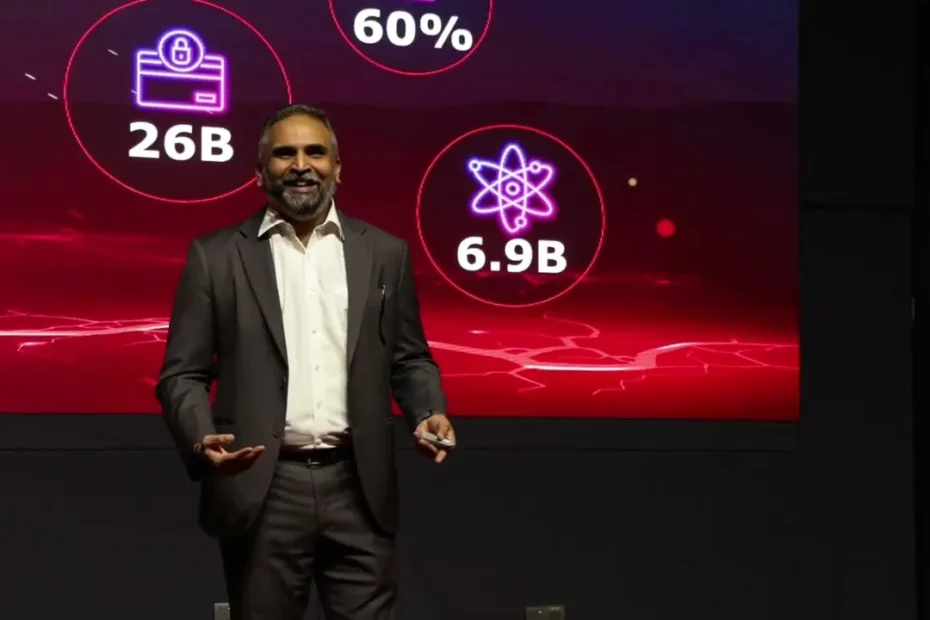
What’s our population? Human beings? 8 billion roughly as of today. Do you know there are about 5.6 billion people connected to the Internet as of today? That’s around 68 to 70 percent, give or take. Out of that 5.6 billion, there are about 5.4 billion social media users.
We churn out roughly around 300 GB plus mails every day. We do about 16 GB searches. We do about 500 MB of video streaming every minute on YouTube. So these are some of the statistics.
Now, how many passwords per person? How many passwords would any of you have? The average is around 255, right? The average household smart devices, including your Alexas or smart assistants, your smart watches, so on, it’s around 17 to 21 per household. This is the kind of digital exposure that I’m talking about. This is what we all are exposed to. This is pretty much what we live in.
The Physical Realm and the Digital Realm
So today, if you take a human life, you can split it into two halves. You can split it in the physical realm and the digital realm, right? We have a life in the digital realm, we have a life in the physical realm.
So then comes a very good question. We all know that, okay, we die and we move on and we know our physical bodies get disposed off as per our faith, whichever way it is. What happens to our digital self? Ever thought about it? What exactly happens to our digital self? I mean, there’s so much of digital presence. What do we do? Let’s probably explore that.
Understanding the Layers of the Internet
But before we explore that, let’s first understand what internet looks like. Now, all of us think we understand internet. Does anybody here understand the actual construct of the internet?
The internet technically has got three layers, if I can put it that way. The one above the surface is what we all see, which is our mails, apps, social media, chat, so on and so forth. That’s pretty much what we see, what we can see.
And the next question obviously would be, what is it that we can’t see? What we can’t see has got two layers to it. Most of you here would have gone to some platform and the platform would have said log in using Google, log in using Facebook, log in using Insta, whatever, whatever. How does that happen?
It happens because of a technology called API. API fetches, API is essentially an interface between two applications. It allows application A to fetch data from application B. Now, whether it is for authentication, whether it is for any other purpose. Now, what exactly happens is it fetches a lot of information along with that authentication and that authentication remains there, right?
The Deep Web: What You Don’t Know You Don’t Know
Here comes an interesting question. How many of you know how many places you have credit card subscriptions switched on? If I ask you on top of your mind right now, can you tell me how many platforms do you have credit card or debit card or any payment information saved, which does an auto subscription renewal? Top of the mind number.
Now these are all the unknowns and the unseen and this is what is called deep web. Deep web essentially is your browser cache, we all browse, right?
The Dark Web: Where Your Data Ends Up
Whether it is on the phone, laptop, whatever, you have a cache there. So browser cache, your images have metadata. Your images capture metadata like location and a host of other, your device details so on and so forth. So your images have metadata, your API data, which I spoke about, API is how you fetch, your application permissions.
How many applications do you have on your phone right now, quick? Do you remember all the permissions you gave it? So the application permission, these are all unseen and once you do it, we forget about it. That’s human. That’s our nature, right? So that’s your deep web.
Now then comes the absolute underbelly of the internet. It’s called the dark web. Now what exactly happens in dark web? Dark web is where a lot of information about us finally goes and lies down, which is usernames and passwords, DNA information, your personally identifiable information, blah, blah, blah.