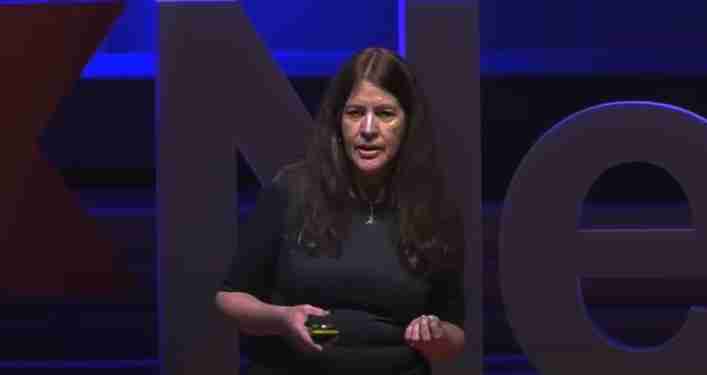
Full text of Fuschia Sirois’ talk titled ‘HERE’S THE REAL REASON YOU PROCRASTINATE’ at TEDxNewcastle conference.
Listen to the MP3 Audio here:
TRANSCRIPT:
Fuschia Sirois – Psychologist
Do you know someone who procrastinates? Maybe it’s a friend, a coworker, family member, maybe it’s somebody you see when you look in the mirror. But that’s okay, because everyone procrastinates at some point, right?
In fact, the research suggests that almost one in four people procrastinate on a fairly regular basis. And the rates are even higher amongst college and university students, with 50%, yes, that’s 5-0, 50% procrastinating regularly, and 80-95% doing so occasionally.
Now, because procrastination is so common, we tend to be very lighthearted about it. I’ll listen to that podcast or read that book on procrastination later.
What’s the harm, right? It’s just delay.
Well, actually, procrastination is not your garden-variety, run-of-the-mill delay. It’s a particular form of delay that by definition is harmful.
Now researchers like myself define procrastination as a type of delay that is voluntary, unnecessary, and involves an important task that you intended to do. But you put this task off despite knowing that it’s going to have harmful consequences for yourself and others.
People are often surprised to learn just how debilitating and harmful procrastination can be. Now, if you procrastinate managing your finances, or completing your academic or professional work, dealing with relationship issues, or managing your health and well-being, yes, you can expect to have some negative consequences in those areas.
But what we often don’t consider is the collateral damage of procrastination.
Take for example Tom’s story. Now, Tom was well-read, highly educated, and a bit of a perfectionist. Despite this, Tom struggled with procrastination in his work and in his life. He would put off some small task, but then this would snowball into him scrambling to trying to meet but often miss important deadlines. Eventually, this pattern of procrastination would cause irreparable damage to his work projects, his coworkers, and his prospects for advancement.
The stress from constantly chasing and missing deadlines, quitting three different jobs, trying to be but failing to be a published author, eventually caught up with Tom and his partner.
Unfortunately at age 47, Tom died from cancer. To his partner, Tom left a legacy of unfinished books and a deep sadness for knowing that his procrastination was never effectively addressed.
Procrastination stole from her quality time she could have had with him had he not been constantly focused on chasing missed deadlines or worrying about unfinished tasks.
Now, sadly, Tom’s story is actually consistent with much of the research on the toll of procrastination. In our research, we found that procrastination has reputational damage. People don’t like working with others who procrastinate. They see them as unreliable. But that’s not all.
In one study of over 22,000 US employees, those who chronically procrastinated had greater employment instability and lower annual incomes. In fact, for every mean one point increase in procrastination, annual income went down by 15,000 US dollars. That’s about 12,000 pounds a year.
Okay, so research by myself and others over the past 20 plus years has also found that procrastination is associated with poor physical and mental health. People who chronically procrastinate, they tend to have poor sleep quality. They practice fewer healthy behaviors. And they also report having a greater number of physical ailments despite making fewer medical visits. They have higher levels of depression, stress, and anxiety.
Now one study of over 750 people, I found that people who chronically procrastinated were at greater risk for having poor heart health. For every one point increase on a measure of chronic procrastination, the risk for having cardiovascular disease or hypertension increased by 63%. And this was after accounting for a number of different social and demographic factors and personality factors that are known to predict poor heart health.
So if it’s so harmful, then why do people do it?
Many people think that it’s about laziness or poor time management. But just because something looks like procrastination doesn’t mean that it’s a cause. When it comes to procrastination, appearances are very deceiving.
Okay, so when we’re procrastinating, it looks like we’re wasting time and not managing that time well because we’re not meeting deadlines. But poor time management is actually a symptom of procrastination, not a cause. And so if we only treat symptoms, that underlying cause is going to remain.
Procrastination isn’t about laziness either, right? When we feel lazy, we don’t feel like doing anything at all, got no energy. But when people procrastinate, they often get very busy with a number of non-essential tasks such as completely cleaning and reorganizing the kitchen or the office, curating their digital music library, or even alphabetizing their spice rack. They’ll do anything but that task that needs to be done.
Okay, so if it’s not laziness and it’s not poor time management, then why do people procrastinate?
From a psychological perspective, all behaviors have an origin story. For procrastination, that origin story focuses on emotions. And specifically, negative emotions and an urge to cope with them through avoidance.
So one writer I spoke to, he confessed to me that he really didn’t like cleaning. At all. But when he was a student, if he had an exam coming up that he was stressed about, cleaning his flat from top to bottom became his go-to activity instead of studying. Why? Because it made him feel productive, not lazy. It gave him relief from his exam stress and from his feelings of guilt and shame about not studying.
His procrastination was not a character flaw. It was the only way he knew how to manage his exam stress.
So what this illustrates then is that procrastination is about poor mood management, not poor time management. Now this makes sense if we look below the surface of what appears to be procrastination for somebody not getting things done or wasting time, and view procrastination from the lens of psychological science.
When we do so, it becomes very clear why emotions are central in understanding whether somebody both starts to procrastinate and whether they’re going to continue to procrastinate as well.
Okay so how do we get started with procrastination?
Well procrastination starts when we have a task that’s aversive, unpleasant, but we have to do it.