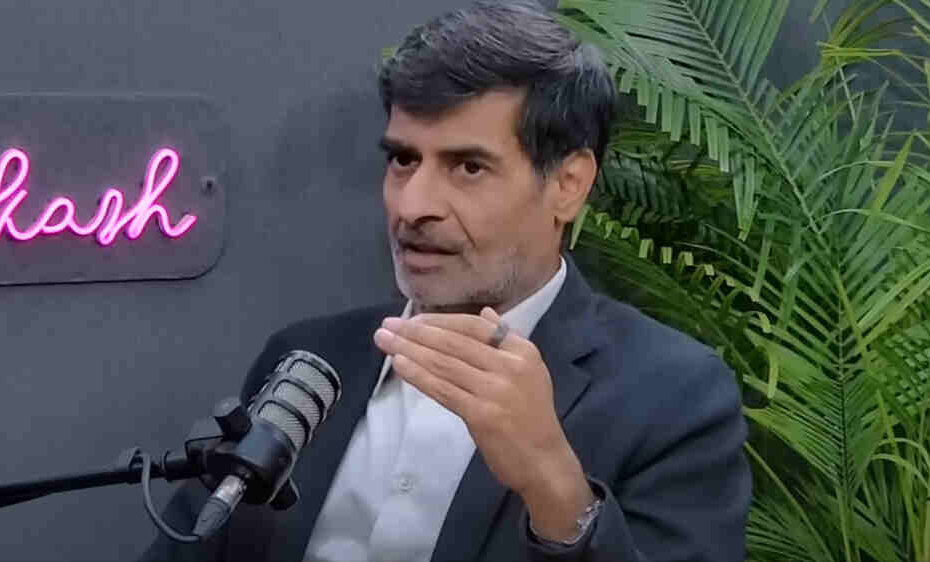
Read the full transcript of President of the Observer Research Foundation (ORF) Samir Saran’s interview on ANI Podcast with Smita Prakash on “Trump, Pak-China Ties, Indian Economy, Foreign Policy, Op Sindoor & More”, premiered on July 26, 2026.
INTRODUCTION
INTERVIEWER: Namaste. Jai Hind. You’re watching or listening to another edition of the ANI podcast with Smita Prakash. My guest today is Samir Saran, president of the Observer Research Foundation. He’s appeared in episodes number 73 and 138. Before this I’m joined in this podcast by my colleague Ishaan Prakash.
Thank you so much Samir for being part of the podcast yet again. My standard joke out here is repeat performance guest. So you are my volatile RPG market propelled granny. Made in India. Made in India. RPG.
Okay, so first question I want to ask you is, is India friendless? Because of all the politicians that I met since Operation Sindoor from the India alliance group, all of them turn around and say that nobody in the international community stood by India and those who did were very muted. And after it was like a 108 hour conflict, we ended it too soon and we didn’t get the support that we deserved and we needed.
India is Never Friendless: Moving Beyond Victimhood
SAMIR SARAN: This is like a rant, this is like a complaint rant. Look, “India is friendless” is like an oxymoron. 16% of humankind is never friendless, okay? And I think just realizing who we are must now prevent us from adorning this garb of victimhood.
The world is grappling with many issues in their own parts of the world, and everyone is busy with that. How much time do we actually spend on their miseries and their worries and their concerns and their immediate political and economic crises that they are responding to?
So to put it bluntly, I think Operation Sindoor in Manvis was a new reset of Indian foreign policy, where I think rightly so, non-state action by Pakistan was in many ways assessed as an act of war and responded accordingly. For the first time, I would argue that we did not try to make a case against Pakistan in the global courts of opinions of countries and decided to act as we thought fit to respond to an act of aggression.
INTERVIEWER: Before we… We did make our case, but we didn’t make our case before the action.
A New Threshold: Acting Unilaterally
SAMIR SARAN: Before the action I’m talking about. I think this was the first time where we did not go with proof and evidence and Pakistan or “Hamne uspe act kia.” We acted based on our own assessment of the action that we needed to take based on the act of aggression of Pakistan. We construed it as an action of the state of Pakistan and not non-state, and we responded accordingly.
Now, I think this was a big departure from the past. It was setting a new threshold on the future of our bilateral relationships. That’s the first. Now, when you decide to do this and you have actually moved away from your previous history of a diplomatic outreach to various capitals and bringing them on board and seeking their approval and seeking a kind of a de facto consent before you act, you have already removed that element from your calculus.
You have removed a global participation in anything that you do from the calculus. Once you have decided to do it is not a question anymore. You have decided to go alone and respond according to what you believe is the right action to take. And therefore then you must not expect…
So first of all, I think India and Indians generally now need to realize that if we want to have politics which allows us to act unilaterally against something that was perpetrated against us, then we should not try to have a global cheerleading squad behind us. That is not the way the future of our actions are going to be taking us to.
That is not where our future is. Our future will have to be like big countries. We should be able to reach rational and sensible decisions, act on them, be able to inflict punishment and be able to also have the muscles to take some. It is not going to be a one-way street.
So the game has changed and therefore I think many of us did not realize how momentous this shift was. We have not been really able to understand that we did something very different this time. And therefore to expect that you would have 20 sympathizers standing with you or have the global rallies singing for you – it’s not going to happen anymore. We have to get out of that mindset.
We have to now start thinking like the country that we want to be, which is a country that is fair, that is focused on economics and global integration and globalization, and yet is determined to protect its interests and its citizens from harms that others may want to inflict on them. And India did exactly that in Operation Sindoor.
The First Technology Battlefield
Now that’s the first part of the question. I would also argue that something else happened this time. There was another element that was new this time. A second thing happened. I think this was the first technology battlefield that India entered into. This was the tech war. The first tech war, high tech war.
You had sophisticated missile systems, you had counter missile systems, drones surveillance, you had the works. In some ways you were entering a new battlefield. This was a first for India, right? In many ways. And the question we have to ask is that when we are going to be part of this new era of technology led, technology driven action conflict, what are the other soft infrastructure that we need to build around it?
And I will point to three parts.
Once you enter into the tech age, then the ordinary citizen is also getting information from the same sources that you’re getting information. So our messaging has to take into account that everything is visible to some extent to everyone. There is only some element that you know more than most others and that has to be messaged in the proper way, in the correct way for both strategic purposes.
Because it’s not that you want to share everything and be absolutely transparent during the conduct of an operation, but you have to remember that you have to share enough so that it is credible, it is potent and it shapes the battlefield advantages that you want to create.
So I think in this tech age, do we have tech comms? And I think that’s the first question that we must work on and we must take away from this particular conflict. But appeasing public mood is not one of those. Achieving battlefield objectives has to be the only driver of what comms apparatus you need to create.
Our publics is a digital publics. Now we used to be under the banyan tree, now we are in the Instagram forests. But basically we are still that – we are still a political comms hungry public. I don’t think strategic objectives should be attached to satisfying this crowd. That cannot be the purpose of any battlefield commander. That is the job of the political leadership.
A battlefield commander’s job is not to win public approval for achieving strategic objectives. That comes later in the post conflict. That does not happen during conflict. My question is that even during the conflict did we meet our battlefield communication objectives in the tech age? And that is an assessment our commanders must make and must continue to work on and must continue to develop and evolve.
So as far as I am concerned, I thought our comms was fairly robust. I think in the very beginning they got it right, at the very end they got it right in the last press conference.
INTERVIEWER: That’s what matters, right?
SAMIR SARAN: They got both those press conferences right. In the middle you were dealing with the fog of war and depending on where you sit, you will reach a conclusion on how we performed. And of course in India everything is politicized. So depending on the personality you like or dislike, you would decide whether the comms is good or bad.
So I think as far as I’m concerned, Operation Sindoor was India deciding to go alone and do it by itself and to respond effectively and to treat an act of terror as an act of war and respond in a suitable, appropriate manner. And that was a good first.
Second, it used technology well and by the way, I’ve been traveling through continents. I’ve probably done 11 countries since then and I can tell you that in many of them, for example, I hosted a Yerevan dialogue in Armenia. The first thing I heard from my interlocutors in the Yerevan government was, “We are very glad that all the weapon systems we are investing in work very well.” So they were very happy.
INTERVIEWER: It’s a lab or something.
Global Recognition of India’s Capabilities
SAMIR SARAN: So look, it’s a demonstration of Indian capabilities in some sense. This is a demonstration of capabilities. And many that I met as I moved through my journeys in Europe and parts of Asia, including in the neighborhood, their response has been that, look, A, that your weapon systems work, B, that you have the capacity to act alone.
Now I don’t know why when I come back suddenly people are saying that we are… there is a problem acting alone. There is a problem taking actions alone. We have to stop seeking to win favor and approval of everyone around us.
INTERVIEWER: Nice.
SAMIR SARAN: Big countries don’t behave that way. If America was to try to seek approval of everyone to become America, they would never have become America.
INTERVIEWER: No. So if we’re telling America “butt out,” why should we ask Russia to come in or whatever anyone else.
SAMIR SARAN: My point here is that you have to go alone. You have to develop the muscles of working alone, which I think we have. You also have to develop the social muscles of working alone, which means we have to now get over this mindset that somehow everything is a public opinion game and everything is a bandwagon that we have to win on the court of public opinion. This is rubbish.
INTERVIEWER: That’s no win anymore.
SAMIR SARAN: That is not how big powers evolve. Right. If China had to seek global approval to become China, they would not have become China. Let’s be very honest. Not even America.
INTERVIEWER: Western world. Let’s talk about Western world or imperial anyone, right?
SAMIR SARAN: I mean, look at the Britishers. They were literally ruling the world by on the back of atrocities and unilateral actions and terrible policies that devastated much of our geographies. Right. And yet they continued.
So I am not comparing us to any of those. All I’m trying to say is that countries that have to act must act and they must seek the apparatus and architecture to achieve the objectives rather than to please the publics. And I think that distinction we have to continue juxtapose this with…
Comparing with 26/11: From Sympathy to Action
INTERVIEWER: 26/11 and India’s response or whatever it was. We came very close to war at that time as well.
SAMIR SARAN: And now with Operation Sindoor, see now what’s changed? I’ll tell you. In 26/11 you won global sympathy and yet you were not able to act. So in 26/11 you could argue that you had lots of global sympathy with you.
INTERVIEWER: Yeah, with that “hai bachara.”
SAMIR SARAN: Correct. So you had lots of global sympathy. But what did that global sympathy lead to? It led to a series of other actions thereafter. It emboldened the Pakistanis to believe that they could get away with it.
Now, you have suddenly raised the cost of terror in this particular instance. And I mean, that’s another conversation we must have at some point because we have now decided that an act of terror is an act of war – is an act of war in certain instances, obviously when people move across the border and they come and perpetuate certain action, it is considered to be a state action and not a non-state action.
Which also means that we have to rethink our own preparedness for this new normal that we are trying to create. Which means that are we investing in the inventories that are required to be in this new state of engagement, right, the new normal that we are talking about? Do we have the inventories? Do we have the capacities, do we have the capabilities, do we have the technology? Are we upgrading constantly?
What is the military configuration that is required in this new tech battlefield? Do we have to reconfigure our personnel and have operators who play the tech game well and not necessarily the one in fatigues? So we have to really rethink our military configurations, our inventories and our state of play as we engage in it.
And I think that’s a big question. And by the way, it’s a transformation that has been underway and that will continue. It’s an evolutionary process. There’s no zero date for this. It’s not going to happen instantly, it’s going to happen over time.
US-India Relations and Parliamentary Diplomacy
INTERVIEWER: You talked about your travels that you did now. India sent out seven parliamentary delegations. We covered those delegations, their meetings that were held. If we didn’t seek out world opinion in our favour before the operation, why did we do that after? Was that a sensible decision?
And there is criticism that they didn’t get to meet the creme de la creme in all those countries. Should that have been the aim? Did we mould public opinion there or did we mould policymakers opinions there? What was the achievement of those parliamentary delegations, do you think?
SAMIR SARAN: Smita, I don’t think I’m in a position to assess the success of the parliamentary delegations. I have not necessarily followed all of them. I have only followed what I have seen on ANI and other medias. So my knowledge is very limited to what happened in the delegations through their journeys.
But I can just say this, that I don’t think meeting the creme de la creme was the job of the delegations. I think if you look at our Prime Minister and Foreign Minister and trade ministers and other ministers, they are meeting the creme de la creme everywhere through these weeks and months, even as these delegations were everywhere. So I don’t think the delegation were meant to be meeting the ministers and the leaders. That has been the job of the diplomats and the politicians in India in any case, and it’s been happening over time.
You saw the Prime Minister recently conducted a successful visit as he moved to Brazil and the global south and now he’s off to UK and Maldives. So I think at a political level those meetings have been happening and those explanations are being given by the appropriate interlocutors to their counterparts.
This mission was to, I think in many ways, and for me that is why Operation Sindoor, the parliamentary groups that were formulated, I think it was for me a rare moment where I saw the Indian politicians come together. So for me the success of multi party delegations was a deliverable in itself and I would celebrate the fact that you were able to bring together the INDIA alliance into the NDA alliance and create an India alliance and send them out was a remarkable success of a united India, of solidarity, of a cross party consensus India alliance.
So for me, this unified message, there was a unifying message that there is a cross party consensus and just the very institution of these delegations was a deliverable in itself. And Shashi Tharoor and Supriya Sule and Owaisi Sahib. These are all, you know, again, choose the person and you’ll get an opinion in India.
The Trump Factor
INTERVIEWER: All that negated by Trump’s statements.
SAMIR SARAN: Trump is a different character. Trump is a phenomenon by himself. Trump is a sovereign by himself. He’s currently attached to the United States of America.
INTERVIEWER: But Trump, in your last podcast, you did, in a way, you did see his rise and you said that the countries have to be prepared for collective punishment with tariffs last time.
SAMIR SARAN: He’s not an ordinary person. Let me just tell you something. He does what he says he will do. And in many ways he is both relentless in his pursuit of what he believes is right and on a large number of occasions he has been able to also bring together an array of forces to in a way support his pursuit of a certain objective. So, which is very interesting.
Now, look, I think the America question is a bigger question, and I want to come to that separately. I don’t think anyone in this world is under any illusion on what Trump represents, which is himself and his worldview. And no one in this world is under any illusion that Trump has been great to them or is benevolent to them or is kind to them. Trump is transactional.
And if you enter into that transaction, you are able to move the needle. If you don’t enter into the transaction, wait for the midterm polls. So I think the world is not that complicated. I think everyone has two choices. One is October 2026, and the other is a deal today. And you have both options. And in October 26, you can take a call again, do the deal then, or you wait for the next elections.
So I think the world has choices to make. Trump has his own opinion of how the world is and who his friends should be and how they must act. And I don’t think countries need to respond to the Trump impulse or the timeline.
INTERVIEWER: They have to. What do you…
SAMIR SARAN: Why do they have to?
INTERVIEWER: Because of the weapon. I want to talk about when you remember you talked about a strategic sort of continuum with the US India policy, with various presidents, now with Trump. Has that continuum between various successive presidents with regards to India policy, has it now completely shifted?
Strategic Continuity Despite Political Changes
SAMIR SARAN: No, I think that’s a very fair question. And let me just say that there are two elements to our relationship with the US today. One is the functional and operational element. And I would say that continuum exists robustly there.
So if you remove the White House tweets and the White House conversation, what’s happening at the working level between the foreign ministries and between the defense ministries and between the energy sectors and businesses, I think that continuum prevails and that will remain robust irrespective of the political mood in the White House.
What has changed is that we are still trying to find that sweet spot that will cater to Trump’s ambitions of his own presidency and India’s aspirations of Viksit Bharat. So I think what we have not been able to reach as of now is that sweet spot. But it doesn’t mean that there is a discord, or there is a deviation from the larger objective of working together.
I think the larger American state in its whole sense and the larger Indian state would be good for each other. And I think that assumption has not disappeared. Now the details of what that good would mean is, I think, being renegotiated today.
INTERVIEWER: I think what’s jarring for us sitting here in Delhi…
SAMIR SARAN: Jarring for everyone here. The biggest deliverable India-EU FTA, Trump…
INTERVIEWER: It’s the now new hyphenation of India and Pakistan that we are seeing. That’s something we hadn’t seen for a long time, but now it’s India…
Breaking the India-Pakistan Hyphenation
SAMIR SARAN: There are two people who are determined to hyphenate India and Pakistan. One is Donald Trump and the other is Indians themselves. You know, if you go to Europe, they want to do trade, they want to do deals with you. They want to talk about defense partnerships, they want to talk about IMEC, they want to talk about technology.
The French President makes Prime Minister Modi the co-chair of the AI Summit. Ursula von der Leyen and commissioners land in India for the first time. Her entire cabinet, that is in some sense cabinet of the EU, lands in India for the first time ever. They’ve never done this with any other country.
They want to have a new reset with India and it’s because of China, it’s because of Trump, it’s because of many other factors. They are looking for options and resilience and additionalities. So all over the world, people are looking at you in many ways. The last of those is Pakistan. It is the demand that everyone has to stand in line and use your description of Pakistan that becomes difficult for partners.
INTERVIEWER: Yeah. Compulsions, of course, like Britain.
SAMIR SARAN: Look, how many times will you sing someone else’s song on some other country?
INTERVIEWER: We are not going to ask them to give a view on Ireland if we are talking to Britain, why do we need to?
SAMIR SARAN: My point here is at one point of time, it is an unnecessary expectation that everyone has to sing your tunes. But it is a reality. And it is certainly my experience. And I was in Budapest, I was in Armenia, I was in Munich. I’ve literally been everywhere in the last two months through the programs that we’ve been hosting.
And I can say that all of them have been really and intensely finding ways of deepening ties with India, because most of them believe that India offers them resilience, because they have choices and offers them additionality because of the growth which would be beneficial for them.
India is a big story in most capitals. India-EU FTA today is more likely than ever before. EU is cutting corners to try and accommodate us, something they have refused to do over the last decade. First time they are willing to negotiate certain elements just to bring us on board.
So I think we should focus on the real positives that are available to us, consolidate those and come back to these issues at the right time. You don’t have to take everyone along in the same direction all at once at the same time.
Trade Weaponization and Global Recalibration
INTERVIEWER: So this trade that you’re talking about, I mean, it is true. The weaponization of trade that Trump has done has had all countries…
SAMIR SARAN: First of all, weaponization of trade was not done by Trump. Weaponization of trade is a Chinese origin.
INTERVIEWER: If you want to go into the history of it, yes.
SAMIR SARAN: I mean, not history of it. It is a continuing Chinese architecture.
INTERVIEWER: You mean by export controls?
SAMIR SARAN: I mean export control. Even great firewall of China prevents any digital enterprise into China. Yet Chinese digital enterprises are present everywhere.
INTERVIEWER: So they are recalibrating. All countries are recalibrating. Like imagine Indonesia and Japan opening up their rice market. I mean, you can’t ever think they’d open up.
Indonesia: The Overlooked Partnership
SAMIR SARAN: Can you imagine Indonesia reaching out to us? We host the Jakarta Forum. The next one is happening first week of August. Please join us. I’m making a plug for the Jakarta Forum. Very important. You know, you won’t realize India-Jakarta trade ties are bigger than India-Bali.
INTERVIEWER: No. Then I’ll come.
SAMIR SARAN: Look, we are academics. We don’t do holidays. We do conversations. Now my point here is that in the India-Indonesia trade today, bigger than India-Japan, bigger than India-UK, bigger than India-Germany, and yet no one talks about Indonesia. This is the reality now.
Indonesia, for the first time since I have been dealing with them last year asked us, “Isn’t it time that we should enter into a maritime dialogue?” India-Indonesia maritime dialogue. Now, Indonesia is reaching out to you because even they don’t want to be caught in this China-US binary.
They also want to think about the Indo Pacific as a region that they should be invested into. They also know that they will need to work with partners who are in this region, invested in this region, natives to the region, to carve an architecture for the future.
We will have to stop seeking affirmations and approvals from constituencies of the 20th century. We have to build partnerships and relationships that will hold us in good stead in the 21st century. And therefore, a whole new star cast is going to appear in our thinking. Indonesia is going to be one of those.
Japan’s Strategic Positioning
INTERVIEWER: And Tokyo, you were in Tokyo recently.
SAMIR SARAN: In Japan. Look at Japan. They have been literally now finally relieved with this deal they have signed a few hours ago. But in that conversation, you could see their both anxiety and displeasure with what was coming out of the White House at that particular point of time.
And they were looking for a space where they could cater to the Trumpian whim and protect Japanese interest. And I hope they have found that. I hope this trade agreement gets in there. All of us are going to have to do that. But by the way, this is not the only negotiation that all of us are having. It’s not only Trump and the world negotiation. The world is also negotiating with itself.
INTERVIEWER: He’s the only one announcing it.
SAMIR SARAN: He’s the only one talking loudly about it.
INTERVIEWER: But I want to push back a little bit more on this. See, the US is still a world power. This is only superpower, essentially. So these voices that you’re talking about from 1600 Pennsylvania, why aren’t they really coming out? The only thing, two things that we hear are about the India trade agreement. That’s still happening, not happening. That, or Trump’s claim that he got a ceasefire going between India and Pakistan. All the other things that you delineated, and also our relationships in the past with Biden and all about all these positive moves between both our bilateral relationships.
India’s Journey to Economic Growth: Navigating Global Resistance
SAMIR SARAN: It seems that that’s not been talked about. If I remember I mentioned to you, and perhaps I’ve written about it, that the era when we would anticipate and assess that there would be a celebratory veneer on the rise of India, or at least a celebration or investment into the rise of India, is over.
If you are believing that now our journey from 4, 4 and a half trillion, wherever we are today, to 10 trillion is going to have cheerleaders from the capitals that were talking about us at the turn of the century. That era is over. We are in a different world.
INTERVIEWER: It’s getting lonelier at the top.
SAMIR SARAN: It is getting to be a more transactional world. And Trump is a manifestation and not the only actor in that transactional world, by the way. All of us are part of that. That whole new age of transaction is of all of us.
But more importantly, as you move now from four and a half, five trillion to, say, doubling it in the next decade, the resistance levels are going to be stiff because you are now going to be displacing incumbents. You are now actually doing things that only they were entitled to do.
For example, taking unilateral action against terror, terrorism, attack in your country. This is not something you were expected to do. This was only the prerogative of the Americans and the P5 and some Western capitals that if they were attacked, they could sanction or they could respond or they could retaliate or they could bomb Libya or destroy the Middle East.
INTERVIEWER: Right.
SAMIR SARAN: That was their action reserved for a few nations and a few communities. You have started to join those processes as well. And it is not something that is going to be celebrated or cheered and certainly not endorsed and invested into. That’s one part of that.
But the second part is I still believe that the White House in its current avatar is something that we can negotiate with. And I think that must be our endeavor, that we must be able to strike a deal where everything that he is saying right now can be changed and cause can be corrected.
And he has, by the way, he is one president who has no qualms about saying the exact opposite. Tomorrow he will say, “Now we have a huge deal. And this is this. And this is the heal.” He changes tune completely. He has done that. He is in many ways also negotiating with you through all of this.
In my view, that the trade agreement that he wants, the economic deal that he seeks, the strategic partnership that he desires, is being negotiated. These are loud negotiations happening. You don’t have to become a part of it. By the way, my view is that as a big nation, we should decide what is good for us and what are the terms that we can offer. And beyond that, we should not budge. And we can wait it out. As a civilization state, we don’t work on cycles of.
INTERVIEWER: We can wait it out. Because Trump always chickens out.
SAMIR SARAN: No, again, I think that is perhaps unfair. But we can wait it out till we get the right deal. And I think that is in some sense, the perseverance we must have in the pursuit of our objectives. They are not that fickle.
What are we asking for? We are asking for moving 1.5 billion people with an average income of roughly $2,700 per capita to $6,000 per capita. We are not asking for the moon. Do you understand what I’m saying?
So we must be relentless in the pursuit of lifting the largest cohort of humanity to a decent existence. And we must not compromise on that. If we have to take bad daily press conference with the White House, so be it. We should not drop our eye from the big picture.
India’s Foreign Policy: Evolution, Not Revolution
INTERVIEWER: Yes, got that. You know, the Prime Minister’s visit to countries which were part of the erstwhile non aligned movement. The Congress is having a good giggle about that and saying that Indian foreign policy is going back to its roots of non alignment.
We are again realizing that neither the U.S. nor Russia. Russia being busy in its own wars and in its own issues. So we are going back to the border and we are going and connecting with those countries who we had ignored. The global south, the reach out since the earlier summit, since we met last. All this is just Indian foreign policy going back to its Congress roots is how do you see that Congress? Non aligned. Non Aligned Movement. You’re talking about Bandung Conference, Nehru, Indira Gandhi, all that.
SAMIR SARAN: If the point is that India needs to be engaging with a much wider constituency than just the US, it’s a fair point. But I don’t think any Indian Prime Minister or any Indian foreign minister has not stated this particular objective.
India has never aligned itself in a traditional sense to a single actor. We have through our history worked with different actors in different sectors at different times for different purposes. And that shall remain the India story. Big countries don’t. Big countries are promiscuous. Let me just put it this way. America has literally funded every side of every conflict in the last 70 to 80 years in any geography of the world.
INTERVIEWER: It’s an accurate statement. Absolutely. Yeah.
SAMIR SARAN: It would be a fair statement to make. We have to create our engagement capabilities that allow us to be in many ways in touch with and perhaps even sometimes intimate with a large number of countries and communities that at a particular moment of time may not suit our purpose.
We also have to deal with those who may not serve our purpose today, but maybe in five to seven to 10 years could become very important for our country’s interests.
Now, having said that, is non alignment being reverted to? I think that’s for the question you ask. Non alignment in a 21st century avatar is being reverted to. And I think Shashi Tharoor has called it multi alignment. Jaishankar has called it multi aligned. There are a number of folks who have given it up. I don’t think we’ve ever shed that.
So I think the idea that we ever moved away from it was rubbish because our foreign policy always followed that idea of having this approach of autonomy inbuilt by design. And we have only upgraded the operating system. We haven’t discarded the mainframe. The mainframe remains the same. The operating system has been upgraded for the 21st century.
And I think in some ways I said it once that the Nehruvian non alignment was apt and appropriate in 1950. The 21st century non alignment has a very different texture and format and both are related through evolution. They are not disruptions of India’s approach to international.
INTERVIEWER: And this reaching out to Indonesia is probably part of that extension.
SAMIR SARAN: Indonesia, interestingly, is one of our oldest co travelers.
INTERVIEWER: Right.
SAMIR SARAN: It started there in some ways started there. But you are going to see this, what was the theme of Raisina this year?
INTERVIEWER: The turning of time.
SAMIR SARAN: The turning of time or the progressive turning of time.
INTERVIEWER: You know, in all this, the casualty bricks, will it be a casualty?
SAMIR SARAN: There’s no casualty group casualty. I am of the view that every group will serve us at some moment in our foreign policy journey. If today China is able to benefit from a large number of these bilateral groups because they are $20 trillion or thereabouts and because they have the surpluses and the capital to deploy, at some point we will require these same groups.
China was able to in 2008, I repeat this many times because it’s important. In 2008, China was $4 trillion, $2,600 per capita income. In the next 10 years, it became the single largest trading partner for 100 countries.
My point is that as we move to 10 trillion, we are going to become consequential for a very large number of countries. Where are the arrangements, institutions and architectures to engage with these large number of countries? You will require all sorts of groups through which you could become development partners, infrastructure partners, technology partners, UPI partners, all sorts of DPI partners.
All sorts of partnerships would be based on how many of these clubs, cohorts, multilateral and plurilateral groups you’re able to incubate. So yes, Trump has taken a particular fondness for BRICS, but I think BRICS will outlast Trump.
The China-India Development Gap: Understanding the Timeline
INTERVIEWER: I’m glad you brought about China. China, tell me about this. In the mid 2000s, late 2000s, India and China were being seen as two rising giants. We were compared with China all the time. Somehow it seems that in the last two decades they have made a quantum leap over there and we are still sort of catching up. In a way, what changed so drastically?
SAMIR SARAN: No, I think that departure happened turn of the century. I think in the 90s the Chinese really left us far behind. And by the time this century changed, they were on a different trajectory.
What happened was that they were able to do what we are doing now then, which is getting infrastructure right, investing in ports, investing in roads, investing in colleges and schools. You saw our QS ranking recently? Indian universities, more universities, and also finally rising, finally. That was happening in China 20 years ago, of course.
So the point I’m trying to make here is that they were building social infrastructure, physical infrastructure, connectivity, and simultaneously at the same time. So I think, like I said in 2008, they were exactly where we are today. So we are 16 to 17 years displaced. And that 16 to 17 years has its provenance in the 80s and 90s. What we did then cost us a decade, decade and a half of setbacks.
In relative terms, we were still growing, by the way. So it’s not as if we did not. But that is where they really took a long leap and were able to scale the heights that they are in. And by the way, we must appreciate what they did for their own country.
Now, of course, there is a difference in political systems and decision making and the concentration that the Communist Party, concentration of power that the Communist Party enjoys and all that is true. But I think our story has a texture and a certain element of romance which is unique.
We are going to be the first non western country where we are going to establish that through a loud, sometimes rowdy democracy, we can still grow and we can still build and we can still deliver. So I think what we will do would be in many ways the largest service to a liberal, plural, inclusive political system, because the Western models have not been able to do that.
INTERVIEWER: Kind of a blueprint for young democracies too, right? Younger democracies, I think.
SAMIR SARAN: Blueprint for the global south, as it were, and I’m using that term very broadly, which includes democracies that are experimenting with their future in Africa, in Asia, in Latin America.
So I think an Indian story has a different texture. We have to catch up and we have to work very hard to make the story even more appealing and even more compelling for others. End of the day, our success will matter because unless we succeed, folks are going to believe that this model is problematic. And I think our success continues to strengthen the model that we are following.
Managing Neighborhood Relations: The Big Country Challenge
INTERVIEWER: So our success, does it mean detrimental technology? Does it mean a detrimental framework for our neighbors? Minus Pakistan? Put the Pakistan. What does it mean for our neighbors? Does it make Nepal uncomfortable with it? Maldives. Prime Minister going to Maldives? It did make at one point of time. But now he seems to be okay with India rising. And how does our neighborhood see us now?
SAMIR SARAN: Neighborhoods are always complicated relationships, especially when one country is very large in that particular neighborhood. You are never going to have very linear or predictable relationships in your neighborhood.
We will have to continue to have multiple textures to our foreign policy and one of them will have to be specially tailored for the neighborhood and that will have to be more empathetic. That will have to give them far more leeway than we would give to many others that would have to be able to accept far more criticism than we would allow others to inflict on us. We would have to have a big heart when you are a big country in a neighborhood like ours.
And by the way, we do do that sometimes and we get it right. Sometimes.
INTERVIEWER: Couple of days back. Right. Two days back, where we sent burn specialists to Bangladesh.
SAMIR SARAN: More importantly, irrespective of our. See, we have to work with the people of our neighborhood.
INTERVIEWER: Yeah.
SAMIR SARAN: And sometimes we’ll have to cast aside our view of their politics. And in that sense, we’ll have to.
INTERVIEWER: Maldives model in a way, the way.
Strategic Neighborhood Engagement
SAMIR SARAN: We dealt with Maldives, I think Sri Lanka, Maldives, by the way, even Bangladesh more recently.
INTERVIEWER: Yeah, right.
SAMIR SARAN: Nepal, you know, despite all things that have happened in the last two decades, I think our focus on that relationship has remained fairly robust. Right. So I think the neighborhood would require India to be conscious of the fact that it is very large and it could intimidate people by some of the pronouncements and some of its own loud politics that comes out of our capitals.
And we would have to be conscious of engaging with the individuals there. We can’t treat them as monolithic political units. We would have to, we have, we would have to have a diversity of engagement with them. For example, we would have to deal with parties that are opposed to us as well. In each of those countries, we should build deep inroads into those parties.
In fact, those who don’t like us, we should be doubling down and deepening our engagement with them. The point here is that no big country in any neighborhood has been able to get it absolutely right. Right. Look at the Americans and the Mexicans and the Canadians, for example.
INTERVIEWER: Going to be the 51st state as.
SAMIR SARAN: Look, I don’t think anyone is going to be the state. But I know what you mean. So they will. Big countries in a neighborhood will always have to work extra hard to sustain relationships.
China-Pakistan Defense Relations and Strategic Caution
INTERVIEWER: Strategic caution. Right. The idea of that with China, how to move forward now, when, how do you sort of divorce our foreign policy with the realities off the ground when it comes to China? When you see China, Chinese missiles flying across the borders from Pakistan, but at the same time we have to still engage with our neighbor to the north. How does south bloc deal with these sort of contradictions over here?
SAMIR SARAN: Look, the point is that Chinese missiles being used by Pakistan should not be seen as a reason for us to be responding to China on that matrix. The China Pakistan defense relationship is deep. F16s flying from Pakistan towards India like they did did not make us change our assessment of America.
And the point I’m trying to make here is that defense equipment with certain countries, once available in the inventory of certain countries, make that country the owner of that equipment, hardware and the actions that they take belong to them, not to the others. Right. The challenge here is not about the hardware. The challenge is about the possible potential of collaboration during conflicts.
And I think that is what must be prevented. And that is why diplomacy, and that is why engagement has to focus on ensuring that this alignment, alignment of collaboration during conflict is weakened or perhaps even negated. I think that’s what we have to be targeting. The idea that they are selling missiles is not problematic.
Chinese Response to Operation Sindoor
INTERVIEWER: How is the messaging from Beijing during Operation Sindoor? How do you read that, that Foreign Ministry spokesperson’s remarks? No, no, this is basically the. I pulled out the, this is a Chinese handout. Yeah, this in the middle of the operation. Sindoor. This was what they had said. So apart from saying that the action was regrettable, they also said that China opposes all forms of terrorism. So it wasn’t Chinese.
SAMIR SARAN: Look, it wasn’t like the, like a.
INTERVIEWER: Turkish statement or something.
SAMIR SARAN: You know, my point here is, my point is that let’s be very clear. Chinese are friends with Pakistan. Okay? Chinese have a very deep relationship with them. Perhaps they have a near alliance with them as well. A near alliance, Right. I don’t think we should have any doubts about that.
Despite all of that, I still believe there must be a basis for us to continue a negotiation, engagement, outreach with China to solve our bilateral issues and prevent this from becoming a firm alliance. And I think that has to be a international objective.
INTERVIEWER: And the meetings that happened after all this, we’ve had the Defence Minister go there, we’ve had Ajit Doval go there. We’ve had the Foreign Minister also go there.
Political Muscularity and Economic Embrace
SAMIR SARAN: Which is right. Which is right. So hence I’m saying I don’t disagree with any of the efforts being made to continue to engage with the dragon. It is unlikely that you are going to be in a world where you both will not have to deal with each other intimately across domains.
There is no way that you can be $10 trillion as an economy without having a substantial trading relationship with China. You saw that even when we were at the peak of our conflict. And by the way, no one has been more acerbic in my writing as on China as I have been. But even during that conflict that happened on the heights of the Himalayas, during the pandemic, you saw that in a few years we had significantly grown our trading relationship.
INTERVIEWER: So though we were banning the apps.
SAMIR SARAN: And stuff, you saw, so we had no, by the way, which I believe is pragmatic. We must decide in these five or six areas. We don’t want the Chinese in every other area. Let’s embrace them. You know, I keep saying this political muscularity and economic embrace is fine.
INTERVIEWER: Yeah.
SAMIR SARAN: Grand unified or let’s agree to new terms of engagement. And by the way, one area that we must change, one texture that we must change is the investment landscape. I think the trading advantages with China, right. The balance of trade belongs to them in some sense. The balance of investments must belong to us.
You know, what is the sobering impact our relationship will have on the Chinese. But to have say fifty hundred billion dollars of their money invested in India’s growth story and I think that is where we need to find ways of encouraging them to become part of the transformation that we are making. And we must find sectors and there are plenty of them where they could be significant actors.
But this must be done in a calibrated manner through some rational conversations amongst the very wise people of India. And we must try to make it interesting for China to be invested in a rising India. But by the way, it doesn’t mean that we drop our political muscularity. Let me just tell you this. A good economic relationship between India and China will be based on the fact that China respects that this country has political muscle.
So we must continue to spend a large amount of our resources on building the deterrence. Chinese American trade grew even as China was building capacities to prevent America from being adventurous. So this is something that is absolutely acceptable. You can create capabilities to deter and at the same time roll out the red carpet to have economic engagements. The Chinese did that with the American. We have to take a page out of their book and do to China what the Chinese did to the Americans have political muscularity and an economic embrace.
Russia-India-China Grouping
INTERVIEWER: You’ve talked about these multilateral sort of groupings that are there. Your view on this Russia, India, China grouping, the RIC.
SAMIR SARAN: You know, I used to write on it a long time back in the late 2000s and early 2010s. This was actually something that was very active. The RIC was a framework that the Russians were really promoting and they seem.
INTERVIEWER: To have started again.
SAMIR SARAN: And there was a degree of merit in it at that particular point of time. You know, all of us had some border issues, all of us inhabited the same geography, and all of us had challenges around terror and security issues and drugs and narcotics, etc. Right. So we had some challenges, security challenges, we had some festering issues, etc. And this was a grouping whose origins had merit. Right.
So I don’t disagree with this grouping because it is important for us as a land based, as a subcontinent, to secure the land interests that will implicate our future. And for that, who are the actors? Who are most important? They are Russia and China. Now, of course, there’s an SCO, but I think having a conversation of the elders in this part of the world may not be a bad idea.
Now, it doesn’t mean that you have to reach an agreement, but at some point you have to bet on the fact that we will resolve many of the issues that continue to challenge the India, China relationship, like the Chinese and Russians have resolved in their own relationship. Now, will we see an embrace of this again? I think the next one year is important. Things will move fast.
Multilateral Engagement Strategy
INTERVIEWER: Can you be a soothsayer for now? All your podcasts, you’ve been a soothsayer. Now quad ITOO versus bricks. SCO RIC, would you put your money on for the next one year, two.
SAMIR SARAN: Years, boss, if you have money, keep it in your bank. Don’t put money on anything today. Today’s world is not a world for gambling. It is a world to exercise extreme caution. It’s a very disruptive world. I think it is time to pursue all of these. Some will naturally emerge as most consequential. I don’t think we should disregard.
So I’m glad the Prime Minister went to the BRICS summit. I think it was an important signaling. It was also the first time that we saw the summit in many ways being overshadowed by the bilateral, by an Indian bilateral. Normally it used to be China meeting the host country or China doing the bilateral. It was really good that you had an Indian Prime Minister whose bilateral visit was the headline of that particular episode, it was good.
We went to the BRICS. It is good we are investing in our relationships in Africa. It is important that we attended the SCO summit. We don’t want to give anyone a de facto whiteboard to draw a world that will concern our future. We want to be part of any process.
INTERVIEWER: Or put us in a silo.
SAMIR SARAN: Or put us in a silo. So it is important for us to do all of that. And yet we have to continue to chip away on some of these important relationships. For example, with the US and with the Chinese.
INTERVIEWER: No easy answer. You’re not.
SAMIR SARAN: No easy answer. So don’t put your money, put your effort. This is a time to put efforts and not put money.
AI and the Future of Global Power Dynamics
INTERVIEWER: Good. Two questions from our team. One says that, let’s say there’s a bull case for artificial intelligence, AI, that the world GDP grows as a result of AI, other than what people are saying, oh, we’ll lose our jobs. So if the world GDP grows, then there’s ample housing, there’s ample food production, there’s ample energy. Then what happens? America no longer needs to police the entire world in order to gain access to critical markets. In that scenario, do we move away from America, build other relationships? What happens then? This unipolar world or single power as Ishan was talking about, that disappears then.
SAMIR SARAN: Unipolar, you know, he promised end to three or four conflicts, right?
INTERVIEWER: He goes in and bombs Iran, right?
SAMIR SARAN: So look, I don’t think it is unipolar. I think that that moment is gone. Unipolarity ended with the financial crisis or thereabouts.
INTERVIEWER: So the bully pulpit ends for America. Is that a possibility?
American Power in Transition
SAMIR SARAN: Look, either Trump is American renaissance or this is the final manifestation of the end of Rome. So in some sense this is actually the. You’re talking about end of civilization.
INTERVIEWER: No, no, no, no.
SAMIR SARAN: The Roman Empire.
INTERVIEWER: But he’s talking about the end of the American civilization.
SAMIR SARAN: No, I’m talking about the end of America as a power. As a power. So either these four years is going to bring America back into play as a significant actor with capacities and capabilities to shape the future, or this is going to create a pushback and a disenchantment that is going to actually challenge American ability to shape our future.
So, you know, in some ways increasingly inward looking America and the current presidency of Donald Trump, you know, challenge that permanent continuance of American what hegemony? Is that the word in world affairs? I think it’s interesting, it’s interesting to see how are the Europeans responding to them? Which is very interesting, by the way, if you look at how countries are responding to them, none of them are giving Trump a free pass. If you look at the alignments that.
INTERVIEWER: Are taking place, there are also voices of capitulation, though. NATO guy called him Daddy, “Daddy’s home.”
SAMIR SARAN: Like NATO is American presence in Europe, Right? But if you look at the maneuvers of Merkel and Macron and a few others, especially around Ukraine, and you know, they’ve been able to move the American position on Ukraine, if you look what has happened, they were supposed to sign on to the Trump deal, which is, you know, let’s close the conflict, and now Trump is signing on to the European project that let’s arm them more and let’s give them more and let’s fight that conflict.
INTERVIEWER: What has happened, completely contrary to his complete constitution.
Critical Technologies and the New Global Arms Race
SAMIR SARAN: So if you look at what the Europeans have been able to do, it is not actually follow Trump’s lead, but Trump following the European lead. Now, you can couch it in any grammar, but the fact is today that if American supplies have restarted, which they say they have, and if they are going to arm them and continue to support them and fund them, then America has signed on to the European argument, which was being made when Trump had just freshly taken charge.
So I think if you see what Europe has done, they’ve moved the Trump position significantly. So people are, in their own ways, pushing back and reclaiming ground and moving the needle in direction that they want to. Right? So it’s interesting what Europe has done, and I’m sure other geographies are going to begin to do that as well.
INTERVIEWER: A question on critical technologies, but on…
SAMIR SARAN: The AI world and this world of abundance and everyone is happy. This is like some nice fairy tale. I think the world of abundance will be built on technology which will be concentrated and controlled by a very few.
INTERVIEWER: Exactly what ma’am was saying. Aren’t you seeing like a new sort of global arms race now with these critical AI technologies? And America has a bargaining chip right now.
SAMIR SARAN: AI and semiconductors are the new zero sum that will define global politics. And you will continue to see in some ways control of their access by all parties. So it is not just the Chinese who will, but you will see American export control on these coming into effect for many of us right now. They were supposed to be China focused, but you will see the export control extend to many countries. Right.
So you will see increasingly the semiconductor supply chains and the AI capability supply…
INTERVIEWER: Chains and rare earth will also fall under the same thing.
SAMIR SARAN: Yeah, so the material supply chains, which is rare earth and certain metals, they will continue to see greater licensing arrangements and control arrangements. Look, so I don’t believe that world of abundance is happening in my lifetime. We are not going to all be living in nirvana. We will be living in a real world where we will have to be dealing with old and new powers that are going to control the supply chains to our future. Going to happen.
Pakistan’s Diplomatic Maneuvers and US Relations
INTERVIEWER: General Asim Munir’s breakfast meeting in America. It just seemed at that time that, you know, oh, diplomatic success for Pakistan that, you know, he’s getting called there, he’s meeting with Trump. But post that breakfast meeting, there seems to be that belligerence that Pakistan had that seems to have lessened. Asim Munir is not talking anymore. In fact, the talk of, you know, release Imran Khan has become louder. So what do you think happened? Did that meeting go wrong with Trump and Asim Munir? Do you see some kind of a talk down that happened to Pakistan?
SAMIR SARAN: Look, I’m not sure what happened and really I don’t care. I think Pakistan is a vassal state for the Americans from the past. America may still want to continue to have some control over them for their own future. And I think that relationship is one of subservience.
As long as the Pakistanis are able to convey to the Americans that they are serving their interest, Americans continue to be fooled into believing them. Right. So, you know, the Pakistanis play the game and the Americans continue to be played. And I think that relationship is a perverse relationship. It’s a toxic relationship. It’s a geopolitical marriage where, you know, clearly there is only one victim.
Now, I don’t want to comment on that relationship. I think it probably in some ways serves some purpose for the deep state in the United States of America and nothing more, nothing less.
INTERVIEWER: How do we deal with it?
SAMIR SARAN: We don’t have to deal with it. Let me just tell you that the most significant American president in terms of the India US relationship was George Bush in 2003, 4, 5, when he was working hard and giving us an exception and undoing the nuclear apartheid and mainstreaming our relationship. He was also the biggest supporter of General Musharraf and his role. Hundreds of millions of dollars, you know. So please understand that. I don’t think we have to be getting into that futile conversation.
INTERVIEWER: You don’t need to play favorite child.
SAMIR SARAN: We don’t have to. I don’t think we are anyone’s child. So we should get out of that mindset that we have to have this singular spot in someone’s life that’s not going to happen because we have never given that spot to anyone in our lives. We just spoke about our non alignment and multi alignment and strategic autonomy. When we don’t give anyone that special spot in our lives, we are not going to, we should not expect that from someone else.
INTERVIEWER: Go ahead.
SAMIR SARAN: So for me, I think our biggest gains in our bilateral with the US happened at a time when the biggest gains were happening in the US Pakistan relationship. So the idea that you, it’s very ironical. So my point is let us not get distracted by something that doesn’t concern us. That is their relationship, that is their marriage. God bless them. May they celebrate the Golden Jubilee and Diamond Jubilee and every other Jubilee. We should look at what is good for us and we should pursue it.
Pakistan’s Political Future and Regional Stability
INTERVIEWER: Right? But still they are neighbors. So let’s speculate. Do you see Asim Munir now moving from Field Marshal to Executive President of Pakistan?
SAMIR SARAN: I mean, are you saying, should he assume that title? Yes. No, but because he is the Executive President of Pakistan now, should he just take over, should he take that civilian title again? To each his own. Again. We should not try to reach the political arrangements of other countries.
But let me put it this way. If you were to be critical of Pakistan, you would say that this is a setback to the democracy and you could say that Imran Khan is a popular person, etc. And by the way, which is true, but my question to you is that are we looking to create the best political system in Pakistan or are we trying to create an outcome that will create stability in our relationship and for our growth in our regional and global projects? I think that’s a question we must answer.
Who is the best actor for India if we are to achieve predictable and sustainable regional security? I think that’s the question we need to ask. And is democracy in Pakistan the best place to do that for us? Or do you think someone like an Asim Munir or his successor could be a more viable and vital agent in getting that kind of a deal done? The closest we have come to doing anything with Pakistan was under Musharraf, to answer your question. Right.
So I am not arguing for that. Don’t get me wrong. But I think India should not try to fantasize about creating a Pakistan that resembles itself. That train has left the station. Pakistan decided in 1947 that it did not want to be like us and they didn’t want it to be different and we should let that go. They are always going to be different. They have a different trajectory to us and they have decided to create politics and social arrangements that are different to us. They will arrive at different conclusions which is going to always be something that will hardly resemble our debates, our political…
INTERVIEWER: Aren’t you just giving a dog a bad name? Let me just be dog a bad name.
SAMIR SARAN: Dogs are good. Yeah, I don’t want to give any dog a bad name. So please don’t equate dogs to anyone else.
Comparing China and Pakistan Relationships
INTERVIEWER: Just to be a contrarian like you’ve been saying that we’ve got to deal with China regardless. We have a border situation.
SAMIR SARAN: Do we? Do we wait for democracy in China? My point is that. Are you saying that I want a democratic upsurge in China and then so we don’t, right?
INTERVIEWER: We deal with China.
SAMIR SARAN: You deal with what you’re dealt with.
INTERVIEWER: You’re dealt with. So we deal with it. You’re going to be an aggressor on our boundary, but we will do trade with you. That’s the way we are doing with China. Why can’t we do something similar with Pakistan that you are doing terrorism. We’ll fight you on terrorism.
SAMIR SARAN: You have been, you know.
INTERVIEWER: I know I’ve been. I’m just giving you a contrarian view. It’s not. He gets very angry.
SAMIR SARAN: No, no, no. I said we have given them MFN. Boss, they didn’t want to trade with us. Actually, you know, boss, we gave them MFN. We were unilaterally pursuing it for a while. Right? They never responded. And at some point that had to stop because that gave the wrong signal that somehow we were okay with it. Right.
Now that was one part and it’s not equitable. Here you have a national army. National army is taking claim to a territory that doesn’t belong to them. And us responding to that claim and pushing back is the border with the Chinese. Here you have non state actors being sent across the border to create havoc amongst our civil society and economic infrastructure like Bombay for example. And we are responding to that.
So they are not the same. So the idea that one is a sovereign entanglement, however uncomfortable it is, however negative it is and however ferociously it must be responded to, it is still a state dealing with the state. Here we were dealing with proxies of a state and the state was trying to pretend that it was somehow the victim and the grief party in that engagement. And that has been called out with Pakistan. And that is not going to be funded because the surpluses Pakistan creates it uses to deploy these non state actors to attack us. Right. That is the logic of the difference in relationship. So I think they are not the same.
Here we are dealing with those in uniform. Here we are dealing with the uniform who are sending their proxies to fight with us. I think there’s a big difference.
Pakistan’s Lobbying Success and India’s Washington Strategy
INTERVIEWER: Did Pakistan get anything right in terms of their foreign policy post Operation Sindur? I ask because Asim Munir did manage to enter the White House. Did they get the right lobbyists in D.C. that India probably didn’t hire? There’s a report out there.
SAMIR SARAN: Yeah, there’s a report out there 13.
INTERVIEWER: Lobbying firms, including a lot of firms that have employed, you know, old Trump cronies. So did they spend their money in the…
SAMIR SARAN: No. If your question is did they get it right with Trump? Answer is yes, they were able to reach him. That is evidenced right by the visit and you were mentioning the breakfast meeting. That is evidenced by that. But have they got it right for Pakistan is the bigger question. So getting a breakfast with Trump is not solving the problems of Pakistan. And I think that is the…
INTERVIEWER: Does Islamabad know D.C. better than New…
SAMIR SARAN: Delhi knows D.C. No one knows D.C. because D.C. so you know, the D.C. has changed. I mean in some sense American political elite leads have changed. I think all of us have to work very hard, especially India in now identifying and working with this new America that has emerged.
I started by telling you that the assumption that our rise will be celebrated should now be discarded. That is simply because a whole new set of actors have emerged in western capitals, most visibly in America, who are far more self centered and exclusive in their approaches, which makes transactionalism now both strategic.
INTERVIEWER: Yeah.
SAMIR SARAN: And in some sense brutal. So we have to deal with this new emergence and we will have to create an architecture that can deal with this new cohort that has emerged in the U.S. certainly. And by the way, I don’t believe this will disappear with Trump. So any idea that this is just this will just last. Nothing that Trump did in his first term was actually removed from the table by Biden. Only the names have changed. Make America Great Again became Inflation Reduction Act. But basically, you know, giving industrial policy incentives to their own companies and trying to attract manufacturing to America, which people…
INTERVIEWER: Say is the same in India.
America’s Changing Landscape and India’s Strategic Response
SAMIR SARAN: The China decoupling became small yard high fence policy. Basically preventing export of certain CHIPS Act. The CHIPS act was again the same Export controls policy. Export control policy, right.
So my point is America has changed. First, let us reach that conclusion and let us imbibe it. That we are now not dealing with America of the 2000s. We are dealing with America of the 2000s. And this America has a very different texture, which will require us to actually deal with a whole new set of star cast.
A whole new star cast has emerged in Washington D.C. Do we have their phone numbers? And I think that’s the big question we need to ask ourselves. Or are we dealing with phone numbers that don’t respond to our needs anymore? And I think that’s the big question all of us need to ask.
Do we need to be dealing with the crypto bros and the tech bros? And do we need to be dealing with the whole new constituency of podcasters? If you are to, the ambassadors are passe, the podcasters are the new American ambassadors, and the Indian CEOs.
INTERVIEWER: Out there, you know, the diaspora.
SAMIR SARAN: The diaspora, right.
INTERVIEWER: Yeah.
SAMIR SARAN: So my point here is that of course we will have to seriously reset the DC play. And I truly believe we are doing it now.
Has Pakistan got it right better than us? Look, Pakistan is a one trick pony. So if you have only one issue to deal with, you have to deal with a very small constituency. Our relationship with America is very deep.
The Indian Diaspora’s Role and Expectations
INTERVIEWER: That we have so many Indians out there in very, you know, they’re rich, famous, they are in positions of power. So they should be delivering more. Is the view that people have that they should be delivering more than these firms? But why should they be delivering more that Pakistan.
SAMIR SARAN: I disagree with this. I disagree with this.
INTERVIEWER: We should be having more lobbying arms than these.
SAMIR SARAN: No, I’m sorry.
INTERVIEWER: Than the ones in Pakistan.
SAMIR SARAN: Indian Americans have no reason to be delivering more for you unless you have engaged with them.
INTERVIEWER: Have we not?
SAMIR SARAN: And that is a question that we need to ask ourselves. That have we made them part of our story, of our thinking, of our designs? And if we have, then we should have expectations for them. But if we have used them only as photo opportunities and as a way to tout the province of our enhancement as a society, technology society, especially because you’re talking about the tech giants, I think then it is unfair for us to expect that their affiliation will be anything more than superficial.
If our engagement with them is superficial, why should their engagement with us be anything deeper? My point here is that we have an ability today to engage very deeply with many of them. We can today actually find ways of engaging them on substantial and significant ventures that will build India for the future.
We are for example, going to be hosting the AI Impact Summit in the beginning of next year. The one that President Macron had invited Prime Minister Modi to chair. This year we are going to be hosting the next edition of that. Can we use that as the basis of pulling in many of these important leaders from around the world, making them part of this story, making them not only invest, which we ask them to all the time, but also design the journey ahead.
So I think you have to give people ownership to assume ownership over them. And I think that’s the relationship we need to build to counter the transactionalism that will allow anyone to succeed. Currently, if you are going to be fighting the battle of who gets to the lobbyist first and who gives the million dollars to the lobbyist to get that one hour meeting, it’s a mugs game. Anyone who gets there first and has a million dollar to offer will get that 30 minutes of fame.
But if you want sustainable and significant and strategic change in the relationship, it has to be a, they have to.
INTERVIEWER: Be part of the framework.
SAMIR SARAN: It has to be a framework approach. It can’t be an individualistic or gift.
INTERVIEWER: 400 million dollar jet.
SAMIR SARAN: Look, again, those are transactional for me. I think I have an abhorrence from the idea that we should either bow to him or we should sign on to his arrangements. I disagree with that approach. I think Qatar didn’t do the right thing.
Again, look, to each his own. Don’t make me say things which I don’t believe in. I think every country can come to their conclusions and we don’t have to be moralistic about it. But I truly believe that if we are not getting what we truly need to protect and to serve. Yes, we should wait it out. We should be in no hurry.
Dealing with Congressional Threats and Sanctions
INTERVIEWER: Since you’re talking about D.C. I want to talk about seemingly appears to be a permanent fixture of the swamp. This Lindsey Graham’s sort of bill that he’s threatening to get sanctions on India for buying Russian oil. How do you see that and how do we counter it?
SAMIR SARAN: Yeah, Lindsay has been saying it for a while, right? This the gentleman, Senator Graham has been saying it for a while. But don’t think that these are threats that at some point the state may not even consider. Right. So we should take all of this seriously.
None of these should be ignored because at some point if things go south and there are disagreements, these are all tools of coercion. So you should always be ready for a coercive America because it has never been other than that it has always been the case. You have always had a coercive America and why are you assuming that it will not happen? So we have to be prepared for it.
Rising Racism and the Indian Community’s Success
INTERVIEWER: Have you also seen the rise of sort of this casual racism that’s now permeated America or maybe American society as well? It started off with that whole H1B debate that even that Vivek Ramaswamy also sort of triggered it.
SAMIR SARAN: And then, I don’t know.
INTERVIEWER: Is it still there that you see against India?
SAMIR SARAN: To be honest, personal experience, I’ve been there a couple of times the last few months. I have not been subjected to it. But again, I think don’t be surprised if it is only going to increase in the days ahead.
Successful communities all over the world have faced pushback and you are a successful community in America, unlike say in some other countries in Europe and other parts of the world. So in America, your success is going to attract detractors and naysayers and critics and they will find ways of targeting that successful project, which is the Indian diaspora.
On the other hand, for example, you have countries in the Europe, for example Germany, who are investing in increasing the number of Indians present there. And you are seeing a rapid increase in number of Indians in Germany. Can you imagine? I go to Munich now and I have five venues for eating panipuri. Five years ago I had to find one. I worked hard to find one of them.
The point I’m trying to make is that suddenly you have a proliferation. There is a demand for Indian in some places and in some places the success of Indians think tank has.
Global Experiences of Indian Students
INTERVIEWER: You have in many countries and you meet with students, Indian students who are studying international relations and other subjects. When they come to you, do they tell you that they want to work in other countries and they’re feeling this pushback? Do you interact with them? Do you see this because you’ve traveled so much in the past couple of months? Is this a rising phenomenon in other countries too, not just America?
SAMIR SARAN: No, I mean for the example I recently gone to. A month ago or two months ago, I was recently I was in Warsaw and I was speaking on the Indo Pacific and the EU because Poland was. The president had the presidency of the Council for six months. Right? They have that rotation, racial presidency so in, during my talk on the Indo Pacific, it was being hosted at a university where I met a few Indian students who were doing their PhDs and masters. I met a few of them there.
A, they were all happy to be there. B, they were feeling special being there. So in the sectors I, in the spaces I inhabit, you would normally find students who are doing their masters and PhDs and specialized programs and they would normally be celebrated in the joggery. So I don’t speak for many others from India who go in, are in different sectors. Right.
But for example, in New Zealand you now find that the Indians have overtaken the Chinese in the number of Indians present in New Zealand. Right. We are the largest community there. Many of them are now rising up to the C suite in their organizations from New Zealand and other places. You see Indians daily doing well in Dubai in UAE Middle east, for example.
I always now joke that earlier London was my favorite city. Now Dubai is my favorite Indian city. Dubai is the new London. Not just because more than half the population is Indian, but I think it is the place where economic dynamism is palpable in the air. You can literally find solutions to services, find access to goods, find the supply chains of materials that you require.
And suddenly that is going to be the hub that is going to define the Indian future. It’s going to be to us what say Singapore and Hong Kong were to the China story. Dubai and Abu Dhabi and Doha are going to be those two or three pivotal cities that are going to fuel India’s transition. And they already are by the way, both in terms of services and as trade hubs, as commodity hubs, as material hubs. So even there, if you look at the Indians and their stories, I think you see a large part being celebrated.
INTERVIEWER: And many others, they don’t feel threatened by India’s rise.
SAMIR SARAN: No. In fact, many of these hubs are never going to be threatened by India’s rise.
INTERVIEWER: They see an opportunity, they see an.
SAMIR SARAN: Opportunity in India’s rise.
INTERVIEWER: That’s happening for Indian students. I mean for those who are watching the show that my.
SAMIR SARAN: Look, if you, if first of all, I think there is a demand for Indian students. So I might use your decision well. You are a sought after commodity. So I think treasure yourself, price yourself right. People want you. If you are an Indian student, you are wanted. You have choices. Make that choice well, bet on India. And if you can’t get an institution here. Choose the right one.
Overseas there is a opportunity that is available to India’s youth that is I think remarkable in this, at this time. We never had this when we were growing up.
INTERVIEWER: Now that we have spoken so much, what is this about?
SAMIR SARAN: No, no, this book was my gift to you. Yeah, I was coming to meet you after a long time, so I got this book.
INTERVIEWER: What is it about? Batatudo. You must be the only author who doesn’t push his book.
The Power of Storytelling and Identity Formation
SAMIR SARAN: You know, I haven’t done a book release function and my publisher is very upset that I don’t do book releases. I tell them that my job is to write the book, your job is to sell the book. Don’t ask me to do your job. Otherwise please share your salary and I’ll start promoting my book.
But listen, you know, I think more than the book, let me just talk about the phenomena I’m trying to address in this book. I genuinely, when I was growing up in Delhi, my panditji in the kitchen used to cook for us. My dadi, my dada, my nani, my parents – although my parents were very busy, they had three of us in four years and all three of them were like me, so difficult to manage. So they were busy managing us.
But all the others were the storytellers who defined my life. Everyone else in the household literally contributed to who all three of us became. But certainly who I became. The stories of valor, of courage, of betrayal, of romance, stories of our heroes. They were all of our epics, right? Mahabharata and Ramayana. And they were all told to us by this community of people who brought us up. And those were the stories that became my stories. Those are the stories that gave me a sense of my identity, of what is right, what is wrong, what is good, what is bad. My affiliation to my locality, my country, my people, my larger communities. Those are my stories.
So I was just thinking that if I was growing up today, what would my stories be and who would be telling me those stories?
INTERVIEWER: The reference points are all different, right?
SAMIR SARAN: My single biggest storyteller would be Instagram. If I was a 12 year old, 11 year old, 10 year old, the single largest source of stories would be social media.
INTERVIEWER: Yeah.
The Digital Age and Shifting Loyalties
SAMIR SARAN: My stimulus would be mobile games and video games created by different cultures, different societies, different communities. My affiliations would be to protests happening overseas rather than to the injustice happening in my neighborhood. My response to what would happen in Paris would perhaps be stronger because of the greater communications I would probably have inherited from some ecosystems than to what was happening in Mumbai.
So what does it do to the sense of your relationship with the land you were born to? My stories when I was growing up belonged to the land I was born to. My stories today may belong to land I have nothing to do with. I would possibly identify with what was happening in Gaza more than what was happening in Bangladesh. And it’s true, you could actually take a straw poll and reach that conclusion.
INTERVIEWER: Not just work, but Indians in general.
Geotechnography: A New Framework
SAMIR SARAN: So the point I’m trying to say is that if my stories were not from the locality and communities and the geography I was born to and belong to distant locations, then who am I? And hence I came up with this idea of something called geotechnography – that yes, we have an affiliation to the land even now, but yes, we are also influenced by what is happening in the cloud that we live in. We were born to a land, we live on the cloud, and both together shape our identity collectively.
So geotechnography is that interplay between the cloud societies that all of us live in and the passports that we carry. It’s in some sense engagement between the two that is shaping foreign policy, that is shaping technology policy, that is shaping cultural policy.
California laws on free speech apply to the entire world because American tech platforms use that particular principle. The right to offend somehow has now become okay everywhere in the world because America allows right to offend. It was never okay here. We were told that don’t say these things. You should not mention this. When you were growing up, my grandmother and mother used to say – the right to offend has become okay because in America it is okay, right? In a society as complex and layered as ours, as storied as ours, we were never meant to poke each other in the eyes. We were meant to maintain a certain degree of respect.
INTERVIEWER: Western definitions of free speech.
The Challenge to Sovereignty and Order
SAMIR SARAN: American definitions, because Europe does not agree with America. That’s why Europe has come up with their own pushback arrangements, all kinds of things. Australia does not agree with the Americans.
So the geotechnography is actually a question of the whole conception of sovereignty, nationhood and citizenship in this digital age. And I think that’s the big question of our times.
If I remember, Samuel Huntington had written in the 60s, early 70s, late 60s, a book “Political Order in Changing Societies.” He had actually said that if change happens too fast, order collapses. And I think we are at that moment when change is happening so fast – cultural, social, economic – we’re all grappling with it. All of us are struggling.
And by the way, he also mentioned that democratic societies have a harder time than autocratic societies. Of course, even at that time referring to the Soviet system versus American system. But you could argue that the Chinese versus American society is today and their resilience to external pressures.
So the book is literally about how do we defend a rules-based order when the defenders of the rules-based order want to weaken the single most important unit of the rules-based order, which is the nation state. Somehow we are told that we must have a rules-based order and somehow we are told nation states are not important.
The rules-based order was based on the recognition of the primacy of the nation state as a fundamental political unit that would undergird any order of the future. So the same people who want the order also don’t want, don’t like the nation state that much and don’t like national identity and national cultures and national specificities. So it’s interesting. It’s a debate. And by the way, there’s no one to blame. We are all grappling with this idea. It’s just an exposition on the big questions of our times.
India’s New International Posture
INTERVIEWER: Interesting. Thank you so much, Samir, for explaining to us all these ideas which fog of war, fog of conflicts.
SAMIR SARAN: I hope I have not commented on the fog of war because I didn’t want to. But I think principally India has taken a step forward where it has decided to act as a responsible but firm international actor, where it has decided to change the rules and terms of engagement, where therefore it will change the communications and the messaging that it needs, that the attendant messaging that is required to meet these new needs.
And in many instances it must develop the muscles to take action and not seek global approval post or before taking that action. So sometimes walking alone is not a bad idea.
INTERVIEWER: Okay, thank you so much. Thank you, Samir. Thank you, sir.
SAMIR SARAN: Thank you.
Related Posts
- Tucker Carlson Show: w/ Ken Silva – Attempts on Trump’s Life (Transcript)
- Pod Force One Interview: w/ Donald Trump – June 2, 2026 (Transcript)
- Jimmy Dore’s Interview on Tucker Carlson Show, June 5, 2026 (Transcript)
- Transcript: Trump Remarks on American Agriculture at Wisconsin Roundtable
- President Trump Remarks on Beautiful, Clean Coal – June 4, 2026 (Transcript)