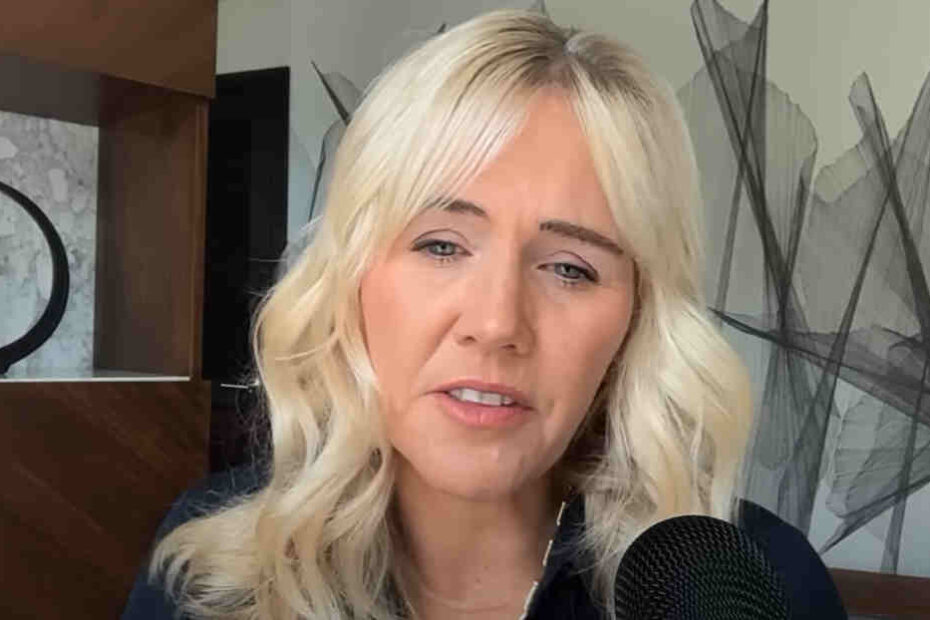
Read the full transcript of co-founder of Alpha Schools MacKenzie Price’s interview on Modern Wisdom Podcast with Chris Williamson on “Alpha School: A New Approach To Education”, August 16, 2025.
What’s Fundamentally Broken About Current Education
CHRIS WILLIAMSON: What’s fundamentally broken about the current school model?
MACKENZIE PRICE: Oh boy. I don’t know how long your podcast is, but let me tell you the fundamental issue. The teacher in front of the classroom model of one person trying to educate many kids who are at wildly different levels of understanding just fundamentally doesn’t work. And that would be the summary. There’s a lot of sub points in there.
I think the other thing that we really want to fundamentally change in our culture is the attitude about school. I think people think school is like spinach – it’s good for you, but you kind of just have to get it through and do that. And what I truly believe is that kids should love school. Because when kids love school, it opens up the possibility. It opens up the possibility to do so many incredible things. And that’s what we’re doing at our schools.
CHRIS WILLIAMSON: Dig deeper. What’s wrong with the one person lecturing to 20, 30, 40?
The Historical Context of Modern Education
MACKENZIE PRICE: Yeah, well, you know, if you want to go back in history, think a thousand years ago when Socrates was tutoring Plato, who tutored Aristotle, who tutored Alexander the Great, who went on to go take over the known world at the age of 22. That tutoring system was phenomenal, but it was reserved for the very, very elite and education was not given to the masses.
Fast forward many years to the 1800s with the industrial revolution, we had to figure out a way to educate the masses. How could you get education to as many people as possible? But there was also another goal in mind at that point. How could you raise up compliant citizens who would listen to instruction and do as they’re told so that they could go to work in the factories and make industry work?
And so that system of education, a teacher leading a group of students in a classroom came out in the 1800s. And you think about all of the industry changes across the board, except in the area of education. And if you went and visited a rural school in India or you went to the most posh boarding school in the east coast, you would really see the same thing. You would see a teacher leading a group of students in a time based classroom.
You know, the building’s nicer in one versus the other, but otherwise, you know, our education system has not changed. And we’re seeing all of the kind of bad fruit that is coming from that. Especially in recent years where our world is changing so quickly and we fundamentally need to create a different type of citizen that’s able to have critical thinking skills, is able to develop life skills, and you know, we’re not even in the traditional system developing great academic skills at this point.
CHRIS WILLIAMSON: Why doesn’t the traditional system enable life skills, social skills, academic skills, effectively?
The Inefficiency of Traditional Classroom Learning
MACKENZIE PRICE: Well, you know, one of the things about the teacher in front of the classroom model, and, you know, just to be clear, Chris, I think teachers are heroes. You know, it’s an impossible job to take, you know, 15, 20, 25 kids who show up in a classroom, and some of them, you know, barely know how to read, and others, you know, are super advanced.
You know, if you think about a teacher having, let’s say, a group of fifth graders come in and she’s got to explain a concept, and some of those fifth graders, before she’s even opened her mouth, they already know the concept, and they’re sitting there just bored to death. And after she’s explained the concept, there’s a huge percent of the class that it has gone right over their head. They have no idea what’s happening. And in either case, you’re forced to just move forward and do that.
And so, as a result, the learning system in a traditional classroom is wildly inefficient. Right? So kids are spending, you know, six hours a day and then add homework as kids are getting older, starting in, like, second, third grade to try to learn in this way. It just doesn’t work.
And so these schools only have so much time in the day, and they’re trying to get, you know, 50 minutes of math and 50 minutes of English and language and social studies and history, all of that stuff kind of crammed into a day. And what that results in is a bunch of kids who are chained to their desks all day doing academics.
And again, either learning how to play the game and jump through the hoops and study for the tests to get the A’s on the report cards, or they choose to rebel and kind of disengage, like, “Yeah, I’m not playing this.” What were you, Chris? Were you – did you know how to play the game or were you a rebel?
CHRIS WILLIAMSON: Oh, I was a good boy. I was very…
MACKENZIE PRICE: You were a good boy. All right.
CHRIS WILLIAMSON: Well, you know, classic only child syndrome.
The Motivation Crisis in Education
MACKENZIE PRICE: Yeah, well, I was a great student as well. But I will tell you one thing about me. I hated school. Growing up, I was always that kid who would sit in the classroom and I’d raise my hand and I’d be like, “I’m sorry. Why do I need to know this? Like, why is this something I’m having to spend my time learning?”
And so I think that’s always an interesting combination of, like, I was motivated to do well in school because I really wanted to go to this great college, but I didn’t enjoy the experience.
And, you know, I do think that there are, you know, the thing about the traditional education system, it does do a good job of training kids to be compliant, do as they’re told, and, you know, that’s kind of what it is.
But, you know, let’s think about the motivation problem. I’ll tell you what, Chris. Fundamentally, there’s two things that are required for a student to be able to learn well. The first is they have to have the right level and pace of instruction that meets them where they’re at, right? But that’s only about 10% of what creates a great learner. 90% of what creates a great learner is they have to be motivated. They have to have a motivation to do that.
And, you know, you think about the motivation structure that we give to kids in traditional world is we take a kindergartener and we say, “All right, little buddy, you know, at age five, you are going to go to school each day for about seven hours a day, five days a week, nine months a year. You are going to learn how to sit still. You’re going to learn how to raise your hand, how to ask permission to go to the restroom, you know, how to listen to your instructions. You’re going to, within a couple years, start also doing work at home at night. You’re going to do this for 13 years. And if you are really good at grinding it out, if you’re a good little boy or good little girl, like I was right, if you’re really good at grinding it out, you might get to go grind it out for four more years at university, right?”
Isn’t that true? That is our motivation structure right now. And, and you know, I can’t even necessarily get excited about something that’s way down the road. You know, imagine these five or six year olds, you know, doing this, and then it just kind of goes.
In fact, you know, they’ve done research that shows the highest level of enthusiasm between kindergarten and 12th grade. Can you guess what year students have the most enthusiasm?
CHRIS WILLIAMSON: At the end when they think they’re about to finish?
MACKENZIE PRICE: That is close. It’s actually the second highest. The highest level of enthusiasm is in kindergarten because kids show up and they’re excited and curious and interested in learning. Kids are little sponges, right?
And then what happens is every year that enthusiasm goes down, down, down, down until their junior year of high school when they finally start to see the light at the end of the tunnel and they’re like, “Oh my gosh, I’m almost out of here.” Right? And you just think about what a sad state of affairs that is. You know, how kids are just hanging out.
And so, you know, fundamentally we have a motivation problem, and that’s one of the things we’re out to change. Schools don’t have time to teach what I think most parents really care about, which are real world life skills, right? The things that are going to help them. And, you know, you talk to anybody, what do you wish you’d learned in school? You know, everyone’s going to say, “Gosh, I wish I learned how credit cards work. I wish I learned how to balance…”
CHRIS WILLIAMSON: My taxes, how to change…
MACKENZIE PRICE: “I wish I learned how to do my taxes.” Exactly. All those things.
And, and you know, here’s the thing. There is this really exciting event that has happened recently, and that is the advent of artificial intelligence. And it is allowing us to completely change the game of education. And I’ll tell you, Chris, there’s never been a more exciting time to be a five year old than right now.
Resistance to Educational Innovation
CHRIS WILLIAMSON: Unfortunately, something that very few of us can actually aspire. In fact, no one can aspire to be a five year old. You can just be one, I suppose. Why do you think the education system has remained so resistant to innovation even after Covid?
MACKENZIE PRICE: Well, you know, Covid did a really good job of exposing just how sad of a state our education system is. But we are so entrenched in the way things were. And the thing that’s interesting about education is pretty much everybody had our own personal experience with being educated, right? Like, we knew what it was like to go to kindergarten and go to school and do all the things, go to football games, do all the things.
And I think parents often kind of look back on their journey and when it’s time to educate their own kids, they’re kind of like, “Well, my kids should be educated the way I was educated,” right? That’s why you see people are like, “I went to Catholic school, my kids go to Catholic school, I went to private school,” or “I went to public school.” I did that. I was the same way. I was a public school kid, my husband was. And when it was time for our girls to go to school, we put them on the bus and said, you know, “Go to the local public school.” So we have this idea.
And the other thing that I think happens is we often will have a little bit of a mis-memory of what our experience was like, because we’ll be like, “Well, I turned out fine,” right? “I turned out well. And I got my best friends from high school.” You know, I just did a girls trip with my best friends from high school a couple months ago. Like, I have great memories from high school. But we kind of start to forget about, you know, the average day to day thing.
And you know, same thing with teachers. You know, one of the things that I believe is every adult has one or two teachers that change their life for them. Would you say that’s true for you?
CHRIS WILLIAMSON: I didn’t have teachers that… No, I didn’t have any teachers that changed my life. I had a couple of coaches in the sport that I did, which would be my equivalent, I think.
The Coach-Mentor Model
MACKENZIE PRICE: Yeah, well, and actually we’ll get into that. Like at our school, what we do is, you know, we’ve transformed the role of the teacher to be more of a coach and a mentor because coaches really are phenomenal at impacting kids. Right. Think about sports and how good of a job a sports team and a coach does at motivating a child. But we don’t take that into the school situation, right? We don’t take that into the education part.
And so again, what’s kind of happened in the last five years is people did realize, “Wow, this product of school isn’t great,” but how do we change it? What do we do? And it seems like a huge hurdle to get over. And you know, the good news is there is a way to change it.
The Current State of Student Performance
CHRIS WILLIAMSON: How do most kids feel about normal school? Is this something that we know? Because anecdotally, I have friends who have been teachers in the US who have got kids that are going to school in the US and they’re quite concerned. Teachers are saying we’re very hamstrung. It feels very restrictive. I saw some study that came out of Illinois that was looking at levels of literacy and numeracy and some absurd level of high schoolers couldn’t do maths. There’s one school that was $30,000 per student per year was the budget that they had. And I don’t think any students were able to do maths at this level. So what, like, what’s the headlines when it comes to…
The State of Education Crisis
MACKENZIE PRICE: Well, I mean, here’s the state of affairs. A third of students can do math or reading at grade level. So it’s an incredibly low amount. And guess what? That got even wider as a result of COVID. There was such a big difference during the COVID experience.
So academically we’re in a terrible state. In fact, a high school senior who graduates in the 50th percentile – your average high school senior – they know the same amount of math as a third grader who’s in the 99th percentile. So when you think about that, half of our students in the country that we graduate don’t know as much math as a 99th percentile third grader. It’s absolutely crazy.
In fact, when you think about inequality in the world and you think about in the United States, the inequality between a 50th percentile kid versus a kid in the 99th percentile when it comes to education – math, reading – it is a huge difference. In fact, for kids that are just average kids, you could really look at four years of high school as basically a waste of time for them. They barely improve at all.
And now part of the reason… Yeah, well, I can tell you the reason why. I like to think about playing the game of Jenga. Have you ever played Jenga?
CHRIS WILLIAMSON: I have.
The Jenga Tower of Learning
MACKENZIE PRICE: Okay, so you’re building a tower, right? You go to kindergarten and you start learning that 1 plus 1 is 2 and 4 plus 4 is 8. And how to spell your words and start reading, right? But as you’re getting information, you’re basically creating this Jenga tower. And if you don’t understand a concept, that’s like taking a little wood block out of your foundation.
So as you go up and pretty soon you go from addition to subtraction to multiplication to division to fractions, to pre-algebra to algebra to calculus. If you don’t have a strong foundation in some of your more basic concepts, it’s going to be really hard to understand those more sophisticated concepts. That’s why a lot of people will fall off of what I call “the math cliff.”
I was a victim of it. In about ninth grade, I started getting into more advanced math classes and I was like, “I have no idea what I’m doing. I don’t understand this.” Well, the reason is because I didn’t really have that strong mastery-based foundation of some of the lower level concepts that we needed. And so it’s really impossible to learn based on that. So the problem exacerbates as time goes on.
And then you think about these poor teachers who get kids delivered into their classrooms, who are missing knowledge from the year before, two years before, three years before, and yet they’re expected to take a kid and get them through a sixth grade curriculum between September and May and do that for 20 plus kids, right? It just can’t be done.
The Teacher Crisis
And that’s part of the reason we’re seeing teachers leaving the industry in droves, right? They’re underpaid, they’re overworked, they’re underappreciated, they’re trying to deal with all of this stuff – lesson planning and lecturing and grading papers and homework and dealing with parents. It’s a really thankless job.
And so it is a sad state of affairs. We’re not getting the results that people want to see academically and teachers aren’t happy. And the other thing that’s really changed too is teachers are leaving, we’re not getting new people coming in. And the people that are coming into traditional education tend to be in the bottom 25% of their graduating classes in college. And so we’re not attracting the people that are going to make that difference.
And one of the things I’m a huge believer in is we’ve got to make teaching a noble profession again. Because anybody who says, “I want to dedicate my time to impacting young people,” those people should be honored and revered, right? It’s a tough state. And so that’s been the issue. But you think about, we’re having to educate a billion kids. How do you do that? How do you change this fundamentally? And that’s what I’m tackling now each day.
CHRIS WILLIAMSON: It is interesting to think about the role of the teacher as more like the founder of a classroom who has to do the accounts and the HR and the marketing and the operations and the hiring and the firing. They do all of these things. You got to liaise with little Timmy’s parents because little Timmy’s been acting up. But I need to do a lesson plan for tomorrow.
My ex was a primary school teacher and she taught all different – she taught in Dubai, she taught in the UK. And even three year olds, the amount of work that you need to do for a class of three year olds is unbelievable. They’ve got homework, they’re taking homework home, they got tasks that they’ve got to do. Oh, there’s this intervention – one of the kids has come in with a bruise on his arm. And I’ve got to report it to whatever escalated to this thing. I’m worried about what’s going on at home, but I’ve got to keep sort of one eye like a chameleon. I’ve got one eye looking at the classroom and the other eye looking at little Timmy’s arm or whatever it is. It’s a real suboptimal environment for someone who is supposed to be there trying to just teach things.
A Personal Wake-Up Call
MACKENZIE PRICE: Yeah, I mean, teachers have been given a bucket with holes in it and told to empty the ocean. And it just doesn’t work. And that’s why it’s time to reinvent and reimagine education.
And for me, I had this personal experience for my daughters when it was time for them to go to school. I live in Austin, Texas. I sent them to our really excellently rated public school system. And very quickly my daughter just hit this wall of not being able to have personalization, being bored in class, things like that.
And halfway through second grade, my daughter came home from school and she looked at me and she said, “I don’t want to go to school tomorrow.” I said, “What do you mean? You love school?” And she just looked at me and she’s like, “School is so boring.”
I mean, I just had this moment of like, “Oh my gosh, in two and a half years, they’ve taken a kid who’s tailor made to love school and be interested and want to learn, and they’ve wiped that passion away.”
And I went and met with our principal of the school, who’d become a friend of mine. She was a great administrator. And she looked at me and she’s like, “MacKenzie, this is like trying to steer the Titanic. It just can’t be done.” And I knew at that point, this is my call to exit. But I also knew this wasn’t about just finding a different public school or moving to a private school. That’s when it made me realize that model of education is fundamentally broken. And it was time to reimagine what was possible.
CHRIS WILLIAMSON: How do parents feel about this? I know how you felt about this, but have we got any idea what parents nationally think about it?
The AI-Powered Solution
MACKENZIE PRICE: I think the thing that’s interesting is a lot of parents would say they’re dissatisfied or just okay with their kids’ school, but they don’t really recognize that there could be another option. And again, we look at our experience and say, “Well, we got through it and our kids have to get through it.”
And I think that’s one of the things that happens with kids in general in our society today – I really believe fundamentally that kids are limitless. They are so capable of doing big things. They are so interested and they are so curious. They can do so much. And in society they’re underrated, right? And that absolutely comes across in school with the way that they’re treated and the lack of ownership and autonomy that they’re given. It’s kind of like teachers are wrangling the prisoners up every day.
And I think parents see that, but it’s like, “Well, what is another option? What can you do?” And the teacher in front of the classroom model is so embedded in our experience that they don’t see another option. So what is it to do?
Now I will say we’re seeing kids are leaving the public schools like crazy. And homeschooling has become a more common thing. And one thing that homeschoolers have known for a long time is it doesn’t take all day to educate your kids because they are mimicking or actually providing that one-to-one tutoring experience.
And universities like Stanford and Harvard and Oxford have done research for 40 years since I was in elementary school that says a kid can learn 2, 5, 10 times faster when they’re in a one-to-one mastery-based learning environment. All of those learning science papers start or end with the same thing, which is, “Unfortunately, these results are not possible in a traditional classroom.”
And that’s what’s so cool about what we’re doing, which is artificial intelligence is finally enabling us to provide that precise measurement tool that allows us to give every single kid that one-to-one mastery tutoring experience. And as a result, kids can crush their academics and they can do it in a fraction of the time.
So at our schools, our classes are performing in the top 1% in the country and we’re doing it in only two hours a day. And when you realize this as a parent, like, “Wait, kids can crush their academics in only a couple of hours a day?” The natural question that comes from there is, “Well, what do you do with the rest of the day?” If it only takes a couple hours, what do you do with the rest of the day? And I can tell you one thing, Chris, that parents don’t want is they don’t want their kids to come home after two hours.
CHRIS WILLIAMSON: You mean you don’t want them back at half past eleven in the morning?
Personalized Learning Through Technology
MACKENZIE PRICE: Exactly. It’s like, hey, you got to go to school all day. And really school is a bundle, right? It is a daycare. It’s a socialization environment there. It’s a place where they’re doing all kinds of different activities after school. It’s a community anchor.
So that’s where I looked at this back in 2014 when we decided to take our kids out of school and start a new school. I really thought about this. Okay, if kids are limitless, then it is a school’s job to build an environment that unlocks their potential. That unlocks what they’re capable of doing.
So how are we going to reimagine school? Well, if you can provide a one to one tutoring experience, which is made possible through technology, then you can crush academics in a fraction of the time. What are we going to do with the afternoon? Well, let’s give kids the skills that they need, life skills. Let’s teach them entrepreneurship and financial literacy, leadership and teamwork, public speaking and storytelling, giving and receiving feedback, dealing with failure, all of those kinds of communication things, socialization, all of those skills.
We can actually do that during the day in that time, which are often skills that kids are trying to learn in maybe sports or after school activities. But instead we can create the school day where kids can get their academics not just done, but do it really well. And that’s across the board. Kids who are behind, kids who are advanced, there’s really no ceiling and the floor can be raised for them. Then provide them with real life skills and we can do that.
High Standards and High Support
And then here’s the other key that I really truly believe is that kids thrive when they’re in an environment where they have high standards and they have high support. And what’s really cool about using artificial intelligence and technology is that it allows us to increase human intelligence, both from an academic perspective for a kid, but also by transforming the role of the teacher in the classroom so that instead of having to try and figure out how they’re going to finish this herculean task that we talked about earlier, instead their job becomes focused around motivational and emotional support and mentorship and holding kids to high standards while also connecting with these kids.
And you said your ex was a teacher. I’m sure that she got into that job because she wanted to make a positive impact on young people’s lives. And now we can finally take the humans in our classroom and allow them to focus on what only humans can do well, which is that connection and finding out every single kid’s why, what makes them tick, what do they get excited about when they’re challenged? What is the thing they say to themselves? And how can we incorporate growth mindset strategies? How can we help them build confidence and competence?
And that’s what’s so exciting and why I keep saying, like, being a five year old in this new world is a really exciting thing to do. And I actually think teachers are going to love the changes that they’re going to see when they’re enabled to be able to focus on the kid and spending time there.
Those are kind of the key components that can make such a huge difference. And school is such a fundamentally critical time where we help kids develop. Who do they see themselves as? What is their identity? And when you can give them incredible competence and knowledge, you can then combine that with real world life skills and the ability for them to go do things that no one thinks a kid can do. Running a business, or giving huge TED talk type things. Doing teamwork exercises, learning how to use AI tools to give them superpowers. That’s where the magic happens.
CHRIS WILLIAMSON: Two hours a day on academics, what’s that look like? What’s the platform that they’re using? What is the level of engagement? What’s the oversight like? Take me through that.
A Day at Alpha Schools
MACKENZIE PRICE: Absolutely will do. So the schools that we run are full time in person schools. So kids show up 8:45 in the morning. They always start out in a group activity together. We call it a “limitless launch.” Think Tony Robbins for kids, right? This is a time when kids get together, they get excited. They usually do some sort of a physical challenge that maybe almost seems impossible. Gets their blood going, gets them moving. And then we incorporate some sort of a growth mindset strategy that’s going to help them when they go into the next part of their day.
So at 9am our students sit down at their computers and they start working on their core academics. We practice something called pomodoro technique where our kids will go in and spend 25 minutes on math, 25 minutes on reading, 25 minutes on language, 25 minutes on science, a 20 minute block at the end for whichever subject they want to spend some more time on, and they get breaks in between.
And what you’ll see if you walk into one of our classrooms is you’ll see groups of kids in similar age, right? You can have two 7 year olds sitting right next to each other, but one 7 year old might be working on algebra while the other seven year old is working on their multiplication table. You can have personalized learning for every single student and they’re hanging out. You’re not having to send the kid up to the classroom three grades higher just because they’re advanced or pull a kid out who needs remedial help, they’re able to be in the classroom.
One of the things I love when you’ll have to come visit our school sometime, but I love going into one of our classrooms, especially like our kindergarten, first grade classroom, because invariably what you’ll see is there’ll be one kid kind of sitting over in a corner and he’s got his feet perched up, he’s like laying on his back, he’s got his laptop kind of upside down. But what that shows is that kid knows how to get his work done and hit his academic goals and he’s earned that kind of like more autonomy. Because not every kid does well just sitting in a desk being told, “sit straight up and do this.” I mean, I know for me, I do some of my best work when I’m like sitting on the couch with my laptop, being able to do that.
And so our kids basically get breaks throughout that morning and then by lunchtime they’re done with their academics for the day. So they put their computers away, they get a ton of just like unstructured outdoor playtime, which by the way, schools should have. Did you know that the average amount of recess per day in schools in the U.S. can you guess how many minutes they get?
CHRIS WILLIAMSON: No, how much?
MACKENZIE PRICE: 22 minutes a day. 22 minutes of recess. When you think about what kids like about school, usually you’ll get the same kind of few comments when you say, “do you like school? What do you like about it?” They’ll say, recess, PE, lunch, and my friends, right, that’s kind of all of…
CHRIS WILLIAMSON: The things that aren’t to do with…
MACKENZIE PRICE: The classroom, that aren’t to do with the classroom. And so it’s like, okay, how about in this world, these kids are getting 90 minutes of day of unstructured recess time, which is good.
Life Skills Through Project-Based Learning
And then in the afternoon, that’s when things get really exciting around our schools. Kids are learning life skills through these project based, really collaborative kind of team oriented workshops. So that’s everything from our kindergarteners who are completing a five mile bike race as a team or climbing a 40 foot rock wall, to our second graders who are building a business together that raises $5,000 for a charity. To our fifth and sixth graders who ran a food truck in Austin this year and made over $4,000 of profit from that, to our middle school students who are able to do history trivia workshops and combine it with weightlifting to increase their bench press over a six week period.
And so there’s always some sort of a physical workshop activity that kids are doing. There’s something that might have to do with coding or art or music that they’re creating something and they’re using tools. We love the idea of kids getting out and doing storytelling.
I’ll tell you one of my favorite workshops. So I personally, I love getting in front of an audience. I like talking to people. And public speaking is like most adults’ number one fear, right? They absolutely hate it. Well, here’s what we do with our kids. We take our fifth graders, for example. We did a workshop called “Public Speaking in the Wild.” And what we tasked them with was come up with like a compelling seven to ten minute narrative that has an emotional appeal.
And so they write out their speeches, so they’re getting writing experience on that. Then we have them get feedback from an AI tool on how they can make their talk more compelling and engaging. We give them AI tools that help them practice in a really unintimidating way. It’s just them with this AI tool that says, “here’s how your intonation could get better. Here are the number of filler words that you’re using. Here’s how you could change the structure.”
Then we take the kids to the Humane Society and they gave their talks in front of cats because cats are like a pretty unintimidating audience. It’s kind of a fun way to practice your talk. After that, they went to an assisted living facility and they gave their talk to some old people there.
CHRIS WILLIAMSON: Are you saying that old people are one level of intimidation above cats?
Developing Life Skills Through Real-World Experience
MACKENZIE PRICE: I would say so. You know what’s actually interesting about that? There’s another life skill that the kids learn when they’re at the assisted living facility, which is how to redirect because a lot of people will start asking them other questions or telling a story or whatever. So these kids are getting out in the community. They’re getting to talk to people in multiple generations above them. They’re getting to share and provide entertainment.
Then we took them to our local Book People bookstore and they did an open story time and they got to practice there. And ultimately our kids ended up flying to New York City and they did open mic night with a bunch of strangers. So you can take a kid who maybe is a little nervous about getting up in front of an audience and you stair step their progress and make it fun. It’s exciting.
Now I will say I did have some parents call and complain because they said “my kids were begging me to adopt a cat and we do not want to adopt a cat.” But hey, there’s worse things that could happen from that. And so there’s just so much creativity that can go into teaching life skills in a way that kids love.
When Kids Love School
Fundamentally, that’s what I believe is when kids love school, you get to do all these cool things. And we take that very seriously. In fact, we survey our students every six weeks and we ask, “would you rather go to school or do you like school?” 95% of our students say they love school, but we actually even take it further. We’ll say, “would you rather go to school or go on vacation?”
Did you ever want to go to school more than vacation growing up? You were a good boy. I certainly didn’t. Well, guess what? We get about 60% of our students will say they’d rather go to school than go on vacation.
In fact, we had a totally crazy thing happen this year in the spring of 2025. Our high school students came to us and they said, “hey, we want to keep school open this summer because we want to keep working on our projects and we’ve got stuff to do.” So their teachers, we call them guides, looked at each other and said, “okay, I guess we’re going to coordinate our vacation schedules.”
So if you go to Austin, Texas this summer, you will see a thriving campus with kids that are there. They want to hang out with their friends and work on these projects that they’re doing during the day. And that’s the kind of thing school should be, because when kids are excited about showing up and they’ve got a fire in their belly, then so much more is possible.
Personalized Learning with AI
And again, the other thing that makes all of this work, obviously, getting personalized learning is really awesome. And there’s so many cool things that AI is enabling. You can take not just the knowledge graph and understand exactly what a kid knows and doesn’t know, but you can overlay it with their interest graph. So you can suddenly take that kid who’s learning math and combine it with their interest in fashion, design or baseball.
But when you have our teachers who are supporting these kids and holding them to high standards and helping them go do big things, they get so excited. And so that’s another thing we survey our students on. “Do you love your guide? Yes or no? And do you believe your guide is changing your life?” Getting back to that, every adult has one or two teachers, and the numbers that we have there are staggering because these teachers are given the time and the space to focus on helping kids.
We’re excited about the results we’re seeing. And we’re seeing this with kids across the board. Wherever they come to us, it’s all about turning on that motivation lever and doing whatever we need to do to get them excited about it.
CHRIS WILLIAMSON: What is on the iPad? The tablet? What are they? Is this a text chatbot? Is this really fancy ChatGPT? What is this?
The Technology Behind Learning
MACKENZIE PRICE: Actually, it is not. So we use various LLMs to create personalized learning plans, and then we also use a vision model. What we do not use in our schools is a chatbot interface. And here’s the reason: you give a kid a chatbot, they will cheat with it. As much as we would love to imagine that they’re going to get on with ChatGPT and engage in a Socratic discussion, they don’t. They copy the question, paste “what’s the answer?” and there you go.
So if you talk to one of our students at school and you say, “tell us about your AI tutor that you use for your academics,” they’re not going to talk to you about some cartoon character or Einstein avatar that pops up and teaches them science. What they’re going to say is that they log into a dashboard, and when it’s time for them to go into their core learning block, let’s say for math, they’ll click on a button and it will take them directly to whichever adaptive app is right for that student based on the level, the subject that they’re at.
And so that could be anything from third party apps like Alex or Math Academy or IXL that are out there in the market to apps that we built. We’ve got Alpha Math and Alpha Read and Alpha Write. So it’s whatever app is working for that student.
AI-Powered Learning Analytics
And then during that time, what the AI tutor is doing, in addition to creating the personalized lesson plan, it’s also making sure that the student is learning effectively and efficiently. So it can actually analyze what’s the level of accuracy a student has, how long is it taking them to answer a question. If it’s taking them too long and their accuracy level is not high enough, that could be a sign that they need to go back and revisit a concept and fill a hole.
Or maybe we can say, “hey, we’re noticing you’re not reading the explanation or you’re not watching the video explaining the concept.” One of the things we teach our kids is that often the fastest way forward is to slow down or go backward and fill holes.
And ultimately what we’re doing with these students is we’re wanting to create self driven learners who have the skill of learning how to learn. And so when they’re working in their core academics, if there’s a concept that they don’t understand, after the first reading, they can go into one of our resource libraries and watch a video or read a different concept. Actually our students are able to upvote, “hey, this was a video that was really helpful when I was learning this concept.”
Their guides are there to support them and help point them towards finding those resources, but they’re not teaching them the academic subjects. You’re not going to see one of our guides teaching a kid how to carry the one. You’re going to see our guide saying, “hey, were you able to look at this? Did you read this explanation?” And kids are able to go through this.
So our AI tutor does provide coaching to a student as far as saying, “hey, take a little bit of time and reread this concept or learn about this.” And that’s what that looks like. Another thing that’s a great example when you think about reading. Obviously reading is such a critical skill for academics, for life in general. And what we can do is we can give them reading that’s tailored to their lexile level, basically whatever grade level they’re capable of reading. And then we can match it also with some of their interests and we can use it to teach history and social studies as well.
CHRIS WILLIAMSON: What about the issue of too much screen time? I hear a lot of this, kids are spending too much time on screen.
MACKENZIE PRICE: Absolutely.
CHRIS WILLIAMSON: Stories of addiction to technology interfering with their education. Given that the two hours that they are learning is mediated through technology, how do you offset that and not allow that to sort of bleed into other areas of their life?
Screen Time vs. Engaged Learning
MACKENZIE PRICE: There is a huge difference between doom scrolling TikTok or playing a video game and getting a one to one learning experience where you are totally engaged at the exact right pace that your brain can handle. You’re not so challenged that you’ve shut down and you’re not bored because it’s too easy. So getting that connection, I would argue receiving this type of education that happens to be delivered on a computer is so much more engaging than sitting in a classroom glossy eyed looking at a teacher.
I personally, myself with my kids, I was a screen free mom when they were young as well. And there is a huge difference on that. And the other thing that you’ll see is if you look in a traditional classroom today, kids are spending about the same time and actually even more once they get to middle school in school on screens. It’s just being delivered like “here’s a textbook on the screen, here’s a worksheet to do on a screen,” something like that.
So our kids are actually spending less time looking at screens than kids in a traditional classroom. And the time that they are getting this one to one tutoring experience on a screen is just totally different.
Creating Contributors, Not Consumers
But the other thing that brings up such a good point around one of the other life skills we’re teaching our young people, which is how to be a creator and a contributor as opposed to a consumer. And what we find is kids want to be creators, they don’t want to just be a consumer.
So when we have time in the afternoons for kids to pursue their interests and their passions and say, “you know what, you like playing video games, how about learn to code a video game, how about learn how to host your own tournament.” Instead of just watching TikTok, how about you create an audience on TikTok and deliver a message that’s positive.
A Real Student Success Story
In fact, we have a student who, at the beginning of her freshman year of high school, she sat down with one of our guides. And the guide said, “so what are you interested in? What do you like to do?” And she said, “I don’t know. I’m not really sure.” The guide said, “well, if you’re just hanging out, what is the thing that you’d want to maybe work on or do as a project?” The girl shook her head, “I don’t know.”
And she asked her another question, “so when you’re at home, you’re not doing anything, what do you do?” And she looked very honestly, and she said, “I scroll TikTok and I think about boys.” And that’s a pretty typical teenage girl response. “I scroll TikTok and I think about boys.”
Well, guess what that girl has now done. Two years later, she has created a safe teen dating advice chatbot that teenagers can go to to get vetted, clear advice. She built an audience on TikTok for this, and she is out there changing the game around how teens date. And I’ll tell you what, there are some scary statistics, that’s a whole different podcast, around what a mess teenage dating is now.
And she is out there doing research studies with Stanford and University of Texas professors on how to improve this. She’s working with therapists to understand how do you make sure you’re providing good, healthy advice and habits for young people to be able to do. And so it’s a great example of our guide helping a girl take the interest and the passion she has and turning it into something real that she is creating and contributing to.
The Four C’s of Modern Education
And I think that’s one of the things that’s exciting. And by the way, that is something that we have to have developed as a skill for this next generation. The world is totally different than it was certainly when I was growing up and even probably when you were growing up, too. And it’s no longer just about the three Rs of reading, writing, and arithmetic.
Now it’s about what I call the four C’s. It’s critical thinking, communication, creativity, and collaboration. Those are the skills that our people need to be awesome at and figure out how they’re going to always stay. How can we stay smarter than AI? And part of that is living in that gray frontier where you’re saying, “all right, let’s bring the creativity into what’s known in the world and go build stuff.”
CHRIS WILLIAMSON: What are the outcomes that you’re assessing these kids on? There you go. They do their two hours every day. They’re in the top 99th percentile nationally. But how are they being graded? Are they graded? What is it you actually care about? What is all of that?
Measuring Academic Success and Life Skills
MACKENZIE PRICE: Yeah, well, from an academic perspective, we’re really big fans of showing objective data and transparency that shows kids really know their material. So we do standardized testing, and that’s how we can show these kids are performing so well, learning twice as fast, and that the classes are 99th percentile, top 1% in the country. So that’s one thing.
Then you get into some of the more practical aspects, like how do you do on the SAT getting into college? And an example of that, our median SAT score for our senior class this year was 1530 out of 1600. It’s insane how kids are doing. Our high school, I think our average for our freshmen is like 1410. So kids are learning all this academics and doing it in such a more efficient way that helps with that. They’re taking all the normal curriculum that kids are taking in traditional class. They’re just doing it in far less time.
But the other thing that’s really interesting when you think about how do you measure what kids are learning? Where that gets really interesting is when you think about life skills. Like, how do you measure life skills? And the answer we’ve come up with is every workshop that we have that is teaching a life skill. We have what’s called a test to pass that kids go through at the end.
So I’ll give you an example of that. I think grit is a really important life skill for people to have the ability to stick to something even when it’s hard. The ability to have the discipline to keep showing up day after day to learn something. Well, how do you teach grit? Well, at our schools, we don’t just hand kids the book by Angela Duckworth, “Grit,” and say, read this book and write a book report on it. Does that really teach grit?
Instead, what we do, and you’ll see this with, for example, our third and fourth graders, they participate in a triathlon. And the triathlon consists of three things. They have to be able to solve a Rubik’s Cube. They need to juggle three items for 30 seconds, and they need to run a mile without stopping.
So at the beginning of this workshop, when we tell kids, “All right, this is the triathlon,” you’ll get kids go, “No way. There’s no way I can solve a Rubik’s Cube. Or how am I possibly going to run a mile? I’m 8 years old. How am I going to do this?”
And it’s a perfect chance for our teachers to incorporate some growth mindset strategies like the power of yet. You can’t do this yet. But it turns out if you learn that there’s an algorithm to solving a Rubik’s Cube and you practice and practice, pretty soon you’re doing that. And if you start by juggling scarves, eventually you’re juggling balls. And if you incorporate atomic habits and walk a mile and then walk and run a mile, and then pretty soon you’re running a mile, you can do that.
And when you can see a group of third and fourth graders who start at the starting line of a triathlon, which is, “All right, Rubik’s Cube, boom, boom, boom, juggle.” And they go run a mile and they finish that. Guess what? Those kids have grit. That is such a great example of seeing that they’ve learned grit. And it’s something that we incorporate into all of our workshops we do.
And that’s the other thing is when kids are able to do these cool things and see, “Wow, I actually was capable of that.” It again, it builds confidence. That’s based in reality of really being great.
Performance Outside the System
CHRIS WILLIAMSON: How are your kids performing when they get outside of your system? What happens? You send these kids, I guess it’s not been around that long. They’re going to go to university. It might sound, “Oh, this is all well and good when it’s inside of your 3000 super AI virtual reality sandbox,” but what happens when they go head to head with other kids that have gone through different sorts of schooling?
MACKENZIE PRICE: So we’re seeing our kids that graduate and move on to college are crushing the college experience. First of all, they’re getting into their first choice schools and they’re doing very well there.
I will tell you this, though. I talked to our graduates of Alpha School who are at universities like Stanford and Vanderbilt and Howard University and Parsons, all over the place. And they do kind of say, “You know what, some of these lectures from these professors are pretty boring and inefficient,” but it doesn’t stop them from saying “You know what? I have the skill of learning how to go learn on my own, and I can do this well.” And, of course, they’re getting a lot of other fun experiences.
But I actually spoke to almost all of the students that graduated a year ago who just finished their freshman year of college, and I think there was one out of all of them who’d gotten a B plus in one class. Otherwise, they were looking at 4.0s. So they’re crushing it.
And the other thing that I think is really interesting is my daughter is an example of this. She just finished her freshman year of college at Vanderbilt, and she called me up a few months into her freshman year, and she said, “Mom, one of the things that I’m having a renewed appreciation about my educational experience is that I feel like I was really encouraged to go try and do the things that were interesting to me and develop my passions. And so now that I’m at college, I’m continuing to engage in that.”
“And a lot of my friends have sort of said, ‘Oh, I hit the finish line. I got into the good school, so now I don’t have to do all that stuff,’ because they looked at just adding to their resumes. It was like, ‘What do I have to do to check the boxes to kind of get ahead?'” And I think that’s something that traditional school kind of breeds in kids, especially kids like you and I who want to do well in school. It’s like, what do you do to get the grade or get into the college?
And I think that’s one of the things that is such an important aspect of what a young person going through school should be able to figure out. What is that intersection of their talents? We run our students through an IGUAI values workshop where they figure out, what do they love, what are they good at, and what does the world need? And then we teach them how to develop those skills.
And so an example of that, as kids get into high school and they’re interested in maybe building a business, you have to build an audience, because you’ve got to get feedback from an audience. One of the things we often talk about is helping our kids work on pursuits that are as impressive as being an Olympic athlete. And as part of that, you can’t be the world’s fastest runner running in your own backyard.
And so how do you help kids get out there in the real world? And that example of our kids who end up at an open mic night in New York City, that audience is not their parents who are going to clap no matter what. They’re out in an audience in the real world and they’re getting real world feedback. And they’ve got the support from their guides to be able to say, “Hey, you’ve got the ability to do this and you can be high quality and do great.”
And I think if I could wave a magic wand and help parents understand three things, it would again. Number one, kids should love school. And there should be a world where if your kids don’t love school, something’s got to change. Two, they can crush their academics in a couple hours a day. And three, high standards are the key to a happy, healthy kid. When you couple that with high support.
Common Criticisms
CHRIS WILLIAMSON: What are the most common criticisms that people levy at what it is that you’re trying to do?
MACKENZIE PRICE: Yeah, I think the criticisms that we get usually come out early based on kind of lack of understanding of the model. So, for example, you’ll see people like, “Oh, you’re that dystopian AI robot Terminator school with no humans.” And they think of kids standing in or sitting in a classroom with a robot teacher at the front of the classroom and as soon as they take a second and understand the model, it’s like, “Okay, that’s not at all right.” We have elevated the importance of the human connection in our classrooms by using technology. So that’s one thing.
Another criticism that certainly comes up is right now we operate as a private school and we’re doing these insane workshops where kids are doing things like they learned an adaptability and teamwork exercise where they learned to sail, and they ultimately sailed from Florida to the Bahamas over five days. These are kids manning a sailboat and figuring out how to do that.
So we do these super cool life skills workshops. We also pay our teachers very well. They start at six figure salaries because these guys deserve it. And as a result, we’re expensive. We are a high end private school.
CHRIS WILLIAMSON: How much is the cost of class for you?
MACKENZIE PRICE: Schools are anywhere between $25,000 and $75,000, depending on the city and depending on kind of the model of the school and what it is. And they’re operating in the private world. So we haven’t been able to break into the public system yet. Which I think that’s another fundamental right that we’ve been raised to believe is that education should be a free thing. And public schools are providing it for free. They’re just, they’ve got a crappy product. It’s just not a good product.
Scaling to Serve All Families
CHRIS WILLIAMSON: Do you think that your model can realistically scale to serve families outside of wealthy ones?
MACKENZIE PRICE: So here’s what I would do if you allowed me to take over K through 12 public education and said, “Do this.” What I would do is I would implement a personalized learning program. I would shift the role of teachers and make them more like coaches, which, by the way, public schools already have a lot of those. And then when kids are getting their academics done in the morning, that would earn them the ability to get out and do all the things that they love to do and usually start doing it about 4 o’clock in the afternoon at lunchtime.
So get those kids out on the football field or doing band or robotics or speech and debate, or theater, or arts, whatever. Those extracurricular activities that kids spend their time on later doing, they could be spending the second half of their day doing. And the vast majority of public schools have those types of activities and they’ve already got the coaches who are working on those things. So it just requires a mindset.
And you mentioned about the insane amount of cost that goes into public schools. A lot of times people will look at what’s the budget and how much is getting into a classroom. They don’t count administrative fees, they don’t count real estate fees, all those things. But you’d be actually shocked at how much money per student is really going into public school systems. And I think that could be reallocated.
Now, I’m not going to pretend it’s easy to change the minds of millions of teachers to realize you don’t have to be teaching a subject matter. Instead you need to be focusing on the connection and the motivational aspect of it and helping see that reimagination.
But I think that’s the other cool thing when you really look at like, “Okay, if your whole day doesn’t have to be spent on academics, how do you spend your afternoons?” And for example, we have a sports academy where starting at noon, our students are out learning life skills via sports. So that’s doing everything from getting on the field and playing sports and practicing their craft to doing things like negotiating their NIL contract, writing the press release officially announcing their affiliation with a team designing their Nike ad campaign, giving the post game press conference, giving feedback to one of their players as a coach, you can do all these cool activities that kind of hit kids where they’re at.
We even have a wilderness school that we’re opening this fall where in the afternoon kids are going to spend time out there fishing and learning how to build fires and all those cool things that they can do. And there’s just really no end to the ways that we could engage kids in the afternoon. At Alpha, we spend a lot of time on entrepreneurship because I’ll tell you what, you learn so many life skills when you’re doing entrepreneurial activities, it’s a lot of fun.
CHRIS WILLIAMSON: How do you know that this isn’t just given that you mentioned it’s quite expensive at the moment, prohibitively expensive for most people to get their kids into. How do you know that right now what you’re seeing isn’t just the kids of smart parents being smart students, which is getting them very high outcomes.
Selection Effects and Private School Performance
MACKENZIE PRICE: Hey, there’s no question that there are selection effects. Any private school has selection effects. And so I think a lot of times people in an aim for criticism might say, “Well, you’re getting these great results, but that’s because you’re in this private school and you’ve probably got families that are different than public.” But I’d be curious then, what’s the answer for why are other elite private schools not getting quite the same results? Right. There’s something there.
And that’s when I think you look at it. Now, there’s a couple things. First of all, there’s not that many private schools that release their data around how their kids are doing. In fact, a lot of what they use to judge how kids are doing are report cards, which is a teacher saying, “You got an A, you got a B plus.” Right. And curving a test. Right. And so it’s not real data necessarily.
In fact, standardized tests in a traditional school environment have a bad reputation for a reason. And it’s because when a kid takes a standardized test, the results of that test don’t actually change anything for that child because they can’t really go back and do anything. So a school doesn’t really share the detailed report on how a student does because it might make the parents say, “Well, how are we going to fix it?” And the answer is, they can’t.
In our environment, we can take all the information that comes from a standardized assessment and we can feed it back into our AI tutor to create lessons to go fill those holes. And that’s one of the things that’s exciting. But sure, there’s certainly selection effects. And I think any parent who kind of raises their hand to say, “Hey, I want to do something different,” right? And that’s the kind of parents that we are attracting at our schools around the country. And the demand that’s come is parents who are like, “Hey, I want something better for my kid.”
The Hidden Selection Effect of Innovation
CHRIS WILLIAMSON: That’s a really great point that you can levy insults and criticisms around the selection effect of privilege, of access, resources, all the rest of the stuff. You coming from a background education is correlated with wealth. Therefore wealthy parents are more likely to be highly educated. That’s an advantage, all this stuff.
But one of the other much more hidden selection effect is going to be there’s lots of wealthy parents out there, but how many of them are going to be prepared to accept something which is a different sort of path for their kids to go down? How many of those. And if you are the sort of parent who has the sort of genes that you would let your child go to a school which is utilizing AI and is only teaching them for two hours a day and is getting them to sail across the Caribbean, or you could start up a $5,000 business or whatever.
If you’re the sort of parent that’s got that, then you also have a pretty non typical set of genetics that you’re going to pass on to your kid. Outside of their ability to be smart in the classroom, outside of their ability to acquire resources or your ability to give them resources like that is as much of a selection effect as anything else. So yeah, your preparedness, your openness to experience, your preparedness to be innovative. That’s a really interesting point, one that I hadn’t thought about.
Teaching Failure as Fuel
MACKENZIE PRICE: Yeah, yeah. And I’m not out there trying to convince the world that this has to work for everyone. But what we’re seeing is it is working for these kids. They are loving their experience. They’re learning like crazy. They’re absolutely growing. And when we talk about love of school, well that doesn’t mean that every day is Disneyland. Right.
We actually believe that providing kids with a rigorous, challenging experience where they get opportunities to fail. In fact, we teach kids “failure is fuel.” There are so many incredible lessons that you learn when you fail. And contrast that with traditional school, which is for a kid like you or I were when we were growing up who wanted to do well and be good. You actually get trained to stay away from anything where you might fail. Right.
So don’t take that class that you’re interested in in case you were to get a bad grade because you’re not sure if you’re great at it. Right. Like, go do those things. And so it will create with kids that are engaged in trying to do well in school. It’s like, stay away from anything where you might show that you’re not good. Here we’re like, go learn from these challenges. Go try something hard. Fail and have our teachers be able to sit down with you and figure out like, okay, what happened? What went wrong, what you can change.
I was in a classroom with a kindergarten classroom last fall and a little boy gets up at the end of the school day. We always come together for closing shout outs, which is a time to really celebrate each other’s wins. Look back on the day and in this kindergarten classroom, this little boy had stood up and he said, “Well, today I only got one of my four math goals and two of my four reading goals. And the reason I didn’t hit more of my goals was because I was distracted. And tomorrow I’m not going to sit next to Gus.”
And the fact that you’ve got a five year old who’s clear on goals that he had, what, how did he do on those goals? Why did he not achieve the goals and what’s he going to do differently tomorrow? That shows you’re taking ownership in your learning experience. You’re not just getting on the train of education and saying, “Hey, I’m going to sit, I’m going to learn whatever it is the teacher teaches me today. And if the teacher’s not a good teacher, that’s not my fault.” Instead, we’re really helping kids kind of take ownership. And that right there is a fundamental skill.
The Future of Education
CHRIS WILLIAMSON: What? Give me your prediction. Peer into an. Imagine crystal ball for a second. What do you think the next 10 to 20 years to 50 years of sort of scaled education looks like? Because at the moment there’s a big behemoth or a titanic ship that you’re, that you would be trying to steer to do that?
MACKENZIE PRICE: Yeah.
CHRIS WILLIAMSON: Do you imagine that it’s going to get to the stage where results from schools like yours and other programs that are presumably going to pop up, that are similar are going to be so advantageous that it’s going to be impossible to ignore. Like what, what’s your vision for the future outside of what you do?
MACKENZIE PRICE: I am such an optimist. That’s why I just think a five year old is really lucky because we are going to see a huge change in education in the next five years. Because I think what’s going to happen is there’s going to get to be so much clarity around the fact that artificial intelligence and adaptive learning is so much more possible, just like when the invention of the microscope catapulted what was possible in biology.
Artificial intelligence is that tool that is going to allow us to make learning science a hugely impactful science in the classroom. It allows us to take all of these incredible learning science principles and truly apply them to all students, not just smart students, not just the students that need help. All students are going to be able to get that. And I think that the data is going to get there. And as we go out and share this kind of new way of thinking, it’s going to be exciting.
I also think the cost of AI is going to go down rapidly. I believe there’s going to be a world where kids are going to be able to learn amazing education through video gaming, right? Where they’re going to be as addicted to an educational game that helps them perform well as they were to Fortnite. Right? And so it could be a good thing. They’re going to get more chance to do life skills.
And I also think, as I mentioned, a lot of our schools, Alpha School, is redefining what parents expect from their kids’ private school education. And we put a ton of resources into our workshops, but there will be so many more models that will open up. In fact, we’re getting ready to open a model in Texas that’ll be basically $15,000 a year of tuition. And in Texas, they recently passed School Choice, which will give families about ten grand a year. And that’s going to get tuition down to $5,000 a year. That becomes a much more accessible tuition payment.
And all of these kids will be able to get the same academic experience and still get to go out and learn life skills in the afternoon. And what we’re doing is we’re giving kids back their most valuable resource, which is time to go do all these fun things, right? And do fun things, learn skills, and how about just be a kid and play and hang out with your friends and hang out with your family. Right. And not have to deal with homework and being exhausted and trying to pursue this thing and learn skills.
And the other big part of this is when you help kids use AI tools in the afternoon to do stuff, that’s the kind of thing that they’re going to want to take out in the workforce. So I’m very, very bullish on the future. And I think we’re going, rapid change in education that we have been waiting for for a couple hundred years. I think we’re going to see it in the next five years.
So, yeah, I’m thrilled. Maybe I should go try to have more kids. My kids are old, but maybe I should run it back, do it again. Yeah, exactly. Nothing like a 48 year old pregnant lady would be really fun, right? Probably not. I guess I’ll have to pour more into all these other students that I’m helping along with grandkids.
So, yeah, it’s a fun time. It’s an exciting time in education. And this is something that for me, I started out as just a mom who wanted something better for my kids. And now I believe that it’s certainly my life’s purpose and it is going to impact millions of kids. And I think if we can serve as inspiration for other educators to see what’s possible, I think this is going to spread like wildfire.
Where to Find Alpha School
CHRIS WILLIAMSON: Heck, yeah. Mackenzie Price, ladies and gentlemen. Where should people go? They’re going to want to check out all the stuff you’ve got going on.
MACKENZIE PRICE: We’ve been getting a lot of attention for our schools, Alpha School, and we’ve been excited about that future of education on social media. If you go on Instagram or Facebook, Facebook or YouTube, you can go to Future of Education and learn more or you can go to Alpha School.
Demand’s been so huge. So we’re opening. We’ve actually got 15 campuses opening across the country, all over. I’ve been on a very fun kind of summer tour. I’ve been everywhere from California to Florida to North Carolina to D.C. to Colorado. You name it, I’ve been there. And that’s the thing that’s really exciting is families are getting so excited about what’s possible.
And actually, Chris, let me tell you this, this is such a cool part of this is when you can take your academic personalized learning with you because you’re not beholden to a classroom that’s in a time based system, or we’re going to have Alpha families that will say, “Hey, I live in Austin, but I want to go spend a month in New York City,” and they can plug into the Alpha in New York, and they don’t miss a beat on their personalized learning. And then they get to go plug into the afternoon workshops. It’s something that I think is just so exciting for students to kind of be able to have that national almost exchange experience.
CHRIS WILLIAMSON: Heck, yeah. Mackenzie, I appreciate you. Thank you.
MACKENZIE PRICE: Thank you for having me.
Related Posts
- Modern Wisdom: w/ Alex Petkas – The Rise of History’s Greatest Emperor (Transcript)
- Diary Of A CEO: w/ Ian Bremmer on 2026 Top Risks Report (Transcript)
- Transcript: How America Recovers From All This – Yale Conversations w/ David Brooks
- Transcript: Tucker on the New Religion of Trump’s America @ Tucker Carlson Show
- StarTalk: w/ Andy Weir on the Science of Project Hail Mary (Transcript)