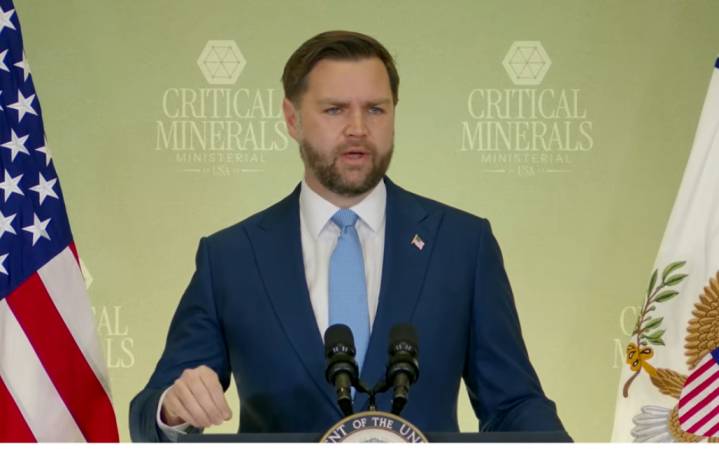
A lithium mine, a gallium recovery center, you name it is announced sometimes with years in planning and financing nearly in place. Then overnight foreign supply floods the market, the prices collapse and investors pull out. The project stalls and eventually the project dies on the vine. We’ve all seen it first hand in all of our countries and the result is a global market where consistent investment is nearly impossible and it will stay that way so long as prices are erratic and unpredictable and that’s one of the things that we want to work on with this initiative. Let’s make the prices more predictable and less erratic so that we can support the domestic supply chains and the investment that makes those supply chains possible.
Mining Projects Are Dying on the Vine
Now across Europe, North America, there are dozens of mining and processing initiatives that have been suspended or completely abandoned because the sustained price weakness makes financing impossible. Time after time, advanced economies with deep capital markets are finding that projects cannot clear costs. The same story plays out elsewhere around the world. In resource rich developing economies, only a tiny fraction of global mining investment, including from nations, many of them in this room, is reaching the point of actual projects. We plan, we think about it, we even invest a little bit of money, we do the regulatory work, but so many of them die on the vine.
Now everyone knows that these deposits exist. We’ve mapped a whole lot of them and we know they’re ready to be mined and processed. But capital can’t reach them so long as investors lack confidence that those markets are going to remain stable for long enough to justify the long term commitment. That is the problem that we confront.
And even here in the United States, even with all the incredible things that President Trump and the entire administration has done to eliminate permits, to open up the regulatory environment, we have private financing that we’ve secured, but even in some cases, even in the United States, some of these projects are struggling to attract investors.
A Market Distorted Beyond Recognition
We see telltale signs of a market distorted beyond recognition. One that punishes strategic investment, one that punishes diversification, and one that punishes long term planning. This is crazy. We should have the kind of global markets, the kind of domestic markets that reward long term planning, that reward strategic thinking and that’s exactly what we’re trying to do. I think every single one of us represented in this room has become dependent on arrangements we did not choose, and right now, arrangements that we cannot control. We all face the same vulnerability.
Access to the things that protect our people and sustain our way of life, everything from missile defense systems, to energy infrastructure, to advanced manufacturing, to emerging technologies, the fundamental supply chains that support these industries sometimes can vanish in the blink of an eye without any control or influence from any of the countries in this room. And we in the Trump administration believe it is the business of the government, of the people’s government elected just over a year ago to confront such problems and we want to confront them together. And I think you’re all here, at least I hope you’re all here, because you all feel the exact same way.
Re-industrializing America
Now our administration came into office last January, barely a year ago, with a clear mandate to re-industrialize the United States of America and return American workers to the center of our economic policy. And that is what we are doing. And I want to tell you just a little story about one of the very first meetings I had with our Secretary of Commerce and the Secretary of the Treasury, two great people, two great business leaders.
And I remember saying, “Look, we have our views of the Biden administration, we’re not particularly fans, as you may have guessed. But setting that to the side, surely the Biden administration put together a list of the critical industries, the critical technologies, the critical manufacturing facilities that are supported by these rare earth minerals, these critical minerals. We may think it’s bad work, we may think the people who put it together weren’t particularly wise, but surely that gives us some foundation to build on.”
And I was shocked when our Secretary of Commerce and Secretary of the Treasury came back to me and said, actually, we have never done this. For the last four years, the Biden administration never sat down and tried to understand what are the critical deficiencies in world supply chains. That’s crazy. It’s insane that we ever got to this point.
Unprecedented Action in One Year
But in just one year, the President of the United States has struck dozens of deals to fix that problem. Domestic and foreign producers are both included in this. And we’re trying to ensure durable, end-to-end supply chains for our country, but also for many of our friends. We’ve mobilized public financing tools at an unprecedented scale, providing up to $100 billion in lending authority for critical minerals to the Office of Strategic Capital. Marco’s now a venture capitalist, too. He’s got many jobs.
We’ve overturned old orthodoxies and taken direct stakes in high-value mining and processing companies. The United States had not built a primary smelter in this country since 1980, before I was born, four years before I was born. In the last month alone, we have announced two, one of which is already fully funded.
And on Monday, the Trump administration announced Project Vault, America’s first ever domestic critical minerals stockpile. With these moves, we intend to build an ironclad network of new industrial supply chains to span the entire nation. We’re going to create good-paying jobs, skilled jobs for the American labor force, and those people, those great workers are going to be securing a new era of prosperity for American families, and I believe for many people all over the world.
Strengthening Partnerships and Diversifying Supply
But we seek to make sure our friends and our allies are part of this, and that you all are covered as well. Our goal here, and the reason why we’re doing this conference, is to align trade policy, development finance, and diplomatic engagement towards a shared strategic objective. And that objective is very simple. Diversifying global supply in the critical minerals market, while strengthening the partner countries who help all of us in this shared effort.
Over the past year, our administration has signed agreements, we have launched many joint initiatives, and we have committed extensive resources with many of you in this room, with many governments, and our work extends across disparate regions and all stages of the value chain. We’ve convened this ministerial in an effort to accelerate that shared work.
So this morning, the Trump administration is proposing a concrete mechanism to return the global critical minerals market to a healthier, more competitive state. A preferential trade zone for critical minerals, protected from external disruptions through enforceable price floors.
We will establish reference prices for critical minerals at each stage of production, pricing that reflects real world fair market value. And for members of the preferential zone, these reference prices will operate as a floor, maintained through adjustable tariffs, to uphold pricing integrity.
We want to eliminate that problem of people flooding into our markets with cheap critical minerals to undercut our domestic manufacturers, because we know, of course, that as soon as they’ve undercut our domestic makers, they, the domestic makers, they leave the market, and the people who undercut them then jack up the price to a completely unfair level. We’re going to fix that problem.
Building a Trading Block Among Allies
Together, we want members to form a trading block among allies and partners, one that guarantees American access to American industrial might, while also expanding production across the entire zone. The benefits will be immediate and durable. Regardless of how much material flows into the global market, prices within the preferential trade zone will remain consistent.
Over time, our goal within that zone is to create diverse centers of production, stable investment conditions, and supply chains that are immune to the kind of external disruptions that we’ve already talked about.
For those of you who join, we offer you a necessary foundation for private financing and secure access to the critical mineral supplies your nation would require in an emergency or some other contingency. By regulating imports to preserve free and fair competition within the preferential trading zone, we will elevate our nation’s miners and refiners, our investors and our producers alike.
We are all on the same team, and we need to create the economic incentives that reward people for investing and building in our countries. Membership will be vital for developing economies seeking to expand mining capacity. And it will be just as important for the advanced economies that rely on these materials to sustain their advanced industries to sustain their growth and security.
And I want to be clear with every person in this room. While we believe America’s market is large enough to create its own critical minerals trading zone, this entire effort will be stronger and far more competitive if we build it together.
So I’m pleased that so many of you here today have already signed on to this plan. Some of you have not. And for those not yet there, we hope that today’s discussions will encourage you to finalize those agreements as quickly as possible.
Agreement on Trade and Critical Minerals
Now, I know you’re going to be hearing from a lot of others in our administration, including our great Secretary of Rubio, I think really the greatest Secretary of State the United States has ever had, and other senior administrators in our team. And I know that Ambassador Greer, our great trade representative, will present further specifics about what he’ll be negotiating, what we’re calling the Agreement on Trade and Critical Minerals.
Knowing Jameson, I know it will be a very productive session and I know it will be a very detailed session. As all of you who know Jameson well, he is a guy who gets into details because he knows that that’s where the substance of an agreement can really be made.
So I want to close, but before I do, let me just reiterate. We here, I think all of us, are friends. We’ve all spent many years describing this problem. Before I was ever in politics, I would hear politicians and global leaders talk about this problem. For too many of those years, we talked about it, but we refused to actually solve it.
The framework before us is a change. It is a practical and enforceable approach to solving the problem, not just complaining about it. Many of you have helped us design it, and we’re of course constructing it together in real time. So to those of you still on the fence, I say, let’s move, let’s move together.
Before you is a chance to lead, to secure your nation’s ability to build, to produce, to defend itself. What is before all of us is an opportunity at self-reliance, that we never have to rely on anybody else except for each other for the critical minerals necessary to sustain our industries and to sustain growth.
So I propose that we come together and we shape a market worthy of the great men and women of our countries who depend on that market. Again, I want to thank you all for being here. I’m honored by your presence. The President sends his very best regards, and I look forward to everything that we’re going to accomplish together. God bless you all, and have fun today.
UNIDENTIFIED SPEAKER: Thank you, Mr. Vice President. As you saw, I have to put my own sign here, too, so it’s another job I have. I’m in charge of the signage.
Global Market Security and Domestic Policy
UNIDENTIFIED SPEAKER: Thank you all for joining us. I can tell you how honored we truly are that all of you would make the trip to be a part of this on such an important topic, and I want to thank the Vice President for coming this morning. I thought it was important you hear from him because it’s a priority for this administration at the highest order, as it is, I know, a priority for many of our partners, and our hope is to use both this forum and our position here today to serve as a convener on what really is an international problem, an international situation or an international issue that needs multilateral international solutions.
I don’t need to explain to anybody here that critical minerals are vital to the devices that we use every single day. They power our infrastructure, our industry, and our national defense, which is something that’s not talked about enough, but it’s a key part of that, and so our goal is to have a global market that’s secure, a global supply that’s enduring and is available to everyone, every nation at an affordable price. That’s a top priority for this administration.
I want to talk briefly about our politics here domestically or our policies here domestically, primarily to serve as an example or a reminder of what a priority we give this topic. President Trump, from day one in office, has made clear that economic security is national security, so we, for example, following in March, he issued an executive order to accelerate permitting reform, to increase domestic mining, and to build reliable supply chains, both at home and abroad, and we feel like all of you, our friends and our partners, stand to benefit from the secure supply chains that we want to be a big part of building.
In October alone, the United States secured over $10 billion in critical mineral agreements across five countries. Our friends and partners stand to, in December, for example, we convened stakeholders from around the world at the Pax Silica Summit, and thank you, Diego, for doing that. It’s launching a partnership dedicated to building a resilient silicone supply chain capable of powering a new era of global prosperity.
Rebuilding America’s Critical Minerals Industry
UNIDENTIFIED SPEAKER: Pax Silica and artificial intelligence may be the future. Still, the future will never come to pass. None of these things are going to be possible unless we rebuild the factories and reopen the mines upon which these technologies depend.
And I want to use a case in point from our own history to highlight this. The United States used to produce its own critical minerals and derivative products like rare earth magnets. Back in 1949, miners in Mountain Pass, California, discovered one of the world’s richest mineral deposits. By 1952, the United States, we were mining rare earths there and that discovery sparked a revolution.
American scientists and engineers, alongside innovators from many of the countries that are here today, rushed to discover new applications for these minerals. And with these new technologies, ushered in the jet age. We ushered in the space age. We ushered in the computer age. And then we became blinded, blinded by the potential of the technologies those metals enabled, but we neglected their importance.
Mining is less glamorous than building computers. It’s less glamorous than building cars or airplanes, but building computers and cars and airplanes is less glamorous than designing them. As we embraced what was new and glamorous, we outsourced what seemed old and unfashionable. We allowed, for example, Mountain Pass, and with it most of America’s critical mineral industry, to wither and to die so that we could focus on manufacturing.
Then we outsourced the manufacturing. And I know this is a story I’m telling, but it’s a story many of the advanced economies represented here today understand well. We outsourced the manufacturing so we could focus on designing these goods. And then one day we woke up and we realized we had outsourced our economic security and our very future. We were at the mercy of whoever controlled supply chains for these minerals.
So my hope is that we are gathered here today as the first but important step to rectifying this mistake, to bring together our collective talent for innovation where our advantage over rivals has only grown, and to apply it to bringing back manufacturing and reopening mines here in the United States, but also in all the partner nations represented here today.
Echoes of the Washington Energy Conference
I think it’s interesting that about 50 years ago, actually in this very room, ministers from around the world joined then-Secretary of State Henry Kissinger for the Washington Energy Conference. That meeting took place during a moment where global energy supplies were concentrated, where markets were distorted, and access to a single critical resource, at that time, of course, being oil, had become a tool of political pressure. That is the world 50 years ago.
That meeting led directly to the creation of the International Energy Agency to coordinate among like-minded partners and secure access to energy commodities. And so today we return 50 years later in the hopes of advancing a bilateral critical minerals framework agreement to the same end on that front.
Framework for Resilient Supply Chains
These frameworks are designed to create alternative sources of supply and to protect every single stage of production, from mining to refining and processing to manufacturing, all of these things, protecting them from non-market disruption. They will provide platforms for coordinating policies that ensure all of our citizens can enjoy abundant and affordable access to these critical minerals.
And so we stand ready and intend to work with each country here today to find a specialized role that you can play. If you don’t have minerals, you can help refine them. And the countries gathered here include the largest consumers of critical mineral products who together have the buying power, together, collectively, have the buying power to build a more resilient and diverse global market.
Everyone here has a role to play, and that’s why we’re so grateful for you coming and being a part of this gathering that I hope will lead to not just more gatherings, but action. The United States stands ready alongside each of you as we enter this new age of shared prosperity and security.
A Truly International Initiative
And I want to end by saying that while we intend to play a key role and an important role and to use the size and influence of our markets to drive this, this is an international multilateral effort and it only works. You can only have diversity and choice in these markets if it is broadly adopted across multiple countries.
So this initiative here today may be one that started with us, but this is not solely an American initiative. This must be an international global initiative with like-minded countries who all have one thing in common. We want to see a diverse supply of critical minerals and a secure and resilient supply chains across the world so all of our economies can prosper without ever having these things be susceptible, at worst case scenario, being used as leverage against us or any other disruption that could come to the market that would undermine our collective economic security.
So thank you all for being a part of this today. We appreciate it very much. Let me now turn, as we’ll begin our program here.
I think I’m going to, well, Minister Horii, I think you’re going to start off. So thank you very much for being here today. Thank you all for being a part of this today. Thank you very much.
Japan’s Commitment to Critical Mineral Supply Chain Diversification
IWAO HORII: Mr. Secretary, Your Excellencies and distinguished guests, I am Iwao Horii, State Minister for Foreign Affairs of Japan. It is my great honor to address you on behalf of the Government of Japan regarding one of the most pressing and crucial issues we collectively face today, critical mineral supply chains. May I begin with thanking our host. I’d like to express my sincere appreciation for the decisive leadership of the United States in convening today’s Critical Minerals Ministerial Meeting.
I first would like to echo the remarks by Vice President Vance and Secretary Rubio. Japan shares a deep sense of concern and urgency about the risk of disruptions to critical mineral supply chains. Sitting at the very upstream end of supply chains and being used across a wide range of industries, critical minerals and its stable supply is indispensable to the sustainable development of the global economy.
That is precisely why Japan and the Prime Minister Takahashi’s leadership has redoubled its efforts to diversify sources of supply for critical minerals. Recently, Japan designated critical minerals as one of the priority areas under the new initiative of promoting bold strategic investment to enhance Japan’s resilience and achieve robust economic growth. Amid rising geopolitical risks, Japan will accelerate efforts to secure upstream sources. At the same time, we will take flexible measures downstream such as diversifying procurement sources in cooperation with like-minded partners who are here today.
In fact, in recent years, we have already witnessed first-hand supply chain disruptions. Even in recent months, this challenge has become further deteriorated. Against such backdrop, we have come to understand that we are in the same boat. As any supply chain disruption would bring significant impact on the global economy, we should work together to address this challenge.
The Launch of FORGE and Collective Action
To prevent such supply chain disruptions, the key is to diversify supply sources, including the refining and processing of geographically concentrated critical minerals. To do so, it requires a collective action. We must seize this opportunity to advance cooperation among like-minded countries and partners like us. With that in mind, I’m looking forward to the launch of FORGE, the Forum on Resource Geostrategic Engagement.
In the next session, Japan strongly believes that FORGE will become an important venue and a vehicle for us to focus on supply chain diversification and ensure policy coordination. Japan stands ready to actively contribute to discussions to further deepen collaboration with partners and to ensure the effective implementation of this initiative.
So how we should move forward from here? On the supply side, diversification is essential. Diversity, as opposed to concentration, is what makes us resilient. This has to be one of our major guiding principles. In this context, I’d like to take a moment to briefly talk about Japan’s efforts to date. Japan has been pursuing various projects in cooperation with the United States as well as with stakeholders across the globe in this regard.
Japan’s Economic Security Promotion Act and Investment Framework
Diversification of supply sources and the enhancement of supply chain resilience has been Japan’s top priority for many years and we have taken policy measures accordingly. Back in 2022, Japan enacted the first ever Economic Security Promotion Act and created new programs with a focus on critical minerals. Just as importantly, Japan has been implementing public-private support measures, including expanding job-based investment framework, increasing allowable investment ratios and allocating a total budget of 3.5 billion US dollars.
Around this table, there are many partners with enormous potential for the production and refining of rare earth elements as well as other civic and critical mineral sources. Angola, Argentina, Australia, Bolivia, Brazil, Canada, the Democratic Republic of the Congo, France. Well, the list goes on and on. Japan is determined to seek robust partnership with you all.
As geopolitical risks continue to rise, we will redouble our efforts to secure alternative supply sources and to build more resilient, reliable and secure global supply chains. Diversity only comes from a collective action. No single country can overcome fragility of critical mineral supply and over-dependence on specific countries on its own. With the launch of FORGE, now it is time for action.
On the demand side, it is imperative that we avoid the situation in which critical minerals and their derivatives produced through non-market-based policies or practices crowd out products with distorted price competitiveness and unfairly monopolize the global market. Japan will engage in discussions with like-minded countries including the United States, the European Union and others present here in a positive and constructive manner and will work to build an effective mechanism with industrial engagement. In this regard, Japan highly appreciates the U.S. for its decisive leadership.
Distinguished colleagues, as we gather today, we are clear-eyed about what our mission is and what our challenges are. Together, we can build on our advantages and make our critical mineral supply chains more resilient. Japan has unwavering determination to work with you as your trusted partner. On every aspect, demand and supply, mining and refining, upstream and downstream, Japan is ready to enhance coordination and collaboration with you all. Together, let’s make a meaningful difference. In closing, I thank you for your kind attention. I very much look forward to the discussion today. Thank you so much.
Introduction of David Copley
UNIDENTIFIED SPEAKER: Thank you, Minister Horii . It’s a privilege to introduce David Copley, Special Assistant to the President and Senior Director for Global Supply Chains of the National Security Council. We’re currently serving in the most historic administration in over a century, one that recognizes that a supply chain responsive to national security realities is a prerequisite to long-term economic growth.
The decisions we make today about who we partner with are multi-decade decisions. We believe our partners will capture economic growth and value at all layers of the supply chain stack. The AI revolution we’re living through is leading to record historic demand for everything from copper to cobalt, nickel, zinc, aluminum, silicon, and virtually every element on the periodic table. We’re also seeing surging demand for products downstream of the supply chain, including manufactured products like smartphone, chips, telecom infrastructure, industrial robots, machinery, and much more.
My friends, the pie is rapidly expanding and the United States accounts for 30% of global consumption. So we’re taking steps to narrow the gap between what we produce and what we consume. But in order to merely keep a pace with global demand in the U.S. and abroad, we need to surge production capacity at home as well as in partner countries.
David sits at the very center of this mission. His work is foundational to the strategic resilience of our country. He is tasked with a monumental challenge of de-risking our critical mineral dependencies, ensuring that the United States and our allies remain unassailable in the face of systemic competition. David brings a level of rigor and foresight that is essential for our department’s mission and for the country at large. Please join me in welcoming David Copley.
David Copley on U.S. Critical Minerals Strategy
DAVID COPLEY: Thank you, Jacob. Thank you, Jacob, for that. And thank you all for being here today. Thank you to the Vice President for his remarks and for his leadership. Thank you, Secretary Rubio, for hosting. And thank you to President Trump for his visionary and forward-leaning leadership on the critical minerals issue.
The President understands the need to secure the foundational elements of the modern economy, and he has prioritized this issue as a matter of national security and economic prosperity. I’m going to speak with you all today to provide an overview about what we’re doing in the United States to fix the critical minerals problem. We know this is an issue that will require a global solution and teamwork. Of the 57 minerals on our critical minerals list, over a dozen aren’t even mined in the United States. So this is truly a global challenge.
In the United States, for a number of decades, we’ve neglected our mining sector and, frankly, been happy to outsource mining activities to others around the world. We’ve had some of the worst mine development timelines in the world in the United States, 29 years to build an average mine, because our permitting framework and our litigation framework have been so onerous. Mining in the United States has been perceived as a dirty, old-world industry, so we haven’t had enough young people choosing mining as a career, and we only graduate something like 200 to 250 mining engineers annually. Not good for a country of 340 million people facing a critical problem.
But I’m proud to say that under President Trump’s leadership, we in the United States have done a complete 180 and again made mining a priority industry for our national development. Because as all of you hopefully understand, minerals are the elemental building blocks of everything we need for our manufacturing sector as we reindustrialize our country.
Four Key Initiatives to Fix the Problem
So what are we doing in the United States to fix the problem? Broadly, four key initiatives. We’re investing in mining projects, we’re stockpiling minerals, we’re going to protect our mining companies, and we’re rebuilding our mining ecosystem.
To start, we’re investing heavily in mining-specific projects, like recent deals with MP Materials, Lithium Americas, Korea Zinc, Modin, and many, many others. I believe over the next few years, the United States government between debt and equity will deploy hundreds of billions of capital into the mining sector to get projects going. We are quite frankly doing things the American government has never done before, like equity investing, so we can get deals to pencil quickly and move forward.
We’ve created public-private minerals investment funds, like our Critical Minerals Consortium with Orion Resources, and another partnership with TechMet. Investment is an area of great potential for collaboration with your governments, as we look to jointly develop mining projects with partners around the world.
Stockpiling Critical Minerals
Second, we’ve begun stockpiling minerals. President Trump and Vice President Vance convinced Congress to give us $2 billion over the summer to stockpile minerals in our national defense stockpile. That’s the largest investment we’ve made in our defense stockpile since the Cold War ended.
And just two days ago, the President announced Project Vault, the creation of a National Strategic Critical Minerals Reserve, a $12 billion vehicle under our Export-Import Bank. This is the first time in the history of the United States we’ve ever stockpiled minerals for our civilian economy, to protect our commercial industry and insulate them from the painful effects of supply shocks.
Protecting Mining Companies
Third, we’re going to protect our mining companies. We know the mining industry has a problem with commodity pricing, caused by strategic dumping and overproduction. Returns in the mining sector, quite frankly, have not been good enough over the last 30 years, at least partially due to this problem.
This is a key part of what we want to talk to you all about today. The current state of affairs, in which commodity prices are kept low for geostrategic reasons through overproduction, is damaging to minerals-producing nations. By reducing the value of your assets and your tax receipts, and it’s equally damaging to consuming nations by harming your national and economic security.
The current system doesn’t make sense for any of us, but with coordinated global action, as described by the Vice President, we can fix this problem in a way that will be better for both producers and consumers of minerals.
Fixing the Mining Ecosystem
And lastly, we are fixing our mining ecosystem in the United States. I mentioned earlier in my remarks that S&P reported 29-year timelines to develop an average mine in the United States. This is completely unacceptable to President Trump and Vice President Vance, and will not continue under their watch.
Our leadership have made mining a priority sector for our country again. We have a federal permitting priority list that has practically never been used for mining projects before. It’s like concierge service for federal permitting. In just the last few months, we’ve added more than 50 projects to this list.
We have torn apart and rewritten our federal regulations, and we can now get full environmental impact statements done, the most burdensome part of our permitting process in less than a month. Our goal is that the United States again becomes a very attractive place for the mining sector, because we intend to mine here, and we intend to process minerals here as well.
So four key initiatives. We’re investing, we’re stockpiling, we’re going to protect our mining companies, and we’re fixing our mining ecosystem. Because this industry is so important to our national development, as I know it is to your countries as well.
But most importantly, under President Trump’s leadership, we are no longer standing around admiring the problem. We’re not spending our time writing 200-page book reports about how important critical minerals are. We have a plan, and we’re focused on project execution, getting deals done, getting companies their permits, stockpiling minerals, and hopefully moving forward with all of you, our international partners, to protect our mining companies and to rebuild global mining in a fair and balanced way.
So we very much appreciate your time and the distances you traveled to be with us here in Washington. We look forward to discussion, and most importantly, we look forward to working with all of you to make the global mining industry great again. Thank you.
Thank you, Secretary Rubio, for your truly historic leadership on this critical issue. And thank you, State Minister Horry and Senior Director Copley for kicking off our ministerial. I would like to ask press to depart the room before we begin plenary session one. Thank you.
Related Posts