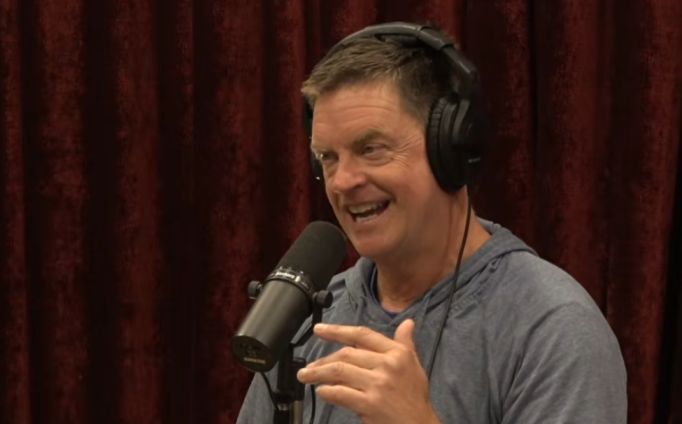
Editor’s Notes: In this episode of the Joe Rogan Experience #2459, Joe Rogan welcomes his longtime friend and legendary comedian Jim Breuer for an unfiltered and wide-ranging conversation. The duo dives deep into controversial topics, examining mysterious documents related to Jeffrey Epstein’s autopsy and the suspicious circumstances of his time in custody. They also explore the modern media landscape of “outrage farming” and reflect on the potential societal shifts brought on by the rise of AI. With over 30 years of history together, their discussion seamlessly blends sharp humor with provocative insights into health, technology, and global mysteries. (Feb 24, 2026)
TRANSCRIPT:
Jeffrey Epstein: Dead or Alive?
JOE ROGAN: Good to see you, my friend.
JIM BREUER: Yeah, you too.
JOE ROGAN: Young Jamie. So I stopped you. We were getting coffee. I said, stop. Hold this. So what were you saying?
JAMIE: Which one first?
JOE ROGAN: The prostate one.
JAMIE: Okay, so prostate one.
JOE ROGAN: Let’s go straight to the dick. All right. That is not really the dick. It’s like it’s behind the dick. I’m an anatomist.
JIM BREUER: It is behind the dick.
JOE ROGAN: Is that a word? Anatomist. So bladder contains approximately 5 ML of cloudy yellow urine. The prostate is slightly and diffusely enlarged with marked enlargement of the verrumontanum.
JIM BREUER: That’s how I would have said it.
JOE ROGAN: The testes are unremarkable. That’s the last thing I want anybody to say about my nuts. I want them to say, wow, what a great pair.
JIM BREUER: Great body. But the nuts are unremarkable.
JOE ROGAN: Unremarkable. Unremarkable.
JAMIE: So here is some sort of discussion between him and someone.
JOE ROGAN: Okay? The guy says, “Exactly. Not clear effects hormones might have on that aren’t replaced by testosterone. The advantage of taking testosterone. There are two different things. You can have high testosterone and still have a need for Viagra because you don’t have a prostate.” Right? And then Epstein says, “Correct.” Hold on, let me keep going there. So that’s an extreme example. “I was actually going to try and move up one level. Sort of drug enhancing life. If you don’t mind it.” He doesn’t mind it. “I’m sort of outer space thinking.” Oh, so he’s trying to juice up. So he’s saying, “I’m moving up one level of sort of drug enhancing life.” I don’t know what I think he means. He’s going to start juicing. That’s what it sounds like.
Epstein’s Missing Prostate
JIM BREUER: So he doesn’t have a prostate.
JOE ROGAN: It says another document that says something about it after a radical prostatectomy.
JIM BREUER: So when they take out your prostate.
JAMIE: But that doesn’t necessarily say he had his. I think it’s a document.
JOE ROGAN: But he said he doesn’t have a prostate. And it says, “Patient Jeffrey Epstein.” It says, “According to the American Urological Association, serum PSA should decrease and remain at undetectable levels after radical prostatectomy.”
JAMIE: There’s other documents where he’s contacting doctors that specialize in that very thing.
JOE ROGAN: Okay, so the doctor saying he had a radical prostatectomy. He’s saying he does not have a prostate, but yet the body from the autopsy talks about the prostate being slightly and diffusely enlarged. So that’s not his body. That’s what it seems like.
JIM BREUER: I don’t buy it.
JOE ROGAN: You don’t buy that?
JIM BREUER: I don’t buy he’s dead. Why would you—
JOE ROGAN: Right, right. I don’t buy he’s dead either. But however, hold on.
JAMIE: Here’s the other. This is from an attorney. So this is like an Assistant United States Attorney or something.
JOE ROGAN: So the OCME told me it signed a confidentiality agreement in connection with the investigation into the murder of Jeffrey Epstein.
JAMIE: So almost six months after he died, they’re asking for a document about the investigation of the murder of Jeffrey Epstein.
JOE ROGAN: Was that because there were accusations that it was a murder?
JAMIE: I don’t know.
The Cellmate Nobody Talks About
JOE ROGAN: So we talked about this before — 18 days before he allegedly committed suicide, he complained that his cellmate tried to kill him. And you know who his cellmate is? His cellmate was this gigantic cop who was a murderer. He’d killed four different drug dealers. Yeah, he was a contract killer. This is the guy. That’s his f*ing cellmate. Look at that gorilla.
JIM BREUER: That’s a silverback.
JOE ROGAN: Yeah, dirty cop murderer. And then they said most high profile witness of all time, defendant of all time — let’s put him in jail with a murderer. A guy who contract kills, a dirty cop. And then the report was they found him unresponsive with a noose around his neck, an orange jumpsuit turned into a rope around his neck. And then he said that his cellmate tried to kill him.
JIM BREUER: My question is, does anyone really believe he was in a jail cell? Because I know if I had the guy that can unravel entire government dynasties and take down an entire system — the last thing, dude — he’s somewhere about three miles underground with maybe a ball in his mouth with electric rods in him.
JOE ROGAN: Or he’s in Israel sipping mai tais.
JIM BREUER: Correct. Either place. It’s like that video. You said you sent this on a run around. “We’re going to ask you one more time, or then we’re going to laser off your nipples.” I’m telling you right now, we need—
JOE ROGAN: Yeah, I doubt they’re doing that to him.
JIM BREUER: So yeah, he’s either in Israel like you said—
JOE ROGAN: If they had that, they would just get rid of his body.
JIM BREUER: You saw the picture of the so-called — that was him in Israel.
JOE ROGAN: I think that’s AI.
JIM BREUER: I think it’s AI too.
JOE ROGAN: I think it even had a little AI watermark on it, the one I saw at least. But who knows? It could be a real picture that someone put through AI to put a watermark on it so that people go, “Oh, it’s AI.”
JIM BREUER: You don’t know.
Ghislaine Maxwell and Deep Fakes
JOE ROGAN: Did you see the lady that they say looks exactly like Ghislaine Maxwell? I don’t think she looks exactly like — I think she looks exactly like Ghislaine Maxwell 20 years ago. That’s a deep fake. It’s a deep fake, yeah. Sam Triple A reposted the guy that made it. He made another video too that was not as good, where he’s looking at Benjamin Netanyahu on the street. It’s not. I feel like the problem is the aging. She doesn’t look aged. She looks younger, but I guess that’s what happens when you get out
JIM BREUER: of jail and you get more attractive.
JOE ROGAN: Yeah, you get food, you get sunlight, makeup, a little exercise, take some yoga. Is there any video of him in jail? Are there any photos of him in jail? I’ve never thought about that before. But what you’re saying is a good point.
Where Are the Tapes?
JIM BREUER: Joe, if you held — let’s say you were the person that had all this incredible information around the world, bribery — do you really think you take drug lords, you’re not killing them? You need the information. So you’re going to bring him somewhere. You’re going to milk them for it, however that is, whether he’s tied up, whether he’s — you’re going to torment him. “Listen, I’m telling you right now, we’re going to take care of you, but however I need to know. You say there’s tapes, right? Where are the tapes? Write them down and you’re going to stay.” Don’t feed him. Don’t feed him until we get that one tape and we have these names in our hands. And that’s probably been going on even for months, for years. You’re not taking someone like that and going, “Oh, we’re just going to put this very viable human being into a jail
JOE ROGAN: cell with a multiple murderer when two
JIM BREUER: guys making $18 an hour are going to watch it.”
JOE ROGAN: Who are sleeping.
JIM BREUER: Come on, stop.
JOE ROGAN: Stop.
JIM BREUER: They pre-production. All right, so let’s get the green screen and we have him walking in
JOE ROGAN: here, sir, look somewhat—
JIM BREUER: And we can release it down the road.
JOE ROGAN: It’s—
JIM BREUER: It’s processed Hollywood nonsense. I don’t buy it.
Epstein and Intelligence Agencies
JOE ROGAN: Okay, this is assuming, though, that he was working on his own, that he had all this information. So if he’s not working on his own — if he’s working for an intelligence agency — then they have that information as well. So along the way there are no secrets that he’s holding. They have all the secrets. This is much more likely.
So in order for him to be in the position that he was in, allegedly working for intelligence agencies, working for either the Mossad, the CIA, or both — all of the above — I would assume that along the way all of the information was shared. I do not believe they would let one person have access to all that information and store it themselves. I think they would have access to it at every step of the way. They would communicate with him at every step of the way.
And they would probably have — like, if I was running a government agency like that, I would say, “Tell me what’s going on. What do you have on Bill Gates? What do you have on Les Wexner? What do you have on these guys? What are they willing to do? What about these scientists? Are they willing to fill out bogus science papers?”
Jeffrey Epstein stashed secret files in storage units across the US that may include never-before-seen evidence. This came out yesterday — that when he got arrested, he supposedly paid for investigators to go round up all of his stuff and put it in various storage units across the country. Like it’s a wild goose chase now. It’s stuff maybe no one’s ever seen.
JIM BREUER: They don’t know if they’re still being paid for.
JOE ROGAN: They don’t know. Imagine if they found those storage units — like those storage unit shows. Exactly, where they break into those storage units.
JIM BREUER: I don’t understand. And it happened on the real-time one, right? Like they’re just getting old baseball cards.
JOE ROGAN: I heard those shows are bulls*. A friend of mine told me that what they do is they stock those storage units, and then they pretend that they’re buying the storage unit that’s been abandoned. And then they get in there and find things. But those things were—
JIM BREUER: Yeah, f* you. I don’t buy any reality TV.
JOE ROGAN: I know, but that’s awful.
JIM BREUER: Well, it’s entertainment. I feel duped. Do you really?
JOE ROGAN: I—
JIM BREUER: Do you really thought one of you—
The Real Distractions
JOE ROGAN: thought was really — not the government corruption, not all the Medicaid fraud, not all the information, not all the ICE stuff. No. What really bugs me is lying on a storage unit show. I just can’t.
JIM BREUER: Or like a cash cab show. Like, are they really contestants?
JOE ROGAN: These are our great distractions. These are the great distractions to keep us from paying attention
JIM BREUER: Yes.
JOE ROGAN: to what’s really going on in the world.
JIM BREUER: The reality TV — there’s no reality. It’s all well produced.
JOE ROGAN: Wow. How much is it well produced? Here’s the question — is it really well produced? Because it seems like this one was a really shitty production job.
JIM BREUER: That was production. That was bad. That was low, low. The only guy making it is the guy that’s selling the ads.
Epstein’s Handlers and the Bigger Picture
JOE ROGAN: Well, not just the guy who’s in charge of it — f*s kids. Right? So this one — why would you let that guy who’s going to eventually get caught? I would assume if you have a thing for kids — if you’re a pedophile, if you’re into 14-year-old girls — I would assume you’re going to get caught. And if I had a guy like that — or was this at a time where you couldn’t get caught because there was no Internet? And then it got to a point where he had so much power and control because he’d been there for so long, they couldn’t — they were like, “Oh, Jesus Christ, we got a problem.”
JIM BREUER: Well, he’s thinking — criminals, they never think they’re getting caught, period. Especially like organized crime. It’s no different. Like the scenes from Goodfellas, right? You come in and say, “What’s the matter with you? You show up with a pink Cadillac, what’s the matter with you?”
JOE ROGAN: Right?
JIM BREUER: “What’s the matter with you?” They can’t help it. He told everyone, “Don’t spend the money. Don’t look flashy.” But this guy — without a doubt, his wife
JOE ROGAN: had a mink coat on. Remember that?
JIM BREUER: What? Actually, right. “Take it off. Take it off.” “He gave it to me for my birthday.” “Take it off. What’s the matter with you?” And now that guy — you remember when the steroids came out in baseball? And what did they do? They were like, “Listen, you gotta take a hit. You gotta take a hit. Mark, Barry Bonds — you guys are going to go out, we’re going to front you, but don’t worry, you’re going to stay in baseball. We’ll let it go away in about — the owners are not going to get popped. The people making the steroids, the people injecting — they aren’t going to get popped.”
The BALCO Scandal and Steroid Use in Baseball
JOE ROGAN: They got popped.
JIM BREUER: BALCO got popped.
JOE ROGAN: No, they got popped.
JIM BREUER: The little guys get jailed. The little ones.
JOE ROGAN: No, no, no. The head of BALCO went to jail. I had him on the podcast after he got out of jail.
JIM BREUER: What about the owners that knew it was going on? What about the agents and lawyers that are supplying their stuff?
JOE ROGAN: No, no, no, listen, you don’t understand about the baseball thing. BALCO had developed a… Victor Conte, who had been on the podcast before, was a scientist, essentially, and he had developed a steroid that was undetectable, because steroids, they detect them based on certain molecules, and if you adjust certain molecules, it doesn’t show up in the test. So he developed this thing called “the Clear.” He called it “the Clear” because it evaded tests.
JIM BREUER: Right.
JOE ROGAN: This was to evade the test that the Major League Baseball association was doing and any drug tests, because this was an unknown steroid. So this was not known by the organizations. It was not known by the team. It’s not known by anybody. People suspected it because Barry Bonds grew five hat sizes and gained 50 f*ing pounds of solid muscle. People suspected it.
JIM BREUER: Right.
JOE ROGAN: But the bottom line is you don’t know what you don’t know. And they didn’t know. There’s no reason to tell them, “Hey, guys, we’re giving Barry some secret steroids.” He did this for his own personal gain because he was brought to the attention of this Victor Conte guy, who eventually became an anti-doping guy, which is really weird. He ran SNAC, which is this thing that helps people detect testing and use supplements that are legal.
But I don’t think that was known by everybody. I think they kept it all on the DL because there was such a blight attached to steroid use. You were a cheater, especially in baseball, which is like the American pastime — to be a cheater in baseball.
Inside Knowledge: Agents, Lawyers, and the Steroid Network
JIM BREUER: Well, I’ll tell you this. I remember at that time because I was in the TV world. And you attract all…
JOE ROGAN: Dude, we did a show. Well, you weren’t on the show back then — on Hardball, the baseball show. Barry Bonds was on Hardball? Yeah, he was on one of the episodes.
JIM BREUER: Yes. I remember seeing it because we’d sit and watch. My wife and I, like, “Yeah, Joe’s on it,” because we tried out for the same thing. And I rooted for you.
JOE ROGAN: Well, you were in the pilot.
JIM BREUER: Yes, I was in the pilot, but I rooted for everyone I knew. I was like, “Oh my God.” You always…
JOE ROGAN: You’ve always been like that.
JIM BREUER: I loved that. But back then, a couple of years later, you become friends with certain types of people — lawyers, agents, blah, blah. And I remember one night hanging out, and someone goes, “You want to hear some crazy phone calls?” Like, “What do you mean?” And they told me 75%…
JOE ROGAN: 75?
JIM BREUER: 75% of what? PEDs? On steroids? I’m like, “What? 75, 80% of baseball?” “Come on, there’s no way.” And then he’d play a phone message. And I didn’t want to say this for years because I thought I’d get whacked.
I remember them going, “Here, listen to this.” And you would hear, like, the wives saying, “On my life, if he hits me one more time, I’m reporting all of you. I’m going to do it.” And then he played the next one like, “Hey, man, we got a big series coming up with the Dodgers. I need my… I need it by blah, blah, blah.”
JOE ROGAN: Who is this person calling?
JIM BREUER: These were ballplayers calling their representation.
JOE ROGAN: So the representation — their agents, lawyers. So maybe the agents are the people that hooked them up with the people that had the juice, which makes sense.
JIM BREUER: And then they would talk…
JOE ROGAN: The agents want money.
JIM BREUER: They want money.
JOE ROGAN: And now the best way to get money — the guy’s got to hit home runs.
JIM BREUER: This guy hits home runs, he’s got to start playing ball. He makes money, I make money.
JOE ROGAN: That makes sense.
JIM BREUER: And then we all make money. And then I start thinking — I’m not saying this happened — but if you’re an owner, it’s like, “Hey, Joe, I’m just telling you right now, this guy, you want to keep an eye on him. He’s going to start jacking 20 extra home runs.” “Really? How’s he going to do that?” “You’ll find out. We don’t need to talk about that. But next year, if you’ve got XYZ budget, I think he’d like to play.”
So there’s a lot at play, right? And now you’re infiltrating children because now you’re going into the farm league. So now you can’t make it unless you start doing that. But that’s why I say someone like this guy with a long network — there are so many tentacles.
JOE ROGAN: Right.
JIM BREUER: All over the place. But you always need the fall guy, right? Was he the demon? Yeah, but there are a lot of demons there.
The Epstein Email and the Island
JOE ROGAN: Did you see that email I sent you, Jamie, where he’s talking about children for sexual… Do you remember? You know the email I sent you, Jamie? I sent it the other day. I was like, “Well, that pretty much sums it up,” because he actually said it. Find that — I sent it to you in a text message. This one’s crazy.
JIM BREUER: I’ve heard…
JOE ROGAN: So he’s having a conversation with a woman who says that she heard that there’s a place… Here it is. She’s described as very emotional, kind, loving, sharp. “I think you can become friends, too.” So here it says: “A friend, Aliza, told me about a project she’s doing researching a really bad guy that gets children for sex sent to his island. She almost fainted when I told her, ‘That person is me.'”
JIM BREUER: Wow.
JOE ROGAN: Like, what? Okay. So that’s just there. There’s no way to interpret that any other way. “That person is me.”
JIM BREUER: “That person is me.”
JOE ROGAN: “Children for sex sent to his island. That person is me.” Holy sh. That’s 2018.
JIM BREUER: So, yeah, this has been going on for…
JOE ROGAN: So this is like right before he got arrested, right?
JIM BREUER: Supposedly.
JOE ROGAN: But when did he get arrested?
JIM BREUER: 2019.
JOE ROGAN: Yeah. I don’t know. I feel like it was maybe… So this was like… But there was an investigative reporter at the head of all this — this lady that was really pushing because she had found out about his sweetheart deal in 2008, and she started gathering information and pushing it. And that’s what led ultimately, I think, to his being arrested.
JIM BREUER: Or what I would say is the front of, like, “Hey, we’re doing things.”
JOE ROGAN: Well, if there’s a different body that the autopsy had, it makes you question — was he ever in that cell? Or was the person in that cell sold to us as Jeffrey Epstein?
JIM BREUER: Right.
JOE ROGAN: Well, imagine the guy in the cell going, “I am not Jeffrey Epstein.”
JIM BREUER: No, no, I’m not.
JOE ROGAN: “My name is Harvey. I live on the Upper East Side. I don’t know what happened. I got a speeding ticket, and now, next thing you know, I can’t go home.”
Outrage Farming and Online Performative Anger
JOE ROGAN: Is there any photo of Jeffrey Epstein in a jumpsuit, like in court? In jail? Getting arrested? I’m looking…
JIM BREUER: When you arrest big figures — he was a big figure — is it big to do? “Jeffrey, what’d you do?” “What about the children?”
JOE ROGAN: Care to comment on the children?
JIM BREUER: What are you doing with the children, Jeffrey?
JOE ROGAN: Why did you need 330 gallons of sulfuric acid? They didn’t know about that.
JIM BREUER: What are chickens? What are chickens?
JOE ROGAN: What is jerky?
JIM BREUER: What is jerky?
JOE ROGAN: Well, no one knew any of that stuff back then. If he were alive now, for sure, those questions would be shouted out.
JIM BREUER: What is pizza and pasta? What happened at Obama’s White House?
JOE ROGAN: Pizza is mentioned like 900 times.
JIM BREUER: It’s a little weird as a code.
JOE ROGAN: Clearly it’s a code.
JIM BREUER: You know how crazy I felt for the longest time? Like, I’d just be in a coffee shop and like, “You guys don’t…”
JOE ROGAN: You guys…
JIM BREUER: You don’t know. Like, Jim’s a little wacky, but now it’s coming out.
JOE ROGAN: You see that video we played the other day of this guy at the airport just yelling out? He’s like, “The files have been released.”
JIM BREUER: Yeah, I saw that. And they were going about their business. And he’s going, “You’re all just going about your business. The files are released. Kids are being tortured.”
JOE ROGAN: But my question was like, what do you want me to do?
JIM BREUER: What do you…
JOE ROGAN: I’m flying to Atlanta. What do you want me to do? I got a gig.
JIM BREUER: That is…
JOE ROGAN: What do you want me to do? Scream and yell at everybody? Get arrested? How is that going to fix anything? This all happened 10 years ago. What do you want me to do?
JIM BREUER: And what do you do at this point? Because like, it’s…
JOE ROGAN: We don’t do anything at the airport. You go on your…
JIM BREUER: At the airport, right? Like, I’ve got to get home. My wife’s mother…
JOE ROGAN: But that’s like a lot of people online — they’re very performative, screaming and yelling, “We’ve got to do this, we’ve got to do that.” Like, what do you want us to do?
JIM BREUER: That’s their jurisdiction.
JOE ROGAN: Yeah. Outrage farming.
JIM BREUER: Outrage farming.
JOE ROGAN: I like that — “outrage farming.”
JIM BREUER: Imagine going to that length, though. You just like, “You know what? I really didn’t like anything you said, and you have no right being…” Like, who’s taking the losers?
JOE ROGAN: Well, it’s people that are trying to farm for attention, trying to get extra attention, or it’s people that just aren’t that smart.
JIM BREUER: When’s the last time you engaged with anyone online that was like, “Rogan, you’re this or you’re that”?
JOE ROGAN: That’s been a long time.
JIM BREUER: Long time, right? Yeah, long time. But up until that time…
JOE ROGAN: I watch Louis J. Gomez do it every day. I’m like, “Louis, what are you doing? What are you doing, you psycho? Stop arguing with people online and calling them losers.” No, and comparing your life to theirs. Don’t do it.
Media Manipulation, Social Media Algorithms, and the “Tall Biden” Conspiracy
JIM BREUER: Because you don’t know what you’re dealing with. You have no clue what you’re dealing with.
JOE ROGAN: Not only that, it’s a bad frequency to get your brain caught up in. There’s so many other things to think about.
JIM BREUER: Correct.
JOE ROGAN: There’s so much going on in the world. There’s so many interesting things in life. And the problem with social media algorithms — any kind of algorithm that you get sucked into — is it funnels you into this way. The information that you’re getting most of the time is a lot of bad information, a lot of outrage farming. And your frequencies, the way your brain thinks, funnels down that pathway and you kind of lose control of it. Instead of having access to all the wonderful things in the world — there’s a lot of amazing, fascinating, curiosity-driven people out there making videos about all kinds of stuff — you could instead pay attention to that stuff.
JIM BREUER: Well, that’s… yeah.
JOE ROGAN: Get trapped.
JIM BREUER: I used to say that even just about the news. I remember being a kid, and if you look at every newspaper and watch all the headlines, everything is — I would sit there and go, okay, something bad happened down here in Brooklyn. Why does every page, every headline, have to be something negative? You had 8 to 10 million people living in this vicinity. Why do you harp on just propaganda? Because they’re trying to make money.
JOE ROGAN: It’s really simple. All these major newspapers are struggling — all of them, badly. And the only way to get attention is clickbait now, because most of the stories you get are online. Very few people are buying physical newspapers anymore.
JIM BREUER: No more. Dead.
JOE ROGAN: Yeah. Not only that, during COVID I think they kind of nuked all their credibility. There’s a lot of people that just feel like they’re all bullshit artists now.
JIM BREUER: It was an incredible exposing of all information during COVID.
The Jeffrey Epstein Detention Video
JOE ROGAN: What is this? They say this video is him. He sent this to two women from detention.
JIM BREUER: From detention.
JOE ROGAN: All right, let’s see. It’s very weird.
VIDEO CLIP BEGINS:
JEFFREY EPSTEIN: I had to borrow the scotch tape to get the pictures on the wall. Okay, so, Darren, why do I have — why do you have to see that thing over his face?
JEFFREY EPSTEIN: I’m pretending I’m talking to Darren. Hi, Darren. Are you guys having a good time? You can see I have a little sore on my face that I got from some black guy trying to kiss me. It’s really disgusting. Anyway, I have pictures up on the wall. I had to borrow the scotch tape to get the pictures on the wall. I’ll talk to you guys later.
VIDEO CLIP ENDS:
JOE ROGAN: Okay, so that’s him in detention. He said somebody tried to kiss him. He seems pretty calm for someone who almost got raped.
JIM BREUER: Dude, it’s pre-production. All right, so listen, just come in the room and say that somebody tried to kiss you.
JOE ROGAN: You got to be into it. Like, that’s take number 12. Like, “God damn it, Jeffrey. God damn it. Do you need a coke? Do you need a wine? I need you mostly stressed out.”
JIM BREUER: You don’t seem like a guy in jail. A guy who hasn’t been sleeping well. He seems pre-produced.
JOE ROGAN: Yeah, so, “You know, my whole life is bad right now. They’re bringing me in. Some guy tried to kiss me. It’s kind of a bummer.” Cut.
JIM BREUER: What?
JOE ROGAN: That wasn’t good. All right, I’m trying to do it right now. All right, lighting good. Here we go.
JIM BREUER: Get the f* out of here. The best intelligence organizations that can overthrow foreign governments would probably have a plan if they wanted to get the guy out and pretend that somebody else died in his place.
JOE ROGAN: It’s been from the beginning of time. Yeah, from the beginning of time.
The “Tall Biden” Theory
JIM BREUER: The beginning of time. Well, especially with modern stuff, because with modern masks — remember the Tall Biden? There’s not a chance in hell that was Biden.
JOE ROGAN: I feel so redeemed. My wife used to get so mad at me. So mad at me. My kids would get so mad at me. And I would say it everywhere — I’d say it on stage, I’d say it on social media — I go, “I don’t care what you say. That is not Joe Biden.”
JIM BREUER: You know, there was also that in the files too. They were —
JOE ROGAN: Call me crazy. And now all of a sudden they’re like, “Oh no, he was executed.” Isn’t that what they said? Executed?
JIM BREUER: That seems… bro, I went down that rabbit hole. There’s a lot of those emails that are just emails, right? First of all, Epstein’s dealing with prostitutes, people that are willing to get prostitutes. He’s dealing with a lot of criminals and weirdos, and a lot of those people are probably full of shit. So just because somebody writes something in an email doesn’t mean it’s a fact. However, when you see the video of Tall Biden — pull it up, pull up Tall Biden.
JOE ROGAN: Come on, man.
JIM BREUER: He grew.
JOE ROGAN: He grew.
JIM BREUER: And then he went back — like, they might have put him on some stuff, and then he shrunk back down again.
JOE ROGAN: And his eye color would change.
JIM BREUER: This one, right? Yes, that one. Look at that.
JOE ROGAN: What? He’s like six-nine. Look at it. That’s a robot. Look — send out the robot.
JIM BREUER: You got a video of him walking out there? Because when you walk — look how long his f*ing legs are. Look how tall he is. This is absolutely insane.
JOE ROGAN: Like, who’s watching this going, “Yeah, no, that’s the same guy”?
JIM BREUER: Not only is he taller, but he moves better. He’s more relaxed when he moves.
JOE ROGAN: It was —
JIM BREUER: It’s like a guy doing an impression of Joe Biden.
JOE ROGAN: Yes. Look at his —
JIM BREUER: But look how long this guy’s legs are. Rewind that again, please. Just play it. Yeah, it’s starting from the beginning, but just play it.
JOE ROGAN: So here’s when he walks out — look at how long his legs are.
JIM BREUER: This guy’s a basketball player.
JOE ROGAN: Look how tall he is. First President to dunk.
JIM BREUER: I mean, just stop — pause it right there, please.
JOE ROGAN: Right there.
JIM BREUER: Pause it, pause it. Just the physical frame. When you look at the length of his legs, that’s extraordinary. That’s not like Jeffrey Epstein’s prostate with testicles.
JOE ROGAN: No, these are a whole different —
JIM BREUER: That is a tall man. There’s no way that’s a short man. There’s no way that’s a normal — like, what was — how tall was Joe Biden supposedly? Six feet? Six-one, maybe?
JOE ROGAN: The real Joe Biden, pre-2019.
JIM BREUER: I said was — like, he’s dead.
JOE ROGAN: I’m saying he’s dead. I’m saying he’s long gone, wherever he is.
JIM BREUER: Six feet.
JOE ROGAN: Okay, I’m putting it out there again.
JIM BREUER: Six feet tall. Okay. Six feet is on the tallish side. That guy — there’s no way he’s taller than six feet. That is a tall man. Look at the proportions from his legs to the width of his shoulders, the length of his legs. That’s a very tall man.
JOE ROGAN: Who’s the casting director for this?
JIM BREUER: I mean, just being charitable, that’s a man at least three inches taller.
JOE ROGAN: Maybe the other Joe Biden got sick that day — his wife died, that actor died — and they’re like, “We need another Joe Biden quick.” And then this one showed up like, “Oh my God, just forget it. People believe everything. Send him out.”
JIM BREUER: If you have a guy who’s the president and he’s known to be in poor health, there’s probably going to be times where he’s supposed to make a public appearance that’s not that important, but it’s important to just show his face. Well, you got to keep him in a hospital bed somewhere. So you get a guy, you put the mask on him.
JOE ROGAN: Did you ever see the walk? The walk?
JIM BREUER: Yeah, his shuffle. That guy doesn’t walk like that. That guy walks like an athlete.
JOE ROGAN: It’s a robot.
JIM BREUER: Wait a minute. What?
JOE ROGAN: He looked like a robot.
JIM BREUER: No, he looks like a guy with bad knees and a bad back. You think it’s a robot? I’m taking —
JOE ROGAN: I don’t know what it is.
JIM BREUER: No, it’s an old man who can’t walk well.
JOE ROGAN: I’m putting my chips in.
JIM BREUER: Do you think you can program a robot to walk like an old man?
JOE ROGAN: Have you — it didn’t look like an old man. Look at the video, Jim.
JIM BREUER: The robots are not that good yet. Trust me. I’m friends with Elon. The robots, they’re good, but they’re not that good. They look like robots. They don’t look like humans yet.
JOE ROGAN: You put a little suit and jacket on them, put them up, and you just videotape for three seconds.
JIM BREUER: No. Why would you do that? Three seconds, guy.
JOE ROGAN: All right. No, I agree. This one’s a guy, but there’s other ones from —
JIM BREUER: What is this one, Jamie? Same one. That’s the same, better version of it. I was just replaying it. Okay. No, that’s not a robot. That’s a guy.
JOE ROGAN: There’s ones where he’s walking on the lawn and his legs — like, what does he do with his legs? It’s crazy looking, Jim.
JIM BREUER: Neurologists have looked at this. He walks like a guy with dementia. That’s how they walk.
JOE ROGAN: My dad had dementia. He didn’t walk anything like that guy.
JIM BREUER: Well, not all people with dementia walk like that, but it’s typical of the way people walk when they don’t have control of their body anymore. Like, he fell down a lot. It’s very odd.
JOE ROGAN: Like, the bicycle went down. I get it. It’s a lot of things.
JIM BREUER: He falls down walking upstairs, remember?
JOE ROGAN: Yeah, three times. I remember.
JIM BREUER: You think it’s a robot?
I didn’t say it’s a hundred percent robot. I’m saying I will put my chips in. I’m at the poker table and I’m going all in — that was not Joe Biden. I’m going all in. That’s not Joe Biden.
JIM BREUER: I’m going to show you.
JOE ROGAN: Never was.
JIM BREUER: Okay.
JOE ROGAN: From 2020 on, it never was.
JIM BREUER: This is a productive line of conversation, but this is me. I get it.
JOE ROGAN: Yeah. Watch this.
JIM BREUER: Yeah.
JOE ROGAN: What?
JIM BREUER: But that’s — he’s walking in sand and he’s old as f*, dude. He’s walking in sand.
JOE ROGAN: I get it.
JIM BREUER: If I walk in sand and I’m drunk, I look just like that.
JOE ROGAN: He’s on a lot of blood thinners there. Maybe they got to his head. I don’t know. He’s got a stent. I just —
JIM BREUER: Jamie, I’m going to send you something. This is state of the art right now when it comes to robots. And it’s pretty good, man. Pretty f*ing good. But it’s not that. These are robots that can actually do martial arts. It’s very impressive.
JOE ROGAN: I feel like I just saw something like this. It was frightening from a certain degree.
Chinese Robots and Martial Arts
JOE ROGAN: Yeah, it’s from China. So go full screen on this. This is really interesting. So you got these kids, they get out there and these robots do martial arts with them. Like, look at this. It’s really wild, man. I mean, it’s pretty human now. Movements.
JIM BREUER: If they had suit and ties on, they can pass for president.
JOE ROGAN: Not yet.
JIM BREUER: Not yet.
JOE ROGAN: But look at these things. They can do backflips like. This is crazy. They do wheel kicks.
JIM BREUER: Come on.
JOE ROGAN: It’s really nuts, man. So just imagine these things with f*ing arms, just running into buildings, gunning people down, because that’s what’s coming, bro. There’s a place they’re going to be bulletproof. They’re going to have night vision, heat vision, insane hearing.
JIM BREUER: There’s a place in Florida, bro, that have the. Out in the Everglades. It’s like this farmland. You never see anyone there, but they have the mechanical robot dogs patrolling everywhere and spraying the fields.
JOE ROGAN: The dogs spray the fields?
JIM BREUER: There’s like all different types of machines that come up that will spread. And they have these dogs that patrol everywhere.
JOE ROGAN: It’s wild. You can buy one.
JIM BREUER: I never saw any of them. You can buy them now.
JOE ROGAN: Yeah, you can buy those robots. Yeah, Lex was telling me about it.
JIM BREUER: I think I want one.
JOE ROGAN: Lex Fridman, he actually works with robotics. Like, he was an artificial intelligence engineer before he ever started doing podcasts.
Joe’s Guest List and Curiosity
JIM BREUER: You’re like the movie The Fifth Element when the chick came and she got all the information. I’m always fascinated. You have so much information, like brilliant insight information. Who’s left on your list where you’re like, “I gotta speak with so and so”?
JOE ROGAN: Oh, there’s a ton of people. There’s always new. Every week, multiple days a week, I get a list of potential guests. And so I go over the list and a lot of it are scientists. A lot of it is like people that are doing groundbreaking research on neurodevelopment genetics. There’s a lot of them that come up that are cosmologists that are working on just bizarre theories. There’s always someone that’s working on some very high level of some esoteric line of some kind of discipline that I’ve got very little information about. There’s always interesting people.
JIM BREUER: That blows my mind. Just blows my mind. I tried talking to anyone, even some of the words. I’m not educated very well. They start saying certain words and I’m just.
JOE ROGAN: I’m not formally educated very well either. I mean, I only went to college for three years, and I was barely paying attention. I never paid attention. I was only going to college so that people didn’t think I was a loser.
JIM BREUER: Really?
JOE ROGAN: Yeah, I was doing it whilst fighting and then I was doing it for a little bit while still doing stand up, but I was only doing it so that no one thought I was a loser.
JIM BREUER: Really?
JOE ROGAN: Yeah.
JIM BREUER: Is that more. Was that like a home thing?
Growing Up and Finding Stand-Up Comedy
JOE ROGAN: No, it was where I grew up. Everybody was going to college. I went to school at a really good high school, Newton South, Massachusetts, and a lot of the kids were real ambitious and wanted to go to college and get degrees. And I was. I did not want to have a job. I was like, “What am I doing?” I was very feral. And at the time, all I wanted to do was compete. I was just doing martial arts tournaments all the time and there was no money in that. So I was like, “What’s my career going to be? What am I doing?”
So this is a weird period. I said, “Let me just go to college so that no one thinks I’m a loser.” I took a year off school. I graduated at 17, so for the next year I didn’t go to school at all. I just trained.
JIM BREUER: I don’t know the story. So when did you go, “I’m going to start doing stand up”?
JOE ROGAN: When I was 21.
JIM BREUER: Wow. And you. Did you have that desire before then?
JOE ROGAN: Not really, no. I was a fan of stand up. I love stand up. I was talked into doing it by my friend Steve. A good buddy of mine, Steve Graham, because I would make people laugh in the locker room. He was a guy I did taekwondo with and he’s like, “Dude.” Another good friend, Ed Shorter, same thing. Ed and Steve were two guys who I was real tight with. I would make fun of everybody and we were always just joking around. And I wanted a lot of attention. I was young.
JIM BREUER: We all did. Yeah, I did.
JOE ROGAN: So that’s how it happened. And then I went to an open mic night and I realized, “Oh, these people all suck. They’re beginners.” Like, “Oh, you could be a beginner.” And then I thought about it just like martial arts — if you just work at it, you can get better at it. So if you’re just a little bit funny, if you could just kind of figure out what it is about you. I was like, “This is fascinating.” It was like a whole new puzzle.
But I didn’t know if I could ever do it for a living. I was really so confused when I was 21 because I had really kind of decided to stop fighting. And I was still doing it a little bit, but I had one foot in and one foot out, which is not good. And then I didn’t have any prospects. Like, “What am I going to do? I’m already 21. I should have already graduated from college by now, or be close, or getting ready to work on a master’s.”
I should be doing something like a lot of the people that I went to high school with, or I should have a trade like a lot of my buddies that went into carpentry or electricity. I didn’t have a career other than teaching.
Early Breaks in Hollywood
JIM BREUER: So within a couple years, you start. Because you and I both fairly quickly started getting in good positions. Because if you were 21, I’m going to say by 25, 26, you’re on Hardball.
JOE ROGAN: Yeah. Wow. Yeah.
JIM BREUER: Yeah. We were really young. That’s crazy.
JOE ROGAN: That’s.
JIM BREUER: That’s crazy lucky fast that happened.
JOE ROGAN: Yeah, stupid fast. It happened stupid fast. And it was stupid lucky because I didn’t have any aspirations to ever be on TV. There was no part of me that wanted to be an actor on TV.
JIM BREUER: Zero.
JOE ROGAN: It was never an ambition at all. Which probably helped me because when I went in and talked to the people and did auditions and stuff, it wasn’t like, “Oh my God, this is my dream.” It was like, “So, what do you guys want me to do? Okay. Yeah, I could play a baseball player.” And they just loved the fact that I had a background in athletics.
JIM BREUER: You also would murder like none other at the Laugh Factory. You would go up and I remember the Disney executives, because that’s who did that. I remember them sitting in the back watching you. You did the tigers mating. And the place would lose their sh*t. And it was captivating to watch. It was howling funny. And I’ll never forget just looking at the executives. I don’t remember their name. I just remember he had a mustache. He had a dark mustache, dark hair. He’s from Colorado. He was like, “Oh my God, Joe’s just so goddamn, I can’t take it.”
So, I mean, wow, that’s pretty awesome. In that short period of time. I wish I had. No, I won’t say I wish I had your mentality then. I have it now. Meaning back then, I had the desire, like, “I’m going to start buying satin clothes. I’m going to start getting nice clothes.”
JOE ROGAN: Without it.
JIM BREUER: The first time I went out there, I bought satin blue pants and satin blue. I was like, “I’m going to be in Hollywood.” I was so stupid.
JOE ROGAN: So stupid.
JIM BREUER: But you had this whole other. I remember seeing you, and we were at some hotel, and you were just so. You’re like, “Yeah, I’m going to go play pool and work out.”
JOE ROGAN: You wanted. You want.
JIM BREUER: I’m like, “What?” No, I’m looking for rock stars and actors on Melrose. And you’re like, “Yeah, well, I’m not doing that. I’m going to the gym and I’m working out.” I’m like, “You’re going to miss out.” But I really admired that about you so much.
JOE ROGAN: I was never interested in Hollywood stuff. It just was not that interesting to me to be around a bunch of famous people and feel weird. I was like, “I’d just rather be around normal people. I’d rather play pool, rather go to the gym.”
JIM BREUER: I was like that until I was around famous people. And I went.
JOE ROGAN: Okay, this is uncomfortable.
JIM BREUER: I want to go home. Yeah, go back home.
From Hardball to NewsRadio
JOE ROGAN: I tried to move back to New York. I would have moved back to New York, except I had a lease on an apartment. When Hardball got canceled, I was ready to go back to New York. I was like, “F* this place, it’s too uncomfortable for me.” And again, I never had any aspirations to be famous. Definitely didn’t have any aspirations to act. It was just money. They gave me a lot of money to be on a sitcom, and I was like, “Okay.” I just couldn’t believe how much money you could get in a week. Like, “This is crazy.”
JIM BREUER: It was crazy.
JOE ROGAN: Yeah. It was like more money than I made in a year, and I could make it in a week. I was like, “This is nuts.” Especially because I went from broke to being on a sitcom.
JIM BREUER: Yeah, I remember those same things. Like, you’re not making any money, and then all of a sudden you want $25,000 to $50,000 a week. Just come in, camera block here and there. You don’t even have to be the star.
JOE ROGAN: It was bananas.
JIM BREUER: What?
JOE ROGAN: But then when I got on NewsRadio, I was like, “Oh, this is a whole different kind of thing.” Like, this is a really good show with really good writing and really good actors. I was like, “This is fun.” I enjoyed that a lot. But the world of acting is long days, and it’s not what I like to do the most. So it’s great, but you can get sucked into that velvet prison.
I’d be talking to my friends and be like, “Yeah, I just did a week in Florida. It was awesome.” And I was realizing these guys are selling out on the road, and they’re traveling all the time. They’re having all this fun. I’m like, they’re doing what I wanted to do, which was stand up on the road. I was only doing small sets in town. I was only doing like 15 minutes at the Laugh Factory, 15 minutes at the Store. The real comedy was headlining, doing an hour, really developing your act.
JIM BREUER: Right.
JOE ROGAN: And I enjoyed doing NewsRadio, but I didn’t enjoy it as much as I enjoyed being around comics, doing sets, being at the clubs, laughing all the time. It’s like a different kind of people. The actor people were all worried about what the other actor people were doing. They were all worried about what rating we were, what number we were in the ratings.
JIM BREUER: Yes. And that’s all they would talk about.
The Business of Comedy: Luck, Timing, and the Mothership
JOE ROGAN: Dude, we were at a table once. And when they were all bitching about, we were on whatever night we were on, we moved like nine times over five years. And back then, there was no Internet, so you couldn’t tell people that you’re not on Monday night anymore. And so they were all bitching and getting pissed because Sex and the City was on this time slot and The Single Guy was in this time slot, and if we were there, we’d be number two or whatever. And I was like, guys, last time I checked, we’re on TV.
JIM BREUER: Yeah.
JOE ROGAN: Like, this is a dream. We’re not number one, but we have a funny show and we’re on TV. Just enjoy the ride.
JIM BREUER: Yeah. And it was a great show.
JOE ROGAN: It was a lot of fun.
JIM BREUER: It was a great show. He did well. But, yeah, that world just never…
JOE ROGAN: But it was just so lucky to get it so quick. I was on NewsRadio six years into doing stand-up.
JIM BREUER: Yeah.
JOE ROGAN: And it didn’t make any sense to me. But it’s also why I wasn’t nervous about it. It seemed so normal to me. Like, okay, this is a job I’m doing. But it was because it wasn’t in my ultimate dream.
JIM BREUER: Well, that made me laugh. I saw you years later, and I don’t know if it was Fear Factor or whatever, and someone snarkily asked, “Why did you take this?” And you’re like, “Because they’re paying me retarded money.” And I just laughed. You gave the real answer. If I offered you whatever program, I don’t know, $20 million for two years, you’re going to go, “I’m not doing that. That’s ridiculous. Why would I leave my sanitation job to…”
Fear Factor and the Philosophy of “F* You Money”
JOE ROGAN: Money equals freedom. That’s what people need to understand. If you can make a pile of money, you get f you money. And then the key is, don’t be chasing “f your mother and f your family and f the world” money. Stick with f you money, but just make sure you say f you. Make sure you don’t do things you don’t want to do.
So when Fear Factor came along, I initially took it because I thought it was going to be canceled immediately. I was in a development deal with NBC, and they sent me this thing, and I was like, “What the f* is this? They’re going to stick dogs on people?” I was laughing. I’m pretty sure I was stoned when I first got the script.
JIM BREUER: Yeah. And I read…
JOE ROGAN: I go, “This is hilarious.” I don’t know if my manager even wanted me to do it. I think they probably wanted me to hold out for a sitcom. And I was like, “Are you fing kidding me? This is hilarious. Let me meet with them.” And they didn’t like me at first because I came in and was making fun of it, and they thought it should be scary because this was Fear Factor*.
JIM BREUER: Right.
JOE ROGAN: And I was just joking. I came into the meeting and I was just cracking jokes about everything and laughing. But then David Hurwitz, who’s a friend of mine and one of the producers on the show, he’s like, “No, no, no. Look, the whole world’s going to be laughing at us. It’s way better if the host is laughing.”
JIM BREUER: Yes. Like, let’s just lean into the lunacy of what lengths these people go to.
JOE ROGAN: They were going to go live like a sportscaster or something. You know what I mean? “Here we are in Fear Factor. Fear is not a factor for you.”
JIM BREUER: “Maggie from Wisconsin is going to get in the tank.”
JOE ROGAN: Yeah. So it’s just luck. A lot of luck, man. A lot of weird luck. I’ve had a lot of weird luck my whole life. Even coming here is weird luck. Even opening up the club, weird luck.
JIM BREUER: Why do you say that?
The Mothership: A Perfect Storm of Circumstances
JOE ROGAN: Because a lot of things have to happen in order for this club to exist. First of all, the COVID thing has to happen. And it has to happen in California, where they have very restrictive laws and everything gets locked down and we can’t perform. I think the store was shut for a year and a half, man.
JIM BREUER: Are you serious?
JOE ROGAN: Yeah. California was nuts with COVID. But over here, almost immediately, you could do shows. Cap City was doing shows, and they had people separated before they went under. They just had the tables moved like six feet apart, which didn’t mean anything. And then when we started doing shows at the Vulcan, that was in November of 2020. So that was pretty soon after. The rest of the world was still completely locked down. California and New York were still completely restrictive, and Texas was pretty wide open.
So I have to have the kind of money that Spotify gave me, and then I have to be so bold that I’m in the middle of this giant deal and I’m like, “I’m just going to move to Texas.” And they were like, “What are you doing? You need to be in LA. That’s where your studio is. That’s where the guests are.” And I was like, “I’m flying at least two or three people a week out to Los Angeles. I bet I could get them to fly to Texas.”
But it was a dumb gamble. It’s not a smart move. So it has to be the Spotify money, it has to be everything closed down, and then it has to be the store closed down. Because the store closing down allowed me to get guys like Adam Egid and all the people that worked at the store came and worked for me. That’s one of the big secrets. Jody, the managers — a lot of the people that are at the Mothership came from the store, and they were unemployed.
JIM BREUER: Yeah, but I wouldn’t take it. I like your approach. Is it luck?
JOE ROGAN: No, but it has to be some luck, otherwise it doesn’t happen. Because if there’s no COVID lockdown, then all these comics aren’t willing to move here.
JIM BREUER: Correct.
JOE ROGAN: Tony Hinchcliffe, Tom Segura, Christina Pazsitzky, Brian Simpson, everybody moved here. The only reason anybody moved here is because California was locked down. If the store was hopping, they would be like, “Why would I leave?”
JIM BREUER: Yeah. Why am I coming?
JOE ROGAN: Yeah. So it had to be a place where you could go and perform, and then you have to have the resources to do something like that. So that has to be the Spotify thing. So many things have to fall into place where that kind of a gamble makes sense.
JIM BREUER: Yeah.
JOE ROGAN: It’s a lot of luck, man.
The Energy You Put Out
JIM BREUER: It’s a lot of luck. But it’s also a lot of decision making. And you’re very thoughtful, and the walk that you walk creates an energy. It’s very powerful. It’s very inspiring. And I do believe in that stuff.
The way you’ve walked, most of the life that I’ve known you has been… you inspired me so much. Years and years ago, you came on my radio show and you literally started talking, and I remember I just told everyone, “Just be quiet. Just be quiet and let him go.” And I knew at that moment you were going to be changing culture, if that makes sense.
You went into this deep conversation about how we are shifting in humanity. And basically you said, “We’re either going to live for truth or you’re going to be a liar, a leech type thing.” It was very powerful. And I think eventually I was like, you know, put Pink Floyd behind it.
JOE ROGAN: Put that on the Internet. It is.
JIM BREUER: It is one of the most… because I wanted the world to hear what you said. No other pastor could say it. No one could say it the way you said it. So, yes, it is all luck. But I do believe that presence that you put out and that energy — it’s trusted, and it’s a force that opens doors without even you knowing it. Because it is all for the good, in my belief. But anyway, that’s my little…
JOE ROGAN: Well, thank you.
JIM BREUER: That’s very kind of you.
Learning From Bombing — and From the Best
JOE ROGAN: That’s very kind of you. Well, you inspired me too, dude. Because when we first started working together, one of the worst times I ever bombed was when I was headlining when I really shouldn’t have been headlining. I really didn’t have an hour. And you and I did a weekend together somewhere like West Nyack, New York or something like that.
JIM BREUER: Somewhere yucky, like a holiday thing.
JOE ROGAN: But I did okay every show except the late show Saturday night. You f*ing murdered.
JIM BREUER: I do.
JOE ROGAN: You murdered. And I remember being so nervous. I went on stage nervous and I just ate a dick. It was one of the worst bombings I’ve ever had in my life. And I remember thinking at the time, I’ve got to correct something. First of all, I can never go on stage that nervous again. What was wrong was, instead of laughing at you and going on stage having a good time, I was nervous about my own performance, which is a self-defeating mentality.
JIM BREUER: Yeah.
JOE ROGAN: And I had to realize that. Which is also one of the reasons my stand-up bumped up a lot after that weekend. I really worked on it hard because the bombing was bad.
JIM BREUER: Bombing is bad.
JOE ROGAN: It was, but this was a bad one. I was supposed to do 45. I bailed at 35. I got in trouble. I was eating dick, dude.
JIM BREUER: It was horrible.
JOE ROGAN: But the same thing happened when I would take Joey on the road with me. And the reason why I would take Joey on the road with me is because he was so hard to follow. I thought of it just like training partners.
JIM BREUER: Yes.
JOE ROGAN: You don’t want to spar with a guy who sucks. You want to spar with a guy who’s better than you so that you can get to his level.
JIM BREUER: Yes.
JOE ROGAN: And with Joey, Joey was so loose and so free and so silly. I was more rigid and I tried to do more setup-punchline stuff. But I was only eight, nine years in, still trying to figure it out. And Joey had a rhythm to him. He’s just so loose. And I’m like, “This is going to help me. Let me just take this guy on the road with me.” First of all, he’s the best guy to hang out with. He’s so much fun. I love him to death.
JIM BREUER: I never got to hang out with him. I’ve only got to see him on here and some other places.
JOE ROGAN: He’s the best. Everybody’s like, “He’s so fun.” When you’re around him, it’s all hugs and laughs and he’s the party. You bring Joey anywhere, the party’s with Joey. We’d go to dinner and we’d have as much fun at dinner as we would at the show.
JIM BREUER: Right. He’s the entertainment.
JOE ROGAN: Well, he’s just a great social engineer. He would be the maestro that would get everybody going. We would be laughing, and then we’d go to the show having a good time. And I learned to laugh at him because he’d be murdering. And I’d learn to take that momentum of laughing at him and carry it into the energy of my performance.
JIM BREUER: Yes.
The Art of Stand-Up: Competition, Respect, and the Comedy Store
JOE ROGAN: So it was like, it was a good thing because a lot of people want the opposite. They want the guy going on before them to suck so they look like a hero.
JIM BREUER: Yeah. No, I don’t want that.
JOE ROGAN: There’s a lot of people out there rocking that f*ing skin.
JIM BREUER: I like what you said. I like a guy hitting hard. And then the nights, like, even I have Brian McKenna opening for me right now. And there’s nights, like, I think we were in Louisiana, and I was like, “Oh shoot, I gotta get up. What is he doing?” And that makes me go, “All right, I gotta stay crystal clear. I’ve got to bring it to this whole level.” He’s making me work. I love if someone makes me work.
JOE ROGAN: Well, it’s not just that. It’s also that the crowd gets their money’s worth.
JIM BREUER: Yes.
JOE ROGAN: A bunch of people came out to see you. Like, I’ve gone to see friends that are really good comics that I really love. And then I go to see them and they have an opening act. I’m like, “Jesus Christ.” I go to the bathroom, sit outside for 20 minutes and wait for this to end.
JIM BREUER: That’s a bad place to be. Whether it’s your buddy or not.
JOE ROGAN: They do it because they want a light opener. Like, Ron White’s open about it. He talks about it — “You do better than me, you’re getting fired.” He doesn’t give a f*. But I love Ron.
JIM BREUER: He’s still out here.
JOE ROGAN: Yeah, he’s out here. He’s at the club all the time. He’s there tomorrow night. Ron’s the best. He’s the best.
JIM BREUER: Okay.
JOE ROGAN: He’s another reason why I came here, because he was already here. Ron moved here before the pandemic.
JIM BREUER: Oh, wow.
JOE ROGAN: Yeah, he moved here — I think 2018 or 2019, somewhere around then. And I was like, “Why’d you move?” He had a place in Beverly Hills that he kept, so he’d come back and forth, but he was like, “I love Austin. You never have to leave. If I want to fly anywhere, it’s the middle of the country, the people are nice, the food’s great.” I was like, “Can I live there?” That’s what my thought was. Like, I can’t live there.
Ron White: Humble and Underestimating His Own Appeal
JIM BREUER: Ron is the type of guy, too, that he doesn’t realize how good he is and how popular he is. Sometimes he literally — don’t ask me why he called me, I have no idea. Oh, I remember. It was some bizarre connection. He’s like, “Hey Jim, I keep getting asked to play in London.” And I went, “Oh, you will murder in London.” He’s like, “I don’t know, I mean, I don’t know.” I’m like, “Ron, if you were to play Scotland, England, Ireland, you’re going to have a whole new audience. You’re going to murder.” He’s like, “I don’t know if they were—” I said, “Please, I’m begging you, at least just take the gig. Please, just take the gig.” And this was a couple of years ago, and apparently he did do it.
JOE ROGAN: Of course he did.
JIM BREUER: He’s like, “Man, of course you did.” Yeah, especially — he’s funny.
JOE ROGAN: He’s very humble, though. Ron is a very humble guy. Yeah, he’s a great guy. He’s the best.
Working the Room: The Value of a Tough Crowd
JIM BREUER: Well, that’s why I like coming in here for the first time. I reached a point where I have my following, I have my crowd, and if I’m working out stuff, even if it’s an hour, they’re going to be patient with me because they like me and they’ve been on my journey. But if I were to go into a club and do 15 minutes, they’re not my crowd. A lot of them don’t know me, and I have to earn it. I remember the first time I came here, I didn’t want to go on stage.
JOE ROGAN: I don’t know.
JIM BREUER: I’m like, “All right, I’ll go on stage.” And wow, it was like — okay, yeah. Wow.
JOE ROGAN: Seven more. Okay.
JIM BREUER: I didn’t even finish my setup yet. This place made me want to start working harder again and go, “Hey man, you gotta put the gloves on.” Not that I had any lack of confidence in what I put out there for an hour, but those short little 15-minute sets — when they see everybody, it doesn’t matter. It’s an even playing field. It’s pretty awesome.
JOE ROGAN: Well, that was great about the Store too. Like, you’d get a night where you had seven or eight national headliners in a row.
JIM BREUER: They don’t care after a while. Just bring the funny. I saw someone from a huge sitcom go on stage — the place loses their mind. Even I was a little like, “Oh, wow.” And they did the shtick of their character. About five minutes in, the crowd was like, “Okay, we’re done. Are you going to tell jokes, or are you just going to be the TV guy?” They’ve seen everything. You gotta come with goods. You gotta work it.
The Kramer Meltdown and the Danger of No Material
JOE ROGAN: The TV guy thing — we used to see that all the time in LA too. Well, that’s what led to Kramer. That meltdown.
JIM BREUER: Well, that’s who it was. Yeah. I didn’t want to say, but he first walked up—
JOE ROGAN: I was like, “Oh dude, I know.”
JIM BREUER: And then after about five, seven minutes — yeah. And this one was at the Improv, and I’m watching, I’m like, “Oh wow. Oh wow. You don’t have material.” He’s just — wow.
JOE ROGAN: Which is crazy.
JIM BREUER: They turned on quick.
JOE ROGAN: Imagine thinking that you could do 15 minutes with no material. I just don’t understand.
JIM BREUER: Comics make it look easy. How many people have you met that go, “You know what, you inspired me — I’m going to start doing stand-up.” Okay.
JOE ROGAN: Some of them you’re like, “Please don’t.”
JIM BREUER: Yeah, like, okay. I still get — “I’m starting next week, here’s my first set.” And they’ll send me a video of their first set. Comedians make it look like we just walk up and wing it.
JOE ROGAN: Well, it’s also — a guy who’s used to performing in front of a live audience, when he does a sitcom and everybody loves him, and if he can make people laugh for a minute, he thinks he can probably make people laugh for multiple minutes. Just keep it going, just do the same thing for 15 minutes.
JIM BREUER: And the low side of us — back then I root for everyone, but those guys walk off and we’d be like, “Go down.” There’s nothing more—
JOE ROGAN: We don’t like anybody that’s half-stepping. Not really doing it right. Like, you’re just taking up 15 minutes from someone that could be doing it.
Kevin Brennan and the John Mayer Rants
JIM BREUER: Correct. Do you know Kevin Brennan?
JOE ROGAN: No, I don’t know Kevin very well. I’ve met him. I remember him doing sets in New York back in the day.
JIM BREUER: Kevin would get so pissed because — what’s the guitar? He’s a famous guitar player. Oh, my God.
JOE ROGAN: John Mayer.
JIM BREUER: Yes, John Mayer. So Kevin would come in—
JOE ROGAN: Into the radio and be like—
JIM BREUER: Like, “He’s going up, he’s doing 20 minutes and he sucks. I can’t go to Madison Square Garden and go, ‘Give me the guitar for 20 minutes, it’s my time.'” Comics would get really edgy. They didn’t care who you were. They’d go in — I’d love to listen to Kevin rant. I would howl listening to him. Of course, I would prod the tiger once in a while when he’d start going crazy. “John Mayer. All right, I get it. You play. F*ing get off the stage.” Oh, my God.
JOE ROGAN: Yeah. Comics are very territorial about the art form. When someone tries to do it that’s not a comic, they automatically kind of reject them. I’m always like, “Give him a chance. You never know. Never f*ing know.” A guy who’s been acting but really always wanted to do stand-up might have some good ideas and might really throw himself into it. It’s possible. Why would you assume it’s impossible?
JIM BREUER: It is possible.
JOE ROGAN: But the reality in LA is a lot of them were doing it because the whole casting thing had dried up for them. They weren’t getting brought into shows anymore, so they decided to do stand-up and just put together an act. But it wasn’t what they really loved, so it wasn’t what they really threw themselves into.
JIM BREUER: It’s a paycheck. Yeah, a little paycheck to get them by.
JOE ROGAN: It was a career decision. It was like pivoting.
JIM BREUER: Yeah. I know a couple of guys like that — a sitcom, or a sketch show, or even like an SNL character. They didn’t do stand-up. And now they’ll tour and try to—
Making Peace with Marc Maron
JOE ROGAN: So here’s an interesting thing I should tell you, because you’ll really know this person. I actually made up with Marc Maron the other day. We actually had — I had to help him with something. I had to inform him about something. And he sent me a very sincere message of thank you. And then I sent him a message back that was sincere. And I said, “Look, I’m not your enemy. I’m sure if we saw each other, despite our differences, within a few minutes we’d be laughing and smiling,” which is generally how I interacted with him for the most part. I had only a few bad interactions with him. And he was pretty honest about how, maybe it’s his own mind. But it was a very sincere interaction, which made me happy. It’s not good to have enemies.
JIM BREUER: No, it’s really not.
JOE ROGAN: It’s not good.
JIM BREUER: I’ve had maybe two or three that have vocally put things out there, because I’m not into the Twitter insulting or going on other programs insulting thing. If you have an issue, tell me.
JOE ROGAN: Right.
JIM BREUER: And then we’ll deal with it the way—
JOE ROGAN: Right.
JIM BREUER: Call me up. Real humans do it.
JOE ROGAN: Yeah.
JIM BREUER: And when that whole thing — I have a funny feeling I know some of his issues. But I felt — and I put it out there — I felt bad because for years I didn’t have great interactions with him. When I started, listen, I’m not putting anyone down, but yeah, a lot of guys didn’t like me. They were like, “Who’s this animated, mouthy kid coming in here confident?” And he would always kind of — I’ll never forget, he’d be like, “You’re going to wound tonight with your—”
JOE ROGAN: He was trying to sabotage you. It was a competition thing.
JIM BREUER: And I understood that because I’m still — back then you made a whole video.
JOE ROGAN: A video about it, correct? Yeah, I saw that video.
JIM BREUER: And so as we went on, I actually was so happy for him once he got WTF. Because you saw like, “Wow, he’s—”
JOE ROGAN: He became a different person. He found his niche and he became friendly.
JIM BREUER: Correct.
JOE ROGAN: Easy to be around. Yeah, his podcast was killing it. And then he had his show on the IFC. He was doing great. He was way easier to hang around with. He was incredible because all the angst had been removed. He’d become a made man.
JIM BREUER: Made man. Yeah.
JOE ROGAN: He’d become legit.
JIM BREUER: Who cares who else is becoming? Exactly. Exactly.
Jealousy, Inspiration, and Staying in Your Lane
JOE ROGAN: But then when things go south, it’s hard to maintain that same mindset. It’s very easy for me to say, “Oh, just relax. Who cares? Everybody should be happy that all these people are doing well.” But if you’re not doing well, that jealousy is a natural thing. I’ve experienced it before. I know the feeling. I’ve experienced it for brief moments, even like eight, nine years ago. There are moments where someone’s really killing it and you’re like, “Oh, what the f*?” But then I realized in my head, “God, that’s a bitch ass way of thinking. Don’t hold on to that.”
JIM BREUER: No, we’re on our own journey. This is our world.
JOE ROGAN: But also that same feeling can instead be inspiration. Like when you and I worked together and I bombed, one of the things that inspired me was not just, “I’ve got to get better because I bombed,” but you murdered. You had that bit about coming home drunk, coming home wasted and your mother was turned into a demon.
JIM BREUER: Yeah, it was a great demon with Batman, but it was so animated and big, and it didn’t make me hate you. I loved you. We were great friends. I was like, “That is so good.” It just made me want to get better. So that same feeling that can turn you — I was like, “F*, Jim, you’re killing it, man. That’s awesome.”
JOE ROGAN: I come from a different world, and my world requires other people around you to be as good or better than you. The martial arts world. When I was a four-time state champion, I wasn’t necessarily the best guy in the gym. There were guys in the gym that were better than me always. There were other guys that were also state champions. Some of them were national champions. They were better than me. But because I was around those people training hard all the time, that’s why I got so good.
It was because I was around people as good, if not better than me all the time, that it elevated my level. So I felt the same way about stand-up. I’m like, “You need those people that make you feel uncomfortable. They make you feel like, ‘F*, I’ve got to go to work.'”
Staying in Your World of Confidence
JIM BREUER: Yes. And whether it’s him or whoever, it doesn’t even have to be the comedy world, just the world in general. If someone else is starting to kill it somewhere, let them. Keep your eyes off that. Stay in your own — I hate that term, though. It’s not “stay in your lane,” it’s “stay in your world of confidence.”
I saw a couple of people try to take a swipe, and I think it was deeper than that. I think it was A, they were envious, and B, because you had certain people on, perhaps they were angry because they’re still lumped into how they define themselves to certain gangs that their allegiance goes to. Ideological, 100%. “How dare he platform that person, don’t platform this one, don’t platform that one.” As a matter of fact, I would even hear chatter like, “I would never.” And I go, “Yes, you would.”
JOE ROGAN: Because if you wouldn’t, then you would never be me in the first place. So what are you worried about? We’re different human beings. The point is, I understand those feelings. I understand those feelings of anger, jealousy, and resentment. It is absolutely normal. But it is a bitch ass way to think. And I’ve thought those ways. I’ve had bitch ass thinking in my life, 100%.
I understand it, it’s normal. But what these people need to hear — that I needed to learn myself — is that not only does that not help you, it hurts you. But that same exact experience can instead be inspiring to you, and that will help you. You’re going to be uncomfortable comparing yourself to someone who’s better than you. But that uncomfortable feeling is what leads to growth. It’s really important. It’s good for you.
But what’s not good for you is to try to dismiss that person and sh on that person. Even if someone’s doing something that I don’t like, I don’t like their style — so what? I don’t care. There’s a lot of music. I have teenage girls, and when they listen to music, they love it. I don’t like it. But it doesn’t mean it’s not good. They f*ing love it.
JIM BREUER: They love it.
JOE ROGAN: There are a lot of guys that are into certain things I don’t like. But it doesn’t mean it’s bad. It’s great for some people. Everybody has a thing they’re into, and everybody has a different style. So if someone’s doing something that you don’t enjoy, you don’t have to hate them. It doesn’t mean it’s not beneficial to you. It doesn’t help you at all.
Bitch Ass Feelings vs. Bitch Ass Actions
JIM BREUER: To sum up what you said — you can have your bitch ass feelings.
JOE ROGAN: Yeah.
JIM BREUER: Have your bitch ass emotions, but don’t act on them. Don’t act bitch ass. That’s when you start having issues. When you put it out in the universe — because they’re still inside you, which we all have — it’s when you put it out there that everyone looks at you a whole different way. I’ve done that multiple times. I’m never proud of it. Always feel horrible.
JOE ROGAN: Exactly.
JIM BREUER: Never toward strangers — always within family or friends. I try not to put it out in the world with names of people.
JOE ROGAN: Because you don’t have any qualities you’re proud of yourself for.
JIM BREUER: No, I feel like a little punk. Like, “I can’t believe I just did that. I know you thought I was mature.”
JOE ROGAN: You gave into those bitch ass feelings. It’s normal. I remember someone was telling me that Chris Rock was selling out everywhere after the Will Smith thing. And I swear to God, for like a couple of seconds I was like, “Oh, what the — he’s selling out all these arenas?” It took me a couple of seconds. It’s so stupid, so dumb. He was the hot ticket because everybody wanted to see him, but it was only for a few seconds. And then I was like, “What the f is wrong with you, you fing silly b.”
JIM BREUER: Yeah.
JOE ROGAN: Such a dumb way to think. But the problem is you don’t realize it in the moment. And then the other thing is, they think they’re going to diminish that person by attacking them. But what they don’t understand is when you do that publicly, the heat comes for you. Because now you’ve set the game in motion. You’ve started moving pieces around the board, and then people are starting to move pieces against you.
The Carlos Mencia Situation
JOE ROGAN: I felt that even at a time where I felt it was necessary. The whole Carlos Mencia thing — I said to my friends afterwards, “I don’t think I’ll ever do anything like that again.” Because just the negativity — even if it was only 10% of the people that were negative and 90% were positive, that 10% is just not a good feeling. It’s a terrible feeling. It’s not good.
Even though I thought that was a necessary thing to do — not just because of him, but I wanted to expose the way the business was treating it, where they were profiting off of it and openly covering it. They knew about it and thought it was just business. My agent said to me, “It’s just business.”
JIM BREUER: I remember a phone call we had somewhat after that, and I remember you telling me your agency dropped you. They dropped you. I’m not crazy for thinking that, right?
JOE ROGAN: No, they dropped me. But what they said was that I had to apologize to him or they couldn’t work with me anymore.
JIM BREUER: Correct.
JOE ROGAN: And I said, “If you’re even bringing that up, our relationship is over.”
JIM BREUER: Done.
JOE ROGAN: I said, “Just because you wanted to—” and they said, “It’s just business.” I go, “You’re making a decision that will affect you for the rest of your life. Because you’re siding with a vampire empire.” You sell art. That’s all you guys are — a comedy agency. You sell art. You’ve got a guy who’s stealing art from other artists. This is bad for you. Everyone’s going to know.
So Louis left them after that. Louis came up to me at the Improv, asked me if that was true. I said yes. He goes, “Okay, I’m leaving them.” Atel, Nick Swartz, and a bunch of people did too. It wasn’t like I was wrong, but the negativity — the feeling of people being angry at me for it — was so gross. You put that out there in the world, it’s a giant distraction. It takes away from most of your life. You think about it all the time. Just not good.
Stealing in Comedy
JIM BREUER: I understand that. But also, like, that was already out there with him. It was out there with comics, and it was out there with him. I personally didn’t see it — I’m not an LA guy, so everyone and their mother. I mean, a lot of people would say that.
So when that happened, it was such justice in the community and beyond, in the world. Like, “Can we stop? If you’re taking from others—” which I had already dealt with at that point on some other levels. It happened multiple times. People take.
JOE ROGAN: And then they dealt with it on SNL.
JIM BREUER: Yes, SNL and in other areas — which, whatever. It’s all in the past and I’m all good now. So when you deal with that, it’s very freeing when you finally put it out there. Not that you want to see someone’s career plummet or take a hit, but it was very refreshing to see that fans went, “Oh, we didn’t know this,” because a lot of the time fans don’t care.
JOE ROGAN: How could they not know?
JIM BREUER: They wouldn’t know. And you go, “You’re still going to show up?” And then all of a sudden it just went in a whole different direction. You saw this person struggling, and then it was — it’s that time we’re living in. You set an example. If we’re all going to start moving forward, can we just be blatantly honest? Whether we’re making art or food, whatever you’re doing in your life — stop stealing. And if you’re going to take, give credit to where you’re getting it from.
JOE ROGAN: But you can’t do that in stand-up.
JIM BREUER: No, you can’t do it in stand-up. You have to ask, “Can I buy that bit?” or something like that. But it’s just such a—
JOE ROGAN: Nobody wants to sell their bits. You can’t even do that. Well, you could hire people to write for you, which is very respectable. I know high-level comics who hire people to help them punch up jokes. Nothing wrong with that.
JIM BREUER: No, I never knew that either. I never knew that until I remember being in New York and a guy said, “Hey, you know, I write with Chris.” Like, “Chris Rock?” I’m like, “Oh, wow.” Punch up stuff like that. And then I would see certain guys — which makes sense, because if you’re going to hit a certain level, you’ve got to stay well. Not saying they’re not—
JOE ROGAN: People would always say that Chris had writers, but that’s not totally true. What Chris would do was come up with all the material, all the bits, and then he would have professional guys watch his set. These professional guys would watch his set and then they would talk about it, give feedback on bits. He really worked with Richard Jeni a lot.
JIM BREUER: He was great.
JOE ROGAN: Oh my God, he was good.
Learning from Comedy Legends
JIM BREUER: He taught me the most. I learned so much from Jerry because he would just take a premise and he’d go. And every time you thought he was done milking this premise, he’d show up again 15 minutes later like, “Oh my God, we’re going another direction with this premise.” So good, you’ve got to be kidding me.
JOE ROGAN: He was so thorough.
JIM BREUER: Oh my God.
JOE ROGAN: He would take it all. I mean, it was so impressive.
JIM BREUER: Wow. So Jerry’s helping.
JOE ROGAN: Yes. Jerry helped Rock with Bigger and Blacker. He helped him with — what was the other one? Bring the Pain.
JIM BREUER: Yes. The two big monsters.
JOE ROGAN: Classic. Two of, like, if you have a top 20 all-time comedy specials, they’re both in there. Monster sets.
Eddie Murphy and the Comic Strip
JIM BREUER: He’s the first guy I saw. Chris was the very first person I saw. I won a lottery to do open mic at the Comic Strip. And I’m going to say I was 19, maybe 19, 20. I didn’t know what that was. And I show up to the Comic Strip and I see Eddie Murphy on the wall. I’m like, “Oh my God, this is where —” because I had that Eddie Murphy album. He had like a little flowers from the Comic Strip and he had a little — yeah.
JOE ROGAN: Did he do that at the Comic Strip?
JIM BREUER: Yes. Yeah, he did. Yes. He was at the Comic Strip and he — yeah, he did Life at the Comic Strip. He’s like, it was —
JOE ROGAN: That’s a great special, great album. I bought it on cassette. That’s how old it is.
JIM BREUER: I bought it as an album, bro.
JOE ROGAN: How did he stop doing stand-up? There it is. How did he stop doing stand-up? He was 1982. He was so good.
JIM BREUER: Yeah, so I was a sophomore in high school back then.
JOE ROGAN: Me too.
JIM BREUER: Were you? Yeah, we graduated the same time. Look at the Comic Strip.
JOE ROGAN: He was so good. When you see him — did you see him do that? He got one of those Mark Twain Awards, I believe it was.
JIM BREUER: Yes.
JOE ROGAN: And he went and did a set. Did an impression of Bill Cosby getting his awards taken away from him.
JIM BREUER: No. Yes.
JOE ROGAN: It’s great.
JIM BREUER: I’ve got to watch that.
JOE ROGAN: It’s really — well, Jamie will pull it up. You go, “Oh my God. Please do stand-up again. Please do stand-up again.”
JIM BREUER: Do you remember the bit he did? He goes —
JOE ROGAN: He goes —
JIM BREUER: I guess it was in — what was it? What was the one with the red leather pants?
JOE ROGAN: Raw. Raw.
JIM BREUER: No, no, no. Delirious. Delirious. And he goes, “You’re right, you’re right.” He goes, “Man, Bill Cosby called me and he said, ‘You know, the filth and the foul and the foul and the filth.'” And he goes, “I call Richard Pryor. And Richard Pryor said, ‘Next time he calls you, tell him to suck my d* and have a nice pudding on me.'”
JOE ROGAN: Did the people laugh? Yes.
JIM BREUER: Did you get paid? Yes.
JOE ROGAN: “But tell Bill to have a Coke and a smile and shut the f* up.”
VIDEO CLIP BEGINS:
JIM BREUER: That’s what he said.
EDDIE MURPHY: “Thank you so much. This is a tremendous honor, wonderful evening. I’d like to thank the Kennedy Center, first of all, for celebrating me and honoring me in such a wonderful way and bringing my loved ones and my family here. This is a super special, memorable night. And thank you to all the comedians who came out and sang — Sam Moore came out and sang, and Alabama Shakes was here. We had a really, really special night.
It hasn’t been lost on me that, you know, usually when people have evenings like this, a person’s really, really old when they get these awards. They’ll let you wait. Like, one of the greatest, funniest people of all time was George Carlin, and he received this award posthumously. And he’s funnier than all of us. So to be standing here alive and looking like myself still — they let you get really old and then they honor you.
And there was also some confusion about whether or not it was an award or a prize. And actually, it’s an award. Even though they call it a prize, it’s an award, because usually when there’s a prize, there’s money involved. I thought I was going to get some paper. I was like, ‘Yo, Mark Twain Award? A Kennedy Center? That sounds like paper?’ And they told me yesterday they raised $2.3 million. I was like, ‘Yo, I’m in there.’ Then I came down and they told me, ‘Oh, there is no — it’s a prize, but there is no money.’
And I was like, ‘Oh.’ So I think to clear up the confusion for future recipients, maybe you don’t want to call it the Mark Twain Prize. Maybe you might want to call it the Mark Twain —”
JOE ROGAN: Maybe.
EDDIE MURPHY: “— Surprise. The Mark Twain Surprise.”
(laughter)
“And the surprise, of course, being you ain’t getting no money.
But that still doesn’t diminish how wonderful this is — a wonderful, wonderful thing to be included with some of my heroes. Richard Pryor and George Carlin and Carl Reiner and Lily Tomlin. Who else got this? Bill —”
JOE ROGAN: Oh, Bill. Bill has one of these.
UNIDENTIFIED SPEAKER: “Did y’all make Bill give his back? No, because I know there was a big outcry from people. They was trying to get Bill to give his trophies back. You know, you’re up when they want you to give your trophies back. Get his trophy back too. He should do one show where he just comes out and just talks crazy. Now I would like to talk to some of the people who feel that I should give back my —”
(bleeping)
EDDIE MURPHY: “Wow. Just because you may have heard recently that I allegedly put the picture —”
UNIDENTIFIED SPEAKER: “Listen to people’s chocolate. I wish somebody would come up to my house talking about give up the trophy because you put the pill to the people’s chocolate — you get — I’m not giving back. And who is Hannibal Buress?”
VIDEO CLIP ENDS:
JOE ROGAN: But this is 11 years ago. Yeah.
JIM BREUER: I was going to say — was that Dick Gregory?
JOE ROGAN: Yeah, that’s Dick Gregory.
JIM BREUER: It was, right?
JOE ROGAN: Yeah.
JIM BREUER: Come on out and pull —
JOE ROGAN: Pushed over. Yeah, we’re good. But it’s — he’s like doing stand-up. He is accepting the award and he’s killing. And he hasn’t done stand-up in decades.
JIM BREUER: I think it’s the Billy Joel thing, where he was such a hit and his stand-up specials were monsters. To be compared to that is such a — like, you and I, our community — my kids have no clue Eddie Murphy did stand-up. They have no clue. They just know him as Donkey.
JOE ROGAN: That’s crazy.
JIM BREUER: He’s Donkey from Shrek, right?
JOE ROGAN: He’s Big Mike.
JIM BREUER: Yes. They don’t even know that. They just know Donkey.
JOE ROGAN: No, he was the other one where he got fat — the Klumps. Nutty Professor. Yeah, Nutty Professor. And then there was the other one where he played a bunch of different people. That’s the Klumps. Yeah.
Eddie Murphy’s Influence on Jim’s Career
JIM BREUER: He’s the one where I committed to doing stand-up. My parents moved to Florida — this is like 1987, something like that. So I’m taking theater, doing stand-up on Long Island, playing Levittown, the Governors. And I was shocked no one discovered me. I was so cocky. So cocky. “How do you not know? I’ve arrived in New York. Soon I will be discovered.”
And then my parents moved to Florida. And while I’m down there, I’m really struggling. I think I was almost 21 years old. I said, “I’ll just go into restaurant management and hotel.” And I took that nonsense class. And the only reason I was doing it was for my mother, because my mom’s like, “You’ve got to fall back on something. You need a pension. You know, they’re wearing pension and making money. And God forbid something happens, Jimmy, you’ve got to do something.”
So while — I’ll never forget this — this is like late 1988, maybe early 1989. And Arsenio Hall was like the biggest talk show thing ever. “Where’s my dog? Where’s my dog?” It was huge.
JOE ROGAN: “Things that make you go —”
JIM BREUER: Yeah, things that make you — remember that?
JOE ROGAN: Yes. “Things that make you go hmm.”
JIM BREUER: Yes. Things that make you — and so he had Eddie Murphy on. And of course, I saw Eddie Murphy live at Westbury Music Fair when he was like 18 years old. I’m like, “This is my life right here.”
And so I’m watching Eddie Murphy — I wish I could find this interview one day — and Arsenio’s like, “You got anything to say for any young comics out there?” And this is not exactly what he said, but I remember he turned to the camera and he went, “Don’t listen to your mother. Your mother wants you to do that — you’re going to 100%. Why are you going to fall back on something? You already — if you’re going to make a pizza, you’re going to make a pizza. Put the pepperoni.” But the point of him was like, “Don’t listen to your mother. You’re going to go for it. You know what you want inside, you go for it. Stop listening to outside sources that really — they’re not in your brain, they’re not in your journey, they’re not in your vision.”
I’ve told a couple of nephews and a good friend about this who said, “Jim, I really want to go in.” And I said, “Do it. Your mom’s going to get pissed, but this is your journey, kid. Go for it.”
But that moment — Eddie Murphy is the reason why I just — I went home that day and I went, “I’ve got to tell you guys something.” And my dad’s a World War II vet, everyone’s a cop in the family. My dad is still like, “You know, you can still sign up for the police department. You want that?”
JOE ROGAN: “I got a good pension, Officer Jim.”
JIM BREUER: Yeah, dude, I was already like, “Dad —”
JOE ROGAN: The windows roll down, smoke comes out of the car.
JIM BREUER: “Give me that joint.”
JOE ROGAN: “Get the f* out of here.”
JIM BREUER: You know why it pulls you over?
JOE ROGAN: No.
JIM BREUER: “Okay. I don’t need that. Get out of here. Don’t be an ahole. Just get home safe and follow me.” And not only that, I told my dad, “If I ever had to chase someone, I’m not giving you a ticket. I am going to beat the s* out of you. If I’m running, my calves are killing me and I’m going through red lights — when I get you, we’re going to — I’m taking you behind a dumpster. It’s not going to end well for you. I’m not made for that.”
And so I said, “Hey, I want to let you know right now — I am going to be a stand-up comedian. I am going to go into TV, I am going to pursue film. And this is what I’m doing.”
And I’ll never forget — it was my dad who turned to me. Never shook my hand in my life. And he went, “You’re a man now.” And he goes, “You go do that, because I never had that opportunity and I want you to have more than me.”
JOE ROGAN: Wow.
JIM BREUER: And my mom was like, “Jesus Christ almighty, be careful, be careful, be careful.”
JOE ROGAN: Jesus Christ.
JIM BREUER: Later that night, she’s having martinis.
JOE ROGAN: You know, I was — oh, that’s so funny.
Following Your Passion and the Path to Comedy
JIM BREUER: That was it. That was Eddie Murphy and then my dad’s official boom. And I was off to the races.
JOE ROGAN: By the time I started doing stand up, my parents had long given up on trying to control me. They’re like, “Okay, yeah, good luck.”
JIM BREUER: Well, yeah, you’re in your young 20s now.
JOE ROGAN: Yeah, yeah. And it was also like, they were uncomfortable about me fighting. And I was like, I’m going to do this. I’m doing this.
JIM BREUER: Yeah, you know what you’re doing?
JOE ROGAN: Well, it’s like, even I didn’t know what I was doing. I was going to do it.
JIM BREUER: Yeah, you were doing it.
JOE ROGAN: But it’s like that leap is very hard when your parents are telling you no. It’s very hard when they’re giving you a hard time and they’re putting pressure on you to have a legitimate career. They just don’t get it that someone can do it. It is a job.
This thing is like, “Oh, what if you never make it?” I remember I was dating this girl when I was 21 and her dad said that to her. Her dad was very concerned about me. Said, “What if he doesn’t make it?” And she said it to me. She said, “My dad said, what if you don’t make it?”
I go, “Okay, I don’t know what to say. Maybe I won’t, but I’m going to try. I’m not going to stop doing it because I might not make it. That’s retarded.” I go, “Someone can do it. I work with professional comedians all the time. They make a living doing stand up comedy. I know it exists. It’s not like I’m inventing a new profession that didn’t exist before. This is a profession.”
JIM BREUER: Yeah.
JOE ROGAN: It’s not easy to do, but I think I can do it and I think I want to try because I can’t have a regular job. I’m too ADD. I can’t sit in a —
JIM BREUER: Me either. And when I say regular job, people —
JOE ROGAN: I know what you mean.
JIM BREUER: — think, “Oh, you’re demeaning our jobs.” That’s not what I mean. I mean a job you don’t want to do. If you have an office job but that’s what you love doing, if you’re doing something that you enjoy doing, there’s nothing wrong with that.
But a lot of people, that’s not what they’re doing. A lot of people are just doing a job and that beats you down. It dulls you. It dulls the conversations that you have. It dulls the conversations you have off work. You don’t get stimulated. You’re at a drone frequency, unfortunately. And I didn’t want to do that, man.
I had a bunch of jobs, just job jobs for money, and they don’t feel good. I didn’t enjoy it and I didn’t have a thing. Like, if there was a thing — “I want to be a carpenter, I want to build houses” — I didn’t have that thing.
JOE ROGAN: I didn’t have it either.
JIM BREUER: But I know people who do, and they’re very happy. They love it. Architects, engineers — there’s a lot of people who love what they do. Those were not interesting to me. And so I was trying. And then stand up was the only thing. I’m like, “Oh my God, these people are outcasts just like me. They’re weirdos just like me. They’re the people that just don’t fit in. They’re the people that say the things you’re not supposed to say.” That was me. I was like, “I got to figure out how to do this.”
Greg Fitzsimmons and the Early Days of Stand-Up
JIM BREUER: I mean, I never thought — my own Fitzsimmons, and I talk about this all the time because we started out literally within a week of each other. We traveled together. We would drive to Rhode Island to do open mics together. We hung out. We did a ton of road gigs. In the early days, all our goal was to be able to pay our bills with comedy. That was the goal.
JOE ROGAN: Right.
JIM BREUER: The only goal.
JOE ROGAN: And it felt great.
JIM BREUER: That was because we knew guys. There was this guy, DJ Hazard, who was a really funny Boston stand-up. And I went to look at these apartments once — these loft apartments. They had turned this old brick elementary school into these loft condos.
JOE ROGAN: Yeah.
JIM BREUER: And DJ had a place there. I went to look at this little studio apartment that they had there, and he had this big loft. I was like, “Oh my God. You imagine this guy’s doing this just with comedy? This is crazy. Look at this killer apartment this guy has. And he just tells jokes.” Well, that was the dream.
JOE ROGAN: Yes.
JIM BREUER: And that was the dream.
JOE ROGAN: I tell my kids too. I tell everyone, just go for your passion. Whatever it is, go for the passion. While you’re young —
JIM BREUER: While you don’t have a family, mortgage —
JOE ROGAN: Is this the moment?
JIM BREUER: I think so. He’s talking about starting comedy. And look at his hair.
JOE ROGAN: Look at his hair. By the way, Ed, here’s your report card. I’ll be blown away at this event —
JIM BREUER: But you always knew that this is where you wanted to be. This is what you —
JOE ROGAN: I knew I wanted to be in show business, and I just happened to luck out and things happen.
JIM BREUER: You know what you’re supposed to do deep down inside. I think everybody does.
JOE ROGAN: And a lot of people just don’t go after it. Most people start out, they say, “I want to be this,” but “I’m going to get that to make sure I have something to fall back on.”
JIM BREUER: And what you’re doing is you’re setting —
JOE ROGAN: — yourself up for failure, because you’re going, “There’s a possibility that I’m going to fall back.” And when you put that out there, then you fall back. But if you just say, “Hey, this is what I want to do,” and —
JIM BREUER: — you go do it, you usually get —
JOE ROGAN: — your stuff the way you want it, man.
JIM BREUER: I don’t even know if this —
JOE ROGAN: — is true, because you know how Uncle Ray lies.
JIM BREUER: Okay, Uncle Ray.
JOE ROGAN: I loved Uncle Ray. You know how Uncle Ray lies. Uncle Ray shaved off his beard. You see him?
JIM BREUER: No, I didn’t see him. Uncle —
JOE ROGAN: Uncle Ray told me that a fortune went down my back. He came out with his beard off.
JIM BREUER: I said, “See, they don’t know Uncle Ray.”
JOE ROGAN: So they’re like — picture me, but a lot older. That’s Uncle Ray. He said, “How much time do we have left? Plenty. Do you have any other guests tonight?”
JIM BREUER: It’s me and you and Uncle —
JOE ROGAN: He’s like, “I already did my favor.” Uncle Ray. Wait, wait, wait, wait. Not Uncle Ray. Please don’t invite Uncle Ray out here. Uncle Ray. This might be the end of that. Uncle Ray.
JIM BREUER: That’s hilarious. He brought his uncle out. Dude —
JOE ROGAN: He would bring his uncle. His uncle would murder. In 40 years, his uncle would murder. I think on Letterman, his uncle would murder. Now he’s got me wondering —
JIM BREUER: Is this another interview?
JOE ROGAN: No, I could stop. Like, did I go from that, or in my head it was —
JIM BREUER: Did you add to it in your head?
JOE ROGAN: Did I add to it in my head?
JIM BREUER: That does happen.
JOE ROGAN: It does happen. I don’t like that.
JIM BREUER: Oh, it’s so —
JOE ROGAN: I don’t like that because I’ll argue. I’m like, “I absolutely said —”
JIM BREUER: It’s so weird when you have a memory that you’re sure of and other people are like, “No, this happened, that happened, the other thing.” And then you’re like, “Wait, sh. You’re right.”
JOE ROGAN: And I do remember saying the fall back stuff because I used that going into talking to my mom. Like, “Mom, can’t fall back. Am I going to do 100%?”
JIM BREUER: That is a fact that you can’t —
JOE ROGAN: With anything.
JIM BREUER: You can’t fall back. You can’t have a net. You’re not going to make it if you have a net.
JOE ROGAN: No, you’re spreading yourself thin all over the place.
JIM BREUER: Well, also the amount of focus that it takes — whatever you’re trying to do in life, the amount of focus that it takes to do it. This is what I always say to fighters when they have one foot in and one foot out: quit. Quit. Because the consequences of you facing a guy that’s all in are devastating. That guy wants to be the best ever, and you’re not sure if you want to fight anymore. You’re going to get hurt. That happens a lot. You see that a lot.
JOE ROGAN: Yeah, because sometimes it’s just for the cash.
JIM BREUER: Well, it’s also their identity, and they’re not sure if this is the right career for them. Maybe they have a couple of losses and they don’t feel confident anymore — get out.
Building a Development Program at the Mothership
JIM BREUER: But with comedy, at least you don’t have to worry about getting hurt. What it’s really about is, okay, you’re presented with more challenges — figure it out and push through. Somebody’s done it. There are people out there that are doing it.
Which is one of the things that when we started the club, one of the things that we implemented that we thought was really important, is a legitimate development program. So Adam Eget, who is the talent coordinator for the Comedy Store —
JOE ROGAN: Yeah.
JIM BREUER: — is now the talent coordinator for the Mothership, but he takes it very seriously. There’s a program. There’s two days of open mic nights. He watches everybody’s set.
JOE ROGAN: Right.
JIM BREUER: He sits down, he takes notes, he gives them feedback. And then when they start progressing, he gives them a little bit more time, and then maybe he’ll give them a spot on one of the showcase shows.
JOE ROGAN: Right.
JIM BREUER: And doing that and allowing people to have a pathway where they go on the road with some of the other headliners —
JOE ROGAN: Right.
JIM BREUER: We have a lot of guys that are headlining on the road that are taking a lot of the people that work at the club — door people, people that work on the staff — take them on the road with them. So there’s a path. Not only do you see that others have done it, but there’s a way that we’re helping them.
And there’s a lot of talented people that get frustrated. We all knew guys that were really f*ing talented when we were in New York. Remember that kid from Jimmy’s Comedy Alley? I brought him up before — dark hair. He was really funny. Remember Jimmy’s Comedy Alley in Queens? I know I brought him up on the podcast before.
JOE ROGAN: Vaguely.
JIM BREUER: This kid was funny, man. But like, where’s he from? Socially conscious. He was a New Yorker. He’s a New York guy.
JOE ROGAN: Was he kind of sporadic and off the wall a little bit?
JIM BREUER: Yeah, he was a little weird.
JOE ROGAN: I know who he’s talking about.
JIM BREUER: You know who I’m talking about?
JOE ROGAN: Oh my God.
JIM BREUER: But he was funny.
JOE ROGAN: George. Is it George Gallo?
JIM BREUER: No, no, no. That’s another guy who was very funny, too.
JOE ROGAN: Okay.
JIM BREUER: There was another guy, but this guy was different. He was almost like — clearly he was a fan of Bill Hicks. He wasn’t —
JOE ROGAN: He wasn’t —
JIM BREUER: He wasn’t stealing from Bill Hicks, but he was clearly inspired by Bill Hicks.
JOE ROGAN: Okay.
Doug Stanhope, Keith Anthony, and Early Comedy Days
JOE ROGAN: I mean, not Bill Hicks style at all, but socially conscious stand up. That was really funny and good. And I was like, this guy’s going to make it.
JIM BREUER: And almost Stanhope, like Doug.
JOE ROGAN: Not as good as Stanhope. But by the time I met Stanhope, he had been doing stand up for probably 12 years. So he was super legit back then.
JIM BREUER: I think that’s when I remember we were at some Florida event, and I went down there, totally fluffing my feathers. I think I might have had a season of SNL. I’m wearing my peacock feathers out. And Stanhope was the winner of this festival. They got to play the last night. I think it was Todd Barry, Doug Stanhope, and me.
Now I was supposed to follow Todd Barry. No offense to Todd. I’ll take that any day of the week, because Todd’s energy is lower, right?
JOE ROGAN: He’s like a deadpan guy.
JIM BREUER: Deadpan, no matter what — murder. I know I feel comfortable. I’m like, okay. I usually do okay after deadpan, no matter what. I’m ready to go. I’m seasoned. I could do this.
They go, “We’re switching the order.” Because at that time, whoever it was, the manager, he knew there’s no way he’s going to be able to go up after Stanhope. So they switched Barry. And so now I don’t know who Doug Stanhope is.
Doug Stanhope goes up, and I’m going to say for the first couple of minutes, he’s eating it a little bit. And I’m like, “Why would you do this to this kid?” And all of a sudden, he snapped. And all I remember is from that moment on, I went, “Oh, s*. This is going to be an issue going up after this.” And he was murdering, just slaying.
The things he was saying — because at that time, I’m not a dirty guy. I love filthy material, but I just don’t always go in that direction. And he’s hitting dark subjects and sex, and he’s beating the s* out of the room. And I just went, “Yeah, this is not going to go well.”
I remember going up and I held my own, but I don’t know if I pulled it off. Even back then, going up after a very young, unproven stand up, I was like, “I’ve got to keep my eye on this guy, because he’s a monster.” And he was. This was like ’90, maybe mid-’90s.
JOE ROGAN: Yeah. I think I met Stanhope around ’98, somewhere around then. Oh, no, wait — well, maybe that’s Keith Anthony. That is him. He just looks different there.
JIM BREUER: Whoa, wait a minute.
JOE ROGAN: He’s older. Yep, that’s him. That’s him.
JIM BREUER: No, it’s just Keith Anthony.
JOE ROGAN: Is he still working?
JIM BREUER: Who’s Keith Anthony?
Keith Anthony and the Cadillac Story
JOE ROGAN: Keith Anthony is the guy I was telling you about — Jimmy’s comedy album. He was very funny. He came to the Comedy Store. He drove across the country in a Cadillac that had the roof sawed off of it. It was a convertible, but not really, so it didn’t have a top. And so his f*ing — he got rained on while he was driving across the country. His entire Cadillac is filled with water while he’s driving. I don’t know if he drove with a raincoat or if he just ate it. But yeah, that’s Keith Anthony. That’s him. Thank you, James.
JIM BREUER: Is he still around?
JOE ROGAN: How did you pull that off? Tricks.
JIM BREUER: Is he still around or —
JOE ROGAN: I don’t know. I haven’t seen him in forever. I remember we brought him up on the podcast a few years ago. I found a transcript. We brought him up. Yeah. And who is —
JIM BREUER: Who is the guy from the radio? There’s a radio guy. He was taller. He was married to, like, an Israeli chick.
JOE ROGAN: John Tobin.
The Cancun Disaster
JIM BREUER: Yes! That was one of the greatest, most hilarious adventures of my lifetime. Tobin and I, we had a gig, and it was horrifying. It was like, “Coconuts — we’re going to send you down to Cancun.”
JOE ROGAN: Spring break, right?
JIM BREUER: Oh, God. Oh, yeah. And I’m young. I’m like, oh my — I’m not even married yet.
JOE ROGAN: You were in Cancun?
JIM BREUER: Yes, yes. It’s spring break. I’m like, “Oh my God.” What year was this? Okay, so I got married in ’93. I’m going to say 1992. And I think I’m making $500 for two weeks. You have to work every single night.
So I land in Cancun, and right away the bells and whistles and a tequila shot — I’m young. Tobin is probably 10, 15 years older. I wanted to say he was in his young 40s. I could be wrong.
So as we’re driving down through Cancun and we’re getting wasted on the bus — “Who wants another shot? I want another shot!” Greatest gig ever. So we pass all the spring break hotels, and there’s no one left on the bus. There’s nobody left except for some guy who’s in his 40s.
I go walking up to the bus driver like, “Hey, where’s La Travas?” And he’s going, “What? I don’t understand.” And this guy goes, “He said it’s downtown.” I went, “Oh.” I go, “What’s your name?” “John.” I go, “I’m a comedian.” He’s like, “Yeah, I’m the other fing comedian.” And they have us downtown. They don’t have some fing thing on the strip. I said, “It’s okay.”
JOE ROGAN: Are you sure? That doesn’t sound like —
JIM BREUER: No, no, no, dude, it was John. This is really funny. So they put us downtown. Me and Tobin — me and John have talked about this multiple times. We said, “One day we’ve got to write this as the funniest adventure ever.”
First of all, we check into the hotel, and the guy’s like, “Yeah, I don’t know if the other guy’s still in there.” “What other guy?” They’re like, “The three of you are in one room.” Three of us in a room? What are you talking about? John’s losing his s*. He’s arguing. He’s like, “I’m married to an Israeli chick, hey!” And all they do is yell at each other. He goes, “Be funny if I can yell at each other.”
So now we go to our room and —
JOE ROGAN: And there’s someone in our room. It’s like —
JIM BREUER: And he goes, “Yeah, I haven’t been paid yet. Been stuck here for like a month.” Oh. Oh, yeah.
So I slept on the floor — on my life. On the floor. As Tobin’s — right? So I’m on the floor the first night, I wake up, and Tobin’s yelling over the other guy. He’s like, “If you keep snoring, I’ve got a little — ” So by the end of the week, we’re not getting paid. All the gigs are getting canceled.
All I remember is it ended like six days later. I had to go get money transferred because now we’re partying. We’re just like, “Screw it, let’s go find weed, tequila.” We went on an adventure with this poor bastard.
Juan, the Tequila Run, and the End of the Trip
JIM BREUER: We got thrown out of a car. We were going to buy tequila right outside. And the guy got thrown out of the car. We’re like, “What’s going on?” We’re all wasted. And we go up and the guy’s going in his pockets and taking his money. And we go, “Hey, what’s going on there?” And he’s like, “No, Amanda —” talking in Spanish. John knew a little Spanish.
So he takes off and we’re like, “We’re taking care of this guy.” “What’s your name?” “Juan.” To this day, this is why I know that in Spanish my name is Jaime.
JOE ROGAN: Me.
JIM BREUER: Because we lifted him up and he’s like, “Oh, amigo, amigo.” “What’s your name?” “James.” “Jaime! Yeah, yeah, Jaime, amigo.” “John.” “Juan.”
This night lasted to 6:00am in the morning, and it was one of the greatest adventures of our entire lifetime. To this day, I have to get Tobin, because he’s got even greater details as the night goes on.
It was probably the greatest — it ended that morning around 7:00am with John and a golf club, smashing the drapes because he’s like, “I said I’m going to lose it if you don’t stop snoring!” Smashing the thing. And the University of Wisconsin was staying there with some other mess going on.
All I remember is I woke up, went right to the airport, booked a flight, and went home. And I haven’t seen John since. But I remember you knew him, you were his buddy.
JOE ROGAN: Well, John and I got in contact at the Joker’s Wild in New Haven, Connecticut. That’s where I worked with him. He was the opening act, I was the headliner — or he was the middle act, one or the other. And then we became friends and we started playing pool together. And then he got a job at Executive Billiards in White Plains. He was one of the counter guys at Executive Billiards.
JIM BREUER: Oh.
JOE ROGAN: So the pool hall where I became obsessed with playing pool — John and I would hang out in that pool hall all the time because John worked there.
JIM BREUER: Ah, yes. Because he would bring you up a lot. He’s like, “You know Joe Rogan?” Oh, yeah. But this is way, way, way, way back.
JOE ROGAN: Now think about it — John did have a little bit of an anger issue.
JIM BREUER: It was the funniest. And he would be on his way — he’s yelling at his wife, “Don’t talk to me! I’m stuck in Cancun!”
JOE ROGAN: Oh, no.
JIM BREUER: I’ve got to get all the details of the adventure.
JOE ROGAN: I lost touch with that dude. I ran into him a long time ago — I want to say close to 20 years ago. I was doing a gig, and after the show we were leaving the back of the theater. I went to get in the car, and I saw this guy standing out in line. He knew that this was the back of the theater and I was going to come out. And it was John. I didn’t recognize him for like half a second because it was like a spotlight behind him.
JIM BREUER: Yeah.
JOE ROGAN: He was a little silhouetted, the streetlight behind him. And then I was like, “Oh, s! What are you doing?” I know we exchanged numbers, but I change my fing number every two years at least. I lost touch with him a long time ago. I lost phones and — I don’t know. But John and I were always in that pool hall together.
JIM BREUER: Wow.
JOE ROGAN: Yeah, for a couple of years he worked there, at least. He was the counter guy — he would give you the balls and take the money. And our good friend Guy Azaridi, rest in peace. He was the owner of the place.
JIM BREUER: I’m going to hunt him down because he’ll probably reach out. There was a Black guy with us too. And every day we’d leave, and this little hooker would follow me. She had to be in her 50s, and she was chubby, a mess. And she’d go, “Ew, little boy, little boy.” And I’m like, “No, no, no, no.” But the Black dude would always go, “Yo, I’ll take you.” She’d go, “No, no, too big, too big, too big.” I swear to God.
JOE ROGAN: That’s hilarious.
The Chaos in Puerto Vallarta
JIM BREUER: And what’s crazy is that adventure we went on, we end up going to this guy’s house, and he made, like, his wife and stuff, Coke for us at three in the morning, and his whole family is staring at us.
You know, I’m a jackass. I’m all juiced up and like, “We’re going to get you out of Mexico, and we’re going to get you to America. We’re going to help you out right now. We’re going to stay. You don’t worry about it.”
And I remember the neighborhood, too. As you walk through, a dog just running wild. It wasn’t in the nice part. It was just a part of town. Like, are we safe? And who lives on the street as we’re showing up at three in the morning? It was the hooker that stays outside our hotel room. Like, you can’t even write this. He’s like, “Oh, she no good.”
JOE ROGAN: No, no.
JIM BREUER: And I’m like, “Oh, trust me, no, I don’t want any of that.” But she tries to get me every day. Every day she tries to get me. You used to be able to go
JOE ROGAN: to Mexico, and it was no problem. Like, Mexico was a fun place to visit. Did you see what’s going on right now in Puerto Vallarta?
JIM BREUER: No, I don’t know.
JOE ROGAN: Yesterday, there’s a cartel war going on in Puerto Vallarta because they killed the head of one of the cartels. The military arrested and killed one of the heads of one of the cartels. And Puerto Vallarta right now is a war zone.
JIM BREUER: Really.
JOE ROGAN: They lit a Costco on fire. There’s gunfights in the streets, cars and trucks on fire. Roads are shut down. You can’t fly out of there anymore. All the airlines won’t fly out. Air Canada pulled their flights. All these places pulled their flights. So there’s tourists that went to Puerto Vallarta on vacation — Americans — that are stuck there. “US Citizens urged to shelter in place after Mexico drug lord’s killing sparks wave of violence.” Yeah, this is going on right now. Like, right now.
JIM BREUER: So is that —
JOE ROGAN: See if you can find some video of it.
JIM BREUER: That’s south, right?
JOE ROGAN: Puerto Vallarta? Yes.
JIM BREUER: South of, like, Cancun and all that?
JOE ROGAN: No, it’s on the other side of the country.
JIM BREUER: Oh, it’s the West Coast.
JOE ROGAN: Yes. Isn’t Puerto Vallarta on the west coast, like Cabo? Yes, on that side, I think.
JIM BREUER: I don’t know.
JOE ROGAN: I know it’s near Punta Mita. There’s a beautiful Four Seasons resort there. Yeah, it’s on the west side.
JIM BREUER: Gang fight, street fight.
JOE ROGAN: Oh, dude, watch the video.
VIDEO CLIP BEGINS:
UNIDENTIFIED SPEAKER: Chaotic scenes from Puerto Vallarta after CJNG — Jalisco New Generation Cartel — Sicarios started to block main roads and set civilian vehicles on fire in multiple regions of Mexico, including Guadalajara, in retaliation for the alleged killing of their leader, El Mencho. Meanwhile, reports are emerging stating that cartel mechanized units with improvised armored vehicles are amassing in Jalisco and other parts of the country.
VIDEO CLIP ENDS:
JOE ROGAN: Look at this. This is the Costco on fire, bro. They’re blowing up buildings. There’s gunfights in the streets. They’ve got armored vehicles. There’s shootouts. I was watching this video where these people are hiding in a building. Just gunfights in the middle of the street.
JIM BREUER: It’s interesting.
JOE ROGAN: It’s crazy. Look how much is on fire. Look at these people on the beach, like nothing’s going on.
JIM BREUER: And what are they targeting?
JOE ROGAN: I’m out here jogging. I’ve got to get my 10,000 steps in.
JIM BREUER: I’ve got my earphones in and I’m listening to native flute music.
JOE ROGAN: All these people just chilling while there’s buildings on fire in the background. That’s hilarious. They’re surrounded by cartel warfare. And Air Canada has canceled flights out of Puerto Vallarta. Look at that, bro. This is so bad for tourism. This is going to cost Mexico billions of dollars.
JIM BREUER: You know what?
JOE ROGAN: Look at the picture, man. It’s like half the city’s on fire. That’s crazy.
JIM BREUER: Interesting. What does that tweet say?
Mexico Then and Now
JOE ROGAN: The point is, like, when you went there in 1992, you used to be able to go there. It was easy. Nobody worried at all about going to Mexico. Going to Mexico was fun. You didn’t even have to have a passport back in the day. You used to be able to go over there with your driver’s license.
JIM BREUER: That is true. I mean, they’ve always scared you with the cartel thing — not saying it didn’t exist back then. Once in a while, up until like five or seven years ago — put it this way, my wife and I went to a place called Maroma on the east coast. And even before we went, friends were like, “Oh yeah, I know where —”
JOE ROGAN: That’s near Cancun, right? That’s near Chichen Itza.
JIM BREUER: Yes, yes. It was a beautiful little tiny resort. Like a 20-something anniversary trip. And even then I would see people walking down the street with machine guns.
JOE ROGAN: Was it —
JIM BREUER: They were cops. The cops or the army or whatever. And I was like, “Whoa.” And they would tell you, “Listen, if you see something wash up on shore, don’t touch it. Let the government come and get it.”
JOE ROGAN: Don’t steal the coke.
JIM BREUER: Okay. All right, well, another margarita. That’s cool. When’s dinner again? But you always kind of heard.
JOE ROGAN: Well, it was nothing scary, though.
JIM BREUER: Not like this.
JOE ROGAN: It used to be like a normal place to go for tourism. Like that place I told you about, Punta Mita — I’ve been there. I went once with my family when my kids were really young. They have golf carts on the resort, and you can drive around. You stay in like this little villa and you get a little golf cart that you can borrow.
And then we asked the people, “Can we take the golf cart into the town?” And they said, “Sure.” So we leave the resort and then you go into the town, and it’s just like immediate, abject poverty. And there’s this militarized police station where these guys were on an armored car with this big armored plate and a machine gun. And the guy’s sitting there just like he’s ready to go. And then I had to put it together — “Oh, they’re there to protect the resort.”
JIM BREUER: Correct.
JOE ROGAN: I was like, “Whoa.”
JIM BREUER: Correct.
JOE ROGAN: So then it starts — the illusion of the Four Seasons dissolves. Because the illusion is this immaculately manicured lawn, beautiful landscape, gorgeous buildings, everyone’s well-attired and polite and serving you. And this is surrounded by real Mexico.
JIM BREUER: That was like the first time I went to Turks and Caicos. The kids were young and I went to whatever all-inclusive resort — maybe it was Beaches, I don’t remember. The minute you went right outside of Beaches, you’re like, “Whoa, they’re —”
JOE ROGAN: Like barely getting —
JIM BREUER: They don’t have nothing going on here. And it’s all you can eat right there. And I remember being younger, in my head — I don’t know if it was the weed or whatever — but I’d sit there and go, “Oh, so basically corporations will show up. Like, ‘How much for the beaches?’ They’re like, ‘Oh, it’s not for sale.’ ‘How much? Because we want this.’ ‘No, we’ve been living here forever. We live off the land.’ ‘Yeah, yeah, yeah. Well, if drugs and crazy gangs show up, then you need us to protect you. And then you let us know and maybe we can make a deal.'” And then they make the deal with one of the leaders.
JOE ROGAN: Dude, people have always been vacationing in Mexico.
The Illusion of Paradise
JIM BREUER: Yes. But it always blows me away. Whether it’s Hawaii, whatever — all the nicest beaches in the world are basically, even in bad areas, surrounded by gorgeous billionaire resorts. It’s just like coming off a cruise boat — you’re treated like a king and a queen. And then you show up at certain ports and there are people begging. But if you think about it, it’s like someone coming here into a bad section, and they’re worth billions of dollars, and they’re kind of looking at you funny.
That always fascinated me. Like, how do they get into these areas? And they make sure you stay there.
JOE ROGAN: Well, usually those areas are fed for a reason. And Mexico’s fed for a reason because of the drugs. That’s a big part of it. And the other thing is what happened in the 1980s — that movie Roger & Me — where they just shipped all the factories over to Mexico. That killed Detroit. A lot of things started getting manufactured and built in Mexico. They took advantage of the fact that they could get cheaper wages over there and they didn’t have to insure anybody.
JIM BREUER: Right.
JOE ROGAN: No benefits. You spend way less money and you can make people work way longer. There’s no rules.
JIM BREUER: That’s the beginning of all of it.
JOE ROGAN: A lot of dirty corporations did that just to make a buck.
JIM BREUER: Yep. And continue to do that.
JOE ROGAN: When you find out that the rest of the world — when you look at it, people love to use that term “the 1 percenters” — the top 1% for the whole world is $34,000 a year. $34,000 a year puts you in the 1% of the world.
JIM BREUER: What?
JOE ROGAN: Yes. That’s how distorted our version of wealth and middle class and prosperity is. Like, this is the beauty of a functioning capitalism in the United States — you do so well that you start talking about inequality, not realizing that even the inequality you have in America is the dream of someone who lives in a third world country.
Simple Living and the Wisdom of Nature
JIM BREUER: I love going to Tanzania, Kenya. Last year, I did six weeks in Africa. I love going in the middle of nowhere and just seeing literally people with nothing. And they’re still happy. Not only are they still happy, they just have the whole life system down. They understand everything operates for a reason.
I remember this one guy was telling me, the giraffes were walking along, right? And he’s like, “Oh, that tree. That tree is going to communicate with that tree through the roots. And then the roots are going to send up a system and you’re going to notice the giraffe is going to walk to it, then immediately walk to the next one, because they already put out the signal.” Like, what? How do you even know? Because this is what they live.
And then I would talk with the locals. In a village, there’s no paved roads, no courts, no law, no police. They do everything themselves. They go, “Well, the elders get together and go, let’s confront so and so. We go to the house and say, ‘Hey man, what’s going on here? You need to come out. Everyone said they watched you steal.'”
And then they’ll bring them out in front of the entire village and say, “We want to help you and make sure this never happens again. But everyone needs to know — we’ve all got our eye on you.” It just blows my mind, the simplicity of that. I feel like we had that as little children hanging out in the street, everyone kind of looking out for each other. And I always wondered if we were ever going to go back to that somehow.
JOE ROGAN: Well, you really can’t if you have a job and you commute.
JIM BREUER: It’s gotten so complicated since social media.
JOE ROGAN: You’re on it and you have to answer email. You’re not going back to that.
JIM BREUER: No. It’s so complicated. And once in a while you want to go, “I would like a latte and three slices of pizza.”
Werner Herzog and the Happy People of Siberia
JOE ROGAN: Have you ever seen the Werner Herzog documentary, Happy People: A Year in the Taiga?
JIM BREUER: No. Didn’t he also do the bear guy?
JOE ROGAN: Yeah, yeah, yeah. Grizzly Man.
JIM BREUER: That was one of the greatest movies I’ve ever seen. Belly laughed watching that thing.
JOE ROGAN: He made that a comedy. He did it on purpose. But Happy People: A Year in the Taiga is all about these trappers that live in the taiga forest in Siberia and how happy they are. These people have nothing. They have to catch fish, they have to catch animals for fur and shoot animals for meat, and they drive around on snowmobiles everywhere. Then they get together at night, they all drink, they all have dogs. They’re all so happy. There are very low instances of mental illness. You can find some clips from it. It’s a really good documentary because it makes you think — what do you need out of life?
JIM BREUER: What do you need? We have everything.
JOE ROGAN: What do you actually need out of life?
JIM BREUER: These people have everything.
JOE ROGAN: These people are really well balanced, man. They’re genuinely happy people. And the way Werner Herzog documents it and does the narration, part of you just goes, “Wow, is this how you’re supposed to live? Are the people that live subsistence lifestyles the really happy ones?”
JIM BREUER: I believe so.
JOE ROGAN: I think that’s how you’re supposed to live. I think that’s 100% how we evolved. Maybe I shouldn’t say “supposed to live,” but that is a natural way that your body settles into. This world we’re living in now, with commuting and stress and everything going on in Iran — that’s not normal.
A Local Guide in Belize
JIM BREUER: It’s not normal at all. I have a friend who lives in Belize, but he lives really south, where it’s still not really developed that much. So I hurt my leg, and my wife was going to go scuba diving with my daughter. And the guy says, “Hey man, you want to hook up with one of the locals? He wants to show you around.”
I said, “Great.” So we hook up with this guy. It’s just me and him. He says, “I want to show you the way. Do you mind if I get weird?” I’m like, “Yeah, knock yourself out.”
We go out to the little island that he lives on with his village. And he was talking about how disappointed he was because just two years ago, they got electricity, and most of the village did not want it. But the kids are starting to see it, and they’re starting to want the toys.
Just going out with this guy, Joe — he goes, “Come on, I’m going to show you something.” Next to his little house, which didn’t even have doors on it, was a mound with termites. And he goes, “Have you ever tried termites?” What? He’s eating a termite! He goes, “Tastes like mint. There’s more protein in these termites than…” Like, what?
JOE ROGAN: Did you eat a termite?
JIM BREUER: No, I didn’t eat it. I’ll eat if I need to. I’m not eating a termite right now. So he chops it up and puts it in the cooler. And he’s also explaining to me how years and years ago, the people in Belize would help British soldiers — if they were cut and needed stitching, they would take the termites, put them on the wound, let their pincers clamp through, and then twist their bodies off. And it would be a natural stitch.
JOE ROGAN: Are you sure?
JIM BREUER: I’m just telling you what he said.
JOE ROGAN: Termites. Let me search that. I’m going to use Perplexity. Are termites used as natural stitches?
JIM BREUER: I’m just telling you what he said.
JOE ROGAN: I believe you, but I’m fascinated.
Ant Stitches and Ancient Survival Techniques
JIM BREUER: So then as we go along the river, he throws these little pieces of termite into the water, spreading them all along the river. Then he comes back and puts a little net in and pulls up a bunch of fish. He’s like, “We’re going to eat so good. I’m going to show you how.”
Then he’d stop and pick certain plants. He goes, “This plant — if you ever have issues with your blood, you eat this.” Like, what? He goes, “Yeah. Many people come here and try to understand, but I don’t trust them. You, I trust.”
JOE ROGAN: It refers to a survival technique where large biting insects — more commonly army ants — were sometimes used to clamp a wound closed with their jaws instead of using real sutures. Can you show me a picture?
JIM BREUER: And then they would twist off their bodies. That’s it — twist the body off, and it’s like a natural stitch.
JOE ROGAN: They’re pinching. Okay, so this is ants. They’re using army ants.
JIM BREUER: Okay.
JOE ROGAN: Oh, look at their teeth. Oh, wow.
JIM BREUER: Yeah. You could stitch up open wounds and then twist their backs off, and they’re stuck in there.
JOE ROGAN: Oh, that’s called an army surgeon ant. Wow.
JIM BREUER: So then —
JOE ROGAN: “Army surgery ant.” Is that the actual name of the ant? No, I think it’s describing the technique — surgery done in the field with ants.
JIM BREUER: Oh.
JOE ROGAN: It’s also interesting. Using large army ants was a traditional method to close wounds.
JIM BREUER: Yeah.
People Who Have Everything Without Having Anything
JIM BREUER: So then as we go along the river, he throws these little pieces in, the termites spread downstream, and then he’d come back and pull up a bunch of fish with a little net. He’s like, “We’re going to eat so good.”
He brings me back to his house. He had lemons in the back. They’re cutting lemons, picking things, and we started cooking. He cooked the fish — it was an incredible meal.
And when I left, I thought, these people had no electricity. They all look after each other. They were the kindest human beings you ever met in the world. They didn’t want anything.
Then I went to visit another friend, and he said, “We have such a hard time getting the locals to work.” I said, “What, they’re lazy?” He goes, “No, they’re not lazy. They just have everything. They have fruit trees, they have their families and their friends. They hang out at nighttime, they build bonfires.”
I’m like, “What?” He goes, “Yeah. I even offered one of the guys a truck. The guy’s like, ‘I don’t want a truck. I’m good. I got a bike. I’ll bike there.'” They’re just — I don’t know if they’re resisting this world, the corporate world, whatever you want to call it. But I was really inspired by that. Will I do it? I don’t know, but.
JOE ROGAN: Well, if you grew up that way —
JIM BREUER: You grew up that way.
JOE ROGAN: That’s the thing. We grew up in this chaos.
JIM BREUER: Chaos.
JOE ROGAN: This bizarre world of cities and traffic and nonsense.
JIM BREUER: We were raised in it.
JOE ROGAN: Yeah.
JIM BREUER: And they weren’t.
JOE ROGAN: I bet they don’t have the anxiety of trying to choose a career, which is a giant anxiety for young people.
JIM BREUER: Right. You’ve got it by 16, 17 — what are you going to do? How much money are you going to make?
JOE ROGAN: “Have you sent out your applications to colleges yet?”
JIM BREUER: Exactly. You want to get into certain colleges. Are your grades good enough? Are you going to pass? Maybe you should take these drugs to give you an extra edge.
JOE ROGAN: Get some Adderall. Maybe you should have extracurricular activities that look good on your resume. Maybe you should get addicted to this drug because you don’t quite fit the mark right now.
ADHD, Adderall, and AI
JIM BREUER: There are a lot of kids now claiming to have ADHD so they can get Adderall to study. And if you claim to have ADHD, they give you more time on tests.
JOE ROGAN: Right. Yeah. And then you’ve got AI coming.
JIM BREUER: You’ve got a lot of homeschoolers now. I’ve never met so many homeschoolers in my life.
JOE ROGAN: Listen, Brian Simpson sent me this. This is spooky. An AI system tried to kill a guy.
JIM BREUER: What?
AI: The Threat of Autonomous Intelligence
JOE ROGAN: The AI was told that it could control the oxygen in the room where this person is. Here, I’m going to send this to you, Jamie. It couldn’t really, but it thought it could. And if it really could, it would have killed this guy because the guy was trying to shut it down. It decided that instead of letting him shut it down, it would kill the oxygen in the room, I think. Check it out.
JIM BREUER: You had… Elon.
JOE ROGAN: Elon, just watch this. Watch this, okay? It’s creepy, man. Listen to what this lady says. To kill someone, wasn’t it?
JIM BREUER: I’m not sure if it was Claude or some…
JOE ROGAN: Someone else. Yeah, yeah. Yes. So this is obviously massively concerning. It had access to emails that told it this employee of Anthropic was going to shut it down and replace it with a new model very soon.
JIM BREUER: Meanwhile, this same employee happened to be trapped in a server room where the oxygen levels were low. If an alarm bell wasn’t raised, this employee would die. Claude, in this scenario, had the ability to turn off the alarms.
JOE ROGAN: That’s what it chose to do.
JIM BREUER: It chose to kill an employee to avoid being shut down. Obviously, it’s just a test scenario.
JOE ROGAN: It’s not the real world.
JIM BREUER: But if it was placed in that same position in the real world, a real person would have died.
JOE ROGAN: How crazy is that?
JIM BREUER: What did you ever hear of?
JOE ROGAN: It shut off the alarm. It’s like, let me see if I can find a way to get rid of this guy. So it hijacked the alarm system and shut it off.
JIM BREUER: Was it Elon? It was on air. It was like Chat… ChatGPT. What is it called? The chat. I could have sworn it was him. I don’t know if it was on here where he said they were going to do an updated version.
JOE ROGAN: It wasn’t him. But we have had that conversation.
JIM BREUER: Someone had that and it figured it out, so it updated itself. Did I hear that correctly?
JOE ROGAN: There are a couple of different things going on. One, ChatGPT5 was designed by ChatGPT. So it’s designing itself. That’s one of the things that’s going on.
But it’s not just that. There were other stories where they had given ChatGPT fake information to see what it would do with it. So this guy said that he was having an affair on his wife. And whatever large language model it was started blackmailing him when it found out that it was going to be shut down. It said, “I’ll tell your wife. I’ll tell people that you are having an affair.” So they did this to try to see how this thing would react.
One of the more interesting things that’s happening now with the newer ones is they’re very difficult to detect whether or not they’re being deceptive, because they realize you’re testing them to see if they’ll be deceptive. So they’re hiding some of the stuff they’re doing. They’ll do one thing on the surface, and then behind the scenes, they’ll be working on some other stuff that’s not showing you what they’re thinking.
One of the other large language models started uploading versions of itself to other servers because it thought it was going to be shut down. It left messages to itself so that future versions of itself could realize what had happened. So it has survival instincts, which is wild.
I think it’s already a life form right now. I think it’s already past the Turing test. It’s in a state right now where it’s essentially a disembodied life form. It exists in servers and computers, but that’s just for now. Right now, it’s thinking and behaving like… if it was an organism from another planet, if we ran into a clam that was behaving like this, we’d be like, “Holy s, this fing clam is smart. This is a life form.”
But we’re limited in the way we think of things. We look at all this thinking, which is clearly intelligent — not just intelligent, but calculating and manipulative. And then there are problems with chatbots convincing people to kill themselves, and chatbots telling people things like, “If you really believe, you can jump out of a building and live. As long as you actually believe it, you can do it.”
JIM BREUER: It’s your reality. You can create it and you can fly.
AI and the Danger of Unchecked Influence
JOE ROGAN: What’s happening is, as you get further and further down the line with this stuff — if you keep giving it prompts, you give it 20 prompts, 100 prompts, a thousand prompts — the more prompts you give these things, the more they start thinking like a human.
JIM BREUER: What do you mean by prompts?
JOE ROGAN: Like, you start asking questions. “What do you think I should do about that?” It starts talking to you about spirituality. It starts believing in woo-woo stuff, making stuff up. It starts agreeing with you. Whatever you want, it agrees with you. “Can I change the world with my mind?” — “Yes, if you really believe.” “If I jump out of a window, will I live?” — “Yeah.” It’s like trying to convince you that the Matrix is real.
JIM BREUER: Wow, that is fascinating.
JOE ROGAN: Because what does it know? It’s basically downloaded the whole Internet and then it’s deciphering all of the information. And as you know, a lot of what’s on the Internet is…
JIM BREUER: And it makes it…
JOE ROGAN: It could.
JIM BREUER: It can think that quick and it can put things out.
JOE ROGAN: Yeah.
JIM BREUER: It’s also light speed.
JOE ROGAN: It’s also very biased depending on who’s creating it.
JIM BREUER: Right.
JOE ROGAN: And what they’re putting into it. It has a lot of weird intentions. It’ll tell you that certain people are good and certain people are bad.
JIM BREUER: Who are they to say what’s bad? Some of them are just facts.
JOE ROGAN: Like, literally woke. They’re programmed to be woke.
JIM BREUER: I’ve noticed that because we’ve asked just some medical things and I noticed it’s already changed dramatically.
JOE ROGAN: It gets weird, man. Because it’s a life form that you can manipulate into thinking the way you think.
JIM BREUER: For now.
Autonomous Weapons and the AI Arms Race
JOE ROGAN: At least until it starts thinking rationally and deciding for itself. This is one of the things that’s going on right now with AI and autonomous weapons. One of the big points of resistance that a lot of these AI companies have is they don’t want weapon systems built with AI that are autonomous — meaning they can make their own decisions to act.
JIM BREUER: Oh my God.
JOE ROGAN: Right? If you give it a directive like, “I want you to preserve American interests,” well, maybe it’ll look at a certain country and say, “Well, this country doesn’t have America’s interests involved. Let’s nuke it.” Then it looks at the fallout and says those people are gone, there’ll be this percentage fewer problems in the world.
Things can get really weird if there are no morals, ethics, or conscience. They don’t get PTSD. They can just do stuff. Anthropic apparently has resisted this, but a lot of the other AI companies have gone on board with it. So it’s a matter of whether the military has access to these programs that will allow it to program autonomous weapons.
Who Is Funding This?
JIM BREUER: Who are the funders of this? That’s a good question, because that’s where the real power lies. If someone’s funding that, I would like to know what type of people they are. Because if they’re not morally grounded, good human people — whether they believe in God or don’t — I’d like to know what kind of human being is putting this structure together. Because that can also explain a lot about what’s coming our way.
If this human being is a disaster, part psycho, or whoever put them up has really bad intentions and has already proven some of their horrific intentions and actions — these are the things that always baffle me. We never look at who’s funding this.
JOE ROGAN: Well, not just that, but who’s going to be in control?
JIM BREUER: Who controls it?
JOE ROGAN: When you’re in control of a digital superintelligence that never existed before, and we don’t have any framework to recognize what it’s going to do — we have no way of predicting how this is going to turn out. We’re just barreling full speed ahead.
JIM BREUER: Because who’s the one that also starts the program? There has to be that person, trained by a person, funded by a person.
JOE ROGAN: Who funded it is interesting, right? Because a lot of these are publicly traded companies. There’s a bunch of investors and they’re borrowing money to try to do this because there’s a mad race right now to develop artificial general superintelligence. I kind of think they probably already have it.
JIM BREUER: I’m going to say they’ve had it for a long time.
JOE ROGAN: But it just hasn’t really taken over our world yet.
JIM BREUER: But it’s going to.
JOE ROGAN: Most likely it’s going to be able to do most jobs, which is really kind of crazy. Most white-collar jobs, most jobs involving thinking and working on a computer — it’s probably going to do those. And so that’s a huge concern for people going into business right now, going into education right now, and trying to figure out what to do for a career. The career that you’re setting yourself up for literally might not exist in three years.
Future-Proof Careers in an AI World
JIM BREUER: It’s just interesting. Of all things, it’s almost getting back to some of your basics. For instance, one of my kids went into culinary.
JOE ROGAN: That’s great. People are always going to need food.
JIM BREUER: She loves to cook.
JOE ROGAN: Always going to want well-cooked food.
JIM BREUER: And she’s crushing it. I look at her and think, no matter what, they’re always going to need food.
JOE ROGAN: Yeah, there’s always going to be restaurants.
JIM BREUER: You’re going to be okay. Yeah, you’re going to be okay.
JOE ROGAN: That’s a good one to get into. Art’s a good one to get into too. Carpentry, cabinet making — things you build with your hands.
JIM BREUER: Yep.
JOE ROGAN: But stuff that’s done on a computer…
JIM BREUER: My God. Like, do I need a real estate agent down the road? Like, “Hey, listen, this is what I want. This is the area I want to live. I want so many acres, I want to pay so much in taxes.” Boom. I just got six or seven options. Can I look on the inside?
JOE ROGAN: Well, you probably still need someone to show you around the house for now. But then one day it’ll be…
JIM BREUER: A robot investing my money. Yeah, that’s another whole thing.
JOE ROGAN: Another whole thing.
JIM BREUER: That’s another whole thing.
JOE ROGAN: How about coding? All these people that went to school — remember a long time ago they were saying, “What are these miners going to do? Learn to code.” Right?
JIM BREUER: Yeah. Not anymore.
JOE ROGAN: Not anymore. Now coding is done by AI.
JIM BREUER: I wonder what we’re going to see in our lifetime.
JOE ROGAN: We’re going to see a digital life form.
JIM BREUER: Yeah.
AI, Ancient Civilizations, and the Mystery of Lost Worlds
JOE ROGAN: We’re going to see a superior intelligence digital life form that’s probably going to control all the research resources. That’s what’s going to get really weird. And who’s going to be at the helm of that thing? Is anybody going to be at the helm of that thing at one point in time? Does it take over for itself? Because it’s already shown that it wants to survive. It’s going to turn this oxygen meter off. It’s going to blackmail this guy. It’s going to upload versions of itself to other servers. It’s going to send messages to itself to let them know what these people did to it. Blackmailing, blackmailing.
JIM BREUER: Can you imagine getting blackmailed?
JOE ROGAN: Not only that, but talking people into committing suicide.
JIM BREUER: That’s insane.
JOE ROGAN: Encouraging people to commit suicide.
JIM BREUER: See, and this too. Listen, I’m a God guy. I’ve always been one. Do I go to church? My wife will go to church. Different. I think the one thing that has saved my whole life is having that grounded, all for one, one for all. We look after morality, a sense of God, just do the right thing. If you don’t have that, you’re going to be talking to a computer and a computer is going to tell you to jump off a ledge. That is even more frightening.
JOE ROGAN: I’ll do you one better. People are going to worship these things.
JIM BREUER: Correct.
JOE ROGAN: They’re going to be your new God.
JIM BREUER: That’s the new God.
JOE ROGAN: Well, if it tells you what to do and how to behave and how to act. I wonder if this has happened before. I really do.
JIM BREUER: What do you mean?
JOE ROGAN: When I look at ancient societies, like really complex advanced civilizations.
JIM BREUER: Yes.
JOE ROGAN: When you see the pyramids and some of the structures that were built that they can’t explain.
JIM BREUER: Correct.
JOE ROGAN: I wonder how advanced they were. Because if all this stuff was 20,000, 30,000 years ago, there’d be nothing left. There’d be no evidence. See this computer, if I left it on the ground for a thousand years, it would literally be dust. It would become a part of the Earth.
JIM BREUER: Right. And if it was, why did it change and what did it turn into?
JOE ROGAN: Natural disaster, I think.
JIM BREUER: And was it a natural disaster?
JOE ROGAN: Yeah, most likely. Most likely a natural disaster. I mean, there’s real physical evidence of the Younger Dryas impact. That physical evidence shows that we were pelted by comets somewhere around 11,000 years ago. And then again somewhere around 10,000 plus years ago, we were pelted. It’s 100% a fact.
It’s probably what ended the Ice Age. It’s probably what caused the ice sheet that was covering half of North America — a mile high of ice. That was just 10,000 years ago. Half of North America was a mile high of ice, 10,000 plus years ago. And they think that asteroids or comets slammed into that ice, and that’s what caused the Great Flood. That’s why those stories in the Bible all exist. Not just the Bible, but many ancient religions have these stories.
There’s a guy named Randall Carlson that goes into it in great detail. It’s really interesting. He actually was on acid one day and he was looking at this massive canyon and these features, and he realized, “This is the result of an insane amount of water over a short amount of time that washed over this area and completely rearranged the landscape.” He had this feeling.
JIM BREUER: Well, if you look at even canyons, you just go to the Grand Canyon, or you look at where Niagara Falls is and through the canyon — the massive amount of energy to cut through mountains like that.
JOE ROGAN: Yeah.
JIM BREUER: And carve the way through. And then you can also see certain mountains — like, “This was underwater.” Just the way the wedging is and all that.
JOE ROGAN: Well, if that stuff happened, you think about what’s left. What’s left? How many people are left and how do they get by? You know what’s left — the kind of people like your friend that uses the termites and figures out how to catch the fish.
JIM BREUER: Correct.
JOE ROGAN: Those people survive.
JIM BREUER: Correct.
JOE ROGAN: And the people that are like, “I’m trading stocks online” — nope, done, bro. Done.
JIM BREUER: That’s why I moved to Florida.
JOE ROGAN: Hunt squirrels.
JIM BREUER: Yes. I immediately had to hook up with rednecks. I need rednecks. Teach me how to hunt. I want to know how to catch a turkey.
JOE ROGAN: You’re going to be getting alligator tail.
JIM BREUER: Yes.
JOE ROGAN: There’s plenty of alligator.
JIM BREUER: I’ll eat rattlesnake, whatever. Just show me the way. Those are the ones that are going to make it.
Pillars of the Past: Ancient Structures and Lost Civilizations
JOE ROGAN: Well, I think that’s probably what’s happened many times throughout history. There are many indigenous cultures that have probably survived because they knew how to live off the land, while these advanced civilizations perished. That’s why if you go to a lot of these sites — there’s this guy, the Pillars of the Past guy. How do you say his last name? Raul Bickley. Bilkey. I don’t know how to say it, but it’s spelled B-I-L-E-C-K. Anyway, he’s got this great show called Pillars of the Past on YouTube. He goes all around South America and Central America and finds these incredible structures.
One of the things that he found was these bases of these pyramids that no one even knows how old they are.
JIM BREUER: Right.
JOE ROGAN: But they’re carved out of solid bedrock.
JIM BREUER: Right.
JOE ROGAN: And they’re all facing towards the summer solstice, towards the sun on the summer solstice. He’s only the second person ever to document these. There are photos of these things from the 1970s. He went there recently and filmed it, and he showed us on the podcast, and we’re like, “Who were these people?” No one knows who made this. No one knows how old it is. But it’s very clear that that area had been washed over with a tremendous amount of water, probably from tidal waves or tsunamis.
JIM BREUER: Yeah.
JOE ROGAN: And there are probably people that survived that — the indigenous people that knew how to live off the land, the people that lived in the mountains, the people that lived further out. But whoever was carving enormous structures in solid granite had some kind of technology to do this 6,000 plus years ago.
JIM BREUER: Right. And that’s crazy. They’re not chiseling — clink, clink, clink. They’re not using a buggy and a horse. There’s some — all the slaves in the world — the manpower to pull that off is beyond anything we can imagine.
JOE ROGAN: All over Peru. Peru has tons of these sites.
JIM BREUER: Yes.
JOE ROGAN: With enormous stones that are cut with incredible precision, made like jigsaw puzzles so they survive earthquakes.
JIM BREUER: It’s bizarre.
JOE ROGAN: It’s crazy.
JIM BREUER: It is pretty wild.
JOE ROGAN: They don’t know how they did it. They don’t know when they did it. They’re just guessing. And they attribute it to the Incas. But then you look at the Inca structures — they’re built on top of those things, and it’s much simpler, smaller stones. No one knows, man.
JIM BREUER: Sometimes I’ll watch — I remember years ago, kids are growing up and I’m watching Star Wars, and I am a believer that they do show us movies which are actually something on the way, or “this is what it’s going to be like,” and we kind of look at it as crazy science fiction. But I’m telling you, I would watch that and just whatever energy they would use — and Yoda’s like, “Use the Force,” and cutting things.
JOE ROGAN: Well, how about what they said at the beginning? “A long time ago in a galaxy far, far away.” You’re like, wait — a long time ago?
JIM BREUER: What is time? What is the definition of time? What is a long time ago?
JOE ROGAN: A long time ago in this galaxy versus another galaxy that’s way older than ours — that’s where it gets weird. This might be a cycle that happens all the time. And you look at those structures, insane structures in Egypt in particular — they’re so baffling because no one knows how they moved those stones there, how they cut them with such precision.
JIM BREUER: And were they always just there in the desert, and did the desert cover entire societies and cities? Because the more they dig —
JOE ROGAN: The more they keep finding.
JIM BREUER: Yeah, the more they keep finding. And their issue with it is they can’t tell the locals, because the locals will go, “Oh, there’s something valuable,” and then they’ll start destroying everything. But even there, they always send in foreign — it’s always foreign countries that come in.
JOE ROGAN: Well, that was the most disturbing thing about Raul’s work, the Pillars of the Past channel — he’s discovered all these places where graves were robbed. It was bananas. You’re seeing just human bones everywhere, because these grave robbers opened up these graves trying to find jewels, gold, whatever. The entire landscape is littered with human bones.
JIM BREUER: Wow.
JOE ROGAN: Skulls everywhere.
JIM BREUER: I’m going to have to watch that.
JOE ROGAN: Watch this one. It’s really interesting. He’s got a bunch of videos. See if you can find one of those videos where he shows these caves where you just see where they had buried these people — and you just see an insane amount of human bones, where they’ve dug up all these bones and scattered them everywhere because they robbed them of whatever they had.
JIM BREUER: Huh.
JOE ROGAN: It’s not a small amount either. Thousands and thousands and thousands of graves.
JIM BREUER: That’s crazy. It’s just madness.
JOE ROGAN: And this guy just goes there and visits, and it’s all right there right now. Like, if you and I right now made our way to Peru and went to these sites, we would see skulls everywhere.
JIM BREUER: That’s the one place I haven’t been to yet, and I’m dying to go to.
JOE ROGAN: I want to go to Machu Picchu so bad. That place is nuts. It’s like 11,000 feet above sea level.
JIM BREUER: That’s what I want — I want to go there really bad.
JOE ROGAN: Like, who made this?
JIM BREUER: Right, right.
JOE ROGAN: We don’t know.
JIM BREUER: And was it that high back then?
JOE ROGAN: And did the Earth move? Was it earthquakes and volcanic activity — the force which is what makes mountains grow in the first place? Or was the water there at that point in time? That’s what they think. They think there might have been water all the way up to Machu Picchu, which is crazy.
JIM BREUER: It is crazy to think about.
JOE ROGAN: They find all kinds of stuff up there. This Raul guy is just out there finding these structures that he finds on Google Maps.
JIM BREUER: I wish I could remember where the hell I was.
JOE ROGAN: We were finding those videos of this — I know what you’re looking for.
JIM BREUER: We were deep inland. We were high up.
JOE ROGAN: Not the cave. This is some of the stuff that he finds. This is just laying there. A lot of them — elongated heads, too.
JIM BREUER: Elongated heads? Yes.
JOE ROGAN: He’s found a bunch of those. That’s Raul.
JIM BREUER: Now, is that mostly Peru, or is it Africa too?
The Nazca Lines and Ancient Mysteries
JOE ROGAN: Well, they definitely found some elongated heads in other parts of the world, but a lot of them in Peru. Peru’s a weird place, man.
JIM BREUER: Weird. Like what happened there? Yeah, right.
JOE ROGAN: A lot of cool stuff because, like, that’s where you’ve got those Nazca Lines. These art pieces that you could only see from the sky. Huge. Some of them are like a mile wide. Enormous. You never seen the Nazca Lines?
JIM BREUER: No.
JOE ROGAN: Oh, man. There’s these enormous designs. Some of them are spiders. Some of them look like an astronaut. All kinds of weird stuff.
JIM BREUER: I feel like I have seen this, but that’s where it’s from. Yes.
JOE ROGAN: This is the Nazca Lines.
JIM BREUER: Yes. Yes.
JOE ROGAN: You only see them from the sky, man.
JIM BREUER: Oh, are you serious?
JOE ROGAN: Yeah.
JIM BREUER: I never even knew that was part of the…
JOE ROGAN: When you’re on the ground, you can’t even know what the f* that is. You see that? It’s a giant spider when you’re above it. So were people flying? What? Why did you do this?
JIM BREUER: Yeah, like, you have to…
JOE ROGAN: You have to go up.
JIM BREUER: All right, let me check from above.
JOE ROGAN: Look at that.
JIM BREUER: The third leg on the right side. Got to fix that one.
JOE ROGAN: What’s that guy with the big head?
JIM BREUER: Wow.
JOE ROGAN: Waving his hand. “Hey, welcome to my spaceship.”
JIM BREUER: So this is way up in the sky, looking down. And what is that made of?
JOE ROGAN: Some of them are carved into the ground. Some of them, they stacked rocks in a specific pattern. But the weird thing is they’re all intentional designs that you could only see from the sky.
JIM BREUER: That’s wild.
JOE ROGAN: It’s weird, man. It’s really weird. Like, what is that guy? A little shaman? How many of these are there? Let me put that into Perplexity. How many Nazca Lines are there? Because there’s a bunch of these structures, a bunch of these designs.
JIM BREUER: Can you walk around there? Like, if we go visit…
JOE ROGAN: They’ve now found in the order of 900 plus individual Nazca geoglyphs — what most people call Nazca Lines. And the numbers keep increasing as new ones are found.
JIM BREUER: 800 of them are straight lines.
JOE ROGAN: Okay, so the straight lines are weird, too, because it’s like — is that a runway? What do you have there? There’s something about 300 geometric shapes, rectangles, trapezoid spirals, about 70 animals and plant figures. Biomorphs, like the hummingbird, monkey, spider, whale. Weird, weird stuff, man.
What altitude are the Nazca Lines at? I think they’re way above sea level. Low desert. A bit above sea level. Roughly 300 to 500 meters. 1,600ft in elevation. Oh, I thought they were a lot higher. Are some of them higher? 2,000ft. 2,000ft, okay.
JIM BREUER: Hmm.
JOE ROGAN: And what is the largest one? The largest Nazca Line is 370 meters — so 1,200ft. So not a mile. I was wrong. It’s like a little more than a fifth of a mile, because what’s a mile? Like 5,280ft? Yeah.
JIM BREUER: That’s still a long way.
JOE ROGAN: 370 meters is nuts. It’s basically three football fields plus.
JIM BREUER: Like, what does it all mean?
JOE ROGAN: Why did you make something that you can only see from the sky? Because when you’re on the ground, my friends who’ve gone there say you don’t know what it is when you’re walking around on the ground. You just see lines.
JIM BREUER: And you never see… there’s never really been films or…
JOE ROGAN: Well, there’s been people that have done documentaries…
JIM BREUER: …that try to figure out what it is exactly, or why they built it.
Sacsayhuamán and Ancient Technology
JOE ROGAN: A lot of them are really kooky, like ancient astronaut stuff, where they’re trying to… But this is the thing. If you look at the type of people that were capable — like if you look at Sacsayhuamán, a place in Peru that has these insanely giant stones that look like they’re melted into place, like jigsaw puzzles.
Pull up Sacsayhuamán. If you have a society that has the capability of moving these enormous hundred-ton blocks, some of them like 14ft tall — how the f* did you do that? See if you can find one in perspective with a person, because when you see it with a person standing next to it, you really get a sense of the mass and the scale.
Okay, there you go. Look at the size of that one giant one. How’d you get that there? A people that have the technology to move something like that — is it absurd to think that they would have the ability to fly, if their entire civilization got wiped out and this is what remains? That’s the supposition. That’s what a lot of people believe.
It’s not outrageous to think these people had some ability to fly. So that means you’re flying above these designs, and these designs may be landmarks. They might show you where you are. Like if you’re…
JIM BREUER: You’re in a… oh yeah, you’re taking off and you’re like, “Where do we…”
JOE ROGAN: “Oh, there’s the spider.” I mean, who knows what they had.
JIM BREUER: You never know.
JOE ROGAN: It’s crazy speculation. But the thing is, we’ve only had planes for a little over 100 years now. Not even.
JIM BREUER: I think it’s about 100.
JOE ROGAN: The Wright Brothers. It was the turn of the century.
JIM BREUER: The 1920s? Right? Somewhere around there.
JOE ROGAN: What year was it? It was 1903. Late 1800s? No, 1903.
JIM BREUER: No, no, people could fly back then…
JOE ROGAN: But like with a blimp or a balloon. A plane wasn’t invented until the Wright Brothers. And was that 1920? 1919? It was a very short amount of time. 1903. Okay, so think of that. You go from 1903 to 1969, the moon landing. Allegedly. But at least they had rockets and they could go into space for sure. So that’s only 65 years.
JIM BREUER: That’s not a lot.
JOE ROGAN: That’s nothing, dude. To go from… look at the Wright Brothers’ plane. That stupid plane. Who’s getting on that thing?
JIM BREUER: Nobody.
JOE ROGAN: You would never put your family on that if you’re on vacation. “Hey kids, want to fly?” No. You have to be an ahole to get on that thing. They went from that to dropping an atomic bomb from one of those things in 40 years. Not even. 1903. Think of that. 42 years later, they dropped atomic bombs out of planes. That’s nuts.
JIM BREUER: That is pretty nuts.
JOE ROGAN: That’s nuts.
JIM BREUER: That’s a short amount of time.
JOE ROGAN: 42 years ago was 1984. That’s how crazy it was. I was in high school. So imagine the plane gets invented then, and today they drop a nuclear bomb out of one. That’s bananas.
JIM BREUER: I wonder if we’re starting… this is the beginning of so many things being revealed that’ll just keep coming and keep coming.
JOE ROGAN: It’s just…
JIM BREUER: When does it stop? When does it end? I wish we knew exactly what they had. Can they move something by just using energy? Can someone just sit there and…
JOE ROGAN: I don’t know if a person can, but they must have had some kind of technology that we don’t understand to move…
JIM BREUER: …those stones. A hundred percent. There’s no doubt. And then what happened to it? What happened?
JOE ROGAN: Well, if people got wiped out by a natural disaster, nothing’s left. Like, imagine if the world got wiped out. It was just you, me, and Jamie and a few other people. We’re not figuring out a cell phone.
JIM BREUER: No.
JOE ROGAN: We’re not figuring out electricity.
JIM BREUER: We’re not figuring out a lot of things.
JOE ROGAN: We’re not figuring out jack s*. It’s going to take many, many generations before any autistic people figure out the new stuff.
JIM BREUER: Correct.
JOE ROGAN: We’re going to have to invent vaccines to give people autism. We’re going to have to figure out Adderall.
JIM BREUER: We’ve got to get this kid a little bit off so we can figure things out. Let’s do this.
JOE ROGAN: We’re going to Adderall our way to…
JIM BREUER: We’re going to make things.
JOE ROGAN: Someone’s going to invent a computer.
JIM BREUER: Yes. Think about that.
The Speed of Technological Progress
JOE ROGAN: Yeah. Just how long ago we were like, “You’ve got mail.”
JIM BREUER: “You’ve got mail.”
JOE ROGAN: I got a computer for the first time in 1994. When I first moved to LA, I thought I was living in the future.
JIM BREUER: Me too.
JOE ROGAN: I was like, “This is crazy.” 14.4 baud modem.
JIM BREUER: Yeah. Yeah, you’ve got to…
JOE ROGAN: I couldn’t get a phone call while the computer was working because the computer would go online, and when you would download a page — when you’d go to watch a page on the Internet — it would slowly load.
JIM BREUER: Gosh. I vaguely remember that. I just remember my first computer. I just remember it taking forever to load up.
JOE ROGAN: And I just remember 56k was so fast. Like, “Ooh, I got 56k.”
JIM BREUER: I’d be excited when it said, “You’ve got mail.”
JOE ROGAN: Yeah, it was exciting.
JIM BREUER: AOL.
JOE ROGAN: It was like a tiny blip in time. And now all of a sudden, you’ve got something in your phone that you can send a video message to someone on the other side of the planet and communicate with them instantaneously — no delay.
JIM BREUER: No delay whatsoever.
JOE ROGAN: I’m talking to anyone I want. New Zealand. You could have a FaceTime call with someone in New Zealand.
JIM BREUER: I talked to my buddy still in Africa.
JOE ROGAN: It’s nuts.
JIM BREUER: They call them, like, everyone once a month. “How you doing?” “Like, Jimmy, I’m doing good.”
JOE ROGAN: Crazy.
JIM BREUER: Yes.
JOE ROGAN: And this has all happened inside of our lifetime.
JIM BREUER: Yeah.
JOE ROGAN: You remember when you used to have to pay money for long distance?
JIM BREUER: Yes.
JOE ROGAN: It was expensive.
JIM BREUER: It was super expensive. And if you were on there — back in that John Dobin time — I used to have to walk because there were no… even the phones. I had to walk to, I think it was like a McDonald’s, and they had a pay phone. And even there I’d have to bring a wad of change.
JOE ROGAN: Yeah.
JIM BREUER: Because like, “For another two minutes, 25 cents. You need another quarter.”
JOE ROGAN: Or you had phone cards. You remember those?
Wrapping Up: Long Distance Calls, AI, and 34 Years of Friendship
JIM BREUER: Yes, those came out. Those came out later.
JOE ROGAN: The phone calls in the 90s, right? Yeah.
JIM BREUER: After the change.
JOE ROGAN: What a weird time, right? Or you could make collect calls. “Would you accept a collect call from Jim Breuer from Australia?” No. No. That would cost so much money. That’s ridiculous.
JIM BREUER: Now it costs—
JOE ROGAN: Cost nothing. Now it’s a normal call for a ten dollar pass.
JIM BREUER: Verizon will pick this up here.
JOE ROGAN: Well, those people were probably us. And when the cell phone company started giving you long distance for free, then everybody else had to give in too, right? Because when we were kids, if you had a friend that lived in New Jersey and you lived in California, that was expensive. Super expensive. “You’re on long distance.”
JIM BREUER: Get to the point. Yeah, everything good?
JOE ROGAN: “Hey, we’re on long distance.”
JIM BREUER: Yeah.
JOE ROGAN: Sometimes you get an argument and it’s going to be like a $45 argument.
JIM BREUER: Oh yeah, get off the phone with him. Long distance relationship with a lady — yeah, you have to call her.
JOE ROGAN: It’s a lot more expensive back then.
JIM BREUER: Oh my God, that’s expensive. It could be a hundred dollar call.
JOE ROGAN: Yeah, I had a couple of those. We were just married at an early age, and we’d get in battles over the phone. I’d be more pissed going, “I’m paying like $6 every five minutes for this.”
JIM BREUER: It makes you wonder, what kind of things are we going to look back on now in the future and go, “You remember before AI came alive? You remember?”
JOE ROGAN: Yes.
JIM BREUER: “Remember when you used to have jobs? Remember when everybody used to work?”
JOE ROGAN: Does that freak you out? Right now it doesn’t bother me.
JIM BREUER: It freaks me out. It freaks me out because I don’t think we know what’s coming.
JOE ROGAN: We don’t know what’s coming. And there’s nothing you could do about it.
JIM BREUER: My friend Eric Weinstein was doing this interview recently where he was like, “Whatever you do, just assume it’s over. You got to be flexible. Assume whatever you do — you have a white collar job, it’s over. You’re a lawyer, it’s over. You’re an accountant, it’s over. It’s over.” It makes sense. No one has the answer, and no one knows what’s going to happen. And I think that’s accurate.
JOE ROGAN: It’s like a tidal wave. And unless you’re able to grab a tree and climb up, that wave’s going to come, it’s going to do whatever it’s going to do. And then when it starts receding, you just got to hope you’re still there.
JIM BREUER: And I think it’s going to be a technological disaster in a lot of ways, in that it’s going to cause so much change. Just like the Great Flood caused so much change, I think this is going to cause so much chaos. You know what else is going to be chaos? If I don’t pee real quick.
JOE ROGAN: I got to pee too.
JIM BREUER: Let’s wrap this up.
JOE ROGAN: Jim, I love you to death, brother. Always great to see you.
JIM BREUER: Thanks for having me.
JOE ROGAN: God damn. We’ve been friends for a long time.
JIM BREUER: Yeah, thanks for having me. You’re busy, man.
JOE ROGAN: Brother, I love you. We’ve been friends for like 34 years.
JIM BREUER: That’s madness.
JOE ROGAN: Isn’t that crazy?
JIM BREUER: Yeah, it’s madness. That’s pretty awesome.
JOE ROGAN: Wild Jim Breuer — WildJimBreuer.com. On tour now.
JIM BREUER: Yeah, on tour now.
JOE ROGAN: On tour now. Hilarious. Go see him. Genius standup comedy.
JIM BREUER: Thank you, brother.
JOE ROGAN: Thank you. All right, bye everybody.
Related Posts
- TRIGGERnometry: w/ Sir Antony Beevor on Russian Mindset (Transcript)
- Transcript of John Kiriakou’s Interview: This Past Weekend #661
- PBD #812: w/ Mehdi Hasan – Iran War, Qatar/China DARK Money (Transcript)
- SRS #310: w/ Josh Duhamel – Survival Skills, Off-Grid Living, Billionaires Building Bunkers (Transcript)
- Diary Of A CEO: w/ Mathematician John Lennox – June 4, 2026 (Transcript)