Share & Care!
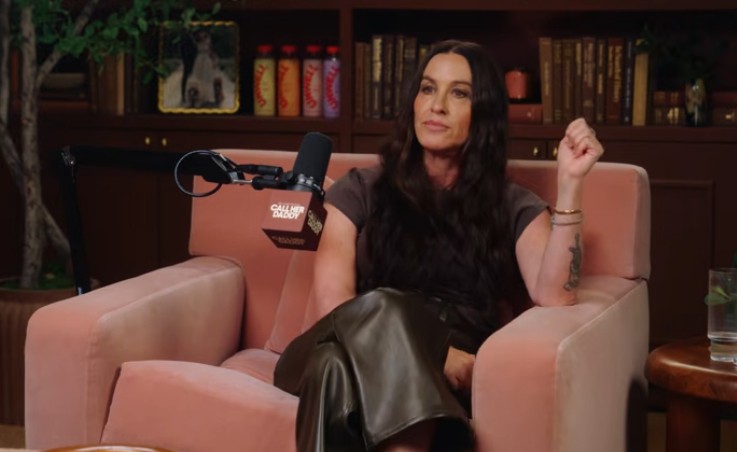
EDITOR’S NOTE: Alanis Morissette joins Alex Cooper on Call Her Daddy for a candid conversation about her iconic career, personal growth, and the experiences that shaped her. From her early days navigating the male-dominated music industry as a teenager to mentoring the next generation of artists, Alanis opens up about anger, attachment, and the power of vulnerability. This interview offers a rare and intimate look into the life and mind of one of music’s most enduring voices. This interview episode was premiered September 9, 2026.
TRANSCRIPT:
ALEX COOPER: (00:00:03 – 00:00:13) Alanis Morissette, welcome to Call Her Daddy.
ALANIS MORISSETTE: (00:00:14 – 00:00:15) Thank you for having me.
ALEX COOPER: (00:00:15 – 00:00:22) You are such an icon. Let me just gather myself. Let me just hold on. I need to take a deep breath.
ALANIS MORISSETTE: (00:00:22 – 00:00:22) So do I.
ALEX COOPER: (00:00:23 – 00:00:33) All of my friends were like, no pressure. And I’m like, okay, well, now you’re making me feel pressure. One of my friends specifically is the biggest fan, and she’s like, I’ll just come do the interview for you. And I was like, you need to—
ALANIS MORISSETTE: (00:00:33 – 00:00:33) What are their questions?
ALEX COOPER: (00:00:34 – 00:01:14) No, literally, she was like blowing me up. Shout out Meg, if you’re watching this, I love you. I hope I do you justice. Okay. I need to give you your proper intro. At 21 years old, you shattered records selling 33 million copies of your album Jagged Little Pill, winning 5 Grammys, including Best Album. And since then, you really have continued to release music that I think gives people the permission to feel angry and messy and complicated. And I just love every single thing that you stand for. So thank you so much for giving me your time. It is such an honor.
ALANIS MORISSETTE: (00:01:14 – 00:01:17) Oh my gosh. Thanks for saying that and marrying me so generously.
ALEX COOPER: (00:01:17 – 00:01:38) Of course. Yes, of course. Okay. Your song “Ironic” will forever be one of my favorite songs to scream in the car with my girlfriends, as I’m sure it is millions of other people watching. But what does it mean to you that new generations continue to discover your music and to fall in love with you and what you stand for?
The Impact of Jagged Little Pill and Staying in the Public Eye
ALANIS MORISSETTE: (00:01:38 – 00:02:21) First, when the record came out in 1995, it was a wild experience. And I saw quickly that people were using this music in a way that felt inspiring for me to stay in the public eye. As an introvert, I had ambiguity about all of it, and I saw that it was supporting people. And uplifting people or reminding people of who they were or giving them permission to feel anything. And I thought, this is a good reason to stay here and keep going.
For me, it was glimpsing inside, way too much information. I can spend a few minutes writing a song and then get back out. So I’m much better now at 52 at going in pretty consistently. But songwriting was terrifying in that way because it would come through and then—
ALEX COOPER: (00:02:22 – 00:02:23) And then it’s out for the entire world.
ALANIS MORISSETTE: (00:02:23 – 00:02:27) Yeah. And then it’s not mine anymore. Then it’s yours. Then I have nothing to do with it almost.
Mentoring Olivia Rodrigo and Supporting Young Artists
ALEX COOPER: (00:02:27 – 00:02:39) You also just performed that song on stage with Olivia Rodrigo. Yes. I know mentoring young artists is something that you’re so passionate about. How did you two first meet?
ALANIS MORISSETTE: (00:02:40 – 00:02:56) I don’t even remember. I think we met at the Rolling Stone cover shoot together. Yeah, I just, you know, there’s nothing better than supporting young people in being who they are and not having to figure it out in their 80s.
ALEX COOPER: (00:02:56 – 00:03:13) And especially, I think, as women in this industry, you have so much that you have learned and continue to learn. So I think any time we can pass that down to future generations, yes, it’s such a blessing of like, oh my God, because I’m sure you’re like, oh, I wish I knew this. Here you go.
ALANIS MORISSETTE: (00:03:13 – 00:03:44) Yeah. Or I wish I had someone. I definitely had the “will you be my mommy” for a long time in the mid-’90s. Like, will there be some mentor, some group of women who kind of rush in and scoop me up. And the answer was a hard no. But now it’s a hard yes.
And I think consciousness has changed to the point where that which was really confusing or overwhelming or weird or woo-woo — which that word is gone now — I just think now people are understanding what some of us were talking about the whole time. And it feels strange. I didn’t expect it.
Reflecting on the ’90s: Creativity, Fashion, and Doing Nothing
ALEX COOPER: (00:03:45 – 00:03:49) Let’s talk about the ’90s. What do you miss most about that decade?
ALANIS MORISSETTE: (00:03:49 – 00:03:52) I miss sitting around doing nothing.
ALEX COOPER: (00:03:54 – 00:03:56) I feel like you were doing a lot.
ALANIS MORISSETTE: (00:03:56 – 00:04:15) Yes, but also, you know, as an artist and as someone who expresses oneself as a career, it’s a lot of it. A lot of the writing is just sitting and letting the mind wander or listening, or you can call it channeling. We call it whatever the frick, but it’s basically listening, heeding, and answering the call.
ALEX COOPER: (00:04:16 – 00:04:31) The ’90s also, I feel like everyone talks about fashion. And the trends keep coming back.
ALANIS MORISSETTE: (00:04:31 – 00:05:05) I have some Lanvin boots and I have some Dries, really early work. I keep a lot of it in archive. But the one thing I noticed about the ’90s and it kind of reinvigorating now is that back in the ’90s we weren’t like cute and wearing cute ill-fitting clothes to be cute. It just didn’t fit. So also, if you’re going to chase the ’90s, which seems to be really cool to do now, you got to tweeze your eyebrows to tiny if you mean it.
ALEX COOPER: (00:05:06 – 00:05:22) If you don’t mean it. But you really got to lean in, like you have to commit to it or it’s not — you’re not even going to get close to it. Yeah. We cannot talk about fashion also without talking about Sex and the City. You guest starred on Sex and the City and you kissed Carrie Bradshaw.
The Sex and the City Kiss and Breaking the Binary
ALANIS MORISSETTE: (00:05:22 – 00:05:22) Yes.
ALEX COOPER: (00:05:23 – 00:05:26) Were you a fan of the show before you went on?
ALANIS MORISSETTE: (00:05:26 – 00:05:36) Yes. And I reached out to them and I said, “Might it be a nice time for Carrie to experience a lesbian moment?” And they said, “Why, yes, we were thinking the same thing.”
ALEX COOPER: (00:05:37 – 00:05:38) Wait, you came up with the idea?
ALANIS MORISSETTE: (00:05:38 – 00:05:42) Well, I think we literally had the same idea at the same time. That happens.
ALEX COOPER: (00:05:42 – 00:05:46) That is — that makes it even better. Yeah. I love—
ALANIS MORISSETTE: (00:05:46 – 00:05:47) Oh, wow. It was a win-win.
ALEX COOPER: (00:05:48 – 00:06:00) Well, and I also feel like at the time it wasn’t very common to see a bisexual character written into television. Yeah. And so what did it mean to you to be a part of a moment like that?
ALANIS MORISSETTE: (00:06:00 – 00:06:06) It’s amazing. Yeah. Anything that opens up and pulls us out of the locked binary is a loving act, I think.
ALEX COOPER: (00:06:06 – 00:06:11) Do you think you knew, though, at the time, how groundbreaking it would be when people saw that on TV?
ALANIS MORISSETTE: (00:06:11 – 00:06:13) Was it groundbreaking?
ALEX COOPER: (00:06:13 – 00:06:13) Kind of.
ALANIS MORISSETTE: (00:06:13 – 00:06:14) I guess. Okay.
ALEX COOPER: (00:06:14 – 00:06:20) You’re like, I just went about with my day, Alex. I just — I do iconic s* and just move on. It was another Tuesday, Alex.
ALANIS MORISSETTE: (00:06:20 – 00:06:22) I just drop mics and keep walking.
ALEX COOPER: (00:06:22 – 00:06:22) No, you do.
ALANIS MORISSETTE: (00:06:23 – 00:06:24) I’m just joking.
ALEX COOPER: (00:06:24 – 00:06:24) No, you do.
ALANIS MORISSETTE: (00:06:24 – 00:06:25) Sometimes.
Starting a Record Label at 11 and Growing Up in the Industry
ALEX COOPER: (00:06:26 – 00:06:56) I feel like when people talk about you, we’re always talking about how you’ve broken barriers. And I think a great example of that is you created your own record label at 13 years old. Now, Alanis, I feel like I’m going to speak for myself and also the collective when I say I was not doing anything like that at 13 years old. Probably best. No, no, no, no, no, no. So I need to understand, how did that even come to be at that young of an age?
ALANIS MORISSETTE: (00:06:57 – 00:07:17) Yeah, I started writing songs at 9 and I sent it to a friend of the family who’s since passed away. And he heard it and created a track for it. So when I went to visit him, he had a track fully prepared. And I said, “Who’s going to sing this? My brothers have informed me repeatedly that I can’t sing.” And he’s like, “Well, they’re lying. Leave it in there.”
ALEX COOPER: (00:07:17 – 00:07:19) And that’s your brother also, to just humble you constantly.
ALANIS MORISSETTE: (00:07:19 – 00:07:37) Yes, just take you out. So I sang it and then that was that. And then we went to shop a record deal. And back in those days, they weren’t signing little children. Now they just go right up the vagina into the uterus and get the signature and come back out and wait, I guess. Is your child signed to a deal yet?
ALEX COOPER: (00:07:37 – 00:07:40) Oh yeah, for sure, for sure. We got an agency set up. Can you imagine?
ALANIS MORISSETTE: (00:07:40 – 00:07:50) So that was not happening then. And so I basically started a record company with my friend Lindsay, and we put it out on the record company at — I was 11.
ALEX COOPER: (00:07:51 – 00:07:57) Yeah, that takes a certain level of confidence. Were you always a young, confident child?
ALANIS MORISSETTE: (00:07:57 – 00:08:08) I think my parents — there’s so many stages of development: attachment, exploration, identity, competence. My parents knocked the confidence one out of the park. Definitely saying you can do anything you want.
ALEX COOPER: (00:08:09 – 00:08:10) Oh, that’s such a gift.
ALANIS MORISSETTE: (00:08:10 – 00:08:11) Yeah, that’s a big one.
ALEX COOPER: (00:08:11 – 00:08:13) I mean, that can change your life obviously.
ALANIS MORISSETTE: (00:08:13 – 00:08:13) It does. Yeah.
ALEX COOPER: (00:08:13 – 00:08:24) Because I think a lot of times people have to struggle with that their entire life and find a way to find confidence. Yeah. Because their home was the place they did not feel most confident.
ALANIS MORISSETTE: (00:08:24 – 00:08:24) Right.
ALEX COOPER: (00:08:24 – 00:08:30) So to have that within your parents, were they at all nervous about you getting into this industry?
ALANIS MORISSETTE: (00:08:30 – 00:08:31) Apparently not.
ALEX COOPER: (00:08:33 – 00:08:35) And did they have any background in it themselves?
ALANIS MORISSETTE: (00:08:36 – 00:08:36) No.
ALEX COOPER: (00:08:36 – 00:08:42) So they had no concept of the industry, and they just were like, go for it, Alanis, you’re going to crush.
ALANIS MORISSETTE: (00:08:45 – 00:08:46) It’s really that simple, actually.
ALEX COOPER: (00:08:46 – 00:08:53) Did they have any idea for you prior to that of what they hoped you would become?
ALANIS MORISSETTE: (00:08:53 – 00:09:04) No. I mean, my dad was a grammar guy, and my mom — you know, my parents have that go-getter thing. It’s in the DNA of the marrow of their bone.
Navigating Male-Dominated Spaces as a Teenager
ALEX COOPER: (00:09:05 – 00:09:17) When you talk about your experience in the music industry, you’ve said you were put in a lot of male-dominated spaces at a very young age. What did that even look like for you back in the day when it first started?
ALANIS MORISS
Vulnerability, Anger, and the Music Industry
ALANIS MORISSETTE: (00:11:08 – 00:11:37): I know I’m, I’m fine with everyone hearing everything. I didn’t want anyone to know. Because there’s layers of vulnerability. And, and I do receive a lot of comments around how is it possible to be that publicly vulnerable and empowered? And I’m like, first of all, thank you, but you can do both. You can be empowered and vulnerable. I can be comfortable sharing that I feel anger and shame and guilt and fear and joy, but I might not want you to know the 7 people I’m obsessing over right now.
ALEX COOPER: (00:11:37 – 00:11:45): Maybe not. But also, did you ever— did you ever change like light little details because you’re like, I refuse to let him know this one’s about him?
ALANIS MORISSETTE: (00:11:46 – 00:11:47): Oh yeah. I never tell anybody anything ever.
ALEX COOPER: (00:11:47 – 00:11:50): But do you think your— some of your exes knew it was them?
ALANIS MORISSETTE: (00:11:50 – 00:11:55): Well, here’s the thing. If you’re calling me up, which some of them did, and saying, “Is that song about me?”
ALEX COOPER: (00:11:55 – 00:11:56): We’re done.
ALANIS MORISSETTE: (00:11:58 – 00:12:00): Really? Okay.
ALEX COOPER: (00:12:00 – 00:12:04): You’re like, “Well, does the shoe fit? You tell me, right?”
ALANIS MORISSETTE: (00:12:04 – 00:12:08): Does this resonate? Right. And if it does to the point where you’re calling me, aren’t we done?
ALEX COOPER: (00:12:09 – 00:12:10): We’re done.
ALANIS MORISSETTE: (00:12:10 – 00:12:25): We’re done. This wasn’t written for some overt revenge. I love revenge fantasy. Just keep it a fantasy. Write about it or sing about it. That’s the best way. But real revenge is— no, nobody wins.
ALEX COOPER: (00:12:25 – 00:12:34): Yeah, but real revenge does end up happening when your name is, uh, like, and then you put it out and then it’s like, everyone is going to listen to this. That’s a pretty good form of revenge.
ALANIS MORISSETTE: (00:12:35 – 00:12:37): Okay, okay, okay, Alex.
ALEX COOPER: (00:12:37 – 00:12:38): You’re like, “Yeah, yeah, whatever you say.”
ALANIS MORISSETTE: (00:12:38 – 00:12:39): No, that’s totally true.
The Language We Lacked: Patriarchy, Misogyny, and the Music Industry
ALEX COOPER: (00:12:40 – 00:13:01): You— I think it’s important also to emphasize, you reference all these men in these suits and you being like, “I didn’t know what getting published meant.” Like, I just was a talented young woman who had a very, very specific skill, obviously. And everyone saw that you had that skill. And so everyone’s going to be interested in monetizing that.
ALANIS MORISSETTE: (00:13:01 – 00:13:01): Mm-hmm.
ALEX COOPER: (00:13:01 – 00:13:10): But back then, I don’t think we really had the language or the understanding to even call certain things for what it was like, “Oh, that’s a double standard.”
ALANIS MORISSETTE: (00:13:10 – 00:13:13): Or, or “This is gaslighting,” or that. Yeah. All these beautiful new words, right?
ALEX COOPER: (00:13:13 – 00:13:15): “That’s emotional abuse. That’s the patriarchy. That’s misogyny.”
ALANIS MORISSETTE: (00:13:15 – 00:13:18): Sexual abuse. A lot of that.
ALEX COOPER: (00:13:18 – 00:13:34): No language to explain a lot of times how specifically I think women were feeling. In what ways did you feel yourself up against that push and pull of like, “I feel like something’s off here, but I don’t know how— like, what this is?”
ALANIS MORISSETTE: (00:13:38 – 00:14:26): Well, there was a lot of extraction and exploitation. So already there’s a dehumanization. The fame one is a whole other concept, a conversation. But in those rooms with the, with the suit peeps, there was no attunement or empathy. A lot of personality disorders, a lot of misogyny, a lot of just hate of the feminine. Not just women. It’s like, we hate women, yes, but we also hate the feminine. We hate vulnerability, but we want it. We want tenderness, but we can’t say we want it. There’s just so many indoctrination conversation of how we’re supposed to live, what we’re supposed to want, how we’re supposed to present. Meanwhile, we’re all animals. We’re all humans with a little neofrontal doing our best.
ALEX COOPER: (00:14:27 – 00:14:41): And isn’t it so weird when you say that too? It’s like the men who hate that so much, but a lot of these men are recognizing this is what will sell. So they’re not afraid for you to put it in the song and to have it released.
ALANIS MORISSETTE: (00:14:41 – 00:14:42): Oh, they love it.
ALEX COOPER: (00:14:42 – 00:14:47): They love it so much. But behind closed doors, they still hate. They still hate.
ALANIS MORISSETTE: (00:14:47 – 00:15:04): Well, it’s also people were very generous by saying, “Oh, you know, you’ve changed the game.” You know, there was a point in time where it was, you know, if we called a radio station to see if they would play one of my songs, they would say, “We can’t play it, we’re playing Sinead.” Or “We can’t play it at this radio station. We’re already playing Tori.”
ALEX COOPER: (00:15:05 – 00:15:05): One woman.
ALANIS MORISSETTE: (00:15:06 – 00:15:22): So that all changed. And it was a beautiful— I just felt like I volunteered to ride the hugest wave. I put my hand up before the question was even asked somehow, and the wave was happening without me and I just happened to be on it. And I said, “Yeah, put me at the front. I’ll get my head chopped off.”
ALEX COOPER: (00:15:22 – 00:15:31): Don’t— do you think, though, Alanis, that that comes from just something within you that you were born with or something that you actually were taught?
ALANIS MORISSETTE: (00:15:31 – 00:15:32): Rage.
ALEX COOPER: (00:15:32 – 00:15:32): Yeah.
ALANIS MORISSETTE: (00:15:33 – 00:15:36): Best activism is rage-fueled.
The Power of Anger and Rage
ALEX COOPER: (00:15:36 – 00:15:43): Anger is such a powerful emotion, which I think we all should lean into, which I want to talk to you about because— oh, we’re going to get there.
ALANIS MORISSETTE: (00:15:43 – 00:15:43): Oh God.
ALEX COOPER: (00:15:43 – 00:15:50): Oh God. But it’s like to recognize where it’s coming from, to have some control over it for yourself and understanding.
ALANIS MORISSETTE: (00:15:50 – 00:16:12): That’s containment. So that’s like you know, reading a room, being discerning. Is this appropriate here? And getting older, it’s like, “Oh, rage just transmutes into this.” I mean, it’s always beautiful. I think anger is beautiful. I think rage is trauma. If we’re raging, we’re traumatized. If you’re a woman in the world of patriarchy, how are you not enraged if you’re really looking at it?
ALEX COOPER: (00:16:12 – 00:16:13): Every day.
ALANIS MORISSETTE: (00:16:13 – 00:16:15): Every day. So that’s not going anywhere.
ALEX COOPER: (00:16:15 – 00:16:16): I’m getting enraged right now.
ALANIS MORISSETTE: (00:16:16 – 00:16:20): I want to throw something, but not at you. Not at you.
ALEX COOPER: (00:16:20 – 00:16:23): Together. Together. At that wall.
ALANIS MORISSETTE: (00:16:23 – 00:16:24): No, literally.
“Mature for Your Age”: Predatory Behavior and the Freeze Response
ALEX COOPER: (00:16:24 – 00:16:45): You have said that men often referred to you as mature for your age, and you thought it was to justify it in their own bodies, like they needed it to be true. Can we talk about how men do this and why they do this, in your opinion, from what you’ve experienced?
ALANIS MORISSETTE: (00:16:45 – 00:16:52): Why, why they tell a young person that they’re poised and wise beyond their years to justify their sexual predatory actions?
ALEX COOPER: (00:16:53 – 00:17:00): And it’s so transparent. And yet when it happens to a young woman, when you—
ALANIS MORISSETTE: (00:17:00 – 00:17:01): It’s a freeze response.
ALEX COOPER: (00:17:01 – 00:17:01): Yeah.
ALANIS MORISSETTE: (00:17:01 – 00:17:14): We fight, flight, freeze, collapse, or appease or befriend. All 5 of them are great, but freeze is just kind of the normal one on an animal level. You’re being predated and you can’t do anything about it.
ALEX COOPER: (00:17:14 – 00:17:28): And at a young age, we don’t have the wherewithal because we haven’t had the life experience as a young girl to even understand. So you naturally take that as a compliment. You’re like, “Amazing. So I can hang in the room with the suits,” but it’s also on other—
ALANIS MORISSETTE: (00:17:28 – 00:17:29): But it’s reductive.
ALEX COOPER: (00:17:29 – 00:17:33): Of course. Of course. You don’t know that, though, in the moment fully.
ALANIS MORISSETTE: (00:17:33 – 00:17:55): Not when you’re young. And especially if what’s been ascribed to you as your only— as your one gift, as Jo in Little Women would say, is your sexuality and your come-hither-ness. So as a— at what age at this point? You know, young people through puberty, they reach a certain age, and then all of a sudden there’s a different kind of gaze. It’s terrifying.
ALEX COOPER: (00:17:55 – 00:18:17): It is terrifying. And at some point you also wish that there were adults in those rooms. Yeah. Who would recognize the obvious power imbalance and help the young woman understand that that is not a compliment and they’re going to do everything to protect them from that person who is clearly a predator. And yet we continue to be let down.
ALANIS MORISSETTE: (00:18:18 – 00:18:35): Well, yeah, we’re not— we’re in the dome of patriarchy. Nothing’s going to be fixed in there. We’re just going to run in circles. So I’m over here. So instead of spending inordinate amounts of time talking about how the patriarchy is just not helping anybody, just come over here and talk from here.
ALEX COOPER: (00:18:36 – 00:18:51): And talking also is such a weapon because it is a threat to them. And the more we keep talking about it and exposing it, yeah, then their rage comes out and I’m like, “Oh, I’m sorry, am I making you uncomfortable? Like you’ve made us uncomfortable.”
ALANIS MORISSETTE: (00:18:51 – 00:18:53): Yeah, like the last 10,000 years.
Financial Betrayal: When Her Business Manager Stole Millions
ALEX COOPER: (00:18:53 – 00:19:08): 10,000 years. Uh-huh. I also read your former business manager, as if it couldn’t get worse, stole millions of dollars from you. How did you first even realize this was happening?
ALANIS MORISSETTE: (00:19:08 – 00:19:11): Something felt weird. A woman’s intuition.
ALEX COOPER: (00:19:11 – 00:19:14): Uh-huh. Okay. And what did you do when you had that gut feeling?
ALANIS MORISSETTE: (00:19:15 – 00:19:53): I just kept going into the new business manager’s office over and over and saying, “I need more information because something’s up and I don’t know what.” And I kept coming in to the point where, God bless, they said, “Why are you here in this boardroom?” And I said, “I still don’t have the answer yet.” And so my husband was sitting next to me and he was going through papers and he noticed some inconsistencies. Anyway, what’s up with this? And then we called everyone into the room. They looked at it and they said, “We’ll get back to you.” And then at first it was like, “Do you spend cash a lot? You know, on ballet?”
ALEX COOPER: (00:19:55 – 00:19:56): That is—
ALANIS MORISSETTE: (00:19:56 – 00:19:58): That’s a unique one.
ALEX COOPER: (00:19:58 – 00:20:08): It is. And it’s also— it’s at face value. Yes, it’s like the money, but it’s like the entitlement to your earnings.
ALANIS MORISSETTE: (00:20:09 – 00:20:35): What was beautiful about it was that I just stayed the course, one foot in front of the other. Just keep showing up. And then when I spoke at the trial or the sentencing hearing, the judge was a woman. And she was like, I just looked right at her. It was really actually quite corrective for me. Yeah, but also money, right? Of course. Bias against wealth, bias against women, bias against women knowing.
ALEX COOPER: (00:20:36 – 00:20:43): Oh, of course. Well, even it’s like you having all the right to be asking those questions and the amount of times that you needed to ask.
ALANIS MORISSETTE: (00:20:43 – 00:20:47): I asked 4 more times. And it’s, you still don’t get an answer and it’s your money. Yeah.
ALEX COOPER: (00:
Anger, Labels, and the Price of Authenticity
ALEX COOPER: (00:22:49 – 00:23:26): Well, and it’s also like you coming out and having this single that is, you know, leading with this anger and this rage, which is so enticing for so many women, obviously, because so many women didn’t feel like they could have that. But also there are songs that obviously have joy. Yeah. It’s this dichotomy of a woman that gets everyone in a frenzy of, oh my God, how can she be both? Right. And I think it’s very unsettling for a lot of people. You leaning into the anger at first, did you feel like there was any initial conversation or backlash around that?
ALANIS MORISSETTE: (00:23:27 – 00:23:30): There was terror and resistance, but that’s just normal.
ALEX COOPER: (00:23:30 – 00:23:31): I mean, what new?
ALANIS MORISSETTE: (00:23:32 – 00:23:33): A Tuesday.
ALEX COOPER: (00:23:33 – 00:23:59): I just can’t get over though how— and maybe it’s also because I’m meeting you where you’re at right now, but I have a feeling if I met you even back then, it feels like it was similar. Like there was no apprehension from you or nerves around like, oh God, are people going to crucify me? Like, are people going to think I’m crazy, because that is what happens with a lot of women. If we come out as angry, they’re like, oh, she’s insane.
ALANIS MORISSETTE: (00:23:59 – 00:24:00): Yeah, the C-word.
ALEX COOPER: (00:24:00 – 00:24:01): Of course.
ALANIS MORISSETTE: (00:24:02 – 00:24:25): Yeah. But, you know, at that point, project onto me all you want. Project that I’m the Antichrist. Project that I’m terrifying or like too complicated. Basically too much, right? My whole life I’ve just heard that I’m too much. And at this point, I’m at menopause time. I’m just like, too much? You mean exactly who I am? Yeah.
ALEX COOPER: (00:24:25 – 00:24:35): Do you think that when you were in your teens and 20s, did you ever have a moment where you were by yourself in your room being like, this is a lot to bear the burden of?
ALANIS MORISSETTE: (00:24:36 – 00:24:50): Every time I put a record out, without fail, I wake up at 4 in the morning, the morning of release, and have a full panic attack. I mean, I’m always nervous. People are like, how do you deal with your nerves? I’m like, I don’t know.
ALEX COOPER: (00:24:50 – 00:25:07): No, I get that. It’s almost like, yes, and yeah, I’m nervous, but I’m also here and I have the decision to either put this thing out and go with my gut and yeah, I can be nervous as hell and want to vomit and hopefully no one sees. Or I could just—
ALANIS MORISSETTE: (00:25:07 – 00:25:07): Or everyone sees.
ALEX COOPER: (00:25:07 – 00:25:08): Right. Or everyone sees.
ALANIS MORISSETTE: (00:25:09 – 00:25:10): Perfect. So beautiful.
ALEX COOPER: (00:25:10 – 00:25:18): Right. Or you can freeze and you cannot do anything with it. And then you’re just left wondering, what if?
ALANIS MORISSETTE: (00:25:18 – 00:25:24): Well, then you’re in your 50s going, I want to make up for some lost time. And which is also do it when you can do it.
Sexually Ahead of Their Time: The Lyrics of “You Oughta Know”
ALEX COOPER: (00:25:24 – 00:25:42): You can. One question I do have to ask about that time also, aside from the anger, is I feel like some of the lyrics, which I love, were a little sexually ahead of their time, maybe. Yes. Quote, “and are you thinking of me when you f* her?”
ALANIS MORISSETTE: (00:25:42 – 00:25:42): Are we?
ALEX COOPER: (00:25:42 – 00:25:43): It’s a great question.
ALANIS MORISSETTE: (00:25:43 – 00:25:45): I mean, it’s a legit curiosity.
ALEX COOPER: (00:25:45 – 00:25:52): It is. Do you remember if there was any backlash around that lyrically?
ALANIS MORISSETTE: (00:25:53 – 00:26:27): I believe there was, and I talk about it in the Butterfly with a Machete show. There was a moment while writing “You Oughta Know” where I thought, oh, I’ll just, let’s just write it, don’t edit, don’t censor, as always. And then later, if I have to take a swear word out, I’ll take it out. And I remember having said that to Glen Ballard, and he turned to me and he said, “Why?” And I said, “Well, but I don’t want this to turn into the lead character of the song, you know.” He said, “But if you felt that way, yes.” And I said, “Yes.” And he goes, “So there it is.” And God bless him for that level of support.
ALEX COOPER: (00:26:28 – 00:26:34): Did you ever feel like you were punished for refusing to be more palatable?
Fame, Punishment, and the Price of Being “Too Much”
ALANIS MORISSETTE: (00:26:38 – 00:27:29): Yes. I think a lot of people who were reaching out to me, were trying to figure out what I was doing, and I couldn’t even explain it to them. Like, a lot of people in the industry, and then a lot of people who wanted to date me. I was very reticent because why? Like, with fame, I love this part, by the way. Someone’s sitting across from you telling you how much they admire you, how much you’ve been a catalyst in their life, how much you’ve validated, empathized, uplifted, all of those things. Amazing, right? The greatest, and you’re not seen because it’s not about you.
So I’ve been looking, I’ve really been deconstructing this whole idea of fame because fame used to be a means to an end. Joni Mitchell or commentary on the Vietnam War, like it was a means to an end. Now fame is the end. Now fame is some panacea apparently. No.
ALEX COOPER: (00:27:30 – 00:27:34): Yeah, but a lot of people are just like, I want fame for in and of itself.
ALANIS MORISSETTE: (00:27:34 – 00:28:02): And as some of us know who’ve had the privilege and horror of being inside it, you know, it’s a very complicated social construct. And for me, I thought, oh, there could be some attachment correction here. Eye contact, you know. And the opposite is true. Fame amplifies any pain. It amplifies any trauma, amplifies everything. And now you’re in the public eye, and now people can’t necessarily even see you as the human being. Because you’re fill in the blank for them.
ALEX COOPER: (00:28:03 – 00:28:15): Yeah, that makes me think about that year you were on the cover of Rolling Stone and the headline was “Angry White Female.” Do you remember your reaction when you saw the magazine?
ALANIS MORISSETTE: (00:28:15 – 00:28:41): I was like, “Female? Interesting presumption.” No, I, again, same state of being as picking “You Oughta Know” as the first single. Great. Whatever you need to call me. I know you have to call me one thing because you can’t possibly hold space for the multitudinousness that is all humans. So yeah, you want to pick one? Anger’s great. Go. I don’t care.
ALEX COOPER: (00:28:42 – 00:28:44): So it didn’t get under your skin at all?
ALANIS MORISSETTE: (00:28:44 – 00:28:47): I loved it because I got to talk about feelings and anger.
ALEX COOPER: (00:28:48 – 00:28:54): It’s the best, right? And do you think you’re someone more also at that point that was like, and if they’re talking, who gives a shit?
ALANIS MORISSETTE: (00:28:54 – 00:28:56): I wasn’t that advanced.
ALEX COOPER: (00:28:56 – 00:28:56): Okay.
ALANIS MORISSETTE: (00:28:58 – 00:29:08): I also operate from an inside-out approach, and some of that has me be a little blind to the receptivity or lack of receptivity. But I hear about it later.
Stripping Labels of Their Power
ALEX COOPER: (00:29:08 – 00:29:34): How do you think for any woman listening, because sometimes it is really difficult when labels are placed on you, like we said, every day, the C-word, and you’re crazy and you’re this and you’re that and you’re angry. How do you think throughout your career you’ve personally learned to strip those labels of their power and if anything, just make them positive for you or use them to your advantage?
ALANIS MORISSETTE: (00:29:34 – 00:29:48): Well, the ones that hurt, I just do inner work with those. So if someone says— I don’t even know at this point, I’ve used a lot of the words in the press over the years because there was a lot of hate. There were websites constructed to figure out how to murder me most elegantly.
ALEX COOPER: (00:29:48 – 00:29:57): And so, Alanis, I love how you just drop these things casually, and you were about to go right past that. I’m like, you’re like, what? How the f*? What?
ALANIS MORISSETTE: (00:29:58 – 00:30:17): Well, there was a lot of hate, and it was very, very out there. And a lot of people, a lot of artists whom I respected and lived for, were disparagingly speaking about me. Later, Sinéad apologized, which was really classy. But yeah, I mean, it was not a girl squad. There were no girl squads.
ALEX COOPER: (00:30:18 – 00:30:22): How did you find support during that time? Like, were you close with your family? Therapy. Therapy back then?
ALANIS MORISSETTE: (00:30:22 – 00:30:38): Oh my God. I have a whole team. I have a whole freaking team and a lot of parts work. So if I read something in the press that triggered me and I felt terrible, obviously that part needs a little dialogue here because— and so it became Shadow Work 101 for me.
ALEX COOPER: (00:30:38 – 00:30:43): Can you give an example of something back then? I know it probably doesn’t now, but anything back then?
ALANIS MORISSETTE: (00:30:43 – 00:31:19): Love was calling me fake, which is so funny. And she also apologized later and said very kind things. But so “fake” would be one. And as an example, I would take “fake” and go, what kind of person is fake? Someone who’s maybe lying, lying to themselves. Do I lie to myself? Yeah, I lie to myself. Let’s talk to the part that lies to myself. Okay, what do you need? What wisdom do you have? What action can I take on your behalf?
Just, and every little part in here that is trying, that may be acting out or behaving in a terrible, horrifying way, like maybe you want to take me out. They’re all trying to protect. They’re all trying to help.
ALEX COOPER: (00:31:19 – 00:31:33): So a lot of the things when you would get criticism, it would hurt, which I think makes a lot of sense. Of course. And the ones that hurt the most were ones where you were like, I needed to do some looking at it. Oh, and “fake” it.
ALANIS MORISSETTE: (00:31:33 – 00:31:40): That’s how you know. Because if someone says— I don’t even know at this point, if someone says something that’s not a trigger for me, it’s water off a duck’s back.
ALEX COOPER: (00:31:40 – 00:31:40): Of course.
ALANIS MORISSETTE: (00:31:40 – 00:31:44): So for me, if something’s not water off a duck’s back, let’s look at it.
The Cycle of Love and Hate in the Public Eye
ALEX COOPER: (00:31:44 – 00:32:11): There’s also this thing where it’s so fun to be able to look back and have perspective and everyone’s like, oh my gosh, you were such a trailblazer at the time and you did all these things. But then a lot of the times when you have those conversations with those type of people, if you actually were in it in their day to day and living it during the time, it was hell for them. They were getting scrutinized and hatred. There’s websites telling— figuring out how they can murder you.
ALANIS MORISSETTE: (00:32:11 – 00:32:12): Yes.
ALEX COOPER: (00:32:12 – 00:32:18): And we miss all of that, right? But a lot of times to actually make certain change, you have to go against the grain, which you were doing.
ALANIS MORISSETTE: (00:32:19 – 00:32:20): We’re still doing that.
ALEX COOPER: (00:32:20 – 00:32:21): We are.
ALANIS MORISSETTE: (00:32:21 – 00:32:21): Yeah.
ALEX COOPER: (00:32:21 – 00:32:29): But also to hear that a lot of your— the people around you in the industry were not receptive towards you.
ALANIS MORISSETTE: (00:32:29 – 00:32:49): Oh yeah, they were upset. You know, it’s like people being jealous of Taylor Swift. Like, it’s— yeah, it’s just— and I think the implication there for me was that the presupposition on the planet was that there’s one throne. Only Alex can sit in the throne, everybody. Everyone else, you fail, you lose, you’re ugly.
ALEX COOPER: (00:32:49 – 00:32:50): Bye. What?
ALANIS MORISSETTE: (00:32:50 – 00:32:54): That’s patriarchy. That’s scarcity mindset.
ALEX COOPER: (00:32:54 – 00:33:08): And isn’t that so crazy? It’s like then they want to put a stake through you because you’re sitting at the top. It’s also like, if not you, then there’s going to be someone else. And then are we going to take them down too? When we see the cycle repeat? Yes. And it just repeats and repeats.
ALANIS MORISSETTE: (00:33:08 – 00:33:09): Always.
ALEX COOPER: (00:33:09 – 00:33:10):
Dating, Attachment, and Narcissism
ALANIS MORISSETTE: (00:36:04 – 00:36:06): Let’s talk about dating. My favorite topic.
ALEX COOPER: (00:36:06 – 00:36:17): Amazing. I know you referenced you were sitting across from sometimes someone on a date. You referenced it a little bit earlier. And they’re saying all these amazing things, but you’re like, oh, you don’t even see me.
ALANIS MORISSETTE: (00:36:17 – 00:36:17): Oh yeah.
ALEX COOPER: (00:36:18 – 00:36:31): Jagged Little Pill comes out, 21, your life changes forever. How did you even connect with men in a way, or women in a way that you felt seen because of this fame and all of these issues?
ALANIS MORISSETTE: (00:36:32 – 00:36:32): I didn’t.
ALEX COOPER: (00:36:34 – 00:36:36): How did that impact your songwriting?
ALANIS MORISSETTE: (00:36:37 – 00:37:34): The loneliness persisted. The abject cellular loneliness. But I mean, that’s what it is. And so for me also, my survival strategy also— and I’ve worked so hard on this— has also included other orientation, right? Raised in narcissism, my existence meant beholding other, being supply for narcissism. I don’t even exist. There’s not even a person here.
So yeah, do I have a big self when people meet me? Maybe. But over the years there was no felt sense of self because my whole orientation was focus on other. And so over the years, doing all kinds of different trauma therapy models and finally getting to a point where I’m in this body and that I’m actually here, and the disappearing and the invisibility— it’s a big deal, this invisibility wound. And in patriarchy, how are women not going to feel some f*ing semblance of invisibility. They cannot.
Raised in Narcissism
ALEX COOPER: (00:37:34 – 00:37:40): Okay, rewind. Raised in narcissism. Explain.
ALANIS MORISSETTE: (00:37:42 – 00:38:58): So what happens with a young creature, at the attachment stage when you’re looking— this is when we get the identity stage. Your parents mirror you. You go, “Alex, you’re so smart, you’re so funny.” I mean, you’re just mirroring the person. The child goes, “Oh, I exist. I’m here.” When that doesn’t happen, it’s this floaty felt sense of experience.
And then my survival strategy was to take care of other people. So I’m floating, no felt embodied, taking care of other. And then the only touch was through acting out sexually because everything was mixed together. The only way a woman could be acknowledged when she’s little, like you said earlier, is, oh, sexual energy. I’m going to erotically go for you or predator you or take you or whatever, right?
So the woman goes, the young woman goes, “Oh, this is my power. Oh, I noticed that when I’m come hither, I get seen, I get looked at, I get touched.” Oh, but it’s so sad because it’s this one tiny little route. And a human being, your sexuality is beautiful, it’s huge, and it is one piece of you.
Attachment Styles and Seeking Validation
ALEX COOPER: (00:38:59 – 00:39:45): No, it’s so true. And also, I recently did this series on attachment styles, which I want to get into with you because that’s what you’re basically talking about. And I think you describing your childhood, it is such a hard thread for all of us as human beings. When you don’t have that nurturer looking at you, whoever is your person that’s taking care of you, giving you a secure attachment, giving you validation, but also proper validation. It’s mirroring consistency. Right. The fact that you’re saying, from a young age as a young girl, then you’re like, “Okay, maybe sexually this is something that—” because you’re looking for any way to have people love you.
ALANIS MORISSETTE: (00:39:45 – 00:39:46): Yeah. That’s it.
ALEX COOPER: (00:39:46 – 00:39:54): And that is so harmful to ourselves because then you’re a self. No self. And you’re so young. What’s actually going to fulfill you?
ALANIS MORISSETTE: (00:39:54 – 00:40:28): To be in charge of your own developmental growings up on your own is very lonely. And I’m not even just thinking about me. I’m just thinking about the idea of it. So attachment, which you just brought up, and then exploration, and it’s cumulative. So ideally, we’re securely attached and then we explore. Keep looking back at the caregiver. And then we go into identity, the mirroring. So what I see— I’m putting it into words— “I see you, you are Spider-Man,” right? And then the last one, or the fourth, is competence.
ALEX COOPER: (00:40:29 – 00:41:02): And it keeps going, but it keeps going. But when you— because I do think it’s really relatable for a lot of women watching, do you have anything you now, in having gone through so much therapy and having such a secure, strong sense of self. Is there anything you wish you could tell that younger girl who understandably was seeking love, and sexuality brought out what felt like temporary love, but then it also— the crash is even bigger? Do you have any advice for women listening who maybe are still in that cycle?
ALANIS MORISSETTE: (00:41:02 – 00:41:17): So one interesting inquiry for me was pulling them, teasing them apart and seeing that— am I— do I need attachment love right now, or is my eroticism wanting to be expressed? Or both? But just getting clear on that.
Breaking Patterns and Attraction to Narcissism
ALEX COOPER: (00:41:18 – 00:41:35): When you look back, maybe in your early 20s, let’s say, raised in narcissism, trying to figure out your sense of self, did you see any patterns with partners that you were really attracted to? And how did you break out of those patterns?
ALANIS MORISSETTE: (00:41:35 – 00:42:23): I was attracted to narcissism. Shocker. And as an empath, we tend to be a magnet for narcissists. It’s not uncommon. And there’s a beautiful book called Keeping the Love You Find by Harville Hendrix. It just basically lays out where you’re going to feel high chemistry based on your unconscious unfinished business. And that the degree of commitment and intimacy portends for the degree of healing available. And yeah, I mean, it’s a beautiful book in terms of understanding what seems so mysterious. It’s this unconscious drive to become whole and to reinvigorate our aliveness. We all want to feel alive.
ALEX COOPER: (00:42:23 – 00:42:30): It’s so relatable and it’s so complicated because it’s rooted in everything we are from the day we are born.
ALANIS MORISSETTE: (00:42:30 – 00:42:31): I know.
ALEX COOPER: (00:42:31 – 00:42:40): And I know you have talked about how you dealt with codependency and love addiction. What emotional toll, though, does that eventually take on you?
ALANIS MORISSETTE: (00:42:41 – 00:42:48): A complete self-annihilation and obliteration and years of coming back into who you barely were before you began.
ALEX COOPER: (00:42:49 – 00:42:58): I think that’s what’s so fascinating is how enmeshed you can get in relationships and how I also think it’s so hard to see when you’re in it.
ALANIS MORISSETTE: (00:42:59 – 00:42:59): You can’t—
ALEX COOPER: (00:42:59 – 00:43:04): you can’t see it at all. It just hurts. And it hurts. And you feel like, “But maybe if I try harder.”
ALANIS MORISSETTE: (00:43:04 – 00:43:05): Well, that’s the appeasement, right?
ALEX COOPER: (00:43:05 – 00:43:05): Of course.
ALANIS MORISSETTE: (00:43:05 – 00:43:18): The appeasement is if I see them a little better, or if I hold them, or if I empathize more, if I leave more space. But the no self is the theme and the survival strategy of other focus. There is no self.
ALEX COOPER: (00:43:19 – 00:43:35): Do you have a moment you remember? Because it’s so hard. It’s like we can look back and be like, “Oh, that was that.” But is there ever a moment you remember being like, “I have to leave?” Like, is there anything that ever happened that you were like, “This specifically made me walk out the door?”
ALANIS MORISSETTE: (00:43:35 – 00:44:01): I had a few. There’s a song I wrote called “That Particular Time,” and basically I just keep getting into that appeasement part that just tried to figure out how to make something untenable tenable. And it isn’t, and it won’t be, and it’s painful. And so how do you construct a self from nothing. And guess what? The hack of all time. And you said it at the beginning of our conversation.
ALEX COOPER: (00:44:02 – 00:44:02): Gathering.
ALANIS MORISSETTE: (00:44:03 – 00:44:12): Gather, period. Because if we get together and we’re talking and we’re processing, it moves worlds.
ALEX COOPER: (00:44:12 – 00:44:23): And a lot of times when you’re in those situations, you are so isolated. But if you do open yourself up to a friend or a family member or something, slowly you’re like, “Oh, maybe I’m not crazy.”
ALANIS MORISSETTE: (00:44:23 – 00:44:28): Maybe there are billions of other people asking this very question at the same time.
Marriage and Going Against Type
ALEX COOPER: (00:44:28 – 00:44:37): You and your husband Souleye got married when you were 35. What about that relationship felt different to you?
ALANIS MORISSETTE: (00:44:38 – 00:44:46): I had had my— the pattern was done, and I just basically went against type.
ALEX COOPER: (00:44:48 – 00:44:50): Which is sometimes really scary.
ALANIS MORISSETTE: (00:44:50 – 00:44:53): It’s all scary, right? Everything is scary about dating.
ALEX COOPER: (00:44:54 – 00:44:55): It’s terrible because you’re—
ALANIS MORISSETTE: (00:44:55 – 00:44:56): I don’t recommend—
ALEX COOPER: (00:44:56 – 00:45:10): because you’re also so aware when you’re going against your type and you’re like, “Be open-minded, be open-minded,” and “Stay here, stay here,” right? Everything in your body is like, “Go back, go back, go back.” And you’re like, if we go back one more time, I’m going to lose it. So no, we have to stay the course.
ALANIS MORISSETTE: (00:45:11 – 00:45:14): I mean, how many times do you repeat the same pattern? And by the way, my answer is 100.
ALEX COOPER: (00:45:15 – 00:45:16): More than 100. Yeah.
ALANIS MORISSETTE: (00:45:16 – 00:45:17): 37.
ALEX COOPER: (00:45:17 – 00:45:19): Okay, so you just went against—
ALANIS MORISSETTE: (00:45:19 – 00:45:41): Oh, I had to because I also was ready for a family and Souleye’s loyalty and constancy. There were some qualities where I went, “Family now,” right? I was like, “These are the best. This is it.” And I always wanted to be a mom. I always wanted to have kids. So it was a bit of a no-brainer for me.
Postpartum Depression and Motherhood
ALEX COOPER: (00:45:42 – 00:46:23): You have 3 children, and a conversation that I’ve been having a lot on my show recently has been kind of just surrounding motherhood. And postpartum depression is something that is such an unfortunately tricky topic to talk about because there’s so much judgment from other people. And you have been such an incredible voice when talking about your experience and being so open about it, which I have so much respect for. And you even described it as being “covered in tar and underwater.” Can you just talk more about your feelings and what you were going through back at that time in your life?
ALANIS MORISSETTE: (00:46:24 – 00:47:32): I had— I call it postpartum activity because it’s not just depression. And I mean, depression on its own, and if you’ve had a history of depression, and then from my experience, each postpartum depression gets increasingly harder. Just wanted to meet my kids though so badly, so I kept going.
But basically I became another person, and all the hormones are all over the place. And so there’s some version of menopausal flux combined with depression, invasive thoughts that are so harrowing, terrible, ceaseless, invasive thoughts, anxiety, depression, rage off the charts. I felt completely out of control, and yet I was touring and leading and being a boss and being someone taking care of money and finances and everything. And that part is the part where when I’m quiet and alone, I might weep a little bit here and there about that.
ALEX COOPER: (00:47:33 – 00:47:38): When you first started to experience symptoms, how did you even make sense of them?
Postpartum Depression and the Invisible Load
ALANIS MORISSETTE: (00:47:39 – 00:47:51): I didn’t. And I reached out to so many therapists. And all due respect, one well-meaning therapist said, sweetheart, when it gets really bad, just put your hands over your eyes like this.
ALEX COOPER: (00:47:52 – 00:47:59): And I was like, you’re like, you know, I’m not a therapist, but I have a feeling.
ALANIS MORISSETTE: (00:47:59 – 00:48:02): But I have one on TV, and I know a little bit more than that.
ALEX COOPER: (00:48:03 – 00:48:05): You’re like, I’ve got a feeling that’s not the answer.
ALANIS MORISSETTE: (00:48:05 – 00:48:08): I hope that’s the full answer anyway.
ALEX COOPER: (00:48:08 – 00:48:09): That can’t be the answer.
ALANIS MORISSETTE: (00:48:10 – 00:48:10): It isn’t.
ALEX COOPER: (00:48:10 – 00:48:11): Oh my God.
ALANIS MORISSETTE: (00:48:11 – 00:48:20): And I spoke with a lot of really, really smart, supportive postpartum support peeps. And it was still really, really, really, really, really, really hard.
ALEX COOPER: (00:48:21 – 00:48:30): I wrote down, after your first baby, you kind of talked about how you waited to get help because your instinct was to white-knuckle your way through it.
ALANIS MORISSETTE: (00:48:30 – 00:48:31): Welcome to Generation X.
ALEX COOPER: (00:48:32 – 00:48:37): Yes. Yes. What did you come to learn about that mindset?
ALANIS MORISSETTE: (00:48:38 – 00:49:16): The steel. I mean, that’s what we, Gen X does it, but also women do it. This invisible load thing. No, no, no, no. It’s not going to be invisible anymore. We’re making it visible. I’m going to tell you the 37 things that we do an hour and what we’re thinking about when it looks like we’re sitting there waiting for you to speak to us, what we’re actually thinking about, what we’re actually processing.
But let’s name it. Even us calling it invisible load keeps it invisible. Not invisible. The load. We talk about it at the deal. Just like, this is the load. And I used to do these horrifying things with whiteboards where I would be like, I’m going to write down everything I’m doing. Why don’t you do the same?
ALEX COOPER: (00:49:18 – 00:49:22): They’re like, oh God. He’s like, let’s not.
ALANIS MORISSETTE: (00:49:22 – 00:49:25): You know what? I’m going to go make you dinner.
ALEX COOPER: (00:49:25 – 00:49:30): He’s like, I am going to go do the dishes and cook dinner and do the laundry. Bye.
ALANIS MORISSETTE: (00:49:30 – 00:49:31): Right. And clean the whole house.
ALEX COOPER: (00:49:33 – 00:49:35): You’re like, and scene. And you will get that whiteboard out of here.
ALANIS MORISSETTE: (00:49:35 – 00:49:36): I have 2 whiteboards in my bedroom.
Managing Postpartum Depression Across Three Pregnancies
ALEX COOPER: (00:49:36 – 00:50:01): Oh my God. So you mentioned that each postpartum depression or postpartum activity, it got increasingly worse, increasingly worse each pregnancy for you. How did you manage knowing it was coming on maybe the second and third time? And how did that look different the way that you handled it then versus maybe the first time?
ALANIS MORISSETTE: (00:50:01 – 00:50:25): Each time I thought, well, not this time, because I just had to think that. First time I waited a year and 2 months. Second time I waited 8 months. And third time I think I waited 3 days. I was just like, oh no, I’m not doing this again. And I did it again. And then we toured during COVID. I was just like, wow.
ALEX COOPER: (00:50:27 – 00:50:28): Oh, Alanis, you toured?
ALANIS MORISSETTE: (00:50:30 – 00:50:48): Postpartum depression, third one during COVID. You’re like, this will solve it. You know what? This is going to make everything— all I remember is Shirley Manson before every show, every night, she’d say, “We’re going to go on.” And I said, “Shirley, tonight we go on.” This is all I know. Oh, it was one of those.
ALEX COOPER: (00:50:49 – 00:50:55): And were you able to just push through in those moments? But then would it all come crashing down the minute you would get offstage?
ALANIS MORISSETTE: (00:50:56 – 00:50:57): Back at the hotel.
ALEX COOPER: (00:50:57 – 00:50:57): Yeah.
ALANIS MORISSETTE: (00:50:58 – 00:51:12): But I still showed up like I was. I dipped into psychosis. It was a wild ride. And then I’d have people in the business going, “What’s going on with her now? She’s extra crazy.” I’m just like, all right, thanks for that beautiful chestnut word again.
The Guilt, Shame, and Invasive Thoughts of PPD
ALEX COOPER: (00:51:12 – 00:51:29): I’ve heard a lot of moms who also have experienced postpartum depression talk about the guilt and the shame of like, I’m supposed to be fill in the blank, right? Like, I’m supposed to be— this is supposed to be the best most beautiful time of my life, and I am supposed to be happy and the happiest. Did you experience that?
ALANIS MORISSETTE: (00:51:30 – 00:51:44): No, but I’ve been playing with depression my whole life. And joy is very, very cool. It’s activism for me now. Joy, pleasure, connection, human contact.
ALEX COOPER: (00:51:45 – 00:52:00): Having dealt with depression your whole life, were there— was there anything that you did similar to cope and to handle the postpartum element of it, or were they just very different experiences?
ALANIS MORISSETTE: (00:52:03 – 00:52:57): The depression piece inside PPD, unfortunately and fortunately, I was familiar with it. It was all the other stuff. It was the invasive thoughts and the terror. Just all I could picture, it was death and terrible things.
And yeah, I mean, I feel so happy that I’m back, by the way. And the bummer for me inside PPD was that I was losing people’s trust in my sanity. That’s a bummer when you— when I have spent my whole life attempting to establish to people I love that I’m safe and that I’m predictable. And then all of a sudden I wasn’t. That was a loss because people looked at me differently. They looked at me like I maybe couldn’t be trusted or was going to fly off the handle. And that’s not my thing.
ALEX COOPER: (00:52:58 – 00:53:09): But also it’s— and from what I’ve understood, because I haven’t experienced it, but like there’s also the element of you’re so afraid to say these things out loud.
ALANIS MORISSETTE: (00:53:09 – 00:53:10): Terrible.
ALEX COOPER: (00:53:10 – 00:53:19): Because you’re like, oh, you’re going to think I’m insane, right? But in a sense, from what I understand, it’s like we need to say these things out loud.
ALANIS MORISSETTE: (00:53:19 – 00:53:20): Yes.
ALEX COOPER: (00:53:20 – 00:53:28): And but then it’s being met with such judgment, so then you just go back into a corner. And we haven’t figured out the solve at all for women.
Honoring the Female Body and the Need for Community
ALANIS MORISSETTE: (00:53:29 – 00:53:59): Well, gathering— I mean, the solve for women is us going back to how we used to live, which is honoring the female endocrine system. As a spiritual fricking practice. And that when a woman is with fricking child, that she is surrounded by 30 women and they’re giving you broth and they’re cleaning your home and they’re holding your baby and they’re holding you. And so of course the women are going to suffer. Yes. The fricking life givers are going to suffer. Everyone’s okay with this.
ALEX COOPER: (00:54:00 – 00:54:08): It is so crazy too, when everyone will treat a pregnant woman with such grace and love in her second trimester only. True, true.
ALANIS MORISSETTE: (00:54:09 – 00:54:10): First trimester.
ALEX COOPER: (00:54:10 – 00:54:11): Yeah. Like, shut up.
ALANIS MORISSETTE: (00:54:11 – 00:54:12): You’re bugging me.
ALEX COOPER: (00:54:12 – 00:54:12): Yeah. You’re annoying.
ALANIS MORISSETTE: (00:54:13 – 00:54:16): Yeah. Second trimester. Third trimester. Oh, you have a child.
ALEX COOPER: (00:54:16 – 00:54:22): No. And that’s what’s so sad, right? The minute the mother gives birth, it’s like we completely—
ALANIS MORISSETTE: (00:54:22 – 00:54:23): She gets invisible again.
ALEX COOPER: (00:54:23 – 00:54:41): We— she’s invisible and it’s all the baby. And it’s like, wait, this woman just went through the most transformative, in moments traumatic experience that physiologically a human being could ever go through, and neurologically. Oh, and we’re just like, get up, the baby’s crying.
ALANIS MORISSETTE: (00:54:41 – 00:54:45): And why aren’t you— why haven’t you lost your 42 pounds yet?
ALEX COOPER: (00:54:45 – 00:54:46): Yeah, what’s going on there?
ALANIS MORISSETTE: (00:54:46 – 00:54:49): Why don’t you get back to your aesthetic pleasing for me?
ALEX COOPER: (00:54:49 – 00:54:52): You look like you’re going through it. You better get it together.
ALANIS MORISSETTE: (00:54:52 – 00:54:59): Wow, do you have a trainer, anybody to help you with this? I just—
ALEX COOPER: (00:54:59 – 00:55:02): But how am I supposed to— oh, you’re leaving me alone with that?
ALANIS MORISSETTE: (00:55:02 – 00:55:03): Okay.
ALEX COOPER: (00:55:03 – 00:55:04): Perfect. Perfect.
ALANIS MORISSETTE: (00:55:05 – 00:55:11): So community is community. Get community all around and casseroles and casseroles.
ALEX COOPER: (00:55:11 – 00:55:12): Casseroles and lots of casseroles.
ALANIS MORISSETTE: (00:55:12 – 00:55:13): Lots of casseroles.
Speaking Out About Postpartum Depression While Still in It
ALEX COOPER: (00:55:14 – 00:55:23): You, which I think is so admirable, you did choose to speak about postpartum depression publicly while you were still going through it. I know.
ALANIS MORISSETTE: (00:55:23 – 00:55:23): Yeah.
ALEX COOPER: (00:55:24 – 00:55:30): Why was it important for you to not wait until you were on the other side of it and just say what was going on?
ALANIS MORISSETTE: (00:55:30 – 00:55:52): It just was what was happening. And it was happening again for the third time. And I had heard at this point, because I’d been so outspoken about it, people were— my phone was blowing up. And someone would say, “Oh my gosh, my daughter-in-law, she just pulled the car over and is running down the street. What do I do?” And I’m like, why is she driving? Why is she even out of the house? Why is she driving?
ALEX COOPER: (00:55:53 – 00:55:58): Get her in the passenger— so you got a lot of response from other women once you—
ALANIS MORISSETTE: (00:55:58 – 00:56:11): And it was just amazing because it was just a yes and, yeah. And then by the third time, oh yeah, let me keep speaking about this because I started to realize that I was so not alone.
ALEX COOPER: (00:56:11 – 00:56:20): Yeah, that is the best feeling when you’re like, oh, I’m losing it. I’m— oh, you guys are all going through this too?
ALANIS MORISSETTE: (00:56:20 – 00:56:22): Oh wait, yes, this is normal.
Menopause as a Truth Serum
ALEX COOPER: (00:58:25 – 00:58:51): Another conversation I want to have with you, which we reference a little bit above, was there’s such a fixation on youth culture. Ironically, every single woman that I have had sit in that chair has talked about the beauty and actually the peace that comes with aging. For you, what has been the best part of getting older?
ALANIS MORISSETTE: (00:58:25 – 00:58:51): The words that fly out of my mouth that I can’t believe are flying out of my mouth. It’s like my objective ego watches it fly out of my mouth. I’ll be in meetings and someone will say something and I’ll just say, “That’s patriarchal,” and then just keep talking. Or like, “That’s really rude.” Or I just— it just flies out and I can’t stop. And this was not my way.
ALEX COOPER: (00:58:51 – 00:58:52): It wasn’t.
ALANIS MORISSETTE: (00:58:52 – 00:59:08): I was more just kind of stay quiet, introvert, 4 with a 5 wing in the Enneagram, just people watching, beholding. Worrying, processing it later. Menopause happens, and now I’m just like, boom. Nope. Rude. Patriarchal. Misogynistic.
ALEX COOPER: (00:59:08 – 00:59:08): What do you—
ALANIS MORISSETTE: (00:59:09
Menopause, Wholeness, and What Comes Next
ALANIS MORISSETTE: (00:59:36 – 01:00:17) Well, what I love about menopause is often people use the metaphor that, you know, every leaf on the tree gets pulled or every stone gets turned. You know, I’m like, no, for me, for me it feels like the tree itself was ripped out of the ground and the roots are everywhere and like, good luck. And so everything— identity, sexuality, finances, invisible load no longer being invisible, girlfriends, deepening friendships.
I think friendships are the most unsung, see you at the deathbed, perfect relationships that make for so much repair and correction and healing. And we don’t talk about it very much. We talk about dating, which is the greatest. But friendships.
ALEX COOPER: (01:00:17 – 01:00:24) Oh, it’s what keeps you sane and stable and everything. It’s so true.
ALANIS MORISSETTE: (01:00:24 – 01:00:24) Yeah.
ALEX COOPER: (01:00:24 – 01:00:37) And like speaking your mind and the power of speaking your mind. What is one thing also that in life you realize you kind of can’t learn it? It just comes with age.
What Only Age Can Teach You
ALANIS MORISSETTE: (01:00:43 – 01:01:17) Oh, for me, my reactivity has gotten less and less and less. Like almost there’s just more room for humanity. There’s more room for vulnerability. There’s more room for power. There’s more room for everything. There’s more space as I get older.
And yeah, I just— it’s not a roller coaster. I mean, it’s a roller coaster hormonally, but it’s not existentially a roller coaster. That’s— it’s like an observation. I’m in this observation seat and I’m charmed. These new generations, I’m just like, so in love.
ALEX COOPER: (01:01:17 – 01:01:32) No, it’s such a good point. It really is. It’s like you have so much more perspective and appreciation for everything you’ve gone through that you’re like, oh, that’s not that big of a deal, or that is, but like, you’re going to get through it. Like, you’ve just done so much, right? You have insight.
ALANIS MORISSETTE: (01:01:32 – 01:01:32) Yeah.
ALEX COOPER: (01:01:32 – 01:01:40) And that allows you to kind of observe more and not be as like upset about things or reactionary. I think that’s a great point.
ALANIS MORISSETTE: (01:01:40 – 01:01:55) Yes. And when we’re supporting younger people, our— I don’t know if it’s certainty, but our solidity is helpful for them. I feel we need the generations above us to lean on and mentors and teachers and uncles and aunts, like keep that going.
Butterfly with a Machete: Alanis’s New Residency
ALEX COOPER: (01:05:33 – 01:05:49) You have a new residency in LA called Butterfly with a Machete. That kind of blends your music with storytelling and insights from your life. And I just love the concept. It’s genius and it’s so interesting. And it begins in November. Yes. What is the meaning behind the name? Like, it’s such a good name. It’s so you, but please explain.
ALANIS MORISSETTE: (01:05:49 – 01:06:13) Yes. Well, there’s a moment inside— I don’t even know what to call it. Musical piece show— where I talk about menopause. And I’m such a symbologist and metaphor lover that it’s, you know, the trend, the transmutation, alchemically menopause. And then this beautiful butterfly will stab you. So that is—
ALEX COOPER: (01:06:13 – 01:06:17) You’re like, that’s what I was going with, Alex. That’s where Butterfly with a Machete was born.
ALANIS MORISSETTE: (01:06:18 – 01:06:55) Menopause. But the show itself is, you know, in the ’90s, the credo was “stay in your lane.” And especially if you’re a woman, stay in the reductive one, whatever one we ascribe to you, stay in that one. So then now, 2026 is all about being everything. It’s about you’re a multitudinous, you have multiple intelligences. Let’s rock all of them.
You know, you want to do comedy and music and dance and movement and aesthetics and light. And, you know, yes, terrifying because I’ve been told to stay in one lane my whole life, but really, really liberating.
ALEX COOPER: (01:06:56 – 01:07:05) Yeah. How has this show, as you’ve, you know, put it together, helped you continue to fight the idea that you’re too much and too much is a bad thing?
ALANIS MORISSETTE: (01:07:06 – 01:07:31) The whole show is about me grappling with the too muchness and telling stories that— I didn’t care about stories. Because I didn’t care about myself. And then I worked with a woman named Anne Randolph who really supported me in seeing that stories can matter. And then I thought, okay, I’ll try that on for size. And then after working with her for a few years, I finally care about the stories.
A Holiday Album and Christmas Traditions
ALEX COOPER: (01:07:32 – 01:07:38) You’re also embracing joy and fun. I heard that you’re coming out with a holiday album. Alanis.
ALANIS MORISSETTE: (01:07:39 – 01:07:39) Yes.
ALEX COOPER: (01:07:40 – 01:07:42) What inspired this? Because I, I’m a holiday girly.
ALANIS MORISSETTE: (01:07:43 – 01:07:44) I’m a holiday girly.
ALEX COOPER: (01:07:44 – 01:07:45) I love it.
ALANIS MORISSETTE: (01:07:45 – 01:07:50) Then my son Ever was born on Christmas Day, so I’m an extra holiday girly.
ALEX COOPER: (01:07:50 – 01:07:51) Oh, okay.
ALANIS MORISSETTE: (01:07:51 – 01:07:51) Christmas morning.
ALEX COOPER: (01:07:53 – 01:08:00) Okay, so yeah, we need a holiday album from you just because of that. Just— you have, you have street cred just because of that. And it—
ALANIS MORISSETTE: (01:08:00 – 01:08:01) Yeah.
ALEX COOPER: (01:08:01 – 01:08:03) Oh, how did you— what inspired this? Yes.
ALANIS MORISSETTE: (01:08:04 – 01:08:28) So every Christmas over the last few years, we’ve done sort of one song. And then as they were accumulating, and I love them so much, I love singing these songs, I wrote a couple of new songs and we just made a record. So a song called “To an Empath at Christmastime” and a song called “Christmas on the Dance Floor.” And this record is just so sweet. It’s just been this labor of Christmas love for me.
ALEX COOPER: (01:08:28 – 01:08:41) Oh my God. Yeah, I’m so excited. You don’t even know. Really? I’m going to be sitting in my house with my baby. Oh, I’m going to press play. I’m going to be listening to you, and I’m just— all the vibes. Oh, all the vibes.
ALANIS MORISSETTE: (01:08:42 – 01:08:44) Can I bring you broth or some stew?
ALEX COOPER: (01:08:44 – 01:08:46) Yes, yes, you can.
ALANIS MORISSETTE: (01:08:46 – 01:08:47) High protein stew.
ALEX COOPER: (01:08:48 – 01:08:48) Perfect.
ALANIS MORISSETTE: (01:08:48 – 01:08:49) Okay, good.
ALEX COOPER: (01:08:49 – 01:08:49) It’s a date.
ALANIS MORISSETTE: (01:08:49 – 01:08:49) Yeah.
ALEX COOPER: (01:08:50 – 01:08:55) What is your favorite song though, out of all the songs that you put together for this holiday album?
ALANIS MORISSETTE: (01:08:56 – 01:09:09) Well, there’s a Judy Garland song that Martin Short and I are going to do. My favorite to sing is “What Child Is This” and “Little Drummer Boy.”
ALEX COOPER: (01:09:10 – 01:09:36) Yeah. Your voice with that one. I’ll be listening to that. I’ll be crying. All the emotions will be flooding. Yeah, I’ll be— the whole thing. You can just envision it, can’t you? Oh my God.
Wholeness Over Wellness: What Alanis Wants Women to Own Next
Okay, last question. I could literally talk to you forever, but you first gave women the permission to be angry. What’s next? What do you want to see women step up and own?
ALANIS MORISSETTE: (01:09:37 – 01:10:08) For me, it’s about seeing wholeness as a goal versus wellness. And wholeness isn’t always the prettiest, most linear path. Bringing things online, parts that we’ve lost or denied. Or cut off, bringing them all slowly online. That’s what I love supporting people, you know, if you’re going from R to S or B to C, wherever the frick we are, that I’m with you as you go. I mean, that’s it.
ALEX COOPER: (01:10:09 – 01:10:09) I’m—
ALANIS MORISSETTE: (01:10:09 – 01:10:13) And I’m doing the same thing. I’m alongside. No, we’re all doing it.
ALEX COOPER: (01:10:13 – 01:10:45) I do love that message so much because I just think there’s such a fixation on— yes, you’re right, like wellness and do this and be this and all of that. And yes, we can think about like the green juices and the Pilates and all that. But it really— what we’re also talking about is like trying to be this unattainable version of ourselves, and, and that’s not realistic, and it’s going to just make you feel like sh*t about yourself constantly.
So to try to find the wholeness in life, what makes you feel whole, what makes you feel good, and what are your portals in?
ALANIS MORISSETTE: (01:10:45 – 01:10:58) Yes, how do you get served? So for me, it’s— I don’t even do Q&A anymore, I do Q and Right? It’s just inquiry. We’re just, yeah, we’re just looking at it. That’s all we’re doing. I have no answer. I don’t know. I don’t know you.
ALEX COOPER: (01:10:59 – 01:11:03) But you have a lot of answers. I mean, I have, you had some great answers today. Yeah.
ALANIS MORISSETTE: (01:11:03 – 01:11:03) Okay.
ALEX COOPER: (01:11:03 – 01:11:04) Thanks. You did.
ALANIS MORISSETTE: (01:11:04 – 01:11:05) I have answers for myself.
ALEX COOPER: (01:11:05 – 01:11:05) No, you do.
ALANIS MORISSETTE: (01:11:05 – 01:11:07) I don’t have answers for others.
Closing Thoughts
ALEX COOPER: (01:11:07 – 01:11:26) You are so interesting and it was such a pleasure talking to you. I knew we would have such a great conversation. I was so excited to speak with you, but like the different conversations we tapped into. And I think you’re just such a savant, and I love speaking to women that are like so driven.
ALANIS MORISSETTE: (01:11:26 – 01:11:26) Yes.
ALEX COOPER: (01:11:27 – 01:11:51) And interested in what they do. And I just love how confident you are. Like, even the way that you talked about from your childhood to the romantic relationships in your life, to also how that impacts, you know, your work, and then being a mother versus having not been a mother when you were younger. I just— all the complexity of being a human being. Yes. And all the different sectors that we have to tap into and try to fill our own cups with.
ALANIS MORISSETTE: (01:11:52 – 01:11:52) Yeah.
ALEX COOPER: (01:11:52 – 01:12:00) You are fascinating and so smart, and I can’t thank you enough for opening up to me and just going there with me today. Seriously.
ALANIS MORISSETTE: (01:12:00 – 01:12:07) Oh, thanks. I, I’m so happy that you have such spaciousness and capacity. Your capacity’s very high.
ALEX COOPER: (01:12:07 – 01:12:10) So was yours, girl. Thank you. It was a pleasure.
ALANIS MORISSETTE: (01:12:10 – 01:12:11) Such a joy. Thank you.
ALEX COOPER: (01:12:11 – 01:12:11) Yeah. Thank you.
ALANIS MORISSETTE: (01:12:11 – 01:12:12) Thank you.
Related Posts
- Transcript: Dolly Parton Interview on Dumb Blonde Podcast
- Transcript of Dolly Parton Interview: Khloé In Wonder Land Ep. 23
- Short Videos on Hanimax: A New Way to Enjoy Animated Stories
- Transcript of Jimmy Carr Interview on Modern Wisdom Podcast
- Transcript of Paris Jackson Interview on Call Her Daddy Podcast