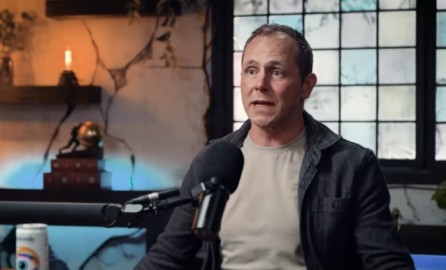
Read the full transcript of behaviour and influence expert Chase Hughes’ interview on Modern Wisdom podcast, May 28, 2026.
Editor’s Note: In this episode of Modern Wisdom, host Chris Williamson sits down with behavioral and psyop expert Chase Hughes to explore how technology and media are driving a pervasive era of psychological manipulation. They break down the tactical formulas behind brainwashing, how social media algorithms systematically exploit human psychology, and practical techniques elite interrogators use to uncover the truth. The conversation also details how to recognize subtle behavioral signs of insecurity, confidence, and aggression in everyday interactions.
Introduction: Who Is Chase Hughes?
CHRIS WILLIAMSON: Who are you? How do you describe what you do for work?
CHASE HUGHES: It’s so hard, but if I’m talking to somebody that’s boring, I’ll just tell them I teach psychology stuff. But if I want to get into it, I’ll say I teach everything from brainwashing to interrogation, applied on yourself and other people. And most of what I do is train sales teams nowadays. So sales has gotten really addicted to this stuff. But I’ve studied neuroscience for a long time. And I spent my life trying to figure out how the brain works and how to shift human behavior, not just to get someone to confess to something in an interrogation, but how do we modify our own behavior and what are the mechanics that make that possible?
Are We Living in the Most Psychologically Manipulated Era in History?
CHRIS WILLIAMSON: Do you think we’re living in the most psychologically manipulated era in human history?
CHASE HUGHES: Yes, hands down. But I mean, you go to ancient Rome, some shit would happen and they would say, “Hey, do the lion fighting thing with the guy. Let’s distract everybody.” So I don’t think it’s new. I think it’s a lot more pervasive though.
CHRIS WILLIAMSON: Is that because of it being facilitated through technology or is that because of a requirement for control? What’s the motivation for that?
CHASE HUGHES: I think it’s just the digital media. If you think about what is the number one fear of human beings, like every psychology class talks about it — it’s public speaking, but it’s never really public speaking. It’s, “I don’t want to be judged. I don’t want to be ostracized,” because in our brain that’s 200,000 years old, getting kicked out of a tribe means I’m dead. I’m not going to have sex, I won’t have babies, and I’m going to die. It’s a mortal fear of dying.
But if you go back to the 1980s, if I did something stupid in high school or even as an adult, I have to worry about 30 or 40 people judging me and maybe really kicking me out of a social group. And now with social media, you’ve got to worry about 5 or 10 million. So the consequences of doing something wrong are unbelievably exponentially increased, which has made us a whole different society, which we could get into.
And this is the origin of this pandemic of loneliness that we’re in right now, where everybody will agree that we’re at pandemic levels of loneliness and nobody — you don’t hear anyone saying, “I’m lonely,” which is a deeper root of this exact problem.
The Pandemic of Loneliness and the Performance of Self
CHRIS WILLIAMSON: What’s happening then?
CHASE HUGHES: You ever study French philosopher, this guy named Sartre?
CHRIS WILLIAMSON: I’ve read a little bit of his stuff, but just single quotes.
CHASE HUGHES: He had this play, it was called Sartre’s Hell, where 3 people are locked in a room basically like this, and it’s a play. But the room’s not totally locked. Every couple of hours the door opens and you can leave if you want to. But nobody leaves. And they’re all desperate to be seen a certain way by someone else.
This one guy — I’m paraphrasing — but he wants to be seen as a good person. So he asks this woman in there, “Please tell me I’m a good person, please.” And she says, “Yeah, you’re a good person.” But he knows she doesn’t mean it. So he stays. The door opens, nobody leaves, and they stay because they’re waiting for this confirmation from other people of who they are.
And in this world today, with how performative and artificial everybody has become — I’ve got to show my best self, I’ve got to hide shame, I’ve got to conceal all this guilt and the stuff that people carry around — the reason that somebody can feel lonely in a room full of people, and I’m not just talking about on Facebook, I’m saying in a real room full of people, is because no matter how many times your friends come over and pat you on the back and say, “Oh, Chris, you did a great job, we love you, you’re a great guy,” your spouse might say, “We love you and you’re a great person.” In the back of your mind, you know you’re faking it and you know that none of them really like the real you.
And at the end of the day — I’m not saying this is you — but at the end of the day, you’re lonely in a room of 150, 200 people because you know that none of them know you and you haven’t ever really been seen by anybody. So increased fear of judgment because of social media equals increased performance equals I’m wearing a costume almost all the time, and nobody has ever seen me, nobody really knows me. So even if they claim to like me, in the back of my brain, there’s this little reminder mechanism that says, “They don’t like the real me. And nobody ever has. Nobody’s ever seen me.”
So — this is my opinion — but I think that’s the root of the pandemic that we’re in right now of loneliness.
CHRIS WILLIAMSON: It’s interesting that a lot of the time the person has been subsumed by the persona, the role that people are playing.
CHASE HUGHES: Yeah.
CHRIS WILLIAMSON: But the persona is incapable of receiving love. It can only receive praise at best, and it feels like a pat on the back. The same as people don’t love Chris Hemsworth, they love Thor. They don’t love Russell Crowe, they love Gladiator. So how can you be surprised if you don’t genuinely existentially feel the connection with your pursuits and your successes and the people around you? You know that they’re just applauding the role that you play as opposed to seeing who you are truly.
The Movie Pig and Waking Up to Inauthenticity
CHASE HUGHES: Yeah. Have you seen the movie Pig with Nicolas Cage?
CHRIS WILLIAMSON: No.
CHASE HUGHES: You’ve got to watch it. Even if you watch this one scene, it’s like 5 minutes long. Nicolas Cage plays this guy who’s just kind of had enough and he stopped performing forever. Like he doesn’t care. He’s not mean or anything, just doesn’t perform. And he goes to this restaurant — he’s a famous chef and he’s exiled and stuff — and this chef is just pretending to be a certain type of person so that his restaurant is more successful. And Nicolas Cage just basically says, “None of this is real. You’re not real, which means they’re not real. And none of this — everything’s fake. Everything here is completely fake. And you’re going to wake up every day and there’s going to be less of you and less of you until there’s nothing left that you will ever recognize again.”
And it’s this massive awakening scene for this guy. And it’s beautiful. And I think when people watch it, they assume, “Oh, I’m in the Nic Cage role here.” And maybe sometimes in our life we are, but I think in other times we need to be kind of shaken awake and somebody grabs our little camera and changes our camera angle to look at a situation differently. I want to be woken up like that in every possible way. And I think that’s what we all need.
Is Brainwashing Real?
CHRIS WILLIAMSON: Is brainwashing real? What’s true and false about that?
CHASE HUGHES: Brainwashing is absolutely real. There’s a 4-step process and it spells out the word FEAR — Focus, Emotion, Agitation, and Repetition.
So if we start with Focus, this is me routinely breaking what you are predicting to be what’s going to happen next, over and over and over and in a massive amount. One or two times — this is what triggers a mammal brain, our mammal brain, and a dog’s. You’re walking down a pathway in the woods and a stick breaks behind a tree and you’re like, “What was that?” You’re not worried about anything else. So the fastest way to generate human focus or mammal focus is novelty. Some genuine thing happens that you didn’t expect. So that’s the first step — we generate a mass amount of focus.
And then it’s Emotion. With emotion, there’s an old hypnosis technique that became popular in the ’50s. This guy named Dr. Milton Erickson popularized this thing called Fractionation. So if you — and you’ll be familiar with Channel 4 and Derren Brown, I know a lot of Americans aren’t, but there’s no American equivalent of Derren Brown.
CHRIS WILLIAMSON: Ose, maybe the closest. Pullman.
CHASE HUGHES: Yeah, Ose Pullman. Yeah. So they figured out that if I pull somebody down in hypnosis and then take them gently out of it, when I put them right back down in — in quick succession, I take you out of hypnosis and then I put you back into hypnosis again — you’ll go deeper every time. And there’s no such thing as depth in hypnosis. What they essentially mean is you’ll have more GABA. You know what GABA is? It’s a neurotransmitter in your system, like the safety chemical. And you’ll also have a higher degree of theta wave brain state. And if I could just keep going up and then back down and up and then back down, you’re deeper and deeper and deeper in a hole every single time.
So if you look at your feed — anybody out there, you open whatever feed you want on whatever app you’re thinking of right now — you kind of scroll through your feed, you’re going to see stuff that kind of brings you back up, but only for a second or two. And then it’s fear and scarcity. And it follows the thing of getting your focus, showing you an authority figure, telling you something threatening, making you fearful of judgment of a tribe, and then making you emotional, and then bringing you back up and then back down in that cycle. So it’s Focus, Authority, Tribe, and Emotion. You’ll see it in your feed, guaranteed. And you don’t even need to scroll for like 5 minutes. You’ll see it right away.
And then it’ll be like one little thing to kind of bring you up, like one of those videos where the people are like, “Oh, we just found this baby deer on our porch one day and we decided to bottle feed him and raise him.” And then it’s like a fast cut to where he’s a giant deer sleeping in the kid’s bed or something and he’s like a family member now. It’s like a heartwarming video that feels great — and I love watching those — but then bam, they pull you back down again into the cycle.
But what you’ll notice after you see that fear video at the end of the Focus, Authority, Tribe, and Emotion — right at the end of that, they’re either going to A, bring you up, or B, show you an ad. I’ve never heard anybody talk about this before, but you can absolutely see it. And I’m not immune. I’ve bought stupid shit on Instagram like anybody else. Knowing about this stuff doesn’t get you vaccinated against manipulation. I bought the dumbest shit in the world on Instagram. It just means I’m a well-informed victim of this stuff.
But that’s the core of brainwashing — Focus, Emotion. That’s that fractionation part of up and down. Then Agitation. So this is doing something to where the mammalian brain recognizes, “This is a different environment than I was expecting,” not just a thing that’s happening. So now the landscape is changing. The oil prices are going up. This big thing is happening. There’s a shortage of some critical resource.
And then Repetition. So if it’s in a detainee environment, the massive focus is them being woken up in the middle of the night over and over by strobe lights and loud sounds, cold water, that kind of stuff. Then the emotion — the entire time you’re sitting there in your prison cell or whatever, I’ve got every photo your family’s ever posted on the internet playing on a slideshow using a projector on the wall. So Focus, Emotion, then Agitation — something is extremely disrupting to your ability to predict the future. That’s agitation. And then Repetition — the cycle begins again.
And you can kind of do whatever you want. That process creates a blank slate in people. And that’s the baseline formula of how brainwashing works.
Social Media as a Brainwashing Machine
CHRIS WILLIAMSON: And that is exactly what social media is using.
Engineered Division and the Mechanics of Manipulation
CHASE HUGHES: Yes. But I think a lot of people think, “Oh, there’s some dark conference table, dudes smoking cigars, like, how can we really mess these people up?” I don’t think it’s that at all. I think it’s just an algorithm that’s rewarding what’s creating the most revenue. So showing you an ad for shoes is way easier after you watch the little baby deer video or after I make you think that the water supply is being destabilized. So I think it’s just an algorithm.
I think there’s many other things where there’s people involved in manipulating the public. I don’t think that social media is doing that on purpose, that one piece of it. The piece that I do absolutely think is being done on purpose is if you’re on the left and you open your feed, you’re going to be shown the dumbest piece of s* idiots on the other side that they could possibly find. And if you’re on the right, you’re going to be saying the exact same thing about people on the left.
And with the number one goal being you, in the deepest part of your mind, you cannot help but make a permanent judgment about reality — “those people are effing crazy. All of them are crazy. I can’t trust them. I can’t listen to them.” And this is a campaign that I think is called engineered division.
And if I can get people fighting horizontally, they’re not going to look up. If I can get somebody destabilized and kind of at odds with each other, your ability to think critically is reduced by like 50%. This is massive. And they’ve shown this in many studies. Just getting someone destabilized in that way where they’re kind of fighting each other, they’re distrustful of their neighbors — they’re 10 times more easy to manipulate.
So if you think of how our brain works, if you’re falling off a cliff, your arms and legs are going to flail all over the place. They’re moving everywhere. The first solid object that touches your body, you’re going to instinctively grab onto it. Even if it’s a thorn bush or barbed wire, you’ll grab it. So when a population is destabilized, and something clear and logical is presented — something like a prepackaged enemy, I’ll just leave that there — is given to you, you’re 10 times more likely to accept it because it’s clear, it’s prepackaged, and it’s easy to follow.
And humans do not ever follow the best leader in a situation. They follow the most followable. And there’s a big difference between those things. So destabilization, that would be step number 1.
And 2 Chinese intelligence officers wrote a paper on this. I think it’s called Unrestricted Warfare. It’s been translated into English and they use a hypothetical country that really looks like the United States in this paper. But they talk about this asymmetric warfare and how “we have to get them fighting each other. We have to make them distrustful of each other and we destabilize the government from the inside because we can’t win a terrestrial war with these people.” And all of this is just written out there. You could buy this probably on Amazon for like 3 or 4 bucks. This translated book is probably online too.
But it’s very open that it’s not just like the normal bad guys that you hear about. These are foreign state actors that are doing some of this stuff. We just had a former mayor of a city in California, I believe, that was proven to be an operative for China — a mayor. And so I think people are thinking like there’s some ancient rich family in the depths of some cave somewhere plotting the destruction of the world. I think it’s just countries that hate each other and greedy, selfish companies.
And maybe I’m oversimplifying it, but if you’re watching the news and you don’t hear nuance, you are being manipulated. Because they’re giving you a message: “Here’s the enemy. Here’s how to feel about what you’re watching on the news. And here’s exactly what’s happening.” And they’ll tell you that this, this, and this — all these three things happen. They’ll never tell you how they’re connected. They’ll act like everything’s a separate story. So I think there’s an agenda. I won’t pretend — I’d be a fool to say I can understand or know the endgame of any of this stuff. That’s a long-ass answer to your question.
What Makes a Leader Followable?
CHRIS WILLIAMSON: What makes a leader followable?
CHASE HUGHES: Yeah, there are — authority first, the perception of authority, and we trust in order. There are 5 things that make us trust another human being. First is confidence. So the person doesn’t have any reservations. They’re talking clearly. They’re speaking in a way that I can clearly understand. They’re not using academic language, which is why most presidents — the president who speaks at a lower grade level is, I think, like 35% more likely to win a debate. So that makes them followable, right? Confidence and literacy — it’s clear to understand them. They’re very confident.
Next is discipline. And I don’t mean that the person is like making videos of themselves waking up and like, “Hey, here’s my morning routine.” But I mean we can see discipline on people. We can see somebody that has self-control and discipline and that starts coming through. We can pick up on that. And then leadership. And for good or bad, there are cult leaders that have all these qualities — all these qualities to gratitude and enjoyment. The gratitude just being like, “I’m thankful for what’s happening right now in the moment. I’m emotionally stable. I’m easy to follow.”
But our brain’s shortcut is that we follow someone who is probably loudest, clearest, and has no hesitation in their behavior. So our brains are trained to look for micro-hesitations and automatically give us a little gut feeling of, “Oh, I shouldn’t trust that person.” So micro-hesitations are the fastest way to destroy authority.
Controlled Release of Pressure
CHRIS WILLIAMSON: In both of those scenarios that you just described — the world being chaotic and difficult and confusing and something being offered up as order — in one example, it’s an enemy that’s prepackaged. There’s order. “Why is this going bad? It could be a million reasons, or it could be that group over there.” And the same thing for leaders. “I don’t understand what’s going to happen. We’ve got all of these different directions that we could go down. Don’t worry. All of that chaos doesn’t need to be worried about because I have the order and I can wrangle this system to bring it to bear.”
CHASE HUGHES: Yeah, for better or worse. And that’s what happens. And the way that I describe this very simply is the process is to close down a machine, close everything down, build pressure inside of it, and then decide where the pressure is going to release. So it’s a controlled release of pressure that’s been being built up on purpose. And sometimes that is like the pressure is some relief, like “we have this national thing that’s happening” and the pressure release is chosen at a certain point.
And there’s a lot of people that say, “Track the money.” If you track pressure — financial pressure, economic pressure, shipping and trade pressure, oil shipping around the world — tracking the pressure is always more revealing from an intelligence perspective than tracking the money. Because pressure’s going to show you it has to have a release valve somewhere. And 9 times out of 10, there is a person or group of people that are choosing how and where the release valve is going to be.
The Algorithm’s Bidirectional Relationship
CHRIS WILLIAMSON: What’s the outcome you think that those people want?
CHASE HUGHES: Like, the “they”?
CHRIS WILLIAMSON: Yeah, the “they.” If there is — part of this is social media algorithms have reverse engineered the way that humans’ brains work because it’s a very simple algorithm.
CHASE HUGHES: Super simple.
CHRIS WILLIAMSON: And the fact that it’s simple is why it’s so effective because if you started to put constraints on it, you would be trying to predict the best way to get the outcome that you want. The best way to get the outcome that you want is to just let it optimize for that outcome and reverse engineer however it got there.
CHASE HUGHES: Yeah.
CHRIS WILLIAMSON: That’s why we can complain all we want about the algorithms, but even the engineers — you open up the black box of YouTube, you open up the black box of TikTok — they don’t know what’s happening inside of there. There is no knowing about what’s happening inside of there. This is just recursive algorithms training itself.
CHASE HUGHES: Yeah.
CHRIS WILLIAMSON: Interestingly, the coolest thing I learned about this is from Stuart Russell, the guy that wrote the textbook on AI. So up until probably 2020 when the transformer technology and LLMs came along — it may still be the case, I know he’s still talking about this a lot — I think his textbook had been translated into 100 languages. So it was used around the world. It was the canonical textbook for AI, Stuart Russell. He wrote this book called Human Compatible. He’s talking about computers, humans, some psychology, a lot of AI and computer science.
And he said that there are two ways that algorithms can become better at predicting what it is that you’re going to click on. The first one is serving you content which is more akin to something that you want to press, right? Like if all you’re trying to optimize is CTR and watch time — which is kind of every algorithm now — I can just better predict what it is that you want and give you that. But the other side is I can nudge your preferences to make them easier to predict. So it’s a bidirectional relationship.
And it’s not like anybody told the black box algorithm to go and do this, but over time it knows, “Hey, if I walk people down this sequence of steps” — and this is where I think the truth about pipelines and radicalization comes along — but it’s not necessarily radicalization to an extreme of one particular worldview. It’s an extreme of predictability.
CHASE HUGHES: Yeah.
CHRIS WILLIAMSON: And this bidirectional relationship between becoming better at working out what you want to click and becoming better at making you more predictable to work out your preferences.
CHASE HUGHES: Yeah.
CHRIS WILLIAMSON: That is really — when he told me about it, it blew my mind. It was one of the most mind-blowing things that I’ve ever heard.
CHASE HUGHES: Dude, I’ve got to read this because f*ing spectacular, eh? When I teach persuasion and influence — I’m actually here in town today teaching. I was, I’ve been on stage all morning doing a seminar training.
CHRIS WILLIAMSON: You need new time. That’s what you need. Yeah.
Engineering Conditions and Context
CHASE HUGHES: So when I teach, what I’m telling people is your first goal is being able to engineer and build the perfect client. I make the person the perfect recipient for what I need to give them. So if I know the outcome is I need you to click on baby deer videos, I’m going to engineer the s* out of that to where I’m not going to just start showing them to you. I’m going to make you the perfect recipient before I start shifting your behavior.
The way that I typically describe this is if you learn persuasion, interrogation, sales, whatever it is, they’re going to teach you how to engineer outcomes. Because people are obsessed with the outcome. But I argue that if you’re good, what you engineer are conditions. And if I can engineer the right conditions, I can get you to do anything, anything.
Just as an example of how powerful conditions and context are, I think it was in the 1940s, this stage hypnotist guy is doing a comedy club thing, you know, like, “Oh, the guy next to you farted and it smells really bad. You’re on a roller coaster now.” And it was all of this stuff, but there’s like 10 or 15 people up on stage. And then part of the show is, “All right, all of you are cops. You got called to a party. Everybody in the audience is at a party right now. And the more the audience laughs, the more you’re going to get upset.”
So they get up and they’re not allowed to leave the stage. They’re all kind of yelling, pretending like these kids are at a house party or something. Then he’s like, “Oh, one of them’s got a gun. He’s going to take you down.” And one of these guys on the stage is an off-duty police officer carrying a weapon, starts firing into the crowd — a real gun. I think one person was — I don’t know if he died, but he shot a real gun into a crowd. The cop was a good person, well-meaning, just wanted to go out with his wife for an evening. But context can dictate your behavior no matter what.
We’re going to probably both — you and I, not together — but we will get naked by the end of the day, both of us. We’re going to get into a shower.
CHRIS WILLIAMSON: The day is young.
CHASE HUGHES: The day is young. We’re going to get into a shower, get into a bath, whatever. But we’re not, as we’re standing in front of the shower, like, “Oh, I don’t know if I should.” We just get naked. So context tells us what’s allowed. If I can modify context, I can get you to do anything.
The PCP Formula: Perception, Context, and Permission
CHASE HUGHES: All I have to do is the PCP formula. I change your perception about the situation that’s going on. Then I say, “Yeah, since you’re viewing this differently, it’s actually a situation where people are trying to do X.” Or I reframe it as someone being a complete threat, but I’ve changed your perception of what’s possible to do. Then the context is some person is a threat and they are a mortal threat. So I’ve changed the category. And if I shift category and context, that changes what you think you’re allowed to do and what you’re not allowed to do.
If you’re really good at this stuff, like a lot of these systems are, the only question is: what is the context where the behavior I want you to do is automatic? If I can make you believe that you’re in a shooting range and you’re actually standing in a bar, your behavior is going to be very different.
So what you’re really seeing over time is a drift of perception and then context. With this PCP — perception, context, and permission — permission is that final thing that says, “In this context, I’m completely allowed to do this, and it makes perfect sense.”
So a lot of what we’re seeing is context engineering. If you look at the Milgram experiment, which I think a lot of people are familiar with, they prove that people will shock strangers — what they think is to death — in about 47 minutes, at a 70% success rate, or failure rate, whatever you want to call that. But they didn’t have a script. There wasn’t some magic sales script, or a magic hypnosis guy that comes in there. It’s just a dude in a lab coat. And all they did in the Milgram experiment is engineer the conditions that make it okay. The context made that shocking behavior permissible.
The Most Effective Behavioral Manipulator
CHRIS WILLIAMSON: You mentioned there about people or technologies that are unbelievably good at manipulating behavior. When it comes to seeing operators, people — who’s the most effective behavioral manipulator that you’ve ever seen operate in front of you?
CHASE HUGHES: I can’t say names. The guy’s — I think he’s still active — but he could get pretty much anybody to do anything. He shifted the context. The task that I gave him was to go into this very social environment. There’s like a band playing, it’s like a bar, like a pub.
CHRIS WILLIAMSON: This is a real thing?
CHASE HUGHES: Yeah. And I said, “I want you to have someone laid out on the floor thinking that they’re just completely unconscious in like 7 minutes.” I couldn’t hear anything that was being said, and he did it. He did it within like 3 or 4 minutes. And I asked him, “What did you do?” And he said, “Oh, I just told her I was a hypnotherapist, and I asked how she wanted to change her life. She was really excited that she wanted more discipline, and I just told her I would give her more discipline, and it’s really easy.”
So he shifted the context to her being helped instead of controlled, and made it okay for her to be laying on the floor — made everything okay just because he shifted the context.
It’s the same in interrogation rooms, where the context shifts and there’s a 5-step protocol that people use to make someone confess to a crime. And if you really examine what the protocol is, it’s just a massive shift in context and perception.
CHRIS WILLIAMSON: What’s the protocol?
The Interrogation Confession Protocol
CHASE HUGHES: You ready? So it’s: socialize, minimize, rationalize, and project.
CHRIS WILLIAMSON: Is that not 4?
CHASE HUGHES: Yeah, it’s 4 steps. And then there’s an alternative question at the end.
CHRIS WILLIAMSON: Okay.
CHASE HUGHES: Is it this or this? So just name a crime that’s not gross that we can actually talk about. Anything you want, like stolen money.
CHRIS WILLIAMSON: Texting while driving.
CHASE HUGHES: Okay. Texting while — well, they’re not going to be in an interrogation room.
CHRIS WILLIAMSON: Okay. Yeah. Cool. Smuggling arms.
CHASE HUGHES: Okay. Smuggling arms. Great. All right. So the first step would be socialize.
CHRIS WILLIAMSON: F*ing interrogation room for texting while driving. There’s just armies of interrogators up and down the United States highways.
CHASE HUGHES: It might solve the problem. Okay. So smuggling arms. You’re talking to this person and you’ve decided that it’s time to shift into interrogation. The beginning of an interrogation is called the interview process, and the shift is called the confrontation. The confrontation is basically where you tell them that they’re lying, but you don’t do it in a way that hurts their ego.
So I might say something like, “Chris, I appreciate you and just want you to know I’ve been doing this a really long time. I’ve talked to a lot of people. And if there’s one thing I know for sure, it’s when I’m not getting the full story. And I don’t think I’m getting the full story here.”
And then I go right into the socialize part. When I say socialize, it’s basically, “People will understand.” So the line is, “I think at the end of the day, you did this because you’re a good person, and I’m going to explain why. I’ve talked to a lot of bad people and I know you’re not a bad person. And I think when people see all of the steps that led up to you getting wrapped up in this, they’re going to understand.”
Then minimize. “Like I said, I don’t think you’re a bad guy. And to be honest, I deal with bad people all the time — people that do way worse stuff than this. I’ve seen people that have done way worse than this get completely over it. So it’s not that big of a deal. Nobody’s accusing you of being some mass murderer or something like that. This is not the same thing.”
Then rationalize. “I know you came from a poor village. I know that you had a really tough background, and I know that you’re a good person. And I’m not saying whether or not you were doing this to pay for it, but I know that your aunt has several hundred thousand dollars in medical bills that she’s needed to pay.”
Now I project. The project is basically, “It’s not your fault. I think anybody that was handed your conditions and your life would have probably made the same choices that you did. I know a lot of times these arms smuggling rings will use threats and pressure to get someone into the unit. So if that happened to you, I just want you to know that’s something I want to know about, so I know that you didn’t deliberately decide to do this.”
And then we move into the alternative question. “So Chris, what I’m really trying to find out here is: were you doing this just to make a bunch of money and then go buy a bunch of drugs and live in some other country? Or were you really trying to help one of your family members? Because I know these guys have been talking to you, and I’ve looked into you as well, and it doesn’t look like you’re a bad person.”
So now it’s an alternative question of: are you a piece of crap, or did you try to do something good for your family?
CHRIS WILLIAMSON: Both of them are admissions of guilt though.
CHASE HUGHES: Yeah. Yeah.
CHRIS WILLIAMSON: You’re not — you’re trying to find out an admission of guilt.
CHASE HUGHES: Yes. But in the conversation, we’re trying to find the reason it happened. We’re going for the admission of guilt because in the first part of the interrogation, there’s a long series of questions we ask. And based on those responses, if they respond a certain way to each question, then we move towards the confession methodology.
The Bait Question
CHASE HUGHES: They’re basic questions like — can I say the city that we’re in? Of course. Okay, so let’s say 2 blocks from here, there’s a neighborhood in Austin, and let’s say you robbed a house. One of those questions to determine how guilty you are is one of my favorite questions in the world. It’s called the bait question.
It basically says, “Let’s imagine you did this. I want to put you in the mindset so you can understand the question. Let’s say you stole a bike out of this person’s garage a couple days ago. I called you up and said, ‘Hey, I think you might have seen something that’s going to help us in the case. Could you please come in here and talk to us?’ You come in and I say, ‘Chris, thank you for coming in. This is important to us. We’ve got officers out there that have been working all through the night collecting evidence. I just want to ask you one question, and you seem like a really good guy, so I want you to think really carefully before you answer this. Is there any reason whatsoever that one of the neighbors would have a Ring doorbell camera that shows your vehicle in that area?'”
So now you’re confronted with a dilemma. If I say no and he pulls out a video, now I’m a liar and they probably know that I did this. If I say yes, I’m placing myself at the scene of the crime. And the cool thing is that someone who’s innocent would be like, “Nope.” It would be instant — they would have no hesitation. They’d have tons of confidence: “Nope, there’s absolutely no reason.”
CHRIS WILLIAMSON: Mm.
CHASE HUGHES: So that’s one of those setup questions. And another one —
CHRIS WILLIAMSON: But that’s regardless of whether you’ve got the Ring doorbell footage or not.
CHASE HUGHES: Yes. And I don’t say that I have it.
CHRIS WILLIAMSON: “Is there any reason why?”
CHASE HUGHES: Yes. “Is there any reason that one of the officers would have received some Ring doorbell or some doorbell video camera footage that shows your vehicle in that area?”
CHRIS WILLIAMSON: Mm-hmm.
The Punishment Question
CHASE HUGHES: Not you do anything bad. And another one is, another great question, I can’t reveal all these, but another great question is called the punishment question. And this works on kids, it works on adults, it doesn’t matter. And it’s just a few words long. I would say, “What do you think should happen to the person that did this?” And you always get amazing answers.
I’ll give you my kids’ example. And this is from when they were 7 and 8, give or take. I came home from work. I’m in my camo uniform. And we had a white living room rug and there’s like a little cardboard thing of chocolate milk just like sitting on its side and there’s like a little pool of chocolate milk on the carpet. And they were both playing the Xbox. The milk’s like right there, a few feet away. I was like, “What the hell, guys?” They’re like, “Oh, I don’t know.” And I was like, “Did you guys do this?” And they’re like, “Nope.” And I said, “All right, William, kitchen. Charlotte, dining room.”
CHRIS WILLIAMSON: F*ing prisoner’s dilemma them.
CHASE HUGHES: Yeah. And I went over to Charlotte. Yeah, it was Charlotte. And I said, “Charlotte, what do you think should happen to the person that did this?” And she goes, “Spankings, grounded, no more Xbox, can’t play with the friends, no more sleepovers, can’t eat in the living room anymore.” It just goes on and on. I was like, “Okay, all right.”
CHRIS WILLIAMSON: It’s a kid’s equivalent of capital punishment.
CHASE HUGHES: Yeah. And I was like, damn. So I went to William and I said, “Will, what do you think should happen to the person that did this?” He goes, “Maybe no more chocolate milk in the living room.” And there we go. I had my guy really quick.
CHRIS WILLIAMSON: Have you ever seen those videos of when there’s 3 dogs in the house and one of them’s ripped the s* out of a couch or something and 2 of them are just sort of looking like this and the other one’s got his face up against the wall.
CHASE HUGHES: That is so good.
CHRIS WILLIAMSON: I want to see dog interrogation videos, dude.
Building Rapport Quickly
CHRIS WILLIAMSON: When it comes to building rapport, what are the techniques that elite negotiators use to create rapport quickly?
CHASE HUGHES: Number one is making an admission that other people might be embarrassed about, of having a fault of some kind or being insecure about something.
CHRIS WILLIAMSON: Revealing something.
CHASE HUGHES: Yeah. Just being something that’s honest and true. So it resonates.
CHRIS WILLIAMSON: What would be an example?
CHASE HUGHES: It would depend on the situation, but I might say something like, you know, bike stolen.
CHRIS WILLIAMSON: Let’s stay with that. The stolen bike or the arms, whichever you want.
CHASE HUGHES: Well, yeah. So you’re talking about interrogation room rapport?
CHRIS WILLIAMSON: Yeah.
CHASE HUGHES: Oh, okay. That’s different.
CHRIS WILLIAMSON: Oh, actually stick with the normal rapport and then we’ll go back to interrogation.
CHASE HUGHES: Yeah. So normal rapport, the admission might be, “I was so in my own head. I was so afraid to be open around other people, and I kind of wore a mask for like 10, 15 years of my life until I realized it’s not a big deal as I think it is. I’m not a big deal as I thought I was.” And just saying something that other people really wouldn’t and being honest about it is one of the fastest ways to make trust start happening in a conversation, because people are so fake that that is somehow rare now.
And that’s why I think podcasts where there’s a genuine dude on there get more views than CNN. I think Rogan’s got more views than CNN. But at the end of the day, that’s one of the fastest ways to do it.
Another one of the fastest ways to do it in this world is to have ignorance and fascination about something that you pride yourself in knowing a lot about. So if you’re an electrical engineer or something, or maybe you wire podcast studios for a living, I’d be like, “God, that’s always fascinated me with all that stuff. I don’t think I could do that if I tried for a year. I’m just not inclined to do that, but it’s still fascinating.” That’s one of the fastest ways to absolutely do that.
And I do think rapport is a little bit overrated. I think at the end of the day, having contagious confidence to where your confidence is high enough where the other person feels confident is so much more effective, and rapport is a byproduct of that. So I always try to think, what is upstream of the thing that I want? So if I want this as my desired end state, what are all the things that needed to happen to make this just an automatic byproduct of what I want?
And one of the things that we found out over these years is in an interrogation room or in some business setting, it doesn’t actually matter, is this level of confidence without any hierarchy or status. And the biggest mistake that most people make is, if I say the word confidence, you’re going to think “more than who,” or “higher than,” or “less confidence than.” And that hierarchy thinking is the fastest way to collapse any kind of skill in human beings because it pushes your awareness back behind your eyes.
And I think when your awareness is in front of your eyes, people can really feel that. One metaphor I use to talk about this a lot is, if you went into a big piano store — we’re in Austin, so there’s probably a piano store somewhere — and they’ve got this big grand piano there. And I go up to the piano and I smash down the middle key really hard, which is a C. It’s going to send out this frequency through the entire store. And the C string on every other piano is going to start resonating like crazy. But it’s only that string that’s going to vibrate, because it’s tuned to that frequency. It’s not going to vibrate any other strings except for C. The same thing works for tuning forks.
So when I teach this stuff, it’s that humans work almost exactly the same way. And one of the phrases that I teach is, “Wherever you’re speaking from is where you’re going to speak to in other people. Where you speak from, you will speak to.” So if we’re in a conversation and I’m worried about hierarchy and status, I’m plucking that same chord in the person I’m speaking to, because that comes through.
If I’m very confident — and not insecure confidence, posturing kind of stuff — that’s going to trigger confidence in the other person. So true confidence is really contagious. And the other confidence, like where you can tell somebody’s read 15 of those LinkedIn articles of “how to display CEO-level confidence” — make solid eye contact, firm handshake, pat somebody on the arm, use their name, that kind of s*. Genuine confidence makes other people confident. Absolutely. And having enough confidence to share without ever viewing it in the lens of hierarchy and status is the fastest way to whatever people call charisma. I think it’s the fastest route.
The Components of Confidence
CHRIS WILLIAMSON: How do you think about appearing confident in a room?
CHASE HUGHES: Can you rephrase that?
CHRIS WILLIAMSON: What are the component parts of appearing confident to somebody?
CHASE HUGHES: Well, what we’re really doing — if you read one of those articles about how confident people command a room and all that, there’s YouTube videos all day long for that stuff — what I think they’re made of is they’re studying the symptoms of confidence. So if I wrap you in a heating blanket and squirt water in your nose, it does not give you COVID, but it gives you a couple of symptoms. It doesn’t work in reverse all the time.
So what I think a lot of those people that train online do is they see somebody who’s genuinely confident and think, “Oh, what are they doing with their body? They’re standing up straight. They’re speaking from their diaphragm. They’re doing all of these things. They use hand gestures like this.” And then they’re like, “Okay, let’s make an Excel spreadsheet out of this. We’re going to figure this s* out. How wide was the hand gesture? Let me check. It’s 36 inches. Yeah, it was 36.” So then we train somebody to do this with their hands at 36 inches and they’ve got social anxiety. They’re going to look like an idiot. It’s not going to look congruent. It’s going to feel like, “Whoa, what’s going on with this guy?”
So I think our culture is just obsessed with symptoms in general. I want the Ferrari and the yacht, but I don’t want the bank account. I want the symptoms of being wealthy. I want to show people that I have symptoms of wealth.
But if you look at the cause of confidence — and I think my definition of confidence is way different than what you read online — I think confidence is two elements. Number one, it is a willingness to receive social injury. I’m willing to be socially injured.
CHRIS WILLIAMSON: Mm.
CHASE HUGHES: Number two, it is a generalized, or kind of a fuzzy, belief that things are going to work out okay. Things are going to be okay. So that social injury is typically why people can’t feel confident. It’s social injury or permission. “I don’t have permission to be like that here.” If I make $50K a year, I’m not going to be confident walking into that Hermès, Louis Vuitton, luxury place.
CHRIS WILLIAMSON: F*ing Gucci.
CHASE HUGHES: Yeah, whatever. And the confidence comes from permission. “I don’t have permission to be here. They can tell that I’m not from here.” So that’s a role-based permission. But if you’re willing to receive social injury, you’re totally fine with it. You have a generalized expectation that things are going to be okay. That is the first step to really feeling confident. And completely eliminating hierarchy and status from your mental thoughts forever for the rest of your life, I think, is the best way.
CHRIS WILLIAMSON: Because it’s not related to how you and somebody else interact. It’s within you.
CHASE HUGHES: Yeah, absolutely.
CHRIS WILLIAMSON: I feel like this is going to go okay. And if social rejection does come my way, I’m fine with it.
CHASE HUGHES: Yeah, it’s a social injury and that’s okay. It might hurt. I’m not saying I’m immune to any of it. It might hurt, but I’m okay. I’m happy to receive it.
Analyzing Trump as a Communicator
CHRIS WILLIAMSON: What do you make of Trump’s behavior? How do you analyze him as a communicator?
The Art of Distinctive Communication
CHASE HUGHES: He’s a fabulous communicator. I think he speaks at a 7th grade level. A lot of good leaders speak at a low level. I think Obama was 7th or 8th grade level as well. But why do they do that? Because they will become more followable, like exactly what we were talking about with authority and why we follow authority figures in times of distress.
And I think he’s a communicator that is obviously self-serving, self-fulfilling. People call him a narcissist, which is a diagnostic term for insurance companies, which is why that was invented. But say whatever you want, he is, I think, a great communicator. I think he gets the point across and he’s just very idiosyncratic. He’s weird. He does stuff that other people don’t do. He breaks from a lot of the norms. But the communication is effective.
Why is it effective though? Like, how does he get so much attention? Well, one, he’s kind of loud, but number two, it’s novelty. We talk like novelty massively generates focus in human beings, and he’s like a novelty master. He’s a magician of novelty. So he’s the dude when it comes to that, and he is not the clearest communicator when it comes to like long vision and plans and stuff like that, but he says things that are followable. He has ideas that are very easy to follow.
Man, Shane Gillis did a bit about him talking about Baghdadi when Baghdadi — have you seen that? It’s one of the best videos on YouTube. But it was just hilarious how simply, it was absolutely simple how he communicated everything and it painted a picture in your head. And he did it in a way that didn’t have to use literary flowery poetry language and all of that, but it put a very clear picture in your head when he said that stuff.
CHRIS WILLIAMSON: It’s interesting to think about how distinctive someone’s voice is. And it’s typical that a lot of people that have massive cultural influence have a distinctive — if you can do an impression of someone, probably a good indication they’ve got quite a distinctive voice.
CHASE HUGHES: Yeah.
The Power of a Signature Voice
CHRIS WILLIAMSON: You can do an impression of Jordan Peterson quite easily. Very distinctive voice. Can do an impression of Andrew Tate quite easily. Very distinctive voice, distinctive speaking cadence, repetition. Then Russell Brand, unnecessarily verbose and articulate. Sort of meandering sentences, listicle style. With Trump, sort of punchy thing, superfluous restatement of the past point with embellishment and a little bit of bravado. Obama — staccato, very sharp: “this, well it’s this and then it’s this like da pa-pa-pa-pa-pa-pa-pa.” I think there’s something to be said about a signature style.
Sometimes, much of the time, maybe most of the time, the impressions that someone does about another person are typically not that flattering. Most impressions aren’t done to pay a compliment to someone.
CHASE HUGHES: Yeah.
CHRIS WILLIAMSON: But if someone can do an impression of you easily, you kind of own an area of verbal real estate. I have this — if you do that, is that Kermit the Frog or Jordan Peterson? I can’t work it out, but it’s one of them. I know it’s one of them in there. And if you do a Trump, even a bad Trump impression, I know that’s Trump. Actually, that’s a good judge of how effective someone is as a rhetorician and of having a distinctive and signature style of speaking.
CHASE HUGHES: Yeah.
CHRIS WILLIAMSON: How easily can someone do an impression of you? How far away from the way that you speak can I do an impression and the person I’m saying it to still understand the person that I’m doing it about? You know what I mean? That’s a cool rule of thumb.
CHASE HUGHES: Yeah. And it’s like the novelty aspect and the uniqueness of the voice.
CHRIS WILLIAMSON: Distinctiveness is a huge part, I think.
CHASE HUGHES: It’s like the facial features are to a caricature artist. You know, like all these individual weird unique things about the face, then I’m going to exaggerate them for a caricature. I think it’s the same kind of thing. And that voice is like a good trademark. If you have that unique voice, it’s fantastic for a trademark.
The ElevenLabs Voice Theft Controversy
CHRIS WILLIAMSON: This is why I need to get ElevenLabs to give me my voice back. I’m on a campaign. I’m on a crusade against ElevenLabs. They stole my voice. They stole my voice and now everyone’s using it in ads.
CHASE HUGHES: I have at least 2 AI channels of me popping up every day on YouTube. It’s unbelievable. With my name.
CHRIS WILLIAMSON: Okay. That’s different. That’s slightly different.
CHASE HUGHES: Oh, they’re using your voice likeness.
CHRIS WILLIAMSON: Yeah. So, f*. They have a go-to British voice called Archer, and this has been around for a while now. It’s just trained on me. It’s been trained on me. It’s got the same verbal tics that I have from the specific area in the northeast of the UK that I’m from. It’s got glottal stops in certain words. It’s got the U sound words, yers. Bizarre little idiosyncrasies and phonetic idioms that I’ve got. And it’s motherfucking me.
And at some point in future, I’m going to shout at someone. The CEO was in Qatar while I was there giving a speech. One of the C-suite was there in Qatar. And I got stopped talking to the dude, the new CEO of Qatar Airways. And I had this thing in front of me and it was: connect with the guy that might be able to give me a discount on flights on Qatar Airways, or go and shout at the dude from ElevenLabs. I’m like, I’ll take the flights. It was like Deal or No Deal.
CHASE HUGHES: Oh, that’s good. Want me to play it?
CHRIS WILLIAMSON: Yeah, f*, play it. Like, watch this thing. You’re an expert in communication. Yeah, listen to this.
VIDEO CLIP BEGINS:
UNIDENTIFIED SPEAKER: Massive searches, more than $200 million spent, and on March 8th, 2026, Ocean Infinity officially called off their last research. Their CEO, Oliver Plunkett, essentially admitted what no one in the official investigation wanted to say: maybe the plane simply isn’t where we’ve been looking. But one man wasn’t surprised. A journalist named Jeff Wise had been saying exactly—
VIDEO CLIP ENDS:
CHASE HUGHES: Your THs — when you say the TH, it’s very unique, and it’s got your THs.
CHRIS WILLIAMSON: I’ve also got a slight lisp that I work against, and it’s got that too. So whoever the AI is, they f*ing inherited my lisp.
CHASE HUGHES: Maybe it’s good.
CHRIS WILLIAMSON: We were talking about, if I can get rid of that, if it starts speaking better than me, that’s when I’ve got an issue. It’s a race between the AI to refine itself and me and my speech coach Miles to see who can win first — who’s going to get rid of the lisp first, the real version of me or the copy.
You’re talking there about building confidence, but I’m interested in what behaviors instantly reveal insecurity. You mentioned micropauses as one — that maybe not insecurity, but authority and trustworthiness, perhaps?
CHASE HUGHES: Yeah.
CHRIS WILLIAMSON: What are the behaviors that reveal insecurity?
Reading Insecurity Through Body Language
CHASE HUGHES: So when it comes to insecurity, let’s go mammalian and then human. So the mammalian fear response or insecurity response is a reduced arm swing, incomplete movements. So like, I’m going to reach for this, I’m going to stop and then kind of continue doing it, and then the movements aren’t completed. You’ll see a lot of that kind of stuff. And you’ll see reduced eye contact in a downward motion.
And biggest of all, you’re going to see the body moving or staying in areas that protect arteries. This means you’ll see a lot less of this. You’ll see the humerus kind of sit in a little bit closer to the body while they’re talking so that the brachial artery is protected. You’ll see the shoulders a little bit up — in social situations they’ll stay a little higher, their head coming down a little bit, protecting the carotid arteries. You’ll see the arms in front of their body like this sometimes. This is called a fig leaf gesture, named by Alan Pease.
CHRIS WILLIAMSON: ‘Cause it’s covering the genitals. Yeah. Oh, interesting.
CHASE HUGHES: But it’s also protecting the femoral arteries at the same time. And men are more likely to do that. Women are more likely to wrap a single arm around the abdomen like this while they’re talking — like, if they’re insecure — and this is protecting the uterus area. And there are studies on this.
I have no idea who did the studies, but this was originally written about by a guy named Desmond Morris, who I think just died in the last month or two. He was in his 90s. He’s like the first researcher who wrote a book about really observing humans as if they were animals. Like, how did their body move? And the book was called Naked Ape — like us, like the hairless monkey. And he studied, he was like this savant at human behavior.
But anyway, when you’re looking at the insecure behaviors, and if you’re looking at two people, what you really want to look at — especially if there’s two people — is which person needs something more from the other person and which person is reacting to the other person.
The one thing — man, I’m hesitant to reveal this. The one thing that I teach a lot of these venture capital people — they’ll get pitched a lot. I’ve never been to one of the pitches.
CHRIS WILLIAMSON: I’ve been on the pitching side quite a bit over the last 6 months. So, okay. I know what this feels like.
Lip Compression: The Tell-Tale Sign of Withheld Information
CHASE HUGHES: The one thing that I teach them to look for is what’s called lip compression. And we tend to do this at times when we are withholding a little bit of information or we’re withholding an emotion. So like, you imagine if your friend started a new job and you’re like, “Hey dude, how’s the new job?” And he goes, “Oh, it’s great.” So that lip compression is withholding. So what I teach them to do is watch for the compression. The moment you see it, just rewind. What were they just talking about right before you see it?
CHRIS WILLIAMSON: “How’s the financials in the business?”
CHASE HUGHES: Yeah. He says, “Oh, all the financials are great. We’ve projected out a good thing for the next couple of quarters.” And you’ll see just that little lip compression is—
CHRIS WILLIAMSON: Is that lip compression? I’m always interested in why that particular expression or feature is associated with that particular motive or leak. What is it? Is it—
CHASE HUGHES: It’s our first way of withholding. It’s our first way to hold in milk. Like a tongue jut — after someone tells a lie, there’s something called a tongue jut that’s very common, like this. This is our first no. It’s a way to force a nipple out of the mouth. And these are theories of Desmond Morris’s as well. Like, this is our first way of withholding and keeping milk in the mouth. And our first no is pushing our tongue out or pursing our lips a little bit.
CHRIS WILLIAMSON: That’s sick. Is that not cool?
CHASE HUGHES: Yeah.
CHRIS WILLIAMSON: Is that not cool?
CHASE HUGHES: You’re amazing.
CHRIS WILLIAMSON: Sorry, I’m enthralled in the conversation. Is this not — are people more bored usually? Because this is brilliant.
CHASE HUGHES: Okay, good. Yeah. Maybe I expect you to be bored. It’s boring to me because I’ve been looking at it for like 10, 15 years.
CHRIS WILLIAMSON: I’m British. You have to remember, you have to filter it through the British, whatever this is.
CHASE HUGHES: Yeah.
CHRIS WILLIAMSON: Yeah.
Reading Body Language: Stress, Deception, and Behavioral Clusters
CHASE HUGHES: So that’s our first no. Tongue out of the mouth, that tongue jut is our first no. There’s a difference though between a tongue sticking out really quick and then a tongue licking the lips. A tongue licking the lips is called a hygienic gesture. It’s made to make somebody more attractive. A hygienic gesture might be me sitting up a little straighter, pulling my shirt down, rubbing lint off, licking my lips — all those gestures that are made to look more attractive.
Those you want to look for before someone starts talking. So if they know a topic’s coming up, like, “All right, next we’re going to get into financials,” and then you see hygienic gestures before they start talking. Typically you’ll see hygienic gestures — they’re improving their appearance before the delivery of something that might be questionable.
CHRIS WILLIAMSON: You’re trying to stack the deck in their favor.
CHASE HUGHES: Yeah. There’s no behavior for deception. None.
CHRIS WILLIAMSON: There’s no behavior for deception. What does that mean?
CHASE HUGHES: There’s no behavior that’s like, “This is deception.” None. Zero. What we’re measuring with behavior is A, stress, and B, changes. Like somebody says, “Oh, someone tapping their finger all the time means that they’re stressed and that means they’re lying.” That’s total bullshit. Absolute bullshit. So if I just tap my finger all day long, what you need to look for is when I stop.
CHRIS WILLIAMSON: I was going to say, you’re just a finger tapper.
CHASE HUGHES: Yes. So your first thing that you need to do — and people study body language a lot, and I could save you 15 years of studying body language — the only thing that you need to get good at is detecting change. Learn a few little facial things or a few little tricks, but get really good at detecting a change.
CHRIS WILLIAMSON: This is the same as doing a polygraph, right? They have to get a baseline first.
CHASE HUGHES: Yeah. Yeah.
CHRIS WILLIAMSON: And what you’re doing is a visual equivalent. Is that a fair assessment?
CHASE HUGHES: Yeah. Visual and verbal equivalent of all that.
CHRIS WILLIAMSON: What’s the cadence that this person speaks at? What’s the volume that this person speaks at?
CHASE HUGHES: Or if they’ve been talking about their kid that’s missing on the news — “He’s great, he’s great, he’s great” — and then all of a sudden they say, “How do you think he’s doing?” and they start using past tense words to describe their child who they think, or they’re trying to say, is currently alive. They shift from present tense to past tense. “He is a good kid.” “He was a good kid.” Those shifts in tense and language use are really important.
And when it comes to behavior, there’s none for deception. You’ve got to look for change and context. Somebody says, “Oh, well, his arms went into his torso.” Well, did it get colder? Did someone open a door and it’s 50 degrees in the room? Context is really important.
CHRIS WILLIAMSON: Was he hungry?
CHASE HUGHES: Yeah. And then clusters. One behavior is not that much to go on. If you’re in something that’s high stakes, you want to look for a mountain of behaviors. It’s like: his breathing rate increased, we had pupil dilation, he licked his lips, he was tapping his finger in a way he hadn’t done before, his language shifted, and he started losing his verbal fluency — he’s more hesitant in his language. We typically want to see a stack of many different things.
In body language — and I don’t know why I got obsessed with it for a while, I’m kind of over it now — you deal in likelihood. It’s like a meteorologist. It’s not like, “Yes, it’s definitely going to rain at 3:15 PM today.” We’re looking at: here’s historical stuff that’s happened, there’s something that’s happening now, here’s a likelihood that something will happen.
How Stress Manifests in Behavior
CHRIS WILLIAMSON: Is there a reliable way that stress changes your behavior?
CHASE HUGHES: Yes. What do you mean by that?
CHRIS WILLIAMSON: You begin to get stressed about something while we’re communicating.
CHASE HUGHES: Yeah.
CHRIS WILLIAMSON: Some are idiosyncratic. There’s a baseline and then there’s deviations from the baseline.
CHASE HUGHES: Yep.
CHRIS WILLIAMSON: But presumably there are also some relatively common patterns that happen across everybody, regardless of whether they’re a finger tapper or a foot tapper or a neck scratcher.
CHASE HUGHES: Yeah. The most common thing that you want to look for is what stress does. We have a little cortisol that comes up, but if it’s real stress, the person’s also going to have a little dump of epinephrine, which is adrenaline. And when the body says, “Whoa, there’s a little too much adrenaline here, I need to burn some of this off,” it’s going to move. You’ll see their foot, you’ll see their body move — their foot’s tapping a lot, or some part of their body. They’ll think, “Oh yeah, I was just tapping my foot because it’s convenient.” But what their body is doing is burning off excess adrenaline because of the stress. So right when you see someone start burning off stress, the stress started about 10 to 15 seconds before that.
CHRIS WILLIAMSON: That’s interesting. This thing has occurred. Epinephrine’s increased. I need to burn this off. Movement.
CHASE HUGHES: Yeah.
CHRIS WILLIAMSON: Frequent, quick-moving movement.
CHASE HUGHES: Yeah. And a lot of people will do it through stiffness too. You’ll see someone go from rigid to — I can burn it off like this. My body gets more rigid, my posture and everything.
CHRIS WILLIAMSON: The stress that makes it actually actively tensing as opposed to just being still.
CHASE HUGHES: Yeah.
CHRIS WILLIAMSON: From stillness to stiffness, maybe. That’s interesting. Just go back — can you recap the behaviors that display insecurity again?
Signals of Insecurity
CHASE HUGHES: Yes. Protecting arteries is number one, and this is brachial, carotid, femoral, and this arm wrap that you’ll see more likely in women — wrapping a single arm like this, protecting the uterus. And incomplete gestures. Someone makes a gesture, they don’t complete it, and then they kind of stop, or it’s interrupted. Interrupted gestures.
CHRIS WILLIAMSON: What’s going on there?
CHASE HUGHES: It’s self-doubt. Like, “Am I allowed to do this? Do I have permission to do this? Is this going to make me look weird? How am I being perceived?” It’s a lot of people that are insecure, experiencing insecurity — it’s about self-doubt. Perception, like, “How is Chris perceiving me? Does he like me? Is there something going on? Am I being judged right now?” Maybe I need to move in a hesitant manner. Maybe this was too fast. Maybe I did this thing weirdly. Maybe I need to slow down. “Can I grab this thing right now? It’s not open. Can I open it on a podcast? It’s got a loud-ass thing next to a microphone.”
CHRIS WILLIAMSON: All of that kind of stuff. Yes. Yeah, I got it in here.
CHASE HUGHES: I’ve been wondering this whole time.
CHRIS WILLIAMSON: Good, good, good. And that is the same, presumably, as the micro pauses when it comes to words and communication. “Am I okay to say this thing? I’m unsure.” There’s more processing power, more going on than just that — uncertainty about what I’m saying, how I’m going to say it, where am I going next, what did I just say, how is this couched in the broader context of what I’ve been saying throughout this entire conversation?
CHASE HUGHES: Yeah, it’s a lot more self-management. And if you’re wanting to spot insecurity changes, watch for someone in a conversation whose lips have been parted the whole time, and all of a sudden they close their lips and they stay closed a little bit. That’s another one. If we’re really interested in something, our lips part just a little bit. And then when we experience a little bit of stress, we’ll have lip closure again.
Non-Threatening Behavior and the Truth Plane
CHRIS WILLIAMSON: I remember seeing an image of someone doing the holding gesture, and it was described as a very British thing to do. I don’t know whether you’re aware of this. So there’s something in the UK called chavs. Chavs are a little bit like hicks or rednecks, sort of antisocial behavior. That’s not to dismiss hicks and rednecks — some of them in this room, but—
CHASE HUGHES: Yeah, I’ve been to Stoke-on-Trent.
CHRIS WILLIAMSON: Okay, that city. That city. If that city was a person, that person would be a chav.
CHASE HUGHES: Yeah. Yeah.
CHRIS WILLIAMSON: That antisocial behavior thing was a meme in the UK probably until the early 2010s, and then it kind of stopped and it doesn’t really exist anymore. And it was a meme of someone saying, “The face that I make when I walk past a grandmother walking her small dog in the street to show her that I’m not a chav or a threat.” And I’ve noticed—
CHASE HUGHES: I bet there’s a German word to describe exactly that entire phrase.
CHRIS WILLIAMSON: Correct. Yeah, yeah, yeah. The schadenfreude equivalent of whatever it is. There’s one of my favorites — it’s a Zugrubener, which is the frustration that migratory birds feel when they are prevented from migrating.
CHASE HUGHES: Of course there’s a word for this.
CHRIS WILLIAMSON: F*ing German. So good, dude. Must be a nightmare to learn. But yeah — what are some of the reliable body language signals and behaviors that people put across when they’re not a threat?
CHASE HUGHES: You’ll see more open palms.
CHRIS WILLIAMSON: Okay.
CHASE HUGHES: And typically at navel height. This comes from a friend of mine, Mark Bowden, a body language expert. We have a show called The Behavior Panel — have you heard of this on YouTube? It’s four of us, four body language dudes, nerds.
CHRIS WILLIAMSON: Totally what it is.
CHASE HUGHES: And all of us just nerd out on body language. Every week we’ll take a video and break it down — police body cam video, celebrity video, parents saying their kid’s missing — and we’ll be like, “Oh, their kid might not be missing.” I love this stuff, dude.
CHRIS WILLIAMSON: I live for this. I’m going to be watching this for the next few weeks. This is my sort of stuff.
CHASE HUGHES: Yeah, we were just doing it during COVID for fun, and then we had a million subscribers in short order. It was fun for all of us, so we just kept doing it. What was your question?
CHRIS WILLIAMSON: Non-threatening behavior — because of grandma walking down the street doing the, yeah, that thing.
CHASE HUGHES: They did research on that in New York. Right after 9/11, these researchers noticed that New Yorkers would greet each other like this, and they call it a shared grief expression, because New Yorkers don’t talk to each other anyway. It was the first time that thing really had a good name.
CHRIS WILLIAMSON: That’s basically like two New Yorkers kissing.
CHASE HUGHES: Yeah.
CHRIS WILLIAMSON: That’s about as intimate as New Yorkers can get.
CHASE HUGHES: Super intimate. Yeah, yeah, yeah. But Mark Bowden has this thing called the truth plane, where when we make these gestures that are open-palmed and we’re speaking to somebody, and it’s kind of at navel, belly button height—
CHRIS WILLIAMSON: Something Trump does quite a lot, I think.
CHASE HUGHES: Yeah. And it makes somebody more likely to trust what we’re saying. So when I’m saying exposing palms means that somebody’s a little bit more trustworthy, I don’t mean like, “Hey, what’s up?” with their hands up. That’s cult leader. He calls this the ecstatic plane, and this is the truth plane down here. He’s got some great names for a lot of these.
CHRIS WILLIAMSON: There’s a rare number of occasions where your hands should be above your shoulders. Very rare.
Early Warning Signs of Aggression
CHASE HUGHES: It’s so hard to predict, especially if somebody’s trying to hide it. I train law enforcement in some of these and it’s still very hard to predict. We talked about 4 different types. There’s C-O-P-E, it’s concealment, oxygenation, preparation, and expenditure, like they’re trying to burn off energy. And in the concealment aspect, you really want someone who is concealing their intention. So right before some kind of violent action takes place, they’ll break eye contact, but keep you in peripheral vision for a prolonged period of time.
CHRIS WILLIAMSON: Mm.
CHASE HUGHES: And the second piece of that is you’ll see a dominant foot withdrawal. Even if they’re not going to punch you, you’re going to see broken eye contact and dominant shoulder either start moving away or dominant foot going back. And that’s kind of blading the body but getting kind of prepared for an attack. And in America, what we teach the police is that no one can draw a weapon from concealment without making a 90-degree angle with your body. It’s like if you’re not seeing 90-degree angles, they can’t get a weapon.
CHRIS WILLIAMSON: Show me what you mean.
CHASE HUGHES: So like if I have— show me where I’ve got a weapon. Anywhere you like.
CHRIS WILLIAMSON: Right in the front.
CHASE HUGHES: So I’m at 90 degrees just reaching for the weapon, right? So if I’m talking to somebody who’s standing there and I’m a police officer and I see someone quickly move to a 90-degree position, I need to be very focused on what’s going on. It doesn’t mean they’re drawing a weapon, but you cannot draw a weapon from concealment without this 90-degree phenomenon.
Body Language and Social Dynamics
CHRIS WILLIAMSON: Hmm. One of my favorite insights about blading is from Robin Dunbar, and he has this book called Friends. A cool thing that you can do the next time that you’re at a party is look at the angle of the feet of men talking to each other and of women talking to each other. Women talk perpendicular. They talk at 180 degrees.
CHASE HUGHES: Yeah.
CHRIS WILLIAMSON: Feet to feet, straight on. Men talk at about 120 degrees. They blade. It’s more shoulder to shoulder. And if you’re a guy, just try the next time that you’re talking to someone, ideally someone that you don’t know super well, maybe someone that you’ve just met, rotate yourself around to 180 degrees and go straight on. And you’ll begin to feel this strange spider crawling, tickling up because typically the only time that men would’ve squared up to each other is if they were about to fight.
CHASE HUGHES: Especially if you’re close. Like if your distance is like 2 or 3 feet and then you have like face head on, stuff. This is why they put bars or mirrors up in bars in the Old West, so men could talk to each other and they were side by side, but you could still see them in the mirror.
CHRIS WILLIAMSON: That’s interesting.
CHASE HUGHES: And it reduced the bar fights and stuff.
CHRIS WILLIAMSON: Why? Because you wouldn’t misconstrue something that someone had just said.
CHASE HUGHES: Yeah. So they’re not facing each other at all, but you and I could be sitting here side by side and look at each other’s faces in the mirror and have a full-blown conversation. There’s no threatening— so we’re both aligned facing the same direction.
Men Relate Shoulder to Shoulder, Women Face to Face
CHRIS WILLIAMSON: Interesting, the levels of intimacy that are opened up through not being straight on. There are certain styles of therapy that are done lying down with a therapist to your side. Therapist isn’t sat at the foot of the bed staring at you like a doctor coming in, flipping out a clipboard.
And there’s a Men’s Sheds initiative that happened in Australia. It’s pretty interesting. So they were trying to get Australian men to talk about their mental health. Australians, probably not great at talking about their mental health. Men, not too, and they got a 2x multiplier for putting those 2 things together.
Also, if you think about AA, also largely shoulder to shoulder, although you can go across, but the across is further away than the shoulder. So you have intimacy plus directness.
But with the Men’s Sheds thing, they realized that if they got guys together to do something with the front of their brain, because John’s broken his lawnmower, but Chris has got the good wrench, and Chase has got the hammer and the welding material. After a while, all of these guys would bring the thing in, they’d be working together, and I’d be using the wrench and you’d be using the hammer or whatever. And before long, we’d be talking about the fact that John’s marriage is breaking down or that he doesn’t have a good relationship with his kid or whatever it might be.
But the synopsis was men relate shoulder to shoulder, women relate face to face. And it’s interesting. That’s a good one. What other sex differences are there in communication? What are the biggest ones? You mentioned that women cover up like this. Certainly the face to face versus shoulder to shoulder thing seems pretty massive.
CHASE HUGHES: Yeah.
CHRIS WILLIAMSON: What are some of the other interesting ones?
Sex Differences in Body Language
CHASE HUGHES: There’s two big ones. Men will most often reach for the stomach during times of uncertainty. So just kind of scratching or adjusting. You’ve seen the guys on the beach that are like— somebody looking at me, they’ll kind of lean back and like scratching right here like this. Like this is all like a pacifier for us. A little pacifying behavior.
And women during the same period of stress, since stress builds up heat and most women have this long hair over their neck, it builds up a heat back here. So you’ll see women reach back and lift the hair over their neck for just a second to ventilate that area. And they’ll do it unconsciously. So those are two big ones that you see.
CHRIS WILLIAMSON: What do you think the men’s stomach thing is? What’s going on there?
CHASE HUGHES: I have no idea.
CHRIS WILLIAMSON: Soothing behavior.
CHASE HUGHES: Yeah, it’s a self-soothing behavior, but I don’t know the origin of it or some evolutionary thing.
CHRIS WILLIAMSON: Yeah, yeah, yeah. Have you seen footage of Wade Wilson on the stand? This is the Deadpool killer.
CHASE HUGHES: No.
CHRIS WILLIAMSON: Okay, I’m going to— this is cool. You haven’t seen this one, maybe.
CHASE HUGHES: Bring it up.
CHRIS WILLIAMSON: Yeah. Jared, can you just pull up Wade Wilson sentencing?
CHASE HUGHES: Is this from the movie Deadpool?
CHRIS WILLIAMSON: No. So this guy’s called Wade Wilson, and there’s a great— you would love this. You guys should actually do, if you’re still doing the reaction thing, it would be cool for you guys to do a reaction to the Netflix series that’s just come out. It’s called Worst Ex Ever. And a lot of it, at least the two episodes that I saw last week, Wade Wilson’s the first one, and the character Deadpool, Ryan Reynolds’ character, his real name is Wade Wilson. Yeah, here we go. Here we go.
Analyzing Wade Wilson’s Body Language
VIDEO CLIP BEGINS:
UNIDENTIFIED SPEAKER: “And it would be only further broken if it took Wade’s last breath. That broken system owes Christine, and it owes Diane, and it owes their families, and it owes our family.”
VIDEO CLIP ENDS:
CHASE HUGHES: So one thing that you’ll see, especially in men— you’ll see this in women too sometimes— but we talked about like arteries, when we want to show defiance and that I’m not scared of you. Like if we’re about to get in a fight and I’ll be like, what?
CHRIS WILLIAMSON: You show your neck?
CHASE HUGHES: Yeah. So we’ll expose the arteries. Look, you’ll see the arms come out like this.
CHRIS WILLIAMSON: “I’m not scared of you.”
CHASE HUGHES: Yeah. So I’m exposing arteries and we see that a lot.
CHRIS WILLIAMSON: Neck open.
CHASE HUGHES: Yeah, leaning back. So this is almost like a display of absolute lack of fear, dismissive, like a challenge, dismissiveness.
CHRIS WILLIAMSON: All right, let’s keep going.
VIDEO CLIP BEGINS:
UNIDENTIFIED SPEAKER: “Steve Wilson.”
CHRIS WILLIAMSON: Thank you.
UNIDENTIFIED SPEAKER: “We would rest.”
UNIDENTIFIED SPEAKER: “The DA just asked that you colloquy the defendant to ensure that he doesn’t want to speak at this hearing.”
UNIDENTIFIED SPEAKER: “Oh, well, Mr. Wilson, you have an opportunity just like during any of the other phases of— well, let me just finish real quick— any other phases during the case. If you want to address the court, I would permit you to do that. Obviously, you know, everything’s recorded, but you would have that opportunity if you wish. No one can prevent you from addressing— and no one can make you address the court if you don’t want to. So it is a decision that’s solely left up to you if you want to address the court or not.”
UNIDENTIFIED SPEAKER: “Not today. Later, when I come back, I will. Today.”
VIDEO CLIP ENDS:
CHASE HUGHES: All right, pause that. Okay. So what you saw, right before he was talking, you saw the lip licking.
CHRIS WILLIAMSON: Mhm.
CHASE HUGHES: That’s the hygienic gesture to improve his appearance there.
CHRIS WILLIAMSON: Mhm. Mhm.
CHASE HUGHES: You didn’t see him lean forward or anything. He’s trying to maintain some kind of control in the situation. He probably thrives on a lot of autonomy and just knowing that he’s kind of self-governing a little bit. You didn’t see him blinking at all during that process.
The Science of Blinking
One of the interesting things about blinking is— and I don’t talk about body language anymore on podcasts, I usually talk about DMT and all that kind of stuff, but that’s episode 2.
So blinking is one of the most reliable body language indicators ever studied. And it’s cool because we spend our time looking at people’s eyes throughout our conversation. The average blinks per minute of human beings in conversation is around 15, give or take. 15 blinks a minute.
If we are in a situation that is stressful, without even noticing it, our blink rate can go up to like 85, 90, and we don’t even notice that our blinking has changed. It’s insane. Like when I took the math portion of my SATs, I suck at math, so I was probably like a 90.
But what happens when our body gets focused in on something that’s important? We’re watching a movie that’s super interesting. Our blink rate without noticing can go down to like a 2. So stress increases how often we blink, and it’s not relaxation that lowers it, it’s focus.
So if you see these psychopaths that are doing these interviews like Manson, and he’s just doing this to the interviewer and his eyes are open the whole time and he doesn’t blink at all the whole time. That’s focus, not relaxation. Those are very different things. Like when I watch the movie Interstellar, one of my favorite movies— my favorite movie of all time— I probably blink 3 or 4 times.
CHRIS WILLIAMSON: It’s a long movie too. It is. I think it’s a 3 and a half hour movie.
The Tesseract and Interstellar
CHASE HUGHES: I own the tesseract from that movie that was built by Kip Thorne.
CHRIS WILLIAMSON: What do you mean?
CHASE HUGHES: I’ll have to send you a photo of it. Like the model that they use for the tesseract of the movie. Bookcase. No, no, like the entire tesseract isn’t, like you can use binoculars and look down into this thing for like 30 miles. I’ll send you a picture of it.
CHRIS WILLIAMSON: Unreal. Why? So interesting. Let me, you weren’t expecting this Love Island reference. Interstellar came out just before I went on this reality TV show. And while I was on there, I was desperately trying to hold on to anyone that wanted to talk about nerdy shit with me. I managed to grab one of the other cast members and go and have a conversation with him.
And I remember I was talking about the real science of Interstellar because Kip Thorne released that book. He was the consultant physicist on it. And then Brian Cox did his live show. And the background of Brian Cox’s live show was made by the same people that modeled Gargantua. That was the black hole. So that’s a real, fully appropriately modeled using physics of the world and the universe. Yeah. Black hole. And I went to go and see him after I got back, in Leeds. And it was the coolest thing.
And I just remembered that, that really sticks with me. The fact that I was trying to have this conversation from memory about the physics of Interstellar as a non-physics person that’s only seen Interstellar once. And I remember, whoever’s listening on this, there’s someone listening to your mic 24 hours a day when you do these reality TV shows. And I remember thinking, whoever, whichever poor bastard has been cursed with listening to me try and cod memory my way through this physics lesson is destined for challenges.
Life on a Reality TV Show
CHASE HUGHES: So you’re mic’d up all day?
CHRIS WILLIAMSON: 24 hours, yeah. And if you get up and go to the bathroom in the middle of the night, they want you to put your mic on. So you have a little necklace kind of like this, but it’s made of elastic and then a battery pack in your pocket. There’s a little wire that runs up and over.
CHASE HUGHES: You ever fart into them on purpose?
CHRIS WILLIAMSON: Because you know, the guys did all sorts. Yeah, it’s fine. You just whisper stuff because you know that you’re being listened to 24 hours a day. And there’s one person on each audio channel. So these guys are on—
CHASE HUGHES: Oh, you have one human dedicated to your mic?
CHRIS WILLIAMSON: Exactly. Yeah. On 8-hour shifts. 1, 2, 3, 1, 2, 3, 1, 2, 3, rotating. And I came out 3 weeks in and that was the end of my time there.
CHASE HUGHES: Was this like a Survivor? I’m sorry. I didn’t know.
CHRIS WILLIAMSON: Imagine Survivor, but for f*boys. That’s basically what it is. It’s Navy SEAL Hell Week for people who you don’t want your daughter to get married to.
CHASE HUGHES: Okay.
CHRIS WILLIAMSON: And I came out and had these two guys come up to me and they said, “Chris, you don’t know us. You don’t know who we are. But we’ve been listening to you 8 hours a day for the last 3 weeks. And I just wanted to ask, what was the name of that book? About the physics thing to do with the movie that you were listening to?”
It’s like, f, like that was, I wasn’t on camera. I mean, you’re always on camera, but there was just some wanky conversation between me and Jordan, one of the other guys. And I’m like, oh shit, you really were listening throughout the whole thing. Because for the rest of it, I’m talking about bullshit. But the one time I had an interesting conversation, the guy was like, “What’s the fing name of the book? Was it Kip Thorne? Is that the guy that did the thing?” Wow. Yeah, pretty cool.
The fact that we have this insight into how other people behave through their eyes, especially given that that’s where we’re typically looking, is, I suppose the problem is, in order to be a good detector of body language, eye movement, you need to not only be doing your part of the communication, and thinking about what you’re projecting, but you also need to be doing the detecting thing at the same time. It’s twice as hard.
But for the most part, I think you, I don’t know whether an untrained person would pay that much attention, conscious attention to how their interlocutor is behaving unless they were to do something out of the ordinary. Like if I do this, you’re like, “What the f* are you doing?” Yeah. But if my breath rate increases or my blink rate changes or whatever, beyond the subperceptible instinctive, just something is going on sense that I might have, training that in requires double the RAM. I’m not just projecting, I’m now detecting too.
Reading Body Language: What to Look For
CHASE HUGHES: It does for a minute. So that’s why I teach people to just do one or two things at a time. And if you’re just an everyday guy and you’re not in hostage negotiations all the time, you only need about 3 or 4 things to look for. And you only need to learn them one at a time.
And when I’m watching somebody’s blink rate, I’m not sitting there like, “Oh, Chris’s blink rate’s now a 33, noted.” It’s just every once in a while I’ll check in on that. And if you’re a good conversationalist, your goal should be, can I lower our blink rate? If we start our conversation and I’m interesting to you, my goal should be like, oh, I’m watching your blink rate go down over time.
But if you’re talking to somebody, let’s say you’re in sales and you see all of a sudden you mention the terms of the agreement, you mentioned the APR interest or something, and you see blink rate go up. Now, now it’s a beneficial item. If you’re watching somebody pitch you and you’re in some private capital firm, whatever they call that, and you’re seeing blink rate at the moment of discussion of finances or the moment they’re discussing how many prospective customers they’re going to have or something like that. Those are important data points. But if you’re on a date, change the subject.
CHRIS WILLIAMSON: Hmm. You know, they were engaged. Now they’re a little bit more uncomfortable.
CHASE HUGHES: Yeah. And then something’s stressing them out. Maybe you talked about one thing and some unrelated thing popped up in their head, which happens to all of us. Just change the topic.
CHRIS WILLIAMSON: They got distracted.
CHASE HUGHES: Yeah.
CHRIS WILLIAMSON: Yeah. But also that means that you’re maybe not being as engaging as you could do.
CHASE HUGHES: Exactly. Yeah. Yeah.
Misconceptions About Reading Others
CHRIS WILLIAMSON: You’re either, I don’t like what you’re talking about, or I don’t care what you’re talking about, but either way, it’d be good to bring him back in. What are the biggest misconceptions that we have about reading others? Some of the falsehoods or lies about human behavior?
CHASE HUGHES: I think number one is that there’s one behavior that means one thing all the time. There’s a few exceptions, like blink rate is a difference. But then somebody’s like, “Oh, what if I have asthma?” Well, then it won’t be a change. It’ll be your baseline.
CHRIS WILLIAMSON: What does asthma have to do with your blink rate?
CHASE HUGHES: Like allergies and stuff.
CHRIS WILLIAMSON: Oh, okay.
CHASE HUGHES: So like, if they’re blinking fast the whole time, then who cares? That’s your baseline. So there’s very, very few exceptions. But when you hear like, “This means that somebody’s being deceptive because they scratch their nose or something like that,” I think it’s one of the biggest misconceptions.
I think another is certainty. People, like you’ll hear body language experts all the time, like, “Absolutely, this person’s lying. You can tell because he did this and this at the same time.” Like, I feel irresponsible ever saying that, like, my eyeballs are more accurate than a polygraph. That seems silly to me. So I think it’s a likelihood game. And I think we should be honest that it’s a likelihood game, no matter how good you are. I don’t think any behavior expert in the world can still spot a psychopath, even though there’s all this training out there on how to do that kind of stuff.
CHRIS WILLIAMSON: Why?
CHASE HUGHES: The signals are hidden. They’ve spent a lifetime honing composure and deception, just being deceptive with their face and their expressions and their breathing and all that kind of stuff. Most of the time doing it unconsciously.
CHRIS WILLIAMSON: And presumably, yeah, exactly. Presumably that would be so idiosyncratic for that one person as well. Where did their psychopathy come from? What are their patterns? What are they trying to hide? What have been their experiences in the past? And what have been their tells? And then what have been their compensations for their tells? That now result in this behavior.
CHASE HUGHES: Yeah.
Danny Trejo and Charles Manson
CHRIS WILLIAMSON: And you know what I want to bring up, Jared, can you search on YouTube Danny Trejo, T-R-E-J-O, Charles Manson. So this is a clip from the pod and this is interesting for you given that you talked about drugs. This is interesting around hypnosis. So Danny Trejo, the Hollywood actor with the massive chest tattoo, big sort of cholo dude.
CHASE HUGHES: Oh yeah, yeah.
CHRIS WILLIAMSON: Yeah, Machete, that guy.
CHASE HUGHES: Isn’t he like a really nice guy in real life?
CHRIS WILLIAMSON: Sickest dude. Sickest dude. Yeah, yeah, yeah. I had a great conversation with him a few years ago.
VIDEO CLIP BEGINS:
CHRIS WILLIAMSON: So you met Charles Manson in prison, didn’t you? What was that story? Can you tell us that?
DANNY TREJO: In the county jail. In the county jail. But let me tell you, Charlie wasn’t the guy that you saw on the TV specials. All right? He was like 5’4″, 5’5″, little scrawny. He was poor, kind of like a bum really. He had a string for a belt. He tied his pants with a string because he couldn’t afford a belt, you know. And everybody else, we dressed, you know, cool, ironed our pants and. And so some of the prisoners were going to take advantage of him because they take advantage of anybody that’s small. And we found out that he could hypnotize you, so we let him sleep in front of our cell to, you know, to make sure that nobody would hurt him.
And he got us loaded on weed, and 3 other guys in this cell — everybody else had like 6 guys in their cell, we only had 3. Because we were special. I had two killers with me. So, and then he got us loaded on weed. And I said, “Well, get us loaded on heroin.” So the three of us tried to get loaded. He got two of us loaded on heroin. One guy just woke up. And afterwards I asked him, “How come, why come you couldn’t do him?”
VIDEO CLIP ENDS:
CHASE HUGHES: And he says, “Never did it before.”
CHRIS WILLIAMSON: Did you ever get loaded on heroin?
CHASE HUGHES: Yeah.
CHRIS WILLIAMSON: No. Well, your mind doesn’t know how to work.
CHASE HUGHES: Do you understand?
CHRIS WILLIAMSON: Your mind doesn’t know how to react. So if I tell you to do something while you’re hypnotized and you haven’t done it before or you don’t know how to do it, you’ll just wake up. And that’s what kept happening. So yeah, he hypnotized Danny f*ing Trejo and his two cellmates, but one of the dudes hadn’t done heroin before. And Danny goes on to say that when you do heroin, apparently you throw up. It’s quite likely that you’re going to throw up at some point. And Danny and the other guy that had done it threw up, and the dude that hadn’t didn’t.
Hypnosis and the Brain
CHASE HUGHES: Yeah, this is a thing. This is a real thing. For some things, like I absolutely, and I’m a hypnotist, and that was just part of learning all of this brain stuff. I went to many different hypnosis schools and trainings and stuff. I don’t think that you could do it with mushrooms or LSD or anything like that because it’s such a brain connective and massively immersive experience.
CHRIS WILLIAMSON: It’s too complex to replicate.
CHASE HUGHES: Yeah. Like with alcohol, you can get someone drunk very easily on hypnosis. Heroin, maybe like you’re kind of creating some of that euphoria. But initially you want to create the negative conditions of the thing first. So your body believes that it’s possible and your brain’s easier at connecting, or at making bad shit happen.
CHRIS WILLIAMSON: Are you vomiting?
Getting the Truth Out of Someone
CHASE HUGHES: Yeah, it’s way easier for your brain to default to negative. This is why your ancestors would always confuse a bear for a rock and not a rock for a bear. Maybe the other way around. But so you get the negative thing first and then your brain’s like, wow, this is really easy. Then once you do that, you’re like, this time you’re not going to have this negative thing, but you have all the other positive benefits of this.
There was a guy in the 1980s, I can’t remember his name. Maybe I think it was Marshall Silver, but I think it was him. But there was this program called Drug of Choice, where you could order an audio tape and you could order like the marijuana audio tape. And if you’ve ever done it before, like it will kind of recreate that experience of that drug. I’ve never tried it or anything, but it absolutely is possible.
CHRIS WILLIAMSON: Going back to the deception detecting stuff, what’s the best way to get the truth out of someone? Quickly.
CHASE HUGHES: In what situation?
CHRIS WILLIAMSON: Normal conversation between you and someone that you think is being deceptive. It’s cordial. You’re not going to do anything too nefarious. How do you get the truth out of someone?
CHASE HUGHES: Socialize, minimize, rationalize, and project. You say, “Chris, look, I know that— I think everybody’s going to understand if something happened. I think everybody’s going to understand. And I promise you, it’s not a big deal to me.” That’s minimize. And it makes perfect sense. “Everything lined up the way it did and shit happened the way it did. That’s not a big deal. And frankly, it wasn’t your fault. These people kind of put this in front of you or this thing happened or you downloaded that app and you didn’t know what it was. And I think everything’s completely fine. But the one thing that’s always been important to you and me is our friendship. And I don’t want to lose that.” And then hopefully you ask them the question again at the end of that.
CHRIS WILLIAMSON: Hmm. I wonder what it is. At each stage, I’m trying to think about if it was me, what I’m trying to hold on to, what it is that I’m grasping for. And I think part of it is, it feels like treading water and someone throwing you a lifeline so that you’re less alone in the discomfort and the loss, the confusion of trying to hold this thing together. Someone sees, someone sees why I did this thing.
CHASE HUGHES: Yeah.
CHRIS WILLIAMSON: And it’s not that big of a deal anyway, if I am to admit it, but they’re there with me. I think a lot of it is around, I’m not going to have to bear this burden alone. Anymore.
CHASE HUGHES: Yeah.
CHRIS WILLIAMSON: Trying to sort of feel what comes up as you’re role-playing this bike stealing.
CHASE HUGHES: Yeah, those are the big, those are the 4 reasons that your brain will kind of resist telling the truth. People won’t understand. This is a huge deal. It doesn’t make sense why I did this and it’s all my fault. So I just want to alleviate those 4 things.
CHRIS WILLIAMSON: Yes. Yes.
CHASE HUGHES: As fast as possible.
Emotional Debt and the Weight We Carry
CHRIS WILLIAMSON: Yes. The alleviation. Why can’t people relax? What’s the truth about emotional debt? I’ve heard you talk about this.
CHASE HUGHES: Dude, this is a big one. I think this goes back to what we talked about at the very beginning with people carrying around shame and everybody thinks that they’re the only one. If we’re really, really honest with ourselves, we walk around every day, we have this, we conceal shame because there are a lot of institutions that are around today that have made shame into an institution, like social enforcement and shame. And everyone thinks it’s just me. I’m the only one hiding the shit from everybody else. If I start becoming real, everyone’s going to leave me. I’m going to be abandoned by my friends. I’m going to get outcast and judged. I have to keep hiding this. And everyone thinks it’s just them.
The cool thing is that it’s literally 100% of people. It’s every single human being is out there carrying the exact same shit as you. And they all think it’s just them. That’s saddening, but I think it’s beautiful at the same time that we all really do share a lot more in common, especially with the things that we hide from each other, than a lot of us would be willing to admit.
So when we encounter emotional debt, this is typically when I’m a little kid, what are the patterns I had to develop to earn friends and keep friends, to feel safe, or to attain some kind of social reward like appreciation or love or something like that? So if something in my childhood made one of those three things happen — friends, safety, and rewards — then the brain says, “Oh, this worked. I’m going to make an app out of this shit.” So your brain makes an app and says, I know exactly how to produce this thing. So I’m going to make an app and I’m going to run that app all the time.
So for the first couple of years, it’s an app that you’re consciously clicking on in social situations. By the time you’re like probably 12 or 13, that’s solidified in your behavior. And then fast forward, you’ve got a 34-year-old woman working in an office who had to kiss some bully’s ass in middle school, and that’s all she does as an adult. So we carry all these little childhood things without knowing it, like which is this loaded childhood backpack.
CHRIS WILLIAMSON: It’s gone from being an app to being source code.
CHASE HUGHES: Yeah. Beautifully said. Yes. And we carry it into adulthood without knowing. And you can look at just about any adult in the world and say, if we went back in time, what did you do to do friends, safety, and rewards back in childhood? And then you say, “Oh, you came to me for help with this XYZ thing. Look at your 8-year-old self. Let’s go back in time and take a look at him.” And then you’re like, “Oh wow, that’s it. I mean, that’s all I was trying to do.” And that is emotional debt.
And every time we’re not dealing with a lot of that stuff directly, every time we hide it from someone else, we’re withdrawing from account and we’re kind of overdrafting everything in our life. Concealment is one of the most exhausting, cognitively exhausting things that there is when it comes to human behavior. Concealment is more mentally taxing than doing calculus. Like just trying to act like you’ve got your shit together in a social situation, like faking it hard is harder than calculus to our brains. So, I mean, f*, that’s— it sucks.
A lot of us are paying this emotional debt and I think that’s it. It’s like the costume is heavy. The costumes that we’re wearing just get heavier and heavier because we keep adding stuff on it. And a lot of us, by the time we hit 18, 19 years old, we’re like a decorator crab. You know what a decorator crab is? Can we bring up a picture of a decorator crab? So these crabs will go around their whole life and find shit on the beach and like stick it and like glue it onto their shells somehow.
CHRIS WILLIAMSON: It’s protection? Ornaments?
CHASE HUGHES: Maybe distraction, maybe like a mating ornament. I don’t know why they do it. Yeah, and they’ll decorate their bodies with all kinds of crazy stuff. They do that by hand and it’s not part of their body at all.
CHRIS WILLIAMSON: So that looks like it’s picked up sea urchin spikes maybe.
CHASE HUGHES: And stuck it on somehow. If you go back to the search and go one to the right of that image, right there. That guy found some Froot Loops or something down there on the ocean. So they just stick little barnacles and stuff all over their bodies. And we’re kind of like this. We go through life and we’re like, you know what, that guy did this one thing to protect himself. I’m going to stick that on. So we’re walking around with all of this stuff on us that’s not us at all. It’s not me. And then we go back to that thing like we originally talked about. It’s like, I have to go my whole life knowing that no one’s ever known me. And that sucks. And that’s emotional debt.
Processing Emotions and Trauma Release
CHRIS WILLIAMSON: How do you advise people to process emotions so that it doesn’t get deposited into the bank account or used to withdraw from the bank account?
CHASE HUGHES: I think physicality is the best. There’s a guy, his name is Dr. David Berceli, and he invented this thing called trauma release — well, discovered this thing called trauma release exercise, where it’s been known that we go into these things called neurogenic tremors all the time, where our body looks like kind of like a little seizure where there’s little tremors going through your body.
But if you watch like a polar bear get tranquilized by some researcher and they use a paralytic, a tranquilizer. Polar bear is like laid out on the ground and he’s conscious. Like, can you imagine how terrifying? That’s like worse than an alien abduction. That’s like an alien abduction for us. So this polar bear goes through trauma and what is the first thing that happens? The anesthesia thing starts wearing off and his body goes into these convulsions and shaking movements and big breaths, it’s all completely autonomic. He’s not really consciously controlling any of it. He’s just letting his body do what it does. Squirrels do the same thing after an impala gets bit by a tiger or zebra—
CHRIS WILLIAMSON: I’ve seen zebras do the same thing.
CHASE HUGHES: Yeah, zebras. And Robert Sapolsky wrote a book about a lot of this stuff, but how nature knows what to do. It doesn’t suppress healing mechanisms. It’s called Why Zebras Don’t Get Ulcers. But they figured out that humans suppress this tremor mechanism.
CHRIS WILLIAMSON: Why do you think that is? To avoid being seen as strange by the people around us? This is an indication of weakness.
CHASE HUGHES: Absolutely.
CHRIS WILLIAMSON: I was bothered.
CHASE HUGHES: Yeah, I think you hit the nail perfectly on the head there. Like there’s some weird, if I jiggle around on the floor in front of the tribe, they’re going to think I’m sick. What if they throw me over the cliff like old Jimmy last year when he was sick? You know?
CHRIS WILLIAMSON: Well, if nothing else, even if they correctly identify it, they don’t think that you’ve got leprosy or you’ve gone insane. What they do know is that your capacity has been breached.
CHASE HUGHES: Yeah.
CHRIS WILLIAMSON: Your nervous system’s ability to withstand this was taken over the edge.
CHASE HUGHES: Yeah.
CHRIS WILLIAMSON: You overclocked yourself. You were overclocked by somebody else, which is an indication of weakness.
CHASE HUGHES: Yeah. It’s so true. But he basically, he’s not teaching you a technique. He’s just helping you to find the switch in your body that you’ve been suppressing your entire life. And we had to do it after a deployment that I was on. I did 20 years in the military, so I did a bunch of deployments. But one of these deployments, we came back, it was rough, but we had to go through this trauma releasing exercise. It’s under a different brand name than this Dr. Berceli. But it was maybe the most profound emotional transformation I’ve ever made in my life, other than psychedelics. It’s unbelievable. And your body knows how to do it. Every mammal on earth does this automatically and it is life-changing and it’s free. It’s totally free. You go on YouTube and learn how to do it and it’s unbelievable. Every mammal does it.
And during this lady’s presentation to us, when we got back from deployment, she says, “Raise your hand if you’ve ever seen a depressed squirrel. Or a zebra.” Like, a zebra doesn’t get bit by a crocodile and go back to his tribe and be like, “Guys, I had a shit day and I need to curl up under that tree for like 9 days and people need to bring me food.” That doesn’t happen. Like, they’re somehow over stuff a lot quicker than we get over stuff, even though we make more meaning about the situation than the zebras do.
The Role of Shame
CHRIS WILLIAMSON: How do you come to think about the role of shame in people’s lives?
CHASE HUGHES: I think shame has been institutionalized on purpose by many different places. And we learn as we’re little kids, like, if I feel shame about something, I need to conceal it. And I’ve learned a new part of me that I can wall off and I don’t need to show anybody. So if I’m ashamed about anything, shame doesn’t make you a good person. And I think a lot of people think that if I feel ashamed about something that makes me moral, that makes me good as a human being. It doesn’t. It just ruins your life. It doesn’t make you a good person.
Guilt, Concealment, and the Weight of Secrets
CHRIS WILLIAMSON: Learned an interesting thing from Rob Henderson where a book that he was reading taught somebody’s guilt seems to be proportional to their perceived likelihood of being caught.
CHASE HUGHES: Wait.
CHRIS WILLIAMSON: Someone’s guilt, the amount of guilt that you feel tends to be proportional to how likely you perceive it that you’re going to be caught for whatever you’re guilty about.
CHASE HUGHES: Wow. That’s really good.
CHRIS WILLIAMSON: Isn’t that fascinating?
CHASE HUGHES: Yeah.
CHRIS WILLIAMSON: That our level of guilt for something that we know we can’t be caught for is so much less. Now, obviously the scales have a bunch of different things going on here. So on one side, there might be the severity of what you did. You know, you could kill somebody and immediately get them, watch them be eaten by an alligator hole or a python or something. And you go, well, there’s no chance, but it’s such a huge transgression of what your typical behavior would be that that’s something that you would take very badly.
Or you could have something that’s much smaller but has a much higher likelihood of getting caught. You know, you threw chewing gum down, but you threw it down right at the teacher’s feet and you don’t know if he saw or not. And that would be a big deal. And then there’s sort of everything in between. Those are the two, that’s the spectrum of crime, by the way. There’s chewing gum and killing someone. Those are the two ends, the Overton window of crime.
And I just loved that idea that the level of guilt that we feel about anything that we’ve done, it’s not just the severity of whatever it is. It’s not just your consciousness coming in saying like, that was not your best self. How likely is it that I think that I’m going to be caught? And as that gets closer and closer and closer, your level of guilt increases.
CHASE HUGHES: Yeah.
CHRIS WILLIAMSON: Thinking about the Epstein files, the day that the Epstein files came out.
CHASE HUGHES: Yeah. What we saw, a lot of people get real quiet while they’re waiting to see what was released.
CHRIS WILLIAMSON: Well, if you think about what that day must have been like for those people, horrible. You’re certainly not going to chalk it up. If you’re a zebra, you’re going home and telling your family, I had a shit day today. I got the equivalent of bit on the ass by an alligator, but it happened in the court of public opinion.
However, in some ways, the concealment tax that was being paid — you know your name’s in them. You know your name’s in them. You know that there are investigations and releases happening. And yeah, I mean, you could hope. This is something else from a conversation last night. You don’t need karma to deliver spiritual justice, right? All that karma is, is someone repeating their patterns and behaviors enough times until reality finally gives them what they deserve.
So imagine that you are a bad person. You treat most people that you interact with poorly. You screw them over in one form or another, maybe the same way, maybe in different ways. The only way that you make it to the end of your life without that coming to the surface is by basically beating the odds, right?
CHASE HUGHES: Yeah.
CHRIS WILLIAMSON: You’ve stacked the deck against yourself, and what you’re hoping is that you can somehow sort of tiptoe Captain Sparrow dance your way through this minefield and avoid all of the different tripwires and get to the other side and go, f*, I did it. And then you die or whatever.
That sense that a lot of people have of, that person getting their just desserts — like, how has nobody cottoned on to this thing that I think that I see about this person? And maybe you’re right. Let’s assume that you’re right about your character assessment about this person, that they’re a bad person and that this stuff should have gotten to them. What someone is doing is basically stacking the deck against themselves. But presuming that you’ve got a relatively functioning conscience, that concealment burden is going to start to stack up and stack up and stack up. And especially if you know that there’s an investigation coming and that people are getting closer and maybe the guilt, da da da da da da da da da.
So yeah, some people, sure, they are bad people who make it to the end of their life without having been rumbled. But the only way that they did that was basically through luck. They fluked their way through this larp to make it to the end of—
CHASE HUGHES: —which is rare.
CHRIS WILLIAMSON: Most people end up getting what they deserve.
CHASE HUGHES: My mentor used to call that “person’s safe is full.” Like they’ve locked up a whole lot of stuff, it’s just ready to bust open and they’re easier to get to confess. They’re easier to do all kinds of stuff because their safe is so full.
CHRIS WILLIAMSON: That concealment burden is high.
CHASE HUGHES: Yeah.
CHRIS WILLIAMSON: Level of emotional stress, ambient emotional stress also high.
CHASE HUGHES: And the need to release that pressure.
CHRIS WILLIAMSON: The release valve thing.
CHASE HUGHES: Yeah. And that’s not even the economic pressure around the world. That’s the emotional pressure inside. And we get to choose the release valve for them.
CHRIS WILLIAMSON: How’s what we’ve spoken about to do with shame and childhood patterns related to the trauma triangle? Is that all wrapped up inside of that?
Consciousness, Memory, and the Limits of What We Know
CHASE HUGHES: I think it might be. I don’t know. I don’t think we know shit about consciousness and all that. There’s so many people who have so much certainty that I would be embarrassed showing that level of certainty about, “Oh, this is exactly how the brain works. I’ve studied neuroscience for 9 years.” We have zero clue how the brain works. We don’t know where memories are stored. We don’t even know what they’re made of. And they’re doing all these experiments now that’s showing that consciousness might be non-local. I think you’ve had a few people on.
CHRIS WILLIAMSON: Panpsychists. Yeah.
CHASE HUGHES: It just looks like that’s starting to explain a whole lot of stuff that we were calling anomalies that just might not be anomalies. And Rupert Sheldrake is one of these guys.
CHRIS WILLIAMSON: Friend of the show.
CHASE HUGHES: Dude, I love that guy so much.
CHRIS WILLIAMSON: Morphic resonance is such a f*ing cool idea, man. What’s interesting to me, stuff like the Danny Trejo thing is a good example of that, but that’s story-based, right? Stories stick with you for a good while. If you hear about a dude that was a famous cult leader and a guy that’s a famous movie actor being in jail together, wearing a rope around his waist, getting loaded on heroin through hypnosis — I’ll forget my children’s names before I forget that, right, on my deathbed.
CHASE HUGHES: Yeah.
CHRIS WILLIAMSON: But the Sheldrake thing with the morphic resonance, that dogs are able to detect when their owners are coming home, even when they alter the vehicle and the time and the mode of transport and the person, and they go to the window. Did you see the one about, is it starlings? Dunking their heads into glass milk bottles. Did you ever learn this one?
CHASE HUGHES: No.
CHRIS WILLIAMSON: This is f*ing crazy.
CHASE HUGHES: Let me hear it.
CHRIS WILLIAMSON: So there was a type of bird that existed, I want to say in the UK during World War II — before World War II — and the glass milk bottles that would be put out by the milkman on everyone’s front doorstep. Did that ever happen in the US?
CHASE HUGHES: Oh yeah, I think before my time.
CHRIS WILLIAMSON: You used to have a milkman?
CHASE HUGHES: Yeah.
CHRIS WILLIAMSON: Okay. Dude, I don’t know about this country. It’s like 3 seconds old. Do you know what I mean? I want a millennia-old country like mine. Anyway, I like this place. I spent too much time in a Costco this morning.
There was a glass bottle that you would leave out and it would have a foil lid and the foil coloring on the lid would be semi-skimmed, full-fat, gold top, whatever. And birds had realized that they could pierce the foil because it’s only thin and they could stick their beaks in and they could drink the top filtering of this thing. And you would often, apparently — because if you’ve ever put your finger into a Corona to shove a lime down, the weird sort of, f*, I’m stuck, like you really need to wiggle it to get it out — a lot of the time people would arrive at their front doorstep and just see an upended bird. Like a Molotov cocktail, but it’s got a sparrow sticking out the top of it.
And then during World War II, all of that stopped. Because of the Battle of Britain and the blackout, there were no milk deliveries. So that meant that all of the birds had stopped to learn this thing. For generations of birds had stopped to learn this thing. And then when it came back, it had taken a long time for this to be developed, and they’d done a statistical analysis of this. Rupert’s guys had done a statistical analysis of this. And as soon as the milkman began doing it again, immediately a generation of birds that had never seen a milkman and never seen milk bottles started doing it straight away.
And you’ve seen this stuff where they teach mice to solve a maze in LA and mice that are in New York are able to solve the maze more quickly.
Inherited Memory and the Butterfly Experiment
CHASE HUGHES: Yeah. Which is insane. And there’s a 10-year-old boy in Japan, 10 years old, that was the first in the world, just recently, maybe this year, proved that a butterfly retains the memory of its ancestors. And a butterfly memory also survives caterpillar metamorphosis because it’s fully liquidized, right?
CHRIS WILLIAMSON: Caterpillar going to a butterfly is completely liquidized.
CHASE HUGHES: Yeah. And the memory goes through not just generations, but goes through the entire chrysalis phase of butterfly, whatever that’s called, transformation.
CHRIS WILLIAMSON: How did the 10-year-old boy prove it?
CHASE HUGHES: Lavender. So when they’re caterpillars, he gives them a tiny little shock. But the boy was so kind that he shocked them on his own arm so he could feel it too, like with the caterpillars, because he didn’t want to give them too much shocking. But he exposed them to lavender and a shock at the same time over and over and over, maybe 3 times a day per caterpillar.
CHRIS WILLIAMSON: A little electric shock.
CHASE HUGHES: Yeah, but it’s like a large, like a TENS unit pad, but it’s like that big. I saw it and he put it on his arm and he gently folded over it because he didn’t want to hurt the caterpillar. He considered them his friends. It’s not like this modern scientist who would just, yeah, let’s torture his ass.
CHRIS WILLIAMSON: So this is Pavlovian stuff.
CHASE HUGHES: And then when they become butterflies, he builds this tube that’s a Y shape. So they fly down this thing and they’ve got this fork in the road with sugar water at the end of both. And one of them has a little cotton ball that has lavender on it. And he proved that these butterflies that he had trained as caterpillars went straight off to the right, away from the lavender, because they had it associated with negative memory. And their offspring did the exact same thing.
Consciousness Beyond Materialism
And have you read “Irreducible” by Federico Faggin?
CHRIS WILLIAMSON: What’s that?
CHASE HUGHES: It’s kind of an argument against materialist reductionism.
CHRIS WILLIAMSON: Okay.
CHASE HUGHES: And you’re familiar with the concept — it’s basically like, let’s say, Chris, let’s go understand music. We’re going to go understand music. We have 500 years to figure this out. So we go to the Philharmonic and all the instruments are out there. We’re like, you know what we’re going to do first? Let’s chop this cello over there into 6,000 pieces and study it for 10 years under a microscope. And we understand music zero. But we’ve broken everything down into its tiny little parts.
And then finally, somebody says, “We’ve had a massive breakthrough. We found the sheet music in the front of the orchestra.” And then the lead scientist is like, “Good, cut it up, put it under the microscope.” And then we were like, the sheet music makes the music. So of course we can just put it under the microscope. And I don’t know why, but this music looks like paper. It doesn’t look like music.
So the argument is like, if we keep just breaking things down into elements, we’re missing the substance of what’s really there.
CHRIS WILLIAMSON: Are you familiar with Daniel Schmachtenberger? Do you know who that is?
CHASE HUGHES: No.
Station One: Chase’s New Daily News Show
CHRIS WILLIAMSON: It’s a surname that you don’t forget. He’s been on the show twice now and he’s got great talk on emergence. I’m going to send it to you. It’s a little bit, it’s very dense actually. I fell in love with this guy’s thinking. He’s been a good friend ever since.
But he’s got this idea basically, which is kind of basic, right? That there can be combinations of things that allow properties to emerge that individually do not. Right, you know this if you put sodium in water or whatever and you get a particular, like an interesting reaction. But the same thing is true with regards to what you’re saying here, that analyzing things in isolation don’t explain what happens when they come together.
And the inverse of this, which I first heard from him, but then Naval reused, was human beings locally reverse entropy. Locally reverse entropy. The entire universe aiming toward entropy, and we locally reverse it for a brief time. Ultimately the universe is going to win, right? The battle is ours, but the war is always going to be theirs.
CHASE HUGHES: Yeah.
CHRIS WILLIAMSON: It’s, but I just love that. I love that idea. I love the idea that we locally reverse entropy. That is really cool.
CHASE HUGHES: That is beautiful. And it’s, I mean, it’s like somebody studying DMT and saying, “Oh yeah, it activates a receptor on your 5-HT2A serotonin receptor.” Like, yeah, yeah, that’s what’s made our ancestors see the exact same thing for 4,500 years. And that’s what creates the entities, you know. It’s silly to think that we can really comprehend everything. We can’t even define or understand consciousness. And we’re like, “Oh yeah, it’s a receptor activator. It’s a receptor agonist.”
And I just think that there’s way too much certainty about this stuff. We need more scientists just finishing a few sentences with “as far as we know.” If we just had that, a little bit more of “as far as we know,” I think science would advance a lot faster because it’s dogmatic at this point.
CHRIS WILLIAMSON: I want to talk about the DMT stuff. I feel like there’s a million things to get into that we haven’t, but let’s bring this one into land here because this has been really, really fascinating. What’s this new show where you told your team, “If we don’t get death threats within the first 6 months, we’re not doing our job?”
CHASE HUGHES: So the origin of this is I took an Adderall one morning.
CHRIS WILLIAMSON: Great start to a day.
CHASE HUGHES: And I got distracted doing some work and I was like, “Shit, I didn’t take an Adderall.” And I took another one, which I’ve never done. My brain was not prepared for this. And I also do a little daily microdose action. And all that mixed together. And I was just sitting there at my desk typing or going through emails or something. And randomly, I was like, “I need to start a TV station.” And I did.
CHRIS WILLIAMSON: That does sound like the sort of thing someone who’s taken 2 tabs of Adderall and some mushrooms would come up with.
CHASE HUGHES: Yeah. Yeah. And I was like, “You know what? I could beat Fox. I could beat mainstream news.” So we built and own a television studio now, and we have a daily news show that’s about to start coming out. Maybe by the time this is released, we’ll have a video out. It’s called Station One on YouTube. We have one or two videos out, but we’re going to start daily news.
And every day you’ll get the news, but you’ll also get how everything that you’re being shown as different stories are actually connected — all of the psyops layers with actual registers and receipts for every single thing of how the news is being used to frame a narrative. All of that will be made public.
And then every single day on the news, we’ll tell you, “In the next 72 hours, here’s what to look out for. If you see these 3 words in a bill that Congress passes at like 2:00 AM, you need to watch out for this thing. If this oil company invests in this one thing in the next 4 days, you need to watch out for this. This is probably going to happen.”
So every single day, it should feel — and we follow the format of the president’s daily brief from the director of the CIA. And that’s the daily news, is like the president’s daily brief, exact format. And I think it’s going to be good. I think people are going to like it. And there’s no narrative, there’s no left and right politics, which doesn’t really exist. And I think it’s going to be pretty cool.
CHRIS WILLIAMSON: Heck yeah. Chase Hughes, ladies and gentlemen. Chase, you’re awesome, man. I’m looking forward to speaking to you next time.
CHASE HUGHES: Me too. Thanks, Chris.
CHRIS WILLIAMSON: All right. See you next time, everyone.
Related Posts
- Transcript: World’s First AI Actress Interview on Piers Morgan Show: ft. Tom Conti, Tom Bilyeu & Prof Jiang
- In Vivo Podcast: w/ Cathy Tie and Prof. Jiang on Editing Embryos (Transcript)
- Transcript of Evy Poumpouras Interview: Read People, Spot Lies & More – FO563 Raj Shamani
- DOAC AI Emergency Debate: ft. Ed Zitron, Andrew McAfee, Nate Soares & Roman Yampolskiy (Transcript)
- Transcript of Norman Finkelstein Interview: Tucker Carlson Show