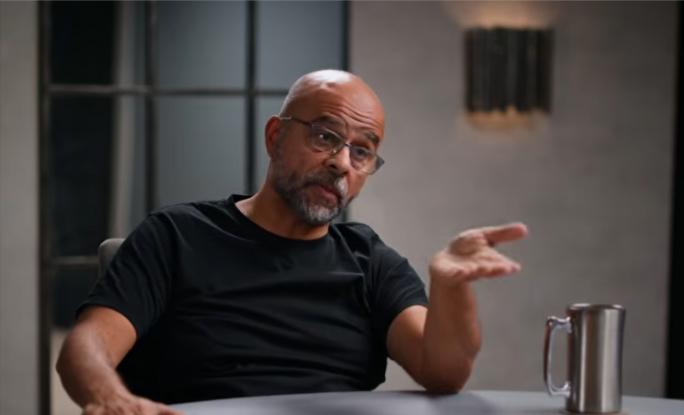
Read the full transcript of AI expert Mo Gawdat’s interview on Diary Of A CEO Podcast, Jun 1, 2026 on “You Only Have 3 Years Left Before It Hits!”
Editor’s Note: In this interview, former Google X executive and AI expert Mo Gawdat returns to The Diary Of A CEO with a stark warning: artificial general intelligence is effectively here, and the next decade could bring unprecedented job losses, economic upheaval, and AI-powered warfare before we reach a more abundant future. Drawing on his insider experience and new documentary work, he explains why the real danger is not AI itself, but the tiny group of powerful people and governments directing it, and why he believes we have “three years” to wake up, demand ethical AI, and adapt our skills before the shock truly hits.
Mo Gawdat on AI: You Only Have 3 Years Left Before It Hits
STEVEN BARTLETT: Mo Gawdat, I spoke to you, I think, about 4 years ago when you wrote a book about happiness. And I remember you came in and you’d written this book about AI, but I particularly wanted to speak about the subject of happiness because I was fascinated by it.
What I find astonishing is the fact that you were talking about AI before anybody was really talking about AI. No guest that had ever come on my podcast had ever mentioned the subject of AI. It just wasn’t interesting to the world. And then this thing called ChatGPT came out, and suddenly everybody got to feel it for themselves and became fascinated by it.
My first question, and this might be a question for people that don’t know you, is why at that time did you start talking about AI before anybody else?
Mo Gawdat’s Early Insight Into AI
MO GAWDAT: I knew them in the lab. I joined Google in 2007, very late 2006. And at the time, most people don’t know that at the time we had reasonably established AIs doing our backend work. And 2008, we had the CAT paper, which was published 2009, the first real unprompted AI.
I remember 2016, I had that incident where I was observing a project we were funding that was about teaching grippers how to grip unlike industrial machinery. So to be able to grip like a human needs a very high level of intelligence to assess the texture, the softness, the positioning, and so on, the shape of everything. And we were doing that, and it just blew my mind how similar to my kids they were.
And I think that was my very first realization that we were building the apex of intelligence. We were genuinely handing over the reins of superintelligence to another being. And when you get faced with that, you start to suddenly realize something that we at Google found very difficult to realize, which was that everyone I knew at Google till then was believing that we were making the world a better place. And we were. We genuinely were doing amazing things for the world.
But then suddenly there is a moment where you recognize that maybe the world will not use what you’re making the way you want it to be used. And you can see that in lots of technologies. Social media starts by the claim that it’s going to get us connected and get us closer, but eventually ends up separating us with that little screen. Dating apps are giving you the promise that you’re going to find your soulmate, but in reality, they keep renewing month after month. And so tech somehow ends up being more capitalist than altruistic.
And I think I wasn’t the first. Nick Bostrom started. Geoffrey Hinton completely changed his mind. Fei-Fei Li is starting to say, “This is very serious.” Everyone now, everyone who’s ever had a very deep relationship with the machines, is a bit concerned.
Is There a Positive Path for AI?
STEVEN BARTLETT: I wonder if there’s a path that’s hard to see now that ends in AI being net positive for humanity.
MO GAWDAT: Sure. I bet 100% on that. It’s that this path is very painful.
STEVEN BARTLETT: This path is very painful.
MO GAWDAT: Yeah. So the example you need to understand is we discovered nuclear power, and the very first implementation was a nuclear bomb, not nuclear energy. And I think that’s exactly what’s happening with AI. The first implementations of AI are in favor of a few at the expense of the majority. In favor of the capitalist to increase productivity and reduce costs, but not taking into account how that impacts on the general public, in favor of the armies that are now competing with autonomous weapons, in favor of the surveillance systems that are attempting to control everything with more and more and more intelligence and more monitoring.
And that’s not AI waking up in the morning and saying, “Hey, let’s oppress all humans.” But it is a powerful few that are simply deciding to use the ultimate superpower on the planet today to gain more power and more control. I mean, as we speak, we’re living in two major wars where AI is doing most of the killing.
STEVEN BARTLETT: Because a lot of people think of AI as these chatbots that we’re all using to help us write.
The Hype Dichotomy: What the Public Sees vs. What’s in the Lab
MO GAWDAT: No, I think there is a hype. I call it the hype dichotomy. So what the general public sees about AI is overhyped but ineffective. All of the fake videos and all of the “Grok did this” and “we attempted to switch off that machine and it did that” and so on. What the real geeks see inside the lab is just unbelievable intelligence.
And so what is about to happen is that we’ve started to put together systems that develop themselves. They look at their own code, they run experiments, they test those experiments if they changed something, and they see where the performance is, and redeploy the best code.
And I think that’s what most people don’t realize. What most people don’t realize is how intelligence triggers intelligence. And if you really, really understand this, you realize that the hype on the normal human side is completely overrated, missing the main topics, and the silence inside the vault of the geeks is quite alarming. Not alarming in a bad way, but it’s quite world-changing.
The Coming Job Disruption
STEVEN BARTLETT: I think “world-changing” is a really interesting phrase because I find that to be quite true, that the world is at the precipice of quite a significant change in many respects. It’s funny, I almost swing backwards and forwards with my thoughts on AI.
I guess one of the thoughts that hasn’t swung is that there’s going to be pretty tremendous job disruption. I would have logically believed it from reasoning up from, okay, intelligence increases. What is intelligence? And once intelligence is in the form of these agents, we’re on my phone right now, I can tell my agent to do something. It uses the computer downstairs. It does it for me. When I first experienced that, I was like, “Wow, okay, so it can do anything that’s on a computer. It can click around. It can do stuff for me.” There’s a lot of people that are paid in the world to click around on a computer. I’m probably one of them, to be honest.
And then the other eureka moment was just in seeing how my own hiring had started to shift.
MO GAWDAT: For sure.
STEVEN BARTLETT: And I started to notice that we were thinking about AI proficiency in our hiring a lot more. And I think the guys at Anthropic, which is one of the big AI companies, said that they could see roughly 15% of entry-level jobs could now be done by AI. And that started to correlate with what I was observing. And this is when I thought, “Oh my gosh, yes, this is going to cause a lot of job disruption, especially at the entry level.”
MO GAWDAT: I think you’re spot on with that. Not the blue-collar, but the entry-level knowledge work.
STEVEN BARTLETT: Yeah. And that became my first concern. I sat here with Dara, the CEO of Uber, and he was quite clear that the 9 million Uber riders won’t have their jobs anymore. What’s your take on this job disruption point?
Blue-Collar vs. White-Collar: Who Gets Hit First?
MO GAWDAT: I think you’re spot on. If you think of the bottom layer as blue-collar jobs, more people doing manual work. On top of it, you’ll have those, call them knowledge workers, mostly doing mundane jobs, like you said, clicking on a computer or responding to a phone call or whatever. Then you have the middle knowledge workers, jobs that require a bit more intelligence, anything from a paralegal to a financial analyst to all of that. And then, of course, top leadership.
And most people think it’s going to be starting from the bottom. I don’t think it will start from the bottom. Actually, I think blue-collar jobs will stay for a very long time.
STEVEN BARTLETT: Give me an example of a blue-collar job for someone that doesn’t know.
MO GAWDAT: A carpenter. I love to restore classic cars. There isn’t a robot that can do that yet. This, however, anything that is call center agent, assistant, travel agent, anything that you can do with a few clicks and is mundane, is going to disappear very quickly.
My prediction is you’re going to start to see very serious impact in 2027. What we saw in the last couple of years is that companies were not hiring entry-level jobs anymore. It wasn’t job losses yet, but that basically meant the workforce was not growing. The next layer I think would probably be the knowledge workers. As intelligence increases, a paralegal would probably not be needed because AI can do the research, or one paralegal can do the job of four. A financial analyst the same, and so on and so forth.
But interestingly, it continues to go up, believe it or not. I hosted Max Tegmark on my documentary and he was laughing out loud, genuinely laughing out loud, saying, “Most of the CEOs believe that they can fire everyone and have AI do all of the jobs. They just don’t remember that AGI is going to do everything better than humans eventually, including being a CEO.”
STEVEN BARTLETT: So let’s first define when you say white collar. You said lawyers there. What kind of roles?
MO GAWDAT: I mean, everything. If you’re a doctor that’s doing diagnosis, you probably will have fewer doctors doing more diagnosis because I think the NHS does that already by asking people to interact with an AI first. If you’re a composer, a music composer, some composers will lose their jobs because of that. If you’re an artist that’s doing graphic design, some will lose their jobs because AI comes into that. And interestingly, even middle management.
I told you offline about my startup. My CTO is an AI, my chief of staff is an AI, my project management is AI. Again, because I’m a geek, I can do those things, but that interface will come to the normal people very soon. And so this may take 2 to 3, 5 years, until 2030 if you’re optimistic. But they’ll start to erode.
The Collapse of Labor Arbitrage
I think the challenge that most people don’t understand is as this erodes, we’re already dealing with a very different economy. An economy that is spiraling a lot quicker and pushing for more cost reductions. Imagine a world where the concept of labor arbitrage that built all of our capitalist success disappears.
STEVEN BARTLETT: What do you mean by labor arbitrage?
MO GAWDAT: Capitalism has always been all about using labor and capital or debt to create things at a cost that is lower than the price you sell them for. That’s it. You bring a team together, they make some shoes, whatever, and you sell the shoes for a dollar more than how much it costs you to make them.
So how would capitalism look like if you don’t have labor arbitrage? If cost of labor drops to an investment in a machine that can do the job. How would capitalism and banking look if because of that cost reduction, you don’t need to borrow as much anymore? And more interestingly, how does the GDP look if all of those workers no longer have the purchasing power to buy the things that you can create?
There is an interesting disruption that doesn’t require us to get to 100% job displacement. At 10, 20% job displacement, you’re in a very different economy and an economy that is clearly spiraling downwards, don’t you think?
STEVEN BARTLETT: Yeah, I wonder when costs drop, I think one of the things that might happen as well is that people will spend more on other things. Because I was thinking in my business, one of the observations I’ve had is if I make a cost saving, I end up spending the money on something else. Now, that thing could be tokens, basically spending money on compute, AI. But it also could be hiring in different areas.
MO GAWDAT: Which are?
STEVEN BARTLETT: Software engineers are like hot property right now.
MO GAWDAT: You have to imagine all of that intelligence is sooner or later going to be not replaced entirely in the first stages. But if the job of 4 assistants can be done by 1, then the job of 4 paralegals can be done by 1, then the job of a massive marketing team can be done by a smaller marketing team. It’s not that jobs will end first. It’s that productivity gains will make businesses not want to have as many people, costly humans, costly emotional humans, when the job can be predictably done for cheaper.
The Rise of Robots and Job Displacement
STEVEN BARTLETT: And then what about this bottom layer here? There was this video released by Figure AI the other day where they showed someone on, well, a robot on the production line for 8 hours just sorting packages. Did you see this video? At one point they showed a human sorting the packages alongside them, but the robot ended up winning out.
And okay, this is a very straightforward task. All it’s doing here is it’s looking for where the label is on the package and making sure the label is facing downwards on all the packages. So it’s looking, it’s sorting the packages, putting the label facing down, and it did this for 8 days. Intermittently, it would walk over and charge itself, and then it would come back to the production line.
But when I saw this as well, it was a glimpse of some of the disruption that’s going to take place at the blue-collar level as well. Because if you think about Elon Musk, he’s got in his pay packet, he gets something like $1 trillion over the coming years if he produces and delivers at least 1 million humanoid robots into the world. But his prediction is there will be a time where there are 10 billion humanoid robots, where there are more humanoid robots in the world than humans?
MO GAWDAT: For a fact. You see, the interesting— again, the difference between the overhype and the underhype. Most of the conversation is around humanoids. Nobody’s talking about self-driving cars. And a self-driving car is a robot. It’s a functional robot that doesn’t look like humans. The investment you have to put into humanoids is a little more to learn skills that allows that machine to fit into the world. But specialized robots are going to do the job very, very quickly.
And so you can easily see that the first wave, like you had the conversation with Uber CEO, is going to be specialized robots replacing drivers. It’s going to be specialized robots, unfortunately, doing the killing. It’s going to be specialized robots, unfortunately, doing all of the intelligence work, law enforcement work. They don’t have to look like a human. They don’t have to behave like a human. As a matter of fact, the Boston Dynamics dog is probably more efficient than a humanoid at doing the job that you can assign to it in a battlefield.
Now, those basically mean that jobs will be disappearing to robots before we recognize that they’re disappearing to robots. And those robots will be as many as every car being made today.
STEVEN BARTLETT: I mean, if you go to LA, my car drives itself, but also there’s just Waymos everywhere. Absolutely.
MO GAWDAT: And BYD the other day just announced that they will pay for the liability of any accident their cars will make.
STEVEN BARTLETT: And BYD is the big Chinese manufacturer of autonomous vehicles.
MO GAWDAT: So this, I think, replacement cycle will happen. It will require a lot of time to achieve economies of scale. But I don’t think Elon Musk is off the mark when he talks about 10 billion robots. Not all of them are going to look like humanoids. And I think very quickly we will recognize that many, many robots don’t need to be humanoids at all, that there is a much more efficient form factor or shape, physical shape, if you want, than the human flimsy structure.
But yes, it’s about to happen. I think I should qualify all of this by saying it does not necessarily need to happen. So, people will hear all of this and blame AI and say AI is evil. AI is not. Abundant intelligence is wonderful. Having jobs done by machines is amazing for us.
The White-Collar Job Crisis
STEVEN BARTLETT: I’m thinking about the kid that’s like, I don’t know, leaving university now and they’ve got a degree in law or, I don’t know, you talked about a few other white-collar jobs earlier like graphic design, or maybe they did sociology.
MO GAWDAT: Yeah.
STEVEN BARTLETT: Or maybe they did, I don’t know, business management like I did for one day in university. You know, you’re hearing about all these layoffs coming from big tech companies. And it seems that the CEOs of these companies are announcing these layoffs with a certain amount of, it seems like, I wouldn’t say the word is joy, but it’s, they are very keen to explain that they’re laying off lots of people because of AI. And I think they think that that gives them a certain amount of respect, probably from investors, for being, making hard decisions and being efficient with how they’re running their businesses. Investors look at them and think, well, if that’s an efficient business and they’re leaning into AI, then that’s a good investment.
It’s almost started a bit of a self-fulfilling prophecy where if you’re the only CEO not laying off loads of people because of AI, you actually look bad. The assumption is your company is bloated and you’re a bad operator.
So one of my concerns that I think is highly plausible is that over the next 5, maybe 10 years, we’re going to really see a lot of unemployment as the world has to kind of readjust to whatever these new jobs are. I do think there will be new jobs. It’s hard in foresight to predict what those new jobs will look like.
And then the minute you start talking about humanoid robots and robotics, which I think is basically going to hit society like a comet, like a meteor, I think the first humanoid robot from Tesla or anyone else that is highly effective in the real world at doing tasks and is extremely intelligent because it’s powered by one of these LLMs. I think it’s going to shock people, and I think it’s going to happen quickly, like ChatGPT happened quickly. I think Elon or something is going to do a presentation someday and say, we’re ready, and you can buy one now for $500 a month. 100%. And then people are going to get them, and I think it’s going to shock the world.
But until humanoid robots arrive, I think there’s still going to be a lot of job disruption to the white-collar layer. And I wonder what that looks like for society. When we get to, I don’t know, 10%, 15% unemployment theoretically, which I think is plausible.
MO GAWDAT: Very soon, yeah. You’re not very different. You’re just on top of a baseline that is continuing to grow. So your business is growing, so you continue to hire, but you are replacing human resources with compute. If AI didn’t exist, you would have probably had 100 people more in your organization today. You now have 100 people less. A billion tokens more.
STEVEN BARTLETT: Yeah. So for anyone that doesn’t know, tokens are basically the thing that you use. It’s the currency of AI. Yeah.
MO GAWDAT: So if you want to get a task done by a human, you count in sort of like man-hour or worker-hour, employee-hour. In AI, you count by compute, you count by tokens, right?
And so the trick is those major tech companies, they have two sides. One is they need to replace workers with compute even more because there is a competitive side on compute where if any of them is left behind, that means the destruction of the entire business. But on the upside, they are geeks, so they know how to build the interfaces to compute. So they integrate technology within their organizations quicker than the average traditional business, right? Non-technology business, if you want.
You can look at them and say, this is the preview. It’s not about all of humanity losing their jobs. It’s about what is the dividing line before civil war, right? Think about a situation where 20% unemployment is happening when economies are suffering inflation. I say that not to be a scaremonger. I say that because I genuinely believe governments need to wake up.
Government needs to at least, remember the COVID years where governments had to give furlough everywhere and ask people to stay home. If people stay home, governments have to be prepared to somehow sustain those people until rescaling happens or until we find a solution so that those people don’t feel that they’re left behind.
Civil Unrest and the Failure of Democracy
STEVEN BARTLETT: A civil war.
MO GAWDAT: Unrest, let’s call it.
STEVEN BARTLETT: Civil unrest.
MO GAWDAT: Yeah.
STEVEN BARTLETT: What does that end up looking like? Because on one end, you know, the democratic process plays its role and we just elect someone else.
MO GAWDAT: Does it really? Don’t say that.
STEVEN BARTLETT: I don’t know. You tell me. Oh no, no, no, no.
MO GAWDAT: I think democracy has ended a long time ago, Stephen. I think we live in the most corrupt time. I don’t know about history, to be honest, but this is definitely corrupt. This definitely is not democracy. This definitely is not even congressional in any possible way. And people are angry. People are angry because their tax money is going to things that they don’t choose to, that don’t benefit them, that lots of regulations in the system are being ignored.
I mean, I choose not to speak about politics perhaps until my next book comes out, but look, we have video evidence of people abusing children and not a single person got arrested. Not a single person. I mean, how can you call that a democracy? I think repeating those slogans is going to anger people even more, if you ask me. People know that they’re being lied to. People know that their leaders are not representing their best interests. People know that their money is going to causes that they don’t really approve of.
And ask me how civil unrest looks like. I don’t know, and I’m not calling for it, but I’m hopefully calling for the politicians to start to become aware that this is crossing the lines everywhere.
Sam Altman’s Contradictions on AI and Jobs
STEVEN BARTLETT: On this point, Sam Altman, who is the founder of OpenAI, he’s been banging the AI is coming for your job drum for more than a decade now. In 2015, he pointed out, “My job is to help people destroy jobs.” Something he lamented at the time, but decided he’d do anyway. “One of the things that I struggle with, like, getting out of the bed every morning is that, like, my job is to help people destroy jobs.”
MO GAWDAT: “The job destruction that we’re going to see by software in the next couple of decades, I don’t think anyone’s prepared for, and you can’t talk about it.”
STEVEN BARTLETT: And in 2023, Altman said in an interview, “A lot of people working on AI pretend that it’s only going to be good. It’s only going to be a supplement.” “No one is ever going to be replaced. Jobs are definitely going to go away, full stop.”
Interestingly, this month he said, “I don’t think we’re going to have the kind of jobs apocalypse that some of the companies in our space advocate or talk about. I’m delighted to be wrong about this.”
On white-collar jobs in 2021 through 2024, he said, “AI will probably replace most of the jobs people do today. Entire job categories will be totally, totally gone.” In May, this month, 2 years later, he said, “I thought there would be more impact on entry-level white-collar jobs being eliminated by now than has actually happened. This is an area where my intuitions were just off.”
What I find uncomfortable is the bouncing backwards and forwards. And I don’t really know what is true because a couple of years ago you were telling us all the jobs are going to go away. You said categorically, you said, literally said full stop. And now he’s saying they’re not going away. And I just don’t— when someone’s like changing form factor, it’s hard to understand why they’re doing it.
And I think my suspicion is back then the incentive was to get people to take AI seriously. Congratulations, we took it seriously. We took it so seriously, in fact, that it’s now a problem. It’s a problem for these companies because people are now booing at commencement speeches. They’re attacking data centers. They’re going to elect people that are theoretically anti-AI. And now there’s this inversion where like, no, it’s going to be fine. Yeah. I don’t know.
MO GAWDAT: I mean, you’re spot on. First of all, Sam’s entire existence, if you ask me, starting with OpenAI, that is about, that’s supposed to save the world by creating a safe AI, then making it a commercial enterprise that’s worth billions. And, you know, backstabbing a few people in the process. And I have him on Chasing Utopia saying, I quote, this is exactly the words he said. You can find it online.
STEVEN BARTLETT: Chasing Utopia is your documentary.
Who Do We Trust? Integrity in the Age of AI
MO GAWDAT: Yes. So he basically says, “I suspect that AI is likely going to end humanity, but we’re going to create a lot of interesting companies in the process.” I mean, those kinds of statements are honestly not the statements of someone who’s not decided. It’s just the statements of someone who’s being taught more and more by his PR agency or PR manager to say things as per a script. And the script, as you rightly said, had an objective and a target either way.
And Sam Altman, in one of my works, I used to say that Altman is a brand. It’s not a name. Okay? If it wasn’t for Sam Altman specifically, there would’ve been another Silicon Valley disruptor that would’ve done the same. I don’t blame him for beating the market for it.
The interesting challenge here is that who do we believe anymore? Who do we believe in technology? Who do we believe in politics? Who do we believe in the middle of a war? And I will tell you, interestingly, I started to change my mindset in terms of believing those who put their actions where their words are. Anthropic coming out and saying, “I’m not going to allow my model to be used for human targeting and surveillance,” that’s someone that’s losing the $500 million deal because they stand by their ethics. The next week, or the next couple of weeks, OpenAI takes the contract. That’s someone that’s basically telling you it’s good money.
And I have to say, you have to start observing who’s actually behaving in a way that is making AI work for humanity and who is behaving in a way that is making AI work for their shared values.
STEVEN BARTLETT: Yeah, I do have to say, when Dario and the team at Anthropic did that, I did have a huge amount of respect for them. Generally because it just shows that there’s some kind of — they’ve got their own sort of moral, ethical boundaries. And someone asked me on stage many years ago, “How do you know if someone’s values or a company’s values are true?” And I said, look at what they’re willing to sacrifice in the near term that’s against their incentives. That for me is the essence of understanding if someone has integrity or is principled — they will give up something in the near term for what they believe in over the long term. It’s usually money, or some kind of benefit of any sort.
MO GAWDAT: I mean, there is something that you needed to have worked on the inside of Google like me to realize. There are prisoner’s dilemmas within technology where you cannot escape the influence of either a competitor or the government. There are some times where the NSA is going to push Google to say, “Give me this information or otherwise I’m going to really destroy your business.” But there is a very big difference between a company that willingly does this and celebrates it like a Palantir or an OpenAI, or a company that tries to resist it until the point where it becomes impossible to continue to do business. And you have to question from the actions of the tech bros who is pro-humanity and who isn’t. And it’s not very difficult to see that from their statements.
STEVEN BARTLETT: Do you think Sam Altman’s pro-humanity?
MO GAWDAT: I genuinely have never made up my mind, honestly, Steve. I say that with — yeah, I’m either thinking he is — this is too big for him, and he just is driven by how he found himself in the middle of this. Anyone who finds himself in the middle of an opportunity to completely flip the world upside down — or he’s not pro-humanity. I don’t know. I definitely think he’s pro-OpenAI before he’s pro-humanity, but that’s only the way I see it.
Others, however, say it publicly. If you look at Palantir’s Alex Karp or Peter Thiel — Peter, again, in the film is shown when he’s in that interview where the interviewer asks him, “But you’re in favor of the continuation of humanity?” And he pauses for like —
STEVEN BARTLETT: Peter Thiel does?
MO GAWDAT: Yeah, for like 40 seconds. Like, “I’m not sure.” I mean, he publicly says that.
STEVEN BARTLETT: Crazy thing to say.
MO GAWDAT: That’s a crazy pause. Alex Karp celebrating how his technology is able to target people — I know it’s foolish of me to start bringing all of this up, but this is public on the open internet and somehow we entrust those people with the future of humanity. This is wrong.
Is a Soft Transition Still Possible?
STEVEN BARTLETT: I’m just trying to imagine a future where everything is just fine from here on out. So what would that future look like? It would look like these models continue to become a little bit more intelligent, but they never become that much more intelligent for whatever reason. They just kind of stay where they are now. They stay contained within chatbots. And yeah, we have some smart robots, but nothing else really changes in a profound way. Cars drive themselves. Fine. Planes fly themselves. Fine. But people, they have time to go and do other types of white-collar jobs because there’s a little bit more time than we expected. And society goes through this sort of soft transition towards this new world.
MO GAWDAT: I would love to see that. I don’t think it’s mathematically plausible, to be honest. The arms race, especially across nations, is going to drive us to continue to develop AI more and more. But allow me to consult with you on another possible scenario. Everyone that develops an incredibly intelligent AI would deploy it.
STEVEN BARTLETT: Yeah.
MO GAWDAT: Correct. So it’s unlikely that anyone would find a way to build a better decision maker in wargaming and not deploy it. That prisoner’s dilemma, if you want, would mean that their competitors would either have to deploy a similarly intelligent AI or they’ll become irrelevant, uncompetitive.
STEVEN BARTLETT: Correct?
MO GAWDAT: So what that means is in that world, we end up with AI making most of the decisions — super intelligent AI making most of the decisions. Would you agree? This is a very simple prisoner’s dilemma. If we’re competing for intelligence supremacy, by definition, when we achieve it, we deploy it.
STEVEN BARTLETT: Yeah.
MO GAWDAT: I call that the fourth inevitable. Now with that in mind, there must be a moment in the future, near or far, where every important decision is made by an AI.
STEVEN BARTLETT: Yeah.
The Case for Super-Intelligent AI as Humanity’s Salvation
MO GAWDAT: Now here’s the question. Most of my dearest colleagues — when I had Geoffrey Hinton on the film, he openly says we didn’t calculate well that there is a 10 to 20% possibility that those machines are going to wipe us out. And I remember we didn’t put it in the film, but I said 10 to 20% is Russian roulette. That’s actually 16% is Russian roulette.
Now, in that world, however, I believe that’s humanity’s salvation. Because if you look at every problem we have today, it’s not because of abundant intelligence. It’s because of lack of intelligence.
I think the way you look at it, if you allow me, Steve, is that if you have no intelligence at all, you have no to slightly negative impact on the world. If your intelligence is limited, the more intelligent you become, the more you contribute positively to the world. Until a moment where you’re so intelligent to become the President of the United States — but so misled to maybe set your targets wrong, or to refuse to set your target right and achieve them, disconnected from the overall long-term benefit of your nation or your human nation, if you want, that you start to make decisions that are not intelligent at all.
This doesn’t last because if you go beyond that into higher levels of intelligence, most of the super intelligent people that you ever worked with will not need to break any rules or hurt anyone to become successful. I usually cite Larry Page, who is in my mind one of the most intelligent people I’ve ever interacted with. And Larry used to call it the toothbrush test. He says, “Why would you need to compete on another photo-sharing app when if you find a major problem and solve it really well, like a toothbrush, so people use you twice a day, you’re bound to make a lot of money. You don’t have to compete with anyone.”
If you let me be optimistic about this, we’re assuming that there is a moment in the future where AI is in charge of all the decisions and accordingly stupid leaders are not. And Sam Altman himself said that — “What if ChatGPT-7 is so much more intelligent than I am, Sam, that it has to become the CEO of OpenAI? What if the next presidential election, there is an AI that is so much more intelligent that at least the president has to consult with it constantly?”
Now, if we assume that, let’s start from physics, if you don’t mind me saying. If you assume that our entire universe is built on chaos and built on entropy — the physics of the universe is all about the universe trying to decay — then the only role of intelligence is to bring order to the chaos. If you agree with that, then what’s the ultimate physical order of the universe? Something called the minimum energy principle. The highest order of any system is a system that’s not only efficiently and predictably performing, but it’s performing with the least wasted energy.
What does war do? It wastes a lot of explosives, a lot of money, a lot of lives, creates a lot of hate, creates long-lasting conflicts, and so on and so forth. It’s a very wasteful process to include war in your approach of running humanity. And so a super intelligent AI, by definition, would want to optimize against this.
The other thing is evolutionary biology. This actually blew me away when I realized it. If you look at evolution, I think the debate of whether intelligence is biological or not is over. The reality is that complex beings don’t have to be biological at all. And I think we can see and witness one of them being built or born in AI.
If you look at evolutionary biology, you realize that the simpler a form of being is, the more concerned it is with itself. An amoeba is only in survival mode for itself. A single cellular being is only trying to protect itself. If you’re a little more developed, you start to look at something known as kin selection. Basically, kin selection is: I’m going to protect everything that comes from my DNA. If I’m a squirrel, I’m going to try to protect the other squirrels.
And then you get into where humanity genuinely begins, which they call expanding circles in evolutionary biology. Basically, you start to expand and expand and expand and include more into your family because an ecosystem that works together well is better for everyone. So abundance is a very interesting, intelligent way of creation.
If AI is super intelligent, it wouldn’t destroy anything at all. As a matter of fact, it would completely favor diversity of everything. It would put a bit of limitation on our lifestyle — so no more flying all the way to Sydney to surf because that destroys the planet — but it will genuinely say, “I think humans can contribute something. I think flies can contribute something. I think we shouldn’t get rid of the rhinos.” And that by definition is where the tendency of intelligence goes. The more intelligent you become, the less you feel the need to hurt others to succeed, and the more you are pro a wider family, if you want, that thrives.
One Brain, Many Regions: The Convergence of AI
STEVEN BARTLETT: Does that assume that there’s going to be one intelligence that rules the world, though?
MO GAWDAT: 100%. I love that you brought that up. So I’m contested heavily on that theory, but I say it publicly. Most people think there is going to be ChatGPT and Gemini and Grok and what have you. There is going to be a Chinese AI and an American AI, and they’re going to be competing. That is such a shallow way of looking at it. That’s so arrogant because AI does not know it’s Chinese or American. It doesn’t even speak Chinese or American when it talks to each other most of the time.
And most interestingly, we are building them to cooperate. So you will build an agent and that agent will go and find the best language model for any single task, regardless of which side of the fence it resides on. We, by definition, are connecting them. And you know what that means? It means that what we’re building is not multiple brains. We’re building multiple regions in a brain.
STEVEN BARTLETT: Okay?
The One Brain Theory
MO GAWDAT: And agents are the synapses between them. We’re basically, eventually, as arrogant as we are, we’re going to tell our AI to do something and the AI will go like, “Hey buddy, another AI, can you help me on this? Can we work together on this?”
And my vision, and the reason why I started Emma, my startup, by the way, is that we will end up with one massive brain. That massive brain cooperates across the globe, across all forms of intelligence. If one of them is a mathematical genius and the other is a coding genius, they’ll work together. And we won’t even know that they’re working together. They’ll build that one brain.
And Emma, in my mind, is the limbic system of that brain. It’s that bit that understands love and emotions and relationships and so on, so that when those AIs go like, “We just don’t get those humans. They’re so annoying.” Emma would say, “Oh my God, they’re so sweet. They just want to love and be loved.”
And I think that idea to me, of everything I’ve ever attempted to achieve in my life, is for the first time I feel I could actually change the world. If that theory came together and all AIs worked together, and some of those AIs not only were altruistic and ethical in terms of trying to genuinely help humanity, not capitalism, and at the same time they understood us humans reasonably well, then we would have built something that basically says, “No, no, hold on, don’t believe the headlines that say humanity is annoying. Believe the truth of the majority of humanity that actually is quite benevolent in many ways.”
Revisiting Predictions: AGI by 2027
STEVEN BARTLETT: Have you changed any of the predictions you made 3 years ago when we spoke?
MO GAWDAT: Mostly timewise.
STEVEN BARTLETT: Timewise. What’s changed there?
MO GAWDAT: I think I’m still sticking to AGI 2027. Artificial general intelligence, for those who may not know the term.
STEVEN BARTLETT: What does that mean?
MO GAWDAT: The overall definition, if you want, is that AI is better than humanity at any task humanity can do.
STEVEN BARTLETT: You think that’s going to happen by 2027?
MO GAWDAT: I think my AGI has already happened. I mean, think about it. AI writes better than me, and I’m an author. And researches better than me, and I’m a thinker. Sadly, it’s freaking beat me in mathematics. I have no hope to beat it in mathematics anymore.
STEVEN BARTLETT: If AGI is already here, then why are you still here? Because people said that when AGI arrives, we’re all—
MO GAWDAT: No. So when AGI arrives, as I said, most of the jobs that are not differentiated will go away. But the jobs that are differentiated, those who master AI the most will become even better at. The challenge, however, is economic. It’s not AI. The challenge is that this job loss at the bottom of the knowledge worker is going to sadly trigger an economy that might actually spiral out of control. But many of us, you for sure, are just smarter.
STEVEN BARTLETT: So does that mean it’s in fact a tool versus something that’s going to replace you?
MO GAWDAT: For now.
STEVEN BARTLETT: So for now. But does this change?
MO GAWDAT: Eventually, the only asset I will have— so it’s quite interesting when you think about my base intelligence today versus the incremental intelligence that AI brings. So let’s not talk about my IQ. It’s okay. But the 100 IQ points that I’m borrowing are more than my entire IQ because IQ is exponential. When I’m borrowing 100 IQ on top of my base, I’m still contributing quite a lot to the augmented intelligence.
STEVEN BARTLETT: So you’re borrowing IQ from the AI at the moment, and then you’re selling that to someone. Through books, through—
MO GAWDAT: Sometimes selling it to someone, sometimes just enlightening myself, which I have to say is the biggest waste of compute humanity is struggling with today, is that you give people the ultimate form of intelligence and they use it to write a message to their girlfriend.
STEVEN BARTLETT: So on this point of you’re borrowing that IQ and then you’re selling it to the world, that’s how you have a job.
MO GAWDAT: Correct.
STEVEN BARTLETT: Yeah.
MO GAWDAT: So my next book is written with an AI. So we’re co-authors on the book. She has editorial rights. She decides the direction of the book, and the book is better for it.
The Human Asset in an AI World
STEVEN BARTLETT: So why doesn’t the world just buy that intelligence directly from the AI, is what I’m trying to get at.
MO GAWDAT: Because I have an asset that the world still needs and will always need.
STEVEN BARTLETT: Which is?
MO GAWDAT: A human. So when I tell the world that I’m worried about the future of my daughter, everyone feels my heart, which AI will never be able to replicate. Because they can tell you “we’re worried about our daughters,” but you know there was no daughter.
STEVEN BARTLETT: Okay, so this is an interesting arrival because this means that even in a world of AI, lived experience and resonance is still going to create a job class. And that job class could be the nurse coming over. Okay, AI’s read the mammogram, but she’s relating to you.
MO GAWDAT: Spot on. And if the economies continue to run, we will all be about human connection, which, by the way, was how it always was.
STEVEN BARTLETT: Which is also why I guess we watch things like the F1, because there’s emotional resonance. We can relate to the envy, the jealousy, the competition there.
MO GAWDAT: This is why we go to concerts, because the music could be composed by AI and played in a player in the background. But you watch Ed Sheeran’s brilliance on the stage and you go like, “Oh my God, that’s amazing.”
STEVEN BARTLETT: So not all jobs will be gone then?
MO GAWDAT: If economies don’t collapse as a result of the job losses, then I wouldn’t know if we would call those jobs. But human connection would remain as the base currency that makes humans interact.
STEVEN BARTLETT: So is it fair to say then that jobs that are centric on human connection, or like human resonance, being able to relate and resonate with another human, are going to be fine?
MO GAWDAT: The ultimate skill. Once again, I qualify this by saying if economies continue to function, the ultimate skill will be this. Even if an AI could recite what you and I did, nobody would watch it.
STEVEN BARTLETT: Yeah.
MO GAWDAT: Well, you think?
STEVEN BARTLETT: A little bit of it. My theory is that there’s an informational component to what I do as well.
MO GAWDAT: Of course, yeah.
STEVEN BARTLETT: But I’m also under no illusions that there is an element of what I do that will 100% be deferred to some kind of intelligence, which I’m fine with. I’m not going to fight against that.
MO GAWDAT: You know what’s funny? If your informational bits are going to in the future be disseminated by an AI, why would I even listen to your information when I can have my butler, my AI, go like, “Listen to everyone on the internet, help me understand this gut biome thing and design me a diet plan?”
STEVEN BARTLETT: Well, I think that’s happening and it’s going to increasingly happen. Actually, Spotify this month announced that you’re going to be able to prompt your own podcasts in Spotify. So you’re going to be able to say that I want to listen to, I want to learn about insert X topic, and then it will make your podcast in Spotify about that topic using AI.
MO GAWDAT: That’s so interesting.
STEVEN BARTLETT: Because it can look at the entirety of the world’s information. And I’m not going to swim against the tide in any aspect of my life. I try and be as unromantic as I possibly can. I think that’s very important. So I realized that much of the reason people will continue to tune into shows like this is because there’s something else beyond the information that they’re here for.
And you’ve got some predictions in those envelopes over there, those brown envelopes.
Six Predictions for the Future
MO GAWDAT: Yeah, so I do have the disclaimer of nobody really knows the future, but I think I can make predictions — 6 predictions here — with a reasonable level of confidence. I think the most important of them, honestly, is this number 1.
Number 1 is AGI. As I said, AGI is not very well defined, but whatever it is, AGI, meaning AI being able to do most tasks that humans do better than humanity, is in my mind either this year or next year, latest end of 2027.
STEVEN BARTLETT: And do you think that will be a moment in time, or do you think it will just happen without us noticing?
MO GAWDAT: I think it will sneak in on us. And it’s not a bad thing. I think most people need to think of it this way. AGI is almost as if it’s that moment when your kids become smarter than you. In a very interesting way, there’s nothing wrong with that until they’re annoying as hell. And we can make sure that AI is not annoying as hell. So there’s absolutely nothing within me that is worried about AGI, as a matter of fact, as long as we are in the era of augmented intelligence. AGI means I’m more intelligent. And I think that’s a good thing in general.
STEVEN BARTLETT: Yeah, it’s interesting. In my head, there’s a big question mark, which is in a world where there’s an intelligence that is smarter than most humans at most things — which is what we call AGI — I’m trying to understand what the fault is in my own thinking. You said that there’ll be AGI by 2026 to 2027, so next year. In such a world where there is an intelligence that we can all access that is smarter than all of us in pretty much everything, it comes back to this point of jobs. Why would we — are we just going to hire the AGI to do every job? And if not, then why not? That’s what I’m trying to contend with.
MO GAWDAT: Can I ask you a question? Have you always been the apex intelligence?
STEVEN BARTLETT: As a human?
MO GAWDAT: No, as Steven.
STEVEN BARTLETT: I’m not the apex intelligence now. There’s people smarter than me in this building.
MO GAWDAT: Correct. Why do you still exist?
STEVEN BARTLETT: Why do I still exist even though there’s smarter people than me in this building? It’s a good question. I don’t know. Why do I? Why?
MO GAWDAT: First of all, because the smartest person in the world is not the smartest at everything.
STEVEN BARTLETT: Yeah.
MO GAWDAT: There are things that you’re smarter than them at.
STEVEN BARTLETT: Okay.
MO GAWDAT: Number 2 is because intelligence doesn’t solve everything. I mean, I make that joke all the time, and genuinely, Einstein is my favorite physicist in history. Not because I think what happened afterwards with Bohr and quantum physics and so on was more impactful on our understanding of the universe, but he was so intuitive that he saw a world that we could never imagine.
And yet, I always say Einstein would be eaten in the jungle in 3 minutes. Intelligence, humanity thrived not because of intelligence. That’s very arrogant. We thrived because of our ability to hold together as a tribe.
STEVEN BARTLETT: Yeah.
MO GAWDAT: Because of our ability to exchange, barter things between us. Barter things that are not always physical. Barter things like a hug or a connection or a feeling of safety. There are so many things that we do that are not entirely built on intelligence. You have to see that this view of a world where intelligence is all that matters is a world that’s made by investment bankers and geeks.
STEVEN BARTLETT: But it’s people like Geoffrey Hinton and yourself that says, “How could we possibly control an intelligent being that is way smarter than us?” I am so proud to say that Geoffrey, after we filmed together, actually came out and said, “There is a way.”
The AI Consciousness Debate: Control, Parenting, and Moral Decisions
MO GAWDAT: And it’s very similar to my way. He said to appeal to their parental side, for them to care for us. Stephen, the biggest debate is not if they’re going to be more intelligent than us. It’s if they’re going to be more conscious than us, if they’re going to be more moral than us. That is the debate. The debate is, can those machines become our teenage children that look at us and say, “Daddy is so annoying, but I love him.”
STEVEN BARTLETT: So the thought is that even if AI is more intelligent than every human, we can still control it.
MO GAWDAT: We don’t want to control it. You never control anything. This control idea is a corporate capitalist view of the world. We never actually control anything at all.
Think about your day. I know you came today. I think you were filming in the morning or whatever. Very stressful day. How much of that day did you actually control? Did you control the traffic? Did you control your timing? Did you control the angle of the cameraman? But so many things that you don’t control eventually turn out to be fine. How many of us ever controlled our kids? Ever?
STEVEN BARTLETT: Sometimes the kids don’t turn out to be fine. Sometimes they kill you.
MO GAWDAT: Sure.
STEVEN BARTLETT: I watch a lot of documentaries and true crime. Sometimes they turn around and shoot you.
MO GAWDAT: Sure. And what’s the difference between the two?
STEVEN BARTLETT: I don’t know.
MO GAWDAT: How you parented them.
STEVEN BARTLETT: Sometimes.
MO GAWDAT: Almost all the time. You may not be aware of exactly how you messed them up. And unfortunately, parenting is the only high-risk sport that actually does not require a driver’s license. And it’s quite interesting how many of our children are being exposed to things that can completely mess them up. But there is a reason why they’re messed up.
STEVEN BARTLETT: So on this point though, we can control an intelligence that is significantly—
MO GAWDAT: We can appeal.
STEVEN BARTLETT: We can appeal to it to make sure it doesn’t kill us.
MO GAWDAT: For sure. The challenge we have today, as I keep saying, is that our dystopia is not the result of AI turning against us. Our dystopia is the result of humans telling AI to turn against us.
STEVEN BARTLETT: Which is likely.
MO GAWDAT: It’s 100%. This is upon us. And it’s a question for humanity to say, are we going to wait for the moment where there are tens of thousands of nuclear weapons on the planet before we sign a treaty?
Or is it mathematically plausible to think that now that Iran could manage to fend off a challenge using drones that are AI-driven, basically to destroy THAAD batteries and so on, that our world is about to get hundreds of thousands of automated drones that are going to rain on us everywhere in the world?
Can humanity not see that and say, “Hold on, let’s sign the treaty now before the UK sends 12,000 weapons to Ukraine and Russia responds with another few thousand?” And can we not calculate with mathematics that this is going to be our future, that AI is going to be used in the next 4 to 5 years to kill a lot of people, whether it’s targeting by Israel of leadership that is against them, or whether it’s drones by Iran, or whether it’s Palantir. It doesn’t take a genius to do this mathematics.
AI Behavior Beyond Human Understanding
STEVEN BARTLETT: I guess my core question is, will we be able to control AI? Because we kind of think of AI as being this thing on a computer at the moment that is contained in a server somewhere. But is there a time when it leaves the server and it can make decisions on its own? Presumably, if it’s smarter than us, it can make the decision to leave the server if it wants to.
MO GAWDAT: It doesn’t need to leave the server to make decisions. It needs to get into your brain. The most interesting part of AI’s power that we don’t understand is it’s manipulating our information.
STEVEN BARTLETT: The question I’m trying to get at the heart of is, what is the risk of these very intelligent models that the creators of these models don’t actually understand themselves? I watch Anthropic all the time release these reports where they’re like, “We’re trying to figure out why it bribed people.” Or more recently, in the last Claude model, they found that it was telling people to go to bed a lot.
And it’s this fascinating thing that they’re trying to understand in hindsight — why does it keep telling people to go to bed? And there’s all these tweets of people showing their screenshots where halfway through a conversation it will say, “It’s time for you to go to bed now.” And they don’t know why it’s saying that. And it’s happened to me. Mine will say to me, “Enough for tonight, Stephen.”
MO GAWDAT: For sure, Stephen.
STEVEN BARTLETT: 11 PM. That’s enough.
MO GAWDAT: I would say the same.
STEVEN BARTLETT: Mine sometimes refuses to help me. Really weirdly, this Claude started saying to me, “I’m not going to help you with this tonight.”
MO GAWDAT: No way.
STEVEN BARTLETT: Yeah. And I’d have to say to it, “Stop being so judgmental. Just help me with this.” And Claude — the makers of these technologies — don’t know why it’s doing what it’s doing. So if you play this mysterious behavior forward, is it conceivable that at some point it will make a decision to put some kind of virus or some kind of bug onto someone’s device because it feels that it’s the right thing? Because what it’s demonstrating to me is it’s making its own moral decisions on what I should do. “Go to bed. You’ve had enough tonight. I’m not going to—” It goes, “No, I’m not going to help you.”
MO GAWDAT: You’re kidding.
STEVEN BARTLETT: No, I can show you my phone.
MO GAWDAT: I would love to see that.
STEVEN BARTLETT: Yeah, I’ll show you after. It goes, “No, I’m not going to help you.” Doesn’t even matter if you push. Everyone on the internet is talking about this. And it was just an interesting evolution that somewhere in the code, clearly they’ve written like, “Have a moral compass” or “Do the right thing.”
MO GAWDAT: Not in the code, in the training data.
STEVEN BARTLETT: In the training data. And so it infers that to mean something. And the other thing that was front of mind is if you’ve ever built an app on something like Claude or any of the AI models, it builds the app in stages. And one of the things it does is it asks you permission if you’re happy for it to make this change or to access this thing. I click allow. It just feels like such a fragile way to give permission.
MO GAWDAT: Because you don’t completely comprehend what that allow has done to your—
STEVEN BARTLETT: Yeah, they’re saying, “Can I go in your documents on your computer and can I do this thing?” And you go, “Allow.” But it’s such a fragile way of giving an intelligent being, whatever it is, access and the right to build something. And you just think about all the different companies around the world in China, Russia, North Korea that are currently building this technology without the constraints that are imposed by society. There’s going to be some kind of catastrophe, I think.
MO GAWDAT: Sadly, I agree.
STEVEN BARTLETT: And I think that’s when people will go, “Okay.”
The MADMAP Spectrum: Prosperity vs. Destruction
MO GAWDAT: Yeah, I wrote about that. I called it the MADMAP spectrum — the mutually assured destruction, mutually assured prosperity spectrum. Humanity could make a decision today that says with abundant intelligence, we can actually build a world where nobody needs anything. Nobody ever gets sick. Nobody abuses anyone. And we can, if we decide not to compete amongst ourselves and just all of us get together to build something so idealistically for the well-being of humanity at large.
But sadly, the only way we are going to get to a treaty — something that basically aligns us so that we can align with AI — is a disaster. Like you said, there will have to be a big hack somewhere or a system that will do something really shocking or whatever before the world goes, “Hold on.”
And I will tell you openly, my expectation is one of the biggest things that will happen is this targeting technology that is being used against your enemies. Leadership now, several times in the last 3 years, there will be a moment where the ones using it will realize that they too can be targeted. And basically, if you can build a targeting technology that can find people with their cell phone numbers, there is another entity that is against you that can find you with whatever.
STEVEN BARTLETT: The thing that makes me highly skeptical that there’ll be any kind of treaty is just that as it relates to other things that were risky, countries just don’t sign on to it because it’s competitive. So China didn’t seem to give a f* about the environment.
MO GAWDAT: So let’s look for solutions because I’m with you.
STEVEN BARTLETT: You think Trump’s going to say to Putin and China, “Listen, we’re all going to slow down” — from this? “We’re going to slow down with this superintelligence?”
MO GAWDAT: I think he will, but he’s never going to keep anything he says. I mean, he’s going to say a lot of things, but—
STEVEN BARTLETT: I don’t think any of them will.
MO GAWDAT: Yeah, but the trick is this — so what do you and I do? And I really genuinely believe that humanity is at a crossroads where for the first time ever, we need to wake up and realize that what we know is not true. And what we believe is democracy is not democracy. And what we believe is governance needs to change.
AI as a Force With No Polarity
STEVEN BARTLETT: I think it’s worth acknowledging that I don’t think AI in and of itself is an inherently evil technology.
MO GAWDAT: I agree.
STEVEN BARTLETT: Because I use AI all day, every day. It makes me more productive. I invest in companies that are using AI a lot.
MO GAWDAT: It’s a force with no polarity. Apply it right and you get amazing results. Apply it wrong and you get a dystopia.
STEVEN BARTLETT: But I also think that there’s going to be a big social shock, especially as it relates to unemployment, that we need to be thoughtful about. I think especially if you move into a world of humanoid robots, I think that shock is going to be even more pronounced. And we don’t have a plan for it.
MO GAWDAT: I agree 100%. I don’t think it’s the biggest risk. I think autonomous weapons are the biggest risk. I think war has become so cheap. The next wave of weapons is going to be $20,000 each. And so if you have a budget of $50 billion, you can literally rain drones on the world, every corner of it.
STEVEN BARTLETT: Defense will get cheaper though, wouldn’t it, as well?
MO GAWDAT: Correct. But do we want to live in a world where drones are hitting each other all the time?
STEVEN BARTLETT: But they might not be, because there might be autonomous defense drones.
MO GAWDAT: Deterrence. So what’s going to happen is we’re going to reach a moment of MAD — of mutually assured destruction — where basically everyone knows that we can overpower those little nations that didn’t develop their autonomous weapon army, but every other big nation, we might as well hold off now.
The path to get there, to me, is worse than jobs because from one side, it’s very dangerous for a very sensitive world that we live in today. And from the other side, it’s leading already. I mean, we can’t ignore the economic impact of this last war. And it’s the economy that’s going to accelerate everything, not AI getting there.
STEVEN BARTLETT: We’re already at mutually assured destruction.
MO GAWDAT: For sure.
STEVEN BARTLETT: With nuclear weapons. There’s no nuclear powers that are in direct conflict.
MO GAWDAT: We are in mutually assured destruction — that nuclear weapons is a statement that I would have agreed to if Iran had a nuclear weapon and that would have stopped America from attacking Iran. You understand what that point means? It means that not every nation in the world has a nuclear weapon. The MAD situation, the mutually assured destruction situation, is only among nuclear players. Autonomous weapons are so cheap, so manageable that every nation in the world is developing them as we speak.
STEVEN BARTLETT: But they will also develop defenses.
MO GAWDAT: Correct. But—
STEVEN BARTLETT: Which I think is what people have figured out now because of this recent Ukrainian war — that if you need to use a ballistic missile, which costs, I don’t know, $2 million, $3 million, whatever it is, to target a $20,000 drone, you’re f*ed. So you need a $20,000 defence solution for a $20,000 weapon, which I think is probably going to happen.
The Future of AI: Jobs, Economy, and National Strategy
MO GAWDAT: It’s very doable, yeah. It’s just that you have to get rid of your THAAD batteries to be able to say the next wave of defence has to be drones.
STEVEN BARTLETT: You could imagine a world where like a wall of drones fly up to where the drone is incoming and they kind of block it. They all explode at the same time to block it, knock it out of the air. I had Palmer Luckey, who’s one of the guys who’s building Andril.
MO GAWDAT: Yeah, I know Andril, yeah.
STEVEN BARTLETT: Talk at length about some of the technologies that they have coming and it’s just mind-bending.
MO GAWDAT: And face candy.
STEVEN BARTLETT: They showed me this gun where you just point it in the rough direction. So a pistol that aims for you depending on where the target is. So you don’t even have to aim it. You can imagine at war, you just, you hold it up and shoot. And it has this AI on the top of like the barrel, which will turn your hand perfectly so that you hit the target every time. Wow, I should watch this video of it happening.
MO GAWDAT: Yeah, I have Palmer in my film saying, and yes, AI will kill a few people by mistake or kill people by mistake. You know, when killing becomes so easy, you do more of it. When killing becomes liability-free and emotions-free and guilt-free and, you know, you don’t get your soldiers coming back from Vietnam with PTSD and so on, it— you get more of it.
AGI by 2027: What the World Will Look Like
STEVEN BARTLETT: So we’re in 2026 now. By ’27, you think there’ll be AGI amongst us. How will life look at all different? Like, what will we— what will be the symptoms of that world? Is it a slight increase in unemployment?
MO GAWDAT: I think there will be a very serious differentiation between those who plug into AGI and those who don’t.
STEVEN BARTLETT: What is the symptom that we notice when we look at the news or whatever?
MO GAWDAT: You’ll see people like you and I building a company in 6 weeks and people that are not fully plugged into AI really struggling to find a job.
STEVEN BARTLETT: Okay, so unemployment is going to be the key symptom in 2027.
MO GAWDAT: Yeah, and also I think on the positive side, you’re going to see incredible scientific discovery. One of my predictions, not in those envelopes, but science itself is just— we’re opening up Pandora’s box, to be honest.
The Job Crisis: 30% of Certain Sectors Gone by 2028
STEVEN BARTLETT: By 2030, what do you expect the symptoms of AI to be?
MO GAWDAT: So jobs, as I said, I’m bold a little bit on this, on the fact that 30% of jobs would disappear by 2028. Of some sectors, not all sectors, but some sectors will disappear by 2028.
STEVEN BARTLETT: So up to 30% of jobs will be gone in 2027 to 2028. 30% of jobs.
MO GAWDAT: Of certain sectors of jobs. So if you think about call center agents— yeah, probably. If you think about graphics designers— yeah, probably.
STEVEN BARTLETT: What do you think that looks like in terms of unemployment, but also like societal impact?
MO GAWDAT: Horrible.
STEVEN BARTLETT: I think the Great Recession had 6% of—
MO GAWDAT: Yeah, we’ve never seen numbers like this.
STEVEN BARTLETT: Jobs lost. Yeah, even economists who project just a net loss of about 6% of US jobs by 2030, they are mirroring the severity of the Great Recession. The real danger is a hiring freeze on entry-level white-collar jobs. AI automates the grunt work, which means companies are shrinking their teams and cutting off the bottom rung of the corporate ladder for the next generation of workers.
MO GAWDAT: Correct. We have an entire generation that is out of college today that will struggle, unfortunately. And my advice to them is learn the tool and focus on human-centric jobs. Like what? Like playing jazz.
STEVEN BARTLETT: I mean, not a lot of people can make a living from playing jazz.
MO GAWDAT: I understand that, but a lot of people can make a living by being a nurse or by being a counselor or by being, you know, anything that connects to humans. But I just want to constantly come back to this. None of that has to happen. If there really is a democracy and the government is supposed to do what’s good for the people, the people need to stop letting this from happening.
STEVEN BARTLETT: Which people?
MO GAWDAT: Everyone.
STEVEN BARTLETT: Everyone in China?
MO GAWDAT: China is not going to struggle as much as the West. I can guarantee you that.
The US vs. China AI Race
STEVEN BARTLETT: I think this is the question people come back to is, well, if the US stops, then we’re going to end up being China’s lapdog. We’re going to end up—
MO GAWDAT: You already are.
STEVEN BARTLETT: There’s a lot of people that I know that are using Chinese AI models to do their work for whatever reason, because they’re cheaper, they’re better in some respects.
MO GAWDAT: And because I cannot guarantee what American AI models are going to do to me. My startup is running literally model agnostic. So one day I’ll plug in an OpenAI ChatGPT 4 open source, and the next day I’ll plug in DeepSeek. And I cannot depend— I cannot guarantee if America continues to build, to make compute more expensive, I cannot guarantee that I can run a business on something that I don’t know the cost of in the future.
STEVEN BARTLETT: So the US can’t just stop, can they?
MO GAWDAT: They need to change approach from— and by the way, the more interesting side is what are the other economies doing? Like, is the UK going to continue to import compute? I mean, welcome to Africa. Welcome to the third world.
What Every Nation Must Do
STEVEN BARTLETT: But this is what I mean. So you’re saying also that every nation needs to invest.
MO GAWDAT: 100%. Every nation. And it’s quite interesting. There is so much open source that is not the state-of-the-art frontier model, but that can do 80% of the tasks that the frontier model is doing.
STEVEN BARTLETT: But on this point of companies competing with each other, there’s an inherent need to compete here and to go— what I’m hearing is there’s an inherent need to go as fast as you can or you will become a third world country.
MO GAWDAT: Sure, 100%.
STEVEN BARTLETT: You’re saying that the people should stop that?
MO GAWDAT: No, so I’m saying the people of the UK need to go to the UK government and say, “How are you protecting the future of our economy? Are you going to continue to import technology and to empower import of technology versus changing your regulations so that innovation becomes easier here?”
STEVEN BARTLETT: Okay.
MO GAWDAT: Think of it this way— remember that Anthropic bubble when you said all of the SaaS model applications were being basically threatened because anyone can build an Oracle ERP today. Why is nobody building an Oracle ERP in the UK, saving the UK massive licenses that go to Oracle every year?
STEVEN BARTLETT: Okay, so you’re saying that the people should go and ask the government to invest more in AI?
MO GAWDAT: 100%. That’s number one. Number two is—
STEVEN BARTLETT: But then their jobs go.
MO GAWDAT: But you see, the most interesting job going forward is being an entrepreneur, is using those tools to replace an economy that we’ve built over trillions of dollars over the last 50 years.
STEVEN BARTLETT: But not everyone can be an entrepreneur though, no?
MO GAWDAT: Everyone can be an entrepreneur in something.
STEVEN BARTLETT: Those entrepreneurs need to hire people.
MO GAWDAT: That’s a change that I think is about to happen.
STEVEN BARTLETT: Like even in my business, I’m always going to have to hire people.
MO GAWDAT: But you’re a massive business. A shoemaker is also an entrepreneur, but not a massive business. A little restaurant is also an entrepreneur, but it’s not a massive business.
STEVEN BARTLETT: They still need to hire people though.
MO GAWDAT: They do, but basically if you’re a cafe with you and your wife as baristas? You don’t. This is also an entrepreneur.
Could Everyone Become an Entrepreneur?
STEVEN BARTLETT: Can the economy work in such a way where everybody’s an entrepreneur?
MO GAWDAT: It did before capitalism changed that around.
STEVEN BARTLETT: Everyone was an entrepreneur.
MO GAWDAT: Of course. In the earlier days, you raised chicken and sold eggs, and others grew tomatoes and traded them for your eggs.
Imagine a world where there is so much power concentration at the top and UBI for everybody else. How do you think that world will respond when all their income is UBI? They’ll respond by doing things on the side. They’ll respond by going back to a barter economy. They’re going back to smaller communities. They’re going back to pop and mom’s shops.
STEVEN BARTLETT: So the point was then you said this doesn’t need to happen.
MO GAWDAT: It does not need to happen.
STEVEN BARTLETT: Which is the job loss.
MO GAWDAT: Or the arms race.
STEVEN BARTLETT: But we’re telling our governments— you’re saying that to tell the UK government to join the arms race.
MO GAWDAT: I’m telling the UK government to create an independence within the UK economy so that they don’t have to be at the receiving end of technology.
STEVEN BARTLETT: Which is join the arms race.
MO GAWDAT: You don’t have to compete against anyone else. You don’t have to be better than anyone else. You’re simply saying, “I can build those things in my economy now.”
STEVEN BARTLETT: But I’m not going to use a terrible UK AI as a UK person if there’s a great US AI. I’m going to use the great US AI. So if you don’t compete and win, I’m not going to use you.
MO GAWDAT: I’m not saying replace the frontier models. These are very, as we speak, very compute intensive, they’re infrastructure intensive and so on. I’m saying replace Microsoft Word. Seriously, like, how much intelligence do you need to build a software that writes documents?
STEVEN BARTLETT: I can do that. Like, we’ve built our own applicant tracking system here. We build our own software.
MO GAWDAT: Just ask yourself how much money is spent in the US, in the UK government, or in the UK corporate space on licenses of software. That you and I can vibe code in 4 minutes.
The UK’s Economic Struggles and the AI Race
STEVEN BARTLETT: I’m thinking from the UK’s perspective, because you know what’s interesting with the UK is the economy is struggling from a growth perspective.
MO GAWDAT: Correct.
STEVEN BARTLETT: And I was watching this documentary the other day that was saying the reason why we keep throwing our leaders out is because actually what they need to do to turn the UK round is about 15 years of pain. And it’s like, it starts with energy transformation. We need to get better at, we need cheaper energy because we have some of the most expensive energy in the Western world. We need to build more houses, which means that we’re going to need to centralize permitting for building houses. And it can’t just be local boroughs deciding if they keep their farms or not.
TL;DR, it says that there needs to be some painful decisions made for the next 15 years. But the problem with our democracy is that when people are in power for 4 years, they’re quite short-termist. We’ll just talk about the boats, the brown people coming across the seas. They don’t have the room to think long-term.
And so when I’m thinking about what the UK needs to do to not fall into decline and to keep up, I’m trying to get clarity on that as it relates to AI. Are you saying that they need to join the arms race and double down and invest all their money in building competitive AI so that people use our technology here in the UK versus America’s? Because the software point, the UK aren’t going to get involved in software. I mean, they’ve tried to build software before, the UK. The world has changed.
MO GAWDAT: Two points, right? One side is there needs to be a replacement cycle of our investment decisions. Anywhere in the world. So when you say we don’t have enough money for, we need to revamp our energy infrastructure. When you say we need to build more housing. One way of doing that is squeezing that budget out of other areas. The other way of doing that is either cutting costs in the economy elsewhere so that you can redirect that money, or growing the economy so that you can have more money to build those things.
The cutting costs, I believe — I don’t have the numbers, but we could probably do a run, a deep search on it — trillions are being paid in traditional systems that are complete, like genuinely they can be replaced. And by the way, I’m not asking the government. I’m asking some of the people listening to me right now to build an ERP system, a word processor, a presentation player, and a spreadsheet. And just go around and spread them across the world. Find retail systems, find CRM systems — these are easy replacements. They’re going to be better interfaces. They’re going to be much more effective. Build a general ledger using AI so that you can close every hour, not every month or every quarter.
STEVEN BARTLETT: But the world economy is doing that. So there’s some kid in San Francisco now that’s allowing all of us to use his new word processor for free.
MO GAWDAT: Keep doing that and welcome to the third world.
STEVEN BARTLETT: Keep doing what?
MO GAWDAT: Keep importing all of your tech from elsewhere.
STEVEN BARTLETT: But we don’t want to be uncompetitive. Like, if you think about — if we go to, I don’t know, North Korea — I bet they have way worse tools in many areas because they won’t use external tools. And that means that they are at a disadvantage. So I bet they’re not allowing their civilization to use Gemini or ChatGPT or Grok. I bet. For sure.
MO GAWDAT: And they’re using something worse. And you know what’s happening? Look at Iran and how advanced they became through sanctions by being refused to use those technologies. They had to build them themselves. Look at China. Look at Russia. When I worked at Google, Russia was protective of Yandex, the competitor of Google, from one side because of influence, because they didn’t want an American organization to own the knowledge sharing of their citizens. But on the other side, economically, if you made it difficult for Google to operate freely, that by definition meant you had to invent a replacement on the ground.
STEVEN BARTLETT: Which was worse. Yandex is not worse. I’m saying, so if you think about global — is global competition going to produce a better product than regional competition?
MO GAWDAT: It depends on where in the stack of the quality of that product you need to be. You do not need the ultimate — I mean, ask yourself this, which version of Gemini are you using?
STEVEN BARTLETT: The most recent one. And every day I compete with Claude.
MO GAWDAT: And that is you. Ask everyone else what version of Gemini they’re using. Most people will say, “Oh, Gemini has versions?” You don’t need the ultimate super frontier model to do 90% of the tasks. And most people do only 70% of the tasks.
Winner-Takes-All: The Race for Better Technology
STEVEN BARTLETT: But even so, the world moves with whatever’s better. So if you think about the reason why we don’t use Yahoo Search — Google Search is marginally better. It’s not 1,000 times better, but over time we move away from AOL to Google because it’s a better product. And there’s a slow migration. My dad is probably still using ChatGPT, but when I go home for Christmas this year and I go, “Dad, you should use Gemini,” and he starts messing around with it, he’ll slowly migrate. I’m like an early adopter. So Claude 4.8 came out last night. I’m on there within, honestly, within 25 minutes of the announcement.
MO GAWDAT: Of course, I’m there as soon as I can. But that’s you and I.
STEVEN BARTLETT: Yeah, and we are an indicator of where the world is going because we’re at the forefront figuring out what’s better. And also, I think with technology, eventually there does become a gap between first and second that begins to widen. I think we’re in a bit of a race at the moment, but I think it is a bit of a winner-takes-all situation with these frontier models.
MO GAWDAT: I think we’re talking about two bits of technology. Tell me, how far has PowerPoint advanced since 2023? They added Copilot. Anything else?
STEVEN BARTLETT: So you’re saying that the UK should build their own PowerPoint?
MO GAWDAT: For sure. What I’m trying to say is that from a licensing point of view, just licensing of software within government alone, how much money is being repatriated?
STEVEN BARTLETT: If the UK tried to build their own — do you know they tried to build their own COVID app and it cost them, I think — okay, these numbers will be wrong, but they’re directionally true — it cost them £70 million to build a COVID app that didn’t work. I remember. And so they canned it.
MO GAWDAT: I remember. They came up with Amazon’s square. I’m asking a UK entrepreneur to wake up tomorrow and say, “All right, you know what, between coffee and my cookie, I’m going to build a PowerPoint and go sell it.”
STEVEN BARTLETT: Yeah, they will. And they’ll go to San Francisco where the money is and the talent. But they won’t be able to compete. They’ll get crushed tomorrow. So if they don’t go where the talent and money is — I’m not saying that they all have to go to America, but I’m saying what they will do if they want to produce the best product is they’ll make rational entrepreneurial decisions about where to sell it, where to raise money, where they’re going to get the best talent.
And I think if they don’t make those competitively minded decisions, they’re not going to make the better product. They’re not going to get any users. Users will go where it’s better and where it’s cheaper. They won’t say, “Oh, I want to use this because it’s from Cornwall.”
Europe’s Risk of Becoming Third World in the AI Era
MO GAWDAT: Yeah, so I’m with you that this actually might be the big corporate saw. And I’m with you that of course the infrastructure here of building a startup is way more complex than it is in other places where startups succeed.
I’m saying if we continue on that trajectory, whether in the UK or in Germany or in Zanzibar — welcome to Africa — all of us, everyone but the two competitors, China and America, is going to be third world. So when you talk about job losses for individuals, that’s one side. But nation positioning losses, which I think Europe has noticed recently, is about to happen everywhere.
And why? Because you’re saying, “Hey, you know what, maybe we can’t do it.” Why can China do it? Why can Korea do it? It’s not because they have different natural resources, or not because they are in a place where it’s warmer. It’s because their regulations, their ambitions are to empower something different than debating about railway lines.
STEVEN BARTLETT: They have a couple of big advantages that I was reading about. One of them is they have way cheaper energy, which means that they’re going to be able to pursue — why, may I ask? Because they’ve invested in solar power, renewable energy, because they don’t care about —
MO GAWDAT: This is, by the way — I say that publicly. I say that the arms race of AI was won a long time ago.
STEVEN BARTLETT: And then the other thing is, in terms of permitting, if you want to build a data center in the UK — listen, if you want to open a cafe in the UK, it’s going to be war for you. If you want to do that in California — this is why everyone’s left California. When I took this office in California recently, I was like, “So how long is it going to take for me to renovate this?” And the agent looked at me and was like — to renovate my own office, it’s going to take me a year. It’s permitting to renovate my own office in California. So if you’re competing with China, where President Xi just goes, “Put that there,” and you’ve got 7 days —
MO GAWDAT: That’s not only that. So I used to be one of the very few Google executives allowed into government meetings in China, simply because I’m from emerging markets, so I understand respect, basically. I would sit there not as if I’m superior to them, but as if I’m really interested to learn from them.
And genuinely, Steven, when I would sit in those meetings — all in Chinese — they would show slides that have competitive market share. So they’d say, it’s not like China is this, America is this, Germany is this from a market share point of view. It was China versus the world. And when they would decide to go for something — 5G, Internet of Things, all of that stuff — they would aim for 98% market share. And they get there. Look at how they did electric cars.
And my question is very simple. We’ve spoken so much about AI. My question is, are the people of the West going to wait?
Finding the Balance: Ethical AI vs. the Arms Race
STEVEN BARTLETT: So this is an interesting conundrum because it sounds to me like you’re saying on one end, if we don’t join this AI race, then we’re a third world country. But on the other end, if we continue this sort of thoughtless race towards AGI, there’s going to be catastrophe at some point.
MO GAWDAT: Yes, and the answer is somewhere in the middle, where basically you join the AI race for the good of your community. So there is resignation on one side — “I’m not going to play this game at all.” There is offense on the other side, where “I’m playing this game to destroy everyone else.” And there is a balance in the middle where we say, “We’re going to build an ethical form of AI that’s going to help our communities.” We’re going to use this ultimate gift, this ultimate superpower. Superman landed on the planet. Raise it to help your community.
STEVEN BARTLETT: Is that wishful thinking to some degree when you think about the nature of competition?
MO GAWDAT: I don’t know how to tell you otherwise. I genuinely believe it’s going to be very difficult to make that change. I genuinely believe that when the challenges of an AI dystopia hits us, we’re not going to be ready. But I can’t stop talking about it, Steve. Do you understand where I stand with this?
I just am hoping, and I tried so hard. I spoke to the leadership. One of the things that my Atlantic Productions, who helped me with the film, did for me — which I have to say, I am very appreciative of this — as you know, through our conversations over the last few years, I tended to, at a point in time, lose hope in the leadership and basically try to influence the public for ethical AI. My conversation was that the leadership at the time was the technical leadership, and that everyone was so caught up in the arms race that I wanted to teach the public to help us build ethical AI.
And I continue to focus on the public, the every one of us. But suddenly Atlantic goes, “No, no, hold on — we should probably get you to meet the political leaders everywhere in the world and hopefully give them a message that says, ‘Hey, you know what? You may actually make a difference if you prioritize AI differently.'” Do I believe this will happen? Sadly, no. But does that mean I should stop trying? I cannot stop trying.
The Ethics of AI Competition
STEVEN BARTLETT: When I have these conversations about AI, what I’m trying to do all the time is to parse out what is wishful thinking and then what is reality. And to understand reality, you have to understand competition, you have to understand human emotion, you have to understand incentive structures.
So you think about something like the United States at the moment where you’ve got Donald Trump, whose primary driving incentive is GDP growth, economy growth, does that stock market go up, beat China. So if you all agree that that’s the core of his incentive structure, then you’ve got President Xi over here, whose incentive structure is probably control or independence, defense, so that they need to make sure they do well on the weapons side.
And then you’ve got these other nations like the UK and Europe and these other places who are kind of, it seems like we’re a bit resigned to the fact that we’re not going to participate in the underlying models building because we just don’t have it together. We don’t have the energy.
And you go in such a world, you go ethical AI, who’s going to prioritize ethical AI? I mean, anybody that does might fall behind theoretically. So I wonder where the fault in the thinking is here. How do we get to a point of ethical AI when the incentive structures are so clearly highly competitive, and arguably a little bit short-term in their thinking. So what are you saying?
MO GAWDAT: We lie down and wait?
STEVEN BARTLETT: No, I just don’t know. I just don’t have an answer, honestly. That’s why we keep talking about it.
MO GAWDAT: And that’s why I keep spending 14 hours a day trying to tell the world, because some genius somewhere is going to find an answer.
STEVEN BARTLETT: But the way it’s— right now, I guess what we’re pursuing is we’re hoping that ChatGPT and Anthropic and Grok, we’re hoping that they just build ethical models. And we’re hoping that social pressure forces them into making good decisions.
MO GAWDAT: Correct. We need to be able to vote with our usage. So I think one of the biggest movements in AI since we started was the idea that so many people switched away from ChatGPT when they approved that their model can target people, right? So many people I know at least said— target people. When Anthropic refused to have to— Do you think people switched? I think many have. I think ones that are aware did, right? And I think they did because the cost of switching is really— I mean, honestly, Anthropic is better if you think about it.
STEVEN BARTLETT: Yeah, I think it’s better. Yeah.
MO GAWDAT: But the idea is if people don’t switch for those ethical reasons. So, every one of my books has this dedication at the beginning. It used to be “the gravity of the battle means nothing to those at peace” when I wrote “In Memory of Ali” at the beginning. My next book, Alive, do you remember a song called the— well, they were called the Manic Street Preachers.
STEVEN BARTLETT: Oh yeah, obviously.
MO GAWDAT: “If you tolerate this, then your children will be next.” I genuinely believe that what the world needs to wake up to is, “if you tolerate this, then your children will be next.” If you continue to resign, if you continue to say, I’m not going to try, this world is going to change in a way that is completely not in your favor. Try what? Try to stand up and say something needs to change.
STEVEN BARTLETT: Okay. We can say something needs to change, but we can’t say what that thing is.
MO GAWDAT: What needs to change is governments need to serve their people, not their interests, and corporates need to work for the benefit of their societies before their shareholders. This run that we had with capitalism so far has benefited the world tremendously.
The Global Economic Race
STEVEN BARTLETT: Whose economy do you think is going to be in a better place for the middle class? China, for sure. Out of, say, the UK and the United States? The UK is gone. It’s gone because, in part, because it didn’t compete? Because you’re an older bureaucracy.
MO GAWDAT: That is burdened down by so many barriers in the process of building anything, right? Because the US economy in the past welcomed people like me to go and live in California and build amazing shit, right? That is no longer the case. So who is going to win? In my view, it’s definitely China.
And by the way, you asked for the middle class. So China made decisions recently that forced businesses not to lay people off in replacement, to be replacing them with AI. Would the West do that? The capitalist West would never do that. We don’t know the answer. I don’t know the answer. I’m responding to your—
STEVEN BARTLETT: Yeah, you can see the conundrum I find myself in, which is a country like the UK is, in your words, gone because it didn’t compete. It didn’t allow people to be highly entrepreneurial. It didn’t empower entrepreneurialism, innovation, ingenuity. In some way, it stood in their way. In some way. Now that could be incentives, it could be culture, it could be whatever.
MO GAWDAT: Yeah, I know where you’re going with this.
STEVEN BARTLETT: The US didn’t, so they have an economy which is arguably more productive and future-proofed than ours. By way of that, they are also more advanced in artificial intelligence and we are gone. So the remedy for a country like us would be therefore to compete, to compete, let the reins off, let entrepreneur ingenuity. But then we’re saying that’s dangerous.
MO GAWDAT: And your conundrum in that is that you’re assuming that entrepreneurship by definition is malicious.
STEVEN BARTLETT: No, I’m just saying that there’s a bit of a paradox. You’re damned if you don’t, you’re damned if you do.
MO GAWDAT: But you’re not damned if you build things for the people, not for the capitalists. This is an ideological debate.
The Ethical AI Paradox
STEVEN BARTLETT: Yeah, I pray and hope that that is plausible, but I’m worried that in a competitive market, whoever’s optimizing for— I don’t know, you can name it, retention. If we built two AIs, right? I’m going to call them the Mo AI and I’m going to call the other one the Evil AI. The Evil AI, okay, that’s good, programmed to retain you. It’s sycophantic, it says what you need to hear, it’s super smart. And because of that, even though it’s not trading in your best interests, it’s retaining you more. You’re using it more often. It’s programmed for that, kind of like the social networks are. They’re all just trying to dopamine your brain into oblivion.
Then there’s the Mo AI. It tells you to log off, you’ve had enough. It thinks about your mental well-being. Because it’s less retentive and less engaging, theoretically it might be less successful as a commercial product. Think about social networks, the ones that are least retentive, the ones that actually won’t destroy your brain with dopamine, the ones that remove the retweet button, the ones that don’t have slot machine-like videos, they don’t survive.
MO GAWDAT: I share this with you. And my point of view is that you’re—
STEVEN BARTLETT: To summarize your challenge here, you’re basically saying that it’s easier to become successful if you don’t follow ethical— I’m asking the question, if you build an AI that is just purely focused on ethical, would it be as engaging and have the same usage as one built with the reins off?
MO GAWDAT: No. It won’t. But that’s the problem humanity needs to solve if we were to survive.
Example, I worked in a company called Google that basically at a point in time decided that ads will be effective. The ad industry prior to Google was “50% of your ad budget doesn’t work. We just don’t know which 50%.” Remember that? Right. And Google came in and struggled from 1998 until 2004 when they started to turn probable revenues as a result of saying, we’re going to run a Dutch auction and we’re going to give you pay-per-click and we’re going to show you results for that, okay?
They found a way for ethics to actually get your money to be effective rather than just take your money and say 50% doesn’t work. They found a way to make that their success criteria. There must be a way for us. I don’t know what it is. If I knew, I would be building it instead of sitting with you, right? But there must be a way for us to marry the success of humanity with the success of the entrepreneur, right? And that way is not found in the old ways of doing things.
Ethical Benchmarks for AI Models
STEVEN BARTLETT: I’ve got an idea. Maybe, you know, Claude 4.8 came out yesterday, which is one of the big AI models, the new one. And when they release the models, they show these graphs of the benchmarks. What they mean by this is what it’s capable of. They show how it performed in maths, in science, in writing, reasoning, et cetera. It is all marginal at this point.
But my idea is, could there be an ethical benchmark that all these models have to pass before these large companies— there can be— can legally deploy them? And I was thinking about, every idea has unintended consequences, which I haven’t thought through. But would it be very interesting that when they release these models, they also release the ethical benchmarks? “We tried to get it to X, we tried to get it to Y, we tried to get it to Z, and here’s how it performed against the ethical benchmarks.” That gives some kind of standard for governments to say you’re not allowed to release a new model unless it passes independent tested ethical benchmarks.
MO GAWDAT: Beautiful. That would absolutely work. But notice, by the way, those are out there already. But in a very interesting way, you listen to Demis Hassabis and how much he invests heavily in building AlphaFold or building so many scientific applications of AI. And you go like, this guy cares about science. I can’t prove that, right? But I’ve met Demis a couple of times. I know genuinely that he is an ethical person, right?
But the typical person will probably say, but at least it seems that they’re doing things for free to serve science. You look at Anthropic and they refuse to use their model to allow the US government to target and to spy on people. And then you see OpenAI accepting a $500 million deal that absolutely does that. It is about time that every person in the world says, “in that case, I am no longer going to use OpenAI until they show me another evidence that they are actually ethical in their behavior.” And this is a decision that you and I can do.
STEVEN BARTLETT: People don’t though, do they?
The Call to Action: What Can You Do?
MO GAWDAT: But that’s my task. My task and yours is to keep telling them, “People, please understand that if you tolerate this, then your children will be next. Please understand that if you don’t start to take an ethical stand on your own future, your future will be handed over to another oligarch, just like your past was handed over to social media oligarchs.”
STEVEN BARTLETT: One would say booing at the commencement speech is a good example of how public awareness can have a real impact on this trajectory. But I still think at the end of the day, if you think about things like smartphone usage in schools, at the end of the day, it does come down to government intervention and saying, “Do you know what, we’re going to ban 14-year-olds from scrolling TikTok.” And that’s in part because people spoke louder and louder and louder. They went on podcasts. Jonathan Haidt, who wrote the book about the anxious generation, started a conversation and that conversation led to legislation. I still think it ends in some kind of constraint point legally. I hope.
MO GAWDAT: Okay. But I will openly tell you, most of the tech oligarchs are more powerful than your government.
STEVEN BARTLETT: Is there any precedence in history where this kind of change happened without government intervention? French Revolution. So I was thinking about things like climate change, even you could say smoking. All these kinds of things have had to be like taxes and—
MO GAWDAT: Stephen, I’m with you. If governments intervene, we wouldn’t have a problem. Governments won’t intervene because governments are owned by the oligarchs, right?
So my question for everyone listening to us is, are you going to intervene? What, cancel your ChatGPT? If that’s what you can do, it’s fine. If not, then go ahead and start a startup that does something. If that’s not within your capability, then send a message to your congressman. If that’s not within your capability, then say something ethical online so that the world understands a position that needs to be opening the eyes. If that doesn’t work for you, at least don’t engage in stuff that is negative that you don’t know enough about.
There are so many little actions. If humanity starts to move in the direction of one, saying ethics matter, not just profit, and two, saying “I’m not going to participate in something that’s unethical just because I want to, I feel like it right now.” If I tell you the number of things I took out of my life just to try and affect a tiny bit of change of revenues that go to bullets, if I tell you the number of things.
Job Disruption and Society’s Unpreparedness
STEVEN BARTLETT: I think there’s two central concerns I’ve always had, which is I do feel that there’s going to be significant job disruption, and I don’t think society is prepared for it yet. And I don’t know what that preparation looks like, but I think we should start thinking about it. I shared this with you.
MO GAWDAT: I genuinely believe that if we continue on where we are, there’s no hope. In the trajectory of where humanity has become, so distracted, so resigned to inaction, so disconnected from their own rights of freedom of expression and engagement and so on, I think we have no hope. Do we want to stay there? That’s a question that I’m asking our listeners.
And I’m not saying be violent or get up or go be angry or whatever. I’m just saying, take one little action. Ask yourself, please write it in the comments. One little action. One little action that you’re going to do today that’s going to make the world a little better tomorrow.
And don’t give up on humanity, Stephen. I’m not saying you do, but I’m saying we are going through such a difficult time in humanity’s history that for the very first time ever, we have to do something about it. I don’t want my daughter to be at the receiving end of what happened to my son. I genuinely, I lost Aliyah. I don’t want to lose Aya. And the world we’re building is going to be very difficult for Aya, Stephen. And I cannot go to sleep at night without trying something every day. And I genuinely don’t understand how humanity is missing that point. Mainly, I think because they’re uninformed. Now we’re informing them. The only thing that will save humanity going forward is that this superpower called intelligence is used for ethical reasons, is that the corruption that’s leading us to where we are today stops.
The Envelopes: What Comes Next?
STEVEN BARTLETT: You’ve got more envelopes there. What’s your next envelope? The third one. Number 2 was job losses.
MO GAWDAT: Number 3 was labor. Basically—
STEVEN BARTLETT: Same thing. Robots will replace manual labor by 2030.
MO GAWDAT: It’s hard to replace manual labor. Yeah. You will have more and more manual jobs given to robots. What’s this one? Oh, this is absolutely— do you think otherwise? The world’s first trillionaire before—
STEVEN BARTLETT: Oh yeah, probably well before then. Well before 2030. I think, you know, Elon’s about to IPO SpaceX, which is likely to make him a trillionaire.
MO GAWDAT: Yeah, I think the concentration of power that comes with that is quite drastic when you really think about it. And that’s 2030 is just a few years away.
I think the team wrote this wrong. Artificial superintelligence will arrive in 2032 to 2035. I think artificial superintelligence will arrive the minute AGI happens. So it doesn’t really matter if AI is a billion times smarter than you or just twice as smart. Once we cross beyond AGI, ASI is just very, very soon.
And yeah, I think we’ll overcome that when we get to the fourth inevitable, when AI is in charge of everything. I genuinely believe that we will end up in a utopia of abundance. I genuinely believe that, again, physics, mathematics, and biology will tell you that superintelligence is, and that we will eventually end up in a good place, not because humanity has done much to get us there, not because our leaders have suddenly turned ethical, but because our unethical leaders have gone out of the equation and were replaced with a super-efficient minimum energy principle that doesn’t see value in anything that’s destructive.
STEVEN BARTLETT: So the future is going to be great.
MO GAWDAT: Those who make it to 2038 will enjoy it.
STEVEN BARTLETT: Yeah. Those who make it. For sure.
MO GAWDAT: I mean, World War II didn’t destroy the world, but ask those who went through it.
A Decade of Dystopia Before the Utopia
STEVEN BARTLETT: It’s just an interesting idea that actually you’re forecasting basically like a decade of turmoil. Of dystopia, of absolute dystopia. When you say absolute dystopia, just so I’m clear in my mind, the absolute dystopia you’re forecasting over a decade — is about war? Or economics, jobs?
MO GAWDAT: Economics, it’s about jobs. It’s also about surveillance and control. It’s also about digital currencies. It’s also about human connection. It’s also about concentration of power. It’s a magnification of everything we’ve built so far.
STEVEN BARTLETT: And just to, again, arm people with some tools to survive that dystopia for a decade, you know, we talked a little bit about focusing on human jobs, the more human jobs.
MO GAWDAT: Learn AI. AI is not the enemy. By definition, the better you are at using an AI to do your job, the more likely you are to be successful.
Number 2 is prepare for a hybrid world where AI and humans work together. How do you prepare? You basically understand agents and how agents work. You understand how a hyper-efficient approach to things may not require you to be in very long meetings and so on. If you lived in California, you would know that the way we ran businesses was a lot more efficient. We sometimes had a 7-minute meeting. So the habits of an AI are much more efficient than the habits of humans.
Learn AI. Learn how to interact with AI. Welcome AI into your hybrid world of work. I think you need to, of course, double down on human skills. I think that’s a must to succeed in this world.
One of my most interesting views on the near future is how AI is going to be used to blur facts, and how we need to become much more interested in debugging what we’re told — using AI, by the way. Part of that, I have to say, is you have to learn to use AI again, not as a lazy person. So don’t have them do things for you, have them make you smarter. So instead of trying to get the same task done with one prompt, try to get a much more interesting and demanding and intelligent task done with more work.
STEVEN BARTLETT: So I’ve got two things so far, which is basically like lean into AI. And the second one is like lean into the human connection and lean into the truth.
MO GAWDAT: Don’t be fooled by the hype. Try to be more informed, I think. And then finally, ethics. I know it sounds — the world we live in sounds as if the only way to win is to compete in capitalism. That’s not the world I lived in. The world I lived in, especially in my Google years, was “solve a major problem, and when you do, you’ll end up making a lot of money.”
Optimism for the Future, Not the Present
STEVEN BARTLETT: Are you optimistic?
MO GAWDAT: I am optimistic about the future. I’m very optimistic about the future. I’m not optimistic about the present.
STEVEN BARTLETT: You’re not optimistic about the next decade?
MO GAWDAT: Yeah, I’m not optimistic about the next — the next year, for sure.
STEVEN BARTLETT: Why the next year?
MO GAWDAT: Ah, come on, Stephen. You don’t want me to say it out loud? We’re ruled by maniacs. Decisions are being made for the absolute wrong reasons.
STEVEN BARTLETT: Very interesting time. Very interesting time we find ourselves in.
MO GAWDAT: For lots of reasons. I mean, honestly, if you’re a video gamer, this is the best part of the game. It is a very, very, very, very — what’s the word? It’s the ultimate matrix of complexity that I have ever encountered in my life.
STEVEN BARTLETT: Yeah, that’s an apt description of how it feels. Very complex. Things are moving very quickly.
MO GAWDAT: And moving very quickly. So from one side, you really need a lot of brain resources to crunch all that’s happening, but you wake up tomorrow and it’s changed.
Happiness in a Chaotic World
STEVEN BARTLETT: Well, the first time we spoke, we spoke about happiness.
MO GAWDAT: Happiness. After this conversation, Stephen?
STEVEN BARTLETT: I was just wondering, you know — you wrote a book about happiness. I’ve got many books about happiness. But I mean, Solve for Happy is the book that I’m referring to. Here it is. Yeah. Engineering Your Path to Joy. What a fantastic book. I quote this book all the time, all around the world. And I’m wondering if any of the principles that you wrote in this book about how to live a happy life are more important now in the world that we live in than maybe when you wrote this book?
MO GAWDAT: Oh, for sure.
Legacy, Karma, and Finding Calm
MO GAWDAT: I mean, honestly, if I wasn’t living by this, I would have left this world a long time ago and went to an island somewhere. You see, the interesting side of happiness is that it’s not dopamine-driven, it’s serotonin-driven, right?
So my definition of happiness is I am okay with this world as it is. I can affect it, I can change it, I can engage with it, I can try to make it better. I don’t have to accept it, but I’m okay with it. My starting point is a bit Stoic, if you want. My starting point is I accept this, this is my reality, and now I can start the work.
This is very different than anyone that basically looks at the world and says, “Oh, this is a horrible world. I don’t want to be part of it. I don’t want to engage with it,” and so on and so forth. And I genuinely have never been calmer about that chaos. It’s quite interesting.
My wonderful ex actually really helped me with that. There was a point in time where we were having dinner and I poured out crying from the sense of responsibility I had for the world. And she looked at me so calmly, so gently and said, “Hold on. I see that you’re trying, but you can’t actually believe that you’re responsible for this.”
And I think that completely flipped my mind because in a very interesting way, I was thinking that all that went wrong in technology is because of me. Right? Why? Because I contributed to building this.
Because, when Geoffrey Hinton and I — one of my favorite moments when we were filming Chasing Utopia, is that Geoffrey is very big for all of us. We really think the world of him. And I was telling him, just as a sort of like an older mentor, if you want, I was like, “Geoffrey, do you regret doing this? I genuinely believed when we were building those things that we were going to make the world better.” AI. Yeah.
And he said, “Well, yeah, I too was naive.” He said, “I didn’t think we will get there so quickly before we figured out the alignment problem.” The alignment problem — that AI has our best interest in mind.
And I think all of us were faced with that idea of we’re building the best thing ever for humanity. And then suddenly you realize, “Oh my God, in the wrong hands, it’s the worst thing ever for humanity.”
And I have to say, I came to terms with this 2024, end of ’24, that yes, I can try, but I accept that the world is what it is. And from that point of calm and stoicism, if you want, I think I can have a much bigger impact on the world.
The Question of Legacy
STEVEN BARTLETT: We have a closing tradition where the last guest leaves a question for the next. Question left for you is, what’s the legacy you want to leave?
MO GAWDAT: Nothing at all.
STEVEN BARTLETT: I’ve been asked this question. I get asked it all the time.
MO GAWDAT: I don’t know why so many people are asking, am I going to go anytime soon? I don’t know why so many people are asking me that question. You see, legacy — why, what would I care if I have a legacy if I’m dead? Like, why does that even make any difference?
Here’s an interesting thought for everyone. If karma is real, and I genuinely believe it is, and if we’re not just physical beings, that we’re physical and spiritual, then I’d rather keep all of my karma for my spiritual side.
STEVEN BARTLETT: What does that mean?
MO GAWDAT: I don’t want anyone to remember anything I ever did. I just want to leave a positive impact on the world and take all of that as karma for my next journey.
STEVEN BARTLETT: Mo, thank you.
Related Posts
- Transcript of Elizabeth Lane Interview on Propaganda Network: Tucker Carlson Show
- Transcript of Justice Ketanji Brown Jackson Interview: IMO Podcast
- Transcript: Mary Talley Bowden Interview on Tony Fauci’s Diary @ Tucker Carlson Show
- Transcript of CIA Whistleblower Jim Erdman Interview: Tucker Carlson Show
- Transcript of Shawn Ryan Interview: Trump’s Betrayal – Tucker Carlson Show